Best Bouldering Shoes of 2026
Climbing shoes with the best sensitivity, precision, friction, and power for indoor and outdoor bouldering
May 22nd, 2026
Home > Gear Reviews > Climbing
Everyone knows you need the right shoes for climbing, but the pair that’s best for multi-pitch trad climbs is drastically different than the one you’d pick for competition-style boulders. If you’re a boulderer, you might be wondering if getting specific bouldering shoes is a good idea. We’re here to tell you it is.
Bouldering shoes tend to be softer, giving you more sensitivity for tricky footwork and more malleability for heel hooks, toe hooks, and smearing. Bouldering shoes also have stickier, softer rubber and aggressive designs featuring downturn and asymmetry that help you on steep overhangs. If you’re getting serious about bouldering, the right pair of shoes can make a world of difference.
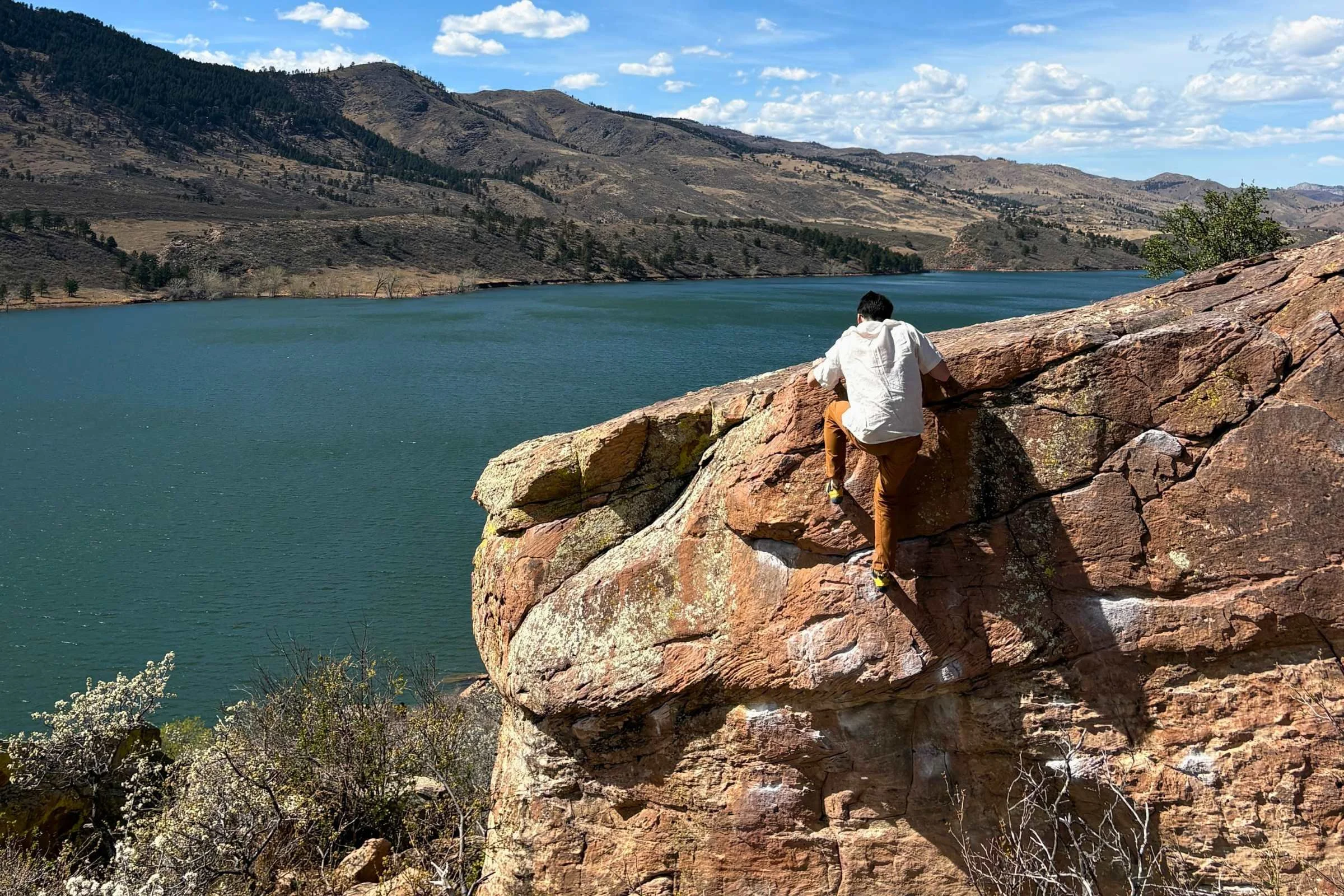
To help you find the best bouldering shoes for you, we tested 17 pairs of shoes across all sorts of terrain. From flat beginner pairs to expert aggressive ones, we wore all the shoes multiple times and climbed in them both indoors and outside, testing them for edging precision, power production, friction, hooking ability, and more. We also compared sizing across models and brands to find picks for climbers with narrow feet, wide feet, and everything in between.
We used our decade of bouldering experience to judge each pair of shoes against each other, and when we could, we compared the performance of different shoes on the exact same problems. After thoroughly testing shoes for more than four months (we included pairs that we’ve owned for up to two years, too), we found the six best bouldering shoes for every type of boulderer.
The pair that stood out the most was the La Sportiva Solution Comp because of its precise and powerful toe and soft design. These were the pair we reached for over and over again because sticking to small holds and smears, both inside and outside, was easy thanks to their elongated toes. The fit is a bit narrow, so they’re not perfect for everyone, but the balance of their sensitivity, stiffness, toe box design, and abundance of sticky rubber makes this versatile pair the best bouldering shoes we’ve tested.
We create reader-supported, mission-driven, objective gear reviews independently selected by our editors. This story may contain affiliate links, which help fund our website. When you click on the links to purchase gear, we may get a commission — without costing you an extra cent. Thank you for supporting our work and mission of outdoor coverage for every body! Learn more.
Comparison table
Men’s
| BOULDERING SHOE | TREELINE AWARD | CLOSURE | DOWNTURN | RUBBER TYPE | UPPER | STIFFNESS | FIT | MSRP |
|---|---|---|---|---|---|---|---|---|
| La Sportiva Solution Comp | Best Overall Read why |
Strap | Aggressive | 3.5 mm Vibram XS Grip 2 | Leather/ microfiber | Medium | Long, narrow | $229 |
| La Sportiva Mantra | Best for Indoor Bouldering Read why |
Slip-on | Aggressive | 1-2 mm 3.5 mm Vibram XS Grip 2; NoEdge | Microfiber | Extremely low | Normal to narrow | $189 |
| Scarpa Instinct VSR | Best for Outdoor Bouldering Read why |
Strap | Moderate | 3.5 mm Vibram XS Grip 2 | Microfiber | Medium-low | Short, wide | $219 |
| La Sportiva Finale | Best for Beginners Read why |
Lace-up | Flat | 5.0 mm Vibram XS Edge | Leather/ microfiber | Medium | Slightly narrow | $139 |
| Scarpa Drago | Best for Advanced Climbers Read why |
Strap | Aggressive | 3.5 mm Vibram XS Grip 2 | Synthetic microsuede | Low | Narrow | $229 |
Women’s
| BOULDERING SHOE | TREELINE AWARD | CLOSURE | DOWNTURN | RUBBER TYPE | UPPER | STIFFNESS | FIT | MSRP |
|---|---|---|---|---|---|---|---|---|
| La Sportiva Solution Comp | Best Overall Read why |
Strap | Aggressive | 3.5 mm Vibram XS Grip 2 | Leather/ microfiber | Medium | Long, narrow | $229 |
| La Sportiva Mantra | Best for Indoor Bouldering Read why |
Slip-on | Aggressive | 1-2 mm 3.5 mm Vibram XS Grip 2; NoEdge | Microfiber | Extremely low | Normal to narrow | $189 |
| Scarpa Instinct VSR | Best for Outdoor Bouldering Read why |
Strap | Moderate | 3.5 mm Vibram XS Grip 2 | Microfiber | Medium-low | Short, wide | $219 |
| La Sportiva Finale | Best for Beginners Read why |
Lace-up | Flat | 5.0 mm Vibram XS Edge | Leather/ microfiber | Medium | Slightly narrow | $139 |
| Scarpa Drago LV | Best for Advanced Climbers Read why |
Strap | Aggressive | 3.5 mm Vibram XS Grip 2 | Synthetic microsuede | Low | Narrow | $229 |
The winners
Best overall bouldering shoes: La Sportiva Solution Comp
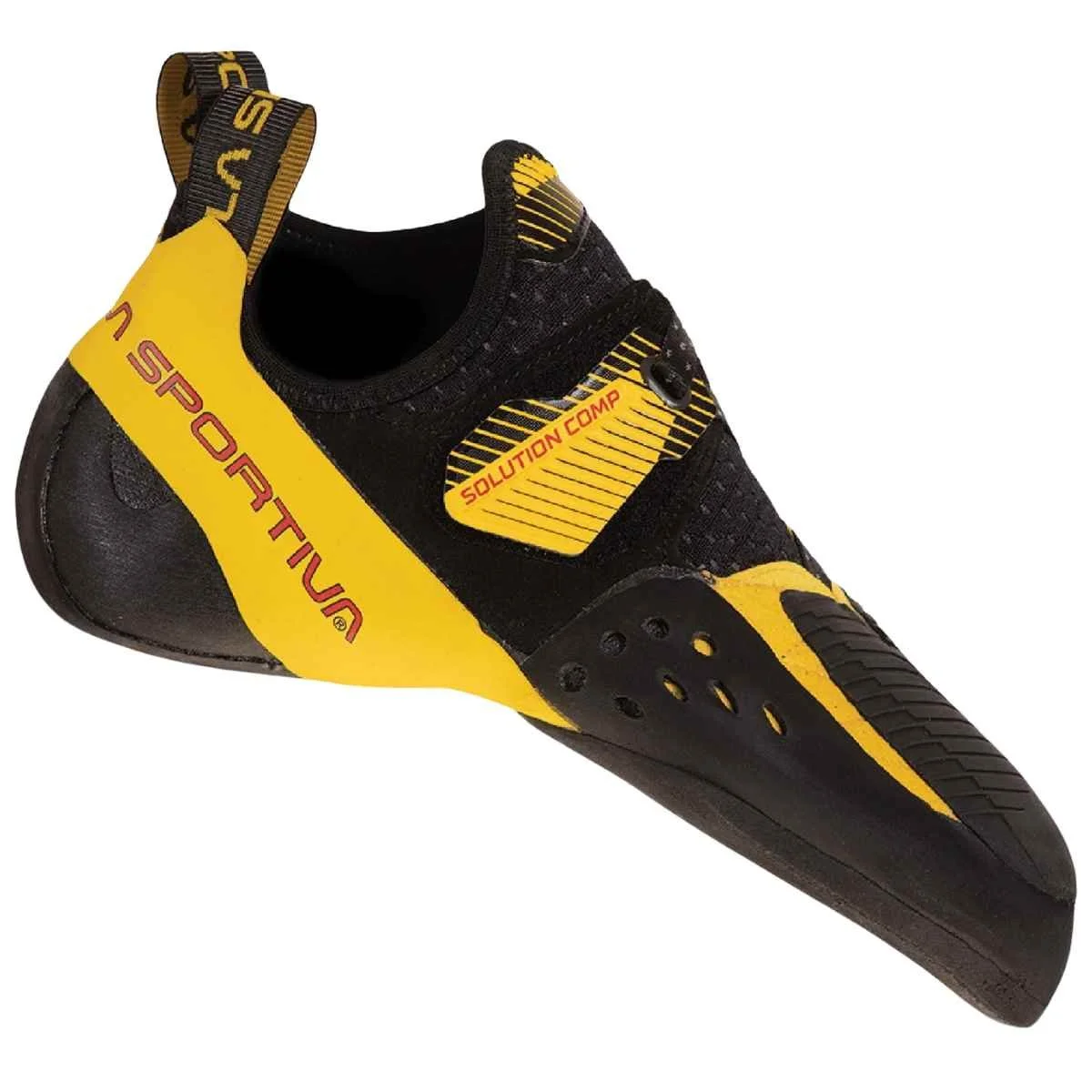
Shape and downturn: Moderately asymmetric and aggressive
Closure type: Velcro Fast Lacing System
Rubber and thickness: 3.5mm Vibram XS Grip 2
Stiffness: Medium
Fit profile: Best for long and narrow feet
What we liked: Elongated toe for great precision and power, perfect balance of sensitivity and stiffness, sticky rubber
What could be better: Toe box is long and narrow, strap has durability concerns
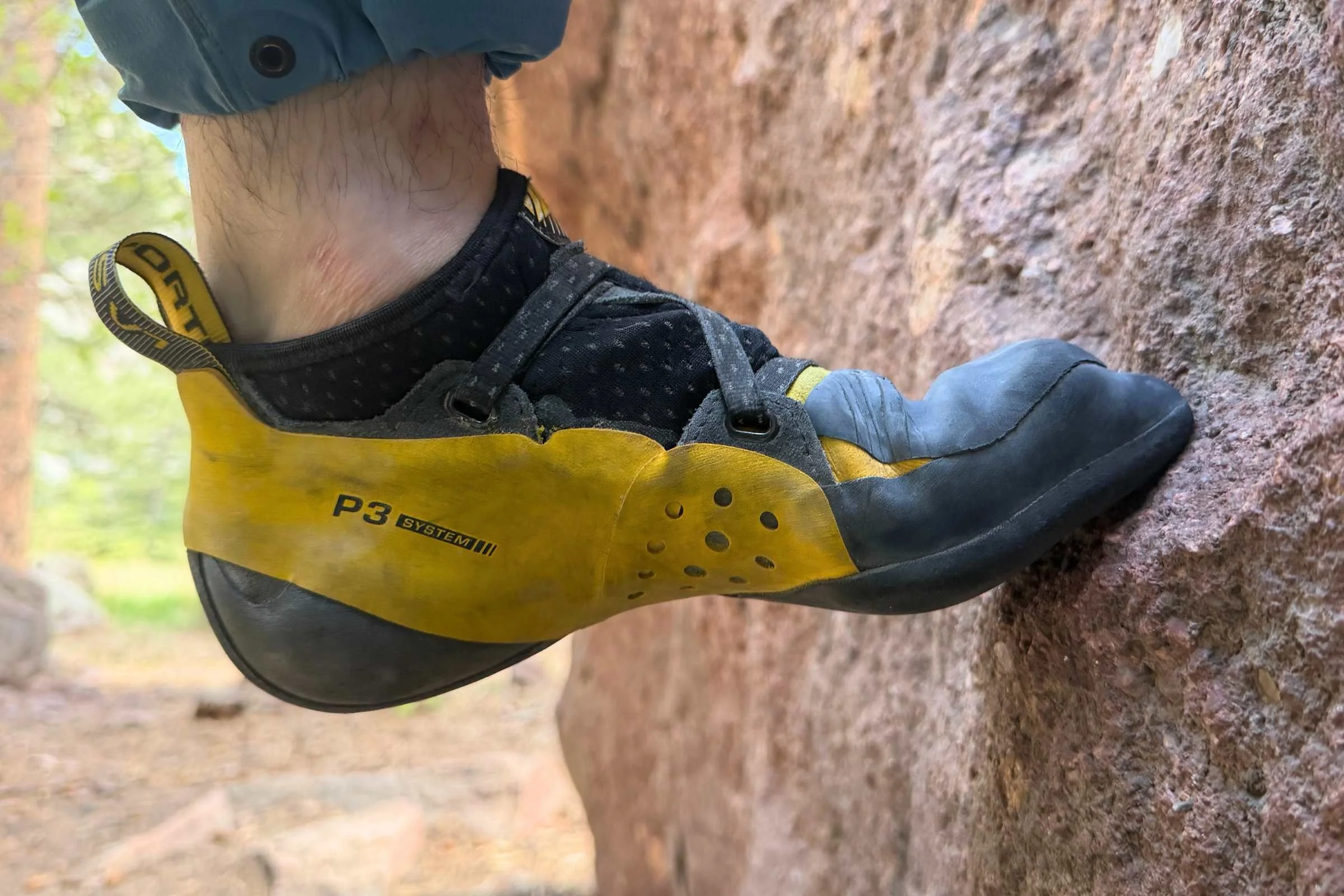
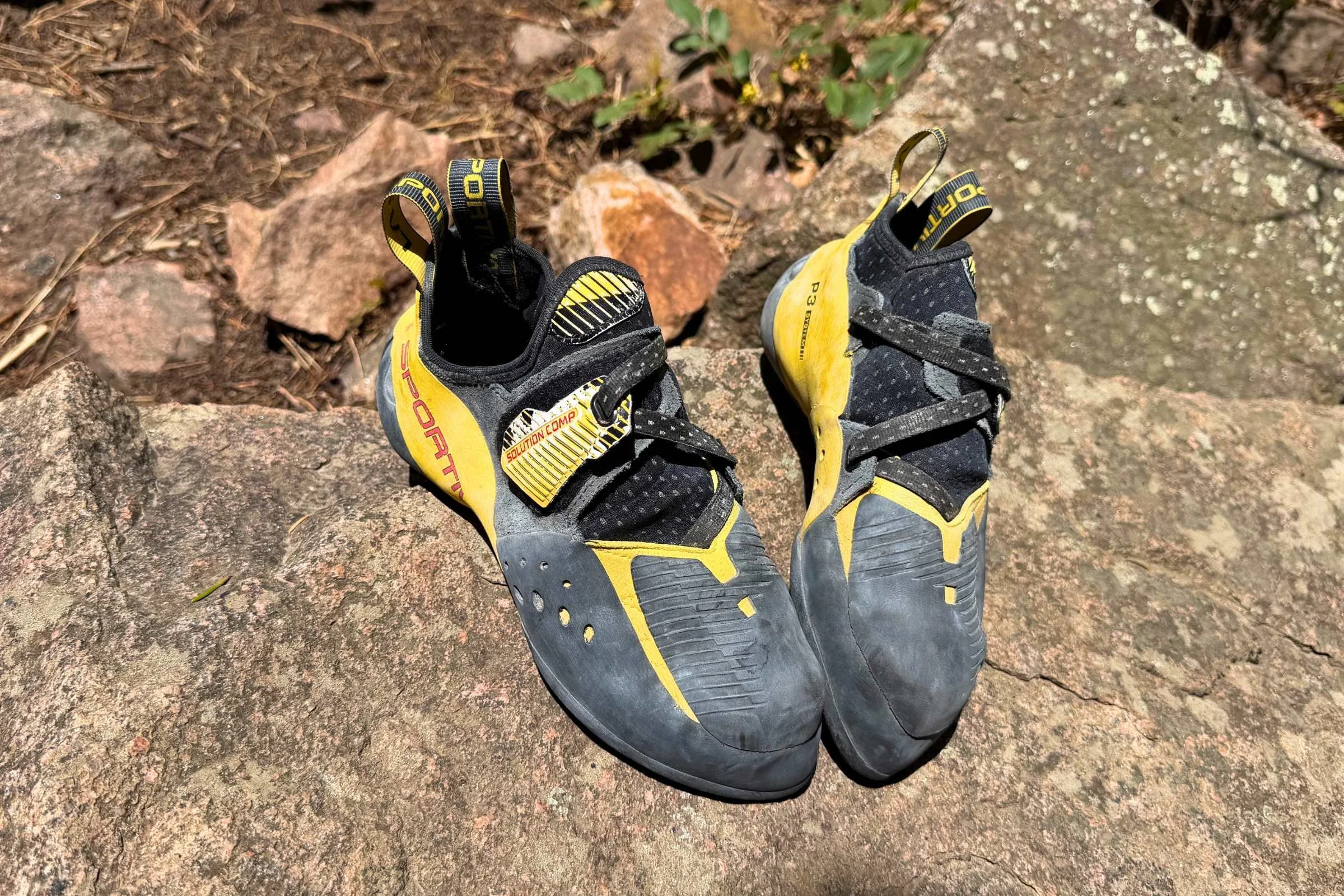
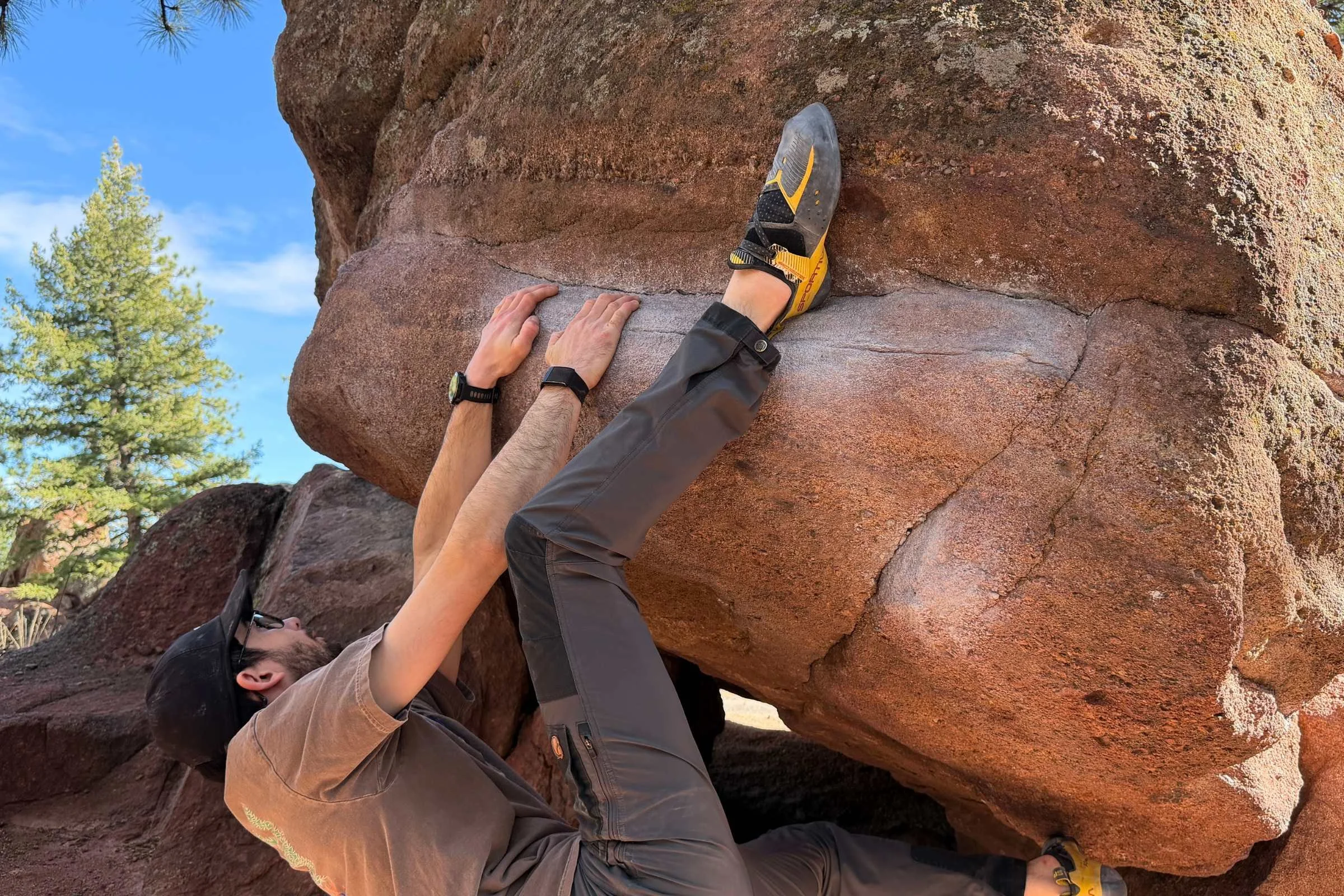
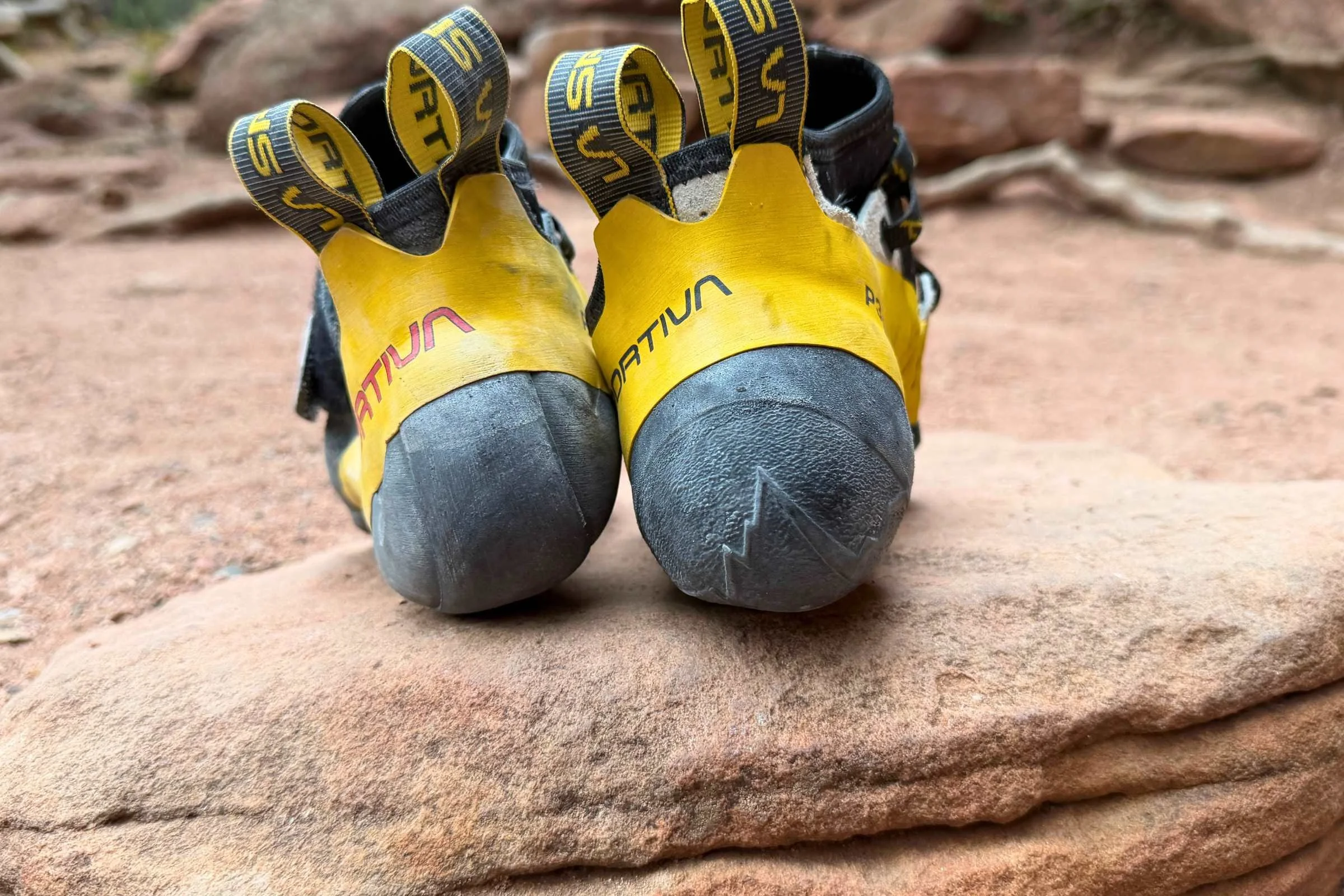
The La Sportiva Solution Comps are an extremely versatile pair of shoes, and they’re our clear pick for the best bouldering shoes out there. They have a perfect blend of sensitivity and stiffness, a narrow heel, sticky rubber, and some of the best toes we’ve ever tested. Learn more in our in-depth review of the La Sportiva Solution Comp climbing shoes.
La Sportiva Solution Comp
men's
Women's
-
While we love the La Sportiva Solution Comps, they’re not perfect for everyone. The first thing you’ll need to know is that they’re long and narrow. We have average-width feet, and we normally prefer wide toe boxes for hiking shoes, so our toes felt a bit pinched inside the Solution Comps. They’re high-performance climbing shoes at the end of the day, so we’re not expecting a comfortable experience, but if you have wide feet, you might want another pair.
The Solution Comps also have quite a narrow heel, unlike the original Solutions. They’re one of the narrowest heels we tested, so if you know you have big heels, these aren’t the pair to buy. We still found the heels to be a tad too big for us, so we’re excited to try the women’s version, which has a lower volume and slimmer heel.
When it comes to sizing, they feel pretty true to size for climbing shoes. We normally size down 1 to 1.5 EU sizes, depending on the fit we want, and these felt just how we expected.
-
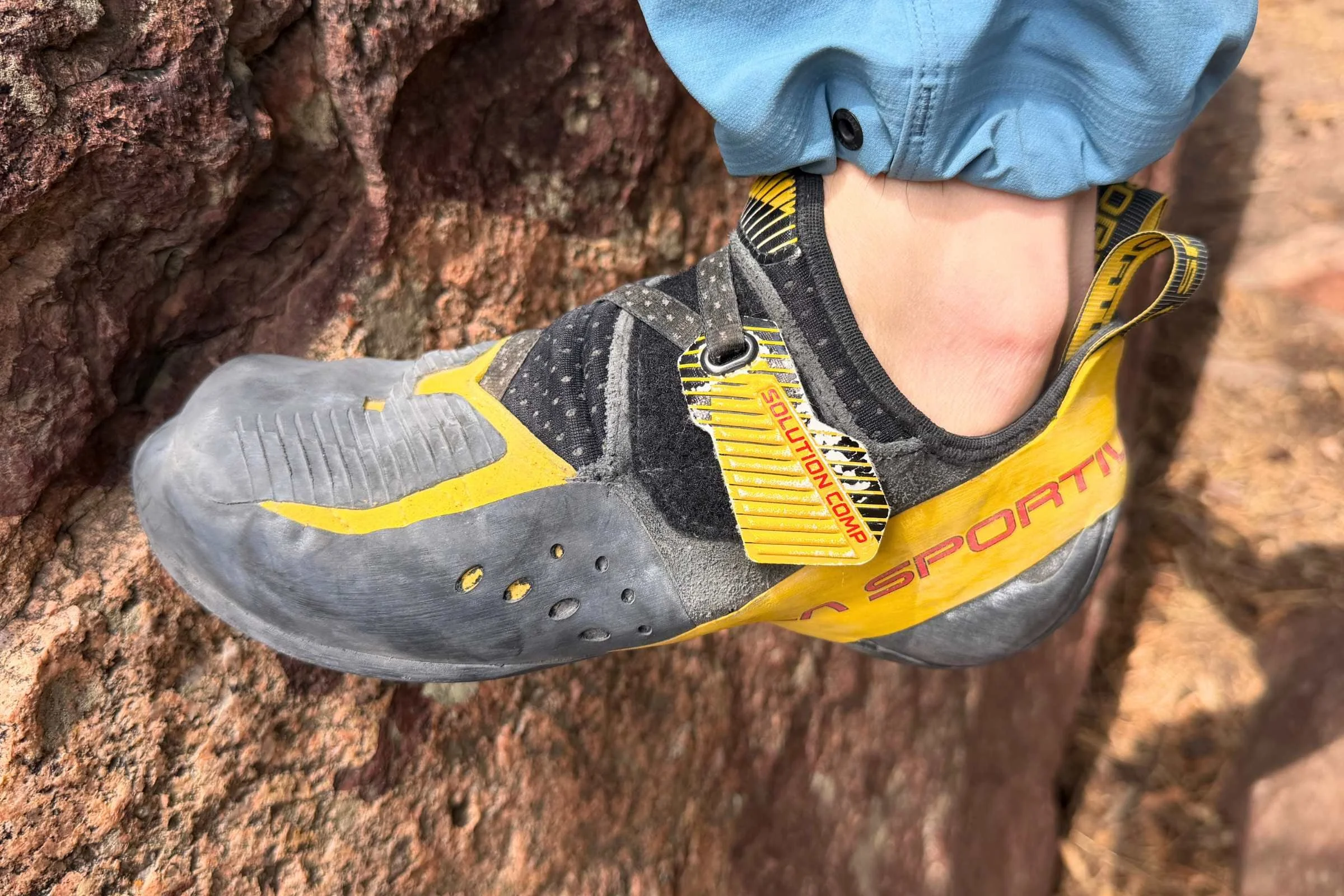
This is where the Solution Comps stand out above all the other shoes we tested. The original La Sportiva Solutions have long been a popular pair of shoes, thanks to a toe design that extends out and down from your feet. The Solution Comps keep this, and we’re so glad they did.
Using the tip of the toes is our favorite part of these shoes. This, combined with the aggressive downturn makes them feel like talons, especially when climbing on overhanging problems. We loved how precise they were, and how much power we were able to generate.
-
Most boulderers like softer shoes so they can feel the rock better, and while these aren’t the softest shoes we’ve tried, they’re definitely soft enough. They can easily fold in half, which translates to great sensitivity and smearing while on the wall.
The rubber on the bottom of the shoes is Vibram XS Grip 2, which proved to be incredibly sticky during our testing period. We never felt like the rubber was holding our climbing back, and felt confident on small foot chips and volumes alike. Paired with the Comps soft design, you can really smear rubber into any hold for optimal grip.
The heel and toe rubber patch both have sticky rubber, making these some of the best shoes we’ve tested for heel and toe hooking. The soft design and aggressive downturn help lock in those technical foot moves too.
-
Throughout our testing, we found the La Sportiva Solution Comps to be extremely versatile. They’re the perfect softness for boulders indoors and out, while maintaining enough stiffness for the occasional route.
We had one durability concern, though. After using these shoes for over a year, one of the straps for the Velcro closure system is showing some fraying, and some online reviews have said the strap has broken. Besides that, we don’t have other durability concerns and the rubber has worn down a normal amount.
Best indoor bouldering shoes: La Sportiva Mantra
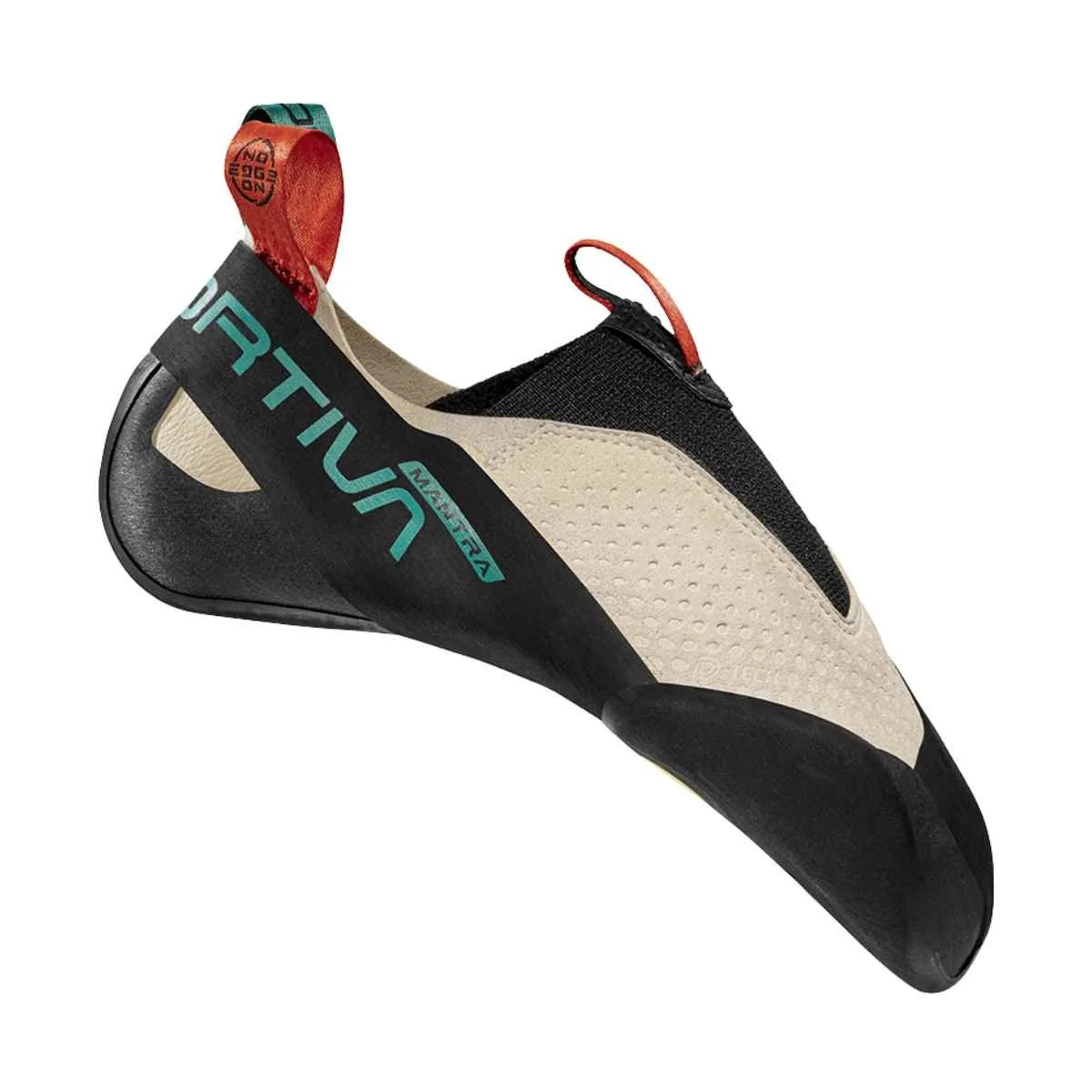
Shape and downturn: Slightly asymmetric and downturned
Closure type: None (slip-on)
Rubber and thickness: 1/2 Sole No-Edge Dynamic Technology (D-Tech) / Differentiated 1-2mm Vibram XS Grip 2
Stiffness: Extremely low
Fit profile: Normal to slightly narrow
What we liked: Extreme sensitivity and softness, NoEdge Technology adds durability and sensitivity, slip-on design
What could be better: No adjustable fit, probably too soft for some, not good for tiny footholds especially outdoors
The La Sportiva Mantras are a clear choice as the best indoor bouldering shoes thanks to their use of NoEdge Technology. It gives these ultra-soft slippers the best sensitivity and durability out of any pair we tested. Check out our in-depth review of the La Sportiva Mantra climbing shoes to learn more.
La Sportiva Mantra
men's
Women's
-
The Mantras are slippers, which means popping them on and off at the gym is easy, but there isn’t a Velcro or lace system. Because you can’t adjust the fit of these shoes at all, it’s a good idea to try on a pair to confirm sizing before you buy them.
When it comes to sizing, these shoes felt similar to most other climbing shoes we’ve tried. We sized down 1 full EU size and got the comfortable fit we were expecting. They didn’t feel particularly narrow or wide in our testing either.
-
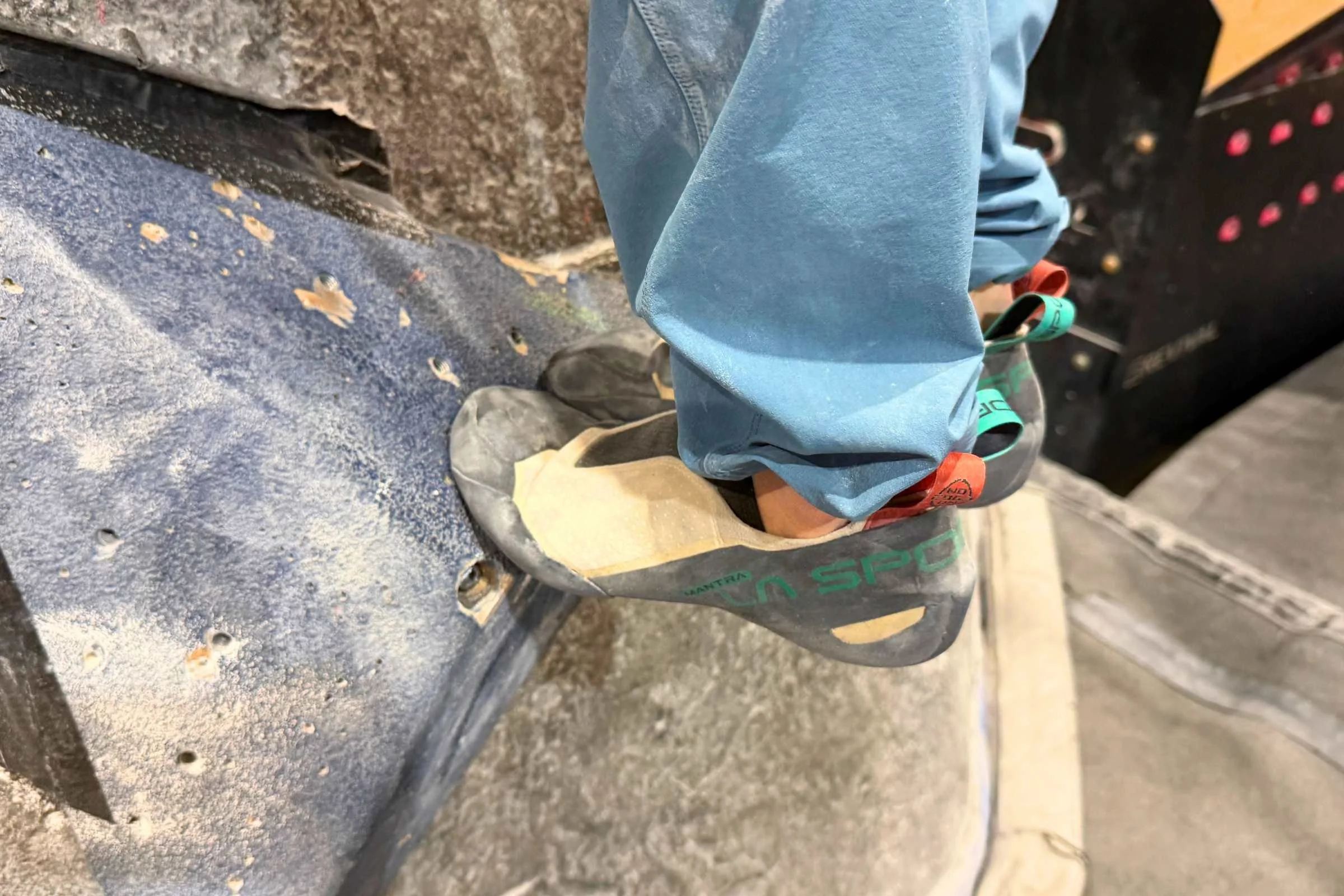
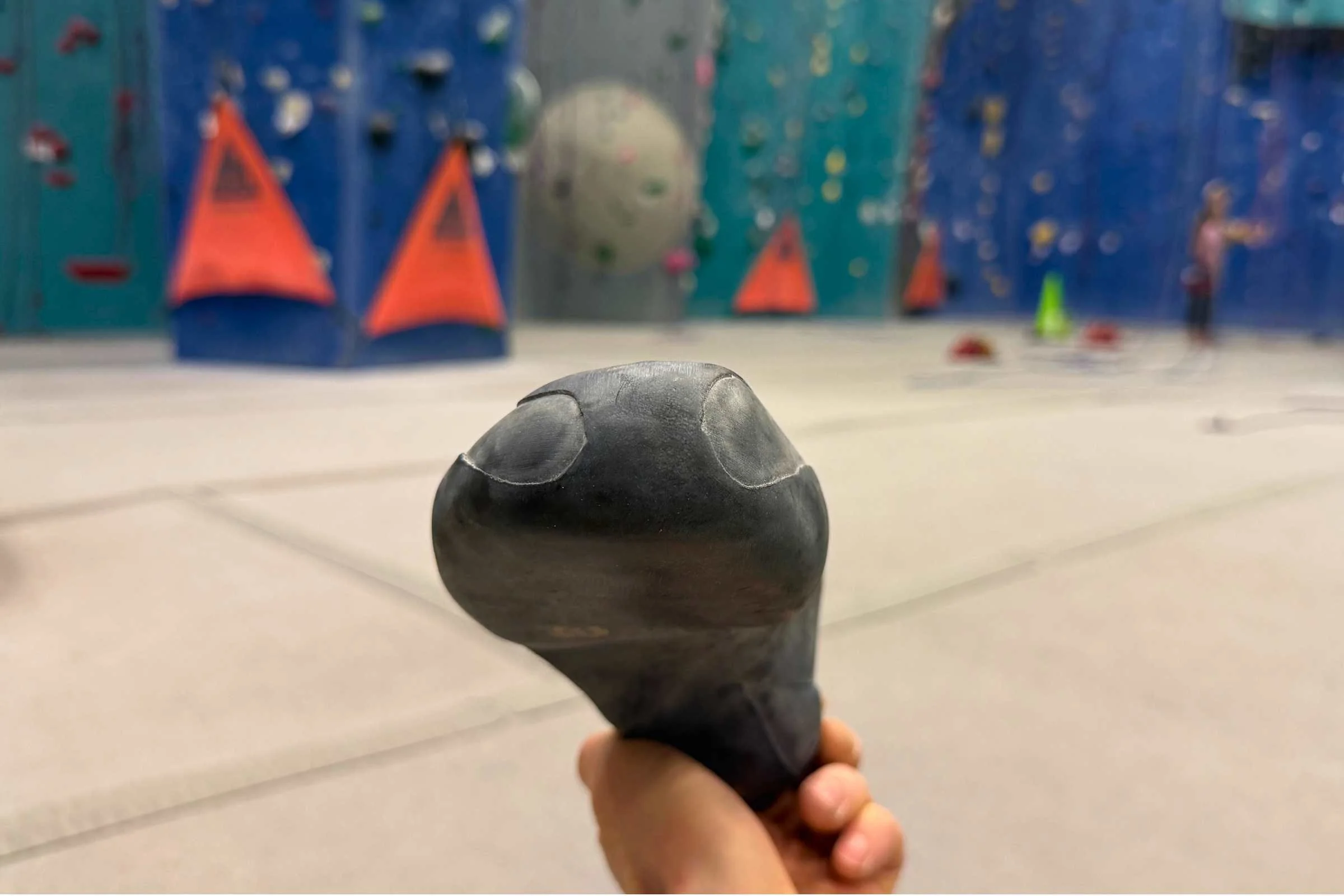
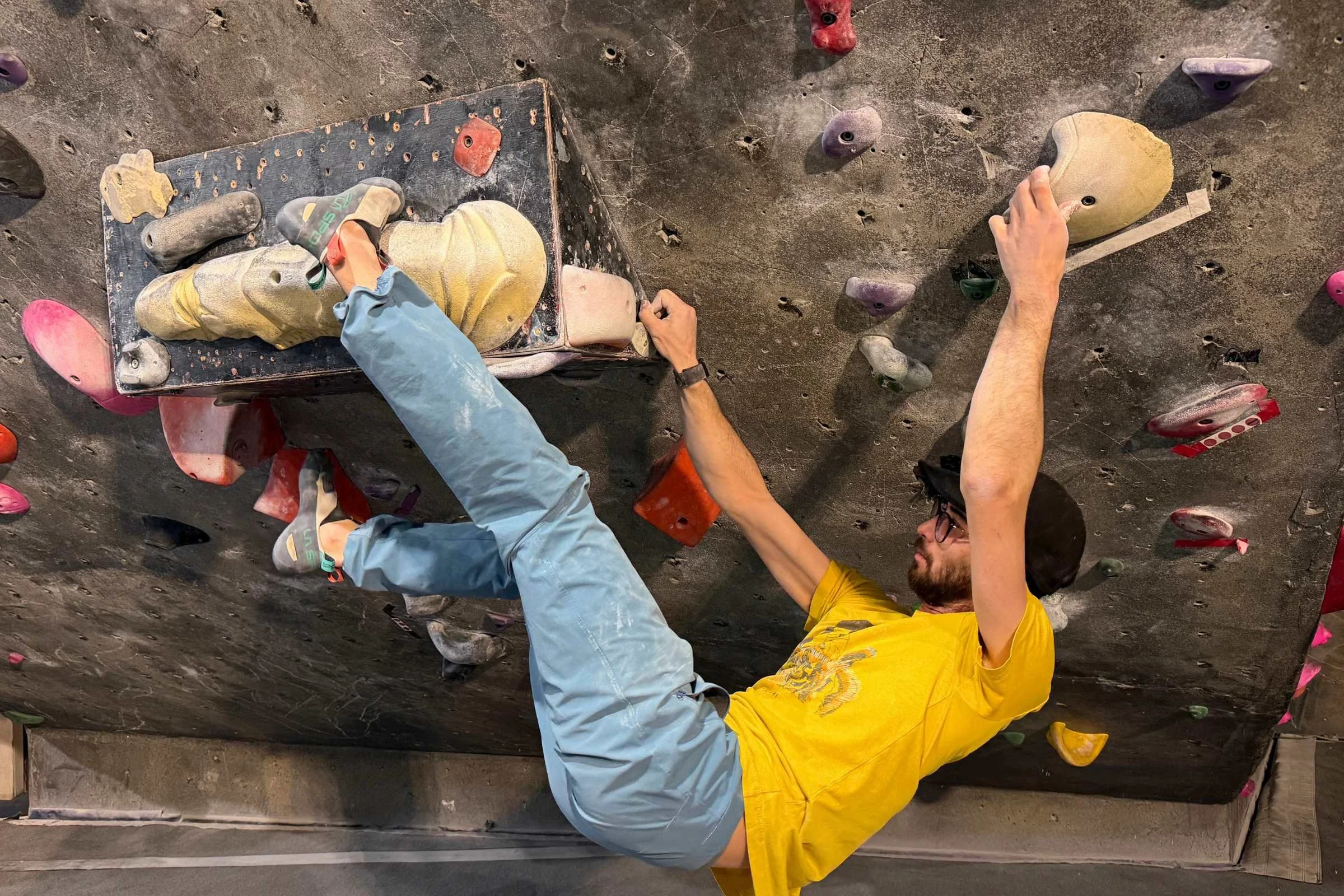
Because of the Mantra’s NoEdge Technology, which wraps the rubber up around the side of the shoes, footwork can feel different in these slippers, especially on small holds. Without a sharp edge, we found it’s better to place our toes slightly above small holds, then smush as much rubber into the hold as possible. With this technique, we were able to feel surprisingly confident on slabs and other small holds.
We were still able to have quite precise footwork, but where this technique fails is on super thin foot rails and tiny crystals. We found traditional edges bite into those holds better than the Mantras. Those types of footholds are found more often outdoors, which is why we think it’s best to keep the Mantras on plastic.
The Mantras are extremely soft and have a slightly aggressive profile, so they didn’t excel at creating power. The power you get out of a foothold relies much more on the muscles in your feet, rather than an efficient transfer of energy because they’re soft. Still, these performed well for all sorts of climbs, including overhangs.
-
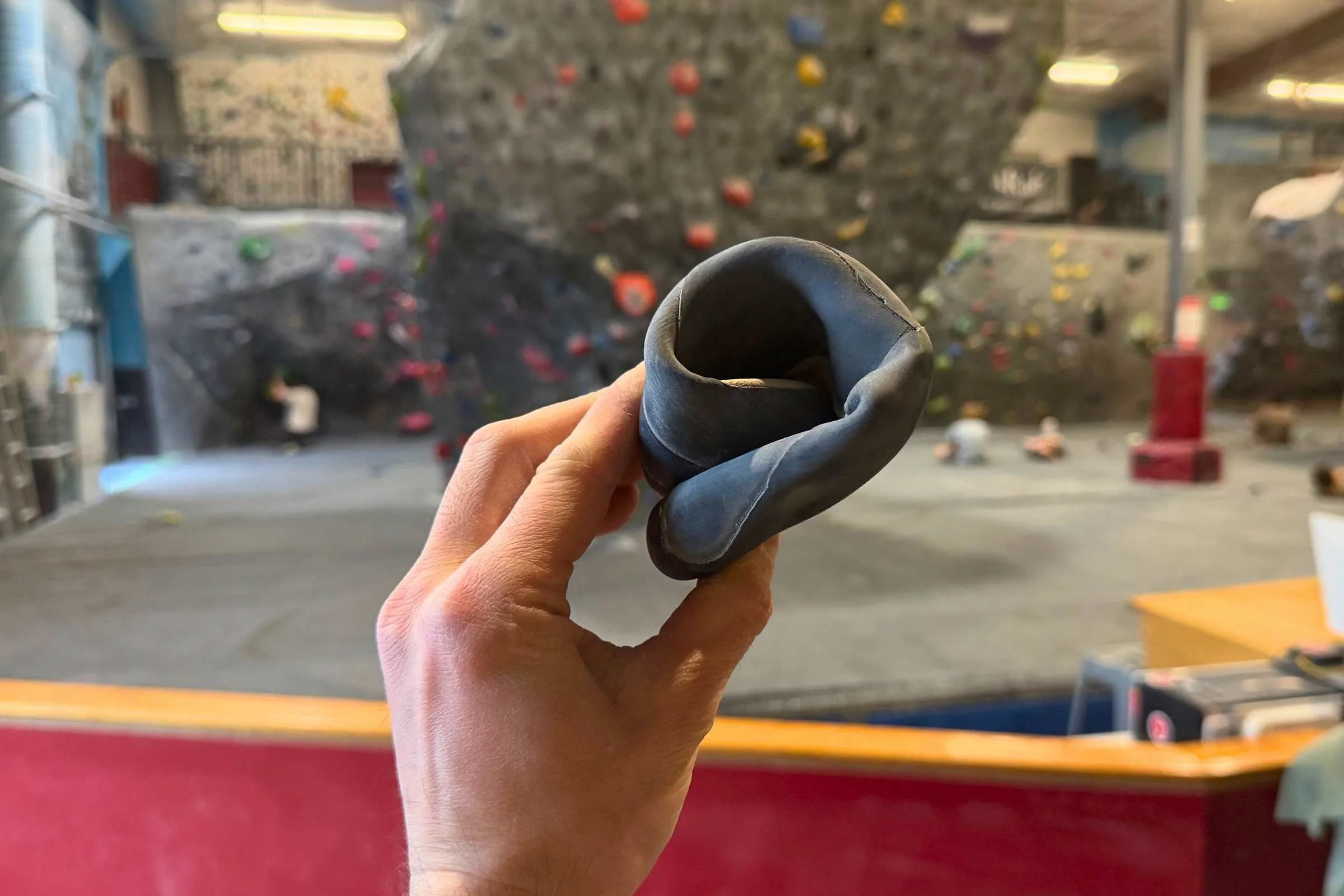
The La Sportiva Mantras are the softest shoes we’ve ever climbed with. In fact, they’re so soft that you can roll them up into a ball. That means they’re extremely sensitive, malleable shoes that are fantastic for indoor climbing. Because they’re so soft, smearing and walking on volumes felt easier than basically every other shoe we tested.
The NoEdge Technology also adds sensitivity, which we loved in a gym climbing environment. We could really feel the different parts of a hold with our feet through the rubber, so micro-adjustments to find just the right spot were easy. This was helpful on weirdly textured footholds and especially nice on volumes, where we could smear as much surface area into the volume as possible. The downside of sensitivity is pointy holds can end up being painful, especially if you’re having to do something like a pistol squat on a slab climb. Plus, your feet will get tired faster than if you were in a stiffer pair.
The stickiness of the rubber on the Mantras is also excellent, and we rarely slipped or lacked confidence in its friction. It uses a combination of the brand’s No-Edge Dynamic Technology (D-Tech) and Vibram XS Grip 2.
-
While we love the Mantras, they aren’t very versatile. They excel at indoor bouldering, but you’ll probably want another pair for any other type of climbing. The rubber is thin, so your feet are going to be working a lot harder and you’ll be able to feel the footholds much more, which can sometimes be painful.
However, the NoEdge Technology does have some nice durability benefits, which is a huge reason why these are our pick for the best indoor bouldering shoes. Our pair has been our go-to gym shoes almost exclusively for over two years, and the rubber on the point of the toe is just now wearing through.
Best outdoor bouldering shoes: Scarpa Instinct VSR
Shape and downturn: Moderately asymmetric and aggressive
Closure type: Velcro strap
Rubber and thickness: 3.5mm Vibram XS Grip 2
Stiffness: Medium-low
Fit profile: Best for shorter and wider feet
What we liked: Soft and aggressive design, excellent fit and power production, fantastic for toe and heel hooking
What could be better: Don’t have a ton of adjustability, too soft for multi-pitch climbing, heel might be big for some
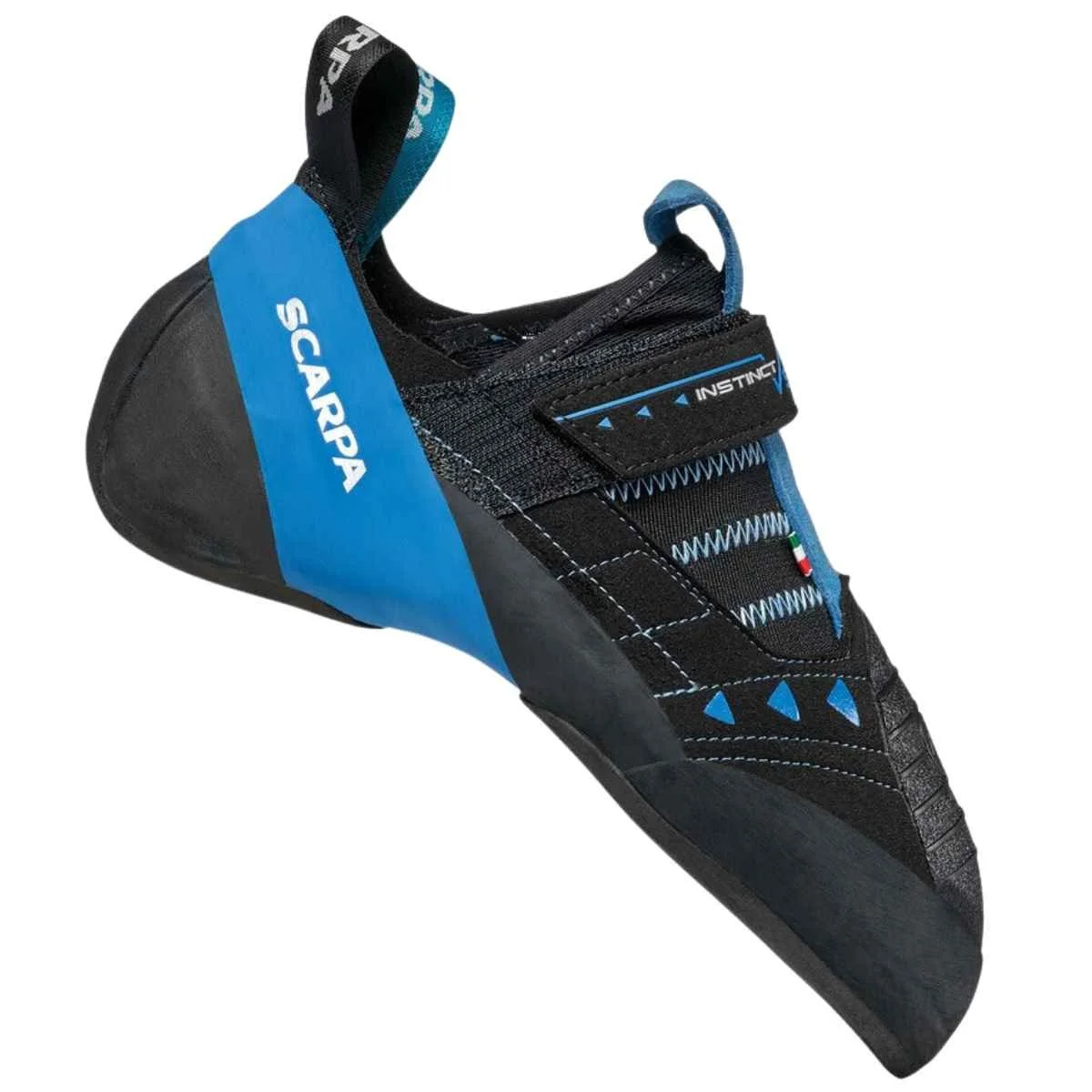
When we have to stand on tiny crystals outdoors, the Scarpa Instinct VSRs are the shoes we reach for. They have an extremely versatile design thanks to their moderate downturn, and their toes feel incredibly precise and powerful. Learn more in our in-depth review of the Scarpa Instinct VSR climbing shoes.
Scarpa Instinct VSR
men's
Women's
-
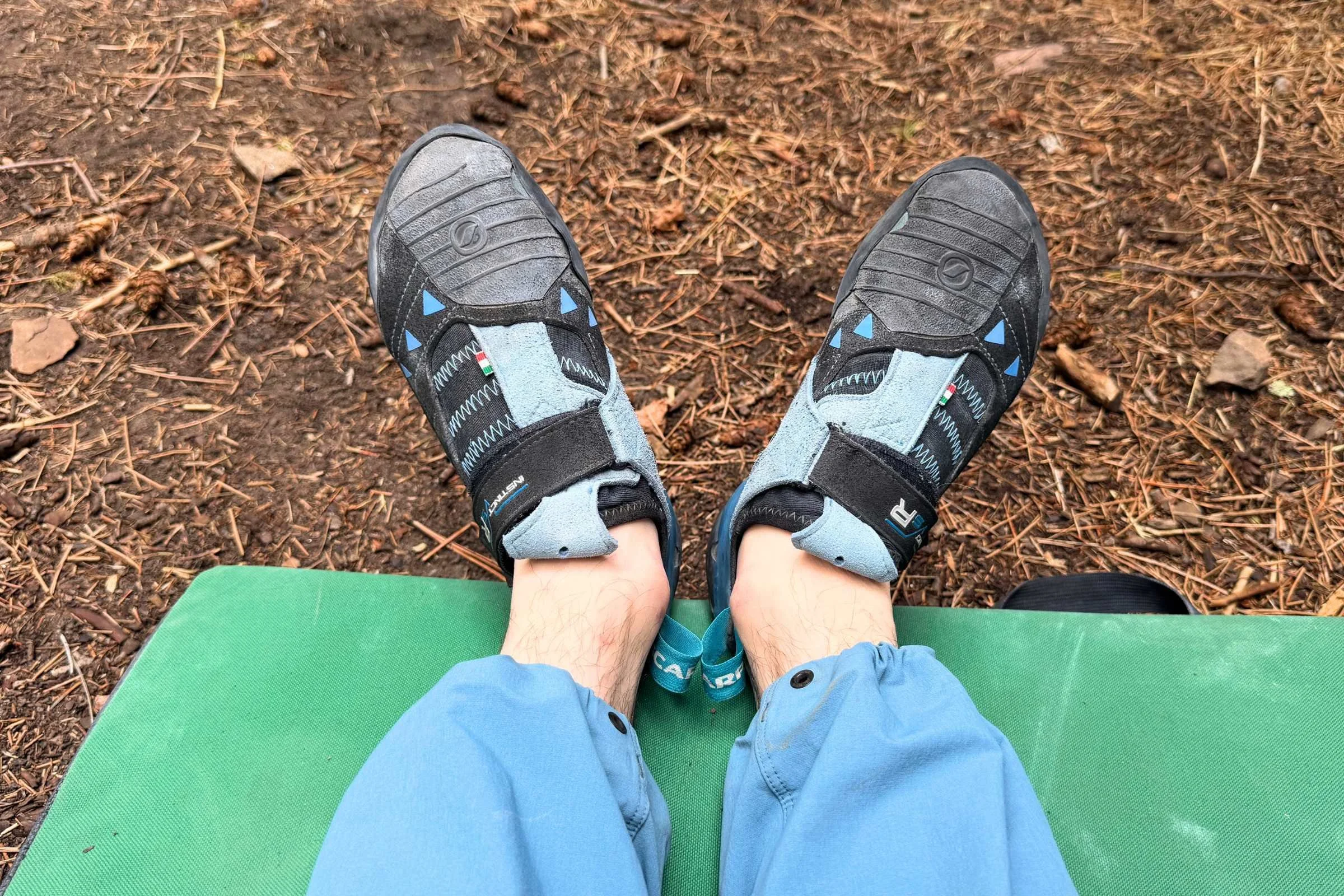
The Instinct VSRs have a wider toe box than the most similar climbing shoes we tried, the La Sportiva Solution Comps. The shoes are also much shorter, so our toes felt more curled down instead of squished together like in the Solution Comps. That means these shoes are better for folks with shorter, wider feet.
The fit felt excellent and we liked the feel of these slightly better than the Solution Comps. However, the heel is wider, so if you have a narrow heel, the Instinct VSR LV might be a better bet. Sizing also felt true to what we expected, and going down 1.5 EU sizes resulted in a tight, performance-first fit.
One of the only qualms we have with these shoes is their adjustability. The strap is pretty simple and you can’t adjust the fit with it too much. So it’s a good idea to try on a pair to ensure you have the right size before buying.
-
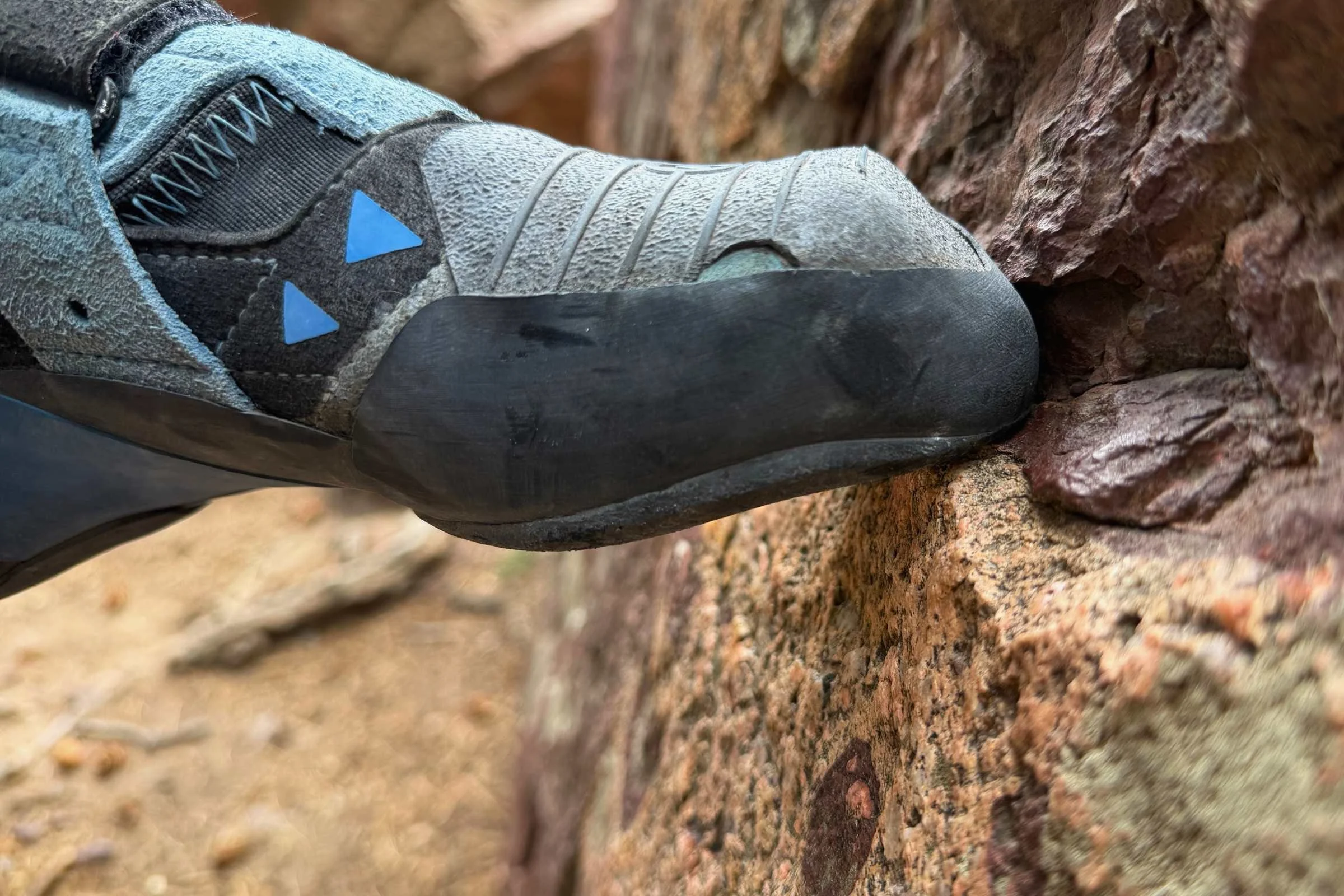
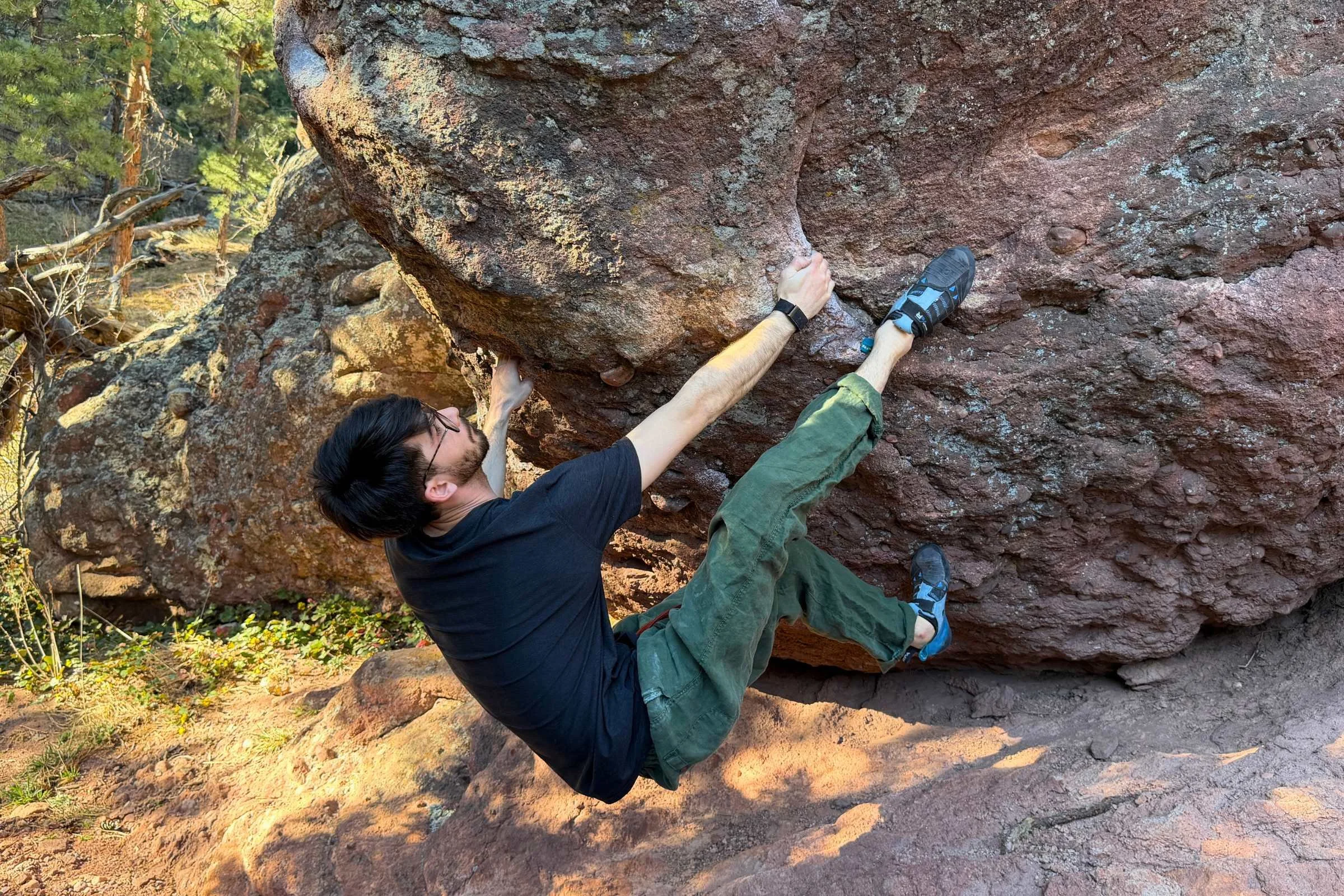
We do like the elongated toe of the Solution Comps slightly better for most footwork, but the Instinct VSRs are still excellent. We actually found that they’re slightly better on super tiny holds, where it felt like they could really bite into the rock. The downside of the wide, downturned toe, however, is that over the years we’ve come across a couple of small pocket footholds on overhanging boulders that the shoe was too wide to fit into.
However, for most footholds the VSRs feel very precise and powerful. The downturn of the toe and the overall design of the shoe makes pushing off small footholds with just the tips of your toes feel easy.
-
These shoes are slightly softer than the La Sportiva Solution Comps, making them a tad less versatile in our opinion. You won’t want to wear them on long routes (even though we did wear them on a multi-pitch climb in Eldorado Canyon State Park), but you’ll appreciate the extra softness when you stick to boulders and shorter sport climbs.
This soft design pairs perfectly with Vibram’s XS Grip 2 rubber to create shoes that feel ultra-sticky on all sorts of holds. The rubber bites into small crystals and bends onto volumes so you always feel secure.
Heel hooking and toe hooking feel excellent in the VSRs too. The toe rubber patch even has ridges of rubber to help those hooks stick better. We did a lot of climbs with technical heel hooks over the past two years, and we always reached for these Scarpas.
-
While these shoes aren’t quite as versatile as the Solution Comps because they’re slightly softer, we still think the Instinct VSRs are a great pair of shoes for all sorts of climbing. They excel the most when bouldering, both indoors and out, but they’re an excellent pair for single-pitch sport climbing as well. It’s only on longer routes and multi-pitch adventures where the soft and aggressive design might tire your feet out.
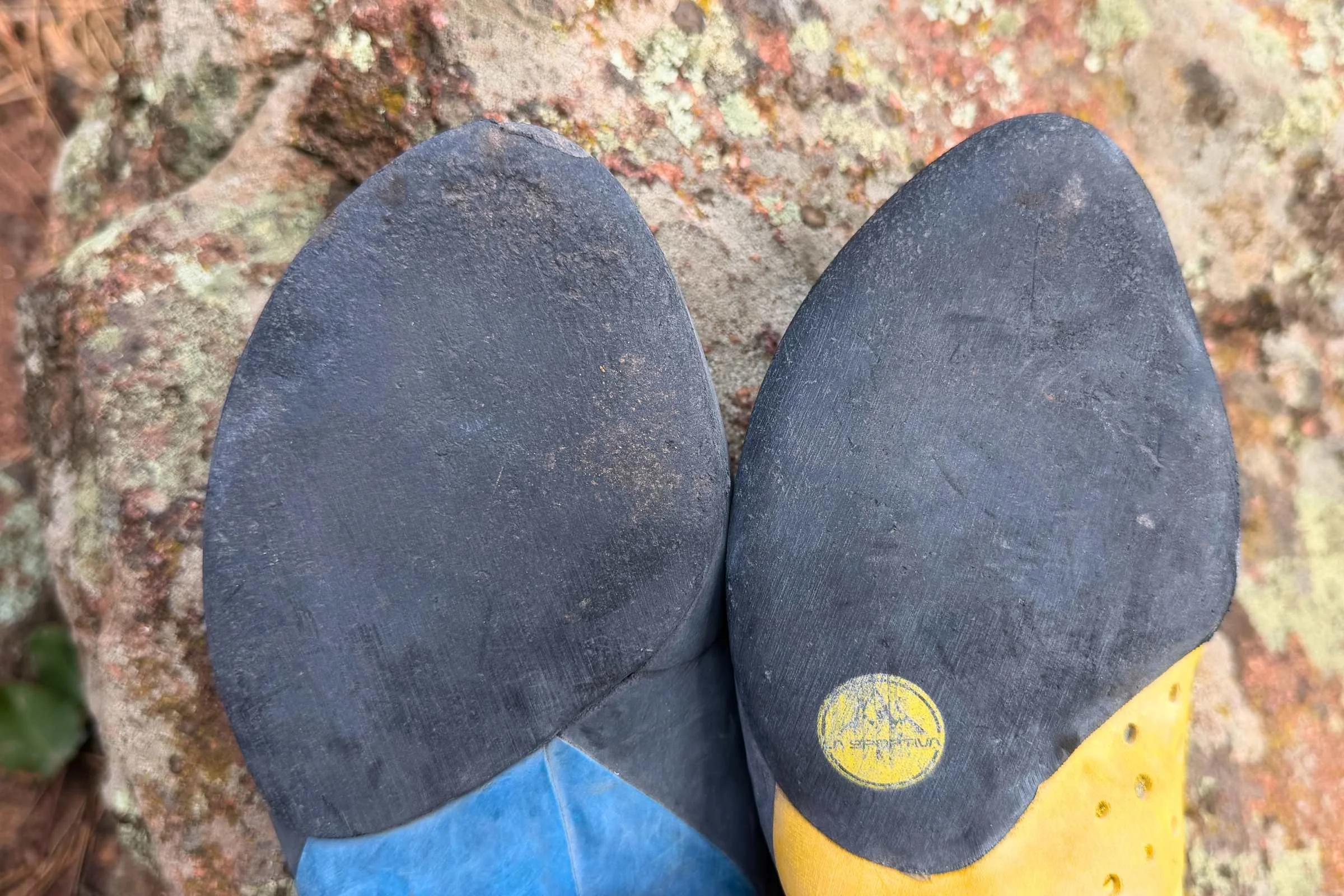
Durability of the Instinct VSRs is right on par with most other climbing shoes we’ve tried. There haven’t been any particular spots that have worn down faster than we expected. After a year of climbing on the rough rock around Boulder, Colorado, our pair is definitely ready for a resole.
Best bouldering shoes for beginners: La Sportiva Finale
Shape and downturn: Flat
Closure type: Laces
Rubber and thickness: 5mm Vibram XS Edge
Stiffness: Medium
Fit profile: Slightly narrow
What we liked: All-day comfort, stickier rubber than other beginner shoes, slightly soft design, versatile performance
What could be better: No downturn means they aren’t great for steep terrain, hooking is difficult
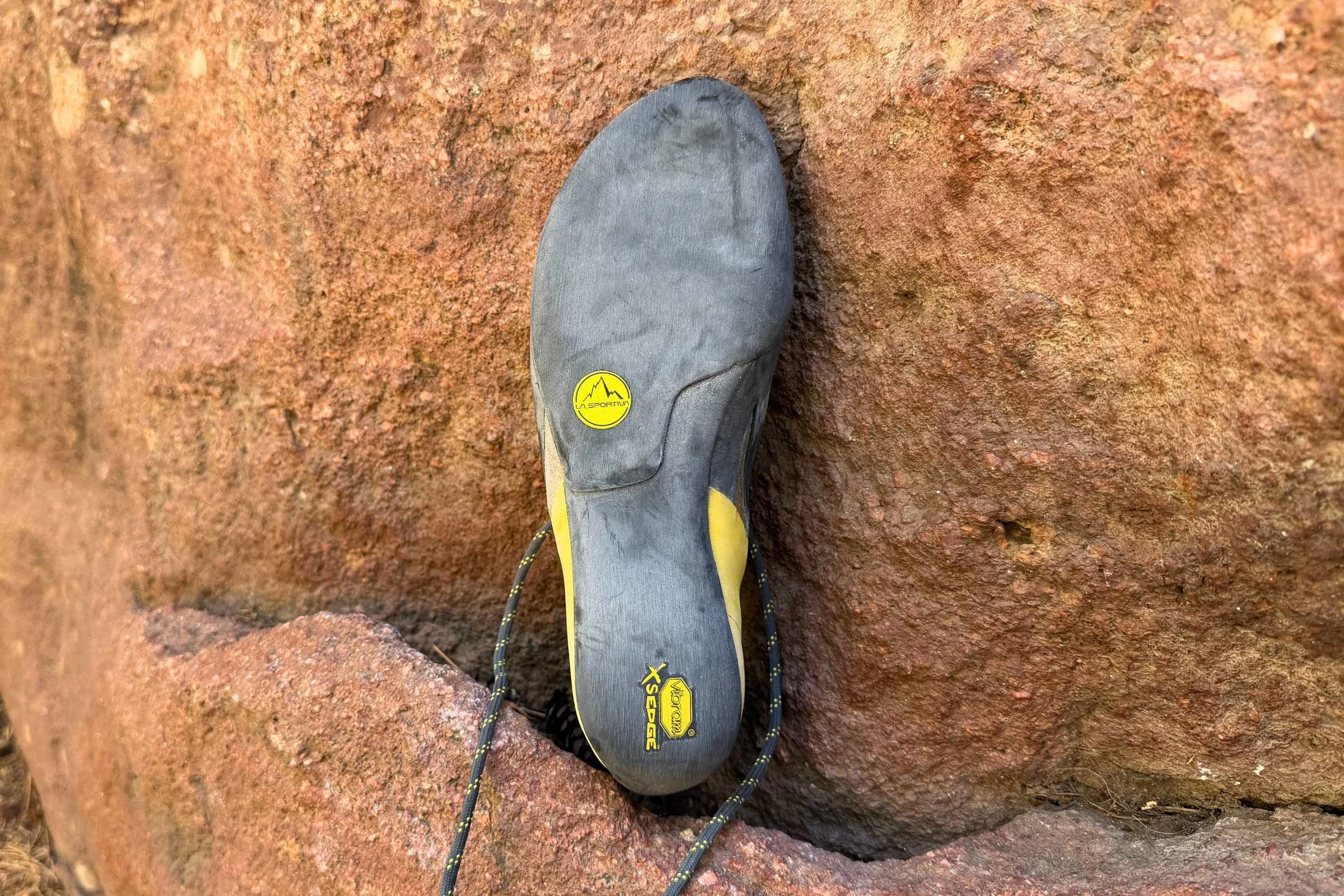
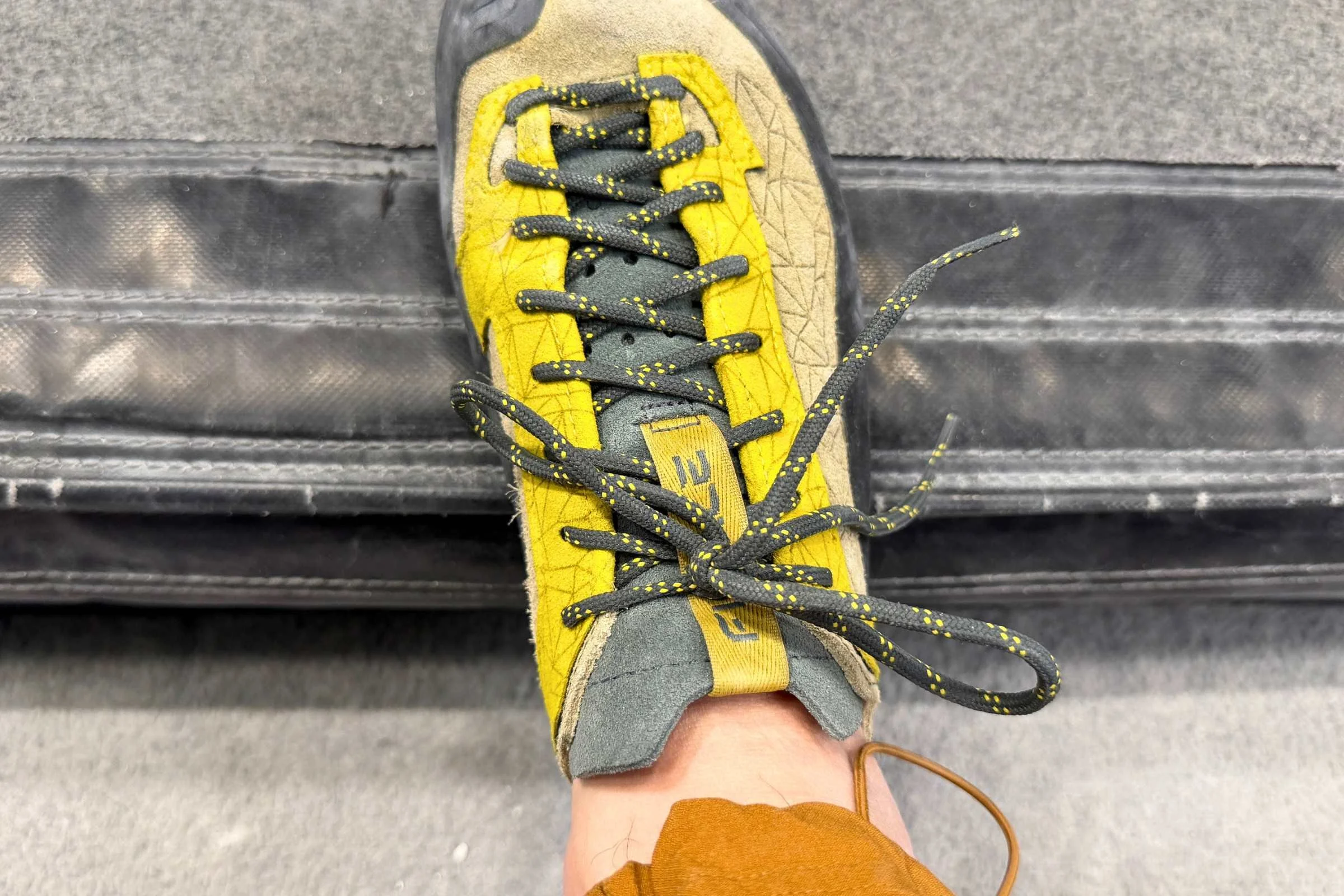
Most beginner shoes have terrible rubber, but that’s not the case with the La Sportiva Finales. They have some of the stickiest rubber out of all the budget shoes we tested, and they’re more sensitive and flexible, too. Their laces are a little annoying, but the balance of comfort and performance is well worth the price tag. Learn more in our in-depth review of the La Sportiva Finale climbing shoes.
La Sportiva Finale
men's
Women's
-
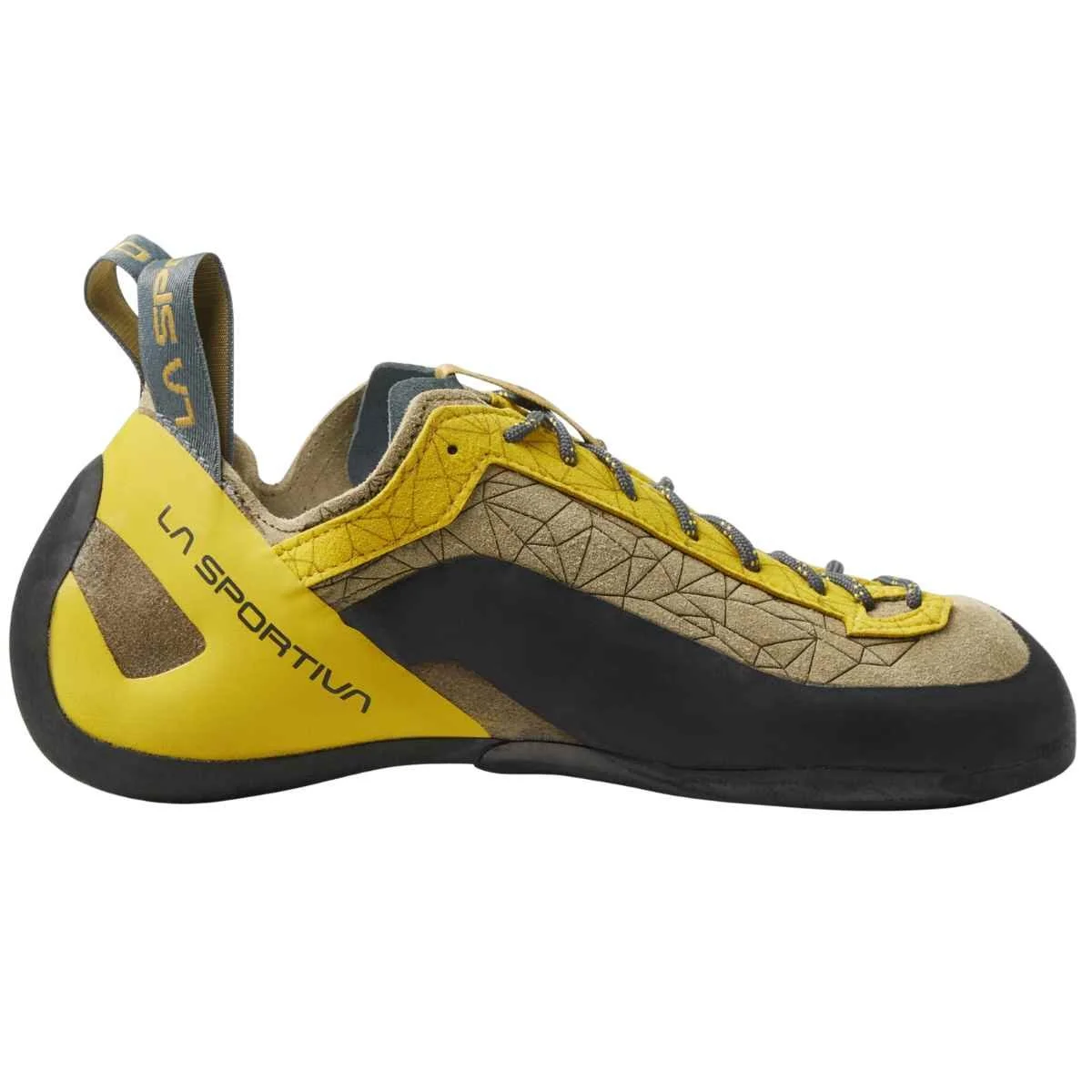
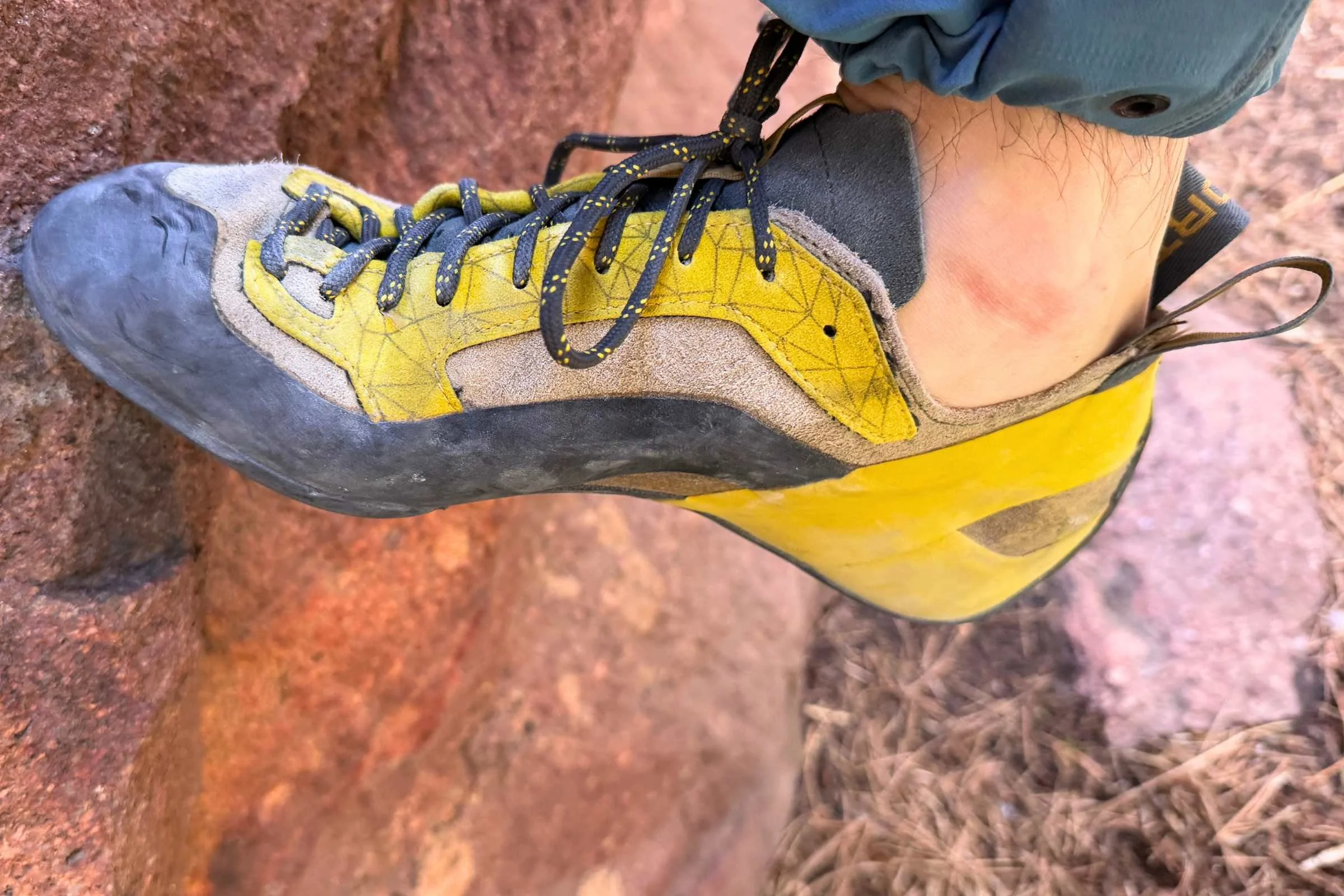
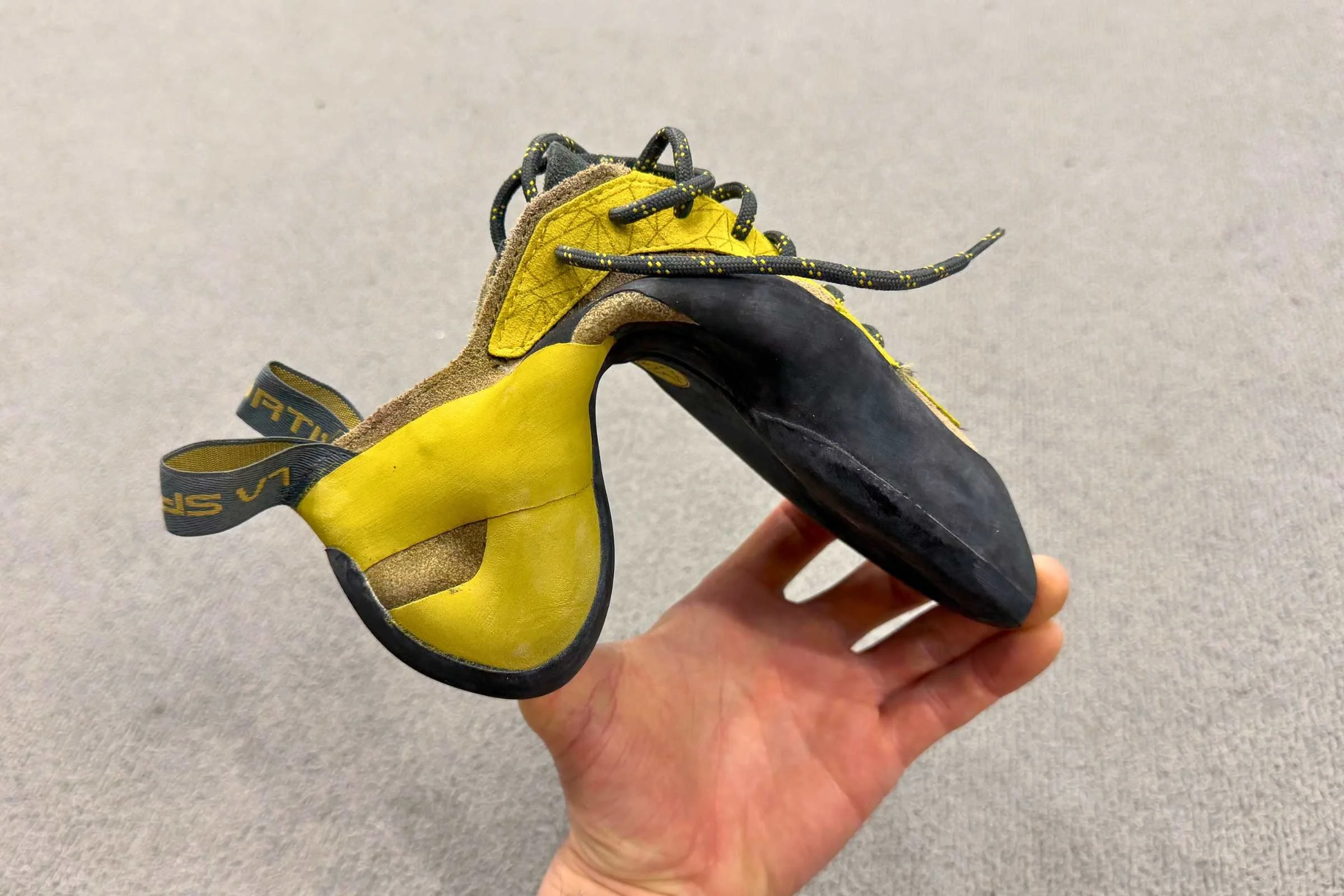
The La Sportiva Finales have a much more comfortable fit than more aggressive shoes, making them a fantastic pick for beginners. The shoes are flat, so your feet don’t feel contorted or squished. They were so comfortable that we didn’t take them off a single time during multiple climbing sessions that lasted more than three hours.
The fit of the Finales is pretty standard, not too narrow and not too wide. They felt a tad narrower than some other beginner shoes, so if you have wide feet they might not be the best pick. Sizing felt as expected for climbing shoes, and we’d recommend going down one full EU size for a comfortable, precise fit.
-
Compared to other beginner shoes we tested, the Finales felt the most precise and powerful. The toes come to a pretty narrow tip, allowing you to carefully and confidently use all sorts of footholds. Because they aren't downturned or asymmetrical, they didn’t feel as precise or powerful as other shoes on this list, but they performed extremely well, especially for the price tag.
The Finales excel on most footholds, but where they fell a bit short in our testing was on overhangs and on truly tiny holds. Downturned shoes are best for climbing on super steep terrain, and since the Finales are flat, it can be a bit harder to dig your toes into footholds in a cave. And because the tip of the toe isn’t quite as precise as more expensive shoes, we had a bit of trouble standing on credit-card-thin crimps on a stemmy sport route. However, on the vast majority of climbs, especially on vertical terrain, the Finales were fully equipped for the job.
-
One of the biggest differences between the Finales and other beginner climbing shoes is the rubber. Most low-cost shoes we tried use proprietary rubber that didn’t feel very sticky. The Finales, on the other hand, use Vibram XS Edge, which is a compound found on many top-tier climbing shoes. We noticed a difference while climbing in the Finales, and they felt more stable and stickier on all types of holds while climbing indoors and outside.
Where the stickiness of the Finales don’t excel, however, is in toe and heel hooking. There isn’t a ton of rubber coverage in those areas, particularly on the toes, so hooks can feel more difficult than with more technical shoes.
Another reason the Finales won us over is because of their softer design. The other beginner climbing shoes had one solid piece of rubber as the outsole, creating a stiff, rigid shoe. This might be nice for beginners because it means your toes feel more supported and protected, but we liked the softer design of the Finales better. They use two pieces of rubber on the outsole, and as a result, these shoes are more sensitive and flexible for smearing and standing on volumes.
-
The La Sportiva Finales are an extremely versatile pair of climbing shoes. They’re comfortable, which means you can wear them for long sessions both indoors and outside, and you can even leave them on when you’re belaying. This comfort makes them an enticing option for any climber.
The combination of sticky rubber and a slightly soft design makes the Finales a good fit for basically any type of climbing. We enjoyed bouldering and sport climbing in them, and we only wished for more technical shoes when we were climbing on steep terrain or needed to perform a lot of toe and heel hooks.
The flat design and solid performance also make these great for long sport days or multi-pitch adventures, too.
We haven’t noticed any durability issues with these shoes yet. The toe rubber is in great shape after our testing, and we haven’t noticed any fraying or damage to the laces, upper material, or pull tabs.
Best bouldering shoes for advanced climbers: Scarpa Drago
Shape and downturn: Highly aggressive and asymmetrical
Closure type: Velcro strap
Rubber and thickness: 3.5mm Vibram XS Grip 2
Stiffness: Low
Fit profile: Narrow
What we liked: Super soft and aggressive design, tons of rubber all around, excellent power production
What could be better: Too soft for some, too uncomfortable for some, closure system is simple
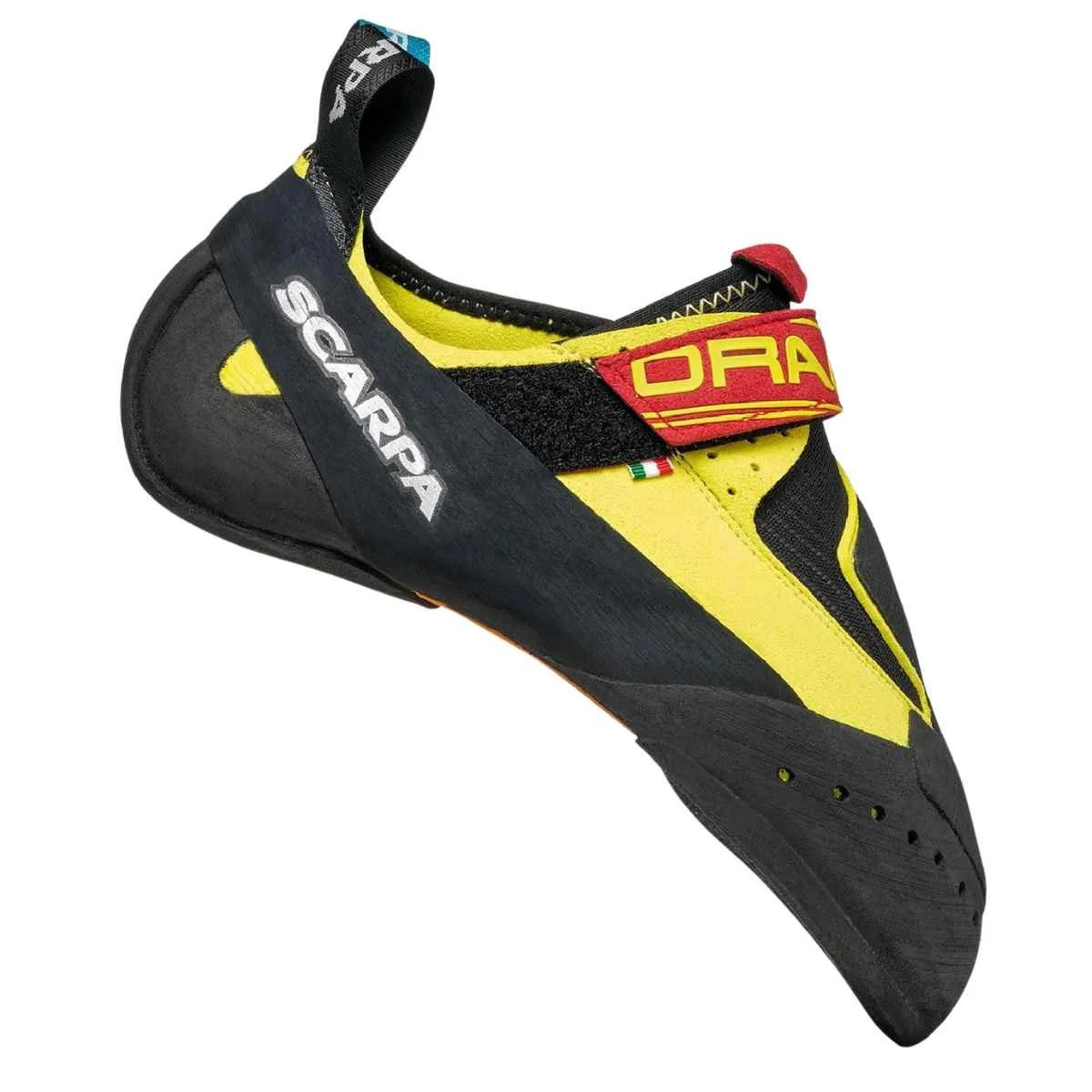
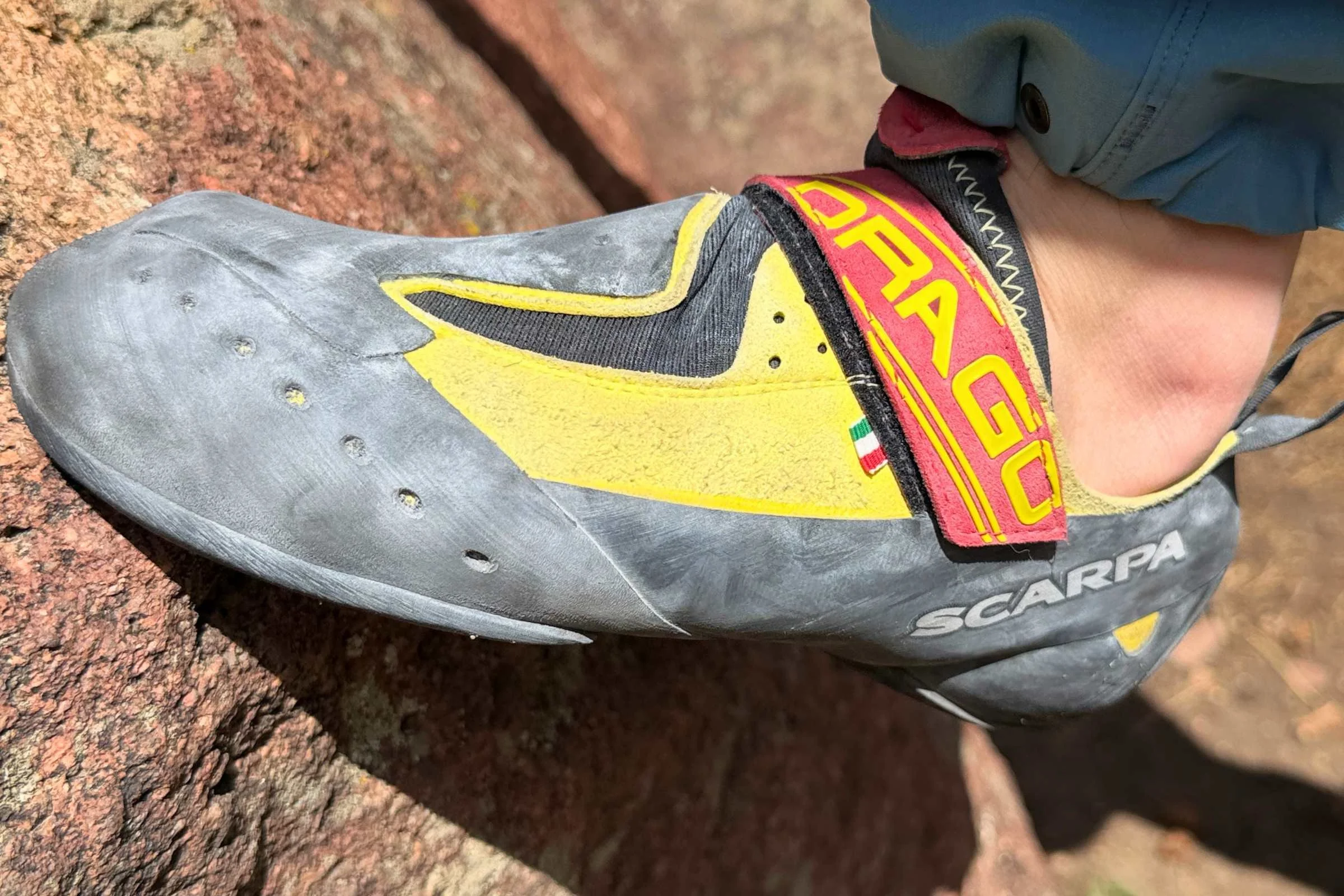
The Scarpa Dragos are a soft pair of shoes that are amazingly precise and powerful. They’re some of the narrowest and most aggressive shoes we’ve tested, so don’t expect them to be comfortable. However, if you need highly downturned and asymmetric shoes to help you send your overhung project, these are the pair for you.
Scarpa Drago
men's
Women's
-
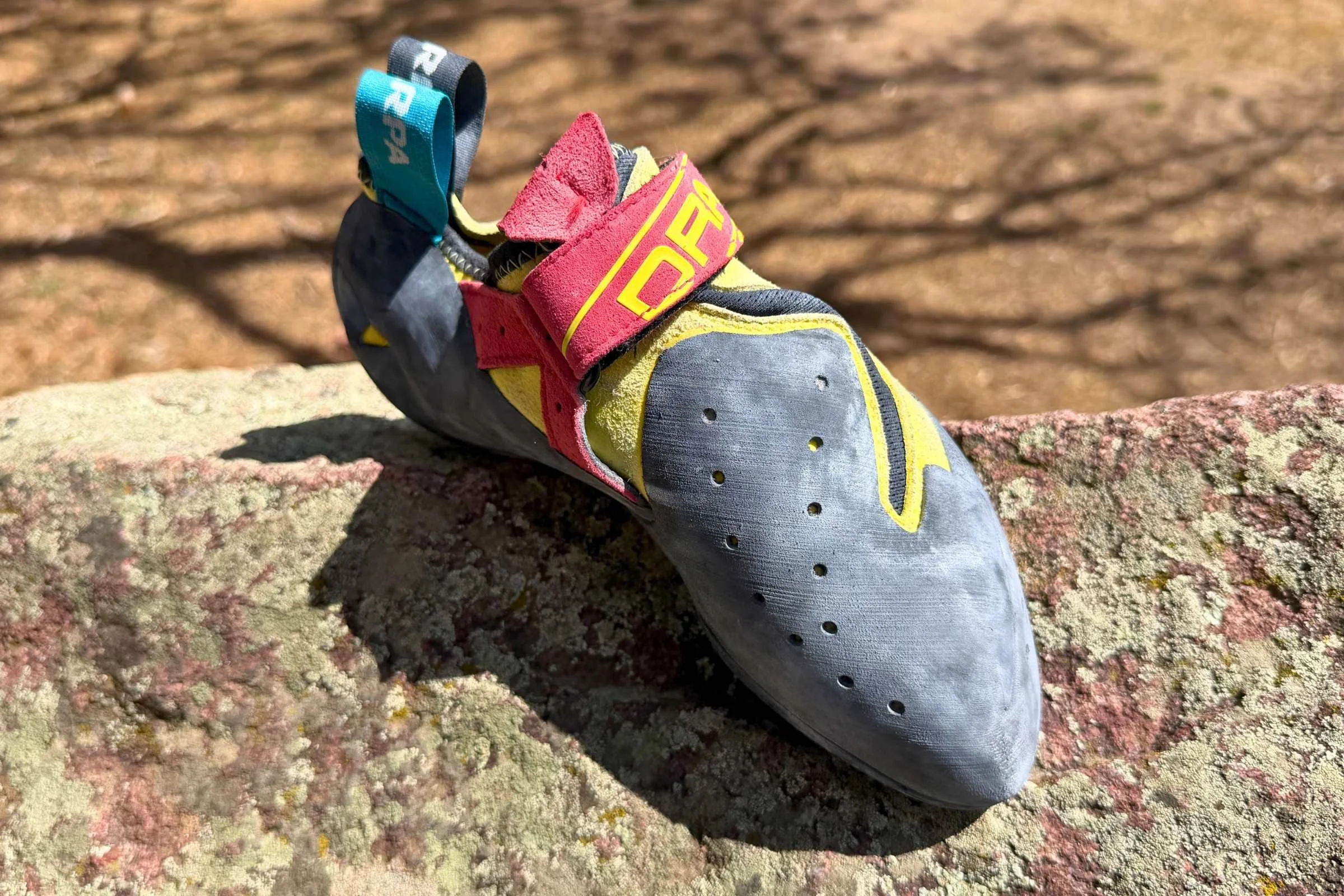
The Scarpa Dragos are a soft, aggressive pair of bouldering shoes perfect for those who want the best performance out of their shoes. The design is highly asymmetrical and aggressive, so you can focus as much power as possible into the tip of the toe. This means the Dragos aren’t a very comfortable pair of shoes, but they are fantastic at generating power on all sorts of climbs.
The fit is narrower than most of the other high-performance shoes we tested, including the Scarpa Instinct VSRs and La Sportiva Solution Comps. The toe box doesn’t have a lot of room, so your toes will definitely be squished inside. Climbers with wide feet won’t feel super comfortable in these shoes, especially since they’re so asymmetrical. They’re not meant to be comfortable, but people with narrower feet will probably like them the best.
We ordered our normal performance size of an EU 40.5, and they fit just like we thought they would. They do feel smaller than some other shoes due to the narrow build and aggressive design, so if the size you currently wear in a different shoe feels as tight as you can go, going up a half size in the Dragos could be a good idea.
-
Precision and power are where the Dragos set themselves apart. The ultra-asymmetric design and aggressive downturn combine to provide the most power production of any shoes we’ve tested. Whether it’s powering off incut footholds in an overhang, balancing on tiny chips on slab, or trying to stick our feet back on after cutting loose, we noticed a clear difference in how much energy and power we could create in these shoes.
The toe box itself is narrow, which means the rubber comes to a very fine point at the tip of the toe. You’ll have to be more accurate with your footwork, but once you have the skills to place your toes exactly where you want to, the precision of the Dragos feels great.
-
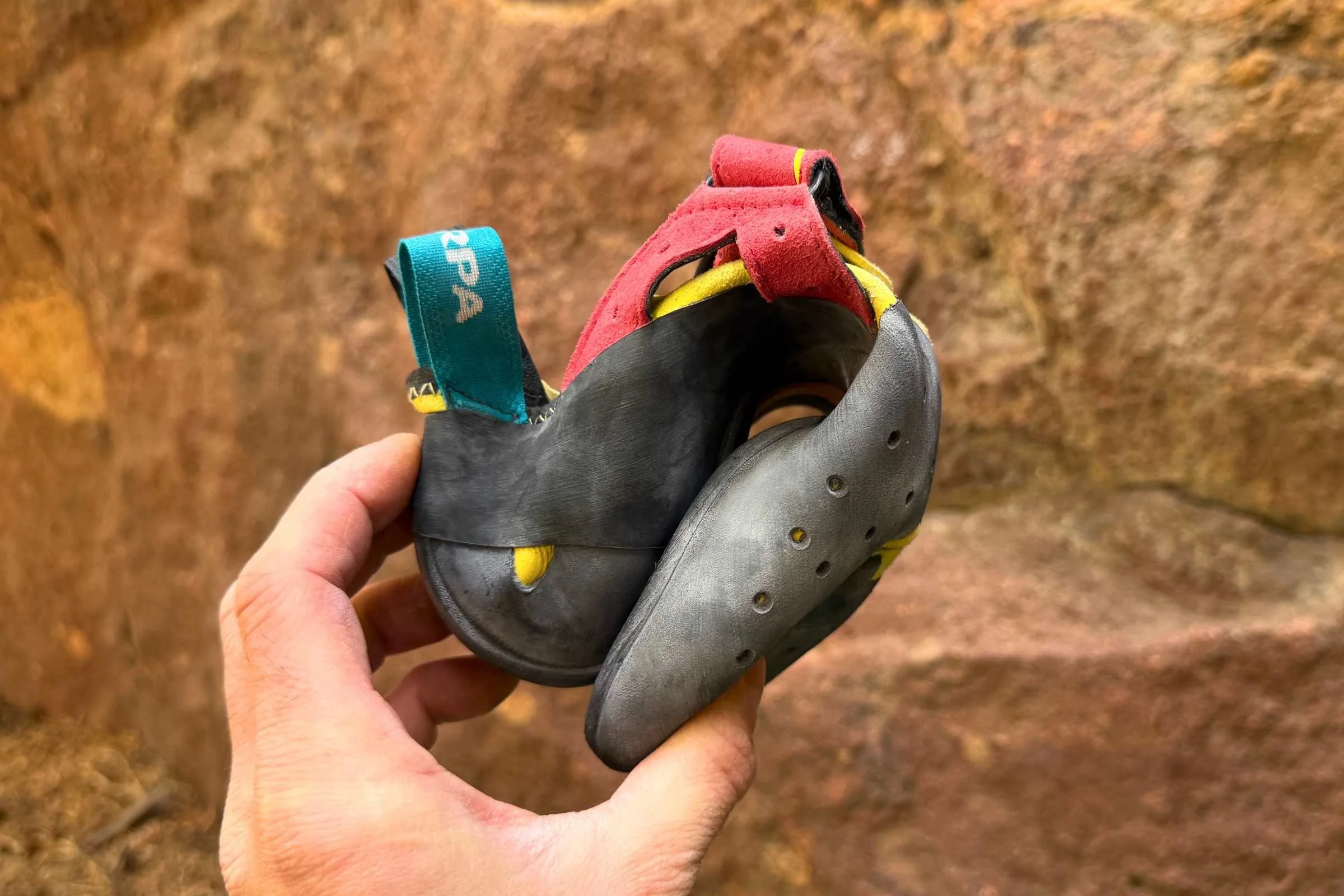
Besides ultra-soft slippers like the La Sportiva Mantras, the Dragos are some of the softest and most sensitive climbing shoes we’ve tried. They can easily be folded in half, and while climbing, you can feel the shoes squishing and bending. If you like feeling where your feet are, you’ll love the Dragos. We found this sensitivity especially helpful while performing heel hooks and toe hooks, since you can adjust your feet to fit into the hold just right.
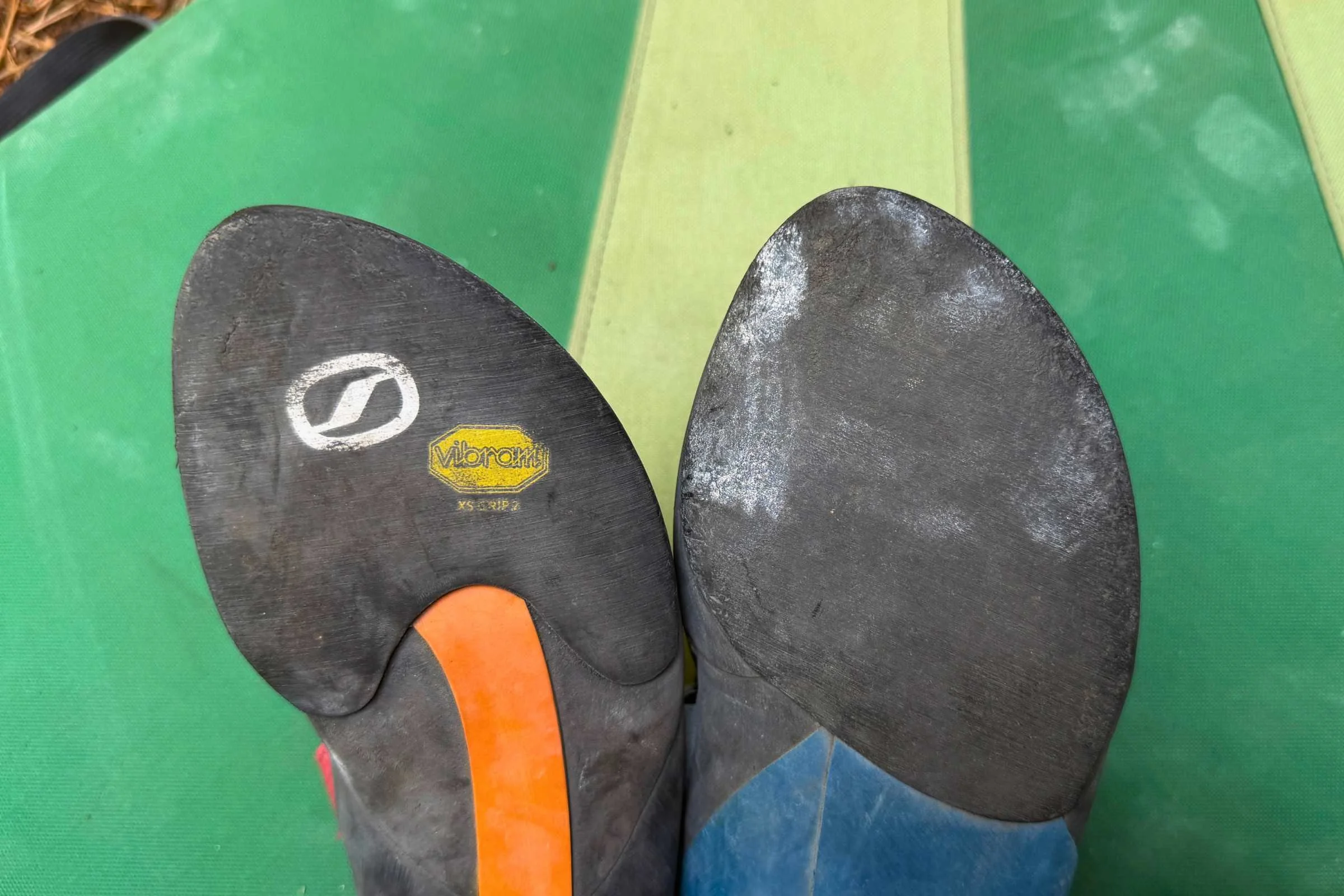
The friction of the Scarpa Dragos also stands out, because they’re nearly entirely wrapped in Vibram XS Grip 2 rubber. Only a small patch on the outside of your foot isn’t covered with it, making these some of the stickiest shoes we’ve ever climbed with. The toe rubber patch in particular is massive and extends around the inside of the shoe. We love this because it makes awkward hooks and scums (think squeezing around an area on a compression problem) so much easier.
-
Versatility is where the Dragos fall short. They’re a very specialized pair of shoes, and they excel when bouldering or maybe doing short sport routes. The softness can make your feet feel tired or even painful if climbing for longer.
We haven’t experienced any durability issues with the Dragos yet. The rubber is wearing down at a normal pace, and there hasn’t been excessive damage to the upper. Because these shoes do have so much rubber, you probably won’t have to worry about the upper getting damaged. However, Vibram XS Grip 2 prioritizes stickiness over longevity, so you will have to get them resoled if you want these shoes to last for years.
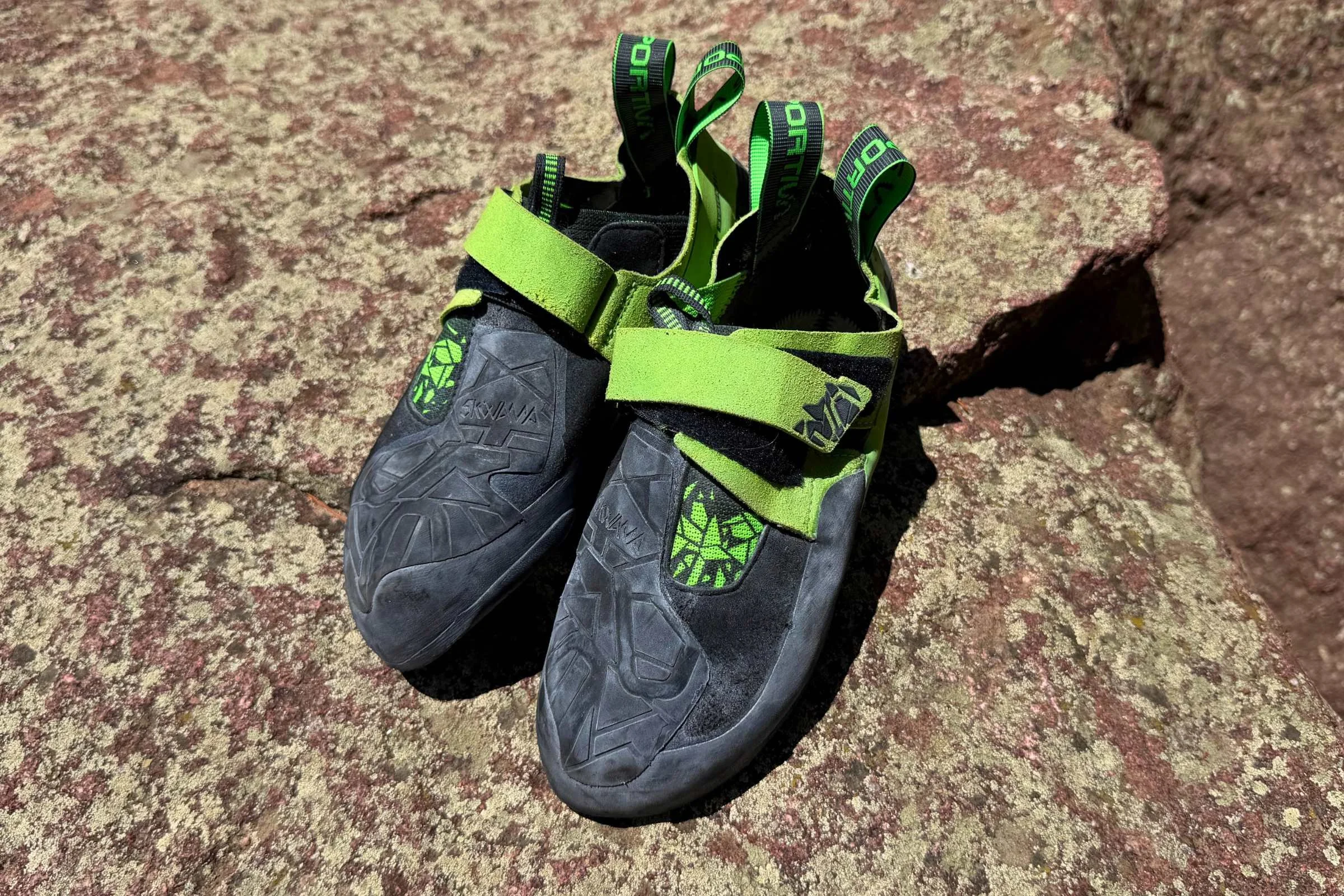
Best vegan bouldering shoes: La Sportiva Skwama Vegan

Shape and downturn: Slight asymmetry and downturn
Closure type: Velcro strap
Rubber and thickness: 4mm Vibram XS Grip 2 / S-Heel
Stiffness: Medium
Fit profile: Wide
What we liked: Wide fit, slightly stiffer than other shoes we tested, vegan build, powerful
What could be better: Takes a while to break in, upper isn’t very comfortable
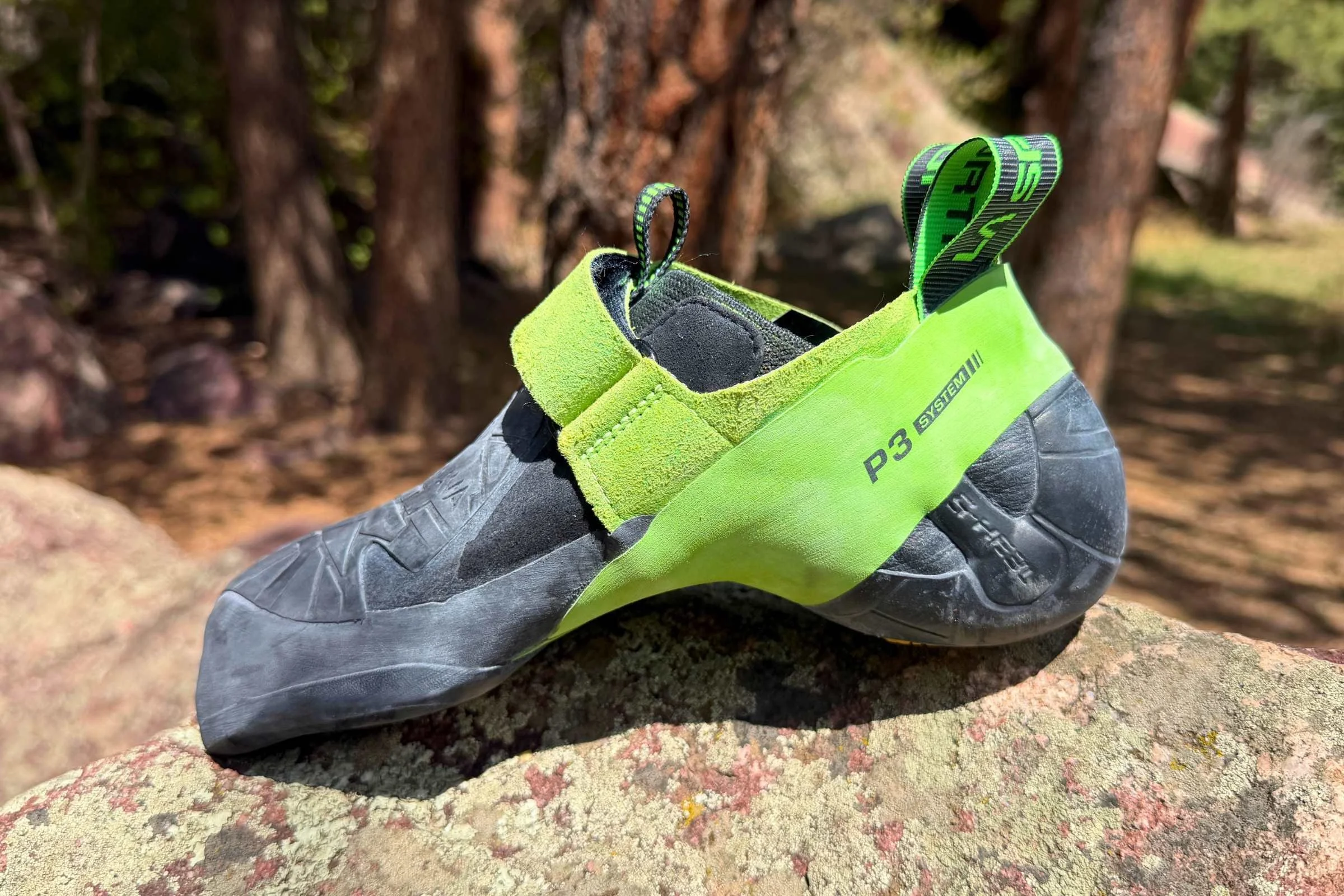
The vegan materials of the La Sportiva Skwama Vegan make them a bit of a pain to break in, but their comfort and performance make it well worth the effort. They have some of the widest and longest toe boxes of all the shoes we tested, making them a great pick for climbers with wide feet. But even though they’re comfy, they have just enough downturn and asymmetry to perform incredibly well on all sorts of terrain.
La Sportiva Skwama Vegan
men's
Women's
-
The La Sportiva Skwama Vegans have a wide fit, making them great for climbers with wide feet. They were some of the widest shoes we tested, even edging out the Scarpa Instinct VSRs. On top of being a tad wider than the VSRs, they’re also a tad longer, meaning there’s more room in the toe box for your feet. They still aren’t the most comfortable pair of shoes because of their downturn and slight asymmetry, but our feet didn’t feel as squished inside as other high-performance shoes.
We tested the Skwama Vegans in an EU 40.5, our preferred size for performance shoes. The shoes felt slightly bigger than other aggressive shoes we tried, however, and we probably could have downsized even further for a tighter fit. According to La Sportiva’s sizing, their EU 40.5 is a US men’s 8, which is a full size smaller than what we wear in street shoes. I’d recommend downsizing a full size for a fit that feels tight but not ridiculously so. And if you love super tight shoes for the best performance, bumping down another half EU size is a good idea.
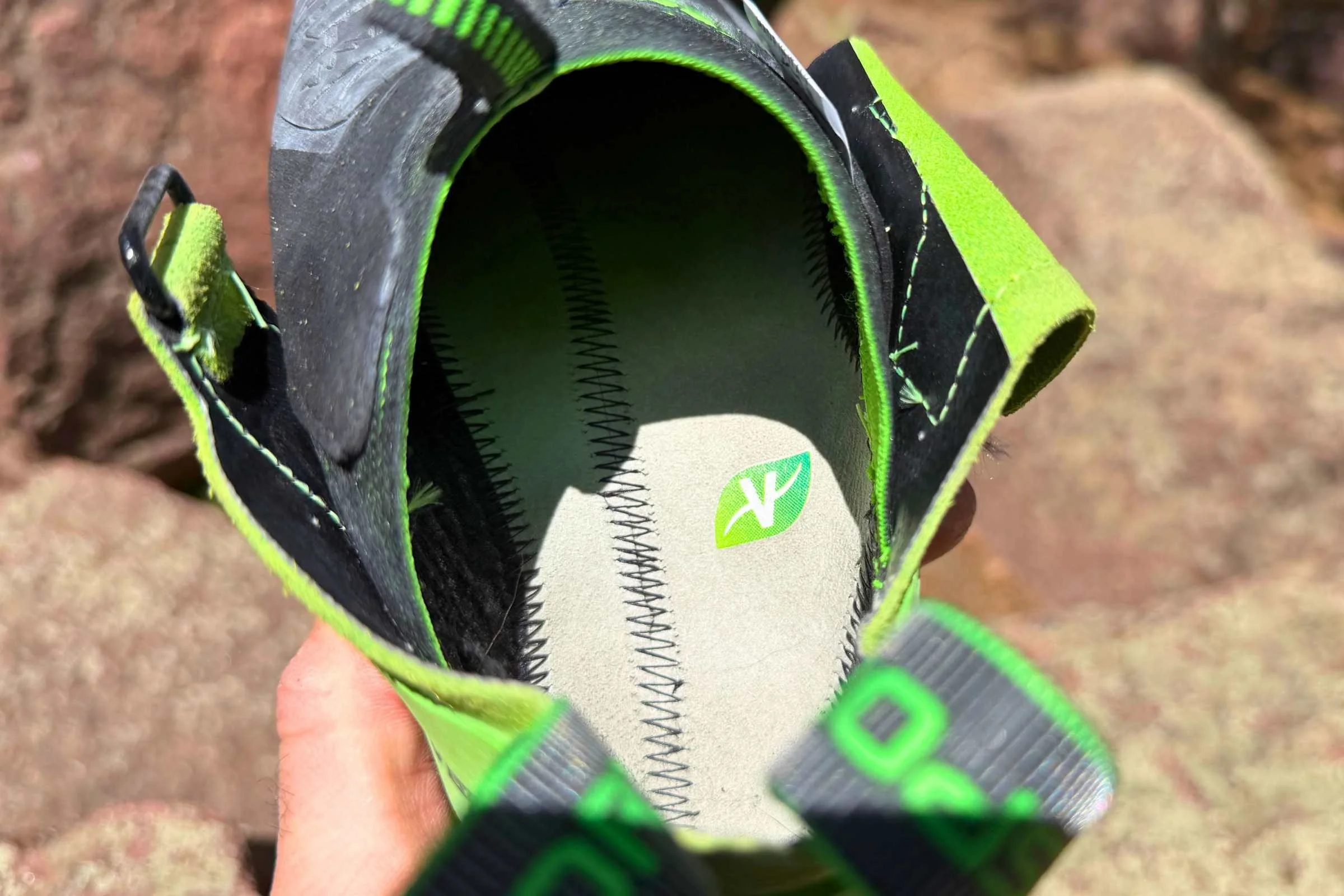
When you downsize in the Skwama Vegans, just be ready for a couple of brutal break-in sessions. Because these shoes have so much rubber and use synthetic materials instead of leather, they felt stiffer than other pairs during our first couple of days climbing. They took a bit longer to break in than other shoes too, so just be prepared to take them on and off a lot as they soften up.
-
The toe box of the La Sportiva Skwama Vegans is quite similar to that of the Scarpa Instinct VSR. The Skwamas aren’t as downturned, but the size and shape are close to the same dimensions. Because of that, the precision of the Skwamas felt a lot like the VSRs, which is definitely a good thing. We were able to accurately place our toes on small holds on slabs, overhangs, and all sorts of other climbs. During our first session in these shoes, we even climbed on a 40-degree board, and were very impressed with them.
The Skwamas aren’t as downturned as the La Sportiva Solution Comps or the Scarpa Instinct VSRs, so they don’t produce quite as much power. However, the lack of energy transfer didn’t really bother us that much, and we still were able to push off small footholds while climbing.
-
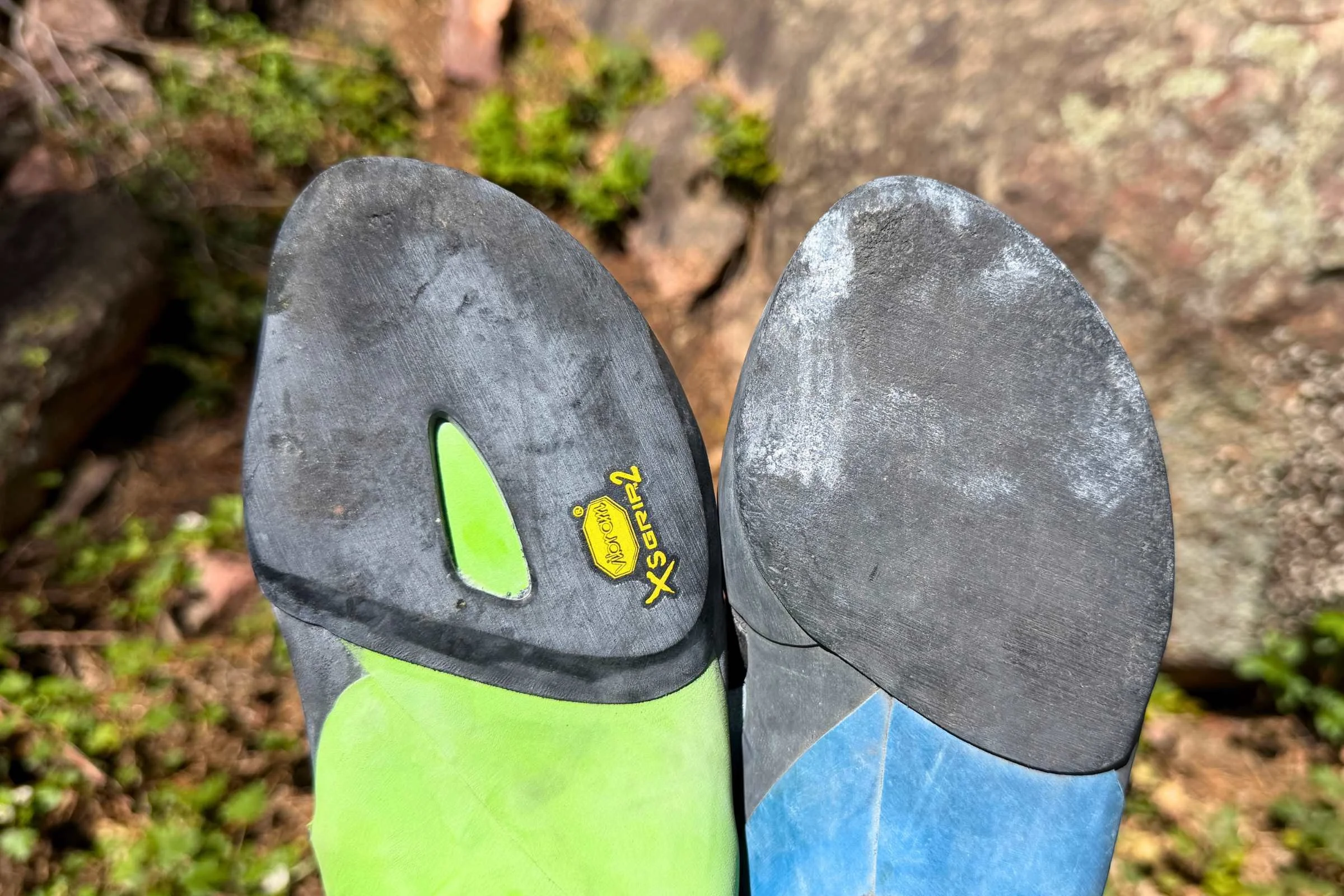
The Skwama Vegans use Vibram XS Grip 2 and, just like all the other shoes that use the same rubber, they feel super sticky. The rubber on the toe patch and particularly the heel doesn’t feel quite as sticky compared to some other shoes, especially the Scarpa Dragos, so those hooks might not feel as locked in.
The Skwama Vegans are also stiffer than basically all of our other top bouldering shoes. We would still classify them as soft, but they have a tad more rigidity than the La Sportiva Solution Comps. This makes them a bit less malleable, but they’ll support your feet more during long climbing sessions.
The Skwama Vegans also have 4 millimeters of Vibram rubber instead of the 3.5 millimeters most other comparable shoes have. That might not seem like a lot, but it can definitely add to the stiffness of a pair of shoes like the Skwamas.
-
Because of their balance of softness and rigidity, the Skwama Vegans are a very versatile pair of shoes, just like the La Sportiva Solution Comps. The Skwamas are a bit stiffer, so they’ll feel even better if you take them on long days sport climbing or on multi-pitch routes. But they’re not so stiff that you can’t feel where you’re putting your feet. We enjoyed their sensitivity while bouldering indoors and outside.
The materials of the Skwama Vegans require more break-in time than most other shoes we’ve tested, but they haven’t shown any signs of wearing down. We haven’t climbed in these shoes for very long yet, but from our handful of sessions, they feel like sturdy shoes. We’ll be sure to keep an eye on their durability for future updates.
Other bouldering shoes we tested
Adidas Five Ten Niad Moccasym
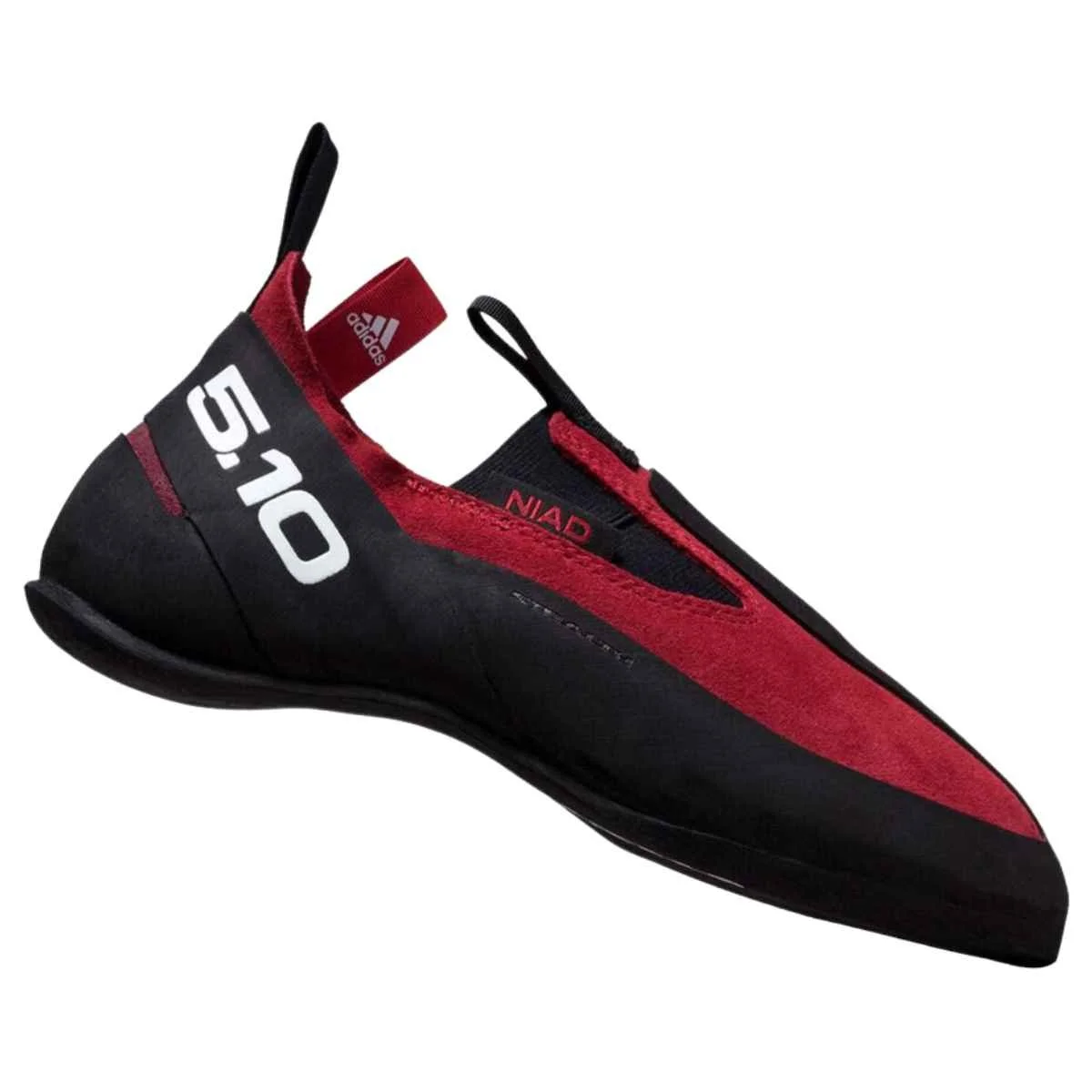
Shape and downturn: Flat
Closure type: None
Rubber and thickness: Stealth C4 rubber outsole
Stiffness: High
Fit profile: Best for average- to narrow-width feet
If the Adidas Five Ten Niad Moccasym slippers had more stable stock, they would have been our pick for the best budget bouldering shoes. Unfortunately, only a few sizes are available for purchase and we’re unsure if they’ll be restocked. If you can find a pair in your size, these shoes are a great value. They take a bit to break in and they’re stiff, but they performed better than nearly all of the beginner shoes we tested, with a price tag of $125.
Adidas Five Ten Niad Moccasym
men's
Women's
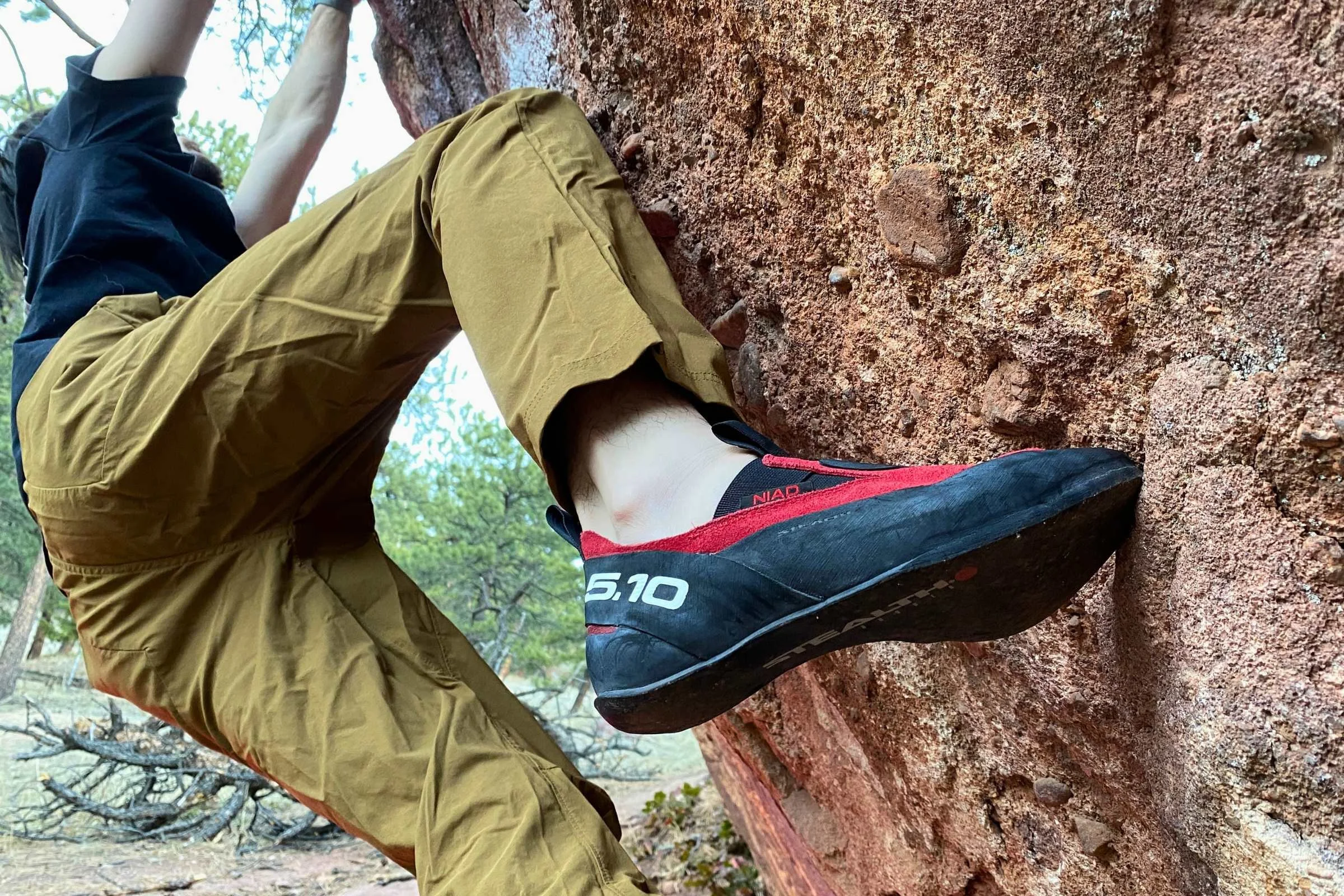
The Adidas Five Ten Moccs are great, but stock is hard to find.
Scarpa Veloce
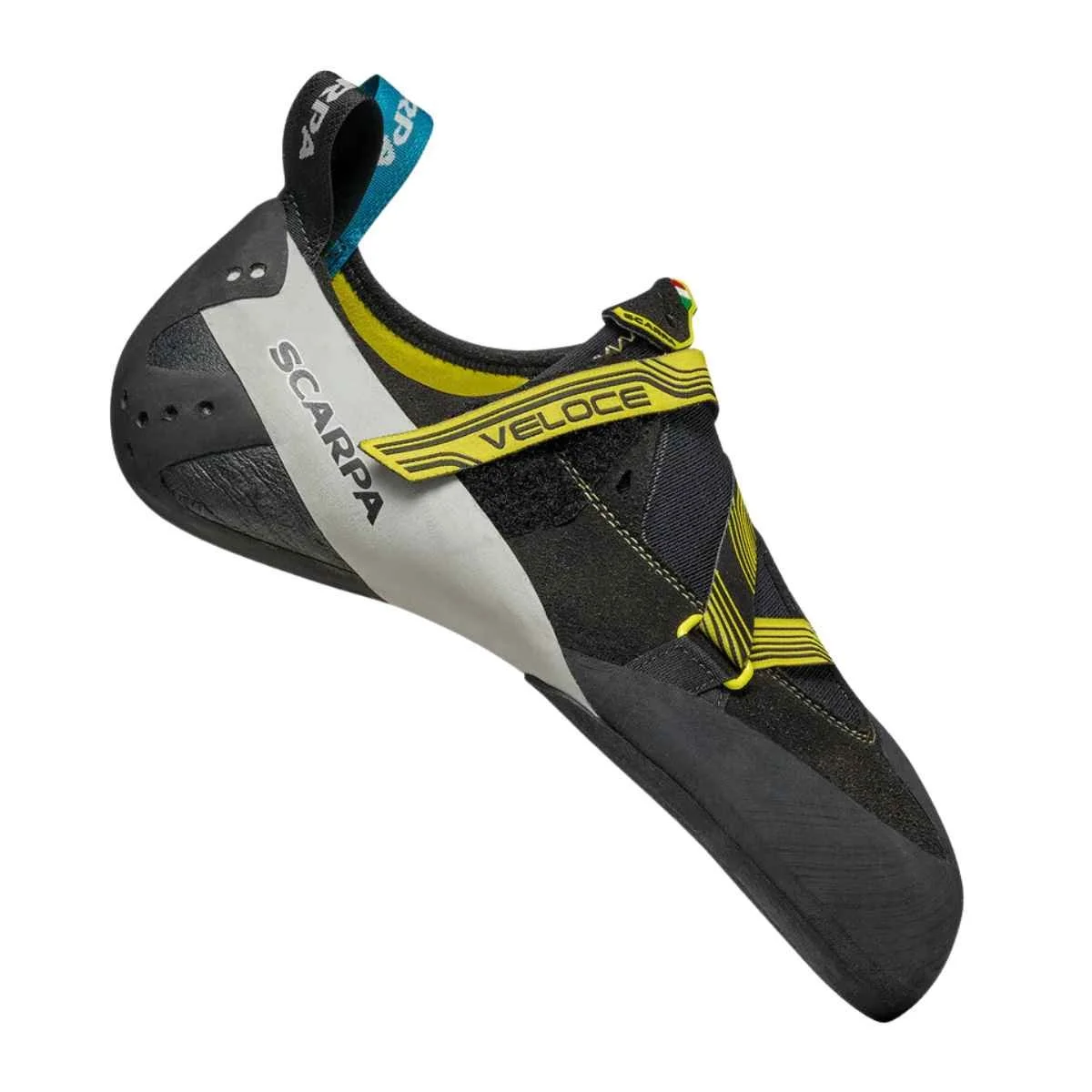
Shape and downturn: Moderate downturn and asymmetry
Closure type: Velcro
Rubber and thickness: 4mm S-72
Stiffness: Low
Fit profile: Slightly short and wide
If we had to pick a runner-up for the best indoor bouldering shoes, it’d be the Scarpa Veloces. They’re nearly as soft as the La Sportiva Mantras, but they feature a normal rubber design. That means they have an edge, so you don’t have to learn how to use La Sportiva’s NoEdge, but you also lose out on some sensitivity and durability. We got a hot spot after wearing these for a few days in a row (yes, they were completely broken in), so they fell down in our rankings.
Scarpa Veloce
men's
Women's
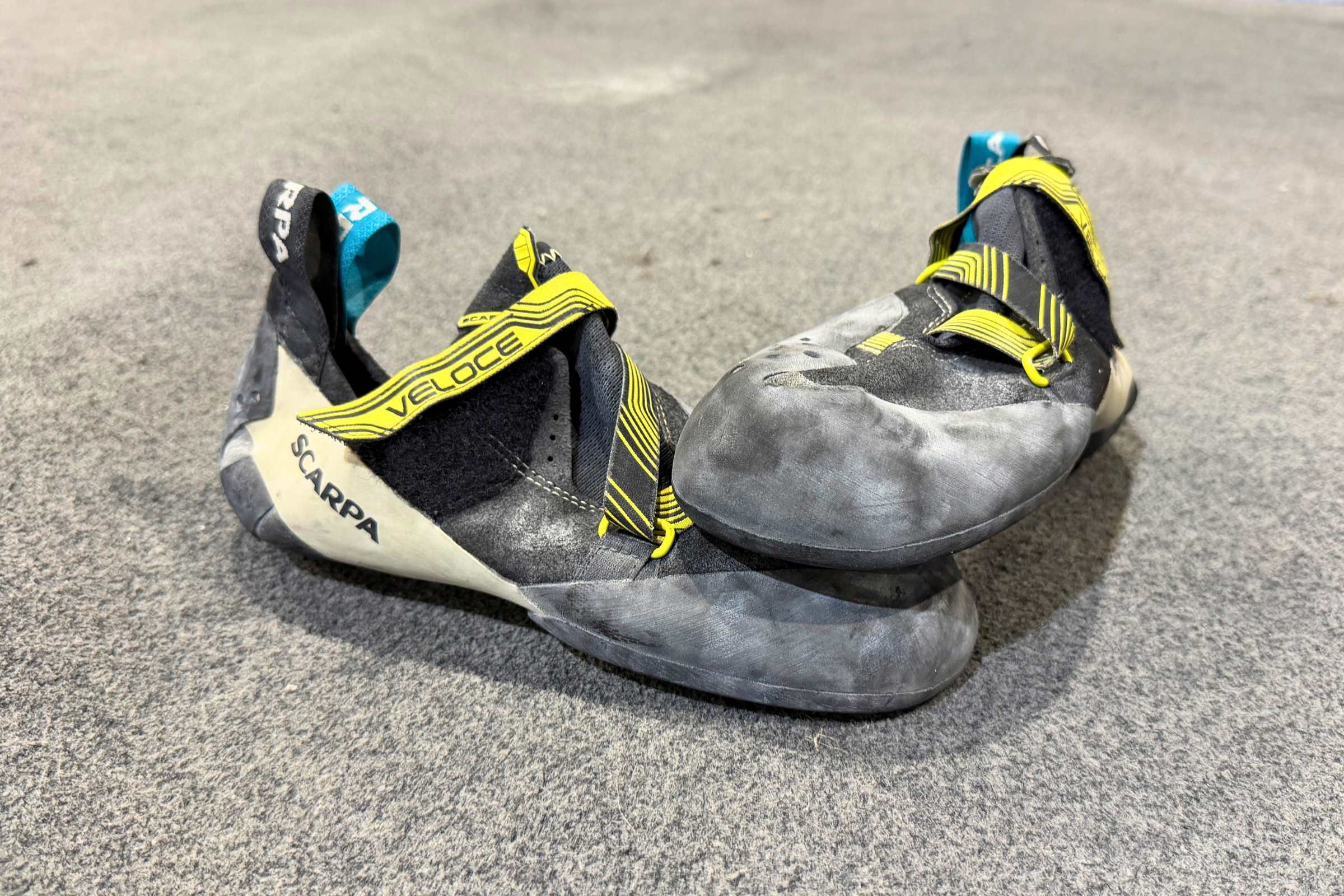
Scarpa’s Veloces are soft and precise indoor shoes.
Butora Gomi
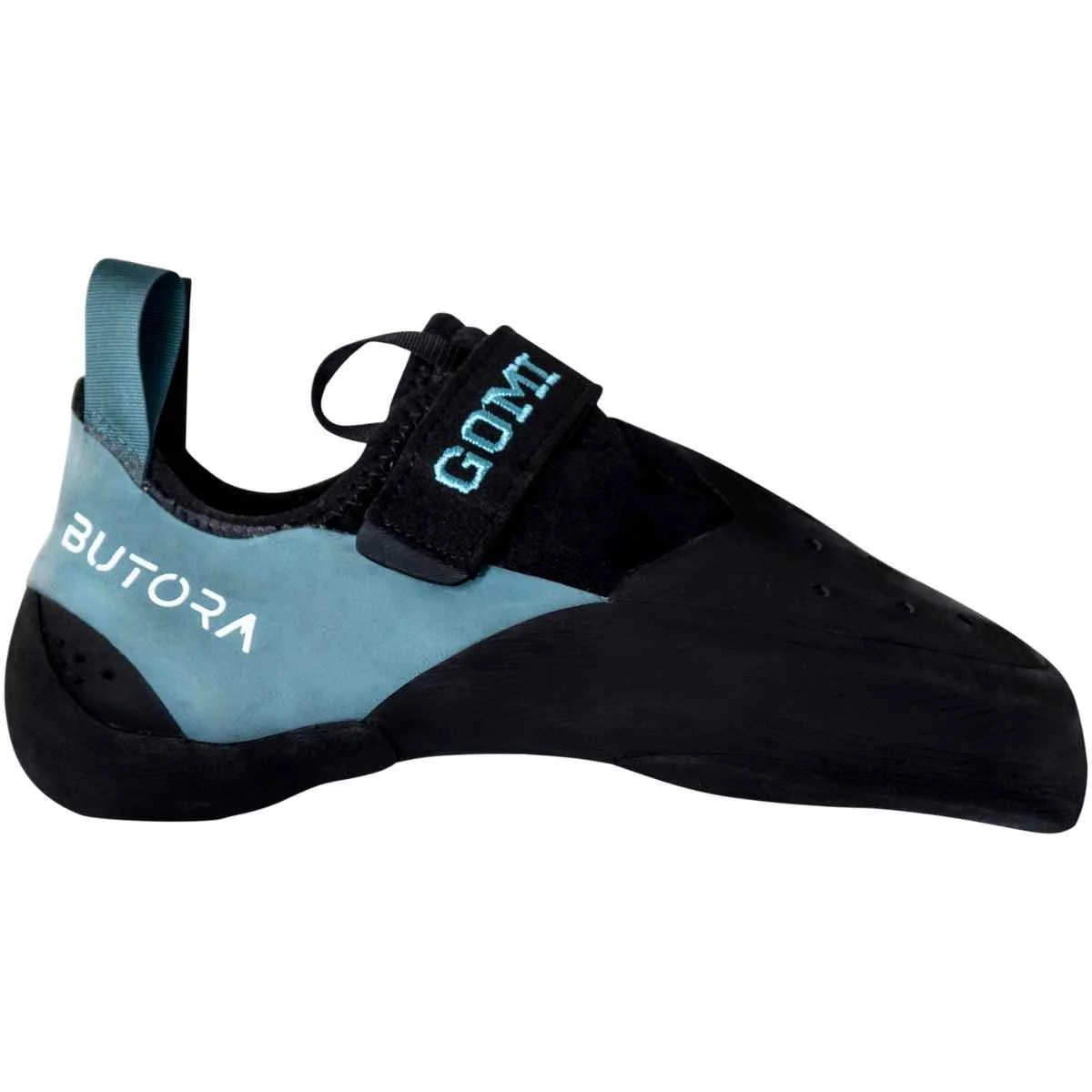
Shape and downturn: Moderate downturn and asymmetry
Closure type: Velcro
Rubber and thickness: 4mm NEO Fuse Sticky Rubber
Stiffness: Low
Fit profile: Slightly wide
The Gomis were a close contender for our top picks, and we liked climbing in these shoes a lot. Similar to the Scarpa Dragos, the toe box of the Gomis is covered in rubber, making weird toe hooks feel easier. The rubber that Butora uses is sticky, and these shoes have a nice balance of sensitivity and power. We think our winners like the Solution Comp, Instinct VSR, and others are slightly better, but if you’re looking for soft, aggressive shoes for a bit less cash, go for the Gomis.
Butora Gomi
men's
Women's
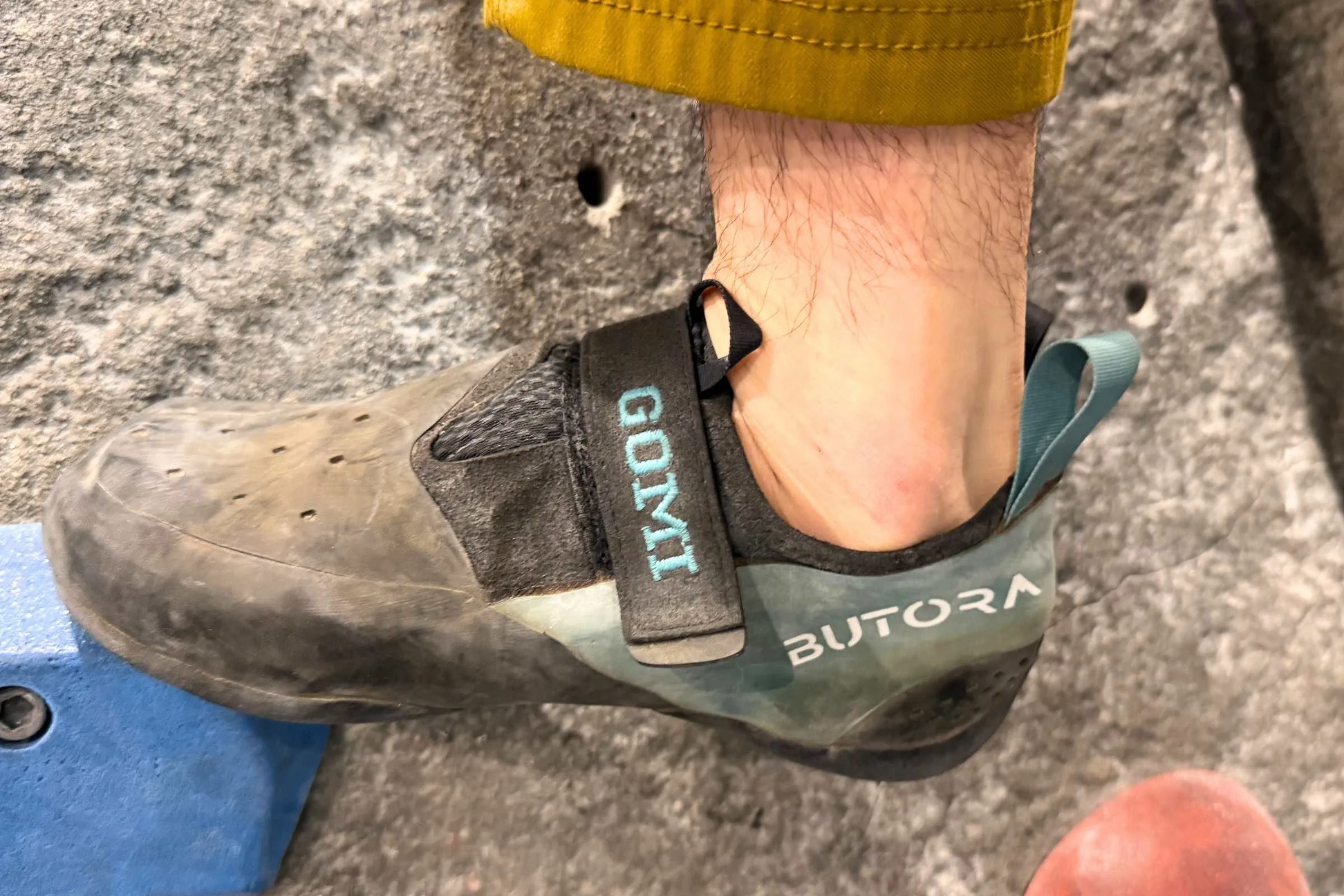
These Butora shoes are excellent, and just barely didn’t win.
La Sportiva Skwama Lite
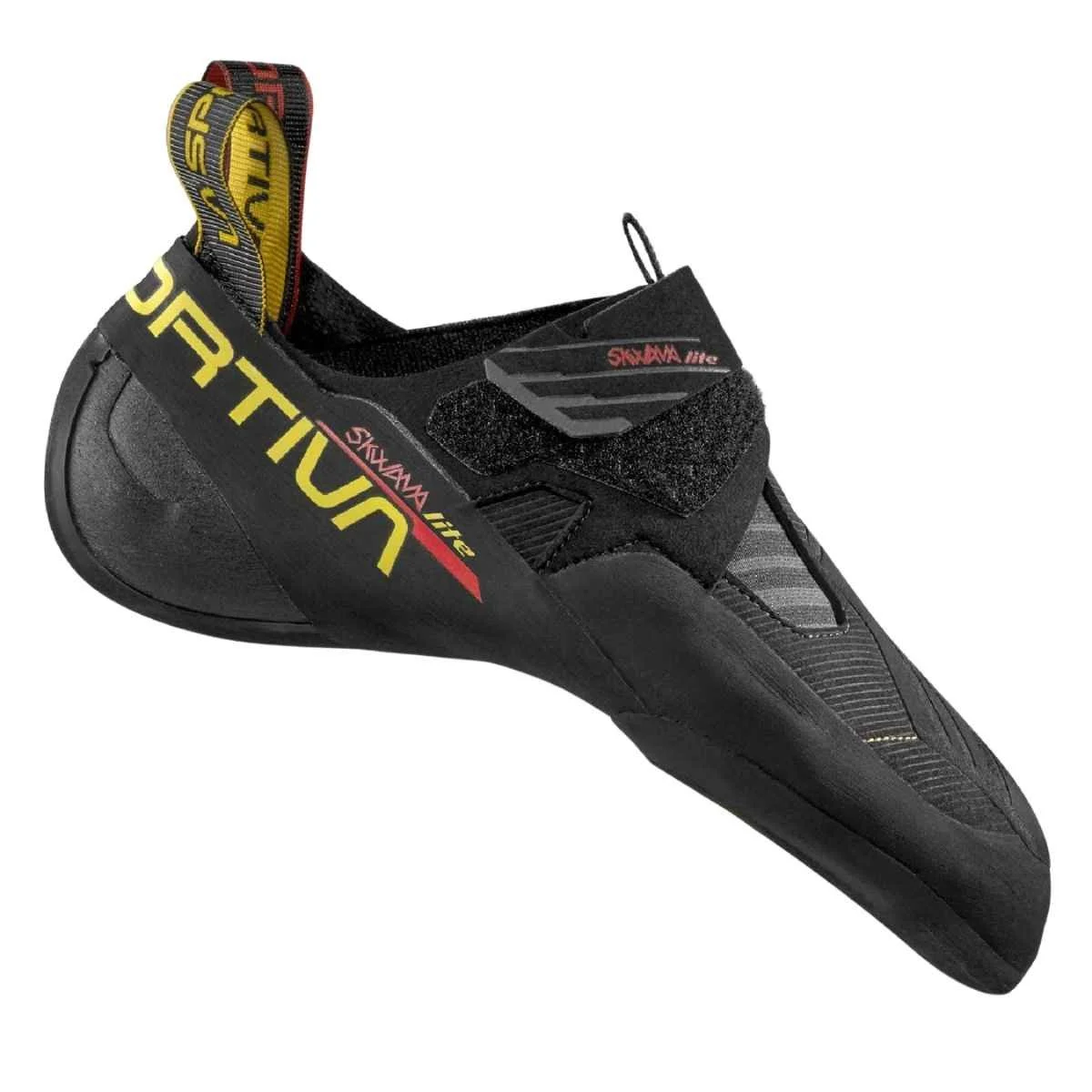
Shape and downturn: Slight asymmetry and downturn
Closure type: Velcro
Rubber and thickness: 4mm FriXion Black half-sole rubber with Delta-Cut design
Stiffness: Medium low
Fit profile: Wide
The La Sportiva Skwama Lites are just a bit too expensive to name as the best budget climbing shoes, but they came really close. At $159, they cost considerably more than beginner shoes, but they’re still a whole lot cheaper than high-performance pairs. That’s why we think they’re the perfect intermediate shoes.
They have the downturn and asymmetry of more advanced shoes, which makes them a great pair for edging and power production. The reason the Skwama Lites are cheaper than the Skwama Vegan, original Skwama, and other top-end shoes, is because of their rubber. They use La Sportiva’s FriXion Black compound, which we found wasn’t as sticky as options from Vibram. However, these low-volume shoes have a nice balance of sensitivity and stiffness, and they should definitely be on your shortlist if you want a pair that performs well on a budget.
La Sportiva Skwama Lite
men's
Women's
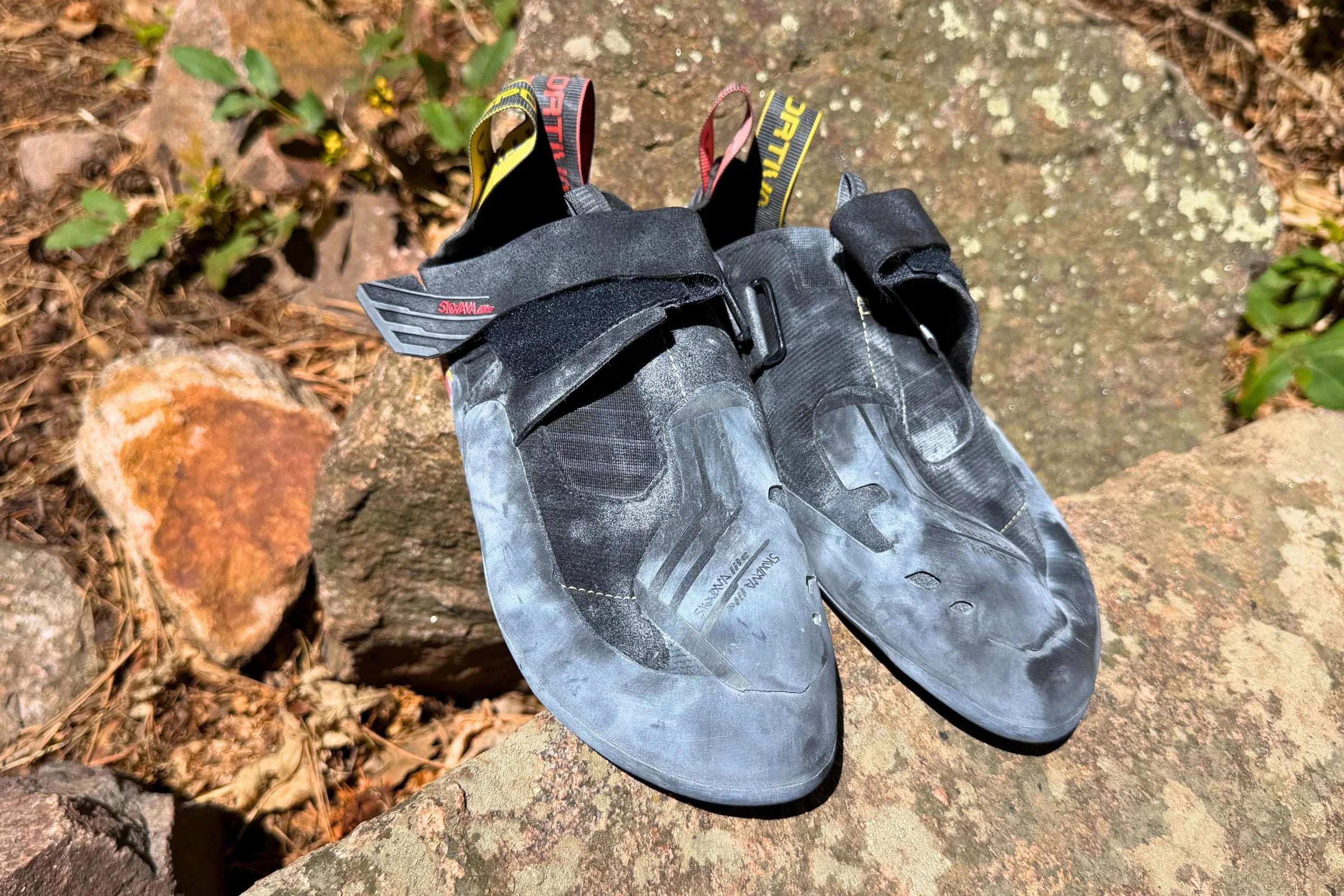
These are great intermediate shoes, as they’re versatile but not super expensive.
La Sportiva Tarantulace

Shape and downturn: Flat
Closure type: Laces
Rubber and thickness: 5mm FriXion RS
Stiffness: High
Fit profile: Long and narrow
The La Sportiva Tarantulace are infamous in the climbing community. They’re only $99, so there’s no doubt that they’re worth considering as your first pair of shoes. When we tested them, the rubber didn’t feel sticky and the laces felt bulky. Sure, they’re comfy, but the Finales provided a much better climbing experience that we think is well worth the extra cash.
La Sportiva Tarantulace
men's
Women's
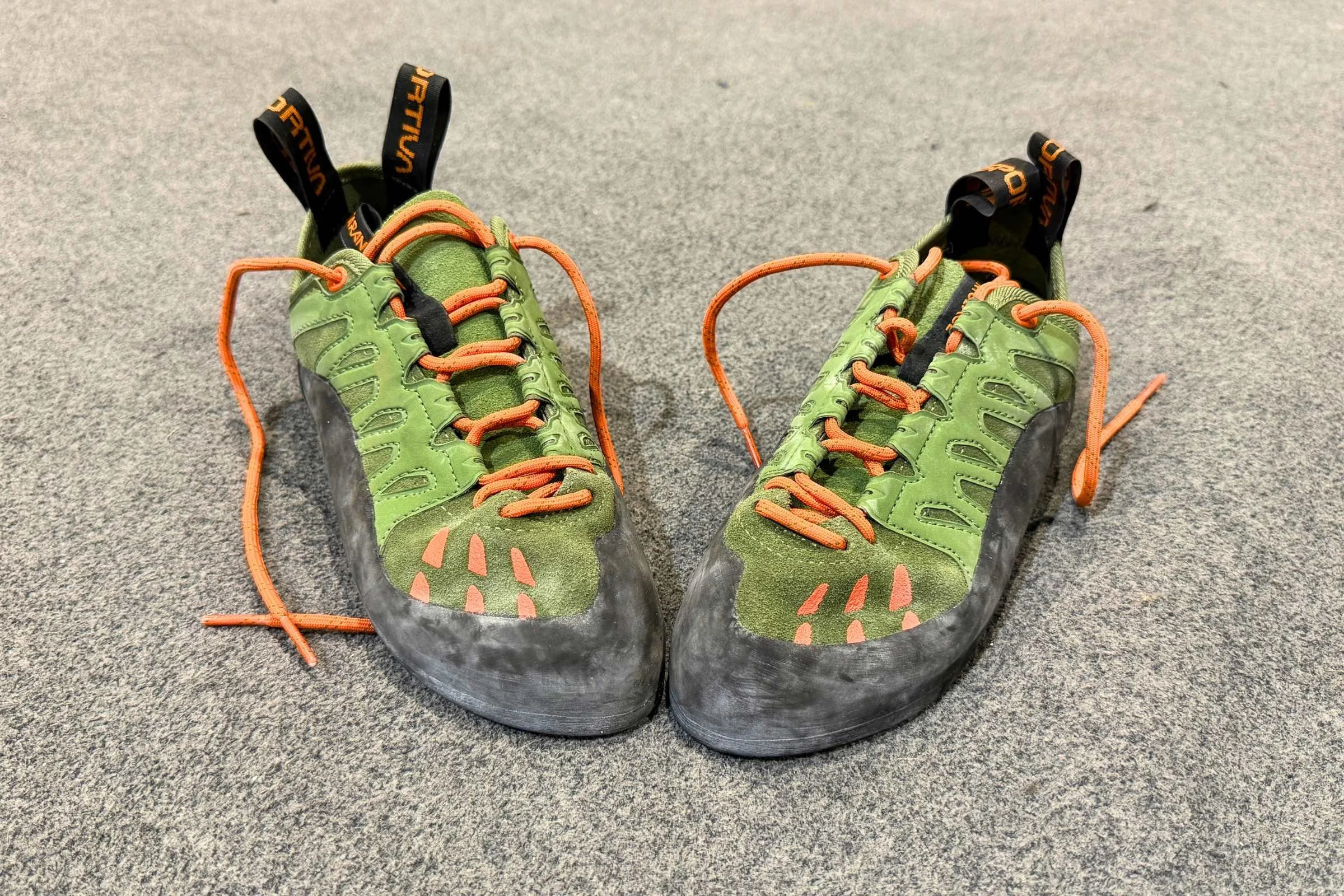
The Tarantulaces are comfortable, but not very sticky.
Scarpa Reflex VS
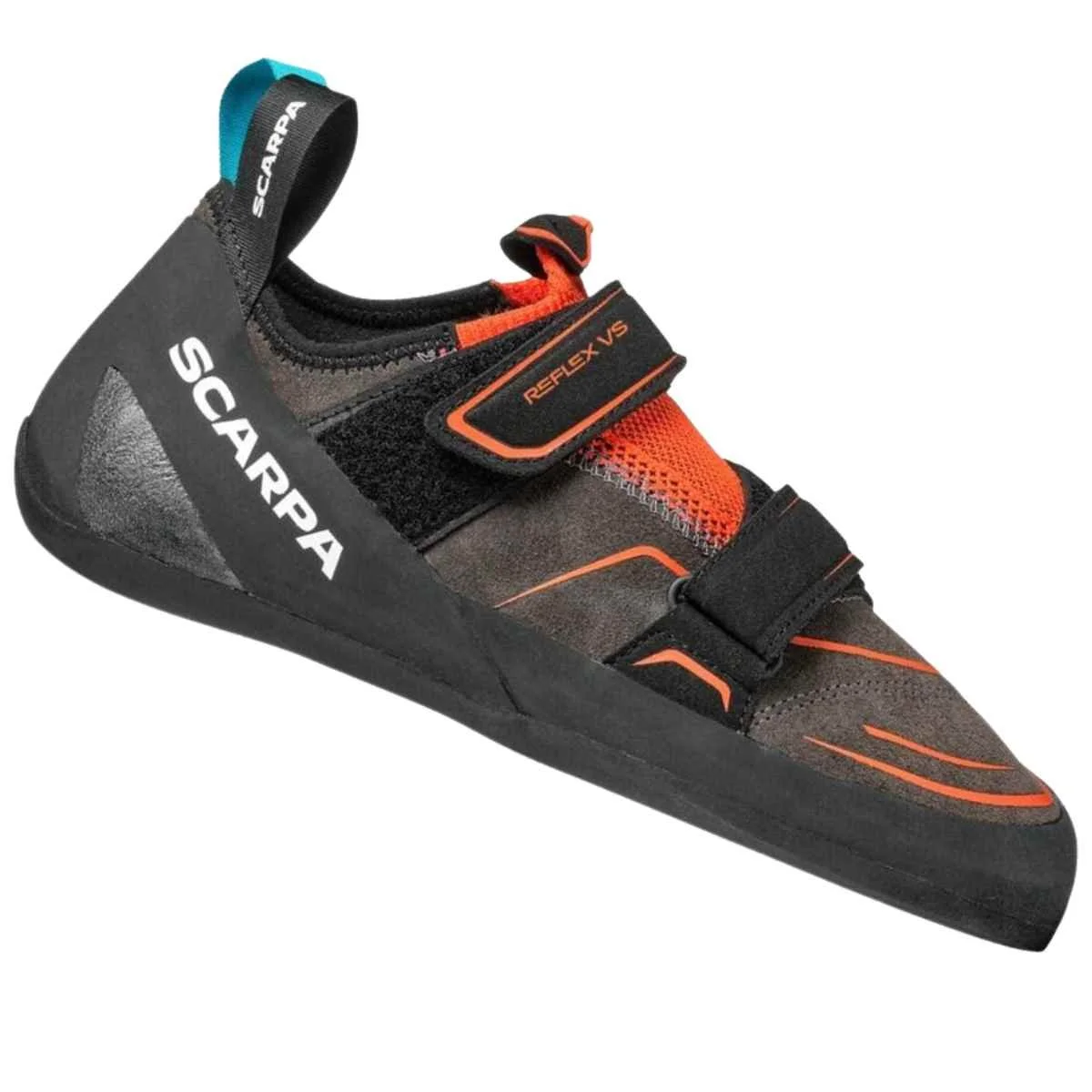
Shape and downturn: Flat
Closure type: Velcro
Rubber and thickness: 4mm Vision
Stiffness: High
Fit profile: Neutral
If you really don’t want to spend more than $100 on a pair of climbing shoes, the Scarpa Reflex VS are the ones to get. We liked the Velcro closure style better than the laces on the La Sportiva Tarantulace, the rubber felt decently sticky and the toes were precise enough. Their flat design was quite stiff, but comfortable, making these a solid budget pair for beginner boulderers and rope climbers.
Scarpa Reflex VS
men's
Women's
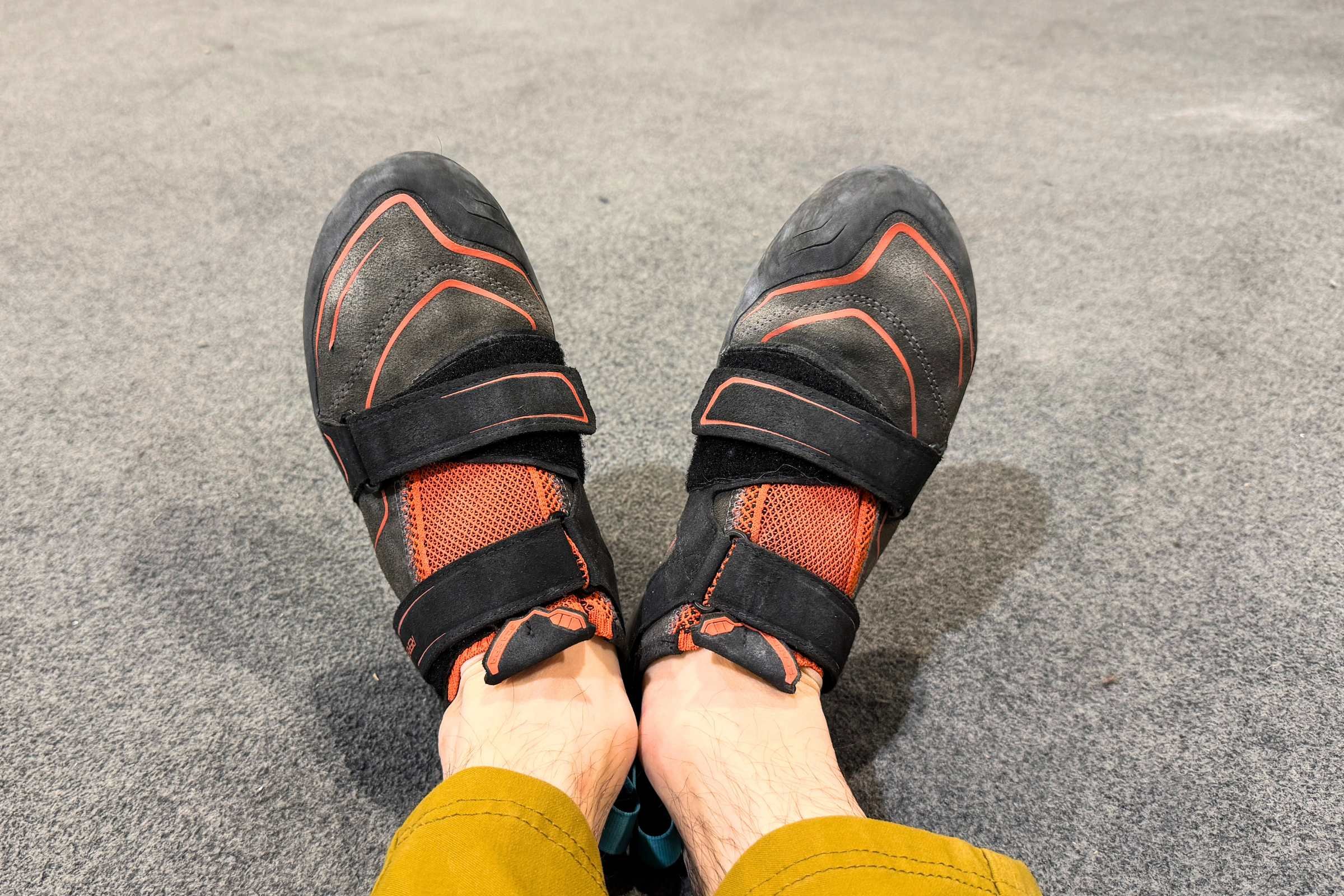
These are the best shoes we tested under $100.
Scarpa Helix V
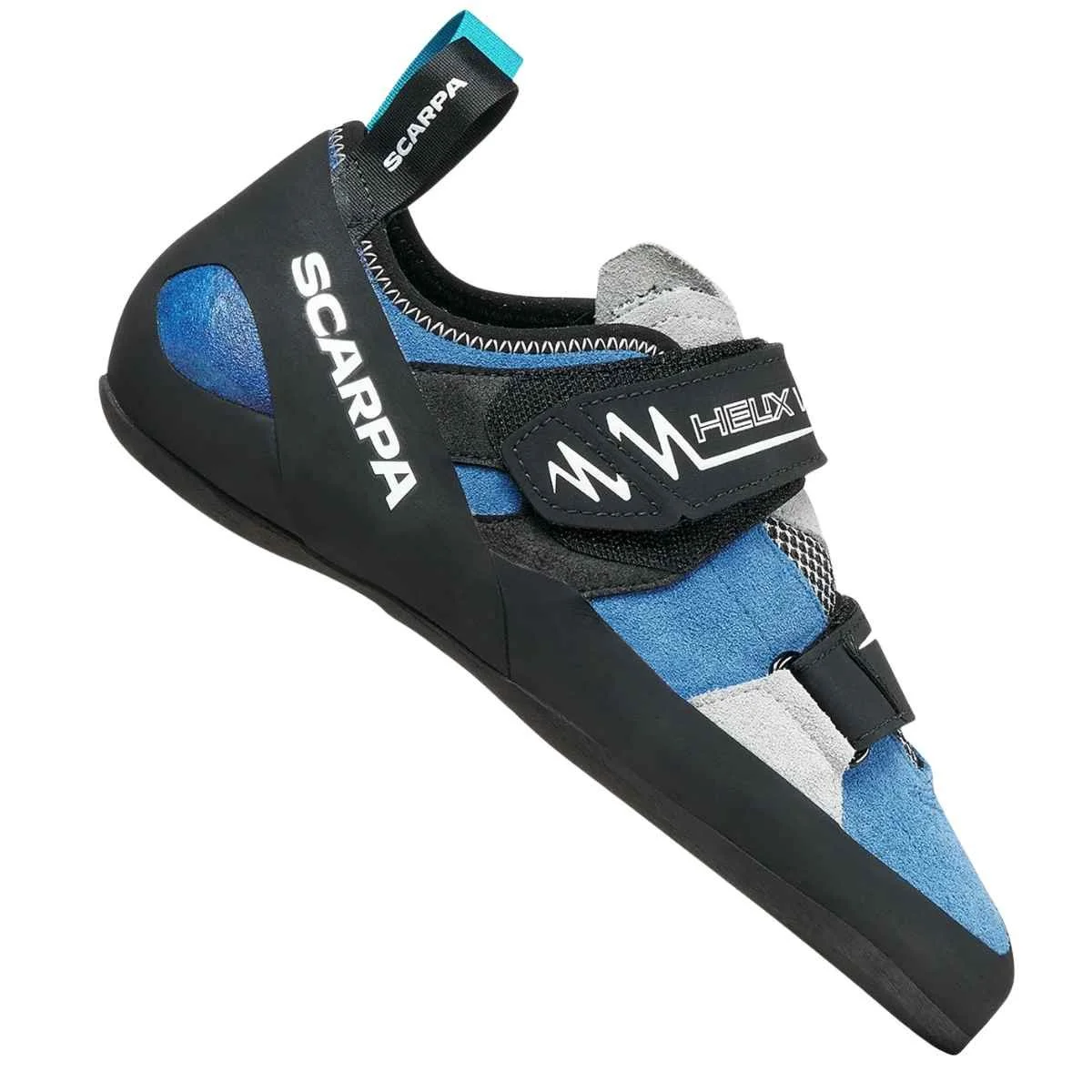
Shape and downturn: Flat, slight asymmetry
Closure type: Velcro
Rubber and thickness: 3.5mm Vibram XS Edge
Stiffness: High
Fit profile: Neutral, slightly wide
The Scarpa Helix V are a bit more advanced than other beginner options and, similar to the La Sportiva Finales, feature Vibram XS Edge. At $149, they’re a tad more expensive than the Finales, but if you prefer Velcro and want a stiffer pair of shoes, these are a good pick.
Scarpa Helix V
men's
Women's
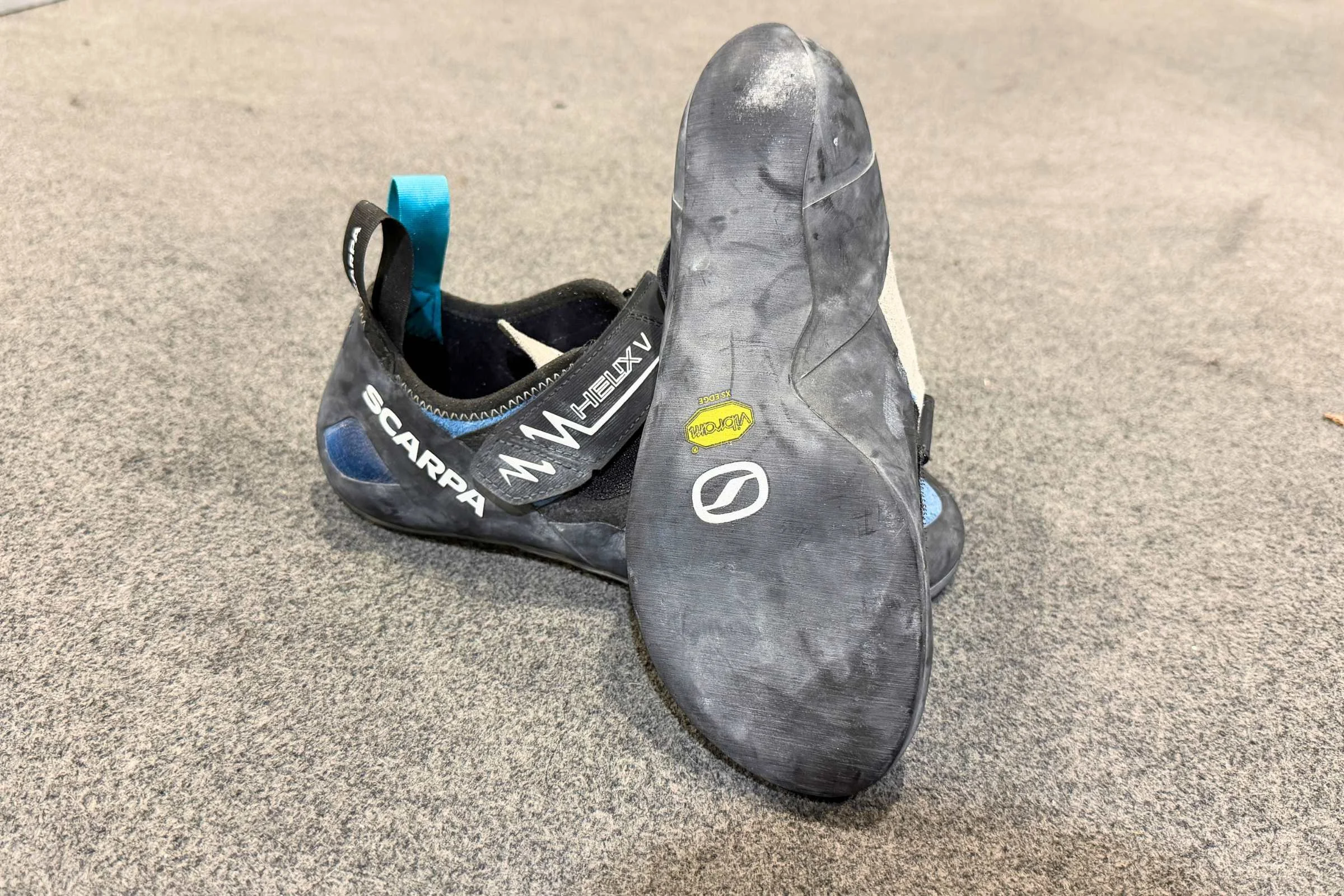
These shoes have good rubber, but weren’t quite as good as the Finales.
Black Diamond Momentum
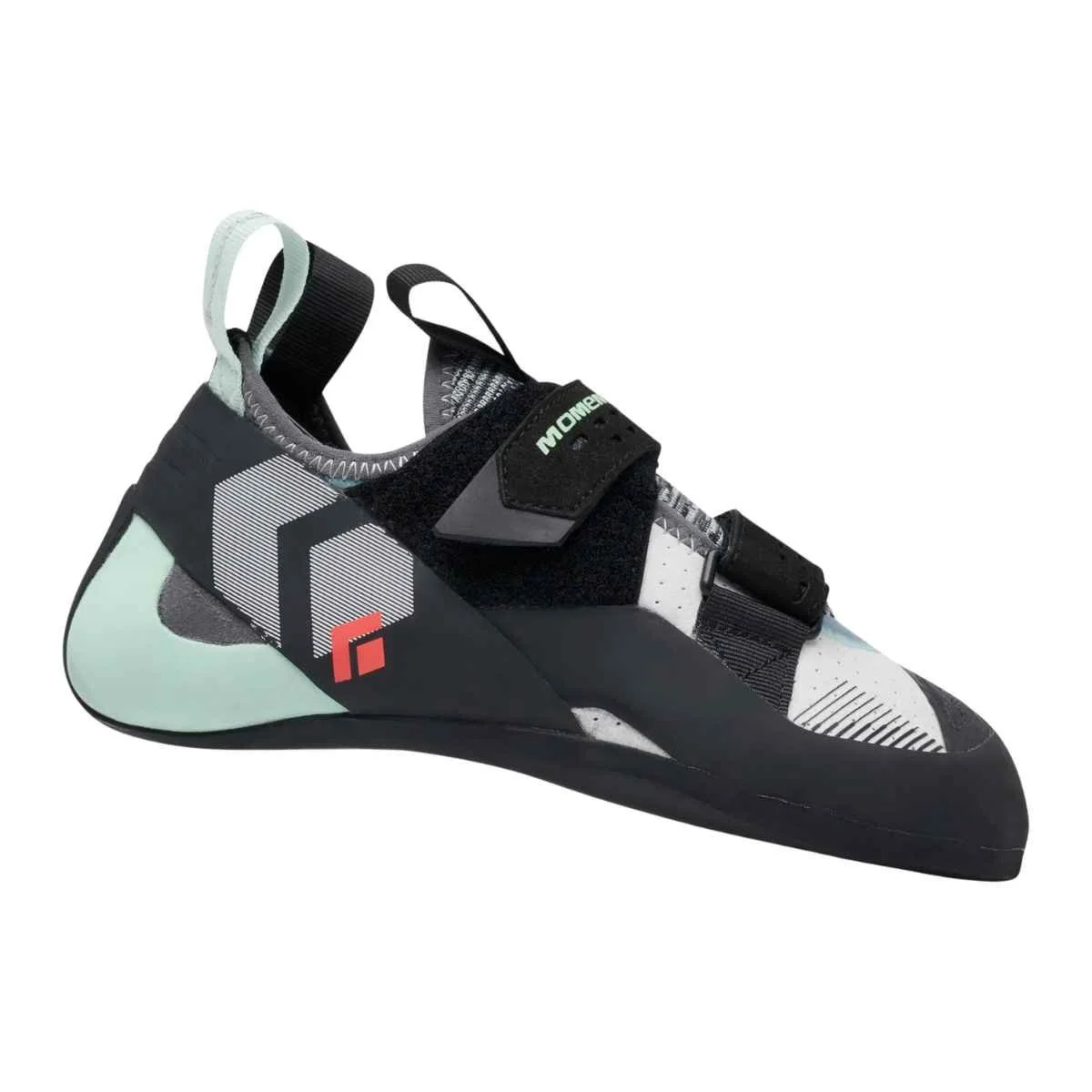
Shape and downturn: Flat
Closure type: Laces
Rubber and thickness: Black Label rubber
Stiffness: High
Fit profile: Runs large, wide
The Black Diamond Momentum climbing shoes were really comfortable, but after climbing in them for multiple sessions, we didn’t like their rubber. It felt more slick than other low-cost shoes, which knocked them out of the running.
Black Diamond Momentum
men's
Women's
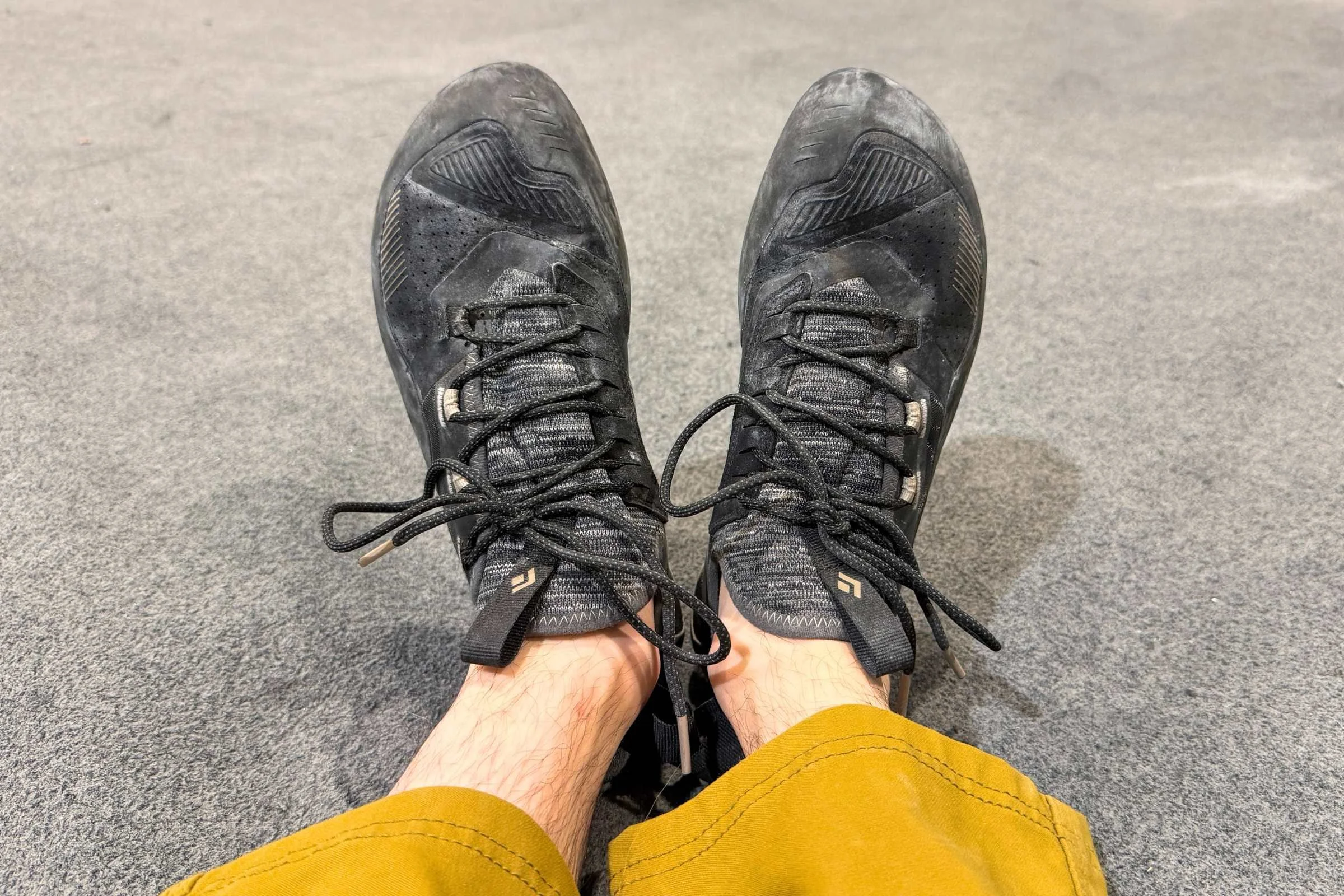
These shoes weren’t very sticky.
La Sportiva Katana Lace
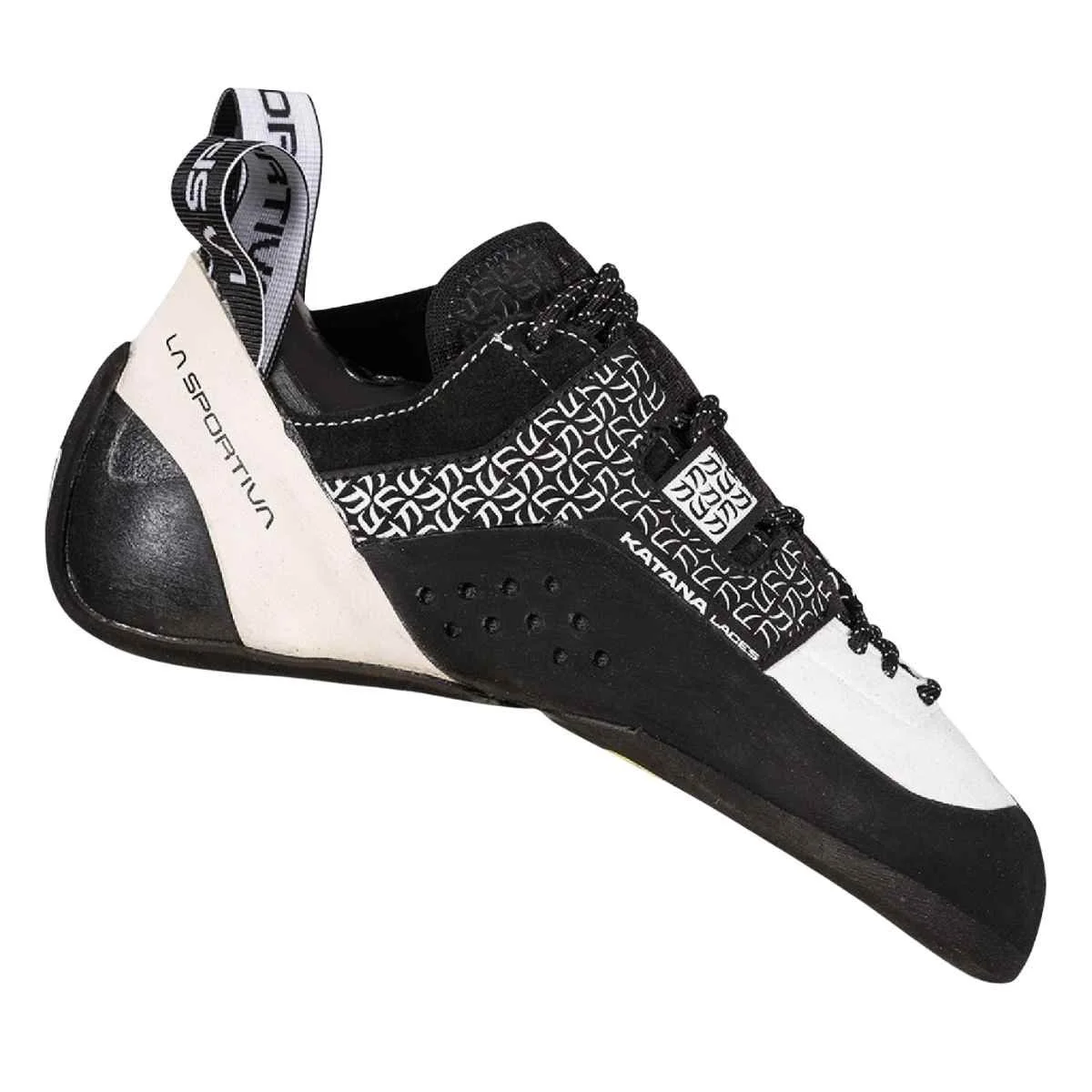
Shape and downturn: Slight downturn and asymmetry
Closure type: Laces
Rubber and thickness: 4mm Vibram XS Edge
Stiffness: Very high
Fit profile: Slightly long
The La Sportiva Katana Lace are definitely better shoes for sport and multi-pitch climbing. We didn’t love the rigidity while bouldering, especially at the gym, and the laces meant it took longer to take them on and off between climbs. They have a slight downturn and are great at edging, but we found the fit uncomfortable, especially for a pair that we can’t take off quickly.
La Sportiva Katana Lace
men's
Women's
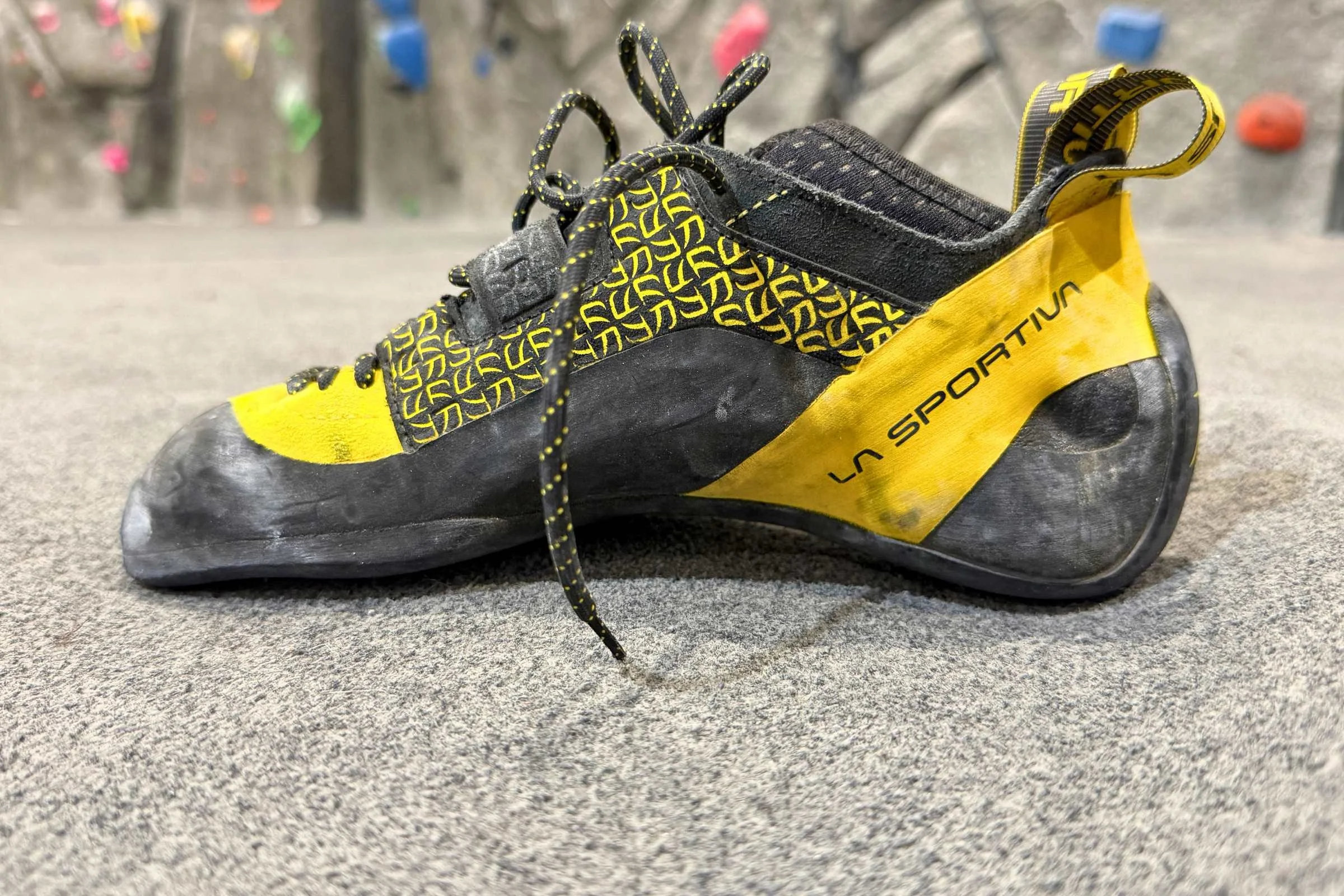
People love these shoes for outdoor rope climbing.
La Sportiva Solution
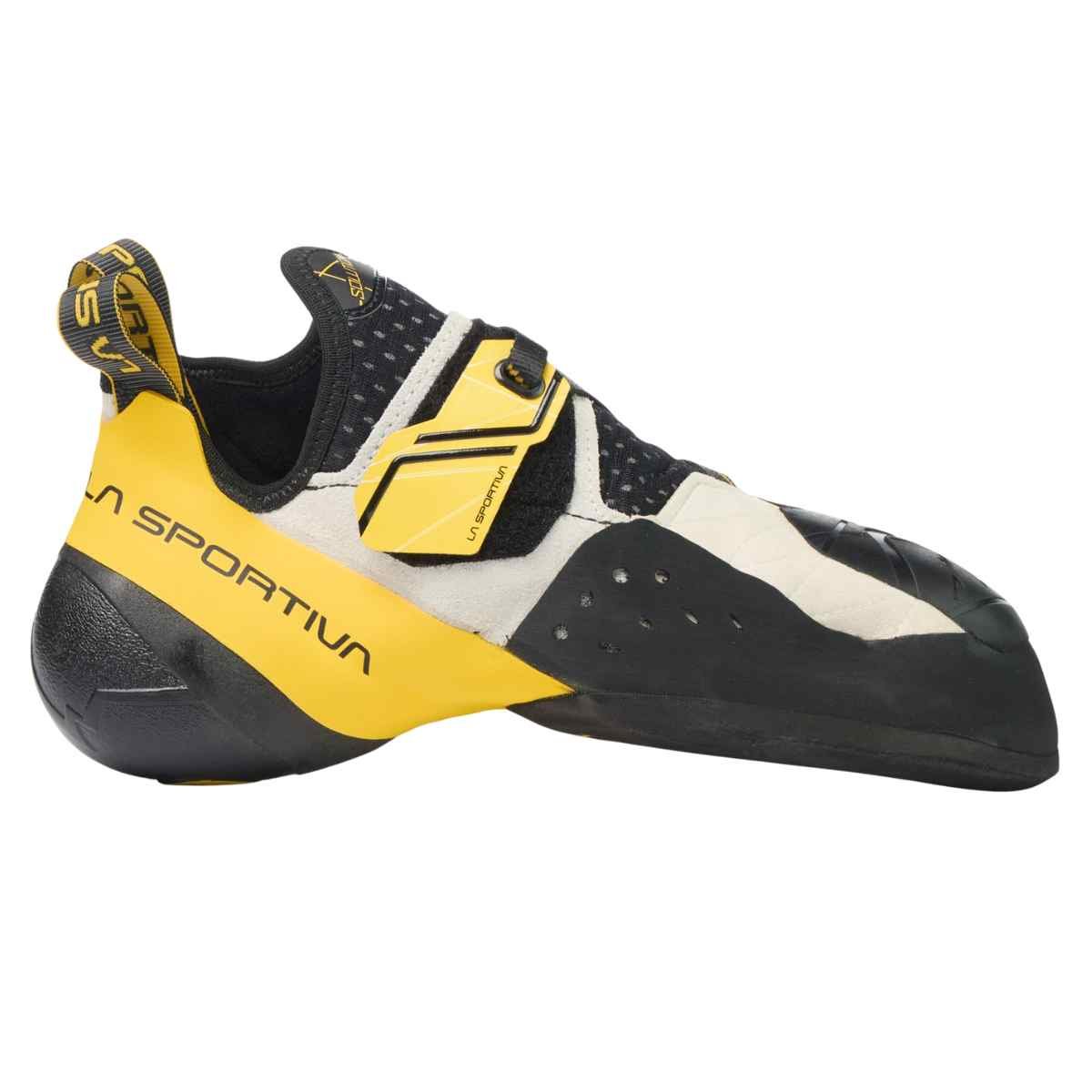
Shape and downturn: Moderately asymmetric and aggressive
Closure type: Velcro Fast Lacing System
Rubber and thickness: 3.5 mm Vibram XS Grip 2
Stiffness: Medium
Fit profile: Best for long and narrow feet
The La Sportiva Solutions are excellent shoes, but we liked their sibling, the Comps, better for bouldering. The original Solutions still have the excellent elongated toes, but they’re stiffer, don’t have as big of a toe rubber patch, have massive heels, and are $10 cheaper. If you know you have wide heels, this might be the pair for you, but we think most will prefer the Comps for bouldering.
La Sportiva Solution
men's
Women's
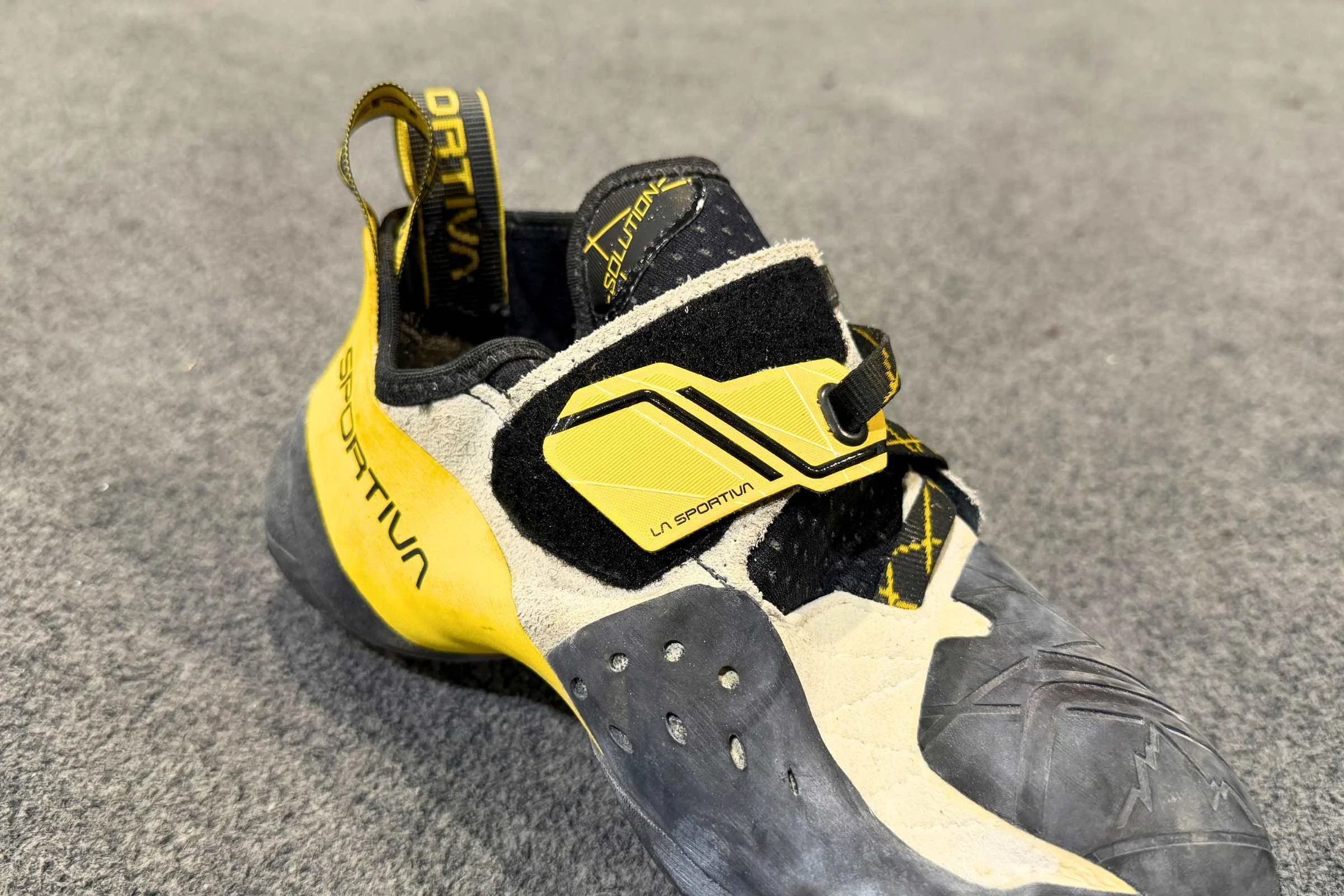
These shoes are stiffer and have a bigger heel than the La Sportiva Solution Comps.
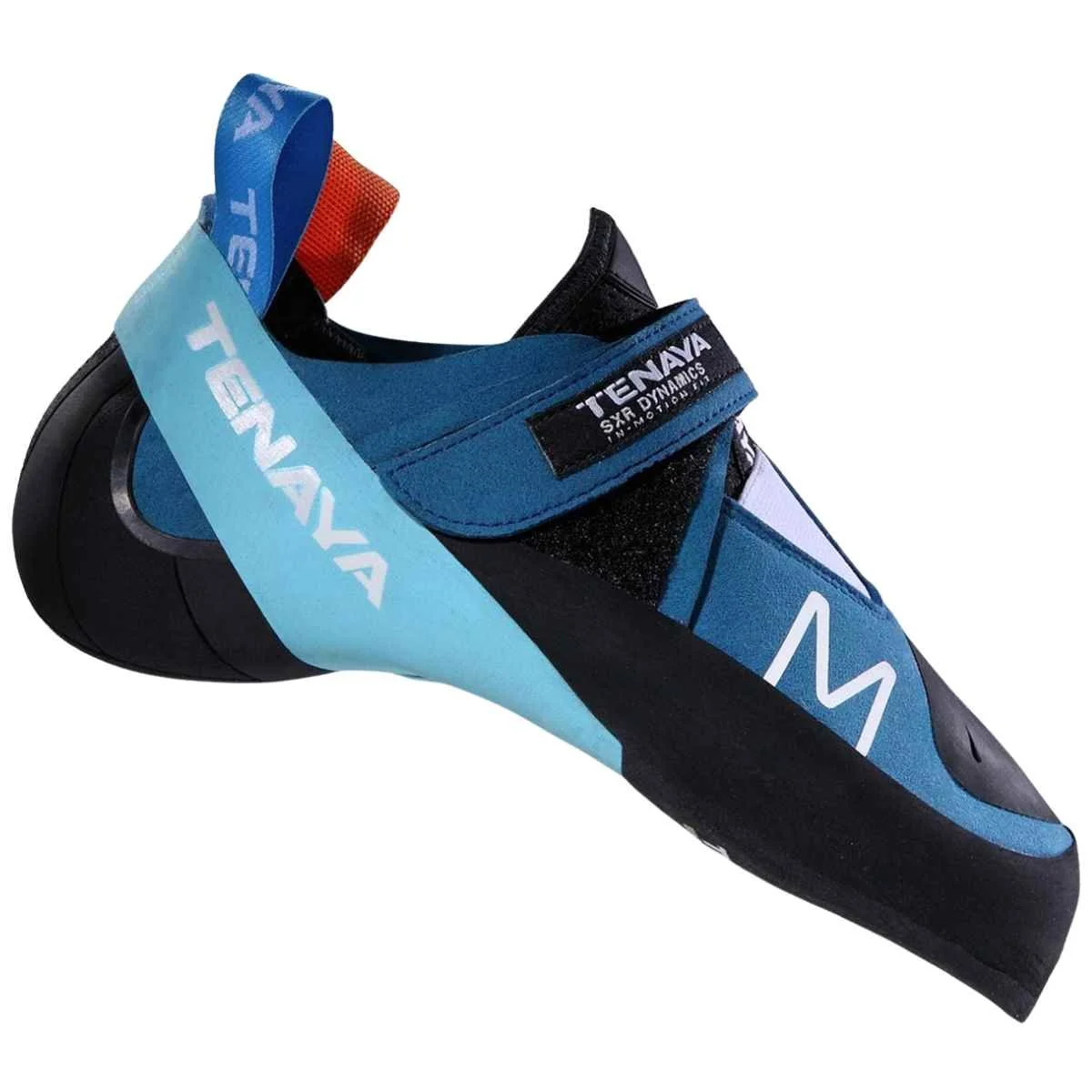
Shape and downturn: Slight downturn, moderate asymmetry
Closure type: Velcro strap
Rubber and thickness: 3.5mm Vibram XS Grip
Stiffness: Medium
Fit profile: Best for long and narrow feet
The Mastias were by far the most comfortable pair of shoes we tested right out of the box. They didn’t feel stiff or painful, and there was zero break-in time. However, compared to some other shoes we tested, we found the rubber to be a little bit slippery, and the toe rubber patch wasn’t super sticky. Still, if you’re looking for a comfortable pair of shoes, these are definitely worth a look.
Tenaya Mastia
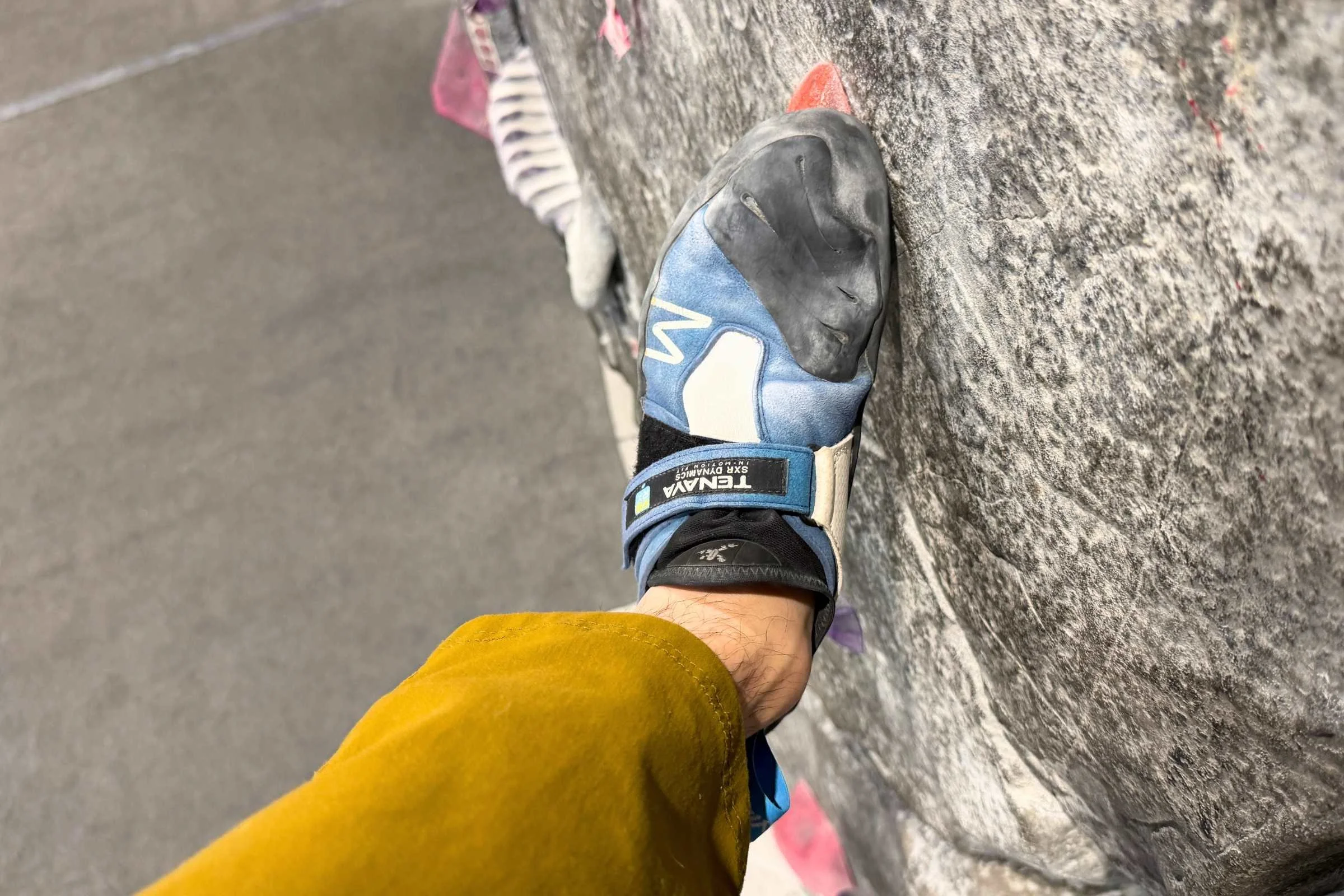
These shoes are incredibly comfortable, and stiff enough for rope climbing.
What to look for in bouldering shoes
Downturn and asymmetry
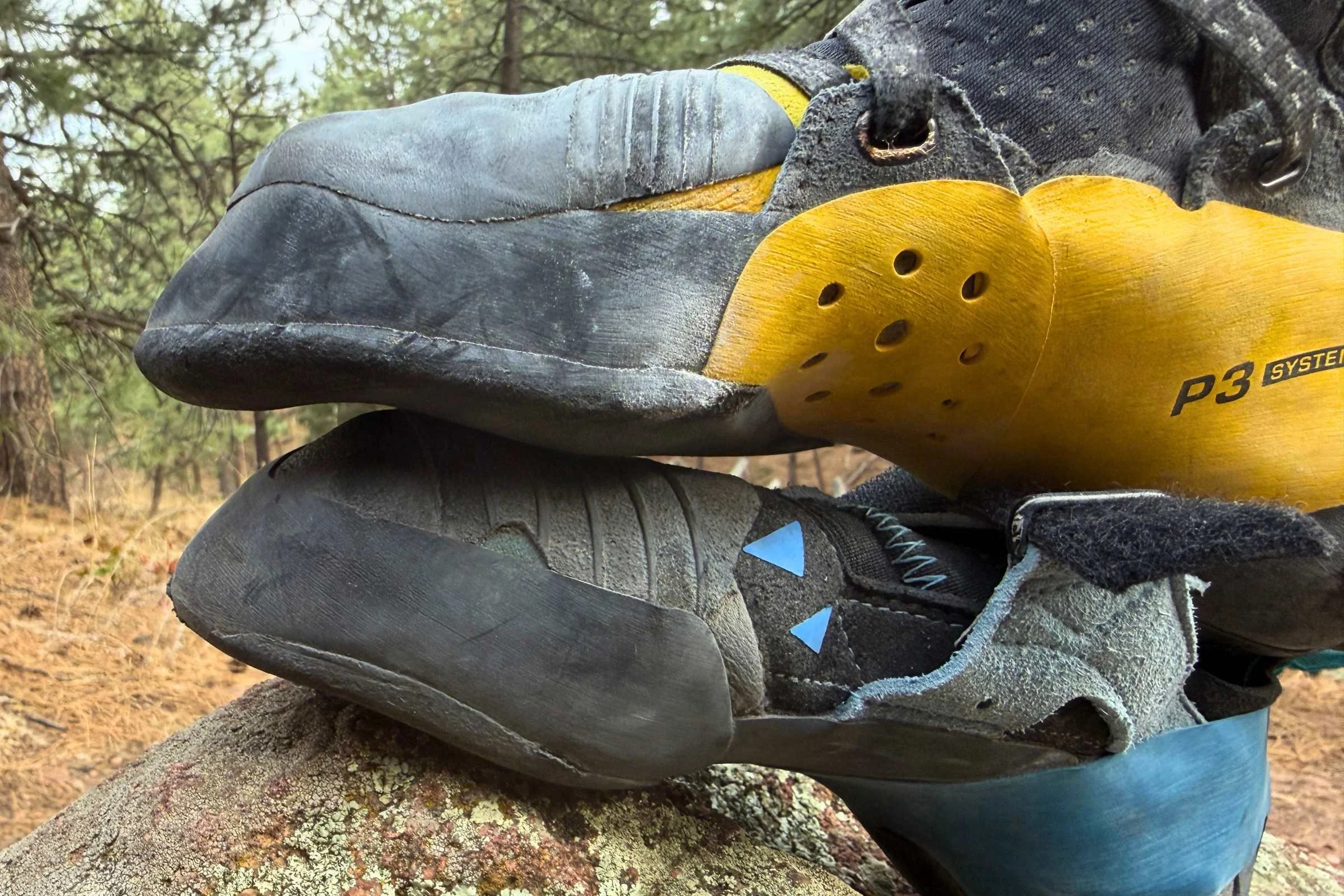
The downturn and asymmetry of shoes affects comfort and performance.
Downturn and asymmetry in climbing shoes can dramatically affect how much power you can create through your toes, and their performance on steep terrain. When shoes are downturned, the tips of their toes point down. This makes them uncomfortable to walk around in, but when you’re climbing on overhung problems, that design makes it easier for your toes to get purchase on footholds and push off.
Asymmetry refers to how much the toe of a shoe points in. When shoes are more asymmetrical, you can transfer more energy to a single point at the tip of the toe.
While downturn and asymmetry sound great, just because a pair of shoes are aggressive doesn’t mean they’re better for climbing. It seriously depends on the type of climbing you do. Super aggressive shoes will perform much better in caves, but you’d probably want a flatter pair if slab and vertical climbing is your passion.
Sole softness
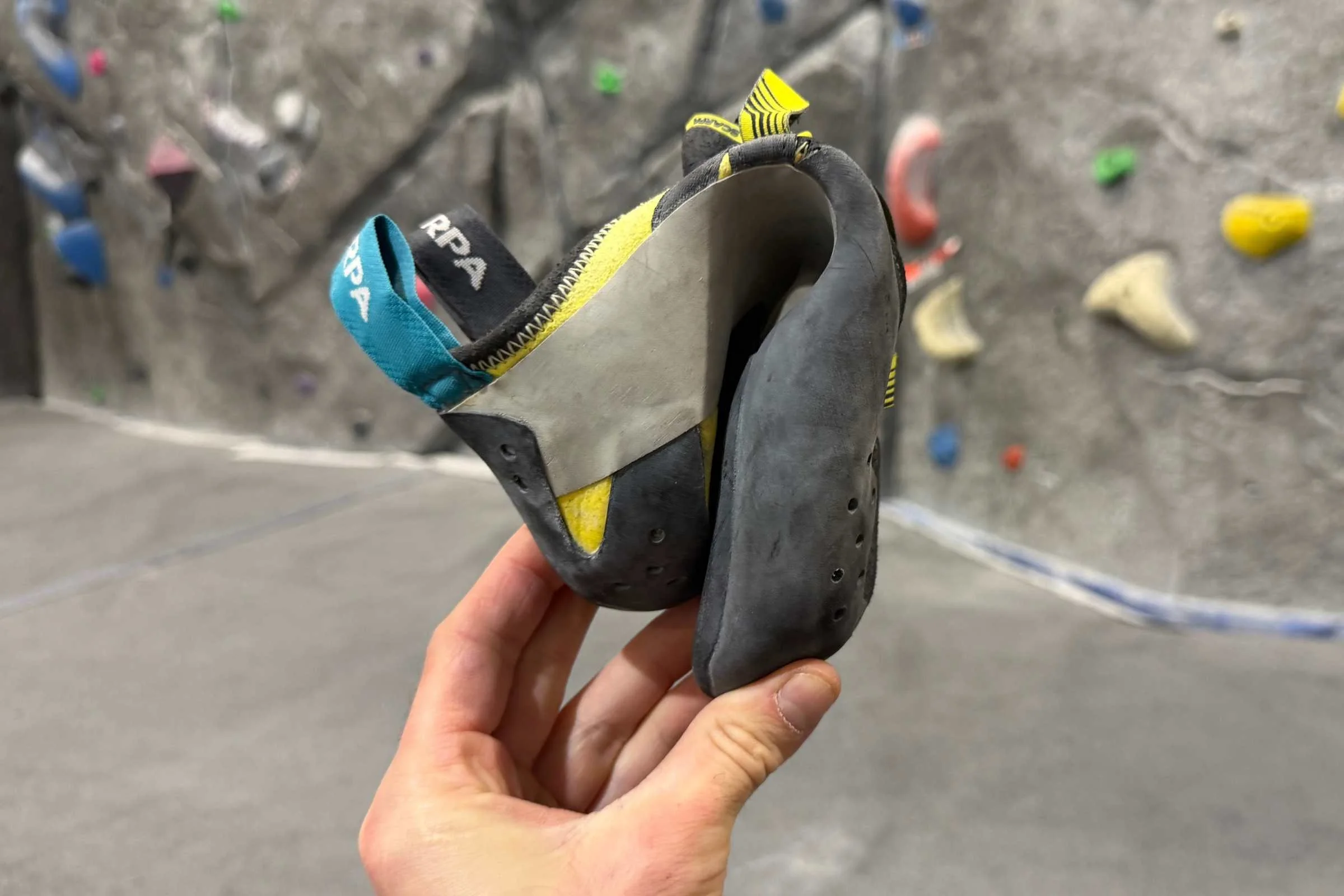
Soft shoes are better for indoor climbing.
The softness of a pair of shoes can make a world of difference depending on what style of climbing you like. Generally, softer shoes are better for bouldering and indoor climbing, while stiffer shoes are preferred for ropes and outdoor climbing.
When climbing shoes have soft soles, you get two main benefits: sensitivity and malleability. When shoes are more sensitive, you’ll literally be able to feel the footholds with your feet, giving you more precision. Malleability means the shoes can bend and mold onto footholds, which is critical for stepping on volumes and smearing where surface area is the name of the game. Malleable shoes can also be better for performing heel and toe hooks, because you can bend the shoes with your feet to fit into the hooks better.
Stiffer shoes shine when footholds get tiny, or when you’re climbing for long periods of time. You won’t be able to feel as much with your feet, but the support disperses your weight throughout the shoe, so it feels easier to stand on small holds. This is especially useful on slabs or when you’re climbing on vertical walls outside, as that’s when you run into truly tiny footholds. The stiffness also means the muscles in your feet don’t work as hard while you’re climbing, leading to a more comfortable experience while sport climbing or during multi-pitch adventures.
Toe patch coverage
Most shoes nowadays have at least a small patch of rubber on the top of their toes, which is meant to help with toe hooking. However, their performance varies widely. If you love toe hooking or come across them often (they’re much more common in bouldering), you’ll want to look for a big toe rubber patch that utilizes sticky rubber and has some sort of texture. All these elements together make toe hooks feel much easier.
Heel construction
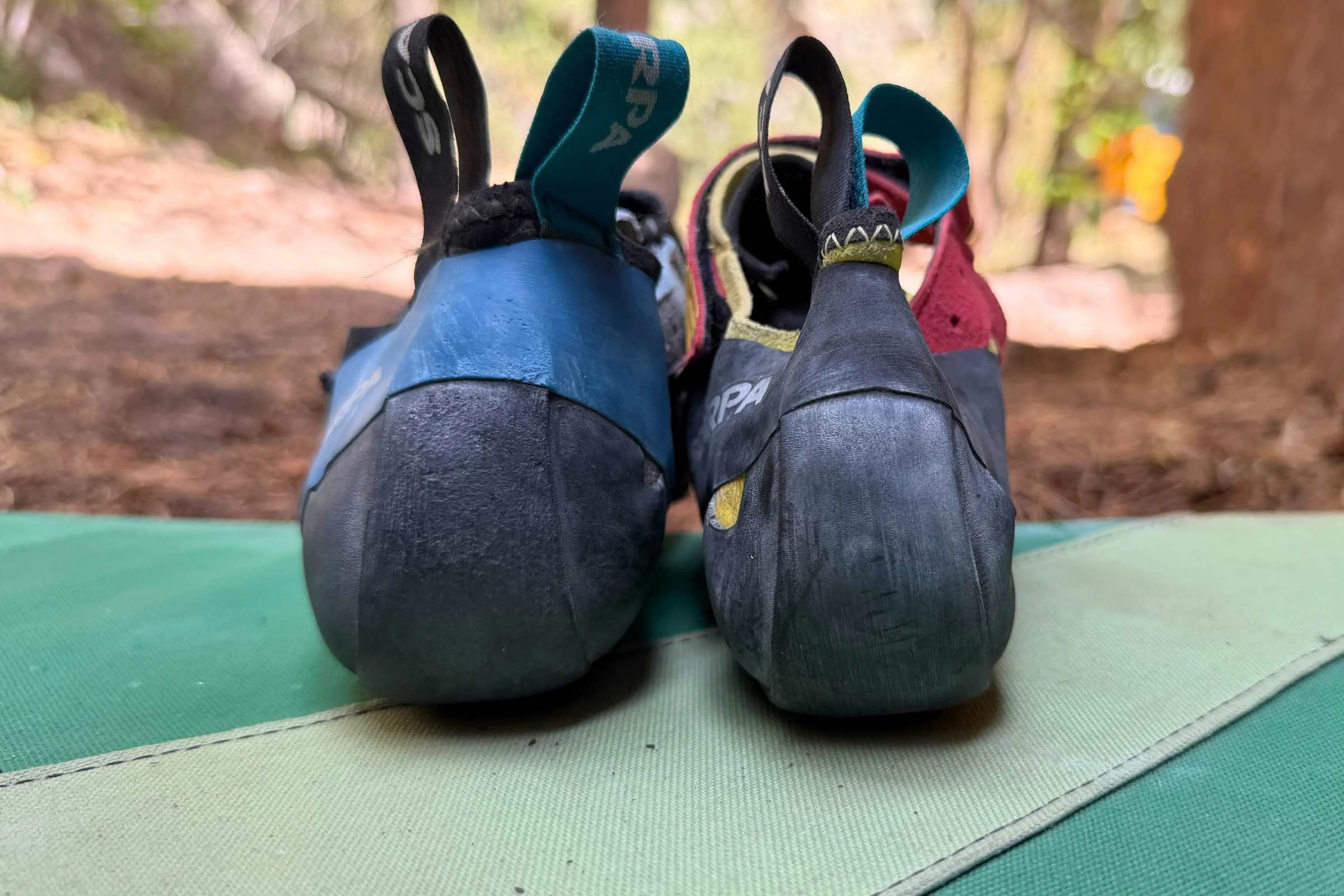
Different shoes have differently sized heel cups.
Heel fit and construction is one of the hardest things to get right when looking for the perfect pair of climbing shoes for you. By far the most important part is finding a heel cup that fits your feet well. Some heels are wider, some are narrow, it really just depends on what your heel shape is.
We like trying on a pair then tugging the heel cup down as hard as we can to see if we can feel any slipping to test out the fit. We still haven’t found the perfect heel for us, and a tiny bit of movement is normal (maybe ¼ to ½ inch of slipping), but if it feels like your shoes are going to pop off your feet when you crank down on a heel hook, the fit is wrong.
If you truly love everything else about the shoes but the heels slip, you can try downsizing. It’ll be more uncomfortable, but a tighter fit makes it much harder for them to slip.
Rubber type
There are lots of rubber compounds out there, and stickiness isn’t the only thing that matters. Rubber on climbing shoes can be softer or stiffer, and much like the design of climbing shoes themselves, this can impact performance.
Softer rubber tends to have more grip because it can sink in and stick to all the imperfections in a foothold. Stiffer rubber, on the other hand, offers more support and durability. So for smears, hooks, and slopey footholds, you want soft rubber. But if you’re edging on crystals or sport climbing outside all the time, stiffer rubber might be better for you.
Closure
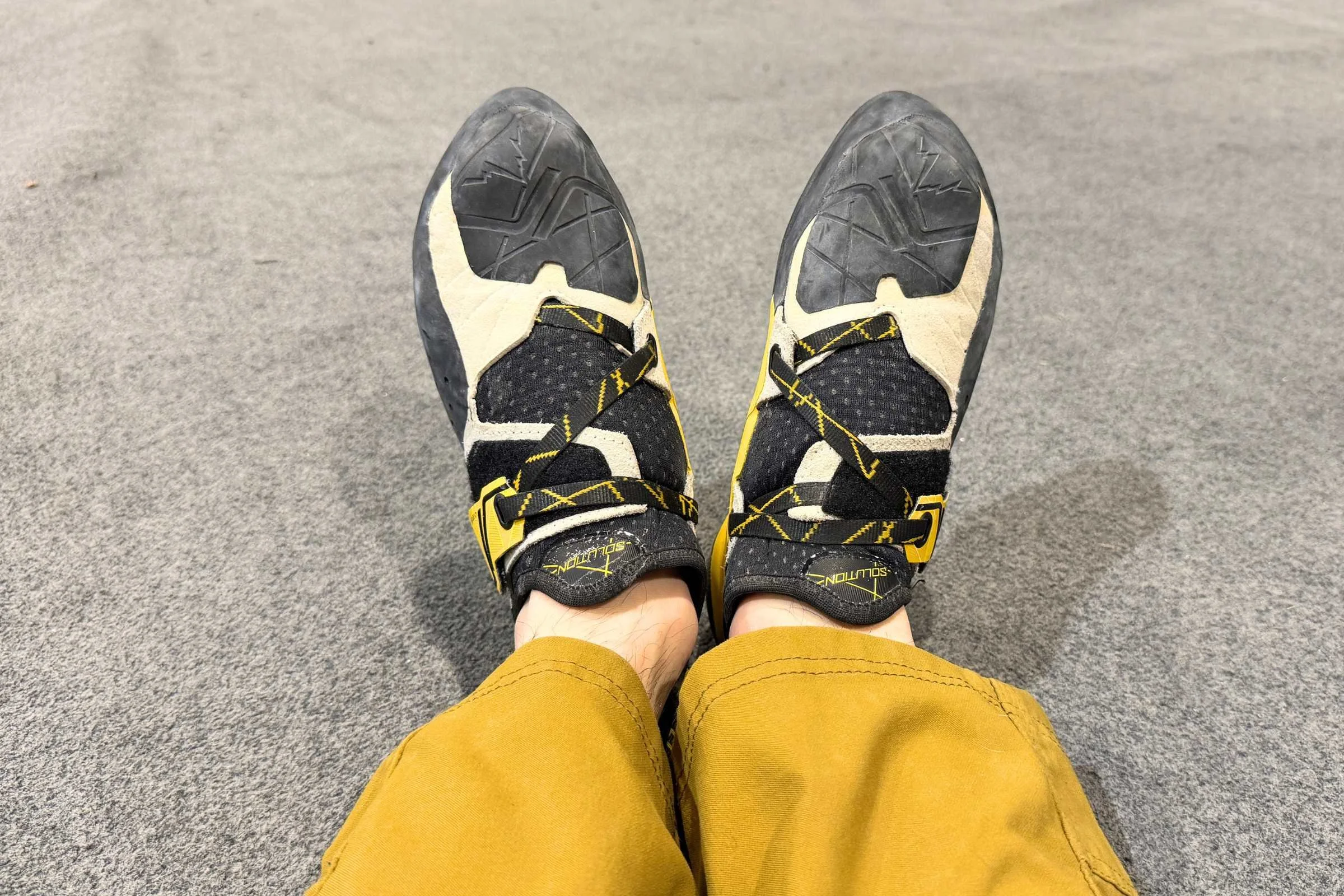
Closure systems include Velcro, laces, and slippers.
Closure systems might not seem like a big deal, but they can definitely make your climbing experience better or worse. The biggest features to weigh are ease of use and adjustability.
Laces give you the most customizability over fit, but take the longest to use. On the opposite end, slippers offer no adjustment, but can be taken off instantly.
A lot of climbing shoes use Velcro straps that give you a decent amount of customizability and can be used quickly. The La Sportiva Solution Comps have the best Velcro system we’ve come across so far, as it can tighten a good portion of the shoe, similar to laces. Look for big Velcro patches that let you tighten the strap in different ways for the best customizability.
Fit
Fit truly makes or breaks a pair of climbing shoes. And because people have different feet, no single pair of climbing shoes will feel right for everybody.
When figuring out your fit, the first thing to do is decide how much you want to downsize. For most climbing brands, you’ll want to wear about a full size smaller than what you wear on the street. You want your shoes to be tight, without any dead space in the toe box (or ideally heel cup), but not painful. Some climbers like downsizing absurd amounts for a tighter fit, but you definitely don’t have to do this.
Your toes should be slightly curled and they should fill up the entire toe box. This ensures precise footwork and proper power distribution. Your heel should also feel snug, with little to no slipping. Lastly, you want to make sure the shoes feel comfortable, and that you don’t get any hot spots when wearing them or taking them on and off.
A lot of popular climbing shoes have low-volume or women’s versions too, which have smaller toe boxes and narrower heels.
Upper materials
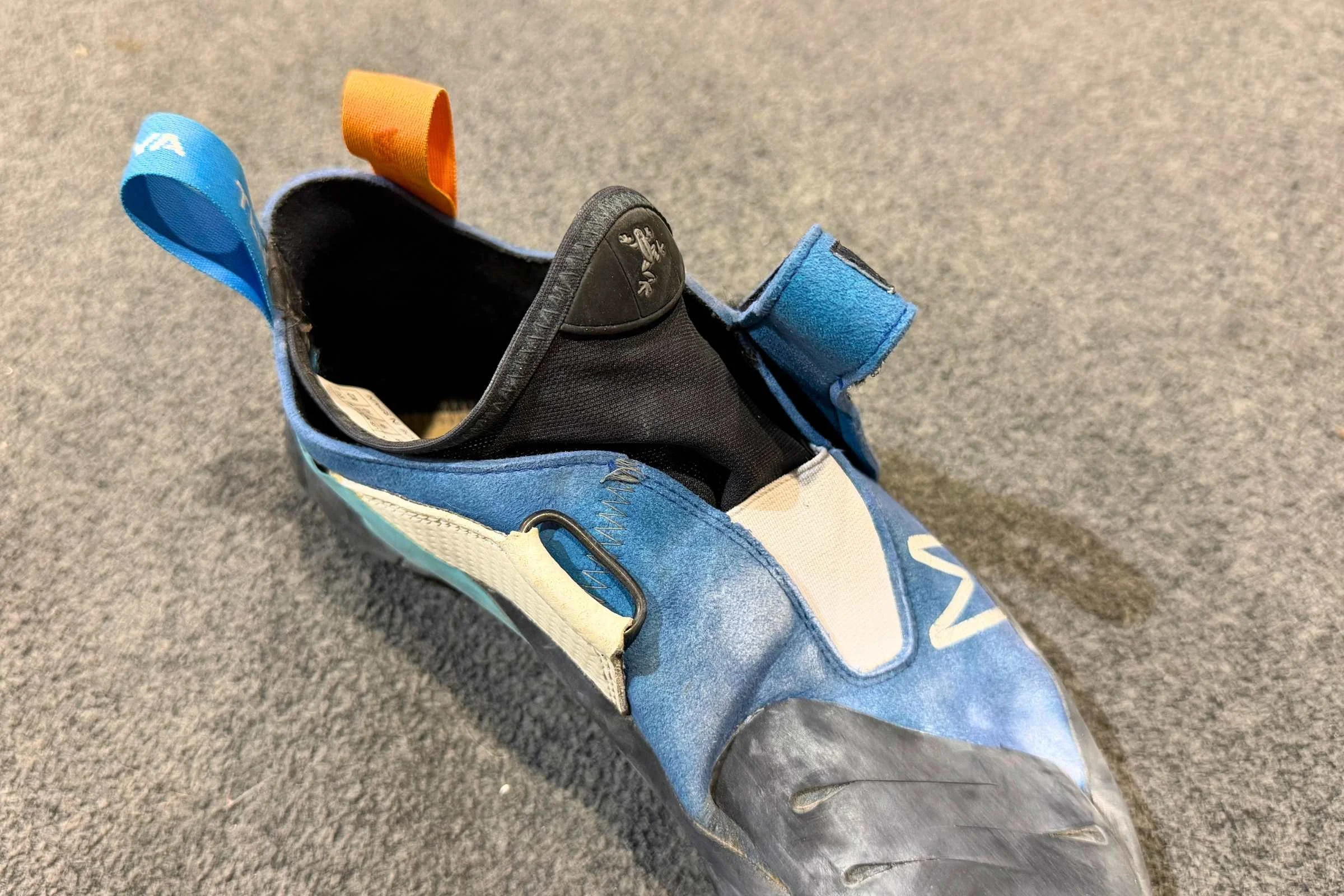
The uppers of climbing shoes can affect comfort and breathability.
There are loads of different upper materials, but the most common are synthetics, like microfiber, leather, and knits. Leather tends to stretch more than microfiber and knit uppers, but the amount of rubber also impacts this. If the entire toe box is encased in rubber, the shoes won’t stretch very much, if at all.
Besides stretch (another reason to downsize at least a little bit), the biggest difference-maker when it comes to uppers is comfort. Nearly all the uppers we came across were comfortable, but it’s another factor to pay attention to when shopping for your perfect pair.
If you’re interested in buying a vegan pair of shoes, there’s actually a decent amount of options that use all-synthetic uppers, like the Skwama Vegan. Some shoes clearly advertise their vegan ingredient list, while others are still free of animal products, but you’ll have to read the details to confirm.
Durability
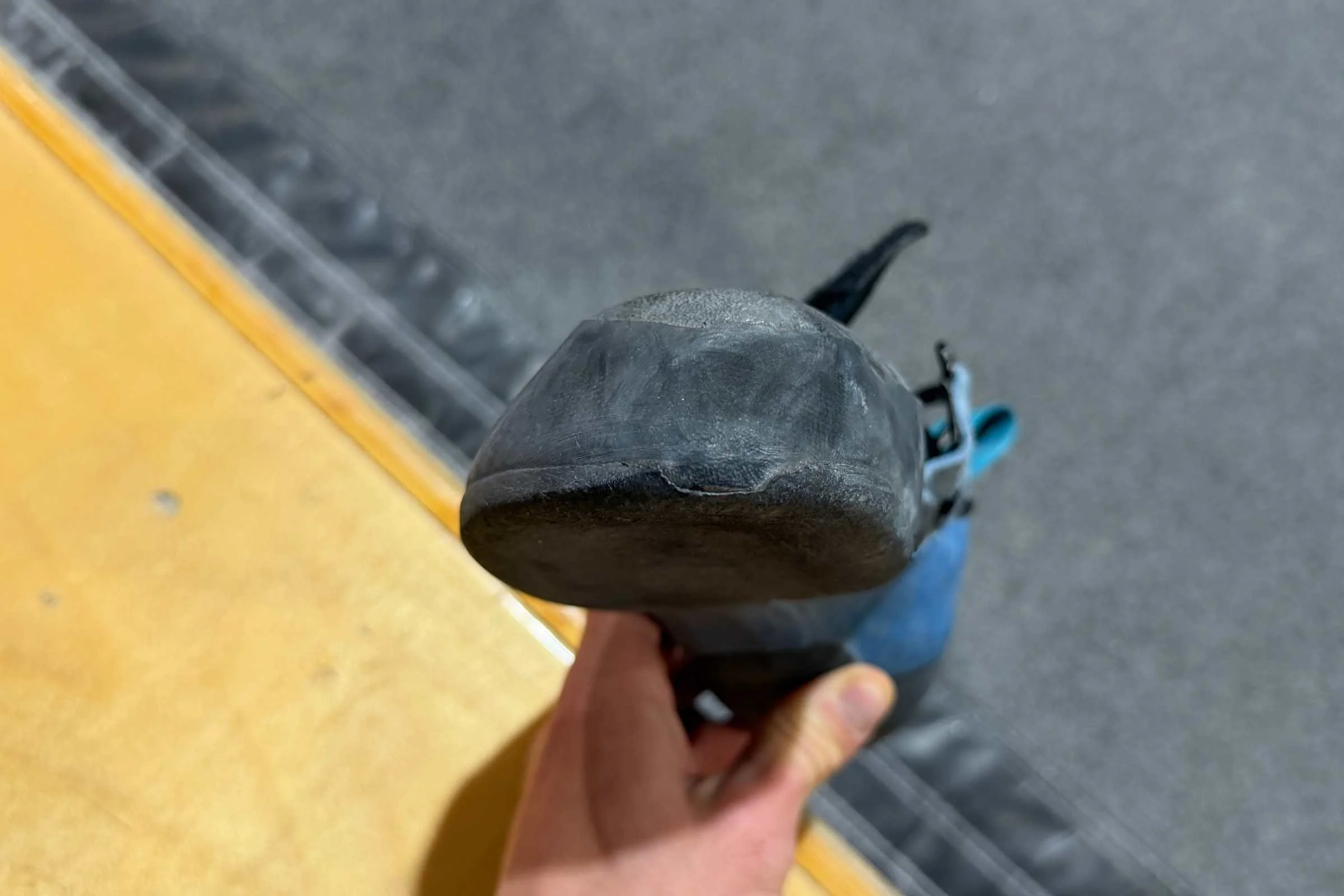
The outsole of these shoes has rubbed through to the rand. Time for a resole!
Durability is critical for a pair of rock climbing shoes, and if you take care of them—particularly the rubber—they can last for years. By far the component that wears down on climbing shoes the fastest is the rubber on the tip of the toe. That’s where you make contact with the wall the most, so it’s smart to examine your shoes every now and then to check how much rubber you have left.
What surfaces you climb on can affect how fast your rubber wears down too. Textured indoor walls can have friction that makes smearing easier, but the sandpaper-like material can really tear through your toes. If your local gym has walls like these, accurate footwork is important to limit unnecessary rubbing.
Climbing outdoors can damage rubber fast too, depending on the type of rock you climb on. But if the rand is starting to show at the tip of your toe, there’s no need to worry because as long as the rand itself hasn’t been damaged yet, you can easily get your shoes resoled.
Other areas to watch out for when it comes to durability are the closure systems and any pull tabs. Yanking and pulling on these elements hundreds of times can inevitably wear them down, but these can also be repaired relatively easily.
Sustainability
If you want your climbing shoes to be as sustainable as possible, the first thing you should think about is how you can make your current pair last. Buying less is basically always the most sustainable option, so make sure to get your shoes resoled when they need it to ensure they last for years.
Outdoor brands are starting to implement more recycled materials into climbing shoes too, so keep an eye out for those, any third-party certifications, and other brand-wide sustainability efforts like powering factories with renewable energy.
Indoor vs outdoor bouldering shoes
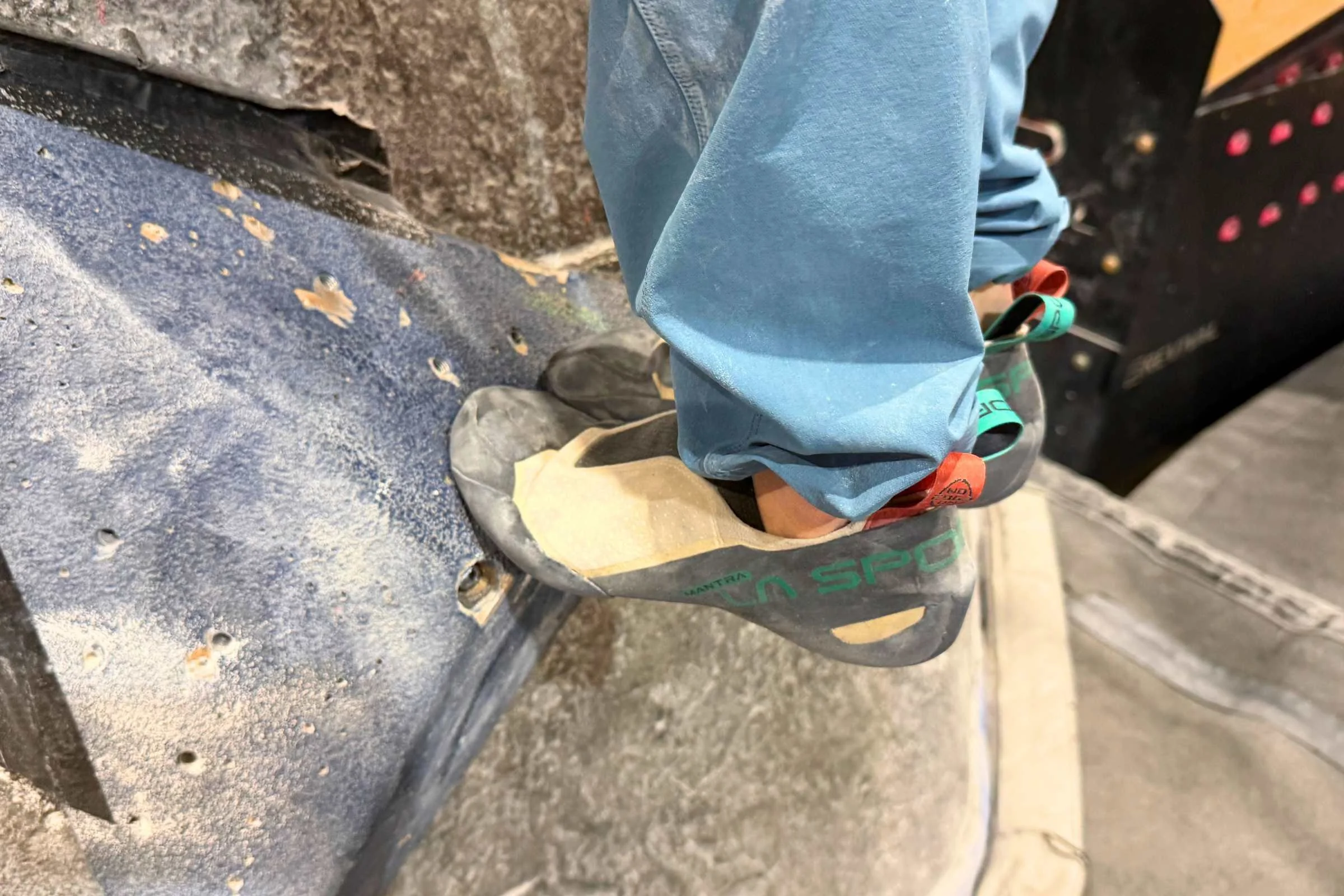
Indoor shoes are softer, which makes them better at standing on volumes.
Indoor: Climbing shoes designed for gyms tend to be softer with grippier rubber and larger toe rubber patches. Soft shoes can bend so it’s easier to stand on volumes, and the extra grippy rubber might not be as durable, but it can cling onto slopey footholds and is great for smearing. There tends to be lots of heel and toe hooking indoors, which is why a large, sticky toe patch is crucial too. A lot of people like wearing slippers indoors as well, because you can pop them on and off super quickly.
Outdoor: Footholds can be a lot smaller outdoors, which is why outdoor-oriented climbing shoes tend to be stiffer and can sometimes have thicker layers of rubber. Sometimes, climbers prefer laced shoes and they downsize a lot so they get the most performance for their outdoor projects.
Owning multiple pairs of climbing shoes might sound a bit opulent, but there are plenty of reasons to do it. Having a comfortable, soft pair of slippers for gym climbing is great, especially if they’re comfortable enough that you can wear them for a long time during volume days. Then, having a stiffer, more aggressive pair for outdoor climbing and projects can help you perform at your best.
But besides the difference between indoors and outdoors, if you like to do all sorts of different climbing, you might want multiple pairs for that too. Overhung bouldering and multi-pitch routes require very different things out of your shoes, so think about what sort of climbing you do now, and buy the pair (or pairs) for that.
How to size bouldering shoes
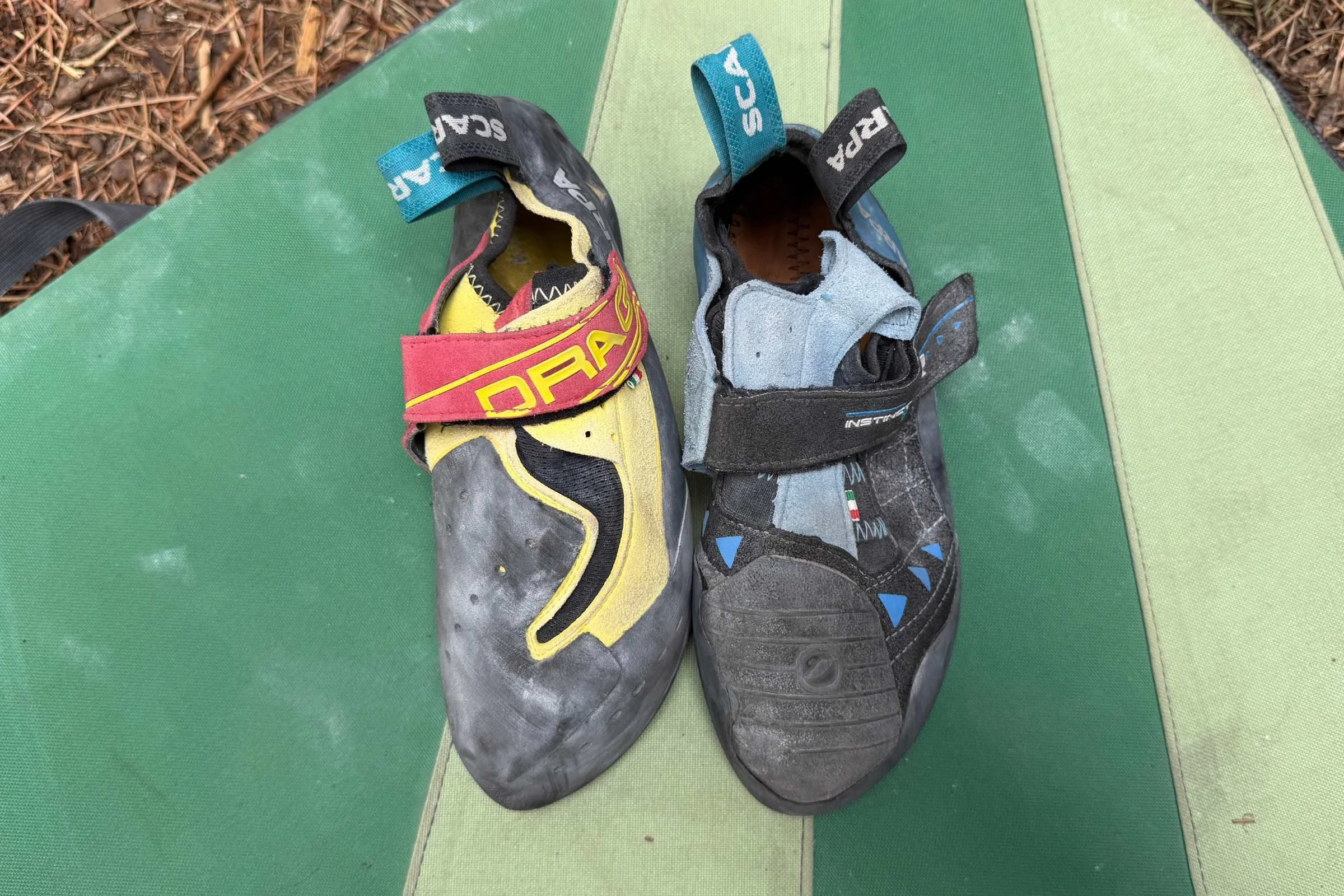
Climbing shoes can fit differently, even if they’re the same size.
The size of bouldering shoes can vary by brand, so it’s important to try shoes on in person before buying them, especially if they’re from a brand you’ve never tried before. Some brands adjust the sizing so if you wear a US 9 in street shoes, their US 9 climbing shoes will fit snugly. With other brands, however, your feet will be swimming in a US 9 and downsizing is required.
Climbing shoes should generally be tight, but not painful. The balance between those two factors is completely up to you though. If you want the most precise, powerful footwork, dealing with the pain of downsizing might be worth it. On the other hand, if you want to be able to wear your shoes for more than five minutes at a time, go for a snug fit that doesn’t hurt your toes.
In general, beginner climbers should trend towards comfort, because if your feet are constantly hurting, you probably won’t like climbing very much. As your footwork gets better and you come across more elaborate moves and positions, you might want to downsize more for better performance.
Climbing shoes can take a while to break in, so if your shoes feel a bit too tight at first, they’ll most likely feel better after climbing in them for a couple of weeks. Break-in time varies widely, as shoes with lots of rubber and stiff leather will take longer than ones made with softer materials. If you don’t want to deal with breaking your shoes in at all, try out Tenayas. They were by far the most comfortable pair out of the box that we tested.
Part of the break-in process is the upper material stretching. The amount of stretch can vary, depending on the material of the upper and how much rubber is on the shoe. If there’s a bunch of rubber because there’s an enormous toe patch, those shoes won’t stretch as much. Leather uppers tend to stretch more than synthetic ones (especially if they’re unlined) so if you’re interested in a pair of leather shoes that don’t have a ton of rubber, we recommend sizing down an extra half-size to account for stretch.
Care and maintenance
To ensure your climbing shoes last as long as they can, it’s important to keep them clean. Knocking chalk and dirt off the uppers helps maintain their durability, and you should also keep an eye on any elements of the shoe that you pull on a lot—think pull tabs, straps, and laces.
The most important part of your shoes to monitor is the rubber at the tip of your toes. This is often the first part that wears down, so you should check them often so you can get them resoled.
You know when a pair of climbing shoes is ready for a resole when the outer layer of rubber has nearly completely worn through, exposing the rand. The rand is the piece of rubber that’s underneath the outsole, and it gives the shoe structure. Once you can see there’s no more outsole protecting it, it’s time to send your shoes in for a resole. If you wait longer and you start wearing through the rand, resolers won’t be able to attach the new outsole to your shoes.
If you can’t find a resoler near you, ask your local gym. A lot of times gyms can set up drop-offs and pick-ups with local resolers so you can get your shoes repaired without dealing with the logistics. If your gym doesn’t have a program, you can also reach out to the shoe brand, as they often have recommendations for where you can send your shoes.
Besides staying on top of resoling, you should also avoid storing your climbing shoes in hot places like your car in the summer, as it can loosen the glue and adhesives that keep the shoe together. And if your shoes get really stinky, you can hand wash them with a soft toothbrush and mild soap. Don’t throw them into the washing machine or dryer, as those can both damage the adhesives.
FAQ
-
Yes, bouldering shoes are different from regular climbing shoes. They tend to be softer, more downturned and asymmetrical, and have larger toe rubber patches for the more overhung climbing often found when bouldering.
-
Bouldering shoes should be tight, but not painful. There shouldn’t be any dead space in the toe box or heel cup, and your toes should be slightly curled, but not bunched up.
-
Beginners don’t need aggressive bouldering shoes. Typically, beginners should reach for flatter, more comfortable shoes, as aggressive shoes are better for overhung climbing.
-
Soft shoes are generally better for bouldering. This is because the softer design gives you more sensitivity and malleability, which are great for standing on volumes, slopey holds, and dialing in heel and toe hooks. However, you may want stiff shoes if you’re a beginner who wants more support, or if you like to rope climb too.
-
The best closure type for bouldering is an adjustable Velcro strap. These strike the perfect balance between ease of use and customizability. Slippers may be a better choice if you want to put your shoes on and take them off as fast as possible, like when you’re in the gym.
-
Bouldering shoes are good for gym climbing. This is because footholds are normally bigger indoors, so you often don’t need the support of stiffer shoes. If you only climb on ropes in the gym, however, you might want shoes with more support.
-
Bouldering shoes can last between six months to a couple of years, depending on how much you climb. You should keep an eye on the rubber at the tip of your toes, as this is the first thing to wear down on a pair of climbing shoes. Once the rand (the rubber underneath the outsole) is exposed, you should get them resoled.
-
Yes, you can use socks with bouldering shoes. Socks can help prevent your shoes from getting stinky and sweaty, but thick socks can reduce the sensitivity you feel and can even slide around in your shoes. Often, climbers wear bouldering shoes without socks because your bare feet will have more sensation inside the shoes, leading to more precise climbing.
-
Yes, bouldering shoes stretch. The amount depends on how much rubber is on the shoes and what the uppers are made of. Typically, unlined leather stretches more than lined leather and synthetic materials.
-
Women’s bouldering shoes have a lower volume and a narrower heel than men’s shoes. Some brands label shoes with “low volume” instead of having a women’s version, and these shoes are gaining popularity because they can give people with smaller feet a tighter, more precise fit.
How we researched and tested
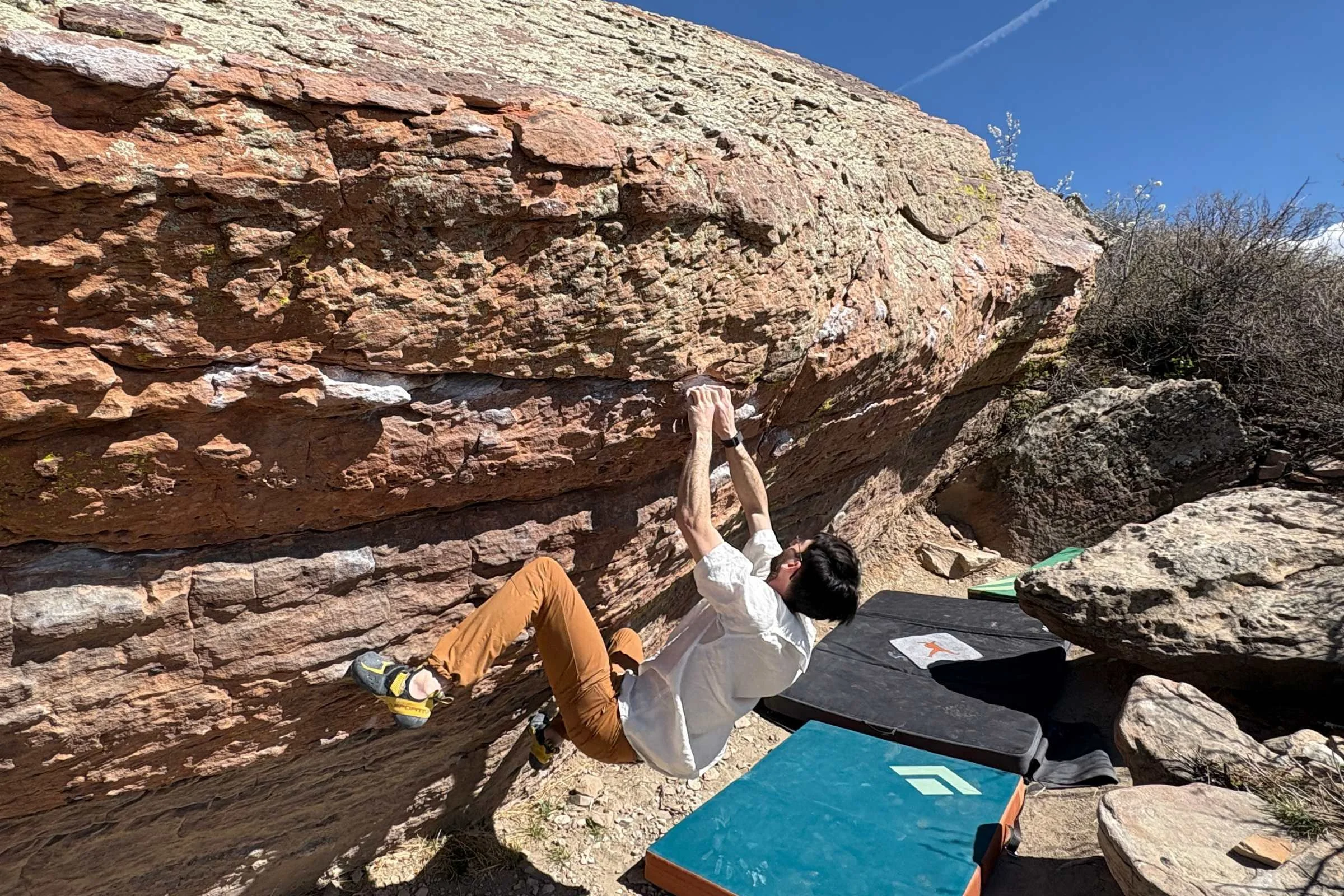
We tested all the climbing shoes included in this guide for months.
To find the best bouldering shoes, we spent four months climbing multiple times a week both indoors and outside. We climbed in shoes that we’ve owned for up to two years, as well as tons of new pairs that we tested just for this story. We climbed in every single pair for at least two strenuous climbing sessions to get a good sense of how they performed.
During testing, we were very intentional about what sort of climbs we tested the shoes on. We made sure to test each pair on vertical walls, overhanging walls, and in caves to see how they performed in those environments. We also picked climbs with small feet, slopey feet, volumes, and more to see how the shoes performed. We made sure to climb slab problems with every pair too, so we could judge friction, stiffness, and more.
On top of performance, we also judged and compared each shoe on their fit, comfort, break-in period, ease of use, durability and more.
- Indoor gym bouldering sessions
- Outdoor boulder problems of varying grades
- Overhung, slab & vertical terrain
- Side-by-side shoe comparisons
- Tested across multiple climbing sessions per shoe
- Sensitivity & rubber friction
- Precision on small holds & edges
- Power on overhung problems
- Comfort & break-in period
- Durability & resoling potential
Why you should trust us / About the author
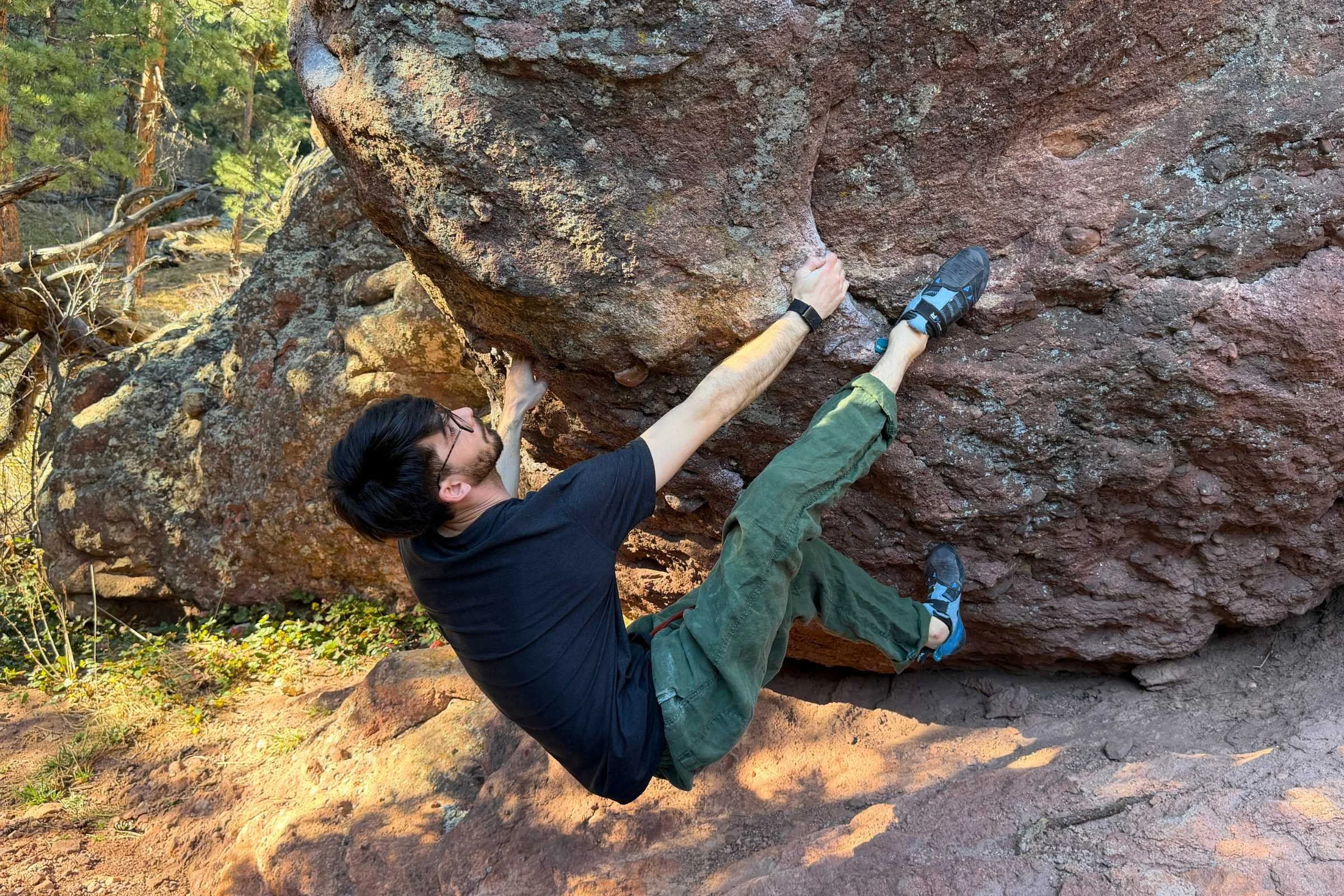
This guide’s author is Kai Burkhardt, an avid climber who has been bouldering for a decade. Pebble-wrestling is his preferred style of climbing, and over the years he’s owned dozens of pairs of shoes. He’s very familiar with both beginner and expert shoes, and for this story, he tested all 17 pairs while bouldering at various gyms and outdoor crags. To ensure he put the shoes through their paces, he climbed multiple times every week in and around Boulder, Colorado, and took note of their performance, fit, durability, and more.