Best Dog Sunscreen of 2026
Vet-Safe and Tested Sun Protection for Dogs
June 8th, 2026
Home → Gear Reviews → Dog Gear
Dogs can get sunburns, just like us! If you have a pup with light-colored fur, a thin coat, or exposed skin on their nose, ears, and belly, they’ll be more prone to sun damage than heavily coated dogs. Sunburns can lead to discomfort and long-term skin issues (including cancer), so opting for one of the best dog sunscreens will keep your furry friend protected from the sun’s UV rays.
We interviewed Dr. Anthea Schick, DVM, DACVD, Veterinary Dermatologist and Senior National Specialty Director of Dermatology at Thrive Pet Healthcare, to help us with our search for dog-safe ingredients that are also UV-protective.
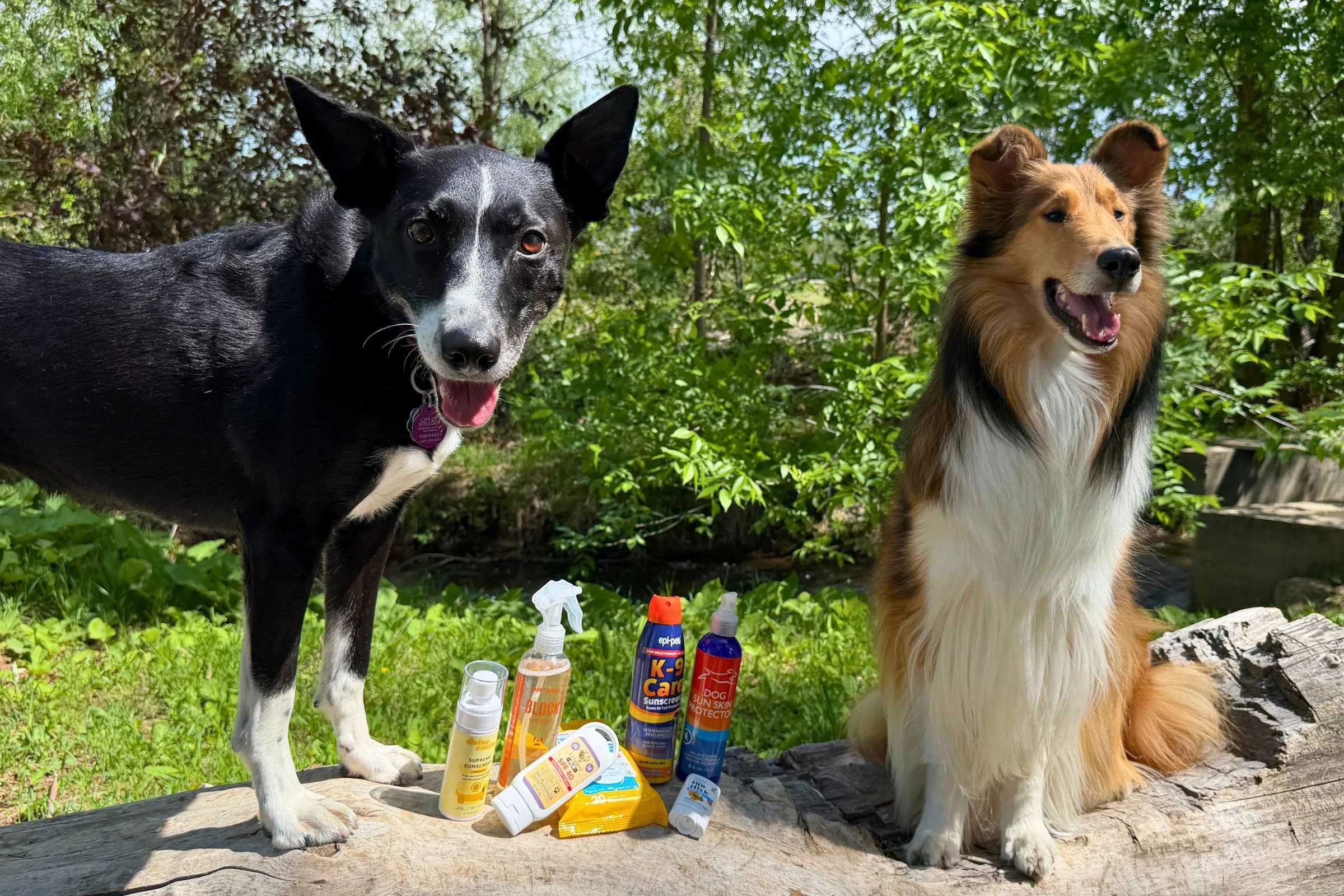
After scouring ingredient labels, we looked for sunscreens that were resistant to licking, scratching, rubbing, swimming, and other high-energy outdoor activities. We tested each dog sunscreen with multiple dogs of different sizes on outdoor walks, hikes, lake days, and in sun-drenched indoor environments. We evaluated each sunscreen’s ease of application, how well it stays on fur and skin, and whether dogs tolerated the application and smell.
After our rigorous testing, the best overall dog sunscreen is the Lucky Pup Sunscreen Cream. This is a mineral-based formulation that’s safe for dogs, easy to apply, isn’t messy, and features high SPF sun protection. Read on for more details on Lucky Pup and other best dog sunscreens.
We create reader-supported, objective gear reviews independently selected by our editors. This story may contain affiliate links, which help fund our website. When you click on the links to purchase gear, we may get a commission, without costing you an extra cent. Thank you for supporting our work and mission of outdoor coverage for every body! Learn more.
Comparison table
| DOG SUNSCREEN | TREELINE AWARD | FORM FACTOR | SPF RATING | PRODUCT AMOUNT | WATER RESISTANT | REEF SAFE | ACTIVE INGREDIENTS | MSRP |
|---|---|---|---|---|---|---|---|---|
| Lucky Pup Natural Sunscreen Lotion | Best Overall Read why |
Lotion | 40 | 2.3 fl oz | ✔ | ✔ | Titanium dioxide | $11 |
| Epi-Pet K-9 Care Sunscreen | Best Spray Read why |
Spray | 30+ | 3.5 fl oz | ✔ | ❌ | Ethylhexyl octinoxate, octisalate, homosalate, oxybenzone | $20 |
| Petkin Doggy Sunstick | Best Stick Read why |
Stick | 15 | 0.5 oz | ✔ | ✔ | Titanium dioxide | $8 |
| Artero Block | Best Coat Protection Read why |
Spray | Not listed | 8.4 fl oz | ❌ | ✔ | Acai berry oil, rice seed protein and extract | $31 |
| Divine Canine Supreme Sunscreen | Best Long-Lasting Read why |
Spray | 30 | 3.4 fl oz | ✔ | ✔ | Titanium dioxide | $10 |
The winners
Best overall dog sunscreen: Lucky Pup Natural Sunscreen Lotion
Type: Lotion
SPF rating: SPF 40 equivalent
Key ingredients: Titanium dioxide
Water resistant: Yes
What we liked: High SPF; dog-safe ingredients; non-greasy; can also be used on cats and other animals; moisturizing; safe for use in natural bodies of water
What could be better: Comes in a very small quantity
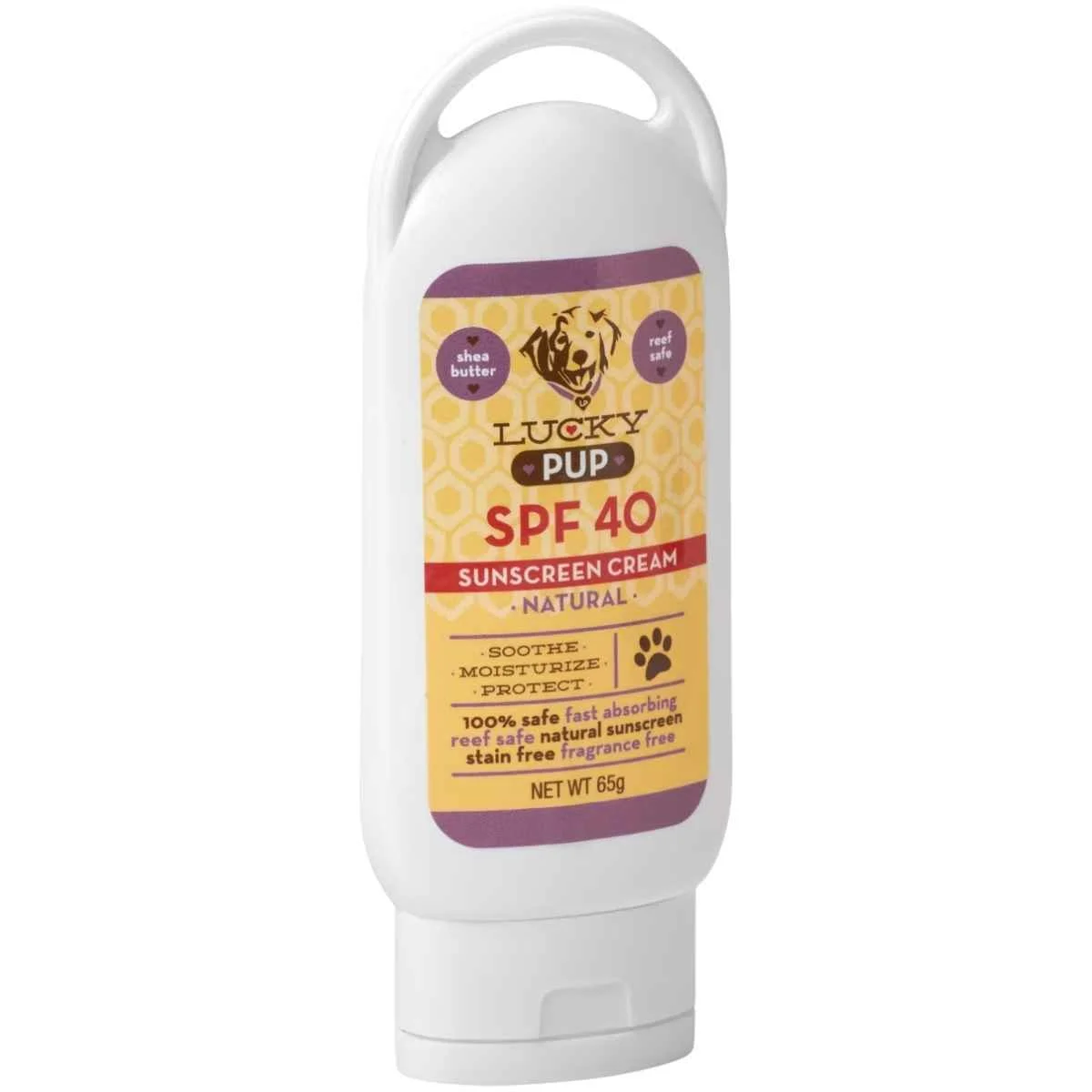
The Lucky Pup Sunscreen Cream had the best list of ingredients of the options we tested. It contains titanium dioxide as the main UV-protective ingredient, which Dr. Schick said is largely considered the safest for dogs. This sunscreen is safe for dogs who may lick it off of them and shouldn’t cause any side effects unless ingested in large quantities. It’s also unscented, and during testing, none of our tester dogs seemed too intent on licking it off of themselves.
Lucky Pup Sunscreen also contains coconut oil, aloe oil, shea butter, and vitamin E, which are all moisturizing and will keep your pup’s skin from drying out. It’s fairly thick and white in color, which makes it easy to see where you’ve applied on your dog and where you could apply more, so it’s a smart option for dogs who are very sensitive to the sun. The thick mineral-based formula also lasts multiple hours, and during testing I found that it was still visible after 2-3 hours in the sun.
Lucky Pup Natural Sunscreen Lotion
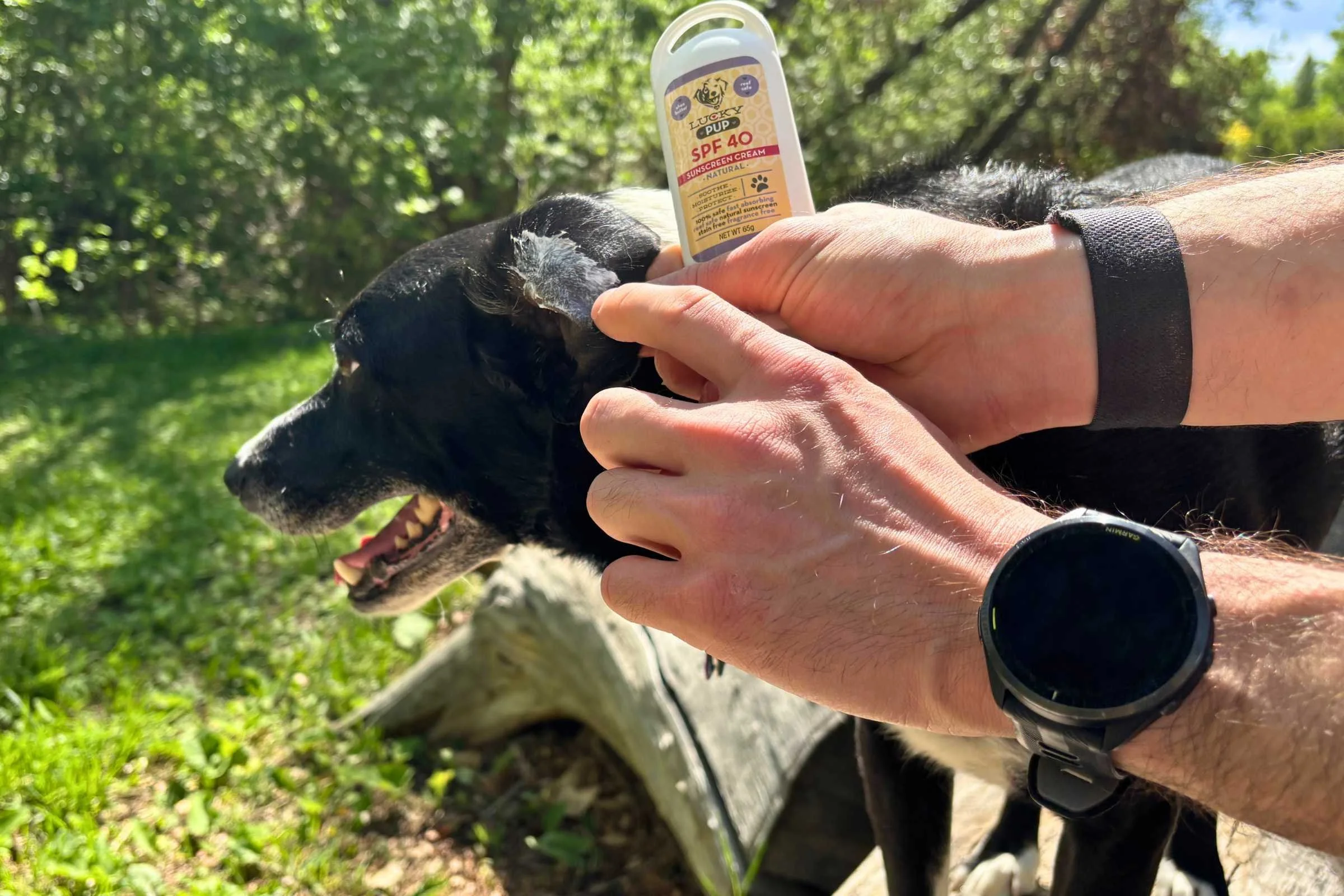
The lotion formula rubs in well and doesn’t leave your dog’s skin feeling greasy, but it does leave a bit of a white cast when applied liberally, which isn’t necessarily a bad thing if you want to ensure full coverage.
The only downside of this dog sunscreen is that it’s only available in a 2.29-oz bottle. This makes it lightweight and handy to travel with (it can even be attached to a keychain), but if you’re using large quantities to cover a lot of skin or multiple dogs, you may run out quickly. It’s still reasonably priced, despite the small container size.
Best dog sunscreen spray: Epi-Pet K9 Care Sunscreen
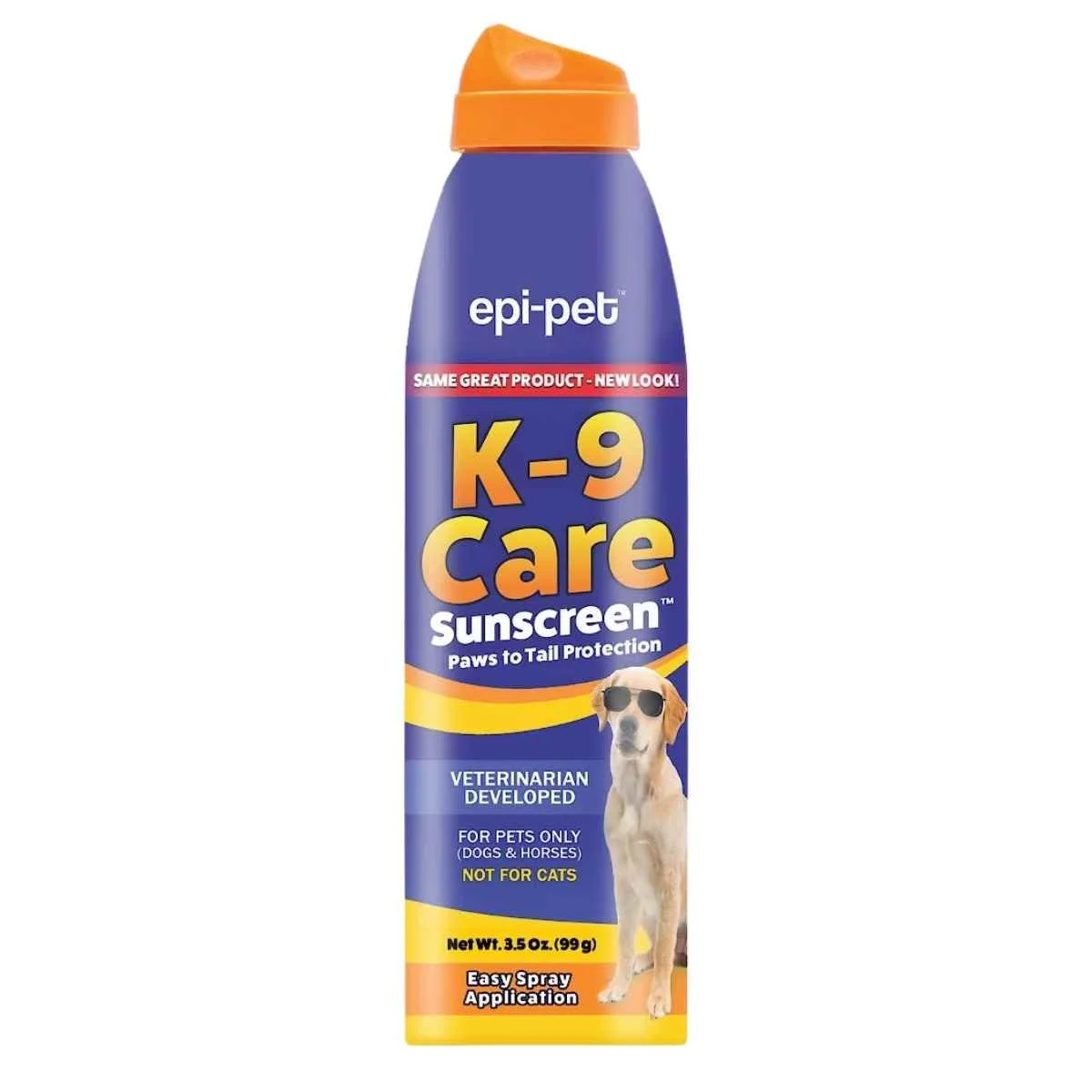
Type: Spray
SPF rating: SPF 30+ equivalent
Key ingredients: Ethylhexyl methoxycinnamate, octyl salicylate, homosalate, benzophenone-3
Water resistant: Yes
What we liked: FDA-approved; easy-apply spray applicator
What could be better: Mixed opinions on whether chemical sunscreens are safe for use in natural bodies of water; mixed opinions on whether octyl salicylate and benzophenone-3 are fully safe for dogs, though they’ve been proven safe in the concentrations used in this sunscreen; toxic to cats
Epi-Pet K-9 Care Sunscreen is the only FDA-approved dog sunscreen on the market, and has gone through rigorous third-party testing. You may notice that there’s no SPF rating on the packaging of this sunscreen, and that’s because SPF testing for dogs hasn’t been tested yet. However, through the formulation of this sunscreen in comparison to human options, it’s proven to have an equivalent of 30 SPF.
This is an aerosol spray, so it does make noise and has a slight alcohol odor when applied. Some dogs may find the spray and smell aversive, so this option is best for dogs who are already comfortable with aerosol sprays or who are unlikely to be sensitive to noises or smells.
Epi-Pet K9 Care Sunscreen
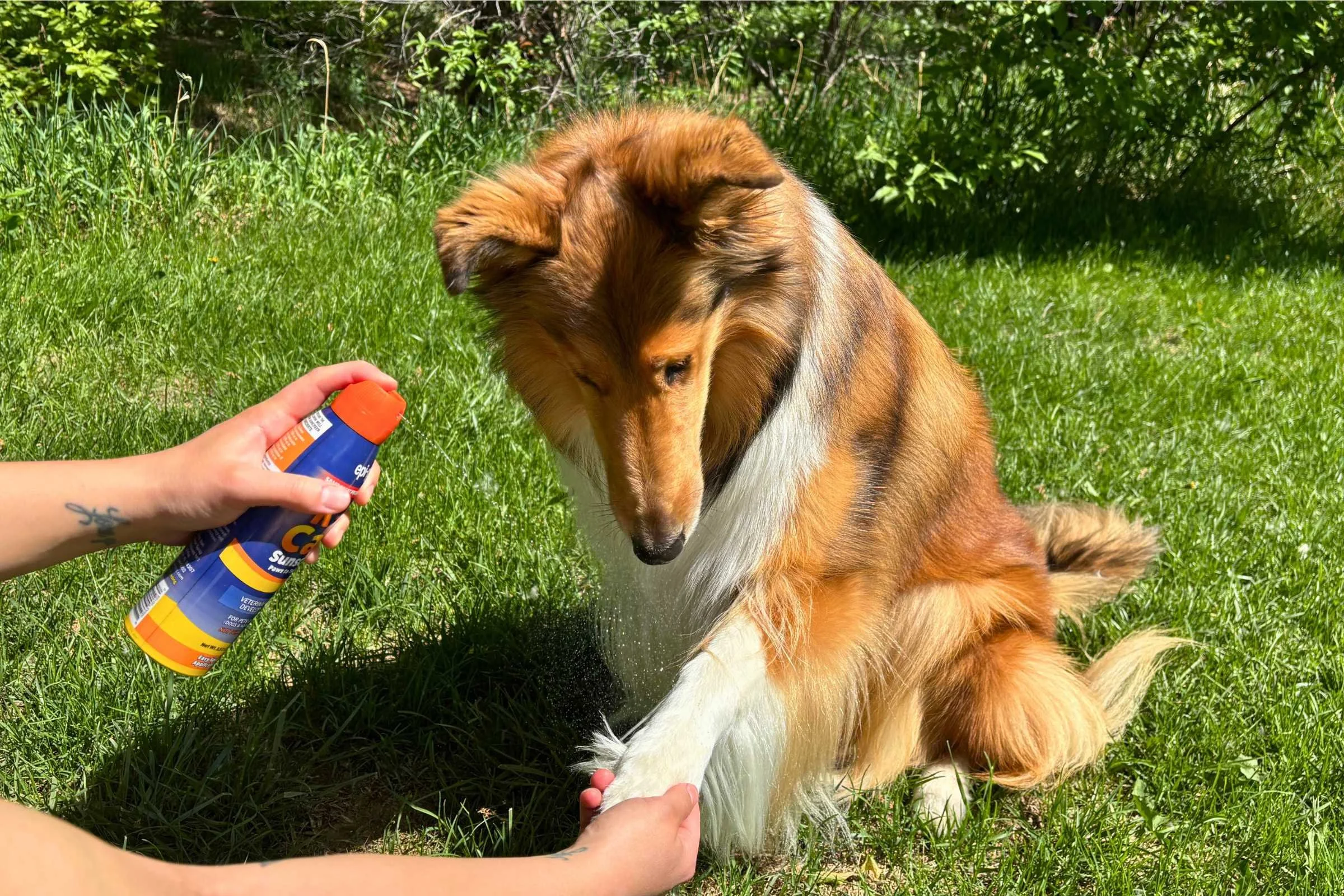
Because of the aerosol spray can, this sunscreen is the fastest and easiest to apply, doesn’t make a mess, and is a great option for full-body sunscreen on hairless dogs or dogs who have areas of their coat shaved (like poodles). You can feel this sunscreen slightly more on the skin than other options (it’s not as matte as the Lucky Pup Sunscreen Cream), but the alcohol odor does dissipate once it’s dried. It smells a lot like Coppertone baby sunscreen once it dries.
Note that in general, chemical sunscreens aren’t reef-safe, so if you plan on your pup doing a lot of swimming in the ocean, lakes, or natural bodies of water, a mineral-based sunscreen is a safer option for wildlife and ecosystems. However, if your dog is largely hiking in areas where there aren’t bodies of water, spending time in your backyard, or swimming in a pool, this is a great easy-to-apply option.
This sunscreen does contain two ingredients that may be toxic to dogs if ingested in larger quantities and may cause upset stomach if ingested in small quantities, so it’s best used for dogs who are unlikely to lick it off of themselves.
Best dog sunscreen stick: Petkin SPF 15 Doggy Sun Stick
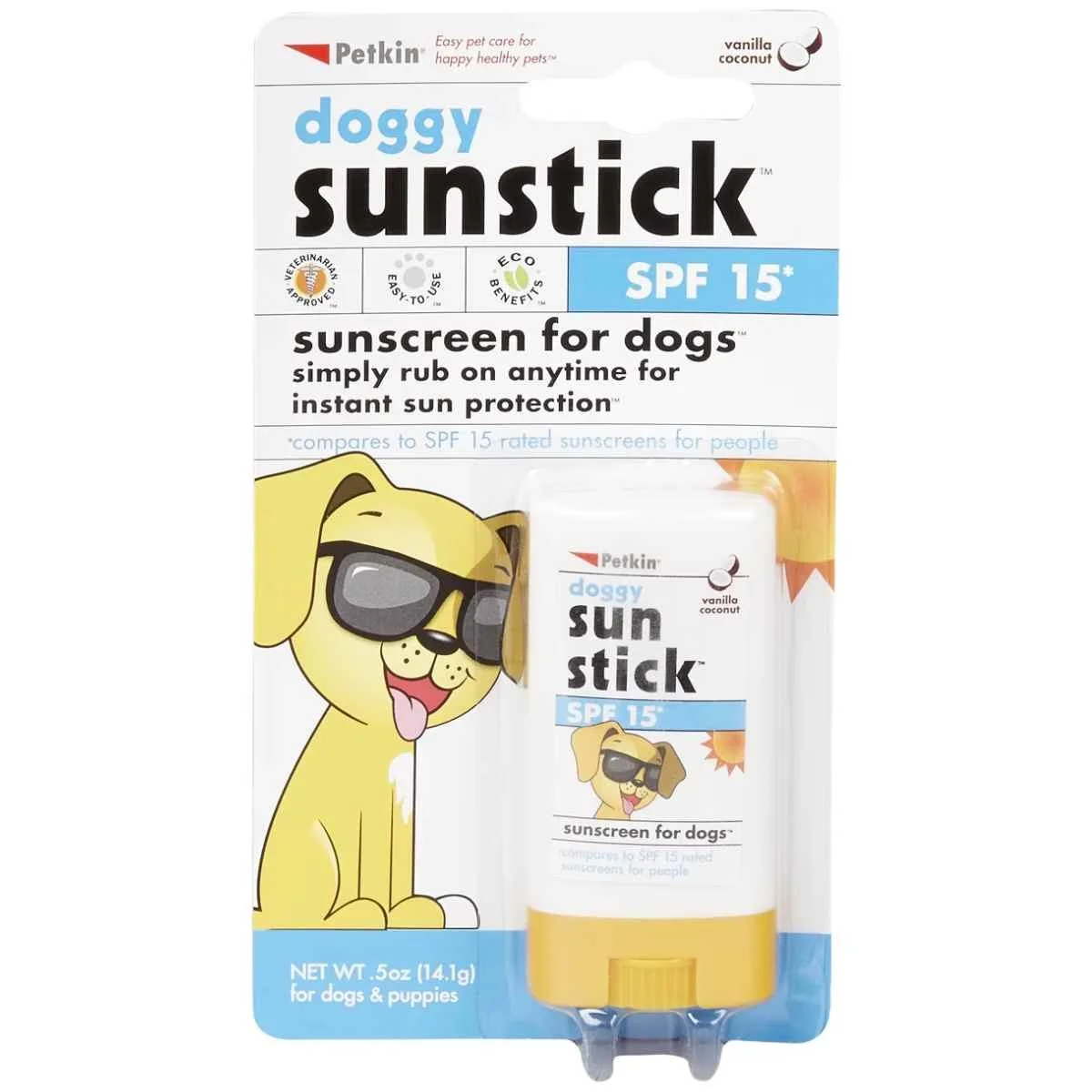
Type: Balm
SPF rating: SPF 15 equivalent
Key ingredients: Titanium dioxide
Water resistant: Yes
What we liked: Easy stick applicator; safe for use in natural bodies of water; smells nice; matte, non-greasy texture
What could be better: Lid doesn’t close all the way; on the thicker side
Just need a sunscreen stick to get sensitive areas like your dog’s nose and ears? The Petkin Doggy Sun Stick is a great option to keep in the car or in your daily bag so you can reapply on-the-go on sunny days. It’s comparable to a human SPF 15 sunscreen, so it’s not the most protective for highly sensitive skin, but it’s protective enough for dogs who just need a little sun protection in specific areas.
This sunscreen is easy to apply, thanks to the lip balm-like twist-up applicator, but it does go on a little thick, so rubbing it in with your fingers may be needed for even coverage. The thick texture means that it lasts a long time though, so you’ll be able to reapply a little less often than other options on this list.
Petkin SPF 15 Doggy Sun Stick
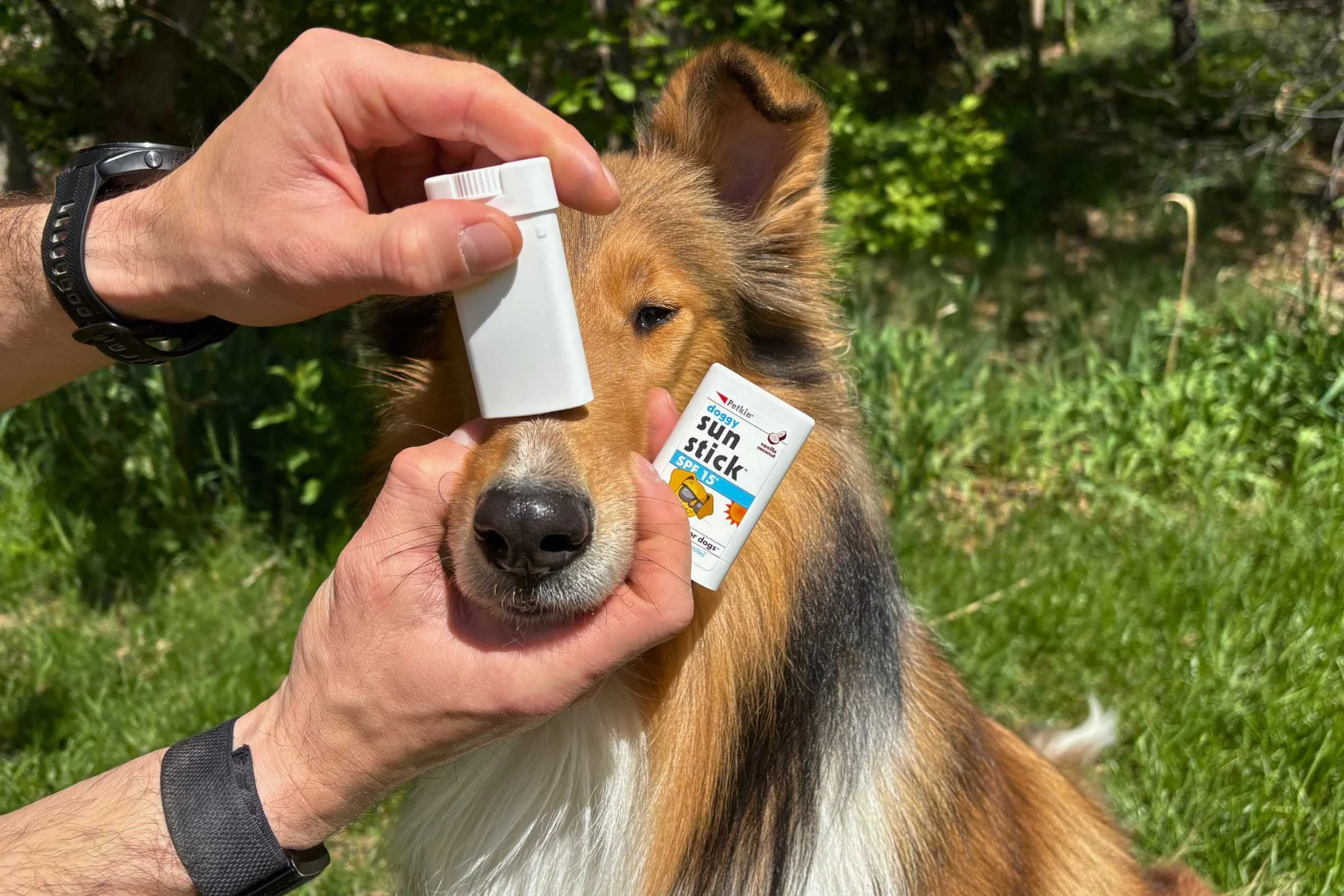
Because it’s a mineral sunscreen, it’s safe for use in all natural bodies of water, but as a downside, it does leave a white cast where applied (moreso than our top pick, the Lucky Pup Sunscreen Cream). Luckily, dogs don’t care what they look like.
My biggest qualm with this sunscreen stick is that the lid doesn’t always “click” back into place when you need to close it. It feels like there’s air stuck at the top of the lid and it doesn’t fully push down. It’s not enough that it would pop off in your bag, but keeping it fully closed would ensure no debris gets into the cap.
Best dog sunscreen for coat protection: Artero Block Sunscreen
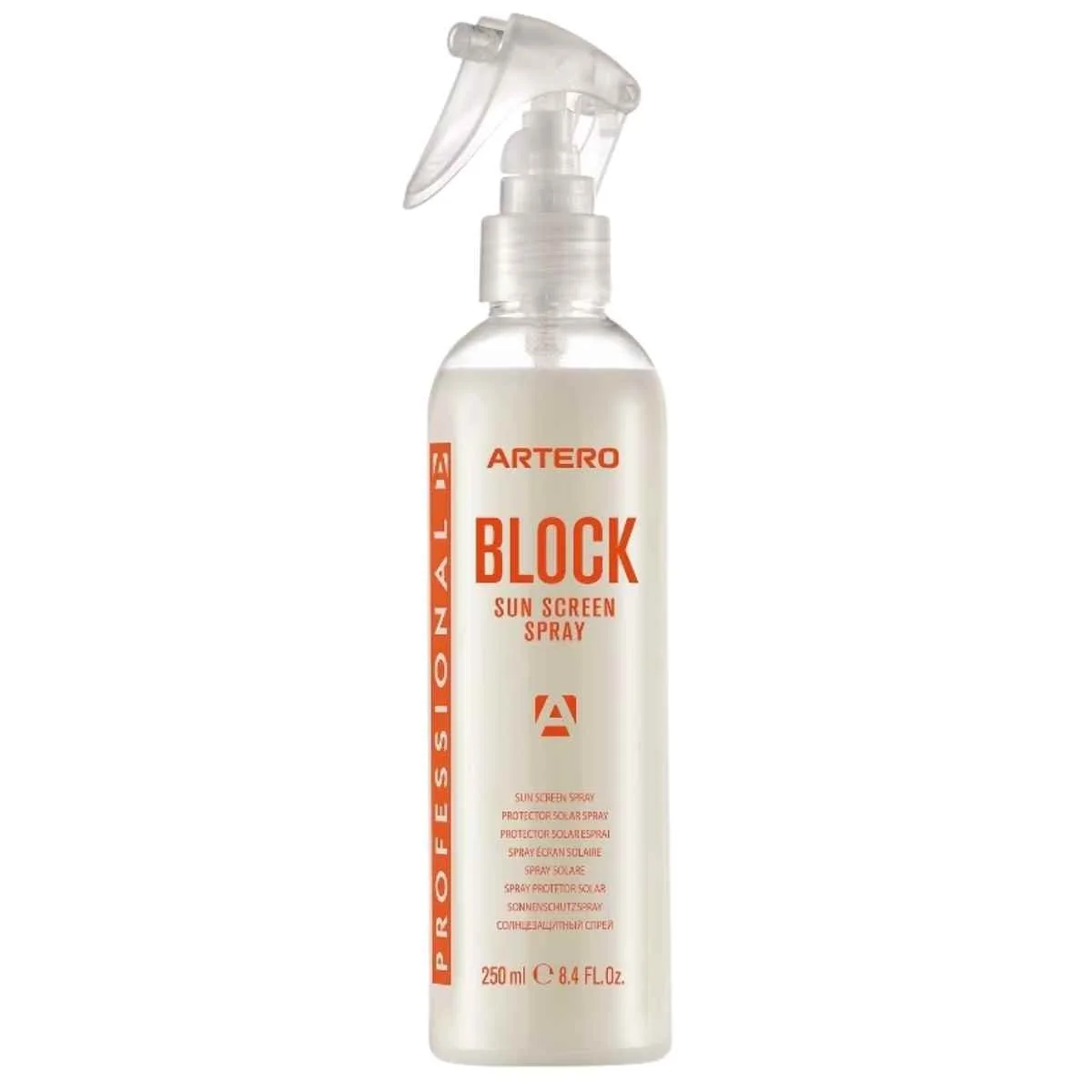
Type: Spray
SPF rating: Not rated
Key ingredients: Acai berry oil, rice seed protein and extract
Water resistant: No
What we liked: Protects dogs’ coats from UV damage and discoloration; natural ingredients
What could be better: Not protective enough to be used on its own for skin UV protection
Long-coated dogs and black dogs can get sun bleached from spending too much time outside. Black dogs may turn a reddish-brown color from exposure to UV rays. If you want to protect your dog’s coat in addition to their skin, the Artero Block Sunscreen is a good option. It should be used in addition to a sunscreen, as it doesn’t offer enough SPF to protect your pup’s skin from sunburn.
Artero Block Sunscreen
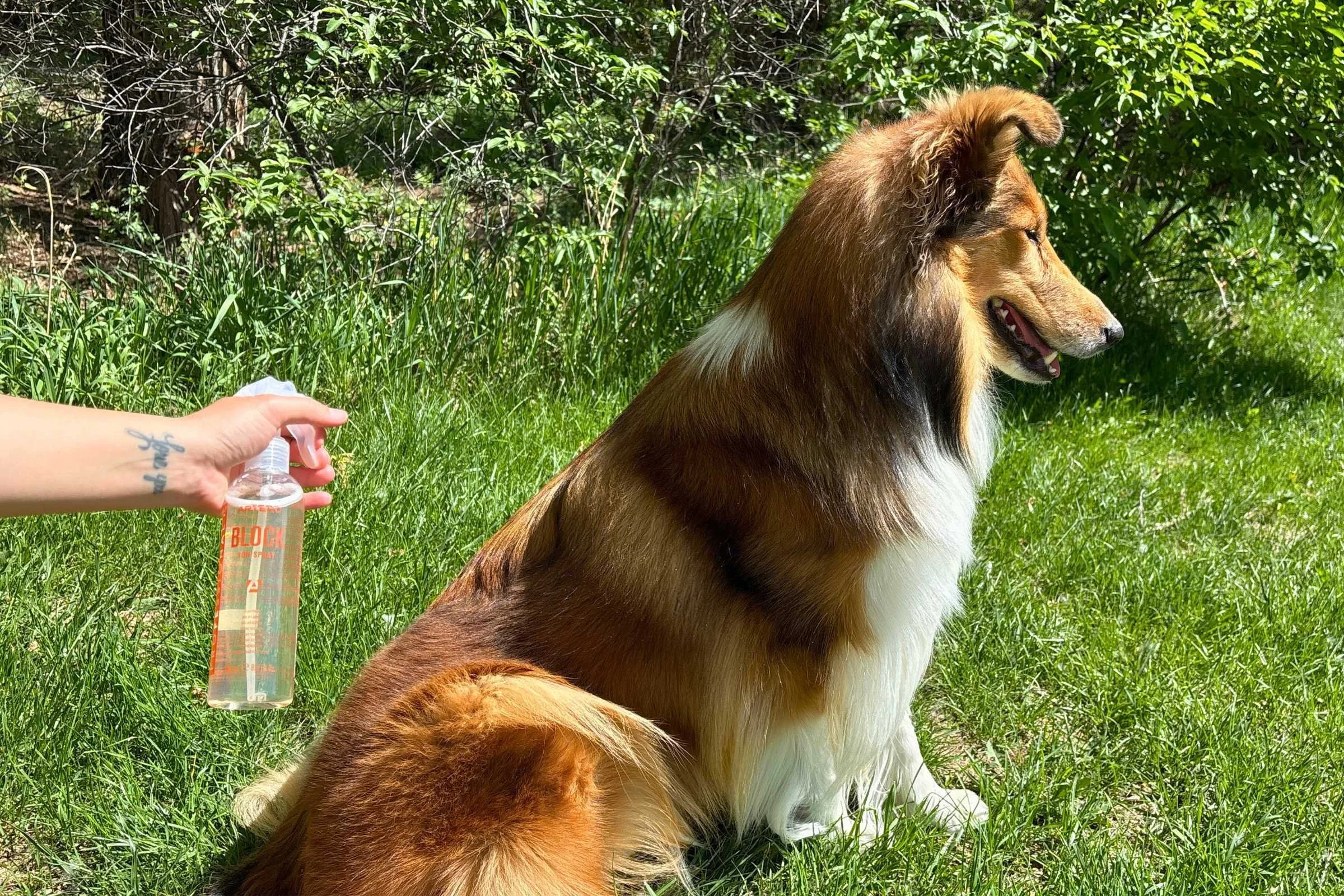
Instead of mineral or chemical UV filters, Artero Block Sunscreen uses a combination of naturally protective oils that help protect hair from the sun and keep your dog’s hair cuticles healthy and the coat moisturized. Acai berry oil fights free radicals from pollution and UV sun exposure with antioxidants that helps prevent discoloration and protein breakdown in your dog’s coat.
Artero Block Sunscreen has a light soapy scent and didn’t leave our tester dogs’ coats feeling greasy or heavy. The spray bottle makes it easy to apply over large areas, so it’s a solid pick for large dogs. It’s recommended to reapply this every 4-6 hours; though it’s not water resistant, so you’ll need to reapply more often if your dog takes a dip in a lake, stream, or pool.
Best long-lasting sunscreen for dogs: Divine Canine Supreme Sunscreen
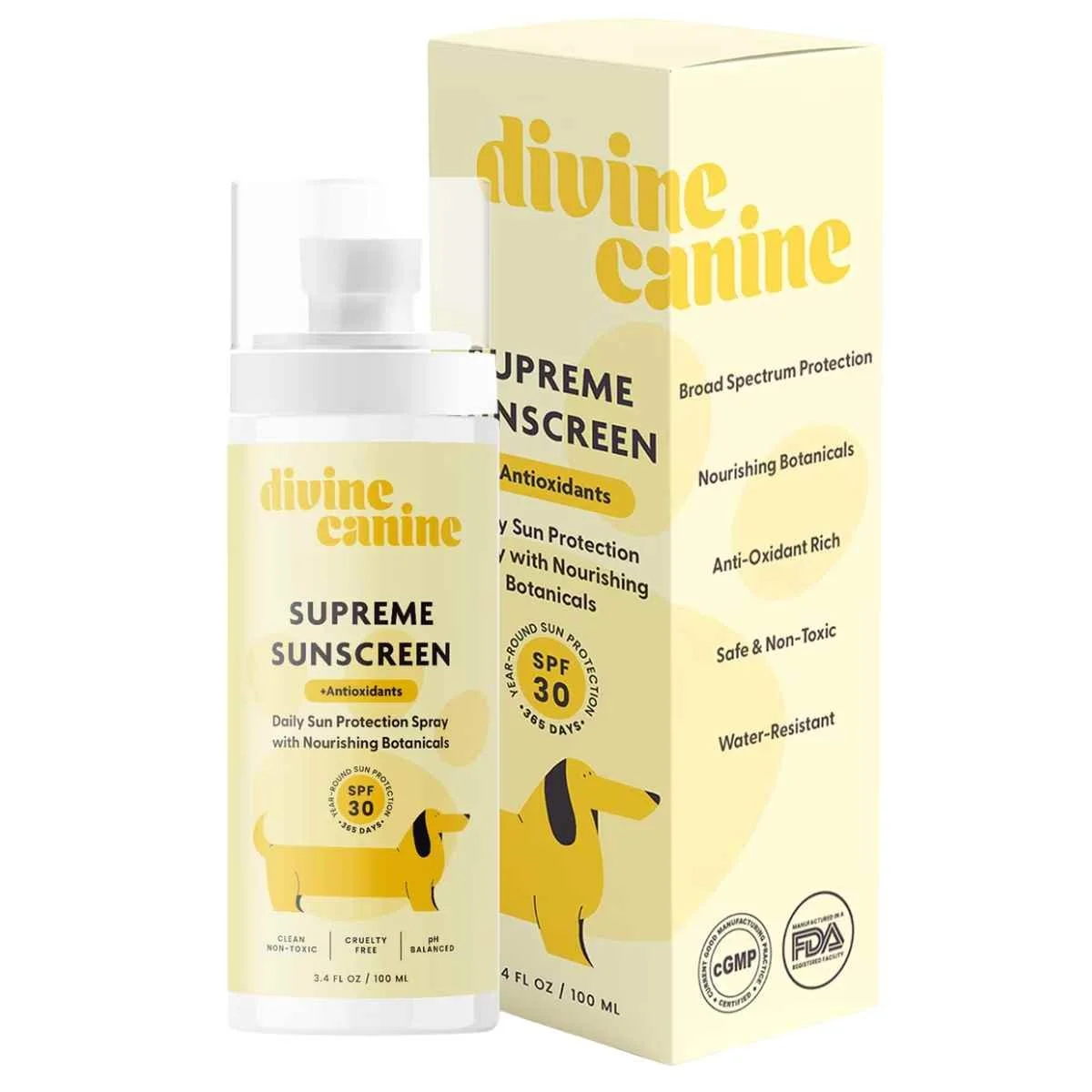
Type: Spray
SPF rating: SPF 30 equivalent
Key ingredients: Titanium dioxide
Water resistant: Yes, and stays on even with rubbing
What we liked: Lasts 4-5 hours before needing to be reapplied; high-quality applicator; non-aerosol; very light herbal scent; natural ingredients; safe for use in natural bodies of water
What could be better: Very thick formula; somewhat messy to apply; stays on your fingers if you need to rub it in; will stay on your dog until washed off
If you want a sunscreen that will last most of the day while your dog is running, playing, or swimming, the Divine Canine was the longest-lasting dog sunscreen we tested. It leaves a pretty significant white cast, but it genuinely stays put where you apply it, even if your dog is rubbing, scratching, or licking it.
Divine Canine Supreme Sunscreen
During testing, it required soap, water, and a bit of scrubbing to remove, which is both an upside and a downside. You know it’ll last a long time on outdoor adventures and you may need to reapply less often, but it may also require a bath to fully get off your dog. Note that it’ll leave white residue on your fingers if you need to rub it in anywhere.
The Divine Canine Supreme Sunscreen is particularly good for sensitive dogs, whether they’re behaviorally sensitive or sensitive to certain ingredients found in dog sunscreen.
The non-aerosol spray is less startling for dogs than aerosol, and it doesn’t have the alcohol-adjacent scent that many dogs find aversive. It’s also a mineral sunscreen, so it doesn’t contain chemical ingredients, and generally should be safer for your dog to lick or ingest small quantities of than the chemical options on this list. You’ll also find antioxidants and skin moisturizers like vitamin E and jojoba oil in the ingredients list, which are good for keeping your dog’s skin barrier and coat healthy.
Best dog sunscreen for hiking: Petkin Doggy Sunwipes
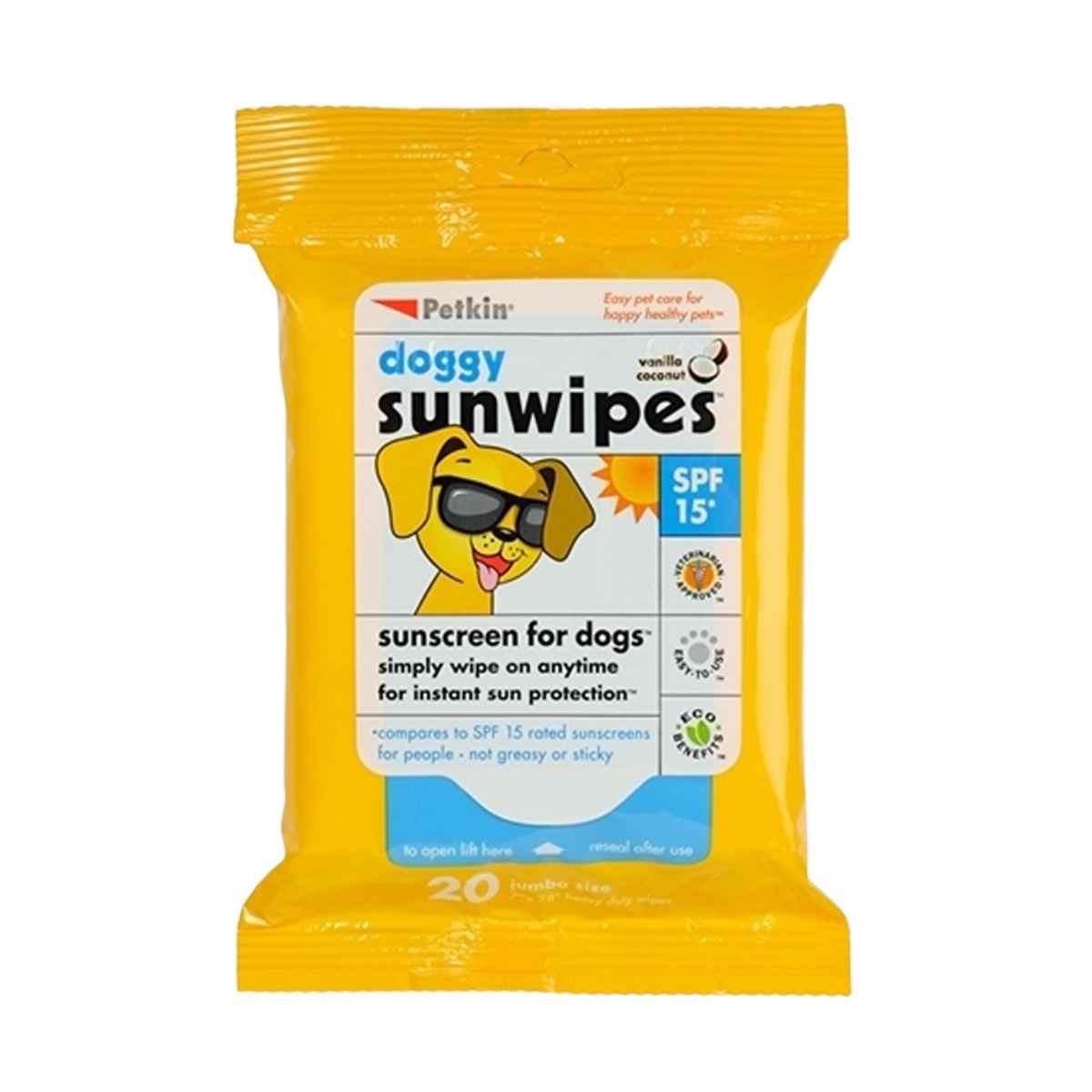
Type: Wipe
SPF rating: SPF 15
Key ingredients: Octyl methoxycinnamate, benzophenone-3, titanium dioxide
Water resistant: No
What we liked: Easy application; mess-free
What could be better: Not water-resistant; mix of chemical and mineral ingredients, so likely not safe for use in natural bodies of water
Sunscreen and sand/dirt don’t exactly mix, especially not with dogs. Applying a lotion sunscreen or other option that needs to dry requires that your dog is able to sit and wait patiently. Wet sunscreen sprays and lotions easily pick up dirt and sand, so they’re not the best option if you’re trying to keep your dog relatively clean.
The Petkin Doggy Sunwipes offer light SPF protection (15 SPF equivalent) through a handy wipe that doesn’t leave your dog’s skin feeling wet or sticky. They’re also ideal picks for sensitive dogs who don’t tolerate sprays or lotions, as they can simply be wiped down. This is easily the quickest non-spray application method we tested.
Petkin Doggy Sunwipes
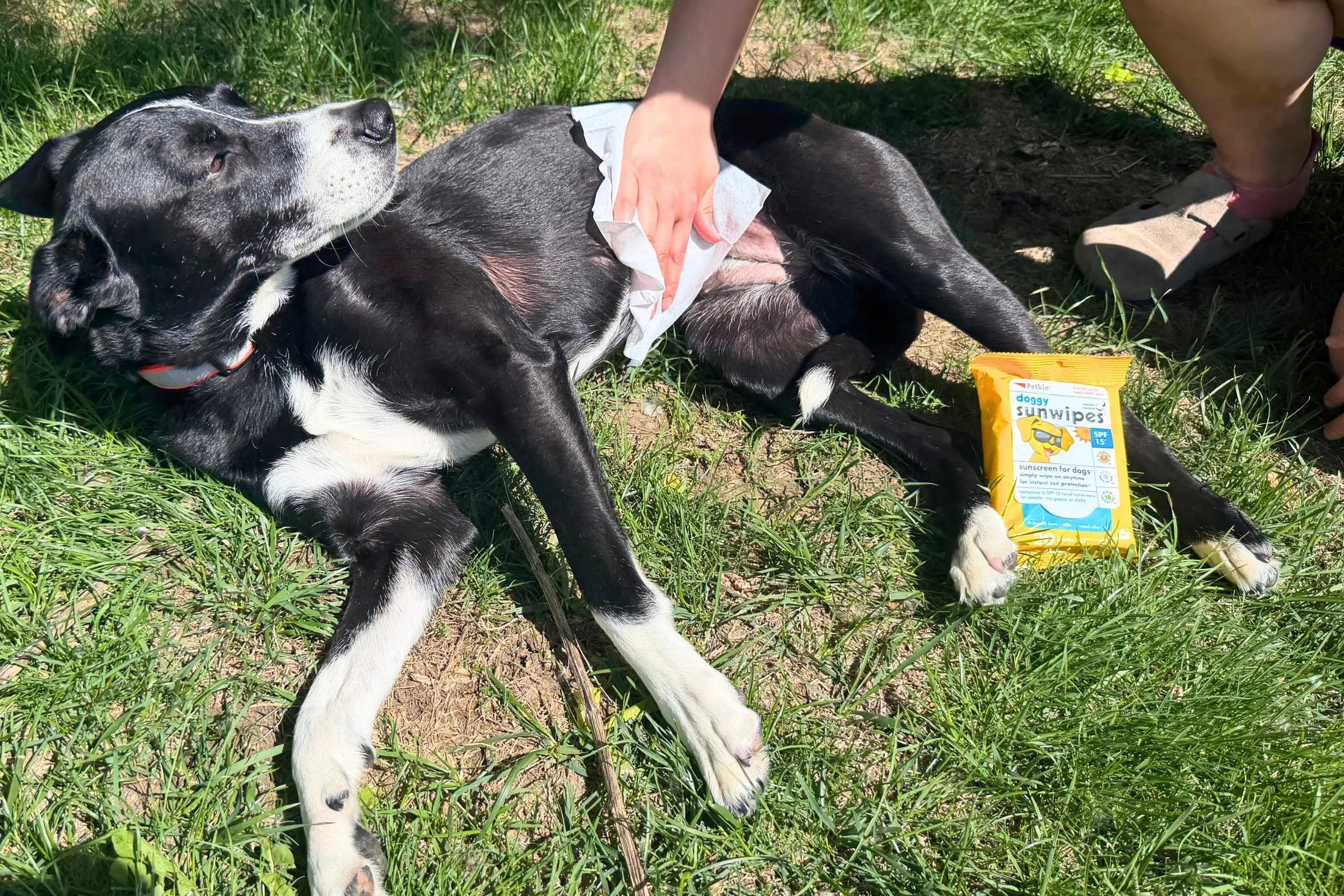
However, these wipes aren’t waterproof, have chemical ingredients that may not be safe for use in natural bodies of water, and it’s hard to tell where you’ve applied them since the sunscreen itself isn’t visible. The wipe format may make it more difficult to tell if you need to reapply, but if you just want to wipe your dog down quickly without using a ton of spray or lotion, they work well. They’re best suited for folks with a “something is better than nothing” approach to SPF protection.
Similar to the Epi-Pet sunscreen, the Petkin Doggy Sunwipes have octyl methoxycinnamate and benzophenone-3, two ingredients which may be harmful to dogs if ingested in large quantities. It’s best to keep your dog from licking this option, though the wipe format ensures there isn’t excess product on your dog’s skin to be ingested.
Other dog sunscreens we tested
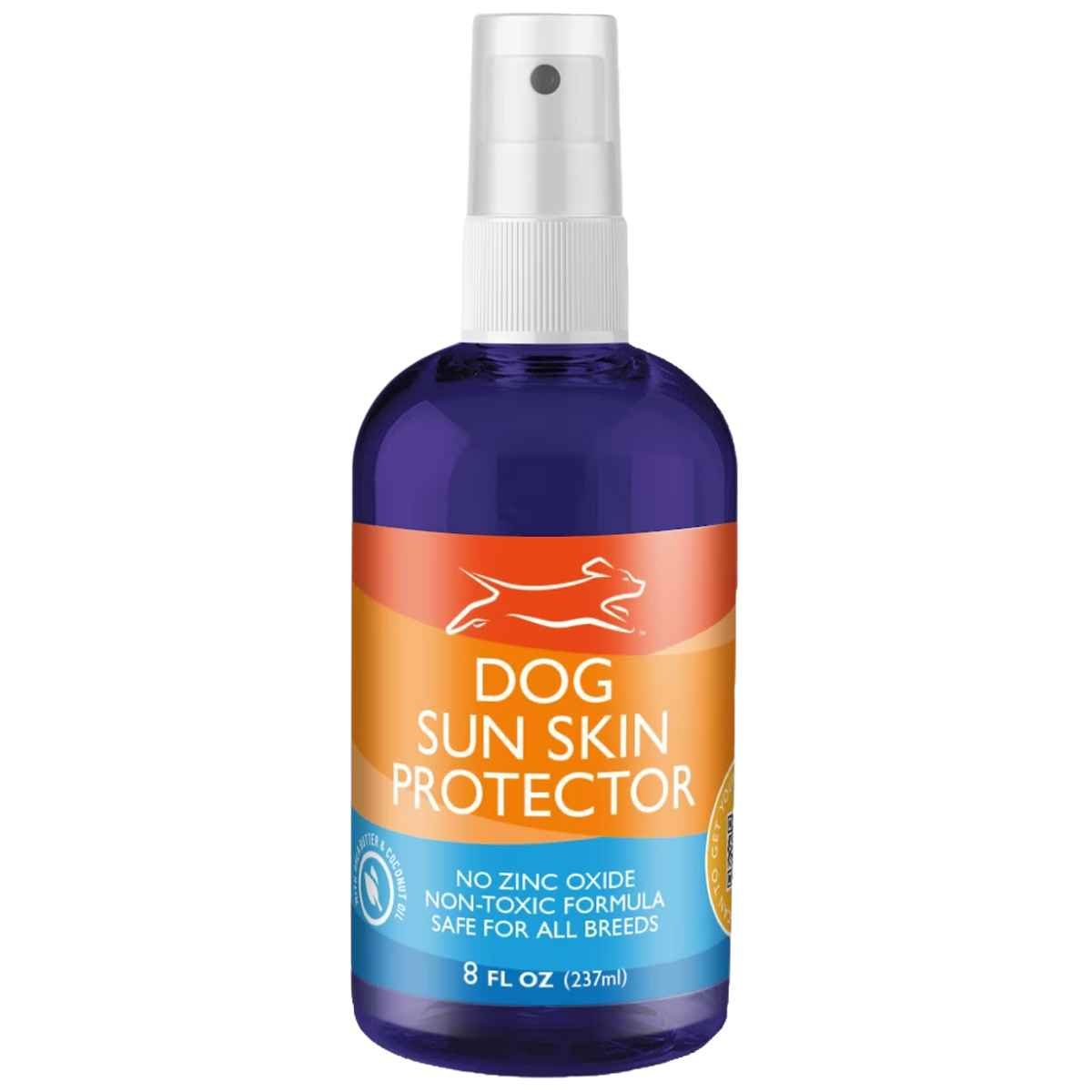
Emmy’s Best Pet Products Dog Skin Protector
Type: Spray
SPF rating: SPF 30 equivalent
Key ingredients: Octinoxate
Water resistant: No
What we liked: Non-aerosol spray
What could be better: Not water resistant; one ingredient that may be toxic to dogs in large quantities; applicator isn’t the best
The Emmy’s Best Pet Products isn’t a bad option, but it was edged out of the competition by other spray sunscreens on our list. The applicator on this bottle squirts out in puddles instead of distributing evenly, so folks looking for a non-aerosol spray would be better off with the Divine Canine sunscreen, which has a better applicator.
It’s less messy than the Divine Canine option since it’s not a mineral sunscreen, but does have octinoxate, which isn’t a vet-recommended ingredient for safe-to-digest dog sunscreen options. However, the Epi-Pet option also has similar ingredients, so if you want a non-aerosol, chemical dog sunscreen, and your dog is unlikely to ingest it, this is an option.
Emmy’s Best Pet Products Dog Skin Protector
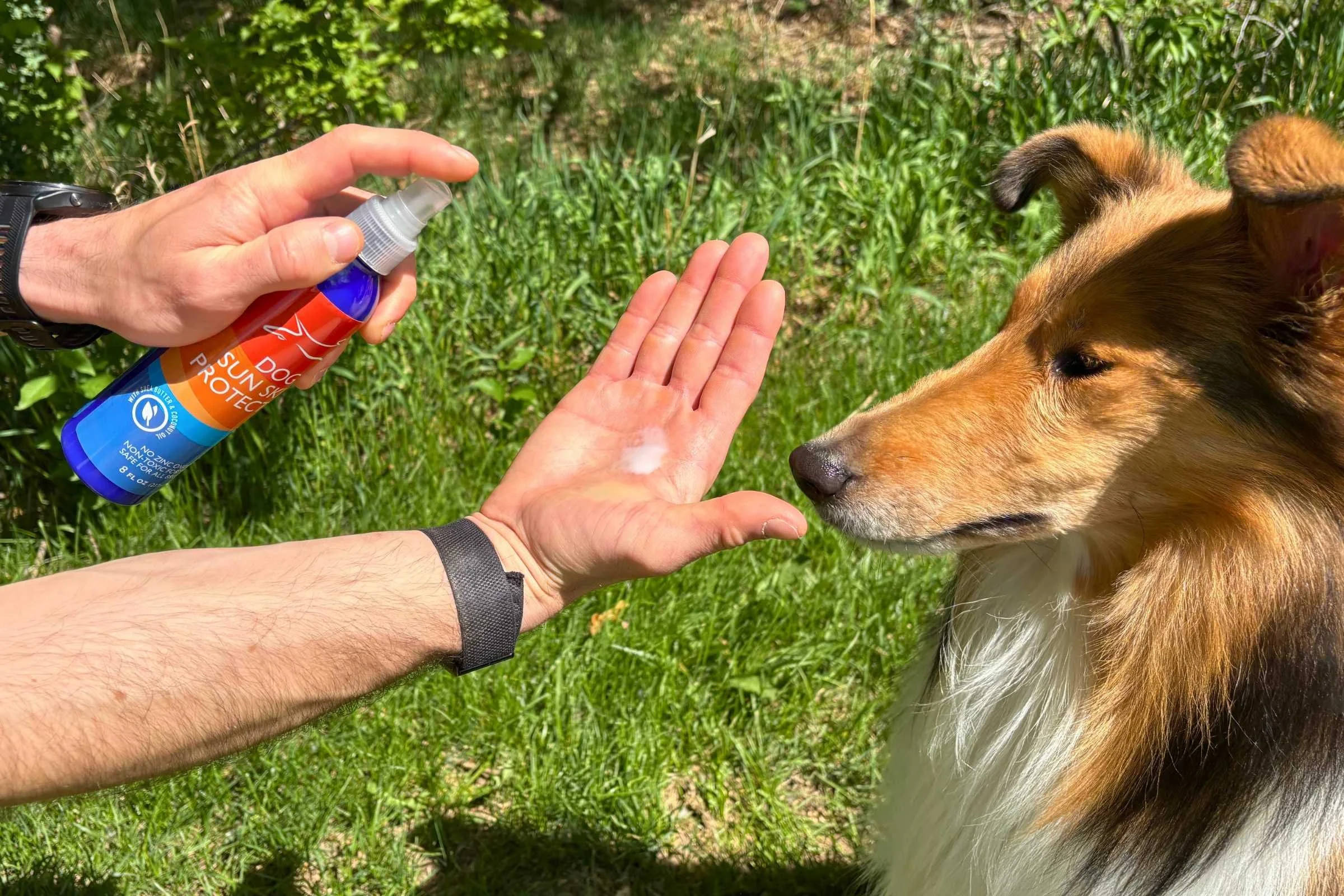
This spray applicator didn’t distribute the product well.
Why dogs need sunscreen
Dogs can get sunburns just like humans, and sunburns and low-level UV exposure can increase the risk of skin damage and certain cancers.
Squamous cell carcinoma and hemangiosarcomas are both types of cancer that are linked to UV damage. If you have a dog who likes to lay in the sun either outside or by sunny windows, sunscreen can help lower their risk of these cancers.
There’s no universal timeframe for how quickly a dog can get sunburnt, but there are certain risk factors that affect how much damage the sun’s UV rays can do.
Dr. Anthea Schick, DVM, DACVD, Veterinary Dermatologist and Senior National Specialty Director of Dermatology at Thrive Pet Healthcare, gave us the following guidelines of the times and environments that dogs most need sunscreen in:
Peak UV hours (generally between 10 a.m. and 3 p.m.)
High elevations (UV radiation intensity increases by approximately 6%–12% for 3,000 ft. increase in elevation)
Reflective environments like sand, concrete, snow, or water
Sunny climates, such as Arizona, California, Texas, and Florida
Repeated low-level exposure is also important—dogs that spend hours daily sunbathing outdoors or even near windows can accumulate chronic UV damage over time, even if they never develop an obvious sunburn
Which dogs need sunscreen the most
Dr. Schick says that certain dogs are more at-risk of getting sunburns than others, and could benefit more from regular sunscreen use.
“Hairless dogs, dogs with thin hair coats, sparse fur, light colored skin, or areas with reduced pigmentation are at greatest risk,” she says. “This includes breeds such as pit bulls, whippets, bull terriers, Boston terriers, short-coated Chihuahuas, Dalmatians, and boxers. Hairless dogs, such as the Chinese Crested and Xoloitzcuintle, are especially vulnerable because they lack the protective barrier of the hair coat.”
Dr. Schick says that dogs with chronic allergies, scars, shaved hair, or autoimmune or immune mediated skin problems may also have increased sensitivity to the sun.
But don’t think that your heavy-coated dog is immune to sunburns. Dr. Schick says, “even heavily coated dogs can develop sunburn on naturally exposed areas like the nose or the belly.”
Dr. Schick says that the following are the most common locations for dogs to get sunburnt:
Bridge of nose
Ear tips
Eyelids
Belly and groin
Inner thighs
Areas with naturally thin fur
Recently shaved patches
“For many dogs, the belly is especially vulnerable because dogs often sunbathe lying on their sides or backs, exposing light haired skin directly to UV rays,” she says.
If you have a hairless dog or a dog who is highly sensitive to the sun, sunscreen alone may not be enough. Dr. Schick says that pet parents for these types of dogs should opt for a holistic approach to sun protection including avoiding peak UV times, using shade, and considering UV-protective clothing in addition to dog sunscreen use.
Types of dog sunscreen
Sprays
Spray sunscreens are quick to apply, and good for large areas. If you have a dog whose whole body is hairless or has a thin coat, sprays will be the quickest application method. However, some dogs don’t tolerate sprays, due to the sound and smell (some have an alcohol odor).
Sticks and Balms
Dog sunscreen that comes in a stick or balm form is often thicker and better for targeted protection rather than whole-body application. Use these formulas on your dog’s nose, ears, and other small, sensitive areas prior to sun exposure.
Lotions
Lotions generally offer the highest coverage of any dog sunscreen type since you can typically see where you’ve applied and how much. The downside to lotions is that they take longer to apply and must be rubbed in, so your dog should be comfortable with being handled for this type of sunscreen.
What to look for
Zinc-free and salicylate-free formulas (both are toxic to dogs)
Broad spectrum UVA and UVB protection like titanium dioxide, which is generally considered one of the safer sunscreen ingredients for dogs according to Dr. Schick
Natural oils or waxes for moisture
Water resistance for active dogs
Good skin tolerance for allergic or sensitive pets
When looking at the ingredient list on dog sunscreens, Dr. Schick warns that even sunscreens formulated specifically for dogs can contain ingredients that aren’t the safest. “One important point is that ‘natural’ does not automatically mean safe for dogs,” she says. “Some botanical ingredients and essential oils can still irritate canine skin.”
Dr. Schick also recommends not getting caught up in SPF numbers when shopping for a dog sunscreen. “Consistency matters more than chasing high SPF numbers,” she says. “A safe sunscreen that is reliably applied is more helpful than a higher SPF product that is irritating or difficult to use.”
Always talk to your vet before using a dog sunscreen product if your dog has sensitive skin or if they have other pre-existing health conditions.
Ingredients to avoid
Some ingredients in human sunscreens are toxic to dogs. Since dogs may lick sunscreen after application, it’s important to purchase a dog-safe sunscreen that’s unlikely to harm your dog if ingested in small quantities. Note that even dog-safe sunscreens can cause gastrointestinal upset if ingested in large quantities, so supervise your dog and discourage licking when possible.
Check out Dr. Schick’s guidelines on ingredients to avoid before shopping for a sunscreen for your pup:
Zinc oxide: Can cause gastrointestinal upset and potentially serious blood abnormalities if ingested.
Salicylates: May cause skin irritation or toxic toxicity if licked
Strong fragrances or essential oils: These may trigger irritation or allergic reactions
Human sunscreens with chemical additives not tested for pets
Note that there are two different types of sunscreens: chemical sunscreens and mineral/physical sunscreens. Chemical sunscreens use chemical ingredients to absorb UV rays. Chemical sunscreens generally aren’t safe to use in natural bodies of water (especially oceans and near reefs) because they can harm wildlife and natural ecosystems.
Mineral/physical sunscreens for dogs use minerals like titanium dioxide to create a physical barrier that reflects the sun’s UV rays.
How to apply sunscreen to a dog
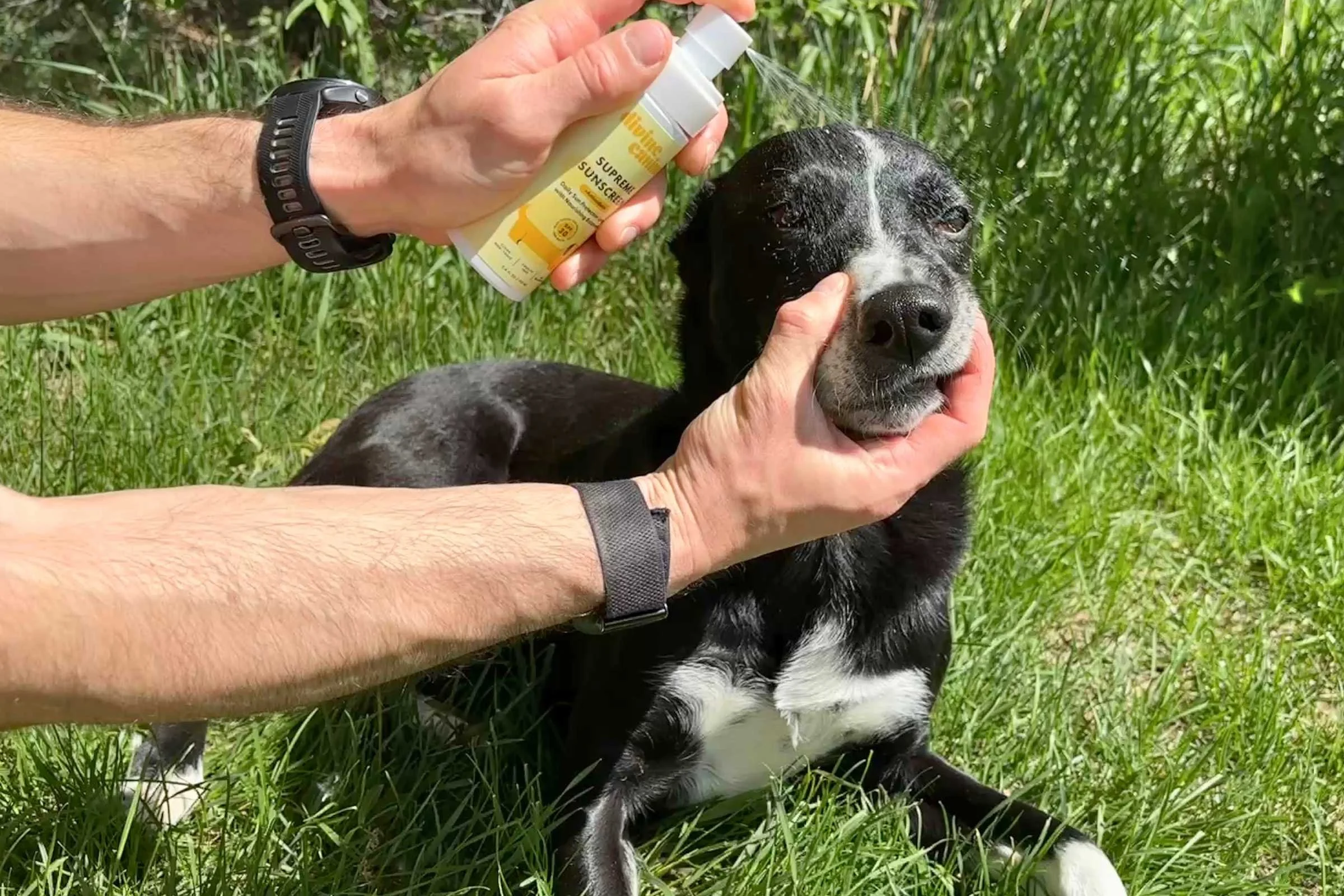
Apply before sun exposure. Dr. Schick recommends applying sunscreen about 15 to 30 minutes before sun exposure.
Use during peak sun times. Dr. Schick says that pet parents should apply sunscreen to their dogs during peak UV hours (generally between 10 a.m. and 3 p.m.), in high elevations, in reflective environments like sand, concrete, snow, or water, in sunny climates, and before your dog sunbathes (indoors or outdoors).
Focus on exposed areas. Ensure you apply sunscreen to the bridge of your dog’s nose, their ears, belly, and any other areas that are exposed to the sun.
Prevent licking until absorbed. Even if you choose a dog-safe sunscreen, your dog could end up with gastrointestinal side effects if they ingest too much sunscreen. Redirect their attention away from licking the sunscreen after you’ve applied it.
Reapply when needed. “More frequent application reapplication may be needed if the dog swims, is bathed, rubs against surfaces, or licks the application site,” says Dr. Schick. She also says that using dog sunscreen doesn’t mean your dog can have unlimited sun exposure, but it should instead “be viewed as one part of a broader sun protection strategy.” Sun shirts and cooling vests for dogs are also options to help minimize full-body sun exposure.
Signs your dog may have sunburn
Red or pink skin
Flaking skin
Sensitivity to touch
Dry or cracked nose
Itchy skin
Hair loss
Mild sunburn can be managed at home with cool compresses or dog-safe aloe. Any moderate to severe symptoms like dark red skin, blisters, or oozing require a trip to the vet.
FAQ
-
Yes, dogs need sunscreen for prolonged sun exposure, especially if they’re prone to sunburns. Sunscreen can reduce your dog’s risk of sunburn and future skin damage or skin cancer.
-
No, human sunscreen is not safe for dogs. Human sunscreen often contains ingredients that are toxic to dogs if ingested, like specific salicylates, zinc oxide, strong fragrances, and essential oils, as these may cause skin irritation, gastrointestinal distress, or toxicity if ingested.
-
You should apply dog sunscreen to any areas with thin hair (or no hair). The bridge of the nose, ear tips, eyelids, belly, groin, inner thighs, and any areas that have been shaved or have hair loss should be covered with sunscreen.
-
Dog sunscreen should be applied at least 15 minutes before direct sun exposure, and reapplied every 2-3 hours. More frequent application may be needed if your dog is swimming.
-
Dogs with thin coats, hairless breeds, dogs with light-colored skin, and dogs with low pigmentation have the greatest risk of sunburn. Breeds like Whippets, Pit Bulls and Bully mixes, Chinese Crested, and Xoloitzcuintle are particularly at risk. Dogs with shaved hair (whether for function or recent surgeries), and pups with certain health issues are also prone to sunburns.
-
Yes, dogs can get sunburn on their nose, especially if they have pink noses, or thin or white hair around the nose. It’s a good idea to apply sunscreen to the nose and area around the nose to avoid sunburn.
-
No, zinc oxide is not safe for dogs. If ingested, zinc oxide can cause gastrointestinal upset and/or severe toxicity.
-
Dogs can safely lick most dog-safe sunscreen in small amounts. Even dog-safe sunscreen can cause gastrointestinal issues if consumed in large amounts, so keep an eye on your dog and discourage licking when possible.Don’t allow your dog to lick human sunscreen, as most human sunscreen contains ingredients that can be toxic to dogs.
-
Most dog sunscreen has an SPF of at least 15 up to 40. The exact SPF of a dog sunscreen doesn’t matter as much as thorough and consistent application.
-
Generally, dog sunscreen can not be used for cats, as there are certain ingredients in dog sunscreens that can be harmful to cats. Use a cat-specific sunscreen for cats, or ask your veterinarian for a recommendation for cat sun protection.
How we researched and tested
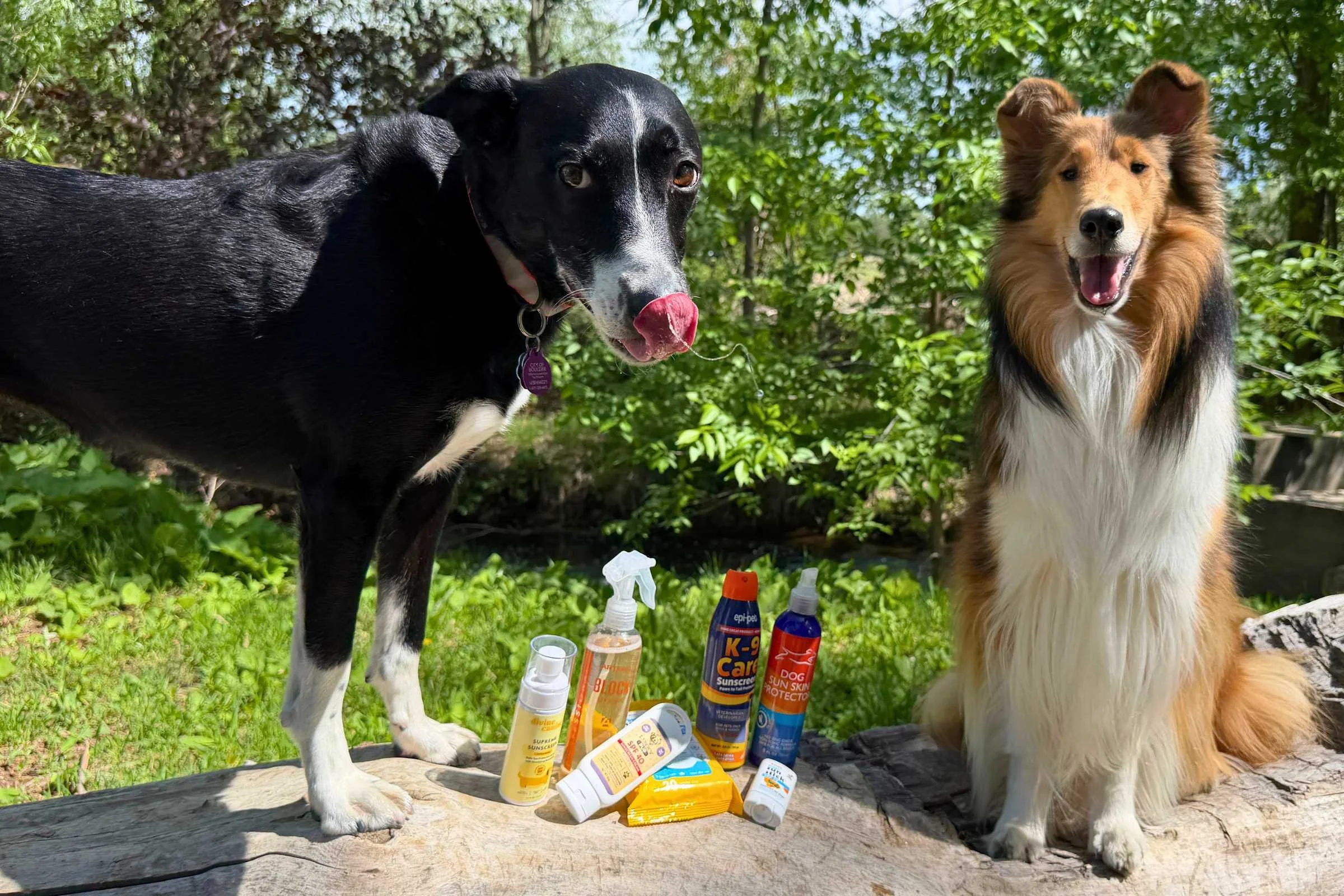
Vet guidance: We talked with Dr. Anthea Schick, DVM, DACVD, Veterinary Dermatologist and Senior National Specialty Director of Dermatology at Thrive Pet Healthcare about dog sunscreens. Her guidance on ingredients, risk factors, and dog sunscreen safety helped guide the formation of our testing pool and informed our winners.
Outdoor exposure testing in sunny conditions: We tested each sunscreen on our tester dogs before multi-hour sunny outings.
Ease-of-application and dog tolerance testing: We applied each sunscreen on various areas of our tester dogs’ bodies, and gave extra points to the options that were both easy to apply, and minimally aversive to our dogs. We also noted which sunscreens the dogs seemed to mind the least, as the least amount of licking equals a lower possibility for gastrointestinal problems.
Ingredient safety review: With Dr. Schick’s guidance, we looked at each ingredient listed in all the sunscreens tested, and dug into any that were questionable for ingestion safety.
Longevity and durability during activity: We checked each sunscreen 1-2 hours into each activity, and re-applied when necessary, noting how long the sunscreen lasted in varying temperatures, and in varying activities like hiking, splashing in the local lake, and kayaking.
- Applied before multi-hour sunny outings
- Hikes, lake days & kayaking
- Checked longevity 1-2 hours into each activity
- Tested on multiple dogs of different sizes
- Noted licking behavior & dog tolerance
- Ingredient safety (vet-verified)
- Ease of application on fur & skin
- How well it stays on during activity
- Dog tolerance of smell & application
- Water & lick resistance
Why you should trust us / About the author

Jae Thomas is an e-commerce journalist, editor, and dog trainer based in Colorado. She graduated from the New York University journalism program in 2020, and has written and edited commerce content for publications like Mashable, Apartment Therapy, Bon Appetít, Whole Dog Journal, Chewy, CNN Underscored, and more.
Jae is a Certified Professional Dog Trainer, Knowledge Assessed, and teaches agility, rally, and other dog sports at Canine Athletics Training Center in Boulder County. Jae uses her background in dog sports and behavior to test outdoor-focused dog gear focused on fit, comfort, safety, and functionality for dogs and their owners.
Jae shares her life with two dogs: mixed breed Miso, and Rough Collie, Dashi. Jae competes in conformation, agility, rally, herding, barn hunt, scent work, and other sports with her dogs and is a pro at traveling, camping, hiking, and adventuring with canine companions in tow.
Find more of Jae’s reviews and guides here.