Exped Ultra 6.5R Sleeping Pad Review
A new lightweight packable sleeping pad with excellent comfort and warmth-to-weight ratio
June 8th, 2026
Home → Gear Reviews → Backpacking
Our verdict
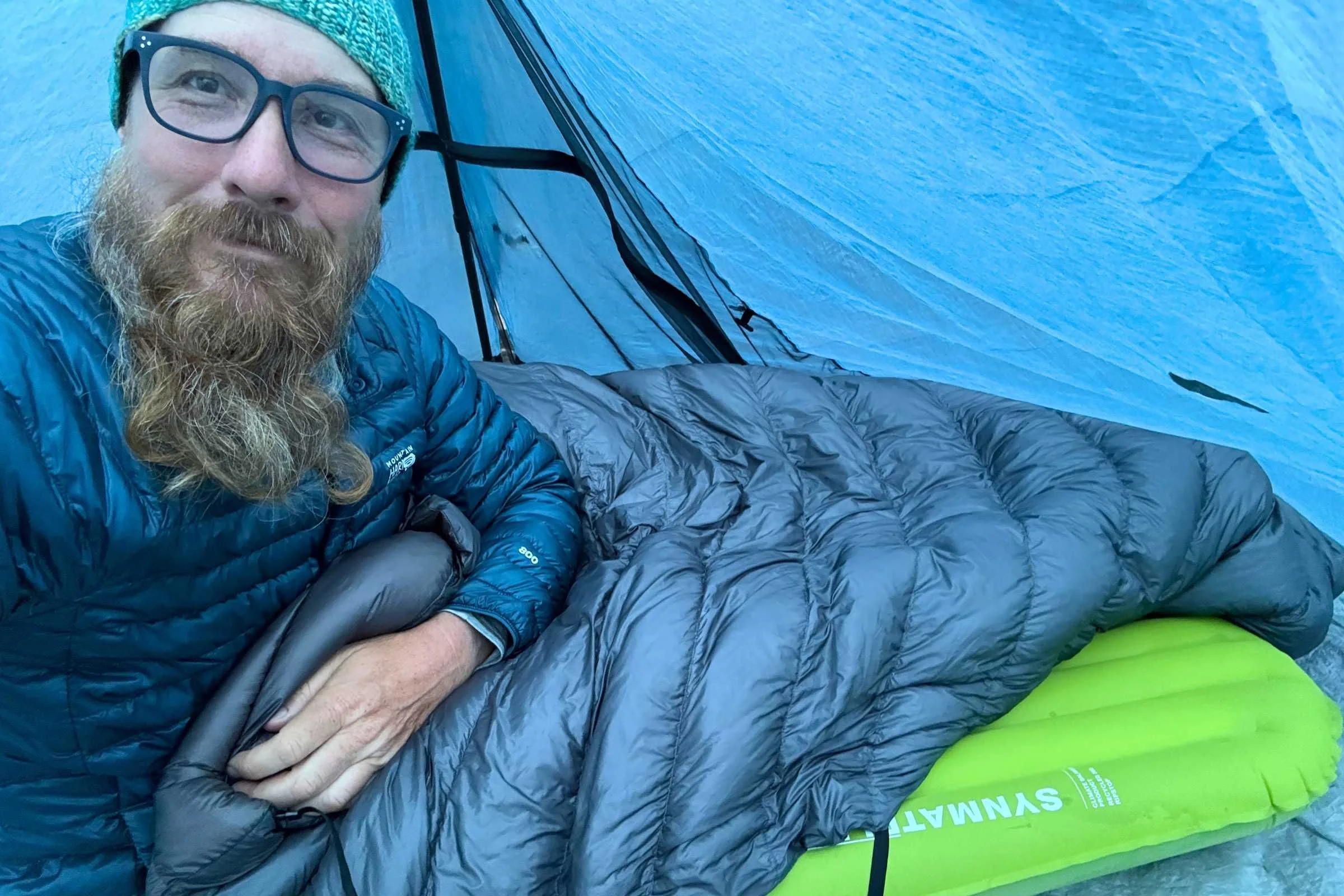
The Exped Ultra 6.5R sleeping pad (which Exped calls a sleeping mat) is a lightweight, packable sleeping pad with a 6.9 R-value that outperforms the competition in both warmth-to-weight ratio and comfort.
We had a men's and a women's tester test both the mummy and rectangular versions of this sleeping pad for a total of over 50 nights backpacking and camping.
We tested the Exped Ultra 6.5R in all four seasons, from cold snowstorms at 15°F to warmer summer nights around 60°F while backpacking, camping, and traveling.
With a 6.9 R-value, this pad can be part of a true four-season setup, insulating against the snow beneath in the winter and providing a barrier against heat on warm granite in the warmer summer months. And with a 3.5-inch thickness, backpackers can be less picky about campsite selection and still sleep in comfort from the rocks on the ground.
Exped Ultra 6.5R Sleeping Pad
Mummy
Rectangular
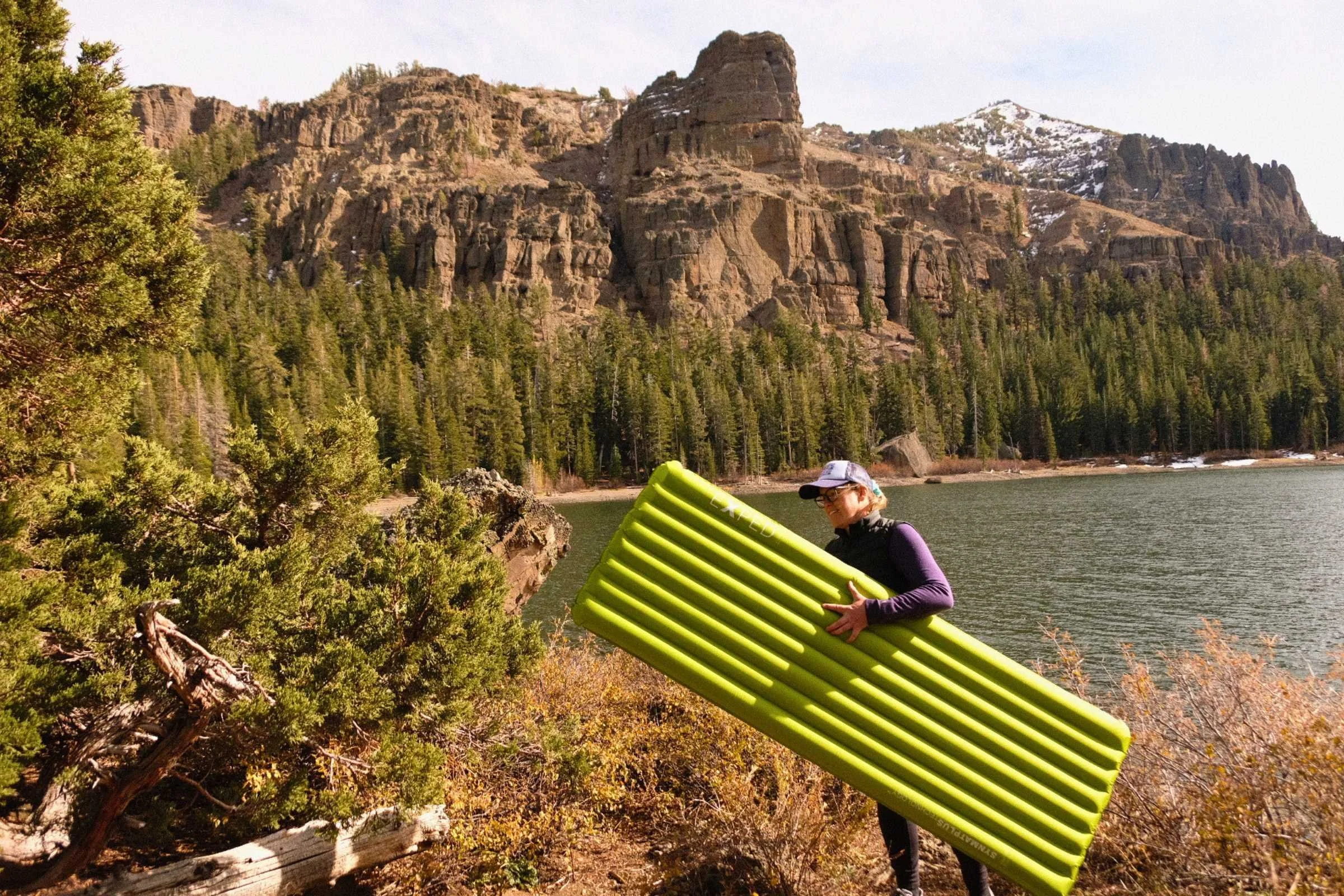
This pad packs up slightly smaller than a 32-oz Nalgene bottle and takes up little space in a backpack, making it perfect for short or long trips in the wilderness. The mummy shape might not be ideal for every user, but there is a rectangular option for those who desire a more traditional mat.
The Exped Ultra 6.5R pad is great for hikers looking for a lightweight, comfortable, and warm sleeping pad that can handle everything from car camping to thru-hiking.
We create reader-supported, objective gear reviews independently selected by our editors. This story may contain affiliate links, which help fund our website. When you click on the links to purchase gear, we may get a commission, without costing you an extra cent. Thank you for supporting our work and mission of outdoor coverage for every body! Learn more.
Specifications
Price: $200
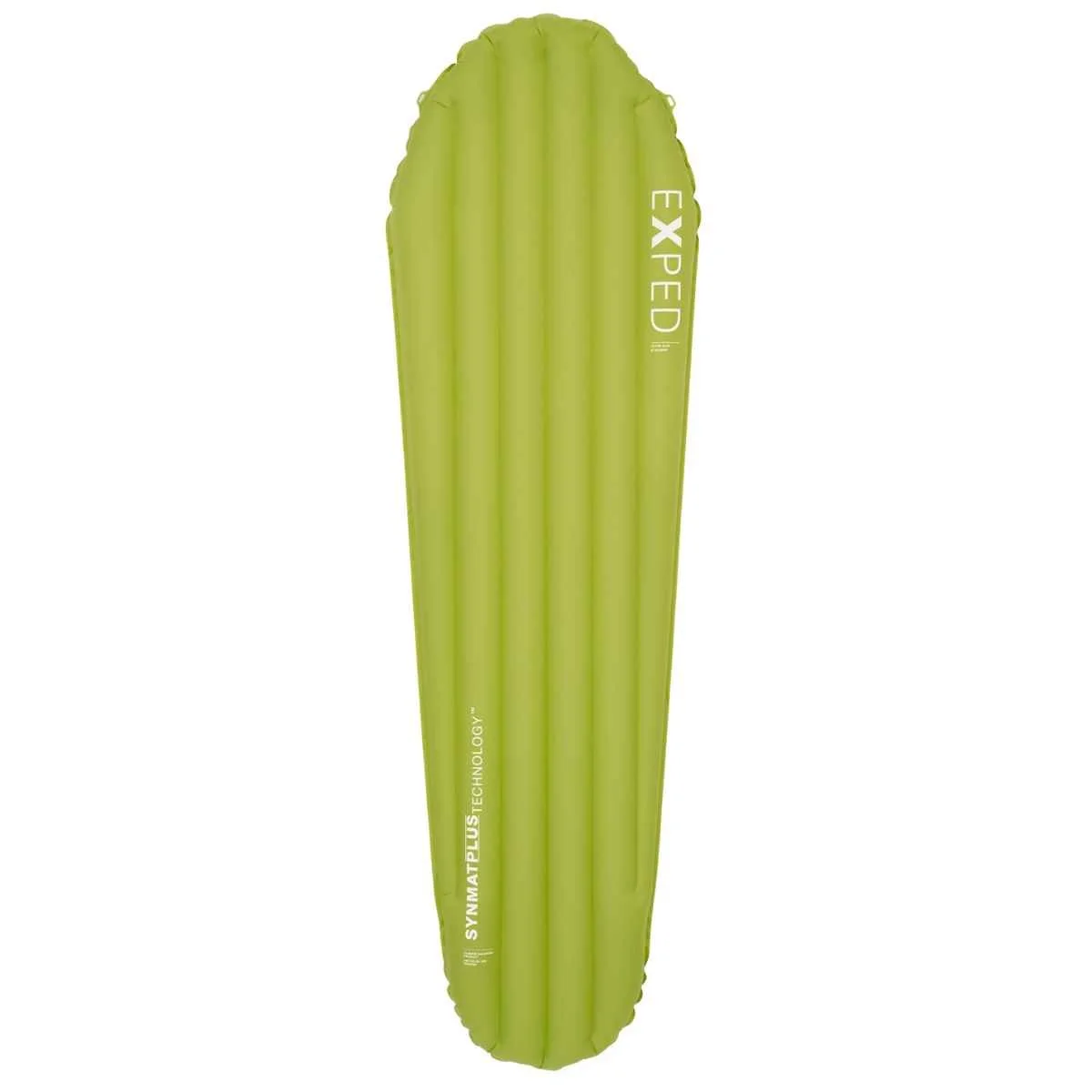
Weight: 12.5 oz for medium mummy
R-value: 6.9
Pad type: Inflatable
Shape: Mummy
Thickness: 3.5 inches
Dimensions (L/W): medium mummy is 72 x 20.5 inches
Packed size: 8.3 x 4.1 inches
Insulation type: SynmatPlus Technology (recycled synthetic microfiber with reflective foil layers)
Valve type: Dual FlatValves (one inflate, one deflate)
Pump sack included: Yes
Best for
Backpacking in all four seasons, or on thru-hikes where temperatures are variable during a single long-distance hike
Cold-weather camping either in a car or a tent
Shoulder-season trips, when the weather is unpredictable
Ultralight backpackers needing warmth
Thru-hikers during extra cold sections of the trail, like high mountain areas in shoulder season or the Sierra section of the PCT
Backpackers who want to push the warmth rating of an already existing quilt without having to sacrifice warmth or comfort
Comparison table
| SLEEPING PAD | WEIGHT (ounces) | TYPE | PUMP SACK? | R-VALUE | THICKNESS (inches) | PACKED SIZE (inches) | LENGTHS (inches) | WARRANTY |
|---|---|---|---|---|---|---|---|---|
| Exped Ultra 6.5R Mummy | 12.5 - 16.0 | Inflatable | ✅ | 6.9 | 3.5 | 8.3 x 4.1 | 72, 78 | Limited lifetime |
| Therm-a-Rest NeoAir XTherm NXT | 16.0 | Inflatable | ✅ | 7.3 | 3.0 | 9 x 4.5 | 72, 77 | Limited lifetime |
| NEMO Tensor Extreme Insulated | 17.0 | Inflatable | ✅ | 8.5 | 3.5 | 8 x 3.5 | 72, 76 | Lifetime |
| Sea to Summit Ether Light XT Extreme | 25.4 | Inflatable | ✅ | 6.2 | 4.0 | 9.4 x 6.9 | 72 | Lifetime guarantee |
| NEMO Tensor All-Season Insulated | 14.1 | Inflatable | ✅ | 5.4 | 3.5 | 10 x 4 | 72, 76 | Lifetime |
What we liked
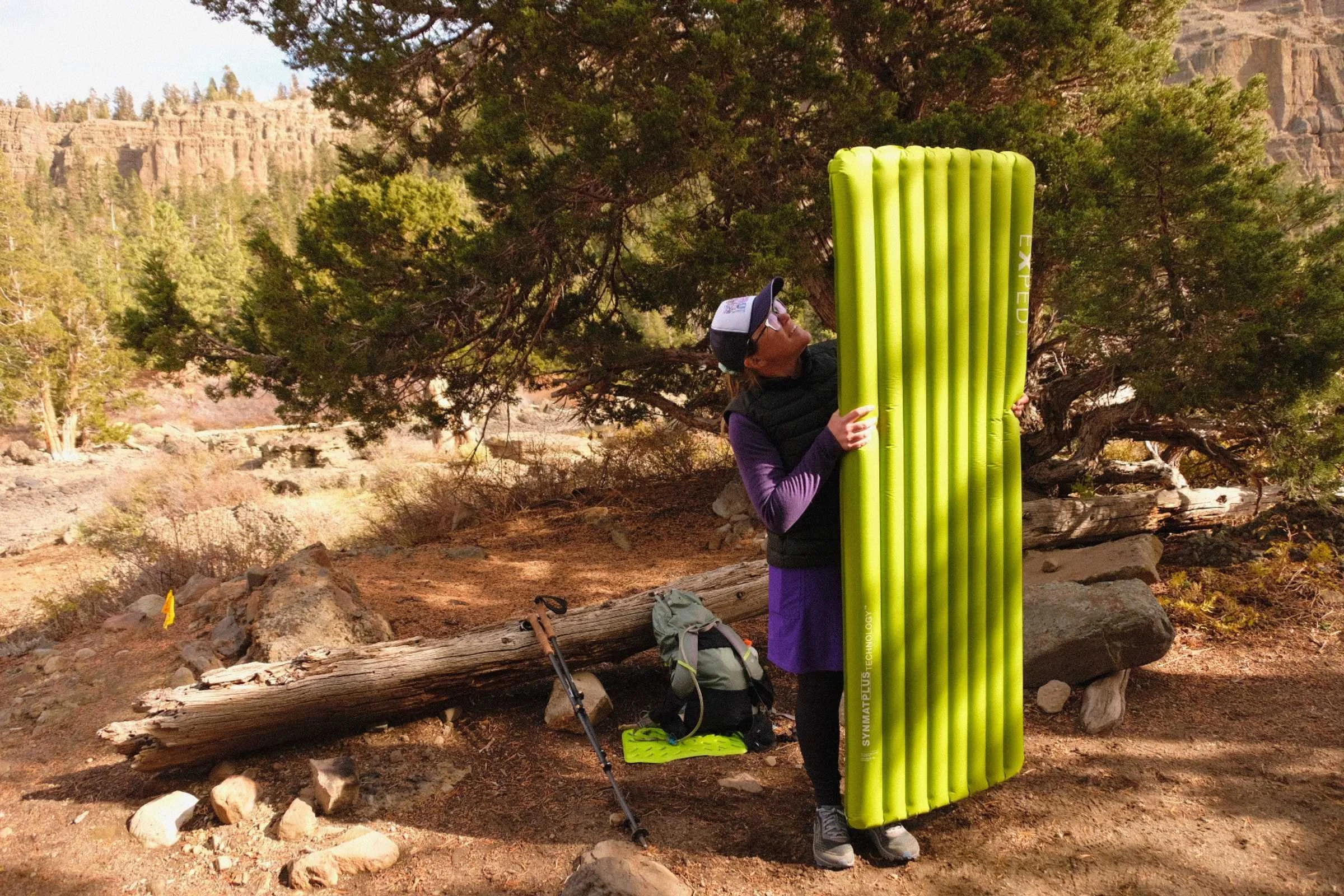
Excellent warmth for weight
Packs down small
Comfortable thickness
Efficient mummy shape
Good for cold conditions
Comfortable vertical baffles
What could be better
Mummy shape may be difficult for sleepers who rotisserie all night (opt for the wide or rectangular shaped Ultra 6.5 R Sleeping Pad if that is you)
Less comfortable for sleepers who sprawl or move about.
Premium price compared to other sleeping pads, like closed-cell foam pads.
Requires more inflation effort than closed-cell foam.
How we tested
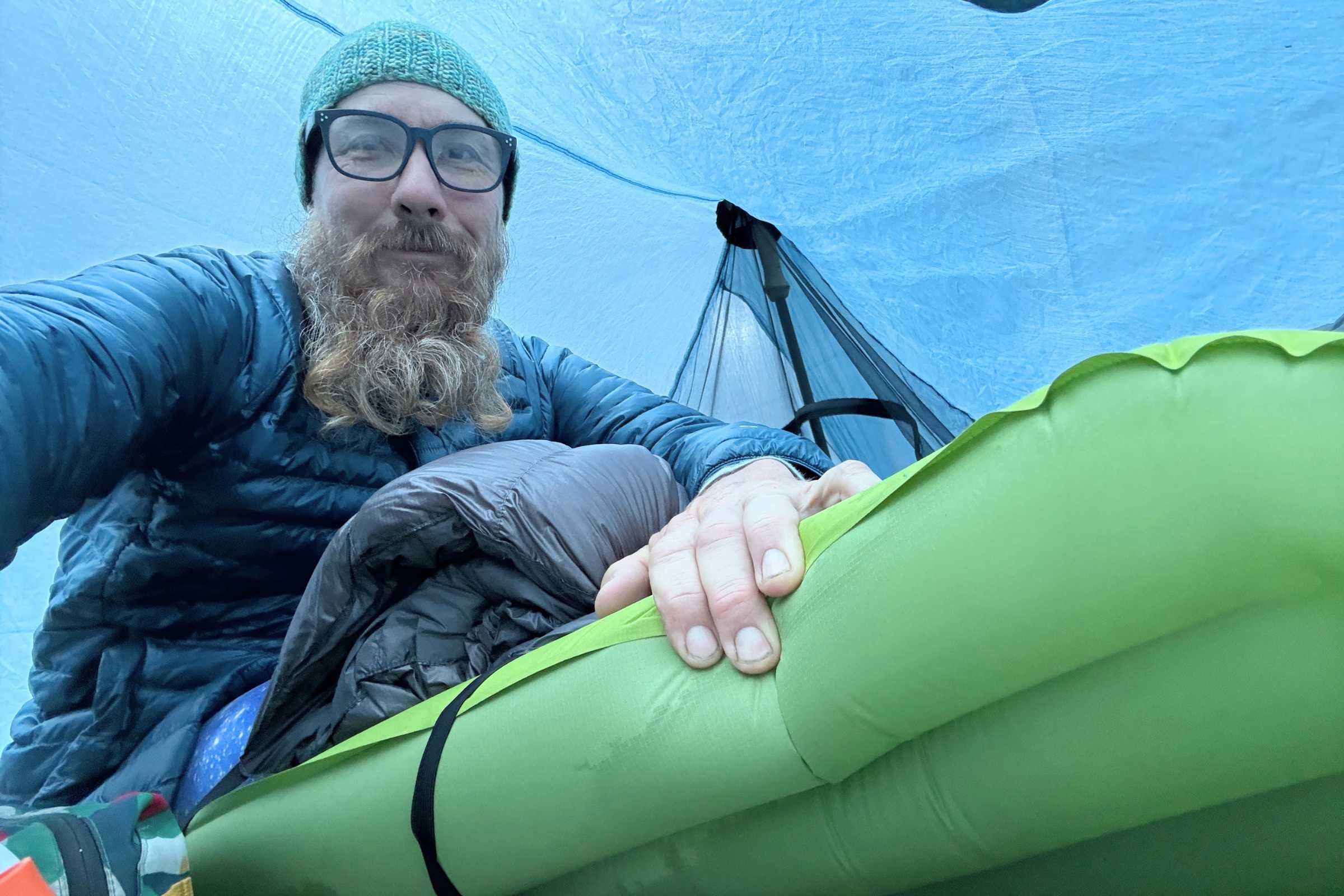
We had men's and women's testers for both the mummy and rectangular versions of this sleeping pad across all four seasons, totaling over 50 nights backpacking and camping. We took this pad on sections of the Pacific Crest Trail, Tahoe Rim Trail, Timberline Trail, and the Virginia Triple Crown Loop, and spent many nights car camping by the Pacific Ocean and in the deserts of California and Oregon.
We encountered snow, rain, and windy conditions, with temperatures ranging from 15°F to 60°F overnight. We had several nights when we slept on snow or had snow falling while we were sleeping on this pad in our tent.
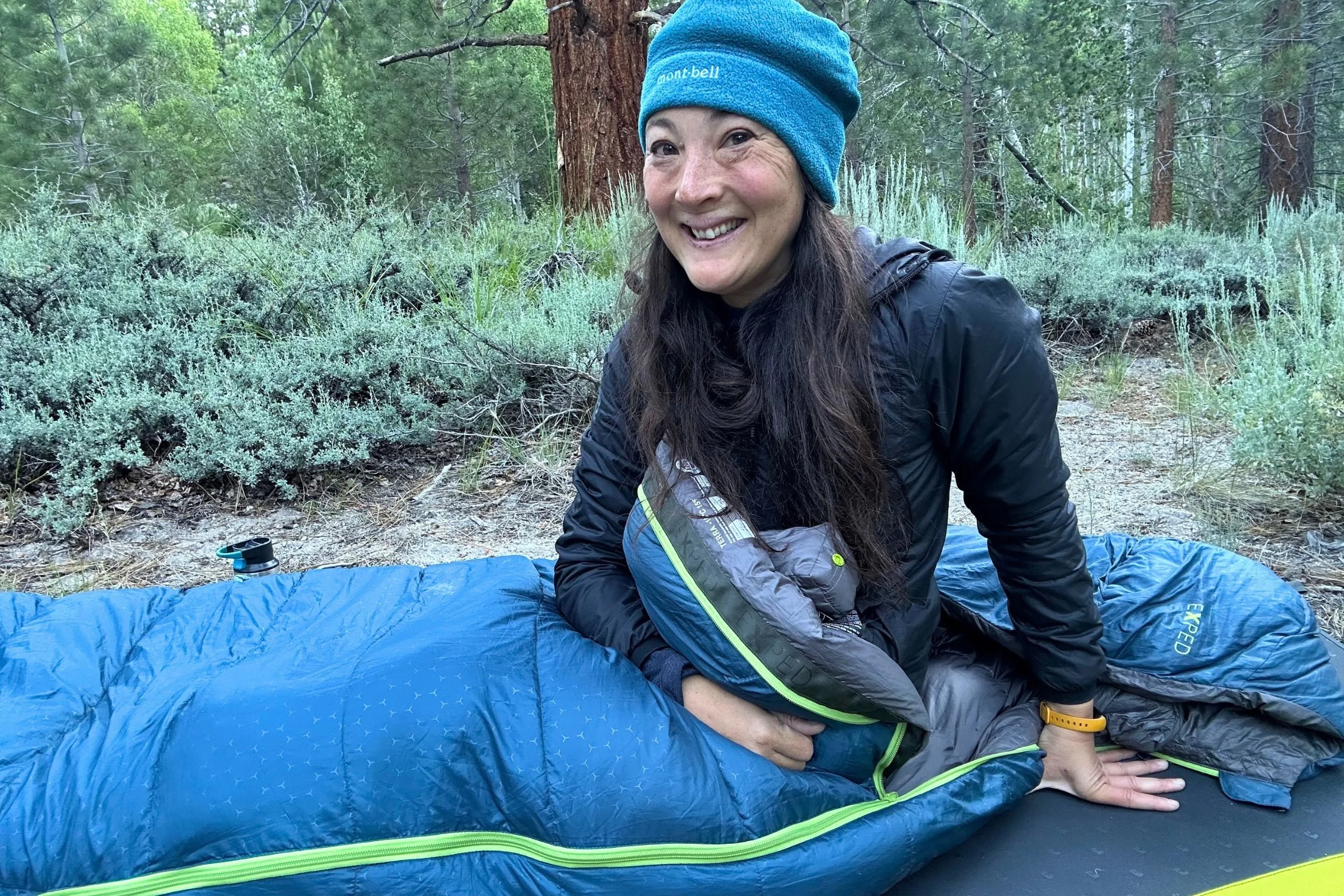
We combined this Ultra 6.5R with a variety of quilts and sleeping bags depending on the weather, like our 20°F Zpacks sleeping quilt, a 25°F Western Mountaineering quilt, and a 0°F Therm-a-Rest Parsec sleeping bag. Our men’s tester used a 25°F Western Mountaineering quilt in 15°F snowy conditions and was able to push the quilt's temperature rating to stay warm enough to sleep, using the sleeping pad's warmth.
We slept on snow, dirt, and granite surfaces in both single and double-walled tents, and occasionally in our Subaru. We tested this sleeping pad alongside other higher- and mid-R-value pads to see if there was any difference in warmth.
Performance in the field
Warmth and insulation
R-value can be a bit tricky to understand, but the basics of an R-value (which measures and stands for thermal resistance) are that the higher the R-value, the more insulation, and the warmer you will be in colder weather. You can also use a higher R-value pad in warm weather and still be comfortable. The 6.9 R-value reflects a rating that’s highly insulating against extreme cold/sub-zero temps; this works best when combined with a comparable sleeping quilt or bag.
Cold ground and snow performance with this pad is excellent. The nights we spent in stormy, snowy weather were warm at least from the ground up. With lower R-value pads, we have felt the cold coming up through the bottom of our air mattresses; with this pad, we did not experience any instances of being cold (if we were cold, it was due to poor quilt or sleeping bag choice for the night).
Heat retention overnight does well with this pad. We didn’t find any cold spots on the pad that needed to be warmed up. When we touched the tent floor on cold nights, we found the pad to be significantly warmer than the cold ground.
With this 6.9 R-value pad, we found that we were able to push the limits of the rest of our sleeping system and still stay comfortable and warm in colder conditions.
Comfort
Thickness and cushioning are great, with 3.5 inches of air that can be customized by inflating more or less. We had a hard time feeling any rocks or roots under our pads—we slept better than the princess in The Princess and the Pea.
Side sleeping vs back sleeping: With this 3.5-inch mattress, we found we could sleep on our sides without our hips hitting the floor.
Pressure points were not an issue for both men’s and women’s testers, who are both side-sleepers.
Packability
The packed size is very small—about the size of a 32-oz Nalgene bottle.
This pad also deflates quickly and can be repeatedly folded back into the original stuff sack. We have used other pads that are difficult to get back into the original sack after the first use, and were very delighted that this pad was easy to repack. The pad can also be folded flat for frameless packs, helping create structure in a less structured backpacking system.
Ease of use
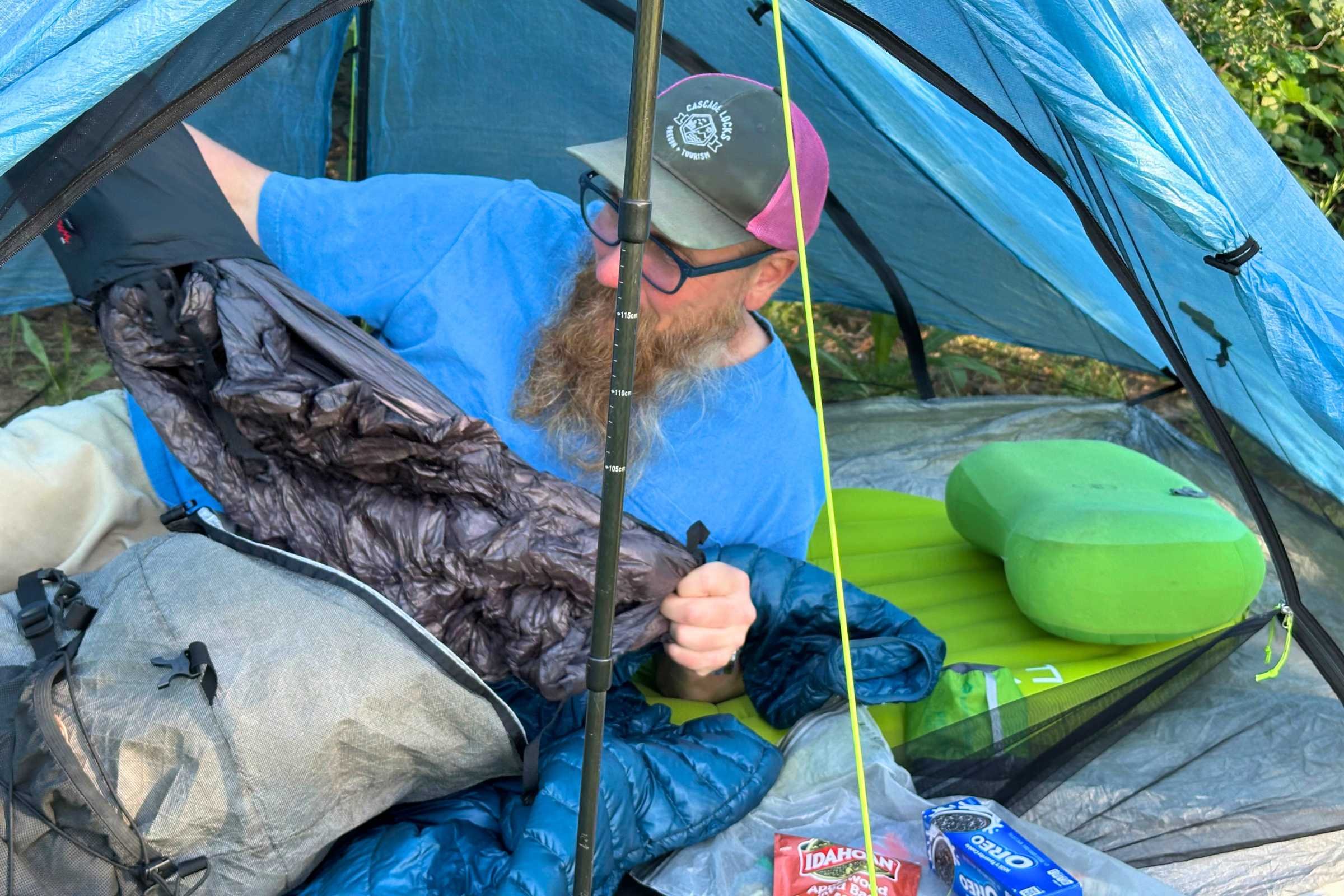
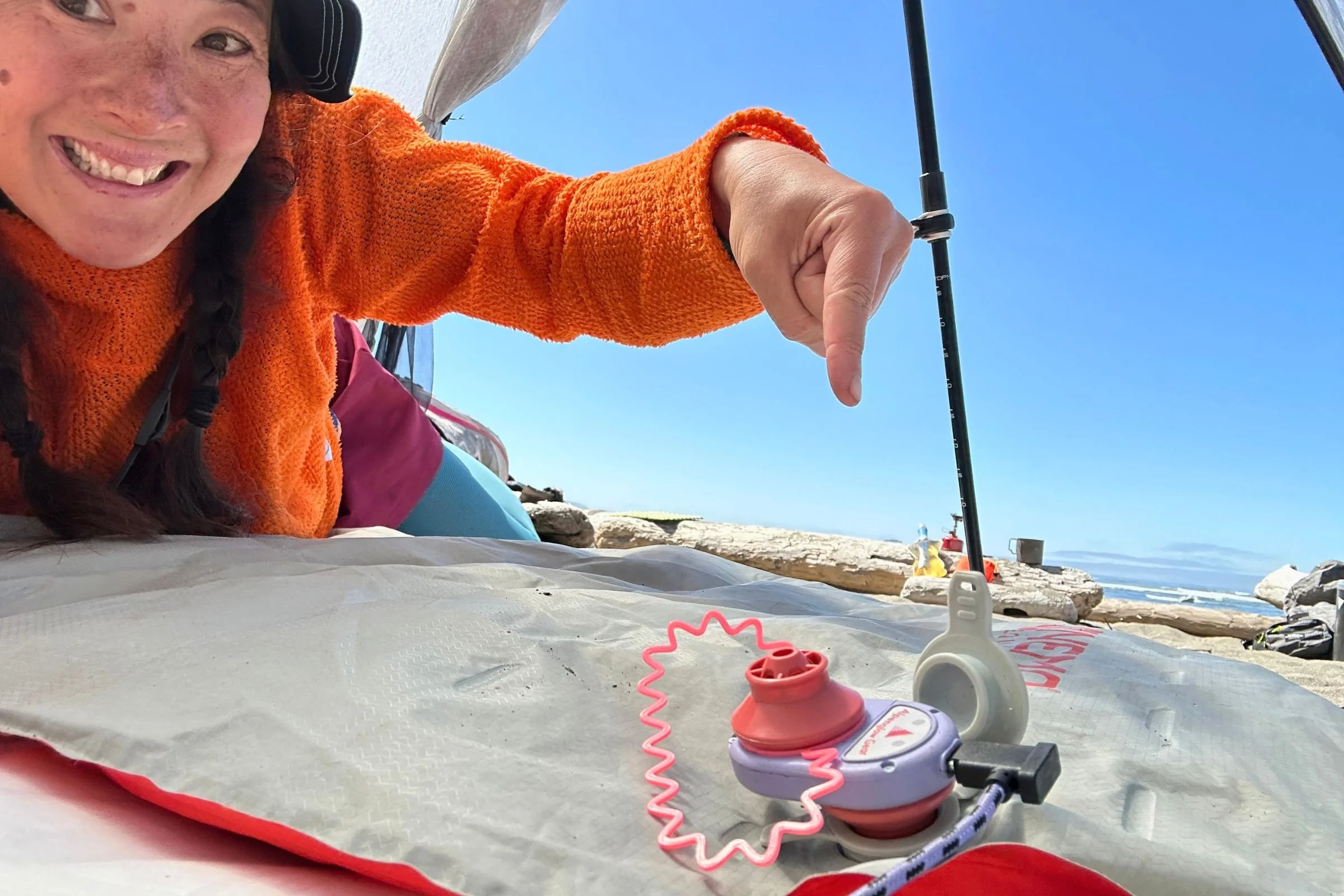
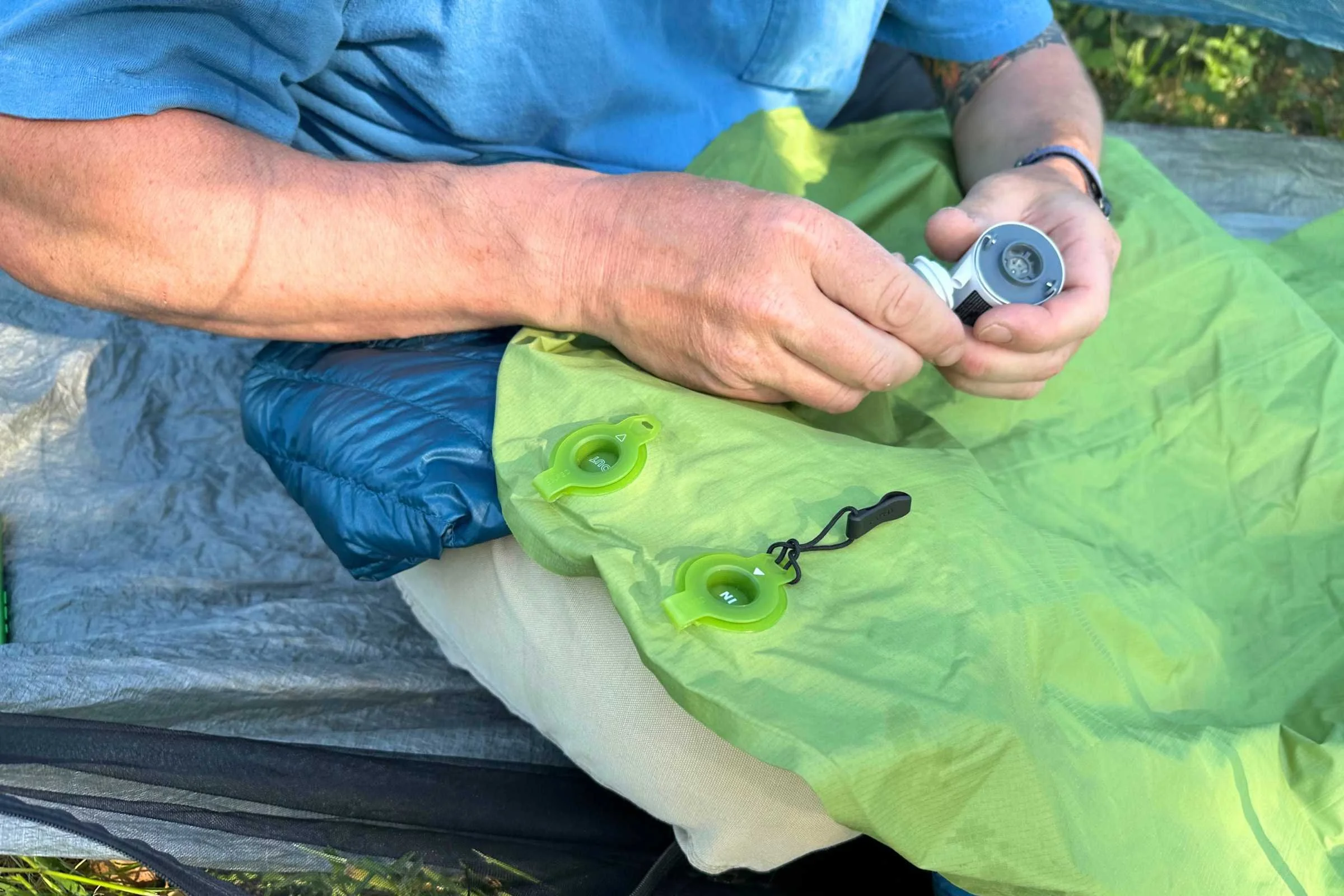
This pad inflates very quickly with a Flextail power inflator. We also used the included pumpsack, and it was about the same speed as the Flextail without much of a workout. We went with the Flextail in general because it weighs a touch more and can also inflate our pillows. This pad inflates with about 10-14 breaths depending on lung capacity.
The deflation speed is very fast because there is a dedicated out valve that, once opened, quickly purges air. You can also use the in-valve with the included tool to gap the valve for faster deflation.
Durability
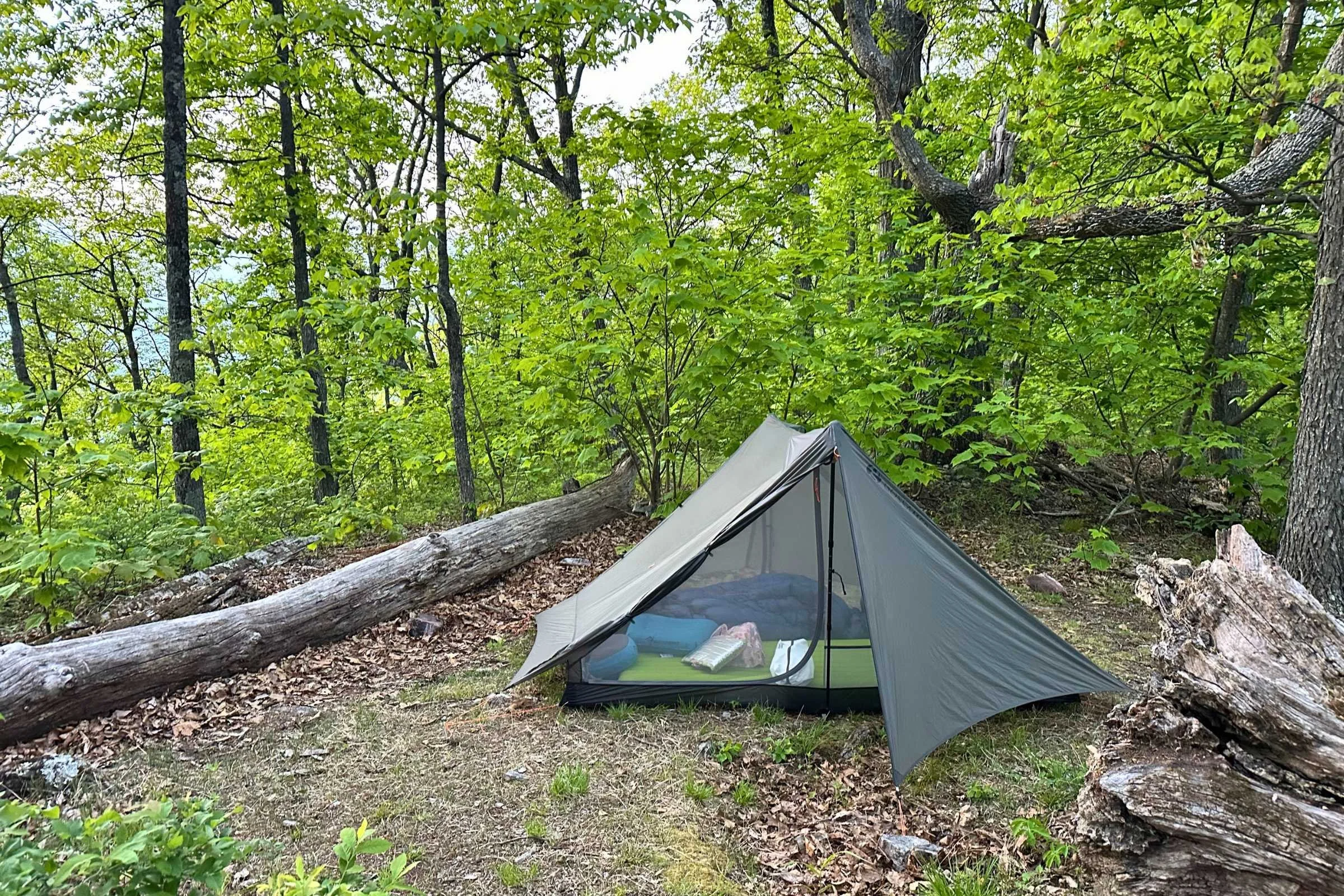
We haven’t had any issues with the fabric’s durability, punctures, or holes. We have even shared tents with our dogs, who enjoy cuddling on the pad, and so far we haven’t had to do any repairs.
We also haven’t had any micro leaks. This pad holds air the whole night and doesn’t lose height overnight.
Exped has a warranty and repair program, so you can feel confident that your pad should last a long time. You can submit a repair request online to keep your mat working and out of the landfill.
Noise
This pad takes about two days to “break in." The materials seem to soften up a bit, and the crinkle from the materials inside the pad becomes less stiff. Once broken in, it is very quiet. We never worried about waking up our tent or camping partners by rolling over in our sleep. The pad’s finish is very soft and not plasticky; this helps reduce noise when rolling over in a sleeping bag or on the tent floor.
Features
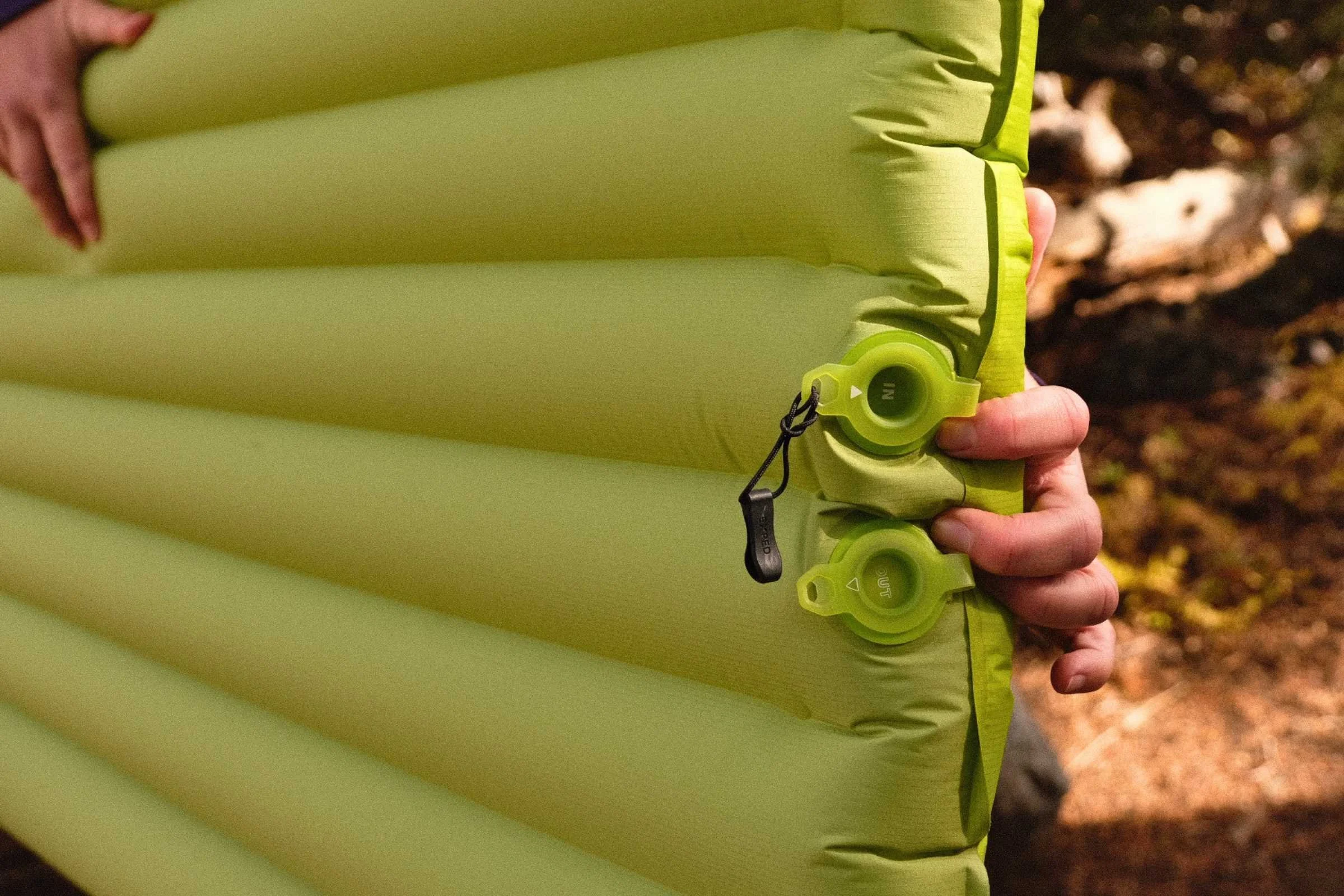
High R-value insulation: with a 6.9 R-value, this pad can be pushed to four-season conditions and may be the only pad you need for backpacking and camping.
Mummy shape design (rectangular options of this pad are also available): The mummy shape is more efficient in terms of weight compared to rectangular options.
Lightweight construction: weighing just over 12 oz, this pad is very light for the warmth rating, we found it light enough to carry year round for backpacking trips.
Exped Synmat Plus Technology Integrated insulation: Insulating materials are integrated into the pad and baffles to keep you warm. The pad uses Exped Synmat Plus Technology with recycled synthetic microfiber for efficient insulation combined with layers of reflective foil.
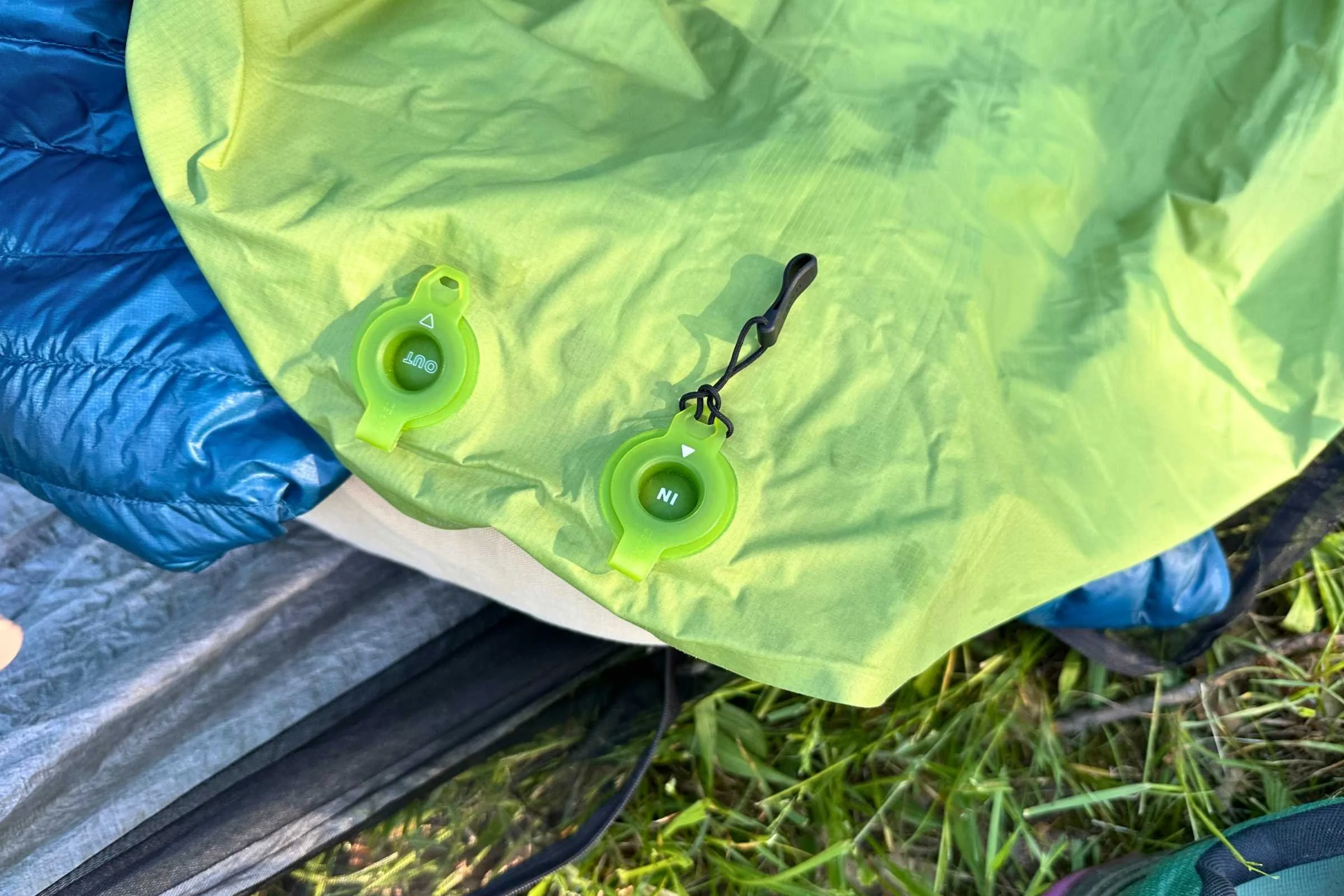
FlatValves inflation system: Dedicated in-and-out FlatValves are easy to open and close; there is no learning curve to inflating or deflating the pad.
Pump sack included: The included Schnozzel Pumpbag inflates the pad just as quickly as battery-operated inflators. Using a pump sack can help reduce the condensation that builds up inside the sleeping pad from breathing into it.
Compact packed size: it packs to the size of a 32-oz Nalgene bottle in the original stuff sack, making it comparable to other pads while offering a higher warmth rating.
Baffle construction: The vertical baffles with larger side rails help keep you centered on the pad, making it harder to roll off onto the tent floor during your sleep.
Sustainability/ethics: Exped finances certified climate protection projects through myclimate to offset any climate emissions during production and transportation of this pad. It’s made with bluesign-approved materials and is PFAS-free.
Similar sleeping pads
Exped Ultra 6.5R Sleeping Pad vs. Nemo Tensor All Season Insulated Sleeping Pad

R-Value: 5.4
Thickness: 3.5”
Weight: 14.1 oz
Inflation: Inflatable
Lengths: 72”, 76”
The Nemo Tensor All Season Insulated Sleeping Pad is the top pick in our Best Backpacking Sleeping Pad guide. This pad is heavier than the Exped and has a lower R-value, so it won’t be as warm. The Nemo has quilted baffles evenly across the pad and is the same height as the Exped Ultra 6.5R sleeping pad.
Nemo Tensor All Season Insulated Sleeping Pad
Exped Ultra 6.5R Sleeping Pad vs. Therm-a-Rest Neoair XTherm NXT
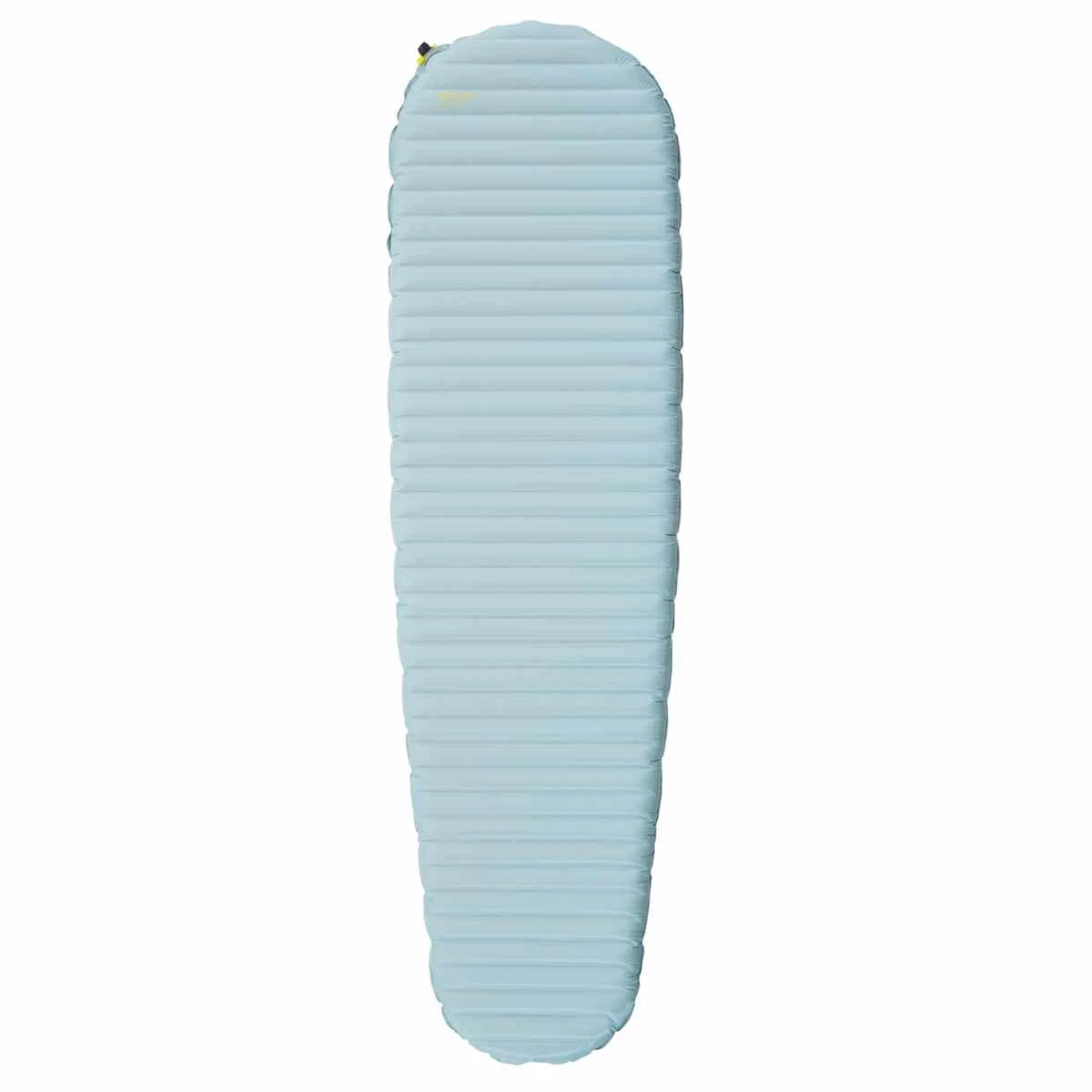
R-Value: 7.3
Thickness: 3”
Weight: 15.5 oz
Inflation: Winglock valve, pumpsack
Lengths: 72”, 77”
The NeoAir XTherm NXT sleeping pad is the closest in R-Value to the Exped Ultra 6.5R while being about 3 oz heavier and 0.5” thinner. The NeoAir XTherm has horizontal baffles compared to the vertical baffles on the Exped, making it easier to slide off the NeoAir than the Exped since there are no guardrails for active sleepers. We have used the NeoAir Xtherm for years without any issues; it is still a great, reliable cold-weather pad. For those who are going into the coldest temperatures, the XTherm is a great choice.
Therm-a-Rest NeoAir XTherm NXT
Exped Ultra 6.5R Sleeping Pad vs. Therm-a-Rest NeoAir XLite NXT
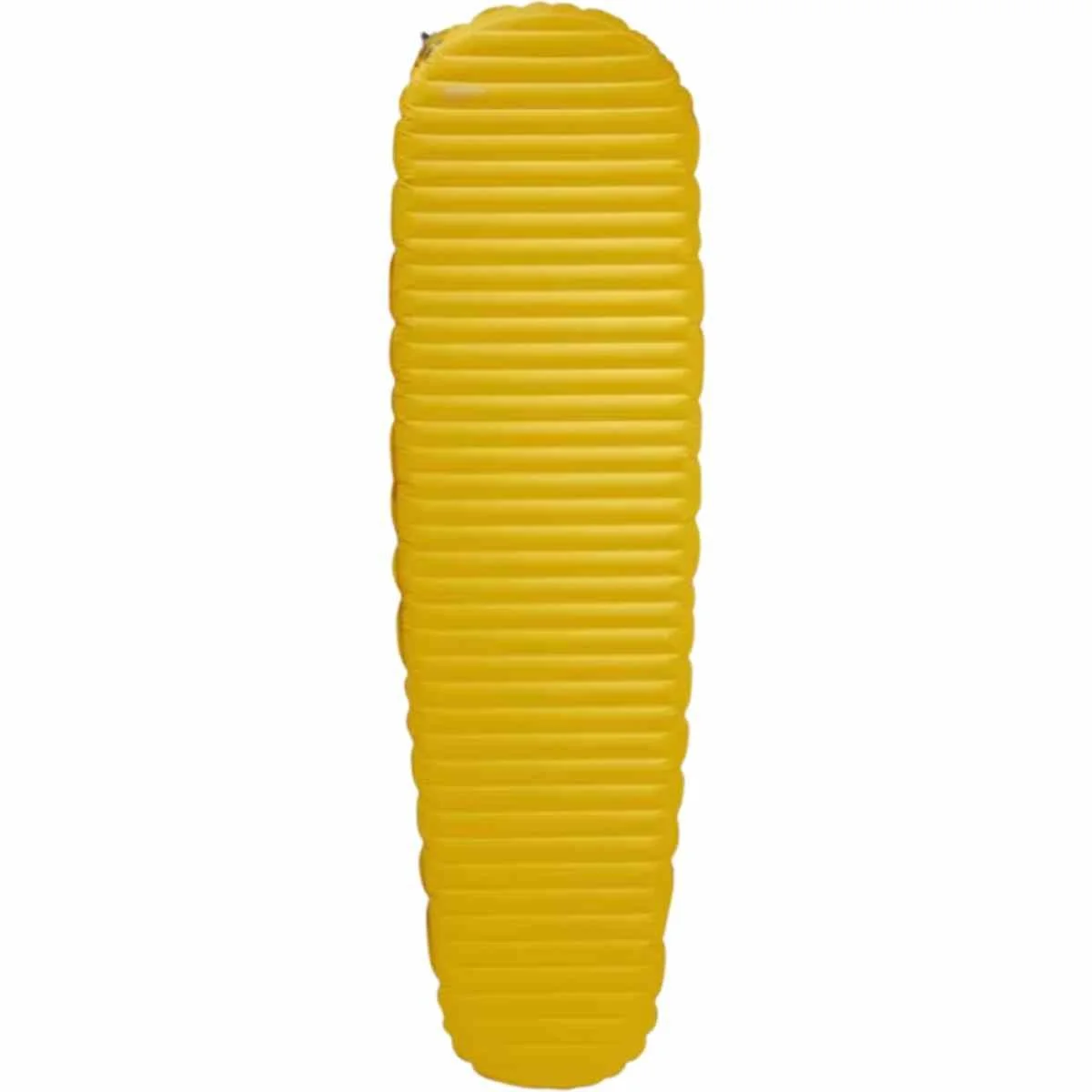
R-Value: 4.5
Thickness: 3”
Weight: 12.5 oz
Inflation: Winglock valve, pumpsack
Lengths: 66”, 72”, 72” wide, 77”
The NeoAir XLite weighs the same as the Exped Ultra 6.5R with a lower R-Value and a thinner pad by 0.5”. The NeoAir XLite has horizontal baffles and uses a winglock valve system with a pumpsack for both inflation and deflation. We have used this pad on multiple thru-hikes, and it was our go-to pad before we tried the Exped Ultra 6.5R.
Therm-a-Rest NeoAir XLite NXT
Should I buy the Exped Ultra 6.5R mummy sleeping pad?
Buy if:
You need a warm sleeping pad for cold conditions
You backpack in shoulder-season or winter
You want a single sleeping pad that can handle any season while being lightweight
Skip if:
You move a lot in your sleep and need a rectangular-shaped pad
You want a budget sleeping pad
You primarily camp in warm conditions and don’t need a warm pad
Mummy
Rectangular
Where to buy
The Exped Ultra 6.5R sleeping pad is popular, so you have options for retailers. Here are some of the pros of the retailers.
REI
Pros: 100% satisfaction policy for 1 year; 10% dividend for members.
Mummy and rectangular
Amazon
Pros: Free 2-day shipping with Amazon Prime membership
Mummy and rectangular
Garage Grown Gear
Pros: Small ultralight cottage focused retailer
Exped
You can sometimes find more options when purchasing directly from the manufacturer. This can also make it easier if you need to submit a warranty return due to a defect.
Mummy and rectangular
Frequently asked questions about the Exped Ultra 6.5R
-
Yes. With a 6.9 R-value, the Ultra 6.5R exceeds the insulation typically recommended for sleeping on snow (R-value 5 or higher). We slept on snow in 15°F conditions during testing and never felt cold coming through the pad. Exped also notes that ISO-rated sleeping bags are tested using mats with an R-value of about 7, so a pad in this range helps your sleeping bag or quilt deliver its full temperature rating.
-
The mummy version tapers from the shoulders to the feet, which trims weight and packed size, while the rectangular version offers more room to move around at night. Both share the same 6.9 R-value, 3.5-inch thickness, and SynmatPlus insulation. We recommend the mummy for back sleepers and weight-conscious backpackers, and the rectangular for side sleepers who shift positions or anyone who feels confined on tapered pads.
-
Yes. A high R-value pad insulates you from the ground in both directions. We used this pad on summer nights around 60°F and stayed comfortable, including on sun-warmed granite. If you only want to carry one pad year-round, this is one of the few light enough to justify it.
-
The pad uses two dedicated FlatValves—one for inflation, one for deflation. It comes with Exped’s Schnozzel Pumpbag, which inflated the pad about as fast as our battery-powered Flextail pump in testing and keeps moisture from your breath out of the pad. Inflating by mouth takes roughly 10–14 breaths. If you’ve never used a Pump sack, we highly recommend watching a video to see how they work.
-
It's quiet after a short break-in period. The materials soften after about two nights of use, and from then on we never worried about waking tentmates when rolling over. The reflective insulation is layered under synthetic microfiber, which avoids the crinkly "potato chip" sound common to other reflective-foil pads.
-
We had no punctures, leaks, or overnight air loss in more than 50 nights of testing on snow, dirt, and granite—including nights sharing the pad with our dogs. The 20-denier ripstop polyester face fabric is light, so use normal care with sharp ground. If you want the same warmth in a burlier build, EXPED makes the Dura 6.5R with a 75-denier fabric, and EXPED's repair program can fix damaged pads to keep them out of the landfill.
Why you should trust us / About the author
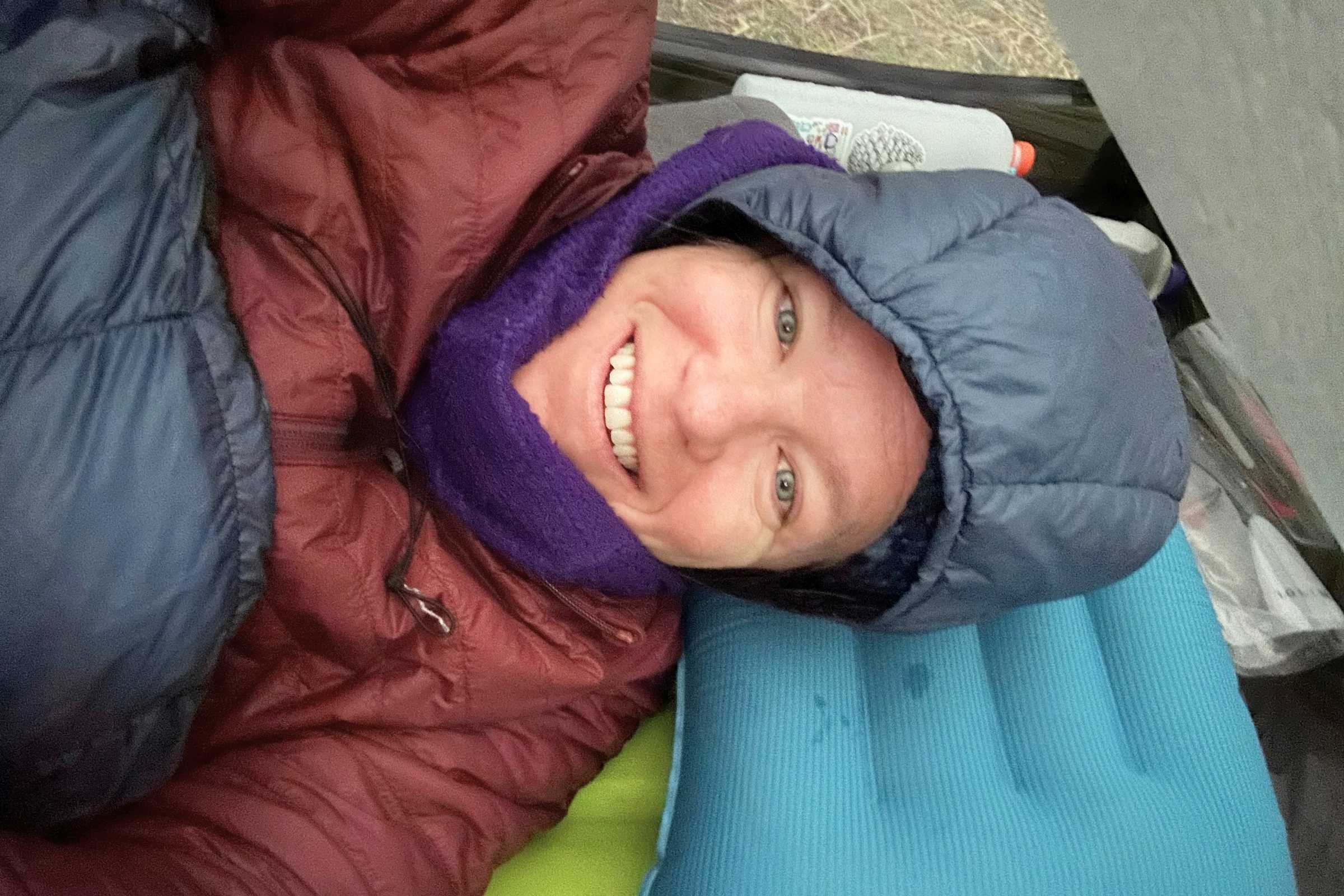
I have spent hundreds of nights sleeping outside while thru-hiking, backpacking, on Sierra hut trips, and on car camping trips over the last few decades. I have used a variety of sleeping pads over the years, from closed-cell foam Z-fold mats to self-inflating memory foam and 5-inch inflatable air mattresses. I value being safe and comfortable in the backcountry and have found over the years that a good pad can do wonders towards keeping you warm when the rest of your sleeping system fails.
I love going out for type-2-fun-style trips and sleeping under snowfall. I am always trying to push backpacking into the shoulder seasons, which means I have encountered my fair share of snowstorms that weren’t on the radar when I left home.
As much as I like to keep my pack weight down, I will carry an extra ounce or two for warmth and comfort and drink an extra swig of water at the river to compensate for the weight. LNT Principle No. 1 is to plan ahead and prepare, and the best way to do that is with gear that can handle any weather that might come your way. See more of Sara’s stories on her author page.