Best Multi-Tools of 2026–2027
Our multi-tool picks for every budget, use case, and weight class, from backpacking to heavy-duty repair work
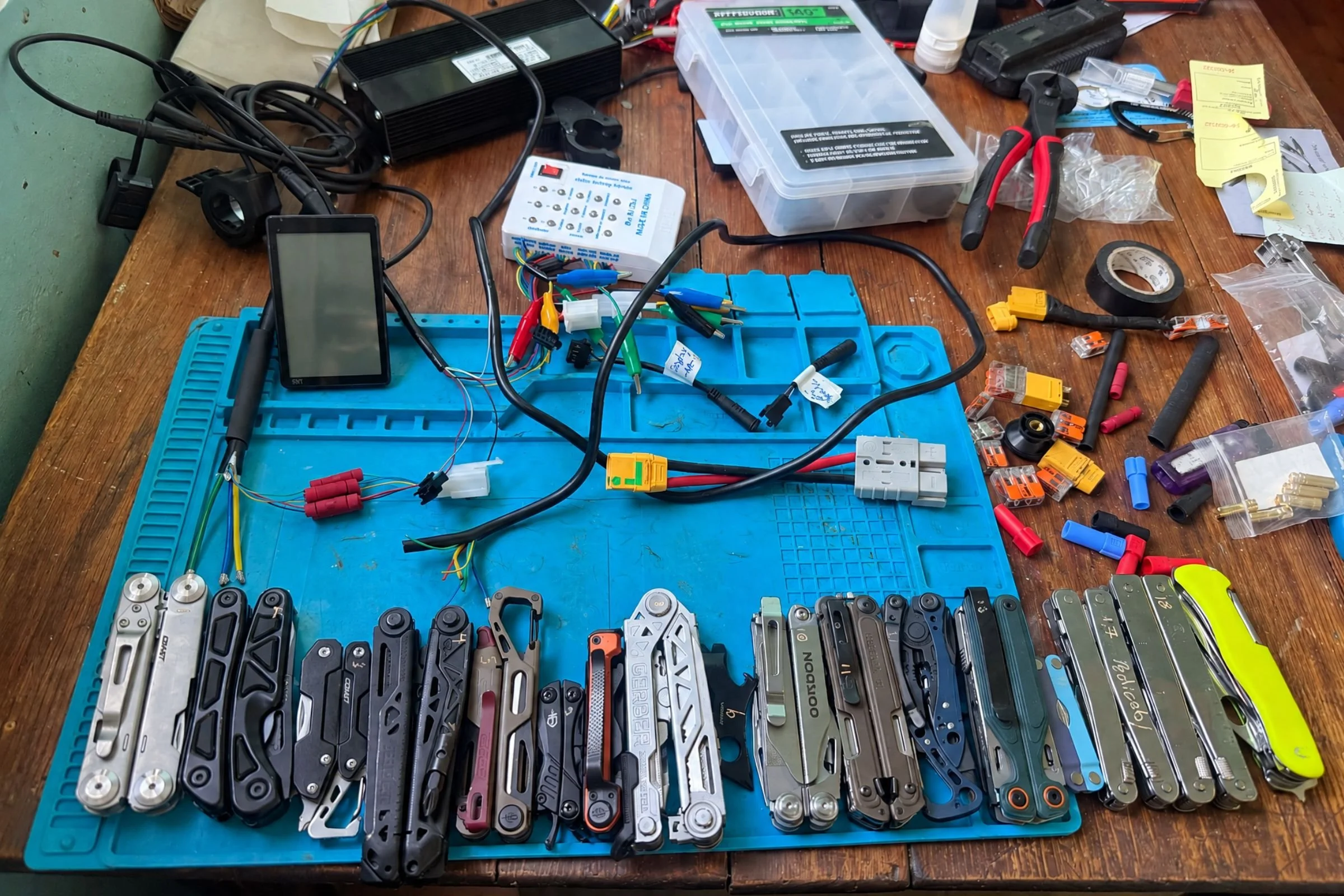
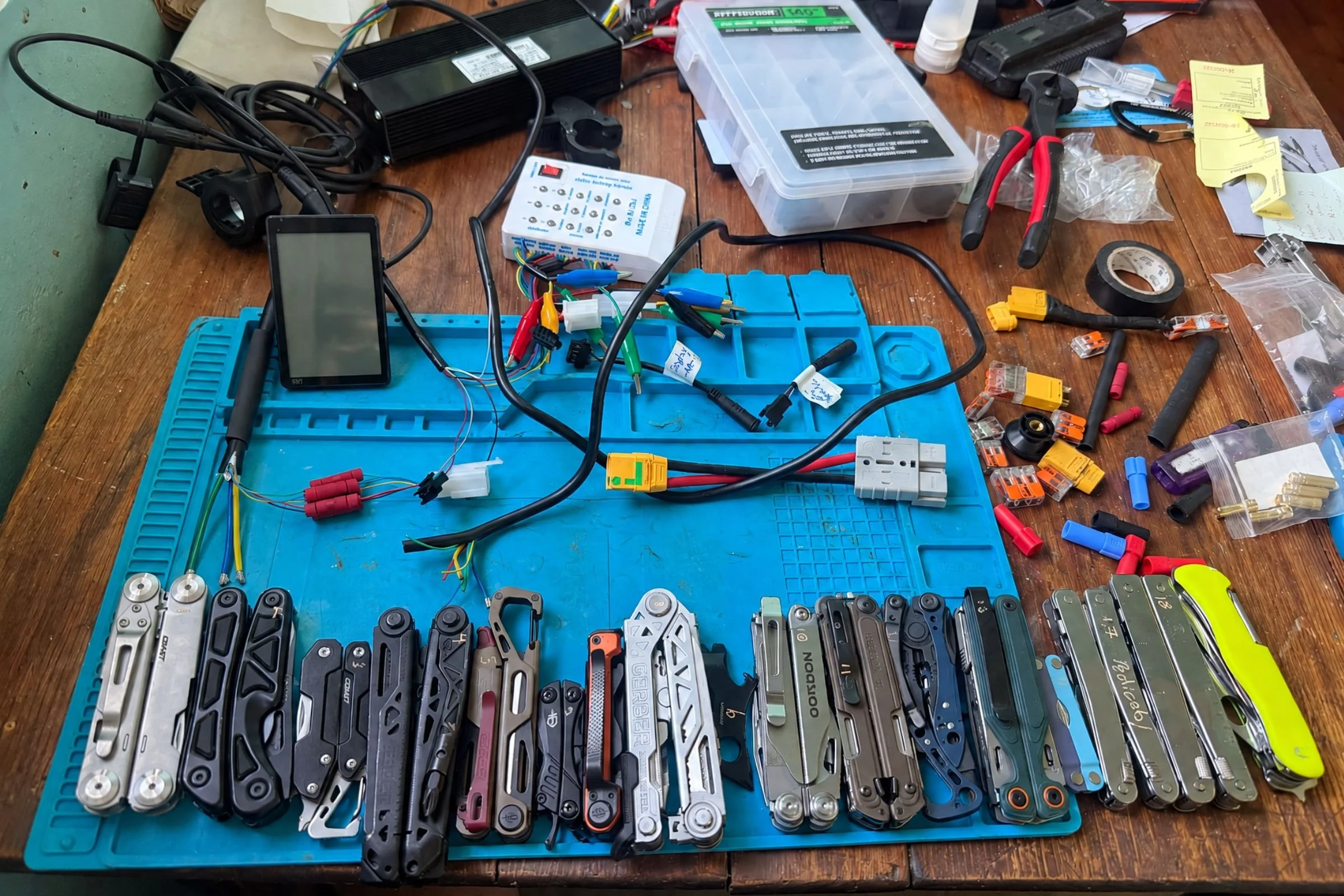
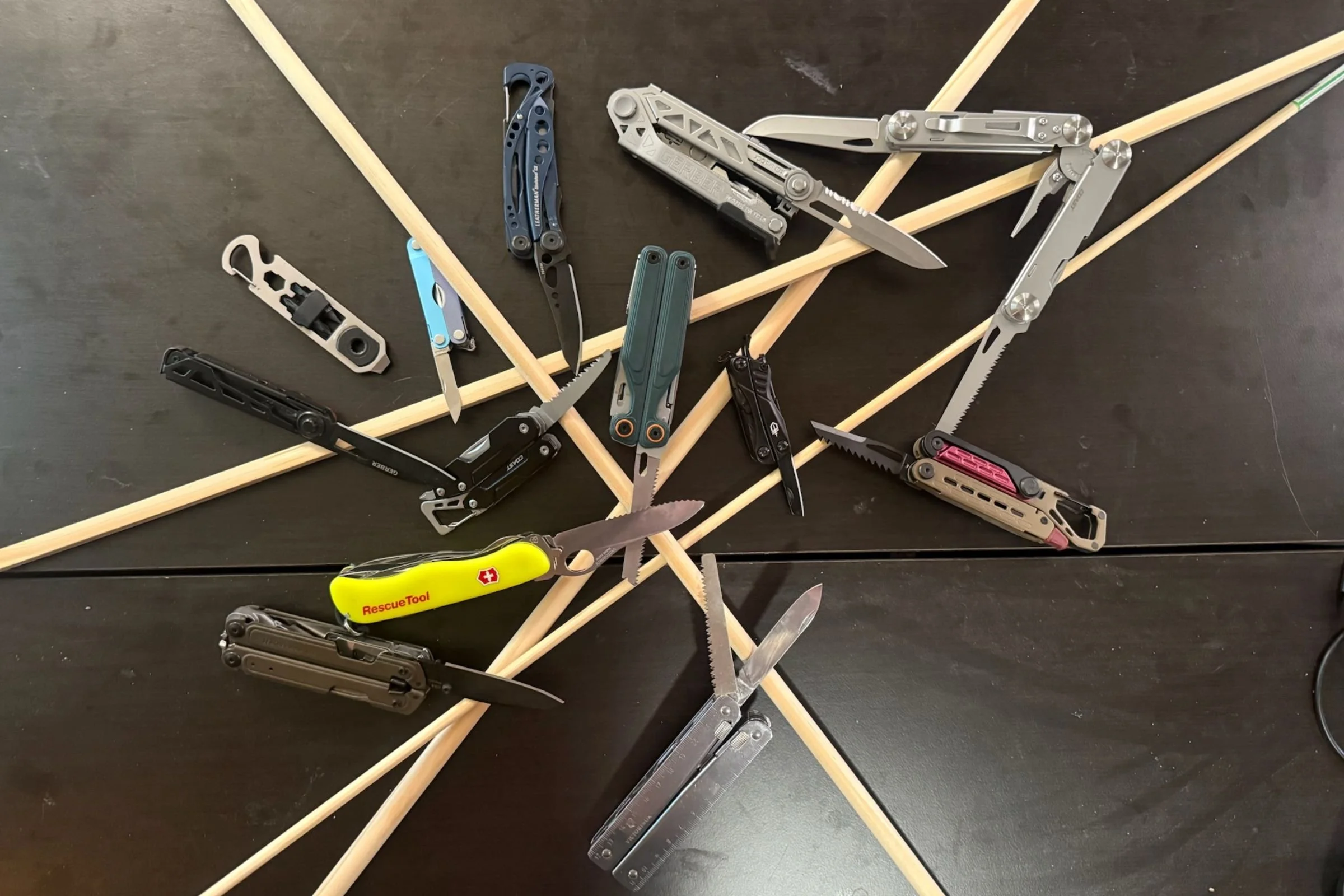
We put all these multi-tools to the test this summer, testing knives, pliers, wire cutters and their menagerie of capabilities over a few months of use. Courtesy Chris Meehan
November 10th, 2026
Home → Gear Reviews → Camping
Multi-tools have saved my bacon more than a few times: they’ve saved me from being stranded on rutted dirt roads far from any town at midnight, sped up repairs because I didn’t have to get a toolbox for 15 different tools, and helped me modify other items into useful tools on the fly. Basically, with a little creativity, know-how and gumption, a great multi-tool is an essential item everyone should have.
One of my favorites, which I use weekly (if not daily) I’ve had since I was a mountain guide in Colorado in 2001. That model, with only modest changes, is still sold today, so we used it in this testing, and yes, it stood up to some of the best new ones we tested, too.
A great multi-tool is an invaluable piece of gear that helps make sure you get to your adventure, through your adventure, and back from it safely.
It’s also a great timesaver when taking on a task or emergency. Whether I’m rewiring lights, fixing auto hoses, tightening bolts, cutting branches, rope, or irrigation lines, or anchoring things with stakes and line, the first thing I turn to is a trusty multi-tool. After testing 19 multi-tools we found the one that rules them all, as well as others for your specialized needs at home and on the hunt for adventure.
To find the best multi-tools, we subjected 19 models to everyday use tightening screws, nuts, and bolts, cutting wires and using pliers. We created simulated torture tests to offer apples to apples tests on the most important tools (like the knives, pliers, and saws) and evaluated them for damage under a microscope. We used them in automotive work, camping settings, household work, on snow gear, and for innumerable other tasks.
We also used them to fix an antique Corbin lock in Colorado that was made around the time John Muir was shouting from tree tops in a storm, women won suffrage in Wyoming, Utah, and Colorado, and Teddy Roosevelt was surprised to find himself President.
The majority of multi-tools we tested were of the somewhat traditional folding pliers type, since they’re generally the most versatile and useful, both as an EDC multi-tool and as one you keep in the same place at all times. However, we also considered smaller folding multi-tools and some one-piece multi-tools. Among other factors, we considered them for their durability, combination of tools and capability, ease of use, feel in hand, and cost.
Top Choice: In a very crowded field of great competition, there was one clear winner. The Leatherman ARC stood out among the competition for its ease of use, thoughtful combination of tools, and not just durability but also ease of repair (should anything happen to it). Competing against excellent tools from Gerber, Victorinox, and others, the ARC simply did most things better, from one-handed access and closing of each tool, to cutting, feeling solid in hand, and wrenching, it outshone the competition.
We create reader-supported, objective gear reviews independently selected by our editors. This story may contain affiliate links, which help fund our website. When you click on the links to purchase gear, we may get a commission, without costing you an extra cent. Thank you for supporting our work and mission of outdoor coverage for every body! Learn more.
Comparison table
| Multi-Tool | Treeline Award | MSRP | Weight | Closed Length | Open Length | Blade Length | Tool Count | Tool Material | Blade Steel | Warranty | Made |
|---|---|---|---|---|---|---|---|---|---|---|---|
| Leatherman ARC | Best Overall Read why |
$250 | 8.6 oz | 4.25 in | 6.45 in | 2.76 in | 20 | Stainless steel | MagnaCut steel | 25 years | USA |
| Leatherman Wave Alpha | Best Everyday Carry Read why |
$200 | 8.3 oz | 4.04 in | 6.25 in | 2.92 in | 18 | Stainless steel | MagnaCut steel | 25 years | USA |
| Victorinox Swiss Tool X Plus Ratchet | Most Complete Read why |
$210 | 10.2 oz | 4.50 in | 6.75 in | 2.75 in | 38 | Stainless steel | Stainless steel | Lifetime | Switzerland |
| Gerber Stakeout Spark | Best for Backpacking Read why |
$80 | 5.2 oz | 4.50 in | 6.30 in | 2.50 in | 10 | Stainless steel | Stainless steel | Limited lifetime | China |
| Gerber Dime | Best Keychain-Style Read why |
$35 | 2.2 oz | 2.75 in | 4.25 in | 1.50 in | 12 | Stainless steel | Stainless steel | Limited lifetime | China |
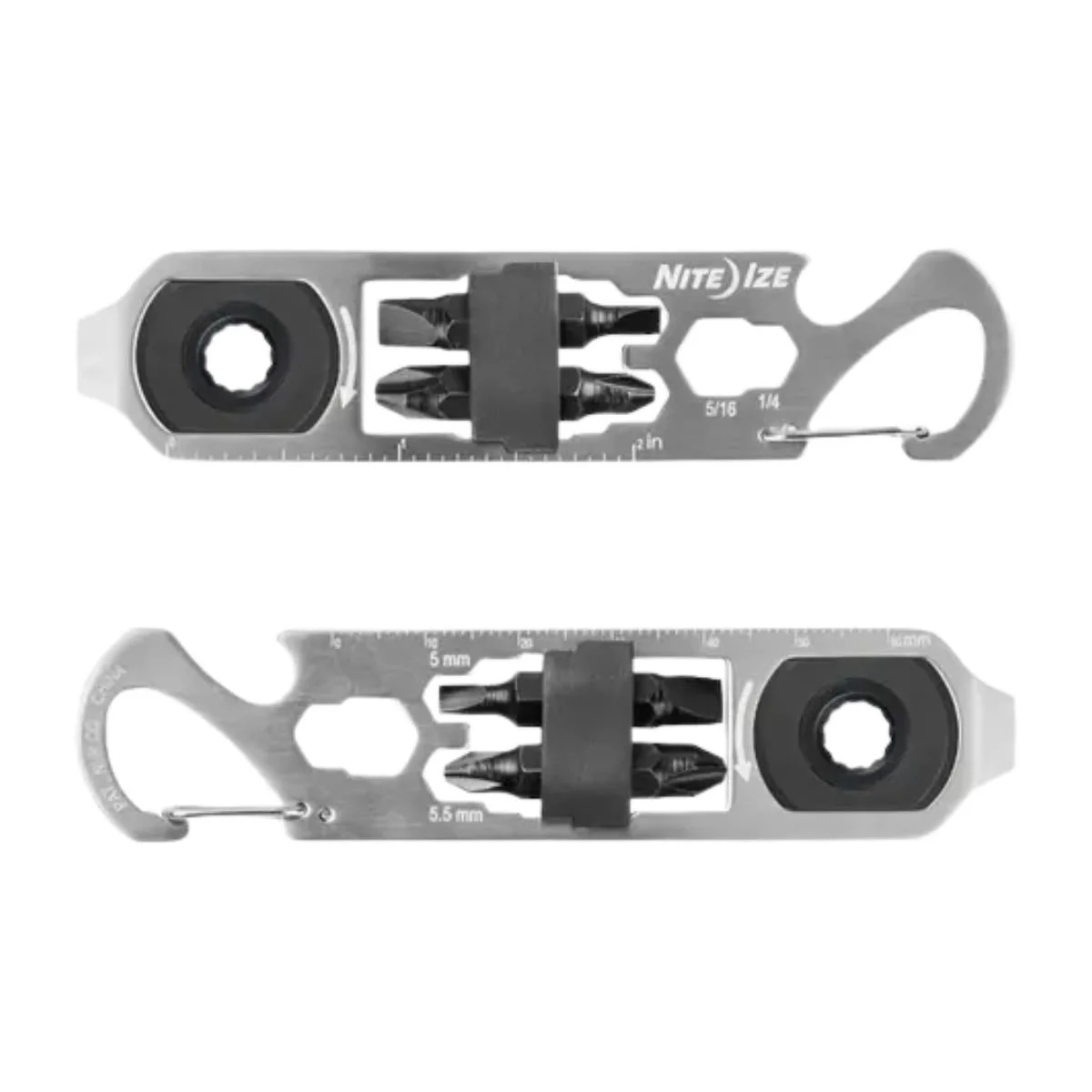
| Nite Ize DoohicKey | Best One-Piece Read why |
$7 | 0.4 oz | 2.5 in | 2.68 in | N/A | 8 | Stainless steel | N/A | Worry-free guarantee | China |
| Gerber Dual-Force | Best for Mechanical/Automotive Work Read why |
$124 | 12.0 oz | 4.65 in | 7.90 in | 3.25 in | 12 | Stainless steel | Stainless steel | Limited lifetime | China |
| Harbor Freight Gordon 20-in-1 Multi-tool | Best Budget Read why |
$40 | 9.8 oz | 4.06 in | 6.36 in | 2.90 in | 20 | Stainless steel | Stainless steel | 90-day limited | China |
| Victorinox Rescue Tool MW | Best for Car Escape Read why |
$115 | 5.9 oz | 4.40 in | 7.40 in | 3.00 in | 13 | Stainless steel | Stainless steel | Lifetime | Switzerland |
The winners
Best overall multi-tool: Leatherman ARC
Price: $250
Number of tools: 20
Weight: 8.6 oz
Closed length: 4.25”
Open length: 6.45”
Blade length: 2.76”
What we liked:
One-handed access with strong locking and closure
Great set of tools for everyday use
Great pliers with wire cutters and strippers built in
MagnaCut steel blade should rarely, if ever, need sharpening, and Leatherman will sharpen it for free whenever needed, for the lifetime of the product
What could be better:
Bit driver could use standard bits
At $250 could include a ratchet with tools
Awl could have a hole to thread a line through for gear repairs
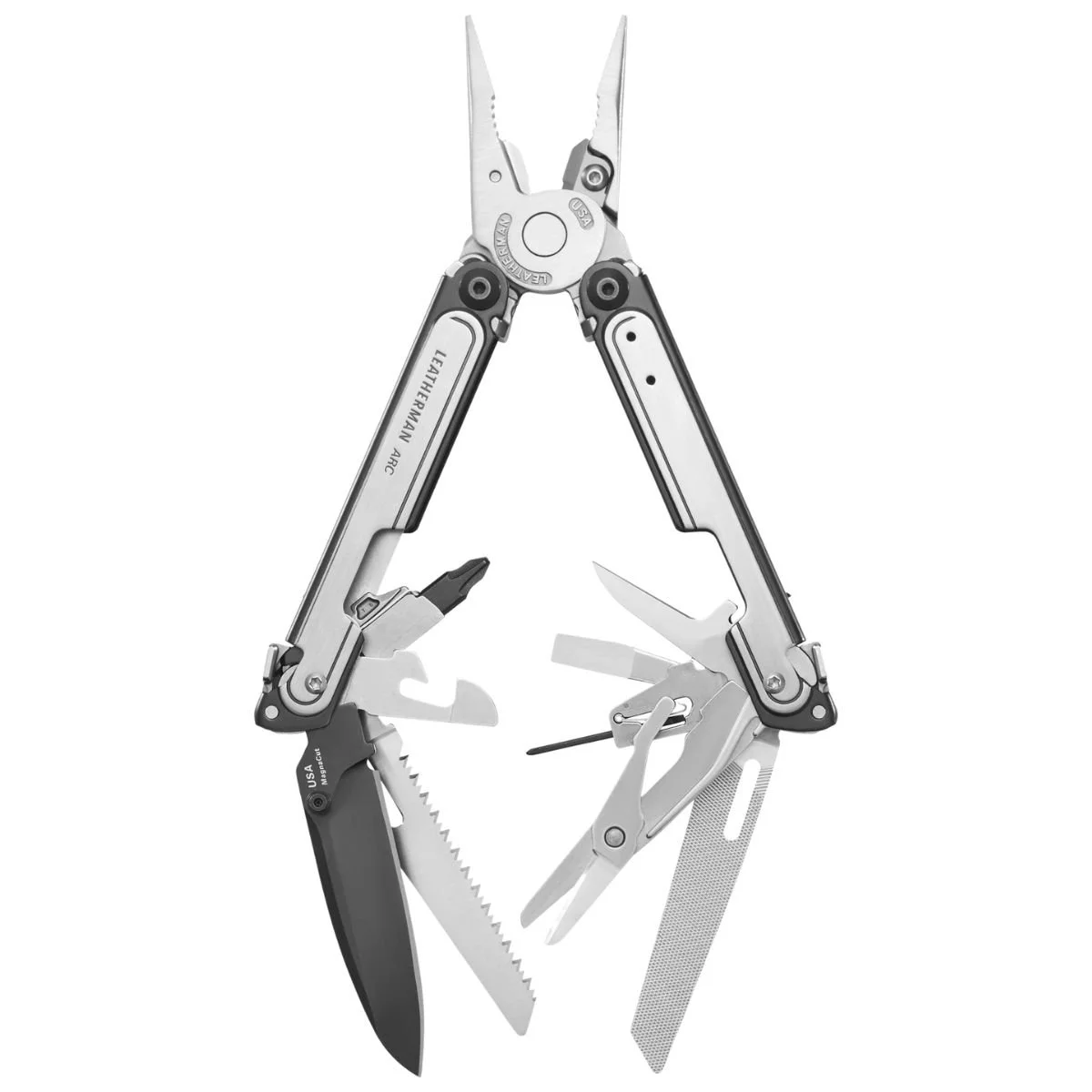
We tested a lot of great multi-tools this year, but the US-made Leatherman ARC really stood out, and it wasn’t just me. At one point while having dinner with six of Treeline Review’s writers and editors, I brought out a box of the tools we were evaluating. After opening and closing each and checking the tools, every single person agreed that the ARC was the best.
Check out our in-depth review of the Leatherman ARC multi-tool to learn more.
Leatherman ARC
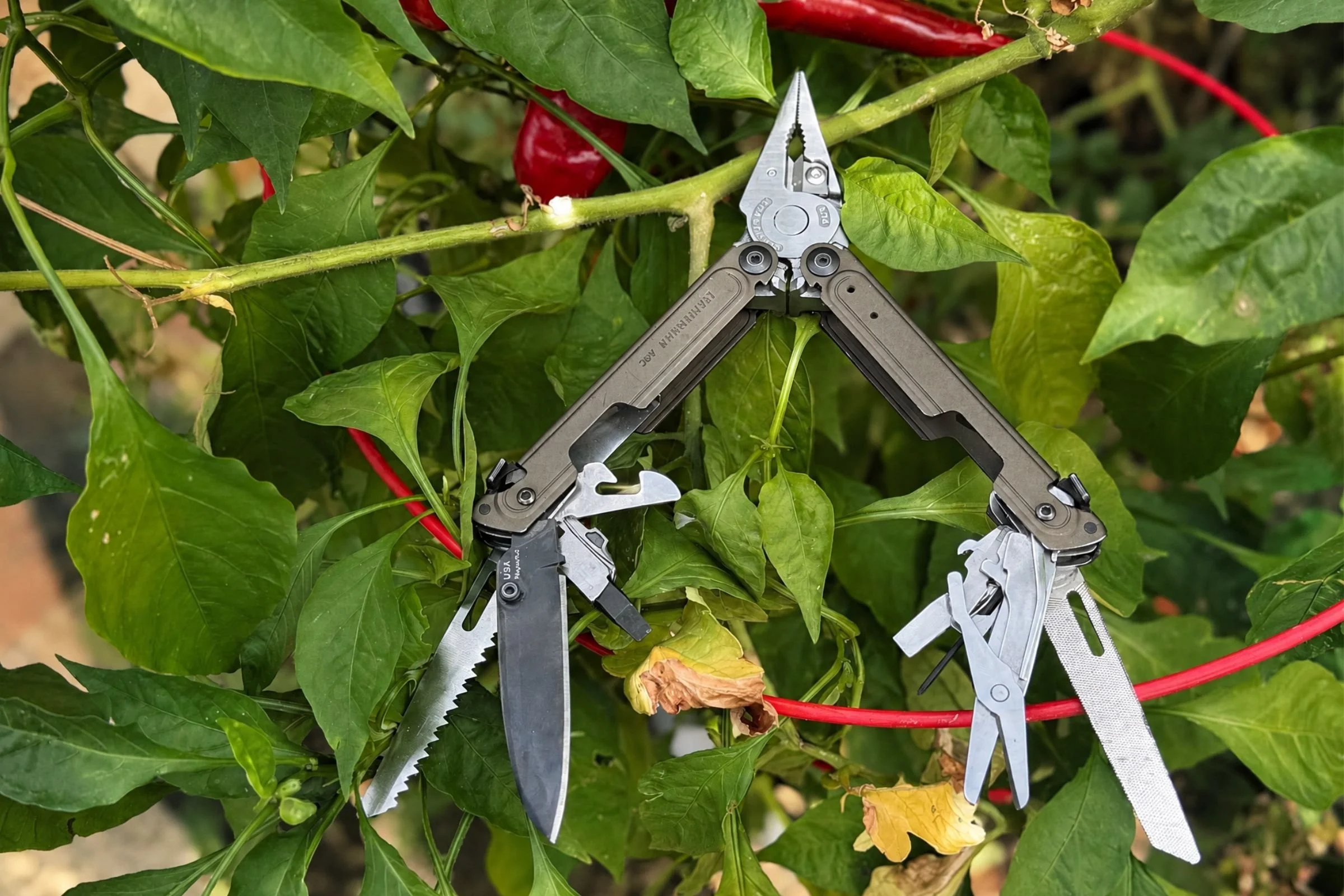
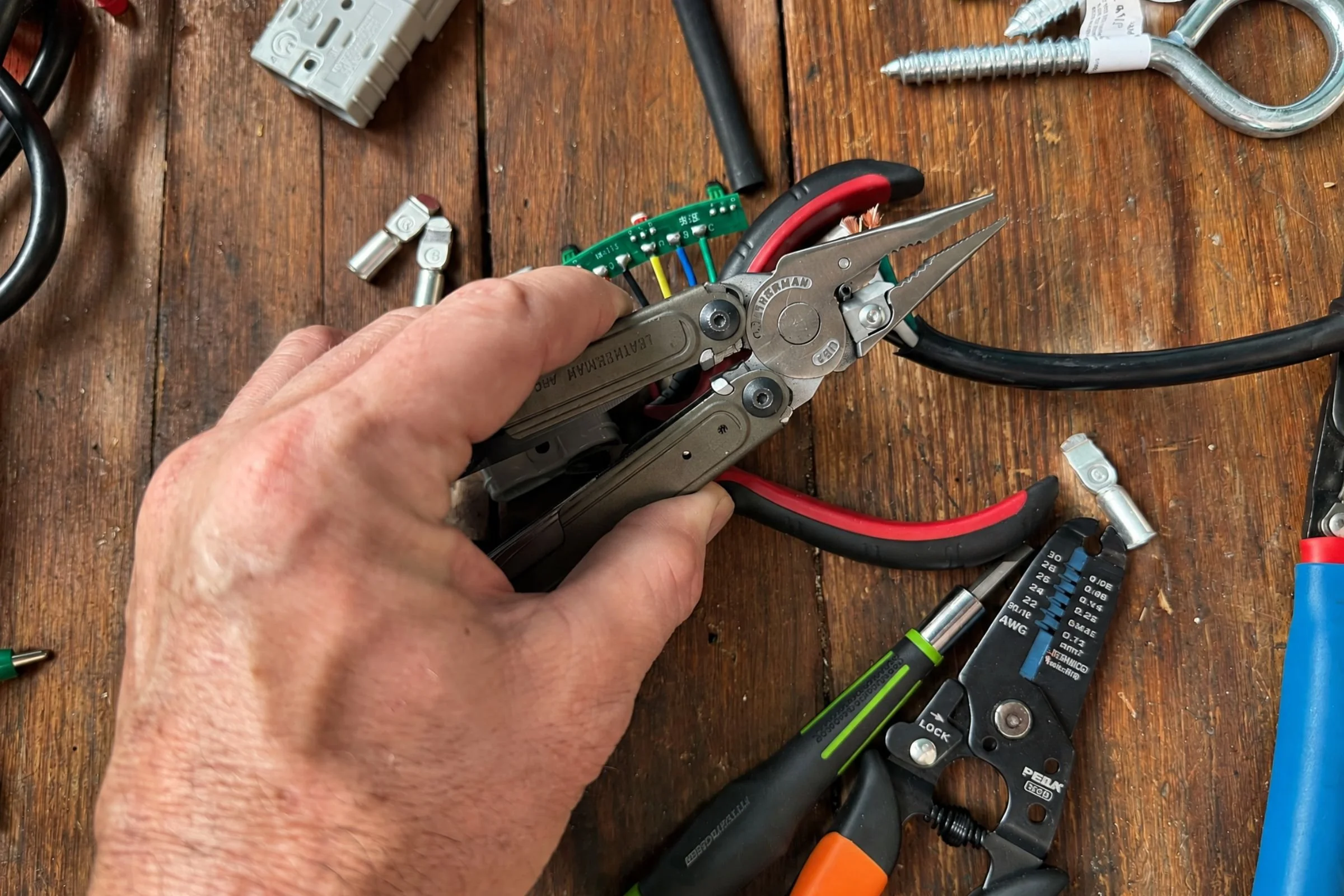
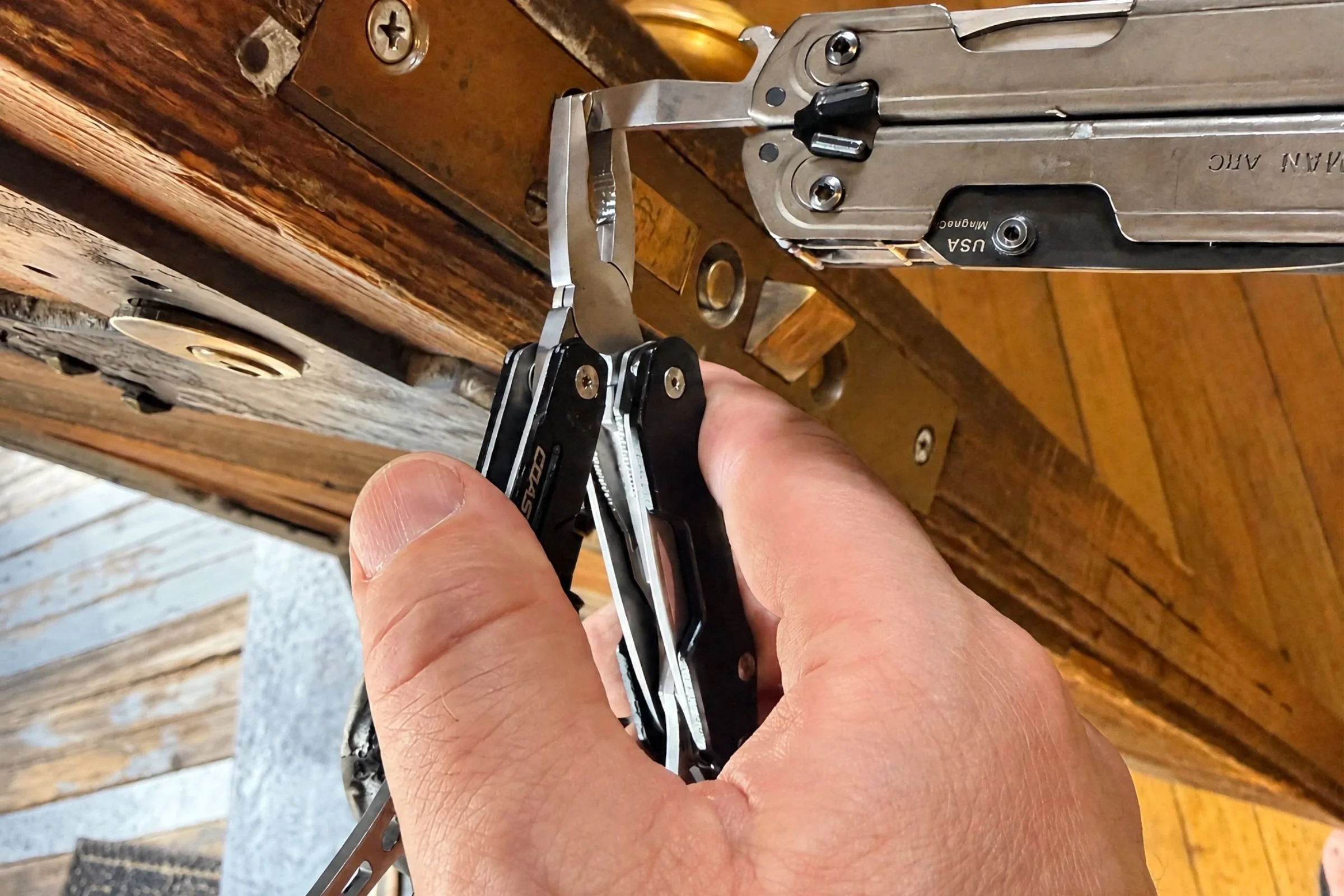
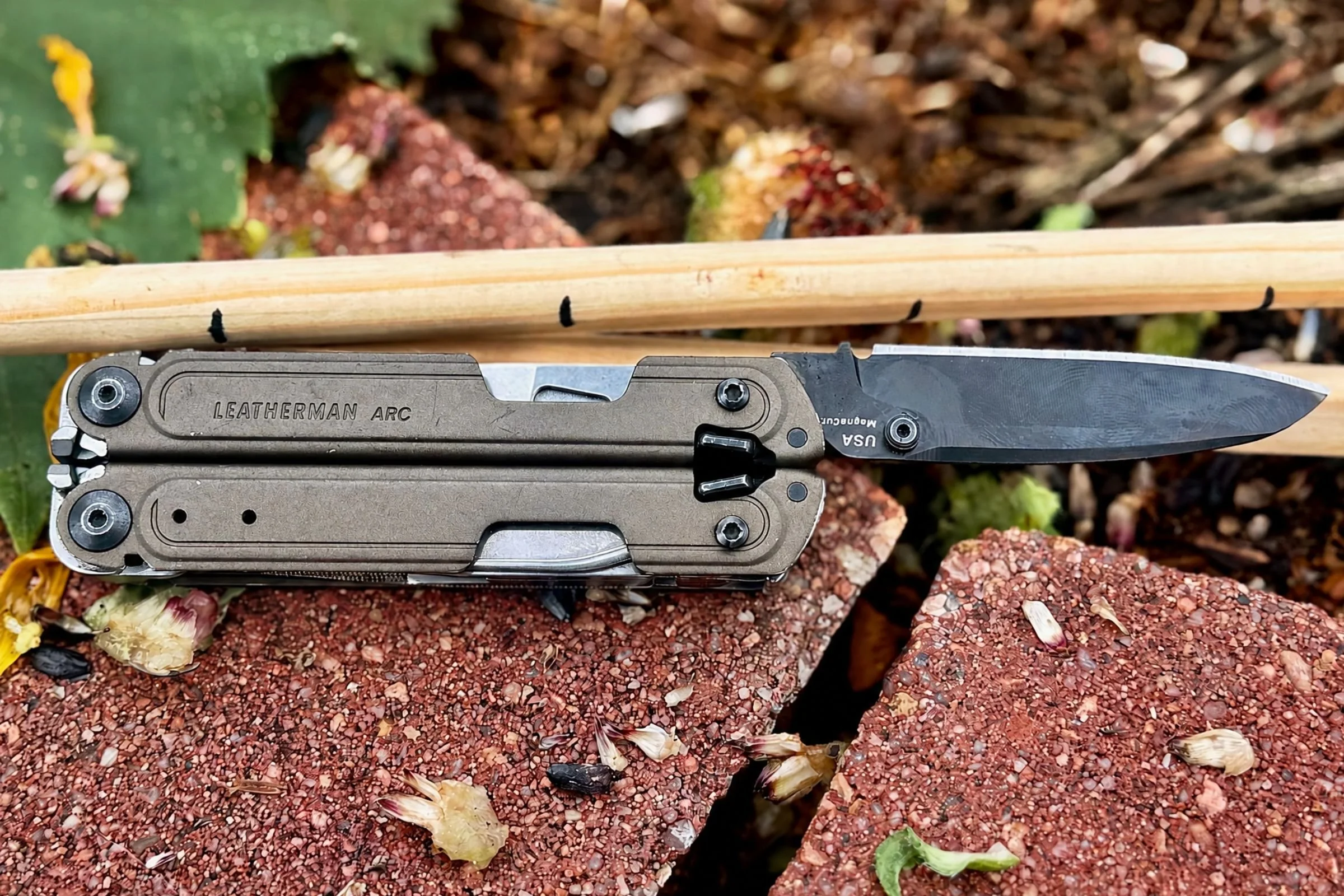
While the US-made ARC doesn’t have the most tools, it has a perfect blend of tools for most people. They’re by far the easiest to access of all the high-quality tools we tested, offering true one-handed opening, locking, and closure. This makes it great for changing tools mid-project, even when your other hand is busy holding something in place.
The MagnaCut blade with a lifetime of free sharpening (should you ever need it) is just the final piece to put it over the top. The only thing I’d like to see changed is replacing the bit driver with a standard bit socket rather than the proprietary one Leatherman uses. Nevertheless, after testing nearly 20 currently available multi-tools, the Leatherman ARC is simply the best overall.
| Scoring metric | Score |
|---|---|
| Blade/cuttingSharpness, edge retention, performance throughout tests | 34 / 35 |
| Saw performanceHow well the saw cut through wood | 5 / 5 |
| Pliers/wire cuttersJaw alignment, grip security, wire cutting tests | 29 / 30 |
| Tool selectionAre the included tools the right ones, well-executed? | 5 / 5 |
| ValuePerformance relative to price | 5 / 5 |
| Overall scoreMaximum score of 80 | 78 / 80 |
Best EDC multi-tool: Leatherman Wave Alpha
Price: $200
Number of tools: 18
Weight: 8.25 oz
Closed length: 4.04”
Open length: 6.25”
Blade length: 2.9”
What we liked:
Great set of tools designed for everyday use without extra stuff that won’t get used
Performed as well as our top pick in many of the tests
Secure locking mechanisms for the tools and blades
Both offer high value, but the lower-end Wave Plus offers a great value for a high-end, US-made multi-tool
What could be better:
Not as easy to access all the tools as on the Leatherman ARC
Not all tools are accessible when the tool is closed
Driver bits are proprietary
Belt clip is sold separately
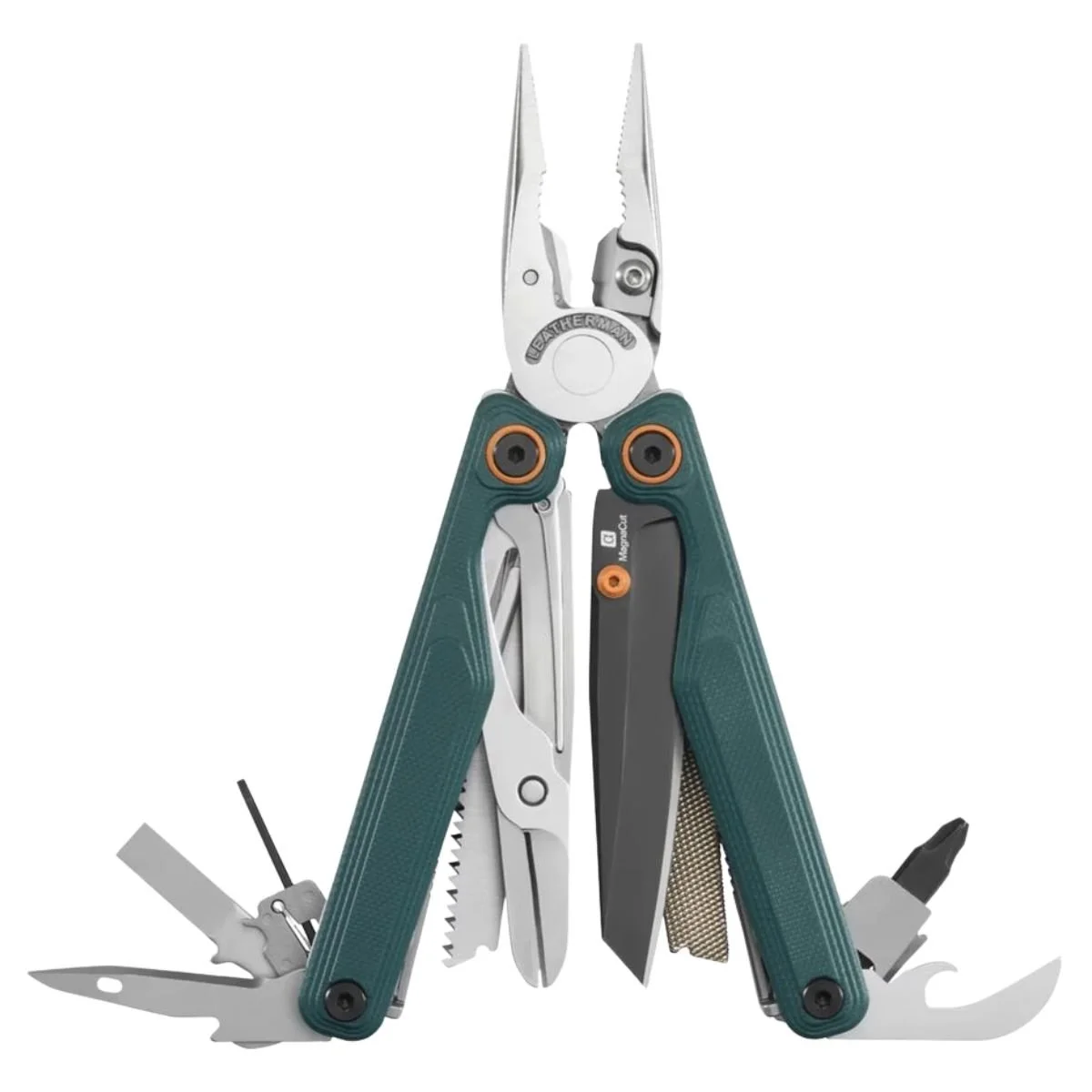
The Leatherman Wave Alpha is one of Leatherman’s most popular multi-tools and for good reason. The US-made Leatherman has the majority of tools most users will need in a multi-tool like pliers, wire cutters, knife and file, regular-sized and mini bit drivers (for tightening screws on glasses and electronics). We tested the newest, premium version in the Wave series, the Wave Alpha, which includes a MagnaCut steel blade and many of the same tools as on our overall top pick, the Leatherman ARC.
Learn more in our in-depth review of the Leatherman Wave Alpha multi-tool.
Leatherman Wave Alpha
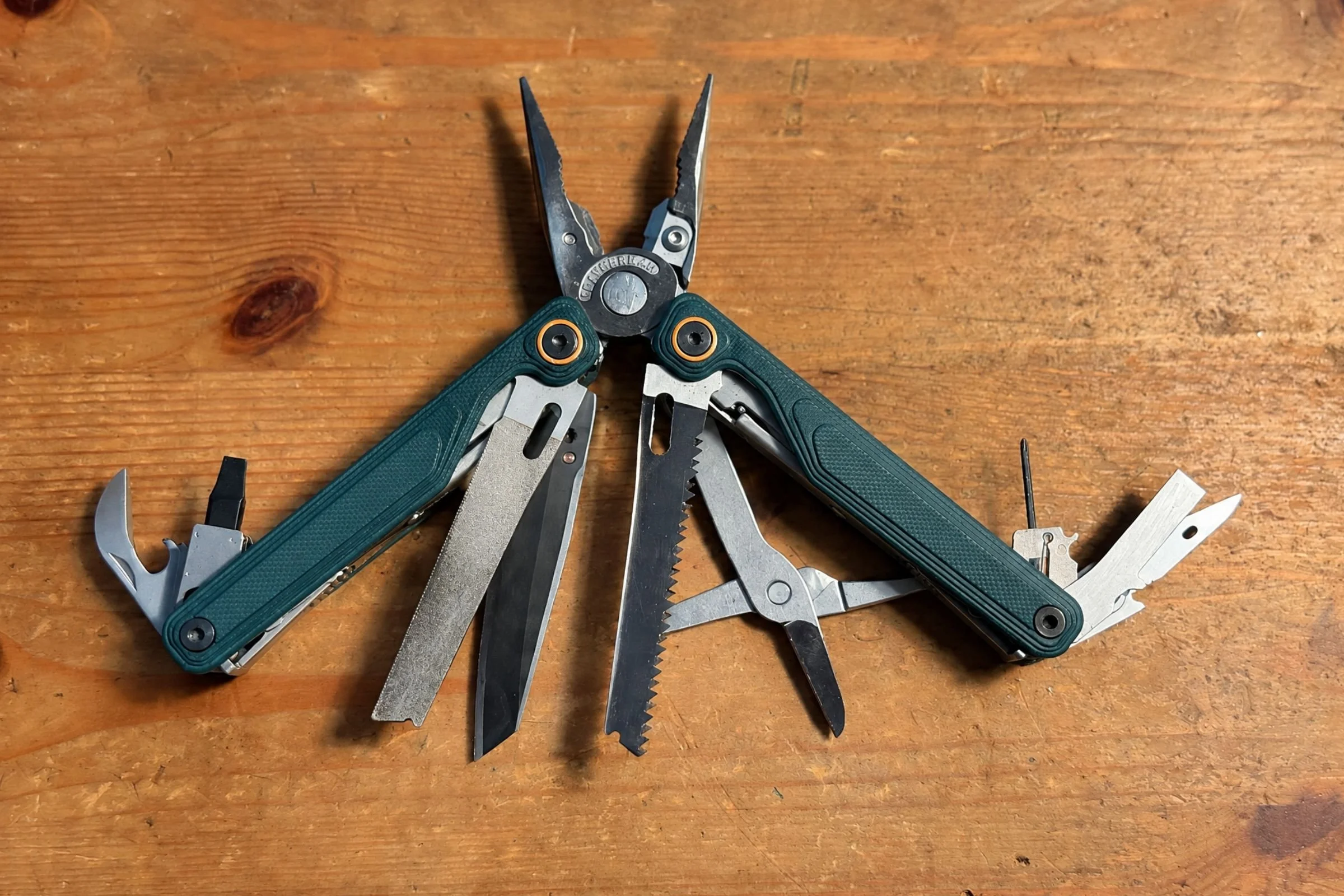
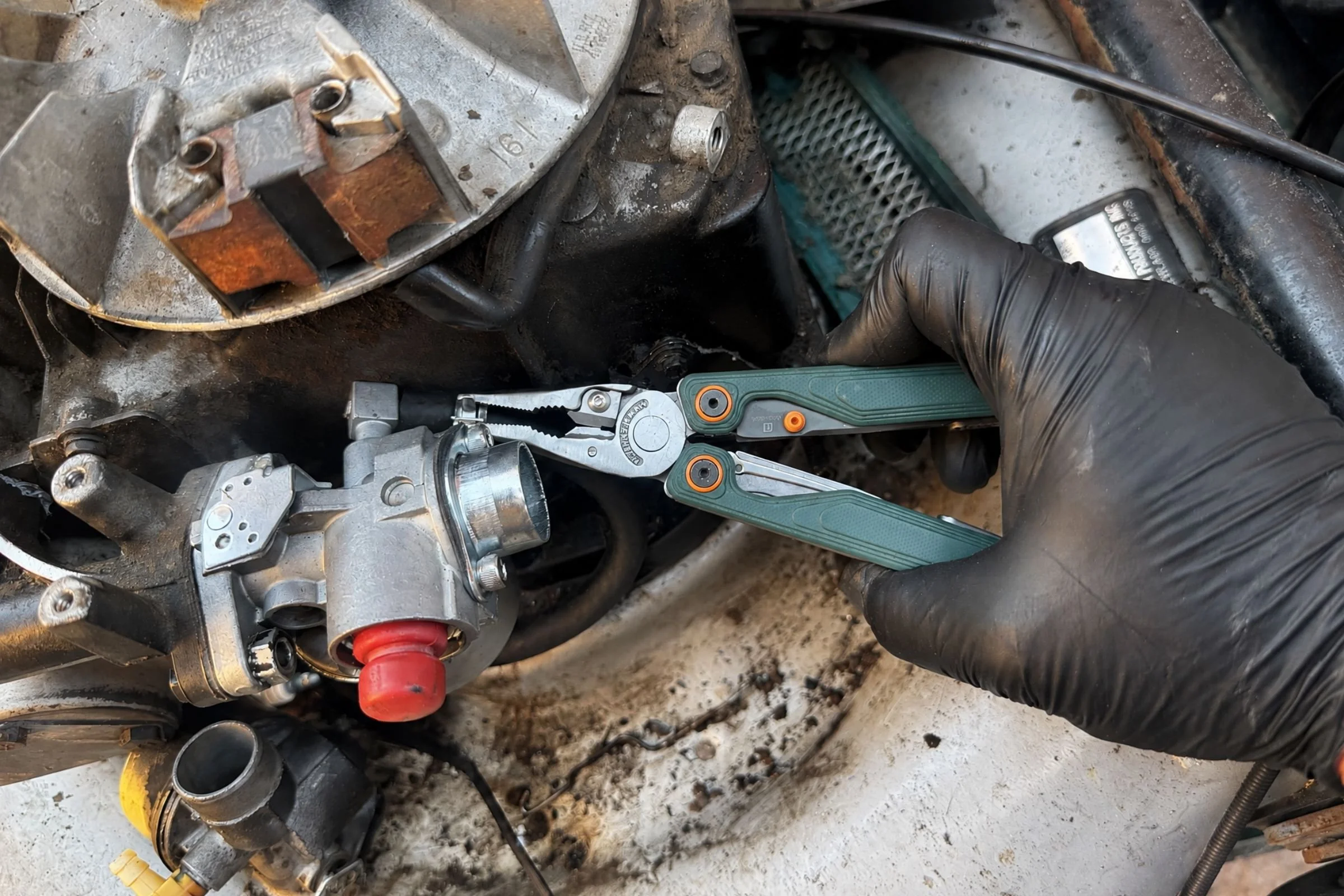
As such, it matches the ARC’s best-in-testing knife edge and saw (albeit at a slightly less expensive price). While we tested the Wave Alpha, the Wave also is available in the less expensive Wave Plus version with 420HC knives (serrated and non-serrated), and starts at $130.
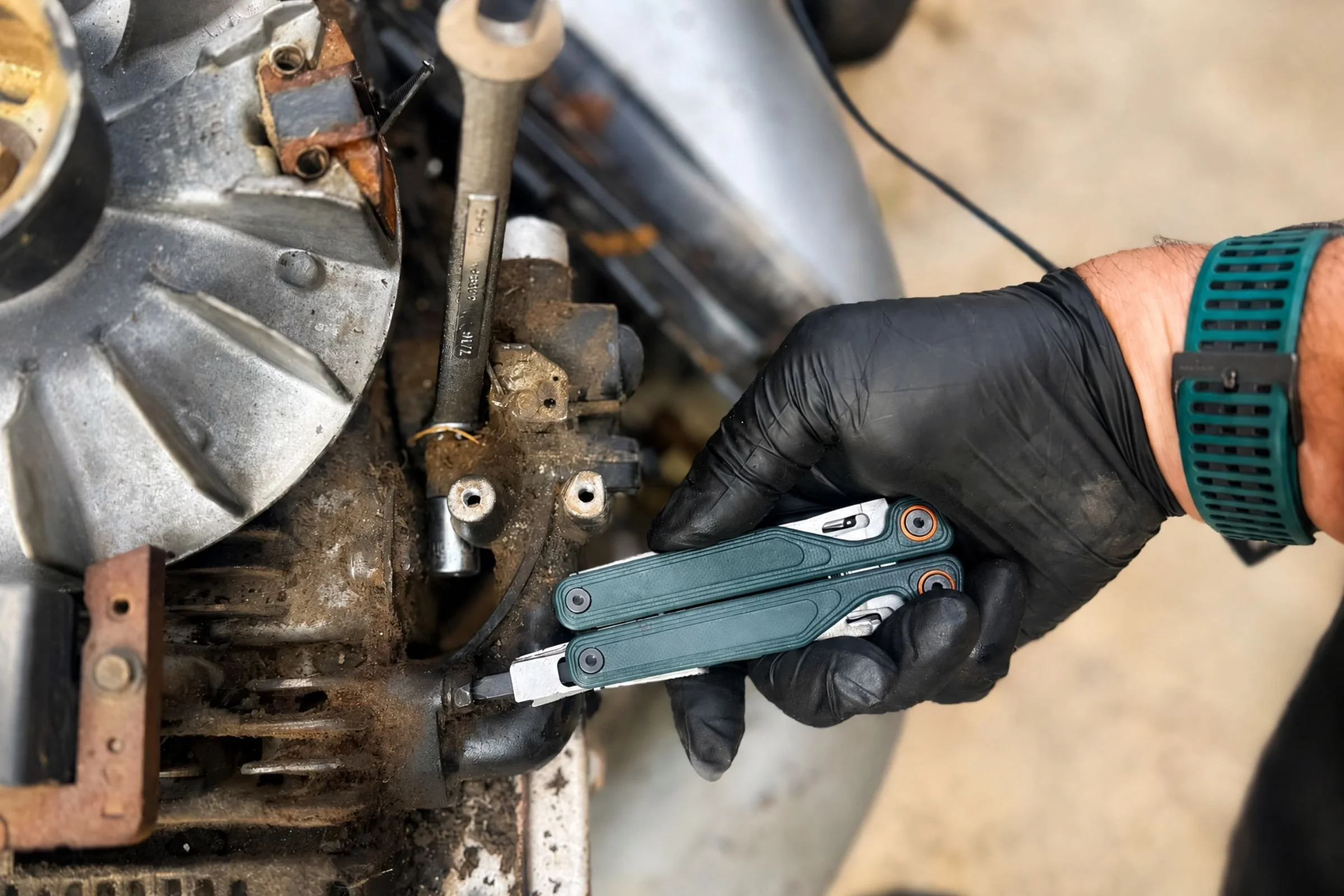
Beyond subjecting the Wave Alpha to the tests we did on all multi-tools, we also used it as an everyday carry tool around the house, camping, repairing an old mower, and for some work on a pedicab trike.
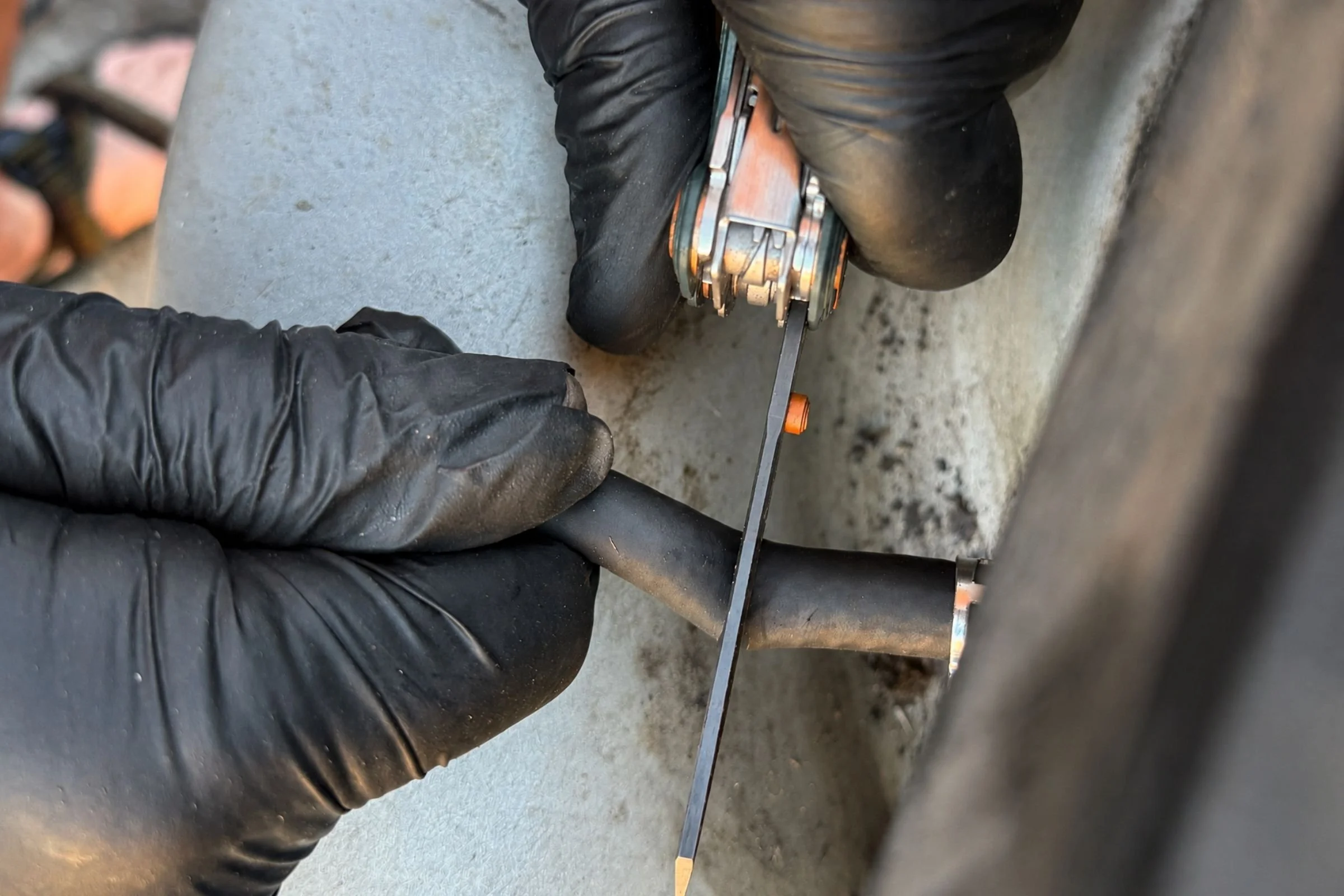
It was great at stripping and cutting wires big and small for electric work, the large scissors made easy work out of cardboard and blister packs, and the knife is as good as that on the Leatherman ARC. Tools are easier to access than on the Victorinox Swiss Tool X, but you still need two hands to access the tools inside the closed plier handles. For this reason, it still falls behind the Leatherman ARC’s ease of use with external, one-handed access to all the tools.
The Leatherman Wave Alpha is a fantastic multi-tool that will help most users (from the handyman to the camper, or van lifer, to the mechanic) get work done, and is our top pick for an EDC multi-tool.
| Scoring metric | Score |
|---|---|
| Blade/cuttingSharpness, edge retention, performance throughout tests | 34 / 35 |
| Saw performanceHow well the saw cut through wood | 5 / 5 |
| Pliers/wire cuttersJaw alignment, grip security, wire cutting tests | 24 / 30 |
| Tool selectionAre the included tools the right ones, well-executed? | 5 / 5 |
| ValuePerformance relative to price | 5 / 5 |
| Overall scoreMaximum score of 80 | 73 / 80 |
Most complete multi-tool: Victorinox Swiss Tool X Plus Ratchet
Price: $210
Number of tools: 38+
Weight: 1 lbs., 1 oz. (Swiss Tool X Plus Ratchet ), 10.2 oz. (Swiss Tool X, only)
Closed length: 4.5”
Open length: 6.75”
Blade length: 2.75”
What we liked:
The micro ratchet is great for working on smaller projects
Great overall quality and assortment of tools
Only multi-tool tested with a corkscrew
Uses standard bits
What could be better:
Multi-tool is more of a multi-tool kit with numerous, easy to lose smaller parts
Great belt pouch, but it’s huge
Victorinox considers everything a tool
Scissors could be more robust
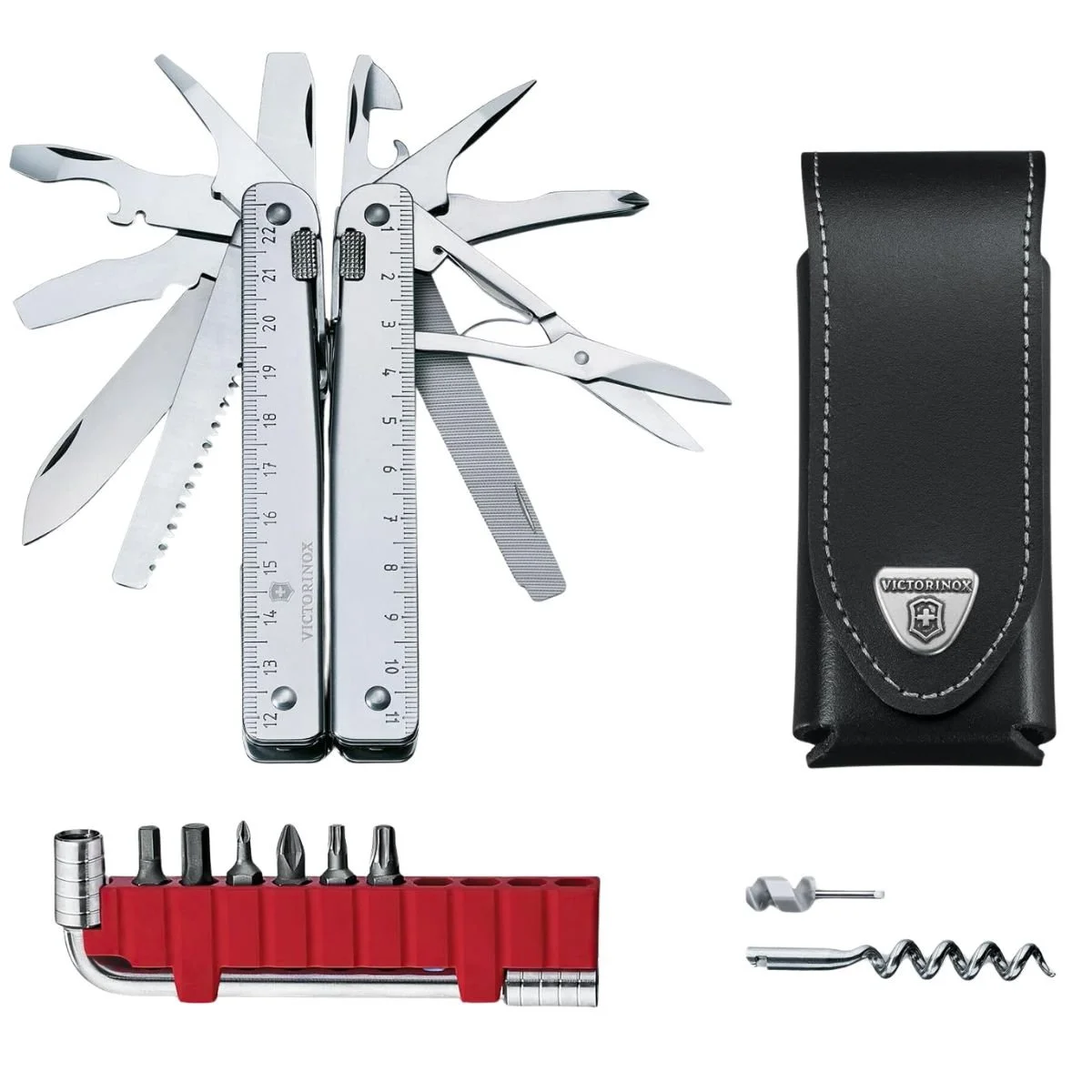
With 38 tools and functions, the Victorinox Swiss Tool X Plus Ratchet is the most complete multi-tool we’ve tested. The separate ratchet and extension extend its capability beyond that of most other multi-tools, allowing it to drive hex and Torx head screws and bolts, as well as any other bits the user wants to keep in the rack. This makes it useful for tasks that other multi-tools can’t take on, like modern bike repairs and opening up electronics.
Learn more in our in-depth review of the Victorinox Swiss Tool X Plus Ratchet multi-tool.
Victorinox Swiss Tool X Plus Ratchet
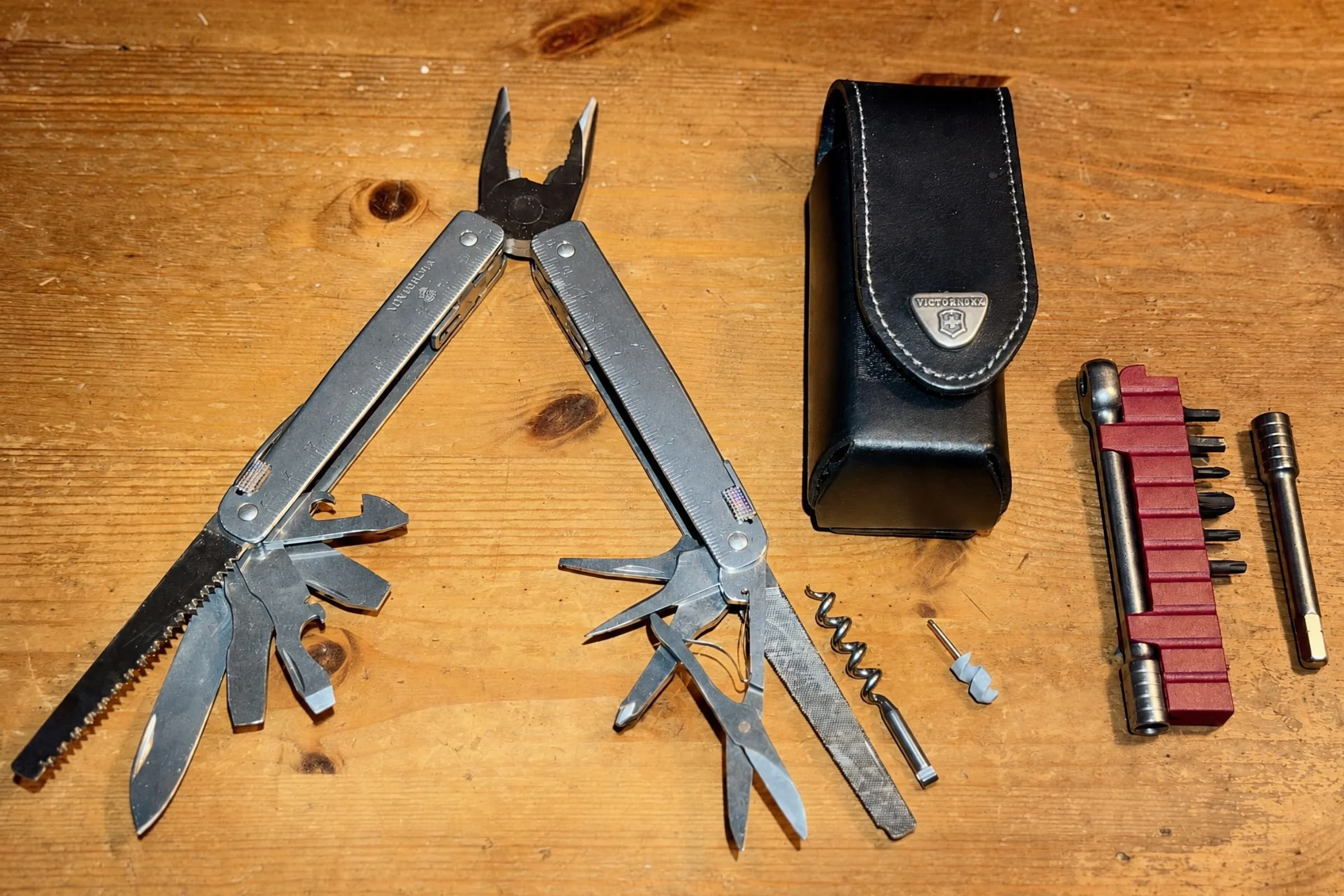
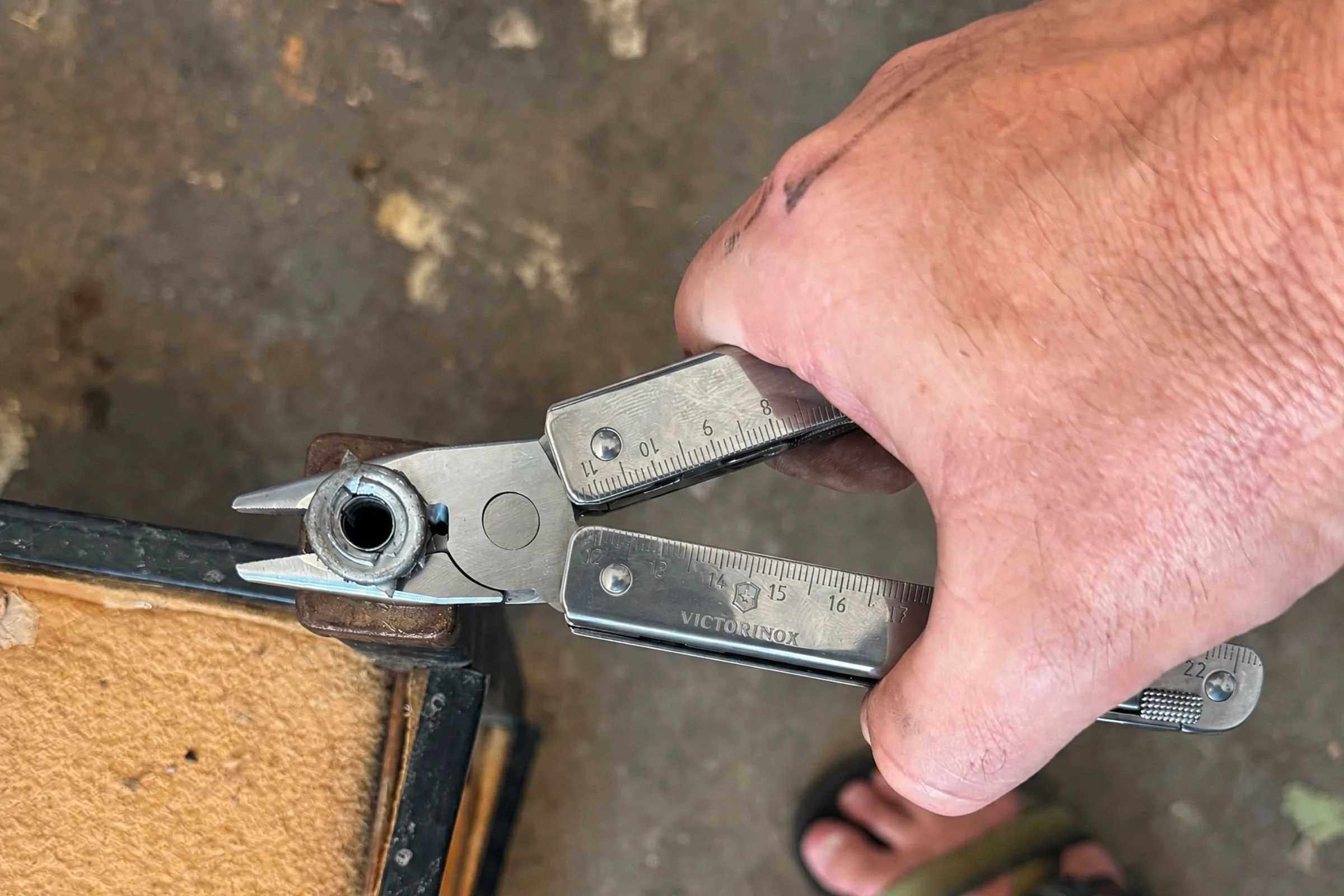
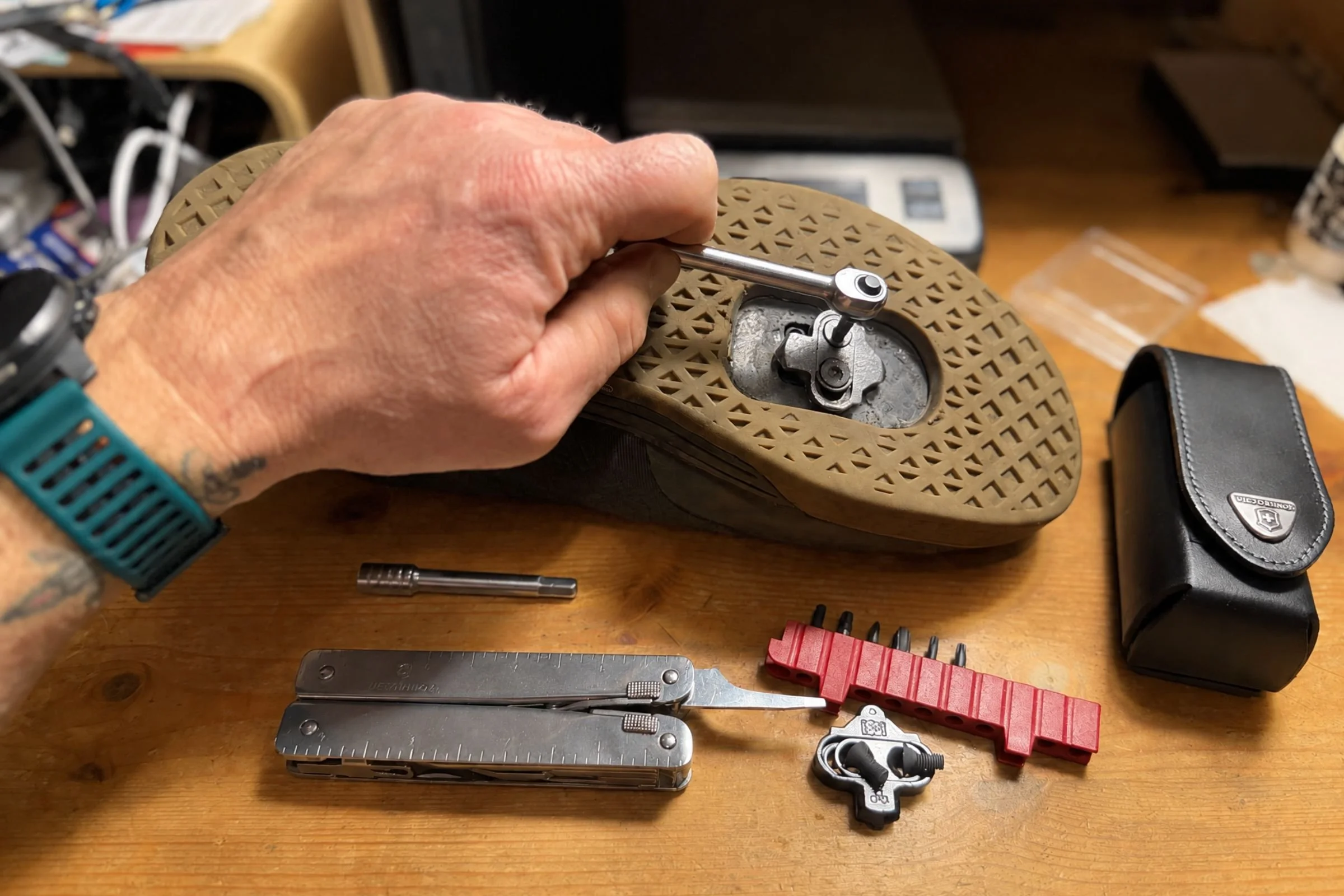
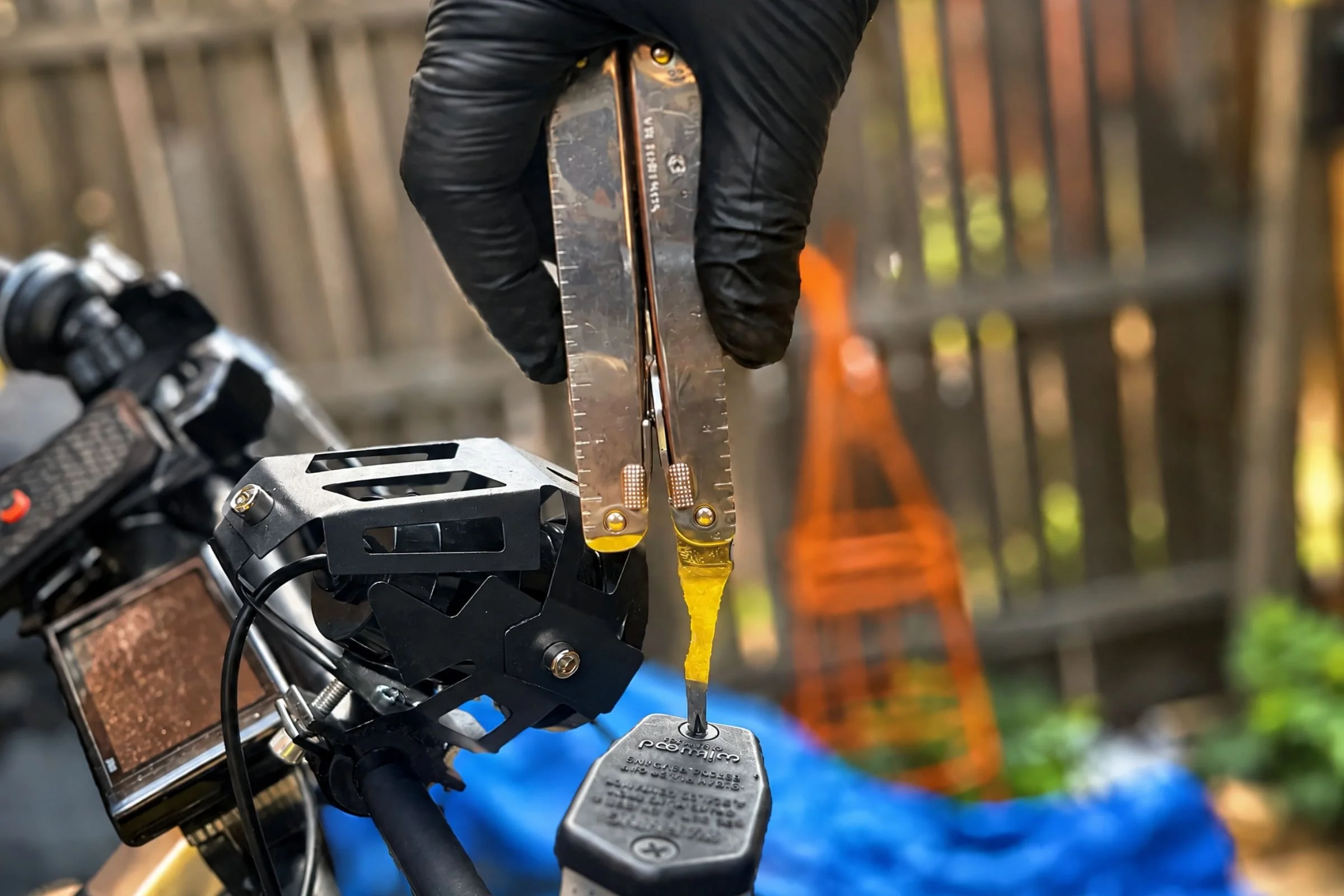
We used the Victorinox Swiss Tool X and its ratchet in real-world tests in everything from repairing pedicabs and bikes to fixing windows and doors. We also used it in simulated tests to measure how well its pliers and cutting blades performed. It performed great in all these tasks, stripped wire with ease, sliced through everything easily, and only performed worse than the Leatherman ARC when it came to cutting cable.
While we praise the Swiss Tool X Plus Ratchet for the number of tools it has and its ability to take on tasks that many other multi-tools can't, we also think some of it is overkill. For instance, it has five different widths of flathead screwdrivers. We think just three would be effective. With the extra multi-tool pieces, it’s bulkier and heavier than other multi-tools, and there’s also a lot more to keep track of. We should also note you can purchase the Swiss Tool X by itself and get its 26 tools.
In the end, this is a high-quality multi-tool kit. The micro ratchet allows you to do things you can’t with most other similar multi-tools, but it’s bulkier and we wouldn’t choose this if weight, space, and ease of use are priorities. Hence, the Leatherman ARC beats it out for our overall favorite. But, this is a multi-tool set that we’d keep in the top of a toolbox for quick and easy jobs where we don’t want to keep running back to the box for that one little tool we forgot.
| Scoring metric | Score |
|---|---|
| Blade/cuttingSharpness, edge retention, performance throughout tests | 30 / 35 |
| Saw performanceHow well the saw cut through wood | 5 / 5 |
| Pliers/wire cuttersJaw alignment, grip security, wire cutting tests | 27 / 30 |
| Tool selectionAre the included tools the right ones, well-executed? | 5 / 5 |
| ValuePerformance relative to price | 5 / 5 |
| Overall scoreMaximum score of 80 | 72 / 80 |
Best backpacking multi-tool: Gerber Stakeout Spark
MSRP: $80
Number of tools: 10
Weight: 5.2 oz
Closed length: 4.5”
Open length: 6.3”
Blade length: 2.5”
What we liked:
Purpose built for camping
Lighter than other options
Ferro rod comes in clutch
What could be better:
Could have at least one screwdriver
Pliers and wire cutters could be more robust
Could be lighter (but far more expensive) with some titanium parts
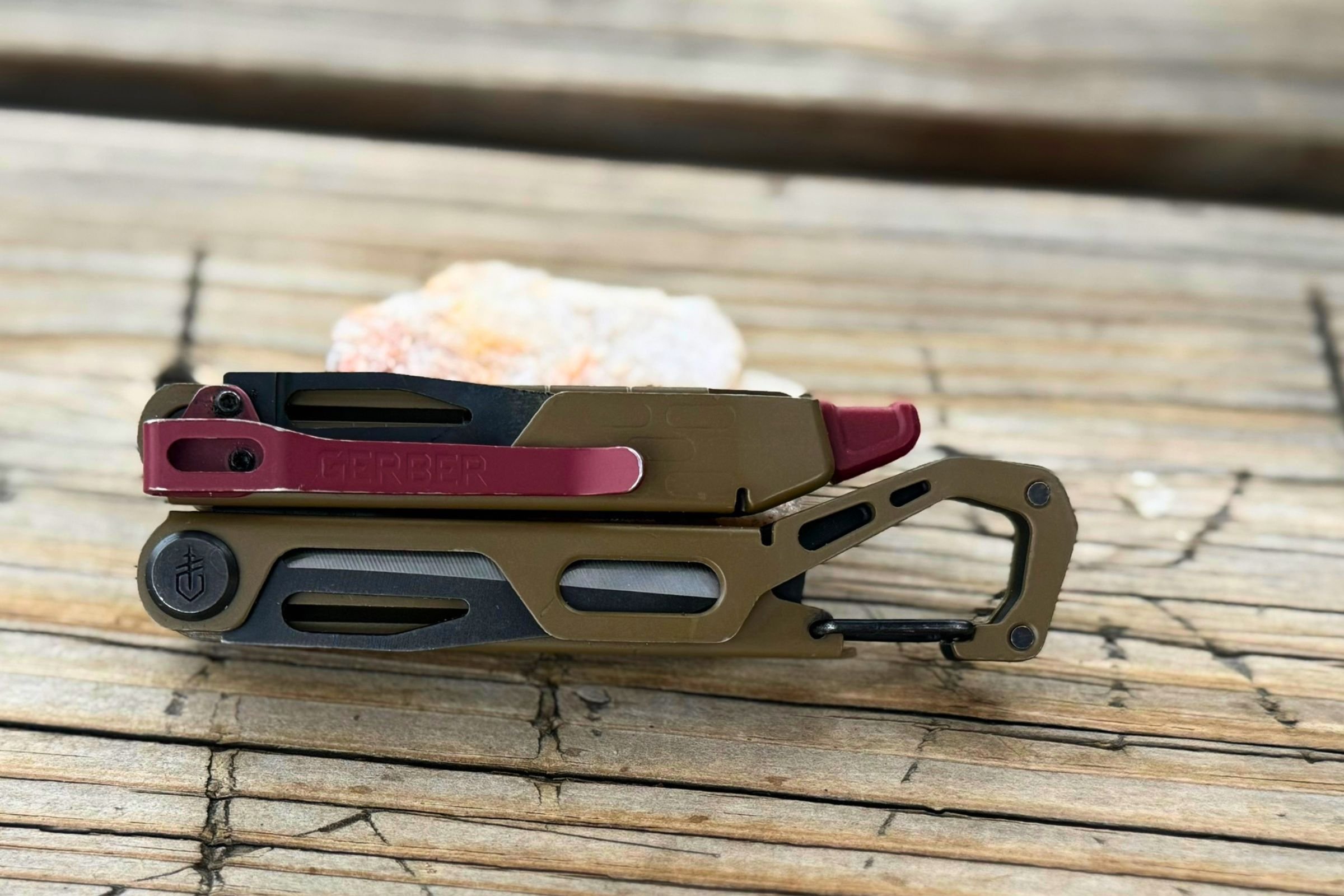
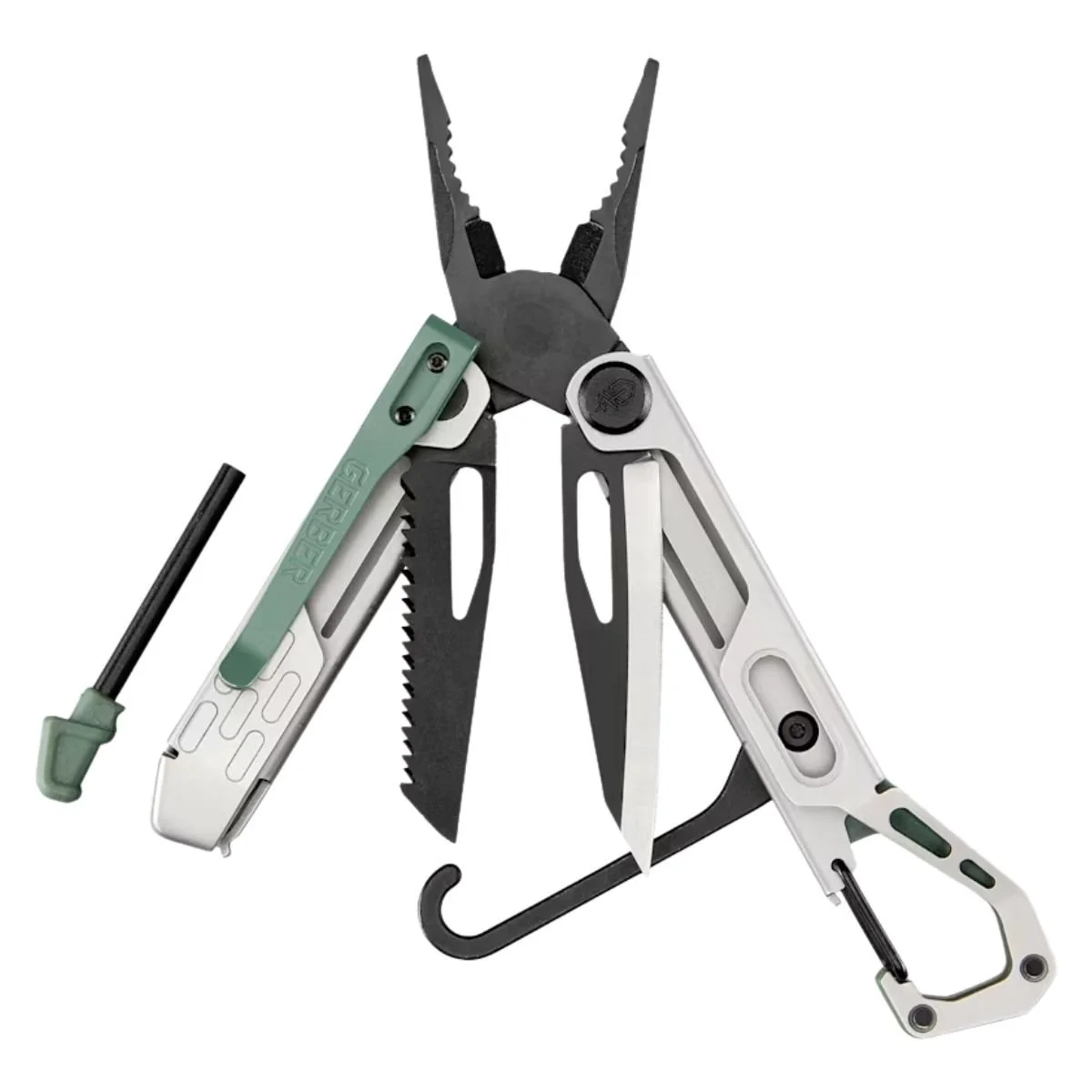
Gerber’s Stakeout Spark is a reasonably priced specialty multi-tool aimed at meeting the needs of campers and backpackers. That’s thanks to its hook for pulling stubborn stakes and an integrated ferro rod for starting a fire or lighting stoves. It’s relatively minimalistic and lighter weight (only 5.2 oz) compared to other full-sized multi-tools with a blade over 2 inches long, all of which makes it our pick for the Best Backpacking Multi-tool.
Check out our in-depth review of the Gerber Stakeout Spark multi-tool to learn more.
Gerber Stakeout Spark
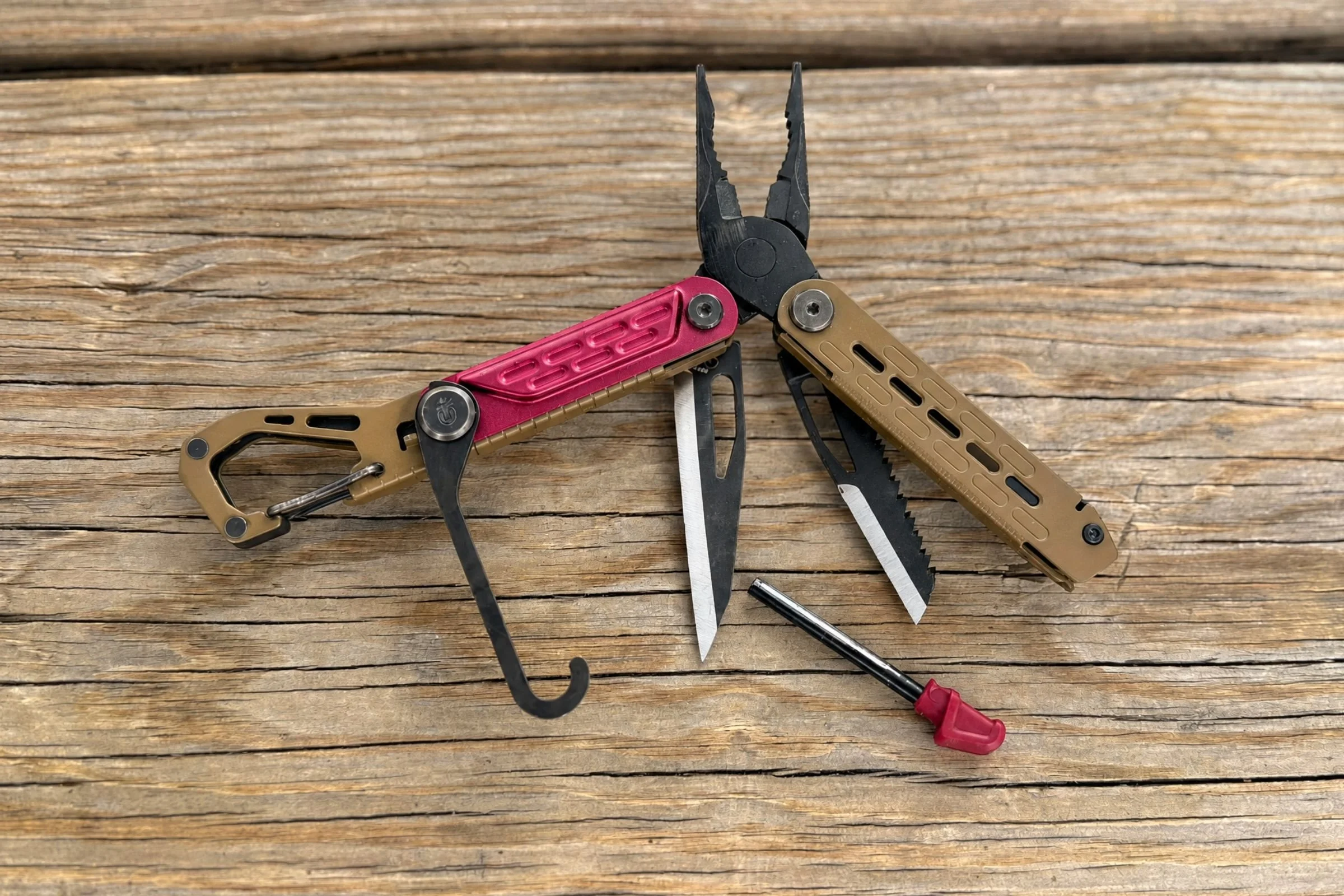
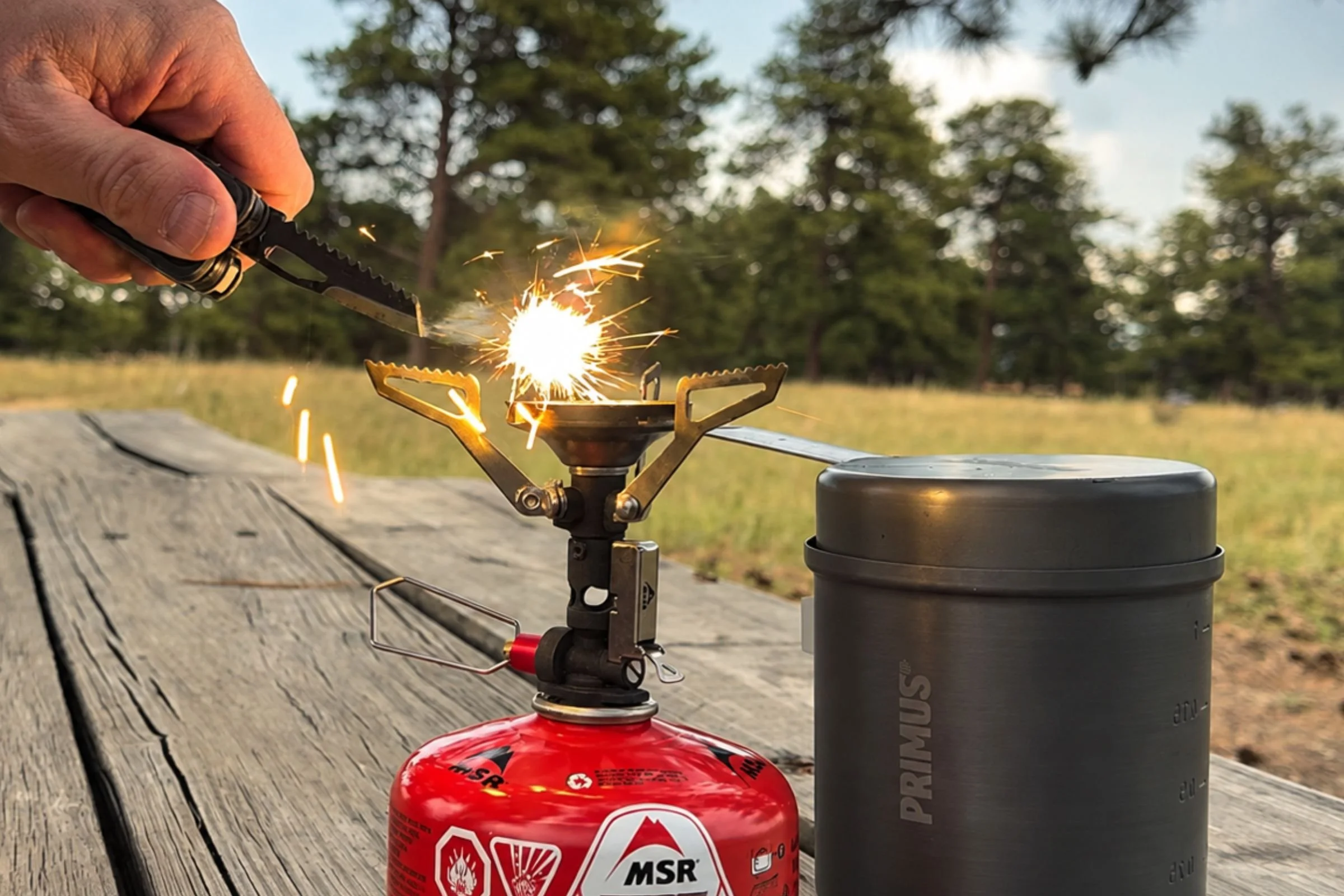
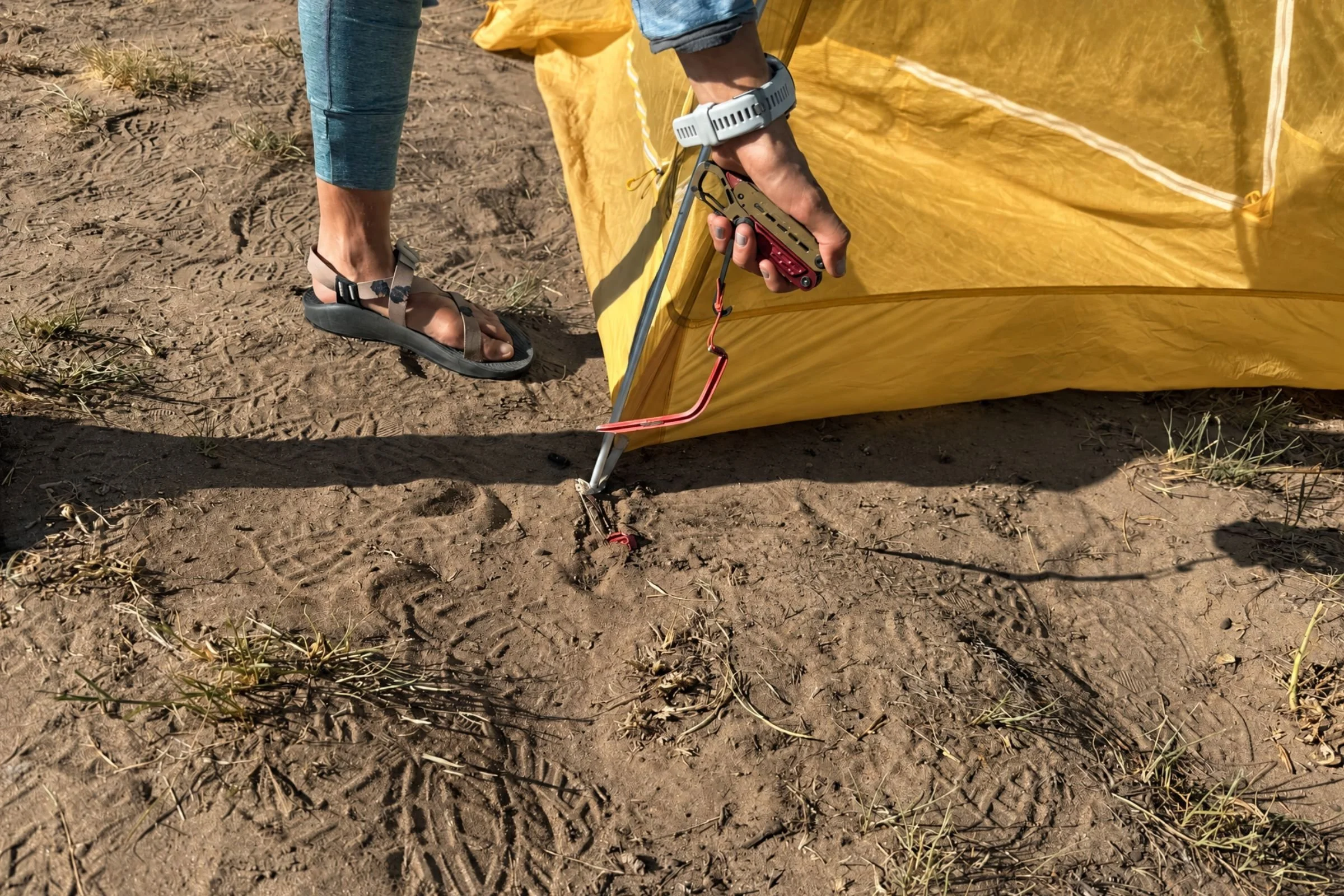
We tested the Stakeout Spark on numerous overnight trips, including while packrafting on the Colorado River and backpacking to Crater Lake and Lone Eagle Peak in Colorado.
The stake puller came in particularly handy when pulling a stake out of an underground root we inadvertently hammered it into. We also found that the ferro rod was great for lighting stoves and our LavaBox at the campsite by the river. With an integrated carabiner clip and pocket/belt clip, it’s easy to stash the Stakeout Spark on your person or on a reachable area of your pack.
Still, it’s limited in the tools it has. We wouldn’t use this on a daily basis around the house or as a piece for tuning skis or a snowboard, as it lacks any screwdriver and many other tools on most basic multi-tools. Still, for someone looking for a dedicated camping and backpacking tool, it’s the best we’ve tested.
| Scoring metric | Score |
|---|---|
| Blade/cuttingSharpness, edge retention, performance throughout tests | 31 / 35 |
| Saw performanceHow well the saw cut through wood | 3 / 5 |
| Pliers/wire cuttersJaw alignment, grip security, wire cutting tests | 22 / 30 |
| Tool selectionAre the included tools the right ones, well-executed? | 4 / 5 |
| ValuePerformance relative to price | 5 / 5 |
| Overall scoreMaximum score of 80 | 65 / 80 |
Best keychain multi-tool: Gerber Dime
Price: $35
Weight: 2.2 oz.
Number of tools: 12
Closed length: 2.75”
Open length: 4.25”
Blade length: 1.5”
What we liked:
Impressive amount of usable tools in a small package
Easily fits in a pocket
Good mix of tools
What could be better:
Knife doesn’t lock in place
Pliers could have better teeth and grip
Wire cutters aren’t very effective
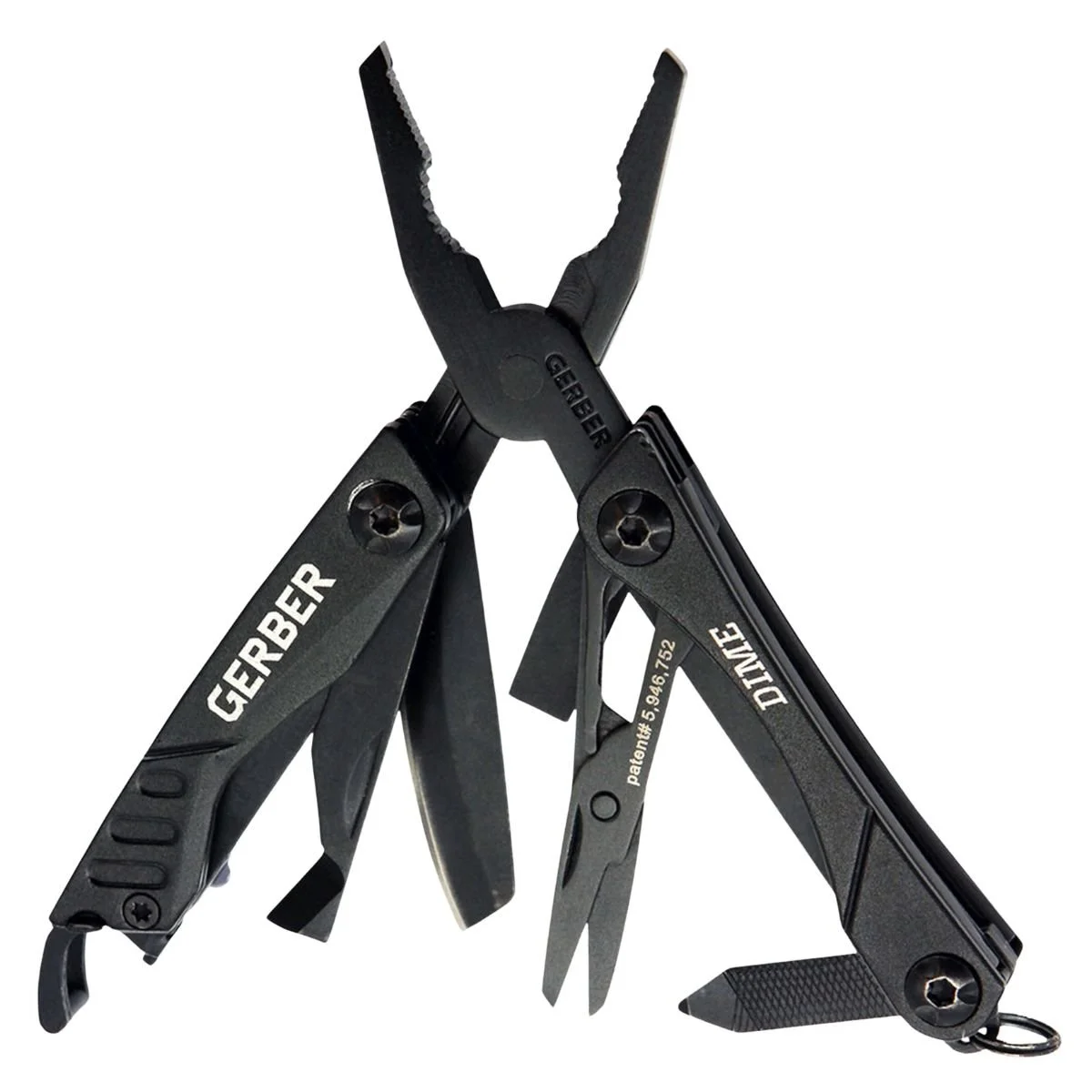
We tested a number of small, keychain sized multi-tools and the Gerber Dime easily came out on top. Though we liked the Leatherman Micra, that was more of a personal grooming tool with some multi-tool capabilities. The Gerber Dime has more working capacity, including a knife, spring-loaded pliers, wire cutters, scissors, tweezers and a file. That’s in addition to screwdrivers and a package opener.
Gerber Dime
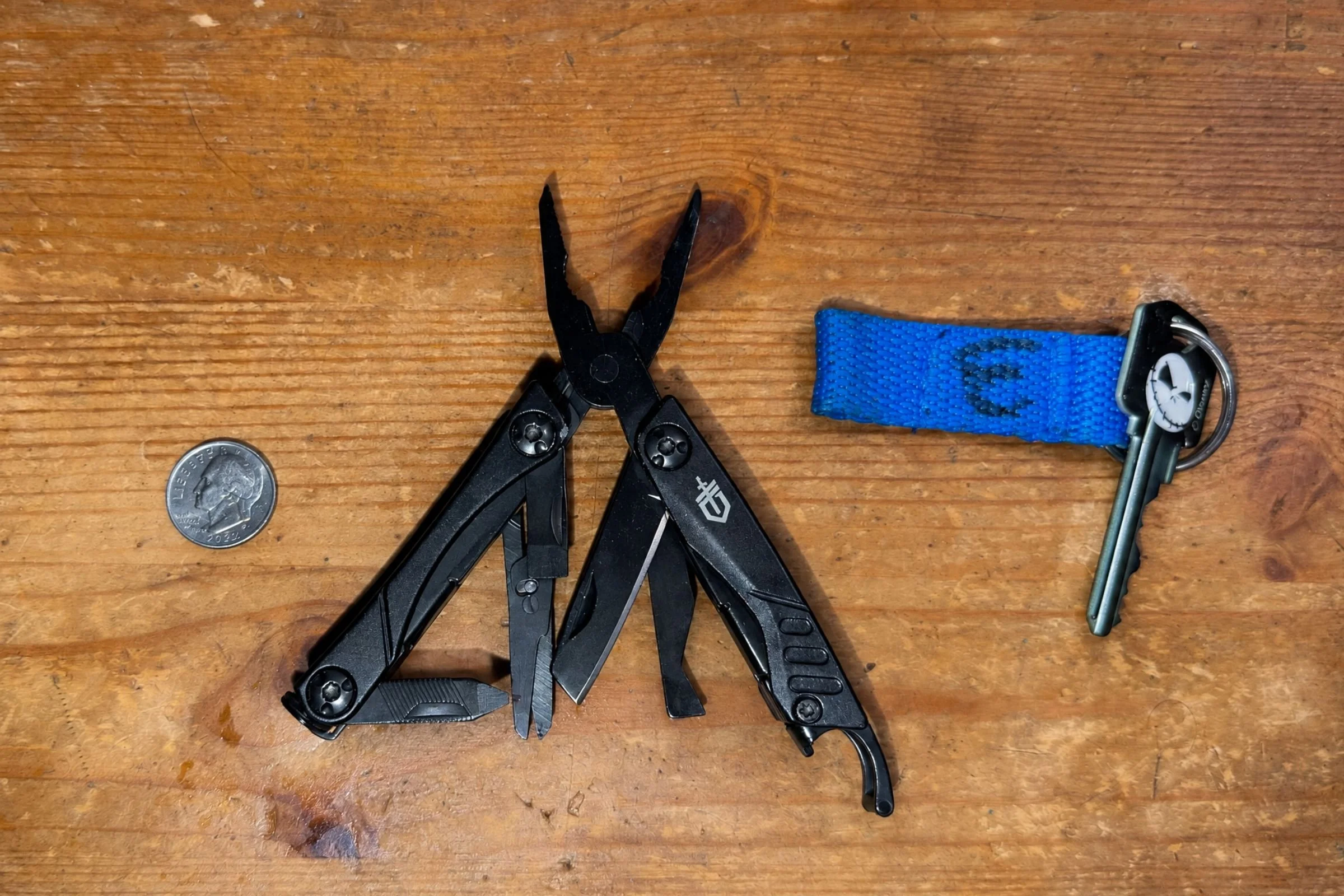
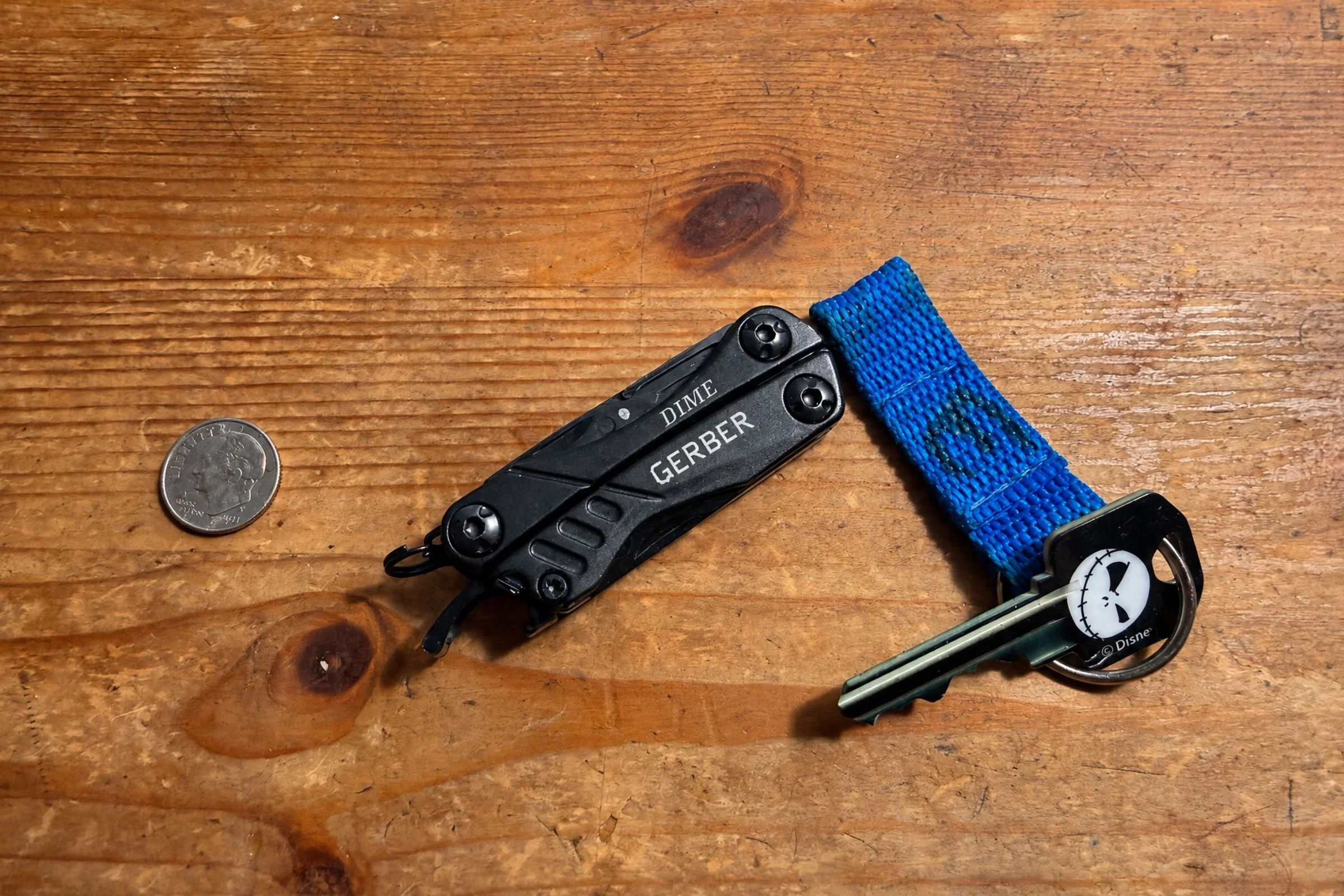
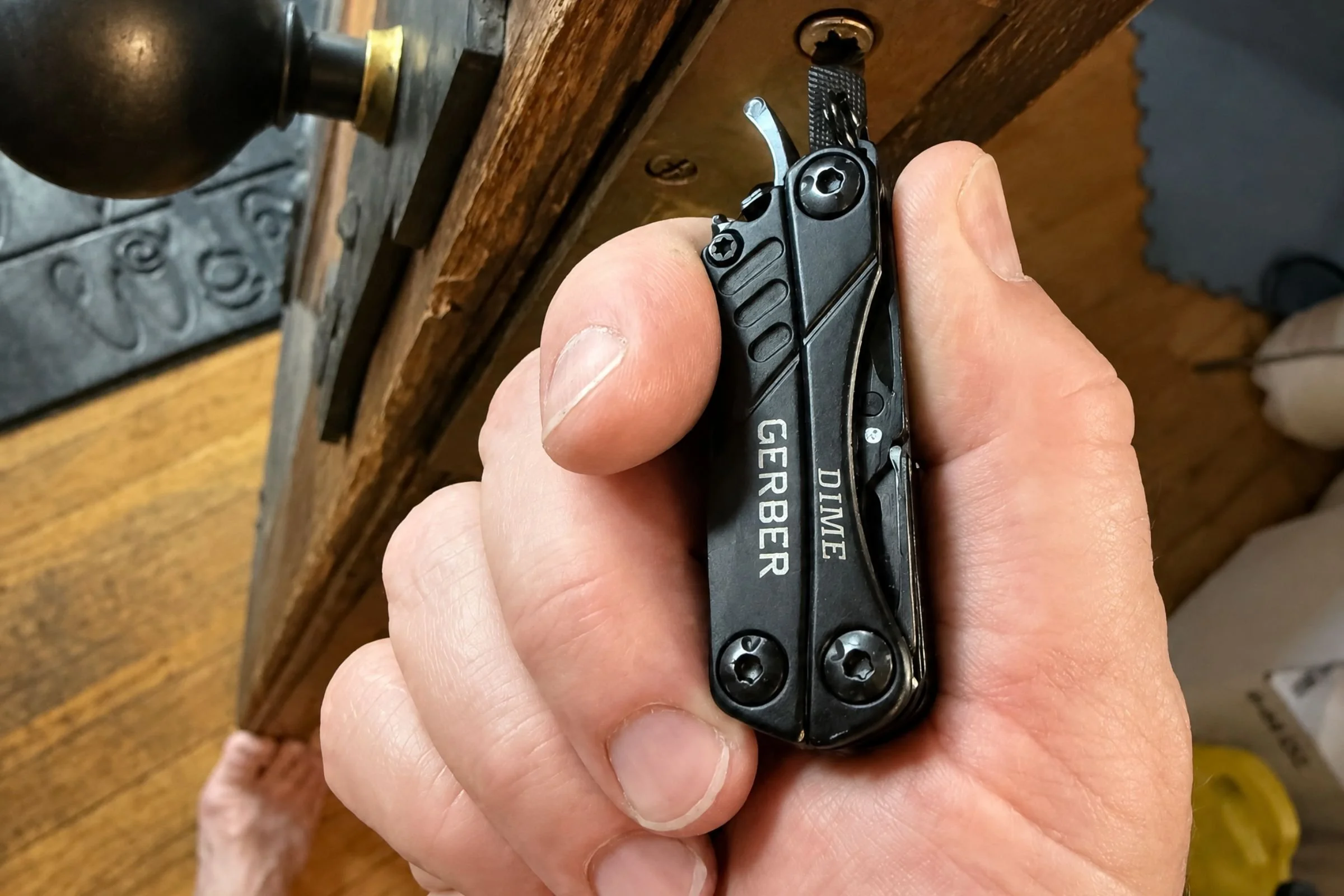
We used the Dime on a number of projects including replacing window clasps, working on an electric motor, and tinkering behind the dashboard of a car. The pliers and screwdrivers worked well on smaller nuts and bolts, and for reaching into tight spaces.
The tapered head of the smaller screwdriver allowed it to work well on Phillips-head screws as well. The wire cutters worked on smaller wires, but weren’t as good on larger wires as those on full-sized multi-tools.
We also like that the Gerber Dime had external access to all of the tools, making them easy to access without having to open the pliers. Still, this is a pocket-sized tool with pocket-sized capabilities. We wouldn’t want this as a multi-tool for large jobs or jobs where we’re working on larger nuts, bolts and wires, but it’s just fine for smaller, quick tasks, like tightening loose screws, opening packages, slicing duct tape, twisting wires tight, etc.
| Scoring metric | Score |
|---|---|
| Blade/cuttingSharpness, edge retention, performance throughout tests | 27 / 35 |
| Saw performanceHow well the saw cut through wood | 0 / 5 |
| Pliers/wire cuttersJaw alignment, grip security, wire cutting tests | 6 / 30 |
| Tool selectionAre the included tools the right ones, well-executed? | 5 / 5 |
| ValuePerformance relative to price | 5 / 5 |
| Overall scoreMaximum score of 80 | 43 / 80 |
Best one-piece multi-tool: Nite Ize DoohicKey
Price: $7
Weight: 0.4 oz
Number of tools: 8
Closed length: 2.5”
Blade length: n/a
What we liked:
Hardly larger than a key
Easily fits in a pocket
Good mix of tools
What could be better:
Tools are limited in function
Phillips-head driver is small
Serrated edges are hard to use on most surfaces
We tested a number of “one-piece” multi-tools. These are usually stamped steel tools that sometimes include carabiner clips. These are designed to slip into a pocket or wallet and usually take up less space than even a mini multi-tool.
Nite Ize DoohicKey
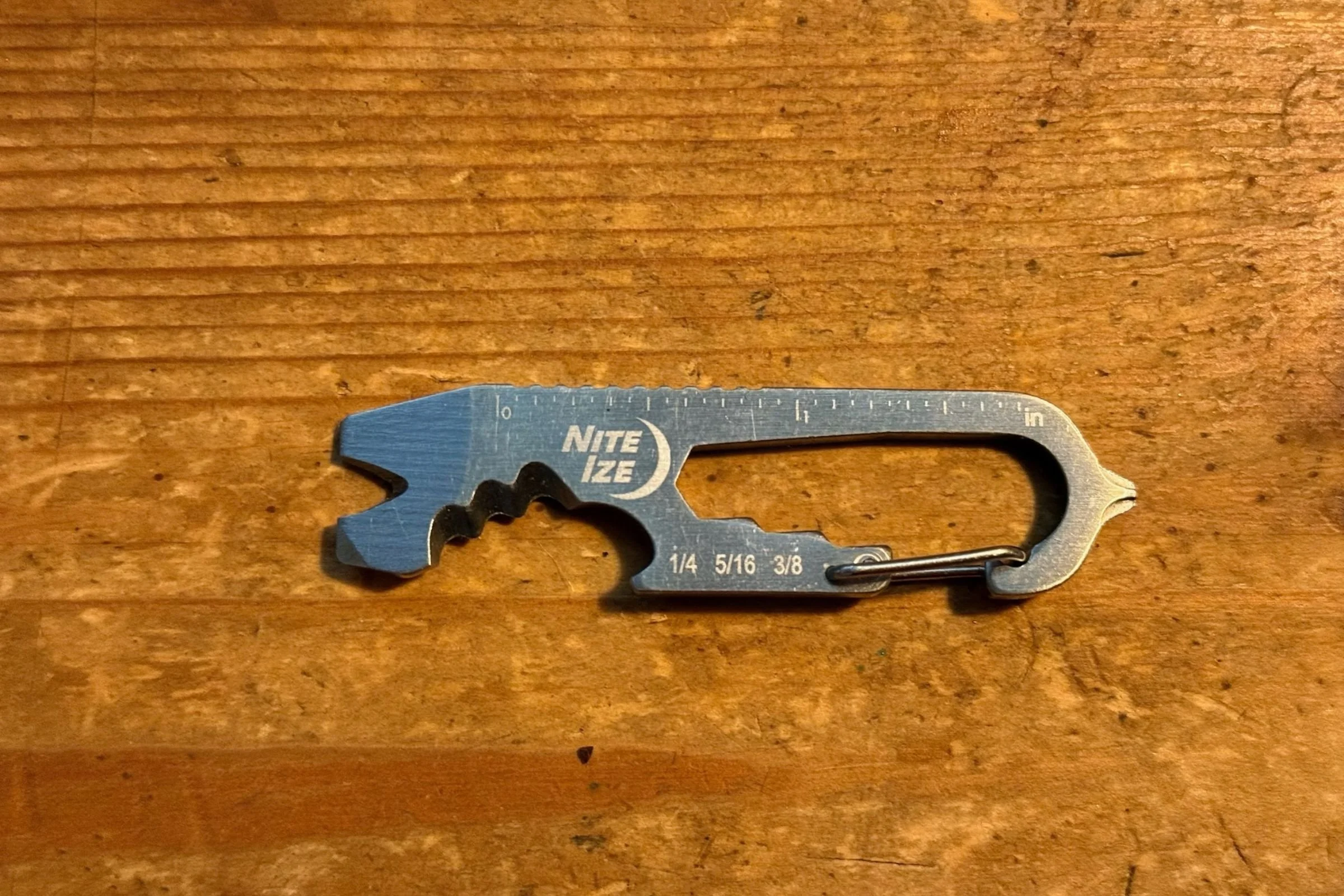
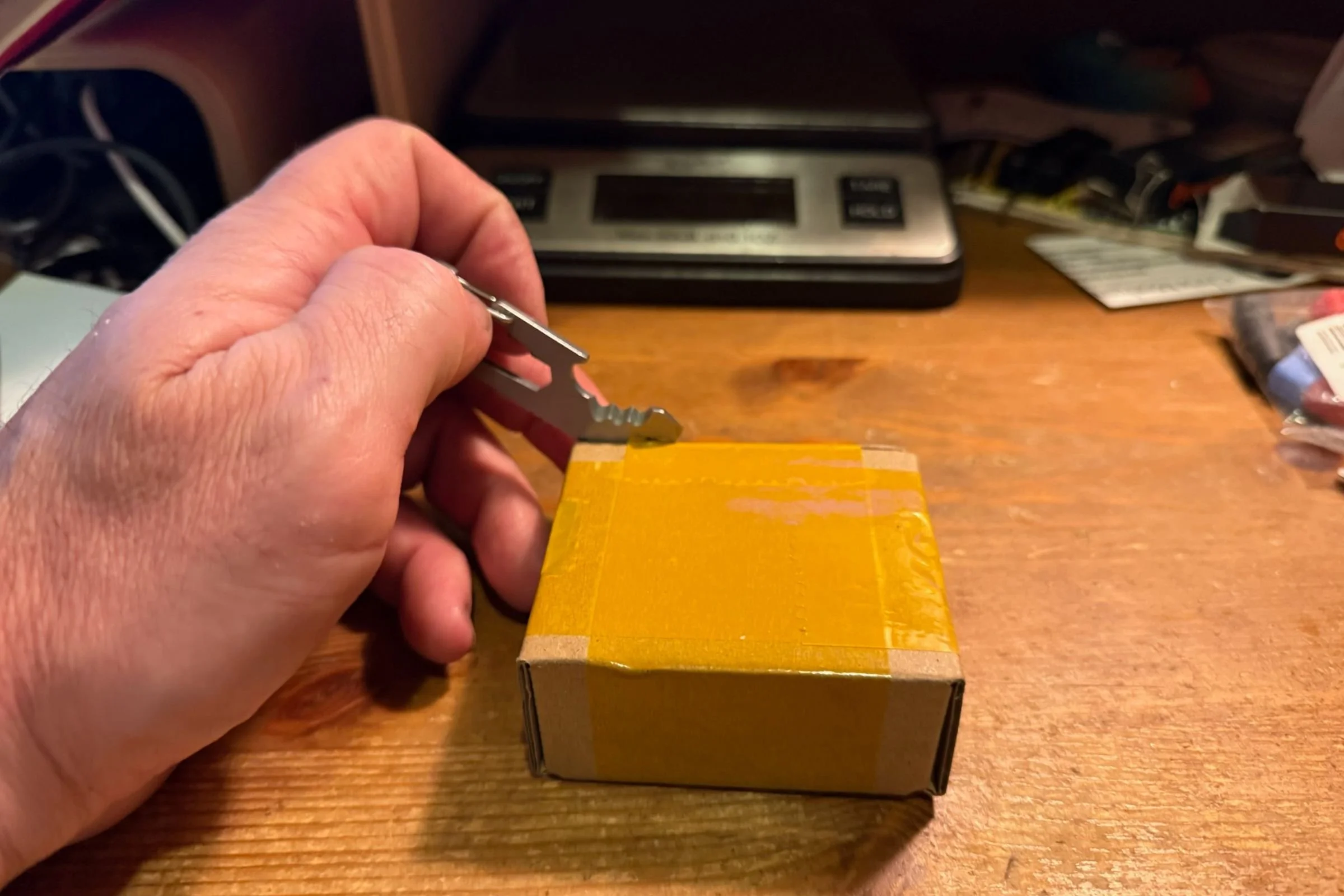
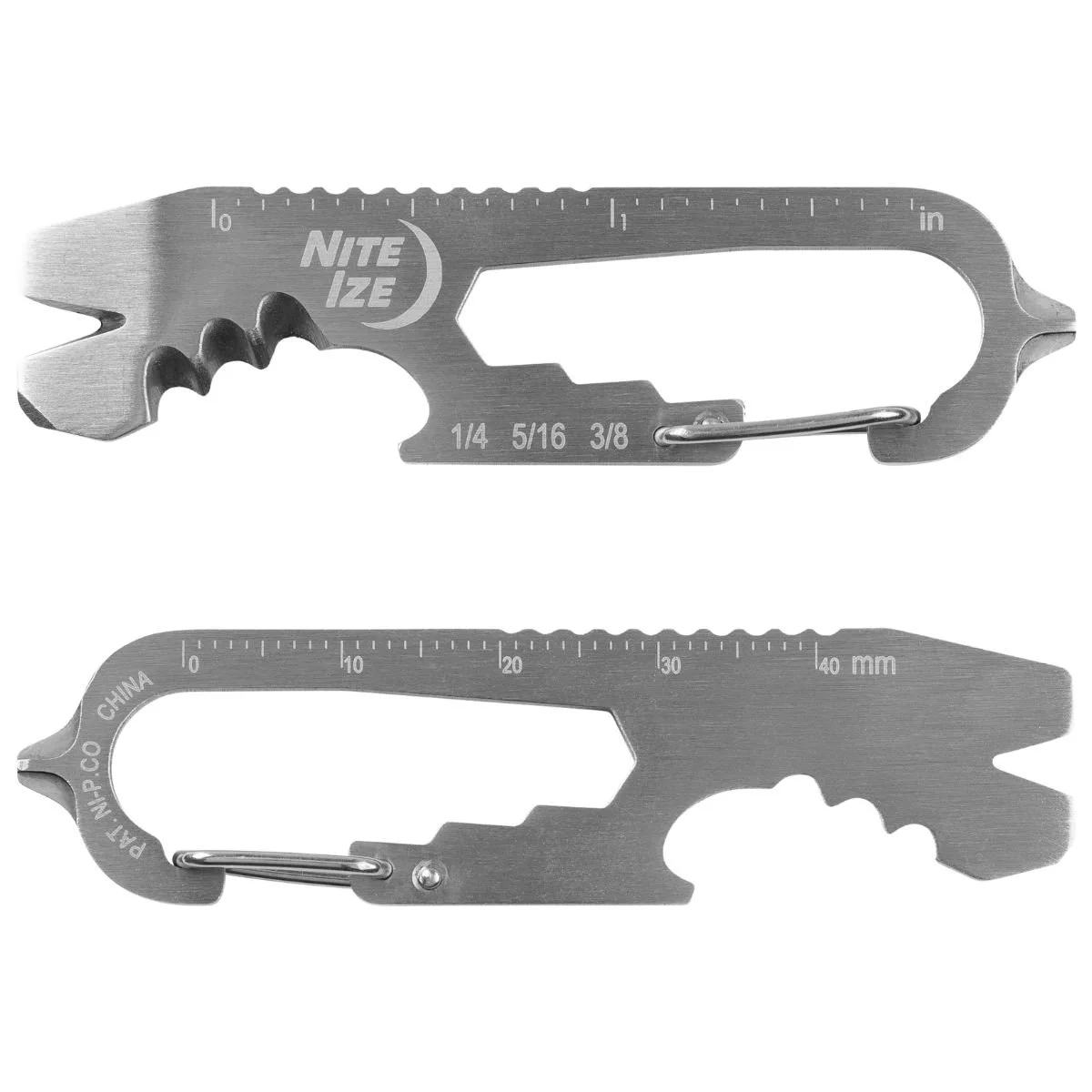
Our favorite among those we tested was the Nite Ize DoohicKey, a 2.5 inch long multi-tool that boasts 8 tools, including wrenches, a small ruler, bottle opener, nail puller, and Phillips and flathead screwdrivers, among other tools. It’s useful for little quick tasks, like tightening a loose screw or small nut, and, of course, for opening a bottle.
Like the other key-sized multi-tools we tested, these are limited in use and practicality. It’s not a tool we’d recommend replacing a toolbox with, but in a jiff it’ll do just fine.
| Scoring metric | Score |
|---|---|
| Blade/cuttingSharpness, edge retention, performance throughout tests | 0 / 35 |
| Saw performanceHow well the saw cut through wood | 0 / 5 |
| Pliers/wire cuttersJaw alignment, grip security, wire cutting tests | 0 / 30 |
| Tool selectionAre the included tools the right ones, well-executed? | 3 / 5 |
| ValuePerformance relative to price | 5 / 5 |
| Overall scoreMaximum score of 80 | 8 / 80 |
Best multi-tool for mechanical/automotive work: Gerber Dual-Force
Price: $124
Weight: 12 oz.
Number of tools: 12
Closed length: 4.65”
Open length: 7.9”
Blade length: 3.25”
What we liked:
Slip-lock Jaws are great for tackling larger bolts and pipes
Burly handles
Length of Center-Drive mechanism makes reaching recessed screws and bolt heads easier than most other multi-tools
What could be better:
Not a great selection of tools on the multi-tool
When slip-lock is set in the widest position, handles don’t fold down properly
Saw isn’t as smooth as those on Leatherman or Victorinox tools
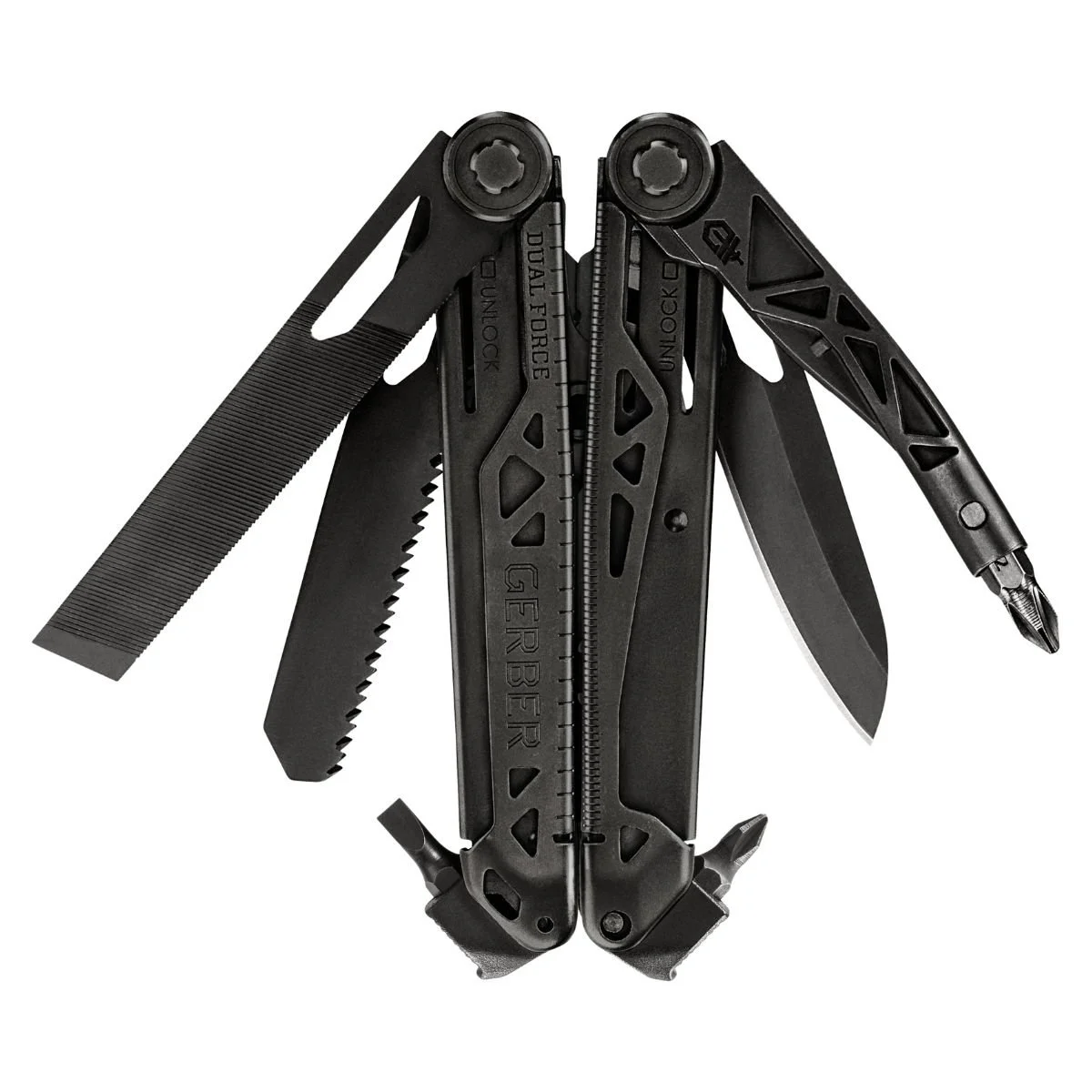
Unique among the plier-based multi-tools we tested, the Gerber Dual-Force has a large, slip-jawed plier rather than a needle-nose plier. The large pliers aren’t going to fit where the needle-nosed pliers can but the slip jaw allows their maw to grip much larger nuts, bolts, or pipes with ease and a lot of force. When fully opened the jaws are 2.25” wide and can reasonably grab things over 1.50” wide, like a radiator hose or small log in a fire. This makes it an ideal multi-tool for those working on vehicles, plumbing, construction sites and more.
Gerber Dual-Force
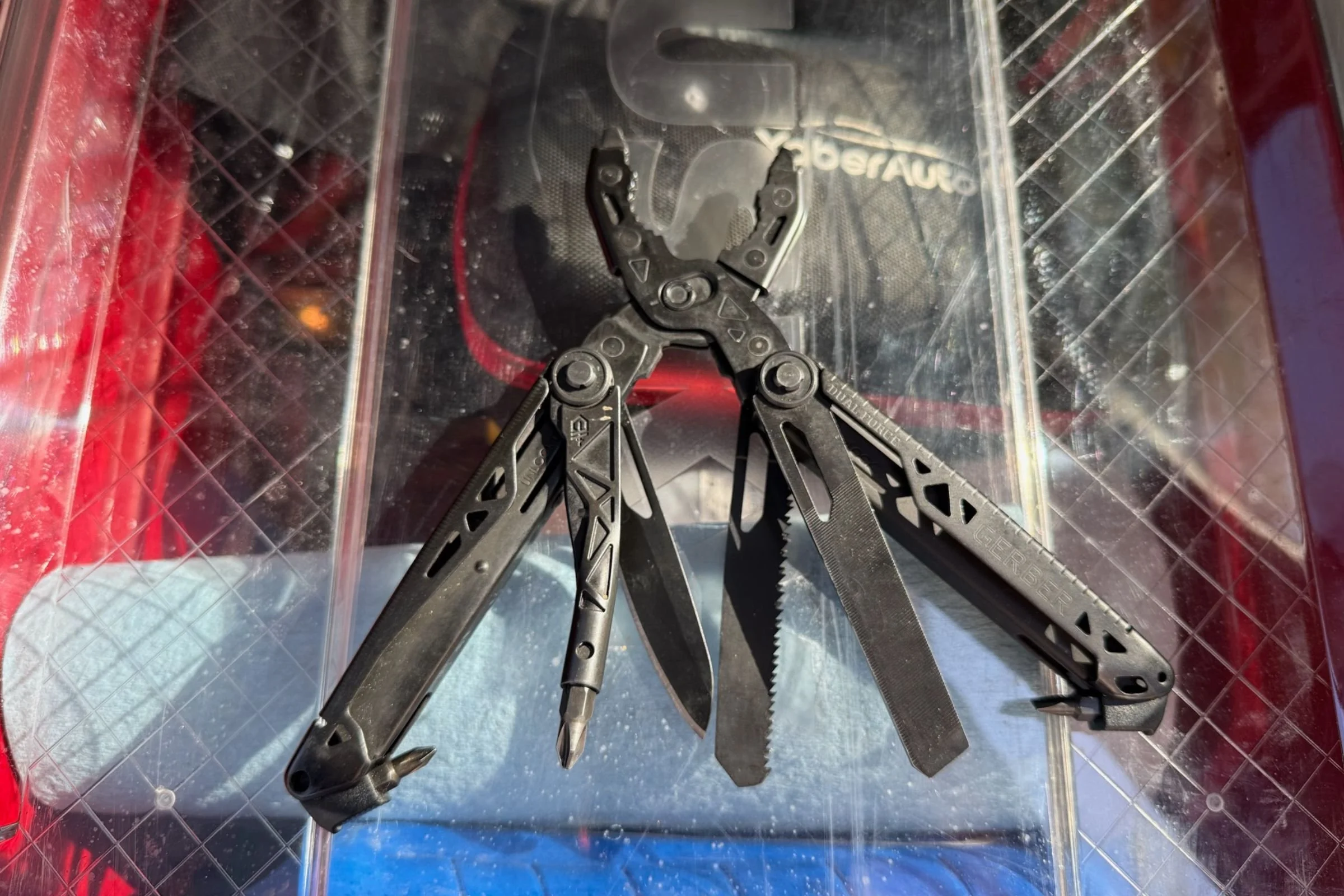
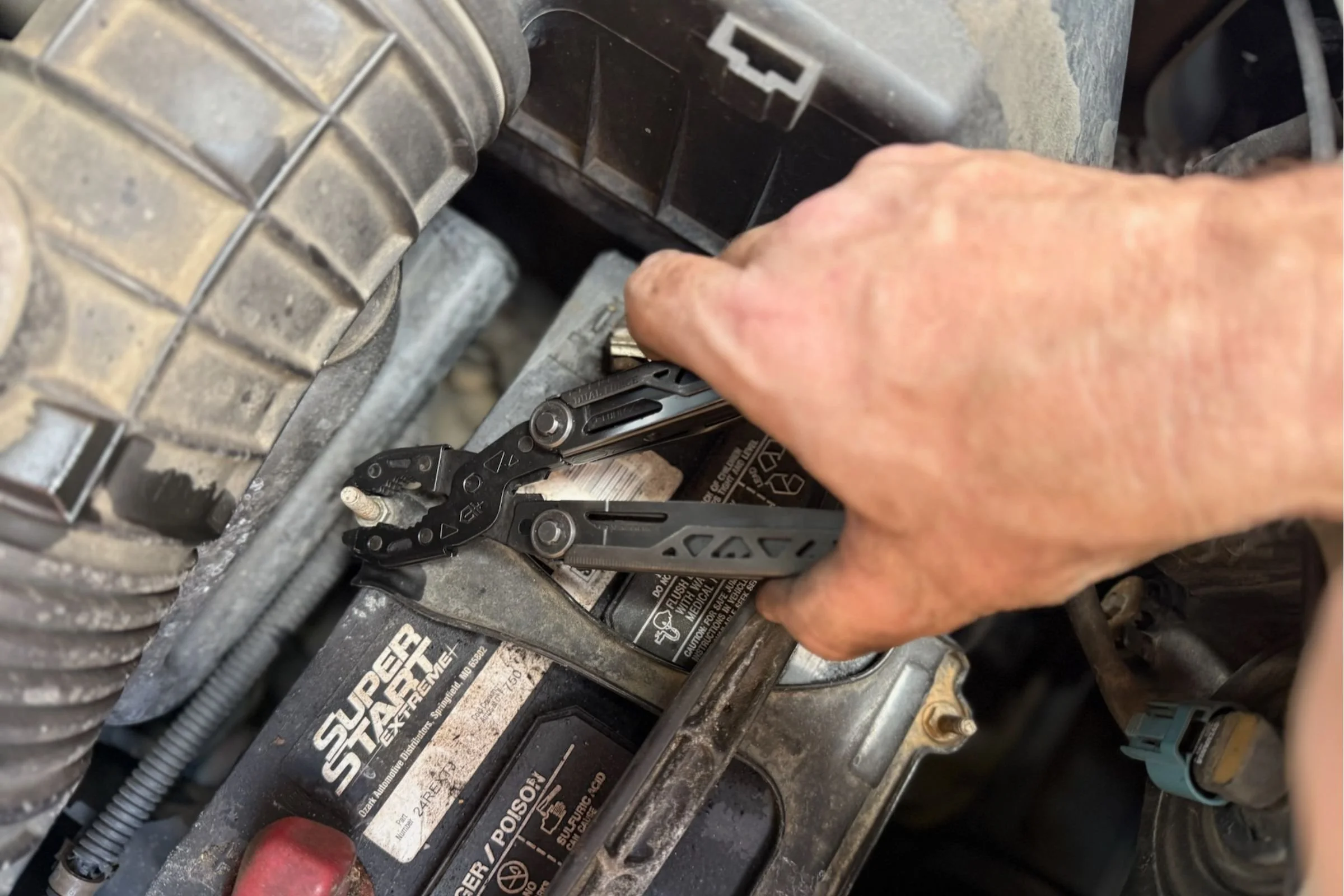
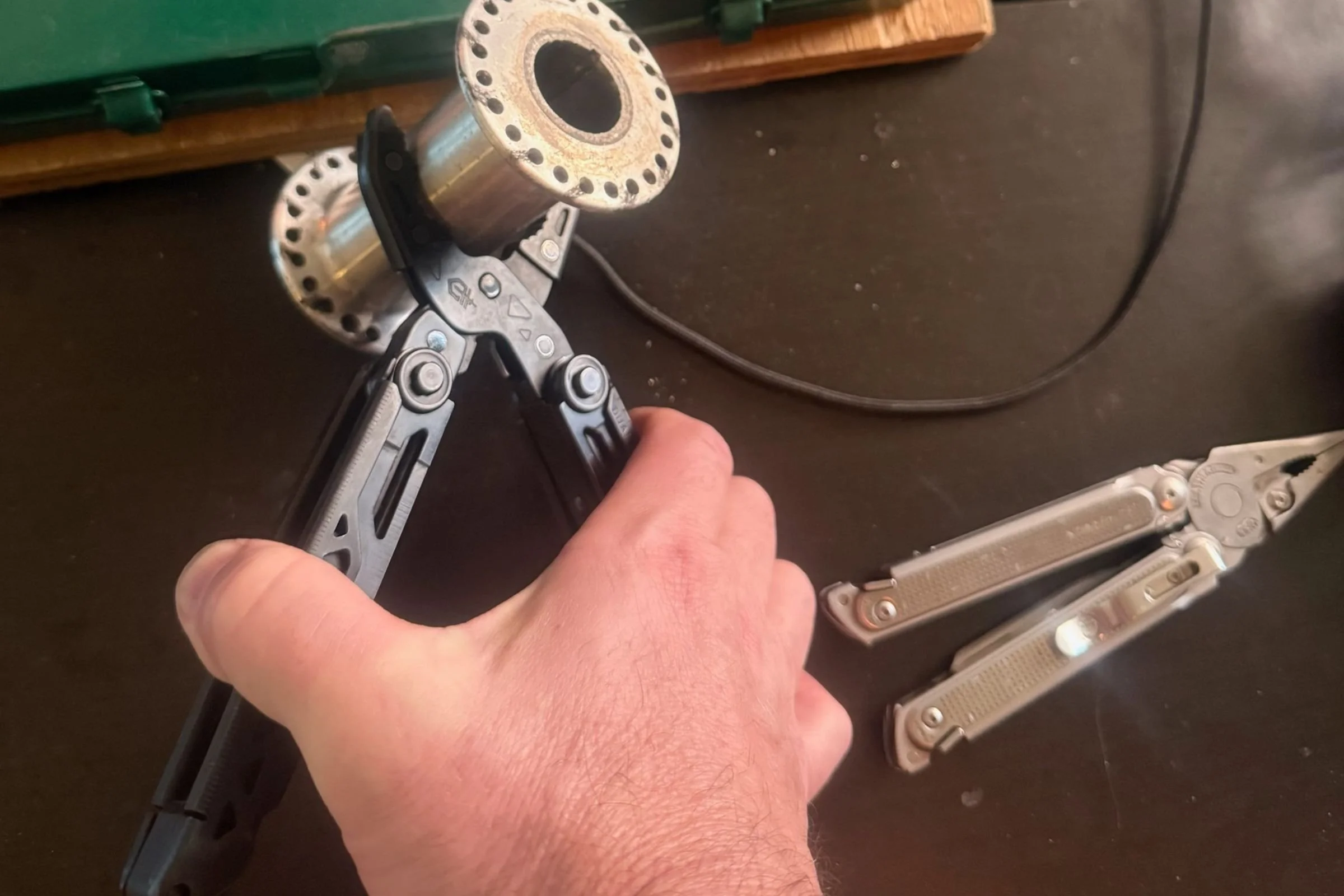
However, it’s also bigger and heavier than the other multi-tool pliers we tested. Yet for its size and weight, it only has 12 tools. So, it’s not going to be an EDC multi-tool for everyone.
The 3.25” long blade was one of the longest we tested and it performed well cutting and carving everything with ease, with no apparent damage after our round of tests. But, it didn’t perform quite as well as those from Victorinox and Leatherman when it came to depth of cut. The saw also offered a much rougher cut than those from Leatherman and Victorinox.
The wire cutters are located a little inconveniently beneath the plier pivot point, and we found they weren’t very good. They mashed larger wires, and couldn't cut through a bike spoke.
The center axis bit driver and on-board bit storage using normal hexagonal bits are nice features because you can use the ones it comes with or replace them with your preferred bits, like an Allen or Torx bit, for instance. The center axis makes it perhaps a little easier to really bear down on screw heads.
We’ve had this multi-tool for a couple years now and despite some of its limitations, compared to other multi-tools, we really like it for what it does well. As such, we keep it in the center console of our vehicle, just in case.
| Scoring metric | Score |
|---|---|
| Blade/cuttingSharpness, edge retention, performance throughout tests | 33 / 35 |
| Saw performanceHow well the saw cut through wood | 4 / 5 |
| Pliers/wire cuttersJaw alignment, grip security, wire cutting tests | 0 / 30 |
| Tool selectionAre the included tools the right ones, well-executed? | 4 / 5 |
| ValuePerformance relative to price | 5 / 5 |
| Overall scoreMaximum score of 80 | 46 / 80 |
Best budget multi-tool: Harbor Freight Gordon 20-in-1 Multi-tool
Price: $40
Weight: 9.8 oz
Number of tools: 20
Closed length: 4.1”
Open length: 6.36”
Blade length: 2.9”
What we liked:
Good selection of tools
Knife and saw worked well
Serrated and non-serrated knives are separate
What could be better:
Design is a near copy of the Leatherman Wave Plus
Quality of metal is lacking
Locks aren’t as easy to use as they could be
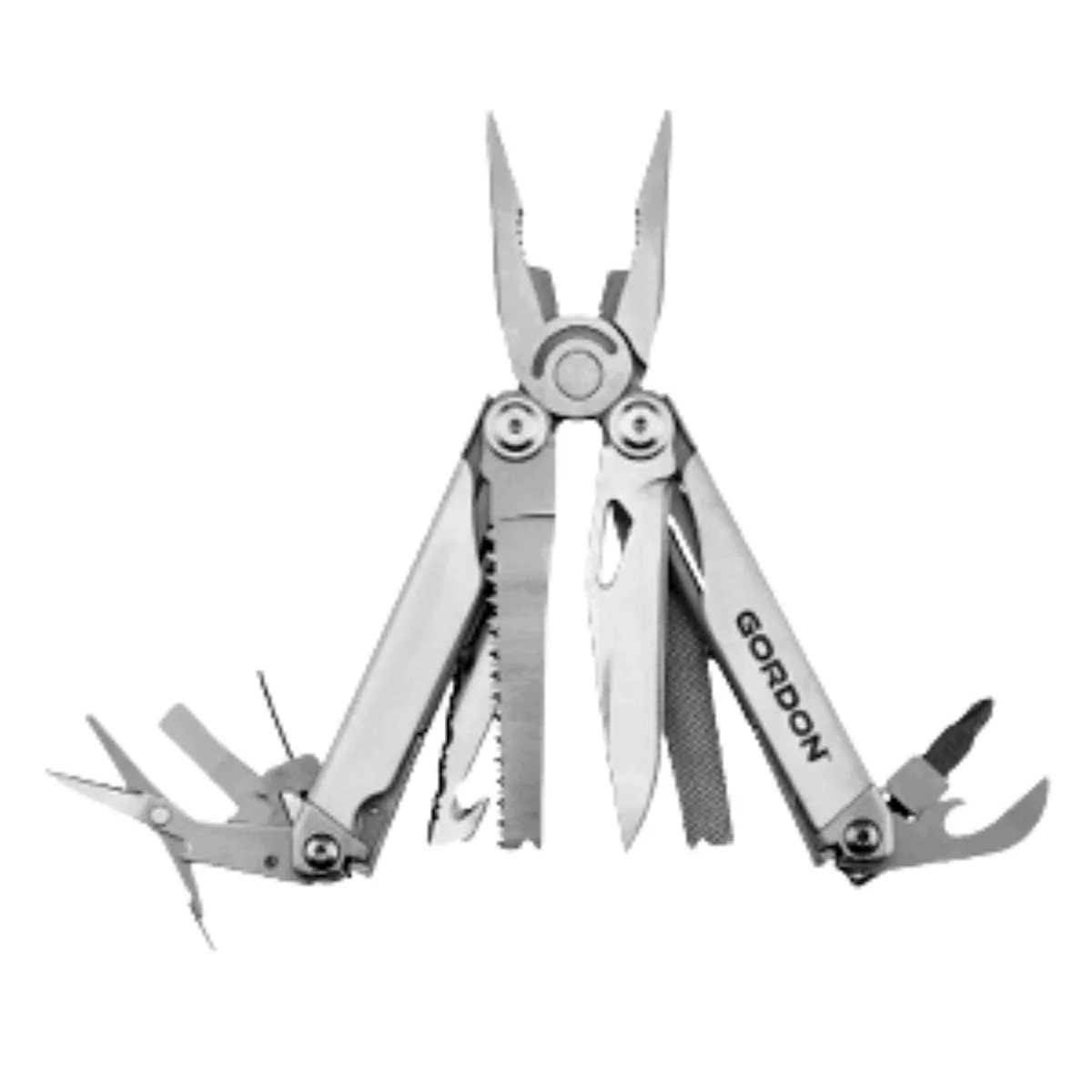
While we don’t like knock-offs, in this case we have to admit Harbor Freight’s Gordon line did a great job knocking off the Leatherman Wave Plus with the Gordon 20-in-1 Multi-tool. Side-by-side the tool set is identical, save a gut hook added to the Gordon’s serrated blade.
Harbor Freight Gordon 20-in-1 Multi-tool
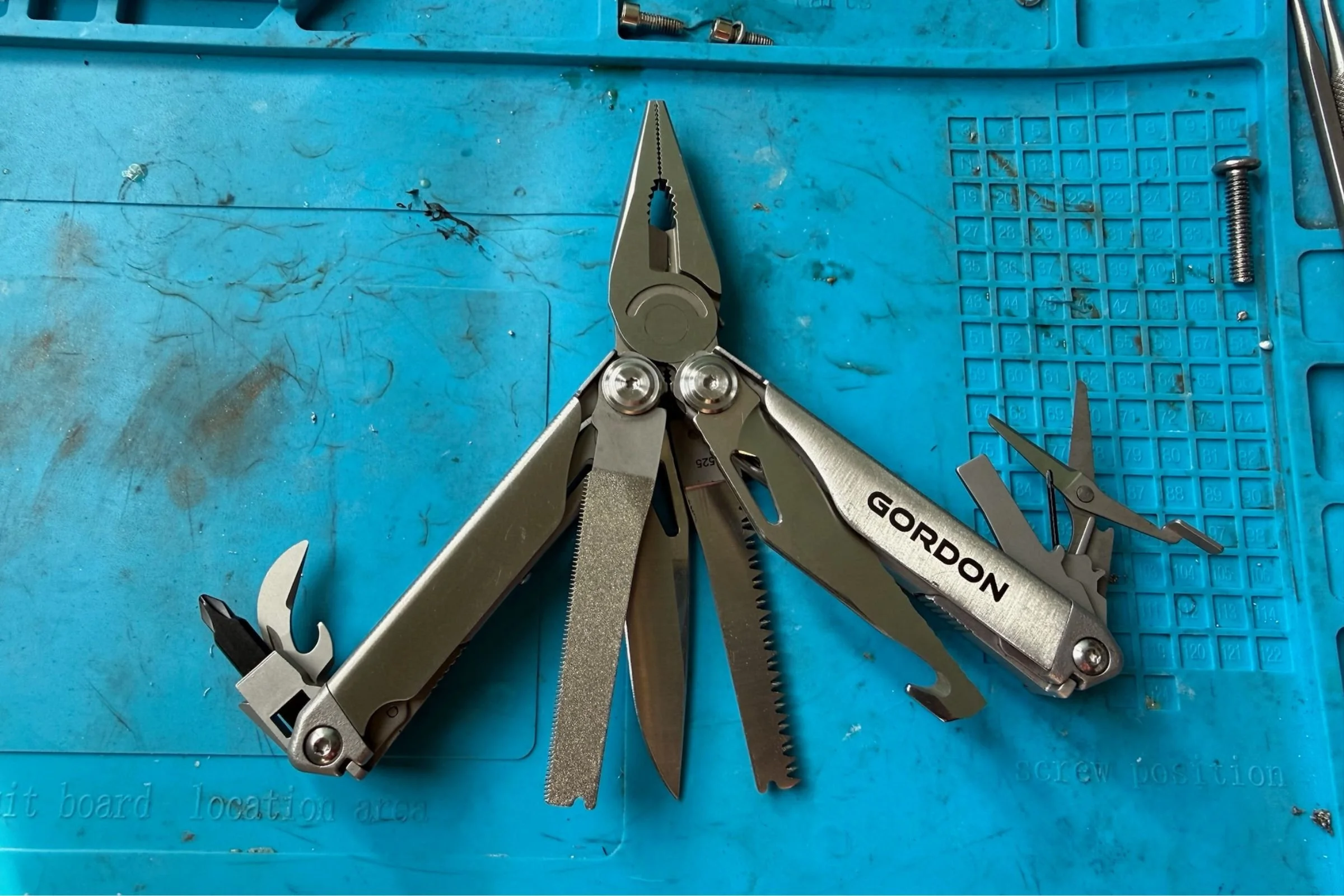
All the tools splayed out on the Gordon 20-in-1 Multi-tool. Courtesy Chris Meehan
However, there’s a huge difference in the quality between the two. It’s evident in the opening of the tools as well as the pliers. The tools didn’t open as easily on the Gordon and the joints on the pliers felt looser than we’d like when opening them. Similarly, the locking mechanisms, though they worked well, didn’t feel as solid or as easy to use as those on the Leatherman Wave Alpha that we tested.
It’s also evident in the quality of the metal tools. Using the end of the bottle opener to pry up a loose fastener actually chipped the end of the tool on its first use. Still, the knives (serrated and straight edge) performed better than some other budget-friendly choices we tested, like the Coast Mackenzie MT 400. After using the wire cutters to cut bike spokes, we also noted that there was damage evident on the stainless steel blades.
Still, for $40 it’s a great bargain on a multi-tool you wouldn’t be too bummed to lose.
| Scoring metric | Score |
|---|---|
| Blade/cuttingSharpness, edge retention, performance throughout tests | 27 / 35 |
| Saw performanceHow well the saw cut through wood | 4 / 5 |
| Pliers/wire cuttersJaw alignment, grip security, wire cutting tests | 18 / 30 |
| Tool selectionAre the included tools the right ones, well-executed? | 5 / 5 |
| ValuePerformance relative to price | 4 / 5 |
| Overall scoreMaximum score of 80 | 58 / 80 |
Best car escape multi-tool: Victorinox Rescue Tool MW
Price: $115
Weight: 5.9 oz
Number of tools: 13
Closed length: 4.4”
Open length: 7.4”
Blade length: 3”
What we liked:
Both the sheath and the tool itself are bright and easy to find
Offers replaceable rescue tools
Tool quality
What could be better:
Doesn’t float
Designed for broader use
This is a multi-tool we were stoked to test but hope to never have to use in real life. This well-designed multi-tool is one that first responders use in car crashes and other rescue operations. As such it sits in our car console in case we ever have to help someone else out or (hopefully never) use it to free ourselves from a vehicle.
Victorinox Rescue Tool MW
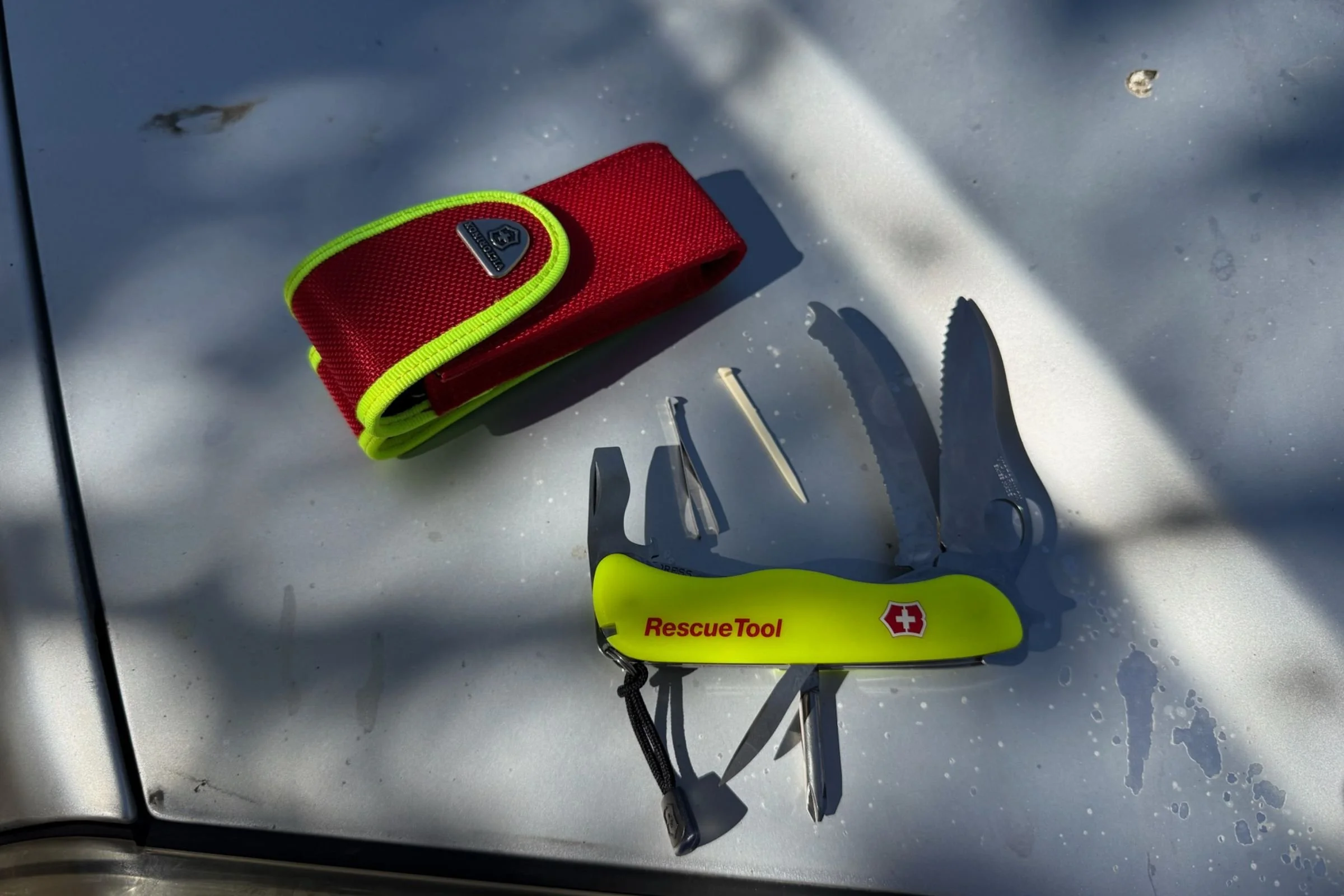
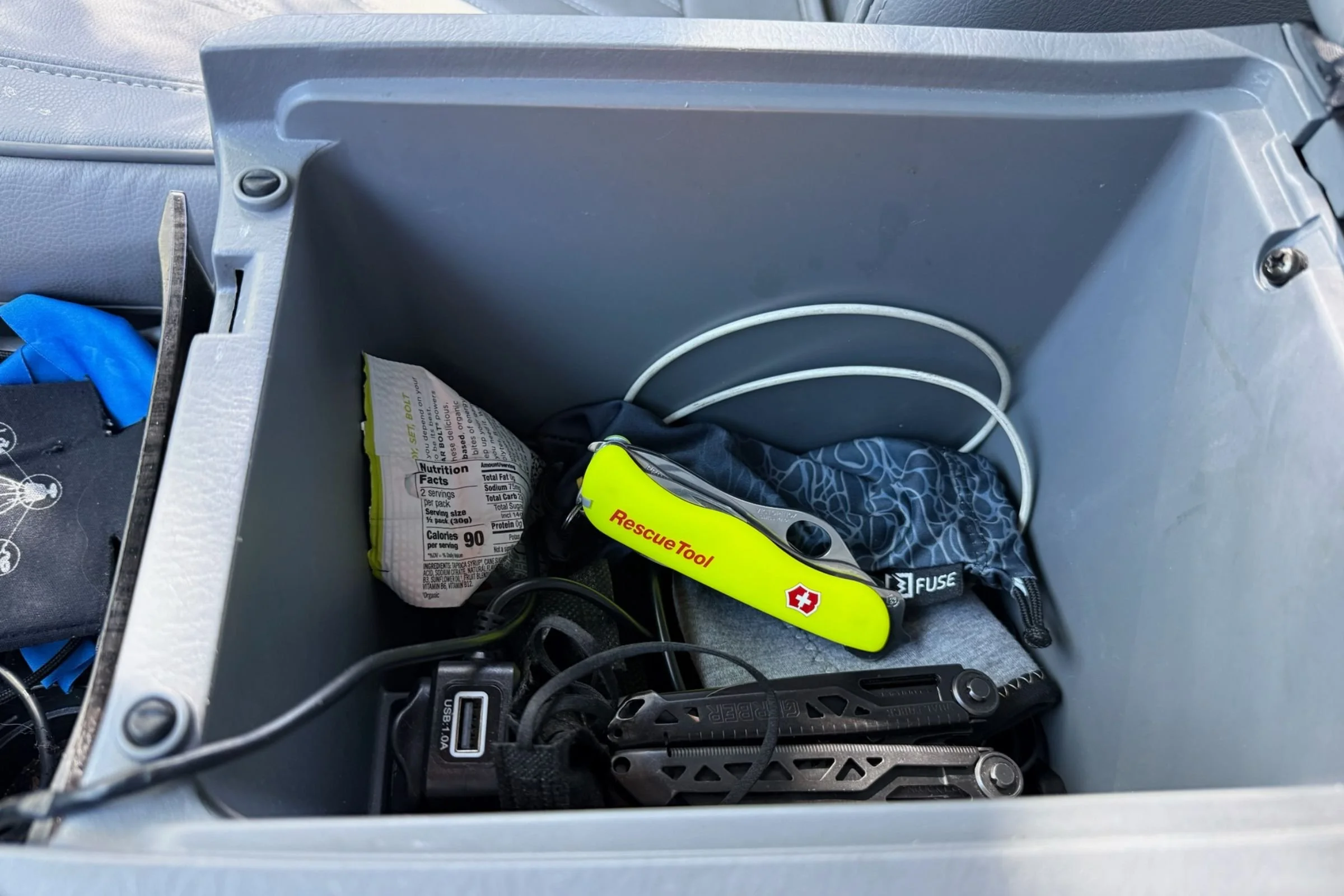
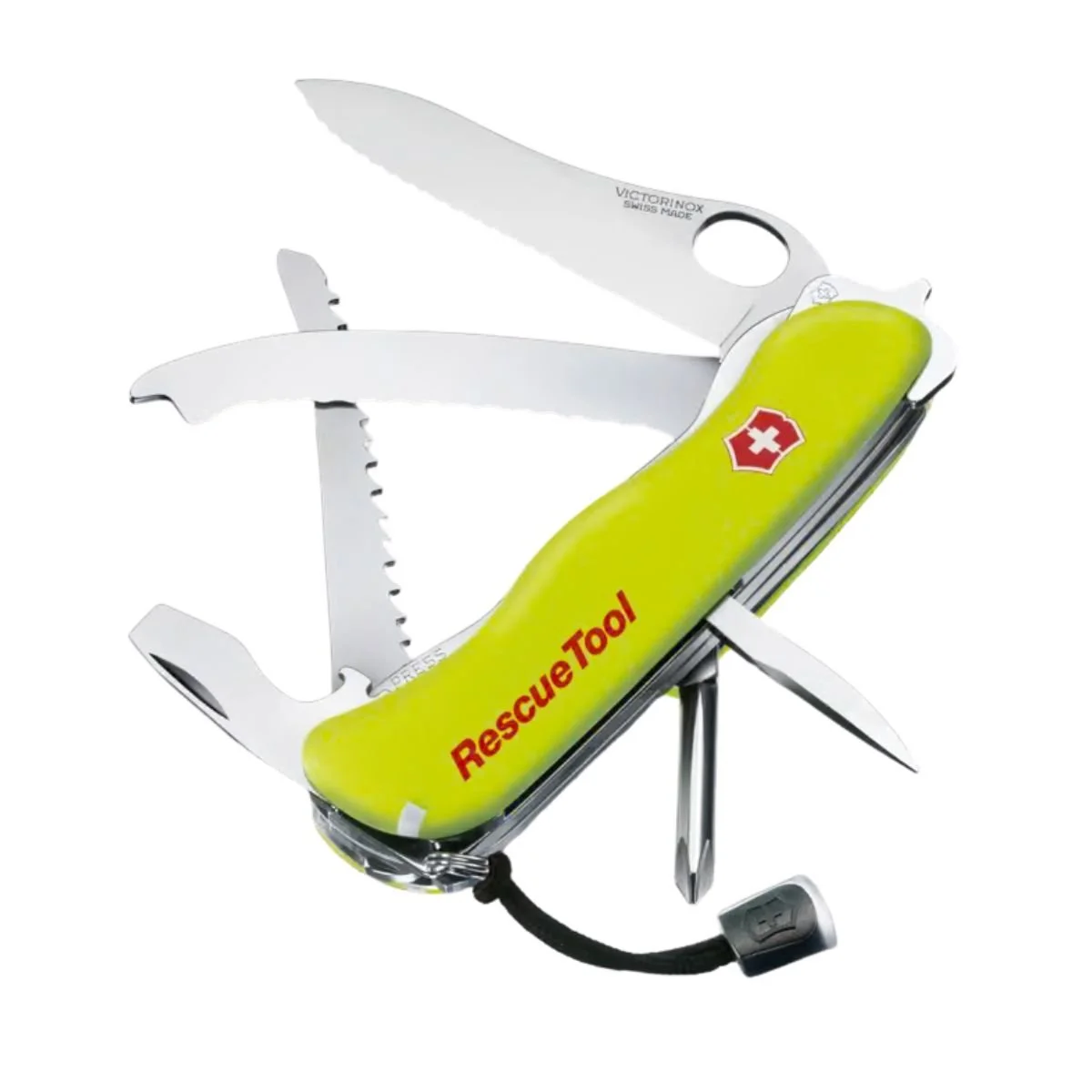
Both its bright red, neon yellow-edged nylon sheath and the Noctilucent yellow, glow-in-the-dark tool itself are made to be seen when acting in an emergency.
Designed like a Swiss Army knife, the razor-sharp, serrated blade locks in place with a liner lock and it also features blades designed to hook and rip through nylon seatbelts with ease. The blades, though not designed for standard camping use, still sliced through our standard tests with ease. The device also has a glass saw to cut through shatterproof glass like on a windshield and a window breaker (both of which are replaceable) to get into or out of a vehicle quickly. And yes, for the less emergent uses, it does have the classic Victorinox tweezers and toothpick nestled in the handle.
| Scoring metric | Score |
|---|---|
| Blade/cuttingSharpness, edge retention, performance throughout tests | 32 / 35 |
| Saw performanceHow well the saw cut through wood | 3 / 5 |
| Pliers/wire cuttersJaw alignment, grip security, wire cutting tests | 0 / 30 |
| Tool selectionAre the included tools the right ones, well-executed? | 4 / 5 |
| ValuePerformance relative to price | 5 / 5 |
| Overall scoreMaximum score of 80 | 44 / 80 |
Other multi-tools we tested (scored high to low)
Victorinox Swiss Tool Spirit X
Price: $145
Number of tools: 24
Weight: 7.4 oz
Closed length: 4.13”
Open length: 6.4”
Blade length: 2.75”
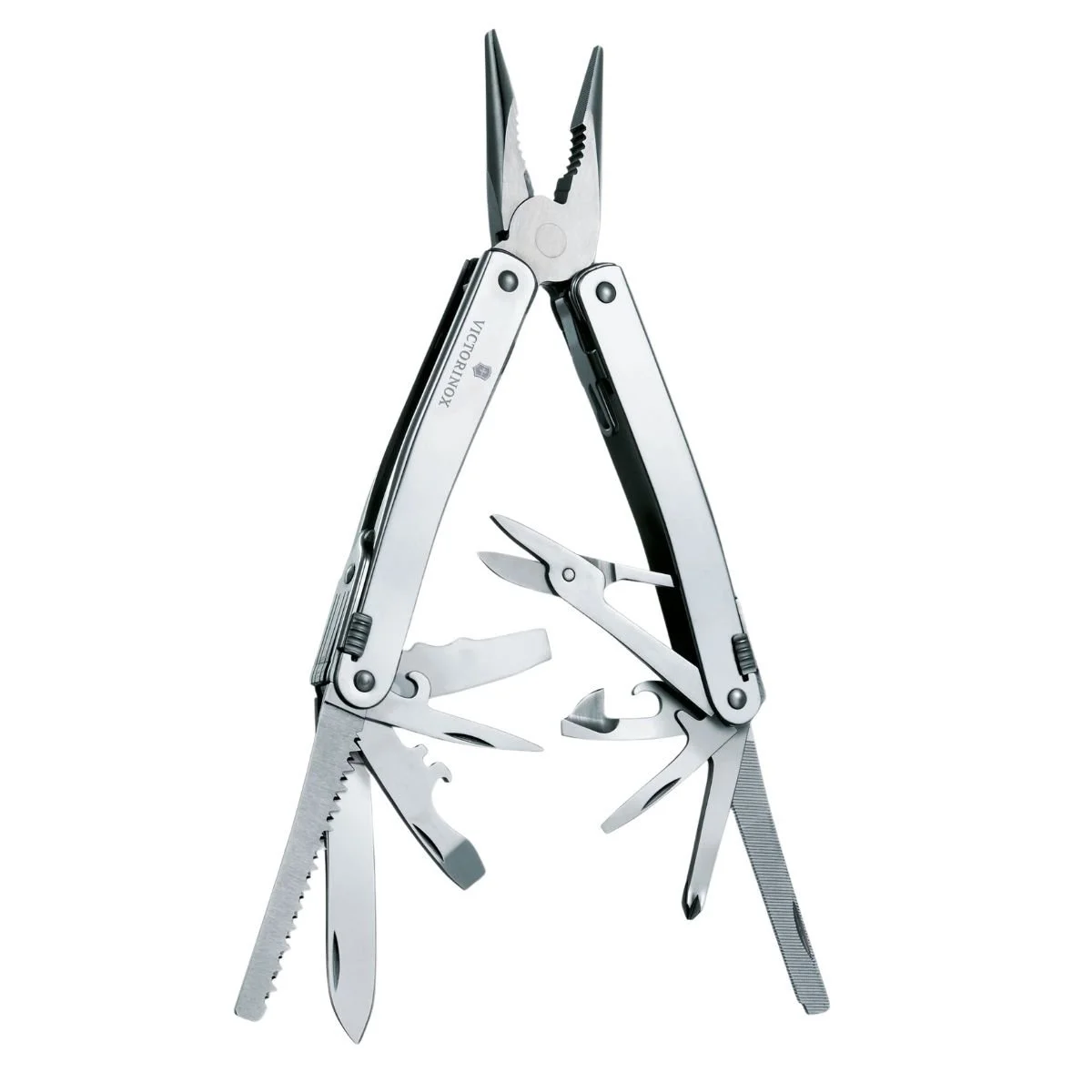
This is a great option for a multi-tool and one that the author has had for over two decades and still uses weekly. However, it was edged out by some of the other multi-tools we tested and assessed. It’s smaller and lighter than the Victorinox Swiss Tool X and was barely edged out by it in knife testing and the extra features in the ratchet set.
| Scoring metric | Score |
|---|---|
| Blade/cuttingSharpness, edge retention, performance throughout tests | 28 / 35 |
| Saw performanceHow well the saw cut through wood | 5 / 5 |
| Pliers/wire cuttersJaw alignment, grip security, wire cutting tests | 27 / 30 |
| Tool selectionAre the included tools the right ones, well-executed? | 5 / 5 |
| ValuePerformance relative to price | 5 / 5 |
| Overall scoreMaximum score of 80 | 70 / 80 |
Victorinox Swiss Tool Spirit X
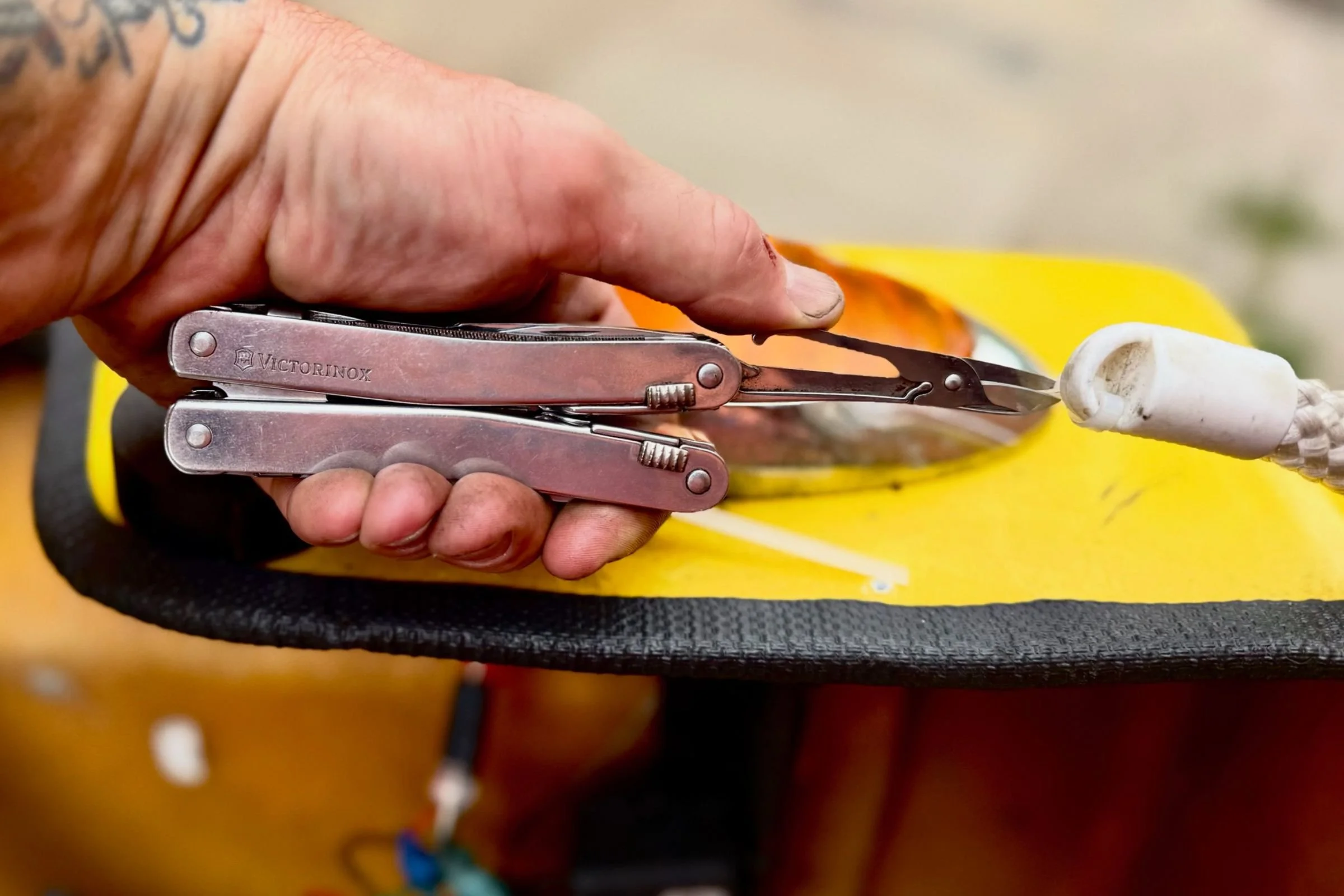
This Victorinox Swiss Tool Spirit is at least 25 years old, still gets near daily use and works better than many of the multi-tools we tested. Credit Chris Meehan
Price: $100
Number of tools: 7
Weight: 5 oz.
Closed length: 4”
Open length: 6”
Blade length: 2.6”
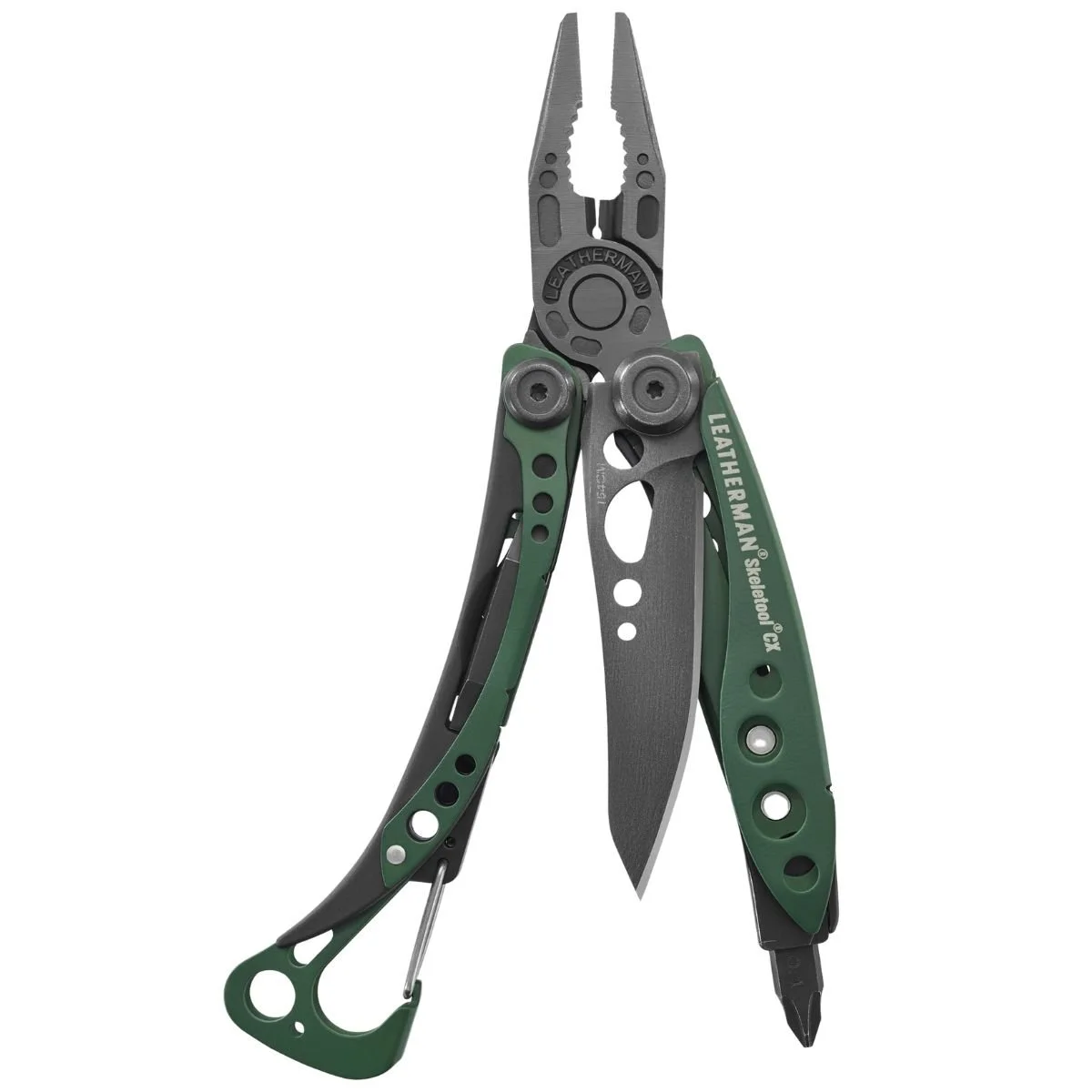
The popular Skeletool series from Leatherman is a decent but limited multi-tool, and it came up short compared to competitors. The knife, pliers, and wire cutters performed well in all of our tests. But, lacking a saw, it’s not ideal for camping and backpacking and with just the pliers, knife, and bit drivers, it doesn’t have some of the other EDC features we want, like an awl/reamer or file. If it were significantly lighter than the Gerber Stakeout Spark, we could make a better case for it, but it’s less than half an ounce lighter.
| Scoring metric | Score |
|---|---|
| Blade/cuttingSharpness, edge retention, performance throughout tests | 32 / 35 |
| Saw performanceHow well the saw cut through wood | 0 / 5 |
| Pliers/wire cuttersJaw alignment, grip security, wire cutting tests | 26 / 30 |
| Tool selectionAre the included tools the right ones, well-executed? | 3 / 5 |
| ValuePerformance relative to price | 3 / 5 |
| Overall scoreMaximum score of 80 | 64 / 80 |
Leatherman Skeletool CX
Price: $180
Number of tools: 14 (with 12 additional bits)
Weight: 9.5 oz (tool only), 14.5 oz. (Full kit including sheath and bits)
Closed length: 4.7”
Open length: 6.6”
Blade length: 3.3”
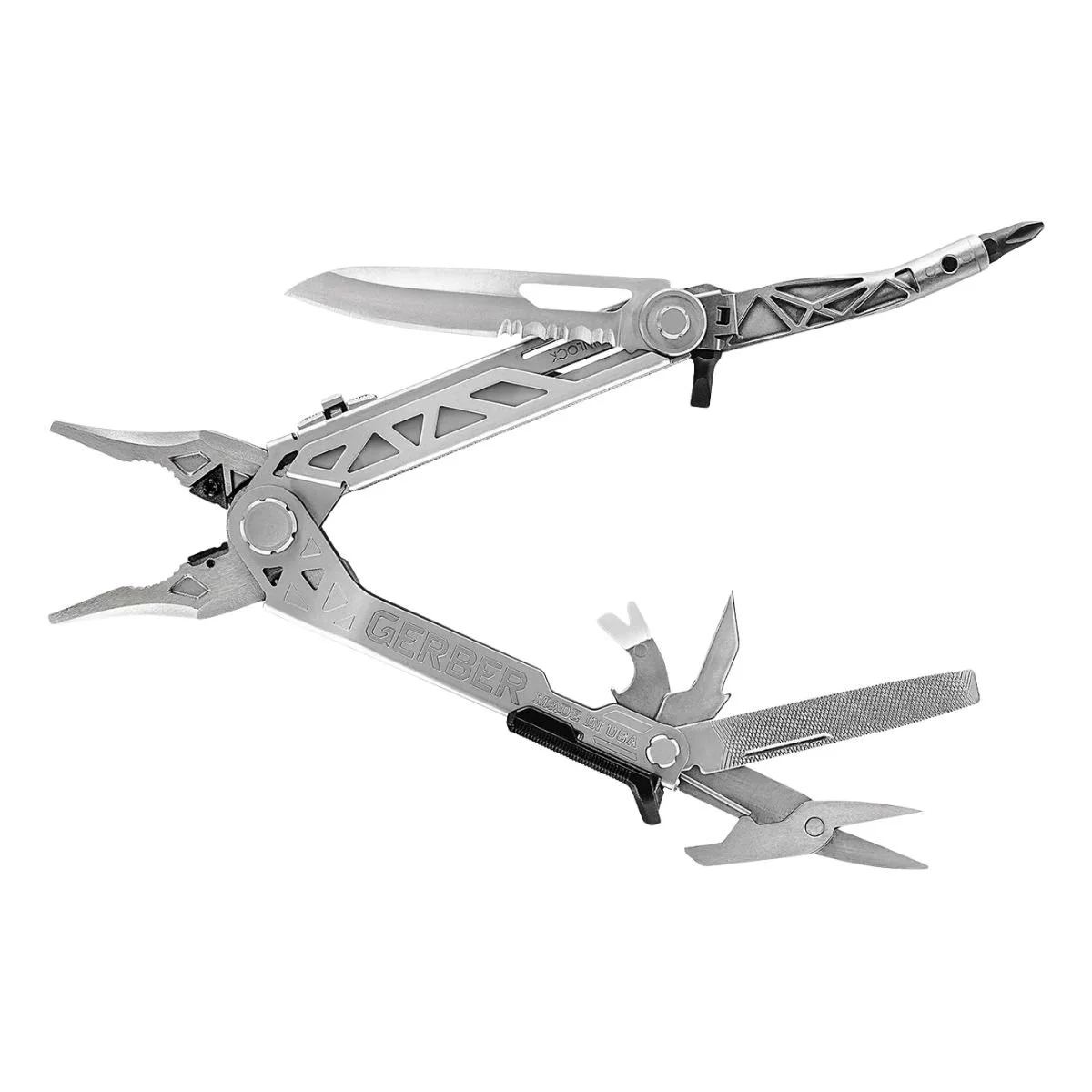
Gerber’s US-made Center-Drive Plus is a tool we wanted to like better. The knife performed well, but the beefy needle-nose pliers and wire cutters just didn’t perform as well as others that we tried. The needle-nose pliers were too big to fit in some small nooks where others succeeded. The unique slide-out design of the spring-loaded pliers is nice but makes access to the internal tools a little harder. Also, we noted that the metal used in the tools was softer than others and bent the awl on its first use when trying to pry up a metal collar that secured a caster wheel on a rolling work cart. The “plus” in its name refers to the 12 additional bits and the leather sheath that come with it, which adds about $30 over the basic Gerber Center-Drive.
| Scoring metric | Score |
|---|---|
| Blade/cuttingSharpness, edge retention, performance throughout tests | 30 / 35 |
| Saw performanceHow well the saw cut through wood | 0 / 5 |
| Pliers/wire cuttersJaw alignment, grip security, wire cutting tests | 20 / 30 |
| Tool selectionAre the included tools the right ones, well-executed? | 4 / 5 |
| ValuePerformance relative to price | 3 / 5 |
| Overall scoreMaximum score of 80 | 57 / 80 |
Gerber Center-Drive Plus
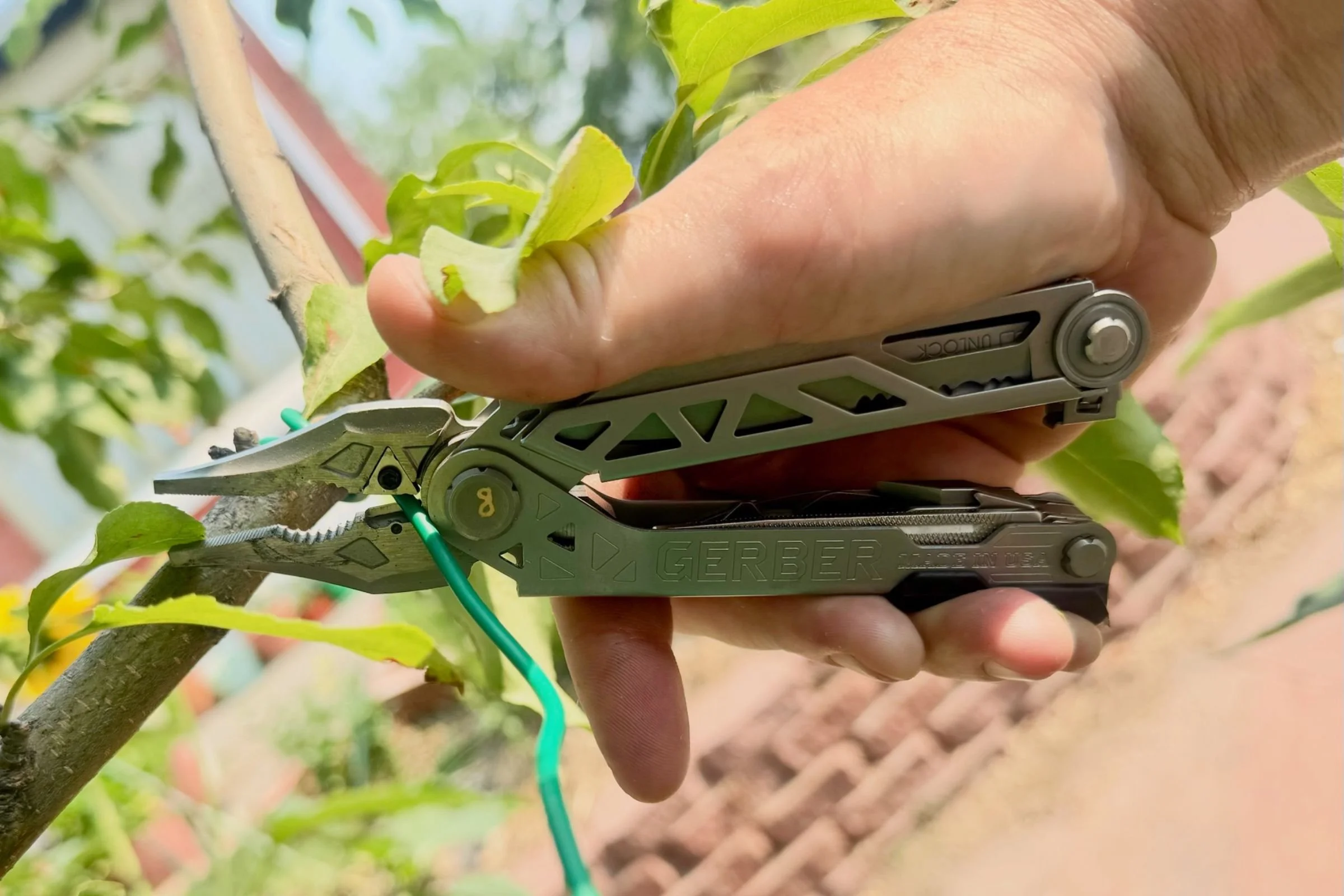
Using the Gerber Center-Drive Plus’ wire cutters in the garden. Courtesy Chris Meehan
Price: $50
Number of tools: 10
Weight: 1.8 oz.
Closed length: 2.5”
Open length: 4.2”
Blade length: 1.8”
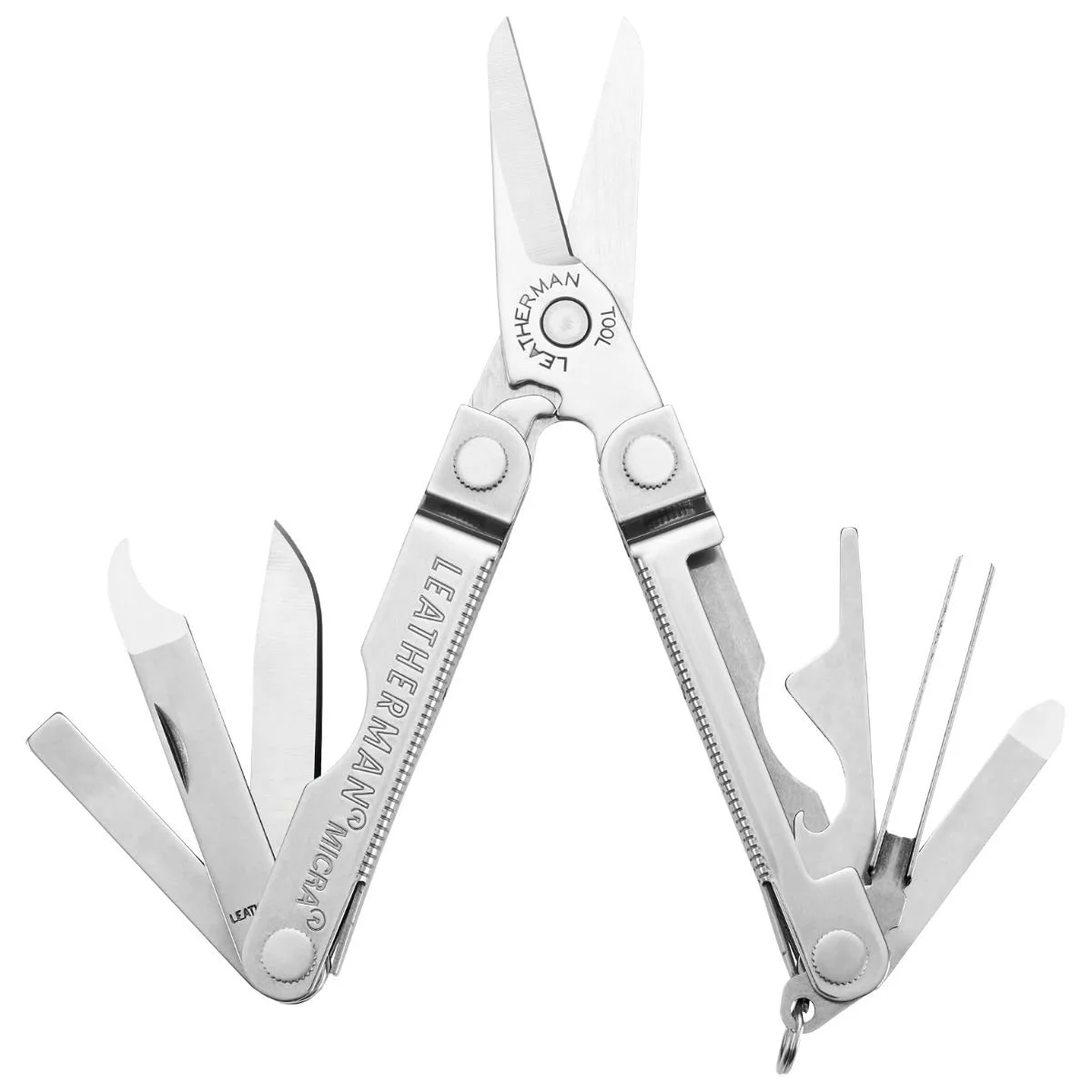
Leatherman’s Micra is a great little multi-tool that’s more of a personal grooming multi-tool than one we’d use for many difficult tasks. The knife is sharp and performed well in our tests, but is small and doesn’t have a real locking mechanism. The small handles also make it a little harder to really bear down on it. The spring-loaded scissors are giant for the size of the device and work well, but don’t open as large as those on the full-sized Leatherman tools we tested.
| Scoring metric | Score |
|---|---|
| Blade/cuttingSharpness, edge retention, performance throughout tests | 29 / 35 |
| Saw performanceHow well the saw cut through wood | 0 / 5 |
| Pliers/wire cuttersJaw alignment, grip security, wire cutting tests | 17 / 30 |
| Tool selectionAre the included tools the right ones, well-executed? | 3 / 5 |
| ValuePerformance relative to price | 5 / 5 |
| Overall scoreMaximum score of 80 | 54 / 80 |
Leatherman Micra
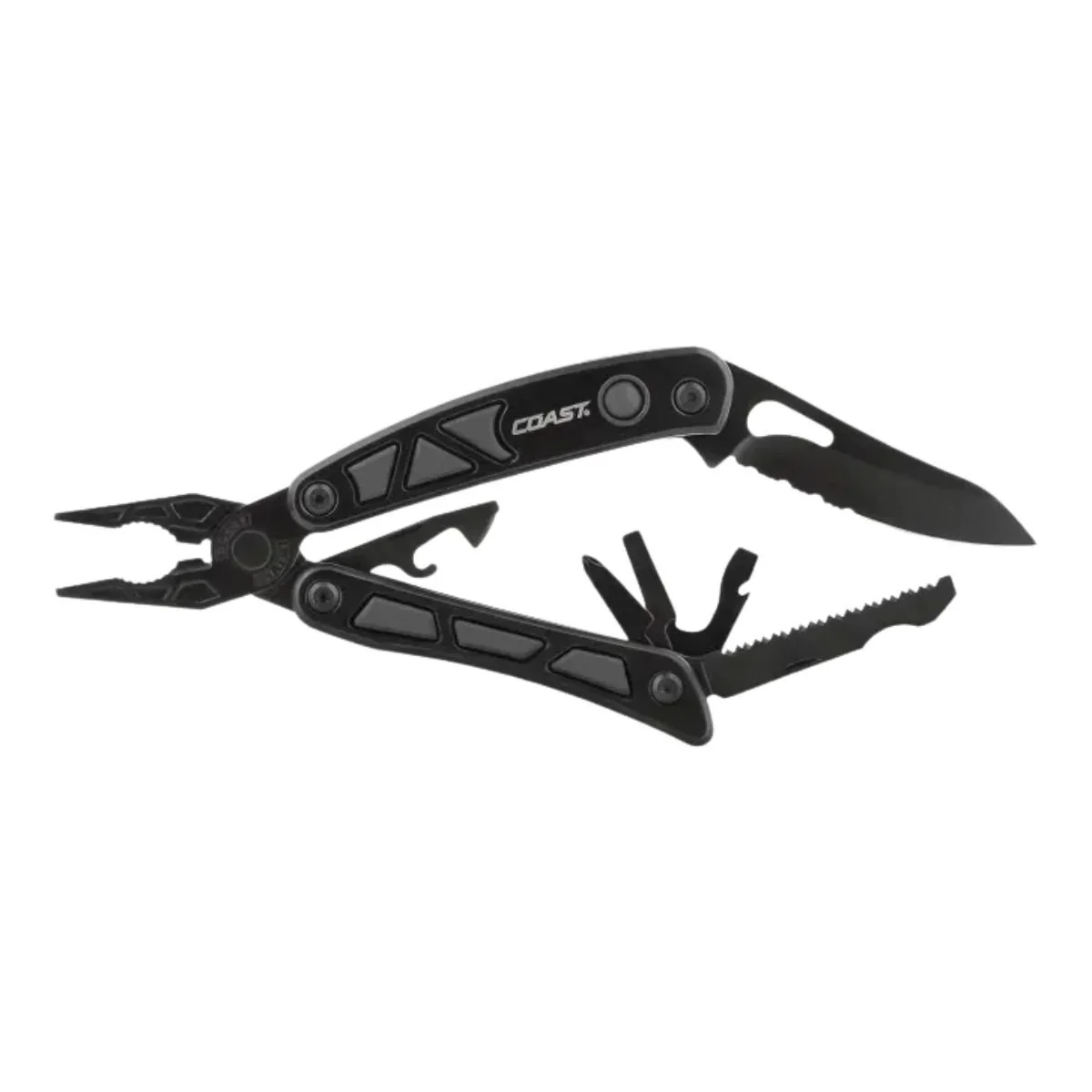
Price: $55
Number of tools: 13
Weight: 9.8 oz.
Closed length: 4”
Open length: 6.54”
Blade length: 3”
This is the highest performing multi-tool from COAST that we tested. The knife performed well across all of our tests. However, the spring-loaded pliers and wire cutters didn’t do as well. The tools were a little harder to access and are minimal compared to other multi-tools we tested. The pivot on one handle was much looser than the other, which makes us wonder if they’ll loosen further over time. The LEDs on the tool are unique in testing and interesting, but not as effective as we’d like. Also, there’s no way to lock them in an off position, so if you kept this in a toolbox, and the button got hit by mistake it could turn them on and wear the replaceable button battery out between uses.
| Scoring metric | Score |
|---|---|
| Blade/cuttingSharpness, edge retention, performance throughout tests | 31 / 35 |
| Saw performanceHow well the saw cut through wood | 2 / 5 |
| Pliers/wire cuttersJaw alignment, grip security, wire cutting tests | 6 / 30 |
| Tool selectionAre the included tools the right ones, well-executed? | 3 / 5 |
| ValuePerformance relative to price | 3 / 5 |
| Overall scoreMaximum score of 80 | 45 / 80 |
COAST LED155
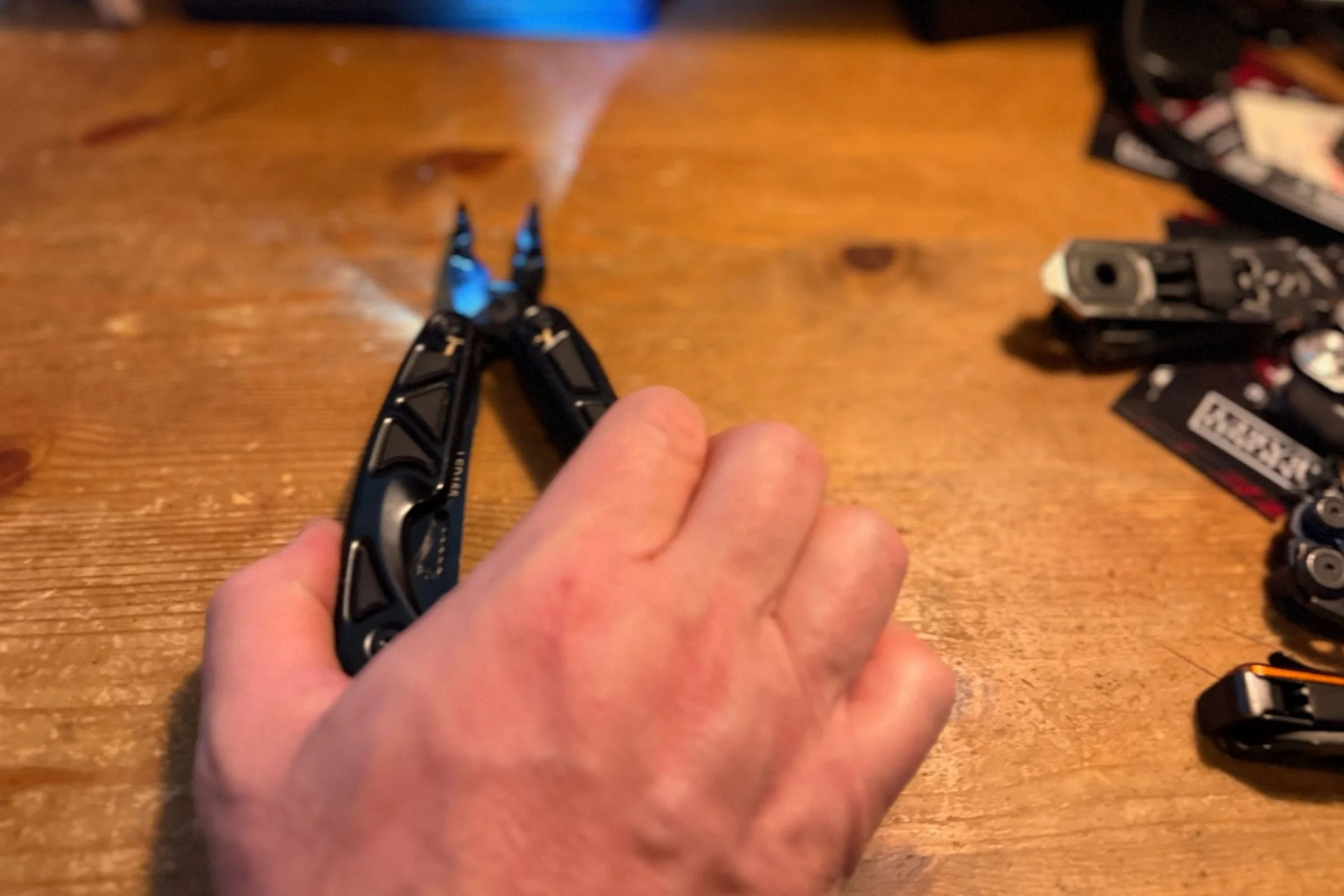
The LEDs on the COAST LED155 were an interesting addition to a multi-tool but could be refined. Courtesy Chris Meehan
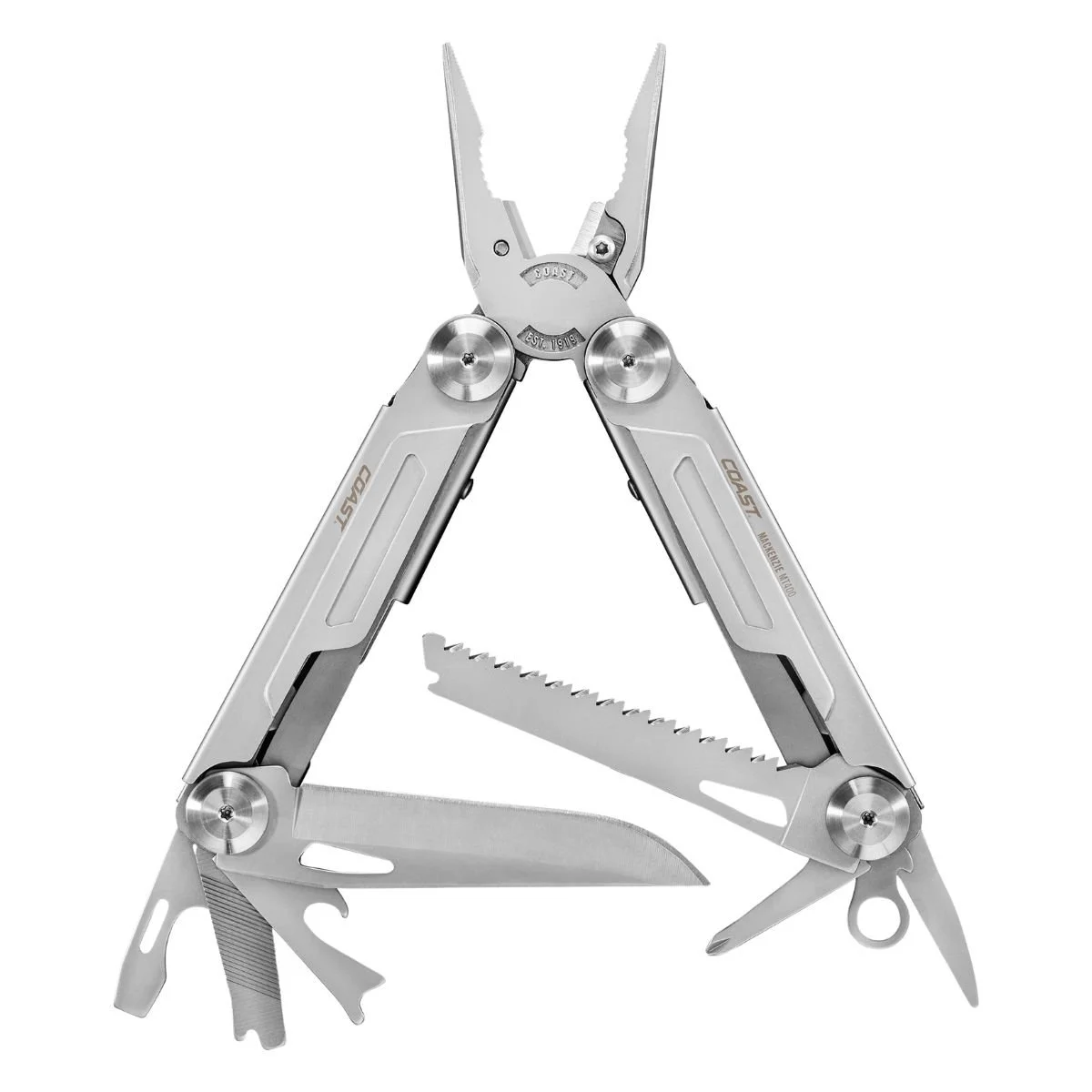
Price: $45
Number of tools: 13
Weight: 8.6 oz.
Closed length: 4.1”
Open length: 6.5”
Blade length: 3”
The COAST Mackenzie easily had the worst blade in testing and we wonder if we got a sample tool that wasn’t sharpened properly. It performed the worst on cutting cardboard, wood, and when carving, as well as on the second round of paracord testing. However, we did find it useful for reviving threads on old brass screws. Still, it’s not a blade we’d want to trust in the wild without additional sharpening. The spring-loaded, needle-nose pliers are pretty similar in look to those on the Leatherman Wave Alpha, but didn’t have the same gripping performance in the end, and the replaceable wire cutters were prone to mashing wires more than cutting them cleanly. At $45, it’s definitely on the cheaper end of tools we tested, but the Gordon is a better multi-tool at a lower price.
| Scoring metric | Score |
|---|---|
| Blade/cuttingSharpness, edge retention, performance throughout tests | 18 / 35 |
| Saw performanceHow well the saw cut through wood | 1 / 5 |
| Pliers/wire cuttersJaw alignment, grip security, wire cutting tests | 17 / 30 |
| Tool selectionAre the included tools the right ones, well-executed? | 4 / 5 |
| ValuePerformance relative to price | 2 / 5 |
| Overall scoreMaximum score of 80 | 42 / 80 |
COAST Mackenzie MT 400
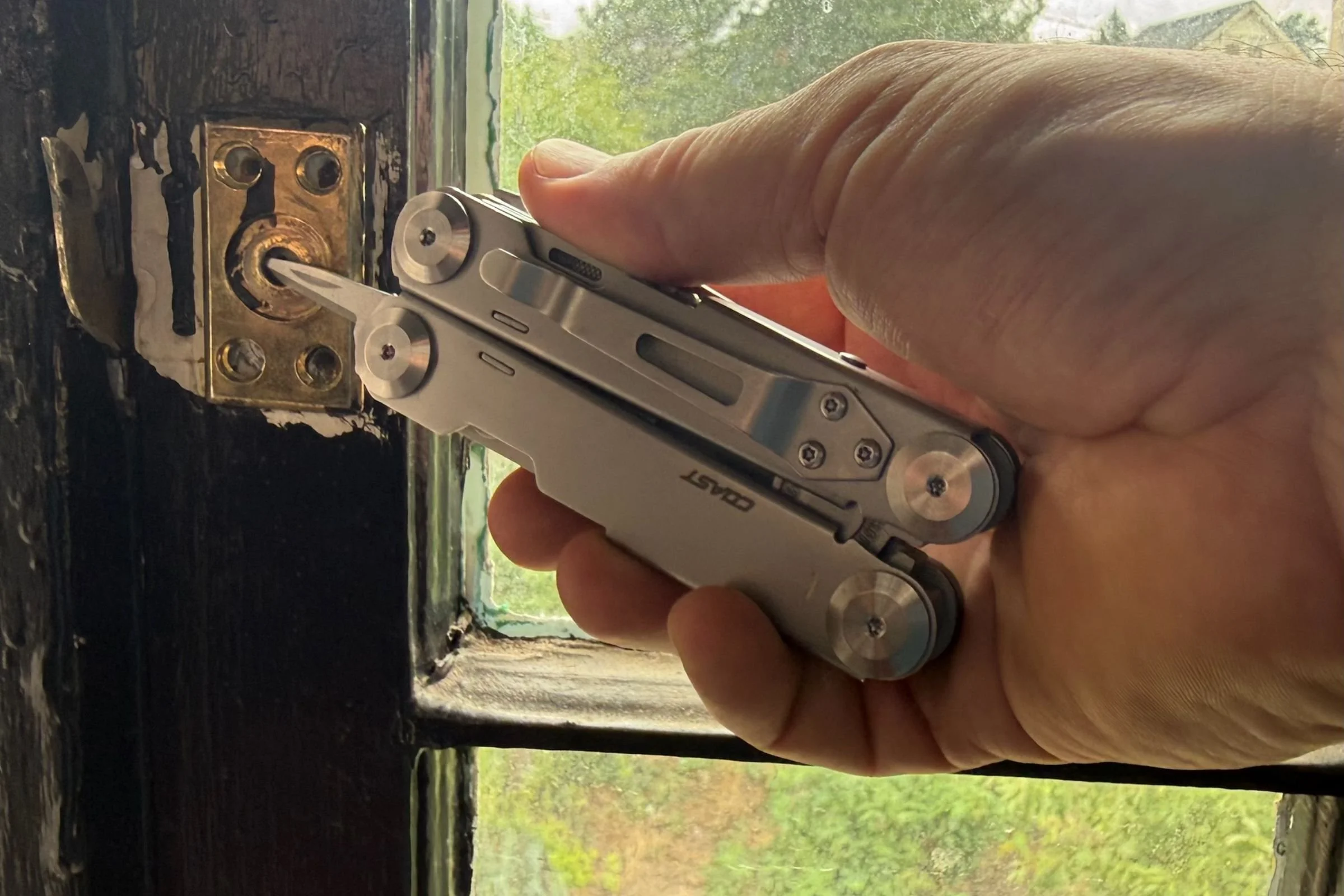
Using the Coast Mackenzie MT 400 to replace window hardware. Courtesy Chris Meehan
Price: $58
Number of tools: 7
Weight: 3.1 oz.
Closed length: 3.6”
Open length: 6.5”
Blade length: 2.5”
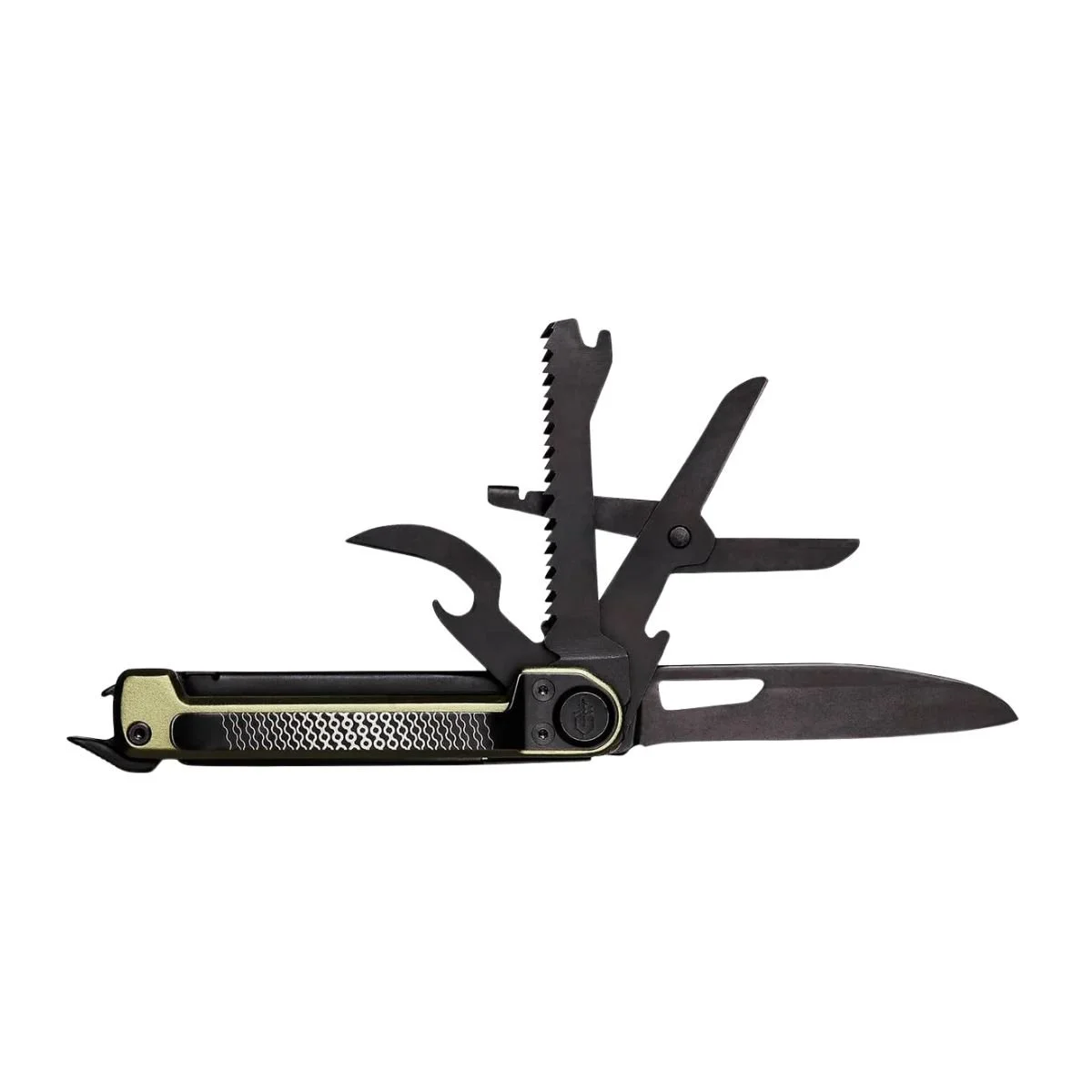
This Swiss Army knife style multi-tool from Gerber is a pretty minimalist tool that’s best suited for camping and backpacking, but it’s outshined by the Gerber Stakeout Spark for camping. Its knife didn’t fare as well in our tests as other blades from Gerber and other makers.
For campers and backpackers it does have essential tools, like the saw and can opener. But it doesn’t have a ferro rod and other helpful camping tools. It also lacks any screwdrivers, reducing its utility as an EDC multi-tool. If we hadn’t rated the utility of pliers as highly as we did, the Armbar Scout would have been a much closer competitor to some of the other multi-tools we tested, including the Gerber Dime and Gerber Center-Drive Plus.
| Scoring metric | Score |
|---|---|
| Blade/cuttingSharpness, edge retention, performance throughout tests | 26 / 35 |
| Saw performanceHow well the saw cut through wood | 3 / 5 |
| Pliers/wire cuttersJaw alignment, grip security, wire cutting tests | 0 / 30 |
| Tool selectionAre the included tools the right ones, well-executed? | 3 / 5 |
| ValuePerformance relative to price | 3 / 5 |
| Overall scoreMaximum score of 80 | 35 / 80 |
Gerber Armbar Scout
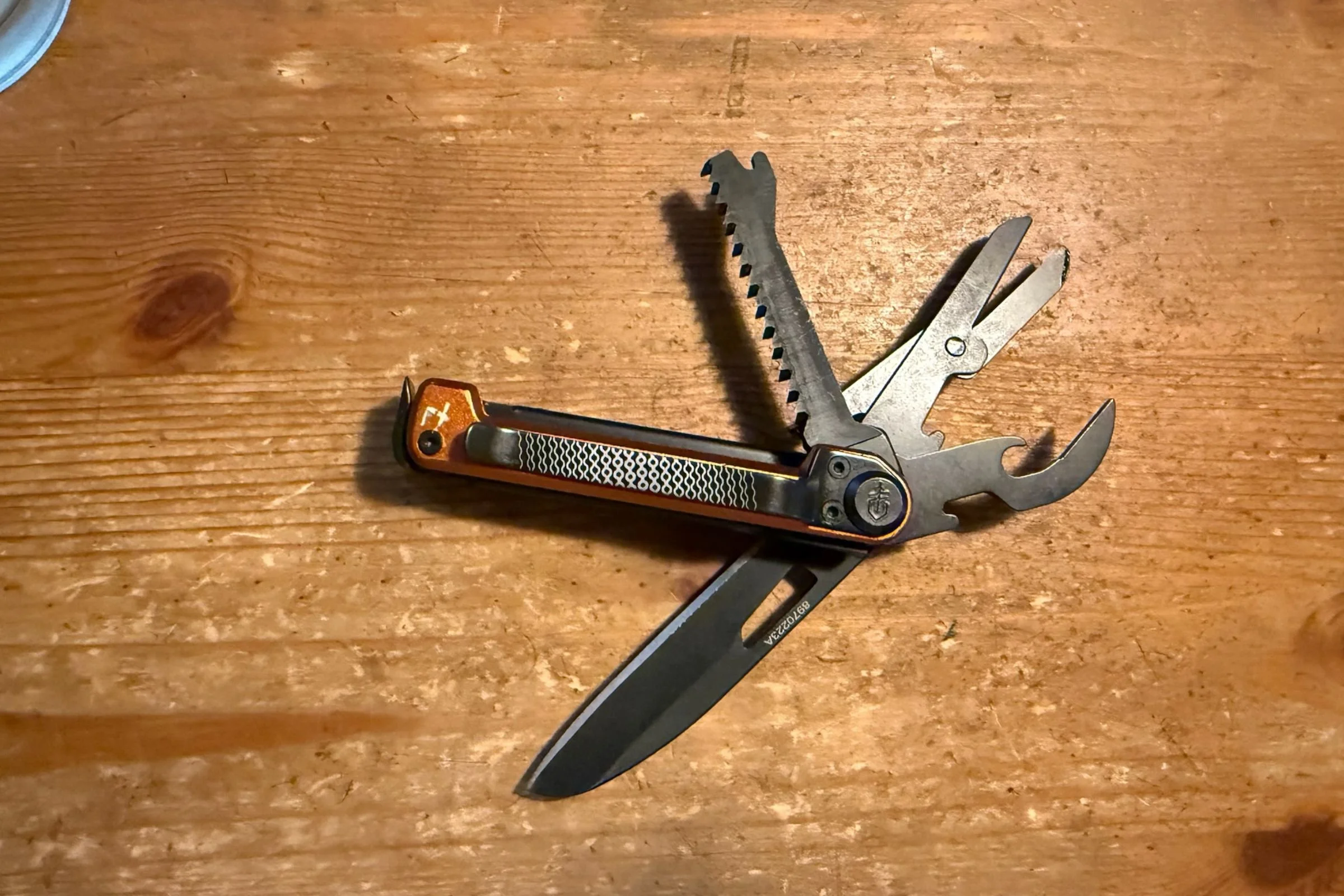
The Gerber Armbar Scout is a decent camping multi-tool, but was edged out by the Stakeout Spark in terms of overall practicality. Courtesy Chris Meehan
Price: $25
Number of tools: 8
Weight: 3.7 oz.
Closed length: 3.3”
Open length: 4.2”
Blade length: 2”
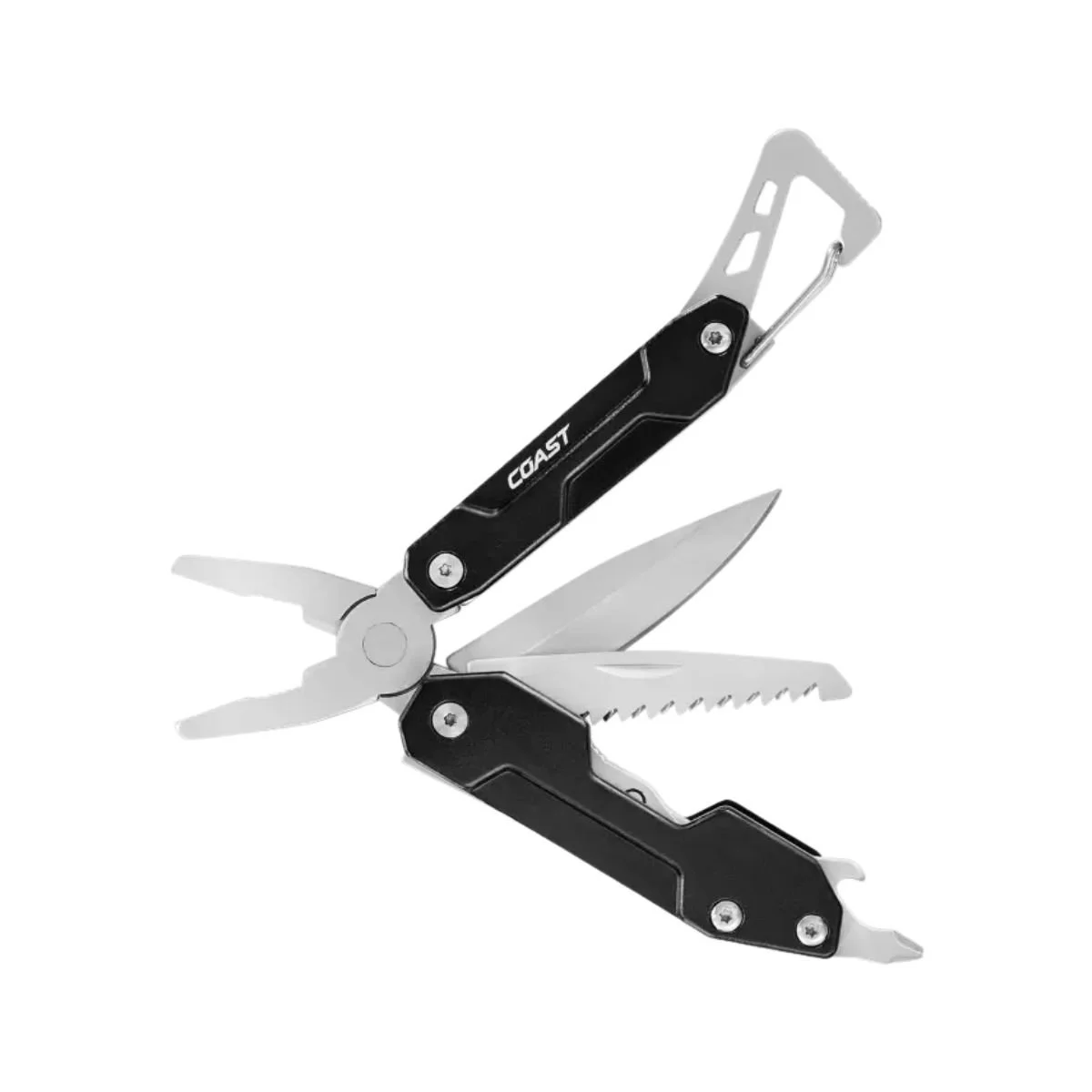
The COAST Colter is an “in-between size” multi-tool. It’s not full-sized like many we tested, but it’s also larger than a mini multi-tool, like the Gerber Dime. The knife blade performed better than that on the Coast Mackenzie but it doesn’t lock in place and, at just 2” long, is among the smaller blades we tested. The spring-loaded pliers aren’t big enough to offer good purchase for many tasks, and the wire cutters were pretty incapable at wire cutting and stripping.
| Scoring metric | Score |
|---|---|
| Blade/cuttingSharpness, edge retention, performance throughout tests | 23 / 35 |
| Saw performanceHow well the saw cut through wood | 3 / 5 |
| Pliers/wire cuttersJaw alignment, grip security, wire cutting tests | 1 / 30 |
| Tool selectionAre the included tools the right ones, well-executed? | 3 / 5 |
| ValuePerformance relative to price | 3 / 5 |
| Overall scoreMaximum score of 80 | 33 / 80 |
COAST Colter
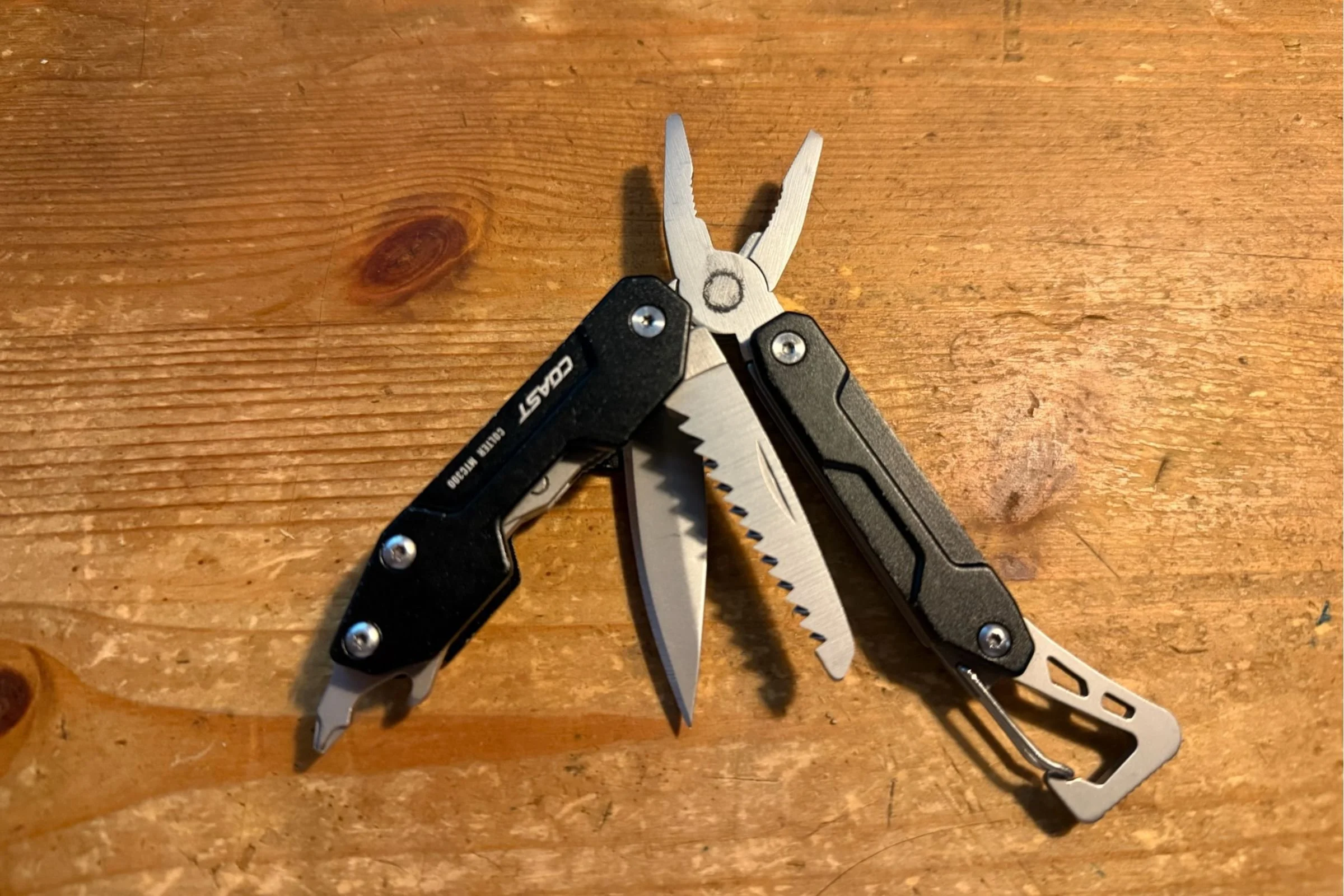
The Coast Colter was a little bigger than we’d like to slip into our pocket and not big enough to be a more full-featured multi-tool. Courtesy Chris Meehan
Price: $17
Number of tools: 12
Weight: 1.7 oz.
Closed length: n/a
Open length: 4.1”
Blade length: n/a
With the DoohicKey Ratchet Key Tool, Nite Ize does something pretty cool: putting a reaching bit driver in a stamped steel multi-tool. It’s a cool tool that gives you decent leverage for turning bits like a wrench. However, it’s nearly twice as long as the DoohicKey, making it harder to pocket and lie flat against the other keys on a keychain. Though you can use standard hexagonal bits in the ratchet, they’re at risk of falling out while using it. The ones it comes with use a ball-bearing in the middle to keep them in the ratchet while using it. You could probably get more utility out of it if they were able to place that mechanism in the ratchet collar.
| Scoring metric | Score |
|---|---|
| Blade/cuttingSharpness, edge retention, performance throughout tests | 0 / 35 |
| Saw performanceHow well the saw cut through wood | 0 / 5 |
| Pliers/wire cuttersJaw alignment, grip security, wire cutting tests | 0 / 30 |
| Tool selectionAre the included tools the right ones, well-executed? | 3 / 5 |
| ValuePerformance relative to price | 5 / 5 |
| Overall scoreMaximum score of 80 | 8 / 80 |
Nite Ize DoohicKey Ratchet Key Tool
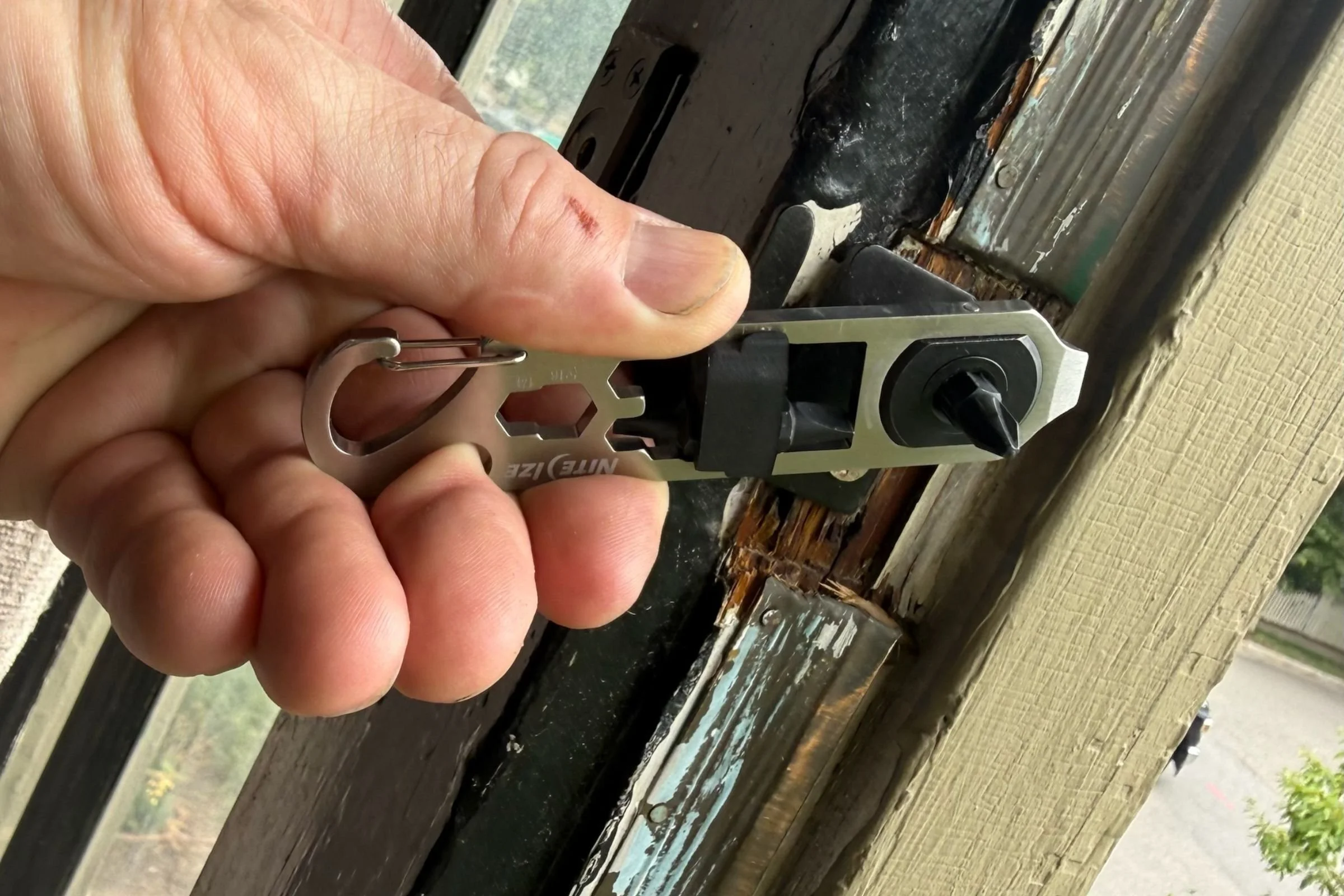
Using the ratchet on the Nite Ize DoohicKey Ratchet Key Tool to replace old window hardware. Courtesy Chris Meehan
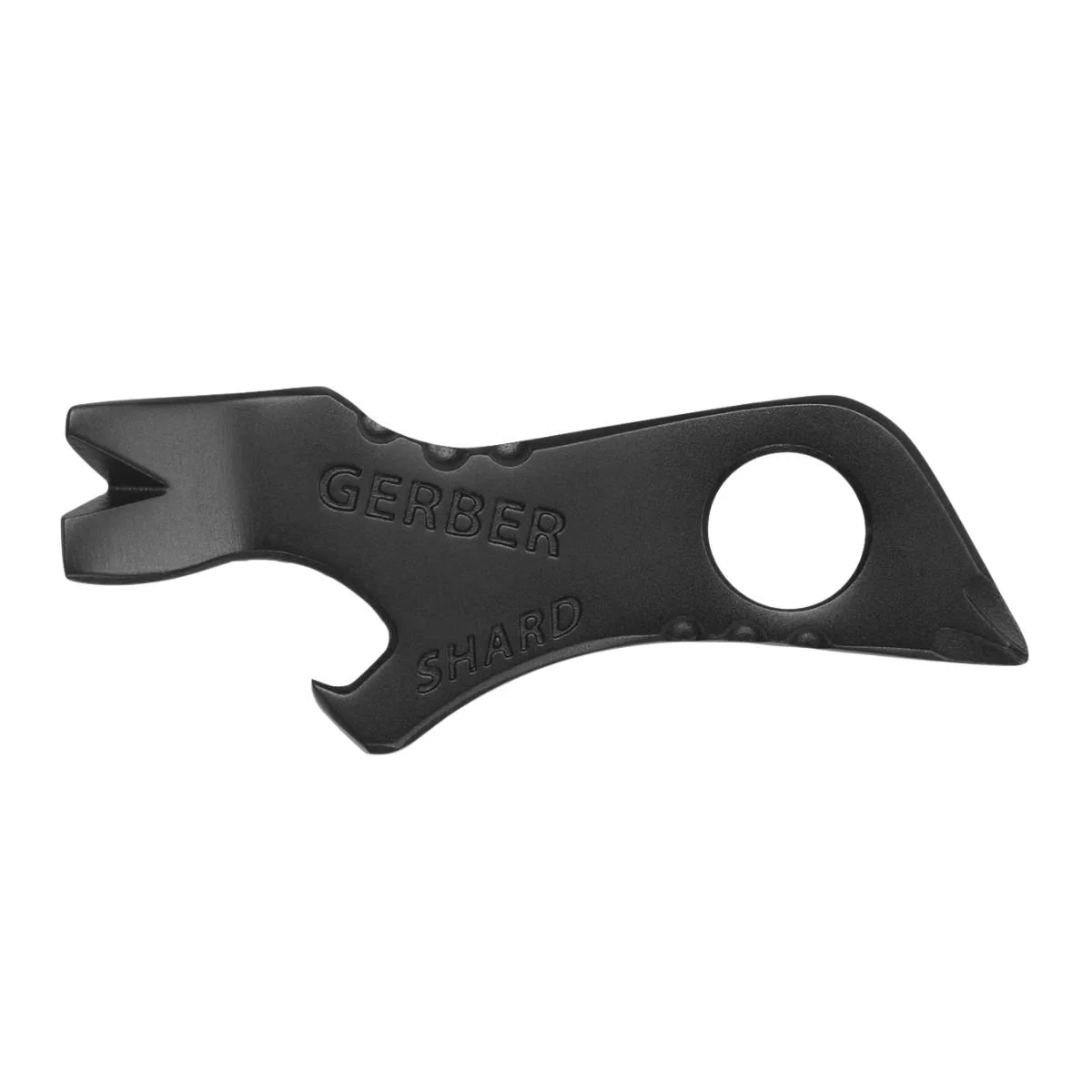
Price: $8
Number of tools: 7
Weight: 0.6 oz
Closed length: n/a
Open length: 2.75”
Blade length: n/a
Gerber’s Shard is a good little keychain multi-tool that looks cool to whip out and pop open a bottle of beer. We also like the unique Phillips-head screwdriver at the end near the keyring hole. The stamped metal is bent at one end to serve as a prying surface, which is great, but it also means it takes up more three dimensional space in your pocket than a flat keychain tool. The Nite Ize DoohicKey edged it out by being flat and having more utility with being able to tighten multiple sizes of nuts.
| Scoring metric | Score |
|---|---|
| Blade/cuttingSharpness, edge retention, performance throughout tests | 0 / 35 |
| Saw performanceHow well the saw cut through wood | 0 / 5 |
| Pliers/wire cuttersJaw alignment, grip security, wire cutting tests | 0 / 30 |
| Tool selectionAre the included tools the right ones, well-executed? | 3 / 5 |
| ValuePerformance relative to price | 5 / 5 |
| Overall scoreMaximum score of 80 | 8 / 80 |
Gerber Shard
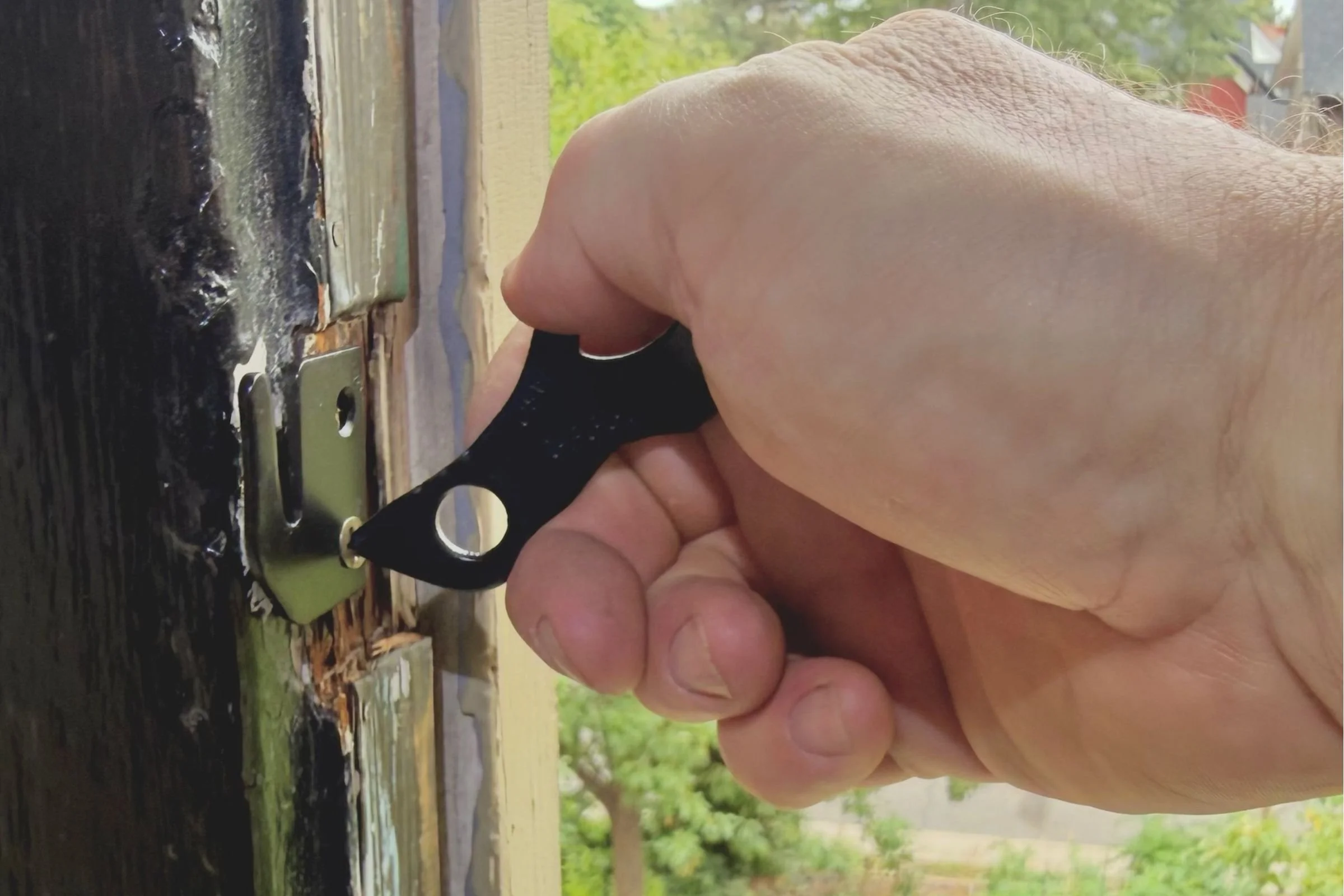
Using the Gerber Shard to fix old window hardware. Courtesy Chris Meehan
How to choose a multi-tool
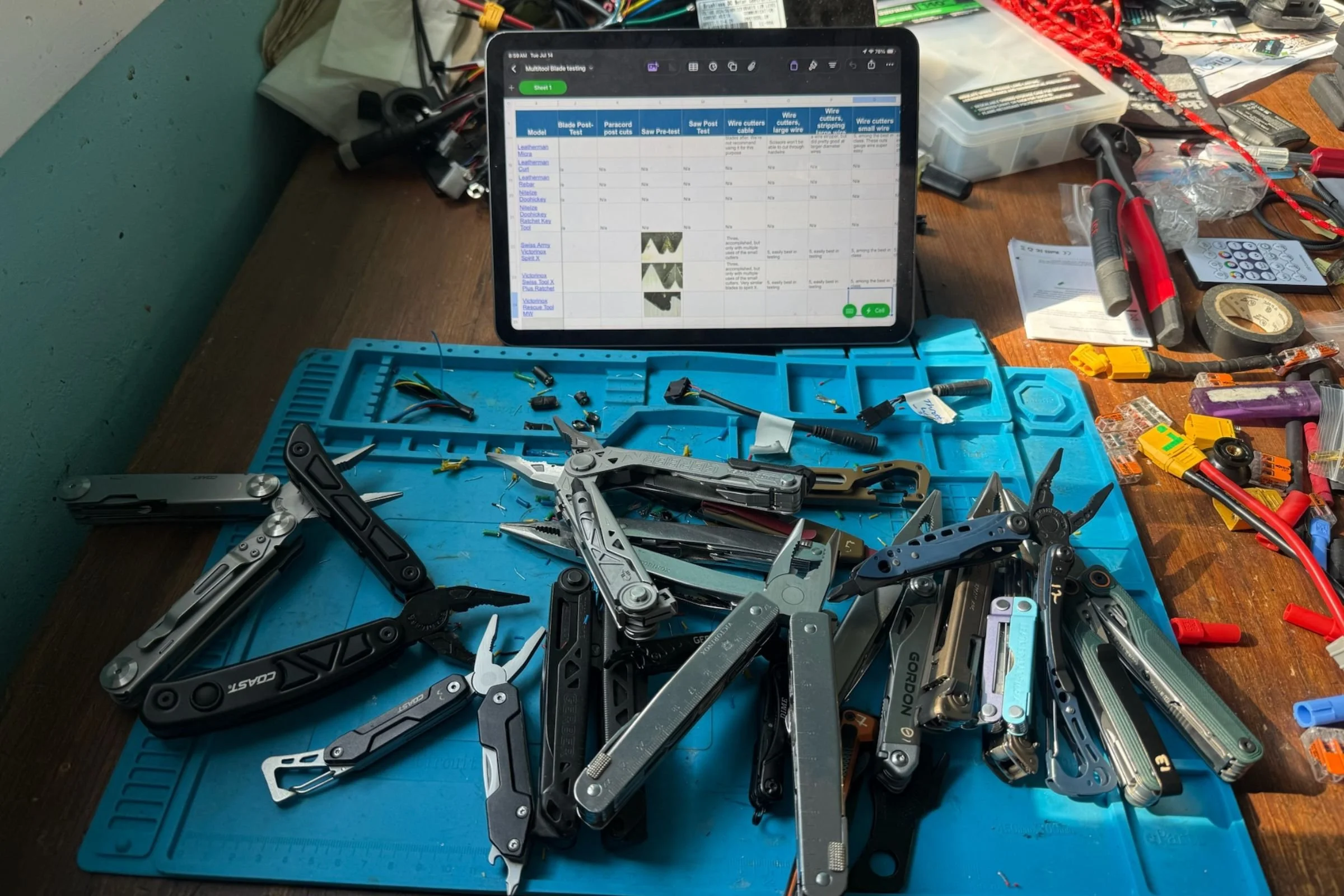
Getting ready to test multi-tools. Courtesy Chris Meehan
Over the years I’ve collected a number of multi-tools and keep them in strategic places like the console of my car, the bag I keep in my pedicab, and whichever backpack or activity tub I’m using the most in the season, so I can be ready for whatever happens. And it has happened! So I know what to look for when choosing the right multi-tool for your everyday needs.
When you’re purchasing a multi-tool there are a lot of things to consider. Where will you use it the most? At home, in a machine or wood shop, for camping or bush-crafting, for your vehicle, RV, etc. That will get you to the next step, which is which sets of tools are most needed: pliers, screwdrivers, wire cutters, scissors, knife, saw, reamer/awl, file, bottle/can opener, etc. You also need to know if there are certain tools you’ll hardly ever need, which can include any of the above and others.
Multi-tool types
Multi-tool is a huge category of tools. In broad terms it includes everything from a painter’s 5-in-one tool to an electronic oscillating tool, and to bike multi-tools. In this case we focused on classic multi-tools for camping, hiking, EDC, and outdoorsy activities. The majority of tools we used and tested were of the folding, plier-style multi-tool with knives, saws, files and screwdrivers.
Within those categories we had full-sized and even larger pliers, multi-piece multi-tools, clip-based multi-tools, as well as mini multi-tools. Many of them fit in more than one category because of their basic utility. And some styles make more sense for certain purposes than others.
To broaden our testing we also tested a number of types of multi-tools. We tested classic folding knife-style multi-tools, single-piece style, and keychain-based multi-tools.
When each makes sense
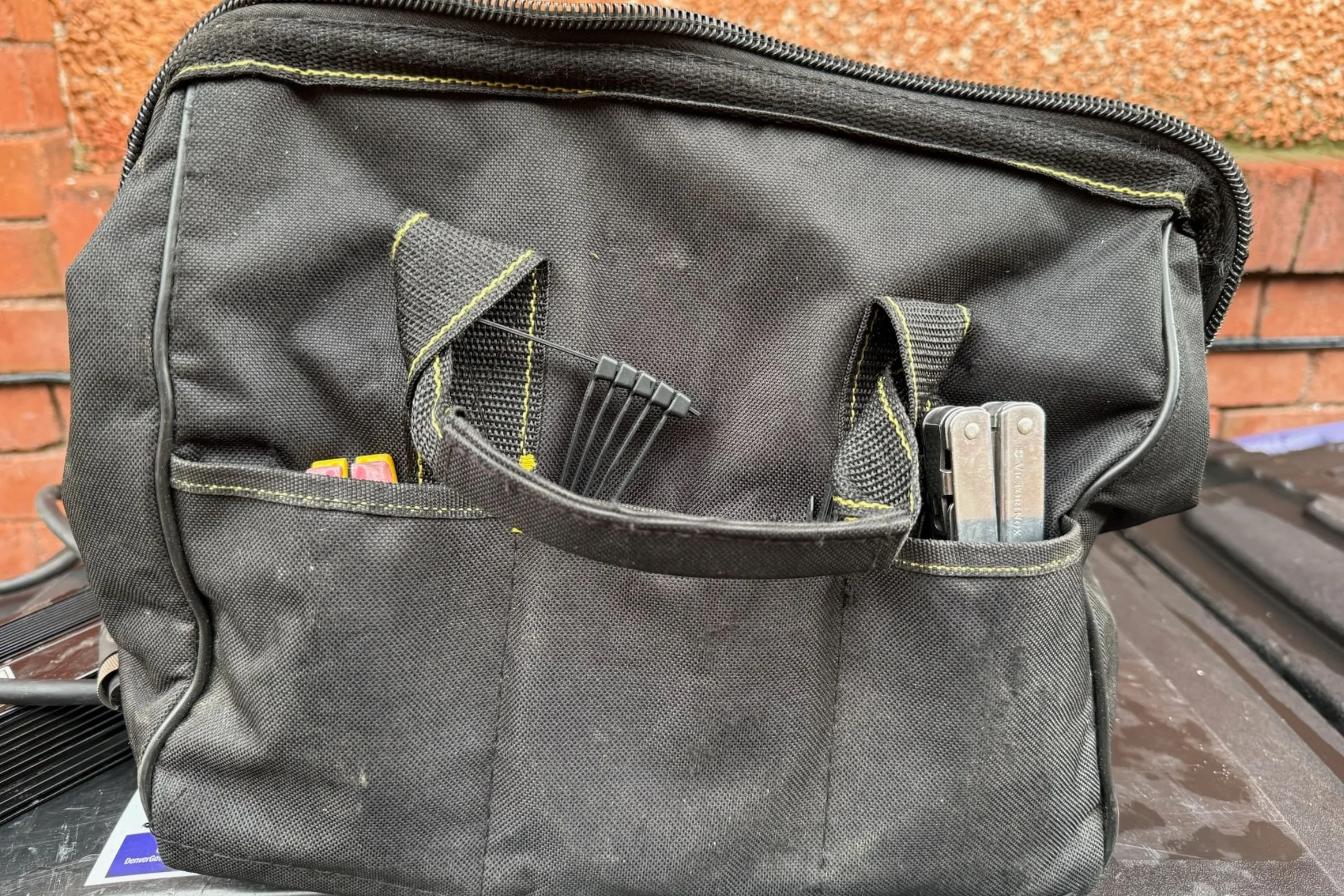
The author has kept the Victorinox Spirit Tool in his toolbag for years. Courtesy Chris Meehan
Which multi-tool to choose really depends on your most pressing needs. A keychain multi-tool, like Nite Ize’s DoohicKey is great to carry in your pocket, great for opening boxes and prying up lids. Try using it as a knife and you’re SOL. The Swiss Tool X Plus Ratchet, on the other hand is a beast: bigger and heavier than the Nokia 3310, weighing over a pound, and at nearly 2 inches wide and nearly 5 inches long. It’s not the tool to slip in your pocket or keep on your belt as it might cause your pants to fall down. But with its hex set ratchets it can take on more jobs than any of the other multi-tools we tested, and can handle most of the jobs as well as the dedicated single tools they are meant to replace or supplement. That’s why a tool like that is one we want to keep at the top of the toolbox or in the car at the ready.
Mini multi-tools and single-piece multi-tools are best for carrying in the pocket or on a shoulder strap or waist belt. They’re helpful for lighter, everyday tasks but aren’t the best when you need a tool that can handle a lot of heavy usage. For instance, the mini pliers on the Gerber Dime can tighten smaller nuts and bolts, but anything over about 10mm or 3/8” is going to be hard to get good purchase on (the wheel nuts on most old bikes are 15mm, usually).
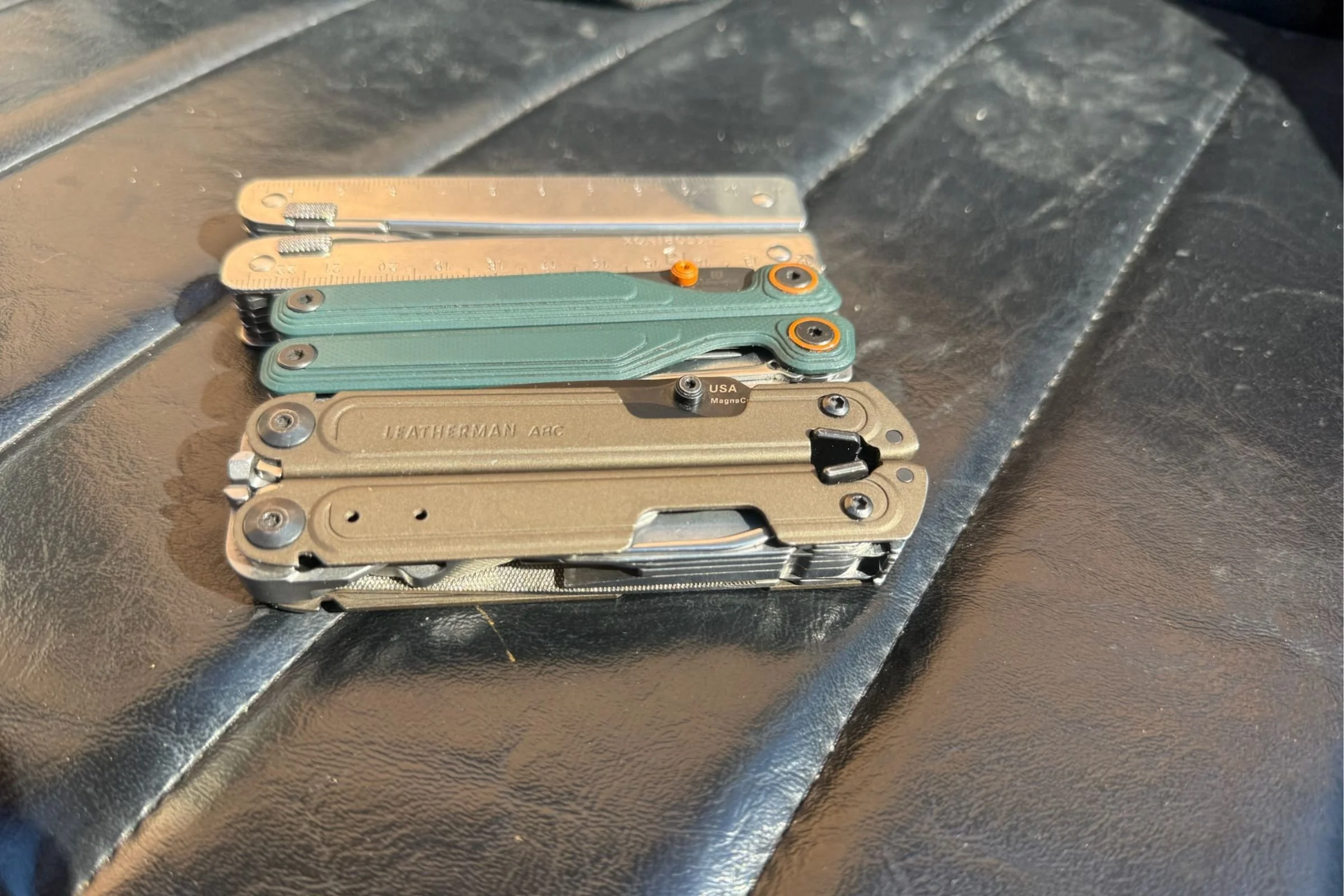
An assortment of full-sized multi-tools folded up. Courtesy Chris Meehan
The best full-sized multi-tools (with blades over two inches long) can fit in pockets or on belts and can handle harder jobs and stand up to hard usage, like tightening bolts and nuts, cutting stranded and solid wires, and cutting wood, pipe, and more. These are likely going to be an EDC-type tool that helps keep you out of the toolbox on a lot of jobs.
The larger multi-piece multi-tools, like the Swiss Tool X Plus Ratchet and Gerber Center-Drive plus, we call “top of the toolbox tools.” They’re great at a lot of tasks because they have those multiple pieces, but they’re not something we’d want to carry everywhere unless we were a building superintendent and needed that capability on the daily. Similarly, the Gerber Dual-Force, with its giant (for a multi-tool) slip-lock pliers, is too big for EDC, unless you’re a mechanic or working in a shop.
Specialty multi-tools, like the Gerber Stakeout Spark, are the type of tool we’ll stash in our backpacking pack or tub so it's ready for those types of adventures.
What tools do you actually need? (the "12 vs. 21 tool" trap)
This is dependent on what you’re going to use the tools for. When we asked Treeline writers and editors what tools are the most important for a multi-tool to have, most said pliers, knives, and screwdrivers. Scissors and files were also pretty high on the list.
You might think “most tools wins” but we didn’t find that to be the case in the end. A multi-tool that claims it has 30 tools but you’re really only using five of them regularly, means that you’re just carrying around some extra metal in your pocket or pack. And the design philosophy that every surface of the multi-tool must also be a tool of some sort, is, in our minds, overkill. We’ll probably only use the wire bender on tools like the Swiss Tool X or Leatherman ARC in testing because if we’re doing electric work, we’re probably going to be using a tool with insulated handles, for instance. And the Swiss Tool X boasts at least 4 flat-head screwdrivers, where it probably only needs two or three tops.
Similarly, with specialty tools, like the Gerber Stakeout Spark, we’re not going to use the ferro rod around the house every day, but on the trail, or in a BBQ pit, it’s ideal for lighting burners and wood. Its tent hook puller would also be great for pulling a wrapped roast off the smoker.
The best multi-tools we tested balanced the needs of the many over the needs of the few and provided the most everyday utility for each tool.
Weight and size vs. capability
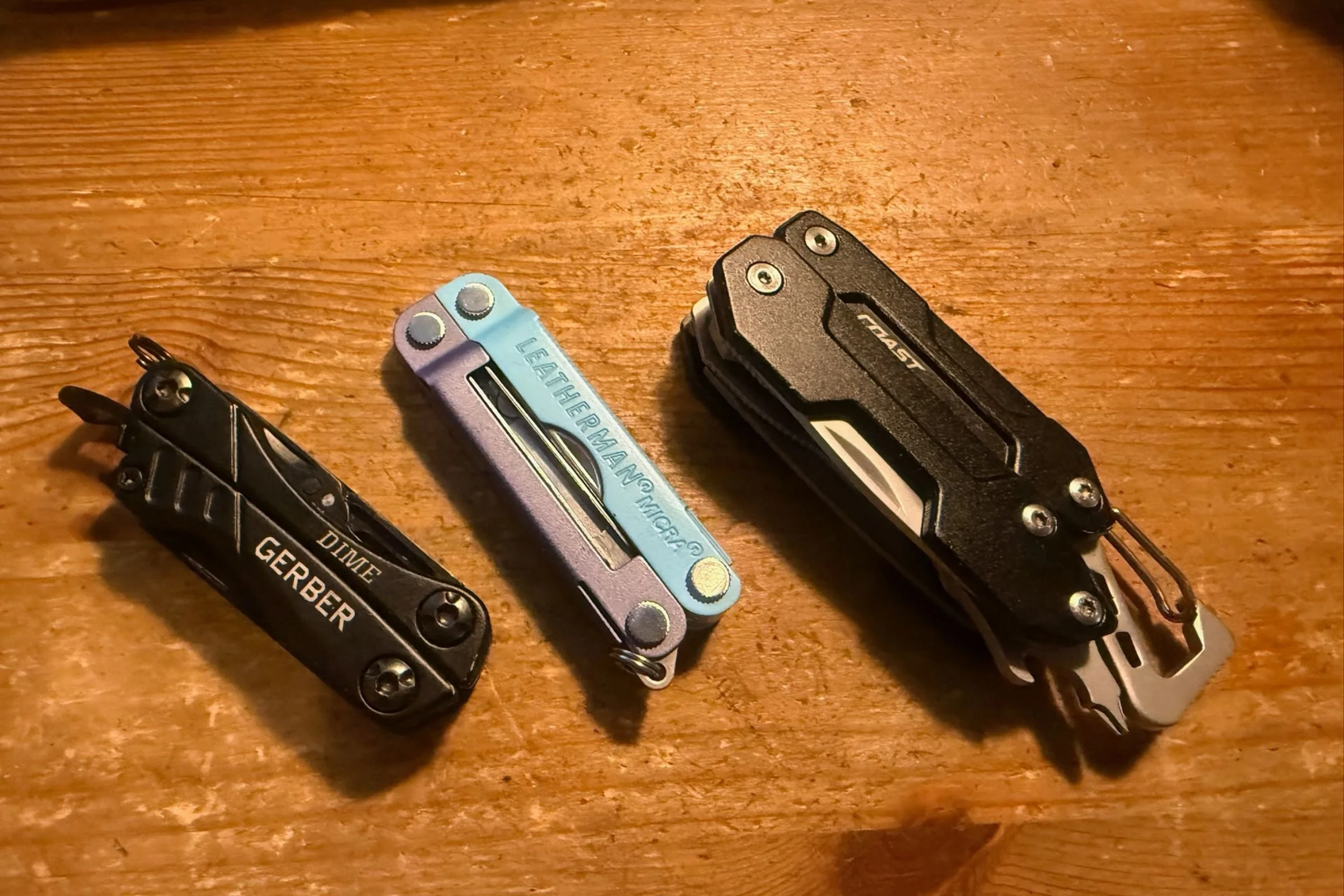
We tested pocket-sized mini multi-tools. Courtesy Chris Meehan
We found that the larger, heavier tools generally had more capability than the smaller ones because they’re larger and offer more tools. However, smaller tools have their place for smaller jobs. The Gerber Dime and Leatherman Micra, for instance, are both great little multi-tools to keep in the pocket, a hip belt or shoulder strap. They’re great for cutting small things, opening boxes, and clipping nails and cutting hangnails in a pinch.
Repairability
The majority of multi-tools aren’t made to be repaired at home and finding replacement blades and tools isn’t very easy. However, the manufacturers can repair and replace most tools.
That said, the majority of the multi-tools we tested are assembled with nuts and bolts at the pivot points for both the pliers and tools. This makes us think you should be able to open up the tools for some repairs. Some of them, like the Gerber Center-Drive Plus and Leatherman Micra use proprietary nuts and bolts. Others use hex bolts, making them easier to work on. The Victorinox tools are riveted together, making them harder to work on.
There are some parts on certain tools that are repairable like the wire cutting blades on higher end pliers. And hex bits are easy to replace. However, the proprietary bits on the Leatherman Wave and ARC multi-tools are only available from Leatherman and the Nite Ize bits for the DohicKey Ratchet are also a little unique and harder to find.
What to look for in a multi-tool
Obviously look for the features you know you’ll use the most. Beyond that, look for tools with solid locking mechanisms. That’s a must for sharp equipment like knives and saws. But it’s a nice feature for all the other tools as well. It makes them feel stiff and resilient when working on a hard project that requires a lot of force on the tool itself.
With pliers-based multi-tools friction is a good thing. It helps keep the device and its tools in the position you want them in. However, you want smooth action as you’re transitioning the device from one form to the next.
You also want to make sure it’s easy to access all the tools, so you can quickly deploy them as needed. Look for fingernail or thumbnail pulls that make it easier to pull each tool out for easy use.
Locking mechanisms
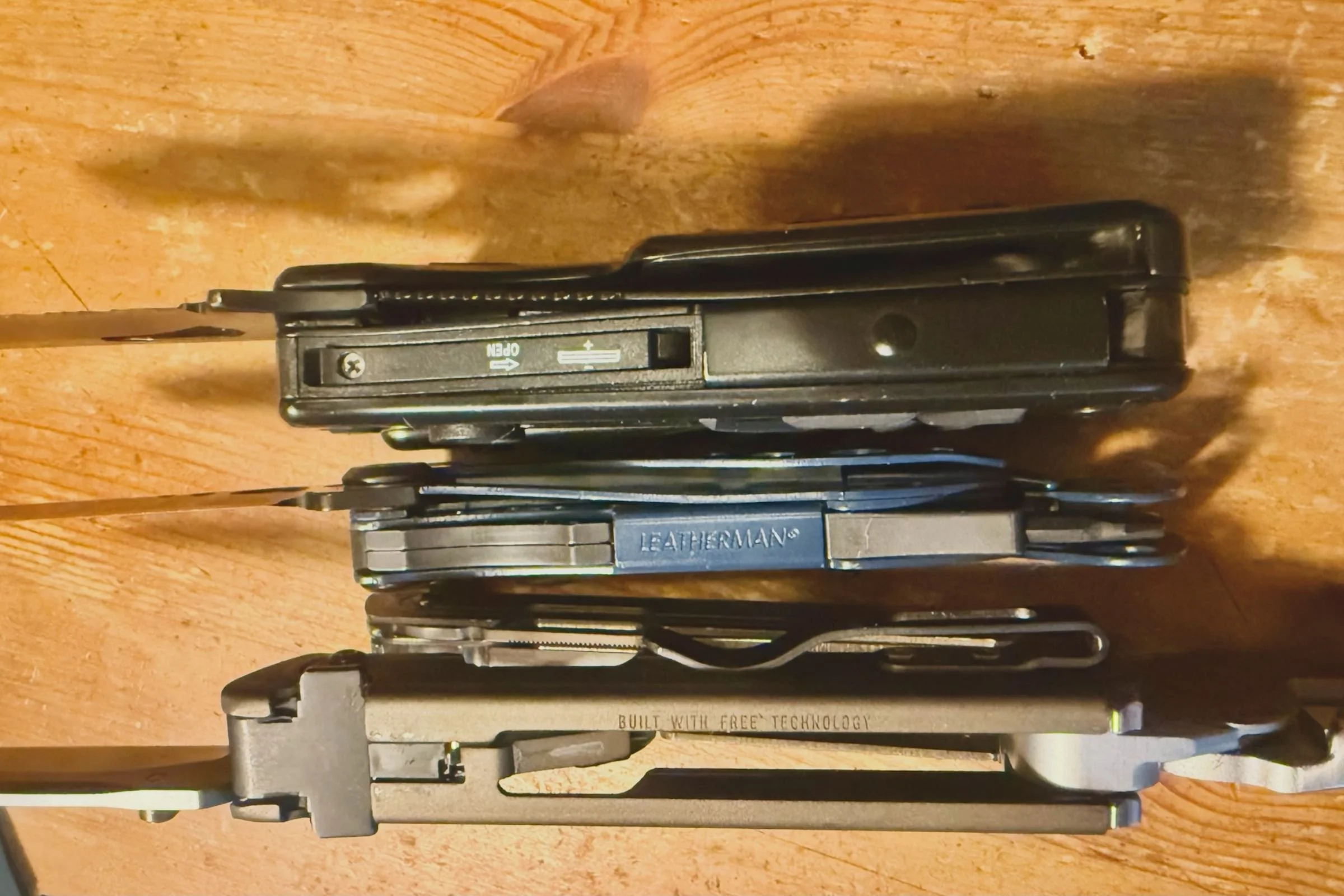
A liner lock on the top, frame lock in the middle and back lock on the bottom. Courtesy Chris Meehan
Multi-tools use a variety of locking mechanisms to keep the tools firmly in place when deployed and when stashed in the handle. Some use multiple types of locks for different parts of the tool. The primary types of locks used include liner locks, frame locks, and spine locks. Spine locks are the most secure, followed by frame locks and then liner locks.
Spine locks are favored because they lock into a groove in the back of the tool that’s being used. The lock on the back must be opened to release them.
Frame locks and liner locks are similar, both use sideways springs that push against the tool metal until they lock the blade into place. Push against the spring and the tool can start folding back into the body. Frame locks use the frame itself as the spring and it should be really hard to break those springs. Liner locks are a separate piece of metal attached to the multi-tool and aren’t always as robust as the other options.
In our testing, however, we thankfully didn’t see any locks fail.
Accessibility
One-handed opening with a multi-tool that also feels secure while accessing everything is the goal and the only one that really nailed it is the Leatherman ARC. To open, lock, and close the other tools we tested one-handed is like trying to shuffle a deck of cards or solve a Rubik’s Cube one-handed. That’s because the friction used to keep the tools and plier handles from slopping around also makes it harder to open and close the pliers or access the individual tools stashed in the handles or bodies of the devices.
Beyond one-handed access, we found we preferred tools with access while the plier handles are in the closed position. They’re easier and quicker to access than when you have to open the handle up to access tools inside, then close the handle again to use them.
The ability to access individual tools also depends on the notches, cut-throughs, and nubs on them. We found the nubs and cut-throughs on the Leatherman and Gerber multi-tools made it easier to access tools than fingernail notches in some of the others, like the Victorinox Swiss Tool X.
Materials
The majority of tools we tested were stainless steel with steel handles. The COAST LED155 had rubber nubs on the handles and the Leatherman Wave Alpha had G10 fiberglass handles, and the Victorinox Rescue Tool MW has nylon handles.
Though we’d love to see a plier style multi-tool made out of at least some titanium parts for their lightness, we didn’t really see any on the market. We also anticipate that they would be cost-prohibitive for most users (most likely at $400 or above with titanium).
The bodies of the knives are made of stainless steel but the most important aspect is the steel compound used for the knife blades. While not all companies say what type of steel they use in their blades a number of them did.
The steels are chosen for a number of qualities. Among them are hardness, corrosion resistance, edge retention and toughness. The best knife steels blend them into a steel that should last for years of use while retaining a sharp edge. These are the steels the blades are made of:
MagnaCut stainless steel
MagnaCut is a premium steel with excellent edge retention and corrosion resistance. It’s extremely durable, has an extremely high edge retention. Hence Leatherman offers free sharpening of the blades because the harder material requires harder sharpening materials.
It’s hard to offer an apples to apples comparison of the cost that MagnaCut steel adds to a multi-tool but Leatherman’s Wave Alpha with MagnaCut (and some other more premium features) costs $70 more than the Wave Plus, which has a blade made of 420HC steel.
420HC stainless steel
The HC stands for high carbon. It’s a well-known alloy that doesn't offer the best edge retention but also is easy to sharpen.
154CM stainless steel
The CM in 154CM stands for chromium and molybdenum. It’s a high-end steel that offers good edge retention, corrosion resistance and is relatively easy to sharpen.
5Cr15MoV stainless steel
This steel is commonly used in inexpensive kitchen knives and utility blades. It’s a steel alloy of Carbon, Chromium, Molybdenum Vanadium and is used in some of the multi-tools we tested, like the Gerber Stakeout Spark. It offers decent edge retention, corrosion resistance and is easy to sharpen.
3Cr13 stainless steel
Another budget friendly steel, it’s tough but doesn’t boast great edge retention and will dull quicker than other options. It’s easy to sharpen and is used in some multi-tools like the Coast Colter.
Carry method
Depending on your need and usage of a multi-tool, you may want to carry it different ways. If we’re looking for a full-sized EDC multi-tool, the best option is likely a belt or pocket clip like on Leatherman’s ARC and Skeletool and Gerber’s Stakeout Spark. Other carry options include carabiner clips, sheaths and keyrings.
Pocket/belt clips
If you want an EDC multi-tool that’s convenient to carry, look for one with a pocket clip, like the Leatherman ARC, or Skeletool or the Gerber Stakeout Spark. The Leatherman Wave Alpha plus also has a quick release pocket clip that works well. These keep the tool at the ready in a pocket or on a belt loop. They’re also easy to remove.
Sheath
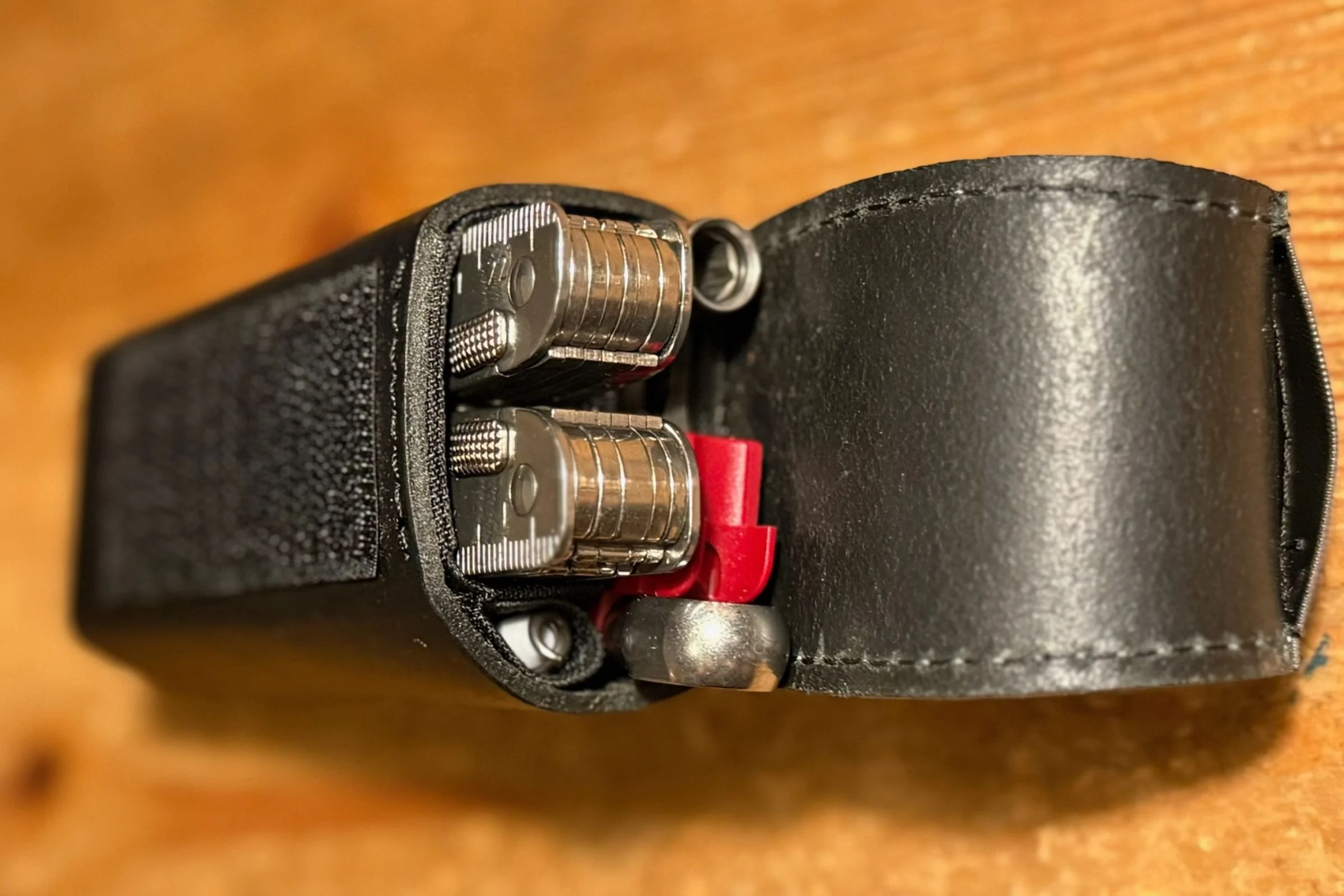
The sheath for the Victorinox Swiss Tool X Plus Ratchet neatly organizes all of its various components. Courtesy Chris Meehan
For multi-tools with multiple parts, like the Gerber Centerdrive Plus and the Victorinox Swiss Tool X Plus Ratchet, a sheath is a great option. It makes sure everything stays together. The sheaths add volume to the tools, though and make the tools a little more difficult to access in a pinch. To carry them on your person you have to wear a belt, too.
Carabiner clips
A few of the models we tested had integrated carabiners, including the one-piece DoohicKey from Nite Ize. Larger ones like the Gerber Stakeout Spark and Leatherman Skeletool, also have carabiner clips. This makes them really easy to clip to a belt loop, shoulder strap or other piece of gear. However, the tools that have them weren’t as fully featured as most of our top picks.
Keychain
The smallest multi-tools we tested, including the Nite Ize DoohicKey and the Leatherman Micra are designed to fit on a keychain. They slip into a pocket easily and only add a little bulk to your keychain. Still, don’t expect to get the same set of tools on a mini multi-tool as on a full-sized one.
Warranty
Multi-tools are designed to last a long time. As such, any good quality multi-tool should carry a warranty of some sort.
Leatherman tools carry a 25-year limited warranty, Gerber tools have a limited lifetime warranty in North America and 25-year warranty outside of North America. Victorinox multi-tools have a lifetime warranty. Nite Ize also offers a limited lifetime warranty. These warranties generally cover material defects and not damage or regular wear and tear on the devices.
On its top-tier products with the MagnaCut steel blades, Leatherman will sharpen them for free, should you manage to dull the blade.
TSA & travel
If you’re flying and need to take a multi-tool with you, it’s best to put it in your checked luggage. TSA and presumably other countries’ travel safety agencies generally don’t allow knives on planes. You can fly with a multi-tool like the Nite Ize DoohicKey or the Victorinox Jetsetter and some others, but they don’t have knives and the scissors must be under 4 inches long, according to TSA.
Country of origin
The multi-tools we tested came from across the world. Leatherman makes all of their multi-tools in the US. Gerber makes some of their multi-tools, like the Center-Drive Plus in the US. It makes other multi-tools, like the Stakeout Spark in China. Victorinox makes its tools in Switzerland.
FAQ
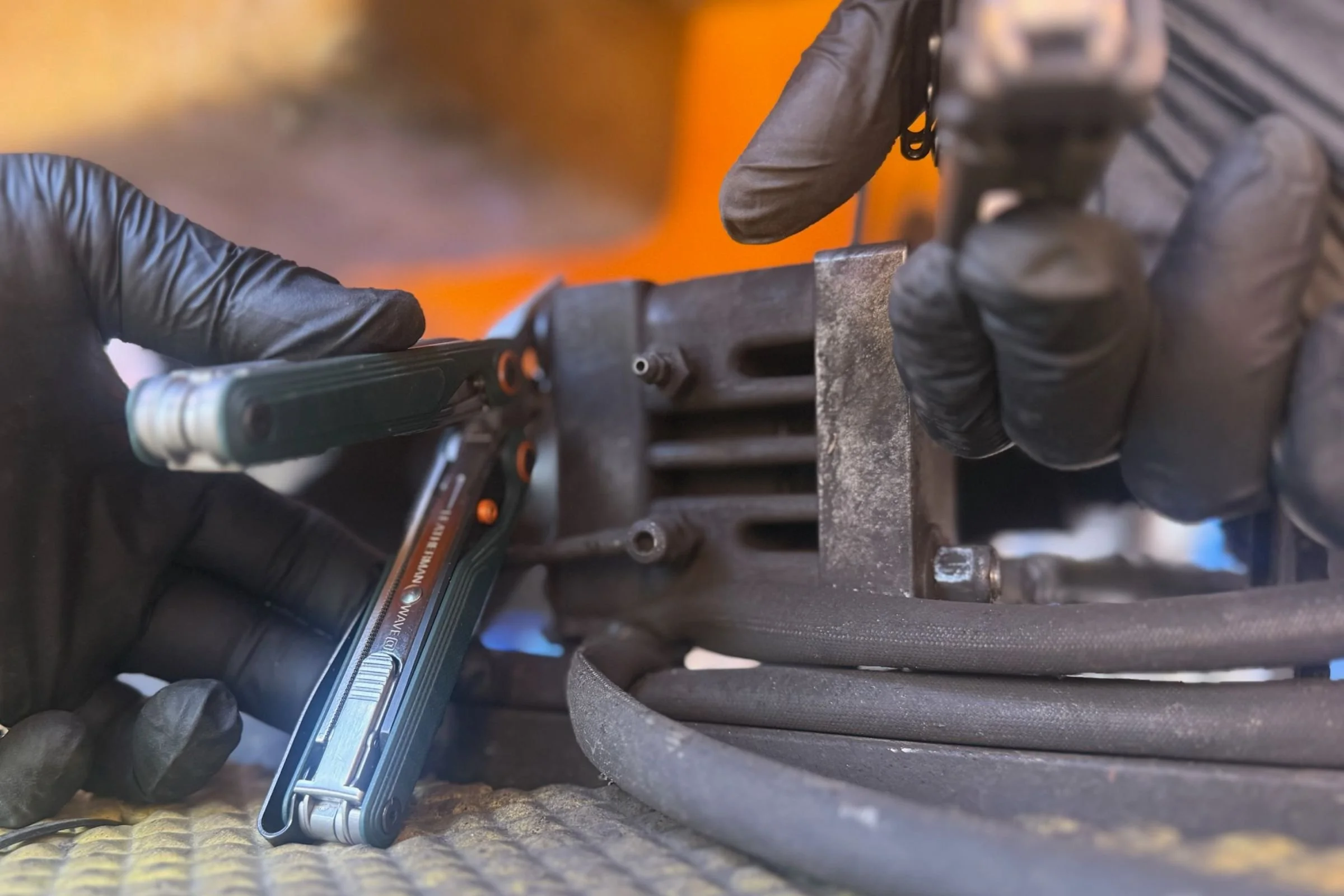
Using multi-tools to fix a hydraulic brake. Courtesy Chris Meehan
-
A Swiss Army knife is a type of multi-tool. But there are plenty of other types of multi-tools. Many of the ones we tested were plier-based multi-tools, for instance.
-
In short, yes. But your best bet is to put it in checked luggage as you can’t bring anything with a knife—or scissors larger than 4”—on a plane in the US.
-
Leatherman multi-tools are definitely worth the price. The US-made tools are comparable in price and value to other high-end multi-tools, like those from Victorinox and Gerber.
-
Look for a light tool with a locking blade, a saw, and camp-specific extras like a stake puller or ferro rod.
The best camping multi-tool we tested was the camping-specific Gerber Stakeout Spark.
-
In most cases you sharpen them as you would sharpen any other knife. Given the hardness of the MagnaCut steel used in the high-end knives of the Leatherman ARC and Wave Alpha multi-tools, Leatherman will sharpen them for you for free, for life.
-
Maybe if it’s a part permanently attached to the multi-tool itself that breaks off and gets lost, but if you lose a bit or a separate part, like a part of the ratchet of the Swiss Tool X Plus Ratchet, you lost it. Different multi-tool brands have different warranty policies.
-
Military and first responders use a variety of multi-tools from different companies. The US military will often use or supply multi-tools made in the US. These include the Gerber Multi-Plier 600, the Leatherman MUT or Wave, and others. First responders will use a variety of tools as well, including the Leatherman Raptor Rescue and Skeletool RX or Victorinox Rescue Tool MW.
How we tested
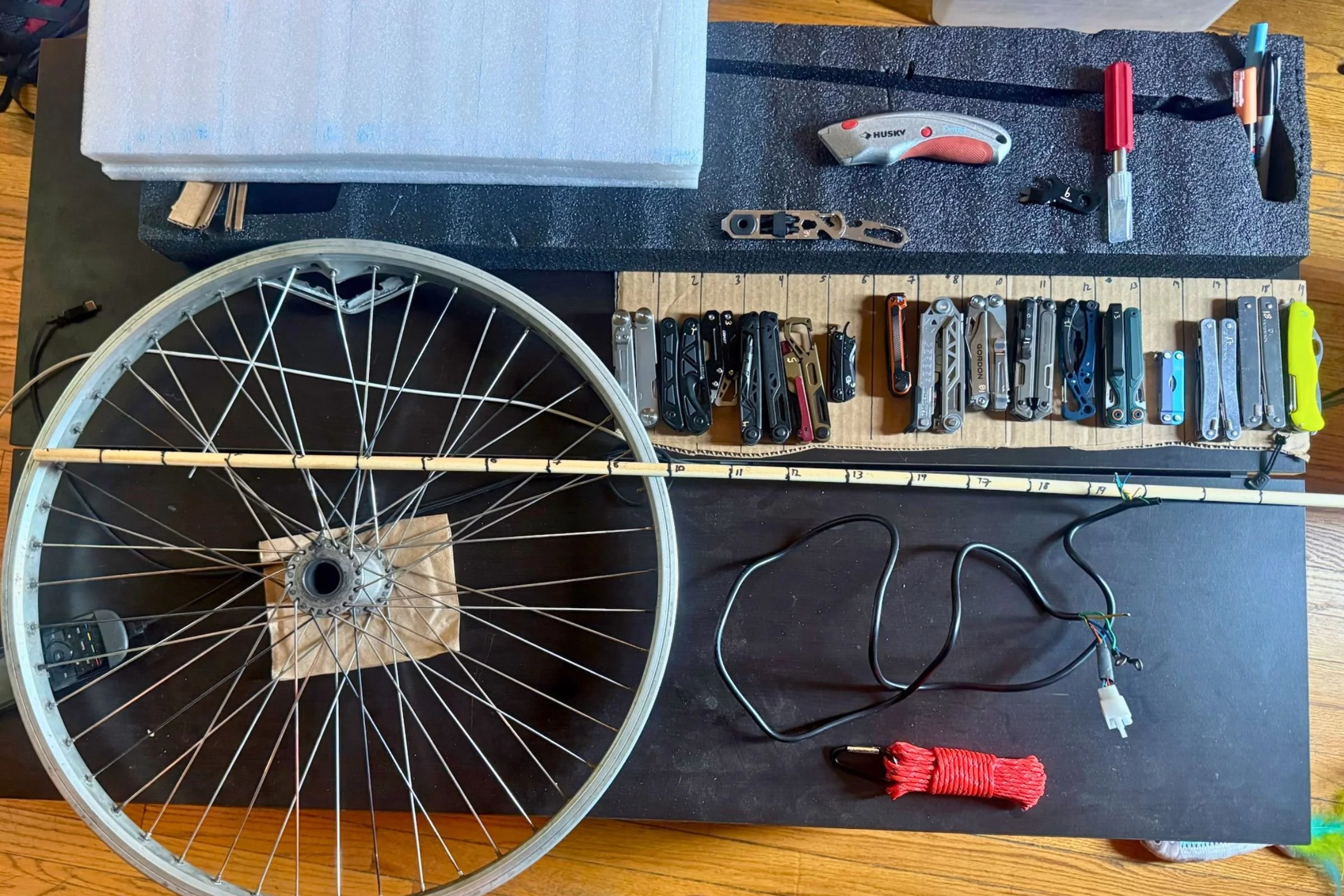
We used these materials to do standardized tests of the knives, saws, and pliers of each multi-tool. Courtesy Chris Meehan
We ran the multi-tools through the same gamut of tests to evaluate them on an apples to apples comparison for their knives, saws and plier components. We did this with the tools where the performance mattered the most. This included the knives, pliers/wire cutters, and saw blades of the tools. We also used their other tools in real-world scenarios on actual projects, including home, car, bike and lawnmower repair. Those real-world tests and other things we assessed on the multi-tools like carrying and ergonomics were more subjective.
Scoring framework
For these tools we assigned them scores of 1-5 in each test. We also combined scores on blade and plier performance to allow for a little more nuance in their overall performance.
*A couple of our favorite picks for multi-tools scored much lower on the overall score because they didn’t have one or more of the tools we assessed. For instance, our top pick for a one-piece multi-tool, the Nite Ize DoohicKey lacked pliers and a knife and received only 8 points because of it.
| Multi-Tool Scoring Metric | What we assessed | Score |
|---|---|---|
| Blade/cutting | Sharpness, edge retention, performance throughout tests. | Out of 35 points |
| Saw performance | How well the saw cut through wood | Out of 5 |
| Pliers/wire cutters | Jaw alignment, grip security, wire cutting (pliers tools) | Out of 30 |
| Tool selection | Are the included tools the right ones, well-executed? | Out of 5 |
| Value | Performance relative to price | Out of 5 |
| Overall Score | Summary score | Out of 80 |
Our testing protocols
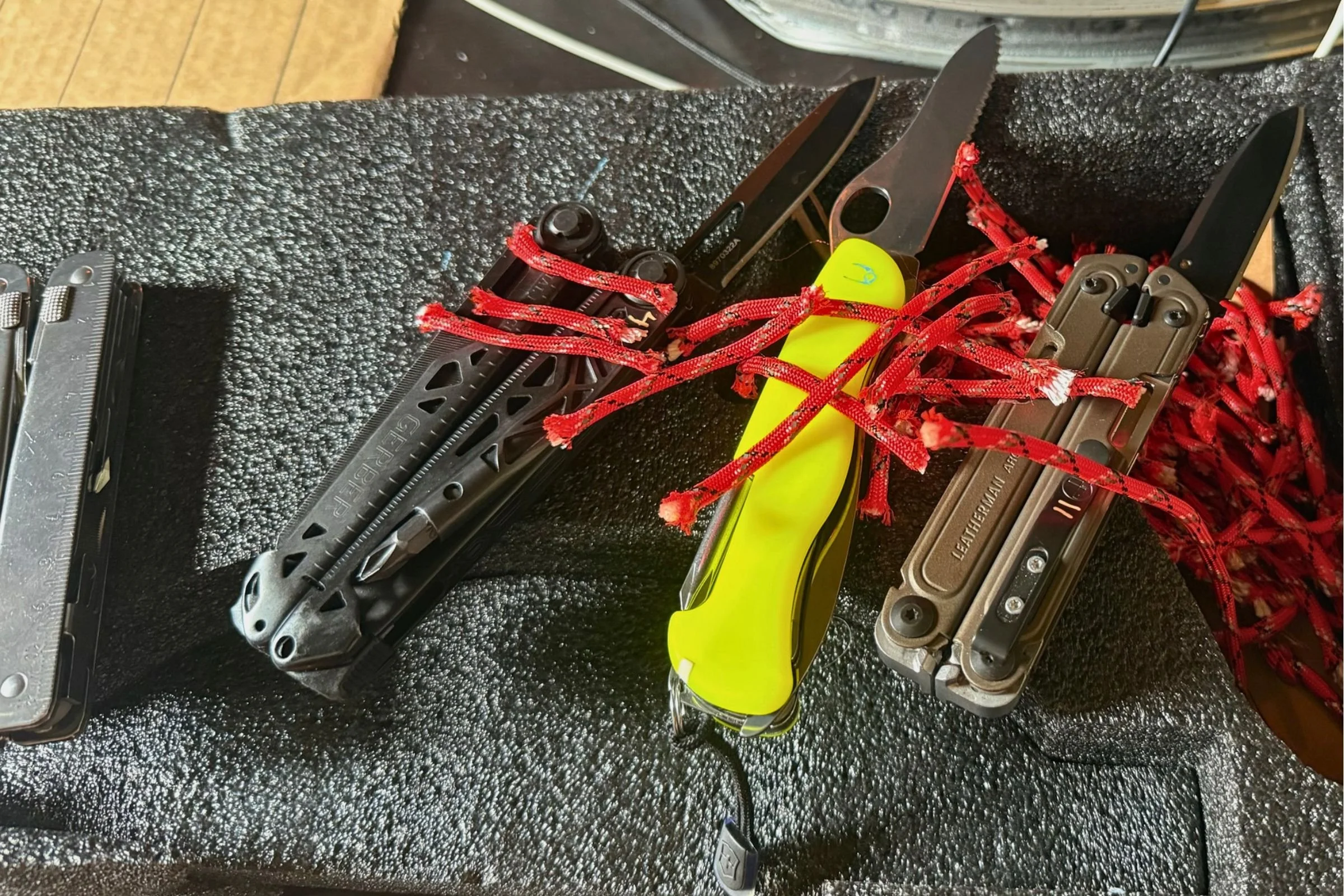
Testing included seeing how well blades cut paracord before and after cutting through cardboard, wood and other things known to dull blades. Courtesy Chris Meehan
Test 1: Blade and cutting performance
We tested the blades of nearly 20 multi-tools in the same way. Before testing each blade, we looked at them through a digital microscope, looking at the blade angle, bevel and sharpness. Then we ran them through a battery of tests to simulate real-life uses and environments and gave each a score between 1 and 5 in each test across six tests.
The tests included how well they sliced through 2 inches of foam, cut paracord, cut cardboard, and how deep they cut through 7/16 inch wood dowels three times to test consistency. We also tested how quickly it whittled the dowel into tent stake points. This allowed for a better apples-to-apples comparison than cutting through branches, which aren’t uniform throughout.
After all the other tests, we went back and cut the paracord again to see if there was any noticeable decline in cutting ability. Then we looked at the blade through the microscope again to determine if there was any damage to the blade after testing.
Across all the tests, the most a blade could have scored was 35 points. The highest achievers, he Leatherman ARC and Wave Alpha won with 34 points.
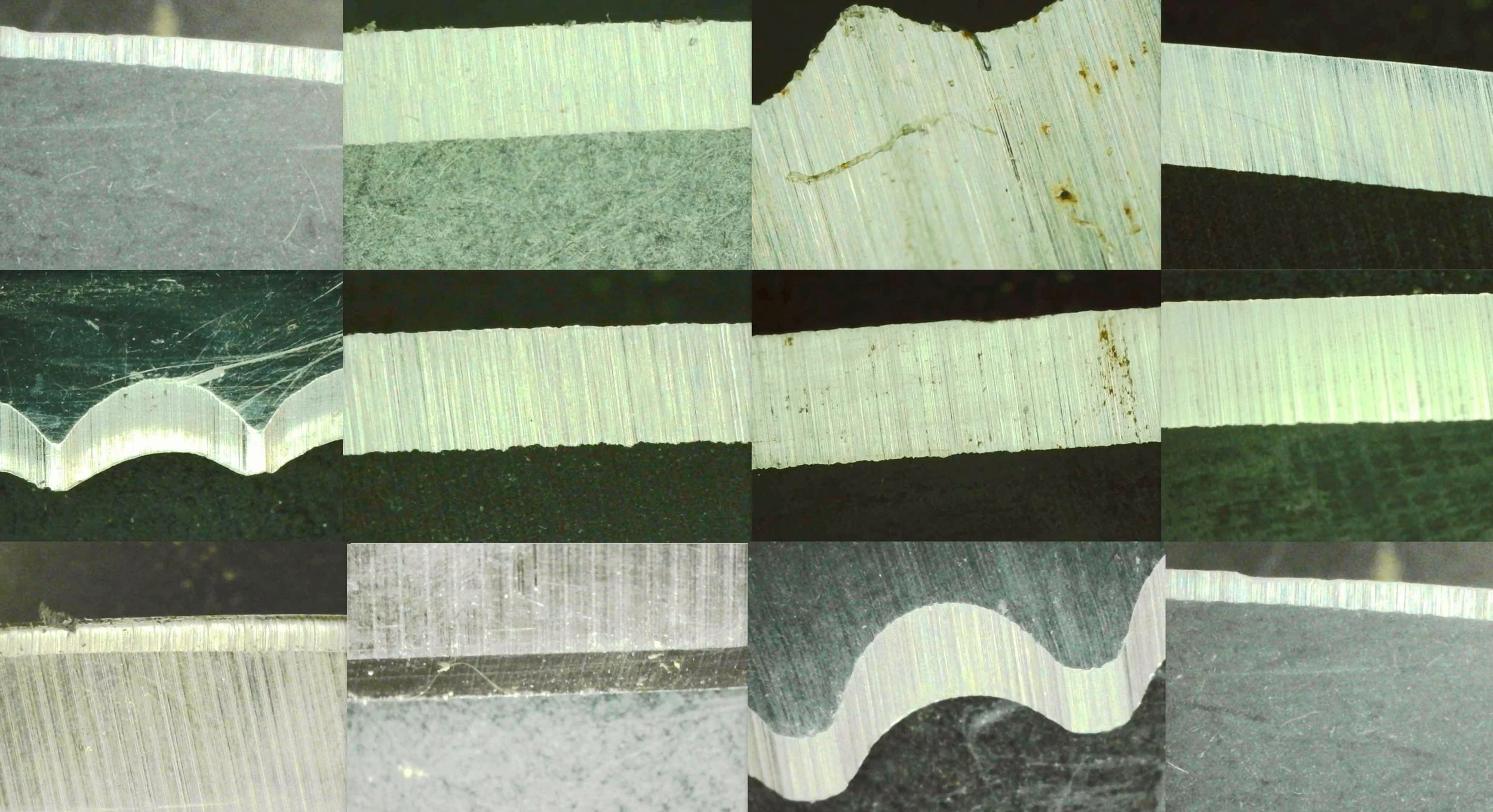
We assessed blades pre- and post-test under a digital microscope to look for any damage. Courtesy Chris Meehan
Test 2: Pliers, wire cutters, and gripping performance
We did a uniform test of the wire cutters across all multi-tools with them. We used them to cut and strip larger (12 gauge) and thinner (22-24 gauge) wires, and to cut spokes and bike cables. This tested their ability to cut hard and soft wires and whether or not they could actually strip wire without damaging stranded wires in particular. We also ranked the wire cutters on a 1 to 5 scale for their ability to cut each material and they could achieve a total of 30 points in that capacity.
We also used the pliers on each in real-world tasks. We used them to grip and tighten nuts and bolts in a variety of situations and sizes as well as to help hold and orient items for tasks including soldering, placing spring clamps on hoses, and more.
But since we don’t have a load-cell or torque wrench to specify the tightness of a bolt and some other equipment that would allow us to accurately assess their grip strength, we didn’t give them number rankings on grip performance.
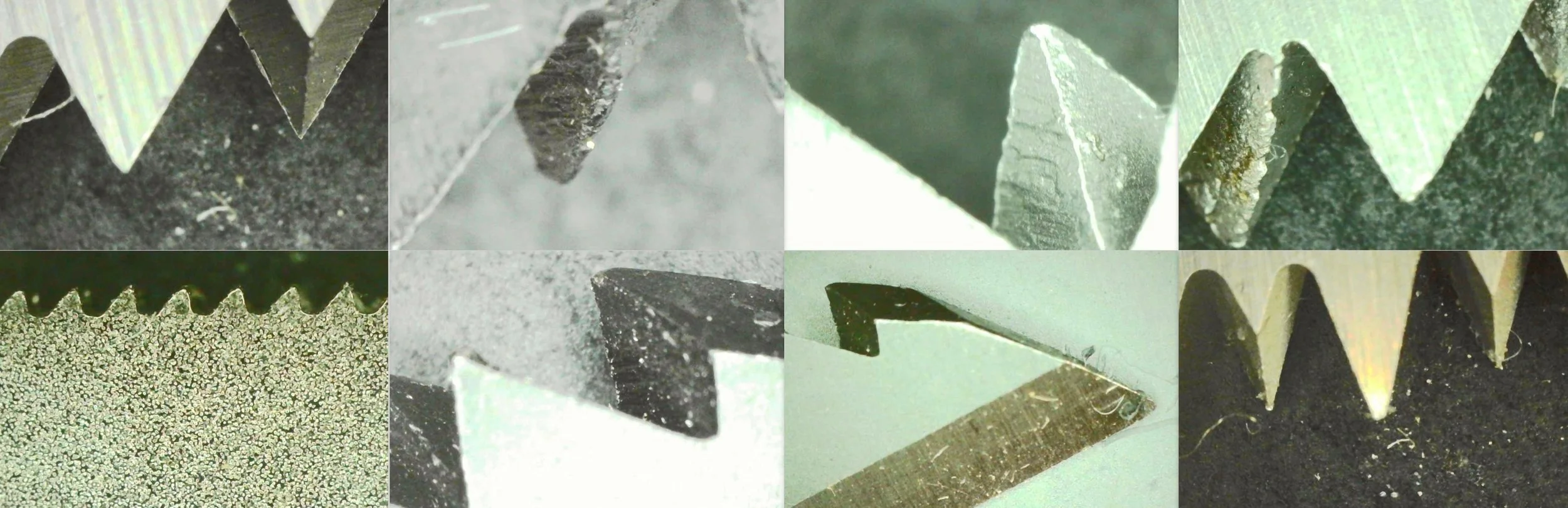
There was a lot of difference in the teeth of the saw blades we tested, as you can see in these microscopic close ups. Courtesy Chris Meehan
Test 3: Saw
Since Treeline Review started with backpackers, they’re still core to us and our values. Having a pocket saw is important in the backcountry for cutting through brush or cutting twigs and branches for roasting marshmallows, making spare tent stakes, or all sorts of other tasks.
As such, we tested each saw three times on the same dowel. We assessed the speed, ease, and smoothness of the cuts on a scale of 1 to 5, with 5 being the highest score they could achieve in this test.
Test 4: Carry, ergonomics, and daily use
Testing the ergonomics of a multi-tool is a more subjective test than most of the others we did, considering it’s about the feeling of the tool in the hand, as well as the ease of accessing every tool or function within the multi-tool. People’s hands are different sizes, some people are left handed or ambidextrous, and so what works for one person may not work as well for another.
To test carry, ergonomics and daily use, we carried each multi-tool in our pocket or on a belt, belt loop, and/or clipped to a shoulder strap. We also assessed how easy it was to open tools up, lock them and put them away during real-world tasks, as well as how sturdy they felt and whether things like pivot points and friction were smooth throughout use or if they loosened over time.
Tasks we undertook with multi-tools included mechanical work on bicycles, tricycles and cars, fixing things around the house, using them on the trail, camping, packrafting, hiking, fixing antique door hardware and other things, working on an irrigation system, building out a car-camping platform, and the list goes on.
Test 5: Durability and a season in the field
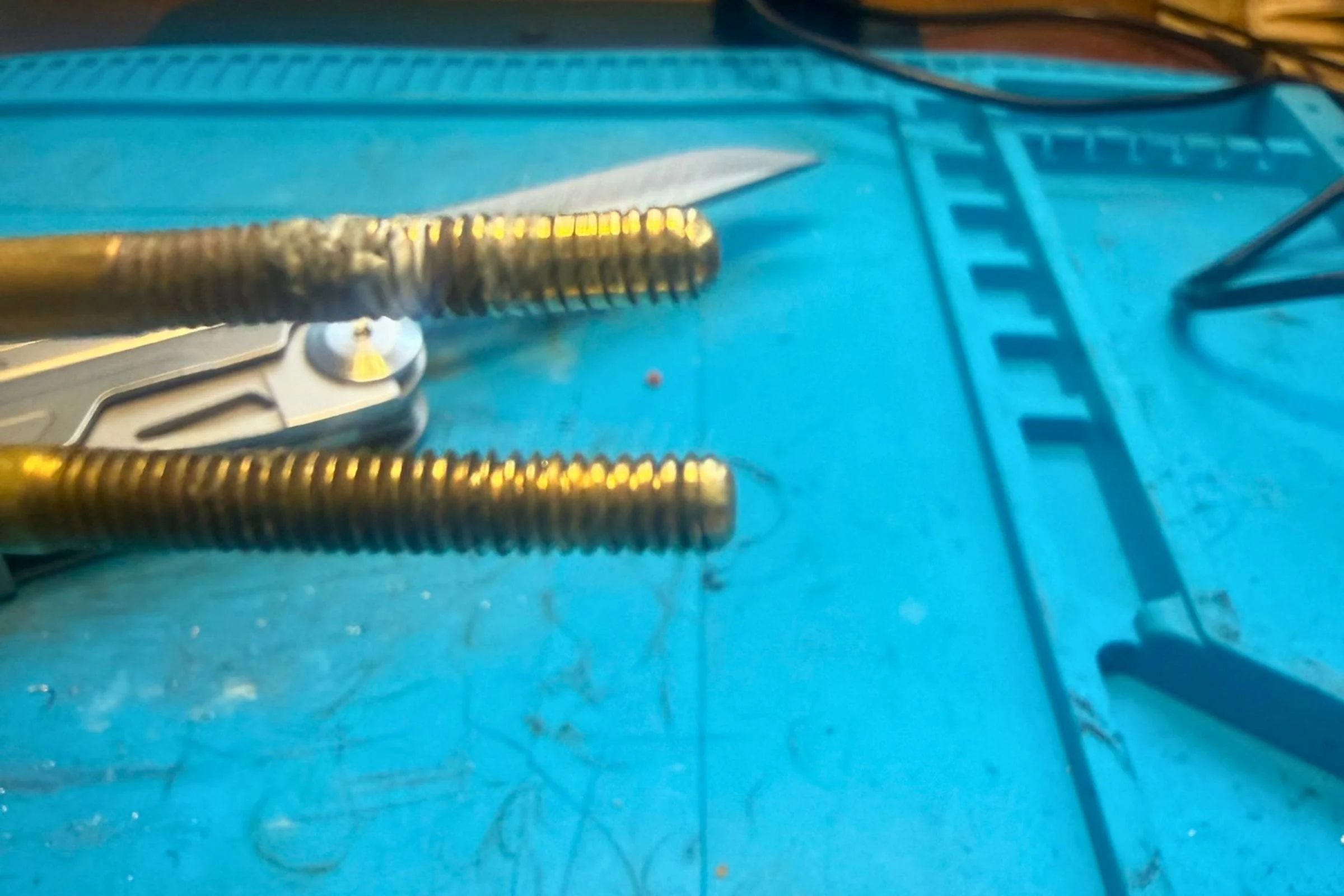
The fixed screw on the bottom and the damaged screw threads up top. Courtesy Chris Meehan
Durability testing is basically just assessing any damage based on the tests undertaken. As mentioned above, we noted whether or not the friction in the tools remained the same over time, or if they loosened up or stiffened up over time. We also assessed whether individual tools experienced damage during use by examining the blades under a microscope before and after testing. Some, surprisingly, did. But most survived testing with no damage over a few months of use.
Test 6: Lock safety
We evaluated lock safety by opening and closing the tools on each multi-tool, including the saws and knife blades. We pushed against the spine of each tool to make sure they didn’t collapse and fold during use or misuse. Thankfully all the locks we tested worked well and no tools failed during these lock safety tests.
- Standardized blade cutting tests
- Wire cutting and stripping comparisons
- Repeated saw cuts on wood dowels
- Microscope checks before and after testing
- Real-world car, bike, and home repairs
- Lock safety and everyday carry tests
- Blade sharpness and edge retention
- Pliers, wire cutters, and saw performance
- Tool selection and versatility
- Ergonomics and ease of use
- Durability and locking safety
- Value for money
About the author / Why you should trust us

I’ve relied on multi-tools for decades, using them for everything from car and home repairs to bike work, camping and more. One of my favorites, which I use weekly—if not daily—I’ve had since I was a mountain guide in Colorado in 2001. Over the years I’ve collected a number of them and keep them in strategic places like the console of my car, the bag I keep in my pedicab, whichever backpack or activity tub I’m using the most in the season. So I’m well versed in what to look for and how to use the various parts of a multi-tool.
As one of the first reviewers for Treeline Review, starting in 2019, I’ve covered a lot of outdoor adventure gear across multiple activities, among them hiking, camping, climbing and mountain biking.
Beyond my work with Treeline Review, I have authored multiple outdoor guidebooks. My most recent Falcon Guide, "Colorado’s Best Front Range Adventures: The Greatest Hiking, Climbing, Paddling and More From Denver to Colorado Springs and Fort Collins," arrived in Spring 2021. In it, I cover the region's best hiking, biking, climbing, and rafting. I’m also the author of Falcon Guide’s “Climbing Colorado's Fourteeners: From the Easiest Hikes to the Most Challenging Climbs” and edited Justin Lichter’s excellent guide to thru-hiking titled “Trail Tested: A Thru-Hiker's Guide To Ultralight Hiking And Backpacking.” This experience has helped me become a first-rate gearhead and product tester.
I have 20-plus years of exploring, hiking, backpacking, mountain biking, climbing, guiding, and playing in the wild. I worked with National Geographic and their mapping division in developing their Colorado 14ers Map Pack Bundle. I’ve written about hiking and climbing for Elevation Outdoors, including stories about Colorado 14ers and outdoor apps to boost adventures.
In addition, I’ve written columns about ultralight hiking and gear for Backpacker, gear reviews for Treeline Review, Popular Mechanics, Bicycling, Popular Science, and other publications, including Elevation Outdoors, 5280, and more.
At Treeline Review, we strive to offer unbiased reviews to help you find the best product for the price. Treeline Review doesn’t accept sponsored content, native advertising, or paid reviews. I am not sponsored by any companies, nor are any of my family members sponsored by, employees of, or ambassadors of any of the companies in this review.
Find more of Chris Meehan’s reviews on his Treeline Review author page.