The Most Packable Ski Shell I’ve Used — Outdoor Research Carbide Ski and Snowboard Jacket
An extremely lightweight, waterproof, and windproof shell with plenty of key features
February 28th, 2026
Home > Gear Reviews > Ski & Snow
Our verdict
The Outdoor Research Carbide Jacket for men and women is designed for ski and snowboard touring, with a lightweight construction that still protects against the elements, even when you are splitboarding up a snowy, windy ridge. In fact, we named it Best for Touring in our Best Snowboard Jackets guide.
This was the lightest shell we tested—just 1.1 pounds—with the lowest denier as well, which has both positives and negatives. It isn’t super durable, which means it could get snagged more easily than other jackets we tested, but its low-denier fabric makes it not crunchy at all and easy to stuff into a pack without taking up much space or to wear under a backpack without stiffness. It rolls up to about the size of a Nalgene water bottle.
We wore this jacket both in-bounds while cruising groomers and while skinning up on a splitboard. When skinning up at mid-twenty degrees in the shady trees of Eldora, we felt neither too hot nor too warm, giving this jacket props for its breathability. When we wore this in-bounds without skinning, the jacket kept us protected from the wind both on the chairlift and while heading down.
This is just a shell—and a lightweight one at that—so you will need to layer up underneath with a base layer and on chillier days, a midlayer, too. The best use for this shell is if you mostly uphill or splitboard but also spend a few days at the resorts. It’s waterproof, breathable, and has a clean look.
Outdoor Research Carbide Ski and Snowboard Jacket
men's
Women's
Learn more about our favorite ski and snowboarding jackets in our Best Snowboarding Jackets, Best Men’s Ski Jackets, and Best Women’s Ski Jackets guides.
We write mission-driven gear reviews. To find the best gear, we combine expert reviews, everyday user opinions, and rigorous independent trail testing—never native ads or sponsored posts. We are 100% reader-supported and may make a small commission from some qualifying affiliate links. Learn more.
Outdoor Research Carbide Jacket Specifications
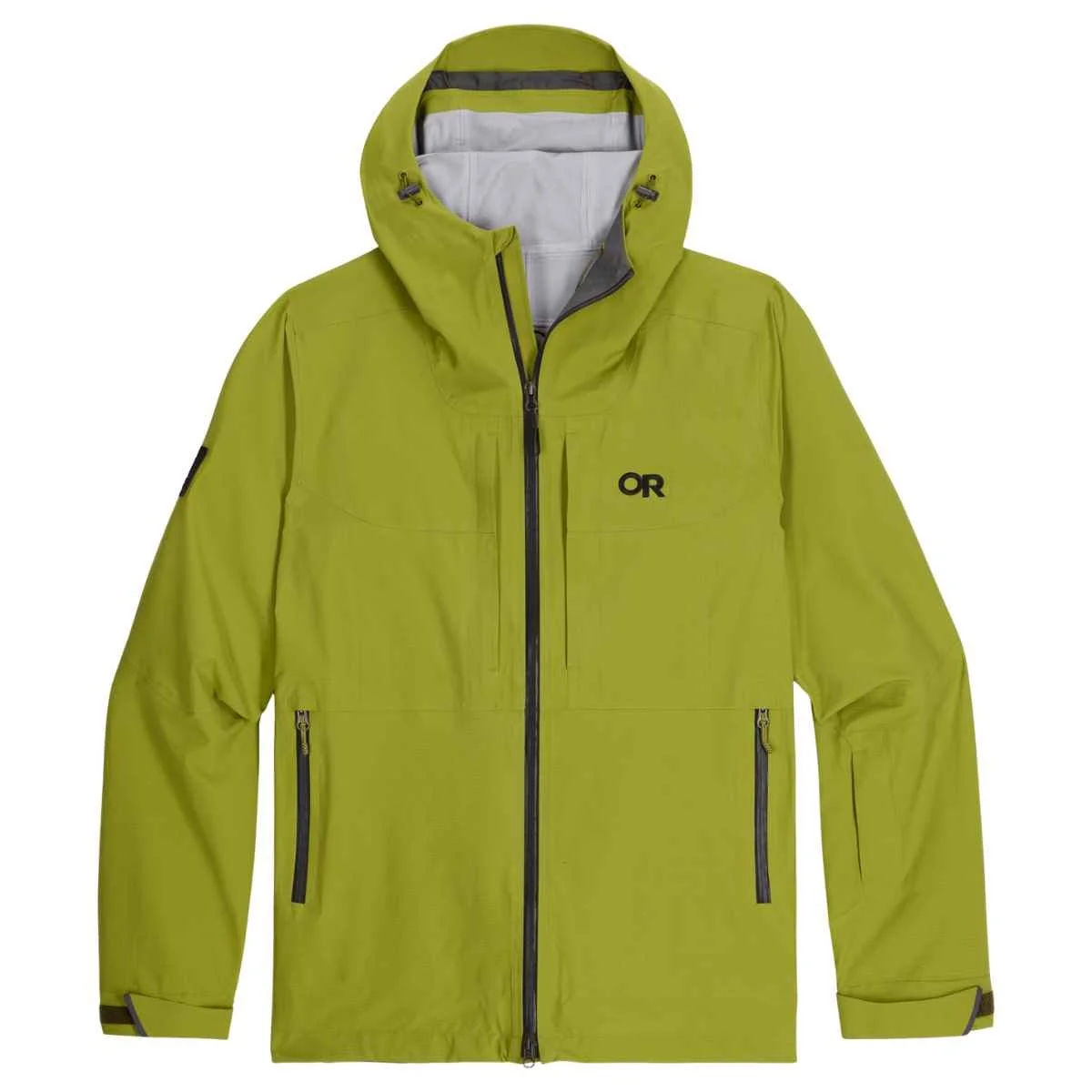
Price: $329
Weight: 1.1 pounds
Insulation: None
Waterproof rating: 4/5; 20,000 mm waterproof
Breathability rating: 5/5; 20,000 gsm breathable
Waterproof technology: 3-layer Pertex, YKK Aquaguard ZippersSeams: Fully taped
Fabric/material: Bluesign-approved Pertex Shield 3L 100% nylon 40D
Fit: Regular articulated
Sizes available: XS-4XL (women’s); S-3XL (men’s)
Ventilation: Pit zips, unlined
Hood: Helmet-compatible, attached, adjustable hood
Powder skirt: Yes, attached w/ snapbacks
Pockets: External pass pocket, two external chest pockets, one internal chest pocket, internal mesh stash pocket
Sustainability: Bluesign-approved materials
Colorways: Three options for men; two options for women
Warranty: Limited lifetime
Best for
Backcountry riders and skiers
Resort riders—all levels
Resort skiers—all levels
Cold, windy days with extreme weather; milder, warmer days
Lightweight protection with the ability to layer underneath
Comparison table
| JACKET | MSRP* | SIZES | # POCKETS | WATERPROOFING | PIT ZIPS | POWDER SKIRT |
|---|---|---|---|---|---|---|
| Outdoor Research Carbide Women's Men's |
$329 | XS-4XL (women’s); S-3XL (men’s) | 5 | 3-layer Pertex | Yes | Yes, attached with snapbacks |
| Stio Skyrider Women's Men's |
$349 | XS-XL (women’s); S-XXL (men’s) | 7 | PeakProof 3-layer canvas, 20K/20K PU hydrophilic lamination | Yes | Yes, attached with snapbacks |
| Arc'teryx Sabre / Sentinel Women's Men's |
$750 | XXS-XXL (women’s); XS-XXL (men’s) | 6 | 3-layer ePE GORE-TEX shell, PFAS-free DWR finish | Yes | Yes, attached with snapbacks |
| Flylow Billie Coat | $440 | XS-XL (women’s) | 7 | Surface 3L hardshell fabric with PFAS-free DWR finish | Yes | Yes, removable |
What we liked
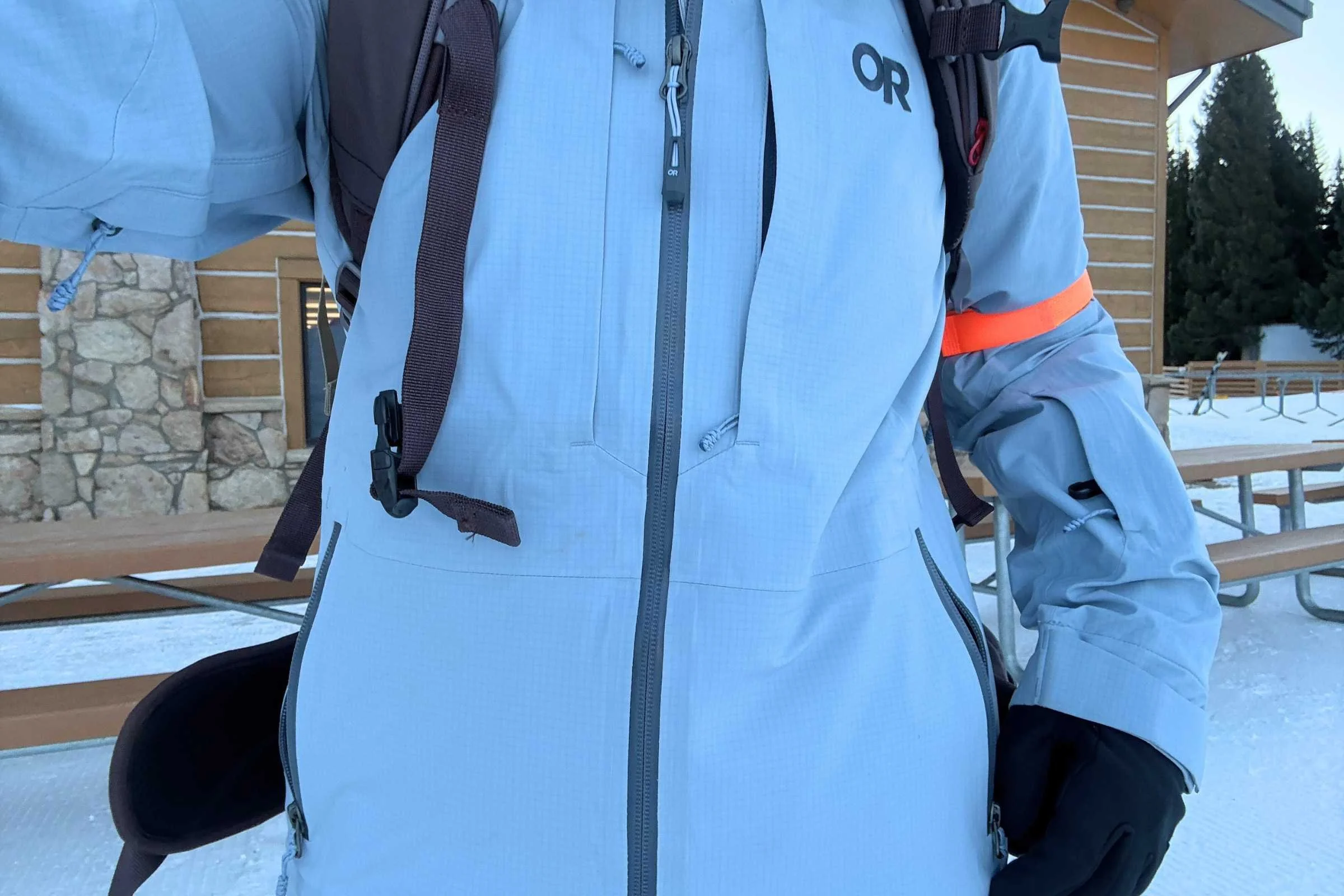
The OR Carbide jacket is waterproof, windproof, and has plenty of features.
Very breathable and extremely windproof
Ideal for both in-bounds and out-of-bounds
Snapbacks on snowskirt
Two external chest pockets and one internal
Inclusive sizing
What could be better
Only use if you want a shell, as there is no insulation
Not as durable as higher-end shells
How we tested
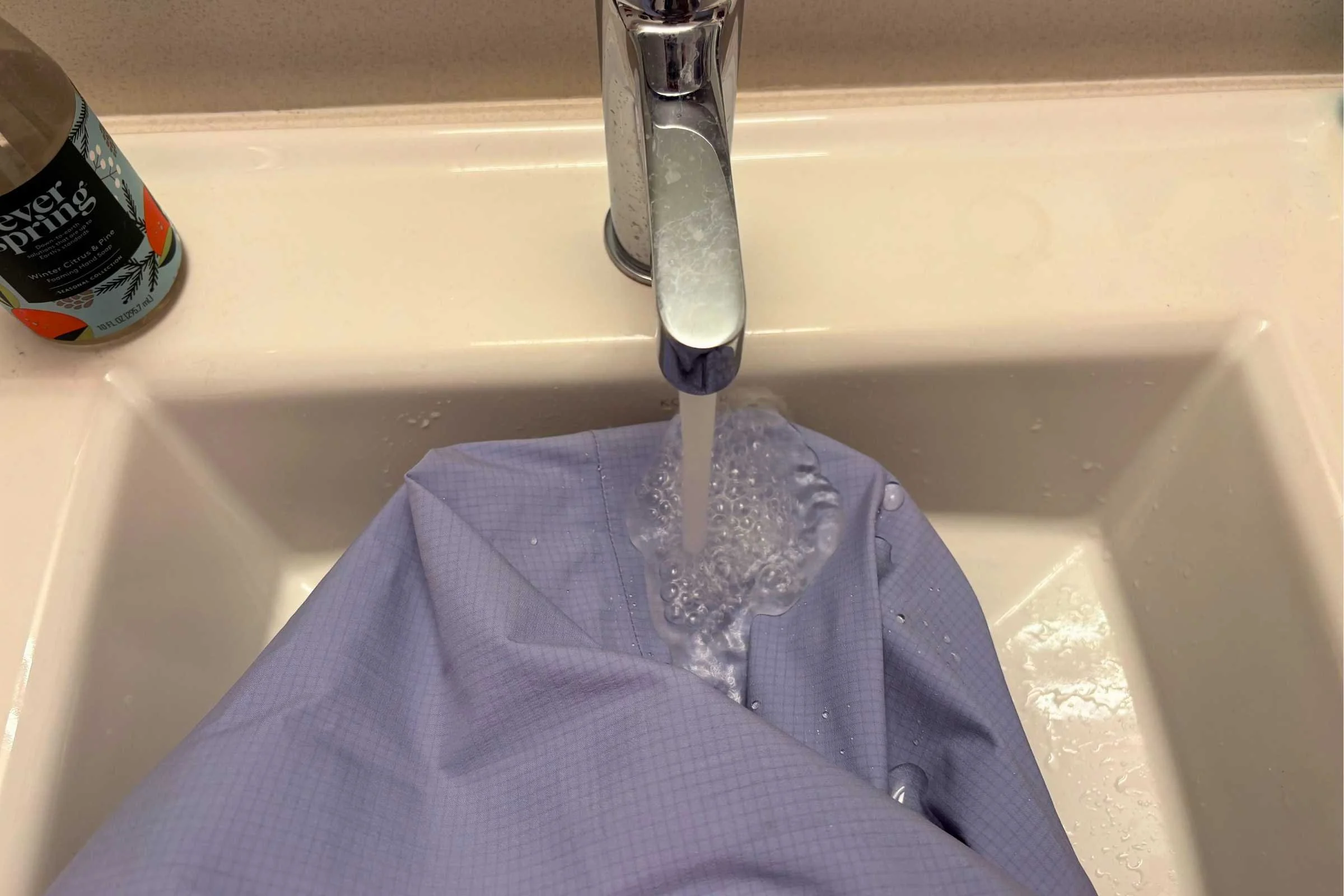
In addition to testing the jacket on the slopes, we ran the OR Carbide jacket under a sink as part of a standardized waterproofing test.
We tested this jacket over multiple days at resorts in Colorado, including Eldora Mountain Resort, Breckenridge Ski Resort, and Winter Park Resort. At Eldora, which is notoriously windy, we tested this both during up-hill splitboarding and regular days on downhill. On other days of testing, like at Breck and Winter Park, we encountered warmer temperatures and sunny skies. All testing provided good metrics for the jacket’s breathability, windproofness, waterproofness, and overall warmth, as temperatures ranged from mid-teens and breezy to low-30s with sunny skies.
I tested this jacket side by side with other shells, like the Arc’teryx Sentinel/Sabre, Flylow Billie Coat, Patagonia Powder Town, Mountain Hardwear Sky Ridge, and the Stio Skyrider. Of all of these jackets, it is the lightest option. It was not as robustly waterproof as higher-end jackets with GORE-TEX, such as Arc’teryx or Mountain Hardwear, but it still fared well in at-home testing, where we ran a faucet over various parts of the jackets for one minute each to simulate lab testing. I used all the zippers while wearing gloves and mittens, and wore this on a range of runs, like groomers, moguls, and in the trees.
Additionally, as part of a controlled "lab-like" testing across all snowboard jackets I’ve tested, I ran parts of the OR Carbide under a faucet for a minute at a time to test waterproofing.
Performance in the field
Fit and comfort
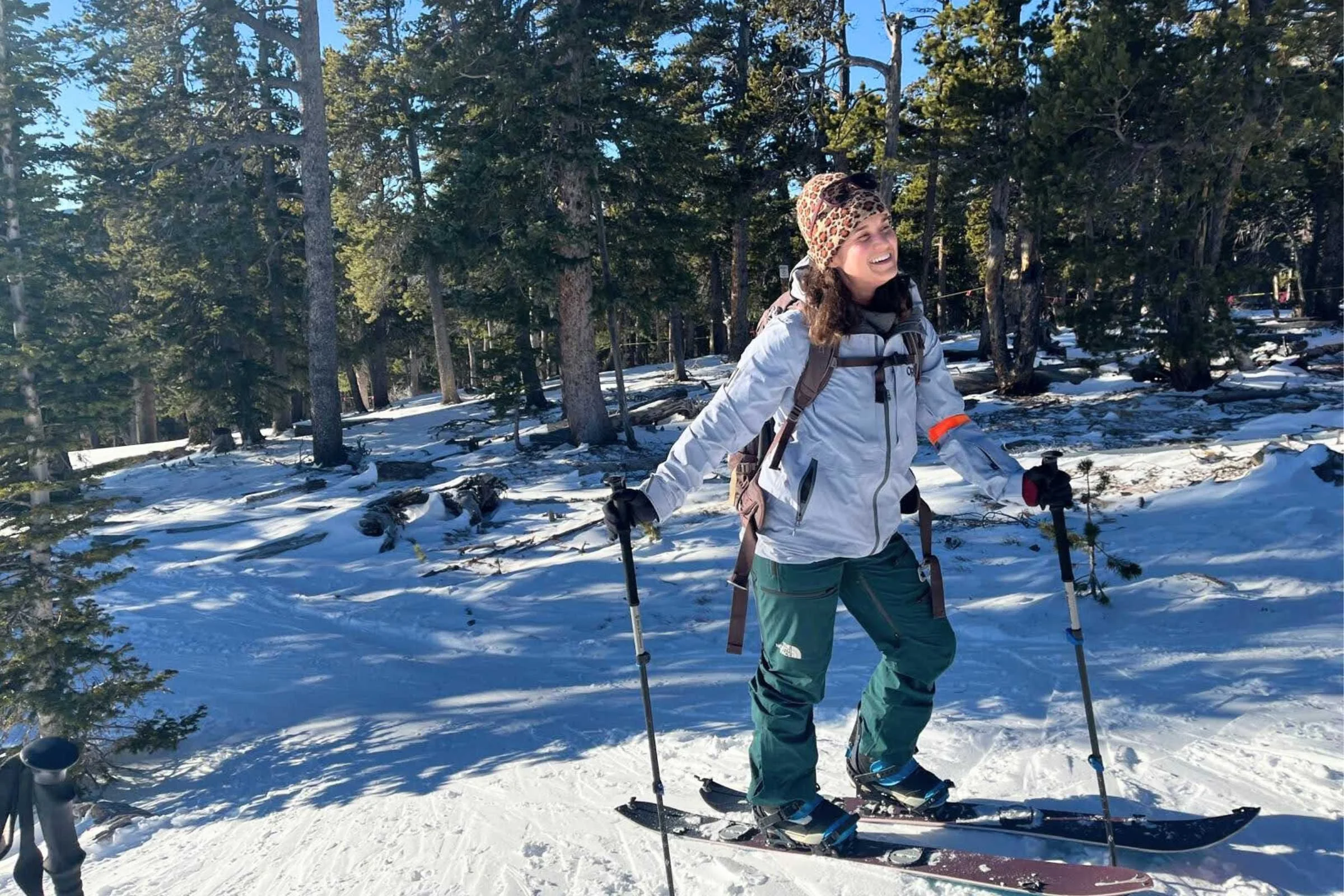
The fit of the Carbide is more like a traditional ski jacket, with a shorter hem and a slightly boxier style, but it still provides ample stretch and flexibility needed for carving and bending down to strap in bindings. This flexibility is key for snowboarding, where you rely a bit more on torso rotation. It was also roomy enough to fit a puffy underneath in chillier temperatures. The sizing is also inclusive, with women’s ranging from XS to 4XL and men’s from S to 3XL. If you are a snowboarder who prefers a baggier jacket, this could feel cumbersome or slightly too tight.
Warmth and insulation
There is no insulation or an added inner liner in the Carbide, like on the Patagonia Power Town or the TREW Gear Popover. If you are using this mostly for touring, though, you don’t need that extra insulation as you work up a sweat slogging uphill. Because there is no insulation or lining, it is extremely breathable. As the thinnest and lightest jacket we tested, it was one of our most breathable (I didn’t feel the need to de-layer with it, even as I was climbing uphill at Eldora for about 45 minutes in slightly shaded trees at about 28 degrees), even if it didn’t provide any warmth from insulation.
Waterproofing and breathability
This jacket is rated at 20K/20K for waterproofing and breathability, matching the ratings of other high-quality shells. Outdoor Research internally lists it as mid-range for waterproofing, so there is potential that the inside could get slightly damp if this were worn in extremely wet climates or heavy snow.
However, it fared well in our at-home testing, where we ran a faucet over various parts of the jacket for one minute each, including the back panel, seams, and zippers. The aim was to simulate a water pressure of about 45 PSI, which is close to 31,000mm. No water seeped through any of the parts we tested.
As the thinnest and lightest jacket we tested, it was also one of the most breathable. When testing on the mountain and skinning uphill, I didn’t feel the need to take this layer off. To simulate lab testing for breathability, I boiled water, poured it into a mug, and then placed the inside back panel of the jacket over the steam. Then I placed a glass cup over it to see whether the top glass fogged up, indicating that vapors had seeped through. With the Carbide jacket, the glass did fog up, showing that it is breathable and would allow sweat vapors to escape and help air you out on a warm day.
Durability and construction
Durability is where this jacket falls a bit short when compared to other shells. It’s made from 40D nylon fabric, whereas the other shells we tested were rated between 80 and 150 denier for the more burly jackets, like the Stio Skyrider, Flylow Billie Coat, and Patagonia Powder Town. It is, however, extremely flexible and not nearly as stiff-feeling as other jackets we tested.
Ventilation
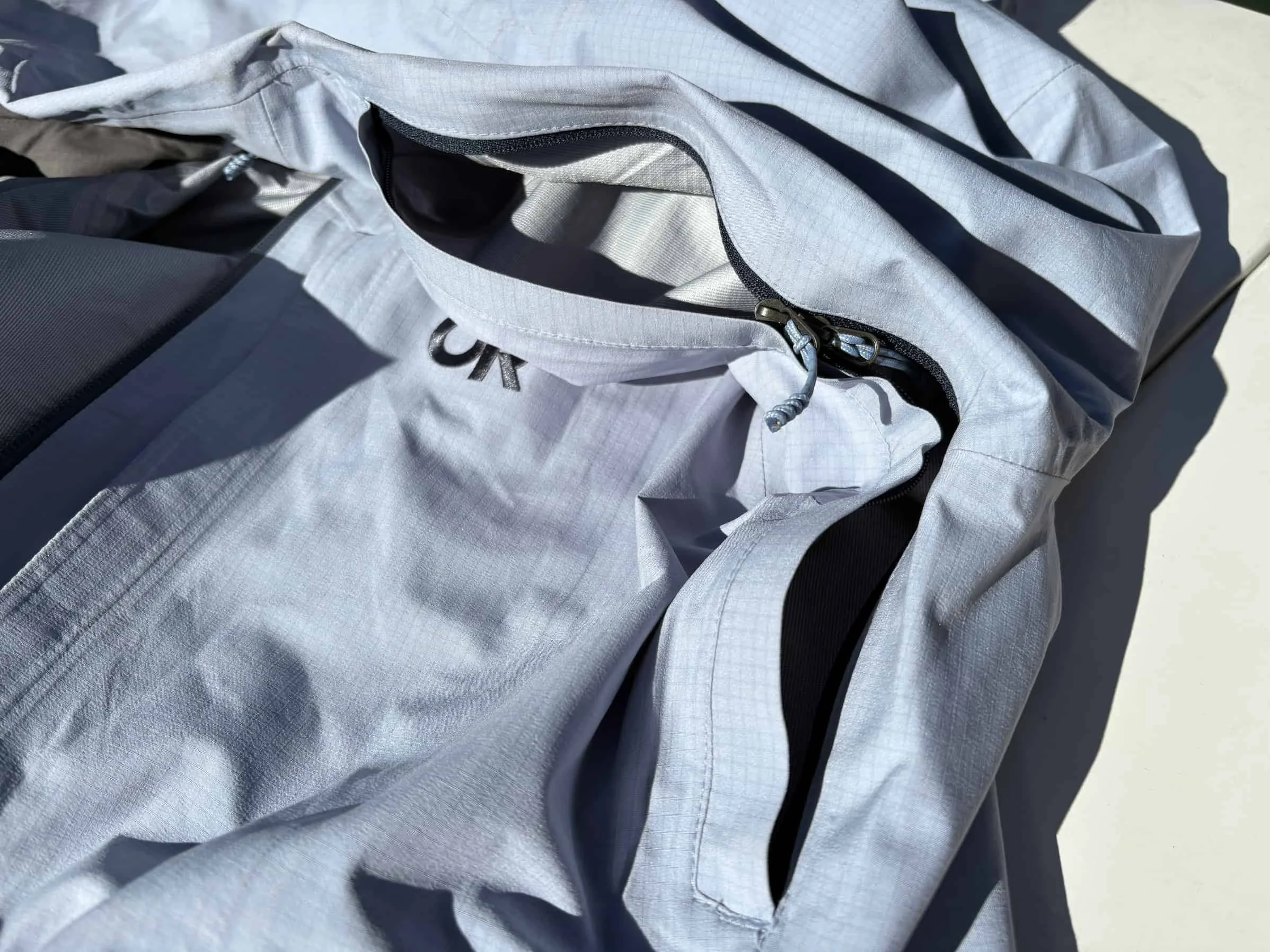
The dual-zippered pit zips help release heat when working up a sweat on the slopes.
The jacket has zippered pit vents under each arm. These are unlined—so snow or moisture could get in—but they are dual-zippered so you can open these from the top or bottom of the vent. No other jacket we tested had pit vents that could be unzipped in two directions and we didn’t find this completely necessary. When touring, the zipper pulls were very easy to grab with thin gloves, but were harder to grab with thicker mittens.
Features and usability
The powderskirt prevents snow from entering on deep powder days. This one has snapbacks to stay out of the way if you aren’t using it.
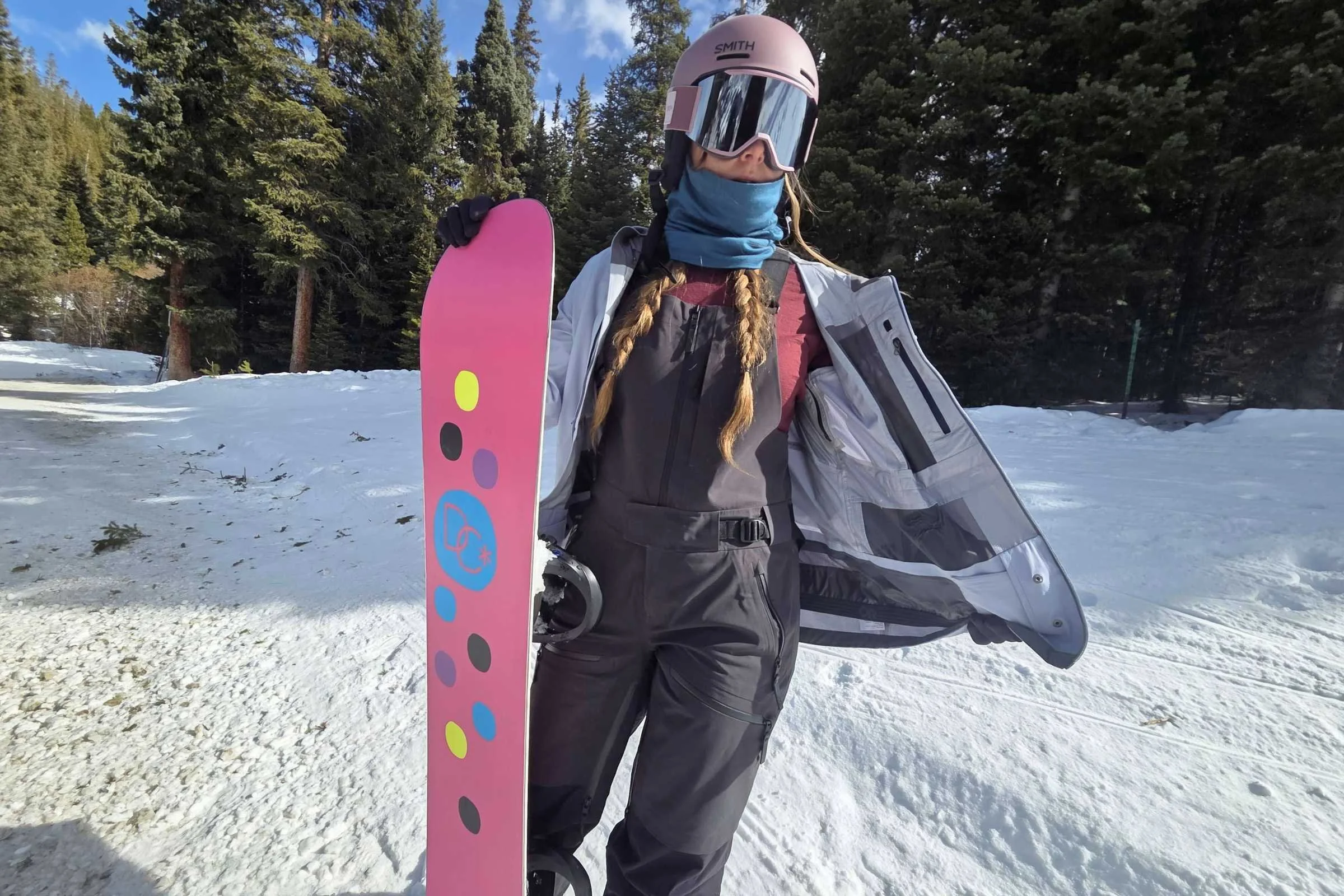
The Outdoor Research Carbide ski and snowboard jacket has almost all the features that other shells or even insulated jackets have. There are pit zips with dual-direction zippers, a helmet-compatible hood with cinches in the front and back, a cinching hem on the bottom, and an attached powder skirt that has snapbacks to keep it out of the way when you aren’t using it.
On the outside is a pass pocket on the sleeve, two handwarmer pockets (one with a key clip), two external chest pockets, and one internal chest pocket. It doesn't have an internal mesh drop-in pocket, which wasn’t a deal-breaker since there were plenty of other pockets to use.
Weight and packability
The Carbide is the lightest jacket tested at just 1.1 pounds. It does truly feel this lightweight and is extremely easy to pack up and shove in a backpack, or tie around your waist and barely notice it’s there. The other shells we tested were slightly thicker and heavier, at about 1.5 pounds.
When rolled up, this jacket packs down to about the size of a Nalgene water bottle.
Features
Shell and lining materials
This shell uses a waterproof and breathable Pertex Shield 3L fabric with fully seam-taped construction. Outward-facing YKK zippers are YKK water-resistant.
Ventilation system details
The Carbide jacket has unlined pit zips that can be unzipped from the top or bottom; most jackets we tested had pit zips that only went one way. The dual-direction doesn’t seem completely necessary.
Powder skirt design
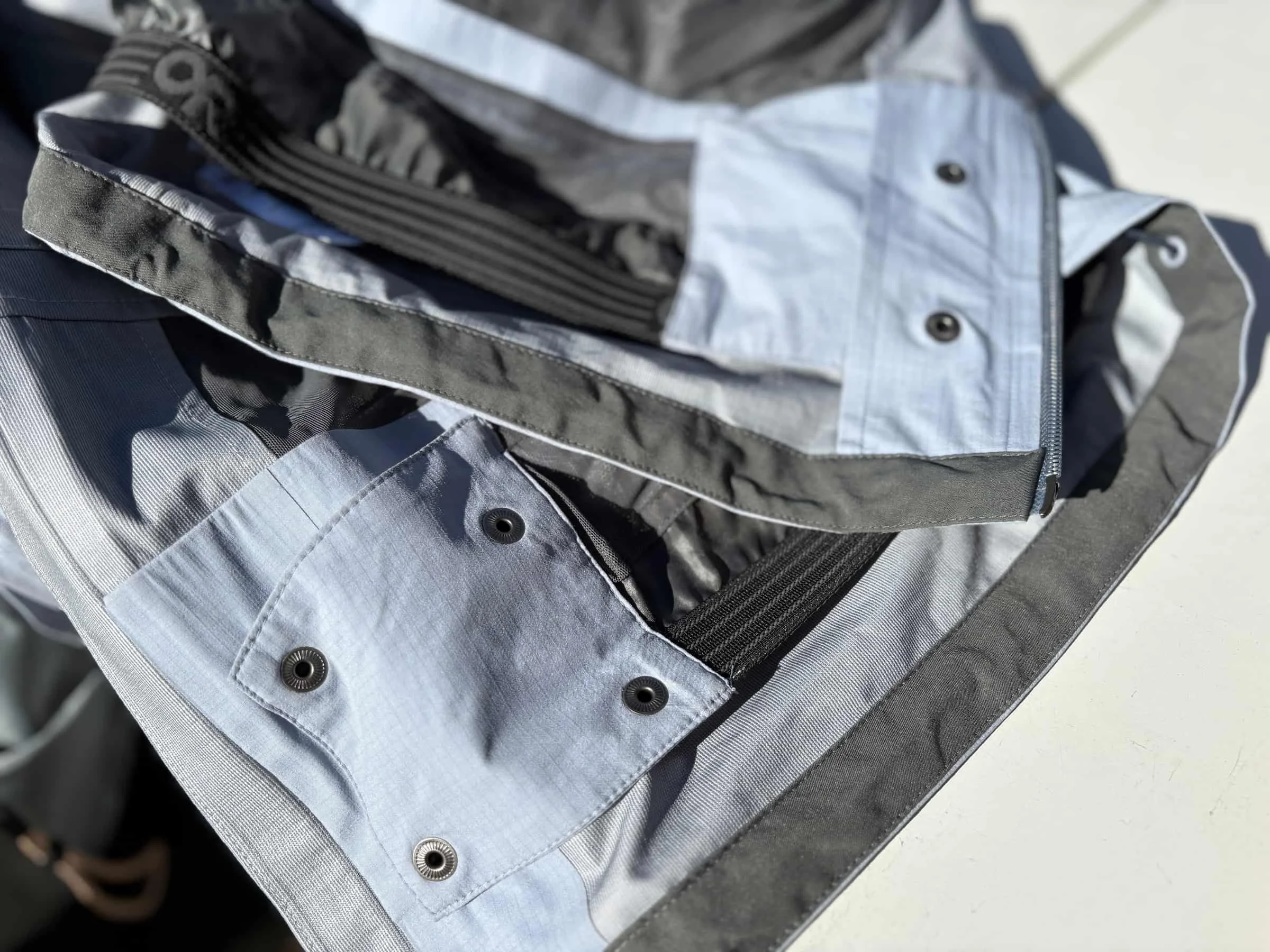
The snapbacks on the powder skirt on the OR Carbide shell snowboard jacket help keep the powder skirt out of the way if not using.
This jacket comes with an attached, very thin powder skirt with grippy elastic at the hem. It does have snapbacks, which is nice for keeping the skirt from flapping around if your jacket is unzipped or if you simply don’t want to use a powder skirt.
Hood and helmet compatibility
The attached hood is helmet compatible with a small brim. To secure on windy days, the jacket has cinches at the front and back.
Pockets and zippers
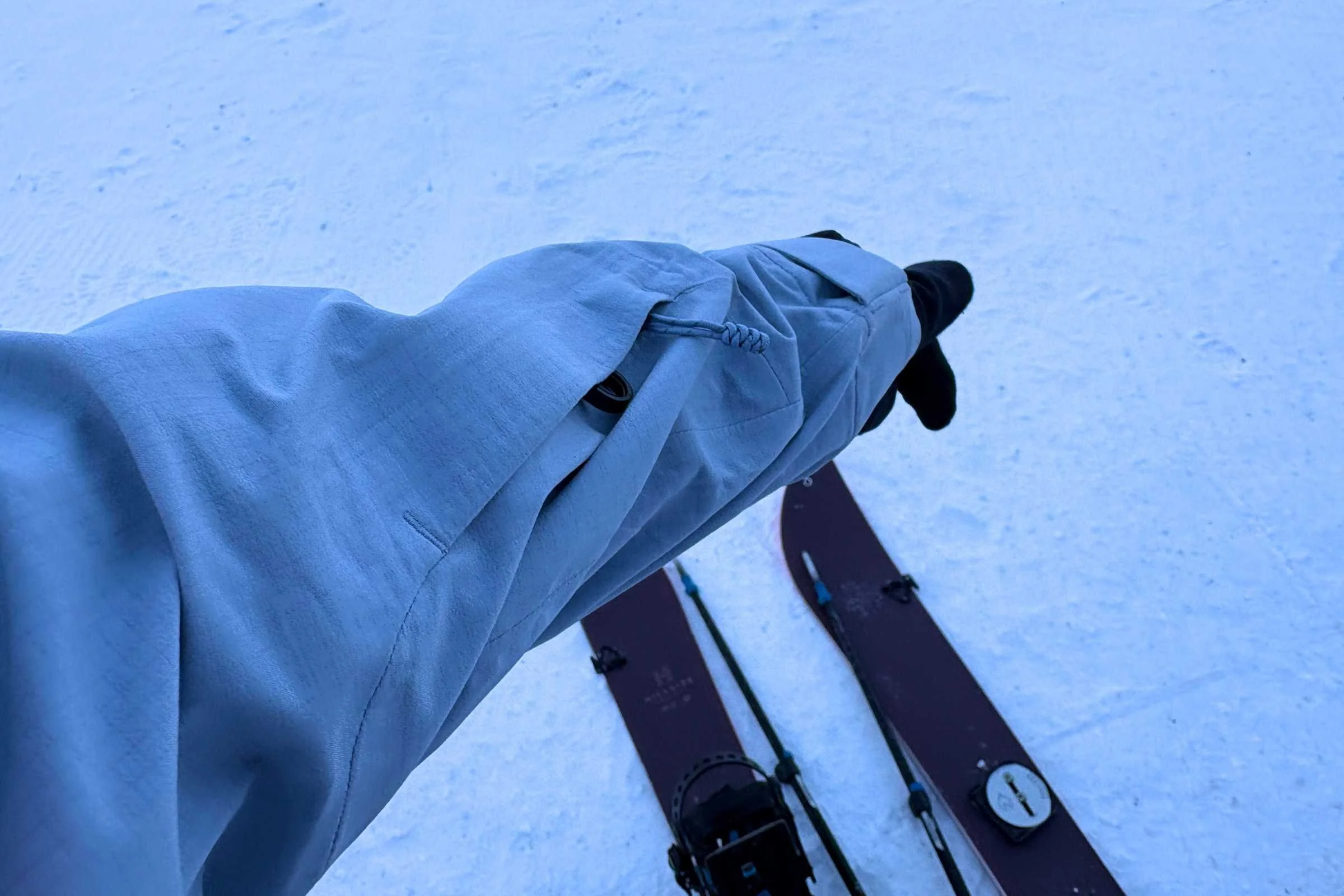
Plenty of outside pockets help store your pass, snacks, and more.
The pockets on the Carbide include two front external chest pockets, one internal chest pocket, a sleeve passpocket, but no internal drop-in pockets. There are two handwarmer pockets, one of which has a key clip. Most other jackets had internal drop-in pockets, but not all had two zippered external chest pockets.
The zippers on the center front of the jacket and the front handpockets have YKK water-resistant zippers with pull tabs that are moderately easy to grab with mittens or gloves on; the smaller pulls are definitely made for gloves or very thin touring gloves. The front zipper is also two-way, so you can easily adjust layers underneath from the bottom of the coat.
Style options and colorways
This jacket leans slightly more toward a skier style with shorter hem and slimmer fit, but it wasn’t at all unflattering, just a bit boring. But the cut still allowed for us to layer underneath without hindering movement.
Colors for men include a rainforest green, bronze/black colorblock, and black; colors for women include a light blue, teal/blue colorblock, and black.
Sustainability and ethics
This jacket uses bluesign-approved Pertex for the shell. Bluesign-approved is a set of guidelines for textile production that means the material is manufactured using safe chemicals and responsible resourcing.
Should you buy the Outdoor Research Carbide Jacket?
Buy if you tour in the backcountry often. This is a lightweight, extremely packable touring shell that you can sometimes also use in-bounds. It was our lightest jacket tested and can scrunch up to an extremely small size in a pack, yet still provides waterproofing, wind protection, and extreme breathability.
Skip if you want an insulated jacket or something more durable, as this is just a shell that is very thin and lightweight.
Where to buy
The Outdoor Research Carbide Jacket is popular, so you have options when it comes to retailers. Here are some of the pros of the retailers.
REI
Pros: 100% satisfaction policy for 1 year; 10% dividend for members.
Amazon
Pros: Free 2-day shipping with Amazon Prime membership
Backcountry
Pros: Frequent sales for Expedition Perks members (free to join), fast shipping, Gearhead chat customer service is excellent
Outdoor Research
You can sometimes find more options when purchasing directly from the retailer. Sometimes, purchasing directly from the retailer can make it easier if you need to make a warranty return, such as if there is a defect.
Similar Ski and Snowboard Jackets
Stio Skyrider Jacket
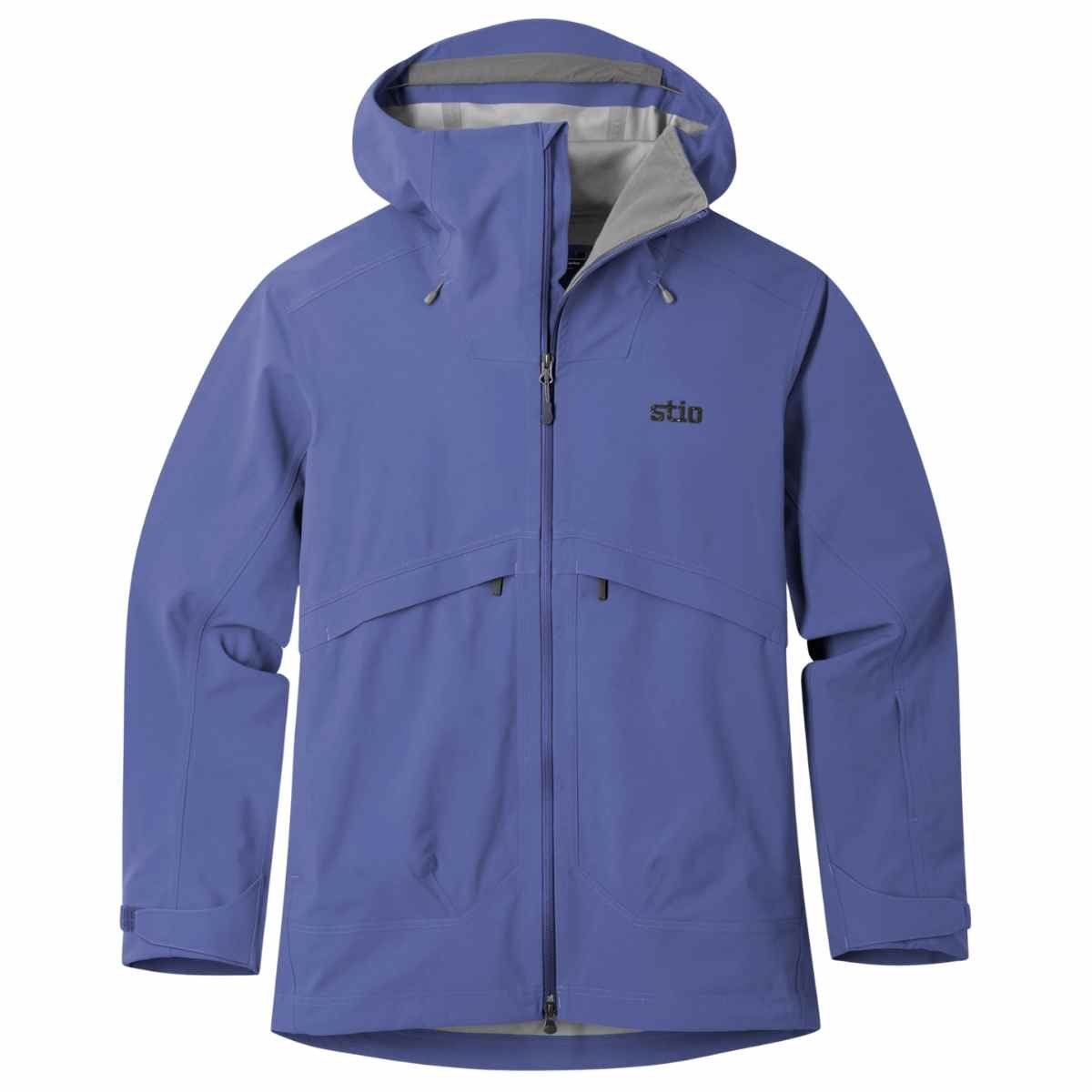
Waterproofing: 5/5; PeakProof 3-layer canvas, 20K/20K PU hydrophilic lamination
Breathability: 5/5; 20,000 g/m²
Insulation: None; 1/5, thin
Available sizes: XS-XL (women’s); S-XXL (men’s)
Pockets: One internal drop-in pocket, a small internal zipper mesh pocket, two handwarmer pockets with two larger pockets layered over those, a sleeve pass pocket
Pit zips: Yes, unlined
Powder skirt: Attached with snapbacks
Price: $349
The Outdoor Research Carbide and the Stio Skyrider are similar jackets in terms of waterproofing and windproofing and differ only slightly in price. The Skyrider is better for folks who split their time most evenly between in-bounds and backcountry touring, as the Skyrider is not as lightweight and packable as the Carbide, but is slightly thicker for more protection when in-bounds. Both have a similar cut, hem length, and features. Choose this if you tend more toward in-bounds days, but with some touring.
Stio Skyrider Jacket
men's
Women's
Arc’teryx Sentinel / Sabre
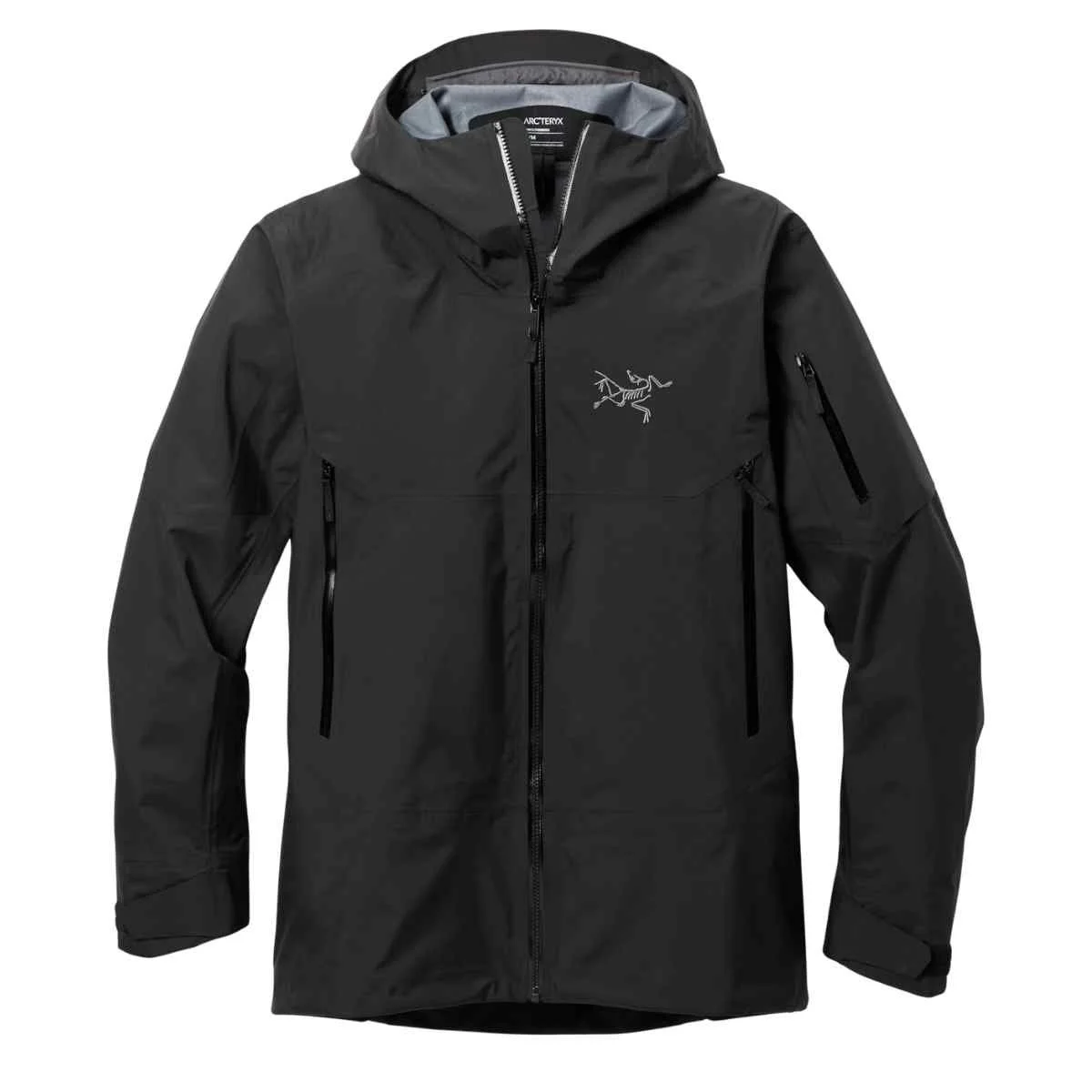
Waterproofing: 5/5; waterproof and breathable 3-layer ePE GORE-TEX shell, PFAS-free DWR finish
Breathability: 4/5
Insulation: None; 1/5, thin
Available sizes: XXS-XXL (women’s); XS-XXL (men’s)
Pockets: Pass pocket, two soft handwarmer pockets, and two internal drop-in mesh pockets, one of which has an integrated small zipper pocket
Pit zips: Yes, unlined
Powder skirt: Yes, attached with snapbacks
Price: $750
At more than twice the cost, the Arc’teryx Sentinel (women’s) and Sabre (men’s) do offer a higher-quality jacket than the Carbide. These are made from 80D material with a GORE-TEX 3-layer membrane, so you get top-tier waterproofness, wind protection, and breathability. The Sentinel/Sabre are also more durable than the Carbide.
Learn more in our in-depth review of the Arc’teryx women’s Sentinel Jacket by reviewer Stasia Stockwell and our in-depth review of the Arc’teryx men’s Sabre Jacket by Matt McDonald.
Arc’teryx Sentinel / Sabre
men's
Women's
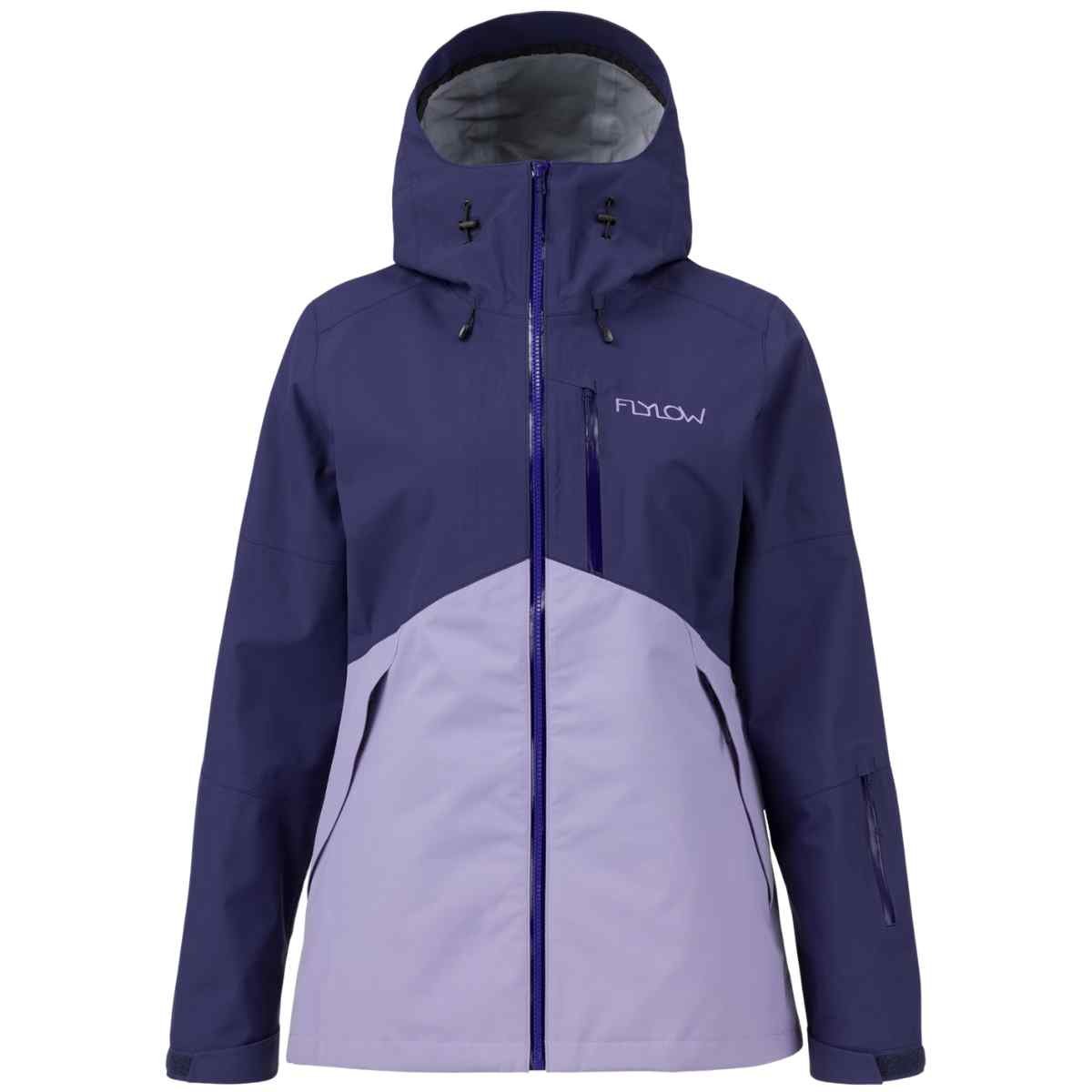
Waterproofing: 5/5; 20,000mm Waterproof, Surface 3L hardshell fabric with PFAS-free DWR finish; 100% recycled polyester
Breathability: 4/5; 20,000gsm
Insulation: None, 2/5 thin
Available sizes: XS-XL (women’s)
Pockets: Sleeve pass pocket, two handwarmer pockets, an external zippered chest pocket, plus three zipper pockets inside
Pit zips: Yes
Powder skirt: Yes, removable
Price: $440
The Flylow Billie Coat for women has similar features to the Cabide—like pockets, pit vents, and a powder skirt (although this one is removable)—and tested the same when it came to waterproofness and breathability. The Billie Coat, though, is slightly thicker and heavier than the Carbide, so it doesn’t pack down as easily, but it does provide just a bit more protection from wind and cold weather. It also costs about $100 more than the Carbide.
Flylow Billie Coat
Why you should trust us / about the author
Although I grew up in Wisconsin, my family got me on skis when I was just three years old. At ten, I decided to follow in my older brother's footsteps and try snowboarding. I haven’t stepped on a ski since and, instead, have been snowboarding for more than 25 years, with more than half of those seasons spent out west once I moved to Boulder, Colorado. I have dabbled in park riding over the years, but my go-to is moguls, trees, and steeps as I’ve advanced to an experienced rider; I have spent time in the backcountry as well. When it comes to testing snowboarding gear, I’ve spent numerous seasons sporting many different helmets, boots, bindings, and apparel to break down the minutiae of what truly works and what doesn’t when it comes to what I need as a snowboarder. Read more on Mattie Schuler’s website or author page.