I Tested The North Face THERMOBALL Snow Triclimate Jacket — The Warmest Jacket I Rode in This Season
An in-depth review of the 3-in-1, extremely warm The North Face THERMOBALL Snow Triclimate jacket
January 11th, 2026
Home > Gear Reviews > Snow Gear
Our verdict
The North Face THERMOBALL Snow Triclimate ski and snowboard jacket is right on par with everything else we’ve ever tested from The North Face, and didn’t disappoint. It is versatile and warm with its 3-in-1 construction of a shell and a zip-in puffy midlayer.
We wore this jacket on milder days on the mountains as well as 15-degree days with wind and snow at Eldora Mountain Resort, which is notorious for its strong winds. The standout feature? Supreme warmth. With the shell and puffy, this was by far the warmest jacket we’ve tested this season, making it ideal for very cold days, very windy days, or days with both and dumping snow. The features on it are also abundant, like a helmet-compatible hood, numerous pockets throughout, and a comfortable, non-restrictive fit.
While this jacket offers excellent warmth and abundant features, it’s not very stylish or unique looking, and it’s on the pricey side of jackets. If you aren’t entirely sure that you are committing to this sport (or simply don’t want to drop $400), other jackets will suffice for a warm, waterproof winter option.
The versatility of a 3-in-1 design does somewhat make up for that price, as you can sport just the shell, just the puffy for skiing or casual winter use around town, or put them all together for extreme warmth and protection while in the resort.
Learn more about our favorite ski and snowboarding jackets in our Best Snowboard Jackets, Best Men’s Ski Jackets, and Best Women’s Ski Jackets guides.
men's
Women's
This story may contain affiliate links, which help fund our website. When you click on the links to purchase gear, we may get a commission. This allows us to create reader-supported, objective gear reviews, independently selected by our editors— without costing you an extra cent. Thank you for supporting our work and mission of outdoor coverage for every body! Learn more.
The North Face THERMOBALL Snow Triclimate Jacket Specifications
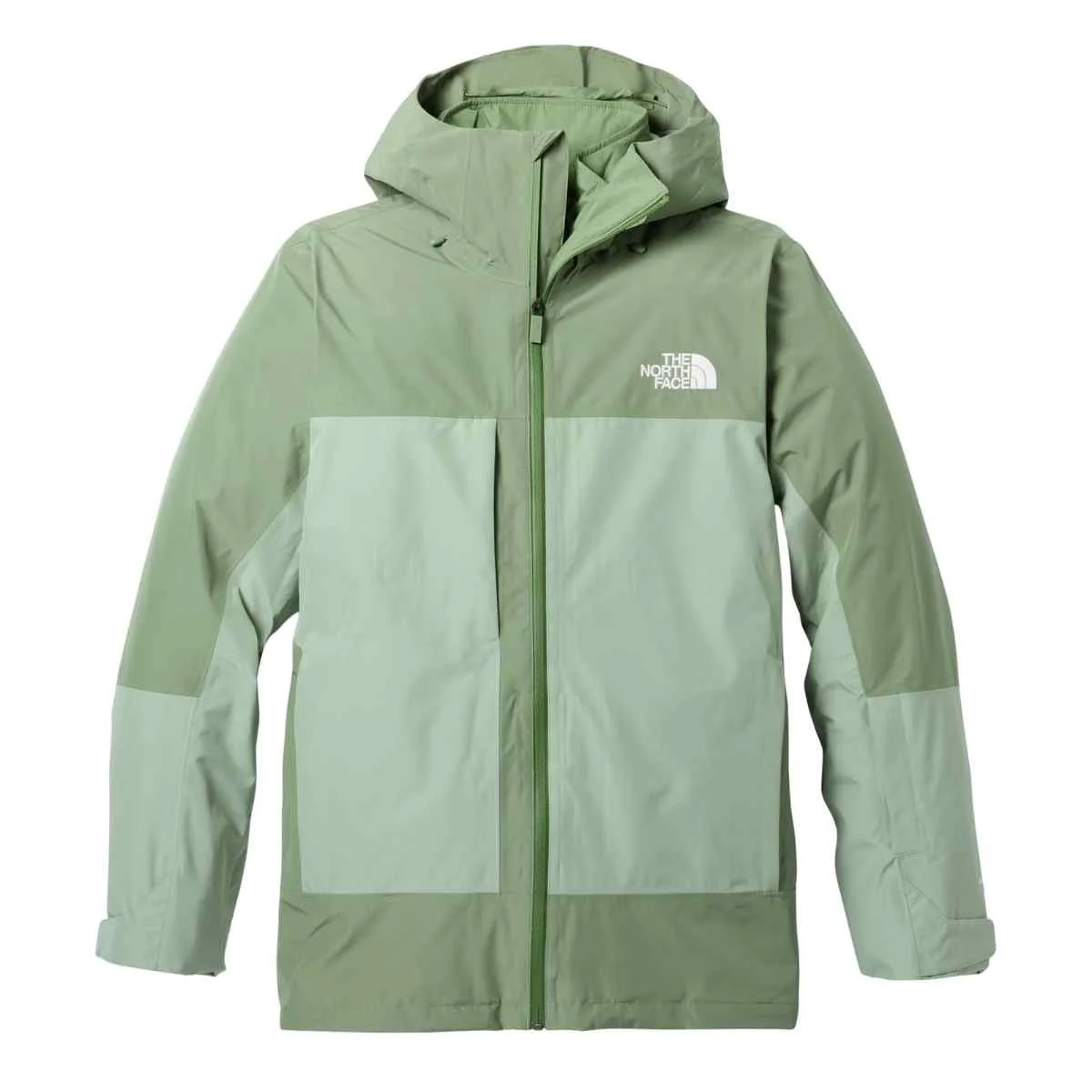
Price: $400
Weight: 1,008 grams (35.5 ounces) for a women’s medium
Insulation: 3-in-1 insulated puffy with a shell; HEATSEEKER synthetic insulation
Waterproof rating: At-home testing rating of 4/5
Breathability rating: 75D 133 g/m² DRYVENT 2L finish
Waterproof technology: DRYVENT 2L shell with a non-PFC DWR finish
Seams: Seam-sealed shell
Fabric/material: Polyester
Fit: regular/relaxed (not baggy or extra long hems)
Sizes available: XS to XXL for women’s; S to XXL for men’s
Ventilation: Open pit zips
Hood: Helmet-compatible, attached, adjustable
Powder skirt: Yes
Pockets: 6 (2 hand pockets, 1 security pocket, 1 sleeve pocket, 2 internal mesh dump pocket), 1 secure-zip pocketSustainability: 100% recycled polyester with non-PFC durable water-repellent (non-PFC DWR)
Colors: Black, light green, dusty red, white dune
Warranty: Limited lifetime warranty
Comparison table
Men’s
| SKI/SNOWBOARD JACKET | MSRP* | INSULATION | SIZES | # POCKETS | SEAM SEAL | WATERPROOFING | PIT ZIPS | POWDER SKIRT |
|---|---|---|---|---|---|---|---|---|
| The North Face THERMOBALL Snow Triclimate | $400 | 11 G/Ft² ThermoBall 100% Recycled Polyester | S - XXL | 5 | Full | DryVent with non-PFC DWR finish | Yes | Yes |
| Columbia Whirlibird V Interchange 3-in-1 Jacket | $230 | 100% recycled polyester Thermarator and Omni-Heat thermal-reflective lining | S - 4XL Tall | 6 | Full | Omni-Teach | Yes | Yes |
| Patagonia Powder Town 3-in-1 | $499 | 60g Full Range | S-XXL | 5 | Full | H2No 2L PFC-free | Yes | Yes |
| Helly Hansen Powchaser 2.0 | $365 | PrimaLoft Black Eco | S-XXL | 5 | Full | 2-layer HELLY TECH Performance | Yes | Yes |
| Arc’teryx Sabre | $750 | None (also available insulated) | S - XXL | 5 | Full | 3L GORE-TEX ePE Gen 2 | Yes | Yes |
Women’s
| SKI/SNOWBOARD JACKET | MSRP* | INSULATION | SIZES | # POCKETS | SEAM SEAL | WATERPROOFING | PIT ZIPS | POWDER SKIRT |
|---|---|---|---|---|---|---|---|---|
| The North Face THERMOBALL Snow Triclimate | $400 | 11 G/Ft² ThermoBall 100% Recycled Polyester | XS - 3XL | 5 | Full | DryVent with non-PFC DWR finish | Yes | Yes |
| Columbia Whirlibird V Interchange 3-in-1 Jacket | $230 | 100% recycled polyester Thermarator and Omni-Heat thermal-reflective lining | XS - 3XL | 6 | Full | Omni-Teach | Yes | Yes |
| Patagonia Powder Town 3-in-1 | $499 | 60g Full Range | XXS-XL | 5 | Full | H2No 2L PFC-free | Yes | Yes |
| Helly Hansen Powchaser 2.0 | $365 | PrimaLoft Black Eco | XS-XL | 5 | Full | 2-layer HELLY TECH Performance | Yes | Yes |
| Arc’teryx Sentinel | $750 | None (also available insulated) | XXS - XXL | 5 | Full | 3L GORE-TEX ePE Gen 2 | Yes | Yes |
Best for
Resort riders–beginners to experts
Cold powder days, windy days, variable weather
Those who want an all-around resort jacket that performs well on the slopes and as an everyday winter jacket
What we liked
Versatility for use on the slopes and as an everyday jacket
Excellent weatherproofing
Abundant and useful features
What could be better
Price
Durability is mid-level, so not ideal for park riding
Can’t remove or adjust the snowskirt; no snap backs
How we tested
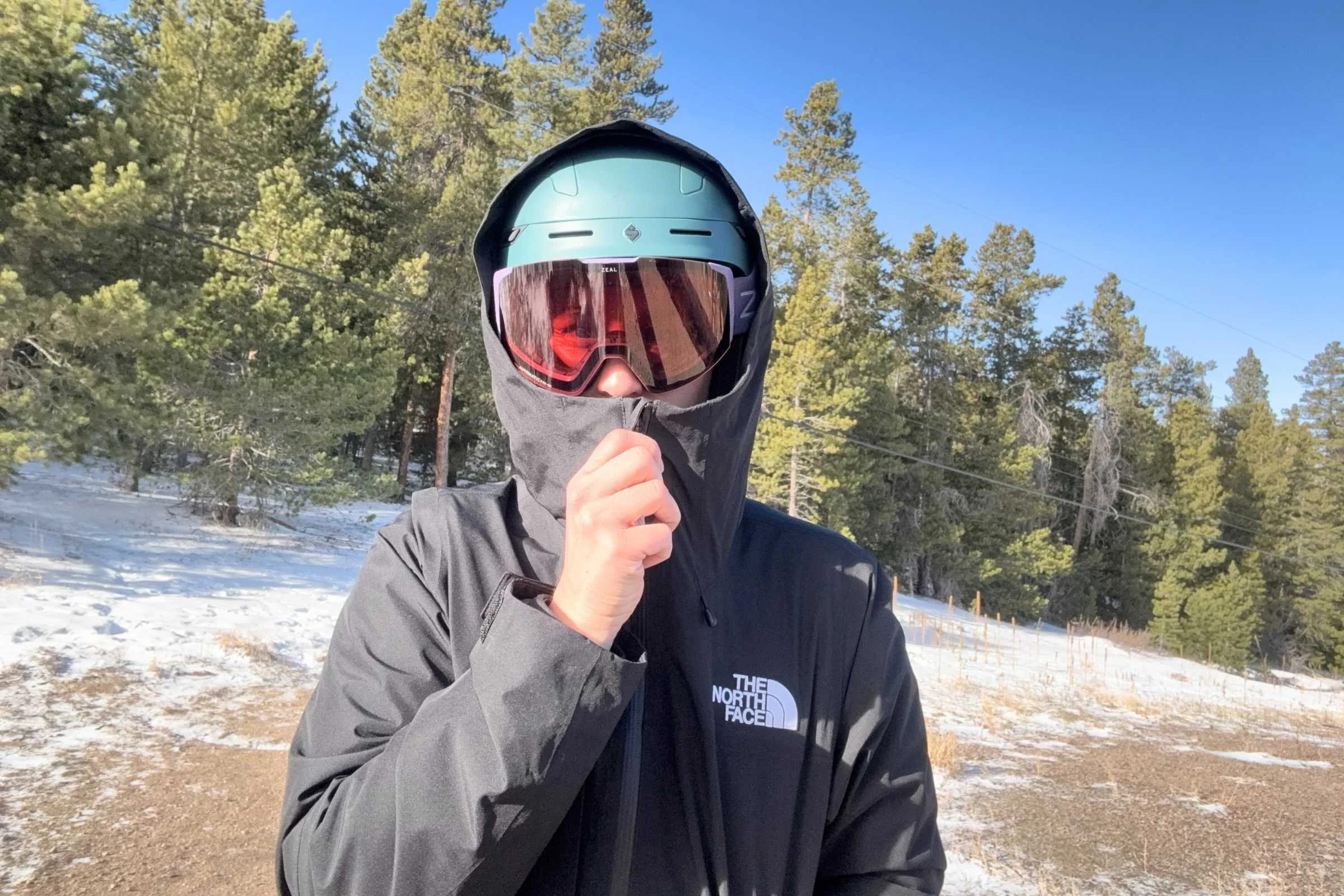
We tested this jacket over multiple days at Eldora Mountain Resort outside of Boulder, Colorado. Eldora is known for their strong winds, so testing out this jacket’s warmth was easy. On days where the temperatures were in the mid to low teens and ample cloud coverage, I felt completely warm both on the chair and while riding down. On days when it was in the 20s and snowing, the jacket didn’t get wet at all, but I also didn’t overheat or feel too sweaty.
I also tested this jacket side-by-side with other high-end ski and snowboard jackets, like the insulated Helly Hansen Powchaser Asymmetric Jacket. I made sure to test all the zippers and cinches while wearing gloves or mittens.
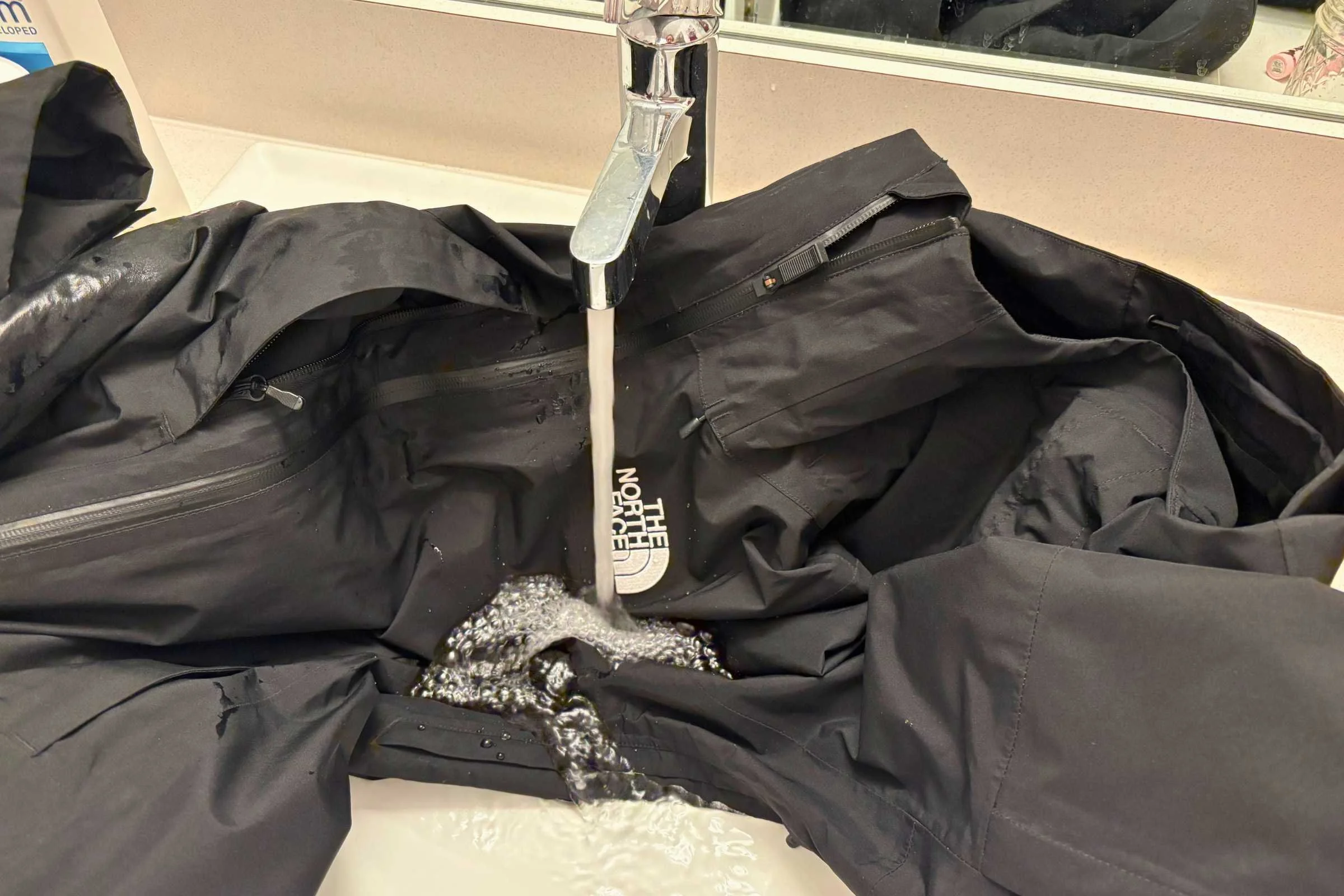
For testing overall waterproofness, I ran a faucet over various parts of the jacket for a minute at a time.
Performance in the field
Fit and comfort
This jacket fits true to size with a regular fit—not too loose but not baggy—and has plenty of room to layer underneath with a thin-to-medium base layer. We felt no hindrance to movement when snowboarding and carving, or bending down to strap into bindings. The hem sits just below hip length.
Warmth and insulation
When wearing both the puffy and the shell, this jacket was extremely warm; The North Face rates it internally as one of their “warmest” jackets, and I found it to be one of the warmest I’ve tested. Wearing it with a lightweight base layer, I was completely comfortable on 15-degree, cloudy days and quickly started sweating once inside the lodge. The insulation in the puffy is synthetic, so it will stay warm even when damp.
On milder days, you can easily get by with just a base layer, as the shell is two layers versus just one, like many shells used when touring in the backcountry. The waterproof and windproof shell also held up against big flakes, blowing snow, and cold wind.
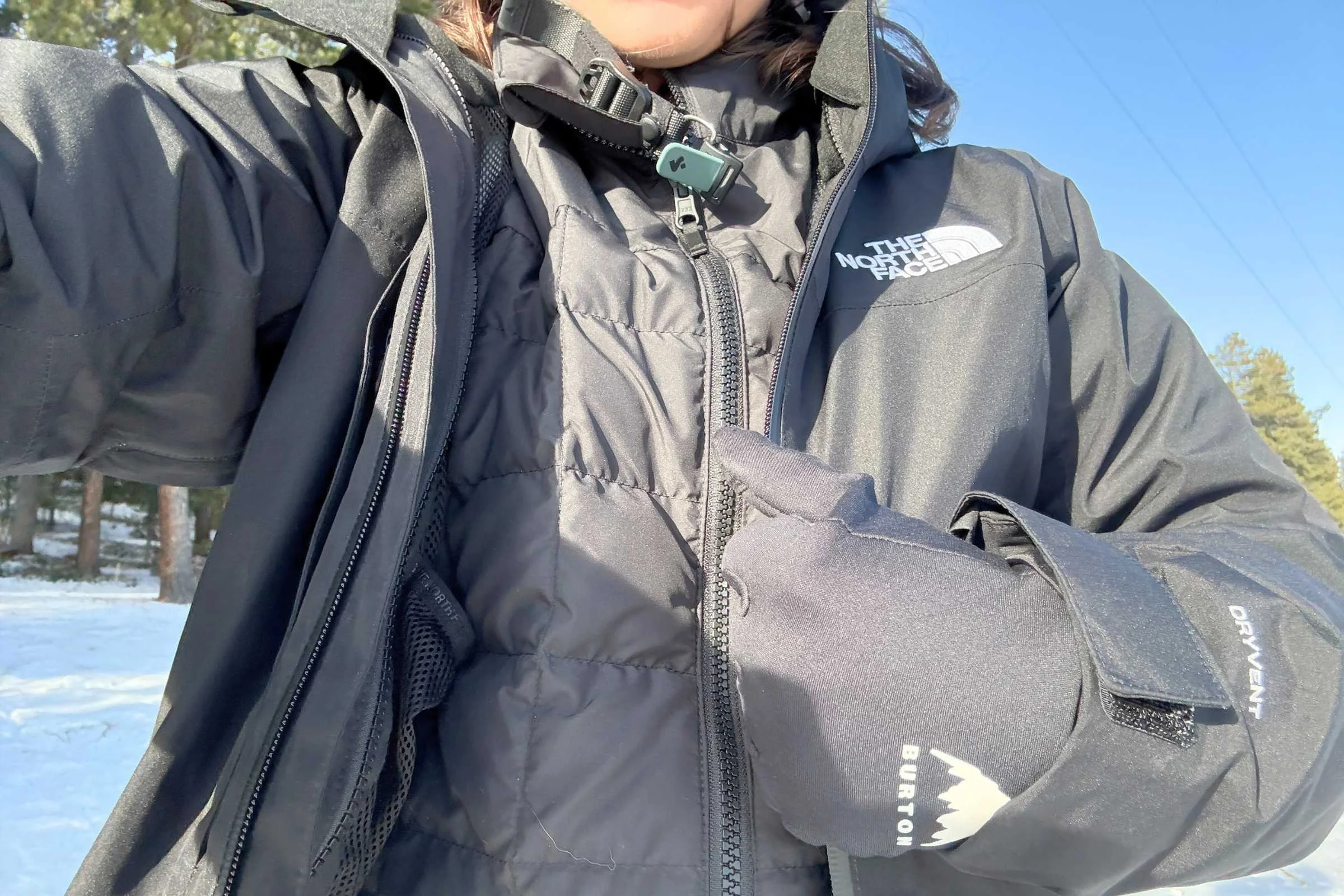
Wear this jacket with just the shell, just the puffy, or both for extreme warmth.
Waterproofing and breathability
The THERMOBALL Snow Triclimate Jacket uses The North Face’s two-layer, waterproof and breathable DRYVENT technology on the outer shell, with a non-PFC DWR finish. In our at-home waterproof testing, where I ran the faucet over various parts of the jacket for a minute at a time, we found the inside of the shell a bit damp, but no water seeped through the seams or the zippers.
When wearing the entire kit in bounds (puffy midlayer and outer shell), we did find ourselves a little sweaty even on very cold days; use the pit vents, or opt for a different jacket if you are touring.
Durability and construction
The shell is made with 75-denier fabric, so long-term durability and abrasion resistance should fare well. If you typically fall a lot, whip through trees, or eat it on park features, consider a jacket with a higher denier rating, as this is considered a mid-level durability rating. Given typical in-bounds snowboarding use, long-term wear expectations are high, based on our past experiences with The North Face winter gear and outerwear.
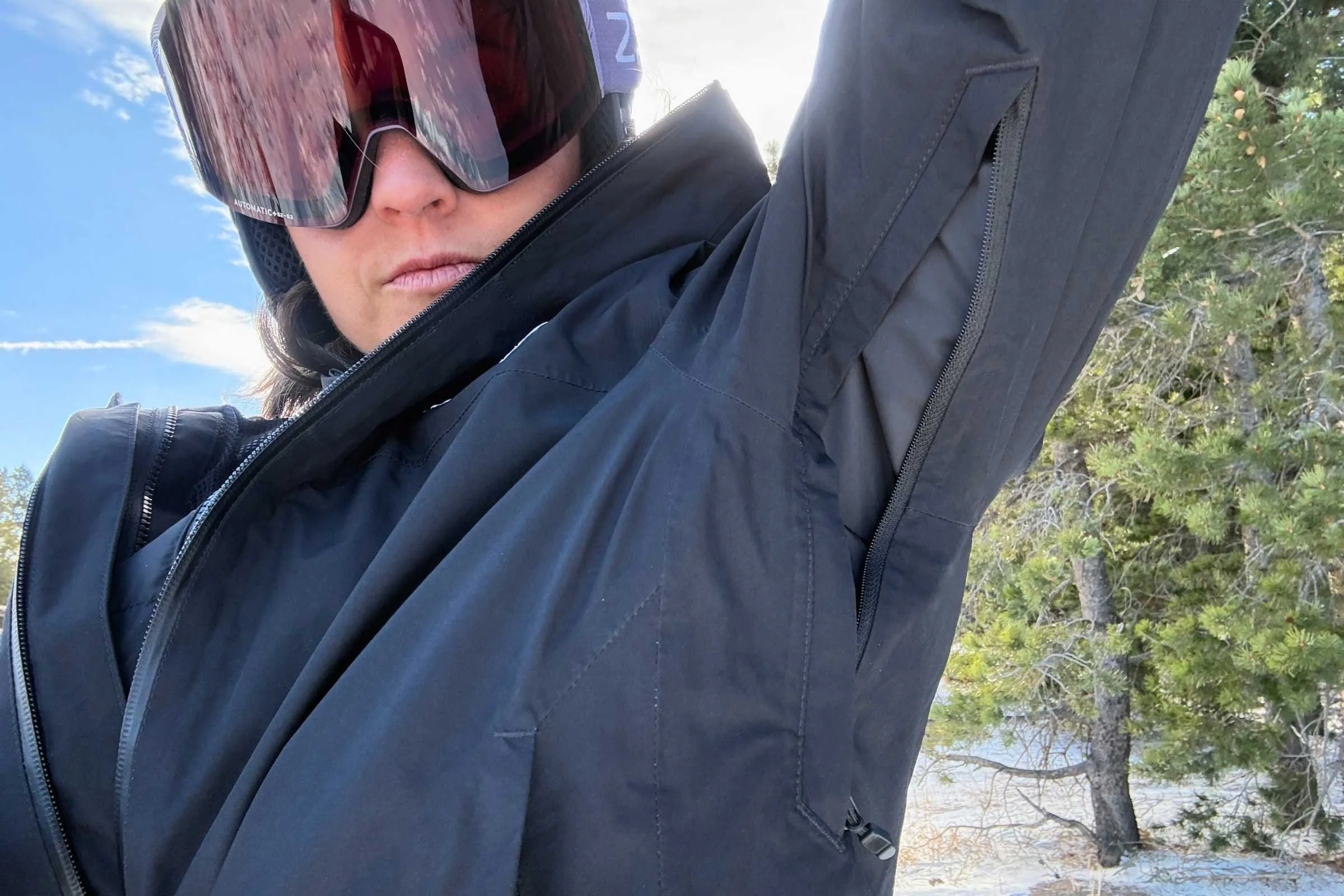
The pit zips on The North Face THERMOBALL Triclimate snowboard jacket are unlined, but are easy to open and relatively easy to close.
Ventilation
There are zippered pit vents on each side for the shell layer; the mid-layer puffy does not have vents. The pull toggle is quite small, so this isn’t the easiest with mitts on. Once I was able to grab the zipper toggle, getting the vents open was very easy and getting them closed took some finagling, but I was able to do it by myself.
Features and usability
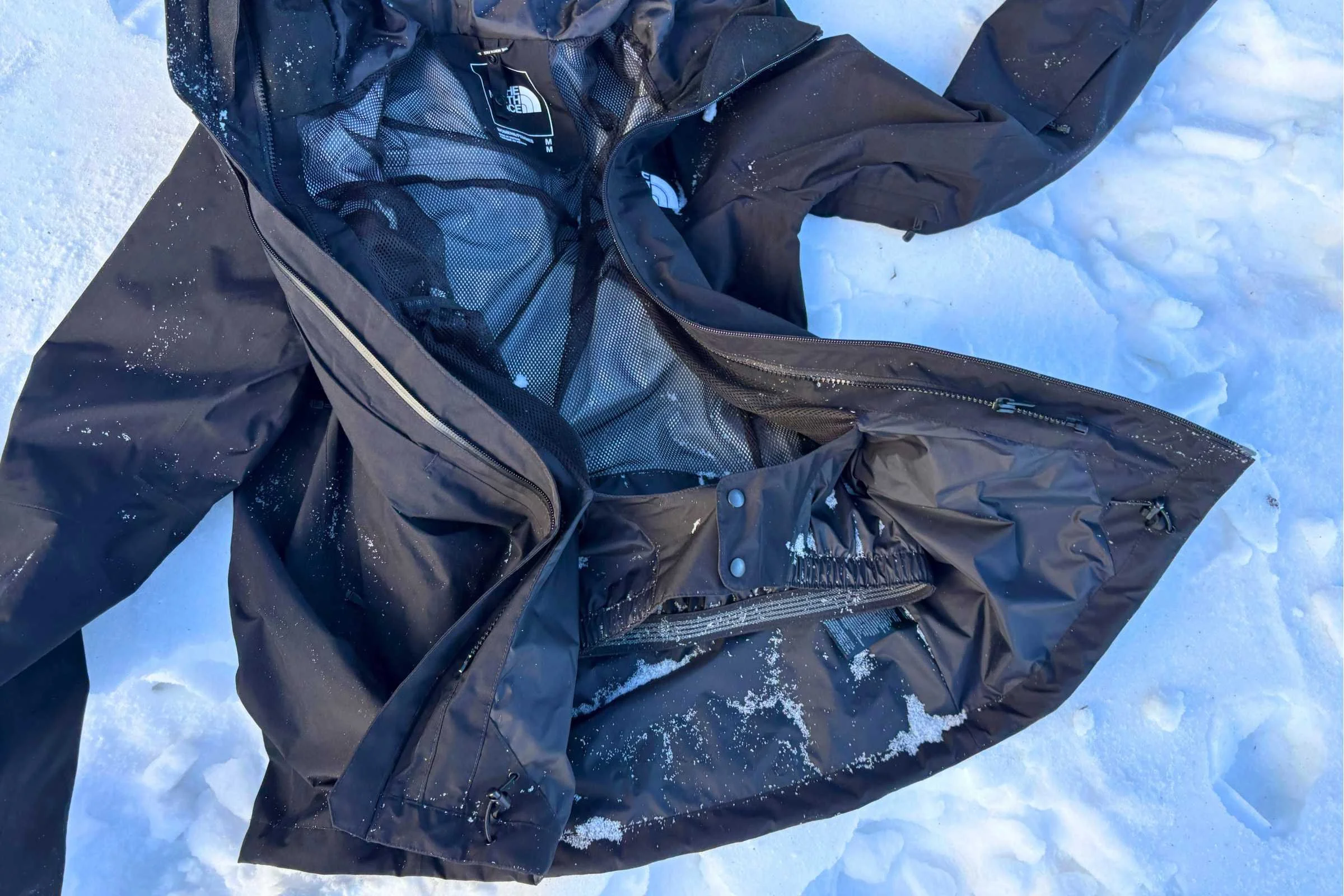
Along with providing extreme warmth, this jacket also has all the features to offer even more comfort on the mountain. The hood is helmet compatible with a cinch to secure it on extremely windy days, and was easy to secure over my helmet even with mittens on. There is a powder skirt with a grippy hem, but it isn’t removable or adjustable, and there are no snap backs either to tuck the ends away if you aren’t actively using the snowskirt. Without a snap-back feature, the ends of the powder skirt flap around if you aren’t using it or if your jacket is unzipped.
Pockets are placed appropriately and easy to open with mittens on. There are multiple outer pockets on the shell (like one for your pass) as well as inner drop-in pockets to store mittens when you are hydrating inside. The puffy also has an insulated inner zipper pocket that’s perfect for your phone.
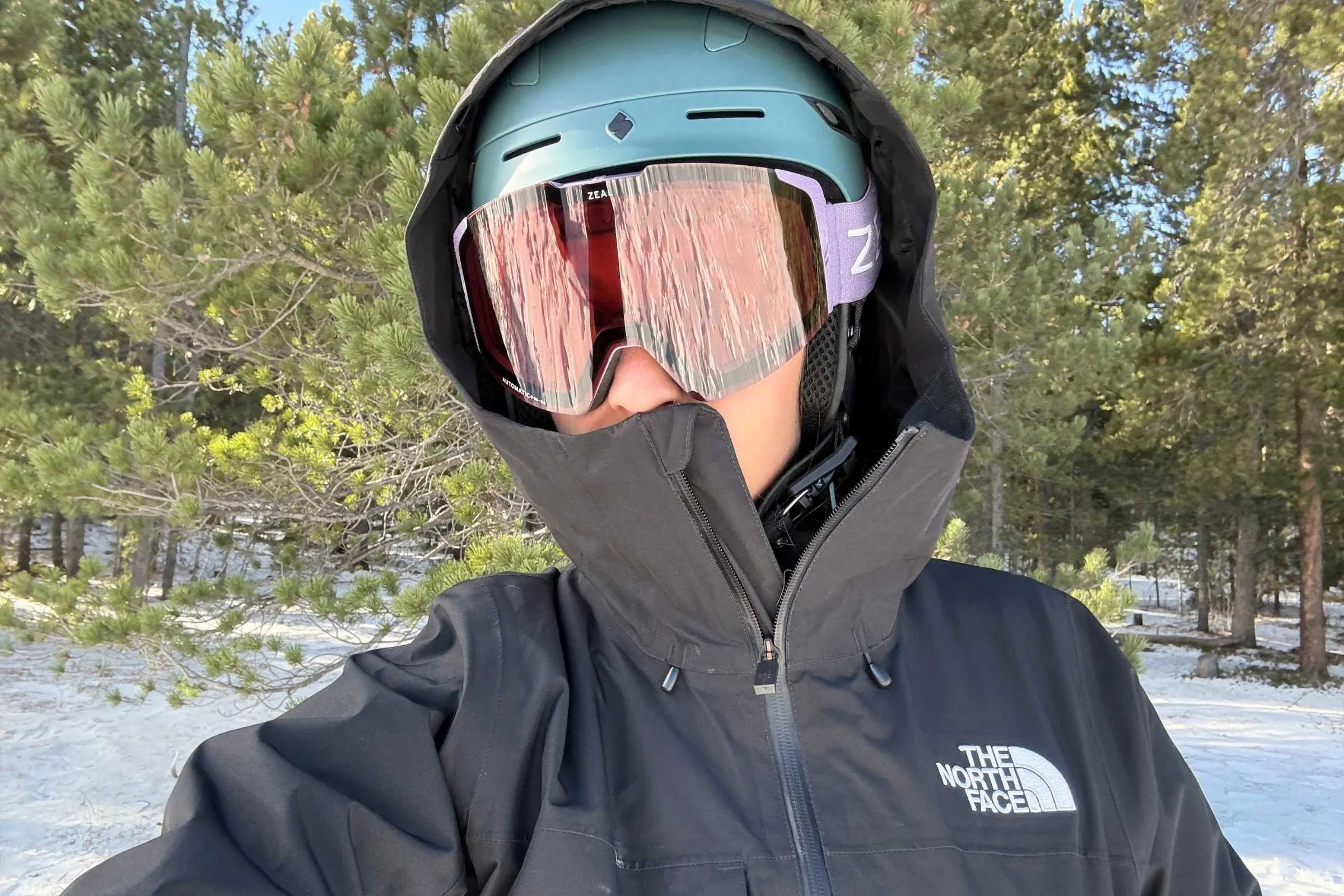
The North Face THERMOBALL Triclimate jacket has a helmet-compatible hood that has cinches in the front and the back for extra protection.
Weight and packability
With the puffy and two-layer shell, this jacket is slightly heavier than other insulated jackets and much heavier than a shell. It is also not as packable as a one-layer shell, but we recommend this jacket for in-bounds adventures, rather than touring, where you might need to stash it in a backpack.
Features
Shell and lining materials
The shell is waterproof and breathable, made with The North Face’s DryVent 2-layer technology. With two layers, it is slightly thicker than a true, one-layer shell, but it is lightweight and a great option on a warm day when you need wind and snow protection. The lining is smooth and soft and made from 100 percent recycled materials.
Ventilation system details
The THERMOBALL Snow Triclimate Jacket has pit zips to air out any sweat built up. The vents are open (no mesh liner), which means if you do fall, snow can easily get in.
Powder skirt design
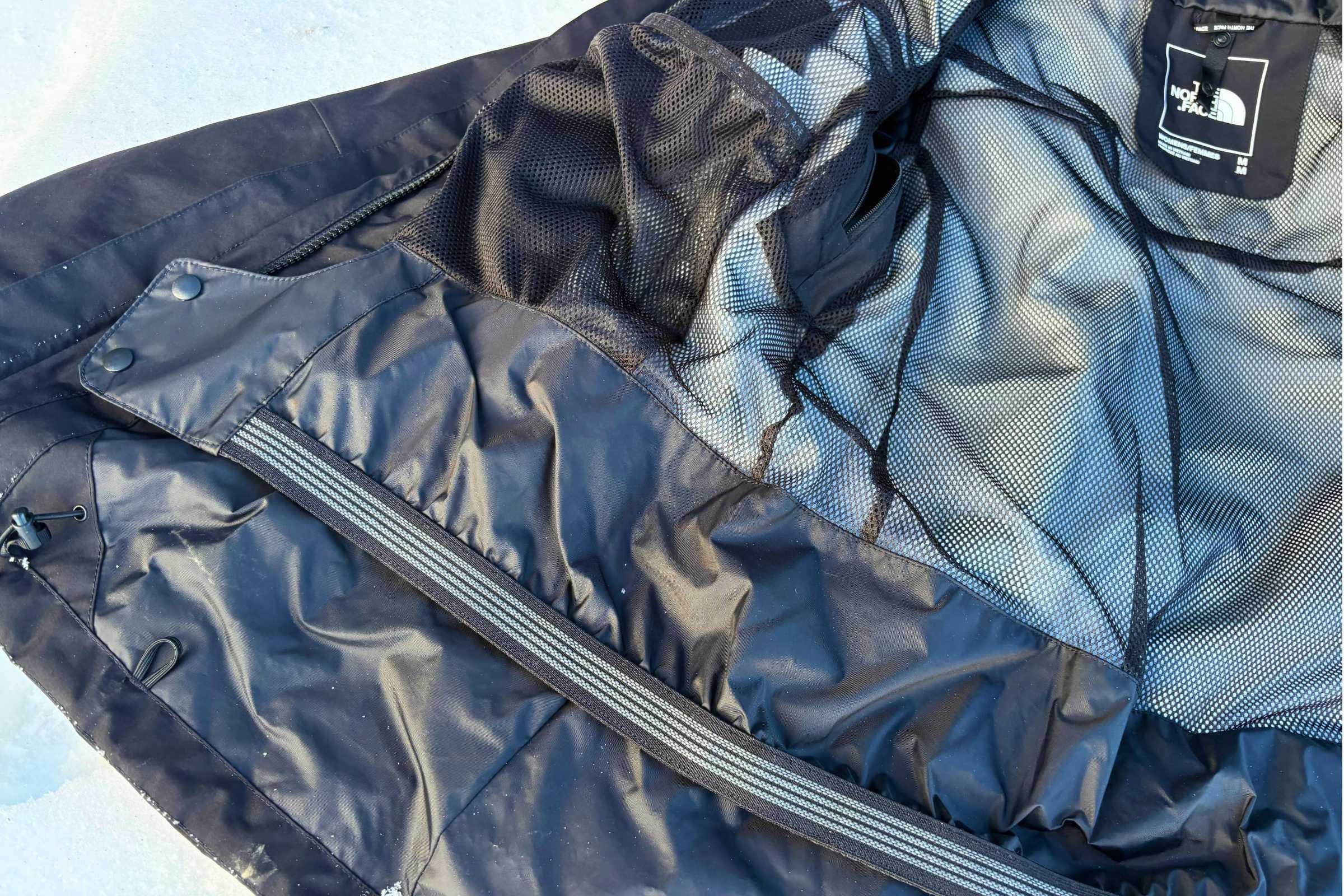
This jacket comes with a snapping powder skirt with an elastic gripper that runs along the edge.
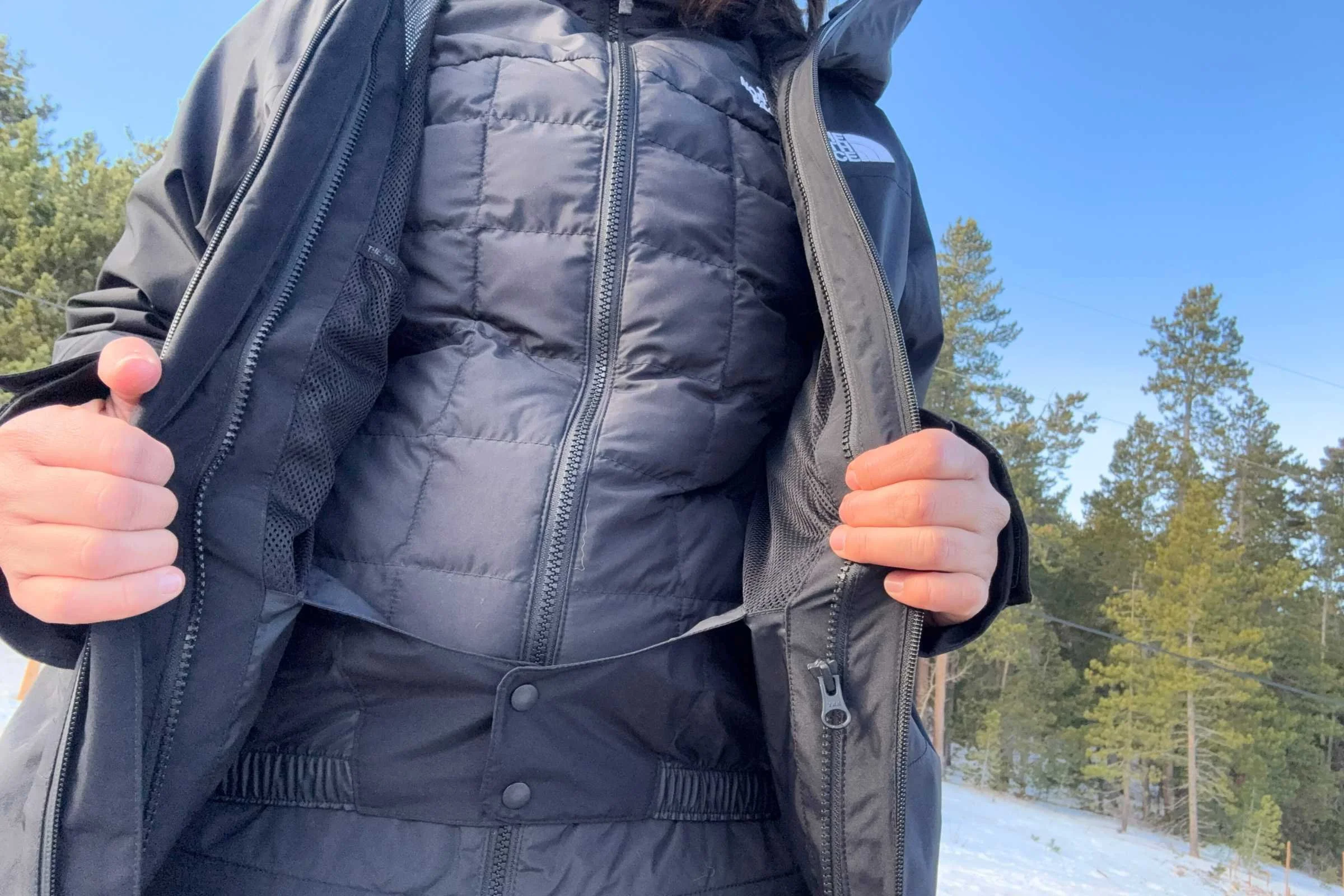
Hood and helmet compatibility
The attached hood is helmet compatible with a hidden cinch to tighten in extreme elements.
Pockets and zippers
The pockets are pretty standard pockets for a snowboarding jacket. There are two zippered hand pockets near the hips (which have the hem drawcord extended inside these), a large internal drop-in mesh pocket, a chest pocket, and a pass pocket with a goggle wipe.
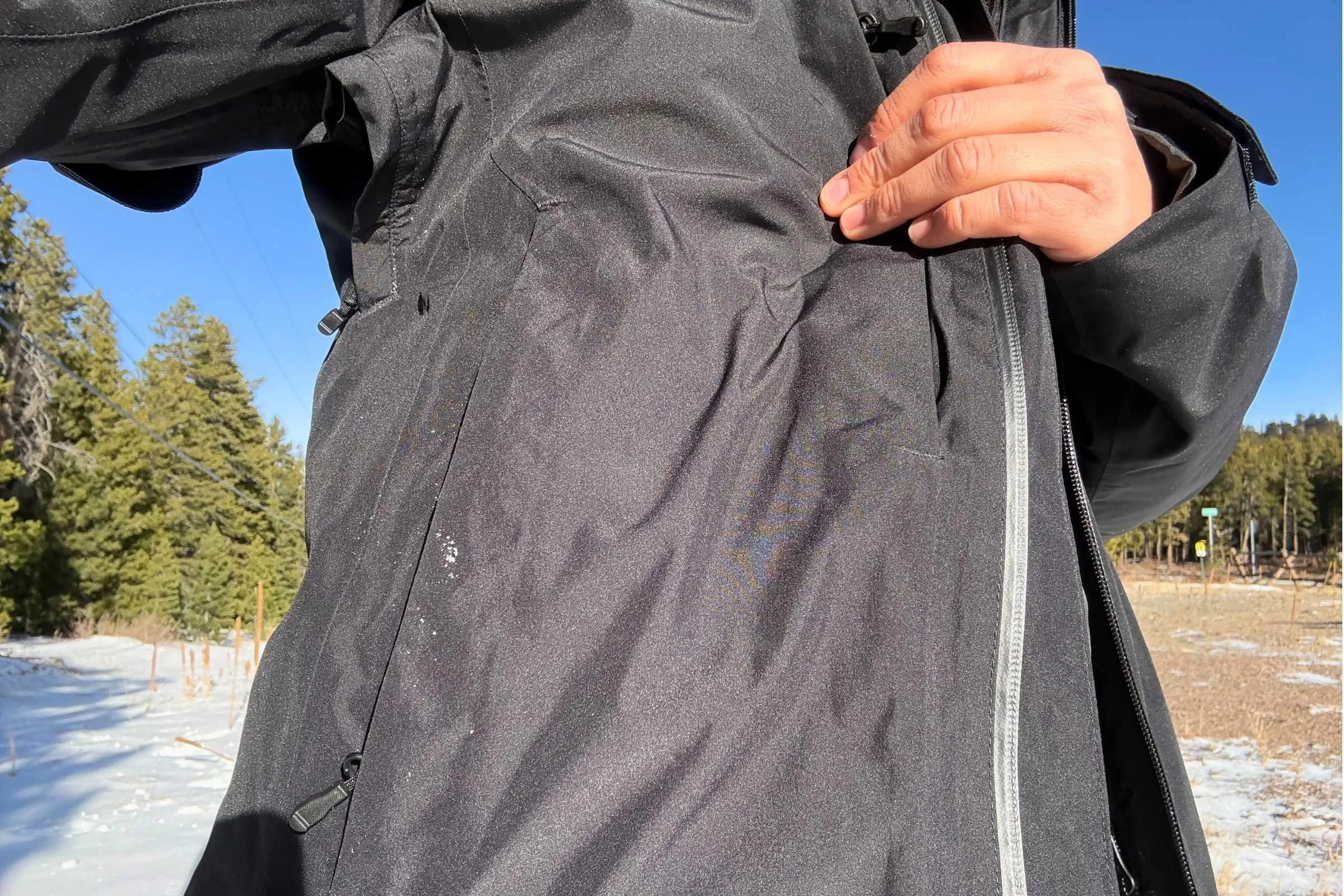
Waterproof zippers keep snow and moisture out in storm conditions
Style options and colors
The fit of both the shell and the puffy jacket is relaxed—the whole setup is not baggy by any means, but it's also not super fitted. The loose fit made for no hindrance when riding, and the slightly longer hem (about mid-thigh) was nice for extra coverage in the back. The puffy jacket was also roomy enough to easily fit a thick base layer underneath. Colors include black, light green, dusty red, and white dune.
Sustainability and ethics
The main outer body lining uses 100% recycled polyester knit mesh, the outdoor hood and sleeve lining uses 100% recycled polyester taffeta, and the inner body lining uses 100% recycled polyester with a non-PFC DWR finish. The inner body insulation uses 100 percent post-consumer recycled polyester, and the inner collar, yoke, and sleeve insulation uses 70% post-consumer recycled polyester.
Who should buy The North Face THERMOBALL Snow Triclimate Jacket?
Buy if you are looking for a winter jacket that can perform for both snowboarding runs and days around town. Because of the versatility of the shell-and-puffy combo, it can take you through the entire season, no matter if the temperatures are warm in the spring or freezing mid-season.
Skip if you are just starting to snowboard and aren’t sure if this winter sport is really your thing. We recommend considering a different jacket, as this one is pricey. Similarly, if you are eating it in the park all day, opt for a more durable shell, as this one has a mid-level durability rating.
Where to buy
The North Face THERMOBALL Snow Triclimate Jacket is a popular gear item, so you have options when it comes to retailers. Here are some of the pros of the retailers.
REI
Pros: 100% satisfaction policy for 1 year; 10% dividend for members.
Amazon
Pros: Free 2-day shipping with Amazon Prime membership
Evo
Pros: 365 day returns, store locations in ski towns for easy last-minute pick-up, may offer rentals if you want to try before you buy, earn 10% back in Rewards
Similar products
Columbia Whirlibird V Interchange 3-in-1 Women’s Jacket
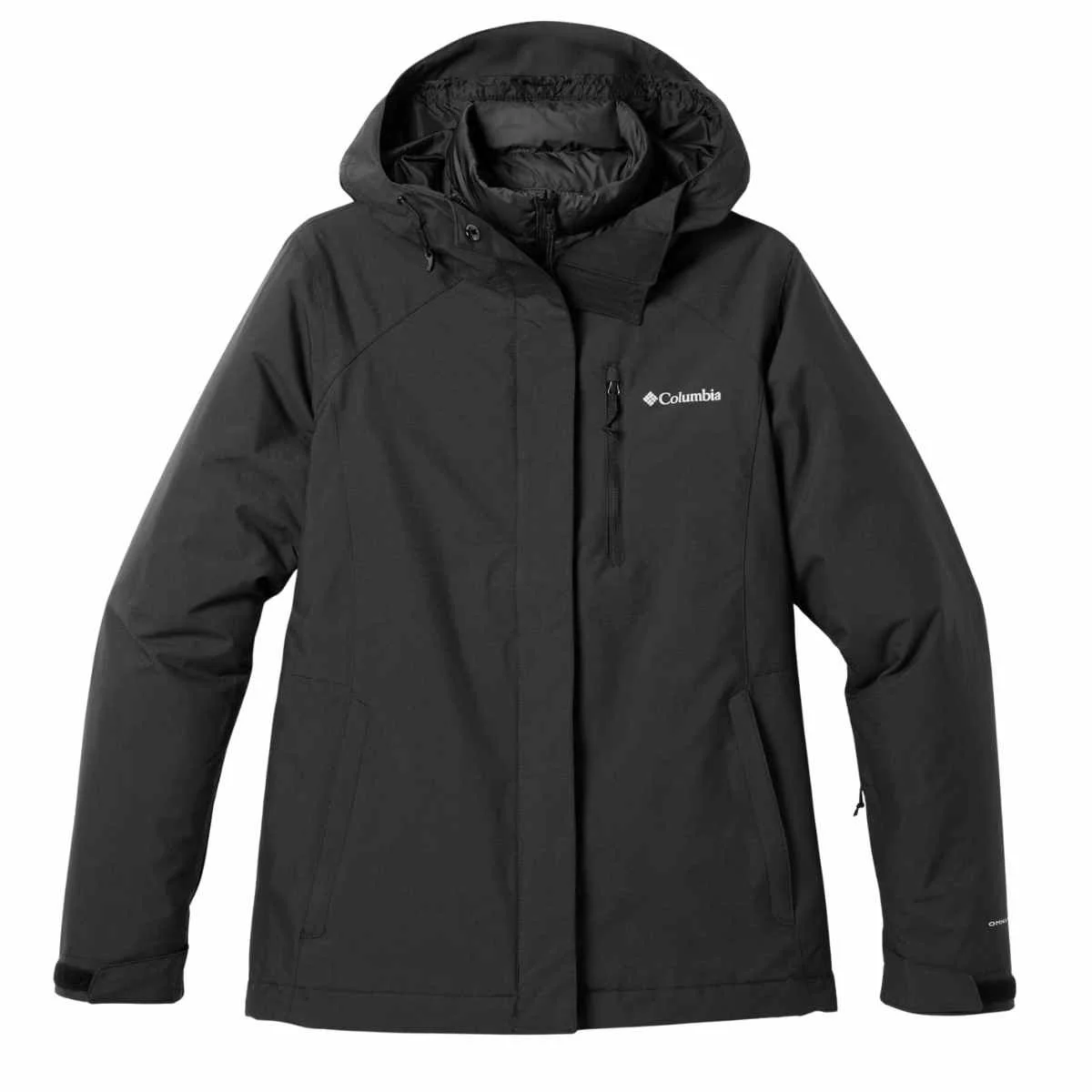
Insulation material: 100% recycled polyester Thermarator and Omni-Heat thermal-reflective lining
Shell Material/Waterproofing: 100% recycled nylon and polyester with Omni-Teach waterproofing and seam sealing
Sizes: XS - 3X
Pockets: zippered hand pockets, zippered chest pocket, ski pass pocket, interior security pocket, goggles pocket
Pit Zips: yes
Powder Skirt: adjustable, snap-back powder skirt
The Columbia Whirlibird V jacket is almost $200 less than the THERMOBALL Snow Triclimate Jacket, which is great for affordability, but it isn’t quite as warm and lacks a few key features. It is windproof and waterproof with Columbia’s Omni-Tech and Omni-Heat technology, respectively, but might not keep you completely warm when temperatures drop into the teens. Features include pit vents, a powder skirt, and multiple pockets, including a pass pocket. Unfortunately, the zippers are not seam-sealed, and it's rated as warmer versus warmest.
Columbia Whirlibird V Interchange 3-in-1 Women’s Jacket
men's
Women's
Patagonia Powder Town 3-in-1 Ski Jacket
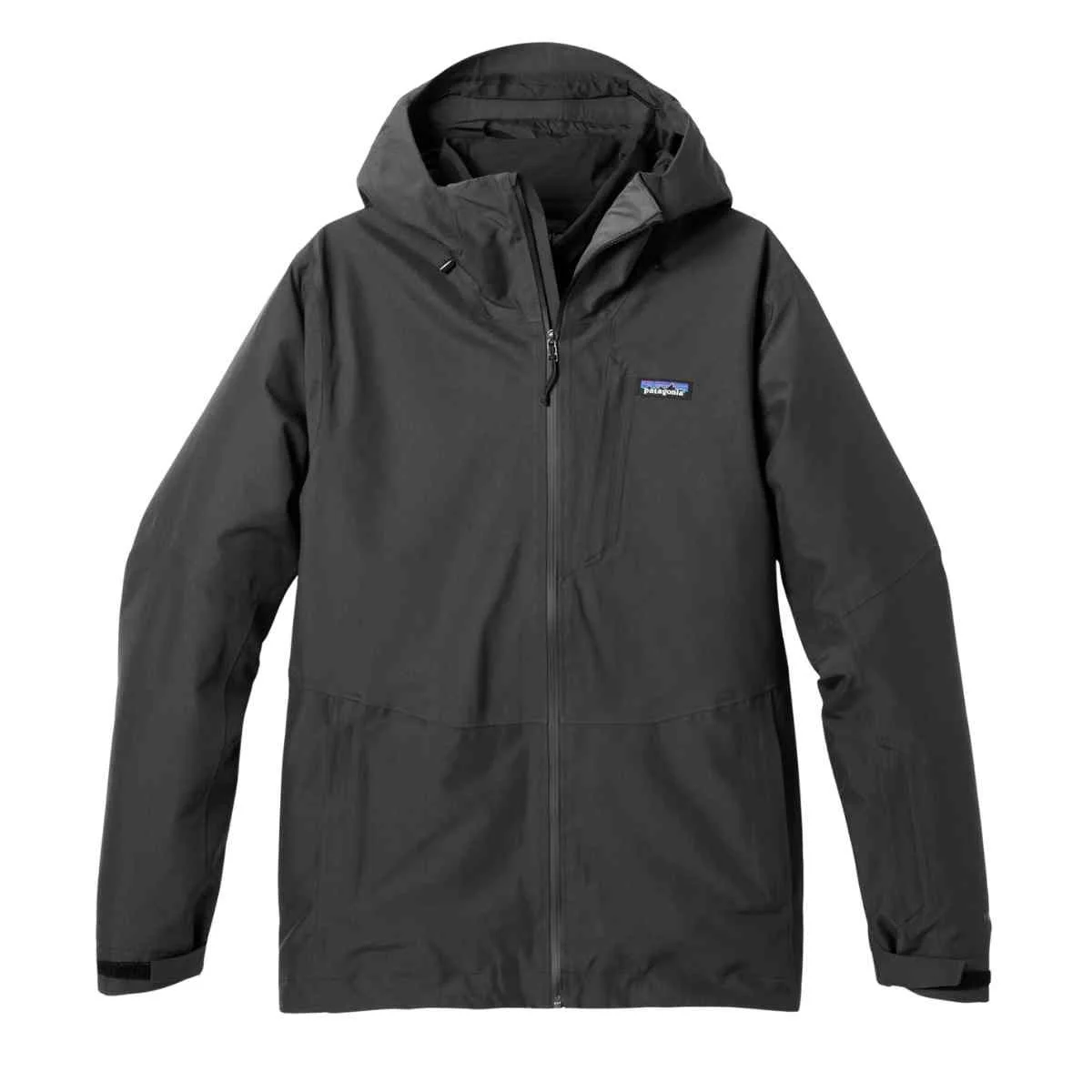
Insulation material: 60 g FullRange
Shell Material/Waterproofing: H2No 2L
Sizes: XXS-XL
Pockets: Two hand, one chest, 2 hand on insulating layer
Pit Zips: Yes
Powder Skirt: Yes
This 3-in-1 jacket from Patagonia is more expensive than the Triclimate, but it does fare just as well and holds up in long-term testing. Treeline writer Stasia Stockwell dives into a full review of the Patagonia Powder Town 3-in-1 Ski Jacket, highlighting the jacket's versatility and waterproofing, while noting that it is not as durable or windproof as a top-of-the-line shell.
Patagonia Powder Town 3-in-1 Ski Jacket
men's
Women's
Helly Hansen PowDreamer/Powchaser 2.0 Jacket
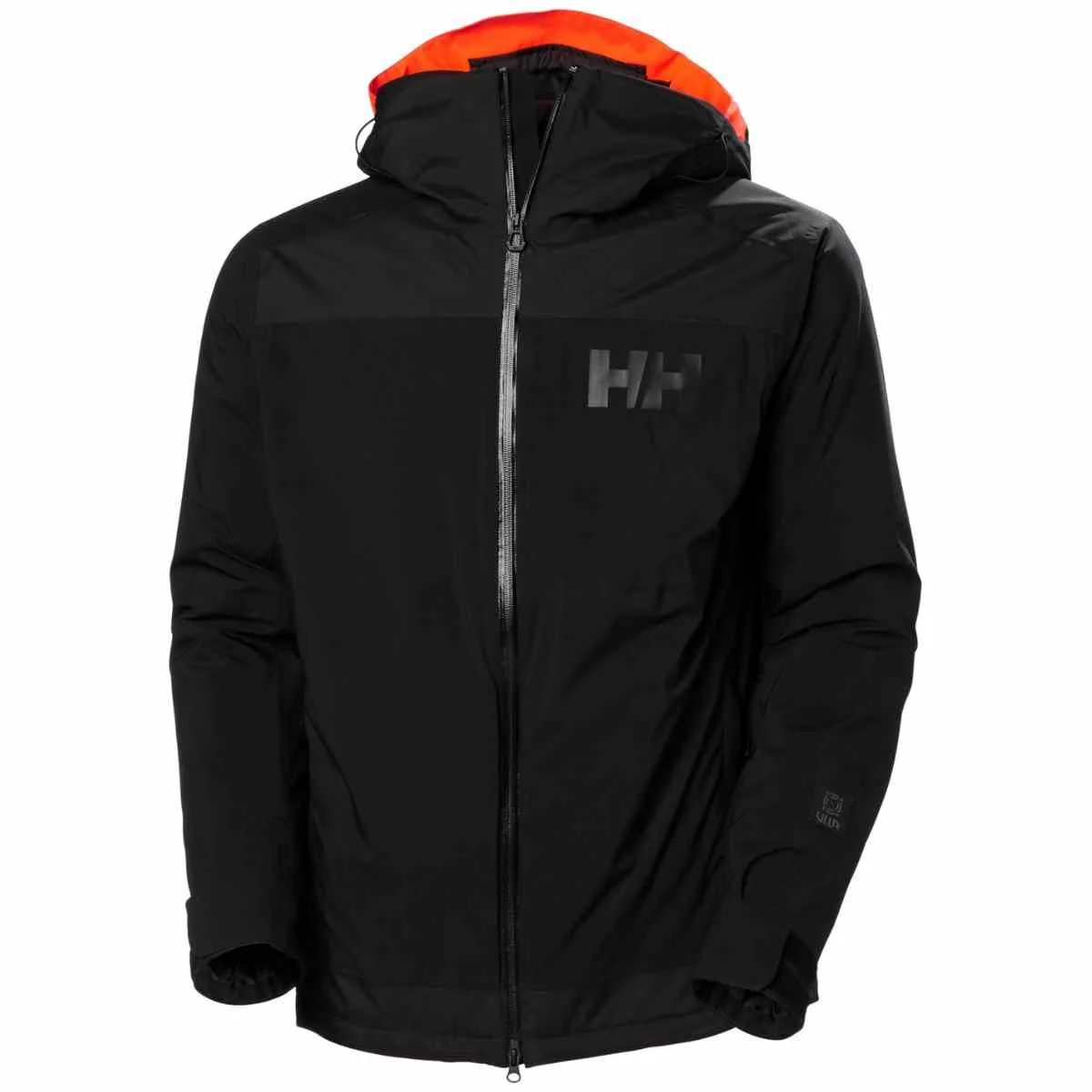
Insulation material: PrimaLoft BLACK Eco
Shell Material/Waterproofing: Polyester with Helly Tech Performance range of 10000 to < 20000 mmH2O and a DWR treatment
Sizes: XS to XL
Pockets: goggles pocket, pass pocket, fleece-lined front pocket with goggle wipe, front pocket
Pit Zips: yes
Powder Skirt: adjustable with snap backs
The Helly Hansen Powdreamer 2.0 (men’s) and Powchaser 2.0 (women’s) Jacket aren’t as versatile as the TNF THERMOBALL Snow Triclimate, since they’re both just one insulated jacket without a separate shell or puffy, but they are just as warm. Because of that, plus its numerous features and sweet style, it’s one of our favorite jackets for snowboarding. This jacket is also equipped with RECCO search and rescue technology.
We’re currently testing the Helly Hansen women’s Asymmetric Powchaser Jacket, which is similar but with an asymmetric zipper design.
Helly Hansen Powdreamer/Powchaser 2.0 Jacket
men's
Women's
Why you should trust us / about the author

Although I grew up in Wisconsin, my family got me on skis when I was just three years old. At ten, I decided to follow in my older brother's footsteps and try snowboarding. I haven’t stepped on a ski since and, instead, have been snowboarding for more than 25 years, with more than half of those seasons spent out west once I moved to Boulder, Colorado. I have dabbled in park riding over the years, but my go-to is moguls, trees, and steeps as I’ve advanced to an experienced rider; I have spent time in the backcountry as well. When it comes to testing snowboarding gear, I’ve spent numerous seasons sporting many different helmets, boots, bindings, and apparel to break down the minutiae of what truly works and what doesn’t when it comes to what I need as a snowboarder.
Read more on Mattie Schuler’s website or author page.