
Alpacka Raft Mage Review: A Playful Packraft Built to Respond Fast in Whitewater
A packraft for intermediate to advanced paddlers looking for a boat that can handle Class III-IV+ water and multi-day adventures
August 31st, 2026
Home > Gear Reviews > Water Sports
Our verdict
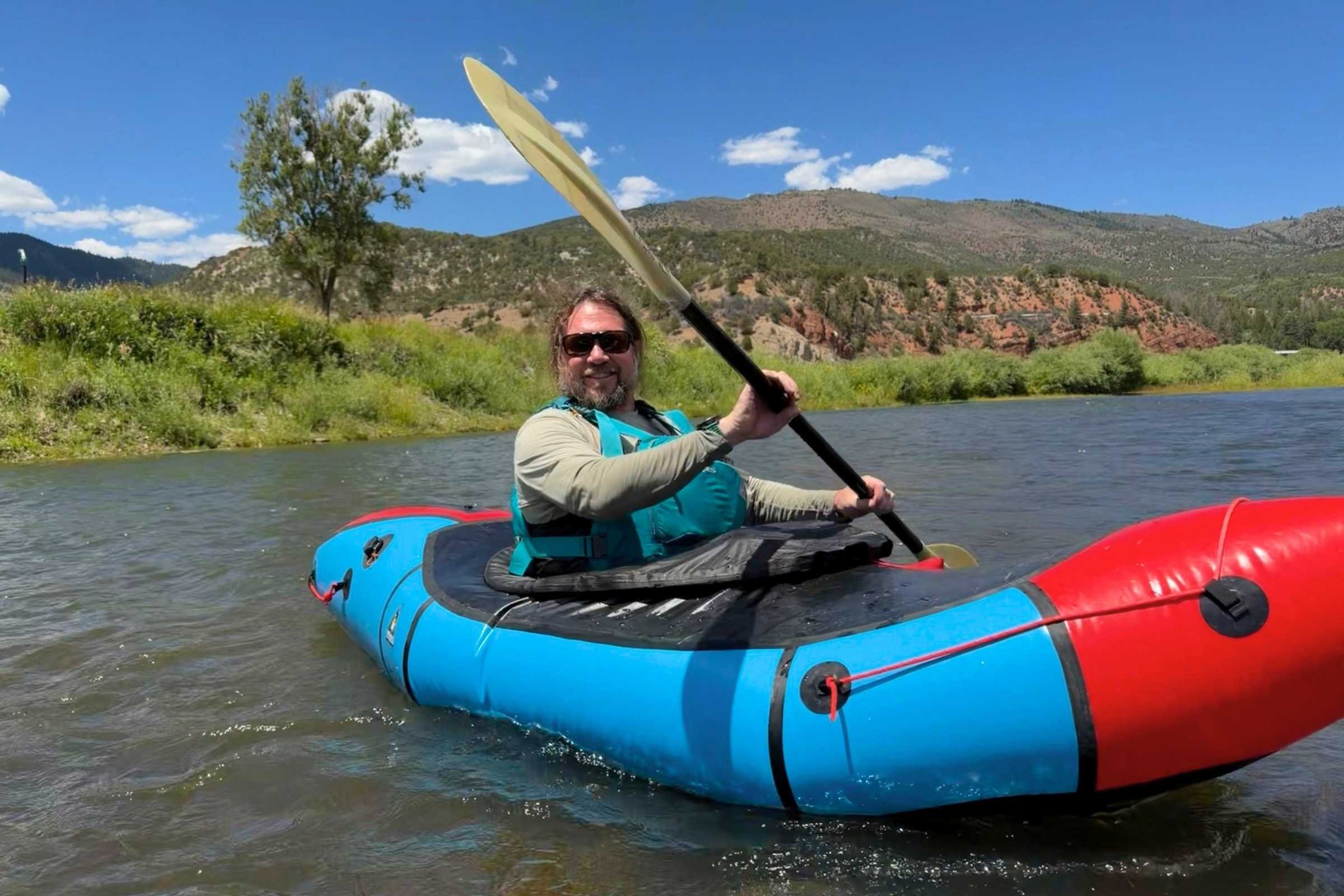
The Alpacka Raft Mage is ready for intermediate and advanced paddlers hungry for Class III and IV whitewater. It’s designed for intermediate to advanced packrafters—people who want to push into harder whitewater terrain and have the skills to do it. With an easy-to-use cargo fly, the packraft can easily accommodate gear for multi-day trips and has plenty of loops for additional storage on deck, if needed. This packraft is designed to respond quickly to the paddler’s input and to romp through tougher rapids, chutes and falls.
The model I tested was the 100-inch long large model with a spray deck. This version is designed for folks between 5’9” and 6’2” and those up to about 230 pounds. Weighing 11.75 pounds, it’s a little heavier than the same-sized Alpacka Gnarwhal and is slightly narrower, at 34” compared to the 37.5” width of the Gnarwhal. That makes for a boat that’s faster to maneuver, but a little less forgiving of mistakes in rapids as there’s more of a focus on speed and tracking.
Over a few weeks in the driest, most scorching July in Colorado in a decade, I was able to get out in the Alpacka Mage a couple of times. At 5’10” and about 200 pounds, I took the large-sized Mage to the whitewater park on Clear Creek in Golden and on an overnight trip on the Colorado River from Pumphouse to State Bridge, taking on some Class II and maybe Class III rapids.
As an intermediate packrafter, I found the boat playful and much more responsive than packrafts I’ve tested from Kokopelli and NRS.
This is a great packraft for intermediate and advanced paddlers who are happy to charge into bigger rapids. It’s designed more for the whitewater adventurer than the flatwater floater. As such, it’s a bit more advanced than some of our other favorite picks, the Alpacka Gnarwhal and the Caribou, which are suited for a wider variety of users, especially those looking for a lighter-weight, more packable option.
Alpacka Raft Mage Packraft
We create reader-supported, objective gear reviews independently selected by our editors. This story may contain affiliate links, which help fund our website. When you click on the links to purchase gear, we may get a commission, without costing you an extra cent. Thank you for supporting our work and mission of outdoor coverage for every body! Learn more.
Alpacka Raft Mage Packraft Specifications
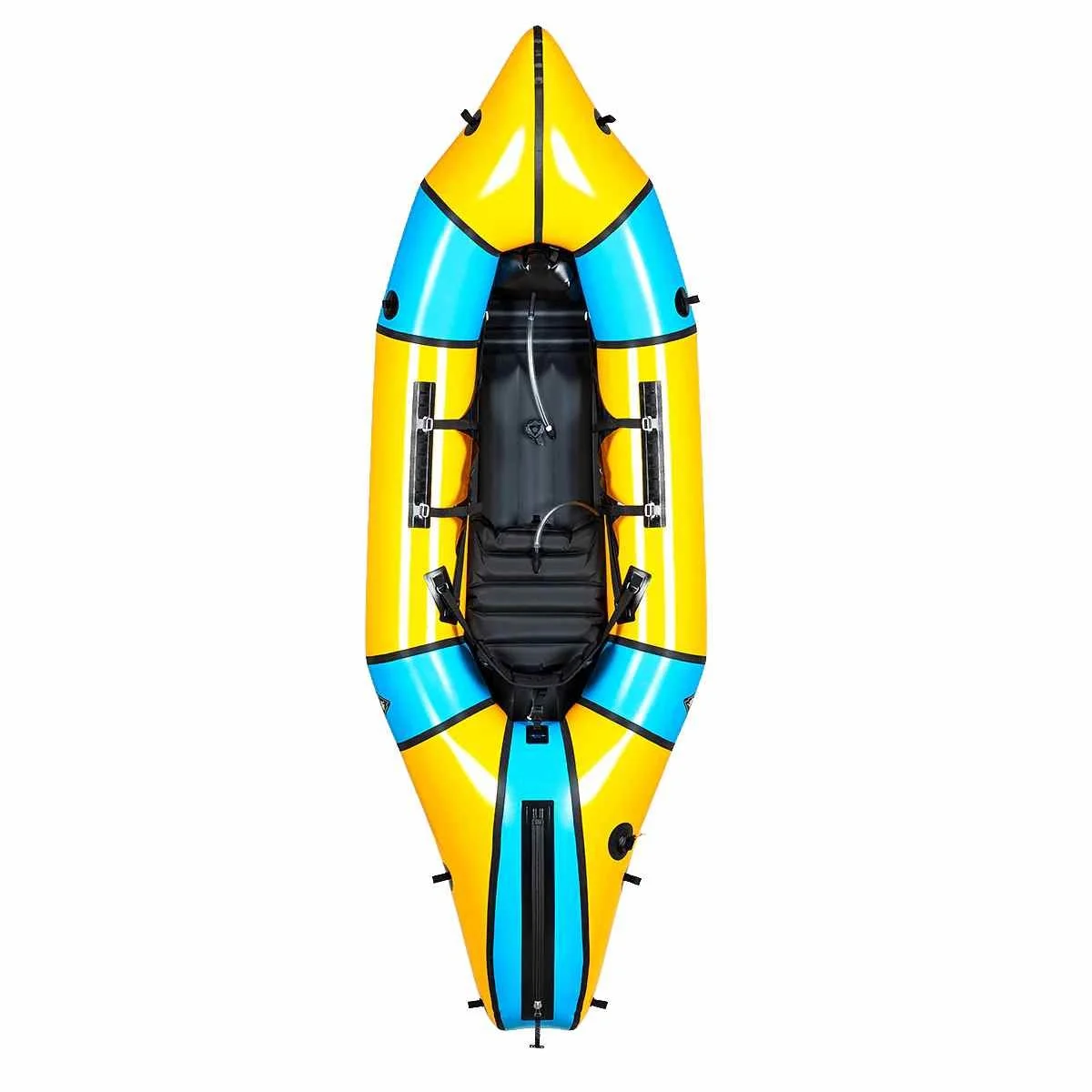
Price: $1,650-1,850
Type: Whitewater
Best uses: Class III and IV whitewater
Base weight (boat only): 5.6 to 8.25 pounds depending on size and model.
Weight with accessories: 9 to 12.25 pounds depending on size and model. Accessories include the seat, floor, thigh straps, spray deck, repair kit and storage bag.
Packed size: 9 x 22”
Weight capacity: Paddlers up to 230 pounds; Can also carry up to 30 pounds of cargo for whitewater performance and up to 100 pounds of cargo for extended trips.
Hull material: 210d or 420d TPU nylon
Floor material: 840d nylon floor
Floor type: Inflatable floor, available in self-bailing and non-self-bailing with a spray deck.
Deck configuration: Available as an open deck with self-bailing or with a permanent spray deck.
Spray deck / self-bailing: Both options available
Thigh or knee straps: 4-point thigh straps included
Seat: inflatable seat
Seat back: Foam backband
Cargo fly / TiZip: Included
Bow grab loops: 4
Stern grab loops: 4
D-rings or gear attachment points: D-rings are for attaching seat and thigh straps
Whitewater rating: Class III-IV+
Inflation method: Blow bag included
Valve type: Temper Assist Valve (TAV) (proprietary), blow tubes for seat and foot inserts
Sizes available: Small-Extra Large
Made in: USA
Repair kit included: Yes
Comparison table
| Packraft | Type | Deck | Base Weight | Packed Size | Weight Capacity | Whitewater Rated? | MSRP |
|---|---|---|---|---|---|---|---|
| Alpacka Raft Mage | Whitewater | Self-bailing or spray deck | 5.6-8.2 lb | 22 x 9" | 330 lb | Class III-IV+ | $1,650-1,850 |
| Alpacka Raft Gnarwhal | Lightwater | Self-bailing | 5.5-6.5 lb | 22 x 9" | 370 lb | Class III-IV | $1,550-1,750 |
| Alpacka Raft Caribou | Lightwater | Self-bailing or open deck | 4.5 lb | 17 x 6" | 390-500 lb | Class I-II | $995-1,095 |
| NRS Neutron | Whitewater | Self-bailing | 8.9-9.5 lb | 19 x 18 x 10" | 375-400 lb | Class III (tested) | $1,445-1,495 |
| Kokopelli Nirvana Self-Bailing | Whitewater | Self-bailing | 7.3 lb | 14 x 10" | 300 lb | Class I-III | $1,349-1,499 |
Best for
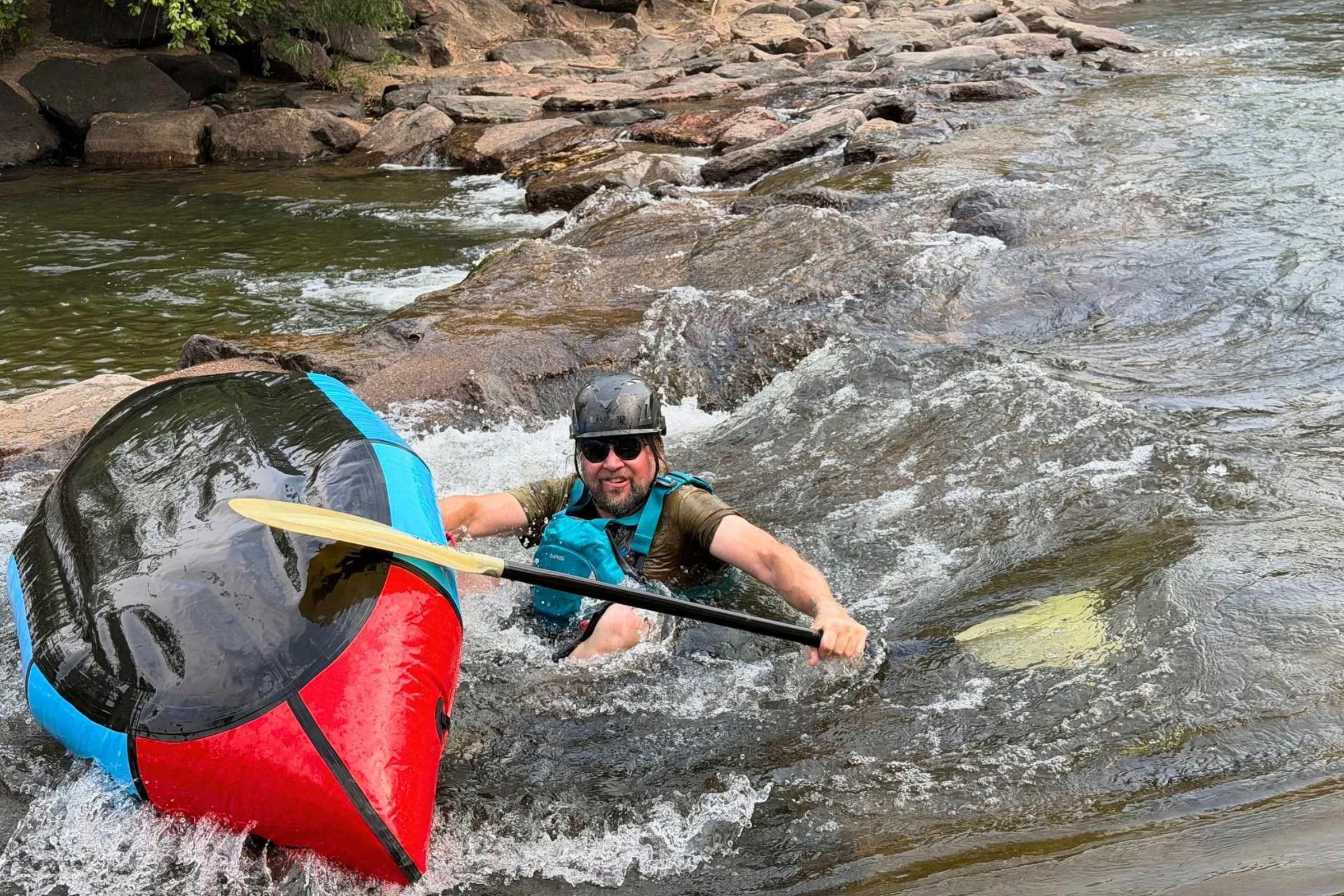
The author after bailing in a small rapid. Courtesy Mary Murphy
Best for fast moving rivers and whitewater up to Class IV
Intermediate to advanced paddlers
Single day to weeks-long adventures
What we liked
Great control
Great cargo fly and access
Self-bailing and spray deck options
Ready to romp in whitewater
Handmade and customized in the USA with many USA-made components
What could be better
Could be more forgiving in longer, sustained rapids
Spray deck was too hot for blazing hot summer paddling
How we tested
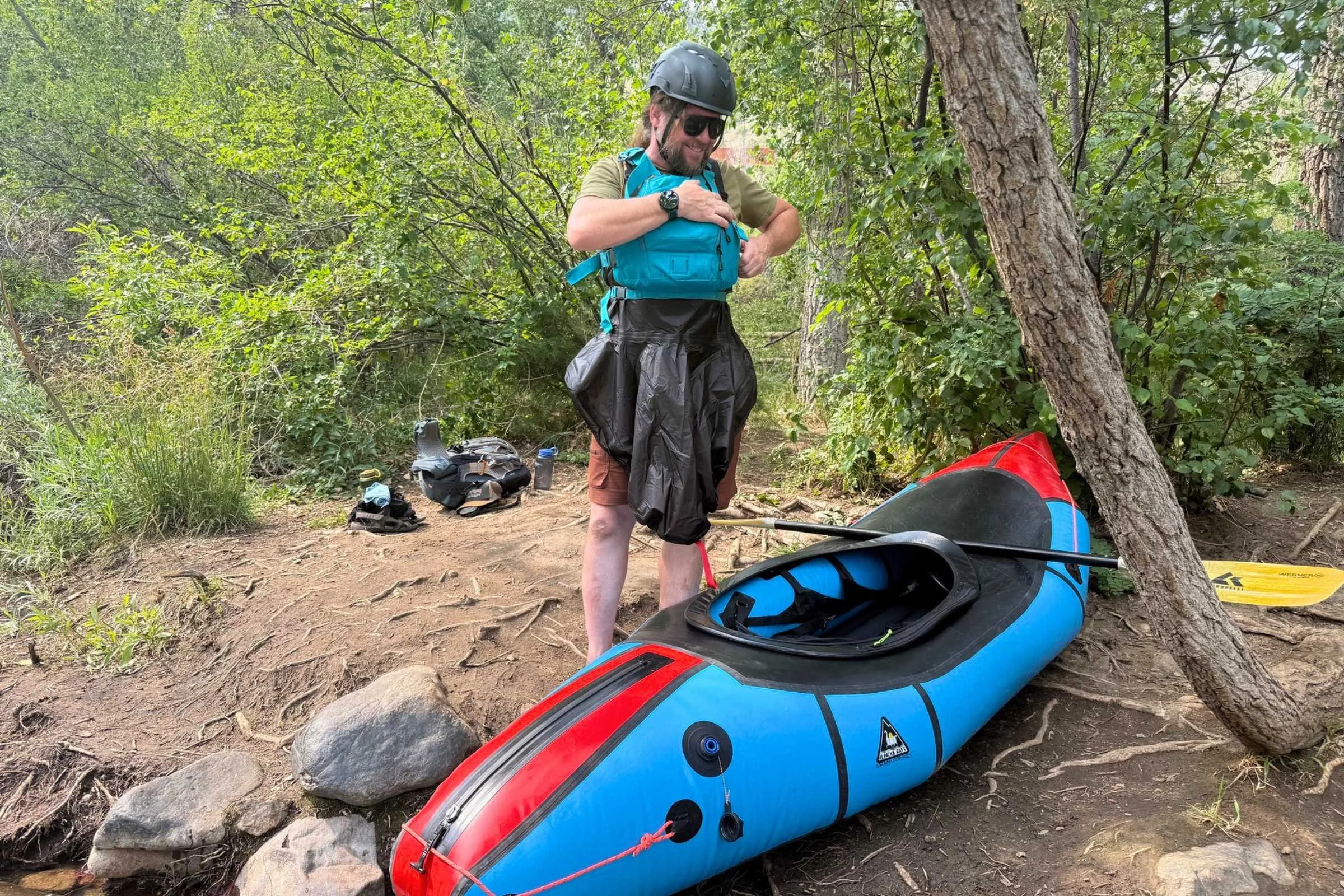
Preparing to get in the Alpacka Raft Mage with the spray skirt. Courtesy Becca Downs
We tested the Alpacka Raft Mage packraft on an overnight multi-day trip from Pumphouse to State Bridge on the Colorado River with Class II-III rapids, as well as in the Clear Creek Whitewater Park, in Golden, Colorado up to Class III rapids during low-water conditions. Our Mage testing was predominantly done by an intermediate packrafter.
We tested the Mage in low and normal water conditions, with summer temperatures around 95 degrees F and blue sky conditions. Those are better conditions for an open-deck, self-bailing boat than a spray deck boat. A spray deck suits for cooler early- and late-season adventures.
While testing, we assessed the agility of the Alpacka Mage for paddling, tracking, and turning. We also assessed how it handled various types of whitewater in up to low Class III waves.
We also tested the Alpacka Mage alongside other packrafts in our Best Packrafts guide.
Performance in the field
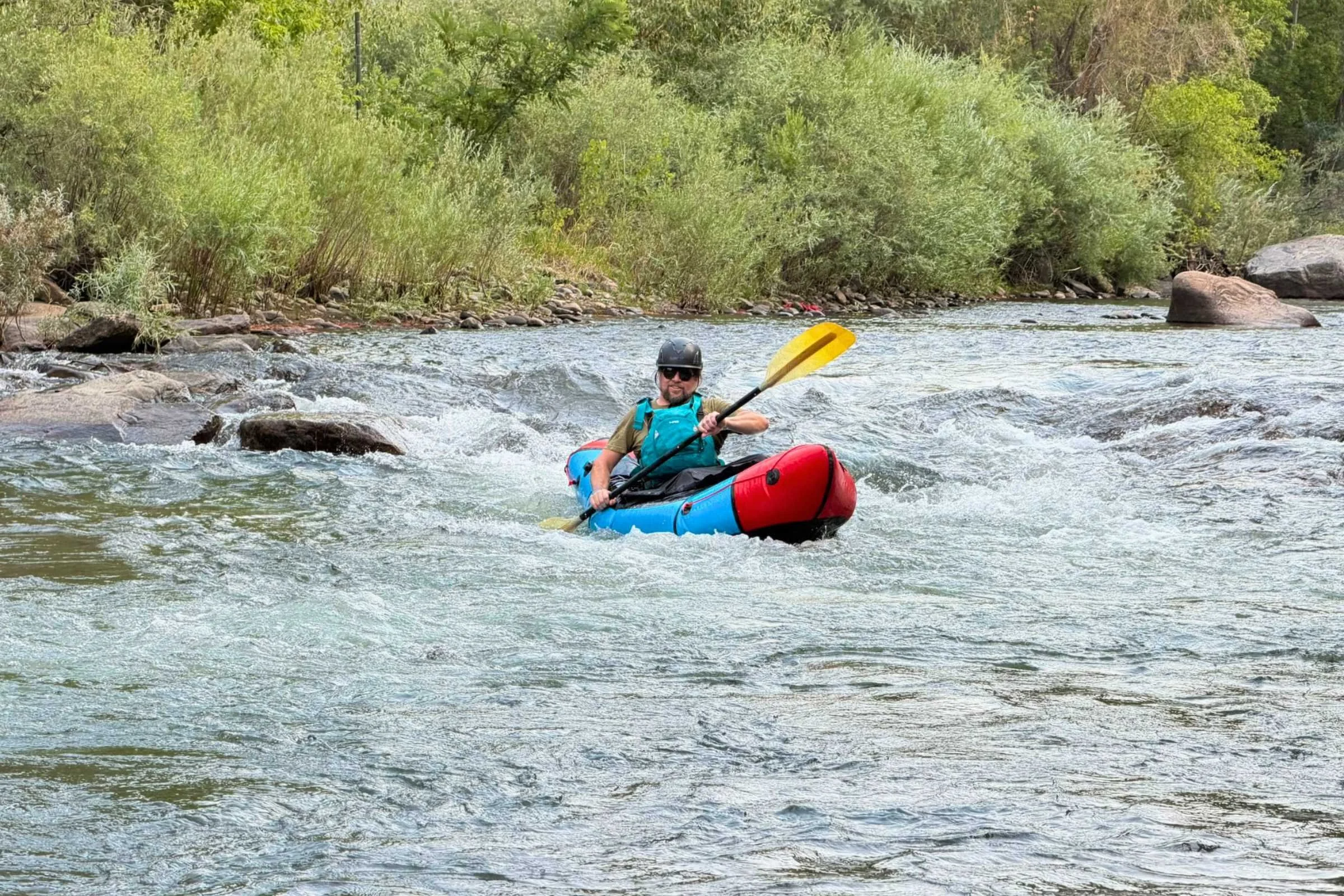
The author paddling in Clear Creek. Courtesy Mary Murphy
On-water handling and maneuverability
The Alpacka Raft Mage handles quite nimbly, tracking wave trains well and making turns almost too easily. In choppy water, the high bow and stern bound forward. The model I tested was outfitted with a permanent black spray deck. That’s not ideal on a 95-degree day with no shade, but it did great at keeping water out of the boat. After scraping the bottom most of the way through the extremely low Clear Creek Whitewater Park, I did manage to flip it in a small rapid and was easily able to yank the spray skirt off—a first for me. I was grateful that my NRS Ninja PFD immediately buoyed me to the surface and I never lost hold of the boat. If I had been more confident in that moment, I would have easily lined the boat up for the rapid and used my lower half to keep the boat upright, skills a good paddler should have in this boat.
Stability
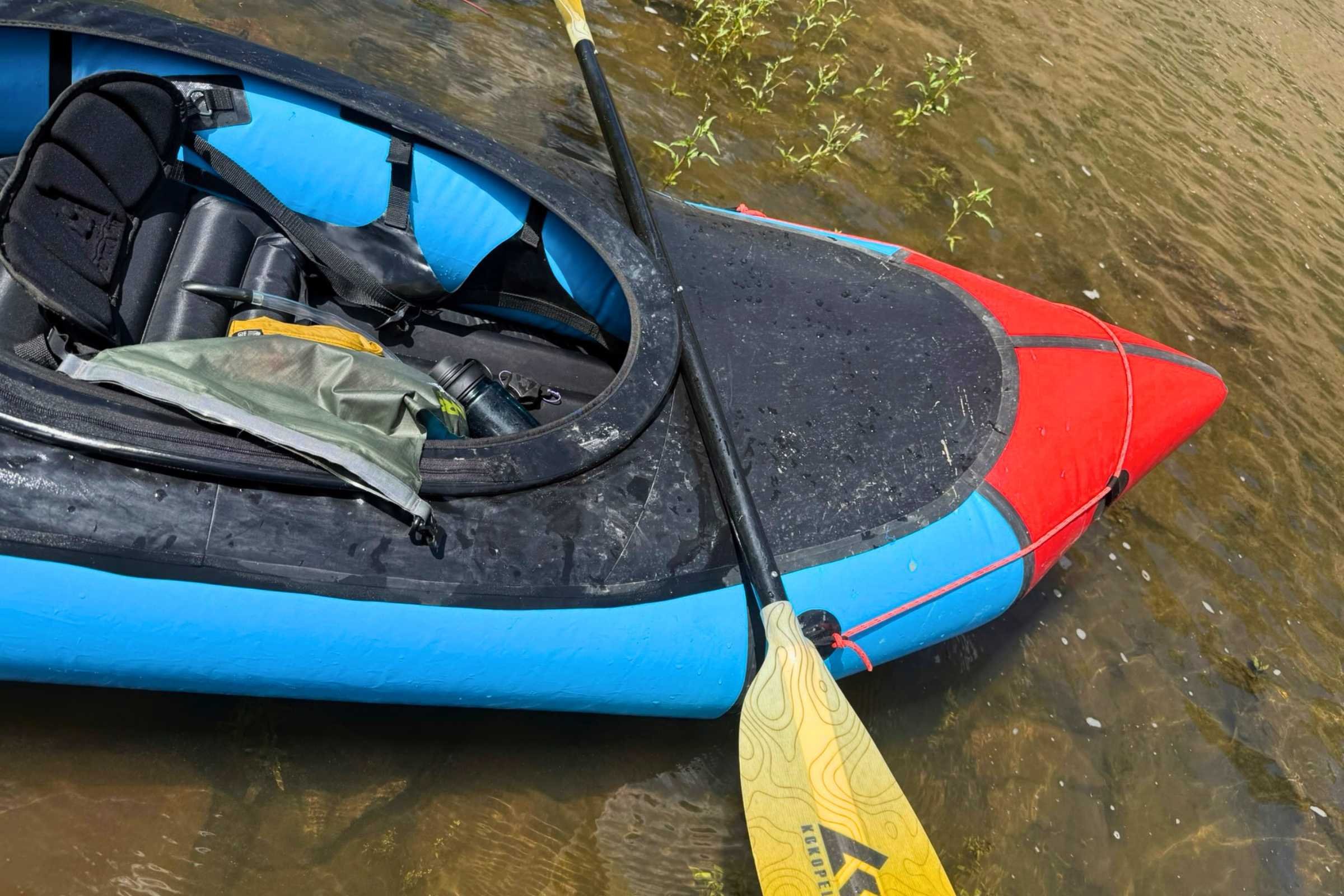
The cockpit and thigh straps in the Alpacka Raft Mage. Courtesy Chris Meehan
The Mage glides across flatwater and moving water easily. In rapids it bounds forward. While the narrowness and length of the boat help it cut through whitewater, it is less stable on the left and right edges and more prone to tipping than wider packrafts. When the paddler’s weight is centered and core and thigh straps are engaged, this can help with stability on water.
Whitewater performance
In testing the Mage on the Colorado River, I paddled it into wide rapids up to Class III, but more likely Class II at the time. The raft felt capable of rapids up to Class IV, though I wouldn’t feel comfortable piloting, especially with a spray deck as it was outfitted. I would feel more comfortable in a self-bailing model for the ease of egress. That said, the spray deck worked well and the only water in the cockpit was from me getting in and out.
Inflation and setup
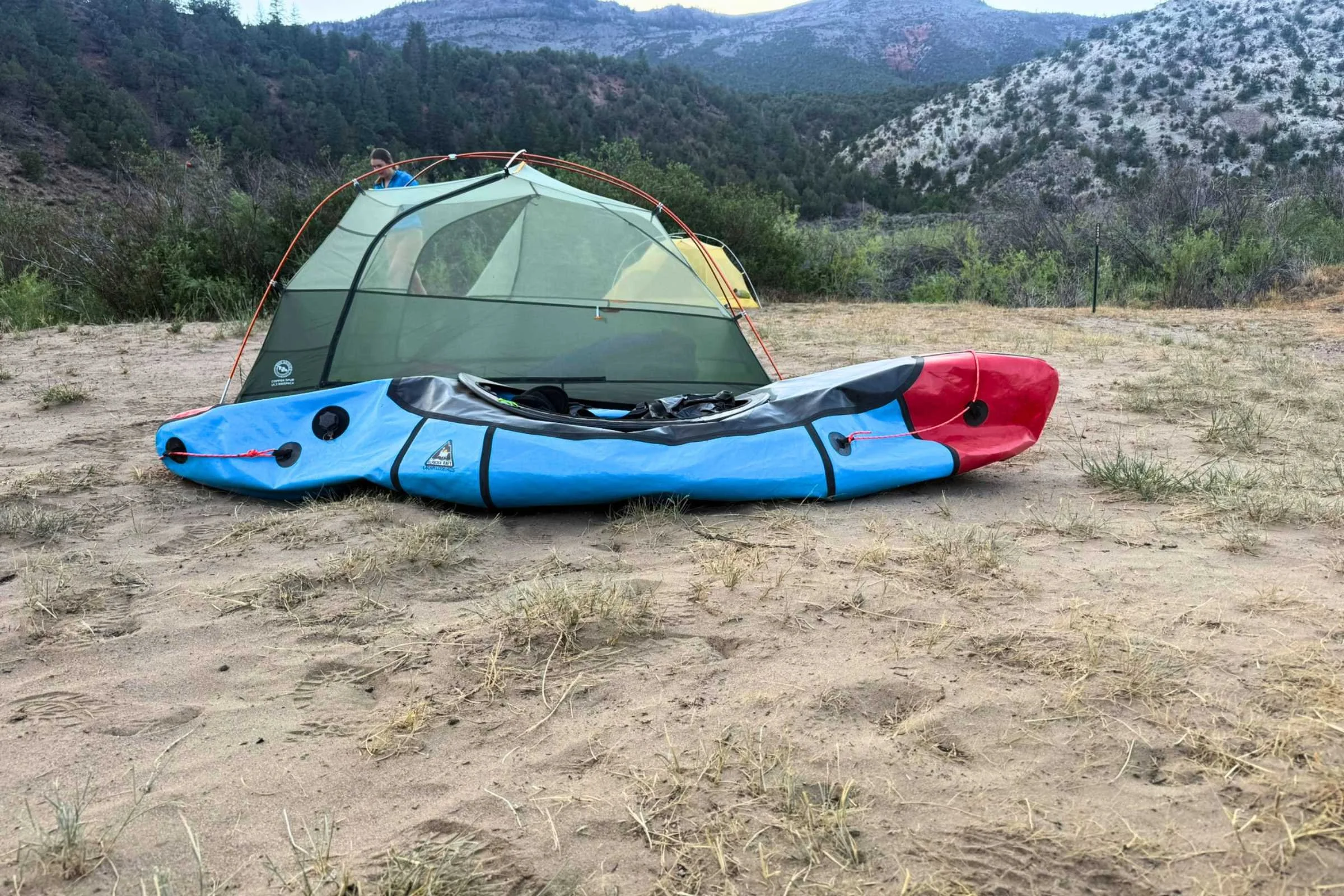
The deflated Mage next to a Big Agnes 2 person Copper Spur tent. Courtesy Chris Meehan
Inflation with the inflation bag was easy and didn’t take long at all. I also used a Flextail Max Pump 3 to inflate it and keep it topped off after tempering it. There was no difficulty inflating any of the chambers.
Packability and carrying
While it was easy to deflate and pack up, the packed size of the Mage was a little larger than I’d want to carry on a bike or in a pack. I’d likely hang it off the bottom of a backpack for a multi-day hike-to-packraft trip.
Cargo and gear storage
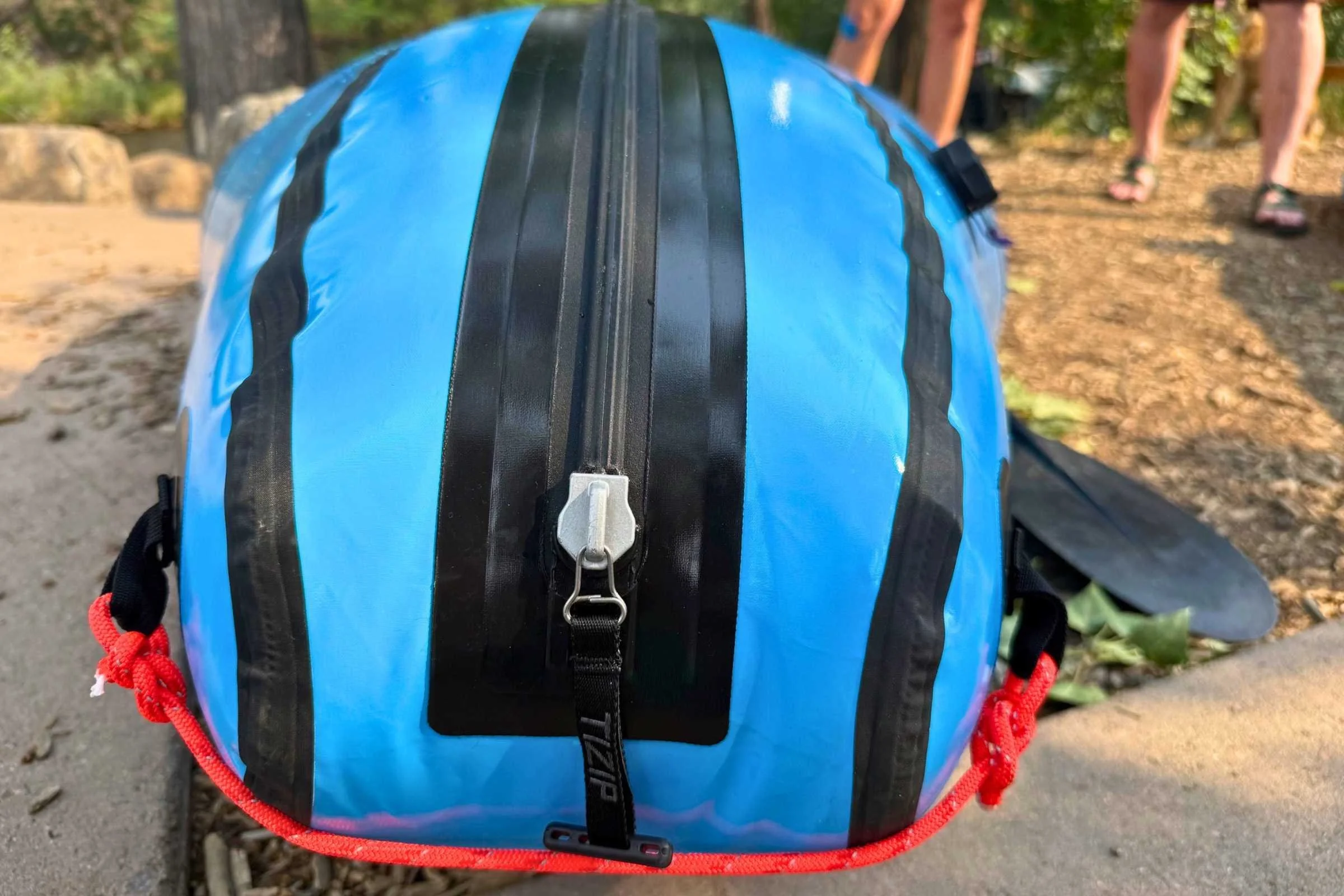
Close-up of the TiZip on the Mage. Courtesy Becca Downs
I’ve tested the external storage on Alpacka’s packrafts before and have found they usually balance well and tie down pretty easily. In this case, I relied on the internal storage, stowing my gear in dry bags, and inserting them on both sides of the hull through the cargo fly before sealing it. Carrying the weight low in the boat added stabilization, which helped balance it in rapids.
Comfort
After having the packraft on the water over three days I made some adjustments to the seatback, inflatable seat and floor, as well as the thigh straps. Floating with the sealed spray deck made it impossible to adjust things on the fly. I was definitely more comfortable in it after the adjustments and with more time in the boat, I think I could dial in the comfort perfectly. Each user will find they need to adjust the thigh straps, seat back and inflatable seat cushion to what fits them best.
Durability
The test sample was previously used but in great condition when I tested it. After scraping through the extremely low Clear Creek Whitewater Park, I didn’t notice any damage to the hull or fabric.
Features
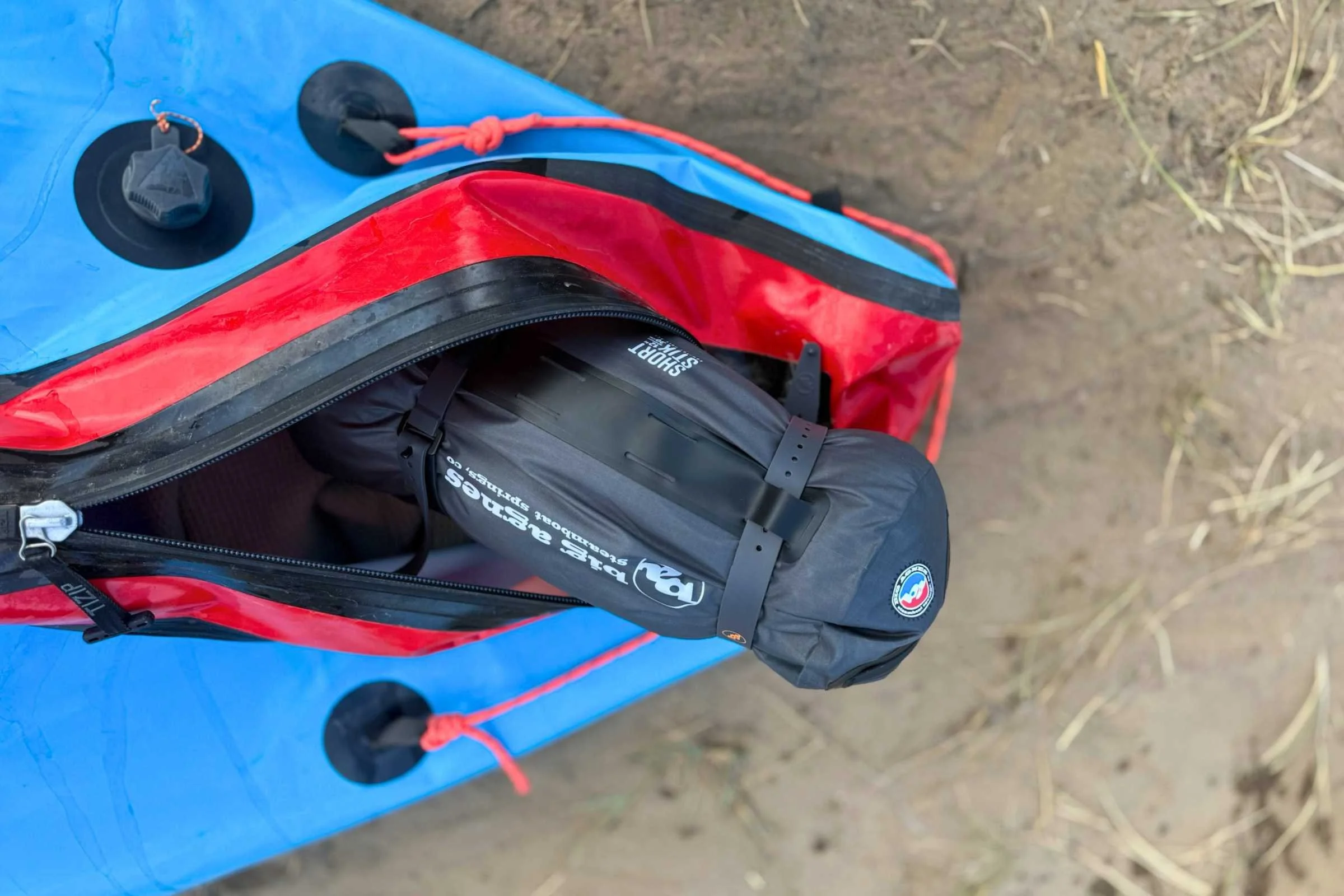
Loading gear into the Mage is easy. Also visible, the capped valve for the main air chamber. Courtesy Chris Meehan
Spray deck or self-bailing, open-deck options
Made with 420d material and available with a lighter 210d fabric
Four sizes: While I tested the large version Alpacka offers the Mage in small to extra large
Blow bag included to inflate the Mage
Capped valve for the main air chamber
Included repair kit
TiZip cargo fly with waterproof zipper
Thigh straps
Made in the USA
Sustainability
Alpacka Raft has taken a number of steps to make sure its production of packrafts is as sustainable as possible. These include using no-VOC (volatile organic compound) adhesives in manufacturing, powering manufacturing with solar power, manufacturing locally with US-made components as much as possible and purchasing renewable energy credits to offset other energy use. To learn more about Alpacka’s sustainability efforts, check out their website.
Should you buy the Alpacka Raft Mage packraft?
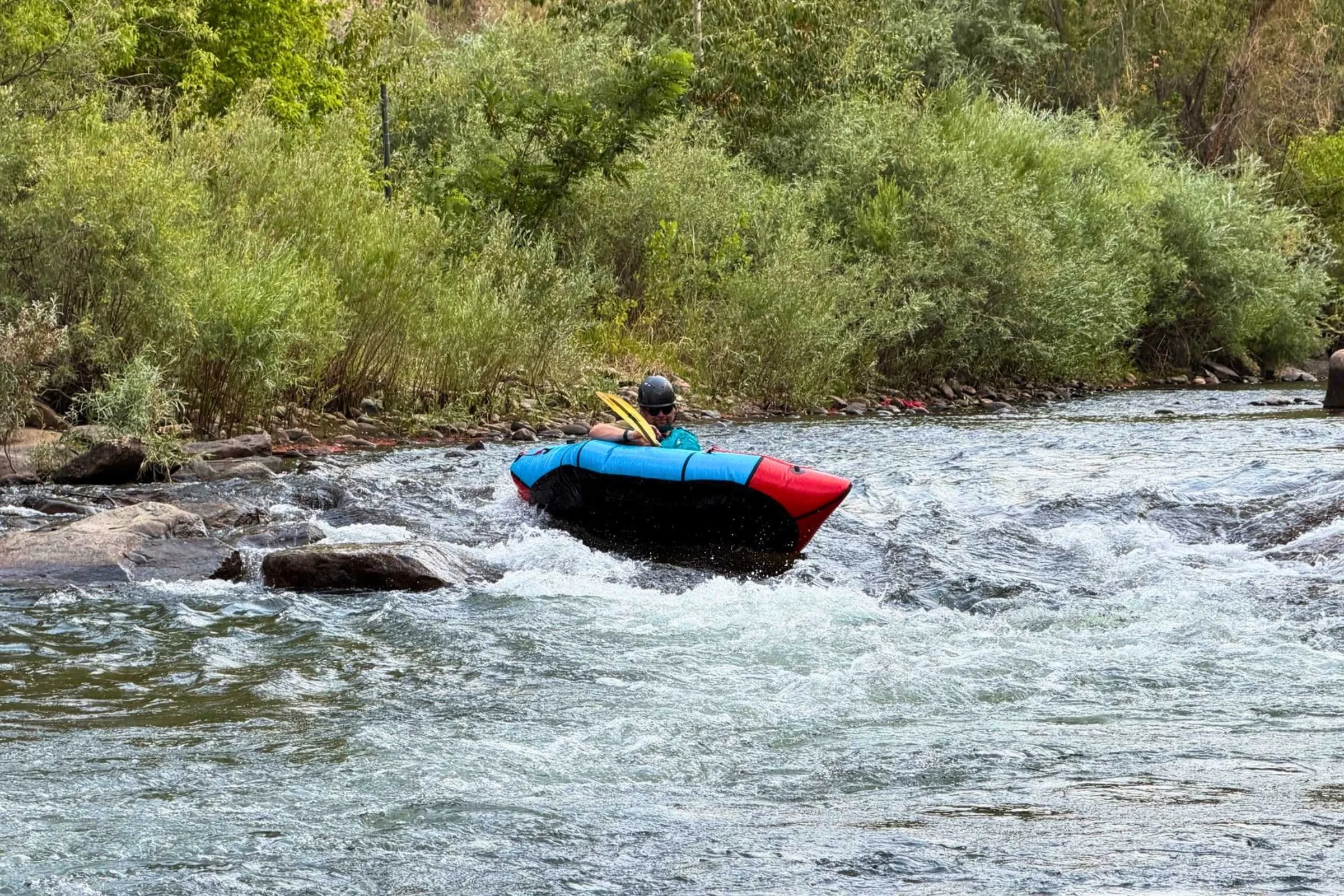
The author getting squirrely on a rapid in Clear Creek. Courtesy Mary Murphy
Buy if:
You’re an experienced paddler who wants an agile whitewater packraft
You want a packraft that can handle multi-day trips and whitewater
You’re tall or short and need a different-sized boat than most paddlers
Skip if:
You’re not planning on doing much whitewater in a packraft
You’re looking for the lightest, most compact packrafts
You plan primarily on paddling in flatwater or on slow rivers
If you’re interested in getting into packrafting, we recommend checking out our How to Get Started Packrafting guide.
Perhaps an inflatable kayak would suit you better? See our guide to Best Inflatable Kayaks.
Where to buy the Alpacka Raft Mage packraft
If you want to buy the Alpacka Mage packraft new, you’ll probably only find it online through Alpacka Raft.
Alpacka Raft
However, buying a new boat direct from Alpacka Raft gets you the full range of size, fabric, and deck configurations, and it can make warranty claims simpler if you hit a defect.
Similar packrafts
Alpacka Raft Mage vs. Alpacka Raft Caribou
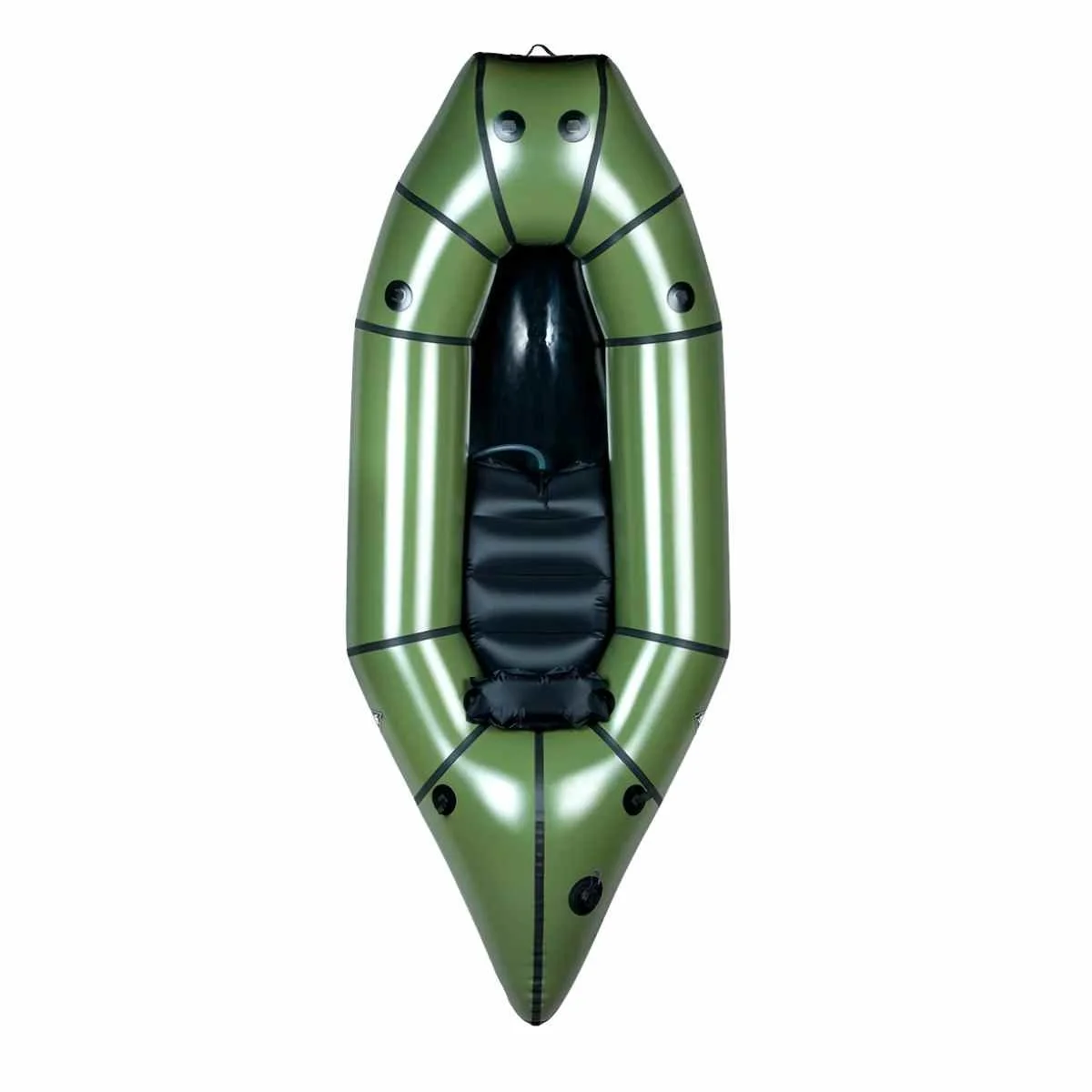
Price: $995-1,095
Type: Lightwater
Best uses: Multi-day flatwater trips up to Class II
Base weight (boat only): 4.5 to 4.9 lb
Weight with accessories: 6 to 6.9 lb
Packed size: 6 X 17”
Weight capacity: 390-500 lb (depending on class)
The Alpacka Raft Mage is heavier and packs down slightly larger than our overall favorite, the Alpacka Classic, which is now essentially the Caribou. The Classic remains our favorite for its versatility, while the Mage is more of a specialist packraft for whitewater. It handles more responsively so paddlers can quickly align the boat in waves and chutes. It’s also more expensive, starting at $1,650 compared to the $995 starting price of the Caribou. But for advanced paddlers who need a high-performance packraft that can handle more whitewater, it’s an ideal choice.
Alpacka Raft Caribou
Alpacka Raft Mage vs. Alpacka Raft Gnarwhal
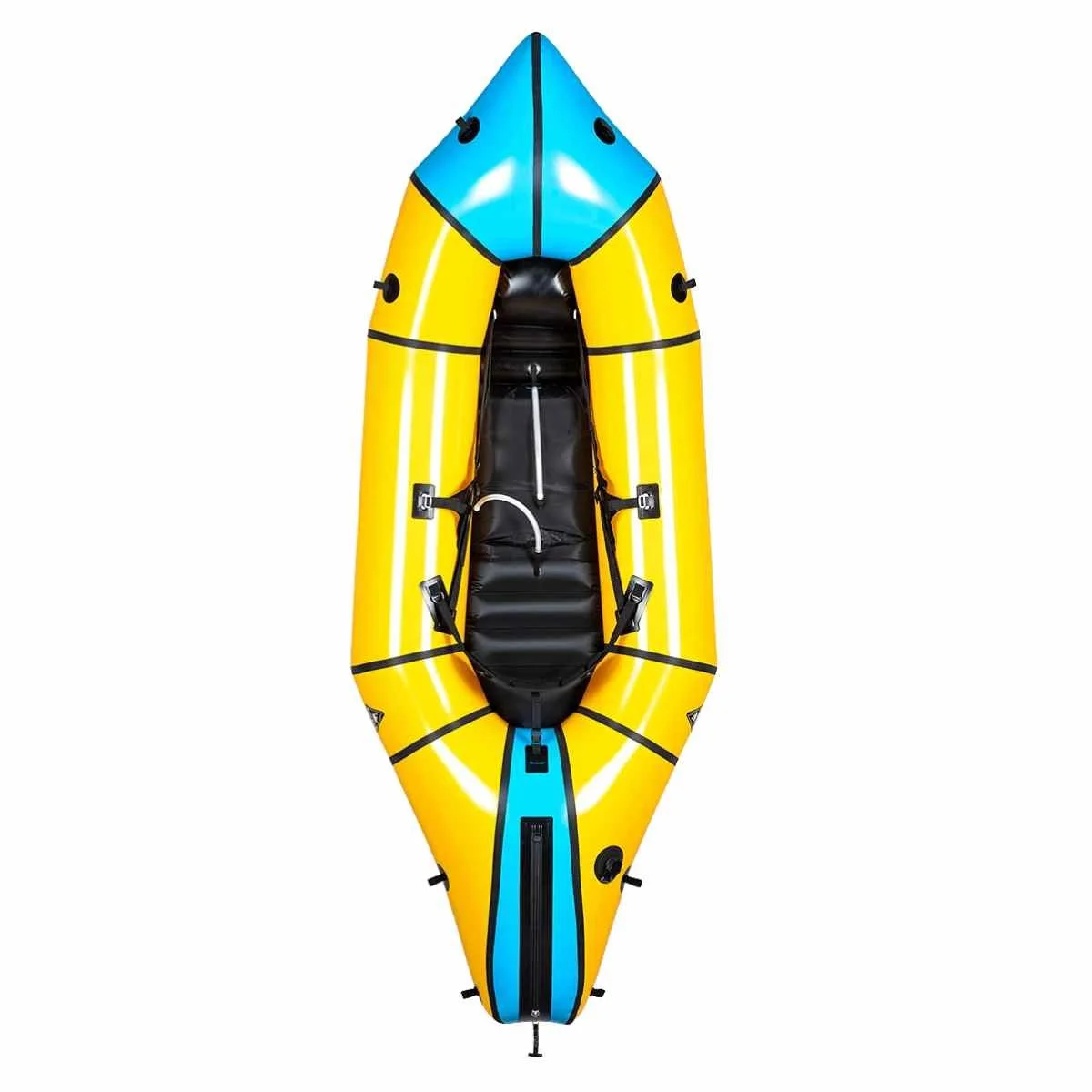
Price: $1,550-1,750
Type: Lightwater
Best uses: Multi-day trips and up to Class III-IV whitewater
Base weight (boat only): 5.5 to 6.5 lb
Weight with accessories: 8.25 to 10.4 lb
Packed size: 9 x 22”
Weight capacity: 370 lb
Though the Alpacka Raft Gnarwhal is also a capable whitewater packraft, the Alpacka Mage is built for more advanced paddlers and is designed to take on bigger whitewater. As such, it’s a little longer, narrower, and the middle sits a little lower in the water than the Gnarwhal. This makes for a more responsive, more playful packraft.
The Gnarwhal is a bit more stable. The two are similar in terms of options, but the Mage has a 4-point thigh straps compared to the 3-point thigh straps in the Gnarwhal. The Gnarwhal starts at $1,550 compared to $1,650 for the Mage. Those wanting to push into harder whitewater classes should opt for the Mage over the Gnarwhal.
Alpacka Raft Gnarwhal
Alpacka Raft Mage vs. NRS Neutron
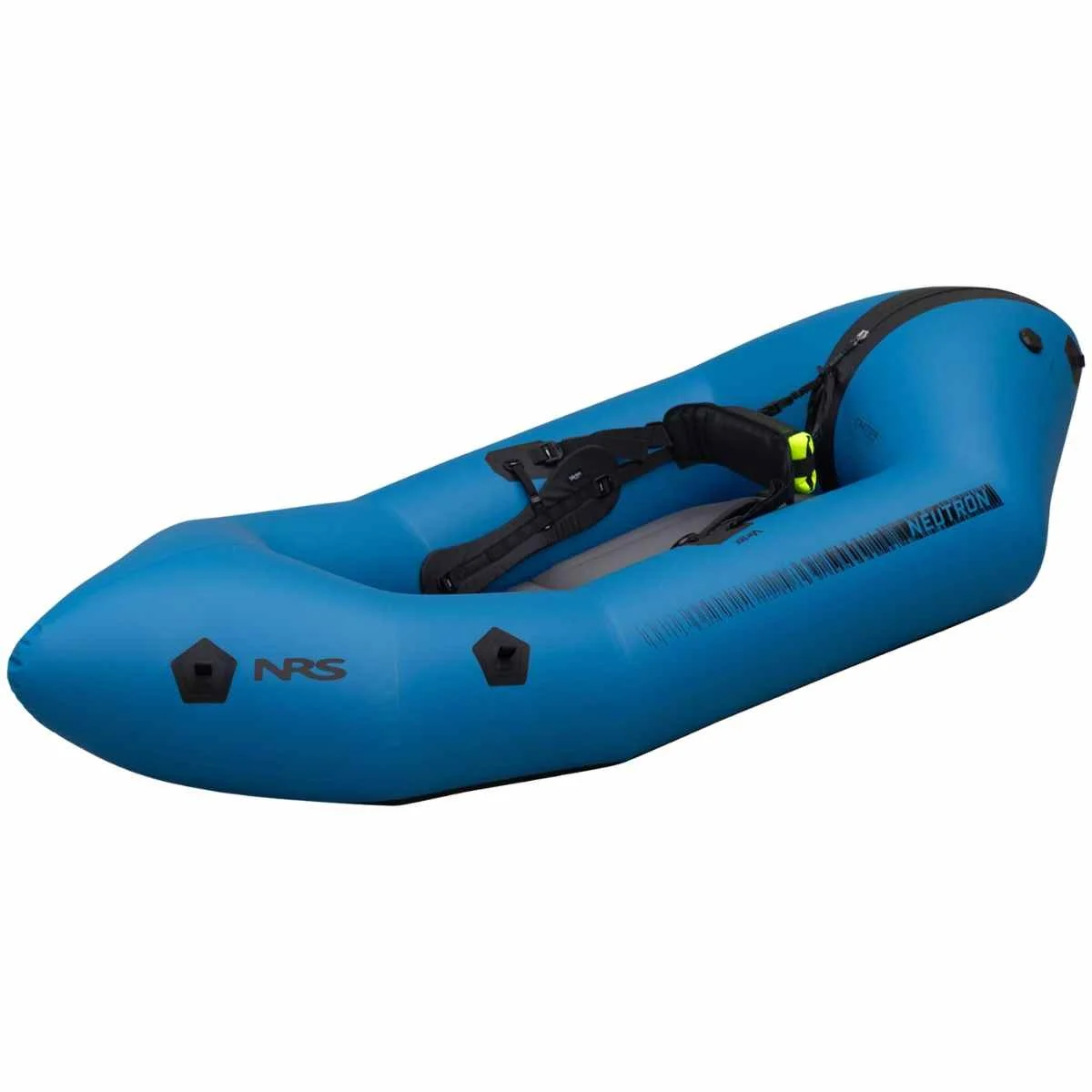
Price: $1,445-1,495
Type: Whitewater
Best uses: Multi-day trips up to Class III (tested)
Base weight (boat only): 8.9 to 9.5 lb
Weight with accessories: 11.86 to 12.67 lb
Packed size: 22 x 11”
Weight capacity: 375 to 400 lb
The Neutron is NRS’ most advanced whitewater packraft and it handles well. However, in testing I found that the Mage is more nimble. It’s also lighter and offers more options in terms of sizes, fabrics, and the spray deck vs. self-bailing floor option. The Neutron packs slightly larger, weighs more than the Mage, and has a a proprietary inflation valve that's more annoying to use than the Mage. At $1,650, the Mage is a little more expensive than the Neutron, which starts at $1,445. In the end I’d still recommend the Mage as it’s more capable and customizable to paddlers’ needs. Learn more in our in-depth review of the NRS Neutron packraft.
NRS Neutron
Alpacka Raft Mage vs. Kokopelli Nirvana Self-Bailing
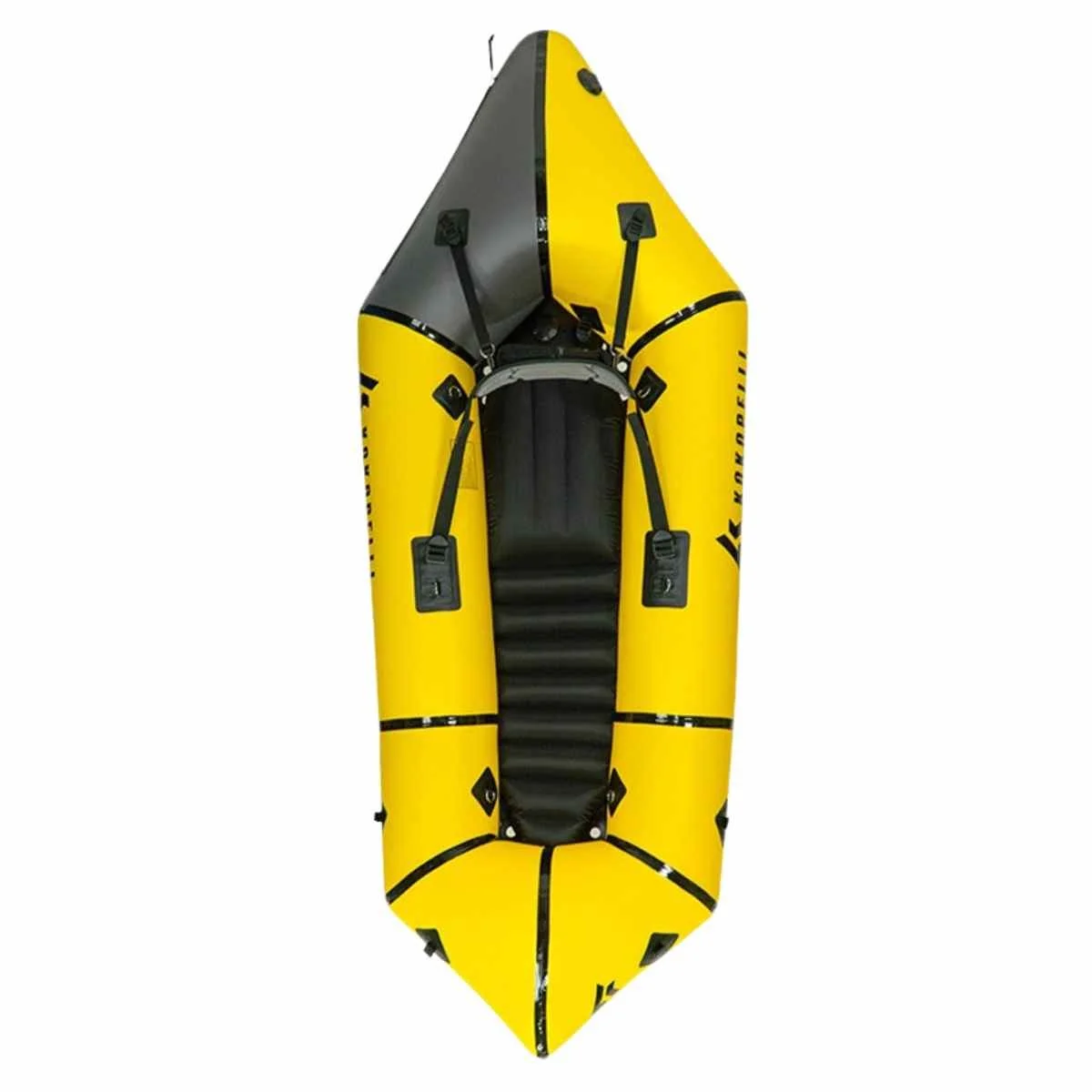
Price: $1,349-1,499 (spray deck version $1,299)
Type: Whitewater
Best uses: Multi-day floats, up to Class III
Base weight (boat only): 7.3 lb (spray deck version 10.8 lb)
Weight with accessories: 9.2 lb (spray deck version 12.0 lb)
Packed size: 14 x 10”
Weight capacity: 300 lb
The Alpacka Raft Mage is a lighter, more maneuverable boat than the Kokopelli Nirvana and offers more customization in terms of sizes. It also packs down smaller than the Nirvana. The Nirvana is less expensive, starting at $1,299 for the spray deck version. The self-bailing option starts at $1,349. The Nirvana is a capable Class III boat, but I would still recommend the Mage if you’re looking for a whitewater packraft.
Kokopelli Nirvana
Why you should trust us / About the author
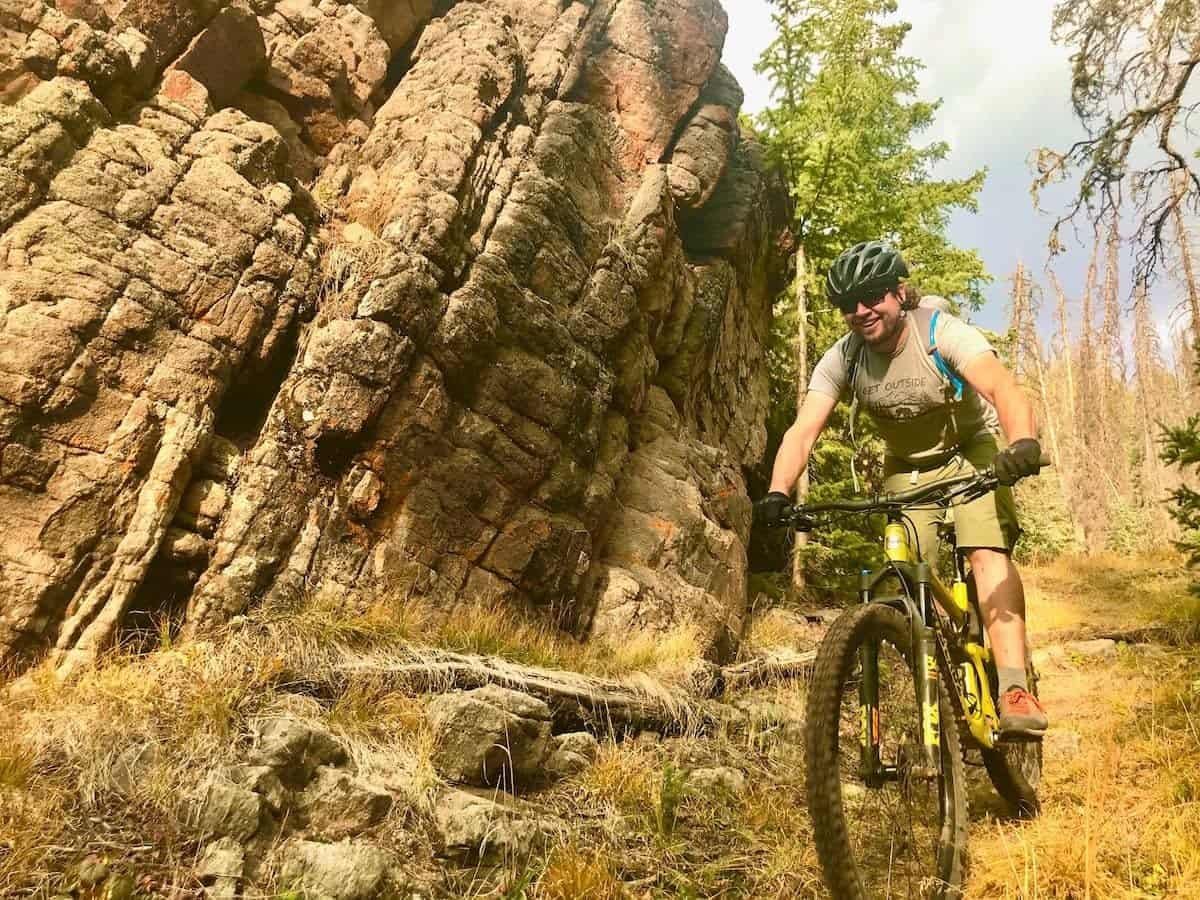
I first learned of packrafting around 2016. Since then I’ve used them to explore Colorado and have used them on multiple creeks, rivers, reservoirs and lakes. I’ve gone on daytrips and multi-day trips—including classics like Ruby-Horsethief Canyon, and used them on self-guided and guided tours. I’ve also gone bikerafting, including with one of the pre-eminent packrafters, Steve “Doom” Fassbinder.
As one of the first reviewers for Treeline Review, starting in 2019, I’ve covered a lot of outdoor adventure gear across multiple activities, among them hiking, camping, climbing and mountain biking. I wrote Treeline Review’s initial packraft buying guide in 2022.
Beyond my work with Treeline Review, I have authored multiple outdoor guidebooks. My most recent Falcon Guide, “Colorado’s Best Front Range Adventures: The Greatest Hiking, Climbing, Paddling and More From Denver to Colorado Springs and Fort Collins,” arrived in Spring 2021. In it, I cover the region’s best hiking, biking, climbing, and rafting. I’m also the author of Falcon Guide’s “Climbing Colorado's Fourteeners: From the Easiest Hikes to the Most Challenging Climbs” and edited Justin Lichter’s excellent guide to thru-hiking titled “Trail Tested: A Thru-Hiker's Guide To Ultralight Hiking And Backpacking.” This experience has helped me become a first-rate gearhead and product tester.
I have 20-plus years of exploring, hiking, backpacking, mountain biking, climbing, guiding, and playing in the wild. I worked with National Geographic and their mapping division in developing their Colorado 14ers Map Pack Bundle. I’ve written about hiking and climbing for Elevation Outdoors, including stories about Colorado 14ers and outdoor apps to boost adventures.
In addition, I’ve written columns about ultralight hiking and gear for Backpacker, gear reviews for Treeline Review, Popular Mechanics, Bicycling, Popular Science, and other publications, including Elevation Outdoors, 5280, and more.
At Treeline Review, we strive to offer unbiased reviews to help you find the best product for the price. Treeline Review doesn’t accept sponsored content, native advertising, or paid reviews. I am not sponsored by any companies, nor are any of my family members sponsored by, employees of, or ambassadors of any of the companies in this review.
Find more of Chris Meehan’s reviews on his Treeline Review author page.


