Best Climbing Rope Bags of 2026
Rope tarps, crag bags, rope packs, and travel bags that keep your climbing rope clean and make it easier to carry
September 16th, 2026, updated with another year's worth of testing notes, new prices and commentary on value
Home > Gear Reviews > Climbing
We’ve spent the past three years hauling climbing rope bags across sandstone in Utah, granite in California, and crags and gym floors throughout Colorado. A good rope bag should keep your rope clean and organized without adding unnecessary bulk or frustration, whether you’re carrying it a few minutes from the car or hiking a longer approach with the rest of your climbing gear.
For this guide, we relied on more than a decade of experience using rope bags and tarps, including years of climbing throughout Colorado’s Front Range (and writing a guidebook about it). We carried them on dusty approaches, through tight spaces, and over long days at the crag, using them for sport, trad, ice, and multi-pitch climbing. Several of the bags and tarps in this guide have also been in our regular rotation for many years, giving us a good sense of how they hold up over time.
We evaluated each rope bag for carrying comfort, tarp design, capacity, durability, and how well it kept ropes clean in real-world use. We also paid attention to how easily each bag packed up, how well its closures and buckles worked, whether the tarp made it easy to organize the rope ends, and how much room there was for a harness, shoes, rack, or other gear.
Top Pick: The Black Diamond Stone 42 Duffel earns our Best Overall award. The first time we opened it at East Colfax in Clear Creek Canyon, the removable tarp and internal organization immediately made setting up easier. Its tarp had plenty of room for an 80 m rope, the color-coded tie-in loops helped keep the rope ends organized, and the stashable shoulder and waist straps made it easier to move through tight spaces or haul the bag when needed.
We create reader-supported, objective gear reviews independently selected by our editors. This story may contain affiliate links, which help fund our website. When you click on the links to purchase gear, we may get a commission — without costing you an extra cent. Thank you for supporting our work and mission of outdoor coverage for every body! Learn more.
Climbing rope bags comparison table
| ROPE BAG | TREELINE AWARD | WEIGHT | SIZE | TARP SIZE | BAG TYPE | POCKETS | MSRP |
|---|---|---|---|---|---|---|---|
| Black Diamond Stone 42 Duffel Bag | Best Overall Read why |
2 lb 8 oz | 42 L | 47” X 59” | Duffel/Backpack | 2 internal zip pockets | $140 |
| Metolius Ropemaster HC Rope Bag | Best for Carrying Extra Gear Read why |
1 lb 4 oz | 29 L | 52" x 58" | Burrito | None | $50 |
| Sterling Vertac Black Gear Bag 40L | Best for Travel Read why |
3 lb | 40 L | N/A | Backpack | 6 internal and external | $200 |
| Trango Cord Trapper Rope Tarp | Best Climbing Tarp Read why |
9.5 oz | N/A | 48" x 60" | Tarp | None | $25 |
| IKEA FRAKTA Shopping Bag | Best Affordable Read why |
4 oz | 72 L | N/A | Bucket Style | None | $1 |
The winners
Best overall climbing rope bag: Black Diamond Stone 42 Duffel

Weight: 2 lbs. 8 oz.
Size: 42 L
Tarp size: 47” X 59”
Bag type: Backpack
Pockets: 2 internal zip pockets
What we liked: Removable tarp, giant zippered pockets, internal loops make it easy to organize gear
What we didn’t like: Inside is black making it harder to see some things
The Black Diamond Stone 42 Duffel has everything we want in a crag bag and it’s the rope bag we keep reaching for every time we head out. When we splayed the pack open for the first time at East Colfax in Clear Creek Canyon, we were impressed by how easy it was to access the tarp and organizing features inside.
The removable tarp is big enough to handle rolling up an 80-meter rope. It also has red and green tie-in loops for securing the ends of the rope, which is great for rope organization.
We also love that the shoulder and waist straps easily tuck away into the pack in case you need to haul it up or move through narrow spaces where it might get caught on tree branches, rocks, or other things. We also love the burly handles on the outside, which make it easy to hold from the top or front, to tie into a rope or clip a carabiner to.
Compare prices of the Black Diamond Stone 42 Duffel


Inside the pack there are two top loops you can easily attach all your quickdraws and/or trad gear to. With 42 L of space inside there’s also plenty of space to hold your climbing shoes, harness, and more. The two giant, zippered internal pockets are great for storing necessities, like keys, a headlamp, and snacks.
Made of stocky, recycled 840-denier nylon and 1,260-denier ballistic nylon, the duffel should last for a decade or more of tough use. This streamlined pack is well-designed, comfortable to carry long distances, and has all the features we want in a crag pack.
Best climbing rope bag for carrying extra gear: Metolius Ropemaster HC

Weight: 1 lb. 4 oz.
Size: 29 L
Tarp size: 52" x 58"
Bag type: Burrito
Pockets: None
What we liked: Can carry an 80 m rope and extra gear, rope viewing window, easy to cinch and wrap up
What we didn’t like: Only one shoulder strap, could be a little larger, no pocket or other organization features
You may ask yourself—or us—why we feature the Metolius Ropemaster HC (high-capacity) as a high-capacity bag when we’ve got larger backpacks listed here. That’s because some of those are more climbing backpack than rope bag. The extra liters of capacity that the Ropemaster has over the backpack-style rope bags does make it easier to carry more gear or accommodate bigger shoes and harnesses as well as a longer, 80 m rope.
Compare prices of the Metolius Ropemaster HC

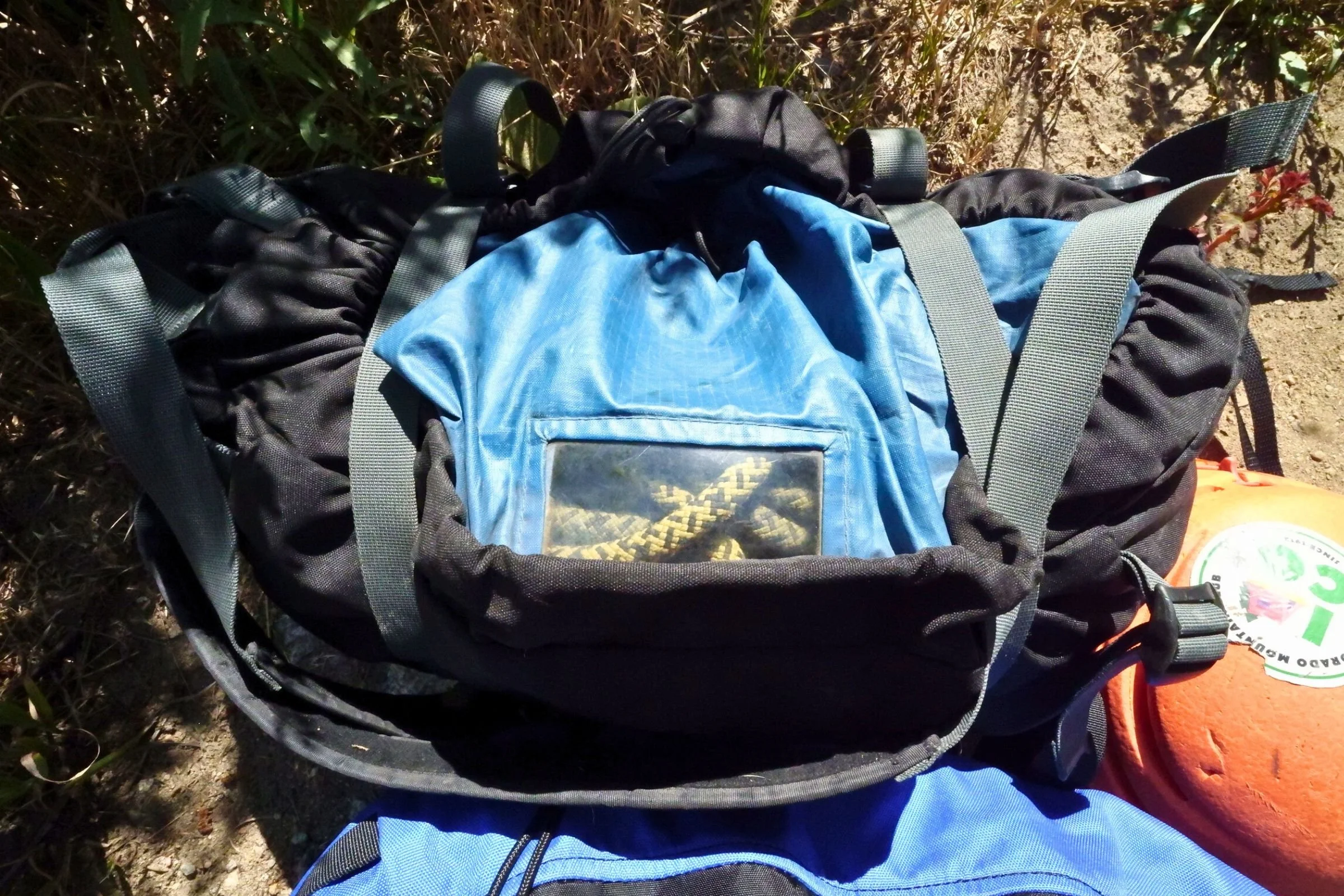
The Metolius Ropemaster HC and its rope viewing window.
We appreciate the rope viewing window, which makes it really easy to know what rope is in there before you head out. We also found it’s very easy to cinch the rim of the bag and then use the straps to really ratchet everything down tight, making it ideal for navigating narrow nooks and crannies, hauling gear up to the next pitch, and not taking up too much space at the crag.
The Ropemaster HC is the second version of the first rope-specific bag, Metolius’ Ropemaster. Despite the added capacity, little has changed since its introduction over three decades ago—you know the saying: “if it ain’t broke…”.
Best Climbing Rope for Travel: Sterling Vertac Black Gear Bag 40L

Weight: 3 lbs.
Size: 40 L
Tarp size: N/A
Bag type: backpack
Pockets: 6 internal and external
What we liked: Burly, great organization options, comfortable shoulder straps
What we didn’t like: Bulkier than other bags, no included rope tarp, can’t stow away the shoulder straps
If you’re heading out on your next dream climbing trip to somewhere in Thailand, Kalymnos, the Dolomites or Tonsai…we’re jealous! If we were making that trip we’d want a pack that can handle not just the rigors of the rock but also the airport, boat, yak, and whatever else travel will throw at it.
That’s where the Sterling VERTAC Black Gear Bag 40L comes in. It’s a rope bag that doubles as a travel backpack—so you can go from the gate to rock before even stopping at your hostel or houseboat.
View the Sterling Vertac Black Gear Bag 40L


Sterling claims it’s a 40-liter pack but it felt like it was bigger than the 42-liter Stone Duffel from Black Diamond. That's because its shape gives us a lot of usable space. It easily gobbled up two 70 m ropes with enough room for a harness, shoes and a rack of trad gear. We could also see using it as our only backpack on an extended cragging weekend, since it can carry a rope, rack, harness, helmet, shoes and some extra clothes inside.
Still, if we needed to haul it up a multipitch route, the handle, rated at 50 pounds, would be up to hauling up almost any gear we left in there, as well as the gear of most of our climbing party.
Best climbing Rope tarp: Trango Cord Trapper Rope Tarp

Weight: 9.5 oz.
Size: N/A
Tarp size: 48" x 60"
Bag type: Tarp
Pockets: None
What we liked: Multiple color options, lightweight
What we didn’t like: No carry straps, cinching tarp down takes a little getting used to
If you’re looking for a compact, lightweight climbing tarp to protect your rope at the crag and make it easier to slip into a backpack without coiling it, this is our go-to. We’ve had the same Cord Trapper Tarp for about a decade and have used it rock climbing throughout Colorado, cragging Clear Creek, trad climbing at Eldorado Canyon, ice climbing in Ouray, and at countless other spots around the state. Somehow we still haven’t put any holes in it.
Compare prices of the Trango Cord Trapper Rope Tarp

The Trango Cord Trapper Rope Tarp has generous sizing, useful arrows, and multi-colored tie-ins.
The Cord Trapper is easy to tuck and roll your rope up into it like a burrito, cinch down with the strap, and stow it in larger packs for long hikes into remote areas, like climbing in the Buffalo Creek Wilderness. It also has red and green tie-in points to make sure you pull from the top of the rope pile rather than the bottom. Otherwise it’s a no-frills rope tarp that retails for $25. But you can find it for about $20 at some stores—just a little more than a cheap truck tarp.
It doesn’t have any carrying straps, making it awkward to carry on its own. But it allows you to cinch a rope down tightly without coiling it, then stow it neatly in a backpack, like the Sterling VERTAC. We also love that the tarp is available in multiple colors. It is another way that makes it easier to find your rope when packing up at the crag, or if you have two or more ropes you could keep each type of rope in a different colored tarp, so it’s easy to grab and go.
Best affordable climbing rope bag: Ikea Frakta Shopping Bag

Weight: 4 oz.
Size: 22” x 15” x 14” (72 liters)
Tarp size: N/A
Bag type: Bucket-style
Pockets: None
What we liked: Can’t beat $1 in terms of price, multiple carry loops make it easy to tie off rope and carry the bag, lots of space for extra gear
What we didn’t like: Not as durable as other options, no way to really cinch the top closed, no organization abilities, no tarp
If you’ve never seen the big blue bag at a crag you probably haven’t looked. This simple, lightweight bag from IKEA is a favorite of dirtbags everywhere—indeed when an ice climbing buddy saw a potentially abandoned IKEA bag at Lincoln Falls, her eyes lit up with crag booty dreams. She was a little crestfallen when someone else claimed it.
It’s hard to debate the value. IKEA sells this bag for less than a dollar or you can buy a 10-pack on Amazon delivered to your door. Essentially it’s a truck tarp with handles sewn into a shopping bag, which is probably why it’s so cheap—IKEA’s using it to encourage more shopping! At 4 ounces it’s the lightest bag here and, at 72 liters of capacity, it has the largest capacity of any bag we considered. Plus, it folds down to nothing when not in use.
View the Ikea FRAKTA Shopping Bag

The IKEA FRAKTA at a Movement Climbing Gym in Colorado.
However, it’s lacking a lot of other things we’re looking for in a climbing bag. It doesn’t have any padded backpack straps, organization, or a tarp. It’s just a bucket. Also, while IKEA rates it for carrying up to 55 pounds, it’s not abrasion-resistant like tarps designed for the rigors of climbing. It just won’t last as long as other rope bags and tarps. And, as it breaks down, you may end up leaving some plastic debris at the crag that will eventually work its way into a wild animal or nearby body of water.

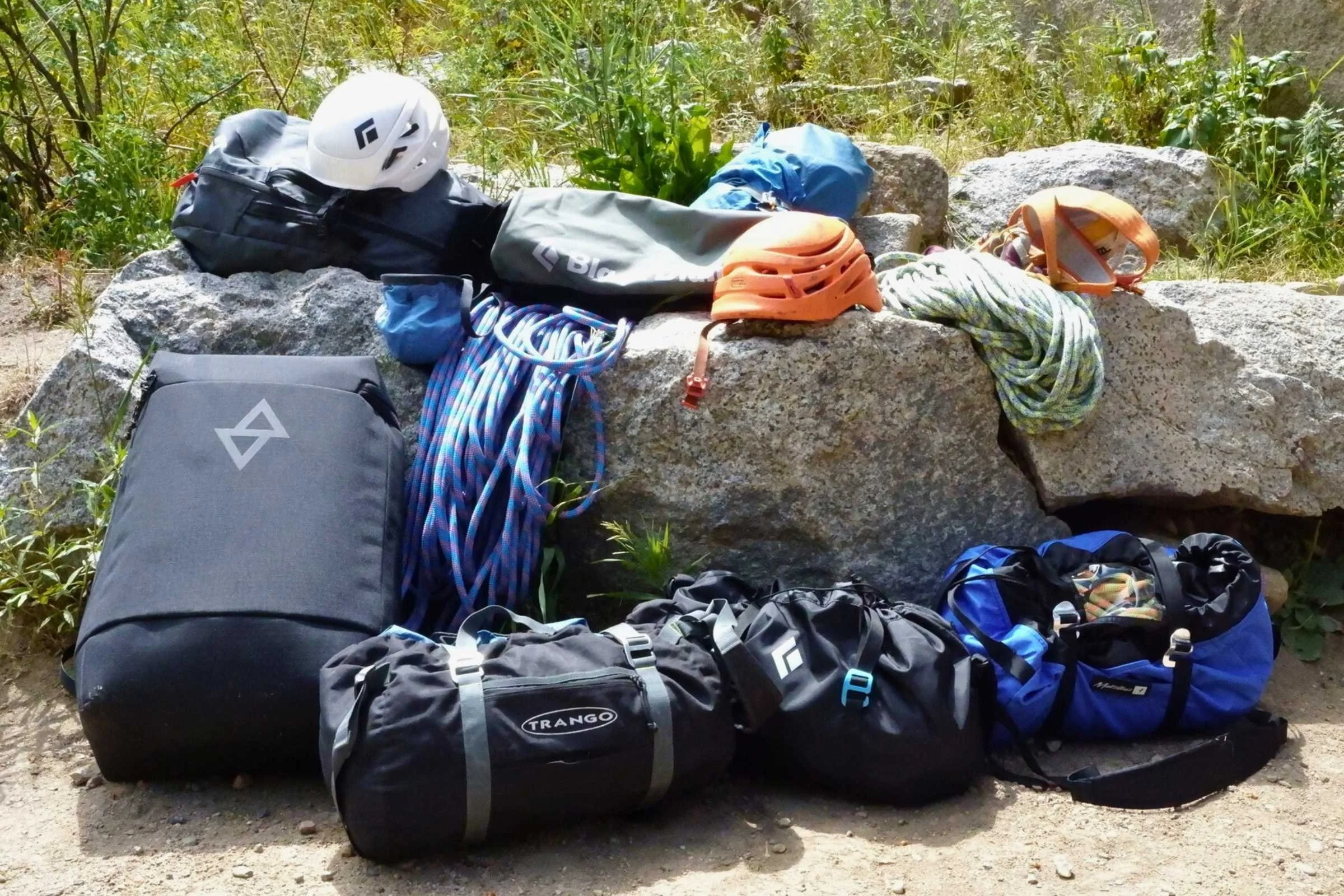
Our favorite rope bags at the classic Castle Rock crag.
Other climbing rope bags we tested
Black Diamond Super Chute

Weight: 1 lb. 1 oz
Size: 25 liters
Tarp size: 48" x 57"
Bag type: burrito/funnel
Pockets: Small rope ID pocket
What we liked: Ability to roll up like a burrito or slide rope into the bag like a funnel, big enough to carry 80 m rope
What we didn’t like: Not a lot of space to carry extra gear, no external loops, no carry handle
This rope bag has the bare basics we’d want in a crag bag—it’s cinchable, has a shoulder strap, and a tarp. It’s similar to the Metolius Ropemaster HC. The ability to use the tarp to funnel the rope pile into the bag is nice, but we find that rolling the rope in a tarp before rolling it into the bag helps keep the rope pile in order more. And while the Ropemaster has a transparent window so you can see the rope inside, the Super Chute has a business card-sized pocket with a mesh cover so you can see the name of the rope you wrote on the card. But that’s it’s only pocket. It also lacks a carrying handle or any other opportunity to carry it other than the sparsely padded shoulder strap.
Compare prices of the Black Diamond Super Chute

Weight: 1 lb. 4 oz.
Size: 29 L
Tarp size: 52" x 58"
Bag type: Backpack/funnel
Pockets: Small zippered pocket
What we liked: Big enough for an 80 m rope and some extra gear, small pocket for gear like keys and belay glasses, zipper down the front of the pack makes it super easy to access everything
What we didn’t like: Funnel style pack makes it easier to mess up the rope pile, not a lot of ability to strap extra gear on the outside, no back panel padding
This is another good rope bag from Metolius but it just wasn’t our favorite. We’d choose the Black Diamond Stone 42 over it. The Stone is more versatile, with straps that can be used as a backpack or duffel bag. This pack doesn’t have a rope ID window and the gear pocket is smaller than on other options. As described with the Super Chute above, we’re also not entirely sold on the funnel method of stuffing a rope in a pack.
View the Metolius Speedster Rope Bag

Weight: 13.3 oz.
Size: N/A
Tarp size: N/A
Bag type: Bucket
Pockets: none
What we liked: Zipper makes easy work of compressing the rope, loops at top make it easy to haul bag up
What we didn’t like: No tarp, no place for extra gear, loops at top aren’t color-coordinated
This was a unique rope bag among the pieces tested. It’s not a traditional rope bag or even a tarp. In fact, it has no tarp. It’s a bucket for quickly stowing rope on multi-pitch or mountaineering routes using gravity to keep the rope pile in order, so theoretically, you don’t really need to tie-in the bottom end of the rope. But in practice, if you don’t tie off the top end of the rope it would be easy to lose it when carrying the rope.
The zipper allows the bucket to open wide, while the top loops make it easy to connect the bucket to an anchor. Connecting the bucket to an anchor keeps the bucket open, making it easy to toss rope into it from a hanging belay station. It’s great for that, but not really as a practical crag bag or rope bag. You’d need to roll the rope up in a tarp, put the tarp in the bucket and then zip it up.
View the Black Diamond Rope Bucket

Weight: 9.4 oz.
Size: N/A
Tarp size: 58" x 53"
Bag type: Tarp
Pockets: One giant rope pocket
What we liked: Giant rope pocket makes it easy to funnel rope into bottom of the tarp before folding and rolling, color-coded rope tie-ins
What we didn’t like: Doesn’t come with the carabiner needed to secure the tarp
Treeline testers liked all the features on the Metolius Rope Tarp. It's a good size and shape for flaking out a 70 m rope. As with the other rope tarps, you drop the rope into it and wrap it up burrito-style.
One thing we didn’t like is that though it secures with daisy chains, it doesn’t come with the carabiner that is required to keep it secure. You'll have to provide your own carabiner.
Compare prices of the Metolius Rope Tarp
Why do you need a climbing rope bag
A climbing rope bag isn’t just a great way to carry hundreds of feet of rope. Along with a tarp (usually integrated) it’s actually an important piece of gear that will help you prolong the life of your climbing rope by protecting it from the elements, including sand, grit, dirt, and anything else at the climbing crag. By keeping these particles off the rope, a rope bag helps keep it cleaner and prevents the particles from embedding themselves in the rope fiber causing premature wear and tear.
For a complete climbing setup, be sure to also choose the right chalk and chalk bag. Check out our guides on the Best Climbing Chalk and Best Climbing Chalk Bags.

Rope bags at the crag.
Types of climbing rope bags
Climbing rope bags come in several styles, from simple tarps to full backpacks and specialized bags for multi-pitch, big-wall, or canyoneering use. The right style depends mostly on how far you carry your rope, how much additional gear you need to bring, and where you climb.
| Type | Best for | What to know |
|---|---|---|
| Burrito / fold-and-roll bag | Everyday cragging, sport and trad climbing | A tarp folds or rolls around the rope, usually with compression straps and a shoulder strap. These generally hold a rope plus a small amount of extra gear. |
| Backpack-style rope bag | Longer approaches and carrying rope plus climbing gear | Offers more space and a more comfortable carrying system than most burrito bags. Many include an integrated tarp and room for a harness, shoes, rack, water, or other gear. |
| Travel rope bag | Destination climbing and air travel | Essentially a larger climbing backpack designed to carry a rope along with more of your climbing and travel gear. It can also work as a crag pack. |
| Rope tarp | Carrying a rope inside another pack or climbing close to the car | The simplest option. A tarp keeps the rope off the ground and can be rolled around it for packing, but usually has no dedicated shoulder straps. |
| Bucket-style bag | Cragging or situations where quick rope loading matters | An open bucket lets you drop the rope directly inside. These tend to be simple and easy to load but usually lack the carrying comfort and organization of a backpack. |
What to look for in a climbing rope bag
Material
You’ll generally want a rope bag with a relatively heavy denier nylon or polyester that may have a durable water repellent (DWR). You don’t want a fully waterproof bag because you’ll want the rope to dry out if it gets wet and it might not dry out if it’s in a waterproof bag between uses. A wet rope should not be stored sealed in any bag. Waterproofness during transport is a different issue.
Durability
Rope bags are usually made of heavier denier nylon and polyester that can withstand years of rough use and being tossed about at the crag, bumping against jagged rocks, getting snagged on tree and branch stumps, the sandy dirt at the base of the crag as well as the errant glass shards you might run into at the base of an old crag. A rope bag will likely outlast at least two ropes’ life with a little care—if not four or five.
Size and capacity
Most rope bags aren’t rated in terms of liters like most backpacks are. We tested rope bags and tarps outside, usually with a 70 m climbing rope between 9.9 mm and 9.3 mm. Every one we tested was able to fit a 70 m rope with relative ease. Almost every rope bag was manufacturer rated to accommodate an 80 m rope as well. Some rope bags are much smaller, for a gym-length, 30 m rope, however we didn’t test any of those in this round of testing.

The Metolius Speedster and its tarp.
Tarps
Almost all the rope bags we tested had tarps attached. Most the tarps we tested were rectangular (the Metolius Rope Tarp is oval). The size varied from 48” x 52” to 48" x 60”. A bigger tarp is often nicer for flaking your rope and putting gear like your climbing shoes and climbing rack on, but other factors are as important, if not more.
The best tarps we tested not only had rope tie-ins, but different colored rope tie-ins so you know which end to use if you don’t flake the rope every time you pull it out of the bag.
The other nice feature is removability. We don’t always take the tarp off the bag, but it’s a great feature to have at a small crag where space is at a premium or on a multi-pitch day when you want to protect the rope between pitches but don’t want to carry the whole bag. The only bag we tested with a removable tarp was the Black Diamond Stone Duffel.
Compartments and pockets
Unless you’re looking for a basic tarp, having a zippered pocket or two is ideal in a good rope bag. At the least it’ll allow you to stash your keys, sunglasses, and a snack safely. After all there’s nothing worse than forgetting your keys at the crag and having to hike back to it and search for your keys—not that that’s ever happened to us—we swear!

The zippers on both the Metolius Speedster and the Black Diamond Stone Duffel make it easy to quickly secure all the contents in a rope bag.
Zipper and closure systems
The rope bags we tested had a variety of different closure systems and methods. While the majority secured with compression straps and adjustable buckles. Some others, like the Black Diamond Stone Duffel close with a zipper. Though we love the Stone Duffel, in most cases we preferred a rope bag with more compression so we can cinch the rope into the smallest package possible.
Carrying and Comfort
With the exception of tarps, rope bags have carrying handles and/or shoulder straps. A lot of rope bags tested have a sling-style shoulder strap. With these, it’s important to have a long enough strap so that the bag can hang low enough that it won’t interfere with a small backpack that you’re also carrying to the crag.
Some others are designed with two long shoulder straps to allow for carrying on the side or tightened down to wear like a pack. Yet others are designed to wear as a backpack, like the Sterling VERTAC.
Consider how long your approach typically is (the right Approach Shoes are your friends!), and whether or not you want a pack that works best for multi-pitch climbing and longer routes.

The padded shoulder straps on the Black Diamond Stone Duffel made it one of the easiest to carry longer distances.
Padded shoulder straps
Most rope bags had some light padding on the shoulder straps, giving some comfort while carrying them to the crag. Black Diamond’s Rope Bucket had the least amount of padding and we wouldn’t want to carry it on our shoulders for very long.
Only the Sterling VERTAC and the Black Diamond Stone Duffel had straps that we’d be happy to carry for many miles. They’re also the only bags tested with hip belts.
Handles and portability
Having a strong handle on one end of the bag is ideal. If you’re cramming through narrow cracks in the rock where the bag might snag, you can drop the bag off your shoulder and shimmy through holding it by the handle. It’s also great for multiple-pitch climbing and walking off the top, because you can tie the end of the rope to the handle after you’ve secured the tarp.
Ventilation and moisture management
None of these rope bags or backpacks feature the ventilation you’d find in backpacks for hiking and backpacking. Rope bags are primarily designed for shorter trips.

Gear loops and zippered pockets make it really easy to keep gear organized at the crag.
Gear loops and attachment points
Other than handles and shoulder straps, most basic rope bags don’t have gear loops and attachment points. The backpack-style bags had some internal loops and attachment points. They make it easier to manage gear like quickdraw and trad protection inside the bag, and to keep everything where you want it.

The rope viewing windows on a new Metolius Ropemaster HC compared to a roughly 10 year-old Trango Antidote bag.
Rope ID
We know a lot of people only have one or maybe two climbing ropes (like a dry-treated rope and a non-dry-treated rope). And it’s pretty easy to tell the difference between two different ropes in two different types of rope bags.
However, a means of quick rope identification, like looking through the clear plastic viewing window on the Metolius Ropemaster, makes it super easy to make sure you grab the right rope for the right adventure. It also makes it easier to find your rope when you’re at a busy crag and all the bags look alike. The Black Diamond Super Chute has a rope ID slot as well.
How to choose a climbing rope bag
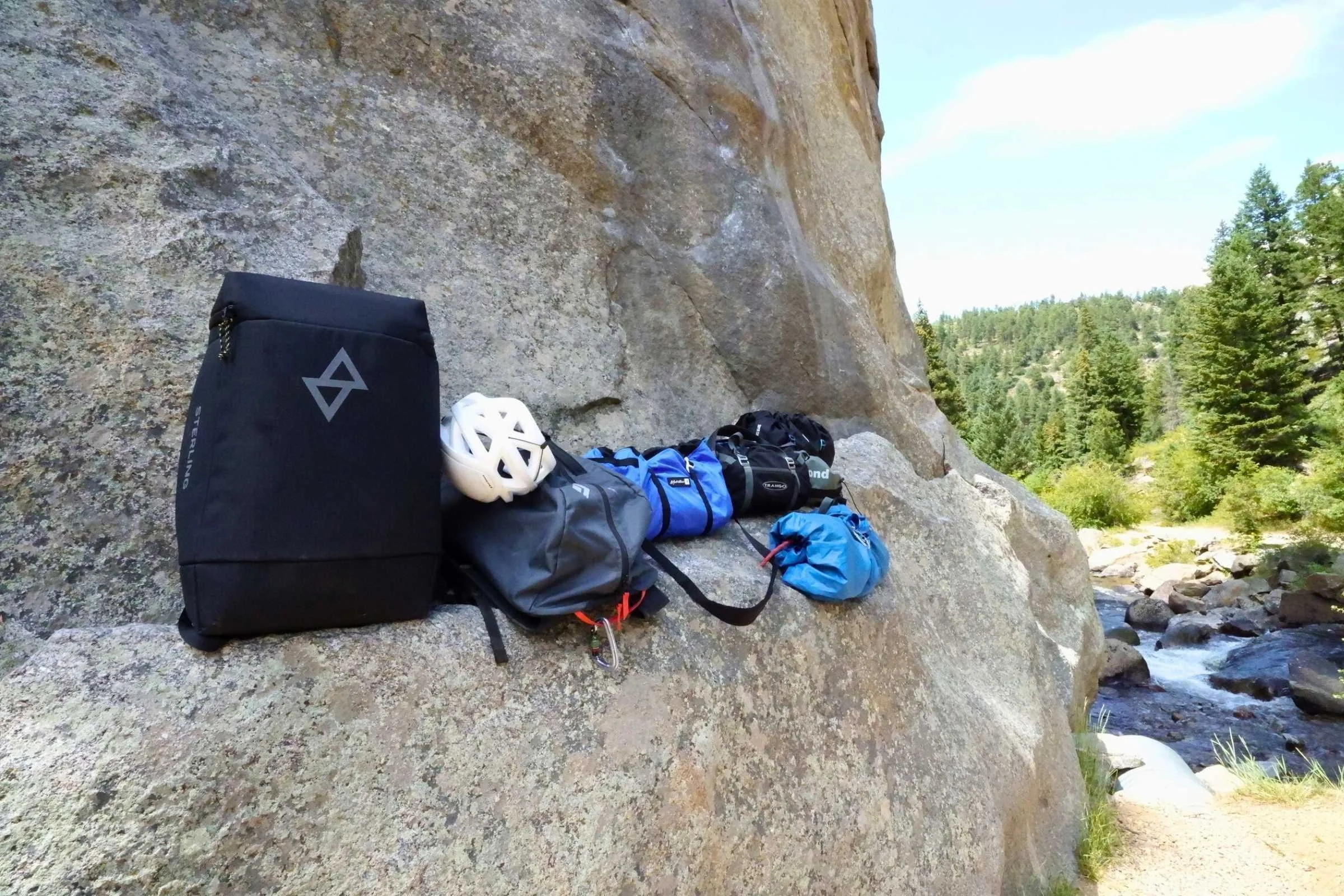
Rope baggin’ at the craggin’.
What type of climbing are you doing?
Whether you’re sport, top-rope, trad, ice, or alpine climbing, a rope bag is a great piece of gear to have to protect your rope. In most cases, any of these rope bags or tarps will more than meet your needs. However, if you’re multi-pitch climbing or alpine climbing, weight will be at a premium and you’ll want as light a bag as possible or a bag with a removable tarp.
How long is your rope?
All of the rope bags and tarps tested easily handled 70 m ropes up to 9.9 mm in diameter. That’s enough rope for the majority of sport and trad routes in the US. The bags should also be large enough for 80m ropes, which is usually the longest rope most people climb with.
How much other gear will you need to carry in this bag?
If you’re just carrying a rope, a bag like the Metolius Ropemaster is ideal. If you want to carry everything to the crag or ice wall, a pack like the Black Diamond Stone Duffel has room for everything—climbing shoes, pro, rope (of course), harness, etc. But you may want to carry your helmet on the outside.
How wet is your destination?
Hopefully not too wet. Hopefully you’re climbing on dry rock or ice that’s cold enough that it’s not melting. None of the rope bags tested are waterproof and that’s so the ropes can breathe in case they get wet during use or inside the bag.
Climbing rope bag care and maintenance
Rope bags spend a lot of time in dirt, sand, and dust, so they benefit from occasional cleaning. Shake or brush out loose debris regularly, and rinse the bag and tarp when dirt starts to build up. If cleaning it by hand, rinse from the outside first to help push dirt and grit out of the fabric, then rinse the inside and tarp.
Follow the manufacturer’s care instructions before putting a rope bag in a washing machine or using detergents. After cleaning, let the bag and tarp dry completely before packing your climbing rope back inside.
If your rope gets wet while climbing, take it out of the bag after the trip rather than leaving it packed away damp. Once everything is dry, check straps, buckles, zippers, handles, and tarp tie-in points for wear so small problems do not turn into failures at the crag.
FAQ
-
Yes. A regular backpack can work, especially if you already carry your rope inside a larger crag pack. The main advantage of a dedicated rope bag is the integrated tarp and organization that make it easier to keep the rope clean, flake it out, and pack it again quickly. If you use a regular backpack, carrying a separate rope tarp can provide many of the same benefits.
-
Yes, as long as the bag has enough capacity. Larger backpack-style rope bags can often carry a harness, shoes, quickdraws, water, and other gear along with the rope, while smaller burrito-style bags may have room for little more than the rope itself. Avoid packing sharp or dirty gear where it can damage or heavily contaminate the rope.
-
Usually not. One of the advantages of a rope bag and tarp is that you can flake the rope directly onto the tarp, secure the ends, and then fold or roll the bag around it. At the next crag, you can open the tarp and start with an organized rope pile rather than recoiling and reflaking the entire rope.
-
Many rope tarps have two tie-in points, and some use different colors for each end. Secure the rope ends to those loops before packing up so you can identify the top and bottom when you open the bag again. This also helps prevent an end from disappearing into the rope pile.
-
Yes, if the rope and bag are clean and completely dry. Do not leave a damp rope sealed or tightly packed away, since it needs airflow to dry properly. After a wet climbing day, remove the rope from the bag and let both dry fully before storing them again.
-
Capacity depends on rope length and diameter as well as how much additional gear you want to carry. A thicker 80 m rope takes considerably more space than a thinner 60 or 70 m rope, so manufacturer rope-length recommendations are more useful than liter capacity alone. If you also want to carry shoes, a harness, or a rack, leave additional room rather than choosing a bag that only barely fits your rope.
How we researched and tested
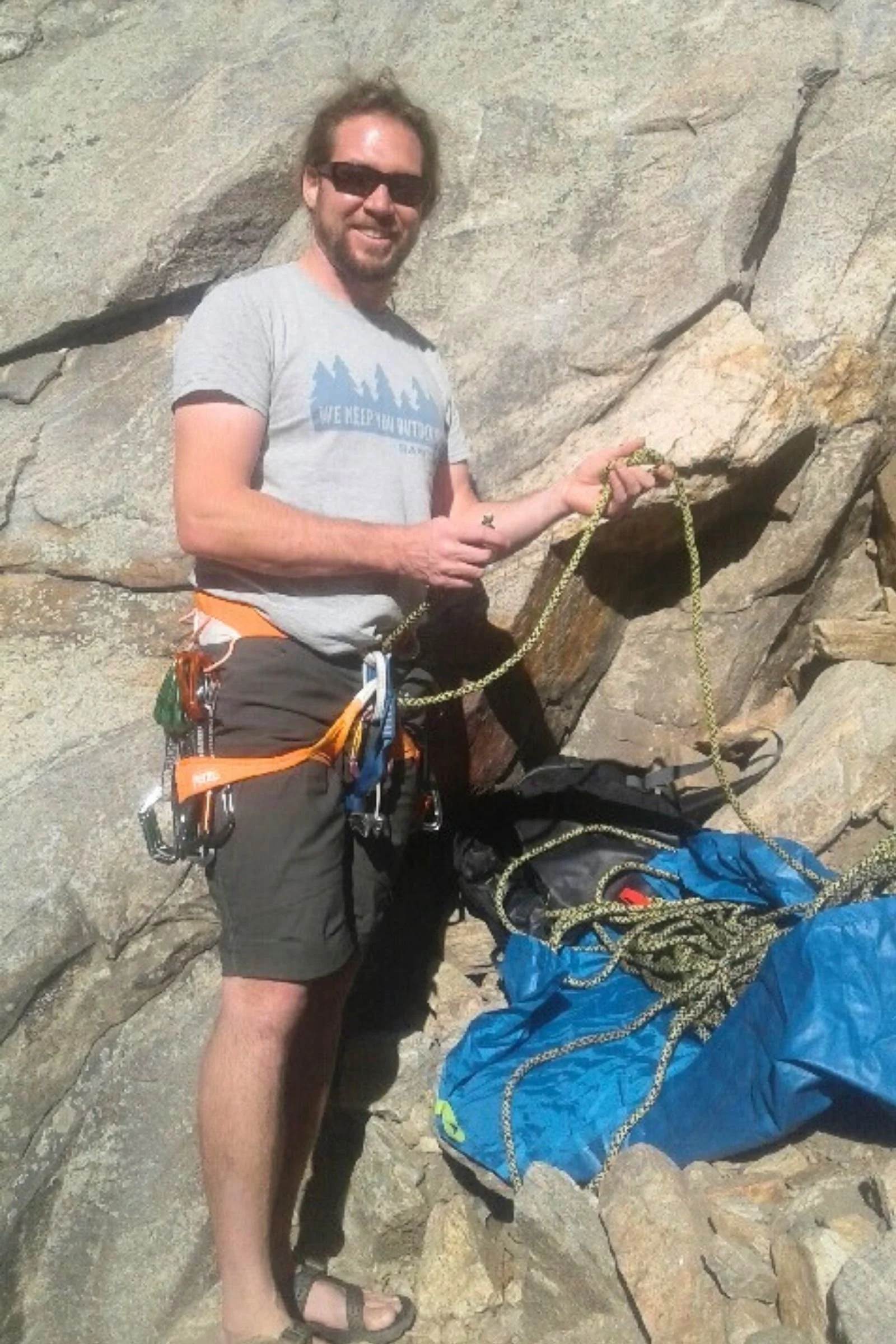
We’ve been using climbing rope bags and tarps for more than a decade after discovering how much easier they make it to keep ropes clean, organized, and ready to use. Much of our long-term testing has taken place throughout Colorado, particularly along the Front Range while author Chris Meehan was doing fieldwork for his guidebook Colorado Front Range: Best Outdoor Adventures. That has included climbing areas from Shelf Road to Rocky Mountain National Park, along with Boulder Canyon, Clear Creek Canyon, Eldorado Canyon, Ouray, and other crags around the state. We’ve also used rope bags while climbing on sandstone in Utah and granite in California.
We used the bags with ropes of different lengths and diameters for sport, trad, ice, gym, and multi-pitch climbing. At the crag, we compared how comfortably each bag carried, how easily the rope could be flaked onto or packed into the tarp, how much additional climbing gear fit inside, and how quickly everything could be packed again at the end of the day. We also looked at tarp size and visibility, rope-end tie-ins, closures and buckles, pockets and organization, carrying straps and handles, and how well each design kept the rope away from dirt and grit.
Long-term durability was also part of the evaluation. Some of the bags and tarps in this guide have been used regularly for many years, including the Cord Trapper, which allowed us to see how their fabrics, straps, windows, closures, and tarps held up well beyond the initial test period. We did not test dedicated haul bags or canyoneering rope bags in this round, so we do not make recommendations in those categories.
- Sport, trad, ice, gym, and multi-pitch climbing
- Sandstone, granite, and Colorado crags
- Ropes of different lengths and diameters
- Repeated packing and unpacking at the crag
- Years of regular use for durability checks
- Carrying comfort
- Rope and tarp organization
- Capacity for extra climbing gear
- Closures, straps, handles, and pockets
- Protection from dirt and grit

About the author / Why you should trust us
As someone who’s been climbing on and off for the last decade, I’ve found that rope bags are a great way to help keep my ropes organized among a flood of other gear. While a great rope coil looks great, it requires a climber to flake it every time at the crag. With a rope bag and tarp you just pile the rope into the bag and you’re ready to go.
I’m an outdoors writer covering adventure and gear, and I enjoy outdoor activities all year round, including skiing on the slopes and backcountry, snowshoeing, and ice climbing. I’ve authored numerous gear guides for Treeline Review, write for Popular Mechanics, Bicycling Magazine, Popular Science, Backpacker, and other outdoor publications/organizations.
I have authored multiple outdoor guidebooks, including Colorado’s Best Front Range Adventures: The Greatest Hiking, Climbing, Paddling and More From Denver to Colorado Springs and Fort Collins. In it, I cover the best hiking, mountain biking, climbing, and rafting in the region.
I’m also the author of Falcon Guide’s Climbing Colorado's Fourteeners: From the Easiest Hikes to the Most Challenging Climbs and edited Justin Lichter’s excellent guide to thru-hiking titled Trail Tested: A Thru-Hiker's Guide To Ultralight Hiking And Backpacking. All of this experience has helped me become a first-rate gearhead and product tester.
At Treeline Review, we strive to offer unbiased reviews to help you find the best product for the price. Treeline Review doesn’t accept sponsored content, native advertising, or paid reviews. I am not sponsored by any companies, nor are any of my family members sponsored by, employees of, or ambassadors of any of the companies in this review.
You can read all of Chris' articles on his author page.