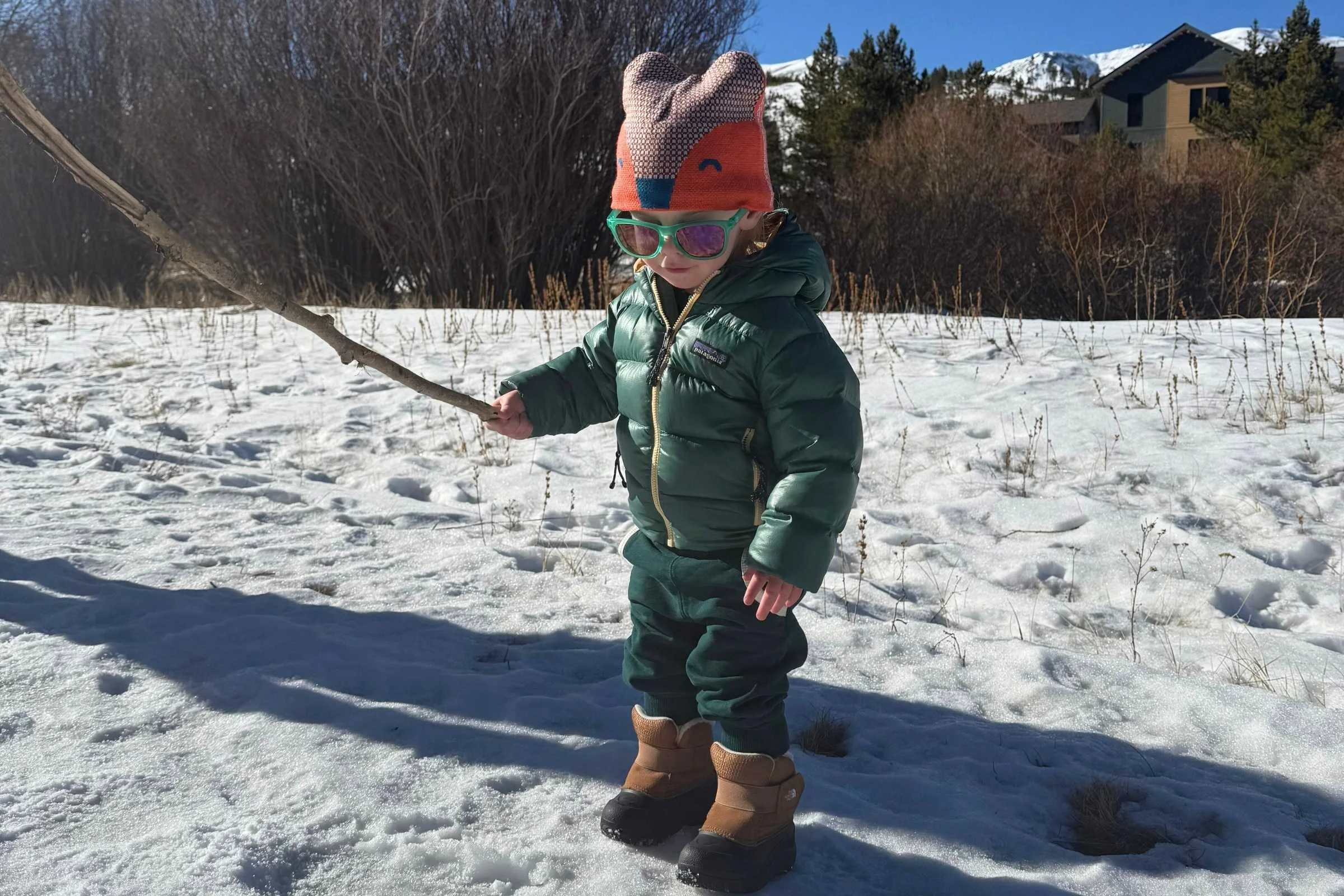
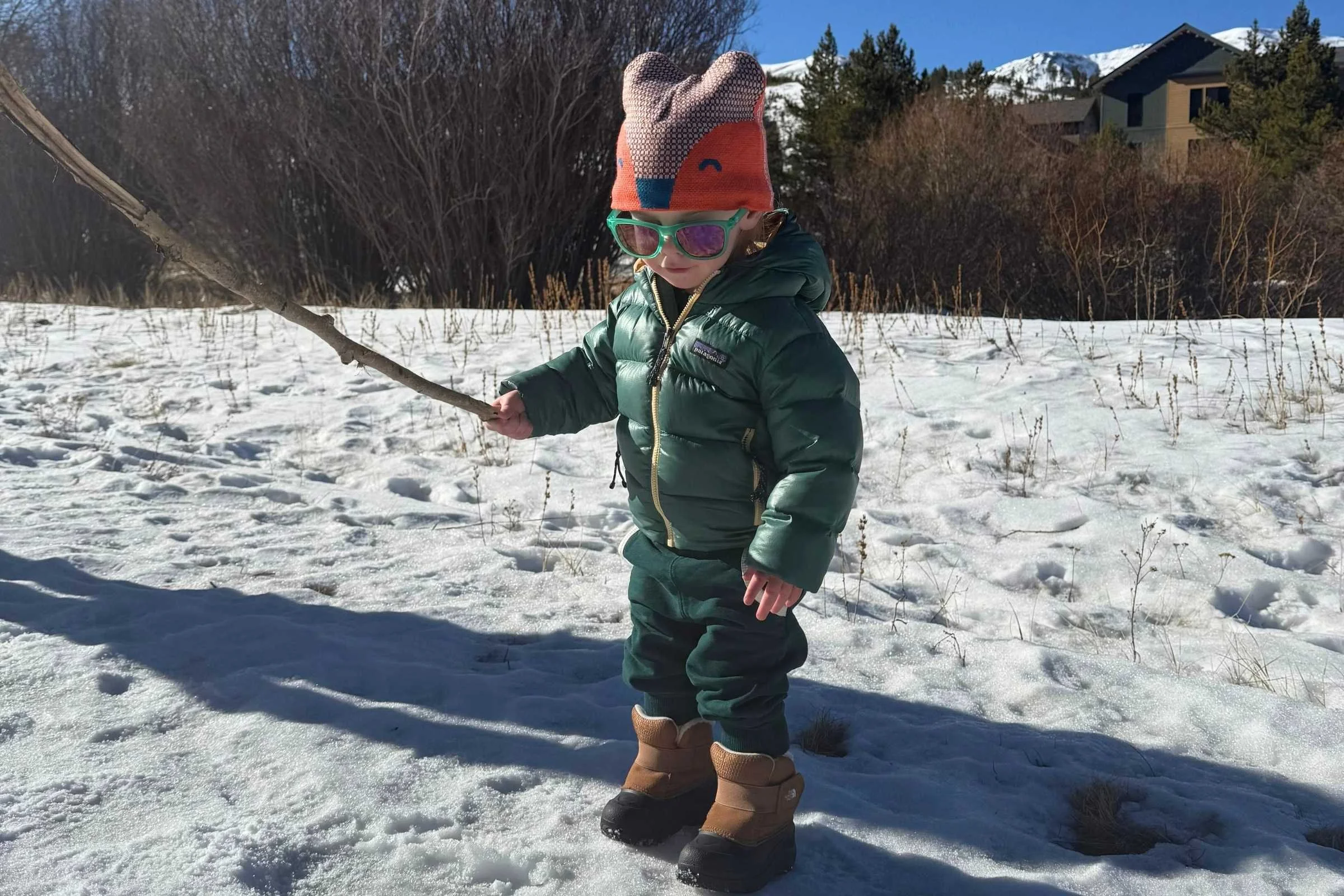
Best Kids’ Snow Boots of 2026
Reliable, warm, waterproof, easy-to-put-on snow boots for babies, toddlers, and kids
February 18th, 2026
Home > Gear Reviews > Ski & Snow
If there's one thing kids are good at, it's finding every puddle, snow drift, and slushy patch—and then playing in it. Children need winter footwear that can handle all of that while keeping their feet warm, dry, and comfortable enough to wear all day long.
The right snow boots balance warmth, waterproofing, traction, and ease of movement so that kids can play safely and stay outside longer. And because little ones aren't always great at telling you when their feet are cold or wet, having boots you can trust matters even more.
We tested nine pairs of kids' snow boots across a wide range of real-world conditions, including single-digit mornings at ski resorts in Colorado, mild fall hikes in the southern Utah desert, and commutes to school.
When evaluating each pair, we considered a variety of factors detailed in this guide, and considered whether the boots could handle the demands of active kids without holding them back—and that parents could feel confident handing down to a younger sibling when the time came.
After all that testing, the Bogs Snow Shell emerged as our pick for the best overall kids' snow boot. It strikes a perfect balance: warm enough for ski days without being overly bulky, fully waterproof, durable, and easy for kids of all ages to get on and off. It's a boot that works from cold fall mornings through deep winter and into spring mud season, which is exactly the kind of versatility parents need.
Learn about our favorite kids’ boots, buying advice, how to care for kids’ boots, and more in this guide.
We write mission-driven gear reviews. To find the best gear, we combine expert reviews, everyday user opinions, and rigorous independent trail testing—never native ads or sponsored posts. We are 100% reader-supported and may make a small commission from some qualifying affiliate links. Learn more.
Comparison table
| KID'S SNOW BOOTS | TREELINE AWARD | TEMP RATING | INSULATION | WATERPROOF? | MSRP |
|---|---|---|---|---|---|
| Bogs Snow Shell Boots | Best Overall Read why |
-22°F | Fleece | ✓ | $75 |
| Bogs Classic Seamless Boots | Warmest Read why |
-30°F | 5mm Neo-Tech neoprene | ✓ | $95 |
| The North Face Toddler Alpenglow II Boots | Best Easy-On for Toddlers Read why |
Not stated | 200g HEATSEEKER synthetic/ fleece | ✓ | $55 |
| The North Face Youth Chilkat V Lace Boots | Best for Active Kids/ Hiking Read why |
Not stated | 200g HEATSEEKER synthetic | ✓ | $95 |
| Stonz Toddler Puffer Booties | -4°F | 150g Thinsulate synthetic | No | $60 |
The winners
Best overall kids’ snow boots: Bogs Snow Shell, Little Kid, and Big Kid
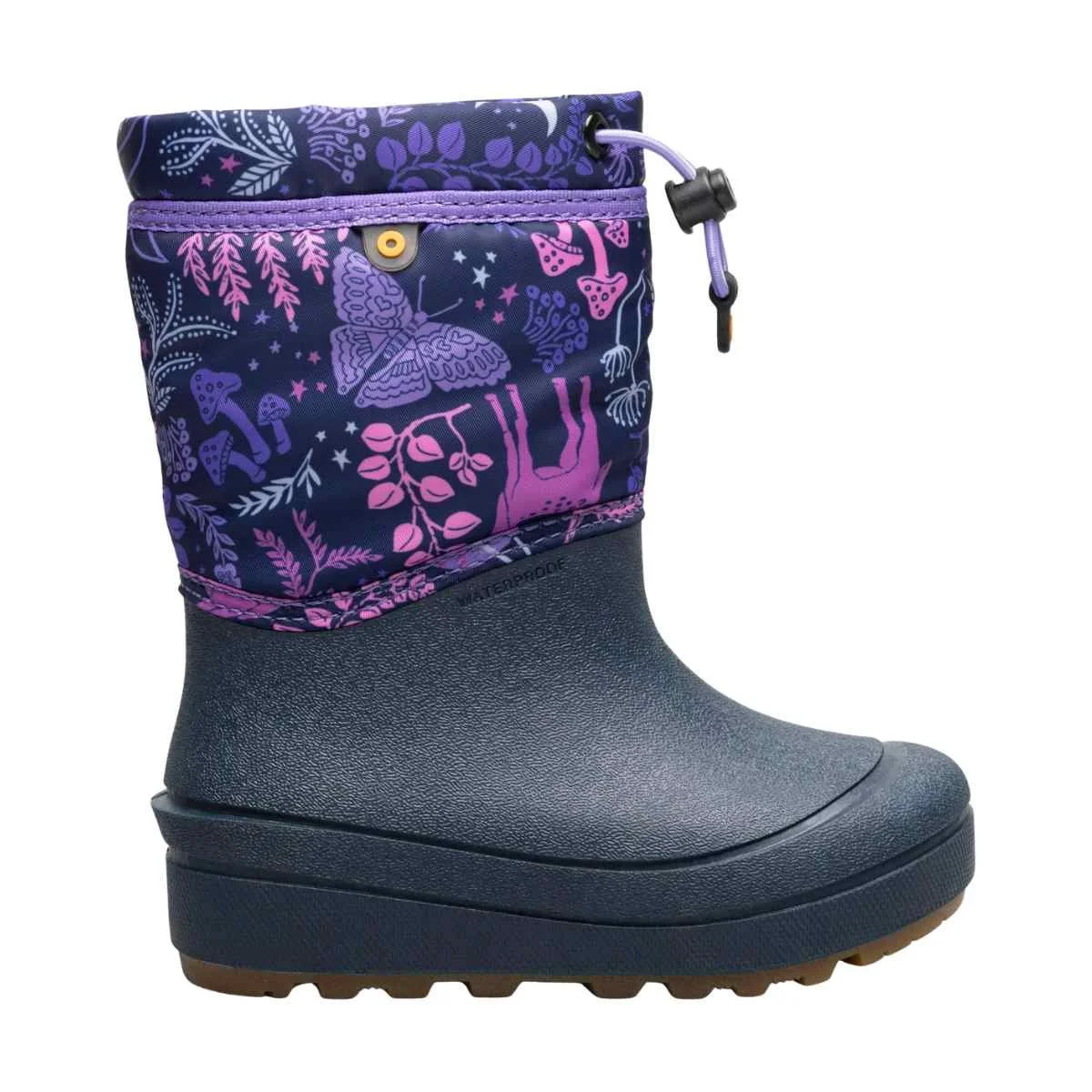
Price: $75
Temperature rating: -22F - 80F
Insulation: Fleece lining
Waterproofing: 100% waterproof shell with water resistant upper
Height: 7.9 inches
Weight: 13 oz
What we liked: Great fit, easy to get on, waterproof, warm, good grip, versatile
What could be better: A little expensive
For the best combination of waterproofing, warmth, traction, and fit, the Bogs Snow Shell boots quickly rose to the top of our testing pool. We’ve had kids of various ages use these boots, including toddlers, preschool, and elementary-aged kids, and they’ve proven to be the best all-around snow boots for all types of winter use.
Bogs Snow Shell, Little Kid, and Big Kid
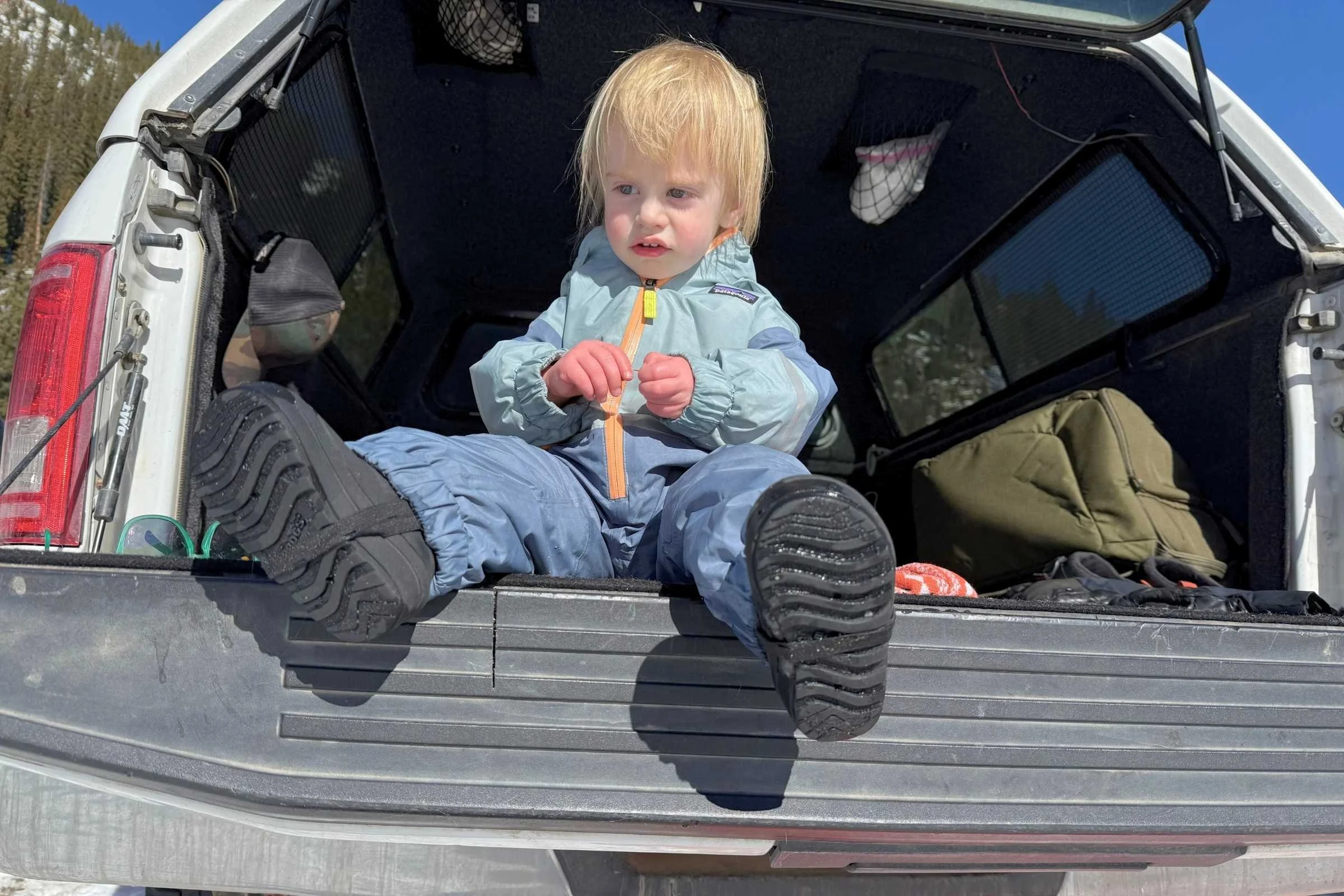
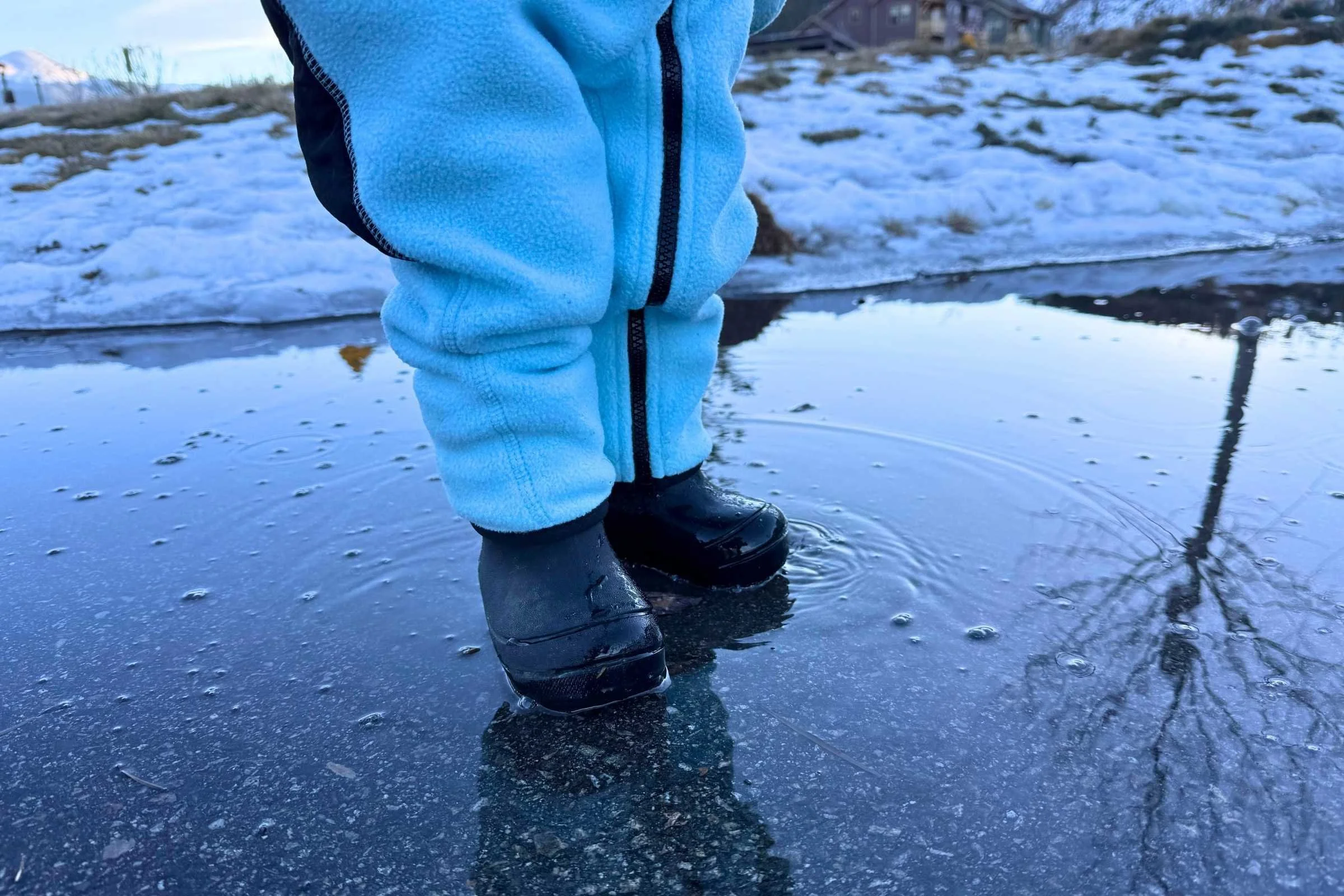
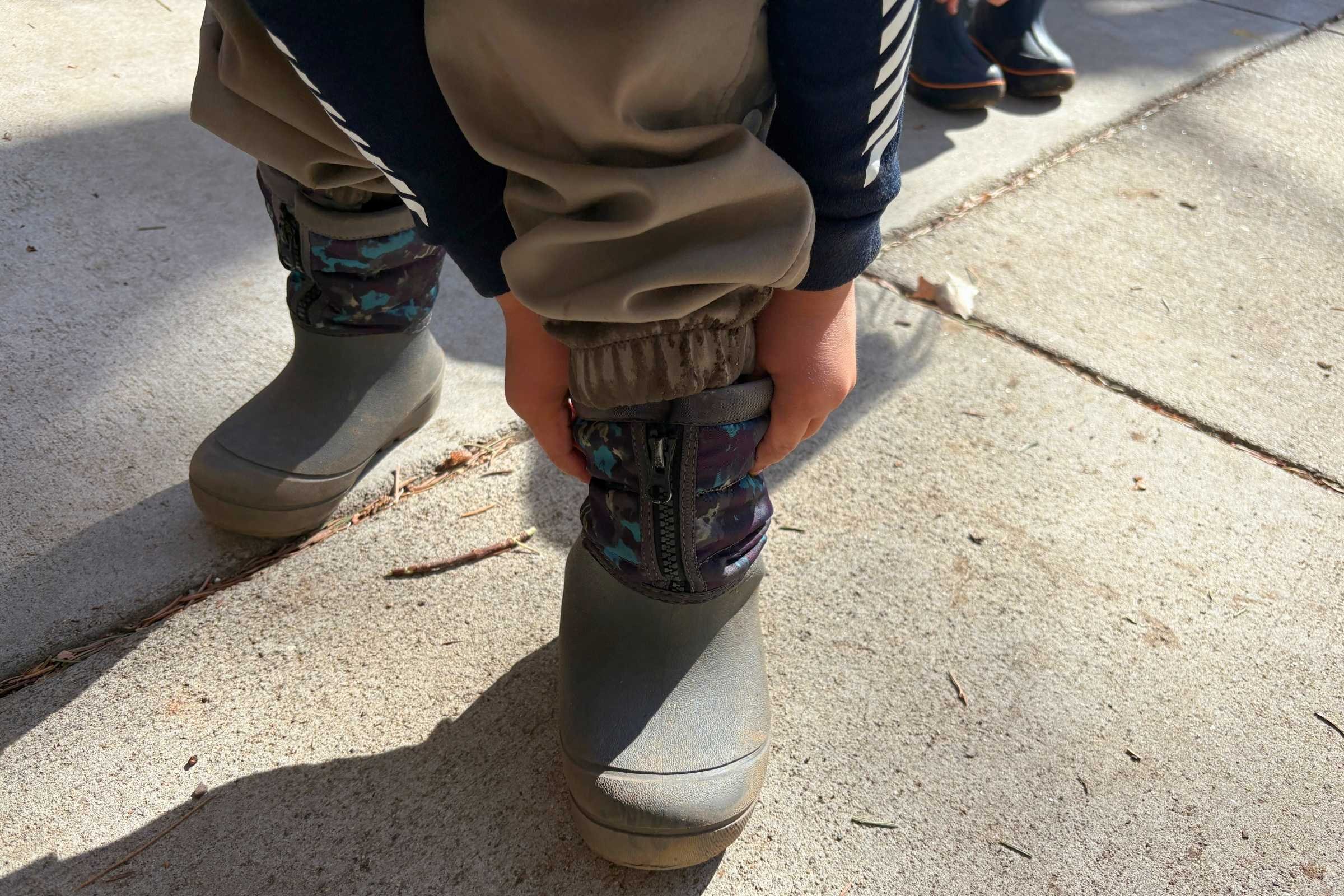
The main shell of the boots is constructed with a fully waterproof rubber outer, while the top cuff is made with a water-resistant nylon. There is a cinch at the top of the boot that helps to keep snow out.
For insulation, the Snow Shell boots have a fleece lining inside that is also odor resistant. While that may not seem like much for insulation, we found that because the rubber these boots are made of is highly insulating and protective on its own, these boots were some of the warmest in our test. And, because they’re not over-stuffed with insulation, they’re also useful in warmer temps in spring and fall, too.
Our toddler tester has used these boots for dozens of adventures, from cold rainy fall hikes in the southern Utah desert to ski days in Summit County, Colorado. They are the go-to for winter adventures and are always a reliable option. Bogs models (including the Bogs Classic Seamless) were the most reliably waterproof in our test—we never had any issues with water or snow seeping in at all. They’ve also proven to be very durable, with near constant use from fall through winter.
Our older testers, ages three to five, wore these for weeks on end this winter in both cold and warm temperatures, and even while playing in a creek in Boulder, Colorado. Not once did they complain about cold feet or a stinky smell; they could run, jump, and even climb in them. The Snow Shell Zip is also an option, which the older kids were able to easily zip and unzip for quick on/off access.
When testing these for waterproofness (by dunking them in a creek), we did find that when saturated with water, the upper made from water-resistant nylon did get wet and seep through to the inside. Choose these for winter adventures, but avoid if you need a boot that doubles for winter and shoulder seasons or water play. These boots are also comfortable for children with wide feet.
If you’re looking for one warm pair of snow boots that your kid can wear outside of the dead of winter, too, put the Bogs Snow Shell at the top of your list. And as a bonus, these come in lots of fun colors and patterns. Our toddler tester loves his Dino Snow Shell boots and uses them more than any others in the mud room.
Warmest kids’ snow boots: Bogs Classic Seamless
Price: $95
Temperature rating: -30F - 70F
Insulation: none; warmth provided by 5mm of neoprene
Waterproofing: 5mm Neo-Tech waterproof upper with seamless construction
Height: 10.6”
Weight: 2.25 lbs (pair)
What we liked: Very waterproof and warm; great for all seasons
What could be better: A wide opening at the top could let snow in if snowpants aren’t fully secured over
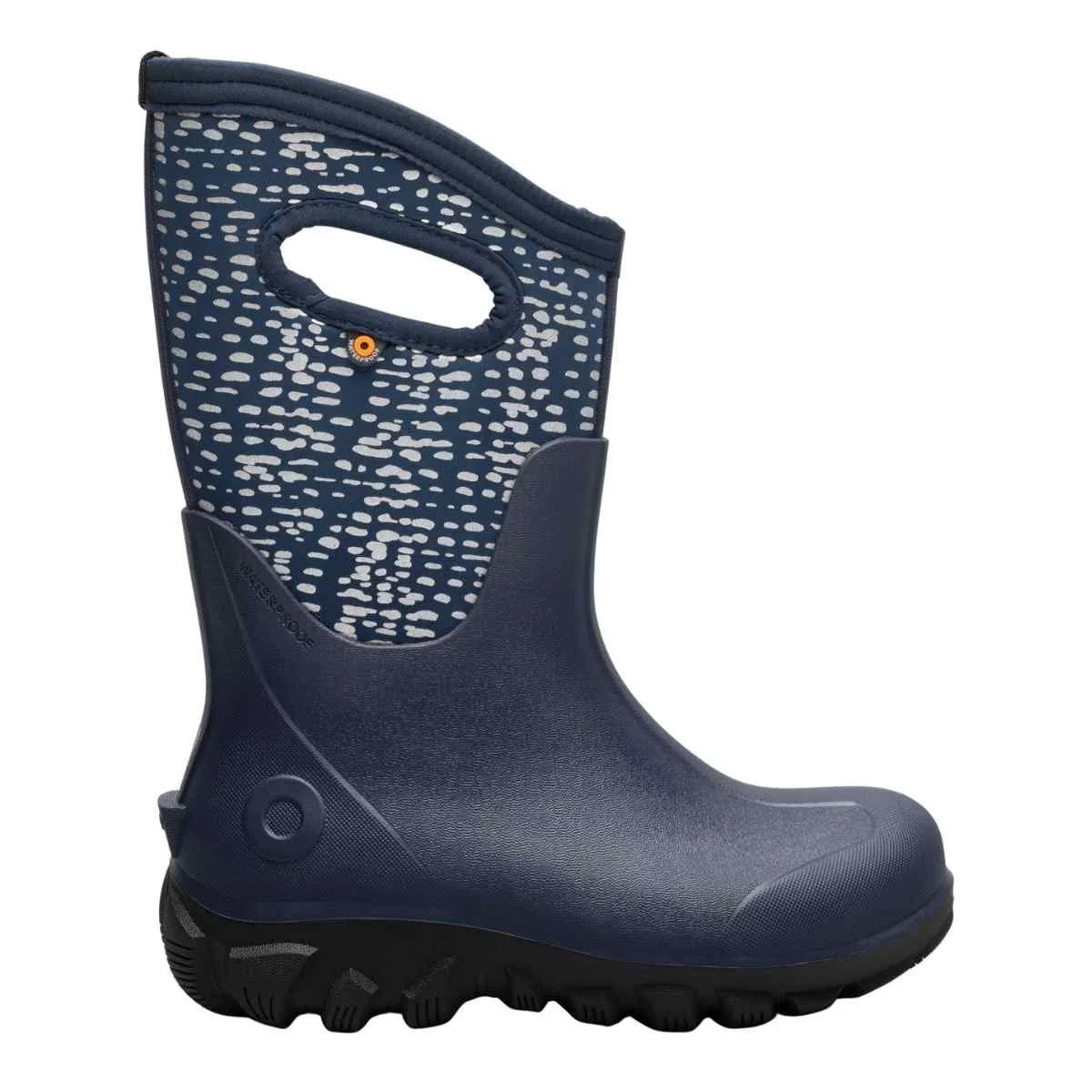
Many kids' boots claim to be waterproof, but when it's really wet snow or there's large puddles, water can still get inside and ruin a day quickly. Bogs, however, has made kids’ boots that are truly waterproof and that last year after year. The Bogs Classic Seamless slip-on boots with handles are designed to mimic the best-selling adult models, so there isn’t any compromise on warmth or waterproofness, which is ideal for year-round wear.
Bogs Classic Seamless
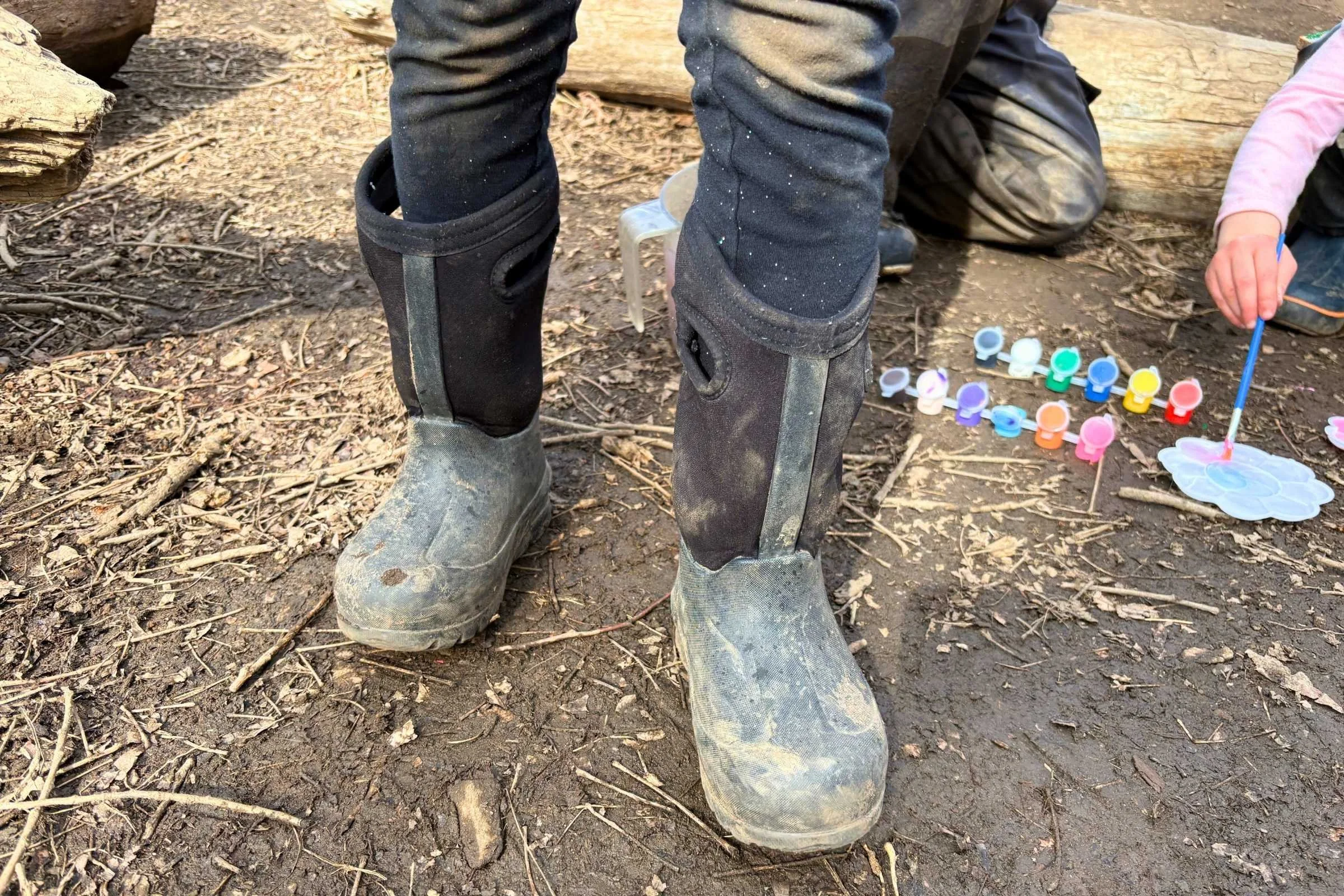
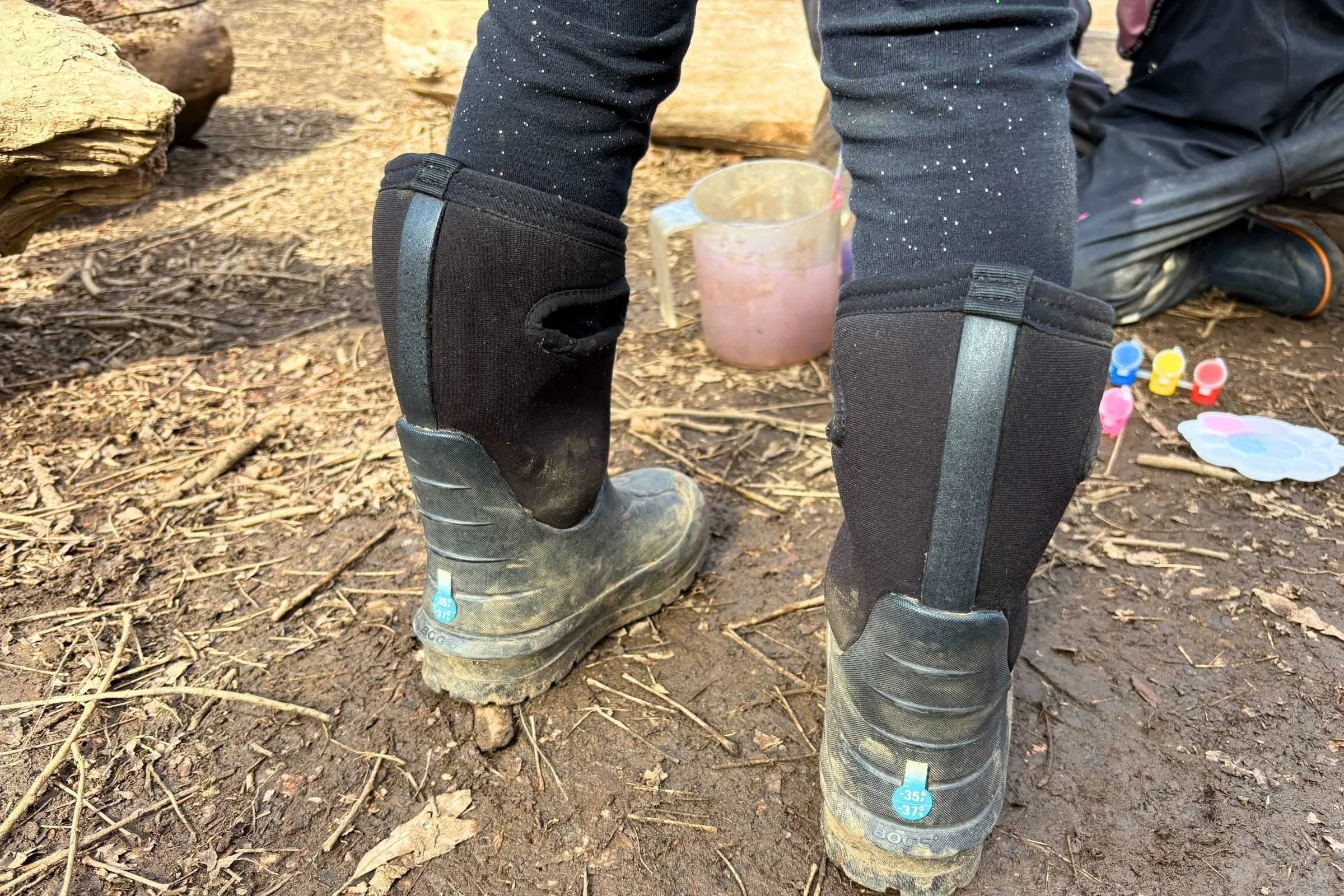
Bogs says that these boots have a comfort rating of down to -30°F, which, in actuality, no kid is going to want to be outside in that weather, and there’s no way that their toes will be totally fine in -30 degrees. However, our young testers have worn these in single-digit temperatures and through winter creek crossings, and their feet have always been warm.
The waterproof, seamless construction means no water seeps in, even when they dunk their feet in a cold creek. The boots are molded without seams between the outsole and upper, so there is less wear and tear in the usual spots, meaning your kid can charge hard in these durable boots, and even offer them up as still usable hand-me-downs. Really, we’ve used years-old hand-me-down Bogs that still keep little ones’ feet dry.
The upper is made from 5mm Neo-Tech (neoprene), which provides that waterproofness and warmth, and the inside is lined with a soft, wicking nylon jersey. Both the upper and sole of the boot provide enough support and structure to keep the play safe while remaining flexible enough for climbing and running. With the large opening, we’ve found that kids of all ages can slip them on and off easily.
If you need a boot that can keep your child comfortable and warm from the creek in the summertime to deep snow in the winter, the Bogs Classic Seamless can be your boot for many, many seasons.
Best easy-on boots for toddlers: The North Face Toddler Alpenglow II
Price: $55
Temperature rating: Not stated
Insulation: 200g HEATSEEKER synthetic insulation
Waterproofing: Waterproof, seam-sealed construction
Height: 5 inches
Weight: 7oz
What we liked: Easy for toddlers to put on themselves, warm
What could be better: Shorter cuff makes it easier for snow to get in
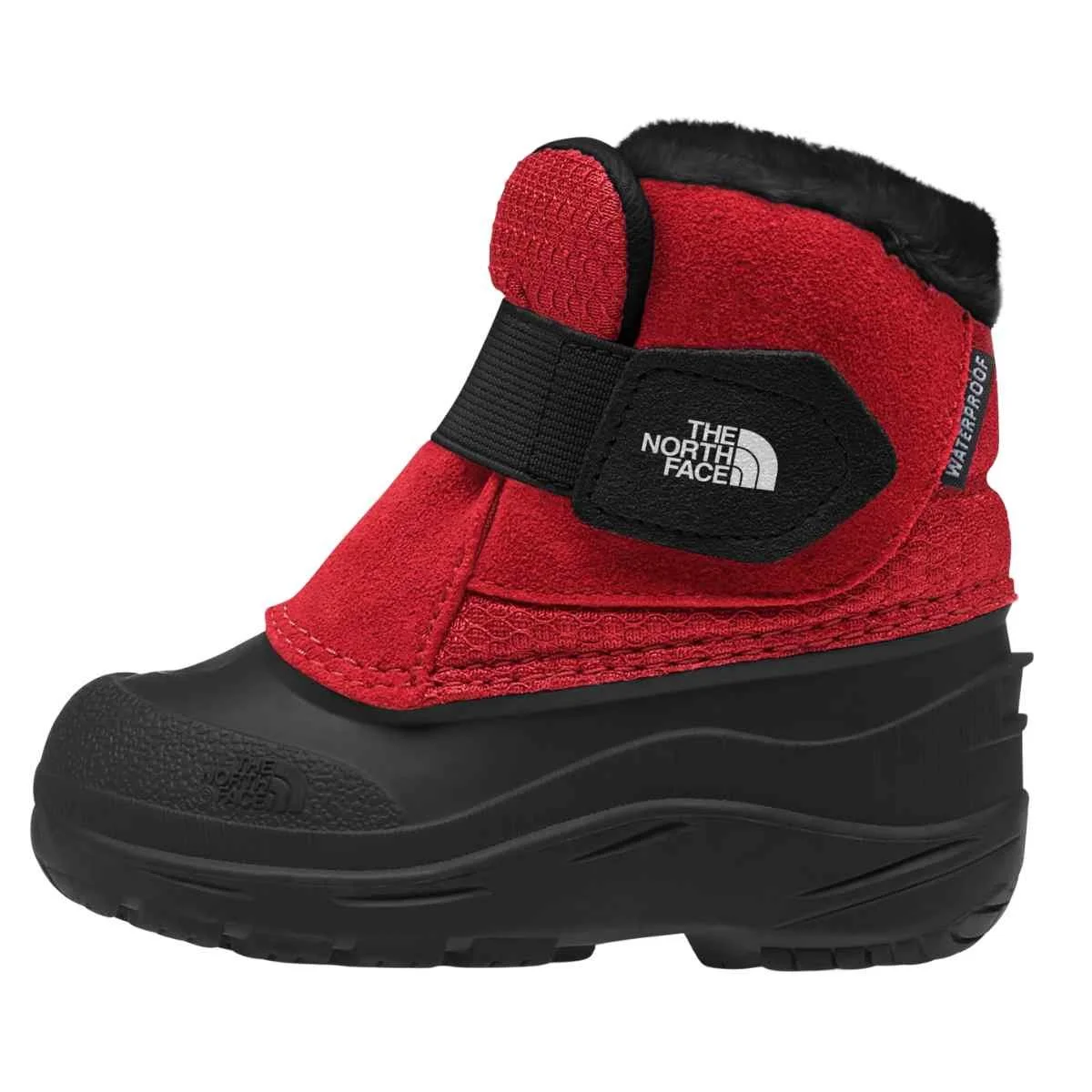
If you’ve got a feisty, mobile, and independent toddler who wants to put their boots on themselves before romping in the snow, The North Face Toddler Alpenglow II boots fit the bill perfectly. The first time our toddler tester ever put his shoes on by himself (on the wrong feet, of course), it was in the Alpenglows. They’re easy to slip on and off, but stay put when they’re playing. They’re equally easy for parents and adults to put on their kids when trying to get out the door a little faster. And once outside, these boots keep tiny toes warm and dry.
The North Face Toddler Alpenglow II
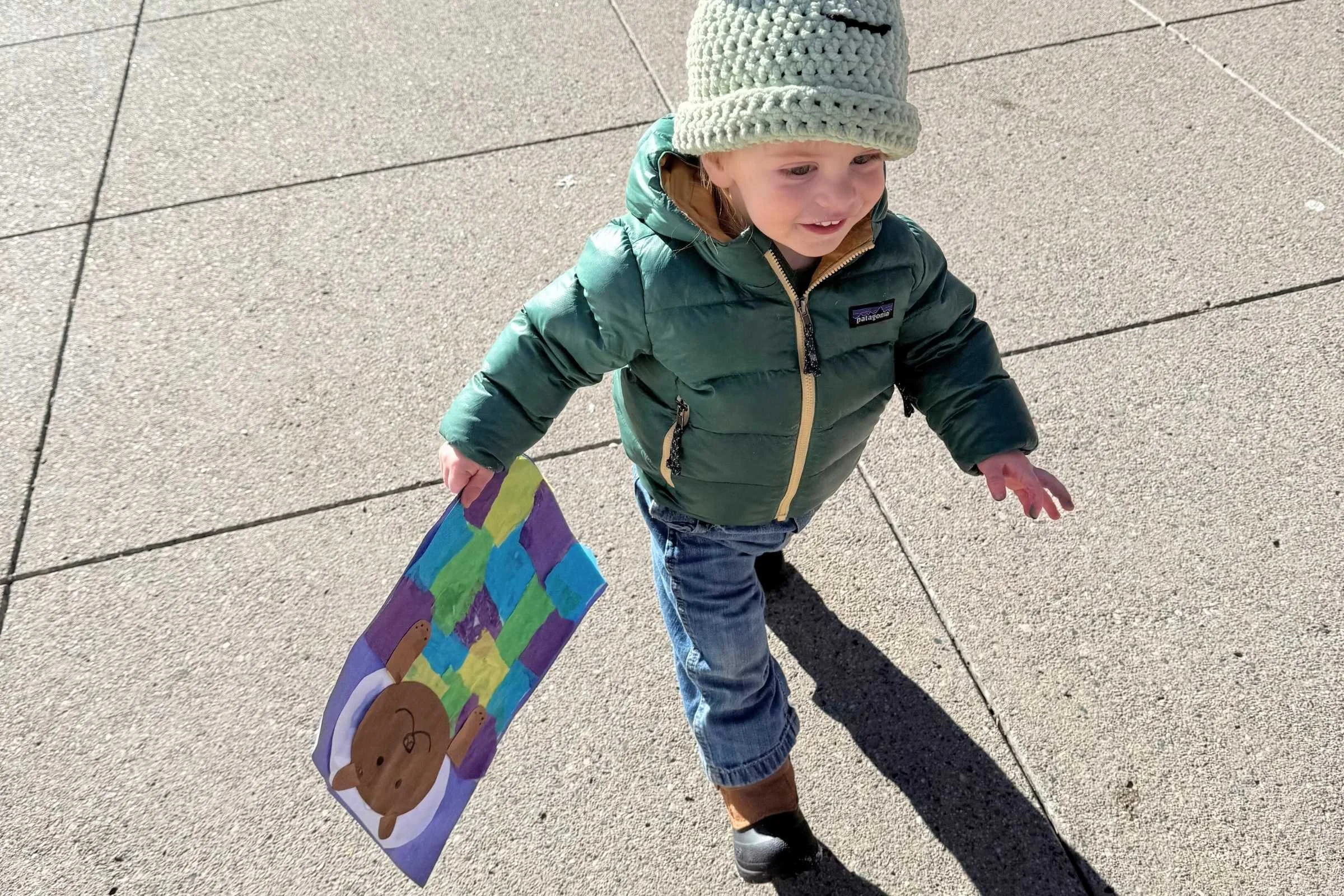
Our toddler tester wearing The North Face Toddler Alpenglow II boots to art class.
The Toddler Alpenglow II boots feature a waterproof suede upper material that both looks nice and works well in snow. There is a layer of synthetic insulation plus a soft, plush fleece lining. That fleece lining is also what helps make these so easy to get on and off, as socks just slide right over it like butter. There is a Velcro strap that goes across the ankle to secure the boots once they’re on. Thanks to that synthetic insulation, we found these to be among the warmest boots for toddlers in our test. We used them on even single-digit days in the mountains, and those little toes stayed warm inside.
These boots are a little shorter than others in our test, and that’s partly why they’re easier to put on. So while that’s an advantage in this regard, it’s not without trade-offs. The shorter upper meant that it was harder to keep snow out in deep snow. For days at the ski resort or spent sledding and playing in snow, the Bogs Snow Shell boots work a little better. But for winter walks in a mountain town or heading to art class in January, the Toddler Alpenglow II boots are an excellent choice.
Best snow boots for active kids/winter hiking: The North Face Youth Chilkat V Lace Waterproof
Price: $95
Temperature rating: Not stated
Insulation: 200 grams HEATSEEKER Eco insulation (70 percent recycled polyester)
Waterproofing: internal waterproof membrane with seam-sealed construction; waterproof suede upper
Height: 5 inches
Weight: 1 lb 0.88 oz
What we liked: Extremely comfortable with no break-in period
What could be better: Lacing is not ideal for kids who can’t tie their shoes; a lower cut is not ideal for deep snow
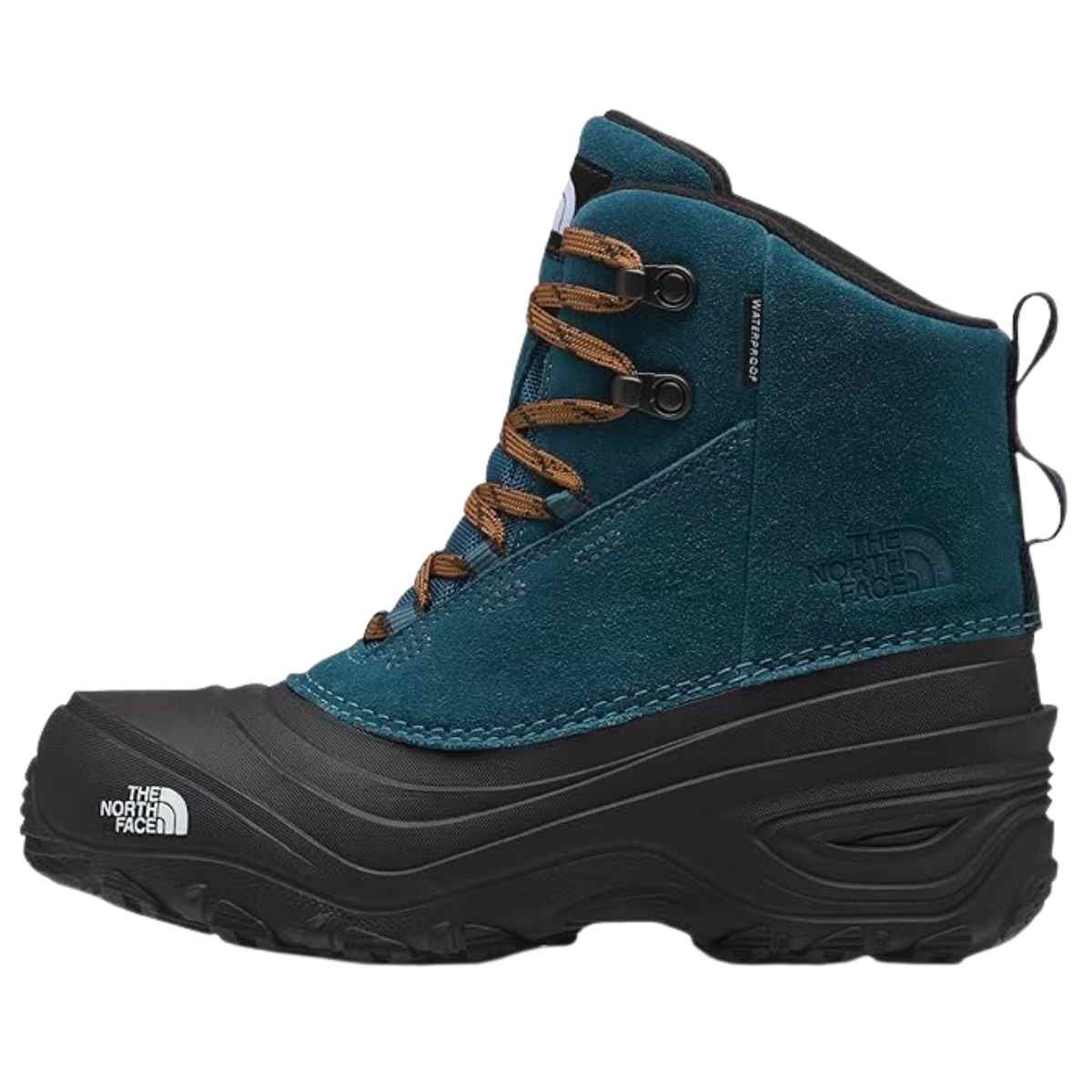
If you are a family who still treks outside in the winter—be that hiking, sledding, or heading to the slopes—The North Face Youth Chilkat V Lace waterproof boot is perfect for active kids. Our young testers, about four years old, were able to get this boot relatively on and off by themselves; there was a bit of a learning curve because it is a tighter boot than a slip-on, like Bogs, but once they were able to use the pulley tab on the heel, getting them on was easy. Because these are a tighter fit, try them on in-store with thick, winter socks if possible; sizing runs somewhat small.
The North Face Youth Chilkat V Lace Waterproof
Tying the laces can be annoying as a parent, but it helps keep the boots tight for more active outings. The boots didn’t really have a break-in period, which was good for little kids who want to go, go, go as soon as their boots are on. There is also lightweight superfoam for added cushioning for all-day wear.
The boot is made from a waterproof suede upper with seam-sealed construction and a lightweight, thermoplastic rubber shell bottom. Meaning that when the kids wore these boots in a nearby creek for a few hours, the entire boot from bottom to top stayed dry. If water gets over the top, they are slightly tricky to dry out as the liner is not removable.
Even after hours in and out of water, the boots seemed relatively breathable (there was very little stinky smell after a day of wearing). They also have a good, grippy rubber sole that keeps kids upright on slippery snow or ice and allows them to still climb nearby trees. Overall, these low-cut winter hikers are great for outings without super deep snow, so your child’s feet will stay warm and comfy, even as they are getting a snowball to the face.
Other kids’ snow boots we tested
Stonz Puffer Booties Toddler
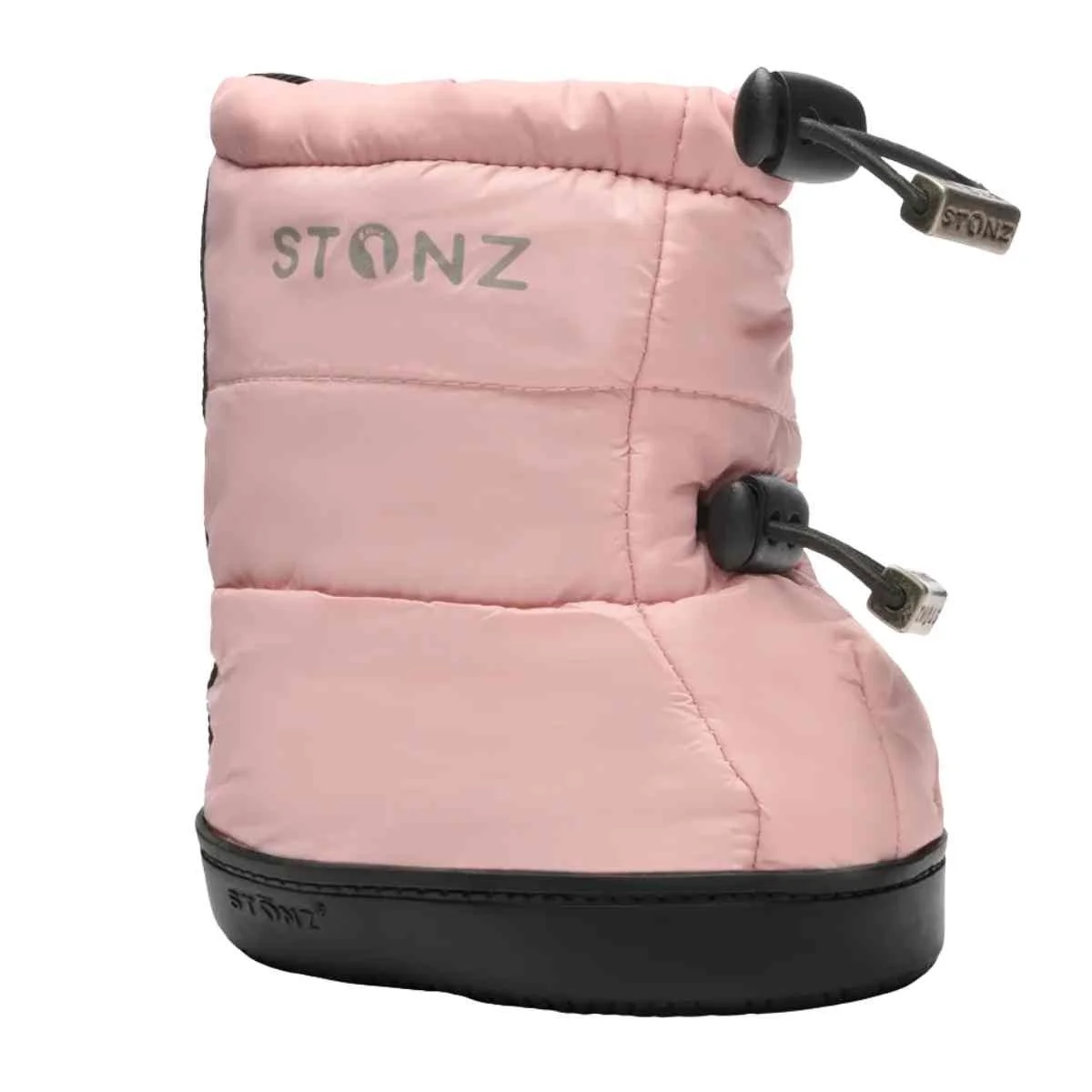
Price: $60
Temperature rating: -4F
Insulation: 150g Thinsulate synthetic insulation
Waterproofing: DWR
Height: 7 inches
Weight: 7 oz (pair)
What we liked: Warm and cozy, great for taking babies who can't walk yet out into the cold
What could be better: Not great for walking through mud and snow since they’re not waterproof
The Stonz Puffer Booties are a little less substantial than others in our test, but we found they came in handy for cold hikes with a toddler or baby in a backpack carrier, or on cool weather camping trips. They’re not the best for kids to walk around it given their loose fit and minimal traction. But they’re a great choice for when warmth and coziness are your priority. Plus, they’re super cute.
Stonz Puffer Booties Toddler
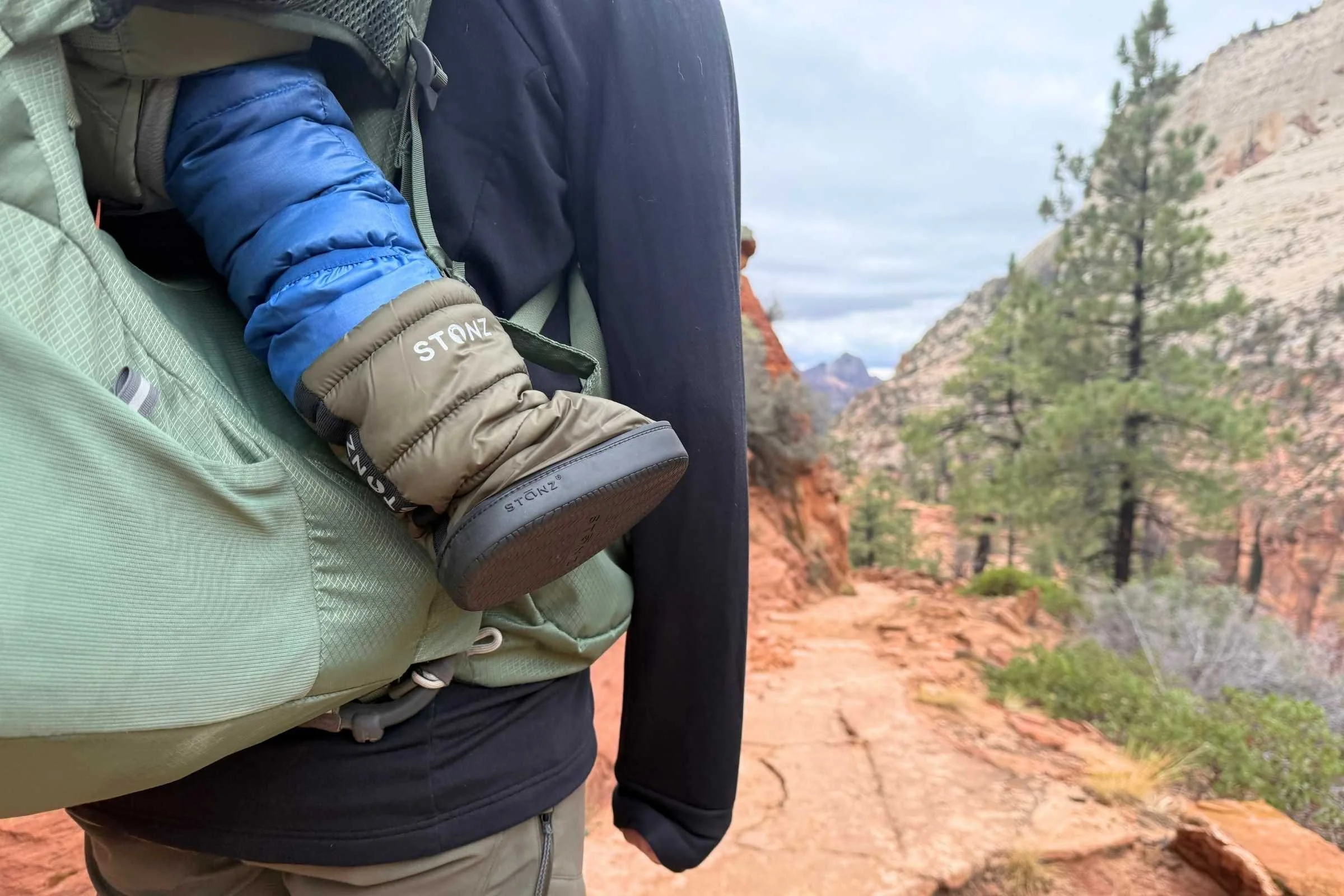
The Stonz Puffer Booties are a little less substantial than others in our test, but we found they came in handy for cold hikes with a toddler or baby in a backpack carrier.
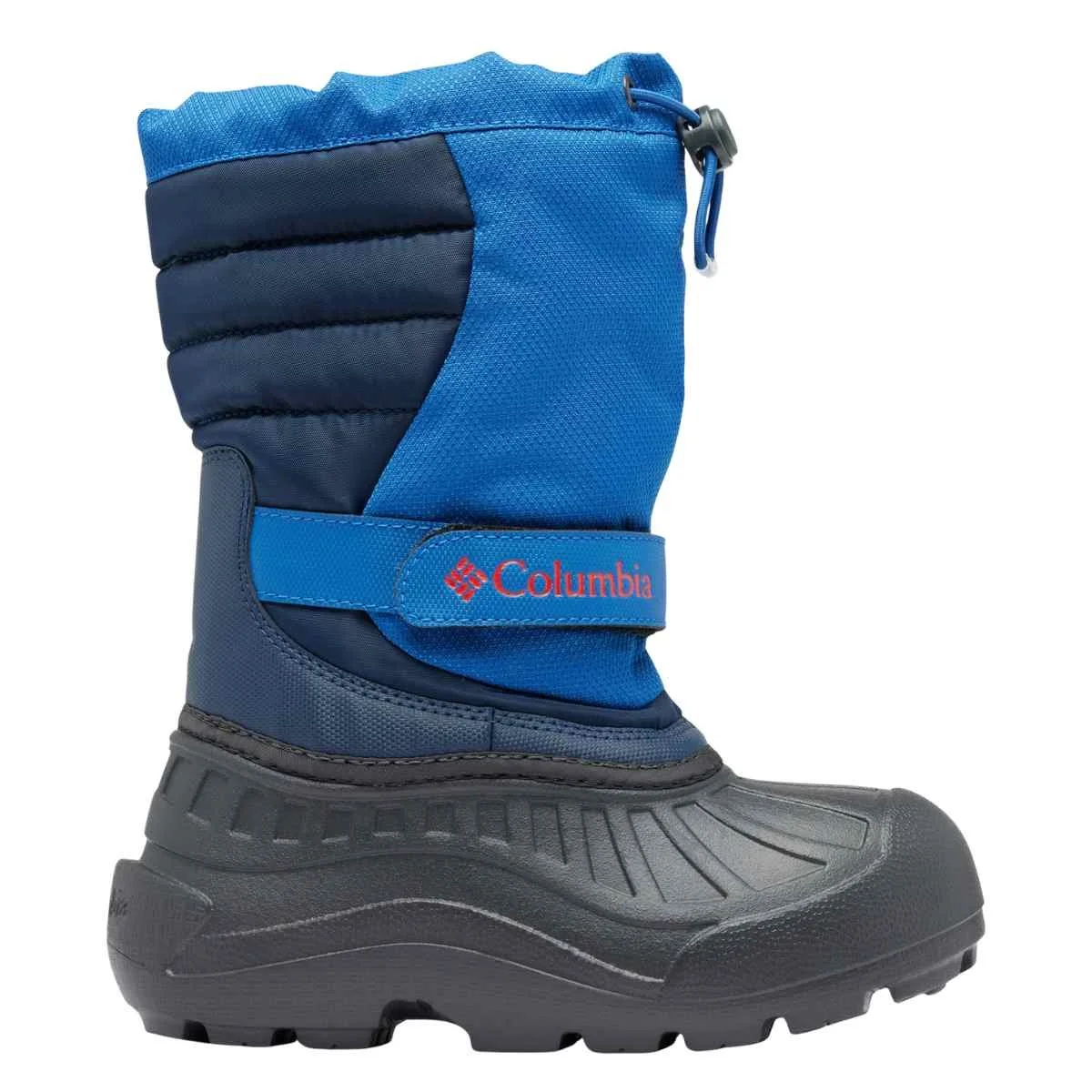
Price: $60
Temperature rating: Not stated
Insulation: 400g synthetic insulation
Waterproofing: TechLite waterproof shell
Height: 8 inches
Weight: 13 oz (pair)
What we liked: Good traction and insulation
What could be better: Very clunky, hard to get on small toddler feet
While these boots have good specs overall and good traction on the soles, they’re lacking in fit and overall function. Our kid testers had trouble walking in these boots because of their weight and bulk. And the parents of our toddler tester were unable to get him to sit still long enough to even get them on his feet—largely because the cuff is so tall.
When dunking them in the creek for a minute at a time to saturate the outside of the boot, they did stay fully dry, which is a plus, and the liner is removable in case any snow gets up and over the top of the boot. However, if your child can’t move in them or get them on, it doesn’t really matter how waterproof they are.
Columbia Toddler Powderbug Snowlite Boot
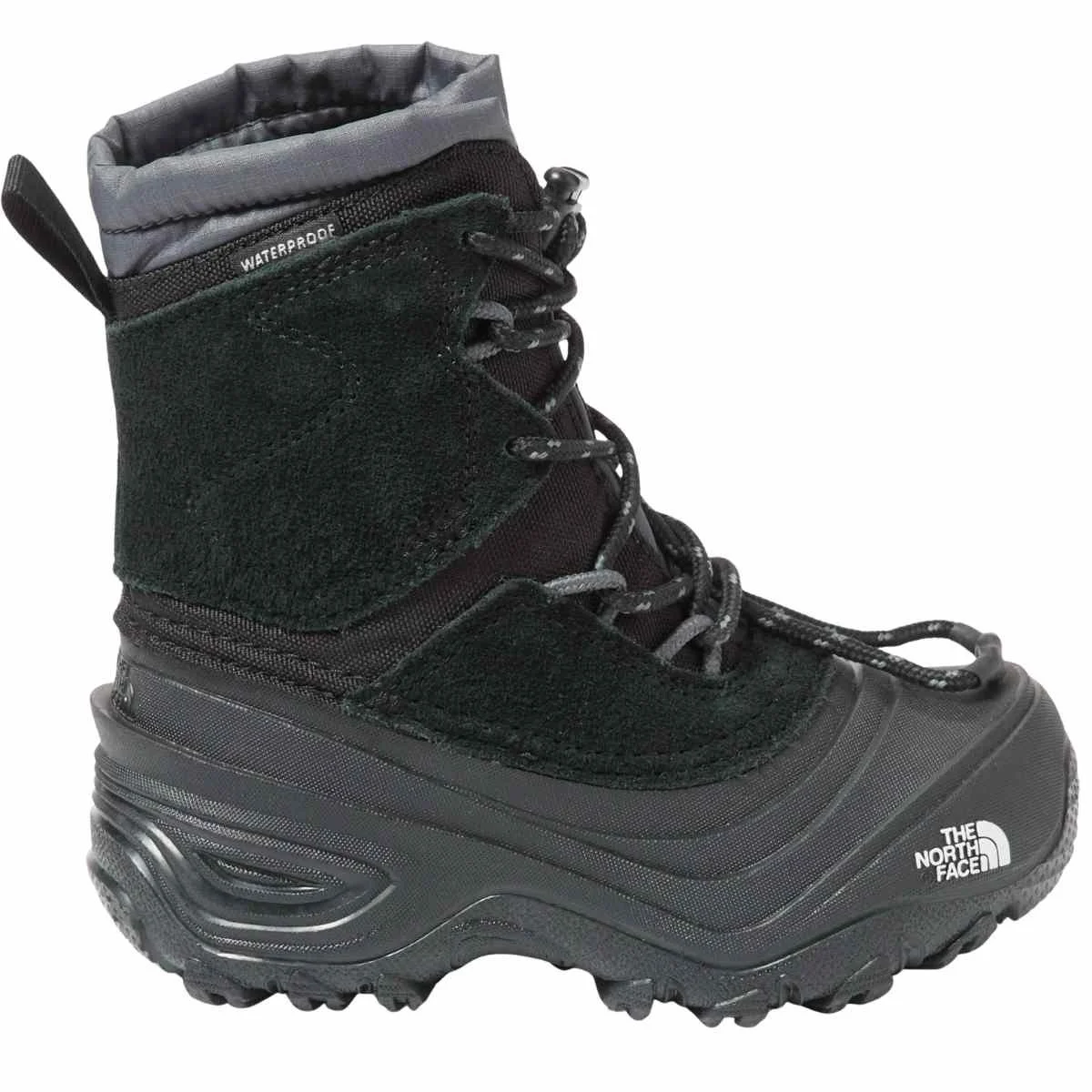
Price: $85
Temperature rating: -25°F/-32°C; 4/5
Insulation: Thermafelt Plus removable liner
Waterproofing: Waterproof, seam-sealed
Height: 8 inches
Weight: 1 lb 0.55 oz
What we liked: No laces; secure fit with a quick-closure pull system; removable liner
What could be better: Not warm enough for extremely cold weather (teens or lower temps)
The North Face Youth Alpenglove V waterproof boot is a good choice for kids ages 4 and up, as they can put it on and take it off on their own. Plus, with a cinch pull to tighten, that means that parents and teachers won’t have to tie and untie the boots all the time.
After testing for a few weeks, the cinch quick-pull system seems durable enough to last a few seasons. There is a pull tab on the back of the upper cuff, which is extremely helpful for little hands to put these on and take them off.
The boots are waterproof with an internal waterproof membrane, seam-sealed construction, and waterproof leather overlays. One ideal feature to note is that the gusset on the tongue goes all the way to the top of the boot, so if your child is in snow or water, that is an easy limit to define (whereas some gussets fall two inches short of the top of the boot, which can be confusing to define for little kids). The inner felt lining is also removable, which is a bonus for when kids get snow or water in from the top, thus negating the waterproofness.
We tested this waterproofness by having kids play in a cold Colorado creek; no water seeped through from the bottom or seams, and the upper of the shoe to the cuff also stayed dry, which is not always the case with kids’ boots. The rubber sole is durable and grippy, but it didn’t make for a super clunky pair of boots that would leave kids barely able to run.
These higher boots are great for deeper snow and active kids. Although the rating says it will keep you warm down to -25°F, I’ve never found any temperature ratings to be completely accurate for adult or kids’ shoes. Wear these in snow and cold, but know that in extremely chilly conditions (think teens and below, standing in snow), kids’ feet will not be totally toasty.
The North Face Youth Alpenglow V Waterproof Boots
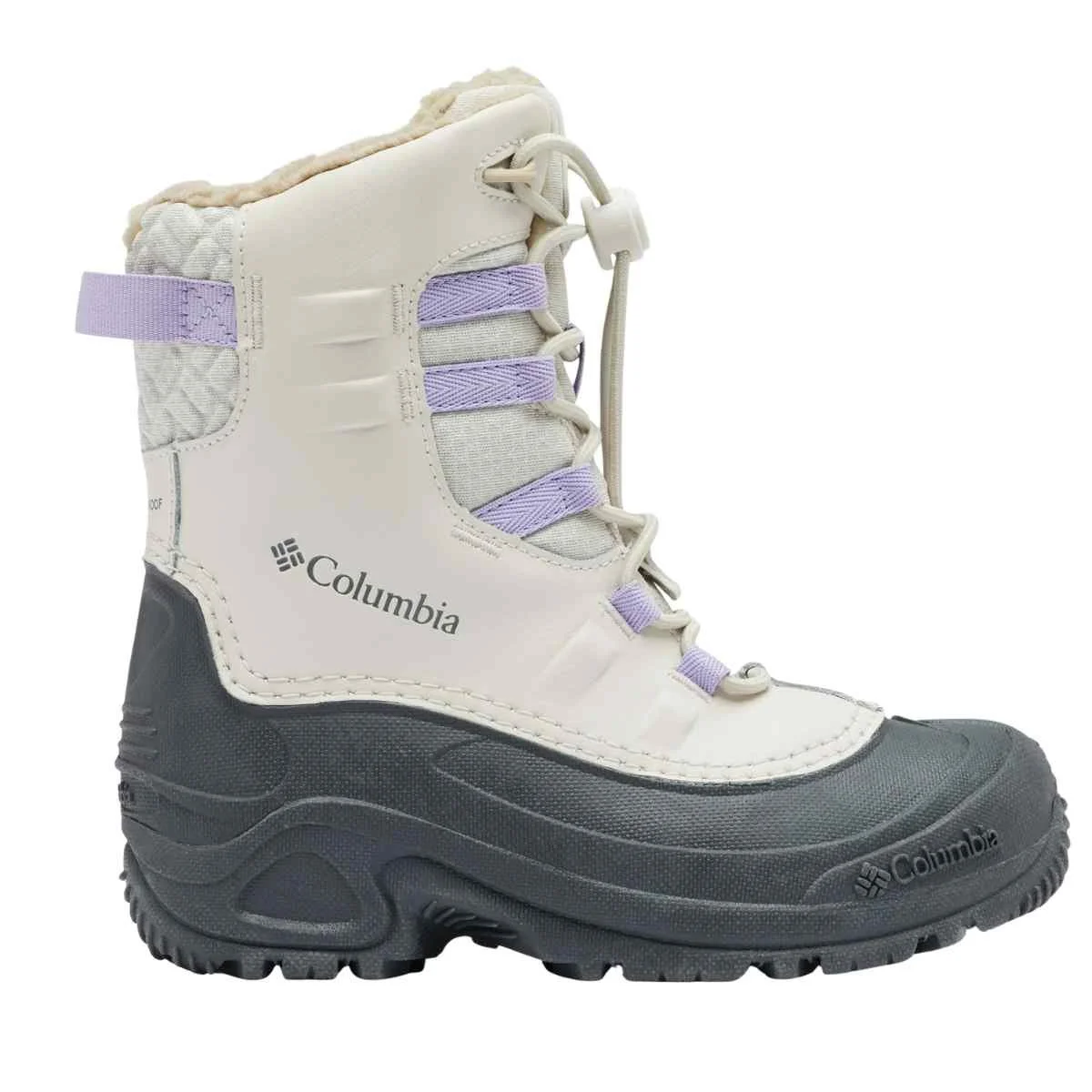
Price: $75
Temperature rating: 4/5
Insulation: 400 grams of Omni-Heat Reflective
Waterproofing: Yes; waterproof PU-coated leather and textile
Height: 7 inches
Weight: 15.8 oz for Big Kids’ size 1Y
What we liked: Cinch lacing that kids can do themselves
What could be better: The gusset does not reach the top of the boot
The Columbia Bugaboot Celsius boots are similar to The North Face Youth Alpenglow V Waterproof Boots, as they are insulated and waterproof, with a more active fit. The Bugaboots use a cinch-pull closure, which is great for younger kids who can’t tie their shoes yet, and the pull tab on the back makes for mostly easy on and off, depending on how dexterous your child is.
For protection from the elements, Columbia uses Omni-Tech to shed water and excess heat. Overall, these fared just okay for waterproofness—when we dipped these in the creek, no water leaked through at first, and they seemed completely dry. But when I checked later, the entire inside of the boot was wet, and unfortunately, the liner doesn't come out. We tested these to the extreme (holding them in water for about a minute at a time), but when in snow for an hour or so at a time, water did not leak through. If you need boots that can go in water or stay dry in wet, heavy snow for more than an hour or so, choose something with more waterproofness, like a pair of Bogs.
For warmth, the boots have an Omni-Heat thermal, reflective, breathable lining to retain heat, plus 400 grams of lightweight insulation. If your child runs hot, these might be too warm for them, but for most days outside in relatively cold weather (snow with temperatures in the 20s and above), your child’s feet should stay warm for a few hours. The Omni-Grip sole is grippy but also a bit clunky and plastic-y, rather than durable and rugged.
Overall, testers found these boots comfortable and relatively easy for their child to put on and take off, but not as easy or as warm as Bogs. They did, however, provide better stability and slightly easier movement (think running and climbing) than the slip-on Bogs, since the Bugaboots can cinch tight and secure the foot more effectively.
Columbia Bugaboot Celsius Boot
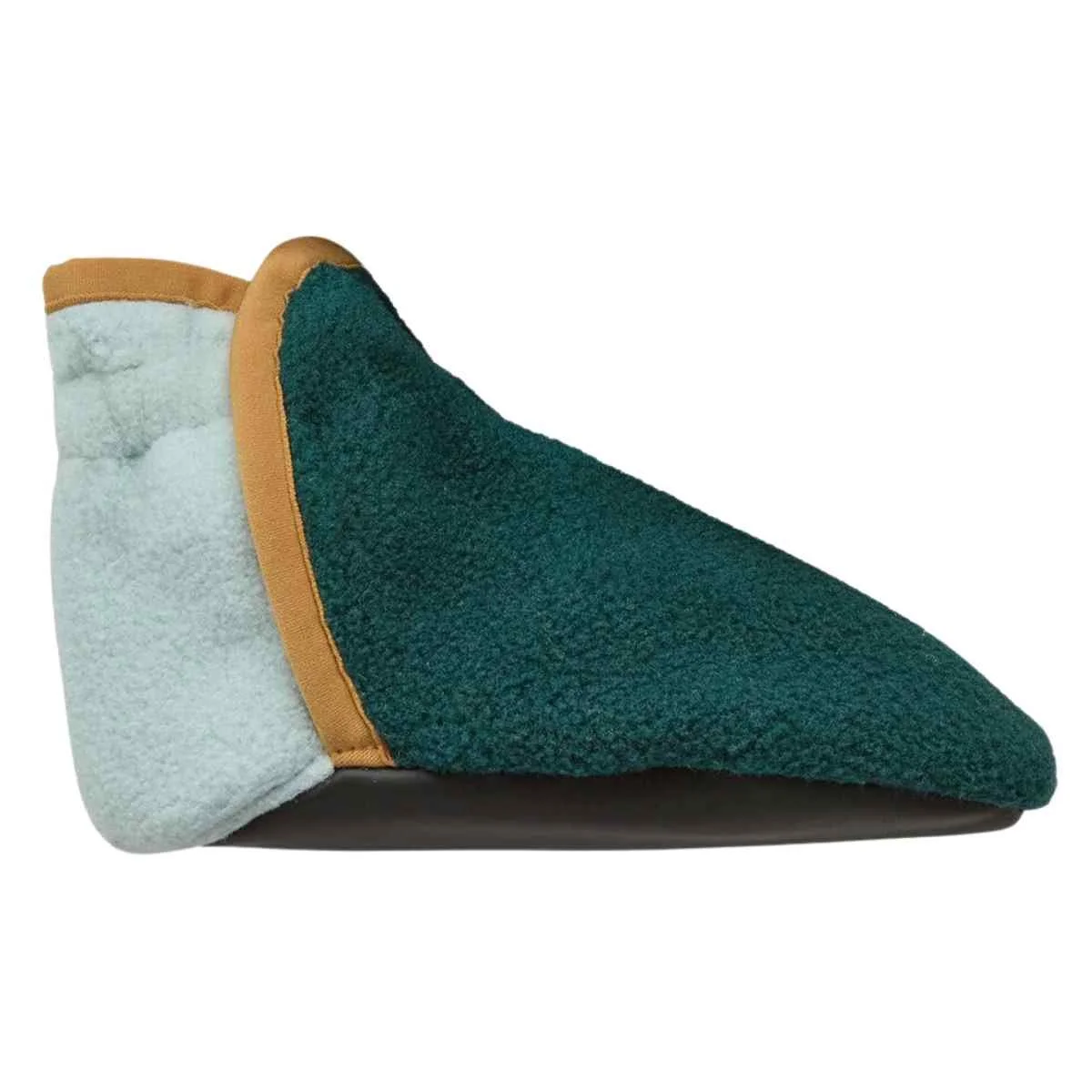
Price: $35
Temperature rating: 2/5
Insulation: No, but fleece
Waterproofing: No
Height: Low bootie
Weight:1.9 ounces
What we liked: Easy to get on and off; loose enough to slip over socks
What could be better: Once a child is older, they could easily pull these off
Our tester, a squirmy seven-month-old, was a fan of these fleece booties as much as a not-yet-crawling baby can be. Meaning, she didn’t try to rip them off and also wasn’t able to kick them off, either, due to the cinched closing around the ankle. This wasn’t too tight or too loose for her, but for a toddler or older, they could easily rip these off if they wanted to.
Out of the box, the booties looked huge but fit easily over socks or footie pajamas for extra warmth on a stroller walk or under a footed snowsuit. Sizes included zero to three months, all the way up to 2T-5T. Although our tester wasn’t crawling or walking yet, the bottom features a two-layer, highly flexible sole with a little grip and support for when your child is walking. The sole isn’t durable enough for outdoor use, and the fleece isn't waterproof, but these booties make great slipper or extra-warm options when used in a stroller or carrier. These are machine washable, which is a must for any baby or toddler footwear.
Patagonia Baby Synchilla Fleece Booties
What to look for in kids’ snow boots
Warmth
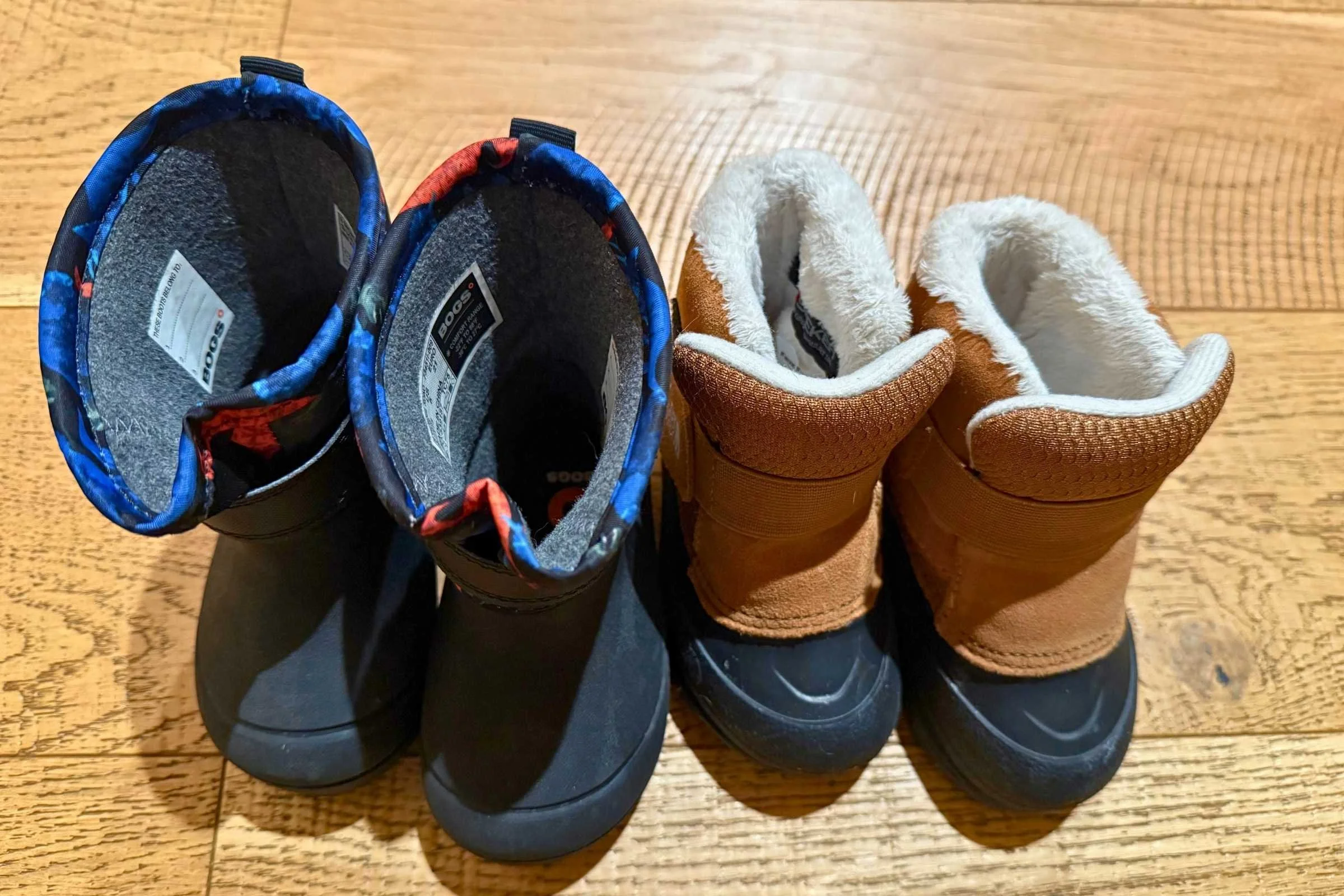
The fleece insulation in two pairs of boots.
Warmth is a critical factor when choosing snow boots for little feet. Often, if kids are especially young, they’re not able to communicate clearly that their feet are cold, so checking often and ensuring you’ve got good footwear is important.
Look for boots with fleece linings or synthetic insulation for warmth, and make sure they fit well. Poor-fitting boots, especially ones that are too tight, will not be as warm as good-fitting ones. If you’re on the fence between sizes, consider the larger one.
Many boot brands and models will also have temperature ratings listed, but in our testing, we’ve found these to be mostly arbitrary and not consistent at all. So instead, consider boots that fit well, stay on, have some form of insulation, and excellent waterproofing for your best bet at keeping your child’s feet warm.
Waterproofing
Winter boots and snow boots for kids have different types of construction. Some are leather or synthetic materials with a waterproof membrane, while others are made of rubber. Rubber, so long as the boot is high quality, is usually the most reliably waterproof option, but not as breathable as leather and synthetic boots.
Weight
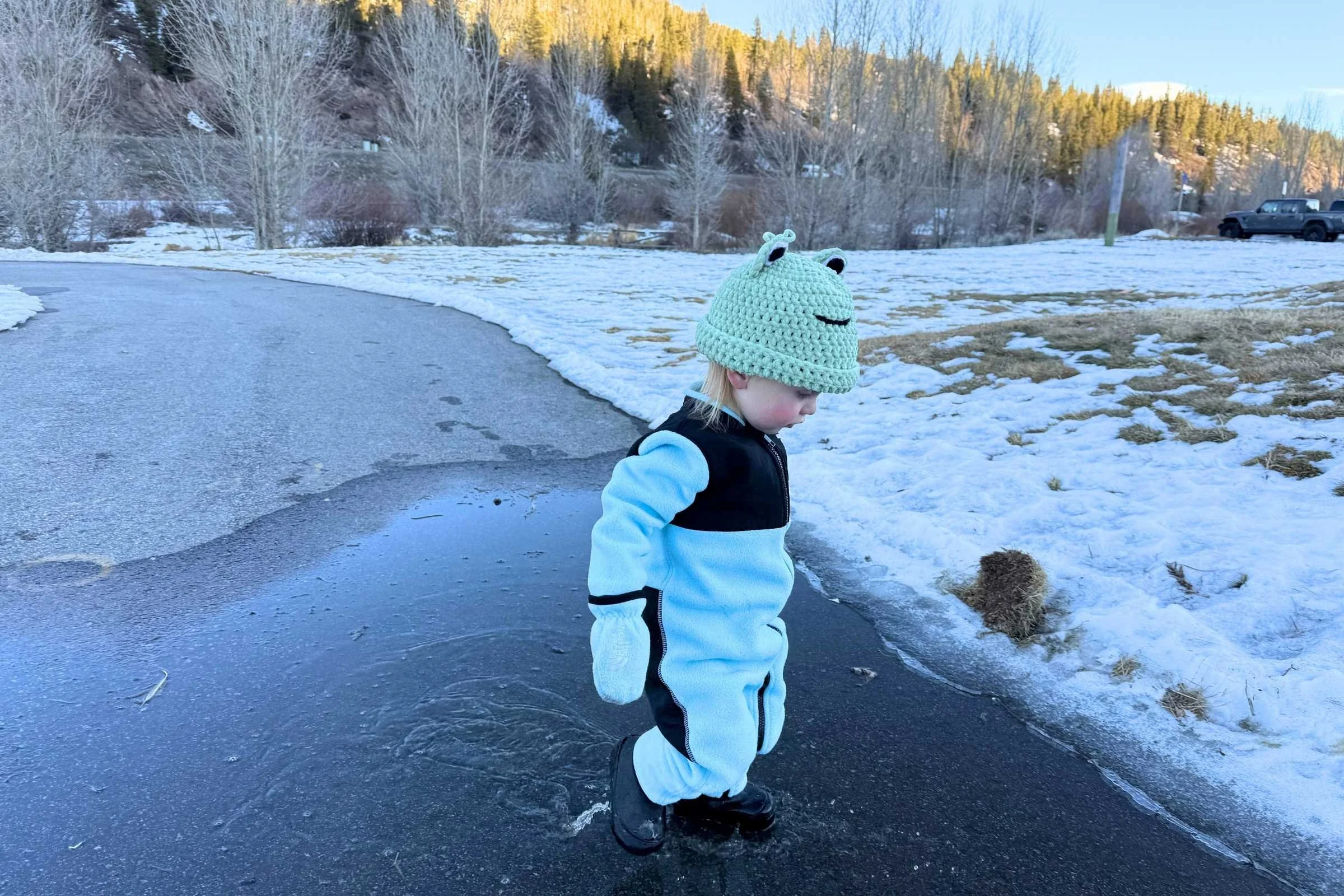
Weight and overall bulk matter a lot with kids’ boots. They’re small humans, and some of them are still working to get their bearings under them as they move on their own two feet. So, the lighter and less bulky the boots, the happier they’ll be. If the boots are too clunky, they can restrict and hinder movement like running or climbing, which can make for an unhappy kid.
Traction
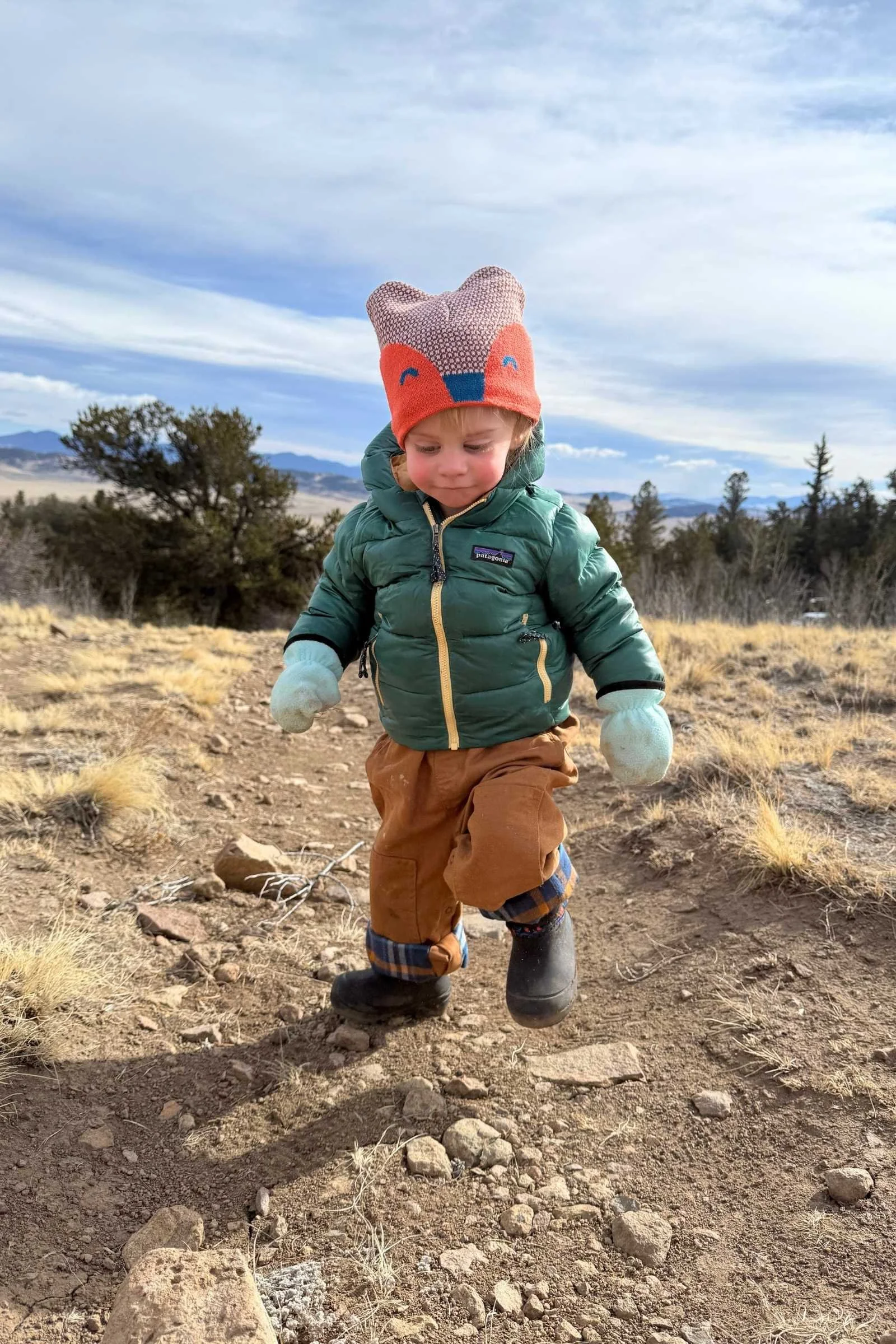
Whether you’re at the playground or sledding hill, good traction is critical for use on snow and ice. Look for boots with good lugs (but that aren’t too bulky!) and sticky rubber, and even better if the soles have a sort of no-slip material for use on ice.
Fit and comfort
If your kid’s snow boots are too tight, not only will they be a challenge to get on, they’ll also be uncomfortable and likely not warm enough; your kid isn’t going to want to keep those on. On the other hand, ensure they’re not so big that they don’t stay on or that they give them trouble walking.
Sizing can be tricky sometimes for little feet, so be sure to consult size charts and measure your kid’s feet. And if you’re on the fence, we recommend going with the larger size, for one, because kids grow fast, and for two, larger is almost always better than too tight. If you can try on boots in the store with a thick winter sock on, that will be your best way to ensure the right fit.
Ease of putting on/off
How easily a pair of boots goes on and off may seem like a minor detail, but it’s actually critical. And you know this if you’ve ever tried to get out the door in a timely manner with a restless toddler. Sometimes this means trying boots in-store before you buy them. But, especially for really little kids like toddlers, look for boots with a high enough cuff to keep snow out, but not too high. Sometimes cuffs that are way too high make getting the boots on an insurmountable challenge (our parents have been there with some of the boots in our test; they gave up and went to other boots). Bonus points if your little kid is able to take the boots on and off themselves!
Drying time
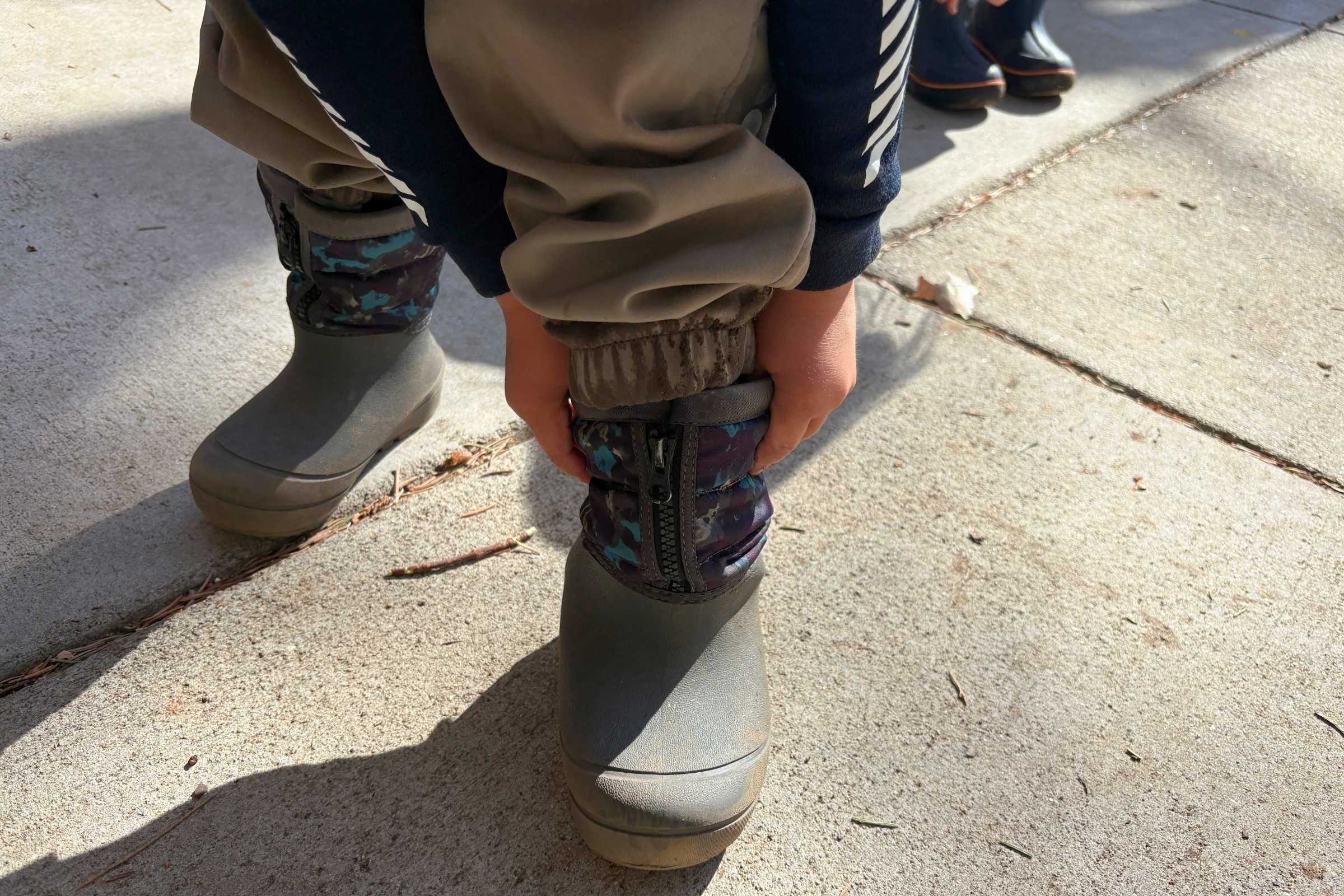
If your child is likely to be wearing their snow boots on the daily, be sure to consider an option that doesn’t get soaked and stay soaked. Options with rubber—like Bogs—are great for this, whereas leather and synthetic boots may take longer to dry if they get wet. Some boots have removable liners, which is also helpful if the inside gets wet from snow and they need to dry quickly overnight before the next day of school.
Durability
Durability does definitely matter with kids snow boots, even if they’re likely to grow out of them after a year or two. If the boots are durable, they’re more likely to keep your kid’s feet warm and dry for longer. Plus, you can then hand them down to other siblings or other kids outside of your family, hopefully producing less waste in the long run.
Sustainability
It’s worth considering the sustainability of the materials and manufacturing in snow boots. Look for PVC-free and PFAS-free options to avoid chemicals that are harmful to the environment and potentially humans. And consider boots that use recycled materials.
Boot styles explained
Rubber lower + insulated upper:
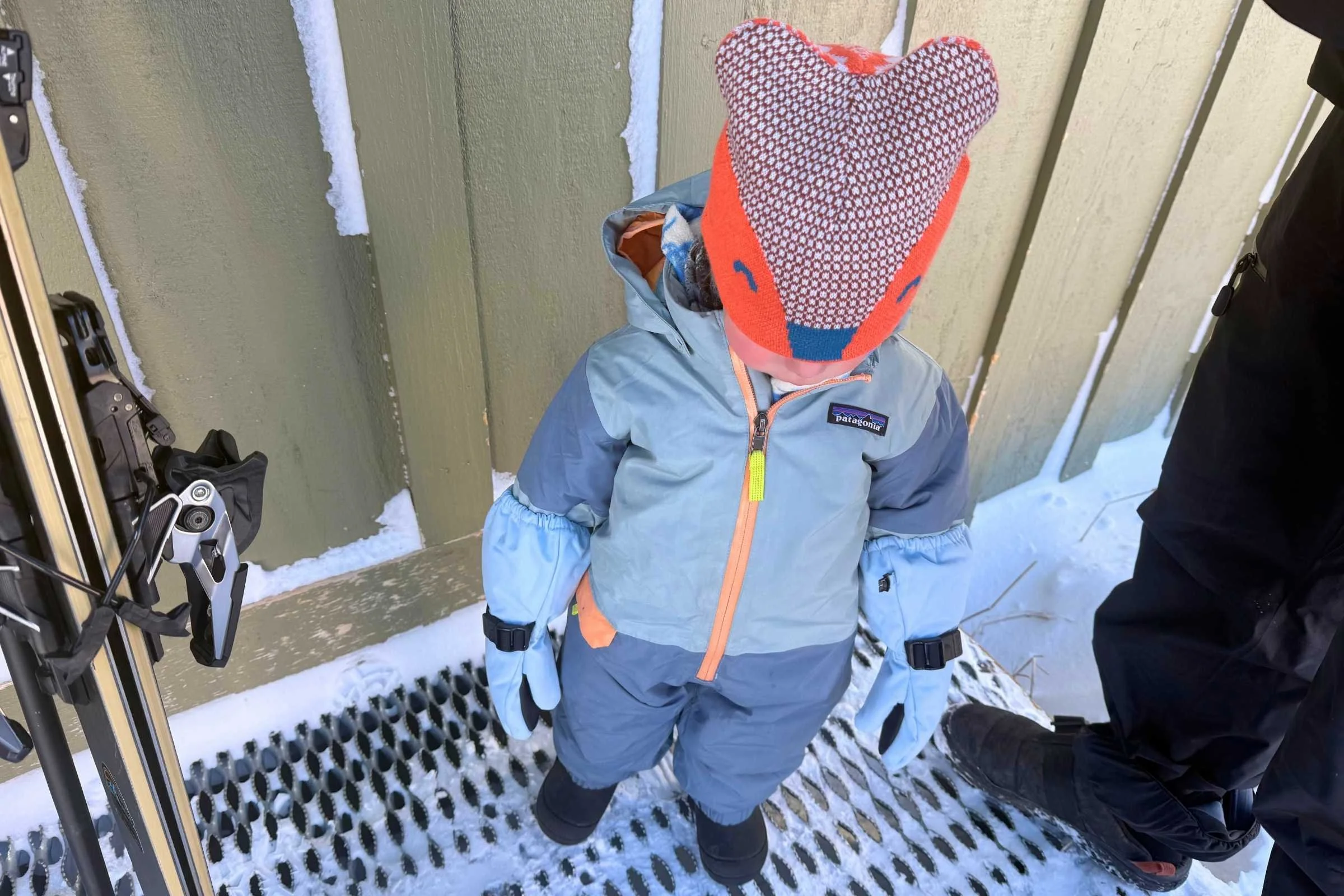
Many boots have rubber shells on the bottom with water-resistant uppers. Boots that are constructed with rubber are great for wet weather, snow, and puddles because they’re often the most waterproof. These boots often have water resistant uppers that are insulated for additional warmth.
Fully insulated winter boots:
Fully insulated snow boots have insulation throughout the toes, foot, and cuff. These are great for the dead of winter and super cold conditions.
Lightweight synthetic boots:
Lightweight synthetic boots are great for winter days traveling to and from school. They transition more easily from outside to inside than some of the more insulated or rubber options.
Pull-on vs. Velcro vs. lace systems:
For younger kids, pull-on and velcro options for boots are often the easiest to get on. For bigger kids who may be running around a lot more, lace systems can help to get a more precise and secure fit.
How to choose the right size of snow boots for kids
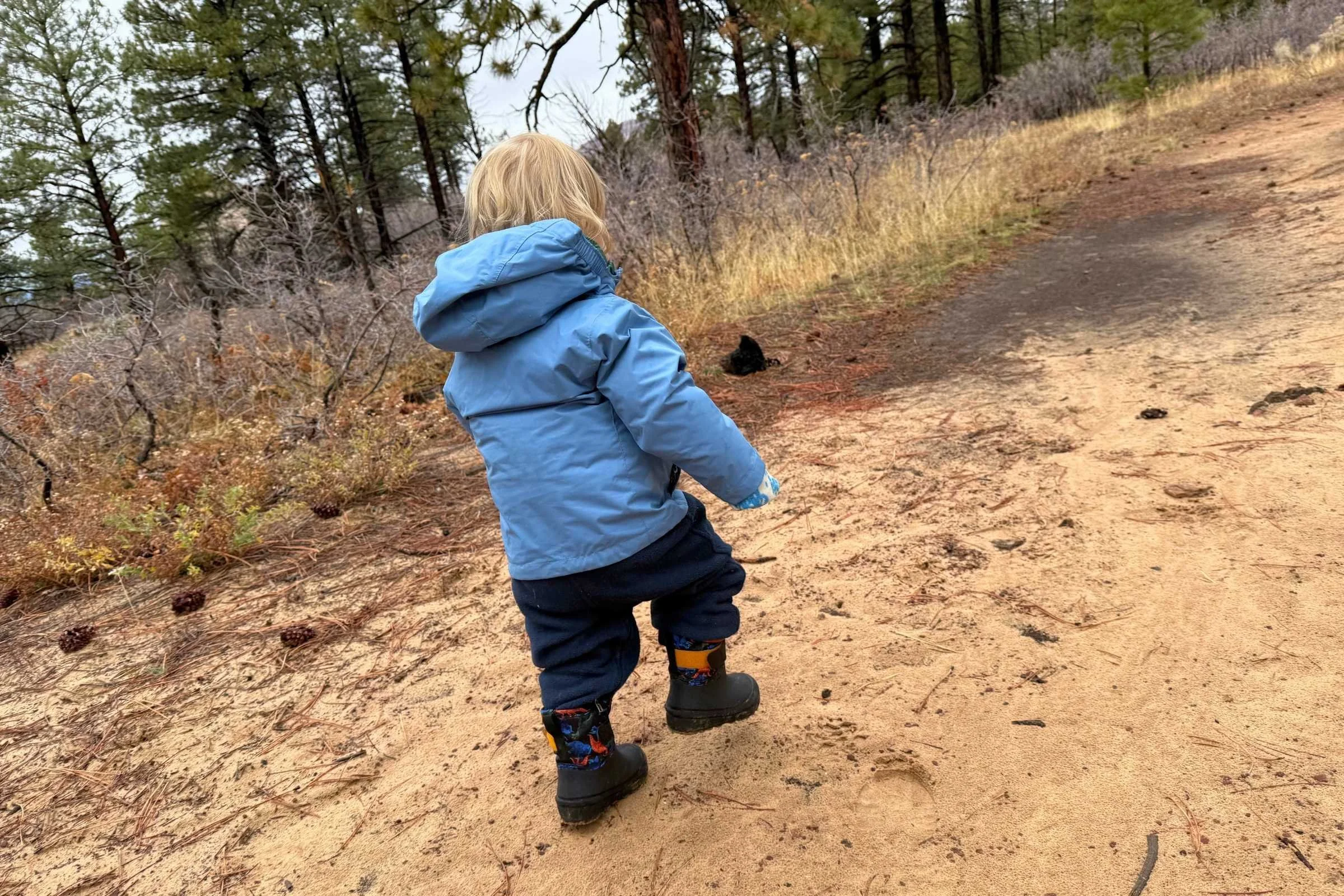
Selecting the right size of kids’ boots is essential for a good fit, ample warmth, and getting the most life out of each pair. Err on the larger side, given that kids grow quickly. But ensure that they’re not so big that they impede walking. And, if boots are way too big, they’ll end up being cold since there’s so much dead air space that needs to be filled with heat. But if they’re too small and constricting, that can cause discomfort and lack of circulation. So, opt for about one thumb width of space between your child's heel and the back of the boot to allow room to grow.
When it comes to socks for winter, wool is always best since they wick moisture well and stays warm when wet. It’s worth spending a little extra on wool socks for winter time in order to keep your kid’s feet warm.
Kid-specific considerations
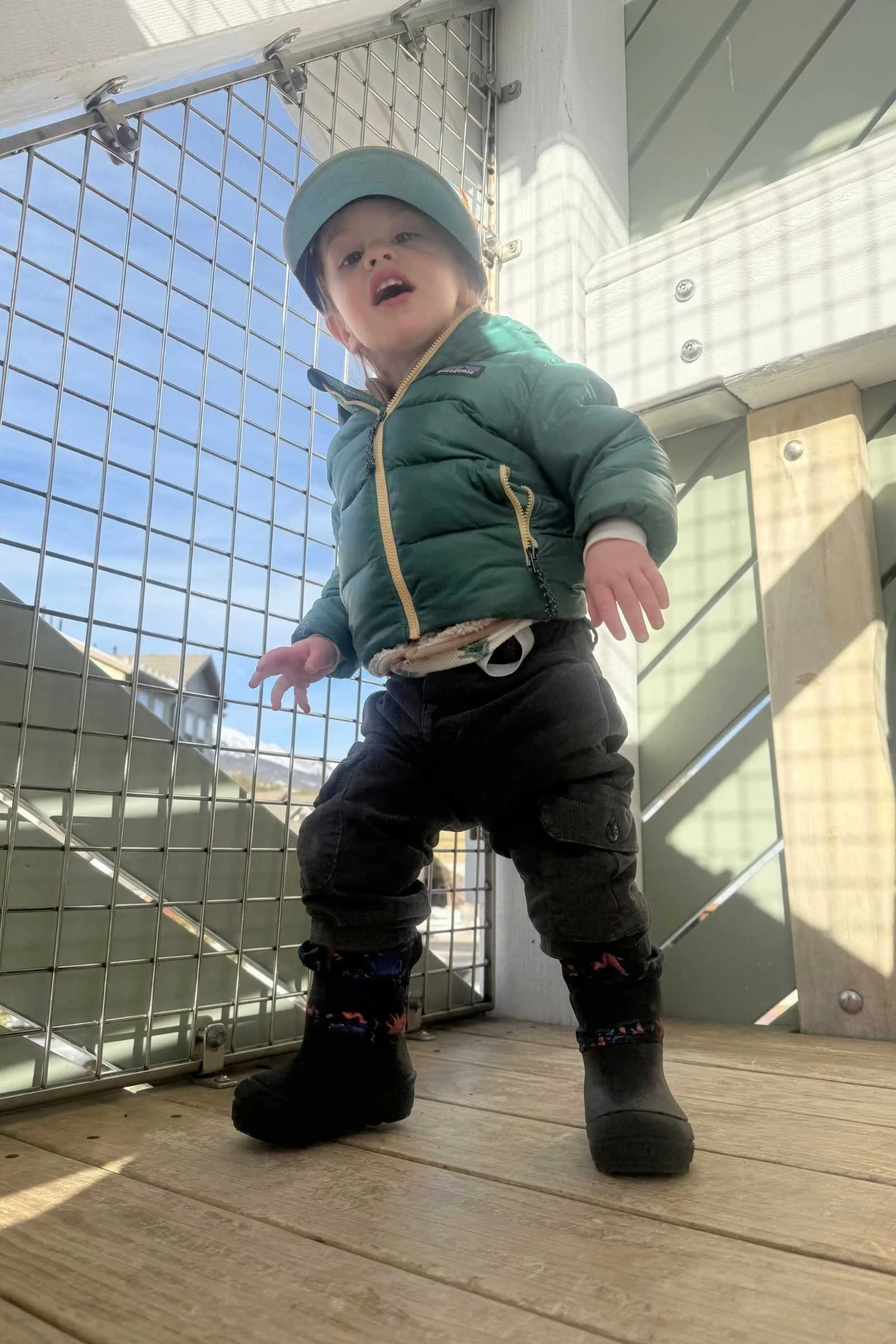
Snow boots for kids shouldn't be too heavy or clunky so kids can easily rip around the playground in them.
Independence
Most kids reach a stage in the early toddler years when they desire more independence. Having boots that are easy to put on themselves can help encourage this.
Play habits
If you’ve ever watched a kid play at a playground, you know they’re all over the place, from running to crawling to scooting and jumping. That’s why it’s important to select boots that have good overall durability.
Temperature swings
Temperature swings are often inevitable, whether that’s from morning to midday or going from outside to inside. Finding boots that are warm but not too warm, or boots that offer some breathability, can help with these temp swings.
Safety
Make sure your kid’s boots have a secure fit to help prevent tripping, slipping, or falling. Consider the traction the boots offer and look for rubber soles that are grippy on ice and snow.
Care and maintenance
Keeping winter boots clean and dry is a good way to keep them in good shape for as long as possible. If you need to dry them, remember to keep them inside but avoid direct heat, as that could melt or damage parts of the boot. If the boots are leather, you can often reapply a waterproof treatment to extend their lifespan. And, know when it’s time to replace them. If the boots have lost their waterproofing, if the tread is worn out, or if they’re simply too small, it’s time for a new pair.
FAQ
-
Kids boots should be able to withstand temperatures below freezing while staying warm and avoiding sweat. Look for boots that are specifically for winter and snow with temperature ratings below freezing, but know that these ratings often aren’t accurate and aren’t the best measure of warmth. Instead, prioritize good insulation and waterproofing.
-
If your kid is older and very active and spends lots of time on trails and uneven terrain, winter hiking boots are a great choice. For younger kids, dedicated snow use, and easy-on options, choose traditional snow boots. Kids’ hiking boots are often laced and harder to get on, so only choose those if that’s what your child needs most for their activities. Snow boots, especially rubber ones, will often be more waterproof overall and easier to put on and take off.
-
Leave about one thumb width of room when buying new boots for a kid. This leaves room to grow without the boots being too big.
-
If your child will be outside in winter, including in snow and wet, muddy conditions, waterproof boots are essential. We’d argue that the waterproofing is even more critical than the insulation. Keeping feet dry is the first step to keeping them warm.
-
Many snow boots are too warm to wear indoors all day, as they’re designed for cold, snowy conditions. Some leather and synthetic options are more breathable and may be more suitable for indoor and outdoor use.
-
You should always use wool socks with snow boots. This helps with temperature regulation, and, unlike cotton, wool stays warm when wet.
-
There is no set exact amount of time that kids’ boots will last. This depends largely on how fast your kid grows, and boots can last anywhere from a few months to a couple years. Buy them a little bigger to help them last longer.
-
Lightweight snow boots can also be warm, but ensure they’re waterproof and have some insulation. Heavier boots are sometimes warmer, but that’s not always the case. Ensure a proper fit, and that will help.
-
Make sure your child is layered properly and that their core is warm so that their little bodies can provide ample heat to their little fingers and toes. All of your child’s layering plays a factor in keeping their feet warm, so start there. But, ensure they have well-fitting waterproof boots with some insulation.
-
Sizing and model specifics may differ depending on your child’s age and size. Toddler sizing is for kids from around 1-3, little kid sizes are for preschool age kids, and big kid sizes are for elementary and older kids. Be sure to check size charts and measure your child’s feet before ordering to get a proper fit and to find the size that works best.
How we researched and tested
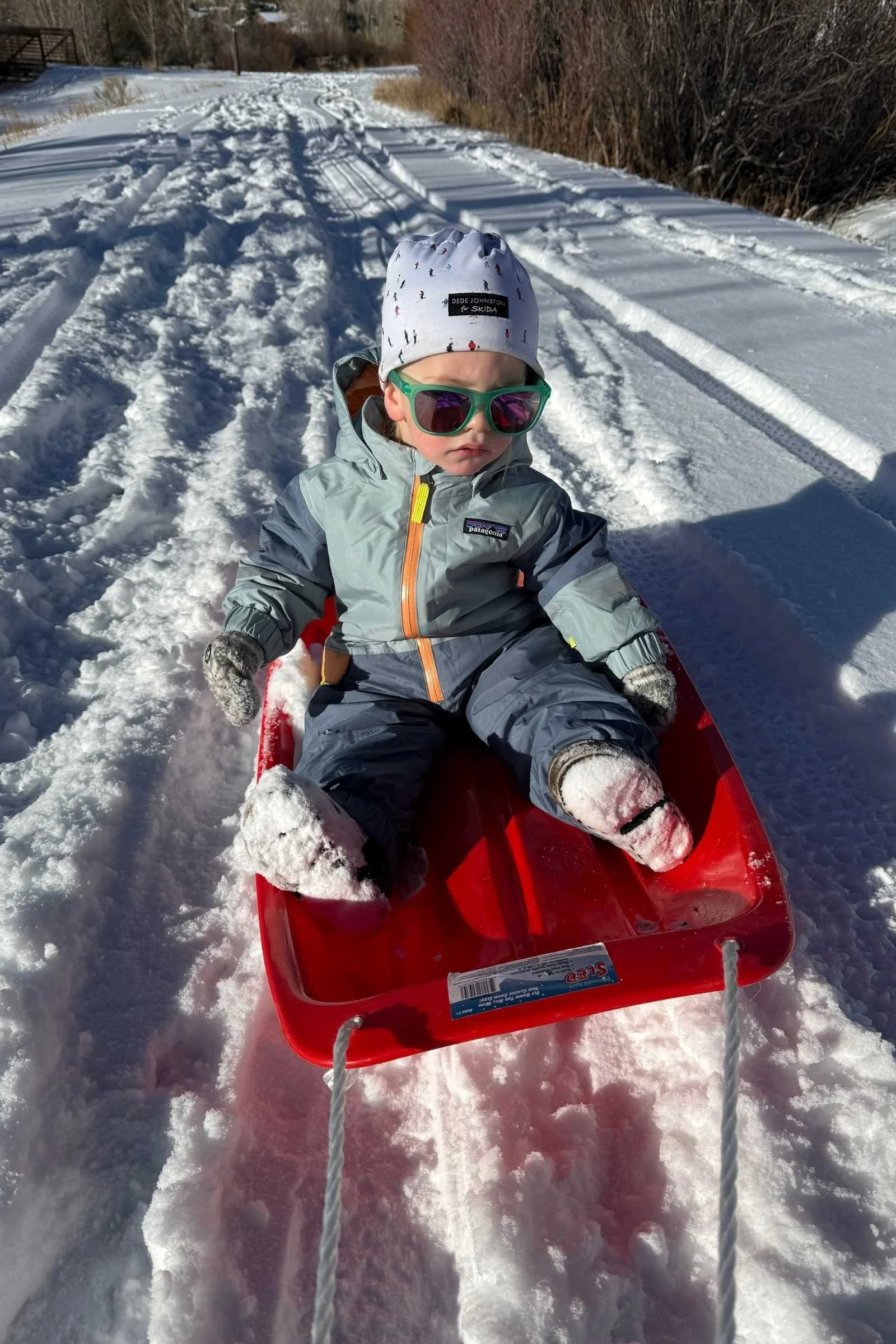
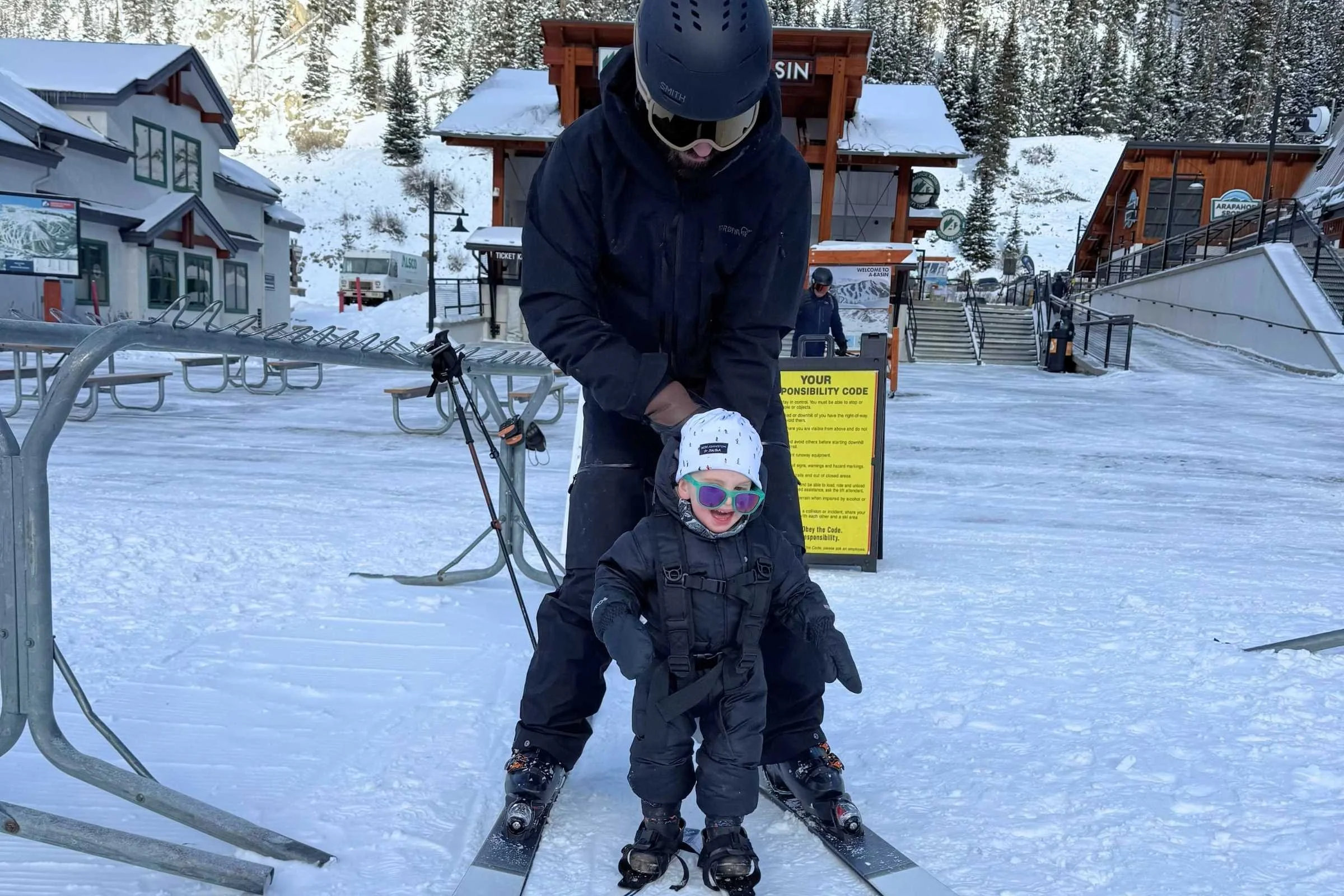
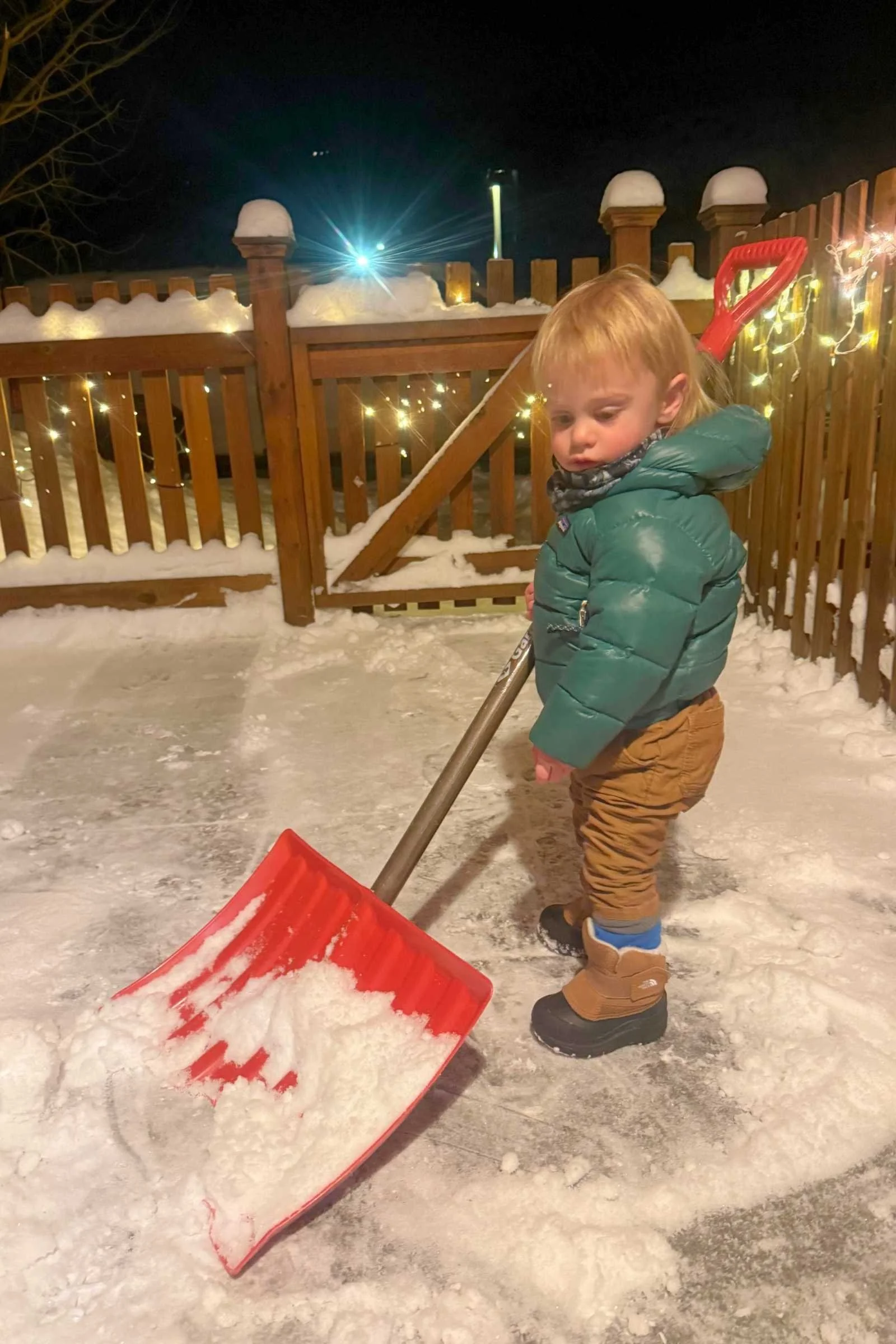
We tested nine pairs of kids' snow boots across a wide range of real-world conditions, from single-digit mornings at ski resorts in Summit County, Colorado, to mild fall hikes in the southern Utah desert. Our testers—ranging from babies to elementary-aged kids—wore these boots on school commutes, at playgrounds, on sledding hills, through snowy forest school sessions, and into frigid creek crossings.
We dunked boots in water to push waterproofing to its limits and tracked how well insulation held up over hours of outdoor play. We also paid close attention to how easily kids could get the boots on and off themselves, with input from parents and forest school teachers on fit, function, and the all-important morning rush out the door.
When evaluating each pair, we looked at warmth and insulation type, waterproofing construction and reliability, traction on snow and ice, overall weight and bulk, comfort and fit across foot shapes, ease of putting on and taking off, drying time between uses, and long-term durability.
We had multiple kid testers put these boots through the paces, with the help and input of parents and forest school teachers. We had babies, toddlers, preschoolers, and older kids testing boots outside in snow, rain, mud, ice, slush, and more. Parents and teachers weighed in on fit and function and how easy the boots were to get on and off. We tested boots on cold fall and winter desert hikes, at ski resorts, at playgrounds, while sledding, and while playing and learning at forest school.
OUR TESTING PROCESS
We tested nine pairs of kids’ snow boots in real-world winter use—from single-digit ski-resort mornings in Colorado to school commutes and fall hikes.
How we tested
- Worn by kids during everyday winter play and travel
- Used on ski-resort mornings in Colorado (including single-digit temps)
- Taken on mild fall hikes in southern Utah desert terrain
- Worn for commutes to school in wet, slushy conditions
What we evaluated
- Warmth and insulation (without over-bulking)
- Waterproofing for puddles, slush, and wet snow
- Traction and stability on snow and ice
- Ease of on/off and all-day comfort for kids
Why you should trust us / About the author
Stasia Stockwell
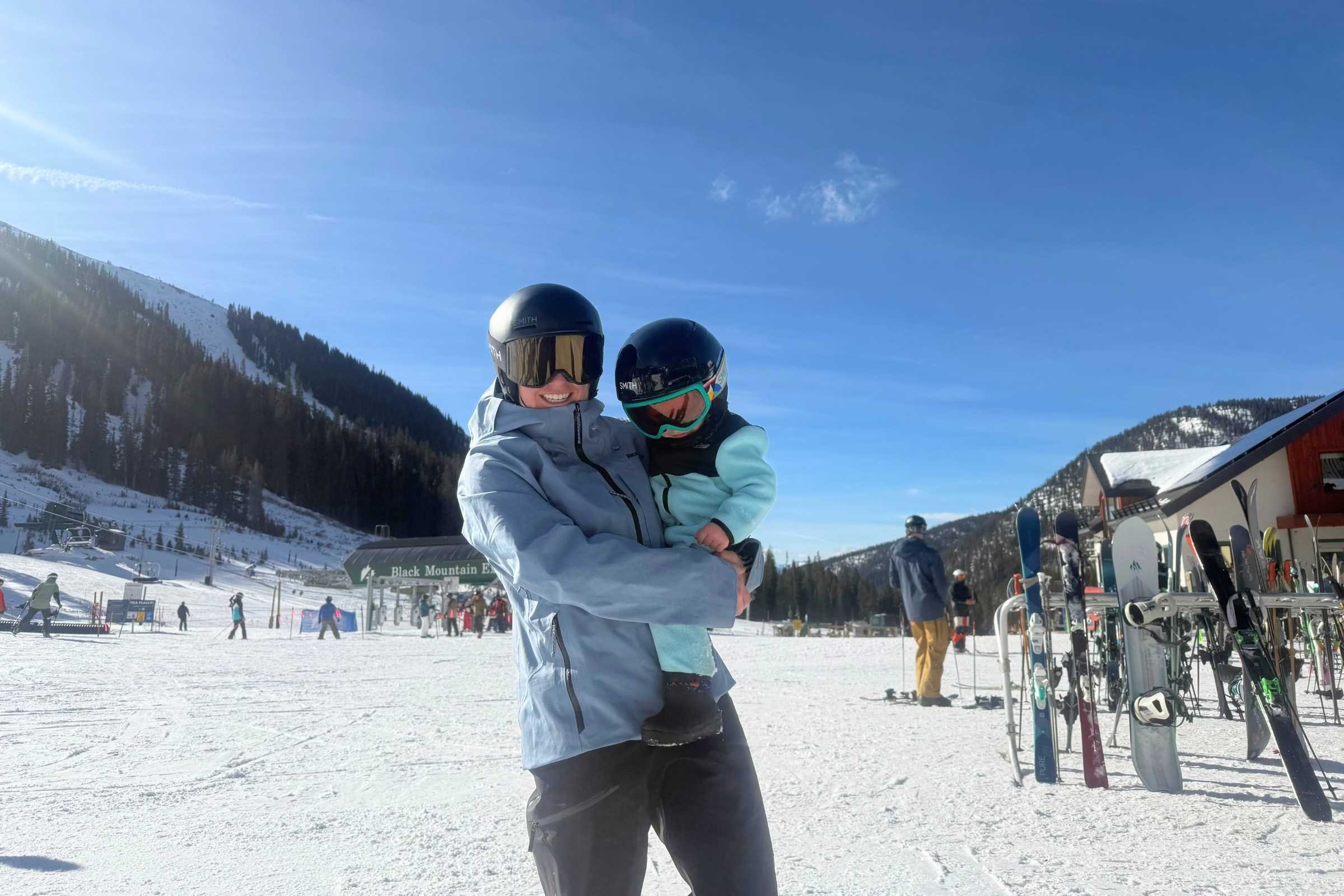
A true mountain dweller, Stasia Stockwell feels far more at home on a high alpine ridge than on a busy city street. She’s worked as a backpacking guide in Southeast Alaska, has held a WFR cert, AIARE 1, AIARE 2, and Avalanche Rescue certifications, and is working to become an avalanche education instructor. She’s now a full-time freelance writer and editor working primarily in the outdoor recreation realm. Her bylines can be found in Backpacker, 5280, and REI’s Uncommon Path, among others, and she’s been testing and writing about gear for nearly a decade. She is also the managing editor of the new print zine, Trails Magazine.
Now with a little guy by her side for her adventures, she’s learning what it takes to keep getting after it even with kids. Living in the mountains at nearly 10,000 feet in Colorado means winters are long—and wonderful if you have the right gear, especially for mountain babies. She put her son on skis for the first time at 10 months old (no, he couldn’t even walk yet, and no, he didn’t make any real turns, but yes, he still had fun). She regularly gets out to Nordic ski, go on mellow ski tours, winter walks and hikes, and of course extreme sledding with her son. As a winter lover herself, she’s been excited from day one for lots of snowy adventures with her son, and she’s learned very quickly that the right gear makes all the difference for staying warm and having fun.
Mattie Schuler

Although Mattie Schuler grew up in Wisconsin, her family got her on skis when she was just three years old. At ten, she decided to follow in her older brother's footsteps and try snowboarding. She hasn’t stepped on a ski since and has been snowboarding for more than 25 years, with more than half of those seasons spent out west after she moved to Boulder, Colorado.
Alongside her journalism, where she freelances for publications such as Gear Junkie, Women’s Health, and other outdoor and gear outlets, Mattie works as an outdoor educator for young children. She pursued a master's in educational psychology about ten years ago, focusing on nature-play, and quickly started a Forest School program at the school where she works. Daily and year-round, she is outside with four-to-five year olds in Boulder, Colorado. Between hot summers, windy falls, cold winters, and muddy springs, she knows which gear can withstand kids' rough play, but also understands what works given the nuances of children’s abilities and comfort with wearing or using their gear.
![How the Burton [ak] Embark GORE-TEX 2L Snowboard Jacket Performed in Real Snow Conditions](https://images.squarespace-cdn.com/content/v1/5b4544e485ede17941bc95fc/1771430088794-KNO4QK8ERWM4IE9DD0SB/snowboarder-wearing-the-mint-green-burton.jpg)