
Best Life Jackets and Personal Flotation Devices (PFD) of 2026
Adjustable US coast guard rated life jackets and PFDs for comfort and safety in flatwater and whitewater

September 10th, 2026, with updated pricing, a new kayaking pick, and another year of testing notes
Home > Gear Reviews > Water Sports
A life jacket only works well when it fits properly and suits the activity. A low-profile PFD that feels comfortable in a kayak may not provide the features needed for whitewater rescue, while a bulky offshore life jacket can be impractical for paddling all day.
I have worked as a rafting guide since 2014 and have guided river trips in Alaska, British Columbia, and the Yukon. I have also managed an Alaskan river company and completed swiftwater rescue training. For this guide, I drew on years of wearing PFDs professionally, including seven years of regular use with the NRS Vapor, evaluating fit, comfort, flotation, freedom of movement, adjustability, durability, pockets, and ease of use across paddling, rafting, fishing, whitewater, and casual recreation.
What separates a genuinely good life jacket from one you'll want to take off comes down to how the fit holds up over a full day rather than just the first hour, how much the foam panels restrict your paddle stroke or rowing motion, how quickly you can adjust it one-handed, and whether it's actually built for the specific activity you're using it for rather than just PFDs in general.
Top Pick: The NRS Vapor earns our Best Overall award. After seven years as my go-to guiding PFD, it's held up through countless days on the water, with a low-profile fit that never restricted my paddle stroke, foam panels that stay comfortable even worn all day, and durable construction that hasn't needed replacing despite daily professional use.
Looking for PFDs for smaller bodies? See our Best Kids’ PFD and Life Jackets guide or Best Dog Life Jackets
We create reader-supported, objective gear reviews independently selected by our editors. This story may contain affiliate links, which help fund our website. When you click on the links to purchase gear, we may get a commission — without costing you an extra cent. Thank you for supporting our work and mission of outdoor coverage for every body! Learn more.
Life jacket and pfd comparison chart
| PFD | TREELINE AWARD | US COAST GUARD RATING | DESIGN FLOTATION (lbs) | SIZES | WEIGHT (lbs) | # OF POCKETS | # OF ADJUSTABLE STRAPS | PRICE |
|---|---|---|---|---|---|---|---|---|
| NRS Vapor | Best Overall Read why |
III / Level 70 | 14.6 - 15.75 | XS/M, M/L, XL/XXL | 1.4 | 0 | 6 (2 side, 2 shoulder, 2 waist) | $110 |
| Astral Layla | Best PFD for Women Read why |
III | 16.3 | XS, S/M, M/L, L/XL | 1.6 | 1 (front pocket) | 6 (4 side, 2 shoulder) | $185 |
| Astral GreenJacket | Best PFD for Kayaking Read why |
V | 16.5 | S/M, M/L, L/XL | 2.9 | 3 (1 big front, 2 back side) | 9 (6 side, 2 chest, 1 safety belt) | $395 |
| Stohlquist Fisherman | Best PFD for Fishing Read why |
III | 16.3 | S/M, L/XL, 2XL | 1.9 | 7 | 8 (2 shoulder, 2 chest, 4 side) | $170 |
| Stearns Adult Classic | Best Affordable Life Jacket Read why |
III | 15.5 | Universal | 1.50 | N/A | 3 center | $40 |
Interested in water sports? Check out our most popular water gear guides:
The Best Life Jackets and PFDs
Best Personal Flotation Device for Most People: NRS Vapor

US Coast Guard Rating: Level 70 (formerly rated Type III)
Design Flotation (pounds): 14.6 to 15.75 lbs (depending on size)
Sizes: XS/M, M/L, XL/XXL
Weight: 1.4 lbs
Pockets: 0
Adjustable Straps: 6 (2 side, 2 shoulder, 2 waist)
Best for: jack-of-all-trades whitewater and flatwater activities
What we liked: low-profile, range of sizes, versatility for whitewater and flat water, value for the price,
What we didn’t like: back panel makes less comfortable to sit in higher-backed seats
We chose the NRS Vapor as the Best All-Around PFD based on its low-profile design, range of sizes, and affordable price. This made the NRS Vapor our jack-of-all-trades PFD.
As a Type III PFD, the Vapor is rated for both whitewater and flatwater. While, once again, not a “lifesaving” device, as a personal flotation device, it has more than enough buoyancy to keep a conscious swimmer’s head above water in a variety of circumstances.
The low profile is great for a whole host of activities, from kayaking to canoeing to rafting — this PFD proved its worth. I bought this PFD 7 years ago when I began my rafting career, and have used the NRS Vapor in all three of these activities. There was no need to purchase a separate rafting, canoeing, or kayaking PFD. The NRS Vapor can do it all.
Compare prices of the NRS Vapor


-
While the NRS Vapor’s back panel does make it more difficult to sit comfortably in higher-backed seats (as in some kayaks), it’s all about the fit. If the PFD is sized and adjusted correctly to fit close to the chest, then issues with it “riding up” in a high-backed seat should be resolved.
With two waist straps on either side and adjustable shoulder straps, fitting this PFD to a wide range of body types is simpler than on other PFDs. I also have a large chest and found that the NRS Vapor is one of the few non-women-specific PFDs that fits well. Wide armholes on the NRS Vapor provide ventilation and an excellent range of motion for all activities. We’ve used it in large rafts, personal inflatable kayaks, folding kayaks, and Inflatable Stand Up Paddle Boards (SUPs).
-
The newest model of the NRS Vapor weighs 1.4 pounds, compared to the 1.85 pounds of the previous model. It's also been updated to reflect the new US Coast Guard Classification of Level 70, which also coincides with Canada's PFD regulatory agency, Transport Canada. Level 70 is mid-range, meaning a good balance of mobility, comfort, and flotation. It can function in waters in waters between near shore and off shore and in waters between calm and waves. Still, it's worth noting most of the other PFD brands we considered use the USGS classification based on types, so we use both terms in this story.
The new model has a design flotation between 14.6 lbs and 15.75 lbs, compared to the previous model's stated 16.5 lbs. That reflects the lighter weight and increased mobility of the newer model. We think that is plenty of flotation for a lower profile jacket on, but if you want more, the older model is still available on close-out.
-
The best thing about the NRS Vapor PFD is that it is priced at the affordable end for a Type III PFD. It's worth noting that Type III PFDs almost always will cost you more than Type II PFDs because of the materials and features that allow you to do more activities while wearing it. We think the NRS Vapor PFD is worth the price simply because it can span the test of activities—from canoeing on the lake to swimming a Class III rapid to fishing for brook trout. And it comes in a range of sizes from S-XXL.
Best women’s PFD: Astral Layla

US Coast Guard Rating: III
Design Flotation (pounds): 16.3 lbs
Sizes: XS, S/M, M/L, L/XL
Weight: 1.6 lbs
Pockets: 1 (front pocket)
Adjustable Straps: 6 (4 side, 2 shoulder)
Best for: whitewater and flatwater, can be converted into rescue PFD
What we liked: comfort for curvy bodies, boob cups, eco-friendly materials, adjustable straps, rescue features, low profile
What we didn’t like: rescue knife placement could be better
Out of all of the women's PFDs that we researched, the Astral Layla was by far the most popular and the best lauded for its consideration for curvier bodies. Astral themselves said it best in an interview with Outside: “Our founder introduced this style of PFD almost 20 years ago, and we’ve found that no other design conforms to a curvy woman’s body better.”
It uses a hinged princess seam (a multi-paneled sewing design to curve around more naturally, rather than a typical two-panel-sandwich design), boob cups, and super soft organic kapok [naturally buoyant fibrous tree] create a special fit that women crave.”
Originally created under the Lotus name, Astral re-branded, then re-released the Astral Layla PFD due to popular demand. Women water enthusiasts—from professional guides to whitewater competitors to everyday paddlers—rave about the princess panel design, which conforms to curvy bodies better than the traditional 2-panel PFDs by hugging the curves with adjustable straps over top. This allows even more adjustability without playing with too many straps.
Compare prices of the Astral Layla


-
It’s made with PVC-free, non-toxic Gaia foam, organic Kapok, and some additional recycled materials.
-
We interviewed raft guide Sarah Ammons who has worked the Astral Layla for the past two years: “Faves: zipper! Not a fan of anything pull over, so the half pull/side zip makes easy on & off.” She was also fond of the color (hers is purple, though the newest models are blue). However, Ammons had concerns about the adjustment system: “The left side is hard for me to adjust, mainly due to old climbing injuries that limit my mobility in my left arm, so tightening the left side is difficult since I have to somewhat reach behind myself.”
-
She also would have preferred a different rescue knife placement. “If my rowing is quite on point, then my biceps rub against the knife handle,” she told us. Nonetheless, she was pleased with the durability: “Owned for two seasons, still going strong.”
Best PFD for kayaking: Astral GreenJacket
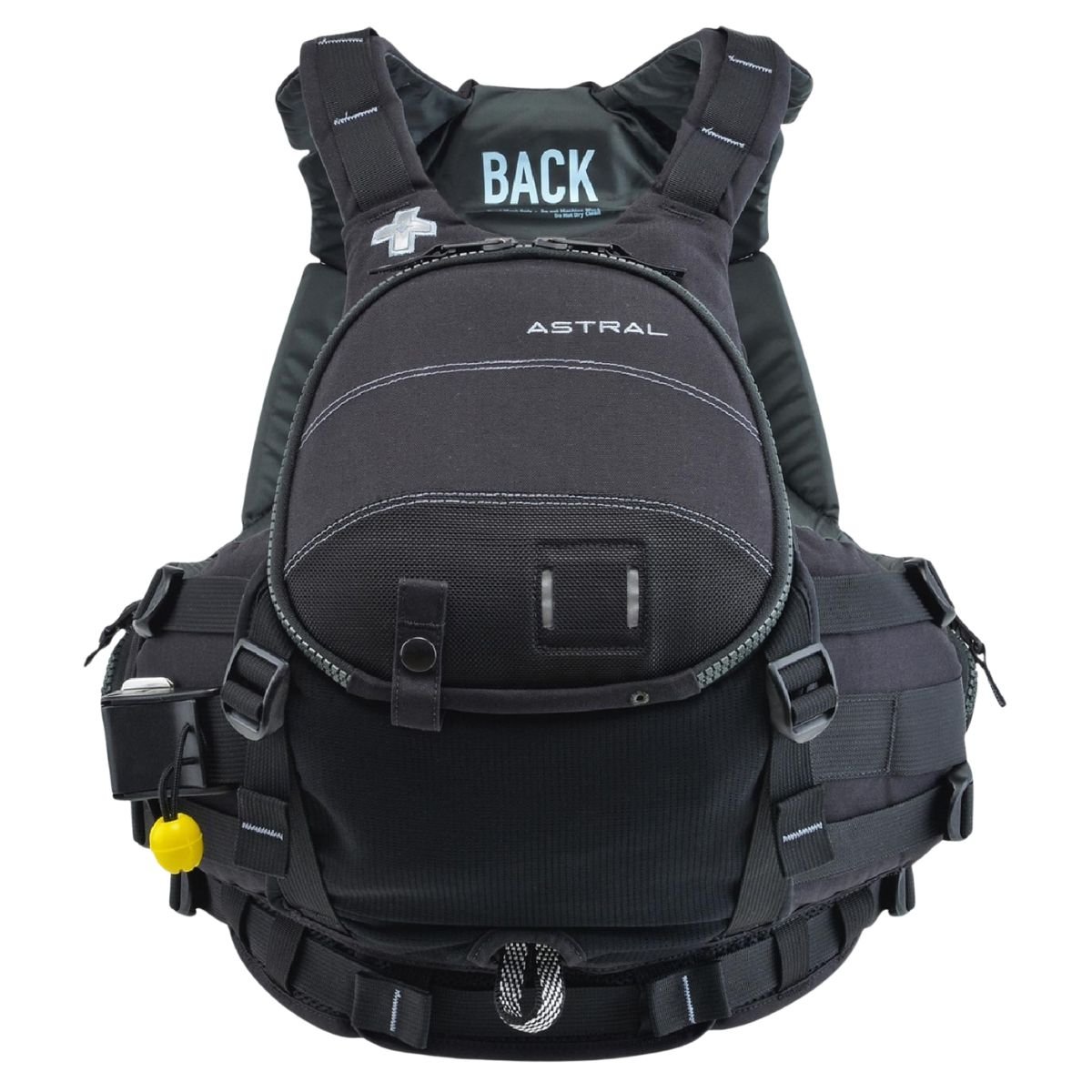
US Coast Guard Rating: V
Design Flotation (pounds): 16.5 lbs
Sizes: S/M, M/L, L/XL
Weight: 2.9 lbs
Pockets: 3 (1 big front, 2 back side)
Adjustable Straps: 9 (6 side, 2 chest, 1 safety belt)
Best for: whitewater, rescue, guides, search and rescue
What we liked: rescue features, comfort, durability, accessible front pocket, eco-friendly materials, lifetime guarantee
What we didn’t like: price
We chose the Astral GreenJacket as the Best Rescue Personal flotation device among its competitors because of the consistently positive consumer feedback and outdoor media reviews. (Plus, our kayak-junkie friends can’t stop raving about it.) No other PFD was more highly praised (ever since its release in 2008) for its rescue features, comfortable design, durability, and earth-friendly materials.
As a Type V PFD, the GreenJacket is designed with specific water-rescue intentions. What Type V PFDs have that others lack is a means of belay, and escape from that belay if necessary.
A rope can be attached to the rescue ring as a belay for a rescue swimmer, but should the rope become an entanglement or caught on life-threatening debris, the swimmer only needs to pull the front release tab to unclasp the harness belt, which allows the rescue ring (and its attachment) to slip off, freeing the swimmer.
Compare prices of the Astral GreenJacket


-
The Astral GreenJacket comes with:
a quick-release harness belt and rescue ring, which is also able to attach a tow-rope for kayakers
reflective accents for extra visibility
a clamshell front pocket with multiple compartments and storage pockets, which can also be used as an on-the-go workbench
-
For those who are on the water for more days than they can count, this PFD is worth both the extra bulk and the price. It's bulkier than other PFDs, but that's for a reason. With 16.5 lbs of flotation weight, this PFD is made for whitewater paddlers swimming through big water.
While keeping you afloat, the Astral GreenJacket’s design allows for big arm movements (think aggressive swimming or whitewater paddling) and comfort (bulky doesn’t equal constrictive) while you’re paddling through Class V rapids. The monetary upgrade is worth it when you consider the return on your investment: Astral has a lifetime guarantee on its products, so if it fails, it’s replaced!
-
With an overhead entry, the Astral GreenJacket can be considered more cumbersome to put on/take off than other PFDs but has a generous amount of adjustability on the waist and chest. Take note, however, that this PFD does not have adjustable shoulder straps. Instead, Astral used a Foam Tectonics™ design to provide a “two-panel fit system designed to eliminate ride-up and provide maximum mobility.” The adjustable panels allow you to custom-fit the height of the panels, which is more effective in sizing than just adjusting shoulder straps.
-
As a bonus, the GreenJacket is made with PVC-free, non-toxic Gaia foam and as much recycled material as Astral can get its hands on. And it has a fleece-lined hand-warming pocket, great for early- and late-season paddling adventures.
-
The easily accessible clamshell pocket is also great for storing things like a waterproof camera or action camera, or phone (properly stored in a waterproof case). On the water, it is all too easy to forget to take photos and having secure storage for a camera can make a difference.
-
There were only a few downsides to this PFD, but they are worth mentioning: Besides being bulky, we came across numerous complaints that this PFD was not comfortable for people with large chests due to the round, prominent front panel. That being said, we also found numerous reviews from women saying that they’d forsake women-specific PFDs in favor of the GreenJacket. We’d call that a dealer’s choice.
-
The rescue knife attachment point is on the front of the clamshell pocket and is easy to catch when rowing, paddling, or on a low-hanging tree branch (watch out for those!). This can be averted by reconfiguring your knife to attach to your shoulder strap, but it’s not intuitive.
-
We recommend investing in the Astral GreenJacket if you’re certain you want a rescue-style PFD or are ready to hit Class III+. The biggest concern with this PFD is the price and we think if you're a dedicated paddler, it is worth it.
We interviewed Nicole Kalata, a raft guide shown in the photo of the GreenJacket below, “When I was in Colombia, one of my guides fell in love with it (and they can’t [buy] the Greenjacket down there). So I left it with him. :) He was super stoked. He had a crappy PFD and is the best white water kayaker I have ever seen at 19... I knew it would be in good hands.”
Chad Culler, the author’s paddle-happy roommate, whitewater aficionado, and former sea kayak guide, upgraded from the Sea Wolf (Astral’s BlueJacket predecessor) to the GreenJacket this year and will never go back. After a 6-day paddle fest down the Main Fork of the Salmon River, the man-of-few-words said he was glad he bought this year’s color but kicked himself for not switching to a GreenJacket before this year. “The one time I swam, I was immediately buoyed back up—and I’m a big, tall guy who was caught in some gnarly hydraulics. I’m hooked.”
Interested in water sports? Check out our most popular water gear guides:
Best Personal flotation device for Fishing: Stohlquist Fisherman

US Coast Guard Rating: III
Design Flotation (pounds): 16.3 lbs
Sizes: S/M, L/XL, 2XL
Weight: 1.9 lbs
Pockets: 7
Adjustable Straps: 8 (2 shoulder, 2 chest, 4 side)
Best for: fishing, sitting in boats for long periods of time
What we liked: value for price, fishing specific design, pockets, sizing accounts for body shapes and sizes in the amount of flotation material, access and storage
What we didn’t like: could do a better job of fitting women
We chose the Stohlquist Fisherman as the Best Fishing PFD because of the price, the fishing-specific design, and the available sizes. The breathable mesh and fisherman-specific design allow for easy storage and access on the water for all of your fly fishing essentials—lures, flies, leader, scissor clamps, you name it.
This fishing life jacket is designed for fishermen who use higher-backed seats than those found in other water sports. The cut allows more shoulder mobility for bigger movements, like when casting a fly fishing rod. But what really sold us on the Stohlquist is that it has the best fit and availability of sizes of any of the fishing-specific vests we considered.
With 3 zipper pockets, 4 velcro pockets, a lash tab, a fly patch, multiple D-rings, a pliers holder, a retractable tool holder, and a rod holder loop, the Stohlquist gives you little reason to need to rummage in a deck bag for gear. The two front pockets (made of molded EVA) unzip and lower into a handy on-the-go workstation (although there were a few complaints from fisherpeople about forearm contact with these pockets on the cast).
The Fisherman can still be found widely and we believe it's the best choice for anglers–as long as you can get your hands on it.
Compare prices of the Stohlquist Fisherman
-
The high-backed mesh back panel on the Fisherman was designed for fisherpeople with higher seats in their boats than other water sports may need, making it more comfortable to lean back and rest in between casts. The mesh on both the side and back panels also allows for maximum airflow. The front-zip entry makes it easy to put on and take off, while adjustable chest and waist straps make it easy to fit different body types.
-
The Fisherman PFD was designed for fisherpeople of all sizes—it is available in S-XXL. With that much versatility, we found that this PFD is lauded more highly than almost any other fishing life jacket because it comes in the most sizes. Stohlquist named their design "Graded Sizing,” which takes into account not only the girth of the paddler but the weight of the paddler, as well.
For example, a size Small will have less foam, a smaller chassis (the size of the foam panels), and shorter straps than a size Medium will have. A size XX-Large has more foam, a bigger chassis, and longer straps than any other size of that type of PFD. This is of note to our friends who work in accessible fishing, which often is done from boats.
The reason the Graded Sizing on the Stohlquist Vest is so popular is that the design means a better fit for different body types. Rather than the average PFD, which could have the same size chassis on a size Small as it would on a size Large (with the only difference being the length of straps), Stohlquist designed their PFDs to increase ergonomically in size for maximum protection, comfort, and activity.
-
It is worth noting that if you’re wet wading from the bank, you may not need a fishing PFD. If you’re fishing with a guide, most will provide their own life jackets, so you can borrow one until you decide you are ready to invest in a fly fishing PFD of your own.
If you’re curious about fly fishing–both wet wading and fishing from a boat– see our How to Get Started Fly Fishing guide.
-
We love the low profile, especially of the pockets, which doesn't get in the way during casting. It doesn't ride up with high-back seats. It offers good shoulder mobility and we liked the adjustable shoulder and side straps.
Best affordable life jacket: Stearns adult classic life jacket
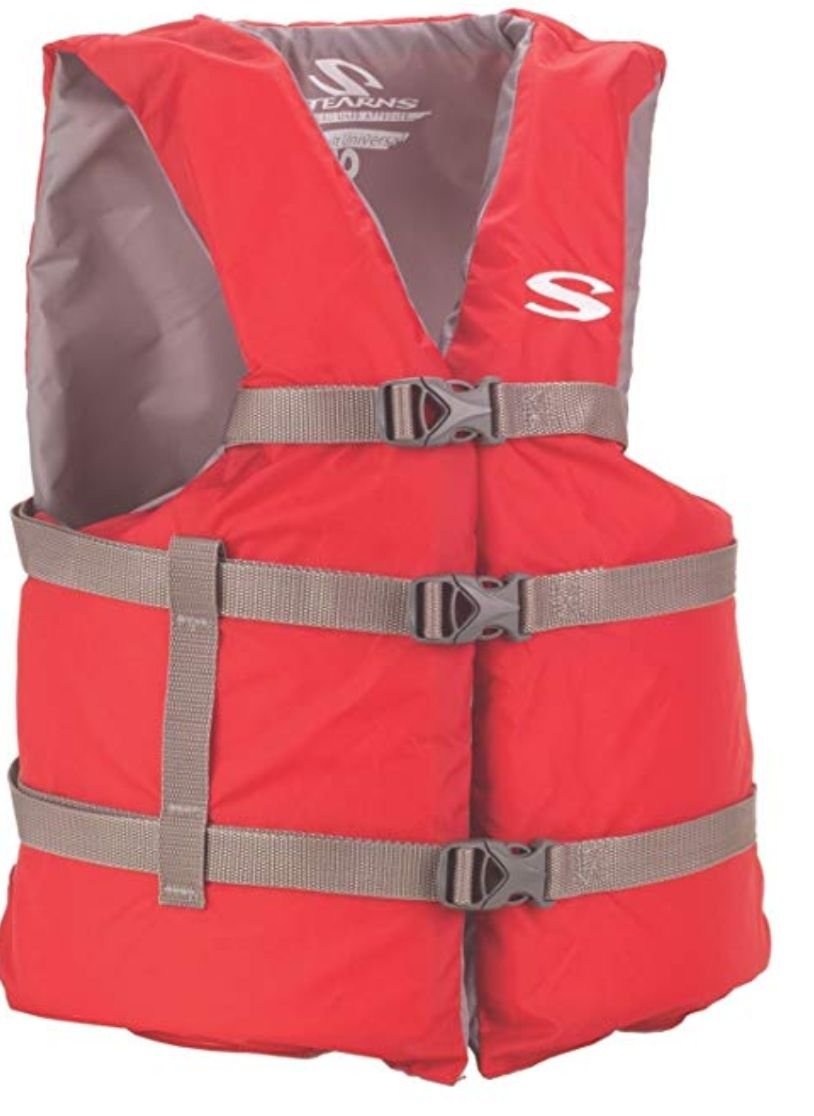
US Coast Guard Rating: III
Design Flotation (pounds): 15.5 lbs
Sizes: Universal & Oversized
Weight: 1.5 lbs
Pockets: 0
Adjustable Straps: 3 center
Best for: flatwater, river clean up day, loaner, kids, tubing
What we liked: ease of use, value for price, comes in kids's sizing
What we didn’t like: bulky, limited mobility
We chose the Stearns Adult Classic as our Best Budget Life Jacket because of the price and weight. This life vest comes highly recommended by those who used it across a wide gamut of sports—from motorized water activity like water skiing to calmer paddle sports like paddleboarding.
We like that it also comes in a child’s version (more on that in our kids’ life jackets guide). It’s hard to beat a life-saving flotation device that costs as much as a burger and beer and weighs a mere one and a half pounds!
The Stearns Adult Classic is a Type II life jacket, which means it is meant for flatwater near-shore or where rescue will be quick. However, this is not a life vest for offshore fishing or whitewater.
View the Stearns adult classic life jacket


-
The Stearns Adult Classic was lauded as a great life vest for canoeing, flatwater kayaking, tubing, and fishing for those who want to stay under budget. We also think it is a good choice for people getting into watersports. This Stearns is also the perfect, affordable backup PFD: loan to friends, wear for river clean-up days, or pull from under your car seat when you left your primary PFD hanging on the drying line.
-
It has 15.5 lbs of flotation weight, which is more than enough to keep your head above water in calm waters.
With a front buckle system, this life vest is easy to put on/take off, with adjustable side straps to fit most body types.
The one drawback of the Adult Classic is that it is bulky and not designed for particularly active sports. Those who used it for paddling sports complained that it could be cumbersome but did not impede activity too greatly.
The overall reaction towards this life vest placed it at the best value for a flotation device, especially for those who are just beginning to play with water sports, or who are looking for a little added security during lower-risk water activities (i.e., canoeing across a calm lake).
Other PFDs and life jackets we tested
NRS Ninja
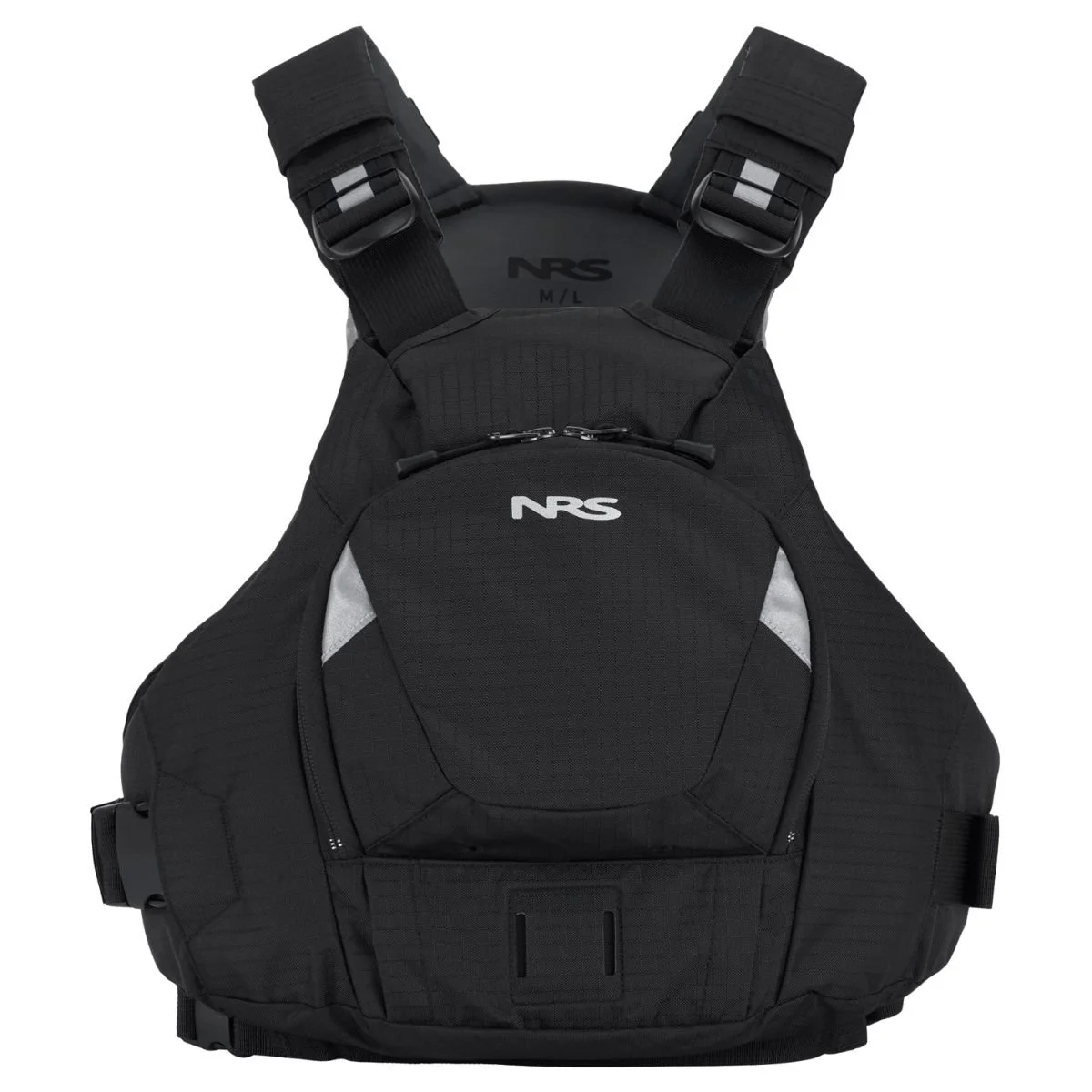
US Coast Guard Rating: Level 70
Design Flotation (pounds): 14.5, 15.75, or 16.75 lb depending on size
Sizes: XS/M, M/L, XL/XXL
Weight: 1.8 lbs
Pockets: 2 (front pockets)
Adjustable Straps: 6 (4 side, 2 shoulder)
Best for: whitewater
While the NRS Ninja is a great low-profile option, we couldn’t recommend it as a rescue option when faced with the overwhelming praises for the Astral GreenJacket. However, if you don’t want the bulk of the GreenJacket, the Ninja is a great choice. If you want a low-profile PFD on a budget, this could be a good choice, especially since you can often find the previous model on closeout right now.
View the NRS Ninja
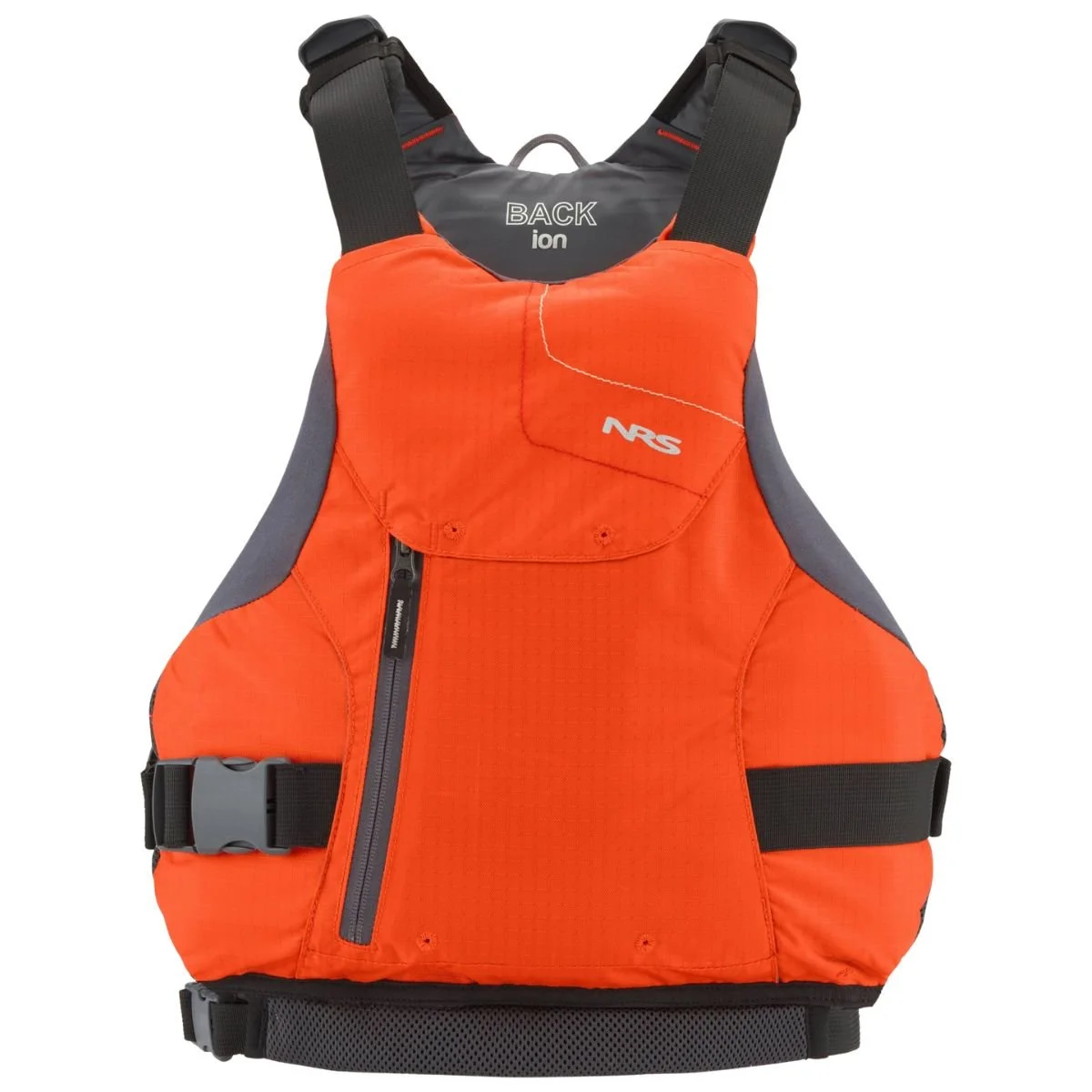
US Coast Guard Rating: Level 70
Design Flotation (pounds): 16.5 lb
Sizes: XS/M, M/L, XL/XXL
Weight: 1.6 lbs
Pockets: 1 (front pocket)
Adjustable Straps: 6 (2 side, 2 shoulder, 2 waist)
Best for: whitewater and flatwater
While we appreciate the features of the NRS Ion (they spot a knife lash tab and zippered pocket), the NRS Vapor had far more reviews and praises. Plus, it’s bulkier than the Vapor, and we love our slim, low-profile designs.
View the NRS Ion

US Coast Guard Rating: Level 70N
Design Flotation (pounds): 16.25 lbs
Sizes: XS/S, M/L, Plus
Weight: 1.6 lbs
Pockets: 1 (front pocket)
Adjustable Straps: 4
Best for: fishing
The Stohlquist Flo PFD is a great women’s-specific fishing PFD, but since the Stohlquist Fisherman is so versatile and fits a variety of shapes and sizes, we wanted to choose a PFD that would serve the most users. Plus, the Stohlquist Flo only has 1 pocket, whereas the Stohlquist Fisherman has 7 pockets. It seems unfair that the women’s PFD would have fewer pockets. Still, we appreciate how the Stohlquist Flo comes in plus-sizing, the only PFD we considered that explicitly designs for size-inclusivity. However, we noticed plus-sizing isn't available at all retailers.
View the Stohlquist Flo PFD

US Coast Guard Rating: Level 70
Design Flotation (pounds): 14.6–15.75 lbs
Sizes: XS/M, M/L, XL/XXL
Weight: 1.6 lbs
Pockets: 3 (front pockets)
Adjustable Straps: 7 (4 side, 2 shoulder, 1 waist)
Best for: fishing, boating for long-periods of time
We have nothing against the NRS Chinook PFD—but the Stohlquist Fisherman just held a better popular opinion! They are very similar, but the Stohlquist PFD has proven itself for longer.
View the NRS Chinook

The author wearing the NRS Vapor PFD on the Klehini River, Haines, Alaska.
Water Sports Accessories
Rescue Knife
A rescue knife is handy in daily situations and indispensable in emergency situations. In most cases, you’ll be using it to cut sandwiches. But there’s a minor risk in watersports of entrapment in throw rope, fishing line, or wood debris.
It’s such an essential piece of gear that most PFDs have a lash tab to attach your knife. We like the NRS Pilot Rescue Knife because it’s low-profile, attaches to lash tabs on PFDs for quick release in emergencies, and is relatively inexpensive.
Bonus: bottle opener!
Whistle
Any old whistle will do, but the author likes to attach hers with a thick rubber band so it stretches to her mouth when she needs it but stays out of the way when she doesn't! (P.S. choose a bright color.)
Carabiners
Only use locking carabiners. Never choose non-lockers (they can catch on ropes in an emergency and attach you to things you don't want to be attached to). Bonus if you can find a toothless carabiner!
Dry Bags
Below, we'll get into specific types of ways to keep your gear dry from waterproof phone protectors and cases to medical kits. But at the end of the day, having several dry bags that can keep water from getting to your gear is key. Most rafters, kayakers, canoers, SUPers, and packrafters have several dry bags. Bonus: dry bags are gear items that can last a lifetime and be used for travel, ski gear, and gear storage.
Waterproof Phone Case
We like the Pelican Micro Case 1040 because it is a water sport-specific hard-backed protective phone case. It floats (so you can still find your dry and functioning phone, even if it goes overboard). Plus, the Pelican case keeps phones safe when they are jostled around or dropped (not a guarantee on the Zip Pouch below).

The NRS Vapor on a whitewater rafting trip.
Zip Pouch
A plastic phone zip pouch pinches closed, so it can keep your phone dry with no risk of kicking it open (a minor risk with a hard-backed protective case). We like the Sea to Summit Zip Pouch because it’s a low-profile phone protector that's much sturdier than a Ziploc bag. This model has survived one guide’s 2 seasons of 2-week-plus long sea kayaking trips. It can also fit in most PFD pockets. But if you think your phone may get jostled, dropped, or tossed overboard, go for the floating hardback phone case by Pelican instead.
Waterproof Medical Kit
The author usually makes her own in a 3L or 5L dry bag (we like this Sea to Summit dry bag, which has a clear window to tell what items are inside). One of her river buddies brings the Waterproof Ultralight Medical Kit on the river and it's worked well to treat the minor injuries that happen on the water.

A boater wearing a Type I PFD on the Chilkat River, Haines, Alaska. Photo courtesy Aaron Henry.
Life jacket vs. PFD: What’s the difference?
There are dozens of ways to get out on the water, but they all require one essential piece of safety equipment—a flotation device.
There are too many stories of injury, tragedy, and catastrophe around water sports and participants not wearing PFDs. Growing up in a whitewater boating town, the author heard too many first-hand stories from her father (a member of the volunteer fire department who assists Search and Rescue on river emergencies) about victims who weren’t wearing life vests when they flipped in a rapid, or weren’t cinched in properly and slipped out of their flotation devices once they hit the water.
A PFD has saved the author’s life more than once. When her knee caught between two rocks in the Arkansas River, it took her more than a minute to free herself. Without that PFD, she would have struggled to keep her body near the surface as the river tried to sweep her downstream.
She’s witnessed PFDs save her friends when they’ve flipped fully-loaded gear boats in Class IV+ rapids, her little brothers on paddleboards in lakes, and her mom falling off of a jetski. She has been caught in Class IV recirculating holes before, and without a PFD, may not have come out back of them.
Coast Guard regulations require every person in a boat to wear (if a child) or have access to (if an adult) a flotation device. Look for our guide to Kids Life Jackets and PFDs. While motorized boats have a different set of rules, for this guide we focused on human-powered water sports.
Coast Guard regulations state a minimum inherent buoyancy for different classifications of flotation devices. See below for our explanation of the 5 Types of Coast Guard Approved PFDs.

Coast Guard regulations require every person in a boat to have access to a flotation device. The author on a trip on Summit Lake in Fraser, BC.
There are two names for what we ordinarily associate with flotation devices, with a few key differences: personal flotation devices (PFDs) and life jackets (aka life vests or life preservers).
A life jacket is designed to do just what it sounds like—save your life. During an emergency situation, a life vest’s main design is to keep the swimmer’s head above water, conscious or not. These flotation devices require a different rating than a PFD and generally have a thick collar or a head “cushion” to keep you afloat.
A PFD is also designed to do just what the name suggests—keep you afloat, but not necessarily to “save your life.” PFDs are designed to allow for more activity while wearing them—you wouldn’t want to feel constricted in your movement as you paddle through Class IV rapids! These flotation devices are rated to provide extra buoyancy to lift a swimmer to the surface but lack the neck and head support that a life vest provides.
PFDs work in conjunction with other safety equipment, like the proper use of a rescue knife to keep boaters safe.
To learn more about other must-have accessories you should get with your PFDs, skip to What Accessories do I need to go Boating?

Type I (right) and Type V (left) PFDs on the Klehini River, Haines, Alaska. Photo courtesy Aaron Henry.
Understanding U.S. Coast Guard Life Jacket Classifications
U.S. Coast Guard-approved life jackets may use either the older Type system or the newer performance-level system. Both types of labels are still in use, so the most important step is to read the label inside the PFD and confirm that it is approved for your activity, body weight, and intended conditions.
Under the older system, wearable PFDs are labeled Type I, II, III, or V. Type I life jackets provide the most buoyancy and are intended for rough or remote water where rescue may take longer. Type II models are generally designed for calmer, near-shore water. Type III PFDs are common for paddling, fishing, and other active water sports because they allow more freedom of movement, but wearers may need to position themselves face-up in the water. Type V PFDs are designed for specific activities, such as whitewater rescue, paddling, sailing, or commercial work, and must be worn and used according to the instructions on the label.
Newer life jackets may instead carry a Level 50, 70, 100, or 150 rating. The number refers to the minimum buoyancy measured in newtons. For example, Level 70 provides at least 70 newtons, or about 15.7 pounds, of buoyancy. Higher levels generally provide more flotation and are intended for more demanding or remote conditions. However, a higher number does not automatically make a PFD the best choice for every activity, since fit, mobility, turning ability, and the instructions on the label also matter.
Most recreational paddling PFDs in this guide fall into the Type III or Level 70 range, while specialized rescue models may be labeled Type V. Always check the exact approval label before buying, especially for whitewater, offshore use, children, non-swimmers, or activities with specific local requirements. State laws can also vary, so confirm the rules where you plan to boat or paddle.

Every PFD we reviewed had to be Coast Guard approved. Photo courtesy Matt McDonald.
What to look for in a life jacket or PFD
Choosing the right personal flotation device (PFD) means finding one that matches your water activity, fits properly, and feels comfortable enough to wear all day. Here’s the criteria we think you should consider before you buy:
Price
While we think that a life-saving device is not an area to skimp, life jackets and PFDs range widely in cost and a higher price doesn’t always mean better performance. In general, more expensive models offer specialized features or advanced materials. That said, affordable options can still meet Coast Guard standards and perform well. Consider how often you’ll use your PFD and what features are worth paying extra for.
Coast guard rating & flotation weight
Make sure any PFD you buy has a U.S. Coast Guard approval label. This ensures the device meets minimum safety standards for your chosen activity. Also check the flotation weight—it tells you how much buoyancy the PFD provides. More flotation usually means more bulk, so strike a balance between safety and mobility based on how and where you paddle.
Adjustability
Adjustability is arguably the most important thing to look for in a life jacket after Coast guard rating. Adjustability in a PFD allows for one piece of equipment to fit a wide array of body shapes and sizes. Adjustability allows for life-saving, close-fitting PFDs, which are the only useful and functional kinds of PFDs. We looked for PFDs with multiple adjustable straps and other features (see our Best Women’s PFD for couture princess panels!) to allow for a greater range of consumer fits.

The PFDs we researched were designed for both flatwater and whitewater. Photo courtesy Stephanie Hawney in Fonce, Colombia.
Comfort
If your PFD isn’t comfortable, you’re less likely to wear it. Look for soft, flexible materials, ventilated panels, and padded straps that won’t chafe over long paddles. Comfort features like contoured foam or low-profile designs help reduce bulk and increase mobility. Whether you’re out on the water for an hour or for a week, comfort is non-negotiable.
Design (flatwater vs whitewater)
PFDs are designed for different environments. Flatwater models (think canoeing or row-boating) are usually streamlined and lightweight for comfort. Whitewater models (think rafting or kayaking) are often bulkier, with extra buoyancy and features like rescue belts or quick-release harnesses. With as many water sports as there are available, it’s hard to take into account every activity. Choose a design that matches the type of water and activity you’ll be in most often.
Novice and professional appeal
Beginner-friendly PFDs tend to focus on ease of use, affordability, and comfort. They’re great for casual paddlers. Advanced users may want technical features like multiple gear attachments, rescue-ready components, or enhanced mobility. Everyone has to start somewhere, but some of us have been doing this for way too long. We researched PFDs with novices in mind and looked for features that would appeal to someone just getting into watersports—low price and low profile. On the other hand, we wanted to take professional and old-timers into consideration and researched PFDs meant for the experienced paddler—i.e., whitewater and rescue PFDs. Pick a PFD that matches your current skill level—but also consider where your paddling goals may take you.

All of the PFDs we researched had to be durable and comfortable. Golden Playpark in Golden, Colorado.
Durability
A PFD that wears out quickly isn’t worth much. Your PFD should last for years. Hardy materials like 200+ denier nylon, tough buckles, and reinforced stitching help ensure it holds up to sun, abrasion, and repeated immersion. If you’re on the water regularly—or in rougher conditions—prioritize build quality and choose something that can stand the test of time (and tumbles!).
Sizes
We all have different body types and body weights. We researched PFDs that provide a wide array of available sizes to accommodate all of our water enthusiasts, no matter what size or shape. Make sure the PFD comes in a size that fits your body—not just your chest measurement. Some brands offer graded sizing, meaning they scale the amount of flotation foam with the size of the vest. This results in better comfort and performance, especially for paddlers at either end of the size spectrum.
Features
Look for features that match your style of boating. Pockets are handy for snacks, whistles, or tools. We liked PFDs with lash tabs placed up and to the side, which avoids an attached knife catching on your arms while paddling or rowing. A lash tab is an attachment point for rescue knives or strobes. We recommend when you get your PFD, get yourself a rescue knife. Some high-end PFDs have hydration sleeves or tow systems. Rescue-oriented models may include quick-release harnesses. If you won’t use it, skip it—extra features often mean extra cost and bulk.
Buoyancy
The primary function of a life jacket or PFD is to provide buoyancy and keep you afloat in the water. Look for a PFD that offers sufficient buoyancy to support your body weight and keep your head above water, even in rough conditions. We relied on the independent testing of the Coast Guard, who certifies flotation weight. Coast Guard ratings help you compare buoyancy levels across models, but the actual flotation weight tells you how much support it provides. Choose a PFD with enough buoyancy for your body weight and activity level—whitewater paddlers may want more flotation, while flatwater paddlers can opt for a slimmer profile.
Visibility
Bright colors and reflective panels improve safety by making you easier to spot in the water. This is especially helpful in low-light conditions or if you’re paddling around motorboats. Prioritize visibility if you’re frequently on busy waterways or in remote areas.
Reflective features
Some PFDs have reflective patches or trim to boost your visibility to other boaters. This is especially valuable in open water, early morning, or low-light conditions. While more common on ocean and coastal models, it’s also useful on rivers and lakes—especially if your gear or clothing is dark.
US Coast Guard and Transport Canada approved ratings:
There is also a new US Coast Guard Classification that gives Performance level ratings for PFDs.
Level 50: near shore, calm water, faster time to rescue
Level 70: mid-range from shore, mid-range time to recue, the most common rating for most PFDs
Level 100: waves, some distance off shore, increasing time to rescue
Level 150: very offshore, bigger waves, longer times to rescue
The new rating system also coincides with Canada's PFD regulatory agency, Transport Canada. NRS is a brand that uses this new system. However, many of the other PFD brands we considered use the USCG classification based on types, so we use both terms in this story.

To prolong the life of your PFD, inspect it annually and wash it at the end of each season. Photo courtesy Aaron Henry on Tsirku River, Haines, Alaska.
How to clean a life jacket
PFDs do not have an official life expectancy but should be inspected annually (at least) for wear and tear that will render them unsafe. Washing your PFD at the end of every season is a great way to maximize the life of your PFD. The easiest way is to mix a bucket of warm water and dish soap and dunk your life jacket into the bucket repeatedly. Once the PFD is saturated, rinse it in a bucket of cold, clean water, and air dry. This will minimize the potential for mold or mildew to grow from river gunk, and (hopefully!) get rid of most of the river funk for the off-season.
Zippers and rescue knife attachment points are generally the first parts of a PFD to fail.
However, during your annual inspection, keep an eye out for these 8 potential problems:
Frayed, ripped, or severed straps
Ripped material
Exposed foam filling
Damaged buckles
Severely worn spots
Sun fading
Compression of foam
Loss of flexibility/crumbling foam
Here’s what the Coast Guard has to say about care and maintenance, but here’s a quick summary:
Don’t alter your PFD.
PFDs lose buoyancy when you place heavy objects on them (including you). Don’t sit or kneel on them.
Dry your PFD thoroughly, storing it somewhere well-ventilated and out of the sun
Don’t store your PFD in your boat for long periods when you’re not using them
Avoid drying on direct heat sources like on top of radiators or heaters
Write your name on your PFD
You’re legally required to have a PFD in good shape on board of your boat. Test your PFD at the beginning of every boating season. Check for tears, rips, and holes. Seams, straps, and hardware can fail, so check those areas, too. Waterlogging, mildew (check the smell), or shrinkage of the buoyant materials is also a bad sign. make sure it is in good condition.
If you have a PFD with kapok (a naturally buoyant material found in our Women’s Pick), squeeze to check for air leaks. If there is a leak, your PFD is no good and should be cut

The author wearing the NRS Vapor PFD on a packrafting trip in Nahku Bay, Dyea, Alaska.
How to Choose a PFD
At the end of the day, only you can pick the PFD for you. You know what kind of water you want to be on, your activity level, and your body type. Whether you’re kayaking, canoeing, swimming, whitewater, packrafting, or more, there’s a life jacket or PFD for what you’re doing. PFDs are much like t-shirts—anyone can hand you a “good” t-shirt, but only you can find your favorite-everyday-tee. Knowing how to fit your PFD makes it more likely that you’ll find a new favorite.
For additional advice, we also recommend reading this REI Expert article on How to Choose a PFD (Life Jackets).
What are you using a PFD for?
Are you a flatwater kayaker looking to get into whitewater? Are you a canoer who’s about to embark on a friend’s rafting trip down the Grand Canyon? Are you looking for something to wear on an inner tube down the lazy river? Take into consideration the highest level of activity that you might participate in. For example, if you’re a flatwater kayaker who wants to get into running rivers, look for a low-profile Type III PFD. You’ll have plenty of buoyancy to paddle the river while maintaining enough mobility (and lack of bulk) to continue kayaking on flat water. If you’re looking to take your SUP out on the lake with your kids, then a budget-friendly Type I may be perfect for you.
How often will you be wearing a PFD?
If you’re going to be on the water more than a handful of times in a summer, it may be worth it to upgrade. For professional water guides, a PFD is like a second skin—it goes everywhere with you. It may be worth it to fork over $200+ for a piece of equipment that you will use daily. For the avid weekend warrior, a $100 PFD may be the perfect intersection of price point and performance.
Look at the design. Will you be wearing your PFD often? If that’s the case, choose one that allows for the best range of motion for your body type. Thinner shoulder straps may allow you more mobility, but may also be more uncomfortable for long stretches of time.
Are often cold or headed to cool waters? You may want to invest in Neoprene, which is more expensive but a useful comfort upgrade for most folks.
Are you a curvy person?
Ladies, design matters. As a well-endowed woman, the author can testify that not all PFDs are created equal.
Women’s PFDs are designed for a reason—fitting a PFD to your body correctly means we have to take the girls into account.
Women’s PFDs are built with breast cups, or at least curved in the right places. They are also (generally) more adjustable around the chest and shoulders than neutral or male-designed PFDs. It’s worth it.
Are you going fishing?
For those looking to spend more time casting than paddling, a fishing-specific life jacket may be a better option than a water-sport-specific PFD. These PFDs come with more pockets and attachment points than your average PFD and are designed to keep your fishing gear out of the way while rowing or paddling.
Do you see yourself becoming serious about water sports?
For those who are looking to step up their water game, a Type V (specialty use) is the best option. Rescue professionals, river guides, and those who spend a lot of time in bigger/more technical waters steer themselves towards Type V PFDs. Most Type V PFDs are designed for rescue scenarios.
Features of type V PFDs :
equipped with a “safety release belt”
a ring in the back to attach a safety line
some even have a front attachment for a belay device
While more expensive and bulkier than other PFDs, you may want to consider looking into a Type V if your interests lie in bigger water.
Does your PFD fit?
This is so important in determining whether you’ll love or hate your new PFD that we dedicated a whole section to it. Read on for how to get those buckles and ties to work for you.
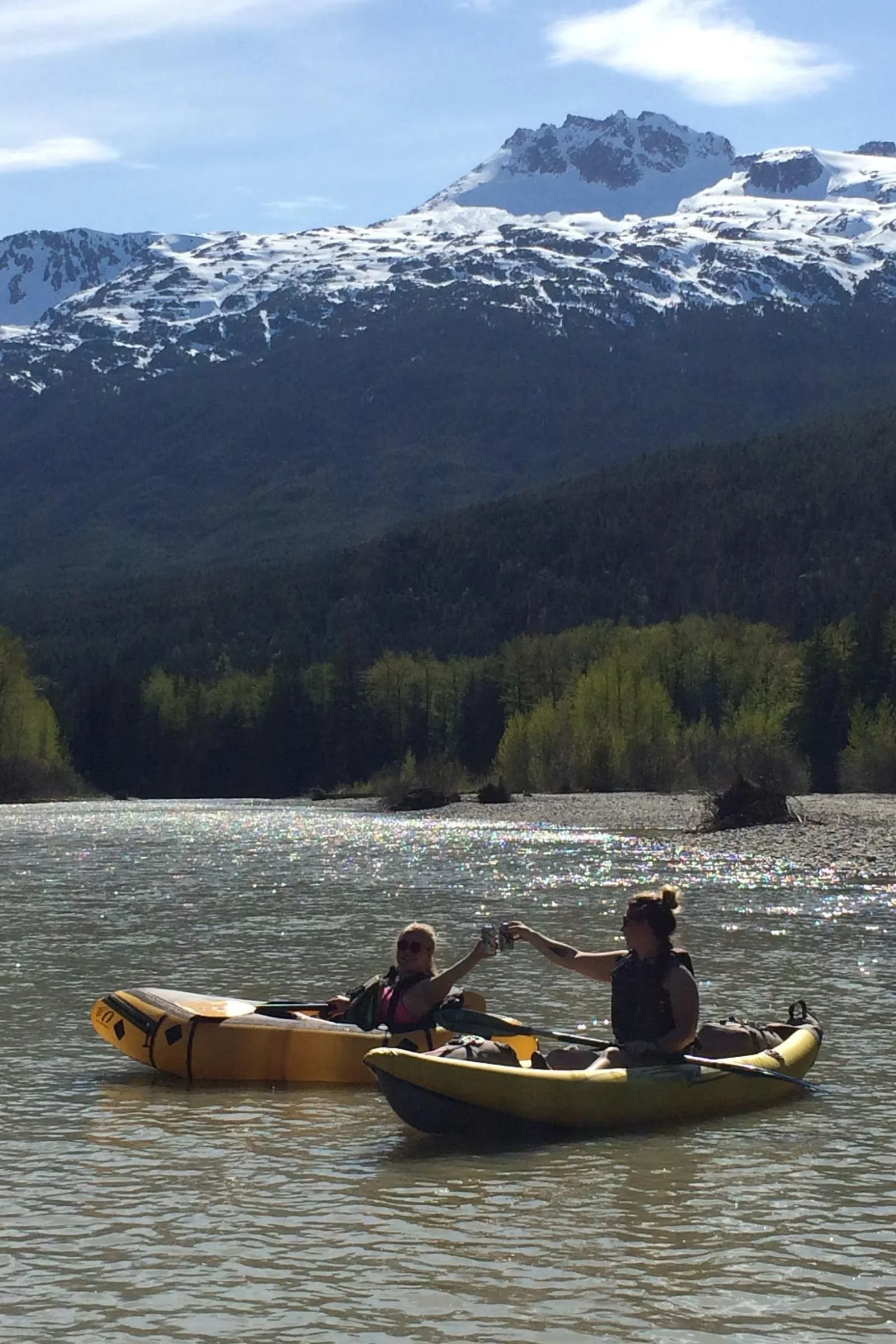
Sarah (left) wearing the Astral Layla PFD, and Josette (right) wearing the NRS Vapor on the Taiya River, Dyea, Alaska.
How to fit a PFD properly
Fit a PFD so that it’s safe, comfortable, and functional. Once you buy your PFD, test it at home using this process before taking it in the water:
1. Select the right size
Check the manufacturer’s sizing charts and/or recommendations. PFDs are sized by chest circumference, with the biggest difference in sizes lying only with the lengths of straps.
2. Loosen all straps
Buckle, zip, or pull on your PFD. Then, work from the bottom up—tighten your lowest strap first, and work your way up to your shoulders. This way, you avoid strapping the PFD too high on your chest (which happens when you start from the neck and work your way down). When purchasing a PFD, you want to make sure you have some extra length left on the straps for layering on colder days. If you don’t have room, you may need to size up. If the straps are too long, you may need a smaller size.
3. Test the Fit
To test the fit, use the buddy system.
4. Adjust the waist straps and fasten the waist buckle
If it slides up, tighten the torso straps again. If it continues to slide up, you may need to choose a different size. If a smaller size doesn’t cut it, you may need to look for a different PFD altogether.
5. Adjust the shoulder straps
With your arms raised, have a buddy tug the shoulder straps up, as if they were pulling you up and out of the water. (They might have to, one day!)
6. Perform a safety check
The final test—pretend you’re on the water! Move your arms, grab a paddle, and pretend you’re taking on your next rapid. Reach around and make sure you can adjust, twist your torso, and sit down comfortably. Better to take a few minutes and look like a dork than be uncomfortable for hours on the water!
FAQ
-
A personal flotation device, or PFD, is the broad category for wearable flotation equipment. A life jacket is a type of PFD designed to provide buoyancy in the water. In everyday use, the terms are often used interchangeably, although different models vary in flotation, mobility, turning ability, and intended activity.
-
Most recreational kayakers use a Type III or Level 70 PFD designed for paddling. These models typically have large arm openings, a shorter profile, and flotation positioned to work comfortably with a kayak seat. Whitewater paddlers may need a specialized Type V rescue PFD, but those models require proper training and must be used according to their label.
-
Yes. A properly fitted, activity-appropriate PFD adds flotation if you become separated from your board, are injured, or cannot swim effectively. Requirements vary by location and activity, so check local regulations and the approval label inside the PFD before heading out.
-
U.S. Coast Guard-approved inflatable life jackets can be appropriate for boating, sailing, fishing, and some calm-water activities when worn and maintained correctly. They are not suitable for every user or sport. Many are not approved for children, non-swimmers, whitewater, personal watercraft, or activities involving repeated water impact. Check the label carefully and inspect the inflation mechanism regularly.
-
You can move and swim in most recreational PFDs, but they create more resistance than swimming without one. Paddling-specific models generally allow better shoulder movement than bulky offshore jackets. A PFD is intended to help you stay afloat, not replace swimming ability or water-safety training.
-
A life jacket should feel snug without restricting breathing or shoulder movement. Fasten and adjust every strap, then pull upward at the shoulders. The PFD should not ride above your chin or ears. Check the size and weight range on the label, and test the fit in shallow, controlled water before relying on it during an activity.
-
Foam life jackets do not usually have a fixed expiration date, but they should be replaced when the foam becomes compressed, the fabric or straps fray, stitching fails, buckles crack, or the jacket no longer fits securely. Inflatable models also require regular inspection and replacement of cartridges or other components according to the manufacturer’s instructions.
-
Rinse the PFD with fresh water after exposure to salt, sand, or mud. Hand-wash it with mild soap when needed, then let it air-dry completely away from direct heat. Do not machine-wash, dry-clean, or store it while damp. Keep it in a cool, ventilated place and avoid placing heavy objects on top of foam panels.
-
Federal rules generally require children under 13 to wear an appropriate U.S. Coast Guard-approved life jacket while a vessel is underway, unless they are below deck or inside an enclosed cabin. State rules may set a different age, and the applicable state requirement can take precedence on state waters. Always choose a model approved for the child’s current weight and size.
-
Recreational boats generally must carry an approved, properly sized wearable life jacket for each person aboard. The jackets must be in serviceable condition and readily accessible. Additional requirements may apply based on the boat, activity, location, or passenger age, so check current federal and state rules before going out.

Whitewater rafters wearing NRS PFDs on the Colorado River.
How we researched and tested

We starting researching the best PFDs and life jackets by interviewing professional boaters who make their living on the water, including rafting and fishing guides in Alaska, Colorado, and Montana.
We've been testing life jackets and PFDs for seven years. Our own testing took us to summers of guiding rivers in Alaska, the Arkansas River in Colorado, as well as more epic rafting trips like the Main Fork of the Salmon River in Idaho and Ruby Horsethief in Colorado and Utah.
During our testing, we were looking for PFDs that could withstand the rigors of a multitude of disciplines—from flatwater pursuits to fishing to whitewater—while reaching both novice and professional paddlers, anglers, boaters and without breaking the bank.
Our winners met all of our basic criteria. Then, we judged each PFD relative to its own specific criteria. For example, for the Best Fishing PFD, it needed to meet fishing-specific needs like sufficient pockets, lash tab, a fly patch, multiple D-rings, and tool and rod holders—all without impeding activity. For the Best Type V PFD for Rescue, we looked for safety and buoyancy features, coupled with multi-day comfort. Our Overall Best PFD had to have versatility across multiple disciplines, be adjustable and comfortable, and be available at a reasonable price.
- Professional river guiding in Alaska
- Flatwater and whitewater use
- Multi-day rafting trips
- Fishing and paddling
- Long days wearing PFDs on the water
- Fit and adjustability
- Comfort over a full day
- Flotation and freedom of movement
- Durability and construction
- Activity-specific features

The author guides trips in Southeast Alaska, British Columbia, and the Yukon. Photo courtesy Aaron Henry.
About the Author / Why you should trust us
Since the blistering-hot Colorado summer of 2014, I’ve been obsessed with water. I started on the rapids of the Arkansas River, then moved up to Alaska to raft glacially-braided rivers in 2016. After two years, I managed our hiking and rafting program based out of Skagway, Alaska, and guided the rivers surrounding Southeast Alaska, British Columbia, and the Yukon.
We paddled with Boy Scouts through high-walled canyons and rowed through heavy headwinds through braided, silty channels. I now manage daily operations for that Alaskan river company.
Personally, I’ve paddle-guided Class IV with clients who had never seen a rapid (much less boated through one), rowed a raft of twelve cruise ship passengers alongside the historic Chilkoot Trail, floated through sandstone canyons in Utah, and hung on for a high-water trip down the Main Fork of the Salmon River.
I’ve also trained guides who had never held an oar before how to navigate rivers, rescue swimmers, set up boats and row through tricky and potentially hazardous situations—including Steller sea lions blocking our channel and 100+ foot spruce trees gliding down the river alongside the boat.
As a volunteer with local fire departments in both Alaska and Maine, I’ve trained and participated in swiftwater and lake-based rescues. I have maintained a Swiftwater Rescue Level IV certification throughout my river-guiding career, building haul systems to rescue boats and plucking swimmers out of numerous rapids.
I own my own boat and have continued to teach others the joys of water navigation throughout the West while I heal from shoulder surgeries. Even a busted wing can’t keep me off the water!
You can read more about Josette at her website or on her Treeline Review author page.
Sources


