Best Gravel Running Shoes of 2026
GRAVEL RUNNERS AND CROSSOVER SHOES FOR MIXED TERRAIN RUNNING IN ALL CONDITIONS
December 23rd, 2025
Home > Gear Reviews > Footwear
One pair of crossover shoes, also known as gravel shoes, can handle all roads, whether paved or unpaved. Gravel shoes are better for rough dirt roads than road running shoes. And gravel shoes are lighter than trail running shoes, so they won’t slow you down unnecessarily when you’re trying to run fast.
Gravel bikes do the same thing as gravel running shoes. Sam, our men’s tester, worked in bike shops for years, where he watched the gravel bike trend explode. Gravel bikes are very popular because most people want a bike that can do a little bit of everything. We now see the same trend in running shoes.
If you only want to own one pair of running shoes, consider gravel running shoes. They can handle the widest variety of terrain, so they can potentially replace two pairs of shoes in your gear closet.
If you’re just starting out on your running journey, a pair of gravel running shoes provides the most versatility. With one pair of shoes, you can try running on many different surfaces to see what you like best. They can also be useful for travel–one pair of gravel running shoes will perform well on just about any surface, making packing easier and more efficient.
We tested 12 gravel running shoes this summer, fall, and winter, in women’s and men’s sizes. We wore them on everything from dirt roads through remote canyons to city streets and gravel paths. After putting hundreds of miles on these shoes on every surface—dirt, gravel, and pavement—we’ve put together this guide to help you find the right gravel shoe for your style of running.
Gravel running shoes are still a niche category of running shoes. But we think they’re a great option for most people. Buying one pair of gravel shoes could mean you don’t need to buy another pair of shoes for different terrain. And we’re all about buying the right stuff the first time, so you don’t need to buy as much in the future.
Whether you’re just getting into running, or you’re a seasoned ultra-marathoner, this guide can help you determine if gravel shoes are the key to making the most of your running journey and your shoe closet.
If you’re curious about how gravel shoes compare to road running shoes and trail running shoes, check out our Best Men’s Road Running Shoes, Best Women’s Road Running Shoes, Best Men’s Trail Running Shoes, and Best Women’s Trail Running Shoes guides.
We create reader-supported, mission-driven objective gear reviews independently selected by our editors. This story may contain affiliate links, which help fund our website. When you click on the links to purchase gear, we may get a commission — without costing you an extra cent. Thank you for supporting our work and mission of outdoor coverage for every body! Learn more.
Comparison Table
Men’s
| GRAVEL SHOE | TREELINE AWARD | WEIGHT (PAIR) | SIZES | WIDE OPTION | STACK | DROP | (1) ROAD TO (10) TRAIL RATING | MSRP |
|---|---|---|---|---|---|---|---|---|
| Craft Xplor 2 | Best Overall Read why |
22.0 oz | 8 - 13 | No | 38.5/ 32.5 mm | 6.0 mm | 5 | $150 |
| Craft Xplor Pro | Best Upgrade Read why |
22.0 oz | 8 - 13 | No | 38.5/ 32.5 mm | 6.0 mm | 5 | $170 |
| Salomon Aero Glide 3 GRVL | Best for Speed Read why |
19.4 oz | 7 - 14 | No | 40/ 32 mm | 8.0 mm | 3 | $160 |
| HOKA Challenger 8 | Best for Trail and Gravel Read why |
19.4 oz | 7 - 15 | Yes | 42/ 34 mm | 8.0 mm | 7 | $155 |
| Notace Yama T1 | Best Zero Drop Read why |
15.0 oz | 7 - 13 | No | 15/ 15 mm | 0.0 mm | 4 | $180 |
| Nike Pegasus Trail 5 | Best Daily Trainer Read why |
21.2 oz | 3.5 - 15 | No | 37/ 27.5 | 9.5 mm | 6 | $155 |
| Salomon Aero Blaze 3 GRVL | Best Affordable Read why |
18.0 oz | 7 - 14 | No | 35/ 27 mm | 8.0 mm | 4 | $140 |
Women’s
| GRAVEL SHOE | TREELINE AWARD | WEIGHT (PAIR) | SIZES | WIDE OPTION | STACK | DROP | (1) road to (10) trail spectrum rating | MSRP |
|---|---|---|---|---|---|---|---|---|
| Craft Xplor 2 | Best Overall Read why |
17.8 oz | 6 - 10 | No | 38.5/ 32.5 mm | 6.0 mm | 5 | $150 |
| Craft Xplor Pro | Best Upgrade Read why |
17.8 oz | 6 - 10 | No | 38.5/ 32.5 mm | 6.0 mm | 5 | $170 |
| Salomon Aero Glide 3 GRVL | Best for Speed Read why |
16.6 oz | 5 - 11 | No | 40/ 32 mm | 8.0 mm | 3 | $160 |
| HOKA Challenger 8 | Best for Trail and Gravel Read why |
16.2 oz | 5 - 12 | Yes | 39/ 31.8 | 7.2 mm | 7 | $155 |
| Notace Yama T1 | Best Zero Drop Read why |
15.0 oz | 5.5 - 11 | No | 15/ 15 mm | 0.0 mm | 4 | $165 |
| Nike Pegasus Trail 5 | Best Daily Trainer Read why |
17.6 oz | 5 - 12 | No | 37/ 27.5 | 9.5 mm | 6 | $155 |
| Salomon Aero Blaze 3 GRVL | Best Affordable Read why |
14.4 oz | 5 - 11 | No | 35/ 27 mm | 8.0 mm | 4 | $140 |
The Winners
Best overall gravel running shoes: Craft Xplor 2
Sizes available: 8 - 13
Widths available: No
Drop: 6.0 mm
Stack height: 38.5/ 32.5 mm
Weight: 22 oz
What we liked: Great on any surface, comfortable, lightweight, grippy
What we didn’t like: Not great on muddy trails
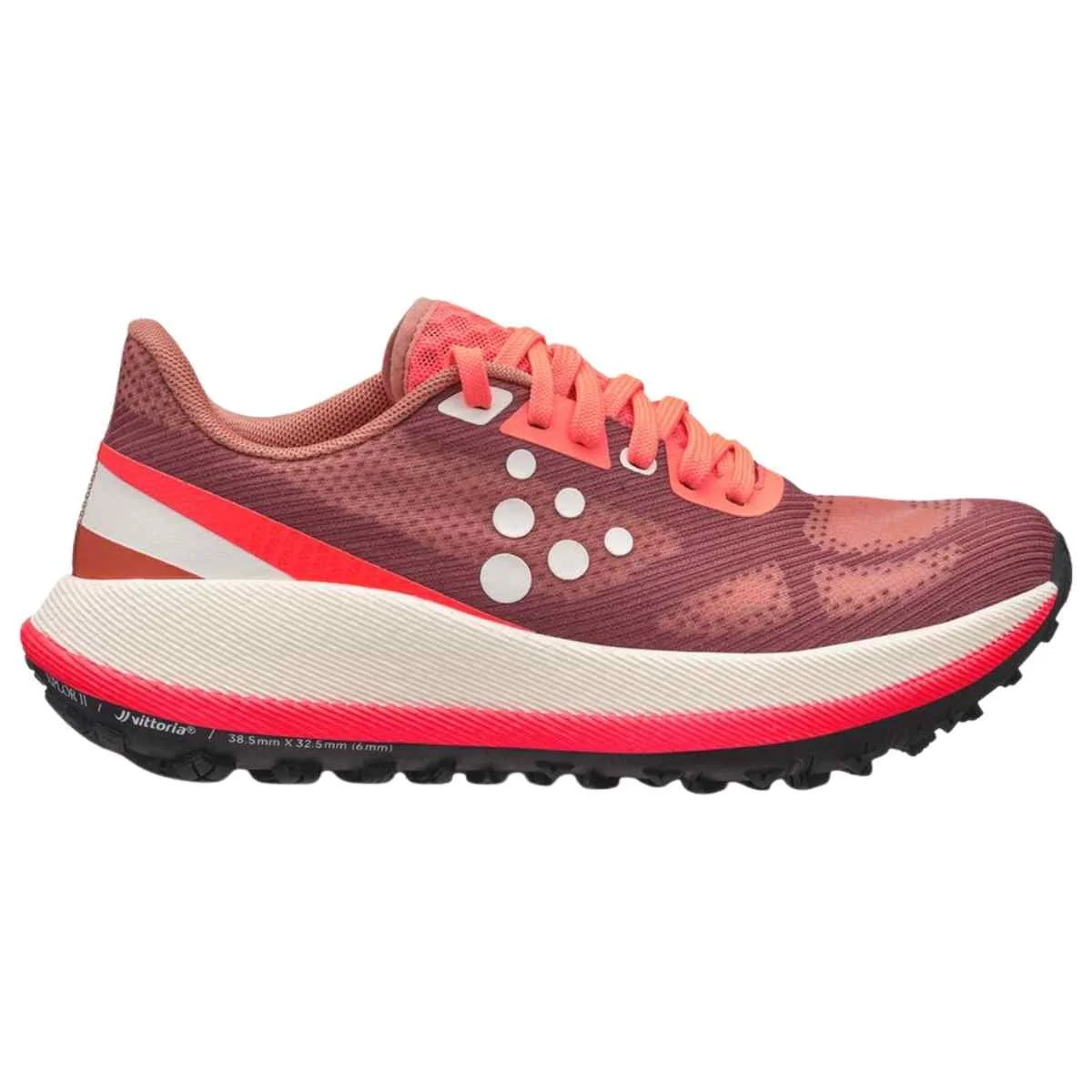
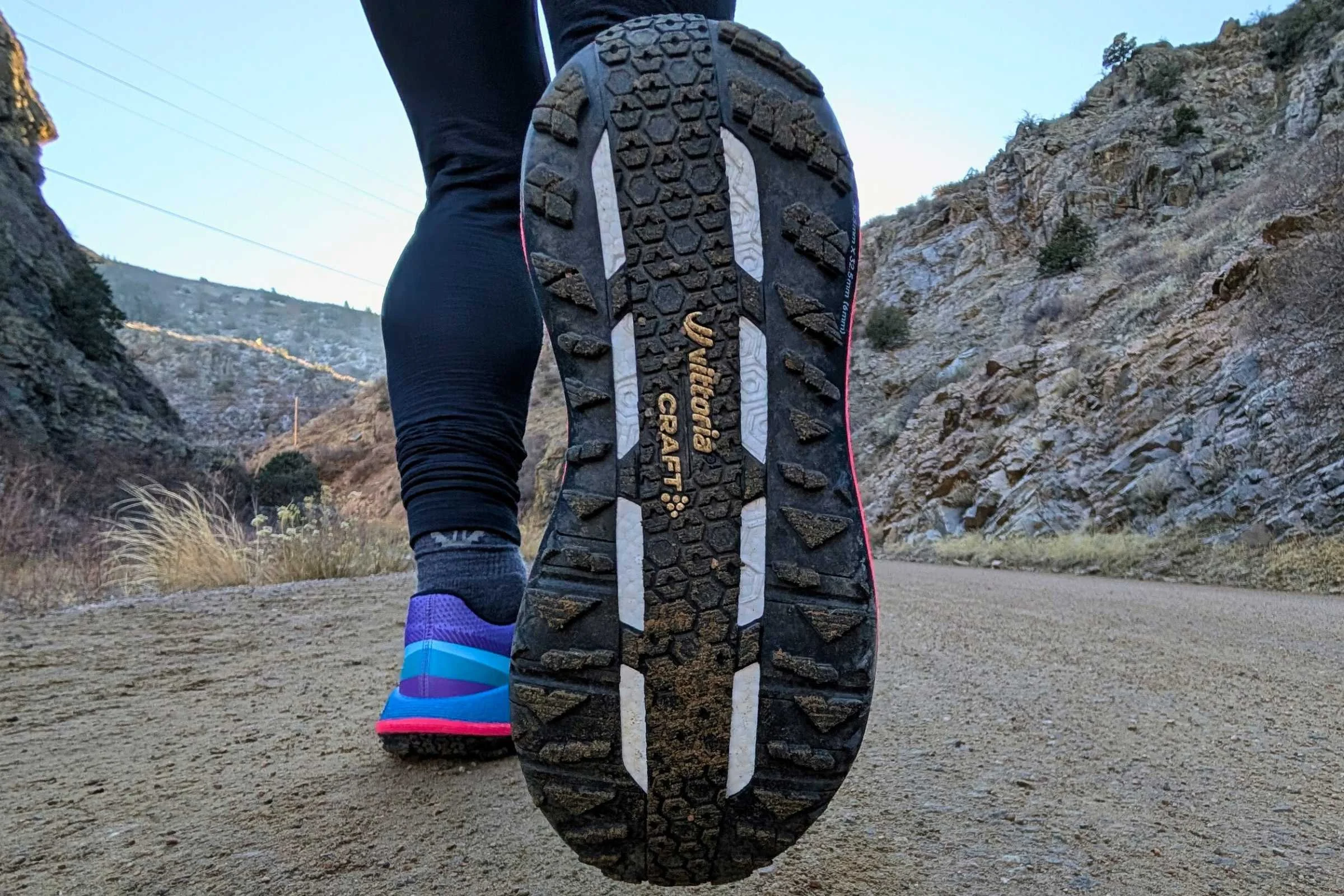
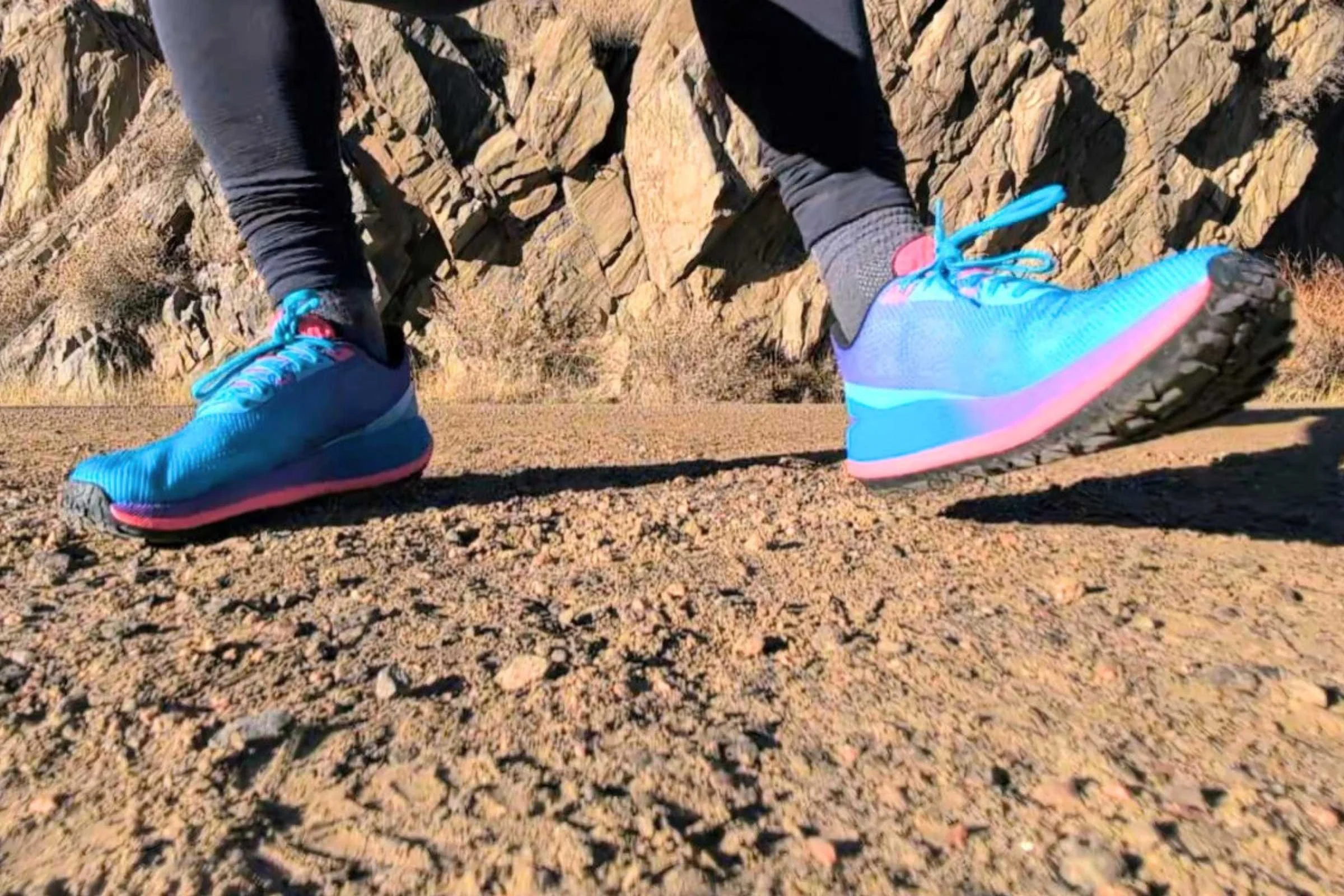
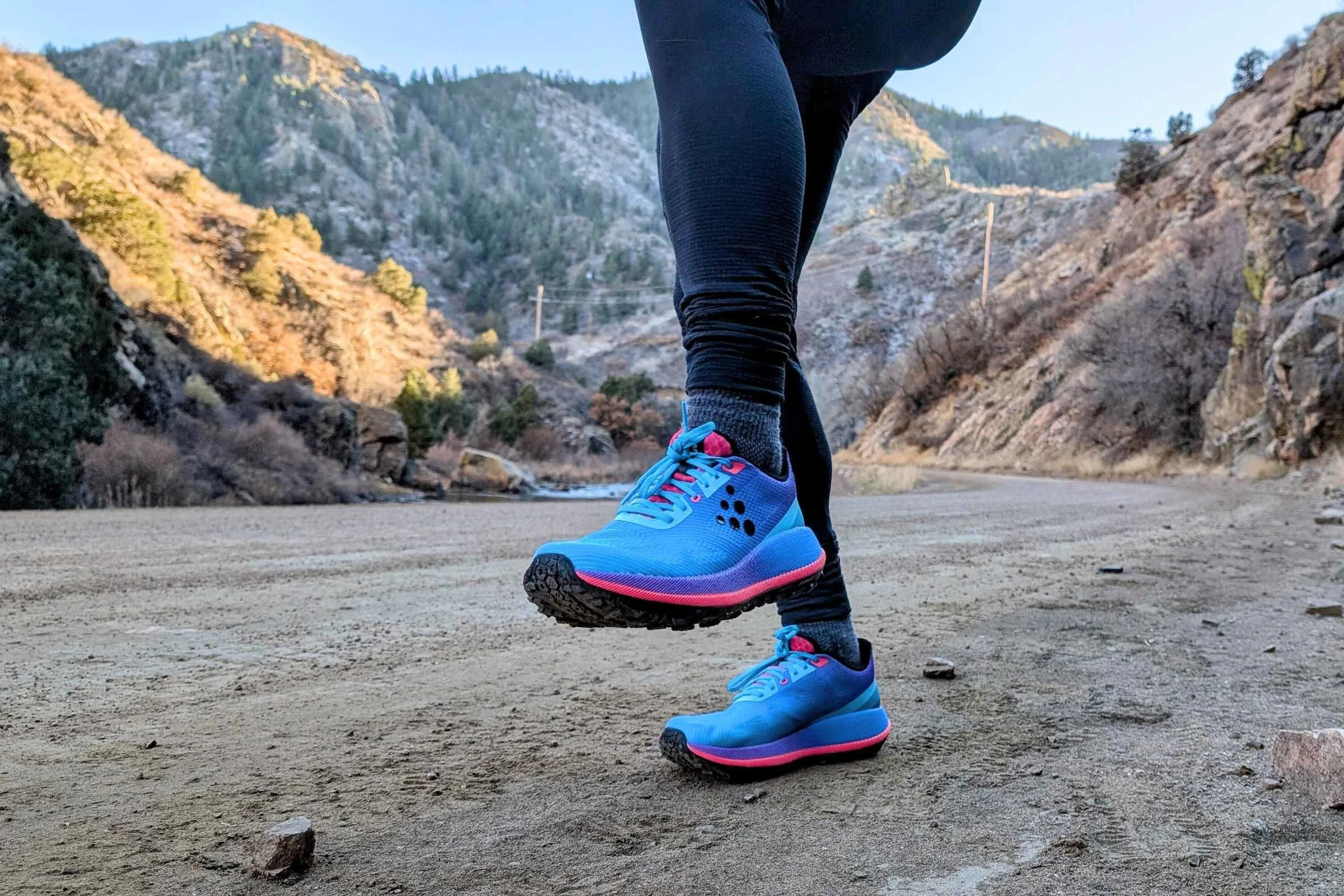
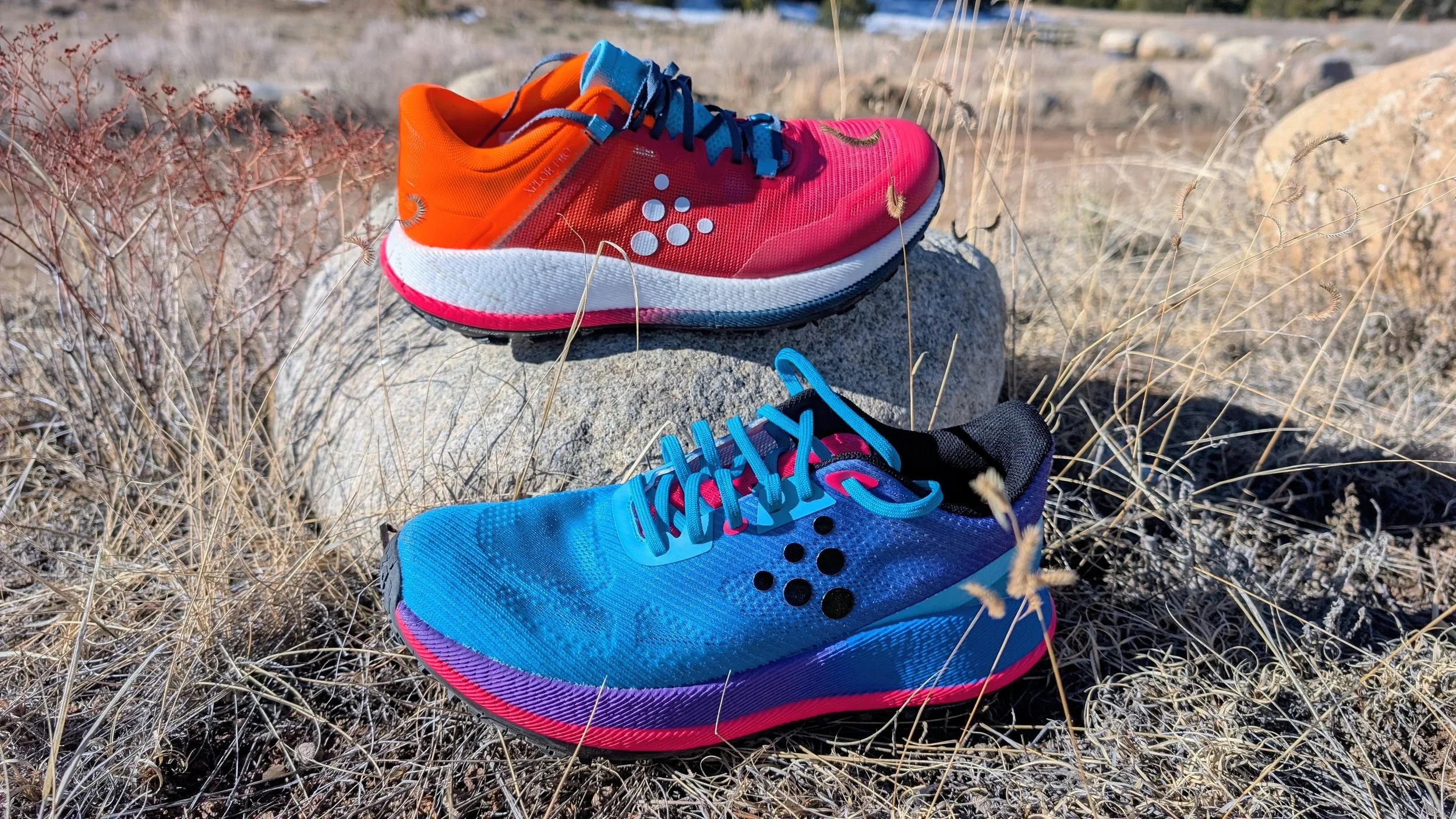
The Craft Xplor 2 is our overall favorite gravel running shoe. Most gravel running shoes seem to be little more than road running shoes with slightly more tread underfoot, whereas the Xplor 2 seems crafted explicitly for the unique crossover needs of multi-surface running. These shoes feel fast like a road running shoe, but they also have the stability, traction, and durability of a trail running shoe.
Craft Xplor 2
men's
Women's
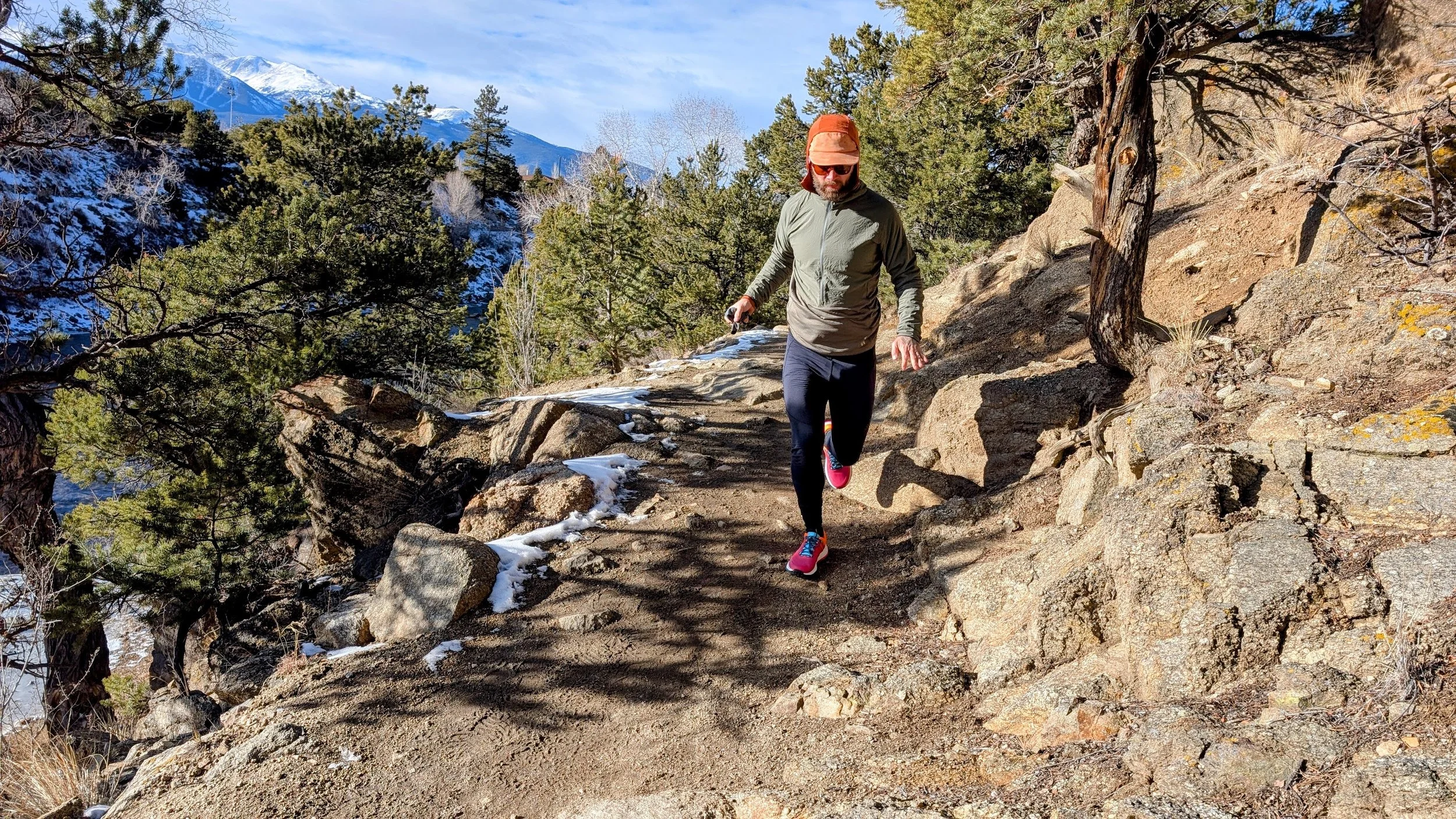
We tested the Craft Xplor 2 while running trails and roads across Colorado and Michigan. We love how light and nimble they feel on paved roads and sidewalks when we run out our front door. We also love the underfoot traction as the pavement ends and the roads get rougher. That’s why we’ve also named this shoe Best Gravel Running Shoe in our Best Women’s Trail Running Shoes guide.
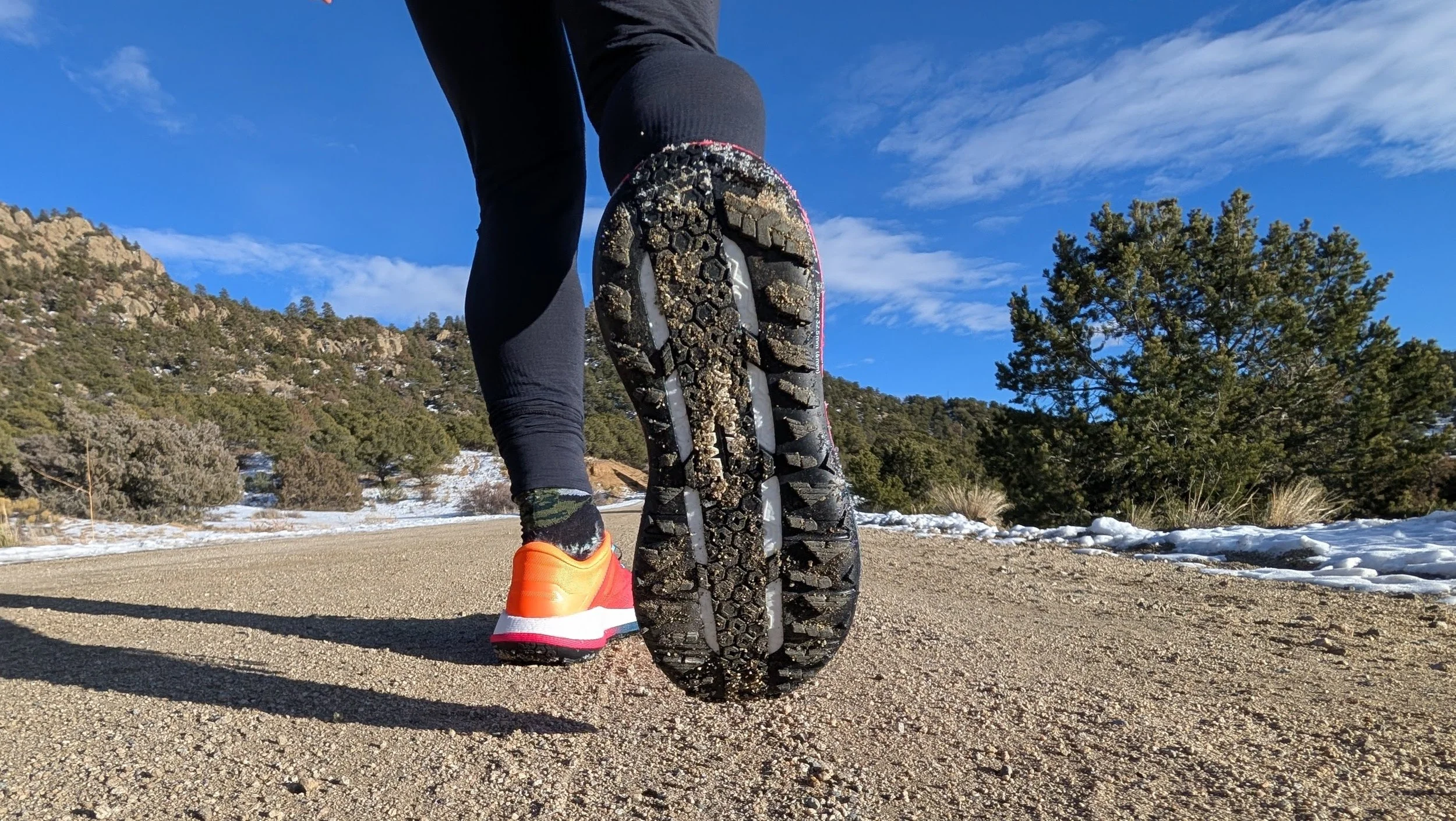
We love connecting dirt roads with singletrack trails to create loops, and the Xplor 2’s full-coverage Vittoria underfoot tread and stable upper provide a confidence-inspiring platform on uneven surfaces. Vittoria is a bike tire brand, and the outsole really looks like a gravel bike tire. The outer edges of the tread have larger lugs, and the center lugs are shorter. This allows for more traction when you’re cornering without adding excessively large lugs, which would make the shoe heavier and less comfortable and efficient on the roads.
They have a mesh upper that wraps comfortably around your foot and a wider toe box than many running shoes. They have a rubber toe cap that’s akin to many trail running shoes, but the mesh near the toes is reinforced with laminated overlays to protect those high-wear areas from abrasion. They also don’t have any exposed foam on the tread, which makes them much more durable than many running shoes—whether those are road, trail, or gravel shoes.
The biggest drawback of these shoes is that they’re gravel shoes, so they’re not perfect for road or trail. There are dedicated road shoes that are faster and dedicated trail shoes that are better suited for technical terrain. However, they don’t try to be the quickest road shoe or the techiest trail shoe. Instead, they balance the most important elements of road and trail, and combine them in one do-it-all shoe.
For an all-surface trail shoe that is light enough for tempo runs but comfortable, grippy, and durable enough for dirt, gravel, and rocky surfaces, we don’t think you can do much better than the Craft Xlor 2.
Best gravel running shoes for long distances: Craft Xplor Pro
Sizes available: 8 - 13
Widths available: No
Drop: 6.0 mm
Stack height: 38.5/ 32.5 mm
Weight: 22oz
What we liked: Like the Craft Xplor 2 with a more durable upper, comfortable, grippy outsole, durable
What we didn’t like: More expensive than Xplor 2
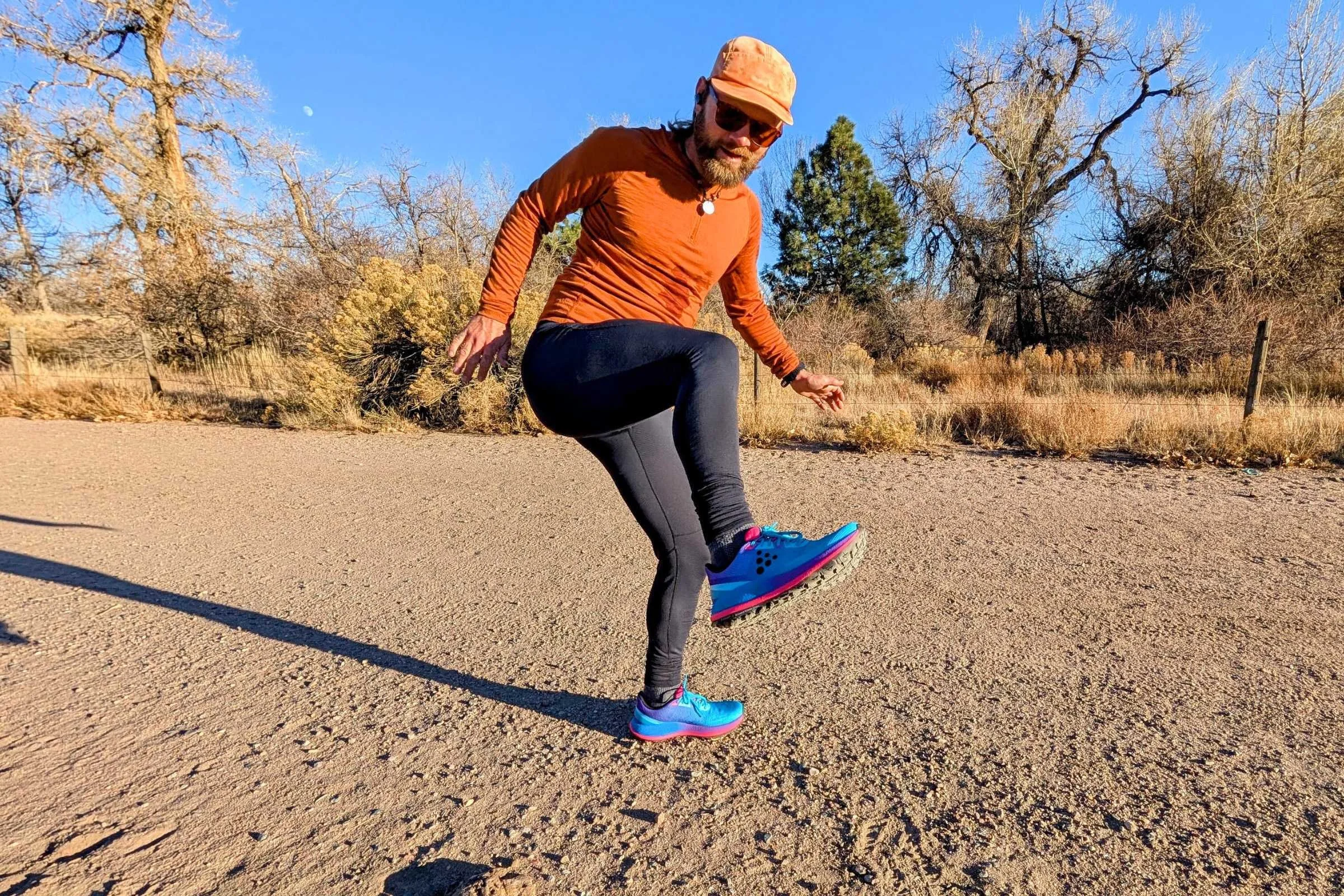
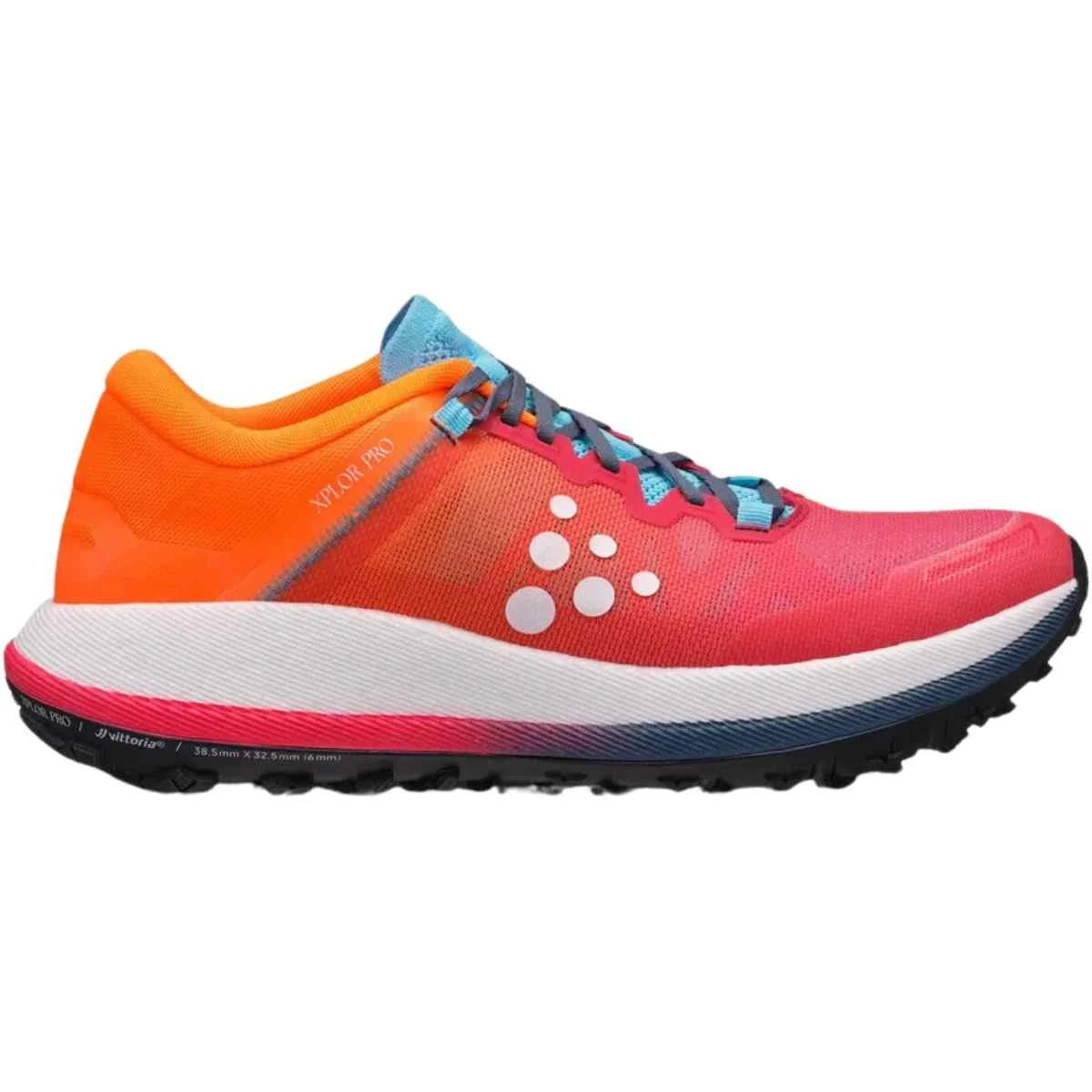
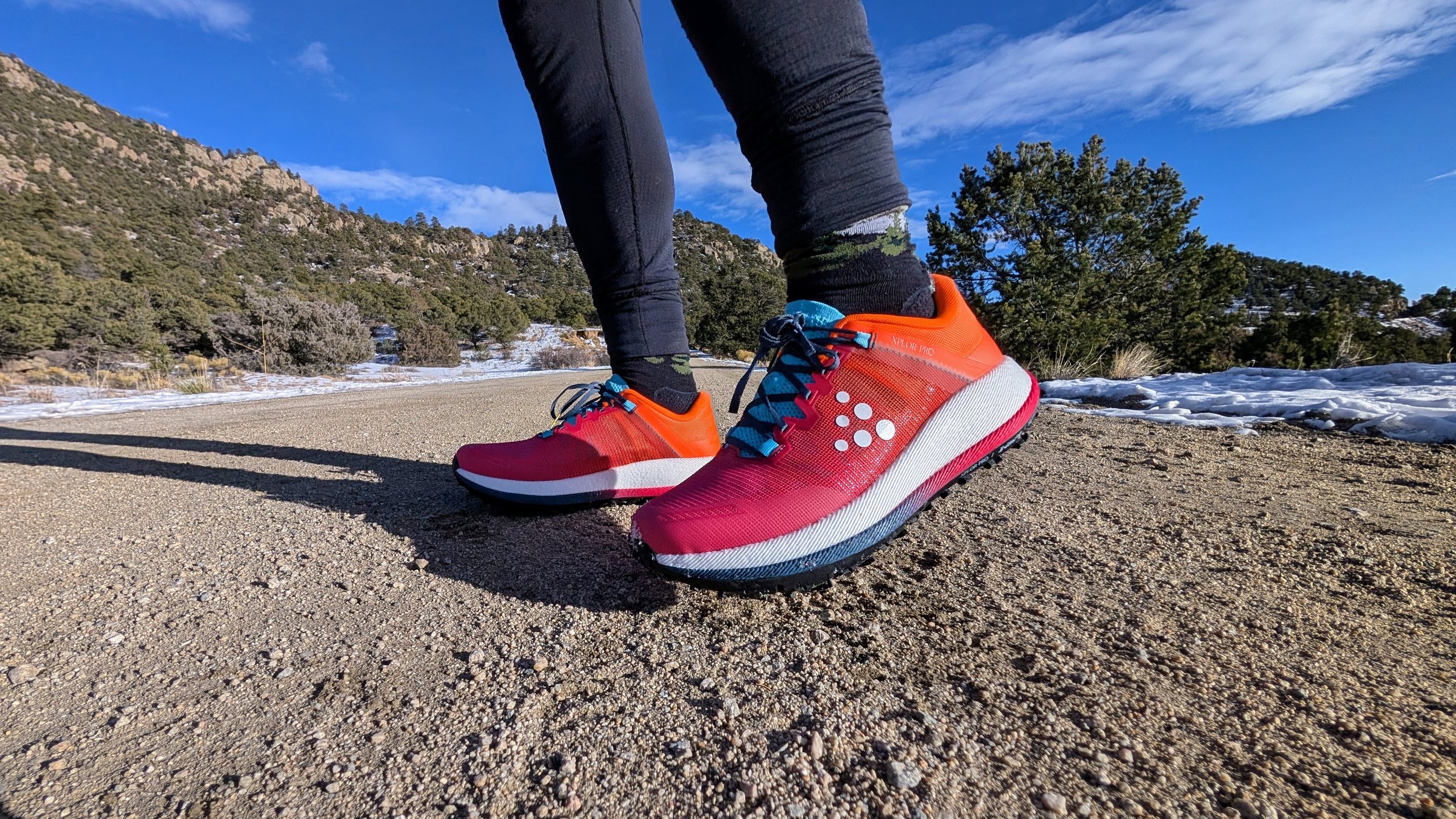
We almost chose the Craft Xplor Pro as our favorite overall gravel shoe, but since the Craft Xplor 2 is nearly identical and costs $20 less, we went with that shoe for the best overall. However, if you can afford to spend a little more, we think the Xplor Pro is worthwhile.
Craft Xplor Pro
Men's
Women's
The Xplor Pro has a slightly more comfortable upper. We recommend upgrading to the Xplor Pro if you’re particular about how a shoe feels and want maximum comfort from a mesh upper that conforms to your foot's shape.
The Xplor Pro has a lacing system with webbing loops that extend through the upper, wrap along the ankle and forefoot, and down to the midsole. This locks onto your foot even better than the Xplor 2. It also has more cushioning around the heel than the Xplor 2. The Xplor Pro has a more comfortable tongue that’s very stretchy and has no stitches to eliminate hot spots.
These features make the Xplor Pro a great option for ultra-marathons or longer distance runs. Most ultra races are on mostly dirt roads, and longer races even go on some pavement. So, a gravel shoe like the Xplor is much better for that terrain than a trail shoe.
Since the Xplor Pro is ever so slightly more comfortable through the upper, we think upgrading to this for your big race day is worth it. They’re only $20 more expensive, anyway. And because the Xplor 2 and Xplor Pro are so similar, you can train on the Xplor 2, and it will be a seamless transition to lacing up the Xplor Pro for race day.
Best gravel running shoe for speed: Salomon Aero Glide GRVL
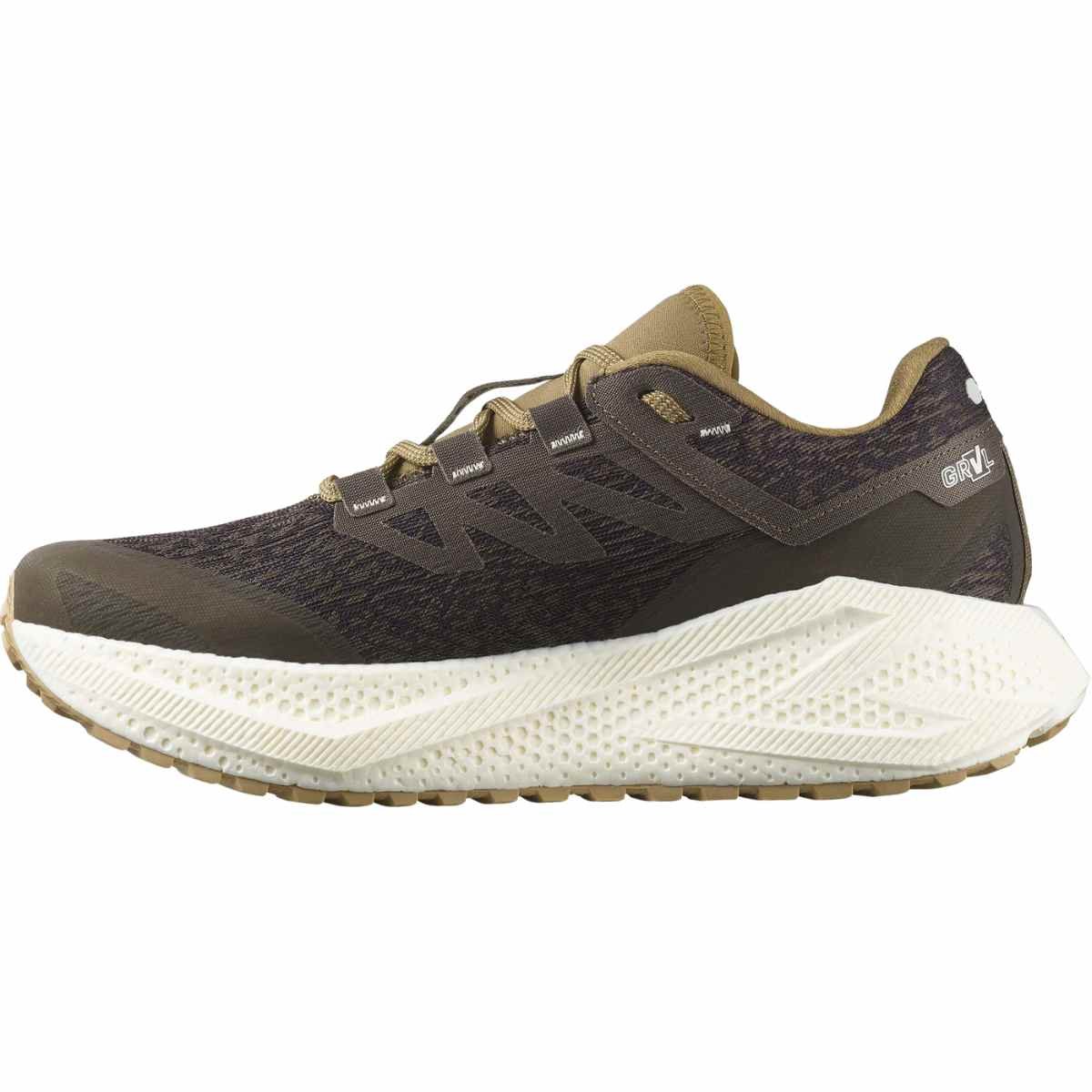
Sizes available: 7 - 14
Widths available: No
Drop: 8.0 mm
Stack height: 40/ 32 mm
Weight: 19.4 oz
What we liked: Fast, light, well-cushioned midsole, great energy return
What we didn’t like: Run narrower than many shoes
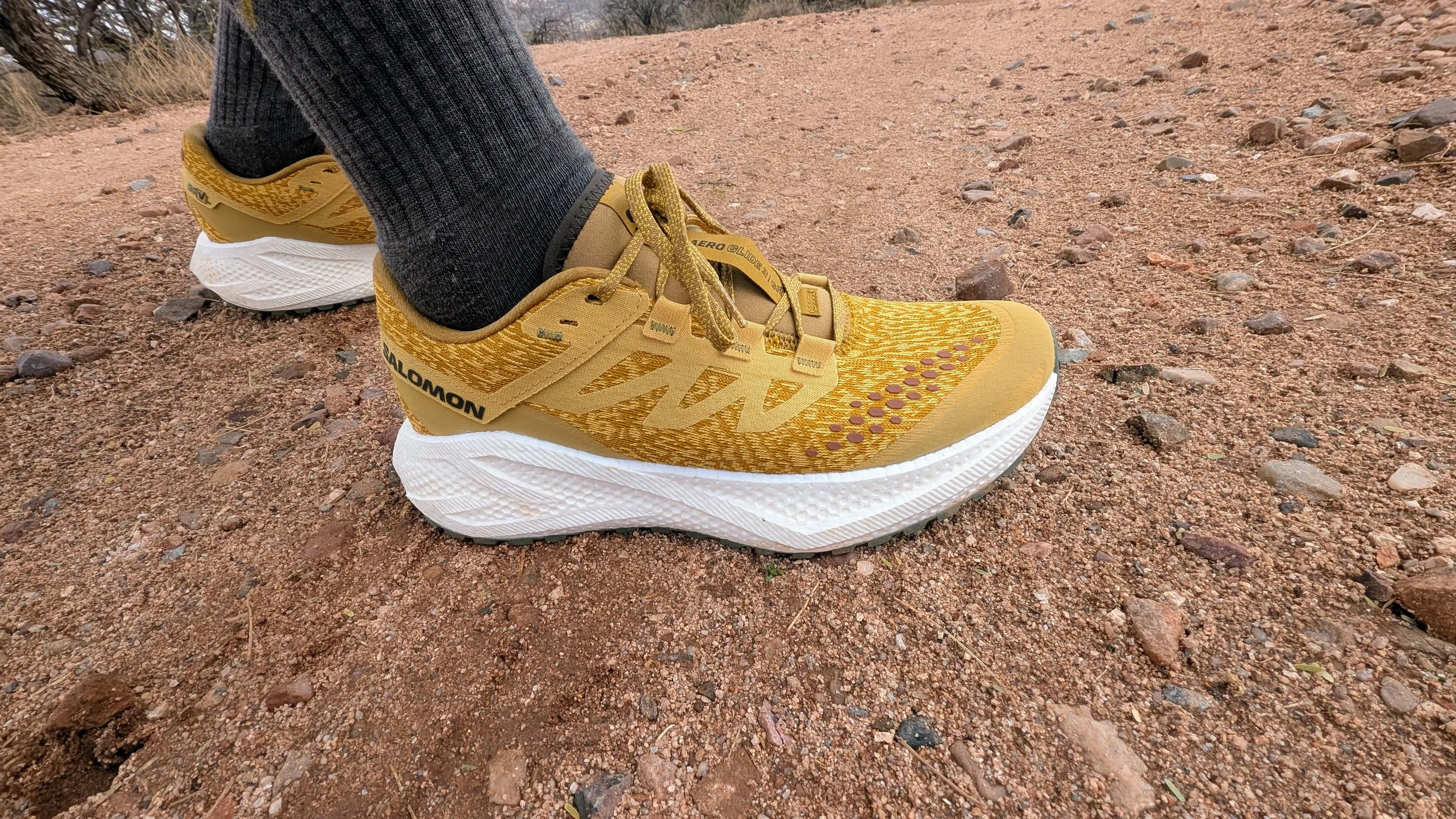
The Salomon Aero Glide GRVL is a gravel shoe designed for fast running. They’re very similar to the Salomon Aero Glide 3, which is our favorite lightweight daily road running shoe for daily training, but have a shallow lugged outsole for traction on dirt and gravel. These are our go-to shoes for runs that are mostly on road with some gravel thrown in, because, unlike the Craft Xplor, these shoes feel like a road shoe. They’re barely heavier than a road running shoe, but the added traction from the gravel-friendly Contagrip outsole makes them versatile enough to add in some dirt road miles to your run.
Salomon Aero Glide GRVL
men's
Women's
The Aero Glide GRVL is exceptionally lightweight and has stellar energy return in the midsole, thanks to Salomon’s proprietary Energy Foam Evo midsole. This midsole is made of supercritical EVA, which provides ample cushioning and good energy return without adding much weight. There is just enough outsole material, made with Salomon’s Contagrip rubber, to grip gravel or dirt roads.
The Aero Glide GRVL has a very comfortable upper with what Salomon calls a seamless design. While multiple types of materials are fused together, they don’t use stitches. This eliminates some risk of hotspots and chafing, resulting in a super comfortable shoe.
The outsole rubber runs along the outside of the tread, leaving a large section of exposed midsole in the middle. This undoubtedly saves weight, but it is not the most durable design. We haven’t had any issue with rocks or cacti getting stuck in this foam, but we stick to less rugged dirt roads with these shoes for the most part. This can be seen as a drawback to those who value durability, but if you’re looking for the speediest gravel shoe, less outsole rubber will save weight and make you faster.
The biggest drawback of the Aero Glide GRVL is that Salomon shoes tend to run narrower than those from other brands. Also, these shoes aren’t available in wide sizing. Sam, our main tester, has wide feet and often wears wide shoes, but he didn’t find the Aero Glide too narrow, even on longer 15-mile runs. He wouldn’t want to take these on marathon distance runs, though, due to the narrower last.
If you’re looking for a super lightweight gravel shoe with a lot of cushion that’s fast enough for speed work and versatile enough for every other run, the Aero Glide GRVL is worth considering.
Best shoe for trails and gravel roads: HOKA Challenger 8
Sizes available: 7 - 15
Widths available: Yes
Drop: 8.0 mm
Stack height: 42/ 34 mm
Weight: 19.4 oz
What we liked: Comfortable, well-cushioned, grippy outsole, rugged enough for trail
What we didn’t like: Heavier for a gravel shoe
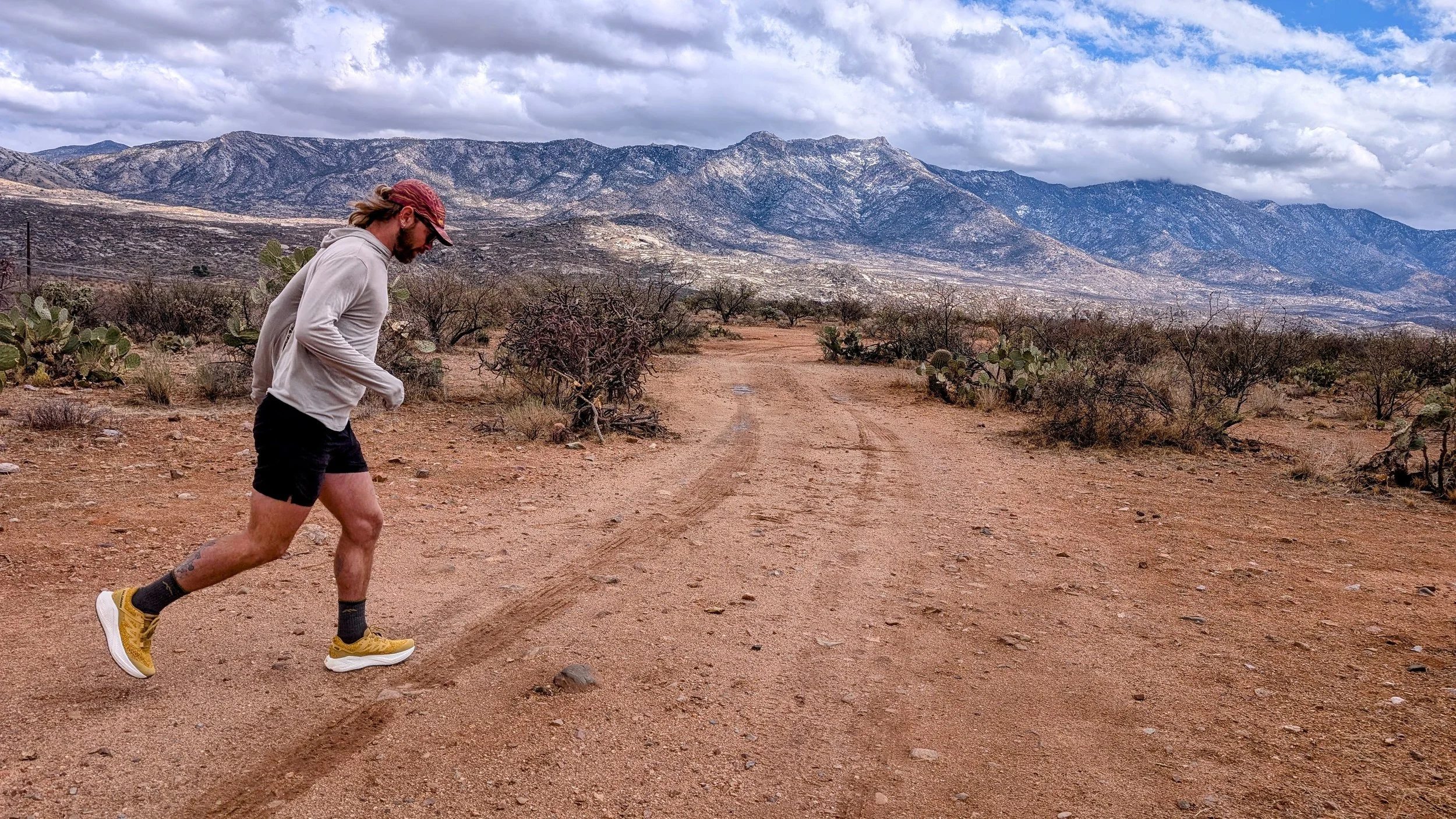
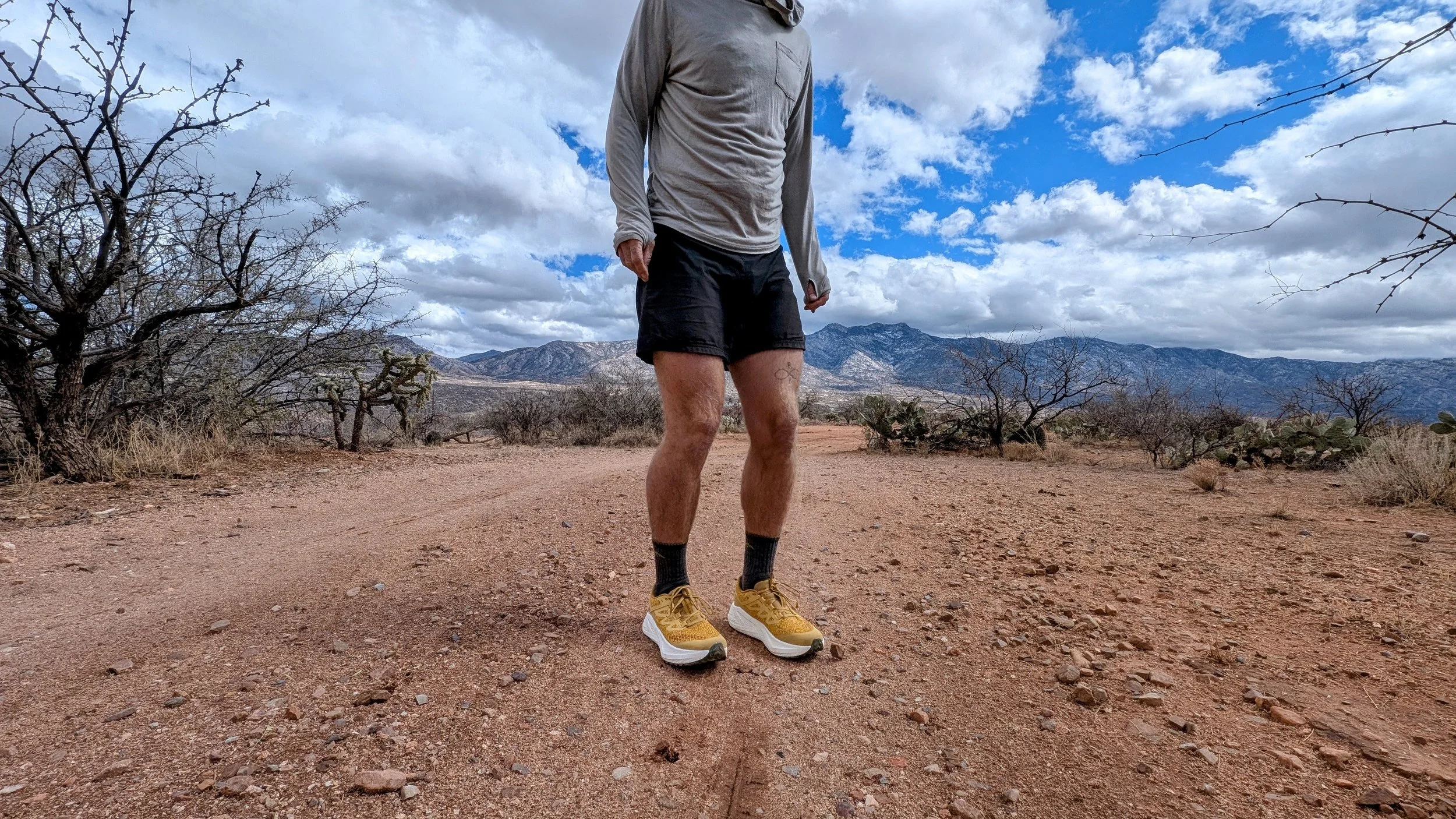
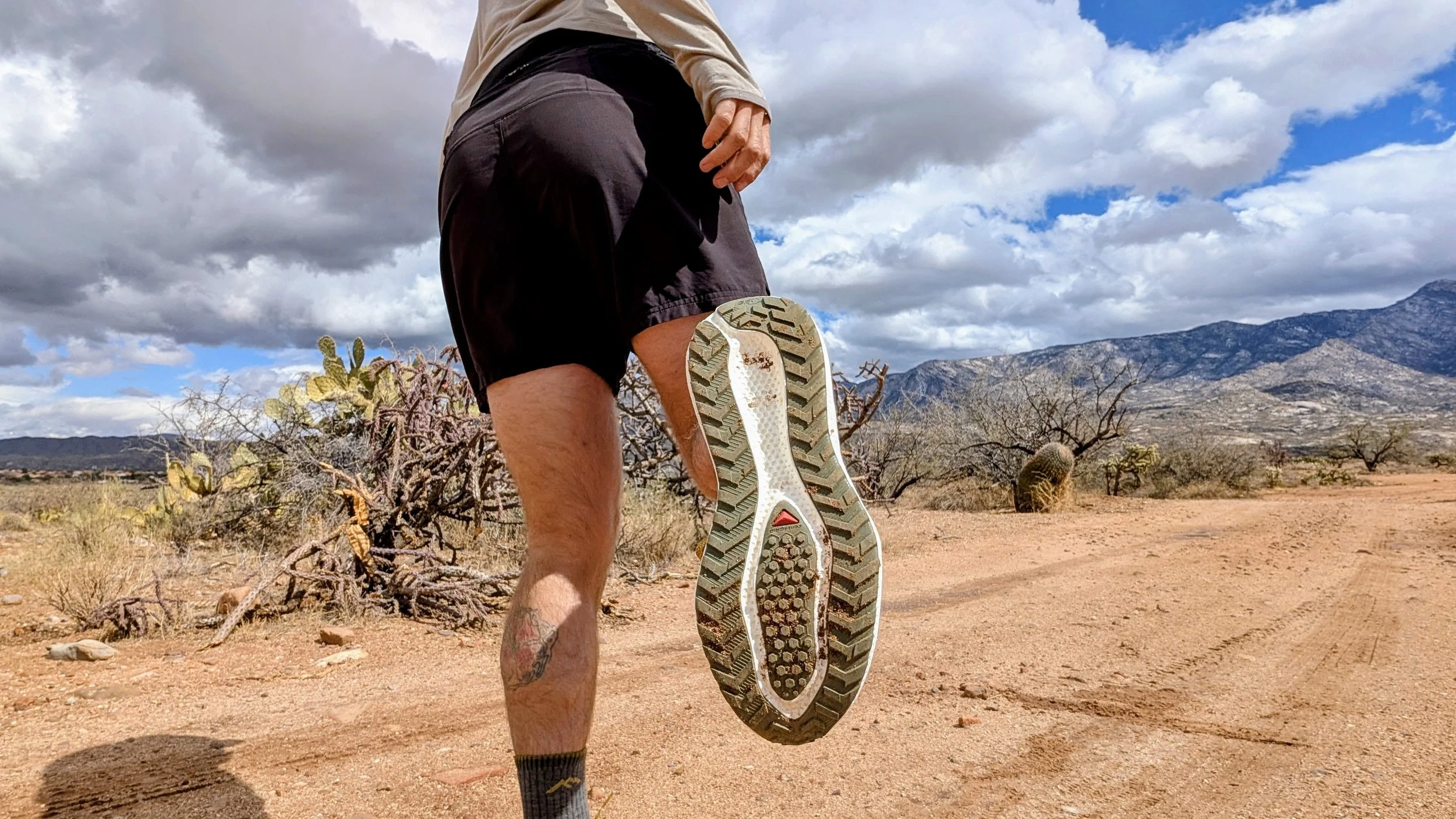
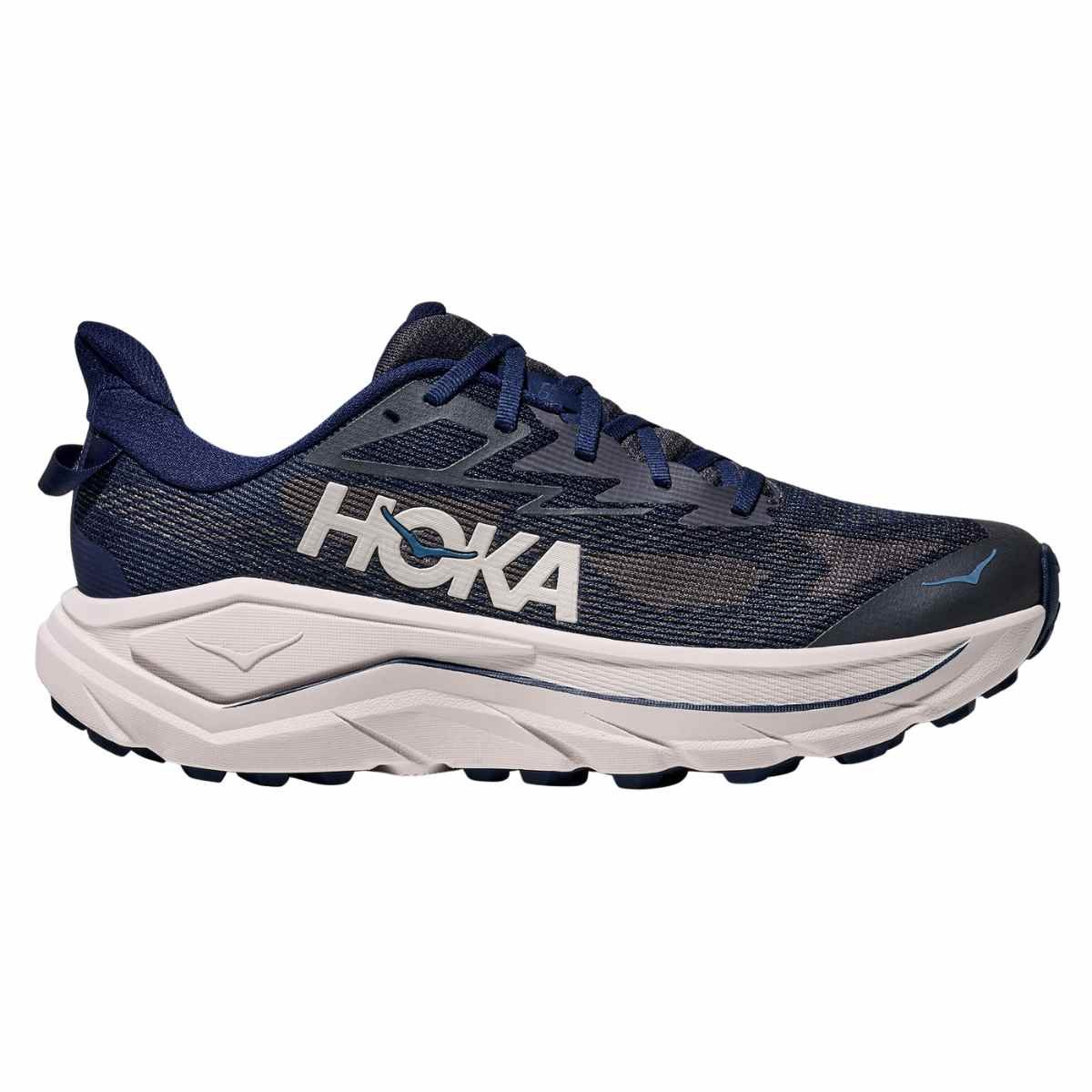
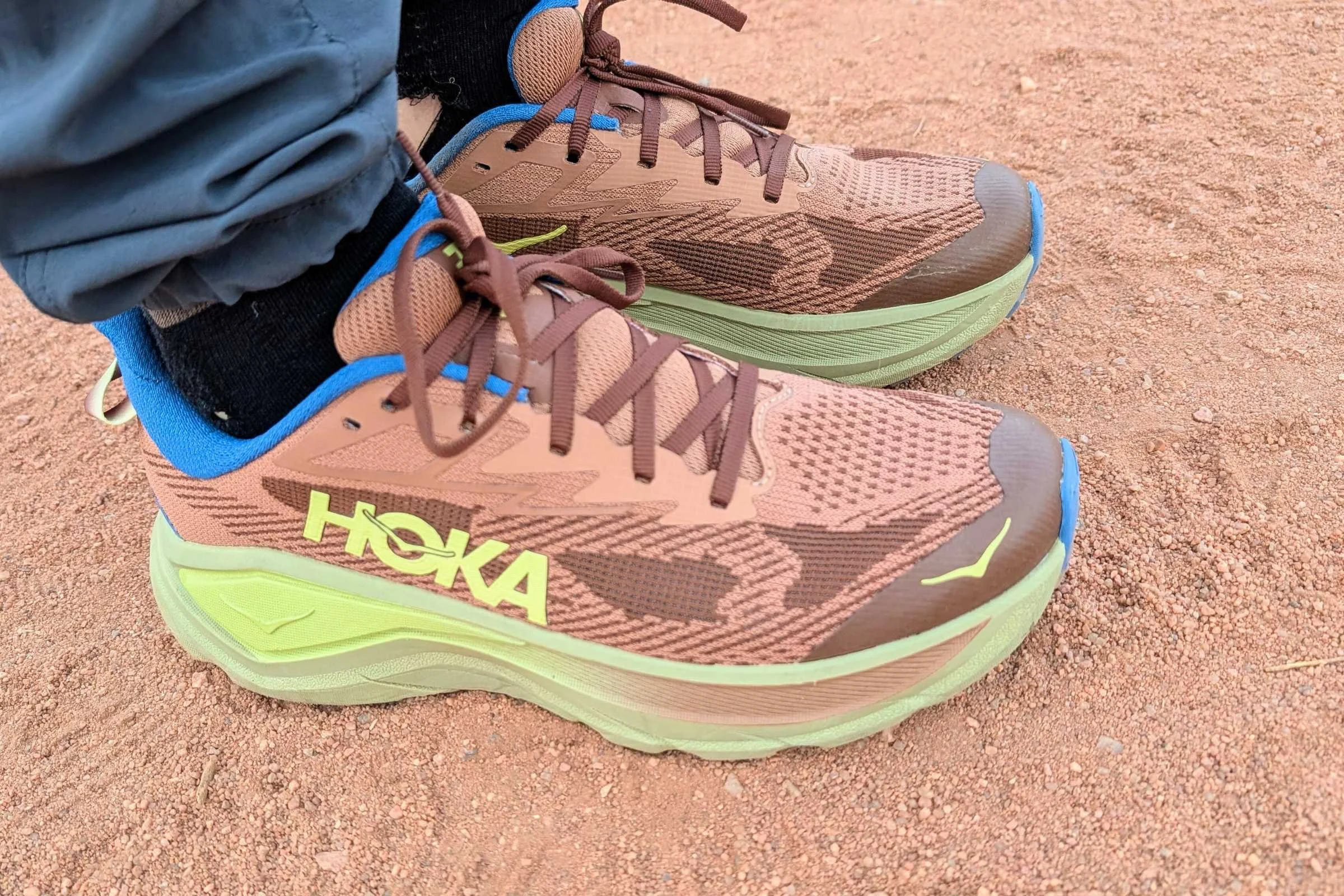
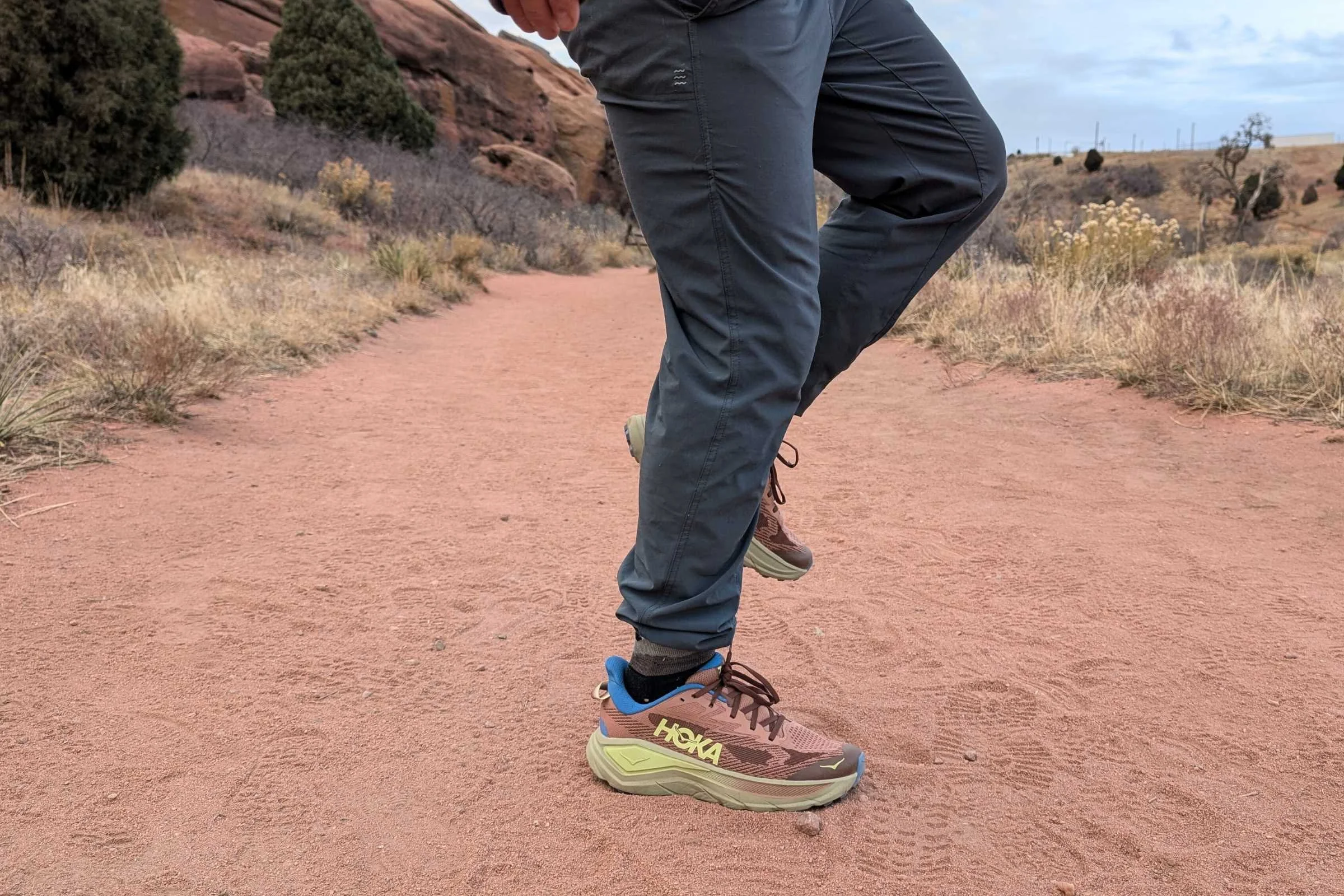
The HOKA Challenger 8 is an excellent crossover trail running shoe. This is the best gravel shoe for runs where you’re planning to run on a lot of singletrack, but also want the speed and versatility of a gravel road show. We’ve been wearing the Challengers as our all-around running shoes for several years, where we run out our front door, over paved streets, to the nearest dirt road, singletrack trail, or gravel recreation path. The HOKA Challenger is our pick for Best Crossover shoe in our Best Men’s Trail Running Shoes guide.
See our in-depth review of the HOKA Challenger 8 for more on this great shoe.
HOKA Challenger 8
men's
Women's
The Challenger has tons of cushion, which we find more critical when pounding our feet over the pavement. These shoes feel more substantial than many gravel shoes, too. Their supportive and protective feel is the most like that of a trail shoe among the shoes we tested here. Many gravel shoes are simply road running shoes with some extra tread. The Challengers are more of a trail shoe with less tread.
We think of the Challenger as the cousin to the HOKA Speedgoat. If you’re a fan of the Speedgoat but want something that can handle roads better, try the Challenger. The Speedgoat is better suited to rough trails, while the Challenger is better suited to smoother trails and gravel roads. The newest version of the Challenger has more drop than the Speedgoat, whereas previous versions had about the same amount of drop. But overall, these two shoes feel pretty similar.
As we mentioned above, the Challenger 8 has more heel-to-toe drop than previous versions. The Challenger 7 had 5 mm of heel-to-toe drop, and the Challenger 8 has 8 mm of drop. The upper has also been revamped to fine-tune the fit through the mid-foot and forefoot. Comparing these to the Challenger 7s, we definitely notice the added 3 mm of drop in the Challenger 8, but the forefoot feels similar to the Challenger 7. Overall, the upper wraps comfortably around your foot and feels very stable.
The biggest drawback of the Challengers, and any crossover shoes, is that they aren't the best for tearing up technical trails. They’re also heavier than many of the other gravel running shoes we tested here. If you’re looking for the speediest shoes for running on any road with any surface, these aren’t the shoes for you.
But if you want to run on paved roads, dirt roads, and singletrack trails, the Challenger 8 is ideal.
Best zero-drop gravel running shoes: Notace Yama T1
Sizes available: 7 - 13
Widths available: No
Drop: 0.0 mm
Stack height: 15/ 15 mm
Weight: 15.0 oz
What we liked: Minimalist design, zero drop, wide toe box, great for workouts and runs
What we didn’t like: Less cushioning for long runs, zero drop isn’t for everyone
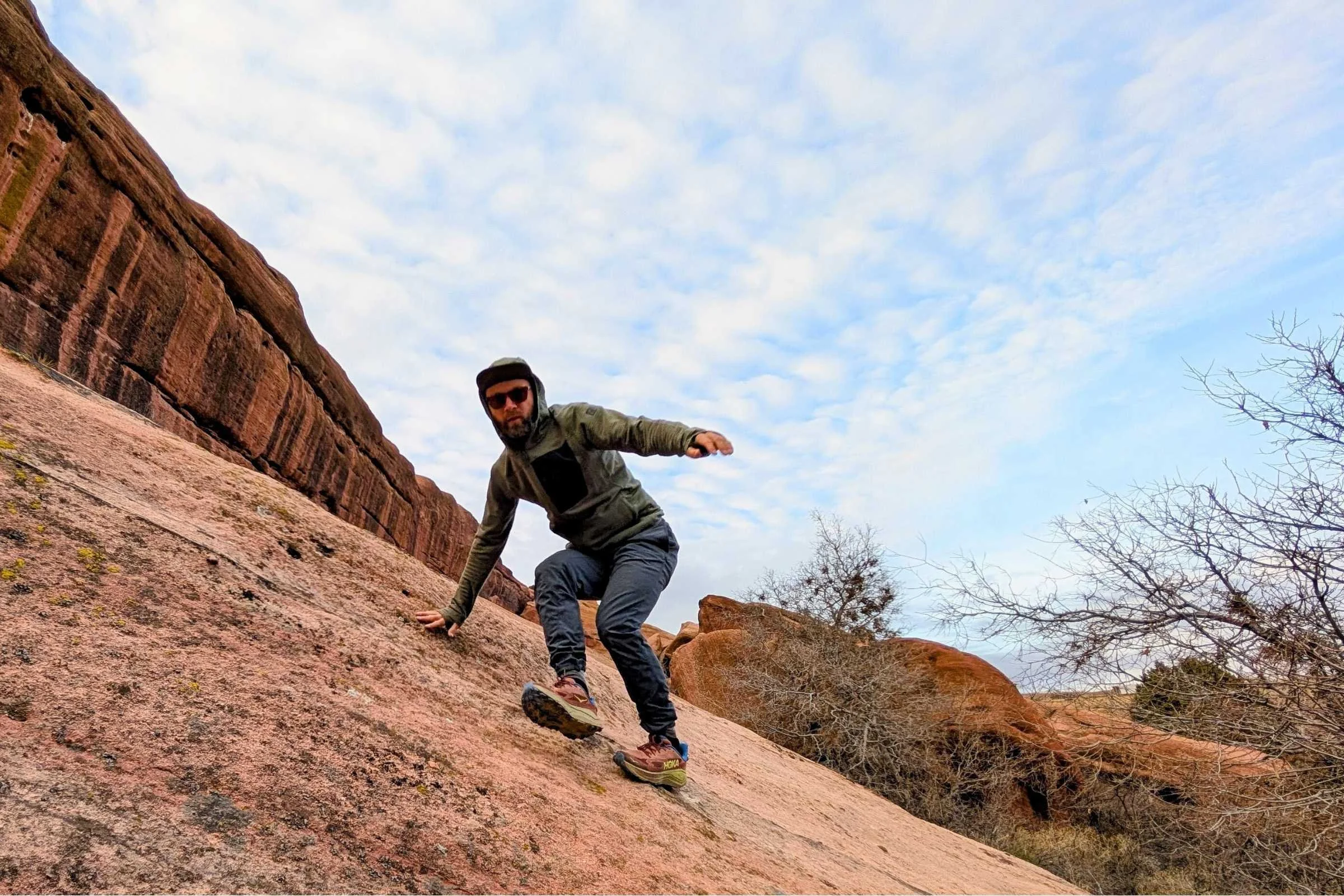
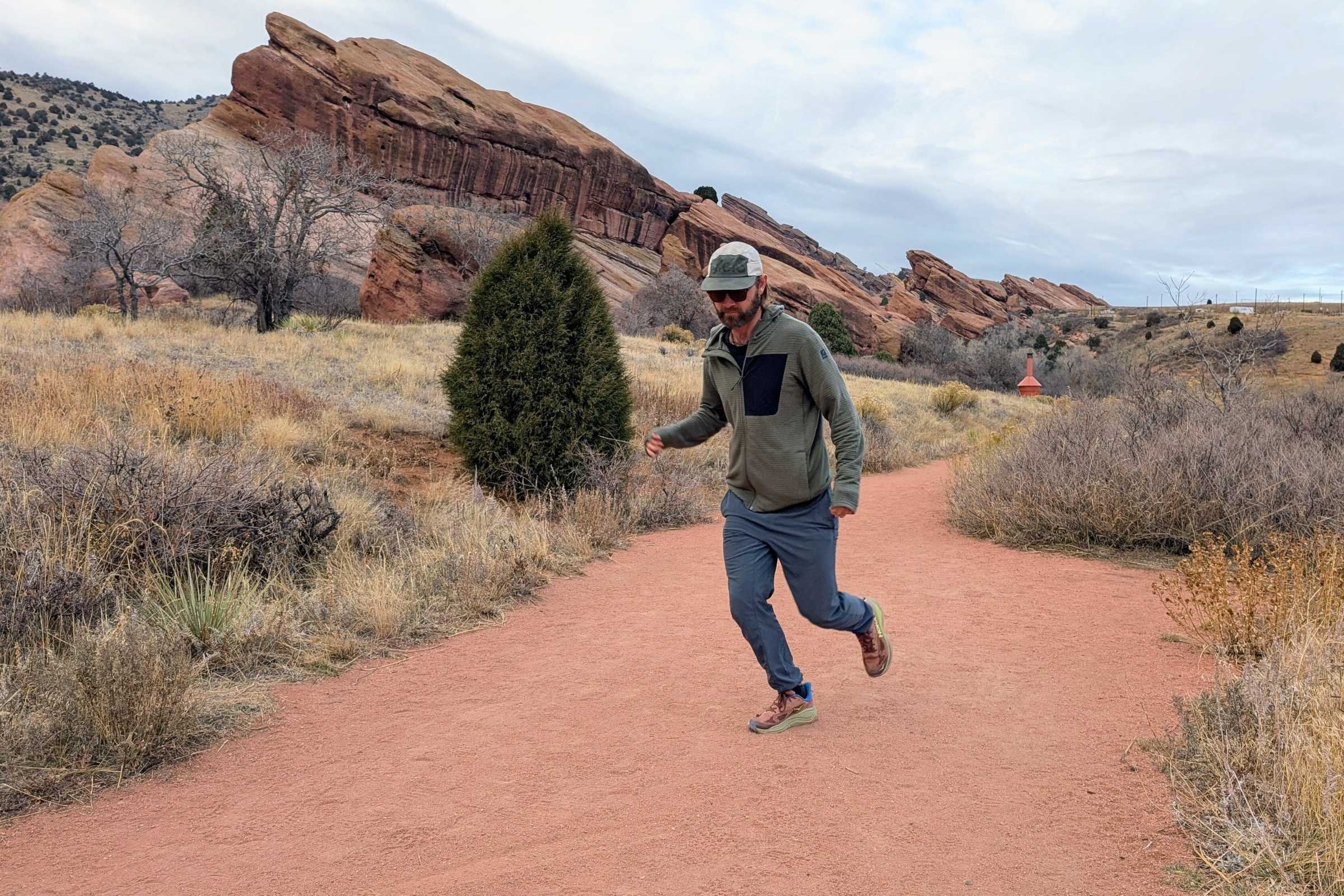
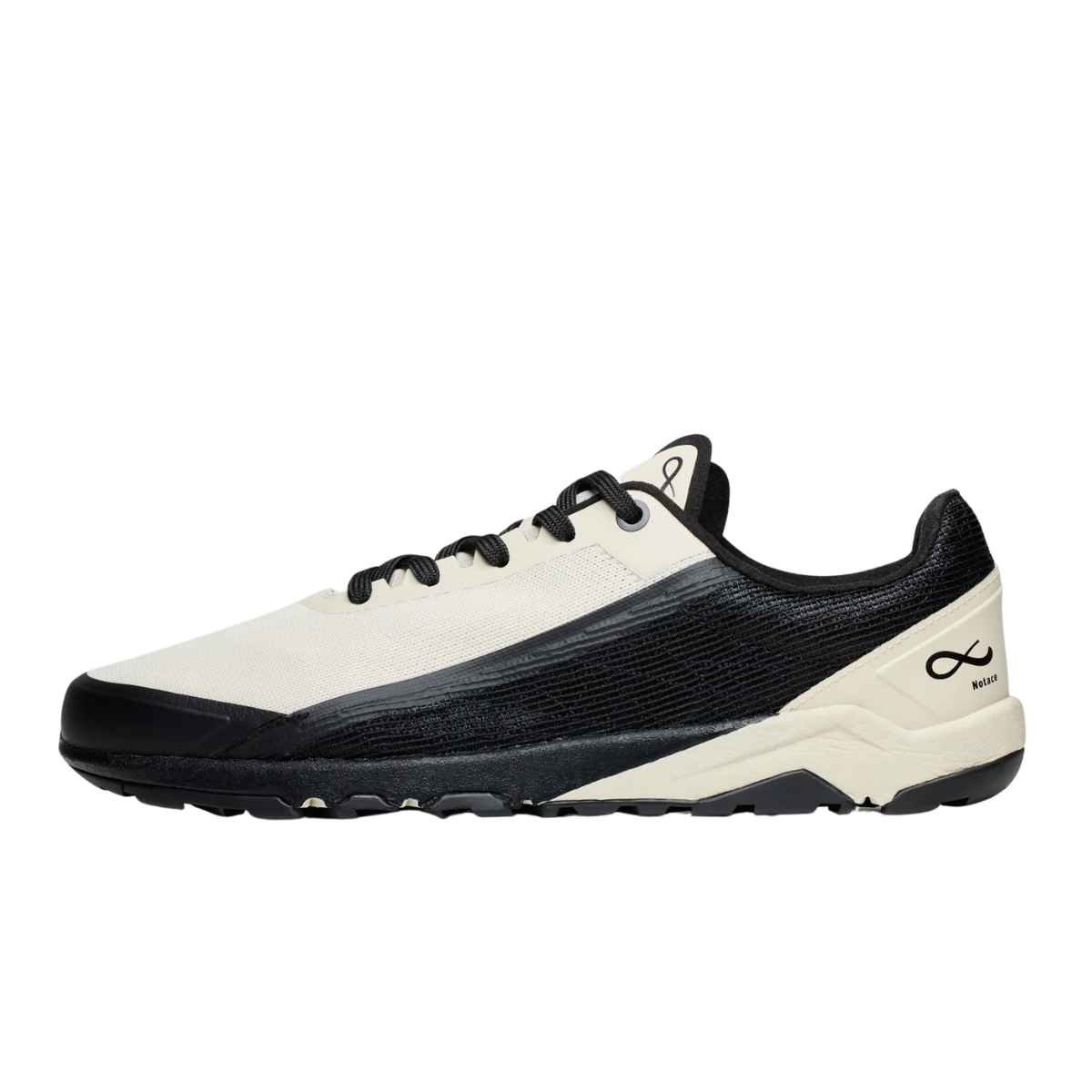
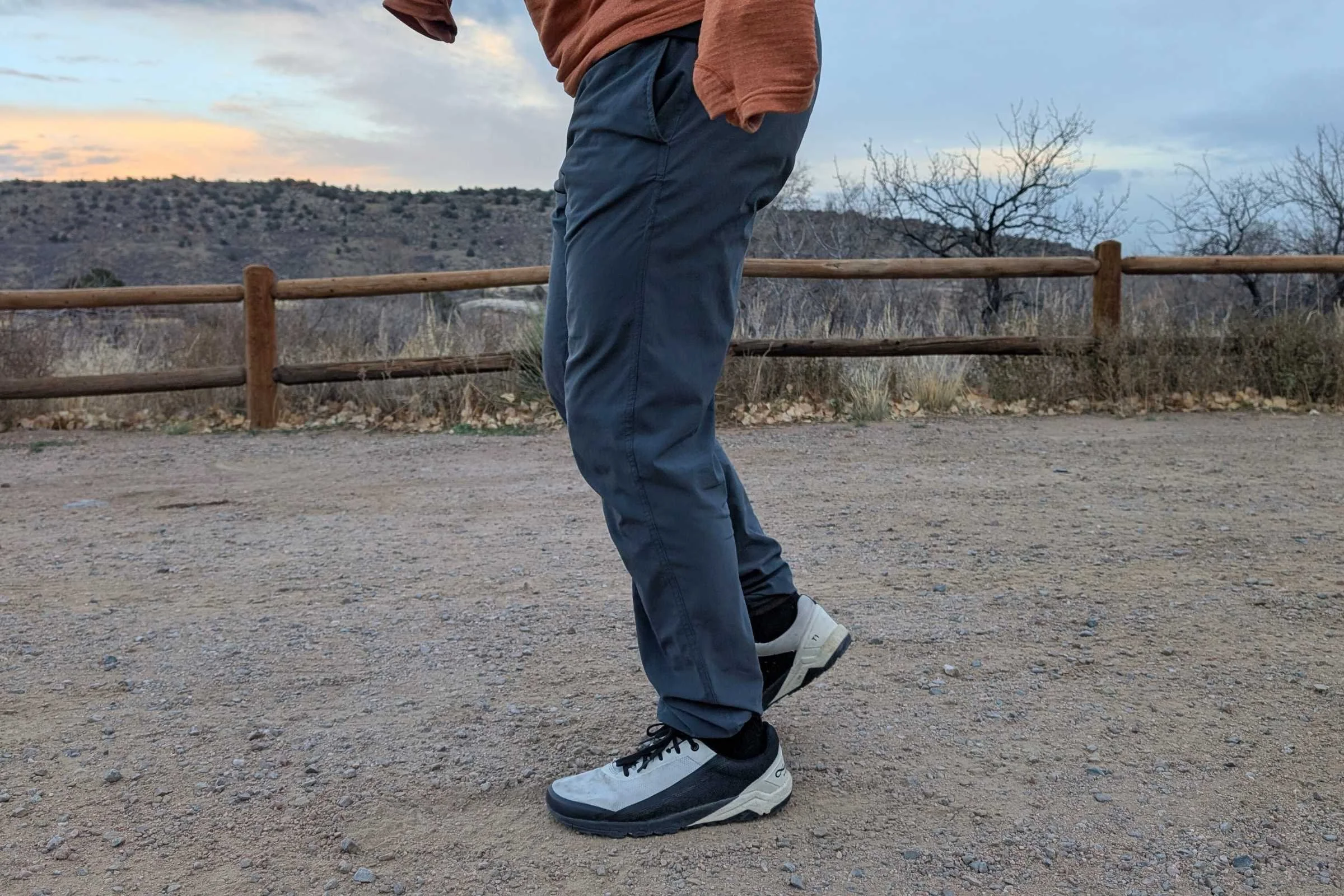
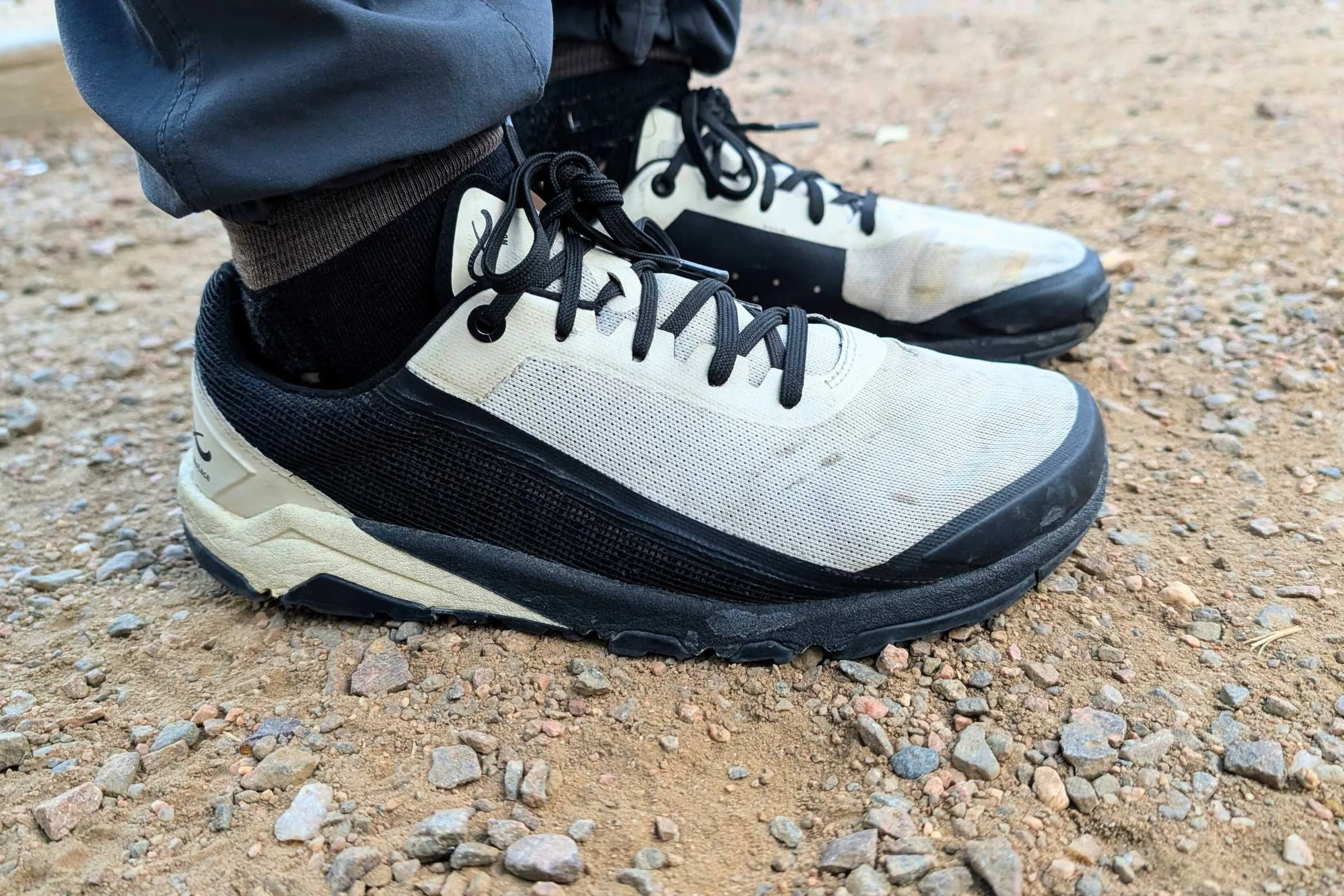
The Notace Yama T1 running shoes are a zero-drop, minimalist trail shoe. Although they’re marketed as a trail shoe, they don’t have very much cushioning or deep lugs, so we find they’re a better crossover shoe than a purely trail shoe. Nevertheless, we love these shoes for everyday adventures. They’re the ideal shoe for wearing every day, because zero-drop shoes with a wide toe box allow your foot to sit naturally, helping build foot strength. As a runner, you need foot strength. And you’ll be ready for quick runs on gravel, dirt, or pavement with these on your feet.
Notace Yama T1
men's
Women's
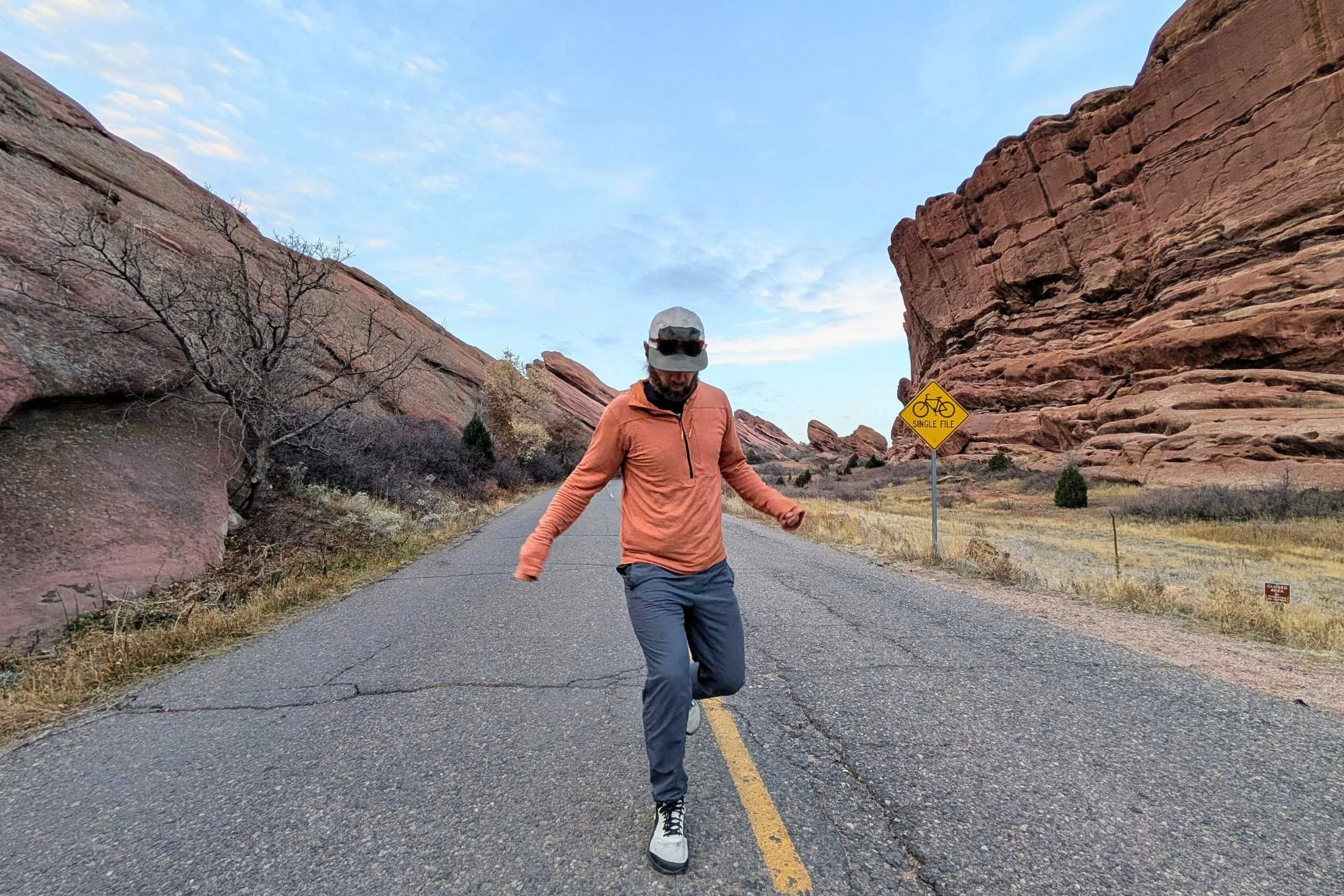
We’ve been wearing these shoes every day for the entire fall for hikes and multi-surface runs in Colorado and Utah. They’re also great shoes for easy scrambling and workouts, as a zero-drop platform is better for building foot strength and good biomechanics when doing workouts to build leg strength. We’ll wear these for an entire workout that involves strength training, sprints, and runs.
They have a sticky rubber outsole with no exposed midsole foam, so they’re very durable. They also have a rubber toe cap that wraps around onto both sides of the forefoot. They have reinforced mesh along the sides, so if you brush against rocks, branches, or walls, they won’t tear. We’ve put a lot of miles on these shoes, and while the white mesh looks dirty, they otherwise look like new.
The biggest difference between the T1s and the other shoes we tested is that these shoes are very minimalist. They have only 15mm of stack height, which is half that of the second-lowest stack height gravel shoe. This means they provide excellent ground feel, but that lack of cushion won’t be as comfortable for long runs unless your feet are very used to running in minimalist shoes.
If you’re looking for a do-it-all minimalist running shoe with a zero-drop platform, you should check out the Yama T1. Learn more in our in-depth review of the Notace Yama T1 Trail Running Shoes.
Best gravel running shoes for daily training: Nike Pegasus Trail 5
Sizes available: 3.5 - 15
Widths available: No
Drop: 9.5 mm
Stack height: 37/ 27.5
Weight: 21.2 oz
What we liked: Feel like a traditional running shoe, comfortable, lightweight, well-cushioned
What we didn’t like: High heel-to-toe drop isn’t best for everyone
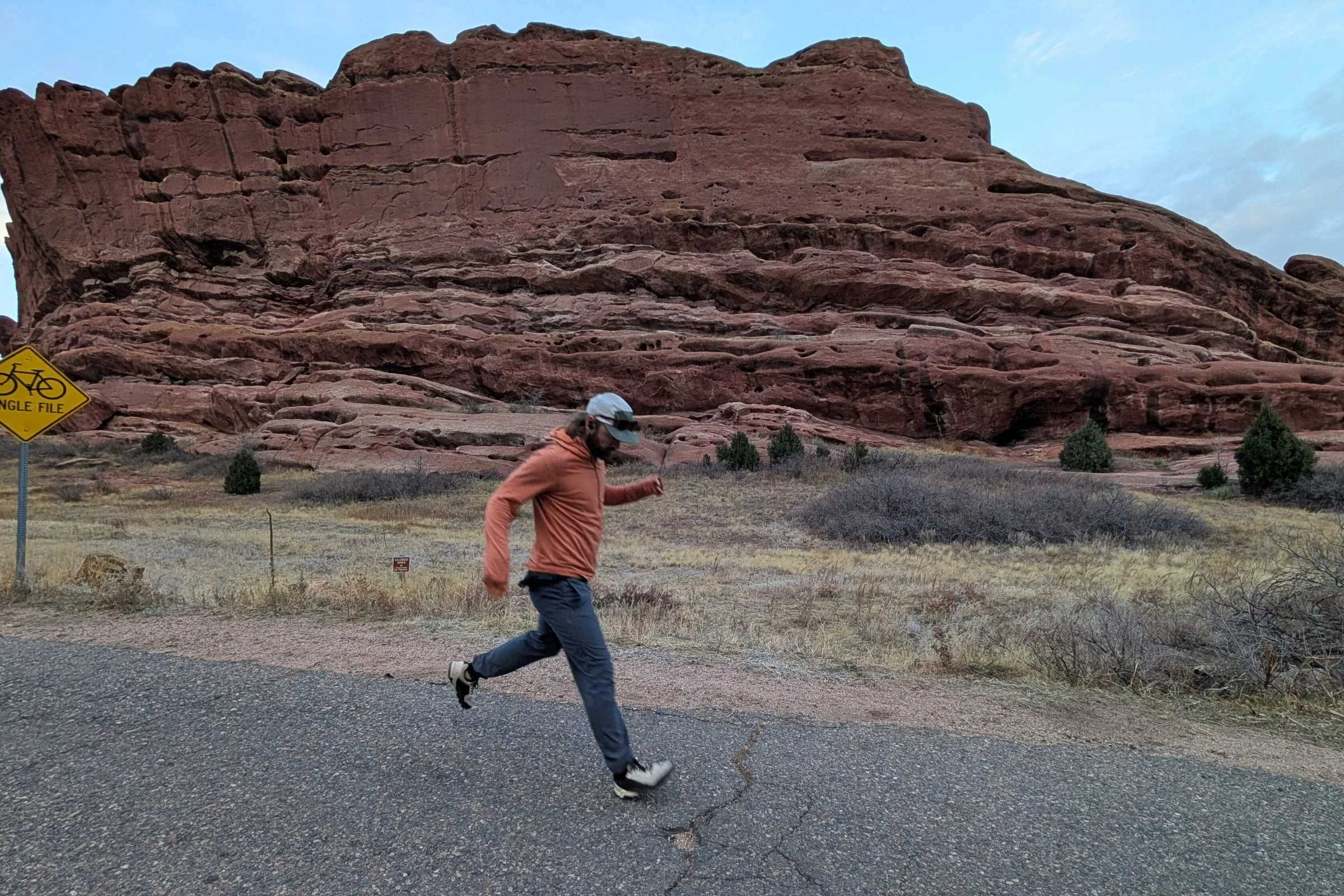
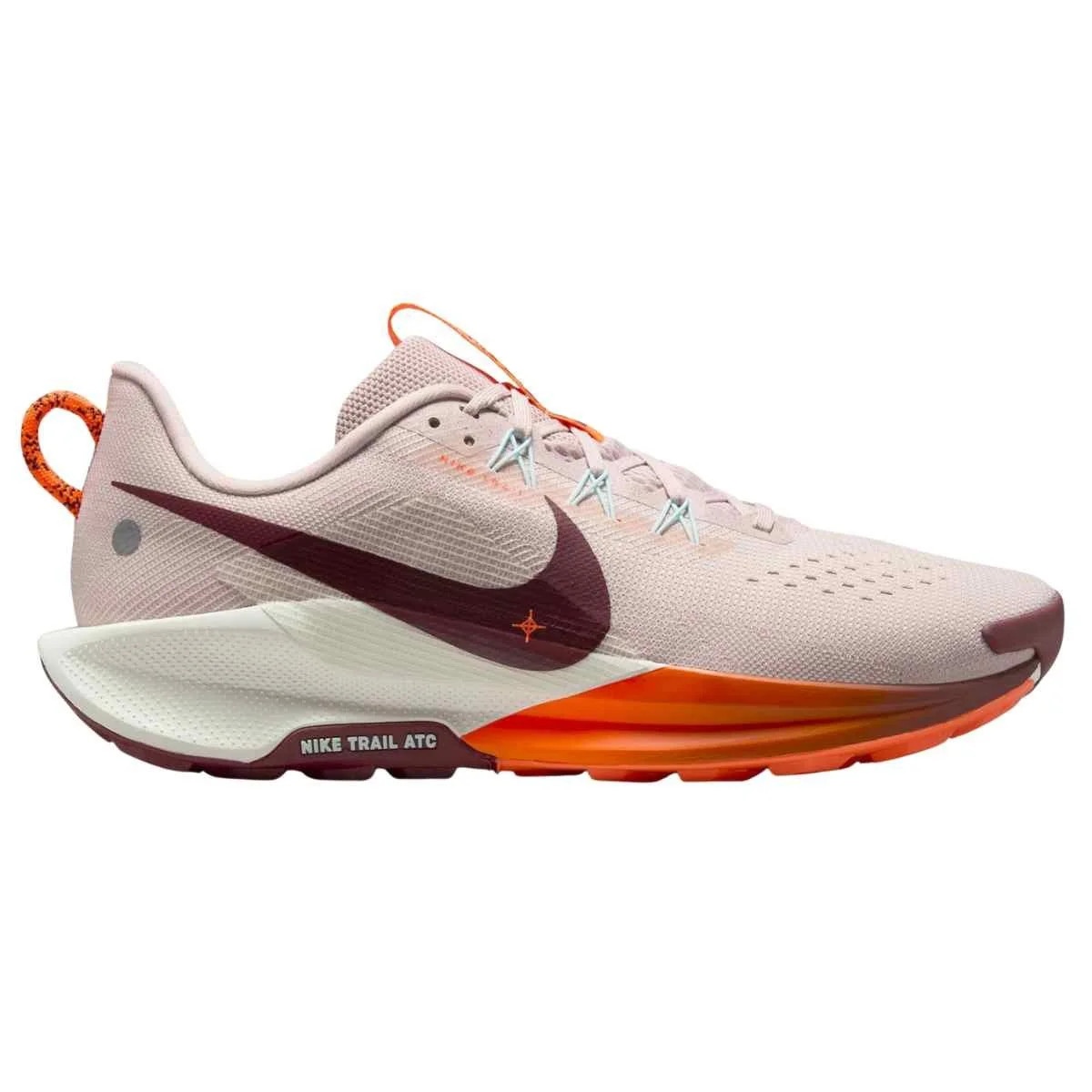
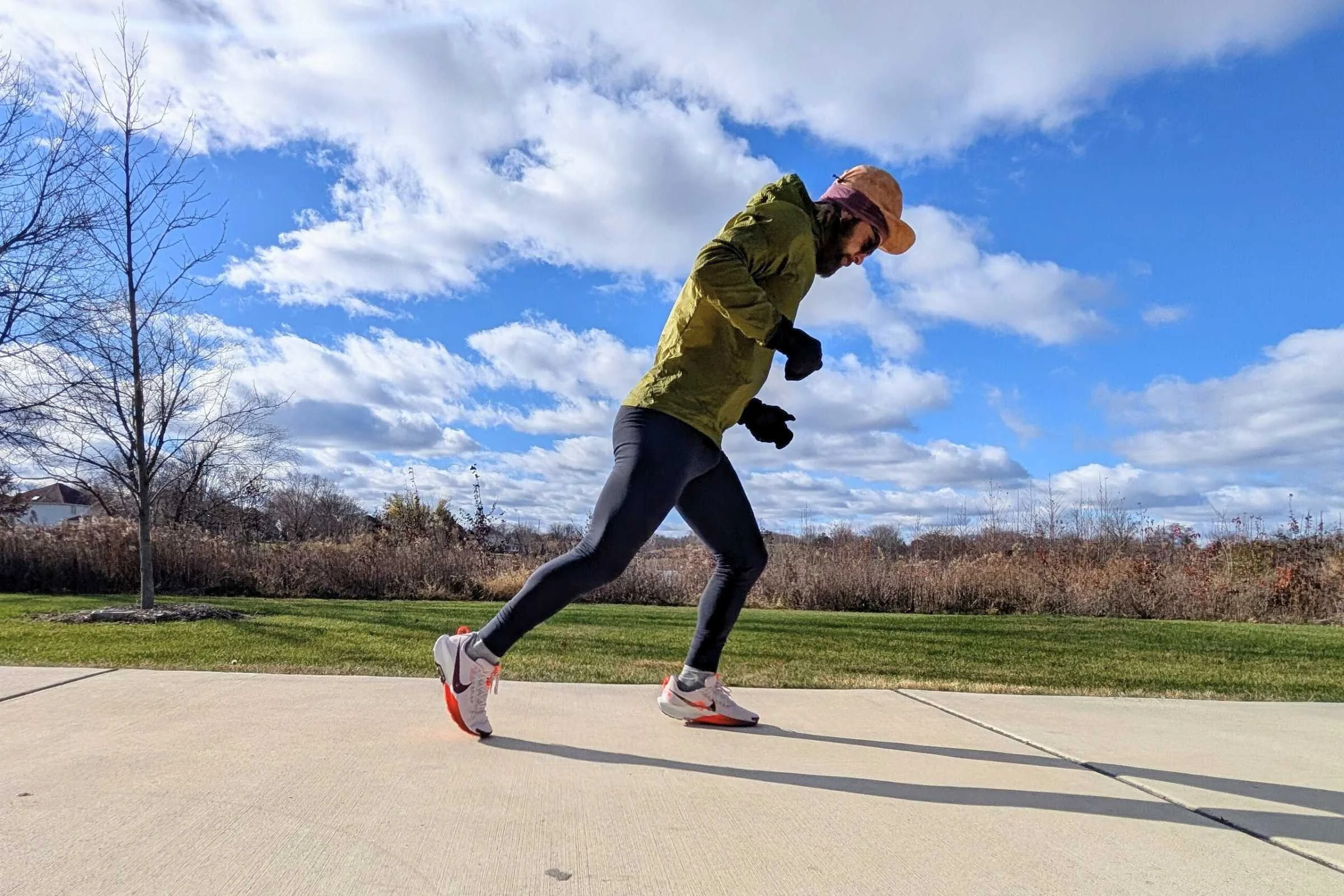
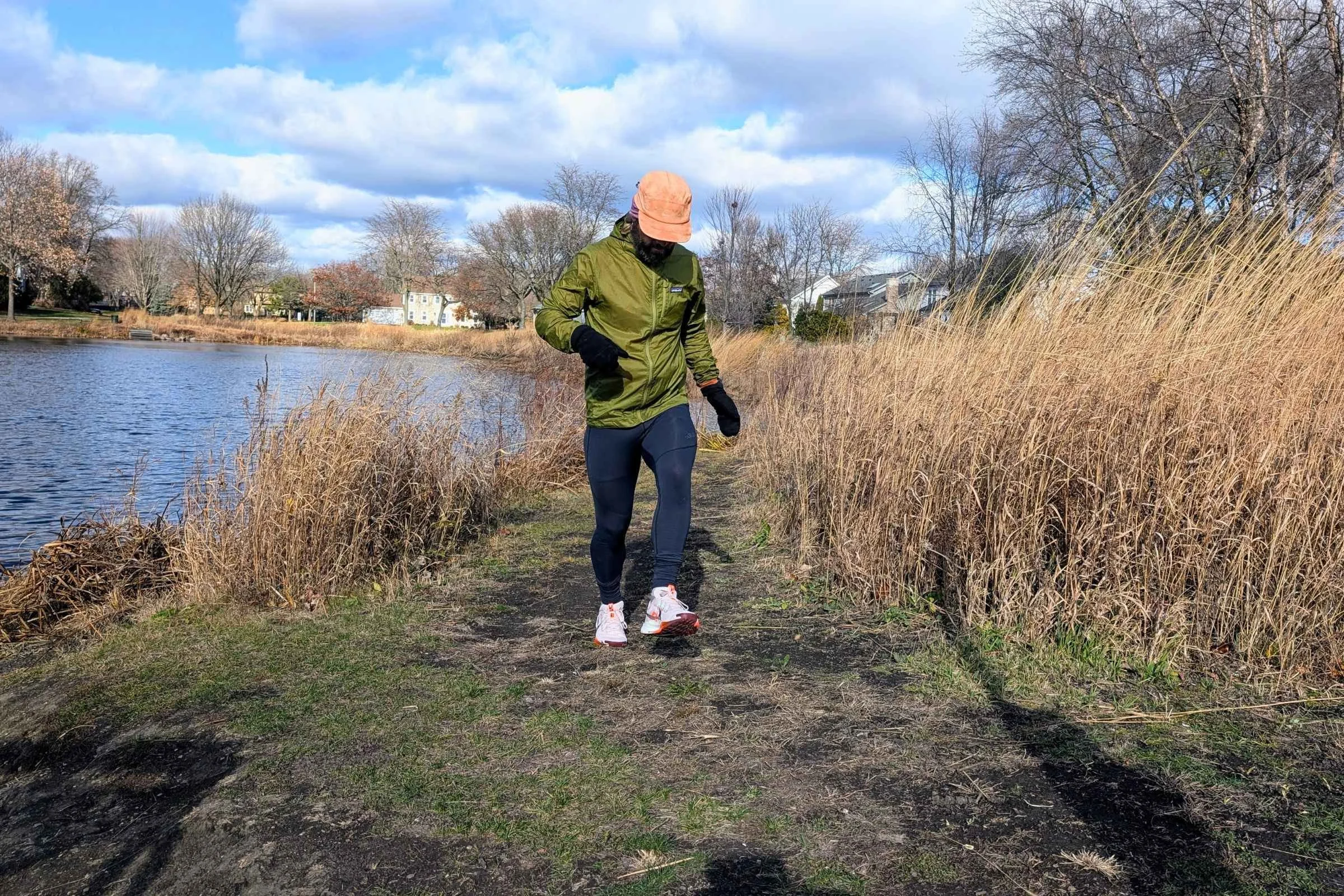
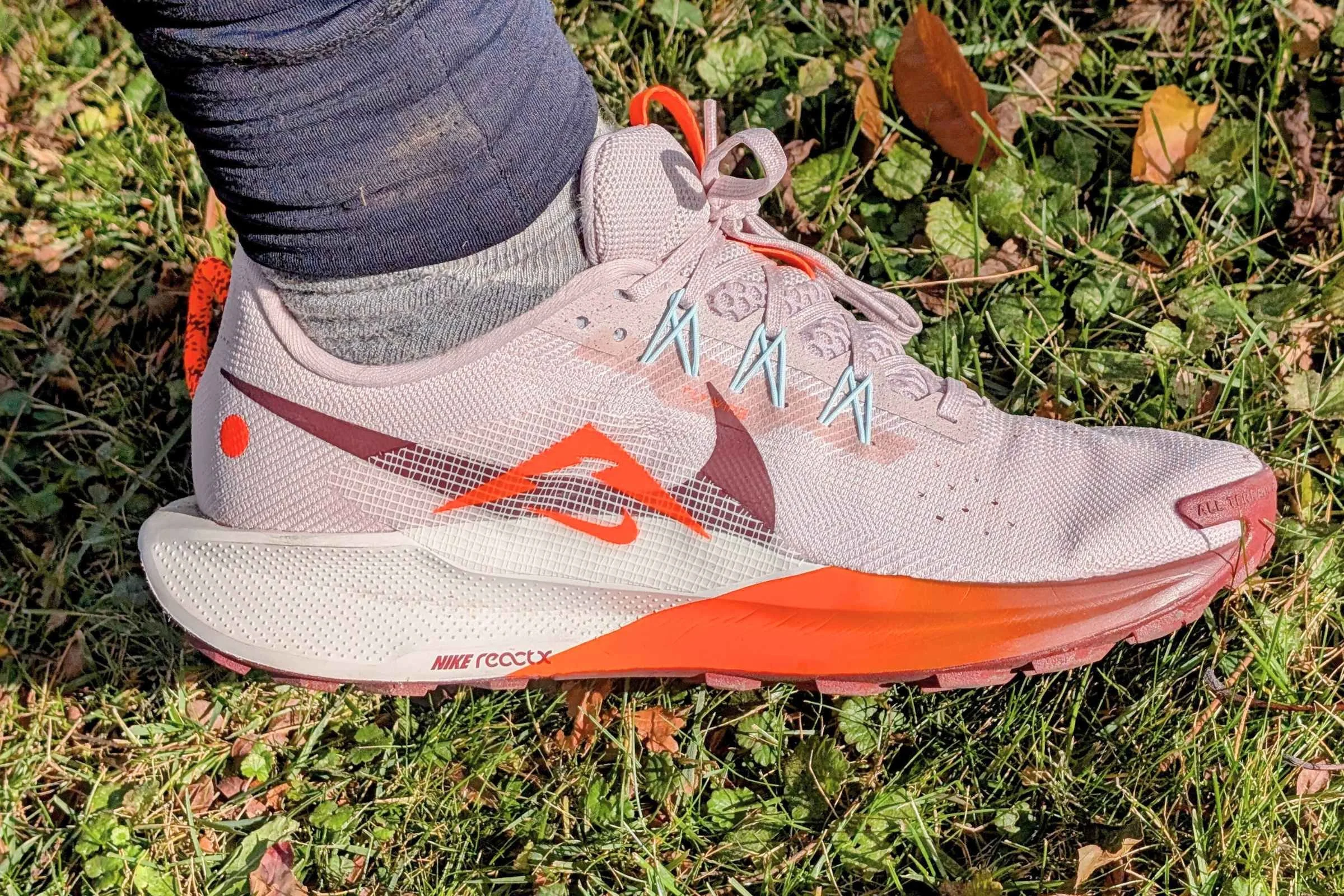
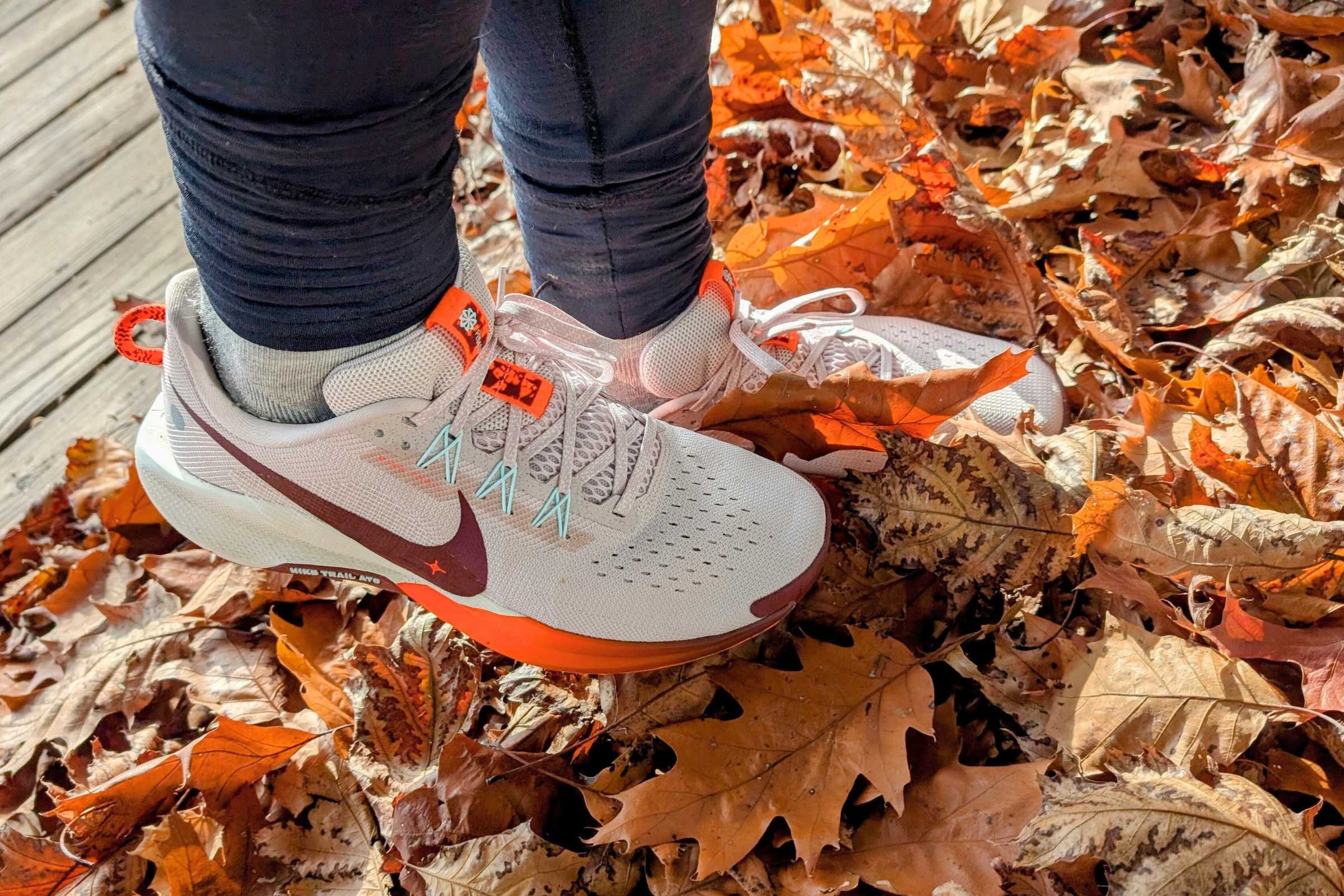
Nike's Pegasus line has long been a staple for runners looking for a reliable, all-purpose running shoe. The Pegasus Trail 5 is similar to the road Pegasus models, but with a lugged rubber tread for off-road traction. While the tread isn’t as aggressive as that of many trail shoes, the 3mm lug depth makes them a great gravel shoe for roads, dirt, and everything in between. To be clear, this doesn’t make these shoes a “bad” trail shoe; they’re great for smoother, less technical trails, which also makes them a great gravel shoe. Learn more in our in-depth review of the Nike Pegasus Trail 5.
Nike Pegasus Trail 5
men's
Women's
We tested the Pegasus Trail 5 in Colorado, running on gravel and dirt roads as well as smooth singletrack terrain. We also tested them in Illinois while visiting family for the holidays. On those runs, we used paved surfaces to reach a crushed-limestone recreation path through a prairie preserve.
On paved roads, the Pegasus Trail 5 feels similar to the Pegasus 41, which is our favorite road running shoe for beginners. But the 3mm diamond lugs on the Pegasus Trail provide better traction when you veer off-road, onto gravel or dirt. These shoes are very comfortable, and feel the most like the old-school sneakers you’re likely used to as a beginner runner. They also have a higher heel-to-toe drop than many modern running shoes, which helps with a heel-striking footfall pattern and further contributes to overall comfort. Lastly, they look great. You can wear them for a run, then hit the gym without looking like you just ran.
The Pegasus Trail 5 has Nike’s ReactX foam midsole, which feels springy and provides good cushioning. They weigh 10.2 ounces per men’s shoe and 8.8 ounces per women’s shoe, which is also one of the lightest shoes we tested here. These shoes feel like a classic lightweight running shoe, with tread underfoot for rougher surfaces.
If you’re looking for an affordable, daily training gravel running shoe, the Pegasus Trail 5 is worth considering.
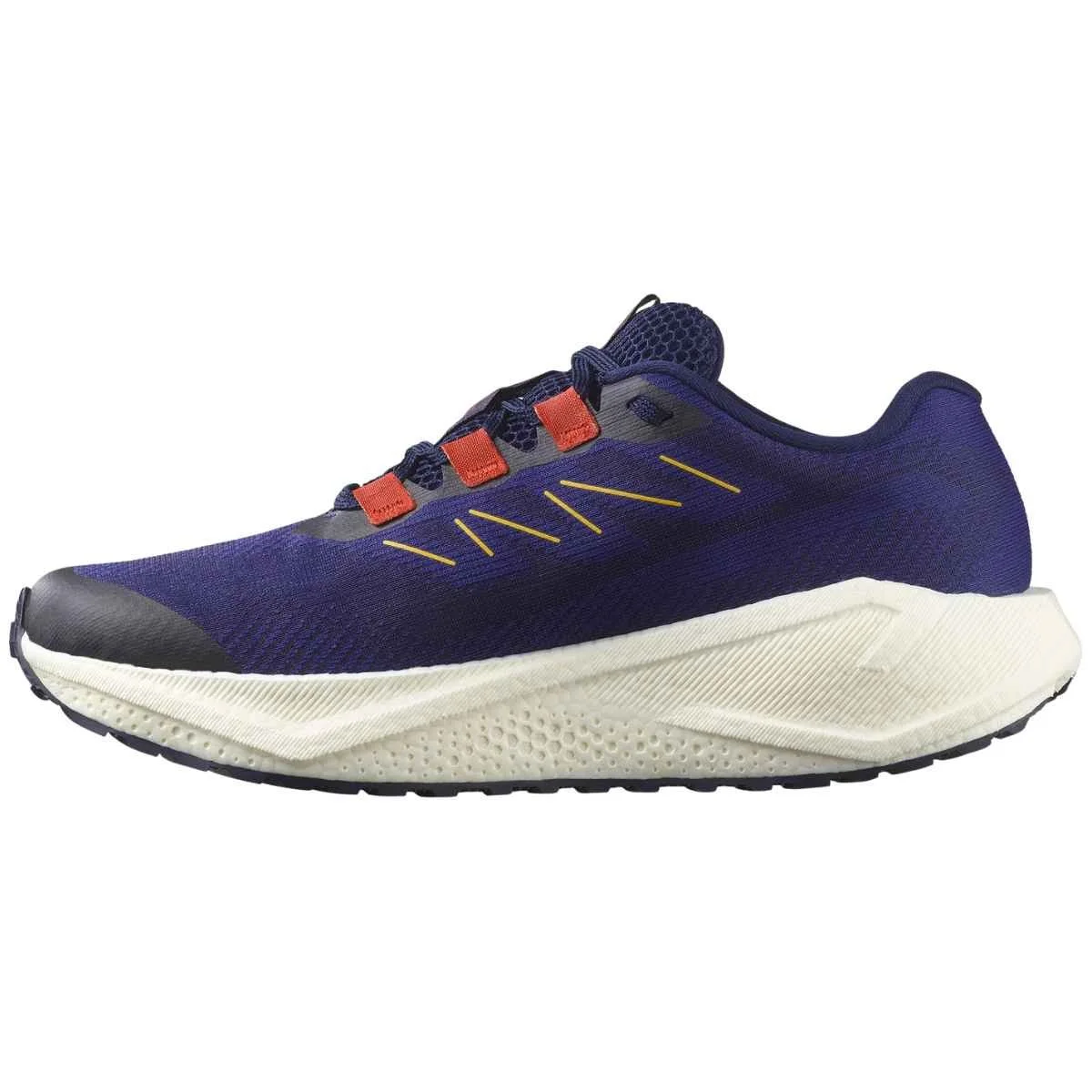
Best affordable gravel running shoes: Salomon Aero Blaze GRVL
Sizes available: 7 - 14
Widths available: No
Drop: 8.0 mm
Stack height: 35/ 27 mm
Weight: 18.0 oz
What we liked: Lightweight, affordable, comfortable, fast
What we didn’t like: Narrower fit, less durable
The Salomon Aero Blaze GRVL is an affordable gravel shoe that’s stable, lightweight, and nimble. These are the least expensive gravel running shoes we tested for this guide, but they perform about as well as many of our other favorite shoes. They’re very similar to the popular Salomon Aero Blaze 3, a lightweight daily trainer, but they have a gravel tread outsole with shallow lugs for traction on mixed surfaces.
Salomon Aero Blaze GRVL
men's
Women's
We tested these shoes while running gravel and dirt roads in southern Colorado. We also have used them for mixed surface runs that start on pavement and progress to dirt roads. Much like the Salomon Aero Glide GRVL, they feel more like a road running shoe than a trail shoe. This isn’t necessarily a bad thing, but it is worth noting.
The Aero Blaze GRVL is lightweight, well-cushioned, and provides a stable ride across smooth to slightly rough surfaces. It features Salomon's optiFOAM² midsole, which gives solid cushioning and energy return. They don’t feel as springy as the supercritical foam midsole of the Aero Glide GRVL, but they bounce back well enough for daily runs.
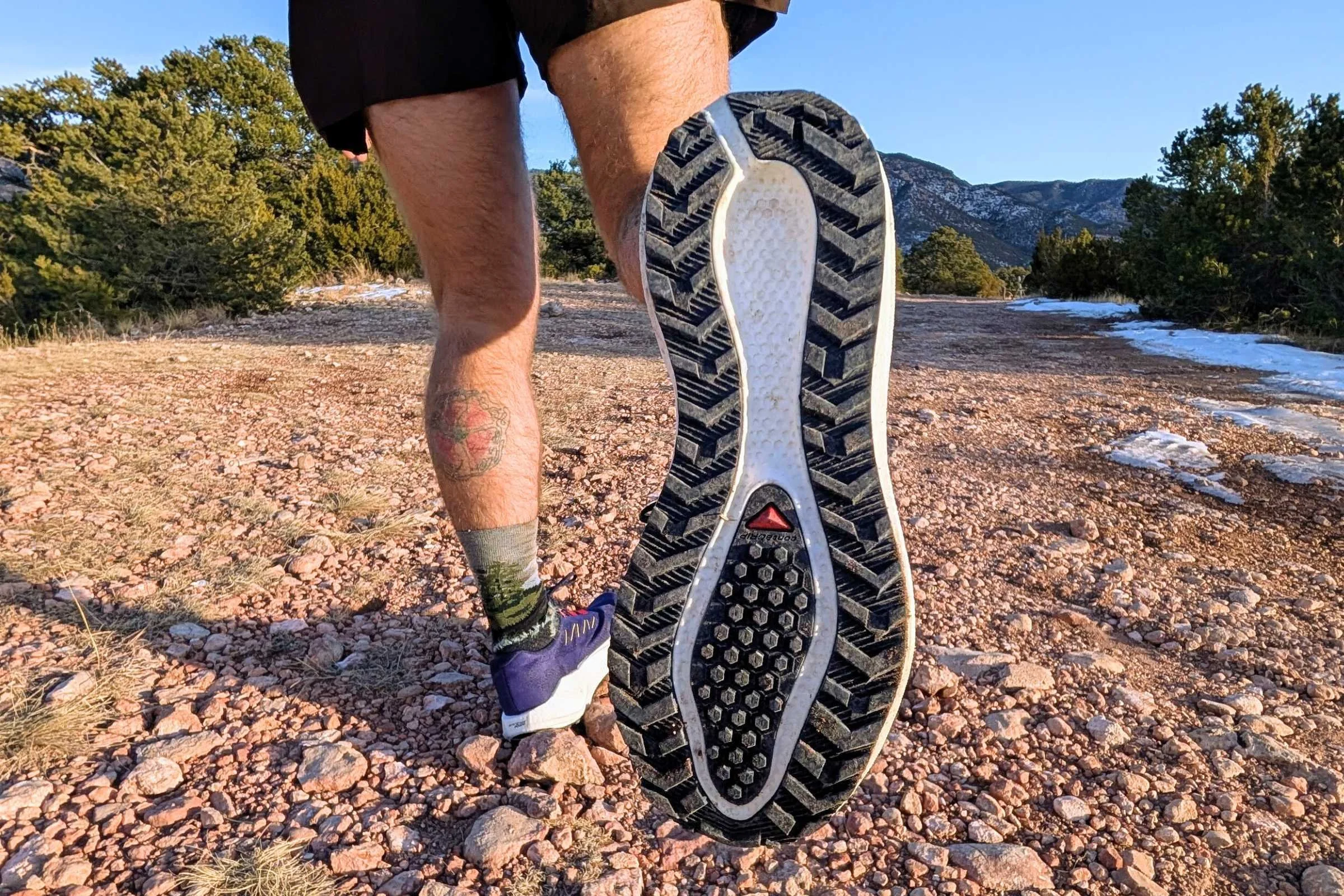
The outsole uses Salomon's Gravel Contagrip rubber and shallow lugs that grip well on gravel, dirt paths, and light trails. These lugs, which look a lot like the tread on a gravel bike tire, are also smooth enough for paved surfaces. There is a large channel of exposed midsole down the center of the bottom tread, which saves weight but decreases durability.
The biggest drawback of the Aero Blaze GRVL is the same issue many Salomon shoes face: they tend to run narrower than shoes from other brands and aren't available in wide sizing. Our main tester, Sam, has feet that are wider than average. He found these shoes to be wide enough for 5-10 mile runs, but didn’t love them for longer outings.
If you're looking for a quick and lightweight gravel running shoe for smoother terrain and pavement, and you don’t want to be too much for them, we recommend the Aero Blaze GRVL.
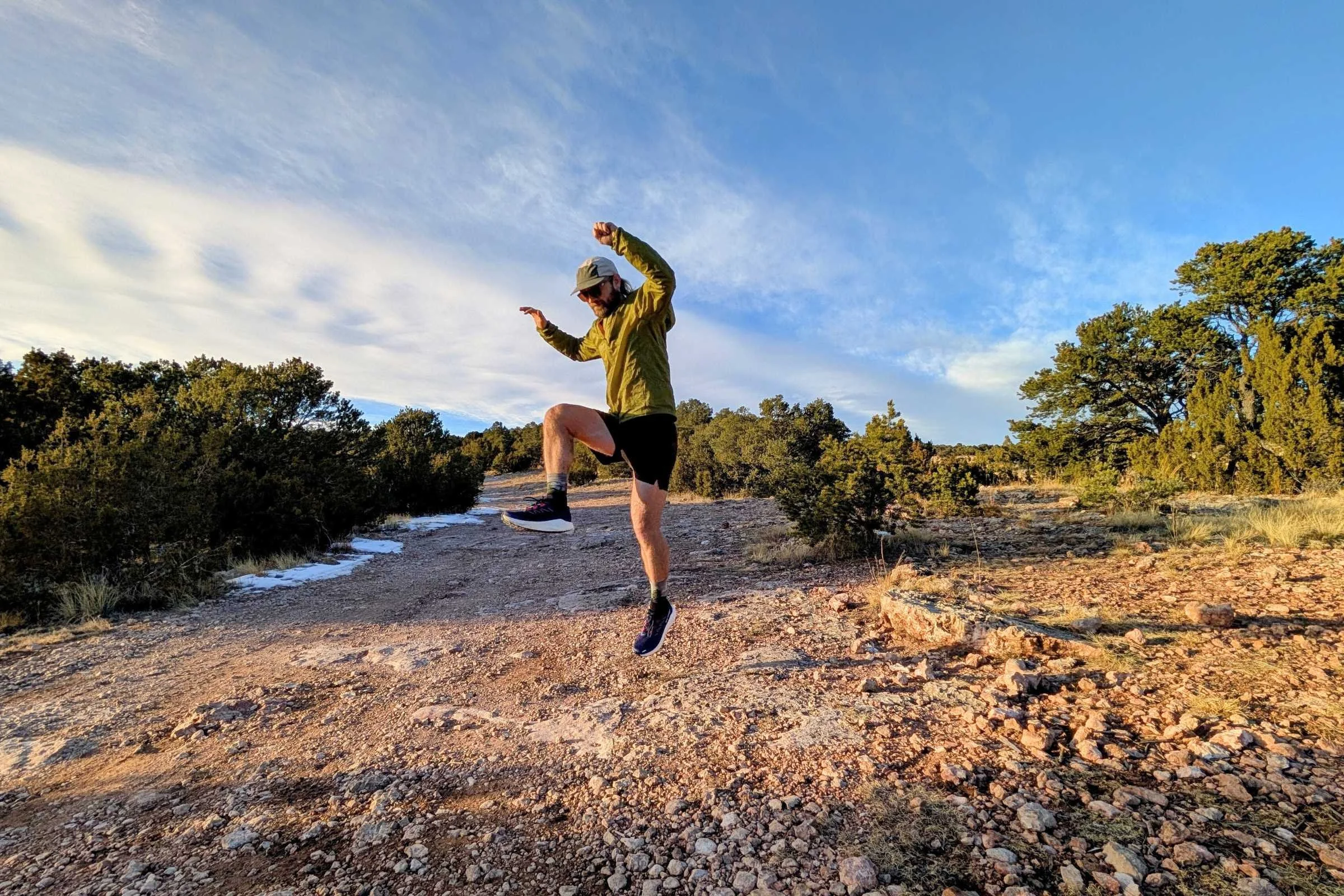
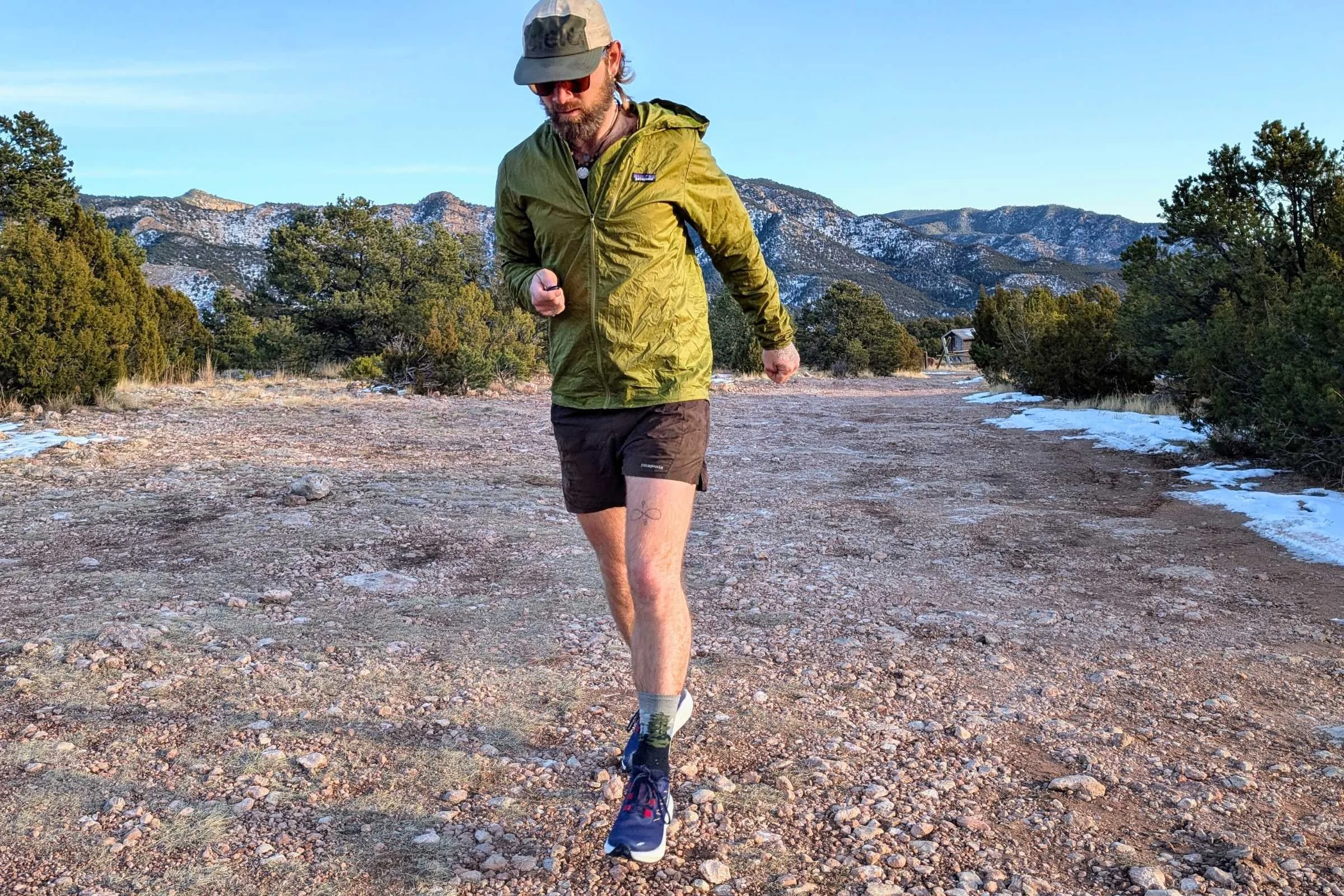
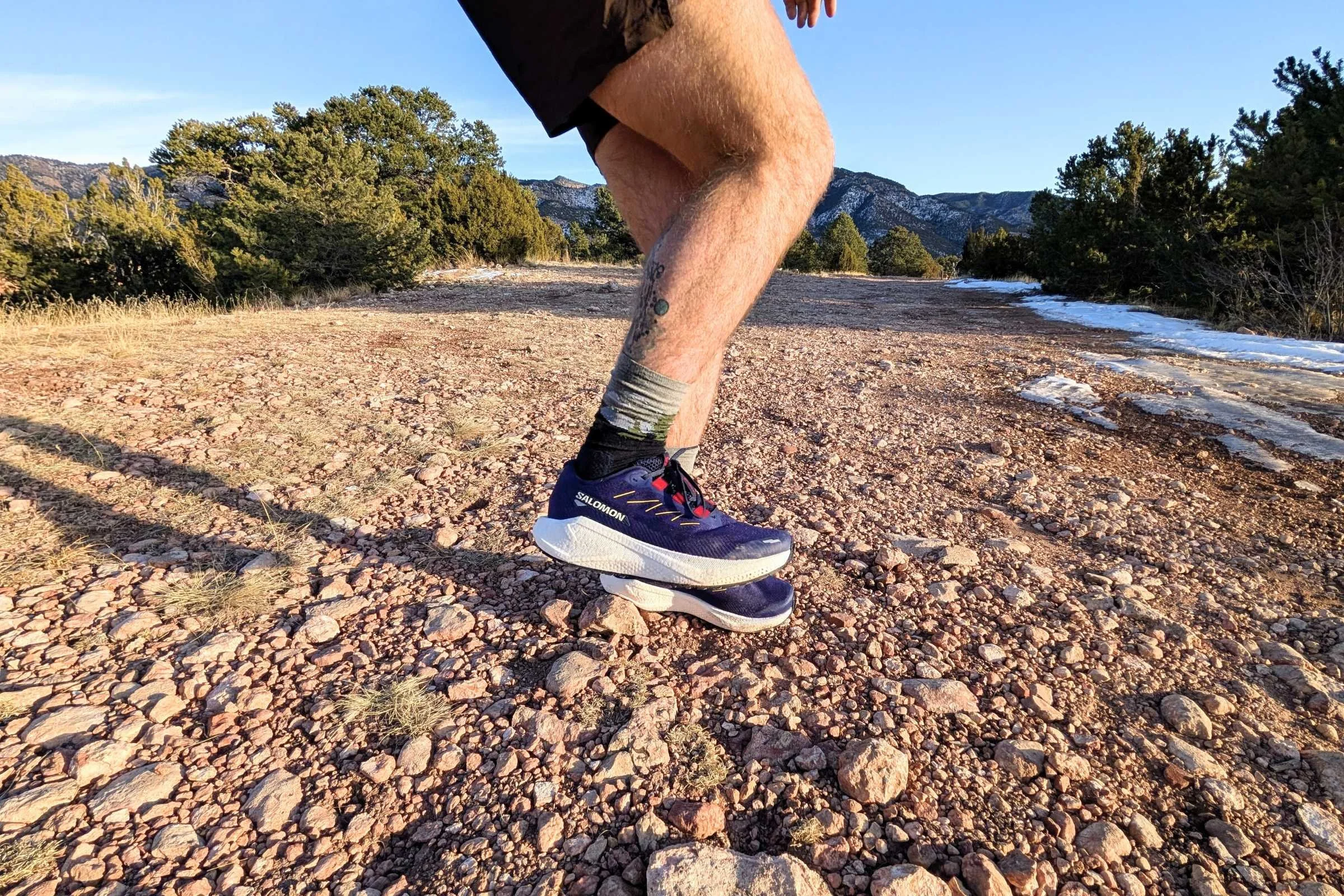
Other Gravel Running Shoes We Tested
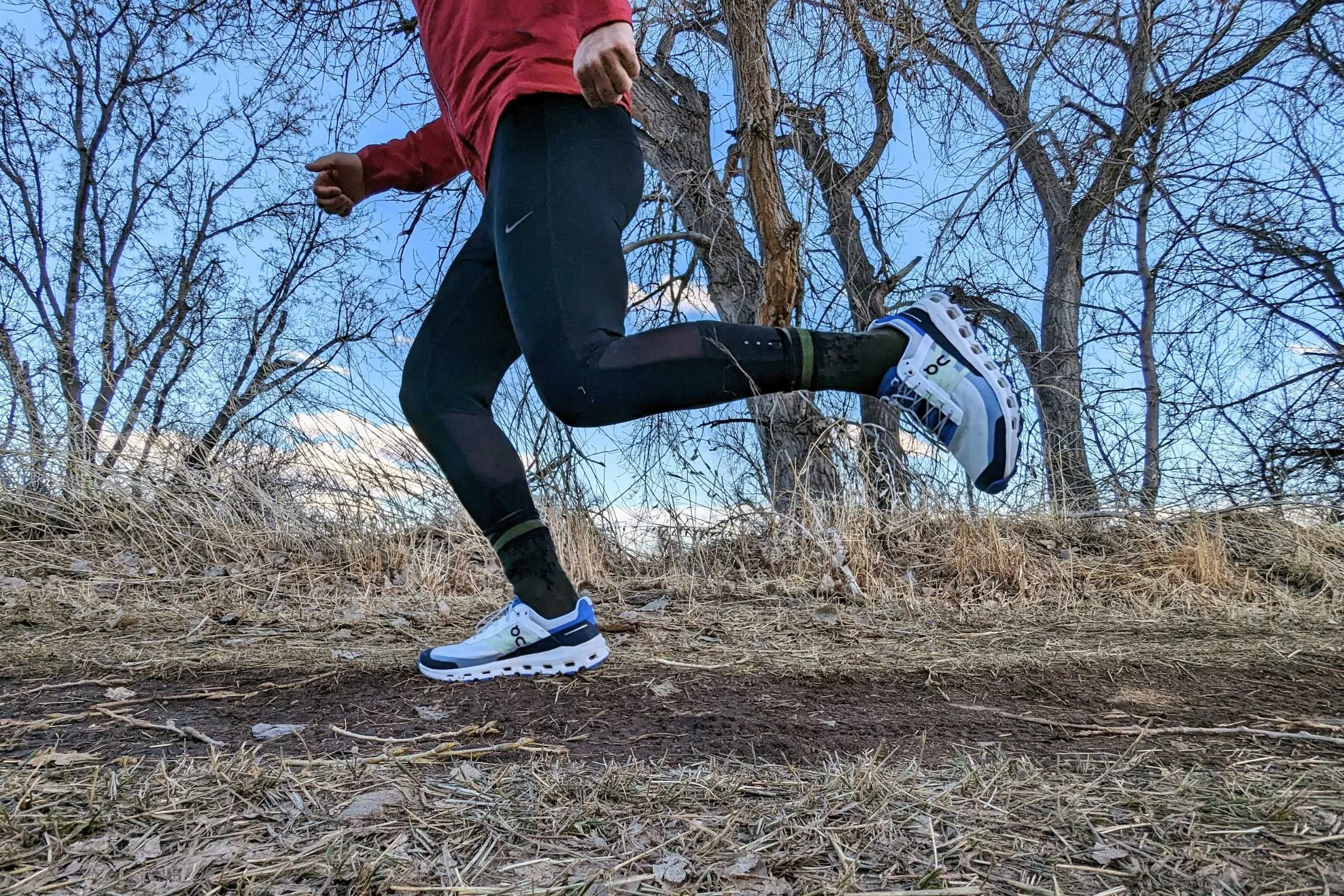
On Cloudvista 2
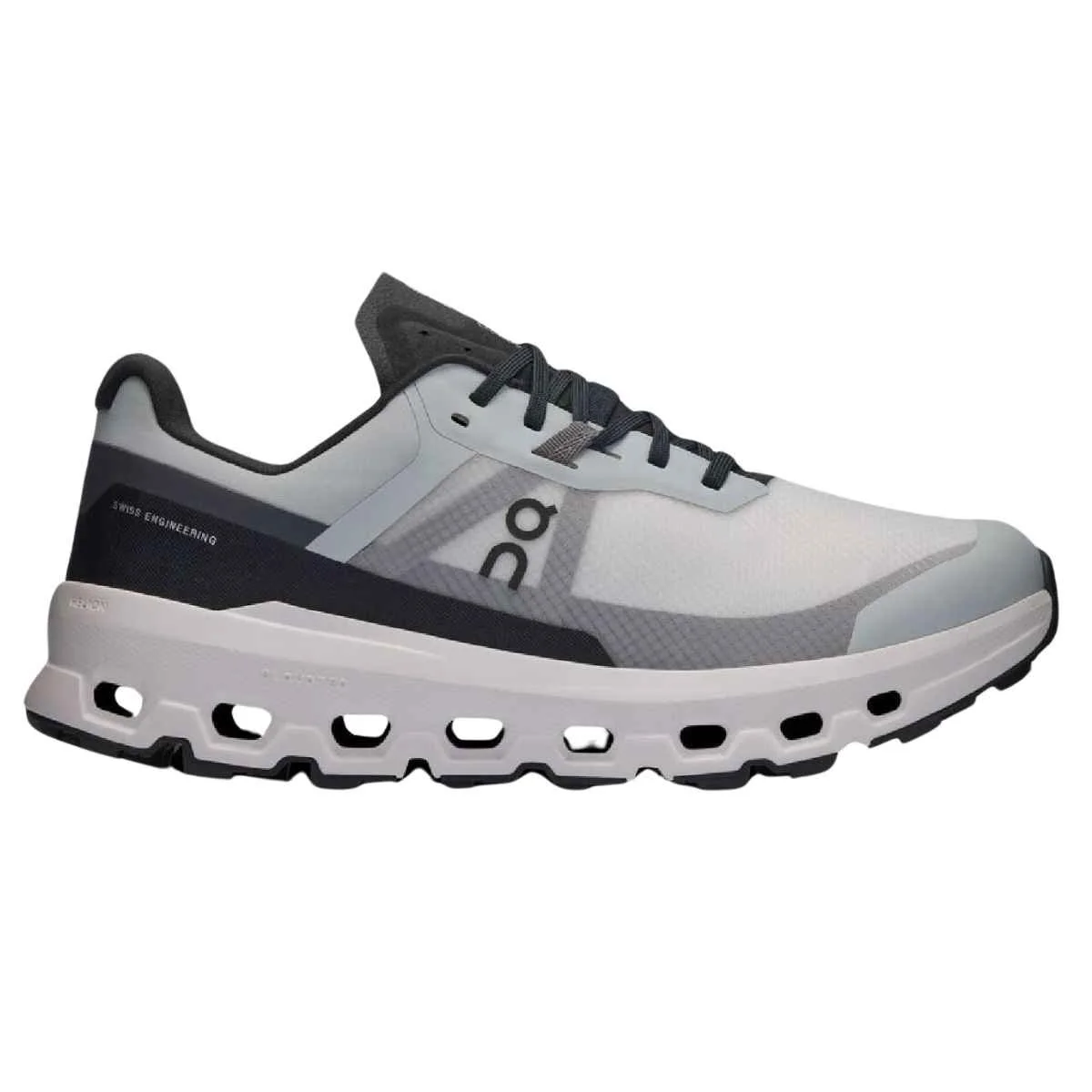
Sizes available: 7 - 14
Widths available: No
Drop: 5.0 mm
Stack height: 29/ 24 mm
Weight: 21.5 oz
What we liked: Comfortable, lightweight, minimalist, simple
What we didn’t like: Rocks get stuck in exposed midsole channel
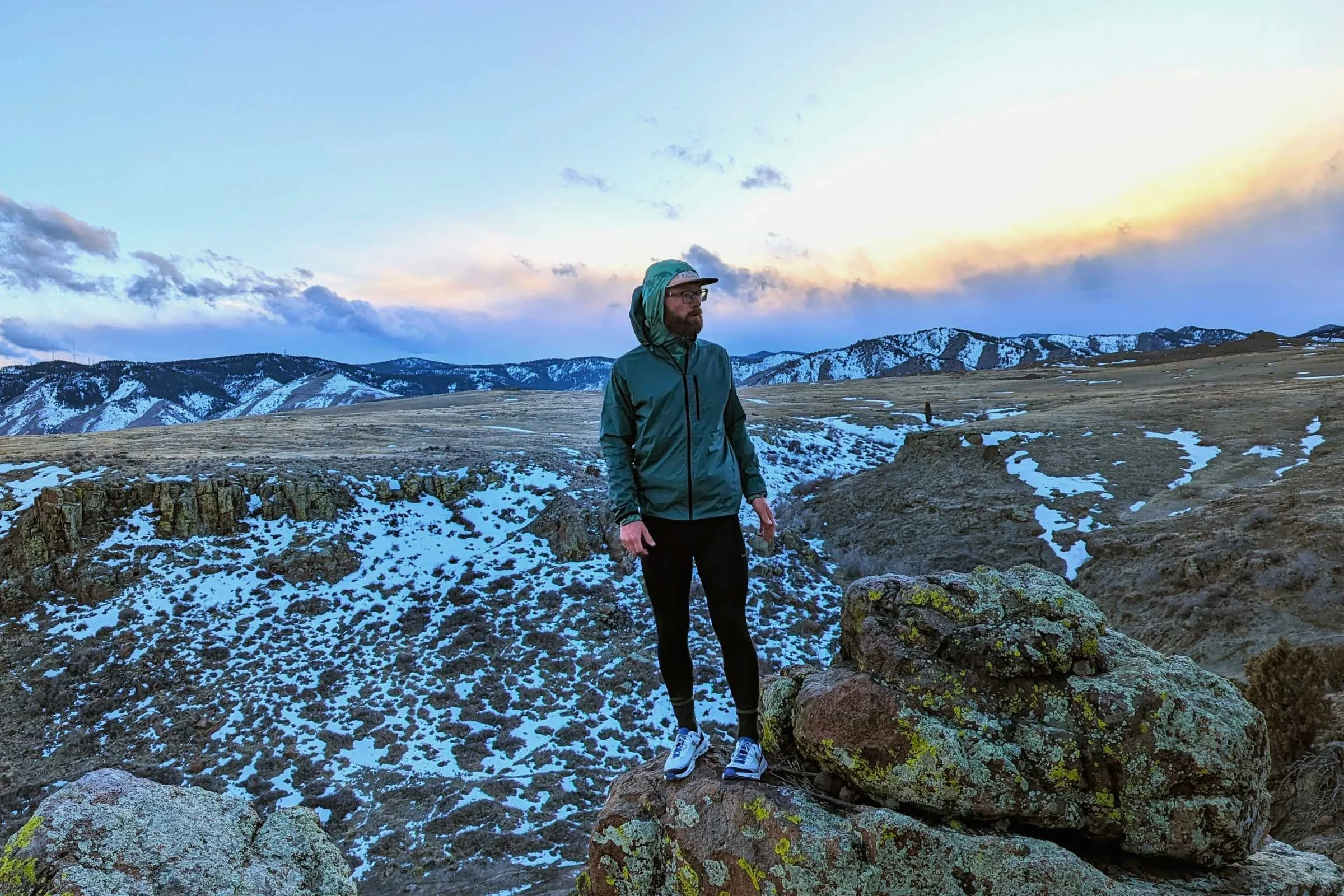
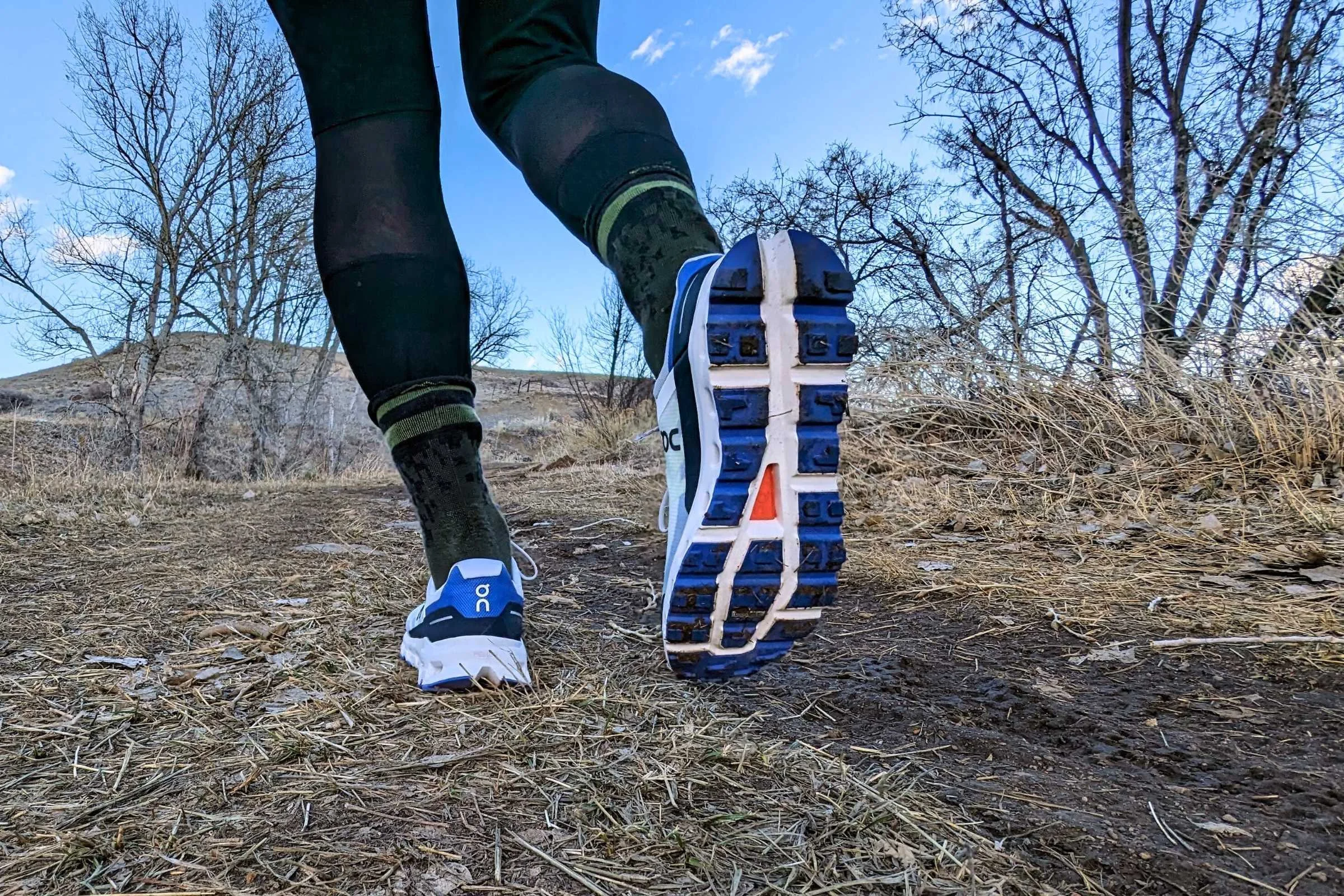
The On Cloudvista 2 are among the simplest and lightest trail runners we tested for our trail running shoes guide, earning the best minimalist trail shoes award in our Best Men’s Trail Running Shoes guide. When we first held these shoes, we thought, “This is a trail runner?!” They don't look very different from a road shoe, but we were shocked at how well they performed on the trail. But now that we’re putting together a gravel shoes guide, we think they belong in here, too.
On Cloudvista 2
Men's
Women's
These shoes are wildly comfortable and light. They make you feel nimble and energized. On an early run in Colorado with these, we had only planned a quick four or five-mile run to start, but after 5 miles, they felt too good to turn around—so we doubled the distance.
The main drawback with these shoes as a gravel running shoe is in the tread design. We found the canals in the outsole occasionally collected small rocks and debris during runs, which was a pain to have to stop and dig out.
See our in-depth review of the On Cloudvista 2 trail running shoes here.
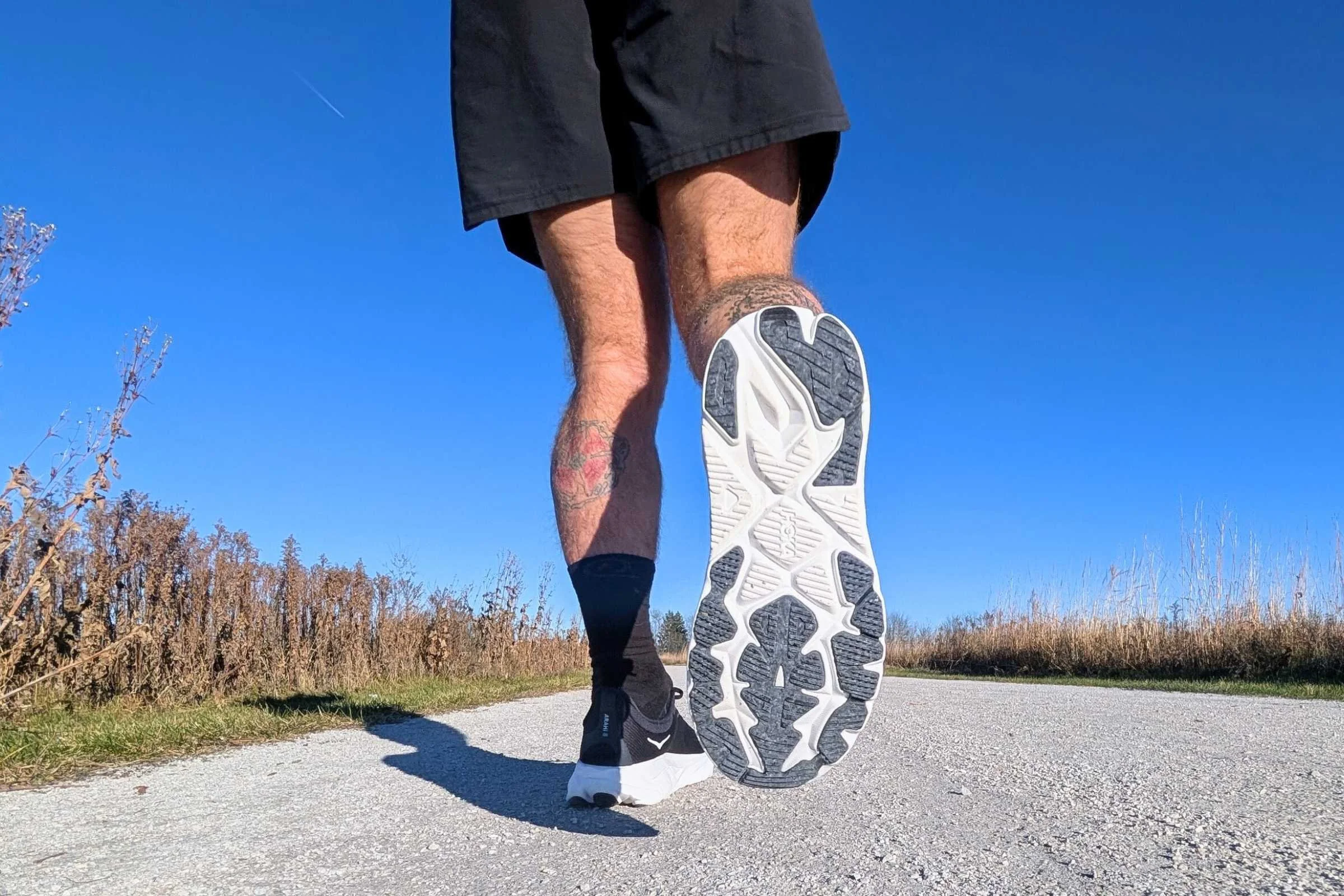
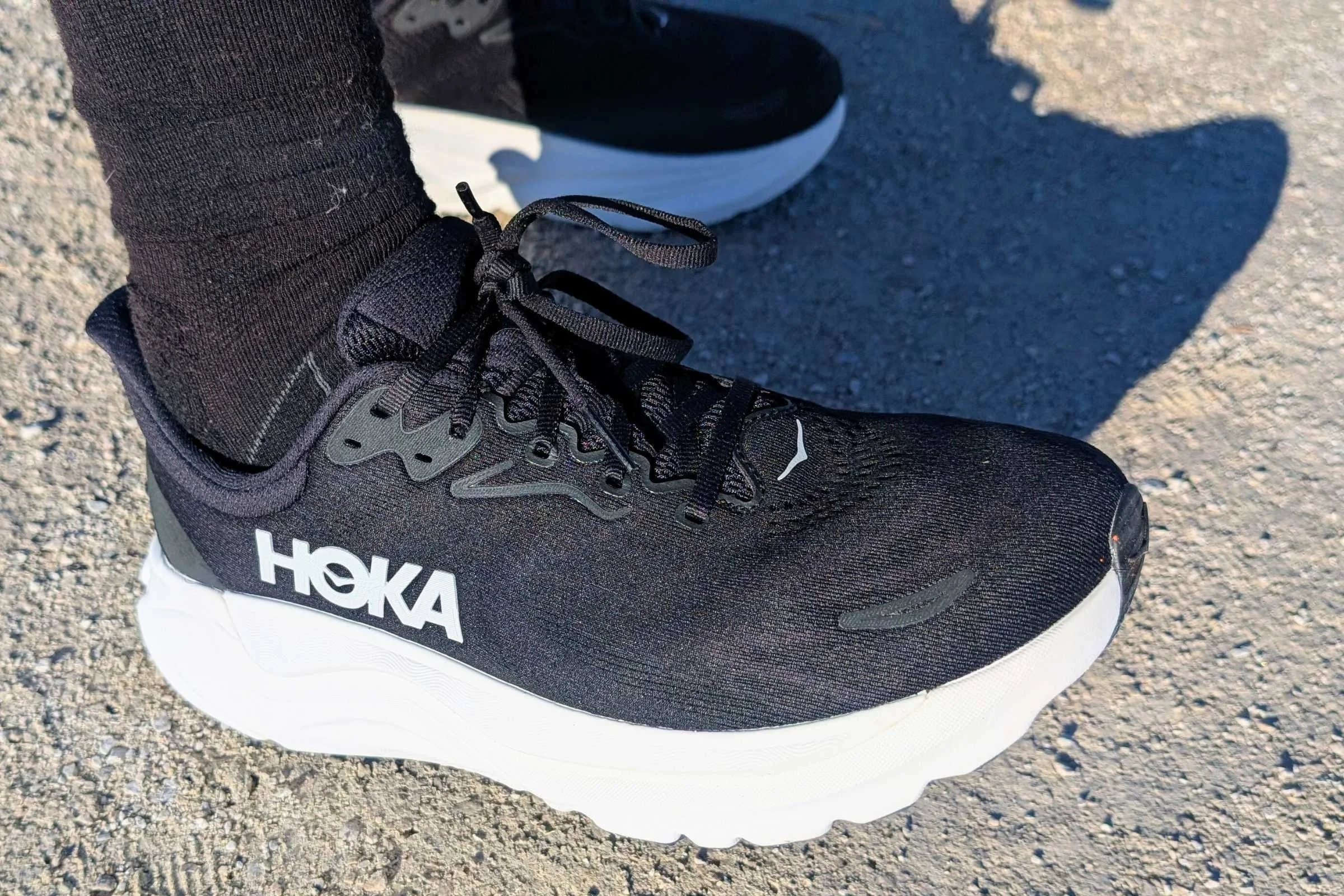
HOKA Arahi 8
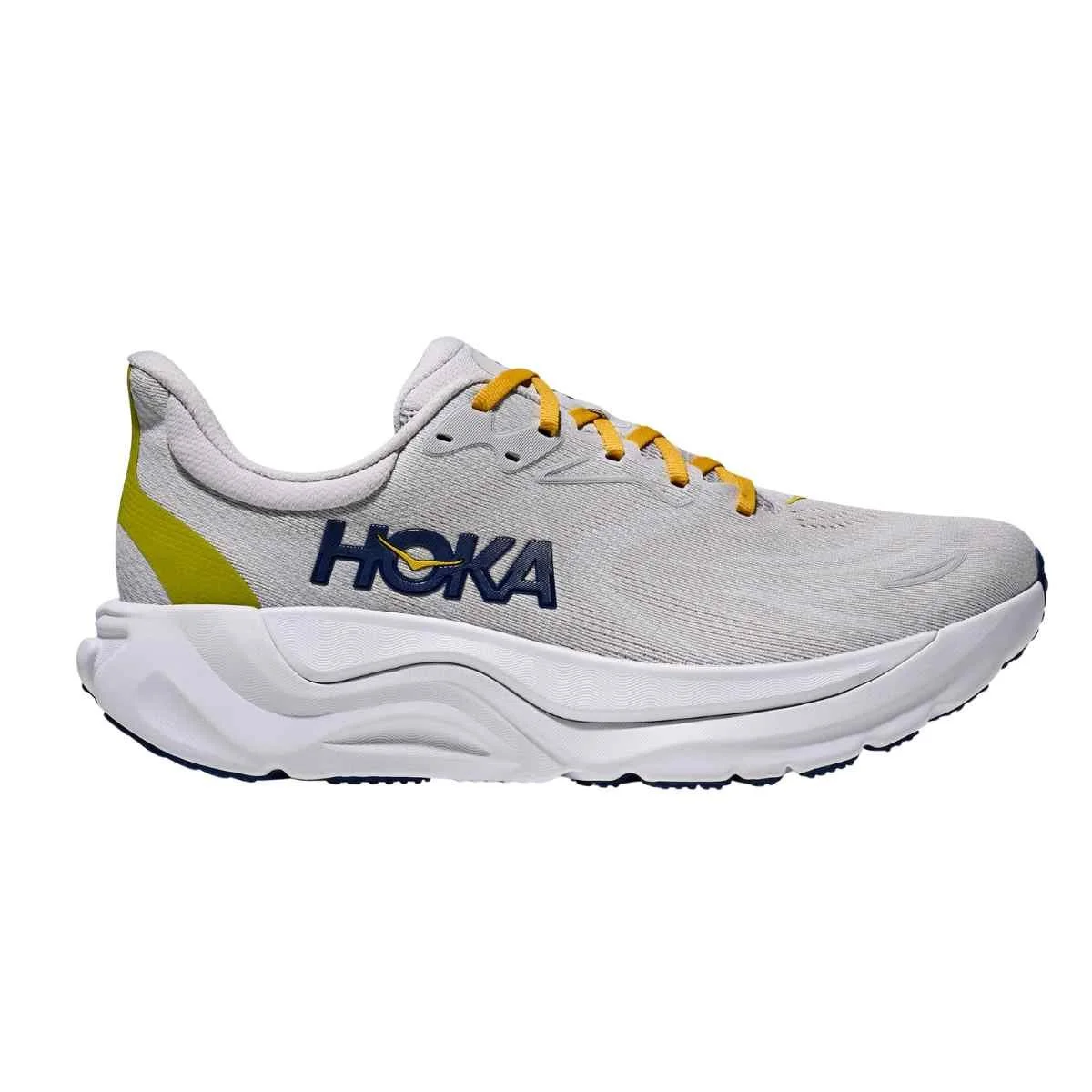
Sizes available: 7 - 15
Widths available: Yes+
Drop: 8.0 mm
Stack height: 39.8/ 31.8 mm
Weight: 19.5 oz
What we liked: Well-cushioned, grippy enough tread for gravel, stability platform prevents overpronation
What we didn’t like: Not the best traction or durability
The HOKA Arahi 8 is a stability shoe that still maintains that soft Hoka platform. They have HOKA’s enhanced H-frame technology, a stabilization system that combats overpronation without feeling stiff or rigid. The result is a smooth-feeling stability shoe with just enough tread to cut this gravel running shoes guide. However, they’re more suited for road and light gravel paths.
HOKA Arahi 8
men's
Women's
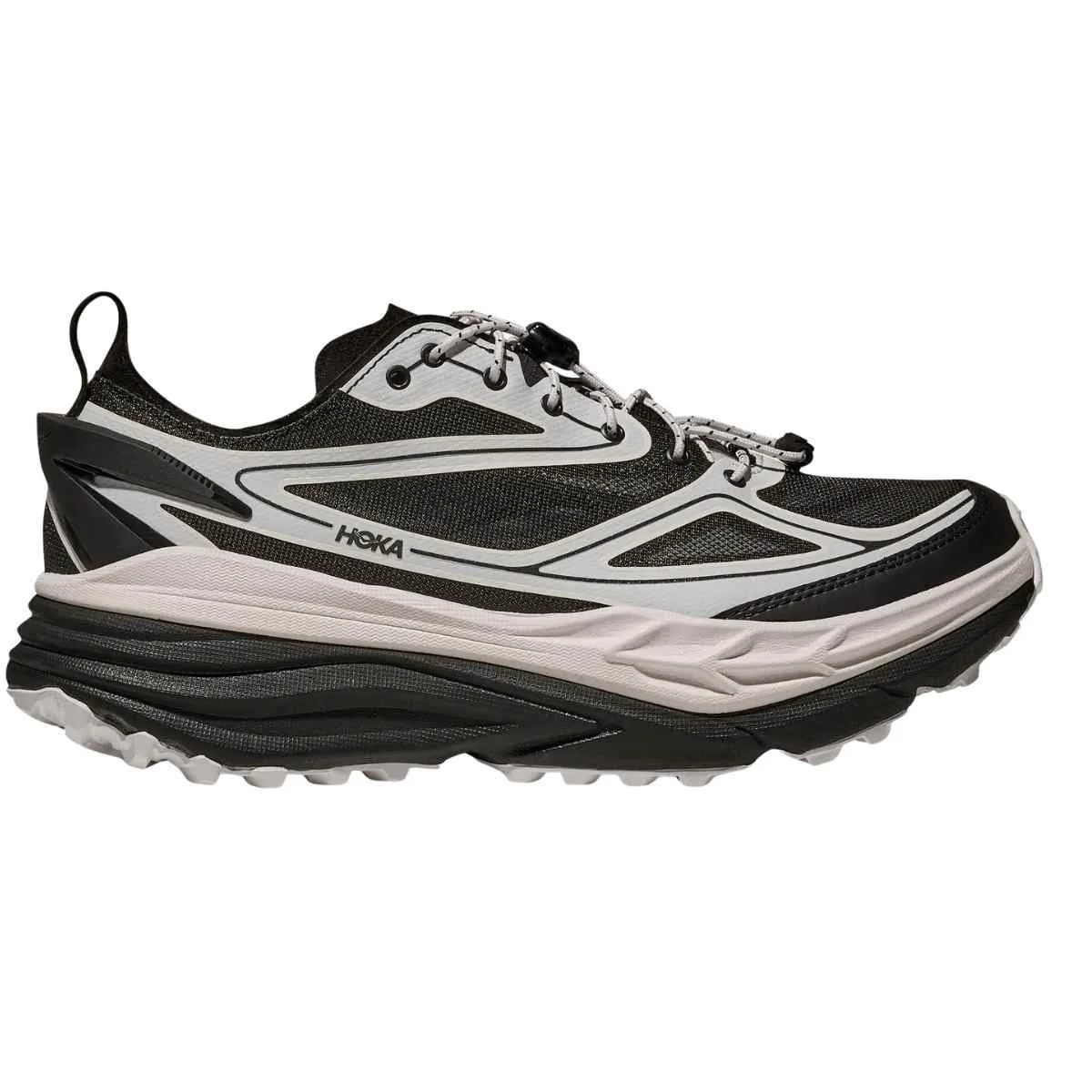
Sizes available: 4 - 14
Widths available: No
Drop: 5.0 mm
Stack height: 43.5/ 38.5 mm
Weight: 24.8 oz
What we liked: Well cushioned, stable, solid push-off
What we didn’t like: Not enough gravel features for this guide
The HOKA Stinson One7 has the most stack of any gravel running shoe we tested here. They have 43.5 mm of stack in the heel and 38.5 mm in the forefoot. They’re great for recovery runs on roads and gravel paths. We like these shoes because they provide the most cushioning of any gravel shoe we tested. Still, they’re, but they’re more geared towards pavement with the occasional gravel path than a dedicated gravel shoe.
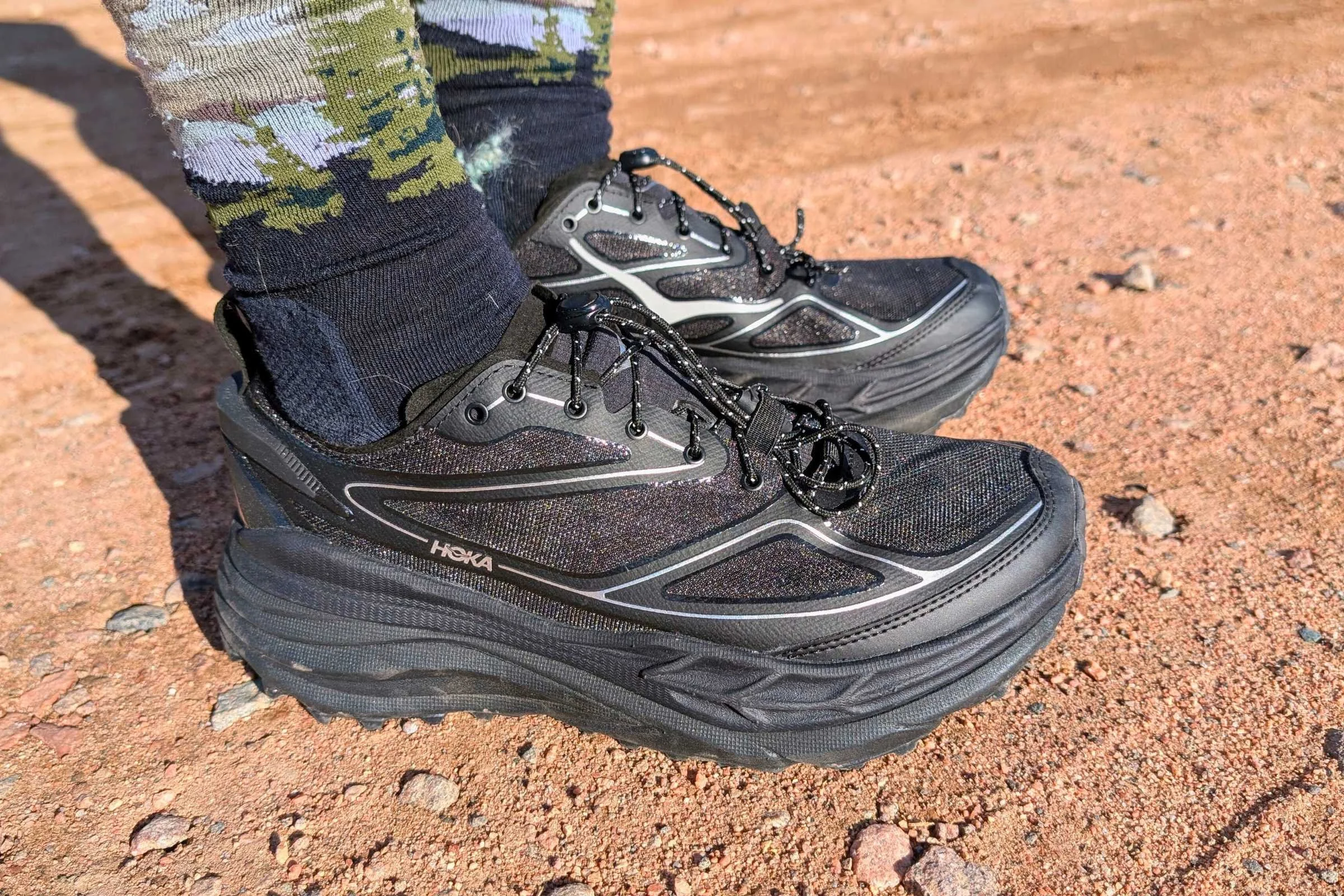
HOKA Stinson One7
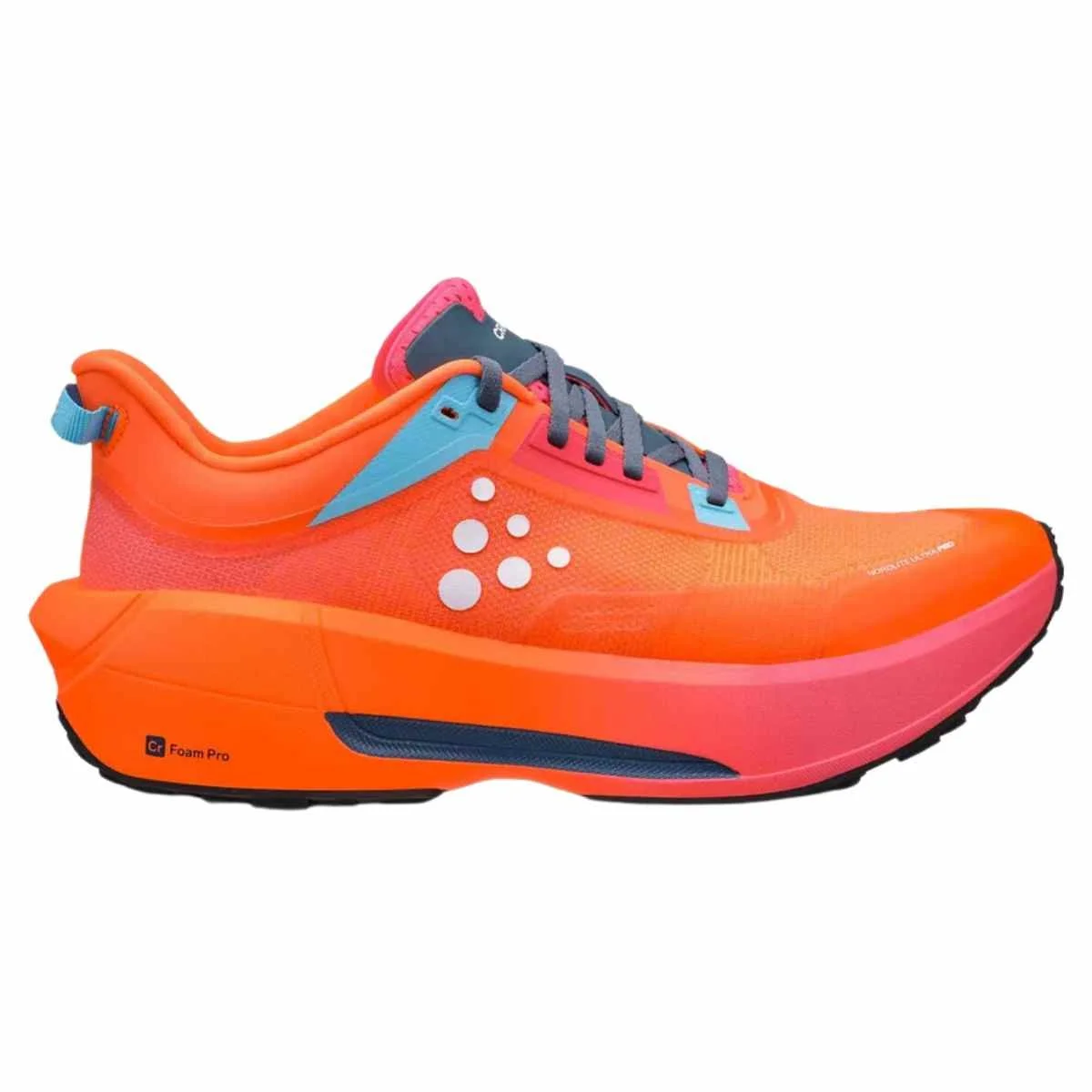
Craft Nordlite Ultra Pro
Sizes available: 8 - 13
Widths available: No
Drop: 6.0 mm
Stack height: 40.5/ 35.5 mm
Weight: 23 oz
What we liked: Lightweight, comfortable
What we didn’t like: Expensive
After wearing the Craft Xplor 2 and Xplor Pro, we were very excited to try the Craft Nordlite Ultra Pro as well. These shoes are lightweight and feel fast on the roads. However, they seem to fall into the trap of many “gravel” shoes, where they’re simply a road shoe that’s marketed as a gravel shoe. Yes, they do fine on gravel surfaces, but they don’t feel any different than a road shoe. And the Nordlite Ultra Pros are very expensive. For a road running shoe that’s been tweaked in order to call it a gravel shoe, we don’t want to pay that much more.
Craft Nordlite Ultra Pro
men's
Women's
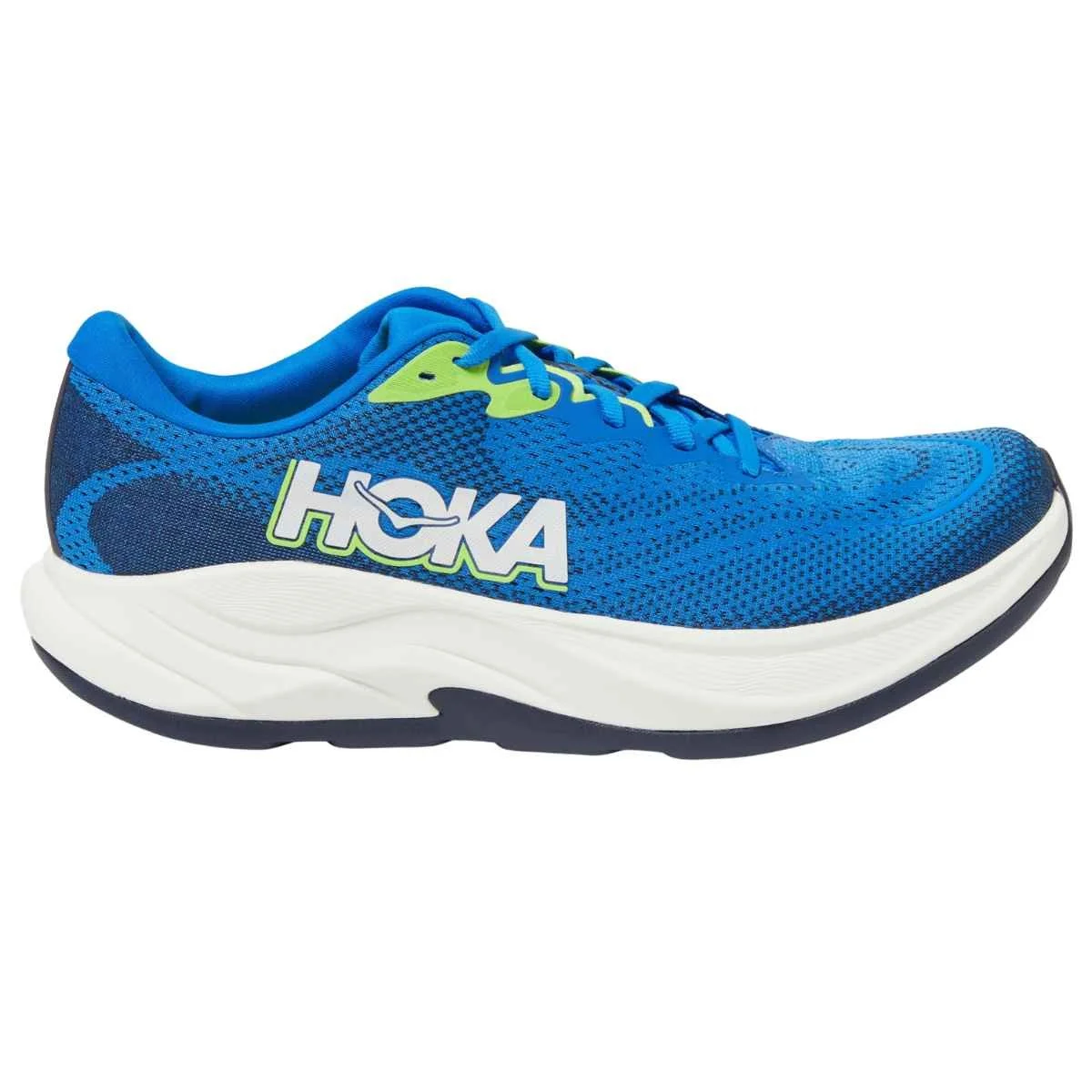
HOKA Rincon 4
Sizes available: 7-16 (men’s), 5-12 (women’s)
Widths available:
Drop: 5 mm
Stack height: 36/31 mm (men’s), 35/30 mm (women’s)
Weight (pair): 16.1 oz (men’s), 13.6 oz (women’s)
What we liked: Lightweight, affordable, comfortable
What we didn’t like: Less tread than ideal for a gravel shoe
The HOKA Rincon 4 is a lightweight, very affordable daily trainer running shoe. At $125, it's a good entry-level option that weighs just 8 ounces, which is relatively light for a cushioned shoe. While we like the price of these shoes, we don’t think they’re great for gravel. The outsole tread is very smooth, and the lightweight design doesn’t hold up well to rougher surfaces. They’re better suited as a road running shoe.
HOKA Rincon 4
men's
Women's
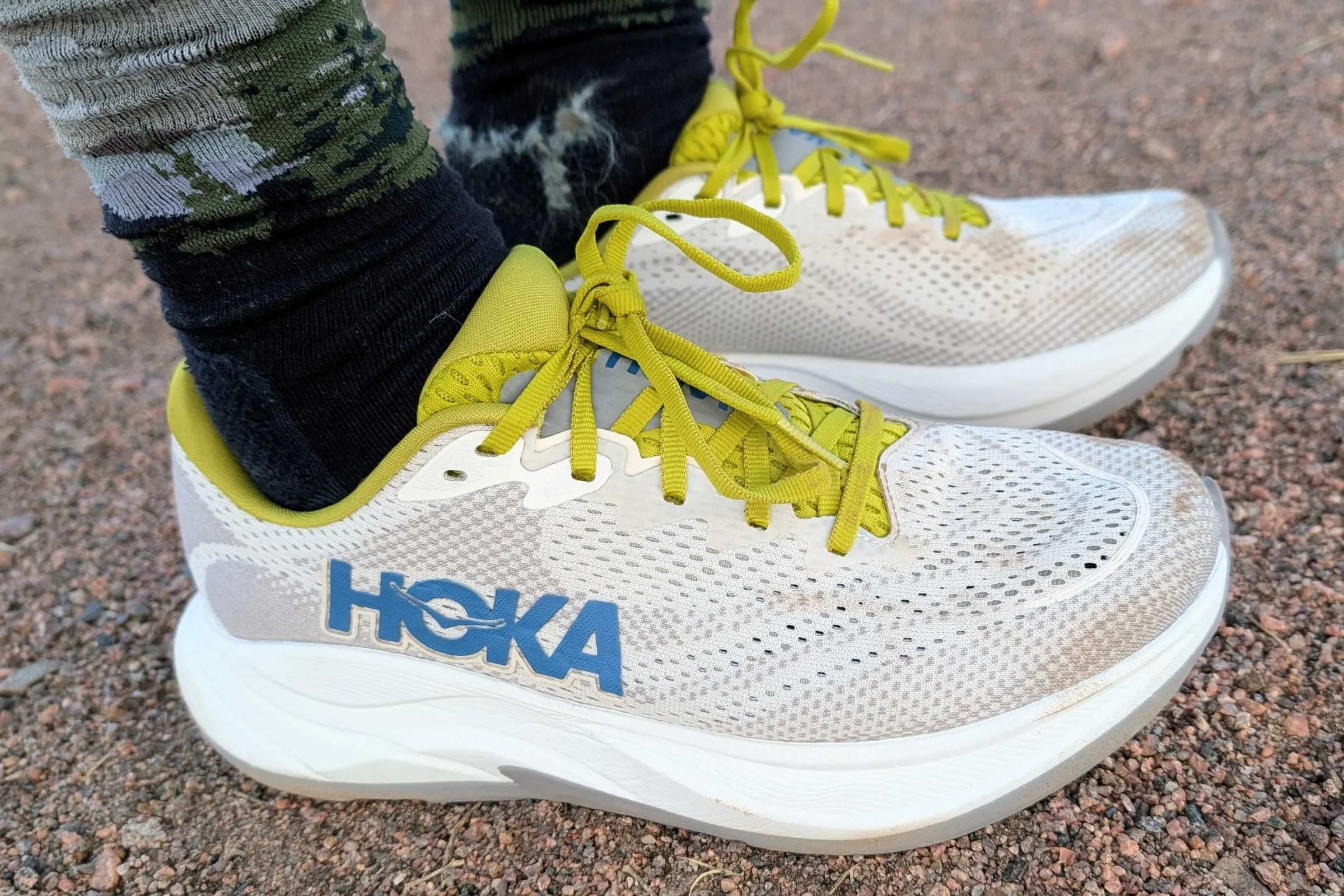
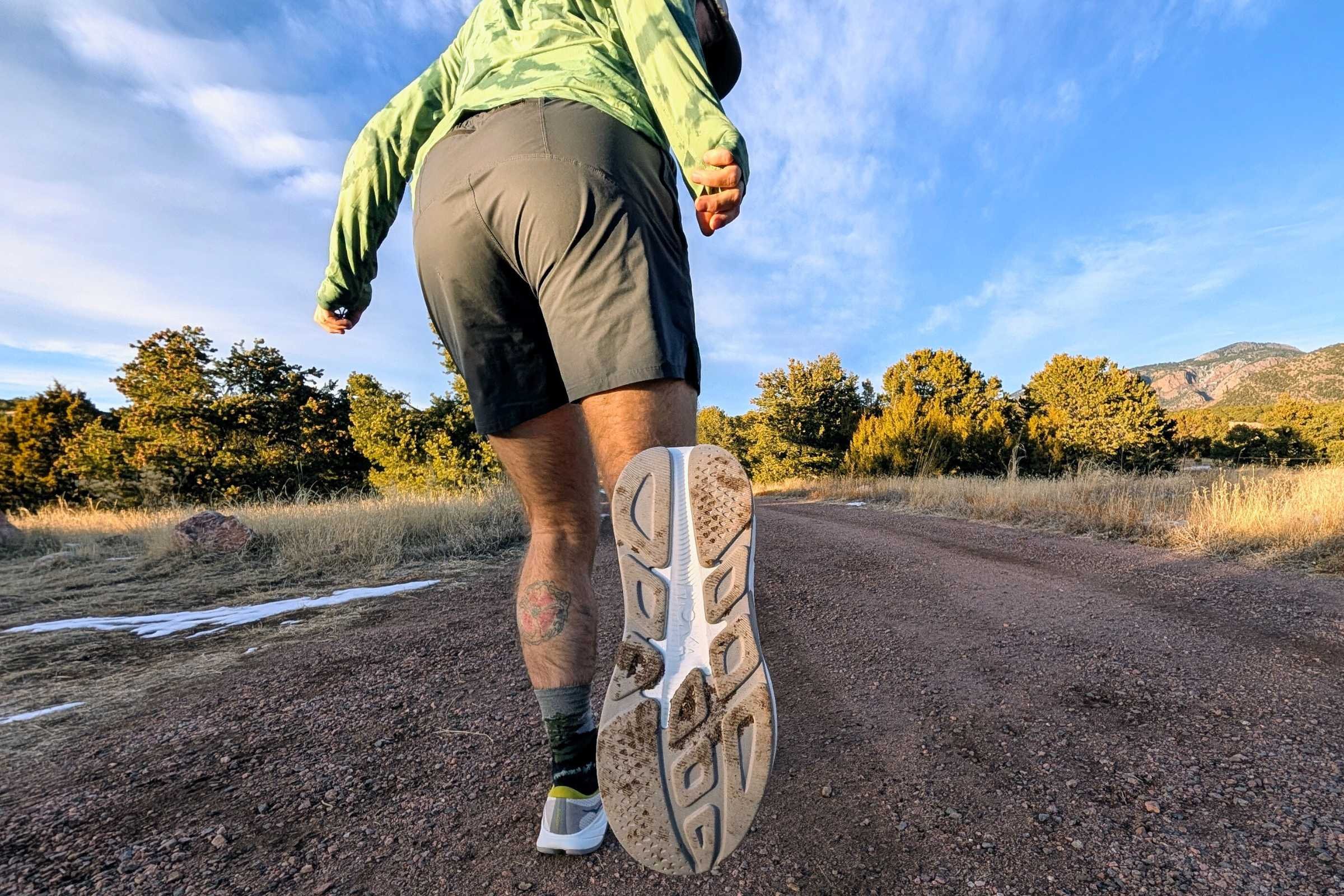
How to Choose a Gravel Running Shoe
Here are some things to consider when choosing the best gravel running shoes for your specific needs.
Tailor it to your running needs
Every runner should consider their running and training goals and, based on those, choose a running shoe that fits those goals.
Ultimately, the best gravel running shoe for you will be comfortable for you. We recommend trying on a bunch of shoes and selecting the ones that feel best. Every foot is different, and certain brands fit better on certain types of feet.
Why gravel shoes are great for beginners
Gravel running shoes are a great running shoe to start with because they’re designed to work on everything from sidewalks and city streets to dirt paths and gravel roads. And when you’re just starting out running, you don’t know where you’ll run most yet.
What to look for in gravel shoes for beginners and occasional runners
For beginners and occasional runners, we think a gravel running shoe with plenty of cushion is ideal because it protects your joints from impact as you get used to running. We also believe that versatility is ideal for less-frequent runners, and gravel running shoes are highly versatile. You can wear those same shoes for walking, going to the gym, and around town.
If you haven’t worn many different types of running shoes, start with a neutral support shoe. Neutral shoes accommodate most foot types. (See below for more on neutral support and stability). Finally, if you’re just starting to run, you might want to select a less expensive shoe.
We like the Nike Pegasus, Salomon Aero Blaze GRVL, and On Cloudvista for runners just starting. All these shoes have plenty of cushion and are versatile enough to wear for walking, at the gym, and around town.
What gravel shoes should serious runners or those training for a race look for?
Serious runners or those training for a race may want to have at least two pairs of shoes to swap between during heavy training blocks. For instance, you’ll want a lightweight shoe with less cushion and enhanced energy return for speed workouts. And you’ll want a more cushioned shoe to switch into for longer runs and recovery days.
We like the Salomon Aero Glide GRVL, Salomon Aero Blaze GRVL, Craft Xplor 2, Craft Xplor Pro, and Nike Pegasus Trail 5 for speed workouts and intervals. These are some of the lightest shoes in our testing lineup, and they all offer stellar energy return for speedy strides and high-intensity workouts.
For longer runs and recovery days, we like the Hoka Stinson One7, Craft Xplor 2, Craft Xplor Pro, and Hoka Arahi 8.
What to look for in gravel running shoes
We wrote a separate article on what to look for in a trail running shoe, which also applies to gravel running shoes, but we’ll go through the most important points below to help you choose the best gravel runners here as well.
Comfort
A comfortable gravel-running shoe can be the difference between having a great day and sore feet. We recommend trying on as many styles of gravel running shoes as you can to see which feels the most comfortable to you. Everyone’s feet are different, and something that fits your feet well will be the most comfortable.
Other factors play into the comfort of gravel shoes: underfoot cushioning, tongue design, and even the thickness of the sole. Exposed seams can chafe or rub over the course of a long run, too. Try on a few pairs of running shoes and see for yourself.
Stability
In the running shoe world, “stability” is also a category. Running shoes are sometimes categorized as either “neutral,” “stability,” or “cushioned.” In this sense, “stability” refers to the amount of arch support a shoe provides to prevent overpronation. Read the “Arch Support” section below for more on this, but the HOKA Arahi 8 is the lone stability shoe we tested for this guide.
Traction
Gravel running shoes have a moderately grippy tread on the underside to maintain traction over rough roads and single-track. This tread is found on the shoe’s outsole, or the part that contacts the ground. The tread digs into the ground, giving you traction.
The lugs on gravel runners are usually relatively small, about 1-3 mm, compared to trail running shoes, which have 3-6 mm lugs generally. But gravel shoe lugs are much larger than the smooth tread of a road running shoe, which don’t have any lugs at all.
Another factor contributing to traction is the rubber compound used in the outsole to make up the tread. Not all rubber is equal. If you walk across an angled rock surface in climbing shoes, then road running shoes, you’ll notice a difference in how well the shoes grip the slick rock. For this reason, gravel running shoes tend to use stickier rubber than road running shoes. But there is a lot of variation in grip and traction among gravel running shoes.
The Craft Xplor 2, Xplor Pro, and Yama T1 have some of the stickiest rubber outsoles, while the On Cloudvista and Hoka Rincon 4 have some of the least grip.
Gravel-running shoes with good stability fit your foot well, and that means you can get good traction.
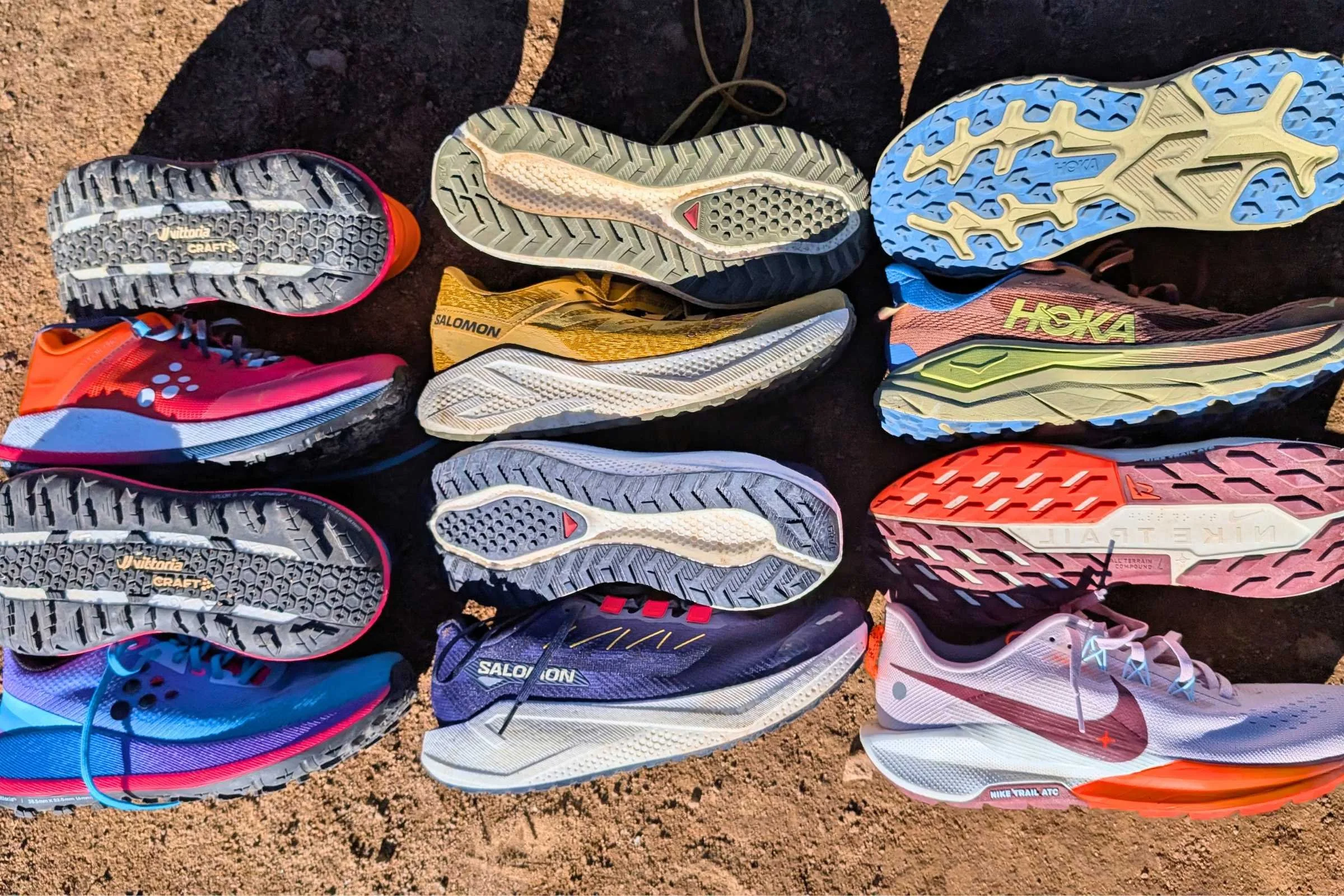
The outsole design and materials greatly affect grip on gravel surfaces.
Responsiveness
Responsiveness is the amount of energy a shoe provides when you push off the ground. More responsive shoes feel bouncy, making you feel like you’re getting some assistance with every step. Runners who want to go faster tend to like a more responsive shoe.
The most responsive gravel shoes we tested are the Craft Xplor 2, Craft Xplor Pro, Salomon Aero Glide GRVL, and Salomon Aero Blaze GRVL. The Aero Glide GRVL has a supercritical EVA foam midsole, which means the foam is made with nitrogen gas injected into it. This creates tiny, uniform air pockets in the foam, making for a springier ride than traditional EVA. The other models listed above don’t have a supercritical EVA midsole, but they’re still very responsive.
The On Cloudvista 2, which uses On’s CloudTec Phase midsole, is also very responsive thanks to the unique midsole design. This midsole has holes that compress when you land, then bounce back into shape as you push off, much like a spring.
Stack Height
Stack height refers to the total height of everything between the bottom of your foot and the ground in a running shoe. Stack height comprises the outsole and the midsole, where the cushion and supportive parts of the shoe are found. Stack height is often measured in two places: under the heel and under the forefoot, since most gravel running shoes have different measurements in these areas (see heel-to-toe drop below).
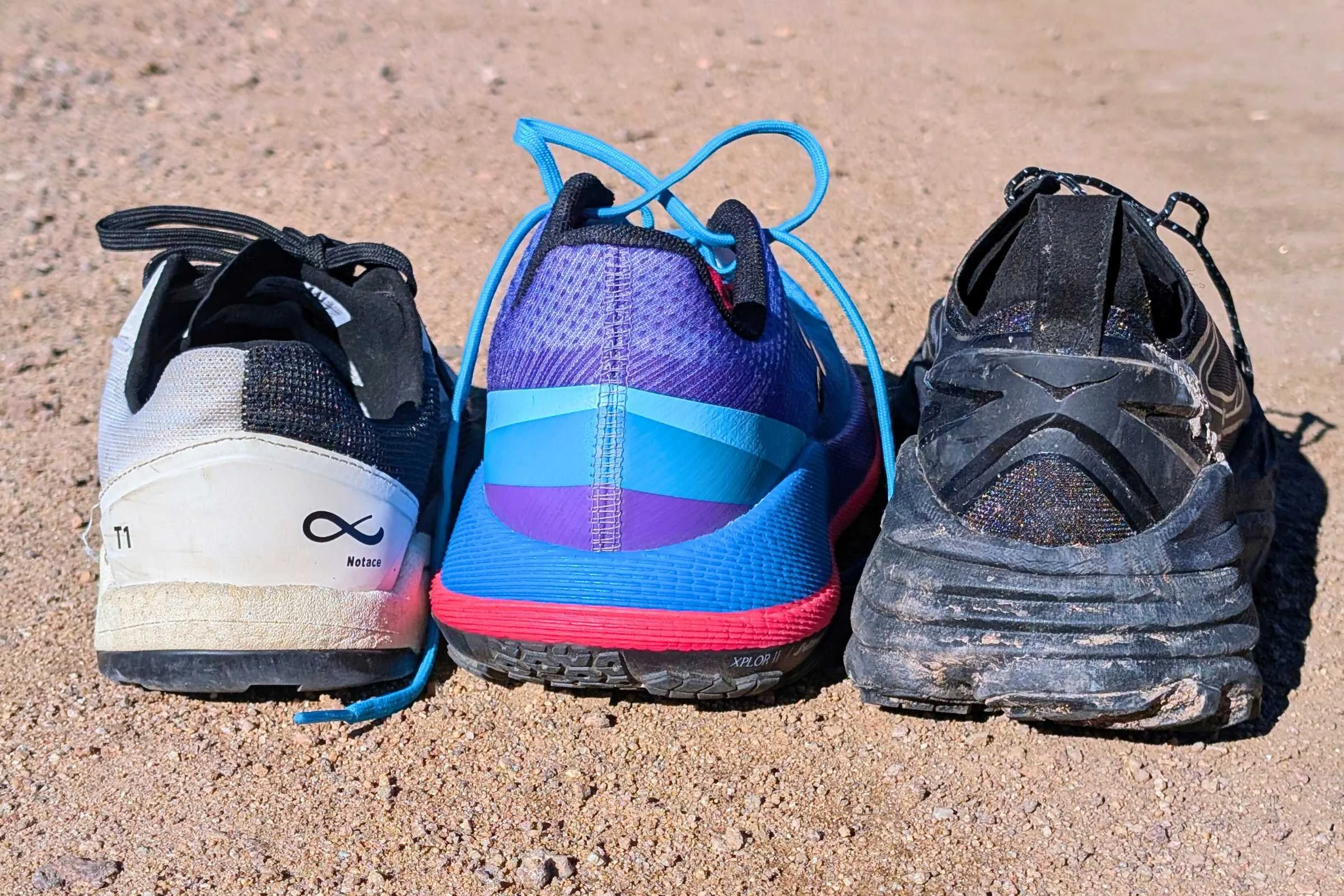
A closeup of the heel stack height of The Notace Yama T1, Craft Xplor 2, and HOKA Stinson One7.
Cushioning
A gravel running shoe with adequate cushioning will keep your feet comfortable and happy over a long run. You can tell how much cushioning a running shoe has by looking at its stack height, measured in millimeters. However, more cushion is not always better.
A gravel running shoe with a lot of cushioning will affect ground feel and stability. If you’re higher off the ground, your foot can more easily roll and could cause an ankle sprain. Not enough cushioning will tire your feet, though. The right amount of cushion will vary based on the runner and the conditions.
Cushioning directly correlates with stack height, which is how thick the midsole foam is. Stack height is measured in millimeters. Most road running shoes have between 25 and 40 mm of stack height, with more cushioning in the heel and slightly less in the forefoot.
Maximum cushion isn’t always best, however. More stack height means more foam, which means heavier. Maximum cushion shoes are suitable for daily training runs, long runs, and recovery days. Less cushioned shoes will feel faster, lighter, and more responsive. These are best for faster-paced runs.
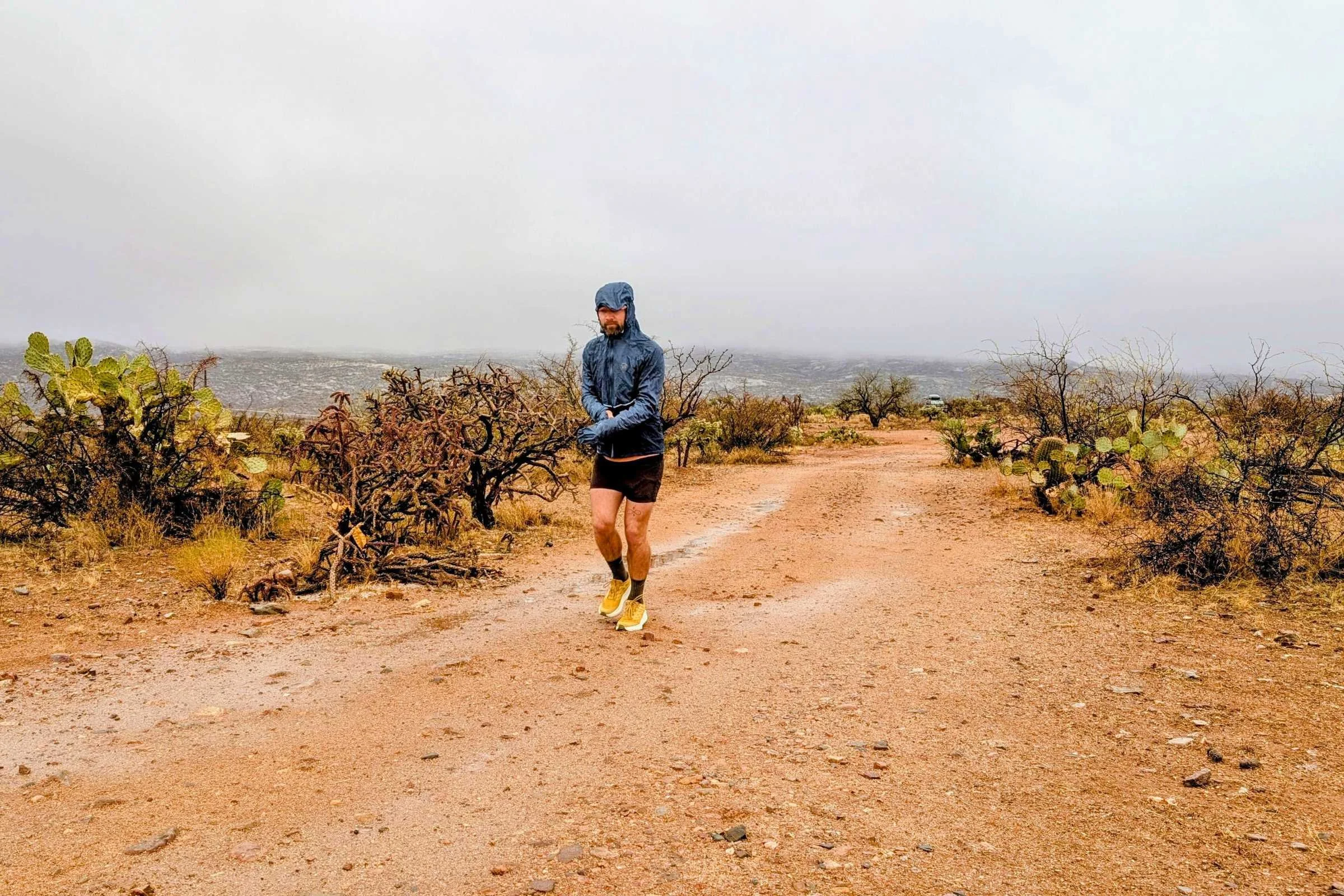
The Aero Glide GRVL making quick work of long dirt roads.
Heel-to-toe drop
Heel-to-toe drop refers to the difference in stack height between the heel and forefoot of a shoe. It is, quite literally, the number of millimeters the shoe drops from the heel to the midsole.
Some gravel running shoes are “zero drop.” These shoes have no heel-to-toe drop and allow your foot to move in the same ways it would if you were barefoot.
Some people love zero-drop shoes. Some people prefer some amount of drop. There is no wrong answer here.
More heel-to-toe drop makes you naturally lean forward and helps propel you up a hill. But, too much heel-to-toe drop can make you feel unstable, so finding the right balance of forward lean and stability is key here. The “best” heel-to-toe drop usually comes down to personal preference. We recommend starting with a gravel running shoe with about 4-8 millimeters of drop, which is average for running shoes, then going from there.
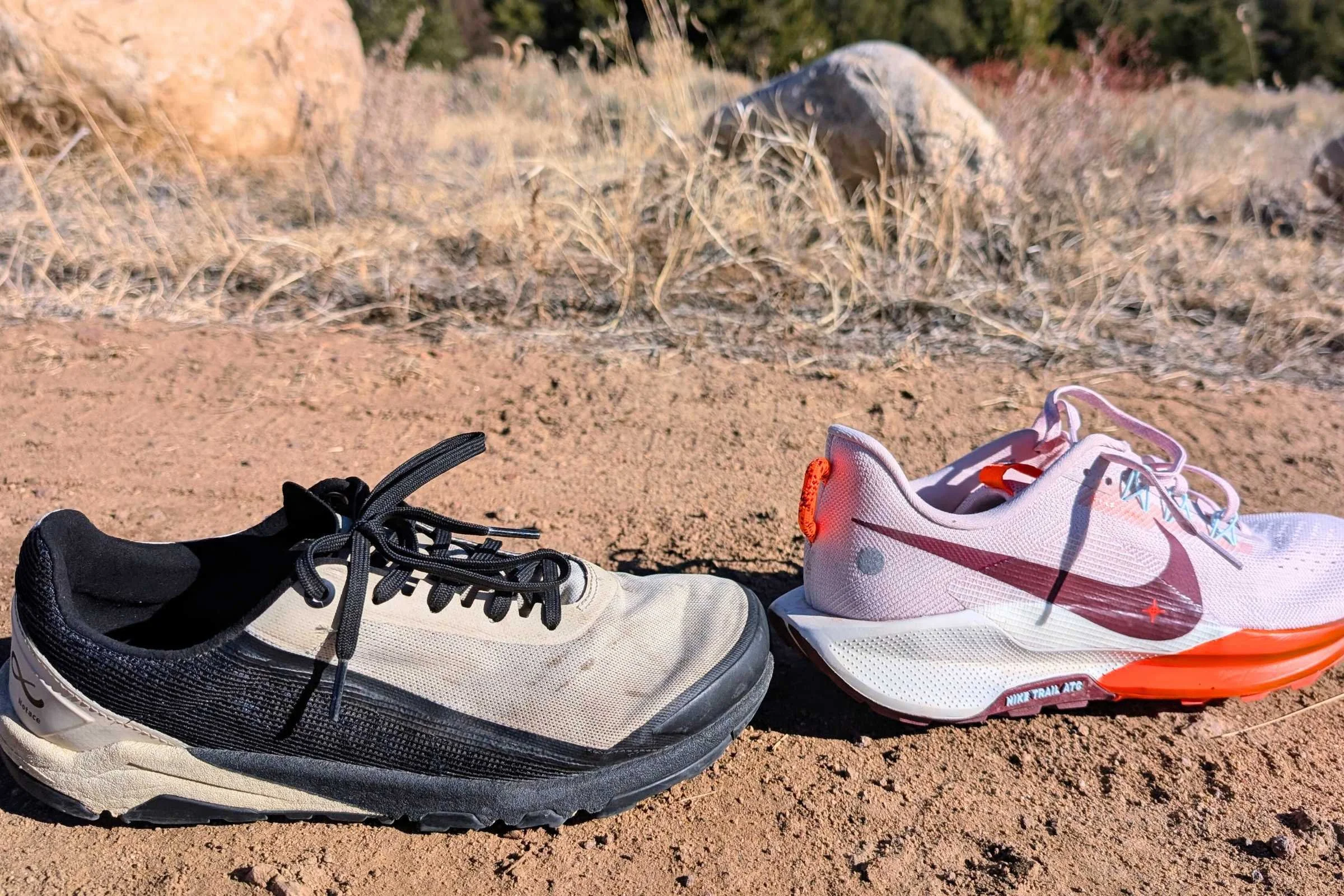
The Notace Yama T1 has 15 mm of stack height and a zero drop platform, while the Nike Pegasus Trail has a 37 to 27.5mm stack height (from heel to toe).
Arch support
Arch support in running shoes helps prevent overpronation, where your foot rolls inward with each footfall. It’s hard to know if you overpronate (where your foot rolls in), supinate (where your foot rolls out), or have a neutral stride (where it doesn’t roll in or out). You can have someone else watch your stride, and many running shoe stores have treadmills for this reason.
Most of the shoes we tested offer neutral support, which gives some arch support. You can also add insoles or personalized orthotics to any neutral shoe to control overpronation.
Stability features
As we mentioned above, road running shoes with stability features provide extra midsole support to prevent overpronation. Usually, this means a higher arch.
We tested the HOKA Arahi 8, which is a stability shoe. As we said above, you can add orthopedic inserts or stability insoles to neutral shoes to custom-tailor them to your stability needs.
Most gravel running shoes provide some arch support, but most aren’t “stability” shoes. If you need more arch support, we recommend adding aftermarket insoles. The HOKA Arahi 8 are also stability shoes. So they’re worth trying if you need a gravel shoe that prevents overpronation.
Generally speaking, a more minimalist running shoe will have less arch support than a shoe with a sturdier midsole.
Ground feel
Ground feel refers to how much your feet can feel the surface underneath you through the underside of a shoe. Generally speaking, the lower the stack height, the better you’ll be able to feel the ground. More ground feel will be more stable, but too much ground feel can make your feet sore after a long day of running over uneven terrain. For gravel shoes, the terrain is relatively smooth, so more ground feel won’t wear out your feet as much as it will on rocky trails, but more ground feel will make your feet feel more tired after 10+ miles.
Protection
Most gravel running shoes have some protection in the upper for rocks and debris on rough roads. However, gravel running shoes don’t protect your feet nearly as much as trail running shoes.
Some trail running shoes have a rock plate to protect the underside of your foot from sharp rocks, but none of the gravel shoes we tested here have that feature.
The most obvious place where gravel shoes protect your foot is in the protective rubber toe cap. Some gravel running shoes have a large rubberized toe box that wraps around the top of the shoe, much like a trail running shoe. Some trail runners have less toe protection, or none at all, like a road running shoe.
Some gravel running shoes also have extra material on the sides of the heel to protect your foot further. Depending on what kind of roads you’ll be running on
Depending on the surfaces you’ll be running on most often, pick a shoe with more or less protection. If you’re mostly going to be running on paved roads with a few short dirt and gravel connections, you don’t need as much protection as you would if you’re primarily running on rugged and remote dirt roads.
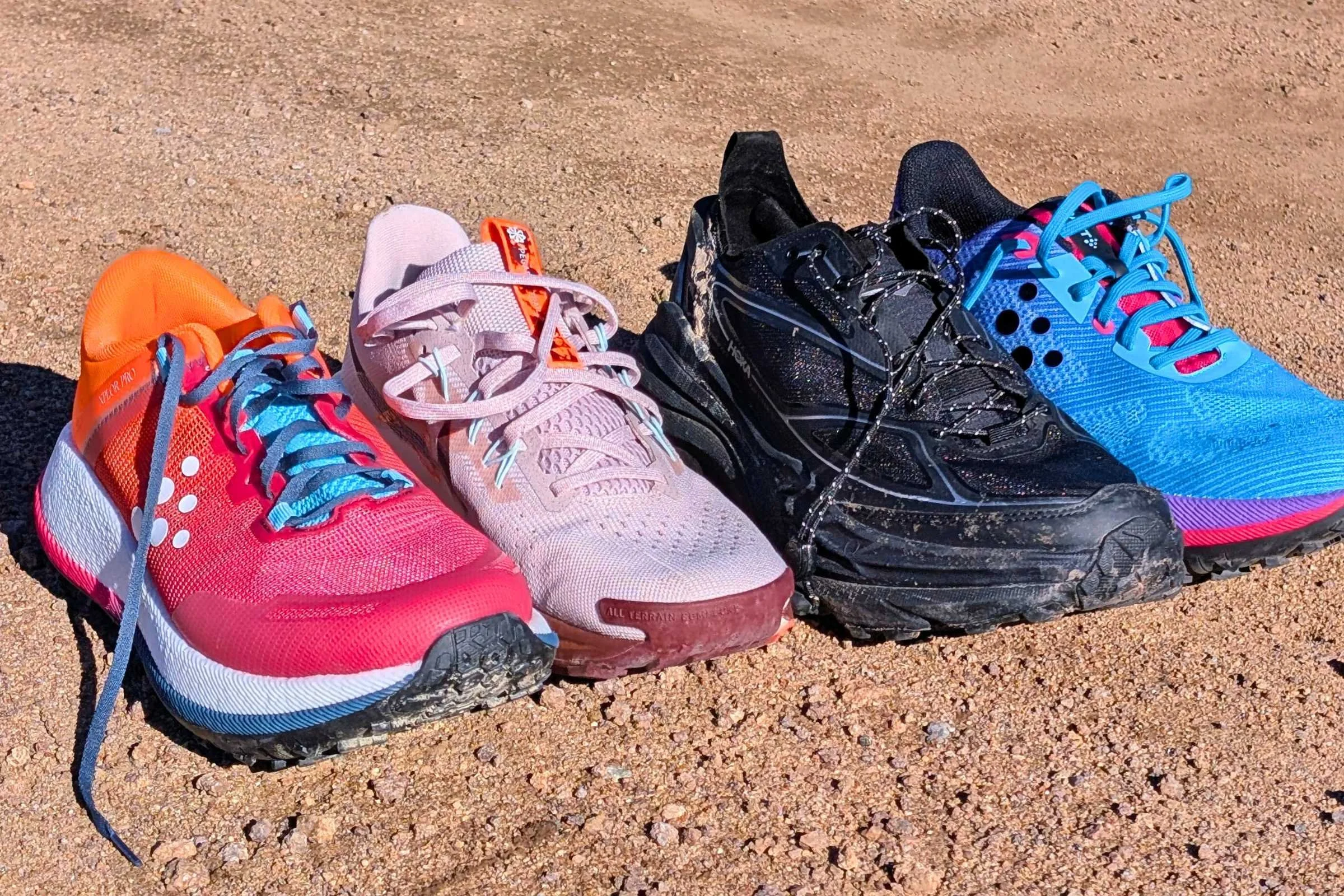
The Craft Xplor 2, Nike Pegasus Trail 5, HOKA Stinson One7, and Craft Xplor Pro all provide some protection for your toes in the upper.
Weight
Weight matters in gravel running shoes because you’ll use your legs to lift each shoe 1,000s of times every run. If your shoes are heavier, they’ll be harder to lift repeatedly, and you won’t run as fast.
Gravel running shoes tend to be lighter than trail running shoes, but not as light as road running shoes.
Breathability
Most running shoes feature breathable mesh uppers. Breathability is crucial because you’re working hard when running, and if your feet overheat, they’ll sweat, which can cause blisters.
Most running shoes are adequately breathable, but some brands offer GORE-TEX or waterproof versions for colder weather. These shoes are not as breathable, and you probably won’t be as comfortable when running on hot days. Overlays of materials other than mesh can also reduce breathability in a shoe. We recommend getting the standard breathable mesh version of your shoe of choice unless you plan to use your shoes in a cold and wet climate.
Fit and sizing
Fit and sizing will affect how comfortable a pair of running shoes is. That’s why it’s best to try on running shoes. We recommend trying on shoes at the end of the day, when your feet are the most swollen.
Some people like to get a half size larger in running shoes. If you’re just starting, you may want to size up to see if a half size bigger feels comfortable. Sam, our main tester for men’s running shoes, has never needed to size up, but he’s been active his entire life.
Ultimately, you want your running shoes to be comfortable. If they’re too small, you could lose a toenail or get blisters on your toes. If your shoes are too big, your heel might slip as you stride, causing discomfort and possible blisters on the heel.
Some shoes fit wider or narrower, and some have a larger toe box. Many running shoes even come in wide sizing, but most gravel running shoes are too niche to come in both wide and standard sizing.
Toe box space
The toe box, where your toes sit in a shoe, needs to be roomy enough so that your toes don’t get smashed into one another. Toe box space comes down to foot shape and preference. If you have a wider foot, try shoes with a wider toe box, like the Notace Yama T1, or get a pair of shoes in wide sizing.
Heel slippage
Heel slippage will negatively affect the comfort and stability of a gravel running shoe. If your heel doesn’t fit into a shoe, it will slide slightly every time you push off the ground. This sliding can cause chafing and blisters on the back of your heel.
When trying on running shoes for the first time, be sure to wear the socks you’d normally wear when running. Then, find an inclined surface to push onto to determine whether the heel slips on this particular model.
If you like how a shoe feels, but the heel slips, you can also try the runner’s loop lacing method. This technique is a lacing alternative that locks your heel in place. See this article from REI for more tips on lacing your running shoes.
Durability
Lighter shoes tend to be less durable than heavier ones. But that’s not always the case.
Generally, running shoes should be replaced when the midsole is compressed. This often happens before you’ve worn through the outsole or put a hole in the upper material. Most people recommend replacing your running shoes every 300-500 miles. If you’re experiencing joint pain, it’s likely time to replace your shoes. If you still feel good in a pair of shoes and the outsole isn’t worn through, keep rocking them.
Flexibility
Most running shoes flex and bend in the midsole. Some shoes incorporate a rigid midsole insert to propel you forward as you stride, making the shoes less flexible. We prefer a relatively flexible shoe, but not too flexible. More rigid shoes have their place for speed work and racing, but they’re less comfortable as a daily trainer. Most of the gravel shoes we tested here feel about as flexible as road running shoes. The Notace Yama T1 is the most flexible gravel shoe we tested, by far. You can easily fold this shoe in half.
The Craft Xplor 2, Craft Xplor Pro, and Hoka Challenger 8 are the least flexible shoes we tested here. Each of these feels more like a trail shoe than the other, more road-running leaning, gravel shoes.
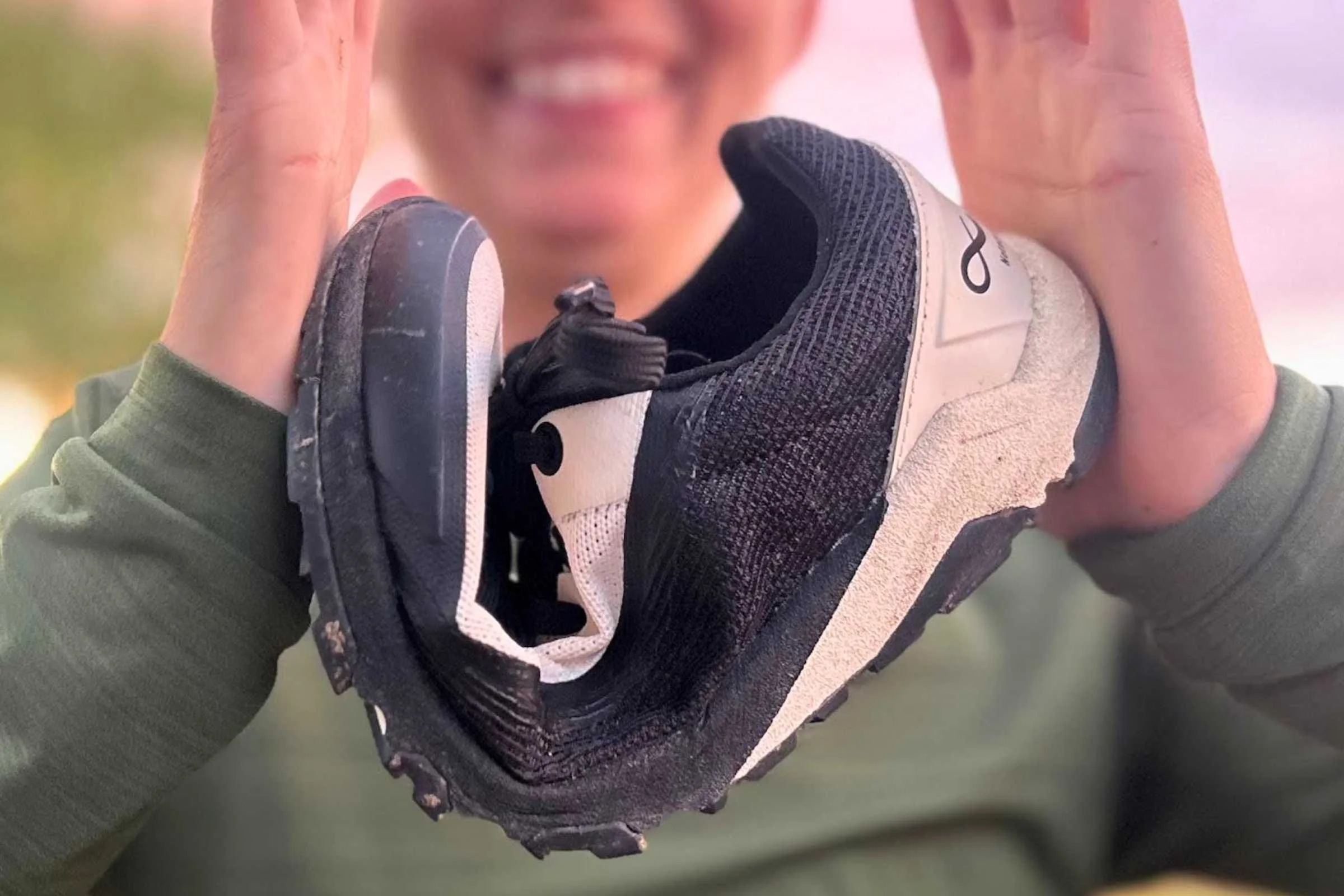
The Notace Yama 1 shoe is the most flexible gravel shoe.
Material
LIke most running shoes, gravel running shoes use different materials for their uppers, midsoles, and outsoles.
The upper is typically mesh to make the shoe light and breathable. The midsole provides stability and cushion in a running shoe. Midsoles are usually made of some type of foam, and some brands add other proprietary tech in the midsole as well for increased rebound, cushion, or both.
The shoe's outsole, or tread, is made of rubber. The type of rubber varies widely between shoes, and you can dive deep into this if you want. We find rubber compounds are more important for running shoes when going off-pavement. For gravel running shoes, you don’t necessarily need the stickiest rubber outsole, but you still want it to be grippy enough for traction on gravel, crushed limestone, and loose dirt roads.
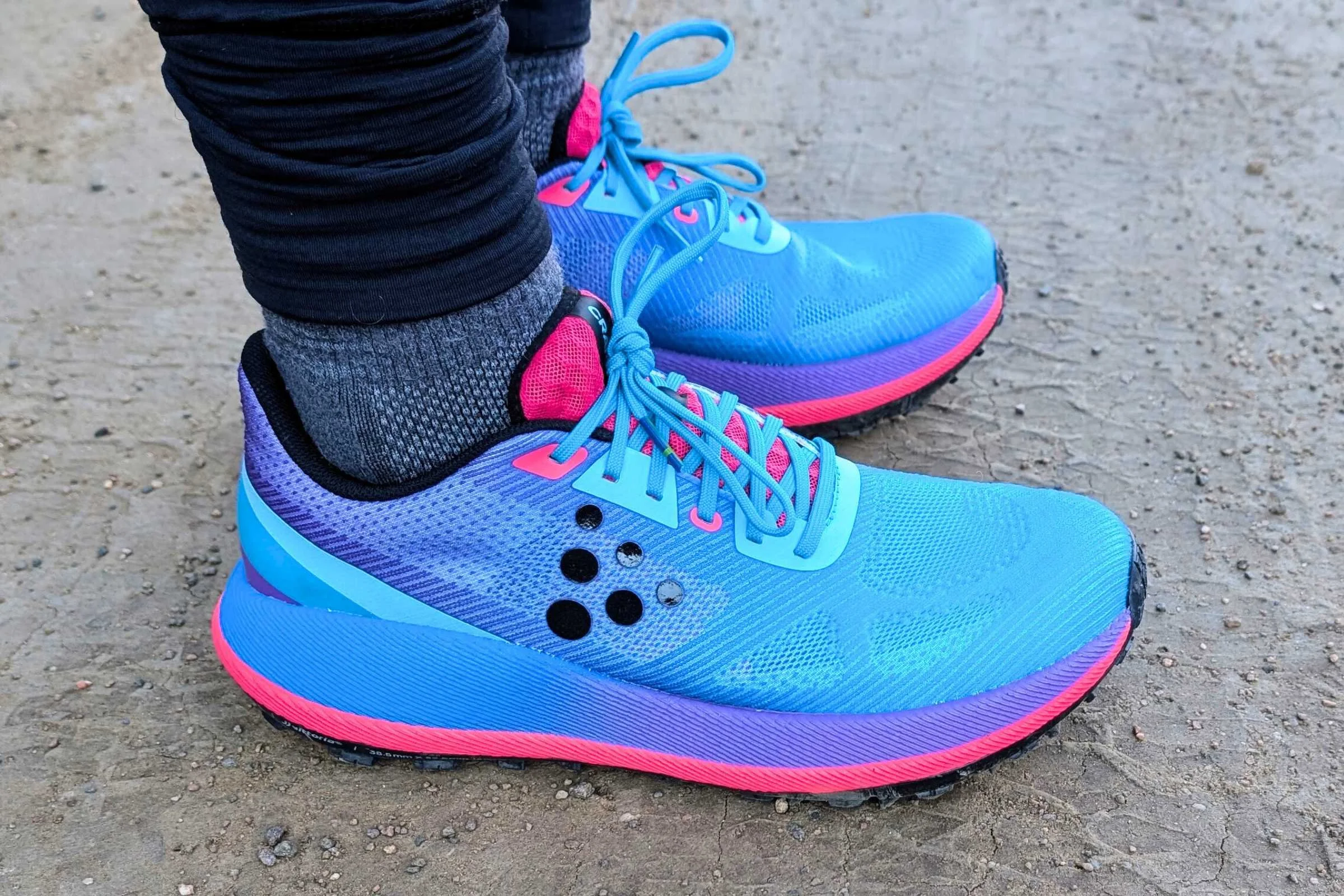
The Craft Xplor 2 features a lightweight upper similar to a road running shoe, but with more lateral support
Style/colors
You want your shoes to look good when you’re running. While style isn’t the most important factor, most running shoes look pretty cool and come in many fun color combinations. Many running shoes have at least some hints of reflectivity on the logos or laces, but if you want to be seen on the road easily, you can opt for neon colors and check out our Best Reflective Gear for Running in the Dark guide.
How should gravel running shoes fit?
Gravel running shoes should fit comfortably above all else. They should have enough room in the toe box that your toes don’t squeeze together, which can cause blisters while running. The shoe’s heel cup should hold your heel firmly in place to prevent uncomfortable rubbing as you push off with each stride. When trying on shoes, we like to test whether we can wiggle our toes with them laced snugly and whether the heel slips when holding the shoe in place while attempting to lift our heel.
For more information on sizing running shoes, see our guide to sizing trail running shoes.
Some running shoes come in wide sizing. For men, wide sizing is often referred to as “2E” sizing. Some gravel running shoes, such as the [HOKA Challenger and TK], come in wide (2E) and standard-width (D) sizes.
Some running shoes are simply wider than others. Shoes designed for long distances, such as the Craft Xplor 2, Craft Xplor Pro, and HOKA Challenger 8, have a wider toe box to allow your forefoot to spread out over the course of a long day. Depending on the application, we’ve worn both wide sizes and standard-width trail runners.
If you have other sizing needs, such as pronation, we recommend trying several styles of running shoes to see which provides the best arch support for your feet and helps prevent overpronation. Everyone’s feet are different, so it's best to try several models.
Breaking in new gravel running shoes
Most gravel running shoes are comfortable out of the box, but breaking them in will help your body adjust to a new pair of shoes. We recommend taking them on shorter runs initially. If you have an older pair of shoes, alternate between running in your new and old shoes.
You may need to stop and adjust the lacing as your foot settles during your first few runs with a new pair of running shoes. For more information on different lacing techniques, see REI’s guide to lacing running shoes.
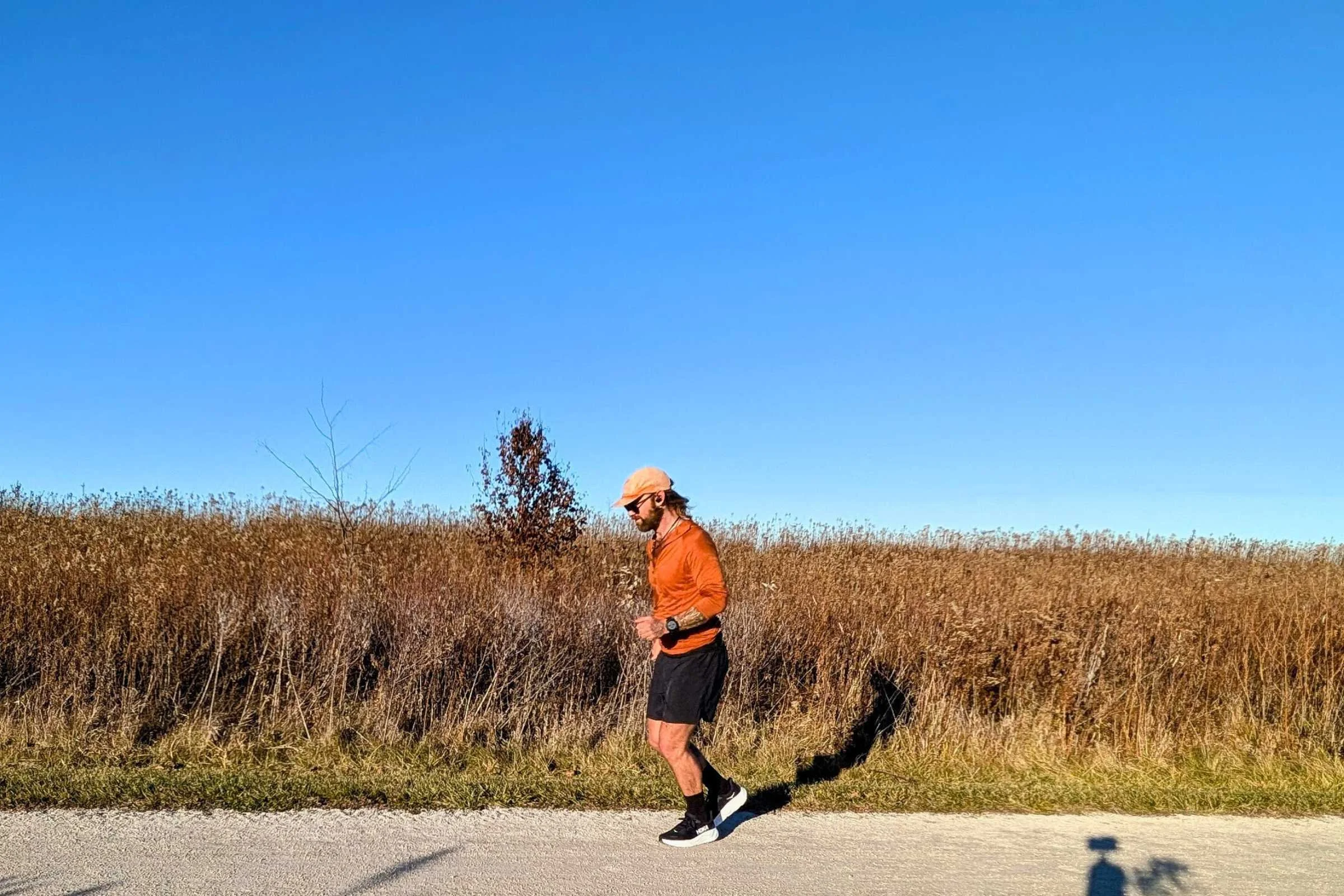
Testing the HOKA Arahi 8 on a crushed limestone path in Illinois
Care and maintenance of gravel running shoes
Many people, especially old-school runners, think you should never wash running shoes. But you can wash running shoes, and here’s how:
Remove the laces. You can place these in a mesh bag and put them in a washing machine on a gentle cycle.
Remove the insoles.
Use a stiff-bristle brush to remove dry dirt from the outsoles and upper. If your shoes are muddy, it’s best to let them dry off before washing, as wet dirt will flake off.
Wash the shoes and insoles with mild soap in a utility sink, bucket, or wash basin.
Rinse with clean water.
To maximize durability, choose a shoe with more rubber on the outsole. Many road running shoes have large sections of exposed midsole foam prone to tearing as you step. The most durable shoes have less exposed midsole foam.
If you use Strava to track your runs, you can add your shoes to your profile. You can set the app to notify you when you’ve reached a set number of miles on a pair of shoes. The default notification is set to 250 miles per pair, which is ideal because many shoes need to be replaced at around 300 miles.
To add shoes to your profile, go to “Settings,” then “My Gear,” and add your shoes. You can also follow this link. Then, when you’ve completed a run, add the shoes you wore by editing the activity and selecting those shoes.
You can also track your shoe mileage manually by keeping a spreadsheet of all your runs and adding up the total miles as you go. However, Strava is a free app that helps track your total mileage by week, month, and year. Strava also has a social element; we stay connected with many runners we meet at running clubs and out on the trails through this app.
How we researched and tested
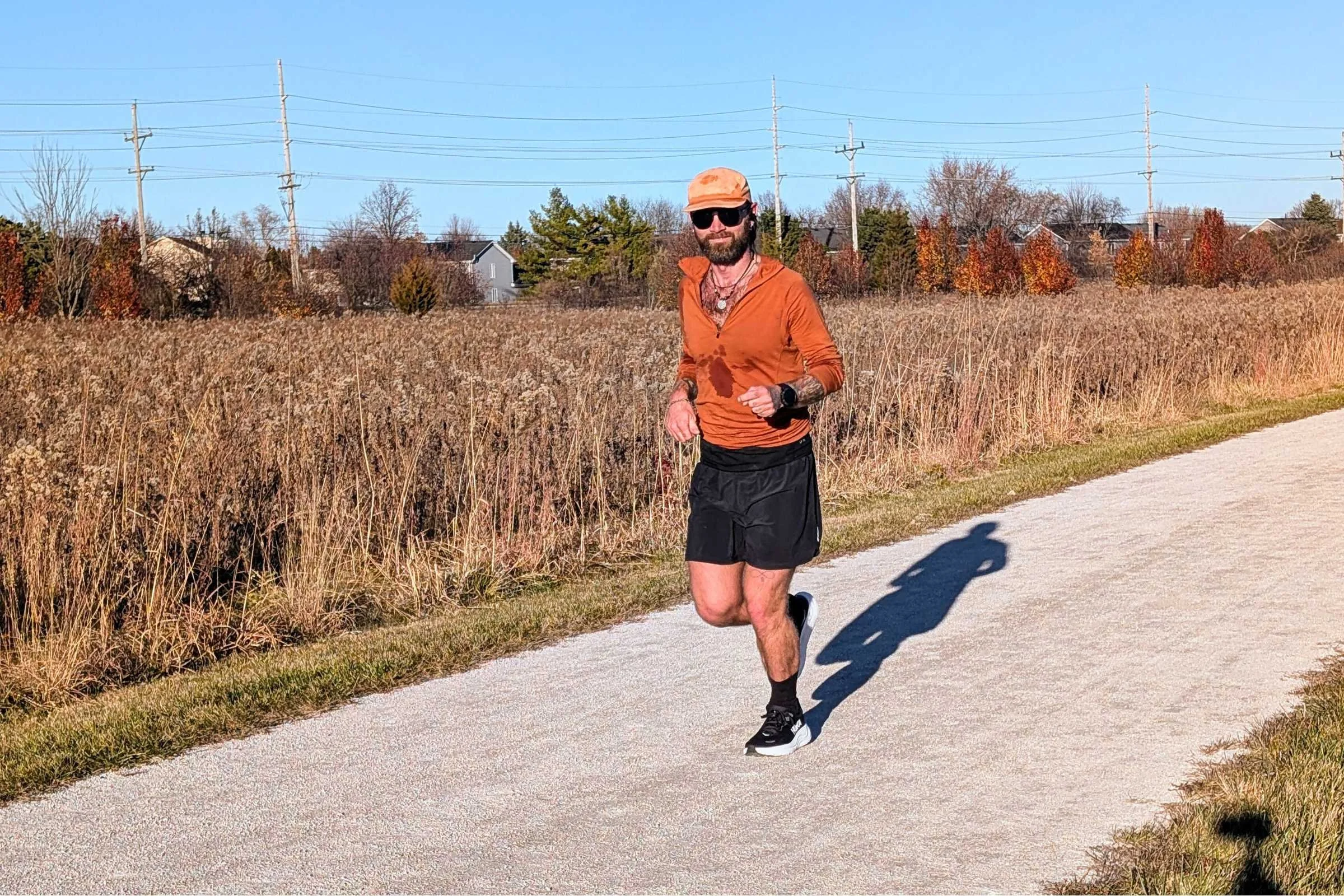
We tested gravel running shoes during the fall and winter in Colorado, Utah, Arizona, Michigan, and New Mexico. We ran on country gravel roads, city streets, and recreation paths. We wore these shoes on dirt, pavement, and gravel to test their performance across a variety of surfaces. Over the testing period, we ran hundreds of miles in temperatures ranging from 15 to 80 degrees. We did speed workouts, hill intervals, easy recovery runs, and marathon-distance long runs.
We also wore each pair of shoes when we weren’t running to see how they felt when walking around, standing, stretching, and relaxing. This helped gauge which shoes were the most comfortable and best for recovery.
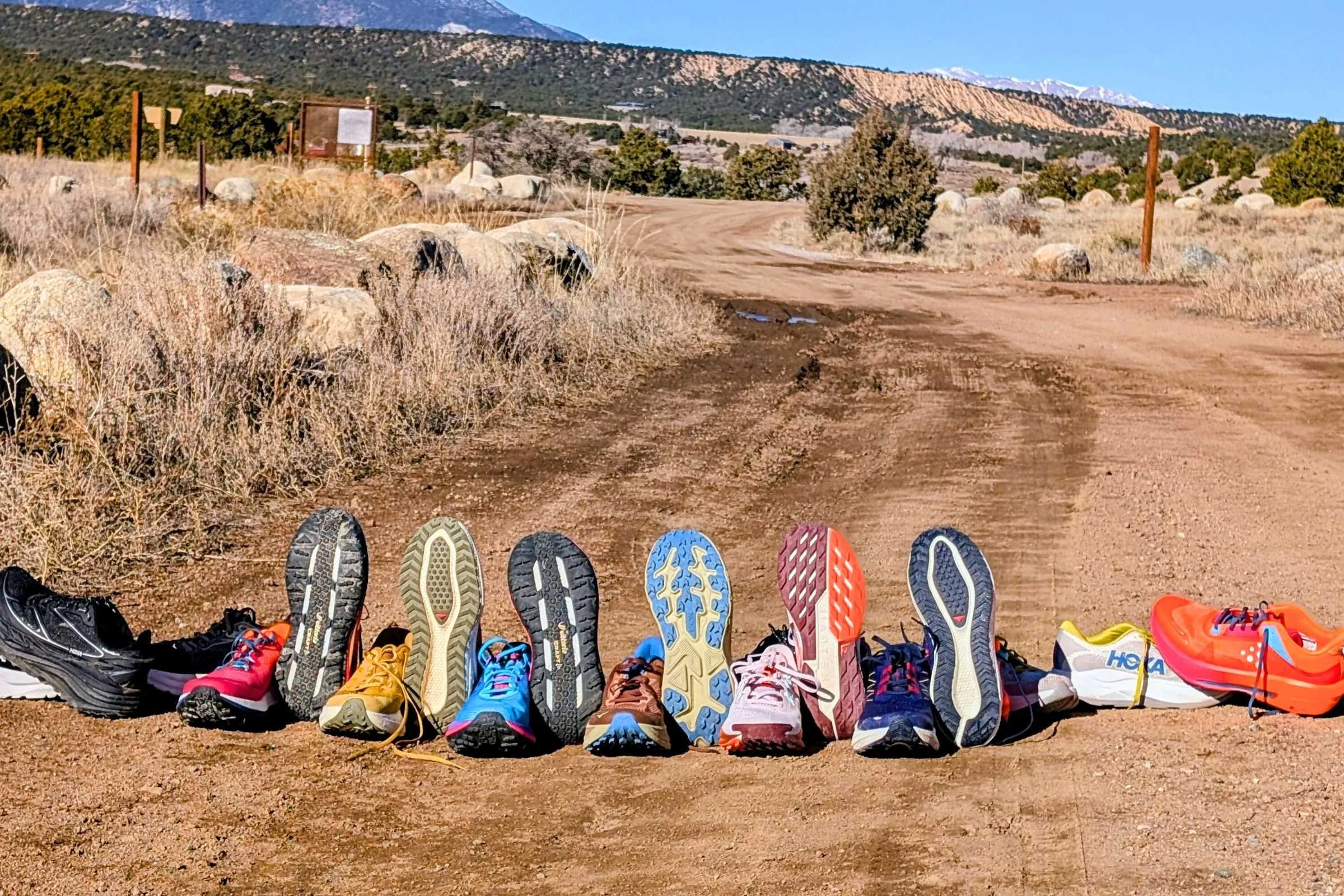
A group shot of all the gravel running shoes we tested.
OUR TESTING PROCESS
Hundreds of miles on dirt, gravel, and pavement in summer, fall, and winter (15–80°F)
How we tested
- Runs on gravel roads, city streets, and recreation paths
- Mixed-surface mileage: dirt + gravel + pavement
- Workouts: speed, hill intervals, recovery, long runs
- Also worn walking/standing for comfort + recovery feel
What we evaluated
- Traction on gravel and loose dirt
- Cushioning and ride feel on pavement
- Stability and fit over varied surfaces
- Comfort over many miles + durability
Why you should trust us / About the author
Sam Schild is a thru-hiker, runner, cyclist, and mountain athlete based in Colorado. He’s been a runner since he was a child, when he ran five days a week as cardiovascular training for soccer. As he grew older, he stopped playing team sports and focused on running and cycling.
Sam regularly runs five days or more per week. He has completed countless ultra-distance, self-supported trail runs on trails throughout the American Southwest. He has thru-hiked the Pacific Crest Trail, Continental Divide Trail, Appalachian Trail, Arizona Trail, Pacific Northwest Trail, Grand Enchantment Trail, and the Colorado Trail twice, always in running shoes.
You can read more about Sam on his author page, website, or Instagram.