Best Hiking Pants for Men of 2026
Tested: Lightweight, convertible, winter, jogger, and water-resistant men’s hiking pants

April 20th, 2026
Home > Gear Reviews > Apparel > Men’s
Before heading out for a hike, it’s worth thinking about a few key pieces of gear. In addition to proper footwear, hiking pants are an essential part of a comfortable hiking kit. Choosing the wrong pair can lead to discomfort and frustration on the trail, especially since hiking takes you into changing weather, rough terrain, and long days outside.
Hiking pants are built with technical features designed to protect you and keep you comfortable in the outdoors. For this guide, we tested more than a dozen models in a range of real-world conditions to see which ones perform best when you’re actually moving on the trail.
Products were tested everywhere from quick after-work hikes in Rock Creek Park to multi-day backpacking trips in Shenandoah National Park and the Dolly Sods Wilderness Area. We evaluated comfort, durability, and performance across different conditions to see which pants handle everything from casual outings to more demanding backcountry trips.
Top Pick: The prAna Stretch Zion Pants earn our Best Overall award. They stood out for their durable yet flexible fabric, comfortable fit for long days on the trail, useful pockets and trail-ready features, and versatility across a wide range of hiking conditions, making them a dependable choice for most hikers.
We create reader-supported, objective gear reviews independently selected by our editors. This story may contain affiliate links, which help fund our website. When you click on the links to purchase gear, we may get a commission — without costing you an extra cent. Thank you for supporting our work and mission of outdoor coverage for every body! Learn more.
Comparison table
| HIKING PANTS | TREELINE AWARD | PRICE | SIZES | INSEAMS (IN) | FIT | GUSSETED CROTCH? | DURABLE WATER REPELLENT TREATMENT? | MATERIAL |
|---|---|---|---|---|---|---|---|---|
| Prana Stretch Zion | Best overall Read why |
$98 | 28-42 | 28, 30, 32, 34, 36 | Relaxed | ✅ | ✅ | 95% recycled nylon, 5% elastane |
| Kuhl Renegade Cargo Convertible | Best convertible Read why |
$149 | 30-42 | 30, 32, 34, 36 | Relaxed | ✅ | ✅ | 95% nylon, 5% spandex |
| Patagonia RPS Pants | Best lightweight Read why |
$135 | 28-44 | 30, 32 | Regular | ✅ | ✅ | 52% recycled nylon, 48% polyester |
| Fjallraven Vidda Pro Ventilated Trousers | Best for winter Read why |
$190 | 44-56 (EU, short + tall sizes) | 31, 32, 33, 34, 35 | Standard | ✅ | ❌ | 65% polyester, 35% cotton |
| Outdoor Research Ferrosi | Best stretchy Read why |
$110 | 30-38 | 32 | Regular | ✅ | ✅ | 86% nylon, 14% spandex |
| Kuhl Klash Pants | Best pockets Read why |
$149 | 30-42 | 30, 32 | Relaxed | ✅ | ✅ | 72% nylon, 20% polyester, 8% spandex |
The winners
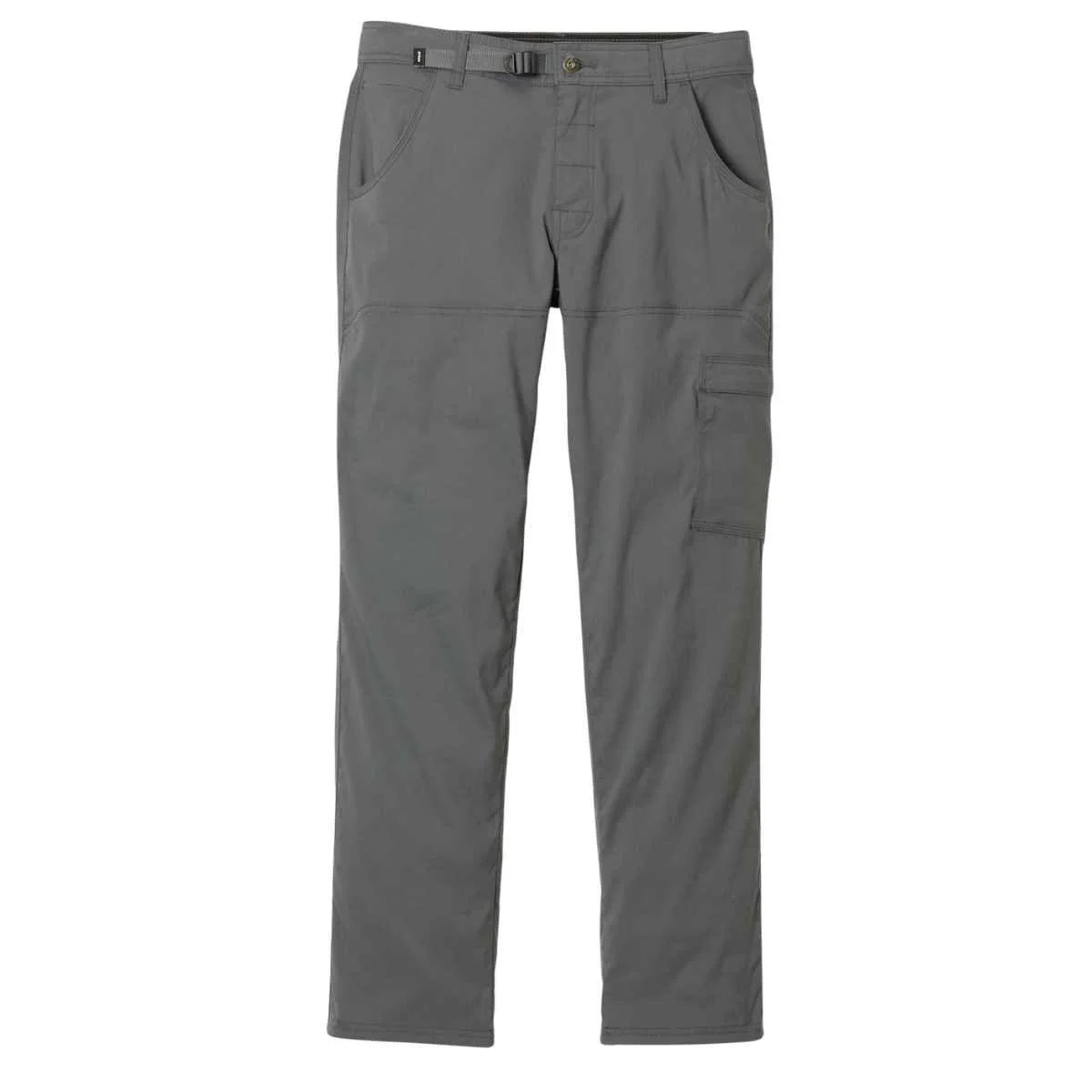
Best overall men's hiking pants: Prana Zion Stretch
Available sizes: 28-42
Inseam: 28, 30, 32, 34, 36
Fit: Relaxed
Fabric: 95% recycled nylon/5% elastane
Pockets: 8 (front hand pockets, back pockets, cargo pockets, and compartment pockets inside cargo pockets)
Waistband: Snap button closure
Gusseted crotch: Yes
Durable Water Repellent Treatment: Yes
What we liked: Extremely comfortable and stretchy.
What we didn’t like: I found them to be a little tight through the thighs.
The Prana Zion Stretch II Slim pants are incredibly comfortable and equipped with practical features that make them the best-in-class option. The pants include a built-in waist-tightening system that is great for making adjustments on the go. They come equipped with two mesh-lined front pockets, two zippered rear pockets, and two zippered cargo pockets (one on each leg). One of my favorite features is the snap buttons on the lower legs that enable the user to roll up the pants legs and secure the cuffs.
Prana Zion Stretch


-
The pants are constructed from quick-drying ripstop fabric and were great for short hikes in Rock Creek park or arduous multi-day backpacking trips in Shenandoah National Park. Although the material is lightweight, it is durable; it’s capable of withstanding thorns, snags, and sharp rocks. I tested these pants in various conditions, including high temperatures, rain, and mud—and they handled everything I threw at them.
As the name implies, these pants are very stretchy and allow for great mobility, making them an excellent option for other outdoor recreation activities, such as a post-hike stretch and yoga session after a seven-mile hike at Julian Price Memorial Park off the Blue Ridge Parkway.
When it comes to versatility, the 5 Pocket version of the Stretch Zion even won an award in our Best Climbing Pants guide.
-
The interior material is soft; the inside of the waistband is lined with a felt-like fabric, which reduces chafing. As a bonus, the pants are made with bluesign®-approved “ReZion” fabric, a more Earth-friendly version of Prana’s best-selling performance fabric.
Almost all of the stitching is reinforced, and the thicker fabric stands up to the abrasion of regular wear.
-
I would say these pants definitely feel a little tight in terms of fit. They are slim fit through the hip and thigh with tapered leg openings. While the pants have a gusseted and vented crotch, I found the pants to be too tight through the thighs.
This sizing issue forced me to size up to fit my thighs, which led to the pants being too big at the waist. Luckily the built-in belt helped with this issue. I did not find this a significant drawback, but it is something to keep in mind if you have larger thighs like mine.
Prana also offers a non-slim version (they call it the regular fit). See our review below.
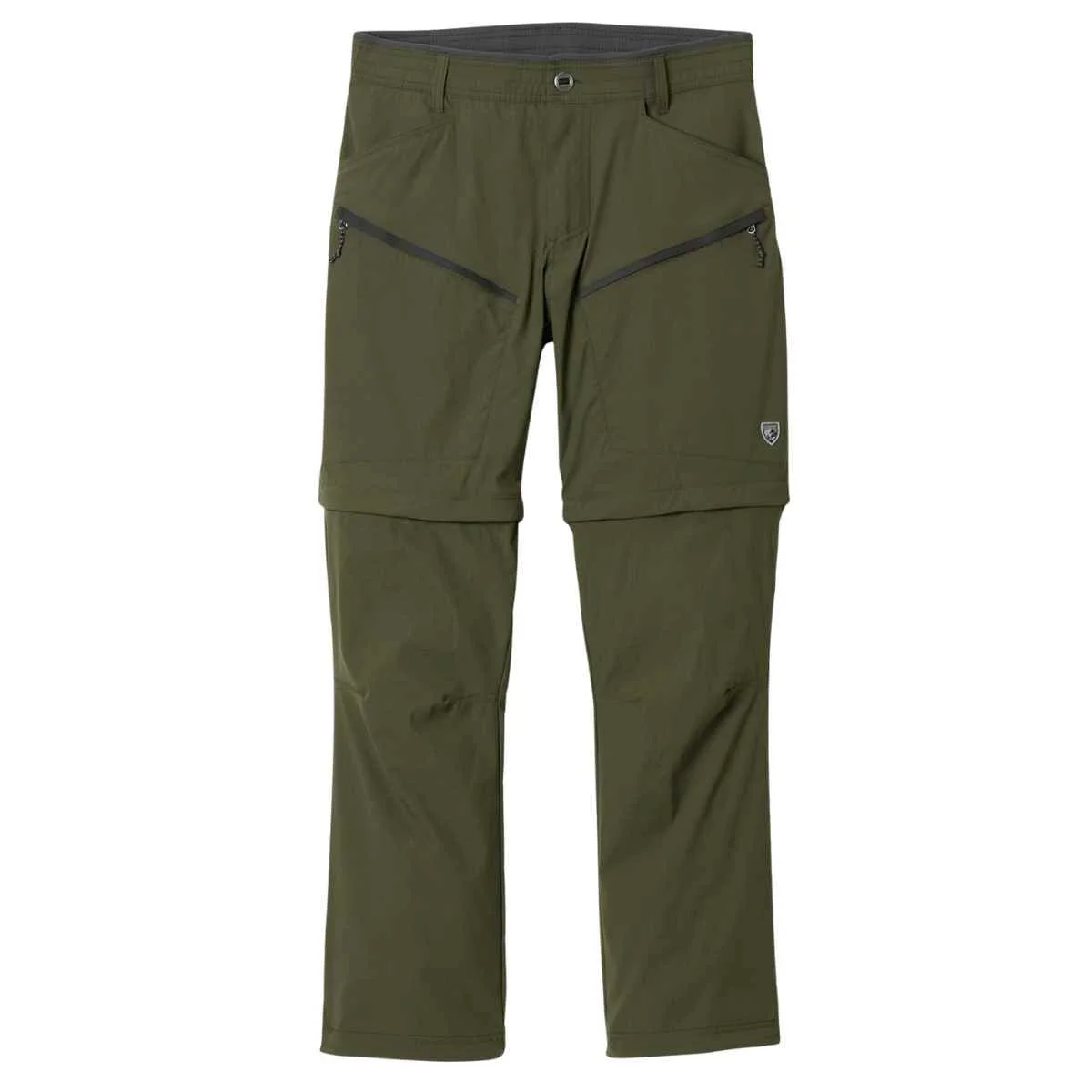
Best convertible men's hiking pants: KUHL Renegade Cargo Convertible Pants
Available sizes: 30-42
Inseam: 30, 32, 34, 36
Fit: Relaxed
Fabric: 95% nylon/5% spandex
Pockets: 8 (front hand pockets, back pockets, cargo pockets, and compartment pockets inside cargo pockets)
Waistband: Snap button closure
Gusseted crotch: Yes
Durable Water Repellent Treatment: Yes
What we liked: Excellent versatility. Quick and easy to convert to shorts.
What we didn’t like: A little too baggy through the knees, typical for convertible pants.
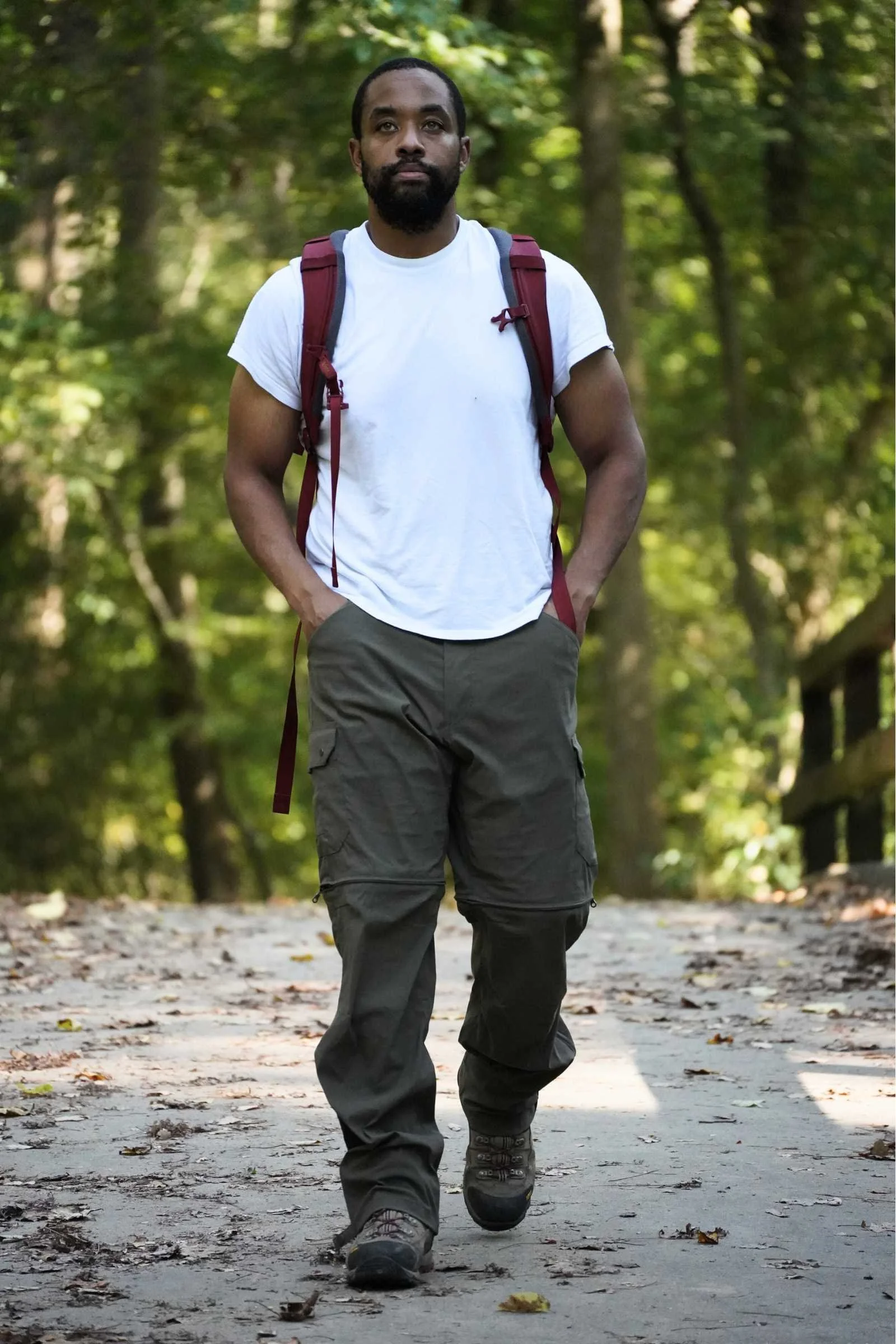
Are you looking for a pair of highly versatile pants that will keep you warm during cool nights and convert to shorts for hot daytime temperatures? Look no further. The KUHL Renegade Convertible Pants are well-suited for travel and extended backpacking trips. The lower legs zip off when needed, converting the pants into shorts.
KUHL Renegade Cargo Convertible Pants



-
The pants are constructed from KUHL’s signature DURALUX fabric, making them strong, breathable, and abrasion-resistant. The material is soft and comfortable with a modest stretch (only 5% elastic).
However, a drawback is the extra material in the knee areas. This feature allows the pants to fit better when converted to shorts, but I found them to be a little too baggy. The extra materials can get caught on rocks or trees while hiking through rugged terrain.
-
The pants have eight total pockets—two front, two rear, and two cargo pockets on each leg. The large, compartmentalized cargo pockets have plenty of room for trail snacks, a smartphone, or other trail necessities.
-
The pants do not include a built-in waist-tightening system but come with standard belt loops. These pants are what I would characterize as a regular fit. They are straight through the leg and sit at the waist. Their relaxed fit is combined with a gusseted crotch and articulated knees, allowing a full range of movement.
-
Convertible pants allow for more versatility. However, convertible pants have more components and weigh more due to additional zippers.
More components also can, unfortunately, mean more things that can break. Some reviews on REI mentioned issues with the convertible zippers that can render them unusable. I did not have this issue when I hiked in these pants, but I will continue to monitor for long-term functionality.
One major plus of these convertible pants I enjoyed is that you do not need to take off your boots to get the lower leg off. I could pull the lower portions off in 30 seconds each without losing momentum on the trail. They easily fit over my large hiking boots (Asolo Fugitive GTXs).
Best Lightweight men's hiking pants: Patagonia RPS Rock Pants
Available sizes: 28-44
Inseam: 30, 32
Fit: Regular
Fabric: 52% recycled nylon, 48% polyester stretch plain weave
Pockets: 5 (2 hand, 2 rear, 1 zippered thigh)
Waistband: Snap button and built-in belt
Gusseted crotch: Yes
Durable Water Repellent Treatment: Yes
What we liked: Unique, low-profile waist tightening system.
What we didn’t like: Limited inseam lengths. Only one zippered cargo pocket.
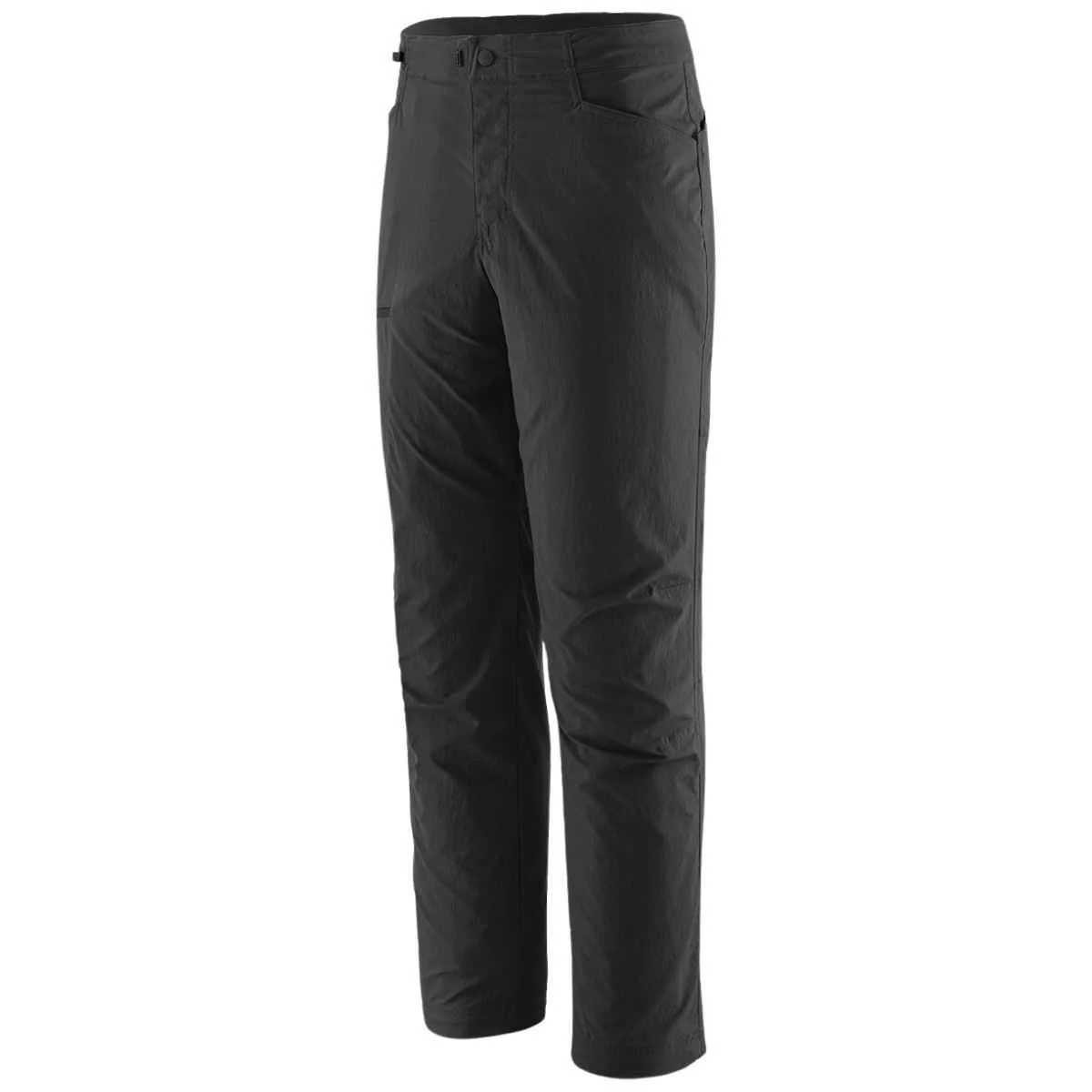
The Patagonia RPS Rock Pants are made for climbing; we think they are the best lightweight hiking pants. Manufactured from durable materials to provide excellent protection against any scrapes and scratches you are likely to encounter while climbing over jagged rocks. They are designed with articulated patterning and a guessed crotch for enhanced mobility.
Patagonia RPS Rock Pants


-
One of my favorite features is the unique OppoSet Adjustable Waistband which allows the user to easily and quickly adjust fit. The built-in waist tighten system is also highly low-profile, which means these pants remain comfortable even while wearing a climbing harness or a backpack hip belt.
The pants have two mesh-lined front pockets and two mesh-lined rear pockets. The only secure pocket is a zipper pocket on the right thigh. Another unique feature is the drawcords built into the cuff of each leg opening that allows the user to adjust the tightness. This feature was perfect for scrunching the pants up to capri length while crossing small streams and muddy sections of trail during a 22-mile hike on the Dolly Sods Wilderness loop.
-
Even though the Patagonia RPS Rock pants are astonishingly durable, they are still very lightweight. The strong, thin fabric made of 52% recycled nylon and 48% polyester stretch plain weave, and mesh-lined pockets help the pants dry fast. I was dry in less than 30 minutes after getting soaked in an East Coast thunderstorm, which was one of the fastest drying times out of all the pants I tested.
-
One downside of the Rock Pant is the lack of inseam length options. You only have two lengths to choose from, 30-inch and 32-inch inseam. If you have a very short or very tall body type, you may consider looking at other brands that offer more length options.
The pants are "regular fit," meaning that the leg of the pant is about the same diameter throughout its length. The pants are reasonably snug through the seat and thighs. This feature is excellent for limiting bunching under a climbing harness but may feel a little tight for people with larger thighs.
-
These pants are engineered explicitly for climbing. As someone who does not climb, I felt the pants lacked some of the features that pants designed for trail hiking typically have. For instance, the pants only included one zipper pocket that was not big enough for my wallet and phone. I was also surprised at the lack of stretch in the pants (only 4% spandex).
Again, the pants' pattern, cut, and fit are specially designed for climbing, so perhaps the lack of stretch is purposeful. I did not find that they limited my movement, but they are nowhere near as stretchy as some of the more traditional hiking pants I tested. Even so, if you are looking for a pair of lightweight pants that dry quickly and can handle a beating, these are the pants for you.
Best Men’s Hiking Pants for Winter: Fjallraven Vidda Pro Ventilated Trousers
Available sizes: 44-56 (EU, short + tall sizes)
Inseam: 31, 32, 33, 34, 35
Fit: Standard
Fabric: 65% polyester/35% cotton
Pockets: 2 hand pockets and large leg pockets with buttoned flaps (one with an inside mesh pocket)
Waistband: Button closure
Gusseted crotch: Yes
Durable Water Repellent Treatment: No
What we liked: Extremely thoughtful design. Innovative features.
What we didn’t like: Too heavy for high temperatures
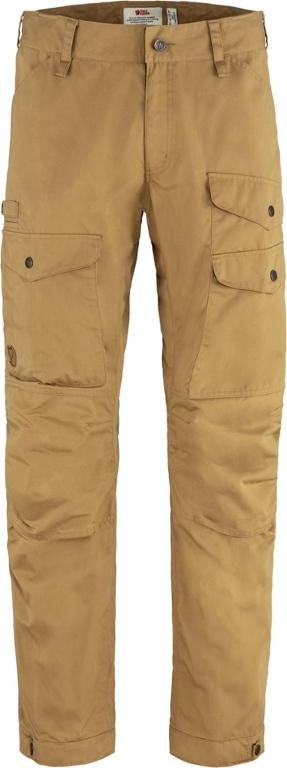
Fjällräven's Vidda Pro Trousers are comfortable, exceptionally durable, and loaded with unique features. These were one of the most expensive pairs of hiking pants I tested ($180), but you can feel the quality. Every component of these pants is thoughtfully designed. They include two large hand pockets, a variety of cargo pockets on each leg that you can secure with a button flap, a cell phone holder, a knife pocket, a map/compass pocket, and an axe loop.
But what I liked most was the ankle adjustment—an elastic strap on each leg opening that lets you adjust the circumference at the bottom of the pants from very tight to very loose (to go over boots and snowshoes). The adjustment is ultra-fast and easy, and it stays in place, which is super handy while carrying a heavy backpack.
Fjallraven Vidda Pro Ventilated Trousers


-
Every component of these pants is thoughtfully designed. They include two large hand pockets, a variety of cargo pockets on each leg that you can secure with a button flap, a cell phone holder, a knife pocket, a map/compass pocket, and an axe loop.
But what I liked most was the ankle adjustment—an elastic strap on each leg opening that lets you adjust the circumference at the bottom of the pants from very tight to very loose (to go over hiking boots and snowshoes). The adjustment is ultra-fast and easy, and it stays in place, which is super handy while carrying a heavy backpack.
The pants also have belt-in lace hooks on each cuff that let you clip the bottom of the pants into the laces of your boots. The fit has a slightly slimmer silhouette that still provides unrestricted mobility, and the reshaped knees and gusseted crotch further enhance freedom of movement.
They also come with two large lateral zips on the sides of the thighs that provide ventilation and help dissipate heat. The vents don't have any netting or mesh to prevent snow, dirt, or anything else from getting in.
-
You instantly notice the thick fabric of these pants. At 19.7 ounces, they were some of the heaviest hiking pants I tested. The Vidda Pro Trousers are constructed from Fjällräven's proprietary G-1000 fabric. It is like a giant canvas whose water repellency can be boosted by applying a wax called Greenland Wax.
The knees are reinforced with double layers of fabric for added toughness. The seams, press-snaps, and fabric thickness all inspire confidence. So, trekking through bushes, sitting on rocks, and kneeling while tinkering around with the fire are not moments to dread.
While the Vidda Pros excel in cold weather, I found their material too thick and heavy for warm weather. But, they provide significant protection if you know you will be in overgrown or thorny areas. During a 22-mile hike through the Dolly Sods Wilderness Area, my hiking partner and I took a wrong turn and spent 4-5 hours bushwhacking through waist-high blueberry bushes. The pants provided great protection and showed no signs of wear and tear afterward.
-
Overall, the Fjällräven Vidda Pro Trousers are a high-quality pair of hiking pants with impressive features that seem much more ideal for harsh climates or heavy work rather than simple hiking. These pants are made to last.
Best stretchy men's hiking pants: Outdoor Research Ferrosi
Available sizes: 30-38
Inseam: 32
Fit: Regular
Fabric: 86% nylon, 14% spandex
Pockets: 3 (2 hand, 1 thigh zip)
Waistband: Metal Shank Button Closure
Gusseted crotch: Yes
Durable Water Repellent Treatment: Yes
What we liked: Stretchy, breathable fabric that dries quickly.
What we didn’t like: Inseam lengths can run a bit long.
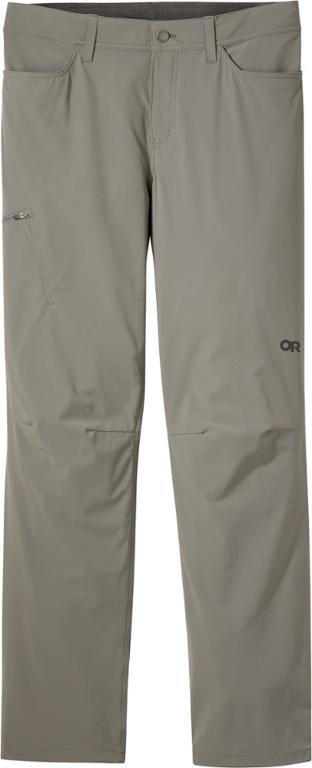
Outdoor Research's Ferrosi Pants are lightweight and comfortable, with unparalleled stretchiness. The unique blend of 86% stretch-woven ripstop nylon and 14% spandex produces a pair of pants with a remarkable freedom of movement and breathability that you wouldn't expect from synthetic clothing.
Outdoor Research Ferrosi


-
The pants include five pockets: two mesh-lined front hand pockets, two rear pockets, and a side pocket outside the right thigh with a horizontal zippered opening. The side cargo pocket is a great size (it easily fits my iPhone 13), but the positioning of the pocket leaves something to be desired. My cell phone always felt like it was in a funny position and rubbed against my leg while hiking.
-
The cut of these pants is excellent. I found the fit to be 'regular,' not too slim nor too baggy. The pants have articulated knees and a gusseted crotch for even more mobility. The fabric is smooth against the skin. The inside of the waistband has a strip of soft, felt-like material that reduces rubbing and chafing. This feature is handy if carrying a heavy pack and using a waist belt.
I found that the length of the pants can run a bit long. I can't speak for the other inseam lengths, but the 32 in. inseam is a bit longer than other hiking pants I tested in the same inseam length—something to keep in mind when purchasing. I recommend going down a few inches to ensure they aren't too long.
-
These are great pants, especially for warm weather. They are some of the most breathable hiking pants I tested, which helped keep me cool on hot days while offering quality sun protection (50+ UPF rating). Though they struggle to stand up to high winds, this is a pair of hiking pants that will perform well across a variety of activities.
Best Men's Hiking Pants with Best Pockets: KÜHL Klash Pants
Available sizes: 30-42
Inseam: 30, 32
Fit: Relaxed
Fabric: 72% nylon/20% polyester/8% spandex
Pockets: 2 right thigh pockets
Waistband: Elastic band and drawstring
Gusseted crotch: Yes
Durable Water Repellent Treatment: Yes
What we liked: Loaded with attentive features, such as ripstop cuff guards and bottom hem zippers.
What we didn’t like: Fabric is hefty, limiting adaptability, especially in warm climates.
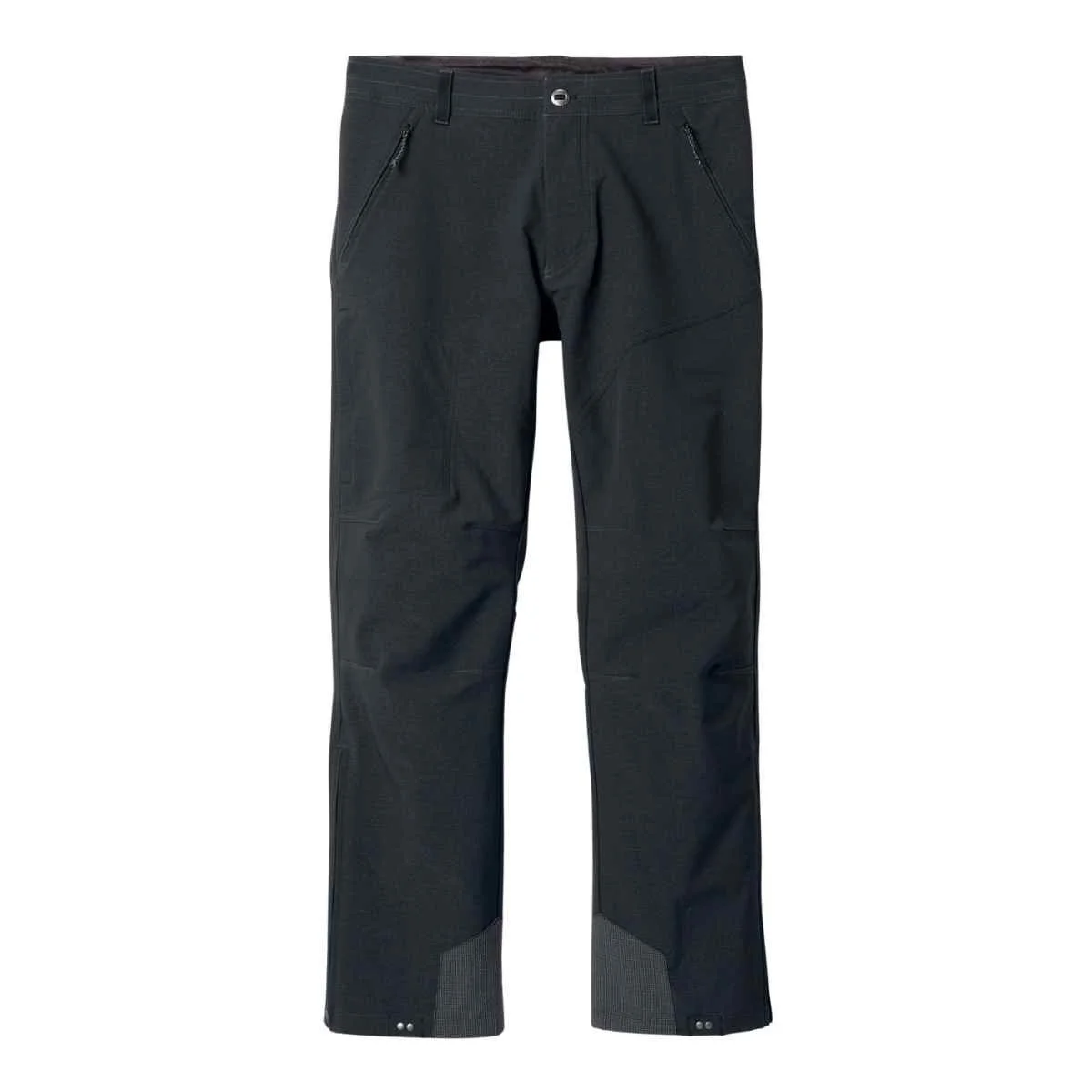
On top of being super durable and remarkably elastic— the Kühl Klash hiking pants are chock-full of unique features that enhance life in the great outdoors. First, the pants have a grand total of six extremely functional pockets, so you’ll have no shortage of places to put all of your essential items. And you don’t have to worry about losing a thing because each pocket comes equipped with a heavy-duty zipper.
KÜHL Klash Pants


-
There are two deep hand pockets (large enough for an iPhone 13), two wide rear pockets, and an assortment of cargo pockets on each leg. The placement of the cargo pockets is very thoughtful. They are easy to access while standing or sitting, and the angle of the cargo pockets helps you zip them open or closed using only one hand. My favorite features of the Klash hiking pants are the abrasion-resistant ripstop cuff on the inner ankle of the pants.
-
After hiking through mud, the inside/bottom of the cuff is one of the first places to show wear and tear. Having this abrasion-resistant extra panel is a huge plus that enhances the long-term durability of the pants. Another great feature is the boot hooks built into the opening of each leg. These offer the ability to clip the bottom of the pants to the laces of your boots. This feature works similarly to gaiters and helps prevent snow, rocks, and other debris from entering your boots.
-
The most unique features are the zippered boot hem on the bottom of each pants leg, which allows the pants to flare out to fit over larger boots (think technical bell bottoms). I did not find this feature on any of the other pants I tested. The only thing I felt the pants were missing was a built-in waist-tightening system, which I prefer. Although, the pants do come with standard belt loops.
-
The KÜHL Klash are considered “softshell” hiking pants. Softshell fabrics are water- and wind-resistant but are typically much more breathable than waterproof fabrics. They are very comfortable to wear in light snow or wet conditions when you’re moving a lot. They’re typically more breathable and stretchy than waterproof materials as well.
The pants are assembled from a blend of 72% nylon, 20% polyester, and 8% spandex that is hefty but not heavy. The ripstop material is surprisingly pliable. Mobility is at an all-time high in these pants. The gusseted crotch and oversized cut in the thigh area make them easy to move in and accommodate athletic-sized legs (such as mine). I never felt like they restricted my movements in any way.me with a combination of unique features that you won’t find on other hiking pants. Their only drawback is that they are a little too heavy for warm weather. However, these pants would exceed in any season besides summer.
-
All in all, these pants were some of my favorites. They are a bit expensive, but they co
other men's hiking pants we tested
Patagonia Quandary Pants
Available sizes: 30-40
Inseam: 30, 32
Fit: Standard
Fabric: 94% recycled nylon/6% spandex
Pockets: 5 total; 2 handwarmer pockets (right has a coin pocket), 2 rear pockets, and a side leg pocket with security zipper
Waistband: Button and drawstring
Gusseted crotch: Yes
Durable Water Repellent Treatment: Yes
What we liked: Fabric is very lightweight yet durable
What we didn’t like: Slim fit may not be well suited for all body types
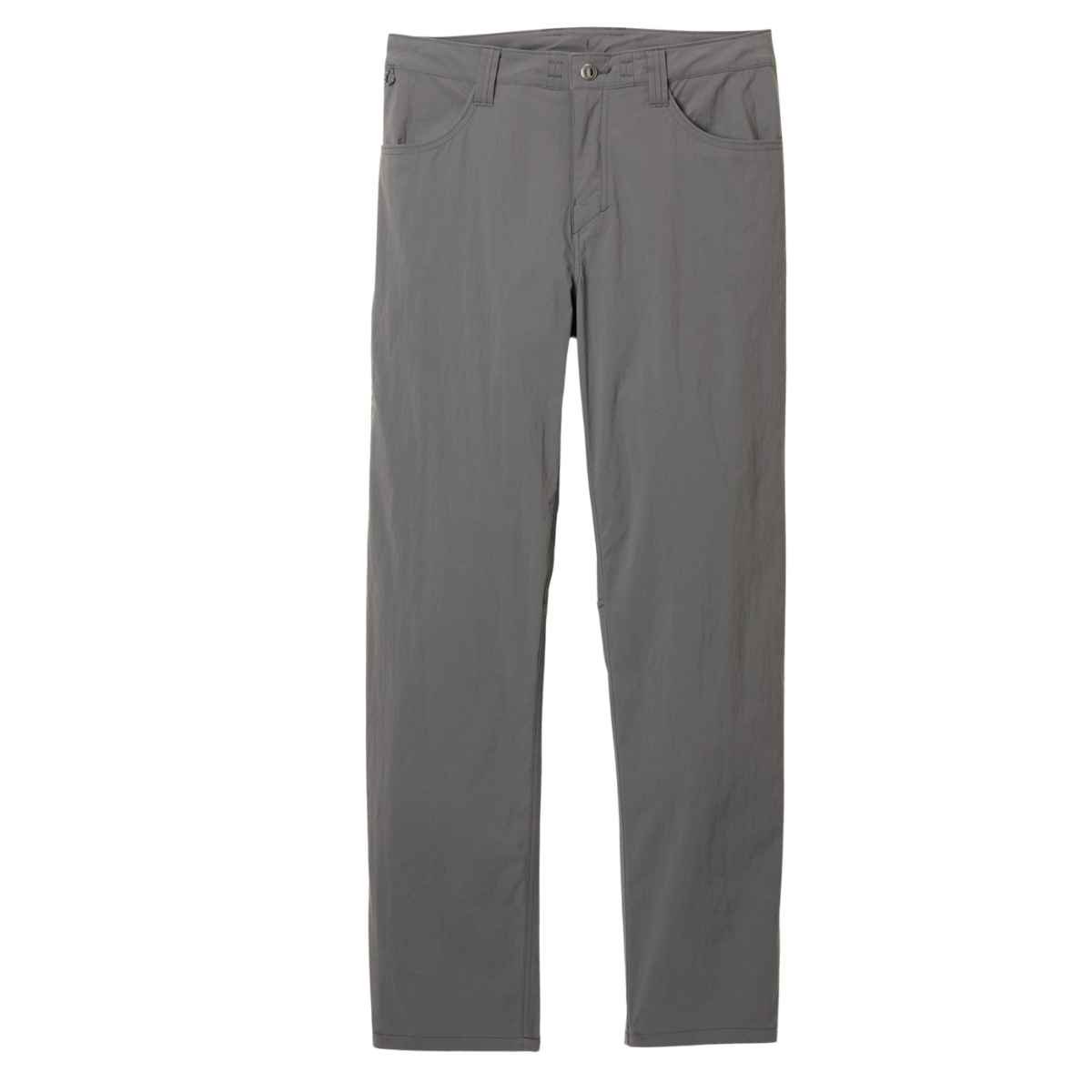
The Patagonia Quandary Pants are a solid pair of hiking pants with practical features. The lightweight blend of recycled nylon and spandex offers excellent mobility while also doing a great job of warding off wind and rain. The pants come with six pockets to store all of your essential items. The rear left and thigh pockets have zippers to secure small items while on the go.
Patagonia Quandary Pants
-
The pants also have a moisture-absorbing mesh liner around the waistband designed to wick away sweat. My favorite feature is the stretchy, thin drawstring on the inside of the waist that works similarly to the ones you would find on a pair of running shorts. This feature allows you to wear these pants without a belt, which I prefer when hiking with a pack to minimize rubbing.
-
The light, thin construction of the Quandary pants makes them a good choice for warm weather. While they don't have vents for heat to escape, I found their fabric to be breathable and cool, even while working hard.
I didn't have sweat issues even while hiking in the summer humidity of the East Coast. The fact that they do a good job of cutting through the wind and repelling light rain adds to their versatility.
-
The pants are also very durable. I put them through the wringer during a long day hike in Shenandoah National Park. After scrambling over loose rocks and butt-scooting down jagged cliffs, they still looked great. These aren't thick, burly work pants, so heavy bushwhacking will eventually get the best of them, but I was impressed with their toughness, given how thin and breathable they are.
-
The Quandary pant is cut thin and features a slim fit that Patagonia recommends for lean-to-medium builds. I agree with this recommendation, as I found them to be slightly restrictive around the tops and outsides of the thighs. If you have a thicker build and larger thighs (such as myself), I suggest you try these on in-store before purchasing.
Available sizes: XS-XXL
Inseam: 29, 30, 31
Fit: Slim, regular
Fabric: 88% nylon, 12% spandex
Pockets: 2 front
Waistband: Elastic waistband and adjustable drawstring
Gusseted crotch: Yes
Durable Water Repellent Treatment: Yes
What we liked: Modern, tailored look combined with great outdoor functionality.
What we didn’t like: The ankle drawstrings in the cuffs
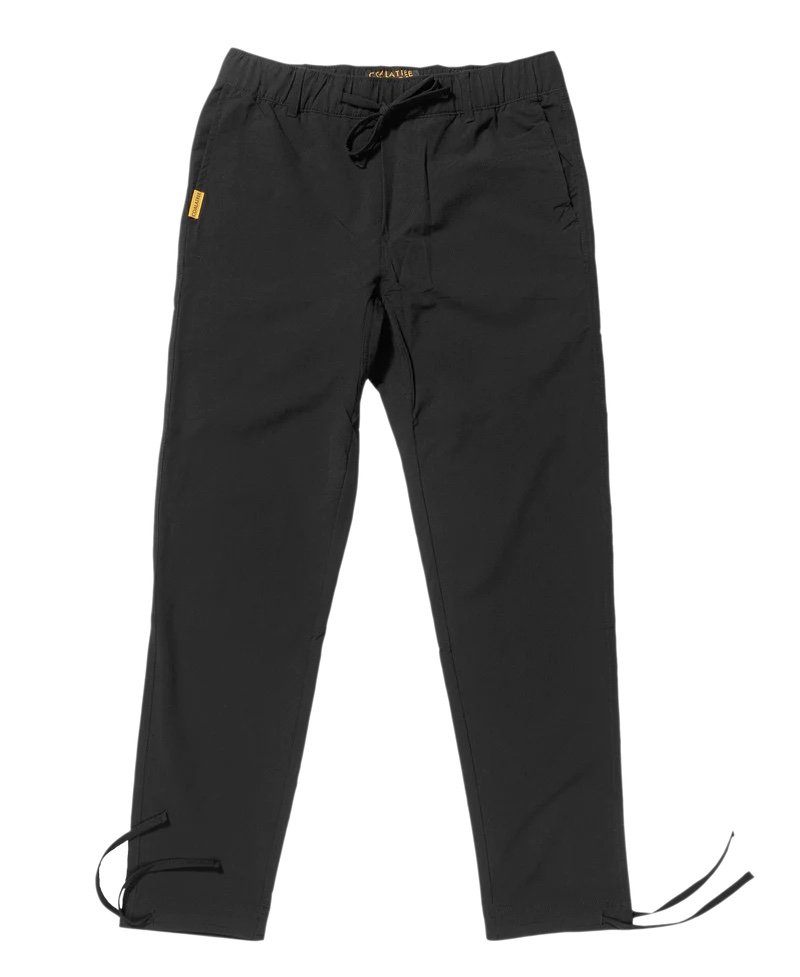
The Coalatree Trailhead Pants feel super light and are extra comfortable, thanks to the four-way stretch fabric. The pockets are super deep, easily carrying my iPhone 13 and other items. The waterproof coating ensures that beads of water slide off rather than soak through. And their antimicrobial treatment keeps you smelling good even after several days of wear. The elastic waistband and stretch fabric keep the pants from pinching at the waist.
The Trailhead pants are unisex but come in two different fits: regular and slim. I chose a large size in the regular fit because I have a stocky build and large thighs. I found that these worked very well for me. But I would recommend checking your measurements against the size guide. You can always contact customer service if you have any questions or concerns.
Coalatree Trailhead Pants Eco-Friendly Hiking Pants


-
I was not too fond of the drawstrings at the ankles. They tended to go undone and get caught on roots, twigs, and rocks. I tried tucking the excess drawstring into the bottom of the pants, but it was uncomfortable and created some friction while walking.
-
The best thing about these pants is their versatility. The extreme stretch and super-durable construction make them well-suited for rock scrambling over jagged edges and loose rocks while exploring the summit of Hawksbill Mountain in the Shenandoah Valley. They are rugged, but the tailored look and clean lines allow you to pair them with a nice shirt for a business-casual look. You can go straight from the trail to the office.
Available sizes: 28-42
Inseam: 30, 32, 34, 36
Fit: Relaxed
Fabric: 68% cotton, 29% nylon, 3% spandex
Pockets: 2 front, 1 coin, 2 rear, 1 stealth cellphone, and 1 3D gusseted
Waistband: Button closure
Gusseted crotch: Yes
Durable Water Repellent Treatment: No
What we liked: Comfortable and durable
What we didn’t like: Not water resistant. Best for dry climates.
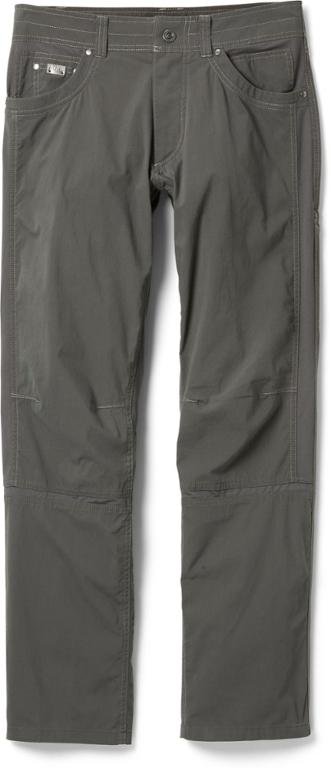
The KUHL Radikl pants have thoughtfully placed stretchy panels in the crotch, lower back, knee, and side leg, making for a very comfortable pair of pants. They come equipped with a second interior button that ensures they stay put all day long.
The gusseted crotch and articulated knees make for a roomier cut. The pants also sit slightly higher and hug the waist, so you don't need to wear a belt if you get the sizing right.
KÜHL Radikl Pants


-
These pants have ample ventilation and breathability. The same stretchy panels that increase mobility also increase ventilation. The panels are cleverly placed in areas that generate the most heat, such as the lower back and crotch. Despite the fabric's thickness, I was surprised by how cool I stayed during testing.
-
The Radikls come with an array of features. Two hand pockets are lined with the same material in the stretchy panels. Two rear pockets and two narrow and deep pockets on the upper leg seem designed to hold a smartphone. I did not like that none of the pockets could be secured close. I never had issues with items falling out, but it was a constant worry.
-
Another drawback is that the Radikls are pretty absorbent. By design, these pants aren't meant to be water-resistant. The primary fabric blend is mostly cotton. Their minimal water resistance means they are primarily suited for dry climates.
Overall the KUHL Radikl pants are an unusual pair of hiking pants. Their unique fabric blend and construction maintain stretch and increase mobility. We think they're best suited for travel or everyday wear. They will also perform well while hiking during a clear fall day.
Why do you need hiking pants

The Cotopaxi Veza Adventure Pants are breathable, stretchy, and super comfortable. They're great for in-camp pants and trail pajamas during a multi-day hike.
More people than ever before are embracing and engaging in outdoor recreation. As an approachable and fun way to get out and get moving, hiking continues to be one of the top activities for outdoor recreation.
According to the Outdoor Participation Trends Report, hiking is the second most popular outdoor recreation activity, second only to trail running. In 2023, an estimated 58 million people went on a hike. This number includes hiking of all types, from intense long-distance treks over rugged terrain to relaxing strolls through local urban green spaces. Anyone can hike in almost any setting, so it is easy to see why it’s popular.
Having a dedicated pair of hiking pants stems from the unique challenges and demands posed by outdoor activities. Here's a closer look at why hiking pants are an essential gear item for any outdoor enthusiast:
Comfort and mobility
Unlike regular pants, hiking pants are designed with a hiker's movement in mind. They often feature articulated knees, gusseted crotches, and stretchy fabrics, providing unmatched flexibility and comfort over the course of the day.
Hiking pants are designed to minimize discomfort, chafing, and restrictions, ensuring a more enjoyable and pain-free outdoor experience.
Weather protection
Hiking pants offer specialized protection against the elements. Water-resistant or waterproof materials keep the wearer drier in rainy or wet conditions, which may keep the hiker from feeling cold or getting hypothermic.
In colder climates, hiking pants with insulation or thermal layers provide essential warmth, safeguarding against hypothermia and ensuring a comfortable trek.
Durability and resistance
Hiking pants are constructed from durable materials that resist wear and tear, ensuring longevity and reliability when hiking in rough terrain or near abrasive rocks or pokey plants.
Reinforcements in high-stress areas protect against damage from rocks, branches, and other obstacles, allowing hikers to traverse challenging landscapes with confidence.
Storage solutions

The two back pockets on the Black Diamond Spire pants have flaps to keep items from falling out, but they are less secure than a zipper or velcro closure.
Hiking often involves carrying essentials like maps, snacks, and small gear. Hiking pants come equipped with multiple pockets, including cargo and zippered compartments, providing convenient and secure storage options.
The strategic placement of pockets ensures easy access without hindering movement, allowing hikers to keep important items within reach at all times.
Temperature regulation
Hiking pants play a crucial role in regulating body temperature. In warmer conditions, breathable fabrics and ventilation features prevent overheating, while in colder weather, insulated options provide essential warmth (read all about our staff’s favorite insulated pant options!).
Adjustable features, such as zip-off legs or venting options, allow wearers to adapt to changing temperatures throughout the day, ensuring comfort in any weather.

We tested over a dozen models of men's hiking pants in various conditions, from quick hikes to backpacking trips.
What to look for in hiking pants
Material
There is little to no difference between traditional, convertible, and roll-up hiking pants materials. Nylon, polyester, and other synthetic fibers are the primary materials for hiking pants because they keep the user dry and comfortable. Most hiking pants on the market today will use a combination of these materials to help achieve a balance between form and function.
Another common material is spandex, which gives the pants a stretchy quality. The more spandex or elastane used in the blend, the stretchier the pants will be. Although cotton is sometimes used, it isn’t a popular choice due to its moisture retaining properties.
Freedom of movement

The author squatting in a pair of hiking pants to test the stretch and mobility.
Regardless of the type of hiking pants you wear, one of the most important factors is the ability to move freely. Trails have turns, elevation changes, and obstacles to climb over. When you hike over varying terrain, the crotch area and knees will be tested the most, so having good mobility in these places is paramount. You will want to look for hiking pants with a gusseted crotch and articulated knees. These features can have a tremendous impact on comfort and freedom of movement.
A gusset is a diamond-shaped piece of denim sewn into the crotch area of the hiking pants to achieve a more mobile and less restrictive fit in the groin.
Pants with articulated knees curve at the knee and mimic the typical shape of our legs. Pant with articulated knees allows for a more comfortable fit and provides greater free movement than a standard, straight-leg design.
Fit
When selecting the proper fit for hiking pants, there are two critical measurements: waist circumference and leg length (or inseam). To get an accurate leg length, measure along the inside of your leg from the crotch to the ground. While most hiking pants come in specific waist and length measurements such as “34x32”, it is becoming increasingly common for hiking pants to only include a waist size.
These pants have a standard leg length based on the general population's average leg length. Some hiking pants simplify by listing a general size (small, medium, large, etc.) and forgoing specific measurements. Another thing to remember is that sizing can vary from brand to brand. A size “32x32” or “large” might fit you perfectly in one brand of hiking pants but not in another.
Functional pockets
Good pockets are a must for hiking pants. Hiking pants usually have many (often large) pockets. Ideally, pockets should be big enough for easy storage of phones, maps, sunglasses, compasses, and other items best stored "on-person" instead of buried in a pack. Pockets that zip close will ensure you don’t lose any items while moving and may provide more water resistance.
Weight
For the most part, the weight of hiking pants is not a huge deal. Unlike stoves, kitchenware, tents, and other essential gear carried on your back, hiking pants are on your person. So you tend to feel the burden a little less. With that said, you should always aim to keep your weight as low as possible. Luckily, most traditional hiking pants on today’s market are made from lightweight materials.
The main factors that affect the weight of hiking pants are linings, pockets, built-in belts, zippers, and the fabric used in construction. One weight consideration for convertible and roll-up hiking pants is that they often weigh slightly more than traditional pants due to the number of zippers and buttons.
Waist tightening system
Hiking pants may come equipped with different waist-tightening systems, such as built-in belts, drawstrings, elastic waistbands, or standard belt loops. During testing, I found integrated belts to be the most effective system.
I prefer them because integrated belt systems can be easily and quickly used while on the go. Some built-in belts can be tightened or loosened using only one hand, which is helpful if you’re holding hiking poles, or a water bottle in your other hand while trekking.
Durability
If you’re planning to do any rock scrambling or hiking through dense overgrown underbrush, you may want to consider hiking pants that incorporate ripstop construction. Ripstop fabric is made by interweaving reinforced threads in a crosshatch pattern, making the material more resistant to tearing and ripping from rocks, thorns, and snags.

The tapered cut of the calves of the Outdoor Research Zendo Joggers might be tight on some folks, especially those with larger calves.
Water resistance
If water resistance is a high priority, you may want hiking pants that have been treated with a durable water-repellent (DWR) coating. But you should keep in mind that there is a balance between water resistance and quick drying. Hiking pants made from a thin nylon fabric may be less water resistant but dry much faster than pants made from a thicker material treated with DWR.
As someone who tends to sweat a lot while hiking, I prefer hiking shorts made from lighter quick-drying fabric. I have found that thicker, less breathable shorts treated with DWR may have more water resistance, but once they get saturated with moisture from sweat, they can take a long time to dry out.
UV protection
In addition to physically covering your skin, many hiking pants will come with an Ultraviolet Protection Factor (UPF) rating. UPF measures the amount of UV rays blocked or filtered by fabric. UPF ratings range from 15 to 50. The higher the UPF rating, the greater protection it provides against harmful UV. Hiking shorts rated UPF 50 will offer excellent UV protection where they cover the skin. The 50 rating means 1/50th (i.e., 2%) of the UV rays come through. You can usually find the UPF rating on the tag of the garment.
Insect protection
Hiking pants can help keep insects off your skin by providing a physical barrier. If you are in an area with numerous ticks, you may also want to tuck your pants into your footwear to ensure nothing can crawl up your pant legs.
Breathability
Hiking is a good workout, so unless you’re hiking in cold weather, you will most likely work up a good sweat. You should look for pants made from moisture-wicking synthetic fabrics such as polyester or nylon. You might also consider polypropylene, rayon, or a blend of fabrics. These wick sweat away from your skin, increasing the surface area so they can evaporate quickly and keep you cool.
Types of Pants
The number of options for hiking pants has dramatically expanded in the last few years, but almost all hiking pants will fall into one of three main categories:
Traditional hiking pants
Traditional hiking plants are what you think of when you think "hiking pants." They come in various brands and fits, but they all share similar features, such as extending to the ankle and being constructed of durable materials. They are classics for hiking as they protect your legs from scrapes and scratches, exposure to the elements, and pesky bug bites.
Traditional hiking pants are well suited for general hiking, but you will find that certain brands and models are better for different conditions, such as cold, wet climates vs. hot, sunny climates.
Convertible hiking pants
Convertible hiking pants are similar to traditional pants but include one significant distinction: the ability to convert them into shorts. Convertible hiking pants usually have a zipper at the knee on each leg, allowing the user to unzip and remove the lower portion of the pants. With the ability to zip off and convert into shorts, convertible pants are great for hiking in changing conditions because they offer versatility that you won’t get from traditional hiking pants.
A slight downer to convertible hiking pants is that you may have to remove your footwear to get the legs off, and the zippers can cause chafing issues. We also find that convertible pants tend to be much looser through the thighs and knees when compared to traditional pants. They also aren't quite as stylish–which is one reason why fewer brands are making this style.
Roll up hiking pants
As the name suggests, roll-up hiking pants have buttons on the lower leg or an elastic in the cuff of the hiking pants that allow you to roll up the pants to the desired length. As another alternative to traditional pants, roll-up models allow you to make the pants shorter when it gets too hot or longer when it gets chilly. In contrast to zip-off hiking pants, you don’t have to worry about removing your footwear to remove the pant legs or the potential for irritation from zippers.

Hiking pants come with a variety of features, such as drawcord ankle adjustments, to tailor to an individual's preferred fit.
How to choose
What kind of hiking will you be doing?
The beauty of hiking is that it can vary greatly, from local parks to iconic national parks and forests. Figuring out precisely what type of hiking you’ll do will help narrow down the specific features you should prioritize when purchasing hiking pants.
Durability, functionality, and freedom of movement may be your top priorities if you do more demanding hiking over rugged terrain. If you’re doing more laid-back hiking or going for a shorter hike, then comfort may be your priority. And, if you’re doing more urban hiking or exploring while traveling, fit, and style may be at the top of your considerations.
What time of year will you be hiking?
Another fantastic thing about hiking is that you can do it year-round. As the time of the year changes and we go through different seasons, factors can vary, including temperatures, precipitation levels, and bugs (think summer mosquito season on the east coast). If you were planning a trip to an area that you were unfamiliar with, do your research and find out how these factors may impact your hiking trip.
What weather are you expecting?
Different hiking pants will excel in different weather and climates. For example, in hot and dry weather, you will want pants that are a bit baggier to allow for more ventilation in hotter temperatures. You will want quick-drying pants for hot and humid conditions since you’ll be sweating more. You will want to prioritize the weight and thickness for cold temperatures and climates. It is important to research regional climate and weather for your hiking destinations.
WILL THERE BE TICKS OR MOSQUITOS?
Depending on where you are hiking, and the time of the year, insects such as ticks, mosquitos, and black flies can be a huge nuisance.
WILL YOU BE DOING ANY ROCK CLIMBING OR SCRAMBLING?
If you’re planning to do any rock climbing or scrambling, you may want tighter-fitting hiking pants. Looser fitting or baggy pants may snag and get caught over difficult terrain. While you want a tighter fit, you still want to ensure that they are comfortable and do not impede your mobility. Low-profile pockets, zippers, and other details can also help prevent the pants from getting snagged and ripping.
DO YOU WANT A LOT OF POCKETS?
Depending on the type of hiking you’re doing and the length of your journey, you may want more or fewer pockets. For a short hike, you will probably need less gear. Therefore, enough pockets to carry a cell phone, a wallet, and keys may suffice. On the other hand, if you’re planning to go on a long hike, You will probably want to carry additional items such as a compass, maps, and more. And in this case, you will probably want more pockets to accommodate everything you want to carry on your person.
I always tend to carry a backpack regardless of the length of the hike. I prefer to put most things in my backpack and not feel weighed down by many items in my pockets. That being said, I always want to have at least one large pocket to accommodate my cell phone, so I can snap a quick picture.
DO YOU WANT A SLIM FIT OR A MORE RELAXED FIT?

Of all the pants we tested, the Black Diamond Spires look the most like traditional khakis due to their primarily cotton construction and relaxed fit.
With all the fits and cuts of hiking pants on the market, choosing the best for you can be challenging. From roomy and relaxed to tapered and snug, the choice ultimately comes down to what makes you feel comfortable and best suited for your hiking style. It might take some time to find your perfect fit. For those looking for sizing options that accommodate larger body types, check out our guide to Best Outdoor Clothing for Big and Tall Adventurers. Here are a few of the most common types of fits/cuts for hiking pants:
Slim fits usually have a snug fit between the legs and tend to hug the thighs and taper below the knee. They often have smaller openings where the pants meet the shoes at the end.
Straight fits provided a more tailored look. They sit close to the body without being clingy.
Relaxed fits are typically more movement friendly, especially for larger thighs and calves. They are wider in the seat, thighs, and crotch areas than standard or straight.

With different fits and cuts of hiking pants on the market, choosing the best for you can be challenging. From roomy and relaxed to tapered and snug, the choice comes down to what makes you feel comfortable and prepared for your hiking style.
FAQ
-
Hiking pants provide more protection than shorts in many outdoor conditions. They help shield your legs from abrasions, insects, sun exposure, wind, and light rain while also offering more warmth in cooler temperatures. Shorts may feel more comfortable in very hot weather, but pants are often the more versatile option for varied terrain and changing conditions.
-
Hiking pants should fit comfortably while allowing full freedom of movement. Most hikers prefer a relaxed but secure fit through the hips and thighs with enough stretch for climbing, stepping, and scrambling. The pant legs should typically extend to around the middle of the ankle so they don’t expose your skin to brush or drag on the ground while hiking.
-
Most hiking pants are water-resistant rather than fully waterproof. Many models use a Durable Water Repellent (DWR) treatment that sheds light rain and splashes while remaining breathable and flexible. Fully waterproof rain pants are usually worn as an additional layer when hiking in sustained rain.
-
Hiking pants can help protect against insects by creating a barrier between your skin and bugs. In areas with heavy tick populations, many hikers also tuck pant legs into socks or footwear to reduce the chance of ticks crawling underneath the fabric.
-
Convertible hiking pants can be useful for changing conditions because they allow you to zip off the lower legs and turn the pants into shorts. Some hikers appreciate the versatility, while others prefer standard hiking pants for a simpler design and better comfort.
-
Yes, many hiking pants are designed for warm weather. Lightweight fabrics, breathable materials, and ventilation features allow them to remain comfortable even in high temperatures while still providing protection from sun and brush.
-
Yes, hiking pants are often popular travel clothing because they are lightweight, quick-drying, and comfortable for long days of walking. Many also include secure pockets and durable fabrics that hold up well during extended trips.
Care and maintenance tips for hiking pants

The thin drawstring of the Cotopaxi Veza Adventure Pants can be a drawback for folks, so we recommend trying these on before purchasing if possible.
Proper care helps extend the lifespan and performance of hiking pants.
Always follow the manufacturer’s care instructions, as technical fabrics and water-resistant coatings may require specific washing methods. Most hiking pants can be machine washed on a gentle cycle using mild detergent. Avoid fabric softeners, which can reduce breathability and damage Durable Water Repellent (DWR) treatments.
Air drying is best to preserve fabrics and seams. If using a dryer, select a low heat setting to avoid shrinking or damaging technical materials.
Regularly inspect hiking pants for wear around seams, zippers, and high-abrasion areas such as the knees and seat. Address small tears or loose stitching early to prevent further damage.
If the fabric stops shedding light moisture, you can restore water resistance by applying a DWR treatment according to the manufacturer’s recommendations.
Store hiking pants clean and completely dry in a cool, dry place to prevent mildew and fabric deterioration.
How we research and tested

The Cotopaxi Veza Adventure Pants have two slip-in hand pockets and a hidden stash pocket with a zipper to secure small items such as keys or credit cards.
To find the best hiking pants for men, we researched top models from major outdoor brands and tested more than a dozen pairs in real-world hiking conditions. Field testing ranged from short after-work hikes in Rock Creek Park to longer backpacking trips in Shenandoah National Park and the Dolly Sods Wilderness Area.
During testing, we evaluated comfort, mobility, and overall fit while hiking on varied terrain and in changing weather conditions. We also paid close attention to practical trail features such as pocket design, fabric stretch, durability, and water resistance, including models with Durable Water Repellent (DWR) treatments.
Because hiking pants are used in a wide range of environments, we compared options designed for hot weather, cold conditions, wet environments, and general all-around use. Our goal was to identify pants that balance comfort, durability, and useful features for day hikes and longer backpacking trips.
- Quick after-work hikes in Rock Creek Park
- Multi-day backpacking in Shenandoah NP
- Dolly Sods Wilderness backcountry
- Wet & rainy East Coast conditions
- Hot & cold temperature extremes
- Mobility & stretch on steep terrain
- Water repellency & breathability
- Pocket design & accessibility
- Durability over repeated use
- Comfort & fit over long days
About the author / Why you should trust us

Tony Richardson has been hiking and exploring the outdoors for as long as he can remember. From the local parks and historic forts of his home in Washington DC—to the dark, damp forests of the Pacific Northwest, Tony has been fortunate to hike on trails of all types in different terrains and climates.
Tony has completed sections of the Appalachian Trail, the Pacific Crest Trail, and more. He spends as much time as possible in his "backyard park," Shenandoah National Park, and has successfully traversed almost all the 516 miles of hiking trails in the park. In addition to hiking, Tony is an avid backpacker, cyclist, and kayaker.
As a person of color from a major metropolitan area, Tony is passionate about making the outdoors more diverse, inclusive, and welcoming. He has worked on and off the trail to help connect people from historically underrepresented communities to nature.
He has held several volunteer leadership positions with outdoor organizations, including the Appalachian Trail Conservancy, the Student Conservation Association, and Outdoor Afro. Tony is currently on the Partnership for the National Trail System’s (PNTS) board of directors and serves as co-chair of the board's Diversity, Equity, and Inclusion Committee.