Salomon Quest 5 GORE-TEX Hiking Boots Review
An in-depth review of one of Salomon’s most trustworthy hiking boots
September 29th, 2026
Home > Gear Reviews > Footwear
Our Verdict
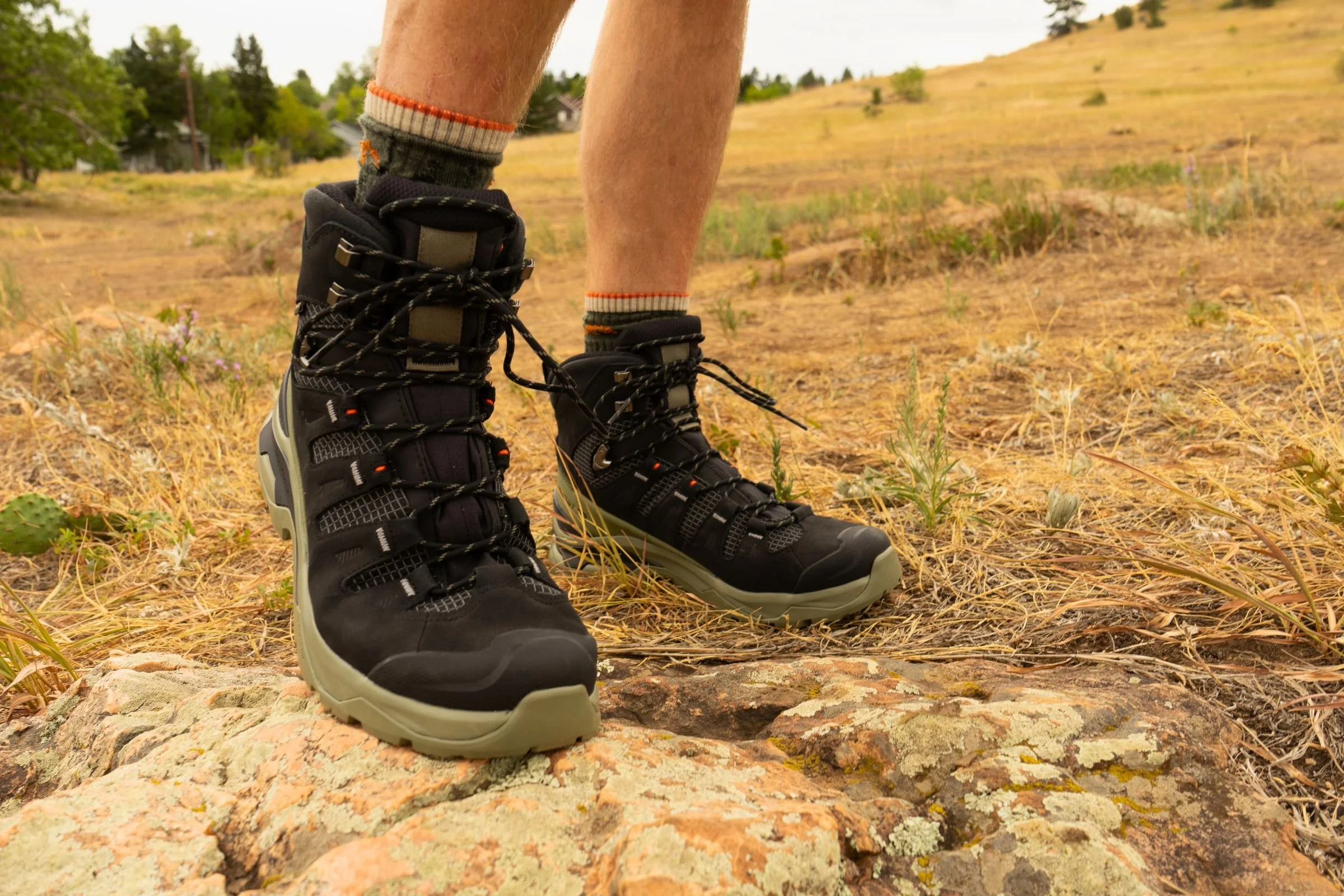
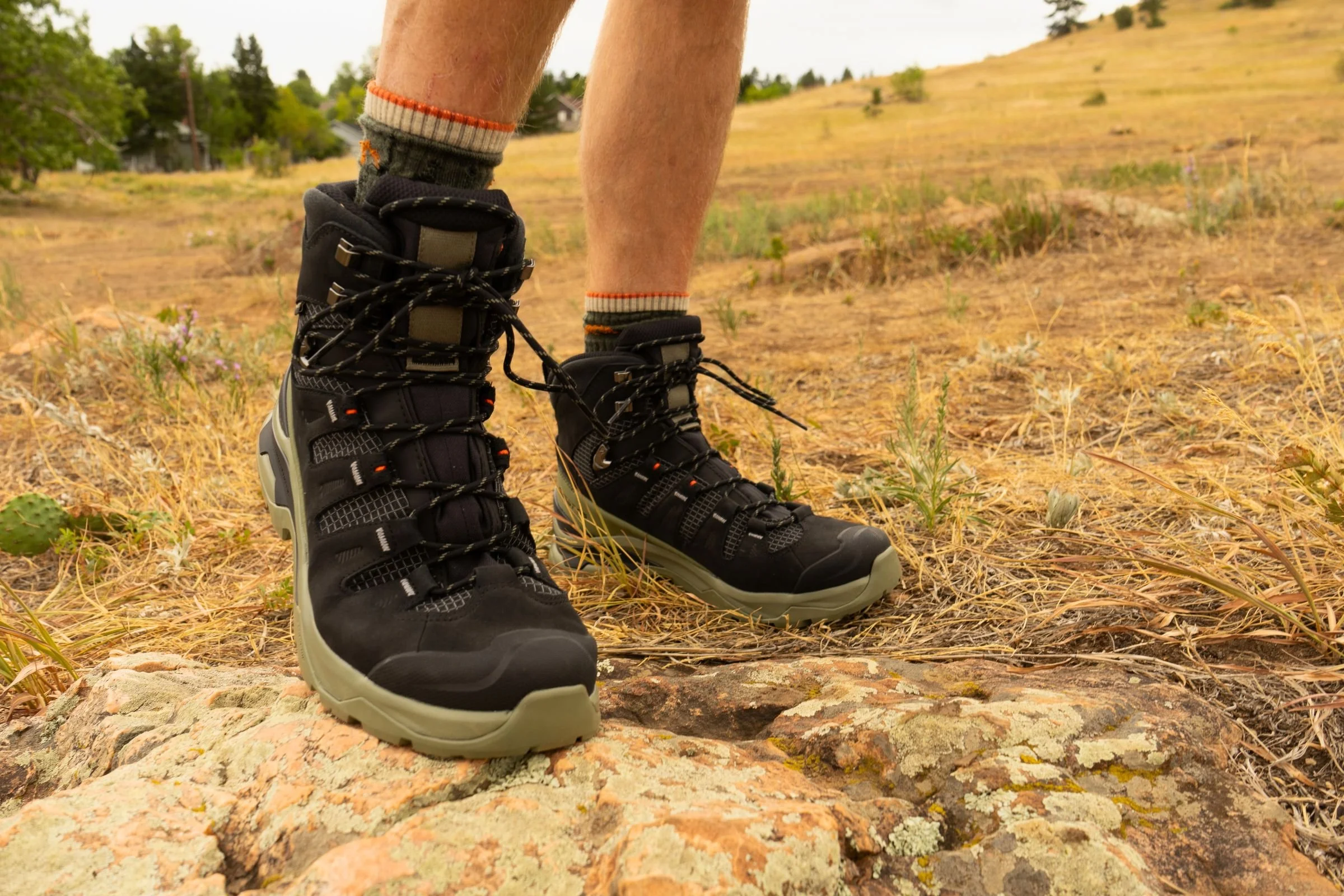
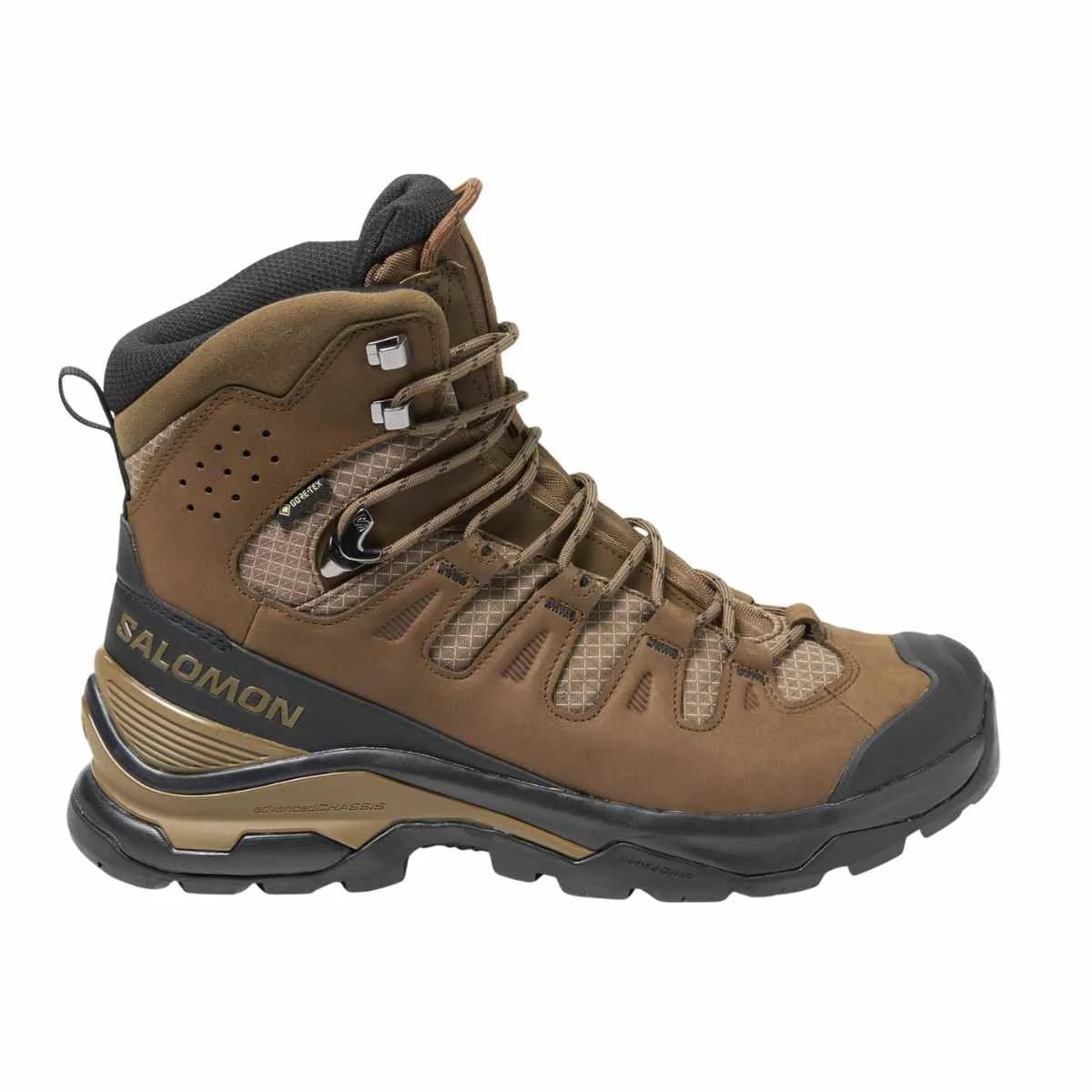
The Salomon Quest series is known for its high ankle support and top-notch waterproofing. The new Salomon Quest 5 GTX hiking boots maintain these strengths. The latest Quest 5 boots come with a refined construction, including an updated upper and improved lacing system with textile loops, while retaining Salomon’s 4D Advanced Chassis that creates the unmatched stability.
The Salomon Quest 4 GTX hiking boots claimed the best waterproof hiking boots category in our women’s best hiking boot guide, and the Quest 5 GTX continues in its predecessor’s footsteps with exceptional waterproofing while maintaining lateral stability, protecting the bottom of the foot, and keeping our feet fixed to slippery surfaces.
The tradeoff of a reliable GORE-TEX construction is predictable. As you might expect with a burly, waterproof boot, the Salomon Quest 5 GTX lacks breathability compared to non-waterproof boots during hot summer hikes. Compared to boots like the Oboz Sawtooth Ascent Mid, the Quest 5 is also about 3 ounces heavier. And it’s only available in men’s. Check out the Salomon Quest Echo GTX hiking boots as an alternative for women.
Still, for backpackers who regularly shoulder a heavy pack, frequently cross creeks and rivers, and prioritize protection, the Salomon Quest 5 GTX hiking boots are a solid option.
Salomon Quest 5 GTX
We create reader-supported, objective, mission-driven gear reviews independently selected by our editors. This story may contain affiliate links, which help fund our website. When you click on the links to purchase gear, we may get a commission – without costing you an extra cent. Thank you for supporting our work and mission of outdoor coverage for every body! Learn more.
Salomon Quest 5 GTX Hiking Boot Specifications
Price (men’s): $240,
Weight (per pair, men’s): 2lb 10oz
Cushion level (Light/Medium/Maximum): Medium to maximum
Stability (Neutral/Stable): Very stable
Heel-to-toe drop (mm): 12 mm
Stack height (heel/toe mm): 34 mm heel, 22 mm forefoot
Upper materials: Nubuck leather and synthetic textile
Midsole material: EnergyCell EVA
Outsole material: All-Terrain contaGRIPp
Waterproof technology: GORE-TEX
Available sizes and widths (men’s): 7-15
Suitable for vegans: No
Comparison Table
| HIKING BOOT | MSRP* | MEN'S WEIGHT (PAIR) | WOMEN'S WEIGHT (PAIR) | OUTSOLE | MIDSOLE | UPPER | WATERPROOFING |
|---|---|---|---|---|---|---|---|
| Salomon Quest 5 GORE-TEX Men's |
$240 | 2 lbs 10.0 oz | N/A | All Terrain Contagrip rubber | EnergyCell EVA | Nubuck leather, ripstop | GORE-TEX |
| Oboz Sawtooth X Mid Waterproof Men's Women's |
$200 | 2 lbs 6.8 oz | 2 lbs 0.6 oz | True Tread rubber | Heel puck/ rubber-blended adaptive foam | Oiled nubuck leather, CORDURA fabric mesh | B-DRY membrane |
| KEEN Targhee IV Mid Waterproof Men's Women's |
$190 | 2 lbs 8.6 oz | 2 lbs 2.6 oz | TPU | Luftcell polyurethane | Nubuck leather | KEEN.Dry |
| Columbia Newton Wander Men's Women's |
$110 | 1 lb 15.0 oz | 1 lb 9.8 oz | Omni-Grip | TechLite foam | Suede | Omni-Tech |
Best for
Shoulder-season hiking or backpacking in wet conditions
Backpacking trips with medium to heavy loads
Hikers wanting maximum ankle support
Wet climates
Rocky terrain where traction and grip are important
What we liked
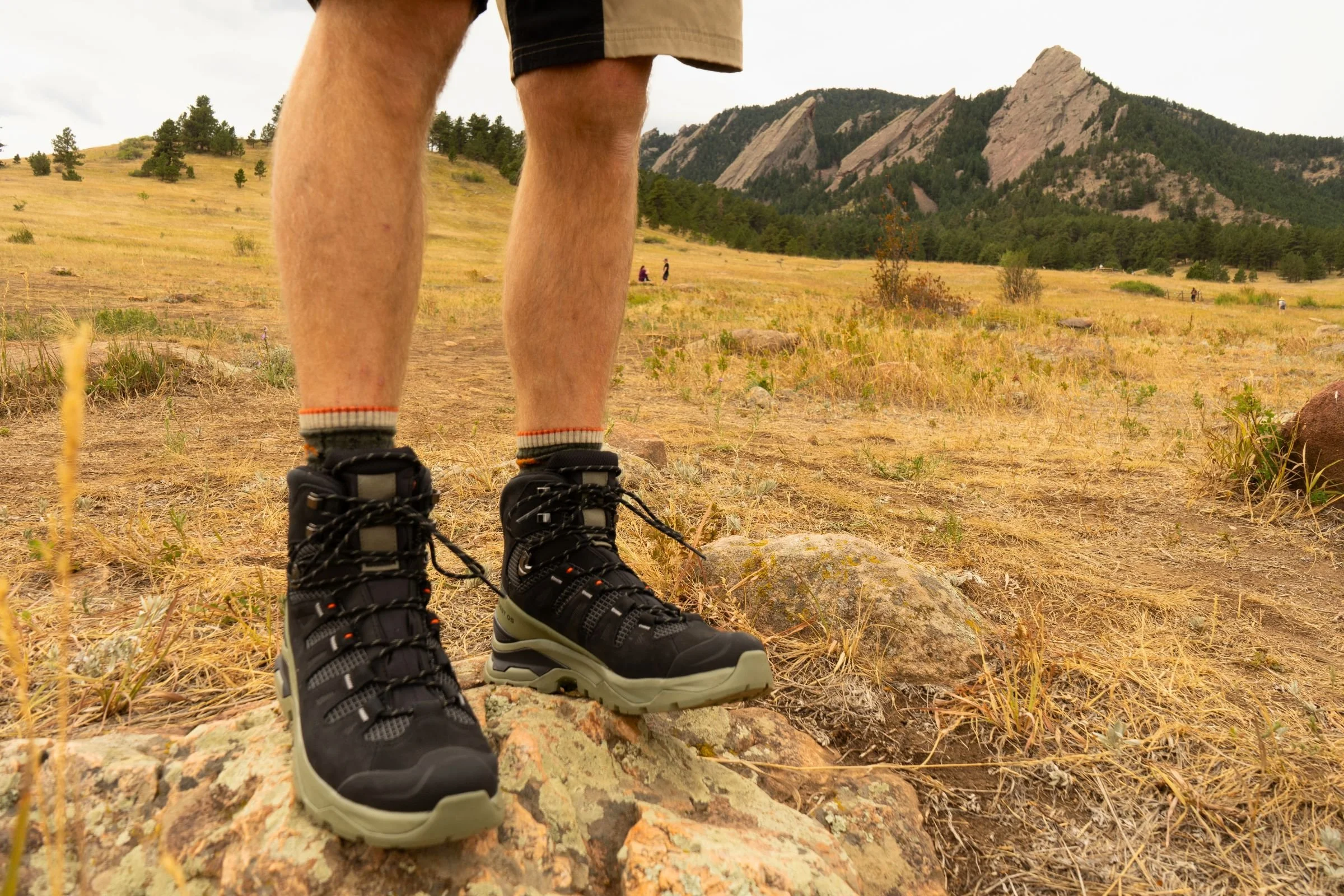
Outstanding ankle support
Stable under a heavy pack
Underfoot stability for long mileage days
Great traction and grip on rock, dirt, and slippery surfaces
Effective waterproofing
Durable materials and design
Protective toe cap
What could be better
Expensive compared to similar boots
Heavier than comparable alternatives
Feet can run warm in these boots during the summer
Only available in standard widths
Less nimble than trail runners and lighter boots
Some heel slippage on steep descents
Only available in men’s
How we tested
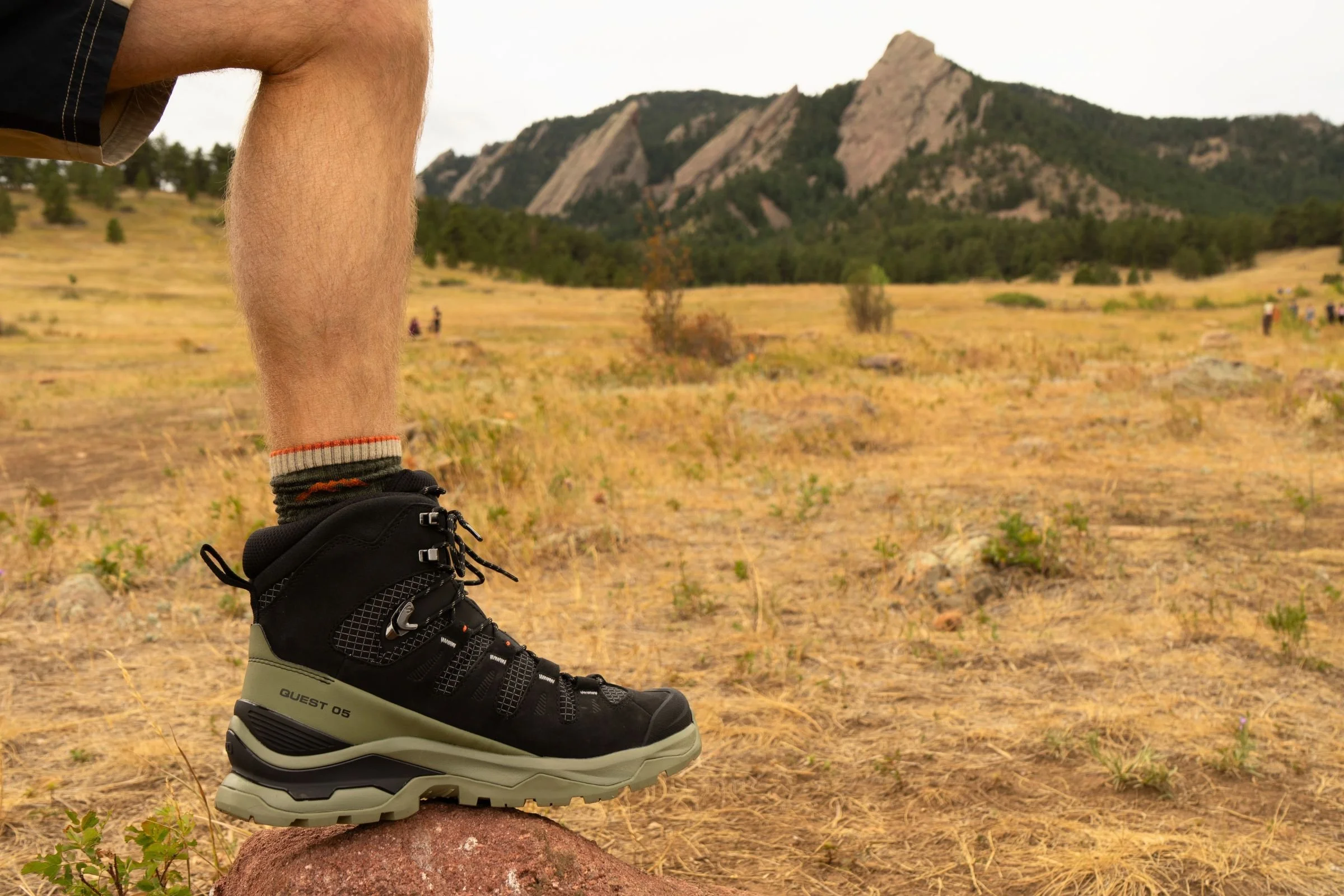
We took the Salomon Quest 5 GTX men’s boots on a handful of hikes across Colorado’s Front Range before heading to a segment of Continental Divide Trail, tackling about 25 miles of hiking in all. Temperatures ranged from 70 to 95 degrees, and the trails involved steep inclines and descents, boulders, and creek crossings.
Along the way, we evaluated these boots for fit, break-in period, traction on both wet and dry terrain, waterproof performance by completely submerging them in a creek for ten minutes, and comfort while carrying a 5-pound daypack.
Then we compared them directly to our testing of about 20 pairs of competitive boots in categories for our Best Men’s Hiking Boots, Best Waterproof Hiking Boots, and Best Lightweight Hiking Boots guides. This also included a side-by-side comparison with the Salomon Quest 4 hiking boots to test updates from the previous model.
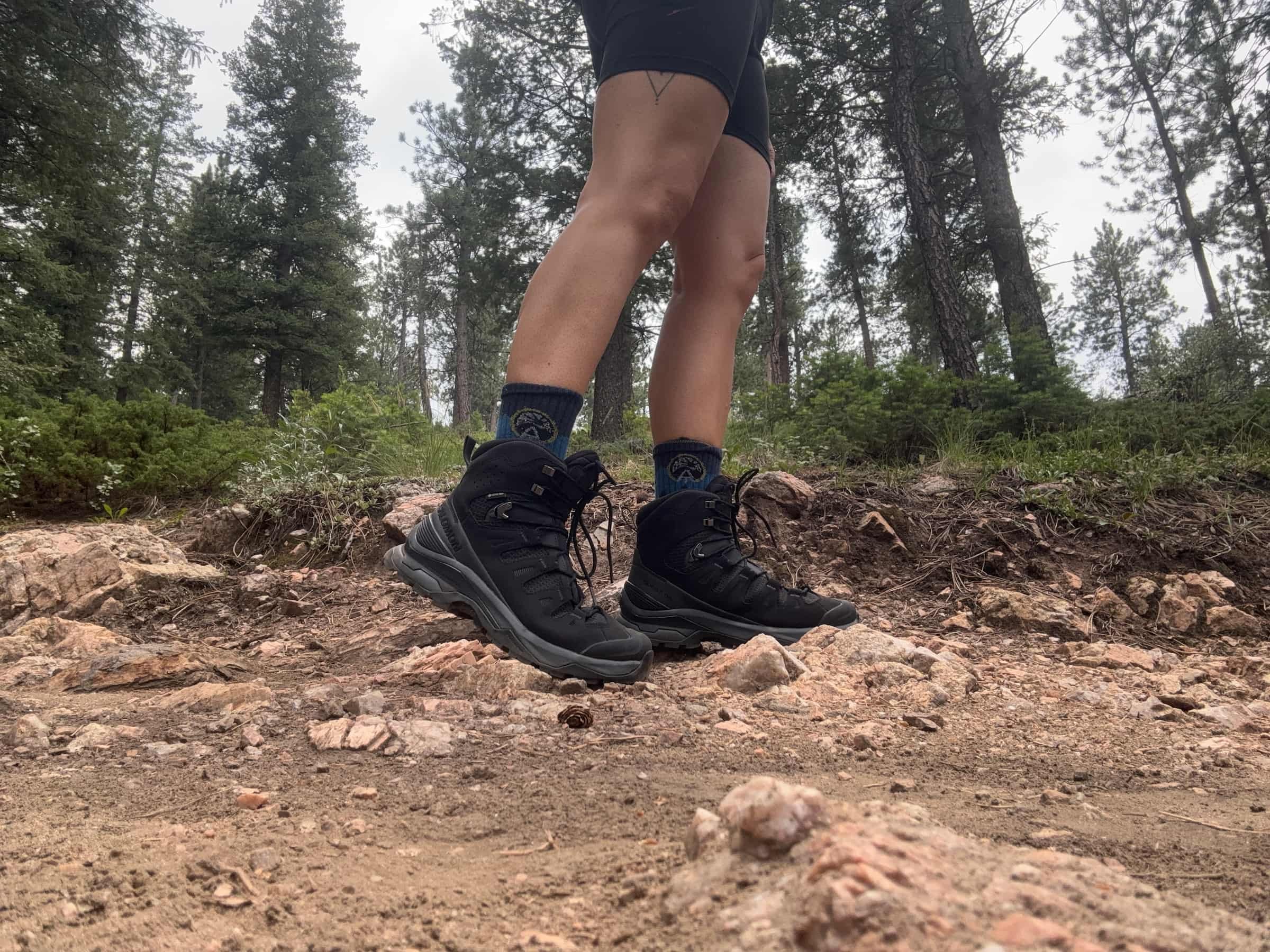
Although these boots are marketed as men’s boots, we had a men’s tester and women’s tester because the Salomon Quest line used to include women’s boots. Women with wider feet may still prefer to wear the Quest line.
Performance in the field
Fit and sizing
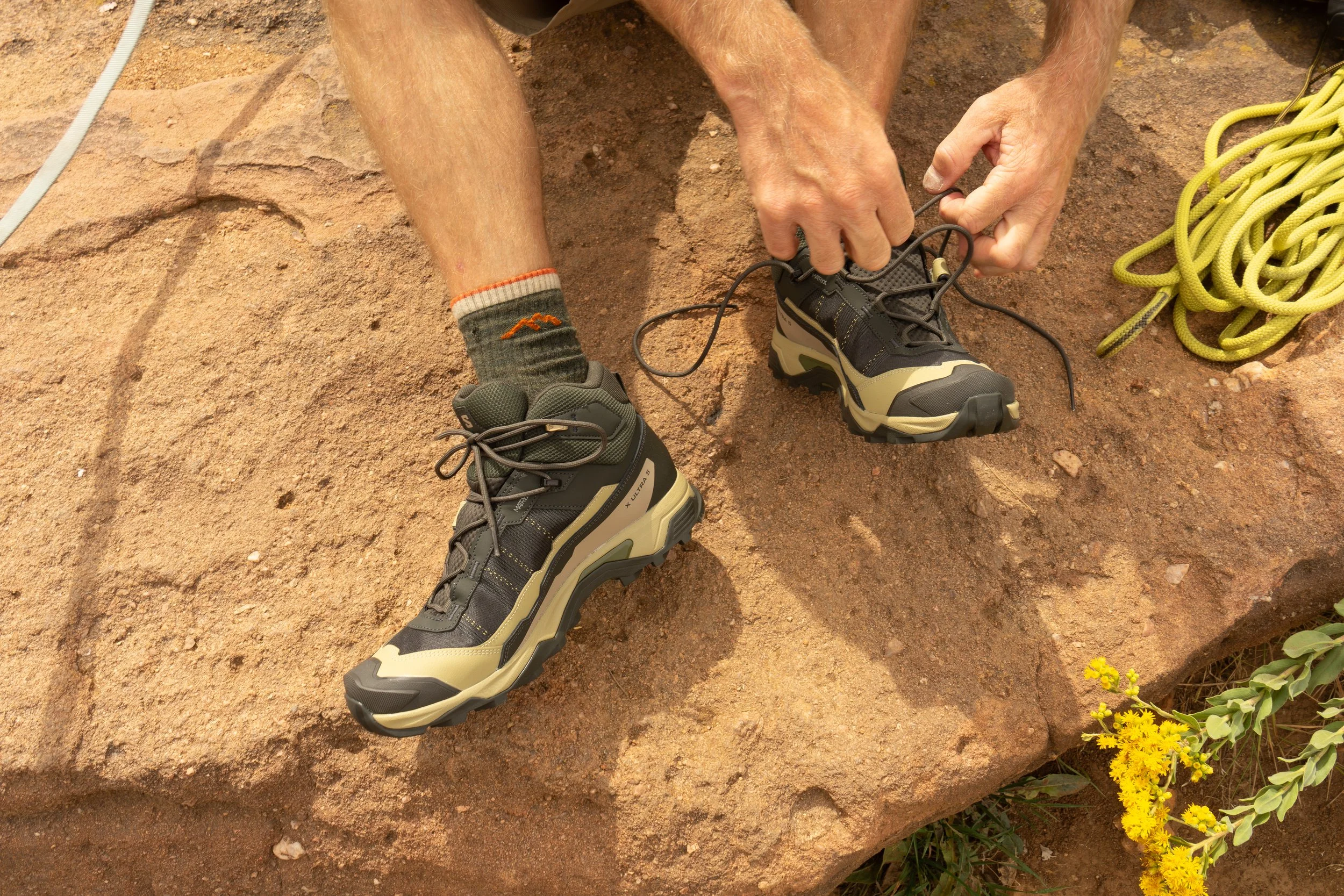
The Salomon Quest 5 GTX hiking boots come with a roomy toe box, a secure midfoot, and a comfortable heel pocket in standard width sizes 7 to 15 (the boots are only available in men’s sizes). Like the Salomon Quest 4 GTX, the Quest 5 proved to be true-to-size with a higher-volume fit, which could make it a helpful pick for those with wide feet. Compared to boots like the Oboz Katabatic RT Mid, the Quest 5 GTX also has a bigger toe box and a slightly taller ankle cuff.
Comfort and support
The first time we laced these boots up to hit the trail, we noticed some light rubbing along the side of the ankle, which immediately gave us pause. While navigating a slight descent towards a creek, the rigid side panels started to create hot spots. So, we took a moment to loosen the mid-foot lace prior to continuing the descent, which seemed to cure the issue. About 5 miles later, the upper felt noticeably more pliable and less likely to cause chafing, so these boots require a brief break-in period.
The Quest 5 GTX hiking boots’ EVA midsole and 4D Advanced Chassis stabilize the foot while providing underfoot cushioning and protection. Rather than allowing the foot to flex on uneven terrain, the chassis helps to distribute pressure more evenly. This design becomes particularly noticeable when carrying a loaded backpack (we tested with loads up to 25 lbs).
The main downside in the comfort category is the break-in time. While hiking boots like the Oboz Sawtooth Ascent Mid are comfortable right away, the Salomon Quest 5 GTX boots took a few days to significantly soften, and even then, they didn’t become pliable like some leather boot options.
Traction and grip
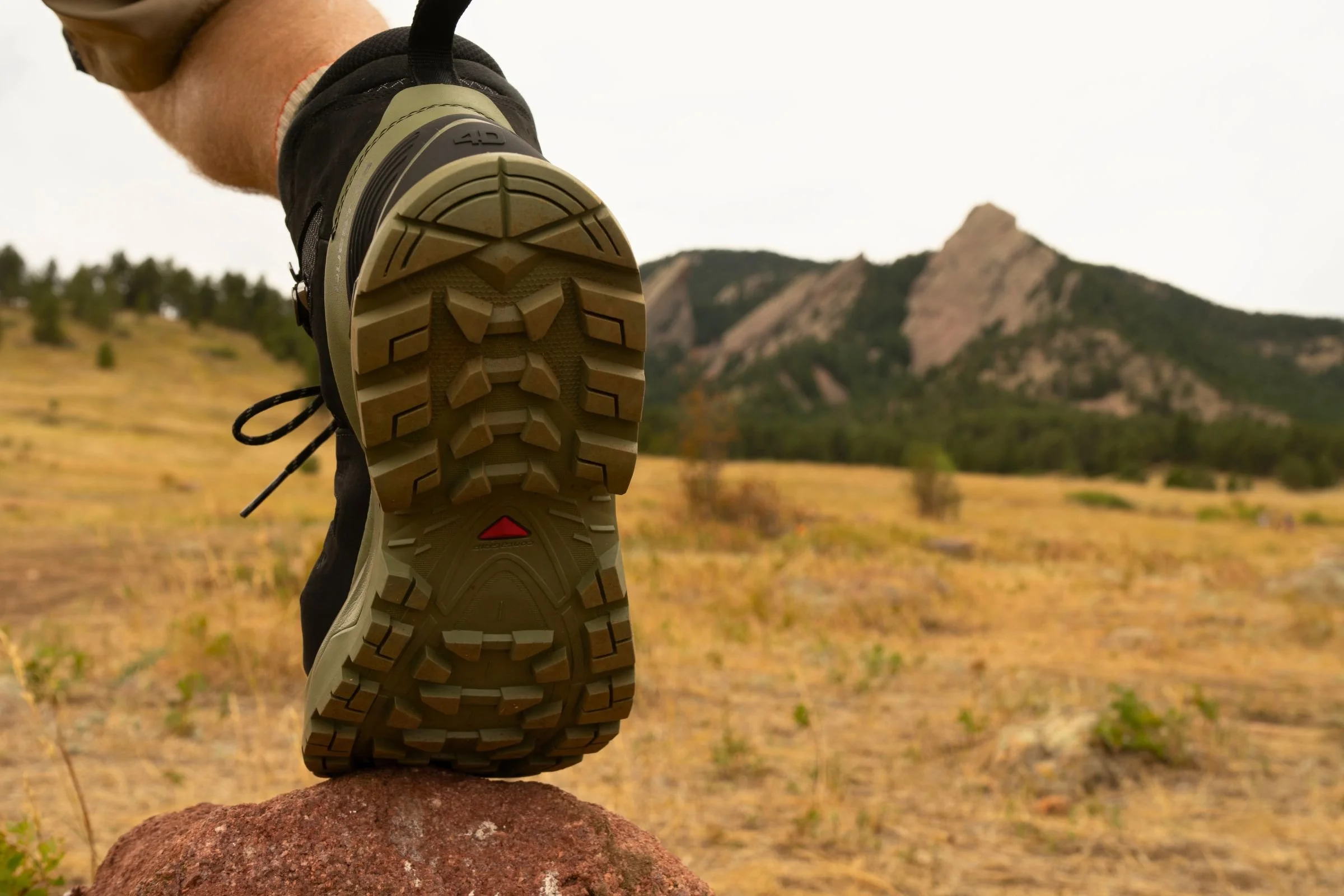
The Quest 5 GTX hiking boots feature Salomon’s All-Terrain contaGRIP outsole with deep, widely spaced lugs. The contaGRIP outsole offers a one-layer construction with double lugs, compared to the former two-layer design of earlier models. In theory, this change should make it more durable than past versions.
Like the Salomon Quest 4 GTX hiking boots, the Quest 5 GTX excels in slippery conditions, handling wet and steep terrain confidently. While navigating creekside slickrock, the soles stayed fixed to the ground.
Thanks to the aggressive 3.8mm lugs, it performed equally well in mud while shedding debris. Although we have yet to wear these boots during the shoulder season, we suspect these qualities will make the Quest 5 GTX hiking boots a unicorn of a boot as weather conditions change, since they maintain their grip on both wet and dry terrain.
Waterproofing, drying time and breathability
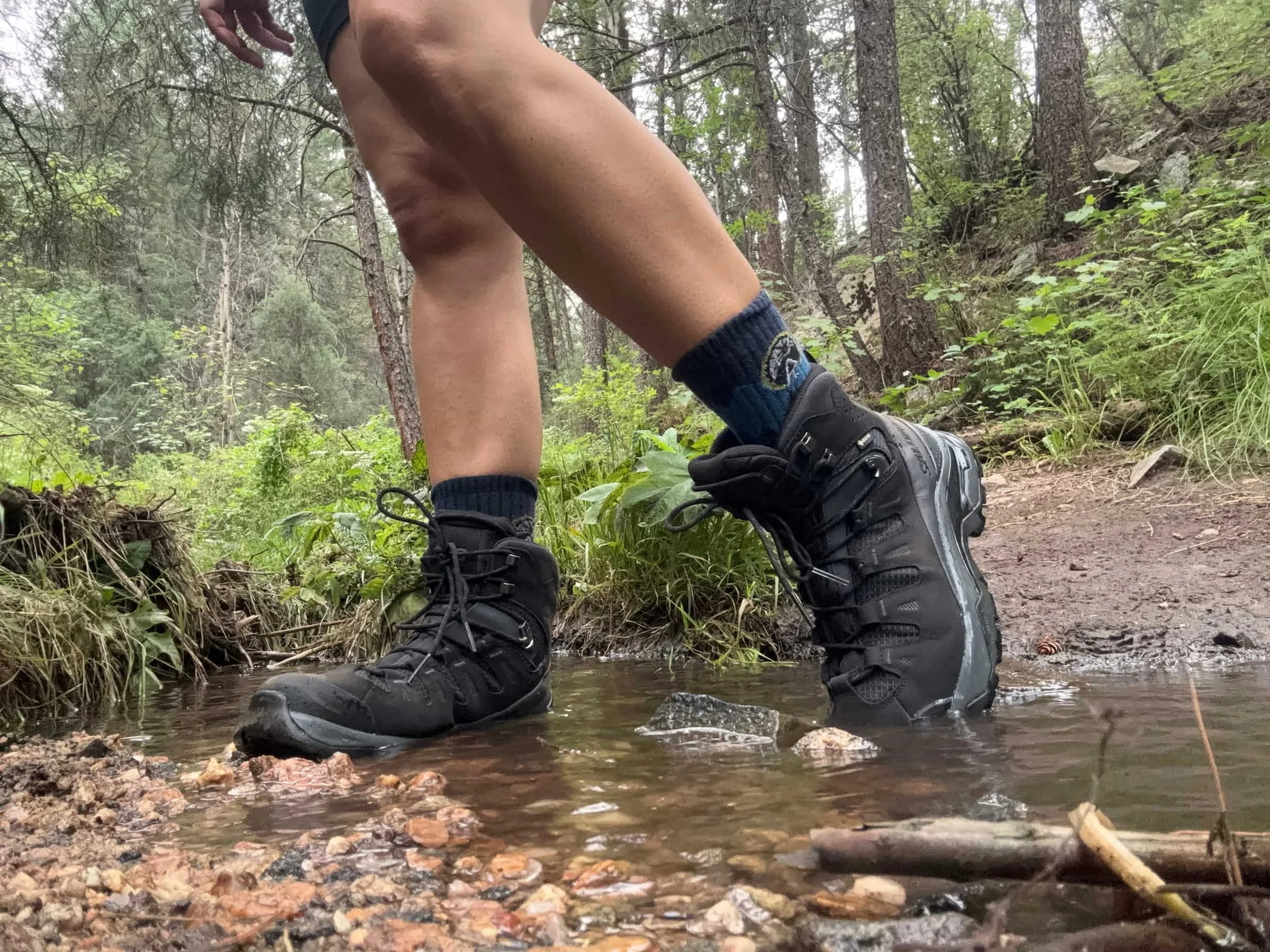
After witnessing a friend navigating river crossings while wearing the Salomon Quest 4 GTX hiking boots, we tested the Quest 5 to see if they would provide similar protection. And they do. Like their predecessors, the Salomon Quest 5 come with standard GORE-TEX waterproofing, which is one of their strongest qualities. To verify their reliable waterproofing, we trekked into an ankle-deep creek for about 10 minutes on several different occasions to determine whether these boots were truly watertight, and we weren’t disappointed.
The full-grain nubuck leather upper managed to shed water once we left the creek, while features like the gusseted tongue and the GORE-TEX liner kept water out of the boots.
Like most waterproof hiking boots, however, the Quest 5 GTX hiking boots prioritize weather protection over ventilation, which becomes noticeable in 90-degree heat. During summertime hikes above 75 degrees, we noticed some moisture buildup from our feet inside the boot.
When the interiors of these boots become soaked, they also take more than 24 hours to dry, which can create uncomfortable conditions for backpackers on extended journeys. The leather upper and waterproof membrane slow evaporation compared to synthetic and lightweight alternatives, like the Salomon Ultra 5 GTX hiking boots.
Warmth and insulation
Although the Salomon Quest 5 GTX hiking boots aren’t insulated, they’re one of the warmer three-season boots we tested. The combination of the leather upper, GORE-TEX membrane, and padding seems to naturally trap heat, making this boot a quality option for shoulder-season and cooler-weather hiking when temps start to drop.
Hikers who are looking specifically for insulated boots should take a look at our Best Winter Hiking Boots guide.
Durability and construction
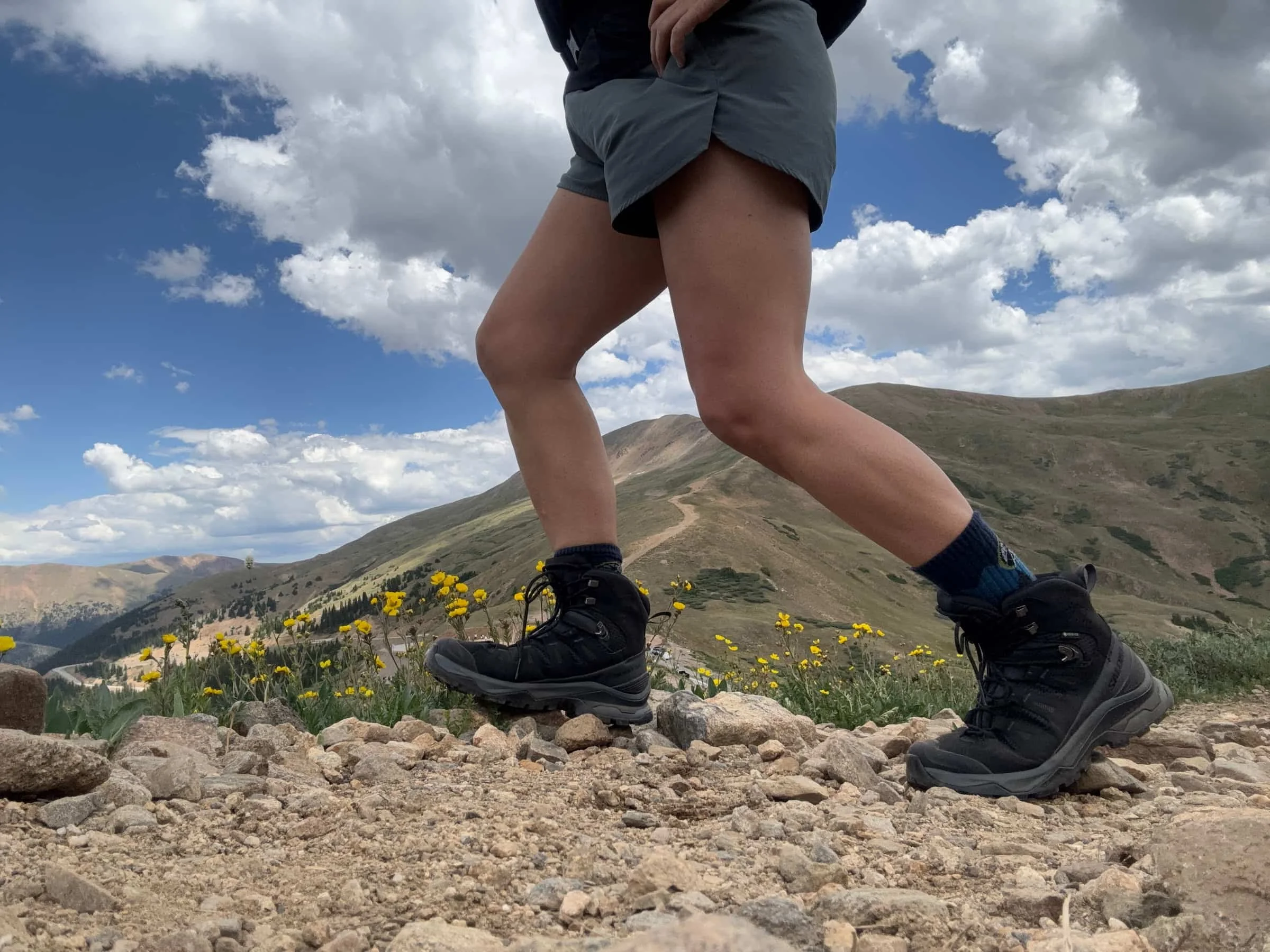
The Salomon Quest 5 GTX boots come with abrasion-resistant synthetic panels to reduce weight while protecting high-wear areas, while the premium nubuck leather supports use in aggressive environments. Features like toe protection, thick rubber overlays, and reinforced stitching also work to prioritize durability.
Salomon’s All-Terrain contaGRIP outsole is also designed for durability, and some long-distance hikers have reported that the lugs maintain traction even after hundreds of miles of usage. After 25 miles of hiking, we noticed minimal (if any) wear across these boots.
Weight
Hiking boots can weigh anything from 1.5 pounds to 4 pounds per pair, with the vast majority of boots landing somewhere in the middle range. The Salomon Quest 5 GTX hiking boots are nearly the same weight as their predecessor, weighing 2 pounds 13 ounces per pair compared to 2 pounds and 14.2 ounces. Compared to other men’s hiking boots we tested, the Quest 5 is the third heaviest boot behind the Vasque St. Elias GTX and the Zamberlan 996 Vioz GTX.
But the Quest’s weight is largely intentional since much of the weight comes from the burly leather upper, reinforced stability chassis (which gives you more stability while wearing a heavy pack), and a highly protective toe cap—all of which should contribute to a longer-lasting boot. While the hefty weight of these boots could contribute to foot fatigue over the course of long treks, features like the stabilizing chassis and overall support help to mitigate some of that.
Features
Lacing system
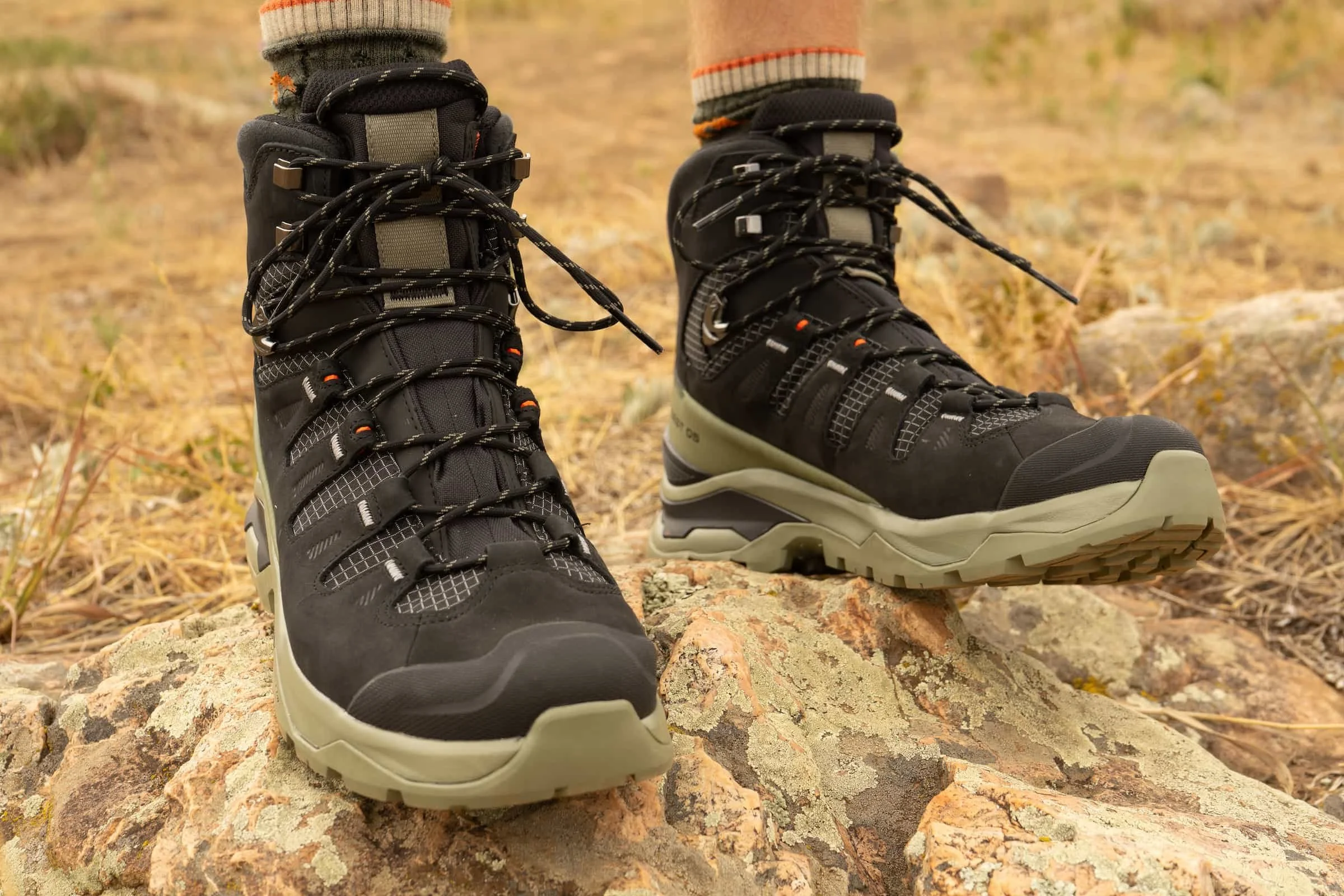
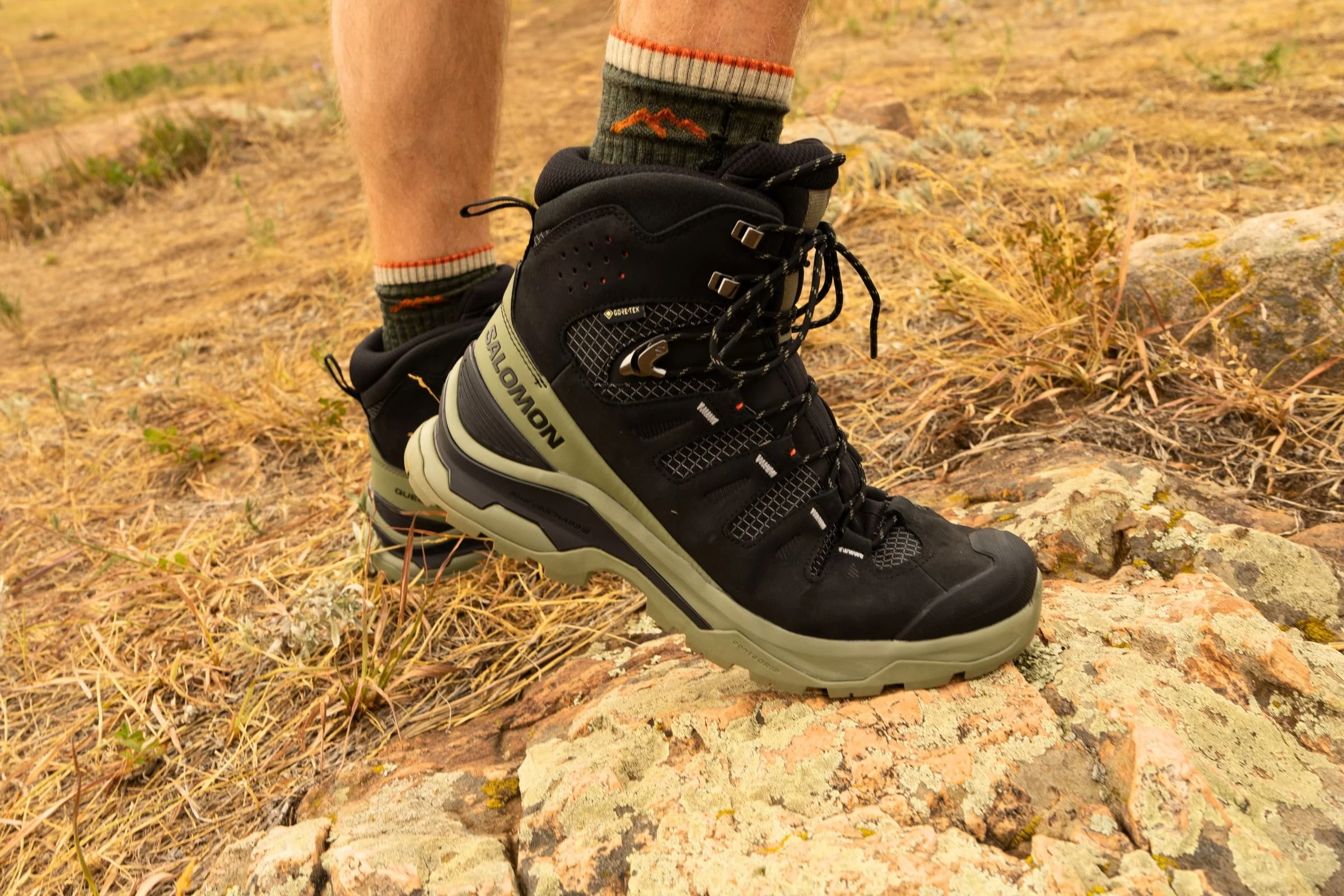
One of the biggest changes between the Quest 4 and the Quest 5 revolves around the lacing system. The Quest 5 uses a combination of textile eyelets and metal hardware that allows hikers to adjust tension in different parts of the feet.
We noticed this the first time we wore these boots on a hike. Straight out of the box, pressure (presumably from the laces) caused chafing along our ankles. But after making a slight adjustment, the rubbing stopped. Compared to earlier versions of the Quest boots, this lacing system offers better opportunities for customization, which we love. This better enabled us to make quick and easy mid-hike adjustments, resulting in more comfort and control.
4D Advanced Chassis
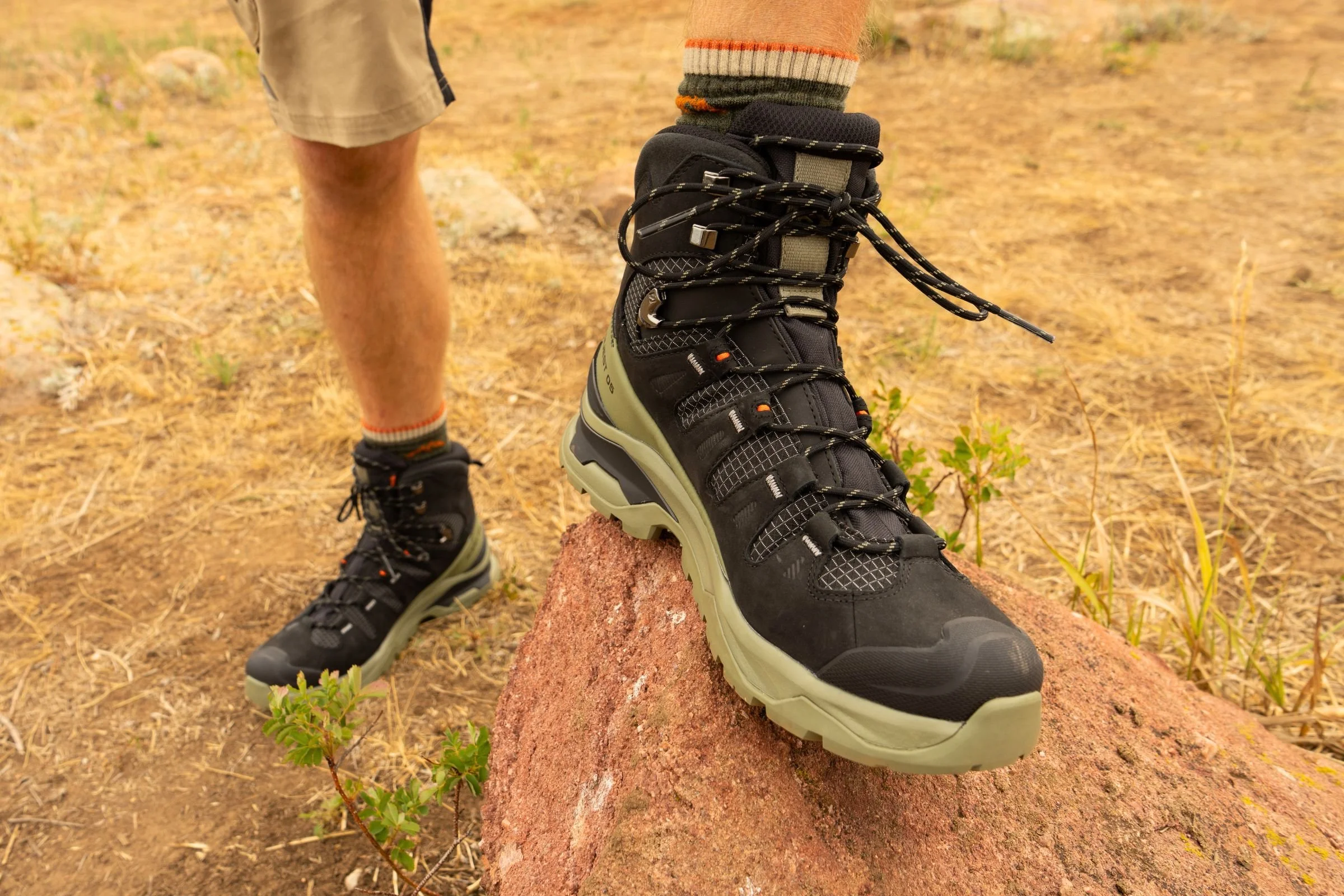
The Quest 5 boots use Salomon’s 4D Advanced Chassis, which creates lateral stability even on uneven ground. Instead of solely relying on a stiff midsole to support technical steps, the chassis offers lateral and torsional protection to prevent ankle twisting and rolling. This is particularly noticeable while hiking with a heavier pack, and a feature you might consider when looking for boots that offer more backcountry assurance.
Toe cap
These boots come with a molded rubber toe cap that wraps around the front of the boot to add protection against hidden rocks and roots. Since these boots allow the hiker to stay agile, most of the time the toe cap is overkill. But it came in handy at the end of the day when our steps became sloppy and we stubbed our foot on a small rock. The toe cap took the bulk of the impact, leaving our toes feeling fine.
EnergyCell midsole
Midsoles are designed to create stability, absorb shock, and add underfoot comfort. The Salomon Quest 5 GTX hiking boots use an EnergyCell midsole for these purposes, which kept our feet stable on uneven terrain and helped to reduce foot fatigue during long days in the mountains.
All-Terrain contaGRIP outsole
The outsole is the part of the boot that makes direct contact with the ground, determining how much grip the foot will maintain on varying surfaces. The Quest 5 boots use an All-Terrain contaGRIP outsole with aggressive 3.8 mm lugs, and sticky rubber that creates stable friction on dirt, rock, mud, and wet surfaces. This is one of the Quest’s most impressive qualities, since it even stuck to moss-covered, slippery rocks in the creek beds we navigated.
Nubuck leather upper
The Quest 5 hiking boots incorporate a nubuck leather upper into their design, which works to deliver a structured boot interior and added durability against abrasions. Compared to synthetic mesh, nubuck is generally more durable, but it often adds weight and reduces breathability, like it does for the Quest 5.
Molded OrthoLite sockliner
The Quest 5 hiking boots come with an OrthoLite sockliner which adds cushioning beneath the foot. It’s easily removeable, which is important for hikers who prefer to use a specific type of insole. But it also adds extra underfoot comfort.
Gusseted tongue
The tongue of a quality pair of hiking boots helps to keep dirt, sand, and other types of debris from entering the boot. And the Quest 5 GTX’s gusseted tongue works to do just that. In addition to combatting pesky debris, this tongue also helps to maintain a more secure fit even as your feet move over the trail.
sensiFIT
Salomon uses their sensiFit technology in the Quest 5 hiking boots to wrap the foot and keep it secure from the midsole through the laces. This design is intended to create a snug boot, keeping everything in place even while you move. And this technology is most noticeable on steep descents and ascents, when the sharp slope can cause the foot to slip inside of the boot.
Protective Mudguard
The Quest 5 hiking boots come with a mudguard around the lower edge of the hiking boot to protect the upper and the foot from debris and abrasions. This is especially useful in environments with rugged trails, since they can contribute to premature boot deterioration.
Colors
The Quest 5 GTX boots are available in trail-focused, neutral colors like brown, black and green, and grey.
Heel cup
A boot’s heel cup is designed to hold the heel in place, creating more stability, reducing friction and adding support. The Quest 5 GTX hiking boots include a heel counter with ankle padding, but compared to boots like the Oboz Sawtooth and Oboz Katabatic hiking boots, this one felt noticeably less secure.
Sustainability/ethics
Salomon has a relatively extensive sustainability program. At the moment, the brand is working to create more circular products, reduce climate impact, and increase community access to mountain sports. By 2030, the brand is aiming to make 100% of its key products to be eco-designed or circular with endeavors like using recycled and bio-based materials as well as increasing the lifespan of products and making it easier to repair and recycle them.
When it comes to the Quest 5 GTX hiking boots specifically, the main sustainable elements involve a PFC/PFAS-free design, recycled components and increased durability.
What’s New for the Salomon Quest 5 GTX hiking boots?
The Quest 5 GTX hiking boots build upon the Quest line with a few small refinements like an updated lacing system, an upgraded outsole, and upgraded synthetic mesh. But it retains many of the qualities of former Quest boots like the 4D Advanced Chassis to stay true to the boot’s original design. The tasteful upgrades move to a more intentional build with some customization of the upper fit via the redesigned lacing system.
Should you buy the Salomon Quest 5 GTX hiking boots?
Buy if you’re looking for a sturdy, long-lasting pair of boots that excels in wet conditions, if you spend a lot of time backpacking with a heavy load, or if you prefer aggressive ankle support.
Skip if you prefer to hike light and fast, you prefer a low-volume boot, or you spend a lot of time hiking in hot and humid conditions.
Where to buy the Salomon Quest 5 GTX hiking boots
The Salomon Quest 5 GTX hiking boots are popular footwear, so you have options when it comes to retailers. Here are some of the pros of the retailers.
REI
Pros: 100% satisfaction policy for 1 year; 10% dividend for members.
Amazon
Pros: Free 2-day shipping with Amazon Prime membership (can be same-day delivery in major metropolitan cities)
Backcountry
Pros: Frequent sales for Expedition Perks members (free to join), fast shipping, Gearhead chat customer service is excellent
Returns and advice on where to buy
In general for shoes, we recommend purchasing from a place with easy or free returns, like REI. Trying on shoes is an important way to get the sizing right. With both those retailers, if your funds allow, you can buy two sizes and easily return one. Additionally, check reviews to see whether other users recommend sizing up or down.
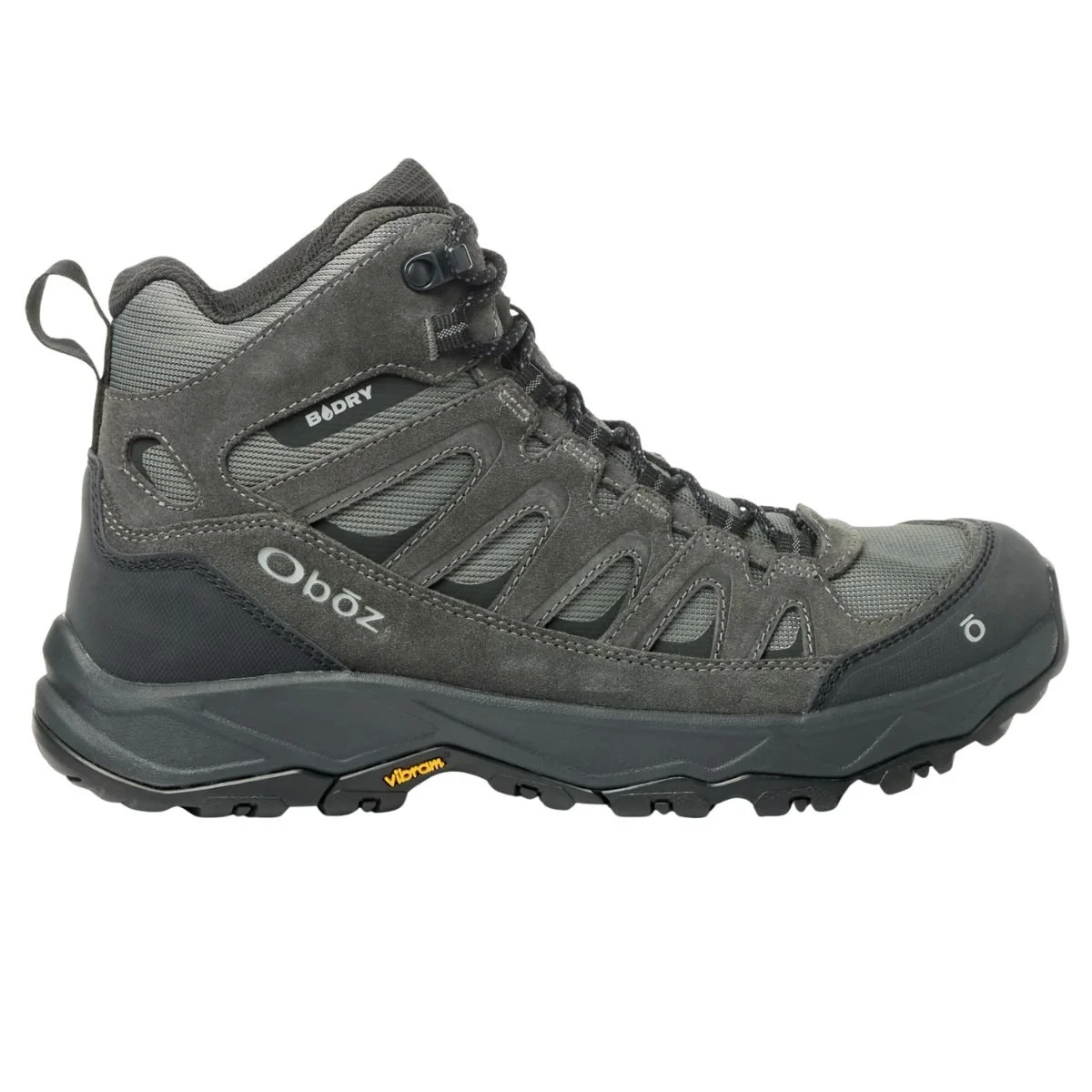
Price: $175
Waterproof membrane: Oboz B-DRY
Weight (per pair, men's and women's): 2 lb 4.8 oz, 1 lb 14.8 oz
Breathability (out of 5): 4
Waterproofing (out of 5): 4
Traction (out of 5): 4
The Oboz Sawtooth Ascent Mid waterproof hiking boots feature a foot shape with a slightly narrower toe box. The midsole is made out of an adaptive EVA foam and a TPU stabilizing chassis to create similar stability to the Salomon Quest 5 GTX hiking boots. But they’re slightly less grippy during creek crossings than the Quest 5 GTX. The Oboz Sawtooth is a solid fit for hikers who prefer a closer foot fit while the Salomon Quest 5 GTX might offer a solid option for those who prefer extra internal boot volume.
Oboz Sawtooth Ascent Mid Waterproof
Men's
Women's
KEEN Targhee IV Waterproof Mid
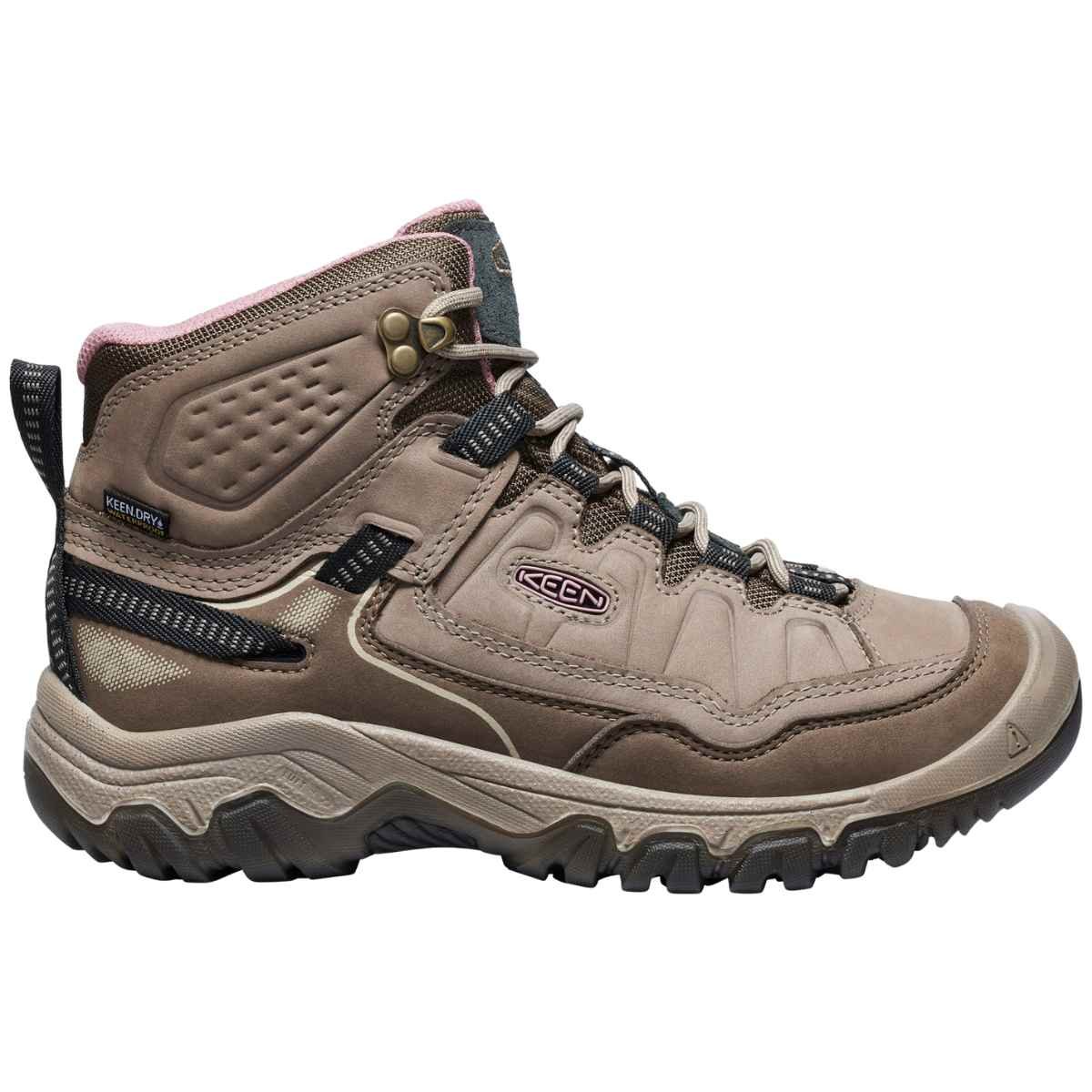
Price: $180
Waterproof membrane: KEEN.DRY
Weight (per pair, men's and women's): 2 lbs 8.2 oz, 2 lb 1.2 oz
Breathability (out of 5): 3
Waterproofing (out of 5): 5
Traction (out of 5): 4.5
The KEEN Targhee IV boots come with an aggressive construction similar to the Salomon Quest 5 GTX—they’re burly, designed with premium nubuck leather, and built for backpacking. But the Targhee has a slightly more affordable price tag. They’re also roomy and wide, and relatively lightweight, winning our Best Boots for Wide Feet in our Best Hiking Boots for Men guide and in our Best Lightweight Hiking Boots guide.
The KEEN Targhee IV Waterproof Mid is a solid hiking boot option for adventurers who prefer a traditional hiking boot with a relatively lightweight design and a slightly more palatable cost while the Salomon Quest 5 Hiking Boots might be a winner for hikers who prioritize durability. Learn more in our in-depth review of the KEEN Targhee IV hiking boots.
KEEN Targhee IV Waterproof Mid
Men's
Women's
Asolo Acadia Mid LTH GTX
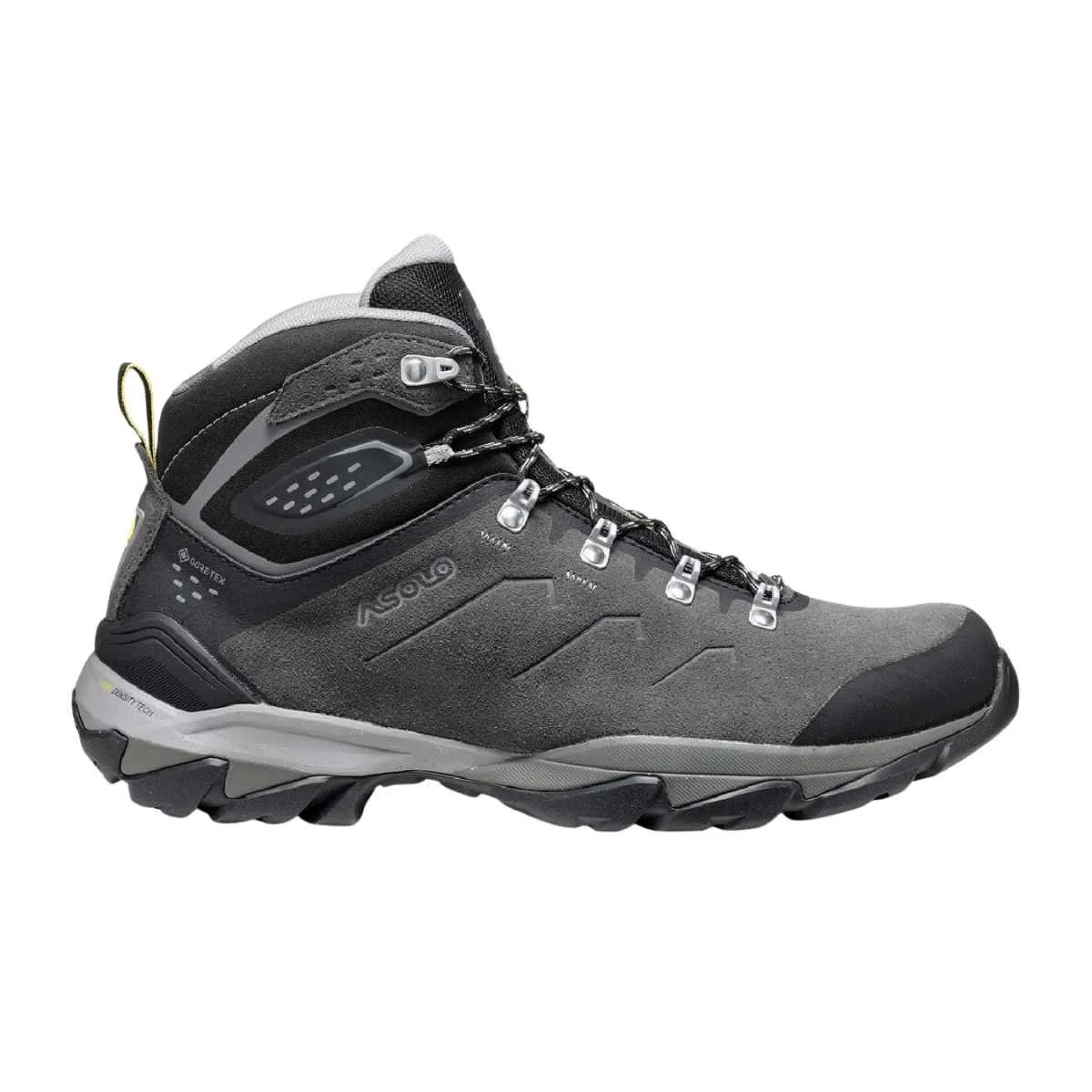
Price: $190
Waterproof membrane: GORE-TEX
Weight (per pair, men's and women's): 1 lb 19.6 oz, 1 lb 15 oz
Breathability (out of 5): 4
Waterproofing (out of 5): 5
Traction (out of 5): 4
The Asolo Acadia Mid LTH GTX offers an alluring boot option for hikers with narrow feet. In fact, they won Best Narrow Hiking Boots in our Best Hiking Boots for Women guide. They also come with a slightly more affordable price than the Quest 5 GTX hiking boots, a bunion fit option, and a lighter overall construction. The Asolo Acadia Mid LTH GTX hiking boots might be the best fit for hikers with narrow feet while the Salomon Quest 5 GTX hiking boots are better for those with standard or wide feet.
Learn more in our in-depth review of the Asolo Acadia Mid LTH GTX hiking boots.
Asolo Acadia Mid LTH GTX
Men's
Women's
Why you should trust us / About the Author
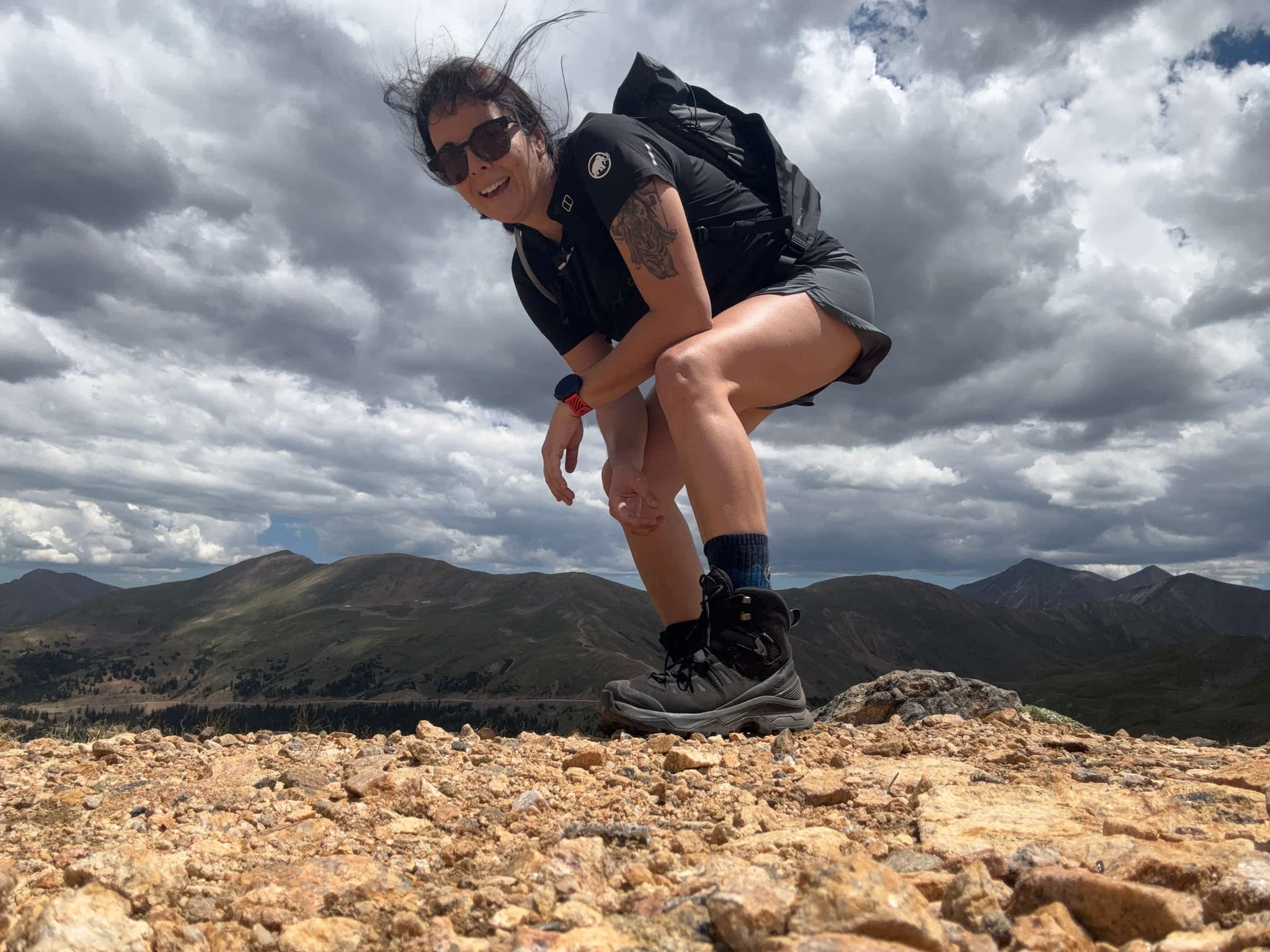
Mary Beth Skylis began her love affair with the outdoors with a thru hike of the Appalachian Trail in 2015. Two years later, she found herself backpacking the Annapurna Circuit and the Colorado Trail. She wore a hefty pair of Vasque boots for the first 800 miles of the Appalachian Trail, where she learned what a truly durable pair of footwear could look like. Her latest adventures have taken her across the globe to some of the most remote corners of the world, where she regularly tests gear in the spirit of science.
Find more of her work on her Treeline Review author page.