
Best Mountain Bike Grips of 2026
Comfortable mtb grips for reducing hand fatigue and improving control on the trail
January 7th, 2026
Home → Gear Reviews → MTB
Want to get a better grip on your mountain bike riding and not gripe about it? Maybe it’s time to upgrade your handgrips.
As one of the most important parts of contact with your mountain bike, your hands steer and direct the mountain bike over obstacles. And though the majority of your weight on a bike is handled through your bum and feet, your hands, shoulders, and arms get a lot more feedback from impacts and terrain while biking. A poor set of grips can lead to extra vibration, causing pain in your wrists, arms, and shoulders. A good set can help reduce vibration and impact, increasing the amount of time you want to romp through the forests and rock gardens, bouncing off berms, and tackling jumps.
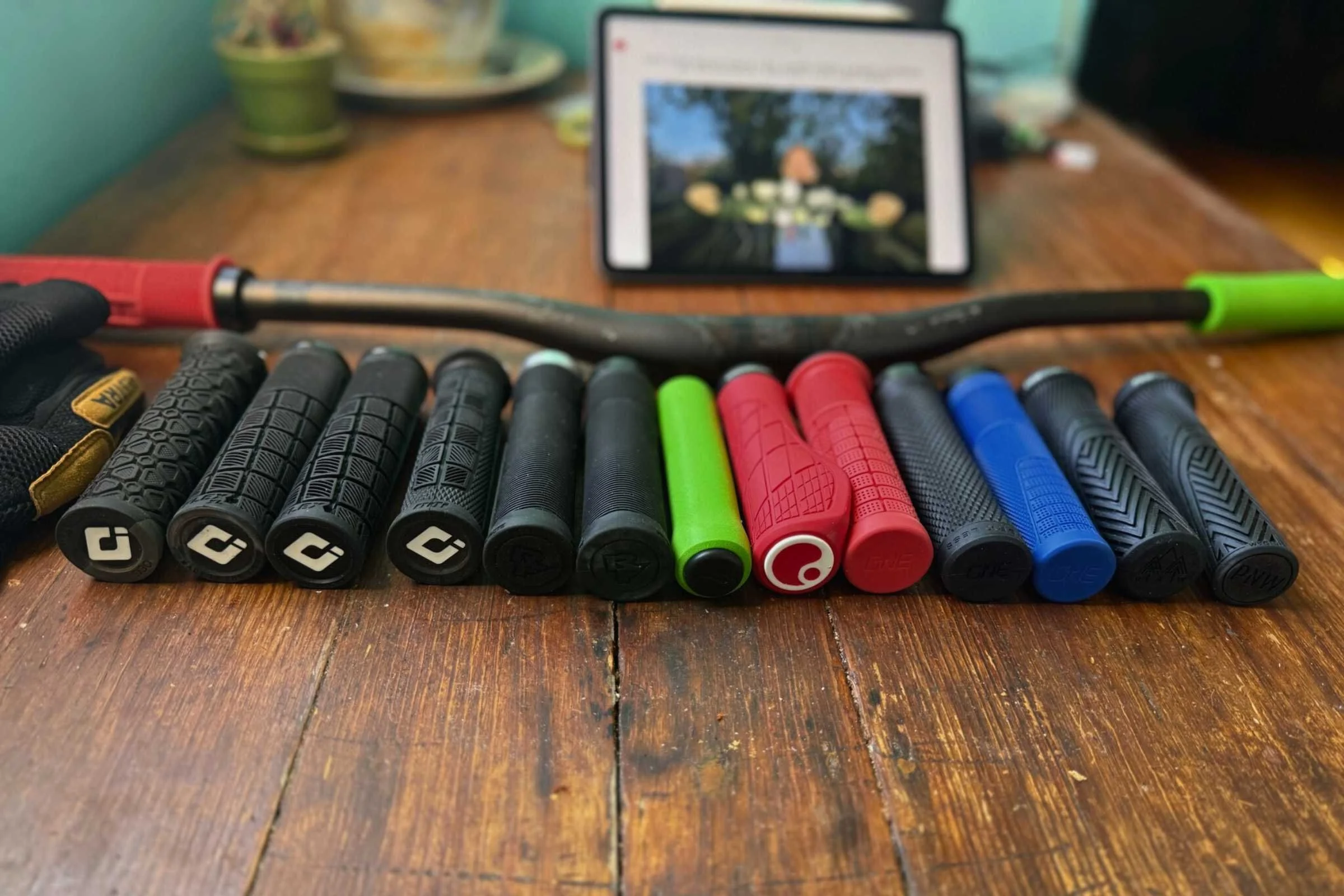
After spending hours researching some of the best lock-on and slip-on grips, we spent the summer and fall hitting the trails with different grips—often changing out grips mid-ride or using different grips on either side of our bars to get immediate, direct comparisons.
In the end we came up with a number of great choices, but to the bike industry’s credit, this was a hard choice, as a lot of the grips we tested were great—they felt much better than the worn out, 10-year old grips that came with our main tester’s Santa Cruz Hightower. For this race to the top we got our dirty mitts and gloves on 14 different handlebar grips and doled out seven well-earned rewards.
If you’re looking for other gear to improve your ride, we’ve already made our choices for the best mountain bike shoes and pedals. Likewise, the gear recommended here addresses another component that doesn’t cost an arm or leg to improve: mountain bike grips. We’ve also developed a handy checklist for all the gear you should have for mountain biking, as well as a Essential MTB Accessories guide to help make your experience even more fun.
This story may contain affiliate links, which help fund our website. When you click on the links to purchase gear, we may get a commission. This allows us to create reader-supported, objective gear reviews, independently selected by our editors— without costing you an extra cent. Thank you for supporting our work and mission of outdoor coverage for every body! Learn more.
Comparison table
| GRIPS | TREELINE AWARD | TYPE | DIAMETER | WEIGHT | LENGTH | MSRP |
|---|---|---|---|---|---|---|
| ODI Elite Pro Lock-On | Best Overall Read why |
Lock-on | 32 mm | 100 g | 130 mm | $30 |
| ODI Vanquish Lock-On | Best for Hand Fatigue Read why |
Lock-on | 32.75 mm | 120 g | 135 mm | $45 |
| Ergon GA3 | Best Ergonomic Read why |
Lock-on | 31 or 33 mm | 116 g | 136 mm | $40 |
| OneUp Components Thin | Best for Small Hands Read why |
Lock-on | 29 mm | 106 g | 138 mm | $27 |
| ODI Reflex | Best for Downhill and Enduro Read why |
Lock-on | 33.5 or 34.5 mm | 109 g | 135 mm | $31 |
| Race Face Chester | Best Affordable Lock-On Read why |
Lock-on | 31 or 34 mm | 112, 135 g | 136 mm | $28 |
The winners
Best Overall MTB grip: ODI Elite Pro
Type: Lock-on
Diameter: 32 mm
Weight: 100 g
Length: 130 mm
What we liked: Solid-lock on grip, great cushioning and grip, available in six colors
What we didn’t like: Only available in one width and diameter.
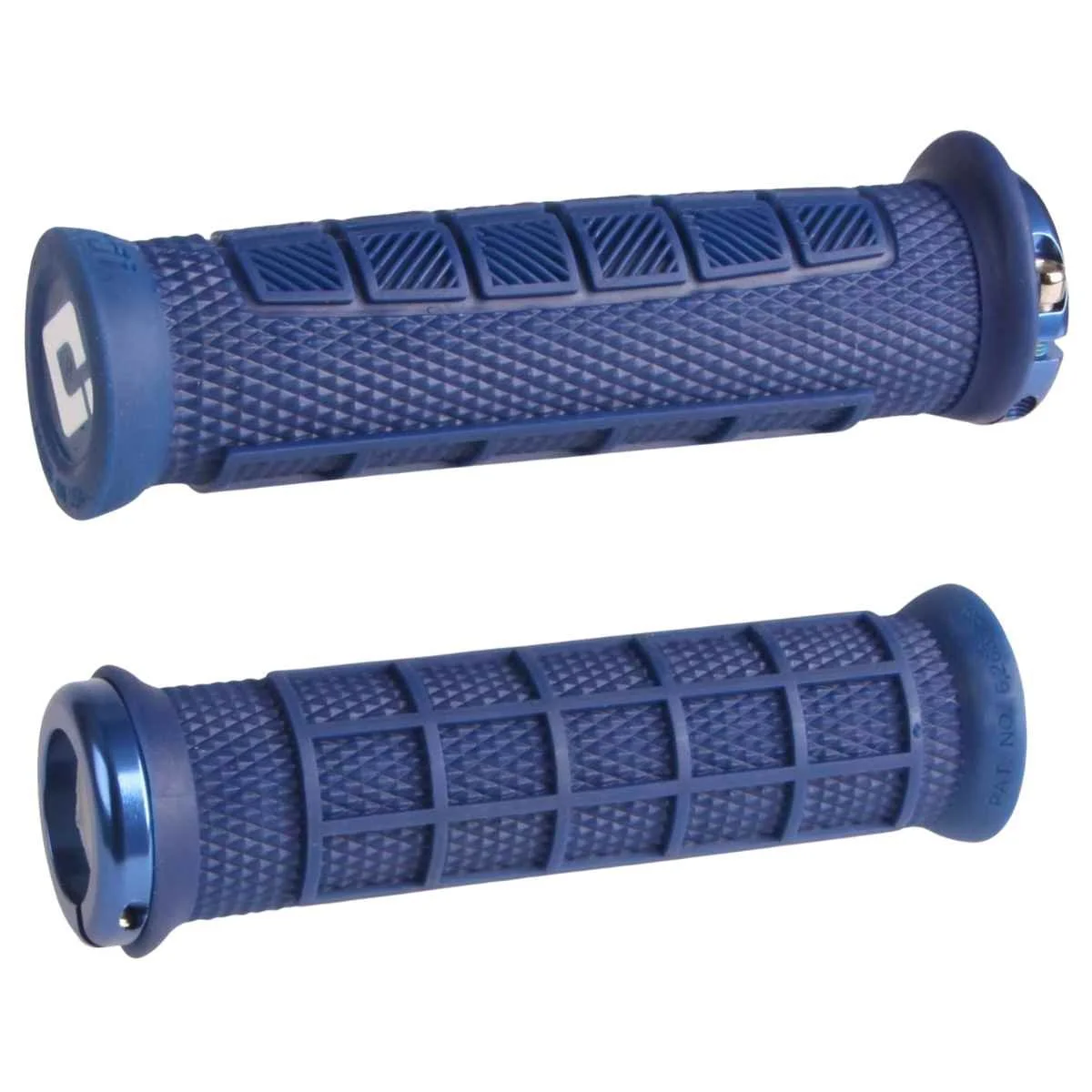
After testing 14 different handlebar grips, the ODI Elite Pro was our overall winner. It just does everything really well. With a slightly raised, siped waffle pattern for the palm to rest on, it provides good cushioning, yet it’s not bulky like some larger diameter grips.
ODI Elite Pro
The rubber grip has the right amount of tackiness to keep the hand firmly attached with or without gloves, and the rectangular waffle pattern keeps the fingers in place through technical rock sections, like the tight turns of Hall Ranch.
This balance of everything we needed in a grip makes it our favorite. Despite the name “Elite Pro” these were about middle of the trail in terms of price, as well, retailing at about $30 as of 2025. While they’re only offered in a 32mm diameter, they should fit a wide range of hands.
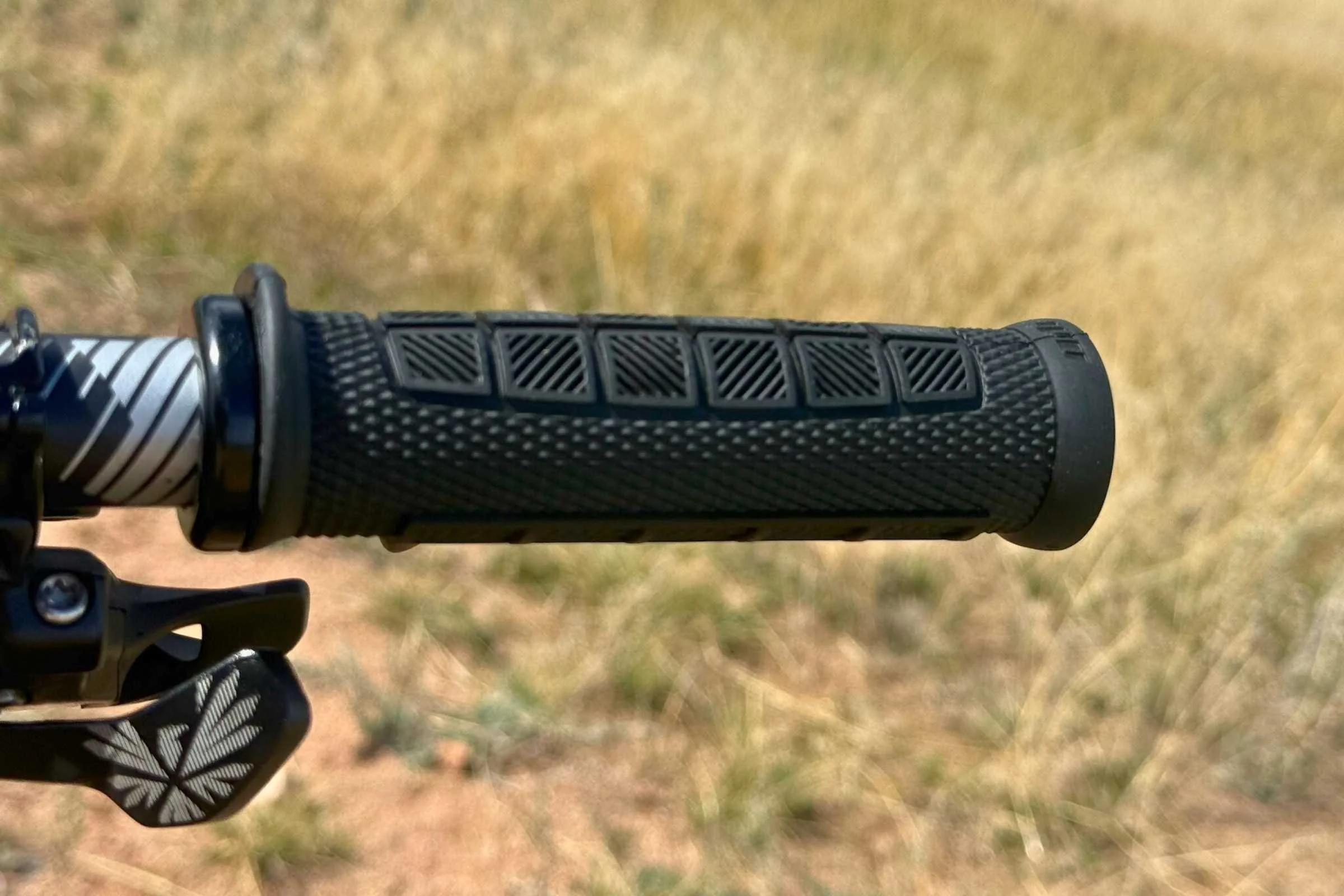
The ODI ELite Pro grip has well-defined padding and finger grip sections. Courtesy Chris Meehan.
Best MTB grips for hand fatigue: ODI Vanquish
Type: Lock-on grips
Diameter: 32.75 mm
Weight: 120 g
Length: 135 mm
What we liked: Great vibration dampening, good grip, multiple color options, made in the USA
What we didn’t like: Not as sticky as other options, not available in multiple diameters or widths, hard to tell left from right when installing
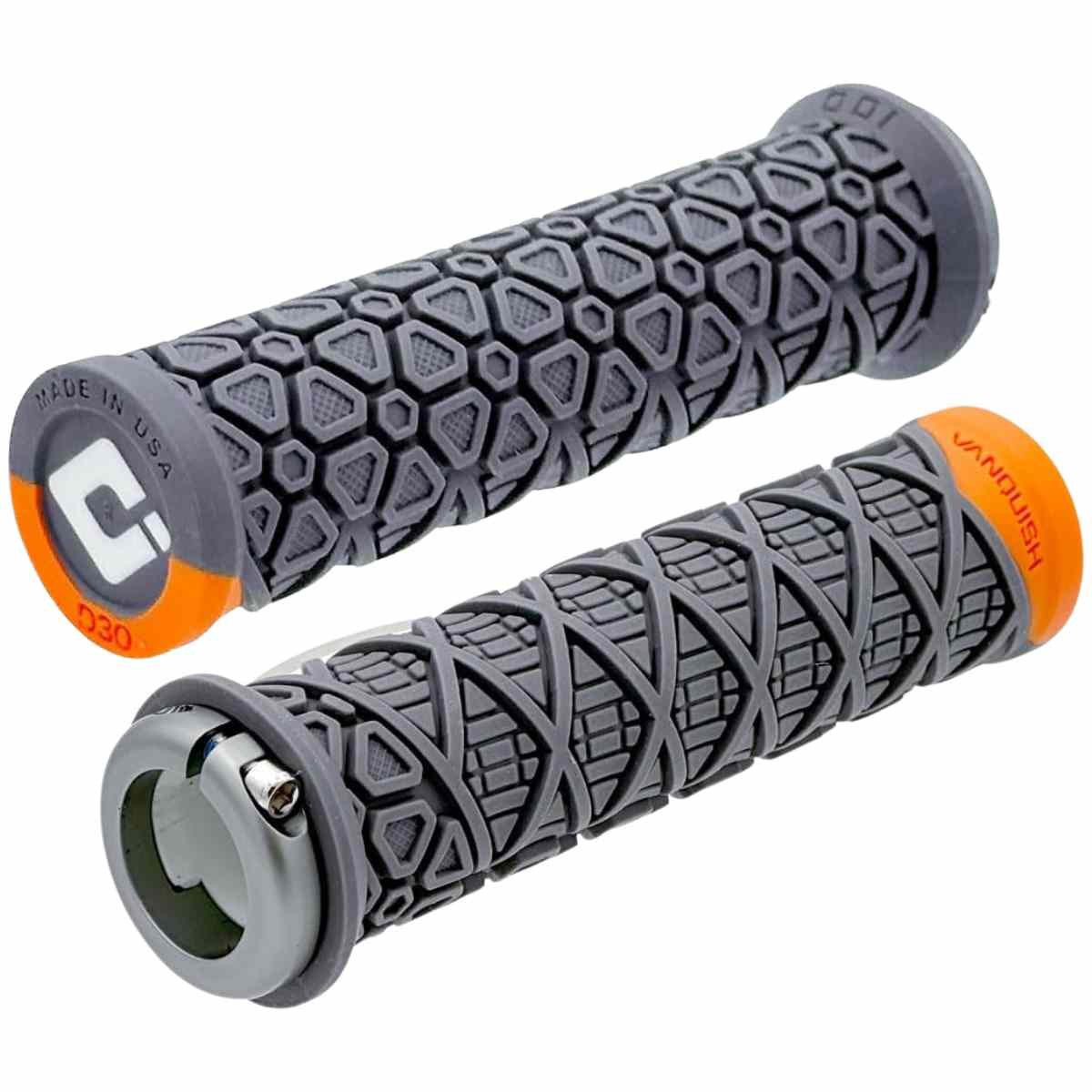
As the lead tester for this piece, I find the two most important things for reducing fatigue are having a grip with the right diameter for my hands so I’m not under or over-gripping, and finding a grip with the right amount of vibration dampening. The ODI Vanquish uses D3O’s new GRIP compound, which is designed by D30 to reduce vibration—much like the company's materials to reduce impacts in knee pads, felt like it offered the best vibration dampening of the bunch. This led to reduced numbness and arm pump.
ODI Vanquish
This is subjective as we don’t have access to a testing lab to accurately measure how much vibration is being transferred through the grip, but after gripping too hard while climbing tight switchbacks on North Table Mountain, hammering down rocky, rutted fire roads on Colorado’s Front Range, and riding through rock gardens and slope-side downhill trails like at Arapahoe Basin, I felt these grips reduced how tired and numb my fingers and palms got compared to other grips we tested.
Even when gripping the Vanquish grips off the bars, the cushioning feels a little more progressive. It feels stiffer against a quick hard grip, but grab them with a slower increase of pressure and you feel like the cushioning goes a little farther.
The grips have two primary zones: one with a kind of floral pattern for the palm and thumb and a large diamond pattern for the fingers. The ODI Elite Pros were more grippy in our hands but we didn’t have any problems with our hands or gloves slipping while using these.
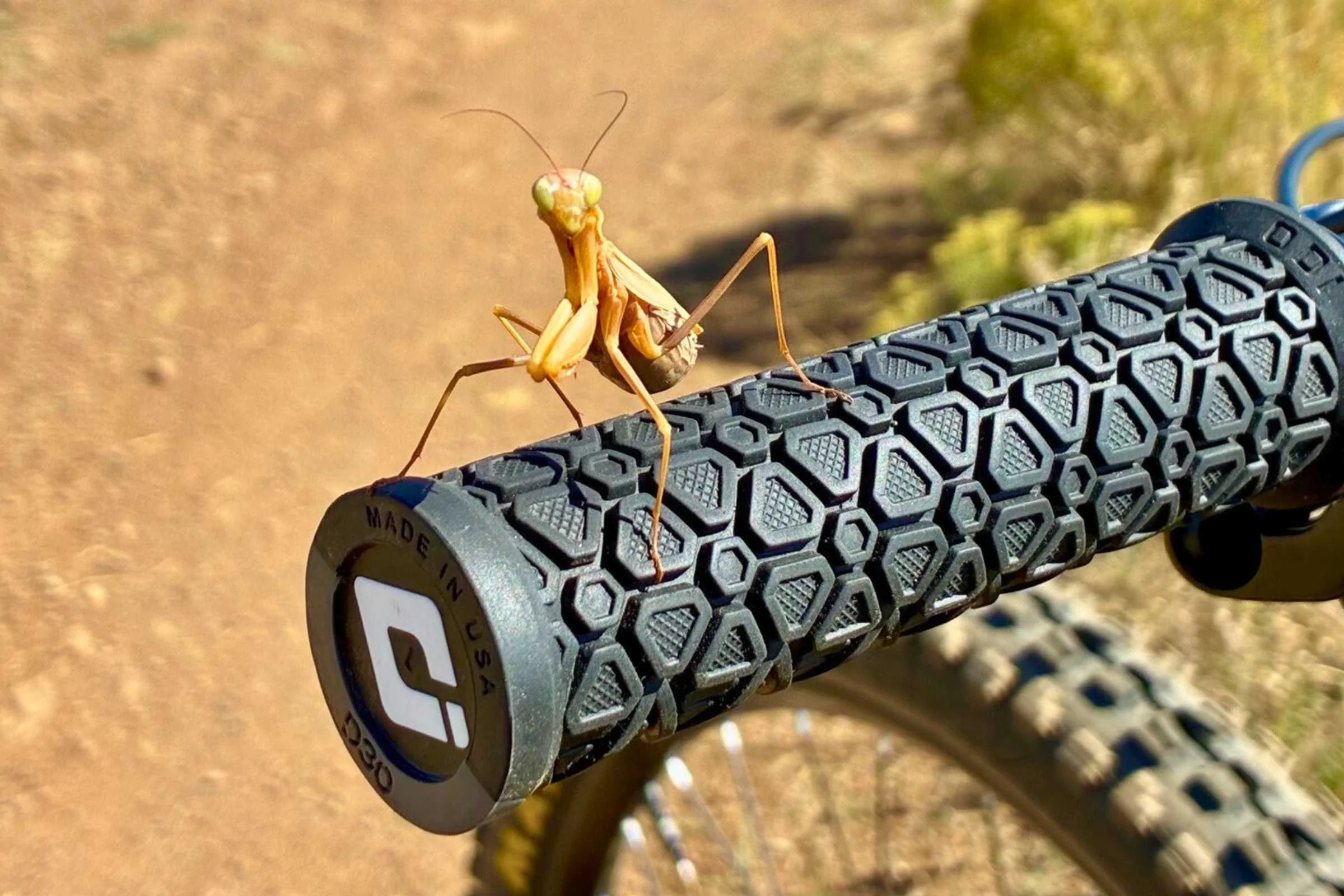
The Odi Vanquish grip with a little help from a friend. Courtesy Chris Meehan
Best ergonomic MTB grip: Ergon GA3
Type: Lock-on grip
Diameter(s): 31 mm (S), 33 mm (L)
Weight: 125 g (size large, as tested)
Length: 136 mm
What we liked: Available in small and large diameters, extra wrist support, available in multiple colors
What we didn’t like: Not as versatile for hand positioning on technical sections, concerns that non-textured rubber could get fouled over time.
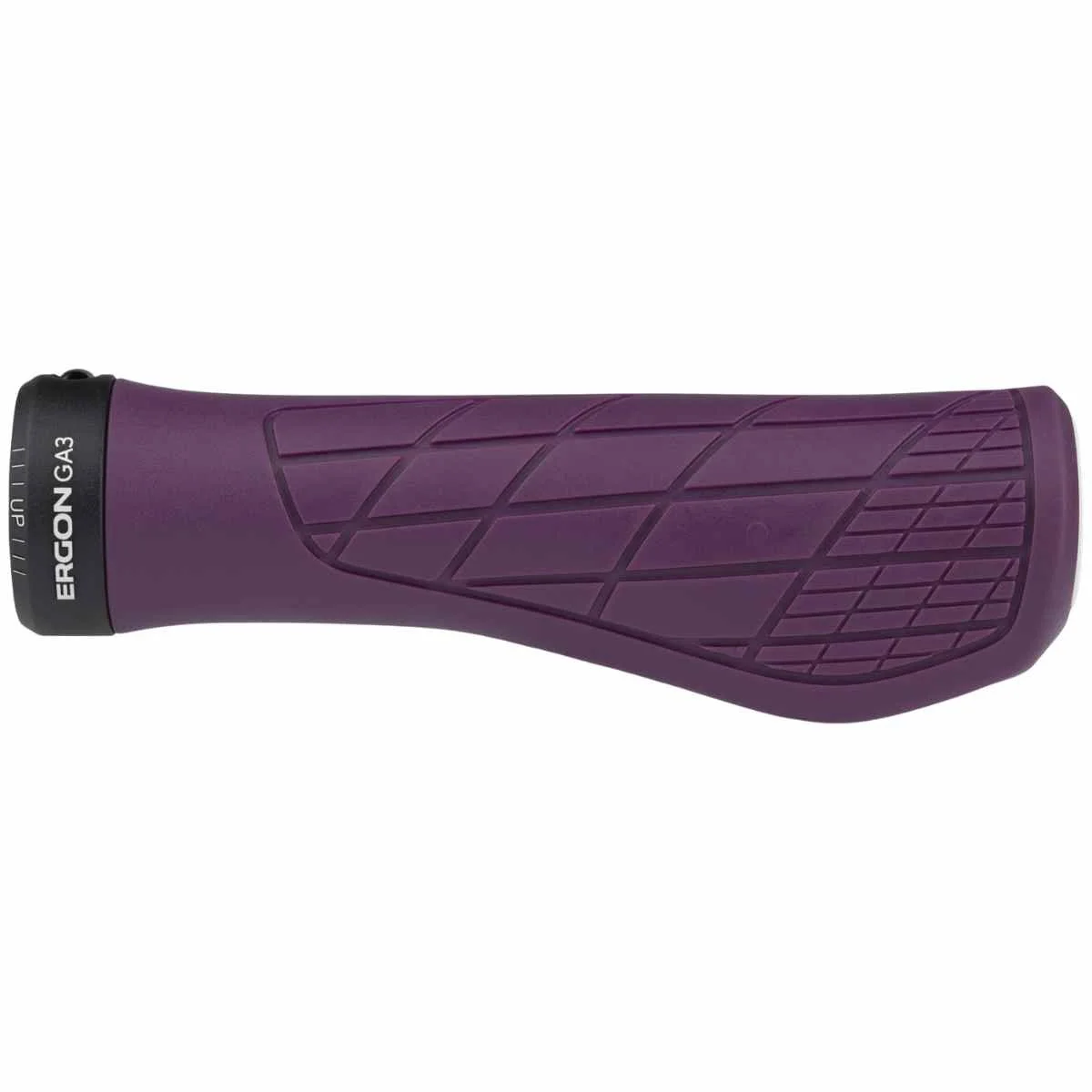
These popular grips from Ergon are widely liked by those with wrist issues. The wings towards the outside of the grips offer extra palm support, helping to properly align the hand and wrist on the grips. This is great for those who have extra wrist pain in the wrists and helps reduce some arm pump.
Ergon GA3
The rubber on the grips is tacky and the patterns on the palm rest as well as where fingers wrap around are decent enough to help keep fingers and palms where they should be. Still, they weren’t as defined on some of the other grips we tested.
There are also large portions of the grips with no patterns on them at all. In testing in Colorado’s dry climate this wasn’t a problem but in a wetter climate we could see these getting fouled with water and mud, which could potentially make hands slip.
Though testers liked this grip, its unique design also has drawbacks. By forcing your hand and wrist into a singular position, it can make it a little harder to adjust your hand positioning on the bars in trickier situations, like the twisting rock gardens at Hall Ranch where you’re bucking up and down as you slot rocks. As such, we think this is a better grip for more recreational riding than technical mountain biking.
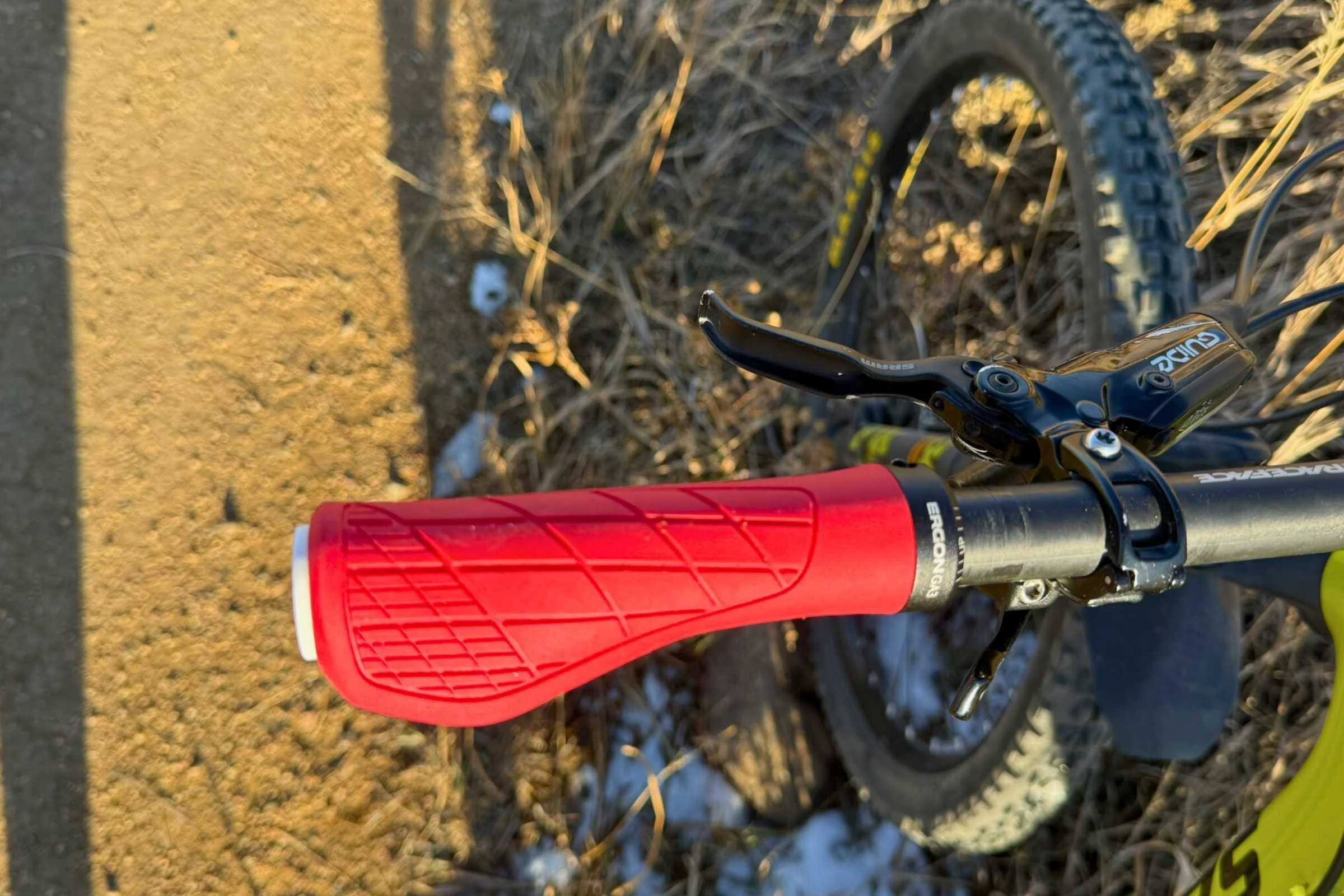
The Ergon GA3 in the field shows little texture on different grip areas, unlike other grips tested. Courtesy Chris Meehan
Best MTB grip for small hands: OneUp Components Thin Grips
Type: Lock-on
Diameter: 29 mm
Weight: 106 g
Length: 138 mm
What we liked: Thinnest diameter makes it easier for small hands, multiple color options, good responsive feel
What we didn’t like: Not as much cushioning, would like a shorter length grip for small width hands, lock-ring slipped off easier than other grips when not on bars
For those with shorter fingers and wearing smaller gloves, the Thin Grips from OneUp Components are a great option. They had the smallest diameter at 29mm, just edging out the PNW Loam grips at 30mm. That means small fingers can lock around more of the grip than on thicker grips, offering more comfort and control.
OneUp Components Thin Grips
These grips are also ideal for riders who also want a grip with the most feedback from the handlebars. With such a thin layer of textured rubber atop the plastic sleeve there’s very little cushioning.
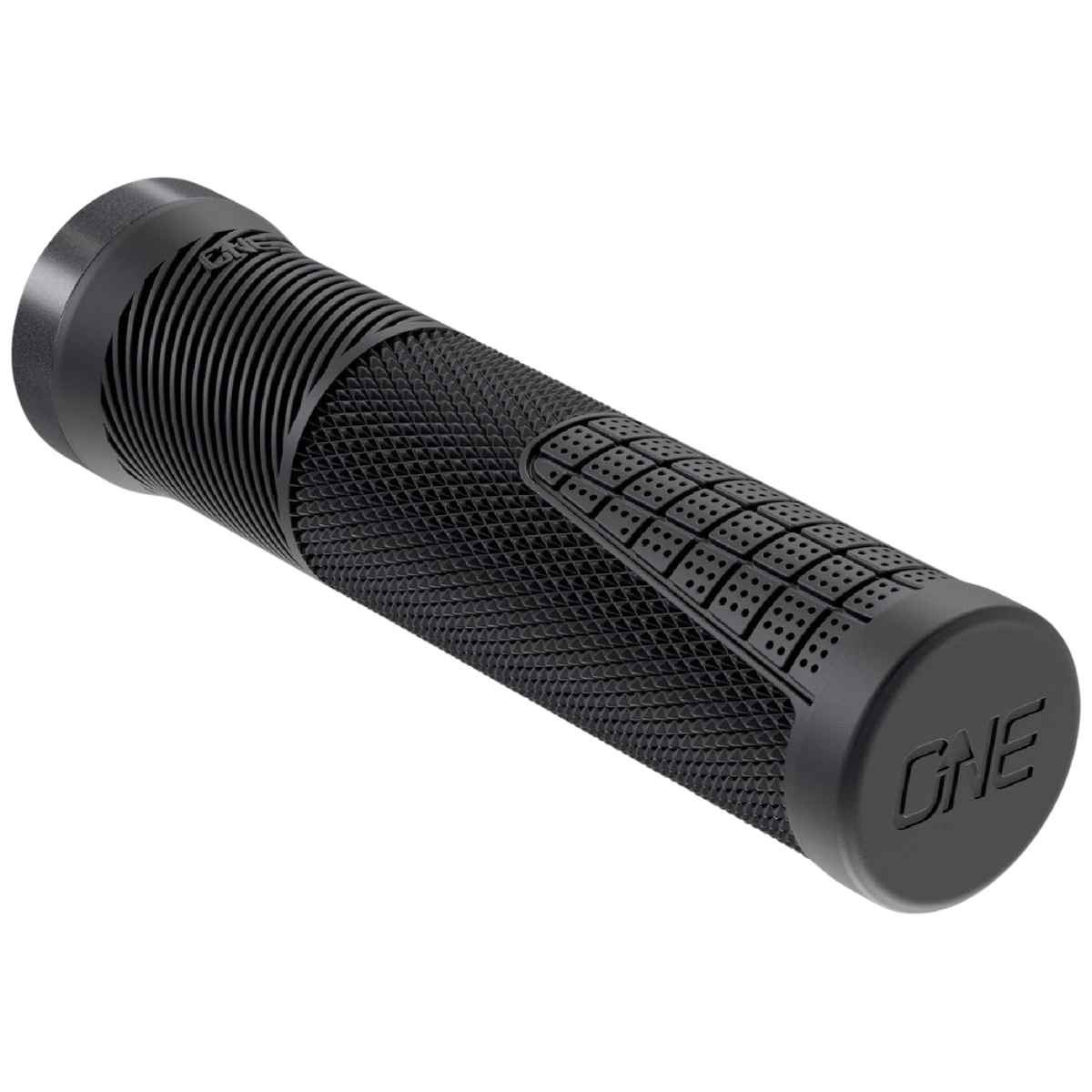
The grips have three zones of texture: a small waffle-pattern palm grip area, diamond textured grip for the phalanges, and diagonal ribs for the index finger and thumb. They provided good grip, but a lot of extra chatter and feedback for our main tester, who wears a men’s medium to large glove.
For smaller riders and those with smaller hands, we would like to see these in a shorter length to make the cockpit a little more accessible.
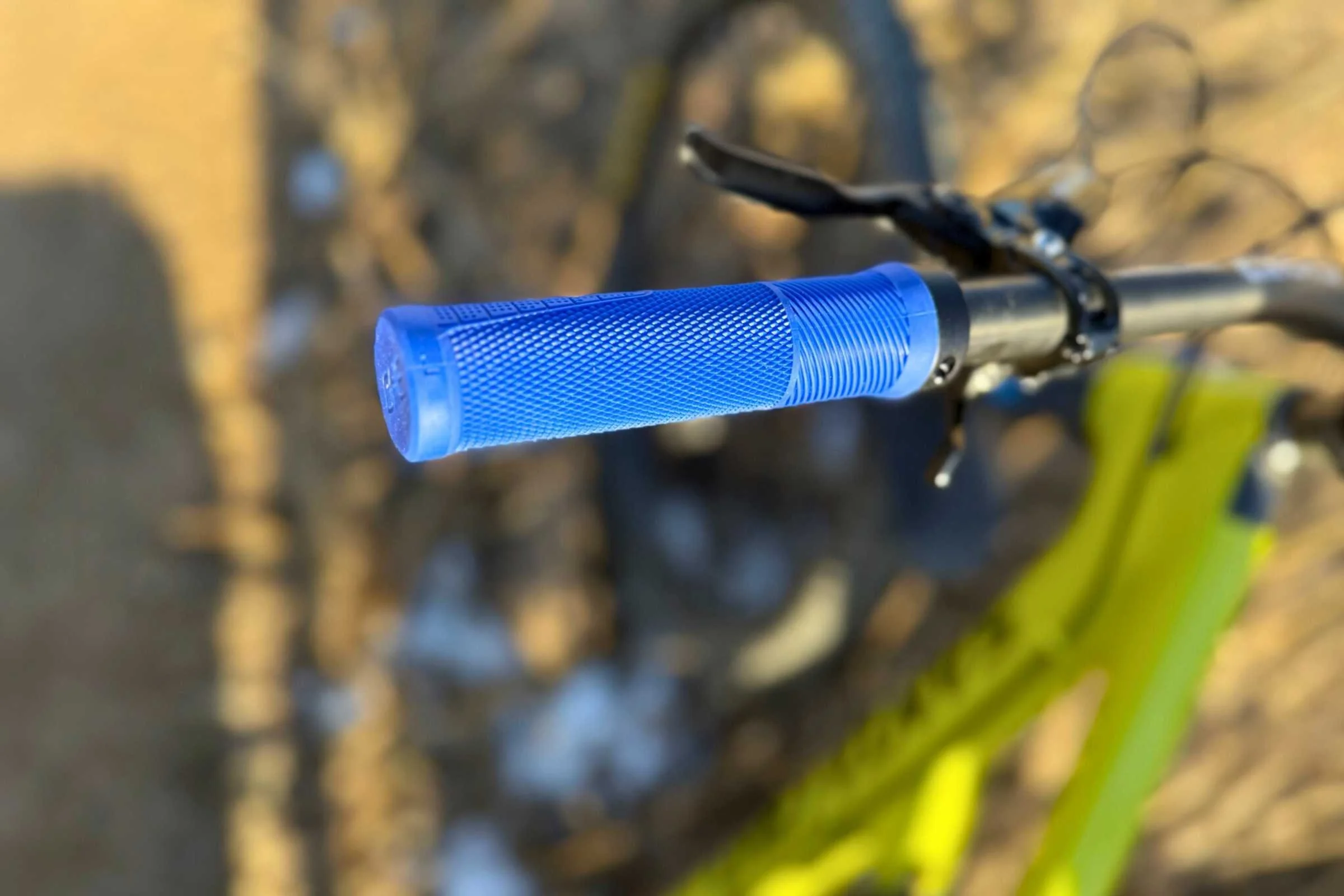
The OneUp Components Thin Grips had the smallest diameter in testing, making them ideal for smaller hands. Courtesy Chris Meehan
Best MTB grip for downhill and enduro: ODI Reflex
Type: Lock-on
Diameter: 33.5 mm (regular), 34.5 mm (XL)
Weight: 109 mm
Length: 135 mm
What we liked: Great grip, good cushioning without sacrificing bar feedback, multiple size and color options
What we didn’t like: No smaller diameter size for small hands, markings for left and right grips are hard to see
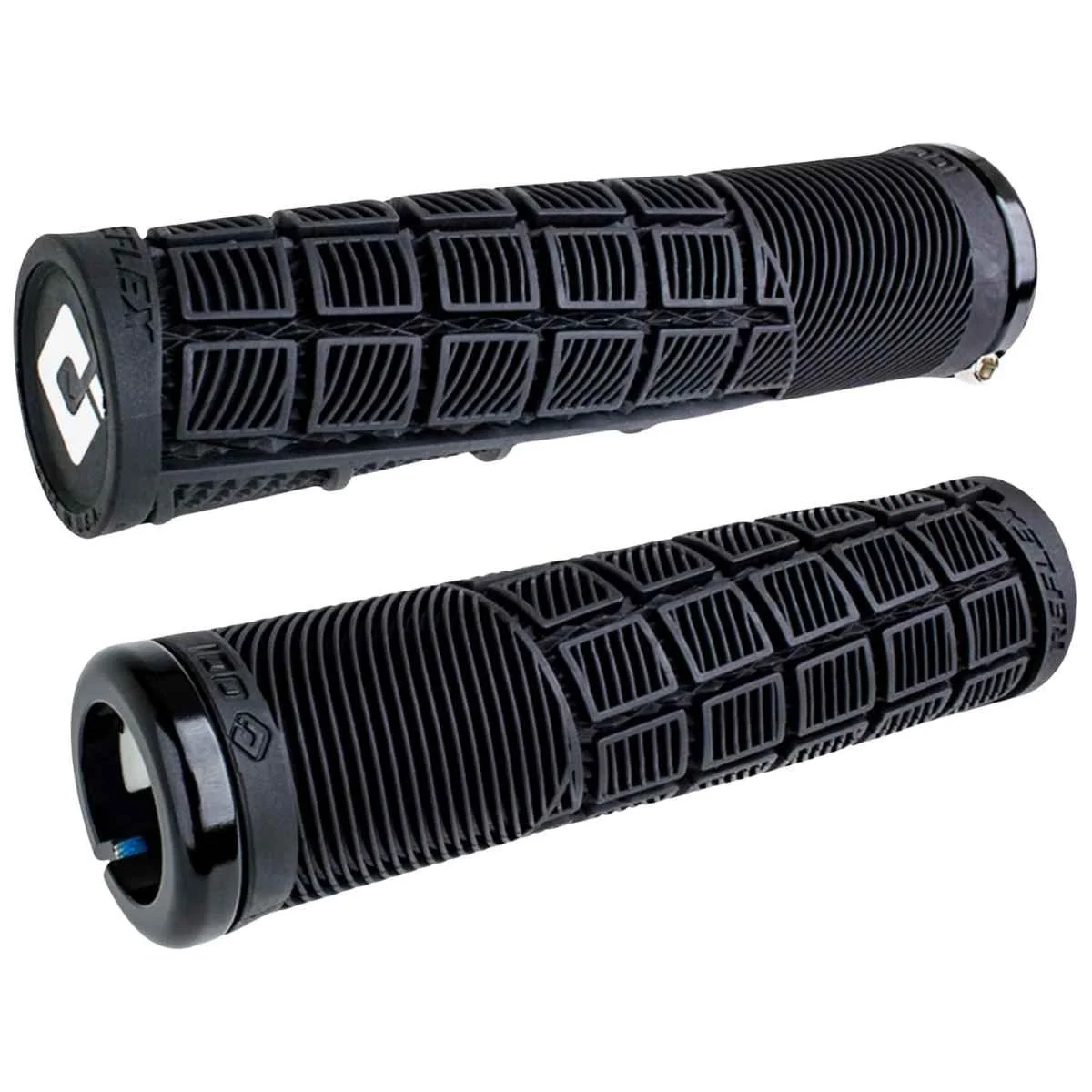
The ODI Reflex is the grip we’d take to the lifts in the summer. With three distinct primary zones, the grips have the largest continuous and cushioned palm area, as well as the largest and most distinct area for fingers to wrap around. They also have a ribbed area for the thumb.
ODI Reflex
The palm area provides a nice level of cushioning while still allowing the rider to feel a lot of feedback from the trail. The large areas for each finger are easy to find and feel through gloves, helping you place your hand properly on them without having to think about it, which is great when you’re careening down the side of the mountain and focused on the next obstacle or jump.
We also like that it’s available in multiple thicknesses.
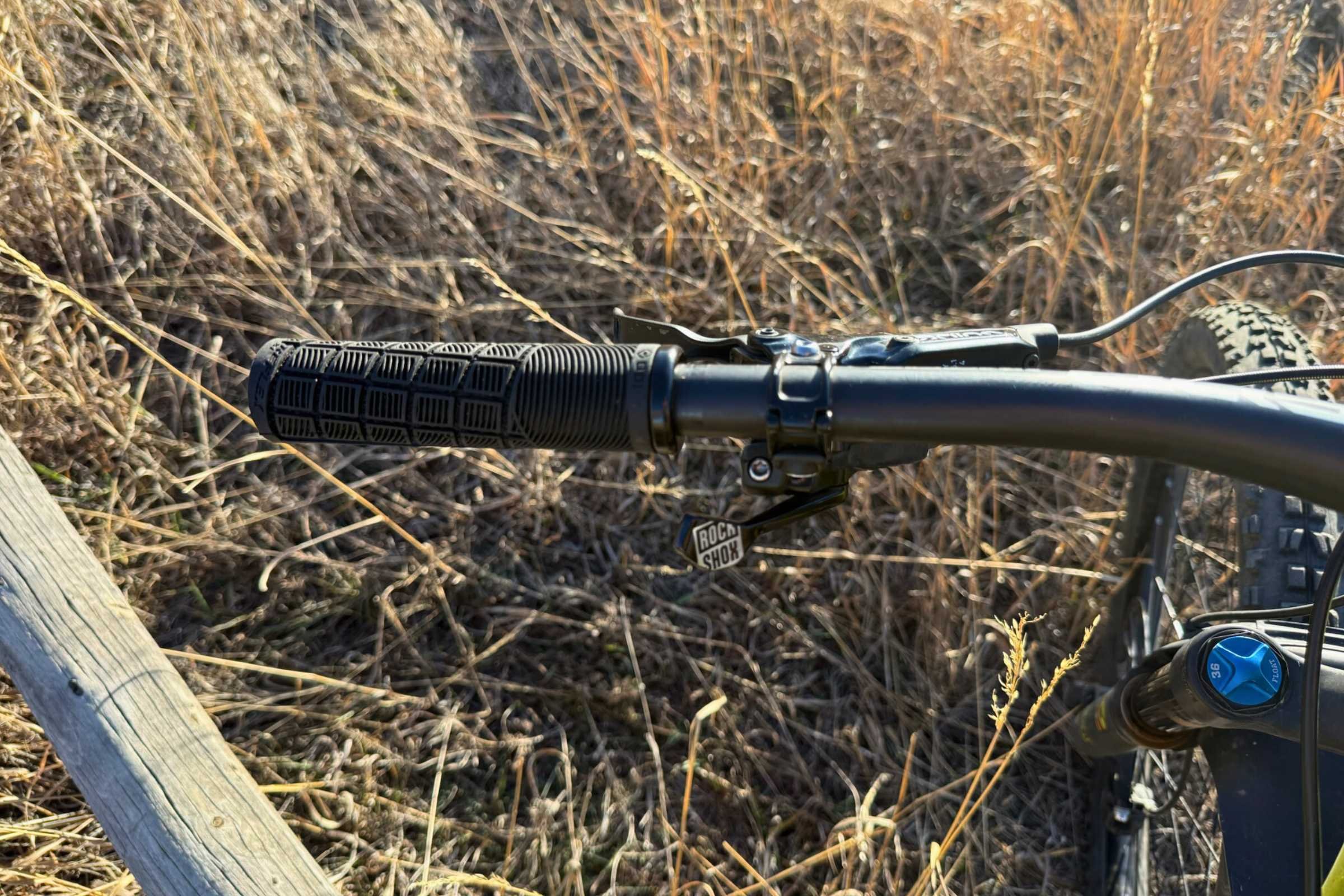
The ODI Reflex has generous palm rests and well designed areas for the fingers and thumb to grip. Courtesy Chris Meehan
Best affordable lock-on MTB grip: Race Face Chester
Type: Lock-on grips
Diameter: 31 mm, 34 mm
Weight: 112 g (31 mm pair), 135 g (34 mm pair)
What we liked: Available in multiple sizes and colors, well designed areas for different parts of the hand
What we didn’t like: Not much cushioning, clamp slid off easier than other models tested
The least expensive grip we tested was the Specialized XC Race Grips, which had an initial retail price of $25 and is now retailing for $18. But the slip-on grips were far from our favorites. The Race Face Chester is a pretty classic looking, largely ribbed grip and it retails at $28 in 2025.
Race Face Chester
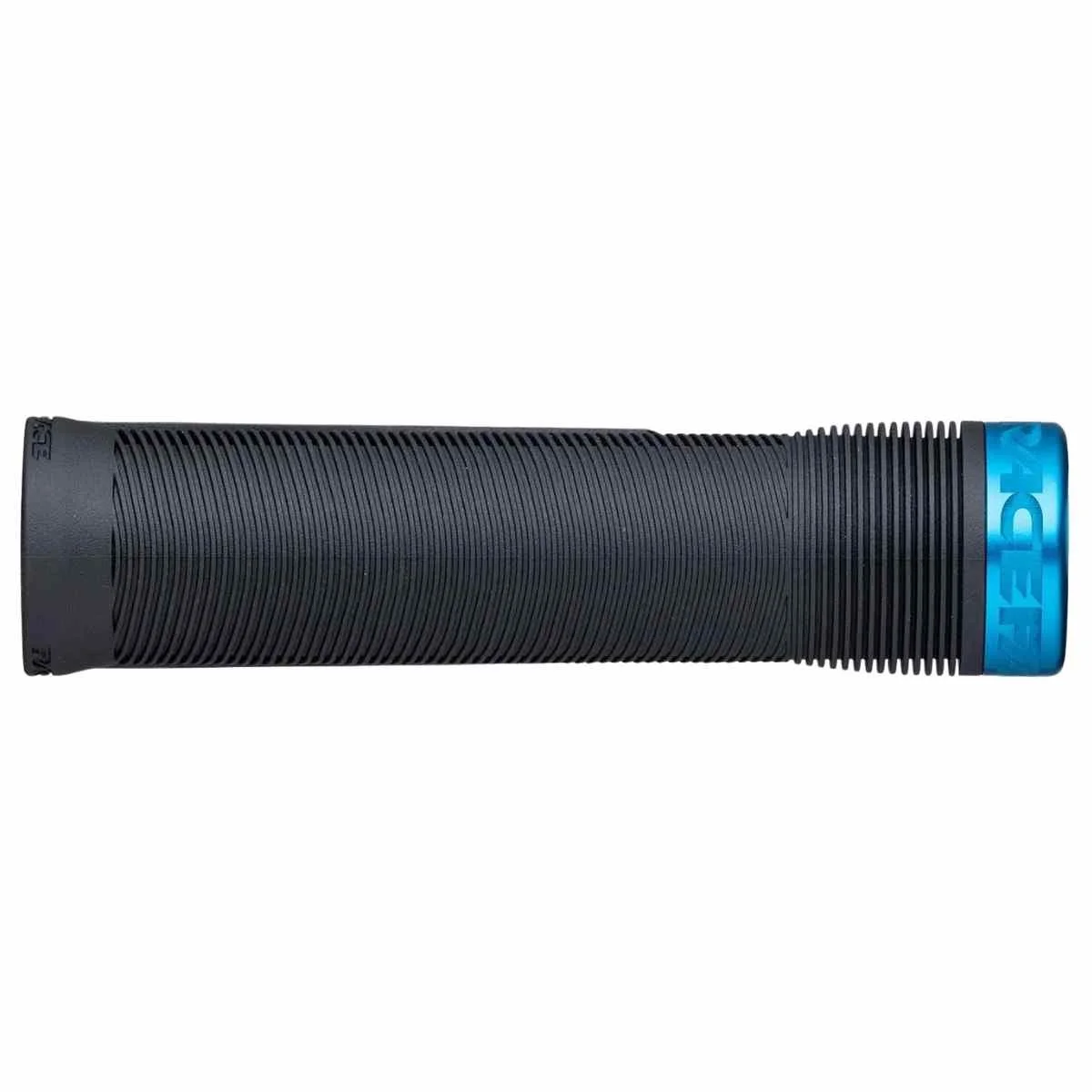
We’ve trusted the Race Face Chester grip for years and it’s performed well. We also like that it comes in a regular or larger size for bigger hands. It provides good grip in the finger zone and has a bulge toward the inside to help keep the thumb and forefinger aligned on the grip.
The Chester grip doesn’t have much padding under the palm area—meaning it offers good feedback from the handlebars, but not much cushioning.
We have seen some less expensive lock-on grips available, but we didn’t have a chance to test them in this round. Most of the grips we tested were in the $24 to $30 range, with a couple of more expensive options. However, at this price, these grips performed well and will work for budget-conscious riders.
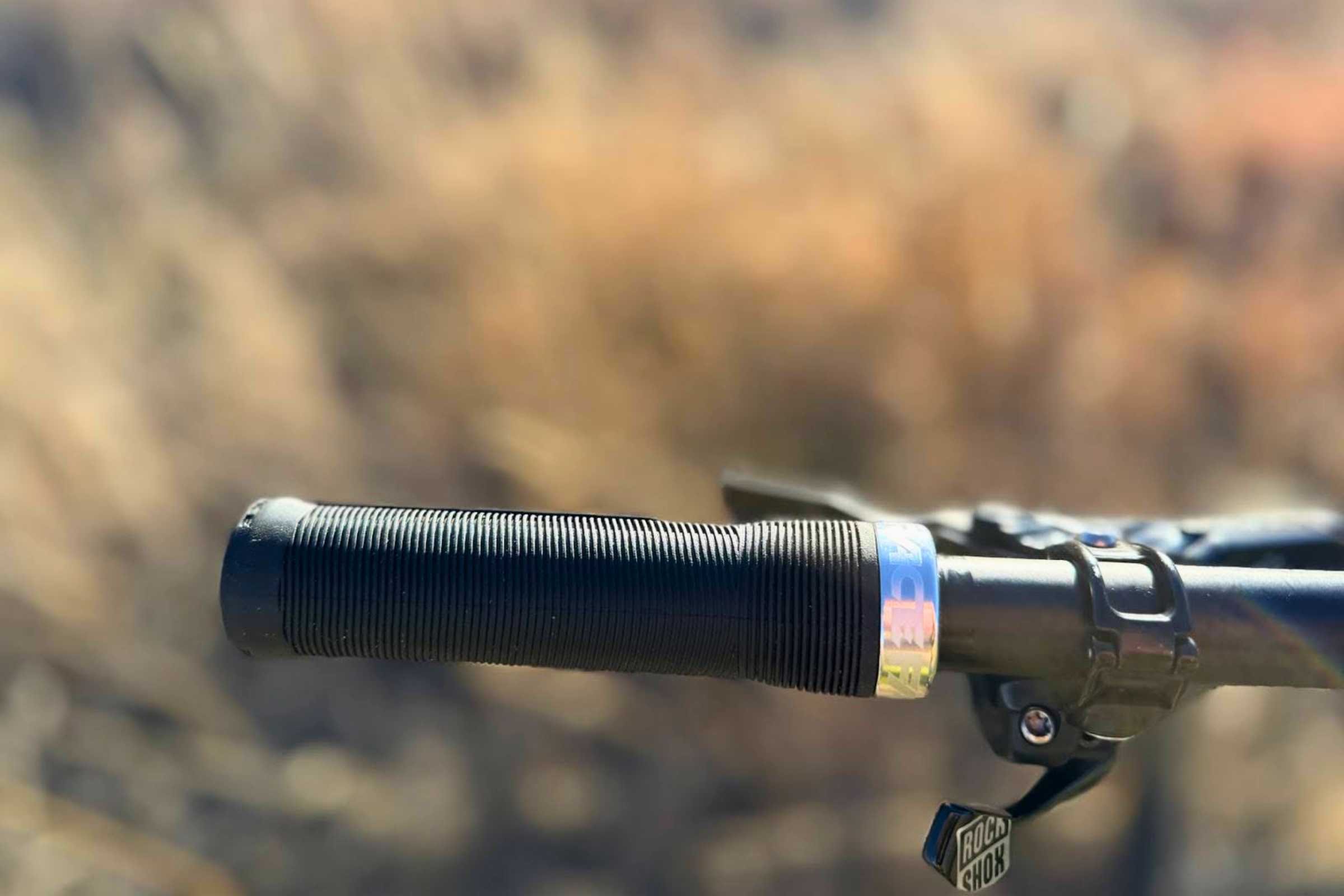
The RaceFace Chester looks close to a classic ribbed grip, like on BMX bikes from the 80s and 90s. Courtesy Chris Meehan
Other MTB Grips We Tested
A Note on Grip Sizes Tested: While we tested and evaluated 14 sets of grips for this story, we tested thick and thin versions of the same grip in some cases, like the ODI Reflex and RaceFace Chesters. We considered those different sizes of the same grip.
In some other cases, like OneUp Components’ Thick Grips and Thin Grips, they’re sold as two distinct grips though both share a nearly identical grip pattern. In such cases we considered them as different grips.
Specialized XC Race Grips
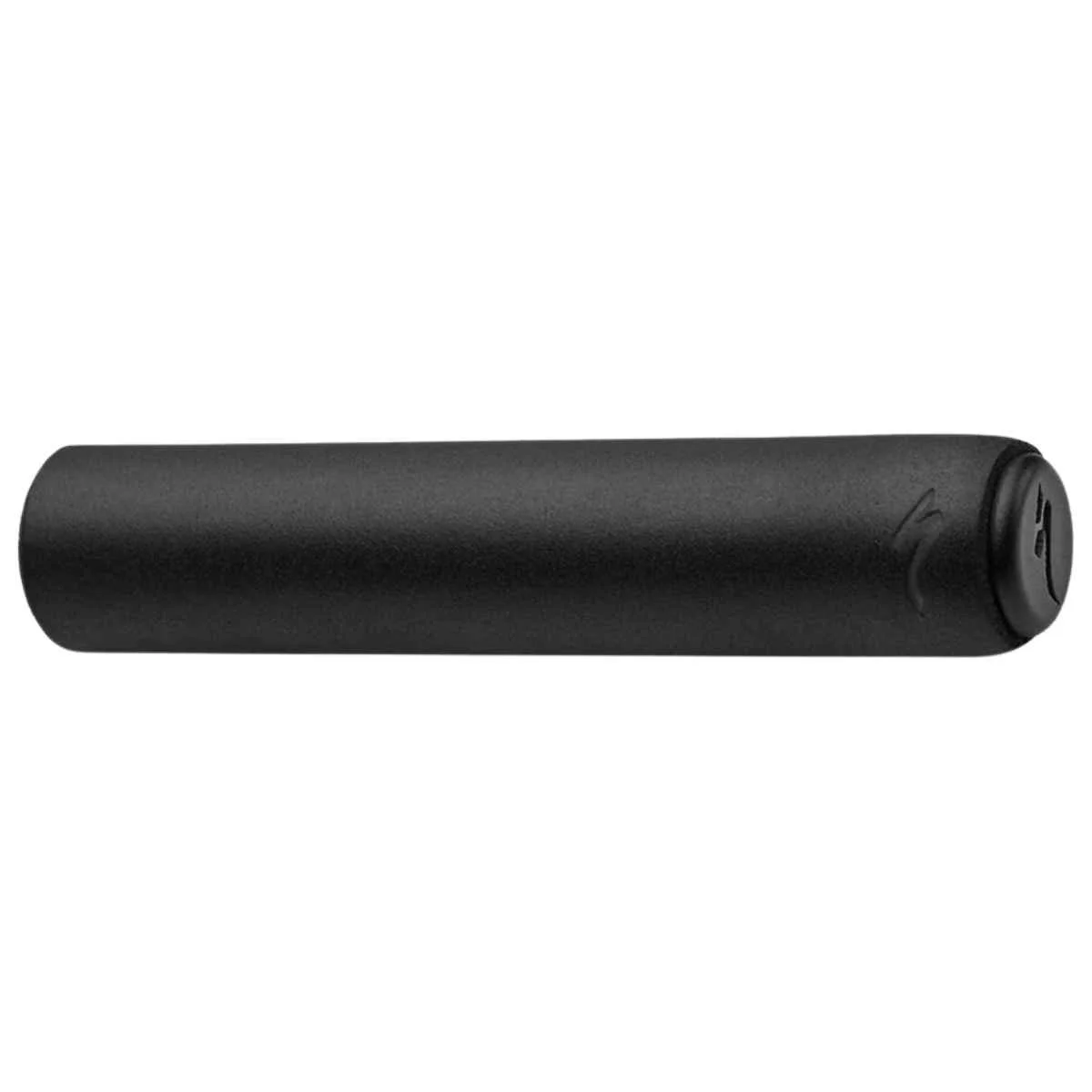
Type: Slip-on grips
Diameter: 30 mm (S/M), 32 mm (L/XL)
Weight: 88 g (as tested)
These lightweight silicone foam grips are among the lightest out there. That makes them an ideal pick for enduro riders and racers who value light weight the most.
However, that’s if you can get them on. We struggled with installing them on our bars for an hour or so, warming them in water and applying soap to the handlebar to lube them on—to no easy success. When we did get them on we noticed very little cushioning and very little grip, and yet we could still get them to slip as we rotated them on the bars.
In the end, we don’t really recommend these grips unless all you want is the lightest types of grips money can buy.
Specialized XC Race Grips
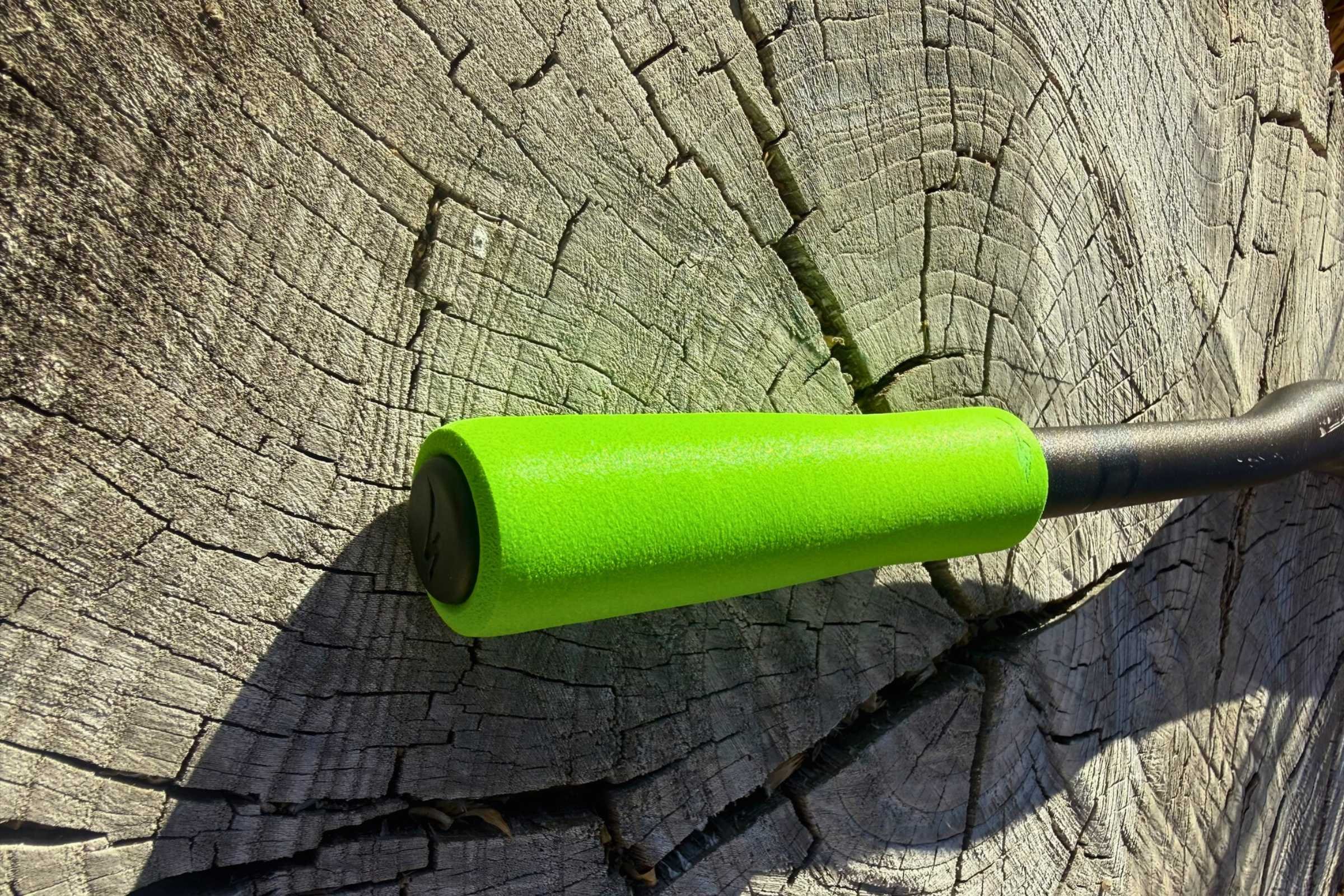
The Specialized XC Race Grips were hard to get on and didn’t offer much cushioning. Even here they’re bunched up after a half hour of struggling to get them on the bars. Courtesy Chris Meehan
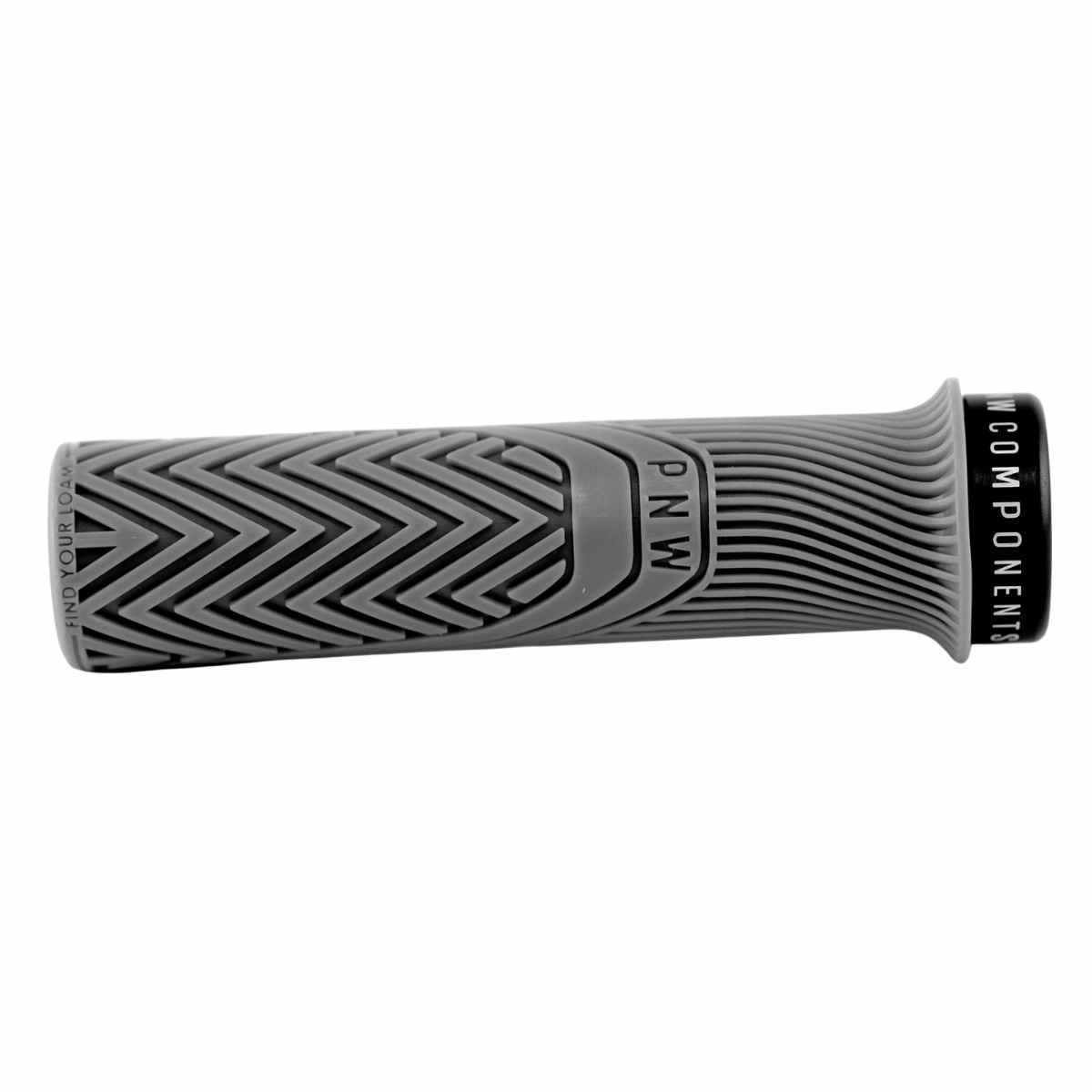
Type: Lock-on
Diameter: 30 mm (OG or regular), 43 mm (XL)
Weight: 90 g (OG), 120 g (XL)
These are pretty great grips and definitely the stickiest grips we tested, which reduces the likelihood of them being slippery when wet, and helps to keep fingers and thumbs where they need to be on the grips. These certainly aren’t bad medicine If you’re in a location where that tackiness is necessary, like the Pacific Northwest where these hail from, or the mid-Atlantic. We also liked that they’re offered in a regular (30 mm) and XL (34 mm).
However, we didn’t notice as much cushion on these as we’d like. We have seen other reviewers and people recommend them as a top pick or value pick, but as of 2025 they retail at $29, which is a few dollars more than some other grips we tested.
PNW Loam Grips
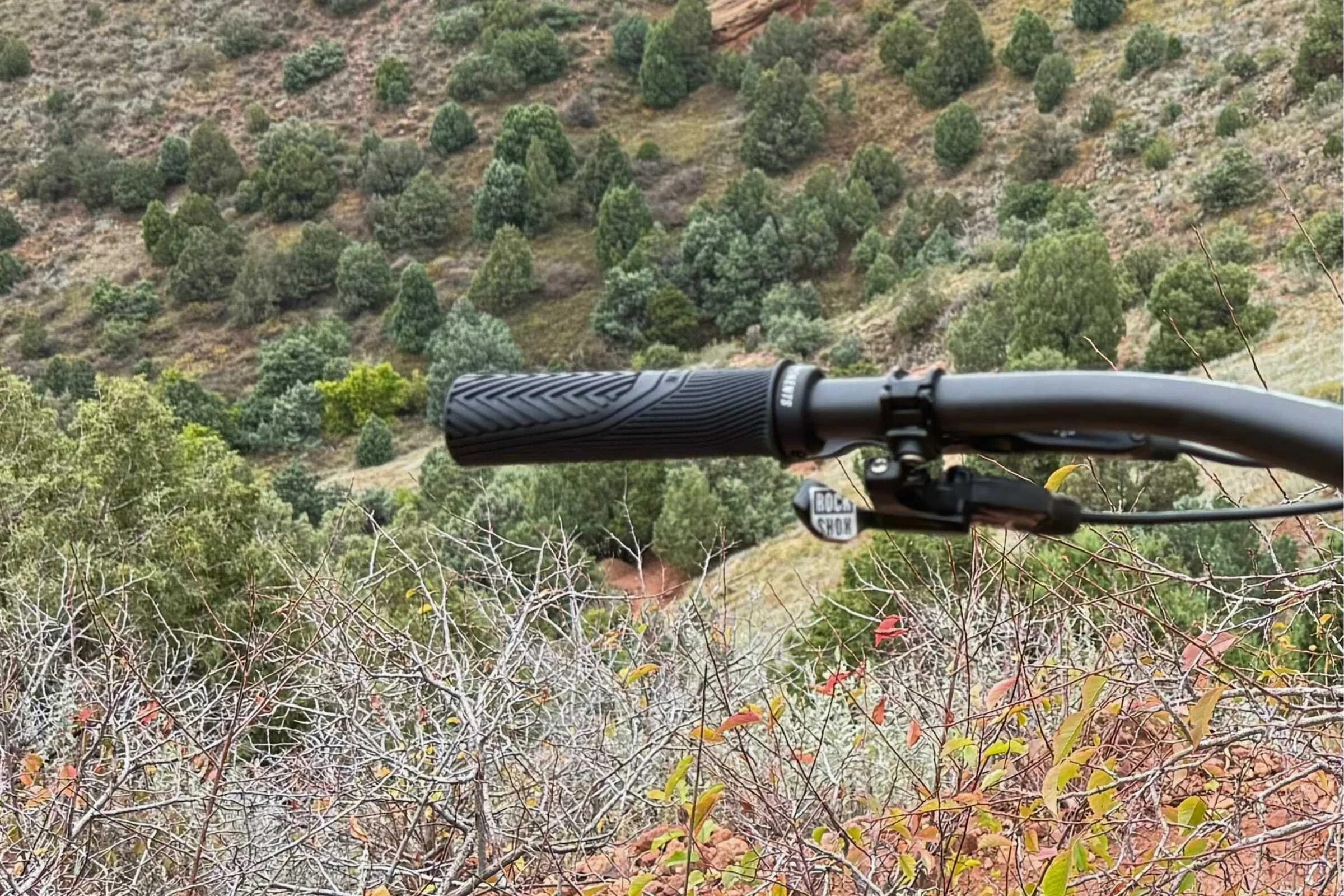
The PNW Loam grips were the tackiest in terms of grip. Courtesy Chris Meehan
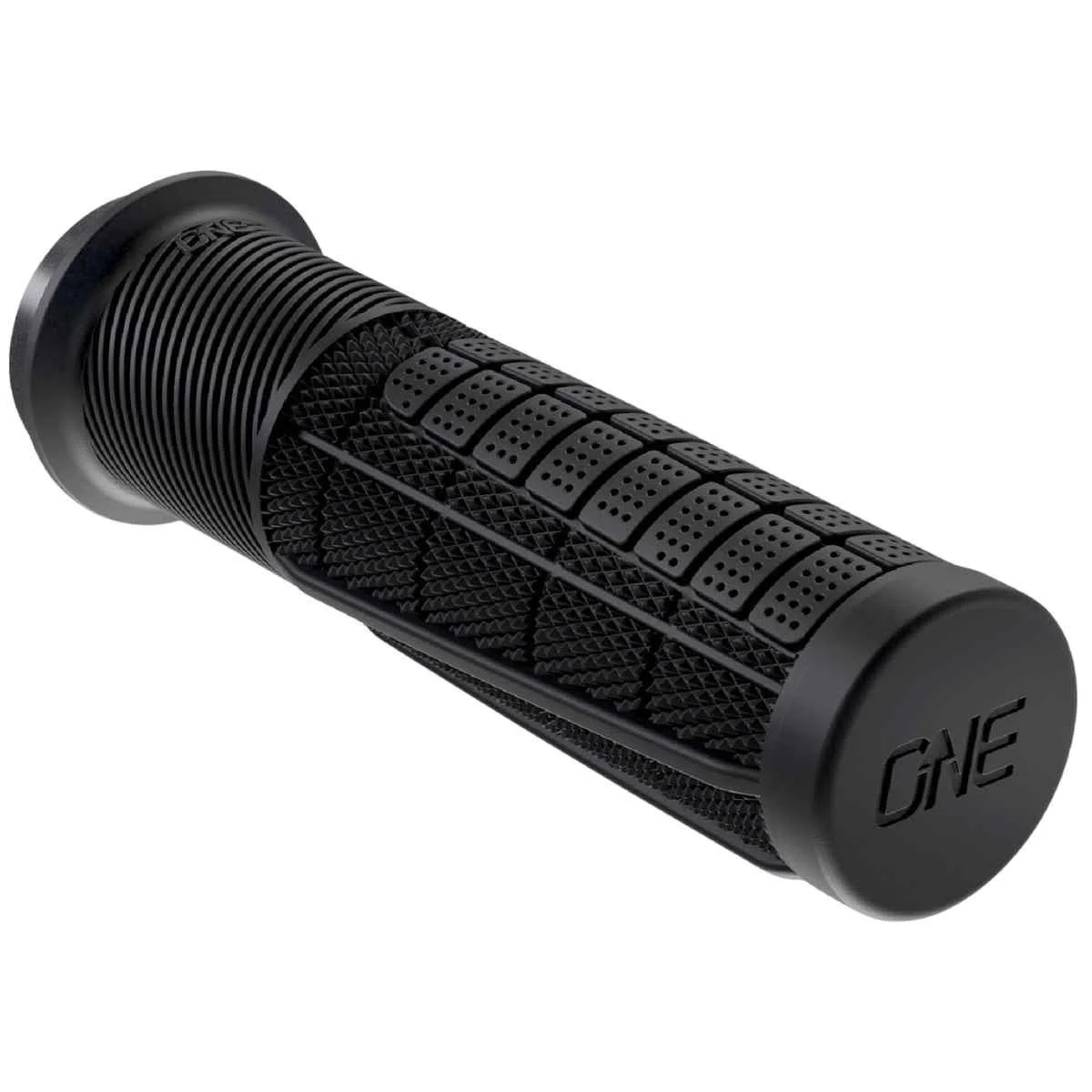
Type: Lock-on
Diameter: 35 mm
Weight: 144 g
These chunky 35mm grips are a strong option for large hands. They provide a decent amount of cushioning without sacrificing control. The different zones for fingers and thumbs helped provide that locked-on feel riders want in a grip, and we’d still recommend them. But they didn’t stand out as a category definer.
OneUp Components Thick Grips
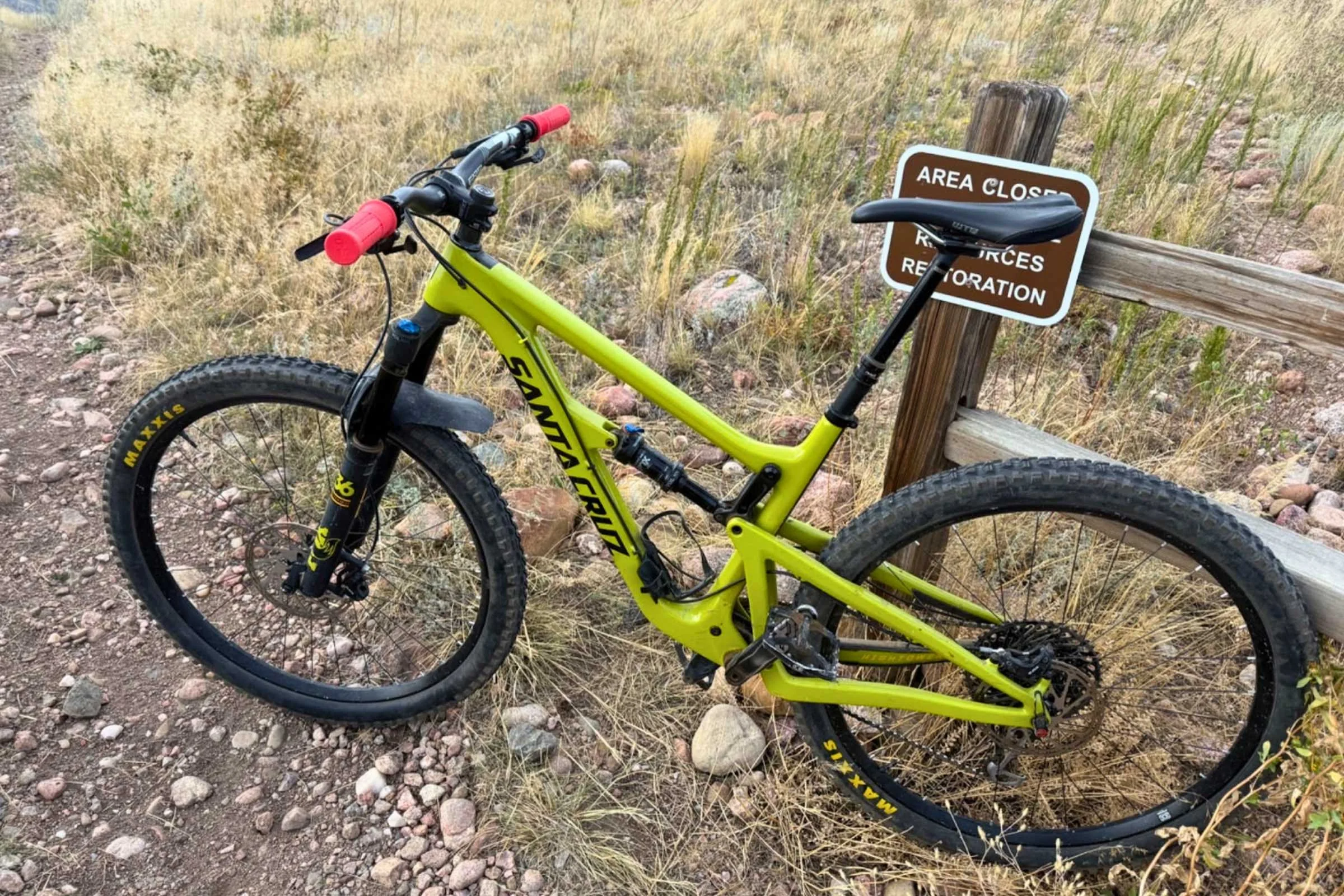
The OneUp Components Thick Grips felt chunky but didn’t really absorb more shock than other grips. Courtesy Chris Meehan
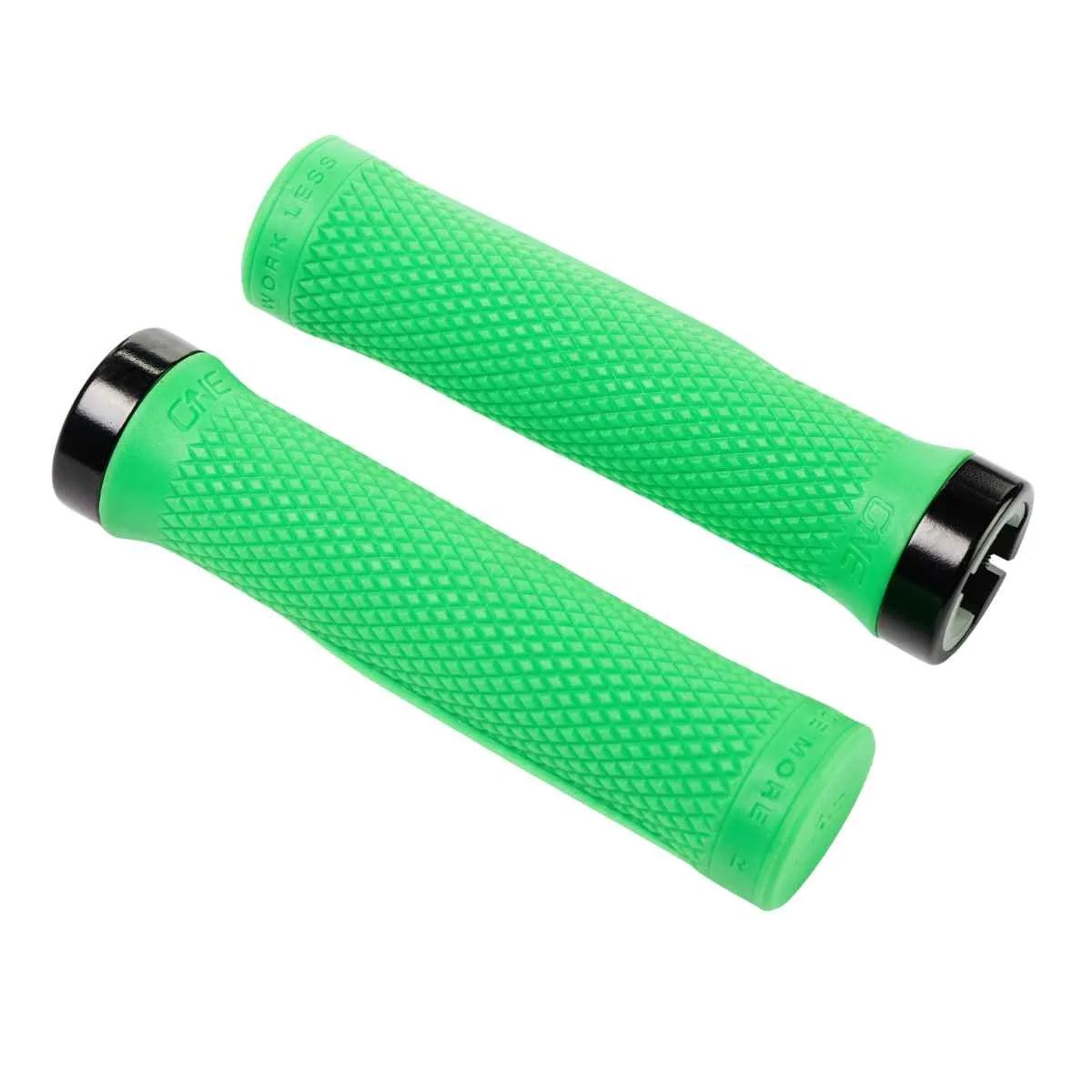
Type: Lock-on
Diameter: 30 mm
Weight: 97 g
The unique feature on these lock-on grips is a cutout on the plastic shell in the zone intended for the fingers to wrap around. OneUp says it delivers more cushioning with increasing the diameter of these 30mm grips. We’re not necessarily sold on that logic, since the main area we usually want more cushioning is under our palms where we have most weight on the bars, not where the fingers wrap around. Though we do understand the logic of that cushioning when holding onto the grips tightly can cause some more fatigue in the tendons and muscles in the arm.
OneUp Components Grips
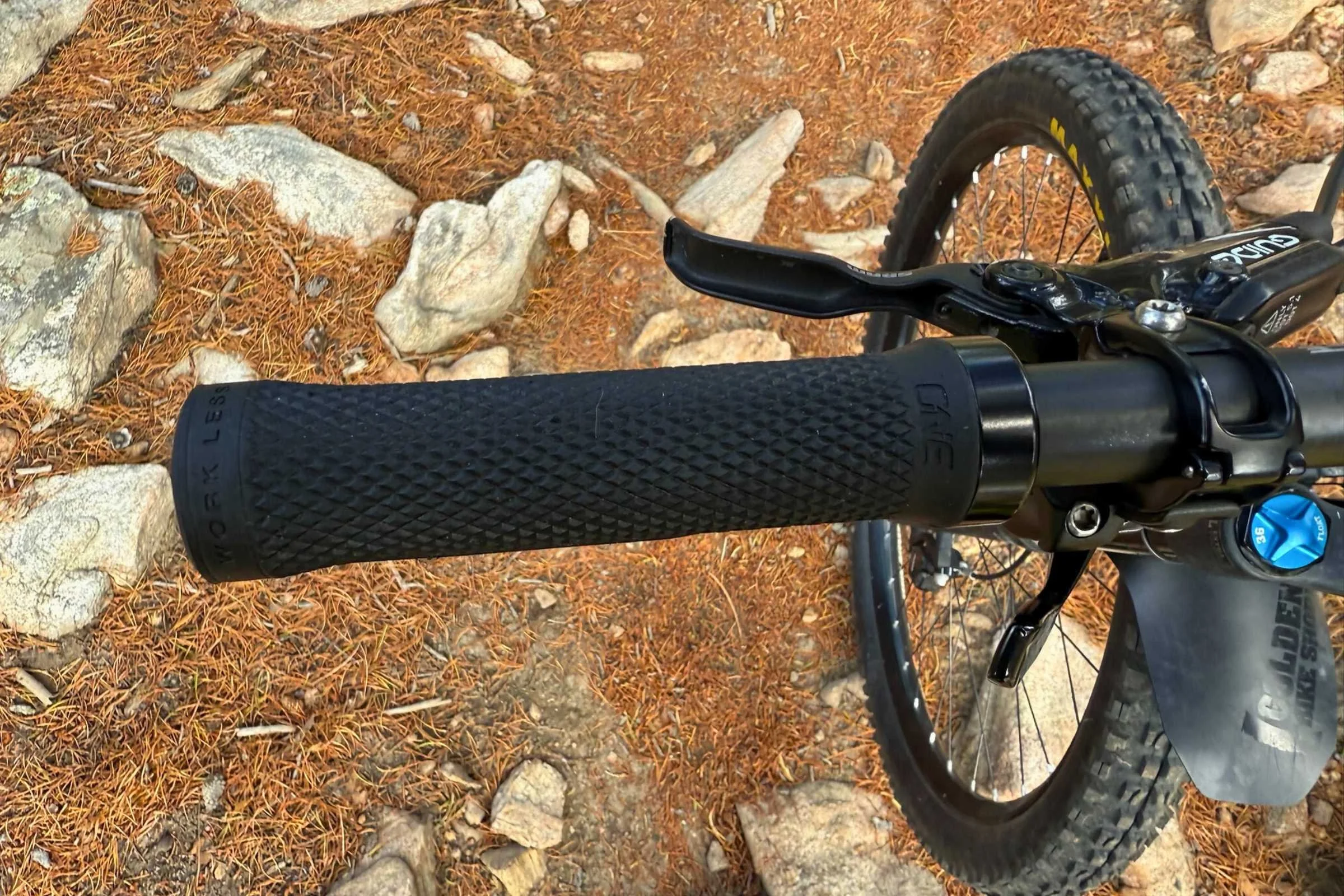
The OneUp Components Grips were decent, but we didn’t like that the plastic collar didn’t extend around the whole grip. Courtesy Chris Meehan
What to look for in MTB grips
Grip type (lock-on vs slip-on)
There are two main types of mountain bike grips: lock-on grips and slip-on grips. Slip-on grips are the OG—like the grips you probably had on your first bike with training wheels while growing up. In the past few decades though the mountain bike industry has largely moved to lock-on grips, which were introduced in 1999 by ODI.
Slip-on grips are just that, they’re usually rubber or foam grips that slip on to your handlebars. They’re somewhat flexible and either exactly the same size or slightly smaller than the diameter of a handlebar. To secure them onto handlebars, you can make them easier to expand by heating them in warm water and shoving them on. They’re secured by contracting on the handlebars.
The main issue with slip-on mountain bike grips is they’re prone to slipping when you don’t want them too, like while pounding through a rock garden or on a tough uphill climb. Yet they’re often hard to get on and off the handlebars, making it especially difficult to move other pieces of equipment—brakes, shifters, levers, bells, etc.—off the handlebars.
Putting them on and securing them in place often requires lubing the handlebars with soapy water, and or using a glue or hairspray to glue them in place. Taking them off sometimes requires destroying them.
Lock-ons are generally more expensive, but slip on to standard handlebar sizes and lock in place with a couple turns of a bolt or screw. The materials used in lock-on grips are generally foam or rubber. But sometimes other materials, like cork, are used for their impact absorbing properties. Once secured, they stay in place. Need to take them off to access other things on the handlebar or to replace them? That’s simple, too, just loosen the screw that keeps them in place and slide them off.
Since lock-on grips are more secure and stable, companies can also make more unique designs, like the Ergon GS1 Evo, which is designed to reduce wrist strain and numbness. With a slip-on grip, the supportive wing on the grip would likely rotate over time, making it more difficult to use and defeating the ergonomics of this popular grip.
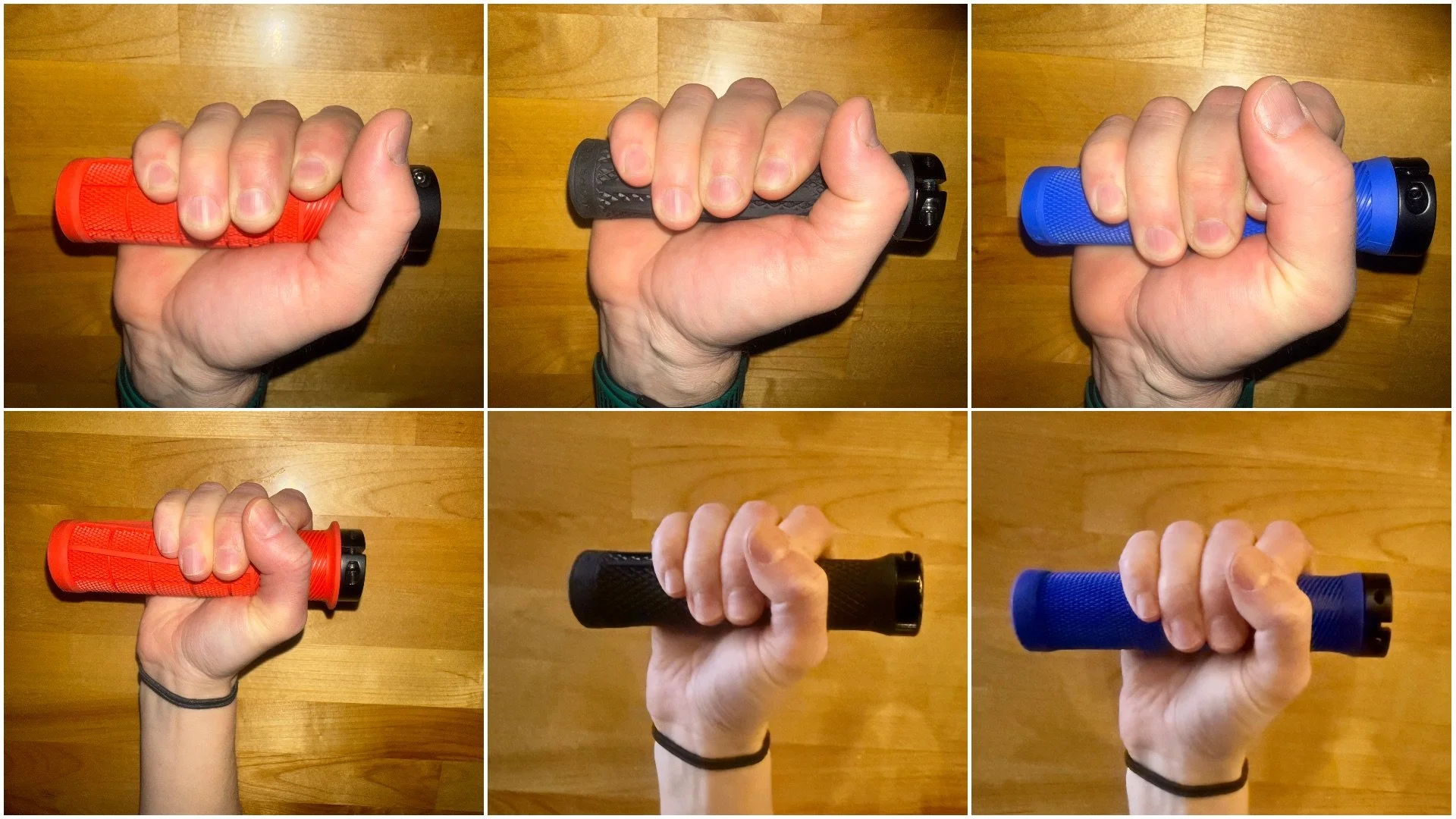
From left to right OneUp Components thick, regular and thin grips in a larger hand (top) compared to a smaller hand (bottom). Top right shows overgripping and bottom left shows undergripping. Both can control issues. Courtesy Chris Meehan.
Diameter and hand size fit
Handlebar grips we tested ranged from about 1 1/8” (29 mm) at their thinnest to 1 3/8” (135 mm) at their thickest. While that might not seem like a lot, it does make a big difference for smaller and larger hands.
Too small a grip for a large hand means fingers are starting to overlap the palm and it causes extra strain to keep hands tight on the bars. Likewise, too large a grip for small hands means fingers can’t fully grasp around the grip, which makes it hard to grasp.
The length from my middle finger to my wrist is about 7.5 inches. When it comes to gloves I’m usually a medium to large glove. When it comes to the best hand grips for me, they’re usually normal or large in diameter. I have found I do personally like a little more vibration dampening from a thicker grip.
Grip texture and pattern
You can say handlebar grips are ribbed for your pleasure, at least partly. In fact, only the slip-on grips we tried didn’t have a grip pattern.
The rest of them had some ribs as well as a series of other textures which include diamond patterns, squares, hexagons, and lines.
Each of them are different and even manufacturers who make multiple sizes of handgrips vary the patterns between sizes. Generally though, the patterns are meant for different parts of the hands. There’s usually an area of thicker or tighter ribbing, which provides more cushioning for the palm of the hand. That part of the hand takes the brunt of impacts when you’re riding and the extra cushioning is welcome there.
There are different patterns where the fingers and thumb wrap around as well to help them stay in contact with the grip more.
Vibration dampening
Grips not only provide grip but also some vibration dampening. Generally a thicker grip will provide more dampening, but depending on the materials some thin grips provide good dampening as well.
Some riders prefer lower levels of dampening to feel everything on the trail. Others, like me, prefer more dampening as it helps to reduce numbness in my hands when I’m riding on particularly rocky and/or technical situations.
Compatibility with gloves
Handlebar grips are compatible with mountain bike gloves, which most riders opt to wear. With leather or synthetic leather palms and sometimes rubberized fingertips, gloves provide a lot of grip to interact with the handle grips themselves.
The grips also work without gloves. However, when hands sweat or get wet, their grip on the handlebar grips can be reduced.
Weight and intended use (trail, XC, downhill)
The thicker the grip, the heavier the grip. Still, the weight difference between the lightest and heaviest handlebar grips isn’t that much. The lightest grips are around 50 grams per pair—about the weight of three Pedros tire levers. The heaviest we’ve found have a claimed weight of 200 grams—about the weight of a 29” inner tube. The majority of grips we tested were a little over 100 grams a pair.
Unless you’re a high-end enduro racer or a weight-weeny, that weight is not going to make much of a difference on a modern, full-suspension mountain bike. If you are concerned about weight, slip-on grips, like the Specialized XC Race Grips we tested, are probably your best option. Our test sample weighed 90 grams. The foam rubber grips are lighter because they don’t have a plastic sleeve with a locking collar, like the lock-on grips.
For technical downhill riding, I like a firm, yet cushy grip, like the ODI Reflex. If a grip is too soft you lose a little too much of the feedback from the handlebar itself. But if there’s no cushion it can lead to more hand fatigue or numbness when you’re gripping tightly.
For easier riding, like on doubletrack or fire roads you may want to emphasize more cushioning in the grip. With that, a grip like the Specialized XC Race Grips might do you well. Or if you’re doing that type of riding and also need extra wrist support, the Ergon GA3 is a good option.
Care and maintenance tips for MTB grips
Mountain bike handlebar grips are pretty robust, and with a little maintenance should last for years of hard use. Maintenance is pretty simple, too. Wash them when you wash the rest of your bike with soapy water and rinse them off.
While a mountain bike grip should be fine after a crash, check to make sure it’s still aligned how you want it. You may need to twist it back into the appropriate position and, if using a lock-on grip, tighten the collar that holds the grip in place.
If you’re in a severe crash, I’d recommend checking to make sure the end caps on the grips didn’t get damaged. If they’re broken or missing, it’s time to get new grips. In rare cases the open end of a handlebar can cause bodily damage in a crash.
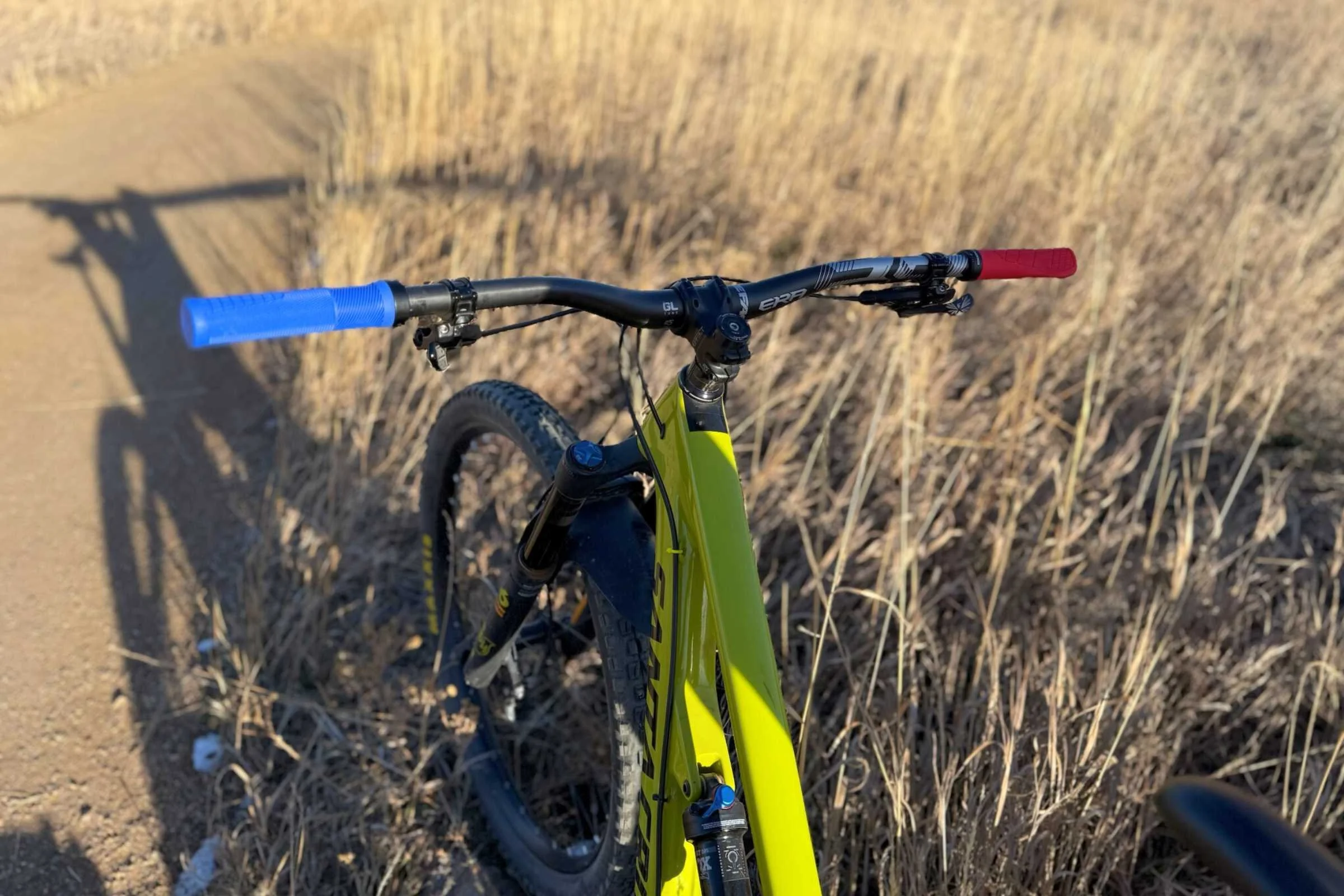
Testing included using multiple grips at the same time and changing grips throughout rides. Courtesy Chris Meehan
FAQ
-
Lock-on grips have a full or partial plastic sleeve inside the grip compounds (rubber, foam, cork, etc.) and have a collar that clamps or locks the handlebar grip in place. It makes it easier to get on and off, and to properly position the grip for the best cushioning and grip hold.
Slip-on grips are shove-on grips. Their inner diameter is smaller than the handlebars and you have to shove them onto the handlebars, expanding them to get them onto bars. This can require squirting the handlebars with soapy water or hairspray to help get the grips on initially. Their elasticity helps them stay in place but they can still slip under use.
-
Generally, thinner-diameter grips are designed for smaller hands and shorter fingers. Larger-diameter grips are easier for larger hands and/or longer fingers.
-
Not necessarily. It’s really about the materials and how they’re used in manufacturing the grips. Grips with thicker rubber or foam compounds can offer more cushion and comfort, but too much cushion means you lose feedback from the handlebars, which you want in technical terrain. On the other hand, some manufacturers may make the inner plastic sleeve on a lock-on grip thicker to keep the grip materials as thick as on smaller diameter grips.
-
There are numerous indicators. If you notice the patterns on the rubber grips fading out in certain places, that’s an excellent indicator. If you notice you’re feeling less cushioning than you used to, that’s another indicator. Similarly, if the rubber or foam if deformed or peeling off, it’s time to replace them.
If a crash causes significant damage to the grips, replace them. Or if you notice the lock-on collar is damaged, replace the grips or the lock-on collar.
Finally, if the end cap is broken or missing, replace the grips. Though unlikely, the open end of a handlebar can cut into you in a crash. Spending $15–$40 to eliminate that likelihood while making riding more comfortable—worth it!
-
Absolutely. It’s up to how the rider likes to ride. Learn more about MTB gloves in our Best MTB Gloves guide.
-
Just about. With very few exceptions, mountain bike handlebars have the same diameters towards the bar ends for grips.
-
I like a textured rubber compound for such conditions. I think cork is more likely to get slippery when wet, as is foam.
-
Our testers found the wings on the Ergon GA3 grips were great for easier riding. However, on technical trails where your hands might be moving around on the grips more, the wings were a bit of an inconvenience as you had to maintain one hand position with your palm resting on the wings.
-
With lock-ons, you slip them on and clamp them down, making sure you have them on the correct side and correctly positioned.
When left and right aren’t obvious, a good indicator of which is the correct side is if the brand or logo is upright and facing forward.
For slip-ons, you may have to warm the grips up a little or lube the handlebars with soapy water. Once that treatment dries, it will help secure them in place.
To get lock-on grips off, loosen the bolt on the clamp and slide them off. For slip-on grips, twist them off. Sometimes a jet of air between the grip and handlebar can help. Or, if you’re tossing worn slip-on grips, you can cut them off.
-
Yes, BMX and casual bikes, like beach cruisers, usually use the same diameter handlebars. Kids bikes may have a smaller handlebar diameter.
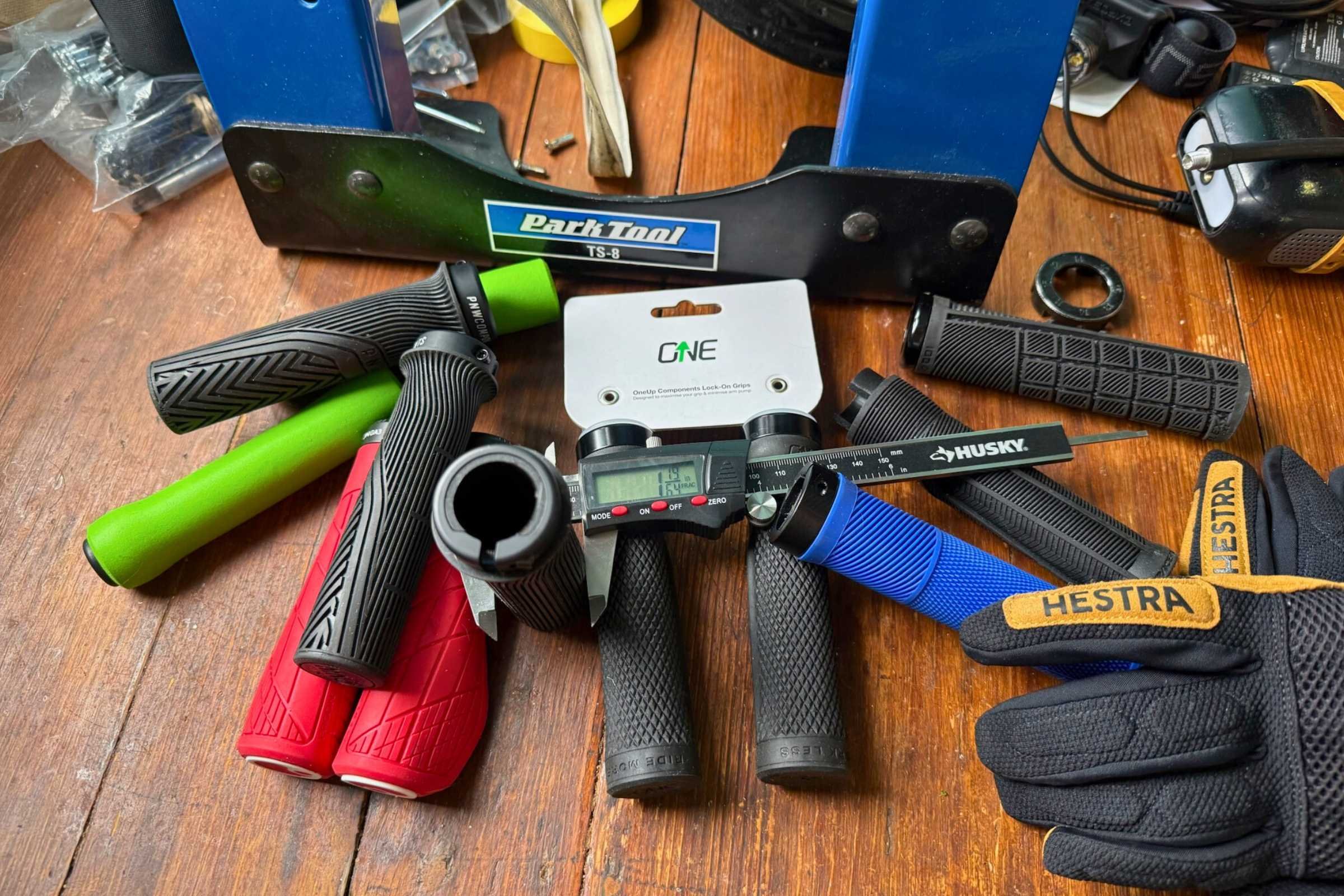
In addition to field testing, research included measuring weights and sizes vs. manufacturers’ claims. Courtesy Chris Meehan.
How we researched and tested
We tested mountain bike grips primarily on Colorado’s Front Range, but also out in parts of western Colorado. We took them on trails that were a mix of doubletrack, fire road, singletrack and ripped through technical rock garden sections.
We also took them to mountain bike parks and on downhill only trails, where we jumped and took them on tight, bermed turns. We used them as pairs and split them up with one model on one side and another on the other to help get a more direct comparison of how the different models worked.
We evaluated their ability to stay in place, how well they damped vibration, and how well they cushioned the palms. I did the majority of testing myself, but also relied on input from other people I ride with regularly and discussed the impact of hand size with other riders. In addition, I researched the best grips selected by mountain bike magazine editors as well as online reviewers.
OUR TESTING PROCESS
Summer + fall trail testing with frequent mid-ride swaps for direct, side-by-side comparisons
How we tested
- Trail rides with frequent grip swaps
- Technical rock and rough descents
- Riding with and without gloves
- Climbing + descending to assess fatigue
What we evaluated
- Cushioning vs. trail feedback
- Grip security (dry + sweaty hands)
- Diameter comfort
- Vibration damping and hand fatigue
Why you should trust us / About the author

I always want to test gear that I’m going to need and use and that my adventure pack needs and uses. That’s certainly the case here. I was interested in testing mountain bike grips because I’d noticed my hands were increasingly tired and sometimes numb after hard rides, and noticed that my current grips were pretty worn. Also some of my adventure buddies have developed arthritis in their wrists. This testing was to help with all those things, and after spending real time in the field with these grips, we’ve found some better options.
Chris Meehan has 20-plus years of exploring, hiking, backpacking, climbing, guiding and playing in Colorado. He’s worked as a mountain guide on Colorado’s 14ers and is the author of Falcon Guide’s Climbing Colorado's Fourteeners: From the Easiest Hikes to the Most Challenging Climbs and Colorado’s Best Front Range Adventures: The Greatest Hiking, Climbing, Paddling and More From Denver to Colorado Springs and Fort Collins.
Chris edited Justin Lichter’s Trail Tested: A Thru-Hiker's Guide To Ultralight Hiking And Backpacking and worked with National Geographic and their mapping division in developing their Colorado 14ers Map Pack Bundle.
He’s written for Elevation Outdoors, including stories about Colorado 14ers and outdoor apps to boost adventures. Chris also writes for Backpacker Magazine, covering their Deals of the Week, gear review pieces, and their Editors' Choice Awards 2019: The Best Gear of the Year.
Chris also covers outdoor companies and outdoor sports for publications including CompanyWeek, Outdoor USA Magazine (print), Elevation Outdoors, 5280, and more.
Website: www.chris10meehan.com
For more stories by Chris, see his author page.