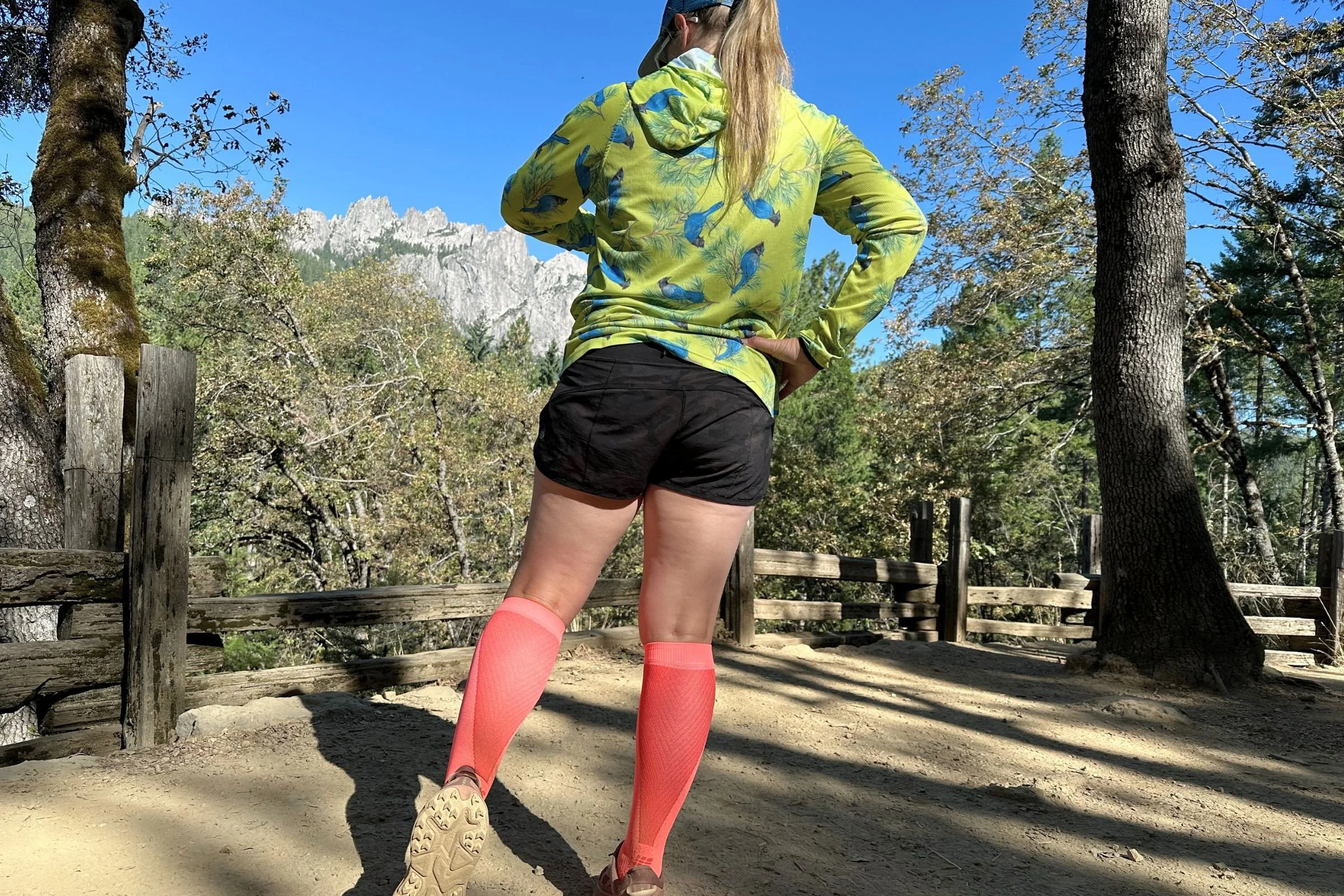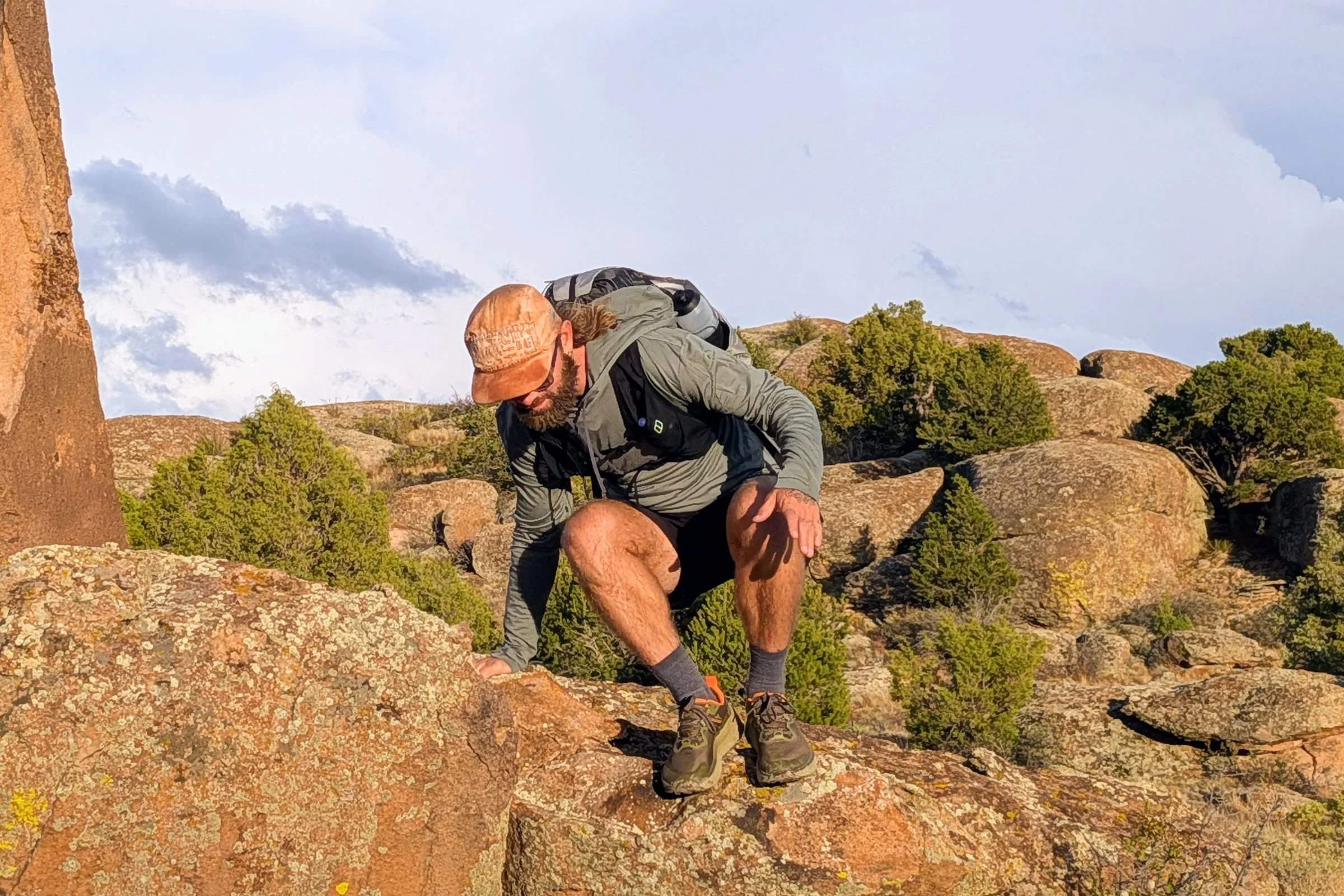
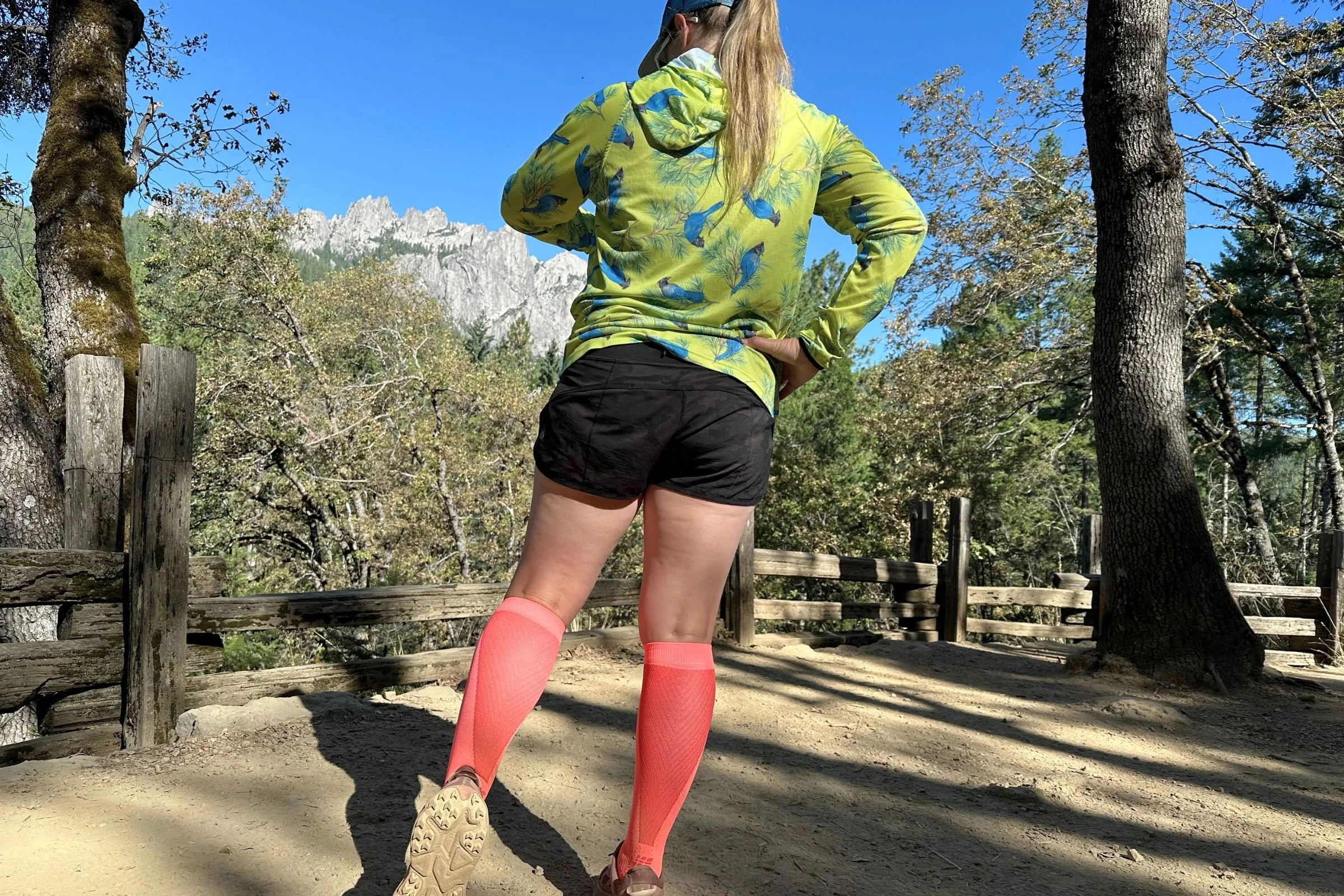
Best Running Compression Socks of 2026
The best compression socks for running and recovery based on support, comfort, fit, compression type, breathability, and durability
October 19th, 2026
Home → Gear Reviews → Running
Compression socks have been popular with runners for decades to help increase blood flow and aid in recovery or minor pain relief. In this guide, we will go over what compression socks are, who they’re best for, and how they differ from similar compression sleeves.
We tested ten pairs of running compression socks for this story over several months. We ran mostly on trails but also did road and gravel runs of varying distance and time in both hot and mild weather. Most of the runs we tested socks on were about five miles, but we did go over ten miles especially for the pairs we considered best for long distance. We wore each pair of socks for an entire day, testing them for recovery use as well as traveling. When choosing between two socks as winners, we often would wear one sock on each foot to help determine which was a better choice for a category.
Our evaluation of socks for this story included looking at the overall compression level both how compressive they felt and the manufacturer-listed compression ratings in mmHg. We looked at the breathability of the fabrics, especially in the tall over-the-calf models, and compared breathability and resistance to tears or snags. We assessed cushioning as well as materials used in construction. Ease of care and washing was a factor in our evaluations; we washed all the socks multiple times and line dried them to see how well they held up to repeated washings. We also considered inclusivity in sizing and overall price and value to determine winners for this story.
Our best overall winner is the CEP Core Run Compression Socks with Medium Cushion (men’s and women’s) at $60 a pair—these were among the more expensive models that we tested but you really get what you pay for with these. These socks perform very well across all the categories. We loved them for long runs both on and off trail, we liked them for shin pain management, and we found them comfortable for all day wear and recovery on off days. If we could only have one pair of compression socks, these would be the one pair we would buy over and over again.
We create reader-supported, objective gear reviews independently selected by our editors. This story may contain affiliate links, which help fund our website. When you click on the links to purchase gear, we may get a commission — without costing you an extra cent. Thank you for supporting our work and mission of outdoor coverage for every body! Learn more.
Comparison table
| COMPRESSION SOCKS | TREELINE AWARD | MSRP | COMPRESSION LEVEL | CALF SIZE | GRADUATED | HEIGHT | CUSHION | FABRIC |
|---|---|---|---|---|---|---|---|---|
| CEP Core Run Tall Compression Socks 5.0 Men's Women's |
Best overall Read why |
$60 | Firm, 20-30 mmHg | 9.5 to 20 in | Yes | OTC | Medium | 84% nylon, 16% elastane |
| Rymora Compression Socks Unisex |
Best budget Read why |
$14-15 | Moderate | Up to 18 in | Yes | OTC | Medium or none | 54% nylon, 39% polyester, 7% elastane |
| 2XU Vectr Cushion Full Length Compression Socks Unisex |
Best for shin splints Read why |
$45 | Moderate to firm | 11.75 to 19.75 in | Yes | OTC | Medium or light | 87% nylon, 13% elastane |
| OS1st Wellness Compression Socks Unisex |
Best for recovery Read why |
$30 | Moderate, 15-20 mmHg | 11 to 19 in | Yes | OTC | Medium | 85% micro-nylon, 15% lycra spandex |
| OS1st Plantar Fasciitis ¼ Crew Socks Unisex |
Best ankle Read why |
$25 | Firm, 20-30 mmHg | N/a | Not stated | Quarter crew | Light | 88% micro-nylon, 12% lycra |
The winners
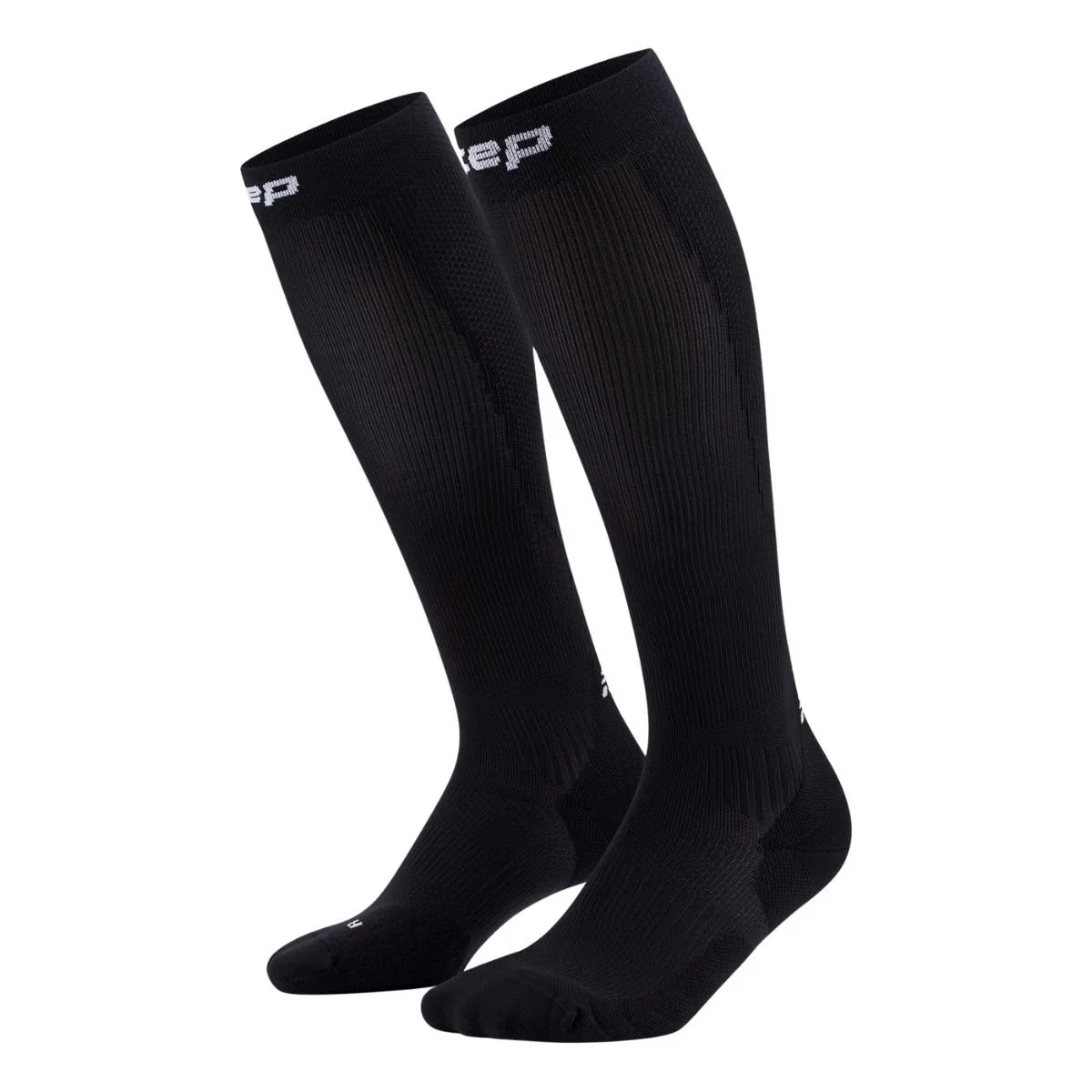
Best overall running compression socks: CEP Core Run Tall Compression Socks 5.0
MSRP: $60
Compression level: Firm, 20-30 mmHg
Graduated compression: Yes
Height: OTC
Fabric: 84% polyamide, 16% elastane
Cushioning: Medium
Size range: 9.5-20 in calf
Men's/women's or unisex: Men’s/women’s
Machine washable: Yes
What we liked: Comfortable compression, multiple color options, men’s and women’s sizing available
What we didn't like: Price, delicate fabrics
If we could only choose one compression sock to wear, these would be the ones we would pick. The compression is comfortable to wear both while running and during recovery periods, and they come in fun colors. These socks performed well over a full day of running and wear, including road and trail runs, recovery, and travel.
CEP Core Run Tall Compression Socks 5.0
Men's
Women's
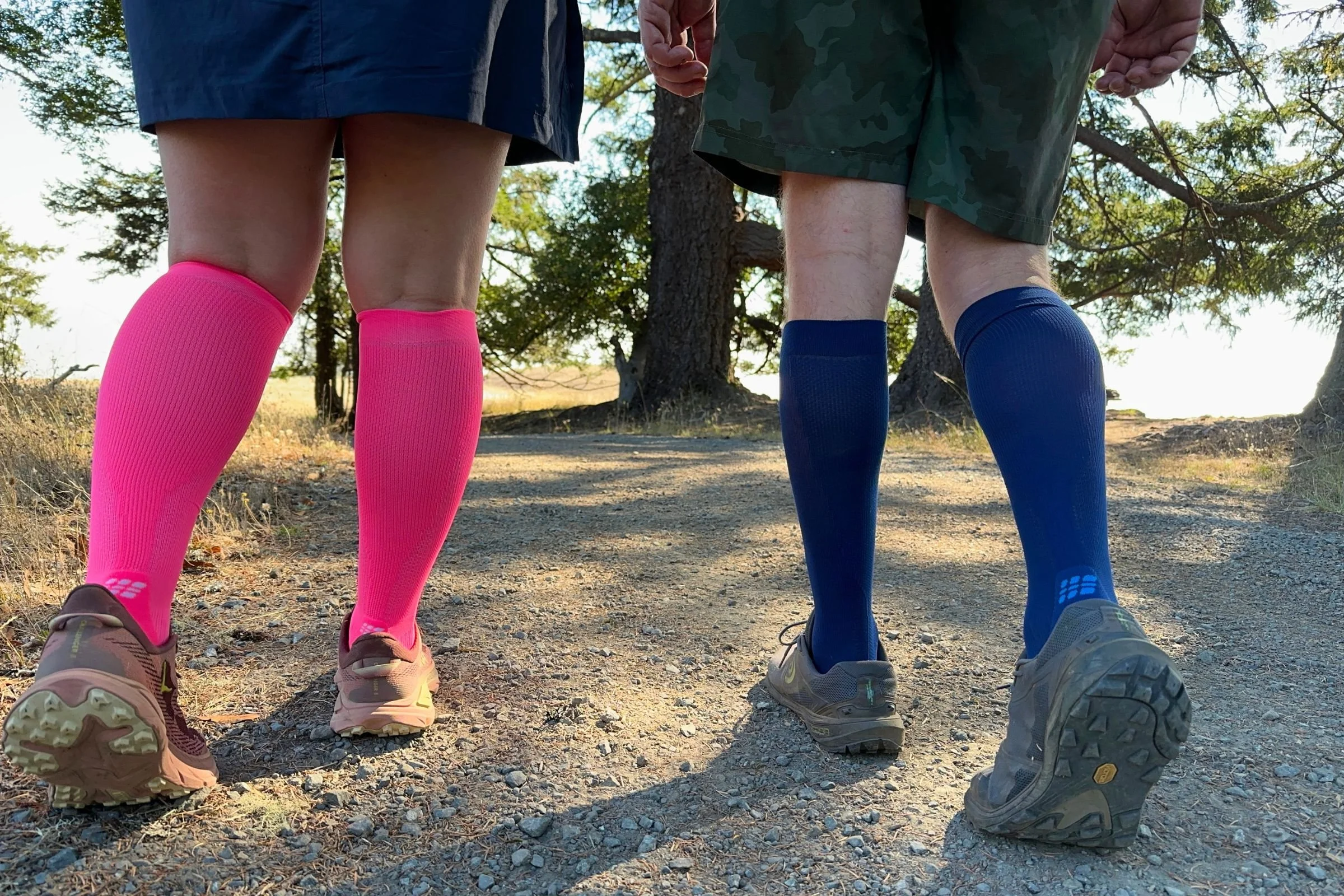
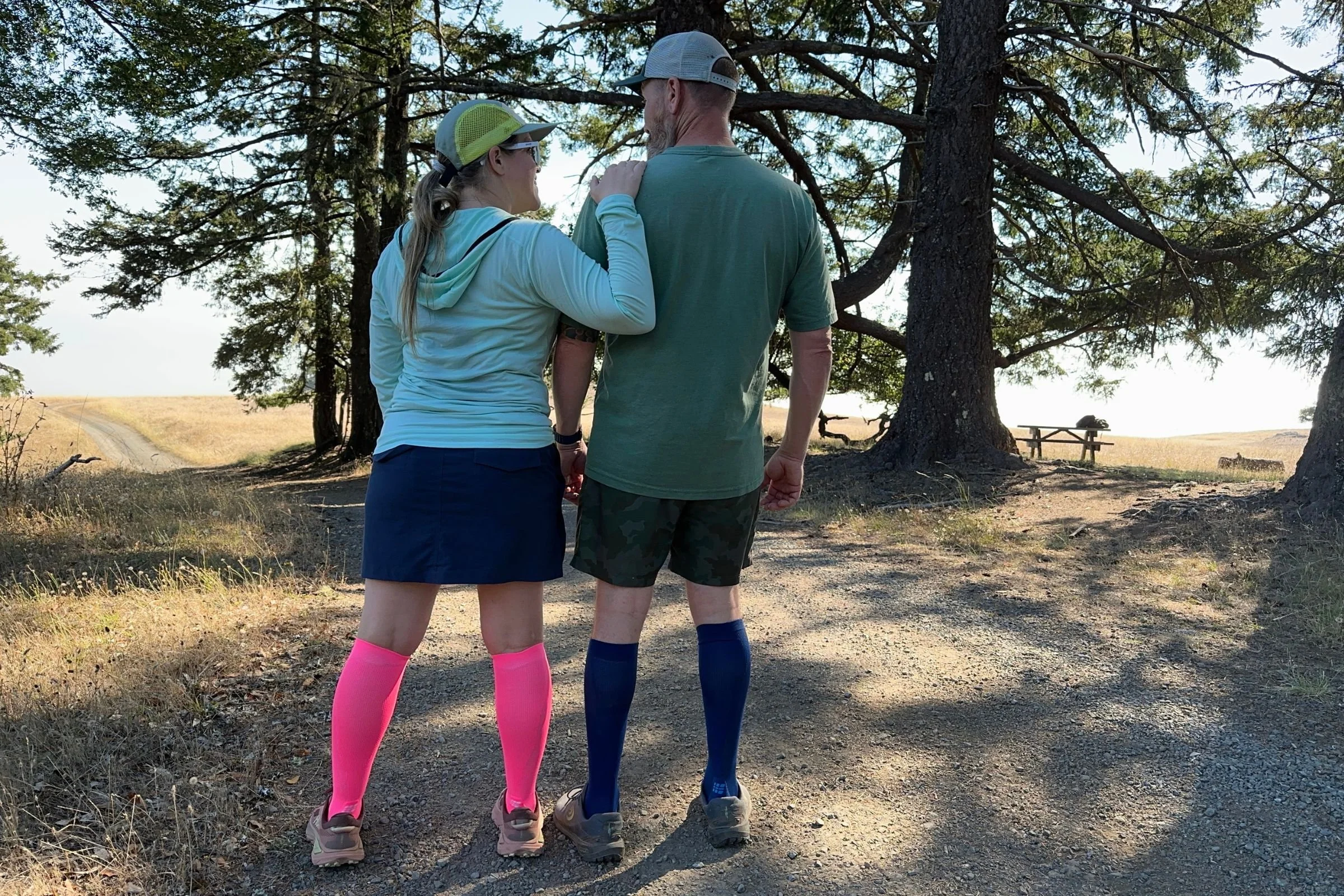
We tested these socks during hot summer days and the compression didn’t falter, even when they were soaked with sweat. We liked that the material in the calf portion of these socks allowed for some airflow and vents well. These socks felt compressive without being overly tight. We didn’t feel compelled to fold them down at any point during our testing. Some of the other socks we tested felt really tight at the top band, but these were comfortable while staying in place.
The CEP Core Run Compression Socks Medium Cushion are very similar to the CEP Core Run Ultralight Compression Light Cushion socks, the difference being the cushion on the foot pads and the slightly more robust calf sleeve portion on these socks.
The only drawbacks to these socks are that they are more expensive than other pairs we tested which makes them more of an investment. They are also made with delicate fabrics which can snag if not cared for properly. We always recommend following the washing instructions and using a lingerie bag to protect the socks from other garments in the washing machine.
These socks are more versatile for more runners, making them our overall winner since they can be used confidently on road, trails, long distances and they have shin-specific details for shin splint management as well. If you are looking for one sock to do everything this is the winner.
Best budget running compression socks: Rymora Compression Socks
MSRP: $19 (non-cushioned), $20 (cushioned)
Compression level: Moderate
Graduated compression: Yes
Height: OTC
Fabric: 54% nylon, 39% polyester, 7% elastane
Cushioning: Medium or non-cushioned versions available
Size range: S-L; women’s 5 to men’s 14 shoe size; max calf size 18 in
Men's/women's or unisex: Unisex
Machine washable: Yes
What we liked: Price point, durable materials, easy to wash
What we didn't like: Limited sizing options available, less breathable compared to other brands
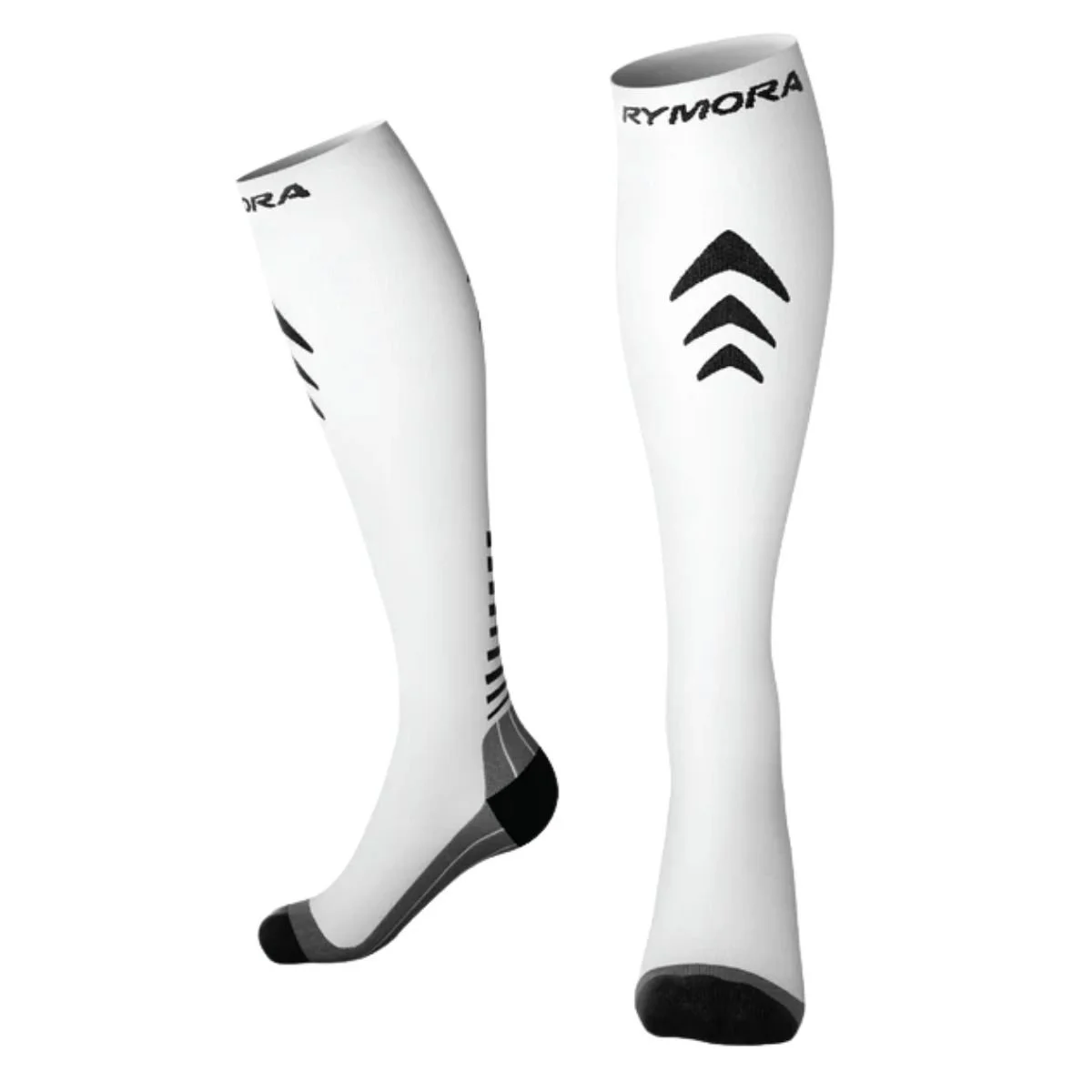
The Rymora Compression Socks are our top budget pick for compression socks. We love the lower price point, especially for those who are unsure if compression socks are something they want to invest in as part of their training kit.
Rymora Compression Socks
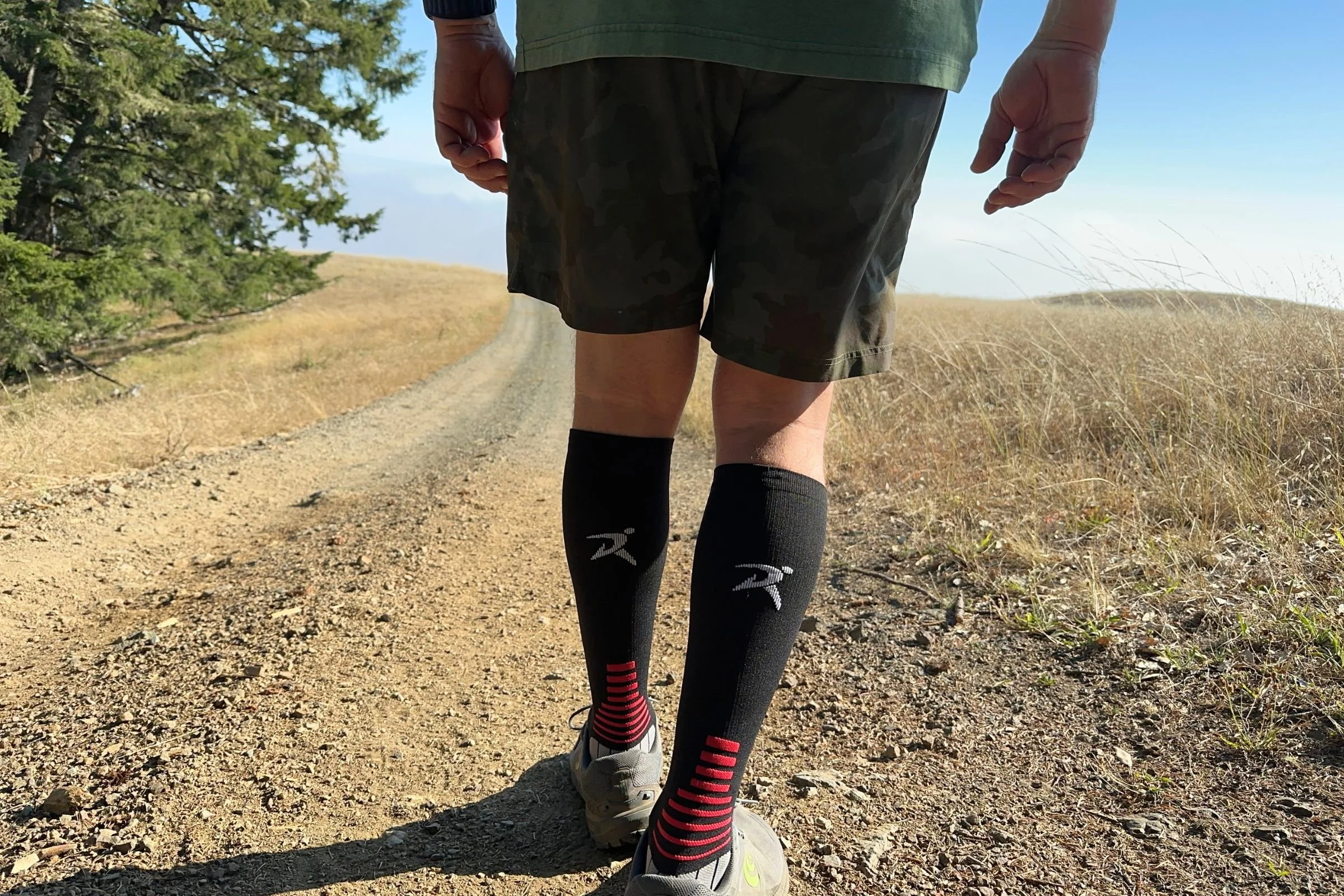
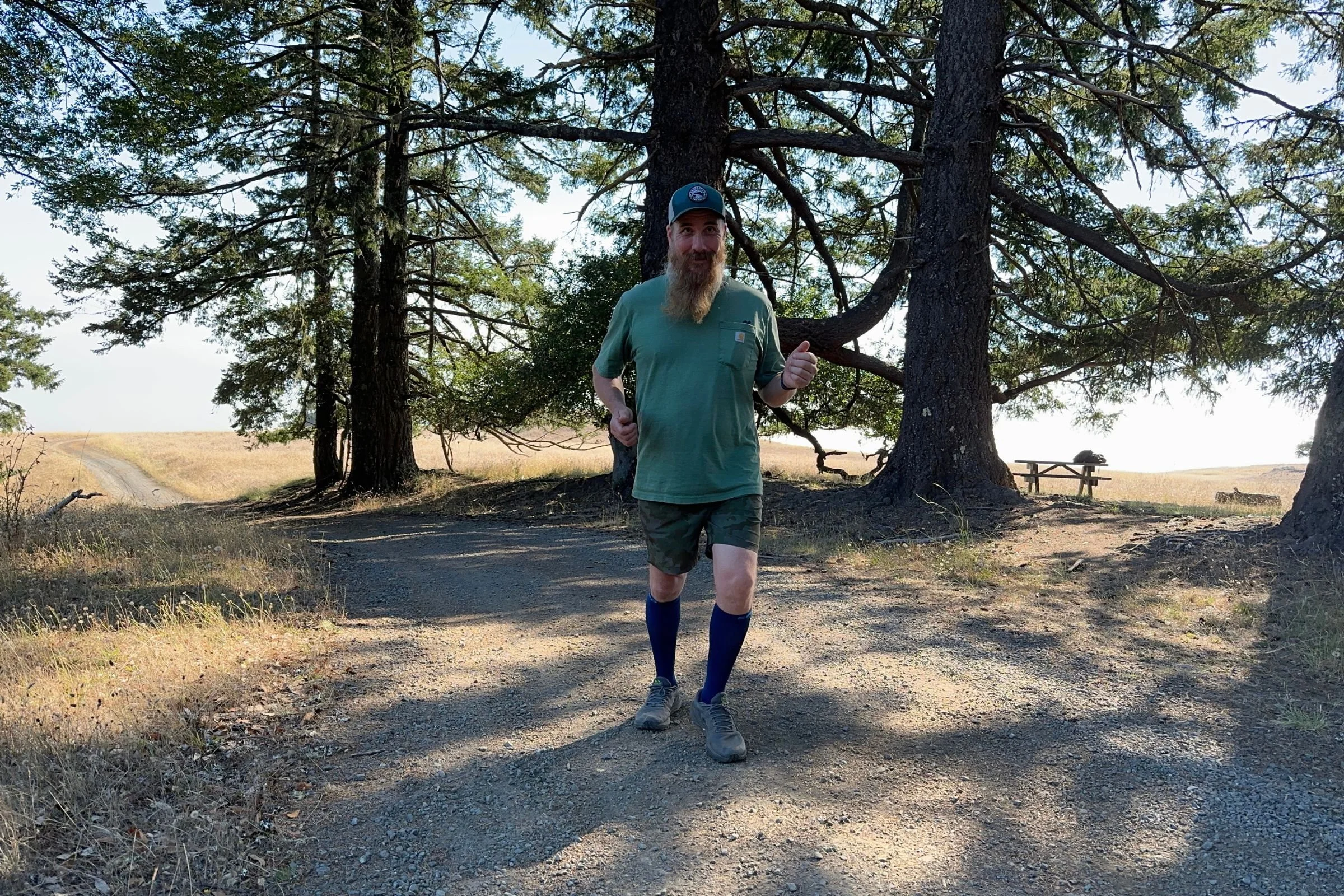
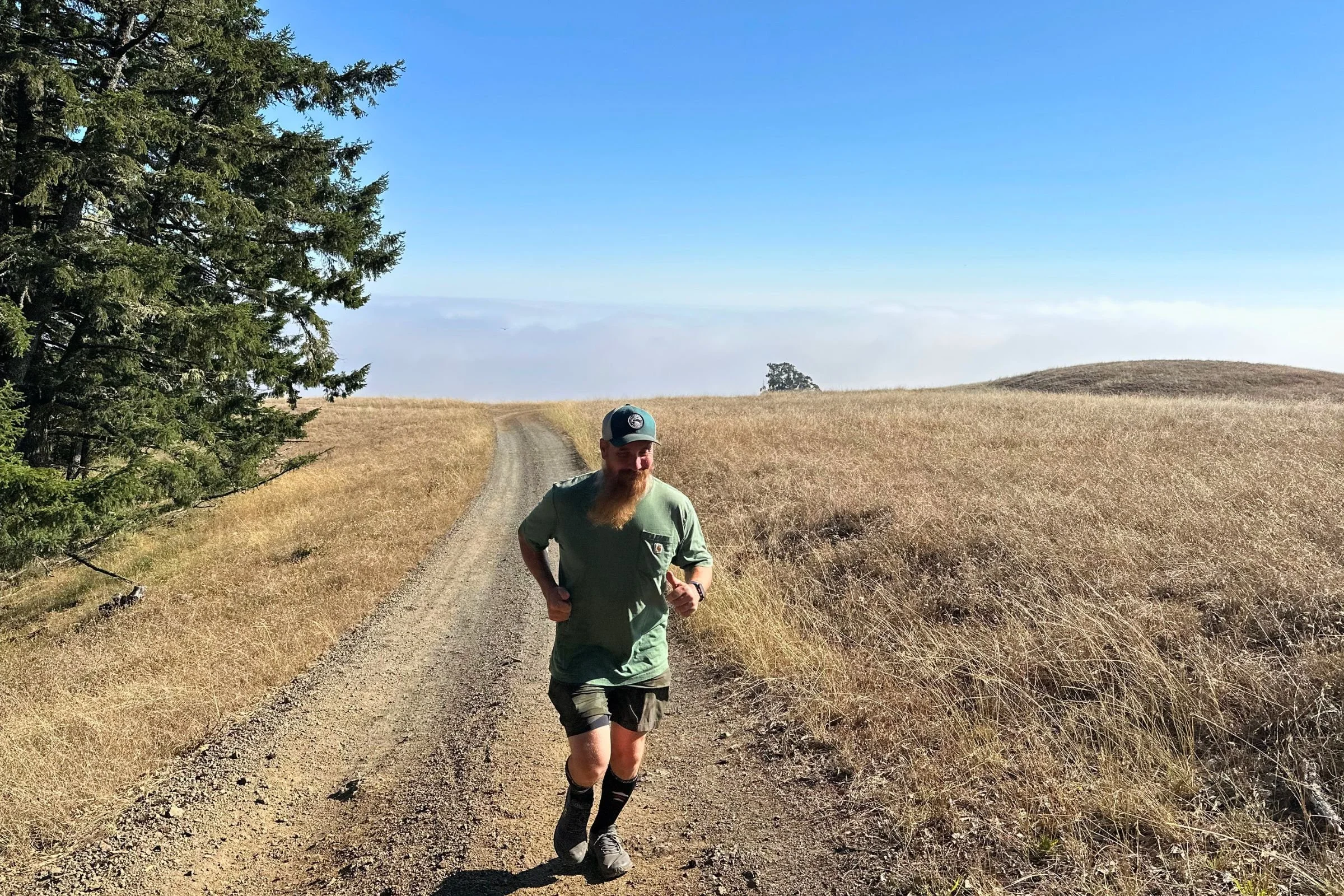
These socks have a nice cushion on the bottom for comfort and they have a lower price point compared to many of the other socks we tested. They offer good support and hold up well during long runs without sliding down or losing compression.
Despite some pilling and signs of wear earlier in the testing process, these socks performed very well in our testing. We didn’t feel like we were wearing a budget sock. The cushion is comfortable for longer runs, and we forgot we had them on at times. On hotter runs we did notice that these were not as breathable as some of the other models and the socks felt hot.
There are some trade-offs compared to some of the higher-end models; these are less breathable and have less structure in the design to provide targeted compression to specific areas of the calf. We did get some light pilling after the first few wears but we have not had any issues with snagging yet. They have done well in the washing machine and retained their compression after multiple wash/dry cycles. We use a lingerie bag and line dry every time.
Overall these provide a firm hug to the feet and calves and are supportive during runs. These socks are also comfortable enough to wear for recovery or longer runs if needed. We didn’t feel the need to take them off immediately after finishing a run like some of the other models we tested.
Best compression socks for running shin splints: 2XU Vectr Cushion Full Length Compression Socks
MSRP: $45
Compression level: 15–20 mmHg at the base of the foot, 20–30 mmHg at the ankle (graduated up through the full length)
Graduated compression: Yes
Height: OTC
Fabric: 87% nylon, 13% elastane
Cushioning: Light, Medium
Size range: S-XL; women’s 5 to men’s 14 shoe size; 11.75-19.75 in calf size
Men's/women's or unisex: Unisex
Machine washable: Yes
What we liked: Two calf size options for each sock foot size, more precise inclusive fit, X-Lock support system works to prevent blisters in the sock portion
What we didn't like: Top band was a bit tighter than others, thinner materials at calf
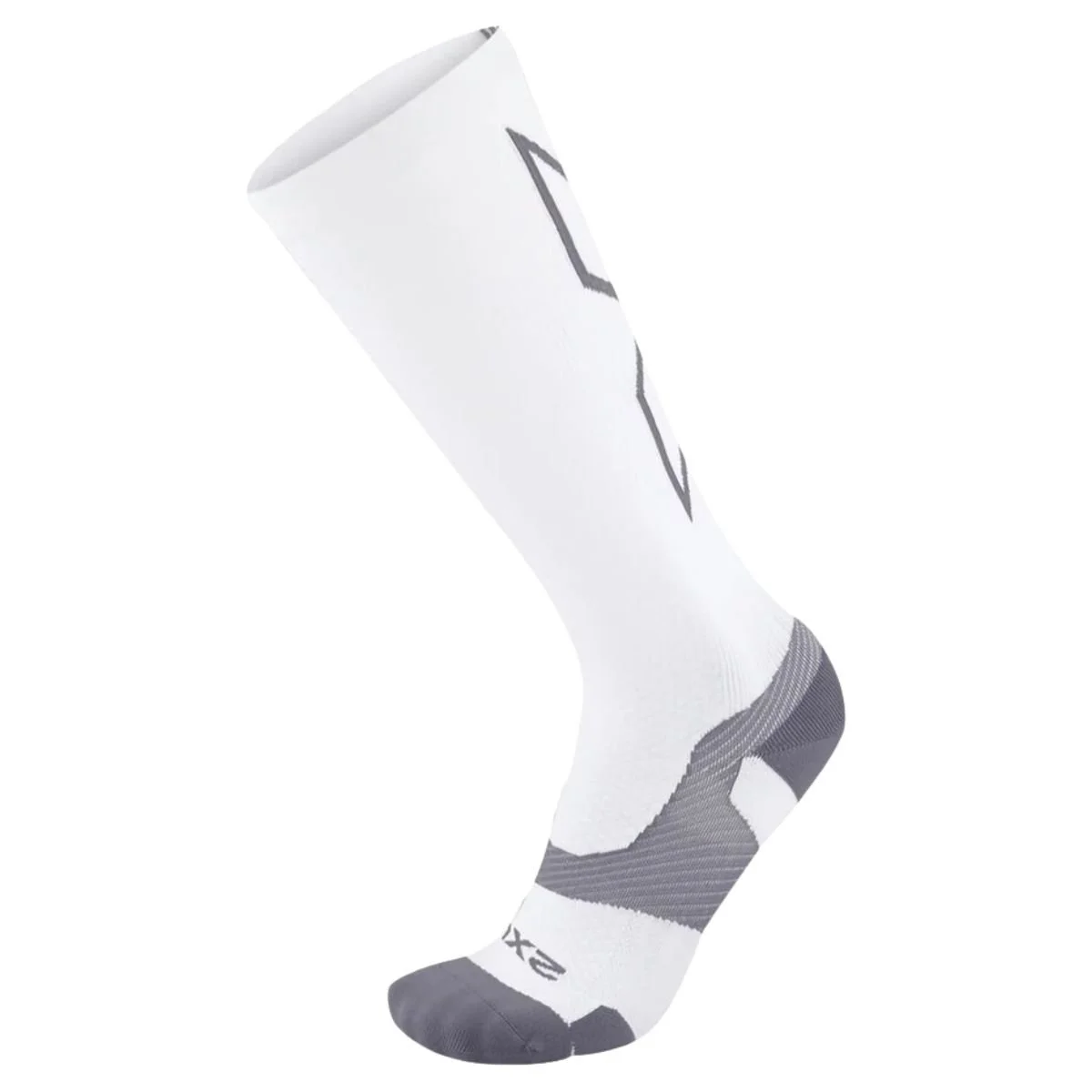
The Vectr Cushion Full Length Compression Socks have a slight herringbone pattern over the shin, which we found provided more support in this specific area during runs where shin splints can be an issue.
2XU Vectr Cushion Full Length Compression Socks
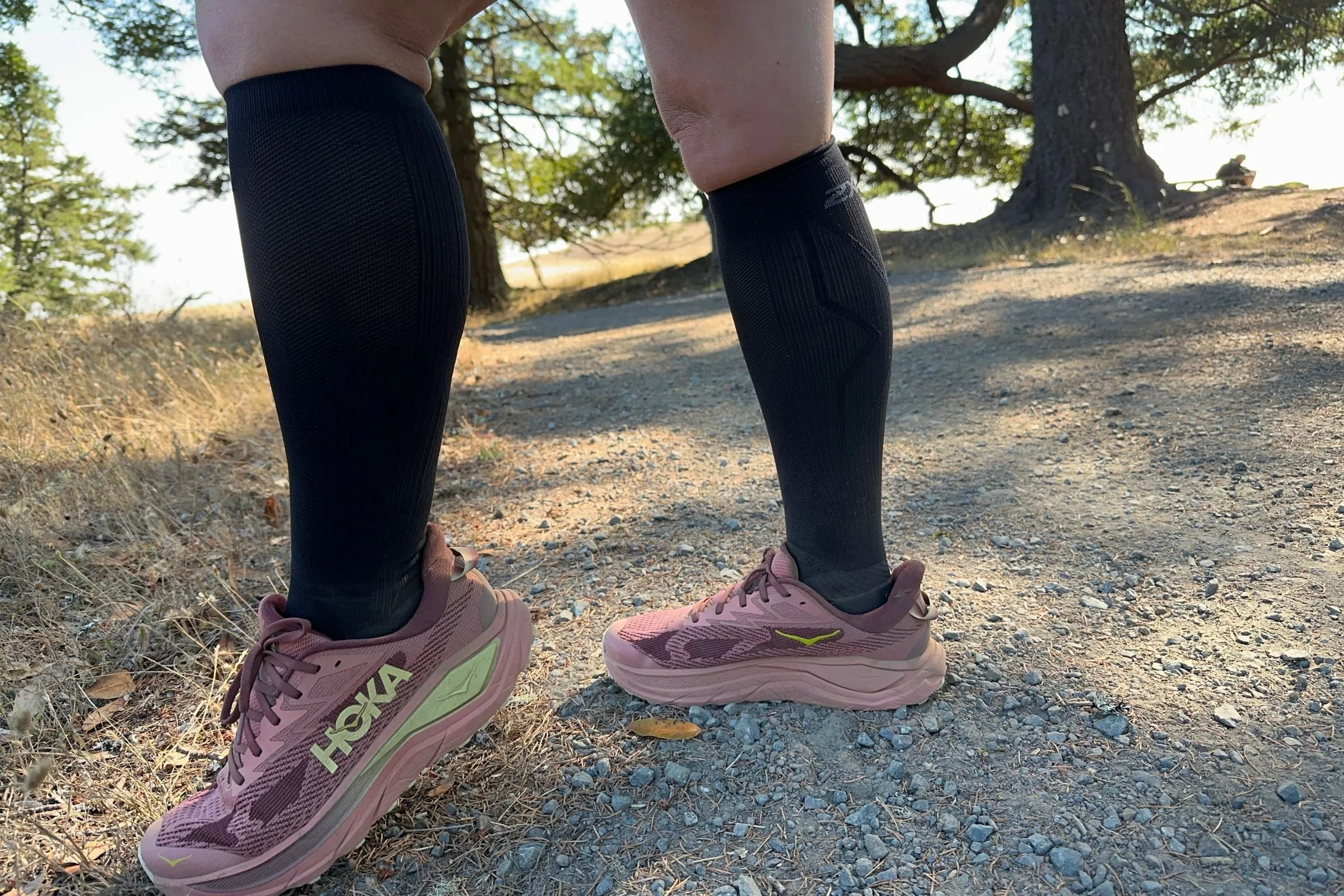
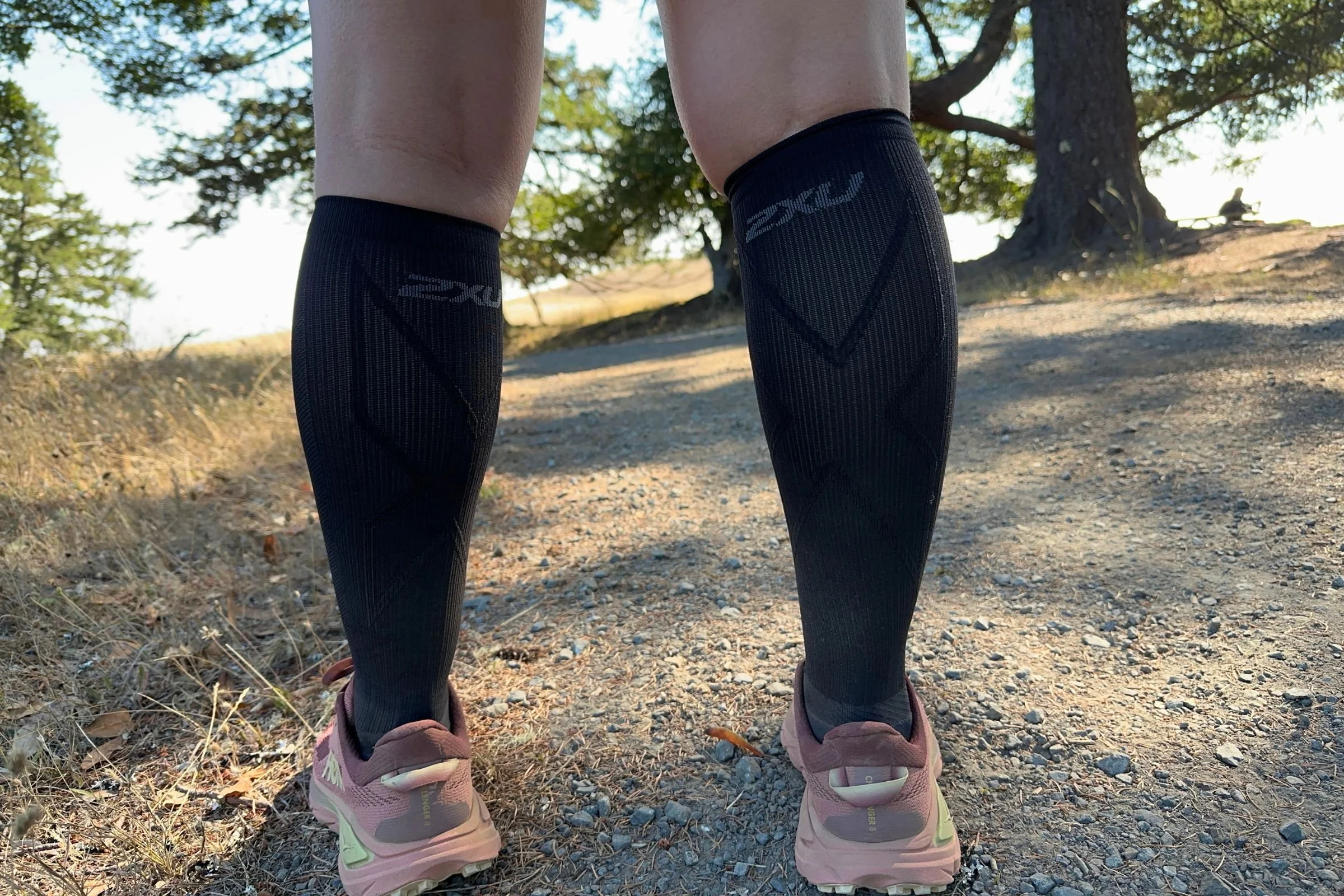
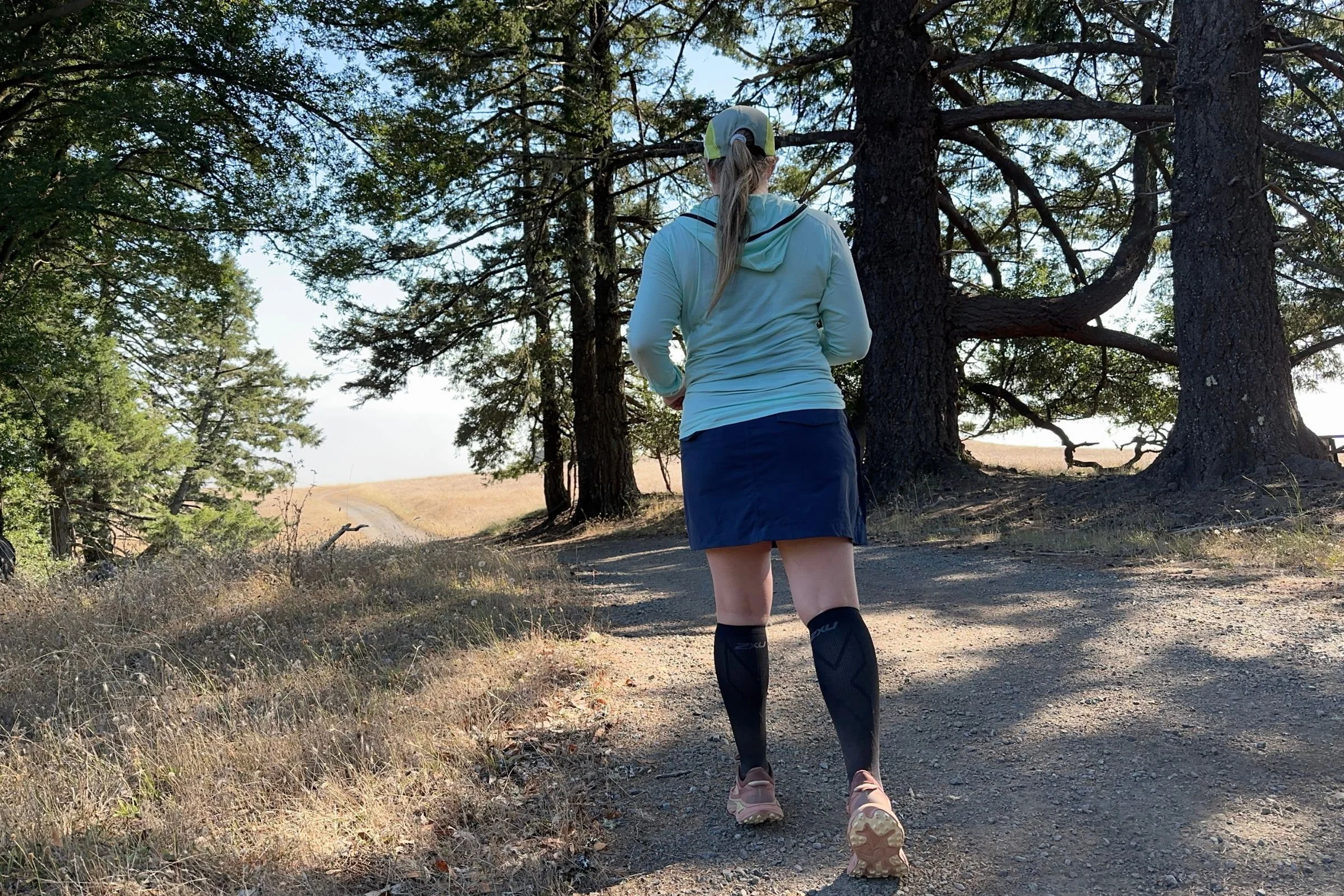
When looking for compression to assist with shin splints specifically, we like to see some sort of pattern or design in the compression area of the sock that will provide more compressive support to the shin. The Vectr Cushion Full Lengths have that and delivered better than the other socks that we tested for this story. Compression socks like these are designed to help with shin splint symptoms, but it is always recommended to consult with your doctor if you are having persistent shin pain.
In addition to having support for the shin area, these socks also have a significant amount of support in the foot and an X-LOCK technology that is designed to assist with plantar fasciitis. Our testers were not currently dealing with plantar fasciitis during our testing but they have had issues with it in the past and felt that this was a very supportive sock in the heel and ankle region.
We also like that these are the only socks that come in versions for smaller and larger calves. This additional sizing option should allow for more people to be able to find a sock that will fit both their feet and their calves.
The one issue we had with these socks was that the top portion was a bit tighter than some of the others we tested, though this did loosen up as we wore them for our runs in testing.
The calf pattern on these socks is also more open and breathable than many of the others we tested, making them a great choice for warmer weather (similar to the CEP models we tested).
Best compression socks for recovery: OS1st Wellness Compression Socks
MSRP: $30
Compression level: Moderate, 15-20 mmHg
Graduated compression: Yes, medical grade
Height: OTC
Fabric: 85% micro-nylon, 15% lycra spandex
Cushioning: Medium
Size range: S-XL; women’s 4 to men’s 13 plus shoe; 11-19 in calf size
Men's/women's or unisex: Unisex
Machine washable: Manufacturer recommends hand washing and air drying
What we liked: Soft fabric, comfortable for daily wear, lots of color choices
What we didn't like: Not as supportive as other socks we tested
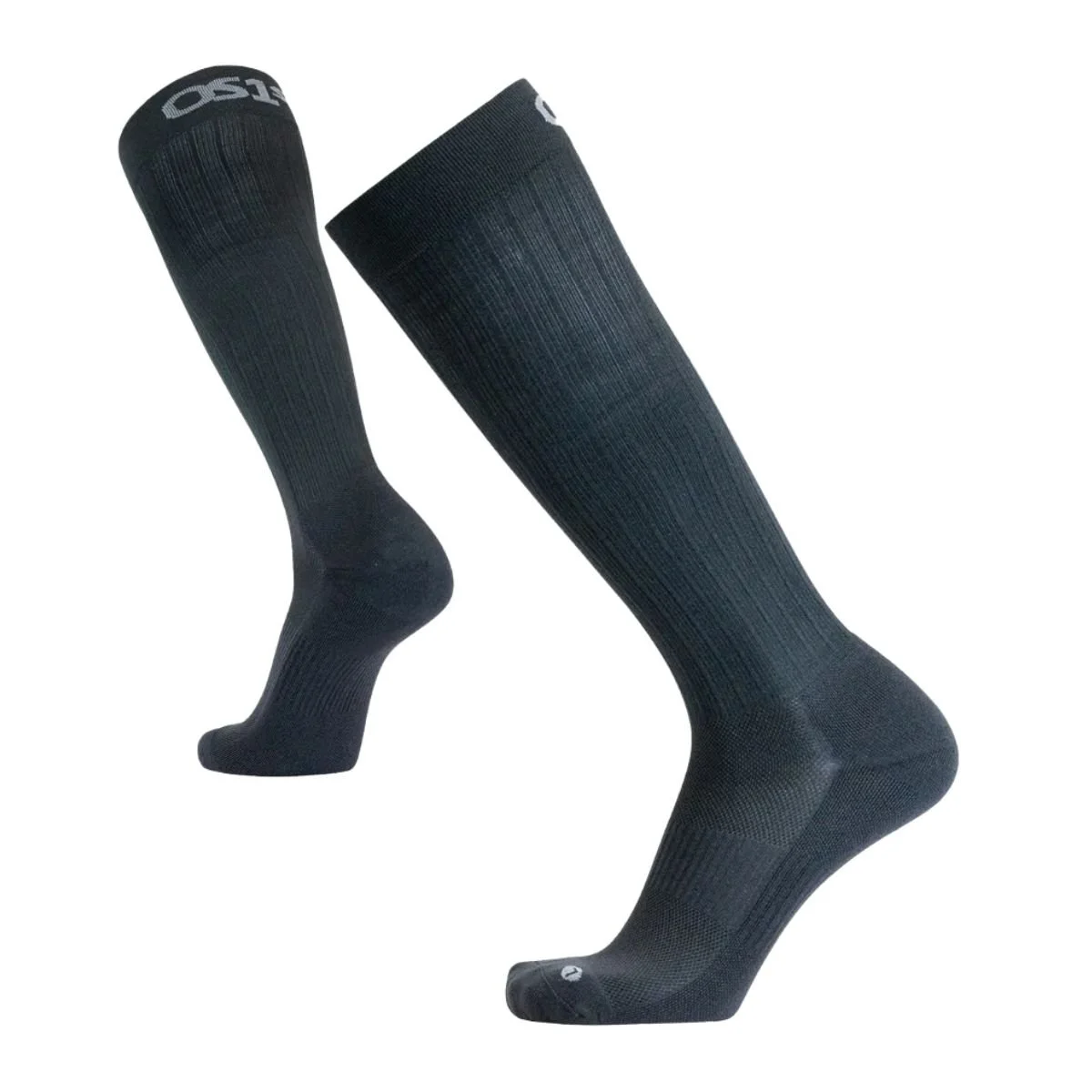
The OS1st Wellness Compression Socks are specifically designed for resting recovery days. Of all the socks we tested, these were the most comfortable for long-term wear and the most similar to a regular sock. If we had to wear a pair of compression socks all day, every day, outside of running, these would be the ones we would reach for.
OS1st Wellness Compression Socks
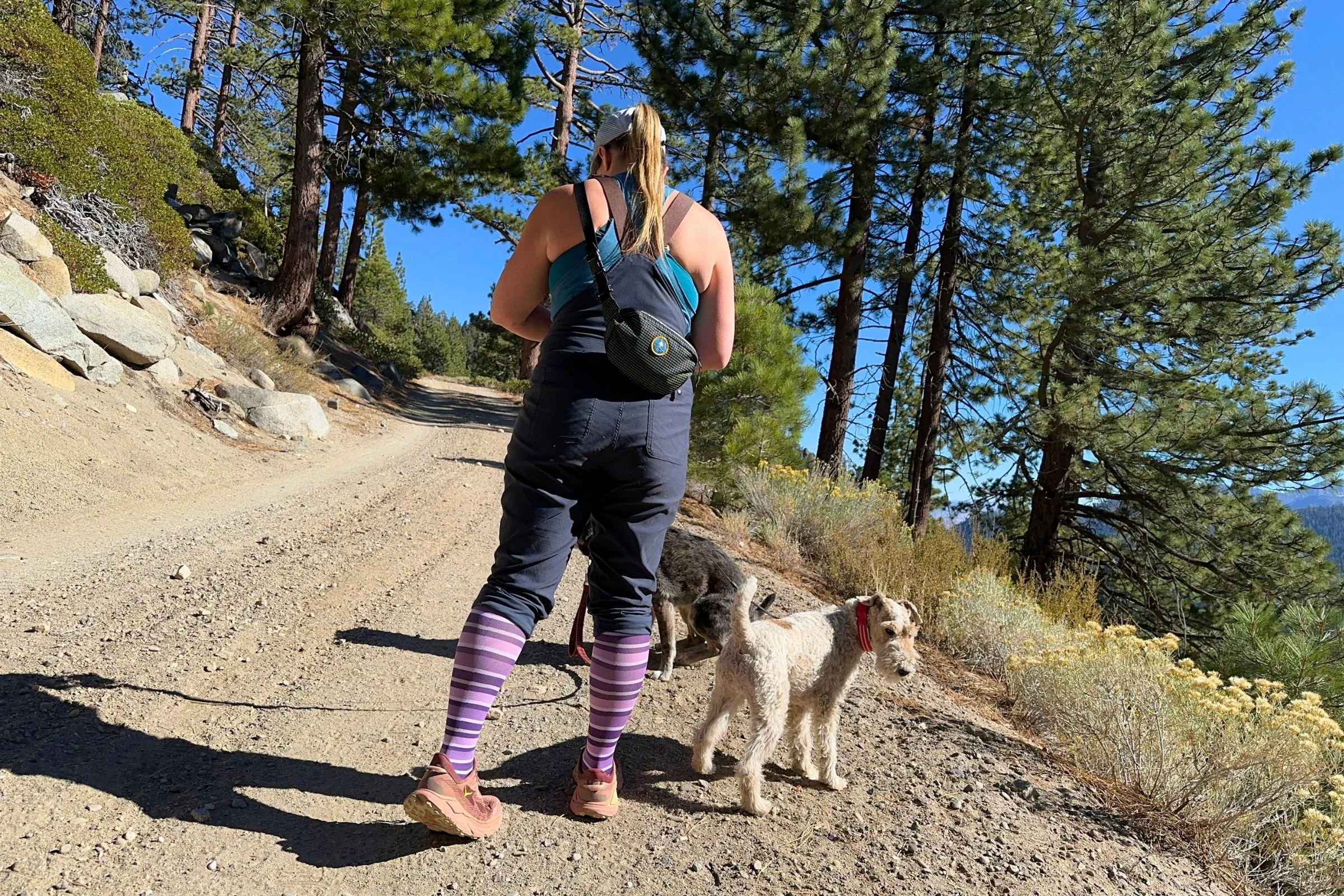
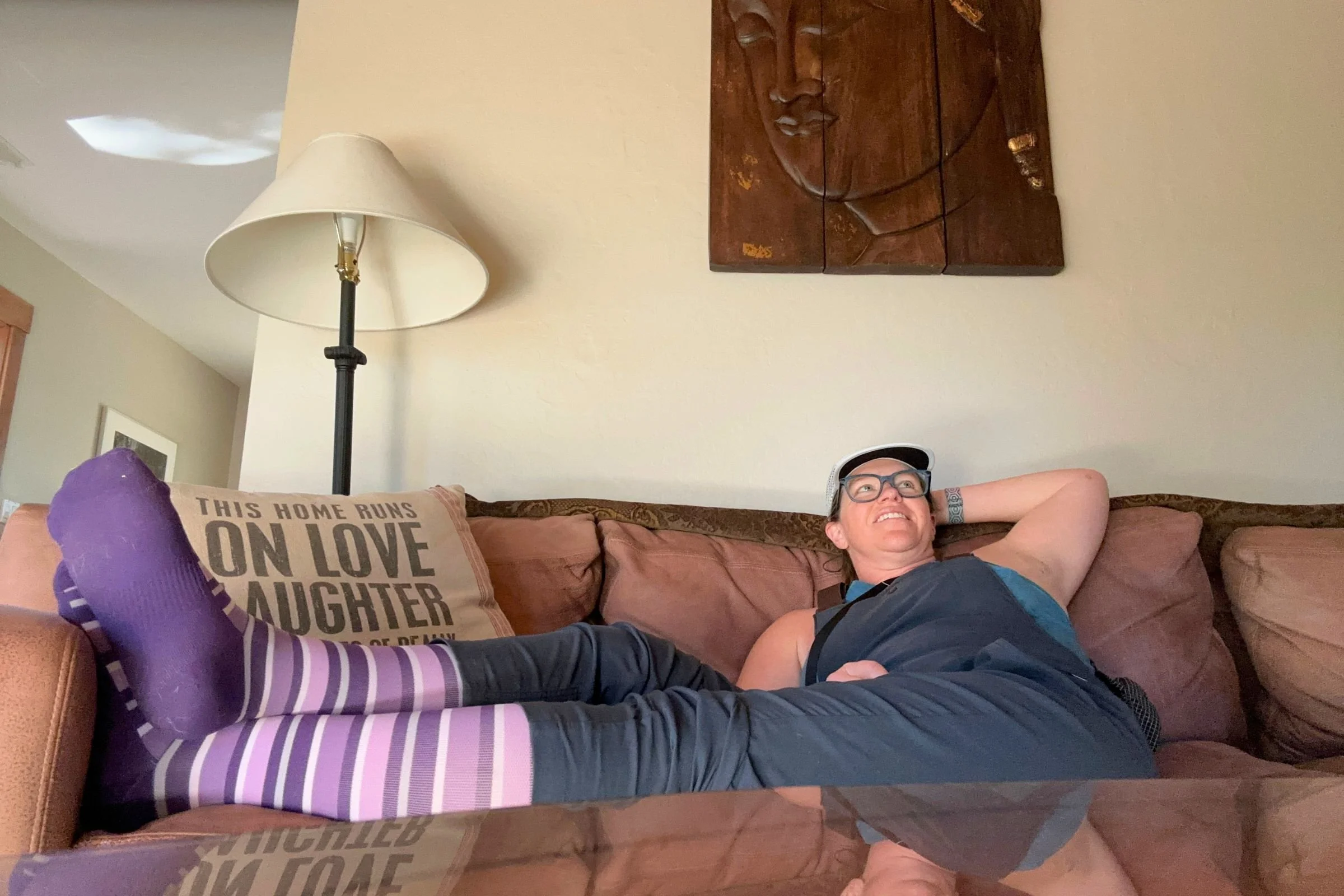
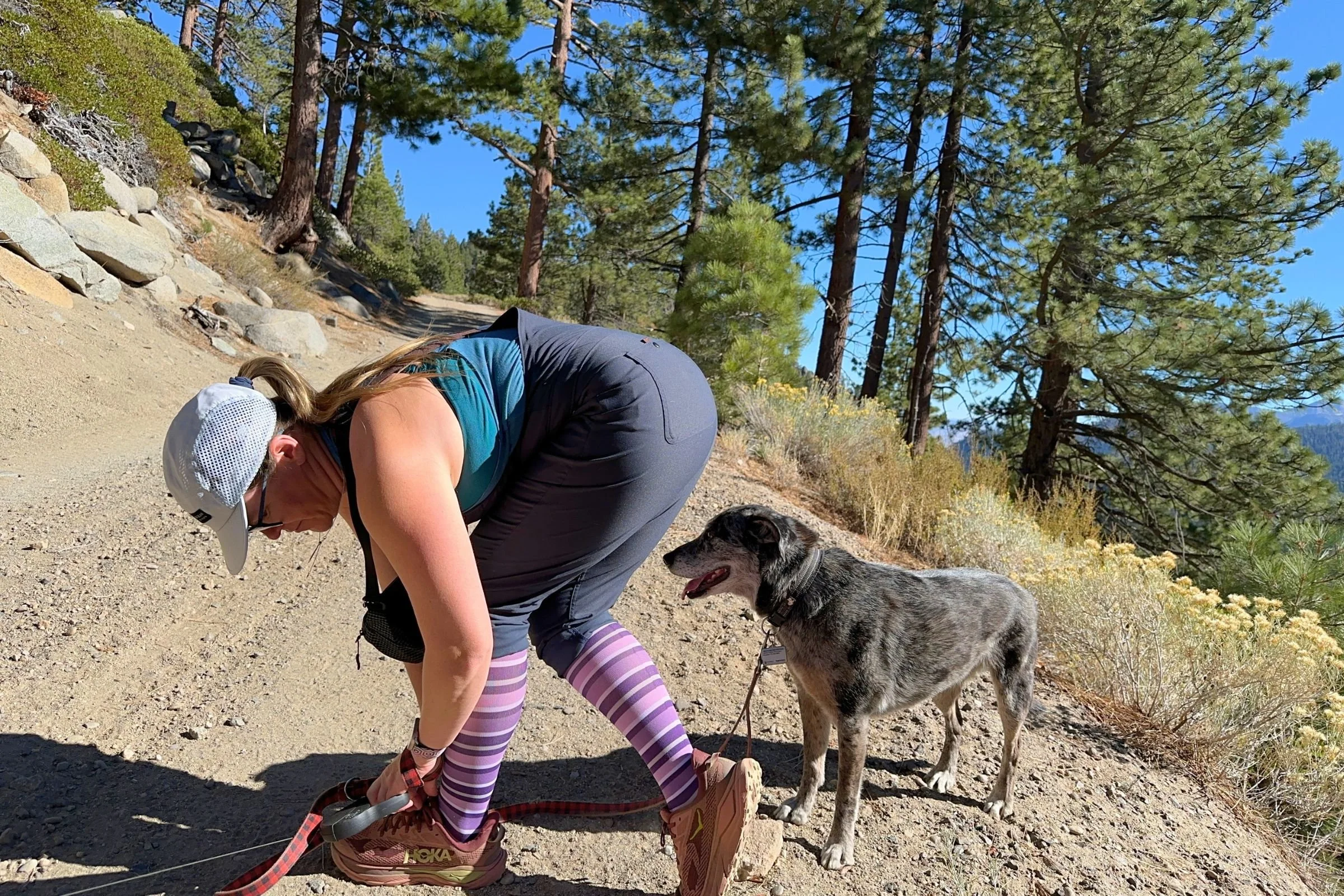
The OS1st Wellness Compression Socks felt gentler and less targeted than the performance running socks I tested. But they do have cushioning at the heel and ball of the foot, making them comfortable for daily wear. The calf compression is lighter than some of the other models we tested and is simple in design—it feels like a gentle hug on the calf but isn’t providing specific compression for repeated motion like other OTC models we tested.
The Wellness Compression socks are comfortable, come in a variety of fun colors, and are the ones we loved wearing the most on the couch while working on recovery and rest post workout or on off days. Pair these socks with a pint of ice cream and a good book, and you are in for a nice cozy recovery day. We found in our testing that we experienced less soreness while wearing these socks and we were able to get back out and on the trails again with less pain.
These socks are great for those who are looking for a sock to wear between runs or workouts. If you are looking for a sock to wear specifically for time spent running these would not be the best sock for you.
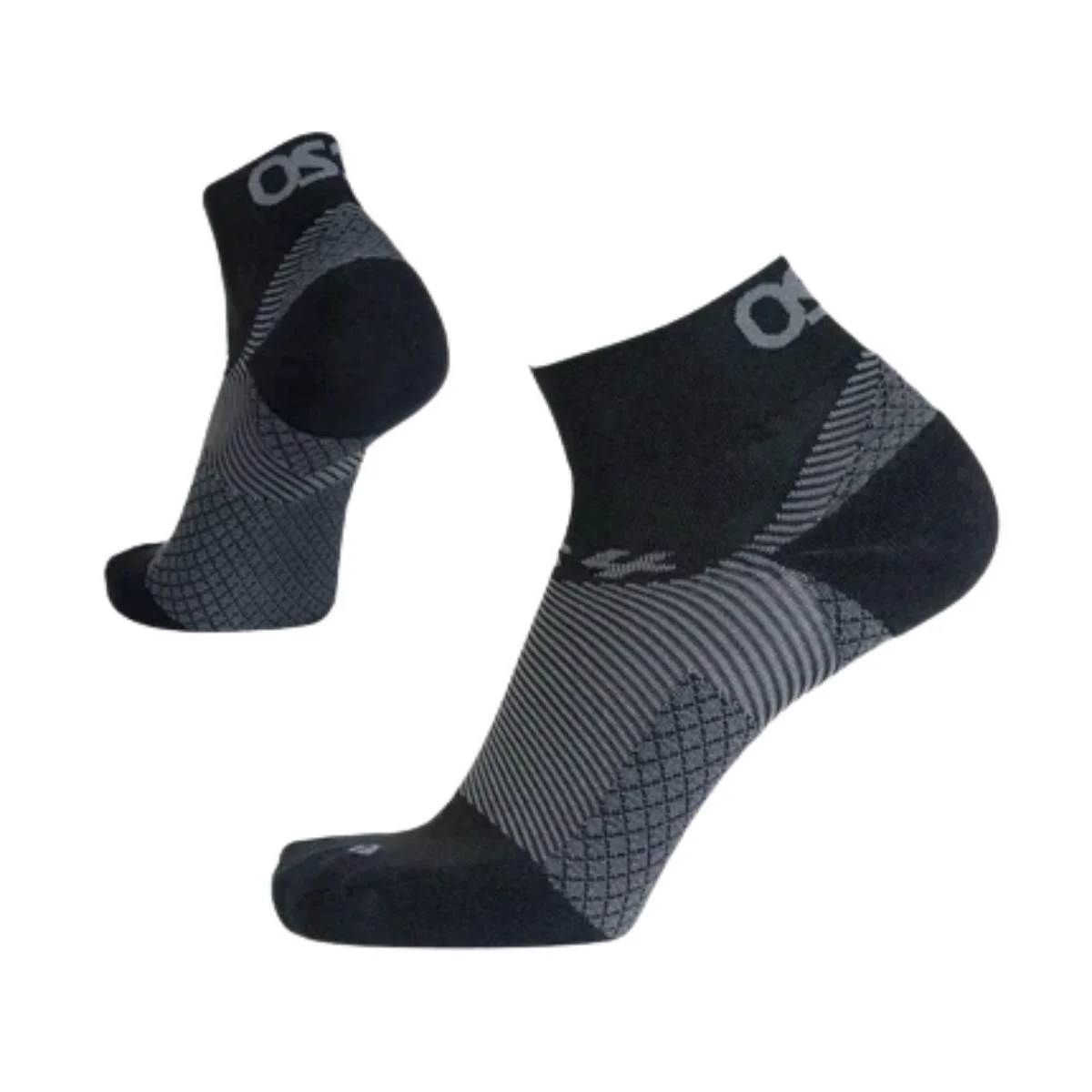
Best ankle compression socks for running: OS1st Plantar Fasciitis Quarter Crew Socks
MSRP: $25
Compression level: Firm, 20-30 mmHg
Graduated compression: Not stated
Height: Ankle (quarter crew)
Fabric: 88% micro-nylon, 12% lycra
Cushioning: Light
Size range: S-XL; women’s 4 to men’s 13.5+ shoe size
Men's/women's or unisex: Unisex
Machine washable: Yes
What we liked: Compression for our feet while running, can be paired with favorite calf sleeves for full compression kit
What we didn't like: Initially tight
We weren’t sure what to expect with the OS1st Plantar Fasciitis Quarter Crew Socks compression ankle socks, as most of the socks we tested have a calf compression component. We were pleasantly surprised to discover the advantages of wearing a compression ankle sock. We had less swelling in our feet on long runs and the compression felt like a gentle hug on our foot.
OS1st Plantar Fasciitis Quarter Crew Socks
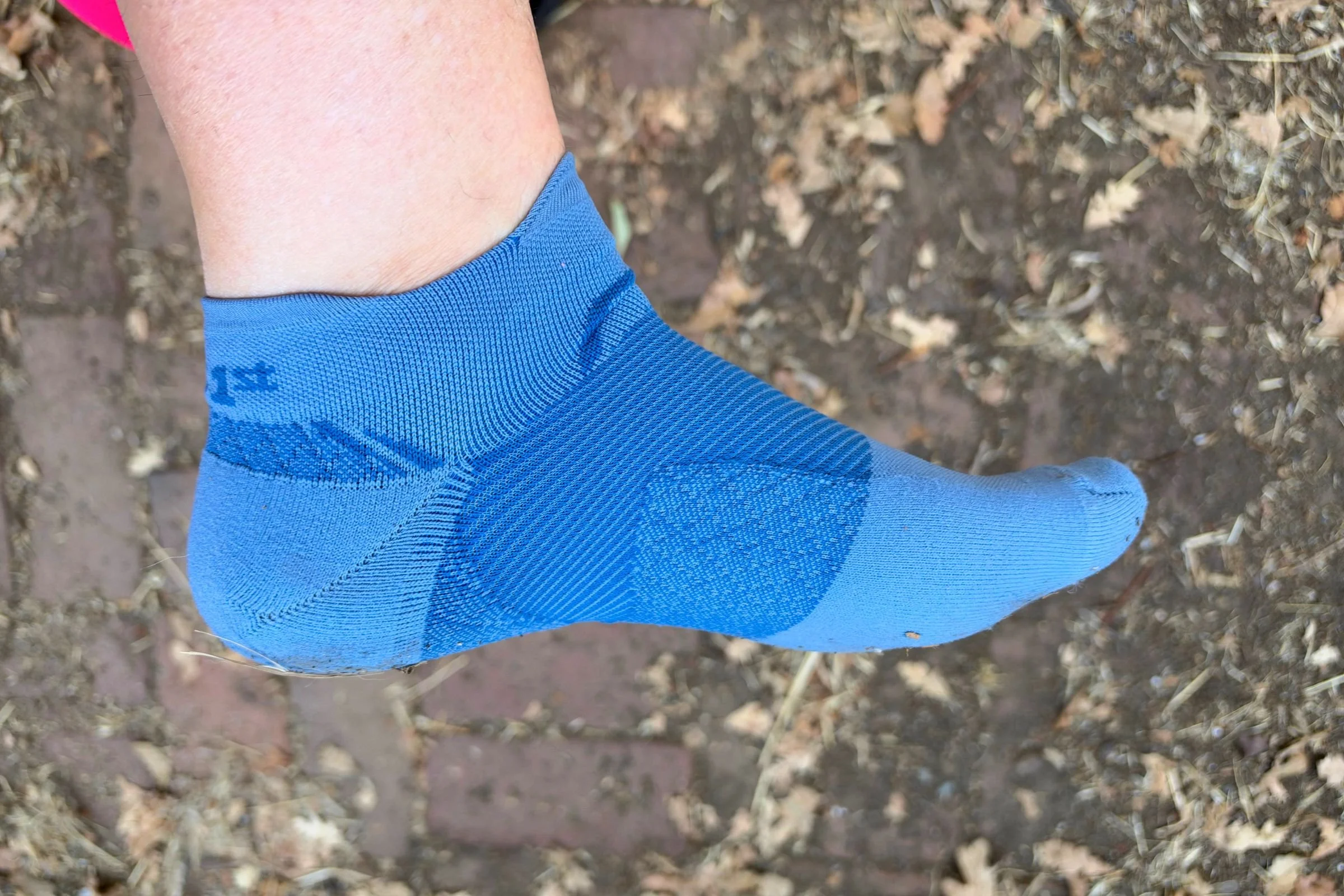
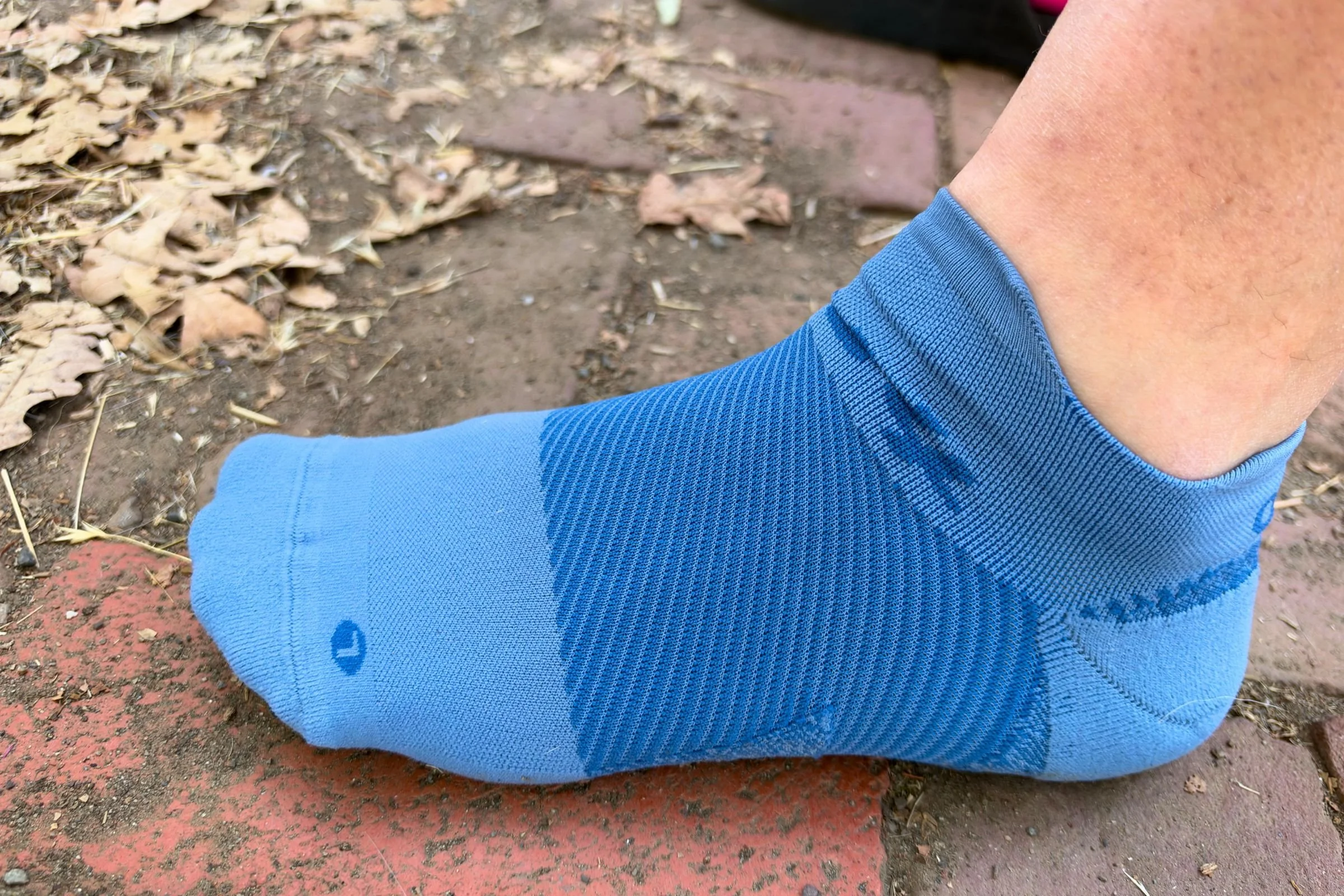
The nature of a compression sock in the foot area is that it is tighter than a traditional sock and therefore isn’t causing slipping, which helps to prevent any blisters from forming. These ankle socks are designed specifically for plantar fasciitis and are very supportive in the heel cup and at the ankle, as well as the arch, where we have felt pain from plantar fasciitis in the past. We could see that these socks would be a great option for someone who is dealing with plantar fasciitis pain. However, it is always important to see a doctor if you are having plantar fasciitis pain and discuss wearing socks like these to help ease or prevent issues.
A pleasant advantage to these ankle socks was that they allowed us to pair them up with our favorite calf sleeves for our runs. This can be especially helpful for anyone who is having a hard time finding an over-the-calf sock that fits both their foot and calf sizing. With the ankle socks you only need to fit your foot size and you can fit your calf size separately with a sleeve for a full compression kit.
The ankle socks felt tight at first, but once we started running we felt them ease up a bit, and we didn’t have any issues with slipping or swelling at the top of the sock. Although the socks were compressive, they weren’t creating pressure at the top of the sock.
Best compression socks for long distance running: CEP Core Run Ultralight Tall Compression Socks
MSRP: $60
Compression level: Firm, 20-30 mmHg
Graduated compression: Yes
Height: OTC
Fabric: 79% polyamide, 21% spandex
Cushioning: Light
Size range: II-V, 9.5-20 in calf size
Men's/women's or unisex: Men’s/women’s
Machine washable: Yes
What we liked: Comfortable over long periods of wear,
What we didn't like: Price, delicate fabrics may be prone to snags
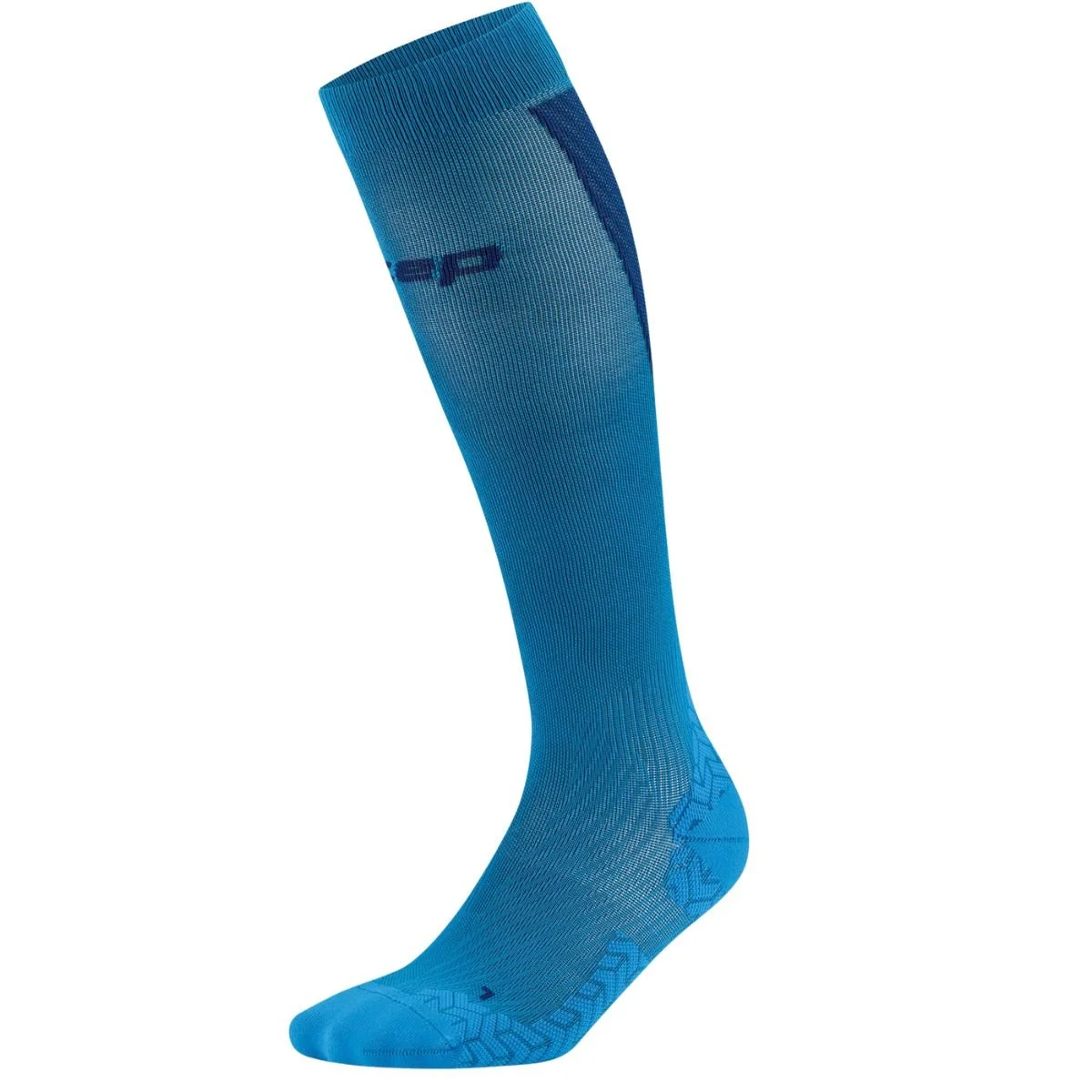
Running long distances or for long durations requires a sock that is comfortable for that period of time and that won’t interfere with your run. We liked the CEP Core Run Ultralight Tall Compression Socks best for long distances and longer runs because they remained comfortable and didn’t cause irritation or hot spots or feel overly tight. The compression on the calves was helpful with blood flow without being noticeable over longer periods of time.
CEP Core Run Ultralight Tall Compression Socks
Men's
Women's
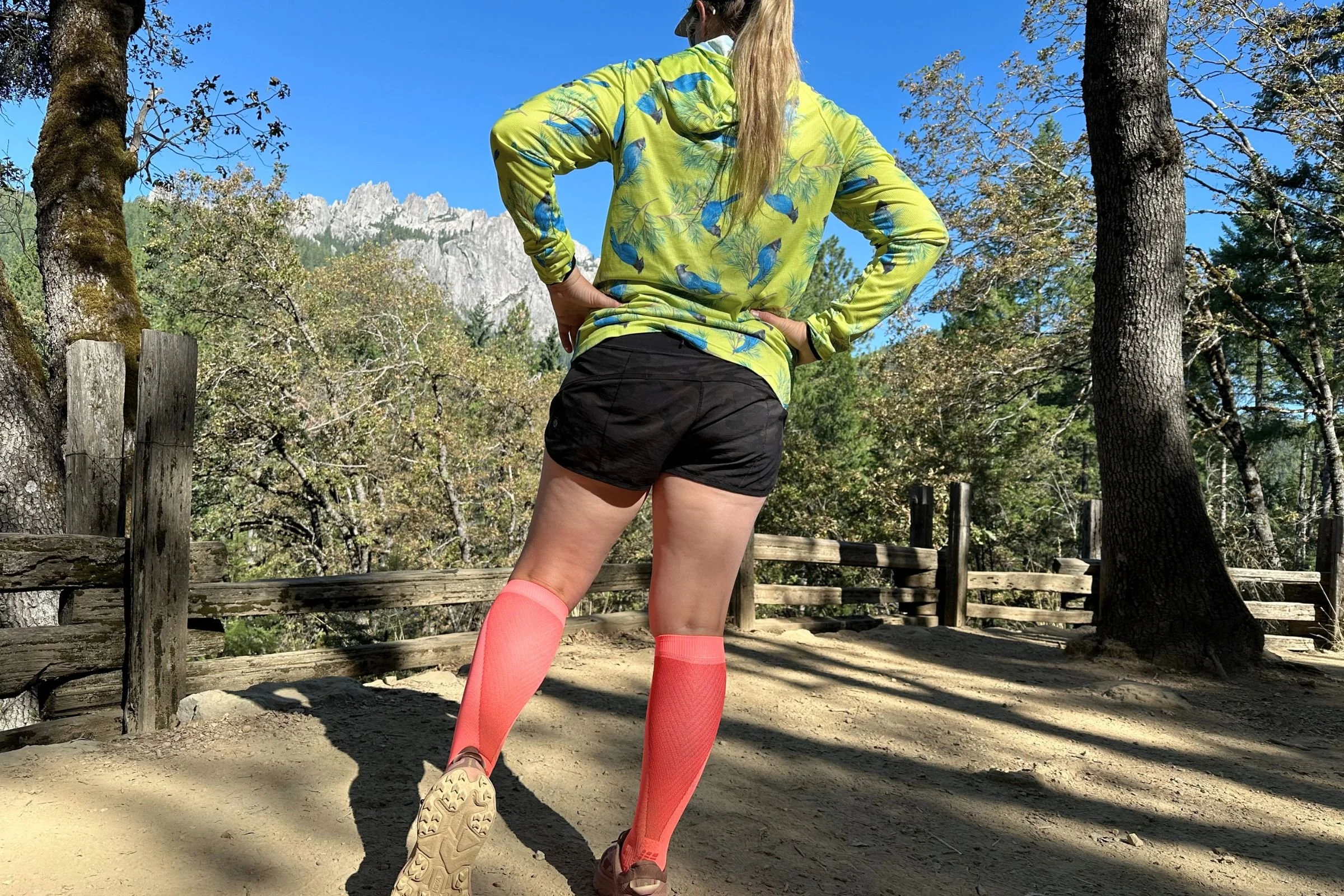
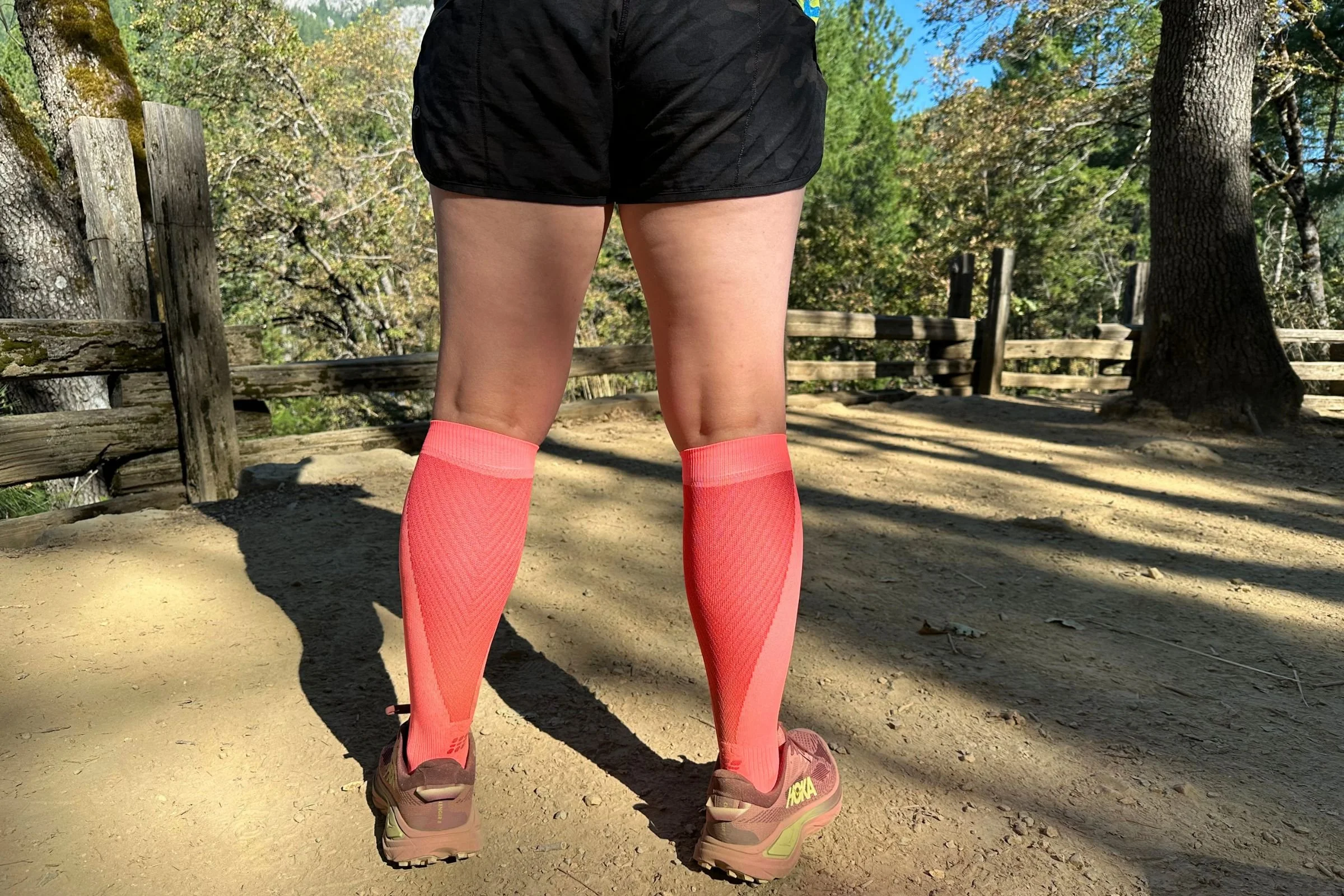
We tested these socks on 10+ mile runs as well as trail runs/hikes that lasted eight hours or more. The lighter weight fabric was breathable especially during longer efforts with heavy sweating but we didn’t lose compression or have any issues with slipping during that time.
We also found that these socks were more forgiving as far as sizing goes. One of our testers was at the larger end of the size chart for the calf size and one was at the smaller end, and both found the compression performed well and provided support during long runs and long days on the trails.
These socks are more expensive than other brands we tested, which can be a drawback for some. The other drawback to these socks is they are more delicate and will do best when washed inside a lingerie bag in the washing machine to protect them from other garments and zippers.
These are best for those who are running long distances or on hot days and would not be good for those who are looking for a warmer sock for running in colder weather or who require something more durable and abrasion resistant.
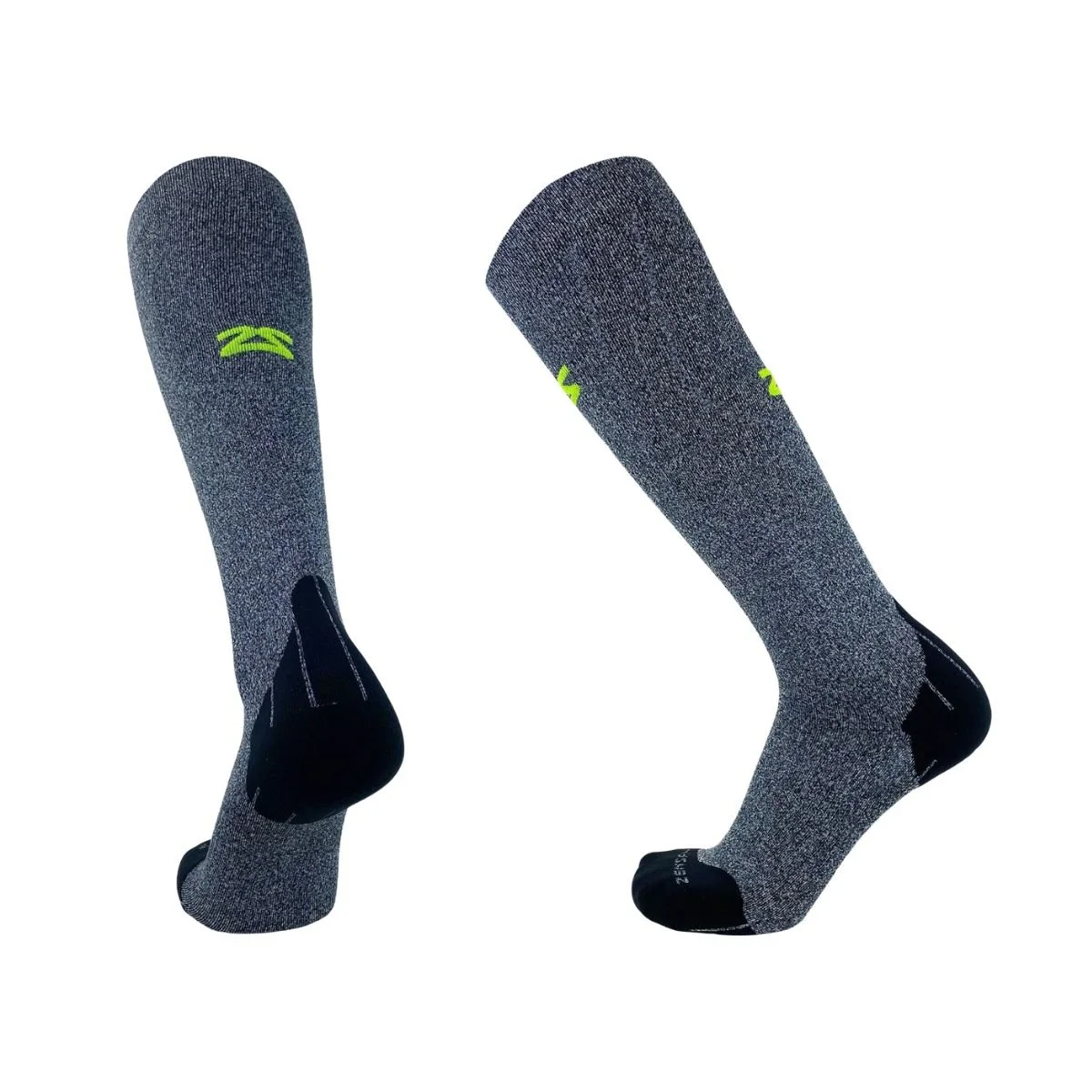
Best trail running compression socks: Zensah Tech+ Graduated Compression Socks
MSRP: $50
Compression level: Moderate
Graduated compression: Yes
Height: OTC
Fabric: 82% polyamide, 18% elastane
Cushioning: Light
Size range: S-XL; women’s 5 to men’s 15 shoe size
Men's/women's or unisex: Unisex
Machine washable: Yes
What we liked: Durable materials, bright colors, comfortable for long-term wear
What we didn't like: Price, not as breathable as others
The Zensah Tech+ Graduated Compression Socks were so comfortable they were almost our pick for best overall recovery socks, but I ultimately determined them best for trail running because they are more resistant to snags and the tighter knit fabric keeps us cleaner.
Zensah Tech+ Graduated Compression Socks
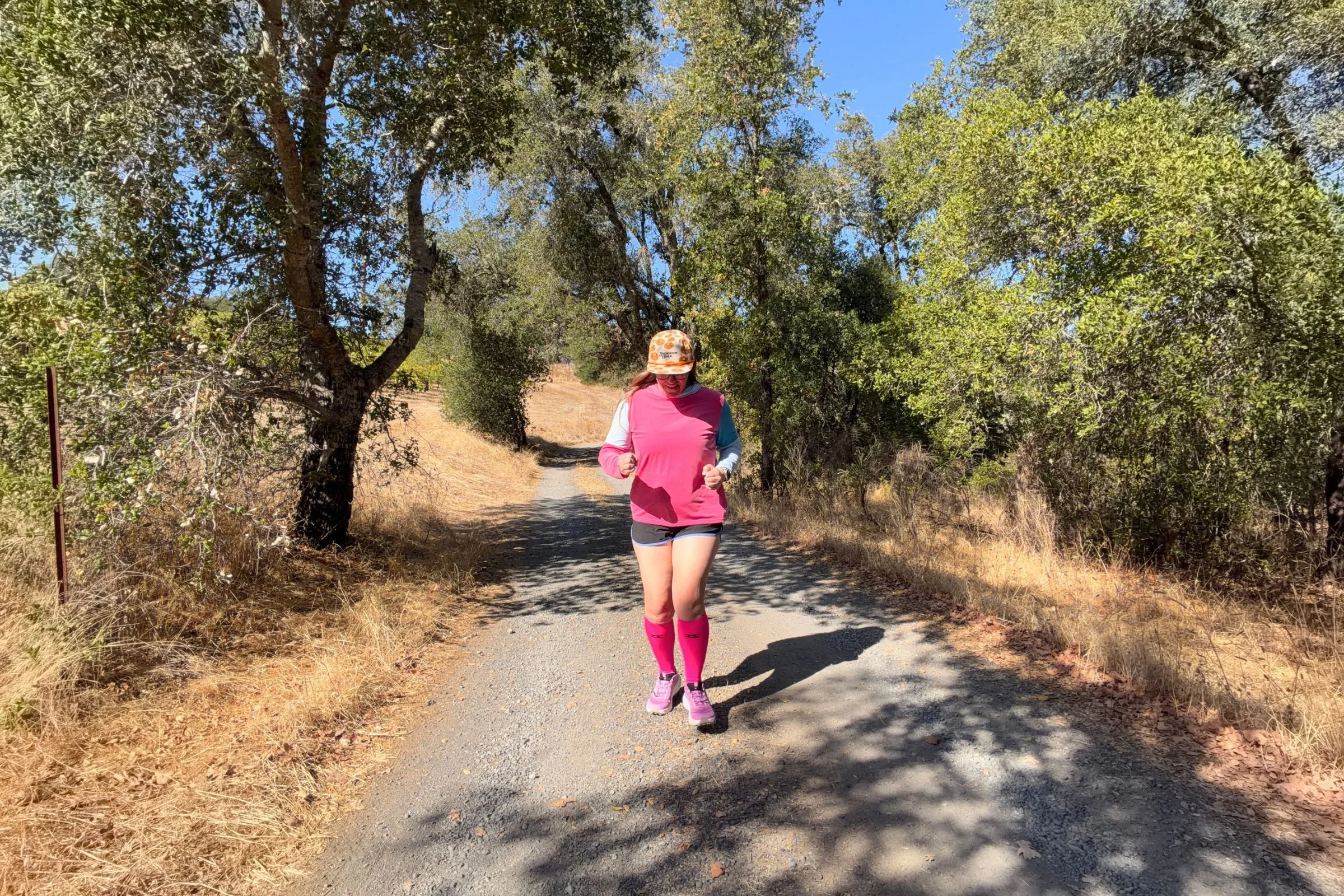
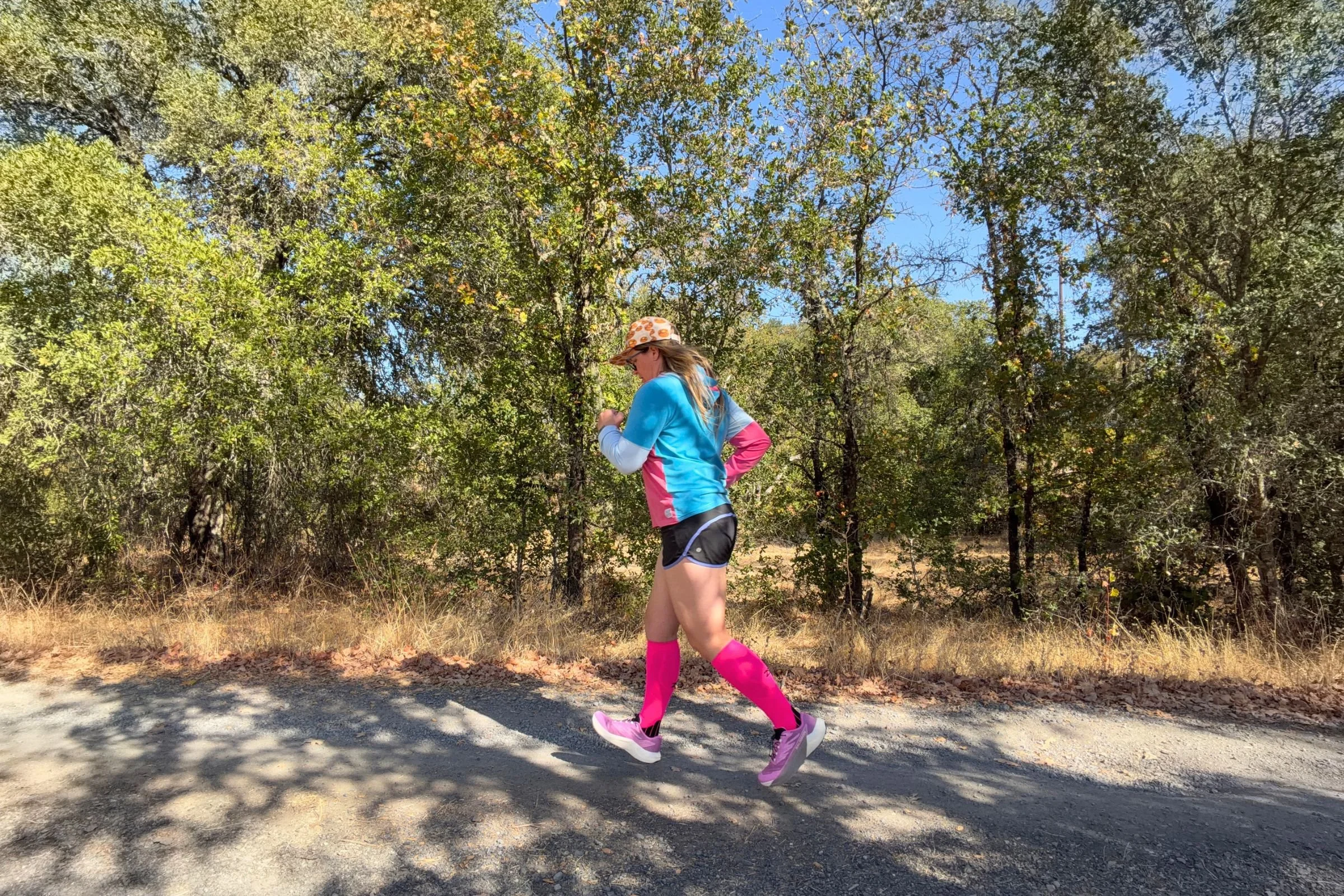
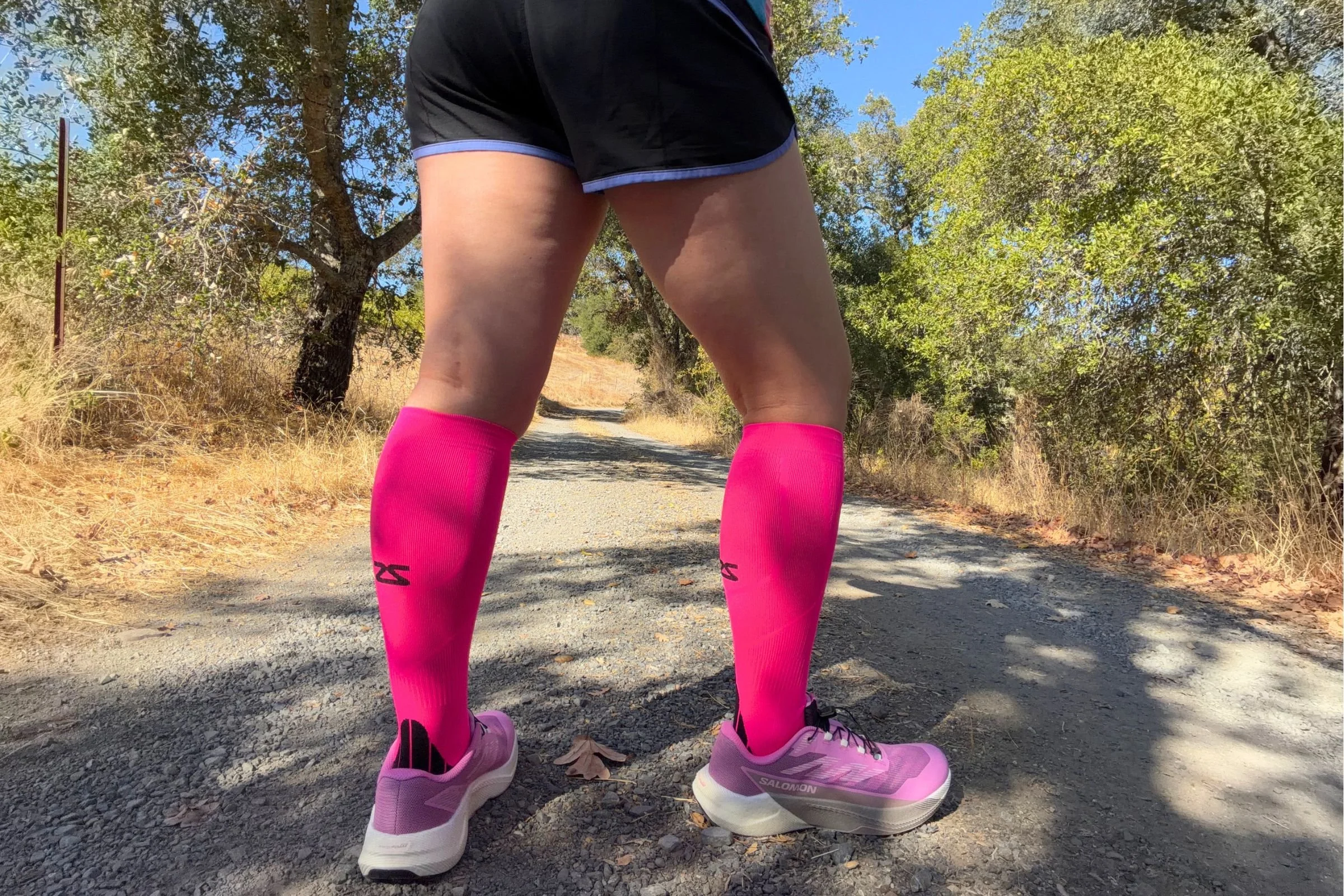
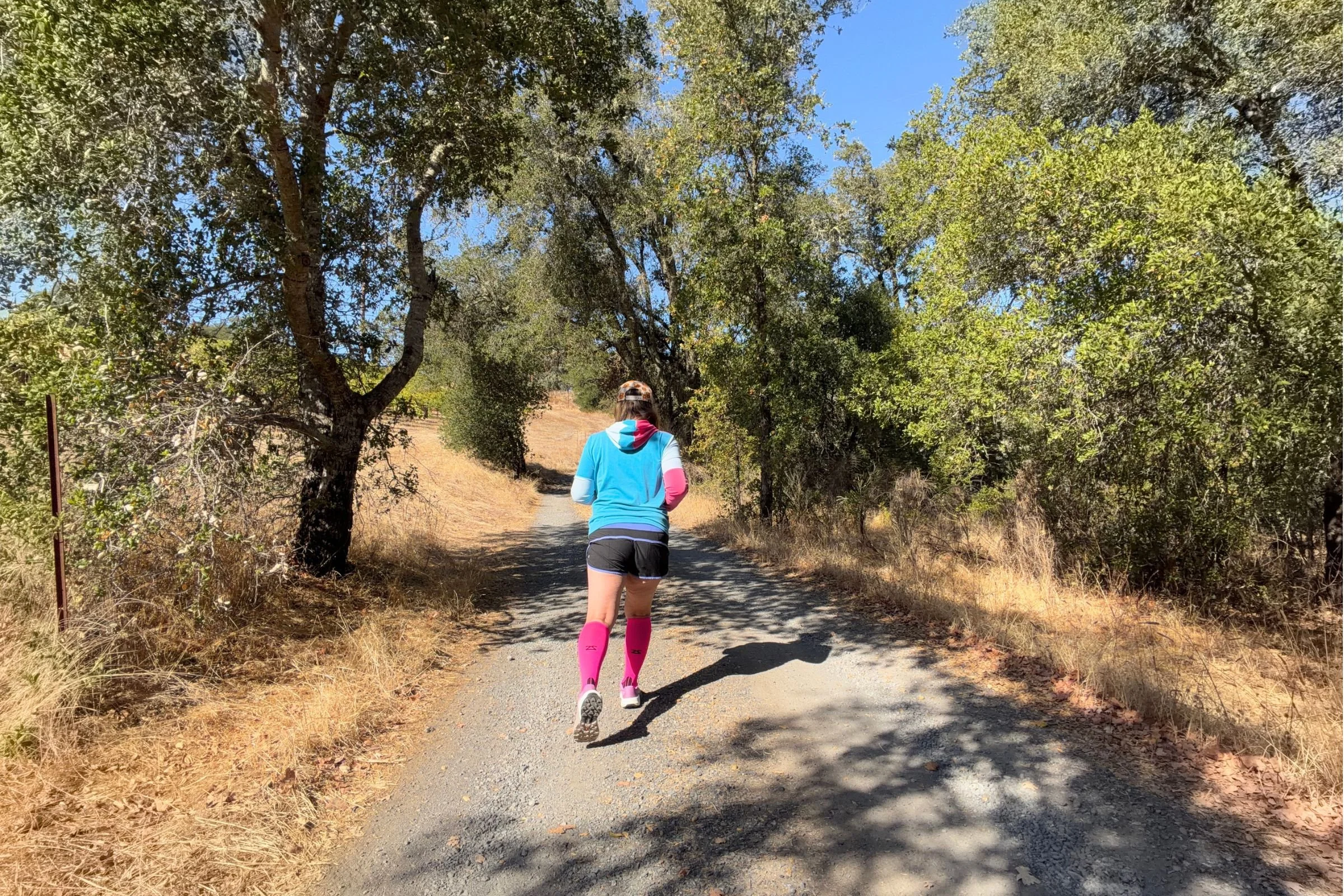
We love the smooth texture on the socks that makes them resistant to snags, especially when running on trails with overgrown brush or branches. These compression socks have more opacity in the calf area, the fabric was not as meshy as others we tested, which also helped to keep our calves clean and keep out dirt and dust compared to some of the more mesh-like socks, like the CEP models we tested.
We tested these socks on trail runs with lots of hills and dirt and rocks. We were surprised at how clean our calves looked under the sock and found that our new “tan lines” were indeed just dirt lines after a decent shower. For trails, we want a compression sock that is not only going to provide good support but also be durable for repeated uses, and these were the clear winner.
These socks are on the more expensive side, although they are not the most expensive socks we tested. The more opaque materials used make them less breathable than the thinner mesh socks we tested. These would not be ideal for those who are running in hotter weather.
These are one of our favorite compression socks that we tested for this story. We considered them for best overall, and they came very close to winning. The CEP just nudged these out with a little more breathability and targeted compression in the calves.
Other running compression socks we tested
OS1st Merino Wool Wicked Comfort Socks
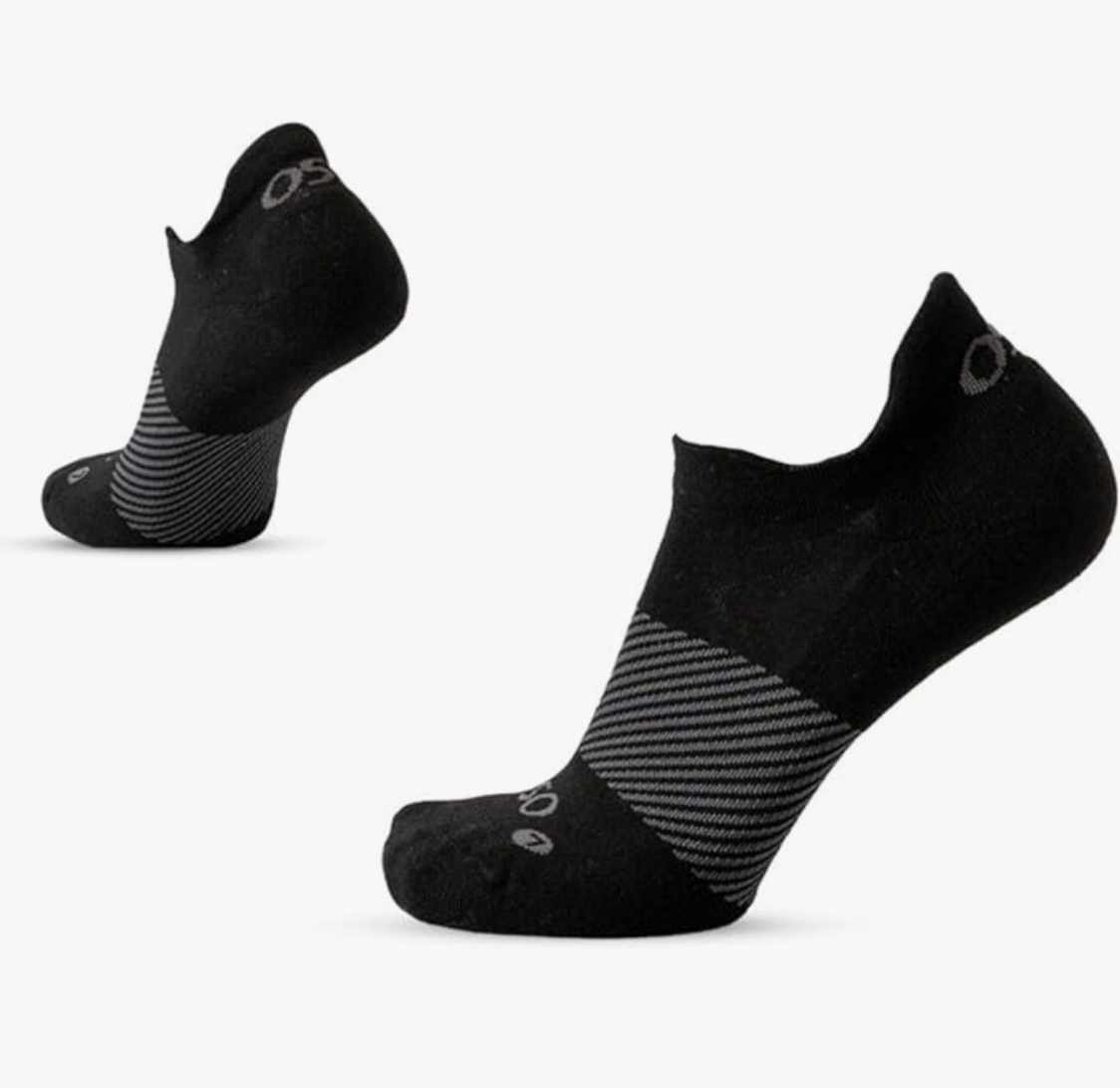
MSRP: $20
Compression level: Light
Graduated compression: No
Height: Ankle (no-show)
Fabric: 43% recycled poly, 29% wool, 26% nylon, 2% lycra-spandex
Cushioning: Maximum
Size range: S-XL; women’s 5 to men’s 13.5 plus shoe
Men's/women's or unisex: Unisex
Machine washable: Yes
We liked the OS1st Merino Wool Wicked Comfort ankle compression socks because they were super comfortable, but didn’t find them to provide any significant compression compared to the other compression socks we tested.
These are a merino wool-blend sock that provides slightly more compression than a regular merino wool sock, so they would be a good option for someone who wants to wear merino wool while running but wants their socks to hold the shape better and provide a little compression on their feet.
Overall we liked these as general socks for running because the merino blend is odor resistant, comfortable, and moisture wicking but as far as compression socks go, they were not compressive enough to be a winner.
OS1st Merino Wool Wicked Comfort Socks
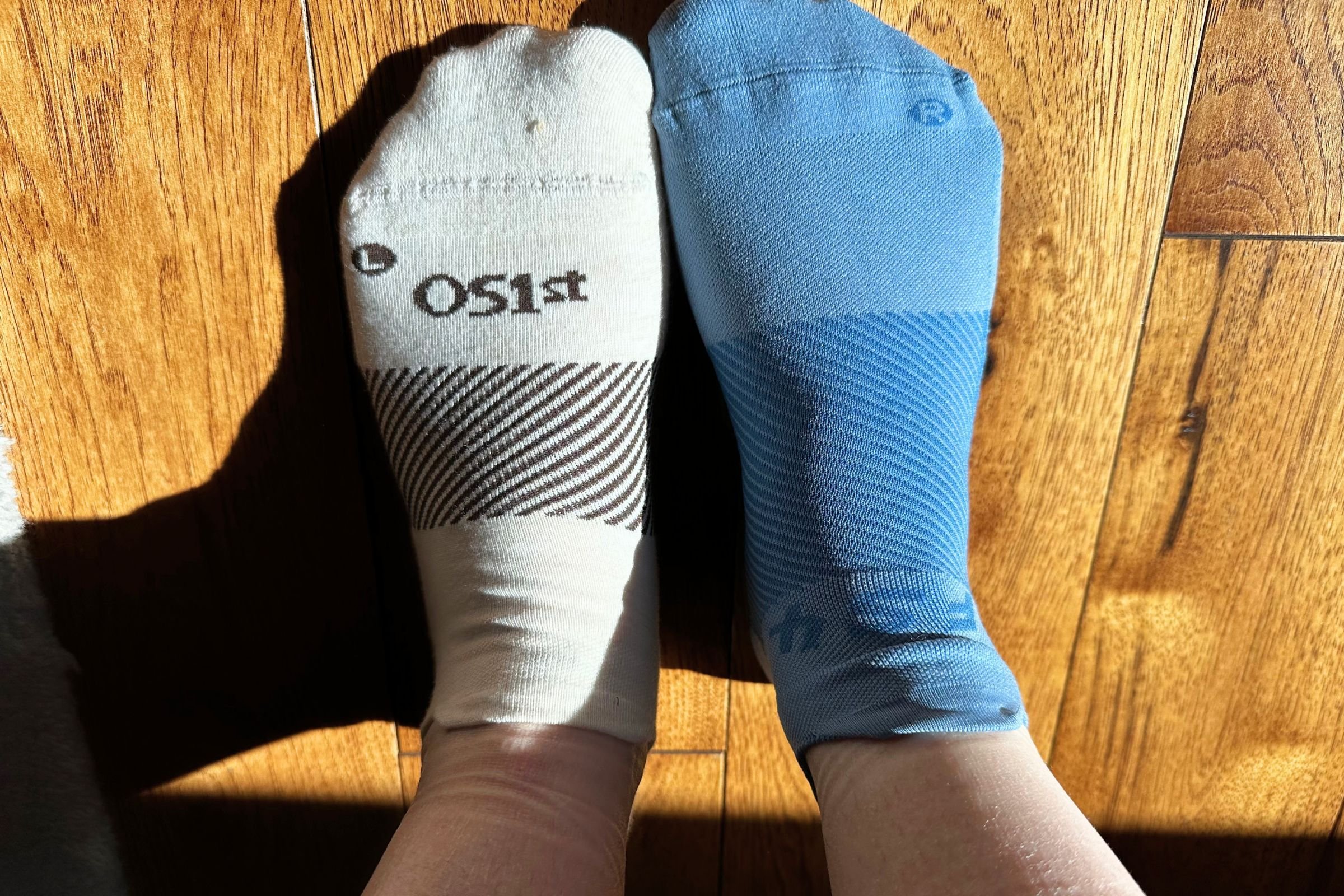
The white sock (left) is the OS1st Merino Wool Wicked Sock, the blue sock (right) is the OS1st Plantar Fasciitis Quarter Crew Sock.
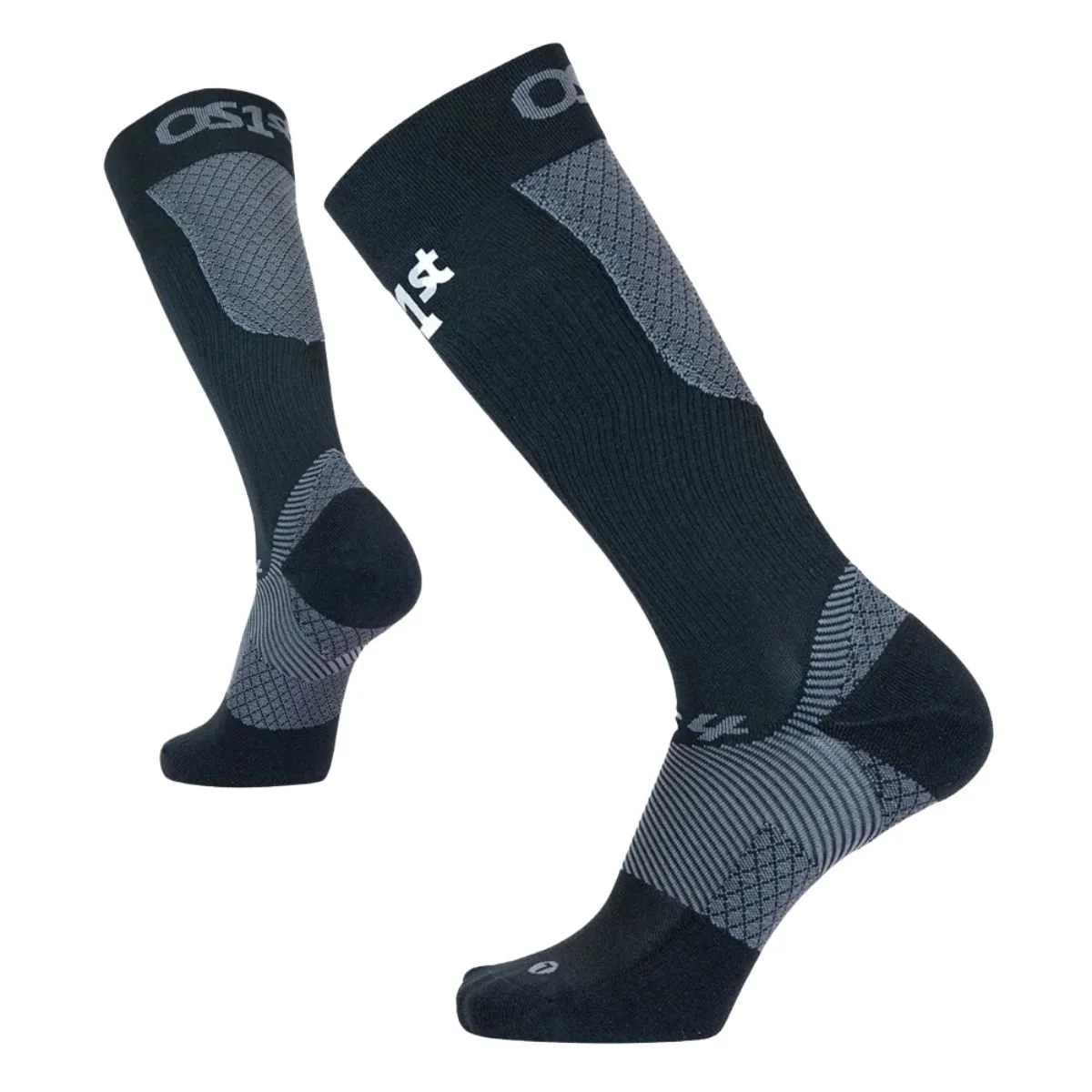
MSRP: $50
Compression level: Firm, 20-30 mmHg
Graduated compression: Yes, medical grade
Height: OTC
Fabric: 85% nylon, 15% lycra-spandex
Cushioning: Medium
Size range: S-XL; women’s 4 to men’s 15 shoe; 9.5-20 in calf
Men's/women's or unisex: Unisex
Machine washable: Manufacturer recommends hand washing and air drying
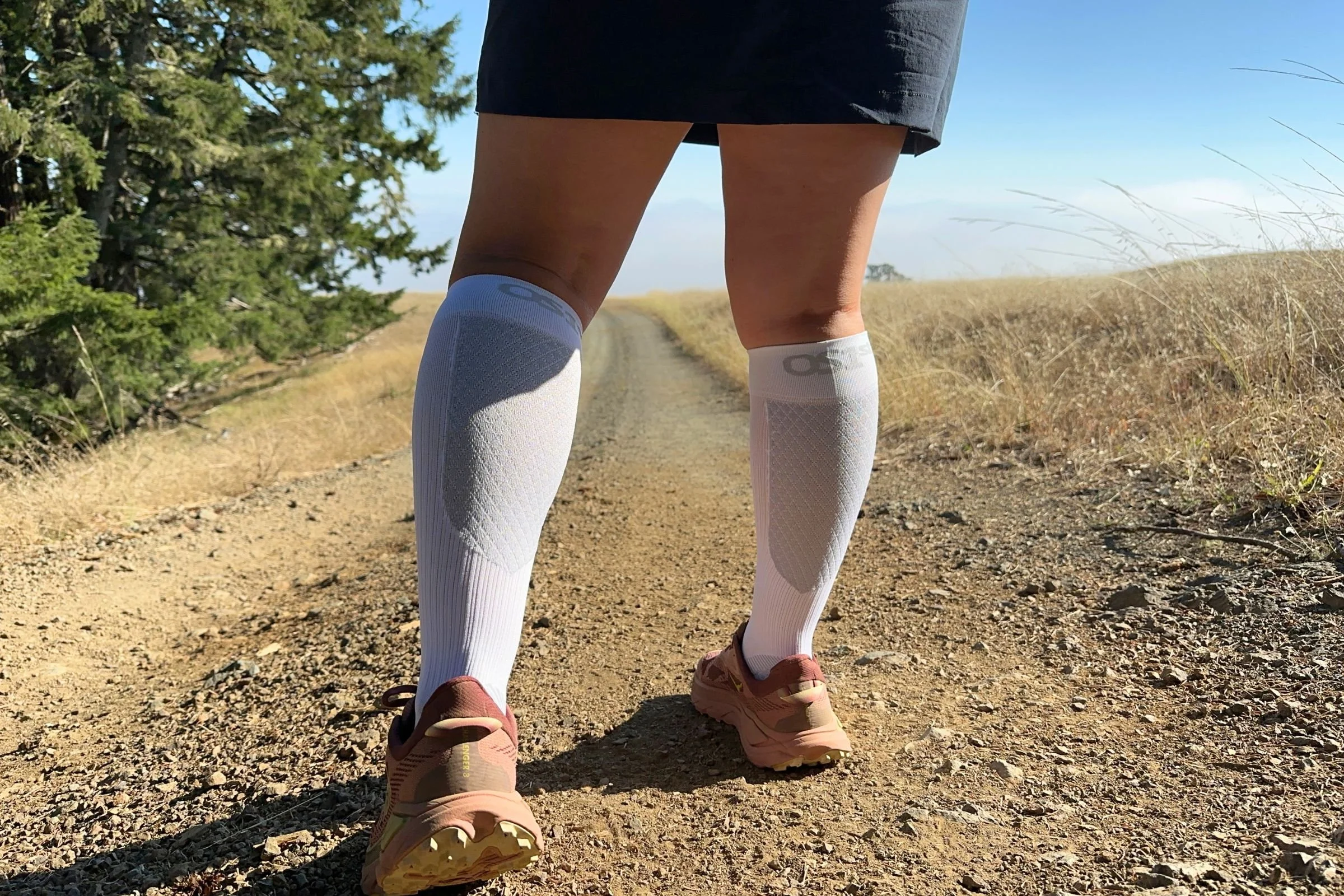
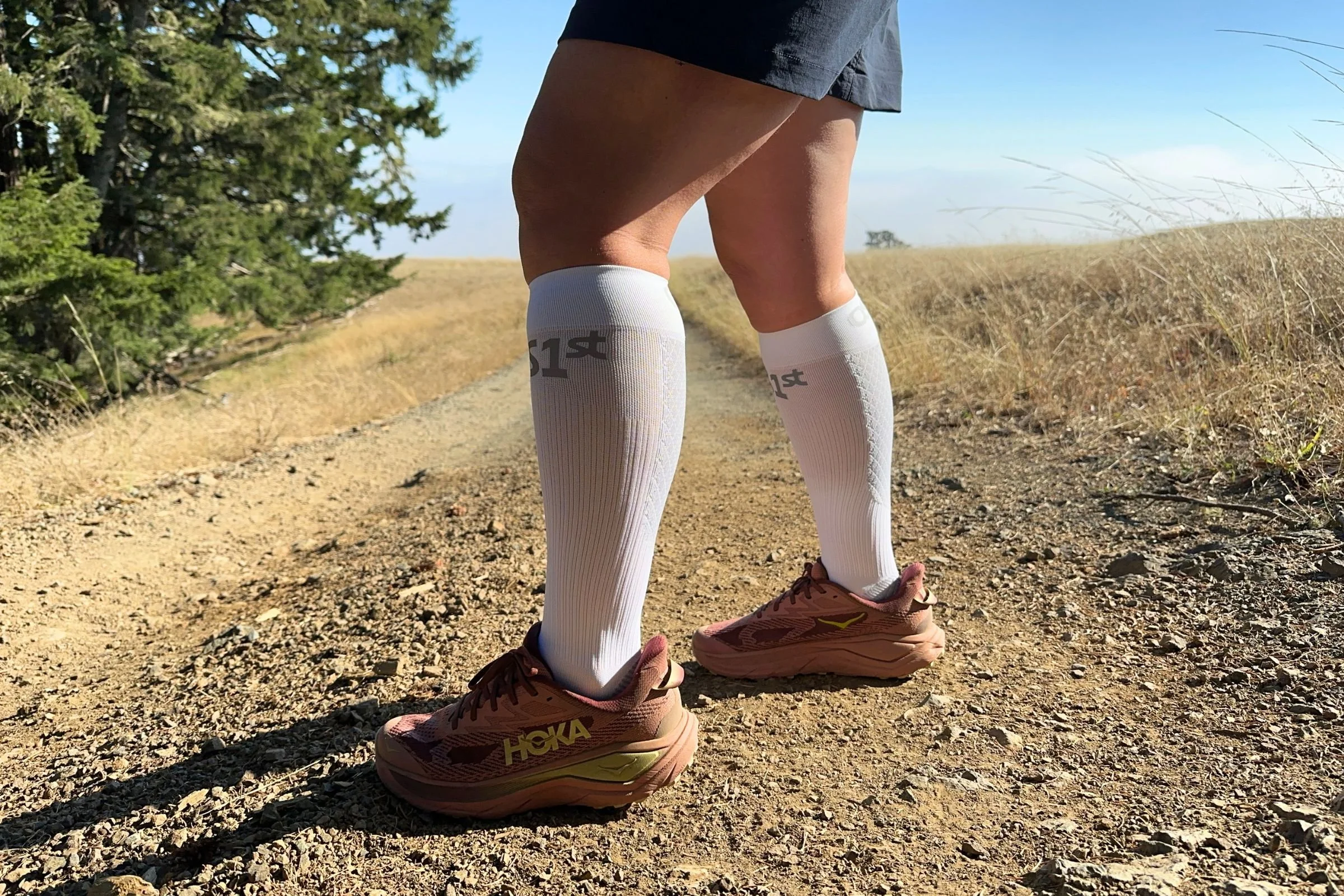
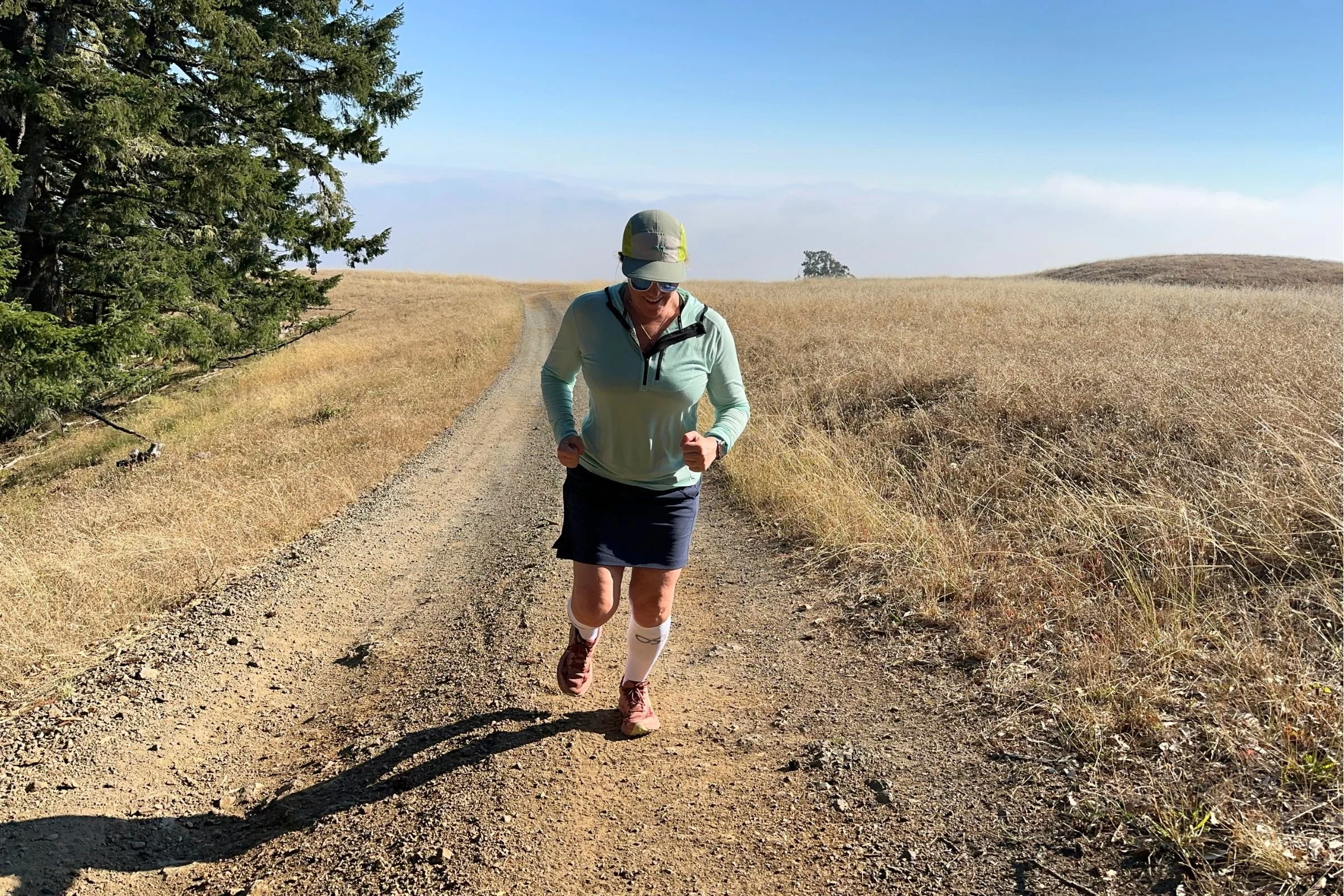
The OS1st Compression Bracing Socks were among the most compressive of all the socks we tested. They felt the tightest on our feet and calves for our main tester. They would be great for anyone who is looking for maximum compression on runs or those who have calves that are on the smaller end of the size charts compared to their foot size.
However, we had a hard time wearing these for extended periods of time because they were so tight. We did wear them on some longer runs and hikes, as they are made with thicker materials which are abrasion resistant—especially good on trails. We also really liked the sock portion’s medium cushion underfoot and found the socks themselves to be comfortable and moisture wicking when it was really hot outside.
OS1st Compression Bracing Socks
MSRP: $35
Compression level: Light, 15-20 mmHg
Graduated compression: Yes
Height: OTC
Fabric: 77% nylon, 15% polyester, 8% lycra
Cushioning: Ultralight
Size range: XS-XL; women’s 5 to men’s 13.5+ shoe
Men's/women's or unisex: Men’s/women’s
Machine washable: Yes
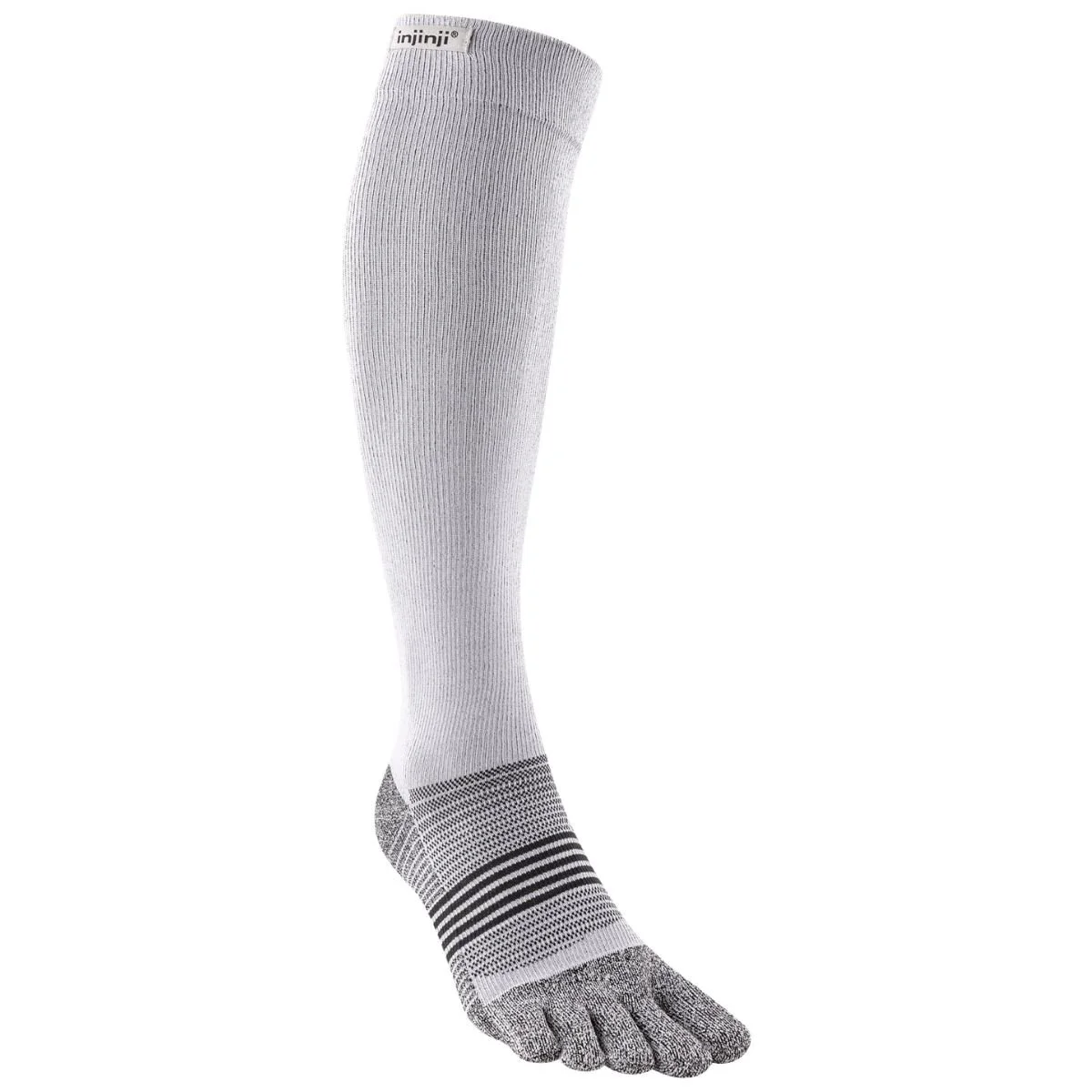
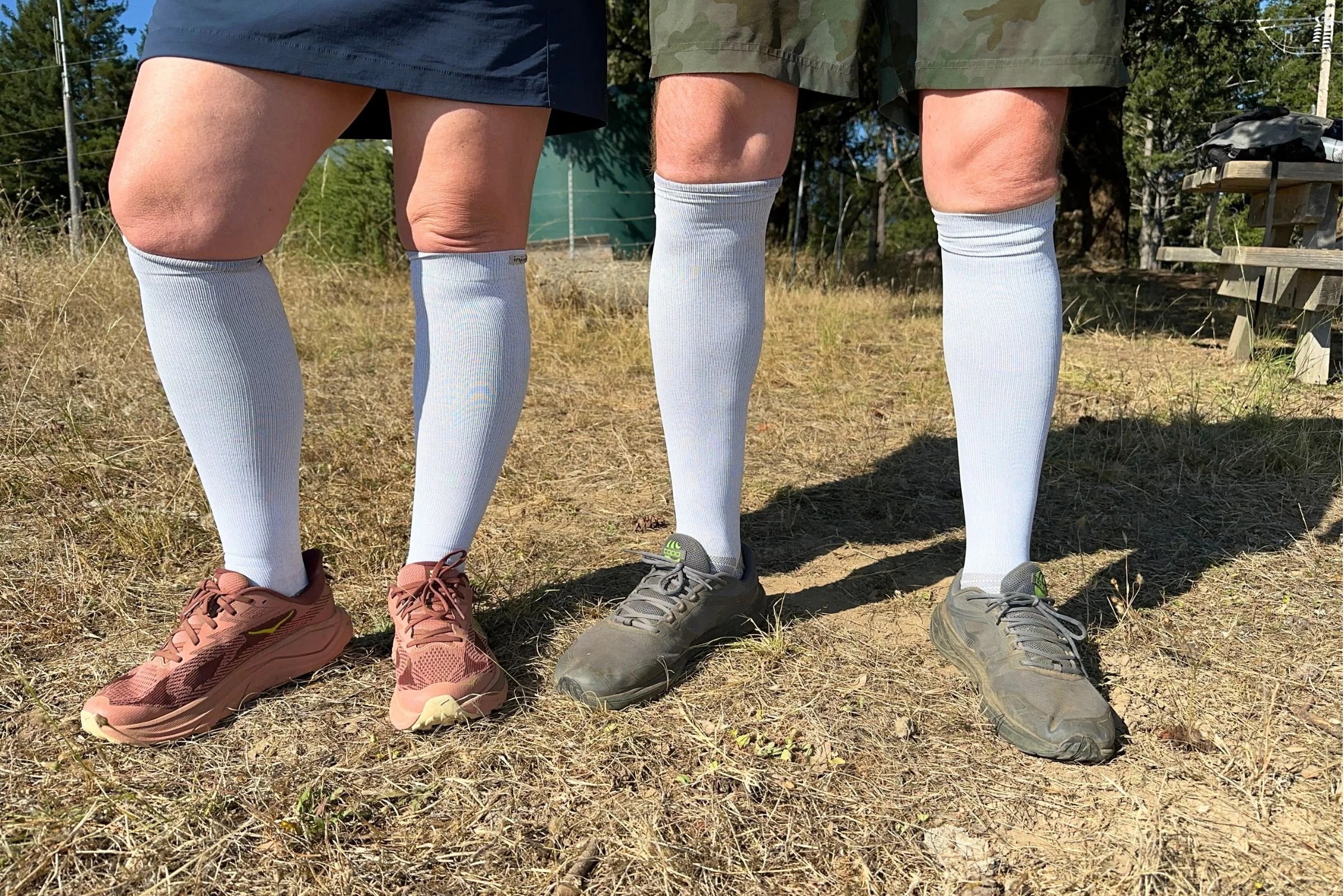
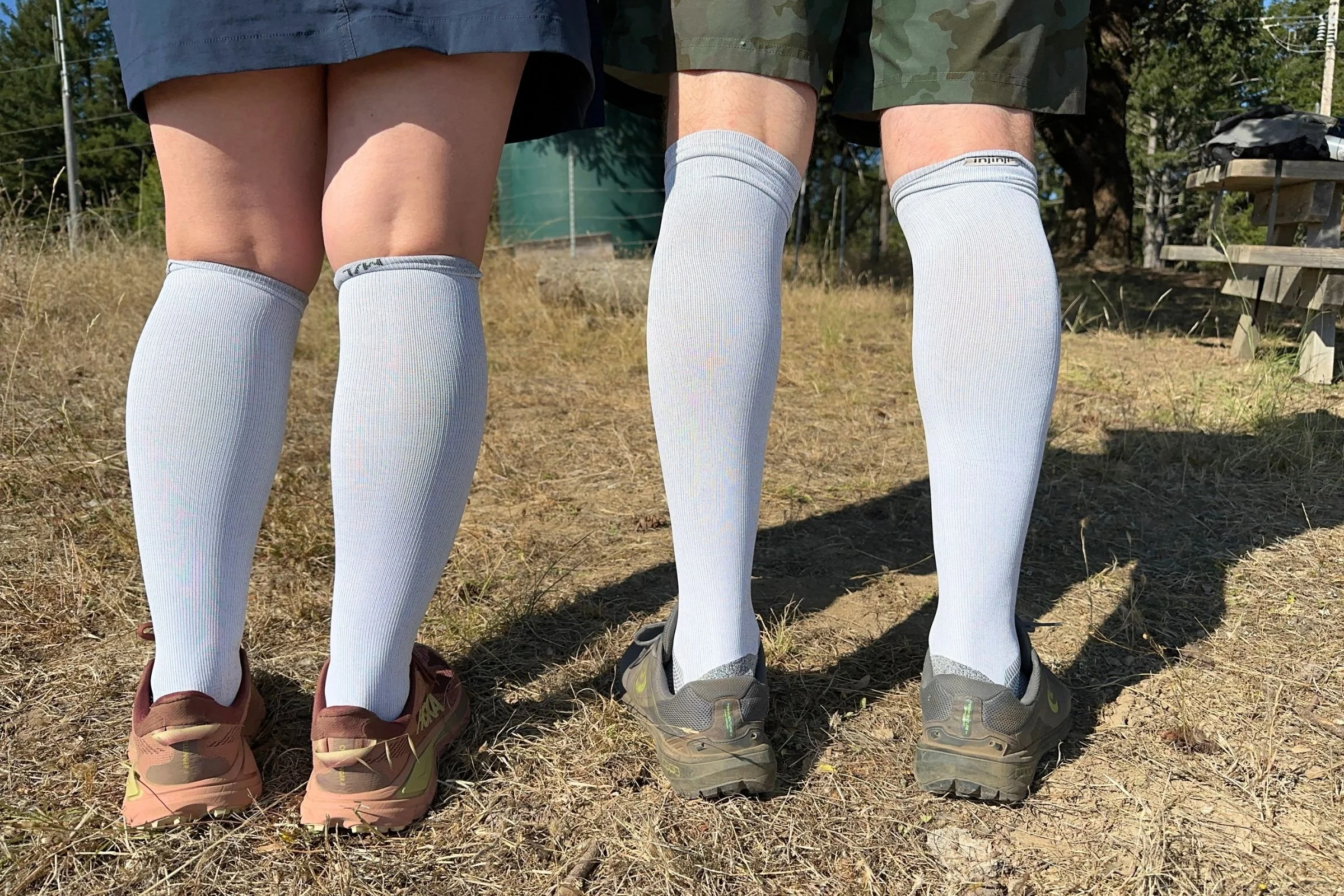
The Injinji Compression Over the Calf Socks were the only socks we tested with individual toes. If you are used to wearing toe socks and prefer that type of sock when running, these would be the option for you. Many runners like to use toe socks for running to prevent blisters or for running with sandals.
They are a no-frills compression toe sock, and there is no additional cushioning or paneling in the sock. We also found the top band on this sock to be very tight at the top of the sock compared to other models we tested, which is why it was not a winner.
Injinji Compression Over the Calf Socks
Men's
Women's
What to look for in running compression socks
Compression level and mmHg
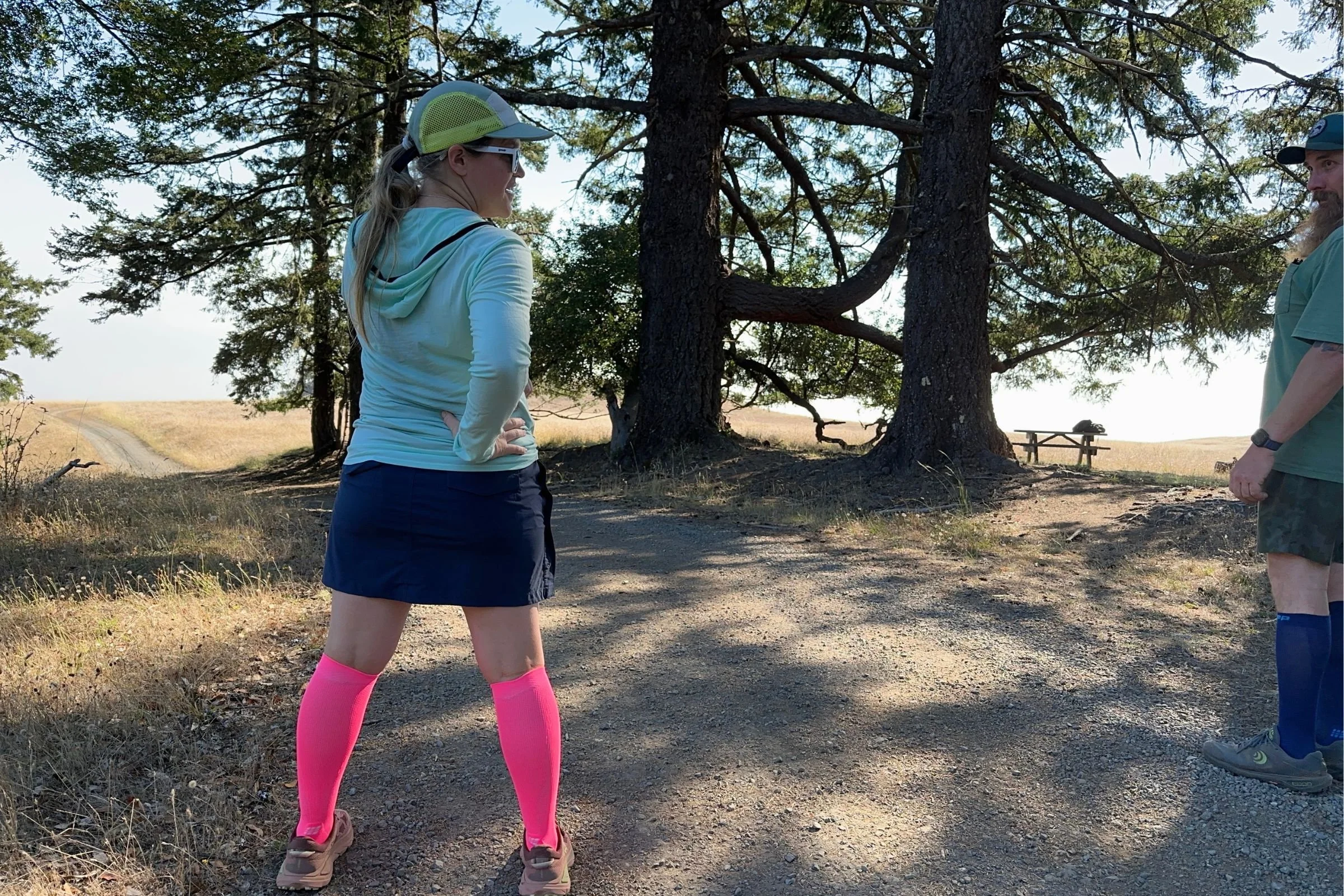
Depending on the use case for your compression socks, you may want something that provides more or less compression. Some socks have verified ratings, measured in mmHg or millimeters of mercury which is related to how blood pressure is measured. The higher the number, the greater the level of compression.
Most of the socks we tested for this story that had measurement ratings were between 10-30 mmHg, and that rating will be dependent on buying the correct size for your calf measurement.
Graduated vs. uniform compression
Graduated compression means that a sock has a compression gradient. With graduated compression, the bottom of the sleeve is going to be tighter than the top of the sleeve. The idea behind graduated compression is that it is assisting with blood flow back to the heart, and in turn helping you to feel more energized. (research on graduated compression) Uniform compression squeezes equally all the way up the calf without gradually getting looser towards the top. Most of the socks we tested for this story have graduated compression.
Height — ankle, crew, knee-high, or OTC
Compression socks are typically associated with tall over-the-calf (OTC) models that pair a compression sleeve with a sock for an all-in-one product. There are also shorter sock options that can assist with compression on the feet, or be paired with a compression sleeve of a different size.
We tested both OTC and ankle-length socks for this story. The ankle-length socks can assist with foot swelling on runs and may also help with pain associated with plantar fasciitis. (Review of plantar fasciitis management) Our favorite use for ankle compression socks is to pair them up with a compression sleeve, especially for those having a hard time finding OTC socks that may fit both your feet and calves sizes, respectively.
Fabric and breathability
The socks we tested for this story ranged in fabric feel and breathability. The more breathable materials, like the CEP Core Run Ultralight Light Cushion Socks are desired for hot days and high effort activities, while some of the thicker materials, the Zensah Tech+ Graduated Compression, feel more substantial and provide more warmth on cold days and might be more enjoyable to wear for recovery days or for skiing and snowboarding.
Depending on your personal preferences and heat tolerance, there will be some trade-off for breathability and level of compression desired.
Cushioning
The main difference between compression socks and compression calf sleeves is that you get to choose your cushion level along with your compression level. The compression socks we looked at for this story all have different levels of cushion available, from ultralight to maximum cushioning, depending on your personal preferences.
Calf sizing and fit
Your calf size might be different from your pant size. It is not the same measurement. To get your calf sizing, you will need to get a soft tape measure or string. Measure your calf at the widest point. We recommend doing this both flexed and relaxed and use the larger number. If you are on the cusp of two sizes, follow the manufacturer recommendations for sizing.
Typically, sizing up provides a more relaxed fit, which is best for recovery or travel days, and sizing down will provide a more compressive fit for hard or long run days. With OTC compression socks, sometimes your calf size isn’t a perfect fit based on your sock/shoe size, so you may want to size up or down if you are on the cusp to get a better fit.
Durability after washing
Socks should not lose durability after washing. We recommend using a lingerie or mesh bag to protect socks in the washing machine and line drying as much as possible. Even the thickest socks we tested dried out overnight and were ready for another day of wear.
We personally have socks that we have been using for a few years with proper care, and there is minimal loss in compression over that period of time. The part that will typically wear out first is the sock part: we have found that the foot sock will wear out and get holes before the compressive sleeve wears out.
Benefits of running compression socks
Reduced leg fatigue
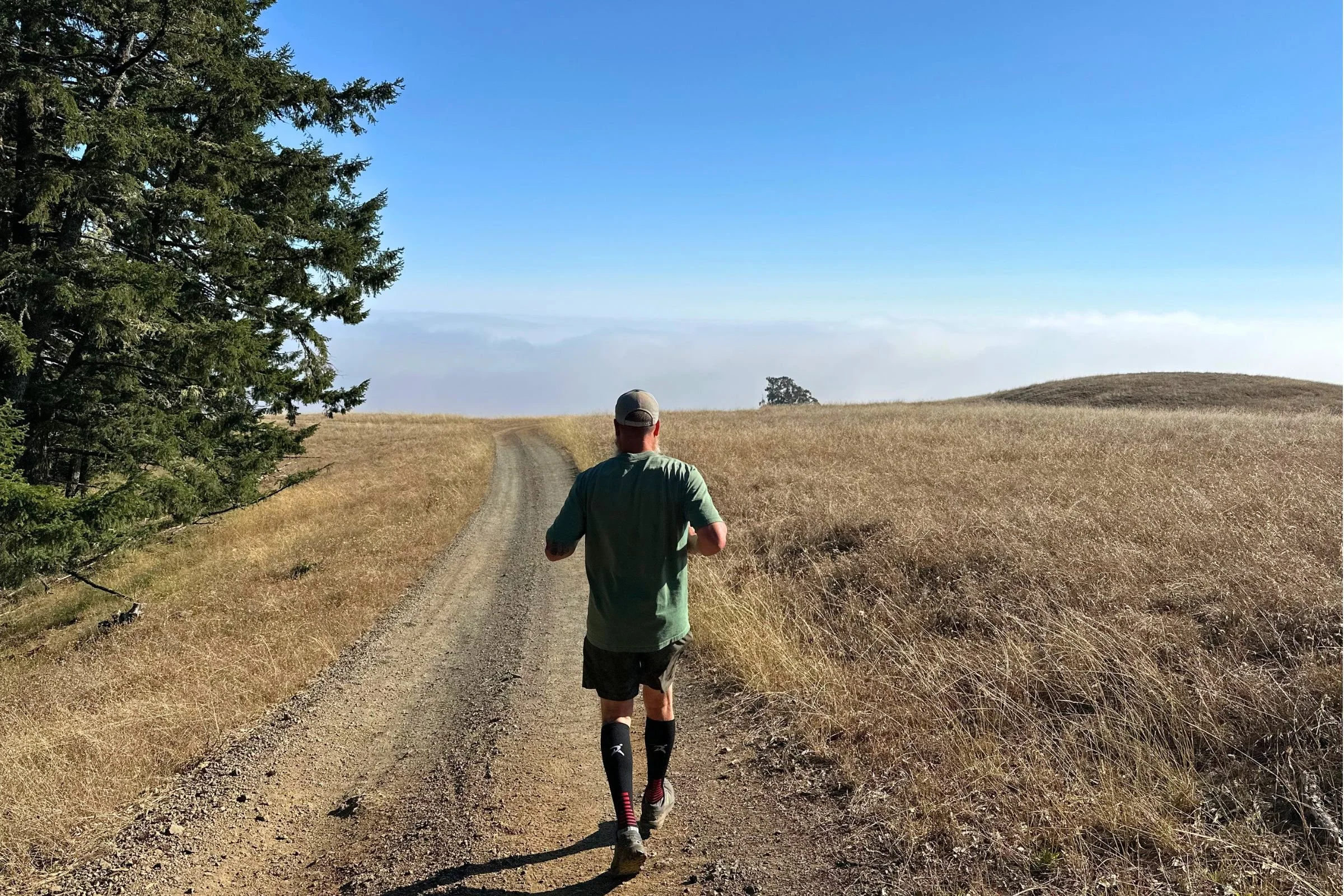
There is scientific evidence that supports calf compression socks reducing calf fatigue on runs, though only slightly. The compression socks add graduated pressure to help improve running economy and biomechanical variables to help reduce muscle pain and inflammation. They also help reduce lactic acid build up in your muscles, which can cause soreness.
Shin and lower leg support
Shin splints are pain along the shin bone caused by stress or micro tears to the connective tissues surrounding the tibia. There is no clinical evidence that compression socks help or treat shin splints in any way, but there is a lot of anecdotal evidence that says it can help.
In our personal experience and testing (running the same route that caused shin splints with and without compression socks over a period of years), compression socks reduce the occurrence of shin splints. Many users report similar findings. (Review of compression sportswear)
Post-run recovery
There is conflicting research on compression benefits for recovery. Some studies say it helps and others say that rest is more important (study of recovery after marathon running). Compression socks may help with the recovery process and jumpstart the blood flow from your calves back to your heart with graduated compression. In our testing for this guide, we felt better when we wore the sleeves in recovery periods than when we didn’t.
Circulation during extended effort
Many runners find that wearing sleeves helps to reduce the bouncing in the muscles on long runs, especially with changes in elevation. We have found that our calves are working overtime on steep ascents and love the shin support on long descents. Wearing a compressive sock or sleeve helps to steady the lower leg and prevent vibrations that may cause discomfort.
Cold and weather protection
By nature of being a taller sock, over-the-calf compression socks do provide a layer of protection from dirt/dust or weather. An advantage of wearing thicker compression socks in winter is they can be a nice extra warm layer. Most of the socks we tested for this story are breathable instead of insulating, but when worn under pants they do help to keep the calves warmer.
Types of running compression socks explained
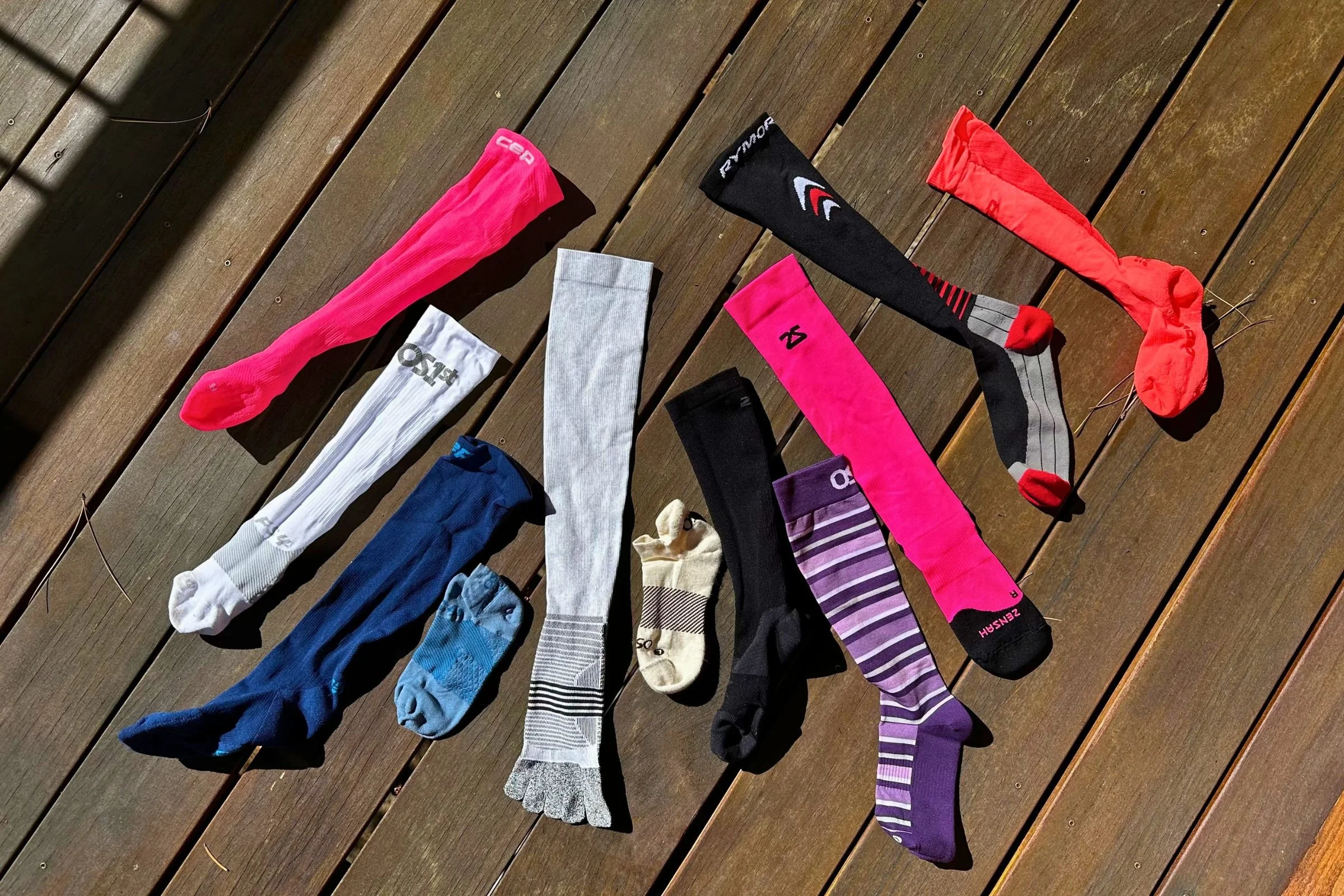
Ankle socks provide compression to the feet and ankles instead of the whole lower leg and calf. Shorter socks can assist with foot swelling especially on longer runs by providing compression to the feet specifically. Ankle compression socks may also help with symptoms of plantar fasciitis by providing compression to the feet and providing comfort. We like ankle socks specifically since we can pair them up with a compression sleeve to get a perfect fit.
Over-the-calf (OTC) compression socks are the tall models that we tested—most models tested for this story. These tall compression socks provide a single garment that goes from the tips of your toes to the top of your calf creating a nice tube of compression with no gaps. The benefits of a tall sock are that there is less opportunity for irritation with layering or gaps between socks and sleeves. Occasionally with a sock and sleeve combination, you may have overlap, which can cause blisters on long runs. A long OTC sock will prevent this from happening.
Compression sleeves are still a nice option especially for those who are having difficulty finding a sock that fits a specific foot and calf size.
Choosing running compression socks by use case
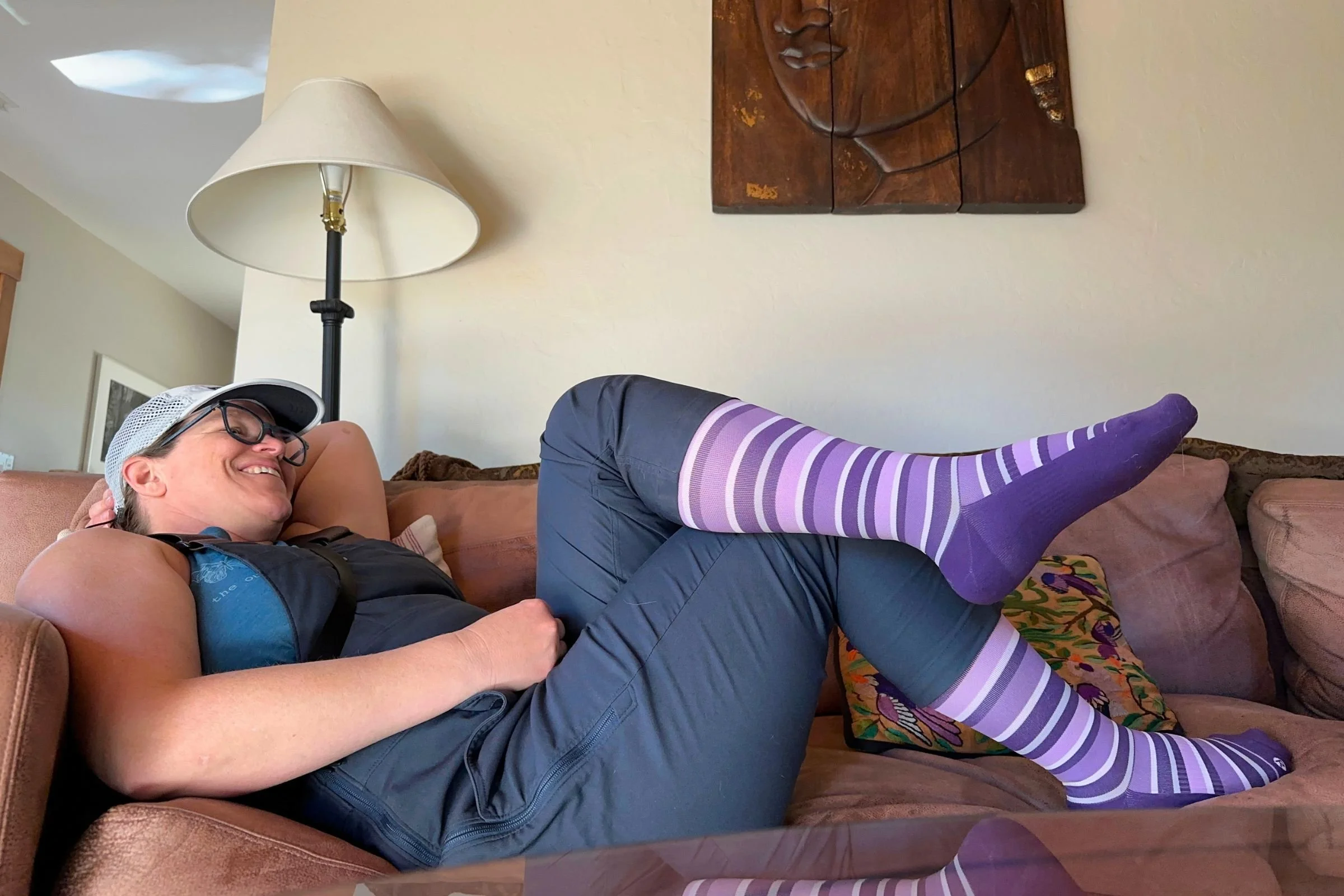
Road running
Road running can be harder on your body than trail running because you’re pounding on a harder surface, so many runners like to wear a more compressive sock when running on the road versus a trail. You can also choose a thinner, more delicate fabric for road running that breathes well since you are less likely to encounter terrain with spiky bushes that can snag delicate fabrics.
All of the socks we tested would work great for running on the road.
Trail running
Trail running has some different obstacles than running on the road, so we would recommend wearing some of the more durable options for trail running where your socks/sleeves are likely to encounter brush, and lots of rocks and dirt. The Zensah and OS1st socks were among the most durable socks we tested.
Looking for trail running shoes? Check out our Best Women’s Trail Running Shoes and Best Men’s Trail Running Shoes guides.
Long-distance running and ultramarathons
For long-distance running, we recommend a sock like the CEP socks that is going to remain comfortable during your whole run. The last thing you want to be worried about is chafing from your socks or sleeves when you are hours into a training run or ultra race. Both of the CEP socks were among the most comfortable for all day wear while still providing a compressive feel.
However, what is most comfortable for long distance also depends on where you are running and what the weather is like. You may want something more robust for the trails or something lighter if it is really warm outside. As long as the socks you are wearing are comfortable, they should be suitable for a long distance effort.
Recovery
For recovery, we really like socks that focus on comfort and that we can forget we are wearing. The OS1st Wellness Compression Socks, our recovery winner, are the most comfortable socks we tested. They have a soft feel and provide enough compression to help with recovery without feeling tight or restrictive. We would avoid wearing the most compressive socks for recovery as they end up feeling the least comfortable for long-term wear. We would also choose an OTC sock for recovery over a shorter ankle sock.
Shin splint management
If you are looking for a sock to help with shin splint management, you want to look for a sock that has detailing on the shin specifically. Not all of the OTC socks we tested had shin-specific support. The 2XU Vectr socks have a chevron-pattern support at the shin. If shin support is important to you, those are a great model to consider. For shin splints it would be important to use an OTC sock that covers the full shin.
Warm or cold weather
We tested socks with varying degrees of breathability and thickness for this story. In general, the thinner (and thus more breathable) socks are going to be best for warmer weather, like either of the CEP models. The thicker socks, especially any of the OS1st and Injinji socks, are better for cooler weather runs. You can always wear a thinner sock in winter with running pants over them, but some of the thicker socks would provide extra warmth.
Hiking, cycling, and other non-running activities
You can also wear compression socks for hiking and cycling. If that is the case, consider the more durable and robust options for these use cases. For cycling, the chain can get caught on the sock and create snags. For hiking, rocks and sticks can also create snags. Consider how much time you plan to spend taking breaks on the ground and how much abrasion you might encounter with your socks on. More durable choices would be good for these use cases.
Check out our favorite non-compression hiking socks in our Best Hiking Socks guide.
Care and maintenance
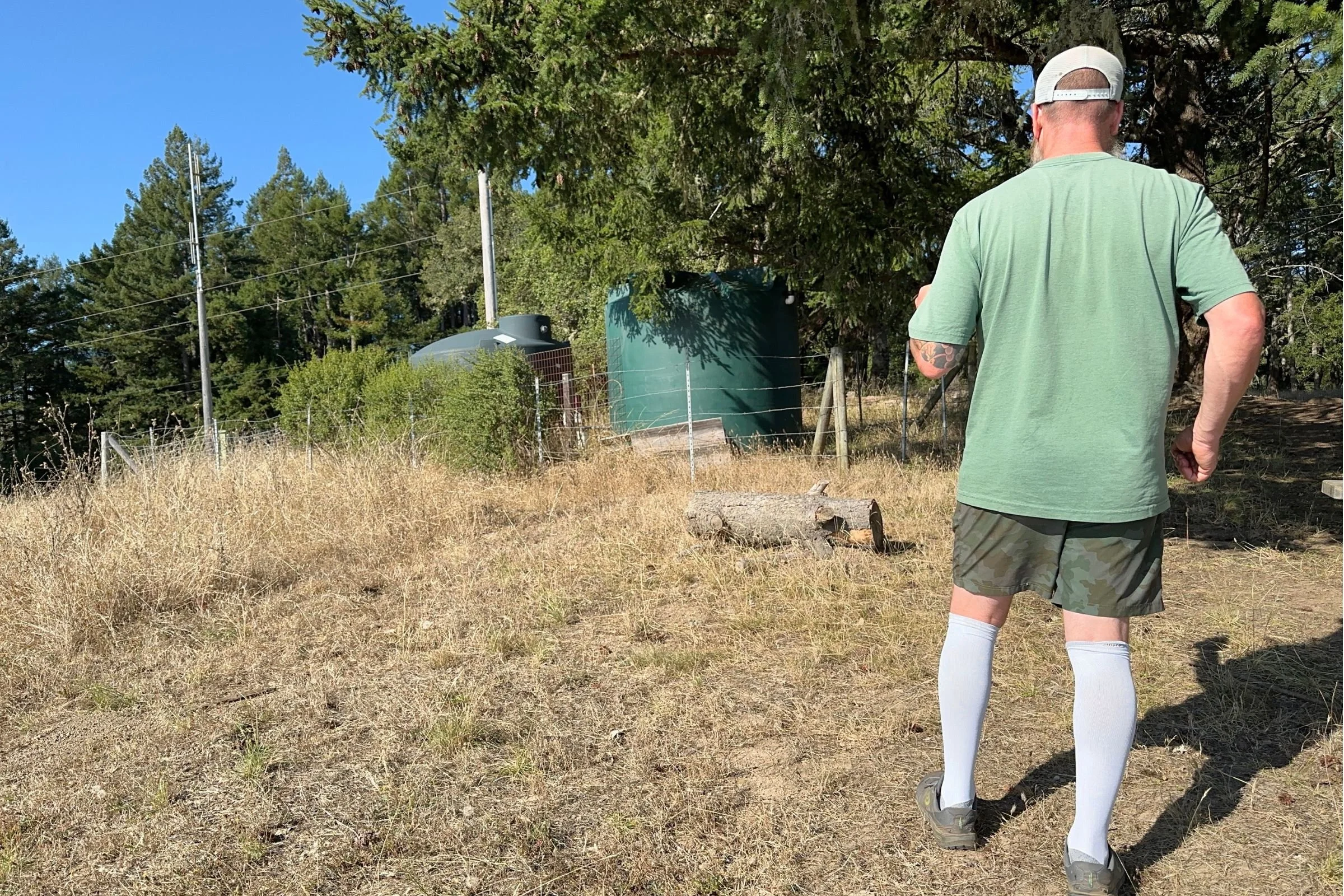
Use cold water, gentle cycle or hand wash; hang to dry. We like to use a mesh lingerie bag in the washer to protect the socks from damage in the washer. The socks we tested are all made of quick-drying materials and dried out overnight after washing.
Don’t use fabric softener—it degrades elasticity.
Replace when compression feels loose or the sock slides during activity. In our experience the foot portion wore out before the compression in the calf portion. We recommend replacing yours when the socks start to get holes from repeated wear.
Clean after wearing. Salt from sweat and oils from sunscreen or lotions can degrade materials, especially when left on the fabric long term.
Avoid storing in extreme heat, like your car in the middle of summer, as that can degrade the stretchy fabrics quickly.
FAQ
-
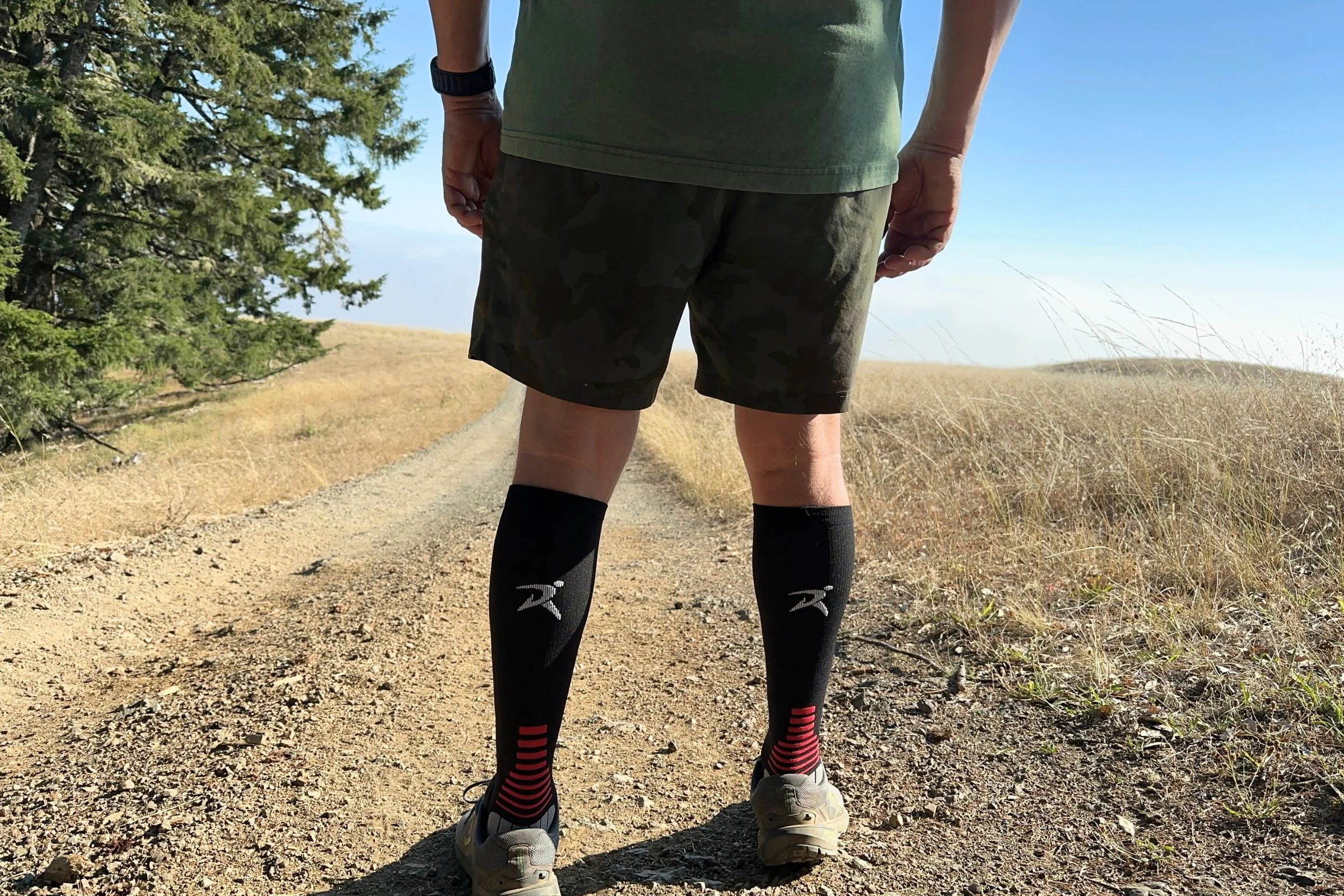
Compression socks are not a magic cure-all, and the best way to get better at running is by running more often for longer periods of time. Compression socks may help with reducing fatigue and swelling, and encouraging blood flow—so that running feels more comfortable for a longer period of time. They are a running accessory that may help with recovery so that you can get back outside and run again sooner.
-
That depends—for harder efforts many people prefer higher levels of compression. For longer runs that may still be very difficult, a lighter level of compression might be desired for comfort over the course of the long run. You may want varying degrees of compression depending on your activity and duration and goals for your run. We prefer lighter compression socks for long, hard runs since they are more comfortable to wear for many hours. We like wearing firm compression for sprint workouts and hill days, especially on trail where there are a lot of unpredictable foot strikes and bouncing.
-
You can do either or both. We have found that wearing socks during a run reduces leg fatigue and helps combat shin splints, especially on road runs with lots of downhill. Wearing socks after your run may help with delayed onset muscle soreness (DOMS) and helps with blood flow to the heart.
-
Anecdotally yes, however research is mixed. Many runners, including our own testers, find that compression socks help with shin splints. However, calf compression socks are not a medical fix—if you are experiencing shin pain, it’s best to consult with a medical professional.
-
Running compression socks should never be so tight that you are losing circulation or causing pain. Most people describe the compression as a hug, for some workouts you may want a light hug and others you may want a firm hug. The compression should be tight enough even at light compression to feel that it is there but not impede your ability to move freely.
-
Compression socks generally aren’t needed while you sleep unless your doctor recommends overnight use. Most of the manufacturers recommend against sleeping in these compression socks because you are unable to be aware of issues with swelling or twisting of the sock if you are sleeping. If you are interested in wearing your compression socks for overnight rest, you can ask your doctor about which level of compression would be right for you. There are some medical use cases where 24-hour use is recommended, and those socks are typically a little different than the ones we tested for this story.
-
Compression sleeves are not sized by just measuring your calf, compression socks are a delicate balance of calf measurement and foot measurement. What happens if your foot and calf aren’t in the same category of sizing? Depending on your shoe size, you can sometimes wear a sock that is a little looser or tighter on the calf. Not everyone is going to fit into a perfect sock sleeve combination, and sometimes compression calf sleeves are a better choice.
-
This depends on how well you care for them and whether you are wearing them just for running or for recovery or other daily activities. In our testing we found that compression socks last as long as any typical technical synthetic running sock. The foot portion wore out before the compressive sleeve.
-
Absolutely, you can wear compression socks on a trail run just like you would for a road run. We like to wear some of the more robust sock models for trail running, especially when we are traveling to trails that are not maintained as well, because we don’t want to snag our socks on a branch. For well maintained trails, this isn’t as much of an issue.
How we researched and tested
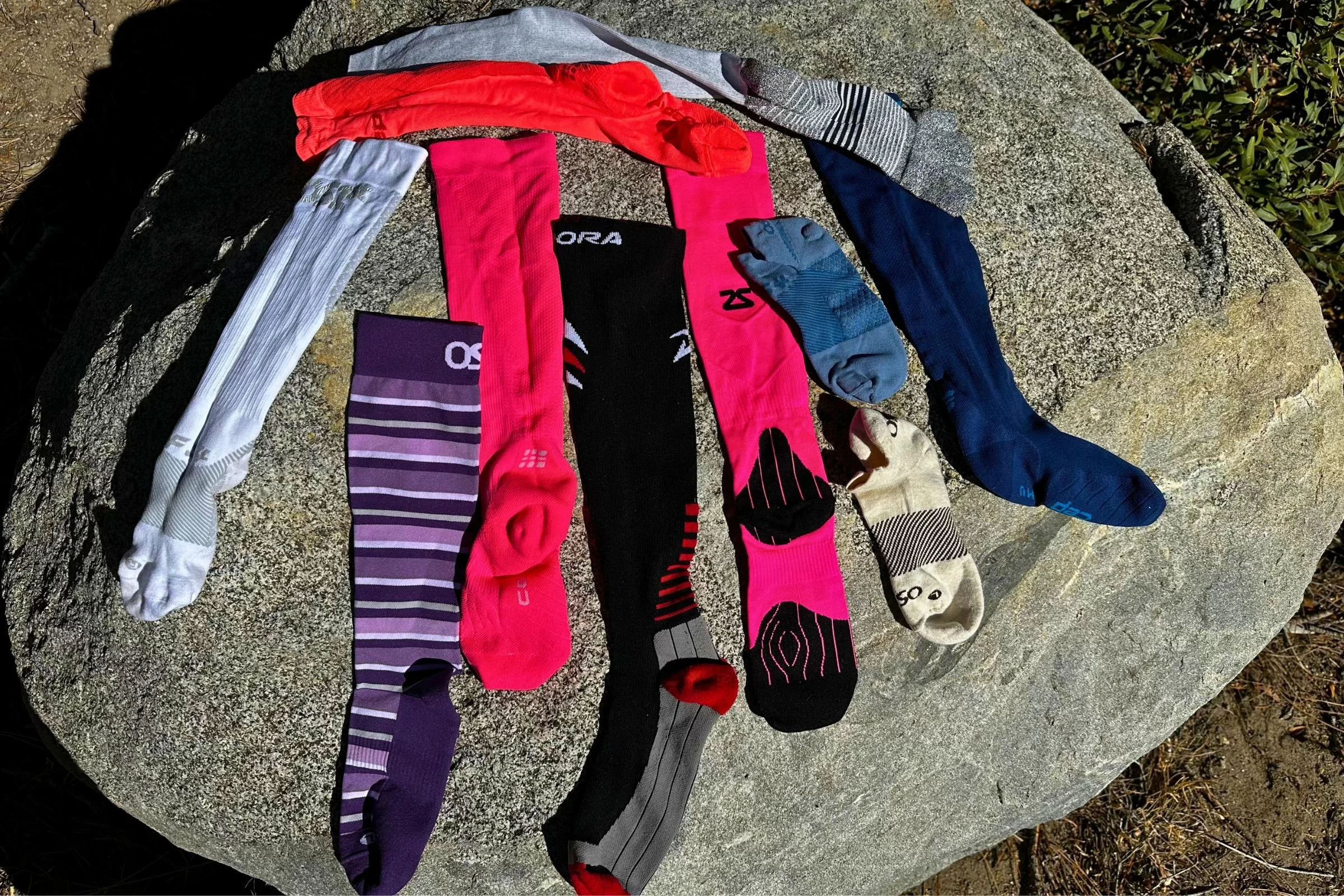
We tested all the running compression socks in this guide side by side. We had two testers on the West Coast, including runners of different sizes, shapes, genders, and types of running. Our testers used socks on trails, roads, and during runs with varying levels of distance and efforts, all the way up to a marathon.
We ran a sample test with each pair of socks, repeating the same hill climb to see how they performed doing the exact same course. We ran a two-mile hill repeat—one mile up and one back down—so we got a fair test side by side in similar conditions. We did not do this run on rainy or extreme weather days—rather, we made sure to do this during fair weather conditions so it was as unbiased as possible. We only did one test per day so there was less bias of being tired from the first effort on the second test.
Every pair of socks we tested was worn for a full day to see how they performed and held up after a long day of wear. In addition to wearing each pair for a whole day, each pair was worn on multiple runs and washed multiple times for durability testing. Some of the socks were worn for long days of travel, including in the car and on airplanes and trains.
Our testers followed each manufacturer's recommendations on sizing based on shoe size and calf circumference. If our testers were between sizes, we sized up or down to the size that most appropriately fit both our feet and calves. Most of the time we were able to find a sock that was the correct size for us to test and went off of our foot size, making the calf portion a little looser or tighter while still being within the recommended size range.
To test durability after washing, we machine washed and line-dried all the socks using a mesh lingerie bag in the washer to protect the delicate socks from other items in the washer. We washed all the socks in the washing machine on a gentle cold cycle and line dried them in the shade.
Some of the winners were close, and to make final determinations we wore one sock on each foot so we could compare them side by side during runs and recovery.
Why you should trust us / About the author
I have run two of the world marathon majors and hope to run the rest at some point. I have also run countless road and trail races, occasionally even getting age group awards) the half marathon is my favorite distance). I am a regular at my local running club and love finding new trails to explore.
I have been wearing compression sleeves and socks during my runs and races for the last 15 years. I first discovered compression sleeves after running a marathon that had a steep uphill followed by a long steep downhill, and had horrible calf and shin pain the week after. A friend told me about compression sleeves and I started wearing them for running and recovery, and haven’t looked back since. Once I discovered sleeves, socks were not far behind, and I loved that they frequently came in bright vibrant colors to match my running kits.
I have always been an avid outdoorswoman and I hiked the PCT twice with compression sleeves in my pack both times for recovery overnight. In testing compression socks for Treeline Review, I used my previous experiences with compression sleeves and socks and created a standard test for each sock so my reviews would be fair. I often carry compression sleeves and socks when I travel and use them regularly for adventures and find they help with soreness and general fatigue. I also just really love the fun colors.
Find more of Sara Kruglinski’s work on her Treeline Review author page.