Altra Olympus 7 Trail Running Shoe Review: Better for Running, Best for Long Hikes
Zero-drop trail running shoes that deliver long-distance comfort and efficiency on the trail
October 16th, 2026
Home > Gear Reviews > Footwear
Our verdict
The Altra Olympus 7 is the most cushioned zero-drop trail running shoe on the market. It has a zero-drop platform, a roomy toe box that lets your feet splay naturally, and gives maximum comfort underfoot on rough terrain. Although marketed as a trail running shoe, the Olympus excels at hiking and backpacking. The newest Olympus model runs better than previous versions, but we still think it shines most on long hikes.
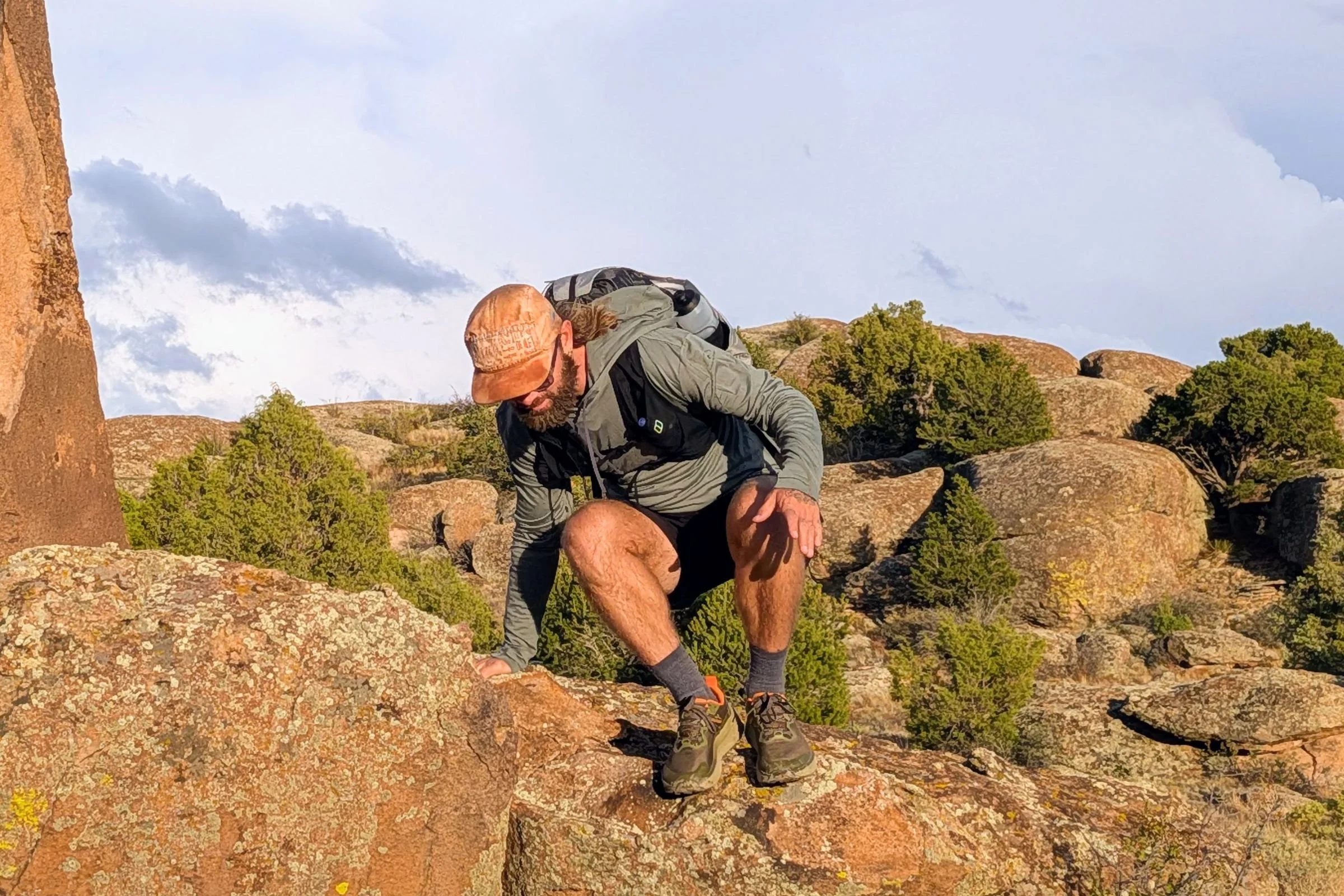
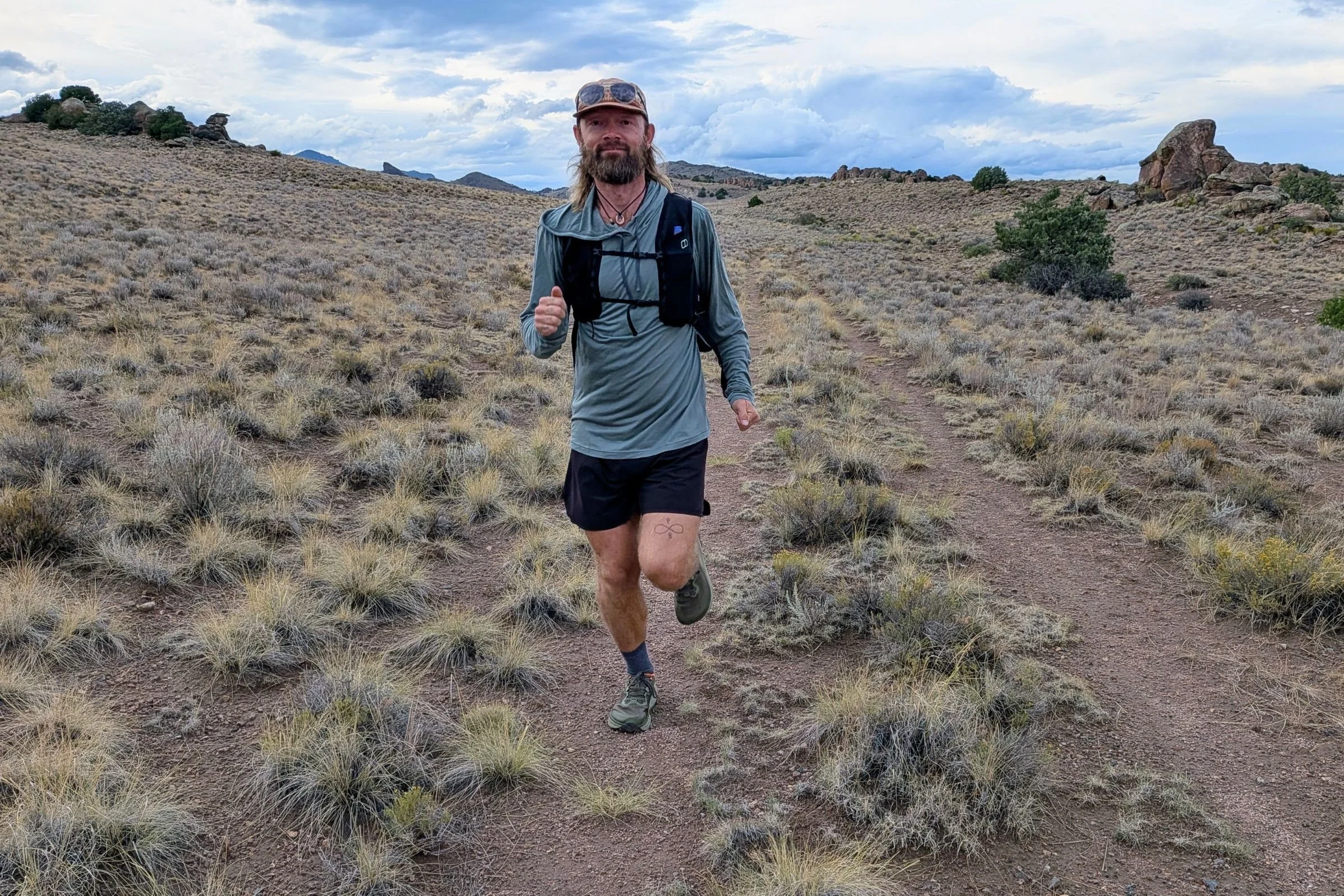
We tested the Olympus 7 during summer in Colorado and early fall in Utah and Arizona. We wore them while backpacking in Coyote Gulch, trail running in Colorado’s Sawatch Range and along the Colorado Trail, and day hiking and running in remote desert canyons. We also wore them for some road running, including a road running race. While they aren’t an ideal road-running shoe, they’re lighter and nimbler than the previous version of the Olympus, which makes them better for running in general, including on roads.
For this review, we tested the newest version of the Olympus, the Olympus 7. We didn’t love how the Olympus 6 felt while running. It felt clunky, and the fit was a little too sloppy. The Olympus 7 feels slightly narrower through the heel and midfoot, which locks your foot in place better and makes the shoe better for running. The 7 is about 1 ounce lighter than the Olympus 6, which helps a lot on trail runs. The 7 also has an updated outsole with broader lugs and more rubber coverage, providing better traction on loose terrain.
What separates the Olympus from other trail running shoes is that, unlike many zero-drop shoes that skew towards minimalist, the Olympus offers maximum cushion: 33 mm of stack height in the heel and forefoot. Most max-cushion trail running shoes have between 4 and 8 mm of drop, but the Olympus 7 has the same amount of cushion in the heel and forefoot.
Altra Olympus 7 Trail Running Shoes
Men's
Women's
While the Olympus 7 is lighter than the previous version, it still weighs 11.45 oz per shoe. That is nearly 2 ounces heavier per shoe than the HOKA Speedgoat 7, which weighs 9.7 oz. So even though the newest Olympus lost some weight, it still doesn’t compare to other max-cushion trail running shoes.
Also, the Olympus 7 costs $195, which is a lot for a trail running shoe. But for the most cushion available in a zero-drop, wide toe box platform, you can’t do better than these. So while that’s a steep price, it’s one of the only shoes we’d consider paying that much for.
If you’re looking for a max-cushion trail running shoe that’s a zero-drop and has a wide toe box for long-distance hiking and marathon days on your feet, you should check out the Olympus 7.
We create reader-supported, objective gear reviews independently selected by our editors. This story may contain affiliate links, which help fund our website. When you click on the links to purchase gear, we may get a commission — without costing you an extra cent. Thank you for supporting our work and mission of outdoor coverage for every body! Learn more.
Altra Olympus 7 Trail Running Shoes Specifications
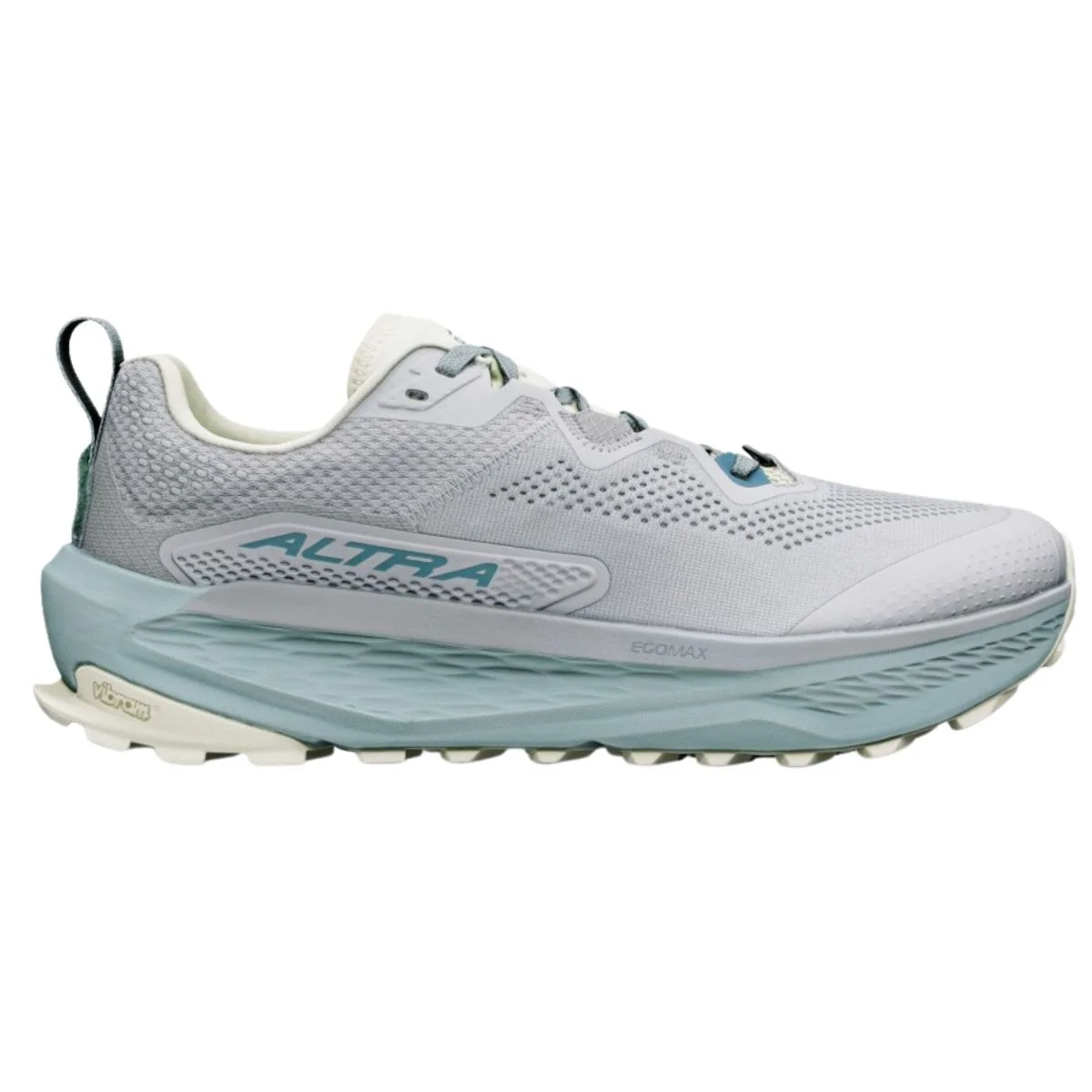
Weight (per shoe): 11.45 oz (men’s), 9.7 oz (women’s)
Heel-to-toe drop: 0 mm
Stack height: 33 mm
Best for: Backpacking, trail running, hiking
Upper: Engineered mesh
Removable insole: Yes
Midsole: Altra EGO MAX
Outsole: Vibram Megagrip
Suitable for vegans: Although the upper is mesh, not leather, Altra does not currently label its shoes vegan.
FootShape fit: Yes
Comparison table
| TRAIL RUNNING SHOE | MSRP | M's Weight | W's Weight | Cushion | Heel Drop | Stack Height | Rock Plate |
|---|---|---|---|---|---|---|---|
| Altra Olympus 7 Men's Women's |
$195 | 11.45 oz | 9.7 oz | Maximum | 0 mm | 33 mm | No |
| Altra Timp 6 Men's Women's |
$165 | 11.5 oz | 9.5 oz | Moderate | 0 mm | 30 mm | No |
| Altra Lone Peak 9+ Men's Women's |
$160 | 11.1 oz | 9.3 oz | Moderate | 0 mm | 25 mm | Yes |
| HOKA Speedgoat 7 Men's Women's |
$165 | 9.7 oz | 8.3 oz | Moderate | 5 mm | 37.3 - 33.3 mm | No |
Who is it for?
Those looking for a max-cushion, zero-drop shoe with a natural foot-shaped fit
Trail runners who want maximum cushioning for long miles
Long-distance backpackers who want a wide toe box with lots of underfoot cushion
Urban hikers or walkers or thru-hikers on routes with a lot of road walking
People who don’t need the lightest and fastest shoes for training
People who walk, hike, run, or work on their feet all day
What we liked
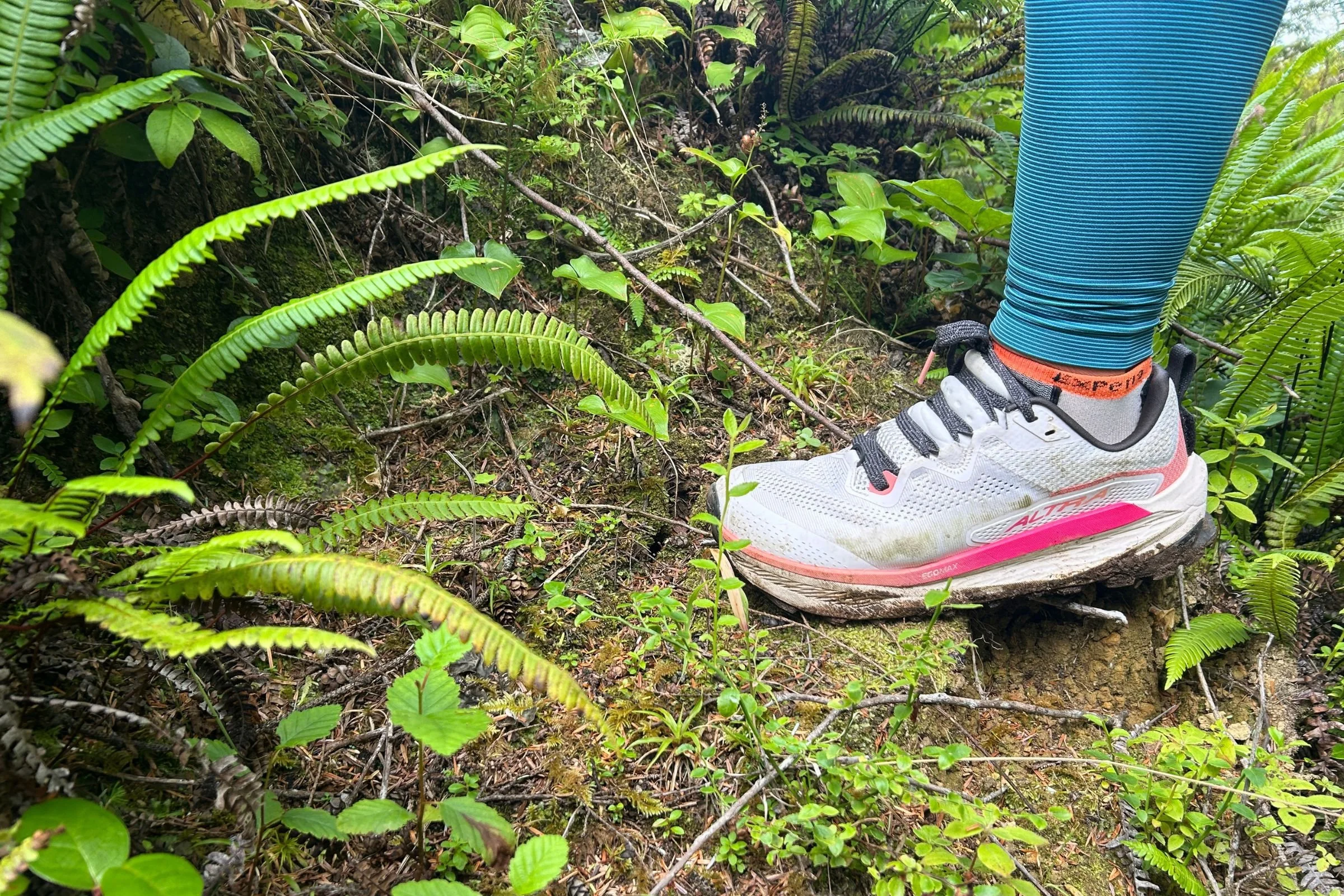
Lots of cushion
Zero-drop design
Wide toe box
Better for running than the Olympus 6
Better traction than the Olympus 6
Comfortable padded tongue
What could be better
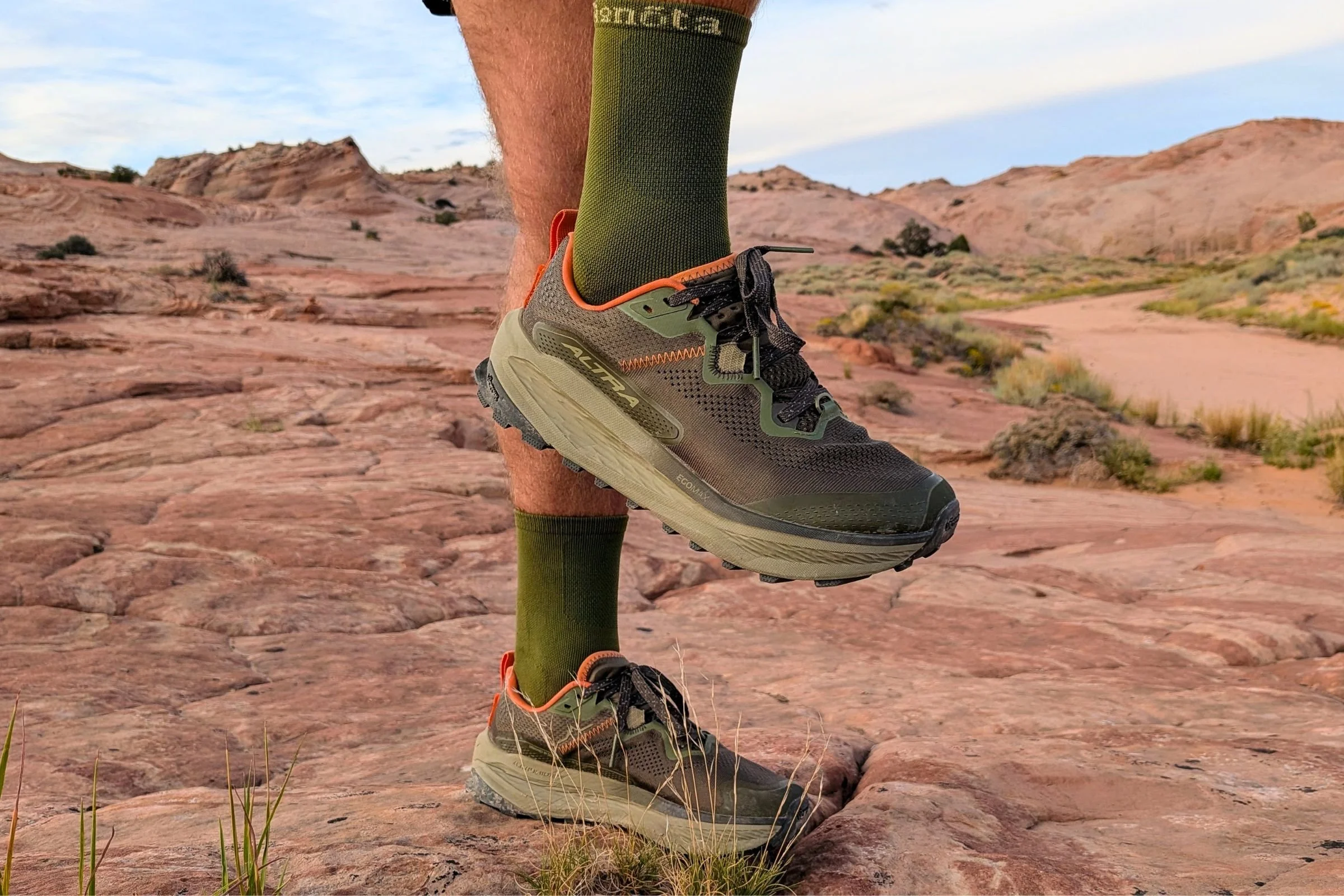
Still heavier than most trail running shoes
Doesn't last as many miles as other shoes
How we tested
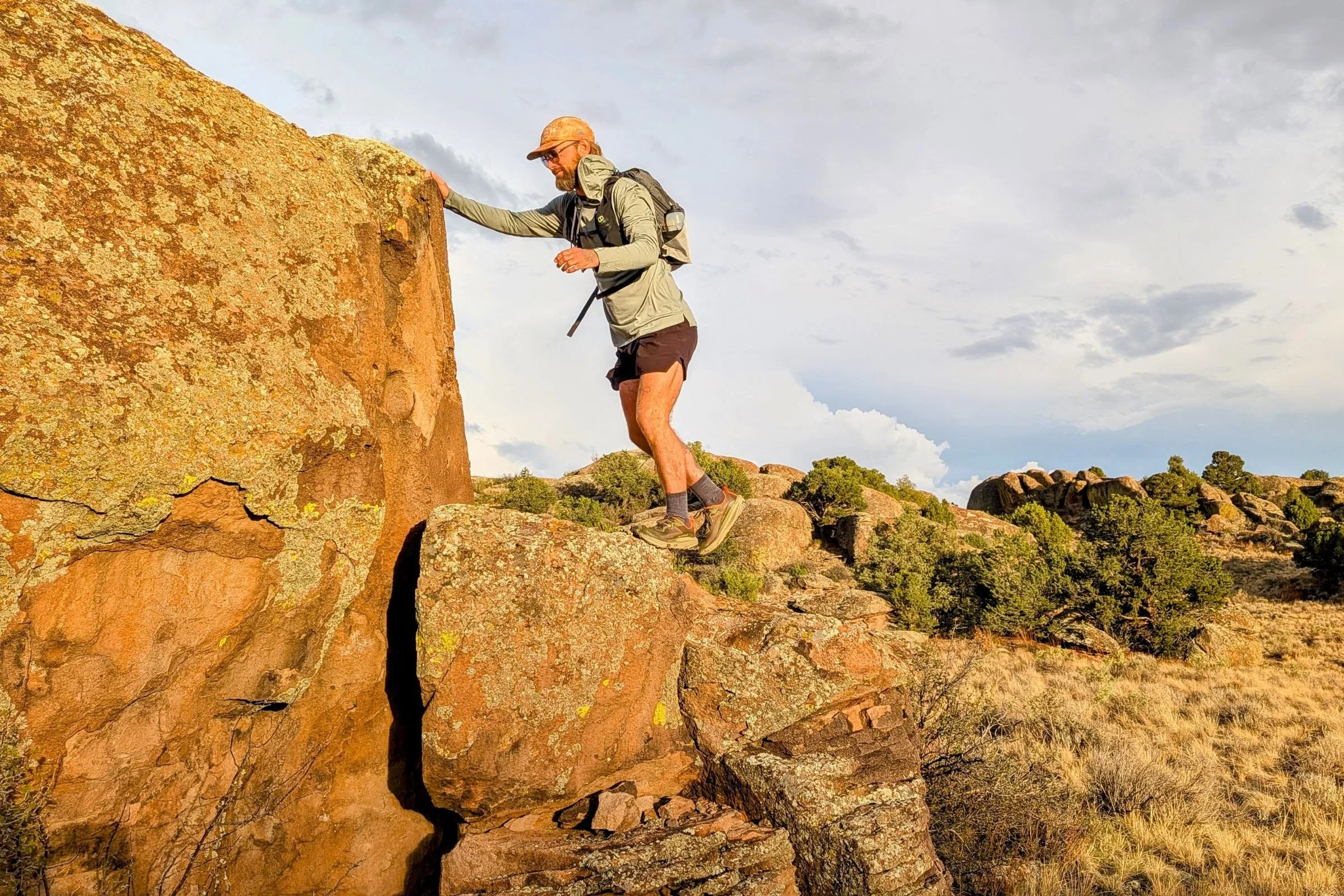
We tested the Olympus 7 in men’s and women’s sizes while running and hiking in Colorado, Utah, Arizona, Washington, Oregon, and California during the summer and fall. We ran trails through sand and slickrock, backpacked in mountains and canyons, climbed up and down muddy coastal bluffs and slippery seaweed-covered boulders, forded tidal rivers, and hiked narrow slot canyons through deep water in these shoes. During test runs, we experienced temperatures ranging from 40 to 100 degrees Fahrenheit. We ran and hiked on dirt, mud, sandstone, sand, and even some pavement.
Sam, our men’s tester, used them for backpacking in Grand Staircase Escalante, where you regularly hike in and out of a flowing desert creek. Because of recent rains, he often found himself moving through quicksand and had to stay nimble on his feet. His shoes stayed wet the entire trip, but the Vibram Megagrip outsole and 5 mm lugged tread provided plenty of traction on slickrock bluffs and steep, sloping trails.
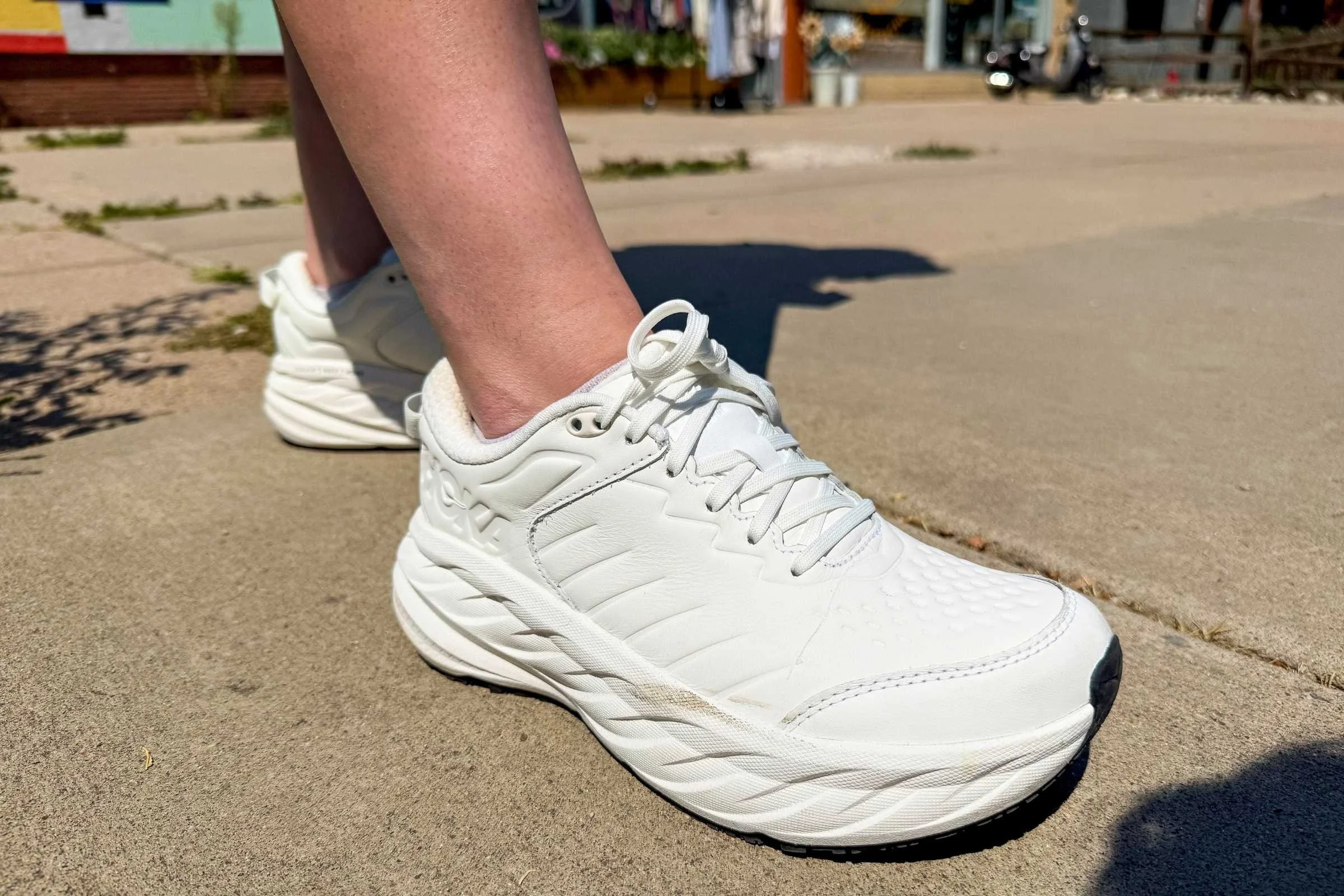
Liz, our women’s tester, recently found herself signed up for a road running race without any road running shoes on hand. So, she wore the new Olympus 7. And while the new Olympus trail shoe isn’t the best option for a 5k road race, it wasn’t horrible, either. The Olympus 6s were tanks, and even the thought of running in them made us shiver. But the Olympus 7 is much better for running while still being a great hiking shoe.
Performance in the field
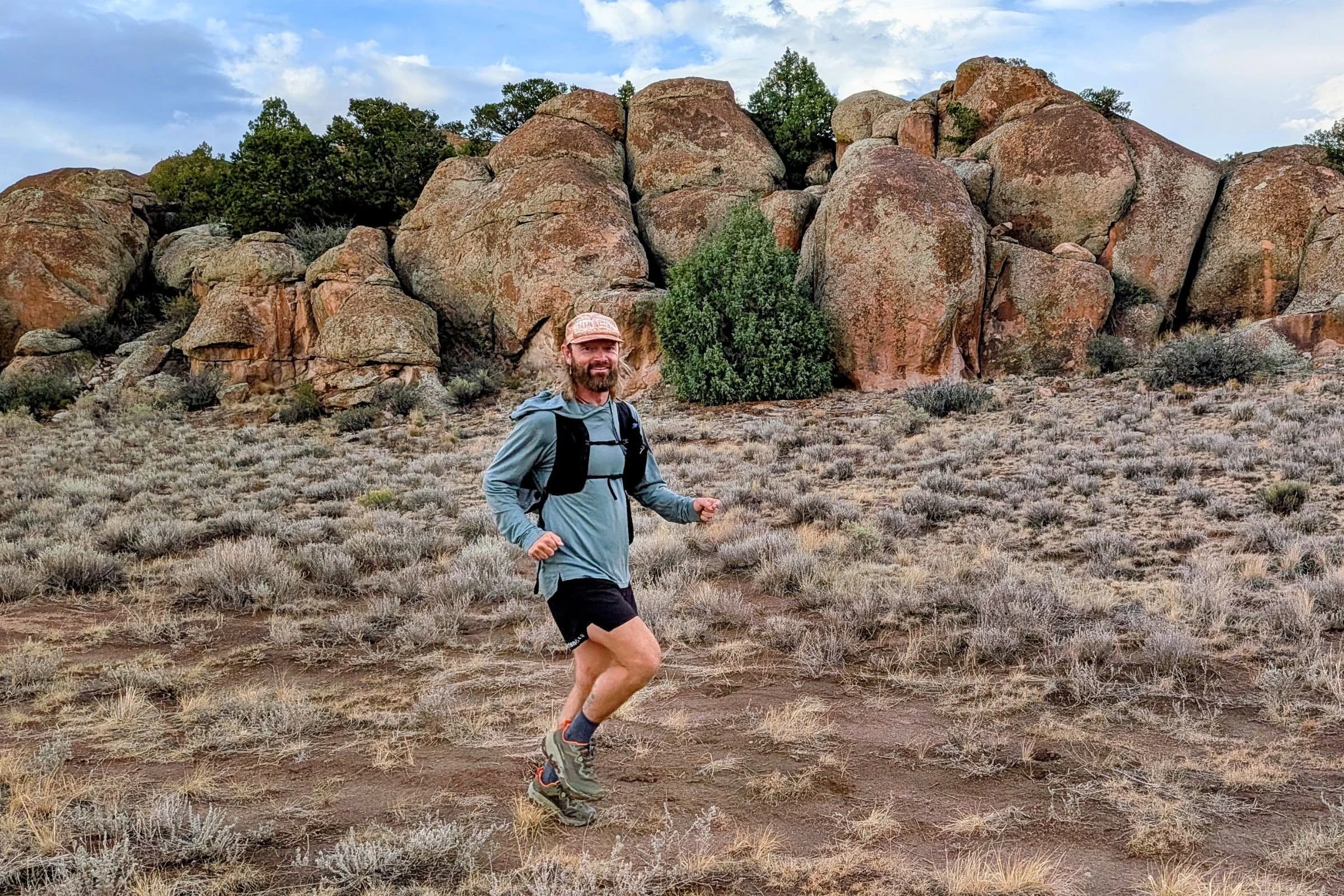
Fit and comfort
The Olympus 7 fits well overall. It fits slightly narrower through the midfoot than previous versions, but it will feel familiar if you’re used to the fit of previous Olympus models or other Altra shoes.
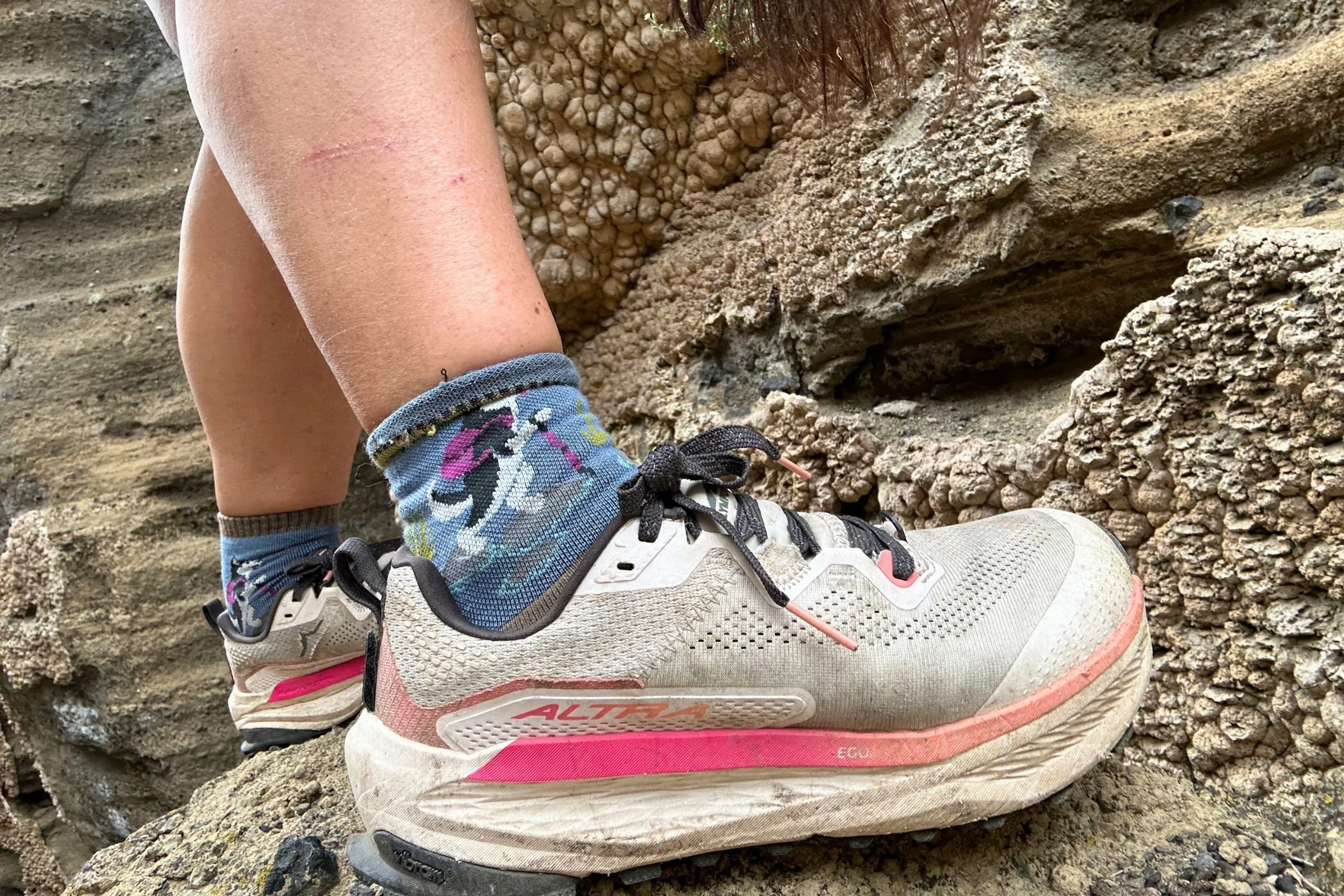
The Olympus 7 features Altra's signature natural FootShape toe box with the most cushioning of any zero-drop shoe. The natural FootShape design is unique to Altra and features a roomier toe box than most running shoes, letting your toes splay naturally. This also helps prevent them from scrunching together, which can cause hot spots or blisters between your toes. The massive amount of underfoot cushioning keeps the bottoms of your feet from getting beat up as badly on rough trails, especially when you’re on your feet all day.
The ankle, heel cup, and tongue are well-padded, which increases comfort and helps create a locked-in feel. The Olympus 7 has more tongue padding than previous versions, and the tongue connects to an elastic strip on both sides that wraps around the foot and connects to the midsole. This elastic, connected to the tongue, effectively creates a bootie that wraps around your entire midfoot for a better fit. The engineered mesh and padded touchpoints also add the comfort needed for long distances, as this shoe is designed to do.
Fit in the toe box
The Olympus 7 fits wide through the toe box, which prevents your toes from rubbing against each other as you run or hike.
Fit in midfoot
The Olympus 7 fits slightly narrower than previous versions through the midfoot. We don’t think this is a bad thing. Even Liz, our women’s tester, who has extremely wide feet, found the Olympus 7's slightly narrower fit a welcome change from the 6. They still have the wide toe box and a wider-than-average fit, but the 7s feel less sloppy through the heel and midfoot than the 6.
Fit in heel cup
The Olympus 7 fits well in the heel cup. The padded ankle collar helps keep your ankle comfortable, and we haven’t had any issues with our heels slipping in these shoes, even when they’re soaking wet and heavy with mud.
Versions 1-4 of the Olympus line felt sloppy in the heel cup. The 6 was still a little loose, and the 7 holds the heel better.
Midsole and cushioning
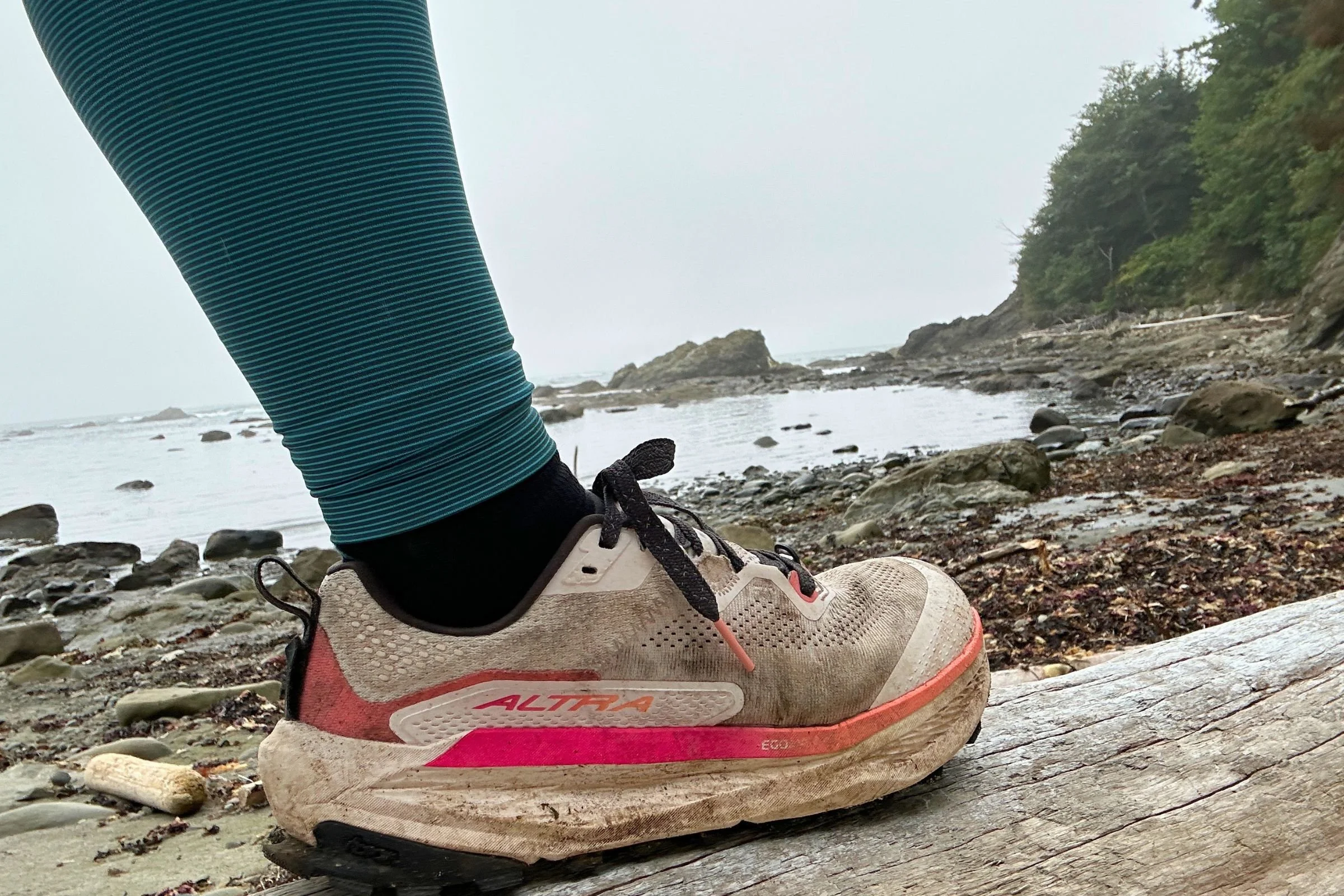
The Olympus 7 pairs a zero-drop design with 33 mm of midsole cushioning. The amount of cushioning in the heel is the same as in the forefoot, hence “zero-drop.” Overall, the Olympus’s cushioning feels wildly comfortable over long days on our feet.
The midsole uses Altra EGO MAX foam, the same midsole foam found in other, less cushioned Altras. The newest version of the Olympus features an EGO MAX midsole that is 15% lighter than previous Olympus midsoles. We also think the new midsole is slightly softer than previous Olympus versions. We found the midsole felt stiff on the Olympus 6, but it now feels more compliant (without feeling mushy) on the 7.
Many high-stack trail running shoes offer as much or more cushion than the Olympus 7. But the Olympus 7 is one of the only max-cushion shoes with a zero-drop platform.
If you’re used to maximum cushioning in shoes from other running brands, such as HOKA or On, the EGO MAX midsole will feel firmer and less bouncy. The EGO MAX foam feels responsive as you push off, but more solid than a HOKA or On midsole while still cushioning your footfall as you land.
The closest match to the Olympus 7 is the Altra Timp 6, the Olympus's lower-stack counterpart. These shoes have a similar platform, with a zero drop and a wide toe box, but with less cushioning.
Most other high-cushion trail running shoes have a much higher heel-to-toe drop than the Olympus. The closest max-cushion option with a low drop is the HOKA Speedgoat 7, which has 37-33 mm mm of cushion (4 mm drop).
Impact absorption and energy return
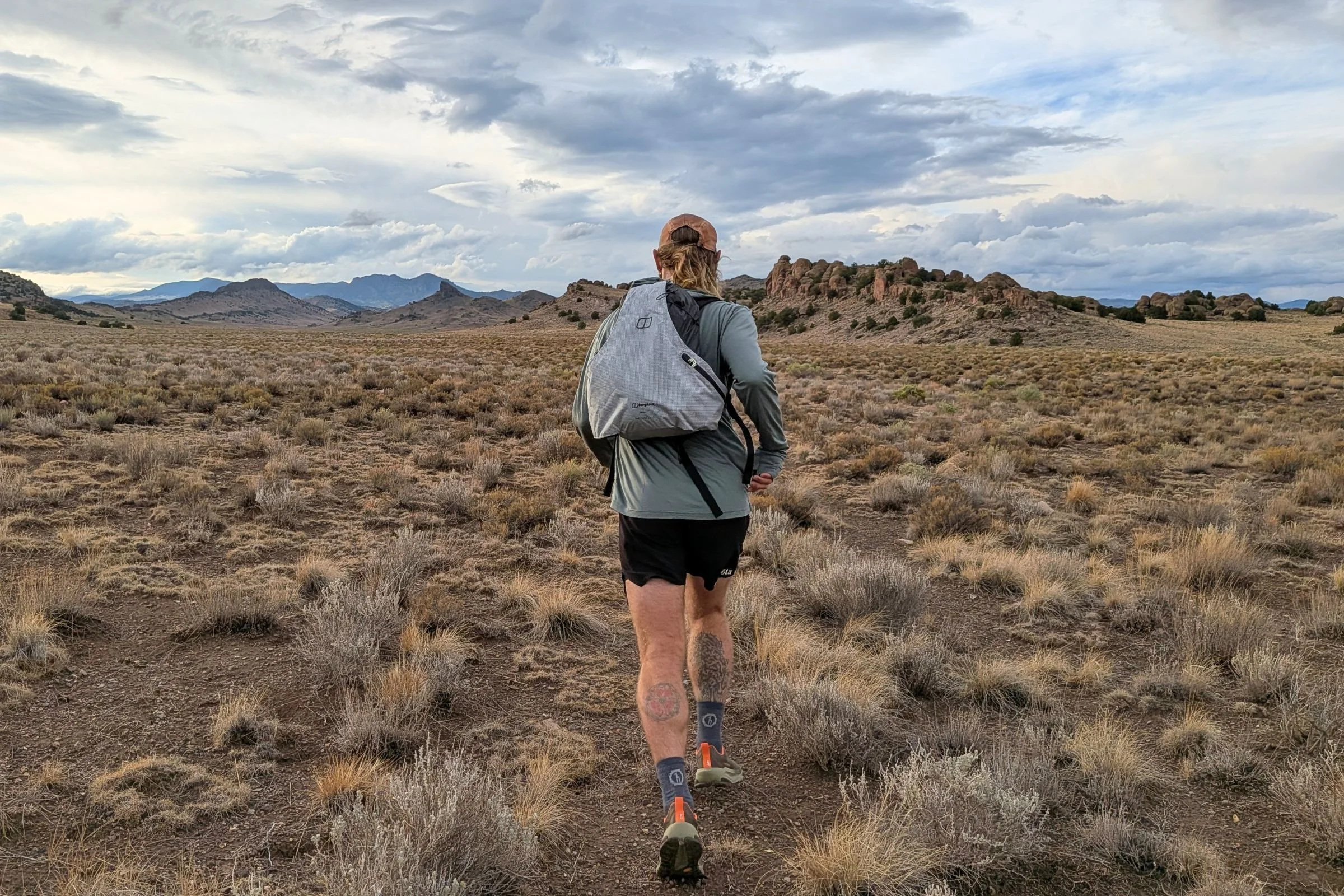
The Olympus’s high cushion level absorbs impact as you land, and the midsole provides a solid platform to push off as you take your next stride. The midsole also provides plenty of cushion, so your feet don’t get as tired. The midsole is also bouncy enough to propel you forward on longer runs. On uneven, rocky terrain, the thick midsole cushioning absorbs impact from sharp rock edges, protecting the bottoms of your feet.
The zero-drop platform creates more impact on your heel than with other running shoes with some heel-to-toe drop. However, if you don’t heel strike while you run, this shouldn’t be an issue.
Stability
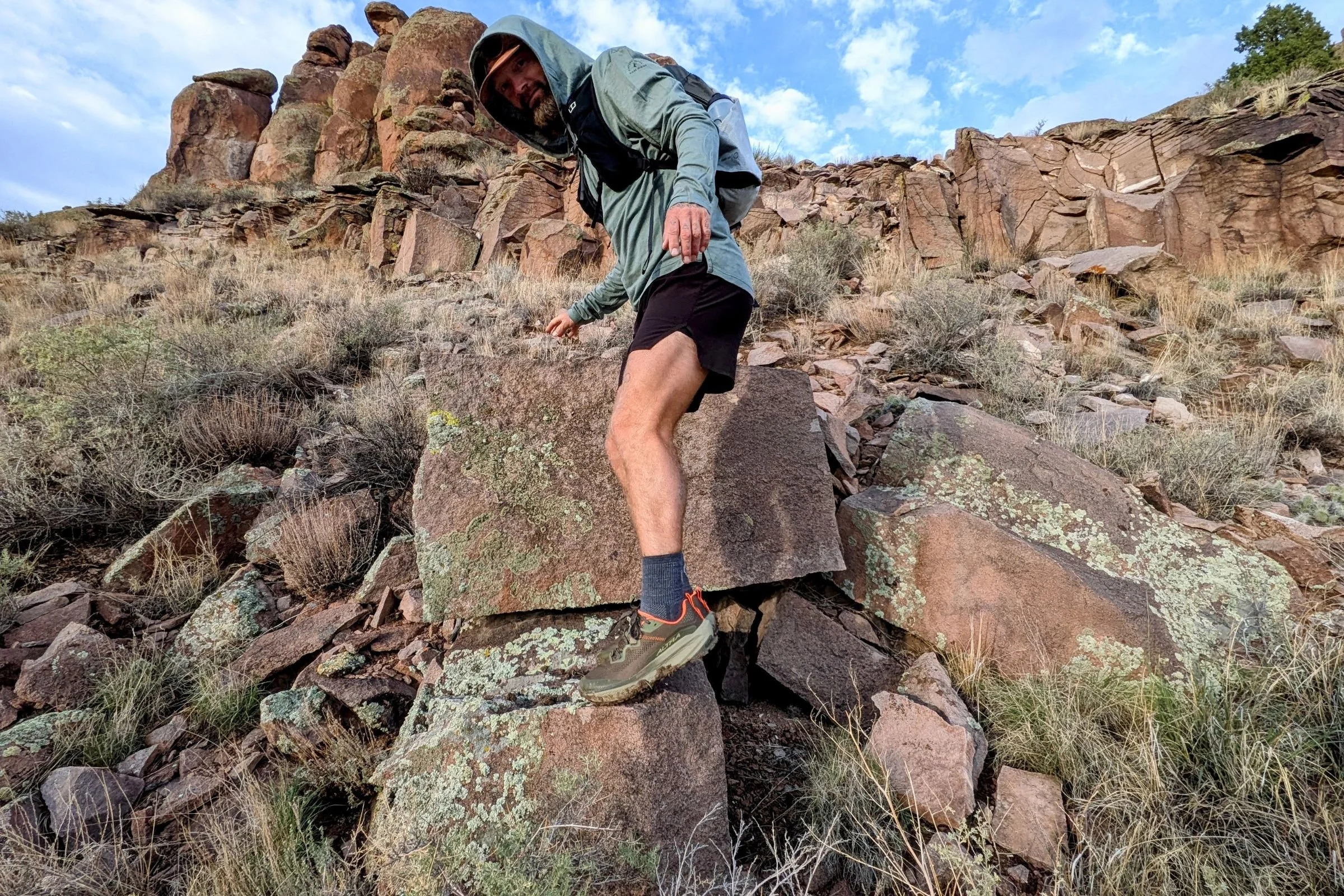
The Olympus 7 is very stable. The upper hugs your midfoot, and the wider toe box creates a bigger platform that doesn’t roll as easily. We find the snugger-fitting upper prevents your foot from shifting around inside the shoe, something which can lead to minor sprains. We’ve had this issue with other, wider shoes, but have never rolled an ankle in the Olympus.
Support
The Olympus 7 is a neutral support shoe, which means it doesn’t correct for overpronation (when your arch collapses and your foot rolls inward). If you overpronate, these shoes have almost no arch support, so your foot will likely roll inward more than with other neutral shoes.
Arch support
The zero-drop design promotes a natural posture, but it doesn’t provide much arch support. Some people add insoles to their zero-drop shoes for extra arch support.
If you aren’t used to zero-drop footwear, you likely won’t notice a change right away. You can’t correct years of standing and moving in high-drop shoes by simply putting on a pair of zero-drop shoes.
Also, if you’re new to zero-drop, we recommend alternating runs and hikes between the Olympus and the running shoes you’re used to. This will allow your Achilles tendon and the rest of your body to gradually adjust to the different position a zero-drop platform puts you in.
Lateral support
The Olympus provides good lateral support. When you push off to the side, the wider platform doesn’t seem to tip easily, despite being higher off the ground.
Ride
The outsole has a subtle curve to it that encourages the shoe to roll forward as you stride. This isn’t as curved as on some trail shoes, such as shoes with HOKA’s Meta-Rocker geometry, but it still helps propel you forward as you stride, and the grippy, lugged outsole keeps your foot from slipping as you push off.
Outsole, grip, and traction
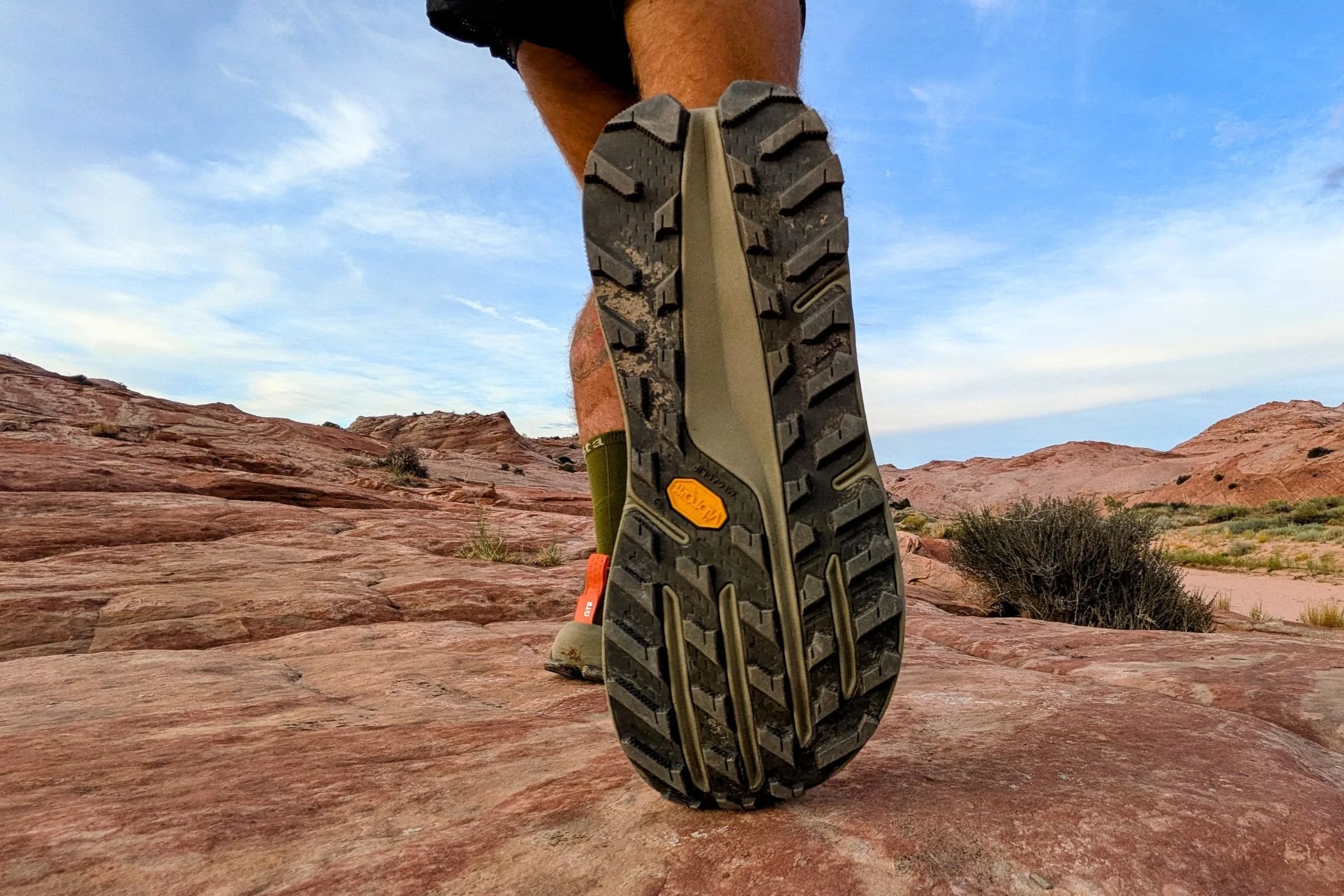
The Olympus 7 has a Vibram Megagrip rubber outsole. This rubber compound is some of the stickiest rubber we’ve used on any running shoes. It’s grippy enough to grab onto smooth slickrock surfaces, even when wet.
It has deep 5 mm lugs that cover almost the entire tread, with only a small section of exposed midsole foam stretching from the arch to the heel. This exposed foam section is much smaller than on many comparable trail running shoes, and it’s smaller than on the Olympus 6, too. While a full-coverage rubber outsole would be more durable, these shoes are already very heavy, so we understand the inclination to save weight, and the added outsole coverage is a big improvement.
Performance on various terrains
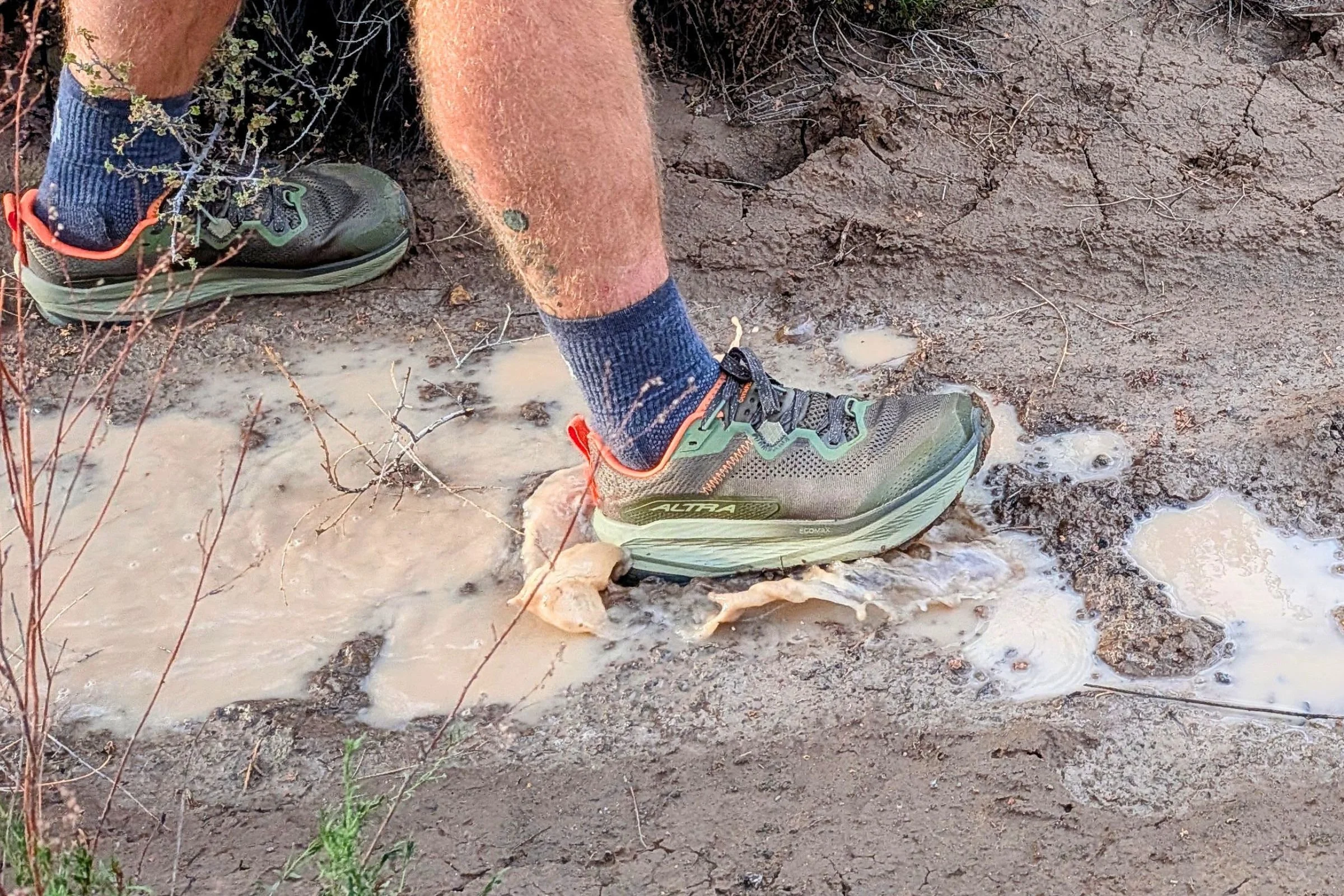
The Megagrip outsole's deep lugs grip sand, dirt, mud, and bare rock better than most trail running shoes. This is some of the grippiest rubber we’ve used, and it provides excellent traction on most surfaces.
The Olympus 7 grips well in both wet and dry conditions.
We recently wore the Olympus 7 while hiking a narrow, water-filled slot canyon. In several sections, we had to stem across the canyon to stay above the water because it was too narrow to swim but too deep to walk through. With one soaking-wet Megagrip outsole planted on each canyon wall, we slowly “walked” along the walls, trusting the sticky rubber to hold through friction. It worked.
We also had to traverse wet seaweed-covered boulder fields in the Olympus, and were pretty impressed, especially compared to other Altras. They aren't replacing our La Sportiva Prodigio 2 or Prodigio Max for stuff where grip really matters, but they exceeded expectations.
Versatility
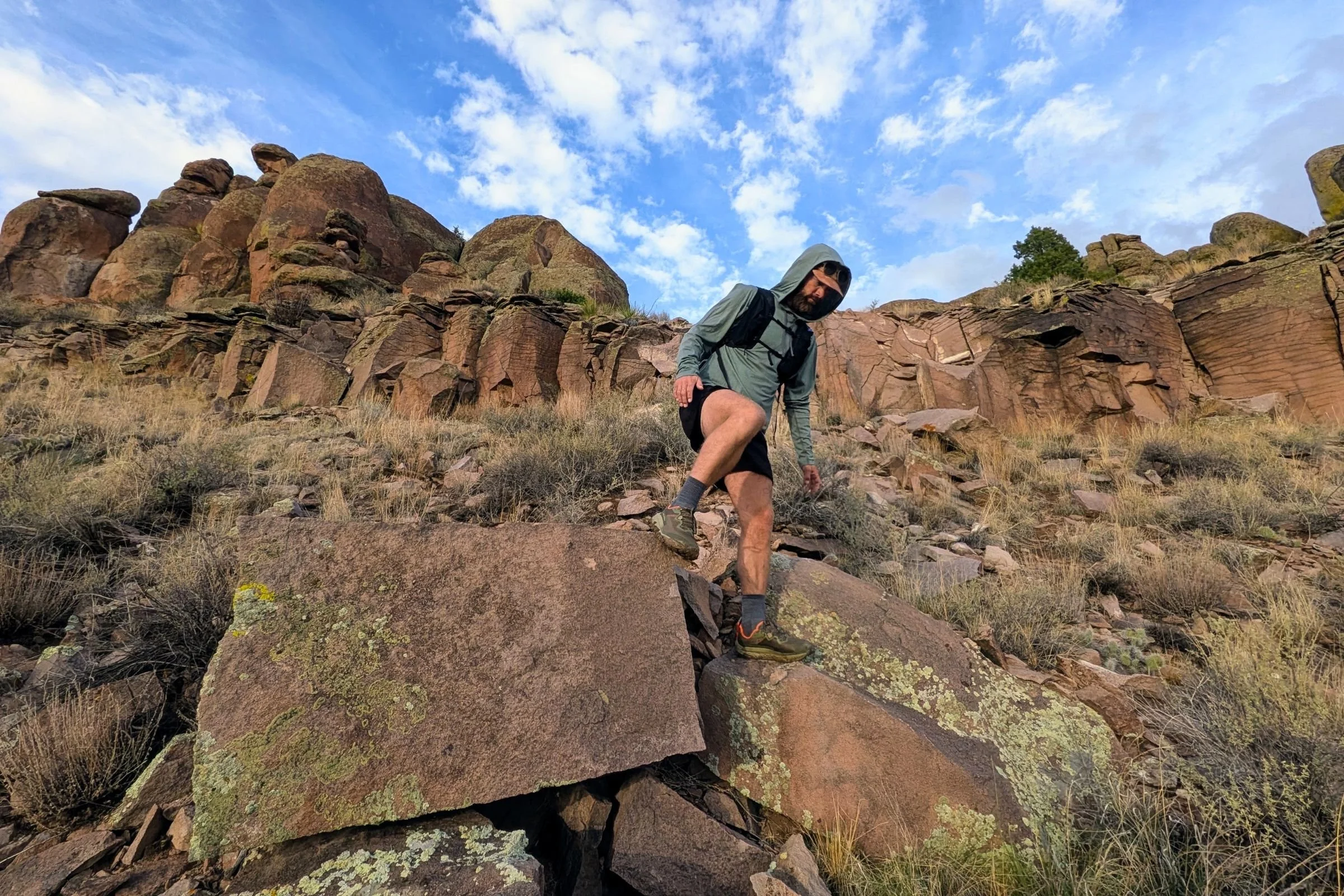
The Olympus 7 is a very versatile shoe. We’ve worn them on marathon-distance trail runs, as well as on backpacking trips and around town, too.
Daily training and running
The Olympus 7 is very comfortable and offers plenty of cushion, making it an excellent daily trainer. It’s not the best for shorter, fast runs, but for long, slow runs to build an endurance base, these shoes are ideal. They’re heavier than many running shoes, which isn’t a bad thing for daily training, but it isn’t great for speed work.
Thru-hiking and backpacking
The Olympus 7 is an excellent choice for backpacking and thru-hiking. Again, they’re heavier than some trail running shoes, so extra speedy hikers might gawk at the idea of using these. However, we find the wide toe box and maximal underfoot cushioning work really well on long days with a backpack on. They also work well on routes and trails with long road walks like the Grand Enchantment Trail or Pacific Northwest Trail.
We’ve collectively put thousands of thru-hiking miles on previous versions of the Olympus, on the Arizona Trail, Pacific Northwest Trail, and Continental Divide Trail. Over the miles we’ve put on the Olympus 7 while backpacking, we expect the newest version only to improve the hiking experience.
Responsiveness
The Altra EGO MAX midsole is relatively responsive. It’s not as bouncy as some trail shoe midsoles, but the Olympus 7 feels much more responsive than previous versions, which is a huge improvement. They still don’t feel light and springy, but they feel well-padded without feeling like they're slowing you down as you push off the ground.
Warmth
The Olympus 7 uses breathable mesh, which won’t keep your feet warm. For tips on running in cold weather, check out these tips for winter running.
Break-in Time
The Olympus 7 requires no break-in time. We pulled these shoes out of the box, ensured they fit well, and immediately went for a 6-mile run with no issues.
If you’re not used to running or hiking in zero drop shoes, however, you might need some break-in time for your body. We recommend rotating between the Olympus and another pair of higher-drop running shoes if you’ve never worn zero-drop. This will allow your body to gradually adjust to the different position these shoes put your feet in.
Upper and breathability
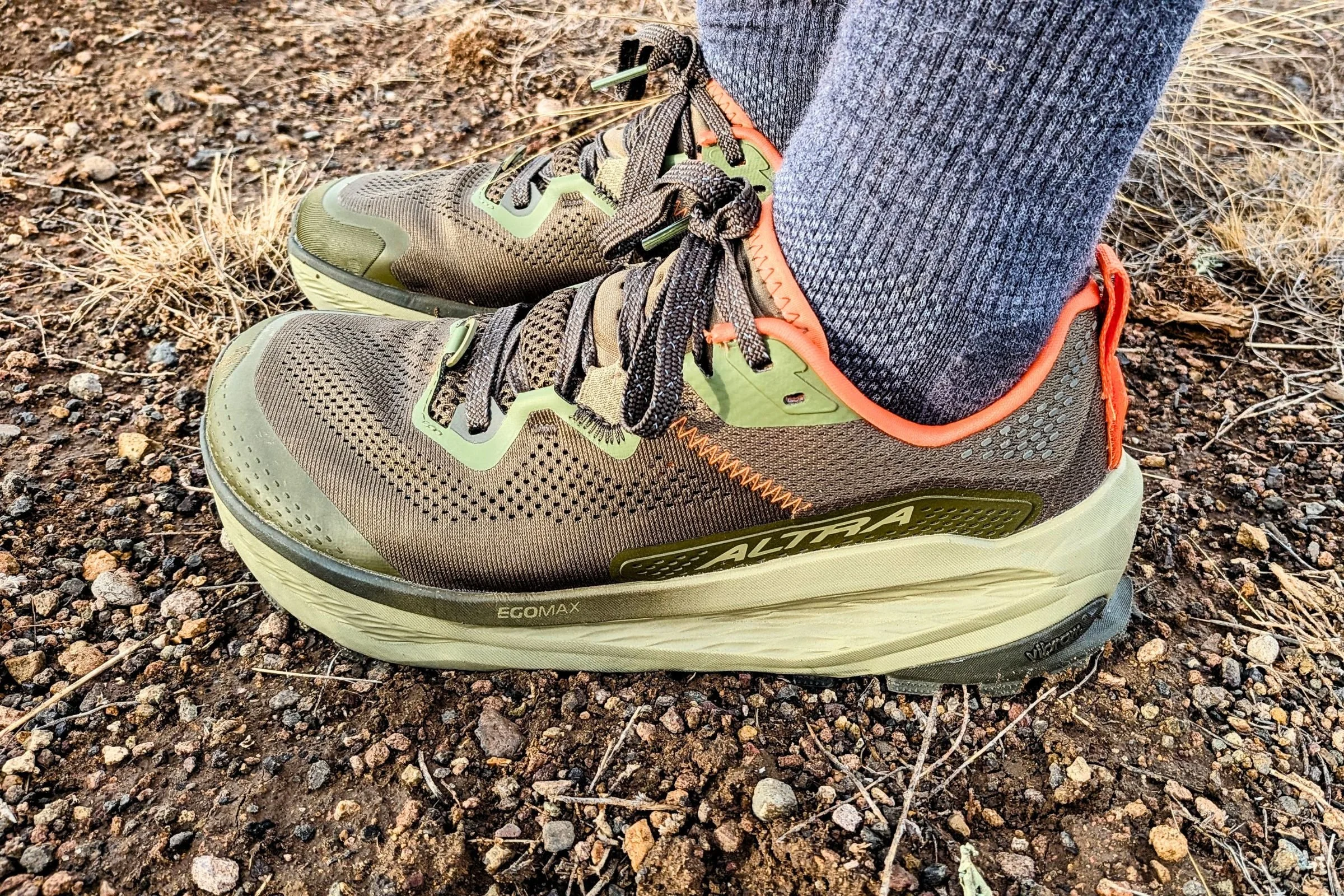
The Olympus 7 upper is made with a breathable engineered mesh. This allows solid airflow in hot conditions. We wore these shoes in hot, dry conditions in Colorado, California, Utah, and Arizona in late summer and early fall, in temperatures near 100 degrees. Our feet never felt too hot in those conditions.
The roomy toe box seems to help with breathability because your toes aren’t pressed against each other, which would create more heat.
Durability and longevity
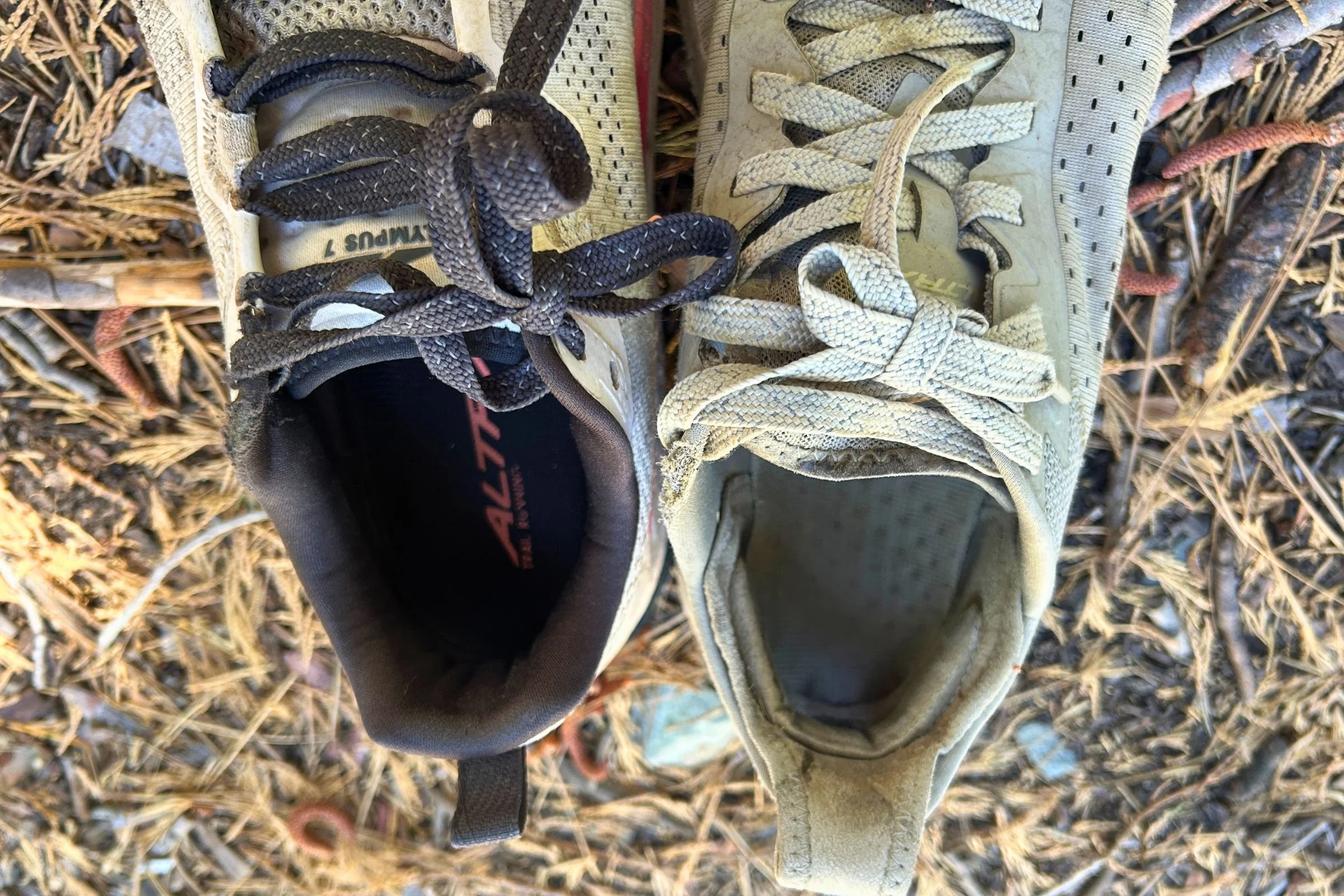
Our Olympus 6s were tanks that lasted us between 300-400 miles, depending on the terrain. So far, after over 50 miles on the Olympus 7, we think they feel more nimble and lighter than the Olympus 6. This might mean they aren’t quite as durable, but so far we see no signs that the 7s won’t last as long as the 6s.
Midsole durability
The midsole will compress after 300-400 miles. However, since the Olympus 7 starts with 33 mm of midsole cushion, even when it’s compressed, it will provide more cushion than a lower-stack shoe.
Wear and tear in upper materials
The upper uses engineered mesh. The upper has TPU overlays in high-wear areas: around the toe box, laces, along the midsole in the midfoot, and around the heel. These TPU overlays add protection in areas most prone to abrasion on rough trails.
Outsole longevity
The outsole uses Vibram Megagrip rubber, a softer rubber that won’t last as long as some other outsole materials. This is the trade-off you must make for a grippy rubber outsole. You’ll likely have to retire your Olympus shoes once you’ve worn out the outsole. We’ve gotten close to 500 miles out of these shoes in the past.
Price and value
At $195, the Olympus 7 is quite expensive. It has the highest stack of any zero-drop trail shoe we know of, so it’s worth the price if that’s what you’re after. But we can’t deny they're expensive.
Features
Volume
The Olympus 7 is a high-volume shoe. It doesn’t come in wide sizing, but it fits people with wider-than-average feet.
Weight
The Olympus 7 weighs 1 lb. 6.9 oz for a pair.
Stack height and drop
The Olympus 7 has 33 mm of stack height and zero drop.
Altra EGO MAX midsole
The Olympus 7 has an Altra EGO MAX midsole, which is the same midsole used on most other Altra models, like the Lone Peak, Timp, Torin, and Experience Flow.
Vibram Megagrip outsole
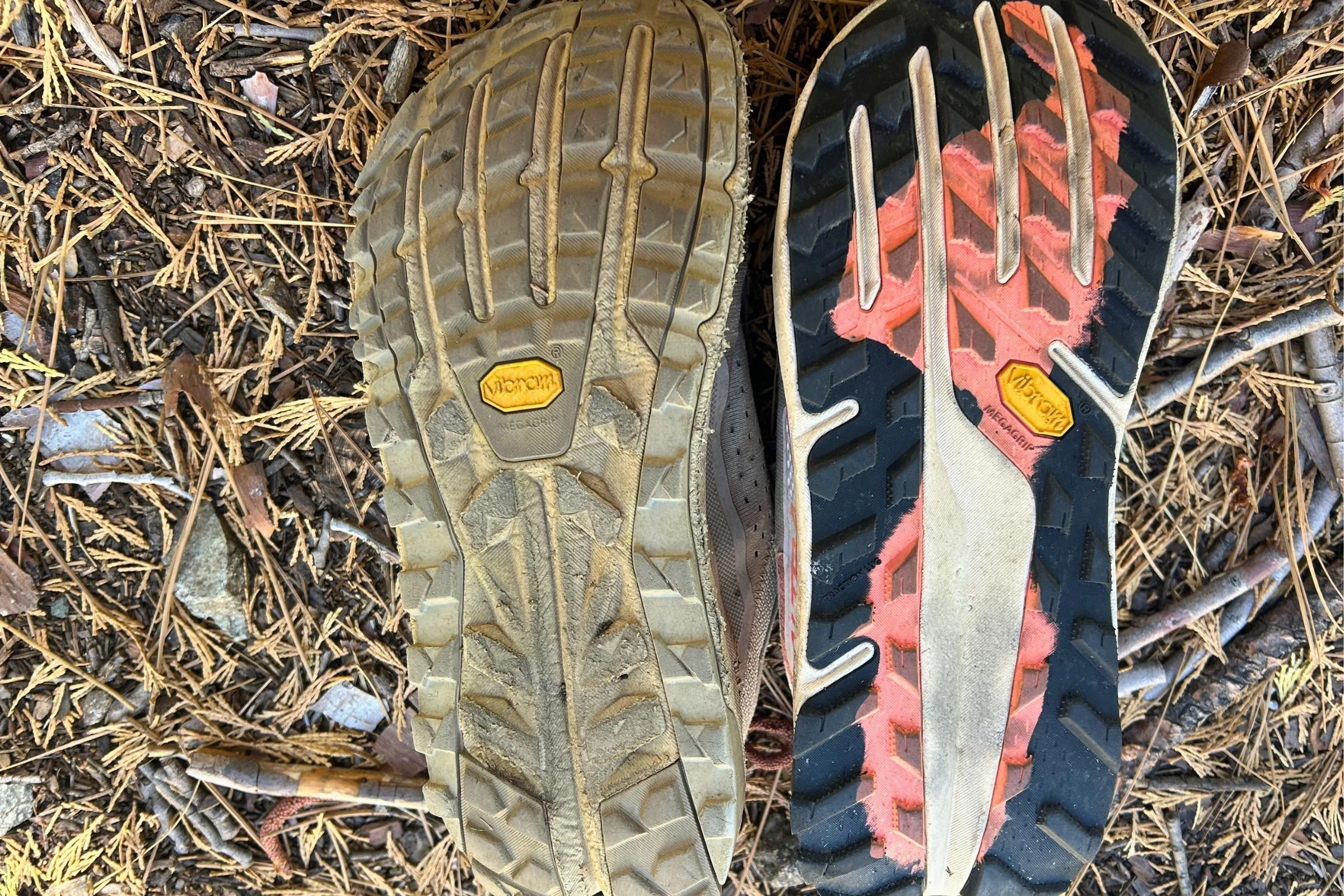
It has a Vibram Megagrip outsole, which grips well in wet and dry conditions.
Engineered mesh upper
It has a breathable engineered mesh upper. The mesh has TPU overlays to reinforce it in high-wear areas.
Padded heel collar
It has a padded heel collar made of soft mesh that feels comfortable against your ankles and heels.
Padded tongue
A padded tongue wraps around your midfoot and connects to the midsole.
Reflective material
The Olympus 7 has reflective laces and a reflective accent on the heel.
Sustainability
Good On You, a website that has published sustainability ratings based on public records of over 7,000 retail brands, rates Altra “good”. “Good” is essentially 4 out of 5 stars, so they’re a relatively ethical company. Good On You creates their ratings based on how each company treats the planet, people, and animals. You can read more about how Good On You develops its scoring. However, Altra doesn’t have a sustainability page on their US website, which is why we had to turn to Good On You.
Altra has many diversity partner organizations. They are a member of the Running Industry Diversity Coalition, which works to increase diversity in the all-too-white running industry. They work with For All Mothers+, an organization founded by Altra athlete Alysia Montaño to break down barriers that prevent women from thriving in their careers and motherhood. Altra also partnered with the Trail Sisters for over 2,000 hours of trail cleanup in 2023. They also partner with Still I Run, which advocates for mental health awareness through running. You can read more on their Diversity and Inclusion page.
Should you buy the Altra Olympus 7 trail running shoes?
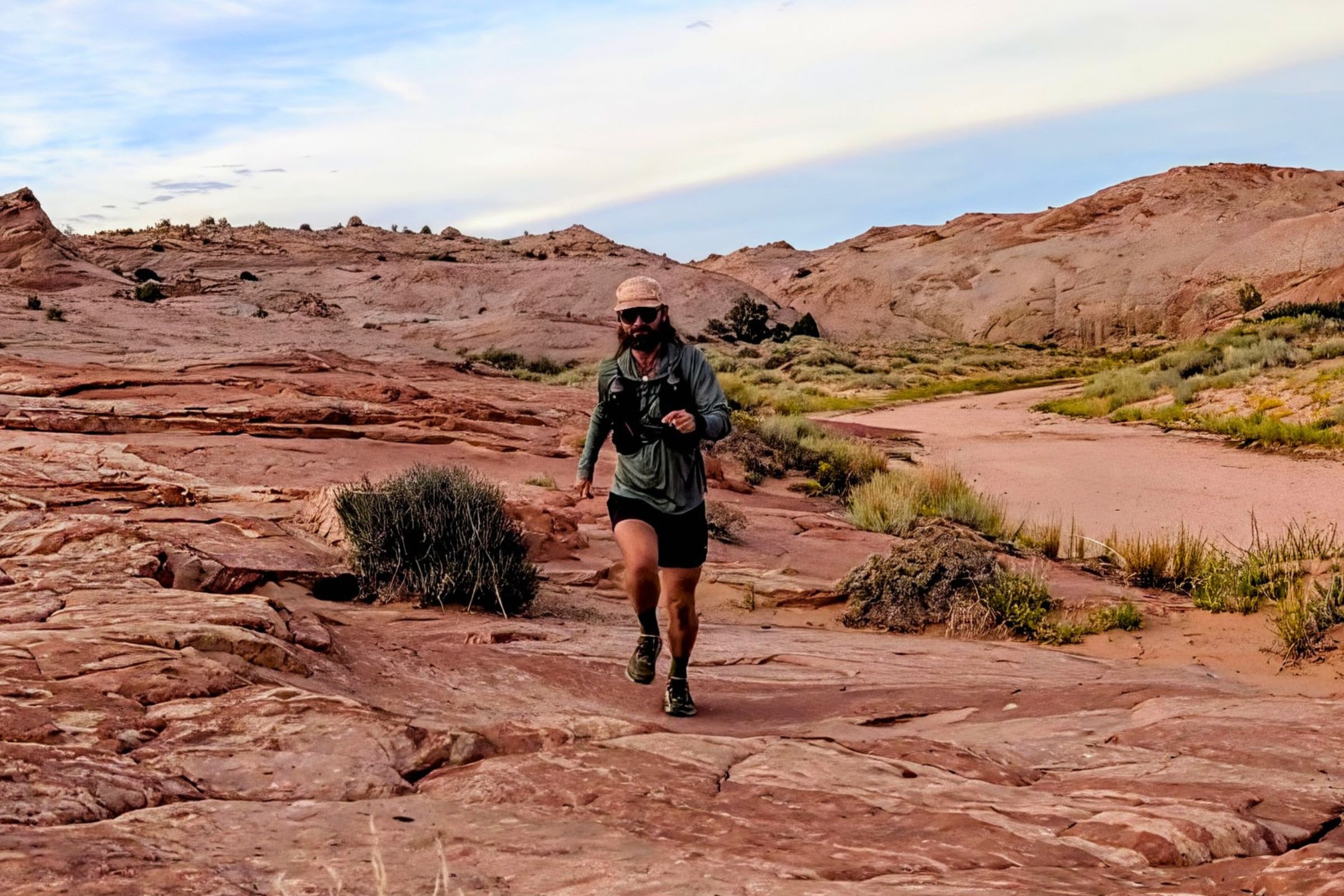
Buy if: You want maximum cushion in a zero-drop platform with a roomy toe box.
Skip if: You prefer a lower-stack shoe, a high heel-to-toe drop, or a narrower fit, or you want to feel the ground.
If you want more ground feel, lower-stack options are available, many of which are zero-drop. If you like the feeling of your heel being higher than your midfoot, you should choose a trail running shoe from another brand (or go with Altra's Experience line). If you have narrower feet or prefer a snug fit, the Olympus 7 might not be for you.
Where to buy the Altra Olympus 7 trail running shoes?
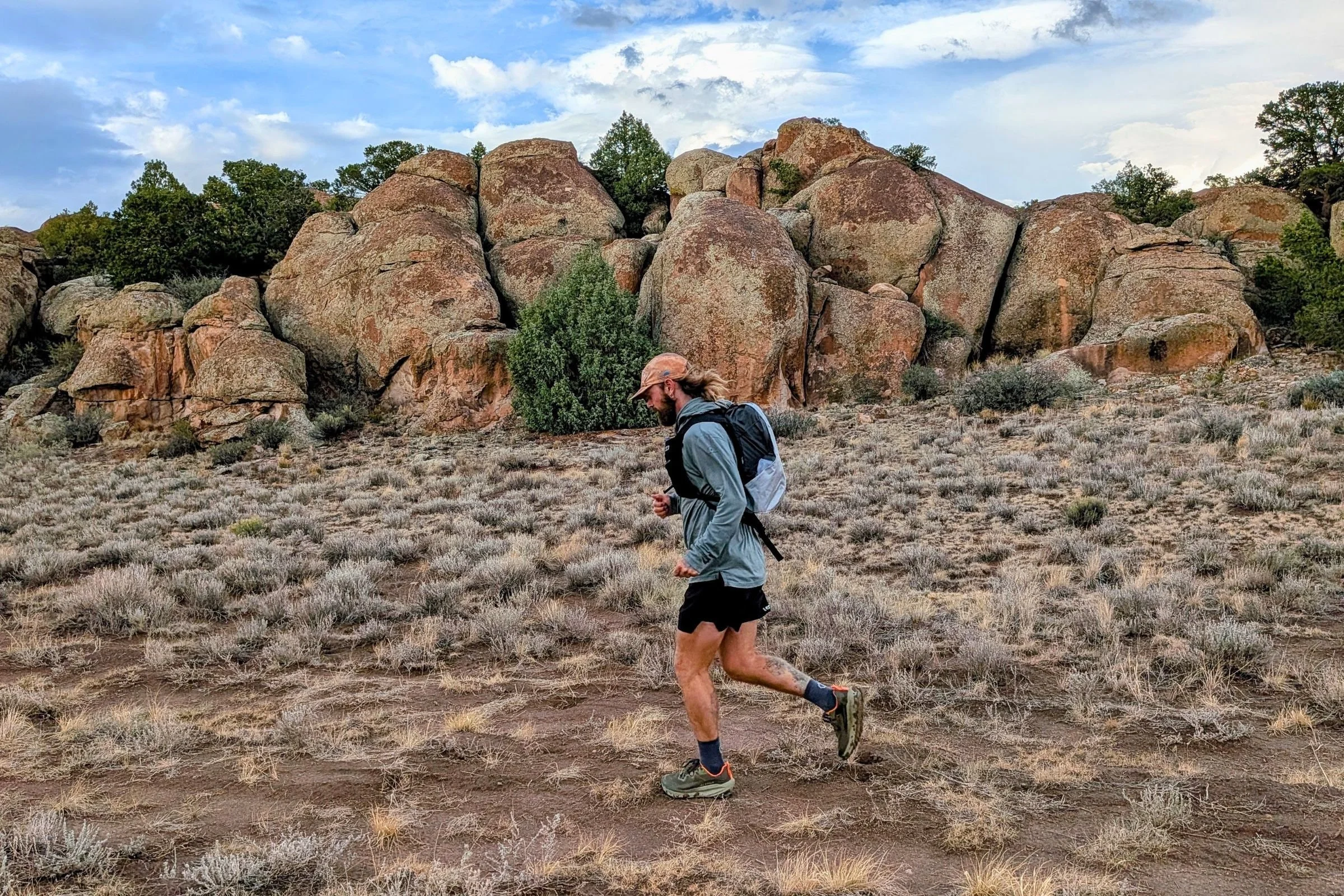
The Altra Olympus 7 trail running shoes are popular footwear, so you have options when it comes to retailers. Here are some of the pros of the retailers.
REI
Pros: 100% satisfaction policy for 1 year; 10% dividend for members.
Amazon
Pros: Free 2-day shipping with Amazon Prime membership (can be same-day delivery in major metropolitan cities)
Backcountry
Pros: Frequent sales for Expedition Perks members (free to join), fast shipping, Gearhead chat customer service is excellent
Returns and advice on where to buy
In general for shoes, we recommend purchasing from a place with easy or free returns, like REI. Trying on shoes is an important way to get the sizing right. With a retailer like that, if your funds allow, you can buy two sizes and easily return one. Additionally, check reviews to see whether other users recommend sizing up or down.
Similar trail running shoes
Altra Olympus 7 vs. Altra Timp 6
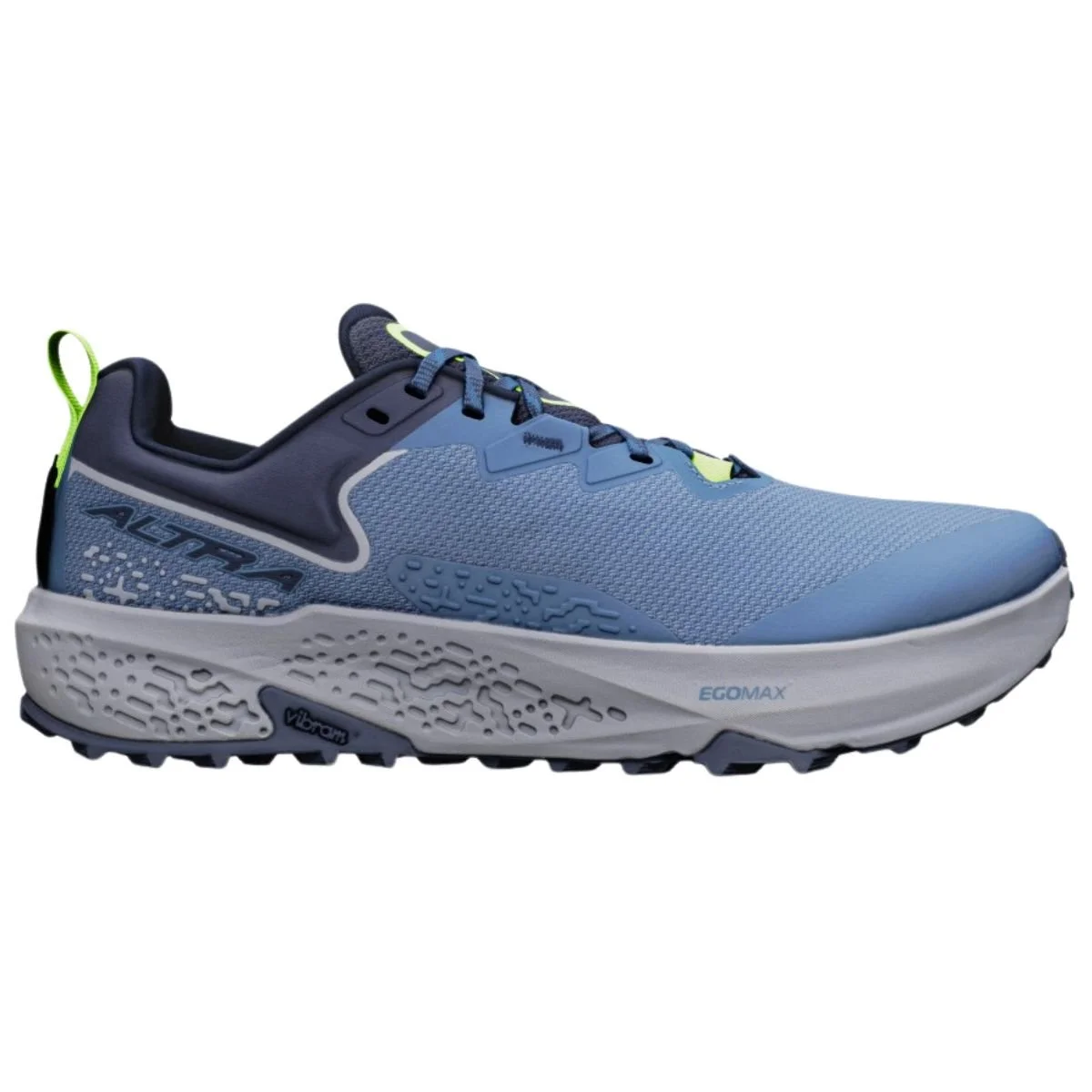
MSRP: $165
Cushion: Moderate
Heel-to-Toe Drop (mm): 0
Stack Height: 30 mm
Weight (per shoe):. 11.5 oz (men's), 9.5 oz (women's)
The Altra Timp 6 is another zero-drop trail running shoe that’s similar to the Olympus 7. The Timp has slightly less cushion than the Olympus, with 30 mm of stack. The Timp also has a Vibram Megagrip outsole, like the Olympus. We think the Timp fits slightly narrower through the midfoot than the Olympus. And while the Timp doesn’t feel fast either, it feels slightly quicker and more nimble than the Olympus. The Timp 6 and Olympus 7 weigh about the same amount. The Olympus costs significantly more than the Timp.
Learn more in our in-depth review of the Altra Timp 6 trail running shoes.
Altra Timp 6
Men's
Women's
Altra Olympus 7 vs. Altra Lone Peak 9+
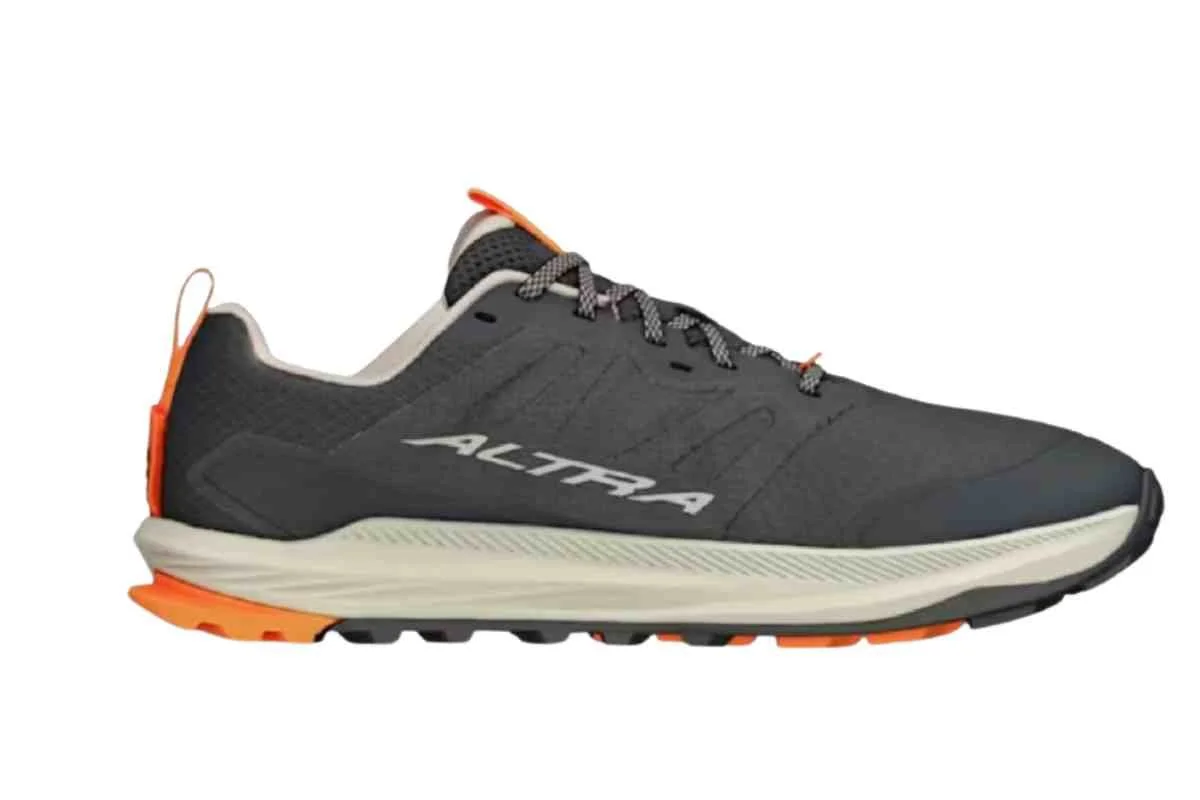
MSRP: $160
Cushion: Moderate
Heel-to-Toe Drop (mm): 0
Stack Height: 25 mm
Weight (per shoe, ):. 11.1 oz (men's), 9.3 oz (women's)
The Altra Lone Peak 9+ is another Altra trail running shoe model. The Lone Peak has 25 mm of stack, which is significantly less cushion than the Olympus, at 33 mm of stack height. Like the Olympus, the Lone Peak 9+ has a Vibram Megagrip outsole and a wide toe box that allows your toes to splay naturally. The Lone Peak 9+ has more rubber on the outsole, so it’s slightly more durable than the Olympus. But the Olympus has more midsole foam, so it won’t compress as quickly as the Lone Peak. The Lone Peak 9+ costs $35 less than the Olympus.
Learn more in our in-depth review of the Altra Lone Peak 9+ trail running shoes.
Altra Lone Peak 9+
Men's
Women's
Altra Olympus 7 vs. HOKA Speedgoat 7
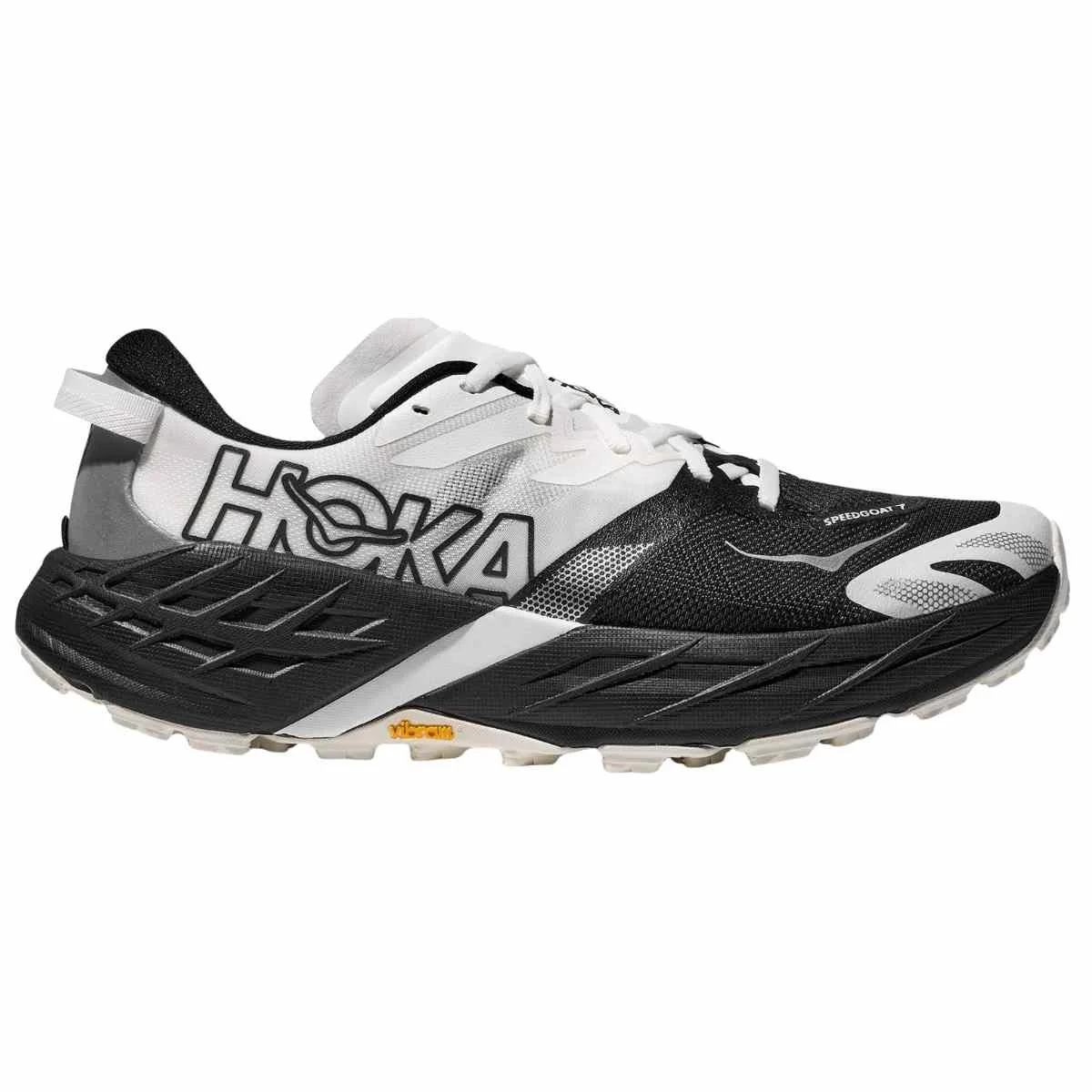
MSRP: $165
Cushion: Responsive (moderate)
Heel-to-Toe Drop (mm): 5
Stack Height: 37.3 - 33.3 mm
Weight (per shoe, ):. 9.7 oz (men's), 8.3 oz (women's)
The HOKA Speedgoat 7 is a low-drop, but not zero-drop, trail running shoe that many people who wear the Olympus also end up trying. The Speedgoat has more cushion than the Olympus, with 37-33 mm of cushion and a 4 mm drop. Like the Olympus, the Speedgoat uses Vibram Megagrip rubber. The Speedgoat feels faster than the Olympus and weighs less, but it doesn’t have the Olympus's wide toe box. The Speedgoat costs $30 less than the Olympus 7.
Learn more in our in-depth review of the HOKA Speedgoat 7 trail running shoes.
HOKA Speedgoat 7
Men's
Women's
Why you should trust us / About the author
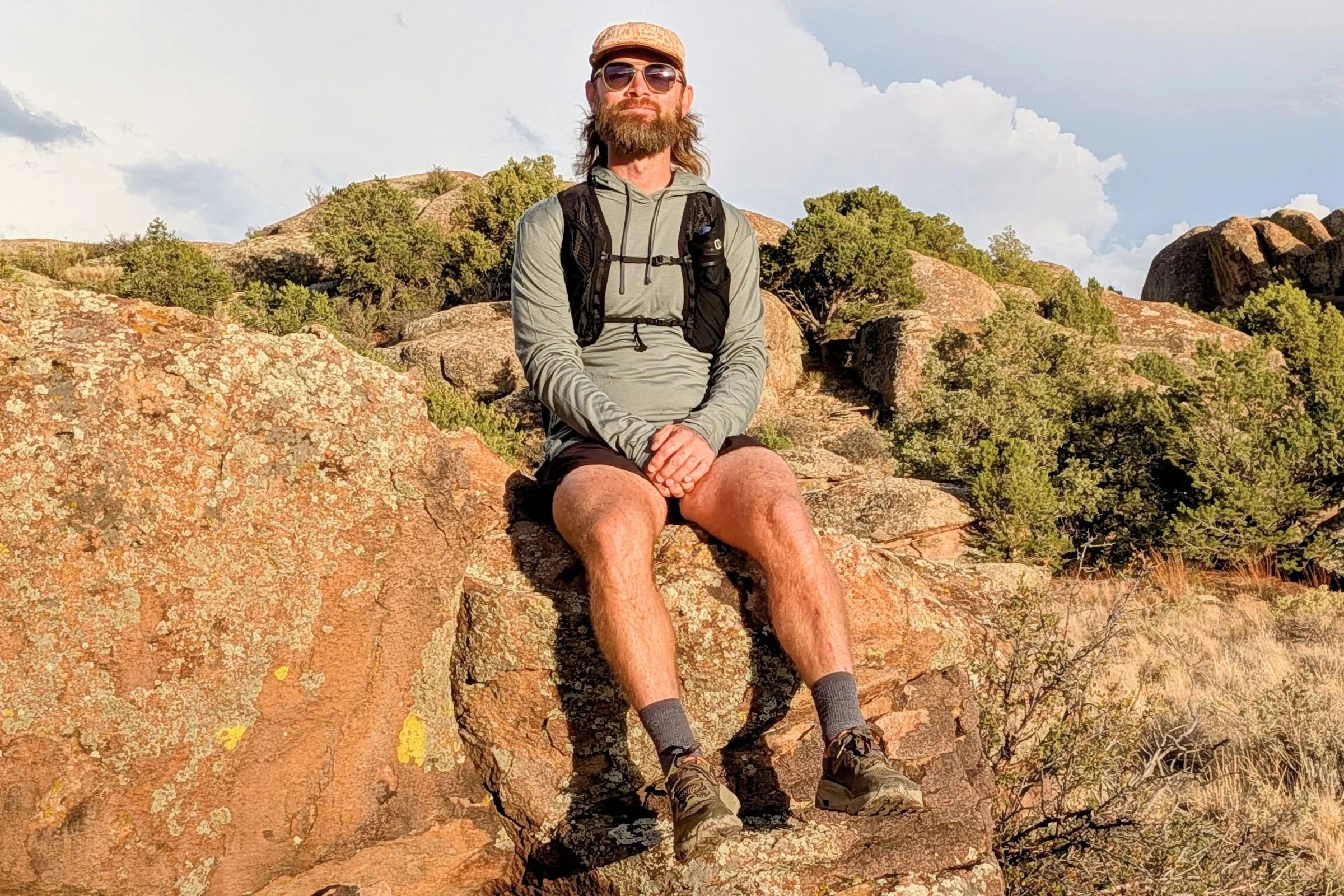
Sam Schild is a thru-hiker, trail runner, cyclist, and mountain athlete based in Colorado. He's been a runner since childhood, when he ran five days a week as cardiovascular training for soccer. As he grew older, he stopped playing team sports and focused on running and cycling. Sam tests men’s running shoes for Treeline Review and wrote the men’s Trail Running Shoes, Road Running Shoes, and Gravel Running Shoes guides.
After moving to Colorado a decade ago, he started trail running on the local trails. Since then, he has completed countless ultra-distance self-supported trail runs across Colorado and the American Southwest. He has thru-hiked the Pacific Crest Trail, Continental Divide Trail, Appalachian Trail, Pacific Northwest Trail, Grand Enchantment Trail, Arizona Trail, Hayduke Trail, and the Colorado Trail twice, always in trail running shoes.
You can read more about Sam on his author page, website, or Instagram.