Jetboil TrailCook 2.0L Review: A Trail Stove That Does More Than Boil Water
A compact and efficient stove system for camping and backpacking
July 27, 2026
Home → Gear Reviews → Backpacking
Our verdict
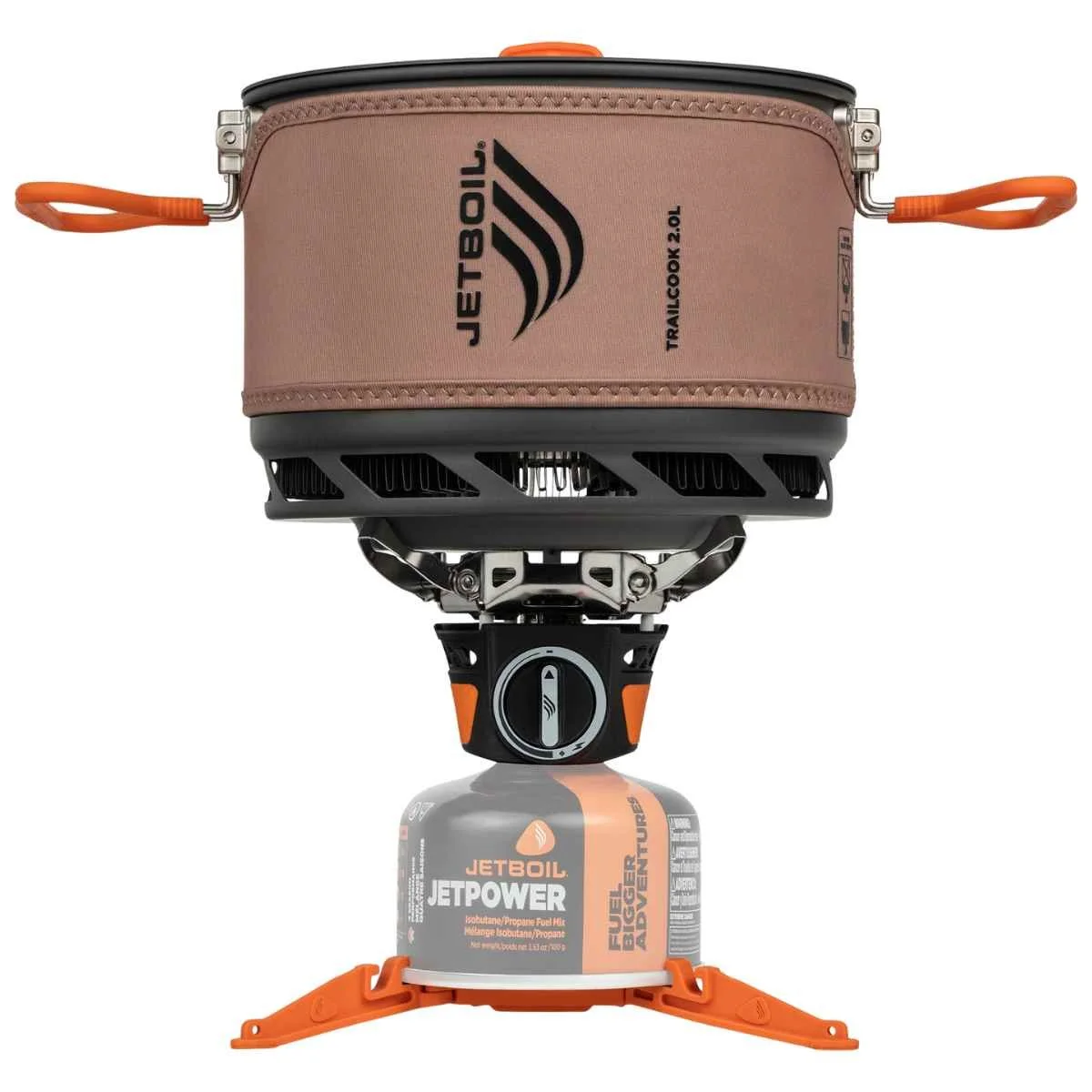
The Jetboil TrailCook 2.0L is an integrated camping and backpacking stove system designed for fast boiling and controlled simmering, and packs down easily for cooking for groups while on the trail.
The TrailCook occupies the space between larger cooking systems great for car camping (such as Jetboil’s Genesis Basecamp system) and tiny, ultralight stoves appropriate for backpacking or solo adventures (such as the Soto Windmaster).
With its integrated design and Jetboil’s “FluxRing” heat exchanger, featured on many of their stoves, water boils incredibly fast, and thanks to the really nice starter and updated control dial, it’s incredibly easy and precise to use. For its size, the 2.0L pot provides ample room to cook meals for 2 to 4 people, making it a great choice for those who want the flexibility of cooking for friends but don’t have the space for a two-burner basecamp-style stove.
Jetboil TrailCook 2.0L Precision Cooking System
We tested the Jetboil TrailCook 2.0L on gusty spring nights in the Sawtooth National Forest and packed it to cook on the lakeside at the halfway point of a day hike in the Sawtooths. Our meals varied from heating ramen in the pot to cooking beef for tacos to an egg scramble for breakfast. The Jetboil was well-matched for cooking each dish—boiling water quickly while hungrily waiting in the stiff Southern Idaho wind after a particularly exerting climb and adjusting to the proper temperature to cook meat thoroughly or scramble eggs a little soft on a calm morning at the campsite.
The FluxRing design featured on many of Jetboil’s stoves is the stand-out feature of the TrailCook, which can boil a liter of water in just over four minutes. Even using other non-Jetboil cookware, the burners heat quickly and evenly. The easy-to-use stove controls provide a much more satisfying and accurate cooking experience than other trail stoves whose controls can feel unintuitive and difficult to find the proper temperature for anything but boiling water. The integrated 2.0L pot makes cooking actual meals for several people easy.
Backpackers who are most focused on minimizing weight may find some other single-burner backpacking stoves that are lighter and smaller. However, those stove systems make a tradeoff and do not have the capacity to cook real meals for multiple people and are generally best for simply boiling water quickly. Car campers who want a camping stove will be impressed by the weight, compactness, and ability to simmer and cook real food, though will have to get used to the one-burner minimalist system.
The TrailCook 2.0L is best for campers and backpackers who might hike short or medium distances to their campsite with friends or family and need to cook for several people, but don’t have the room for larger basecamp-style stoves.
We create reader-supported, objective gear reviews independently selected by our editors. This story may contain affiliate links, which help fund our website. When you click on the links to purchase gear, we may get a commission, without costing you an extra cent. Thank you for supporting our work and mission of outdoor coverage for every body! Learn more.
Jetboil TrailCook 2.0L Precision Cooking System specifications
Price: $200
Weight: 1 lb. 6.22 oz.
Pot capacity: 2.0 liters
Fuel type: Isobutane / propane canister
Ignition: Knob auto-igniter
Boil time (1 liter): 4.2 minutes
Burn time: 45 min. continuous burn (100 g canister)
Fuel compatibility: Standard backpacking canisters
Pot material: Ceramic non-stick coating
Integrated heat exchanger: Yes
Packed size: 6.5 x 4 inches
Best for
Backpacking
Bikepacking
Small group cooking
Campsite meal prep
Campers who cook real meals instead of just boiling water
Comparison table
| CAMPING STOVE | MSRP* | FUEL TYPE | BURNERS | OUTPUT/ BURNER | DIMENSIONS | WEIGHT |
|---|---|---|---|---|---|---|
| Jetboil TrailCook 2.0L Cook System | $200 | Isopro | 1 | 6,000 BTU | 6.5 x 4" | 1 lbs, 6 oz |
| Jetboil Genesis Basecamp System | $450 | Propane | 2 | 10,000 BTU | 10.3 x 7.2" | 9 lbs, 2 oz |
| Snow Peak Home and Camp Burner | $100 | Butane | 1 | 8,333 BTU | 13.6 x 11.8 x 4.7" | 3 lbs |
| Jetboil Flash 1.0L System | $145 | Isobutane-propane | 1 | 5,300 BTU | 4.3 x 7.3 inches" | 13.1 oz |
| GSI Outdoors Pinnacle Pro 2 Burner Stove | $200 | Propane | 2 | 11,000 BTU | 20.0 x 12.4 x 1.4" | 11 lbs |
What we liked
Fast boil times
Excellent simmer control
Large pot capacity
Integrated, efficient system
Stable cooking platform
What could be better
Heavier than minimalist backpacking stove setups
Bulkier packed size than other backpacking stoves
Higher cost than basic stove + pot combos
Limited compatibility with non-Jetboil cookware
One burner makes cooking for multiple people difficult compared to two-burner camping stoves
How we tested
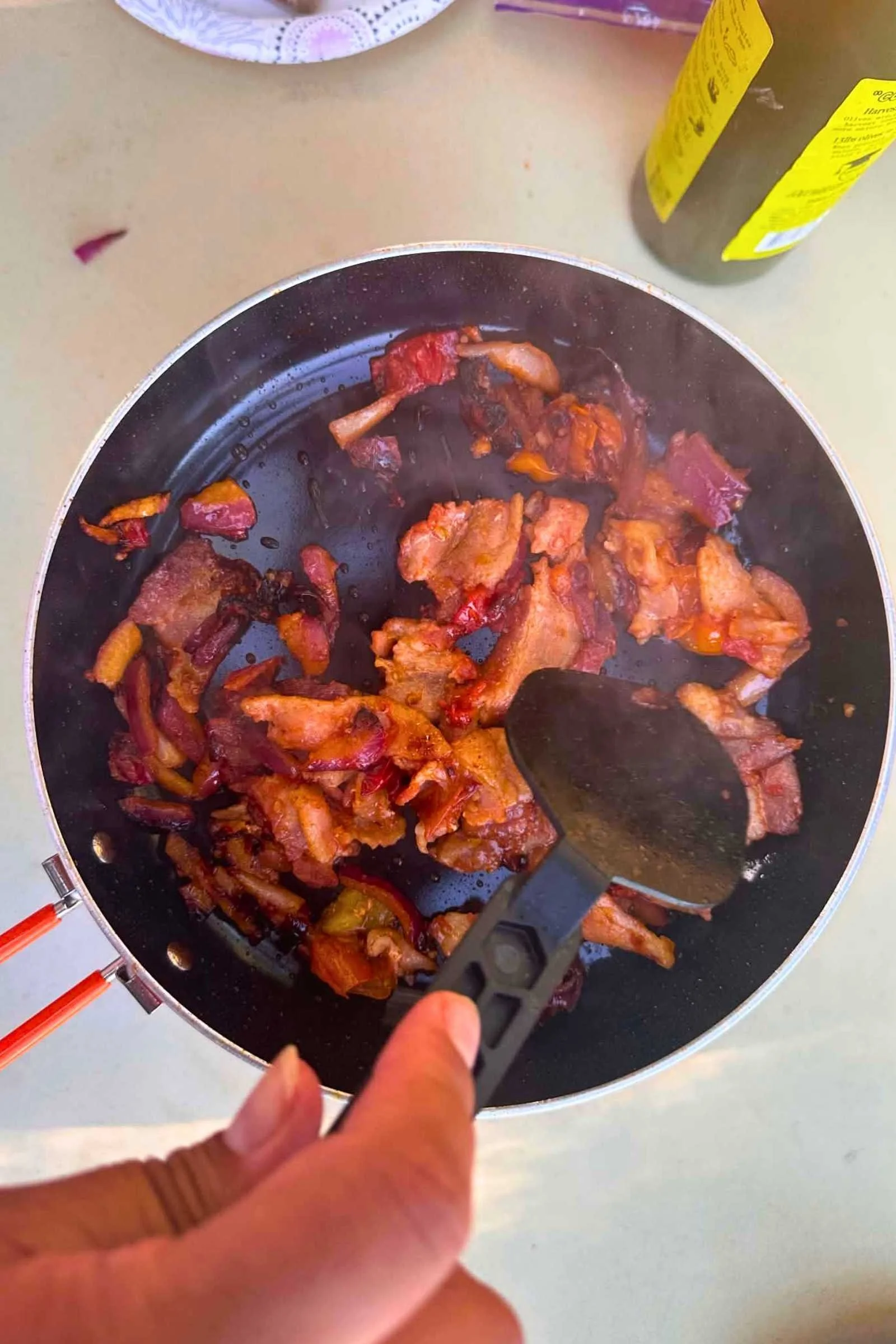
Our testers used this to cook multiple meals over a three-month period while hiking across Southern and Eastern Idaho. We boiled water for ramen, made stew and kept it hot while serving, and sautéed meat for a variety of easy-to-cook camp dishes. During one of our tests, we caramelized onions and tomatoes for a breakfast scramble on medium-low heat and found them to soften and cook down without scorching or burning, and we were able to successfully soft-scramble the eggs we added after.
We also compared it side-by-side with other camping stoves, including the GSI Selkirk 540, the Coleman Cascade 3-in-1, and the Jetboil Genesis Basecamp.
Performance in the field
Boil speed
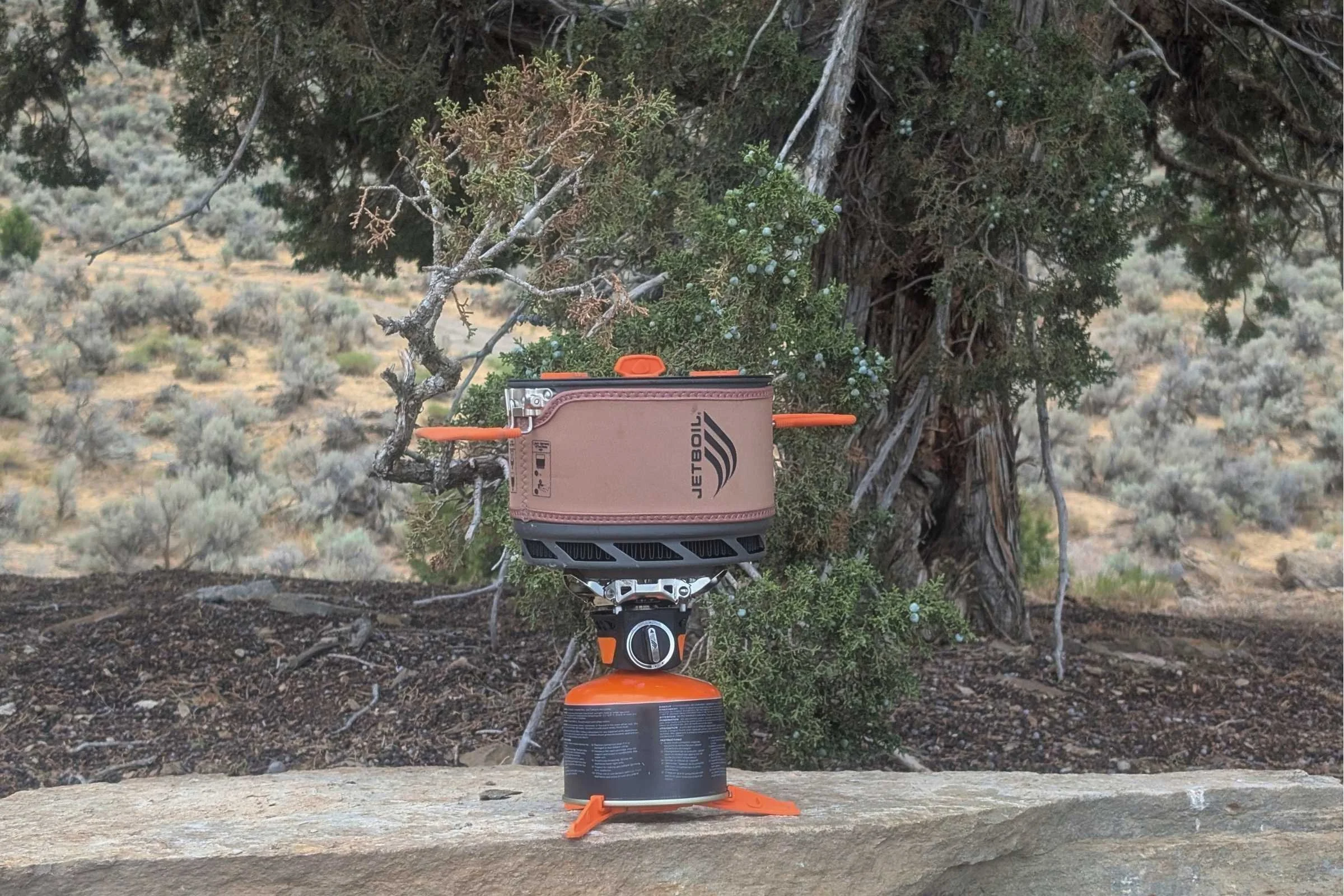
We tested the boil speed by boiling one liter of water as suggested by Jetboil and found their advertised figures of about 130 seconds per half liter of water and 4:15 for a full liter to be fairly accurate. When we boiled approximately one liter of water, it took just about four and a half minutes.
The sheltered burner and recessed design of the FluxRing help the TrailCook to function well in windy conditions. Boiling water on a gusty and cool spring night in the Sawtooth National Forest took the same amount of time as on a clear day elsewhere.
Simmer control
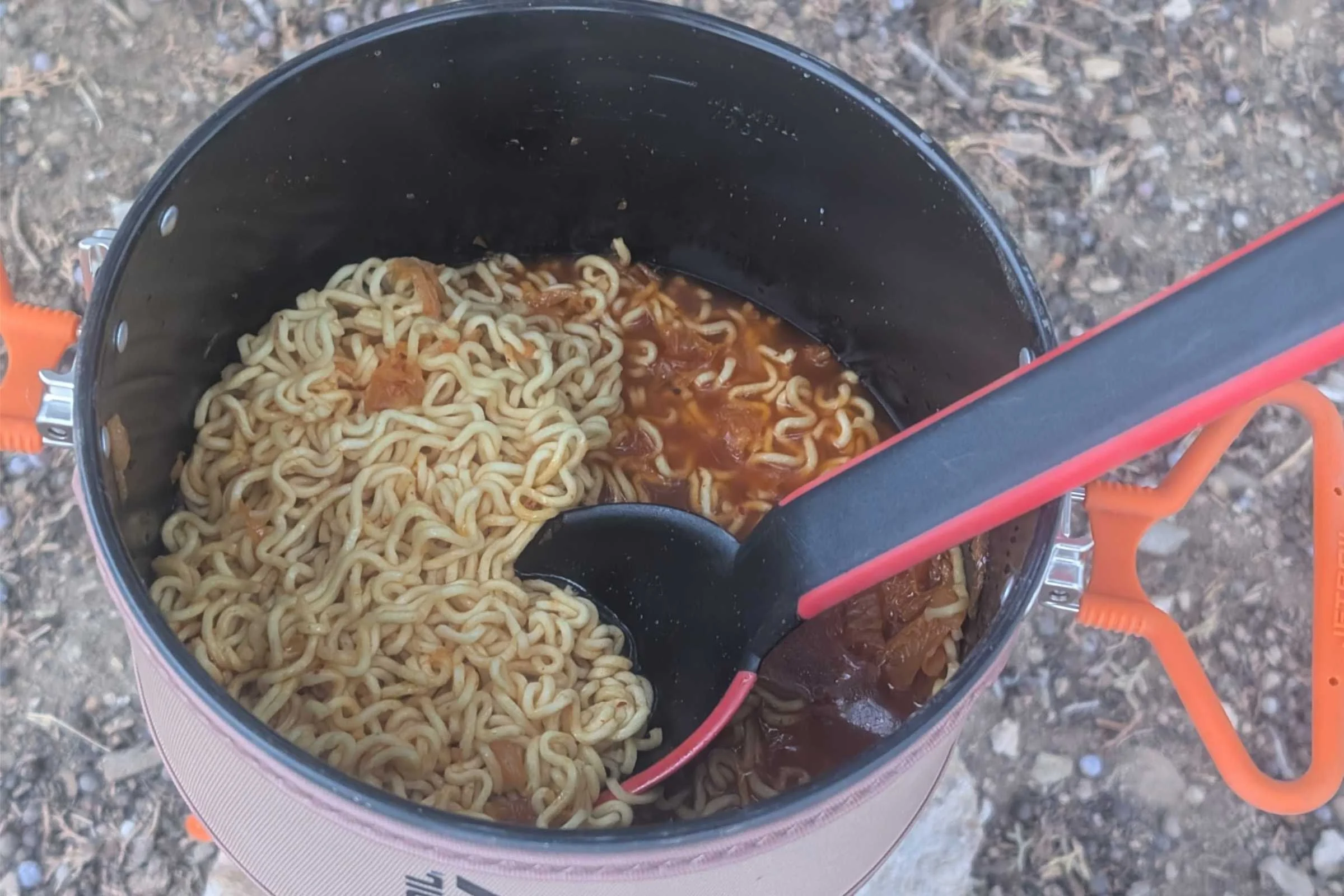
The simmer control is one of the best parts of the Jetboil TrailCook. Many similar stoves on the market, especially those that are less expensive or others that prioritize weight over all else, have controls that feel fiddly and hard to use. Sometimes they feel as if they don’t adjust the burner heat in a steady way; sometimes a little movement of the dial creates a huge variance of temperature or vice versa.
Some online reviewers criticize other Jetboil models for only really working at their highest heat and not being responsive enough to adjust well for cooking real meals. The TrailCook does not have this problem. We found it easy to gauge how the burner would react to a given turn of the knob, which made it easier to get the temperature just right for whatever the cooking task required.
Fuel efficiency
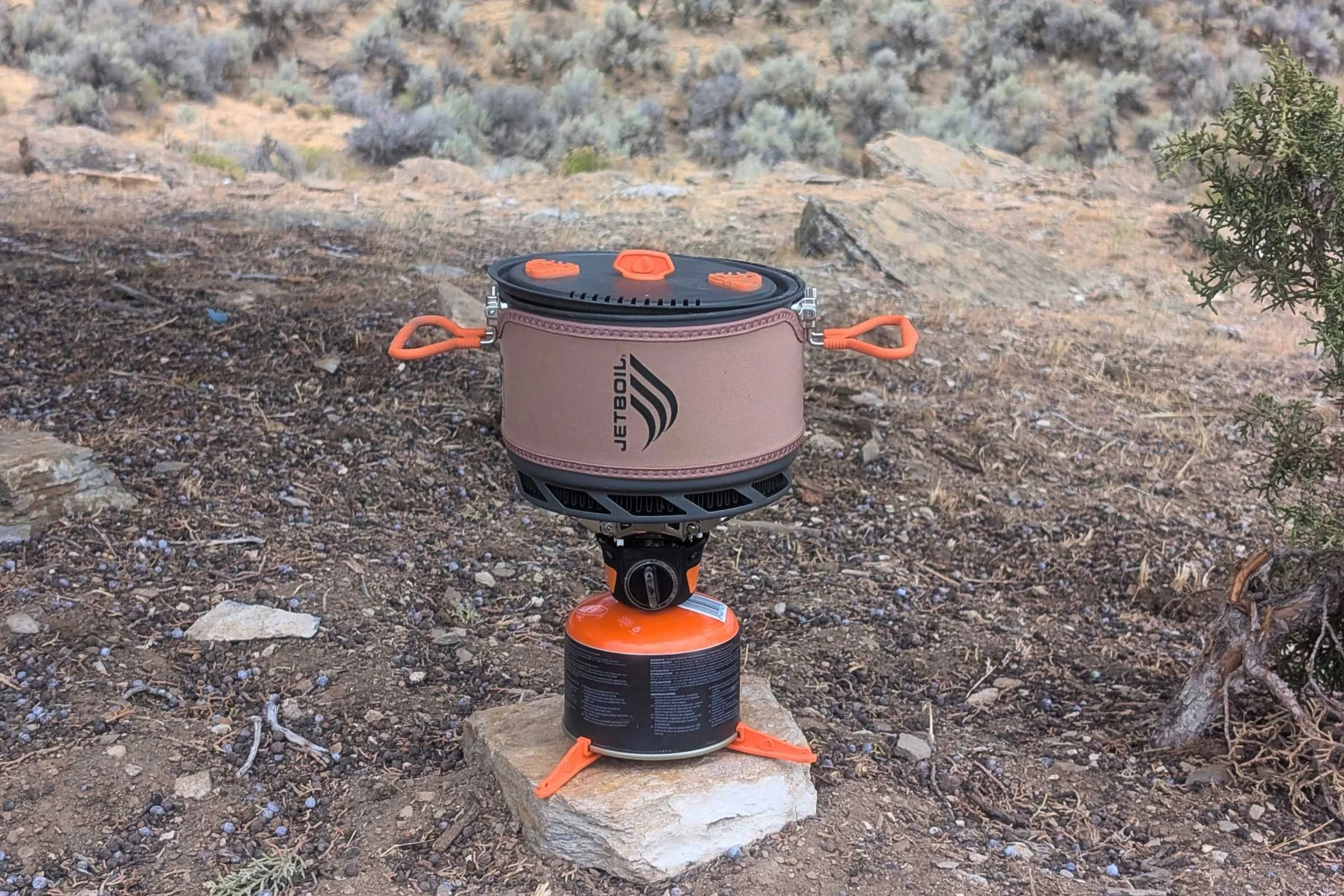
Because of the efficient heat transfer from the burner to the TrailCook pot, fuel goes much further. With another similar stove, a canister of fuel may only be able to boil a few liters of water. Jetboil claims the TrailCook will boil 10 liters to one canister of fuel, which is impressive. In our experience, a single canister is definitely enough fuel for a several-day trip cooking for 2 or 3 people.
Stability
One criticism often levied at this style of canister stove is that the design is necessarily unstable and it is really easy to knock the pot over while cooking. The easy-to-use plastic stabilizer base that attaches to the bottom of the fuel canister provides that much-needed stability. Even on uneven surfaces like the top of a large rock, when placed on the self-centering burner, the TrailCook 2.0L pot doesn’t wiggle or sway much, if at all. The only time while testing that the pot did not feel steady was when the self-centering base that it fits into on the burner was not fully open and was not properly seated.
Packability
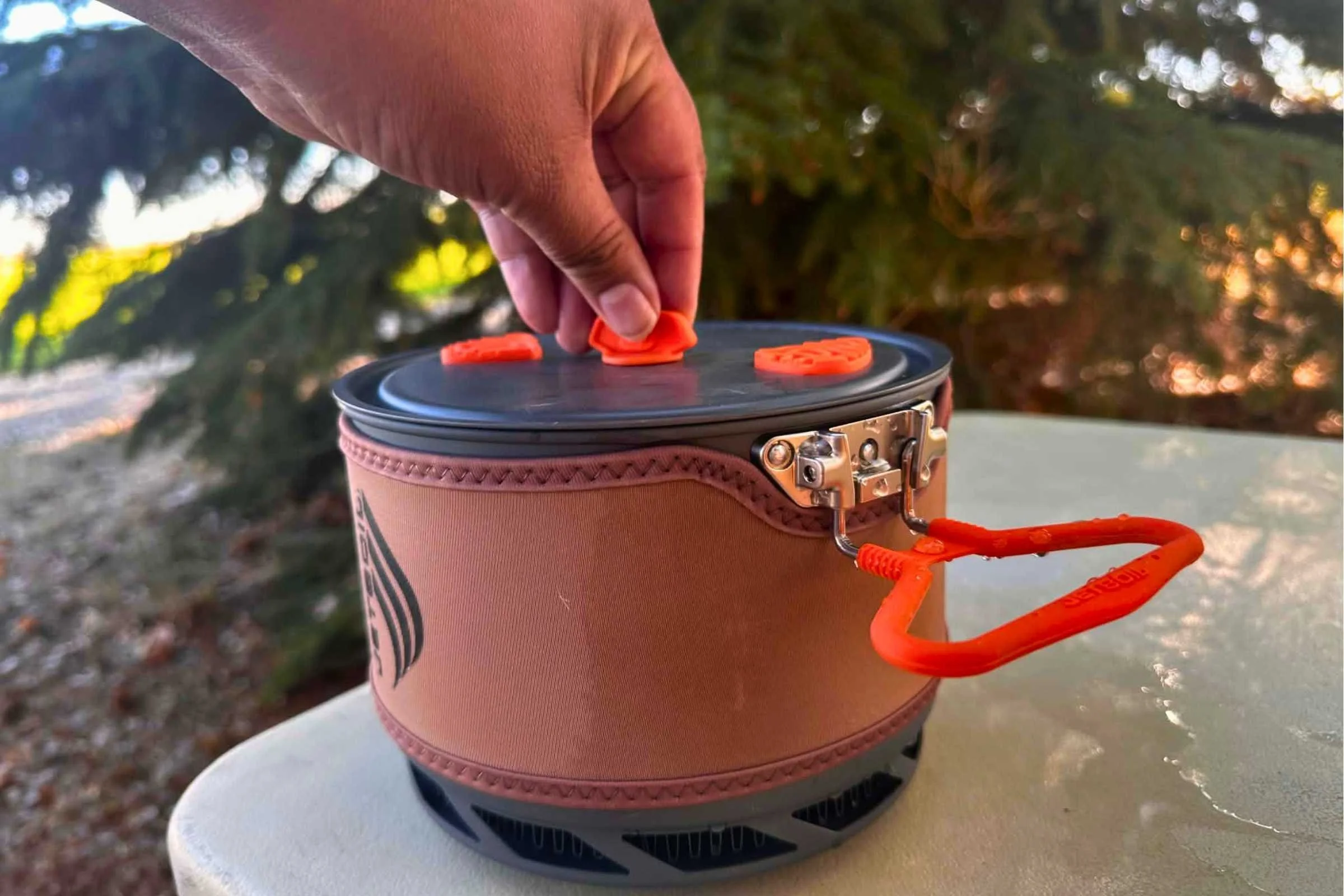
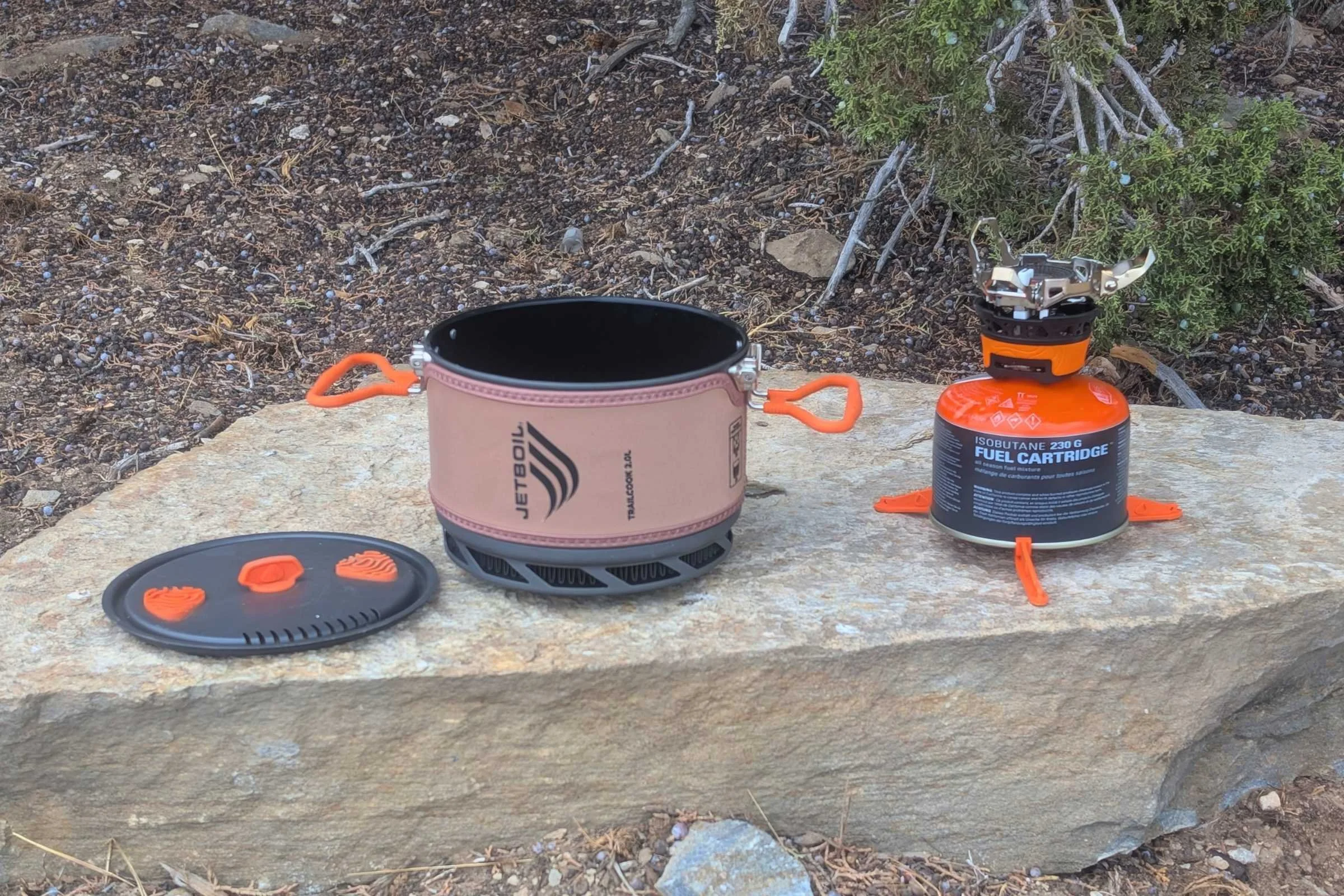
The burner, fuel, and plastic base slip easily into a cloth bag and fit neatly into the closed pot. The handles flip up and lock the pot lid in place, keeping everything safe inside. The pot is not tiny, but small enough to pack away in a backpack without much trouble. It is certainly far more packable than one of the larger basecamp style stoves, which would also require cookware that can’t stow inside.
Durability
All the materials from the metal of the burner to the ceramic coating of the pot to the rubber of the controls feel durable and will hold up to use on the trail. Online reviews rate its long-term reliability highly, but some note that the ceramic non-stick coating of the pot is not impervious to damage and can become scratched and need to be replaced if not used correctly.
Features
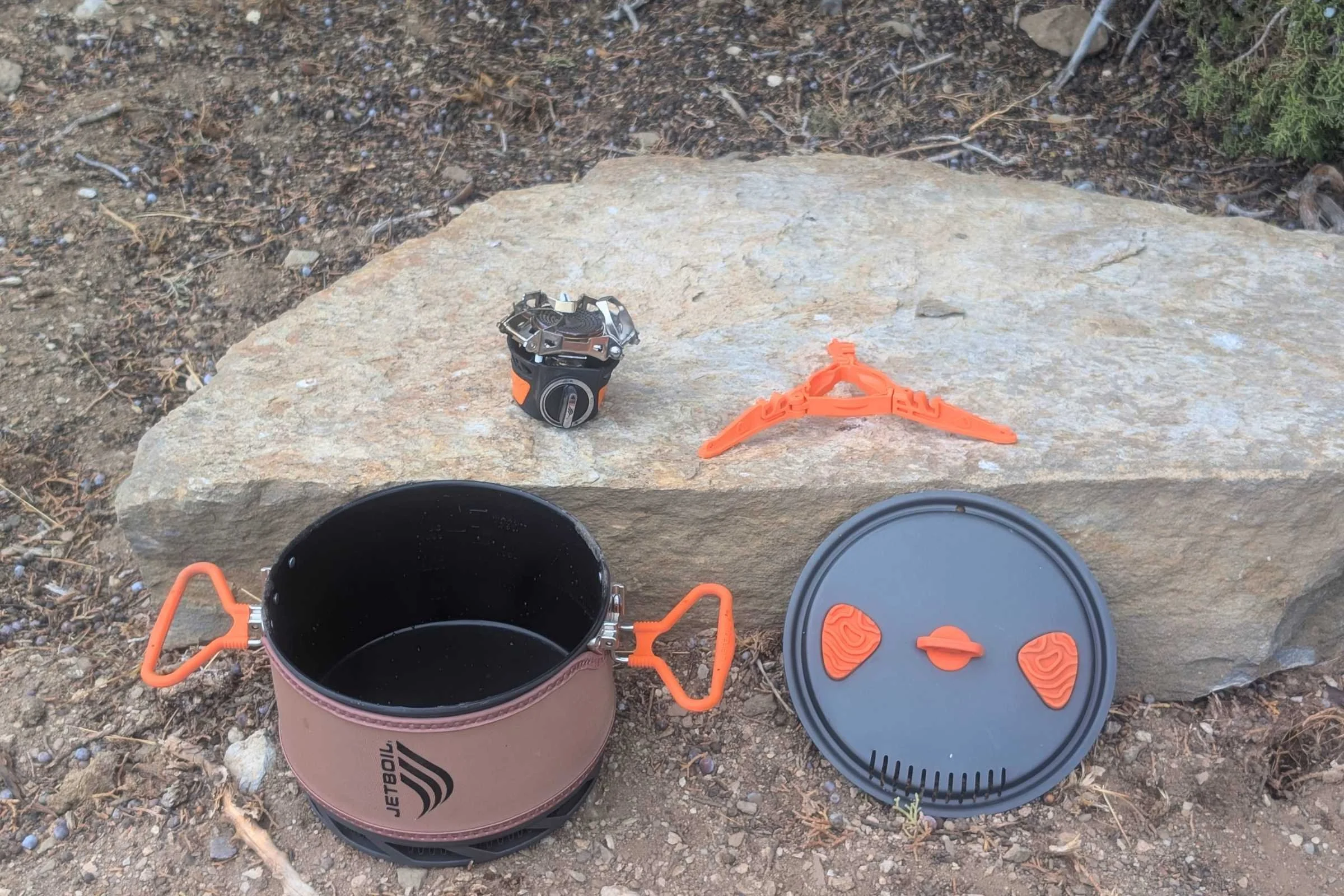
Integrated stove and pot system
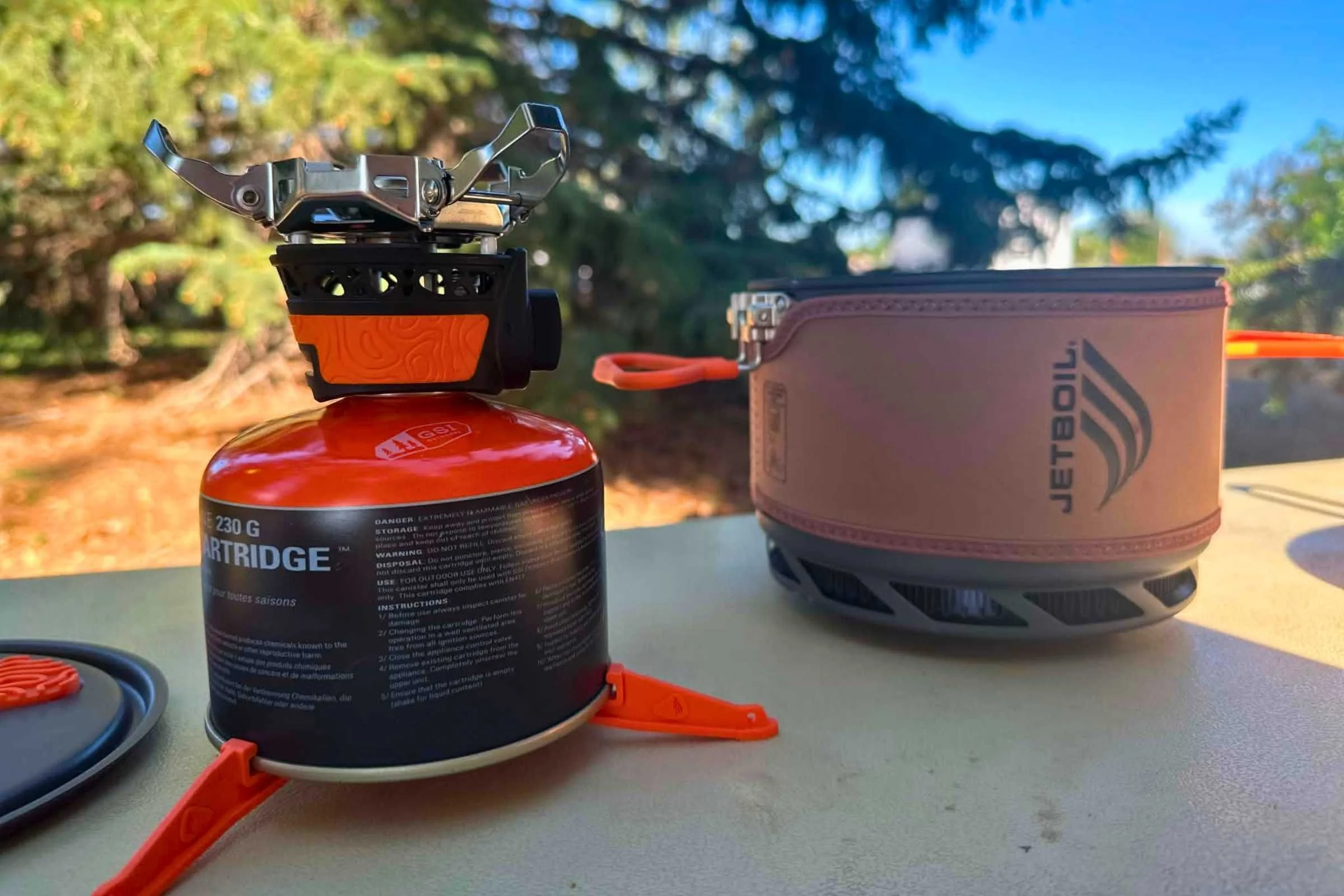
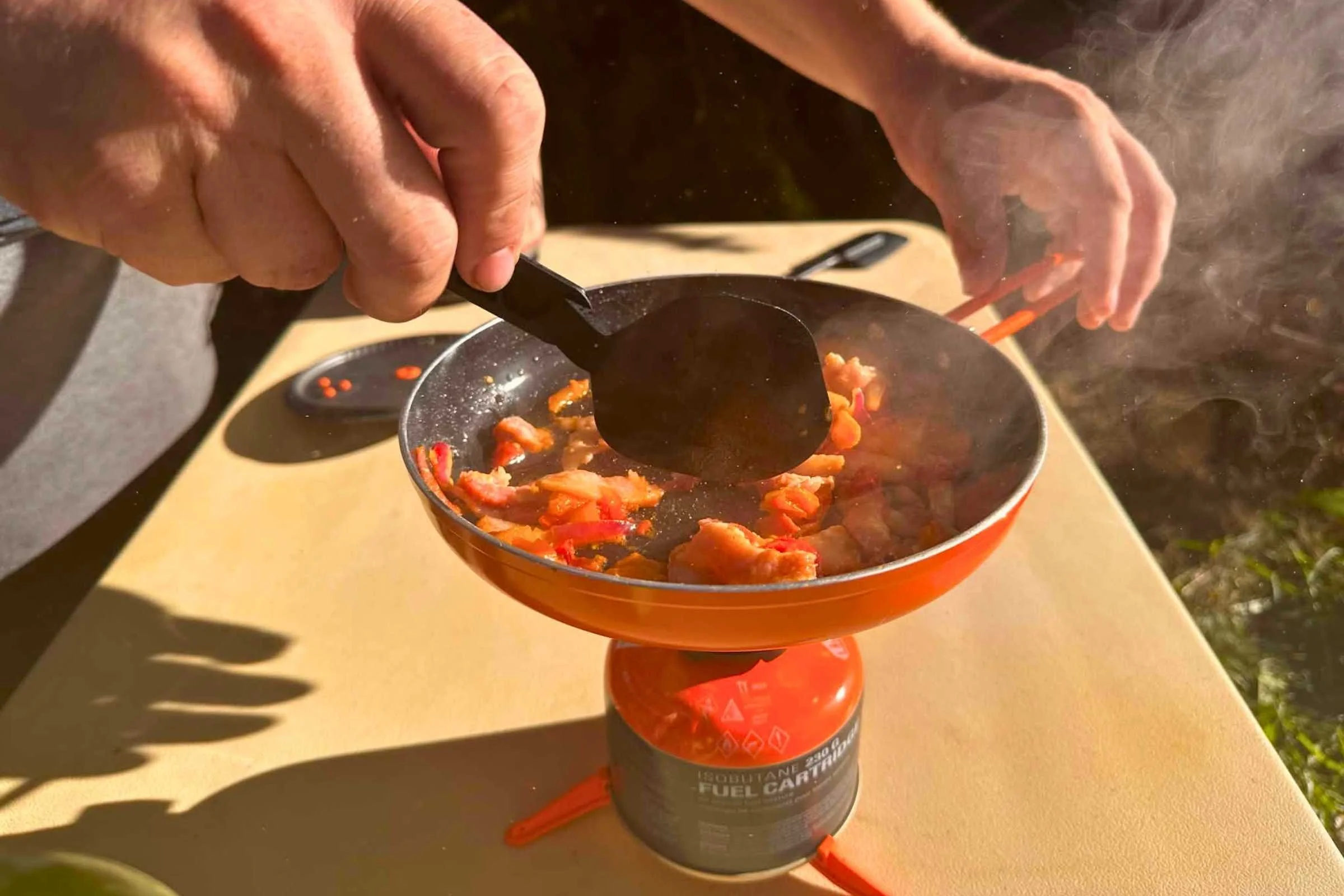
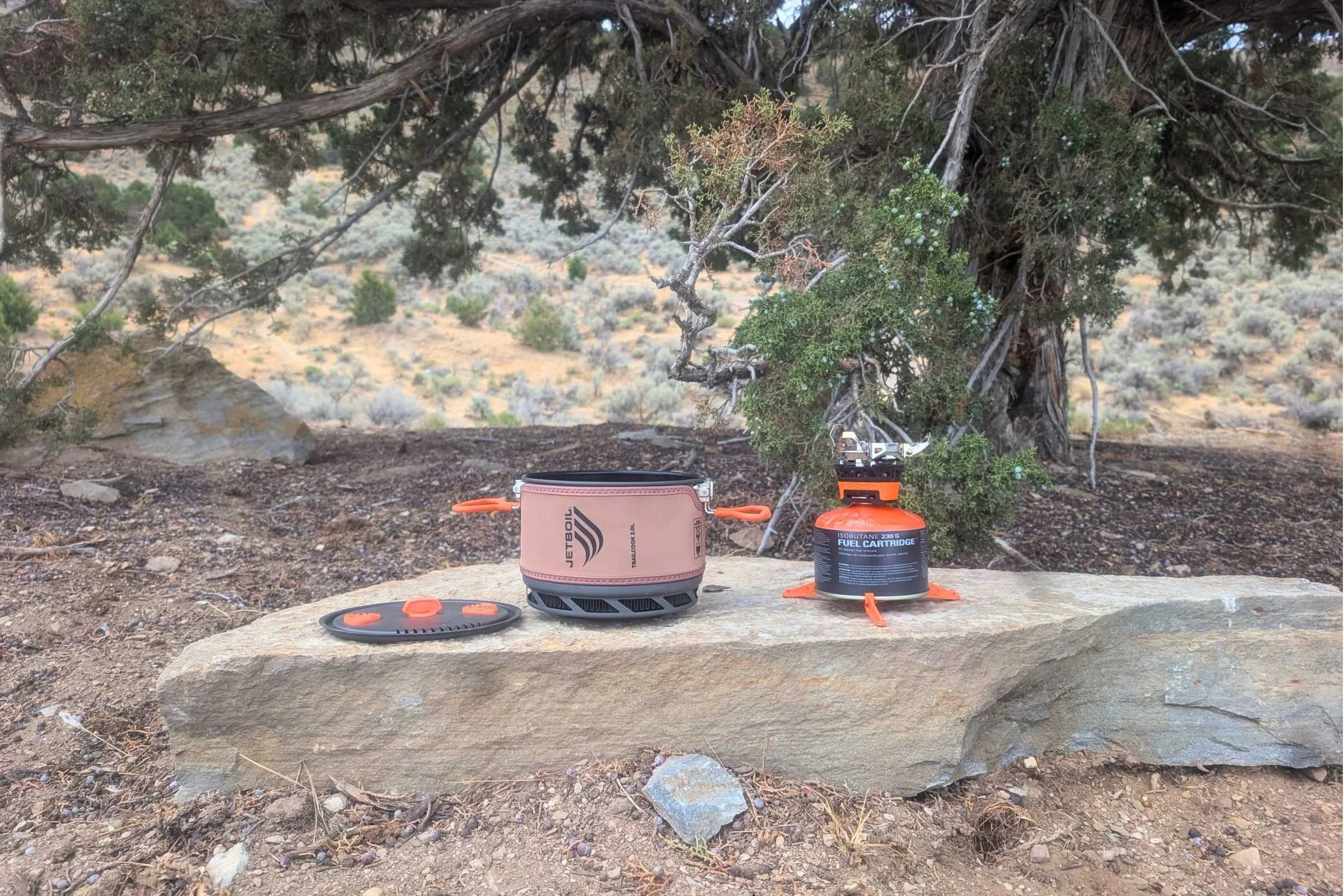
The Jetboil TrailCook 2.0L comes with the burner, 2.0L pot, and a stand for stability, which attaches to the fuel tank. A small frying pan with an integrated spatula is also available from Jetboil and fits the TrailCook’s burner.
FluxRing heat exchanger
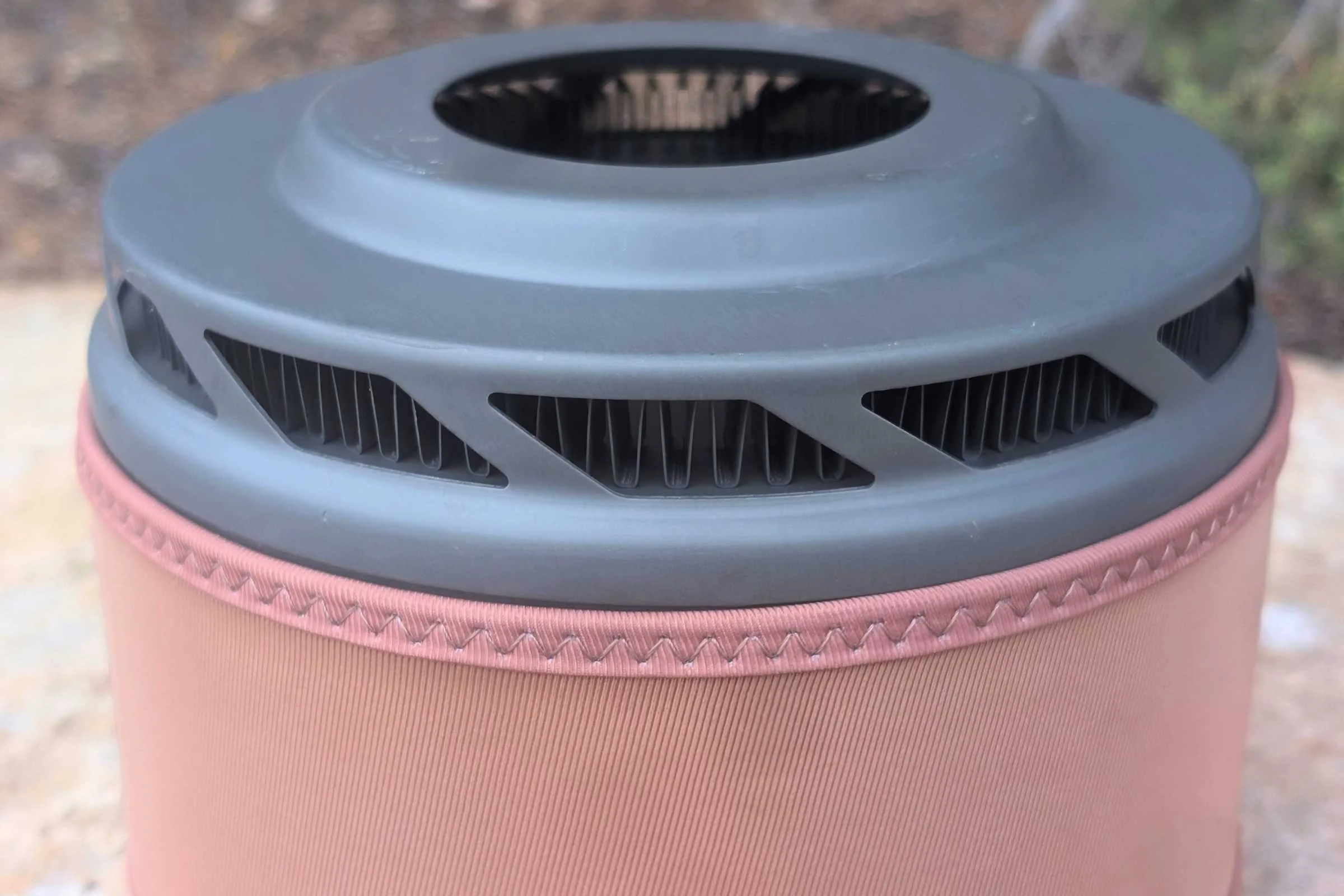
An up-close view of the TrailCook’s FluxRing.
The FluxRing heat exchanger is a Jetboil innovation that they feature on many of their stoves. Visually, the bottom of the ceramic-coated pan has a semi-hollow section below the actual bottom of the pan that nestles firmly in place on the burner and maximizes heat transfer efficiency, resulting in faster, more even heating and less fuel consumption.
Precision simmer control
The single simmer control knob on the front of the burner is rubberized and easy to grip. It moves smoothly and is easy to gauge, allowing for more precise cooking temperatures, not just boiling water quickly.
Knob-twist ignition
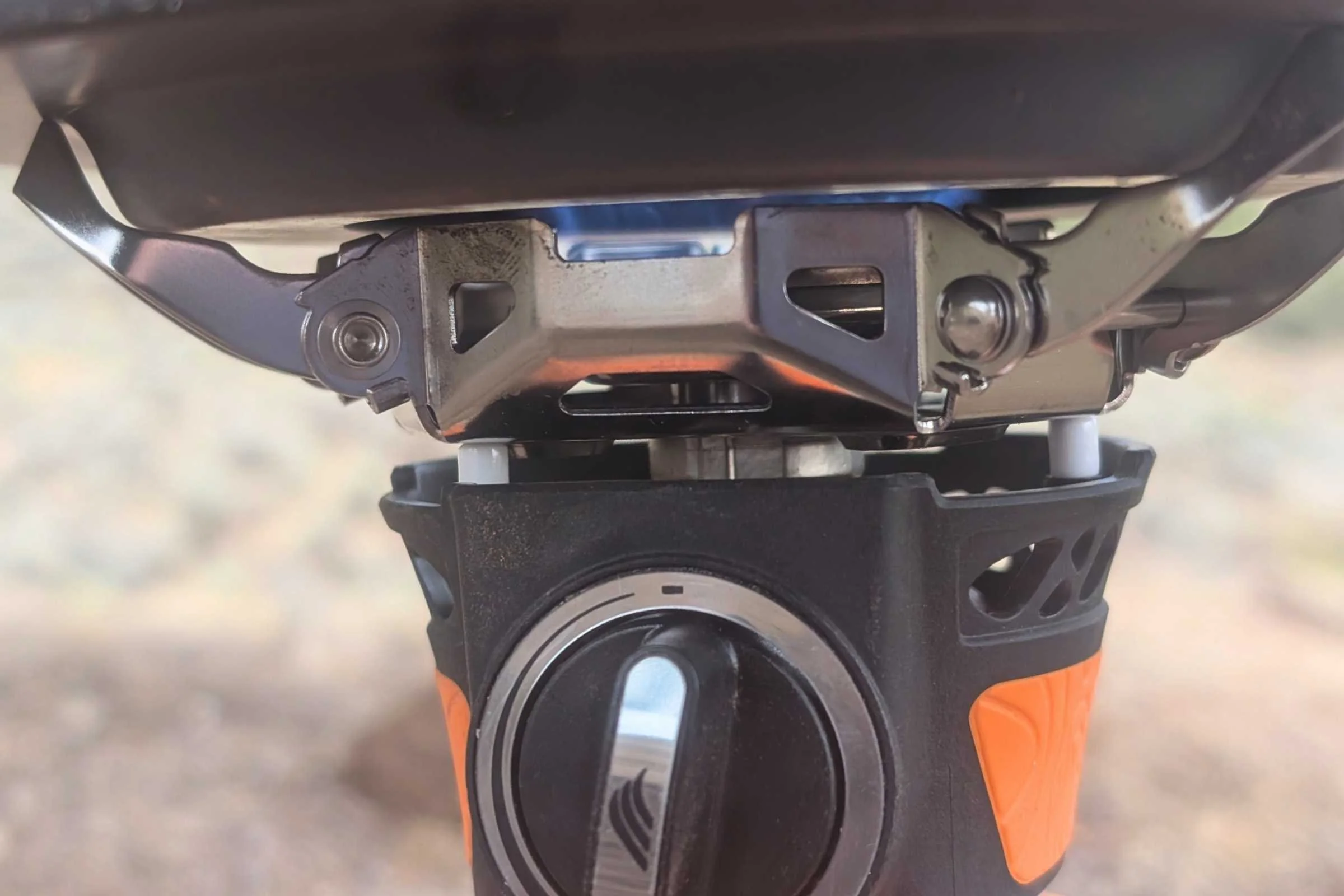
The self-centering mechanism that attaches to the FluxRing of the included pot.
The TrailCook burner starts easily with just the twist of a knob. This isn’t unique to JetBoil, but this particular starter feels and functions easily with no hiccups, starting on the first try every time. Just turn the simmer control dial counterclockwise until it clicks and then adjust to the desired heat level.
Insulated pot sleeve
The TrailCook 2.0 has a removable tan insulated sleeve to keep heat in. Jetboil also sells sleeves in a few patterns for those that want to customize their cookware.
Fuel canister compatibility
The Jetboil TrailCook 2.0L uses any pressurized, threaded camping gas canister containing an isobutane/propane blend with a standard EN417 Lindal valve.
Stabilizer base
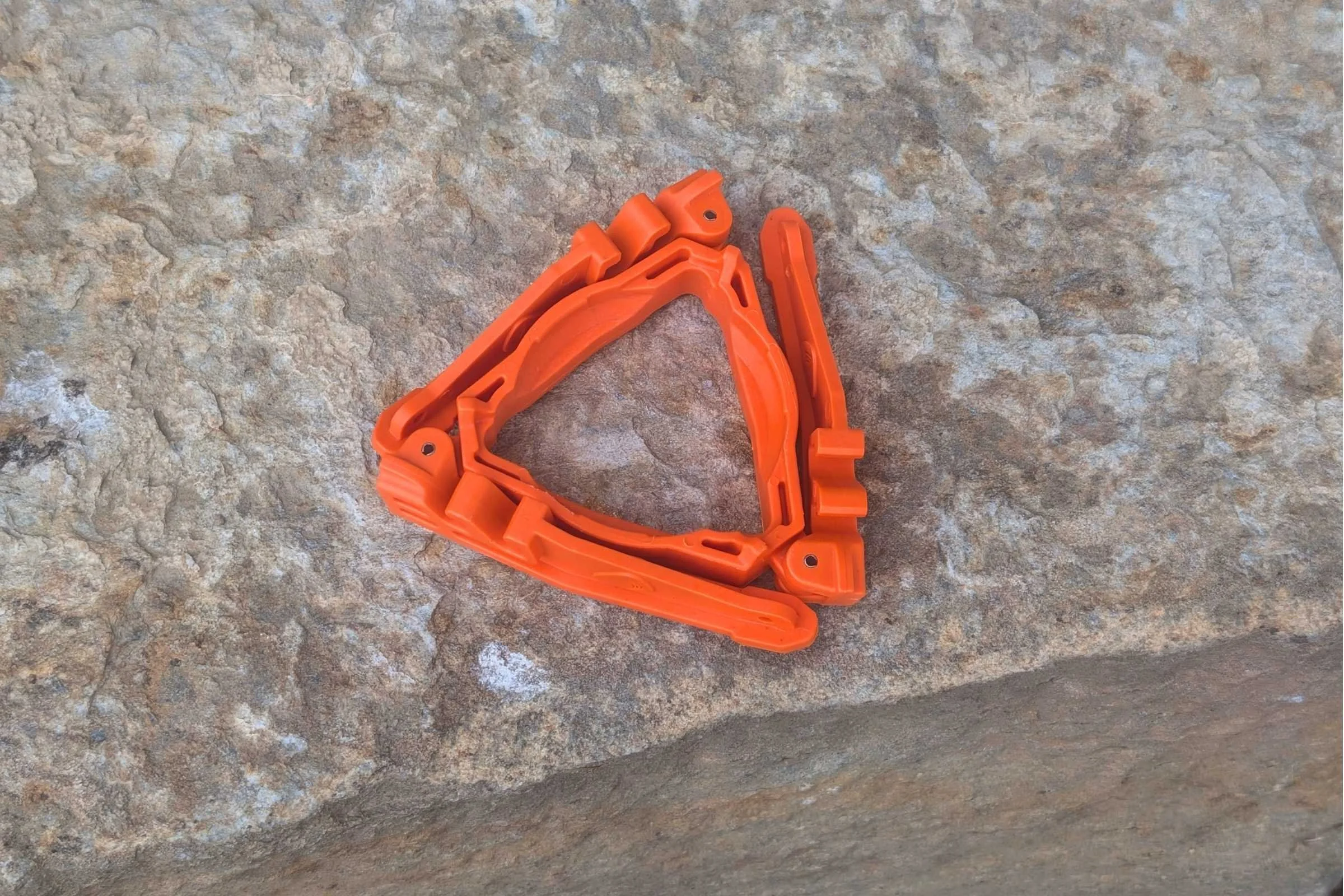
The plastic base folded up for storage.
One issue with canister stoves, where the heating element sits atop the fuel canister, is that they are unstable and prone to tipping on uneven surfaces. To combat this, the TrailCook sits securely atop the easily attachable plastic stabilizer base that the fuel canister, attached to the burner, rests on.
Lid with pour spout and strainer
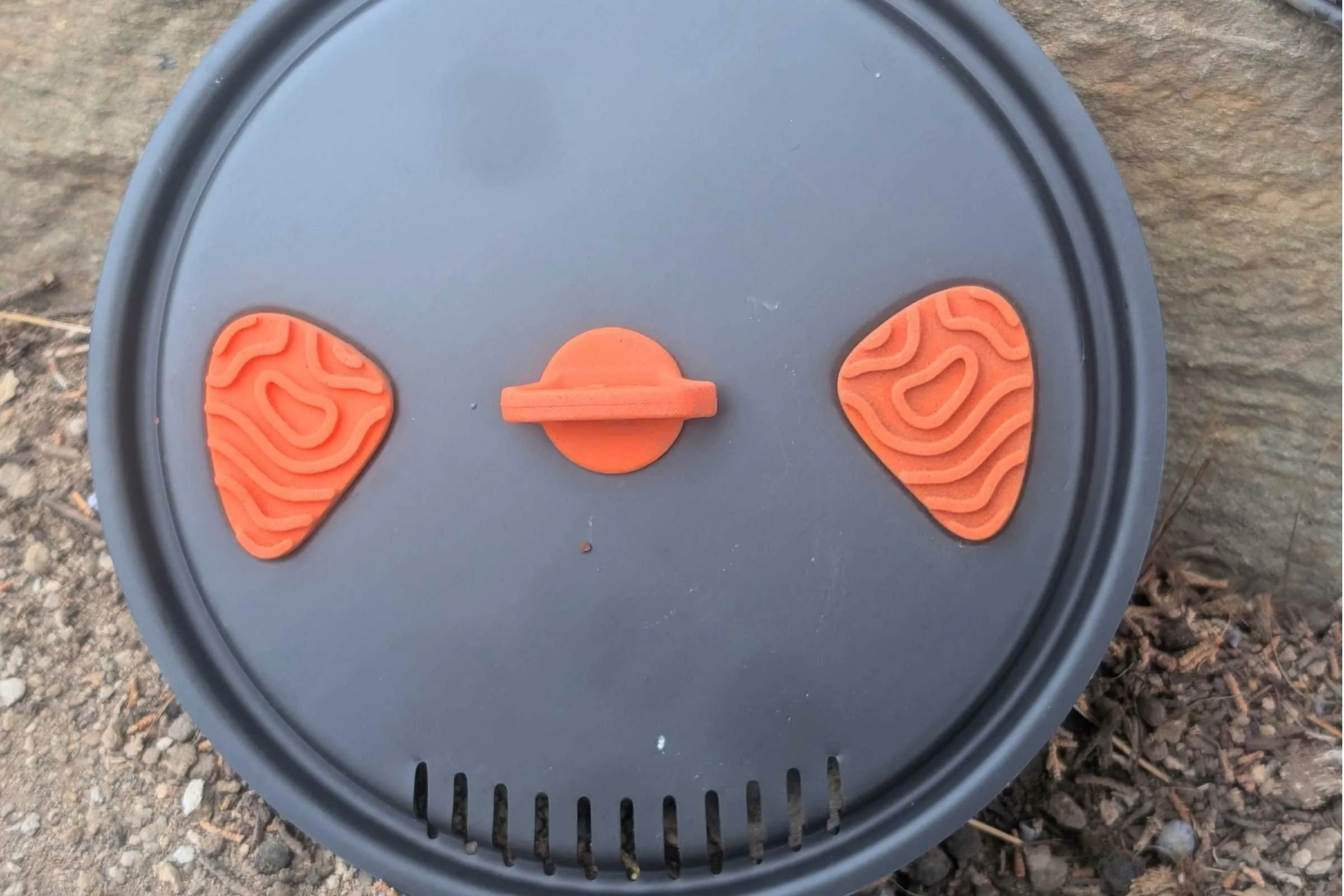
A close-up view of the top of the lid featuring the rubberized handle and two touch points for using the spout (not pictured) and strainer.
The TrailCook 2.0L pot’s lid has a row of slits cut into one side and a single slit on the other, which can be used to strain or pour out water while leaving everything else inside. There are also two rubberized touch points on the lid to help hold it firmly in place while using the pour spout or strainer.
Similar camping stoves
Jetboil TrailCook vs Jetboil Basecamp Genesis
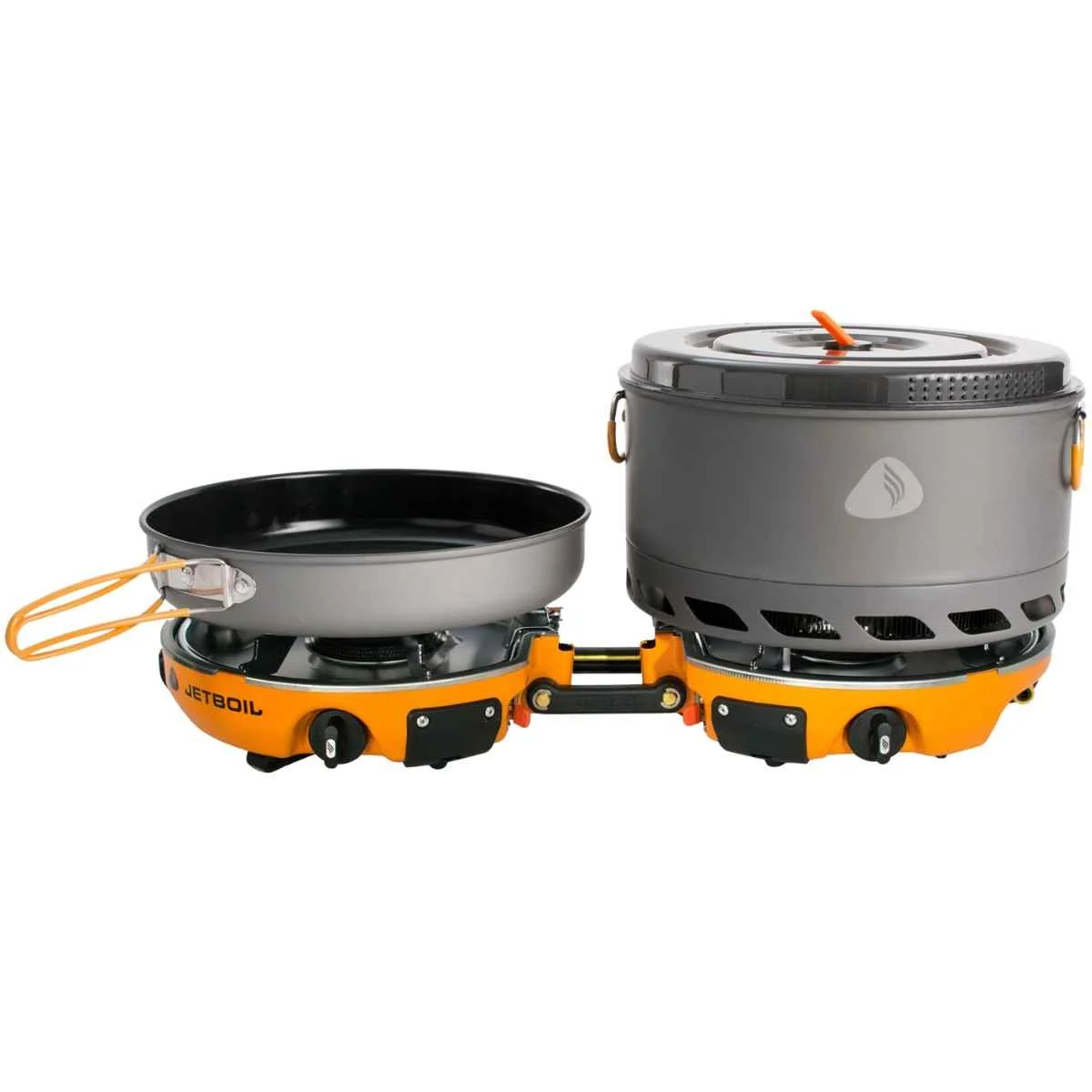
MSRP: $450
Fuel type: Propane
Burners: 2
Weight: 9.3 lbs
The Jetboil Basecamp Genesis has become one of our tester’s favorite stoves as of late. While more expensive than most other stoves (and almost twice the price of the TrailCook 2.0L), the Genesis pairs ample cooking power with flexibility and portability. Its clamshell design folds up easily, storing inside its own cookware and a travel case; it sets up almost instantly; the starting mechanism and burner control are comfortable and easy to use; and its integrated design means everything needed to cook is always on hand.
While we love the Genesis and think its cooking experience is one of the best out there, its large pot size and its nearly ten-pound weight prevent it from being a good choice for backpacking or certain other activities where space and weight are at a premium.
Learn more in our in-depth review of the Jetboil Genesis Basecamp System.
Jetboil Basecamp Genesis
Jetboil TrailCook vs Snow Peak GigaPower 2.0
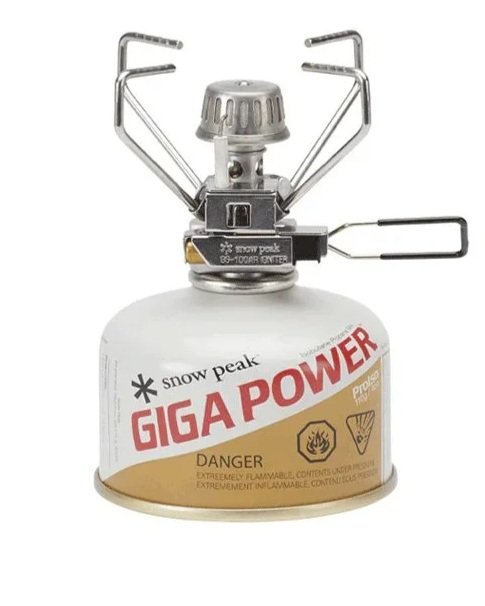
MSRP: $40
Fuel type: Isobutane/propane canister
Burners: 1
Weight: 4.23 oz
The Snow Peak GigaPower 2.0 is an ultra-light, ultra-simple stove that many pros swear by. We’ve used one for years, and it never disappoints. It’s incredibly small and light and is just about the simplest system out there. There are no bells or whistles here. For example, unlike the TrailCook, it does not come with its own pots or base.
One of the best aspects of the GigaPower 2.0, however, is its heat control, which, similarly to the TrailCook, is flexible and easy to dial in just the right temperature—from a little hot for melting butter or simmering a stew to hot enough to quickly boil water, and everywhere in between. This makes it great for cooking real food on the trail as well.
Backpackers conscious about pack weight might choose the Snow Peak GigaPower 2.0 over the Jetboil TrailCook 2.0L for its much smaller footprint and weight.
Snow Peak GigaPower 2.0
Jetboil TrailCook vs Jetboil Flash 1.0L
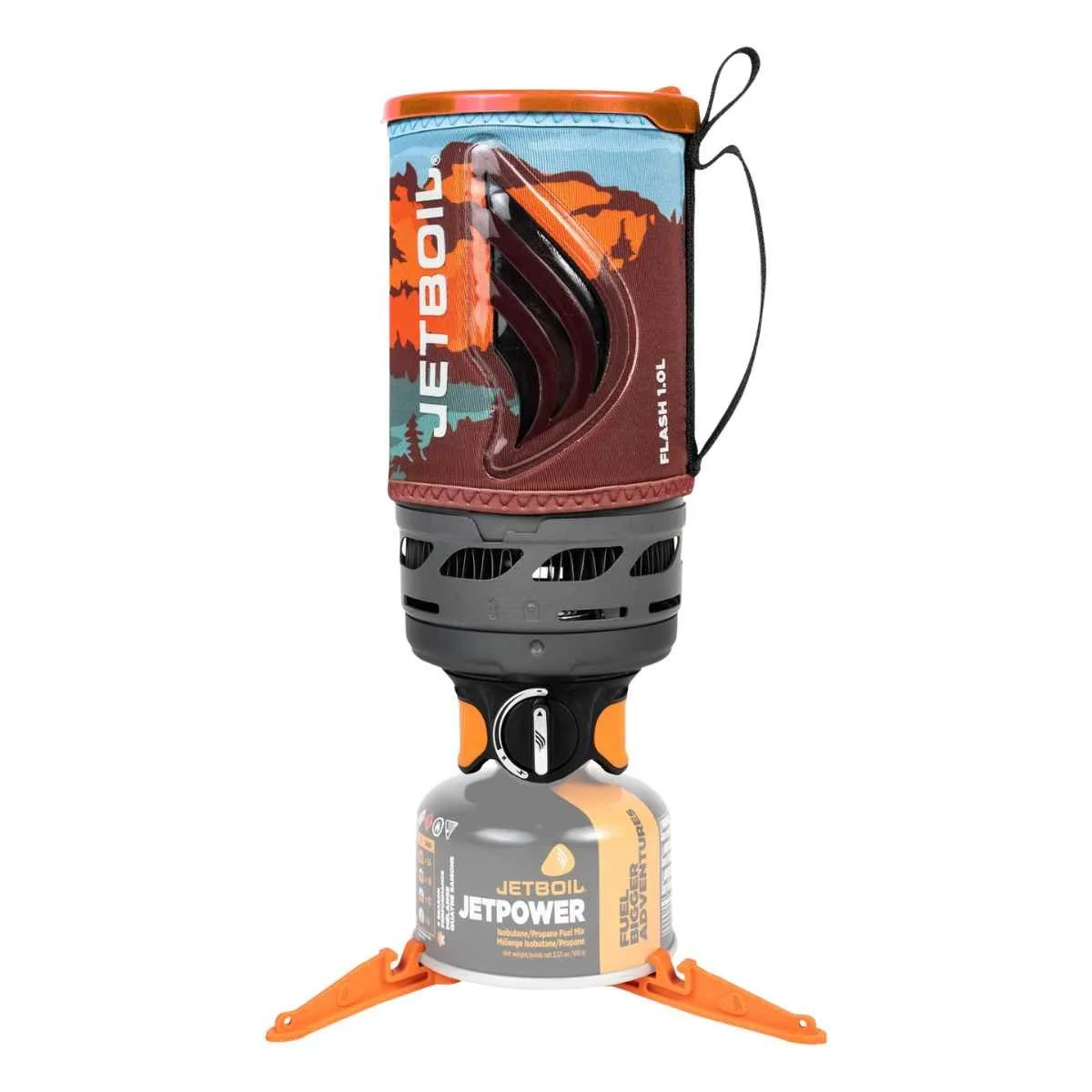
MSRP: $145
Fuel type: Isobutane-propane
Burners: 1
Weight: 13.1 oz
The Jetboil Flash 1.0L is similar to the Jetboil Trail Cook 2.0L but isn't as easy to cook real meals. It is easy to use as a stove at home with the most intuitive on-off switch we've seen on a backpacking stove, which is why we named it Easiest Backpacking Stove in our Best Backpacking Stoves guide. As with the Trail Cook 2.0L, the temperature indicator tells you when it's warm, hot, or boiled. The insulated sleeve keeps your hands safe and your beverage warm while having style.
It also has an auto-ignite button, lots of stability, and it is easy to get the pot on and off the base.
Like all integrated stoves, the Jetboil Flash 1.0L is heavier, bulkier, and more expensive than traditional canister backpacking stoves. But similar to the Trail Cook 2.0L, it is an integrated stove with a faster boil due to a more efficient heat transfer system and has the advantage of having all the parts you need in an all-in-one package.
The Trail Cook 2.0L has a regulator, and temperature can be controlled better for a simmer. It also has an adjustable burner system that can handle skillets and non-Jetboil cookware.
The Trail Cook 2.0L is bulkier and weighs more, but is much better suited for campers or backpackers who plan to do much more than boil water.
See our in-depth review of the Jetboil Flash 1.0L stove for more information.
Jetboil Flash 1.0L
Should I buy the Jetboil TrailCook 2.0L Precision Cooking system?
Buy if:
You cook real meals while backpacking
You want a compact stove system for car camping
You want one stove to work for backpacking and car camping
You want precise simmer control
You cook for two or more people
You want a fast and efficient stove system
Skip if:
You only boil water for dehydrated meals
You prioritize ultralight gear
You want the cheapest backpacking or camping stove
You already own a lightweight stove and pot combo
Where to buy
The Jetboil TrailCook 2.0L Precision Cooking System has quickly become a popular gear item, so you have options when it comes to retailers. Here are some of the pros of the retailers.
REI
Pros: 100% satisfaction policy for 1 year; 10% dividend for members.
Amazon
Pros: Free 2-day shipping with Amazon Prime membership (can be same-day delivery in major metropolitan cities)
Why you should trust us / About the author

Clayne Zollinger is an avid car camper, day hiker, occasional backpacker, and frequent paddler in the warm months. I camp and hike throughout the Mountain West, namely Southern and Central Idaho, Southern Montana, and Western Wyoming nearly every weekend when conditions allow. No matter where he camps or hikes, bikes or paddles, good food is always a priority. Over the years, he’s tried stoves of all types, experimented with dozens of recipes, and tried to hone in on making the best food possible while in the outdoors.
I believe in testing gear as most consumers use it, and I value gear that is reliable, sustainably made, and works well in real life on the trail.
You can find more of his reviews on his Treeline Review author page.