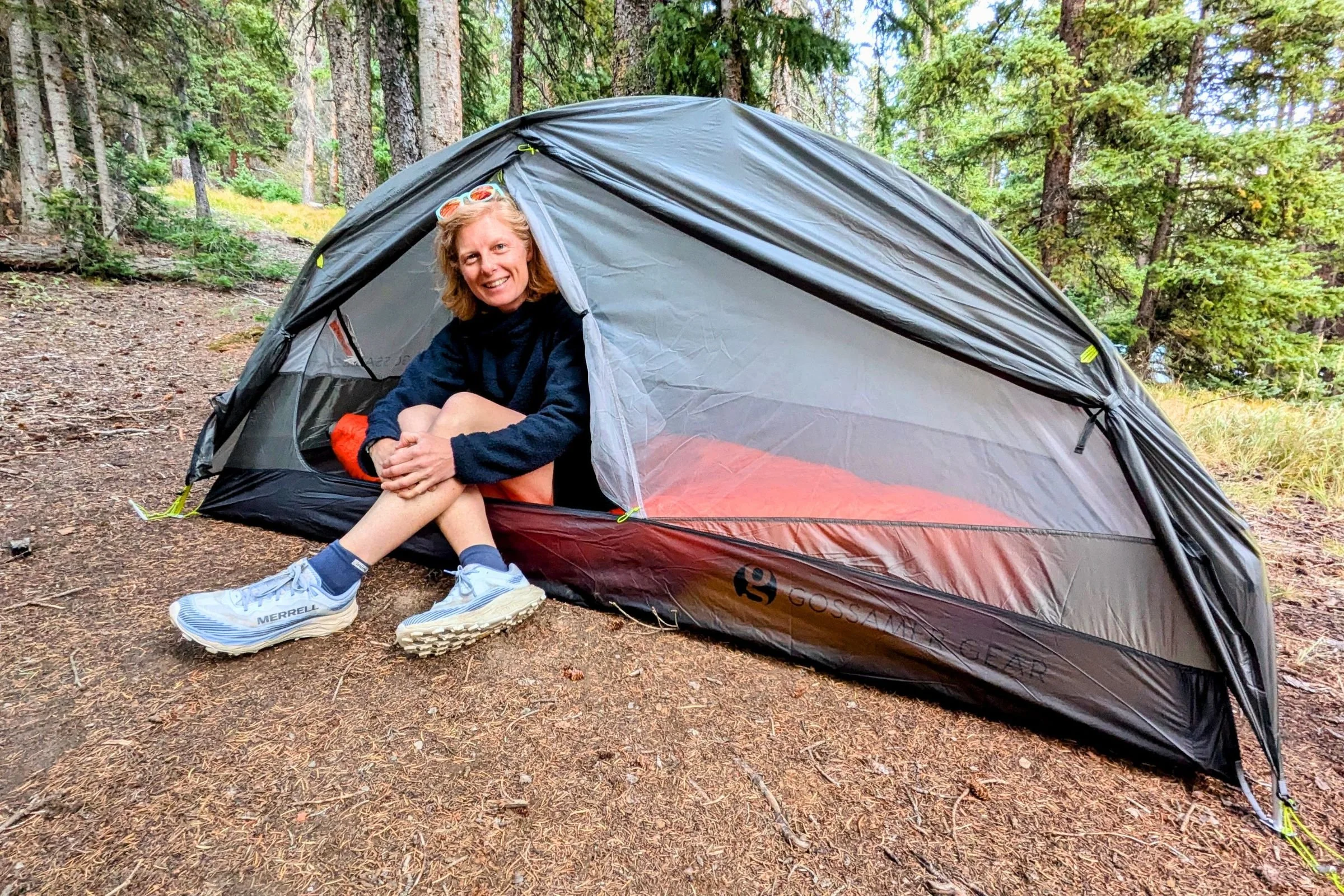
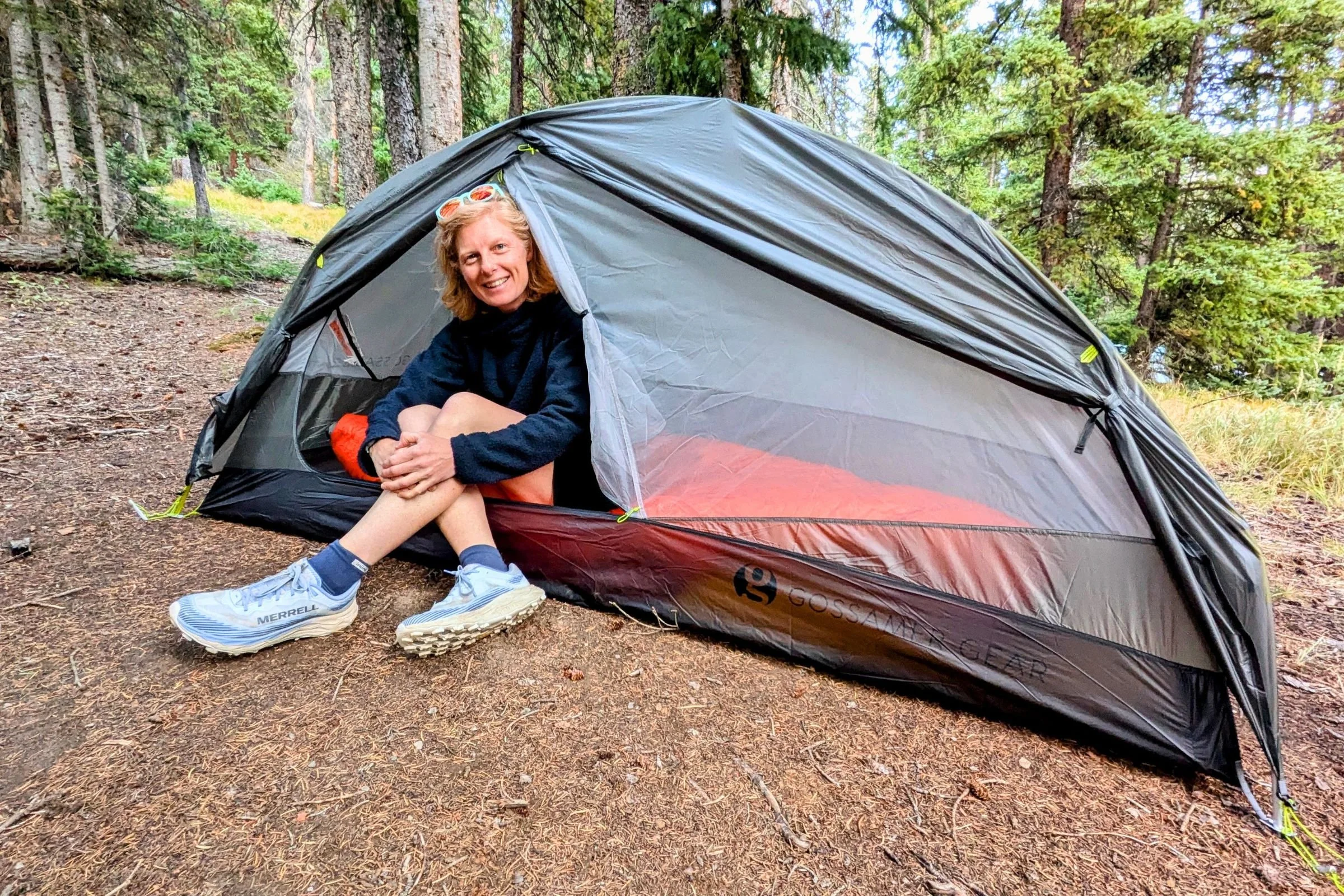
I backpacked 100 miles with Gossamer Gear The Free to see how this ultralight freestanding tent holds up to wind in the mountains and desert
An ultralight freestanding tent for solo thru-hikers who need to set up on rocky surfaces or don’t use trekking poles
October 23rd, 2026
Home > Gear Reviews > Backpacking
Our verdict
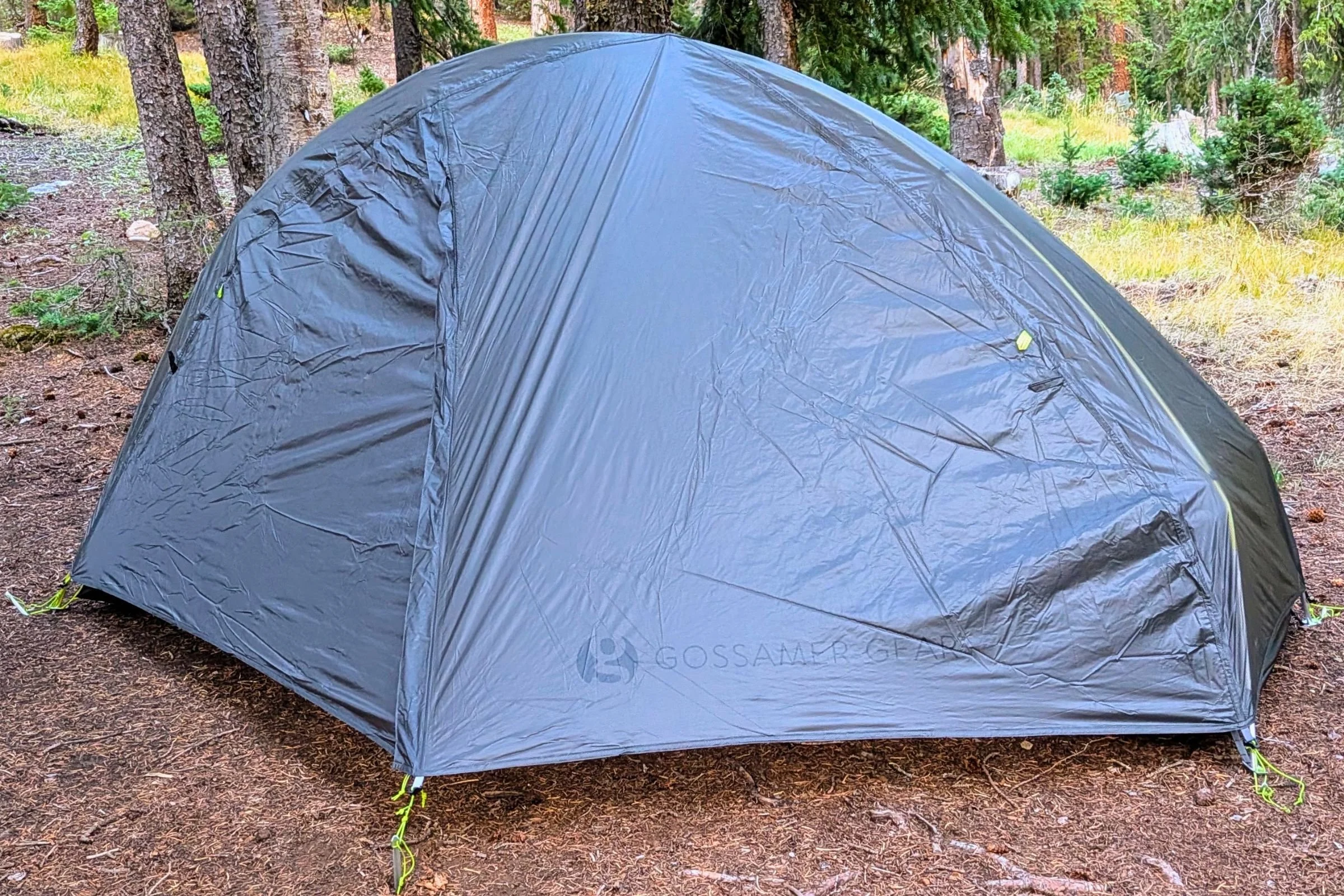
At 29.8 ounces, the Gossamer Gear The Free is an extremely lightweight, fully freestanding tent. You don’t need stakes to set up this double-walled tent, and you don't need trekking poles either. You’d be hard-pressed to find a lighter-weight freestanding tent out there, especially at this price. There aren’t even many semi-freestanding tents this lightweight, and those tents cost more than The Free.
The Free is an ideal shelter for backpacking in desert conditions, where you might have to pitch it on slickrock. It’s also a great tent for alpine terrain, where rocky ground can make driving stakes nearly impossible. On longer trips and thru-hikes, you never know where you’ll have to pitch your tent. This tent gives you the flexibility to set it up anywhere, all without weighing much more than many popular trekking pole tents.
We tested the Gossamer Gear The Free tent while backpacking over 100 miles in Colorado and Utah in the summer and fall. We used it along the Colorado Trail, in Grand Staircase-Escalante National Monument, and in Coyote Gulch in Glen Canyon National Recreation Area. We tested it in temperatures ranging from 30°F at night to 100°F during the day. While we slept soundly inside, we experienced rain, blowing sand, and high winds. We also left this tent set up at basecamp while we explored for the day, and it never collapsed in the wind.
With only the tent, rainfly, and poles, it weighs just 29.8 ounces. The material combines 15D recycled Robic nylon with a 20D dope-dyed ripstop grid and a silicone/PU coating. This fabric has a 4,923 mm hydrostatic head, which is exceptionally high for a 3-season tent.
Gossamer Gear The Free Tent
If you’re camping in a rainy location, The Free will likely feel cramped if you have to spend a lot of time inside it. We’ve spent evenings waiting out a storm in this tent, and you can only sit upright directly in the center, and there is very little room on either side of a 20-inch-wide sleeping pad. It has a single vestibule, which is large enough for your pack and shoes, and a little room for gear above and below a 72-inch sleeping pad, but it doesn’t have much extra room inside.
We never felt like we couldn’t fit all our gear inside with an ultralight kit, and there’s enough room to sit up and read, but only just enough room. Our two main testers are under 5’10”, however, and if you’re over 6’ 2” tall, have wide shoulders, or use a wide sleeping pad, this tent isn’t the best option for you.
If you’re looking for an ultralight freestanding tent for bug and weather protection for your next ultralight backpacking trip or thru-hike, we think The Free is a great option. It’s one of our favorite ultralight shelters overall, too.
We create reader-supported, objective gear reviews independently selected by our editors. This story may contain affiliate links, which help fund our website. When you click on the links to purchase gear, we may get a commission — without costing you an extra cent. Thank you for supporting our work and mission of outdoor coverage for every body! Learn more.
Gossamer Gear The Free Tent specifications
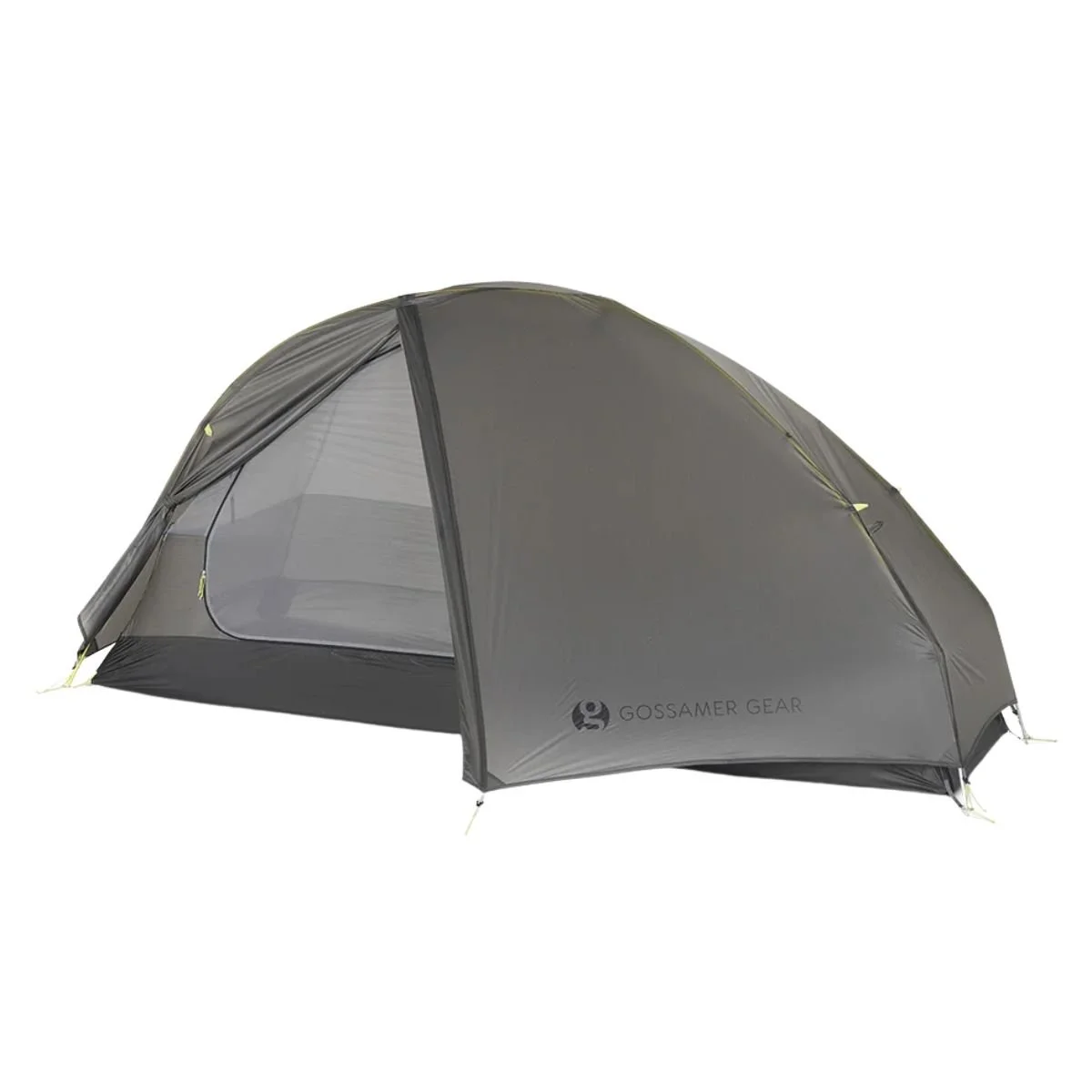
Price: $400
Type: Double-walled freestanding tent
Capacity: 1-person
Weight: 29.8 oz (33 oz packed weight)
Material: 15D ClearSkies Recycled Robic
Floor space: 16.5 square feet
Interior length: 86”
Peak height: 39”
Vestibules: 1
Doors: 1
Stakes required: 1 for rainfly door, 6 included
Trekking poles required: No
Includes tent poles: Yes
Variants available: None
Made in: Vietnam
Comparison table
| BACKPACKING TENT | MSRP | FREE-STANDING | WALLS | SLEEPS | DOORS | VESTIBULES | PACKED WEIGHT | LENGTH | WIDTH | PEAK HEIGHT | FLOOR AREA |
|---|---|---|---|---|---|---|---|---|---|---|---|
| Gossamer Gear The Free | $400 | Yes | Double | 1 | 1 | 1 | 33.0 oz | 86 in | 21.5-34 in | 39 in | 16.5 ft² |
| NEMO Hornet Elite OSMO 1P | $600 | Semi | Double | 1 | 1 | 1 | 29.0 oz | 87 in | 32-40 in | 39 in | 21.8 ft² |
| Big Agnes Tiger Wall UL1 | $470 | Semi | Double | 1 | 1 | 1 | 34.0 oz | 86 in | 28-38 in | 39 in | 19.0 ft² |
| MSR Hubba Hubba LT 1 | $470 | Yes | Double | 1 | 1 | 1 | 43.0 oz | 88 in | 32 in | 39 in | 20.0 ft² |
Best for
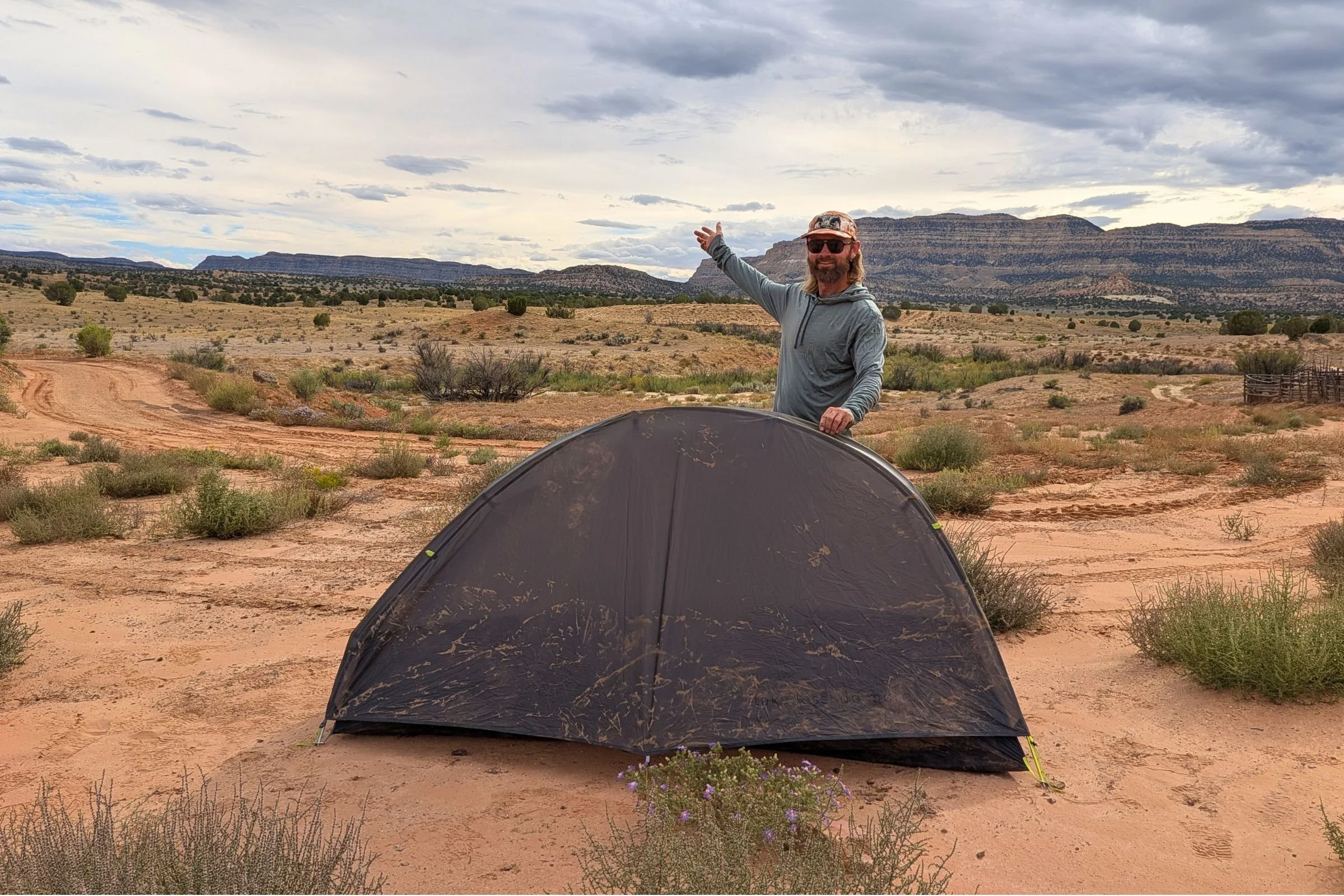
Ultralight backpacking, fastpacking, bikepacking, and thru-hiking
Anyone looking for an ultralight freestanding double-walled tent
Backpackers who don’t use trekking poles or prefer a tent that pitches without them
Trips where you may have to pitch your tent on slickrock or other hard surfaces you can’t drive stakes into
Solo backpackers who want to leave their tent set up at basecamp
What we liked
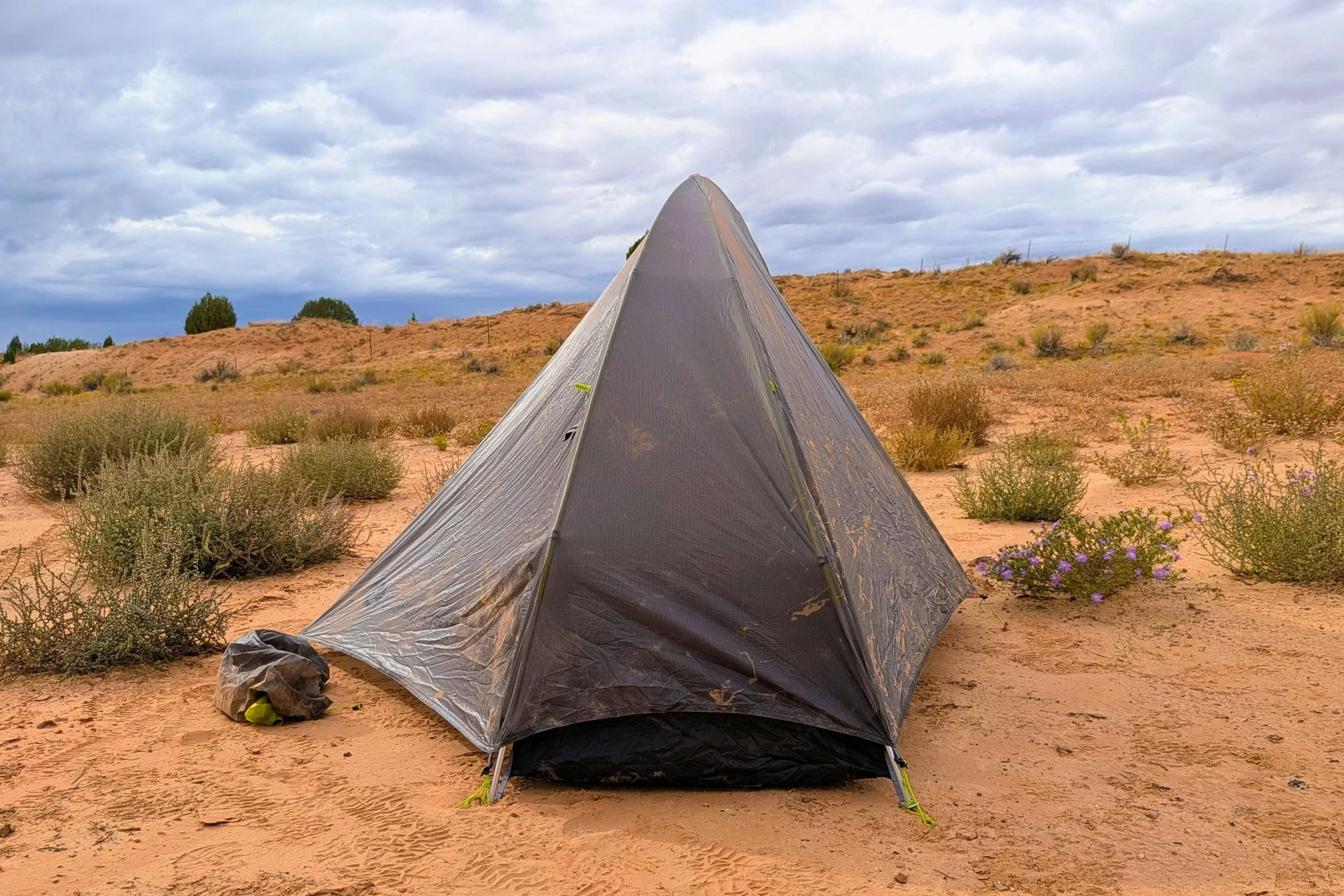
Easy to pitch quickly without stakes
Double-walled design creates good airflow
Can pitch only the bug net in clear conditions
Minimal condensation in cold weather, even when camped near water
Lightweight and packable
Impressive waterproof rating on fabric
Affordable
What could be better
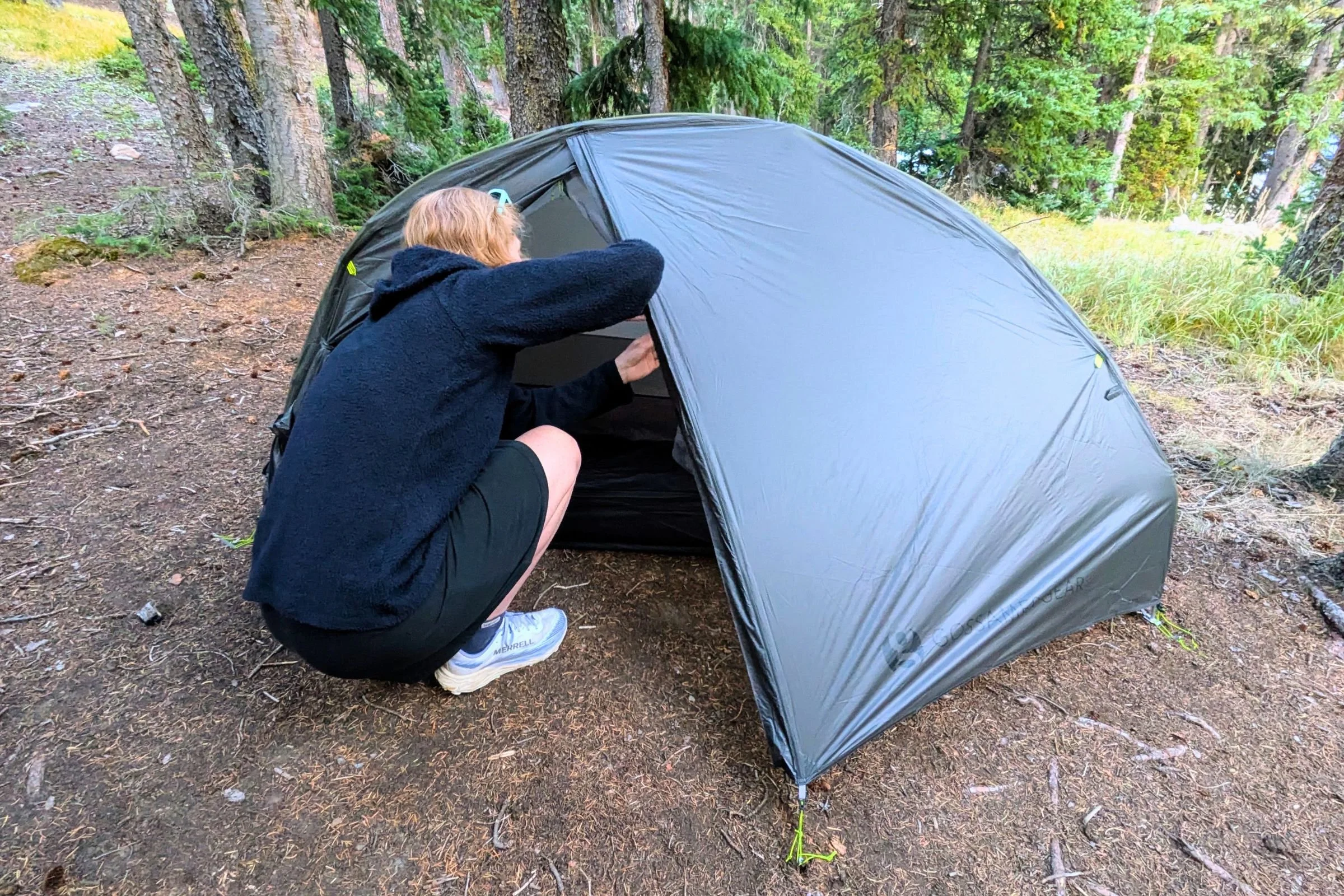
Minimal interior space
Not the most headroom for tall people, even those OK with minimal interior space
Not great for wider people or people with broad shoulders or anyone who uses a wider sleeping pad
How we tested
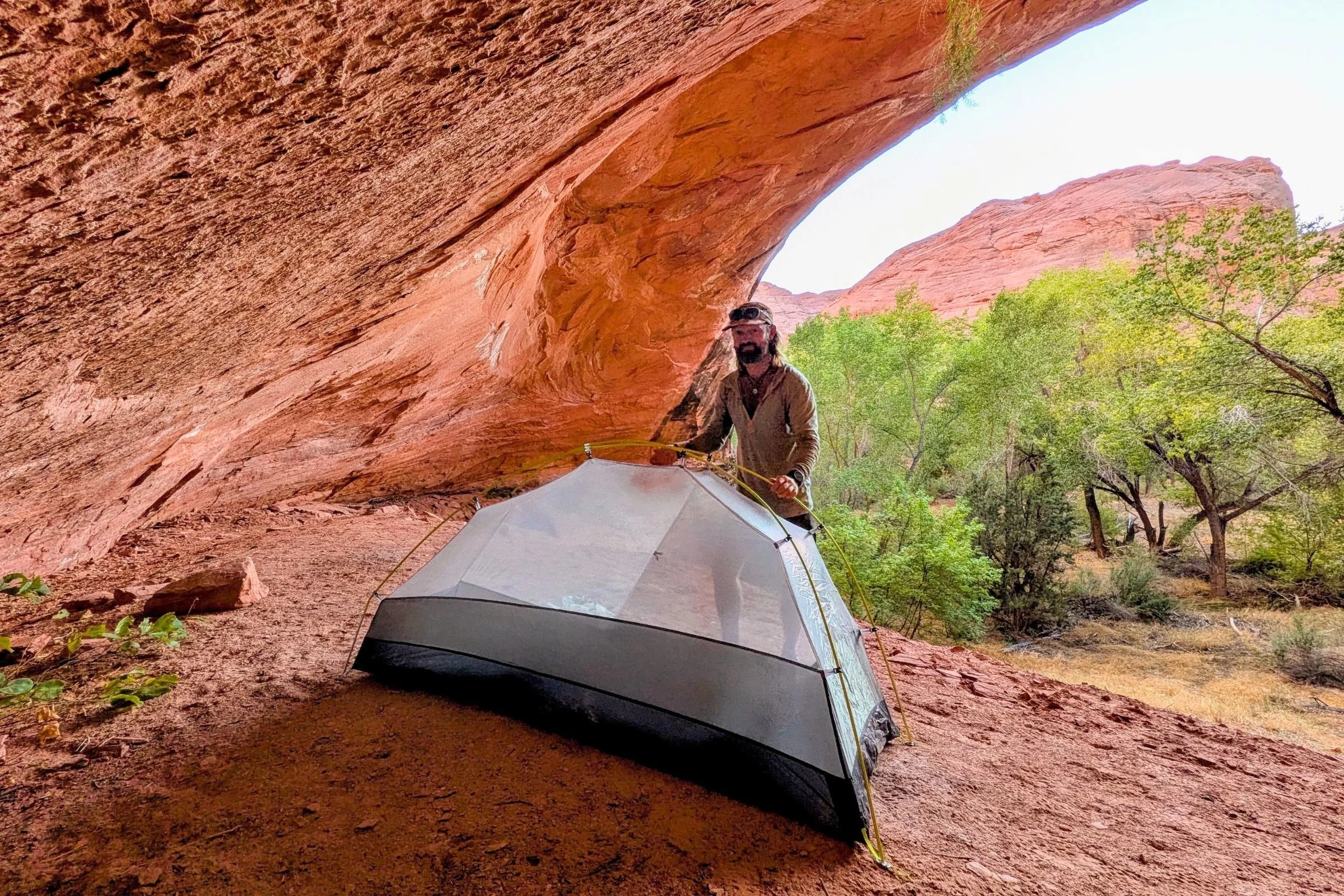
We tested the Gossamer Gear The Free during the summer and fall in Colorado and Utah. We used it on backpacking trips along the Colorado Trail and in Colorado’s Sawatch Mountain Range. We also used it while backpacking in Utah, in Grand Staircase-Escalante National Monument and Glen Canyon National Recreation Area, on multi-day trips in Coyote Gulch and other canyons near Escalante. We also used it on an overnight bikepacking trip in Colorado's Arkansas Valley, along the Colorado Trail and just east of it.
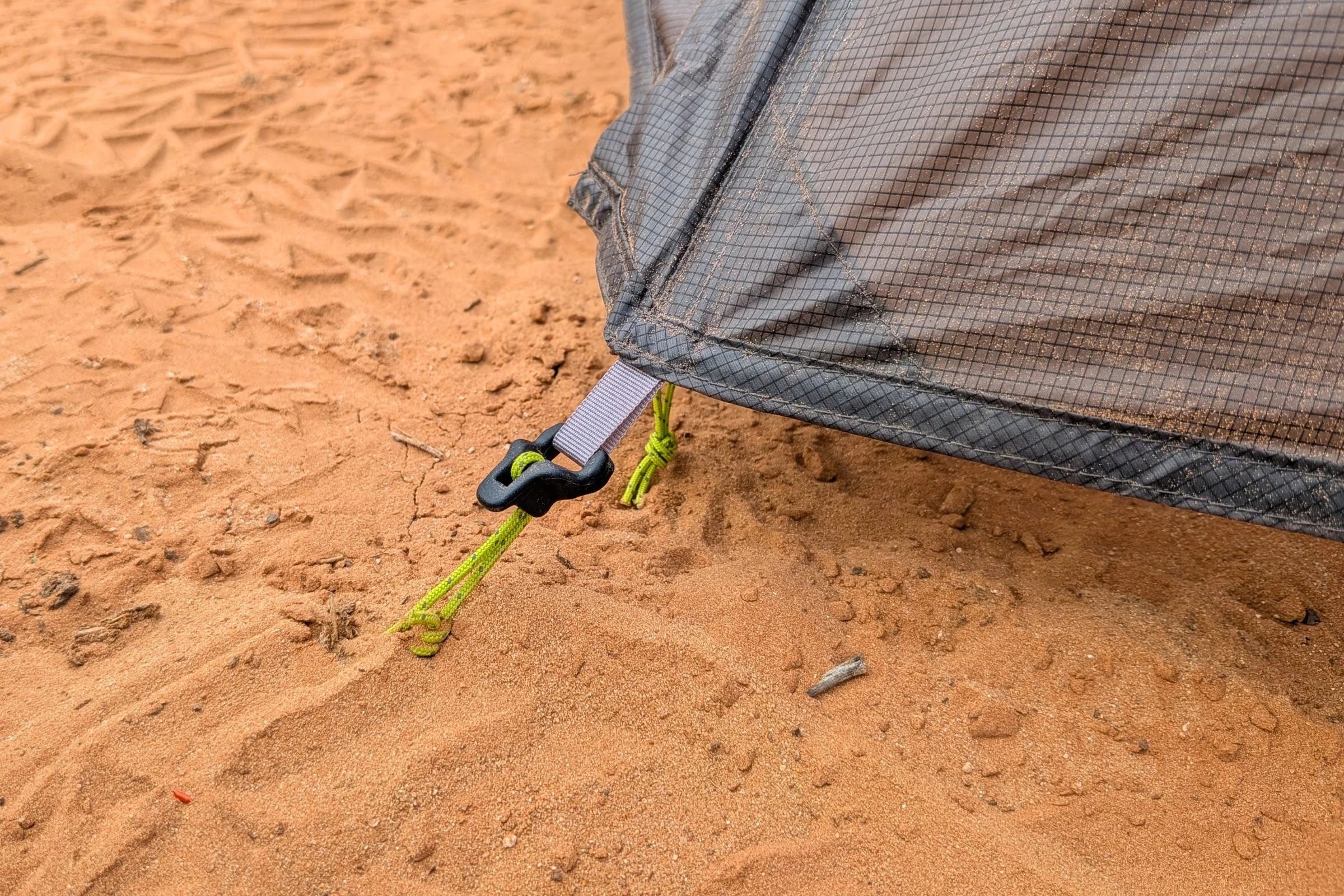
While testing The Free, we experienced temperatures from 30°F to 100°F. We experienced high winds, rain, and blowing sand on our trips. We packed this tent, including the tent poles, inside three different packs: a 38-liter Pa’lante V2, a 38-liter Symbiosis Gear The Aspen, and a 40-liter Osprey Pack. We pitched this tent on sand, dirt, rocky ground, and slick rock surfaces without any stakes. When we didn't use the included stakes, we used a rock with a piece of cord wrapped around it to pull out the vestibule door on the rainfly when we pitched the tent on slickrock.
On multiple occasions, we left this tent set up at basecamp while exploring nearby canyons, and we always returned to find our gear safe and dry inside. We used only the six included stakes to secure this tent when we left it set up to explore.
We’ve also used a variety of other double-walled backpacking tents that pitch with tent poles, like those featured in our Best Ultralight Backpacking Tents guide, and we found this one easier to use because it’s fully freestanding, unlike the semi-freestanding design of most double-walled ultralight tents that still require you to stake out the foot end, such as the NEMO Hornet Elite and Big Agnes Tiger Wall UL.
Performance in the field
Weather protection
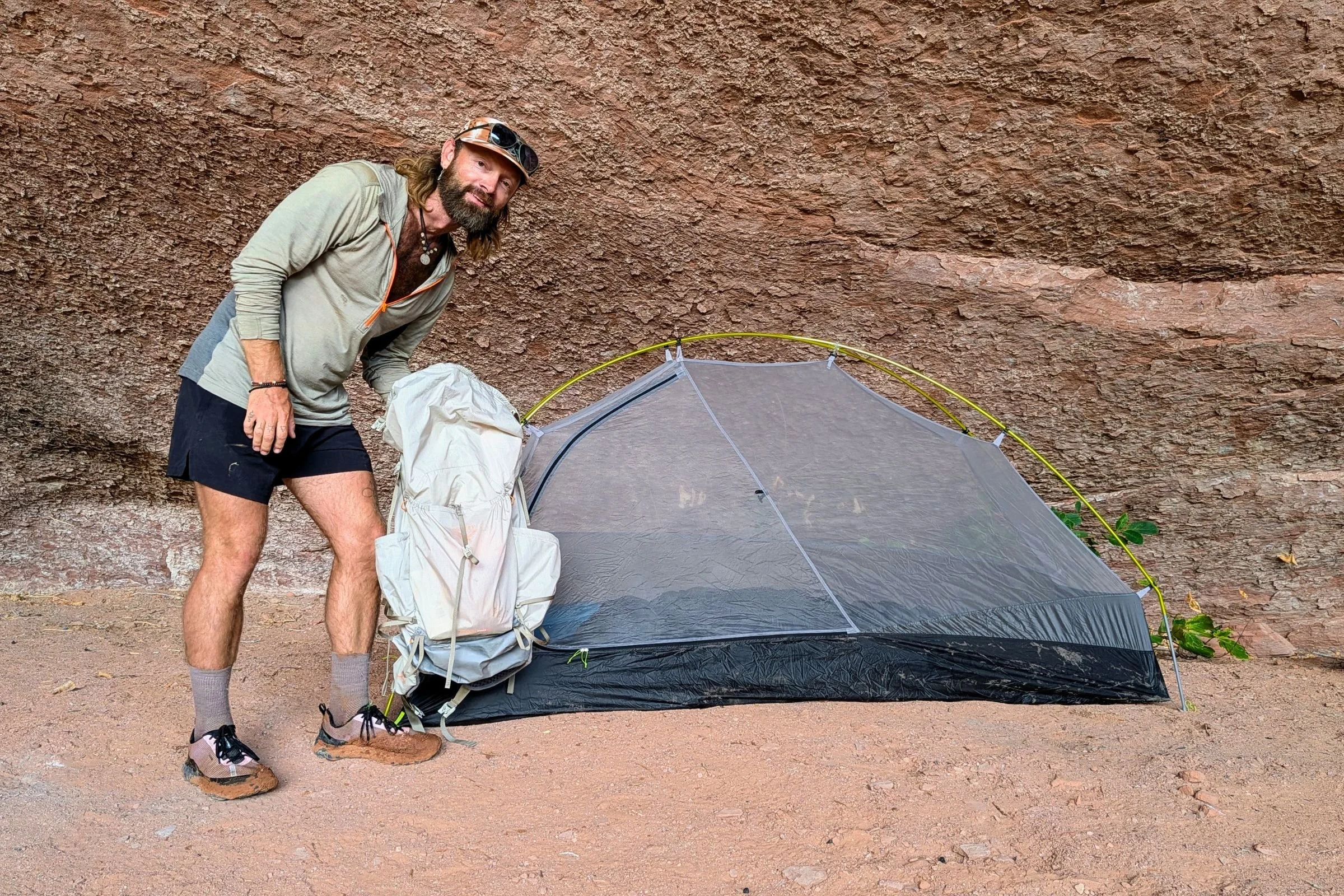
The Free performs well in rain and wind. During rainstorms, it kept us dry, and the ClearSkies material dries quickly afterward. Since it’s a double-walled tent, there is a gap between the inner bug net and the outer rainfly, which creates a larger buffer between you and the wet weather outside.
We never experienced condensation in this tent. Even when camping next to a creek in chilly conditions, we never woke up with the rainfly wet on the inside. This is common with double-walled tents, and a huge upside to carrying slightly more weight.
We’re also currently testing The One and The Two from Gossamer Gear, which use the same ClearSkies fabric as The Free. While this fabric is extremely waterproof, we've had condensation issues with The One and The Two, which employ a much different single-walled design.
The double-walled design of The Free is what makes it less prone to condensation. That extra gap between the rainfly and mesh tent body creates more airflow, which helps prevent condensation buildup.
Setup and takedown
The Free is very easy to pitch. If you’ve pitched other freestanding tents, it will feel very familiar. We pitched this tent in under 5 minutes the first time we tried. After we got used to setting it up, it took about 2 minutes to pitch. Since you don’t need to use any stakes to pitch it, you can set it up very quickly.
It pitches with a pair of aluminum tent poles attached at the center with a swivel. The poles secure at the corners by sliding into aluminum hardware, and the rainfly also connects to these same aluminum pieces.
The two tent poles cross at the peak, and the ends fit into metal pieces with a notched hole at each corner. The poles that attach to the foot end of the tent are color-coded silver, while the rest of the tent poles are bright green. After securing the poles to the inner tent, you hook the top of the tent onto the poles and fit the rainfly over the top. The corners of the rainfly loop onto hooks on the same metal hardware the poles attach to.
Packing it up is very easy, too. We can pack this tent in about 2 minutes, too. The rainfly unhooks from the corners easily. The tent poles detach from the metal hardware easily, and it’s just as easy to unhook the poles from the inner mesh tent. The stuff sack is big enough to stuff the rainfly and inner mesh tent into it quickly, or you can pack it directly into your backpack to save weight.
Interior space and livability
Our main tester, Sam, is 5’ 9” and 160 pounds, and he fits comfortably inside this tent with his ultralight backpacking kit. This isn’t a roomy tent, by any means, but it has just enough space to remain comfortable for extended periods, such as while waiting out a storm. If you’re tall or have wide shoulders, this probably isn’t the tent for you, though.
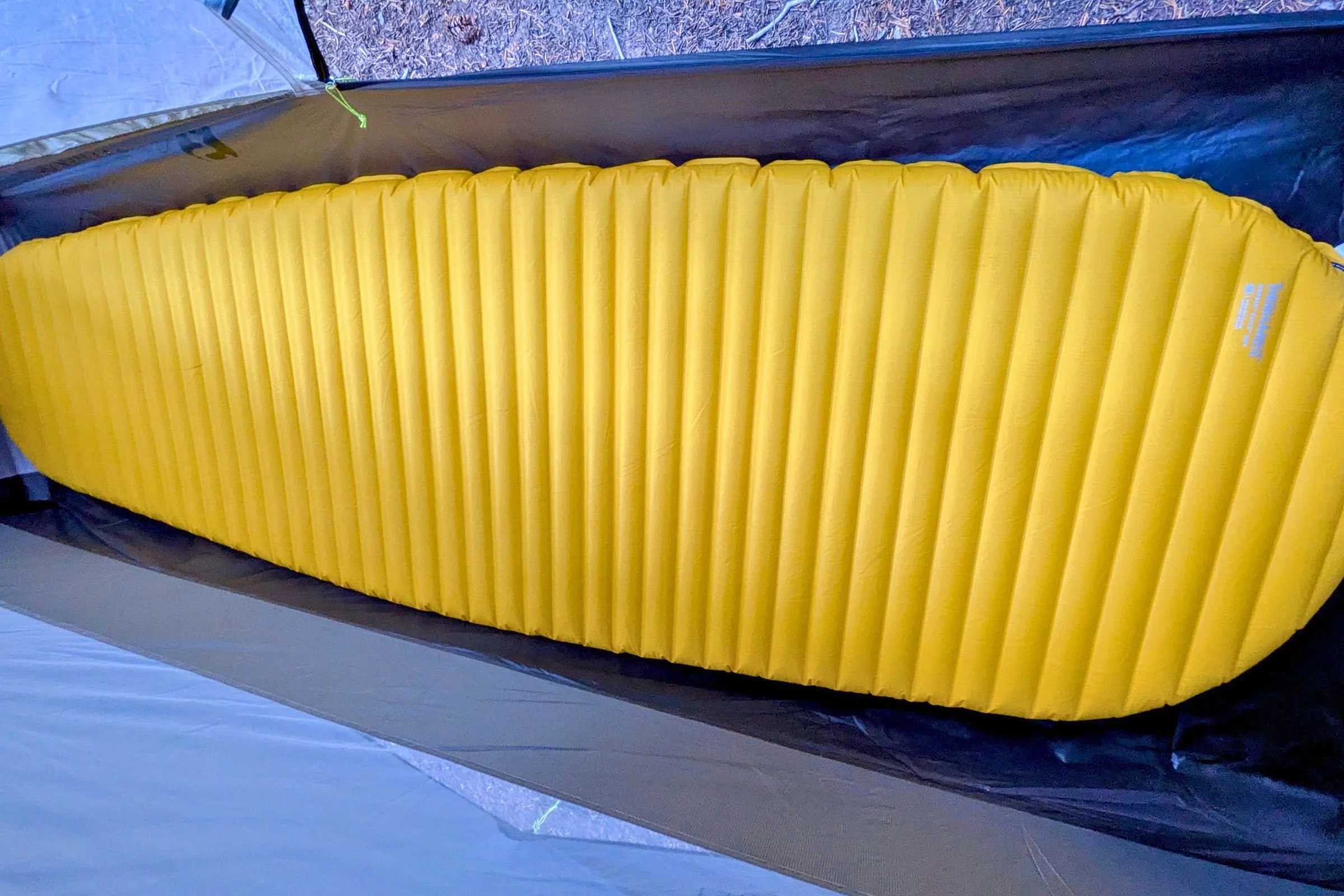
This tent is 86” long, but it’s not very wide. It’s 34” wide at the head end. A mere 21.5” at the foot end. In practice, this means you have to store most of the things you want inside the tent with you above your head and at your feet. With a 3-inch-thick, mummy-shaped sleeping pad that’s 72” long and 20” wide, there is enough room above our heads and feet so we don’t hit the tent walls. But you’ll definitely bump the side mesh walls of the inner tent periodically. The side walls are relatively vertical, with only a subtle slope, so that increases usable space on the sides a little, but there’s no getting around the fact that this tent isn’t very wide.
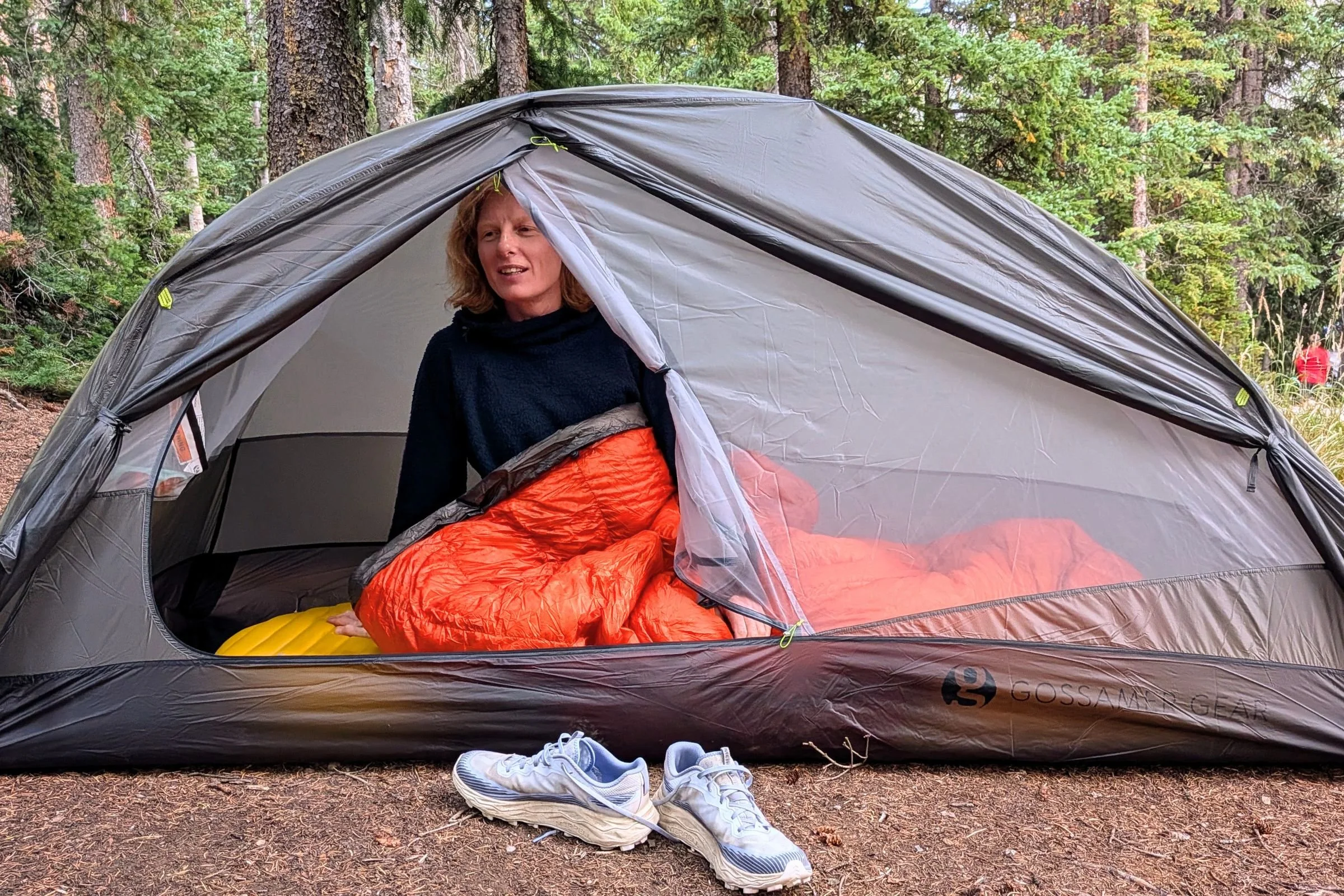
We wouldn’t recommend getting The Free if you use a sleeping pad that’s wider than 21 inches. Gossamer Gear claims you can cram a wide sleeping pad in the footbox, but we don’t think it would work great with a pad like the Regular Wide or Large-sized Therm-a-Rest NeoAir XTherm NXT or NeoAir XLite NXT, which are 25 inches wide. A standard-width rectangular pad would fit in The Free, as would pads that are thicker than 3”, though. If you use a wide pad to fit your wider body, this tent will likely feel too narrow, even if you can jam your sleeping pad into that narrow foot end.
The peak height is 39 inches, and Sam’s head just barely brushes the inner mesh when he’s sitting upright. You can also only sit upright directly under the peak, too. There is an overhead pocket, and one near the door in the mesh at the head end. The overhead pocket cuts down on overhead space, so we don’t use this pocket for anything more than a headlamp, beanie, and gloves while we’re sleeping.
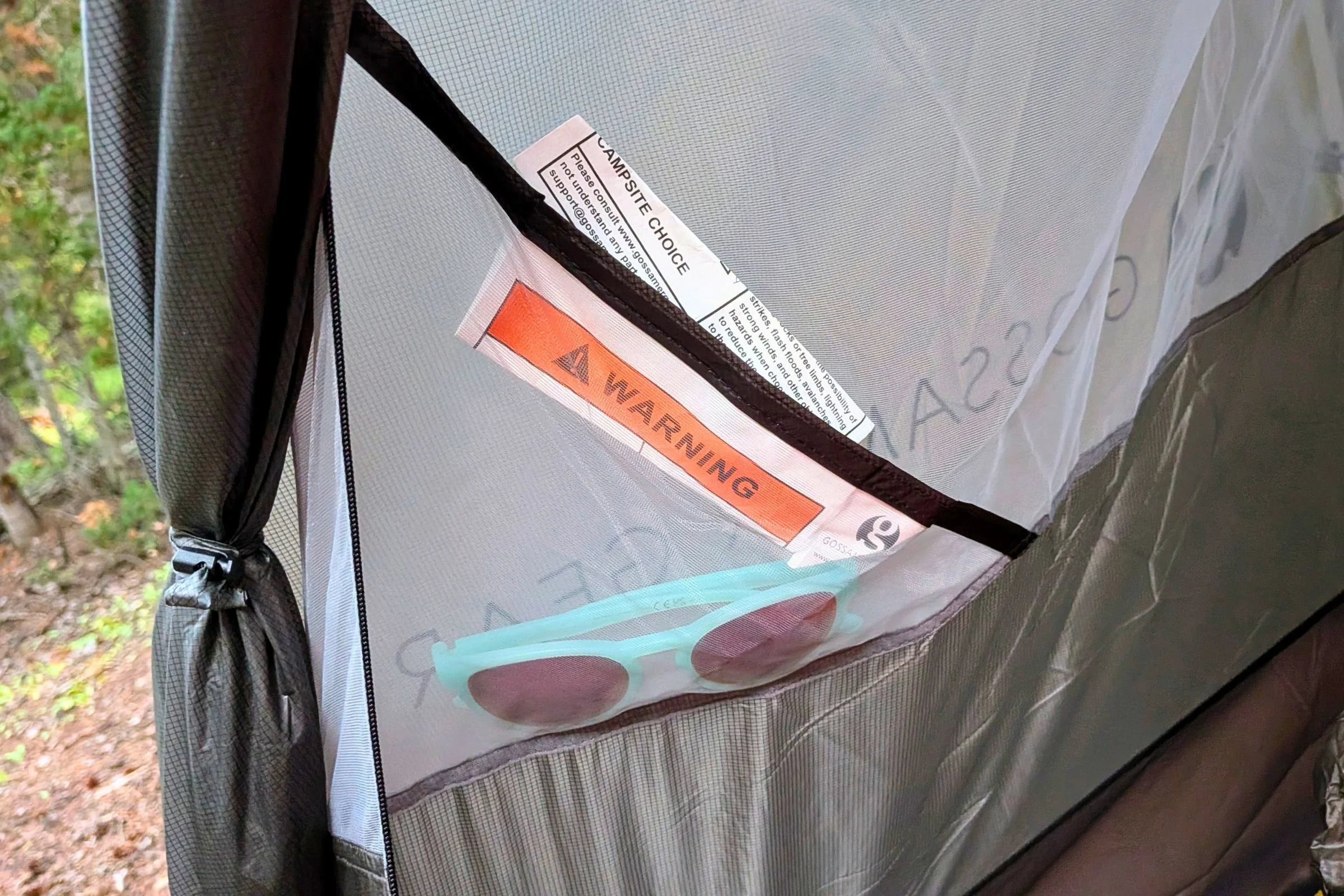
We normally store our gear inside the tent to keep critters away, but if our shoes and pack are wet, there is enough room in the single vestibule to store them there, along with a stove.
Ventilation and condensation
This is a double-walled tent, so it is less prone to condensation than a single-walled tent. That being said, it doesn’t breathe better than other double-walled tents. It doesn’t have any vents at the top of the rainfly, so the only way for air to circulate through the tent is under the edges of the rainfly. There is a 2” gap between the rainfly and the ground, so plenty of air can flow through the tent.
Packability
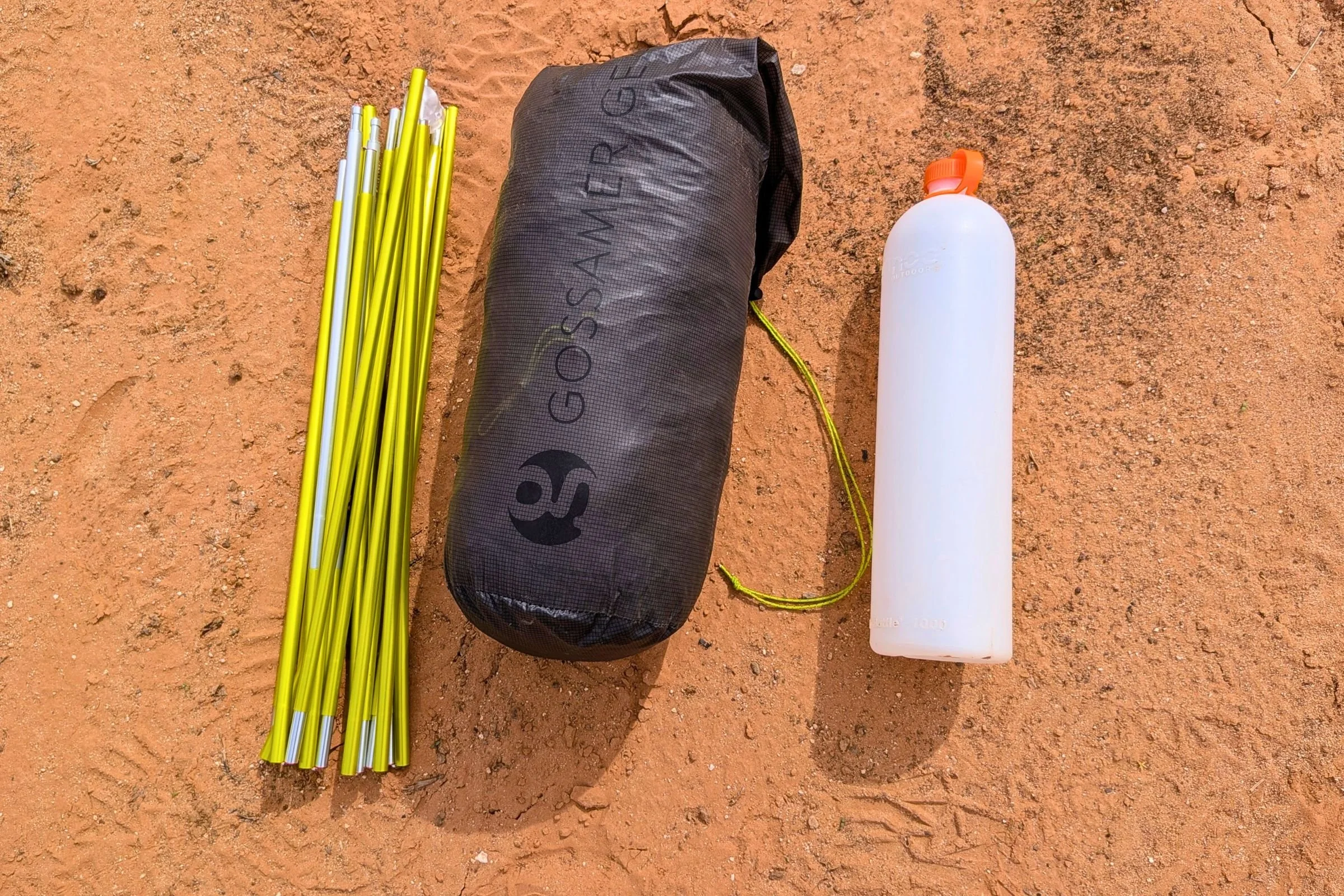
The Free is extremely packable. The Robic material compresses to a very small size, especially compared to DCF tents, and the tent poles fold to 17”. The packed tent measures 17 by 5 by 5 inches in its stuff sack. If you pack the tent poles separately, the rest of the tent packs down to about half that length, too. The included stuff sack is a standard, tube-shaped stuff sack with a cinch closure. It’s made of the same ClearSkies material as the tent itself.
We didn’t have any issue fitting this into a 38 or 40-liter backpack with the rest of our ultralight backpacking kit and five days of food. The tent poles affect how you pack the shelter, but if you store the tent poles separately, that’s not an issue. When space is at a premium, we stored the tent poles in the exterior stretch mesh pocket or the side water bottle pocket on our Pa’lante and Symbiosis Aspen (which are both 38-liter packs).
Durability
The Free is fairly durable. We’ve used tents made with similar Robic materials for multiple thru-hikes, and the fabric holds up well enough. Over the three-month testing period, we’ve seen nothing to indicate that this tent won’t last at least as long as previous Gossamer Gear tents, and GG claims that their new ClearSkies fabric is more durable.
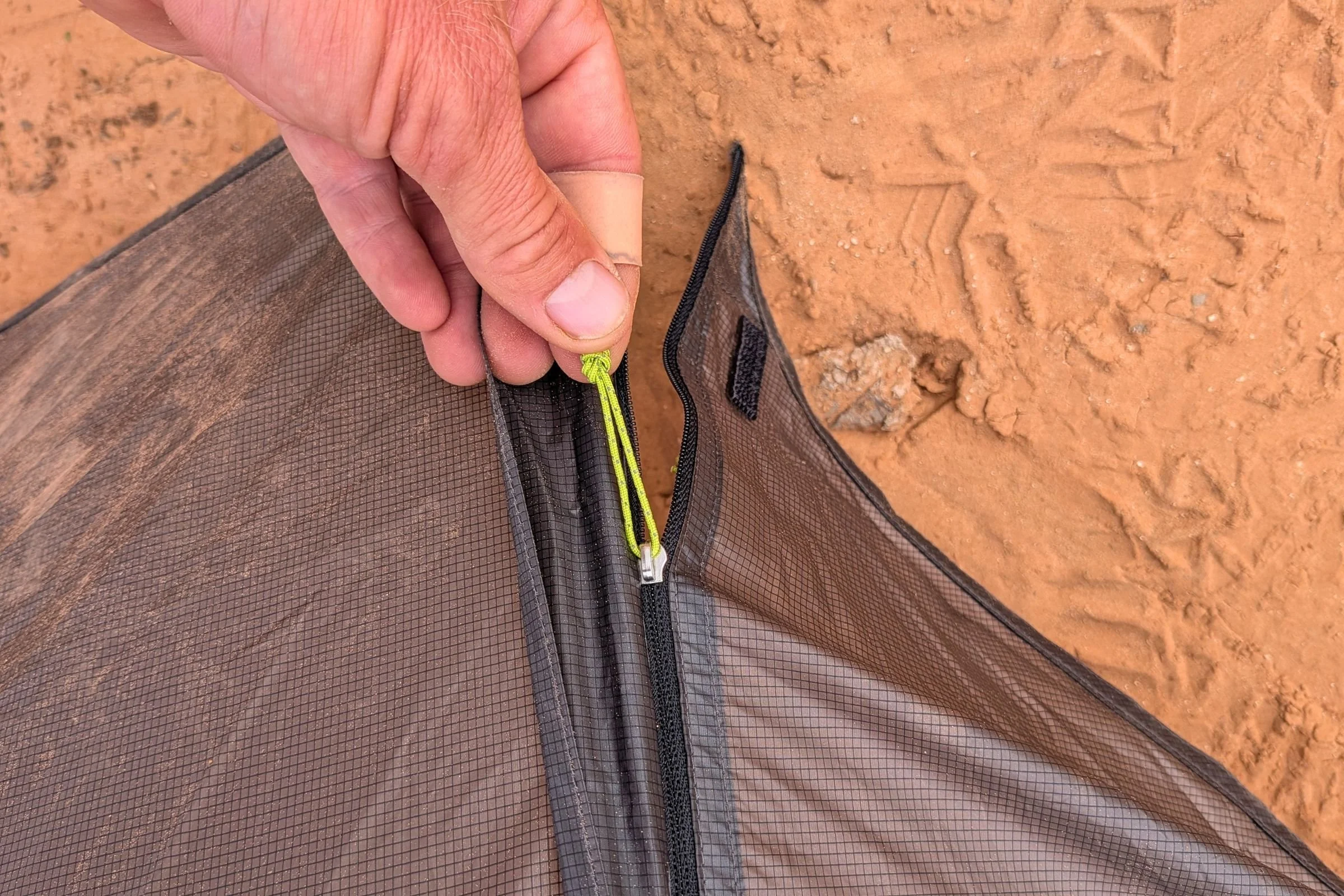
It has a single zipper for the inner tent and another on the rainfly door. The zippers are YKK #3 coil zippers, which are small, but not the smallest, and therefore will last longer than a YKK #2, for instance.
Features
4,923 mm of hydrostatic head
The ClearSkies material has a hydrostatic head of nearly 5,000mm. This is significantly higher than many SilNylon or SilPolyester tent fly materials. The material combines a 15D Recycled Robic fabric with a 20D dope-dyed ripstop SIL/PU coating.
Center swivel component
It has a center swivel component, which secures the two poles where they cross. The center swivel also attaches to the peak of the inner mesh tent.
Color-coded aluminum foot pieces
The aluminum foot pieces are color-coded and correspond with the same colored tent pole end, so you know which pole ends attach to which corners of the tent.
Reflective zipper pulls and guylines
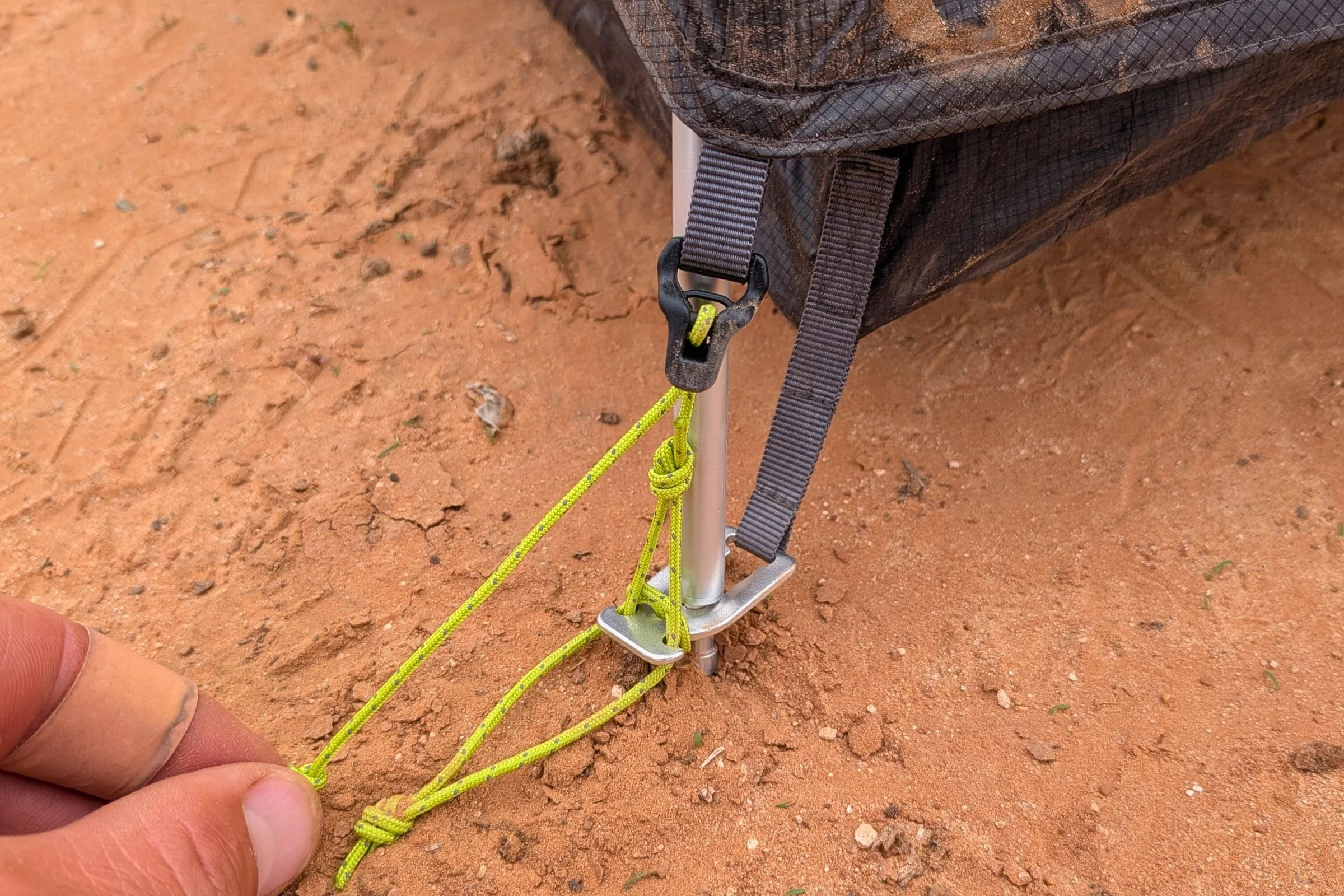
It uses brightly colored reflective cord on all corners, guylines, and zippers. This lets you see all cords in dark and low-light conditions.
Factory-taped seams
It comes with all seams taped with waterproof binding, so you don’t have to do anything to prepare the tent for a rainstorm.
DAC NFL 8.7 mm pole set
It has anodized DAC aluminum poles instead of painted ones. Gossamer Gear says the poles’ green anodizing process reduces harsh chemicals and water use while creating a more durable finish. The bright green color is also easier to see.
Double tie-back points
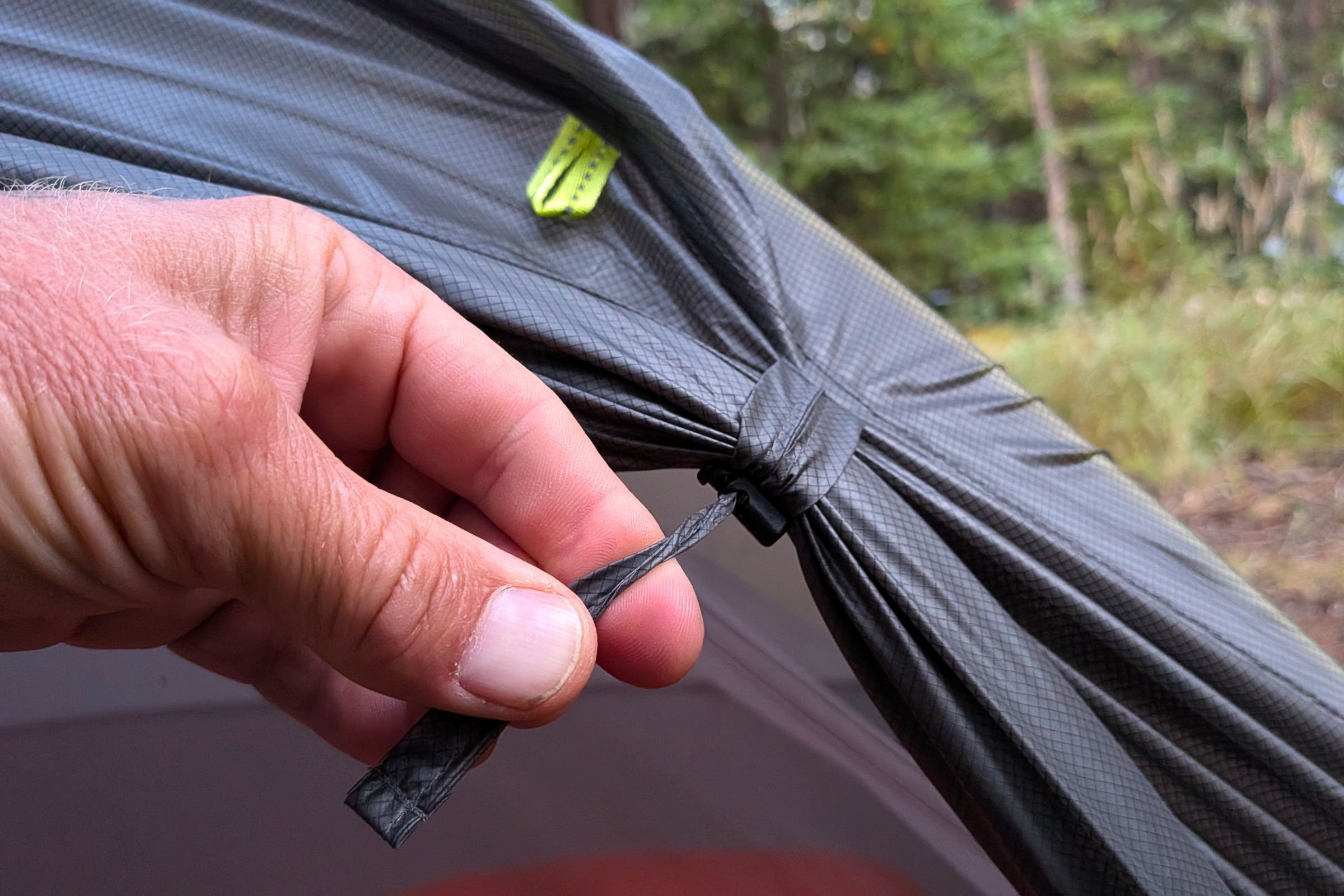
The rainfly has tie-back points on both ends of the door side of the tent, so you can tie back both sides of the rainflly door when the weather is clear.
YKK #3 coil zipper chain
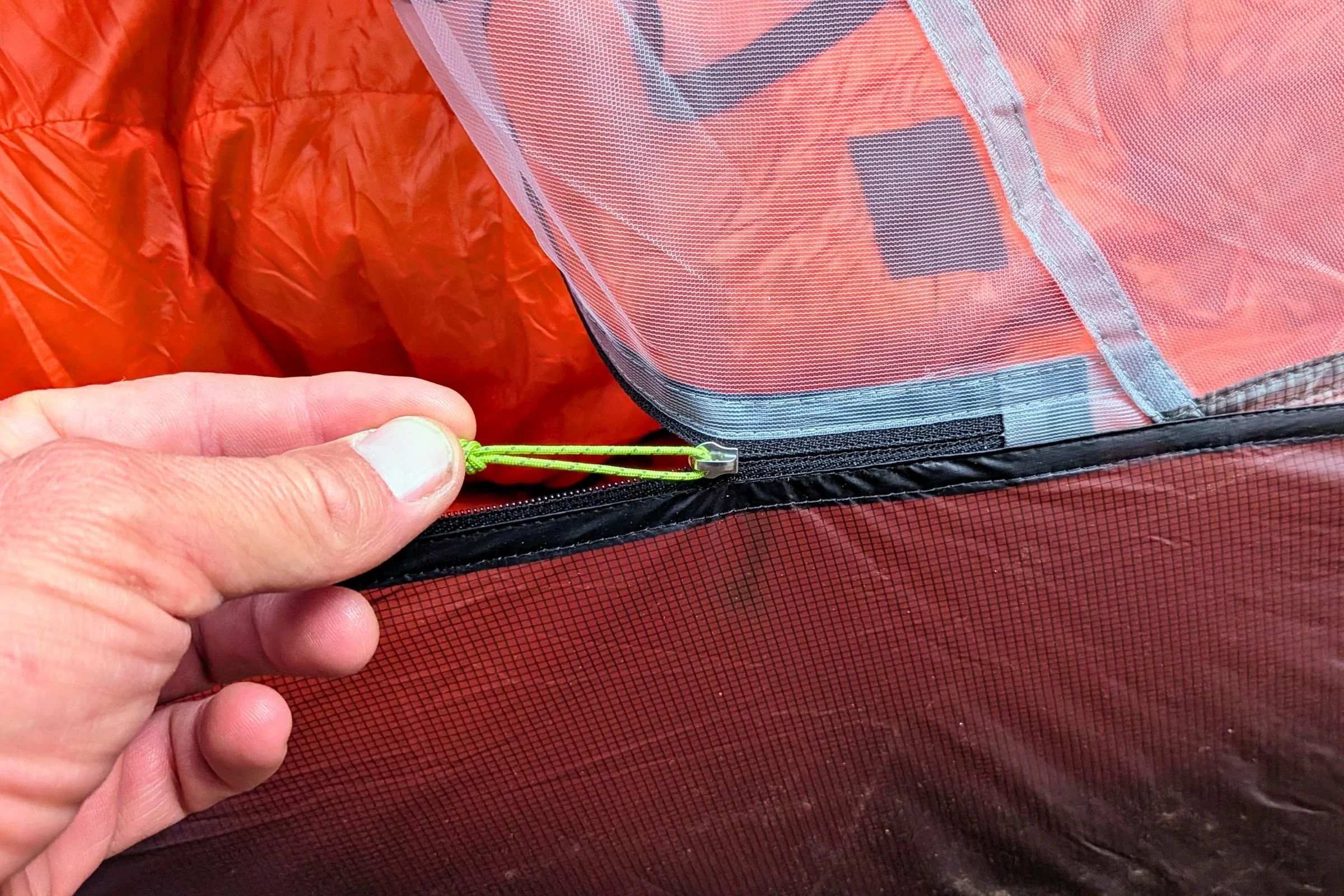
The rainfly door and inner mesh tent have #3 YKK zippers, which are small and light, but not so small that they’ll fail quickly in dusty conditions.
6 aluminum stakes, 4 guylines, 1 pole repair Sleeve
It includes six aluminum stakes, four extra guylines for added support in high winds, and a pole repair splint to fix a broken tent pole in the field. It doesn't need the stakes or guylines to set up, but you can stake it down to prevent the tent from blowing away.
Single vestibule configuration
It has a single vestibule that’s large enough to store a backpack and shoes.
10 guy-out points
It has 10 total guy-out points. Four of these points are on the corners of the tent, two more are on the vestibule and opposite side (where there would be another door if it had one), and the remaining four are halfway up the tent walls, on top of the tent poles, to help brace the tent in high winds.
Included stuff sack
It comes with a stuff sack to make packing the tent easy, a separate stuff sack for the tent poles, and a bag for the stakes.
Sustainability
The Free is made with recycled Robic nylon, and Gossamer Gear is moving toward implementing recycled fabrics in more of their gear. They also donate 1% of all web sales to their partner organizations: Black Outside Inc., Travis County Search & Rescue (TCSAR), Explore Austin, and the Continental Divide Trail Coalition.
You can read more about Gossamer Gear’s Sustainability and Ethics here.
Similar ultralight tents
Gossamer Gear The Free vs NEMO Hornet Elite OSMO 1P

MSRP: $600
Doors: 1
Total Weight: 29.0 oz
Floor Area: 21.8 ft²
Vestibules: 1
Peak Height: 39 in
The NEMO Hornet Elite OSMO is a semi-freestanding tent that’s incredibly lightweight. Its minimum weight is 23 ounces, about 7 ounces less than The Free’s 29.8-ounce trail weight. The Hornet Elite’s floor dimensions are 87” by 40” wide at the head end, tapering to 32” at the foot end.
The Hornet Elite offers more interior space and weighs less than The Free. Both tents have the same amount of headroom, though. The Free is truly freestanding, while the Hornet Elite is semi-freestanding, meaning it requires stakes to pull out the foot end. The Hornet Elite also costs $200 more than The Free.
The Hornet Elite OSMO’s hydrostatic head is 1200mm, which isn’t as high as The Free’s 4,923mm hydrostatic head. We’ve full-on used the Hornet Elite in 6-day winter storm warning conditions and didn't have any issues, so it’s very waterproof. But The Free is even more waterproof.
If you don’t care about price, want the lightest tent that still uses tent poles to set up, and don’t need a freestanding design, consider the Hornet Elite. If you want a fully freestanding tent or don’t want to spend $600 on a tent, go with The Free. Learn more in our in-depth review of the NEMO Hornet Elite OSMO backpacking tent.
NEMO Hornet Elite OSMO
Gossamer Gear The Free vs. Big Agnes Tiger Wall UL1
MSRP: $470
Doors: 1
Total Weight: 34.0 oz
Floor Area: 19.0 ft²
Vestibules: 1
Peak Height: 39 in
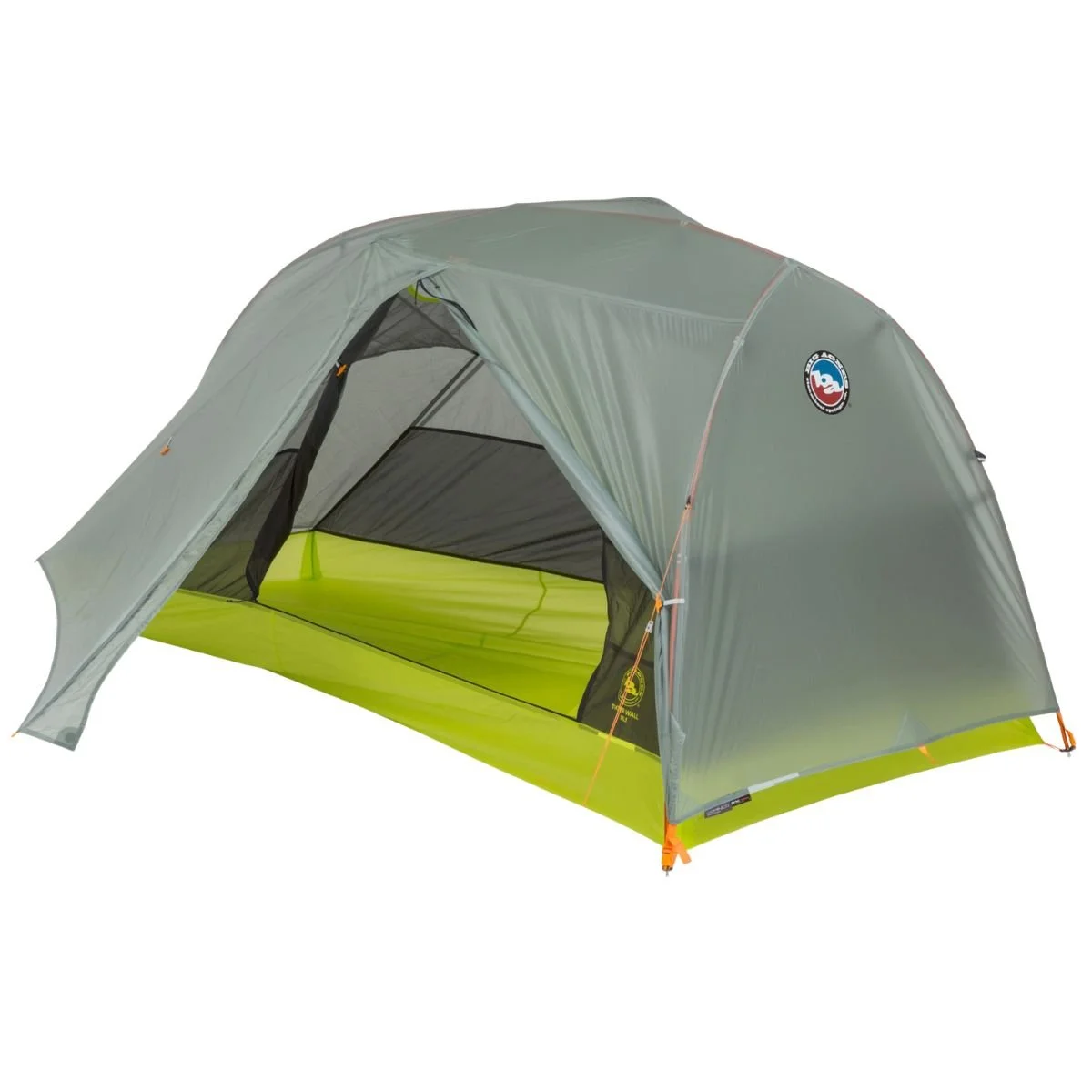
The Big Agnes Tiger Wall UL1 is another semi-freestanding tent. It weighs 34 ounces, which is slightly more than The Free. It has more interior space than The Free, measuring 86” inches long and 38 inches wide at the head, tapering to 28 inches at the foot. The Tiger Wall is the same length as The Free, but it is wider, and so it feels roomier overhead. The Tiger Wall also has more interior pockets than The Free. However, you’ll need to stake out the foot end corners of the Tiger Wall, so you don’t have as much versatility in where you can pitch it. The Tiger Wall UL1 costs $70 more than The Free.
If you want interior living space and great pockets for organizing your gear inside, go with the Tiger Wall UL. If you want to carry less weight, spend less, or pitch your tent without stakes, go with The Free. Learn more in our in-depth review of the Big Agnes Tiger Wall backpacking tent.
Big Agnes Tiger Wall UL1
Gossamer Gear The Free vs. MSR Hubba Hubba LT 1

MSRP: $470
Doors: 1
Total Weight: 43.0 oz
Floor Area: 20.0 ft²
Vestibules: 1
Peak Height: 39 in
The MSR Hubba Hubba LT 1 is another freestanding tent designed for backpacking. The Hubba Hubba’s minimum trail weight is 2 pounds, 6 ounces—about 8 ounces more than The Free’s 29.8-ounce trail weight. The Hubba Hubba is fully rectangular on the interior at 32 inches across and 88 inches from head to foot, compared to The Free, which is much less roomy inside—it’s tapered from end to end, measuring 34 inches wide across at the head end and 21.5 inches at the foot, and 86 inches from head to foot. The Hubba Hubba is made with solution-dyed fabrics, which cut down on water and energy usage in the manufacturing process. The Hubba Hubba LT 1 costs $70 more than The Free.
The Hubba Hubba is great for people who spend a lot of time in their tent, but you sacrifice packability for all that extra room to move inside.
MSR Hubba Hubba LT 1
Should you buy the Gossamer Gear The Free?
Buy if:
You want an ultralight one-person freestanding shelter
You’re looking for an ultralight tent that pitches with its own poles, not trekking poles
You’re looking for a good deal on a tent for solo backpacking
You’re comfortable sleeping in a narrow but long tent
You are shorter than 6’2”
Skip if:
You’re 6’2” or taller
You want a tent that pitches with trekking poles
You want a tent that will easily fit your wide sleeping pad
You want a single-walled tent
Where to buy the Gossamer Gear The Free
The Gossamer Gear The Free tent is available on Gossamer Gear’s website.
Why you should trust us / About the author
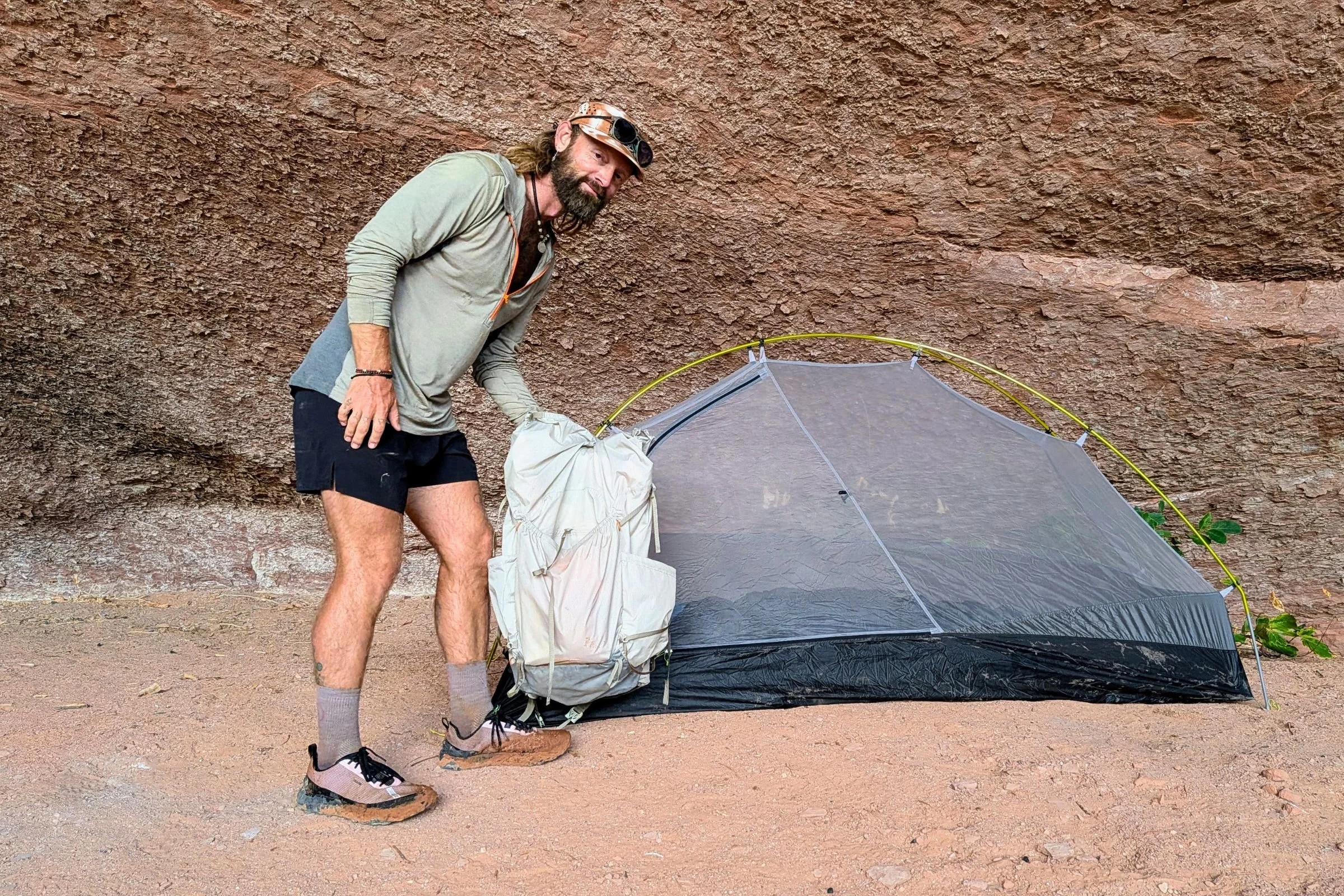
Sam Schild is a thru-hiker, trail runner, bikepacking cyclist, and mountain athlete based in Colorado. He has thru-hiked the Pacific Crest Trail, Continental Divide Trail, Appalachian Trail, Grand Enchantment Trail, Arizona Trail, Hayduke Trail, Pacific Northwest Trail, and the Colorado Trail twice. He has bikepacked across the country and throughout the American Southwest, including the Colorado Trail and Kokopelli Trail. On every trip, he’s used an ultralight tent.
You can read more about Sam on his author page, website, or on Instagram.