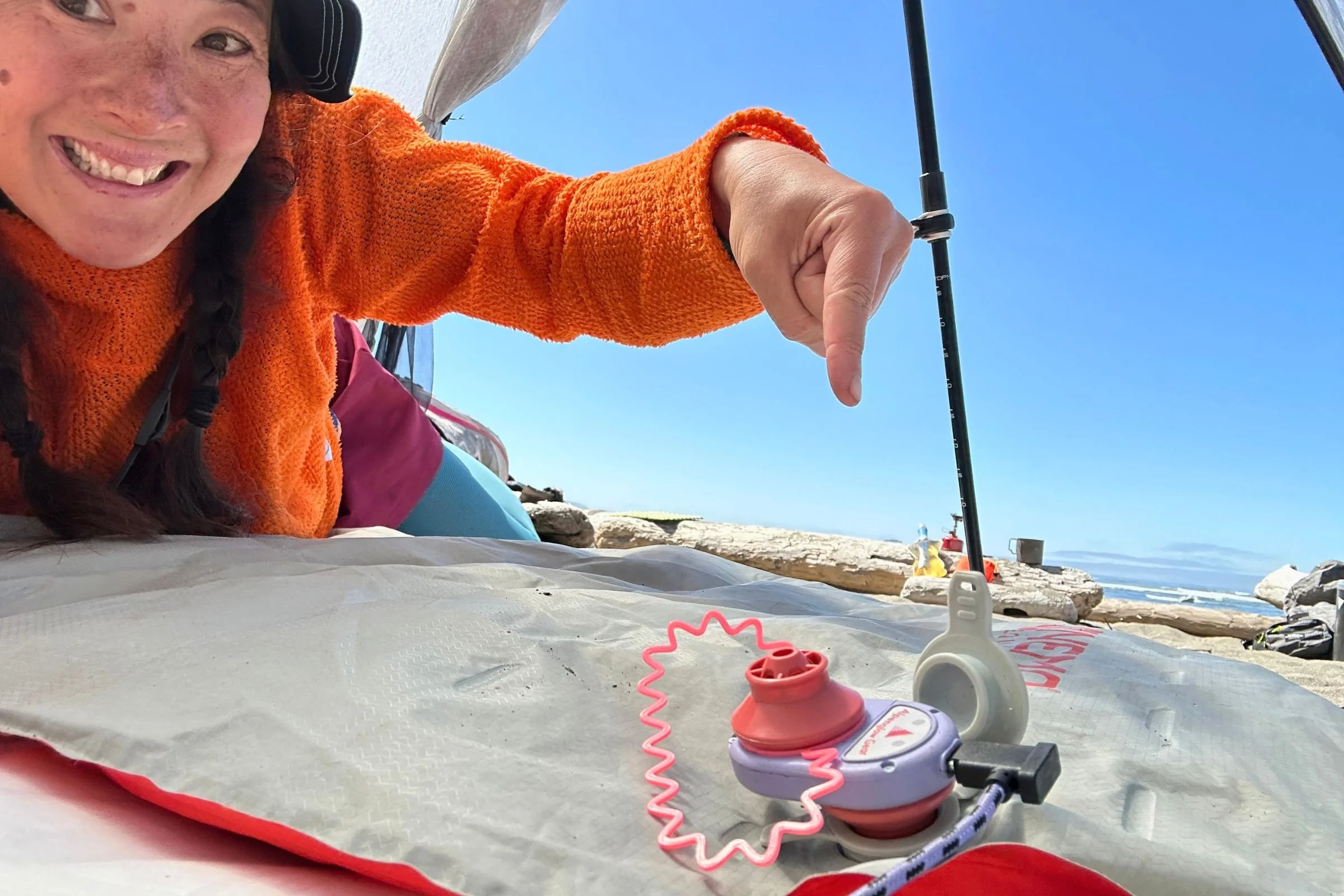
Best Sleeping Pad Inflators of 2026
Pad pumps for inflatable sleeping pads for backpacking and camping mattresses
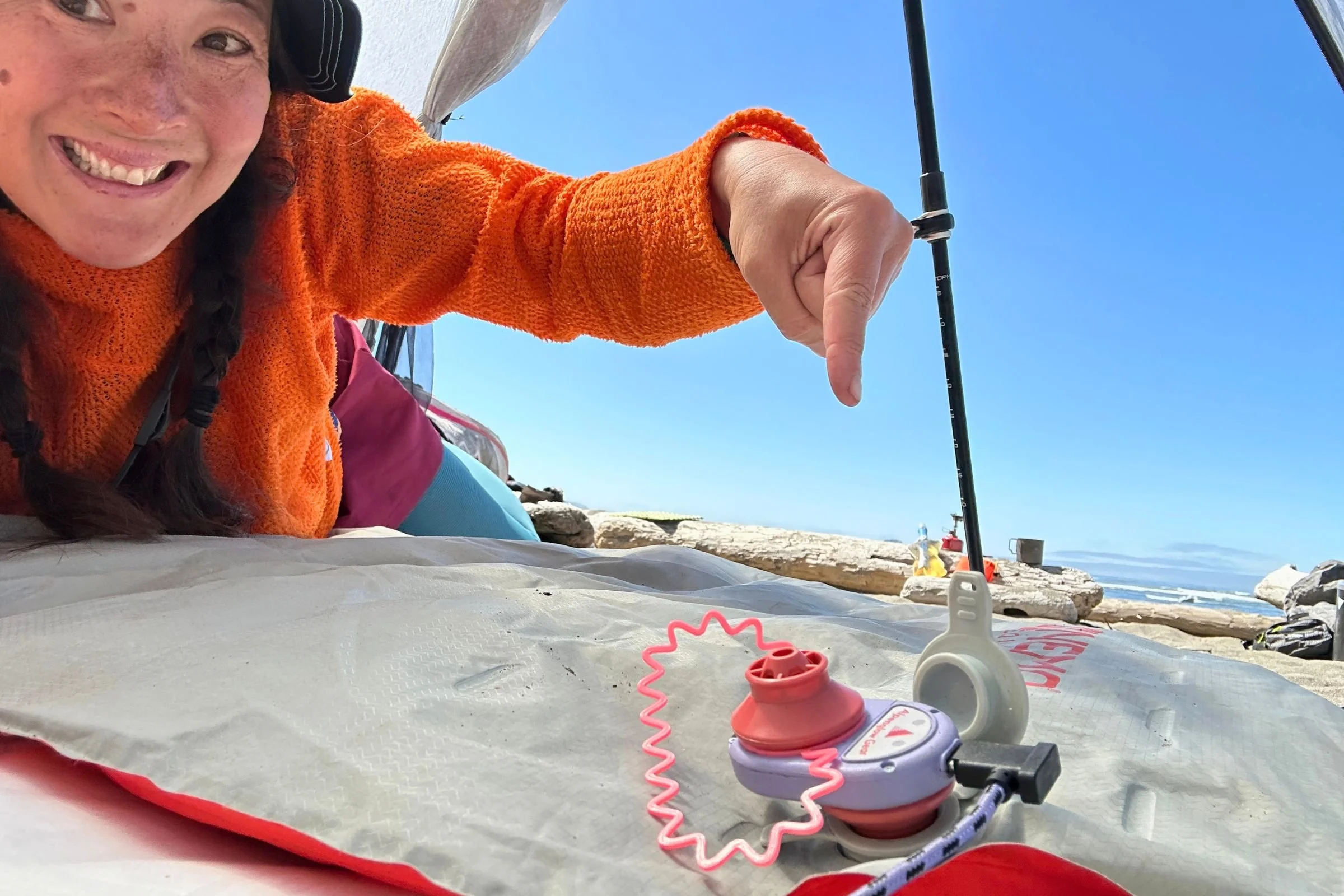
October 8th, 2026
Home → Gear Reviews → Backpacking & Thru-Hiking
For ultralight backpackers, thru-hikers, and backpackers of all types, inflating a sleeping pad is the worst camp chore. It either requires huffing and puffing or capturing air in a stuff sack and pumping it, which is significantly less fun to do if it is windy, buggy, cold, rainy, or you're at altitude. With 3.5" and 4" inflatable backpacking pads becoming the trend, there is more inflating needed than ever. Pad pumps, aka sleeping pad inflators, use batteries and fans to inflate your sleeping pad, eliminating one of the worst camp chores.
Electric pad inflators are USB-powered or battery-powered, and are faster and require less human power and attention than manual pumps, pump sacks that come with your pad, or breathing into your pad. Pad pumps are often lighter than manual pump sacks, too. This guide doesn't cover manual sleeping pad inflators, which I find annoying and way less convenient than electric pad inflators.
We spent 1.5 years testing as many sleeping pad inflators as we could find, from those that work for every backpacking pad or camping mattress out there to ones that only work for one manufacturer. We tested while backpacking on the Arizona Trail and off-trail on the Grand Enchantment Trail, as well as while backpacking in Northern California, the Washington Coast, the Eastern Sierra, Colorado, and while thru-hiking the West Coast Trail. We also ran side-by-side lab tests, noting inflation time on the most popular standard test pads, battery drain, valve compatibility, and noise measured by decibels.
To judge pad pumps, we considered weight, inflation speed, battery life, power sources, valve compatibility, noise level, durability, and value. We covered everything from sub-30g USB fans to 100g+ multi-function electric vacuum pumps. Ultimately, the right pick depends heavily on what pad you have and how much you value weight vs. speed.
Top pick: The Alpenglow Gear Alpenblow Lux is the best overall backpacking sleeping pad inflator. With an inflator, deflator, easy USB-C operation off your phone, and features like a noise machine and camping lantern, it has quickly become a must-have for ultralight backpackers looking to reduce their camp chores and is so clever, traditional backpackers will love it, too.
We create reader-supported, objective gear reviews independently selected by our editors. This story may contain affiliate links, which help fund our website. When you click on the links to purchase gear, we may get a commission — without costing you an extra cent. Thank you for supporting our work and mission of outdoor coverage for every body! Learn more.
Comparison table
| Sleeping Pad Inflator | TREELINE AWARD | MSRP | Weight | Power Source | Compatibility | Deflate? | Inflation Rate/ Time | Additional Features |
|---|---|---|---|---|---|---|---|---|
| Alpenglow Gear Alpenblow Lux | Best overall Read why |
$60 | 0.5 oz | USB-C from phone or power bank | Therm-a-Rest, NEMO, Sea-to-Summit, Exped, Big Agnes, Klymit, ZenBivy | ✅ | ~2 min | Lantern, white noise, ocean noise |
| FLEXTAIL ZERO PUMP | Best self-contained Read why |
$53 | 2.1 oz | Rechargeable 650 mAh battery | Therm-a-Rest, NEMO, Sea-to-Summit, EXPED, Big Agnes, Klymit | ✅ | 180 L/ min | Fire starter |
| Alpenglow Gear Alpenblow Classic | Best ultralight Read why |
$60 | 0.3 oz | USB-C from phone or power bank | Therm-a-Rest, NEMO, Sea-to-Summit, EXPED, Big Agnes, Klymit, ZenBivy | ❌ | 3-5 min | N/A |
| EXPED Mega Pump | Best for camping mattresses Read why |
$80 | 12.3 oz | Rechargeable 2500 mAh battery | EXPED mattresses (Compatibility with other brands depends on the valve and adapter.) | ✅ | 142 L/ min | N/A |
| FLEXTAIL TINY PUMP 2X | $42 | 3.5 oz | Rechargeable 1300 mAh battery | Not listed | ✅ | 180 L/ min | Lantern |
The winners
Best overall sleeping pad inflator: Alpenglow Gear Alpenblow Lux
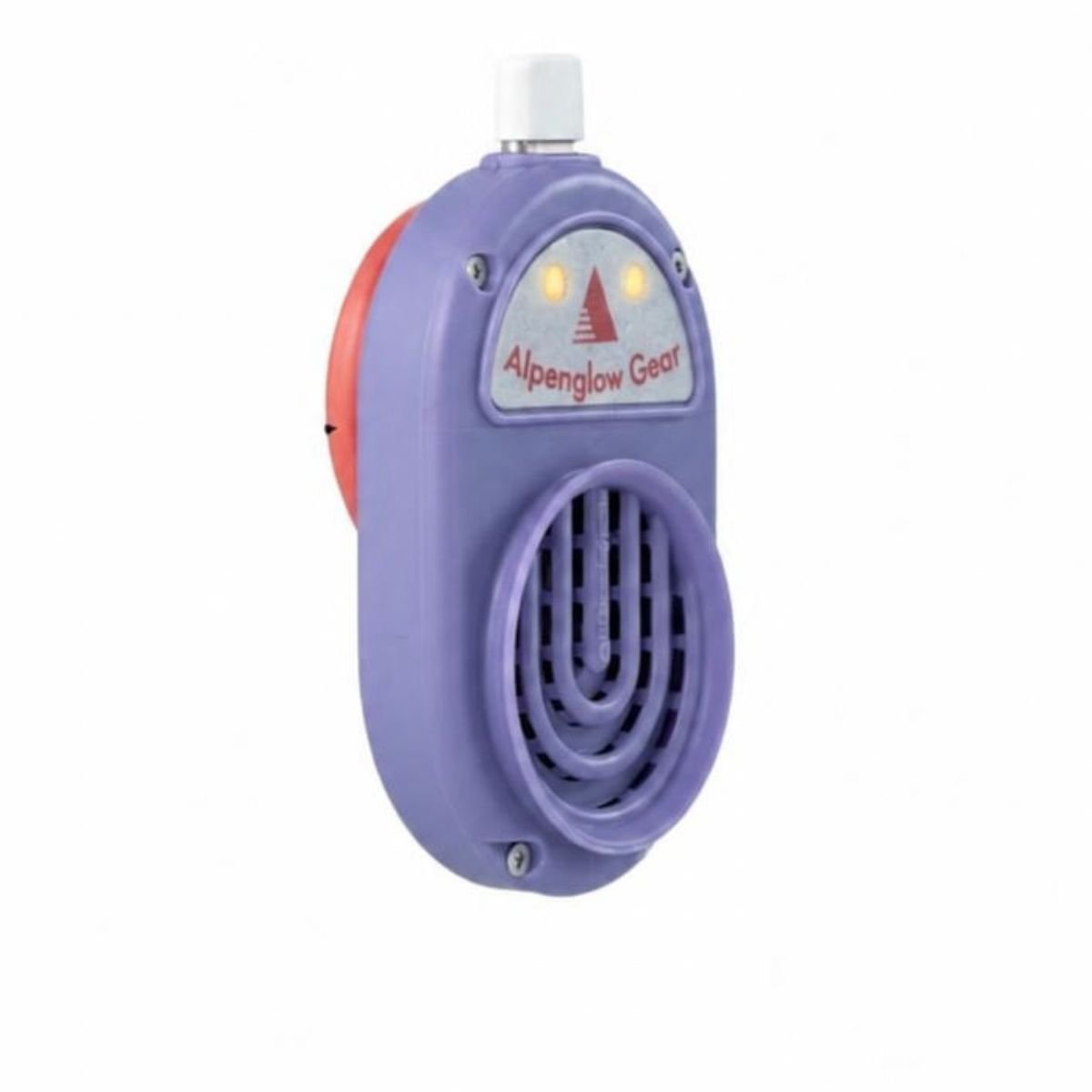
Price: $60
Weight: 0.5 oz
Power source: USB-C from phone or power bank
Inflation time (regular pad): ~2 min
Deflate function: Yes
Noise level: Quiet. 43 dB at 30 cm (according to Alpenglow Gear specs)
Additional features: Lantern, white noise, ocean noise
What we liked: Extremely light, can deflate and inflate, bright colors make it harder to lose, lantern and white noise modes make it multi-use
What we didn't like: Snapping on adapter valves is annoying (especially between inflate and deflate)
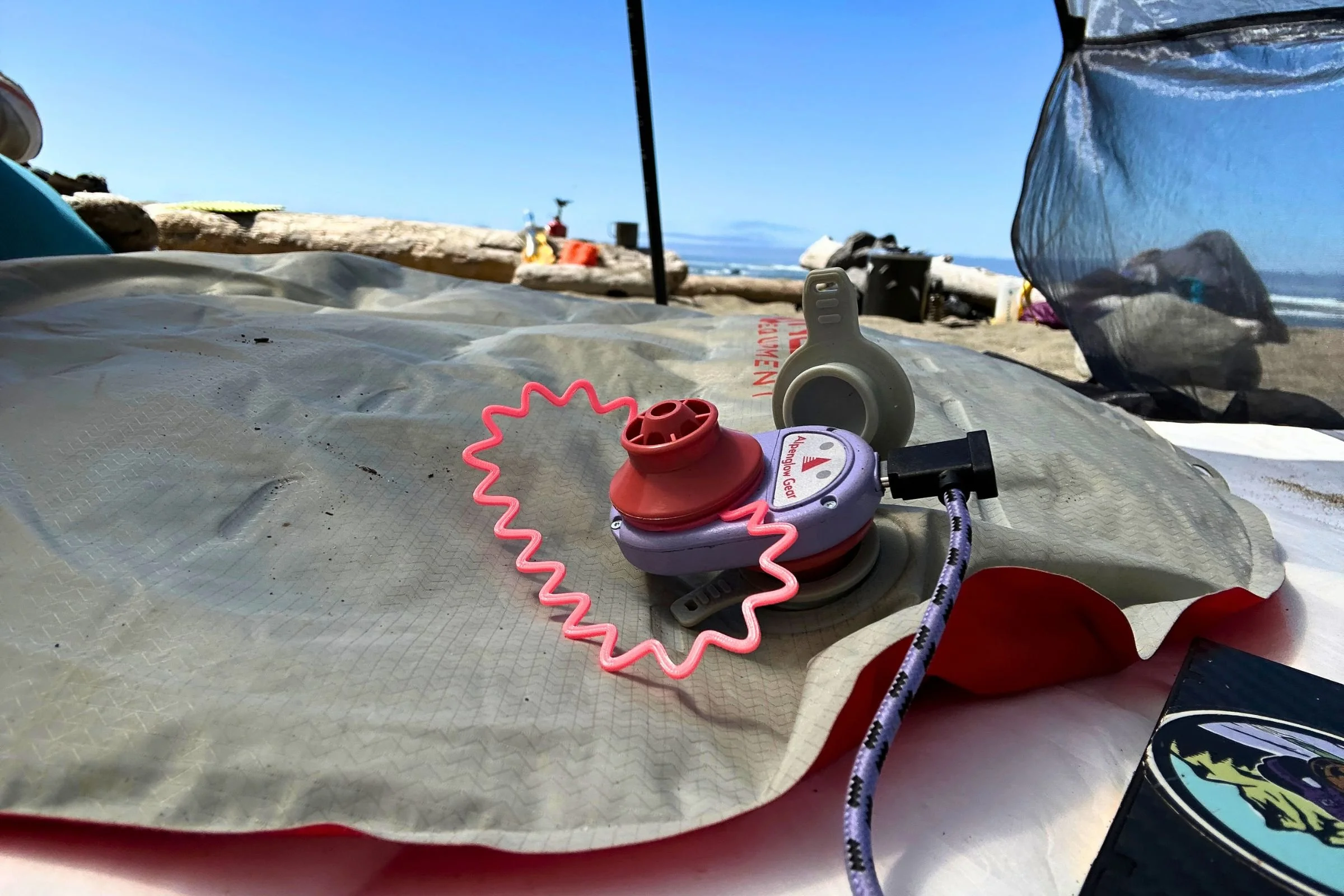
For most backpackers, the Alpenglow Gear Alpenblow Lux is the best overall backpacking sleeping pad inflator. This new version of the Alpenglow Alpenblow wins for its full features, including an inflator, deflator, lantern, and noise machine. It is incredibly battery efficient. Since it is a system that runs off your battery pack or phone instead of requiring its own charging, you don't have to worry about charging a separate battery (and the time and USB ports it requires in a trail town to do so). It runs off USB-C and barely uses power, is relatively quiet, and weighs less than 0.5 oz, making switching to a pad pump a minimal weight penalty for backpackers.
We were able to run the Alpenblow Lux for 7 hours and 35 minutes off one fully-charged 10,000 mAh battery pack, the longest of any pad pump we tested. Using those numbers as estimates, at 2 minutes per inflation, by our measurements, you could potentially get 227 inflations before needing to recharge.
See more in our in-depth review of the Alpenglow Gear Alpenblow Lux.
Alpenglow Gear Alpenblow Lux
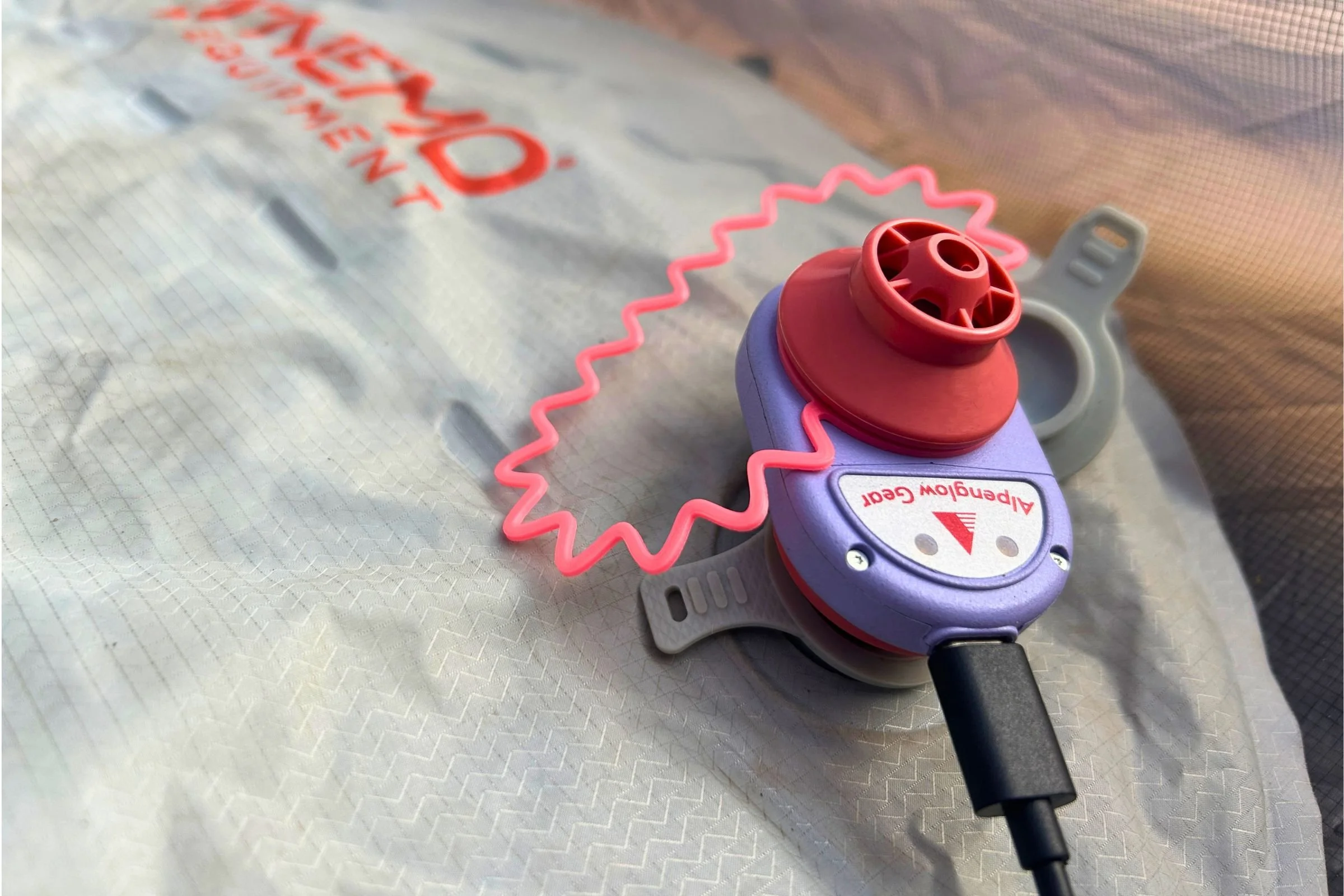
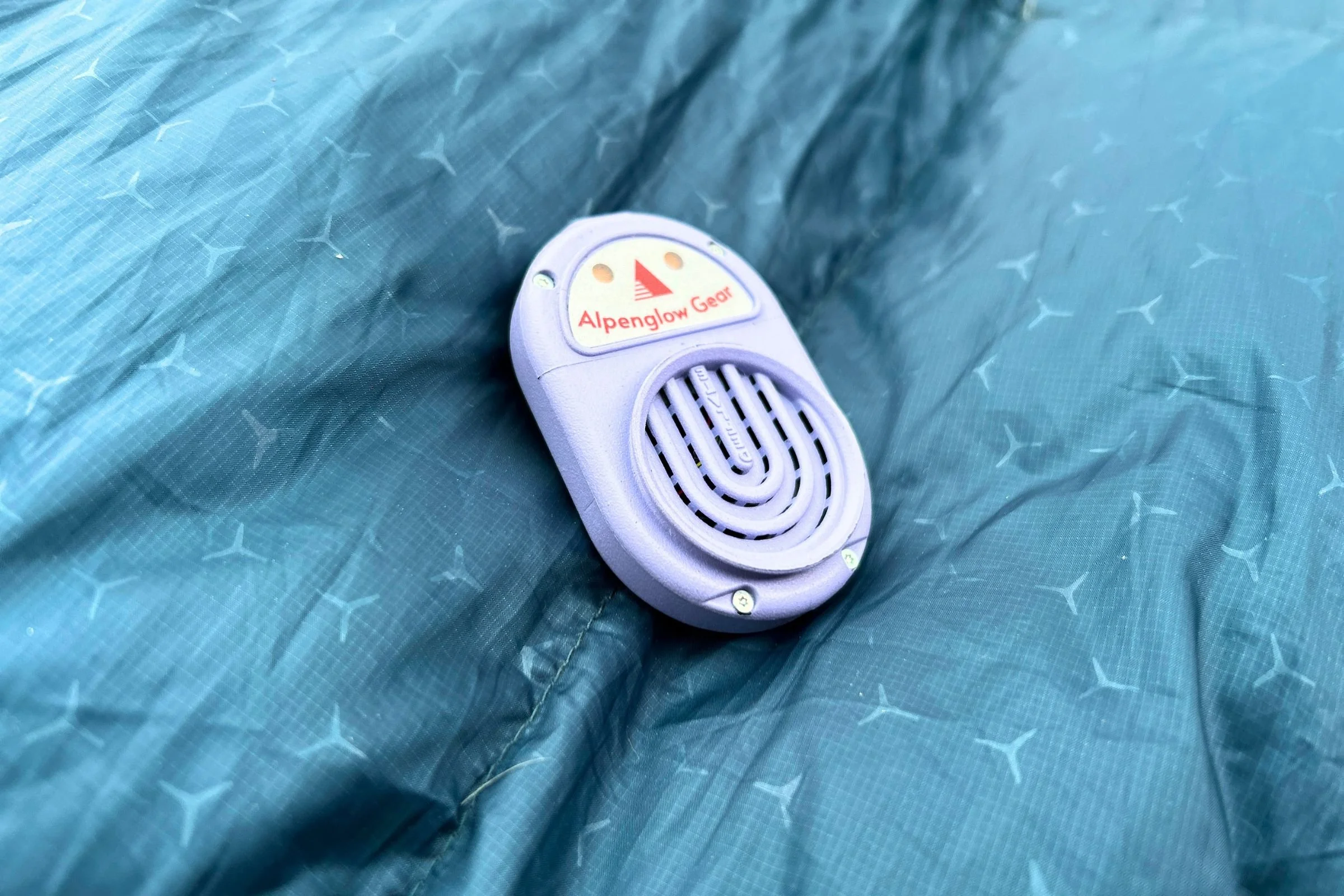
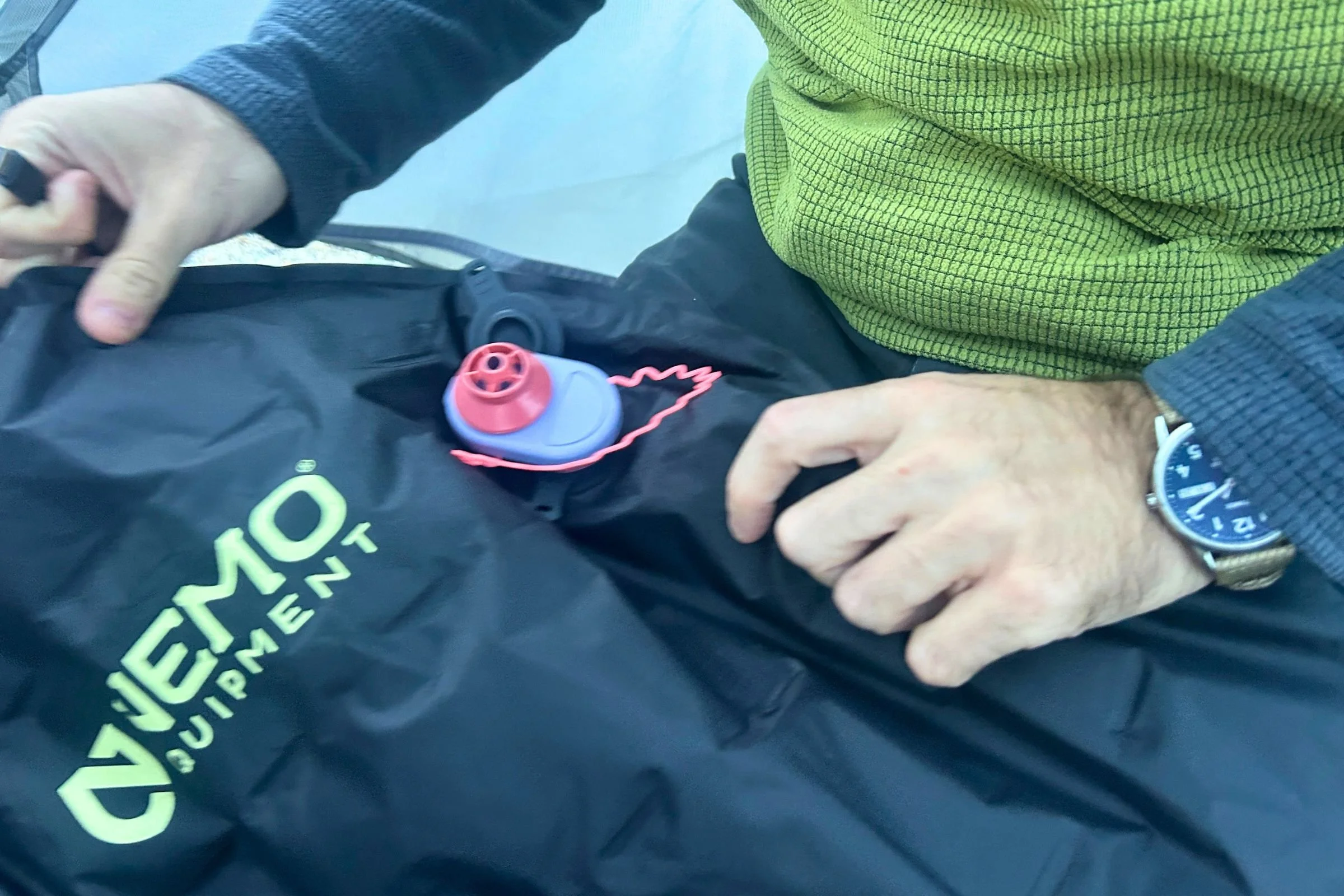
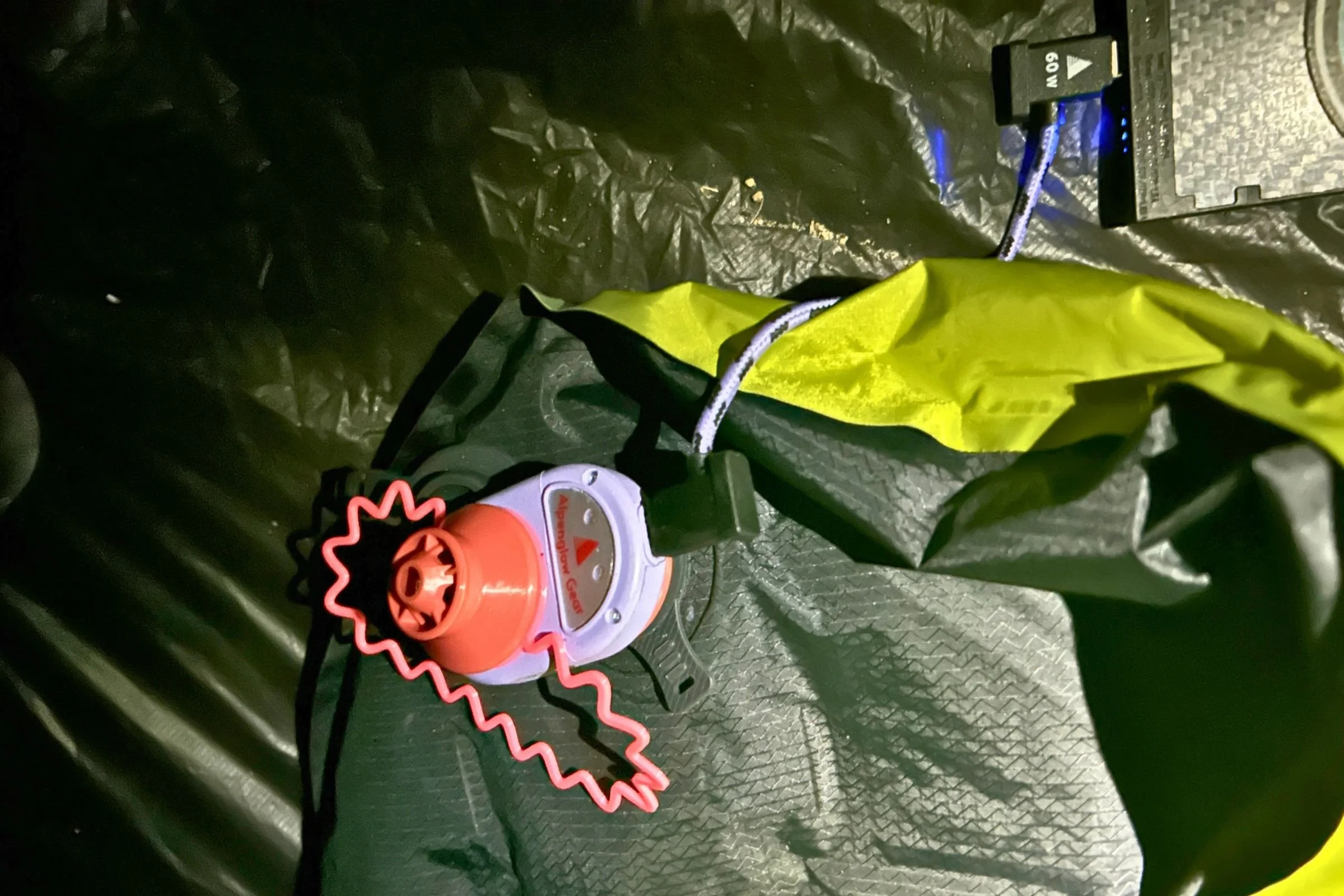
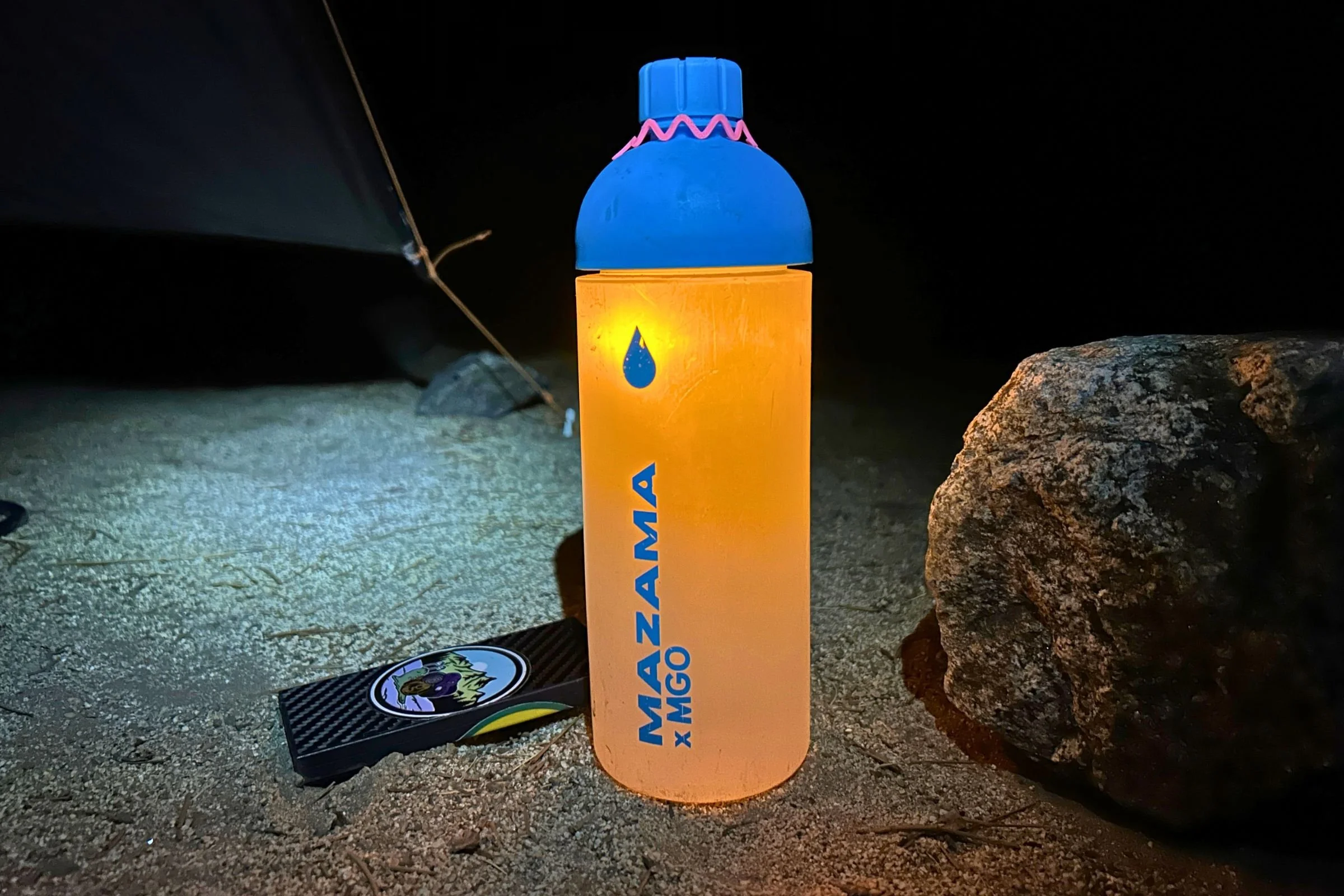
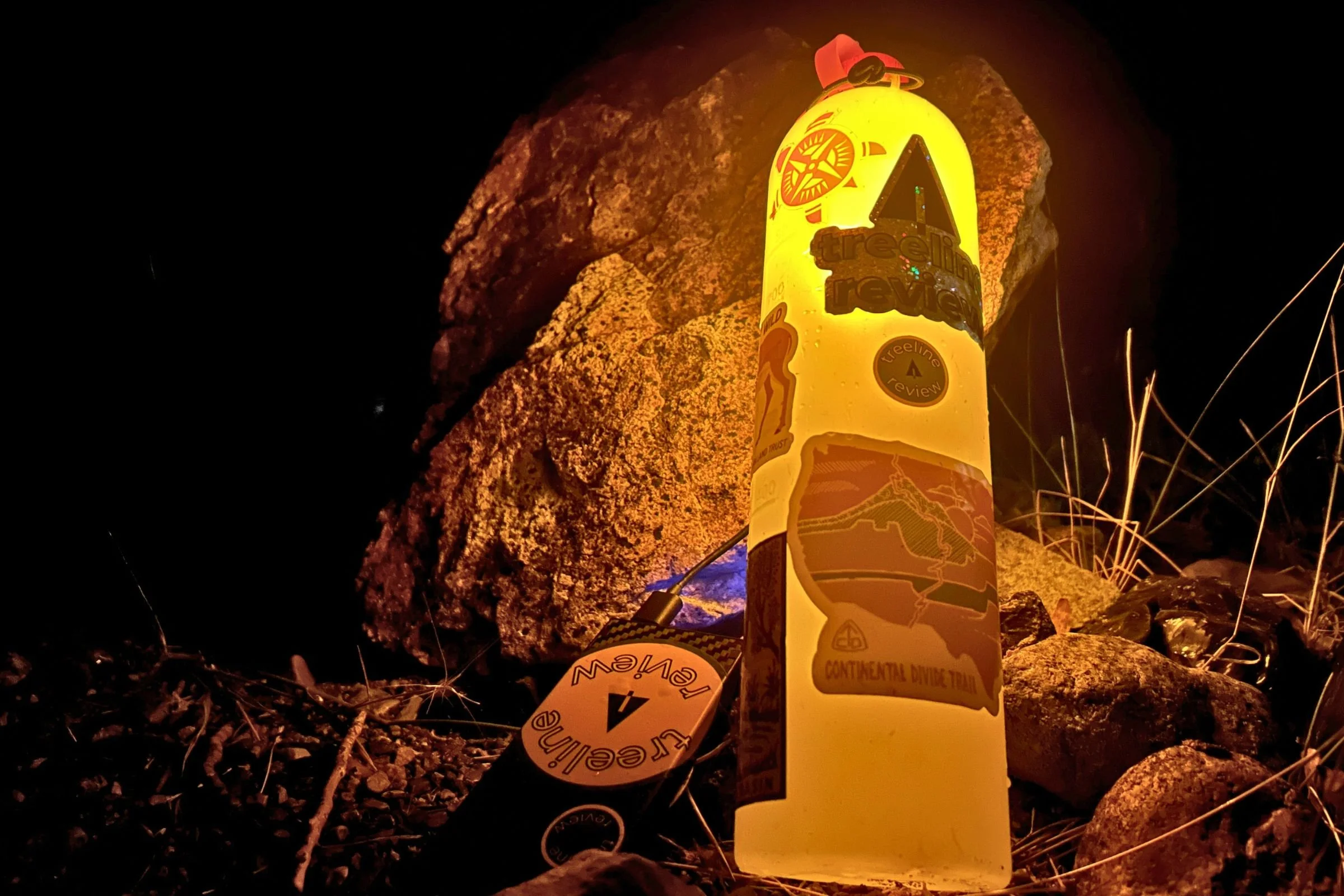
What sets the Alpenblow Lux above the rest is that it is fully featured and not that expensive relative to other pad pumps. It's also assembled in the USA and made by a thru-hiker.
The deflator function is essentially the only way most backpackers can get their pad to fold and fit back in the stuff sack that it comes with. After using the deflate function on the Alpenblow, a sleeping pad fits in there like the day you bought it at the store.
The Alpenblow Lux also comes with four lantern modes (low, medium, high, and candle flicker, for when you can't have a campfire). It also has two noise machine settings (white noise and ocean), if that helps you sleep better. For developers, you can even program in your own settings, if that's something you'd enjoy doing.
We also appreciate the adaptability of the Alpenblow Lux, which works with nearly every brand of backpacking pad. The Alpenglow Lux comes with four sleeping pad valve adapters, which are clearly marked with diagrams on its packing tube. You can buy adapters for three other brands of sleeping pads. It comes with four valve adapters that work for Therm-a-Rest, NEMO, Sea to Summit, Big Agnes, and EXPED pads.
While not the fastest or lightest pump out there, the Alpenblow Lux hit all the marks we looked for in a pad inflator and then some without costing more than competitors. The Lux is the best overall pad inflator for backpackers, ultralighters, and anyone who hates inflating their backpacking pad.
The Alpenblow Lux took us about 2 minutes to fully inflate a NEMO Tensor All-Season sleeping pad. It registered only 40 dB on our noise-measuring app, which is better than we can say for other pad pumps. After it finished filling, it requires about two additional mouth inflations to get this pad as firm as I like— it’s unfortunate that the Alpenblow can't fully achieve that level of firmness, like the FLEXTAIL ZERO PUMP can. Still, I'm willing to do two cursory breaths before bed if it saves me the 1.6-oz difference in weight compared to the FLEXTAIL. You can see this table that explains the time for different models, lengths, and widths of pads.
The Alpenglow Alpenblow Lux can be plugged in and left to do its thing. It doesn't require supervision and can't overinflate. As far as I can tell, it's a safety mode for those of us who multi-task with other camp chores and don't want to sit around watching a pad inflate.
The Alpenblow Lux took us about one minute to fully deflate enough to get our NEMO Tensor All Season folded in its stuff sack again. To do this, you need to flip the pad valve to deflate mode, which is annoying to snap the pump on and off between the two valves. I had an extra adapter valve, so in true laziness, I just kept two valves permanently snapped on, one on the inflate side and one on the deflate side. This makes it function more like the FLEXTAIL ZeroPump, which doesn't require you to snap valves on and off.
Alpenglow pad inflators have small fans that must be protected from sand, grit, and dirt. As with other electronics, the USB-C port must be protected as well. I store mine in a DCF ditty bag along with other electronics. If you're sleeping in a tent, you likely won't run into any issues. I used it for a week of beach camping in a floorless tarp and was just careful and the sand didn't cause any issues.
The pad pump requires you to use a separate USB-C cable to draw power from your power bank. If you lose the cable, it means your pad inflator is useless. I haven't had that happen, but I have lost other cables on trail (actually, multiple times). So if you are likely to lose a cable, a standalone unit may be a better option. That being said, more phones, headlamps, and satellite messengers are requiring USB-C cables, so if you lose your cable, you will likely be in a world of hurt far beyond not being able to inflate your pad.
Best self-contained electric sleeping pad inflator: FLEXTAIL Zero Pump

Price: $53
Weight: 2.1 oz
Power source: Rechargeable 650 mAh battery
Inflation time (regular pad): 180 L/ min
Deflate function: Yes
Noise level: Moderate to loud. 80 dB
Additional features: Fire starter
What we liked: Lightweight, inflator and deflator, includes lots of pump adapters
What we didn't like: Battery maxes at about 25 inflates/deflates for the original model and 15 inflates and 15 deflates (30 uses in total) for the 2 model, charging separately is a double-edged sword (one more thing to charge while in town)
For backpackers who want a pad pump that doesn't require running off your phone or USB-C power bank, the FLEXTAIL ZERO PUMP is hands down the best self-contained electric sleeping pad inflator. It is the size of a couple of lip balms and weighs 2.1 oz with all its adapters, an onboard battery, and both inflator and deflator. The FLEXTAIL ZERO PUMP is one of the most popular items among thru-hikers and backpackers. In addition to its long-lasting battery, with a sturdy metal casing, you could likely drop this in sand and grit and it'd still work. For this self-contained battery pad pump, you can get about 25 - 30 inflates (or 15 inflates, 15 deflates) off one charge.
FLEXTAIL Zero Pump
FLEXTAIL Zero Pump 2
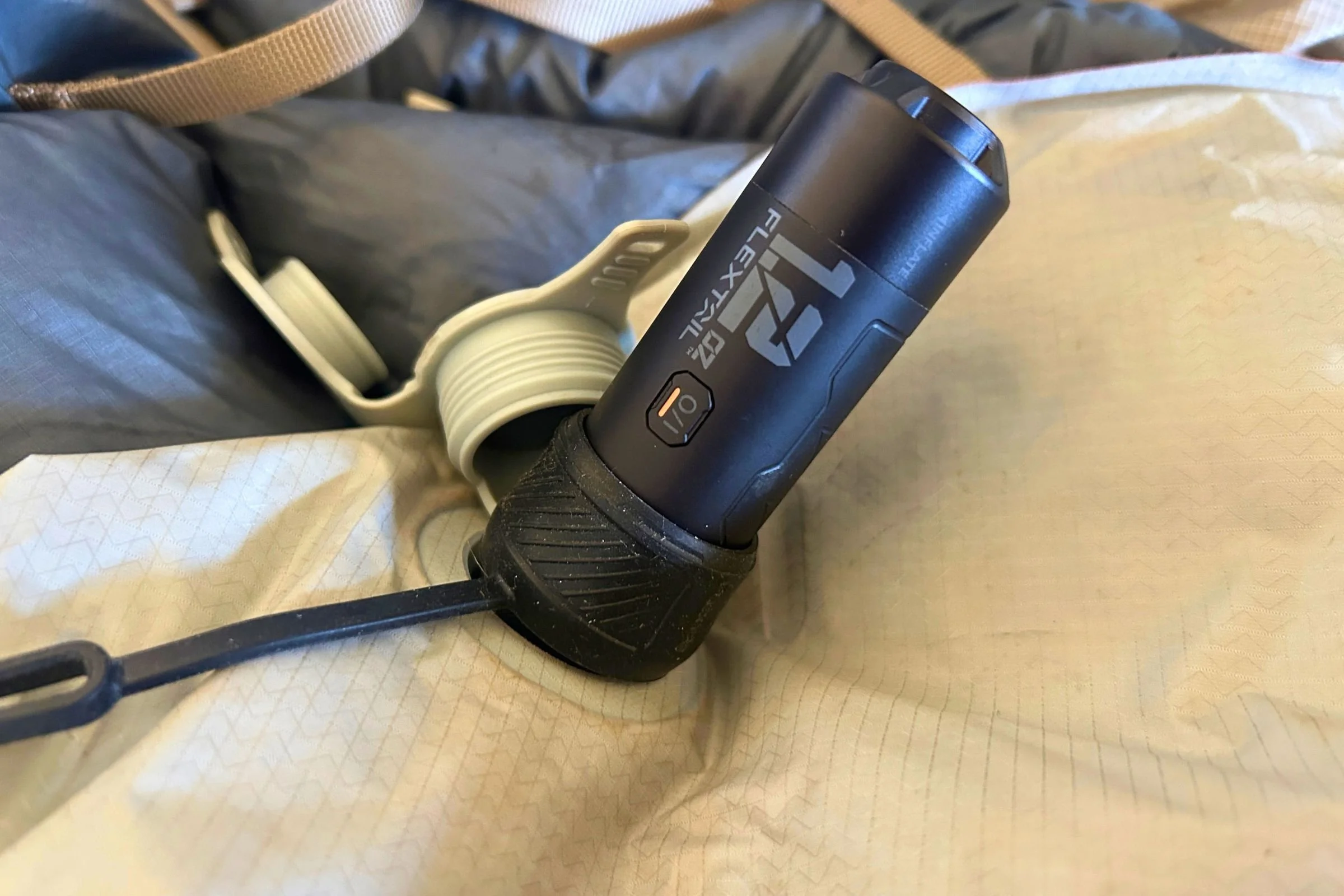
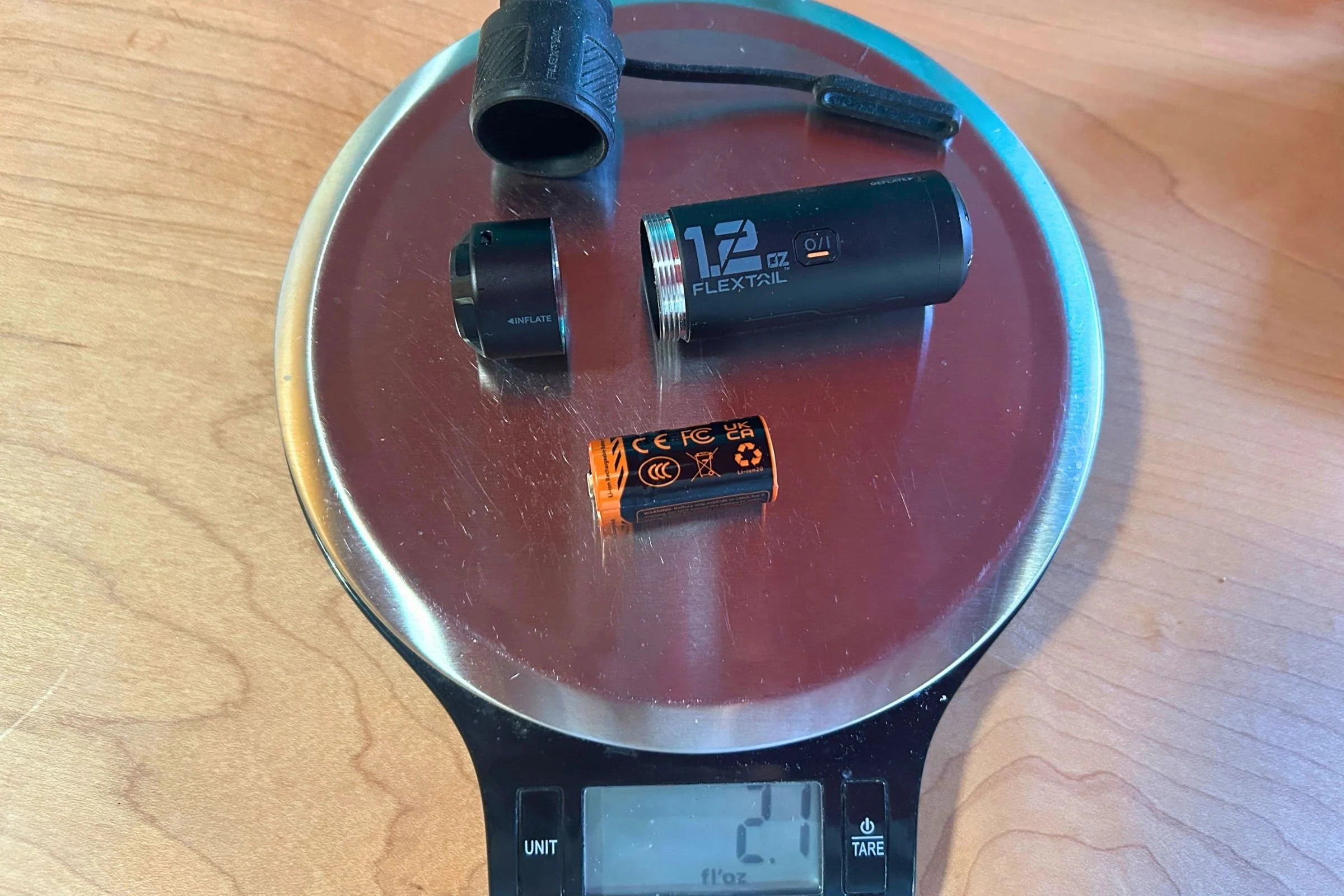
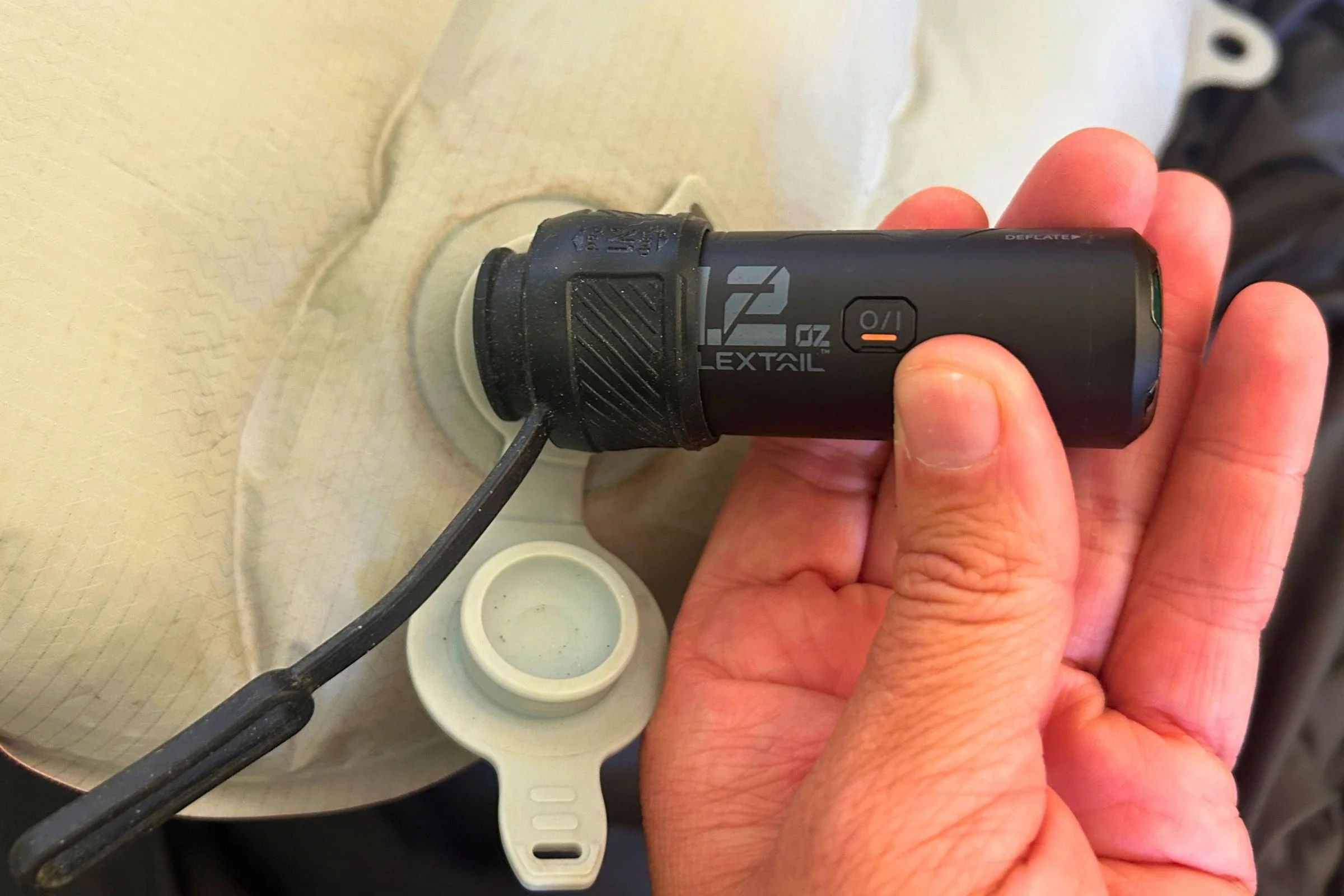
Unlike the Alpenglow models, it has a small, internal lithium battery that charges via USB-C while you are in town. A full charge is good for 25 pumps. You have to pop the battery out of the inflator to charge it. Since it is separate and a self-contained battery system, it won't run down your phone battery or your power bank. That leaves you free to use those items to charge your other electronics.
The Zero Pump really shines for its fully-enclosed fan and protected USB-C port, that aid in durability. Because the battery charges via a USB-C cord that stores inside the unit, you don't have to worry about grit getting in the USB-C port like you do with the Alpenglow models. Unlike the FLEXTAIL Tiny Pump, it doesn't have an explicit water resistance rating. But because of the lack of open ports, I would feel much more comfortable accidentally exposing this to some raindrops than other pad pumps.
The FLEXTAIL ZERO PUMP comes with rubber adapter nozzles that work on 6 types of pads. It isn't that loud, registering 80 decibels on our decibel app.
The FLEXTAIL weighs an ounce more than the Alpenblow systems (1.7 oz compared to 0.3 oz and 0.5 oz for the Alpenblow and Alpenblow Lux, respectively) and is about the same price as the Alpenglow models. It's also black, which isn't as easy to find as the bright pink Alpenglows if you accidentally left it on a log.
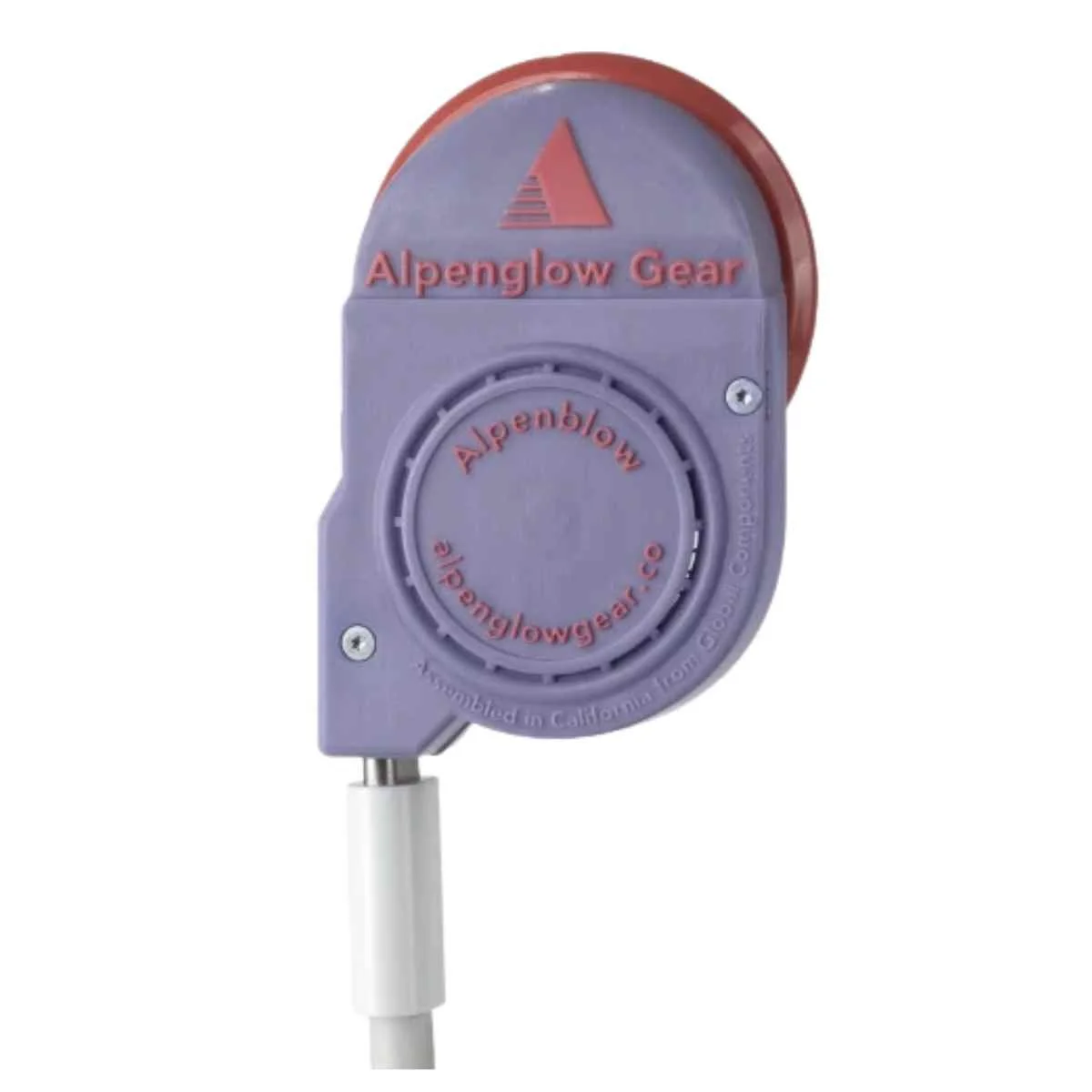
Best ultralight sleeping pad inflator: Alpenglow Gear Alpenblow Classic
Price: $60
Weight: 0.3 oz
Power source: USB-C from phone or power bank
Inflation time (regular pad): 3-5 min
Deflate function: No
Noise level: Quiet. 58 dB
Additional features: N/A
What we liked: Extremely light, lots of adapters, quiet, runs off USB-C, pink and purple is easy to find while packing up camp
What we didn't like: Not as fast as other inflators, not as fully featured
The Alpenglow Gear Alpenblow is the original Alpenblow inflator. It has many of the features we liked in the Alpenblow Lux, including running off USB-C battery packs or your USB-C-powered phone.
While it isn't quite as fast as Alpenblow Lux or the FLEXTAIL ZERO PUMP, the original Alpenblow weighs less—just 0.3 oz. At the end of the day, we often end up spending 3 minutes doing camp chores, so the difference between 2 minutes of the Lux and 3 minutes of the original isn't a huge deal. The original Alpenglow is also noticeably quieter than the Lux and wins the award for quietest pad pump.
Like the Lux, the Alpenglow Alpenblow OG can be plugged in and left to do its thing. You do have to top off your sleeping pad at the end with a couple of breaths, unlike the FLEXTAIL models. As far as I can tell, it's a safety feature for those of us who multi-task with other camp chores and don't want to sit around watching a pad inflate.
We were able to run the Alpenblow original for 7 hours and 24 minutes off one fully-charged 10,000 mAh battery pack, just 11 minutes behind the longest of any pad pump we tested. Using those numbers as estimates, you could get 148 inflations before needing to recharge.
Alpenglow Gear Alpenblow Classic
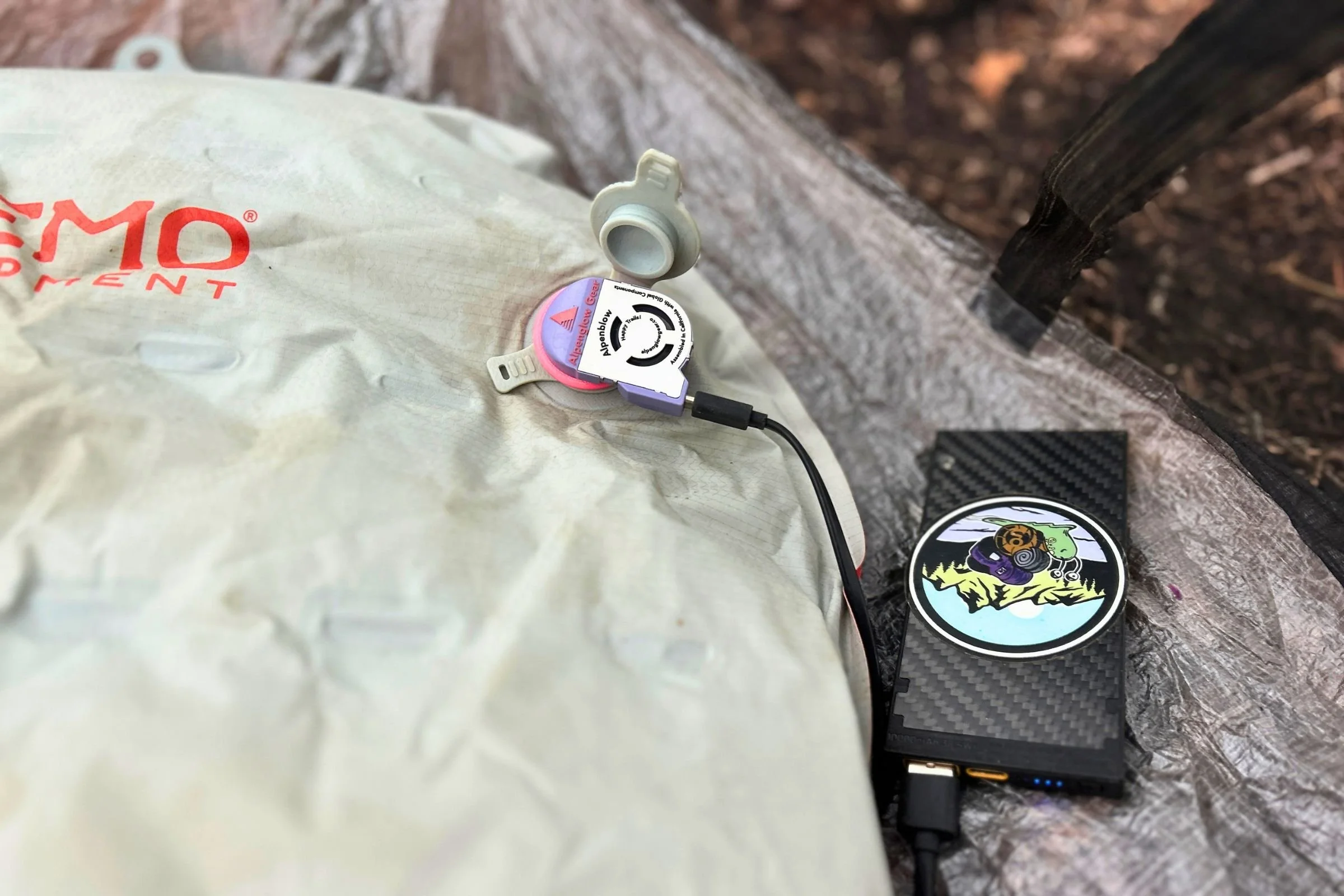
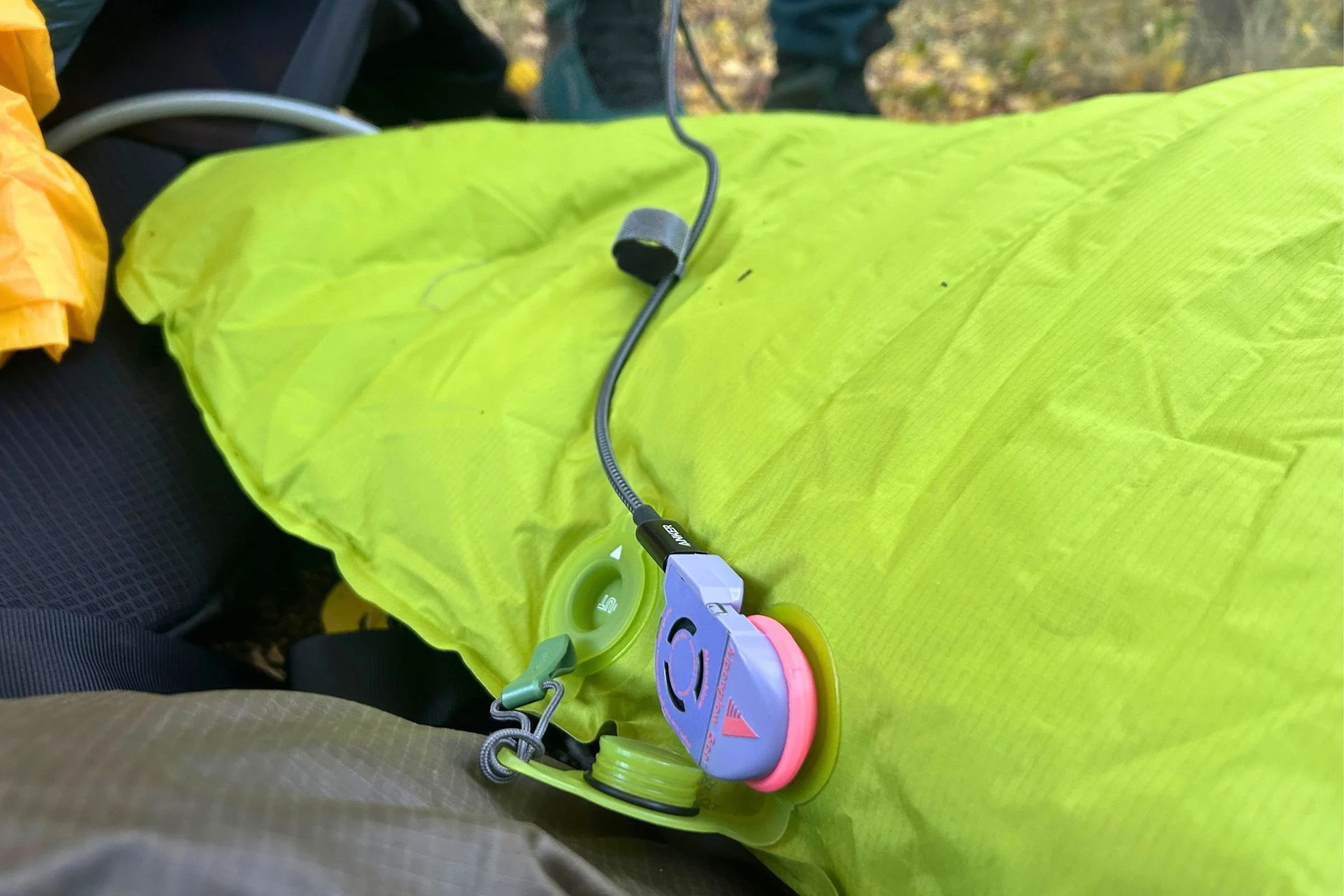
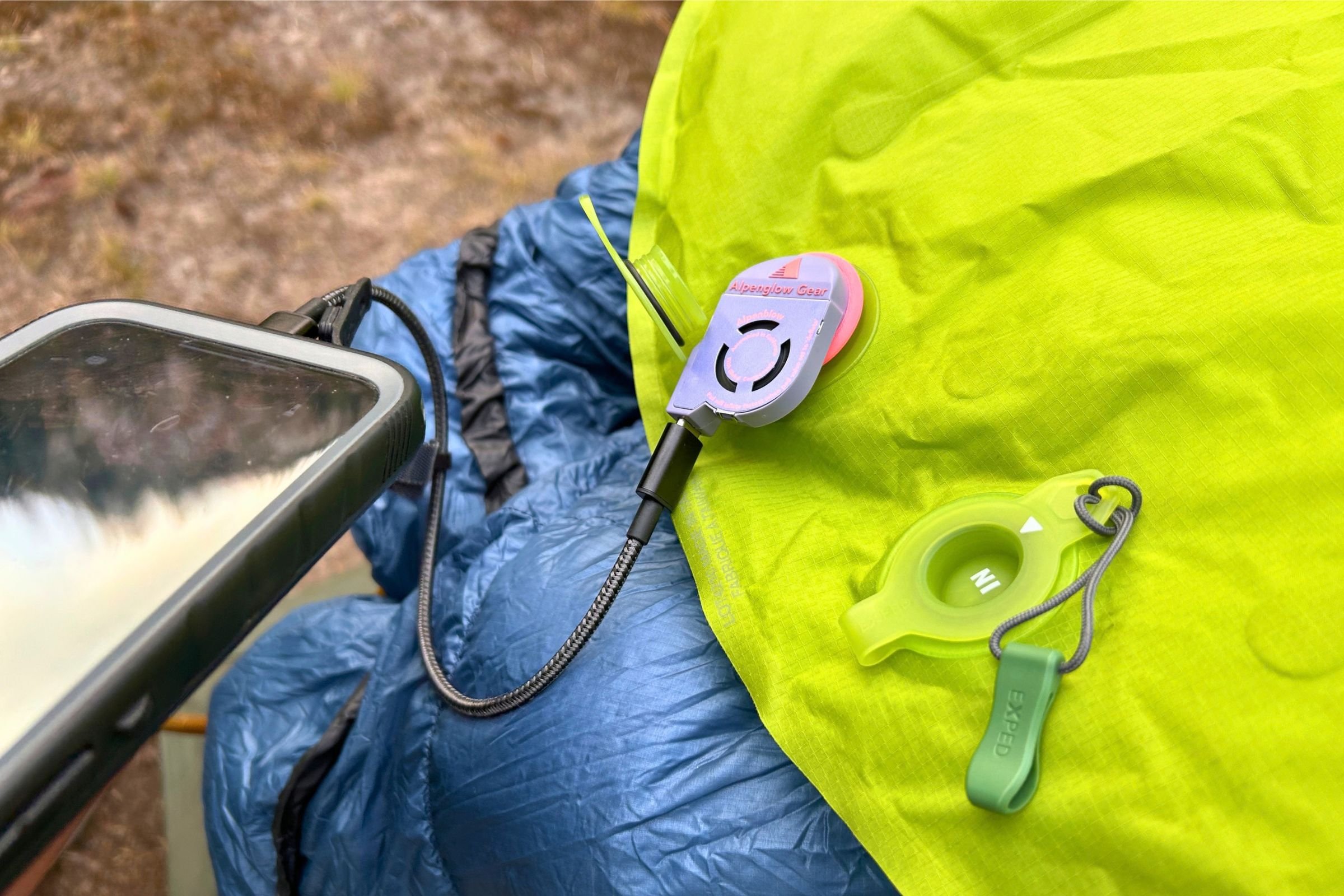
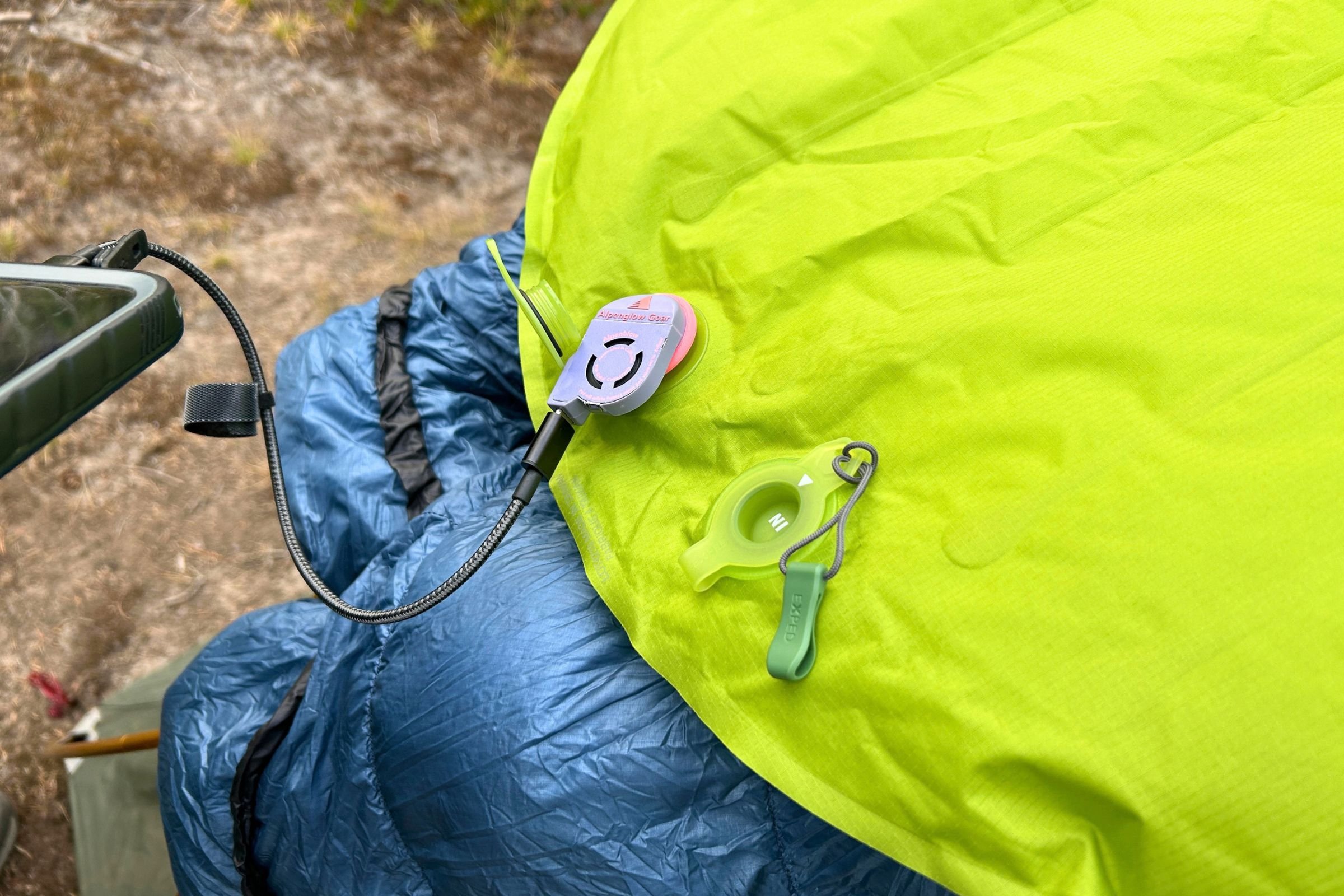
The Alpenblow original pad pump does not have a deflator, as you'll find on the Lux or ZeroPump. For backpackers who don't want to put away their pad in a stuff sack each morning, no deflator is not a dealbreaker. When I'm in full ultralight mode, I usually fold up my inflatable pad against my back as extra padding in my frameless pack, so having a little air in the pad is a benefit to me. I also don't like carrying the extra weight of the pad stuff sack, either. But on more casual trips with friends, the deflator is convenient. Though on more casual trips, I'm not prioritizing ultralight as much, either.
Alpenglow pad inflators have small fans that must be protected from sand, grit, and dirt. As with the Lux, I've backpacked the Grand Enchantment Trail in Arizona and New Mexico for a month through nothing but sandy desert and haven't had issues using this with a floored ultralight tent and cowboy camping with a Polycro sheet. As with other electronics, the USB-C port must be protected as well. I store mine in a DCF ditty bag along with other electronics.
As with both Alpenblow models, it is pink and purple, which is fun but also easier to spot if you were to accidentally leave it behind in a campsite.
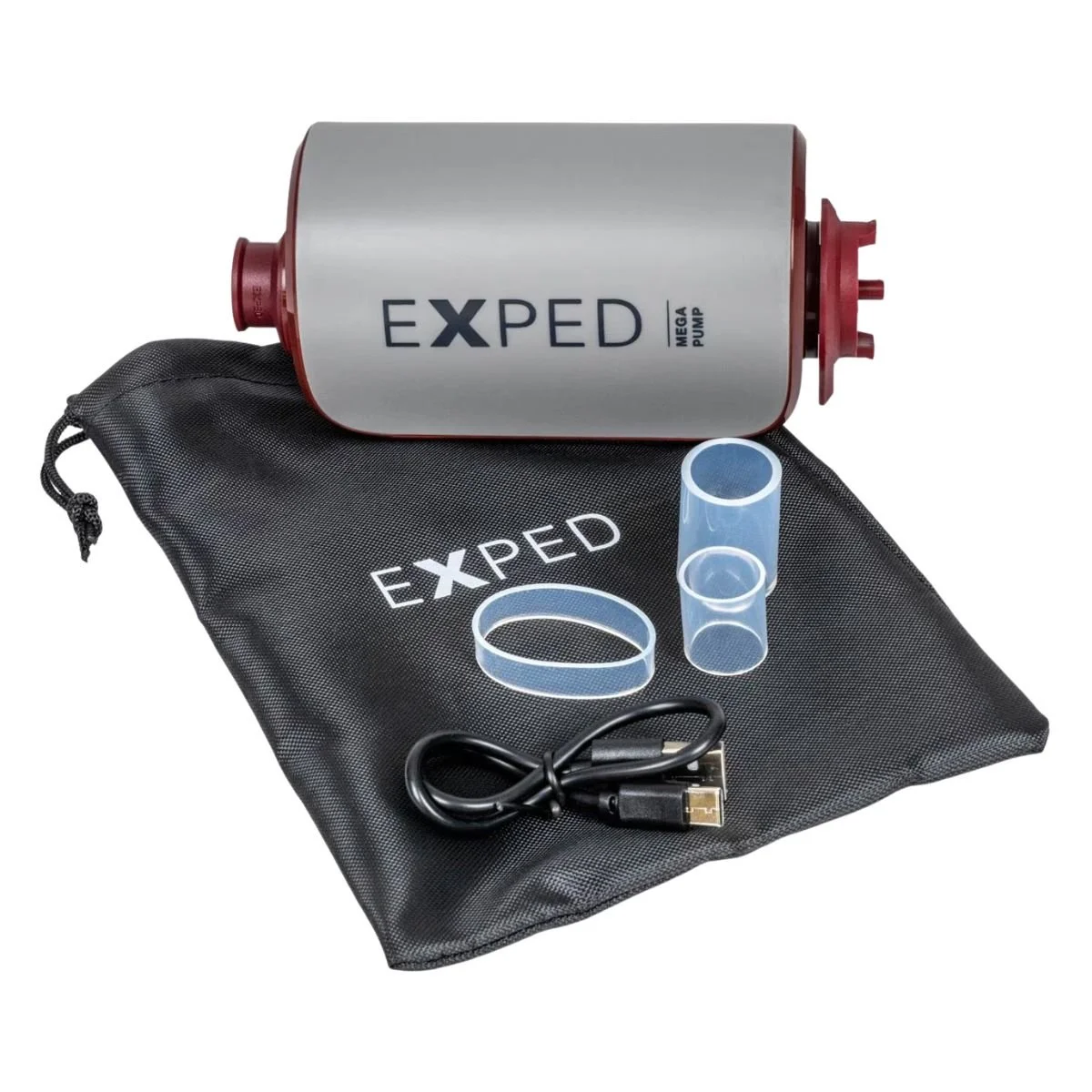
Best sleeping pad inflator for car camping: EXPED Mega Pump
Price: $80
Weight: 12.3 oz
Power source: Rechargeable 2500 mAh battery
Inflation time: 3 minutes on EXPED MegaMat Luxe
Deflate function: Yes
Noise level: Loud. 90 dB
Additional features: N/A
What we liked: Speed, enough power to work on a queen-sized MegaMat, can inflate and deflate
What we didn’t like: Only works with EXPED products (compatibility with other brands depends on the valve and adapter), expensive and not included with mat purchase
Car campers don't have a weight budget to worry about like backpackers. But their camping mattresses often have a lot more volume to inflate. For this award, we cared less about weight and volume and more about inflation speed, ease of use, and being durable enough to be tossed in a car camping kit. The EXPED Mega Pump can handle camping mattresses and larger inflatables, not just backpacking pads. The Mega Pump is a total game changer, and we would go so far as to say it's an essential item for people with camping mattresses.
EXPED Mega Pump
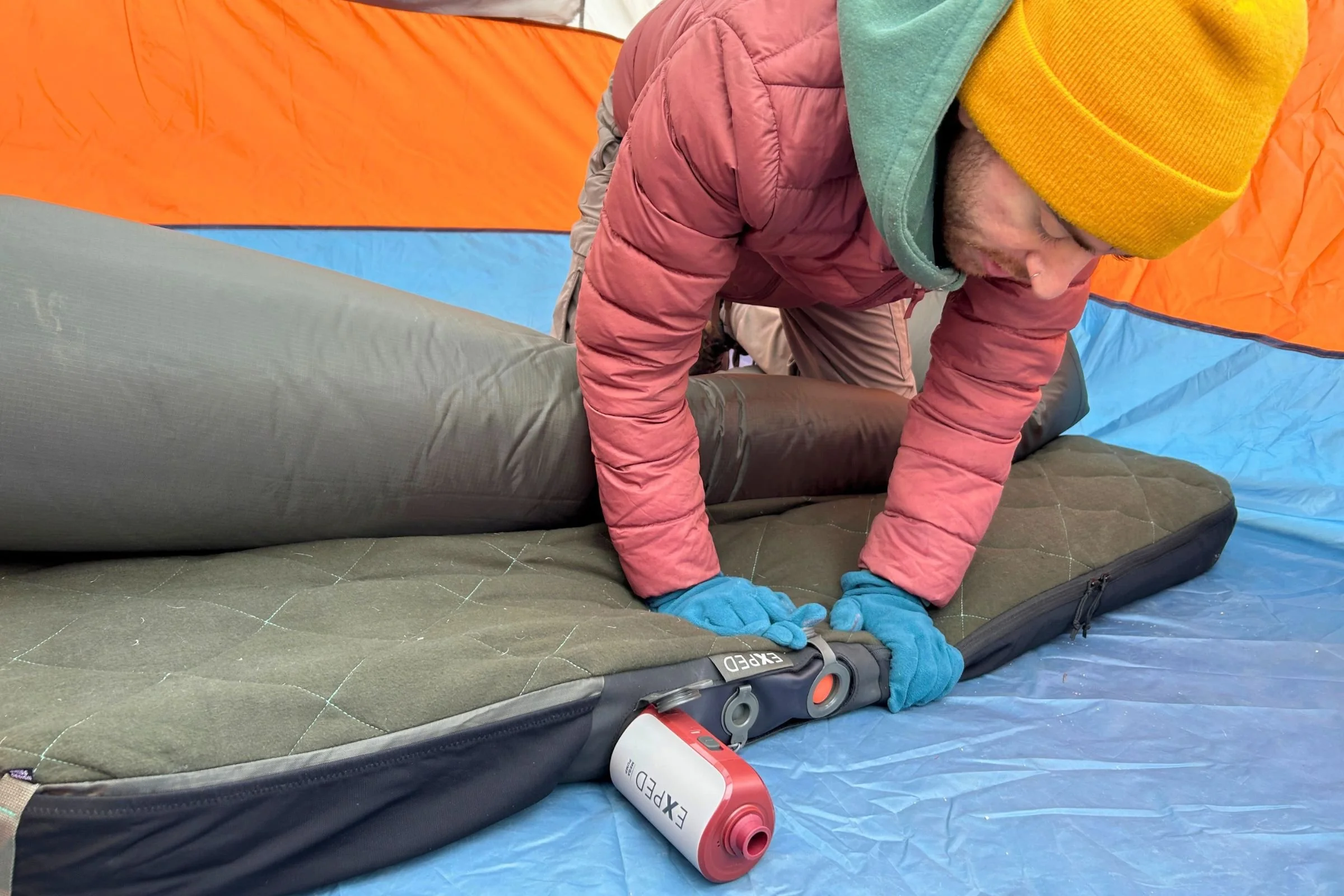
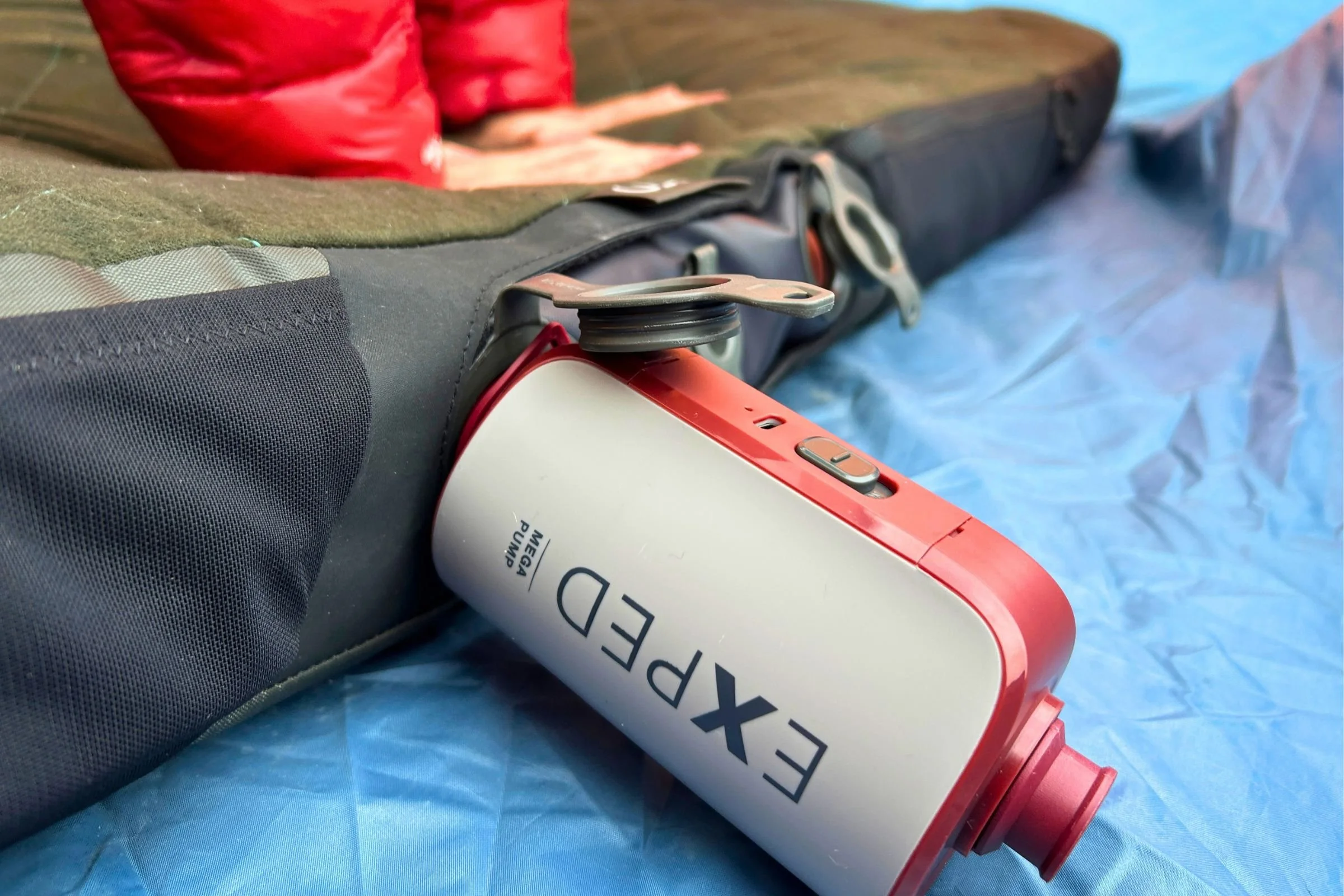
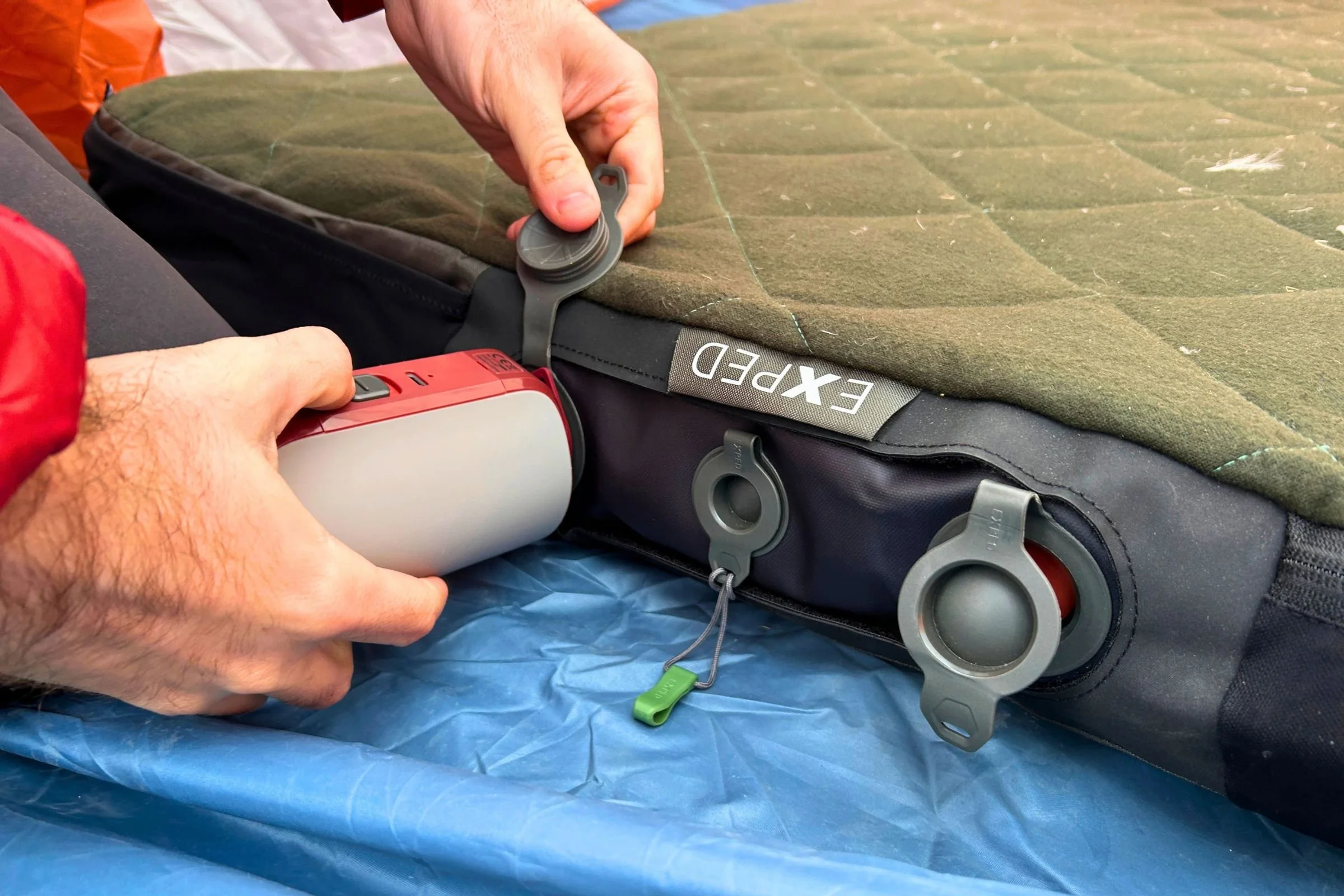
The EXPED Mega Pump can handle the queen-sized camping mattresses I inflated during testing. While there are less heavy-duty pumps designed for camping mattresses, I don't think you should fool around in this category. The Mega Pump puts them all to shame with its speed (about 3 minutes for the MegaMat Duo). Ultralight backpacking inflators struggle on thicker and wider car camping pads. Even dual-duty pad inflators, like the EXPED Widget, aren't ideal for true camping mattresses.
The Mega Pump does wonders inflating, hooking in easily to an EXPED MegaMat. The deflation mode is a sight to behold. It vacuums out air so much, your camping mattress looks like the day it was new. No amount of sitting on it and hoping air will come out can get it looking anything like how the Mega Pump deflates your mattress. You can definitely get this pad back in the giant stuff sack bag it came with.
The Mega Pump, like the FLEXTAIL ZERO PUMP, is powered by an internal battery that you charge at home off a USB-C. You could also charge it off a car's USB-C port. Since it is a more robust pump meant to literally inflate multiple queen-sized car camping pads, the internal battery makes the whole pump heavier (12.3 oz). EXPED makes lightweight pumps (the Widget is 6.7 oz) but for car camping, we say this is the clear winner. The battery lasts about 25 minutes of usage before it needs recharging, so can inflate and deflate two or more full-size mats before needing to be recharged.
The Mega Pump is priced about the same as the backpacking pad inflators. After spending a lot of money on a quality camping mattress, it's hard to pay more for the inflator. But the Mega Pump is so good that if you get a camping mattress, we think you need the inflator. It makes the camping mattress experience a hundred times more enjoyable and less annoying. I actually think the brand should include it when you buy the mattress, it is that essential to my overall camping experience. But until they do this, get this pump immediately.
Other sleeping pad inflators we tested
FLEXTAIL Tiny Pump 2X
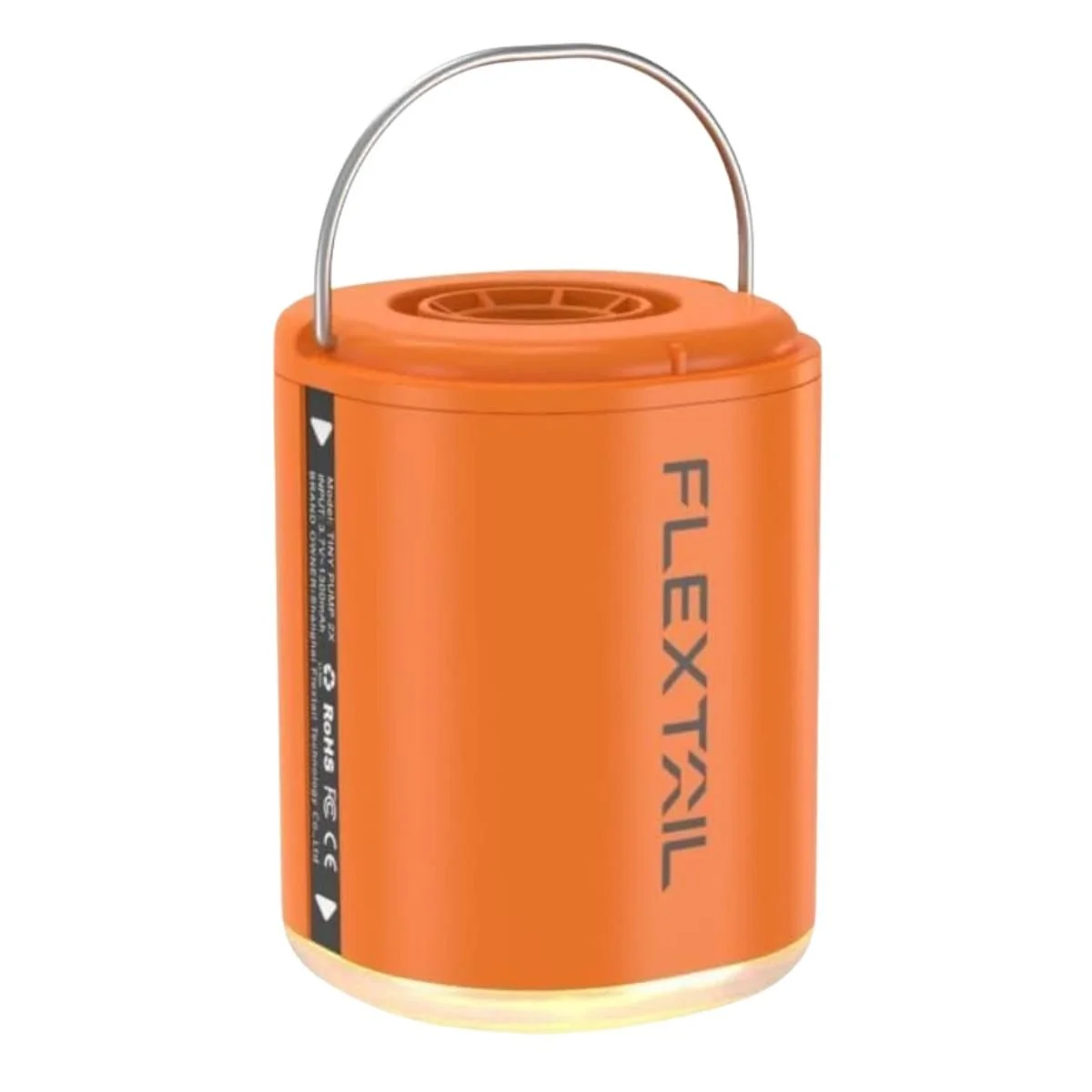
Price: $42
Weight: 3.5 oz
Power source: Rechargeable 1300 mAh battery
Inflation time (regular pad): 180 L/ min
Deflate function: Yes
Noise level: Quiet to moderate
Additional features: Lantern
The FLEXTAIL Tiny Pump 2X is another model from FLEXTAIL that is designed to be more price-conscious. It's also one of the only pumps with a waterproof rating of IP44, meaning it is protected against solid foreign objects (like dirt) larger than 1.0 mm and resistant to water splashes from any direction.
We tested it because it doesn't weigh much more than the Zero Pump (3.5 oz vs 1.2 oz), and we wanted to see what you get and what you miss out on by going with a more affordable pump. Ultimately, we decided that the weight benefits and sleeker, more packable design of the Zero Pump were worth the extra $10. The Tiny Pump 2X could still be a good option if you're on a budget.
FLEXTAIL Tiny Pump 2X
Price: $45
Weight: 2.3 oz
Power source: 2 AAA batteries
Inflation time (regular pad): Not listed
Deflate function: Yes, with WingLock valves only
Noise level: Moderate. 68 dB
Additional features: N/A
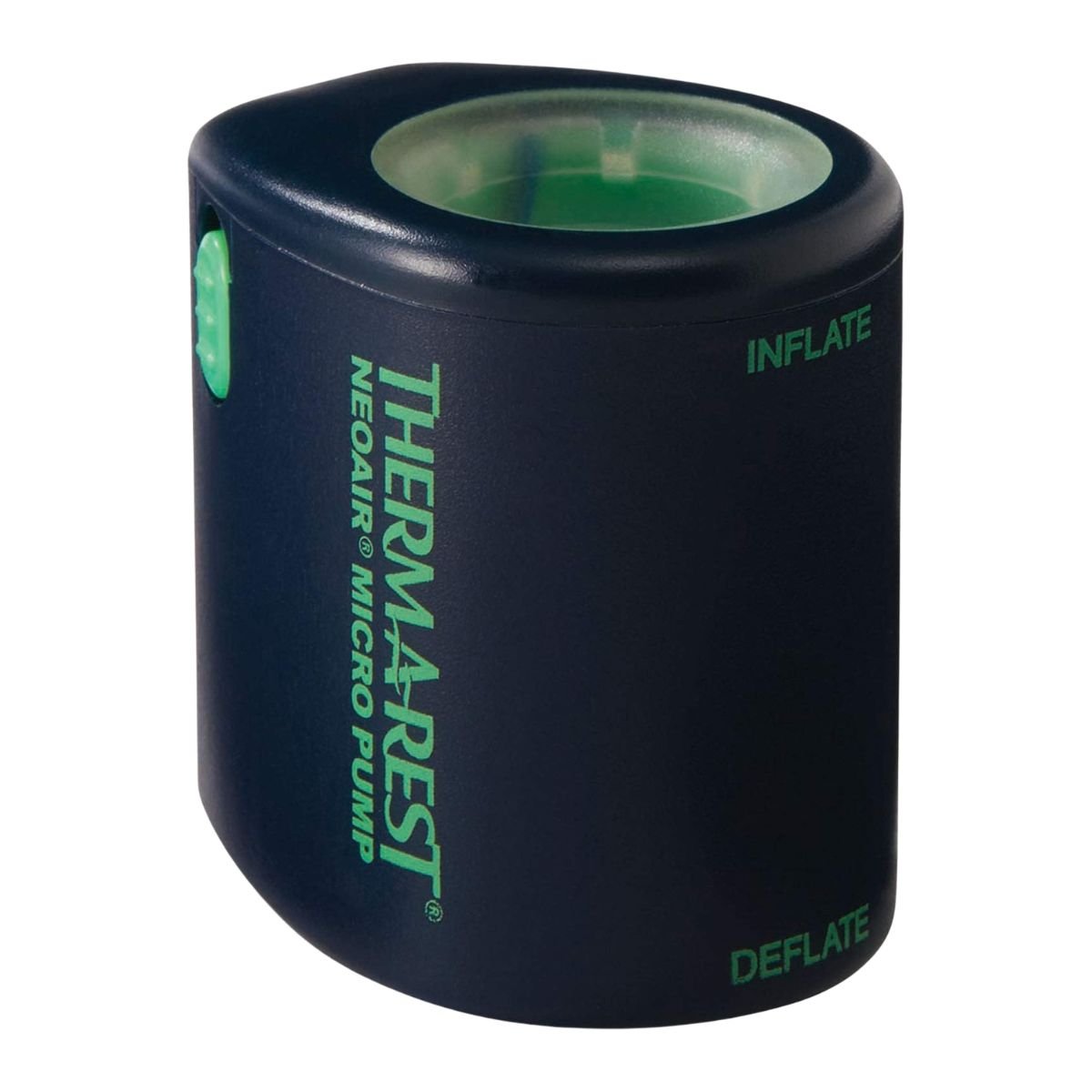
The Therm-a-Rest NeoAir Micro Pump is a small, battery-powered, hand-held pump designed to work with Therm-a-Rest's NeoAir pads. It runs off a couple of AAA batteries, which means you don't have to worry about charging, and it's all self-contained. It feels great in the hand, is relatively fast at inflating (about 3 minutes for a 6-foot NeoAir XLite), and is quiet.
However, it's heavier than other backpacking pad inflators and only works with Therm-a-Rest sleeping pads that have WingLock or TwinLock valves, not older classic valves. Also, the plastic backing over the battery holder falls off easily while the inflator is in a stuff sack or gear storage container, which is annoying.
Therm-a-Rest NeoAir Micro Pump
Price: $70
Weight: 6.7 oz
Power source: Rechargeable
Battery capacity: 3600 mAh
Inflation time (regular pad): Not listed
Deflate function: No
Noise Level: Moderate
Additional features: Lantern, battery bank
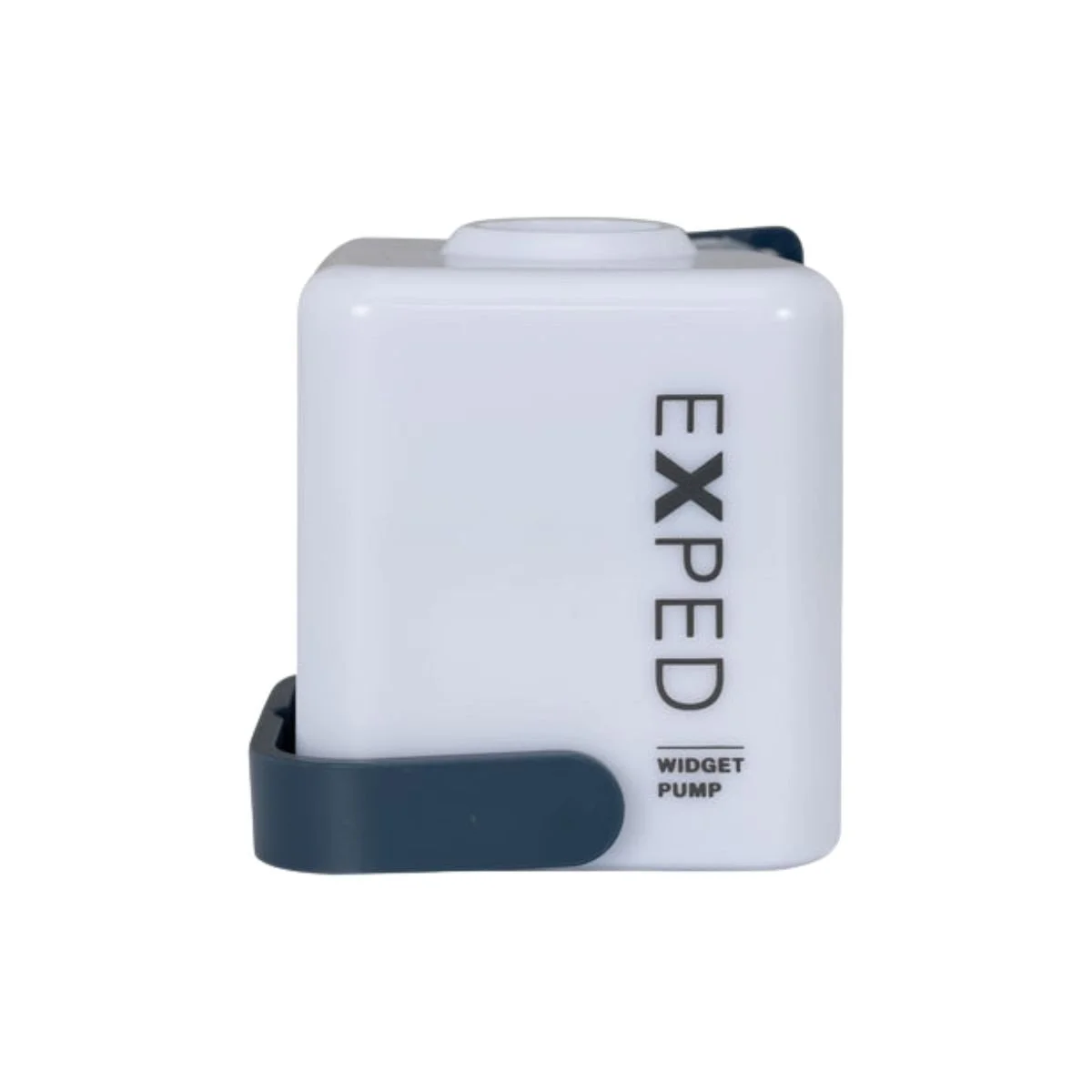
The EXPED Widget Pump is a classic EXPED pump that works with other sleeping pads and camping mattress pads as well. Its boxy size and USB-C charging make it less convenient to pack and charge than other pads we tested. It's heavy and not as fast as the Ultra Pump or Mega Pump. If you're going to get a camping mattress pump, we think you'll find the Mega Pump or Ultra Pump easier to use.
EXPED Widget Pump
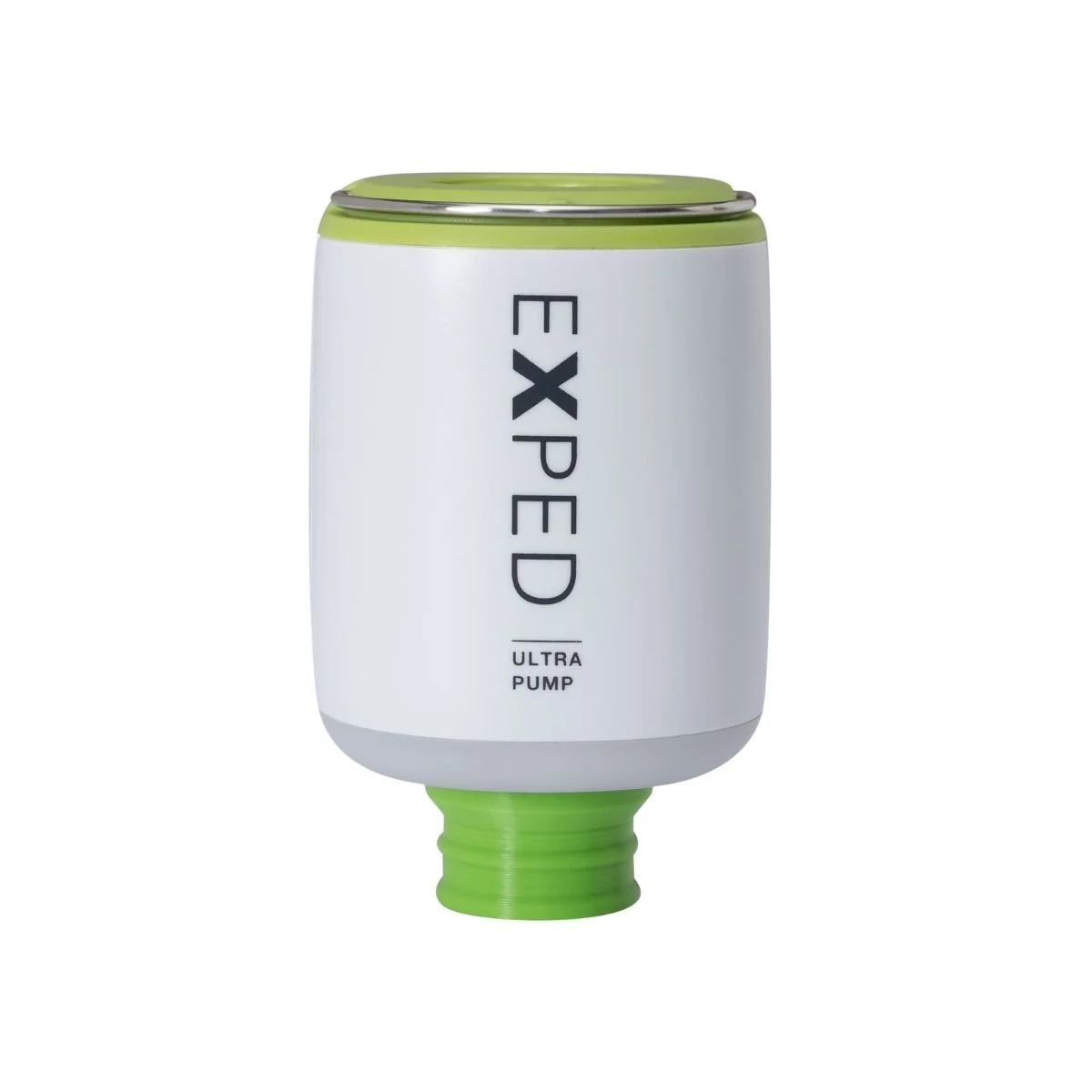
Price: $60
Weight: 3.5 oz
Power source: Rechargeable 1600 mAh battery
Inflation time (regular pad): 80 L/ min
Deflate function: No
Noise level: Noisy
Additional features: Lantern
The EXPED Ultra Pump is the in-between size version of the EXPED Mega Pump. It's still pretty fast for inflation. As a unit, it is more compact than the Mega Pump. The battery doesn't last quite as long. This is still a good option for a camping mattress pad, especially if you are using a one-person pad instead of a queen-sized pad.
EXPED Ultra Pump
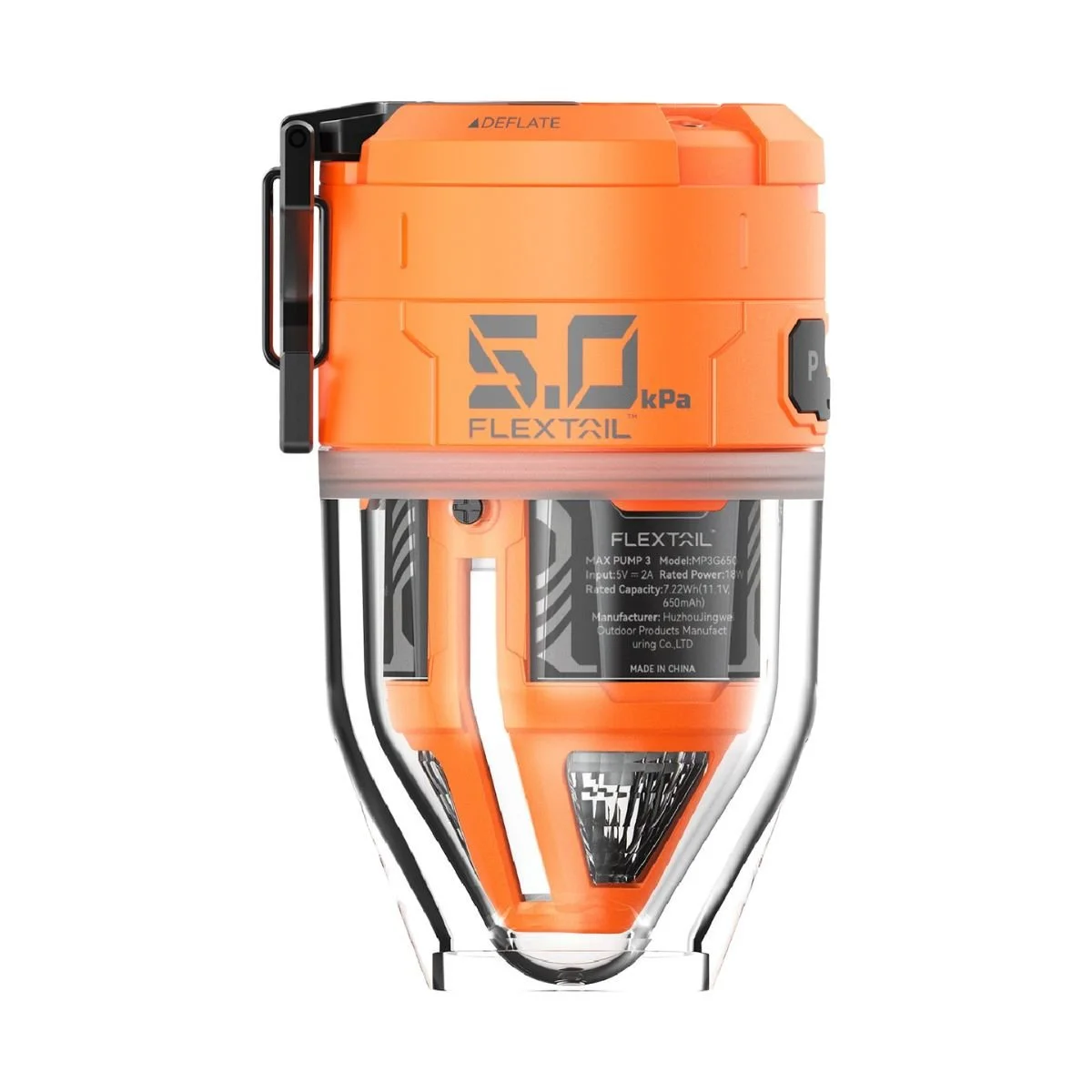
Price: $61
Weight: 4.3 oz
Power source: Rechargeable 1950 mAh battery
Inflation time (regular pad): 500 L/ min
Deflate function: Yes
Noise level: Moderate
Additional features: Lantern
The FLEXTAIL Max Pump 3 has a unique transparent design that allows you to see the inside components of your pad inflator. It comes with a lot of adapters that go beyond sleeping pads and camping mattresses, including swimming inflatables, home air mattresses, and the ability to vacuum-seal plastic storage bags.
At 4.3 oz (not including the case but does include the internal battery), the FLEXTAIL Max Pump 3 weighs more than the other backpacking pad inflators we tested but isn't as robust as the camping mattress inflators we considered.
Ultimately, we found the Max Pump 3 cool-looking, but more difficult to use than the FLEXTAIL ZERO PUMP. Its outdoor-indoor versatility ended up being the downfall, as it got confusing figuring out what adapter goes where and to what pad or mattress. It only has six adapters, but somehow, the whole system was more complicated than it needed to be. I thought it was just me, but we had multiple testers—all with hundreds of nights of experience in camping and backpacking inflators—try to figure out this pump. Several of them worked in gear stores with jobs explaining these kinds of devices to customers. Our takeaway was that while versatility is useful for most gear, when it comes to inflators, it is best to get the pad inflator that does one thing really well.
FLEXTAIL Max Pump 3
Rex Creations Pad Pal
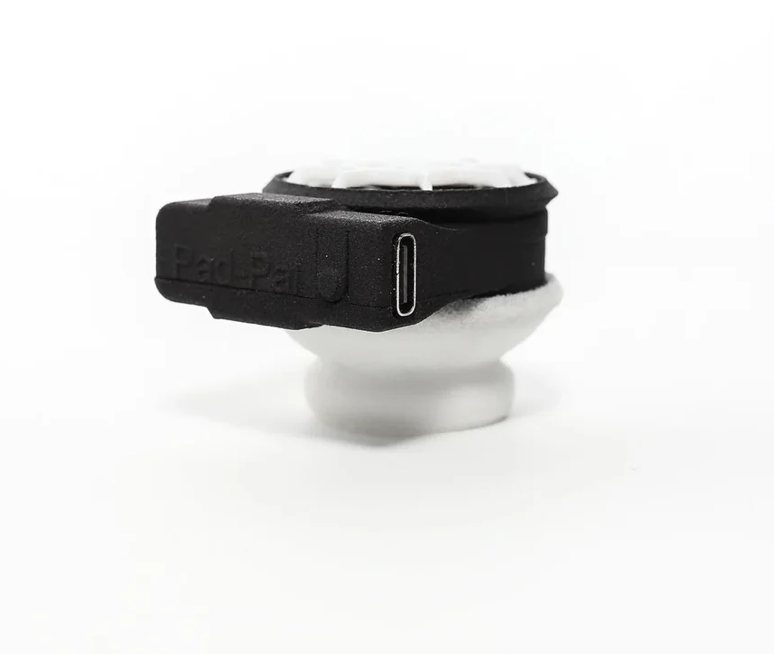
Price: Not currently purchase-able for any price
Weight: 0.32 oz / 9 g
Power source: USB-C equipped Phone or Power bank, also compatible with USB-A ports
Noise level: Loud. 82 dB (low), 91 dB (medium), 99 dB (high)
RIP Rex Creations Pad Pal, which was available when we started testing 1.5 years ago and is the closest pad pump out there to the Alpenblow Classic. Like the Alpenblow Classic, the Rex was an inflator only. It weighed about the same. It uses a USB-C connected to your battery pack or phone to power it. It wasn't as battery-efficient as the Alpenglows, measuring in 2 hours and 50 minutes per 10,000 mAh battery pack.
What made it special was that it inflated more quickly than Alpenblow Classic (and faster than the Lux) and came with more settings for speed. However, it was louder (up to 100 dB, similar to a motorcycle) and played a song reminiscent of a Samsung washer or dryer. I love it in my washer or dryer, but don’t need an electronic song in the backcountry.
It was loud, it was fast, and it is missed, which is why we're keeping it in this guide, even though you can't find it for sale anymore. You can still find it available on eBay, so if this pad inflator intrigues you, see if you can find it used.
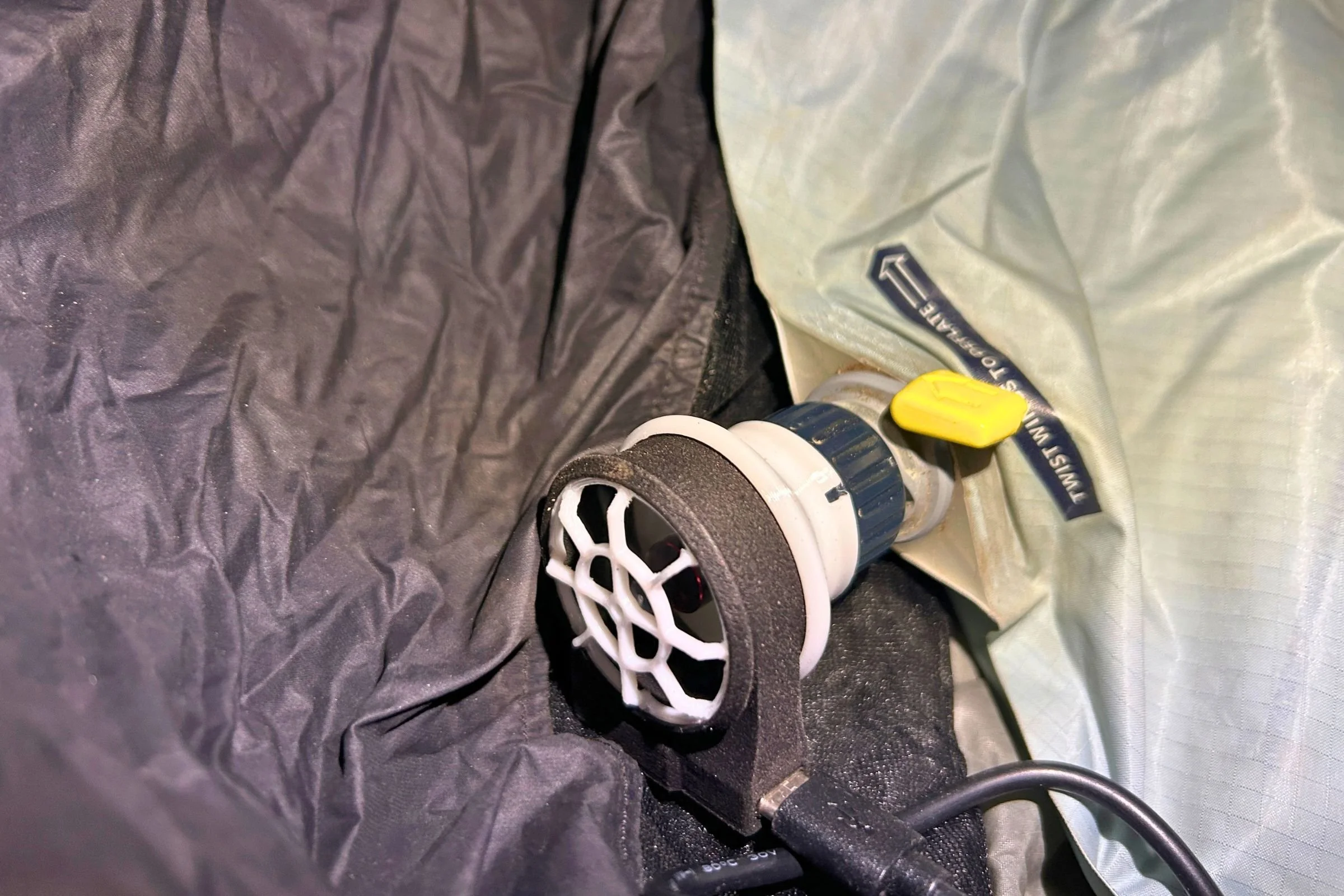
The Pad Pal is no longer available, but was such a revolutionary product, we wanted to include it in this story as part of the history and evolution of the pad inflator category.
What to look for in sleeping pad inflators
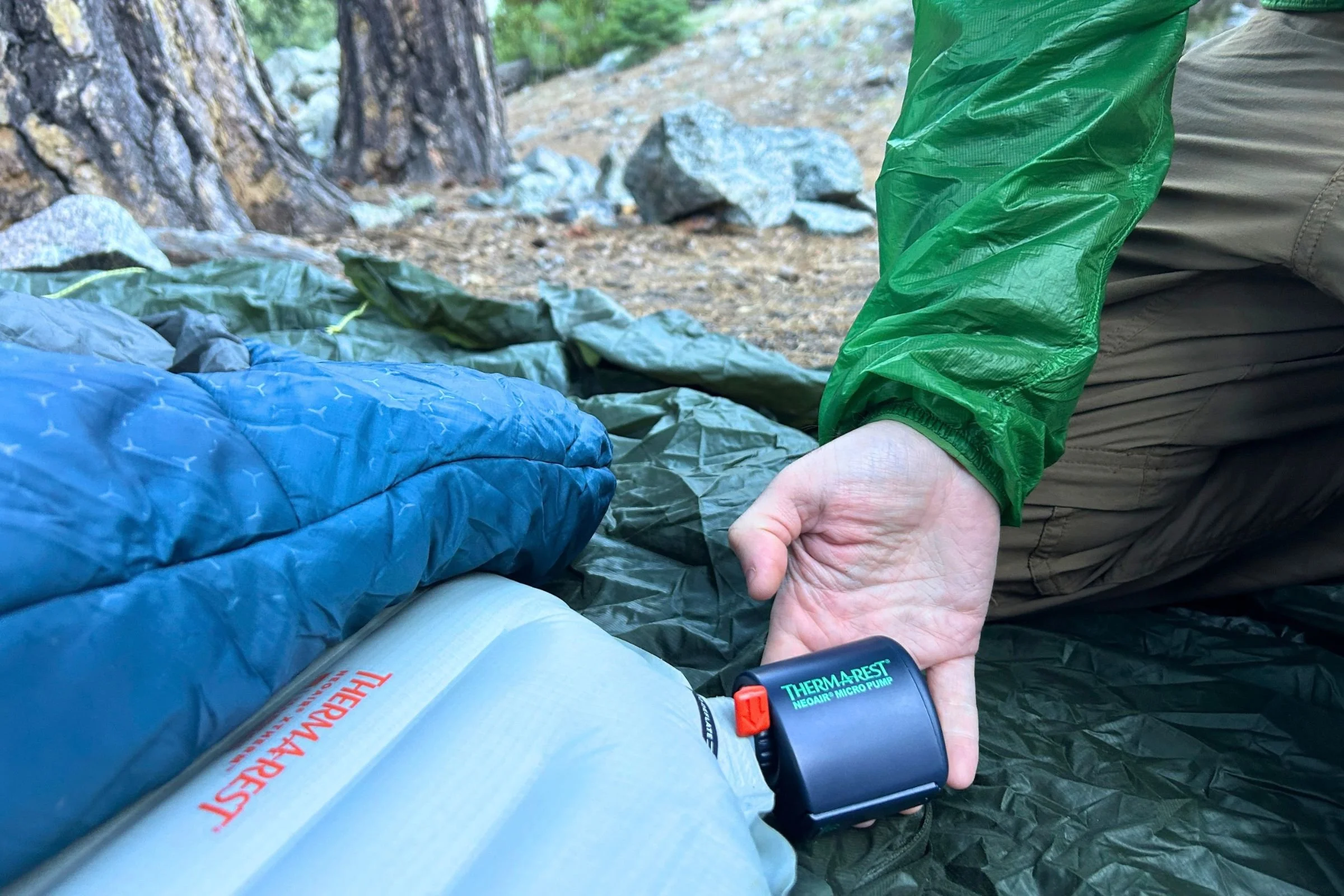
USB-powered vs. self-contained electric vs. manual
Sleeping pad inflators work several ways: battery-powered or manual. We didn't consider any manual pumps or pumpsacks in this guide (but if you are wondering, the best pumpsack out there for a backpacking pad is the one made by Sea to Summit. Alas, it only works with Sea to Summit pads.)
USB-powered inflators work by connecting your phone or power bank via a USB cord to the inflator.
Self-contained electric inflators have a small lithium battery inside the inflator. You charge the whole unit or just the battery separately. No power bank or phone battery drainage required.
Weight and system weight
For a backpacking pad inflator, weight is likely one of your most important criteria. Consider the weight of the unit and its adapters (and included cords and batteries). If you're on a shorter backpacking trip, you may not be carrying a power bank. So if you're just carrying a power bank for your pad inflator, that is a lot of extra weight to add to the equation.
For a car camping mattress inflator, weight will matter less. In fact, we recommend the heavier-duty inflators for car camping. Inflating camping mattresses manually is super annoying, and we think it is worth getting the camping mattress inflator whose battery will never die so you aren't stuck manually pumping.
Inflation speed
Different backpackers and campers value inflation speed differently. It depends on how patient of a person you are. For backpacking, I think getting a slower inflation speed is fine because I'll set up my pad pump and then do other camp chores while I am waiting for it. One of my backpacking partners likes to stare at the pad while it is inflating and cannot multitask, so speed matters a lot more to him. Figure out your camp chore style and choose accordingly.
For what it is worth, many of these inflators can be plugged in and left to do their thing. The pump will usually stall or stop pushing air before the pad bursts. But check with your specific pad inflators' instructions before deciding to step away from your pad whilst inflating.
Battery life and power consumption
We tested how much battery life a pad pump uses based on power consumption to inflate a standard pad and run-time (for self-contained units). In most cases, you can measure the battery life on pumps in terms of runtime or the number of inflations. That being said, some pad inflators use more battery than others, so if you are on a longer trip far away from power outlets or solar panels, you may want to opt for a model that has lower battery needs. For thru-hikers resupplying in town, some models only require you to charge the same battery pack you're likely already using for your phone, headlamps, and other electronics. Other models require you to charge another separate internal battery designed just for your pad inflator. If you're carrying a model with an external battery, you may benefit from carrying a wall charger with an extra USB port.
Valve compatibility
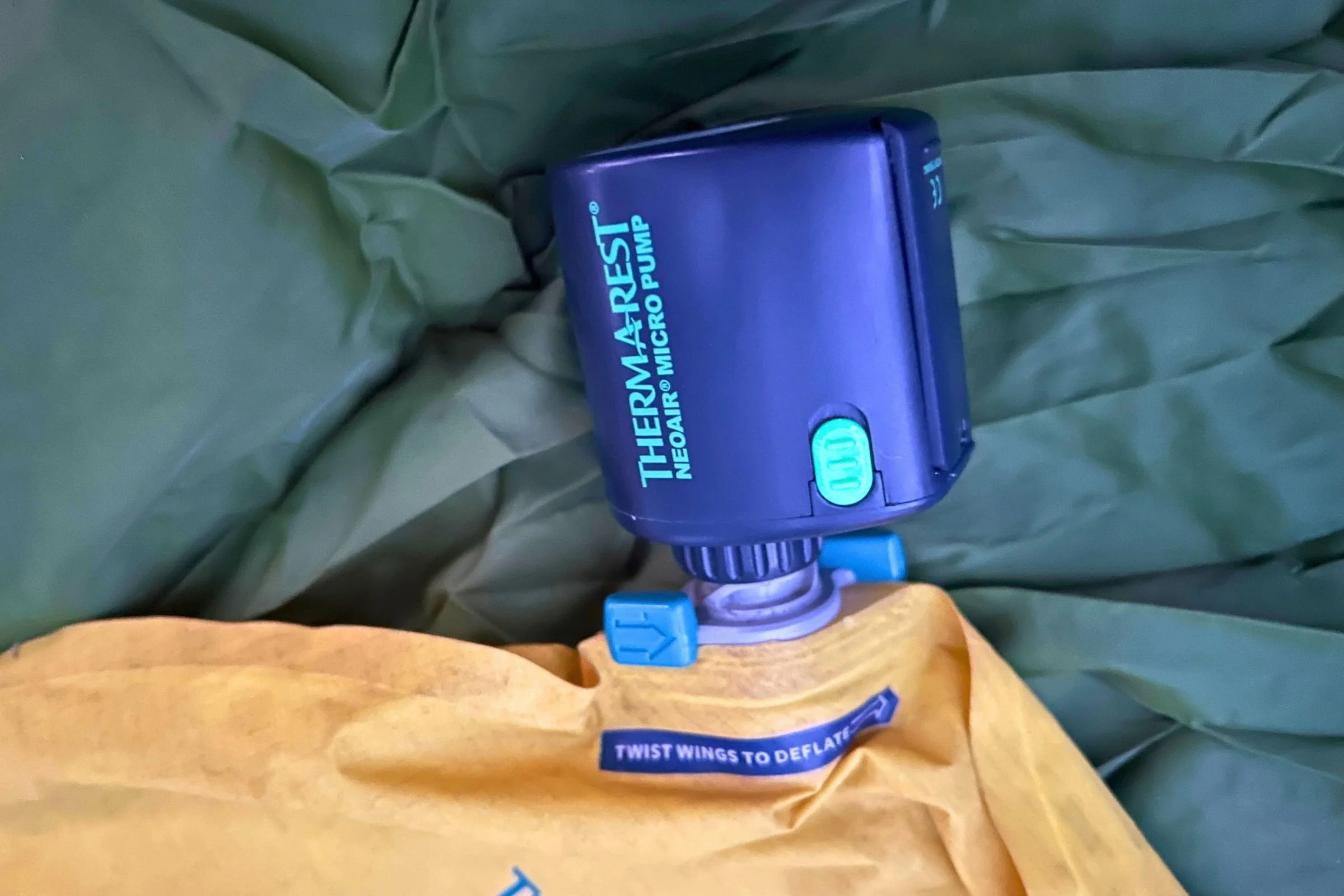
The NeoAir Micro Pump works only with Therm-a-Rest products.
Most sleeping pad inflators come with pad adapters that can work with the valves found on different brands of pads and mattresses. See our valve compatibility guide below to learn more.
Noise
Some pad pumps we tested are so loud, we don't think they'd pass muster to run past quiet hours at a campground. Others, we joked, violate Leave No Trace's Principle to Let Nature's Sounds Prevail. We used the Decibel X app to test the decibel level of different pumps.
Deflate function
Not all pad inflators have deflate functions, but when they do, it makes breaking down camp a lot easier.
Durability
Backpacking pad inflators have small fans that must be protected from sand, grit, and dirt. USB ports need to be kept free of debris. Camping pad pumps need to survive getting tossed around in gear boxes. None of the pumps broke, but the plastic battery cover on the NeoAir inflator detached and we were hypervigilant about getting sand in Alpenglow pad fans. We kept durability in mind when considering pad inflators.
Do you actually need a sleeping pad inflator?
Nope. For backpacking pads, most include a pump sack or can be inflated by breath (though that can introduce moisture and potentially mold to the inside of your pad).
However, a pad pump is life-changing. I generally hate pump sacks. I find them heavy, difficult to justify as a multi-use item, with finicky valves that never seem to stick. They also don't deflate your pad.
I typically inflate by breath to save weight compared to carrying a pump sack, but it's annoying to do, especially at altitude after an exhausting day of hiking. I've lied to myself, saying the process of doing all that breathing gets fire in my belly to warm up before going to sleep. But I hate it. Plus, backpacking pads are getting thicker these days, with many top pads at nearly 4" tall! The pad pump changes everything and makes one of the worst camp chores into an easy part of an automated pre-sleep routine.
For car camping mattresses, I think a pad inflator is essential. If you're spending camping mattress dollars for a good night of sleep, I think the extra ~$60 to get a pad inflator is more than worth it. Camping has enough chores as it is. Spending 30 minutes taking turns manually inflating a camping mattress is the sort of camp chore that teaches kids that camping is not fun and makes adults never want to camp again. Get an easy-to-use, easy-to-connect mattress pump, and it is a total camping game changer.
Valve compatibility guide
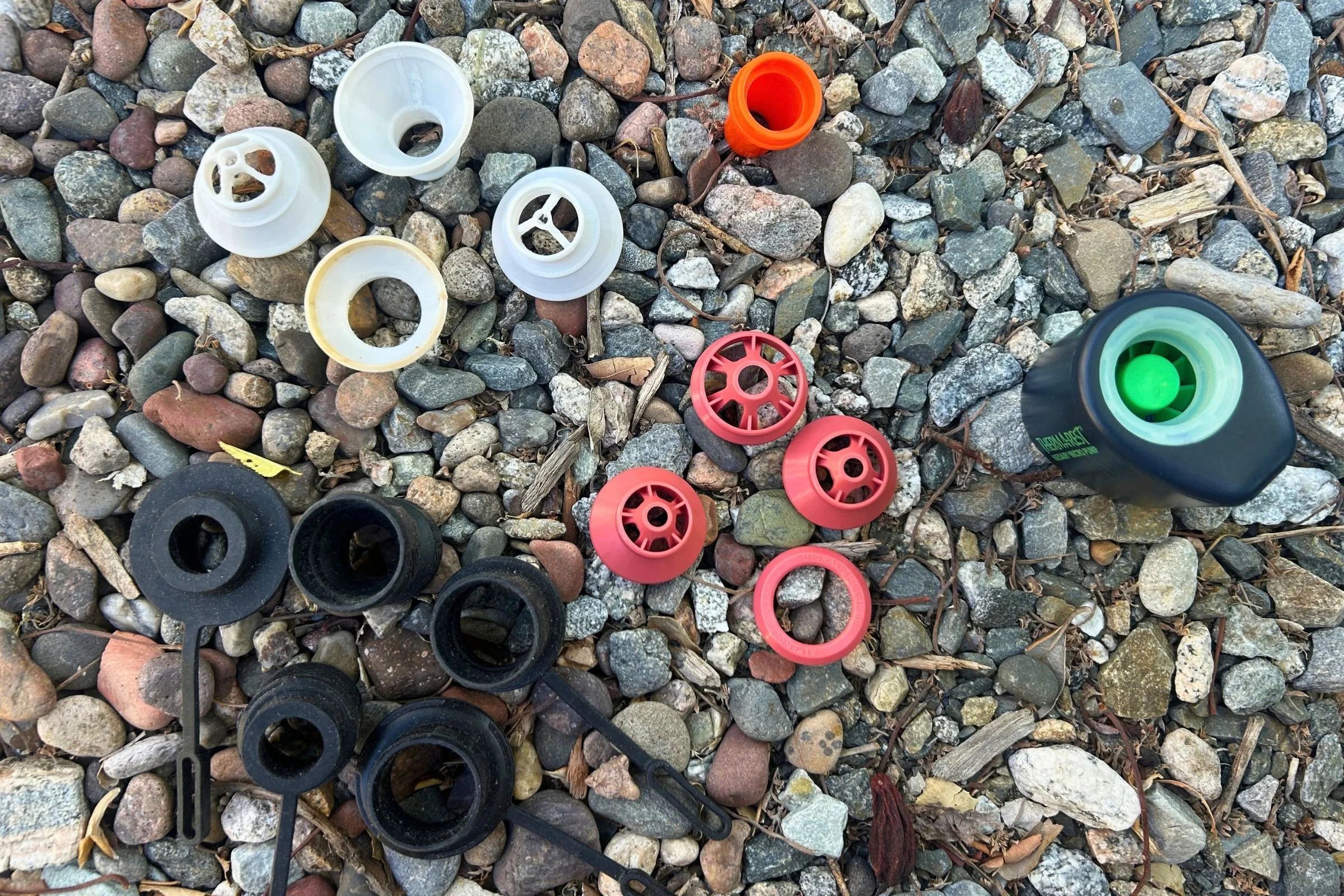
Unfortunately, there is no universal pad valve. Here are the main sleeping pad valve types:
| Therm-a-Rest WingLock | Therm-a-Rest older valve | NEMO Laylow | Sea to Summit | EXPED/Big Agnes (these two use the same system!) | Klymit | Zenbivy | Rab | |
|---|---|---|---|---|---|---|---|---|
| Alpenglow Gear Alpenblow Lux | ✅ | ✅ | ✅ | ✅ | ✅ | Sold separately | ✅ | Sold separately |
| Alpenglow Gear Alpenblow Classic | ✅ | ✅ | ✅ | ✅ | ✅ | Sold separately | ✅ | Sold separately |
| FLEXTAIL ZERO PUMP | ✅ | ✅ | ✅ | ✅ | ✅ | ✅ | Newer models | ❌ |
| EXPED Mega Pump | ❌ | ❌ | ✅ | ✅ | ✅ | ❌ | Newer models | ❌ |
| FLEXTAIL TINY PUMP 2X | ✅ | ✅ | ✅ | ✅ | ✅ | ✅ | Not ideal | ✅ |
Note: EXPED and Big Agnes use the same system
You can see the table above to see what pad pump is compatible with what valves.
While some valve adapters are included, adapter packs are available for most electric inflators and are worth buying for older or less common valve types.
Care and maintenance
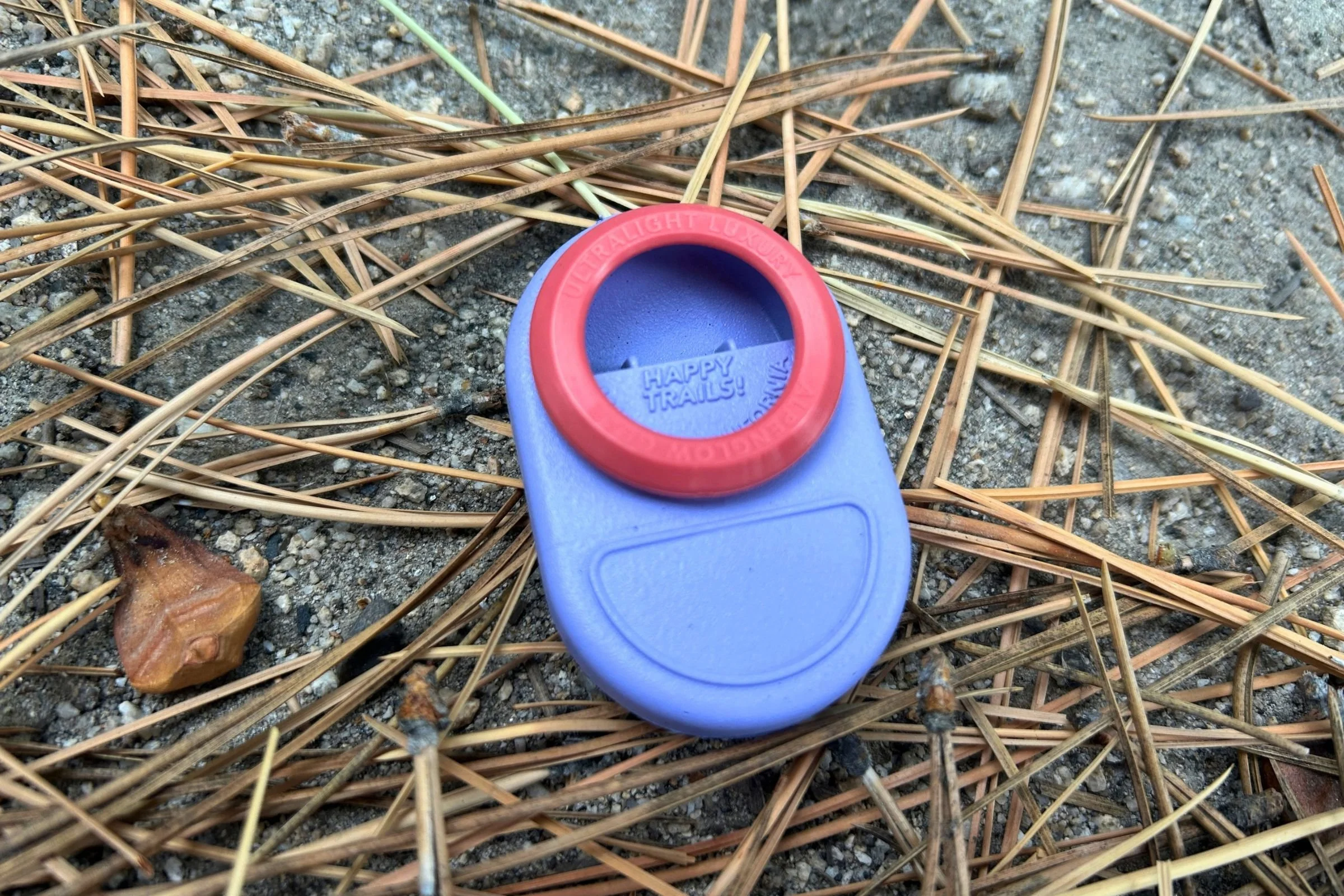
Keep your pad inflator away from sand and dirt: That can get caught in motors and break the whole system. I keep mine in a small DCF ditty bag along with my electronics. I usually throw down a polycro or Tyvek groundsheet if I'm inflating my pad while cowboy camping. Inside a tent with a floor, I haven't taken extra precautions.
Store inflators dry: Unless the pump you choose is water-resistant, moisture inside the motor shortens lifespan.
Keep nozzle adapters in a small zip bag: They are easy to lose.
USB-powered inflators: As with all other electronics, keep the USB-C port clear of debris. Blow it out before connecting.
Electric inflators with onboard batteries: Charge before each trip (trust me on this one). Don't store fully depleted.
FAQ
-
No, but it turns what’s arguably the worst camp chore into an easy task. As pads get thicker, pump sacks take longer to use. Pad pumps are often lighter than pump sacks, too. Plus, they help prevent breathlessness at altitude.
-
USB-powered inflators hook up to your phone or battery pack to run. Onboard batteries are a fully contained unit. USB-powered inflators will drain batteries that you may want to use to charge other electronics (and can drain your phone). Most onboard batteries only power the pump, but some models, like the EXPED Widget, can also charge other electronics.
-
Depending on the pad pump, between 1 and 3 minutes for a standard, regular-width, 6-foot-long, 3.5" thick backpacking sleeping pad.
-
Yes, we've tested these inflators extensively at 8,000 to 10,000 feet and have noticed no difference in inflation and deflation time compared to sea level.
-
Inflating your sleeping pad with your mouth introduces moisture and the potential for mold into the inside of your pad. It also takes a lot of breath, which is tiring and tedious at altitude after a long day of hiking.
-
It depends on the pad pump, but for self-contained battery pad pumps, you can get about 30 inflates (or 15 inflates, 15 deflates)—give or take—off one charge.
-
Most sleeping pad inflators come with adapters for the most common sleeping pad valves, with options to buy adapters for less common pad valves. Check the pad inflator manufacturer’s website if you aren't sure.
-
It depends on the camping mattress, the required valve adapters, your patience, and the inflator’s battery life. The most minimal pad inflators are designed for backpacking pads and will be slow on most car camping mattresses. Unless you don’t mind the added wait time, you're better off with a dedicated camping mattress pad inflator.
-
In our tests, the backpacking pad inflators we tested were around 40 decibels (except for the now-discontinued Rex Creations). The camping mattress inflators are louder.
-
The Alpenglow Gear Alpenblow Classic is the lightest sleeping pad inflator we tested, at 0.3 oz.
How we researched and tested
We tested 10 sleeping pad inflators over 1.5 years of backpacking, camping, and "lab" tests. For backpacking inflators, we tested each inflator on backpacking trips from the desert of the Arizona Trail and Grand Enchantment Trail in New Mexico to the moist, coastal air on the West Coast Trail in Canada. We also tested for several months of camping and backpacking in the Eastern Sierra and Sequoia National Park and backpacking trips in the San Gabriel Mountains in Southern California.
We tested car camping mattress inflators while camping in Joshua Tree National Park, Pinnacles National Park, Sequoia National Park, and Redwood National Park. We also tested while camping in the San Gabriel Mountains of Southern California, Big Sur, and on the Sonoma Coast.
Weather conditions included everything from sub-freezing temperatures in the snow to hot, summer nights where the thermometer barely dipped below 75F. We tested in all seasons of the year.
We tested with experienced backpackers and people less familiar with camping. I let them know where the attachments were and let them figure it out, offering minimal coaching to see if they could figure it out themselves.
For lab tests, we used the NEMO Tensor All-Season as our main reference pad for inflation time comparisons. The criteria we considered included inflation time, battery drain per inflation, noise level (using the Decibel X decibel testing app), valve fit across multiple pad brands, and signs of cracked or broken parts or sand clogging fans or USB-C ports over a trip. We can't honestly say we always put them inside on a totally clean tent floor. We always used a groundsheet when setting up while cowboy camping. We usually stored it in a DCF ditty bag but sometimes, it ended up in a backpacking pack's hipbelt pocket, where it had the potential for more exposure to water and sand.
Treeline Review creates objective gear reviews on gear we find interesting, independently selected by our editors. Treeline Review does not accept guest posts, pop-up ads, or link placement.
- Backpacking and car camping trips
- Side-by-side inflation-time tests
- Battery drain measurements
- Noise testing with a decibel app
- Valve compatibility across pad brands
- Inflation speed
- Battery efficiency
- Noise level
- Valve fit and compatibility
- Durability and reliability
Why you should trust us / About the author

I’ve backpacked over 20,000 miles and have at least 1,000 nights sleeping outdoors. On most of these overnight trips, I’ve slept on inflatable sleeping pads. I've been testing backpacking sleeping pads professionally since 2015, first for Wirecutter/NYTimes, and have been testing sleeping pads for Treeline Review since 2018.
I’ve written about outdoor gear for numerous publications, including as contributing editor at Backpacker Magazine and the New York Times’ product review site, Wirecutter. I’m the author of the National Outdoor Book Award-winning Long Trails Mastering the Art of the Thru-hike.
I regularly book speaking gigs with outdoor clubs, non-profits, and colleges and universities to talk about backpacking and lead gear panels. I’m also Editor-in-Chief here at Treeline Review and oversee all of our outdoor gear stories. I'm not an employee, contractor, sponsored athlete, ambassador, or influencer for outdoors brands.
You can read more about me at www.eathomas.com or on my author page.