
NEMO Dragonfly OSMO Backpacking Tent Review
A roomier roofline, tougher PFAS-free fabric, and reliable rain protection
When you buy through our links, we may earn a commission. Learn More
June 18th, 2026
Home → Gear Reviews → Backpacking
Our verdict
Overall, the updated NEMO Dragonfly OSMO backpacking tent offers the same fantastic weather and rain protection as other OSMO fabric tents, with an even better design for more headroom and livability, including a taller peak height inside thanks to a new pole design.
We tested the NEMO Dragonfly OSMO in the 2-person size and the 1-person size a few months prior in beta testing.
We found the pole attachments at the ends—where the tent and fly attach to the body corners—trickier to assemble than on some other tents, but otherwise we have almost no negative feedback. This is a lightweight and comfortable 2P tent with lots of great upgrades.
The NEMO Dragonfly OSMO backpacking tent is best suited for frequent backpackers who want to prioritize comfort, livable space, and reliable waterproof protection. It’s best for backpackers who don’t mind a little extra weight (compared to, say, a Hexamid or Six Moon tent) and an asymmetrical design.
NEMO Dragonfly OSMO Tent
1P
2P
3P
Read on for our full review, and find more of our favorites in our Best Backpacking Tents guide.
We write mission-driven gear reviews. To find the best gear, we combine expert reviews, everyday user opinions, and rigorous independent trail testing—never pop-up or display ads. We are reader-supported and may make a small commission from some qualifying affiliate links. Learn more.
NEMO Dragonfly OSMO 2P Tent Specifications
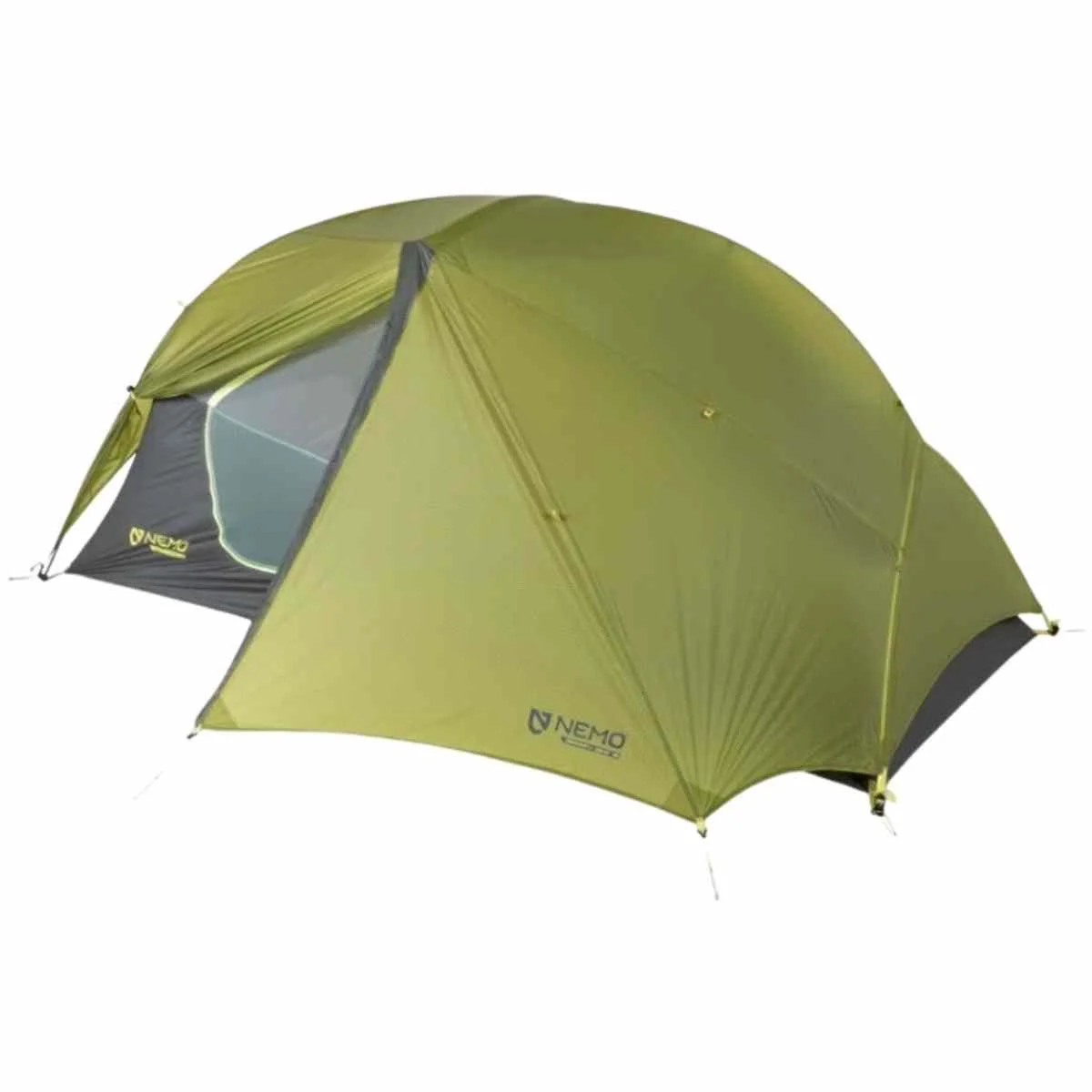
Season: 3-season
Design: Freestanding
Weight: 2 lb 13 oz (trail weight), 3 lb 5 oz (total packed weight)
Packed size: 18" x 5"
Floor area: 29 ft² (88” x 50”/45” head/foot, tapered end)
Vestibule area: 8.6 ft² + 8.6 ft²
Head height: 40-41”
Poles: DIAPOLE recycled aluminum poles
Rainfly/floor: PFAS-free 100% recycled OSMO fabric
Taped seams? Y
Comparison table
| BACKPACKING TENT | MSRP | FREE-STANDING | WALLS | SLEEPS | DOORS | VESTIBULES | WEIGHT (oz) | LENGTH (in) | WIDTH (in) | PEAK HEIGHT (in) | FLOOR AREA (ft²) |
|---|---|---|---|---|---|---|---|---|---|---|---|
| NEMO Dragonfly OSMO 2P | $550 | Yes | Double | 2 | 2 | 2 | 53.0 | 88 | 45-50 | 40 | 29.0 |
| NEMO Dagger OSMO 2P | $600 | Yes | Double | 2 | 2 | 2 | 63.0 | 88 | 50 | 43 | 30.6 |
| Big Agnes Copper Spur UL2 | $600 | Yes | Double | 2 | 2 | 2 | 48.0 | 88 | 42-52 | 40 | 29.0 |
| NEMO Hornet Elite OSMO 2P | $700 | Semi-freestanding | Double | 2 | 2 | 2 | 33.0 | 85 | 42-50 | 37 | 27.3 |
| Big Agnes Tiger Wall UL2 | $500 | Semi-freestanding | Double | 2 | 2 | 2 | 40.0 | 88 | 42-52 | 39 | 28.0 |
Best for
Frequent, experienced backpackers
Those who want to maximize living space (and comfort) on trail
Those who prefer a traditional pole tent to trekking pole setups or tarps
Backpackers who want versatility and capability across 3-seasons
What we liked
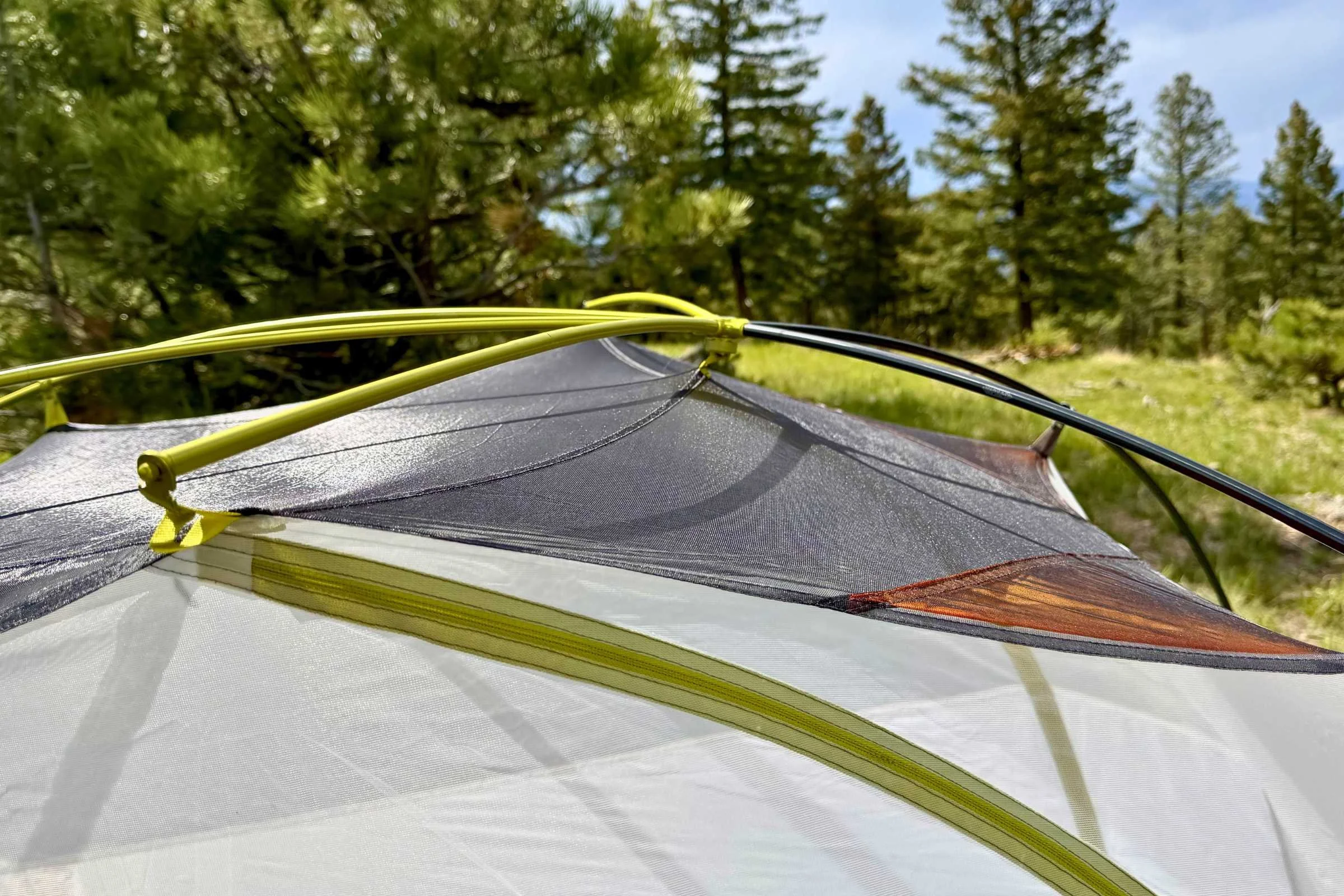
The crossbar attachments were the easiest of all the tent attachment points to secure (unlike the rainfly corners).
Overall performance in weather, precipitation, and all conditions
Roomy interior, and gear/pocket storage
Guylines included
Complete redesign of poles and cross-pole for more space
OSMO fabric is more stretch-resistant, seems more durable, and is not as thin/light as competitor fabrics.
What could be better
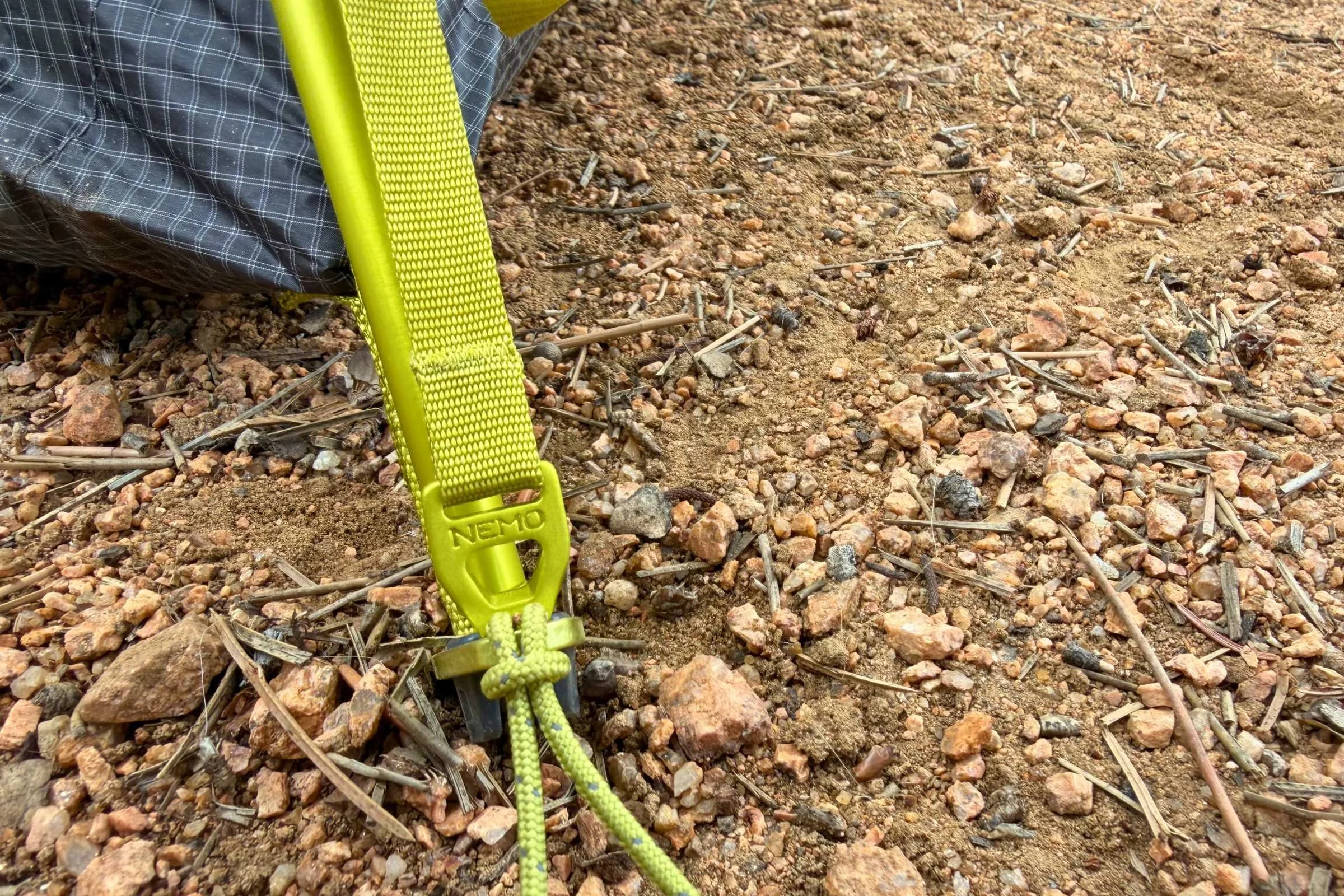
The rainfly attachment clip wasn’t the most intuitive system. But in the end, it’s very secure, and doesn’t add too much time to the setup.
The ball-in-socket attachments were slightly difficult for me (someone with poppy joints), and would be very difficult for anyone with arthritis or people who find themselves always pitching their tent in the dark, and is nearly impossible to do one handed; as well as any adaptive users
Questionable durability of the plastic in the tent corner clip component over time
The rainfly attachment piece is not very intuitive
Wish a footprint was included for the price ($550)
How we tested
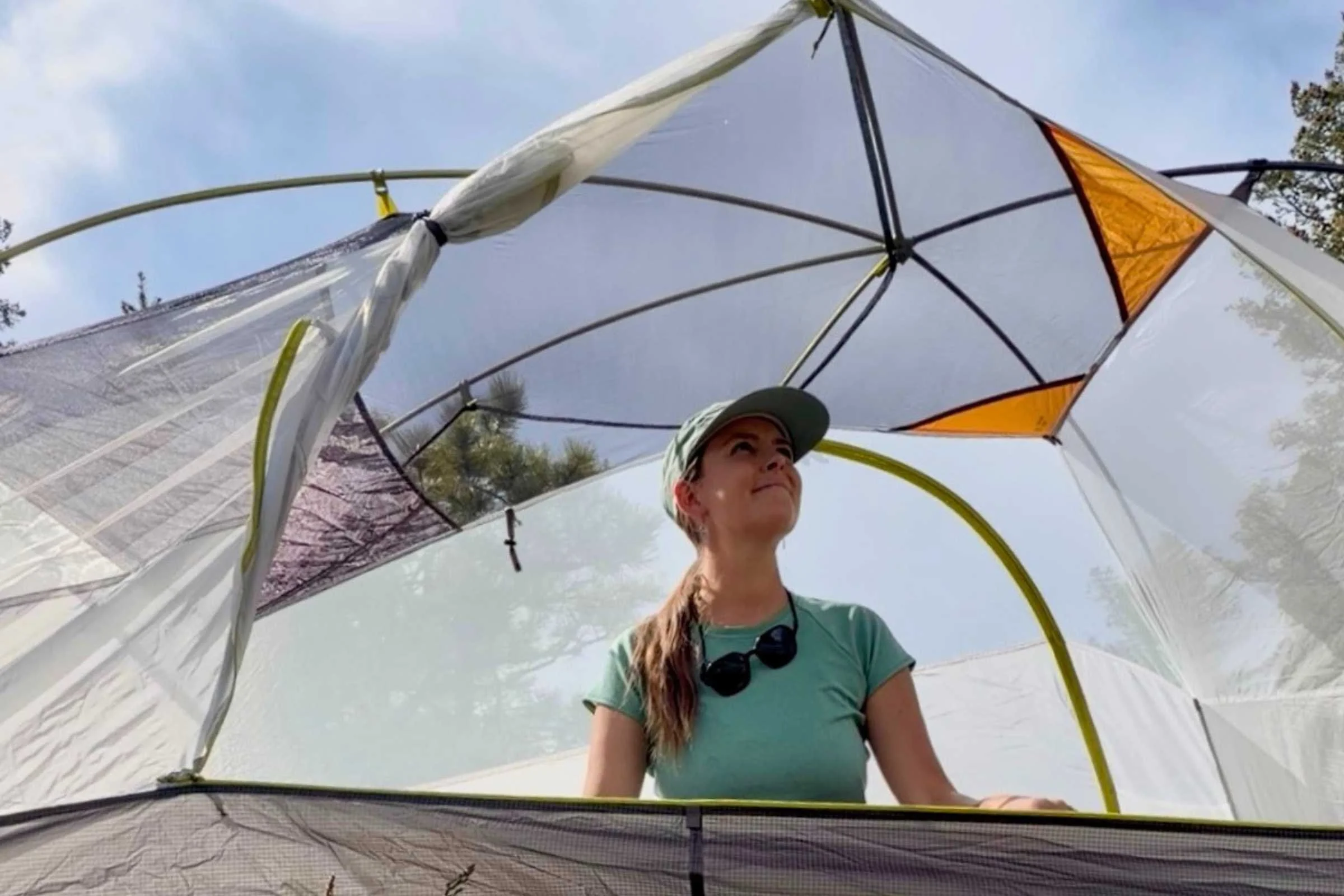
The author sitting in the tent, on a thin Z-pad. You can see how much headspace and roominess is inside.
We tested the NEMO Dragonfly OSMO tent overnight on a media trip (during beta testing), as well as on our own in the mountains, foothills, and dirt of Colorado. We tested from roughly February through May, in all sorts of weather, including wind and light and heavy rain. Even though most parts of Colorado are now in a stage 1 drought, we were very happy to have the chance to test the tent’s fabric in inclement weather.
We tested on overnight group and solo backpacking trips, as well as one camping and climbing trip. I also tested solo on a few short overnights in late May (to take advantage of rainy days for testing). This tent saw rocky, gravely terrain; grounds covered with pine needles and dry debris; sandy, soft, dispersed sites; and everything in between.
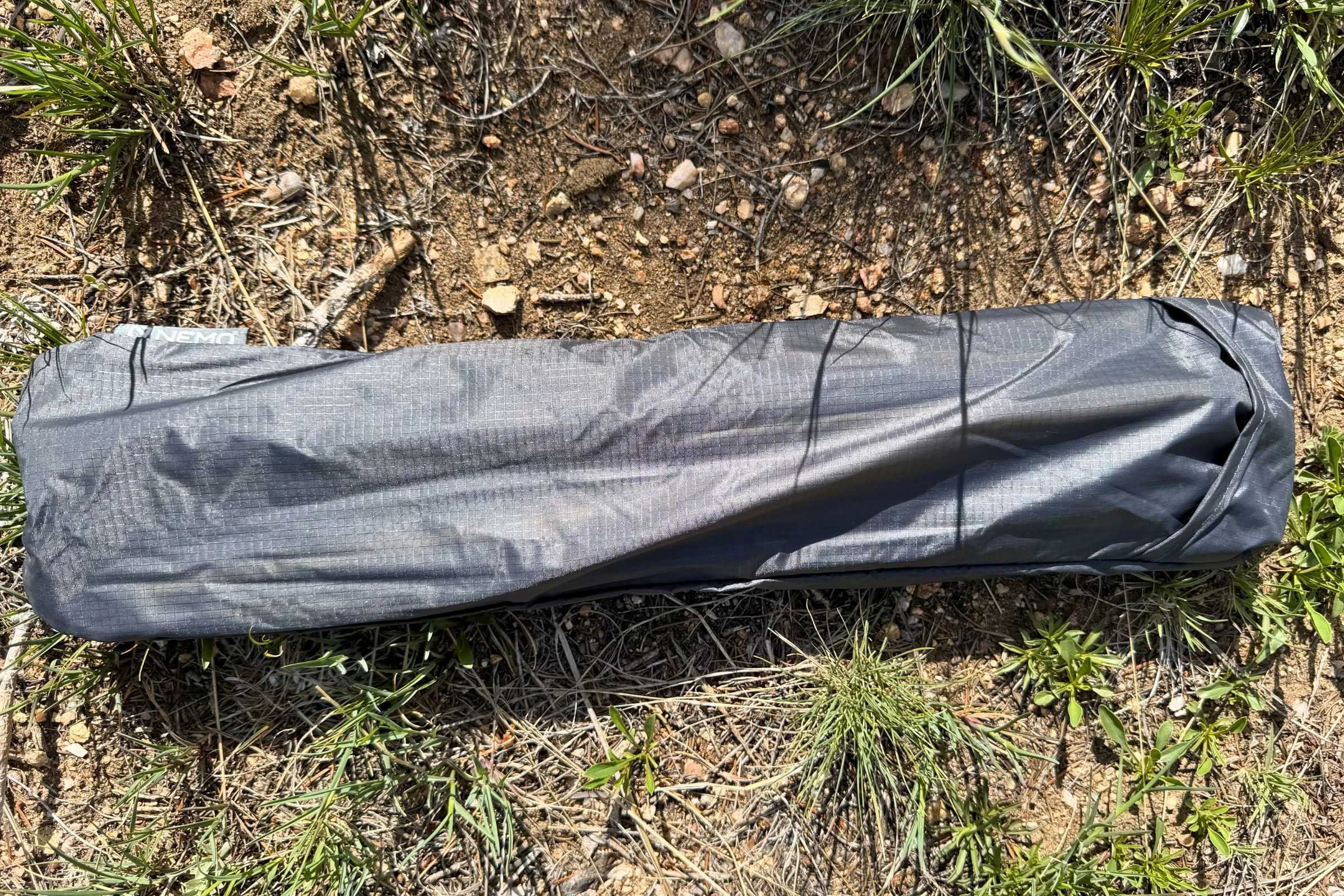
The pole sleeve, when packed. I had no issues packing the new pole design back up into its included stuff stack.
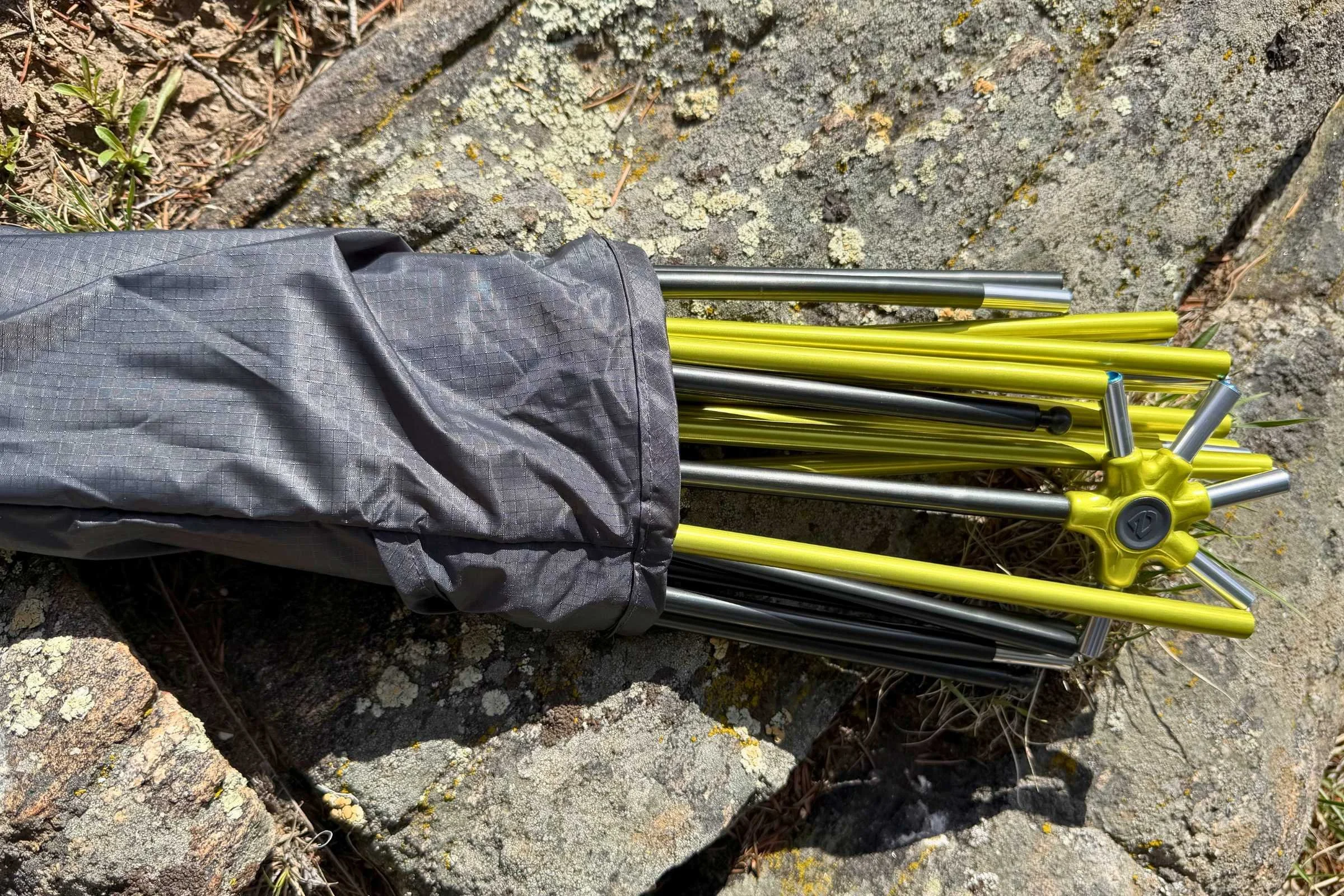
The new pole design utilizes a center hexagonal piece, meaning all the poles fold up a bit wider as they are all attached. Upon my first night out, I thought the poles would be tricky to pack down, but they actually pack down easily.
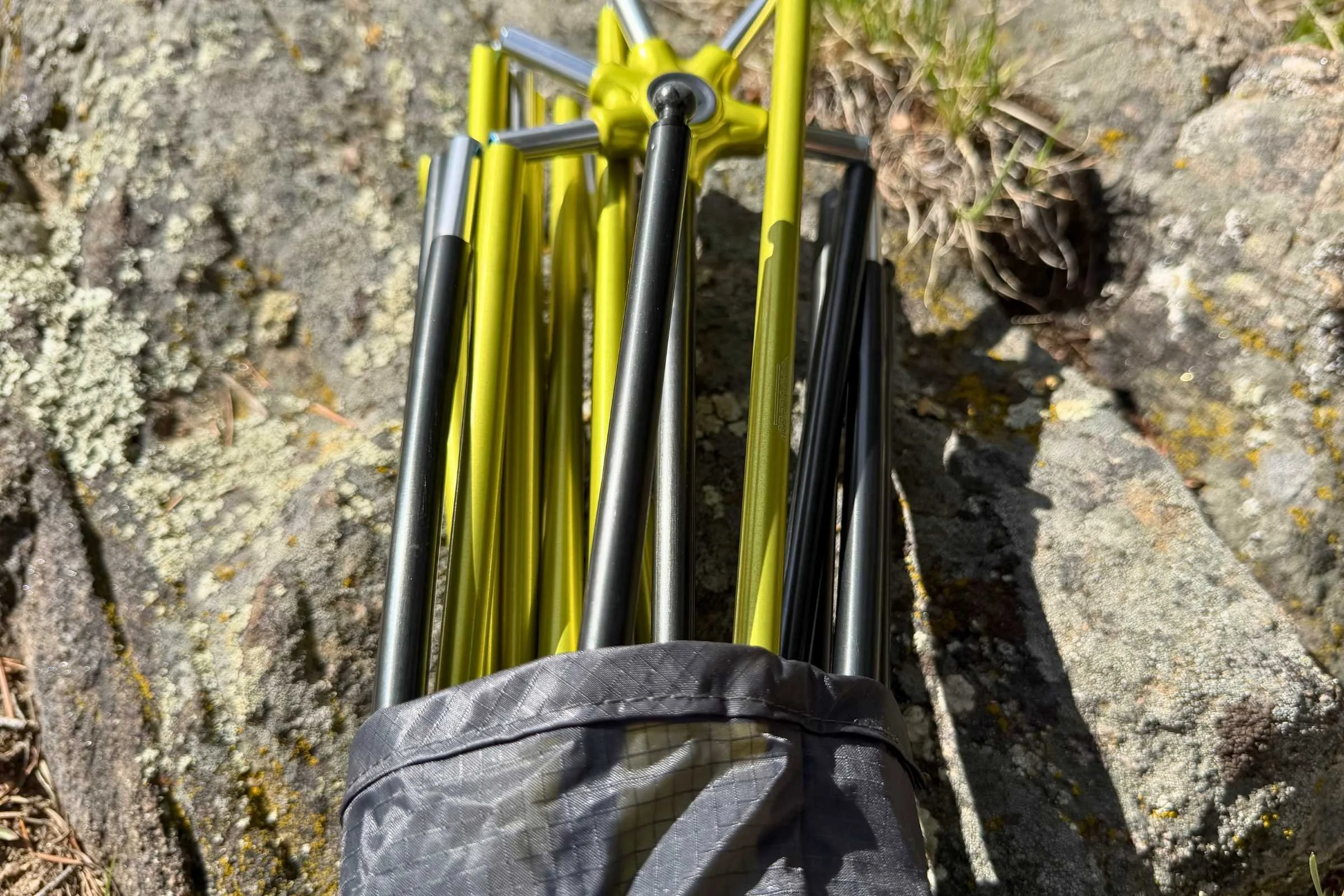
The recycled aluminum poles were durable, and had no problem holding the tent’s shape and structure in wind.
We tested this tent alongside other previous-year NEMO tents to compare fabric and design in the new 2026 Dragonfly OSMO. We also directly compared performance and features to similar backpacking tents in our Best Backpacking Tents guide, like the Big Agnes Copper Spur, REI Half Dome 2, and NEMO Hornet.
Performance in the field
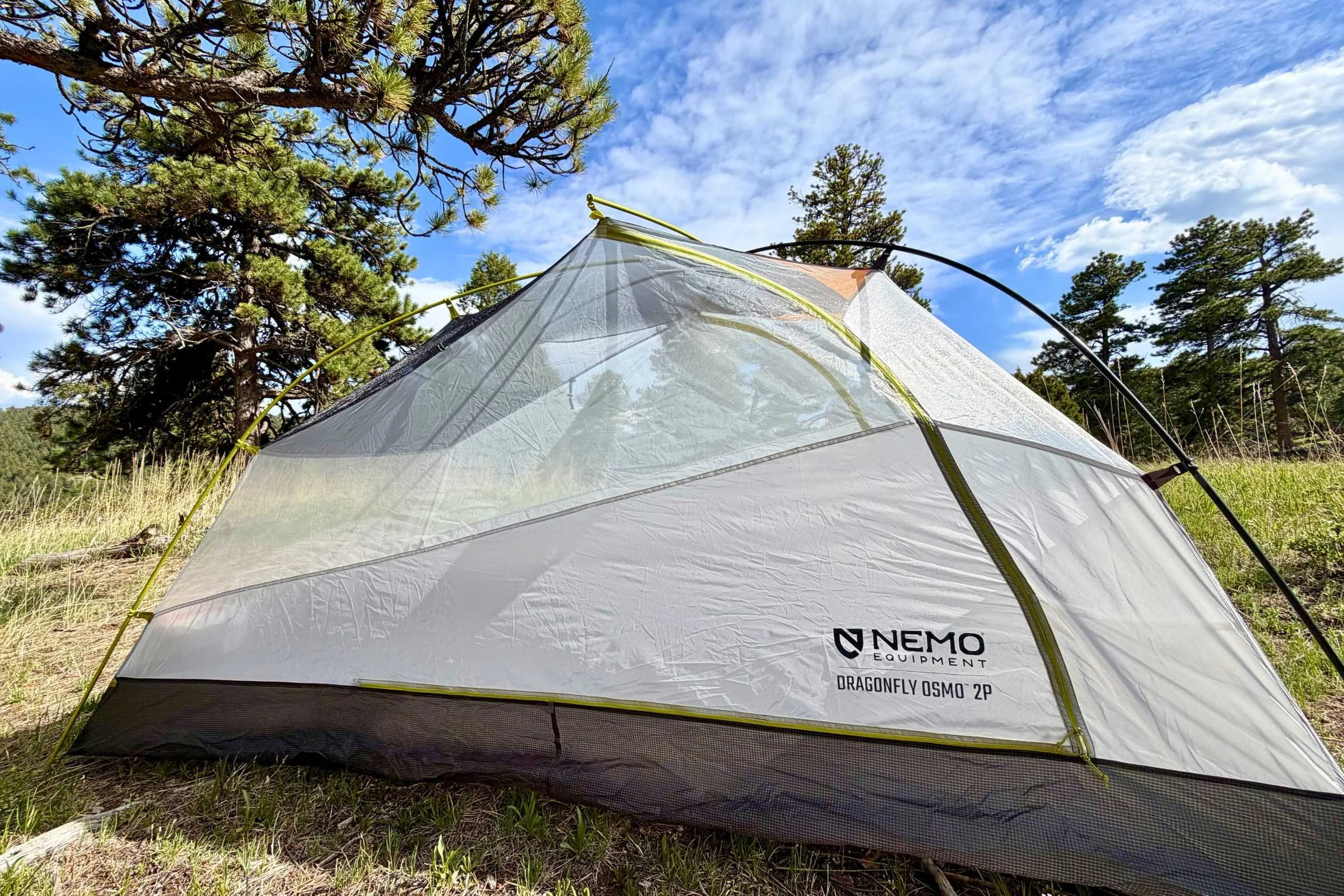
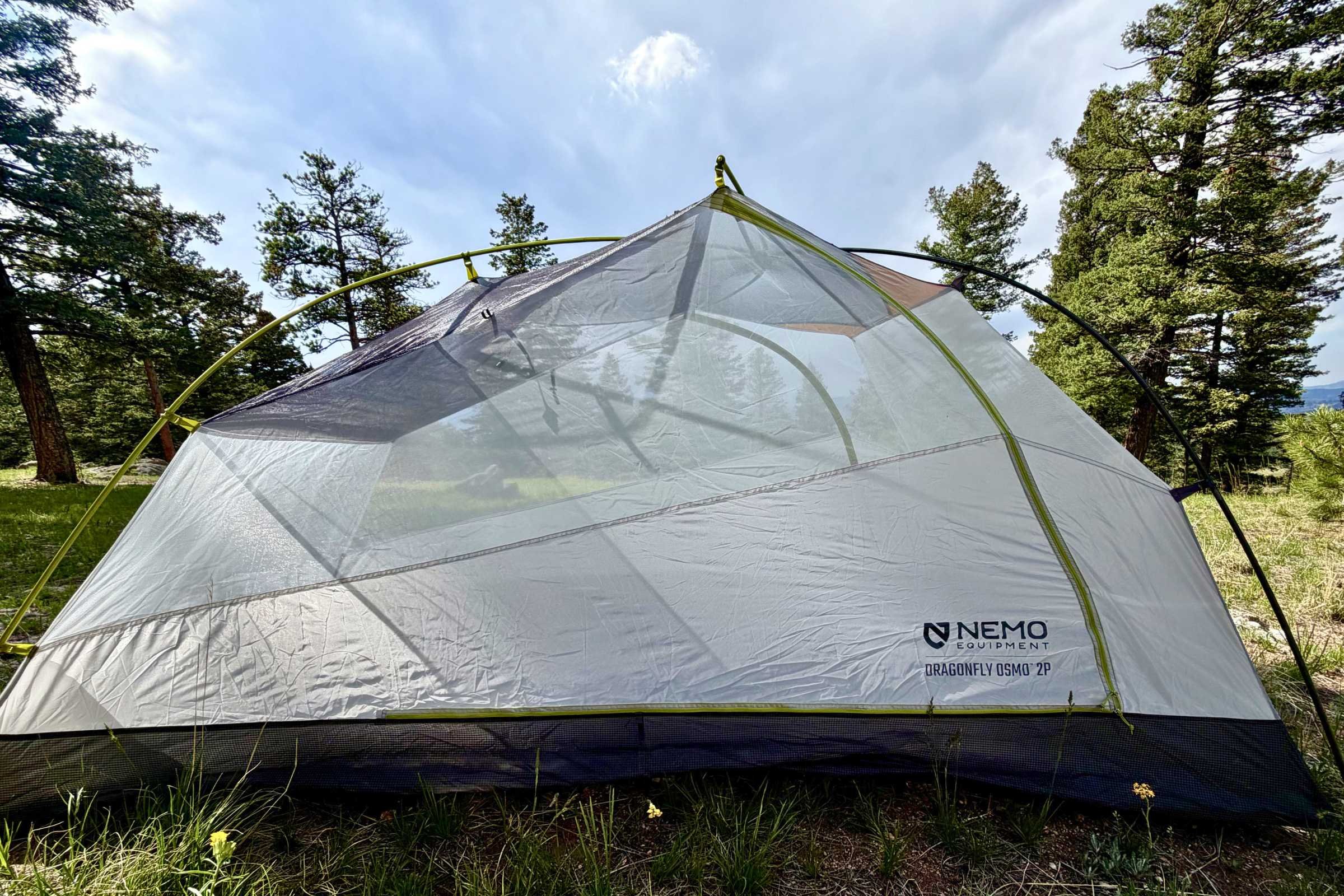
The NEMO Dragonfly shown after setup, but without gear.
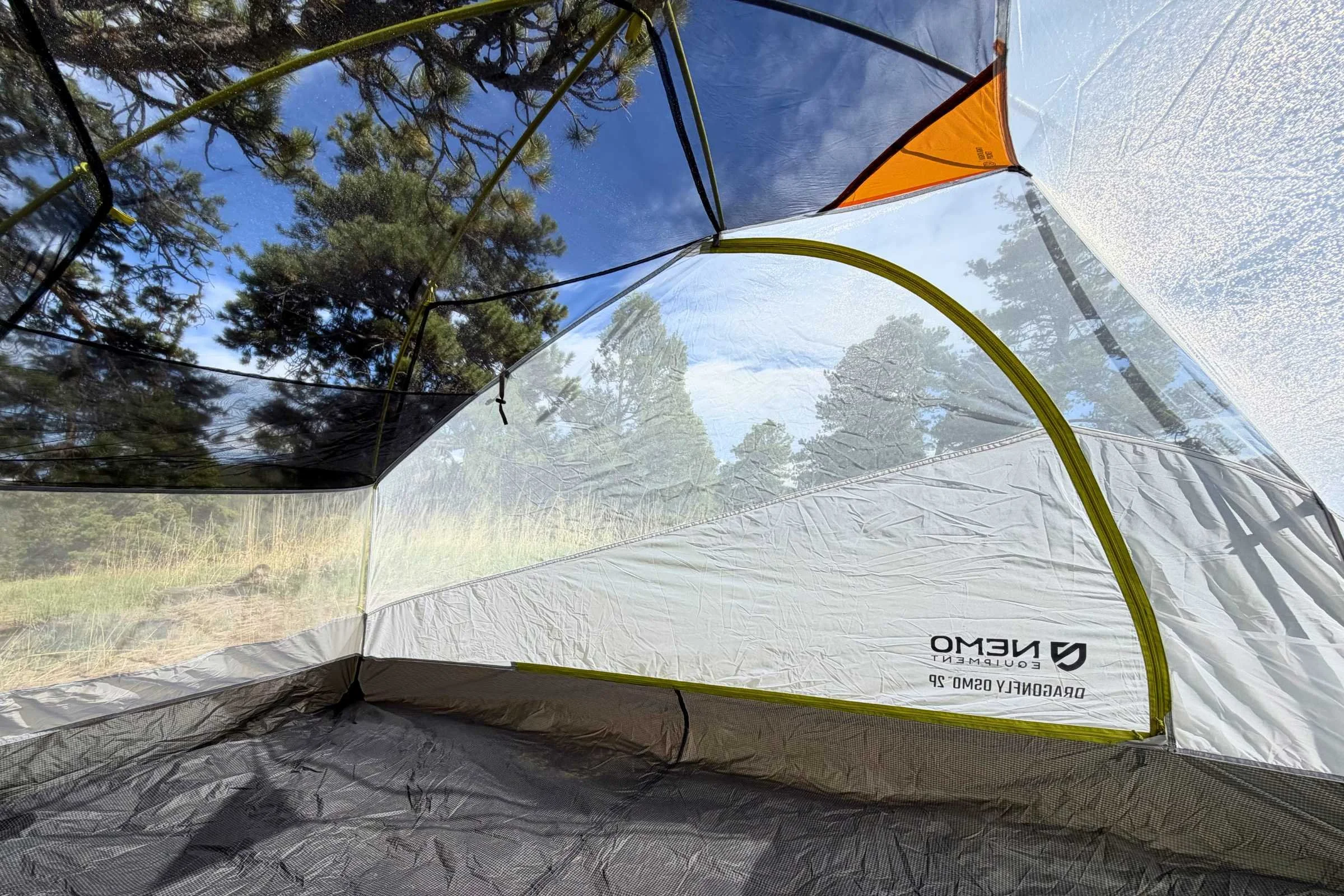
The NEMO Dragonfly shown after setup; this view is of the 2P tent interior. Shown empty for a visual on how much room it provides.
Colorado is currently in a stage 1 drought in the area where I live, and a stage 2 drought in a nearby town, due to a dry winter and record-low snowpack. (The worst snowpack since 1981, to be specific.)
And yet, I somehow got not one but three chances to test the NEMO OSMO Dragonfly 2p in the rain: once on a 2-night trip (mostly light but consistent rain), another time, briefly, during a sunny spring shower, and once more in late May, with rain off and on overnight. I also had ample chances to test in the dirt, out mountain canyons, and in the sunshine.
The tent came with me on a 2-night camping and climbing trip where I wanted to pack light and minimally, and then on a hike-in overnight solo trip (again, the goal was to pack a light but durable tent). I even tested this tent alongside previous-year NEMO tents to compare the fabric and design of the new 2026 Dragonfly OSMO.
Setup
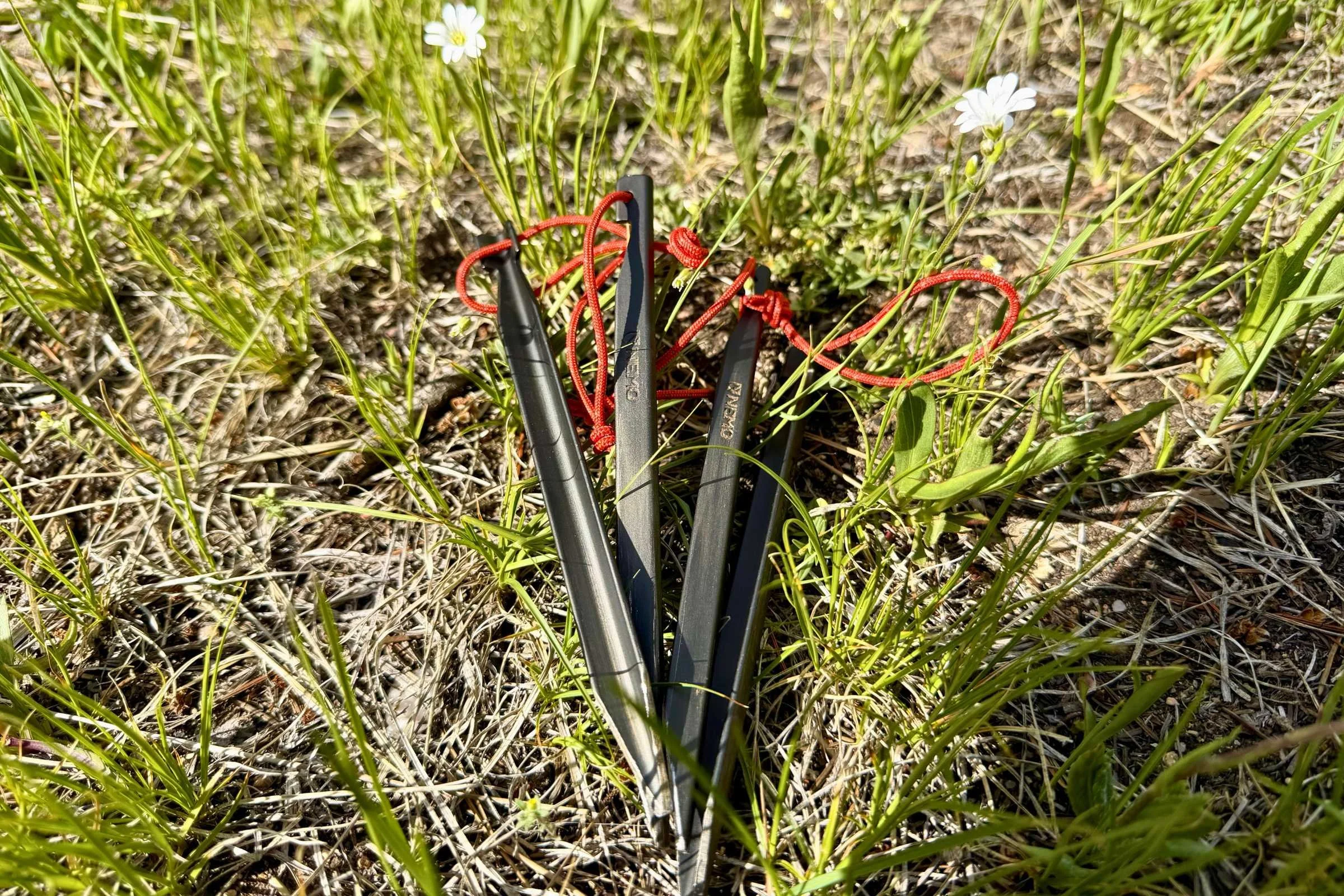
These are the stakes after 5+ uses of the tent outdoors; they are easy to clean and fairly durable.
The setup is the one area that I think will be new for some tent users. This is a well-designed tent, for sure, but it is less simple than other symmetrical backpacking tents you’ll find.
To set it up correctly, the poles need to be oriented both the right way up and oriented to the correct tent side. The pole ends are color-coded to help with this. The cross pole has a center clip that you’ll also need to attach to keep the tent's peak taut. They were durable and easy to clean. The poles are great in terms of durability. The stakes that this tent comes with definitely weren’t the lightest that I’ve used, but that’s OK.
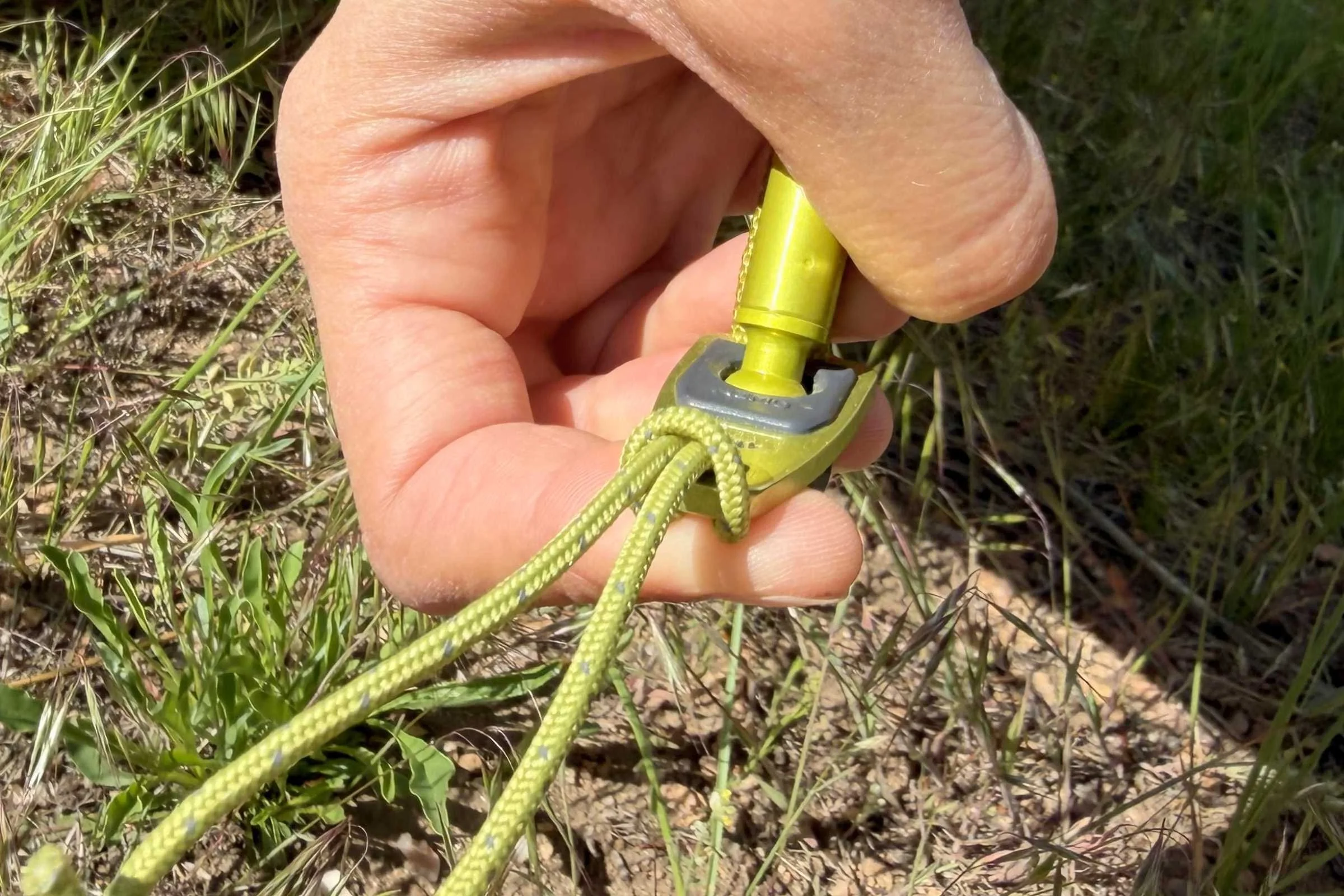
The tent corner’s pole attachment hardware and rainfly attachment points were the most finicky part of setup. It was impossible to do this one-handed which was a bummer.
Finally, one of NEMO Dragonfly’s extra features, the gear landing zone (a sort of bucket clipped into the vestibule to stash shoes/gear), was easy to attach.
Comfort
This 2-person tent is super comfortable in terms of interior space, vestibule space, livability, and headroom. I am 5’8”, not super tall, and I had at least 6 inches of headroom above my head sitting up and the peak of the tent. It’s comfortable with two people (or one plus a big pack) if you end up wanting to buy one tent that can work for 2-person or solo backcountry trips.
Ventilation
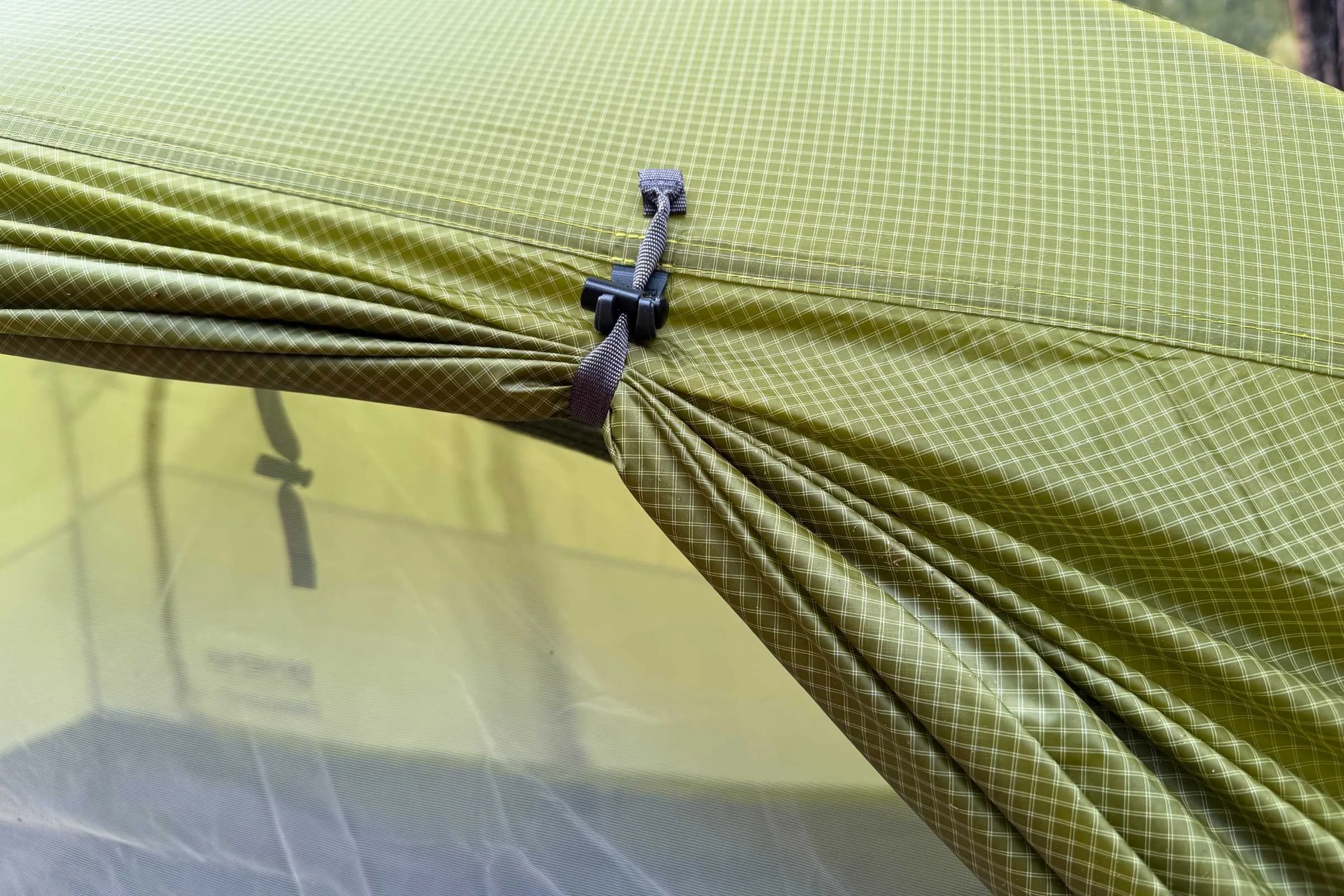
The rain fly fabric seems incredibly durable after testing; here the rain fly is shown pulled back with a door cinch toggle.
This tent is spacious with two doors. Each door has two door tie-backs (one on the mesh door and one on the fly), if you prefer to leave the mesh doors open with the fly closed or for greater ventilation. The rainfly has ventilating slits with stays on both door sides and a third side. The two-way zippers on both the tent and the fly can be opened to your liking.
In testing, I had the rainfly on most nights, but I had one day out in the open without needing to use it. In general, I found this tent to be plenty spacious and well-ventilated, especially compared to the Big Agnes Copper Spur (felt more spacious inside) and the REI Half Dome 2.
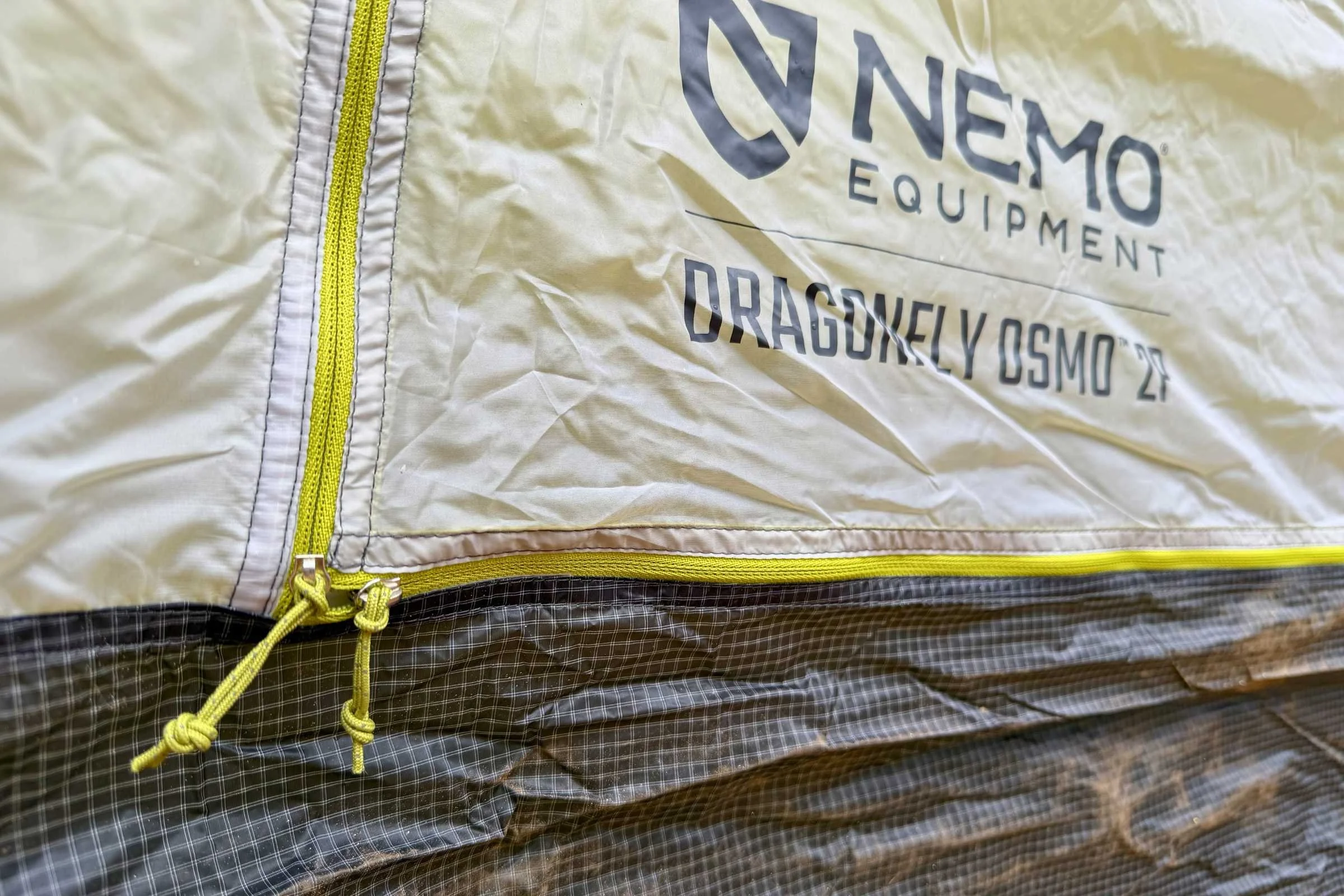
The zippers on each door of the 2P Dragonfly were easy and smooth to slide and use.
Weather protection
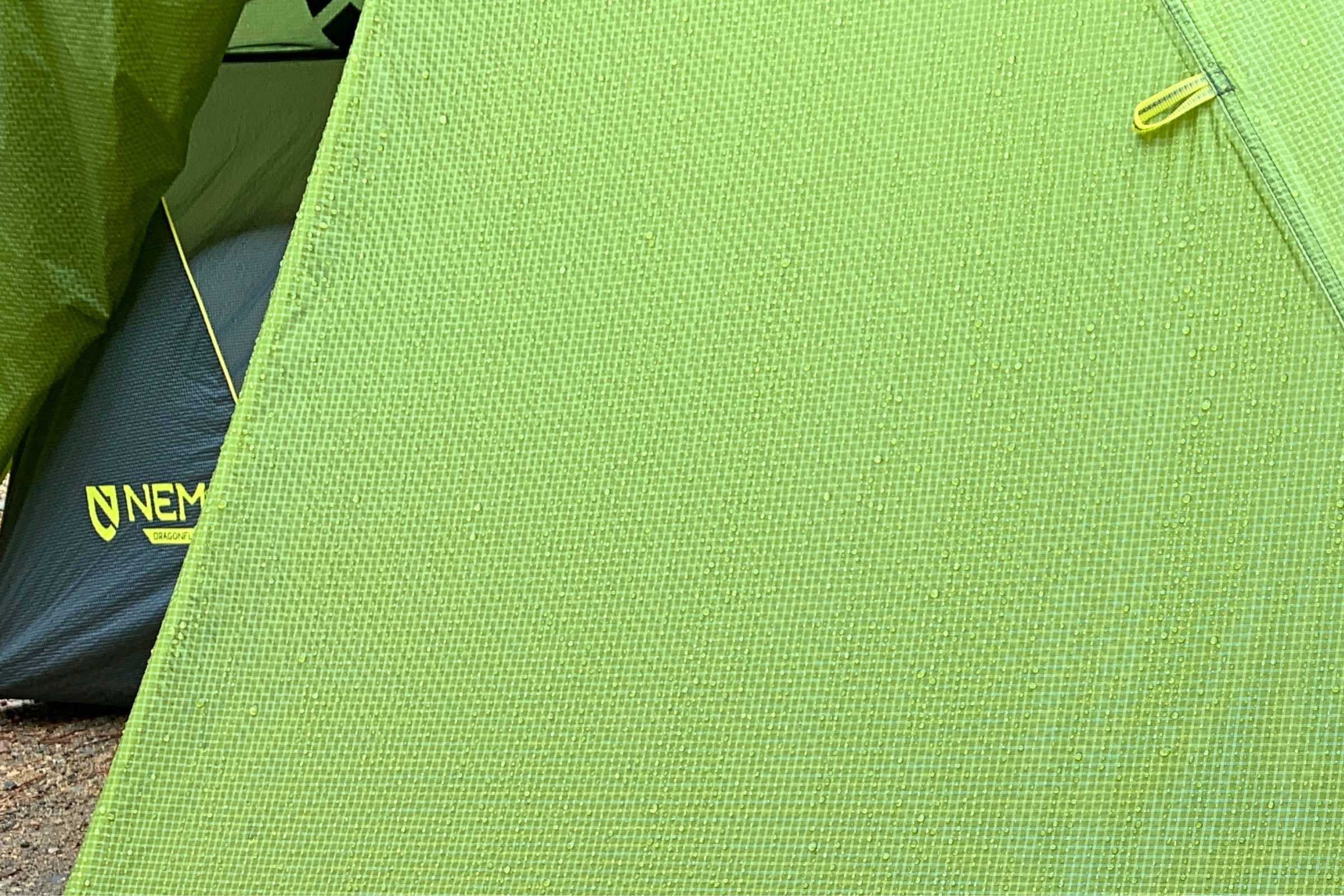
Water beading off the NEMO OSMO fabric rainfly in an active rainstorm.
This tent performed incredibly well in wind, chillier weather (around low ~40s°F but above freezing) up to the high 60s and 70s in the mountains, and all kinds of rain.
The pole design keeps the tent fairly sturdy in wind, and the cross-pole specifically is very secure. On a clear night, the asymmetrical tent holds up well without the fly in light wind (if you want to stargaze). The tent corners (with the fly attached), like most backpacking tents, can be cinched down and secured tighter if needed, depending on the weather.
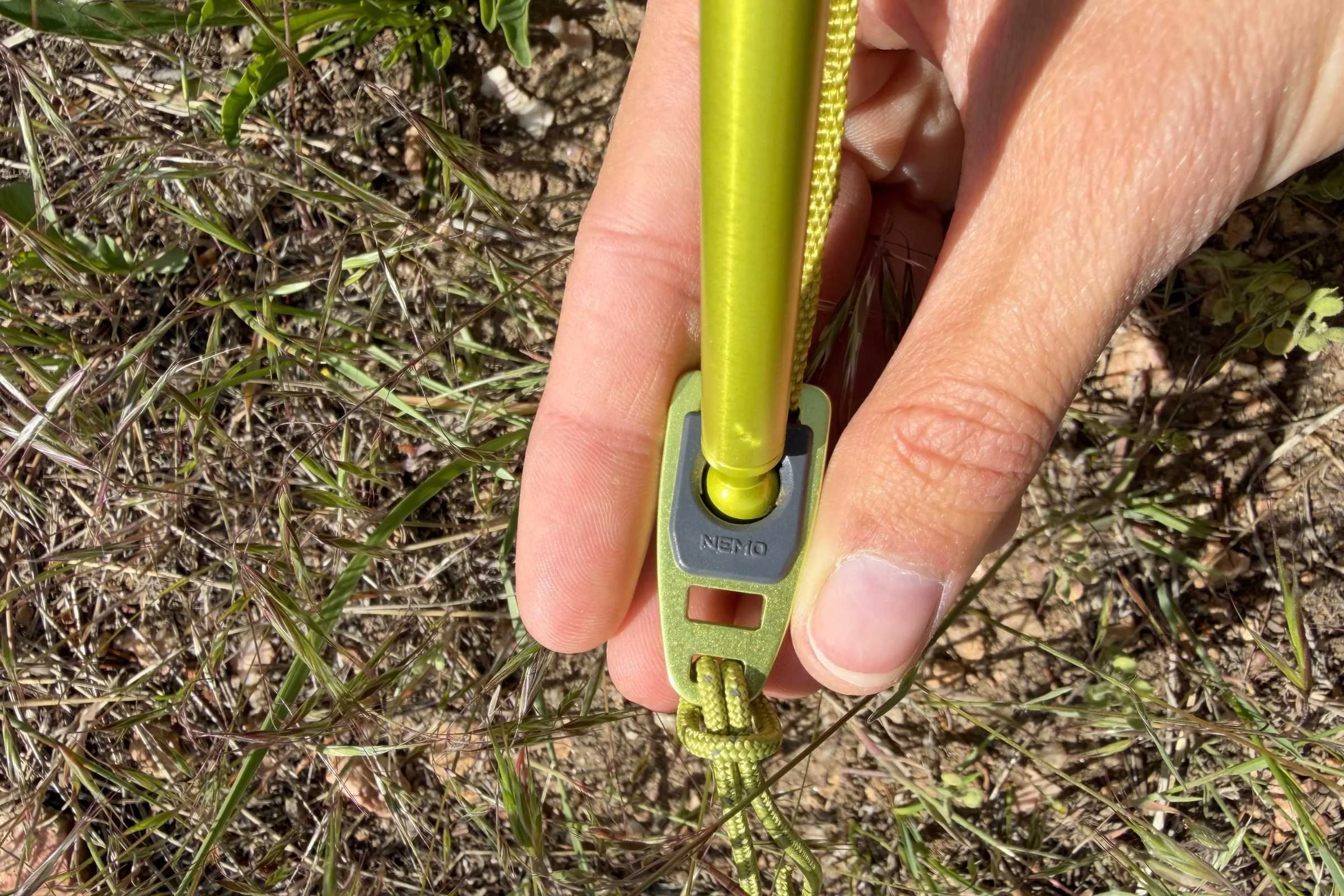
On the one hand, the ball and socket component is super sturdy, and helps stabilize the four poles/tent corners. On the other hand, I wish they were easier to attach.
One thing I noticed was that there are a fair number of plastic parts in the tent fly corner attachment pieces. I didn’t have any issues with the pieces' durability or breaking, but this could be a durability concern in the future. I’m not sure how easily you could repair these parts in the field because of their unique shape and their attachment to the corners. The ball end of the poles is metal, while the socket receiver is a molded plastic.
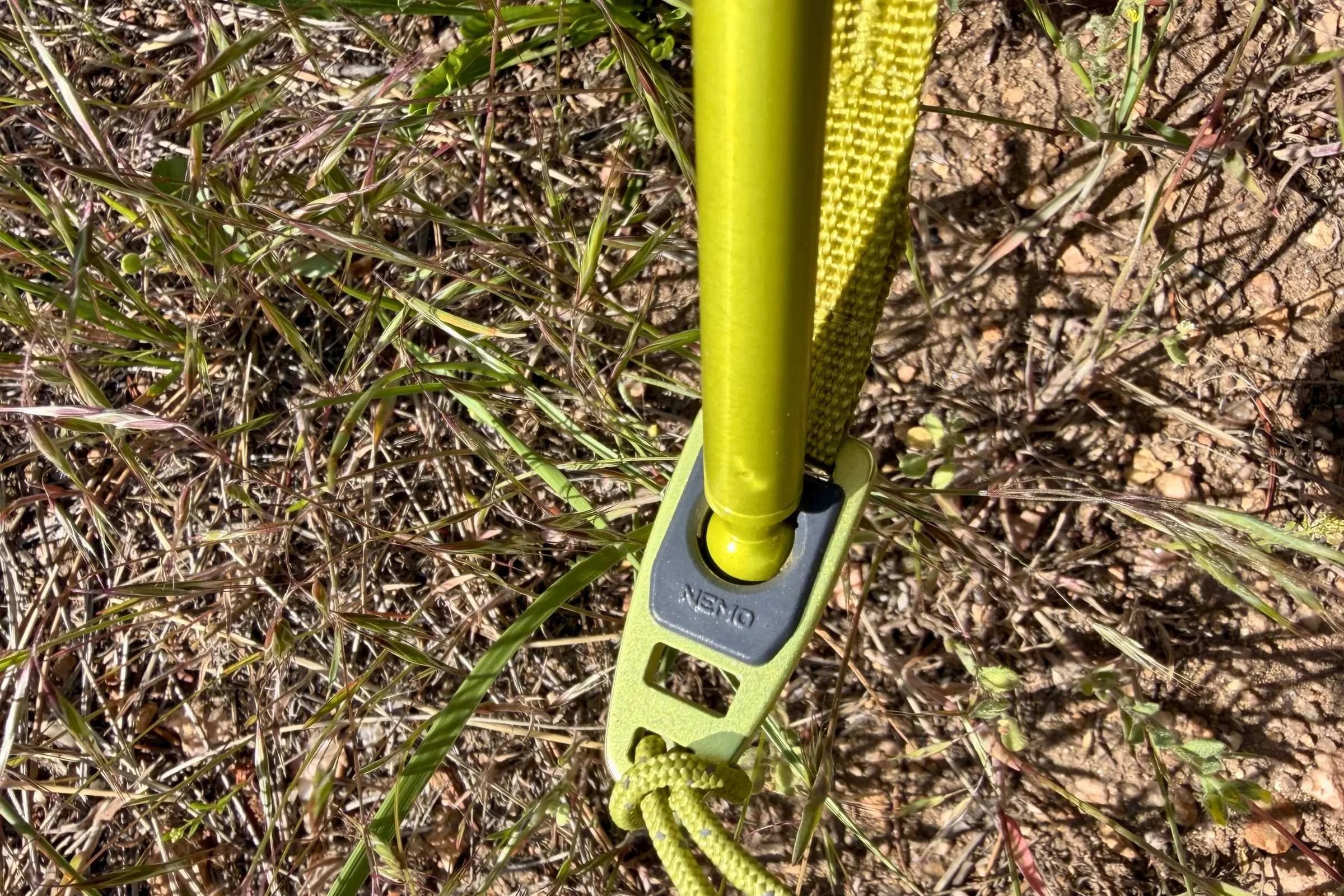
The ball and socket attachment point also has a small slit where the metal rain fly clip attaches, facing out.
Features
Asymmetrical shape
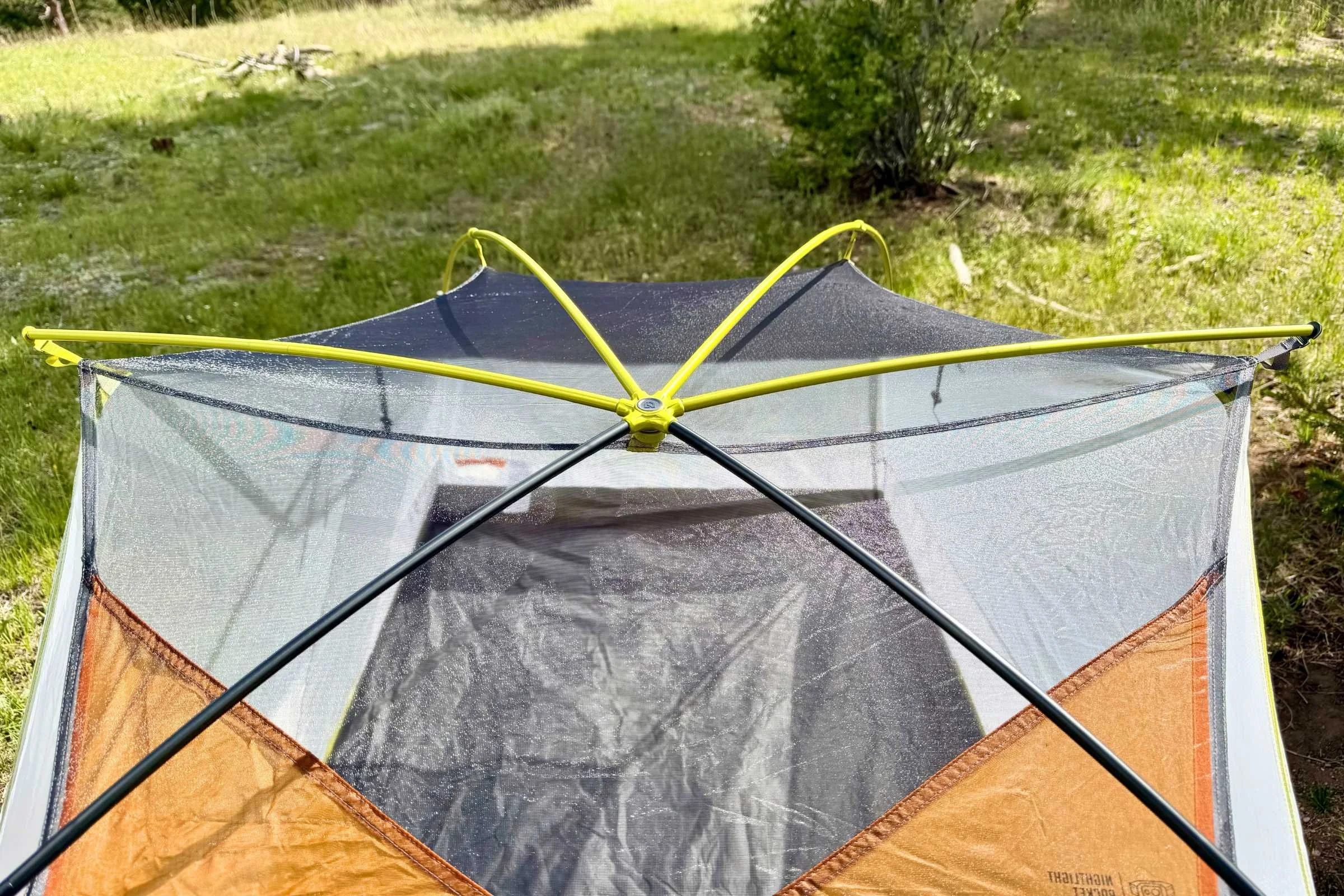
Aerial view of the 2026 new NEMO Dragonfly pole and crossbar design.
The asymmetrical shape was easy enough to figure out how to set up, and the poles are color-coded (see below). The asymmetrical shape also means the end with more headspace has more poles overhead (which I didn’t like as much when looking up at the night sky), but the opposite end with just the gear loft is fantastic for stargazing.
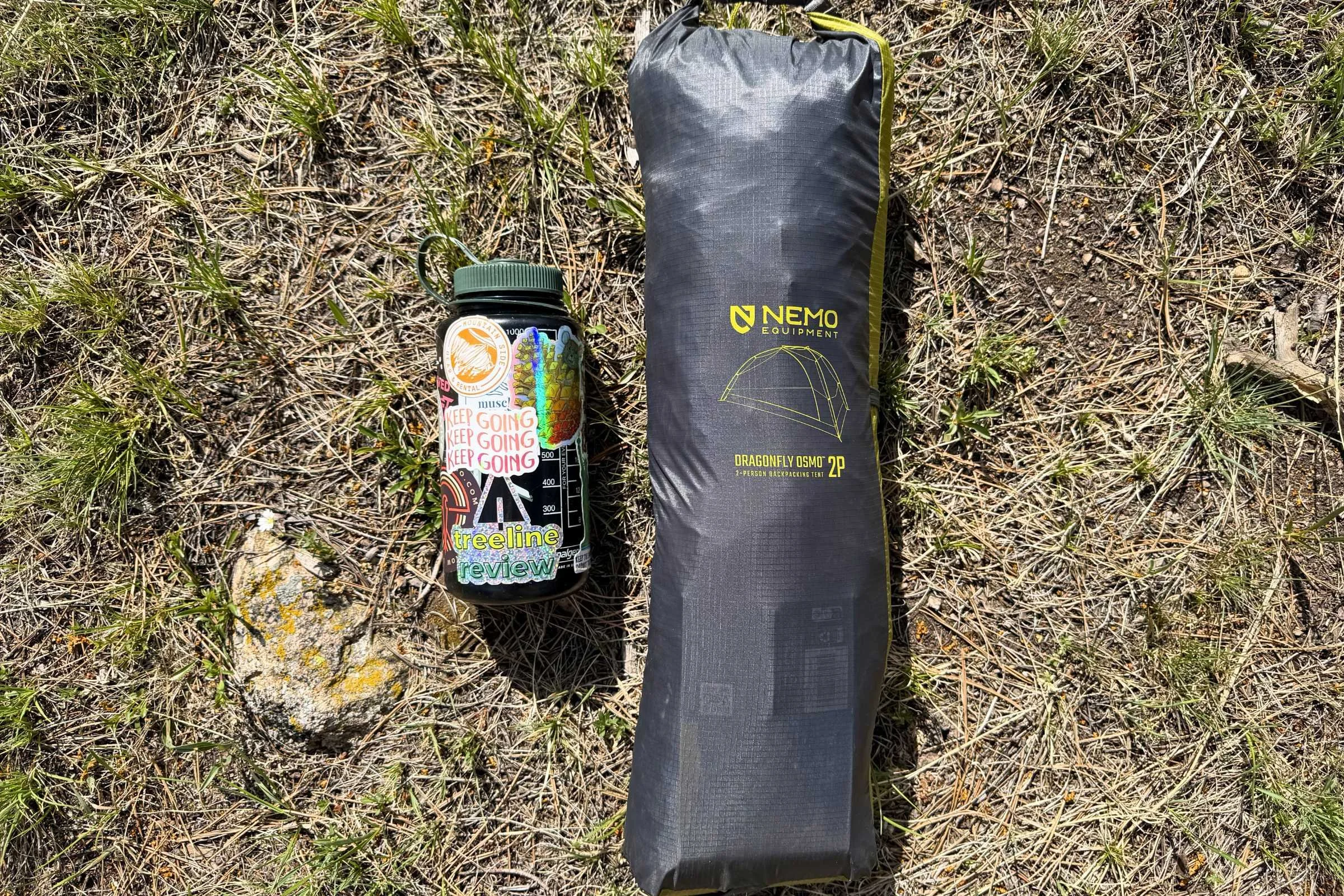
The packed size of the 2P Dragonfly OSMO (1L Nalgene bottle for scale).
Overall, the asymmetrical shape is a bit different but doesn’t impact livability and has lots of pros (more room and livability where you need it). With two people, the tent still felt spacious for a lightweight two-person tent, and with one person, I could absolutely sprawl—comfortable while reading in my tent, side-sleeping, and repacking my pack before the day ahead.
NEMO OSMO fabric
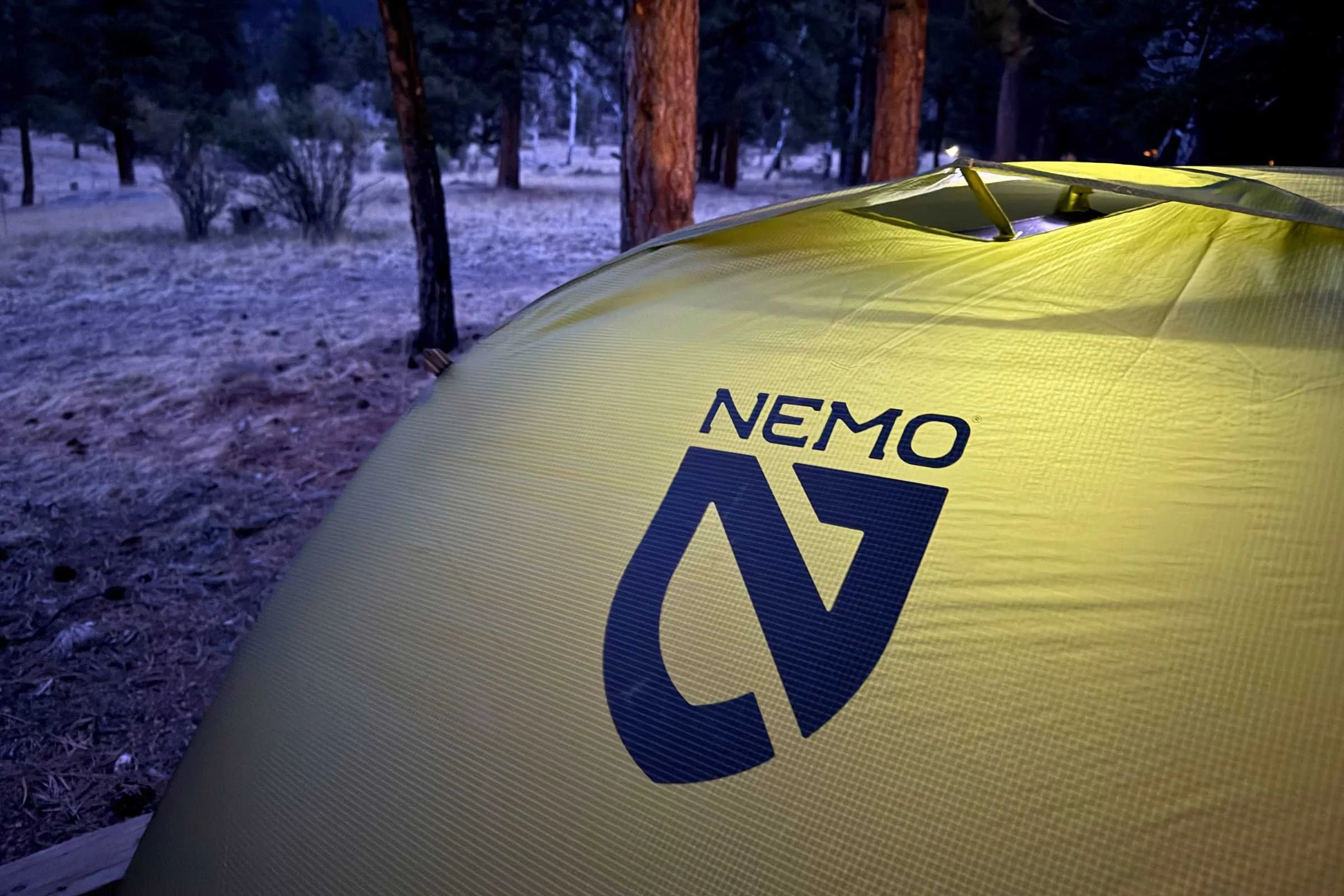
One of three vent slits with struts on the exterior of the rainfly.
NEMO’s unique OSMO fabric is a unique poly-nylon composite that is PFAS free. This composite fabric, aka OSMO fabric, delivers 4x longer-lasting water repellency than comparable woven tent fabrics and stretches 3x less when wet. It’s designed to offer all this with both high durability and a lower weight in mind.
In comparison to Big Agnes’ newest Hyperbead fabric, I found the weave on the OSMO fabric, both on the tent floor and on the rainfly, seems more durable and tighter, and the fly fabric doesn’t feel as thin or translucent. Aside from other strengths of the two fabrics, the OSMO fabric’s 1,500mm waterproof rating may offer better performance in heavy rain. It seems to have the same amount of tightness and stretch when wet, and potentially better durability.
Dual vestibules and storage
What can I say: even in lightweight backpacking tents, having two doors and two vestibules is pretty nice and the way to go for my usual tent partner and me. Two vestibules give you so much extended livable space and storage too (~8.6 sq feet for each of the vestibule areas is great, and 29 sq. feet inside the tent)—nearly the same as the REI Half Dome 2 (short by 2 sq.ft inside) and at least as much as the Big Agnes Copper Spur. When hanging around at my dispersed campsites, I was able to stash dirty shoes, poles, or a sit pad/chair under the vestibule.
Ventilation and condensation
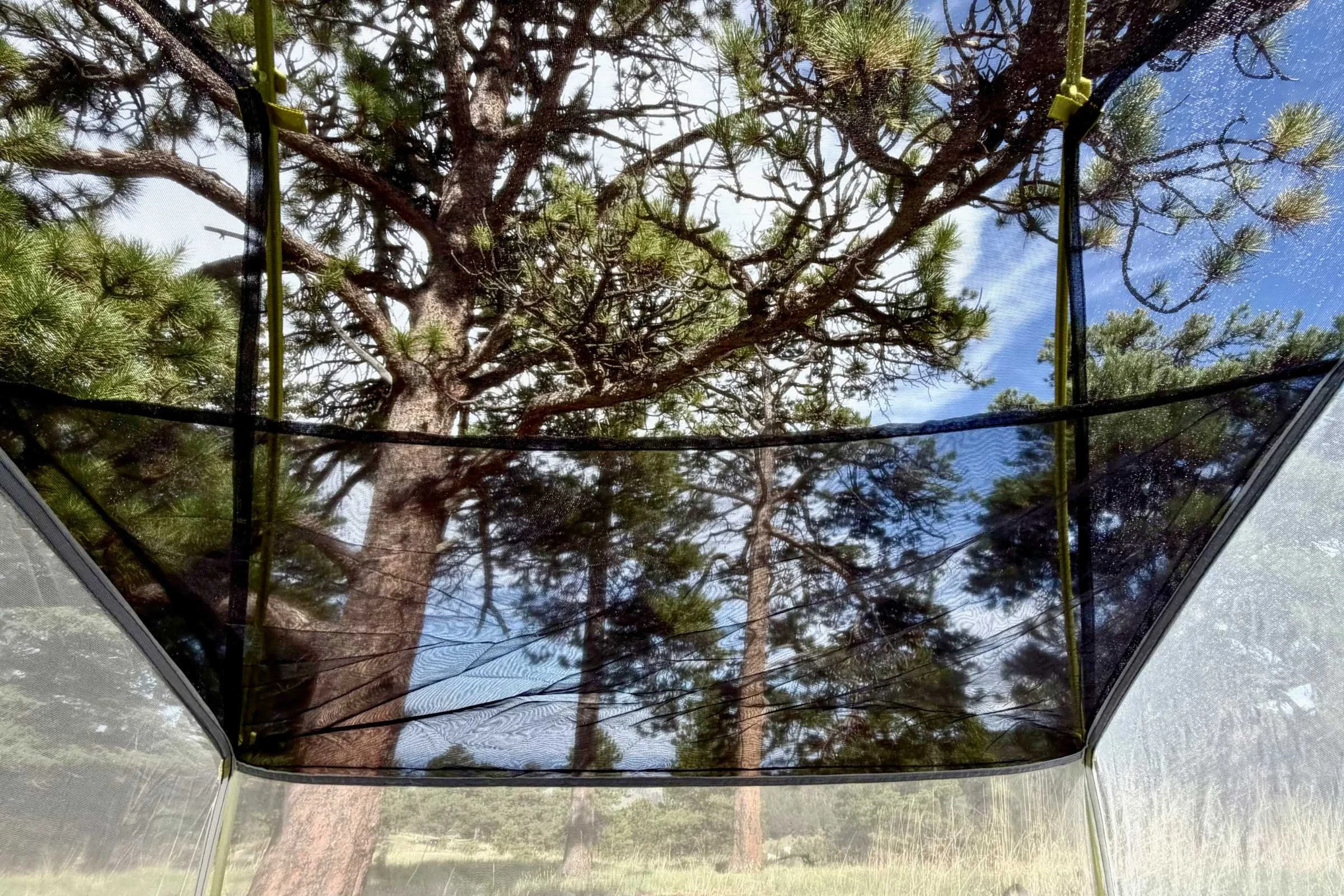
One of the best perks of the asymmetrical NEMO Dragonfly tent: views unobstructed by any cross poles! Also great for nighttime stargazing.
I didn’t experience any condensation inside this tent, although I wasn't able to test it in a humid climate or near a body of water. The rain fly weave is very tight, but the tent body itself has great ventilation, as tested overnight in about 2-3 hours of light to medium rain. Here in Colorado, we weren’t able to test in larger storms or extended wet conditions beyond that, but we plan to in continued testing.
I have previously experienced some condensation on the fly with the Big Agnes Tiger Wall, which I haven’t yet encountered with this tent.
Extra highlights
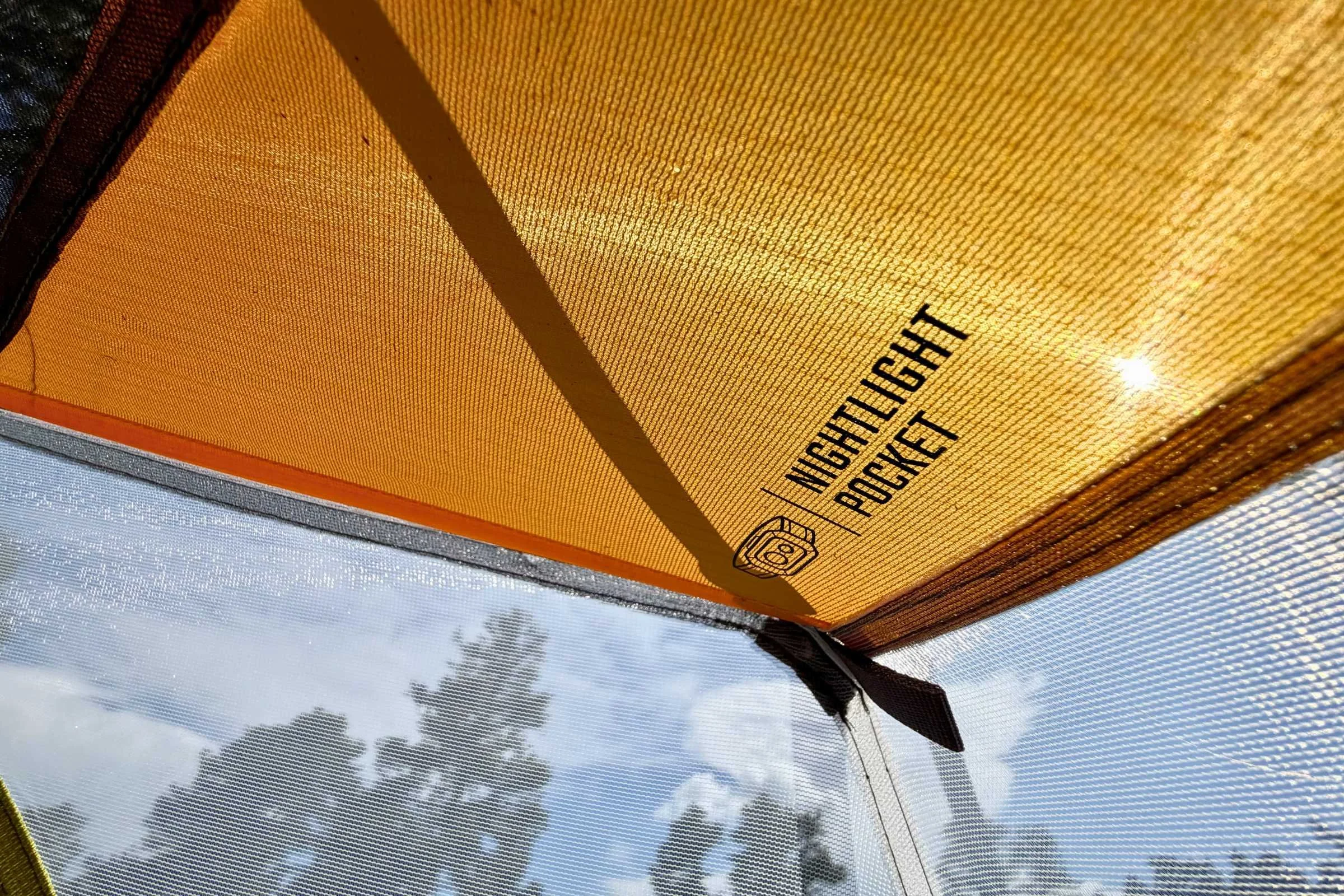
There are two included “nightlight” pockets to add a headlamp for reading overhead or using a headlamp hands-free inside the tent.
The NEMO Dragonfly comes with a large gear loft inside the tent, two nightlight pockets, stakes and a separate stake sack, and one vestibule gear tub to attach to the fly and floor.
Sustainability
NEMO values both the people and the planet as part of its brand values. Its office space is 100% powered by renewable energy, and the brand prioritizes longevity in design and quality elements of its tents, such as investing in bluesign-certified fabrics and creating its 100% recycled OSMO tent fabric, which is PFAS- and FRC-free and designed to last longer and remain durable when wet.
NEMO also has an Endless Promise Collection of gear that prioritizes recyclability and repairability to keep gear out of landfills.
Updates on Dragonfly Tent Over the Years
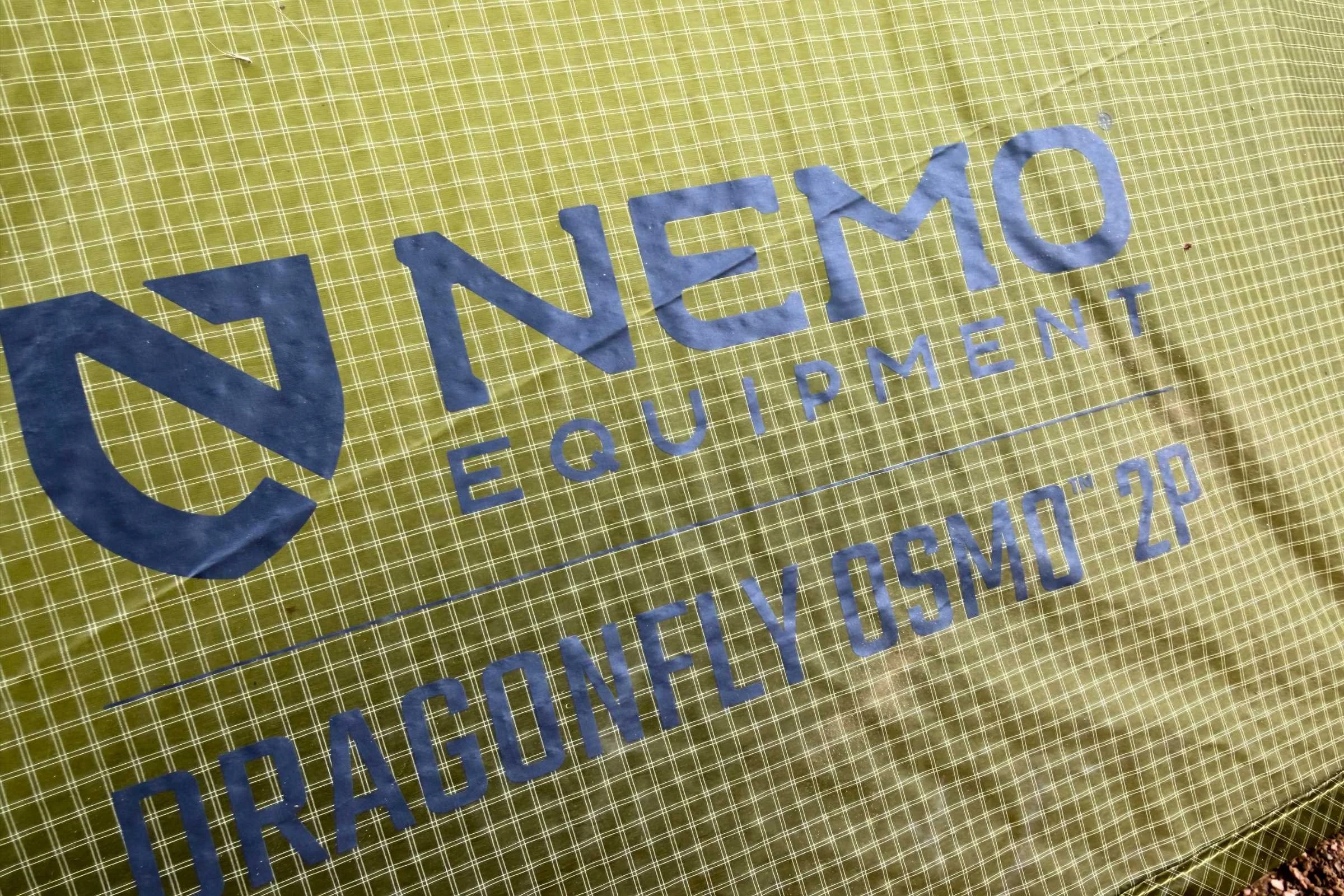
The fly fabric on the Dragonfly OSMO.
The NEMO Dragonfly OSMO has been fully redesigned for 2026. It is comparable to the previous iterations of the Dragonfly tent, but has so many design updates (covered above/below in our testing) that we thought we’d go over them in their own section here.
Pole layout and design (including cross-pole)—redesigned
More interior liveable space—spaciousness improved
Tent materials and layout/design—greatly improved
More durable recycled aluminum poles—durability greatly improved
Integrated rainfly clips and fly attachment points—a good design improvement, but finicky
NEMO Dragonfly vs. similar tents
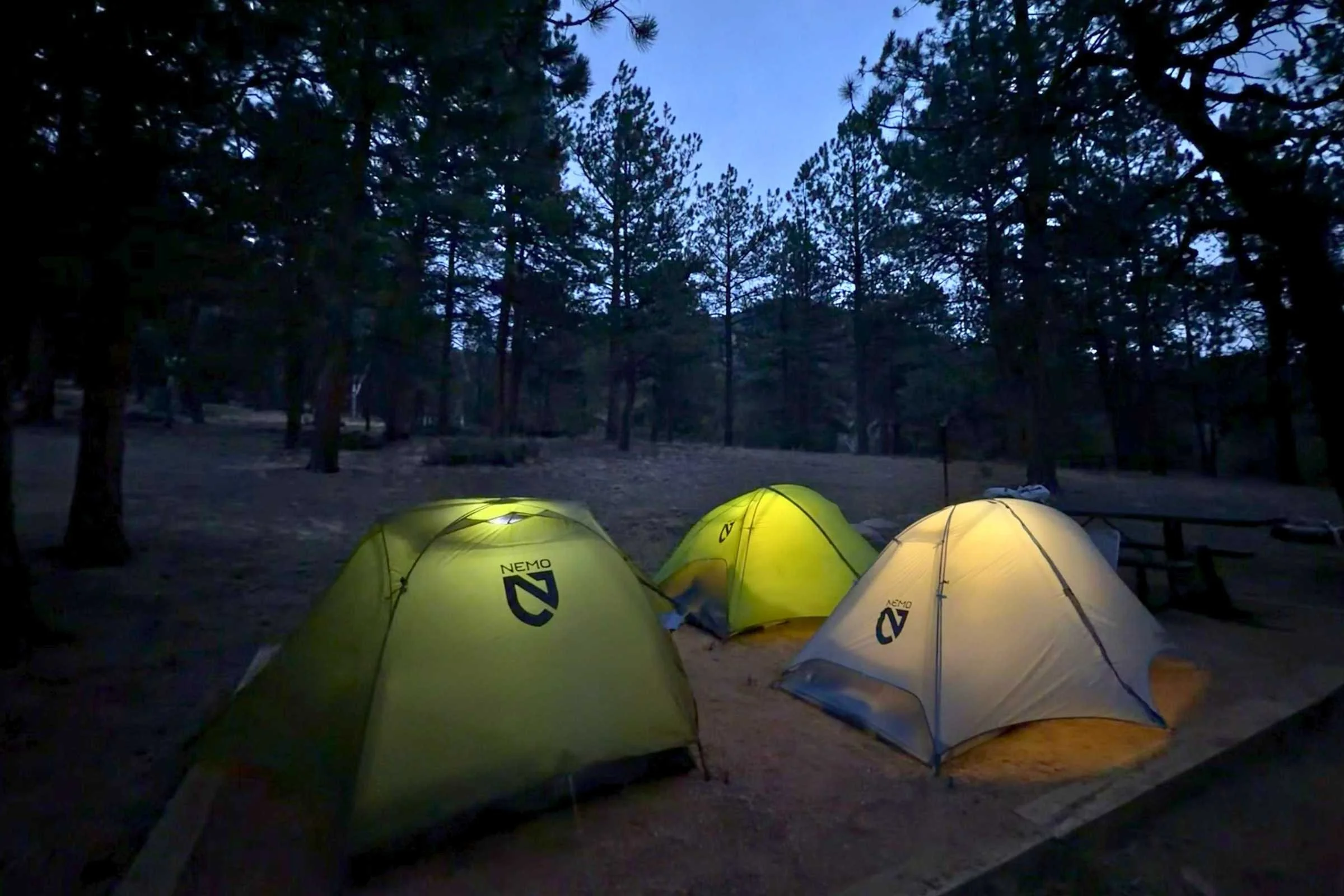
Testing the NEMO Dragonfly alongside other NEMO tents on a 2-night trip.
The NEMO Dragonfly is similar to many other current NEMO tents on the market, including the NEMO Dagger OSMO and the Big Agnes Copper Spur. However, there are some key differences.
In short, it all comes down to the pole design and tent shape, and whether you want to prioritize peak height, interior space, and livability, or prioritize a balance of livability and weight. You’ll also want to consider whether you want a truly freestanding tent (that would be the NEMO Dragonfly or Big Agnes Copper Spur, vs. semi-freestanding options like the NEMO Hornet Elite OSMO or Big Agnes Tiger Wall).
Should you buy the NEMO Dragonfly OSMO?
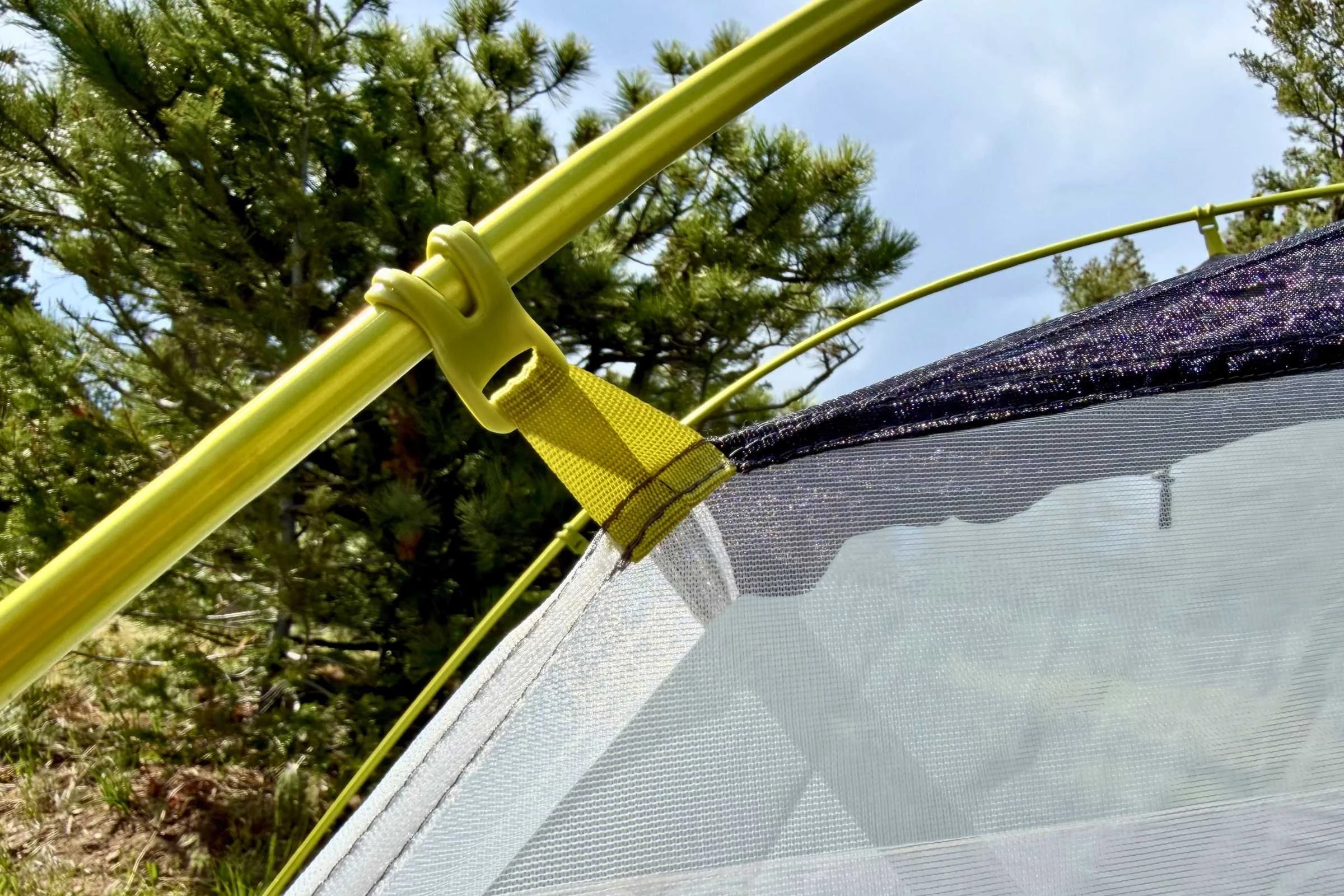
The clips were durable, and the tent stayed sturdy and taut in all directions, even with the asymmetrical design.
Buy if you want a true 3-season tent that can handle all sorts of weather with more/maximum headspace, and a reliable, durable design.
Skip if you want a tent that is more easy/intuitive to set up, or you want more living space at a lighter weight.
Where to buy the NEMO Dragonfly OSMO?
The NEMO Dragonfly OSMO backpacking tent is a popular gear item, so you have options when it comes to retailers. Here are some of the pros of the retailers.
REI
Pros: 100% satisfaction policy for 1 year; 10% dividend for members.
Amazon
Pros: Free 2-day shipping with Amazon Prime membership
Backcountry
Pros: Frequent sales for Expedition Perks members (free to join), fast shipping, Gearhead chat customer service is excellent
Advice on where to buy
In general for gear, we recommend purchasing from a place with easy or free returns, like REI.
Similar backpacking tents
Big Agnes Copper Spur UL2

Season: 3-season
Design: Freestanding
Weight: 2 lb 6 oz (total), 2 lb (trail), 1 lb 10 oz (fast fly)
Packed size: 19.5" x 4"
Floor area: 29 ft²
Vestibule area: 9 ft² x 2
Awning coverage: 9 ft²
Head height: 40”
Poles: DAC Featherlite NFL, NSL, and pressfit poles
Rainfly/floor material: Proprietary HyperBead 15D nylon solution-dyed ripstop and 20D solution-dyed ripstop (floor) and 1500mm waterproof coating (PFAS free)
The Big Agnes Copper Spur is a similar freestanding tent. The Copper Spur offers the same floor space as the NEMO (29 sq. ft.) and a symmetrical design with 2 vestibules. It has tons of pockets and internal gear storage, and a huge door. The door opens up into several configurations and into an awning setup (requires trekking poles or extra guylines to set up) for maximum livable space.
If lightweight comfort is your jam and performance and sustainability are still front of mind, consider the Copper Spur, which won our Overall Best Backpacking Tent award. You can read more in my in-depth review of the Big Agnes Copper Spur.
Big Agnes Copper Spur UL Tent
1P
2P
3P

Season: 3-season
Design: Semi-Freestanding
Weight: 2 lb 1 oz (total), 1 lb 11 oz (trail weight)
Packed size: 19" x 4.0"
Floor area: 27.3 ft²
Vestibule area: 6.2 ft² + 6.2 ft²
Head height: 37"
Poles: DIAPOLE premium anodized aluminum poles pre-bent
Rainfly/floor: OSMO ripstop rain fly with 1200 mm hydrostatic rating (PFAS-free); floor of OSMO ripstop with 1500 mm hydrostatic rating (PFAS-free)
NEMO considers sustainability when it comes to building all their tents. You can’t really go wrong with either tent if you are choosing between the two—they are pretty similar, except for a few extra inches of height/headspace. The biggest difference is that the Dragonfly OSMO is a freestanding tent (and thus, a little heavier) with larger vestibules. The Hornet Elite OSMO is more tapered and lighter in weight.
The NEMO Hornet Elite OSMO tent won best lightweight in our Best Backpacking Tents guide. Learn more in our in-depth review of the NEMO Hornet Elite OSMO backpacking tent.
NEMO Hornet Elite OSMO
1P
2P

Season: 3-season
Design: Semi-Freestanding
Weight: 2 lb 8 oz (total), 2 lb 3 oz (trail), 1 lb 7 oz (fast fly setup)
Packed size: 18" x 5"
Floor area: 28 ft²
Vestibule area: 8 ft² + 8 ft²
Head height: 39"
Poles: DAC Featherlite NFL pole
Rainfly/floor: HyperBead recycled 15D nylon ripstop with 1500mm waterproof coating (PFAS-free), with waterproof and solvent-free taped seams
The Big Agnes Tiger Wall UL2, compared to the NEMO Dragonfly, has a similar waterproof head rating, but is much thinner and lighter in material. While it’s a tight weave, it feels less durable than the NEMO Dragonfly’s OSMO fly. The Tiger Wall is also only semi-freestanding and not a true, roomy 2-person—it feels like a tapered, slimmer backpacking 2-person. The vestibule areas are slightly smaller, and the poles are thinner.
The reflectivity of the guy lines on the Tiger Wall beats out the reflective elements on the Dragonfly. Pick the Tiger Wall 2 if you want a lower trail weight over roominess, and care more about weatherproofing in three-season than interior livability on trail. Learn more in our in-depth review of the Big Agnes Tiger Wall backpacking tent.
Big Agnes Tiger Wall UL Tent
1P
2P
3P
Why you should trust us / About the author
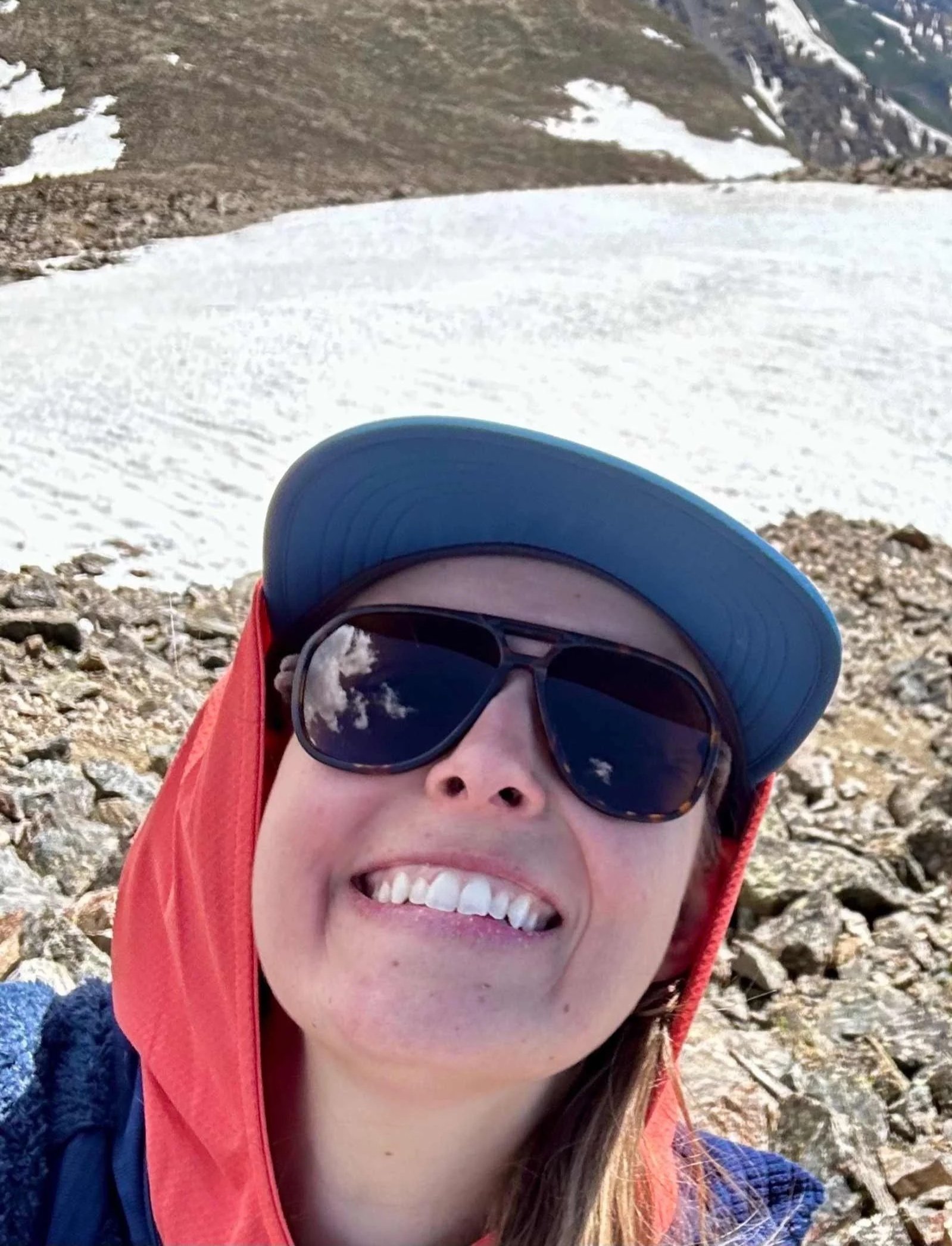
Our tester has a long career in the outdoors, with over 400 nights backpacking. Aside from backpacking trips and other adventures, she gets out as much as she can across all 4 seasons. For Mary, having a durable yet light tent that can flex to fit multiple scenarios—especially solo trips—is a must. This year, Colorado had an exceptionally dry and warm winter, so even at and above elevation, we have favorable weather for tent testing. This made testing a blast in warmer, spring temps from Feb—May. Mary was able to test this tent in the sun, in the clouds, in the wind, and in light rain. All her testing occurred in Colorado, at an altitude between 5,800 and 10,000 feet.
Mary has section-hiked on the CDT, CT, and AT; completed the Wonderland Trail; done a self-supported, pack-paddleboard trip in remote British Columbia; and backpacked throughout the U.S., Canada, Thailand, Vietnam, Korea, and Nepal. Backpacking and traveling are some of her favorite ways to experience new places and the outdoors. You’ll likely find her somewhere along Colorado’s Front Range trail running, rock climbing, hiking, backpacking, SUPing, or scrambling up a 14er. She’s based in Golden, Colo and is a self-proclaimed gear nerd.
Find more of Mary Murphy’s reviews on her Treeline Review author page.


