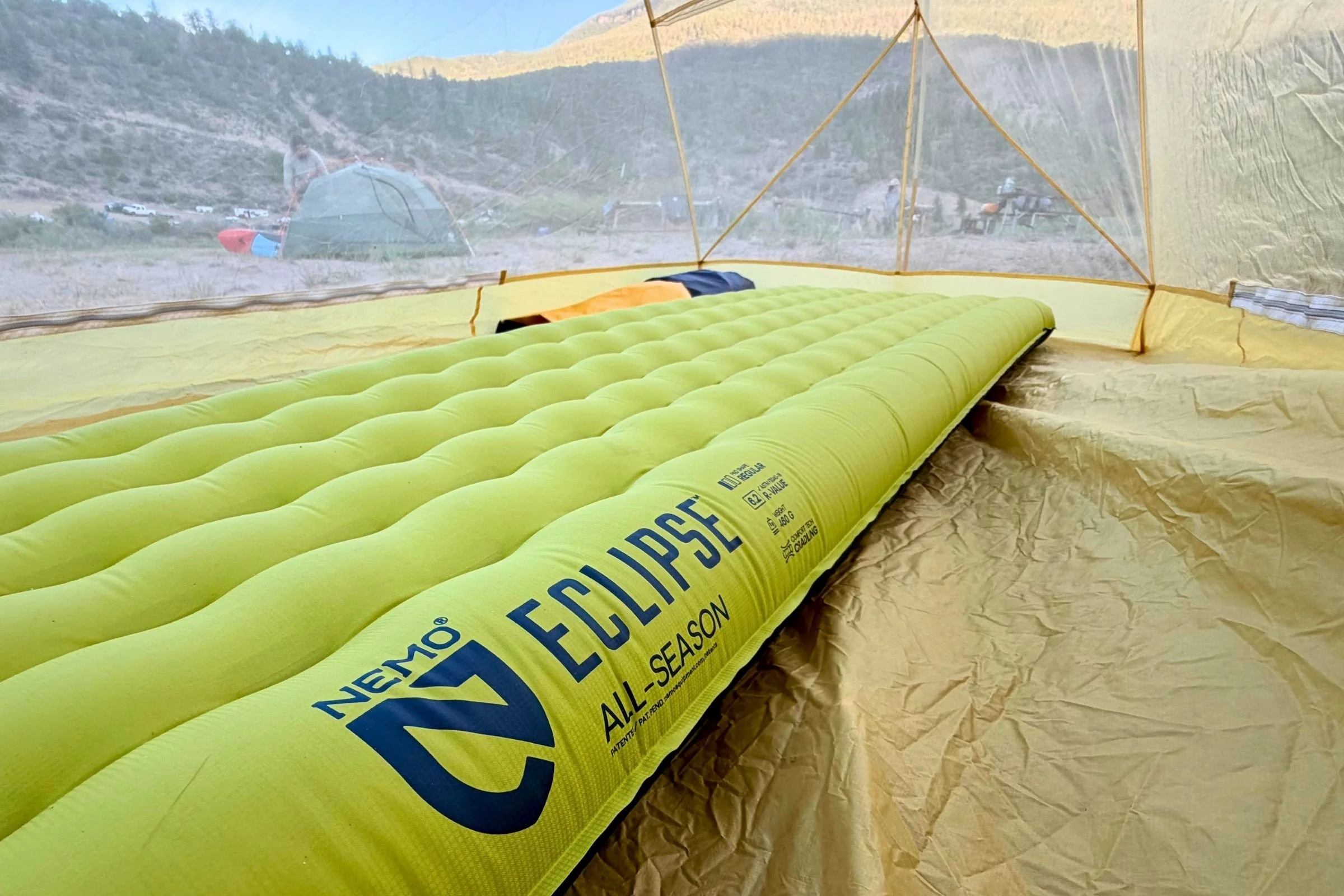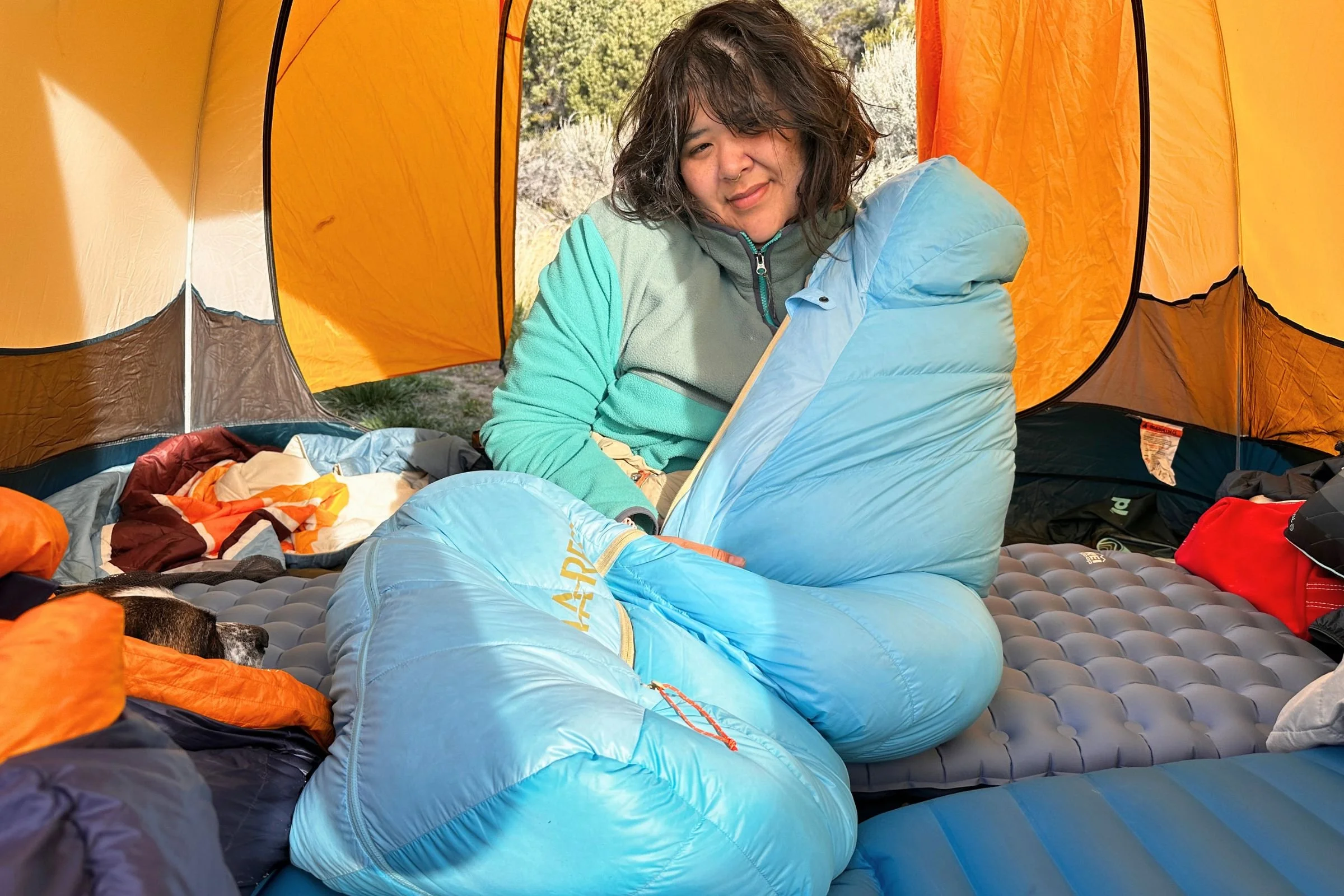
Best Camping Cots of 2026
Durable, robust, folding cots and ultralight camp cots for comfortable sleep outdoors

July 14th, 2026, with a new best budget cot, and a new cot tested
Home → Gear Reviews → Camping
Finding a good camping cot is harder than it should be. Most have hinges that stick, bars that require a second person to force into place, and frames that wobble once assembled. Cots should be comfortable, easy to assemble, and stable, and after two years of testing, we found few actually meet all three criteria.
To find the ones that do, we gathered a dozen testers of different body shapes and sizes, ages, and sleep styles, from self-described hot sleepers to cold sleepers, and tested across festivals, campgrounds, month-long summer camps, and backpacking trips in Montana, Oregon, and California. We even tested with a few dogs who turned out to have opinions of their own. Collectively, we've spent more than 60 nights sleeping on cots for this article.
What separates a good camping cot from a frustrating one comes down to how reliably the locking mechanism holds after repeated assembly and disassembly, how stable the frame feels under a sleeping person, whether the dimensions fit different body sizes, and how the packed size and weight work for how you actually travel to your campsite.
Top Pick: The Kelty Lowdown Cot earns our Best Overall award. It stood out for an easy and secure setup that one person can manage without forcing, a stable frame that never wobbled during testing, a generous 27.5-inch width, a carry case that actually fits the cot without a fight, and a weight under 5 pounds that makes it viable for backpack-in camping.
We create reader-supported, objective gear reviews independently selected by our editors. This story may contain affiliate links, which help fund our website. When you click on the links to purchase gear, we may get a commission, without costing you an extra cent. Thank you for supporting our work and mission of outdoor coverage for every body! Learn more.
Comparison table
| Camping Cot | Treeline Award | Weight (lbs) | Unfolded Dimensions (inches) | Height (inches) | Folded Dimensions (inches) | Weight Capacity (lbs) | Best Use | MSRP |
|---|---|---|---|---|---|---|---|---|
| Kelty Lowdown Cot | Best Overall Read why |
4.8 | 75 x 27.5 | 6.7 | 17 x 7 x 7 | 300 | Summer camp, car camping, rafting | $150 |
| Helinox Cot Max Convertible | Best Camping Cot for Bad Back Read why |
6.4 | 82.7 x 29.5 | 6.5 | 22.5 x 7 x 7 | 320 | Backpacking, pack rafting, firefighting | $530 |
| Helinox Lite Cot | Best Ultralight Read why |
2.8 | 73 x 23.5 | 5.0 | 21 x 5 | 265 | Backpacking, pack rafting, firefighting | $350 |
| REI Co-op Campwell Folding Cot | Best heavy duty camping cot Read why |
17.8 | 76 x 25 | 18.0 | 37 x 8 x 8 | 300 | Car camping, sleepovers | $120 |
| Zempire W Leg Stretcher V2 | Best Affordable Cot Read why |
12.4 | 76.4 x 25.8 | 7.5 | 27.2 x 9.1 x 3.1 | 330 | Sleepovers, car camping | $90 |
The winners
Best overall camping cot: Kelty Lowdown Cot

Best for: Summer camp, car camping, rafting
Weight: 4 lbs. 12.8 oz.
Weight limit: 300 lbs.
Height: 6.7 in.
Dimensions folded: 17 x 7 x 7 in.
Dimension unfolded: 75 x 27.5 in.
What we liked: Easy and secure set-up, lightweight, value for the price, among the widest
What we didn’t like: Could be longer
The Kelty Lowdown Cot is our overall winner for best overall camping cot. It's easy and straightforward to set up. It stays secure and doesn't wobble when you're sitting or sleeping on it. It feels as comfortable as cots that cost twice the price. And at 4 lb 12 oz, it is relatively lightweight and compact so you could even backpack with it.
The Kelty Lowdown is among the most compact cots we tested and comes with a convenient carry case with a shoulder strap (and actually fits inside without a hassle). The Kelty Lowdown is also one of the more affordable camping cots, offering everything we wanted at one of the best prices among the cots we tested.
Kelty Lowdown Cot



Our testers spent more than a month sleeping on the Kelty Lowdown Cot and found it among the most comfortable. It stays secure, and we never felt like it was going to collapse or fold in on itself, as happened with other cots we tested.
The Kelty Lowdown cot is simple to assemble. You unfold the two support poles and slide them vertically into the pockets. Then you unfold the legs and snap them into place horizontally along the cot. We didn't even need directions, though they come printed on the carry case. Like all cots, snapping into place took some pressure, though it was easier on the Kelty Lowdown Cot than many similar cots we tested.
The only drawback of the Kelty Lowdown is that we wish it were longer. At 75 inches long, we couldn't fit a 6-foot-long sleeping pad and our pillow above it. Taller campers over 6 feet tall may want to consider the Helinox Cot Max Convertible. However, the Kelty Lowdown is among the widest cots we tested at 27.5 inches, making it among the more size-inclusive cots.
Best camping cot for bad back: Helinox Cot Max Convertible

Best for: Backpacking, pack rafting, firefighting
Weight: 6 pounds, 6 ounces
Weight limit: 320 pounds
Height: 6.5” (15” with optional leg extensions)
Dimensions folded: 22.8 x 6.9 x 6.9 inches
Dimension unfolded: 82.7 x 29.5 x 6.7 inches
What we liked: Comfort, easiest to set up with clever locking mechanism requires less force than other cots, longer height was more comfortable for taller campers (and campers of all sizes), higher max weight limit, sturdiness despite being lightweight
What we didn’t like: Price
The Helinox Cot Max Convertible is our winner for best camping cot for a bad back. We'd argue that the main benefit of a camping cot over a camping mattress or sleeping pad is that it better supports the back. Of all the cots we tested, the Helinox Cot Max Convertible was the best for bad backs and comfort.
Check with your medical professional before choosing a camp cot, but for those with back issues, the Helinox Cot Max Convertible was a lifesaver. It made camping on the ground possible for campers who said they thought they had to give up their camping days.
For comfort and ease of use, we think the Helinox Cot Max Convertible is the best camping cot for bad backs. Support for bad backs doesn't always mean extra padding. Instead, it means easy to set up and security and stability–something we didn't find in any of the padded camp cots we tested.
Helinox Cot Max Convertible


The Helinox Cot Max Convertible is surprisingly compact despite having the longest length of 82", accommodating campers over 6-feet. It also has the highest weight limit of any cot we tested.
The Helinox Convertible Max is one of the easiest cots to set up, with a clever locking system that requires less force to align than any other cot we tested. It's a small thing, but after a long day of hiking, we really appreciated not having to use extra energy for setup.
While the price rivals that of luxury camping mattresses, the Helinox Cot Max Convertible is one of those gear items that can last for decades of carting around and use while camping, at outdoor festivals, at campgrounds, and while backpacking in the backcountry. Although we've only been testing for two years, the Helinox Cot Max Convertible is versatile and feels like outdoor gear that can last a lifetime.
Our campers reported that it felt notably roomier and more luxurious than the Kelty Lowdown. This isn't just because the dimensions are wider and longer. The design feels like there is more usable space. The Helinox Cot Max Convertible has scaffolding rods that go right up to the edge of the fabric sleeping platform. Additionally, the fabric is less slippery than the Kelty Lowdown, so there's less sliding around, especially if you use a sleeping pad on top of your cot.
Cots, as a category, generally require a frustrating amount of force to assemble. With some of the cots we tested, it sometimes took multiple campers a lot of combined muscle and swearing to get all the parts in place, especially the first time we assembled them. That's not the case with the Helinox Cot Max Convertible. Although I realize this clever locking mechanism contributes to the higher price, I can't emphasize enough how much easier it is to set this one up, especially if you are solo.
Like all the cots we recommend, the Helinox Max Cot Convertible's locking mechanism is secure and won't wobble, slide, or buckle. The feet stay in place and can handle uneven surfaces, from rocks to fat Jeffrey pine cones underneath.
Another unique feature we liked about the Helinox Cot Max Convertible is its ability to convert into a high cot. Some campers prefer a higher cot so they can store their gear underneath, especially when quarters are tight in a camping tent. You can attach legs (sold separately) to the struts, and that will lift it a total of 15” off the ground
Ultimately, the main drawback of the Helinox Cot Max Convertible is the price. There is no getting around the fact that this is a very expensive cot. However, it's similarly priced to other top-of-the-line camping mattresses and costs less than the Hest Sleep System.
If you haven't been able to sleep while camping due to a bad back and have found other cots too narrow or with weight limits that aren't high enough, then this cot is worth it.
Best ultralight backpacking cot: Helinox Lite Cot

Best for: Backpacking, pack rafting, firefighting
Weight: 2 lbs. 13 oz.
Weight limit: 265 lbs.
Height: 5 in.
Dimensions folded: 5 x 21 in.
Dimension unfolded: 73 x 23.5 in.
What we liked: Comfort, easy to set up with a clever locking mechanism that requires less force than other cots
What we didn’t like: Price, lower weight limit
The Helinox Lite Cot is our winner for best ultralight camping cot. At 2 lbs 13 oz, this cot is among the lightest you can find, making it a good choice for backpacking. The Helinox Lite Cot is incredibly compact and comes with its own carrying case that takes up barely more space than some sleeping pads.
The Helinox Lite Cot comes with many of the same features we like in the Helinox Cot Max Convertible, but at a lower weight and price. That makes it a clear winner for backpacking. The Lite Cot is not only the lightest cot we tested but also functional, easy to set up, stable, and comfortable.
Helinox Lite Cot

Despite the lighter weight, it comes with the same clever, easy-to-lock mechanisms as the Helinox Cot Max Convertible. It is also stable on uneven surfaces.
Instead, the Lite Cot saves weight compared to the Cot Max by being smaller. At 73 inches long, it is shorter than the Cot Max and the Kelty Lowdown, and it is also narrower. This helps keep the weight down, barely weighing more than a conventional backpacking sleeping pad and leagues lighter than a camping mattress. Yet, for wider-bodied people, these may not be the best choice.
Ultimately, the main drawback of the Helinox Lite Cot is the price. But if you're backpacking, the Lite Cot is the clear winner for best ultralight camping cot, weighing almost half as much as the nearest competitor.
Many backpackers say they cannot sleep comfortably on sleeping pads anymore and have voiced to me their concern that their backpacking days may be over. The Helinox Lite Cot could just be the way to stay out there while actually getting a good night's rest.
Best Heavy-duty Camping Cot: REI Campwell Folding Cot

Best for: Car camping, sleepovers
Weight: 17 lbs. 13 oz.
Weight limit: 300 lbs.
Height: 18 inches
Dimensions folded: 37 x 8 x 8 inches
Dimension unfolded: 76 x 25 inches
What we liked: Incredible easy assembly/disassembly, stable and locks in place, convenient carry case, storage space underneath
What we didn’t like: 360-degree ground-adjustable feet each need securing, heavier, and less compact than other options
The REI Campwell Folding Cot is the best heavy-duty camping cot. It's heavier than other camping cots we tested, but it makes up for it with setup speed and durability. Unlike every other cot we tested, its assembly and disassembly take seconds–not minutes. It comes with a convenient carry case and a shoulder strap, making it easy to move around.
Unlike other folding style cots, it feels secure and doesn't buckle when you sit or lie on it. With a higher height than other cots, there is plenty of storage space underneath to store a backpack, camping lantern, extra layers, and a water bottle. This makes the Campwell Cot a good choice for when multiple people share a camping tent, and space is at a premium.
The Campwell Cot is so easy and intuitive that we second-guessed ourselves because every other cot was such a pain. Many heavy-duty folding-style cots feel like complicated origami. That isn't the case with the Campwell Cot.
REI Campwell Folding Cot
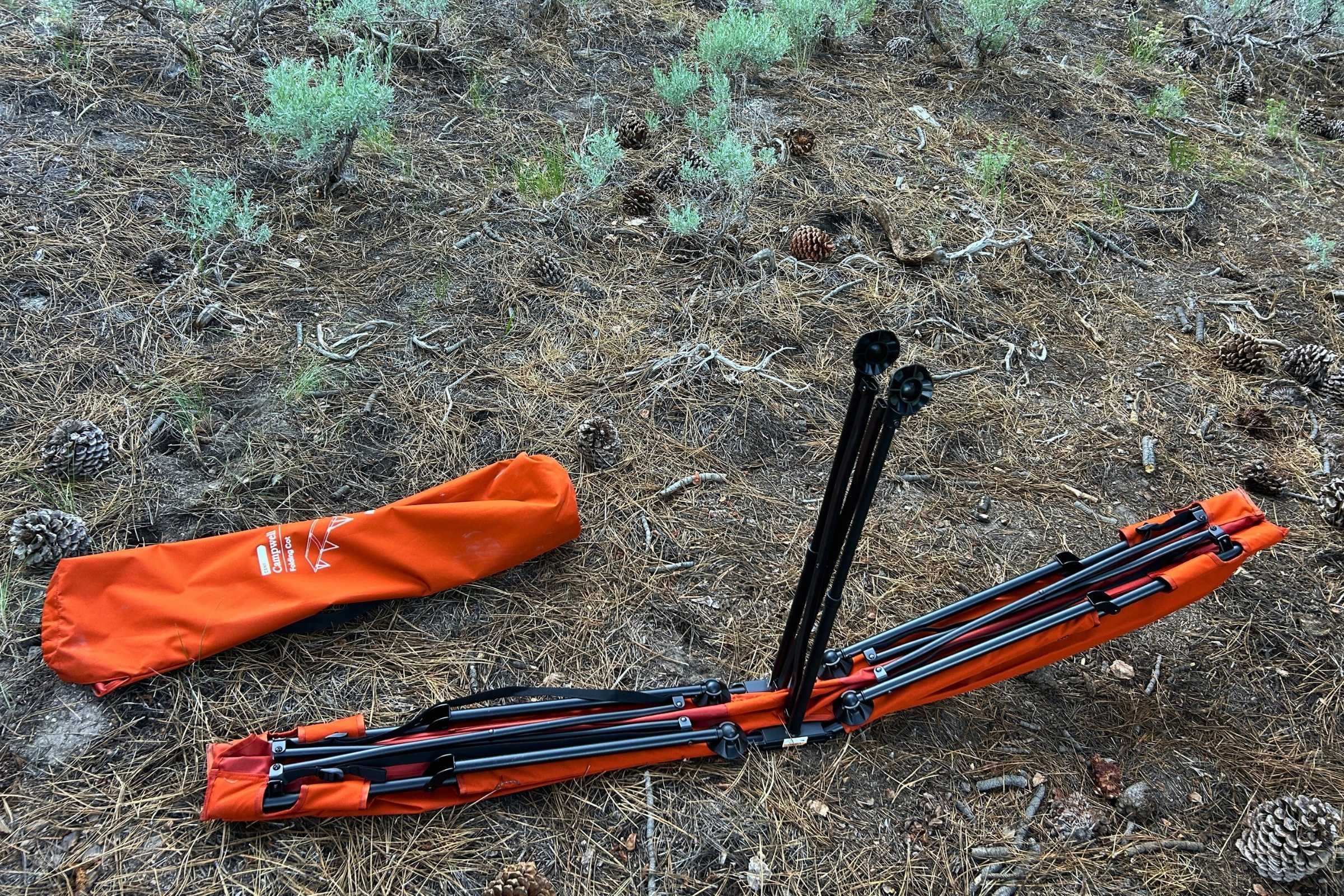
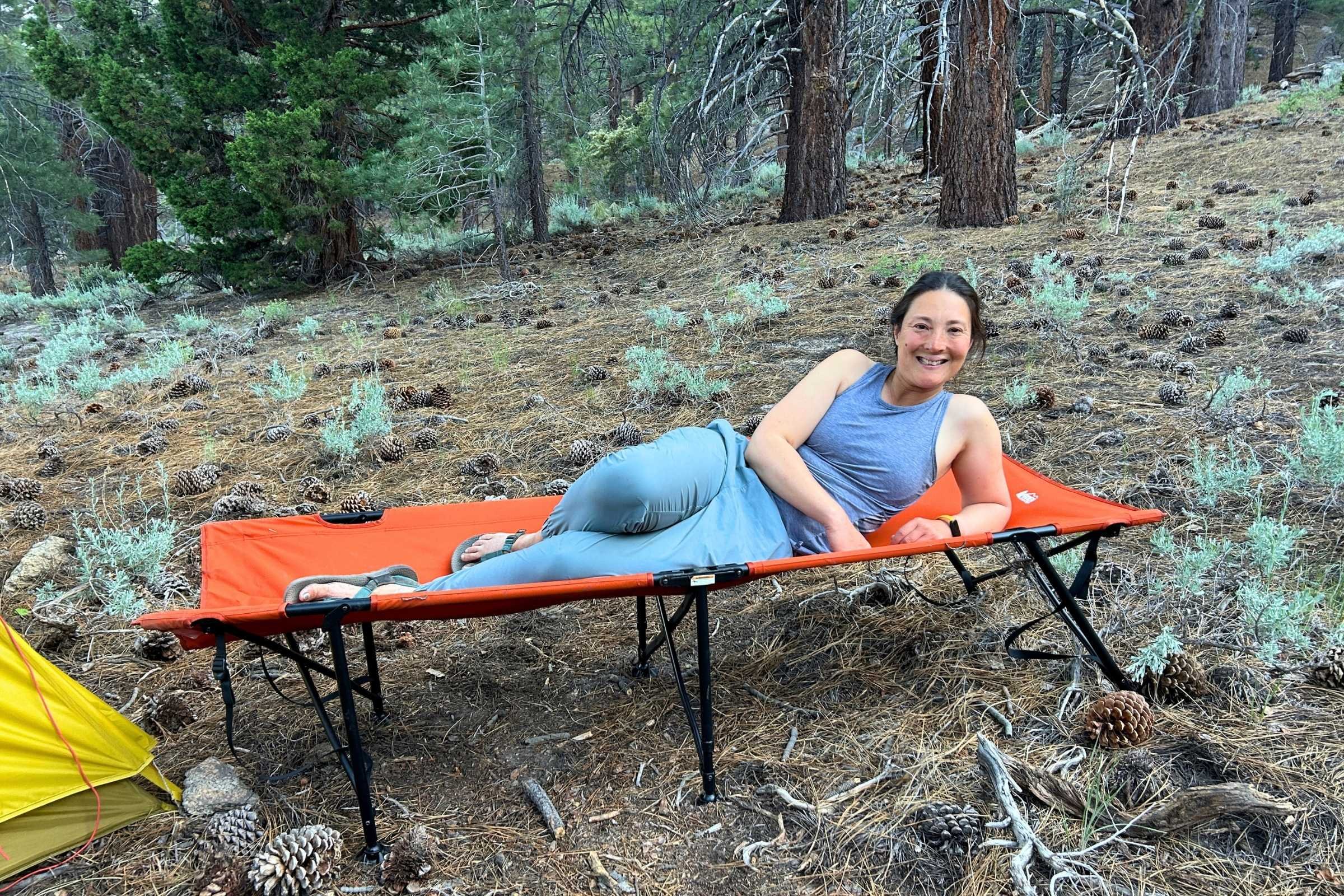


Our one issue with the Campwell Cot is the 360-degree ground-adjustable feet. Designed to provide stability on uneven ground, we found the feet themselves would jostle into uneven angles, even when the ground was flat. The REI Wonderland Cot (review below) uses similar feet, and we find it annoying on that model, too. However, the Campwell Cot's body stays securely flat, so you can go in and level out each foot. For comparison, we had trouble keeping the REI Wonderland's body flat, which made it all the more difficult to level out each foot.
High-rise cots, as a genre, will generally feel colder than lower cots because more cold air can accumulate under them. This can be a great win on a hot and humid summer day. It can also be annoying on a late-fall camping trip. If you are a cold sleeper or will be camping in cooler conditions, we recommend pairing the REI Campwell cot with an insulated sleeping pad.
The REI Campwell Cot is heavier and less compact than some of the other cots we tested (though admittedly a lot more compact than the other folding cots we tested). However, that is something to keep in mind when packing up a loaded car with camping gear for the weekend–especially if you have a Campwell Cot for each person in the family.
Best affordable cot: Zempire W Leg Stretcher V2
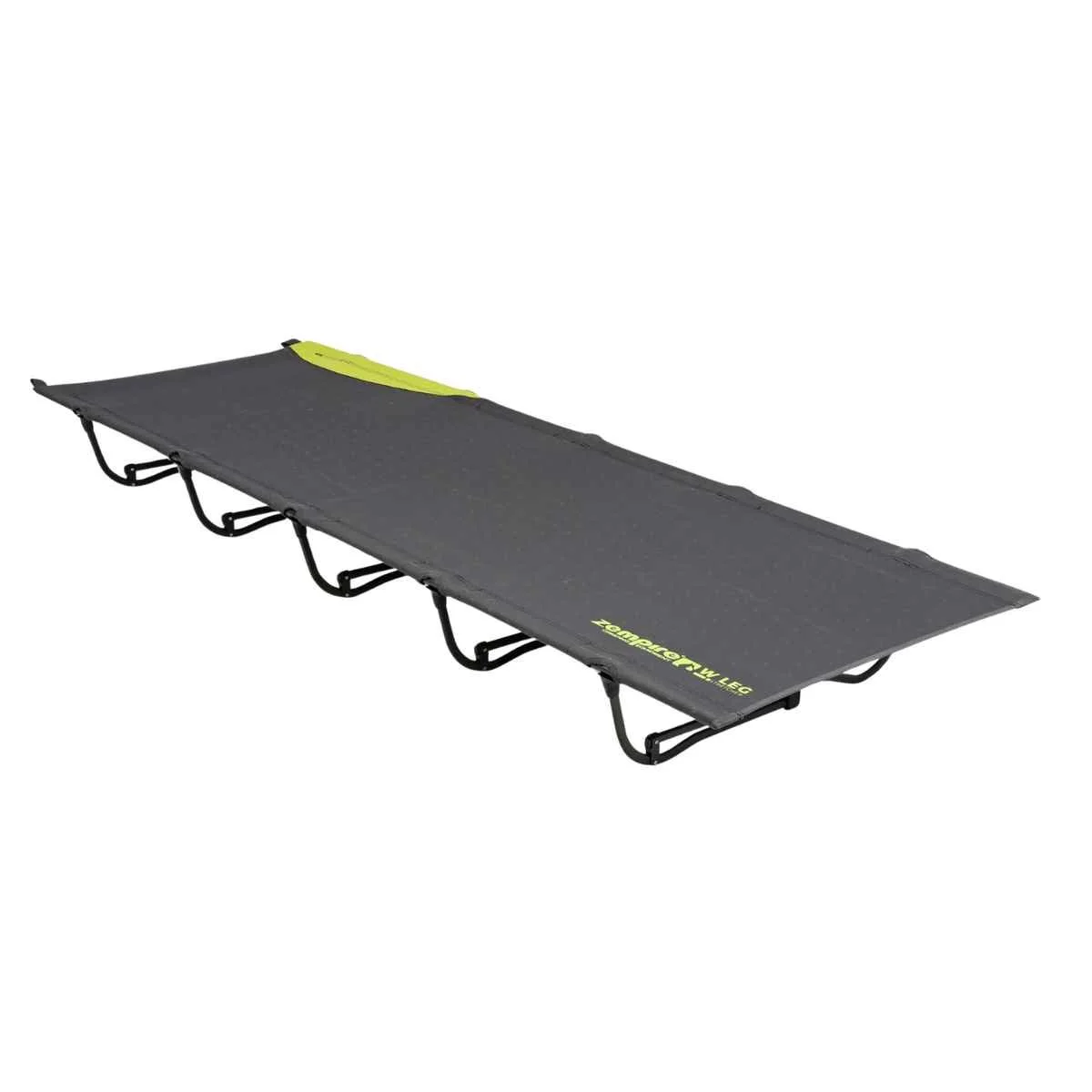
Best for: Sleepovers, car camping
Weight: 12 lbs. 7 oz.
Weight limit: 330 lbs.
Height: 7.5 in.
Dimensions folded: 27.2 x 9.1 x 3.1 in.
Dimension unfolded: 76.4 x 25.8
What we liked: Ease of set up, convenient carry case, lightweight
What we didn’t like: Stitching isn't straight
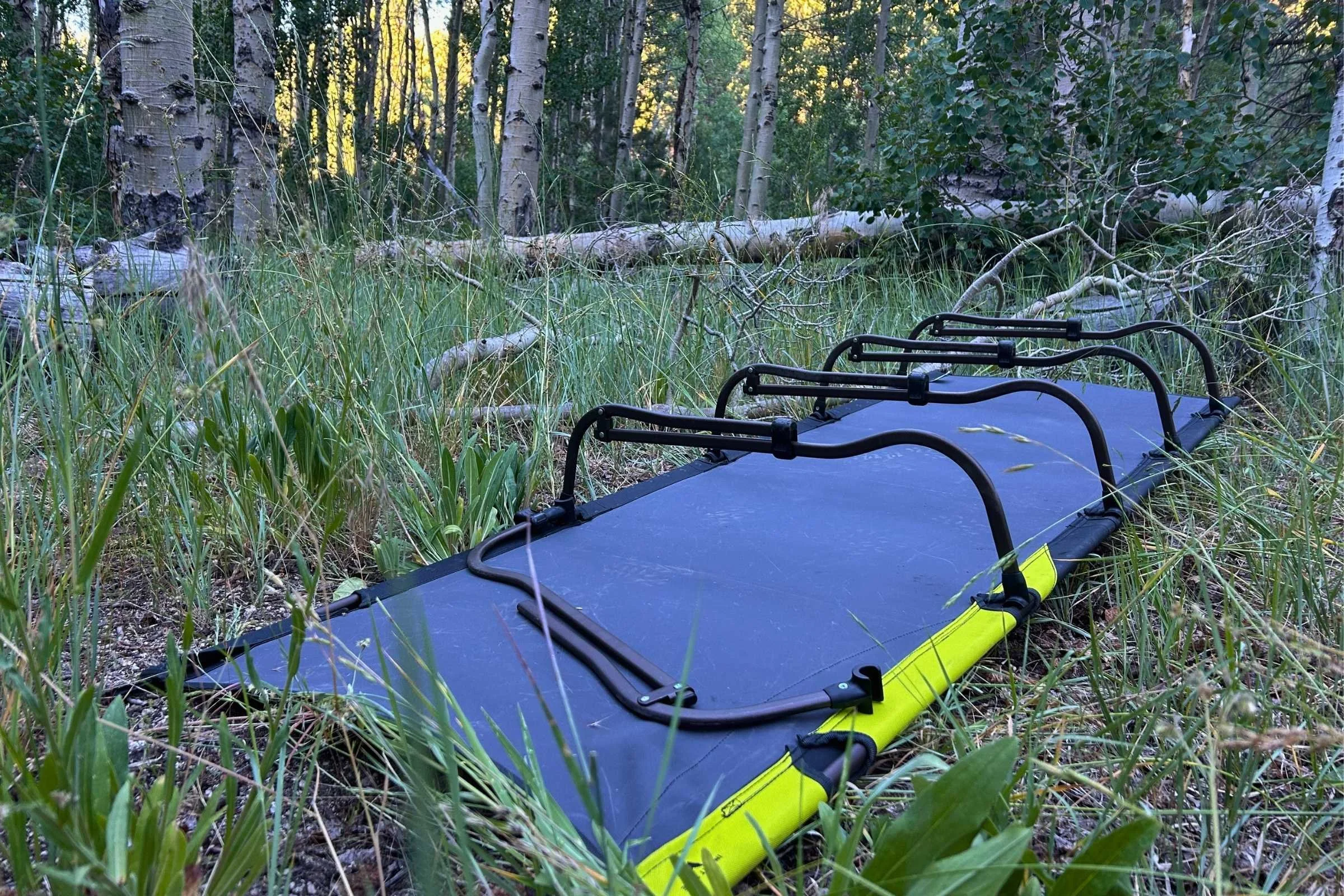
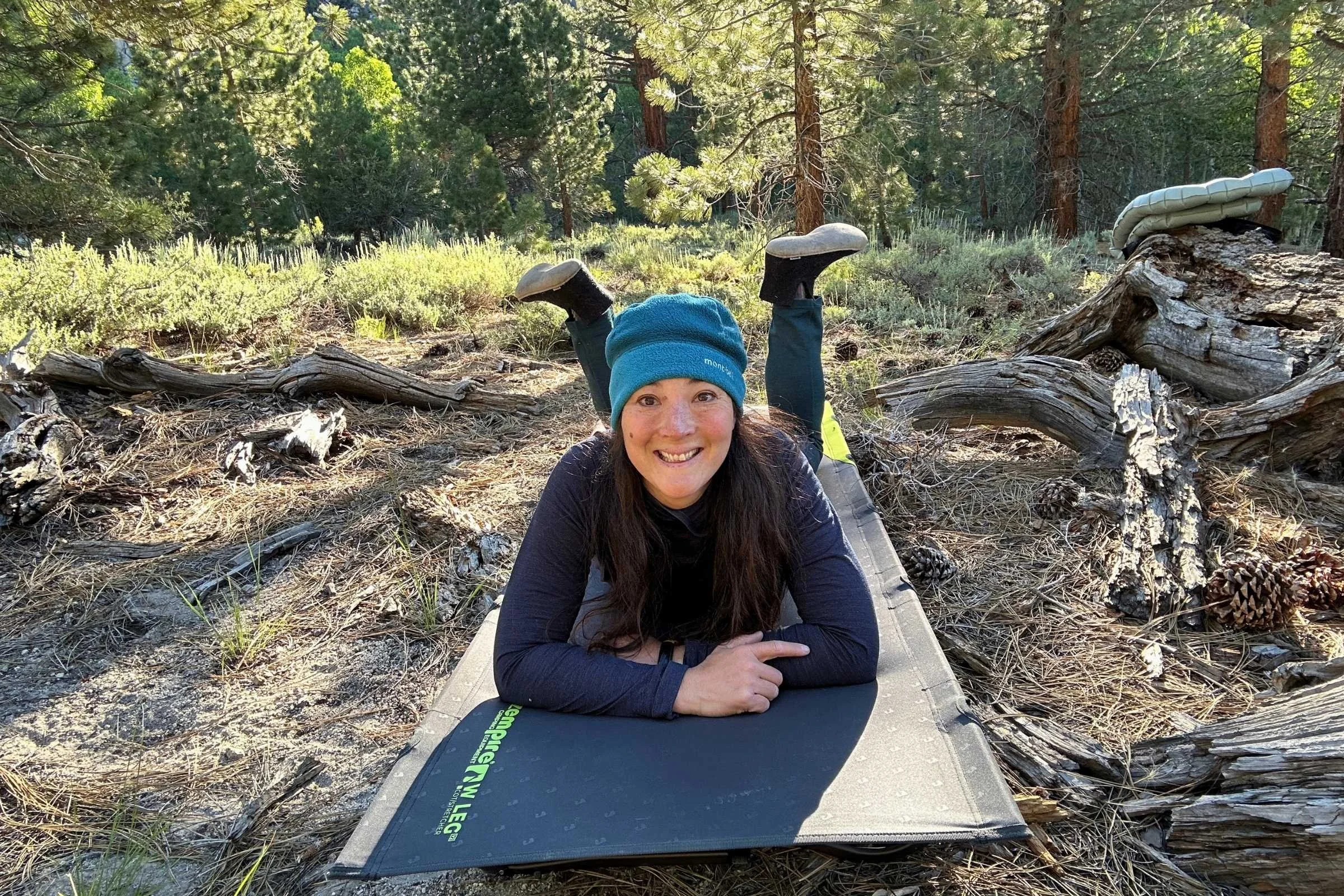
The Zempire W Leg Stretcher V2 is the best budget camping cot and nearly won best overall cot. It is similar to the Kelty Lowdown Cot but has a more intuitive design that we found easier to set up and secure. It's midweight and comes with its own carry case.
We tested this camping cot by sleeping on it for nearly 30 days straight while camping in the Eastern Sierra. It felt secure and never wobbled or lost its legs. It was easy to transport from campsite to campsite as well.
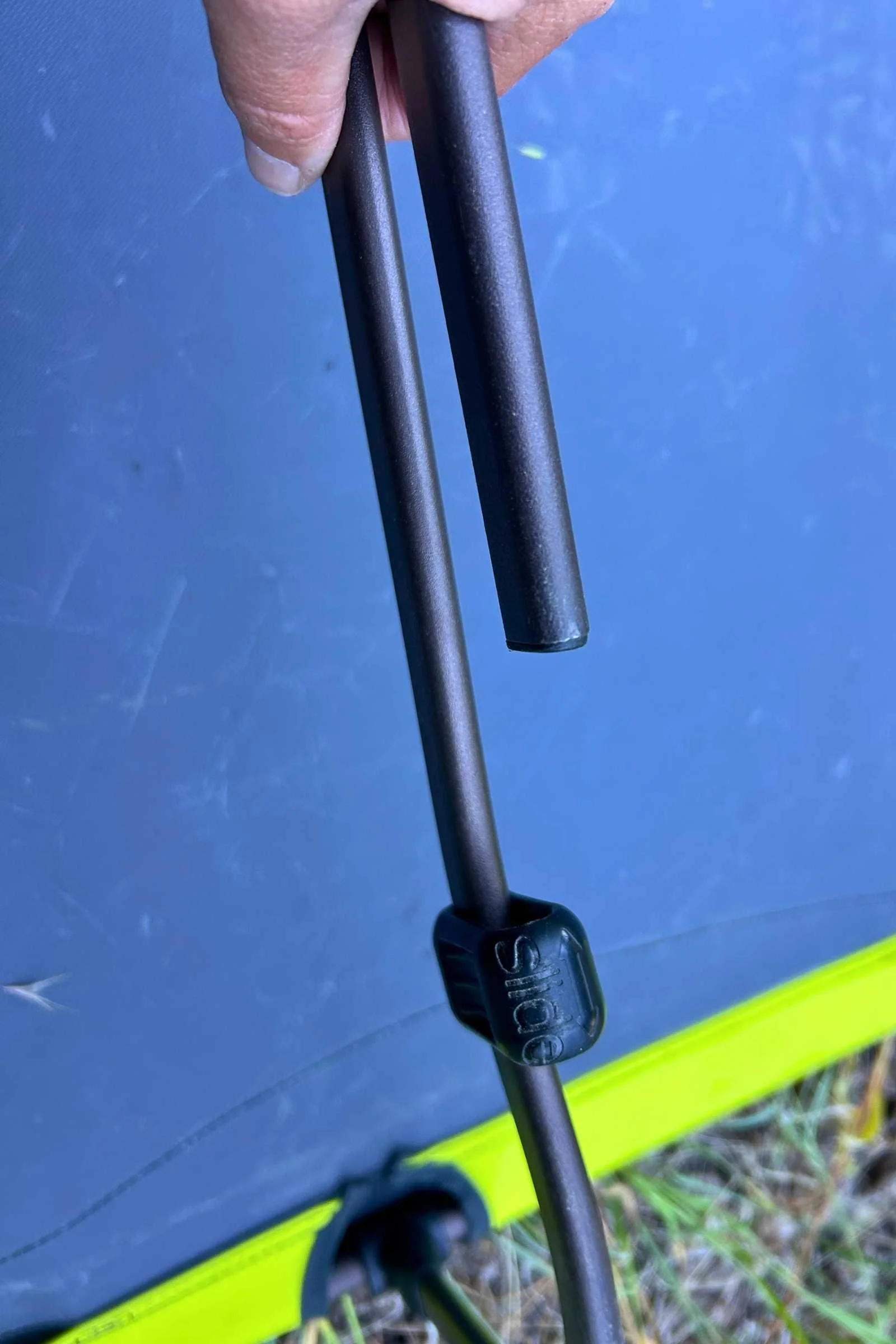
The Zempire W Leg Stretcher V2 has a different set-up system than other cots we tested. It has built-in leg-lock hooks that secure the stretcher in an open position. It's got a rust-resistant and weather-resistant frame that will last for many years.
Our only complaint with this cot is that the stitching on the double-stitched pole sleeves wasn't completely straight. We don't think this impacts its strength (this is a heavy-duty cot!), but it bothered us aesthetically. We think that given that this cot is cheaper than the other cots we tested (except the Coleman), it is a minimal price to pay for such a great value in a camping cot.
Zempire W Leg Stretcher V2




Other camping cots we tested
Coleman Trailhead II
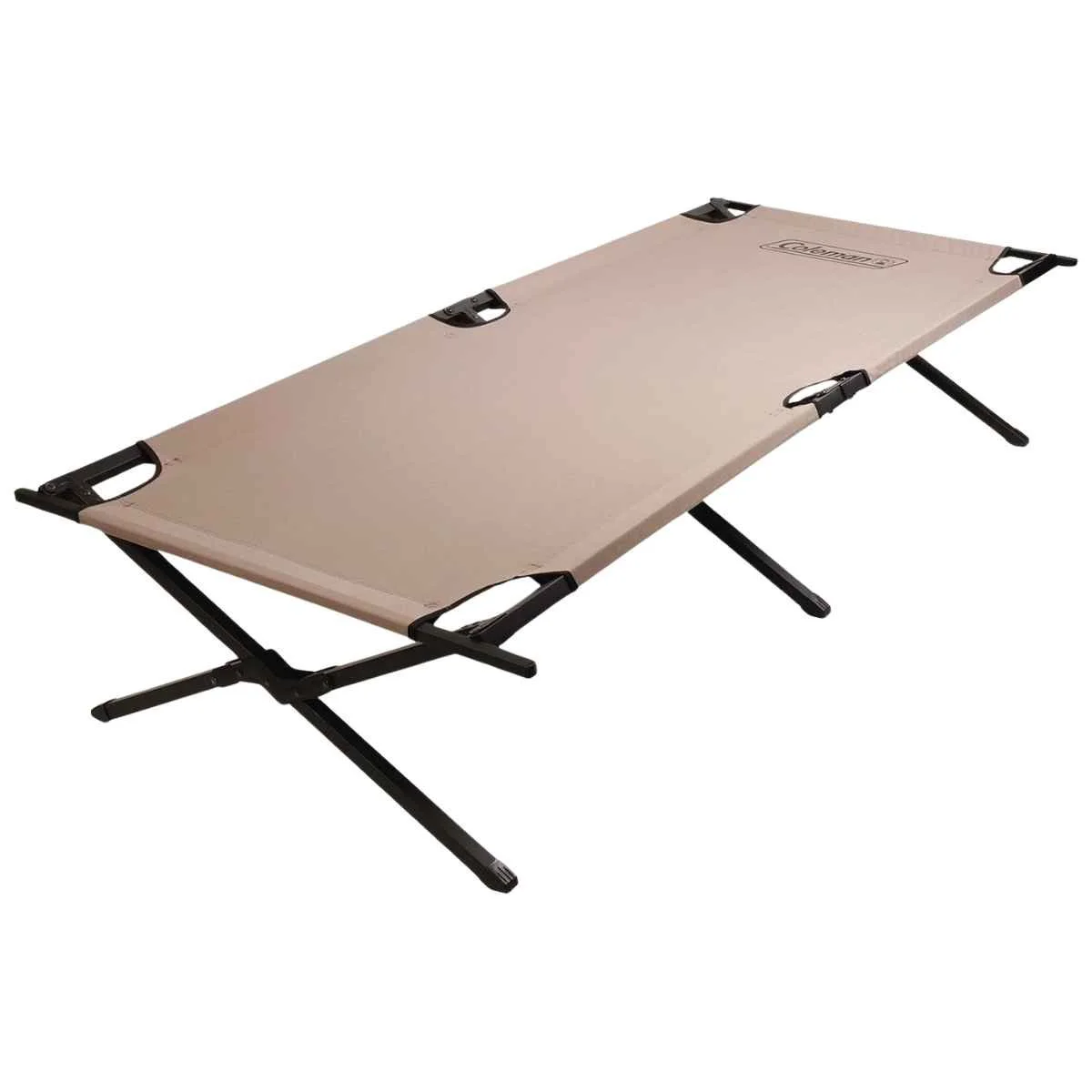
Best for: Car camping, sleepovers
Weight: 21.5 lbs
Weight limit: 300 lbs.
Height: 17 in.
Dimensions folded: 38.1 x 8.5 x 4.7 inches
Dimensions unfolded: 73 x 35 inches
What we liked: Value for the price, dimensions
What we didn’t like: Hard to get in the end struts/cross bars, heavy
There are no frills with the Coleman Trailhead II, but the price is right, and it's often on sale. The Trailhead II cot is easy to find at a big box store before a last-minute trip to the mountains.
While it won't be the fanciest, it's more reliable than similarly priced options. The folding setup isn't quite as intuitive or secure as the REI Campwell cot. It unfolds like the Campwell but still requires you to add the end strut/crossbar to secure the head of the frame, like in the Kelty Lowdown or Helinox. It took some muscle to get the second end strut into place, too.
Coleman Trailhead II
The Coleman Trailhead II has the widest dimensions of any cot we tested—a whopping 35 inches. This is great for bigger-bodied folks and campers who move around in the night. However, this also meant that we couldn't fit as many of these cots in a camping tent. A so-called 4-person tent can't really fit more than two of these comfortably if you want any room for your stuff. The 17-inch height on the Coleman Trailhead II is helpful for storing gear underneath, though.
The Coleman Trailhead II is one of the heavier cots we considered, which annoyed some testers but was fine for others. It comes with a convenient carry bag.
For a budget product, the Coleman Trailhead II still comes with a one-year warranty. All in all, with the Coleman Trailhead II cot, you get a similar product to the REI Campwell cot, just heavier and less refined. Depending on your individual tolerance for struggles with leverage during assembly and disassembly and for increased weight/bulkiness when bringing it to your campsite, the Trailhead II could serve you well.
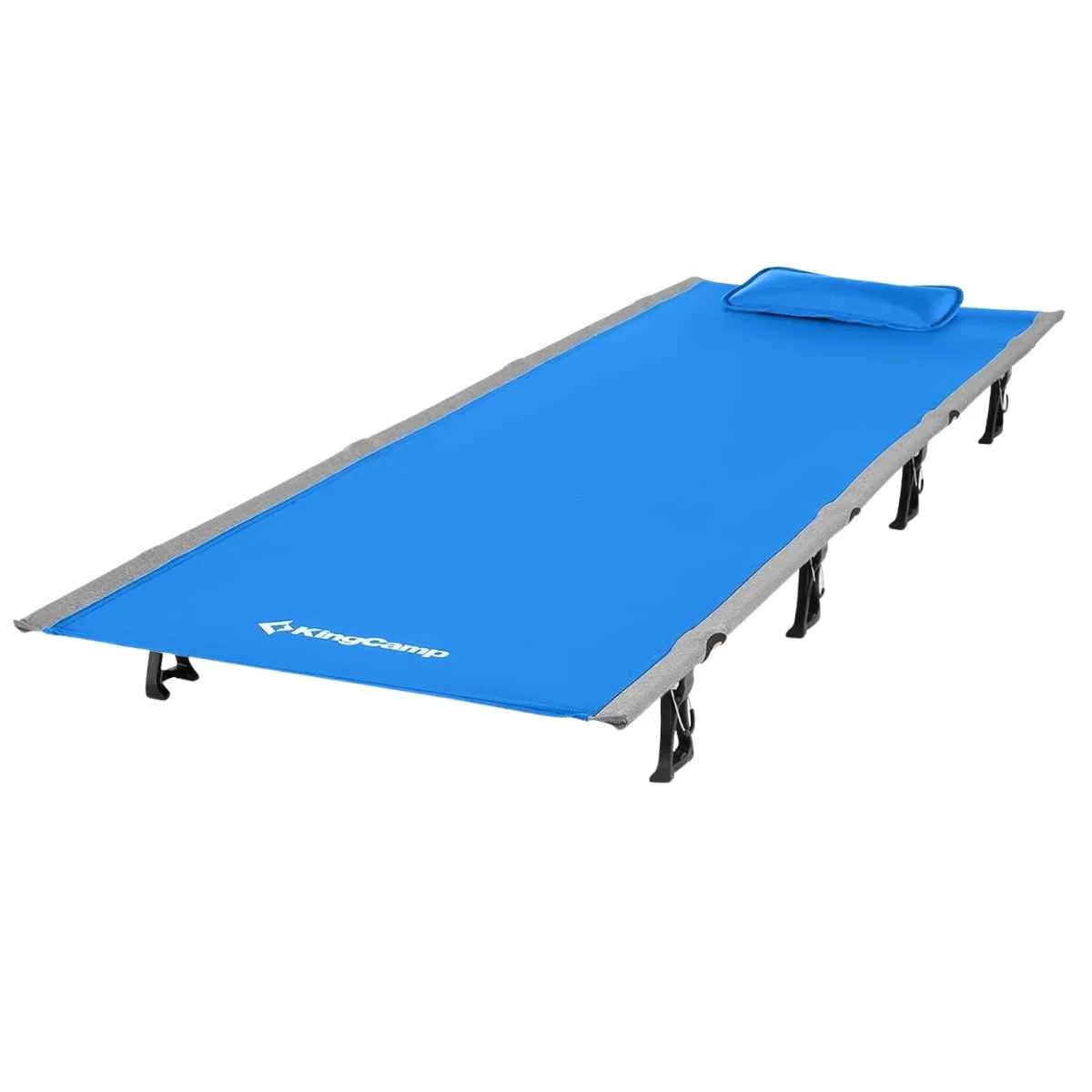
Best for: Car camping, backpacking
Weight: 4.9 lbs
Weight limit: 264.6 lbs
Height: 4.7 inches
Dimensions folded: 14 x 5.1 x 5.1 inches
Dimension unfolded: 75 x 25 inches
The KingCamp Ultralight Cot is an Amazon bestseller with a design similar to the Helinox Lite Cot, at a lower price. However, we think it is worth investing in the Helinox instead. The lever-locking mechanism on the KingCamp Ultralight looks similar to the Helinox, but required so much force to ratchet into place that we started breaking out the wrench. It took multiple campers and a lot of muscle to get the bars into place. To set it up, we eventually had to call over our friend from another tent (who does a lot of CrossFit) to help us out.
KingCamp Ultralight Cot

Best for: Guest bedroom, car camping
Weight: 20 lbs.
Weight limit: 300 lbs.
Height: 14 in.
Dimensions folded: 33 x 32 x 8.5 in.
Dimension unfolded: 82 x 31.5 in.
The REI Wonderland Comfort Cot was a strong contender for best camping cot with mattress. With built-in padding, this cot looks more like a recliner than the other cots we tested. We had no issue with the padding on this one.
The big issue with this cot is securing it in place. In our testing, it folded on itself. It also has the same annoying, unstable feet as the REI Campwell Cot. Because the body of this cot doesn't stay in place, the foot issue becomes nearly impossible to correct. This cot doesn't come with a carry case and takes up a bunch of space in the car or in the garage.
If you want padding, you're better off going with the most luxurious camping mattress you can find, like the Hest Dually, Exped MegaMat, or LuxeMat. While those mattresses will take up a fair amount of space in your vehicle or garage, they still take up less space than the Wonderland Comfort Cot and are much, much easier to set up.
REI Co-op Wonderland Comfort Cot
What to look for in a camping cot

Locking mechanisms, stability, and security
Find one that folds and locks easily. A big differentiator for me between so-so camp cots and the best camp cots is their folding and locking mechanisms. Some set up more easily than others. Some moving parts get stuck, and figuring out how to unstick them can be even more annoying if you're doing it at night while mosquitoes are buzzing by. Practice setting up at home with plenty of light–and make sure that it is locked and secured before sitting or lying on it!

Weight
We tested camping cots from 2.8 pounds to 21.5 pounds. How lightweight you want your cot to be depends on how you'll be using it. Will you be backpacking or using it at a walk-in campsite? You may want a lighter cot. Can you pull up right next to where you're setting up the cot? It may be worth going with something heavier.
Packability
We tested cots that take up more room than some outdoor furniture, all the way to cots will fit in lightweight backpacking backpacks. What sort of packability is suitable for you depends on where you'll be taking it, how you store it during the off-season, and what can fit in your vehicle.

Sleep area
When choosing a cot, get the dimensions right. Sure, you may be able to save a few bucks by going for a shorter or narrower camping cot, but if your feet are hanging off the end, you aren't going to get a great night's sleep. Similarly, make sure your cot is wide enough for the broadest part of your body–with several inches to share.
Make sure it will fit in your tent. Many so-called 4-person or 6-person tents actually can't fit 4 or 6 camping cots. Get out the tape measure to find the dimensions of your camping tent. Remember to add some buffer for personal space and for storing shoes, gear, etc.
Load capacity
Most of the cots we tested have a load capacity of 250 to 300 pounds. Remember that load capacity includes the weight of you plus your gear, including a sleeping bag and camp mattress (if you're using one).
Durability
We think a camping cot is a piece of gear that should last multiple generations of campers. We looked for durable materials and locking mechanisms made of metal that won't break or stick. We also considered the thickness of the material on the platform.
Sleeping height

We tested low cots and high cots. Generally, testers felt more comfortable sleeping lower to the ground, so they didn't worry about rolling off. However, when the whole family is sharing the tent, it can be nice to have high cots for the extra storage space underneath.
Comfort
Comfort is arguably the most important thing to consider when choosing a cot. All testers found camp cots more comfortable than the sleeping pads or camping mattresses we tested side by side. In fact, some testers found the cots to be more comfortable than real mattresses.
However, to get that comfort, campers had to feel stable and secure in the locking mechanisms on their cot. So while the comfort of our five winners was excellent and nearly indistinguishable among them, the comfort of the other cots we tested left something to be desired.
Support

Cots work by providing a taut but giving fabric suspended between a scaffolding of (usually) metal rods. The result is that the fabric supports the back as you sleep. None of the fabric cots we tested sank or sagged, unless there was a problem with securing the metal rods in place.
Setup and takedown
Some of the cots we tested took seconds to set up and take down. Others literally took an hour, plus the time it took driving the cot home (once fully assembled), where we worked on it with tools from the garage. We rated setup and takedown as among the most important features of a cot. If it was easy, intuitive, and could be done at the end of a tiring day of hiking, we considered it a win.
Camping cots vs. sleeping pads and mattresses

Sometimes you want to use camp cots and inflatable sleeping pads together.
Camping cots:
Pros:
Comfortable night of sleep
High-rise cots have storage underneath
No need to deflate from night to night like camping mattresses
Can be used with sleeping pads for more insulation
Cons:
Weight limits
Lacks insulation, so they are best suited for summer
Some models can be tippy or difficult to set up
Generally heavier and bulkier than sleeping pads
You can roll off
Sleeping pads:
Pros:
Lightweight and compact for backpacking
Takes up less space in a vehicle or backpack
Multiple sleeping pads can fit inside a camping tent better than cots or mattresses
Can be used with cots to add extra insulation
Cons:
Generally less comfortable than cots or camping mattresses
Generally narrower than cots or camping mattresses
Can easily slide off the sleeping pad due to the slippery surface fabric
Sometimes, sleeping pads can be loud (from the crinkling of the Mylar insulation inside)
See our top choices for Best sleeping pads.
Camping mattresses:
Pros:
Better insulation than cots, so they can be used in winter
Can be used with sheets from home, so it can feel more comfortable to some people
Generally have a bigger sleeping area than camping cots
No weight limits
Lower to the ground, so less likely to slip off or lose pillows, etc.
Stability or tippiness is not an issue
Cons:
Can be bulkier and heavier than sleeping pads or some cots
Inflation can take some time
See our choices for Best camping mattresses.
Camping cots care and maintenance tips

Cleaning fabrics
If you get dust, sand, or mud on the fabric of your camp cot, you can usually spot-clean with a damp cloth and maybe a bit of biodegradable soap. If it's a bigger area, you may want to consider handwashing the fabric.
Lubricating hinges and frame joints
Camp cot frames are designed to last a long time, but may require occasional lubrication of hinges with silicone-based lube.
Storage to avoid fabric sag
Camping cot fabric can stretch out over time, so it's essential to disassemble and put your cot away when you're not using it. It's okay to leave it up in your tent for multiple days or even weeks, but you shouldn't keep your cot assembled indefinitely. Give the fabric some time to rest and stretch back to its original shape, and store it out of sunlight in a cool place (heat can sometimes make fabrics stretchier).
Repairing tears and replacing hardware
It's rare, but if you notice any fraying or tears in the fabric of your camp cot, repair them with patches. If it starts to affect stability and safety, contact the manufacturer for additional parts, which they may often sell at a discount. If any hardware starts to get sticky or loose, you can also contact the manufacturer for a replacement part.
FAQ
-
To find the right weight capacity, multiply your body weight by 1.2 to build in a safety margin, then add the weight of your sleeping bag, pad, and any gear you keep on the cot overnight. Most camping cots are rated between 250 and 320 pounds. If you are close to a cot's rating limit, size up rather than relying on the maximum, since repeated stress at or near the limit accelerates wear on the frame and fabric.
-
Most camping cots handle mild unevenness reasonably well, but results vary significantly by design. Cots with adjustable feet, like the REI Campwell, are designed for uneven terrain, though the feet themselves can shift if the cot is not first secured flat. Low-profile cots with flexible frames, like the Helinox models, conform naturally to slight surface irregularities. On significantly uneven ground, clearing rocks and debris before setup makes a bigger difference than any adjustable foot system.
-
Camping cots provide less insulation than sleeping pads or camping mattresses because cold air circulates freely beneath them. The higher the cot, the more cold air accumulates below, and the colder you will sleep. If you are camping in cool conditions or run cold, placing an insulated sleeping pad on top of the cot adds meaningful warmth. R-value is the standard measure of insulation in sleeping pads, and a pad rated R-3 or higher will make a significant difference on a cot in temperatures below 50 degrees Fahrenheit.
-
Most camping cots are too heavy for backpacking, but a small category of ultralight cots is specifically designed for it. The Helinox Lite Cot at 2 lbs 13 oz is the clearest example, packing down to roughly the size of a sleeping pad and weighing less than many backpacking tents. The trade-off compared to a sleeping pad is the added setup time and a lower sleeping height. For backpackers who struggle to sleep on pads, the weight penalty of an ultralight cot is often worth it.
-
No. Camping cots are designed for a single occupant, and their weight limits reflect individual use. Even the widest cots we tested, like the Coleman Trailhead II at 35 inches, do not provide enough space for two adults to sleep comfortably. Exceeding the weight limit also increases the risk of frame failure, particularly at the hinge and locking points where stress is highest. For couples camping together, two separate cots is the practical solution.
-
Warmer and cooler at the same time, depending on the context. In summer heat, a cot is significantly cooler than sleeping on warm ground because air circulates underneath and around you. In cold weather, that same airflow becomes a liability, making a cot feel colder than a well-insulated sleeping pad directly on the ground. Season and temperature should guide the choice: cots excel in warm conditions, while ground-level sleeping systems with high R-value insulation outperform cots in the cold.
-
It depends on the dimensions of the tent and the cot. Most tents marketed as four-person or six-person cannot actually fit that many cots side by side once you account for the cot width, tent wall angles, and space for gear. A good practice is to measure your tent's interior floor dimensions and then calculate how many cots fit with a few inches of clearance on each side. Narrower cots like the Helinox models fit more easily in smaller tents, while wide cots like the Coleman Trailhead II, at 35 inches, will quickly fill the floor space of a standard family camping tent.
-
In warm weather, a sleeping pad on top of a cot is optional. Most cots provide enough support and comfort on their own during summer camping. In cooler conditions, a sleeping pad on the cot surface adds meaningful insulation and is worth carrying. A thin, closed-cell foam pad or a lightweight inflatable pad works well for this purpose without adding much bulk. Some campers also prefer the extra cushioning a pad provides, regardless of temperature, particularly side sleepers who want more surface conformity than a taut cot fabric offers.
How we researched and tested

We have been testing camping cots for the past two years in everything from sub-freezing temperatures to balmy summer days. We tested in campgrounds in Montana and outdoor festivals in Oregon. We tested on backpacking trips in the San Gabriel Mountains. We also tested cots side by side for more than a month at a summer camp in the Sierra Nevada mountains.
To find the best cots for most people, we gathered a dozen testers with different body shapes and sizes, ages, and metabolisms, ranging from self-described "hot sleepers" to "cold sleepers." We even tested with a few dogs to see how comfortable they found the cots.
We tested each cot with different brands and types of sleeping pads, sleeping bags, and even backpacking quilts. We also tested in camping tents and backpacking tents of different sizes.
To test how slippery cot fabric is, we tested cots with and without sleeping pads, depending on how much extra insulation we needed.
We tested cots while sleeping inside camping tents and directly under the stars.
We evaluated camp cots based on different needs, taking into account the tradeoffs between lightweight cots vs. comfort-focused options. Generally, across all the cots, we used the same criteria: comfort, ease of setup and disassembly, stability, frame security, and durability. At the end, we factored in any extra features and the overall price when it came to categories like the best budget option.
- Compared cots side by side
- Used them for up to a month at a time
- Tested inside tents and under the stars
- Set them up on flat and uneven ground
- Paired them with pads, bags, and quilts
- Sleeping comfort and support
- Setup and takedown
- Stability and locking security
- Fit for different body sizes
- Weight, packed size, and value
Why you should trust us / About the author

Liz Thomas is an award-winning Los Angeles-based writer and Editor-in-Chief of Treeline Review. A former Fastest Known Time (FKT) record holder on the Appalachian Trail, Liz came to Treeline Review from the New York Times/Wirecutter, the New York Times’ product review site, where she was a staff writer on the outdoor team.
Liz has talked gear on Good Morning America (TV), in The Wall Street Journal, The Guardian, BuzzFeed, Men’s Journal, Women’s Health, Gizmodo, and Outside.
To test the best camping cots, she and 16 other campers tested them side by side for two years, from Montana to the Sierra. Collectively, we've spent more than 60 nights sleeping on cots for this article.
You can read more about Liz at her Wikipedia page or on her website. See all her Treeline Review articles on her author page.