
REI Co-op Flash Shade Hoodie Review
REI Flash Shade Hoodie vs. Sahara Shade Hoodie: Which Sun Hoodie Should You Buy?
June 24th ,2026
Home → Gear Reviews → Sun Protection
Our Verdict
The REI Co-op Flash Shade Hoodie is a thin, extremely lightweight, quick-drying sun hoodie that is like the pro version of the beloved REI Co-op Sahara Shade.
The Flash Shade hoodie is a completely different fabric that feels thinner and has an impressively fast dry-time. The Sahara is great for everyday wear for sun protection and a softer next-to-skin layer, but the Flash Shade Hoodie is what you want if you're really getting after it and building up sweat.
REI Co-op Flash Shade Hoodie
I'm a Triple Crown thru-hiker who’s walked the entire distance of the Appalachian Trail, Pacific Crest Trail, and Continental Divide Trail and numerous other hundred- and thousand-mile length backpacking trails through hot, desert areas. I also live in sunny Southern California where a sun hoodie is my daily uniform. The Flash Shade Hoodie is what I'd choose for hot, sweaty, high-output days where I want minimal weight and fast dry-time.
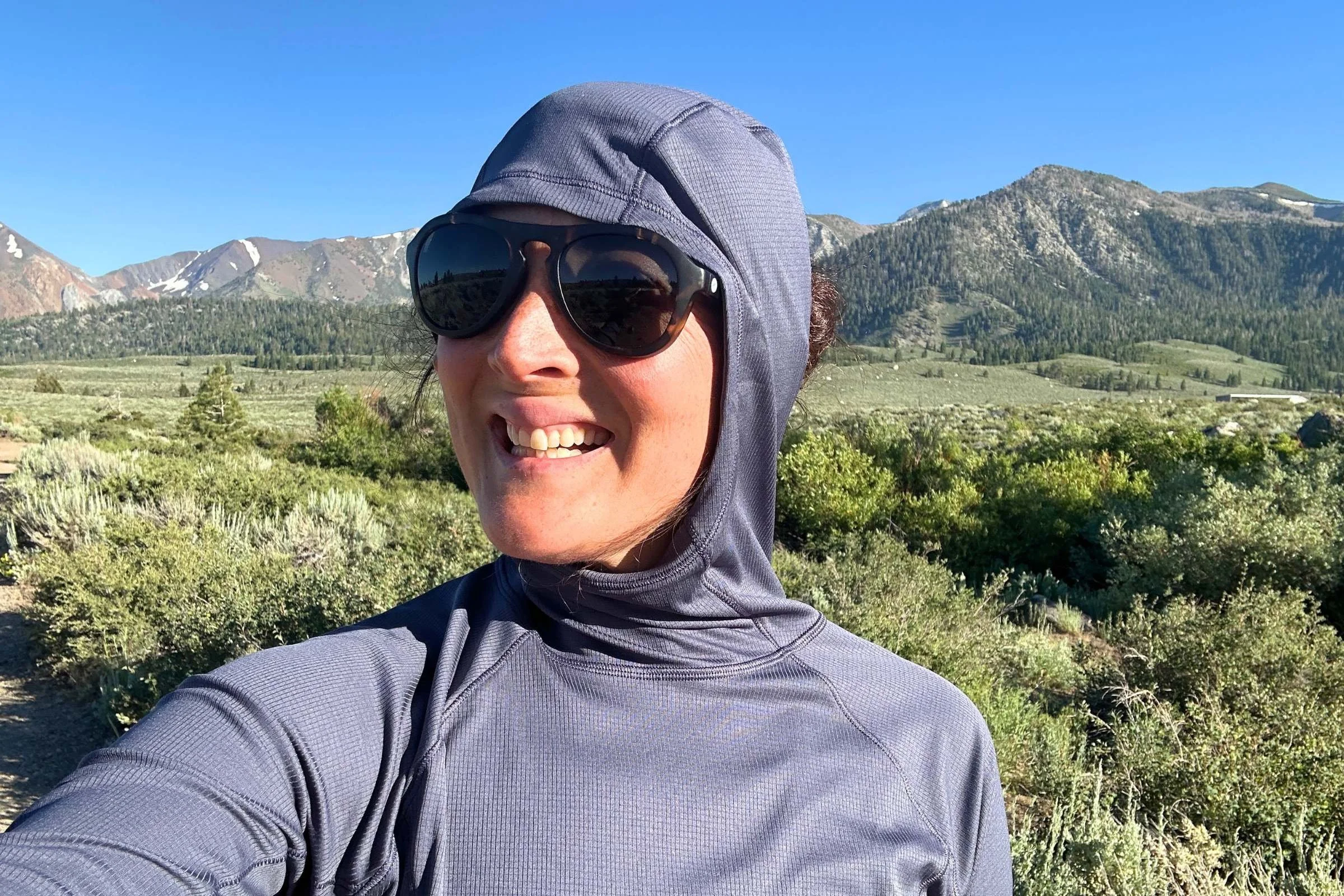
We tested the REI Co-op Flash Shade hoodie in the Eastern Sierra, wearing the shirt nearly daily for hiking, camping, road-tripping, kayaking, and volunteering on ecological restoration projects. Another Treeline Review writer also thru-hiked and backpacked in the hoodie and found it extremely breathable, especially compared to the Sahara hoodie.
The Flash Shade Hoodie is especially notable because it has some really cool sustainability firsts for a hoodie. It's made partially of yarn from LanzaTech, which captures carbon emissions from industrial sites and converts them into ethanol, which can be used to manufacture new materials like polyester. It is also made of material that meets bluesign® criteria by The Climate Label company.
The Flash and Sahara both earned spots in our guide to the best sun shirts. While the two are different, they are both sun shirts worth considering to protect yourself while enjoying a summer outdoors.
This story may contain affiliate links, which help fund our website. When you click on the links to purchase gear, we may get a commission. This allows us to create reader-supported, objective gear reviews, independently selected by our editors — without costing you an extra cent. Thank you for supporting our work and mission of outdoor coverage for every body! Learn more.
REI Flash Shade Hoodie Specs
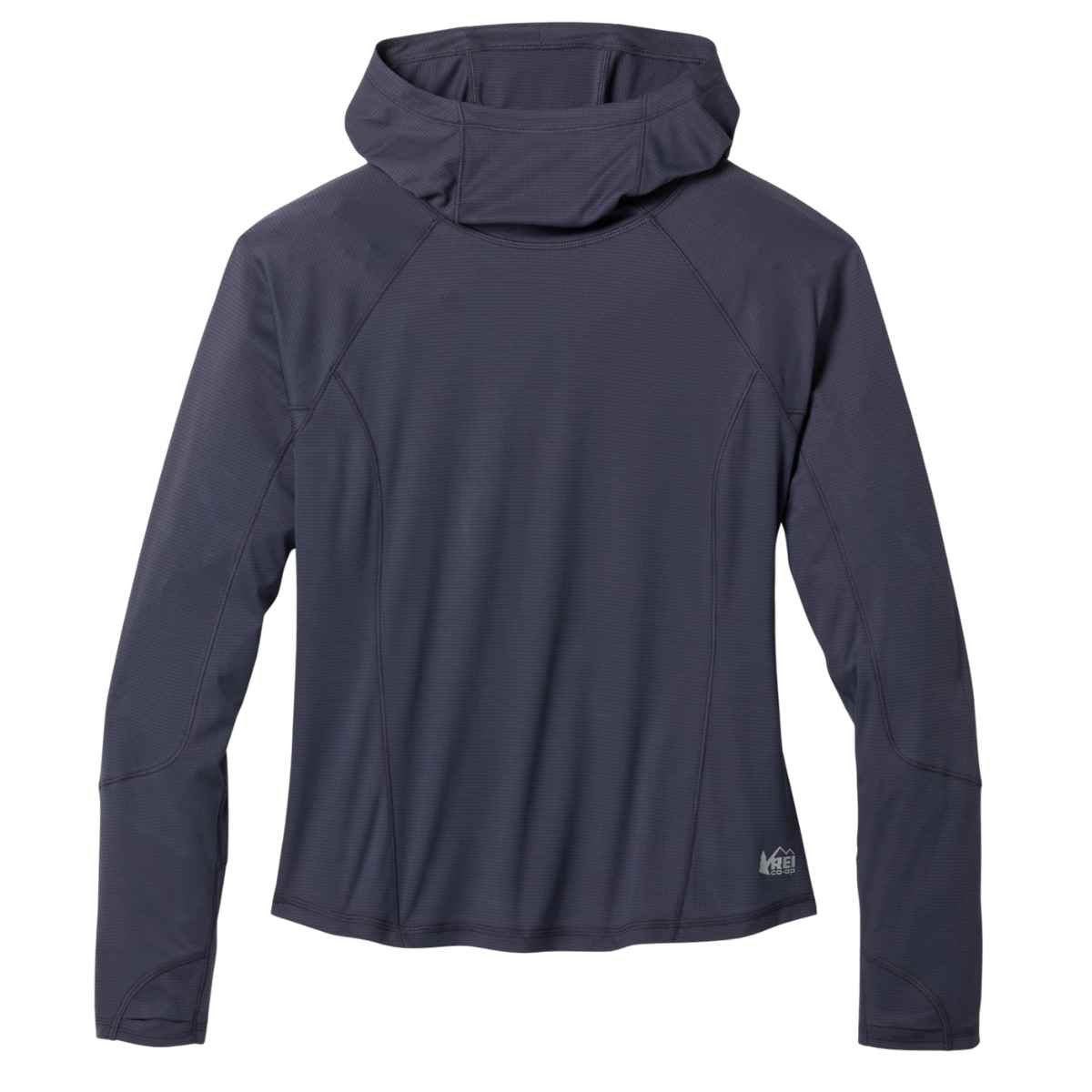
Price: $70
Fabric: Recycled polyester performance grid w/ LanzaTech carbon-capture yarn
Fabric Weight: 110 g/m2 (REI's lightest UPF hoodie)
UPF Rating: 50+
Hood: 3-panel scuba-style w/ rear vent/ponytail port
Fit: Athletic, runs short in torso
Thumbholes: Yes
Sustainability: Recycled polyester, LanzaTech yarn; REI’s Climate Label
Comparison table: Flash vs Sahara
| Spec | REI Co-op Flash Shade Hoodie Women's Men's |
REI Co-op Sahara Shade Hoodie Women's Men's |
| Price | $70 | $60 (frequently on sale, ~$35-42) |
| UPF rating | UPF 50+ (ShadeFactor 50+) | UPF 50+ (ShadeFactor 50+) |
| Fabric | Recycled polyester performance grid w/ LanzaTech carbon-capture yarn | 92% polyester / 8% spandex stretch knit |
| Fabric weight | 110 g/m2 (REI's lightest UPF hoodie) | 150 g/m2 |
Performance in the Field
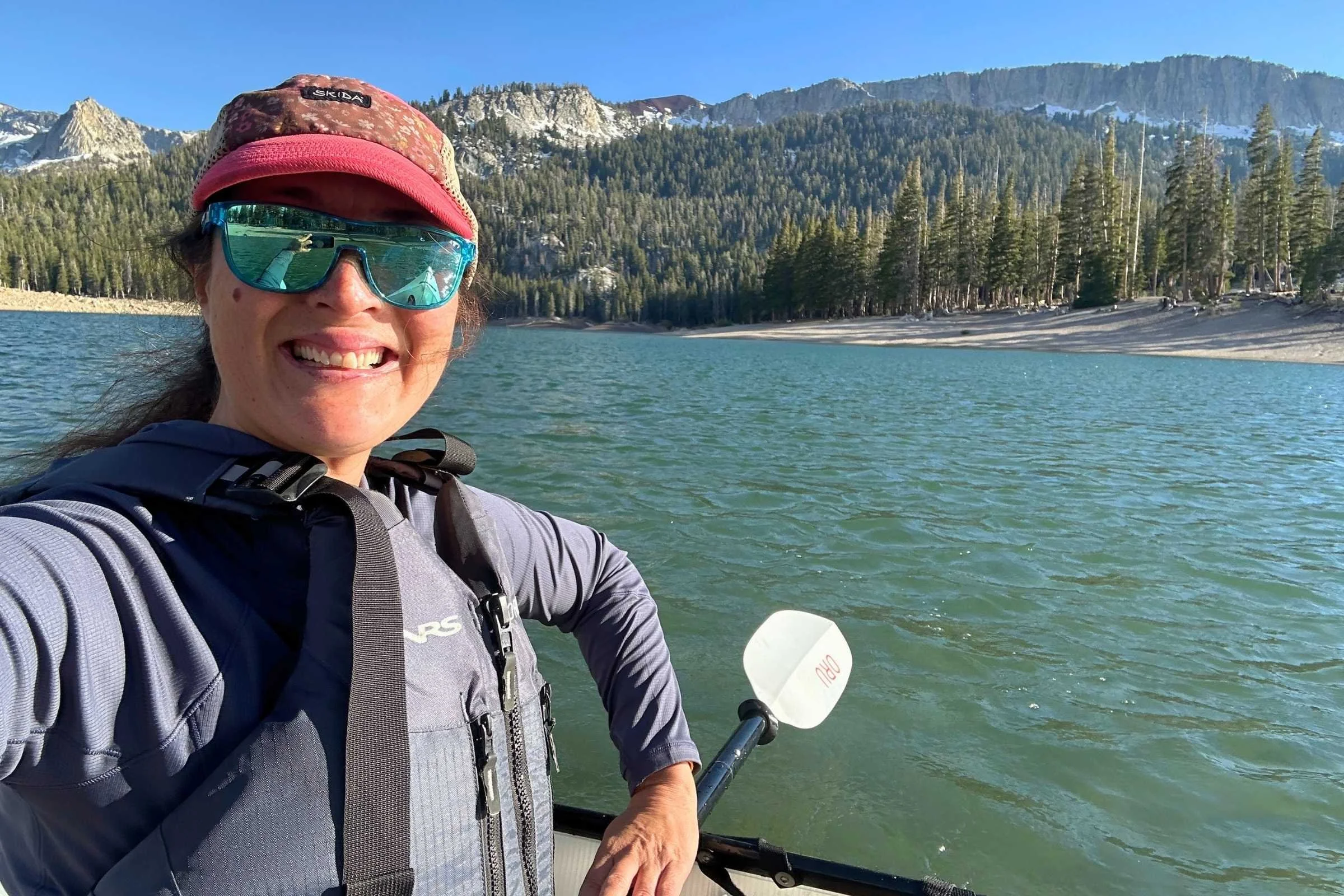
Testing the REI Flash Shade hoodie while kayaking on a high altitude lake in the Eastern Sierra.
Fabric and breathability
To get max sun protection, fabric has to be pretty tightly knit. Some other reviewers thought that meant this shirt isn't as breathable or as ventilated as other sun shirts. However, during testing, we didn't experience this sacrifice. One of our Treeline Review testers wore this shirt in Arizona and on a shorter thru-hike, and found the Flash Shade hoodie much more breathable than the Sahara hoodie. Our main tester also found the Shade hoodie more breathable than the Sahara due to its thinner fabric.
Fit and coverage
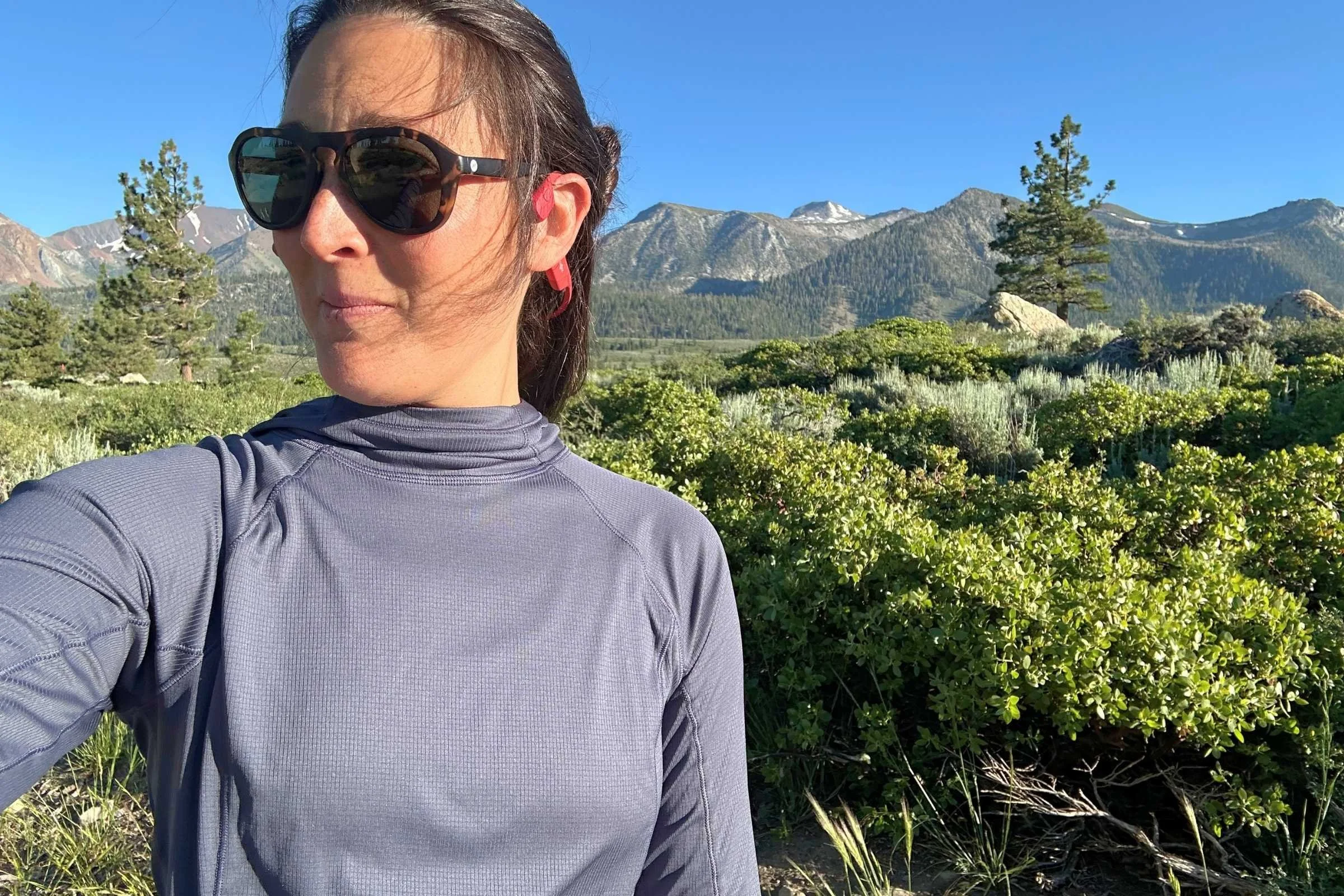
There is excellent neck coverage on the REI Flash Shade hoodie.
We found the 28" center-back length runs short with little to no droptail. This is a little annoying if you're the type of person who likes to tuck your shirt in or want pack-strap coverage at the lower back. Treeline Review’s women's testers flagged the short torso.
Sun Protection
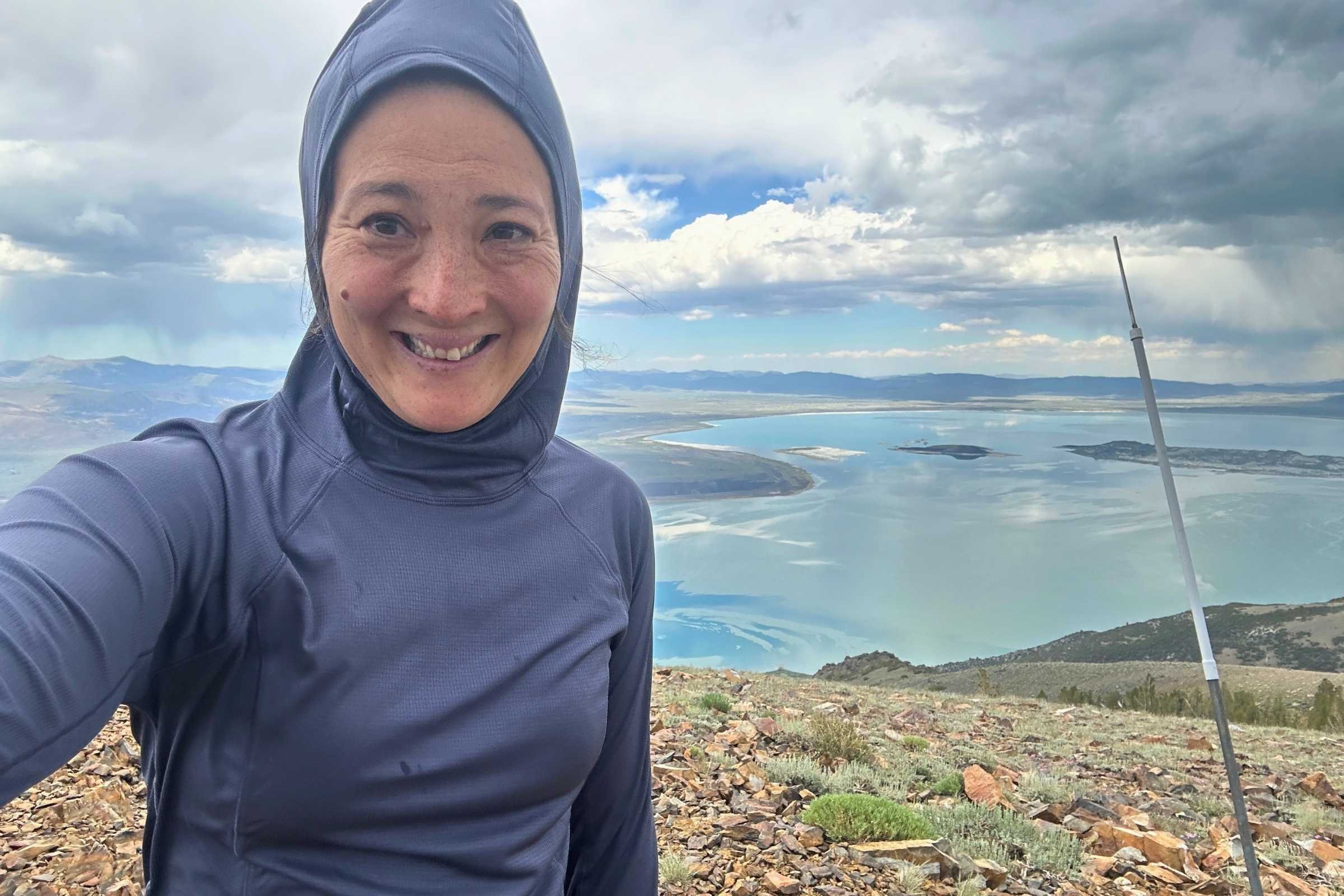
Hood coverage on the REI Flash Shade hoodie while at high altitude hike with little shade (the pointy look is because I had a pony tail and had yet to discover the pony tail hole in the back of the hood!)
REI says the material is "tested by an independent 3rd-party lab and found to provide UPF 50+ sun protection." We don't have a lab to test that claim, but we wore the Flash Shade hoodie in the alpine zone all day in full sun with UV Index ratings of 11-13 (Extreme) during mid day. We didn't wear sunscreen under the shirt, and didn't burn underneath. UPF 50 means Ultraviolet Protection Factor 50, where 1/50th (2%) of the sun's UV rays pass through the fabric, blocking 98% of both UVA and UVB rays.
Features
Ponytail port (both men's and women's)
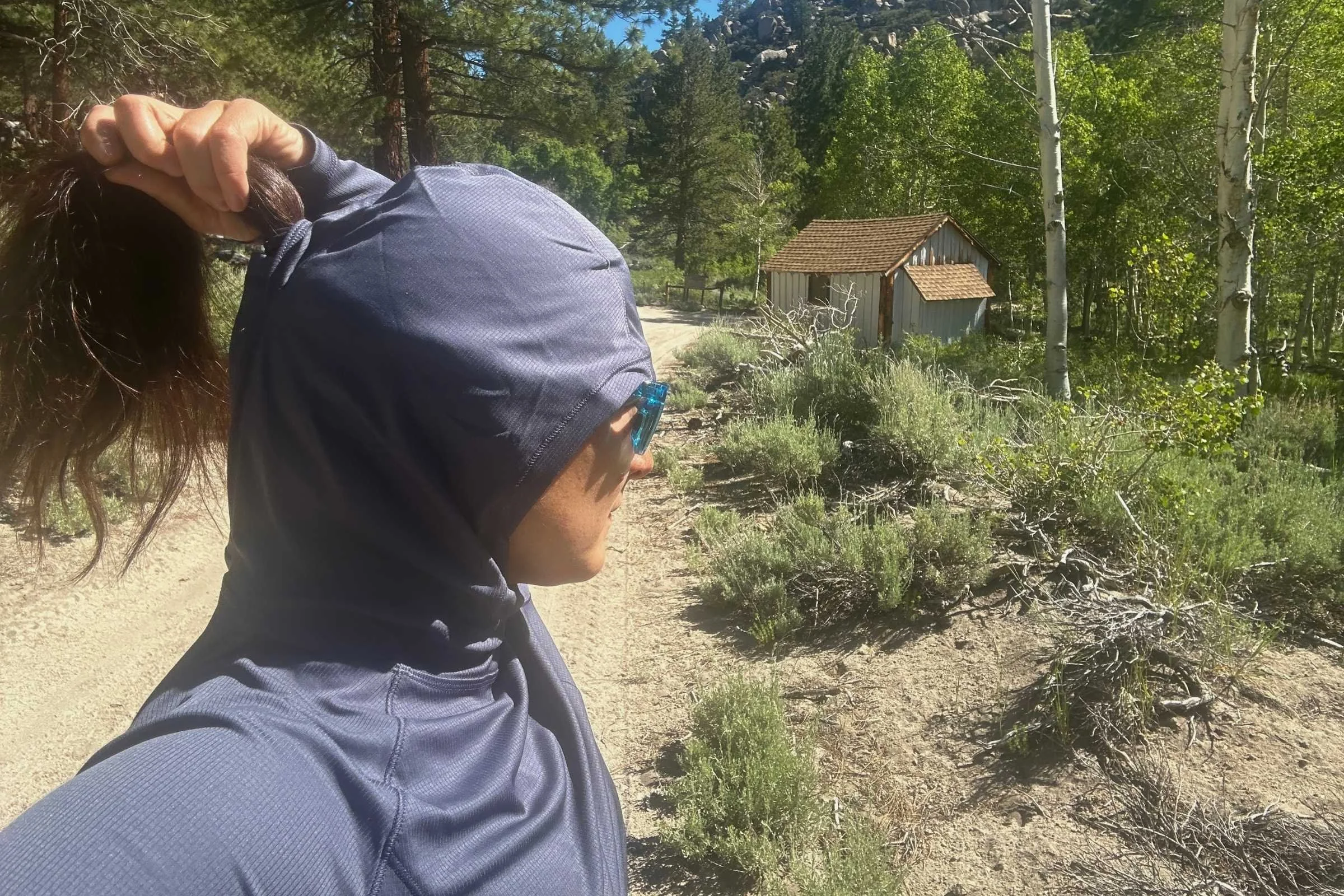
I was so happy to discover the pony tail hole on the REI Flash Shade hoodie.
One of my favorite features on the REI Co-op Flash Shade Hoodie is the ponytail port. Not enough sun hoodies have a ponytail hood, and for those of us with long hair, that can lead to a pointy-looking head and make it challenging to wear a hoodie with a hat.
Ergonomic thumbholes
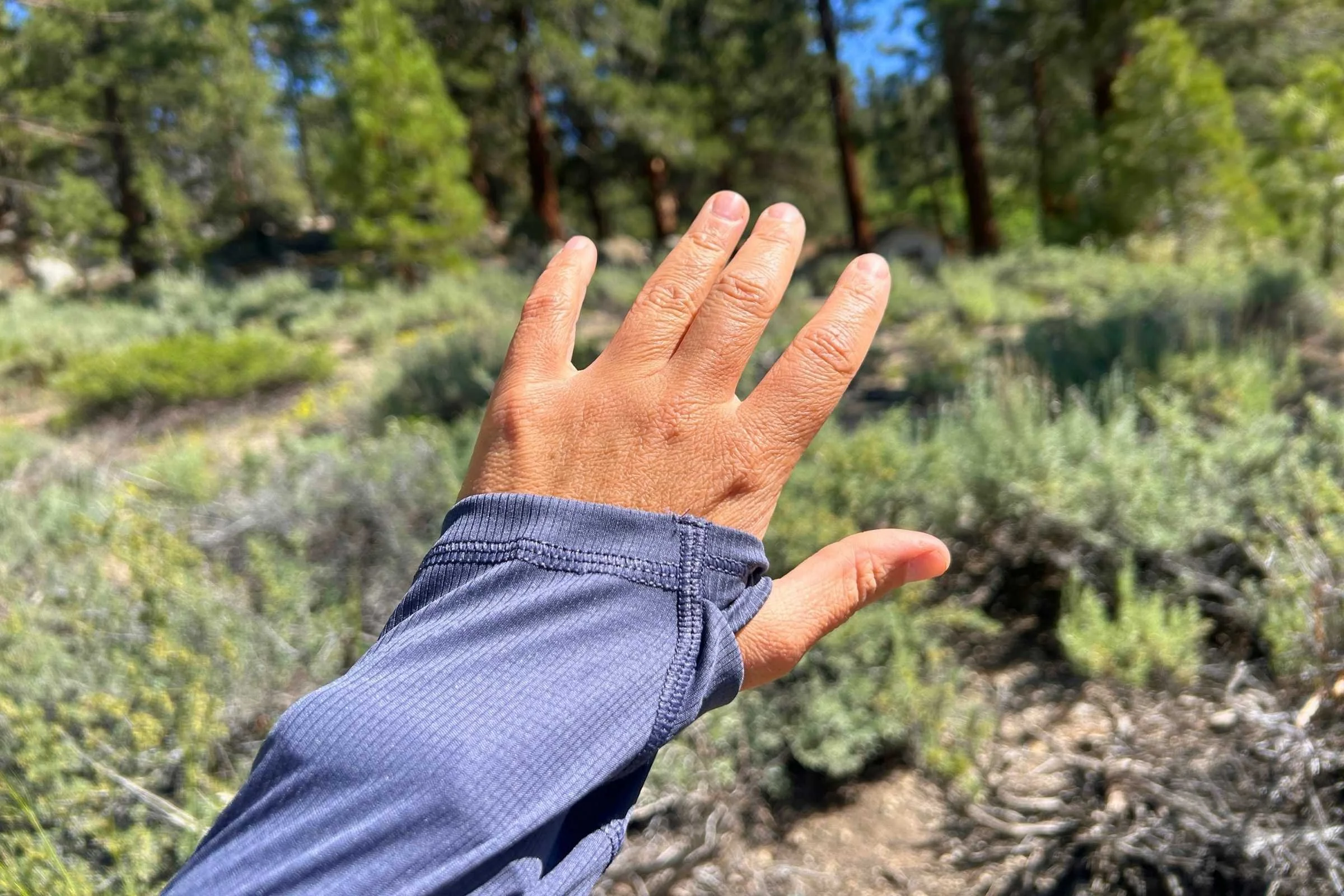
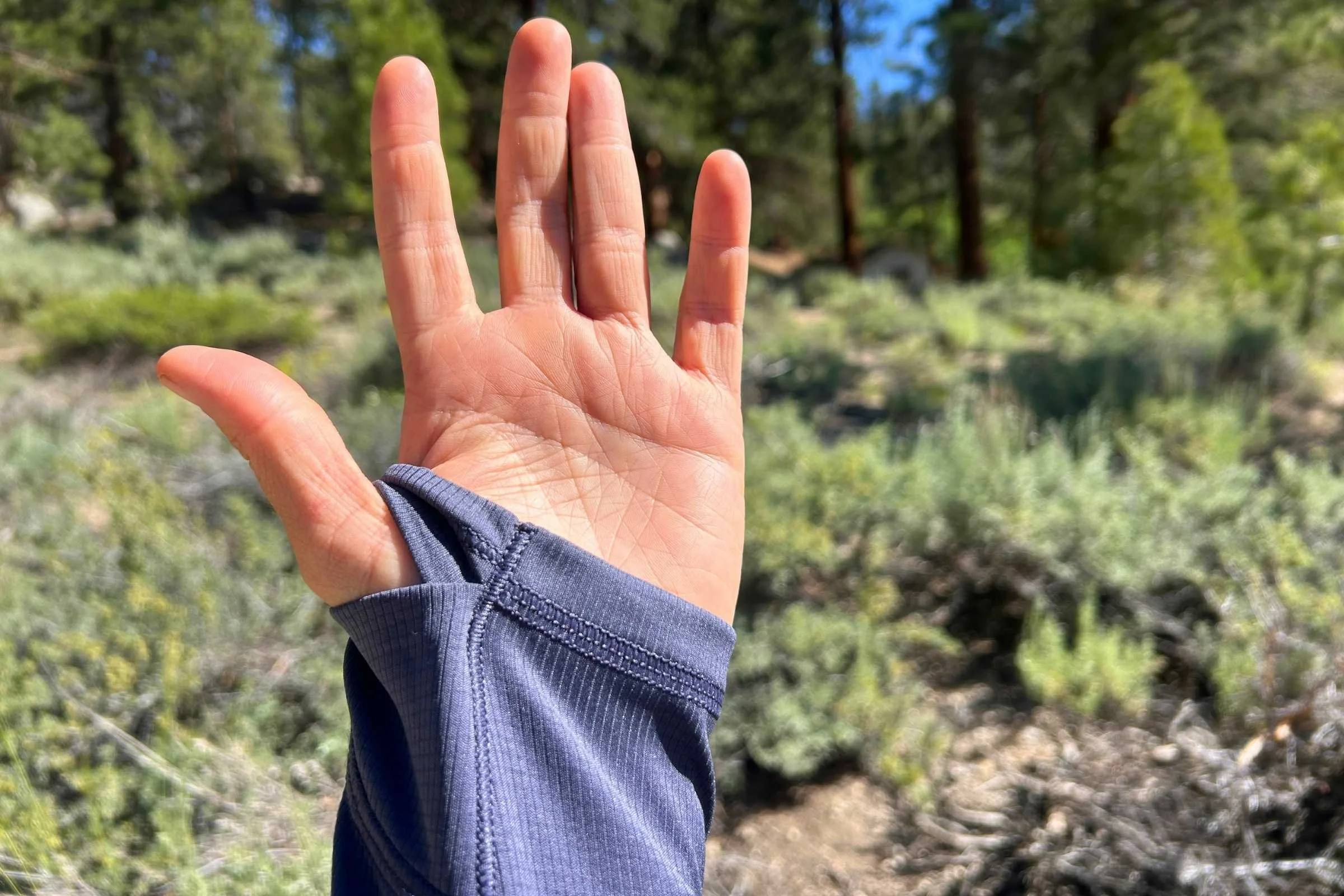
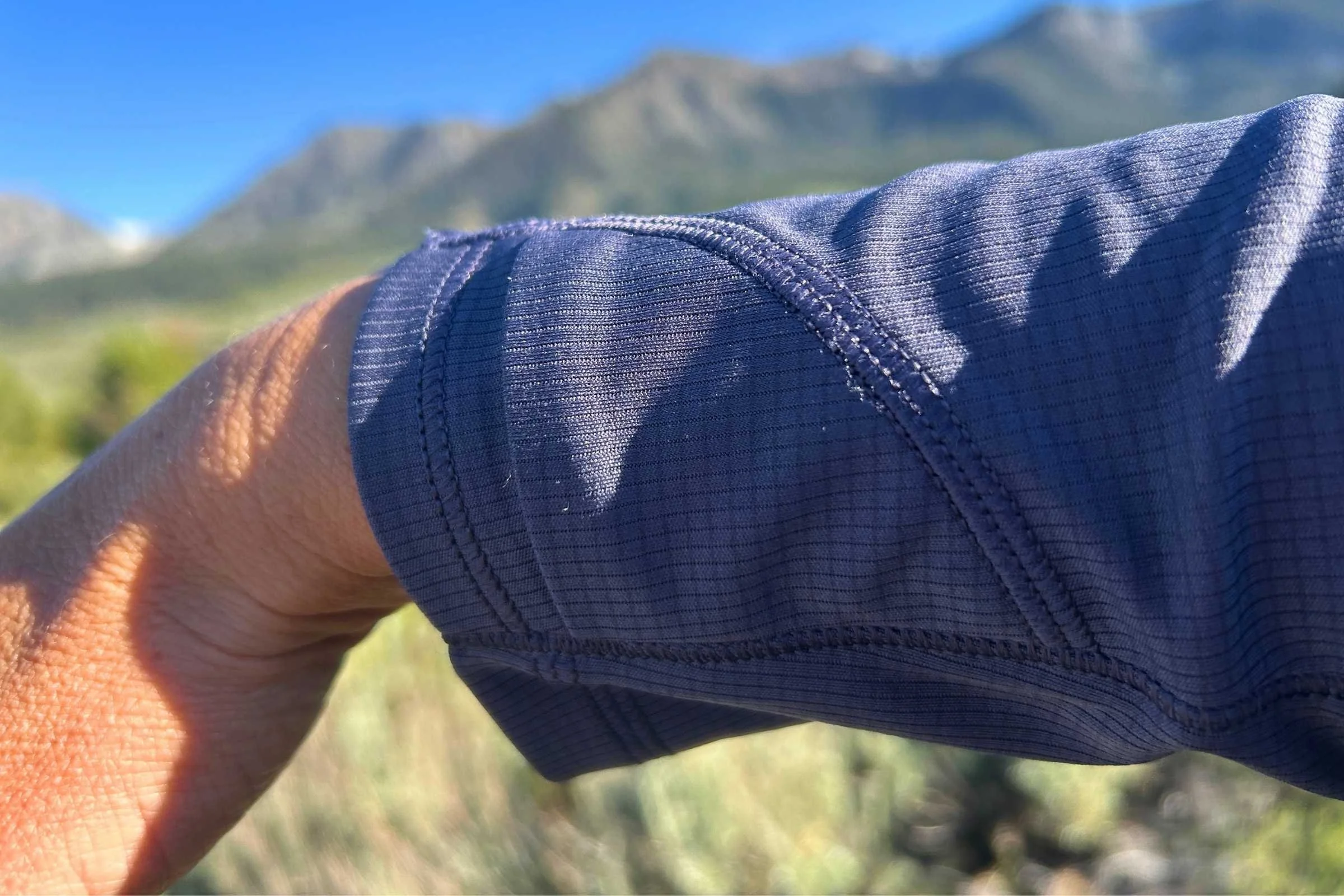
The thumbholes on the Flash Shade hoodie protect the top of your hands from UV rays, which is useful since the skin on the top of your hands tends to be thinner than on many other parts of your body.
Hood
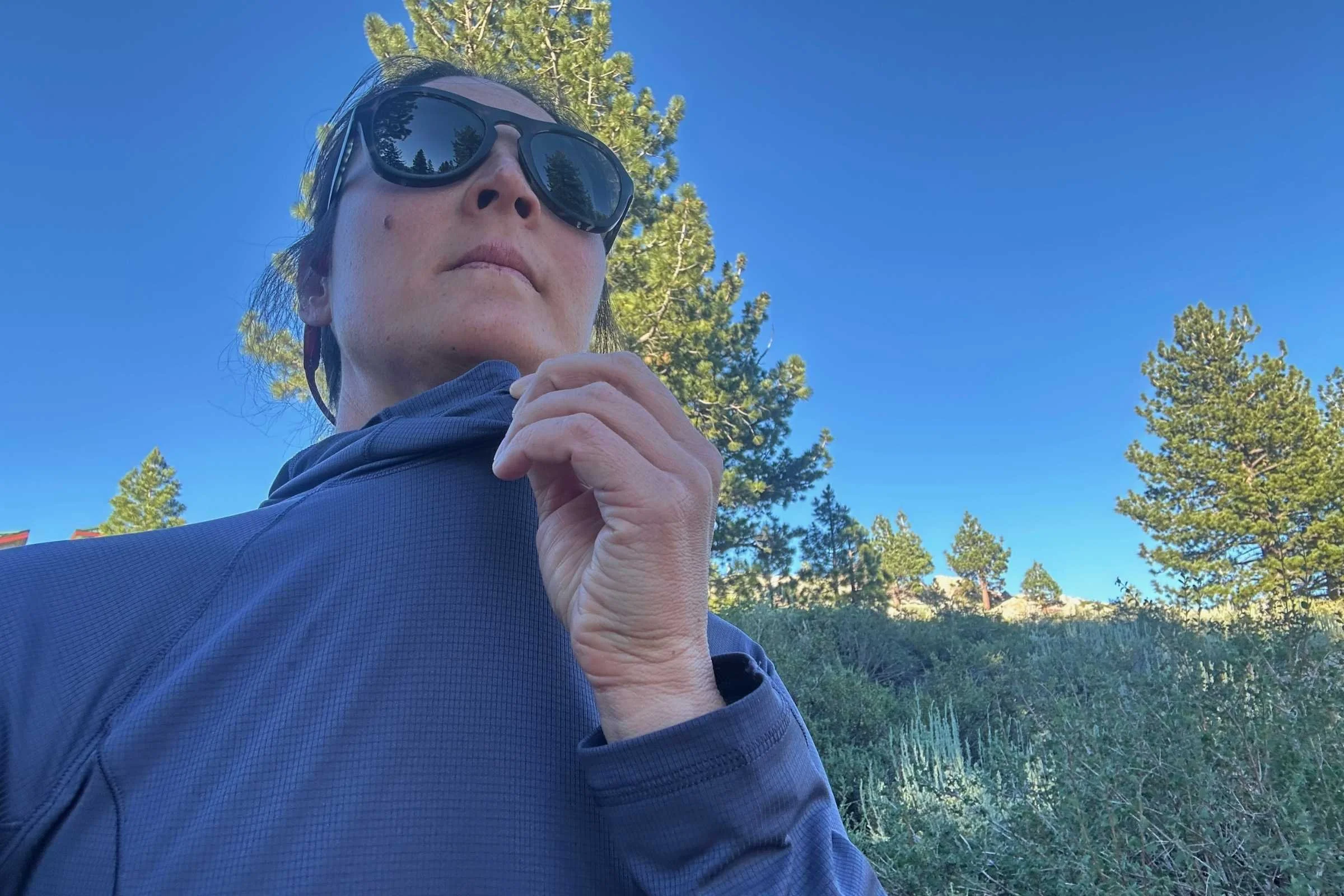
The 3-panel scuba head on the Flash Shade hoodie stays on your head better than a lot other sun hoodies but has a smaller face opening.
Compared to the REI Co-op Sahara Shade hoodie, the hood opening is small, and the stitching around it doesn't stretch, so it can drag hats or headbands when pulling it on. However, the smaller hood makes it more secure in the wind.
Sustainability
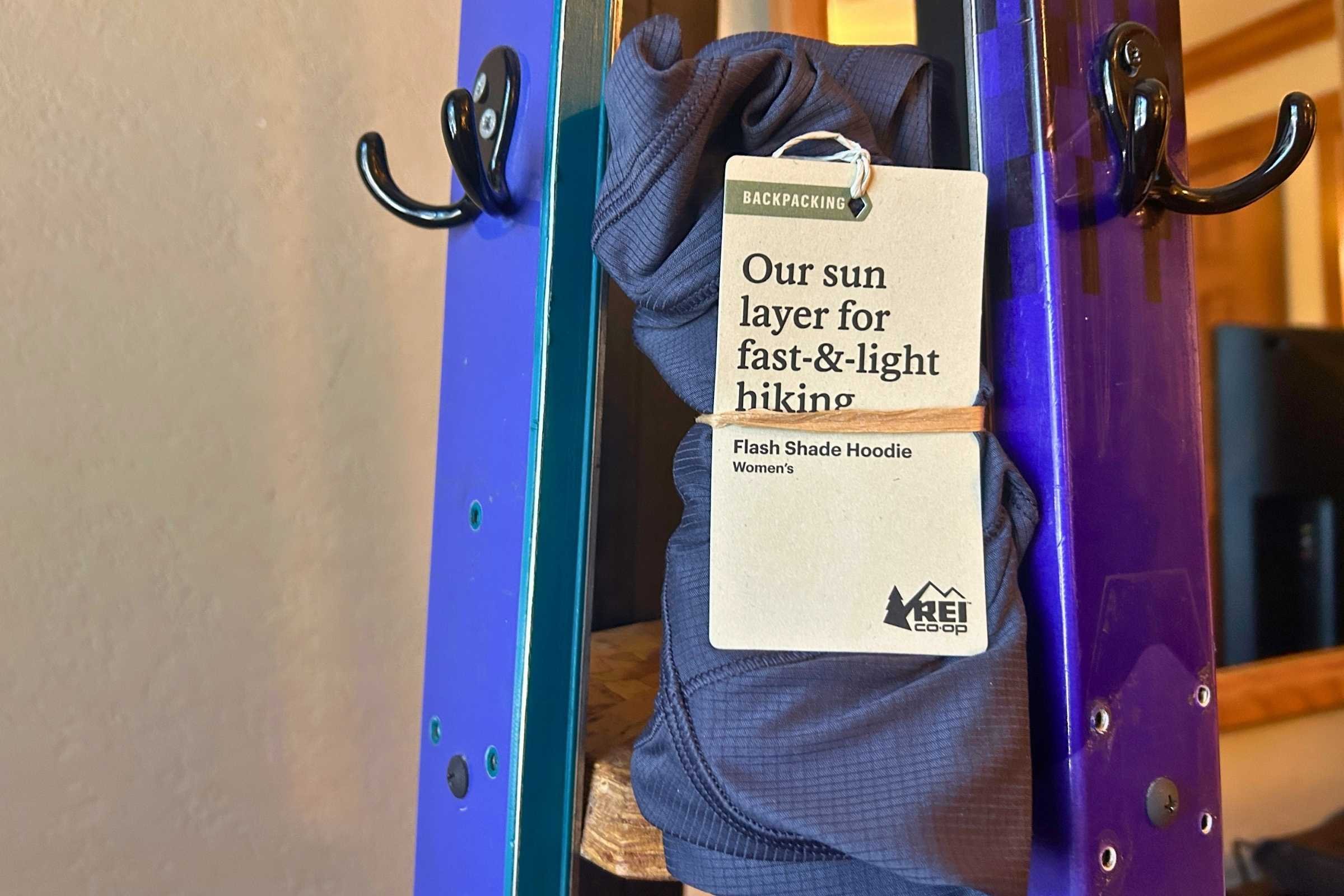
The REI Flash Shade hoodie has minimal packaging that has no plastic.
The Flash Shade Hoodie is especially notable for its really cool sustainability firsts for a hoodie. It's made partially of yarn from LanzaTech, which captures carbon emissions from industrial sites and converts them into ethanol, which can be used to manufacture new materials like polyester. It is also made from material that meets bluesign® criteria, as certified by The Climate Label company.
REI Flash Shade Hoodie vs. Sahara Shade Hoodie — what's the difference?
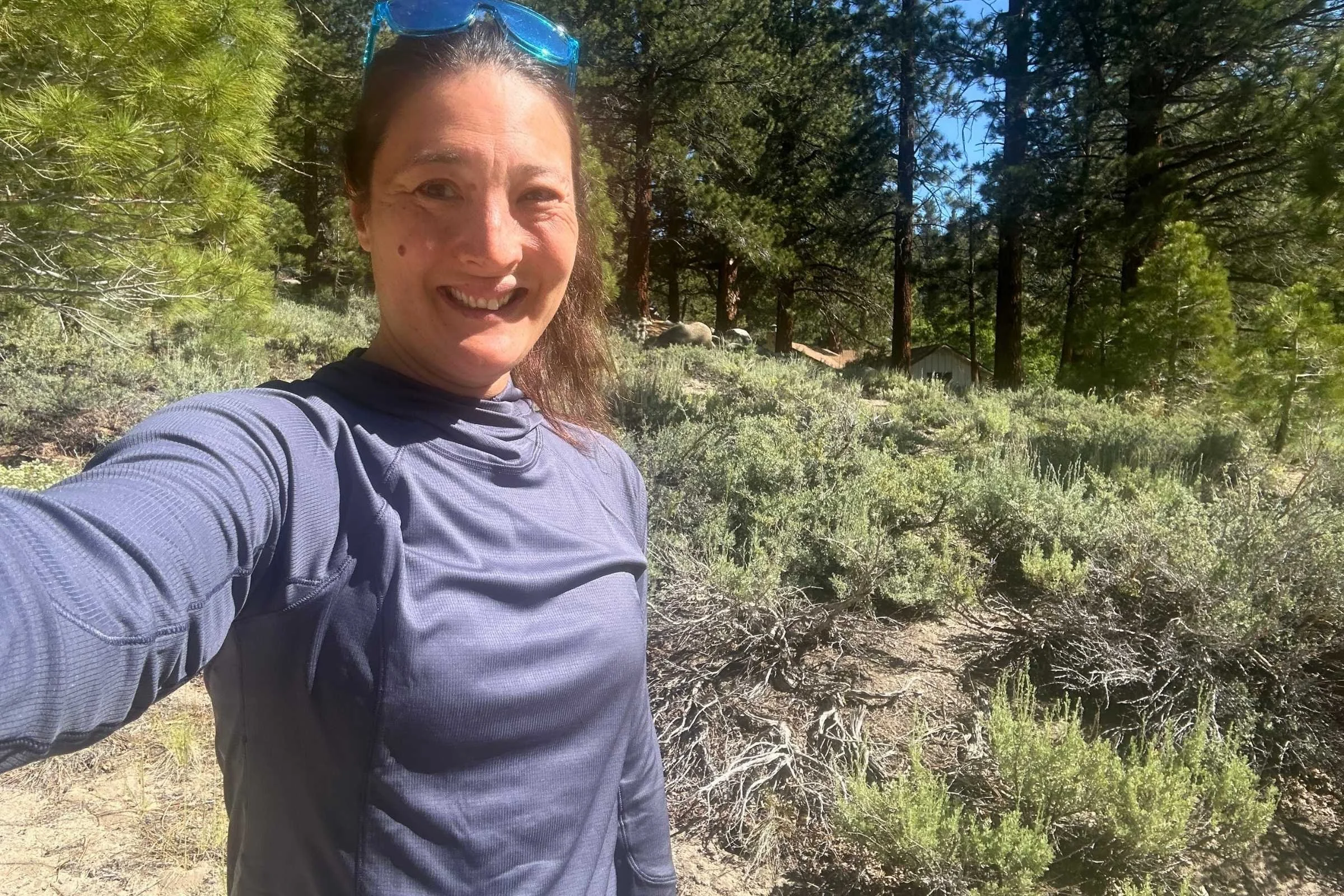
The Flash Shade hoodie is made of a thinner and lighter grid material than many other sun hoodies.
Fabric and feel
The fabric is the main difference between the REI Co-op Sahara Shade and the Flash Shade hoodie. The Sahara is the soft, highly stretchy ShadeFactor 50+ fabric that feels more like a cotton shirt. The sun shirt is made of recycled polyester and a yarn that uses LanzaTech carbon-capture technology (more on how awesome this technology is below). The Flash looks and feels like a technical fabric in the way that you put it on, and you look and feel like you're going to do something badass. The Flash hoodie also feels and looks a little like the material on the Outdoor Vitals Altitude sun hoodie, which is also a lightweight and thin microgrid material. With both materials, we would recommend staying clear of bushwhacking and not washing it with Velcro, as thinner material is susceptible to pilling in those conditions.
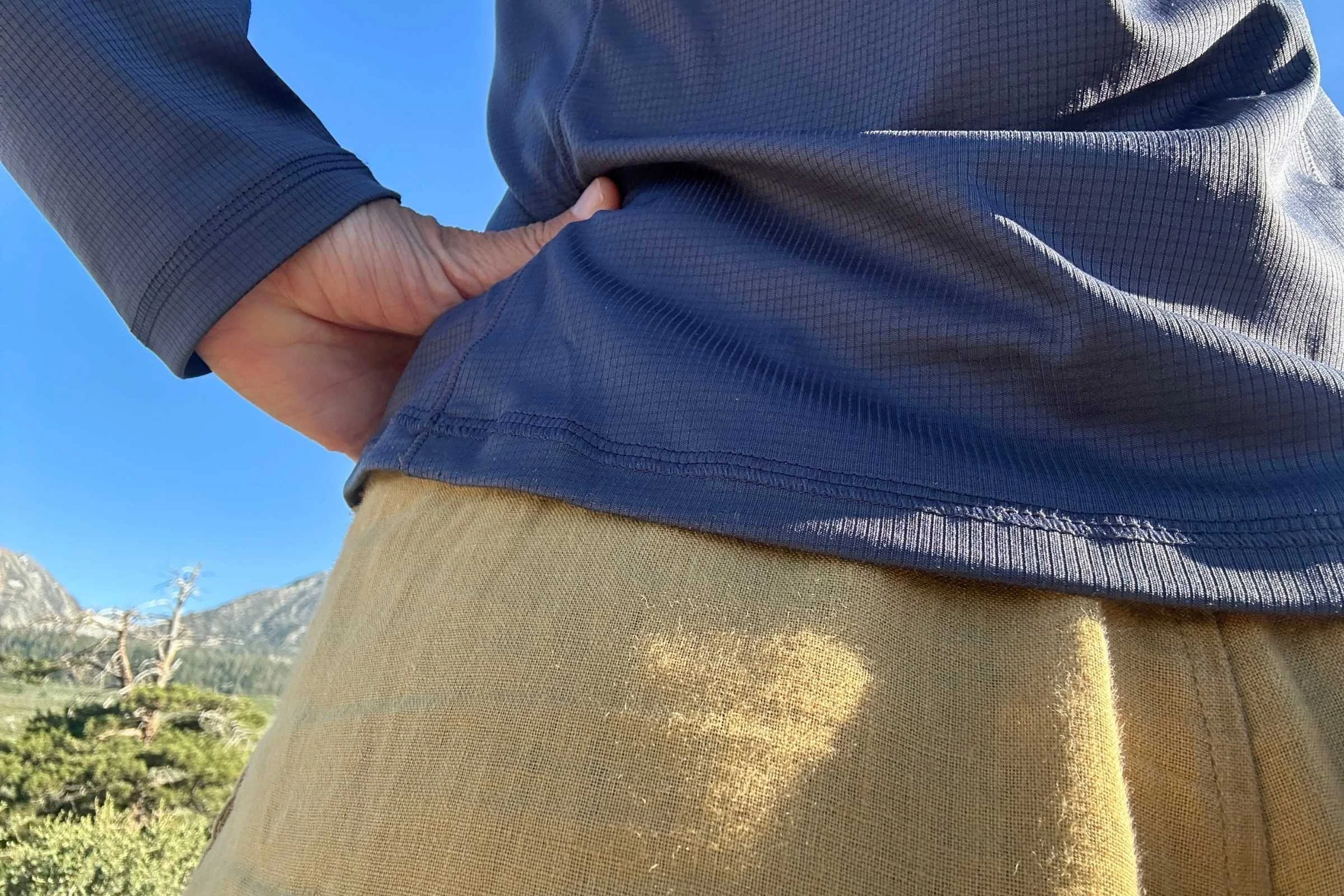
Close-up on the microgrid material on the REI Flash Shade Hoodie.
The Flash's fabric is a lighter grid weave than the Sahara, and we found that it wicks and dries faster. Treeline Review writer and tester Melissa Spencer, who backpacked in the shirt in the desert, found it more breathable than the Sahara, though that may be because it is so much thinner.
Odor
Synthetic shirts typically hold onto odor more than wool sun shirts. For testing (and also because we are lazy), we wore the shirt three days straight before washing, multiple times. During those days, we hiked, road-tripped, kayaked, and camped. We conducted regular sniff tests throughout the testing period and after each laundry cycle. The Flash is not treated with anti-odor chemicals.
Fit, length, and style
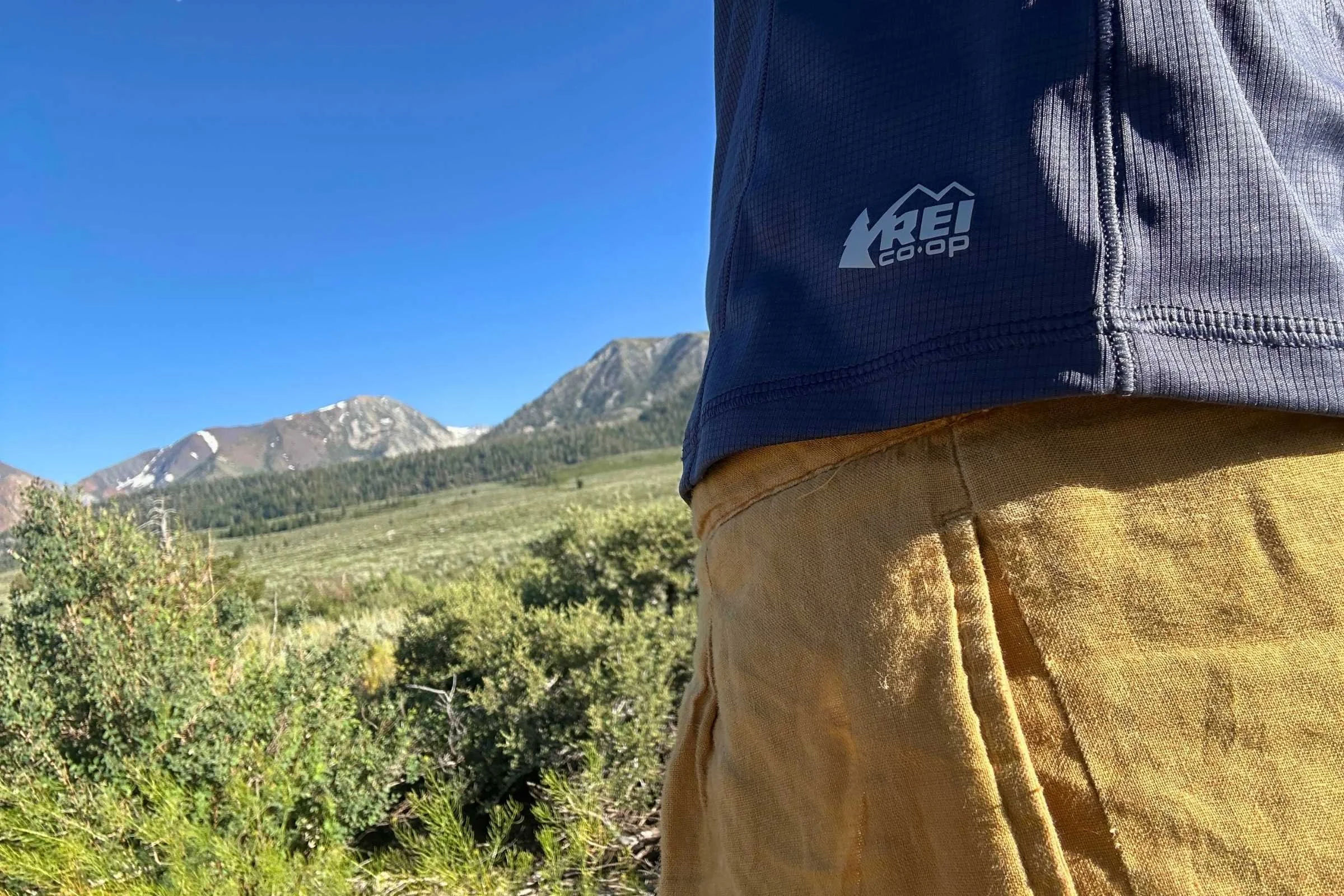
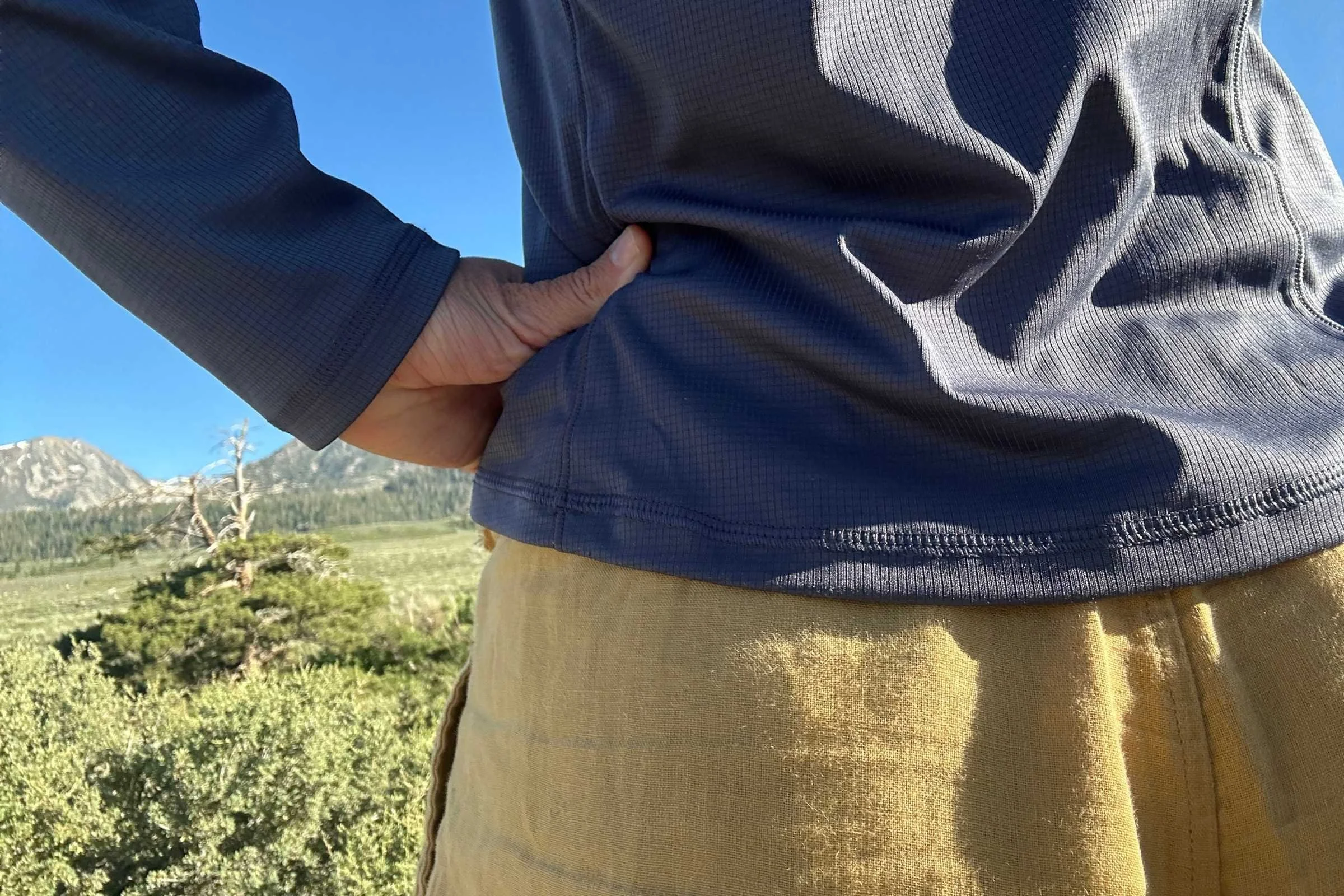
Not gonna lie, I like the fit on the Sahara Shade better. The REI Flash Hoodie looks and fits as if you are a technical badass, and that isn't always how I want to look. In contrast, the Sahara is more relaxed, with a 27.5" back on size M. On the Sahara, the women's is longer in the front, and it has a drop tail in the back that is a bit exaggerated but looks cute.
The Flash Shade's cut looks more like a traditional men's cut with a consistent length in the front and back. I found the back in particular to be shorter, which was an issue when bending over to tie a shoe. I'm on the cusp of S and M and wish I had sized up on the Flash Shade. It's definitely a more athletic cut, like a base layer instead of a flowy sun shirt.
Colors and sizing
The Sahara has tons of colors and sizes. The Flash has three colors. The Sahara has lots of options in sizes up to 3X, whereas the Flash seems more limited in plus sizing and big and tall sizing.
Price and value
The big question: is the ~$10 premium for the Flash Shade worth it?
Comparing the Sahara Shade hoodie and the Flash hoodie is like comparing oranges and apples to me. Yes, they are both REI long-sleeve shirts with sun protection. But the Flash hoodie is very technical-looking and feeling (plus it has that cutting-edge LanzaTech yarn). For many people, that isn't necessary when you just want everyday sun protection. If you're thru-hiking, summiting peaks, or climbing, that technical material is worth it. For half-day hikes that end at a brewery or brunch, I'd go with the Sahara.

The Flash Shade hoodie is great for moving fast and generating heat.
Who should buy the REI Flash—and who should stick with the REI Sahara?
As mentioned above, I'd recommend the REI Flash hoodie to move fast and sweat hard, whether thru-hiking, climbing, or summiting peaks. I'd get the Sahara to stay comfortable in less sunny conditions and spend less.
Both shirts hit UPF 50+ and now sit side by side in REI's lineup, so this isn't about which is "better." As with most gear choices, it really comes down to how you'll actually use it. After wearing both, here's what I would recommend:
Buy the Flash if you run hot, work hard, or are some place hot. The Flash is the one I'd grab for on sweaty, high-output days or just plain hot days with little shade. That includes hot, fast, or steep trips. It is so much better than the Sahara at soaking up sweat and drying very quickly.
At 110 g/m², it's the lightest UPF hoodie REI makes, noticeably thinner than the Sahara's 150 g/m² polyester. The performance grid fabric they use is quite impressive at wicking and drying quickly. The ponytail port is clutch, too. The Flash has a trimmer fit that is a more athletic cut. Frankly, the Flash is more of a technical piece rather than a lifestyle layer. The torso runs short (keeping the weight of this garment to a minimalist 5.3 oz for a women's M), so it suits shorter-waisted hikers and anyone who isn't tucking in. If that's you, it’s well worth it.
REI Co-op Flash Shade Hoodie
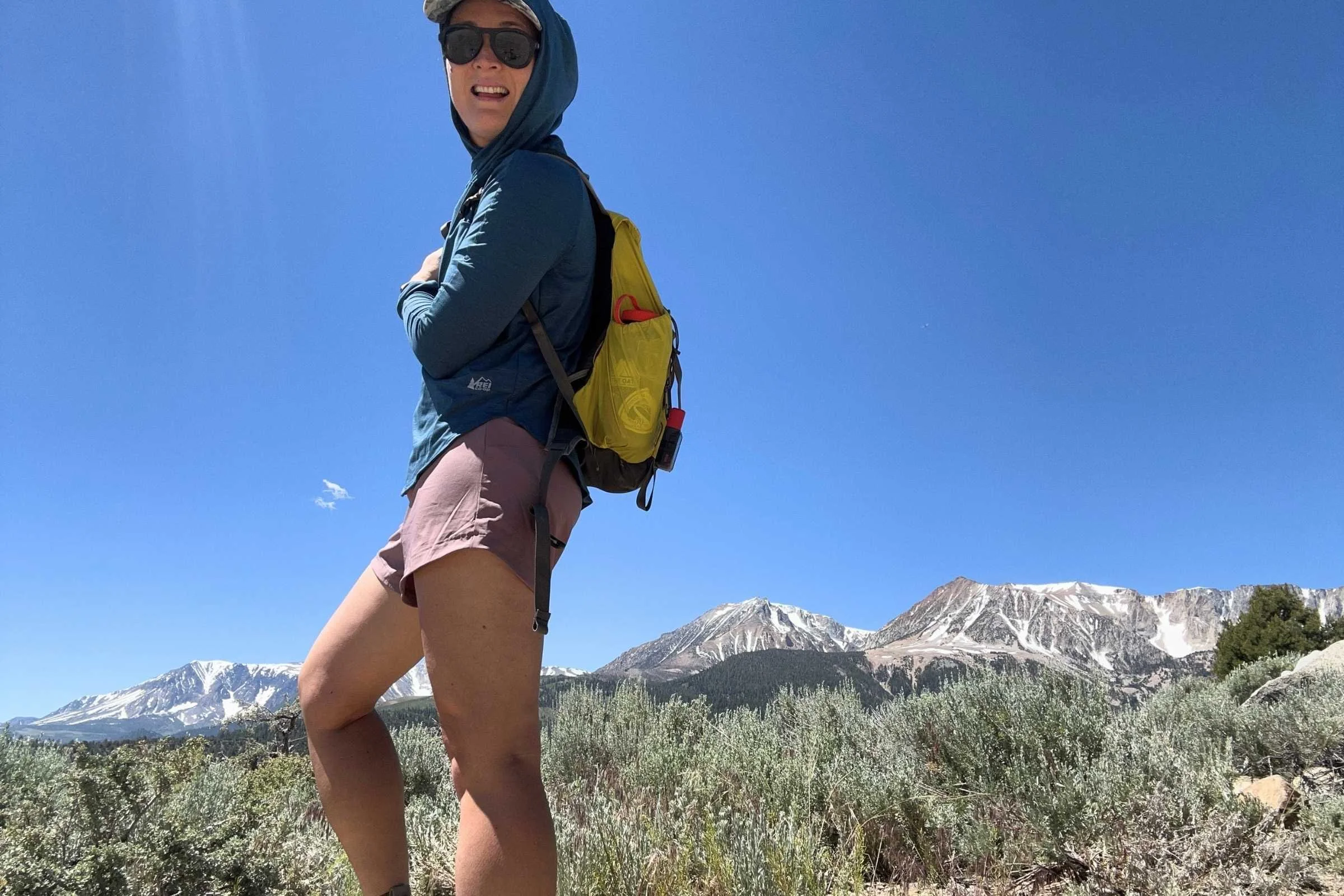
We tested the Flash Shade hoodie alongside the REI Sahara Shade hoodie (shown here).
Buy the Sahara if you want comfort, value, and a do-everything layer. The Sahara is the softer, stretchier knit you forget you're wearing. Most hikers will find this to be a better choice for general hiking, travel, around-town wear, and layering. It's $10 cheaper at full price and routinely drops into the $35–42 range on sale, which makes it a really strong budget winner in our Best Sun Shirts story and the kind of shirt you'd be likely to buy in two colors.
REI Co-op Sahara Shade Hoodie
Still aren't sure what to get?
Long torso or you tuck your shirt in: Go with the Sahara. The Flash's short back is its biggest weakness.
Maximum hot-weather where airflow is your priority: Neither is the airiest UPF 50 sun hoodie I've hiked in. A looser-knit or merino sun shirt breathes better.
Sustainability-minded buyer: There is a slight edge to the Flash for the LanzaTech carbon-capture yarn, though both come with REI's Climate Label and bluesign approved fabric.
FAQ
-
At $70, the Flash Shade is worth it if you want a lighter, faster-drying sun hoodie for hot, high-output days. It's a great option for hiking, big trail climbs, paddling, or anything that gets you sweating. It's a noticeable performance upgrade over the Sahara for active use. If you mostly want an everyday, comfortable sun layer, the more affordable Sahara is the better value.
-
Both are UPF 50+ and now sold side by side, but they're built for different uses. The Sahara is a soft, stretchy, everyday-wear option, while the Flash uses a thin, cool, quick-drying performance fabric with a ponytail port. The Flash is lighter (110 g/m² versus the Sahara's 150 g/m²) but less breathable; the Sahara is softer, stretchier, and about $10 cheaper.
-
Some people think the Flash Shade isn't the best at being airy. I didn't notice this, but I mostly tested at high altitude in the Eastern Sierra with temps maxing out in the mid-80s. Usually there was some wind. Some people found the air doesn't pass through the fabric especially well because it's tightly knit to achieve the UPF 50 rating. That tradeoff isn't unique to the Flash, and we found it's true of nearly all UPF 50 fabrics.
For maximum airflow in extreme heat, a looser-knit or merino option will breathe better, but the Flash's thin fabric and fast dry-time still handle most hot, sweaty days well.
-
The fit runs more athletic, and the torso runs short. The center-back length is on the short side with little to no droptail. It may be an issue if you want full lower-back coverage under a pack. The sleeve and arm length tend to run generous by comparison. If you're between sizes or have a long torso, consider sizing up.
-
UPF 50+, the highest rating a fabric can earn, branded as REI's ShadeFactor 50+. The protection is knit into the material and won't wash out over time as quickly as chemical treatments. A UPF 50+ rating blocks roughly 98% of UV rays, so you're covered for long, fully exposed days.
Other ways to add sun protection
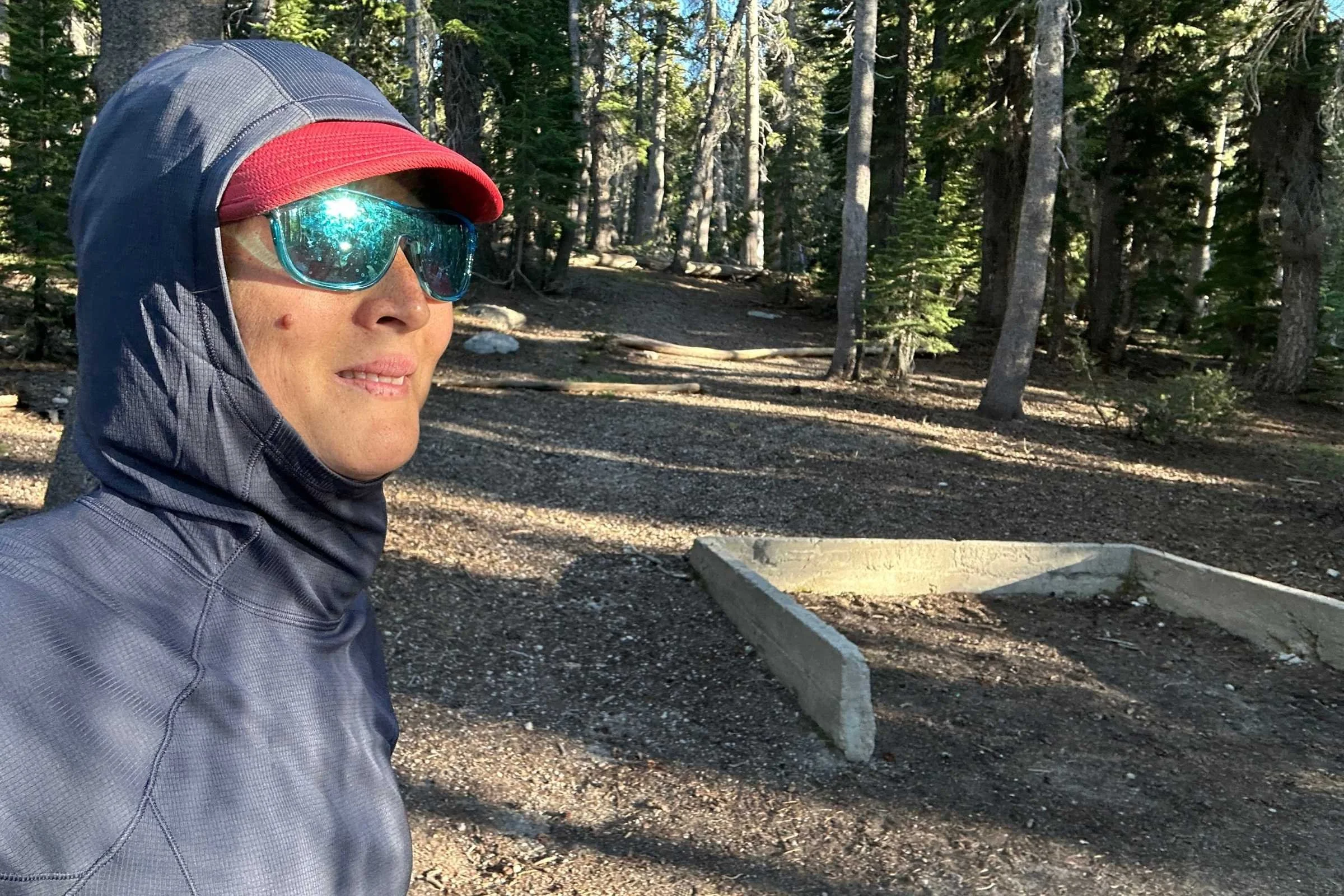
The Flash Shade hoodie should be used in conjunction with sunglasses and a sun hat and sunscreen for more sun protection.
A sun hoodie should be one of your major sources of sun protection, but it can't cover everything. For the skin that a hood and sleeves leave exposed, reach for a good face sunscreen on your face and neck, and keep an SPF lip balm within easy reach. Your lips burn faster than you'd think and are easy to forget. On long, fully exposed days, back it all up with a reliable body sunscreen for your legs. And since squinting into alpine glare gets old fast, finish the kit with a sun hat or a good pair of running sunglasses that stay put when you're moving.
About the Author / Why You Should Trust Us
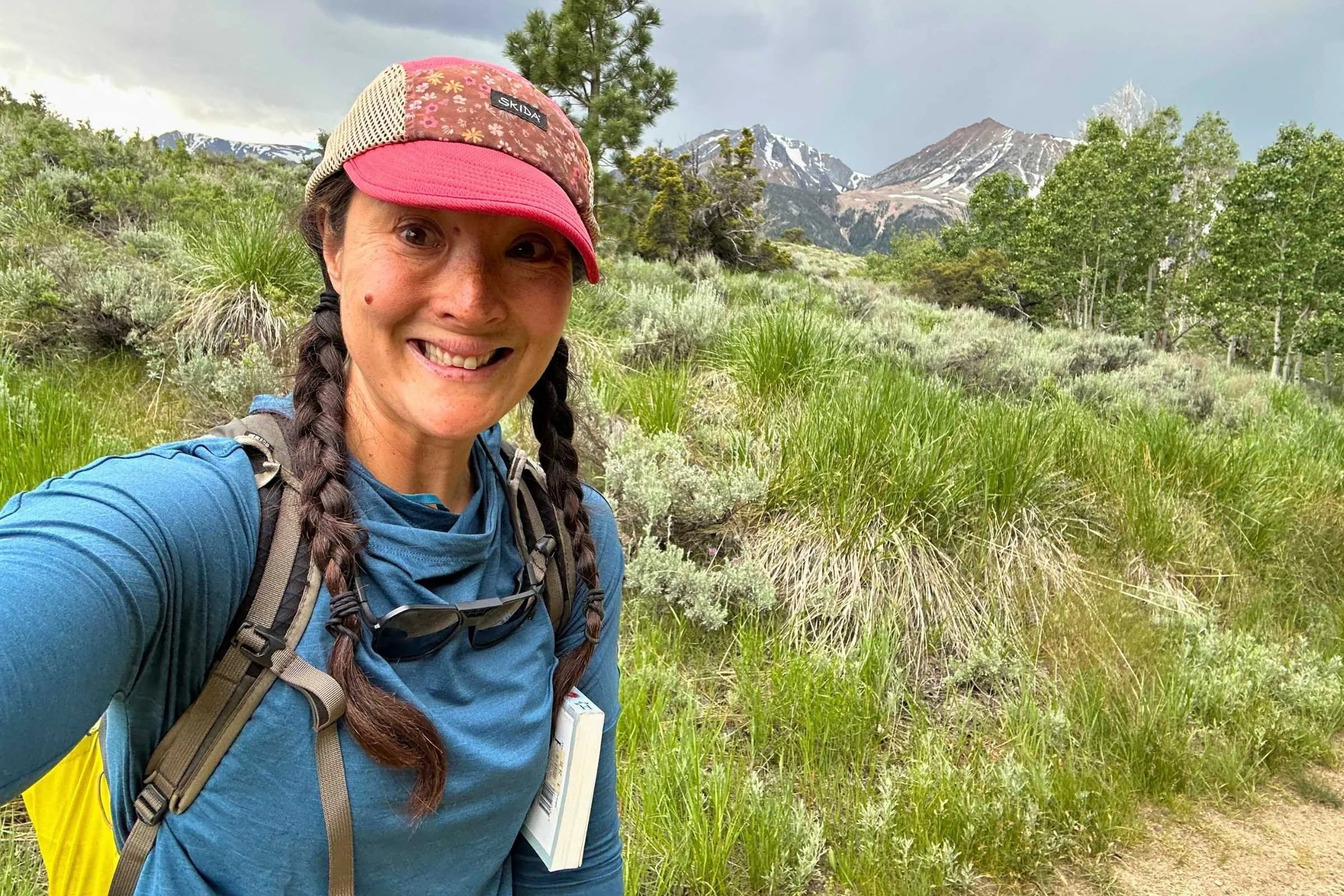
Liz Thomas has tested nearly three dozen sun hoodies as part of her quest to find more sun protection while hiking.
After thru-hiking nearly 15,000 miles with almost no sun protection, I interviewed a University of Arizona sun cancer expert for a story on sun hats that I wrote for the New York Times/Wirecutter. Although that story was about hats, what I learned about the sun scared some sense into me. I've been wearing sun protective clothing (and looking for the perfect one!) ever since.
I'm the Editor in Chief of Treeline Review. I also write the regular column "Ask a Thru-hiker" for Backpacker Magazine. I previously held the women's self-supported speed record on the Appalachian Trail and am also known for my innovative urban thru-hikes. See my Packing List for an NYC Urban Hike for an example.
I'm also the author of Long Trails: Mastering the Art of the Thru-hike, which won the National Outdoor Book Award for Best Instructional Book. In addition, I regularly give talks at universities, non-profit conventions, and outdoor organizations about thru-hiking and urban thru-hiking.
You can read more about Liz at her Wikipedia page here or on her website. You can see all of Liz’s articles at Treeline Review on her author page.


