REI Co-op Westward Shelter Review
A spacious screened shelter for anyone who wants a bug-free outdoor living space at camp
June 24th, 2026
Home > Gear Reviews > Camping
Our verdict
The REI Co-op Westward Shelter is a pop-up sun and bug shelter for when you want to be outside but need the elements to be kinder to you. It’s a freestanding, floorless, screened canopy for hanging out outside. I would argue this bug-free camp shelter is as great for backyards as it is as an accessory tent while car camping or picnicking.
It isn’t a substitute for a camping tent, but more like your own personal portable screened porch. The Westward is your personal bug-free bubble. For someone who tries to spend as much time outside as possible, the 360-degree mosquito-free, yellow jacket-free, wasp-free outside experience cannot be beat!
For buggy areas, the REI Westward Shelter screen house is fantastic for keeping out mosquitoes, gnats, flies, and wasps that could otherwise ruin your outdoor picnic, campsite dinner, or outdoor card game. For beaches, unforested campsites, deserts or semi-arid environments where there isn’t much sun, it's decent as a portable shade for hanging out during the day.
The REI Westward Shelter is best for evening use as a bug-free place to eat your outdoor dinner in peace. It’d be just as great at doing that in a campsite as it would in a backyard for eating al fresco. The REI Westward screened canopy tent is easy to set up and has spacious windows that allow for great views. It excels in buggy environments by creating a spacious and view-filled hangout space when you’d otherwise be trapped in the car or your camping tent or worse yet, opt to be inside.
REI Co-op Westward Shelter
Five people tested the REI Westward Shelter for weeks at a summer camp in the Eastern Sierra. We tested the Westward shelter in a hot, high altitude semi-arid area that doesn’t get a lot of shade. We also tested in a wet campsite along a creek full of aspens, mosquitoes, and deer flies. We tested in almost a week straight of thunderstorms and in winds up to 20 miles per hour.
We tested it alongside the matching REI Westward 6-person tent, which uses a similar intuitive color-coded setup. Like many sun shelters, the mesh traps heat, and on a warm afternoon, the inside can feel warmer than outside the tent.
Spotless We write mission-driven gear reviews. To find the best gear, we combine expert reviews, everyday user opinions, and rigorous independent trail testing—never pop-up or display ads. We are reader-supported and may make a small commission from some qualifying affiliate links. Learn more.
REI Co-op Westward Shelter specifications
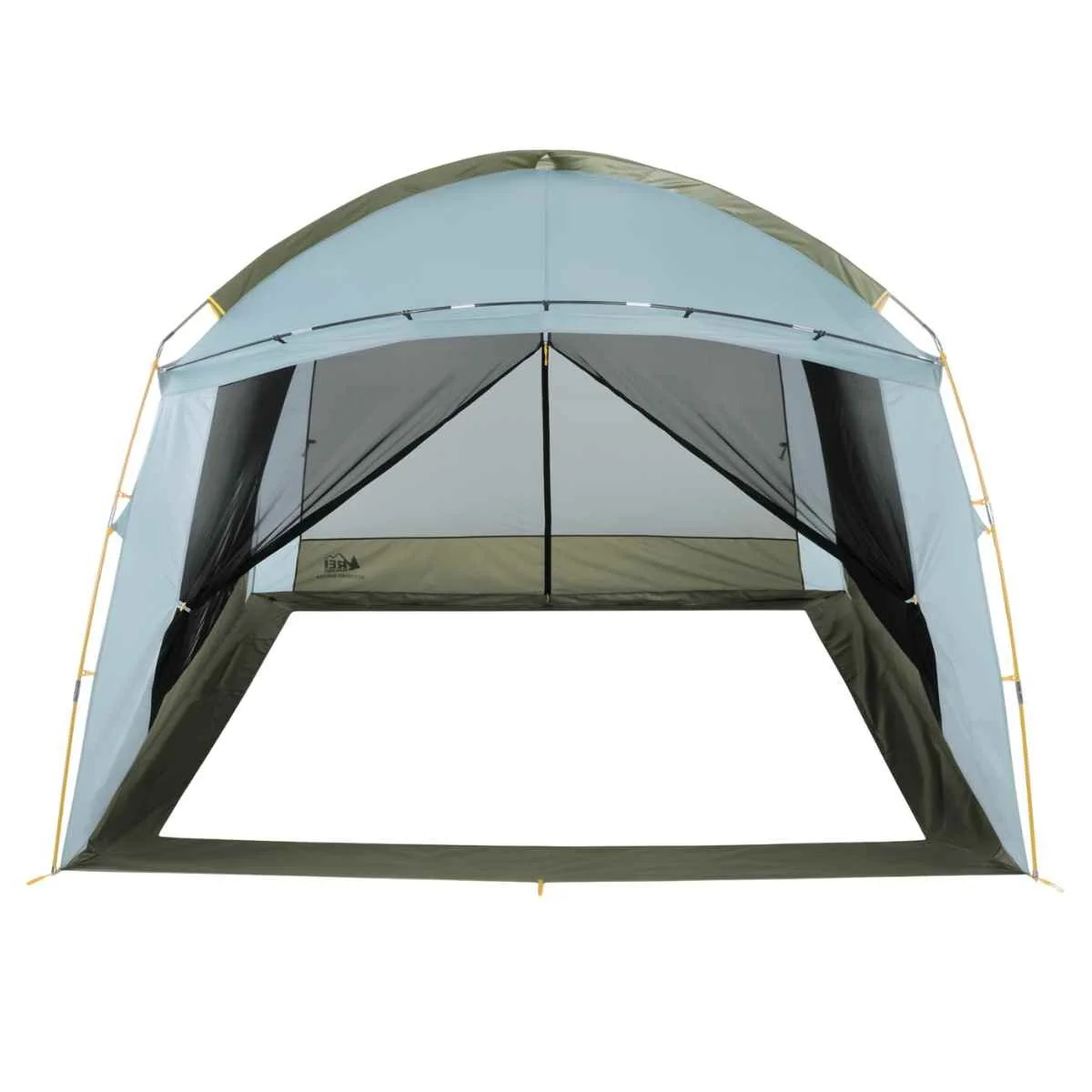
Price: $329.00
Covered area: 100 sq ft
Floor dimensions: 120 x 120 in (10 x 10 ft)
Peak height: 84 in (7 ft)
Packaged weight: 18 lbs. 14.5 oz
Packed size: 27.56 x 8.66 x 7.87 in
Doors: 2 walk-through zippered doors (can be fully tied back)
Number of poles: 8
Design type: Freestanding
Floor: Floorless (overlapping floor skirt to prevent bugs)
Canopy fabric: 75-denier polyester with PU coating and PFAS-free DWR (top/sidewall panels); 150-denier polyester with PU coating and PFAS-free DWR (floor skirt)
Mesh: 40-denier solution-dyed nylon with PU coating and PFAS-free DWR; 360-degree visibility
Includes: Shelter body, poles, storage bag, stakes, 4 reflective guylines, pole repair sleeve, 2 organizer stuff sacks
Storage bag: Wide mouth with duffel handles
DWR: PFAS-free throughout
Sustainability: Climate Label Certified brand; solution-dyed mesh
Best for
Camping in buggy areas
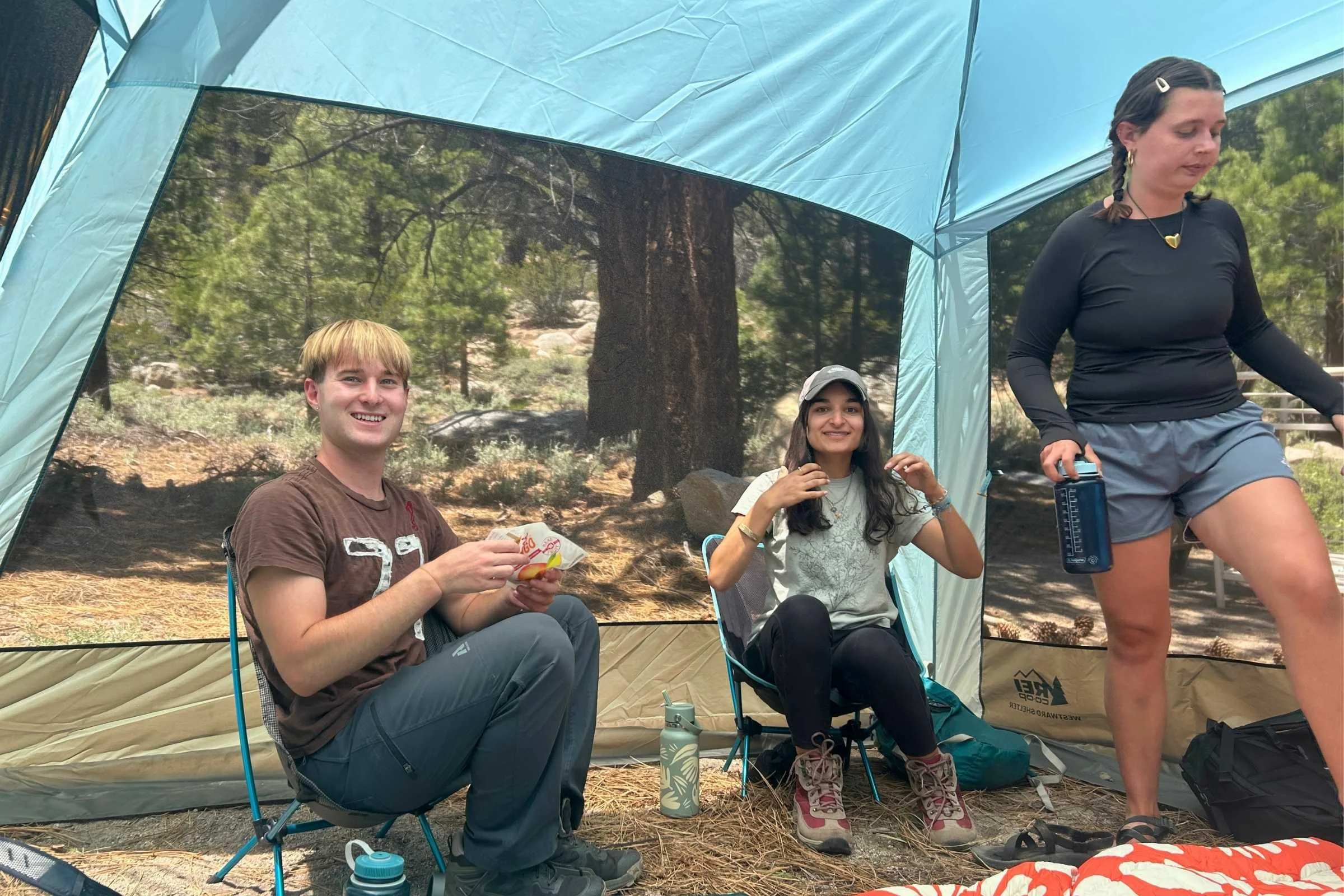
Campers who spend dinners and evenings outside and want to enjoy the outdoors without mosquitoes
Base-camping or long-term camping where you want a separate hang out area from where you sleep
Indoor-outdoor spaces like cabins where having some outdoor hangout space lets you enjoy the view and being outside better
Backyard hangouts and dinners would otherwise keep you from being outside
Comparison table
| Feature | REI Co-op Westward Shelter | Big Agnes Sage Canyon Shelter Plus | NEMO Victory Screenhouse |
| Price | $329 | ~$379 | ~$500 |
| Covered area | 100 sq ft | 100 sq ft | 100.1 sq ft |
| Floor dimensions | 120 x 120 in | 120 x 120 in | 120 x 120 in |
What we liked
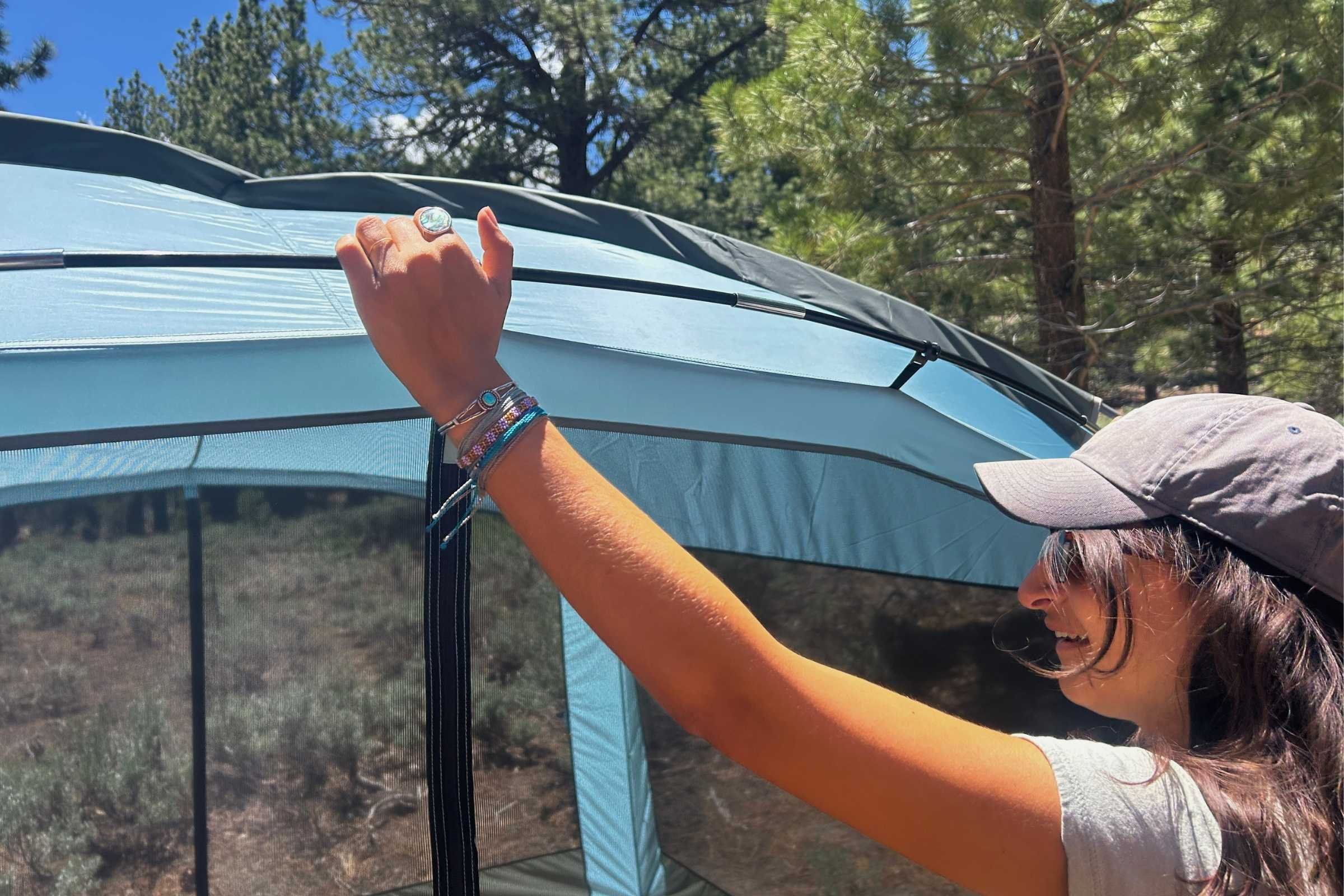
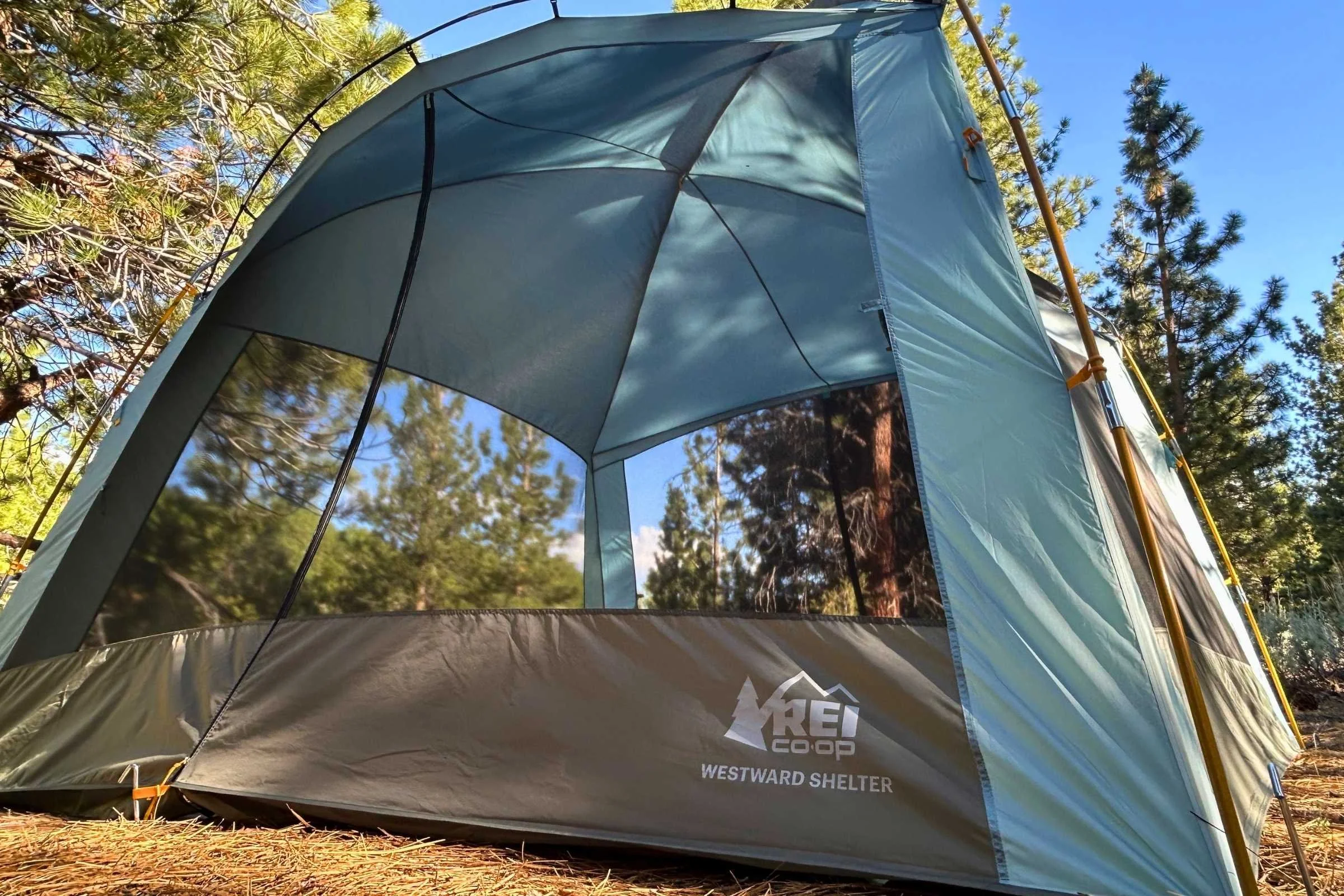
360-degree views from all four sides with almost all mesh to feel like you're outdoors (but with bug protection!)
Ease of set up with color coded poles and sleeves
Overlapping floor skirt kept bugs, rodents, and reptiles out at the ground level
Sized to fit up and over a fixed picnic table in a campsite
84-inch peak height (7 feet!) for almost the entire tent means you can easily stand up and move around, even if you are over 6-feet tall
Two zippered doors work better for group access
DWR sheds rain on the roof panels, even though it doesn’t have a rain fly
The storage bag has a wide mouth and is easy to pack and unpack
Surprisingly windproof despite only 4-guyout points (at least in our experience)
What could be better
Mesh doesn’t ventilate well so the inside of the tent can get warm midday if you leave everything closed up
Fiberglass poles are heavier and less durable in the cold
Only 4 guyout points (the fabric loops on the tent that guylines attach to) and ground-level stakeouts
Walls will not stop rain blowing sideways (though I would argue, as a rainfly-free shelter, this is not its job at all)
How we tested
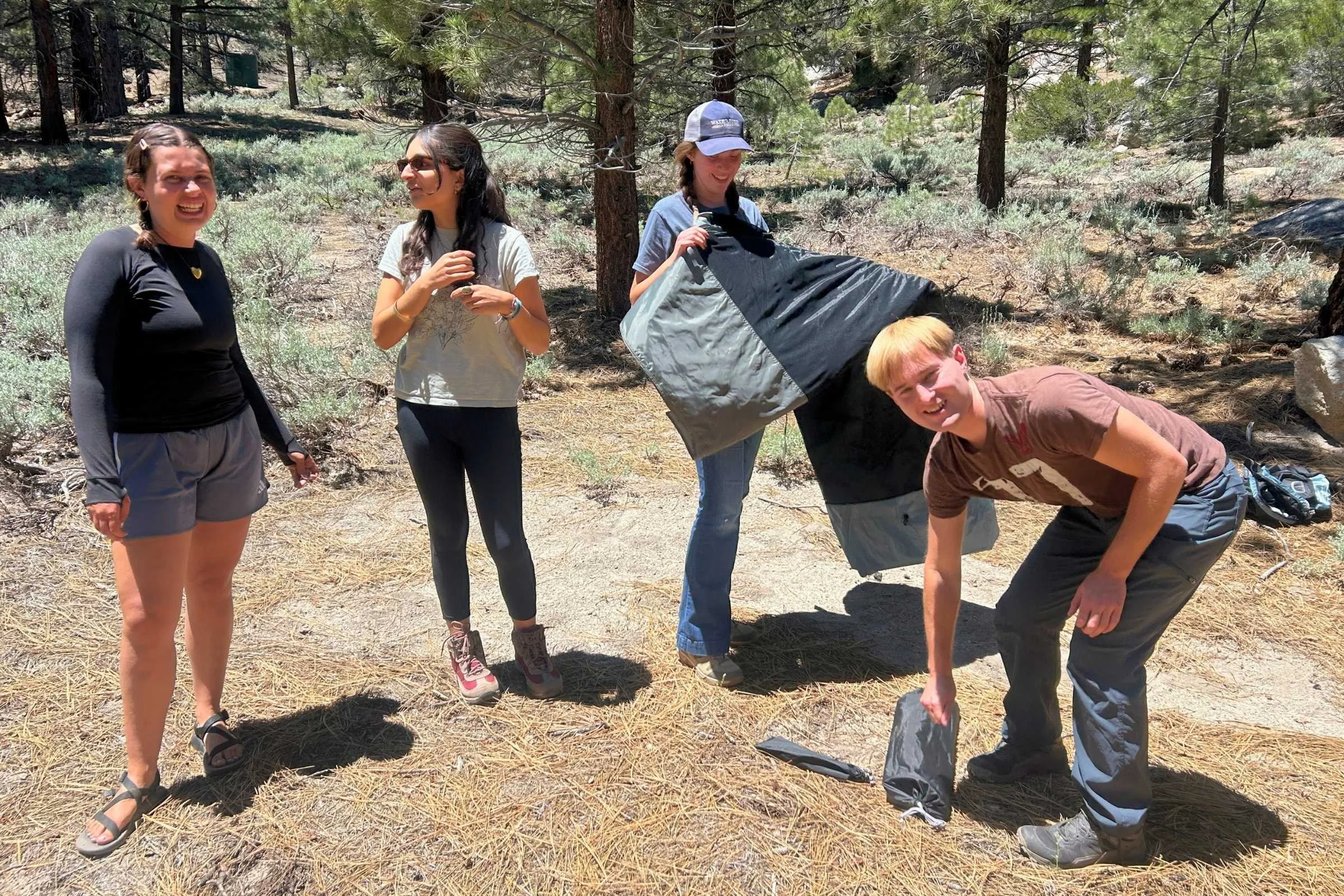
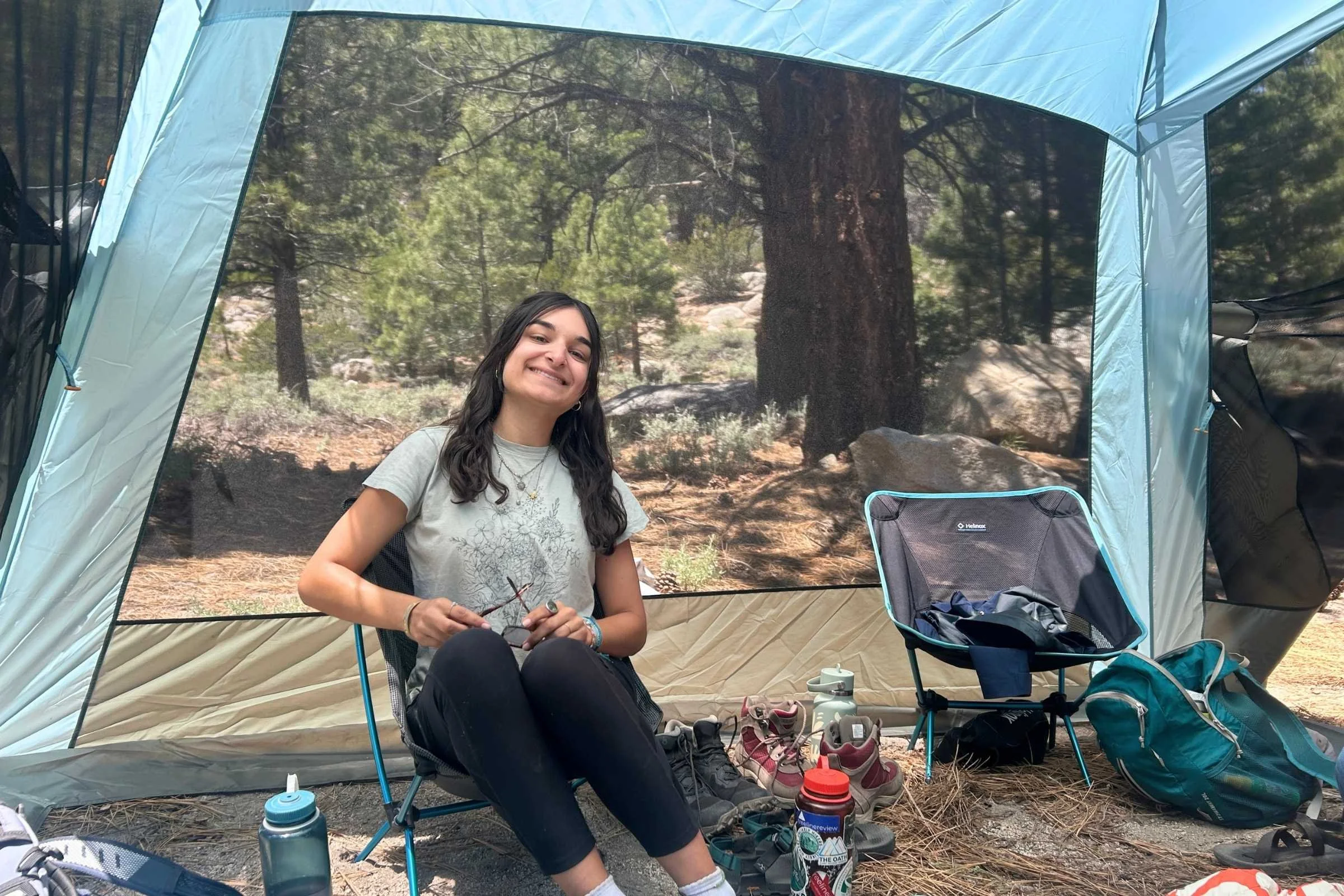
We tested the REI Westward Shelter screen house in the Eastern Sierra with five different people. It was our outdoor hangout where we took midday naps, had book discussions, played card games, and even wrote a few Treeline Review articles. When set up near a creek with tons of mosquitoes and biting deer flies and horseflies, it’s a treat to be bug-free while hanging out in this bug-free camp shelter.
We moved the tent to several different testing spots all at high altitudes and with more intense sun exposure to see how it performed across different ecosystems. We tested in buggy, swampy, aspen groves with mosquitoes, deer flies, and biting horse flies. We also tested in a drier, fuller sun exposure area in the sagebrush as well as in a more moderate-temperature Jeffrey pine forest.
We also tested the Westward Shelter alongside the REI Westward Tent to get an idea of how the two work together as a camping tent and hangout tent while camping.
Performance in the field
Bug protection
The 360-degree views through the mesh on all four sides are inspiring and don’t feel claustrophobic. It’s fantastic for the times when I want to be immersed in the view but just can’t handle the bugs.
Rain and weather protection
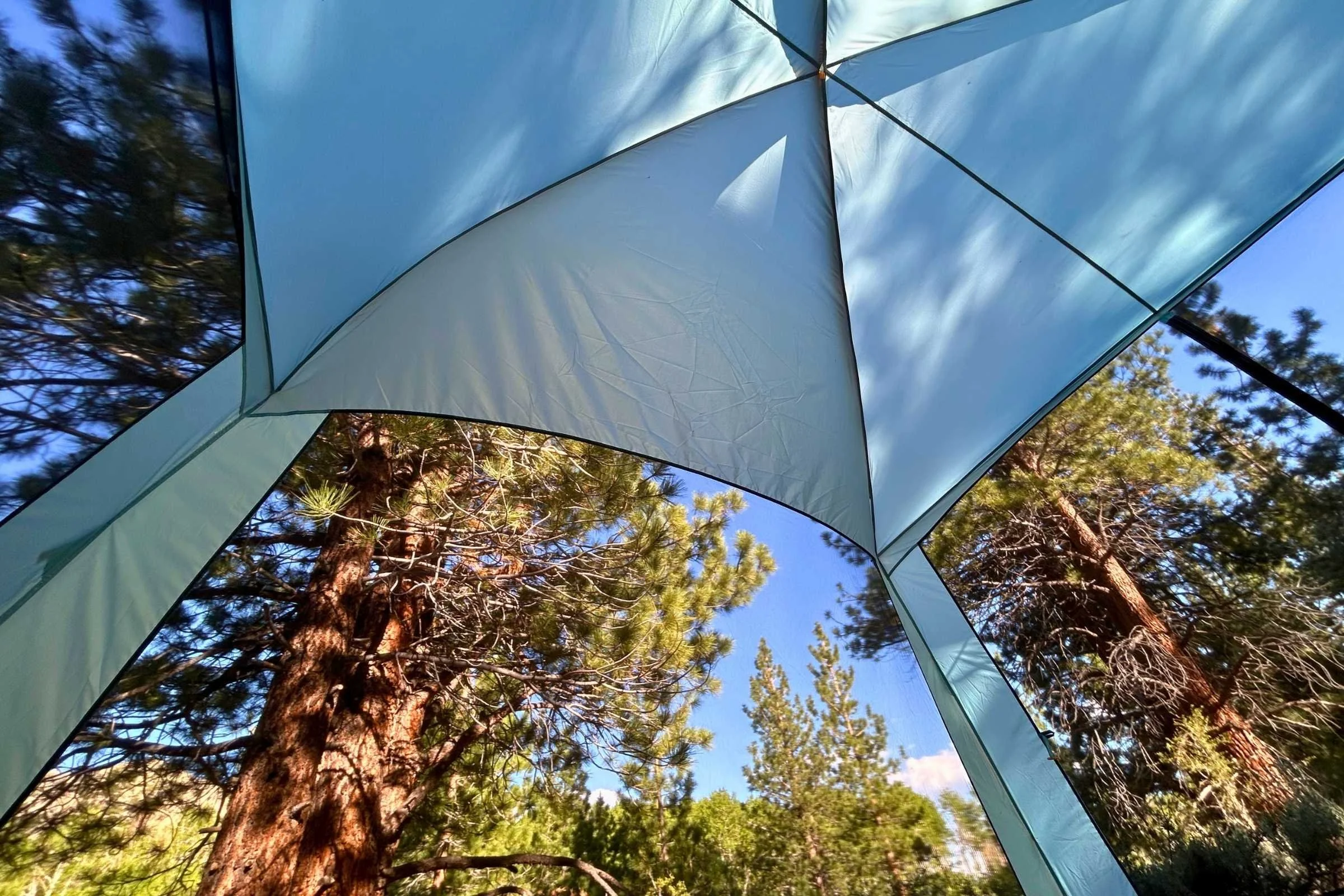
It seems unfair to judge a sunshade on how well it protects from the rain and weather. Afterall, it has no rainfly! However, the 75-denier polyester top panel (treated with PFAS-free DWR) seemed to do their job during nearly a week of light afternoon Sierra thunderstorms (note to my Pacific Northwest friends: this was more what you'd call "mist" than actual rain).
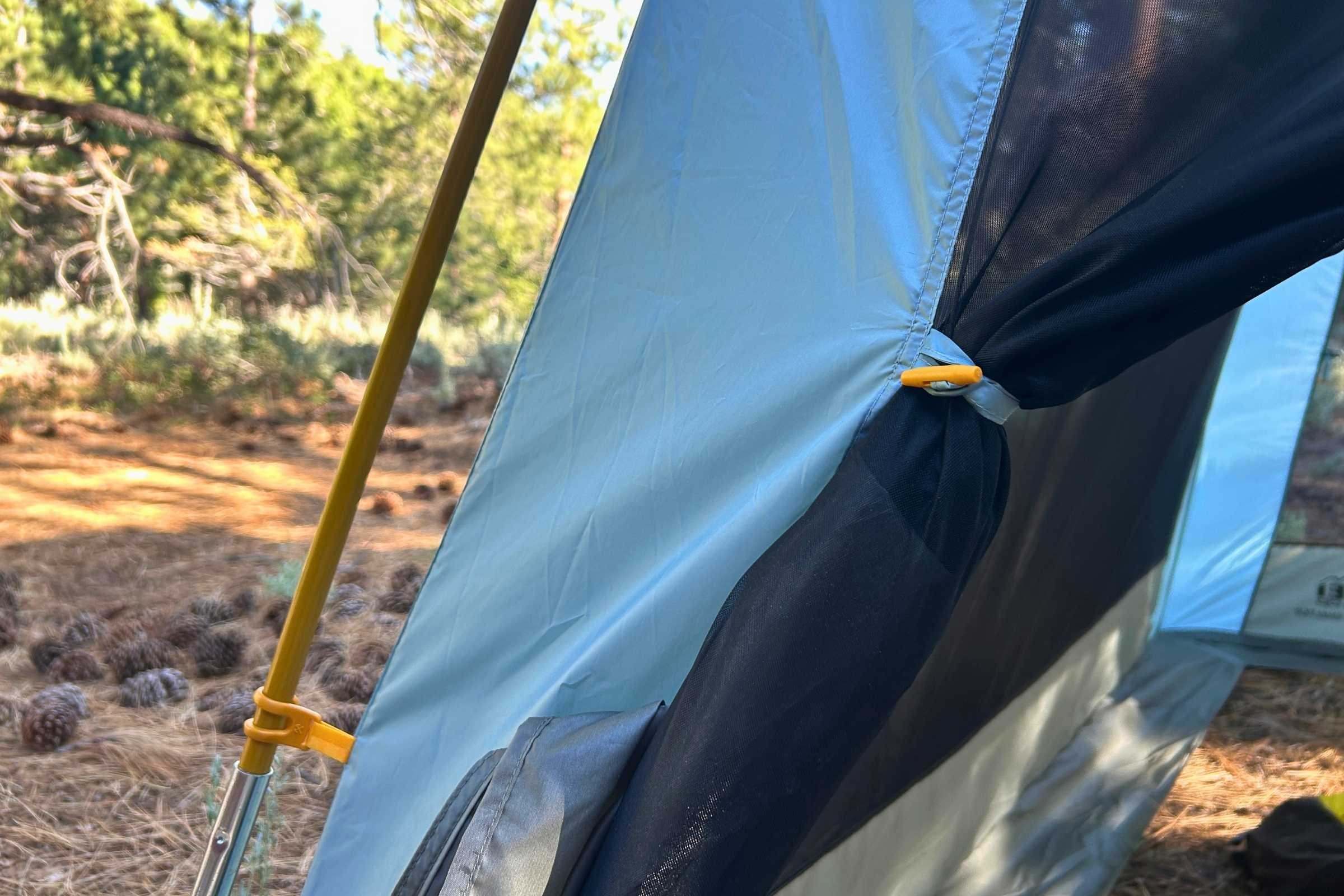
Since this screened canopy tent is 7-feet tall with little fabric at lower points, it was hard to tell whether water beaded up and ran off. But it definitely did not saturate the fabric or get any moisture inside. The mesh walls were quite good (maybe too good) at keeping out moisture during these high wind + some precipitation events. Mesh walls are not waterproof but this mesh is quite thick, so it seemed to capture whatever drops got windswept and dry them out quickly in the arid, Eastern Sierra air.
Wind stability
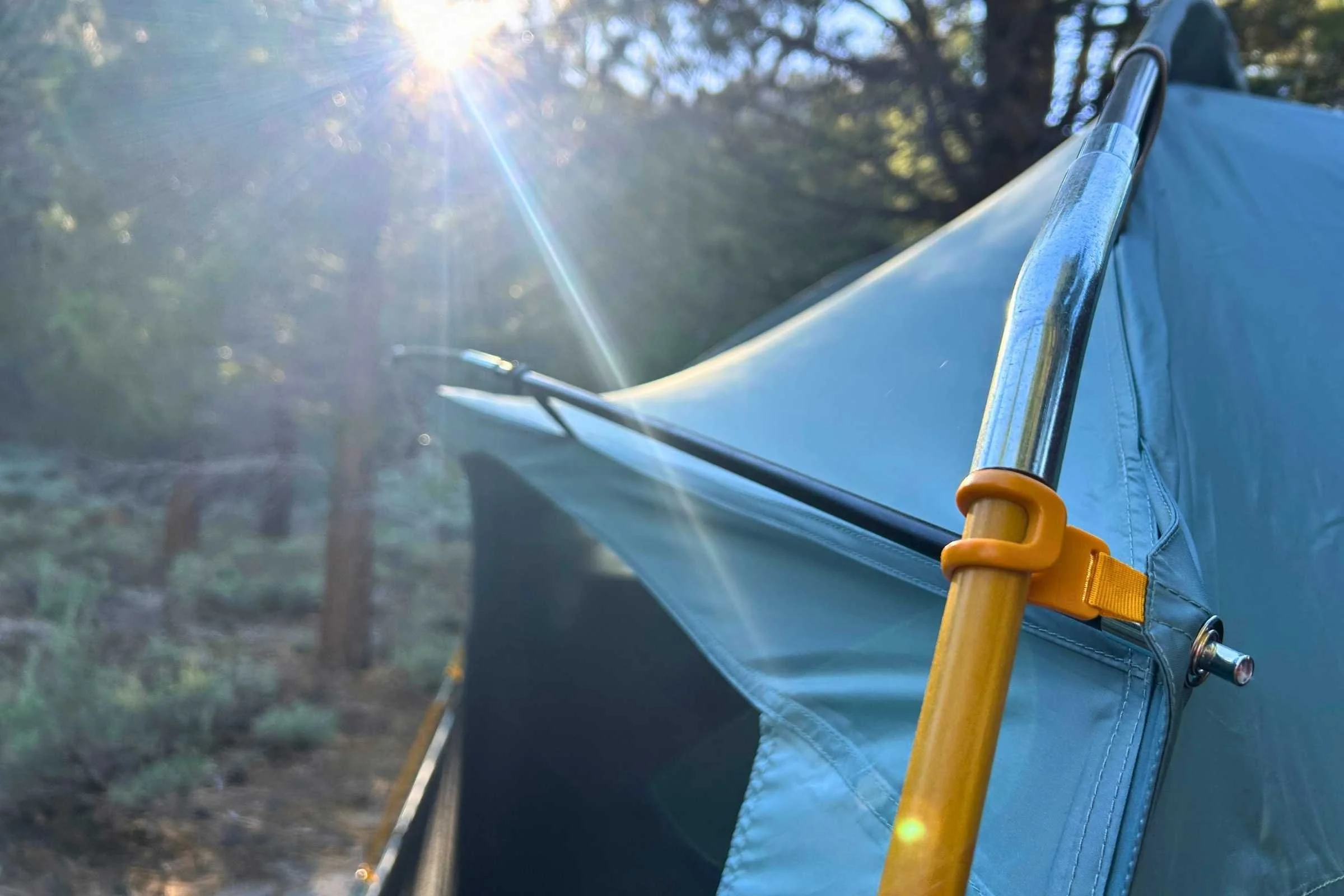
In my experience, the REI Co-op Westward Shelter is surprisingly stable in the wind. We set it up in the Eastern Sierra in a canyon where wind has notoriously blown away other much more seemingly stable tents. That being said, we would have preferred more than four ground-level stake points. It includes four reflective guylines as well, and we didn’t use them, yet somehow found the shelter surviving night after night of 10-20 mph winds. Site selection is a big factor in wind stability, and it’s possible that our sites were extra-protected.
Setup and takedown
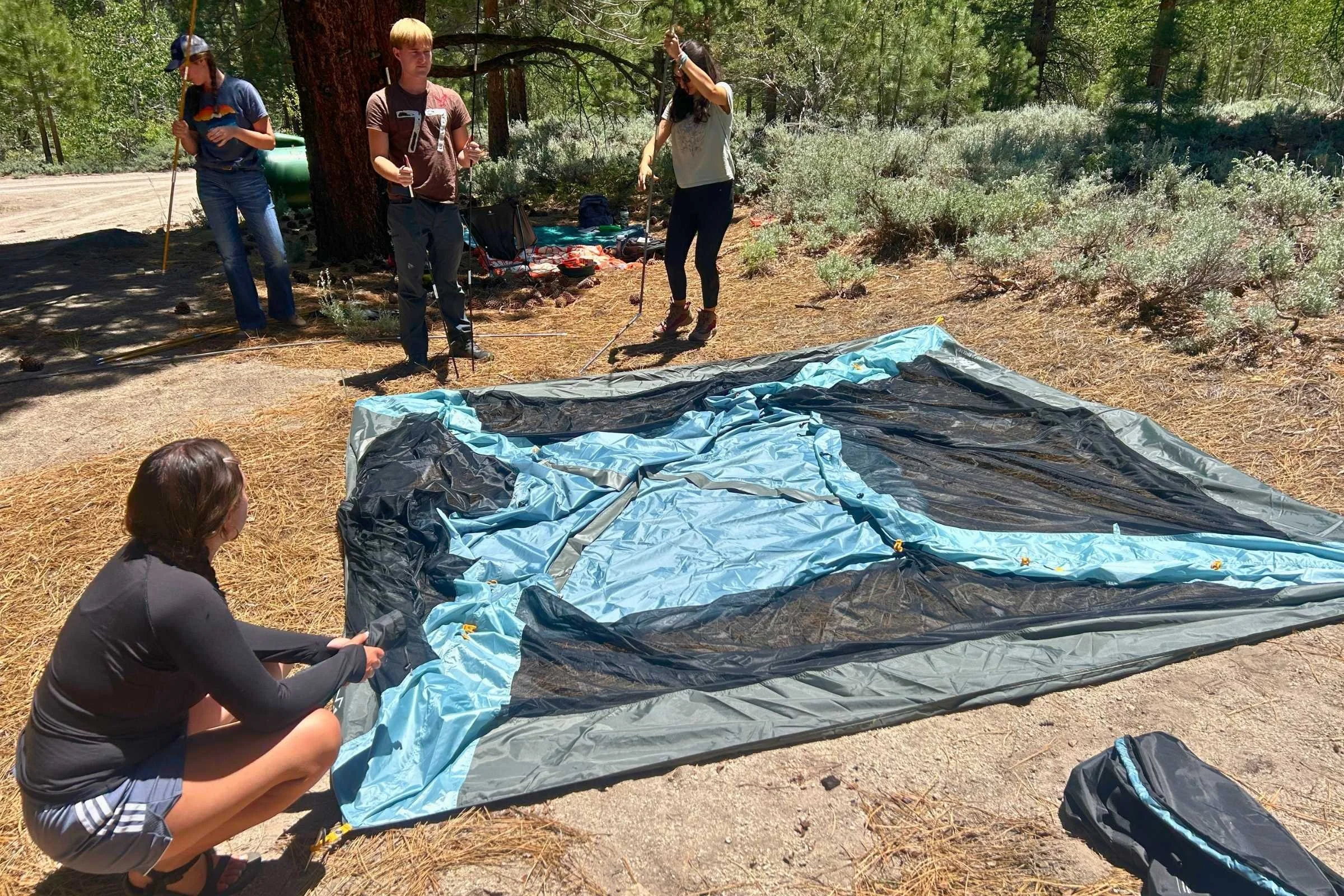
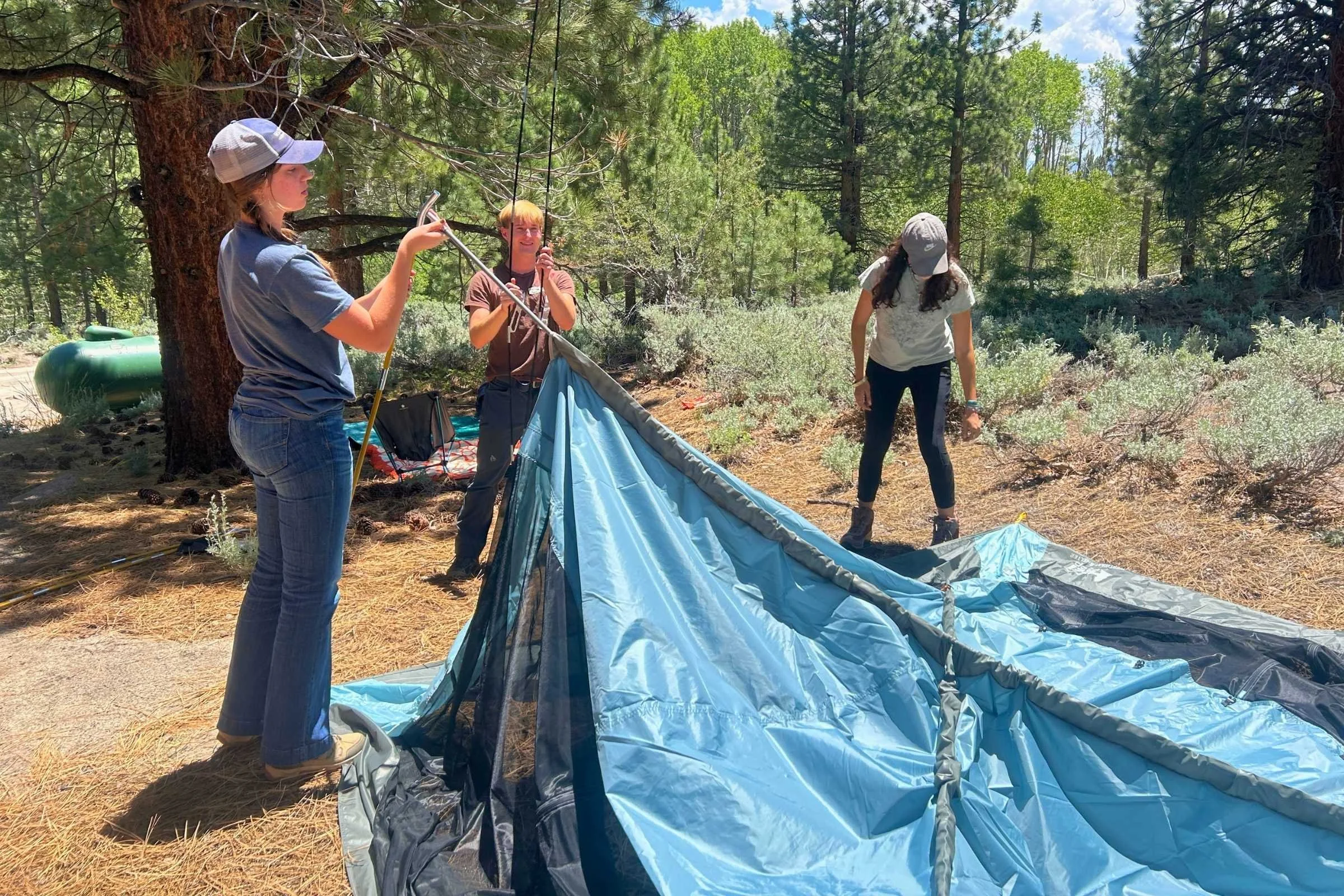
We set up the tent with three people (along with two who had) who had never set up a sunshade before.
In particular, we liked that the clear instructions (with diagrams) are printed on a tag sewn into the bag. Not enough tent brands do this.
Additionally, the color coding of the tent poles that matched the same color fabric sleeves made the process easy. The eight-pole fiberglass pole architecture was color-coded and quite intuitive.
It took less than ten minutes on our first try. Takedown and repackaging were also quick, allowing us to pack up quickly. Since it doesn't have a floor, we also found it pretty easy to crab-crawl it as a group to different campsite testing spots.
It's worth noting that customer reviews state that this tent is not easy to set-up with one person. Try to get a buddy!
Interior livability
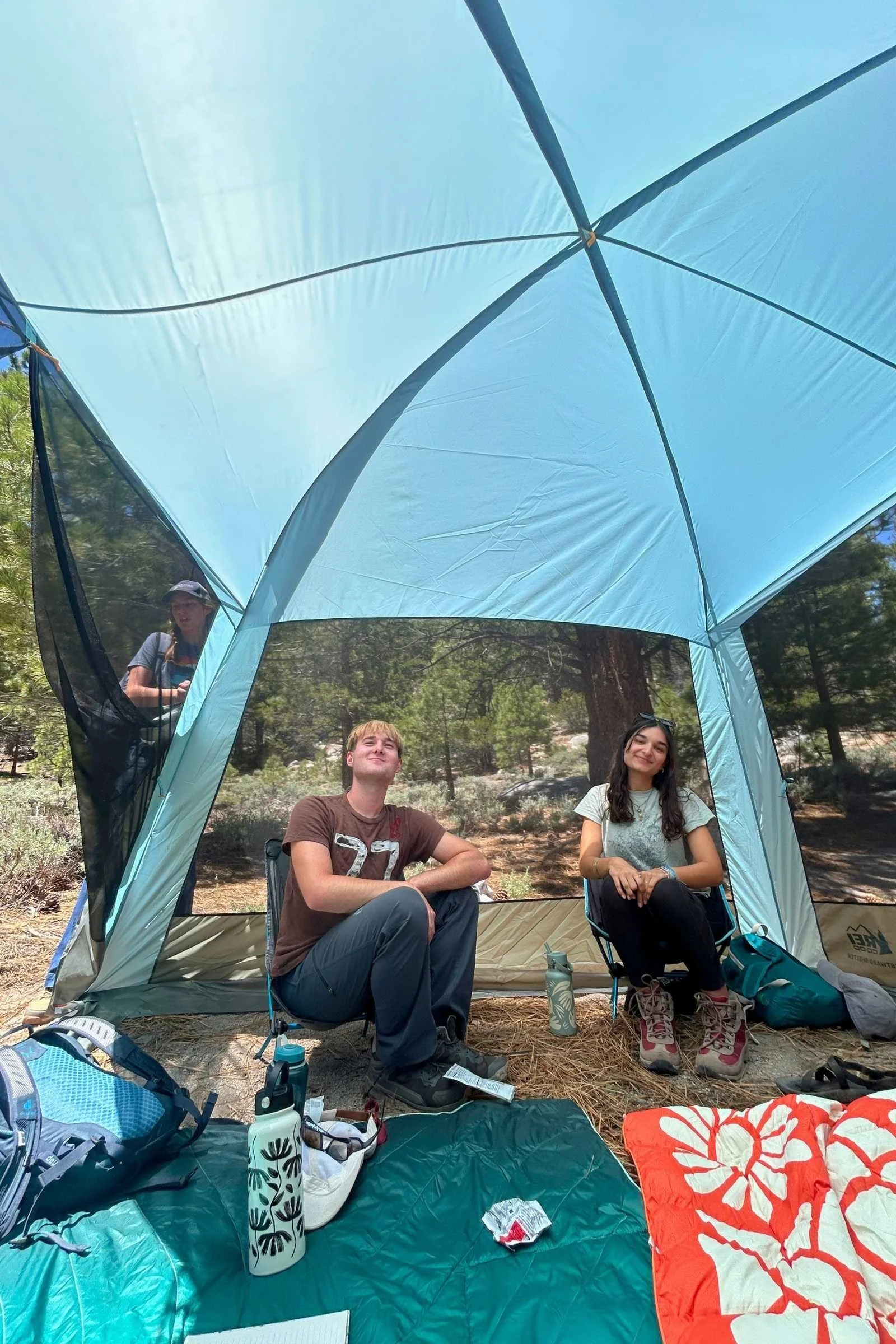
Interior liveability is where the REI Co-op Westward shelter excels! We found the 100 sq ft covered area and 84-inch peak height to create literally a room outdoors. We fit multiple camp chairs and a table inside comfortably, but found we enjoyed laying out a couple of camping blankets on the ground and sprawling out. The 360-degree mesh views were awesome. In fact, the views are so good, I’d argue it was more livable than most rooms indoors, at least for an outdoor lover like me.
I camp with several friends over 6 feet, including a 6’7” friend, and the 7-foot height is tall enough for people over 6 feet tall to stand in.
Durability
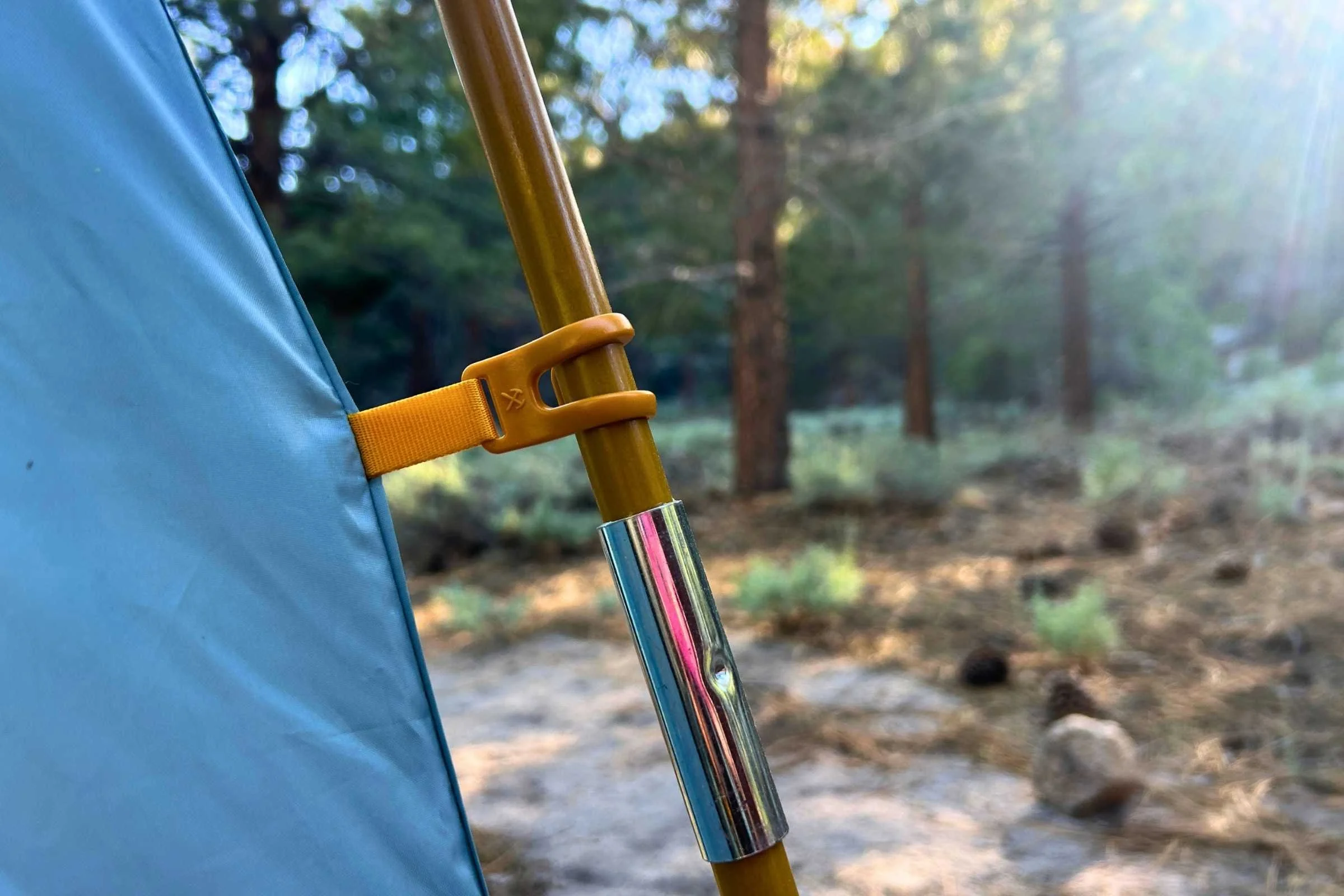
We didn’t have any issues with durability. The fiberglass pole construction worked well for us in the summer, though it’s worth noting that the material can be more brittle in cold weather (it never got much below 40F in the weeks straight that we had it up). We also didn’t have any durability issues with the mesh attachment points or fabric quality. We also didn’t see any signs of wear at the pole-to-fabric junctions, which are a common failure point on screen houses.
We read some customer reviews where people said the fabric can abrade if it rubs for days against a picnic table. When setting up, we recommend making sure that the shelter is placed at a distance from the benches or sides of the picnic table, especially if wind will move around the tent.
I expect this shelter to last up to five seasons of regular use. Based on my experience with similar shelters, I expect the fiberglass poles breaking in cold weather or high wind is where I would see durability issues.
Features
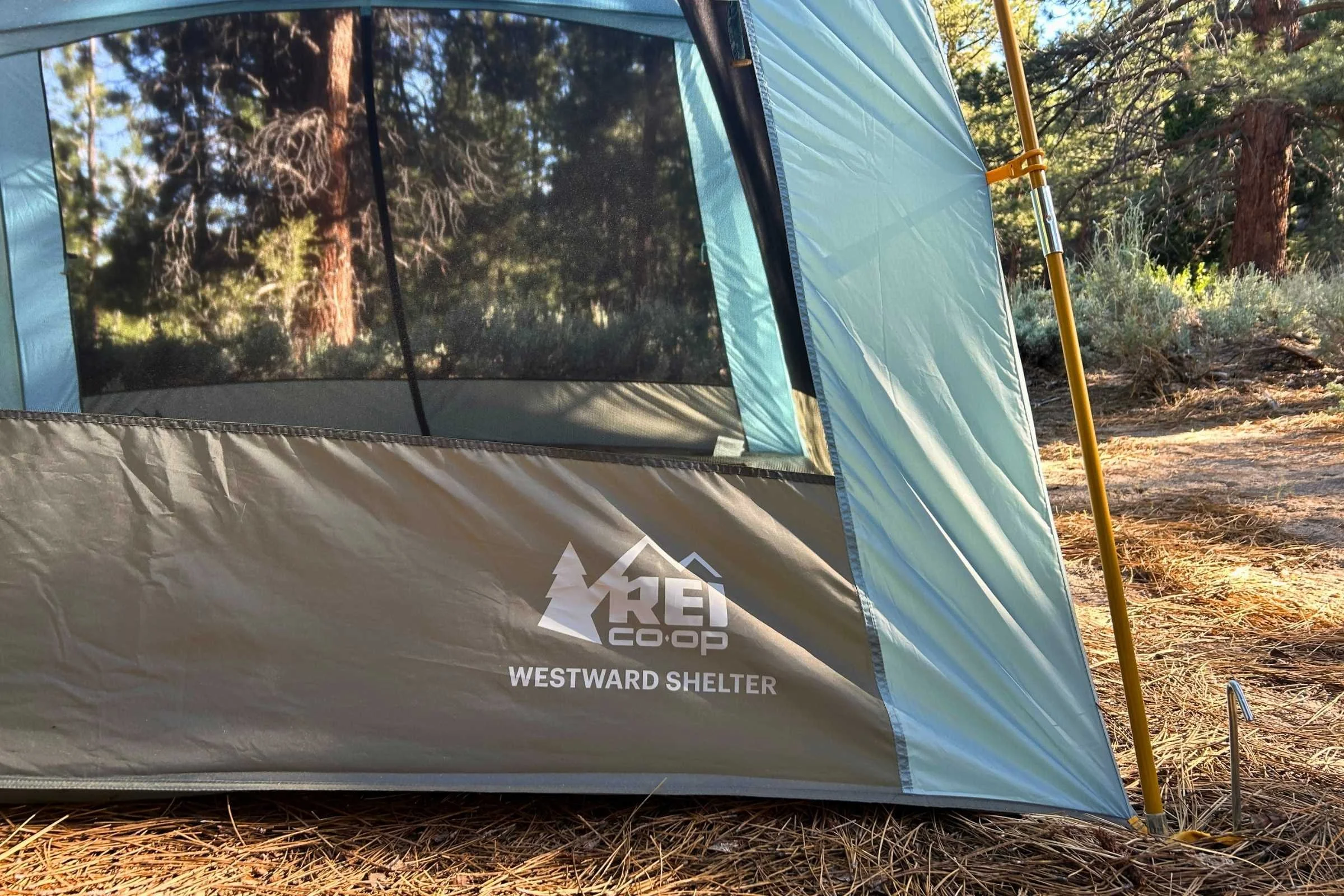
Freestanding screened canopy: nearly 360-degree views give you a true outdoor experience without the bugs
Floorless design: more stable for camp tables and camp chairs than having a floor, less fabric needed so lighter weight and less expensive, allows you to pick it up and put it over a grounded picnic table or up-and-over a sagebrush in the way
100 sq ft covered area (120 x 120 in floor footprint): large enough for four or more camp chairs, two or more sprawled out picnic blankets, or a camp table
84-inch (7 ft) peak height: high ceilings make this feel extremely roomy.
8-pole fiberglass frame with X-shaped architecture: easy for four people to set up in five minutes on their first try
Front and rear brow poles for door structure and zipper function: slightly curved brow poles make it easier to open and close and keep walls vertical.
2 walk-through zippered doors: creates less of a jam when someone needs to leave the shelter
360-degree no-see-um mesh walls (40-denier solution-dyed nylon): the star of the show on the Westward shelter.
75-denier polyester top and sidewall panels with PU coating and PFAS-free DWR: there’s no rain fly but the water resistance was enough to handle a few very light Sierra thunderstorms and quickly dried after. I’d say it handled what Californians call rain, which is what Pacific Northwest people may call mist.
150-denier polyester floor skirt with PU coating and PFAS-free DWR: fabric towards the bottom is thicker and sturdier than the walls since it is more likely to get trampled on.
Overlapping floor skirt design to prevent crawling insects: looks a little strange but seems to work to keep insects and more importantly, chipmunks and lizards, out.
Ground-level stake-out points come with four reflective guylines with cleat-lock tighteners included.
Corner guyout loops (the fabric that guylines attach to) with stakes included.
Pole repair sleeve included.
Wide-mouth storage bag with duffel handles is a non-traditional tent stuff sack that rolls more so it’s easier to pack in and out without any stuffing.
Two organizer stuff sacks for poles, stakes, and guylines.
Climate Label Certified brand.
Solution-dyed mesh means reduced water and energy use.
Similar shelters
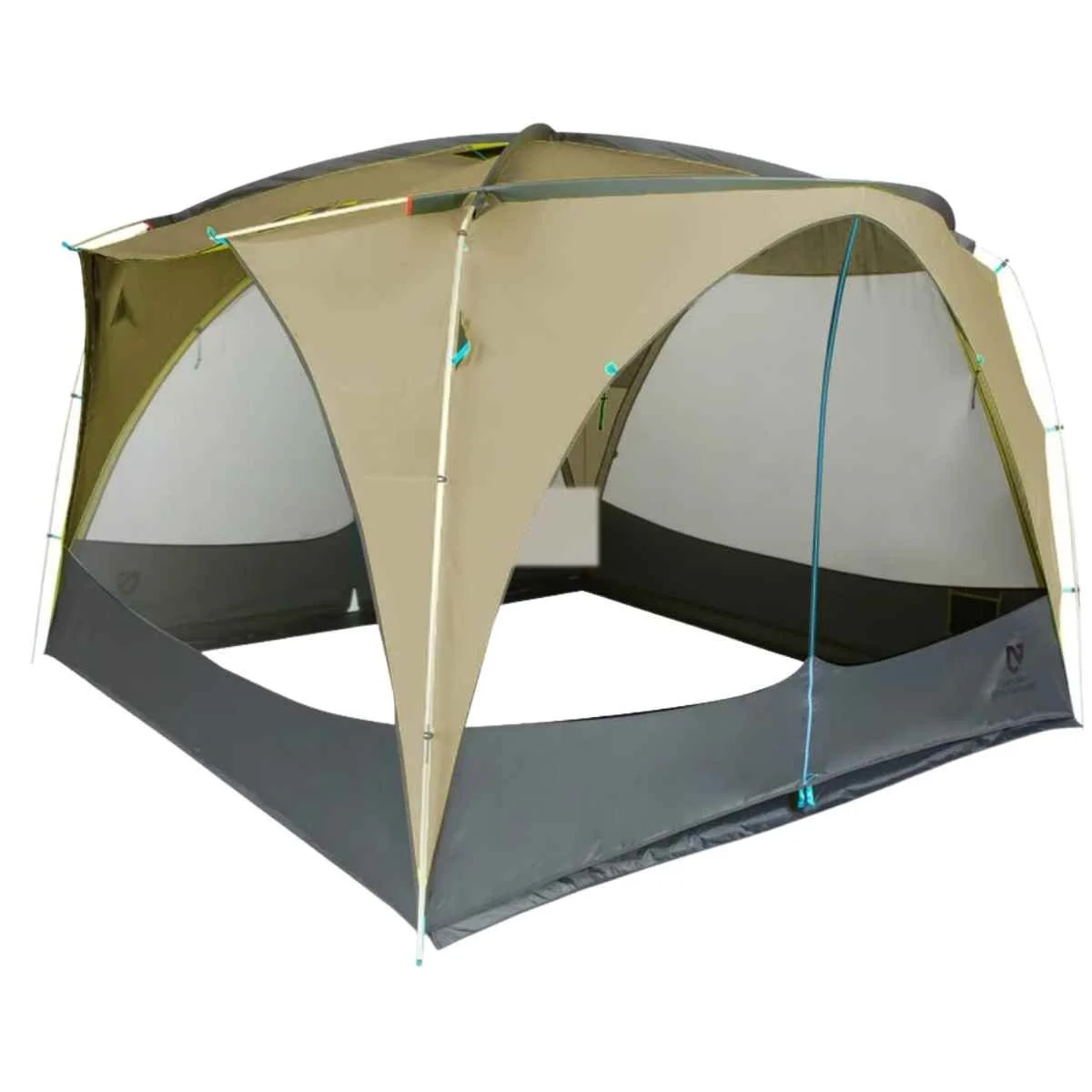
The REI Westward Shelter screen house is a quality, affordable option. Similar models include the Big Agnes Sage Shelter, which doesn't include mesh walls (they are sold separately for an extra $200). It uses aluminum poles instead of fiberglass poles. Aluminum poles do better in wind and cold but cost more. The NEMO Victory Screenhouse has a similar footprint and price but comes with NEMOs lifetime warranty vs. REI’s 1-year warranty. The NEMO also has more of a semi-rainfly (more weather protection) and a little less 360-degree mesh as a result. It's a little more stable in the wind, too.
Big Agnes
Nemo Victory
Should I buy the REI Co-op Westward Shelter?
Buy if:
You camp in buggy environments and want a dedicated bug-free outdoor space for eating, playing games, reading books, doing art, or relaxing in the evening
You want a bug-free camp shelter that fits over a standard campground picnic table—the 10 x 10 ft footprint is designed exactly for exactly this
You're already buying or own the REI Co-op Westward 6 Tent and want a matched campsite setup
You value PFAS-free materials and REI's sustainability credentials and return policy
You want a shelter with two real walk-through doors rather than a single flap entry
You want a bug-free hangout place for camping with kids
Skip if:
You don’t camp in buggy areas—this is not enough of a sunshade to really count on for sun protection and it gets pretty warm inside during midday
You camp in consistently windy locations—the fiberglass poles and limited guyout points are rated for mild conditions only
You need rain protection on all sides—the mesh walls will not stop wind-driven rain
You're budget-conscious—at $329 this is toward the premium end of the screen house category, and other options exist for significantly less
Where to buy the REI Co-op Westward Shelter
REI
Pros: 100% satisfaction policy for 1 year; 10% dividend for members.
FAQs
-
The shelter's 10 x 10 ft (120 x 120 in) floor footprint is sized to fit over most standard campground picnic tables.
-
The 75-denier polyester roof and sidewall panels with DWR coating shed light rain from above. The mesh walls, however, are not waterproof. Wind-driven rain will come through.
-
REI specifies the shelter for mild wind conditions. It has ground-level stake-out points and four corner guyout loops, but the fiberglass pole construction is less stout than aluminum alternatives. We found it surprisingly windproof during Sierra thunderstorms and in the evening when the wind picked up, but site selection and natural protection will always be the best way to ensure your tent is stable in the wind.
-
Both products share the same Juniper Blue colorway and are designed as a matched campsite system. They are sold separately. When set-up next to each other, we found they use similar pole structures and instructions, so it made set-up easier.
Why you should trust us / About the author
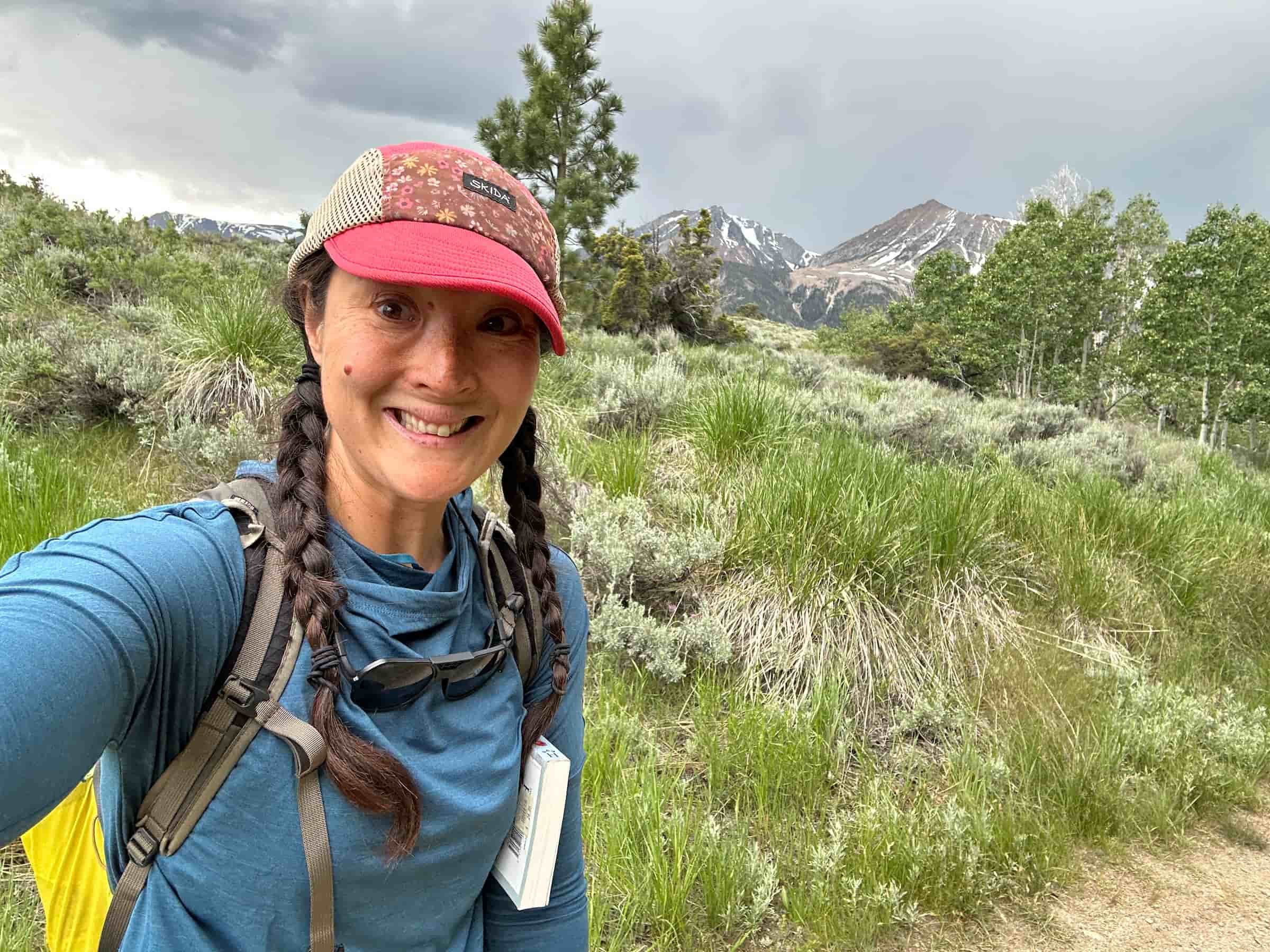
To test the REI Westward Shelter, Liz Thomas quasi-lived in the shelter for weeks in the Eastern Sierra in everything from Sierra thunderstorms to hot summer days and nights and in extreme wind. In addition to Liz testing, four other people hung out in this tent for chatting, snacking, napping, doing art, and playing games. They also added their perspective on ease of set up, spaciousness, ventilation, and windproofness to this guide.
Liz is an award-winning Los Angeles-based writer and Editor-in-Chief of Treeline Review. A former Fastest Known Time (FKT) record holder on the Appalachian Trail, Liz came to Treeline Review from New York Times/Wirecutter, the New York Times’ product review site, where she was a staff writer on the outdoor team.
Liz has talked gear on Good Morning America (TV), in The Wall Street Journal, The Guardian, Buzzfeed, Men’s Journal, Women’s Health, Gizmodo, and Outside Magazine.
You can read more about Liz at her wikipedia page here or on her website. See all her Treeline Review articles on her author page.