
Mountain Hardwear Nimbus UL Tent Review
A sub-two-pound semi-freestanding tent for solo backpackers wanting the flexibility to camp anywhere
June 25th, 2026
Home > Gear Reviews > Backpacking
Our verdict
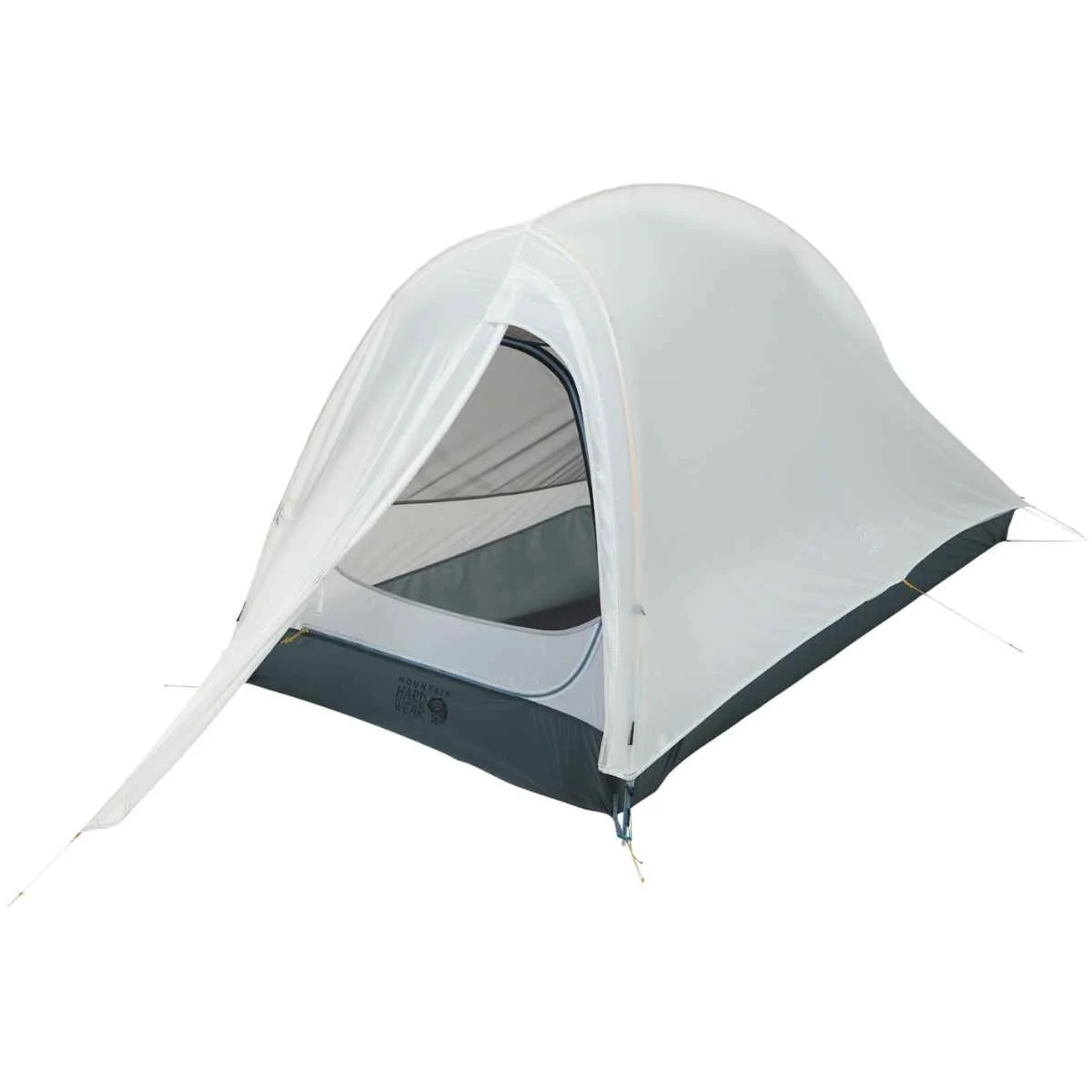
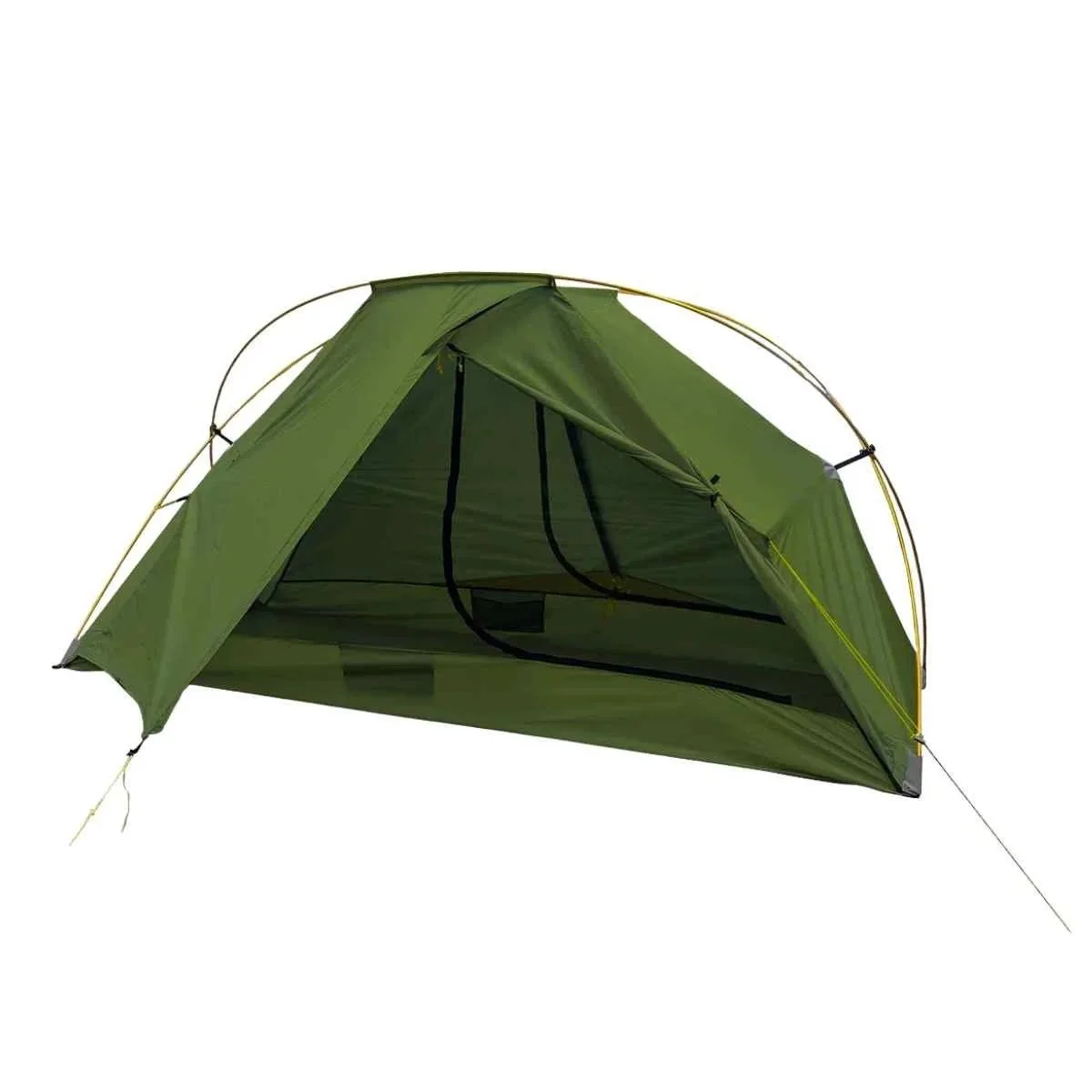
The Mountain Hardwear Nimbus UL is a double-walled, semi-freestanding tent that is one of the lightest options for an ultralight tent that pitches without trekking poles. It holds up well in adverse conditions such as heavy rain, snow, and strong winds, without weighing you and your pack down.
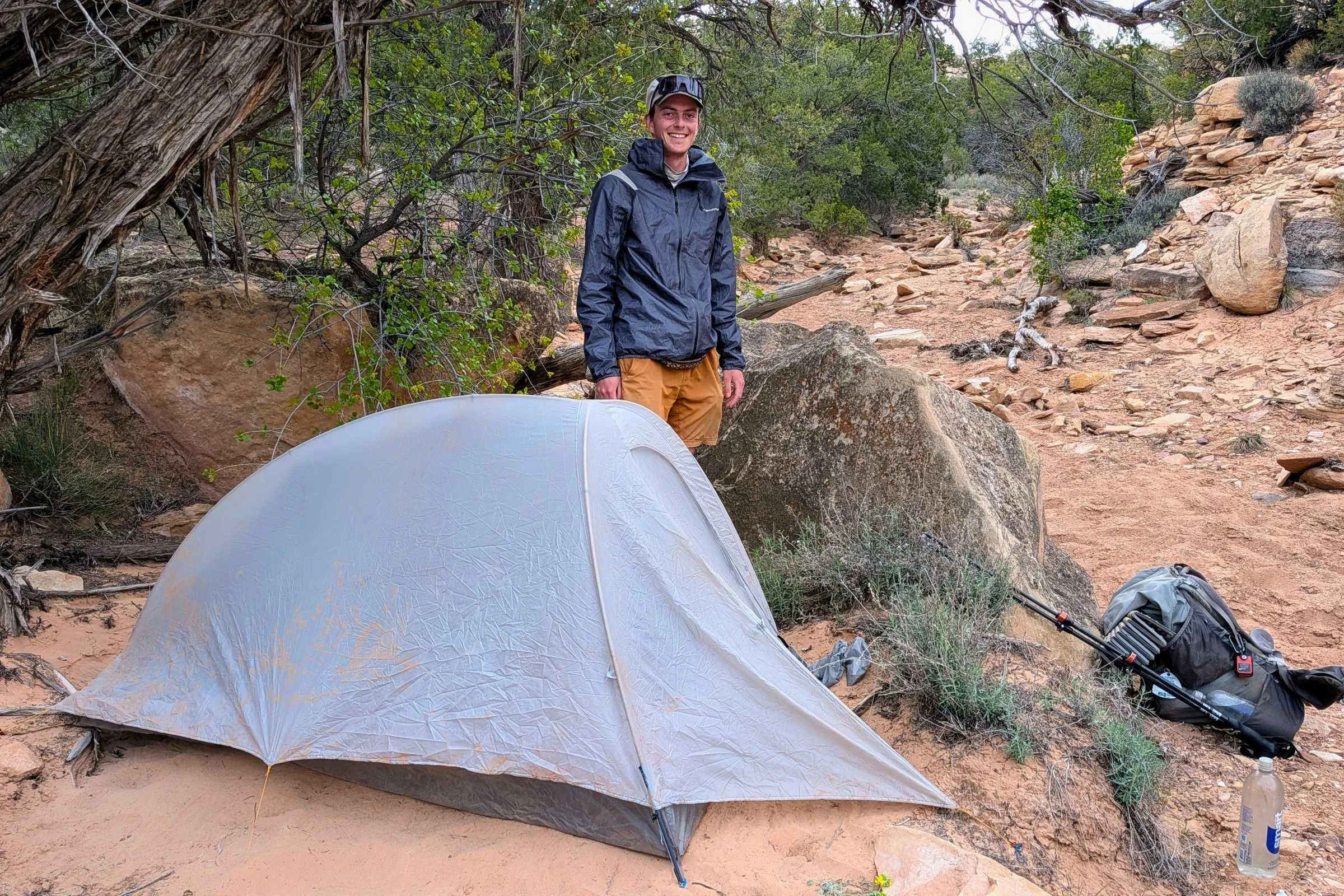
We tested the single-person version of the Nimbus UL while hiking a large section of the Hayduke Trail, from Arches National Park in Utah to the Grand Canyon in Arizona. During that 700-mile hike, we saw temperatures ranging from 20°F to 100°. We set up this tent nearly every night, experiencing snow, rain, heavy winds, and tons of blowing sand. On one particularly rough night, we weathered half a foot of heavy, wet snow, and the Nimbus UL kept us and our gear dry.
The Nimbus excels in its stormworthiness. The rainfly extends low, nearly to the ground, preventing rain from blowing underneath. It is also extremely packable and lightweight. And compared to other ultralight freestanding and semi-freestanding tents, the Nimbus is more affordable.
The biggest downside to the Nimbus is that the door and vestibule are on the head end of the tent. While having one door and vestibule at the end saves weight, crawling headfirst into the tent's head end is more difficult. A side door would require a larger (or asymmetrical) rainfly and would likely reduce usable space in the vestibule, though, so both options have downsides.
If you’re looking for an ultralight semi-freestanding tent that does well in adverse weather and is more affordable than comparable tents from other brands, you should check out the Mountain Hardwear Nimbus UL.
Mountain Hardwear Nimbus UL Tent
We write mission-driven gear reviews. To find the best gear, we combine expert reviews, everyday user opinions, and rigorous independent trail testing—never pop-up or display ads. We are reader-supported and may make a small commission from some qualifying affiliate links. Learn more.
Mountain Hardwear Nimbus UL Specifications
Price: $420
Type: Double-wall semi-freestanding
Capacity: 1-person
Weight: 1 lb 11.2 oz
Material: 20D Nylon Mesh 100% Nylon (body), 20D Sil/Sil Nylon Ripstop 1,200mm (fly), 20D Nylon Ripstop (canopy), 40D Nylon Ripstop Sil/PU 1500mm (tent floor)
Floor space: 19.7 sq ft
Interior length: 86”
Peak height: 38”
Vestibules: 1 (3.9 sqft)
Doors: 1
Stakes required: 5 (2 to pitch inner tent only)
Trekking poles required: None
Includes tent poles: Yes
Variants available: 2P
Made in: Vietnam
Best for
Ultralight backpacking and thru-hiking in wet conditions
Anyone who needs to pitch a tent on surfaces you can’t drive stakes into like rock or sand
People looking for a lightweight double-walled tent that pitches without trekking poles
Bikepackers and kayakers who want an easy-to-pitch shelter (and don't carry trekking poles)
People hiking in humid or wet climates with a lot of condensation.
Comparison table
| BACKPACKING TENT | MSRP | FREE-STANDING | WALLS | SLEEPS | DOORS | VESTIBULES | WEIGHT (oz) | LENGTH (in) | WIDTH (in) | PEAK HEIGHT (in) | FLOOR AREA (ft²) |
|---|---|---|---|---|---|---|---|---|---|---|---|
| Mountain Hardwear Nimbus UL 1 | $420 | Semi | Double | 1 | 1 | 1 | 30.6 | 86 | 28-38 | 38 | 19.7 |
| NEMO Hornet Elite OSMO 1P | $600 | Semi | Double | 1 | 1 | 1 | 29.0 | 87 | 32-40 | 39 | 21.8 |
| Six Moon Designs Lunar Orbiter | $425 | Yes | Hybrid | 1 | 2 | 2 | 44.0 | 90 | 34 | 48 | 21.5 |
| Big Agnes Tiger Wall UL1 | $470 | Semi | Double | 1 | 1 | 1 | 29.0 | 86 | 28-38 | 39 | 19.0 |
| NEMO Hornet OSMO 1P | $460 | Semi | Double | 1 | 1 | 1 | 36.0 | 87 | 30-39 | 39 | 20.6 |
| MSR FreeLite 1 | $440 | Semi | Double | 1 | 1 | 1 | 31.0 | 87 | 33 | 39 | 20.0 |
| MSR Hubba Hubba LT 1 | $470 | Yes | Double | 1 | 1 | 1 | 43.0 | 88 | 32 | 39 | 20.0 |
What we liked
Ultralight semi-freestanding design
Easy to pitch at the end of a long day
Sturdy in high winds
Great weather protection
Minimal condensation during cold nights near water
Less expensive than comparable ultralight tents
What could be better
The entryway is on the head end of the tent
How we tested
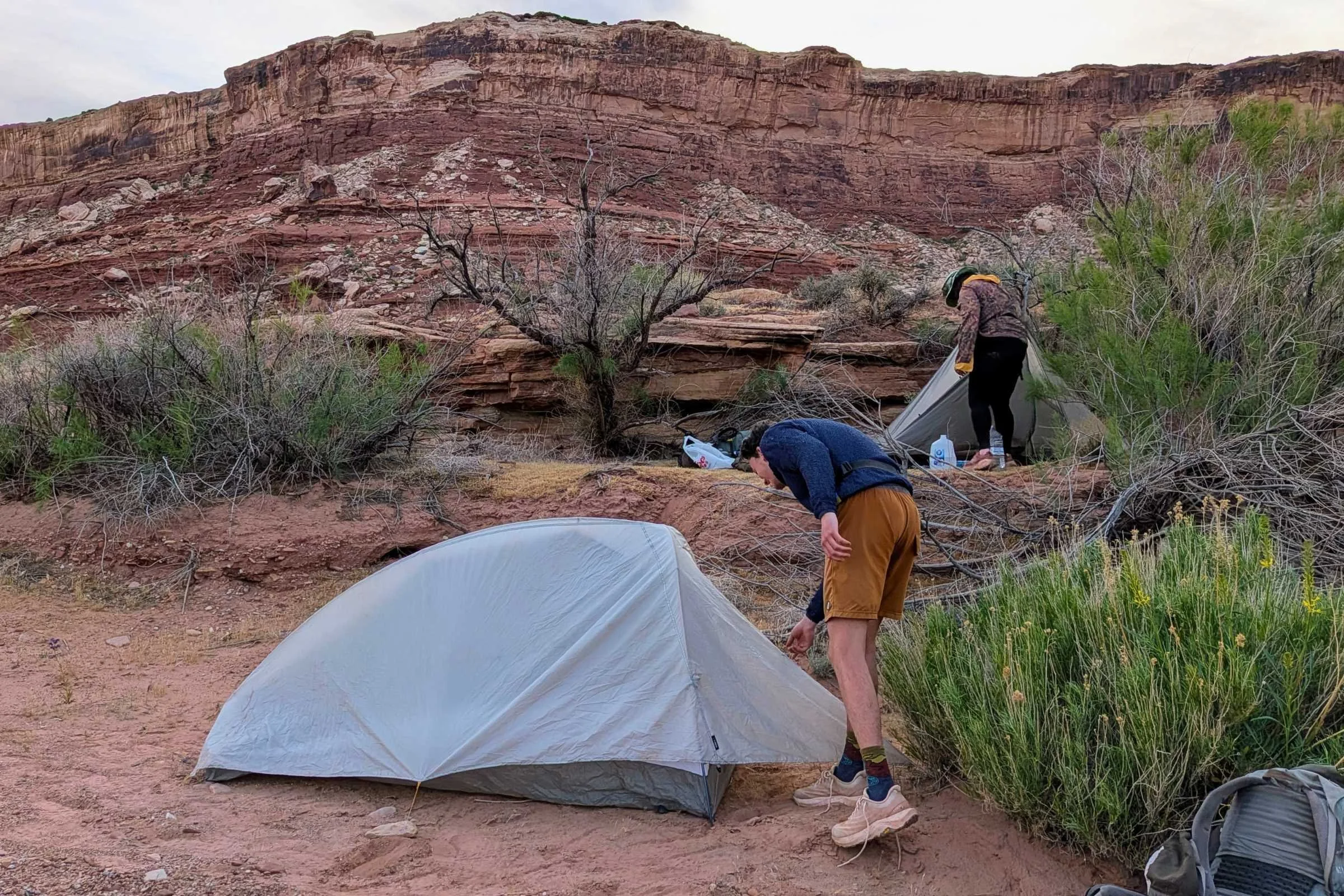
We tested the Nimbus UL tent while backpacking a 700-mile section of the Hayduke Trail from Arches National Park to Grand Canyon National Park. It took 40 days to hike this section during April and May, and we set up the tent every night along the way, except for the occasional night spent in town.
We experienced daytime highs near 100°F and overnight lows ranging from 20°F to 80°F. We regularly dealt with intense wind and blowing sand, so we often pitched our tent with the rainfly on to keep sand out. We also saw a half foot of snow fall overnight during a spring storm. Also, more than once, we had to scramble to quickly put the tent rainfly up when a rainstorm blew in overnight. Fortunately, it’s quick and easy to pitch the fly.
We also tested this tent alongside similar tents in our Best Ultralight Tents guide.
Performance in the field
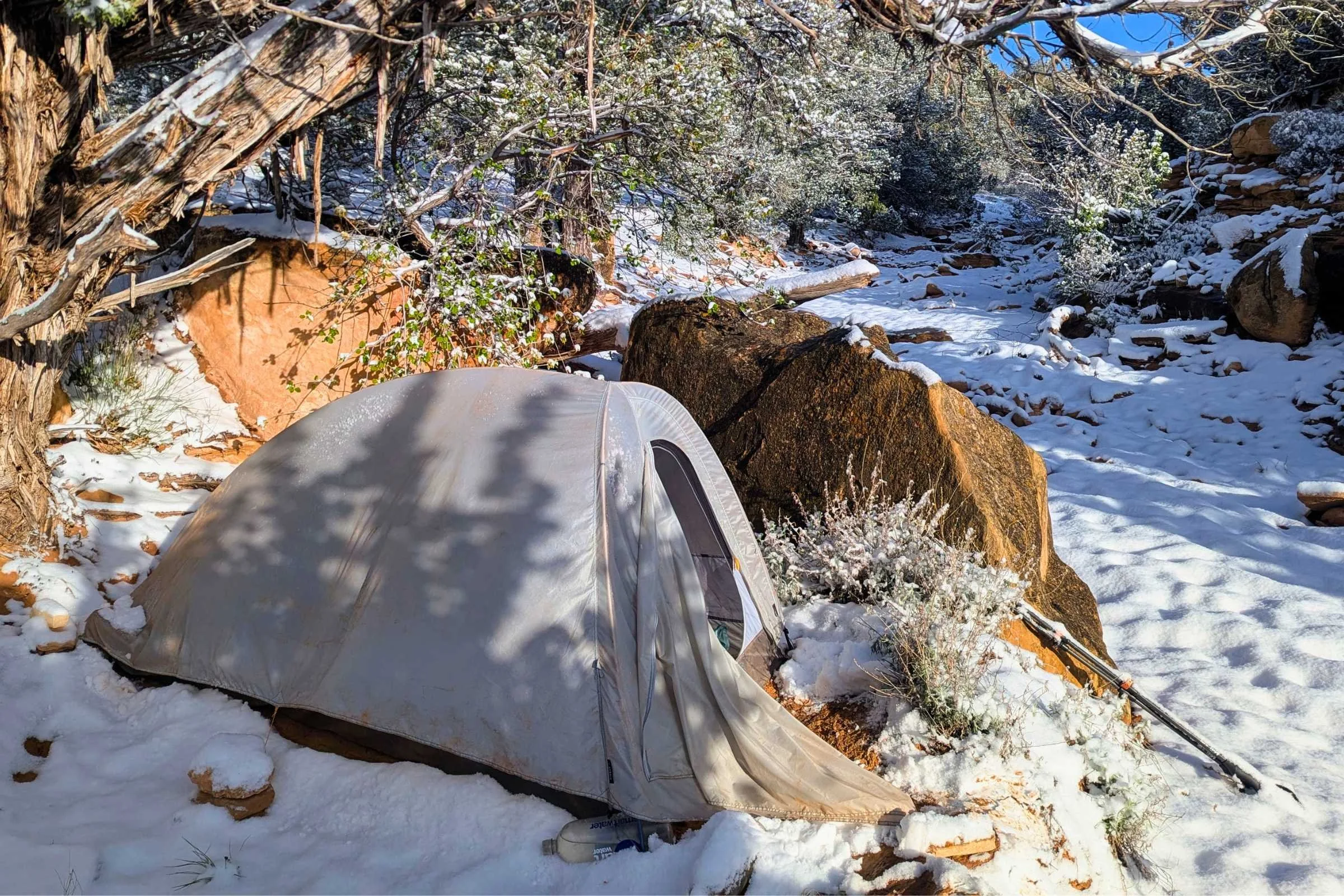
Weather protection
The Nimbus UL is an excellent tent in terms of weather protection. We never got wet during rain or snow, even when the wind was blowing rain sideways. The rainfly never leaked, and the bathtub floor extends up the sides of the tent past where the fly covers, so there isn’t any exposed material that could leak.
Even when we slept in a cold canyon near water, we never had any issues with condensation. The rainfly did occasionally get some condensation. But since this is a double-walled tent, that moisture build-up never caused any pooling inside the tent. Double-walled tents aren’t nearly as prone to condensation issues as single-walled tents. On multiple nights, we pitched the Nimbus right next to a single-walled tent. In the morning, that tent had puddles of water from condensation while the Nimbus UL’s rainfly was only a little bit damp.
Setup and takedown
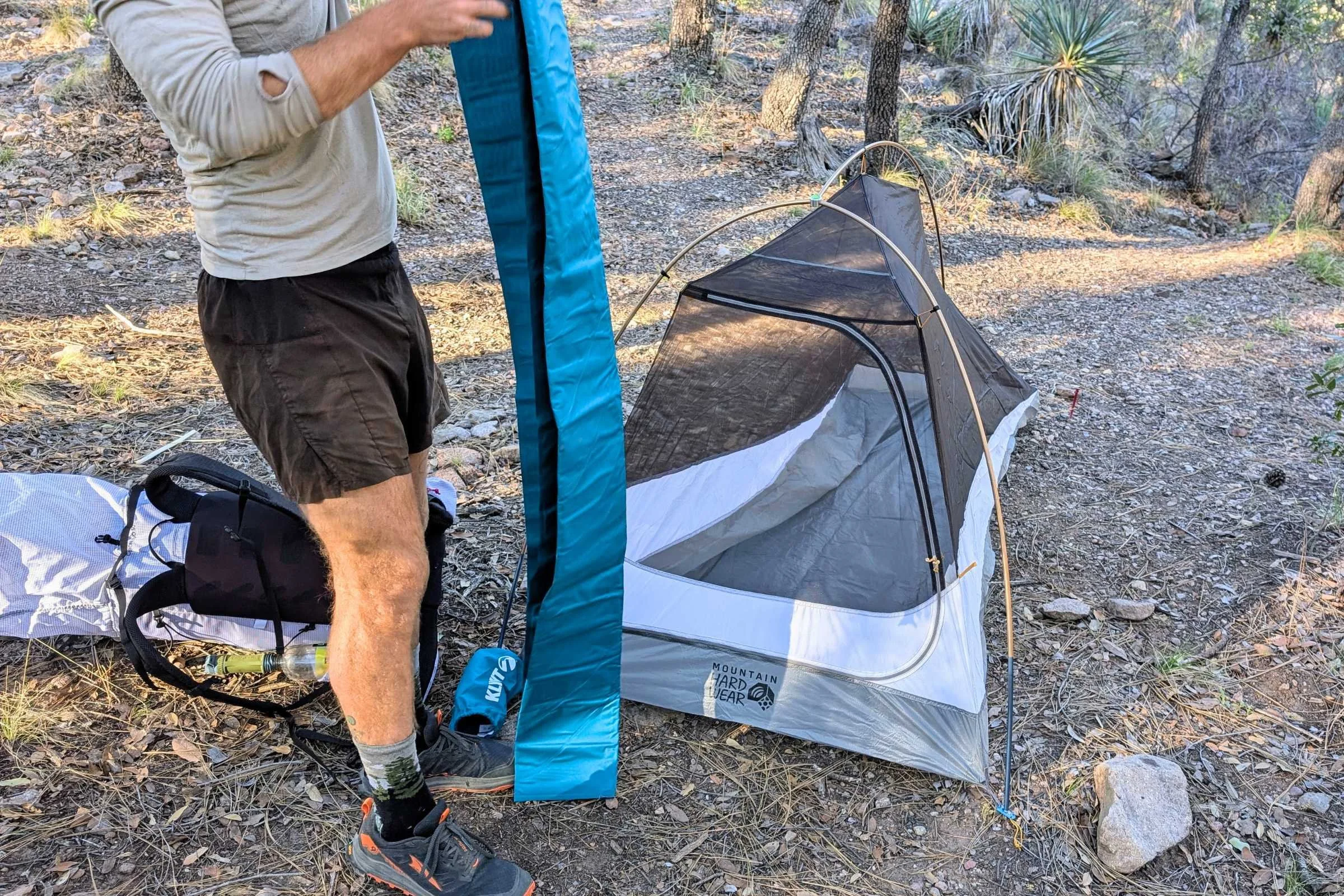
This tent is extremely easy to set up and take down. We regularly had to pitch this tent in high winds, and once you’ve secured the tent body with a few stakes, you can set it up as usual.
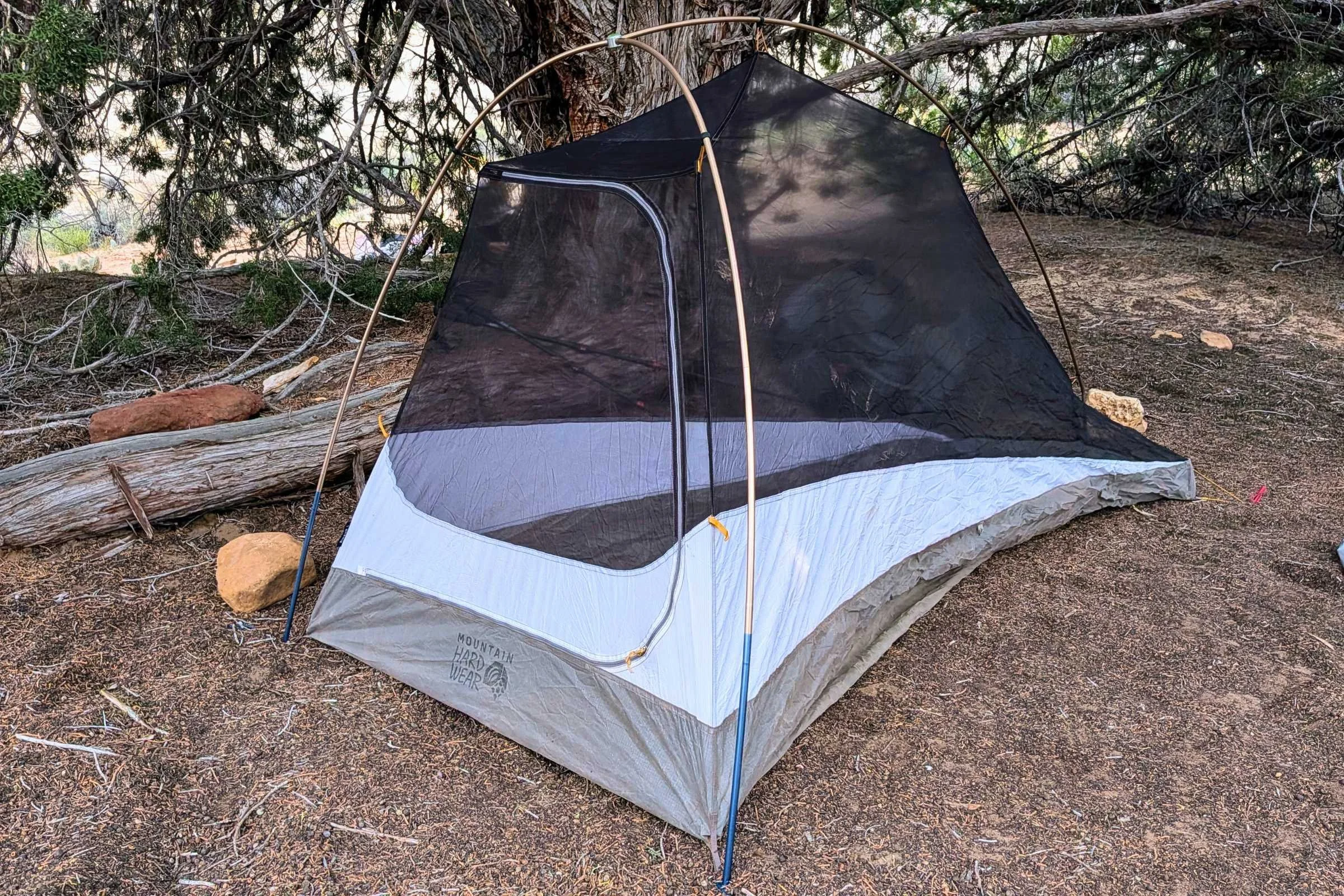
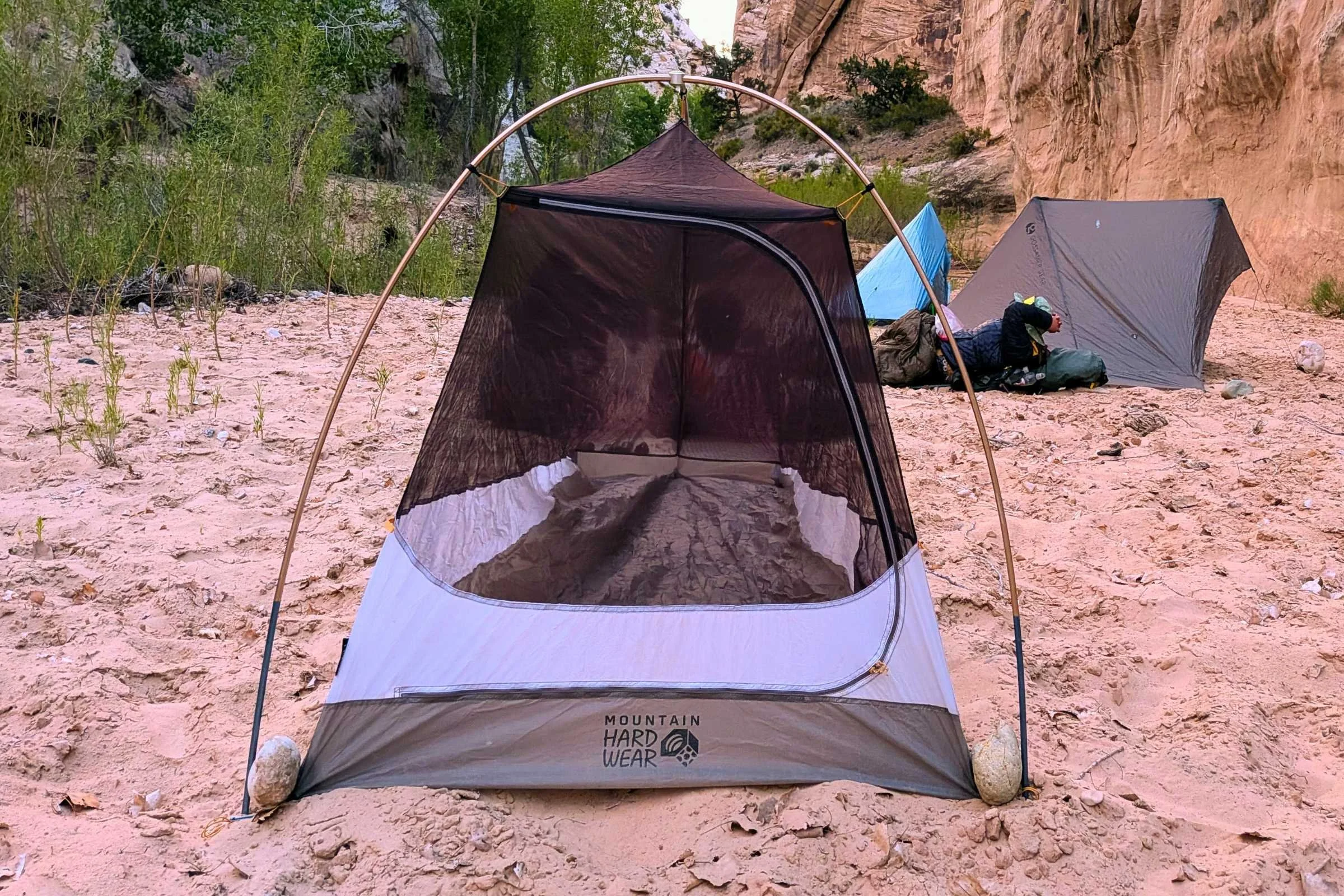
The single Y-shaped tent pole is easy to manage and secure into the grommets at the tent’s base, and the bug net easily attaches to the pole after. The tent pole has hooks that are fixed in place, which attach to cord loops on the mesh tent body. At first, we were skeptical as to why the hooks weren’t attached to the tent body. But after scrambling to pitch this tent as a storm blew in, we understand that this ensures the hooks are always in the correct position.
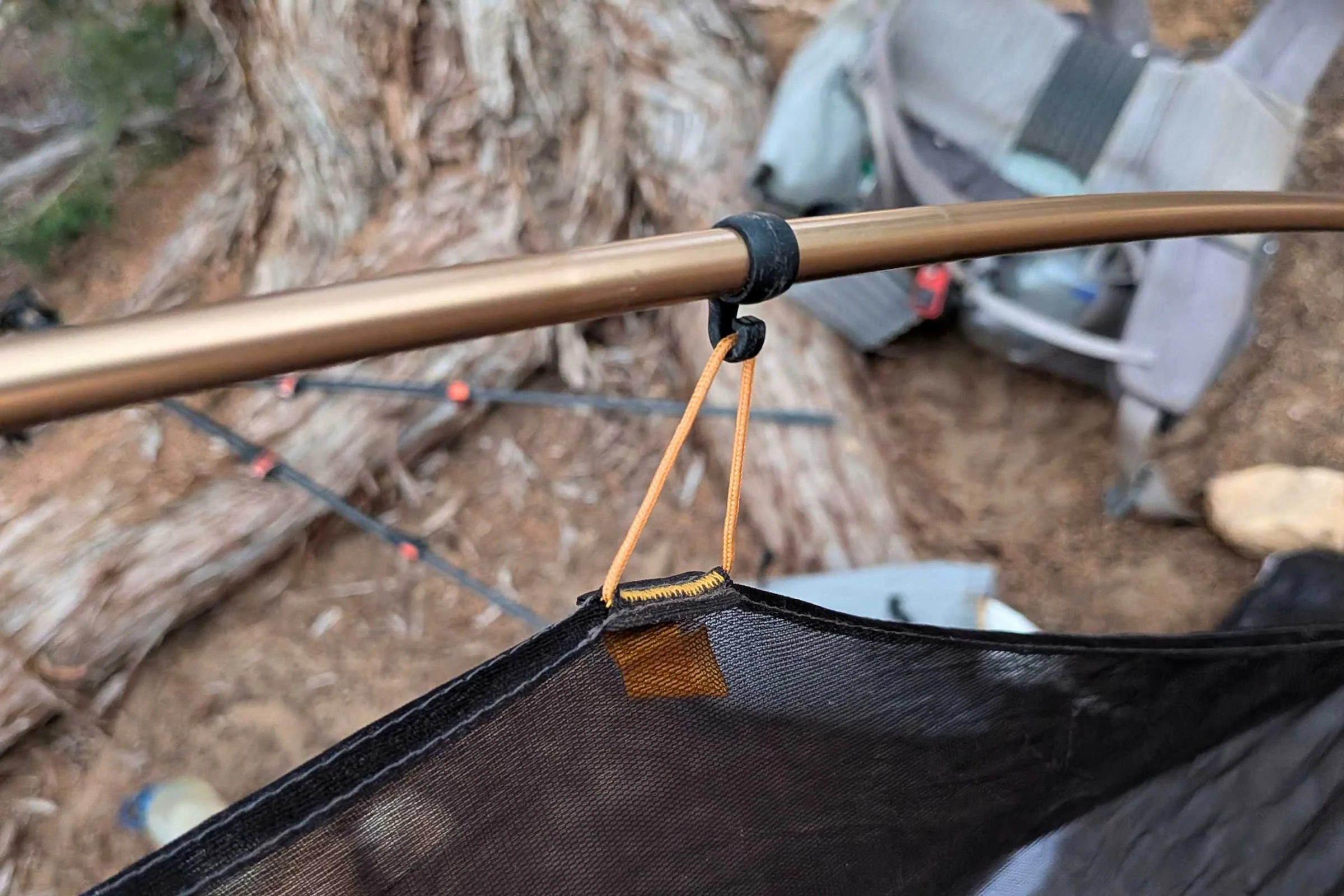
The rainfly attaches to the same grommets that the tent pole attaches to on the head end. It also hooks onto the stakes that hold the foot end out. It also required three more stakes to hold in place—one on each side of the long end, and one more to pull the vestibule out. In total, this tent requires 5 stakes, which is less than many other ultralight tents.
Interior space and livability
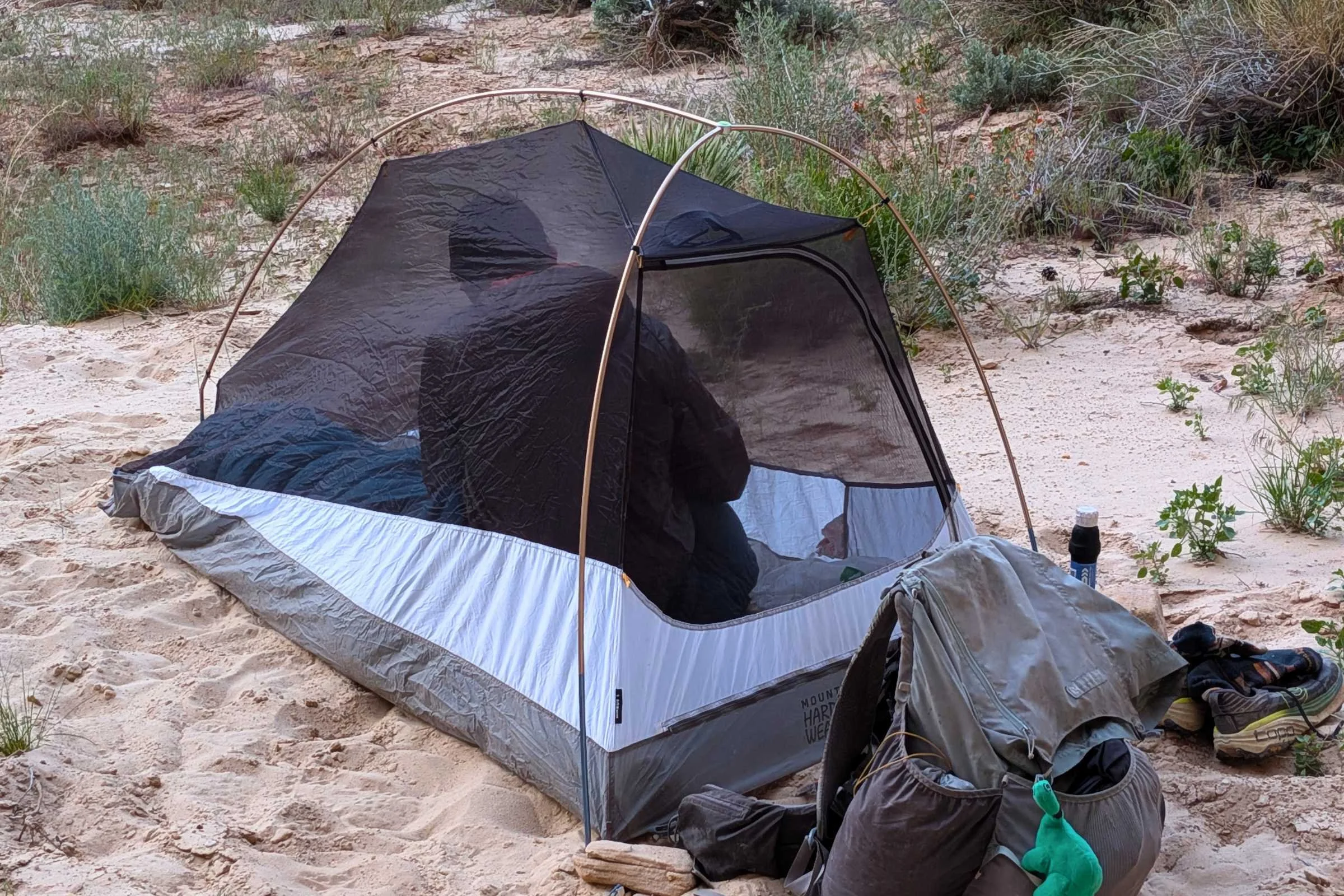
With 38" interior peak height, you can sit up comfortably in this tent. And while it isn’t as roomy as larger backpacking tents that weigh more, it’s roomy enough to sit inside and cook breakfast every morning comfortably.
The biggest drawback of this tent design is that the door enters through the head end of the tent. This means you have to crawl into the tent headfirst, then flip around so your feet face away from the opening. We got used to this, and it isn’t that hard to maneuver since there’s enough interior space, but it’s still slightly annoying. It does illustrate the fact that there is enough interior space for activities, albeit a little cramped.
Ventilation and condensation
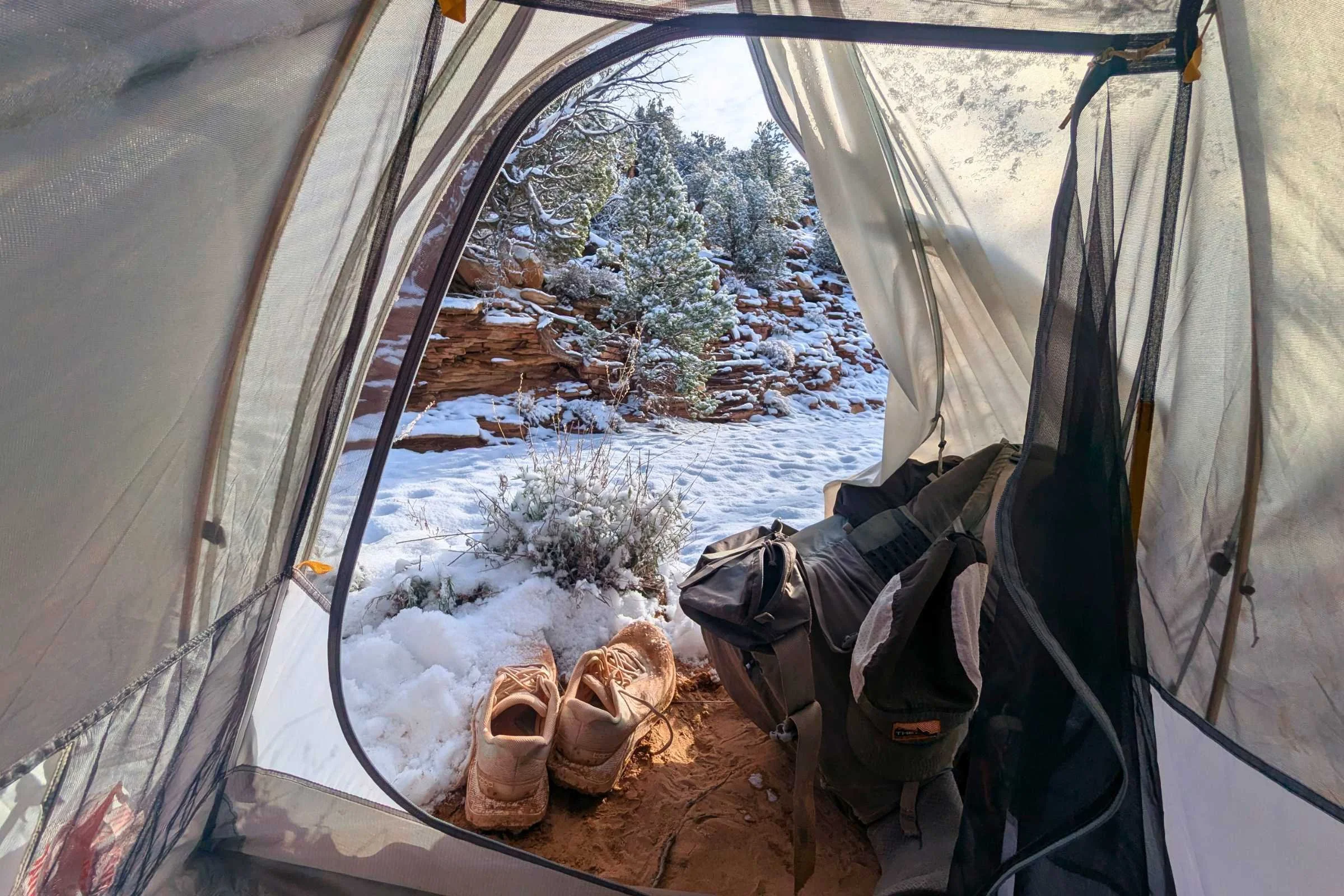
The Nimbus is not very prone to condensation. When we slept near water at the bottom of a canyon on a cold night, we still experienced some condensation on the rainfly. However, since this is a double-walled tent, the damp rainfly didn’t touch the tent body and therefore didn't get us wet inside. Compared to the single-walled tents we were camping next to, the Nimbus didn’t have nearly as much condensation.
There is a minimum of a 1-inch gap between the rainfly and the tent body around the entire tent. At the head end, where the vestibule is, there is a much larger gap to allow air to flow through the tent. There is also a larger gap between the foot end and the rainfly. And the mesh extends farther down the tent at the foot end, which facilitates more airflow.
Packability
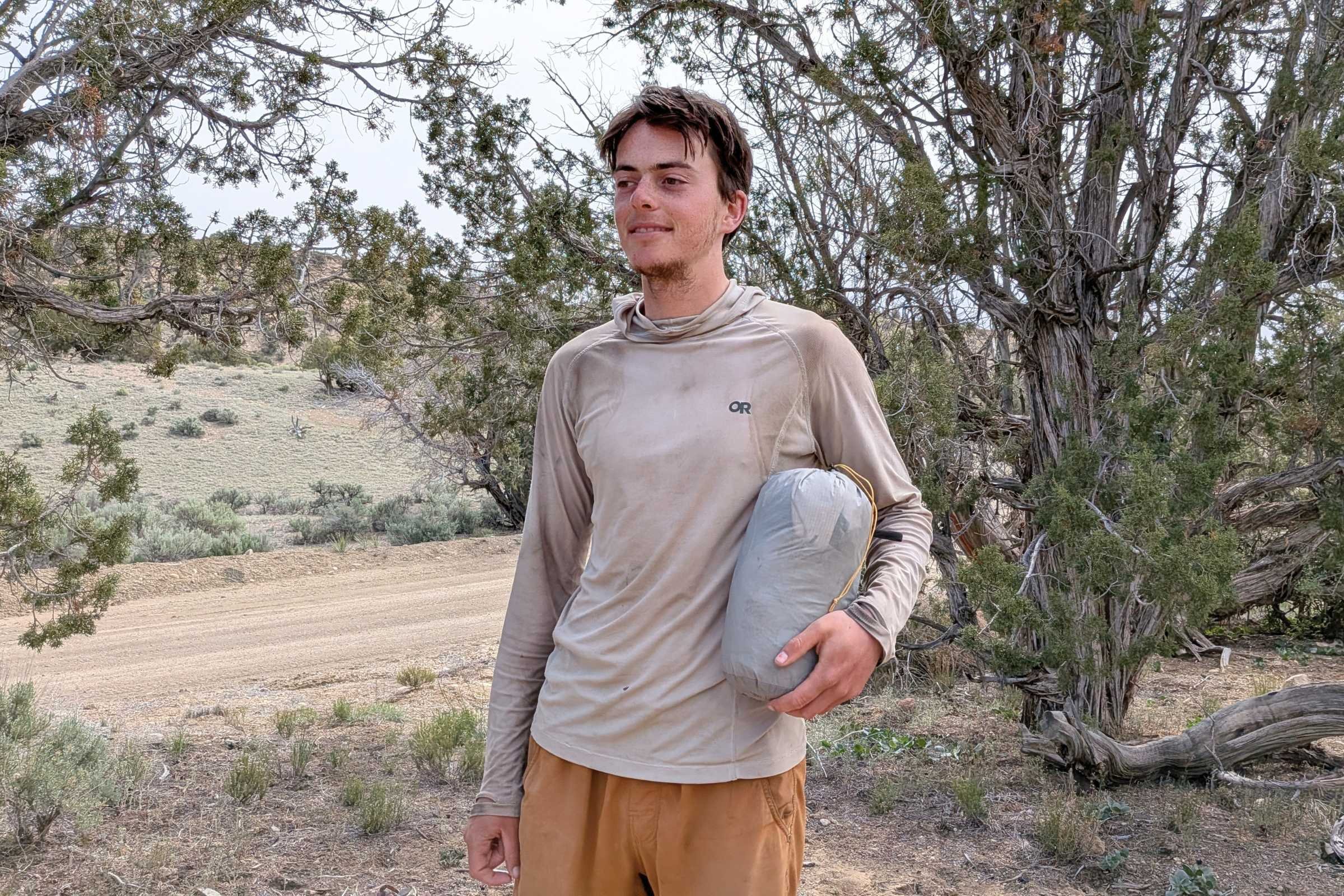
The Nimbus is a very packable tent. We used it with a 50-liter ultralight backpack, and never struggled with the tent taking up too much space. It packs down to an approximately 5” wide by 12” long cylinder—only slightly larger than a Nalgene water bottle. This doesn’t include the tent poles, which measure 15" by 2.5" when packed. The tent poles are longer but slender when folded up, so you can slide them into small openings between other gear in your pack.
We usually stored this tent with the tent poles in a side pocket on the pack that we used, the Gossamer Gear Mariposa, but only because that pack has a side pocket designed specifically for tents. When we did have to carry extra water, we would stuff the tent inside our pack to utilize the extra pocket to hold a water bladder. The Silnylon and Sil/PU materials used in this tent are highly compressible compared to other common ultralight tent fabrics like Dyneema Composite Fiber (DCF). No matter what packing limitations or configurations we dealt with, carrying this tent was never an issue.
Durability
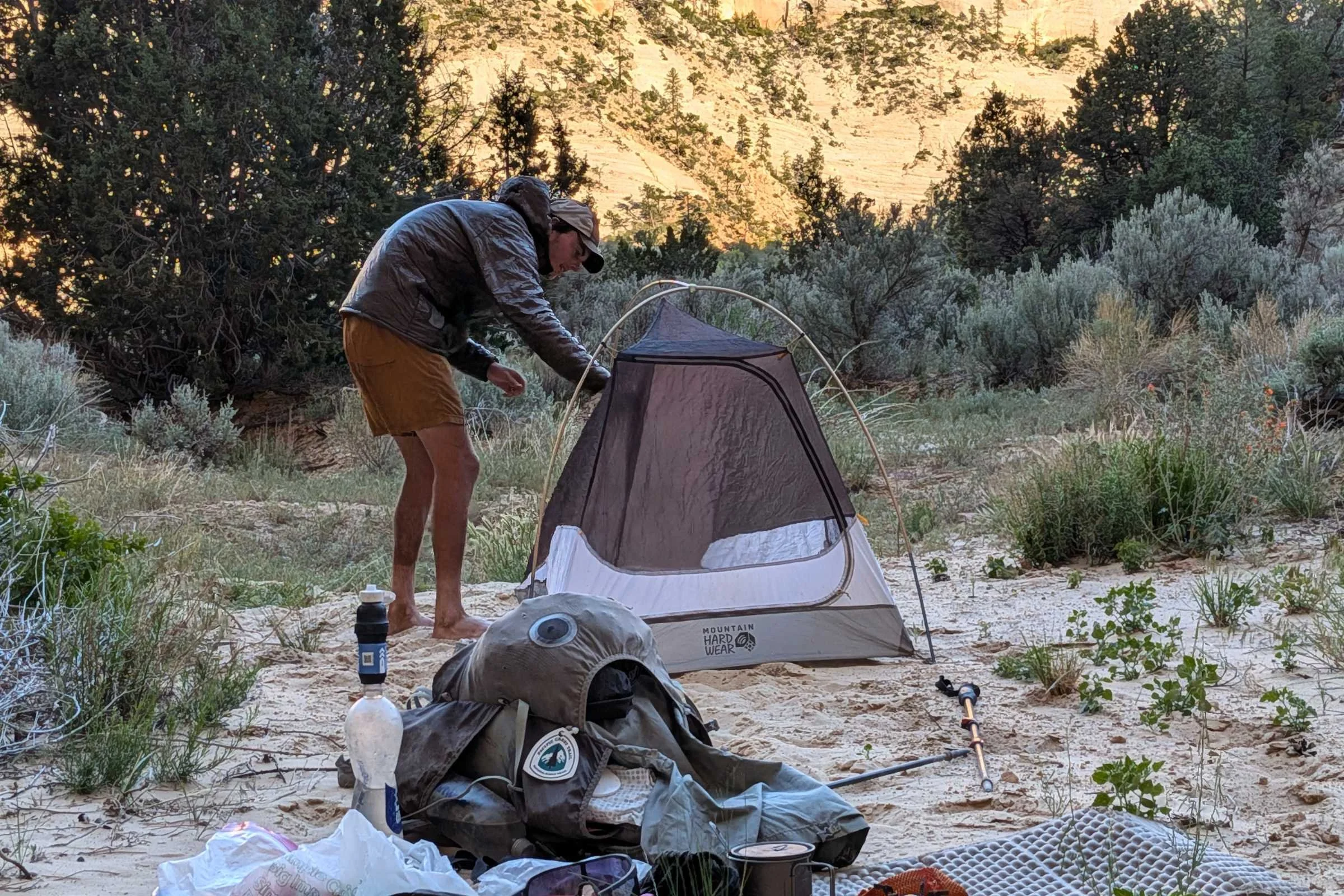
Over 700 miles of backpacking across a dusty desert, the Nimbus had no issues with durability whatsoever. The tent floor is durable enough to pitch on rocky terrain without a groundsheet, and after 40 nights of use, it has no holes or tears. The zippers on the rainfly and inner bug net tent are still working as they should, despite countless nights exposed to blowing sand and dust.
Features
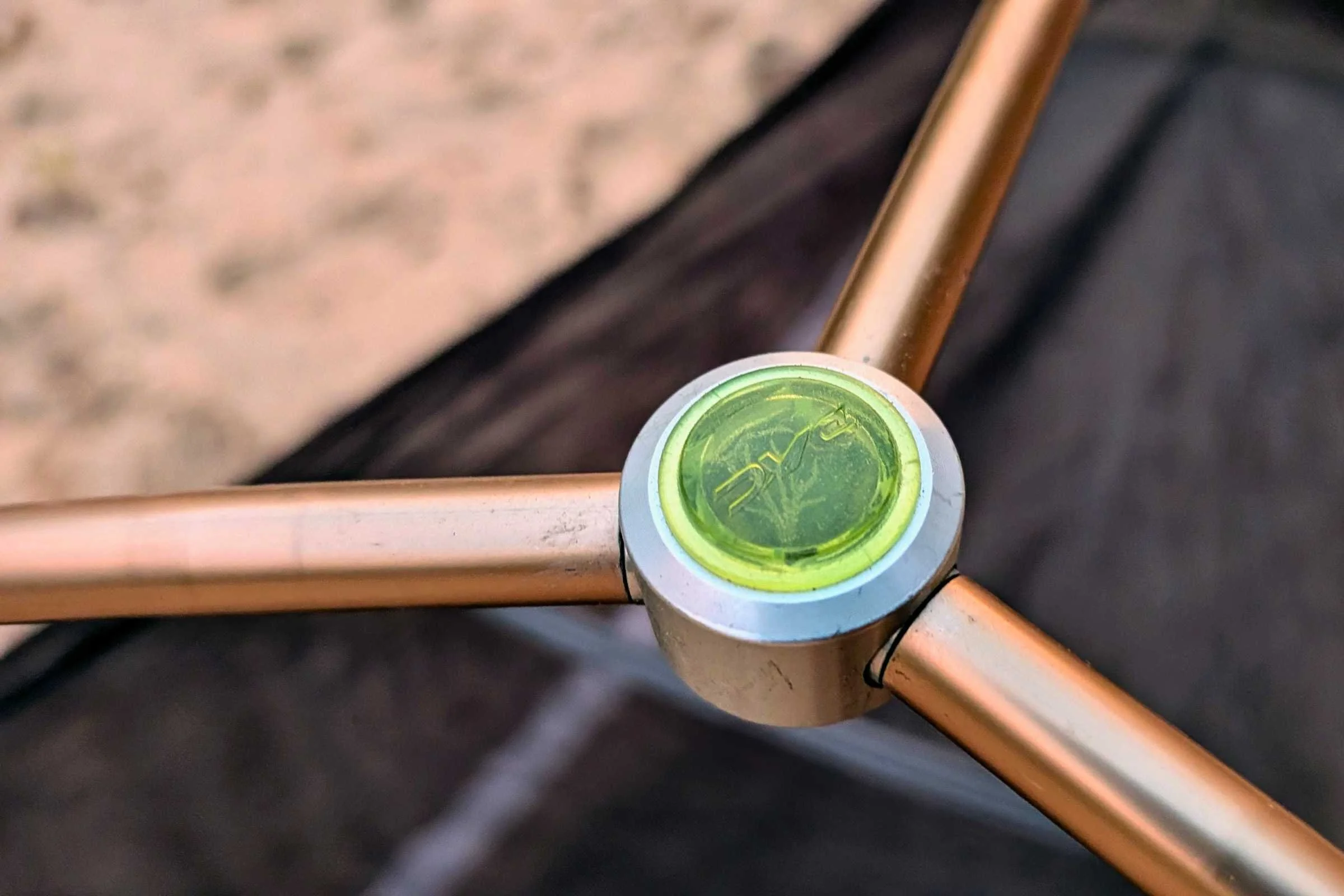
Semi-freestanding Double-Walled Design
The Nimbus is a double-walled, semi-freestanding tent. This means you can pitch the Nimbus’s inner mesh tent with only two stakes holding out the bathtub floor corners at the foot end. You need three more stakes to hold the rainfly in place.
20D Silnylon Ripstop rainfly
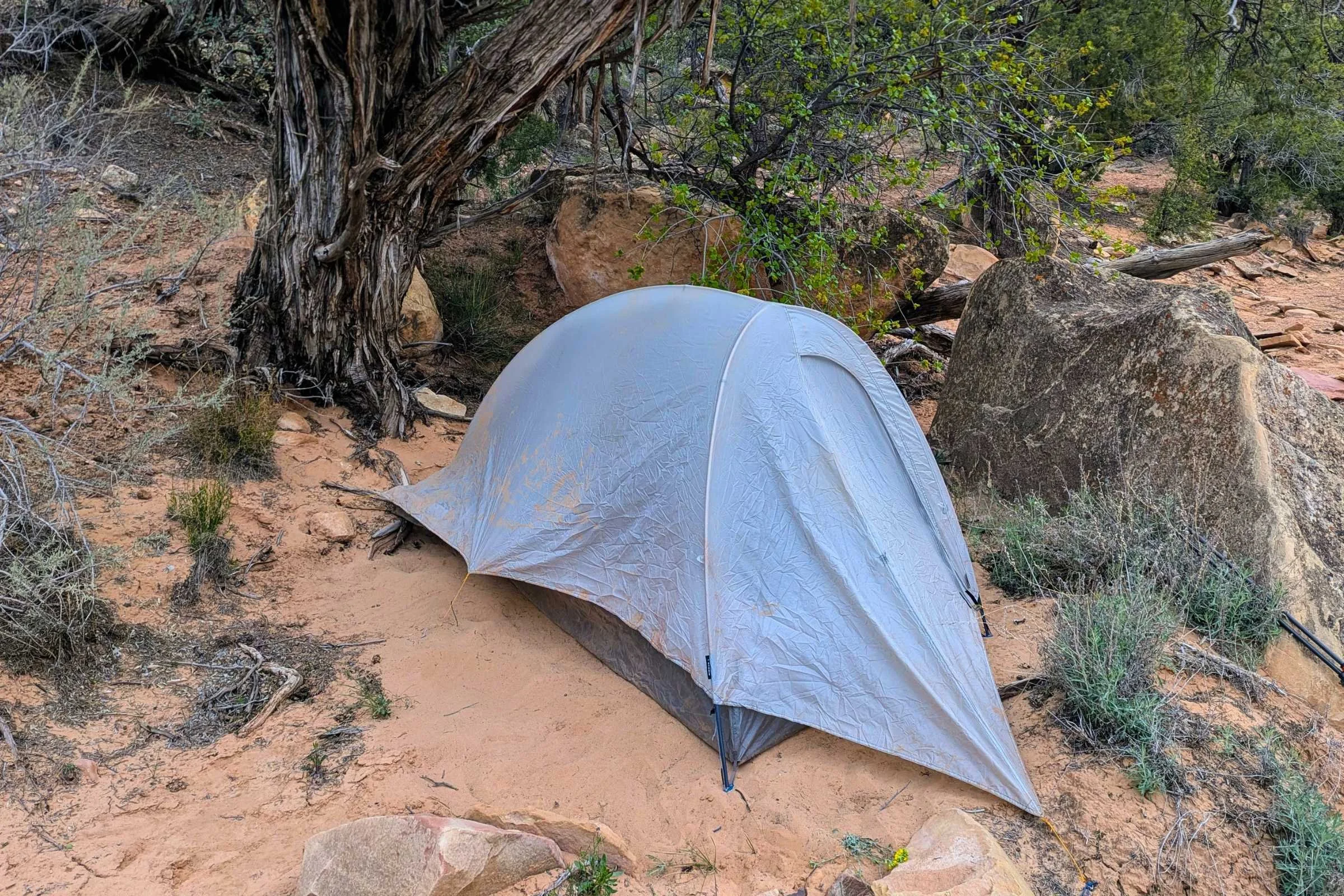
The rainfly is made of 20-denier Silnylon ripstop fabric with a hydrostatic head of 1,200mm.
40D Sil/PU Ripstop bathtub floor
The bathtub floor is made of thicker 40-denier Sil/PU Ripstop fabric with a 1,500mm hydrostatic head rating.
Bug net inner tent
The inner net has a bug net made of 20D nylon mesh.
Single door
The Nimbus has a single door that opens into the vestibule and the inner tent at the head end.
Zippered entry in rainfly and bug net
The vestibule on the rainfly opens with a zipper that wraps up the side of the head end, arcing to the top of the vestibule. There is also a U-shaped zippered opening on the inner mesh tent.
Single vestibule design
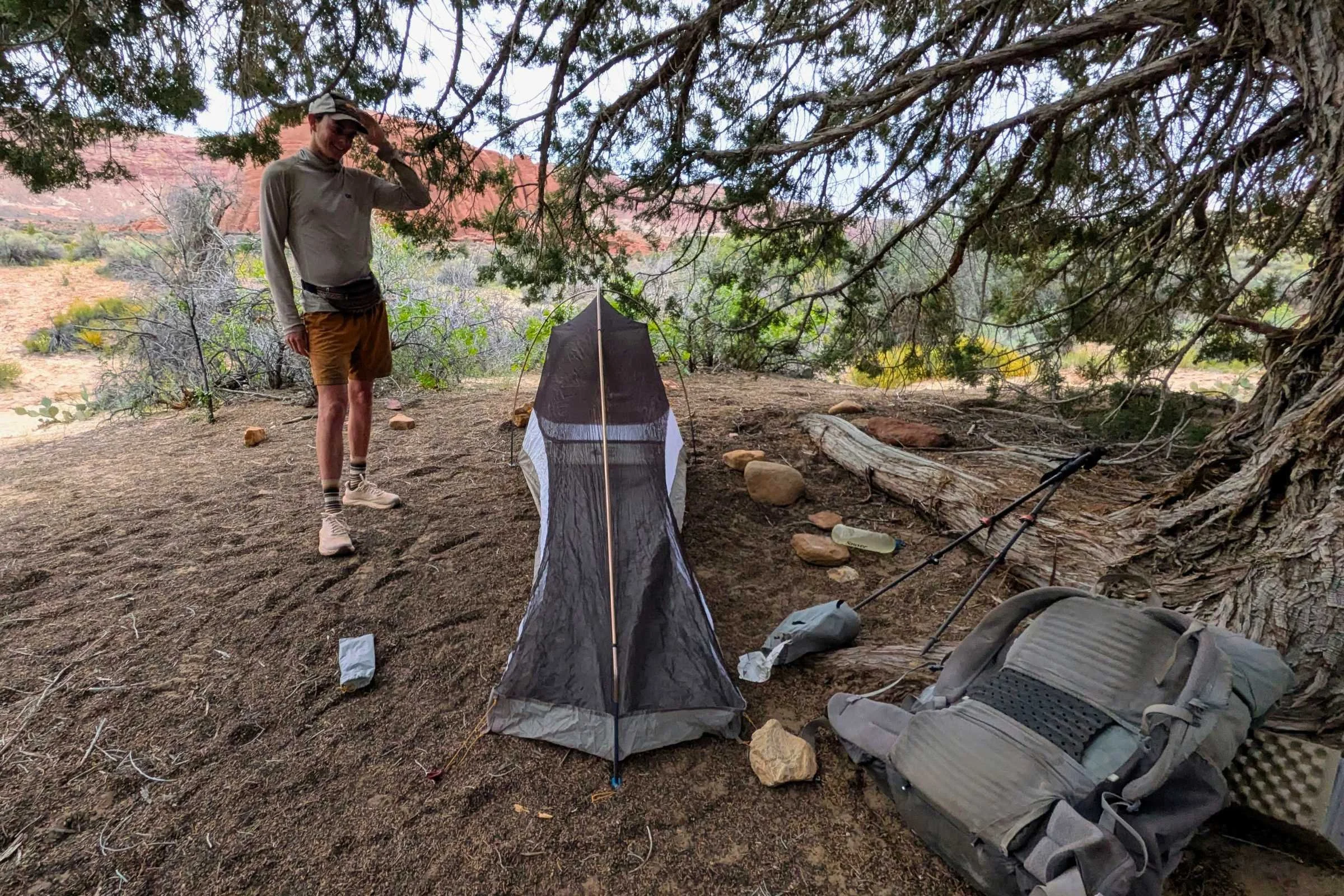
The Nimbus has a single vestibule at the head end of the tent to save weight. It’s large enough to fit your entire pack without bringing it inside the tent with you.
Guy out points
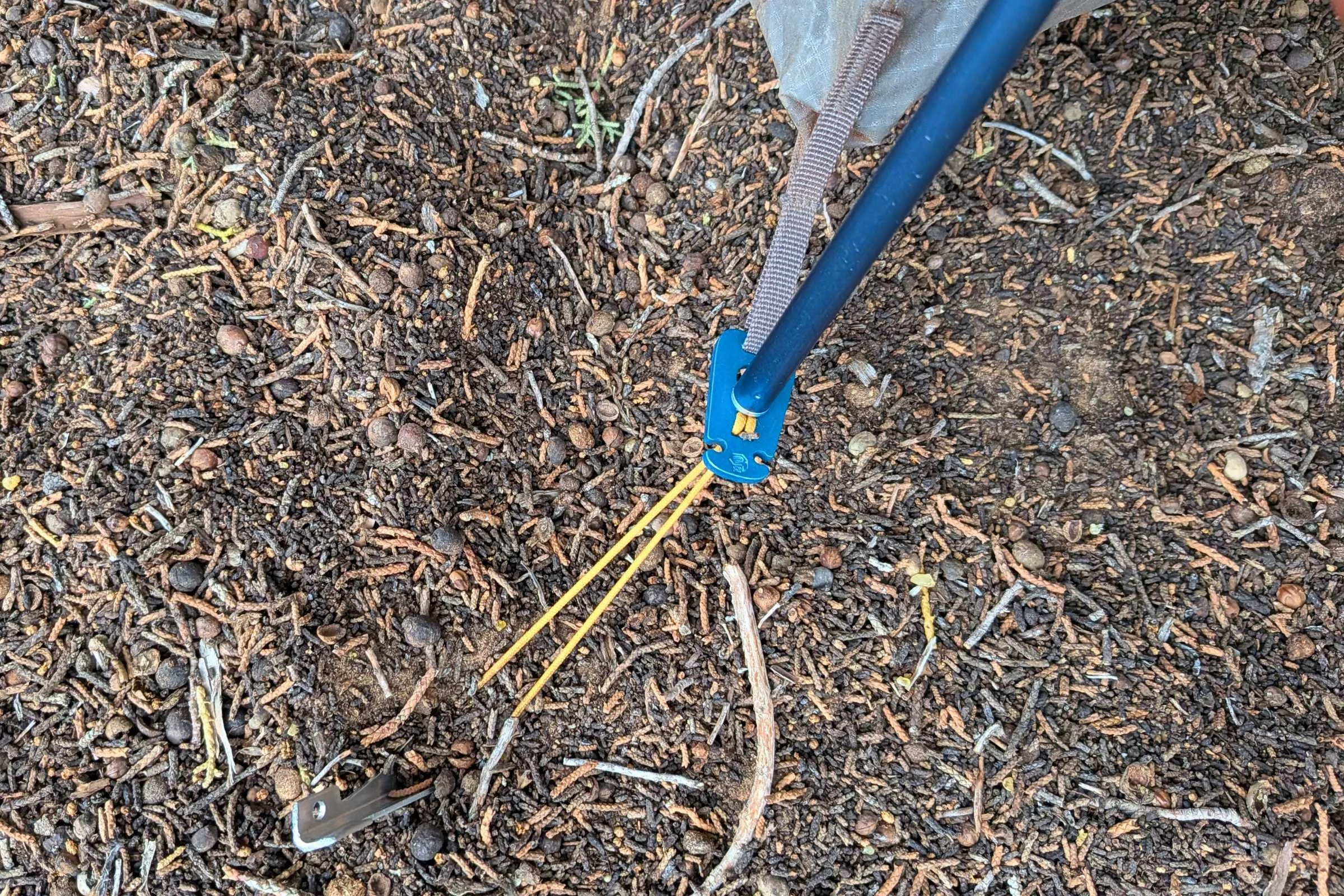
The Nimbus has guy-out points on the four corners of the rainfly and inner tent body. There are additional guy-out points halfway across the long sides of the rainfly and an additional point to hold out the vestibule.
Reflective guylines
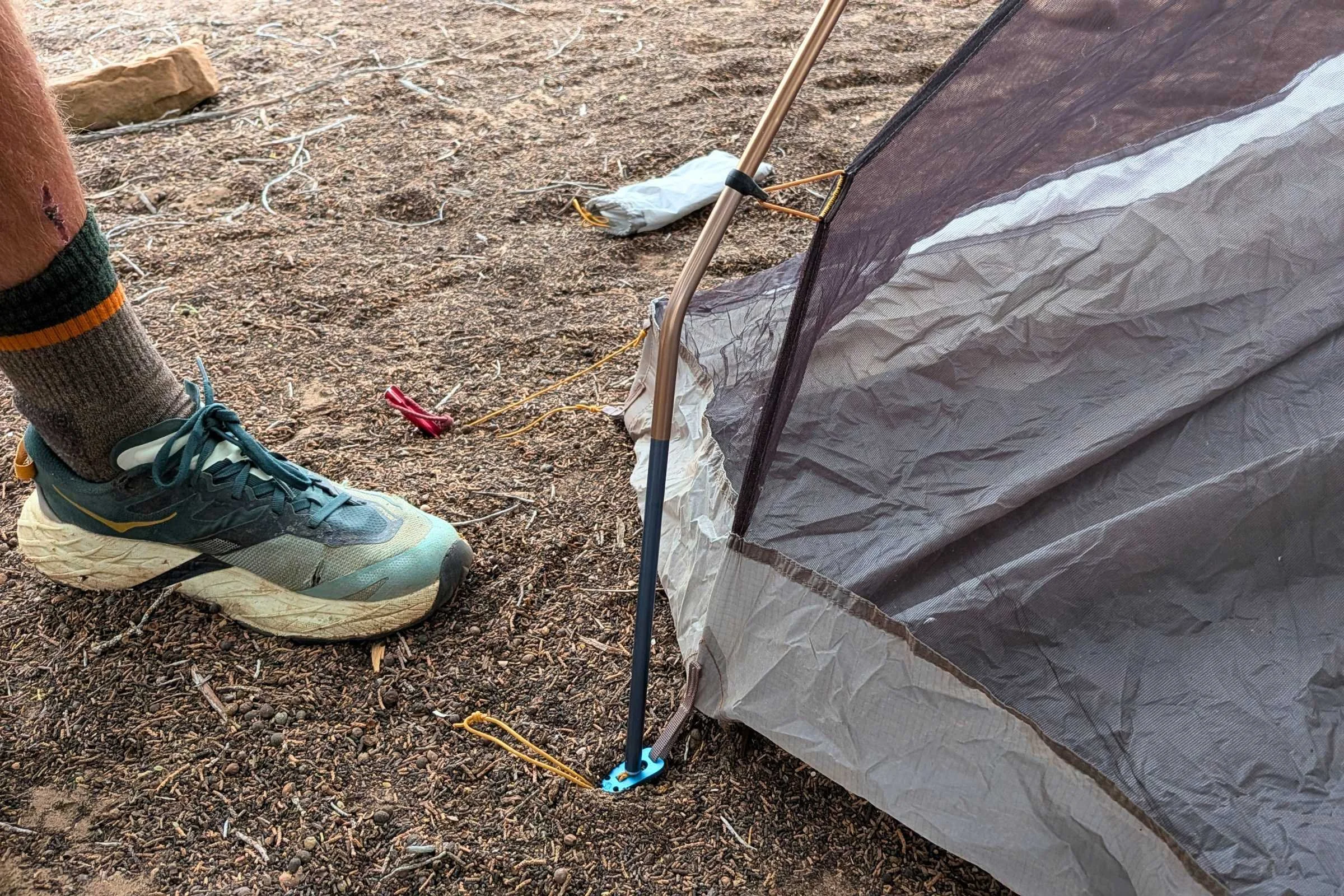
The Nimbus has reflective guylines to see in the dark. The guylines are also yellow, making them fairly easy to see during the day as well.
Included stuff sack
The Nimbus comes with a stuff sack for the tent and rainfly, as well as a separate stuff sack for the tent poles. The main stuff sack has elastic loops to hold the tent poles, too.
Repair kit included
The Nimbus comes with a segment of tent pole to repair the DAC Featherlight NFL tent pole if it breaks.
Sustainability
On their sustainability page, Mountain Hardwear states:
“We are committed to exploring innovative ways of doing business that will support a sustainable future. Our current focus is on putting in place industry leading systems and reporting mechanisms to enable efficient measurement of our social and environmental performance and to provide increased transparency into our practices.”
We look forward to seeing what those systems and reporting mechanisms look like.
Should you buy the Mountain Hardwear Nimbus UL?
Buy if:
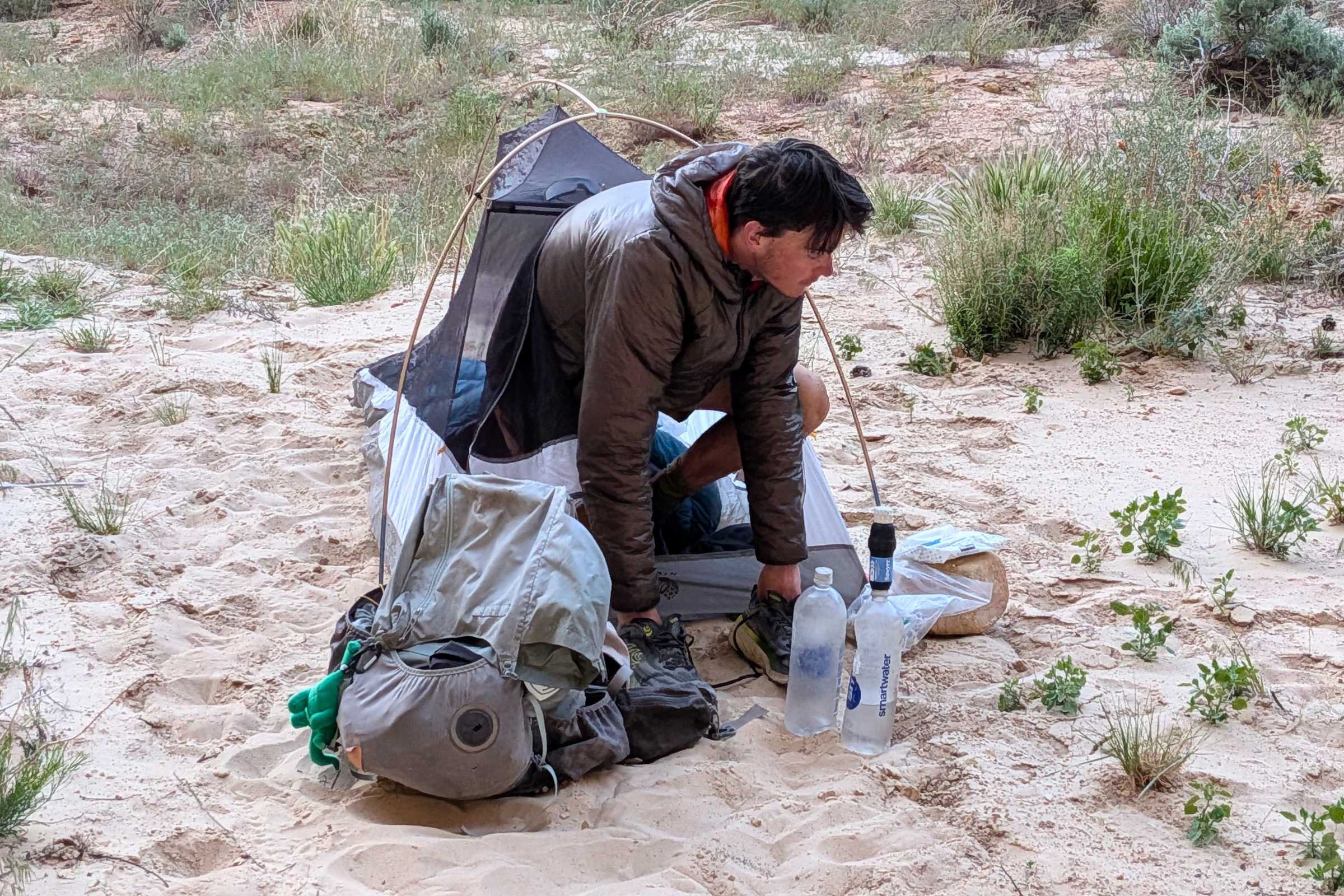
You’re an ultralight backpacker or thru-hiker looking for a more affordable semi-freestanding tent
You’re looking for a lightweight tent for a bikepacking trip or paddling trip where you aren't carrying trekking poles
You don’t use trekking poles when backpacking, and you need a good tent
You want a double wall tent for wetter weather and high wind or areas with high humidity
Skip if:
You don’t like the idea of crawling into the head end of a tent every night
You want a tent that sets up with trekking poles
You don’t mind packing a heavier tent for more room
You want a lighter tent or tarp and are ok with something single-walled
You want a DCF tent
Where to buy
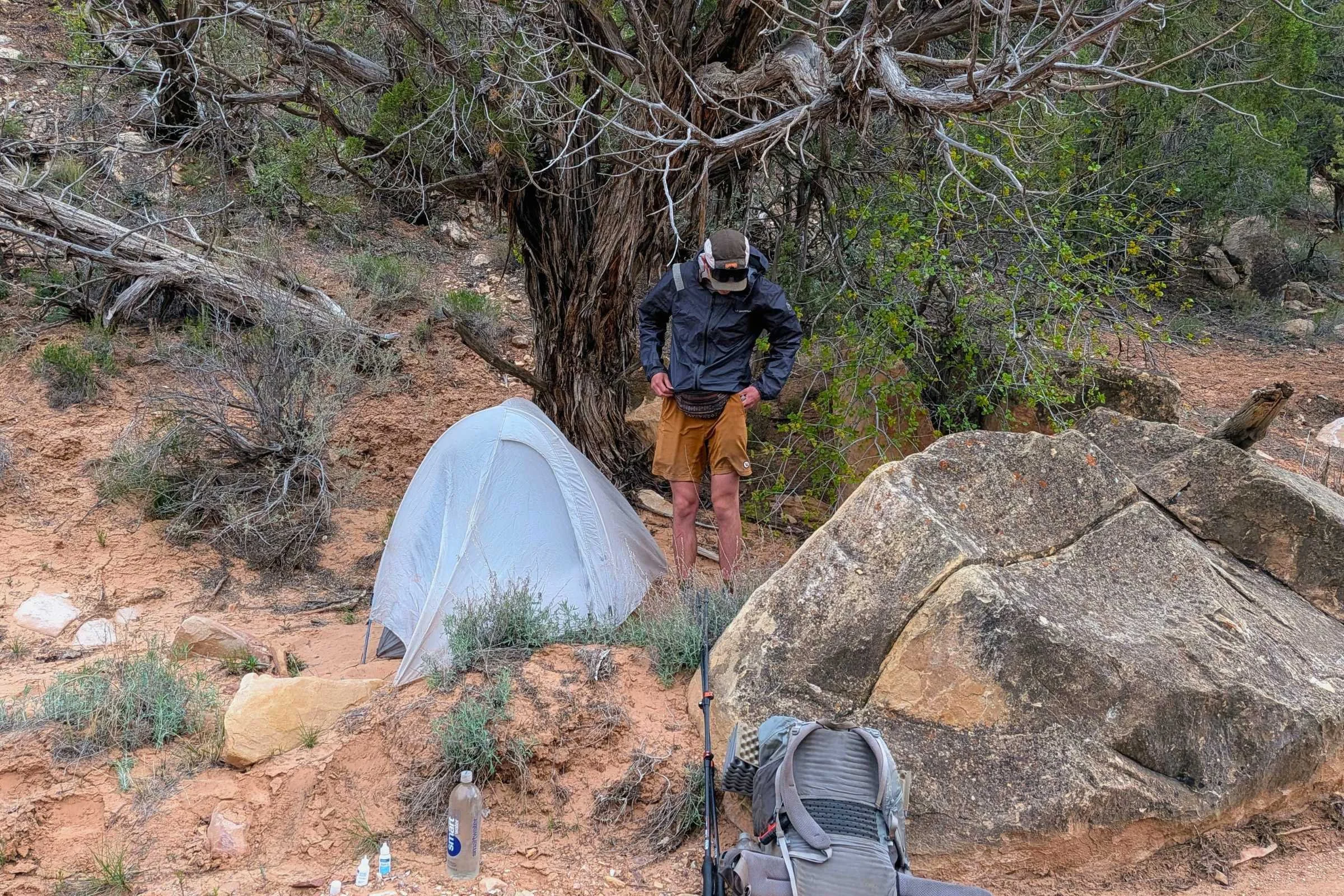
The Mountain Hardwear Nimbus UL Tent is a popular gear item, so you have options when it comes to retailers. Here are some of the pros of the retailers.
REI
Pros: 100% satisfaction policy for 1 year; 10% dividend for members.
Backcountry
Pros: Frequent sales for Expedition Perks members (free to join), fast shipping, Gearhead chat customer service is excellent
Mountain hardwear
You can sometimes find more options when purchasing directly from Mountain Hardwear. Sometimes, purchasing directly from the retailer can make it easier if you need to make a warranty return, such as if there is a defect.
Advice on where to buy
In general for gear, we recommend purchasing from a place with easy or free returns, like REI.
Similar ultralight backpacking tents
Mountain Hardwear Nimbus UL vs NEMO Hornet OSMO
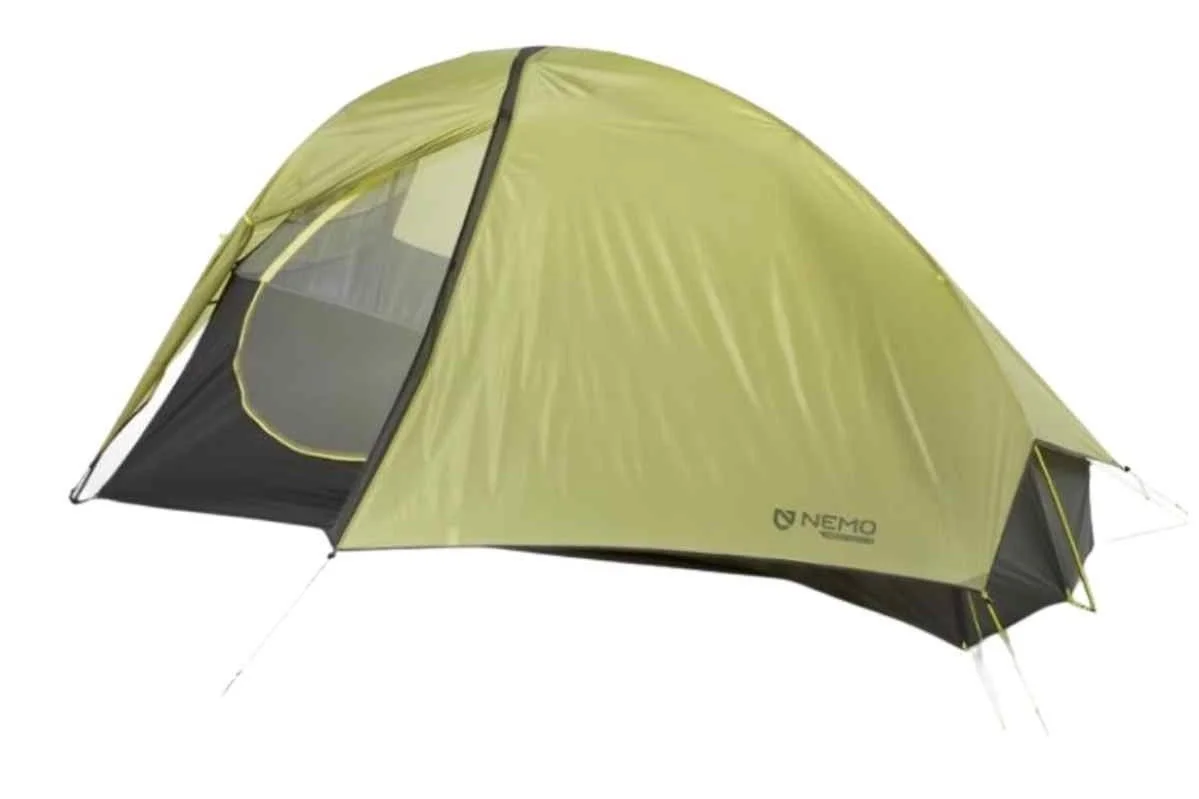
Type: Double-wall, semi-freestanding
Weight: 29 oz
Sleeps: 1, 2 and 3 available
Material: 100% recycled OSMO (polyester, nylon)
Vestibules: 1
Stakes required: 4
Trekking poles required: 0
The NEMO Hornet OSMO is a semi-freestanding tent similar in design to the Nimbus. The Hornet weighs 1 lb 13 oz compared to the Nimbus UL, which weighs 1 lb 11 oz. The Hornet costs $460, and the Nimbus costs $420.
Both of these tents are quite storm worthy, packable, and durable. The Hornet has a single door, which allows you to enter from the side of the tent. We think it’s easier to get in and out of the Hornet because of this side-entry door, compared to the head-end door on the Nimbus. The Nimbus costs less than the Hornet, but climbing in and out of the head end of that tent every morning is a downside for some people.
The Hornet also has the Nimbus beat in terms of sustainability. The Hornet’s OSMO fabric is made from 100% recycled yarns free from PFAS. Both of these tents have a 1200 mm hydrostatic head on the rainfly, but the Nimbus has a 1500 mm hydrostatic head on the bathtub, compared to the Hornet’s bathtub which is also 1200 mm.
NEMO Hornet OSMO
Mountain Hardwear Nimbus UL vs NEMO Hornet Elite OSMO

Type: Double-wall, semi-freestanding
Weight: 23 oz
Sleeps: 1, 2 and 3 available
Material: 100% recycled OSMO (polyester, nylon)
Vestibules: 2
Stakes required: 4
Trekking poles required: 0
The NEMO Hornet Elite is the winner of the Best Semi-freestanding Tent award in our Ultralight tents guide. The Hornet Elite is the same size and shape as the Hornet OSMO, but the Hornet Elite uses the lightest materials possible. The Hornet Elite weighs 1 lb 7 oz, which is unusually light for a semi-freestanding tent. However, it costs $600, which is significantly more than the Nimbus.
For the weight savings and side-entry door, we think the Hornet Elite is a great tent, but we can’t deny that not everyone wants to pay an extra $200 for a tent that’s 4 ounces lighter.
The Hornet Elite also has the Nimbus beat in terms of sustainability. The Hornet Elite uses the same OSMO fabric as the Hornet OSMO, which is made from 100% recycled yarns and free from PFAS. The Hornet Elite and Nimbus have a 1200 mm hydrostatic head on the rainfly, but the Nimbus has a 1500 mm hydrostatic head on the bathtub, compared to the Hornet Elite’s bathtub, which is also 1200 mm.
Learn more in our in-depth review of the NEMO Hornet Elite OSMO backpacking tent.
NEMO Hornet Elite OSMO
Mountain Hardwear Nimbus UL vs MSR Freelite

Type: Double-wall, semi-freestanding
Weight: 26 oz (1P), 37 oz (2P)
Sleeps: 1, 2 and 3 available
Material: 15D ripstop nylon 1200mm Durashield polyurethane & DWR
Vestibules: 2
Stakes required: 7
Trekking poles required: 0
The MSR FreeLite is another great semi-freestanding tent that’s similar to the Nimbus. We almost picked the Freelite as the best semi-freestanding tent, but opted for the Hornet Elite instead. The main difference between the Freelite and the Nimbus is that the Freelite’s door is on the side of the tent. This makes getting in and out of the tent slightly easier than with the Nimbus. The Freelite (26 oz) and Nimbus (27 oz) weigh almost exactly the same. The Freelite costs $440, and the Nimbus costs $420.
MSR Freelite
Mountain Hardwear Nimbus UL 1 vs Six Moon Designs Lunar Orbiter
Type: Hybrid double-wall, freestanding
Weight: 2 lb 12 oz
Sleeps: 1
Material: 20D SilPoly canopy, 40D SilPoly floor
Vestibules: 2
Stakes required: 0
Trekking poles required: 0
If you'd rather have a truly freestanding tent with two doors and don't mind the extra weight, the Six Moon Designs Lunar Orbiter costs about the same but adds over 13 ounces — buying you dual-door entry, twin vestibules, more livable interior space, and higher peak height. For more, read our in-depth review of the Lunar Orbiter.
Why you should trust us / About the author
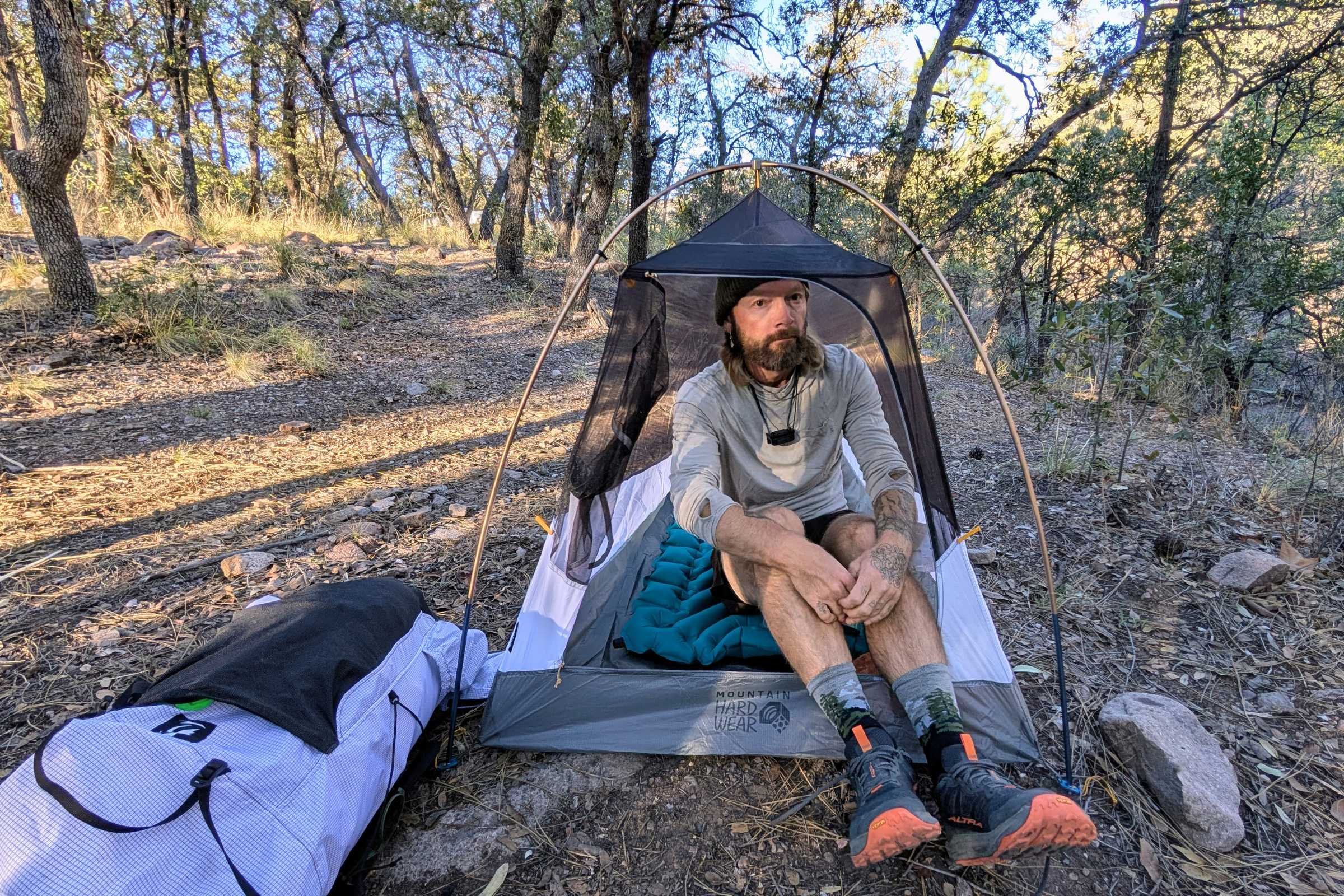
Sam Schild is a thru-hiker, trail runner, bikepacking cyclist, and mountain athlete based in a campervan across the American Southwest. He has thru-hiked the Pacific Crest Trail, Continental Divide Trail, Appalachian Trail, Grand Enchantment Trail, Arizona Trail, Pacific Northwest Trail, Hayduke Trail, and the Colorado Trail twice. He has also bikepacked across the country and throughout the American Southwest, including the Colorado Trail and the Kokopelli Trail. On every one of those trips, he’s used an ultralight tent.
You can read more about Sam on his author page, website, or on Instagram.


