Sea to Summit Ether Light XR Review: The Sleeping Pad That Kept a Side Sleeper Off the Ground
A plush, ultralight insulated pad for backpackers who refuse to sacrifice sleep comfort
July 13th, 2026
Home > Gear Reviews > Backpacking
Our verdict
The Sea to Summit Ether Light XR Insulated Air sleeping pad is the newest iteration of plush, ultralight sleeping pads. For side sleepers, people who roll around, or backpackers who bottom out on their sleeping pad, inflatable pads can be uncomfortable. The Sea to Summit Ether Light XR solves that with their innovative Air Sprung cells, which operate like springs on a mattress back home. Each cell holds weight and diffuses it so it's always comfortable. It has the best pump sack in the inflatable sleeping pad industry. Plus, it's costs a little less than similar premium sleeping pads we've tested.
The Sea to Summit Ether Light XR Insulated Air sleeping pad is one of the best sleeping pads for people who want one pad for backpacking and camping. With a thickness of almost 4", it's the most plush sleeping pad we considered for backpacking. It's comfortable enough for car camping, easy to use, of quality construction, and insulated enough to work for folks who only want to own one inflatable pad for camping and backpacking.
Sea to Summit Ether Light XR Insulated Air Sleeping Pad
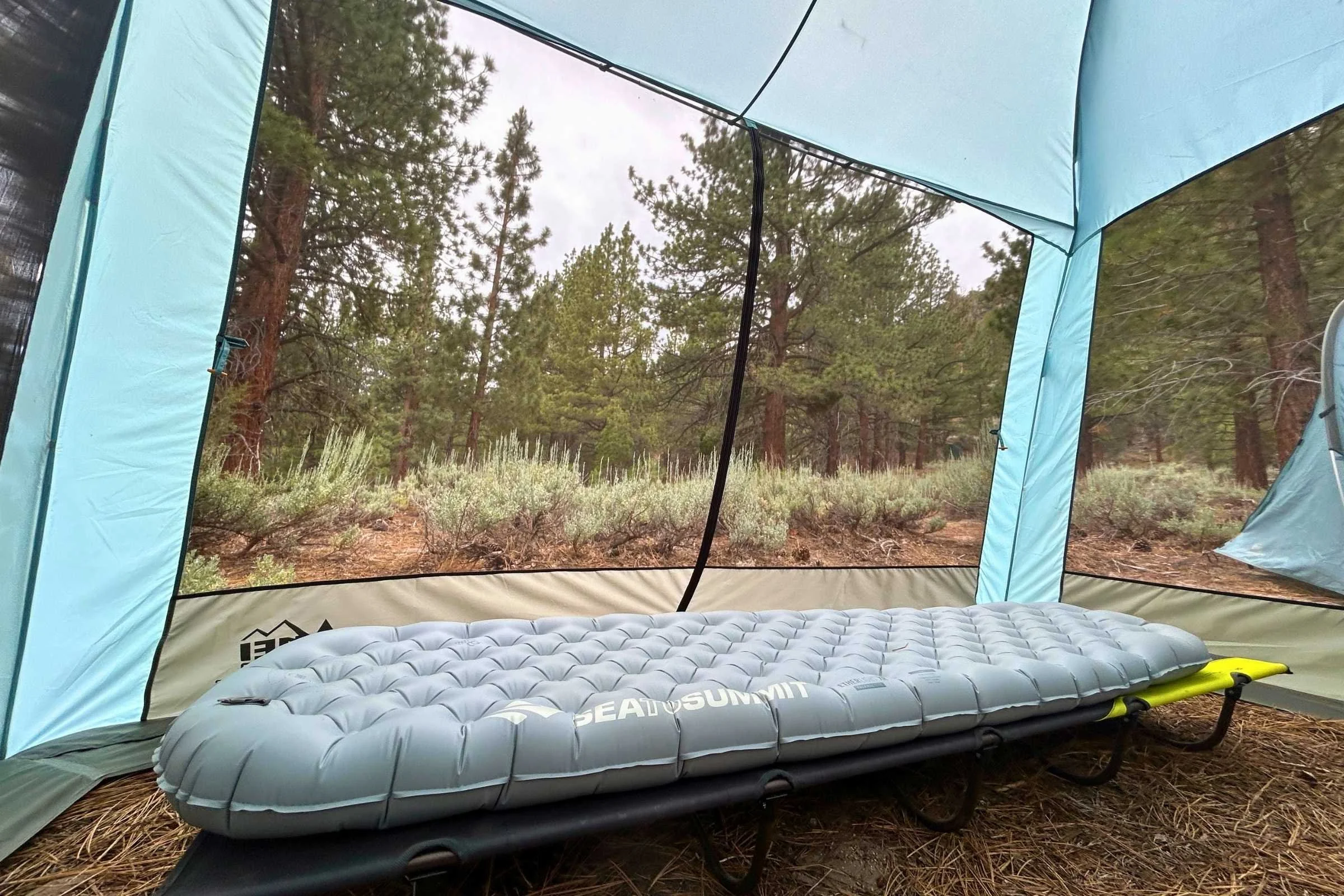
I tested this pad for over a month straight while backpacking and camping in the Eastern Sierra. I tested while sleeping in ultralight shelters and while camping in a big car camping tent. I tested this pad directly on a tent bathtub floor as well as on top of a camping cot and in a floorless tarp (with a minimalist groundsheet). We tested at temperatures just above freezing.
While there are other insulated sleeping pads that weigh less or have a higher R-rating for insulation in the cold, we still think this pad is worth it. The Ether Light XR Insulated is among the most comfortable pads we've tested, and comfort is essential for a good night’s rest and a better day’s hike.
Whether you're trying to limit gear spending or have limited space in an apartment, the Sea to Summit Ether Light XR is the rare gear item that spans car camping and backpacking without compromise. And if you've tried other inflatable sleeping pads and found them uncomfortable, hard on your lower back, or are bottoming out on your hips if you are a side sleeper, consider the Sea to Summit Ether Light.
We create reader-supported, objective gear reviews independently selected by our editors. This story may contain affiliate links, which help fund our website. When you click on the links to purchase gear, we may get a commission, without costing you an extra cent. Thank you for supporting our work and mission of outdoor coverage for every body! Learn more.
Sea to Summit Ether Light XR Insulated Air Sleeping Pad specifications
Price: $199-$259 (depending on size, from short mummy to large rectangular)
R-value: 4.1 (ASTM F3340 tested)
Thickness: 10 cm / 3.94 in
Best use: Tapered sizes: backpacking, thru-hiking, bikepacking; Rectangular sizes: comfort backpacking, hunting, camping
Materials: Mat: 100% nylon; Valve: 100% TPU; Stuff sack: 100% nylon
Insulation technology: ThermalCore (suspended TRM layer)
Construction: nylon with Air Sprung Cell
Valve: XPRESS valve (single, two-way inflate/deflate/fine-tune)
Inflation: Airstream Pump sack integrated into the stuff sack
PillowLock System: Yes (self-adhesive hook-and-loop patches included)
Repair kit: Included
Non-PFAS: Yes
Flame retardant free: Yes
Best for
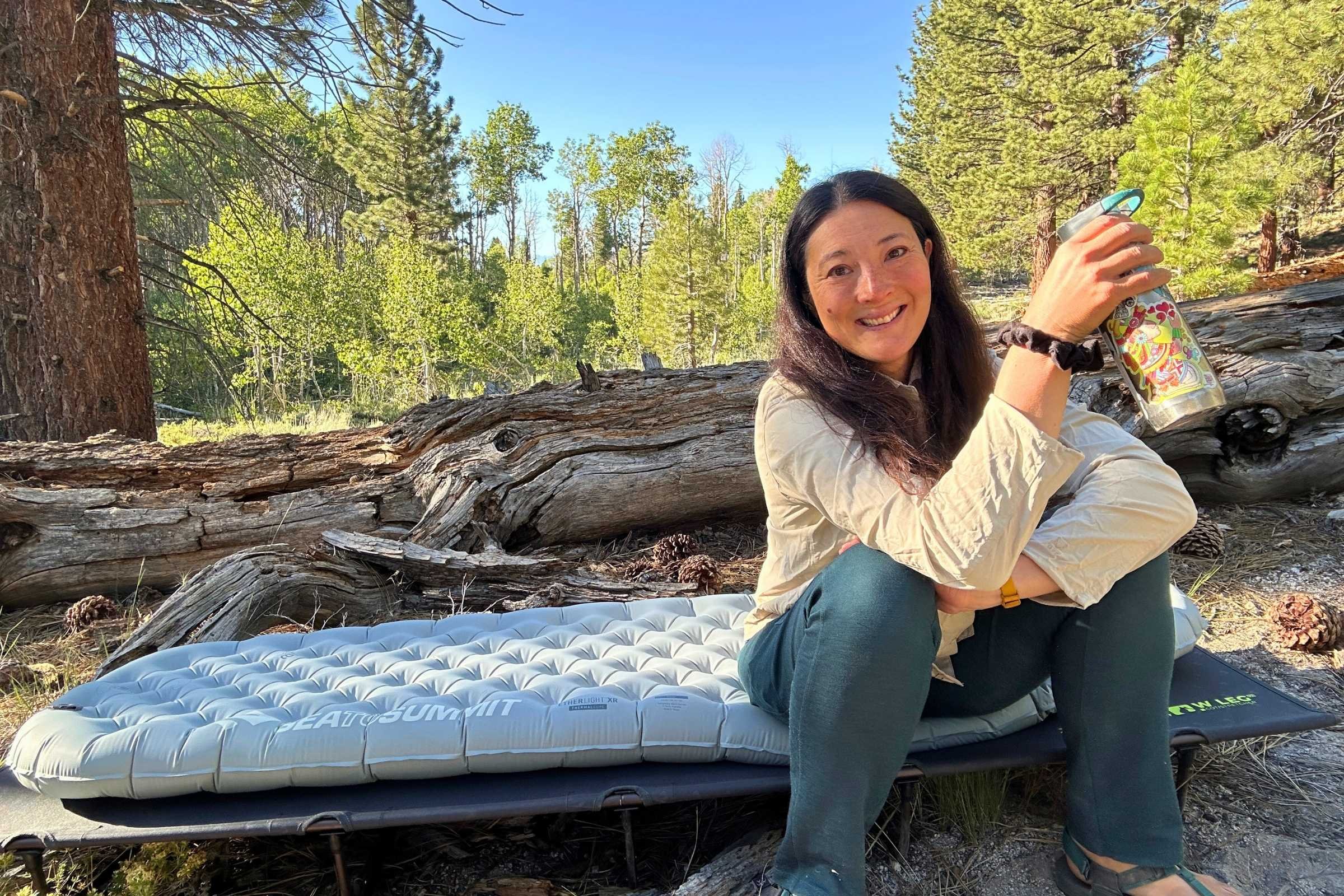
Side sleepers who bottom out or experience back pain when sleeping on other inflatable sleeping pads could benefit from the Sea to Summit Air Sprung Cells
Backpackers who aren't comfortable on other inflatable sleeping pads and still want 3-season insulation
Backpackers and campers who want an additional 0.5-1" of distance between themselves and the ground
Backpackers who want a lightweight, premium pad that is less expensive than other top-of-the-line pads
Backpackers tired of huffing and puffing to inflate their pads and who want the best pump sack inflation system out there
Bikepackers who want a compact and lightweight pad
Comparison tables
Comparing sleeping pads
| Sleeping Pad | Weight (oz) | Type | Pump Sack? | R-Value | Thickness (in) | Packed Size (in) | Lengths (in) | Warranty |
|---|---|---|---|---|---|---|---|---|
| Sea to Summit Ether Light XR Insulated Air | 15.7 - 23.5 | Inflatable | Y | 4.1 | 3.9 | 8 x 4 x 4 | 66, 72, 78 | Limited lifetime |
| Sea To Summit Ultralight XR Insulated | 16.9 | Inflatable | Y | 3.1 | 2.0 | 9 x 4 | 50, 66, 72, 78 | Limited lifetime |
| Therm-a-Rest NeoAir XLite NXT | 11.5 - 17.0 | Inflatable | Y | 4.5 | 3.0 | 9 x 4.1 | 66, 72, 77 | Limited lifetime |
| NEMO Tensor All-Season Ultralight Insulated | 14.1 - 18.0 | Inflatable | Y | 5.4 | 3.5 | 10 x 4 | 72, 76 | Lifetime |
| Exped Ultra 6.5R Mummy | 12.5 - 16.0 | Inflatable | Y | 6.9 | 3.5 | 8.3 x 4.1 | 72, 78 | Limited lifetime |
| Big Agnes Rapide SL Insulated | 18.0 | Inflatable | Y | 4.8 | 3.5 - 4.24 | 7 x 4 | 66, 72, 78 | Lifetime |
| Therm-a-Rest NeoLoft | 25.0 | Inflatable | Y | 4.7 | 4.6 | 9.5 x 5.7 | 73, 78 | Limited lifetime |
Sizes of Sea to Summit Ether Light XR Insulated
| Size | Weight | Packed weight | Packed size | Dimensions | Recommended user height |
|---|---|---|---|---|---|
| Small Mummy | 445 g / 15.7 oz | 500 g / 17.6 oz | 8 x 4 x 4 in | 66 x 22 x 4 in | Up to 66 in |
| Regular Mummy | 470 g / 16.6 oz | 525 g / 18.5 oz | 8 x 4 x 4 in | 72 x 22 x 4 in | Up to 72 in |
| Regular Rectangular Wide | 605 g / 21.3 oz | 665 g / 23.5 oz | 9 x 5 x 5 in | 72 x 25 x 4 in | Up to 72 in |
| Large Mummy | 605 g / 21.3 oz | 665 g / 23.5 oz | 9 x 5 x 5 in | 78 x 25 x 4 in | Up to 78 in |
| Large Rectangular | 665 g / 23.5 oz | 725 g / 25.6 oz | 9 x 5 x 5 in | 78 x 25 x 4 in | Up to 78 in |
What we liked
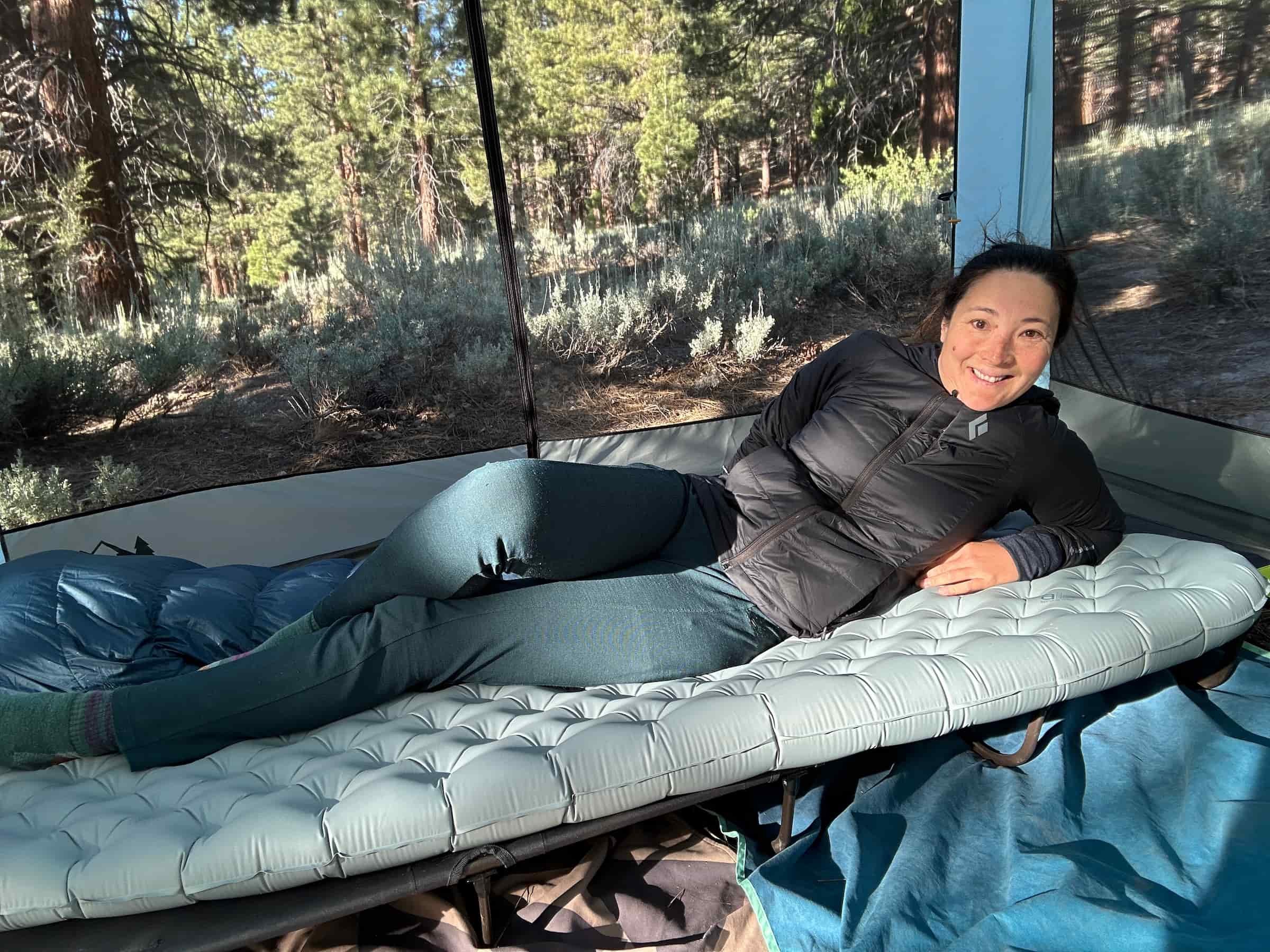
Air Sprung Cell construction is extremely comfortable for backpacking and camping, especially for side sleepers and rollers
Integrated Airstream Pump sack is very fast, attaches easily, and is the best in the industry
Feels warm relative to the R-4.1 rating
A great value and very affordable for what you get with this pad, offering pretty much the same specs as other premium sleeping pad brands
Air Sprung Cell construction is generally quieter throughout the night than Therm-a-Rest's or even NEMO's reflective foil designs
XPRESS valve makes it easy to fine-tune firmness after getting into your backpacking sleeping bag or quilt.
What could be better
The 16.6 oz weight is 2 to 3 ounces heavier than lightweight sleeping pads with similar R-value
Nylon shell material can be slippery when used on a camping cot
Pump sack cannot be used as a separate stuff sack
How we tested
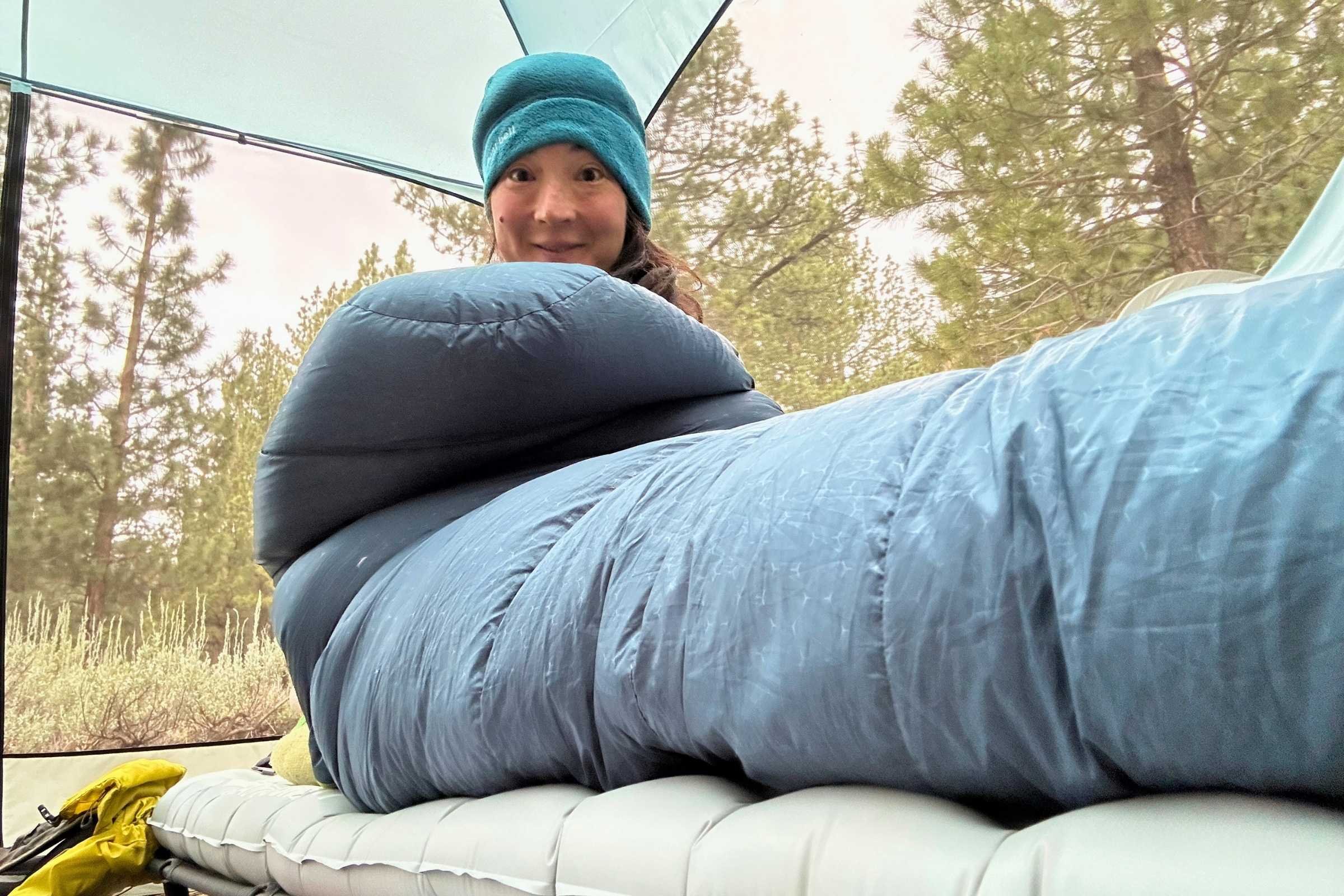
Two testers slept on this sleeping pad for over a month straight while backpacking and camping in the Eastern Sierra. Weather conditions outside when camping were between just above freezing at night and up to 90F in the peak of the day. We slept in dispersed campsites, rough-road areas, and on dirt in ultralight shelters against a bathtub floor and while camping in a big car-camping tent on a cot. Even though we know you aren’t “supposed to” use an inflatable sleeping pad in a camping hammock, we even spent a night in this pad suspended in the trees.
The other tester was new to camping, and this pad was a comfortable introduction to sleeping outside.
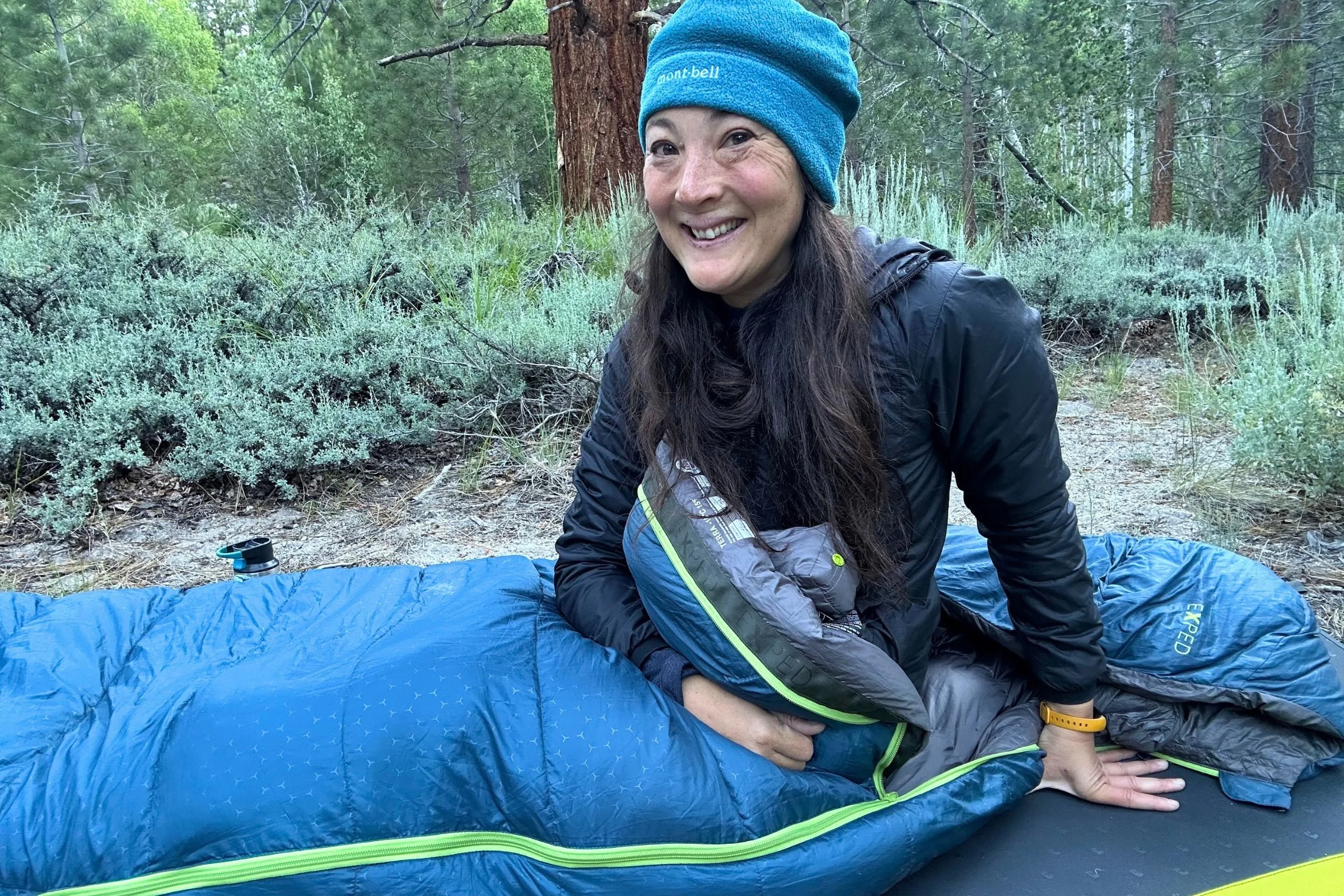
I tested the mummy (tapered) 6-foot length relative to my 5'8". I found the length to work great with my 6' sleeping bag. We tested in temperatures just above freezing. While camping, the 15°F Exped Terra sleeping bag worked well in these temperatures. While backpacking, I also tested this pad in the Gossamer Gear Whisper, a floorless ultralight tarp with a minimalist groundsheet. In those situations, I tested with a 20°F Feathered Friends Egret sleeping bag.
Most nights, I toss and turn and roll. I often sleep on my side, sometimes on my back, and sometimes on my stomach. Having a sleeping pad that stays stable, comfortable, and doesn't bottom out in all these positions makes a big difference in how I feel the next morning.
Performance in the field
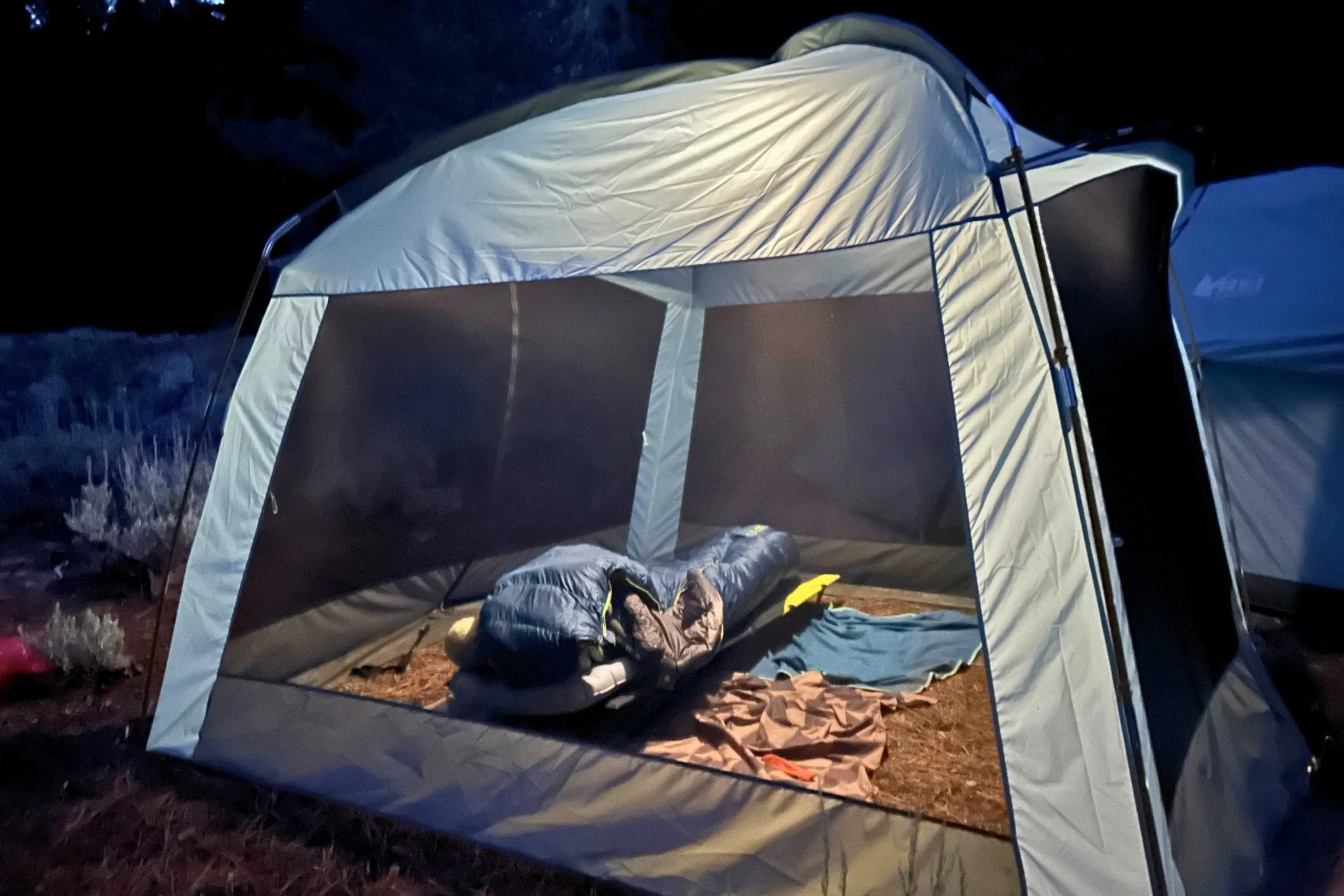
Home away from home. Sea to Summit Ether Light XR sleeping pad at night.
Warmth and insulation accuracy
We tested in the summer at altitude in the Eastern Sierra with temperatures down to just above freezing. The Sea to Summit Ether Light XR Insulated Air has an R-value of 4.1 (see our Best Sleeping Pads guide for how R-value measures insulation). Using the Exped Terra 15F degree sleeping bag, I was warm and comfortable, if not too warm. (For even more warmth, consider the Exped Ultra 6.5R sleeping pad.)
Another tester, who is a beginning camper, also tested using a 15°F synthetic sleeping bag by Marmot and found it warm, even on chillier nights. While backpacking, I tested this sleeping pad with a 20°F Feathered Friends bag. In each instance, I didn't notice cold spots or inconsistent insulation across the pad. It also doesn't have the crinkly reflective foil sound of other pads and is quieter. The suspended TRM (thermal reflective) layer helps keep a similar warmth distribution with less noise.
Comfort and sleep position
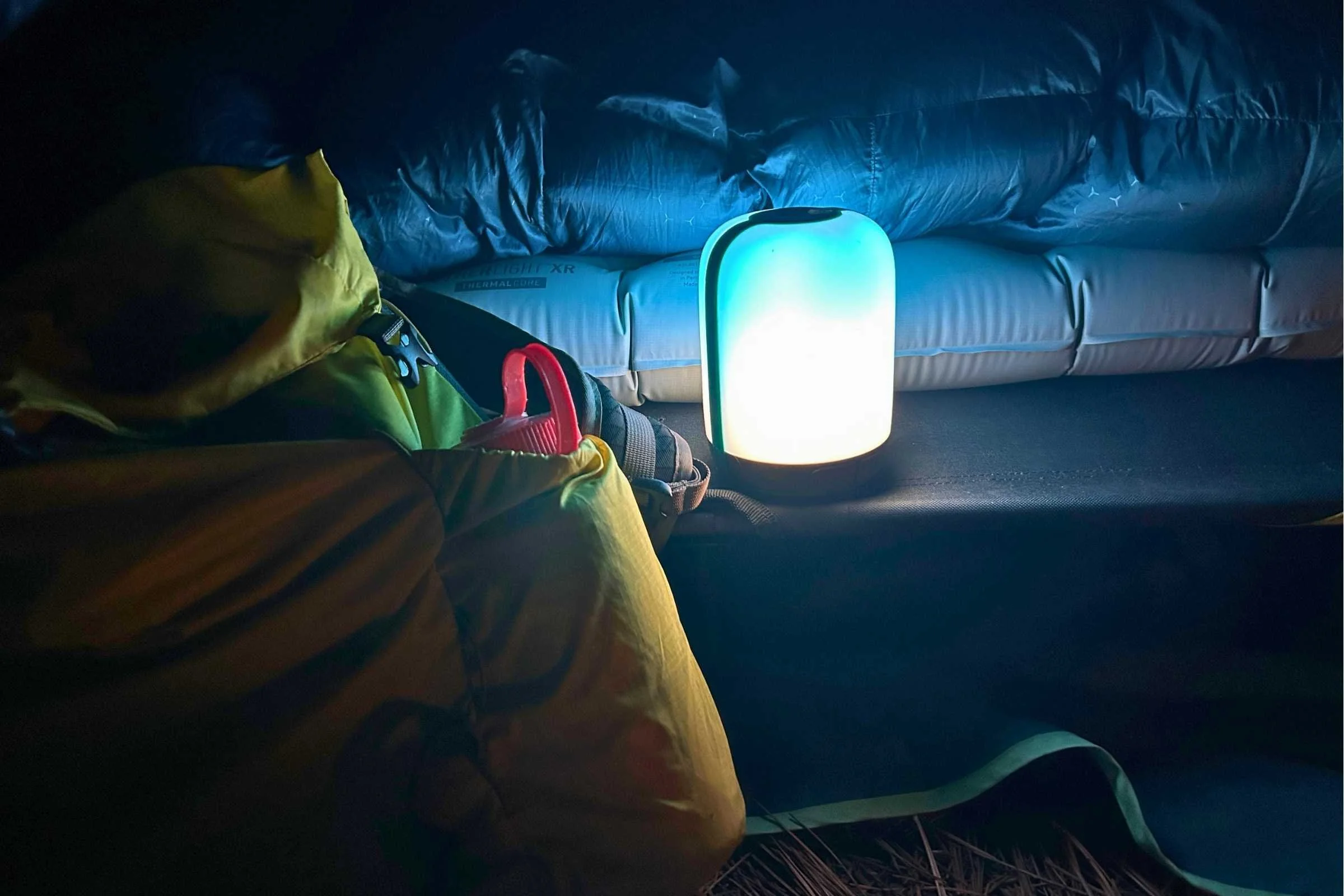
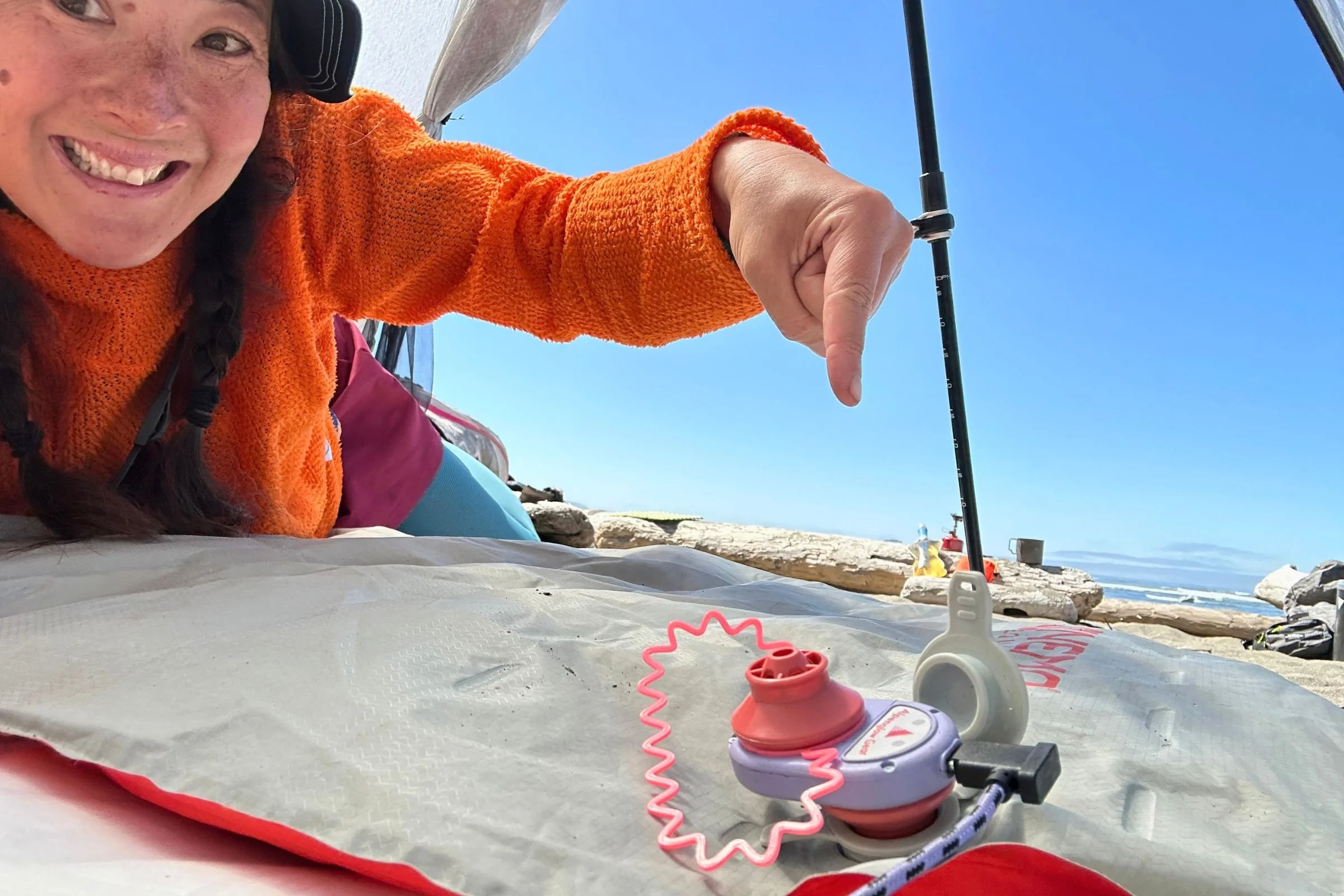
Nearly 4" of thickness makes the Sea to Summit sleeping pad incredibly comfortable for sleep. The BioLite Alpenglow lantern is used to give size perspective.
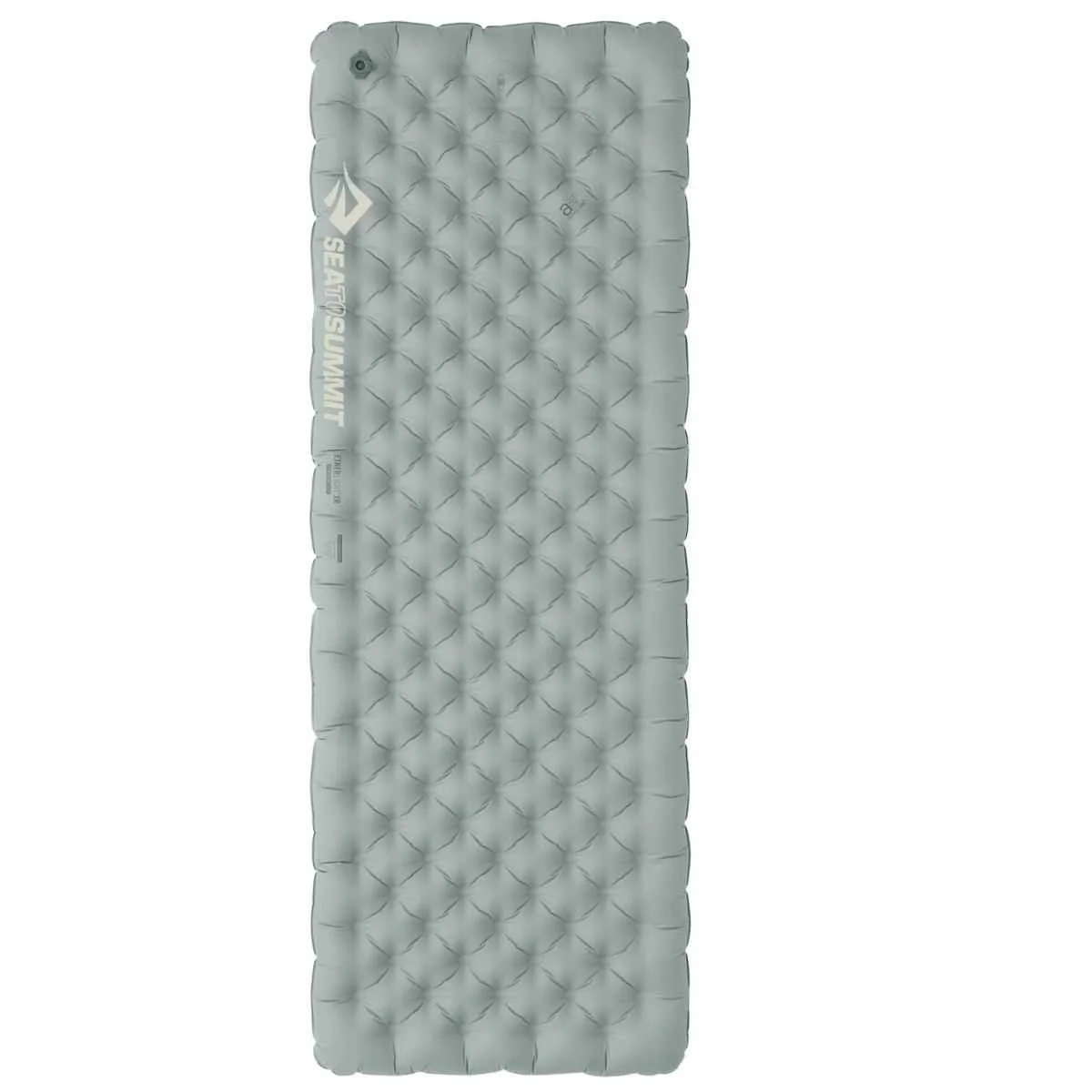
Most inflatable pads have some form of surface texturing to capture heat. Unfortunately, those long, straight seams can be uncomfortable for side sleepers especially. By contrast, the smaller dimples on the Ether Light XR accomplish the insulating effect without causing you to slide into seams or crater out when sleeping on your hip.
This design especially helped with side sleeping, as the dimples more comfortably nestled the hips compared to a long seam on other lightweight pads. With a 3.94-inch thickness (the brand says 4” and REI states 3.9” so we rounded down, using our measurements), the Air Sprung Cell construction felt very comfortable while side sleeping, back sleeping, and stomach sleeping. There was no bottoming out, and there was support at pressure points.
Inflation and deflation
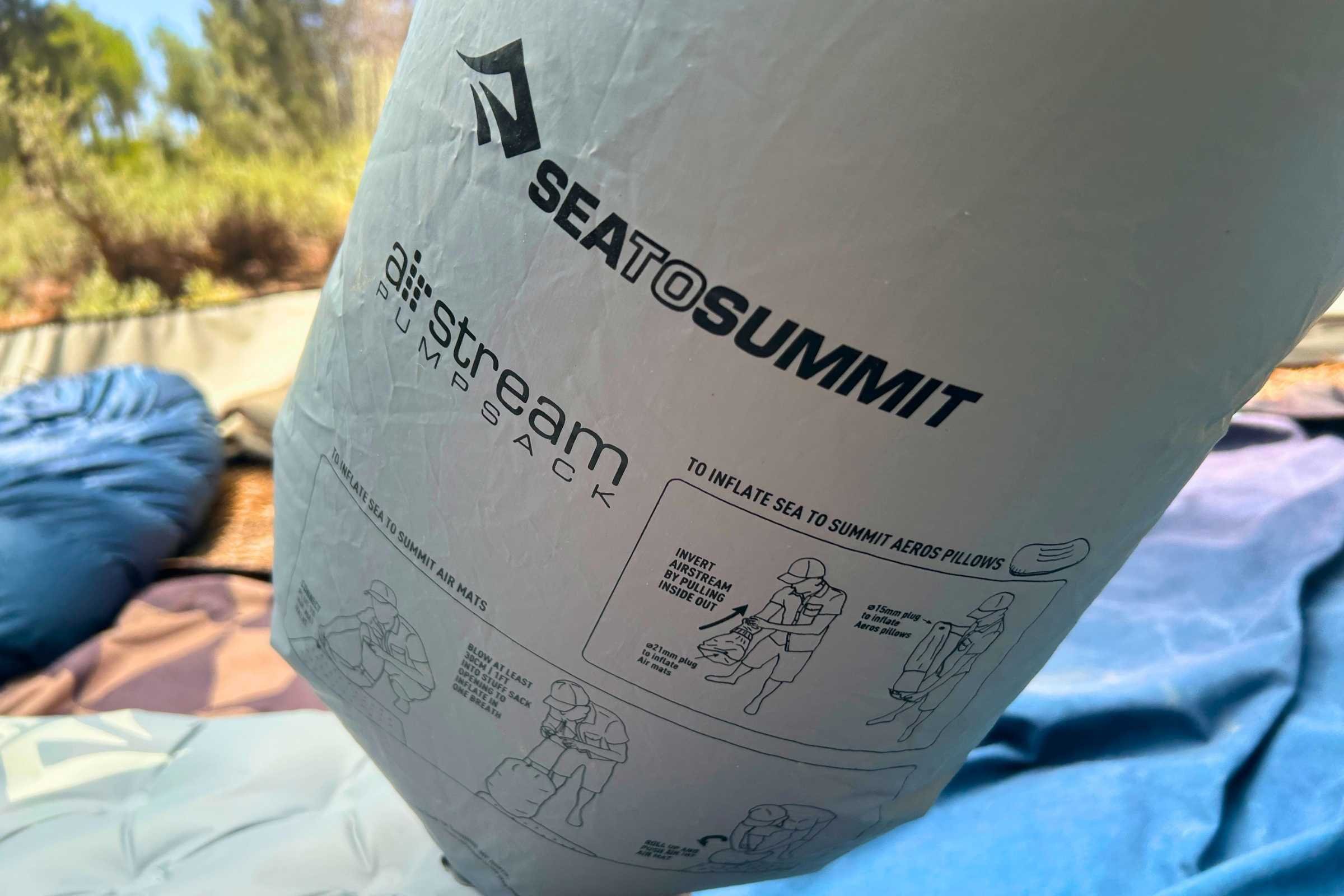
The pump sack on the Sea to Summit Ether Light XR Insulated Air sleeping pad is best in class.
The pump sack is one of our favorite parts of the Sea to Summit Ether Light XR. Compared to other pump sacks, this one is a dream. The pump is connected to the sleeping bag’s pad so you won’t lose it and it is always where you need it. The pump sack is small, has directions printed right on it, and takes just a few pumps to inflate. Inflating this pad takes less than 30 seconds, whereas even using a pump sack on other pads, I often start, give up, do another chore, and come back when I'm less frustrated.
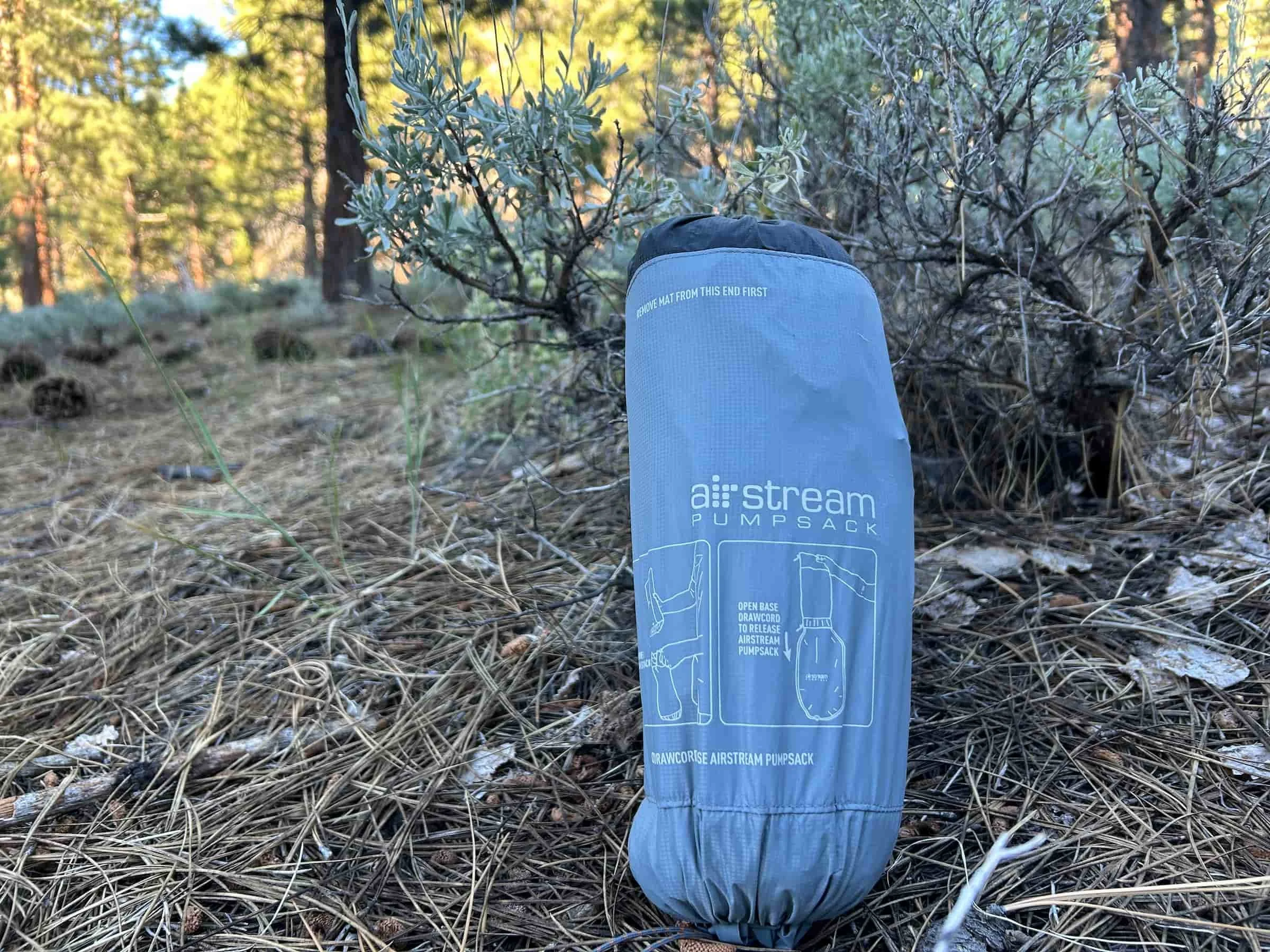
The Sea to Summit pump sack has instructions printed on the outside. That means you always know how to inflate your pad and don't accidentally set up the pumpsack inside out.
I could rant to you for hours about how other pump sacks can't be used as a stuff sack, making them a single use product. I could rant about how other pump sacks don't really connect well to their pad's valve. I could rant about how other pump sacks take dozens of fills to inflate their pads. The Sea to Summit Ether Light XR pump sack is the ideal that every pump sack wishes it could attain. However, if you would rather use an inflator, you may want to check out our review of the Alpenglow Gear Alpenblow Lux sleeping bag inflator.
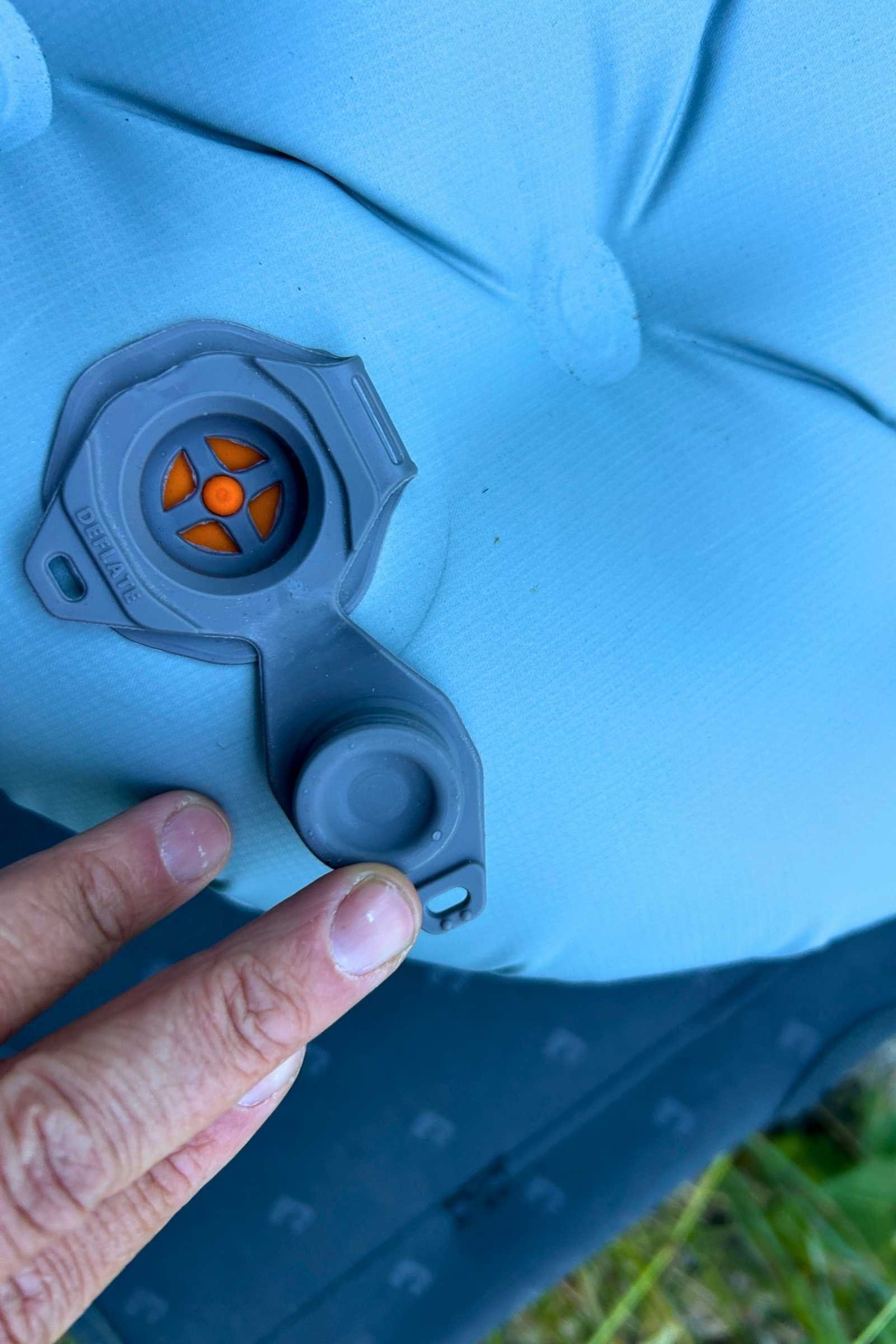
Deflation valve on the Sea to Summit Ether Light XR Insulated Air sleeping pad.
As far as deflation goes, the two-way XPRESS valve works well for fine-tuning the firmness of your pad. The best part is you can do this while you're on the sleeping pad without pushing out too much air. It's similar to the valve on Exped pads and NEMO pads, though the Expeds have two valves (one for inflating and one for deflating). Deflation in the morning with the Sea to Summit takes under 10 seconds and happens quite suddenly compared to other pads. It’s a little startling if you were hoping for a lazy morning getting out of your sleeping bag.
Noise
Another huge differentiator on the Sea to Summit Ether Light XR Insulated Air sleeping pad and pads by Therm-a-Rest or NEMO is the sound. The Ether Light is not loud at all when you move around at night. It doesn't disturb light sleepers. Even when my pad was rolling around a lot because I was camped on a not-flat-at-all spot, the sound didn't bother other campers.
Packability and weight in practice
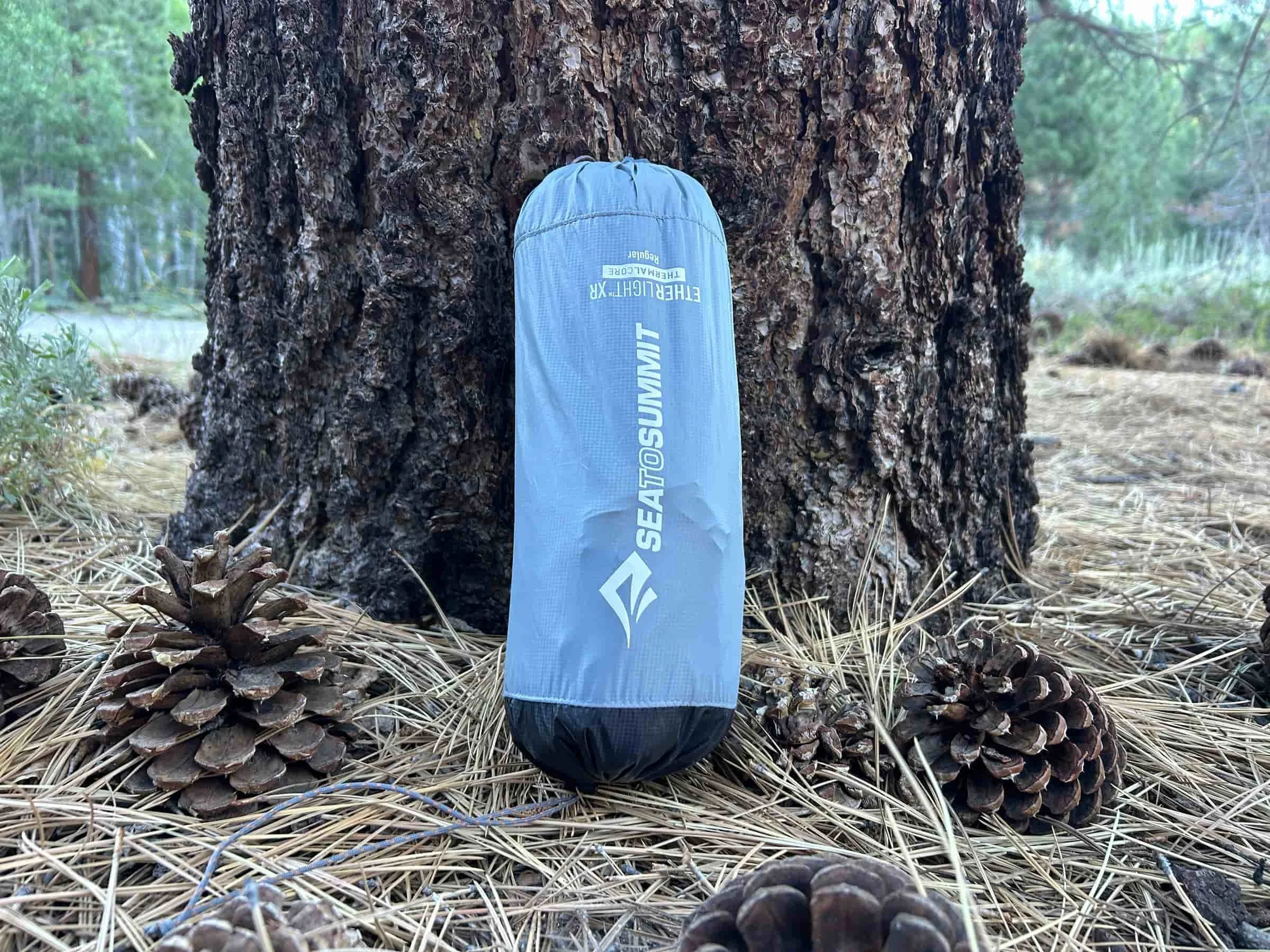
The Sea to Summit Ether Light XR sleeping pad packs into its own pump sack (genius) and is 8x4x4" in dimensions. There is a weight penalty and a volume penalty compared to lighter sleeping pads due to the Air Sprung cells. However, given the comfort, we think that the weight penalty really isn't that noticeable.
Durability
We haven't had any issues after a month of sleeping on the Sea to Summit Ether Light XR nearly every night except town day. The nylon shell and weld construction is holding up. However, with the Sprung Cells, that means there are additional seams compared to other sleeping pads. On earlier iterations of the Sea to Summit Ether Light XT, that is where we have developed a hole. Luckily, Sea to Summit provides specialized small, circular sticky repair patches that fit perfectly in those holes. The Sea to Summit Ether Light XR is a noticeable update compared to the earlier model and one of the features they sought to improve was durability. So far, so good!
Features
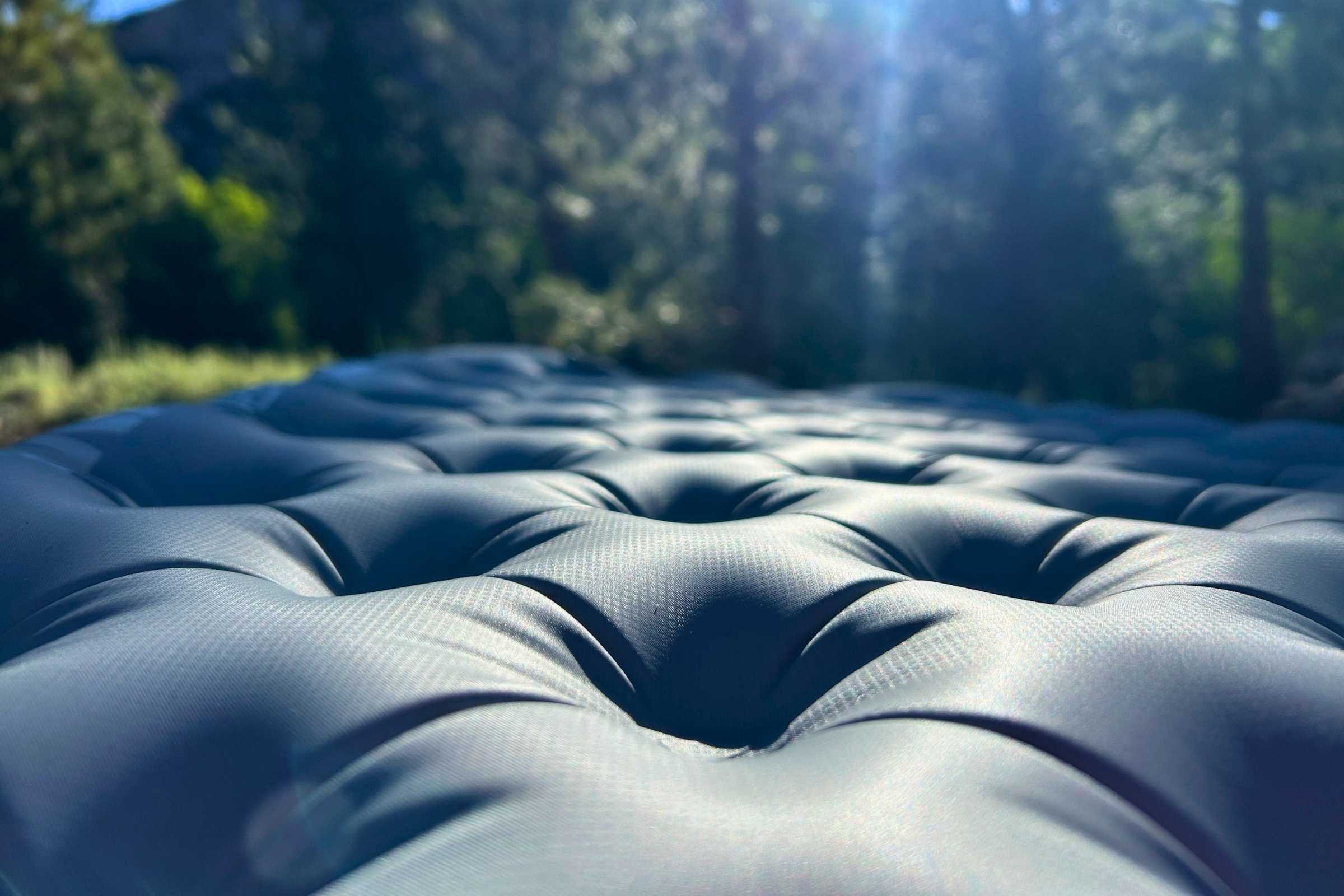
Close-up on Air Sprung cells on the Sea to Summit Ether Light XR Insulated Air sleeping pad.
Air Sprung Cell construction, 10 cm / 3.94 in thick: among the thickest of the lightweight insulated sleeping pads we have tested
ThermalCore insulation—suspended TRM layer reduces internal air movement so that warmth stays consistent across the pad
R-value 4.1 (ASTM F3340 independent lab tested): suitable for 3-season use
XPRESS valve: a two-way valve with integrated inflate port, rapid dump deflate port, and fine-tune button you can use to adjust firmness even when you're already lying on the pad
Airstream pump sack integrated into stuff sack: inflates in 3–4 pump cycles, is incredibly quick, has instructions printed right on the pad so you know how to use it and don't accidentally try to activate it inside out or backwards
PillowLock System patches included: locks in a Sea to Summit Aeros pillow so it won't slip during the night
Increased weld strength vs. prior models: in our testing, very noticeable
Lighter weight and reduced packed size vs. prior models: 2-4 ounces lighter than earlier models and much more compact
100% nylon shell and stuff sack
100% TPU valve
Non-PFAS
Flame retardant free
Repair kit included
Available in 5 sizes: Small, Regular, Regular Rectangular Wide, Large, Large Rectangular
What's new
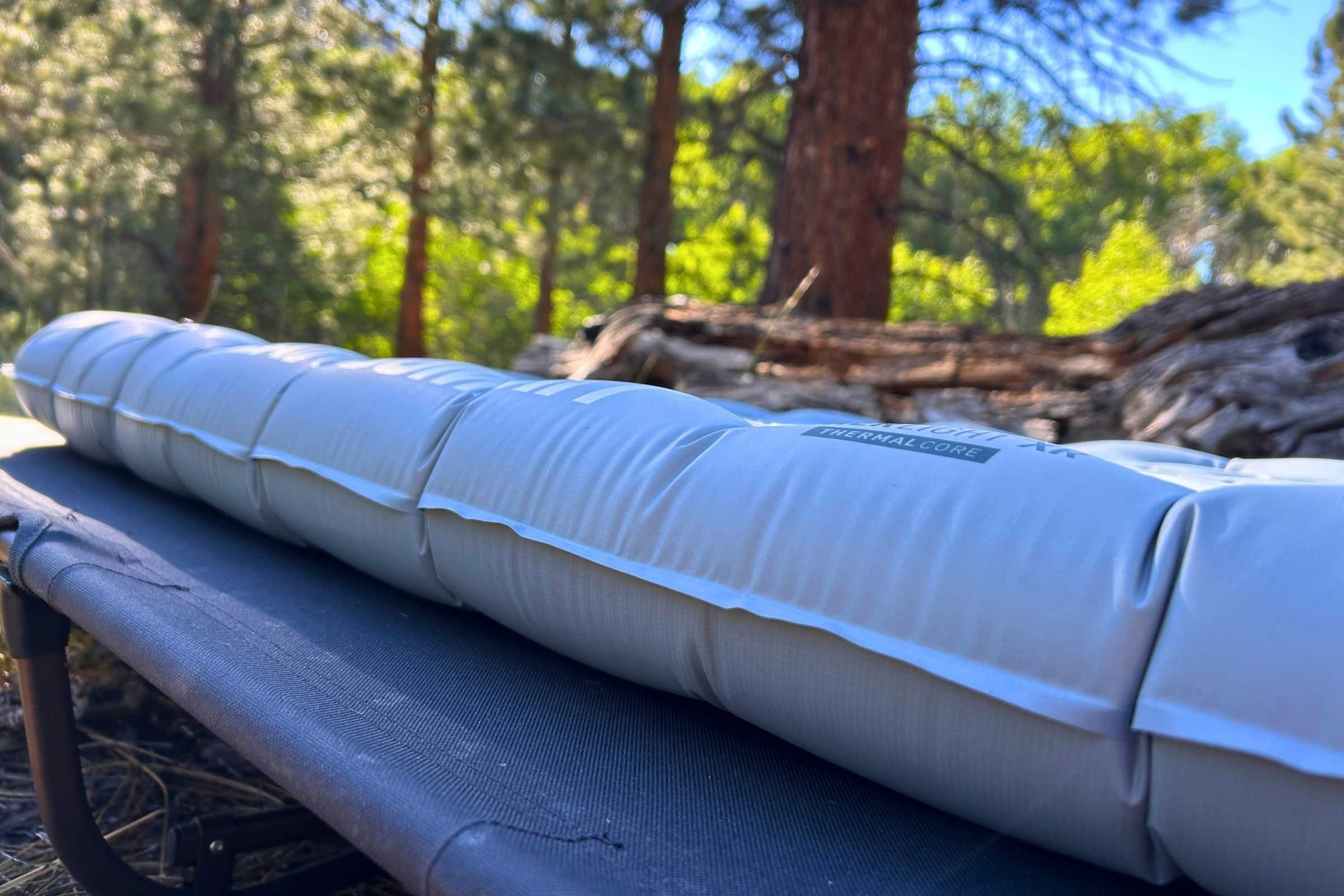
The seams on the new Sea to Summit Ether Light XR Insulated Air sleeping pad have been improved.
The Ether Light XR Insulated replaces the Ether Light XT Insulated, which Treeline has reviewed extensively. Key changes from the XT to the XR include:
In real world testing, it is noticeably warmer, noticeably lighter weight and has a smaller packed volume. If you love the XT and aren't bothered by the weight or size, you probably don't need to upgrade. They are similarly comfortable.
ThermalCore insulation upgrade: The XR uses smaller die cuts in the TRM layers compared to the XT. This reduces internal air movement further. It also bumps up the R-value from 3.2 to 4.1. The current R-value is more in line with what we like to see for a 3-season pad, whereas the old version is better for 2-season backpacking.
Increased weld strength: Sea to Summit has strengthened the pad welds in the XR for improved durability. We've had issues in the past with the XT, and that isn't the case with the XR. If you've sprung one too many holes in your XT but still love it, check out the XR. It's way stronger.
Lighter and more packable: The XR is lighter and packs smaller than the XT for the same size.
R-value change: The XT Insulated Air was rated at R-3.2 and the XR Insulated is R-4.1.
Similar products
Sea to Summit Ether Light XR Insulated vs Therm-a-Rest NeoAir XLite NXT
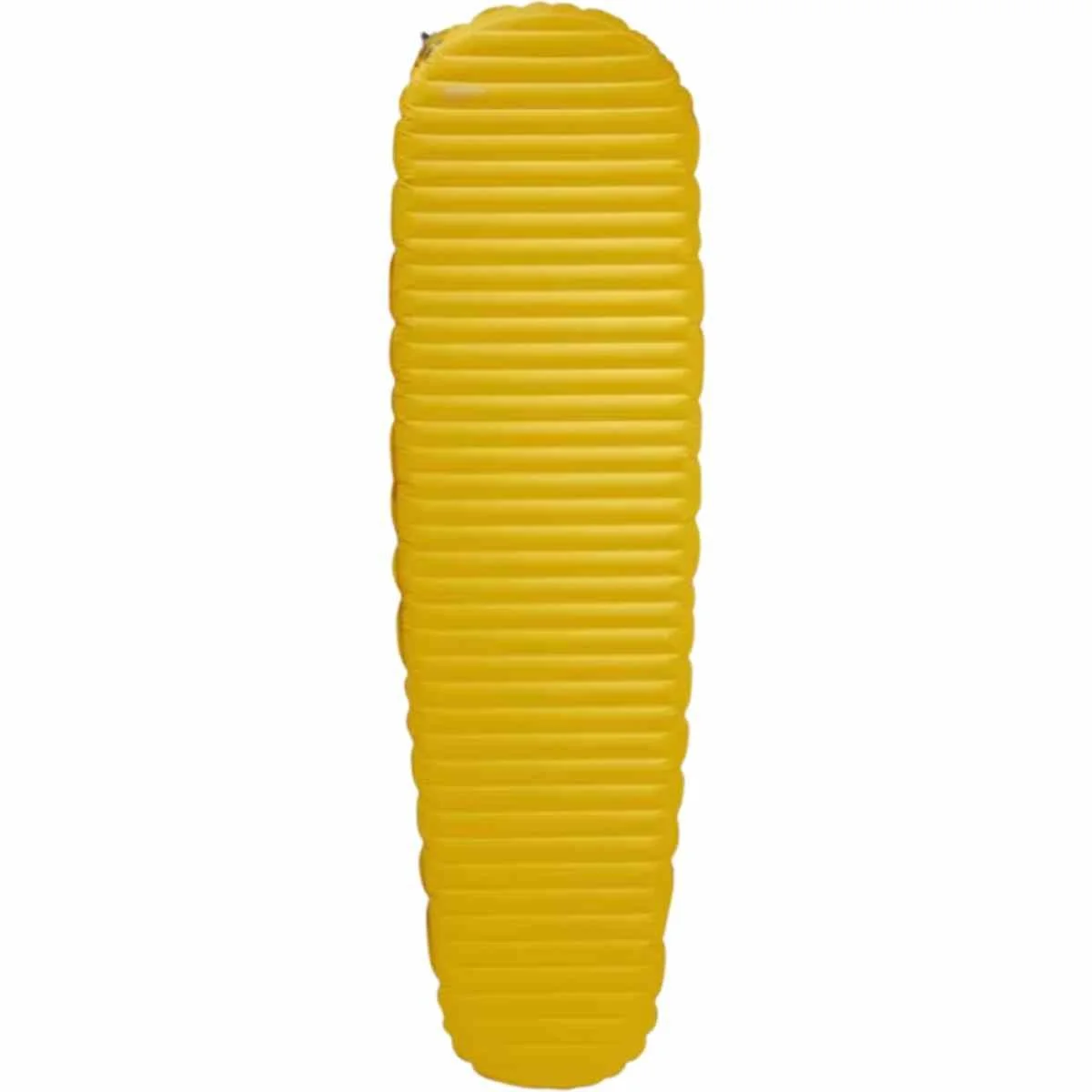
Weight: 11.5 to 17.0 ounces
R-Value: 4.5
Thickness: 3.0”
Lengths: 66, 72, 77”
Packed Size: 4.1 x 9”
The NeoAir XLite NXT is one of our long-time favorite pads. At 14 oz, it is lighter than the Ether Light XR. It has horizontal baffles lined with reflective film to yield a higher insulation rating of 4.5. However, compared to the Air Sprung cells in the Sea to Summit, it can be noisier. The 3.9" of Air Sprung cells are also more comfortable for side sleepers and people who bottom out on sleeping pads. The packed size and weight of the NeoAir NXT are less than those of the Sea to Summit Ether Light XR. However, the NeoAir NXT is about $10 more expensive for the same length and width pad. Another big difference is the valve. The NeoAir NXT uses a Winglock valve, while the Sea to Summit Ether Light uses a two-way XPRESS valve on the pad surface.
Therm-a-Rest NeoAir XLite NXT
Sea to Summit Ether Light XR Insulated vs NEMO Tensor All-Season Ultralight Insulated

Weight: 14.1 to 18.0 ounces
R-Value: 5.4
Thickness: 3.5”
Lengths: 72, 76”
Packed Size: 4 x 10”
The NEMO Tensor All-Season Ultralight Insulated is our overall winner for Best Backpacking Sleeping Pad. It uses reflective film similar to the NeoAir XLite but in a square pattern reminiscent of the Air Sprung cells on the Sea to Summit Ether Light XR. The NEMO pattern helps diffuse weight across the pad in a similar way as the Sea to Summit Ether Light XR, without the need for the circular repair pads should a hole happen. The Sea to Summit Ether Light two-way XPRESS valve on the surface of the pad is pretty similar to the Laylow Micro-Adjustable valve on the NEMO Tensor. The NEMO Tensor Insulated is about 2 oz lighter than the Sea to Summit XR. However, it costs $20 more than the Sea to Summit XR (regular size). For more, read our in-depth review of the NEMO Tensor All-Season Ultralight.
NEMO Tensor All-Season Ultralight Insulated
Sea to Summit Ether Light XR Insulated vs Exped Ultra 6.5
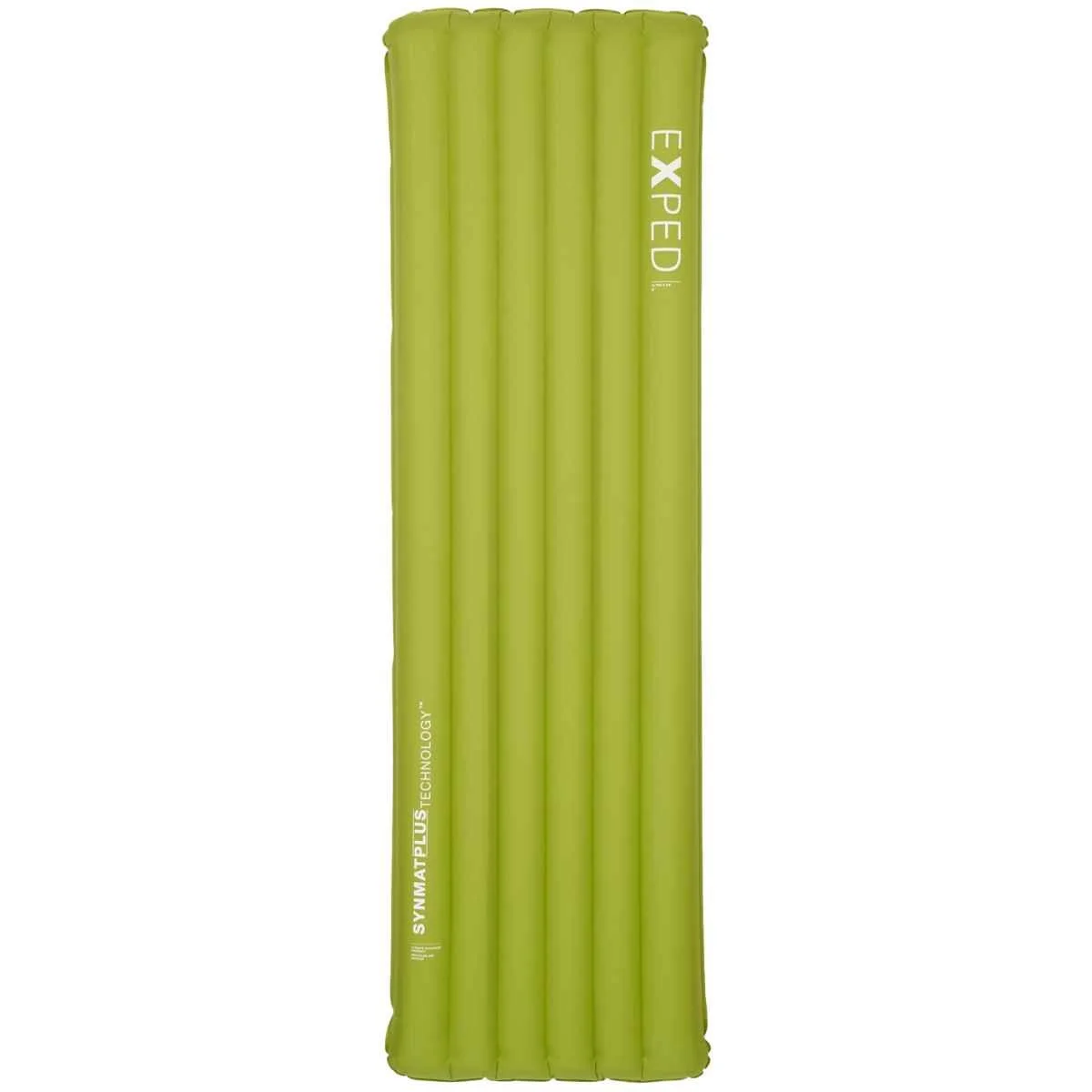
Weight: 12.5 - 16.0 ounces
R-Value: 6.9
Thickness: 3.5”
Lengths: 72, 78”
Packed Size: 4.1 x 8.3”
The Exped Ultra sleeping pad is a similarly priced, high-quality sleeping pad to the Sea to Summit Ether Light XR Insulated Air. It has a higher R-value of 6.5 but doesn't have the Air Sprung Cells of the Sea to Summit Ether Light XR.
It uses vertical baffles rather than the horizontal ones found on the NeoAir XLite. The Ultra has two valves, one for filling and one for deflating. Both are found directly on the surface of the pad.
See our in-depth review of the Exped Ultra 6.5 sleeping pad for more info.
Exped Ultra 6.5R
Should I buy the Sea to Summit Ether Light XR Insulated?
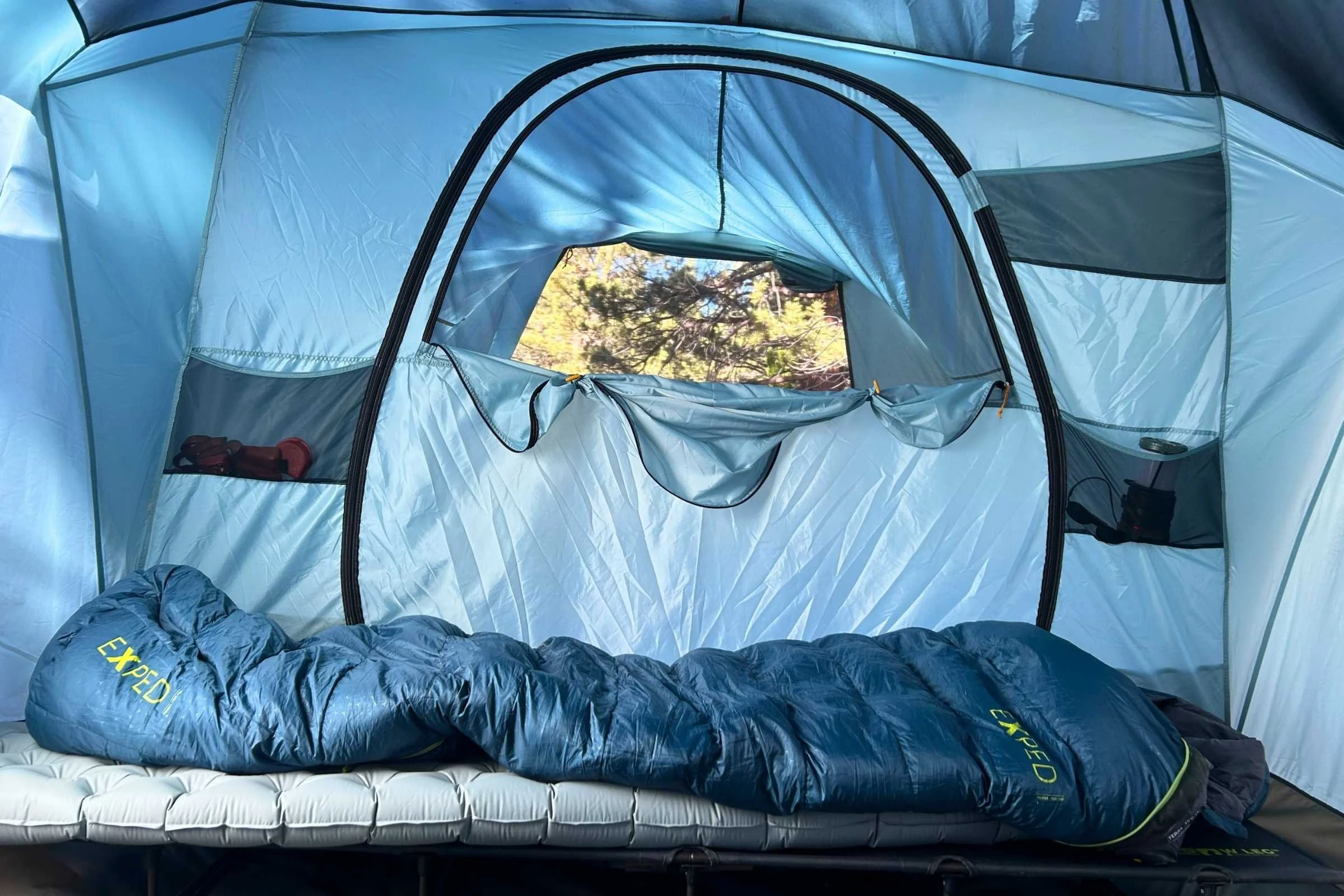
Sleeping on the Sea to Summit Ether Light XR Insulated Air sleeping pad in the REI Westward 6 camping tent.
Buy if:
You are a side sleeper who finds baffled pads uncomfortable and want the Air Sprung Cell construction's independent cell support
You want the fastest possible inflation system—the integrated Airstream pump sack inflates the pad in 3–4 cycles with one breath
You prioritize a quiet sleeping pad and are sensitive to the crinkling noise of reflective foil designs
You are upgrading from the Ether Light XT and want improved warmth, lower weight, and better packability in the same design
You want a more affordable, premium 3-season insulated pad
Skip if:
You are a strictly weight-obsessed ultralight backpacker—at 16.6 oz for the regular size, lighter options exist at a similar R-value
You camp in genuinely cold conditions (below 20°F) and need a higher R-value — consider the Ether Light XR Pro, NeoAir XTherm NXT, or NEMO Tensor Extreme instead
You want a wider pad for more comfortable sleep—the tapered regular is 22 inches wide at the shoulder, narrower than rectangular options; size up to the Rectangular Wide if width matters to you
Where to buy
The Sea to Summit Ether Light XR Insulated Air Sleeping Pads are popular gear items, so you have options for retailers. Here are some of the pros of the retailers.
REI
Pros: 100% satisfaction policy for 1 year; 10% dividend for members.
Backcountry
Pros: Frequent sales for Expedition Perks members (free to join), fast shipping, Gearhead chat customer service is excellent
Garage Grown Gear
Pros: Small ultralight cottage focused retailer
Sea to Summit
You can sometimes find more options when purchasing directly from Sea to Summit. It can make it easier if you need to make a warranty return due to a defect.
FAQs
-
The XR is the updated successor to the XT Insulated. Key improvements include a refined ThermalCore insulation system with smaller TRM die cuts for better warmth and less internal air movement, increased weld strength for durability, and reduced weight and packed volume. The R-value of the XR Insulated Air (4.1) is slightly higher than the 3.2 on the XT Insulated Air.
-
Yes, the pad can be mouth-inflated, but it takes 20 or more breaths, depending on lung capacity, compared to three or four pump cycles with the integrated Airstream pump sack. Repeatedly inflating by mouth can also introduce moisture condensation into the pad. Sea to Summit (like all pad manufacturers) recommends drying the pad before long-term storage if you do this.
-
The R-4.1 rating is generally considered suitable for conditions where a hard frost might occur. Sea to Summit notes that temperature ratings for sleeping pads are estimates based on air temperature and ground temperature. For truly cold conditions (snow camping, alpine use below 20°F), consider a higher R-value pad.
-
Yes. The included PillowLock patches attach to the pad and are compatible with all Sea to Summit Aeros pillows. The patches use a hook-and-loop system that will not snag sleeping bags or lightweight fabrics. Existing Sea to Summit pillows can be made compatible by adding an Aeros Pillow Case.
Why you should trust us / About the author
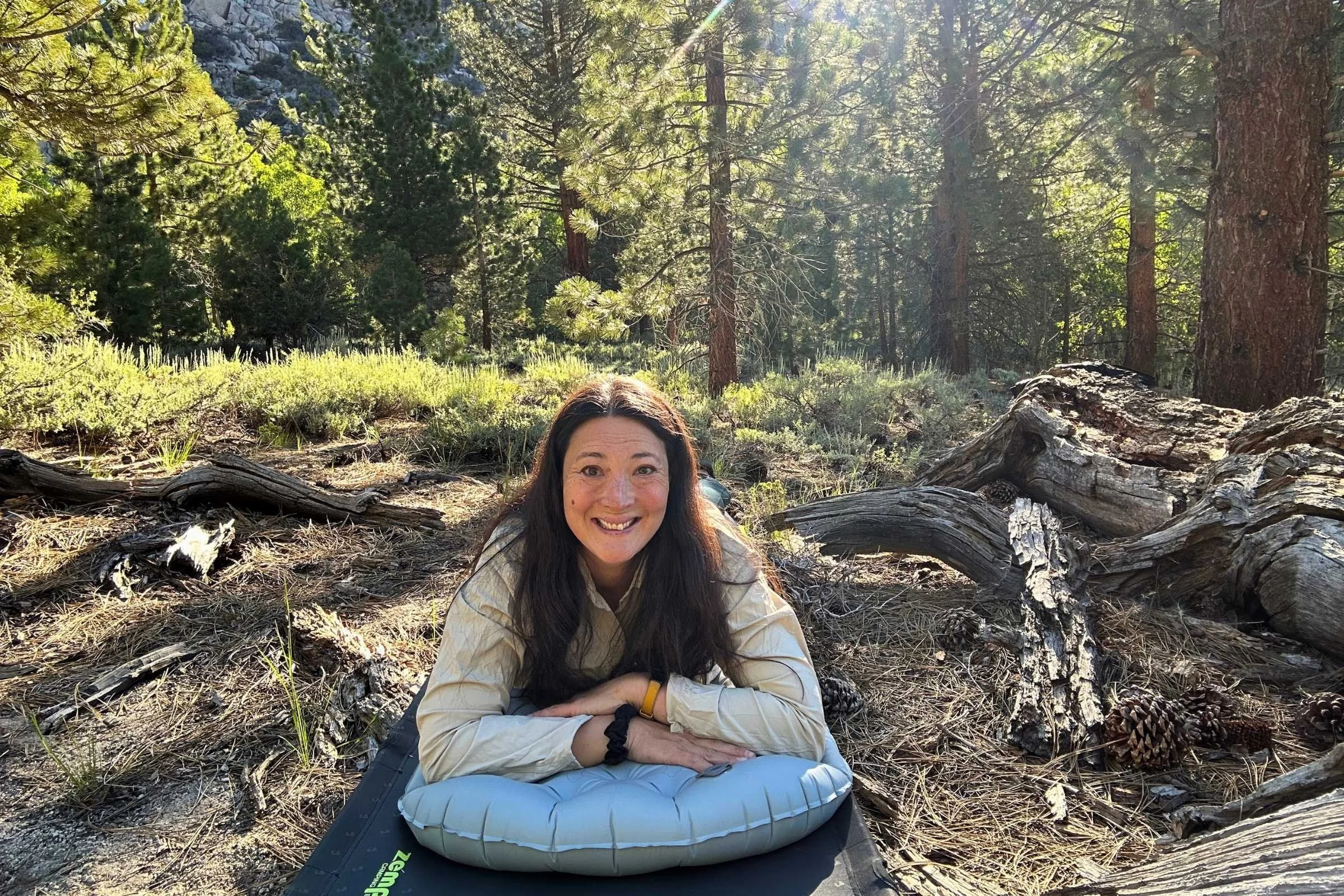
The author sleeping out under the stars (no tent) on the Sea to Summit Ether Light XR Insulated Air sleeping pad.
I’ve backpacked over 20,000 miles and have at least 1,000 nights sleeping outdoors. On most of these overnight trips, I’ve slept on inflatable sleeping pads. I tested the Sea to Summit Ether Light XR Insulated Air sleeping pad for nearly 30 nights of backcountry sleeping, both in a camping tent and ultralight backpacking tent.
I’ve written about outdoor gear for numerous publications, including as contributing editor at Backpacker Magazine and the New York Times’ product review site, Wirecutter. I’m the author of the National Outdoor Book Award winning Long Trails Mastering the Art of the Thru-hike.
I regularly book speaking gigs with outdoor clubs, non-profits, and colleges and universities to talk about backpacking and lead gear panels. I’m also Editor-in-Chief here at Treeline Review and oversee all of our outdoor gear stories.
You can read more about me at www.eathomas.com or at my author page.