Best Backpacking Quilts of 2026
Ultralight, warm, draft-free sleeping quilts for backpackers

August 20th, 2026, updated with 6 new winners
Home > Gear Reviews > Backpacking
Ultralight backpacking quilts are redefining what’s possible in overnight backpacking gear. Quilts combine high warmth-to-weight efficiency, minimal bulk, and freedom of movement that often outpaces traditional sleeping bags.
Treeline's testers have been using quilts since 2015. For this review, we've spent the past four years systematically testing quilts side-by-side. Eight testers of varying body types put these quilts through their paces—on short overnights and extended thru-hikes—across every season. They deliberately carried them through moisture, compression, and real-use stress to see which models survive the long haul.
The criteria for judgment were exacting: ratio of fill weight to total weight, how the jacket holds insulation when damp or compressed (wet-out behavior), fit and comfort across body types, shell fabric quality and durability, and packability. Quilts that lost loft under pressure or soaked through lost serious ground.
Top Pick: The Katabatic Gear Palisade 30 takes the Best Overall award. It stood out for delivering a superb balance of insulation, weight efficiency, fit, and durability—consistently performing across the seasonal use, compression, and moisture tests the reviewers ran.
Looking for something different? Check out our Best Backpacking Sleeping Bags guide for some other lighter weight options.
This story may contain affiliate links, which help fund our website. When you click on the links to purchase gear, we may get a commission. This allows us to create reader-supported, objective gear reviews, independently selected by our editors — without costing you an extra cent. Thank you for supporting our work and mission of outdoor coverage for every body! Learn more.
Comparison tables
Weight and Insulation
| QUILT | TREELINE AWARD | MSRP* | TOTAL WEIGHT | FILL WEIGHT | FILL : WEIGHT | FILL OPTIONS | HYDROPHOBIC DOWN? | RDS DOWN? |
|---|---|---|---|---|---|---|---|---|
| Katabatic Gear Palisade 30 | Best Overall Read why |
$379 | 19.8 oz | 12.0 oz | 61% | 850FP duck down, 900 FP goose down | ExpeDRY | Yes |
| Zpacks Solo Quilt 20 | Best Ultralight Read why |
$489 | 13.3 oz | 8.9 oz | 67% | 900FP duck down | No | Yes |
| NEMO Pulse 20/30 Endless Promise | Best Down Quilt for Backpacking Read why |
$550 | 18.0 oz | 12.0 oz | 67% | 1000FP goose down | Gold infused ExpeDRY | Yes |
| ZenBivy Ultralight Quilt 25 | Best for Cold Sleepers Read why |
$359 | 17.0 oz | 10.1 oz | 59% | 900FP duck (or goose) down | ExpeDRY | Yes |
| Outdoor Vitals StormLoft Down TopQuilt 15 | Best Affordable Read why |
$365 | 23.0 oz | 16.0 oz | 70% | 900FP duck or goose down | ExpeDRY optional | Yes |
| Feathered Friends Flicker UL Quilt Sleeping Bag 30 | Best 20 Degree Quilt Read why |
$529 | 22.4 oz | 11.6 oz | 52% | 950+FP goose down | No | Yes |
| Enlightened Equipment Apex Revelation 20 | Best Synthetic Read why |
$240 | 30.1 oz | N/A | N/A | Climashield APEX | N/A | N/A |
| Enlightened Equipment Accomplice 2-Person Sleeping Quilt | Best 2 Person Backpacking Quilt Read why |
$700 | 36.8 oz | 27.8 oz | 76% | 850 (or 950FP) duck down | No | Yes |
| Feathered Friends Flicker 30 YF | $469 | 24.0 oz | 11.6 oz | 48% | 900+FP goose down | No | Yes | |
| Hammock Gear Burrow Top Quilt 30 | $300 | 21.8 oz | 12.8 oz | 59% | 850FP duck down | No | Yes | |
| Enlightened Equipment Enigma Apex 20 | $250 | 28.6 oz | Not listed | N/A | Climashield APEX | N/A | N/A | |
| Katabatic Gear Alsek 22 | $399 | 23.3 oz | 15.2 oz | 67% | 850FP duck (or 900FP goose) down | ExpeDRY | Yes | |
| Katabatic Sawatch 15 | $419 | 26.0 oz | 17.9 oz | 69% | 850FP duck (or 900FP goose) down | ExpeDRY | Yes | |
| Katabatic Gear Flex 30 | $379 | 21.2 oz | 12.6 oz | 59% | 850FP duck (or 900FP goose) down | ExpeDRY | Yes | |
| Katabatic Gear Flex 22 | $399 | 23.9 oz | 15.4 oz | 64% | 850FP duck (or 900FP goose) down | ExpeDRY | Yes | |
| Loco Libre Gear Ghost Pepper Top Quilt 20 | $460 | 18.6 oz | 12.0 oz | 65% | 850FP (or 900FP) goose down | No | Yes | |
| Western Mountaineering NanoLite 38 | $440 | 13.1 oz | 6.5 oz | 50% | 850+FP goose down | No | Ethically-sourced | |
| REI Magma 30 Trail Quilt | $329 | 20.3 oz | 11.6 oz | 57% | 850FP goose down | No | Yes | |
| Enlightened Equipment Revelation 30 | $370 | 19.2 oz | 12.9 oz | 67% | 850FP duck (or 950FP goose) down | Gold infused ExpeDRY | Yes |
fit and Design
| QUILT | TREELINE AWARD | FABRIC (SHELL/LINER) | TEMPS OFFERED | FOOTBOX | SHOULDER/ HIP/ FOOT (REG) | CUSTOMIZABLE? | MADE IN US? | WARRANTY |
|---|---|---|---|---|---|---|---|---|
| Katabatic Gear Palisade 30 | Best Overall Read why |
10D Pertex Quantum Eco ripstop/ 20D Pertex Quantum taffeta | 30 F | Sewn | 54 /46 /40" | Overfill, sizing | Filled/ finished | Limited lifetime |
| Zpacks Solo Quilt 20 | Best Ultralight Read why |
7D Ventum ripstop | 10, 20, 30 F | Sewn | 55" (shoulder) | No | Yes | 2 years, defects |
| NEMO Pulse 20/30 Endless Promise | Best Down Quilt Read why |
Water-resistent 10D ripstop/ 10D polyester | 20F | Sewn | 57" (shoulder) | No | No | Limited lifetime |
| ZenBivy Ultralight Quilt 25 | Best for Cold Sleepers Read why |
Water-resistant Pertex Quantum | 10, 25F | Sewn | 68/ 58/ 42" | No | No | 14 day returns |
| Outdoor Vitals StormLoft Down TopQuilt 15 | Best Affordable Read why |
10D nylon both | 0, 15, 30, 40F | Sewn | 56" (shoulder) | No | No | 60 day returns |
| Feathered Friends Flicker UL Quilt Sleeping Bag 30 | Best 20 Degree Quilt Read why |
Water-resistant 10D Pertex Quantam Pro, 15D Pertex Diamond Fuse toebox/ 10D Flyte nylon | 20, 30, 40 F | Open | 62/ 48 /39 " | Overfill only | Yes | Limited lifetime |
| Enlightened Equipment Apex Revelation 20 | Best Synthetic Read why |
10D nylon both | 20, 30, 40, 50 F | Open | 54/ X/ 40" | Yes | Filled/ finished | 3 years, defects |
| Enlightened Equipment Accomplice 2-Person Sleeping Quilt | Best 2 Person Backpacking Quilt Read why |
20D/ 7D nylon | 0, 10, 20, 30, 40, 50 F | Sewn | 86" (shoulder) | Yes | Filled/ finished | 3 years, defects |
| Feathered Friends Flicker 30 YF | Pertex Quantum/ Pertex YFuse 20D nylon | 20, 30, 40 F | Open | 62 /48 /39" | No | Yes | Limited lifetime | |
| Hammock Gear Burrow Top Quilt 30 | Water-resistant 10D or 20D nylon | 0, 10, 20, 30, 40F | Either | Various sizes | Yes | Yes | 1 year, defects | |
| Enlightened Equipment Enigma Apex 20 | Water-resistant 10D nylon both | 20, 30, 40, 50F | Sewn | 55/ X/ 40" | Yes | Filled/ finished | 3 years, defects | |
| Katabatic Gear Alsek 22 | 10D Pertex Quantum Eco ripstop/ 20D Pertex Quantum taffeta | 22F | Sewn | 54 /46 /40" | Overfill, sizing | Filled/ finished | Limited lifetime | |
| Katabatic Sawatch 15 | 10D Pertex Quantum Eco ripstop/ 20D Pertex Quantum taffeta | 15F | Sewn | 54 /46 /40" | Overfill, sizing | Filled/ finished | Limited lifetime | |
| Katabatic Gear Flex 30 | 10D Pertex Quantum Eco ripstop/ 20D Pertex Quantum taffeta | 30F | Open | 54 /46 /40" | Overfill, sizing | Filled/ finished | Limited lifetime | |
| Katabatic Gear Flex 22 | 10D Pertex Quantum Eco ripstop/ 20D Pertex Quantum taffeta | 22F | Open | 54 /46 /40" | Overfill, sizing | Filled/ finished | Limited lifetime | |
| Loco Libre Gear Ghost Pepper Top Quilt 20 | Argon 67 or 90/ ripstop or taffeta | 20F | Open | Various sizes | Yes | Yes | 90 days, defects | |
| Western Mountaineering NanoLite 38 | 12D ExtremeLite nylon/ 10D taffeta | 38F | Sewn | 68/ X/ 38" | No | Yes | Limited lifetime | |
| REI Magma 30 Trail Quilt | 15D ripstop both | 30F | Open | 58.5/ 52/ X" | No | No | 1 year returns (members) | |
| Enlightened Equipment Revelation 30 | 10D nylon both | 0, 10, 20, 30, 40, 50F | Open | 58/ X/ 42" | Yes | Filled/ finished | 3 years, defects |
The winners
Best overall backpacking quilt: Katabatic Palisade 30

Temperature rating (F): 30
Total Weight: 19.8 oz
Fill Weight: 12 oz
Fill Power: 850
Hydrophobic Down? Yes
Fabric: 10D Pertex Quantum Eco Ripstop and 20D Pertex Quantum Taffeta
Shoulder/Hips/Footbox/Length (in): 54/46/40/72
Responsible Down Certified? Yes
Price: $369
What we liked: “Ingenious” pad attachment system and other unique features increase warmth, very warm for weight, internal pocket.
What we didn’t like: Pad attachment system not intuitive, drawstring at neck could be offset
“Just buy a Katabatic and every issue you’ve ever had will disappear.” After reading this while scouring Reddit, I was intrigued. EVERY issue will disappear? Sign me up!
While the Katabatic Palisade didn’t solve world hunger, it is a fan favorite with backpackers, and it certainly won me over as best overall backpacking quilt.
We've been testing the Katabatic Palisade for more than ten years. Here's our extremely long-term, in-depth gear review of the Katabatic Palisade 30.
View the Katabatic Palisade 30


-
This quilt uses 850fp RDS certified hydrophobic down. While the fill weight/total weight ratio isn’t as high as some of the other quilts we tested (61%), we still think this is an extremely warm quilt. This ratio is only one factor in how warm a quilt will keep you. There are other features that work in tandem to keep you toasty warm.
The moment the Palisade won this reviewer over was when, for the first time in a quilt, my toes didn’t get cold while sleeping on my back. Most backpacking quilts have a footbox that is the same height or lower than the rest of the quilt. Katabatic uses a trapezoidal sewn footbox that creates extra room for toes. This way when sleeping on your back, your toes don’t press into the fabric of the quilt, compressing the insulation and creating cold spots.
Katabatic reports that they overstuff their footboxes, but they do not say by how much.The footbox is also sewn higher than normal, almost to the knees. While we like this as another way to increase warmth, it does limit the ability to comfortably stick a foot out to cool off. If you don’t like this feature, they make a similar version in their Flex series that allows you to open up the footbox, for the same price and with a mere 1.4oz weight penalty.
While not customizable, there are a lot of options. You can choose 850fp hydrophobic down, or 900fp in either hydrophobic or untreated versions. Overstuff is available. The Palisade comes in short, medium or long lengths (66”, 72”, or 78”), and you can get a wide in any of those lengths, adding 4” to the standard 54” width.
-
Katabatic claims that although their bags are not EN certified, if they were, they would be “comfort” rated. This tracks with our experience. Treeline’s Naomi called the temperature rating “conservative.” Naomi is an average sleeper (she runs neither cold nor hot) and has used this 30F degree bag in 12F degree temperatures. It wasn’t her favorite night on trail, but she “survived.” For more information read her in depth gear review of the Palisade 30.
If you are a cold sleeper like me however, you’ll want to go with a quilt rated to at least 10F degrees lower than the lowest temperature you think you’ll encounter. I spent a mostly sleepless night in the 22F degree version, the Alsek, on a 26-degree night. Alternatively, an insulated sleeping pad with a high R-value can extend the warmth of this bag. Treeline Review editor Liz Thomas writes how she used the Therm-a-Rest NeoAir XTherm on an October hike to get away with using the Palisade in below freezing temperatures on the Kaibab Plateau.
-
Although I've only had this bag for the past 7 months, other reviewers raved about the durability, citing years of use with minimal wear and tear. This is likely due to both good craftsmanship and the fact that the Pertex Quantum Eco Ripstop shell and Pertex Quantum Tafetta lining are both 20D fabrics. Ounce counters like myself would love to see a lower denier option, but as with all ultralight gear, that would likely decrease durability.
If you do run into an issue, Katabatic has a limited lifetime warranty on all their quilts, meaning they’ll repair or replace anything with a manufacturer's defect over the expected lifetime of the product. This is the most generous warranty of all our winners, except for the Feathered Friends Flicker UL.
-
Everyone seems to agree that Katabatic’s pad attachment system is the best one on the market. One reviewer called the system “ingenious.” But beware: it is NOT intuitive. As someone who can usually figure out how to use a new piece of gear without reading the instructions, I made the mistake of not trying out the system before taking the Palisade on a trip. I was blindsided by their system the first time I used it and thought it didn’t work very well. It wasn’t until I got home and watched this instructional video that I realized my mistakes, and saw how effective the system really is.
The Palisade comes with two cords that cinch down on top of your sleeping pad. The quilt has plastic tabs that attach to the cords, with two positions: sliding or locked. In the sliding position, the quilt moves with you when you roll over, keeping it on the pad, but creating gaps. This is helpful if sleeping in warmer conditions where a little venting keeps you from overheating.
In the locked position, the quilt does not move around on the cord. This means you can slide it down around your body and lock it there. All these features, in combination with elastic around the back opening, a differential cut, and a draft collar work together to make this quilt very good at trapping heat.
-
Although Katabatic uses bluesign approved materials, their Pertex Quantum and Quantum Eco fabrics are still treated with a DWR that contains chemicals in the family known as PFCs. Katabatic claims this is due to a lack of efficacy in PFC free treatments. Read their full statement about their fabrics on their FAQ’s page.
On the plus side, Pertex Quantum Eco is made from recycled materials, and Katabatic uses RDS certified ExpeDry down. ExpeDry is a non chemical treatment, wherein gold particles are fused to the down. The result is you get a permanent hydrophobic down that is mold and fungus resistant, without harmful forever chemicals.To deep dive on how this keeps down from getting wet, check out the Allied Feather page about ExpeDry.
While Katabatic used to make their quilts in the US, they have moved production overseas. The sewn shells are still stuffed and finished in Salida, CO.
-
If you want a quilt rated to colder temperatures that still has all the heat trapping features of the Palisade, check out the other quilts in Katabatic’s Elite series, including the Alsek 22 and the Sawatch 15. These have essentially the same cut and design, just with more fill weight. We think, however, that the Palisade 30 is quite comparable to other brands 20 degree quilts, which is the temperature we recommend for most 3 season situations. The Katabatic Palisade is a great all around quilt that will keep most people warm and comfortable in most 3 season situations.
Best ultralight backpacking quilt: Zpacks Solo Quilt

Temperature rating (F): 20 degree
Total Weight: 18.7 oz
Fill Weight: 13.7 oz
Fill Power: 900
Hydrophobic Down? Downtek
Fabric: DWR treated 7D ripstop ventum nylon
Shoulder/Hips/Footbox/Length (in): 60/60/40/74
Responsible Down Certified? Yes
Price: $489
What we liked: Super soft fabric, excellent warmth to weight ratio, wide array of sizes, made in the USA
What we didn’t like: Expensive, sewn footbox limits versatility.
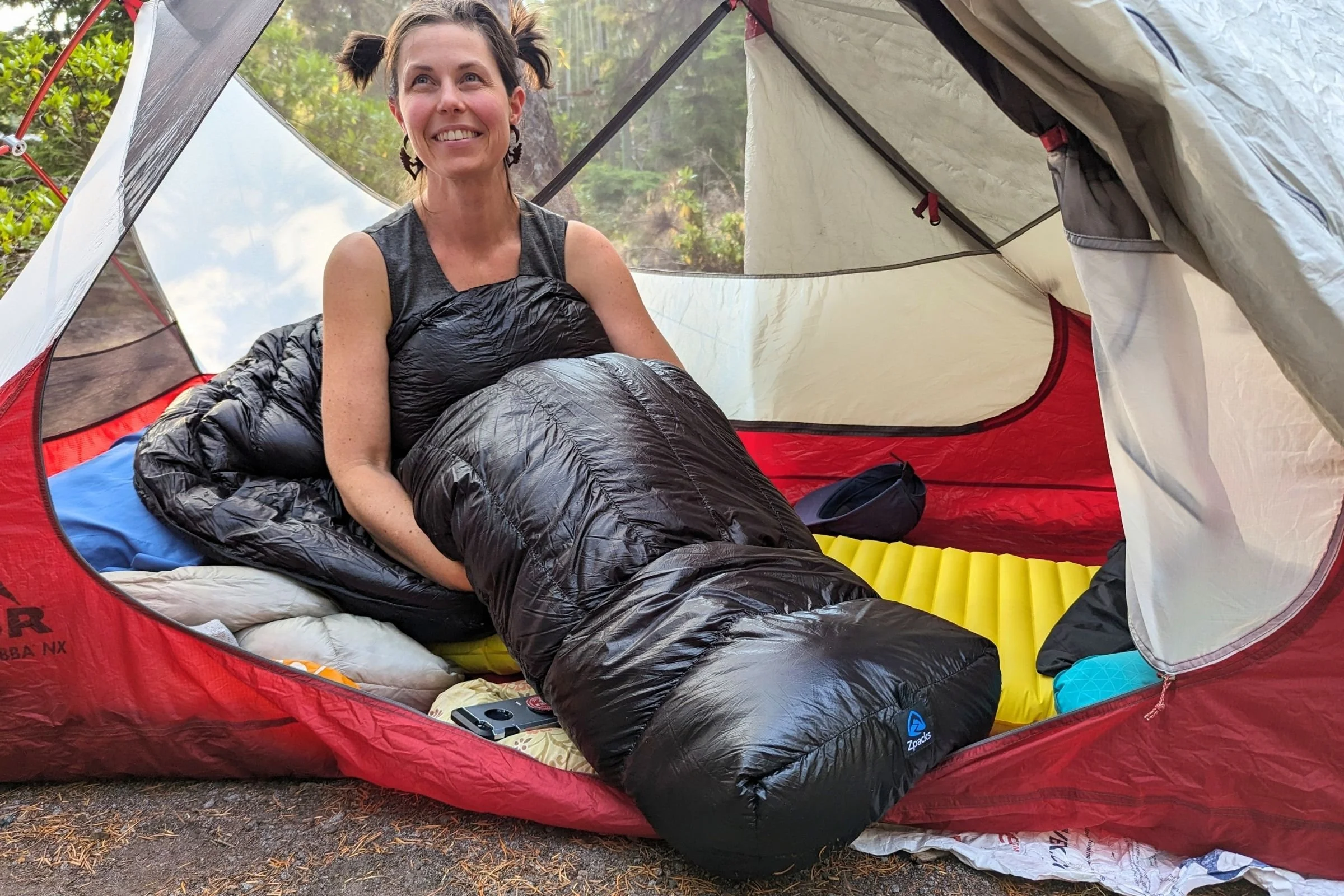
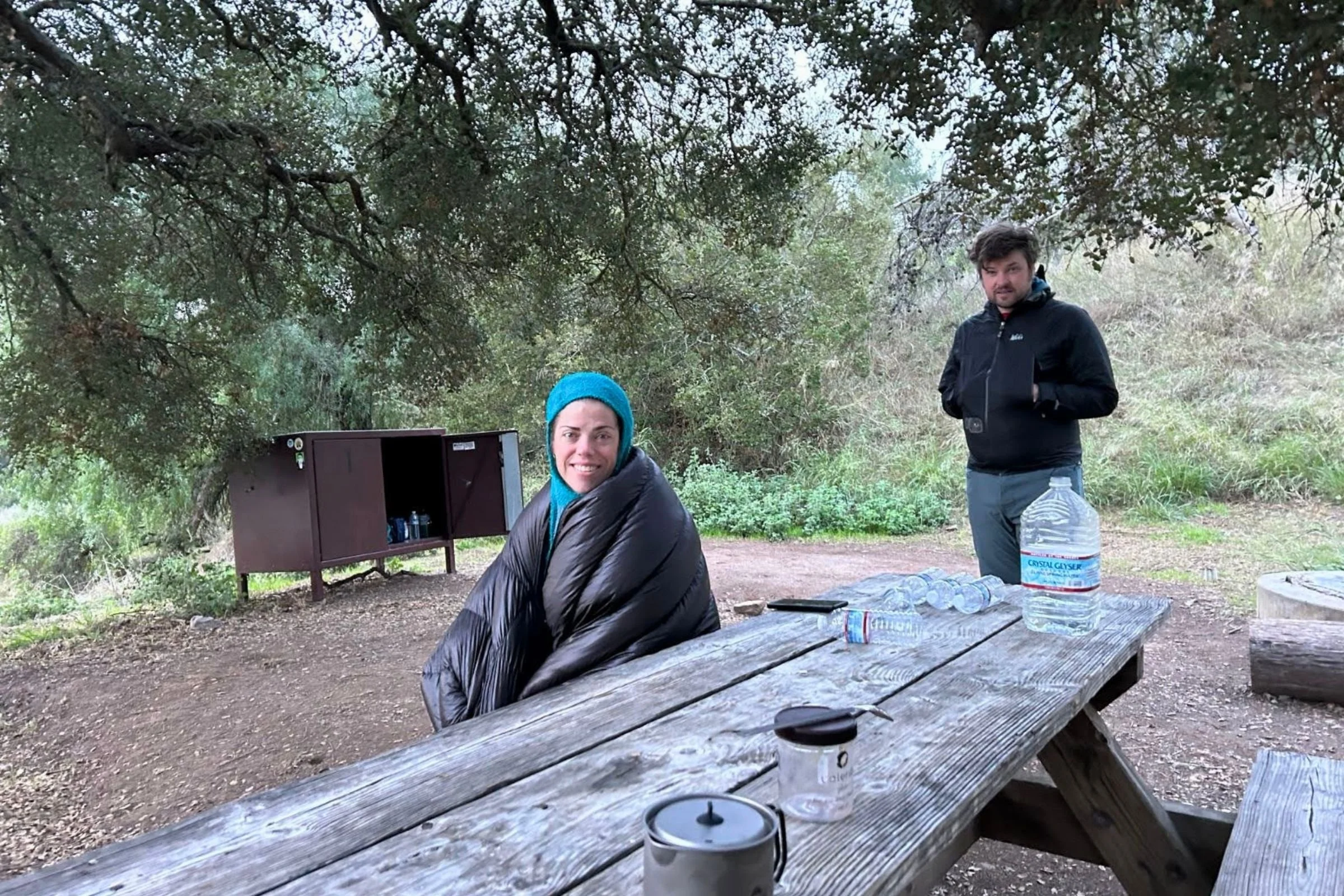
The first thing I noticed when I got my hands on the Zpacks Solo Quilt is how incredibly soft the face fabric is. This is hands down the softest quilt I tested.
The second thing is, due to the 900fp down and 7D fabric, this quilt really feels as light as…a feather. Seriously, hold onto it if there’s a strong breeze or it might blow away. The Solo Quilt was one of the few quilts we tested that doesn’t come in a non sewn footbox option. This may be undesirable for warmer sleepers, but it’s one of the ways Zpacks gets this quilt so light.
View the Zpacks Solo Quilt

-
The Solo Quilt has an impressive 73% fill weight to total weight ratio. This is not surprising, given that Zpacks provides 30% overfill in all their baffles, compared to what is technically needed for a certain temperature rating (some quilts just have this in the footbox).
The vertical baffles over the body and legs keep down from migrating to the sides and leaving cold spots on top, while overstuffed horizontal baffles at the footbox keep toes warm even for folks who kick their feet around when sleeping. This cold sleeper found that when I slept on my back my toes got cold, but otherwise they stayed warm. This is likely due to footbox shape, rather than not enough down.
Since backpacking quilts are already a lightweight, minimal piece of gear, how does Zpacks get this quilt so light compared to other quilts? They use ultralight versions of each material. The snaps, drawstring at the neck, pad attachment cords, fabric, and down are all as lightweight and minimal as they can be, without being so flimsy as to break. This quilt really is for the gram counters out there.
-
From a sustainability standpoint, Zpacks is all in. They use PFC free C0 DWR on their shell fabric and their down is RDS certified and treated with PFC free DownTek.
-
Their warranty isn’t as robust as we’d like to see, as it covers manufacturers defects for a mere 2 years. We found one reviewer who had complaints about the stitching being uneven on their quilt, but otherwise it seems reasonably durable and well made for such a lightweight option.
Best Down Quilt for Backpacking: NEMO Pulse 20/30 Endless Promise Quilt
Temperature rating (F): 20 degrees
Total Weight: 18.0 oz
Fill Weight: 12.0 oz
Fill Power: 1000
Hydrophobic Down? Gold infused ExpeDRY
Fabric: Water-resistent 10D ripstop/ 10D polyester
Shoulder/Hips/Footbox/Length (in): 57/57/12/72
Responsible Down Certified? Yes
Price: $550
What we liked: incredible warmth-to-weight ratio, best sustainability of any quilt, very compact, water-resistant down, silky material
What we didn’t like: hood drawstring is in the center so lands in your face when tightened, pad attachment system was polarizing, not a 20/30 degree quilt but a 35F quilt
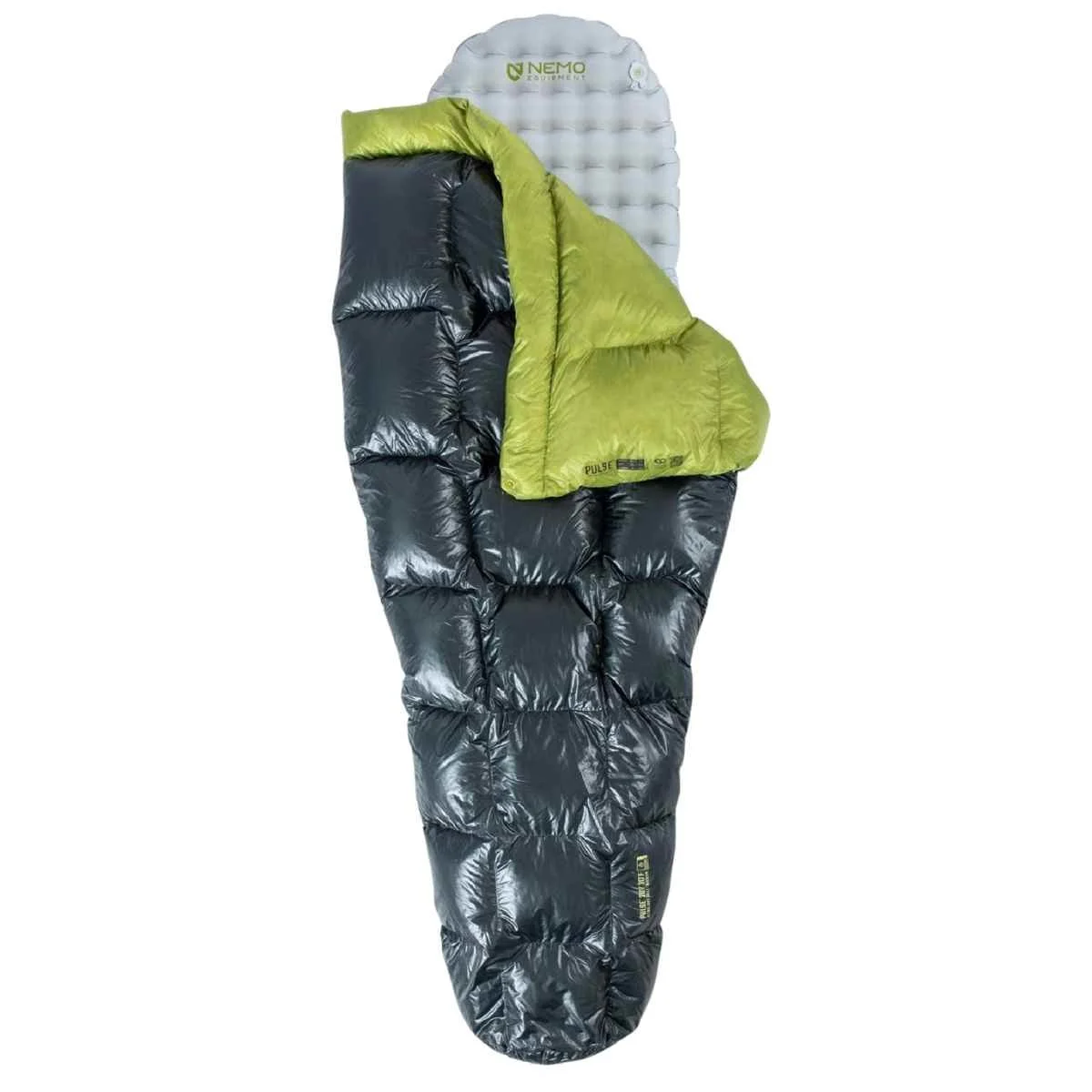
While nearly every quilt we tested was a down quilt for backpacking, our winner for best down quilt is the NEMO Pulse quilt. By quality of the down fill alone, the NEMO Pulse is the clear winner. It's one of the few quilts in the world made with premium 1,000-fill-power ExpeDRY gold-infused down (most quilts are in the 800 to 900 fill-power range).
Fill power measures how much loft you expect out of an ounce of down, measured and reported in cubic inches. One ounce of 1000FP down fills a whopping 1000 cubic inches of space, making this quilt incredibly lofty (and thus warm and insulating) for its weight. Higher fill power down comes from older birds, making it much less common and more expensive.
The 1000-fill power is best for backpackers (really, fastpackers) who want a very compact quilt with an excellent warmth-to-weight ratio and water-resistant, quick-drying insulation.
Additionally, the NEMO Pulse 20/30 Ultralight Backpacking Quilt is one of the most innovative and environmentally conscious quilts we've ever tested, with premium features aimed at ultralight backpackers and thru-hikers.
NEMO Pulse 20/30 Endless Promise Quilt


-
We tested the NEMO Pulse quilt over hundreds of miles of backpacking and thru-hiking. As with all quilts, this is a great option for side sleepers, active sleepers, or any backpacker who feels confined by mummy bags.
-
With 67% down fill weight to total weight of the quilt as a whole, the NEMO Pulse has some of the best warmth-to-weight ratios of any quilt.
However, we found the naming misleading. It is actually ISO-temperature rated to be a 34F degree quilt, not 30F degree quilt. It was great during summer and we even used it on a southbound hru-hike of the Appalachian Trail ending in December with the addition of a sleeping bag liner.
-
Since it is made of ExpeDRY gold-infused down, it has some of the best water-and clump-resistance we've seen in a quilt, which means it stays dry even in nasty weather.
-
The NEMO Pulse is also the most sustainable quilt we've seen yet. It is the first quilt we've heard of that is not only made of 100% recycled materials, but is fully recyclable as part of NEMO's Endless Promise collection. The down itself is Responsible Down Certified and Traceable.
-
The quilt comes with elastic straps that can be used to attach the bag to a sleeping pad. Our four testers had varying opinions on this attachment system. However, all of our testers agreed that the pad attachment straps were the biggest drawback.
-
Choose the NEMO Pulse quilt if you want 1000 FP insulation, value sustainable design, want the smallest and most compact quilt possible, and don't mind premium pricing for cutting-edge features and sustainability.
Best for Cold Sleepers: ZenBivy Ultralight Quilt 25

Temperature rating (F): 25 degrees
Total Weight: 17.0 oz
Fill Weight: 10.1 oz
Fill Power: 900
Hydrophobic Down? ExpeDRY
Fabric: Water-resistant Pertex Quantum
Shoulder/Hips/Footbox/Length (in): 68/58/x/72/
Responsible Down Certified? Yes
Price: $339
What we liked: no draft spots, warm and cozy to rated temperature, superior flexibility to match for conditions, non-constricting, easy to set up with color-coded clips
What we didn't like: clip attachments are small, stuff sack sold separately, must buy sheet and quilt separately
The best backpacking quilt for cold sleepers and side sleepers is the ZenBivy Ultralight Bed. It's a unique backpacking quilt system for ultralight backpackers, thru-hikers, and campers who have struggled to stay warm or comfortable with a traditional sleeping bag or quilt–especially if they side sleep or roll in their sleep.
What makes the ZenBivy Ultralight Bed different is the unique 2-piece system (quilt + sheet) that allows it to be easily adapted over a wide range of temperatures. This design means you can customize the amount of venting on the fly, batting down the hatches when it is really cold–all with almost no weight penalty.
If you find backpacking quilts challenging to use and not warm enough but also find sleeping bags too constrictive, the Zenbivy is for you!
The ZenBivy Ultralight Bed won our award for Our Favorite Gear of the Year of 2025.
For more information, see our in-depth review of the ZenBivy Ultralight Bed.
ZenBivy Ultralight Quilt 25


-
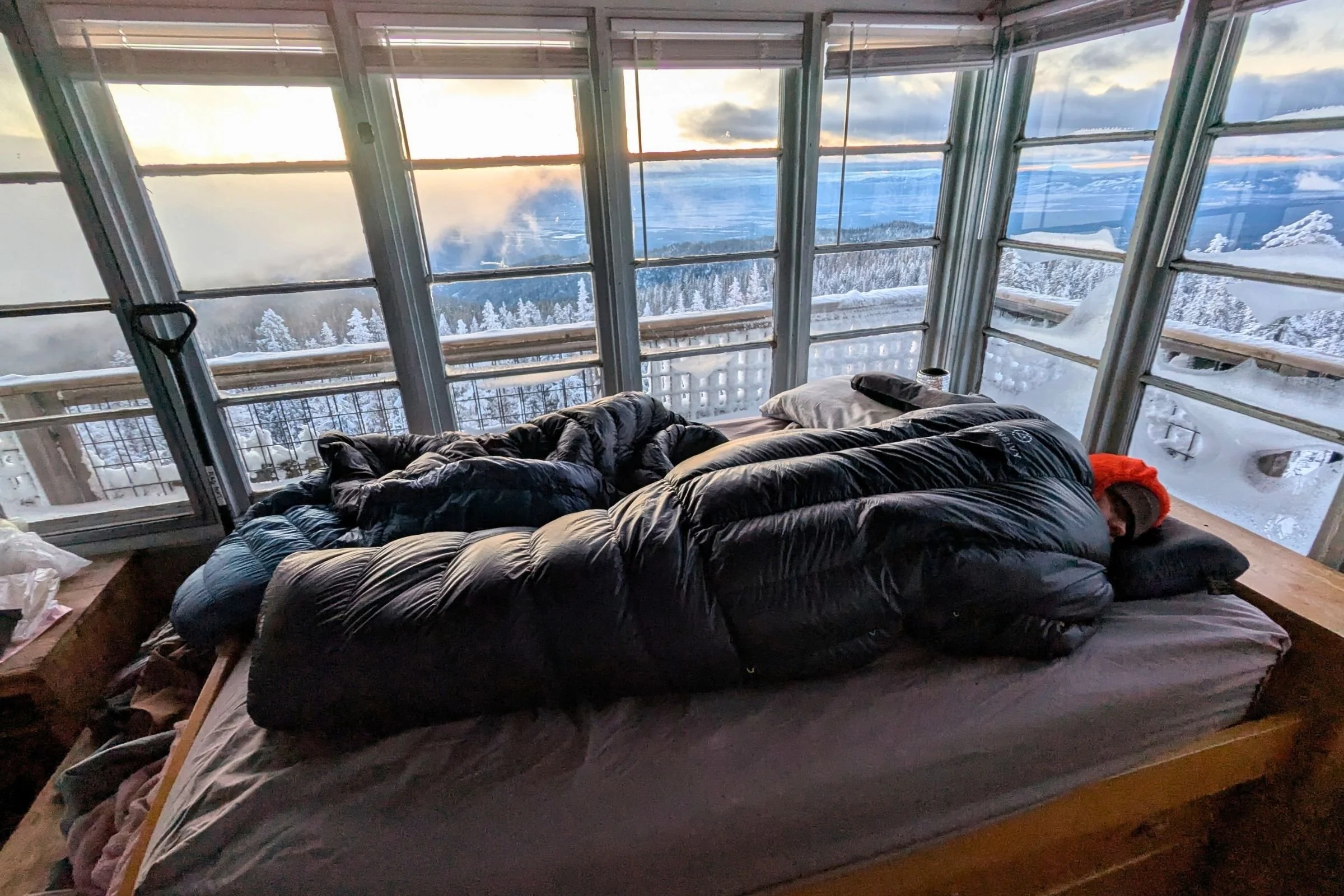
We tested the Zenbivy ultralight bed over 6 months in a wide range of conditions—from January desert thru-hikes to winter snowshoeing trips around Crater Lake to summer overnight peakbagging—and found it to be extremely comfortable, easy to use, lightweight, and durable.
-
The Zenbivy uses a two-piece, modular system of a quilt and “sheet” that attaches to your sleeping pad.
The quilt has a traditional quilt shape with a sewn footbox with a hook that can be undone to allow for venting. What makes the quilt unique is that it also features a series of loops of cord along the torso, inset from the edge by several inches.
The sheet has flaps of Pertex along the sides with small hooks along the edge that secure the quilt with a few inches of overlap. I found this system to work remarkably well at keeping the edges of the quilt in place, preventing drafts even with rolling from side to side.
This allows for easy movement for side-sleeping and rolling around while keeping out drafts.
-
As a side sleeper who rotates often throughout the night, some of our testers found other quilts not warm enough. Whenever we moved, we ended up with a cold draft creeping in along the edge.
With the introduction of Zenbivy’s Ultralight Bed system, the weight of the ZenBivy system became comparable to other ultralight quilts and bags while feeling so much warmer.
-
The ZenBivy Ultralight Bed sleep system is versatile, comfortable, and easy to use. Side sleepers and folks who’ve had trouble with other quilts will stay much warmer with Zenbivy’s unique two-piece system. Consider other Zenbivy models for more affordable options if weight is not an important factor.
Best affordable backpacking quilt: Outdoor Vitals StormLoft Down TopQuilt 15

Temperature rating (F): 15 degrees
Total Weight: 23.0 oz
Fill Weight: 16.0 oz
Fill Power: 900
Hydrophobic Down? ExpeDRY optional
Fabric: 10D nylon
Width/Length (in): 56/71
Responsible Down Certified? Yes
Price: $355
What we liked: warmer than temperature rating implies, packs down small, great quilt design, versatile, good loft and insulation, fast-drying down insulation, great value for the price
What we didn't like: not as light as some quilts, not as much customization as other quilt brands
The Outdoor Vitals StormLoft Down TopQuilt is an all-around great quilt for backpacking and thru-hiking. It has an excellent warmth-to-weight ratio, is stuffed with Expedry Down that repels moisture while retaining loft, and seals out drafts without requiring you to be an expert in staying warm with a down quilt. It also comes at a great price, earning it our choice for the Best Affordable Backpacking Quilt.
Outdoor Vitals StormLoft Down TopQuilt 15
-
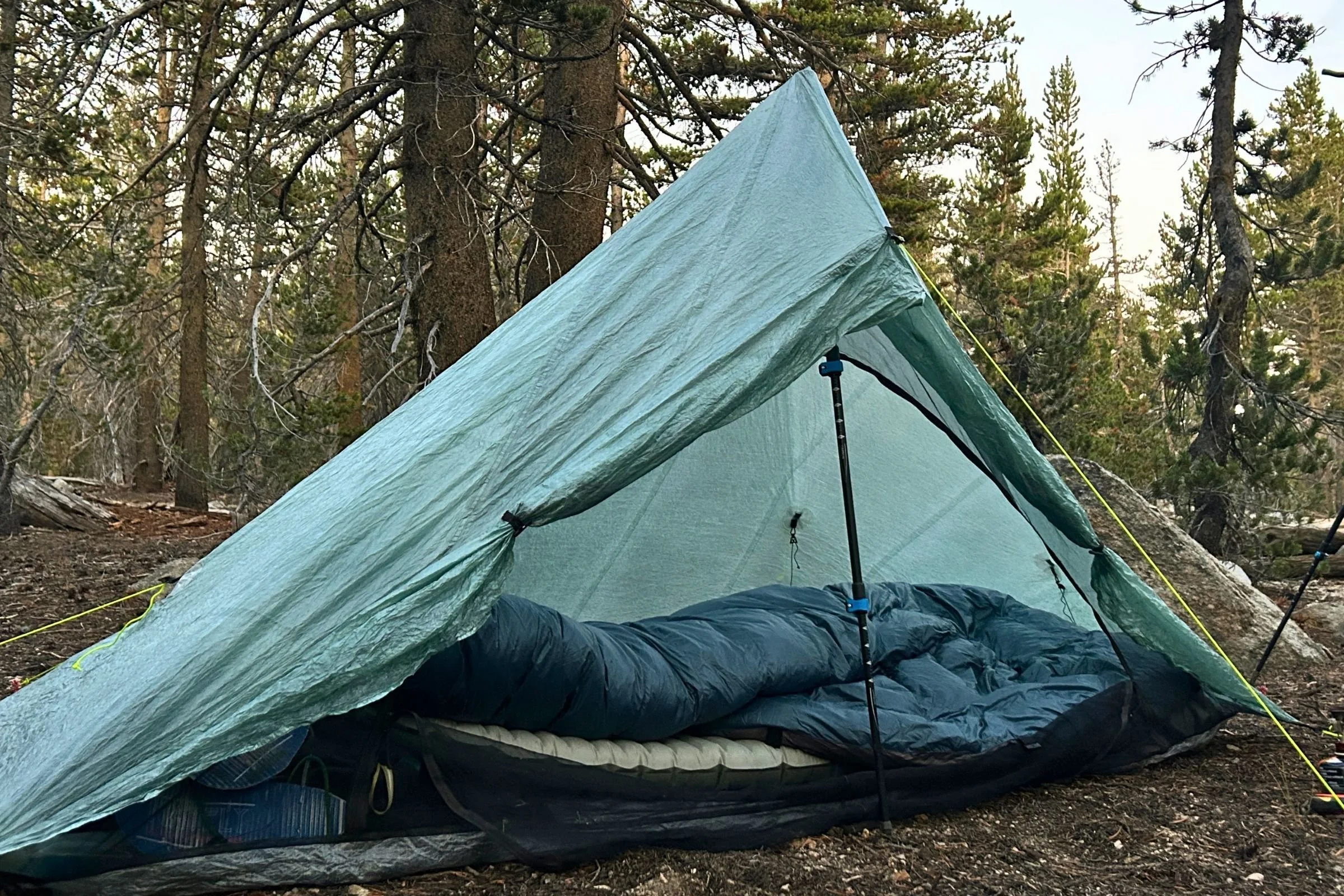
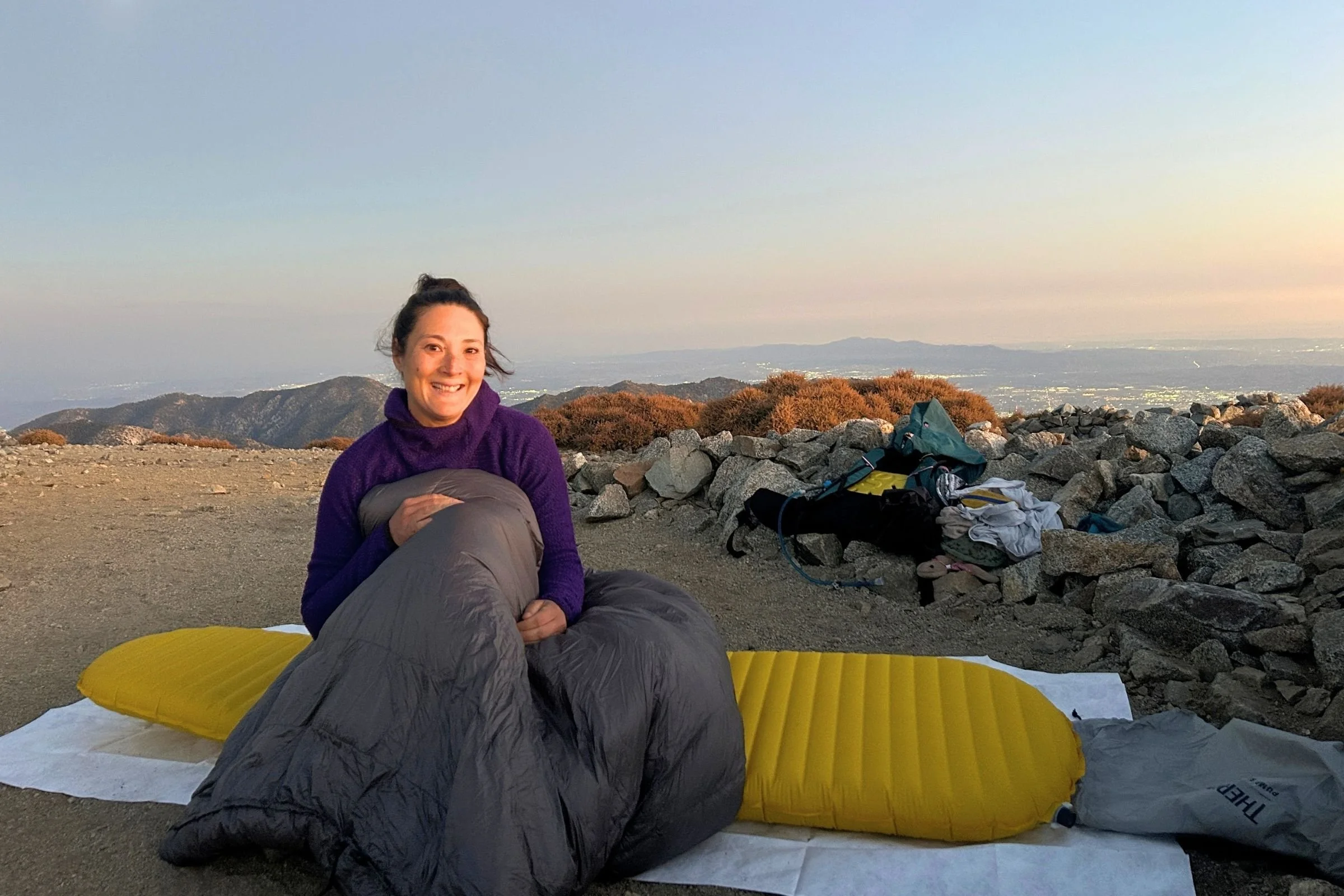
We tested the StormLoft Topquilt 30°F for over 150 nights while thru-hiking the Pacific Northwest Trail and Hayduke Trail in Utah, along with countless other backpacking trips in Colorado, California, New Mexico, and Arizona. We had two testers use this quilt; one used the 30°F version, and the other used the 15° version.
For more information, see our long-term, in-depth review of the Outdoor Vitals StormLoft Down TopQuilt.
-
Compared to other quilts and sleeping bags, the StormLoft retains loft better than most. The reason for this is the Allied Feather Expedry 800+ fill down used for insulation. This down insulation has gold particles infused into the down clusters, which repel moisture and help it dry faster if the insulation does get wet. We endured some seriously wet conditions on the Pacific Northwest Trail, and through all the rain and condensation inside our tent, this quilt stayed surprisingly fluffy. It also dried quickly in the sun the following day when the rains passed.
-
The StormLoft is extremely warm for the temperature rating, too. Some quilts, like our previous choice for Most Affordable, claim to be rated for a certain temperature. But those quilts are really rated to keep you alive at that temperature, not keep you comfortable. The StormLoft, on the other hand, is warm enough to keep you surprisingly comfortable below the temperature rating. We used the 30°F StormLoft down to 20°. And while we would have preferred it if the 15° version magically appeared at 3 am, the 30° version kept us from shivering until the sun came up.
-
This quilt is an especially good deal if you’re an Outdoor Vitals Live Ultralight Member, which gets you an even steeper discount on this item and more. A membership costs $10 or $25 per month depending on membership level, and the amount you pay per month becomes store credit, too. If you pay $10 per month, you get 10% off everything on their site (including backpacking meals) and a $10 credit each month.
-
If you’re looking for a great deal on a down quilt that is warm for the weight, retains warmth in wet conditions, and is surprisingly affordable, you should check out the StormLoft.
Best 20 degree quilt: Feathered Friends Flicker UL

Temperature rating (F): 20 degrees
Total Weight: 22 oz
Fill Weight: 11.6 oz
Fill Power: 950+
Hydrophobic Down? No
Fabric: Water resistant 10D Pertex Endurance shell, 15D Flite ripstop nylon liner
Shoulder/Hips/Footbox/Length (in): 62/48/39/72
Responsible Down Certified? Yes
Price: $559
What we liked: Ability to zip up like sleeping bag, or lay out like quilt, made in the USA
What we didn’t like: Heavier and bulkier than other options, expensive
Feathered Friends has been around since 1972 and has consistently delivered high end down sleeping bags and apparel. They bring the same level of quality to making what they call “quilt style sleeping bags.” The Flicker UL 20 is a great option for someone who is new to the quilt world, unsure if quilts are right for them, hammock camps, or doesn’t want to fuss with a pad attachment system.
View the Feathered Friends Flicker UL


-
In warmer weather, the Flicker UL can be draped flat over you like the quilt on your bed. But for when the temperature drops, it has a full length center zipper and cinch at the foot, essentially turning it into a hoodless sleeping bag.
Because it is a full zip, it is wider at the shoulders than most other quilts; 62” in the regular compared to a pretty standard 54”. This makes up for the fact that it does not have a way to attach to a sleeping pad. The extra width allows the user to tuck the edges under themselves.
If you are an active sleeper, this method may not be very effective. In that case we recommend using the Flicker UL in sleeping bag mode, or going with one of our other quilt choices like the Best Overall Katabatic Palisade 30. Although it does not attach to a pad, the Flicker UL does have small webbing loops that allow it to be used as a hammock underquilt.
The Flicker UL is not customizable, but Feathered Friends offers overfill and custom lengths upon request. Stock options include regular, wide, long and there’s even a kids option. Feathered Friends offers a limited lifetime warranty for manufacturer’s defects, the best warranty of any quilt we picked besides the Katabatic Palisade.
-
One tester, who loved how soft and fluffy the Flicker UL is, said they felt “instantly” warm when they turned it into sleeping bag mode. Another tester reported feeling warm everywhere except their feet. As a back sleeper, their toes compressed the down and got cold. They also noted that the foot did not cinch all the way, leaving a small hole for warm air to leak out. Some reviewers report that putting a piece of clothing inside blocks the hole and helps to keep feet warm.
The Flicker UL features 950+ fill power RDS certified down. Feathered Friends does not treat their down with a DWR, because in their view “untreated down will last longer and perform better than treated down.” Read their full statement on hydrophobic down here. They use 10D Pertex Endurance, a PFC free fabric.
-
Other than the Enlightened Equipment Accomplice, which is a 2-person quilt, the Flicker UL is the most expensive quilt we tested. This makes sense when you consider that Feathered Friends still hand sews their quilts in Seattle, WA. If you otherwise love the flexible hybrid design of the Flicker UL and are deterred by the price, check out the less expensive Feathered Friends YF, which uses a more durable fabric and weighs 2 oz more.
The Flicker UL is also heavier for the warmth rating and price than what we would like. This is to be expected with a full zip.
One tester reported the cinch felt “bulky and out of place” with how streamlined the rest of the bag felt. We agree that Feathered Friends could have used a thinner cord and smaller toggle to achieve the same effect. But these are minor complaints for an overall excellent bag that provides a ton of versatility.
Best Synthetic Backpacking Quilt: Enlightened Equipment Apex Revelation
Temperature rating (F): 20 degrees
Total Weight: 30.14 oz
Fill Weight: n/a
Fill Power: Apex
Fabric: 10Dx10D nylon
Shoulder/Hips/Footbox/Length (in): 54/x/40/78
Price: $240
What we liked: Can spread out like a blanket, affordable, good in wet weather.
What we didn’t like: Bulky, unusual texture, heavy compared to down
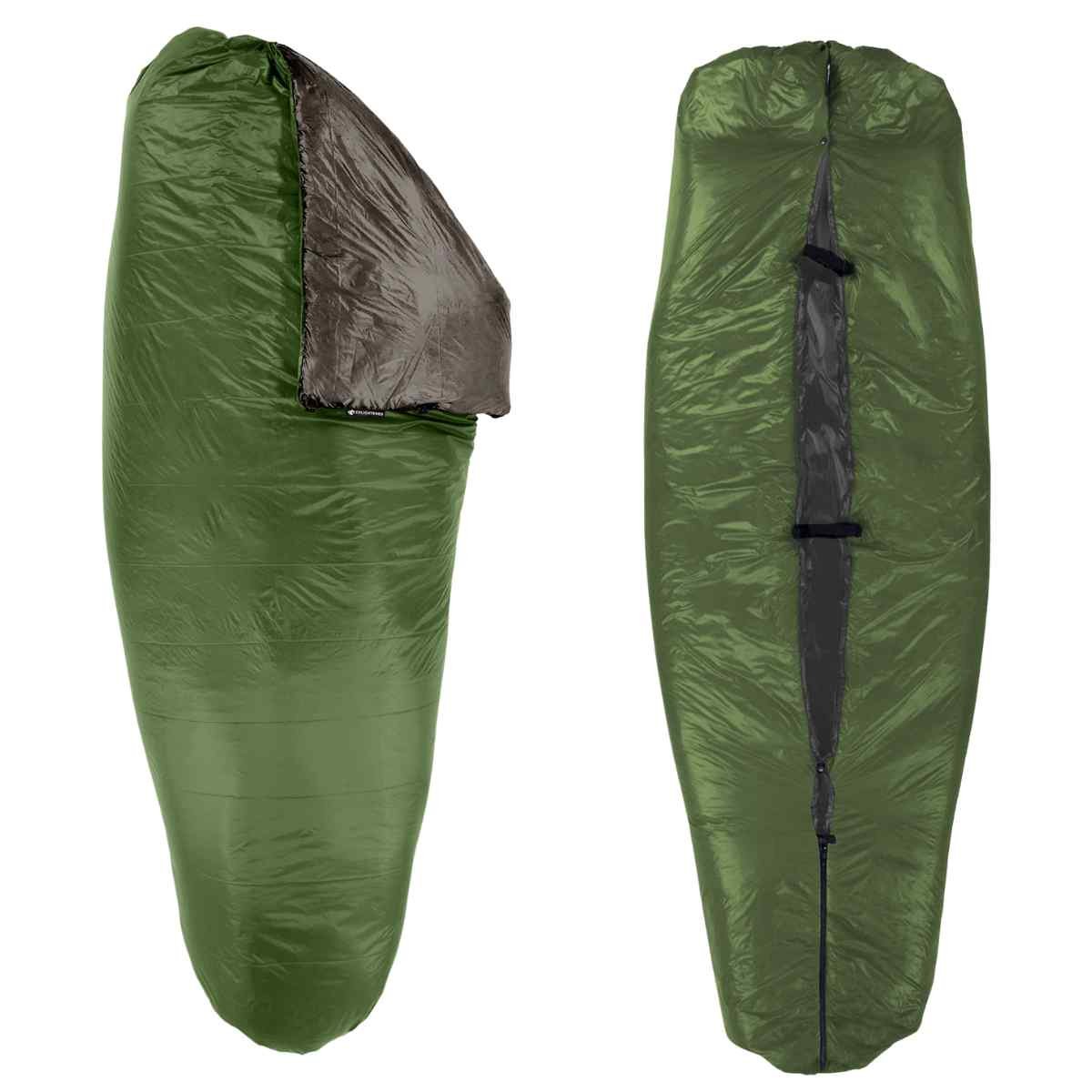
The Enlightened Equipment Revelation is one of the most popular backpacking quilts on the market. So it’s no surprise that their synthetic version, the Enlightened Equipment Apex Revelation, made with Apex insulation, won our best synthetic quilt we tested.
We think most of the time most backpackers will prefer a down quilt, due to down’s unrivaled packability and warmth to weight ratio, features highly valued by ultralight enthusiasts. However, for folks who are vegan, concerned about keeping a quilt dry in very wet climates, or more concerned with counting dollars than ounces, the Apex Revelation is a great option.
View the Enlightened Equipment Apex Revelation

The difference in packability between Enlightened Equipment’s down and synthetic quilts. Photo by Emily Haas
-
Apex insulation is the top of the line synthetic insulation, mimicking down as well as synthetic can. This results in a reasonably lightweight and packable quilt. That being said, the stuff sack provided by Enlightened Equipment is unreasonably large, resulting in a comically large packed size (compared to other quilts we tested). We recommend either getting a smaller stuff sack, or free packing your quilt in the bottom of your pack.
While the Apex Revelation is the heaviest single quilt on our list, it still weighs less than 2 lbs, due in part to the 10D nylon fabric. It’s also a pound lighter than our winner for best synthetic sleeping bag, and comparably priced. This makes the Apex Revelation a worthwhile way to lower the weight in your pack, without spending a ton of extra money. Plus it has all the pros of a quilt.
-
Most modern synthetic insulation comes in a sheet that fills the quilt, rather than individual plumules like down. The individual plumules of down move independently, creating that fluffy feel. Be assured that the Apex insulation still lofts nicely, even without the fluff of down. Side note: this is also why down quilts are baffled and synthetic ones usually are not; the baffles keep individual down plumules in place, something that’s not necessary with a sheet of synthetic insulation.
Keep in mind that if you are used to down, the Apex Revelation won’t feel as “fluffy.”. Fluffiness is often confused with loftiness and is what people think of when assessing how warm a quilt will keep them–but this is not true with synthetic insulation. This lack of fluffiness may be due to the way synthetic insulation moves, or rather doesn’t.
-
Due to the foot box not being sewn, the Apex Revelation can be spread out just like your quilt at home. This allows for plenty of airflow in warmer weather. For colder temps, there is a partial zipper with a drawstring cinch at the end. Be aware that the cinch doesn’t completely seal like a sewn foot box, potentially causing drafts. Blocking this hole with an extra piece of clothing is an easy solution that doesn’t add any extra weight. Enlightened Equipment makes a version of this quilt that has a sewn footbox, called the Apex Enigma.
The included pad attachment system is extremely intuitive and easy to use. The Apex Revelation clips into two elastic straps that snug the quilt securely onto the pad, eliminating drafts even for folks who toss and turn. A snap at the back of the neck and a drawstring at the collar also help to keep out drafts.
-
Enlightened Equipment’s quilts have a 3 year warranty for manufacturer’s defects. They have partnered with a Bend, Oregon repair shop called Rugged Threads for repairs that fall outside the warranty. Like all Enlightened Equipment’s other quilts, the customization options are seemingly endless with different types and colors of fabric and different widths and lengths available. Want another reason to get a custom quilt? All their custom quilts are made in Winona, MN. Allow more lead time if getting a custom quilt; they ship in about 4 weeks rather than 10 days for stock quilts.
-
One tester, who had never used a quilt before, had this to say: “This was the best part of the experience for me. I'm a side sleeper who likes to have my feet out. Traditional mummy bags feel like sleeping in a tight coffin...I could freely move from side to side without the bag moving underneath me which usually ends up with me sleeping on the side zipper and the "hood" smothering my face.” Like this recent quilt convert, the Apex Revelation may be right for you if you want to try out a quilt, but aren’t ready to drop the money for down. It’s also a great option for vegans, or folks who will consistently be adventuring in extremely wet environments. That’s why the Revelation backpacking quilt made our favorite gear we’re testing this summer.
Best 2-person backpacking quilt: Enlightened Equipment Accomplice 2-Person Quilt

Temperature rating (F): 20
Total Weight: 37.82 oz
Fill Weight: 27.76 oz
Fill Power: 850
Hydrophobic Down? No
Fabric: 10D nylon treated with a DWR
Shoulder/Hips/Footbox/Length (in): 86/x/x/72
Responsible Down Certified? Y
Price: $650
What we liked: Lightweight for warmth, very packable, secures well to pad, customizable, good cost/person
What we didn’t like: Can’t split weight between two packs or use solo without getting cold
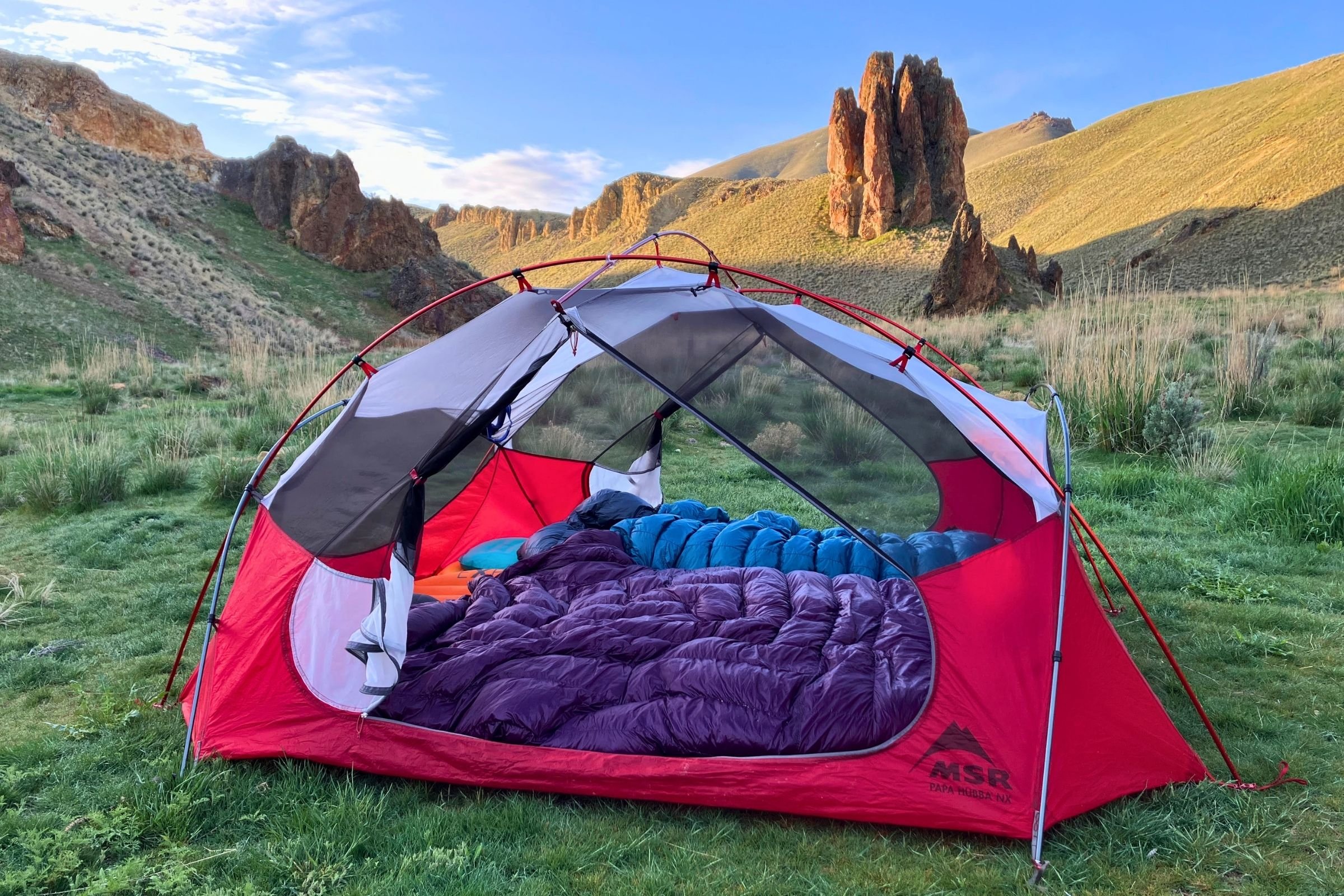
Have a hiking partner you want to snuggle with? The Enlightened Equipment Accomplice is the quilt for you. Made with RDS-certified, non-hydrophobic 850 or 950 fp down, the Accomplice has a sewn foot box with enough room for 4 feet. This, in combination with the pad attachment straps, effectively seals out any drafts.
Enlightened Equipment Accomplice
-
Enlightened Equipment only makes this quilt with a sewn foot box, but we haven’t found a need for an open foot box. The foot box is short enough that if it gets too hot at night, you can easily stick your feet out to cool off. Another feature designed to keep in heat is two sets of snaps to go around the neck. We have never used these, however, as we haven’t slept in cold enough weather to need them.
As with all Enlightened Equipment quilts, they offer many customizable features, including 7, 10, or 20 denier fabrics in a myriad of colors for the lining and shell, 850- or 950-fill power down, an optional draft collar, and regular, long, and extra-long lengths. The Accomplice comes in anything from 0- to 50-degree options.
-
Due to the ability to share body heat with (aka steal body heat from) my partner, the extra length of our long quilt has not left me feeling cold. That being said, prior to purchase I was advised by a friend to choose a warmer quilt than I thought I needed. That’s how we ended up with a 10-degree Accomplice. We usually go on lower-elevation shoulder seasons or mid- to high-elevation summer trips. Even though I am a cold sleeper, the 10-degree quilt has proven to be too warm for most of those trips. The only time I ever felt a little uncomfortable was sleeping at 11,000 ft in the High Sierra when it got down to around 20 degrees.
Current Accomplices should perform even better, as the one my partner and I have was purchased prior to 2019, when EE began adding 30% overfill to their quilts. This is a large part of how they achieve a fill weight/total weight ratio of 73%, which is one of the highest of the quilts we tested. While Enlightened Equipment quilts are not EN rated, they claim that based on their in-house testing, their quilts fall somewhere between the EN Comfort and Limit ratings. This tracks with our experience.
-
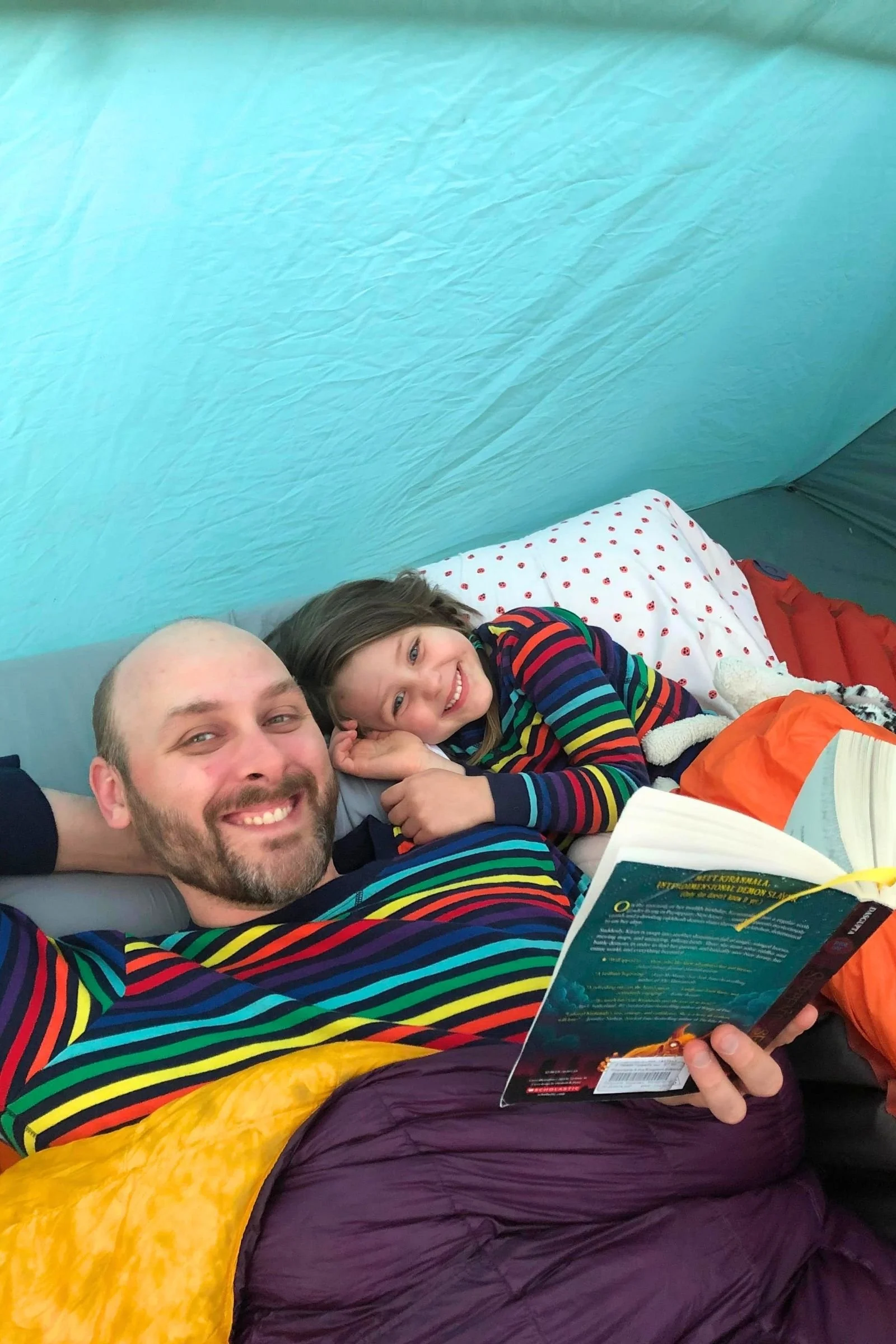
I have been using the Enlightened Equipment Accomplice since 2016 and love it. And for those in the pro double quilt camp, so does everyone else. The benefits of a double quilt are many. There’s the reduced total weight for two comparable quilts. The price ends up being less, too: just $255 per person for our 20-degree 850-fill power pick. When paired with a double sleeping pad, the Accomplice feels more like sleeping in bed at home than any single quilt or sleeping bag ever has.
However, double quilts have their detractors, and they have some good points. When one sleeping partner moves around in the night, they can pull the quilt towards them, causing drafts for the other person. That’s why we recommend using the included pad attachment straps. Enlightened Equipment has straps that work with both 2 single pads or 1 double pad (sold separately). We have found the quilt to be wide enough that when the cords are cinched down, there are no gaps, even when one partner moves around.
Having a double quilt also limits versatility; you must always go backpacking with a partner or own another quilt for solo trips. We discovered the hard way that this quilt is just too wide for one person to effectively stay warm in all but the warmest conditions.
Packing a backpack is different with a double quilt. It goes from being personal gear to shared gear. And unlike sharing a tent, where you can divide the tent and poles between two packs, one person is stuck carrying the quilt. We haven’t found this to be too much of an issue; the Accomplice packs down smaller than most single synthetic sleeping bags or quilts.
That being said, there is only one thing I personally don’t like about the Accomplice; like some other Enlightened Equipment bags, the Accomplice comes in a larger-than-necessary stuff sack. We recommend getting a compression sack or smaller stuff sack, or just free packing the Accomplice in the bottom of your pack.
If there is a large height discrepancy between partners, it can be hard to decide what length to go with; the Accomplice comes in sizes regular, long, and extra long (72”, 78” and 84” respectively). I’m 5’ 7” and have a 6’ 4” partner, so we opted for a long, which works just fine for both of us.
-
Weighing just under 19 oz per person, the Accomplice is quite comparable with other single quilts we tested. We don’t think upgrading to the lighter 7D shell and liner fabrics, and 950fp down is worth it for most people. It only saves about an ounce, but costs $130 extra. We think most people would rather put that money towards another piece of gear, gas to get to the trailhead, or post trip burgers and beers.
Other backpacking quilts we tested
Feathered Friends Flicker 30 YF

Fabric: Pertex YFuse, 100% nylon Pertex Quantum shell
Shoulder/Hips/Footbox/Length (in): 62/48/39
Responsible Down Certified? Y
Price: $469
In addition to testing the Feathered Friends Flicker UL, we tested the slightly heavier and more affordable Flicker YF. It uses Pertex Y Fuse fabric, which is heavier than Pertex Endurance. Heavier fabric changed the already middling 53% fill weight to total weight ratio of the UL to a measly 48% ratio on the YF version. This ultimately results in just a 2oz difference, but on an already heavier than average quilt, we opted to award the lighter version, even if it costs a bit more.
View the Feathered Friends Flicker 30 YF
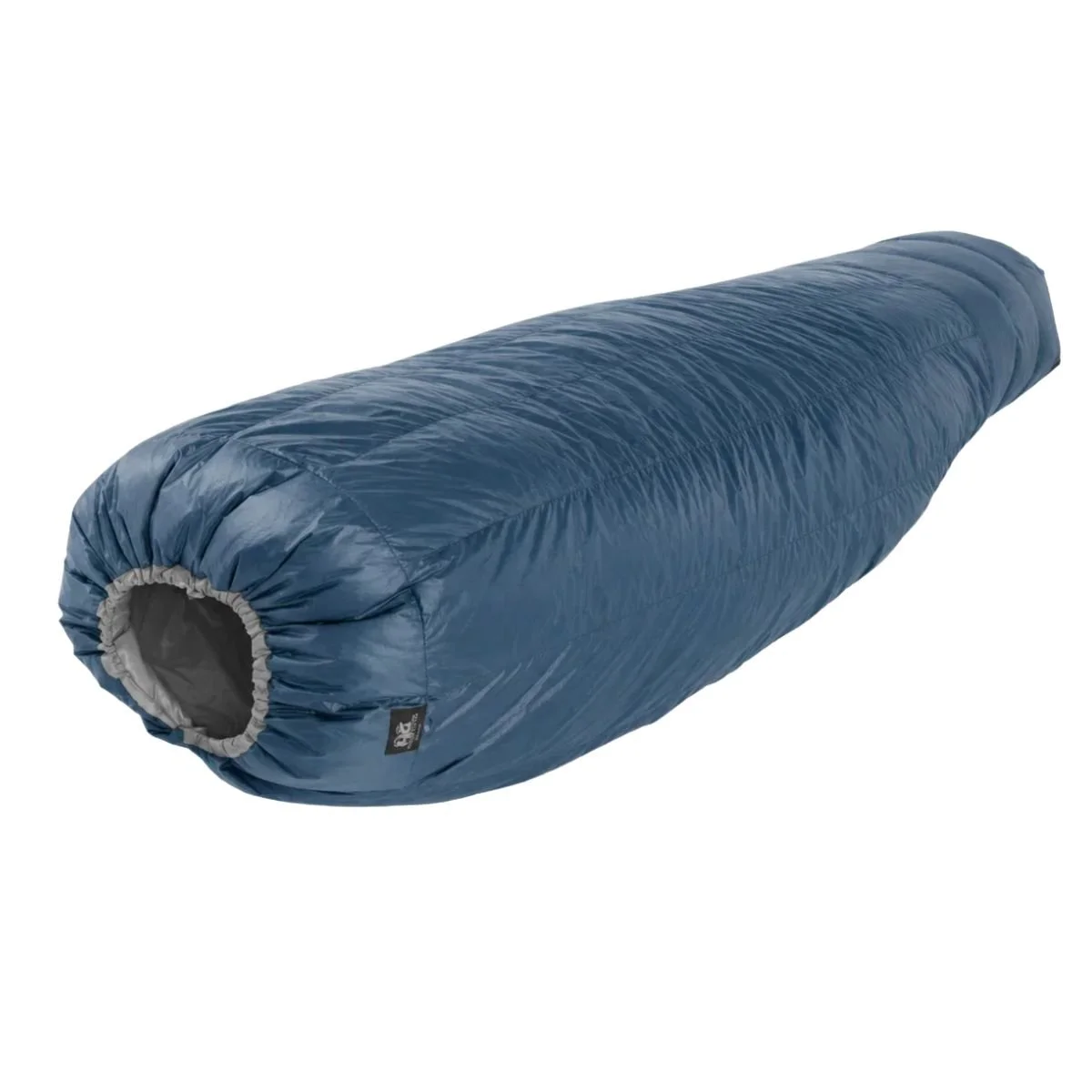
Fabric: 20D nylon taffeta DWR
Shoulder/Hips/Footbox/Length (in): 55/x/40 74
Responsible Down Certified? Y
Price: $305
The Hammock Gear Econ Burrow was going to be our pick for Most Affordable Backpacking Quilt. Hammock Gear formerly offered a Premium and Econ version of the Burrow, but has since combined the two. The Econ Burrow was well under $300, while the Burrow starts at around $300. While the Burrow is a well made quilt, the increase in price makes it worth paying a little more and getting the Katabatic Palisade.
View the Hammock Gear Burrow

Fabric: n/a
Shoulder/Hips/Footbox/Length (in): n/a
Responsible Down Certified? n/a
Price: $250
Ultimately, we chose the Apex Revelation Enigma for best affordable sleeping quilt over the Apex Enigma due to the added versatility of the open footbox. We felt the minor weight penalty of an open footbox was negligible for a quilt that was already a little heavier due to being synthetic. If you want a synthetic quilt with a sewn footbox the Apex Enigma is a great choice.
View the Enlightened Equipment Apex Enigma

Fabric: 10D Pertex Quantum Eco Ripstop and 20D Pertex Quantum Taffeta
Shoulder/Hips/Footbox/Length (in): 54/46/40/72
Responsible Down Certified? Yes
Price: $399
If you want a quilt rated to colder temperatures that still has all the heat trapping features of the Palisade 30, check out the other quilts in Katabatic’s Elite series,
We tested the Katabatic Alsek, which is rated to 22F and is a warmer version of the Palisade with similar straps, cut, and design. Ultimately, we think the Palisade is more versatile as a 30F quilt and it also is less expensive. However, if you run cold or are going somewhere with a colder climate, the Alsek may be a good choice for you.
View the Katabatic Alsek 22
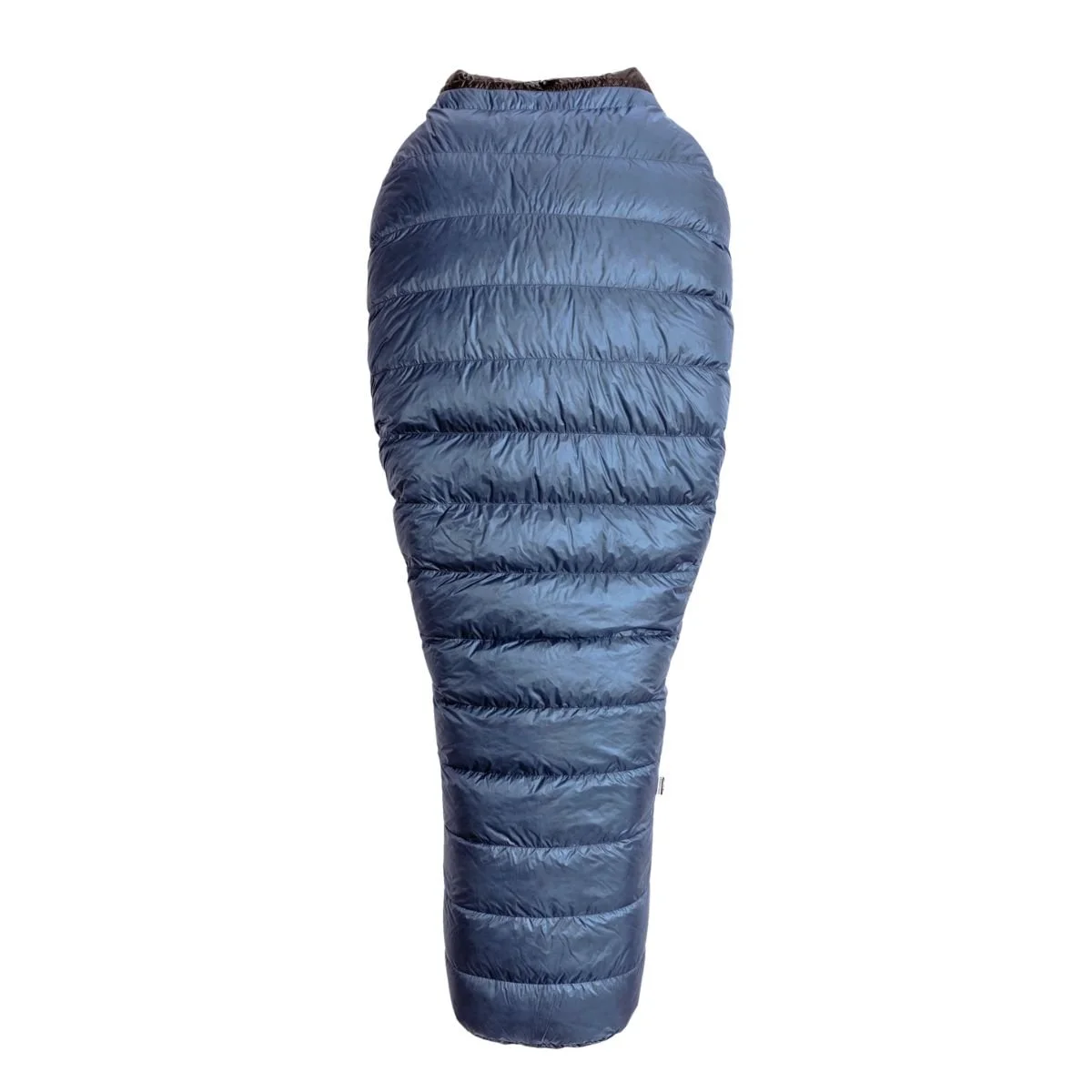
Fabric: 10D Pertex Quantum Eco Ripstop (shell), 20D Pertex Quantum Taffetta (liner)
Shoulder/Hips/Footbox/Length (in): 54/46/25/72
Responsible Down Certified? Yes
Price: $419
The Katabatic Sawatch 15 essentially has the same cut and design as our overall winner, the Katabatic Palisade 30 and the Katabatic Alsek 22. The difference is it has more fill weight and more warmth.
We ultimately chose the Palisade 30 because it is quite comparable to other brands 20-degree quilts, which is the temperature we recommend for most 3-season situations. Our testers have used the Sawatch 15 on October thru-hikes of the Superior Hiking Trail in northern Minnesota, ski hut trips in Colorado and Oregon. The warmth to weight
View the Katabatic Sawatch 15

Fabric: 10D Pertex Quantum Eco Ripstop and 20D Pertex Quantum Taffeta
Shoulder/Hips/Footbox/Length (in): 54/46/40/72
Responsible Down Certified? Y
Price: $379
We tested the Katabatic Flex 30 quilt, which is part of the Flex series that has open rather than sewn footboxes. For folks who run warmer, or want one quilt that is more versatile for a wider range of temperatures, a quilt from the Flex series could be right for you. The Palisade 30 still won our best overall category, as we like the weight savings of a sewn footbox, and find it is still easy to make adjustments to quilt setup as temperatures fluctuate.
Katabatic Flex 30

Fabric: 10D Pertex Quantum Eco Ripstop and 20D Pertex Quantum Taffeta
Shoulder/Hips/Footbox/Length (in): 54/46/40/72
Responsible Down Certified? Ethically-sourced down
Price: $399
Similar to the Katabatic Flex 30, the Katabatic Flex 22 has open rather than sewn footboxes. It's rated for cooler temperatures than the Flex 30, but is still a good option for folks who run warmer, especially in the feet. The Palisade 30 still won our best overall category, as we like the weight savings of a sewn footbox, and find it is still easy to make adjustments to quilt setup as temperatures fluctuate.
Katabatic Flex 22
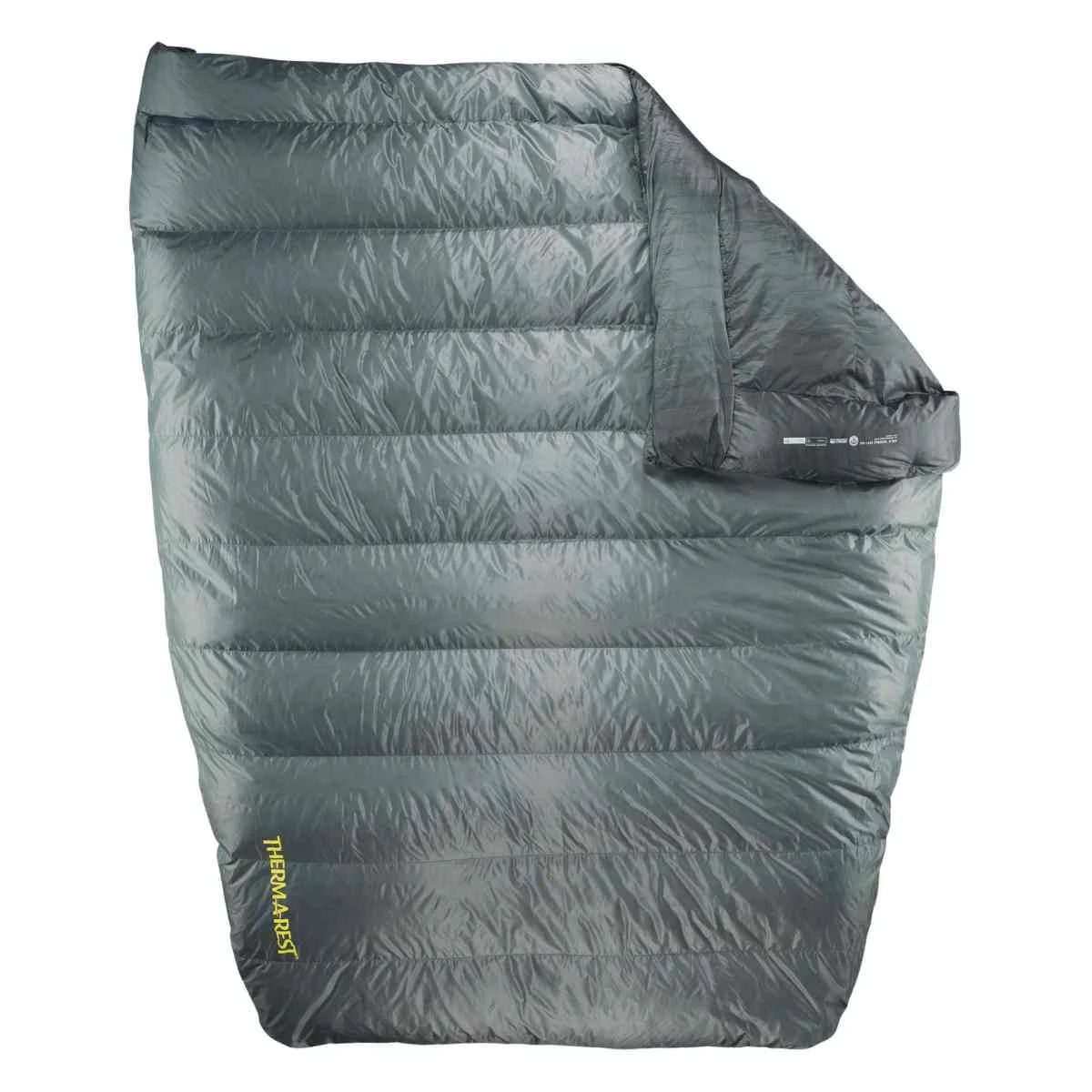
Fabric: 20D ripstop polyester
Shoulder/Hips/Footbox/Length (in): 77/82/28/100
Responsible Down Certified? Y
Price: $450
At almost the same weight as the Enlightened Equipment Accomplice 20 degree, but with a significantly lower fill to total weight ratio, the 32 degree rating on the Vela seems optimistic at best. That’s because just like the Therm-a-Rest Vesper, 32 degrees is a limit rating; the comfort rating is 41 degrees.
Field testing confirmed that even for average sleepers, this quilt is best used at closer to 50 degrees. We do like that the Vela is much more economical than the Enlightened Equipment Accomplice. This is in large part due to the use of 650 fill down, which isn’t as lightweight as the 850 in the Enlightened Equipment Accomplice.
View the Therm-a-Rest Vela Double

Snuggle time in the Therm-a-Rest Vela Double. Photo by Emily Haas

Fabric: Argon 67
Shoulder/Hips/Footbox/Length (in): 75/52
Responsible Down Certified? Y
Price: $460
While we weren’t able to get our hands on a Ghost Pepper to do any field testing, we like that it is extremely lightweight and still has a good fill weight to total weight ratio (65%). There was only about a $35 price difference with the Zpacks for a similar sized quilt.
Many professional reviewers like the Ghost Pepper, specifically citing the chevron shaped baffles. These are designed to keep down from shifting, reducing potential cold spots in the quilt. Ultimately we chose the Zpacks Solo Quilt as our Ultralight winner for two reasons: it has a slightly higher fill to total weight ratio, and for the large amount of testing experience we were able to gather. That being said, if you want a quilt that is similar to the Zpacks Solo Quilt, but with more options for customization, the Ghost Pepper might be right for you.
View the Loco Libre Ghost Pepper

Accessories
Since quilts don’t have hoods, some folks like to use a down hood like this hood from Zpacks.
There are several advantages to a separate hood. The hood moves with your head, rather than ending up on your face, it can be worn around camp on chilly mornings, or it can be left home to save weight on warmer trips.
Just make sure you get the right size for your head/hairstyle. Too small, and the down will compress, rendering it ineffective. Too big, and the hood will move around, falling over your eyes and overall be really annoying.

Testing durability on the Oregon Coast. Photo by Emily Haas
What is a backpacking quilt?
In the most basic terms, think of a down comforter for a bed, then make it out of lightweight technical fabrics and shrink it to the size of one person. It takes the place of a traditional sleeping bag. Unlike a sleeping bag, most backpacking quilts do not have a hood or full zipper. Some backpacking quilts employ straps to attach your quilt to your sleeping pad, a partial zipper and a drawstring at the foot, or a sewn footbox to keep your feet warm in cooler weather while still saving weight.
The way that a backpacking quilt or sleeping bag keeps you warm is by trapping air in the insulation, or loft. This air is then heated by your body, keeping you warm. The concept behind a quilt is simple. Since any insulation on the underside of a sleeping bag is being compressed by your body, it is not lofting up and therefore not able to trap body heated air. This renders it inefficient at best and ineffective at worst at keeping you warm. Therefore, the reasoning goes, the bottom half of a sleeping bag is just extra weight to carry around.
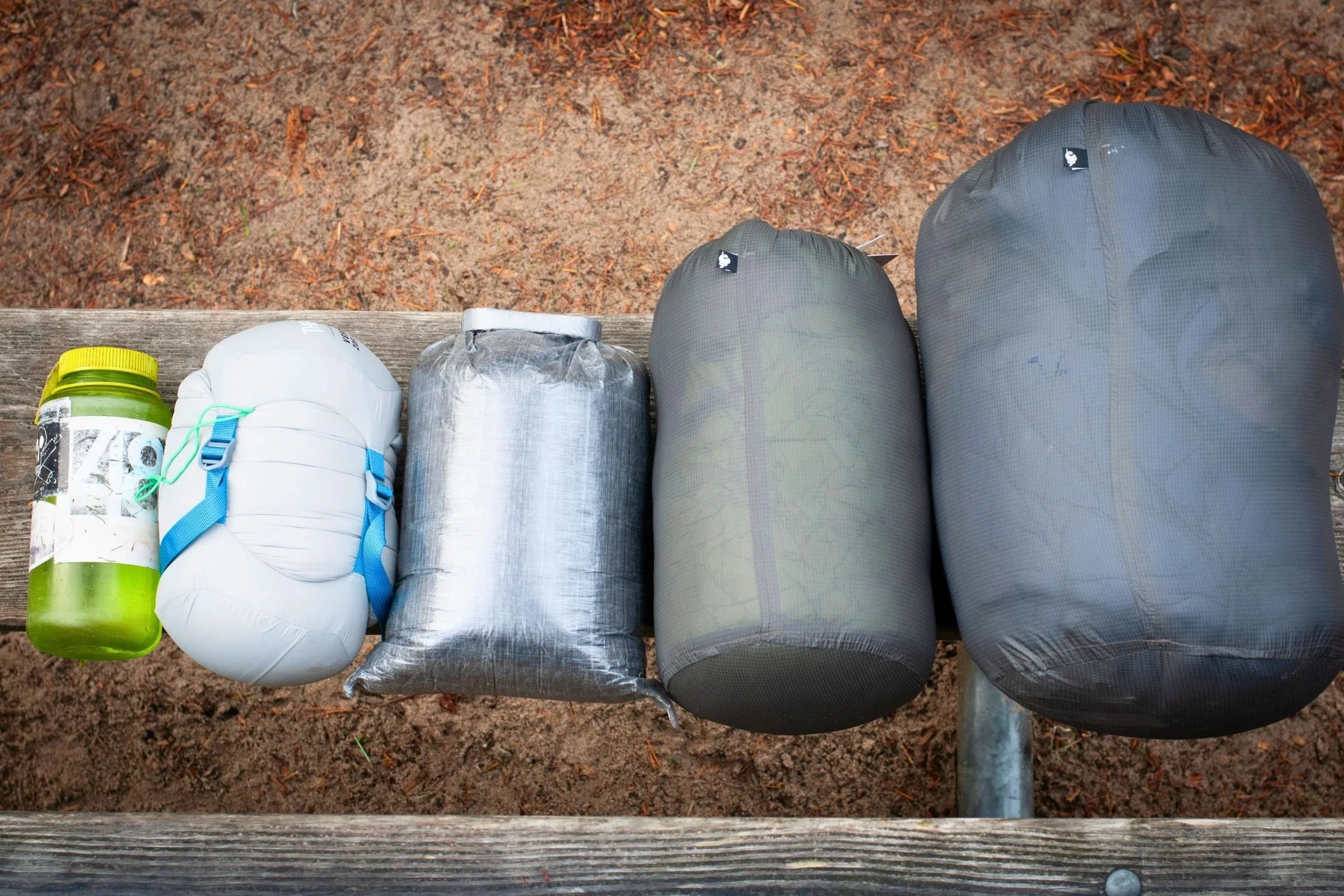
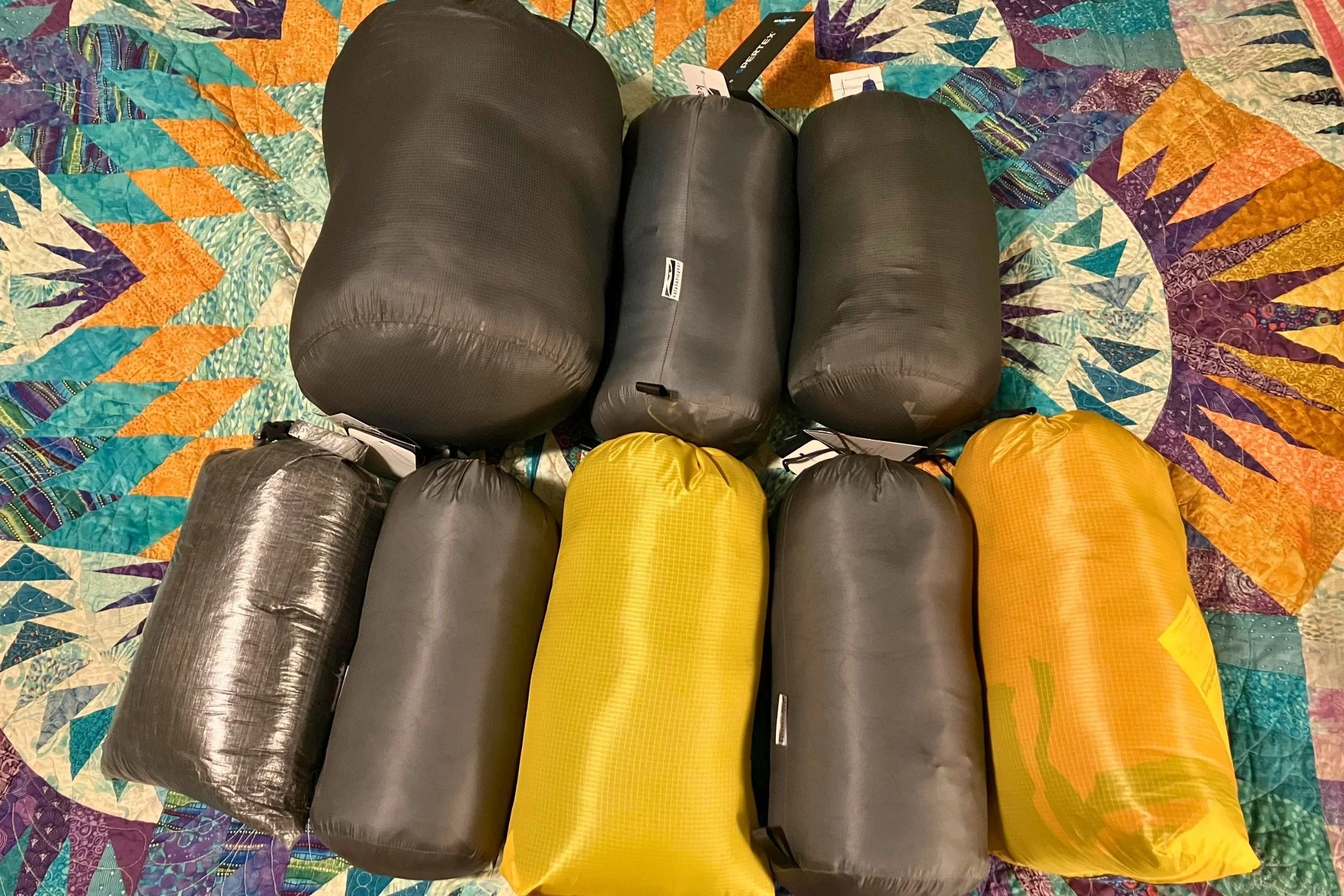
From left to right: a Nalgene bottle, the Therm-a-Rest Vesper 30, the Zpacks Solo Quilt 20, Enlightened Equipment Enigma 20, and Enlightened Equipment Apex Revelation 20
What to look for in a backpacking quilt
When determining whether to get a sleeping bag or a backpacking quilt, there are some factors to assess. If you always run cold, you may find a quilt doesn’t keep you as warm as you’d like. In that case, a traditional sleeping bag might be best, or a hybrid quilt, like the Feathered Friends Flicker UL which has a full zip but no hood. Likewise, we do not generally recommend quilts for most people for winter camping unless used in addition to a sleeping bag to add more warmth.
If you keep your adventuring to 3 season fun, are primarily concerned with weight and packability, or tend to sleep warmer, a backpacking quilt could be right for you. Backpacking quilts are also more versatile than sleeping bags. Ones that do not have a sewn footbox can be spread out as a blanket in warmer weather, or tightened down around the body for colder weather. In a quilt, regulating body temperature can be as easy as sticking a foot out.
Where and how you sleep are important factors. Love sleeping in a hammock? Quilts work better in hammocks than sleeping bags. Many hammock campers opt for an underquilt and an overquilt; one quilt hangs under the hammock, providing insulation without compression, or without a sleeping pad that slips around, and one quilt drapes over top of the person.
The type of sleeping pad you prefer makes a difference too. A thin closed cell foam pad is not ideal for most quilt users. Closed cell foam pads usually provide only minimal insulation. They are given a measurement of their insulation denoted by an R value. The popular Therm-a-Rest Z Lite Sol has a 2.0 R value. We recommend at minimum an R value of 3 for average sleepers who generally go on 3 season adventures. To learn more about R value see our article here.
Weight and packability
Many quilts trim weight by eliminating extra features like hoods or full zippers. The lack of down and fabric on the underside also reduces weight.
The backpacking quilts we chose all used 20 denier or less fabrics. Every quilt we chose uses at least 850fp down, resulting in extremely light and compressible quilts. Additionally, most quilts we chose have sewn footboxes. This eliminates the weight of zippers and drawstrings. The down side is it also eliminates the ability to fully spread out the quilt like a regular blanket. Most of the quilts we chose also come in a comparable non sewn footbox option for hot sleepers or those looking for a bit more versatility.
Insulation type
Many of the down quilts we tested allowed the user to pick between fill powers. None of the bags we chose used less than an 850fp down, but when we had the option to choose between 850 or higher, we chose 850 (except for our runner up for best double, which used a lower quality 650 fp). We think 850fp is high enough quality that most people would rather save the money of the upgrade than pay extra to save a few ounces.
That being said, our more expensive picks, like the Feathered Friends Flicker UL and ZPacks Solo Quilt, all came standard with more premium down. Not many backpacking quilts come with the option of synthetic fill. This is primarily due to the associated increase in weight on an otherwise ultralight item.
Of secondary concern is the decreased lifespan of synthetic versus down; synthetic insulation can lose its ability to maintain its original temperature rating sooner than down, which can retain its performance for decades (compared to roughly five years for synthetic insulation, in our experience). In anything but extremely wet conditions, we prefer down to synthetic fill.
Shell material
We chose quilts that ranged from a 7 denier (D) to 20D fabric. We find that a 10D is a good middle ground of durable yet lightweight. 20D is great for providing a little extra durability, without a wild bump in weight. We recommend 7D fabric for folks who know they will be intentional about how they treat their gear, and are concerned with getting as lightweight as possible. All fabrics are treated with a durable water repellent (DWR), and most are PFC free.

The author choosing the hard way to snap the neck closure on the Katabatic Palisade. Photo by Kate Hoch
Temperature rating
The temperature rating a company gives their quilt is a good starting point for determining warmth, especially if they are EN tested or other third party certified.
Another consideration is to look for quilts with a high fill weight to total weight ratio. Fill weight refers to the weight of just the insulation inside the quilt. Total weight is the fill weight plus everything else. If you divide the fill weight by the total weight, you get what percentage of the total weight is insulation. This can give you more information about how warm a quilt is.
For example, the Katabatic Palisade, which won our Best Overall category has a fill weight of 12 oz and a total weight of 19.8 oz. This makes the fill weight about 61% of the total weight. We picked bags with fill weight ratios that ranged from 53% to 73%. Just keep in mind that this ratio doesn’t directly equate to how warm a bag is. Things like fabric denier and features such as zippers can influence that ratio by increasing or decreasing the total weight.
Another way to assess how much down insulation is being used is to see what the target loft is. This is the measurement of how high the quilt lofts up when spread flat on the ground. The Palisade has a target loft of 2.25”, higher than the 2” target of comparable quilts.

Snaps at the neck and under the body can help retain heat on cold nights. Photo by Emily Haas
Attachment systems
Pad attachment systems are some combination of straps or cord and clips. They keep your quilt on top of you while you’re sleeping. Good pad attachment systems also prevent drafts. One of the reasons the Katabatic Palisade won our Best Overall category is its highly effective pad attachment system that, when used properly, seals out drafts and seals in your body heat.
Footboxes
When choosing what type of footbox you want, consider the conditions in which you’ll be using the quilt, and whether you sleep warm or cold. Most of the quilts on our list have a sewn footbox. This increases warmth and decreases weight, but limits versatility. The Enlightened Equipment Apex Revelation and Feathered Friends Flicker UL both come with an open footbox. This is more versatile in a wider range of temperatures as it can be spread out like a blanket, or zipped and cinched. Both Katabatic and Enlightened Equipment have the option of choosing comparable models with either type of footbox.

The footbox cinched down for warmth on the Flicker UL. Photo by Emily Haas
Closures
Some quilts, like the Katabatic Palisade or the Zpacks Solo Quilt, have a closure that can be clipped under the body to provide an even snugger fit. We like this feature in colder temperatures. Our Best Hybrid pick, the Feathered Friends Flicker UL, has a zipper running the length of the quilt, allowing it to be zipped up like a hoodless sleeping bag.
Cinches and/or snaps at the neck are a must, and bonus points if there was a draft collar — an extra down filled baffle — around the neck.
Length and width
All the quilts we picked allow you to choose what length and width you want. Measurements listed are usually based on the fabric laid out flat before filling it with insulation or sewing the footbox closed.
Standard, regular, or medium width for a quilt is around 54” at the shoulder, and 40” at the foot. Standard or regular height varies, but is usually designed to accommodate someone who is 6’ tall. If you have wider or narrow shoulders, order accordingly.
Folks who often sleep on their stomachs may want to get a longer quilt, to accommodate the pointing of their toes. With cottage industry brands there is often less standardization from brand to brand, so make sure you check the measurements of the size you want before ordering.

Katabatic's superior pad attachment system preventing gaps. Photo by Kate Hoch
Will I be warm in a backpacking quilt?
The concept behind a backpacking quilt is that since it is the loft of the fill (how poofy it is) that keeps you warm, it isn’t effective to have fill under you as it will just be compressed by your body. With a quilt, the insulation is just on the top and sides. For this reason, while always important to use a sleeping pad to insulate from the ground, it is even more so when using a quilt.
If you have a sleeping pad that is sufficiently warm for what you are doing, a quilt that is the proper size for your body, is rated at least 10 degrees lower than the lowest temperatures you expect to encounter and have practiced using any pad attachment straps, most people will be warm in a quilt. For more information on why you really do need to use a sleeping pad, check out our article here.
If you aren’t sure about a backpacking quilt or a sleeping bag, a hybrid system like the we show in our review how the Zenbivy Ultralight Bed works like a hybrid system.

Using a groundsheet keeps your quilt clean dry and free from holes. Photo by Emily Haas
Backpacking quilt care and maintenance
Tips for using a backpacking quilt effectively
Use a ground sheet or footprint
Shake and air out regularly
Spot clean as needed
Avoid overstuffing
Use a storage sack
Wash carefully
Dry thoroughly
Revitalize loft
Avoid overexposure to sunlight
Store in a dry place
Handle with clean hands
Inspect for damage
Be mindful of campfires
Avoid long term compression
Consider a liner
How to Wash a Down Quilt
To wash a down or synthetic quilt you follow the same process as you would for a sleeping bag. We have a whole article about How To Wash a Sleeping Bag. It takes you step by step through best practices to keep your quilt performing like new. Even if your quilt doesn’t seem dirty, periodic cleaning will revitalize your loft and extend the life of your quilt.
How to Repair a Backpacking Quilt
Because most backpacking quilts don’t have zippers, the most common damage will be small holes or tears. These are usually caused by snagging the quilt on something sharp, sparks from a campfire, or the claws of your furry tent mate. Small holes and tears are easily repaired using a technical fabric repair tape such as Tenacious Tape. Our How To Clean and Repair Down Jackets article covers patching a down jacket; the process is the same for a down quilt. You can prevent holes in the first place by developing a few common sense habits. Always use a ground sheet or footprint when cow person camping without the use of a tent or other shelter. This protects your pad and quilt from the sharp edges of rocks or sticks, and keeps them clean. If draping over a bush, be gentle, and lift the quilt off, rather than pulling. Don’t use your quilt near a campfire as flying sparks can land on it and burn holes in the fabric. As a constantly cold person, this last one is a “do as I say, not as I do” suggestion.
Don’t store your quilt compressed in its stuff sack. Photo by Tiffany Searsdodd
How to Store a Backpacking Quilt
As mentioned before, the height of the loft in a backpacking quilt is what determines how warm it will keep you. Beyond original quality, the ability of the insulation to continue lofting up is based largely on how the quilt is stored.
Make sure your quilt is completely dry after every trip. When we get home from a trip, even if it was a “dry” trip, we always lay our quilts out on our bed for at least a few hours, turning them as needed. You can also dry them on a clothesline in warm and dry conditions, or on fluff or no heat in a front loading dryer.
NEVER store your quilt (or insulated jacket) stuffed into a stuff sack. This compresses the insulation and greatly reduces its ability to loft up over time. The ideal storage method for your quilt is to have it laid out flat or hung up in a dry, temperature controlled place, out of direct sunlight.
Realistically, most folks don’t have that kind of extra space. For a happy middle ground, store your quilt in a large mesh or cotton storage sack. The author likes to then put all her quilts in a large plastic tub to stack in her gear shed. Be aware; if you do this, leave the lid cracked or drill air holes in it to maintain breathability. Otherwise any trapped moisture can damage the down.
FAQ
-
A quilt is essentially an open-back sleeping insulation system: no full-length zipper, no back insulation, and often no hood. That means less weight and bulk, and more freedom to move. Because your sleeping pad provides insulation under your back, quilts eliminate “dead weight” that would otherwise be compressed by your body in a sleeping bag.
-
Yes — but only if you size and use them correctly. A quilt must be wide enough to tuck and “pool” at the edges, and long enough to drape comfortably over your chin. Use a high-R sleeping pad (to insulate beneath you) and cinch the neck/shoulder area to prevent drafts. Many ultralight quilts rate to 10–20 °F (or below) when used with proper technique.
-
Down still wins on warmth-to-weight and compressibility. But if you expect wet conditions or want more forgiving performance in damp environments, a synthetic or hybrid quilt (or hydrophobic down) might be safer. Lower-cost synthetics are catching up, but ultralight quilts are still overwhelmingly down-based.
-
Condensation is a normal part of overnight sleep systems. To reduce its effects:
Vent early in the night or morning to let moisture escape
Don’t touch the inner baffle too much (minimize wetting it)
Use breathable shell layers or liners to trap less moisture
At camp, open and air out your quilt as soon as possible
-
Yes—and you should. Most quilts include pad-attachment systems (straps, snaps, or corner toggles) designed to keep the edges sealed and prevent shifting. A quilt that slides off your pad defeats its insulation math. Always use the system your quilt provides.
-
Many quilts are hoodless to save weight and allow freer movement, especially for side/stomach sleepers. To cover your head, use a beanie, neck gaiter, or a hooded puffy/hooded layer. Some quilts include snap closures or neck cinches to minimize drafts.
-
You can go narrow, but you'll trade margin for error. A quilt that’s too narrow won’t allow tuck-in or draping, increasing the chance of cold spots. If in doubt, choose a wider size or use shoulder snaps to cinch it in.
-
Hand-wash (gentle detergent like Nikwax DownWash) or use a commercial down cleaning service
Dry on low heat with dryer balls (or tennis balls) to help re-loft the down
Store long term in a loose, uncompressed storage sack (not in your stuff sack)
Re-apply DWR (durable water-repellent) treatment when outer shell stops beading water
-
Temperature ratings are guideline estimates, not guarantees. They are influenced by your metabolic heat, shell layering, sleeping pad, clothing, and tolerances. It’s safest to choose a quilt rated several degrees warmer than the coldest you expect.
-
Expect several seasons of regular use if treated carefully. Shell abrasion, repeated compressing, and down shift over time all degrade performance. Some users notice a slight loss of loft after heavy use; periodic cleaning and re-lofting help extend life.
-
Yes. Quilts are a favorite among DIY/MYOG (Make Your Own Gear) hackers because of their simpler construction. Some providers or local down specialists may also re-stuff or add down later, but expect cost and labor.
-
In consistently wet, humid environments without reliable shelter
When you expect drift or sand ingress (quilts are less sealed)
For ultrawarm temps (quilts often ventilate too well)
If you prefer to fully enclose your body (some users find comfort in full mummy bags)

Hang drying some of the quilts we tested. Photo by Emily Haas.
How we researched and tested
These days there are so many high quality backpacking quilts on the market that it can be overwhelming trying to decide which one is right for you. We scoured the internet to see which quilts consistently made the professional reviewers “Best of” lists. Then we looked at reviews from everyday users to see what they were saying. Finally, we drew upon the collective personal experience of Treeline Review staff with their personal favorite quilts.
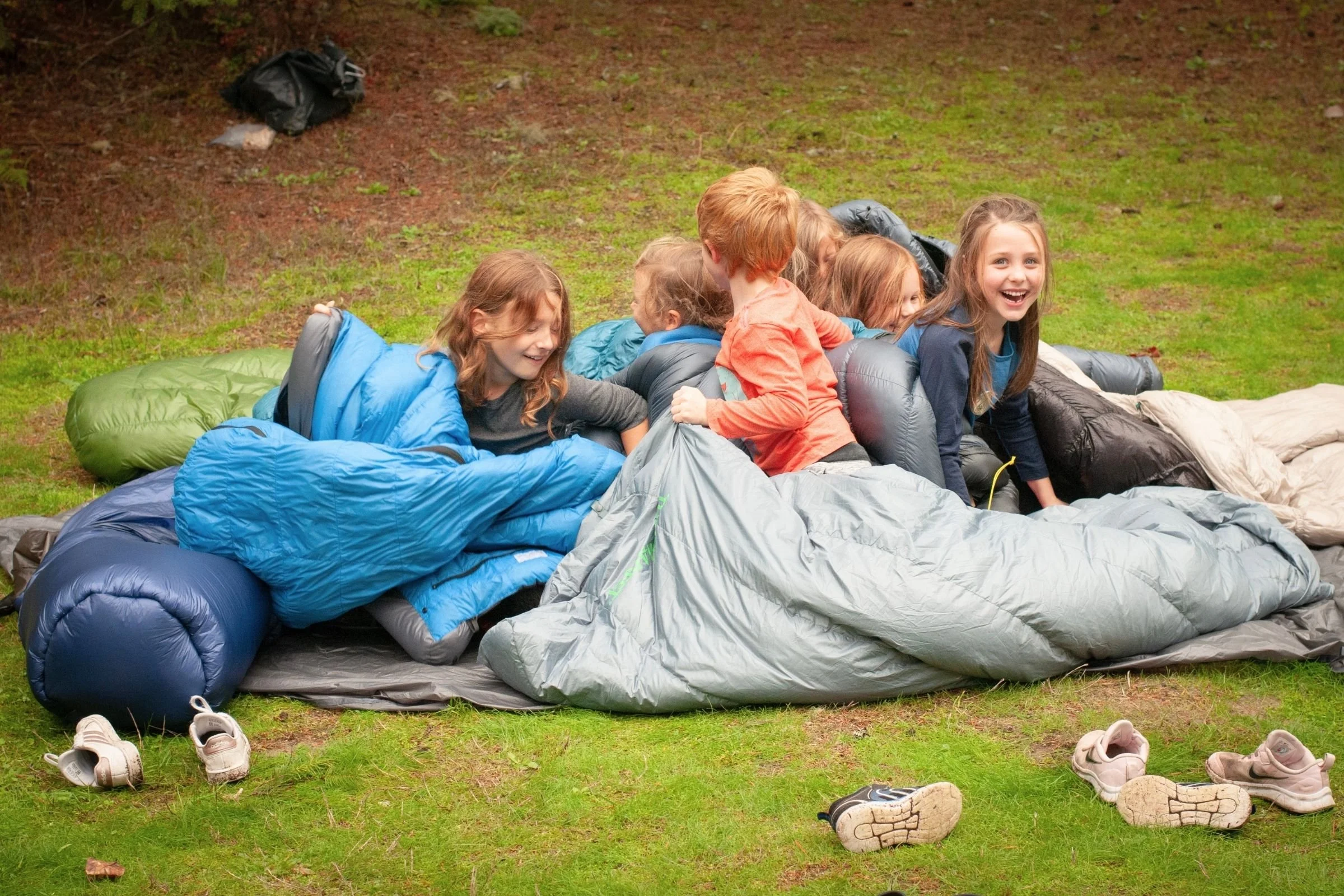
Members of our quality control team test for durability. Photo by Emily Haas
We tested the quilts for this article over four years with eight testers taking the quilts on everything from thru hikes to winter ski trips. While there are plenty of great quilts that did not make our list, these are the ones we can vouch for.
In addition to features of the quilts, here are some other factors that we considered.
Sustainability
What is RDS?
RDS stands for the Responsible Down Standard, a certification that ensures the down comes from geese and ducks that were treated humanely. All the brands we tested use RDS certified down.
PFC free
We also looked for companies that used PFC free waterproofing on their fabric and down (if applicable). If you want to know what PFCs are and why to avoid these “forever chemicals,” you can read more about that in our All About PFAs and PFC Free Waterproofing article.
Recycled or bluesign fabric
Some companies use bluesign approved materials or recycled fabrics, but not all do. The new NEMO Pulse Endless Promise backpacking quilt is the most sustainable we tested. It is made of recycled material in the shell and is 100% recyclable at the end of its life via NEMO’s takeback program. You can read more in our in-depth review of the NEMO Pulse Endless Promise backpacking quilt.
USA made
When possible, we prefer products made in the US, as they tend to have a lower overall carbon footprint.
Warranty
Most quilts we chose had at least a 3 year warranty, with some being “limited lifetime,” aka the expected lifetime of the product, not the person. All warrantied for manufacturer defects, to the original owner.
What to know about Hydrophobic Down
There is still debate in the outdoor community about which is better, “virgin” (untreated) down, or down that has been treated with a durable water repellent (DWR). We think whether a quilt has hydrophobic down or not is a personal preference. Additionally, if you pick a quilt with untreated down, there are aftermarket treatments you can do at home. Our personal pick is PFC free Nikwax Down Proof.
- Short overnights and extended thru-hikes
- Winter ski and snowshoe trips
- Warm-weather backpacking
- Moisture and compression exposure
- Tested across different body types
- Warmth-to-weight efficiency
- Fit and sleeping comfort
- Loft when damp or compressed
- Shell fabric and durability
- Packability and attachment systems

The author after a long winter nap in the Trapper Creek Wilderness. Photo by Kate Hoch
Why you should trust us
I’m a gear nerd who’s been gearing up myself and others my whole adult life. As a Wilderness Guide for a wilderness therapy organization serving teenagers, I spent four winter seasons living in the snow in Central Oregon. I became intimately acquainted with cold weather gear, tips, and tricks, and how to teach teens how to be comfortable in the wilderness. I’ve also worked as a Sea Kayak Guide for Pangea Adventures in Alaska, leading glacier tours by kayak. Over my lifetime I’ve logged thousands of nights sleeping outside on thru hikes, backpacking trips, bike tours, and good old car camping trips. I’ve thru hiked the Pacific Crest Trail, the John Muir Trail, and completed a 3,600 mile cross country bike tour of the United States.
I also bring almost 20 years of experience working in Outdoor Retail. I do gear shakedowns for fun. I love talking about gear, but more than that, I love making sure people have the gear that is right for them. I've spent 20 years outfitting outdoors people of all skill and experience levels on their quest to stay active in cooler weather. Over the years, I've learned what kind of features, materials, sizing, and colors customers want and what aspects of outdoor gear they find unnecessary.
In 2016, in spite of being a cold sleeper and being afraid I wouldn’t be warm in a quilt, I switched from using a sleeping bag to a backpacking quilt. I’ve never looked back.
*Disclaimer: Although I still work at a gear shop, I am not sponsored, an ambassador, or an employee of any of the companies mentioned in my reviews.
For more stories by Tiffany, see her author page.