Xero Shoes Mesa Trail II Review: Barefoot Feel With Serious Trail Traction
A truly minimalist, zero-drop shoe with the serious traction of a hardcore trail shoe
July 9, 2026
Home > Gear Reviews > Footwear
Our verdict
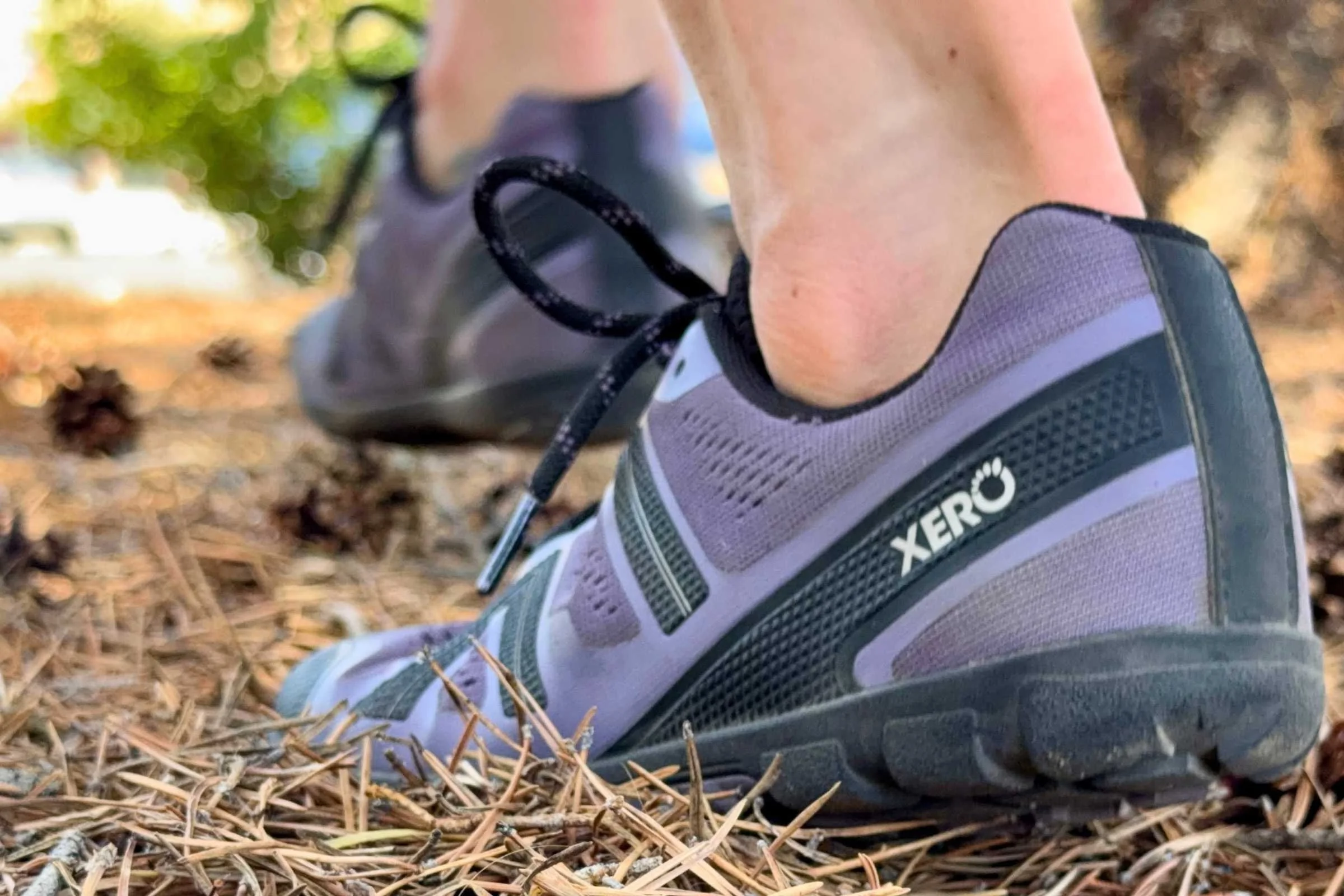
While zero-drop shoes have gained popularity in recent years — and often share many elements with barefoot shoes — if you want a truly barefoot shoe that can tackle any trail, you want the Xero Shoes Mesa Trail II. Lightweight and with thin soles, these high-ground feel shoes boast trailworthy traction without restricting the natural movement of your feet.
We wore the Xero Mesa Trail II shoes side by side with other barefoot shoe models for months. During testing, we ran hundreds of miles of trails, walked over 2.5 million steps, and braved snowstorms and heatwaves — many of which we did in the Xero Mesa Trail II — all in the name of science.
The Xero Mesa Trail II maintains the thin, flexible sole with high ground feel that Xero has made a name for itself with, and combines it with multidirectional lugs boasting serious mileage durability. Dual adjustment straps embedded in the breathable, flexible upper allow you to dial in a customized midfoot, instep, and heel fit for optimal on-trail control.
Wide-footed wearers may find the base midfoot fit too snug, and folks not used to intense barefoot footwear will need a longer transition period to comfortably wear the Mesa Trail all day. Yet for those committed to true barefoot navigation who need trailworthy traction and protection, we solidly recommend the Mesa Trail II.
Xero Shoes Mesa Trail II
Men's
Women's
We write mission-driven gear reviews. To find the best gear, we combine expert reviews, everyday user opinions, and rigorous independent trail testing—never pop-up or display ads. We are reader-supported and may make a small commission from some qualifying affiliate links. Learn more.
Xero Mesa Trail II Specifications
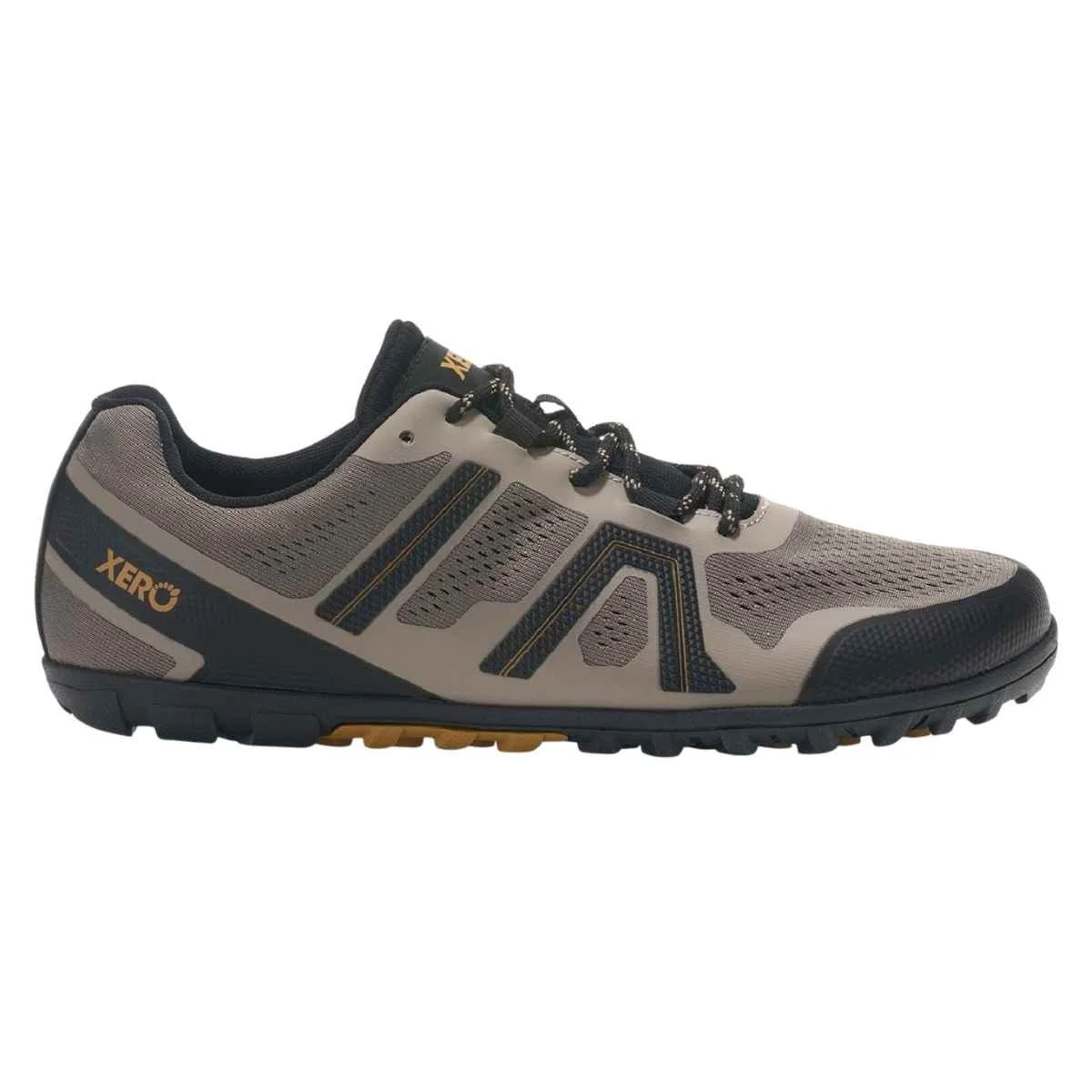
Price: $120
Drop: 0 mm
Stack height: (3.5 mm TrailFoam, 3.5 mm lugs, removable 2 mm sock liner) 9 mm underfoot
Weight per pair: 13.4 oz, women’s size 7
Upper: Breathable mesh
Outsole: FeelTrue rubber
Sole flexibility: Highly flexible
Toe box: Roomy
Closure: Laces
Waterproof: No
Vegan: Yes
Sizing: Half sizes; women’s 5-12, men’s 6.5-15
Best use: Trail running, hiking
Best for
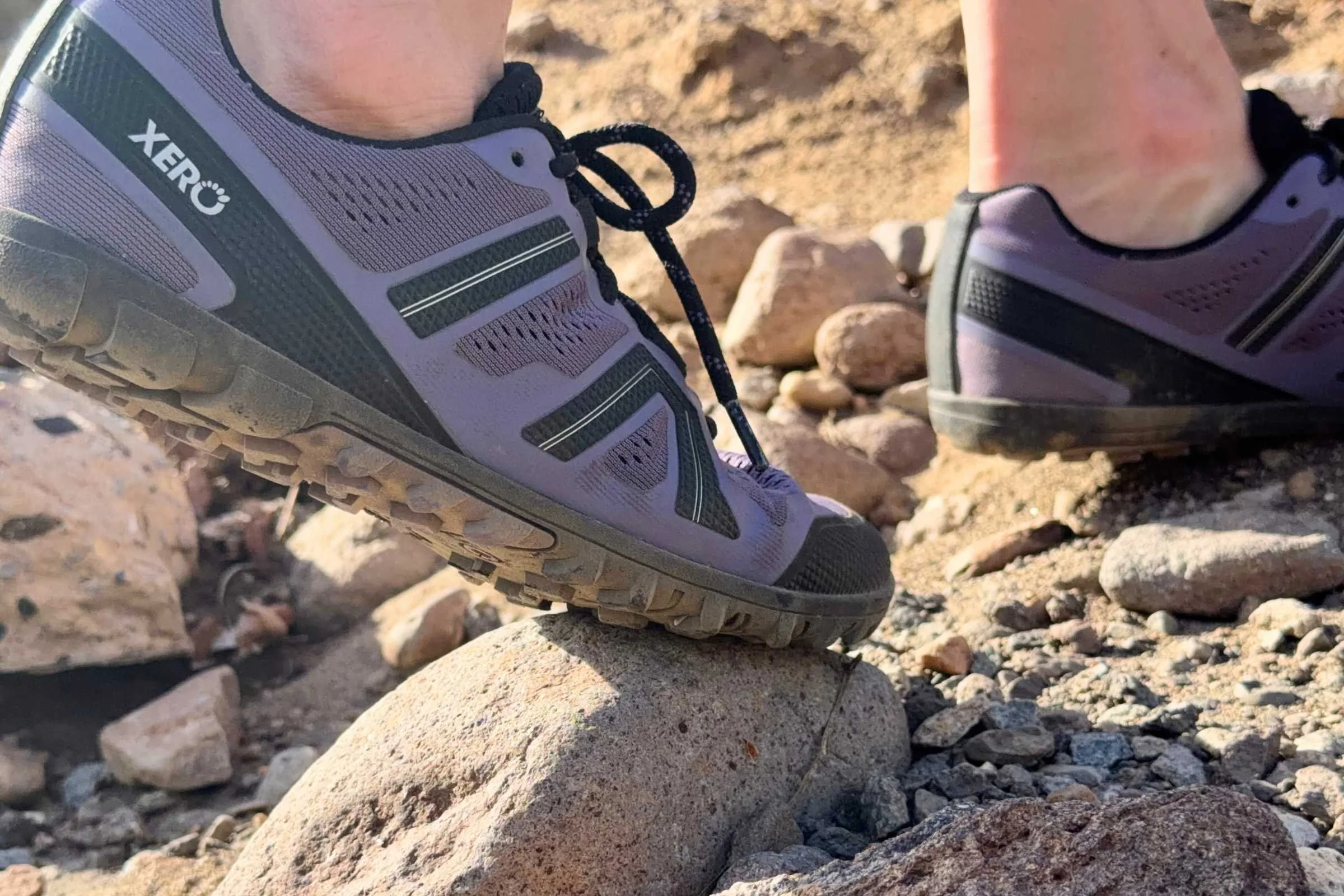
Crossing stony ground in the Xero Mesa Trail II. Photo courtesy Maggie Nichols
Trail running with high ground feel
Hiking with highly flexible soles
Loose terrain where traction is non-negotiable
Comparison tables
Men’s
| MEN'S BAREFOOT SHOE | WEIGHT (PAIR) | STACK | DROP | SIZES | WIDTH(S) | MSRP |
|---|---|---|---|---|---|---|
| Xero Shoes Mesa Trail II | 15.6 oz (9) | 9 mm | 0 mm | 6.5 - 15 | Medium | $120 |
| Lems Primal 3 | 17.2 oz (10) | 9.5 mm | 0 mm | 4.5 - 15 | Wide | $125 |
| Merrell Trail Glove 7 | 18.4 oz (9) | 14 mm | 0 mm | 6 - 15.5 | Medium | $130 |
| Altra Lone Peak 9 | 22.4 oz (10.5) | 25 mm | 0 mm | 7 - 16 | Medium, wide | $145 |
| Xero Shoes Prio Neo | 17.4 (9) | 5.5 - 9 mm | 0 mm | 6.5 - 15 | Medium | $110 |
Women’s
| WOMEN'S BAREFOOT SHOE | WEIGHT (PAIR) | STACK | DROP | SIZES | WIDTH(S) | MSRP |
|---|---|---|---|---|---|---|
| Xero Shoes Mesa Trail II | 13.4 oz (7) | 9 mm | 0 mm | 5 - 12 | Medium | $120 |
| Lems Primal 3 | 17.2 oz (11.5) | 9.5 mm | 0 mm | 6 - 12 | Wide | $125 |
| Merrell Trail Glove 7 | 14.2 oz (9) | 14 mm | 0 mm | 5 - 11 | Medium | $130 |
| Altra Lone Peak 9 | 19.0 oz (8.5) | 25 mm | 0 mm | 5.5 - 12 | Medium, wide | $145 |
| Xero Shoes Prio Neo | 14.6 (7) | 5.5 - 9 mm | 0 mm | 5 - 12 | Medium | $110 |
What we liked
Hiking over scrubby ground in the Xero Mesa Trail II. Photo courtesy Maggie Nichols
High traction on loose and slippery trails
Very wide toe box allows for a ton of toe splay
Extremely flexible sole feels very true to barefoot
Really high ground feel
What could be better
For wide-footed people, the midfoot is a bit narrow
Limited color options
How we tested
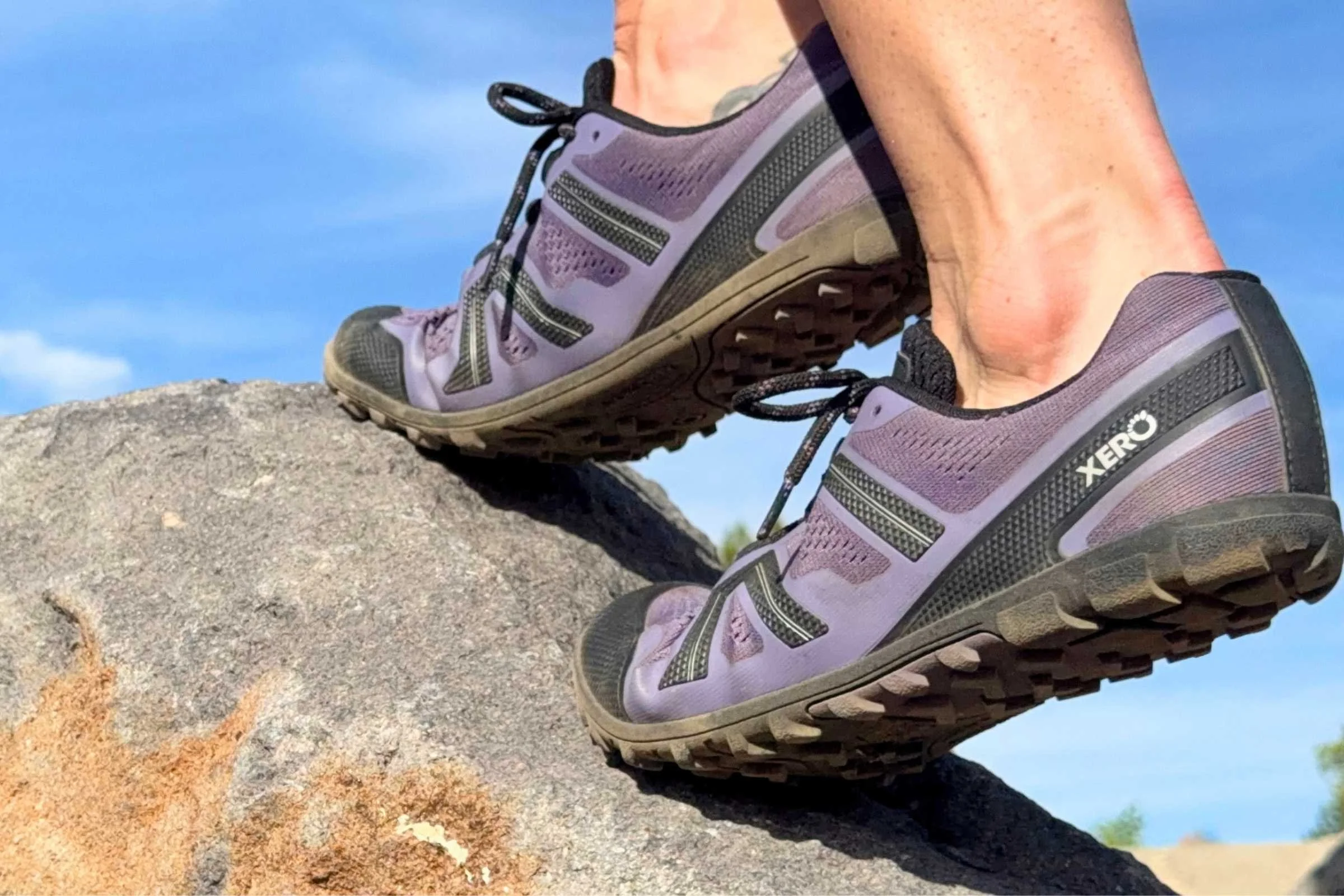
Climbing up a rock in the Xero Mesa Trail II. Photo courtesy Maggie Nichols
Both our male and female main testers have been barefoot enthusiasts for well over a decade, switching between various barefoot sandals, shoes, and boots as the Sierra Nevada seasons demand.
We put these shoes through their paces across three seasons in the high desert, including midwinter snow, spring puddles, and summer heat. We hiked, ran trails, worked out, went to work, and explored with the dog in the Xero Mesa Trail II. We wore them for miles at a time, running down streets to trails, traversing steep, gravelly hillsides, and hauling heavy gear across fields and parking lots.
We evaluated durability during scrubby scrambles and fiddled with their lacing systems to better match our feet. We wore these shoes for days on end, alternating between different pairs in our lineups to gain direct comparison insights and tease apart which shoes are best for what purposes.
We also tested these shoes alongside other barefoot shoes in our Best Barefoot Shoes guide.
To see how a true barefoot design holds up against more cushioned options, we ran the Mesa Trail II head-to-head with the picks in our best men's trail running shoes and best women's trail running shoes guides.
Performance in the field
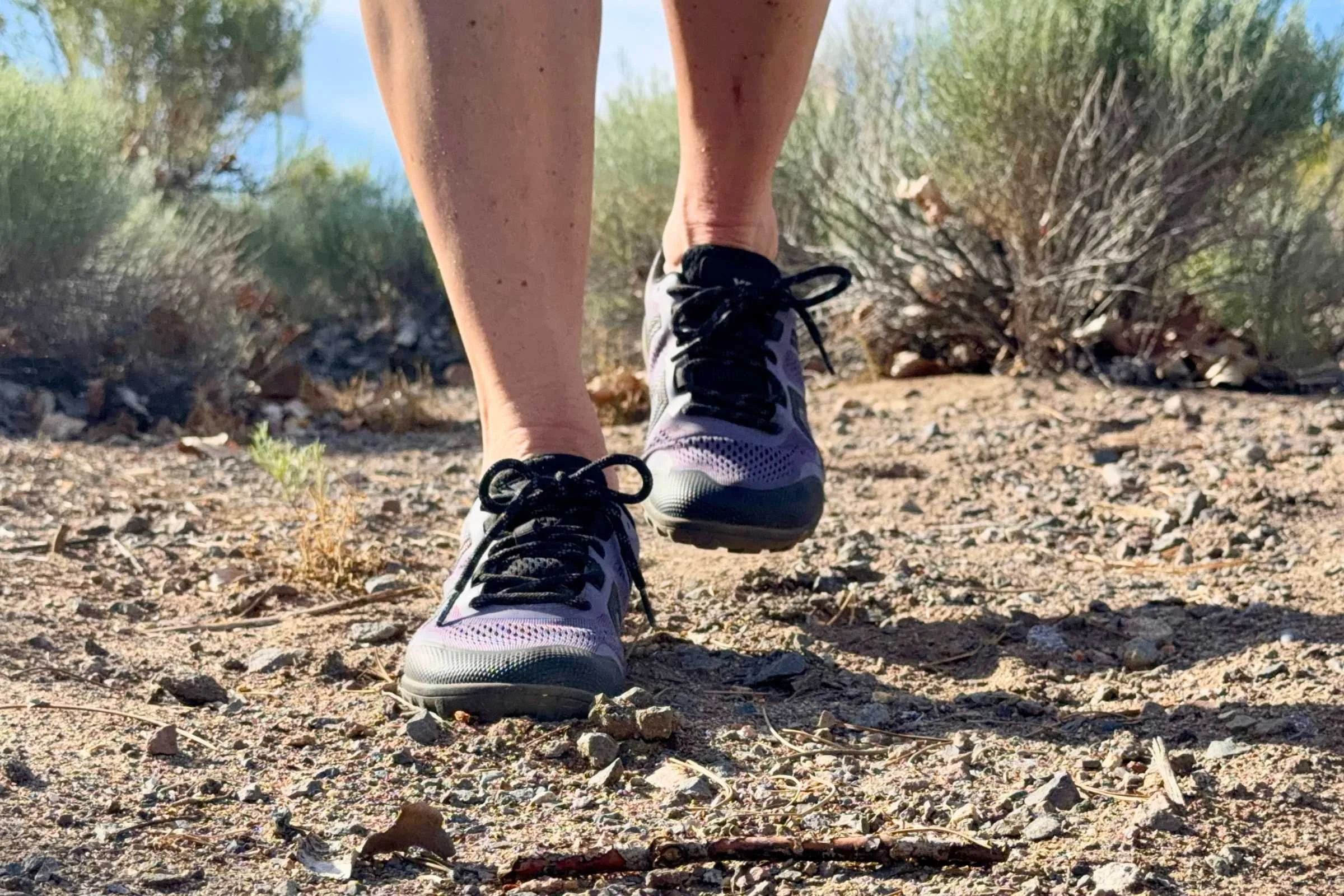
Hiking through the high desert in the Xero Mesa Trail II. Photo courtesy Maggie Nichols
Ground feel and sensory feedback
For a shoe with such burly, thick lugs, the Mesa Trail II maintains pretty impressive ground feel. If you’re not used to this much sensory input underfoot, it can be a strange experience to feel medium-sized stones, crests in rocks, and even the lugs themselves.
Hikers hoping to feel connected to the ground below them without sacrificing every bit of traction and protection from pokey objects will appreciate the sensation of the trail undulating, sloping, and changing. We wore these shoes on hundreds of miles of trails and found their performance over short jaunts and long hauls to feel much the same underfoot.
Fit and toe box
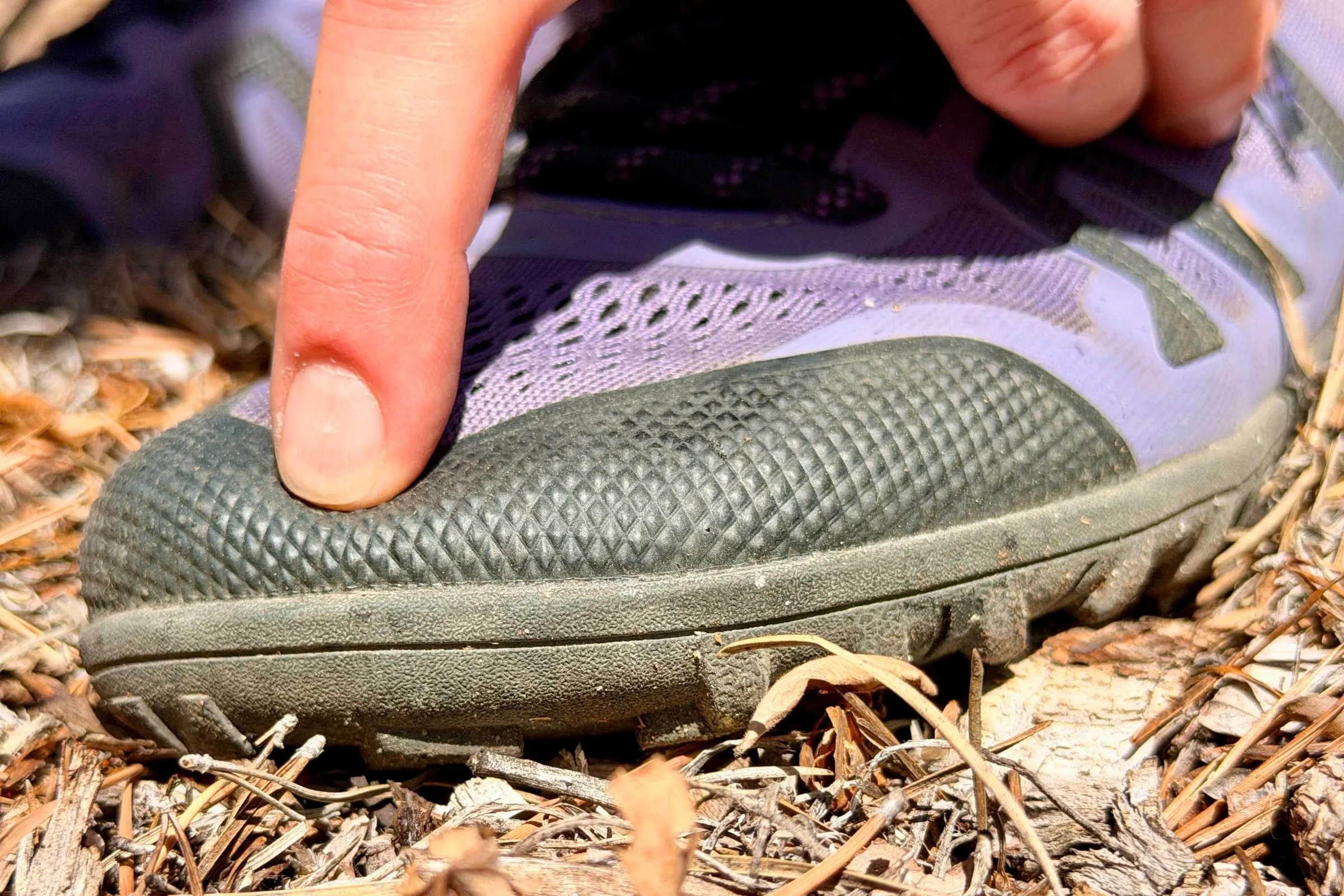
Compressing the burly toe cap of the Xero Mesa Trail II. Photo courtesy Maggie Nichols
In general, Xero shoes offer some of the widest regular-width toe boxes among barefoot shoes. The Mesa Trail II has a snugger fit than many other Xero models, though. It’s something we got used to over our testing period, but for folks coming from sandals or loose-fitting shoes, this added constraint may be off-putting.
That said, the Mesa Trail has two integrated adjustment straps that let you customize the midfoot, instep, and heel in your pair — this is the “Huarache-inspired design” that Xero refers to in the shoe’s description. These straps hide within the shoe’s upper and connect the heel and sole to the laces at key points, allowing you to tighten specific lace loops to achieve a snugger fit across your instep, heel, and midfoot. As this process is less common among shoes and unique to your individual feet, it also takes more patience to dial in your preferred fit.
Traction and outsole grip
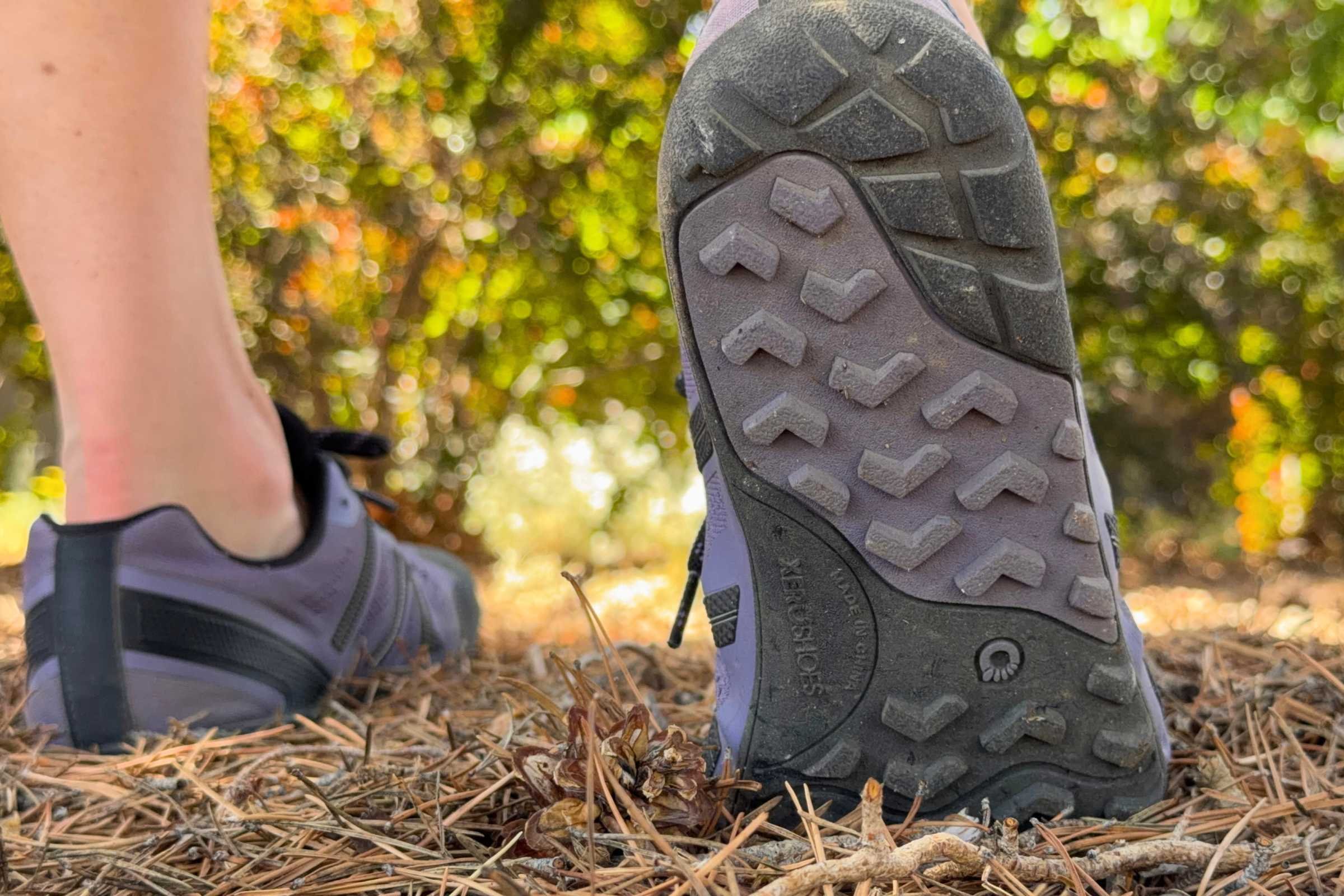
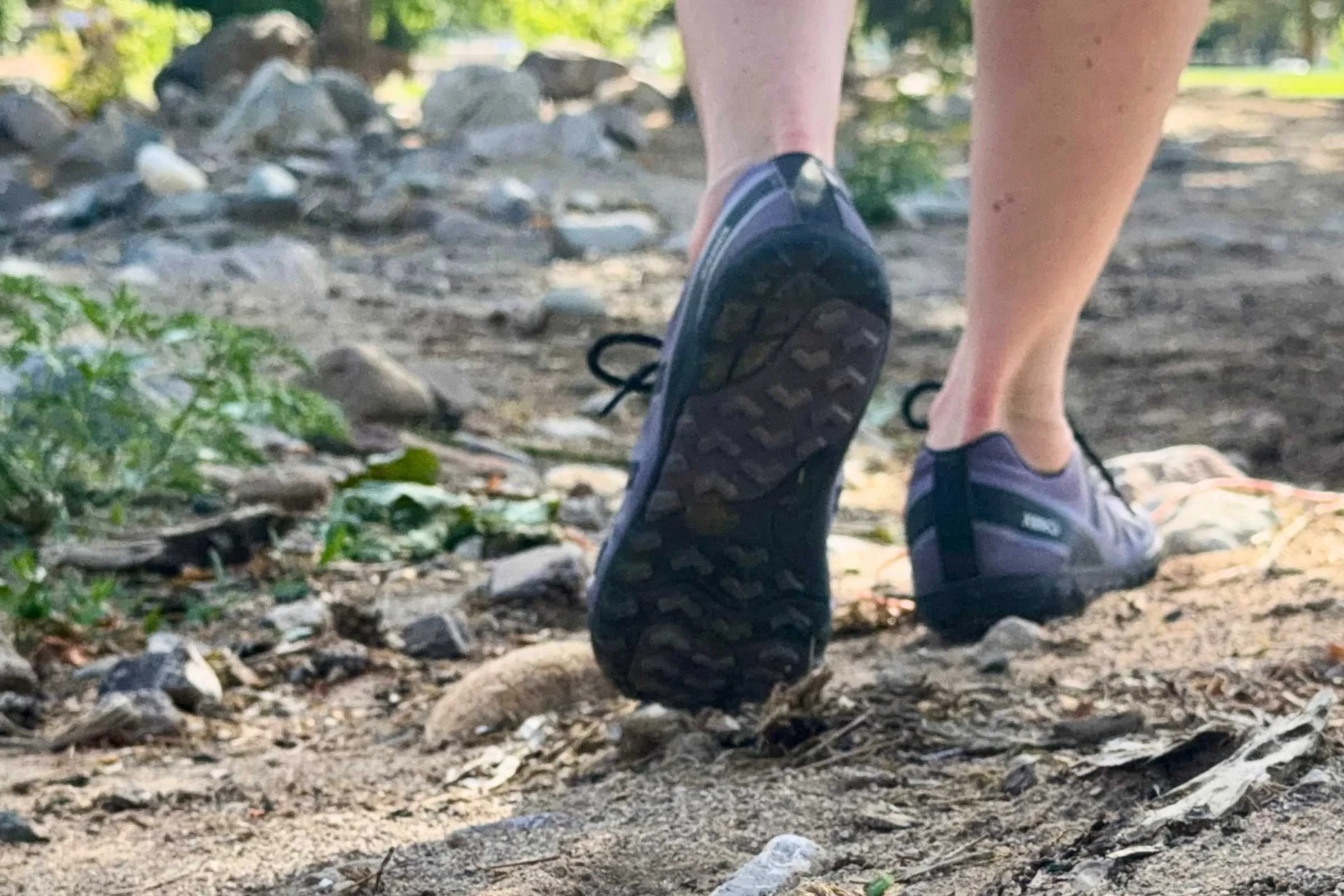
Showing off the lugs and tread of the Xero Mesa Trail II. Photo courtesy Maggie Nichols
Compared to other barefoot shoes we tested — including several other trail-specific barefoot shoes — the Mesa Trail II has the best traction in trying conditions. The outsole is covered in surprisingly thick (for a barefoot shoe) caret-shaped (^) lugs, some of which point forward while others point backward, providing grip for both uphill and downhill stretches. The added flexibility of the soles increases your grip as your feet become strong enough to help grab uneven surfaces underfoot.
On dry trails, we have no complaints about the Mesa Trail II traction. Even over granite, wet after rain, and across asphalt, slick with melting snow, they maintained an easy grip. It was only on the most challenging of surfaces where they showed any sign of faltering — steep muddy downhills and partially melted spring snow drifts.
Flexibility and natural movement
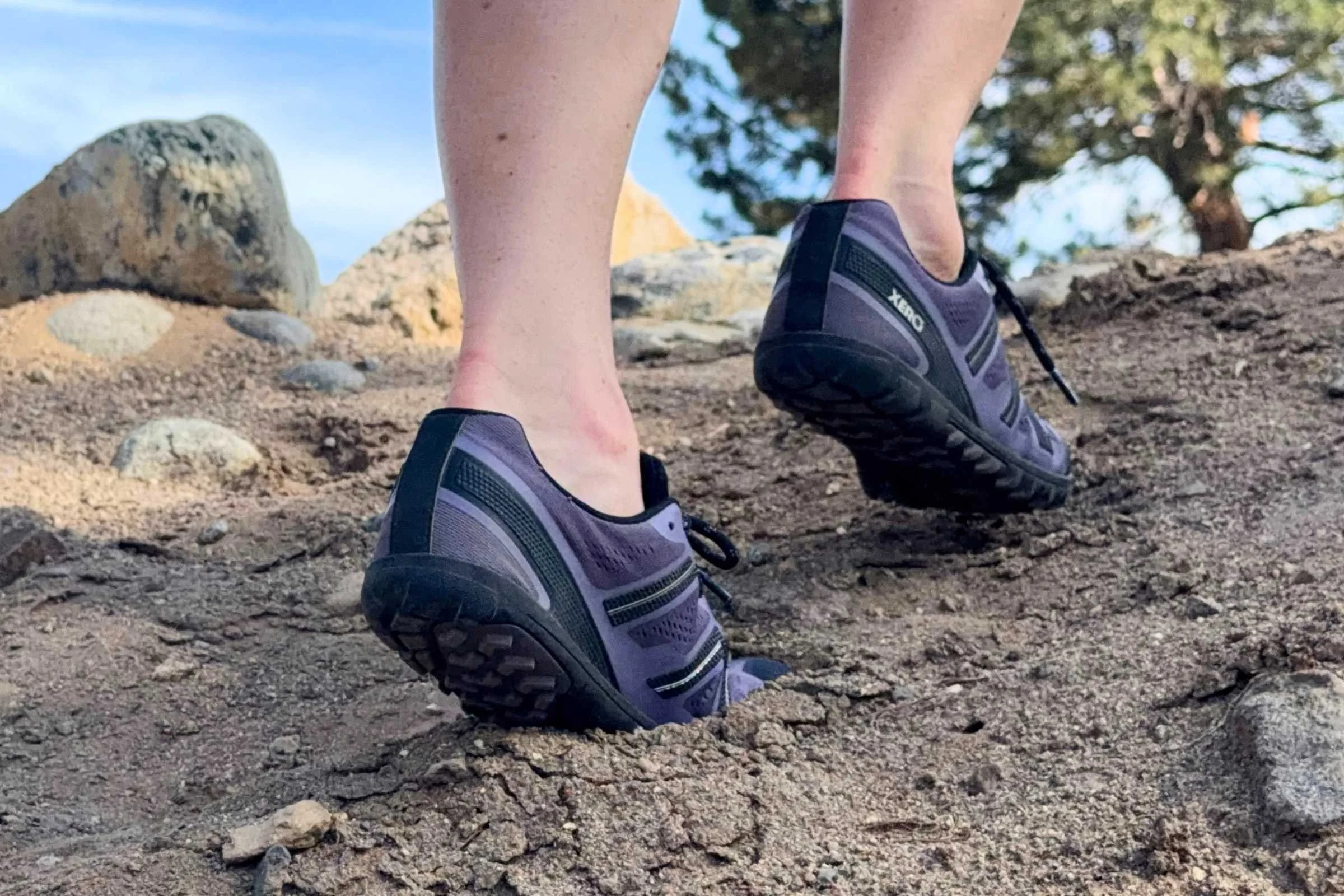
Climbing a hill in the Xero Mesa Trail II. Photo courtesy Maggie Nichols
Here again, Xero shoes often have more flexible soles than many of their barefoot shoe competitors, and the Mesa Trail II follows that trend. Compared to other barefoot trail shoes we tested, the Mesa Trail has greater flexibility across a much larger portion of the sole. Only under the heel does it have somewhat lower flexibility, but it’s hardly noticeable when worn.
Impressively, though the sole as a whole is one of the most flexible trail soles we’ve tested, the outsole material itself maintains its shape during movement. That means the individual lugs themselves aren’t flexing or bending as you cross questionable terrain, allowing you to maintain great grip while your foot flexes in the shoes above the lugs. This is not the case with some of the other trail-specific barefoot shoes we tested, which have tread as flexible as their soles and give out underfoot with relative frequency.
Comfort over time
If you’re already used to barefoot walking, minimal cushioning, and maximum foot flexibility, the Mesa Trail II's comfort is right up your alley. Blending space for foot splay with adjustable straps for security and flexible soles with rigid lugs, these trail-ready shoes are ideally constructed to provide protection and traction without diminishing the experience of hiking or trail running barefoot.
On the other hand, for folks still on their transitioning journey from conventional shoes — or even those who currently wear barefoot shoes with 10+ mm soles or less flexible soles — stepping into the Mesa Trail II for the first time will require time, patience, and effort to find the all-day comfort that a veteran barefoot enthusiast enjoys.
Durability
While it’s tempting to think that thin, flexible soles and thin, breathable uppers make for less durable shoes, that's not the case with the Xero Mesa Trail II. The welded toe cap is flexible and seems thin, but it's made of sturdy materials with a ridged diamond-shaped 3D pattern that is shockingly effective.
We haven’t come anywhere close to the 5,000 miles that Xero guarantees the Mesa Trail II soles will last, but after several hundred miles of trail wear, our pairs look as sturdy and textured as they did when we pulled them out of the box several months ago.
Features
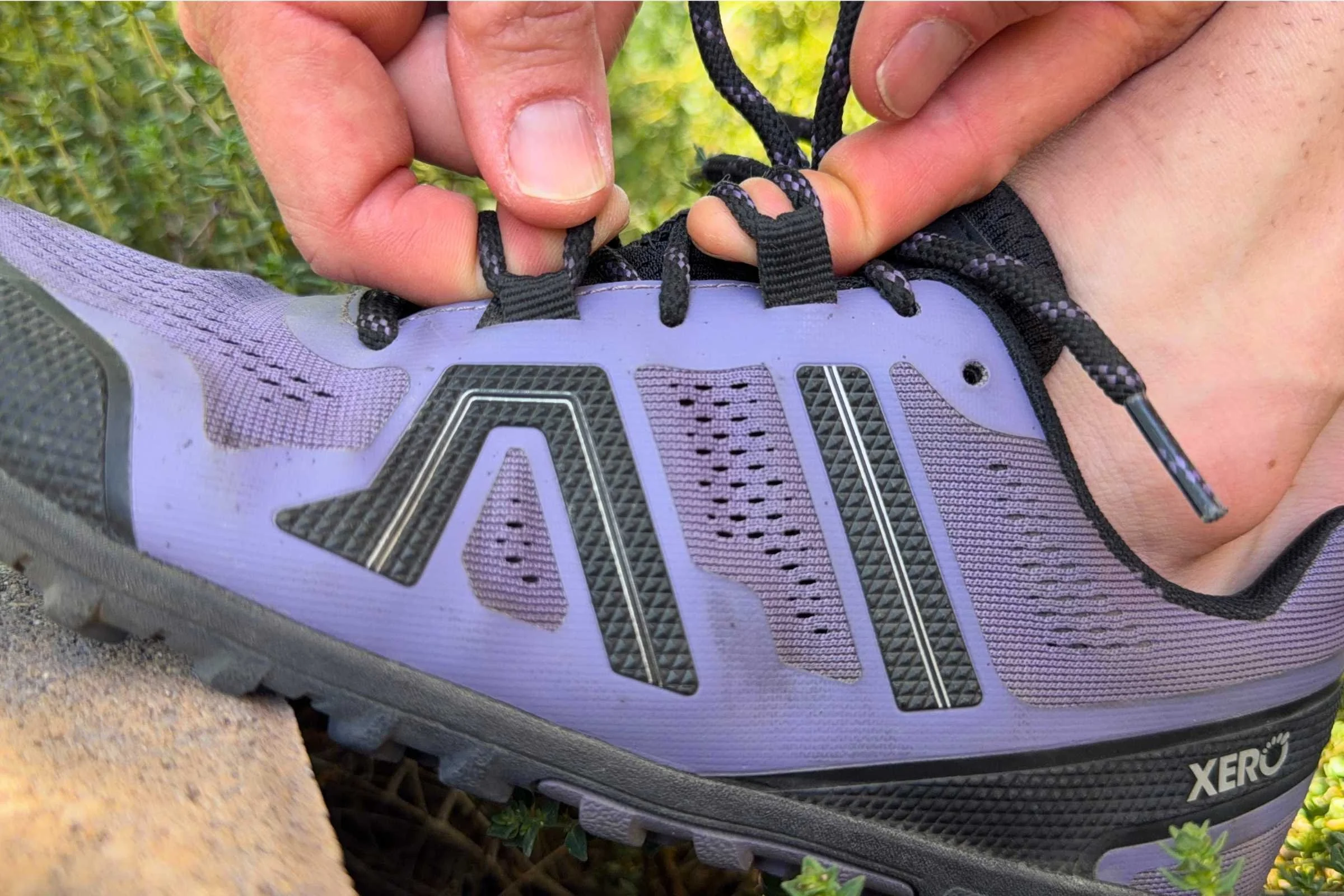
Showing where the two hidden straps are on the Xero Mesa Trail II, connecting the midfoot, instep, and heel adjustments to the lacing system. Photo courtesy Maggie Nichols
Zero-drop – Your heel and forefoot are the same distance from the ground.
FeelTrue sole – Xero’s patented rubber sole, boasting 3.5mm lugs and their 5,000-mile guarantee.
TrailFoam – Xero’s patented midsole layer, to help smooth the feeling of rocks and debris underfoot.
Toe Cap – A toughened barrier extending over the ends of toes to offer additional protection on the trail.
Huarache-inspired design – The key components of Huarache shoes that Xero uses include supportive straps in critical areas such as the instep, midfoot, and heel.
Adjustable midfoot and instep straps – Two external straps specific to this shoe model that allow the wearer to create a more customized fit at the midfoot and instep.
Foot-shaped toe box – A wide toe box that gives toes room to splay naturally and avoid constriction while walking or running.
Removable sock liner – Xero’s version of a removable insole. Shoes can be worn with or without the insole, which changes ground feel sensitivity.
Should you buy the Xero Mesa Trail II?
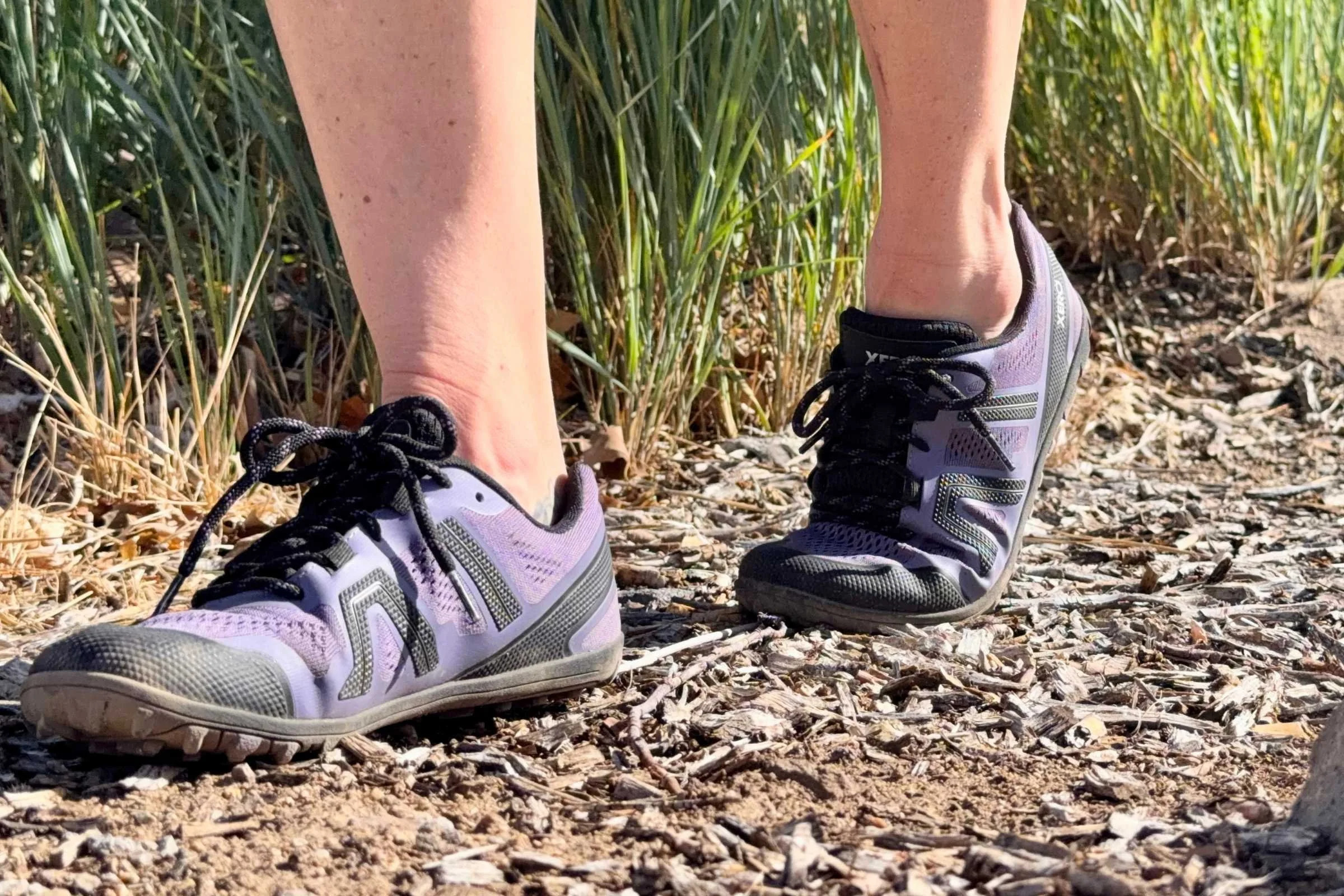
Hiking near wet ground in the Xero Mesa Trail II. Photo courtesy Maggie Nichols
Buy if:
You’re a hiker who wants to really feel the ground beneath your feet
You’re a trail runner seeking the truest barefoot experience (while still wearing shoes)
You want a super flexible shoe with exceptional traction on loose surfaces
Skip if:
You want some underfoot cushioning
You prefer a barefoot shoe that you don’t have to train your feet to wear
You’d rather not feel thick lugs underfoot
Where to buy the Xero Mesa II
The Xero Mesa Trail II barefoot shoes are popular footwear, so you have options when it comes to retailers. Here are some of the pros of the retailers.
REI
Pros: 100% satisfaction policy for 1 year; 10% dividend for members.
Amazon
Pros: Free 2-day shipping with an Amazon Prime membership and often same-day delivery in major urban areas.
Xero Shoes
You can sometimes find more options when purchasing directly from the manufacturer. Sometimes, purchasing directly from the retailer can make it easier to submit a warranty return for a defect.
Returns and advice on where to buy
In general, for shoes, we recommend purchasing from a retailer that offers easy or free returns, like REI. Trying on shoes is an important way to get the sizing right. With both those retailers, if your funds allow, you can buy two sizes and easily return one. Additionally, check reviews to see whether other users recommend sizing up or down.
Similar barefoot shoes
Xero Mesa Trail II vs Lems Primal 3
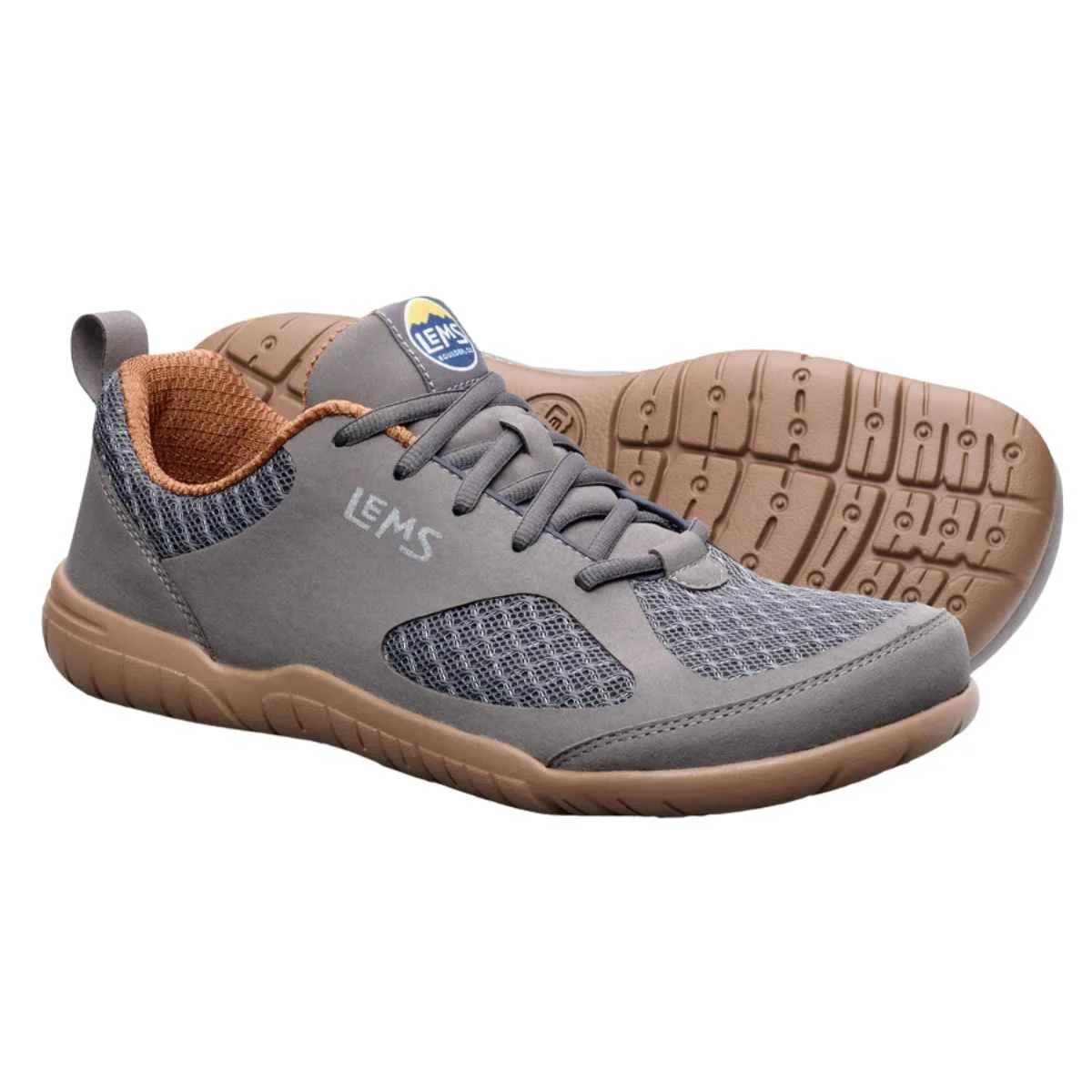
MSRP: $125
Stack height: 9.5 mm
Weight (per pair): 1 lb 1.2 oz
Upper: Super-soft microfiber + open-weave mesh (100% vegan)
Outsole: Injection Blown Rubber (IBR)
Flexibility: Medium
Grip: Medium-high
Ground feel: Medium-low
These two shoes are designed for different uses — and each fulfills that use well enough to earn a recommendation from our testing team. While the Primal 3 is a great all-around everyday shoe that can easily handle moderate-intensity workouts, the Mesa Trail II is a titan of trail traction. The Primal has a thicker, less flexible sole that makes the transition from conventional shoes easier, while the Mesa Trail has a thinner sole with greater ground feel and a truer barefoot feel. The Lems Primal 3 are our best overall pick in our Best Barefoot Shoes guide.
Lems Primal 3
Men's
Women's
Xero Mesa Trail II vs Merrell Trail Glove 7
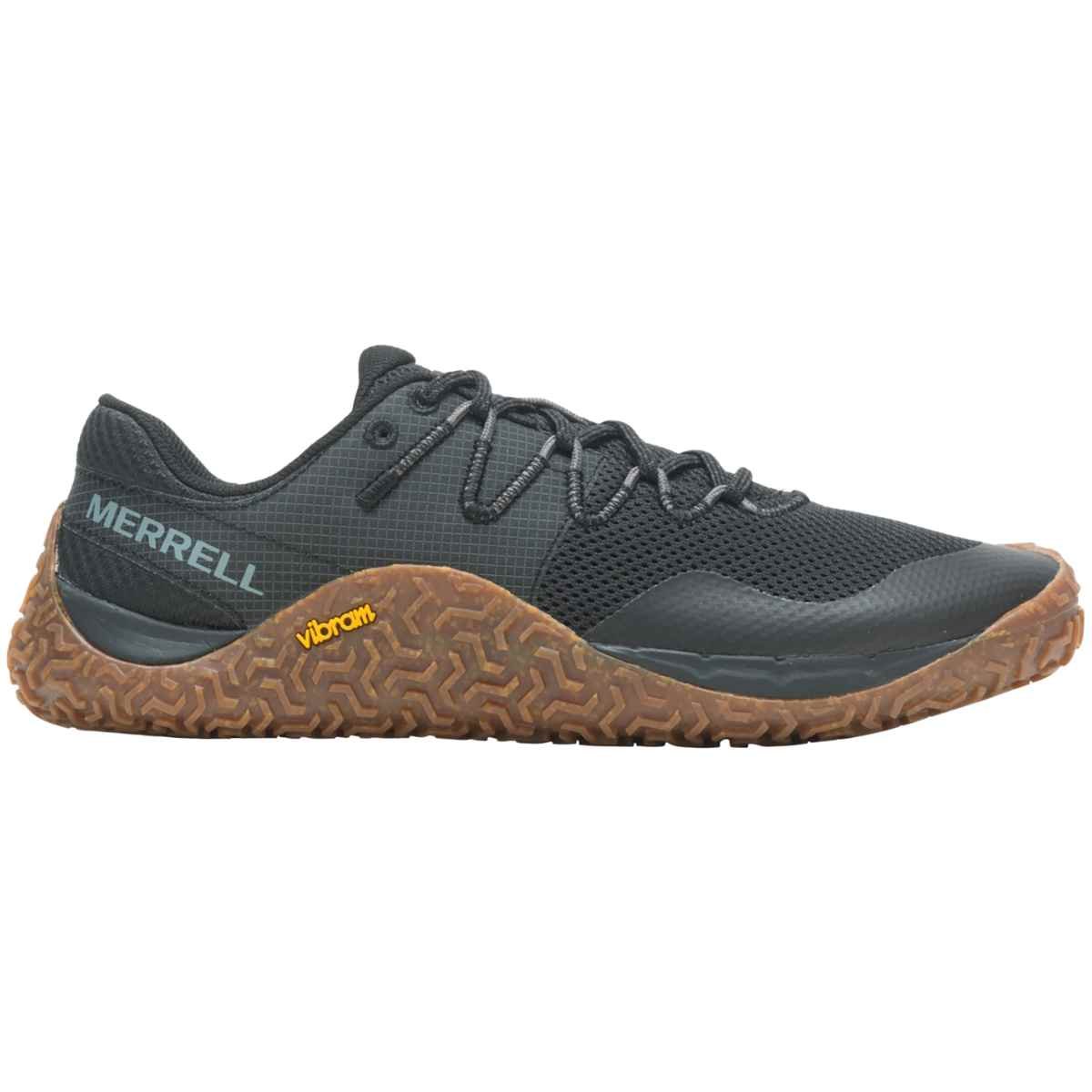
MSRP: $130
Stack height: 14 mm
Weight (per pair): 1 lb 2.4 oz (men’s), 14.2 oz (women’s)
Upper: 100% recycled mesh
Outsole: Vibram Ecostep with 30% recycled rubber
Flexibility: Medium-high
Grip: Medium-high
Ground feel: Medium-high
Both the Mesa Trail II and the Trail Glove 7 are designed to tackle trails, but they feel incredibly different underfoot. While the Mesa Trail retains a wider foot feel with a customizable fit and burly lugs, the Trail Glove is much narrower, with small-patterned tread that wraps around the edges of your feet. The Mesa Trail feels truer to the barefoot experience, but the Trail Glove has many elements — like forefoot flexibility, impressive breathability, and moderate traction — that make it a decent shoe to cross over from town to trails.
The Merrell Trail Glove 7 is our pick for best barefoot shoes for the gym.
Merrell Trail Glove 7
Men's
Women's
Xero Mesa Trail II vs Altra Lone Peak 9
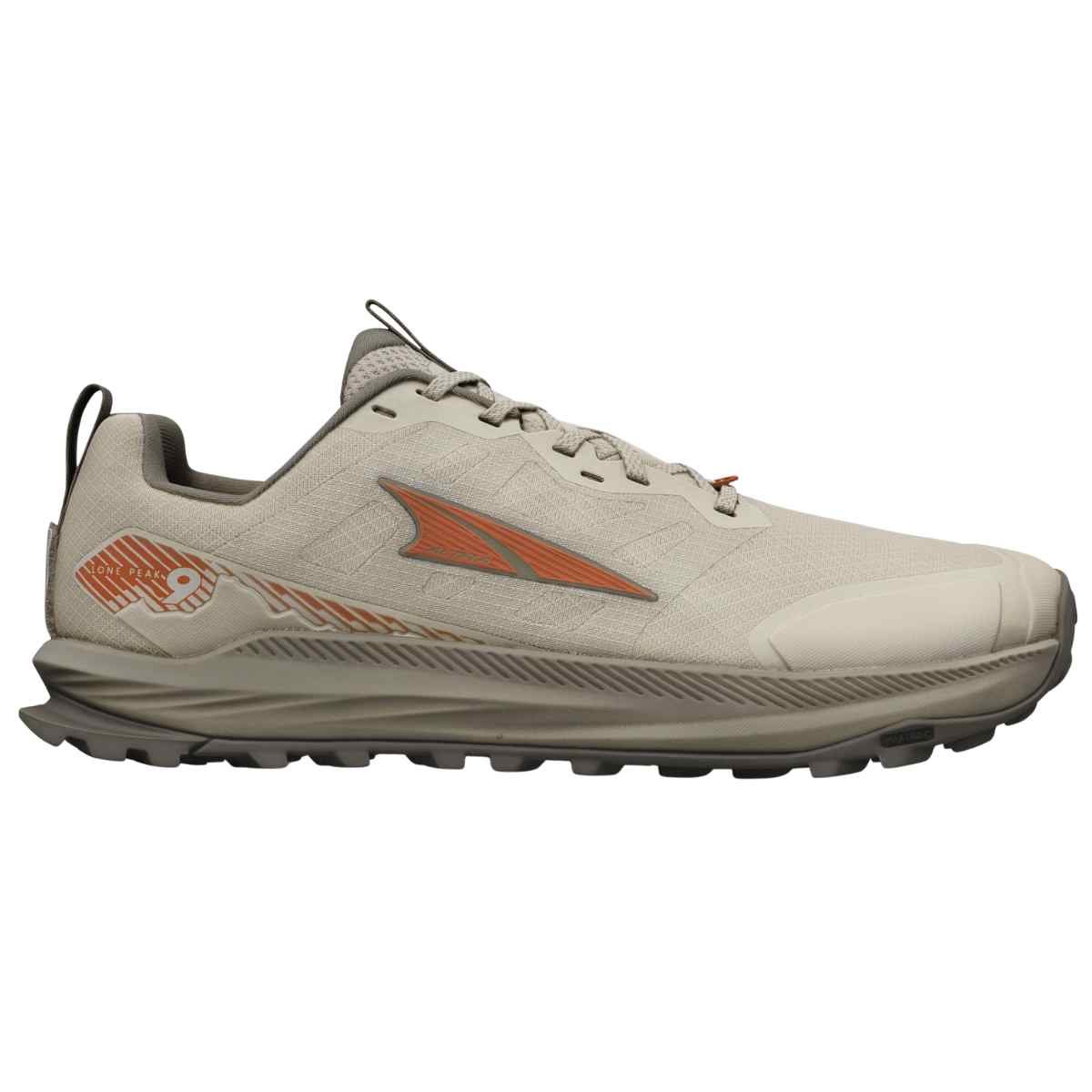
MSRP: $145
Stack height: 25 mm
Weight (per pair): 1 lb 6.4 oz (men’s), 1 lb 3 oz women’s
Upper: Ripstop mesh
Outsole: Vibram Megagrip
Flexibility: Medium
Grip: Exceptionally high
Ground feel: Moderate
If you need the best trail traction, the zero-drop Altra Lone Peak 9 is the answer. The Altra Lone Peak 9+ GTX version is even better on wet, sloppy trails. However, while the Lone Peaks have a very wide toe box and zero heel-to-toe drop, their 25mm soles reduce ground feel by a ton compared to the Mesa Trail and aren’t even close to the Mesa Trail's flexibility.
Altra Lone Peak 9
Men's
Women's
Xero Mesa Trail II vs Xero Prio Neo
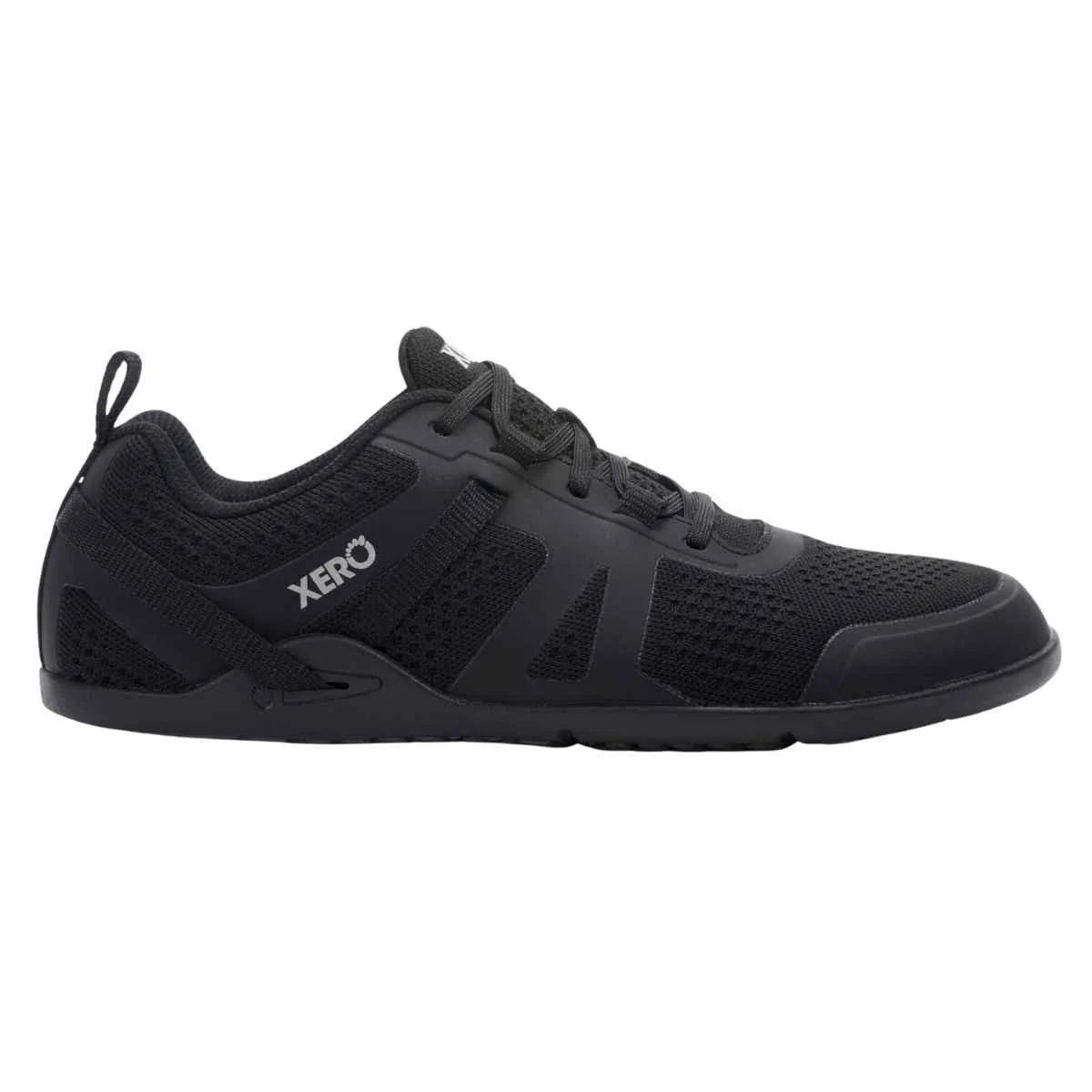
MSRP: $110
Stack height: 5.5 mm
Weight (per pair): 17.4 oz (men’s), 14.6 oz (women’s)
Upper: Synthetic mesh
Outsole: FeelTrue rubber
Flexibility: Very high
Grip: Medium-high
Ground feel: Very high
The Xero Prio Neo is designed to be a more casual, everyday athleisure shoe. It lacks the impressive lugs or the two-strap, customizable adjustment of the Mesa Trail II, but it is the most flexible-soled barefoot shoe we’ve tested and the closest thing to feeling barefoot while wearing a closed-toe shoe we’ve come across. They won best everyday barefoot shoes in our Best Barefoot Shoes guide.
Xero Prio Neo
Men's
Women's
Xero Mesa Trail II vs Vivobarefoot Primus Lite 3.5
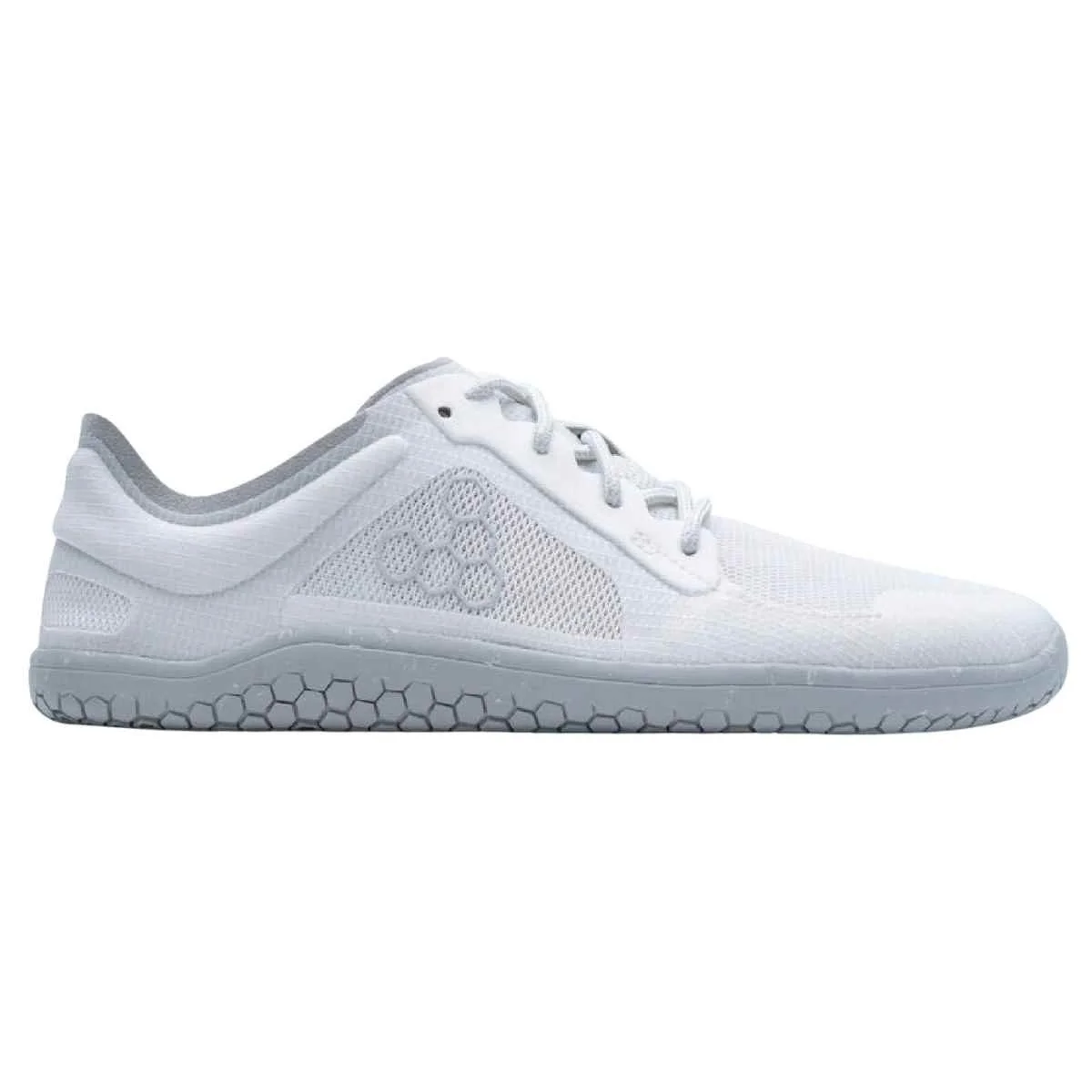
MSRP: $150
Stack height: 2 mm
Weight (per pair): 1 lb 2.9 oz
Upper: rPET mesh
Outsole: Rubber
Flexibility: Medium-high
Grip: Medium
Ground feel: High
The Vivobarefoot Primus Lite 3.5 is a more casual athleisure and everyday shoe, without the impressive trail traction of the Mesa Trail II. Yet the differences don’t end there — where the Mesa Trail maintains a wider toe box, the Primus Lite runs exceptionally narrow and very long.
Vivobarefoot Primus Lite 3.5
Men's
Women's
Why you should trust us / About the author
Maggie is an avid trail runner based in Reno, Nevada, hitting her neighborhood trails at least four days a week and taking hikes in her backyard Sierra Nevada Mountains and through the deserts of northern Nevada as often as possible. She likes to compete in both trail and road races and is no stranger to the podium. She worked as a professional backcountry guide for over 15 years, backpacking, hiking, and kayaking, from places like Texas and Utah to the U.S. Virgin Islands and the Galapagos Islands, mostly in a pair of Chaco sandals.
Maggie started her barefoot journey running in some of the early Vibram Fivefinger shoes back in 2009. Though she added some cushion to her runs after a few years pounding cement, she is still adamant about running in only zero-drop shoes. She has logged thousands of miles in nine pairs and iterations of the Altra Lone Peak trail shoe line over the past decade.
Not only is Maggie a passionate advocate for wearing barefoot shoes, she also studied hand and foot evolution and morphology at university and completed a Master’s thesis on chimpanzee hand and foot manipulation of tools. She spent 7 years teaching anatomy and osteology labs at the university level, giving her a high level of familiarity with the more than 100 bones that make up human hands and feet.
When not running, Maggie loves to be as barefoot as possible, feeling the ground and honing her foot stability and strength. She explores her natural backyard with her dog, Isla, and travels the world with a pair of barefoot shoes on her feet and Altra Lone Peaks in her bag.