Xero Shoes Prio Neo Review: The Closest We’ve Felt to Barefoot in a Closed-Toe Shoe
A stylish everyday zero-drop shoe for anyone committed to absolute minimalist footwear
July 9, 2026
Home > Gear Reviews > Footwear
Our verdict
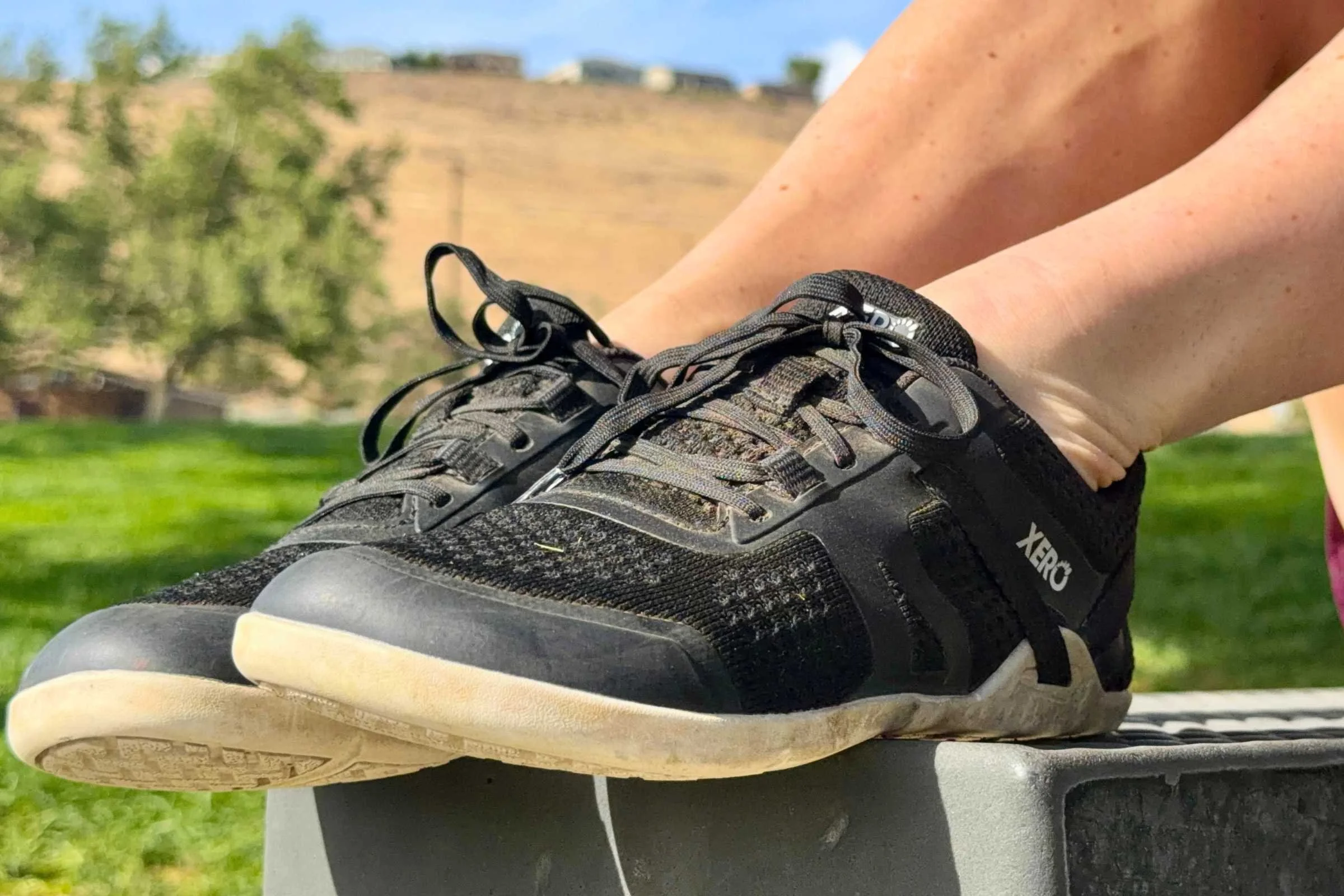
Wearing the Xero Shoes Prio Neo is the closest we’ve ever felt to being barefoot while wearing a closed-toe shoe. If you’d rather be actually barefoot but society requires you to hide your toes, the Prio Neo is the number-one shoe we recommend you try.
We wore these shoes for months, to work and on vacation, walking double-digit miles in a day, biking new streets, and through the long days of a move. From snowmelt streets to summer trails, we put these shoes to the test in a myriad of conditions to see what they’re best at.
These super-flexible shoes excel at everyday endeavors and moderate activities, and are our pick for the best everyday barefoot shoes. They have impressively wide toe boxes — even among barefoot shoes — and seriously high ground feel. They come in a wide range of color combinations, making this athleisure shoe still fairly stylish.
The Prio Neo isn’t designed with the steadfast grip we want for road running (that’s the Xero HFS II) or the intense traction we need for tackling trails (that’s the Xero Shoes Mesa Trail II), but they’re superb for most daily usage.
The biggest challenge we found with the Xero Prio Neo is that they’re so intensely true-to-barefoot that even our long-time barefoot enthusiast testers needed time to get used to wearing them. But if you’re after a seriously barefoot-feeling barefoot shoe that can keep up with the demands of everyday wear, the Prio Neo is that shoe.
We write mission-driven gear reviews. To find the best gear, we combine expert reviews, everyday user opinions, and rigorous independent trail testing—never pop-up or display ads. We are reader-supported and may make a small commission from some qualifying affiliate links. Learn more.
Xero Shoes Prio Neo specifications
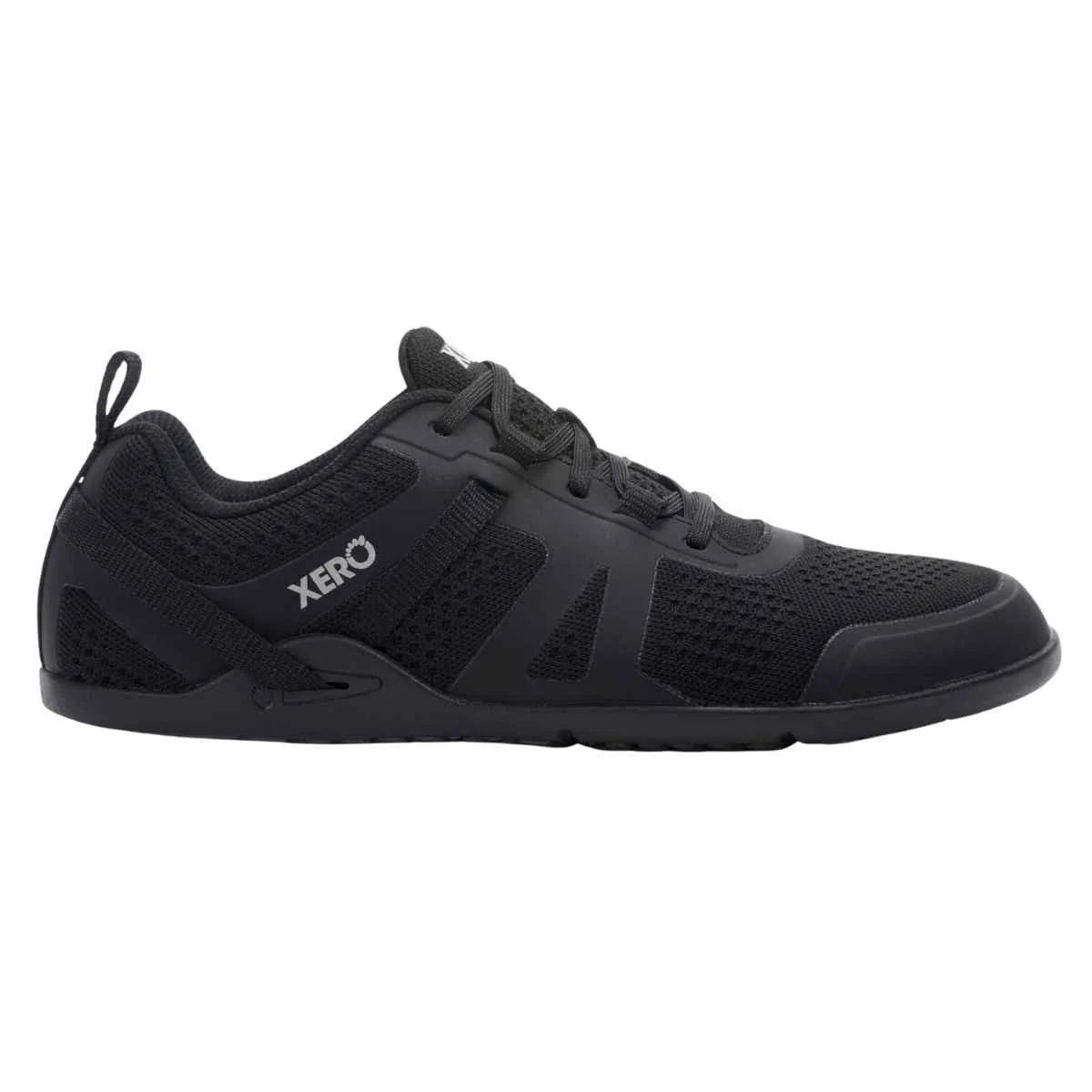
Price: $110
Drop: 0 mm
Stack height: (5.5 FeelTrue rubber outsole + 3 mm removable insole) 8.5 mm
Weight per pair: 14.6 oz, women’s size 7
Upper: Breathable mesh
Outsole: FeelTrue
Sole flexibility: Highly flexible
Toe box: Roomy
Closure: Laces
Waterproof: No
Vegan: Yes
Sizing: Half sizes; women’s 5-12, men’s 6.5-15
Best use: Everyday, gym, mixed, style
Best for
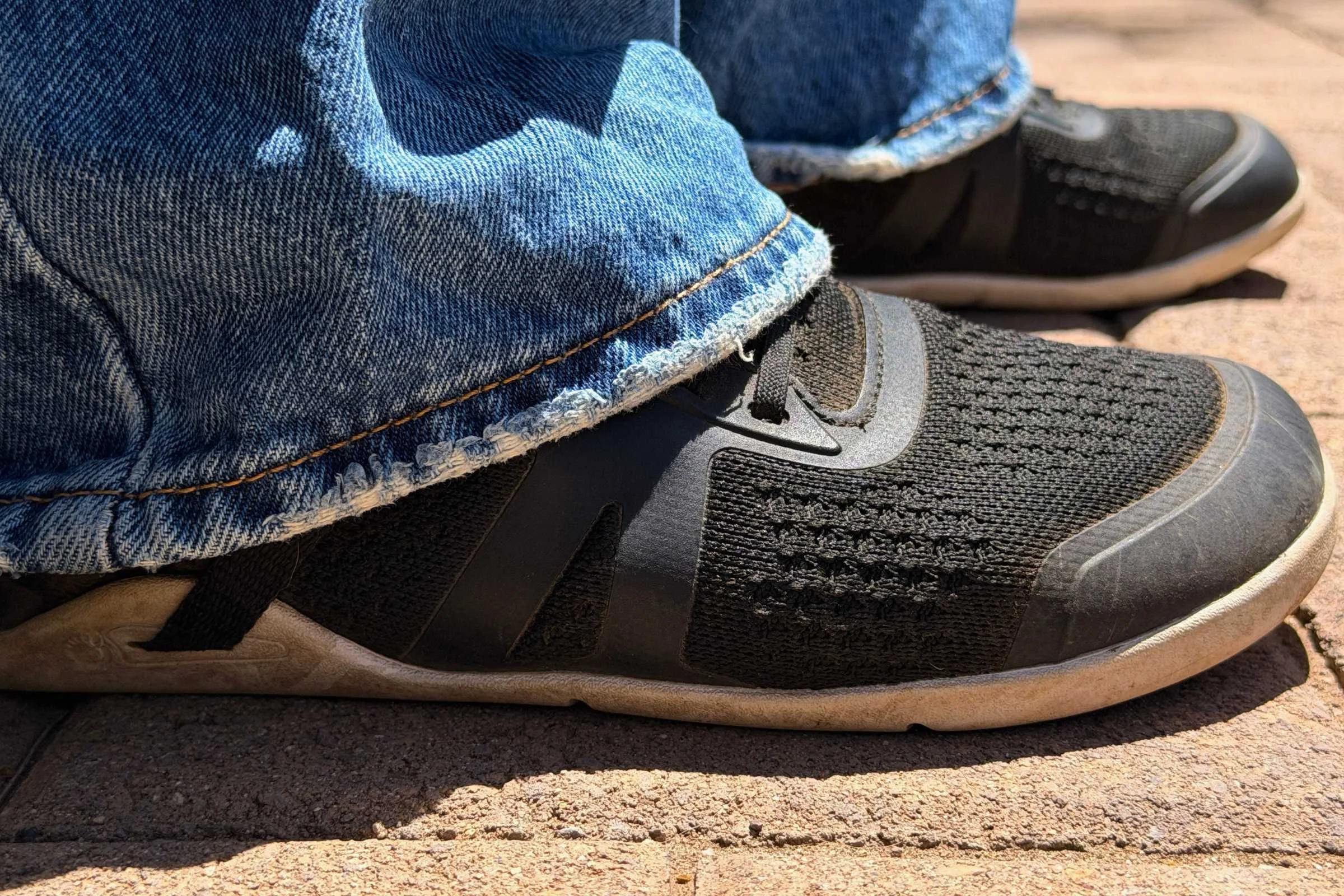
Wearing the Xero Prio Neo every day with every outfit. Photo courtesy Maggie Nichols
Those looking for the most flexible barefoot shoes with high ground feel
Travelers looking for lightweight everyday shoes
Committed barefoot enthusiasts looking for elevated style
Barefoot enthusiasts looking for versatile walking shoes
Comparison tables
Men’s
| Men's Barefoot Shoe | Weight (pair) | Stack | Drop | Sizes | Width(s) | MSRP |
|---|---|---|---|---|---|---|
| Xero Shoes Prio Neo | 17.4 oz (9) | 8.5 mm | 0 mm | 6.5 - 15 | Medium | $110 |
| Xero Shoes Mesa Trail II | 15.6 oz (9) | 9 mm | 0 mm | 6.5 - 15 | Medium | $120 |
| Lems Primal 3 | 17.2 oz (10) | 9.5 mm | 0 mm | 4.5 - 15 | Wide | $125 |
| Lems Chillum | 16.0 oz (10) | 10 mm | 0 mm | 4.5 - 15 | Wide | $130 |
| Lems Kourt | 16.0 oz (10) | 10 mm | 0 mm | 4.5 - 15 | Wide | $140 |
| Merrell Trail Glove 7 | 18.4 oz (9) | 14 mm | 0 mm | 6 - 15.5 | Medium | $130 |
Women’s
| Women's Barefoot Shoe | Weight (pair) | Stack | Drop | Sizes | Width(s) | MSRP |
|---|---|---|---|---|---|---|
| Xero Shoes Prio Neo | 14.6 oz (7) | 8.5 mm | 0 mm | 5 - 12 | Medium | $110 |
| Xero Shoes Mesa Trail II | 13.4 oz (7) | 9 mm | 0 mm | 5 - 12 | Medium | $120 |
| Lems Primal 3 | 17.2 oz (11.5) | 9.5 mm | 0 mm | 6 - 12 | Wide | $125 |
| Lems Chillum | 16.0 oz (11.5) | 10 mm | 0 mm | 6 - 12 | Wide | $130 |
| Lems Kourt | 16.0 oz (12) | 10 mm | 0 mm | 6 - 12 | Wide | $140 |
| Merrell Trail Glove 7 | 14.2 oz (9) | 14 mm | 0 mm | 5 - 11 | Medium | $130 |
What we liked
Extremely lightweight; you can almost forget you’re wearing them!
No constriction or pressing against toes at all
Almost ridiculously flexible
Cool style and a wide variety of available colors
What could be better
Limited traction on slick surfaces
Requires break-in time, even for regular barefoot shoe wearers
How we tested
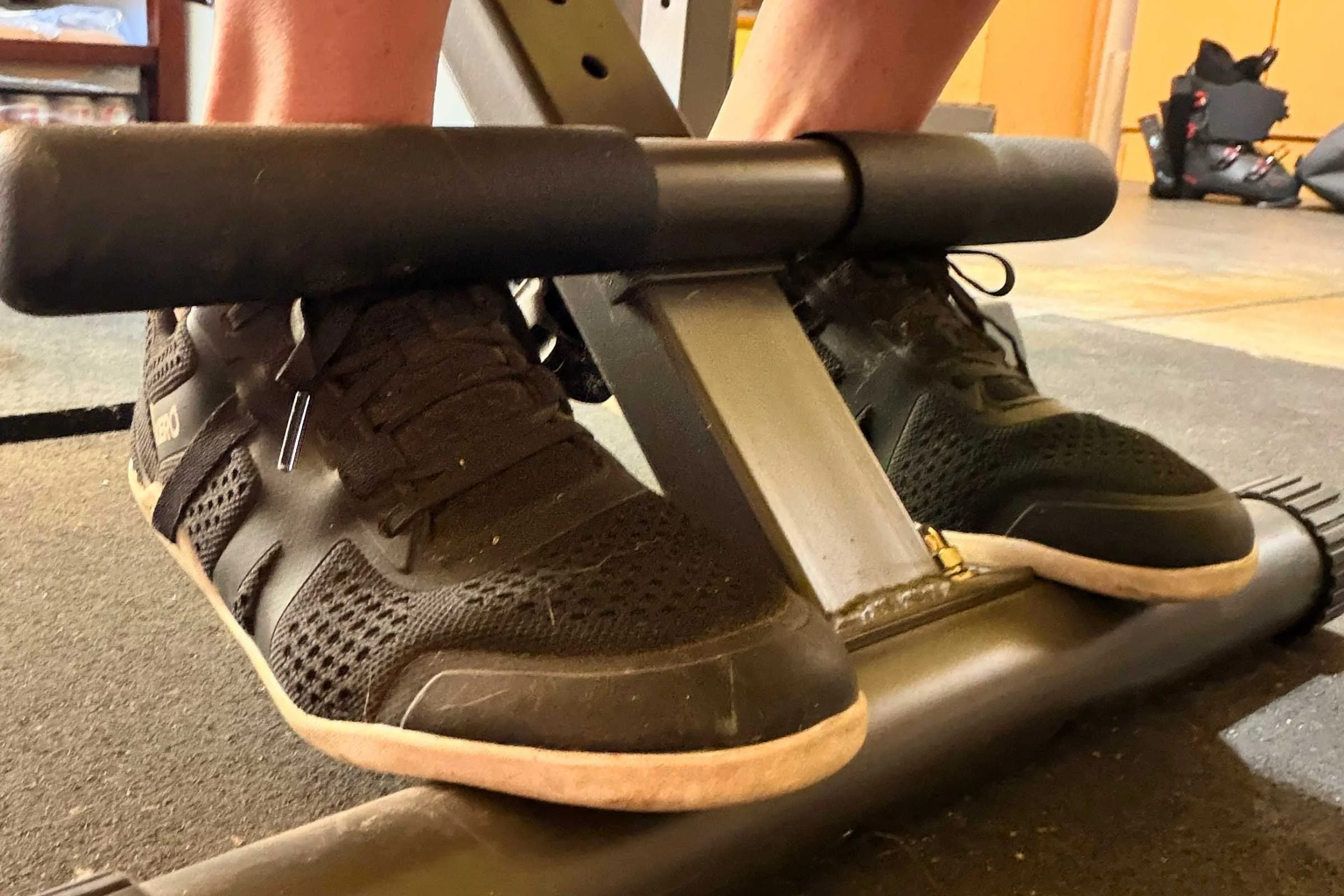
Wearing the Xero Prio Neo as a gym shoe for weightlifting. Photo courtesy Maggie Nichols
Both our men’s and women’s main testers have been barefoot enthusiasts for well over a decade, switching between various barefoot sandals, shoes, and boots as the Sierra Nevada seasons demand. We put the Xero Prio Neo through its paces across three seasons of wear in the high desert.
We wore these shoes for miles at a time, traipsing through Manhattan with 30K+ step days, hauling heavy gear through a warehouse, and working out in our home gyms. We scrutinized their durability and longevity after brambly adventures and tweaked the instep and heel adjustment straps to fit our feet perfectly.
We wore these shoes for days on end, alternating between different pairs in our Best Barefoot Shoes guide to gain direct comparison insights and tease apart which shoes are best for which purposes. This shoe is also featured in our Best Walking Shoes guide, and we tested it alongside non-barefoot shoes to assess its fit, comfort, grip, and support over long days on our feet.
Performance in the field
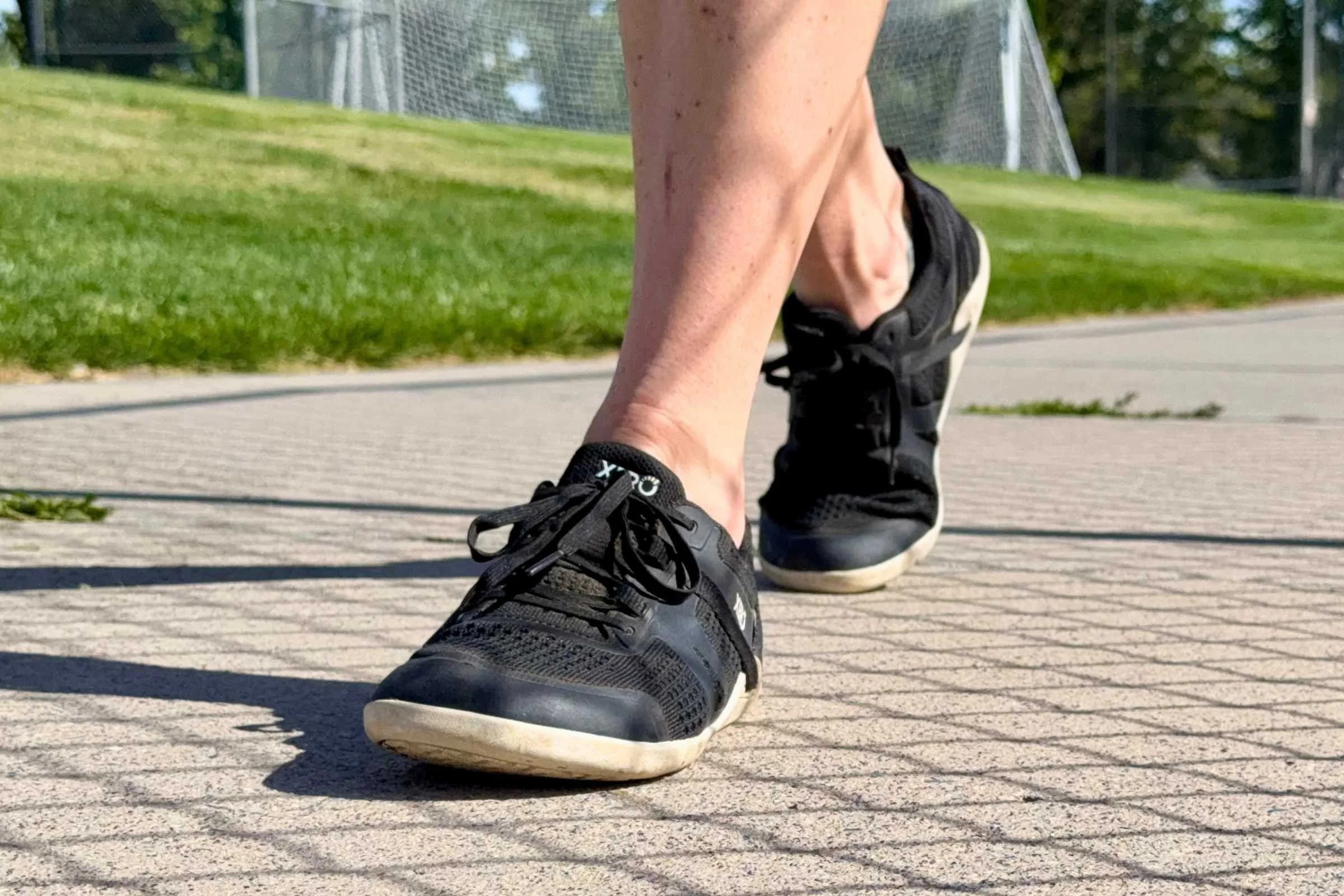
Walking in the park in the Xero Prio Neo. Photo courtesy Maggie Nichols
Ground feel and sensory feedback
When wearing the Xero Prio Neo, you can expect to feel a lot from the ground beneath your feet. These incredibly thin shoes have just 5.5 mm of sole, with a 3mm insole protecting you from what you’re walking over. They’re designed so you can remove the insole for maximum ground feel, which hardcore barefoot folks are sure to love.
Walking over uneven and rocky terrain is immediately obvious underfoot. Even just a mid-sized pebble on concrete is noticeable. For those accustomed to barefoot walking, the Prio Neo’s sensory feedback is a breath of fresh air.
Even if these are the thinnest pair of shoes you’ve worn to date, rest assured, they still offer protection from pokey things. During testing, our lead women’s tester consistently walked over surfaces riddled with goat heads (on which she has popped her road bike tires more than once!) and only noticed from the sound underfoot — none of the thorny bits ever made it through to her feet.
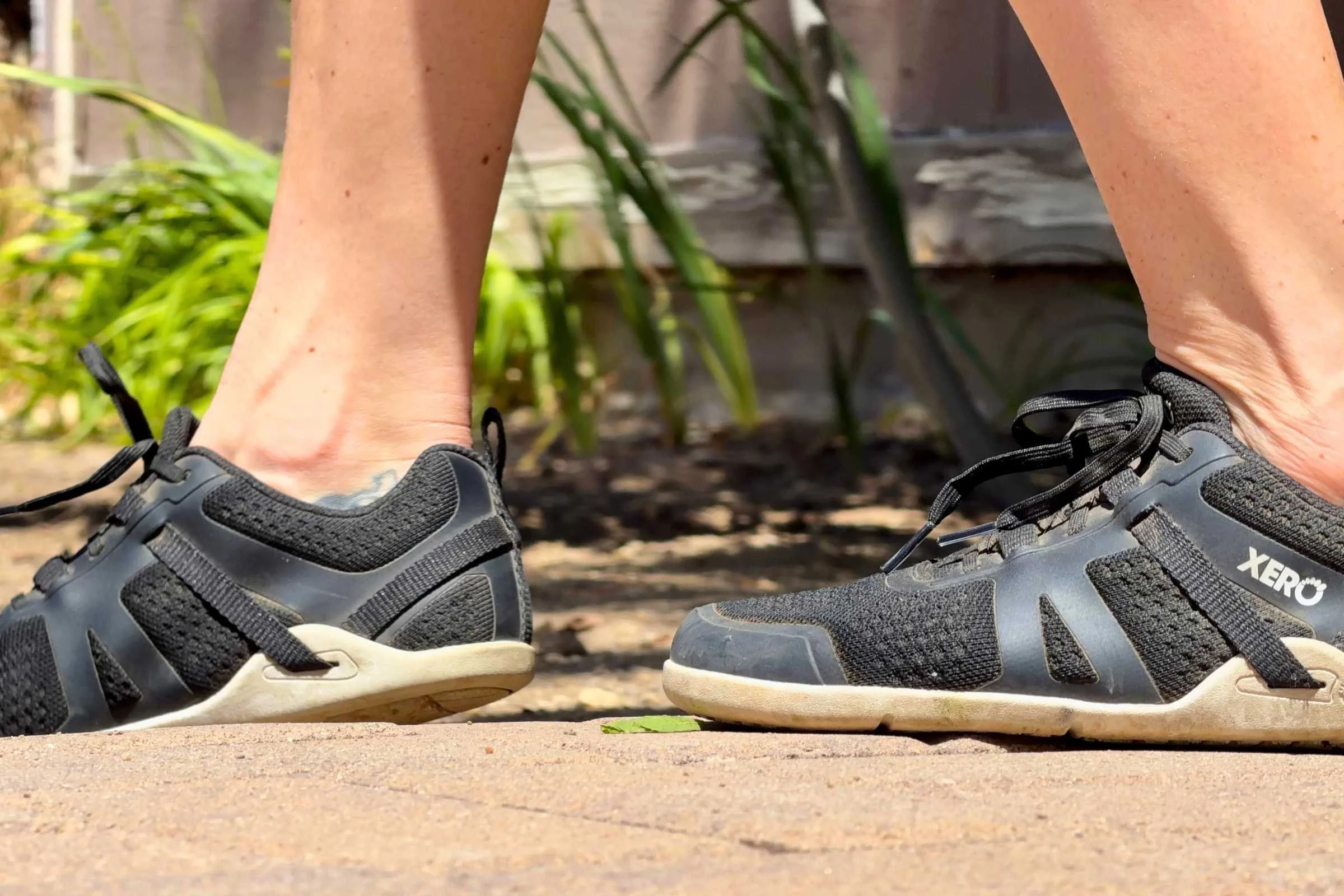
Walking in the Xero Prio Neo across sandy ground. Photo courtesy Maggie Nichols
If you’re not already a hardcore barefoot person, Xero shoes, including the Prio Neo, require some of the longest and most purposeful break-in periods for your feet. The amount of ground feel can be overwhelming for people coming from conventional shoes, and the high sensory feedback requires a lot of correction from feet that aren’t accustomed to spending all day barefoot. On the flip side, if you love being barefoot and have been struggling to find shoes that feel as barefoot as you want, the Prio Neo is a dream come true.
Fit and toe box
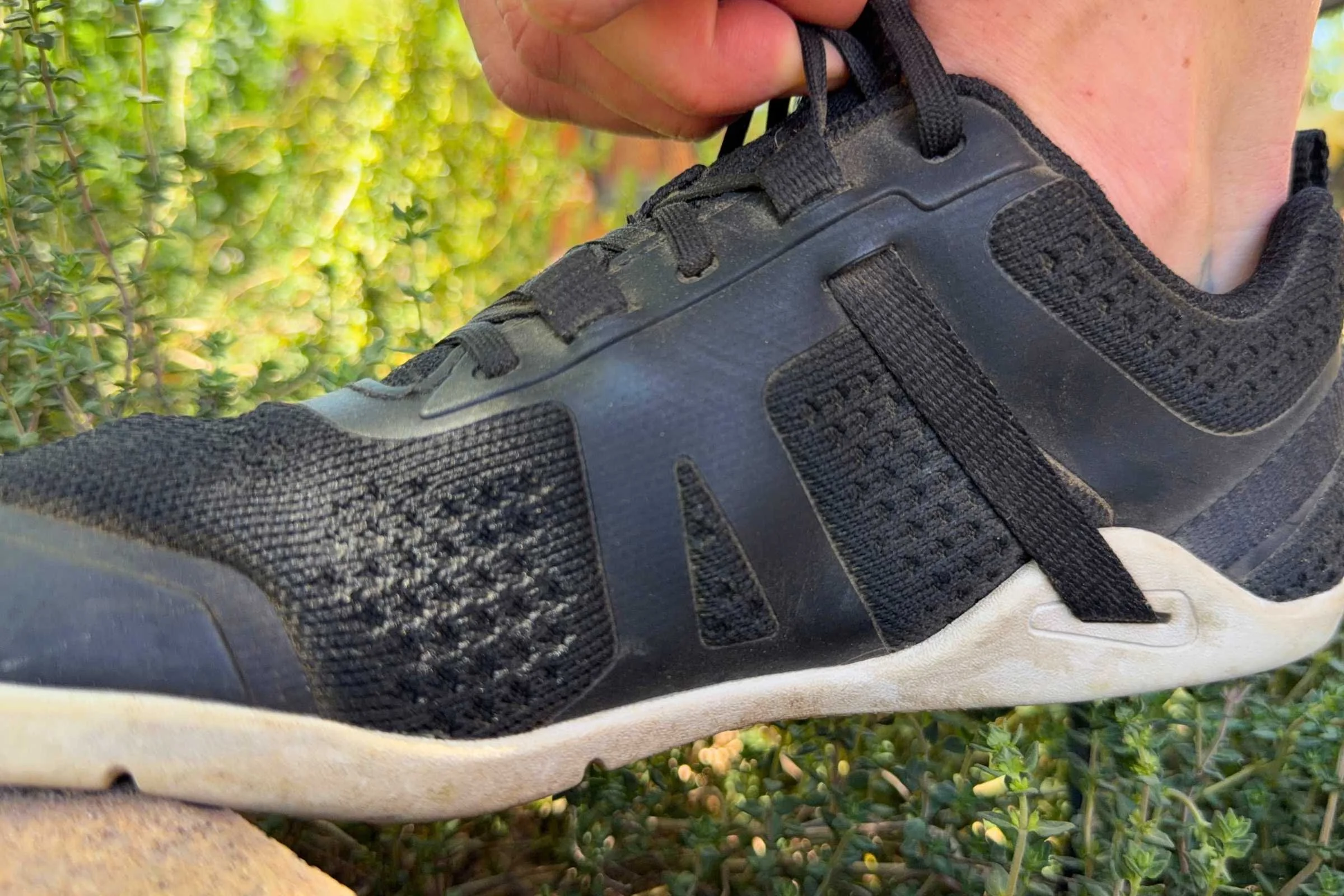
Adjusting the laces, instep, and heel of the Xero Prio Neo. Photo courtesy Maggie Nichols
The Xero Prio Neo has an impressively wide toe box that all but the widest-footed wearers will find spacious. It’s also fairly wide through the midfoot, allowing you to choose whether you prefer a looser, more casual fit or use the adjustable heel/instep straps and laces to create a snugger fit. Worn loosely, we found it easy to forget they were on our feet at all — though we did step out of them a few times when catching heels on objects.
While some Xero models have two sets of instep and midfoot adjustment straps, the more casual Prio Neo has just one. Easily seen on the outside of the shoe, this adjuster attaches at the back of the heel below the tab, traces forward and down on both sides of the foot, loops through a slot at the top of the outsole, then angles back upward to be snagged and adjusted by one of the loops in the Prio Neo’s standard lacing system. By making this tighter, we were able to achieve a somewhat more secure fit at the heels and around the ankles — but still a decidedly casual fit.
Traction and outsole grip
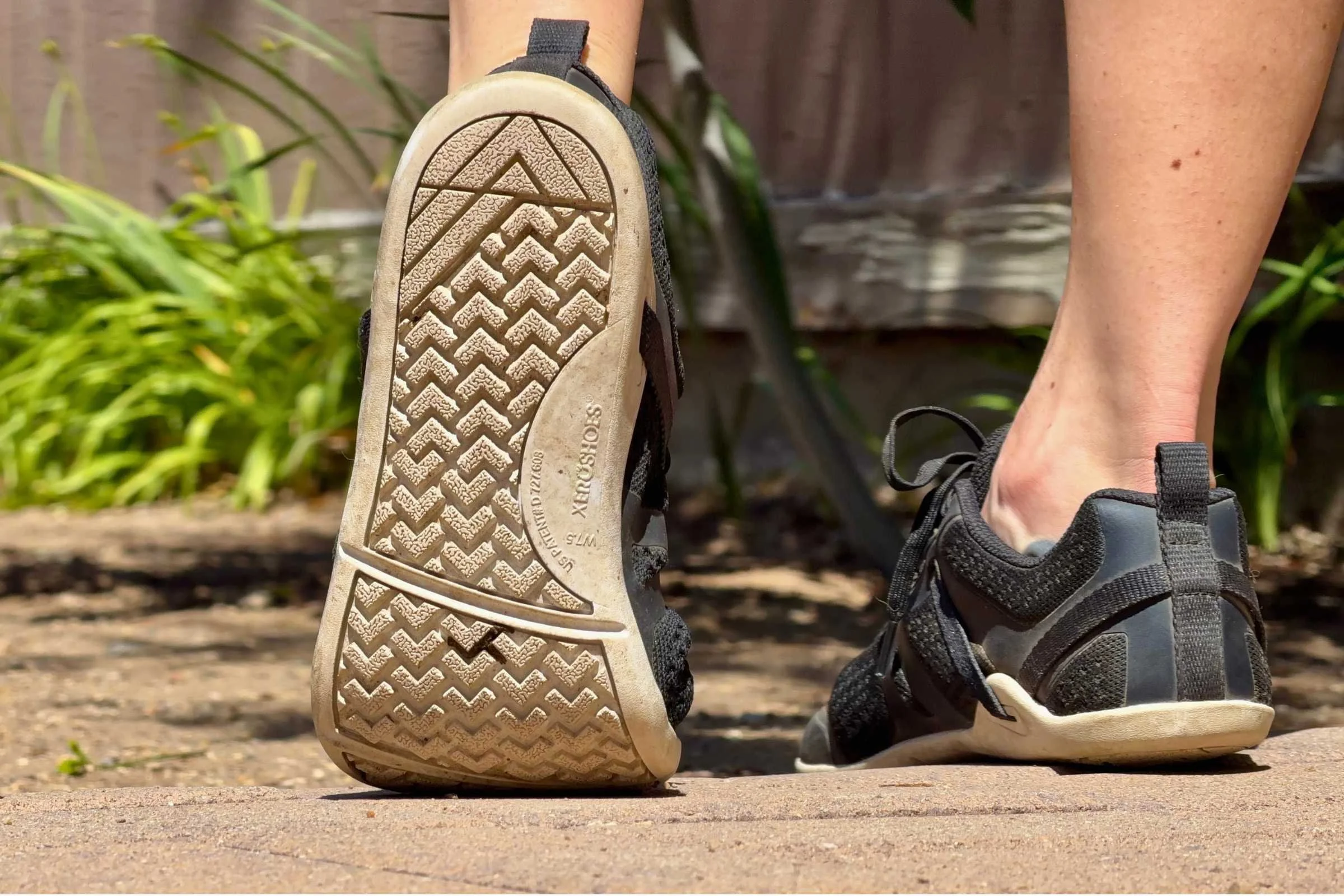
Showing the tread of the Xero Prio Neo. Photo courtesy Maggie Nichols
As is the case with so many everyday athleisure shoes, the grip of the Prio Neo works just fine in normal conditions, but shows its weakness under duress. More than once, the pressure of trying to push a heavy piece of equipment across a polished concrete floor caused our lead women’s tester to slide backward.
However, we also wore these shoes a lot during our multi-month testing period. Traversing snowmelt-covered sidewalks proved no issue, and even small gravelly inclines were easily conquered in the Prio Neo. We spent several happy hours riding clunky cruiser rental bikes around, without our feet ever slipping off the pedals. We even successfully completed moderate-intensity bodyweight exercises like planks and lunges without losing our grip.
Flexibility and natural movement
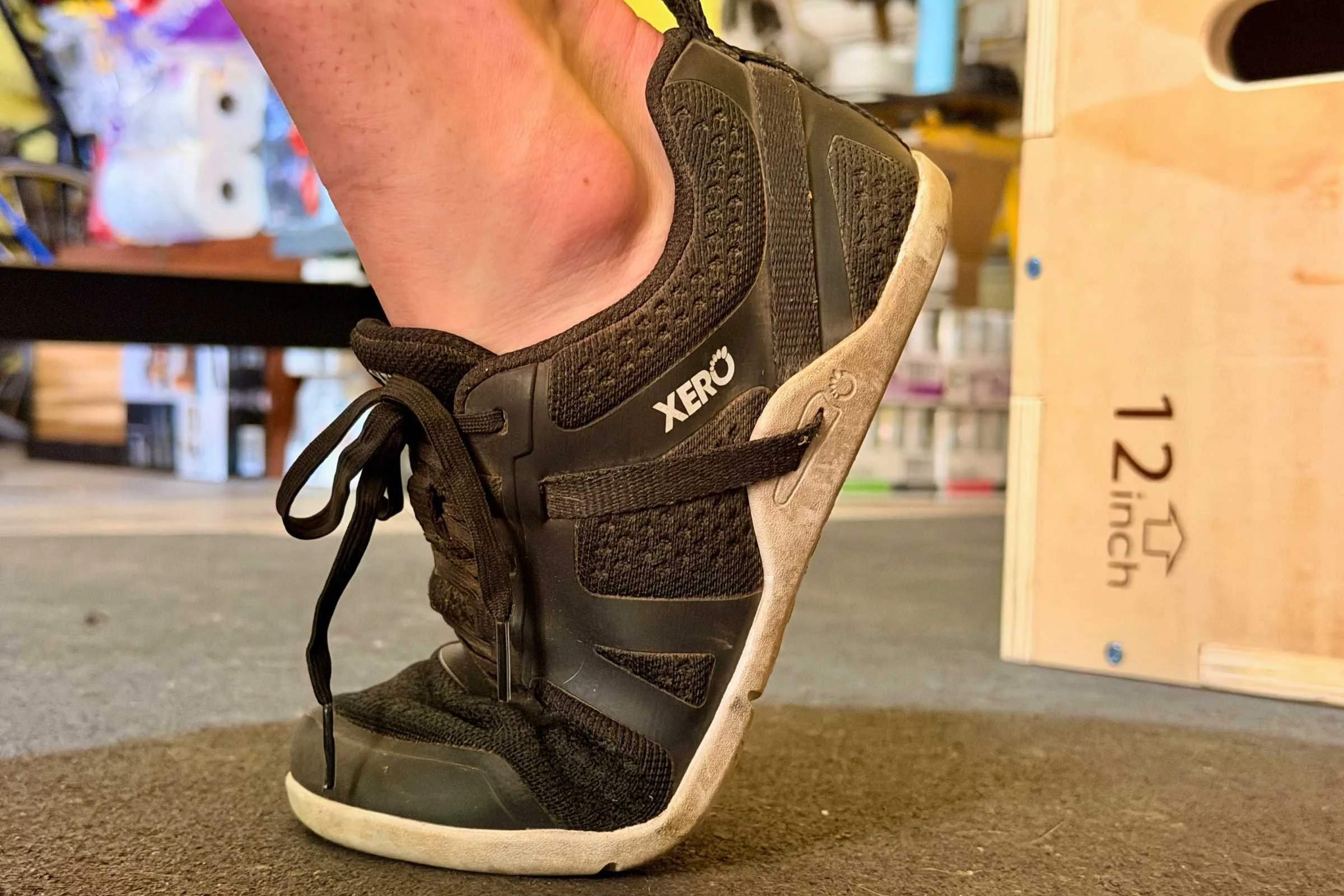
The Xero Prio Neo is extremely flexible, allowing for all the same movements you could do barefoot. Photo courtesy Maggie Nichols
As you might expect from such a thin shoe, the Xero Prio Neo has seriously high levels of flexibility. While all the Xero shoes we tested have similarly impressive flexibility, the Prio Neo stands above the rest in this regard. Not only does every part of the sole flex — not just the midfoot, like most barefoot shoes — but you can also bend these shoes nearly in half or easily roll them up if you want (some shoes picture this ability in their marketing photos, but the Xero shoes were the only ones we tested that could actually accomplish it with a normal amount of force).
What we find most telling about the Prio Neo’s flexibility is that when we hopped up onto a taut rope structure, the soles actually flexed down over the surface of the rope. Not even the three other pairs of Xero shoes we tested managed to do that — and none of the other barefoot shoes we’ve worn flex downward with just the pressure from our actual feet (not trying to bend the shoes with our hands).
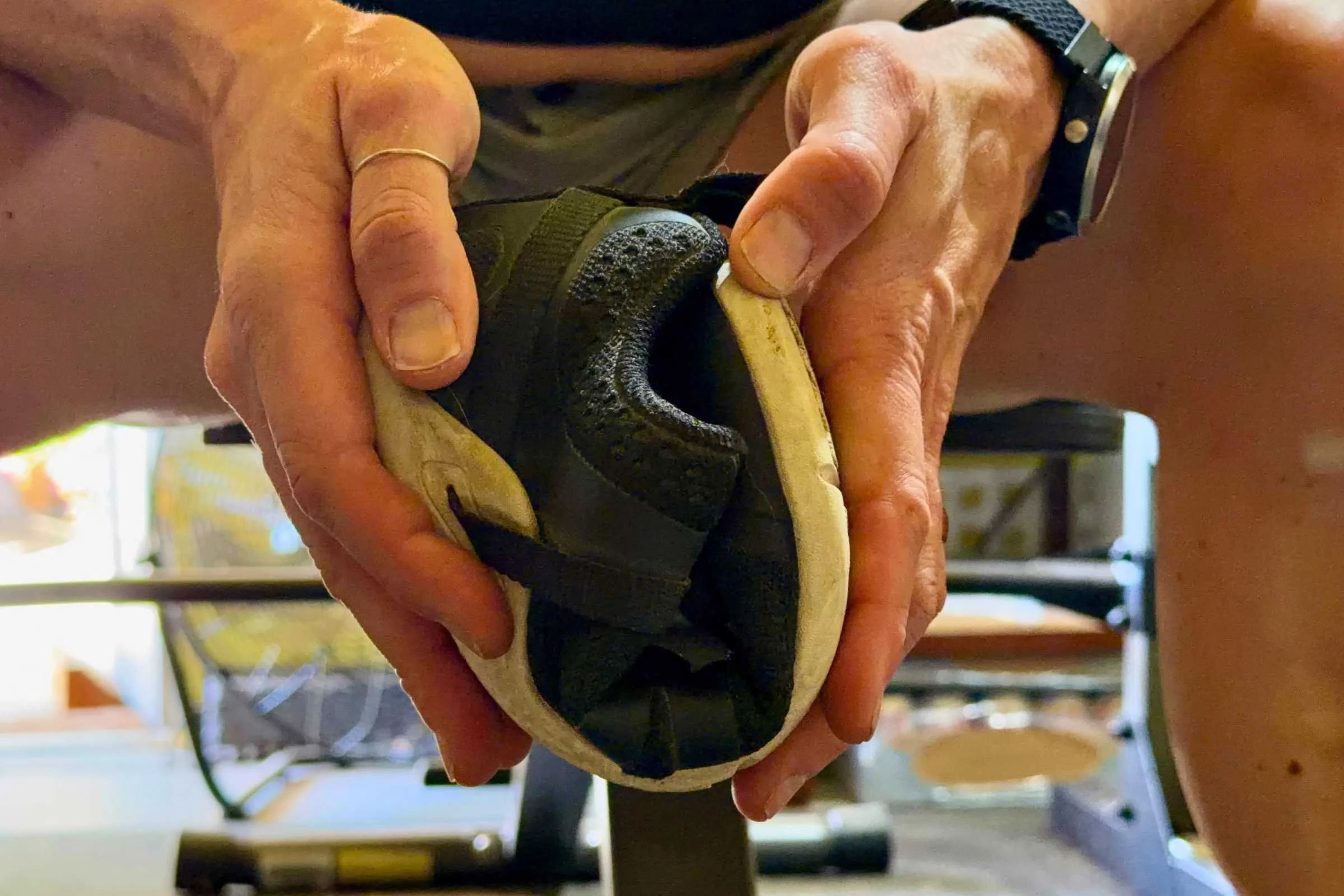
Demonstrating the supreme flexibility of the Xero Prio Neo by easily bending it in a circle. Photo courtesy Maggie Nichols
It’s hard to overstate just how uncommon this flexibility truly is among shoes of any kind, making the Prio Neo one of the most natural, truly barefoot-feeling barefoot shoes we have ever come across.
Comfort over time
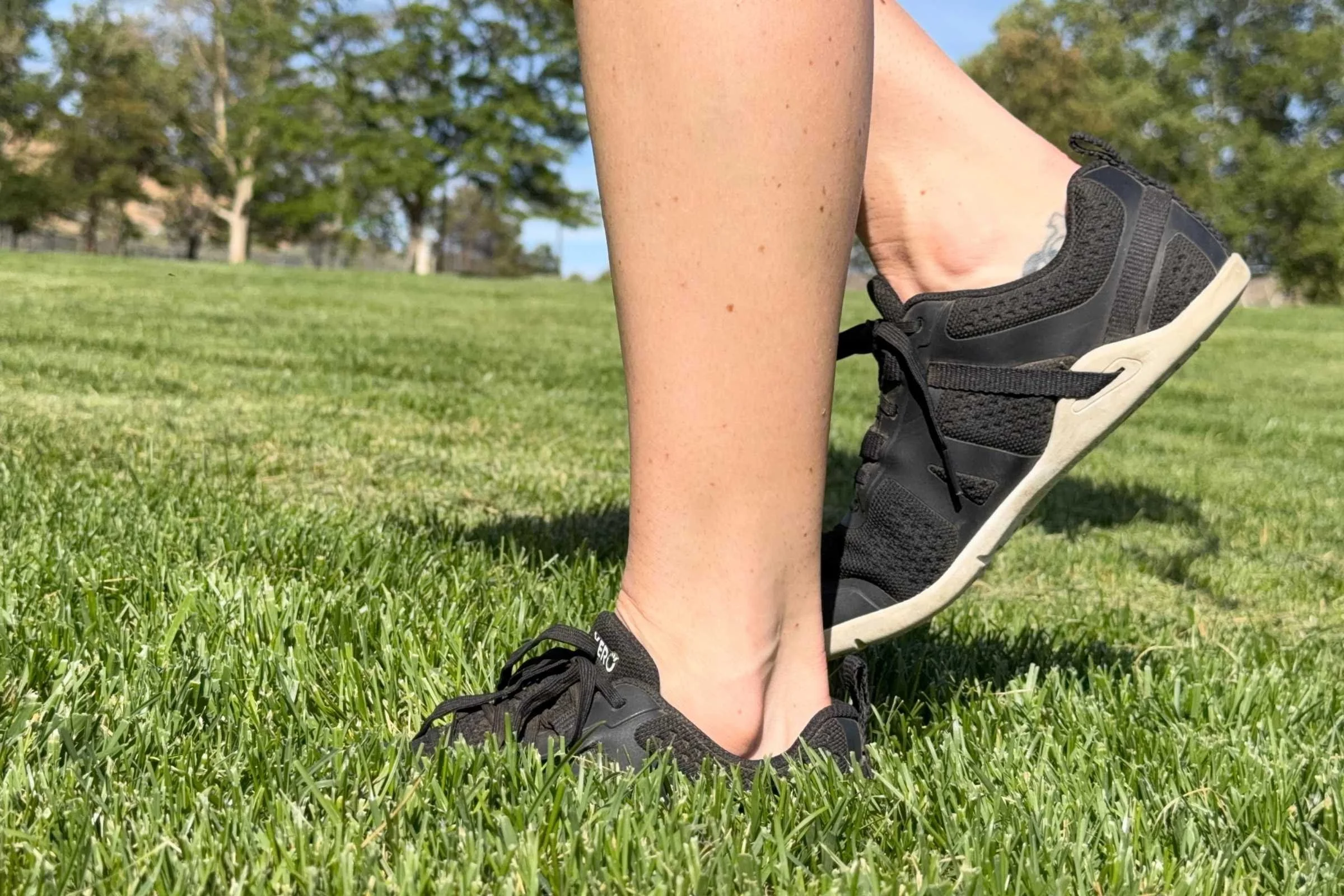
Walking through the grass in the Xero Prio Neo. Photo courtesy Maggie Nichols
The comfort of the Prio Neo comes with caveats. Folks who spend excessive time walking around in socks or barefoot, and have already built the musculature required to move through life without foot support, will love the easy comfort and feel of the Prio Neo. It offers just enough underfoot protection from the sharpest things you might step on, without restricting any of your feet’s natural movement or constricting their shape in any way.
On the other hand, if you’re brand new to barefoot shoes, jumping straight into the Prio Neo is a big leap. Even for folks who wear barefoot shoes a lot but tend to wear models with 10+ mm soles or moderately less flexible soles, the Prio Neo is yet another step (no pun intended) in the barefoot shoe journey.
For our two main testers, who wear other styles of barefoot shoes 90% (our women’s tester) to 100% (our men’s tester) of the time, the Prio Neo still proved it requires a thoughtful transition period. If you’re arriving on a similar boat or with even less practice in barefoot footwear, expect to spend extra time getting your feet, ankles, and calves used to the Prio Neo before you’ll be able to achieve all-day-on-your-feet comfort.
If you can stand the break-in period for your feet, though, the comfort of the Prio Neo is on par with being barefoot. We happily wore them to traverse the cement-covered island of Manhattan on vacation, hitting 30K+ steps a day, with tired but happy feet.
Durability
Despite being so thin and flexible, we’re impressed by the durability of the Xero Prio Neo. Our lead women’s tester is a self-admitted klutz who regularly smacks her toes against objects in her path and unintentionally kicks rocks while out walking around. The welded toe on her now well-worn pair of Prio Neos looks as good as new, and the mesh shows no obvious signs of wear.
Depending on the color you choose, the extra proximity of your feet to the ground collects even more dirt than with other shoes. The Prio Neos aren’t meant to be chucked in a washing machine, either, so if you aren’t game to handwash your shoes, perhaps it’s wise to select a darker color.
Though we haven’t come close to walking 5,000 miles in our pairs of Prio Neos, that’s the claim Xero makes about how long their outsoles are designed to last. Our lead women’s tester walked over 2.5 million steps during her barefoot shoe testing period — many of which were in the Prio Neo, as one of her personal favorite pairs — and the Prio Neo soles look completely unfazed by the experience.
Features
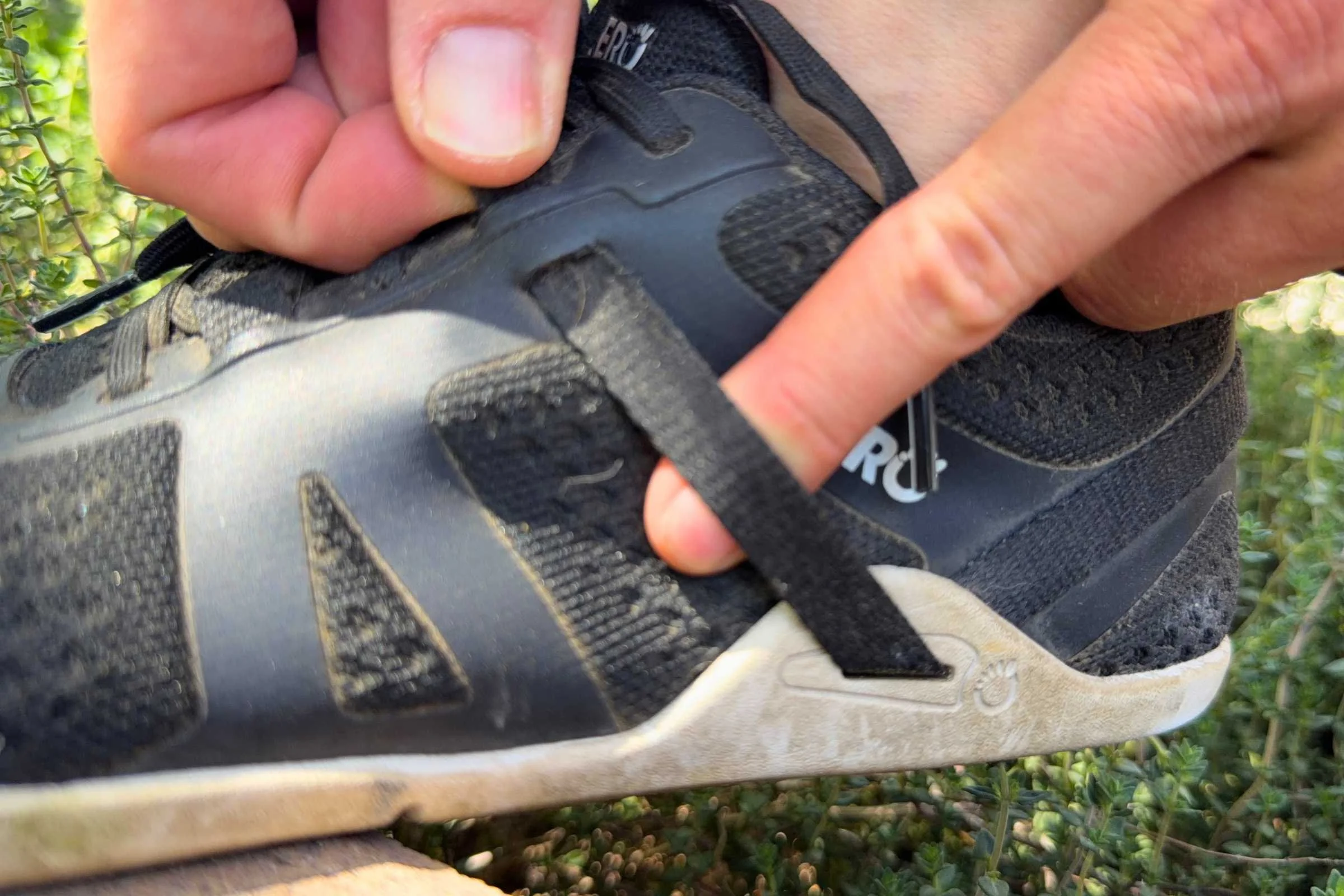
Showing the single adjustment strap of the Xero Prio Neo that attaches to the laces, allowing you to customize the instep and heel fit of the shoe. Photo courtesy Maggie Nichols
Zero-drop – Your forefoot and heel ride the same distance from the ground.
FeelTrue sole – Xero’s patented rubber 5.5mm sole with a 5,000-mile guarantee.
Vegan-friendly construction – Made of materials that don’t include any animal components.
Toe Cap – A hardened barrier that extends over the ends of the toes to offer some protection against kicking rocks or vegetation on the trail.
Huarache-inspired design – There are many different types of Huarache shoes, but the key components that Xero uses in their designs are supportive straps in critical areas. Even in their shoes (not just their sandals), welded “strap-like” designs can be seen crossing the midfoot.
Adjustable midfoot and instep straps – External straps specific to this shoe model that allow the wearer to create a more customized fit at the midfoot and instep.
Foot-shaped toe box – A wide toe box that allows the toes plenty of room to splay laterally and not be constricted at any point in your gait.
Optional insole – Xero’s removable insole. These shoes can be worn with or without the insole, depending on the level of ground feel you prefer.
Should you buy the Xero Prio Neo?
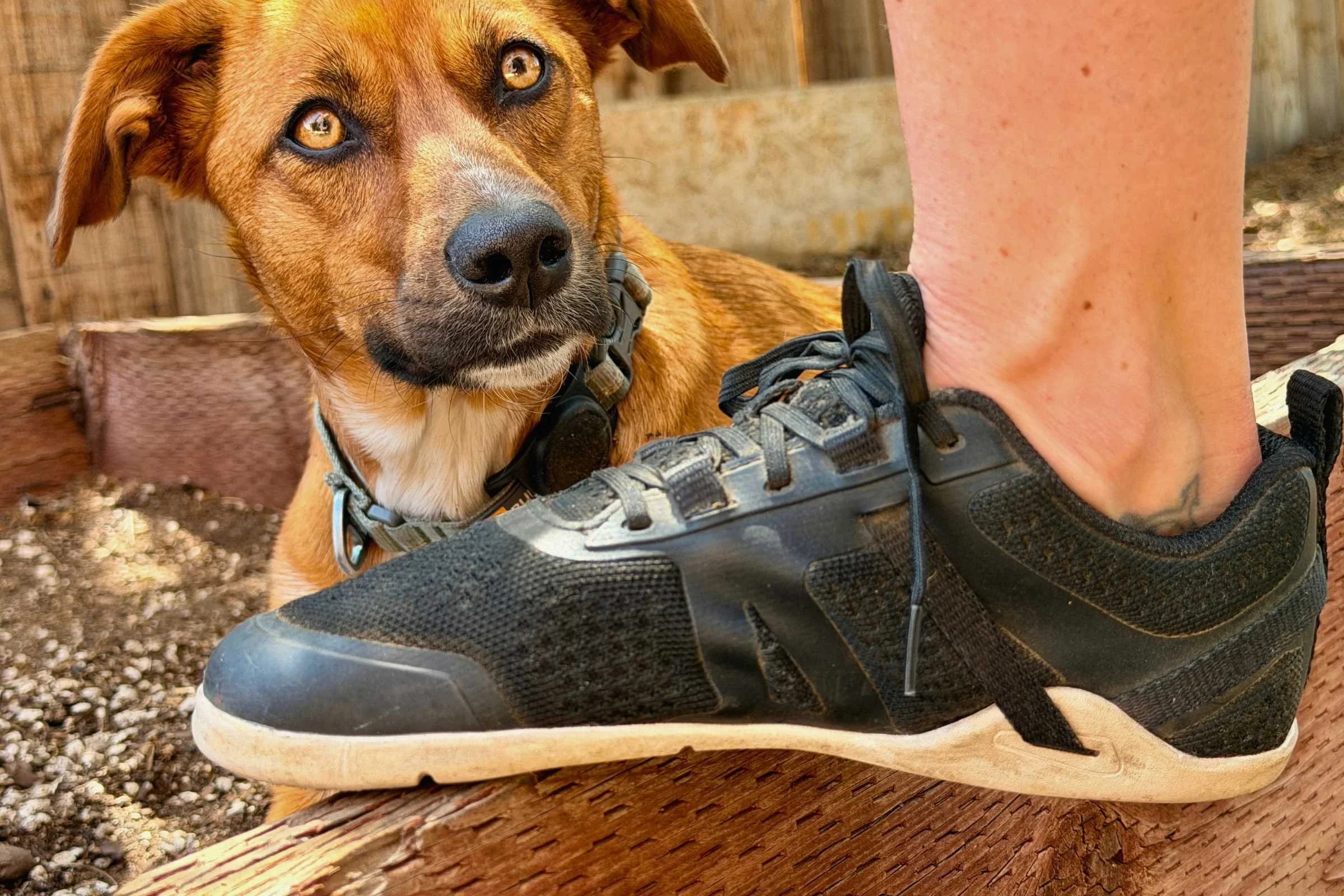
The ability to flex downward is uncommon, but the Xero Prio Neo can do it. Pictured here with a curious dog in the background. Photo courtesy Maggie Nichols
Buy if:
You want a seriously lightweight travel shoe
You’re after the closest feeling to being barefoot while still wearing shoes
You need barefoot shoes that are still stylish and can be dressed up
You’re deeply committed to the training and break-in period required by the most minimal barefoot shoes
Skip if:
You want a pair of barefoot shoes that’s easy to get used to and quick to break in
You prefer not to feel sticks and pebbles under your feet
Where to buy
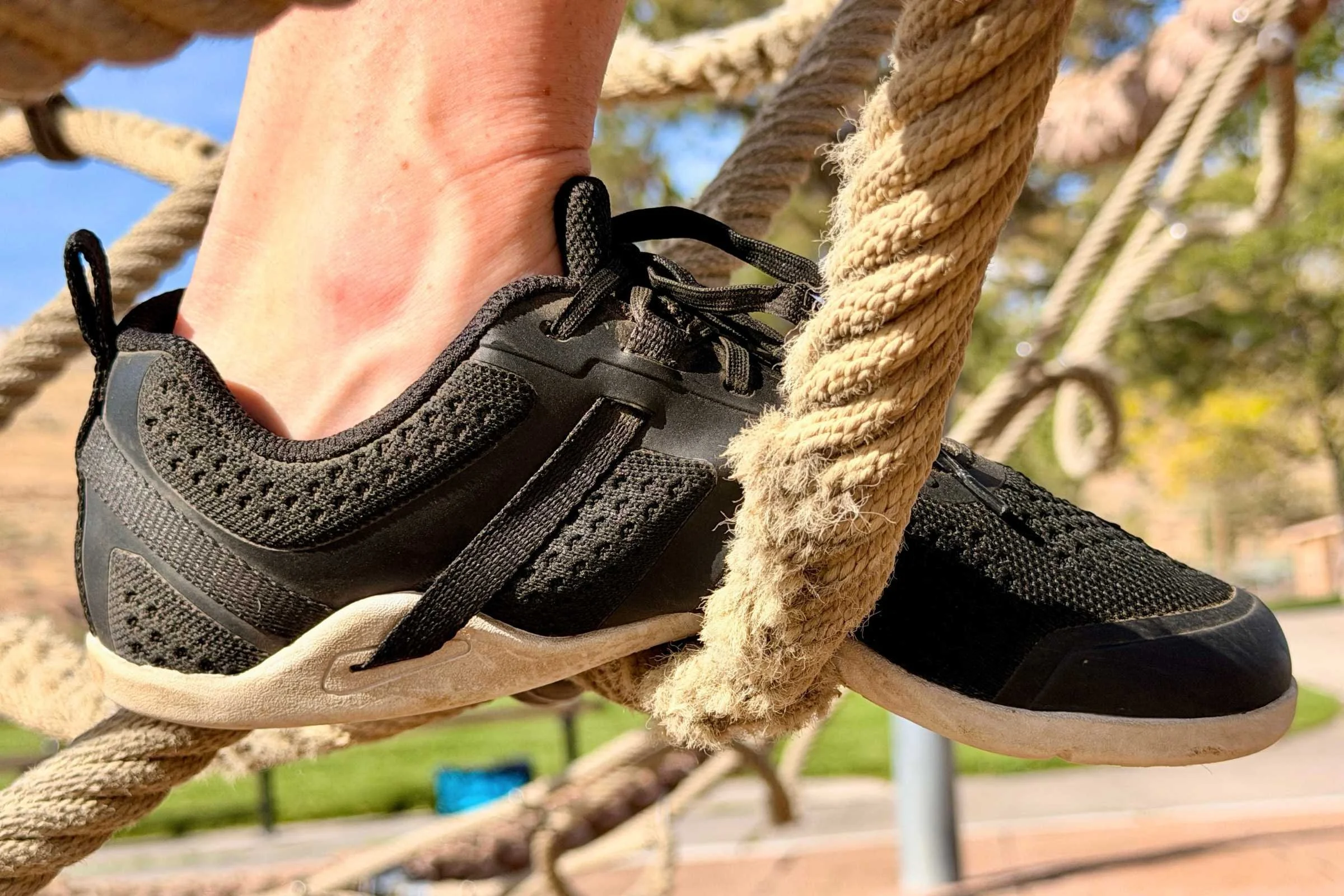
The Xero Prio Neo is one of the only shoes we’ve seen that also flexes downward; seen here standing on a thick rope. Photo courtesy Maggie Nichols
The Xero Shoes Prio Neo barefoot shoes are popular footwear, so you have options when it comes to retailers. Here are some of the pros of the retailers.
REI
Pros: 100% satisfaction policy for 1 year; 10% dividend for members.
Amazon
Pros: Free 2-day shipping with Amazon Prime membership
Returns and advice on where to buy
In general for shoes, we recommend purchasing from a place with easy or free returns, like REI. Trying on shoes is an important way to get the sizing right. With both those retailers, if your funds allow, you can buy two sizes and easily return one. Additionally, check reviews to see whether other users recommend sizing up or down.
Similar barefoot shoes
Xero Shoes Prio Neo vs Lems Primal 3
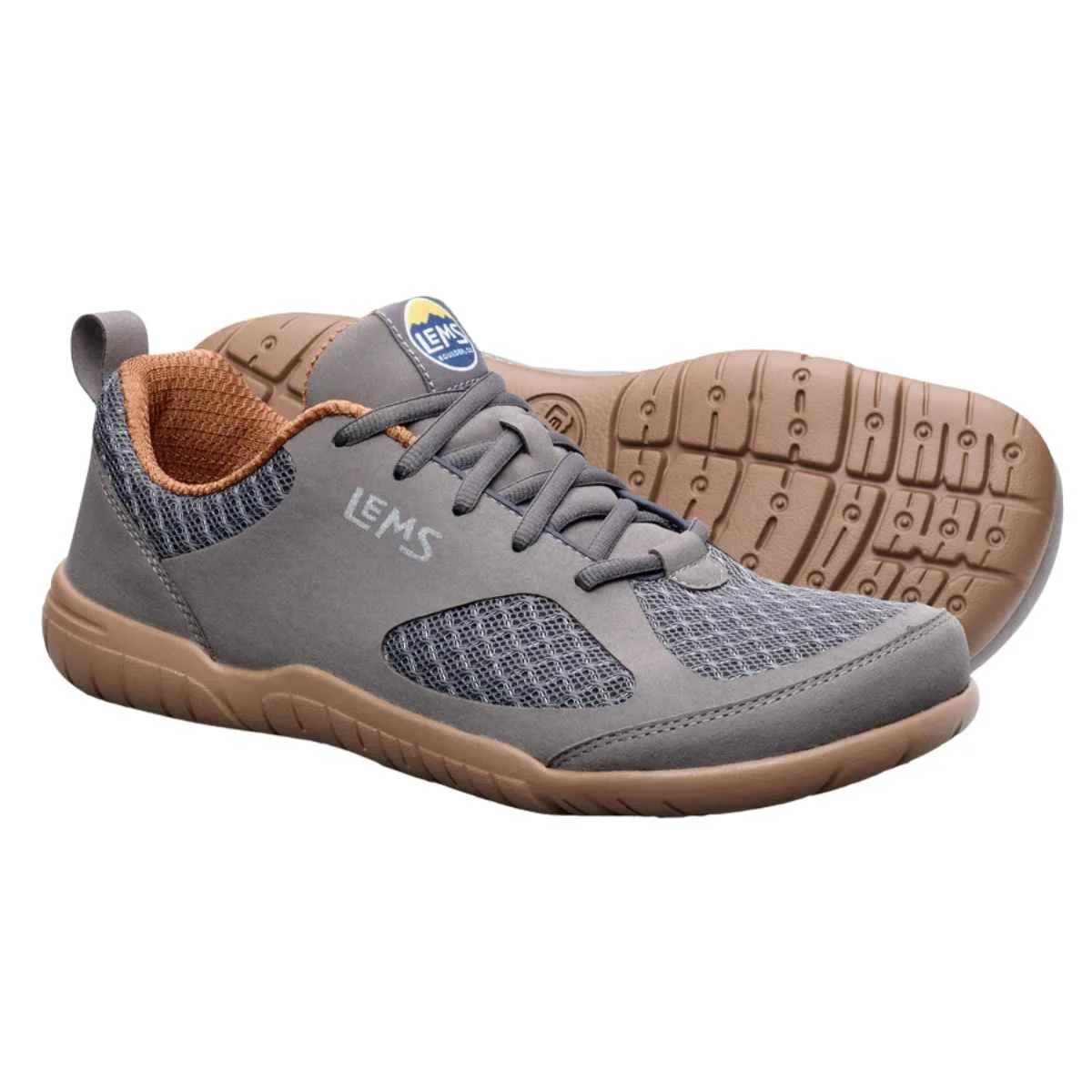
MSRP: $125
Stack height: 9.5 mm
Weight (per pair): 1 lb 1.2 oz
Upper: Super-soft microfiber + open-weave mesh (100% vegan)
Outsole: Injection Blown Rubber (IBR)
Flexibility: Medium
Grip: Medium-high
Ground feel: Medium-low
The Prio Neo and the Primal 3 have a very similar intended use — both are designed to be worn in everyday situations and during mild- to moderate-intensity workouts. While both do a great job in these same situations, the Prio Neo is far more flexible and much thinner underfoot than the Primal 3. The Primal is much more structured, with a somewhat narrower fit, and is much easier to transition into from conventional shoes. The Lems Primal 3 are our best overall pick in our Best Barefoot Shoes guide.
Lems Primal 3
Xero Prio Neo vs Xero HFS II
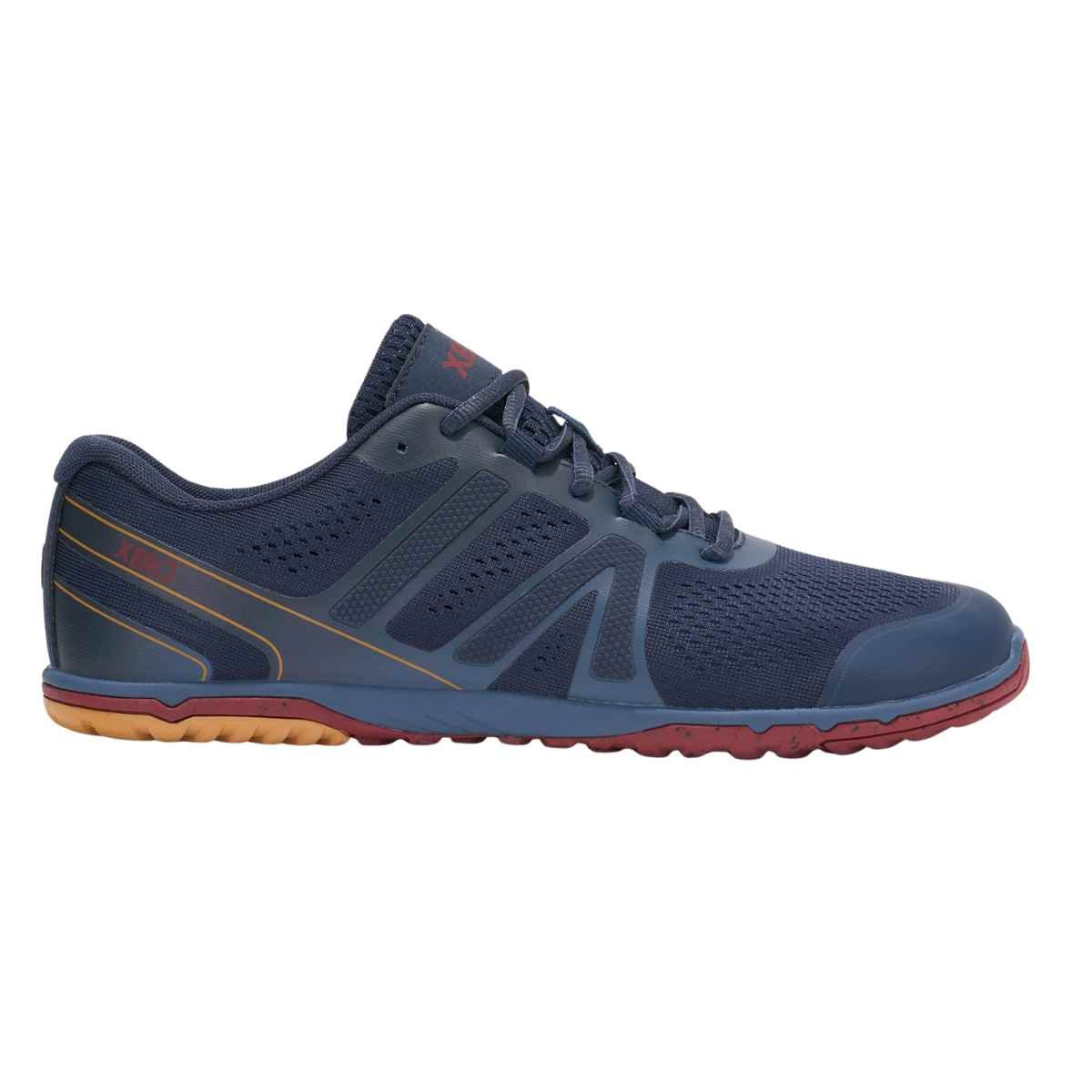
MSRP: $130
Stack height: 8.5 mm
Weight (per pair): 14.8 oz (men’s), 13.4 oz (women’s)
Upper: Polyester textile/TPU
Outsole: FeelTrue rubber
Flexibility: High
Grip: Medium-high
Ground feel: High
Designed as a road-running shoe, the HFS II has more intense traction than the Prio Neo. It’s slightly less flexible underfoot but has a more flexible upper with even better breathability. The HFS II also has two instep/heel and midfoot adjustment straps to the Prio Neo’s one, and features a snugger fit through the midfoot.
Xero HFS II
Xero Prio Neo vs Merrell Trail Glove 7
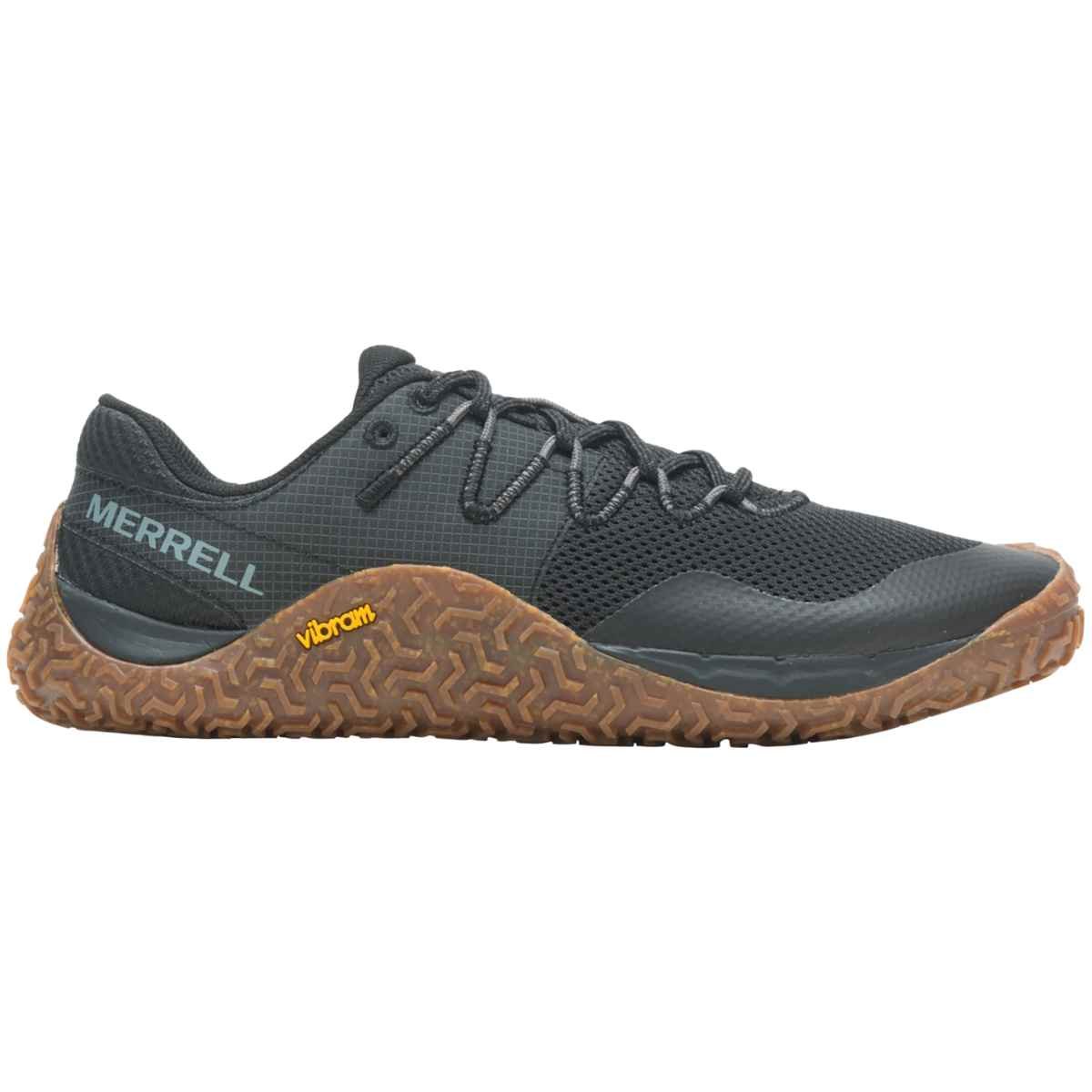
MSRP: $130
Stack height: 14 mm
Weight (per pair): 1 lb 2.4 oz (men’s), 14.2 oz (women’s)
Upper: 100% recycled mesh
Outsole: Vibram Ecostep with 30% recycled rubber
Flexibility: Medium-high
Grip: Medium-high
Ground feel: Medium-high
The Merrell Trail Glove 7 is a more activity-specific shoe than the casual, athleisure-focused Prio Neo. It has more intense traction that wraps around the heel, instep, and toe for trail grip. It also has a much thicker sole that is fairly inflexible under the heel and an overall much narrower fit throughout the entire foot. This is why it won best gym shoe in our Best Barefoot Shoes guide. For more, read our in-depth review of the Merrell Trail Glove 7.
Merrell Trail Glove 7
Men's
Women's
Why you should trust us / About the author
Maggie is an avid trail runner based in Reno, Nevada, hitting her neighborhood trails at least four days a week and taking hikes in her backyard Sierra Nevada Mountains and through the deserts of northern Nevada as often as possible. She likes to compete in both trail and road races and is no stranger to the podium. She worked as a professional backcountry guide for over 15 years, backpacking, hiking, and kayaking, from places like Texas and Utah to the U.S. Virgin Islands and the Galapagos Islands, mostly in a pair of Chaco sandals.
Maggie started her barefoot journey running in some of the early Vibram FiveFinger shoes back in 2009. Though she added some cushioning to her runs after a few years of pounding cement, she is still adamant about running only in zero-drop shoes. She has logged thousands of miles in nine pairs and iterations of the Altra Lone Peak trail shoe line over the past decade.
Not only is Maggie a passionate advocate for wearing barefoot shoes, but she also studied hand and foot evolution and morphology at university and completed a Master’s thesis on chimpanzee hand and foot manipulation of tools. She spent 7 years teaching anatomy and osteology labs at the university level, giving her a high level of familiarity with the more than 100 bones that make up human hands and feet.
When not running, Maggie loves to be as barefoot as possible, feeling the ground and honing her foot stability and strength. She explores her natural backyard with her dog, Isla, and travels the world with a pair of barefoot shoes on her feet and Altra Lone Peaks in her bag.