Best Barefoot Shoes of 2026
From casual, stylish kicks to waterproof trail runners and “barely there” minimalist sneakers
June 23rd, 2026
Home → Gear Reviews → Footwear
Humans have been walking on two feet for millions of years, while shoes with semi-rigid soles are a far more recent invention. The crux of the barefoot shoe movement is to allow your feet to move the way they evolved to carry you, while adding the protections and comfort of modern technology.
While there’s a range of how “barefoot shoes” fit and function, in general, barefoot shoes have more flexible soles and wider toe boxes than their “standard” shoe cousins. Added flexibility helps improve your foot’s ability to grip and builds foot strength over time. Wider toe boxes allow your toes to splay with each step, improving balance and increasing your lateral stability.
We spent months testing 10 barefoot shoes spanning the full range of possible uses, from casual, stylish kicks to waterproof trail runners to “barely there” sneakers. For several months, we wore them everywhere—>walking 30K steps a day around Manhattan for a whole week, moving 72 truckloads of rental equipment, and running hundreds of miles on sloppy trails. We tested them in snow, on slick concrete, across glossy tiles, and through puddles.
Every pair in our lineup varied in their width, flexibility, and grip, but they all share the barefoot movement philosophy of zero-drop offset (where your heels and toes ride the same height off the ground) and no (or nearly no) arch support.
During our testing, we checked all the components that make a good shoe feel like one. We investigated their flexibility, ground feel, grip, and traction. We considered their comfort on different feet, including fit, width, cushioning, and breathability. We examined their design and durability, wearing these shoes day in and day out, and evaluated how easy it was to transition into wearing each particular pair.
The Lems Primal 3 is a really great all-arounder, pretty easy to hop into, has a good versatile fit, and good performance for most everyday activities and light exercise.
We write mission-driven gear reviews. To find the best gear, we combine expert reviews, everyday user opinions, and rigorous independent trail testing—never pop-up or display ads. We are reader-supported and may make a small commission from some qualifying affiliate links. Learn more.
Comparison table
Men’s
| BAREFOOT SHOE | TREELINE AWARD | WEIGHT (PAIR) | STACK | DROP | SIZES | WIDTHS | MSRP |
|---|---|---|---|---|---|---|---|
| Lems Primal 3 | Best Overall Read why |
17.2 oz (10) | 9.5 mm | 0 mm | 4.5 - 15 | Wide | $125 |
| Altra Lone Peak GTX 9+ | Best for Running Read why |
24.8 oz (9) | 25 mm | 0 mm | 7 - 16 | Medium | $180 |
| Lems Kourt | Best for Style Read why |
20.6 oz (11.5) | 10 mm | 0 mm | 4.5 - 15 | Wide | $140, 155 |
| Merrell Trail Glove 7 | Best for the Gym Read why |
18.4 oz (9) | 14 mm | 0 mm | 6 - 15.5 | Medium | $170 |
| Xero Shoes Mesa Trail II | Best for Hiking Read why |
15.6 oz (9) | 7.5 - 11 mm | 0 mm | 6.5 - 15 | Medium | $120 |
| Xero Shoes Prio Neo | Best for Everyday Read why |
17.4 (9) | 5.5 - 9 mm | 0 mm | 6.5 - 15 | Medium | $110 |
Women’s
| BAREFOOT SHOE | TREELINE AWARD | WEIGHT (PAIR) | STACK | DROP | SIZES | WIDTHS | MSRP |
|---|---|---|---|---|---|---|---|
| Lems Primal 3 | Best Overall Read why |
17.2 oz (11.5) | 9.5 mm | 0 mm | 6 - 12 | Wide | $125 |
| Altra Lone Peak GTX 9+ | Best for Running Read why |
20.0 oz (8.5) | 25 mm | 0 mm | 5.5 - 12 | Medium | $180 |
| Lems Kourt | Best for Style Read why |
16.0 (10) | 10 mm | 0 mm | 6 - 12 | Wide | $140 |
| Merrell Trail Glove 7 | Best for the Gym Read why |
14.2 oz (9) | 14 mm | 0 mm | 5 - 11 | Medium | $170 |
| Xero Shoes Mesa Trail II | Best for Hiking Read why |
13.4 oz (7) | 7.5 - 11 mm | 0 mm | 5 - 12 | Medium | $120 |
| Xero Shoes Prio Neo | Best for Everyday Read why |
14.6 (7) | 5.5 - 9 mm | 0 mm | 5 - 12 | Medium | $110 |
The winners
Best Overall Barefoot Shoes: Lems Primal 3
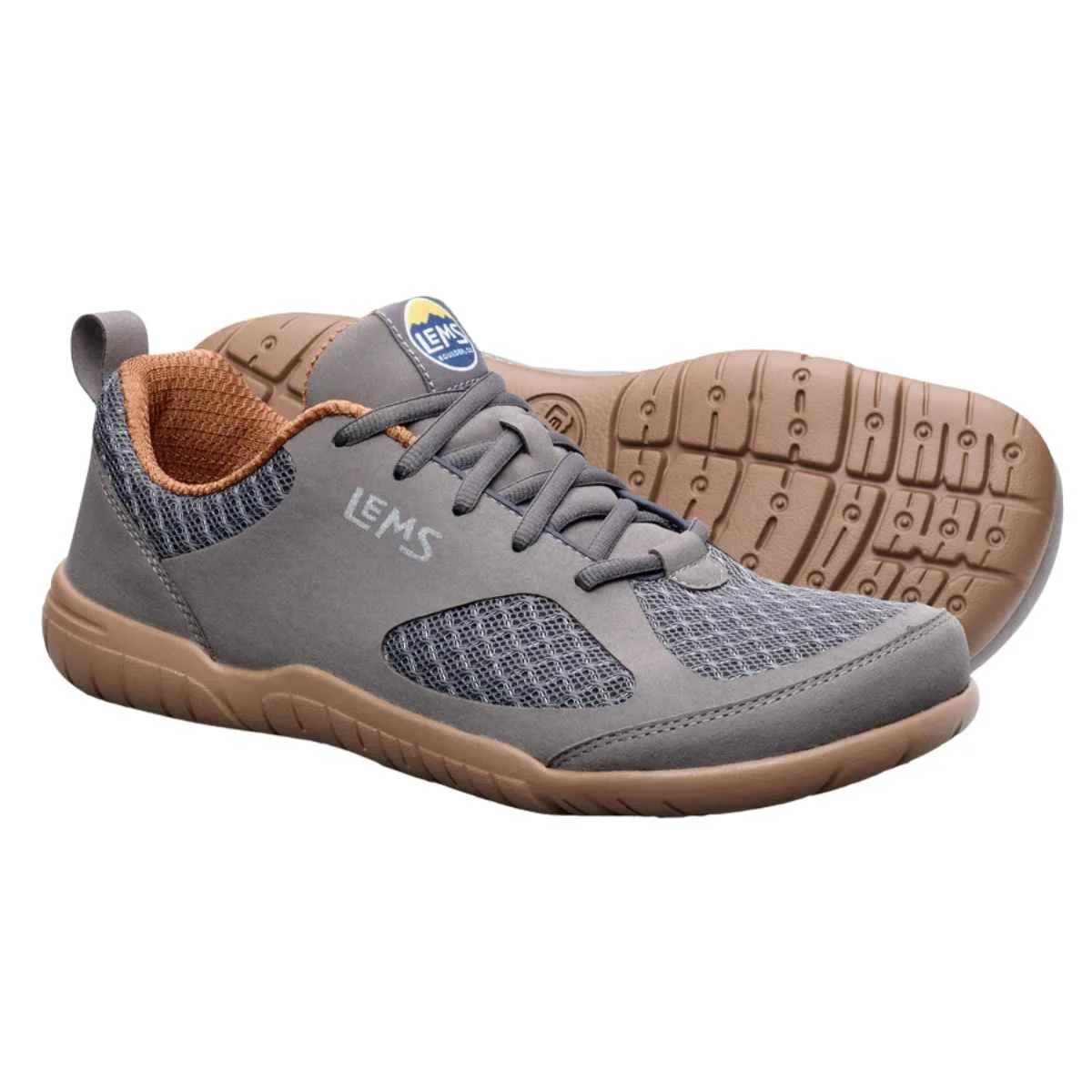
MSRP: $125
Stack height: 9.5 mm
Weight (per pair): 1 lb 1.2 oz
Upper: Super-soft microfiber + open-weave mesh (100% vegan)
Outsole: Injection Blown Rubber (IBR)
Flexibility: Medium
Grip: Medium-high
Groundfeel: Medium-low
What we liked: Great fit, versatile use, comfortable, don't have to wear socks
What could be better: Soles are still a bit thick for good groundfeel
The Lems Primal 3 combines a little bit of everything we love about barefoot shoes in an approachable way that makes them easy for just about any barefooter or barefoot-curious person to enjoy. Each version has gotten just a little bit better than the last, with a fit that works for most feet, enough traction for everyday wear, and the right amount of foot protection for those looking to try barefoot shoes for the first time.
Lems Primal 3
Men's
Women's
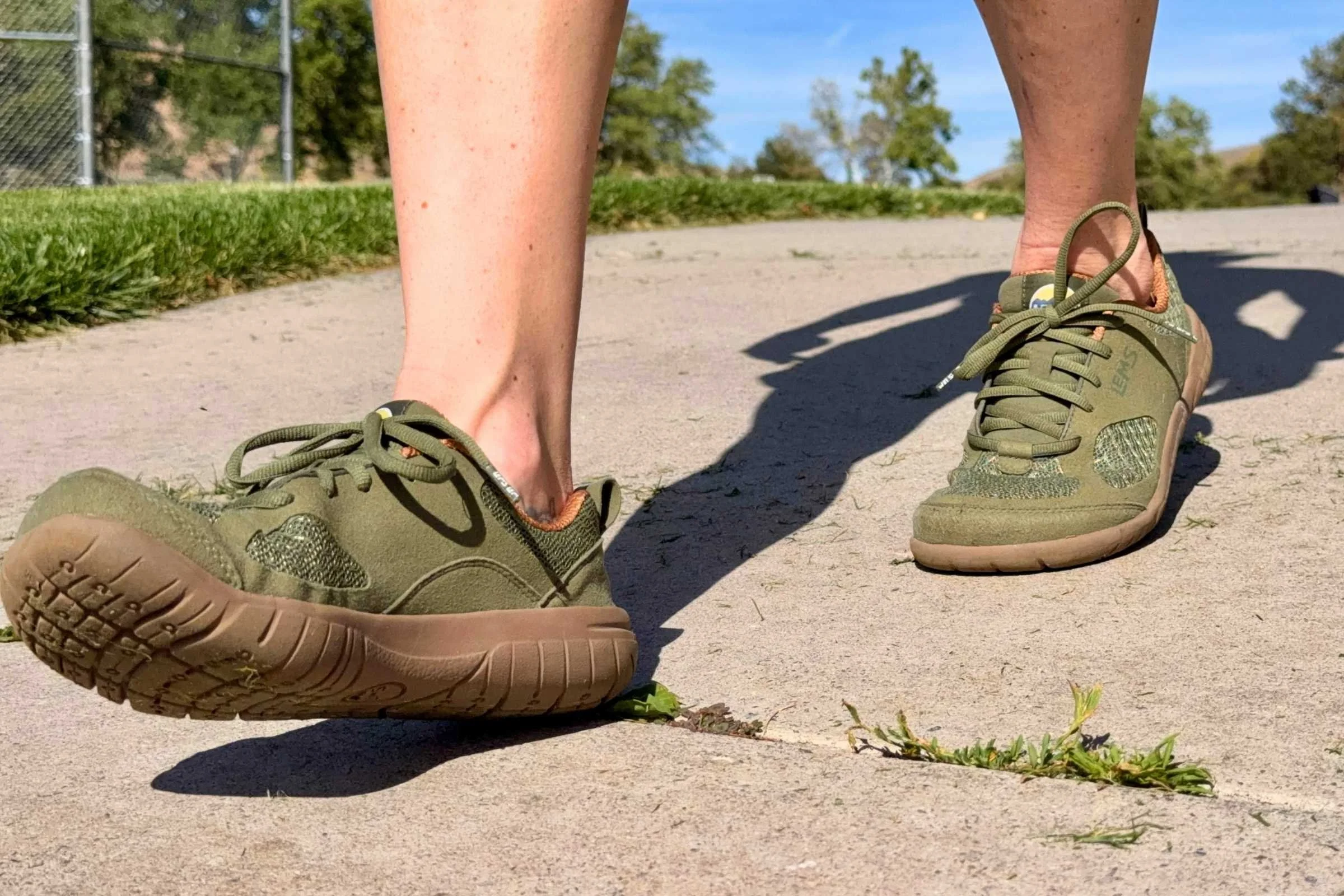
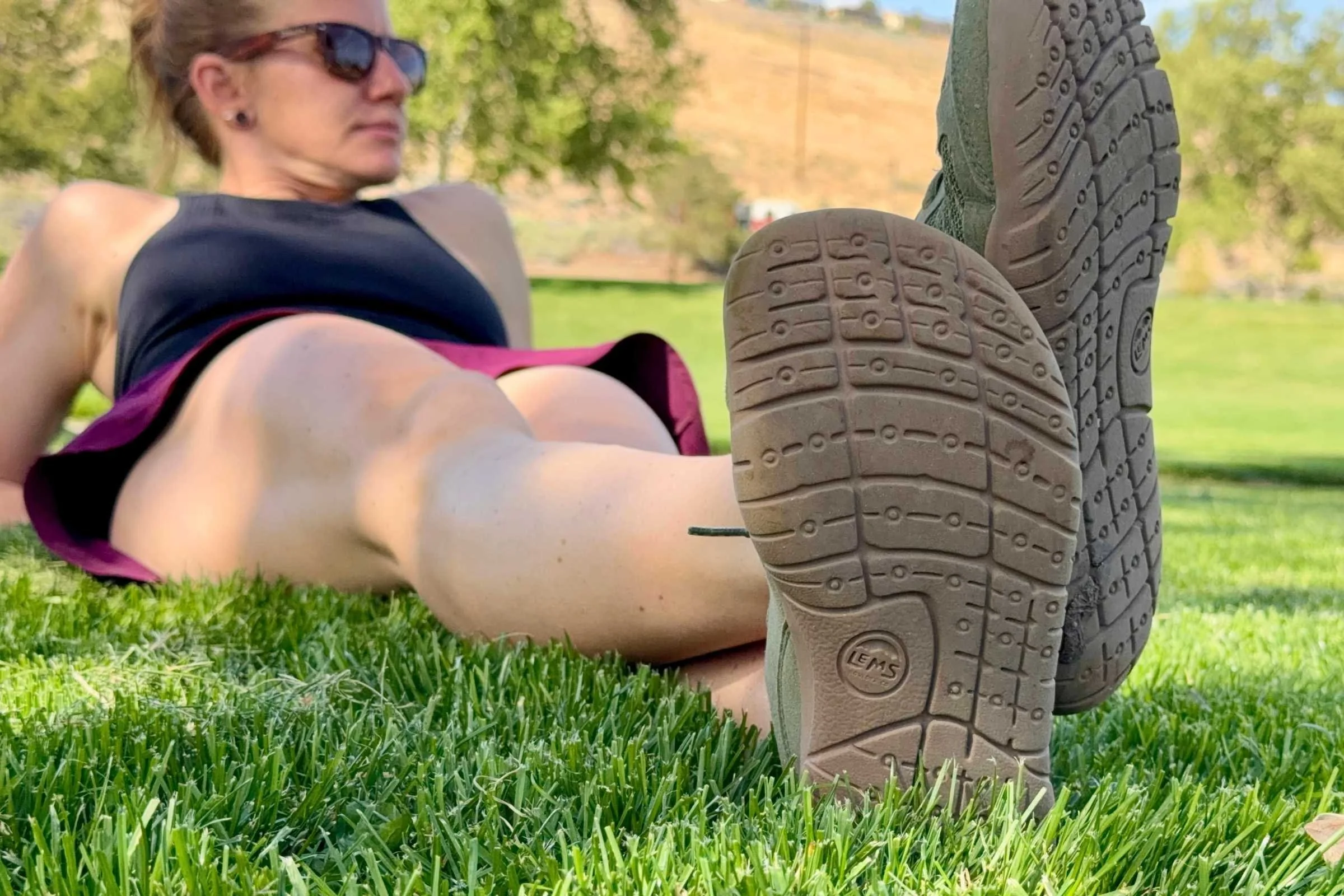
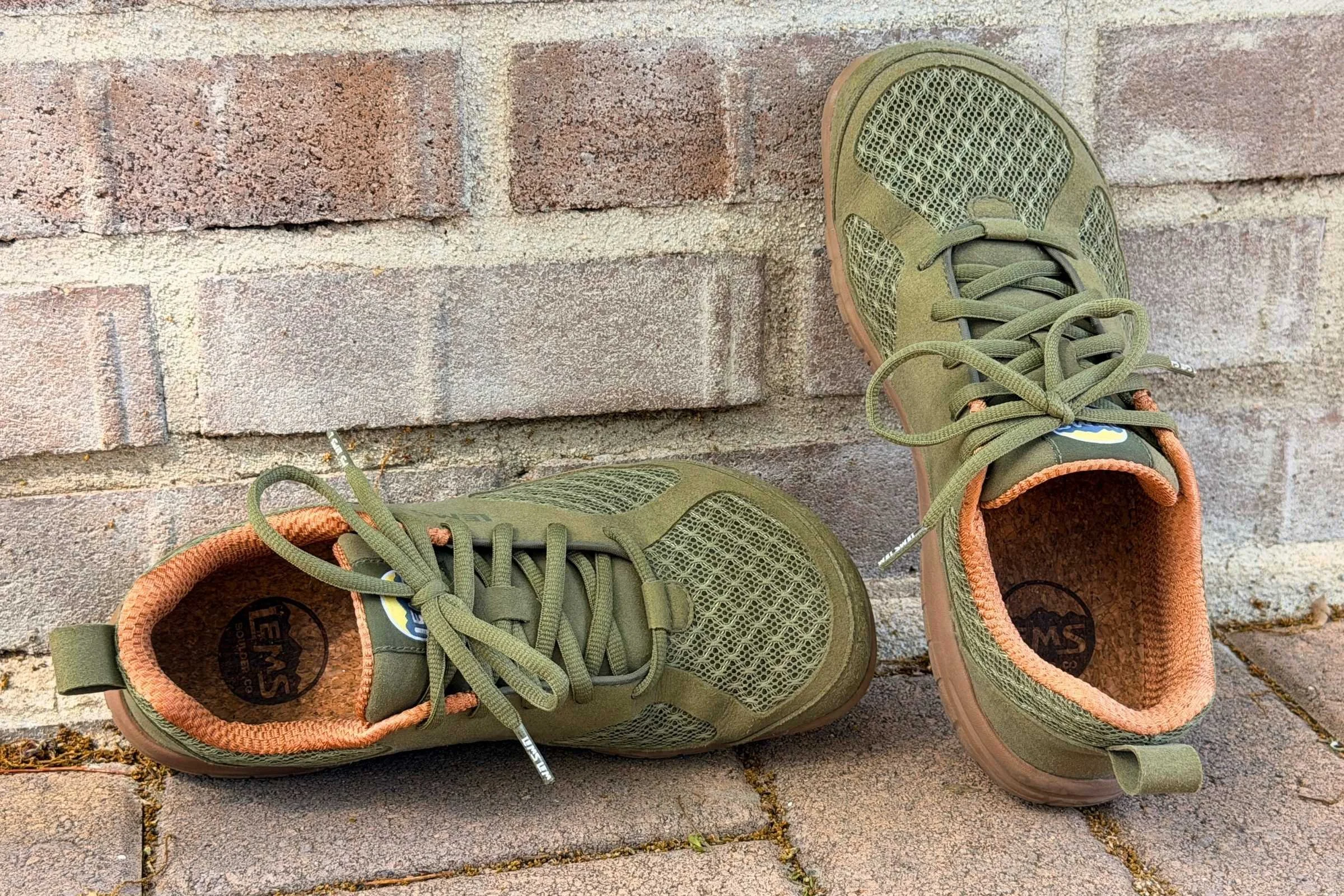
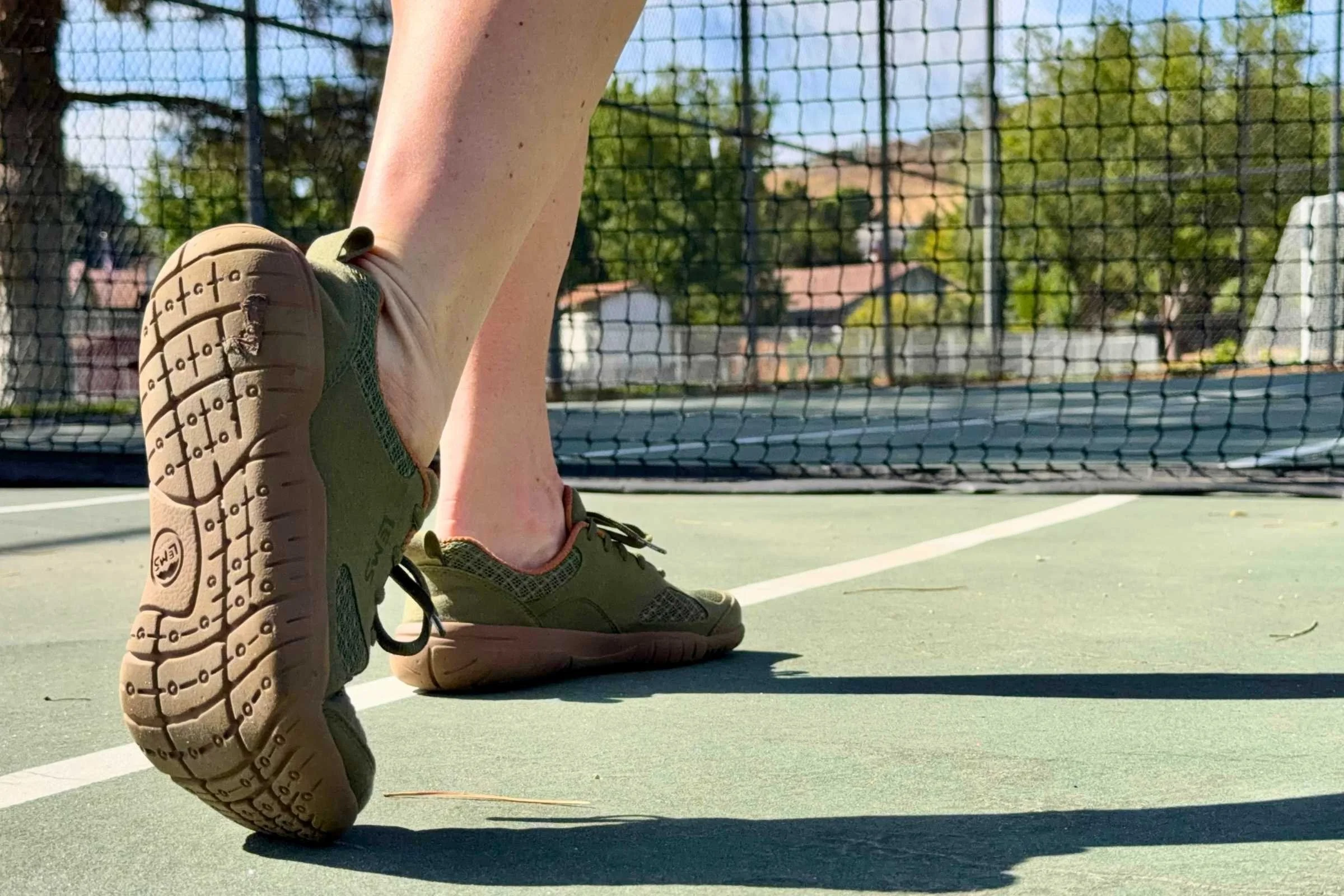
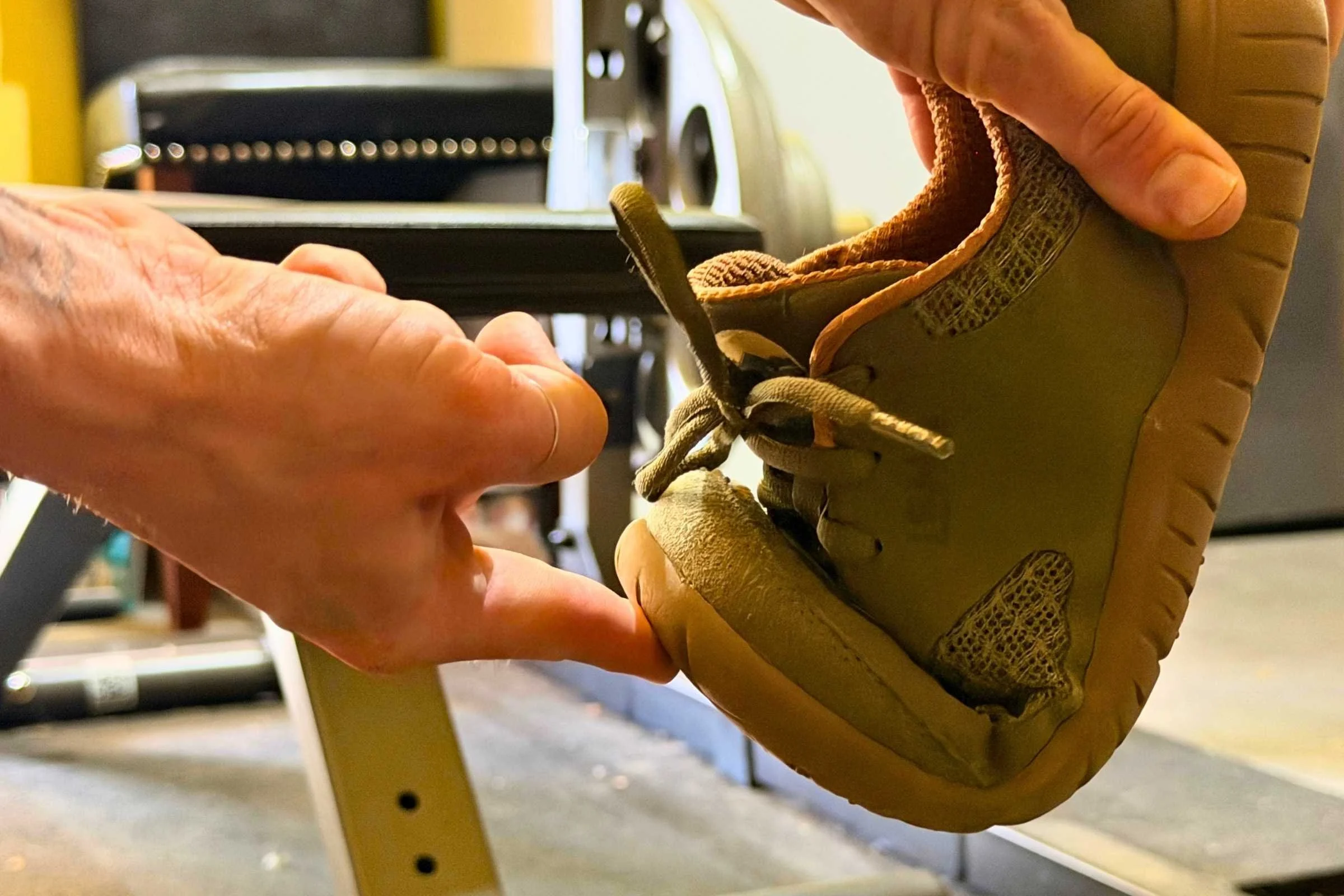
The Primal’s cork insole feels excellent against sockless feet, even while sweaty!—but you can wear socks if you prefer. The wide toe box starts farther back on the foot than most, making it better at accommodating wider feet and letting your toes splay. The soles are flexible and let your feet move naturally, the way a true barefoot shoe should.
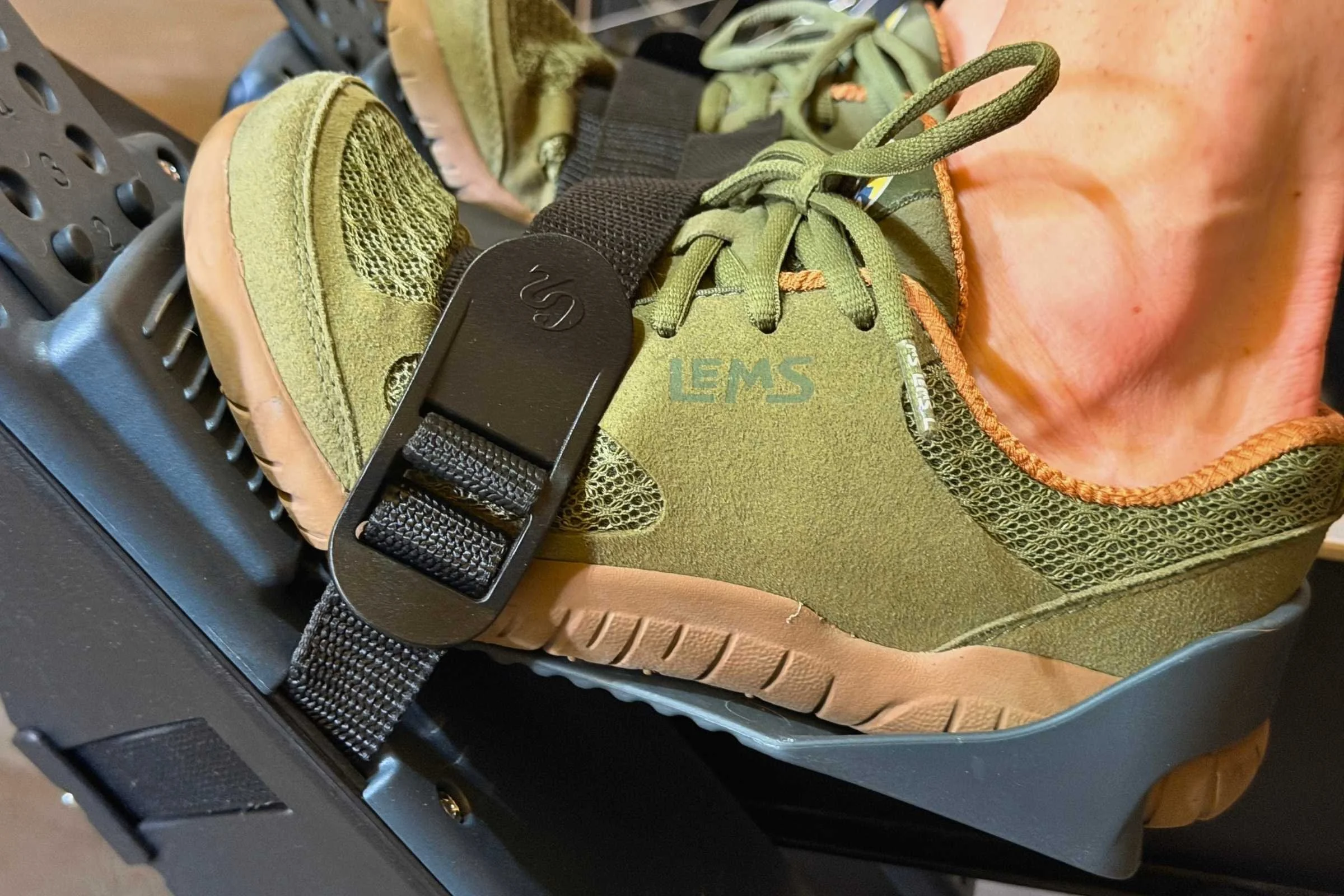
We felt connected to the ground through the soles, but still appreciate the 9.5 mm of underfoot protection and cushioning that make these shoes comfortable to wear all day and easy to get used to. We especially loved wearing them to the gym, where they proved their prowess maintaining good traction on shined floors and being flexible enough to handle a rowing machine.
Of all the barefoot shoes we tested, these are the ones we would recommend most to newbies, sockless fans, avid walkers, and people looking for a comfortable all-day option.
Best Running Barefoot Shoes: Altra Lone Peak GTX 9+
MSRP: $180
Stack height: 25 mm
Weight (per pair): 1 lb 6 oz (men’s), 1 lb 4 oz women’s
Upper: GORE-TEX Invisible Fit (85% RPET)
Outsole: Vibram Megagrip
Flexibility: Medium
Grip: Exceptionally high
Groundfeel: Moderate
What we liked: Superb traction, excellent protection, great fit
What could be better: Vibram sole is stiffer, not all versions have a wide option
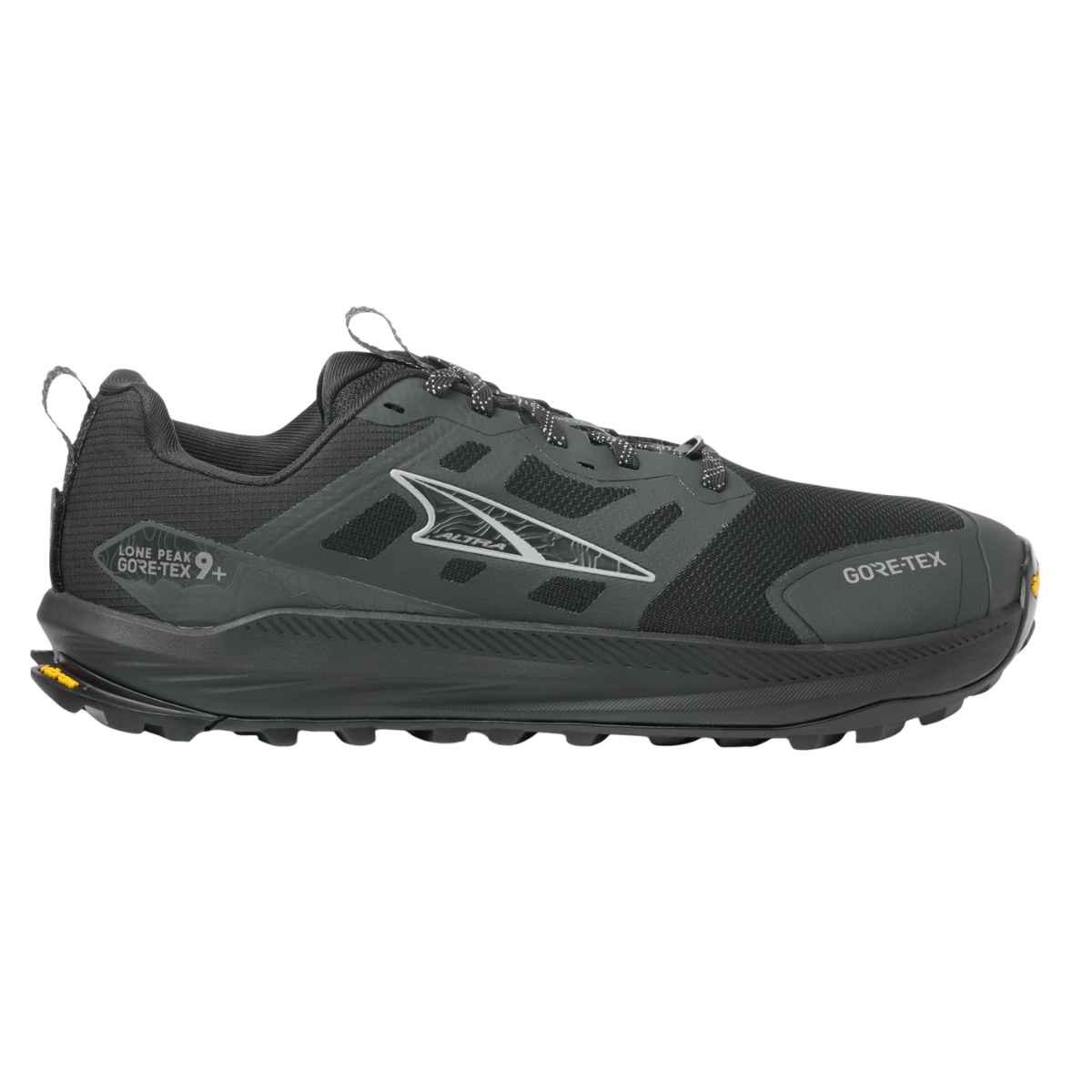
Though it’s not the “most barefoot” of barefoot shoes, the Lone Peak 9/9+ has all the hallmarks of a barefoot shoe we appreciate, with elevated underfoot cushioning and exceptional traction. Check out our in-depth reviews of both the Altra Lone Peak 9+ and Altra Lone Peak 9+ GTX to learn more.
Altra Lone Peak GTX 9+
Men's
Women's
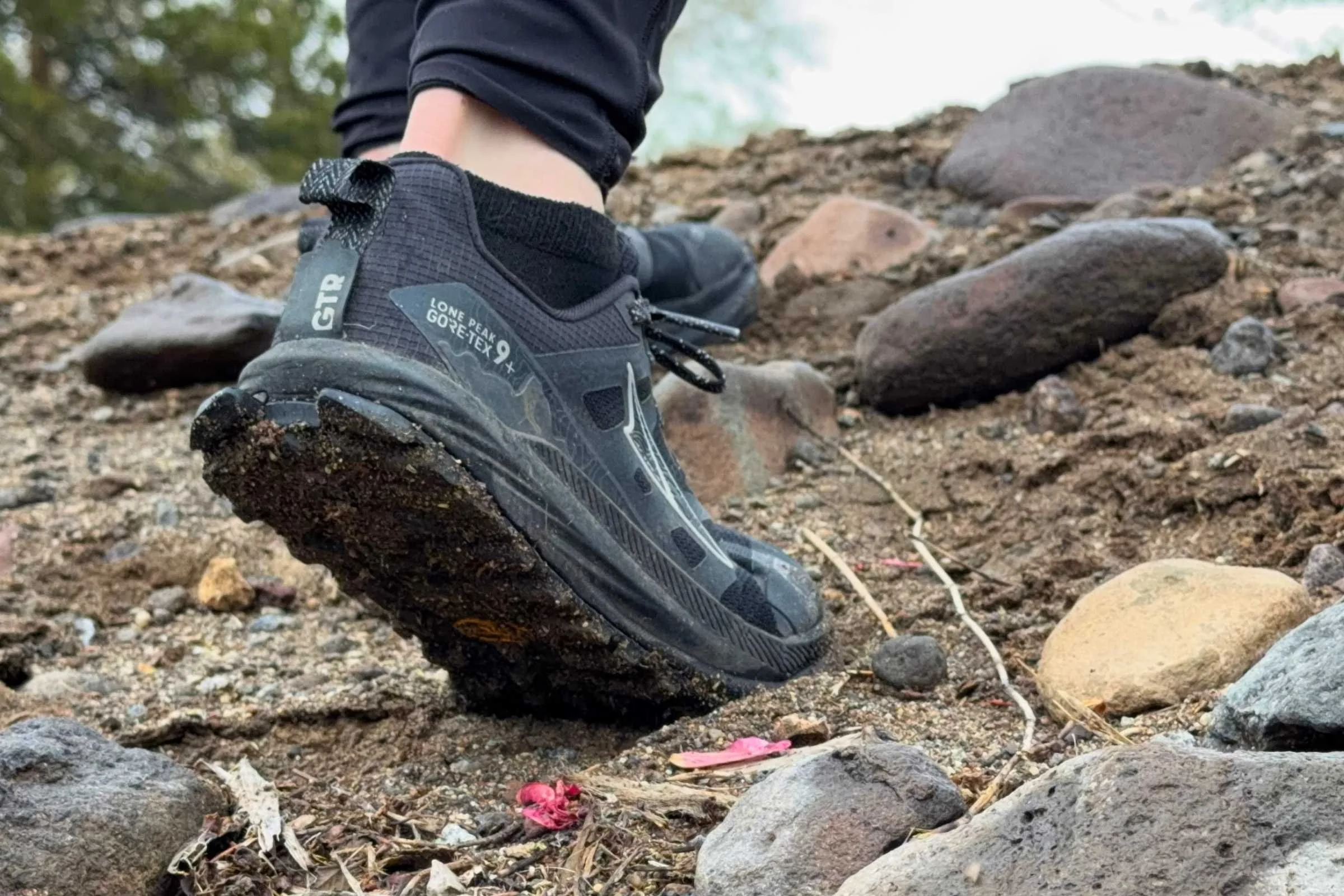
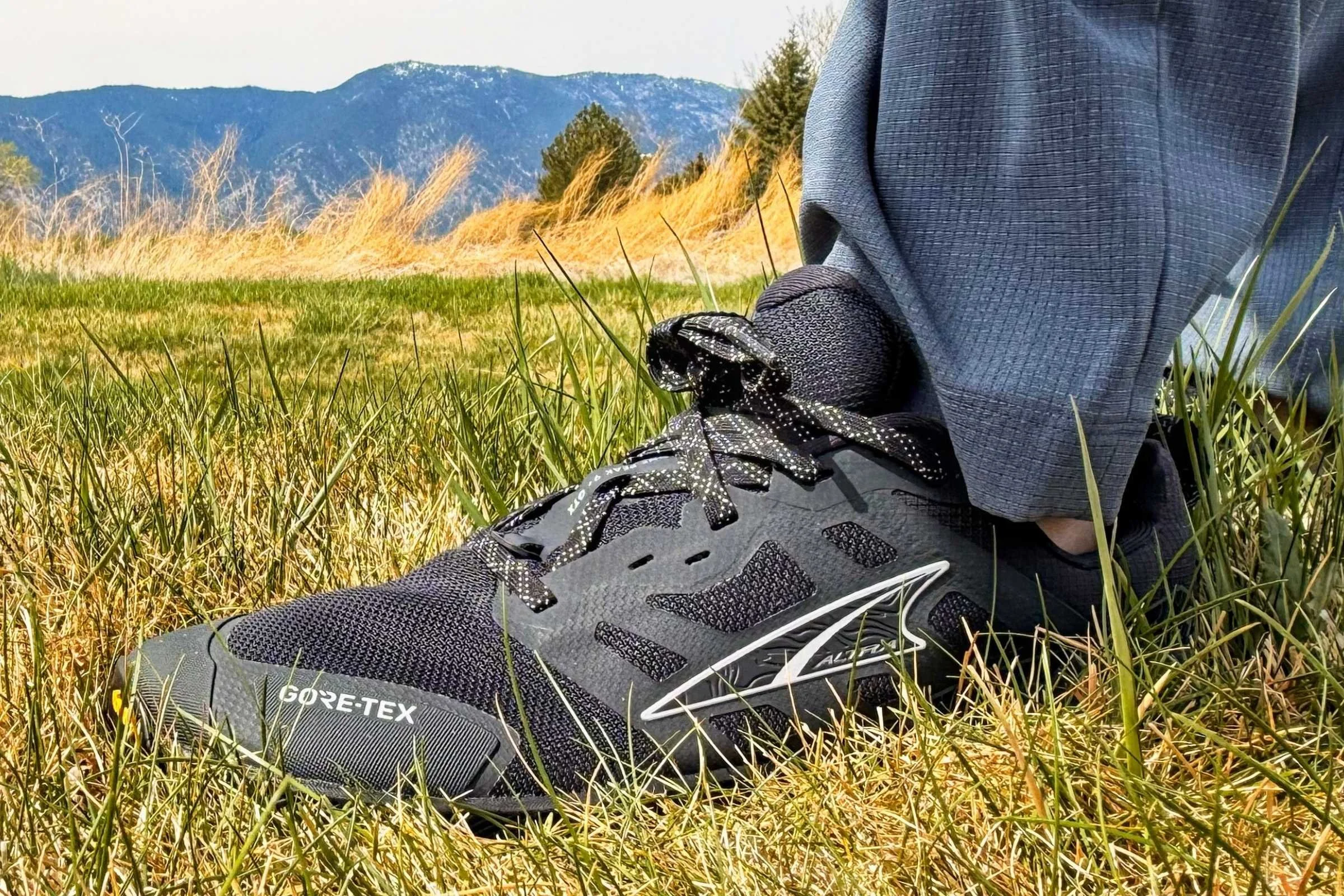
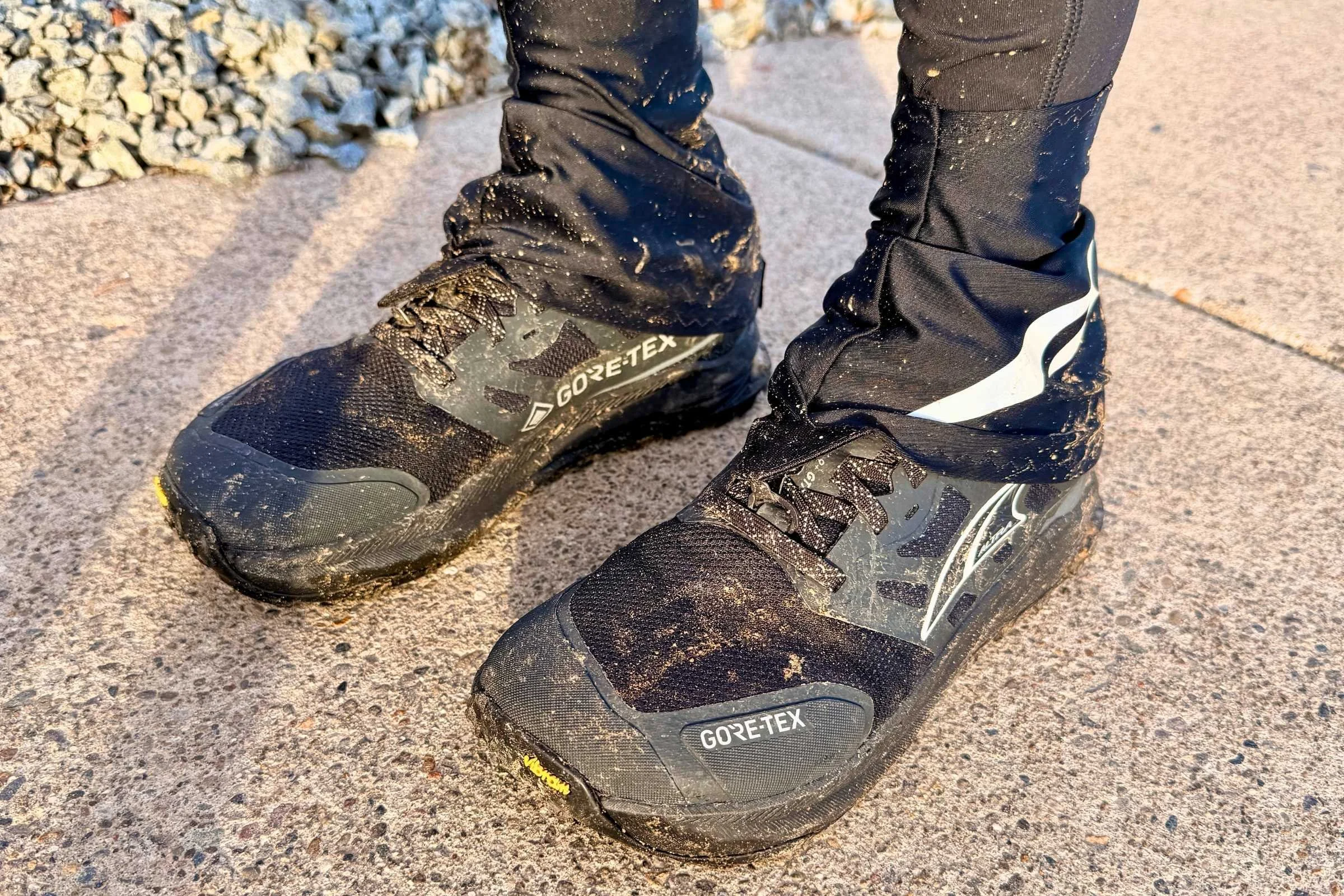
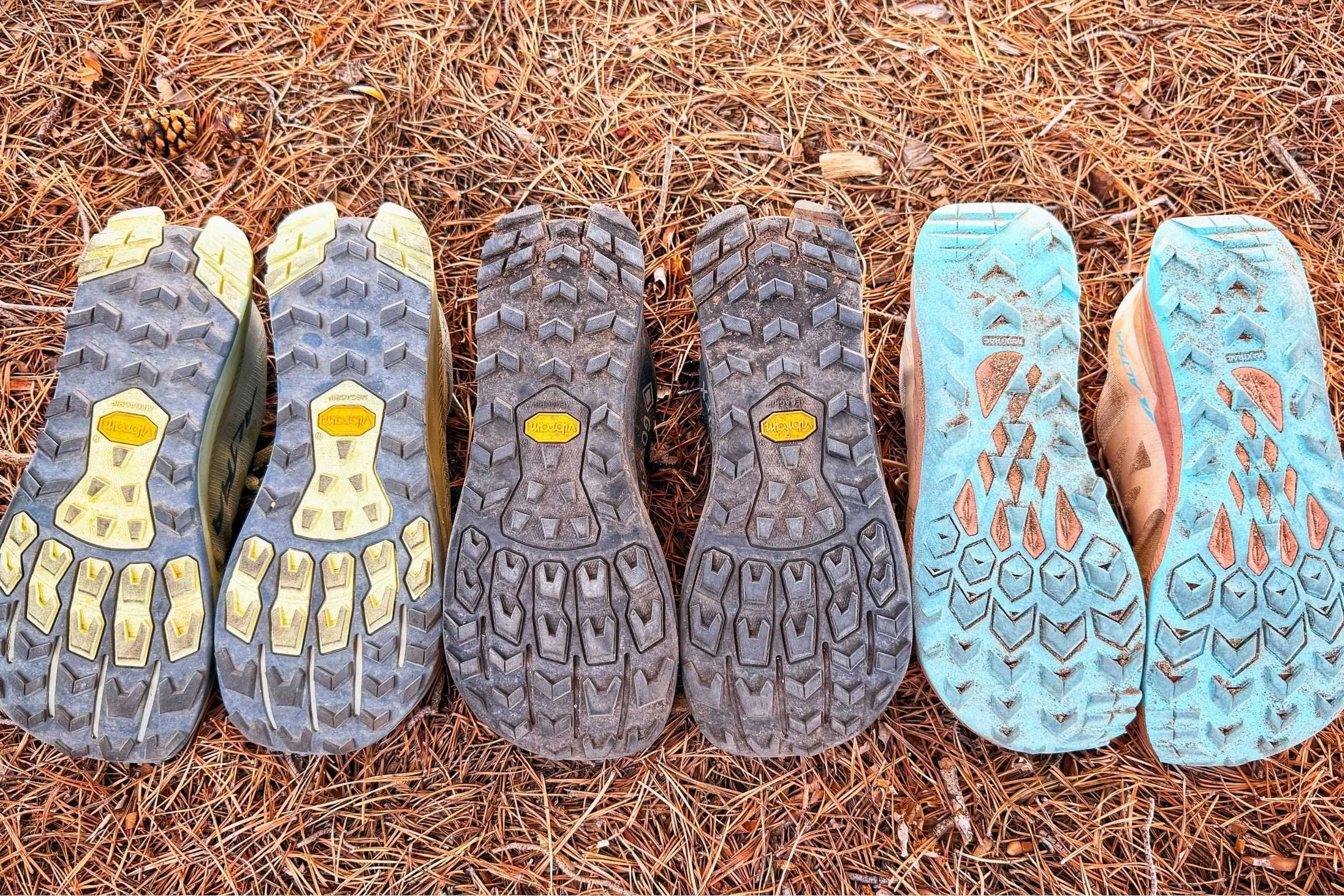
It’s an outstanding zero-drop trail running shoe, even for runners just looking to switch or folks who crave a little more joint protection without sacrificing natural foot movement. And for those hitting wet or sloppy trails, the 9+ version has better wet traction than the 9, and both soles can be purchased with a GTX upper for ultimate protection in mud or snow.
With 25 mm of underfoot cushioning, diehard barefoot enthusiasts might not be stoked with the groundfeel of the Lone Peak line, but runners converting from standard trail running shoes will be amazed at all the undulations the Altras can feel and respond to.
With Altra’s signature wide toe box, your toes have tons of room to spread out, while the midfoot lacing system allows optimal security to prevent slipping even on the sketchiest of slopes. The Vibram outsole of the 9+ version is stiffer than the regular Lone Peak’s MaxTrac outsole, but breaks in over the first few dozen miles. With excellent breathability and gaiter attachment points built in, these are the trail running shoes our barefoot runners reach for every time.
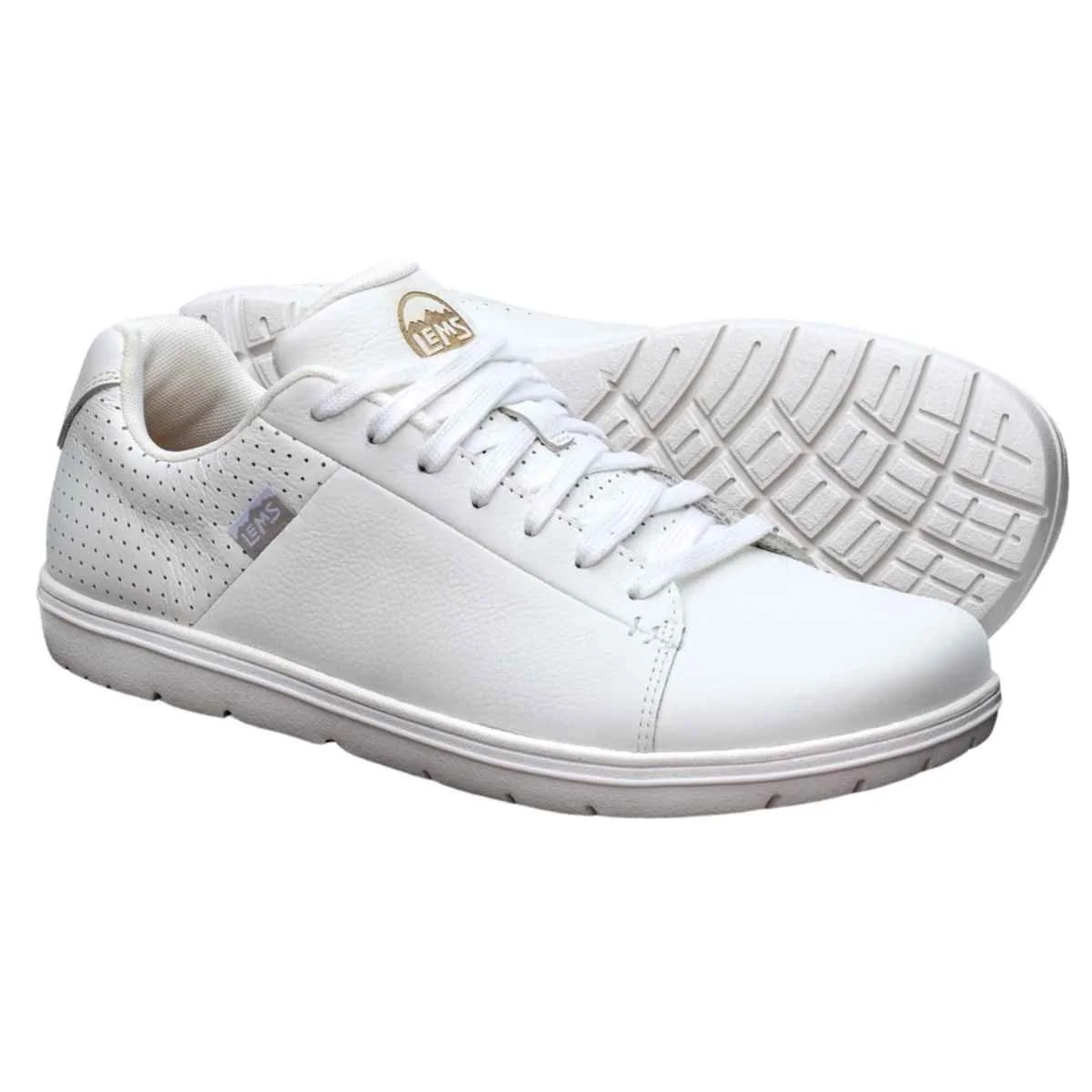
Best Barefoot Shoes for Style: Lems Kourt
MSRP: $140
Stack height: 10 mm
Weight (per pair): 1 lb
Upper: Full grain leather
Outsole: Injection Blown Rubber (IBR)
Flexibility: Very low
Grip: Low
Groundfeel: Very low
What we liked: Look really cool and stylish and are comfortable for everyday
What could be better: Hard to keep clean (light colors) and don’t really feel like a barefoot shoe
It’s hard to argue with the undeniable style of the leather Lems Kourt. Even for our main testers with decidedly “outdoorsy” styles, these classic shoes proved easy to dress up or down, matching an impressively wide range of situations. For more, read our full review of the Lems Kourt.
Lems Kourt
Men's
Women's
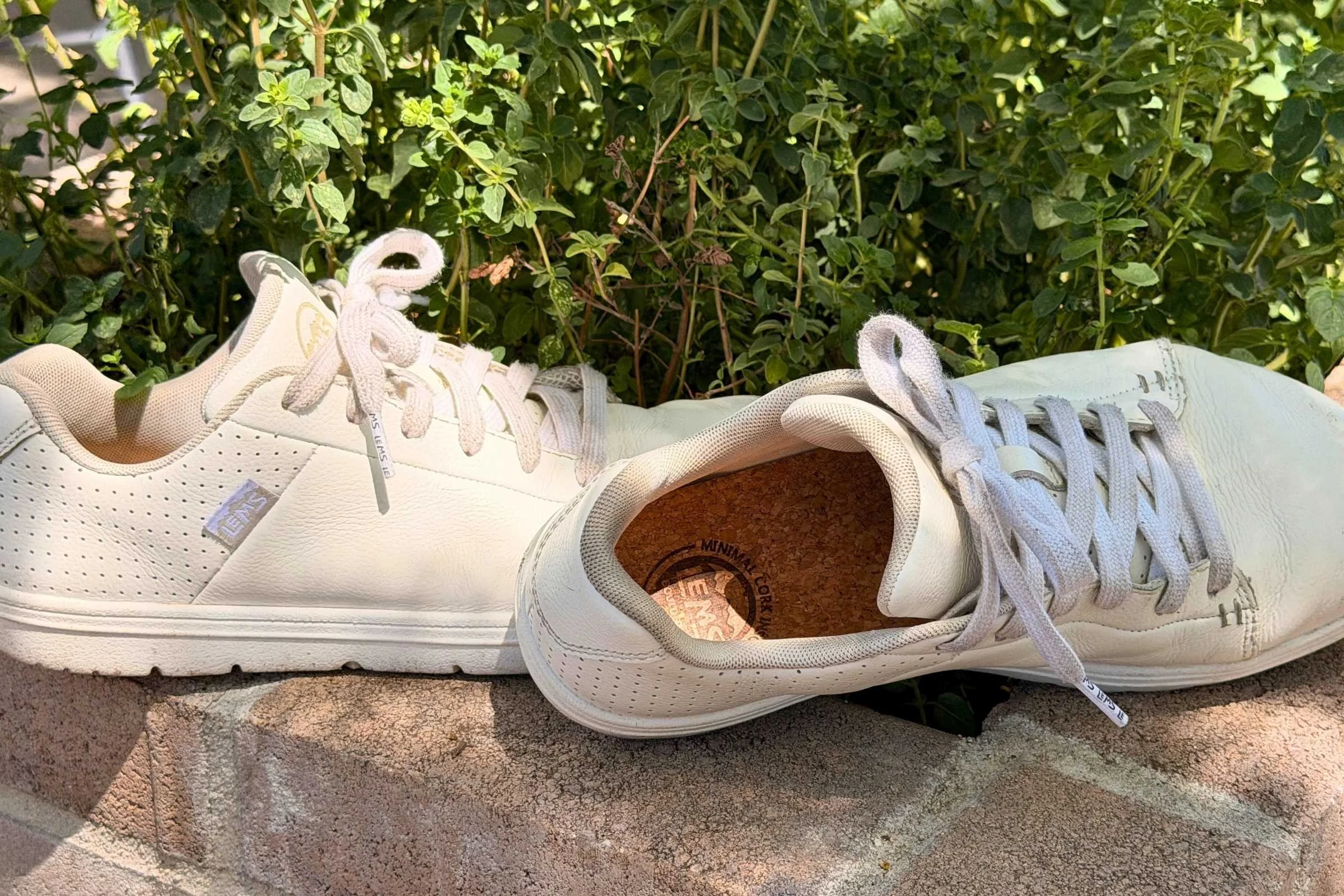
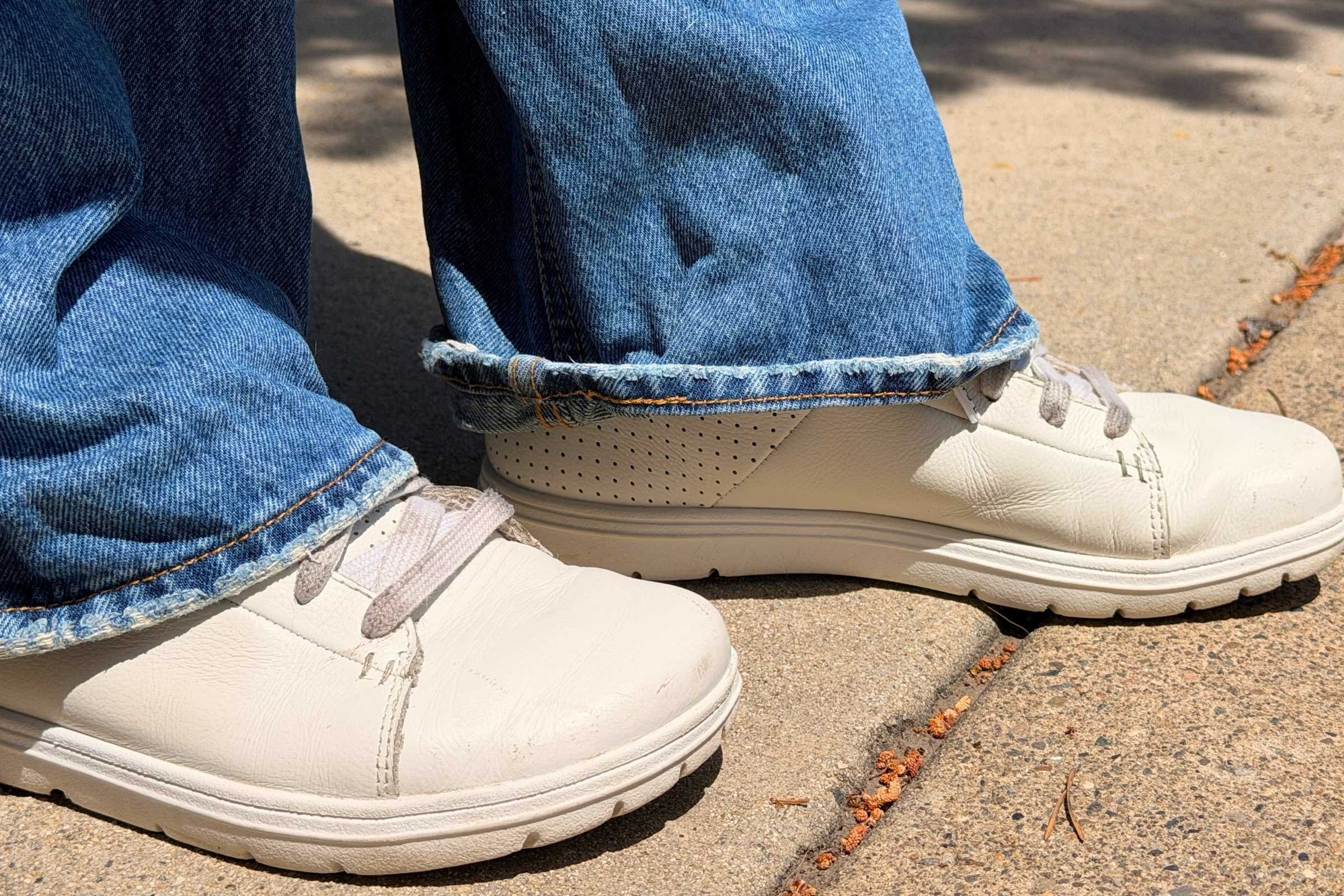
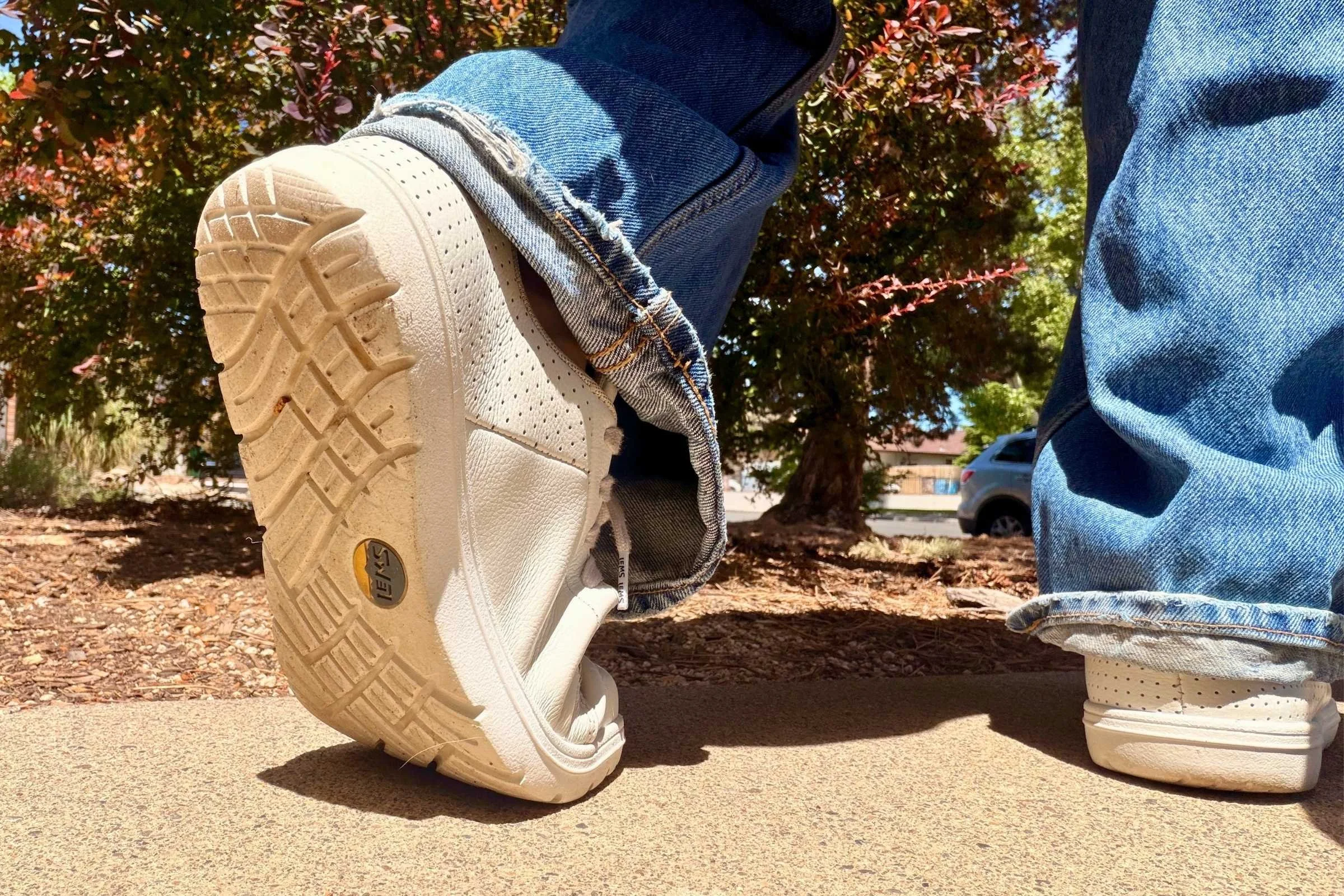
In the world of performance-focused barefoot shoes, finding a pair that still looks at home in a business-casual office is a serious challenge. With the Lems Kourt, that challenge is met in monochrome leather. And with Lems’ proprietary cork insole, you don’t have to worry about what socks to wear—you can simply go without!
Lems maintains a wide toe box, but in a more approachable shape that doesn’t have the same “clown shoe” appearance as many other wide barefoot shoes—further adding to their elevated appearance. While the white can, of course, collect dirt more quickly and visibly than other colors, the leather upper and rubber outsole are easy to clean to maintain a fresh look.
A 10 mm sole offers acceptable flexibility without requiring the intensive break-in period that thinner, ultra-flexible shoes demand. Barefooters who prefer high groundfeel will be disappointed with what can be detected underfoot in the Kourt, though the added cushioning here makes them more approachable as transitioning-to-barefoot shoes and for wearing all day long.
They aren’t designed with the traction we would like in a pair of gym or trail shoes, but for everyday wear, they do a solid job. And we’re willing to forgive a little bit of technical performance for the added style of these cool Kourts.
Best Barefoot Shoes for the Gym: Merrell Trail Glove 7
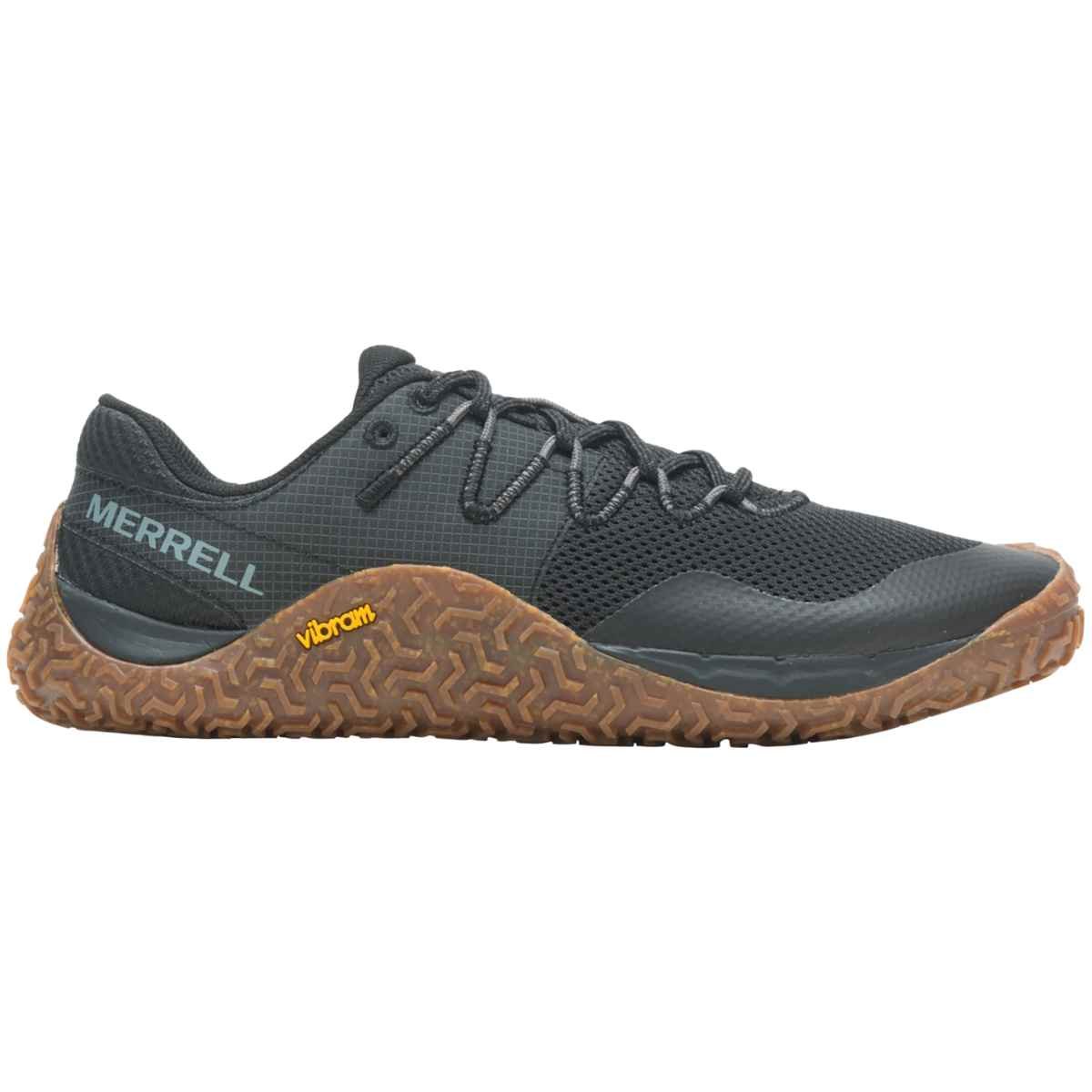
MSRP: $130
Stack height: 14 mm
Weight (per pair): 1 lb 2.4 oz (men’s), 14.2 oz (women’s)
Upper: 100% recycled mesh
Outsole: Vibram Ecostep with 30% recycled rubber
Flexibility: Medium-high
Grip: Medium-high
Groundfeel: Medium-high
What we liked: Great flexibility and breathability, cool style
What could be better: A bit narrow, sole can pick up small rocks
When searching for a great gym shoe, we want great traction on polished floors, flexibility that can keep up with stair climbers and rowing machines, breathability during sweaty moments, and a fit that we don’t have to think twice about. All those things describe the Merrell Trail Glove 7, and we’re hooked. For more, read our full review of the Merrell Trail Glove 7.
Merrell Trail Glove 7
Men's
Women's
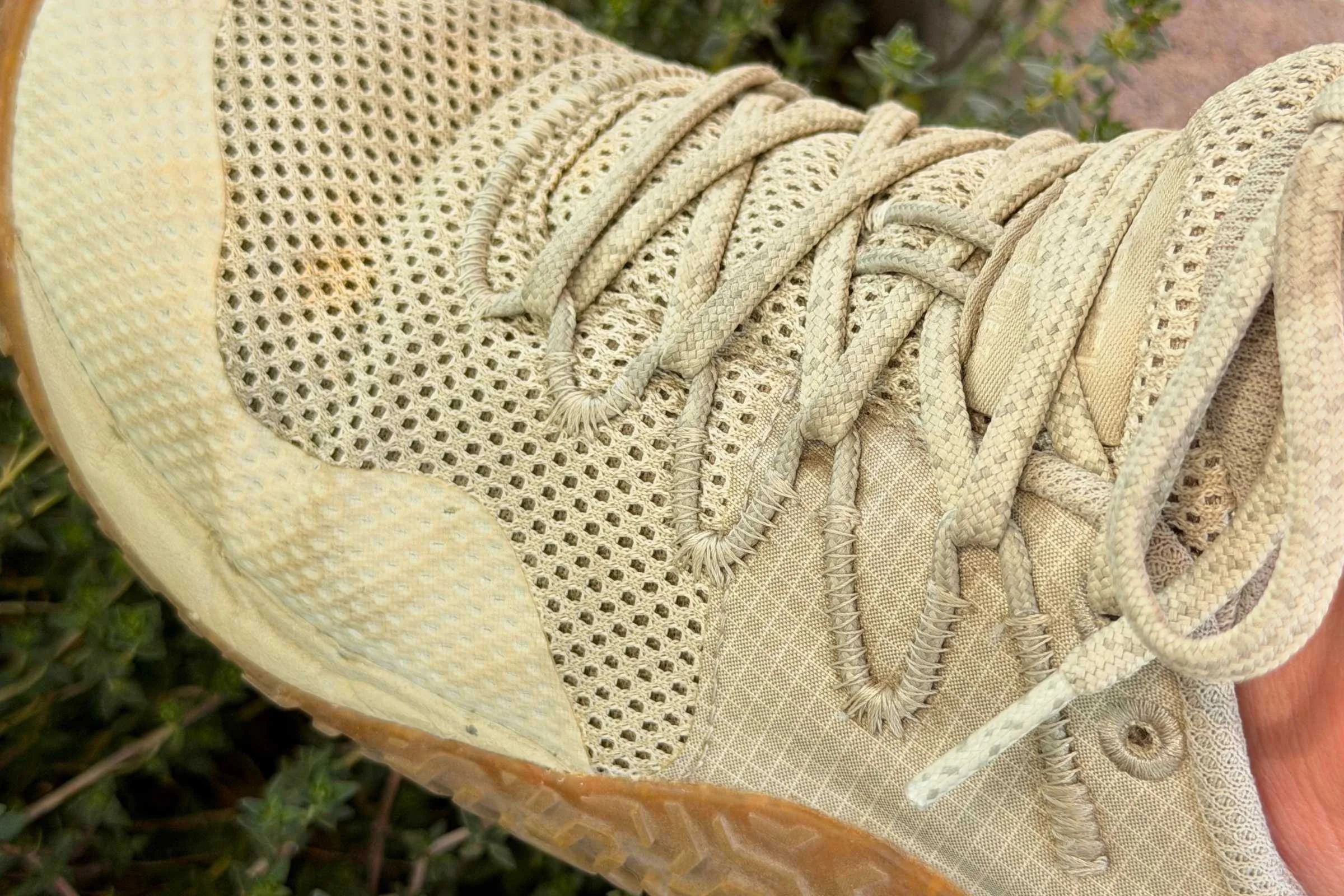
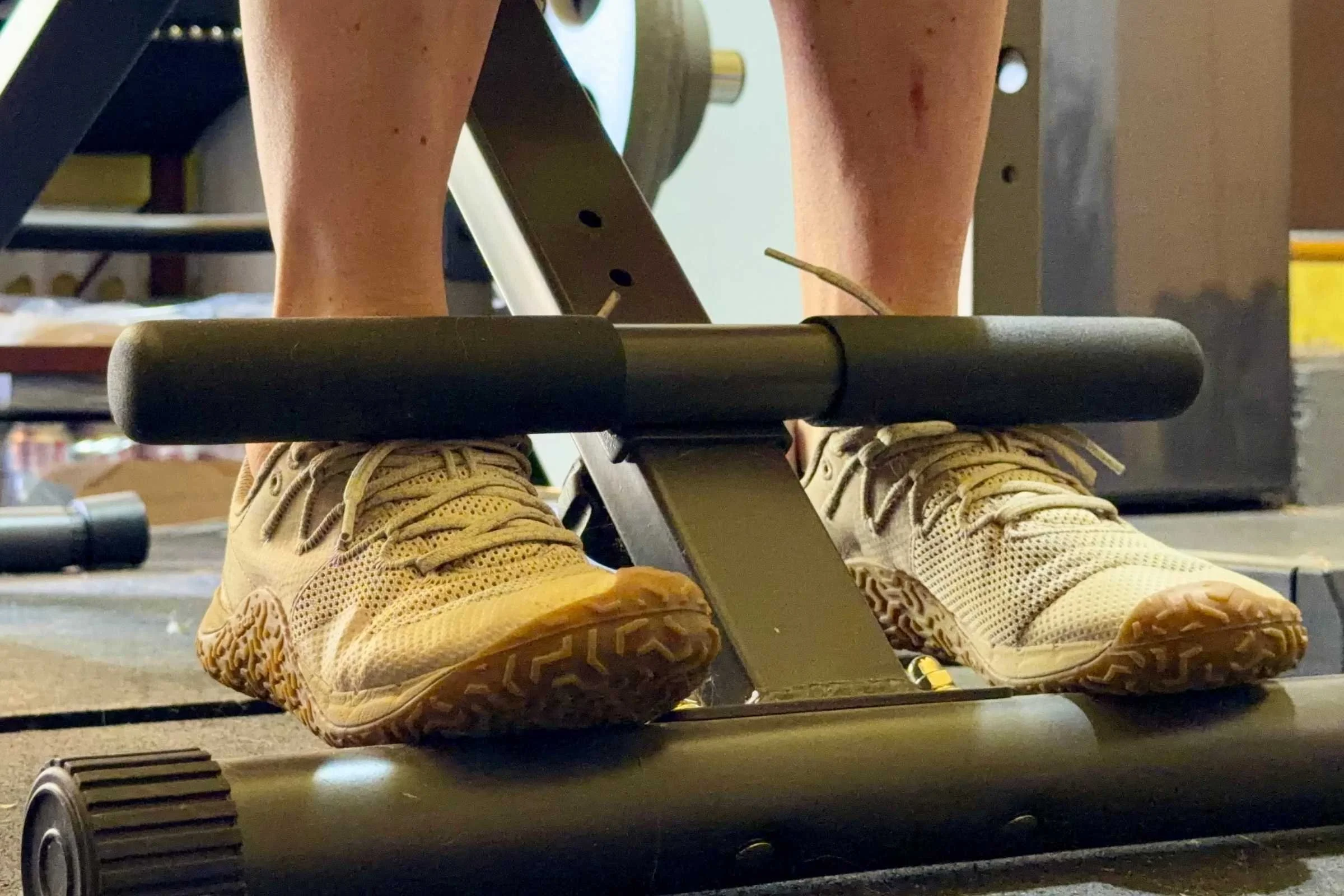
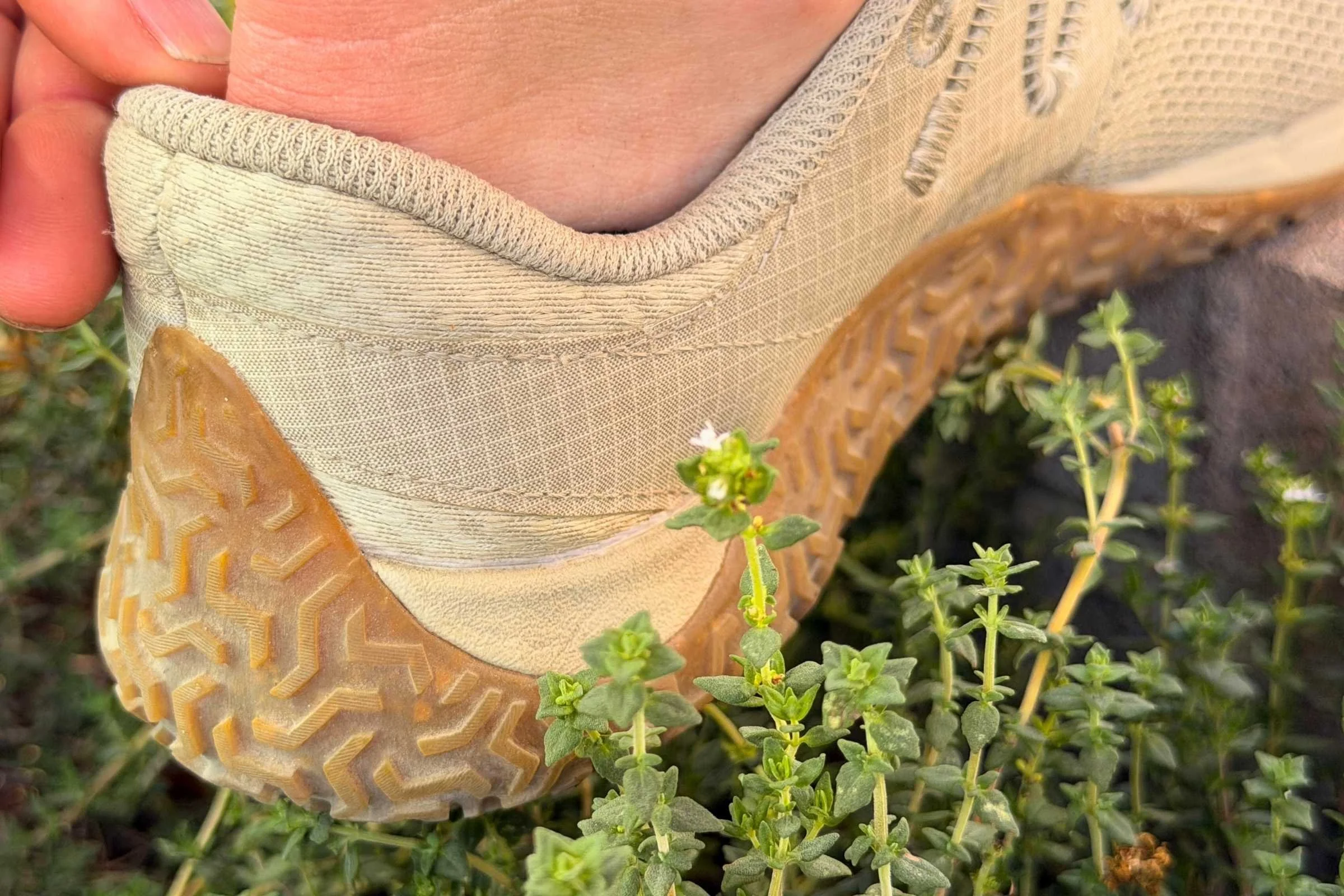
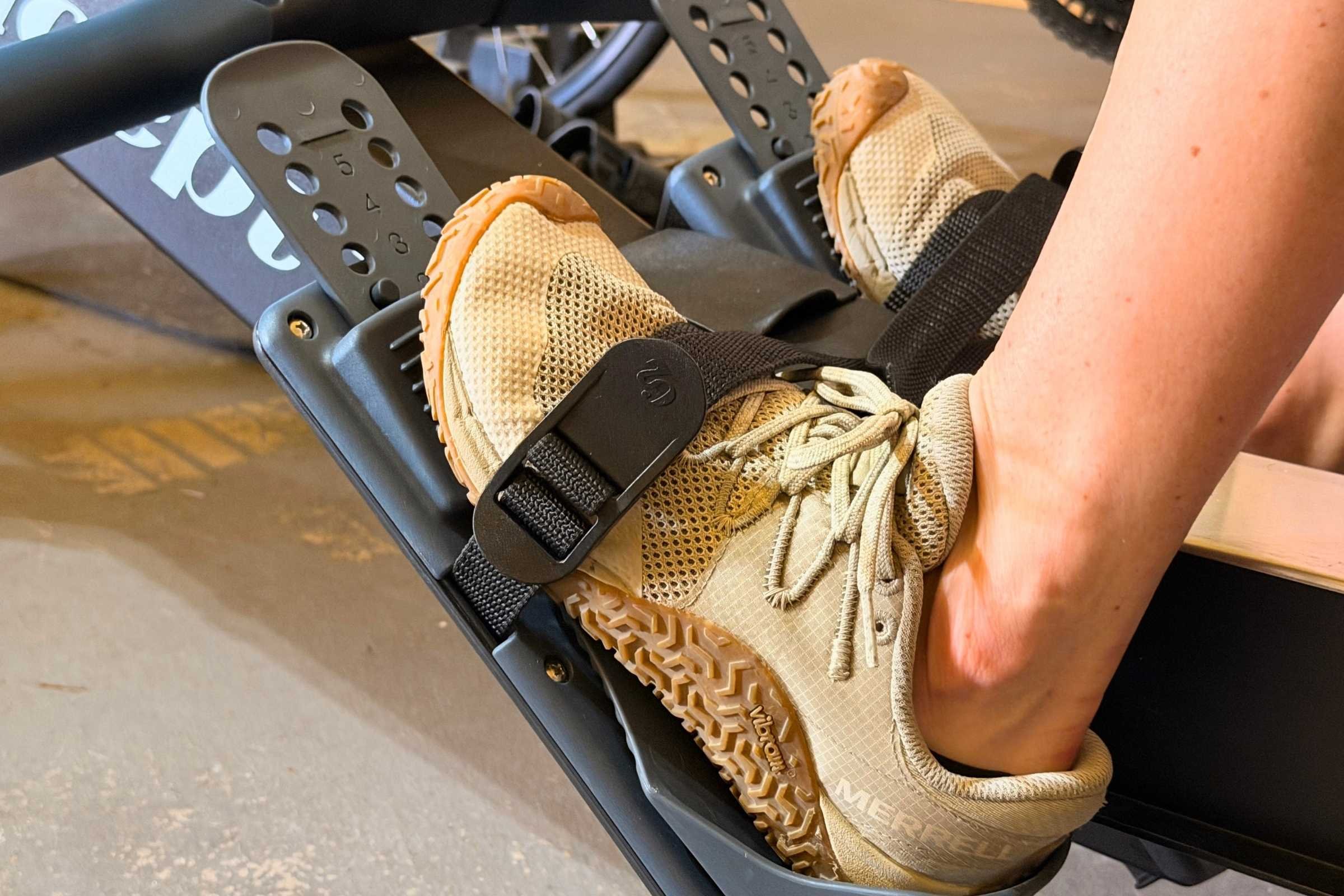
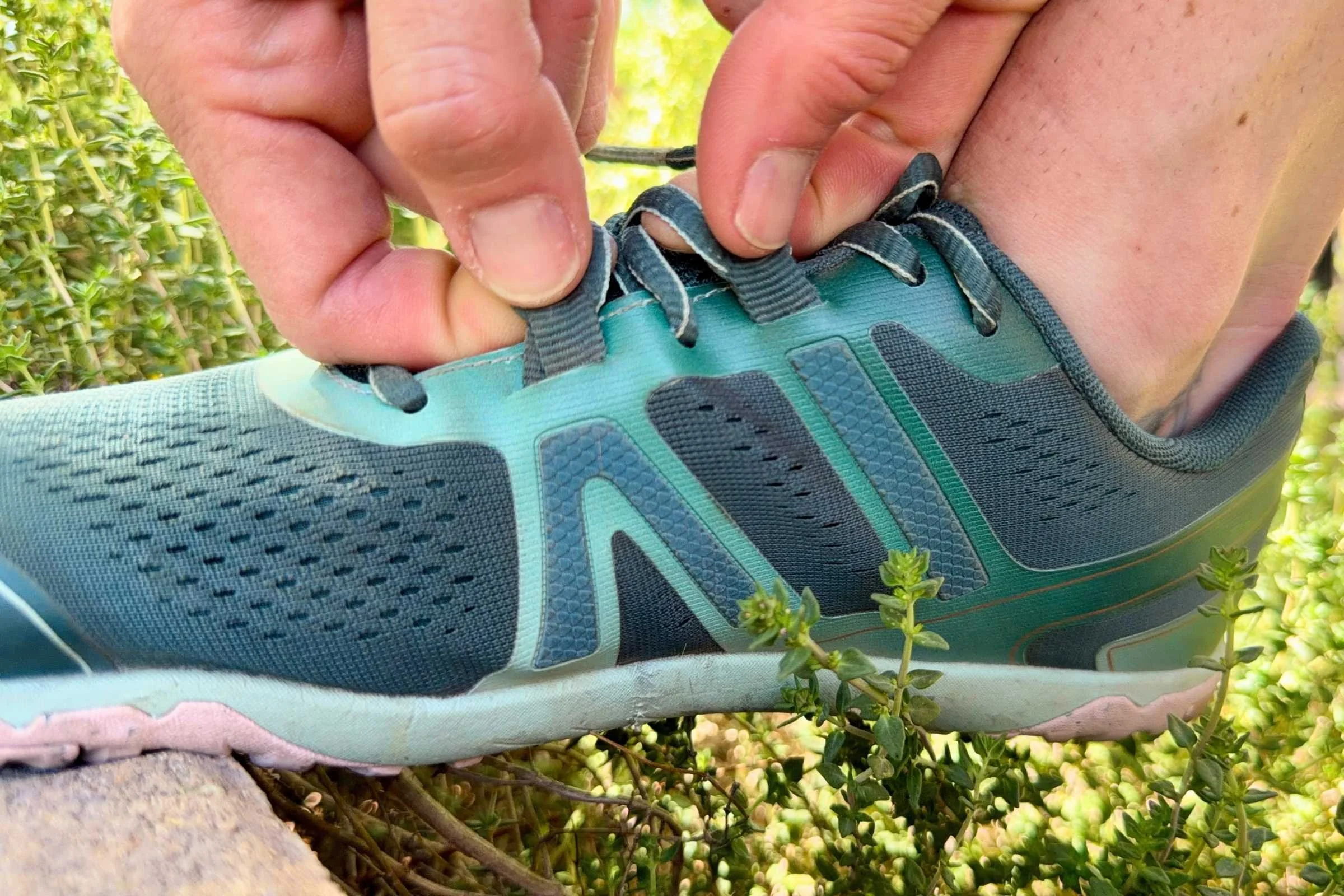
Though they have a narrower fit, their flexible uppers allow most standard-width feet to comfortably flex without feeling constricted. The heel cup fits securely, and the midfoot can be locked down to prevent slipping around during plyometric exercises. They’re also highly breathable, even in humid gyms and on hot summer days.
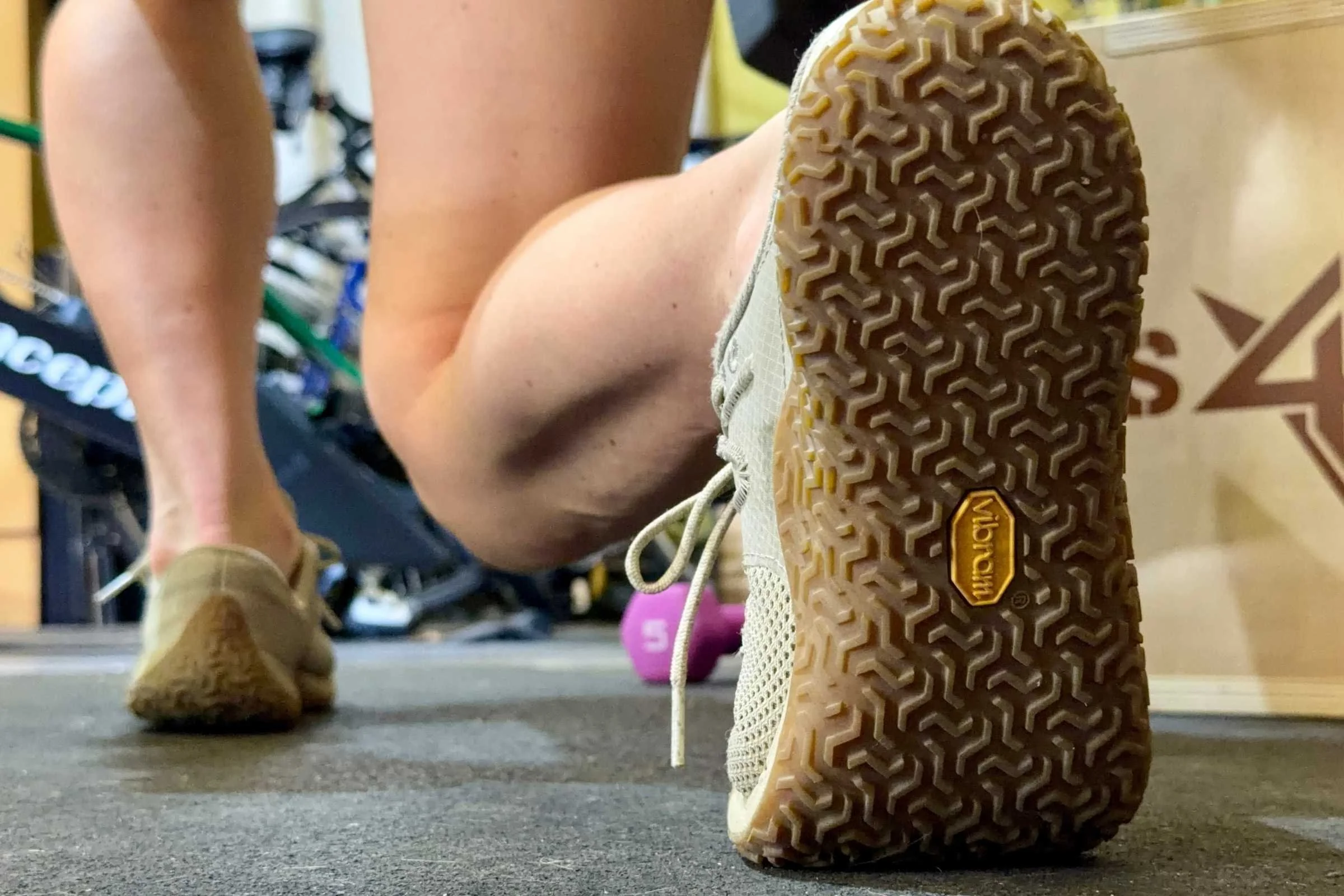
The outsole wraps around the top of the toes and the back of the heel, adding extra grip we crave for big bending motions like lunges and box jumps. The tight geometric pattern of the outsole maintains impressive grip on ultra-smooth floors like tile and polished concrete— though the soles can collect small rocks when crossing gravel.
The Vibram rubber maintains impressive flexibility, despite the 14 mm thickness, and each shoe is impressively lightweight—around 8.5 ounces. This gives them a more true “barefoot feel” than some even thinner shoes, including all of the Lems models we tested. That added flexibility does require a longer and more thoughtful break-in period, but for those seeking an athletic gym shoe that can keep up with every workout, we think the Trail Glove 7 is worth it.
Best Hiking Barefoot Shoes: Xero Shoes Mesa Trail II
MSRP: $120
Stack height: 9 mm (3.5 mm TrailFoam, 3.5 mm lugs, and a removable 2 mm sock liner)
Weight (per pair): 15.6 oz (men’s), 13.4 oz (women’s)
Upper: Synthetic mesh
Outsole: FeelTrue rubber
Flexibility: High
Grip: High
Groundfeel: High
What we liked: Great trail traction, really wide toe box, super flexible
What could be better: Midfoot is a bit narrow for some
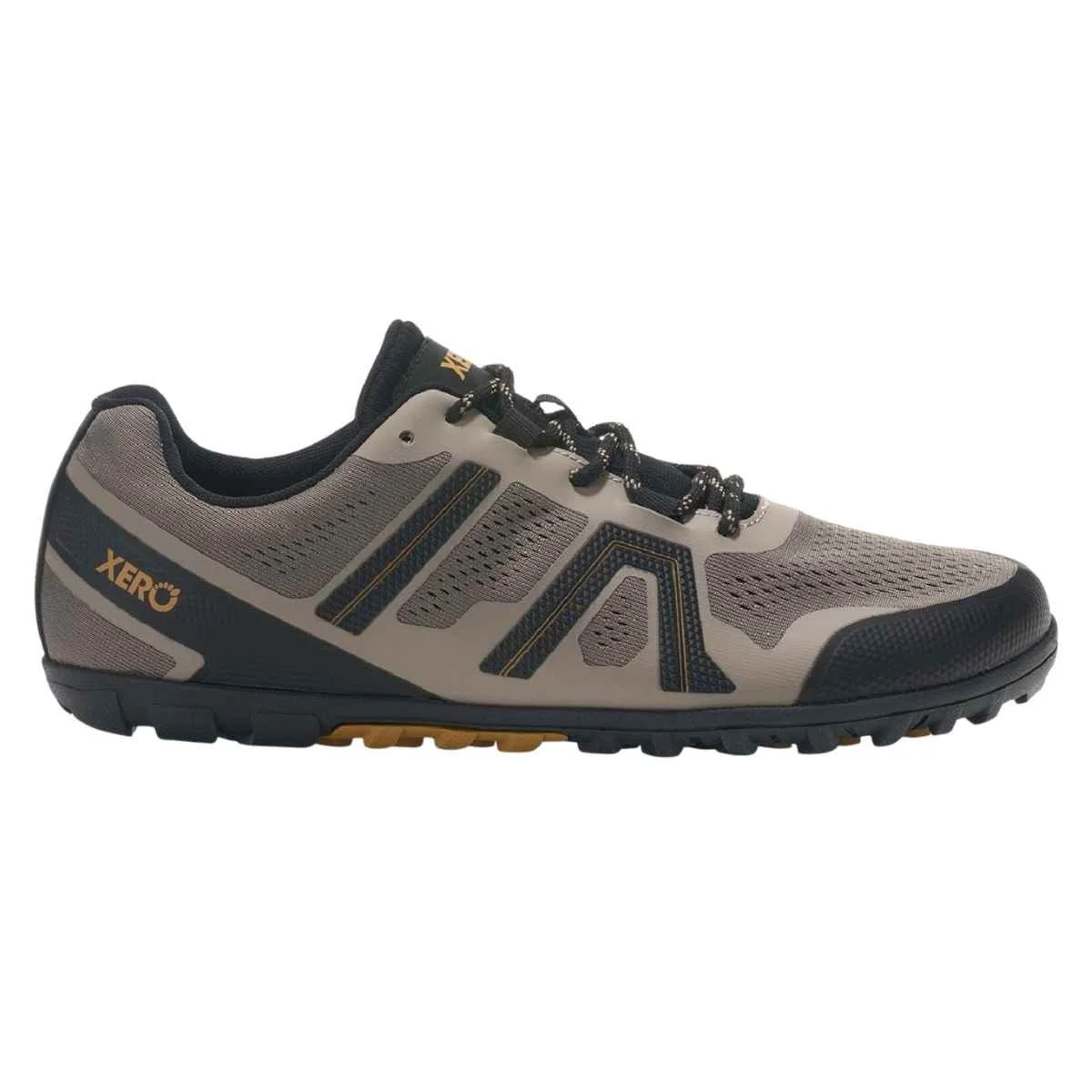
Arguably, any trail running shoe you like can easily double as a hiking shoe, like our favorite barefoot running shoe, the Altra Lone Peak 9. But in search of the best truly barefoot hiking shoe, it’s hard to beat the fit, feel, and performance of the Xero Shoes Mesa Trail II. For more, read our full review of the Xero Mesa II.
Xero Shoes Mesa Trail II
Men's
Women's
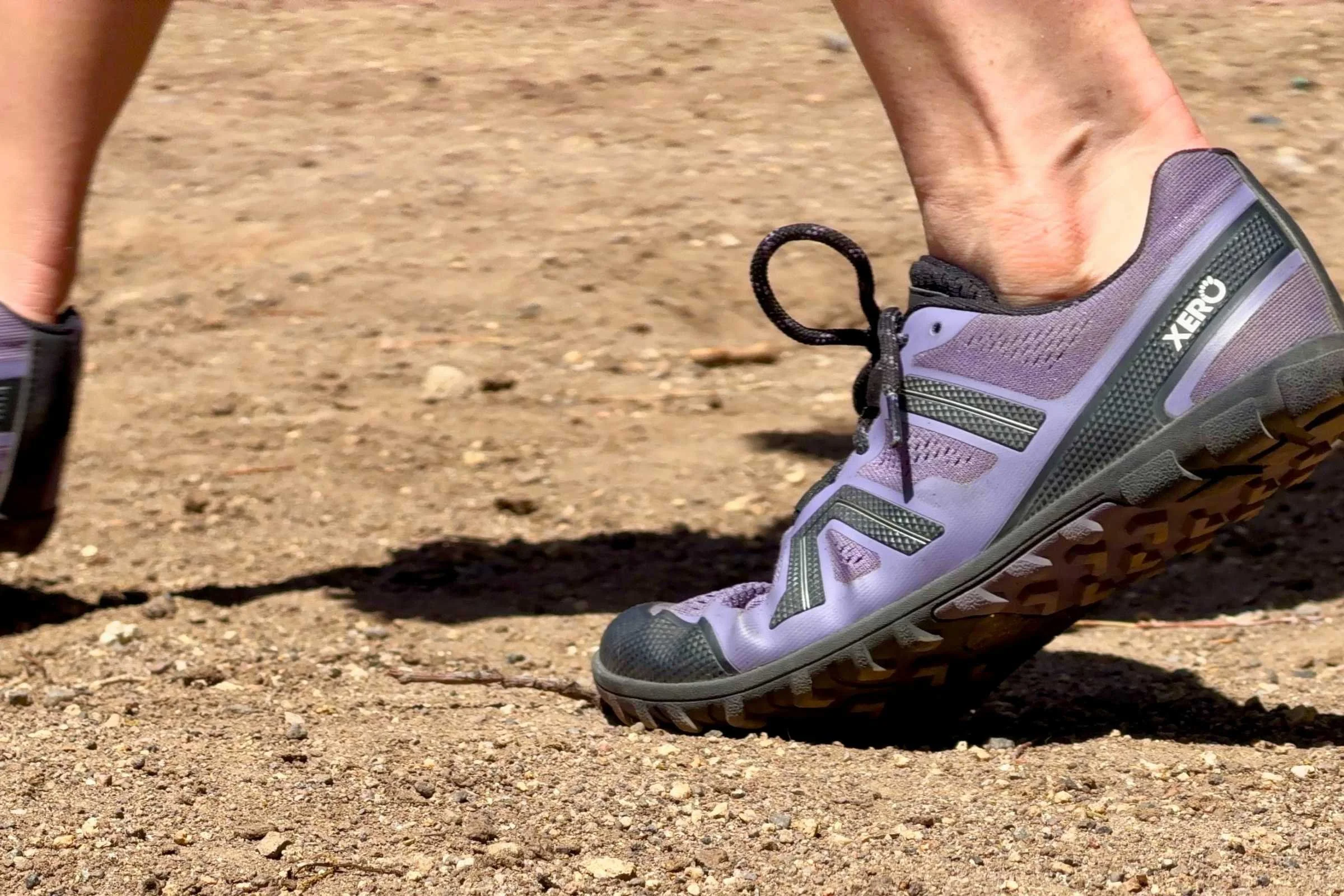
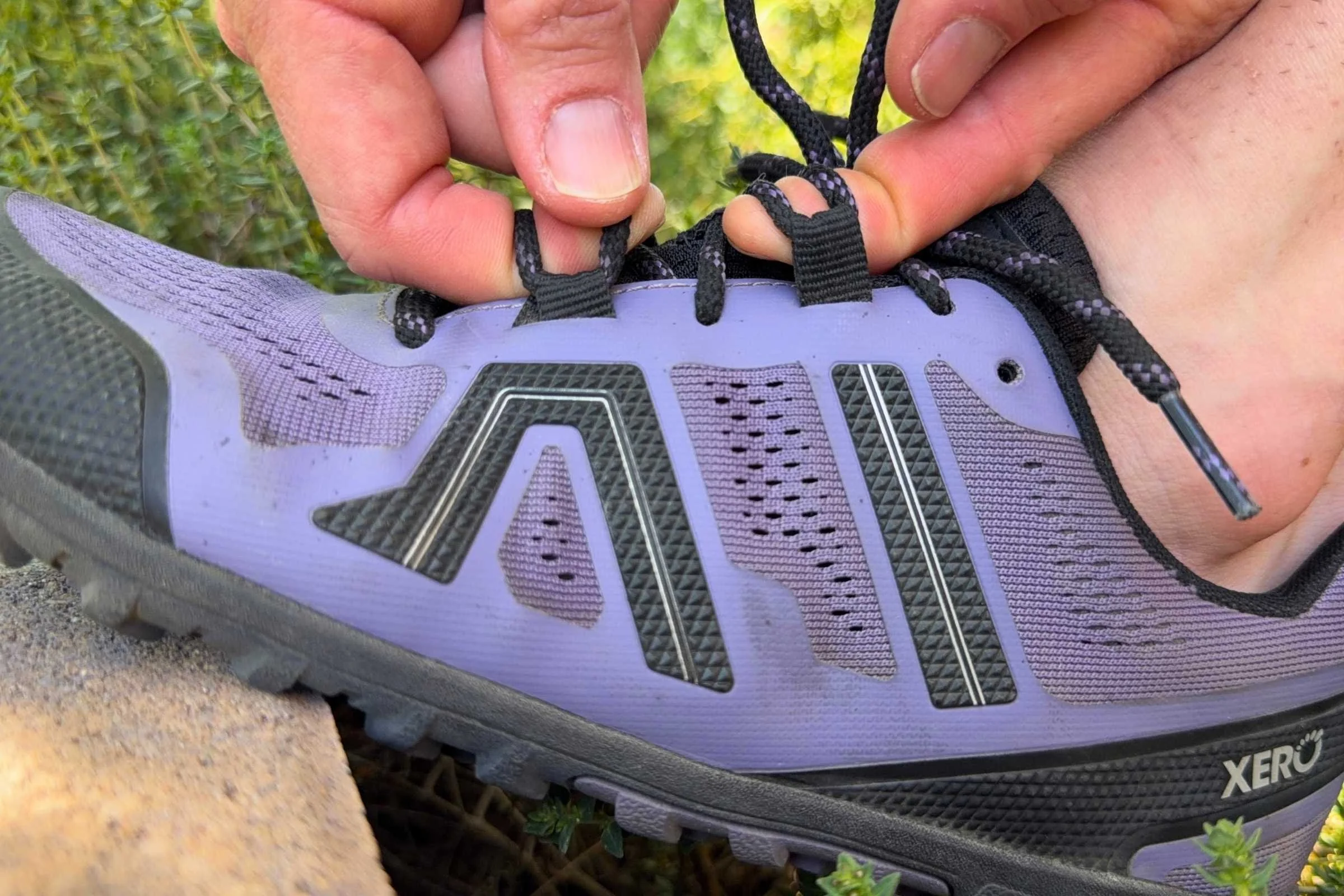
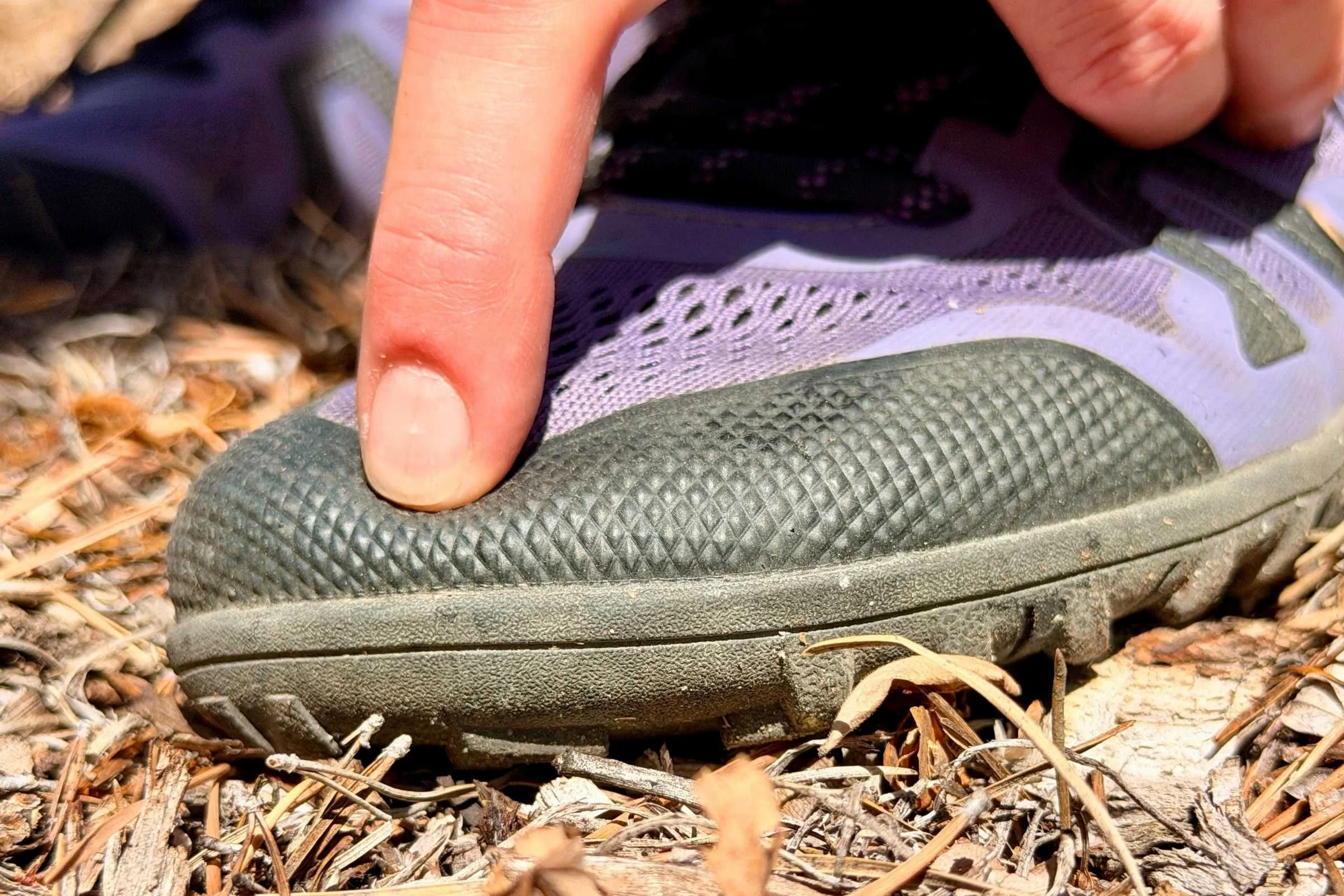
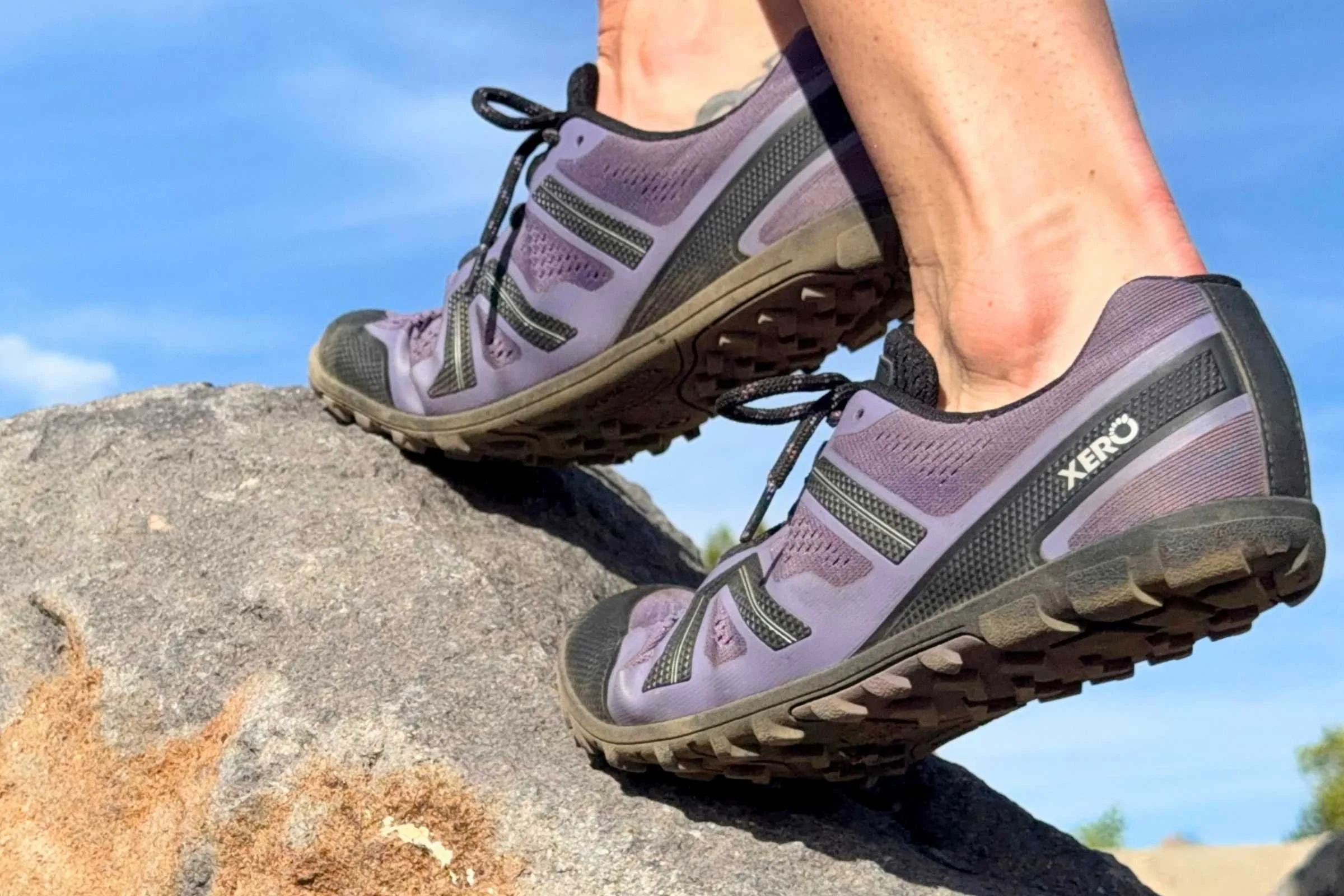
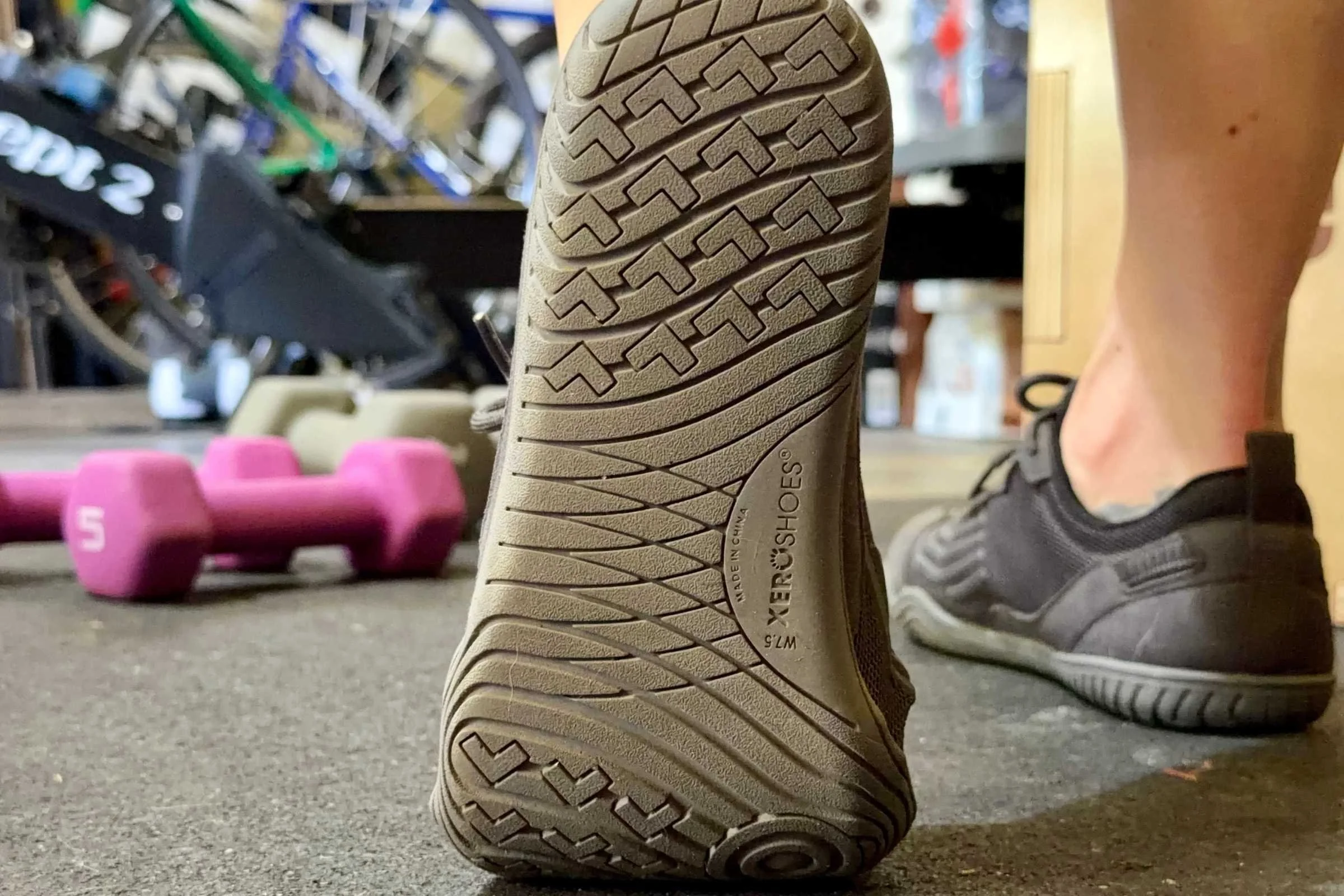
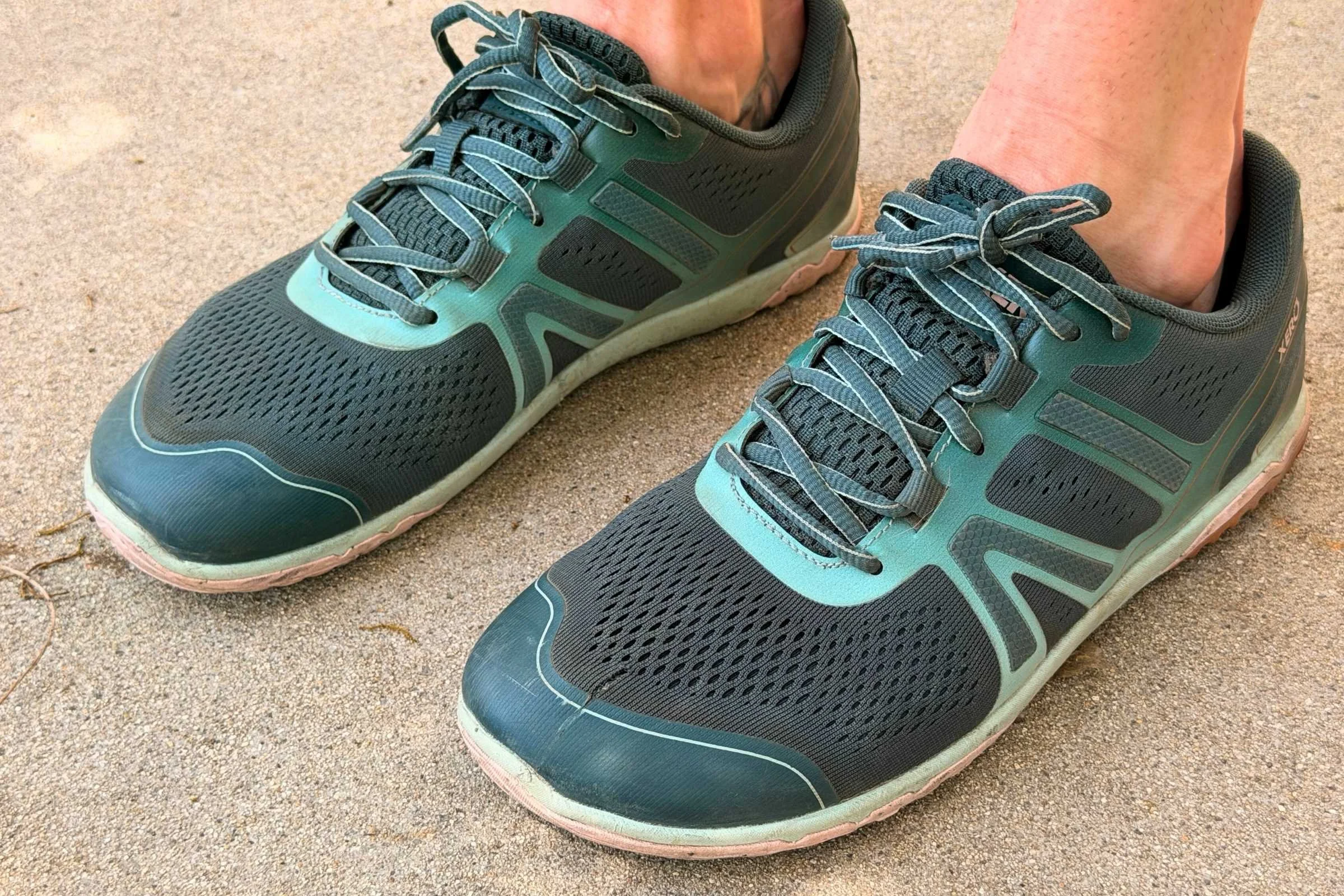
Designed to follow the fit of huarache footwear, the Mesa Trail II has a spacious interior to liberate your feet, with key welded components that replicate the security of the straps found on outdoor sandals. Like all Xero shoes, the Mesa Trail IIs have exceptionally thin soles with very high groundfeel and extremely high flexibility. These soles and the extra space within the shoes make these feel the closest to walking barefoot without switching to sandals or removing footwear entirely.
What makes the Mesa Trail II better on the trails than other barefoot shoes—or other models from Xero—is their midfoot fit and impressive traction. The midfoot of these shoes fits more snugly than other Xero models, without compromising the lateral freedom of your toes. They’re easy to cinch down tight to tackle gravelly slopes, while your forefeet can still properly spread out to balance and support you in response to the trail.
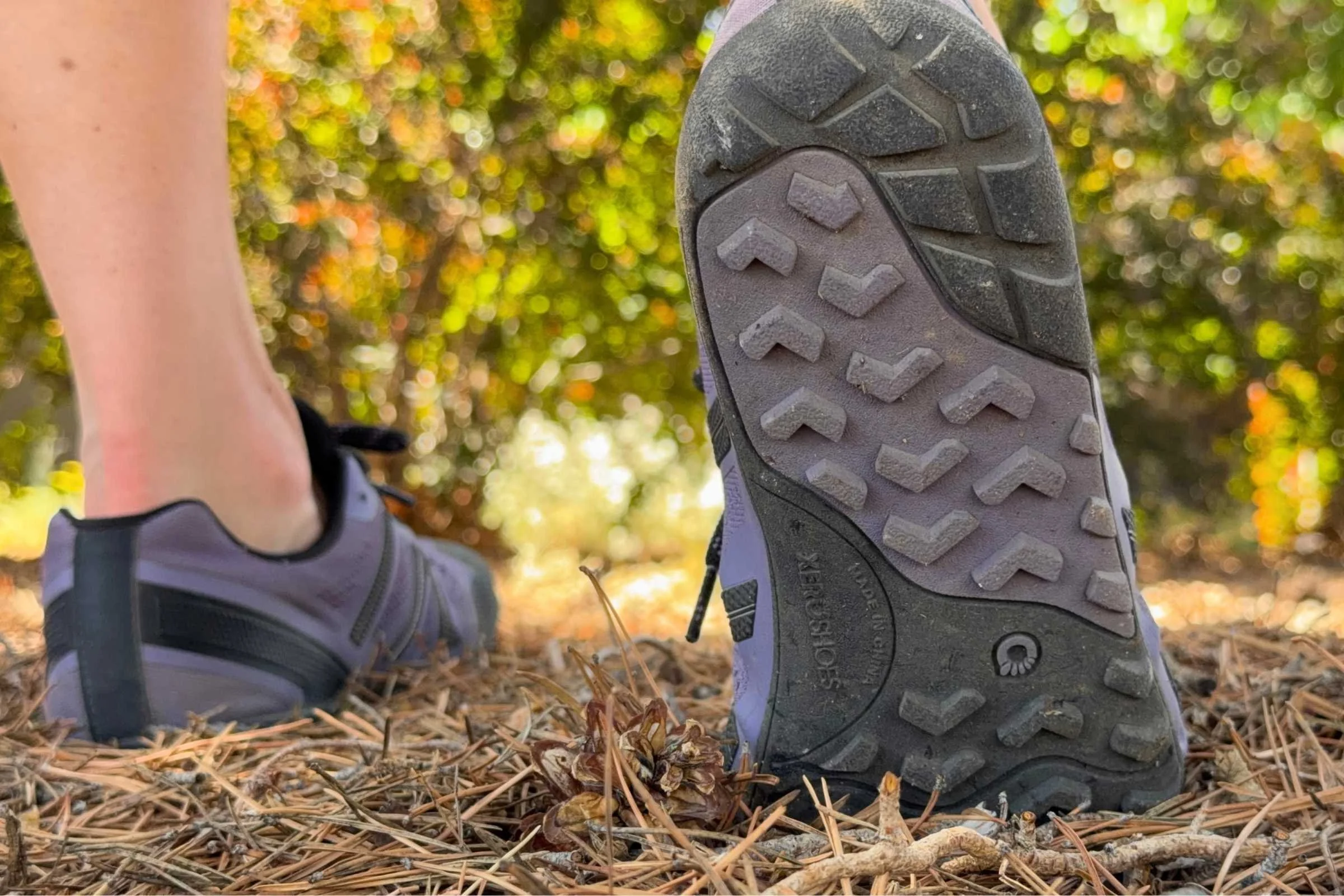
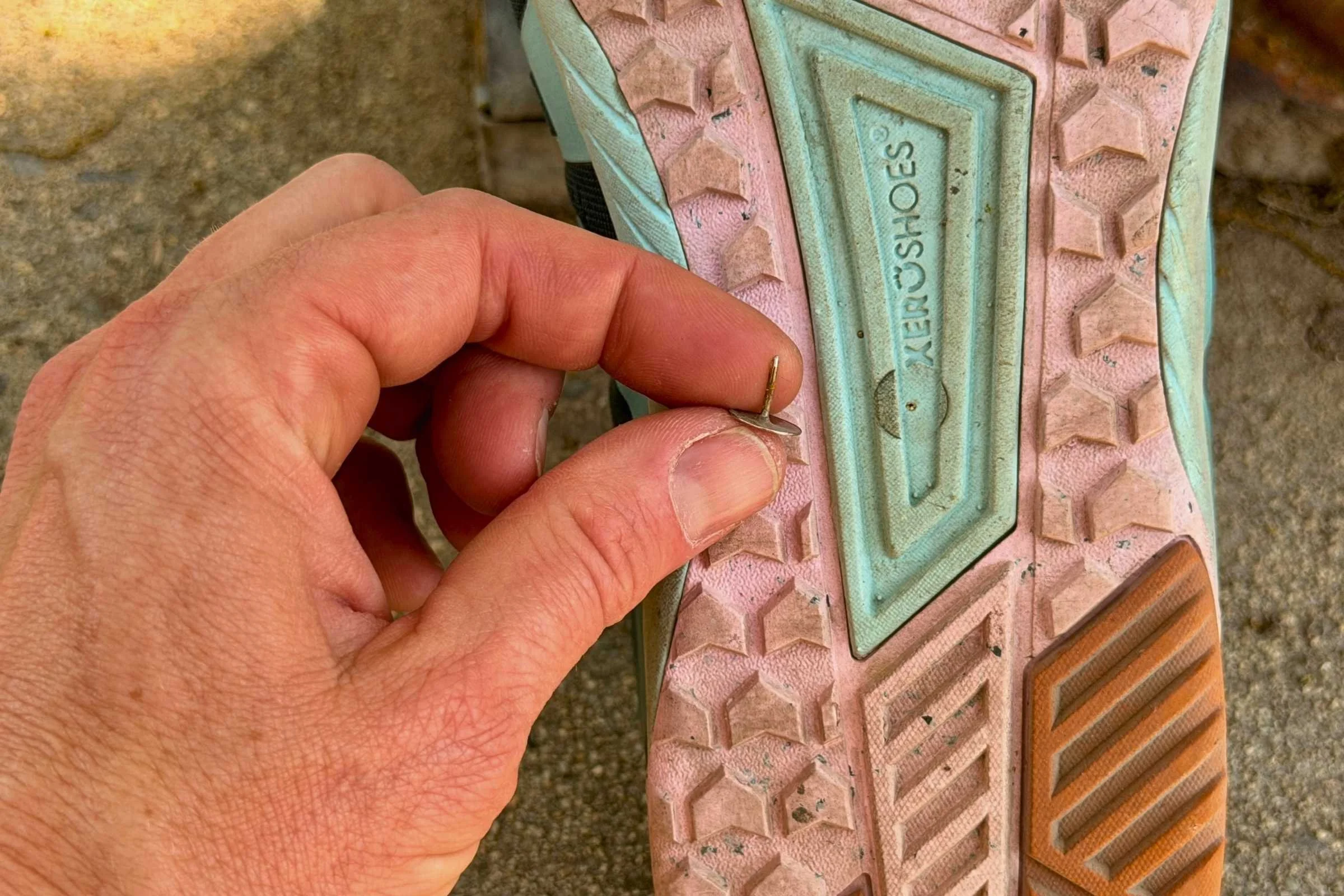
Though the soles are thin, they boast 3.5 mm lugs (on par with a lot of standard-fit trail running shoes). Shaped as carets (^) and with some pointing forward and some pointing backward, these lugs provide impressive grip on both uphill and downhill slogs.
Though these traits all demand a longer and more thoughtful break-in period for your feet, they’re great running shoes for minimalist enthusiasts, and surprisingly comfortable hiking shoes for barefoot trail lovers.
Best Everyday Barefoot Shoes: Xero Shoes Prio Neo
MSRP: $110
Stack height: 5.5 mm
Weight (per pair): 17.4 oz (men’s), 14.6 oz (women’s)
Upper: Synthetic mesh
Outsole: FeelTrue rubber
Flexibility: Very high
Grip: Medium-high
Groundfeel: Very high
What we liked: Feels like being barefoot, seriously flexible
What could be better: Not great traction on slick surfaces
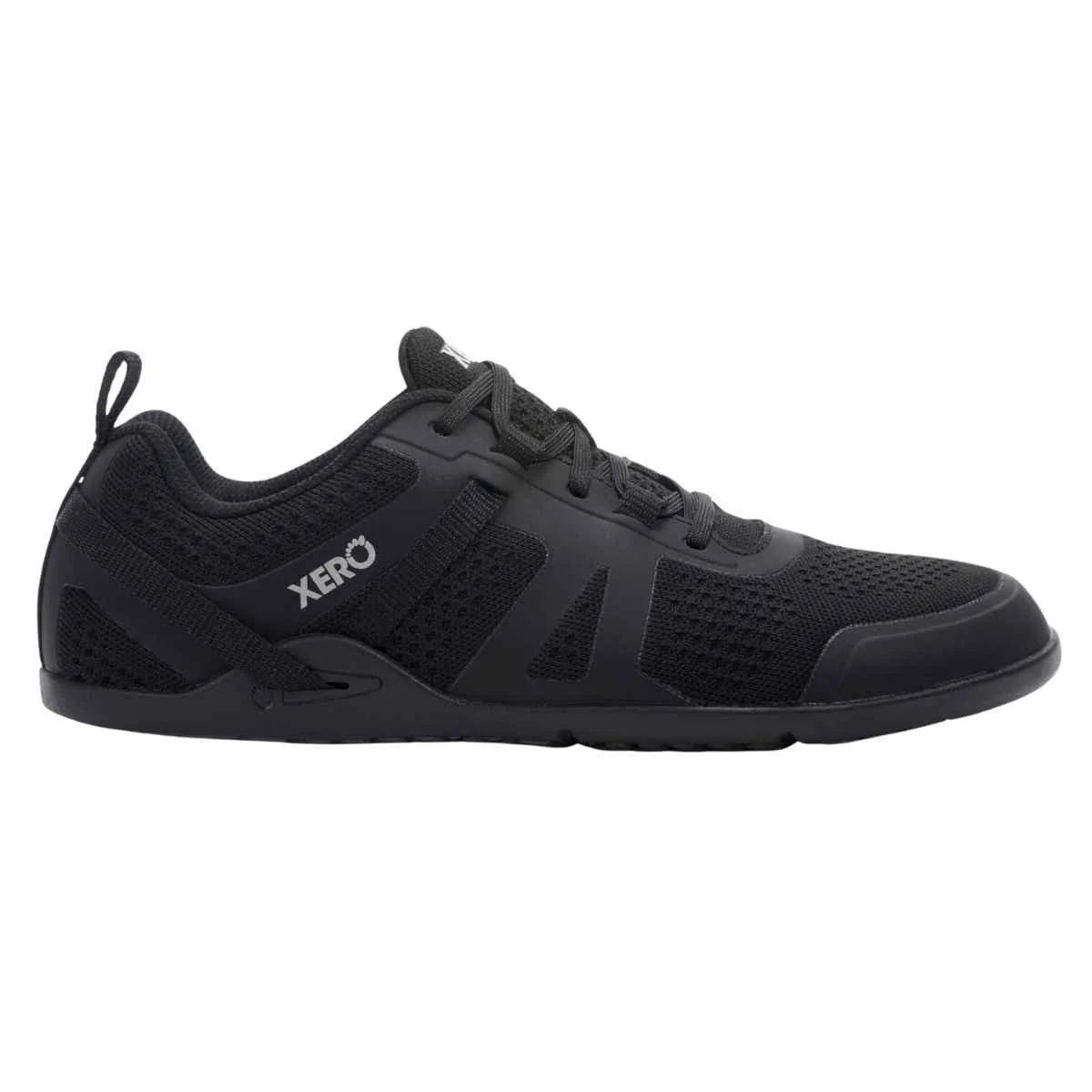
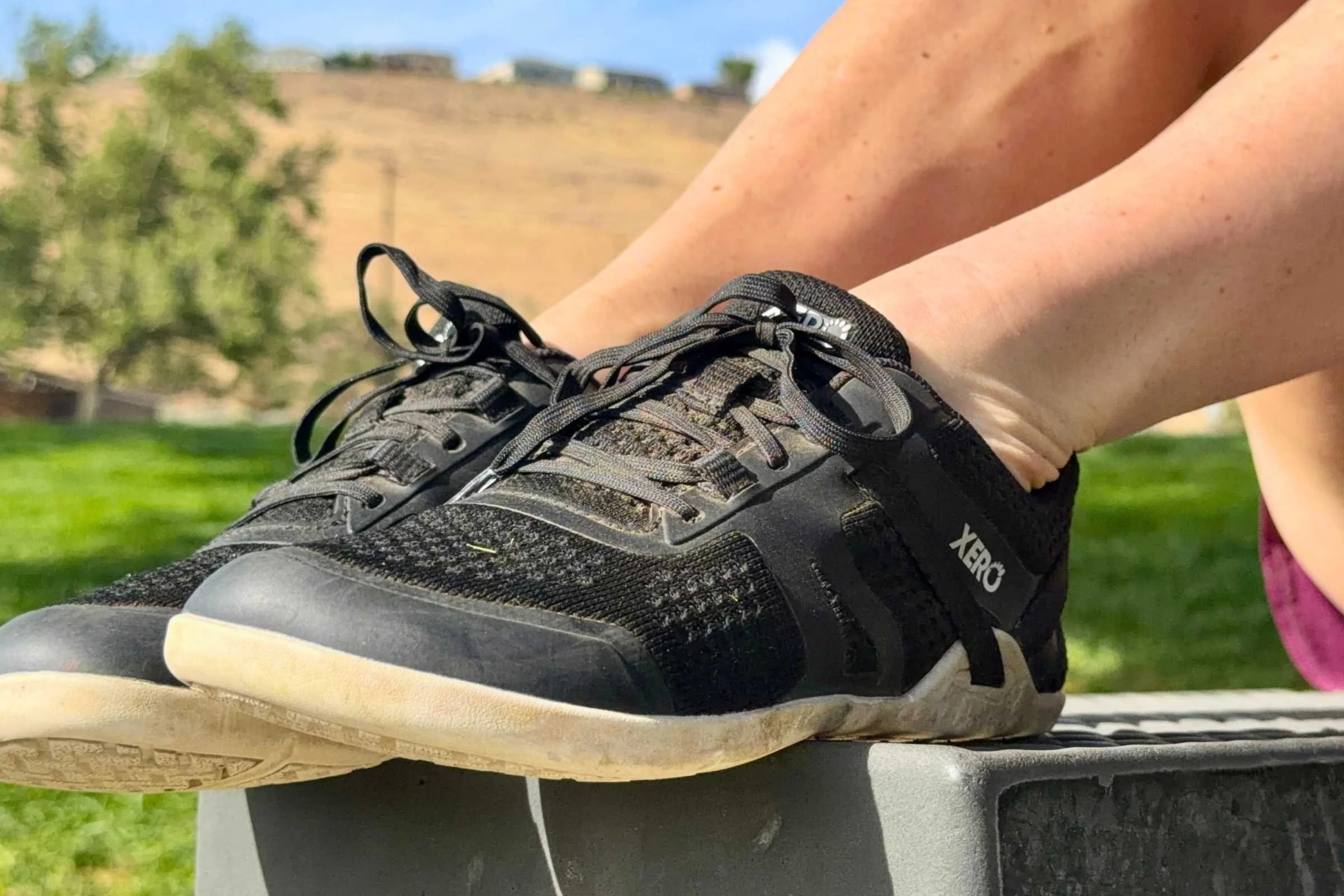
If you’re after a pair of minimalist barefoot shoes to wear every day that feel truly barefoot, that is the Xero Shoes Prio Neo. With the classic Xero design of extreme flexibility, ultra-thin, durable soles, and plenty of space for your feet to spread out, the Prio Neo is all that and more. These shoes were also featured in our Best Walking Shoes guide. For more, read our full review of the Xero Prio Neo.
Xero Shoes Prio Neo
Men's
Women's
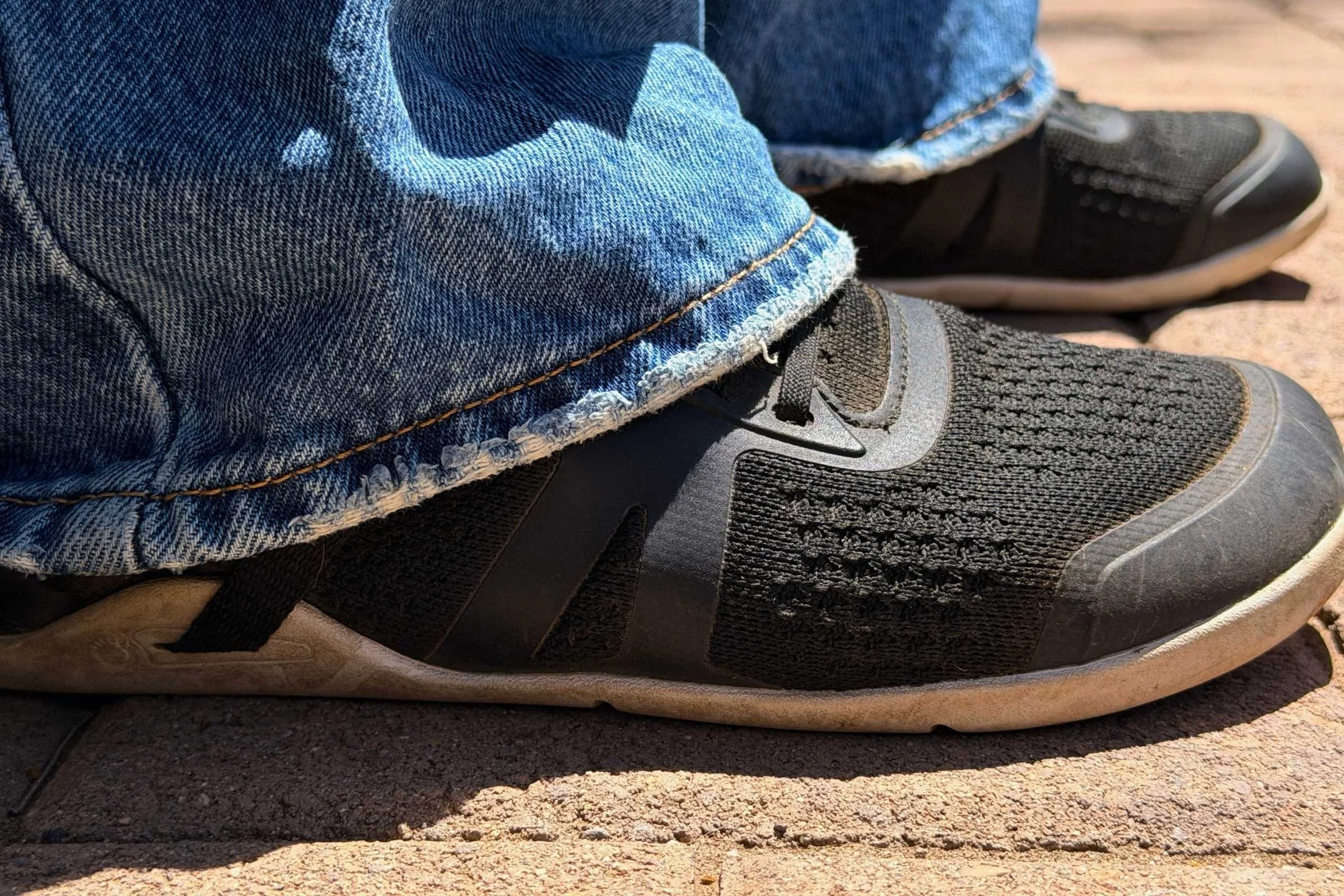
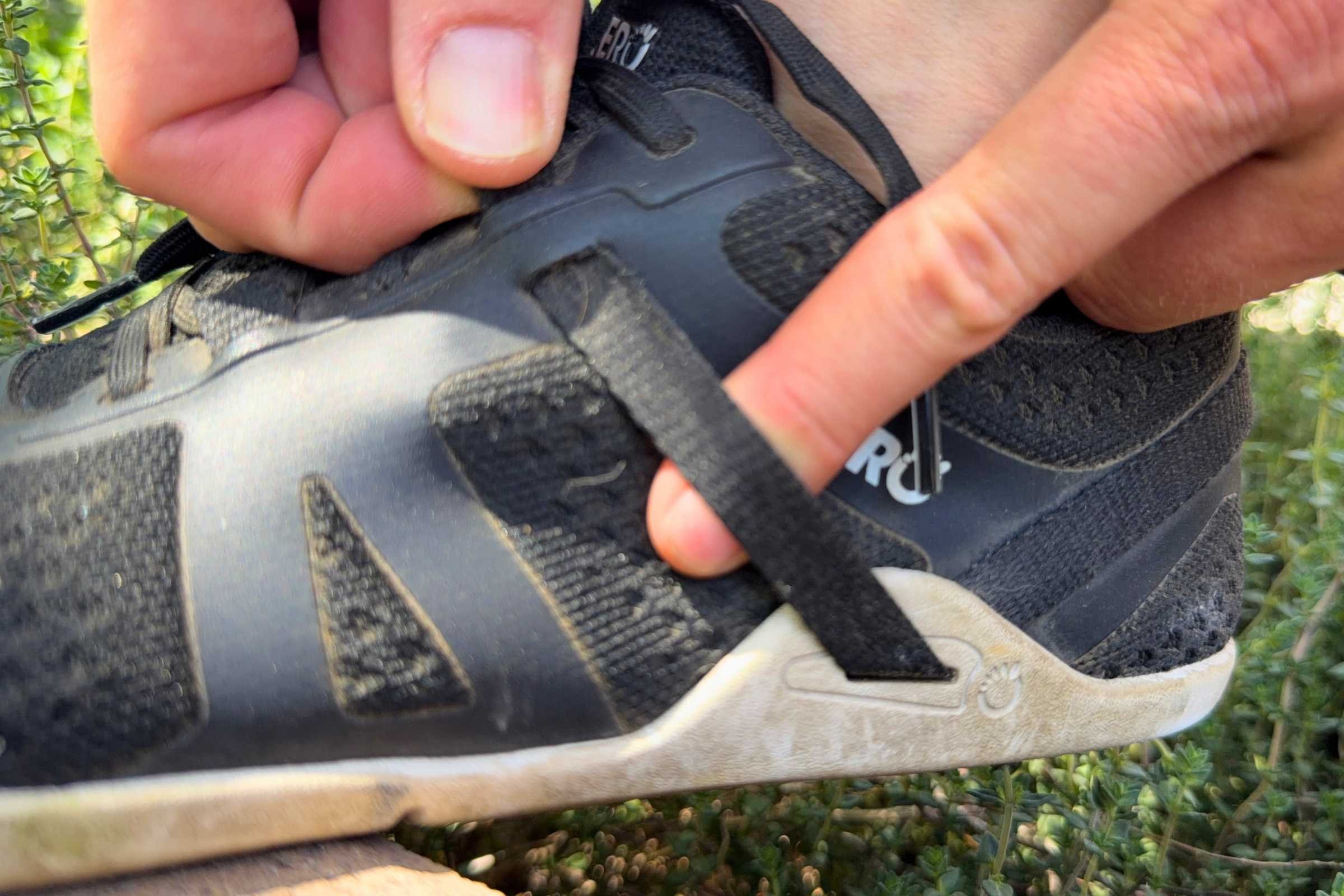
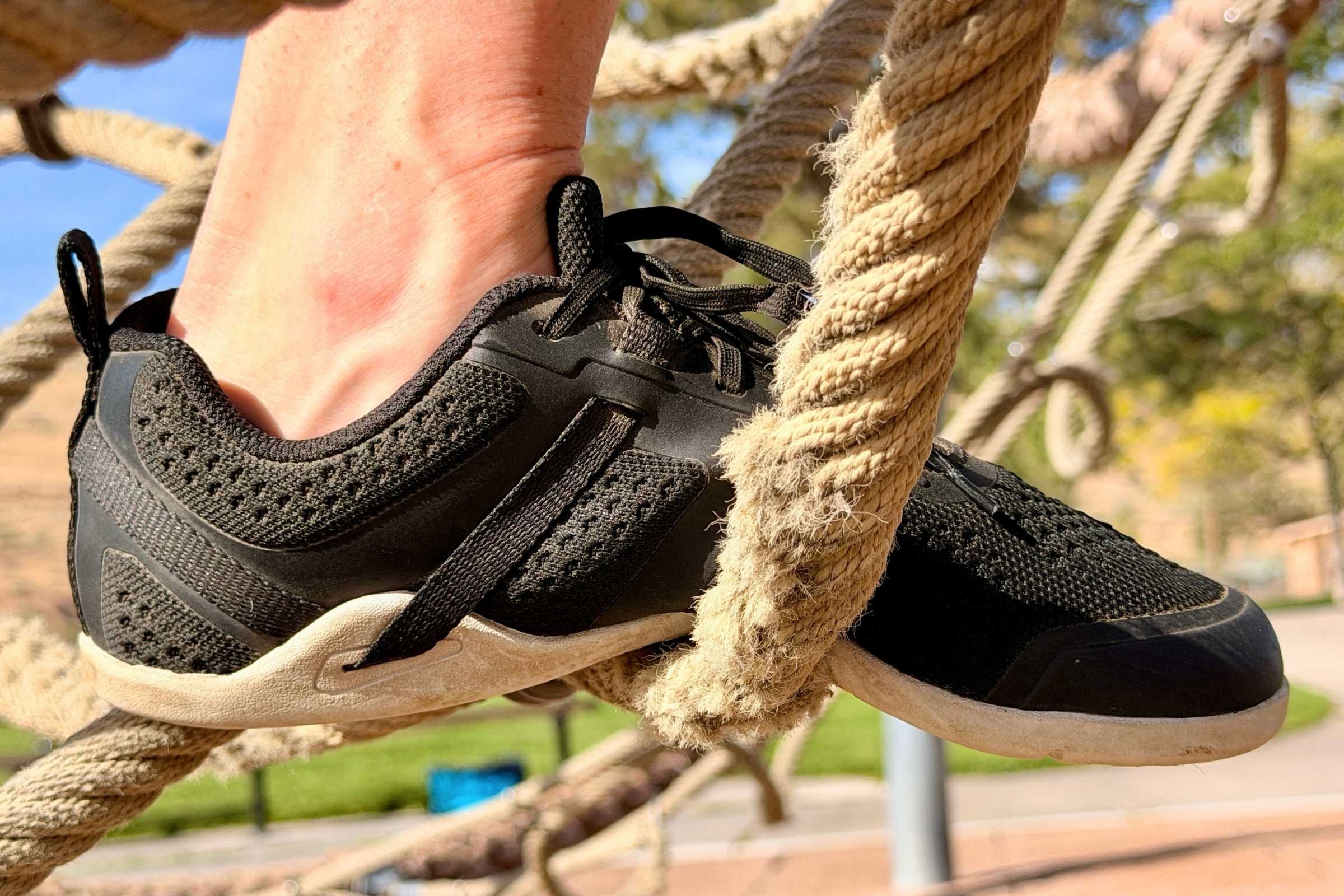
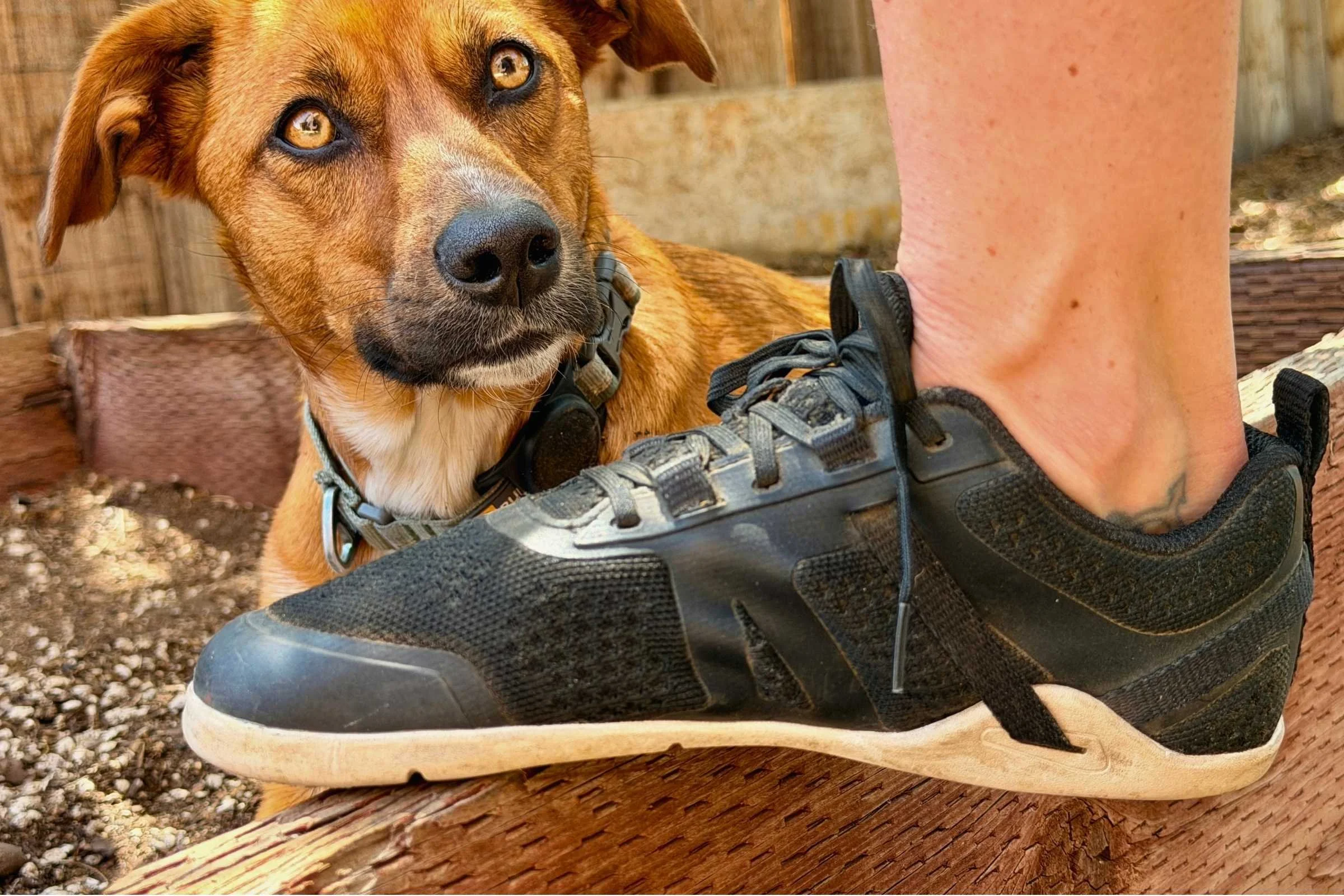
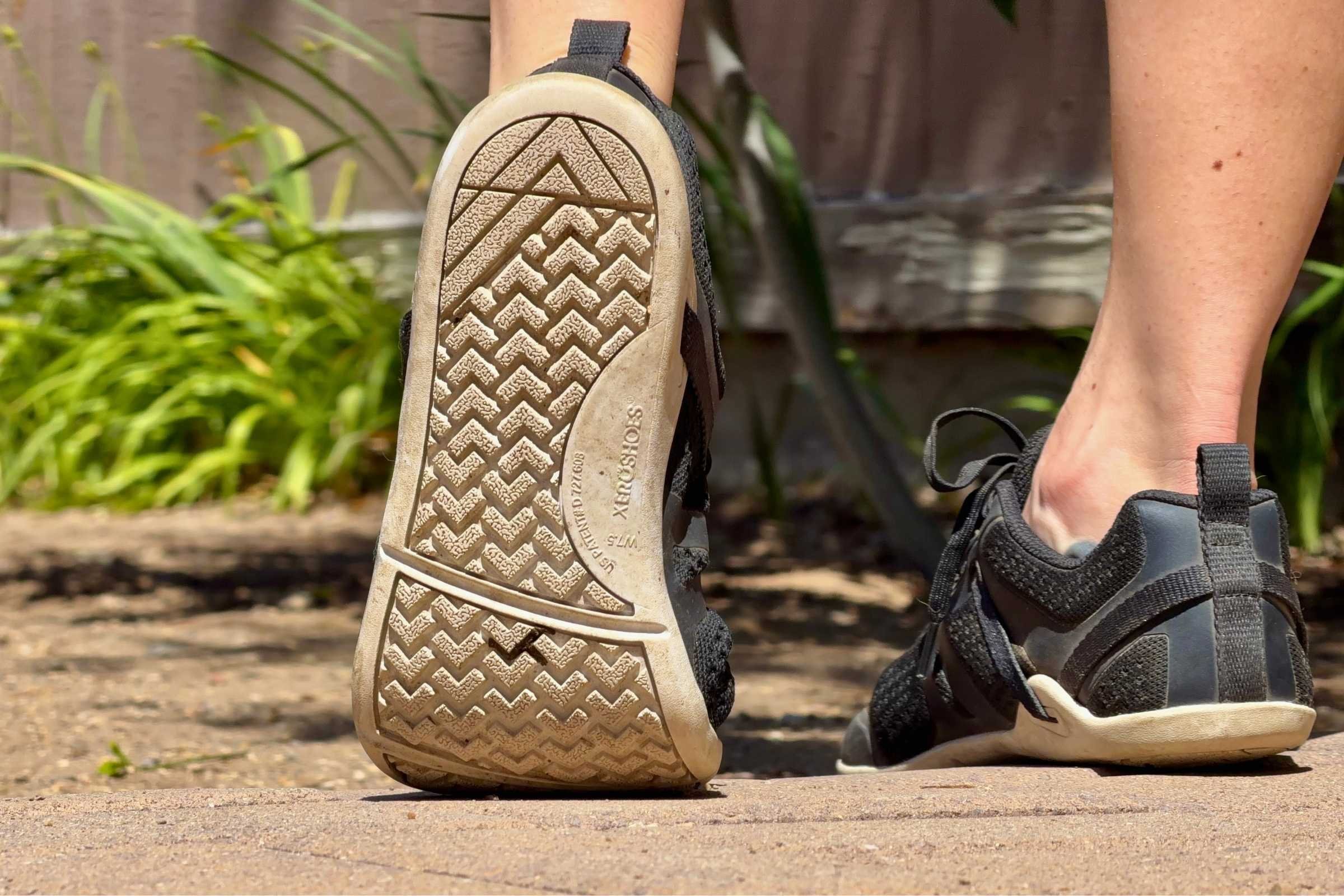
Wearing these shoes is the closest our testers felt to actually being barefoot. They have solid everyday traction that isn’t quite enough to push weight sleds across polished concrete without slipping, but is plenty for trekking 30K steps, exploring a new city or on a long commute.
While most barefoot shoes tend to look overly techy, the Prio Neo still offers great athleisure style, with bold color combinations, striking monochromes, and sleek ombre. It might not quite hit the level of business casual, but it’s stylish enough to feel “cool” while still strongly committed to the barefoot experience.
If this is your first foray into the world of barefoot shoes, the Prio Neo, like all Xero Shoes models, requires a longer and more structured break-in period to build up the appropriate muscles in your feet and legs. Even for folks who have enjoyed other barefoot shoes, these are yet another step toward true barefoot movement compared to every other non-Xero shoe we’ve tested. But if this is your goal: to replicate the feeling of walking barefoot all day, every day—we solidly recommend the fit, feel, performance, and look of the Xero Prio Neo.
Other barefoot shoes we tested
Lems Chillum
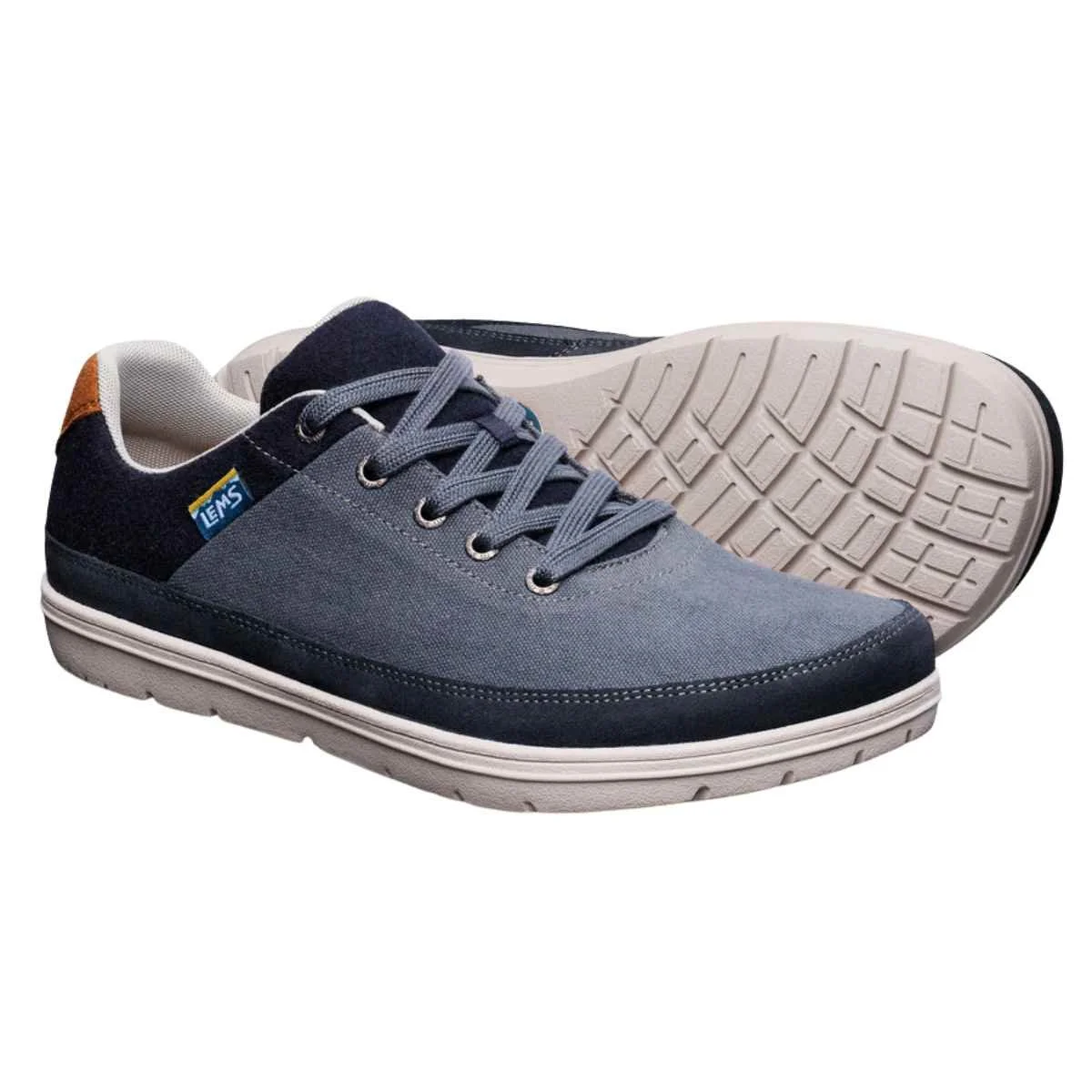
MSRP: $130
Stack height: 10 mm
Weight (per pair): 1 lb
Upper: Suede, polyester/cotton canvas and wool (Blackjack colorway uses vegan microfiber instead of suede)
Outsole: Injection Blown Rubber (IBR)
Flexibility: Low
Grip: Low
Groundfeel: Low
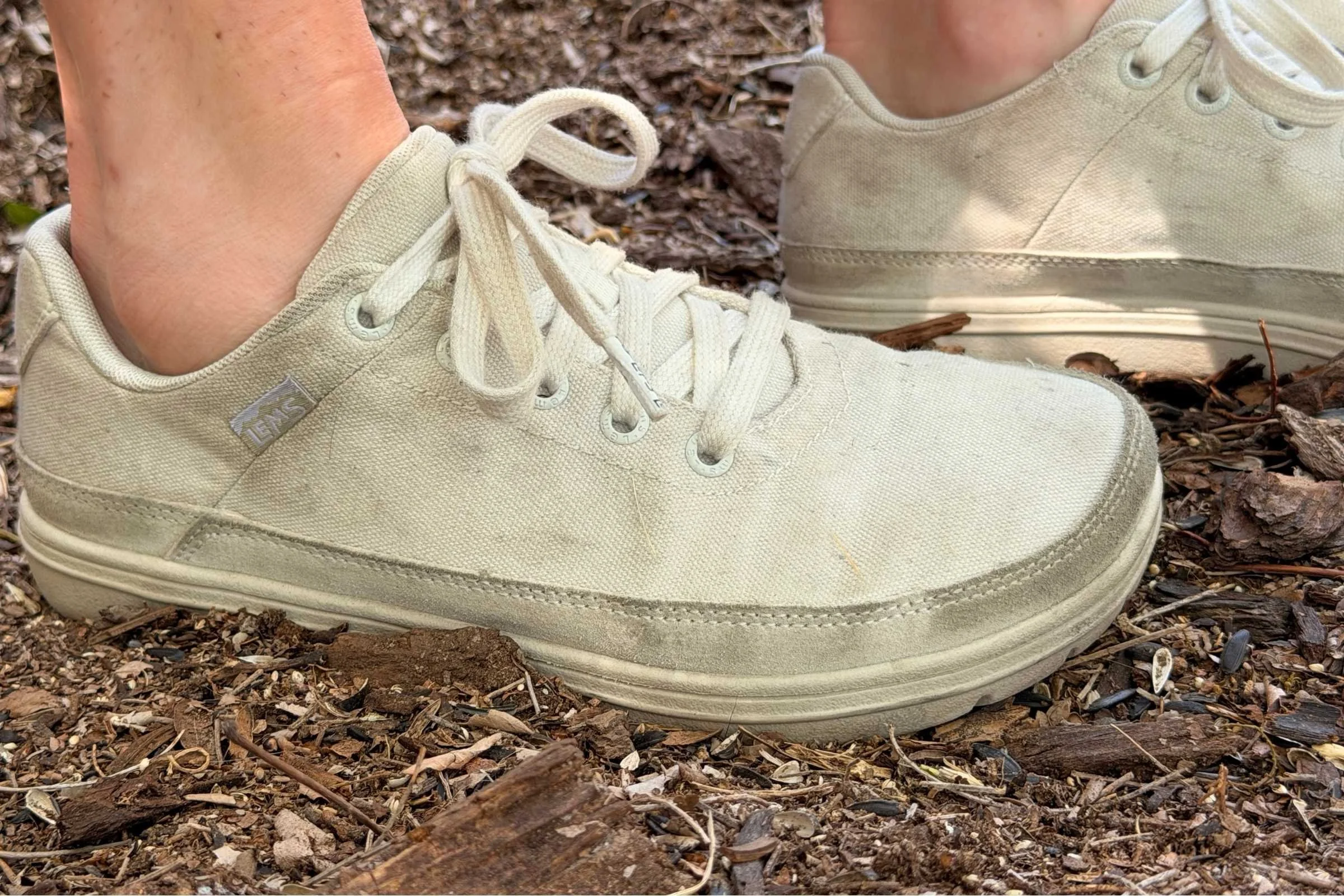
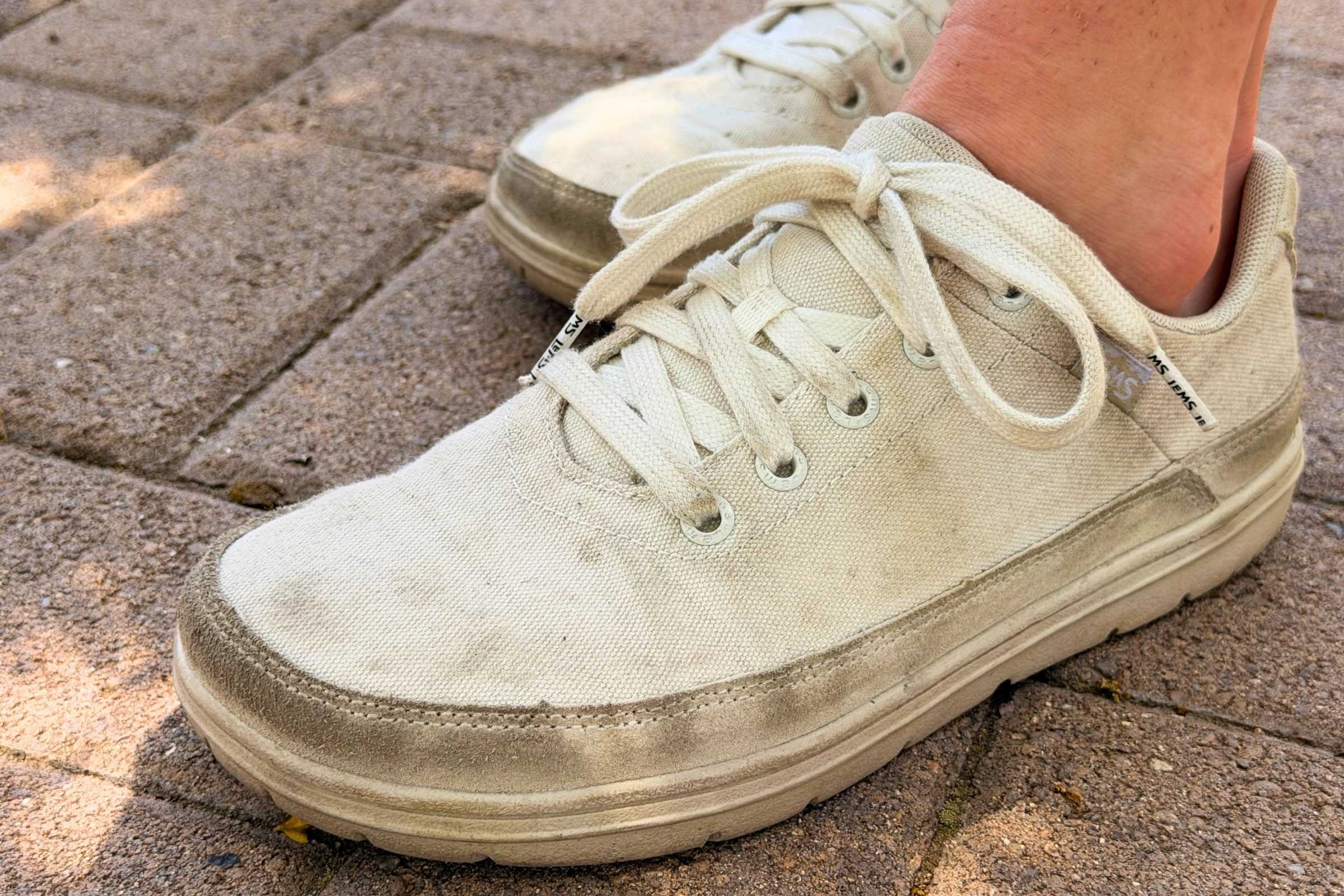
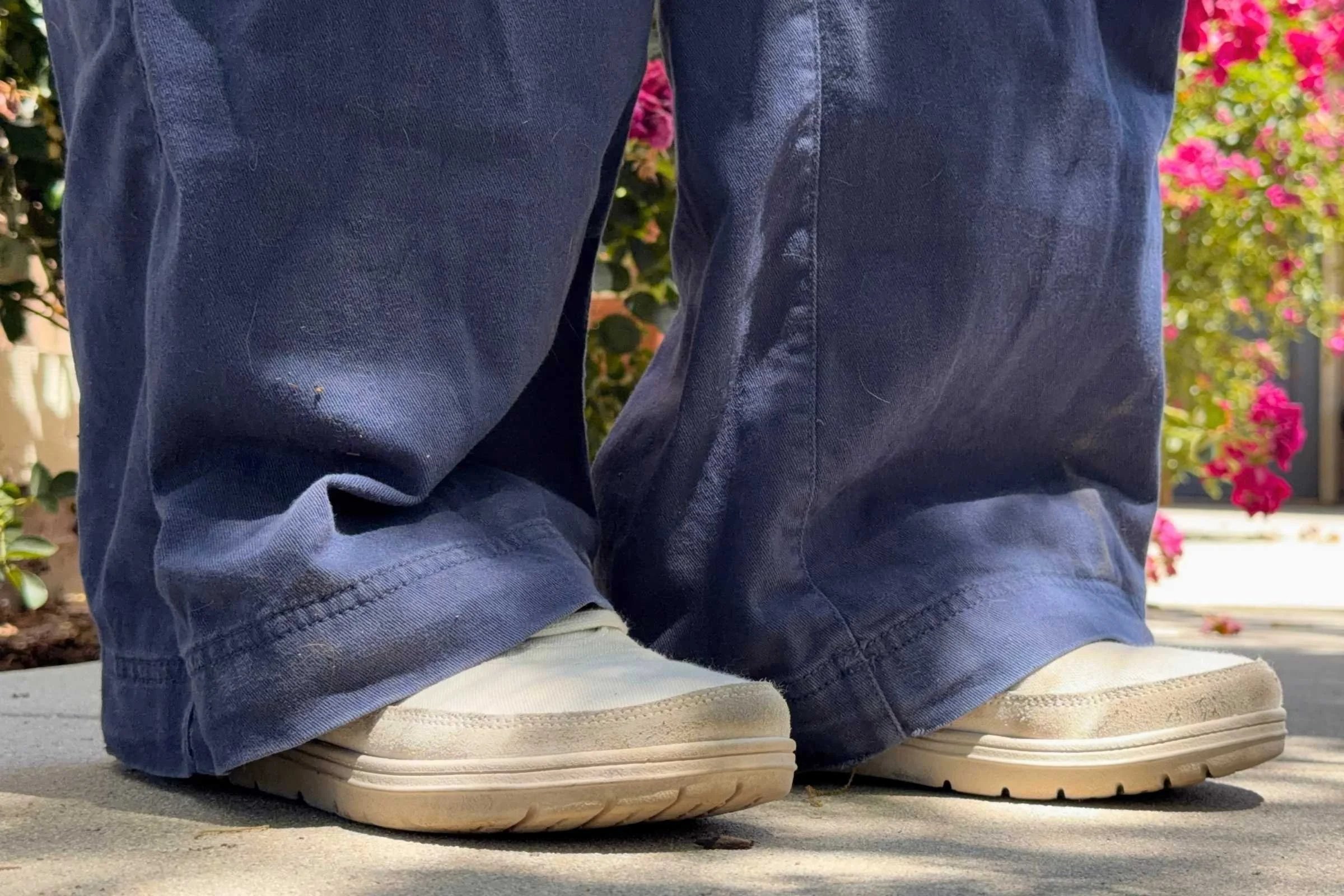
This is a casual, everyday canvas shoe that doesn't even feel like a barefoot shoe. They are easy to love thanks to great style and comfort, though they aren't very flexible, and the light colors can be challenging to keep clean.
Lems Chillum
Men's
Women's
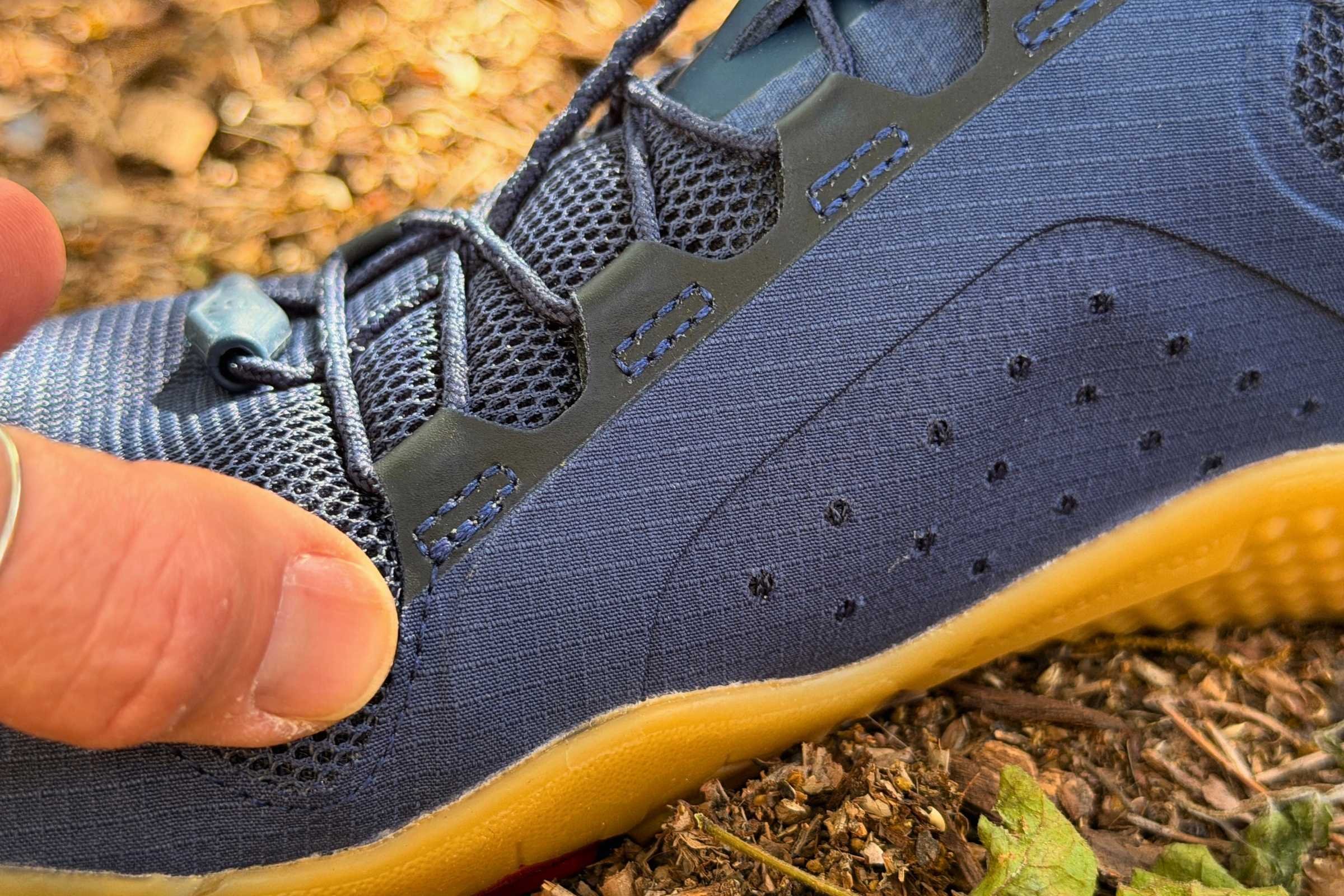
Vivobarefoot Primus Lite 3.5
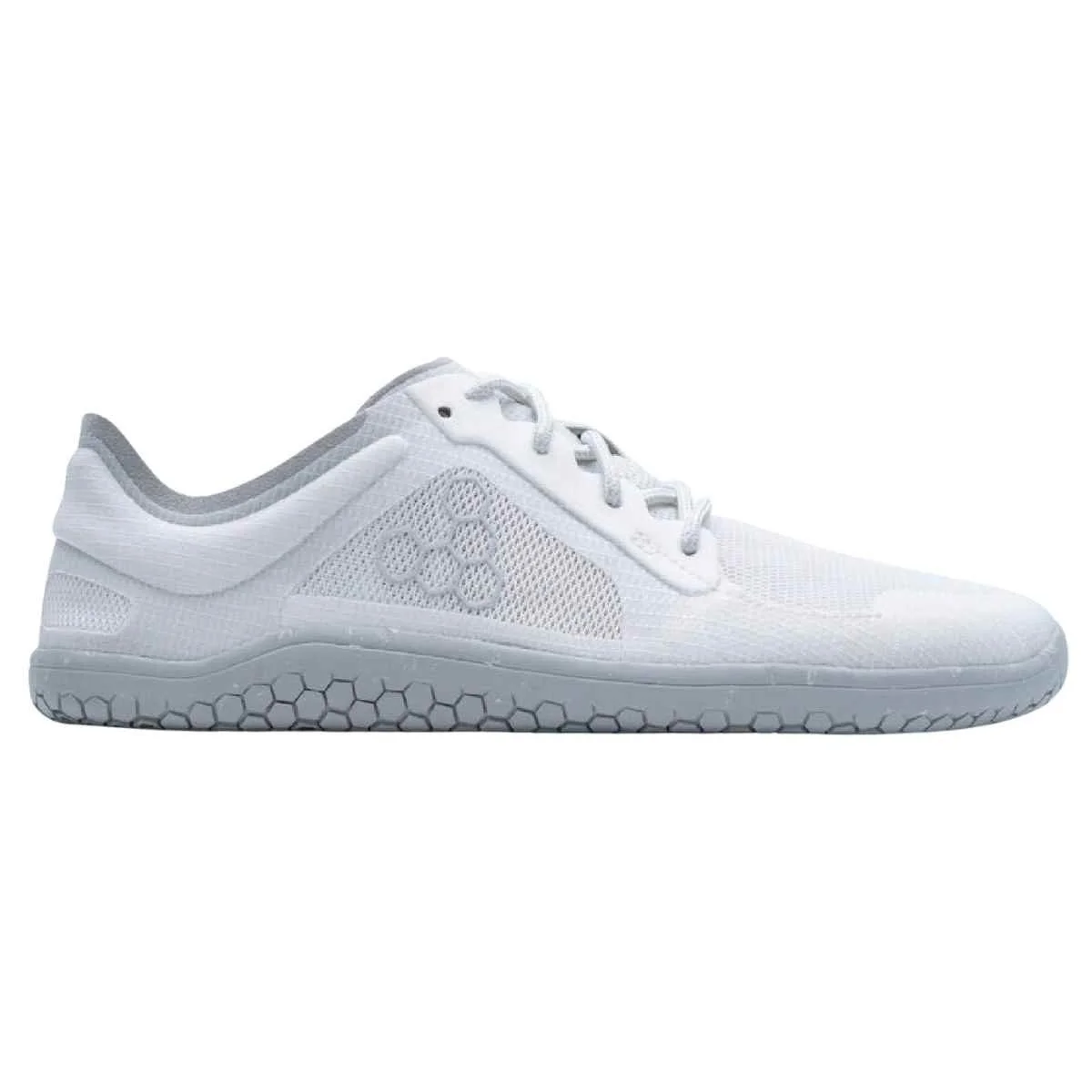
MSRP: $150
Stack height: 2 mm
Weight (per pair): 1 lb 2.9 oz
Upper: rPET mesh
Outsole: Rubber
Flexibility: Medium-high
Grip: Medium
Groundfeel: High
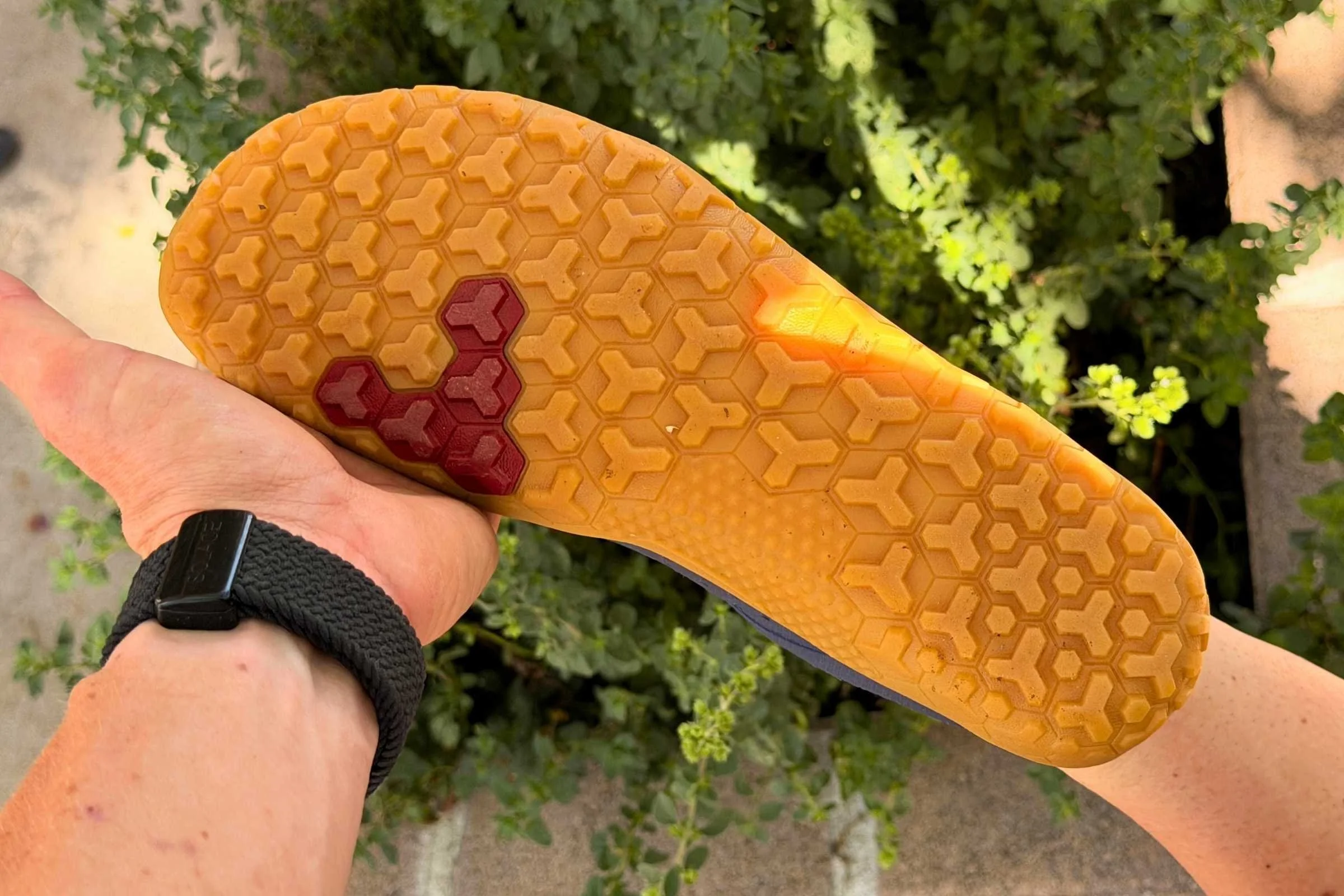
Though they have excellent flexibility and great groundfeel, these shoes run both long and exceptionally narrow. They won't be the right fit for many people, but if you have particularly slender feet, you may enjoy their flexibility.
Vivobarefoot Primus Lite 3.5
Men's
Women's
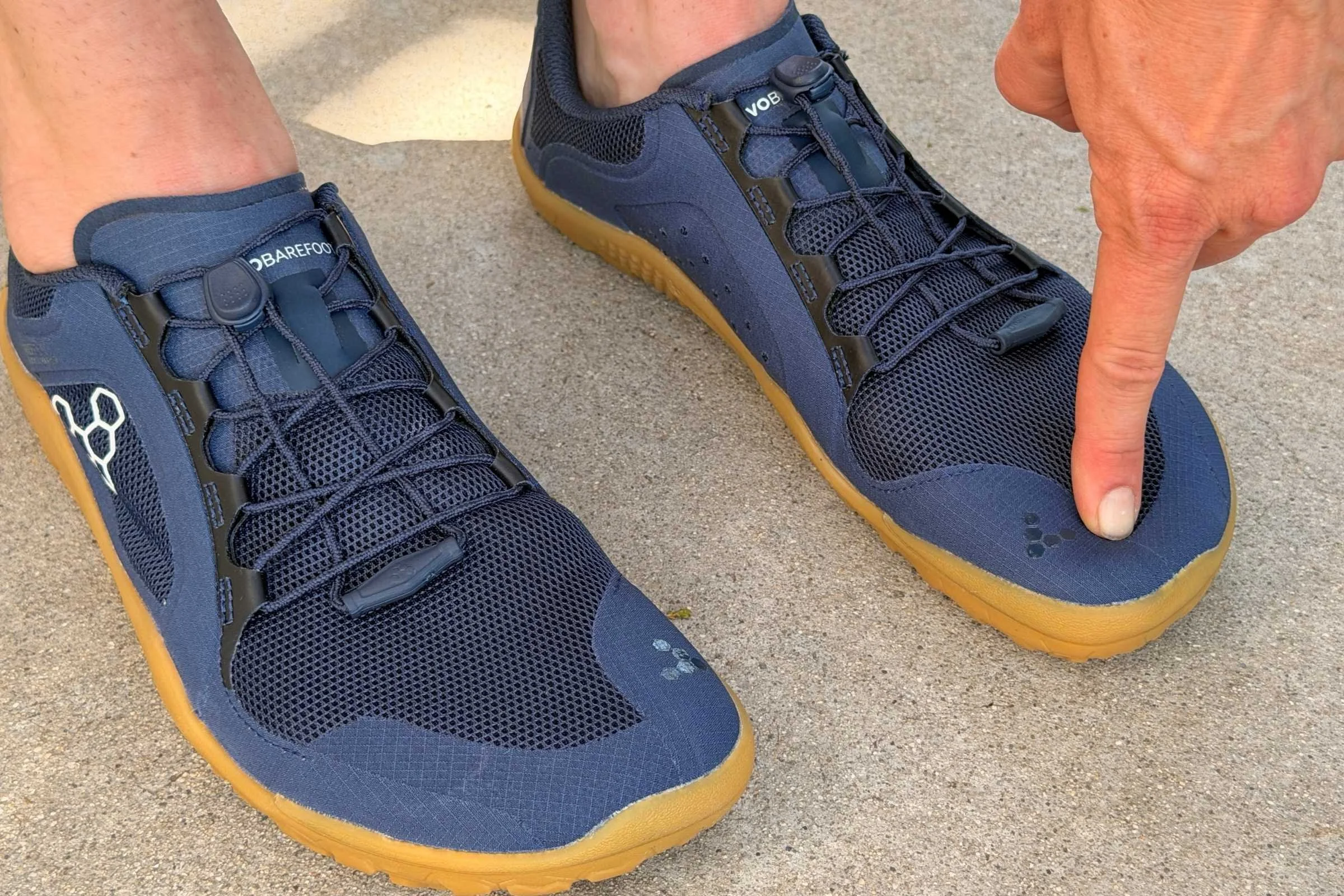
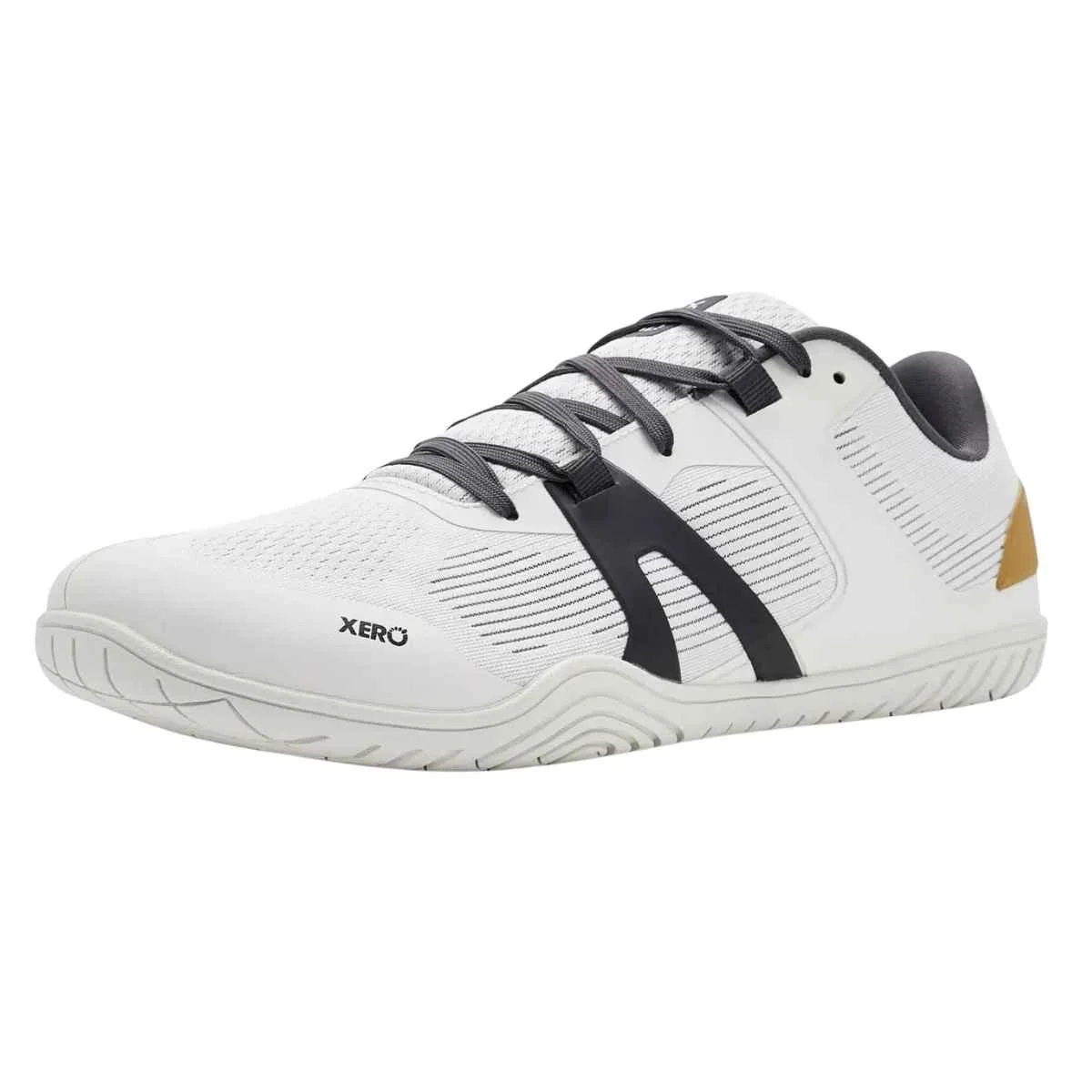
Xero Shoes 360
MSRP: $130
Stack height: Not stated
Weight (per pair): 1 lb 2 oz (men’s), 15.6 oz (women’s)
Upper: Engineered mesh
Outsole: Not stated
Flexibility: High
Grip: Medium
Groundfeel: Medium-high
The Xero Shoes 360 shoes are a good pair of gym-worthy shoes with solid lateral grip. These maintain groundfeel and foot flexibility during gym workouts, though their traction for everyday use is lower than other Xero models we tested.
Xero Shoes 360
Men's
Women's
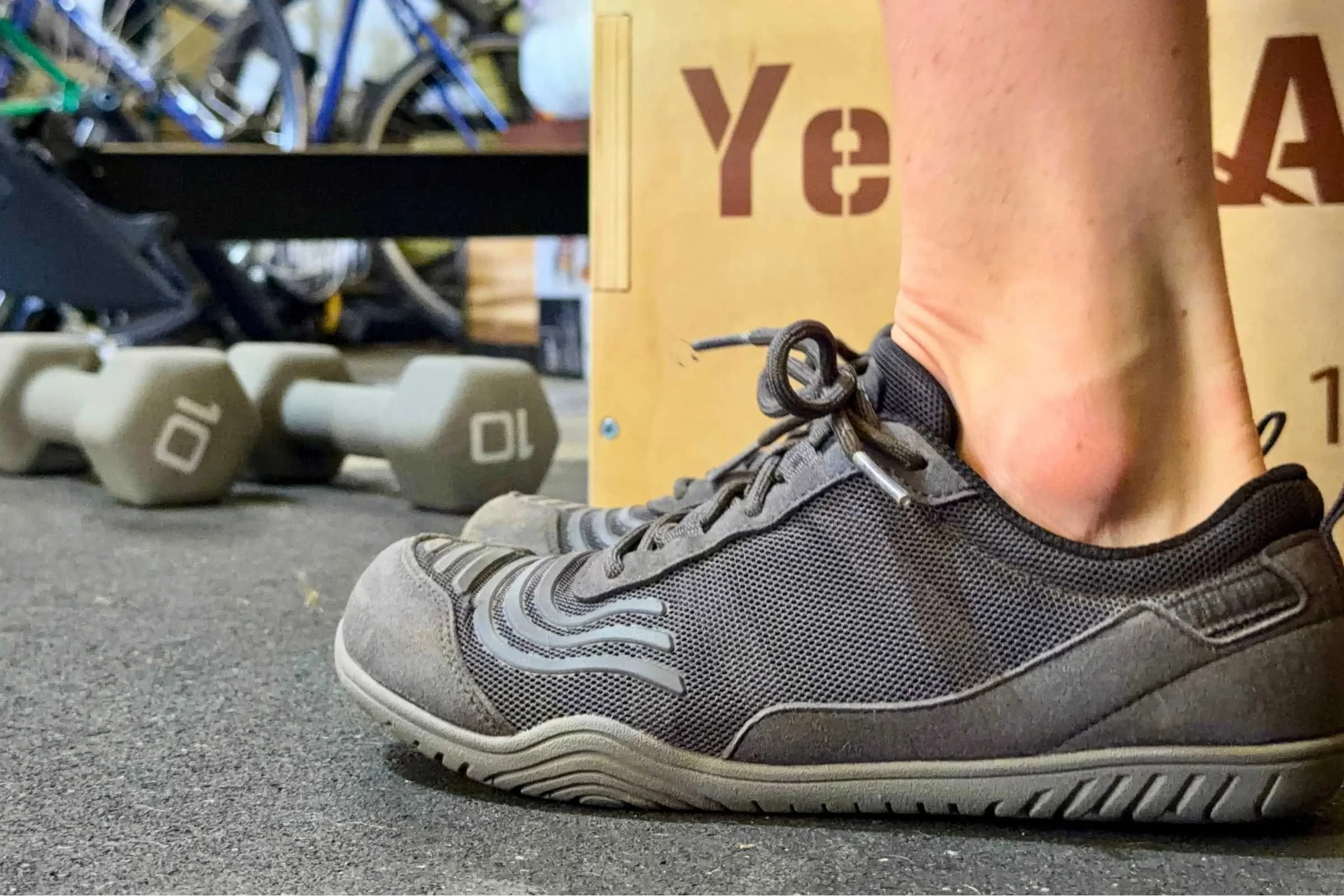
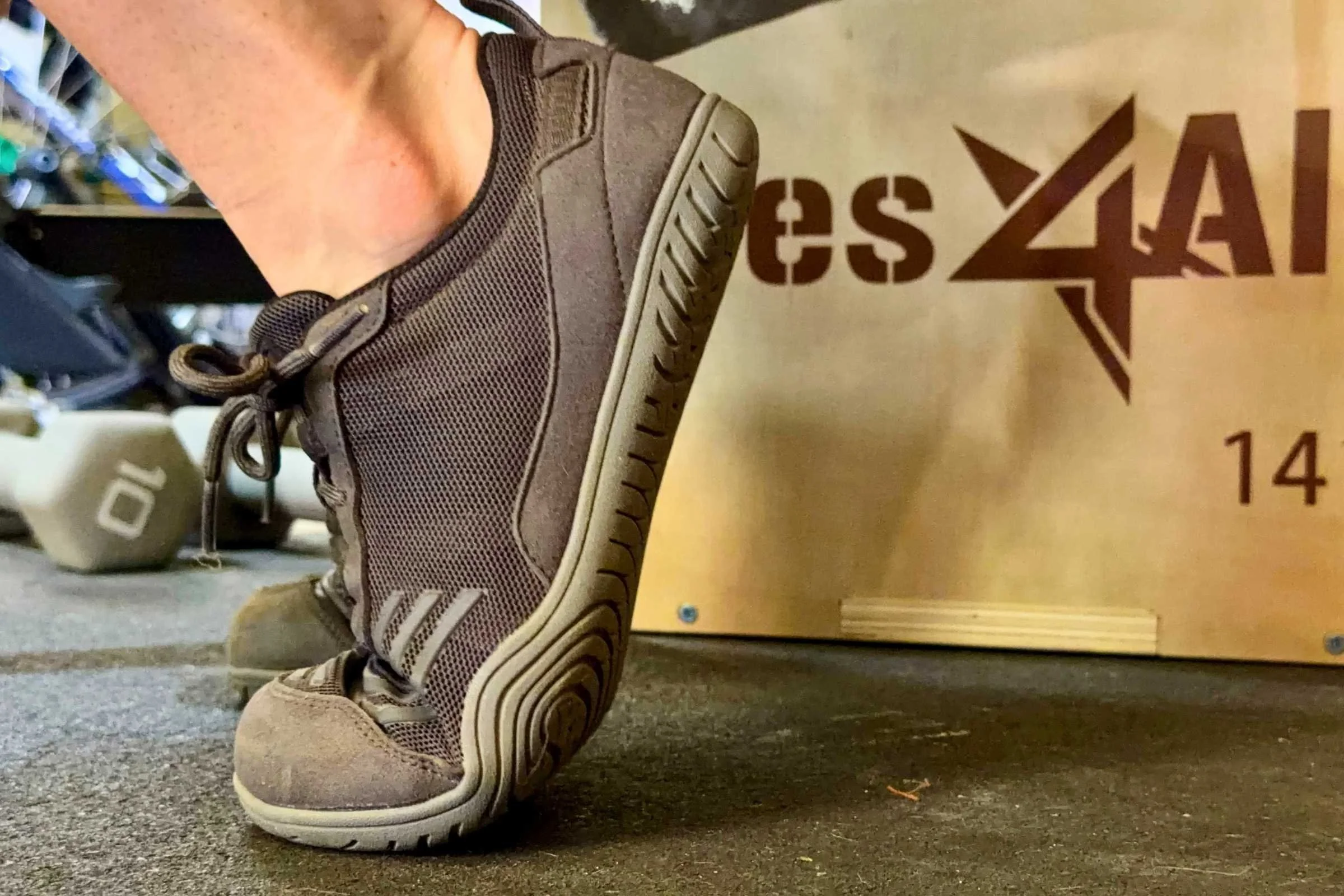
Xero Shoes HFS II
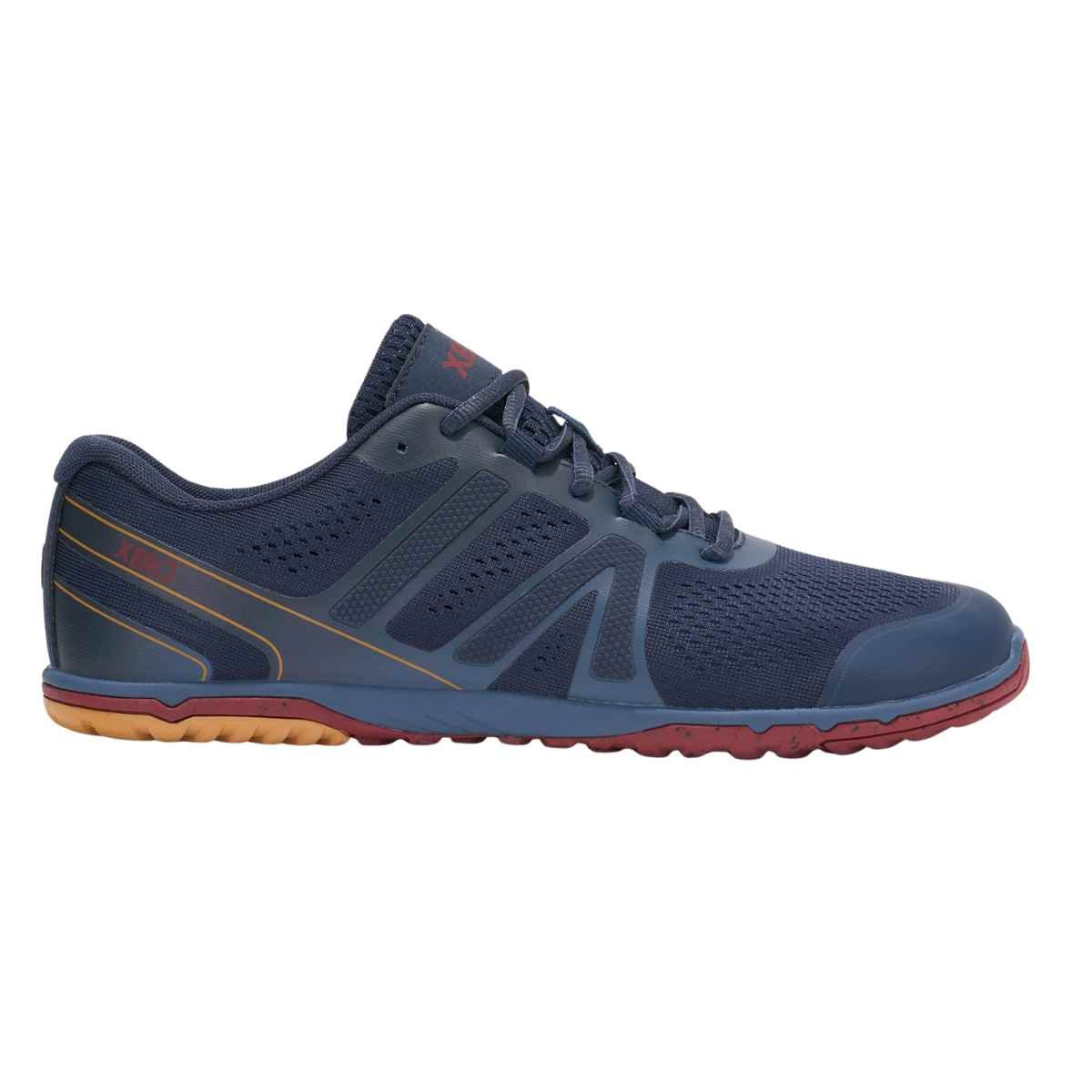
MSRP: $130
Stack height: 8.5 mm
Weight (per pair): 14.8 oz (men’s), 13.4 oz (women’s)
Upper: Polyester textile/TPU
Outsole: FeelTrue rubber
Flexibility: High
Grip: Medium-high
Groundfeel: High
With great dry-pavement traction, the Xero Shoes HFS II are a great pair for runners committed to finding a road shoe that feels like you're barely wearing a shoe. This isn't an approachable model for new barefoot shoe runners, but seasoned barefoot runners can appreciate their exceptional flexibility and groundfeel.
Xero Shoes HFS II
Men's
Women's
What to look for in barefoot shoes
Drop and flexibility
Any barefoot shoe that doesn’t have zero drop underfoot from the heel to the toe isn’t really a barefoot shoe at all! All barefoot shoes should have the same stack height at the heel as they do at the toe.
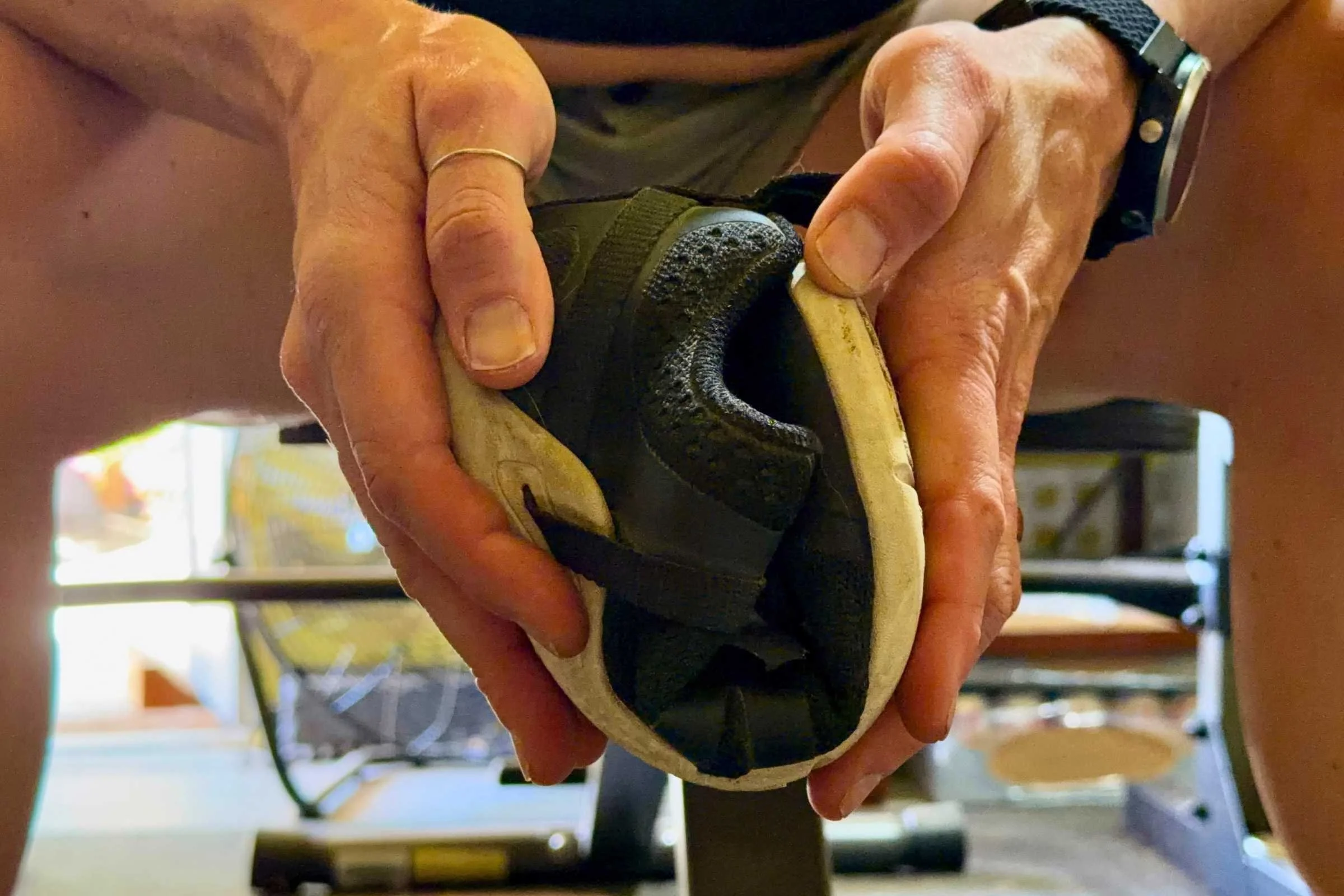
There’s a huge range in sole flexibility among barefoot shoes, which is not entirely uncorrelated with sole thickness (sole material also plays a big factor). Higher flexibility underfoot offers a truer “barefoot experience” but also requires a more thoughtful transition period to allow your feet time to adjust to a new style of movement.
Fit and toe box
Most, but not all, barefoot shoes have wider toe boxes than conventional shoes. The wider a toe box is, the closer to a natural foot movement you’ll be able to achieve while wearing them because your toes can splay more naturally. If you’re coming from more confined, conventional shoes, it can take some time for your feet to build the small muscles needed to better support you while wearing wider barefoot shoes.
Groundfeel vs. protection
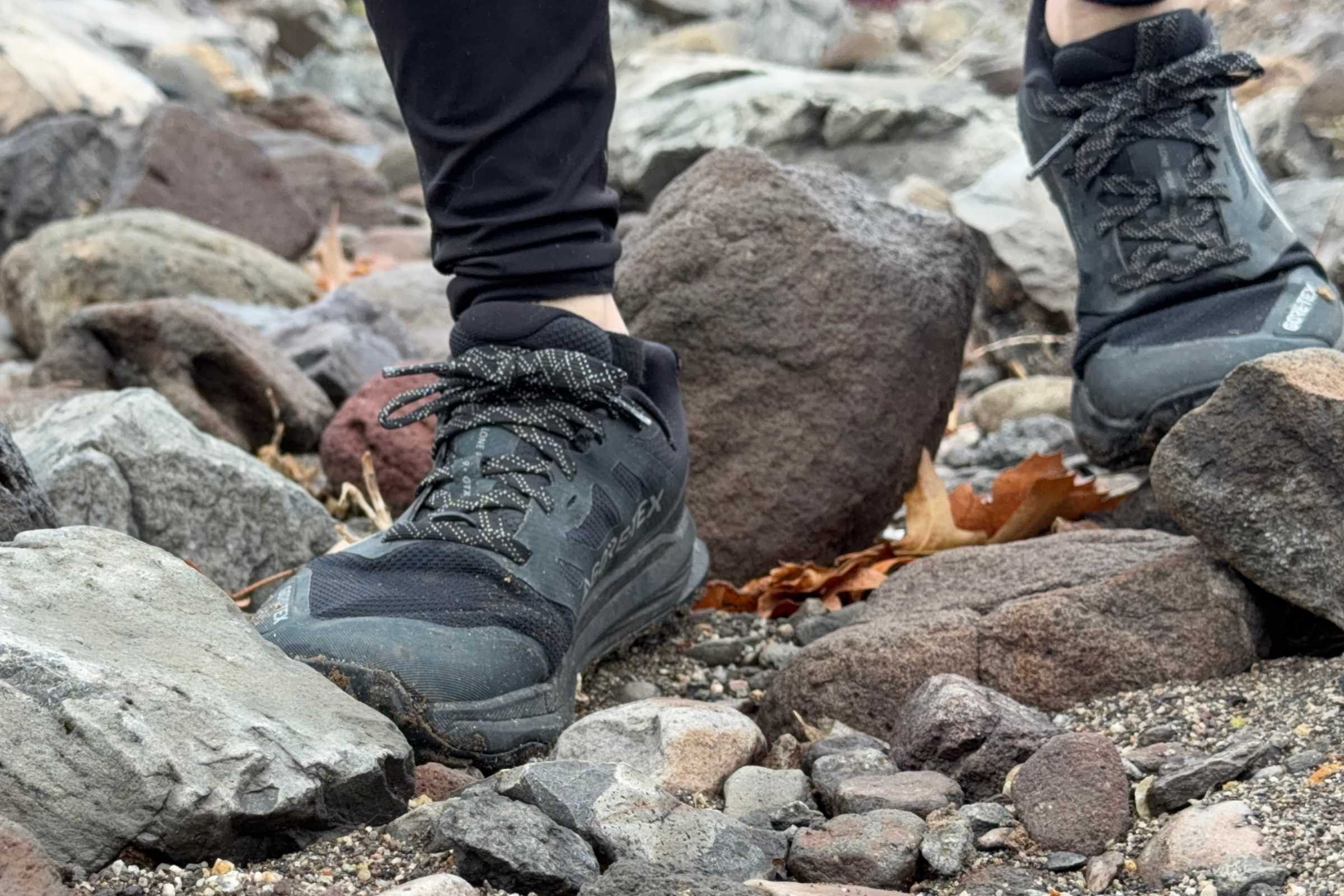
How much detail you can feel of the ground underfoot, or “groundfeel,” is a personal preference. The more you can feel, the more your feet can grip, pivot, balance, and stabilize you as you move. Higher groundfeel also requires a longer and more careful break-in period for unaccustomed feet, as they develop the required musculature, and often feels like “tired feet” as you transition.
This added groundfeel is typically achieved by thinner, more flexible soles, which also lowers underfoot protection from sharp rocks and sticks. Shoes with exceptionally high groundfeel and low underfoot protection require some of the longest training periods for your feet.
Outsole grip
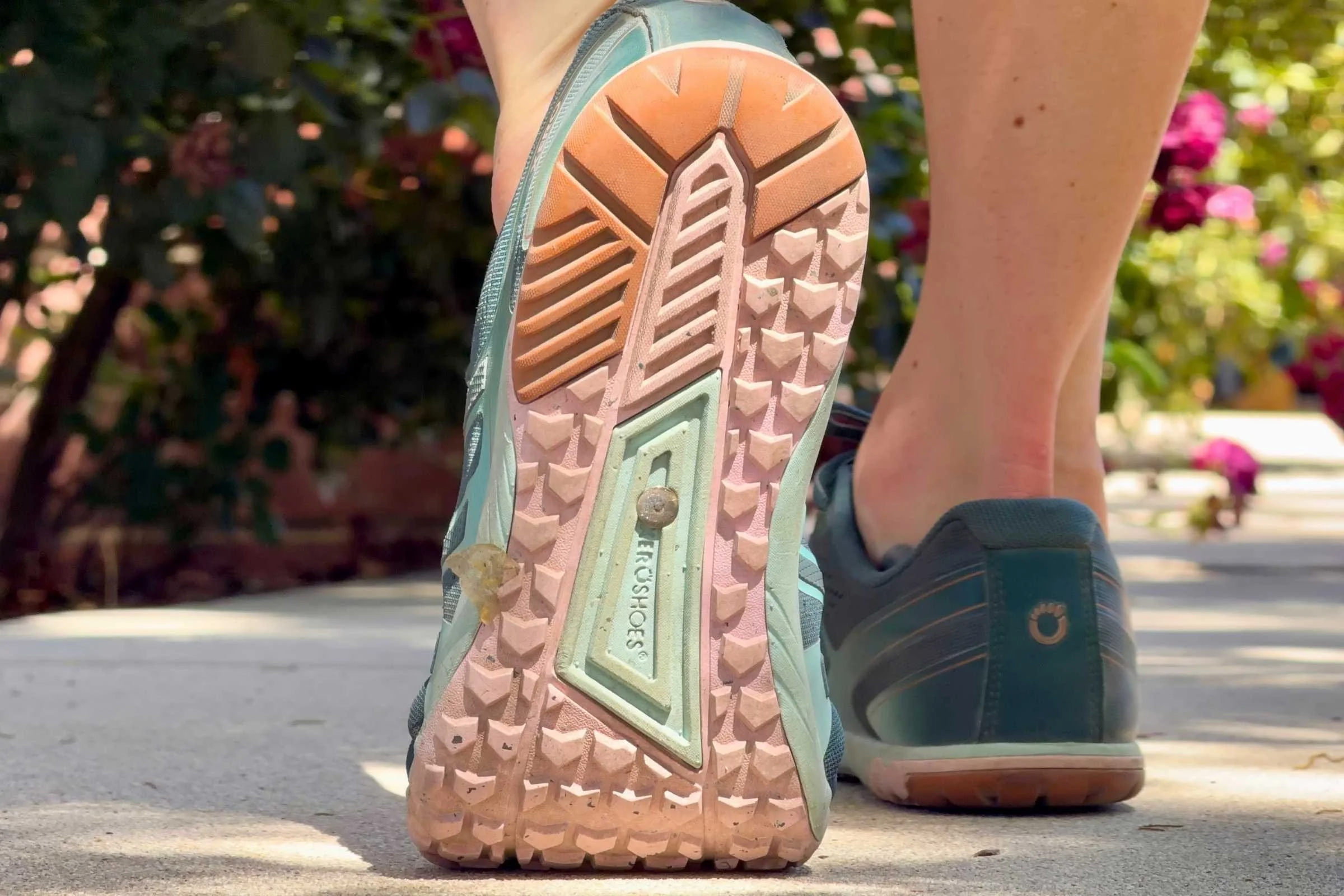
For outdoor endeavors like trail running and hiking, outsole grip and traction is particularly important. Looking at the size, shape, and depth of lugs is a useful starting point to gauge traction. If the shoes have very thin soles, larger lugs can sometimes be felt underfoot—another new sensation to get used to (or avoid, depending on your personal preference).
On wet ground, the material of the outsole can also make a big difference for grip, with harder materials like Vibram soles offering better grip in mud, rain, and even snow.
Traction and grip are also important for gym-goers and court sports. Check the edges of the outsoles for a starting point to determine whether the shoes are meant for lateral stability (think abrupt sideways dashes during a basketball game or certain plyometric exercises). The Xero Shoes 360 are a good example of court-ready barefoot shoes.
Upper materials
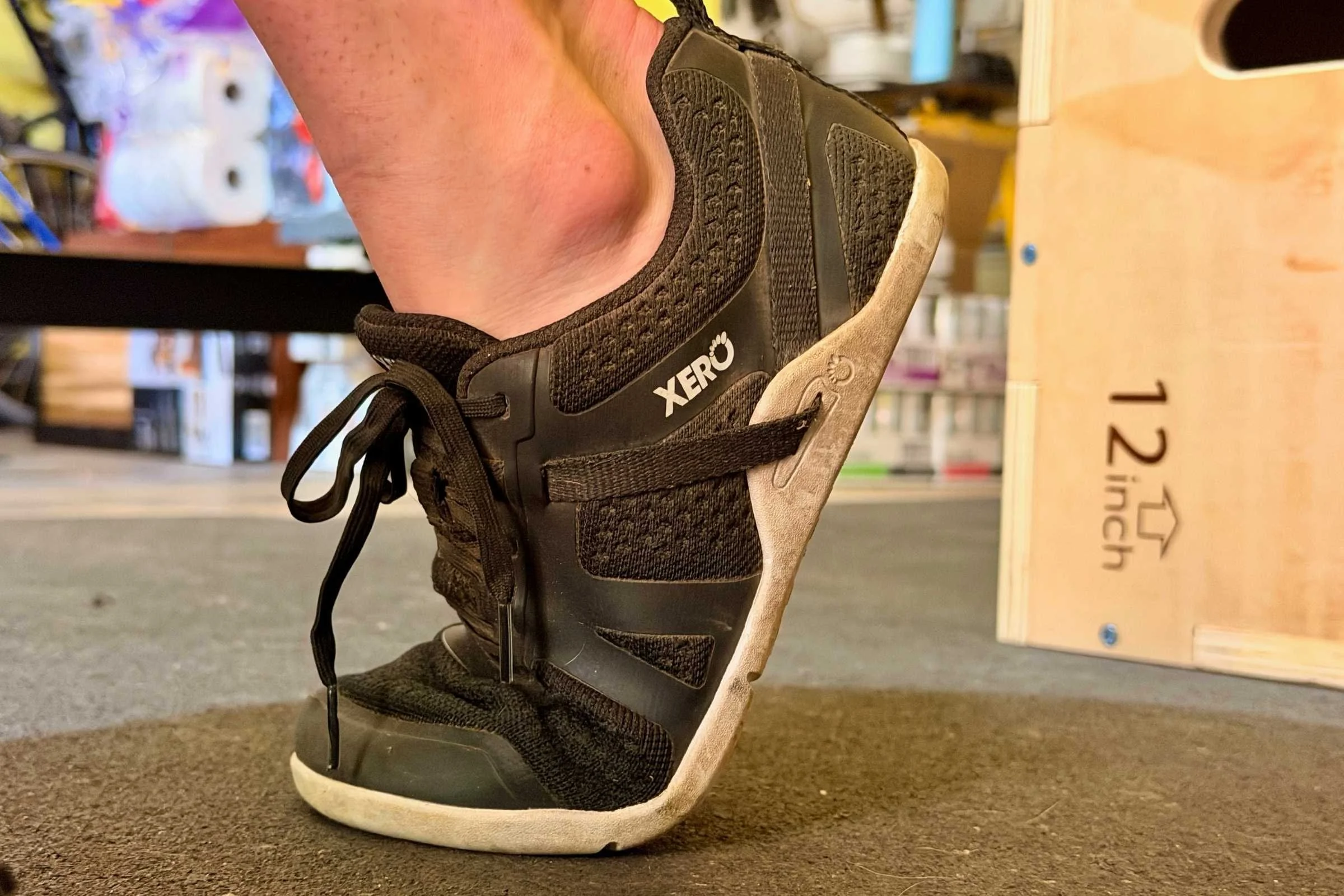
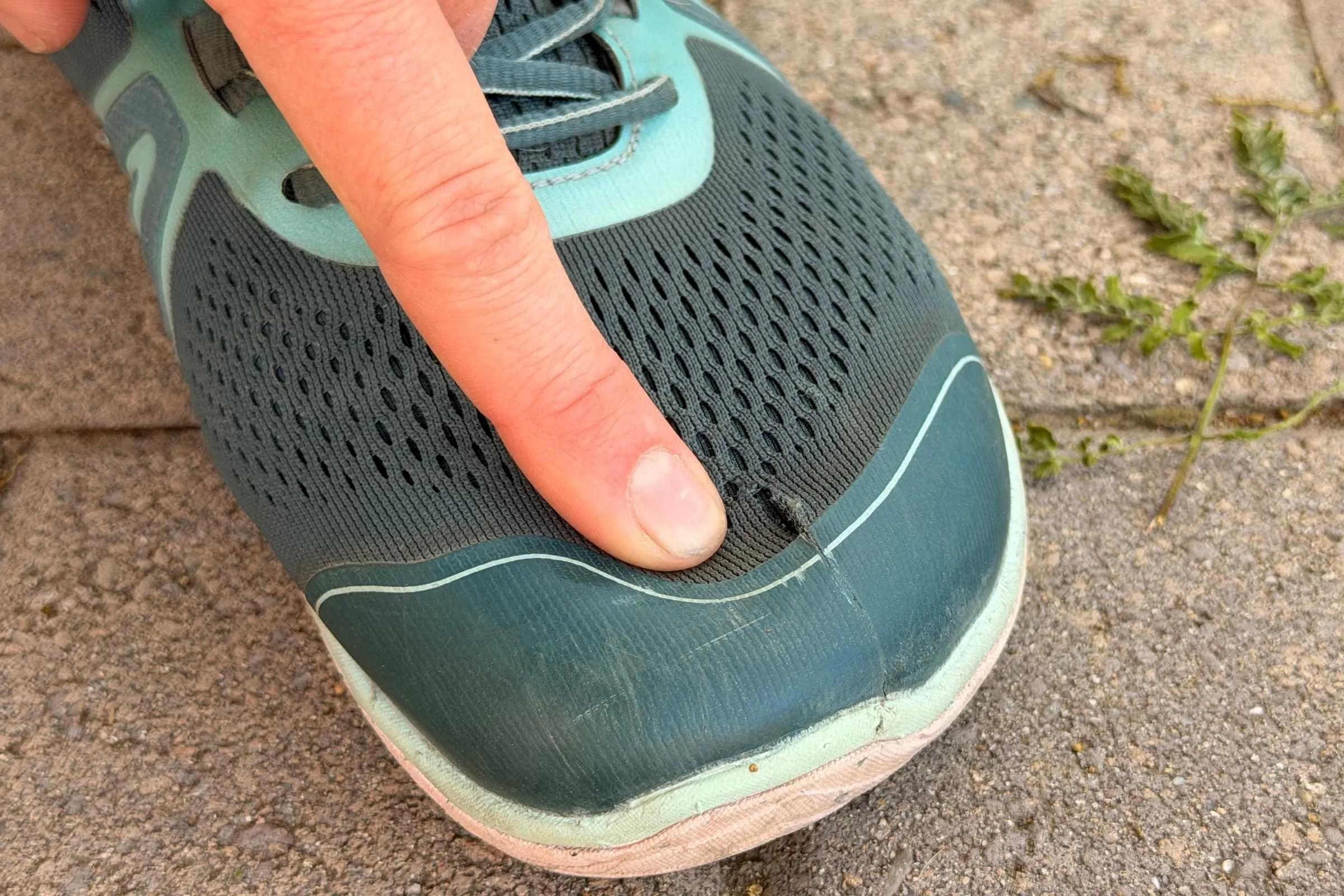
The material and weave density of shoe uppers make a large difference to their overall breathability. Leather or synthetic leather uppers can be stylish, but have low breathability in hot environments, during workouts, or for people who run hot. Loosely woven fabrics or those with obvious vents can help to keep feet cool, but often come with lower overall durability and foot protection.
Transition comfort
The more different a pair of barefoot shoes is from what you’re currently wearing, the longer your transition to them should be. Compare your new barefoot shoes’ toe box width, sole flexibility, heel-toe drop, arch support, and sole thickness (or stack height and cushion) to the shoes you’ve been wearing for the same activities, to get a better idea of how similar or different they are, and therefore how long or short to expect your transition period to be.
When you transition to your new shoes, we recommend starting the new shoes off on shorter walks/hikes/runs and swapping to your older shoes every other time until you feel comfortable in the new barefoot shoes.
Durability and maintenance
As with conventional shoes, barefoot shoes follow similar trends regarding their durability and how many miles they’re designed to last. Additionally, many barefoot shoes can also be worn without socks. If you plan to do so, looking into their washability is an important factor for your long-term happiness with your new shoes.
Waterproofing and quick-dry
Barefoot shoes follow the same trendlines as conventional shoes when it comes to how quickly they dry if you step in a puddle or go out in the rain. Depending on their upper materials, some may be waterproof, or some can be treated with a waterproofing treatment like Nikwax. Always refer to the manufacturer’s care instructions.
Sustainability
As with any shoes, some manufacturers may utilize recycled materials or prioritize sustainable manufacturing pathways. The specific materials and strategies used by brands are often evolving, sometimes becoming more sustainable, sometimes less.
If this is an important aspect of choosing shoes for you, look to manufacturers who offer transparent information about their methods. Certain manufacturers, like Xero Shoes, strive to create shoes with soles designed to cover thousands of miles, in an effort to cut down the number of shoes you’ll go through in your own lifetime.
Benefits of barefoot shoes
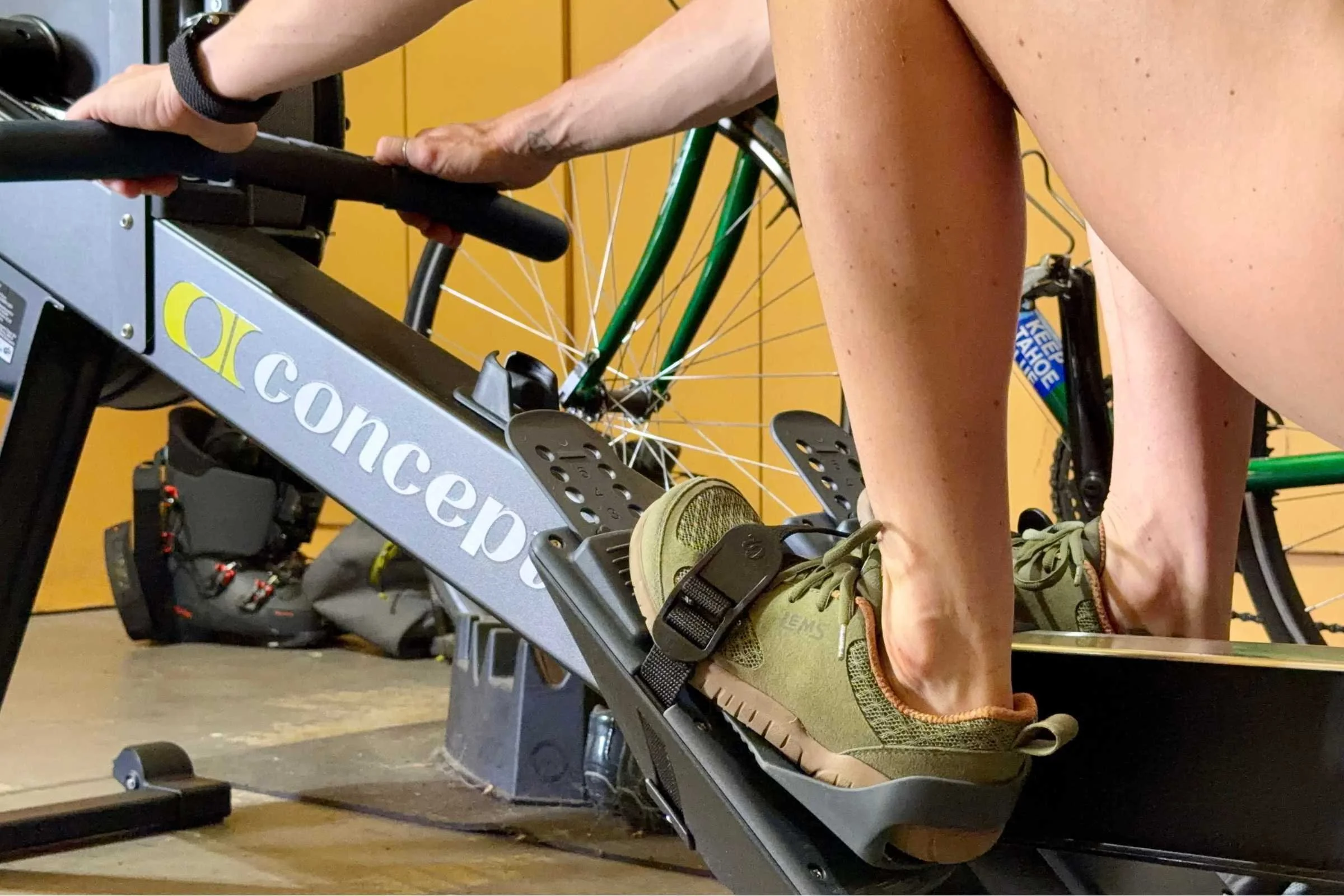
The benefits you might gain from converting to barefoot shoes can be significant, but many will depend on your feet, activities, and preferences.
For many people, your foot shape has already been impacted by what sorts of shoes you wore as your feet were growing, and the types and fit of shoes you wear most often as an adult. Barring potential foot maladies, getting used to wearing barefoot shoes encourages your feet to develop their muscles and better support you.
Rather than relying on your shoes to improve your posture, increase your stability, or better your balance, (most) barefoot shoes are designed to let your feet do that for you. As you gradually shift from relying on your shoes to your feet, you may notice your gait changes and your posture improves. Over time, with regular practice, your feet can build the muscles that give you better balance on uneven surfaces and help you go farther in comfort.
It’s not uncommon for people transitioning to wearing barefoot shoes to notice their shoe size increase, both in length and in width, as their feet adjust from being confined to having room to spread out.
As an added bonus, many barefoot shoes are thinner, lighter weight, and easier to pack, making them great travel shoes and less fatiguing to wear on a daily basis (after the initial break-in period).
Barefoot shoes aren’t right for everyone, though. If you have or previously had a foot injury, the minimalist cushioning of most barefoot shoes may not be for you. Unlike most conventional shoes, transitioning suddenly and completely to barefoot shoes is not recommended and can actually lead to foot injuries. Barefoot shoes are not a “cure-all,” so we recommend discussing barefoot or minimalist shoes with a doctor if you have a history of foot injuries.
Even for those already wearing certain types of barefoot shoes (like those with thicker soles, stiffer soles, narrower toe boxes, or any combination of these factors), moving to a different style of barefoot shoe still requires a break-in period. Any increase in shoe width, sole flexibility, or decrease in heel-toe drop should be accompanied by a purposeful transition period to avoid injury.
Barefoot vs. minimalist vs. conventional shoes
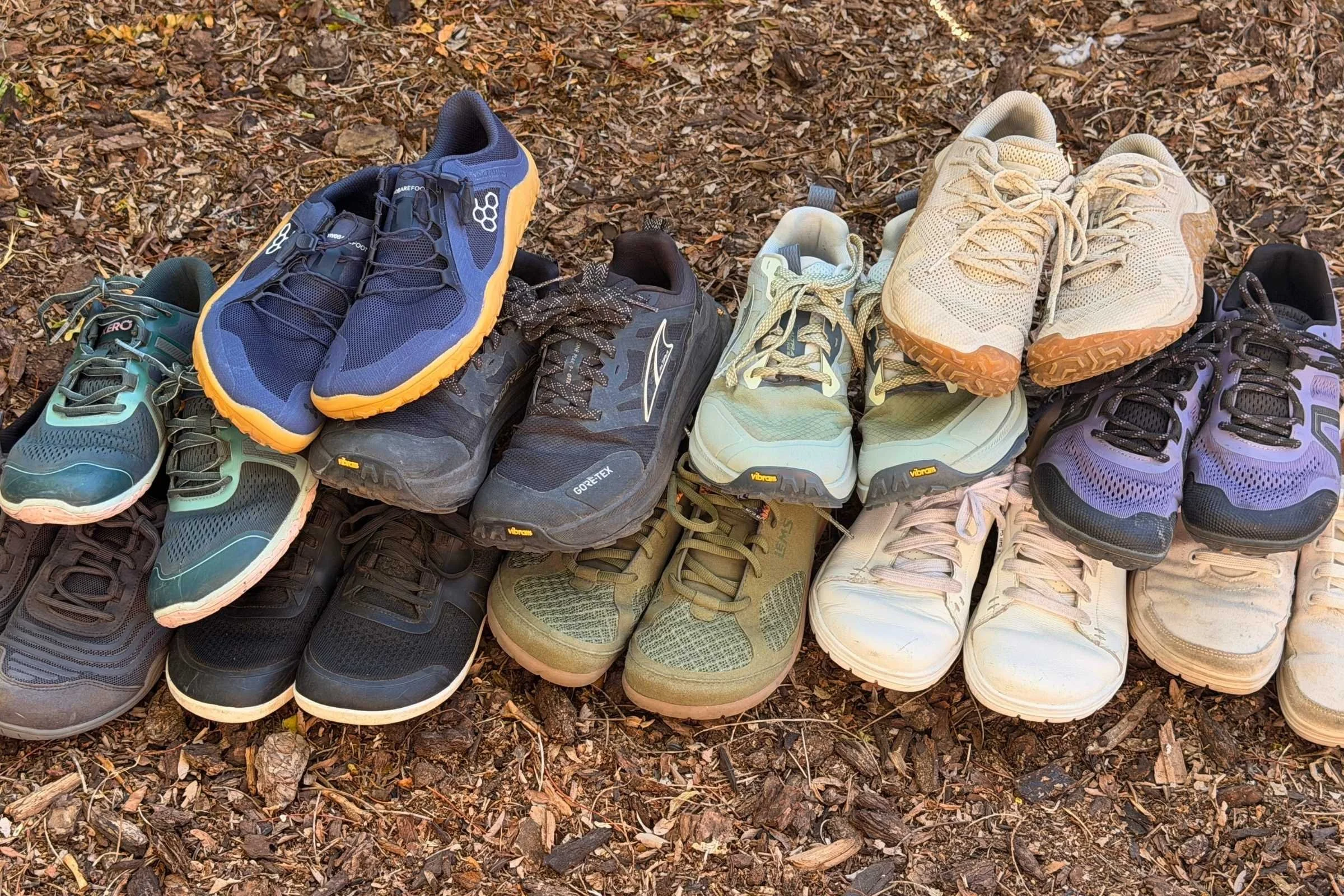
Barefoot: While there is no single set of “rules” that makes a shoe a barefoot shoe, they almost always have a few things in common, including zero heel-toe drop and minimal or no arch support. Additionally, most (but not all) have thinner, more flexible soles and wider toe boxes. All the shoes we tested for this review qualify as barefoot shoes.
→ With such a broad range of possible shoe designs, just about everyone can find a barefoot shoe that would work for their comfort and activities.
Minimalist: This descriptor means different things depending on your starting point. The most widely used definition of a minimalist shoe is a barefoot shoe with little or no cushioning and a wide toe box to avoid constricting your toes, creating the closest feeling to walking barefoot while still wearing a shoe. Some examples of minimalist barefoot shoes are any of the Xero Shoes models.
→ This type of minimalist shoe is best for those already used to other barefoot shoes, and looking to take the next step toward walking barefoot while still wearing shoes.
Less commonly, some shoes are labeled as “minimalist” while still holding many of the same traits as conventional shoes. This definition of “minimalist shoes” falls in the middle ground between conventional and barefoot shoes, with a low heel-toe drop (1-4 mm) and lighter cushioning. Some of the shoes made by Altra—like the Experience Flow 3—are good examples of this kind of shoe.
→ This type of minimalist shoe is a good option for those trying to gradually transition from conventional shoes to barefoot shoes.
Be sure you understand which definition of “minimalist shoes” a manufacturer is using, before making your final purchasing decision.
Conventional: These are your “regular” sneakers. They typically have a higher heel-toe drop (5-13 mm) and a good amount of underfoot cushioning. These sorts of shoes rely on their structure to support the wearer’s balance, stability, and comfort.
→ This sort of shoe is a good option for people who need extra support from their footwear, whether for injuries or certain types of activities.
How to transition safely into barefoot shoes
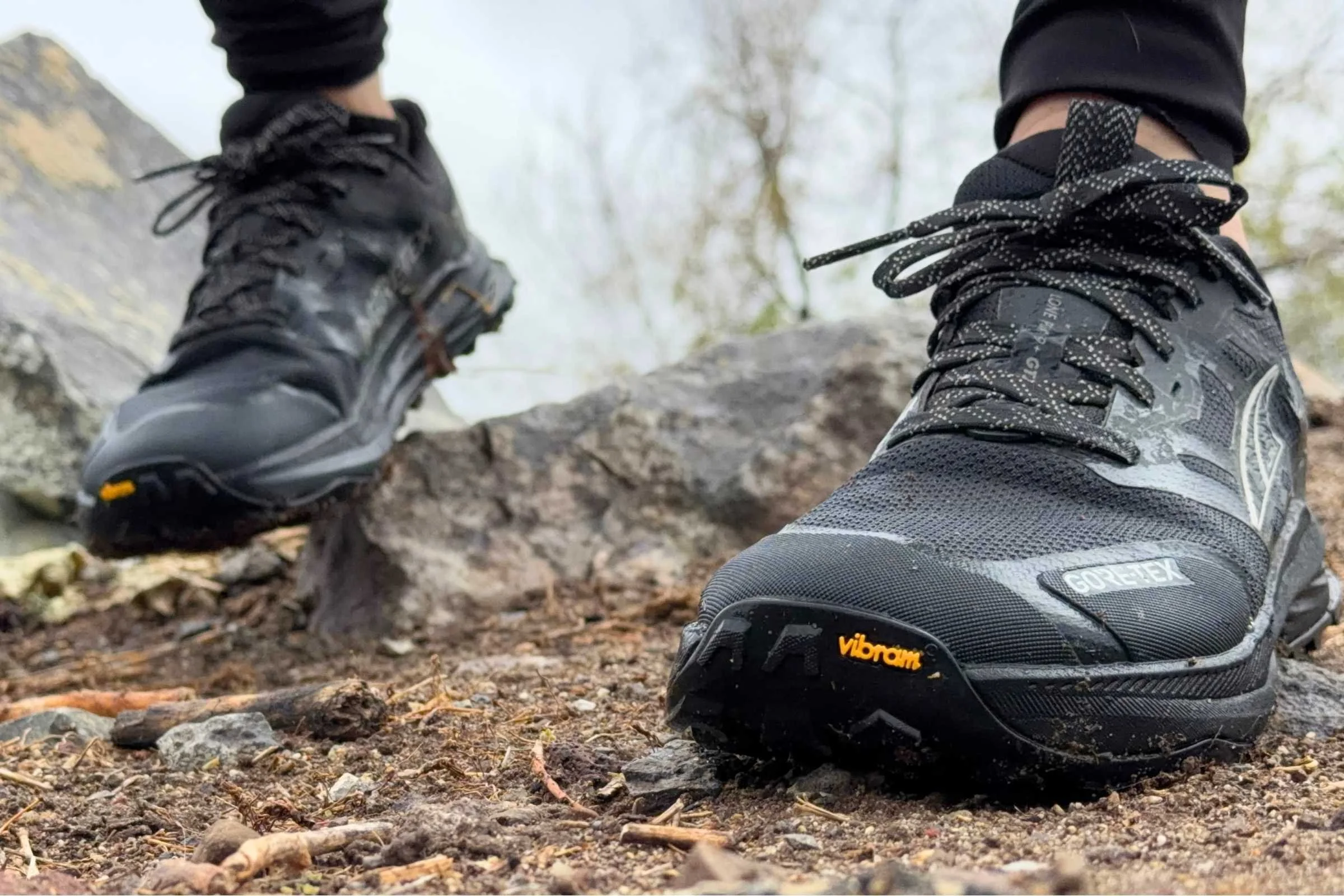
Before transitioning into any barefoot shoe, be certain that the ones you’re considering are a good match for your feet and intended activities. If you have foot or leg pain or other foot, ankle, or leg injuries, consult with your doctor before trying barefoot shoes.
For anyone making the transition, it’s best to choose a pair that’s more similar to your current shoes. If you want even more minimalist footwear, you can then continue your transition to them over time. Make small changes to your shoes, rather than going from big clunky cushioned trainers to ultra-flexible, thin-soled minimalist shoes.
Once you’ve chosen your barefoot shoes, don’t immediately start wearing them all day long. Instead, start gradually, wearing them for short periods of your normal activities. For example, if you’re replacing gym shoes that you typically wear for an hour each day, still bring those shoes with you, and change into them after partway through your workout. If you’re changing up your running shoes or walking shoes, don’t go for your full run or walk—instead, take a shorter run or walk that’s less than half of what you normally do. Especially at the beginning, take days off between wearing your new barefoot shoes to give your foot muscles a chance to repair and grow.
As you ramp up your use of barefoot shoes, pay special attention to foot, ankle, and calf pain, as well as any noticeable fatigue. Just as you shouldn’t go from not lifting weights to benchpressing 100+ pounds, your feet, ankles, legs, knees, and hips need time to adjust to the changes underfoot. Rather than setting a rigid transition plan, you’re better off listening to your body's feedback and adjusting your wear more or less as it demands. Any new sensations from the hips and downward can be attributed to your shoes.
If things are feeling good, or if you want to strengthen your supporting muscles before transitioning to barefoot shoes, you can work on exercises that help to strengthen your feet and calves ahead of time. Joint support exercises for your ankles, knees, and hips are also very useful as you transition to less-cushioned shoes. As always, be ready to scale your exercises and stretching based on what your doctor and your body tell you they need.
It’s also worth noting that barefoot shoes aren’t going to work for everyone, and that’s OK! It could be that your body and your needs don’t match the shoes you’ve chosen. The great thing is that there are so many barefoot shoe options available on the market today that you may still be able to find a pair with the cushioning, fit, and support you need for whatever stage of life you’re in.
Care and maintenance
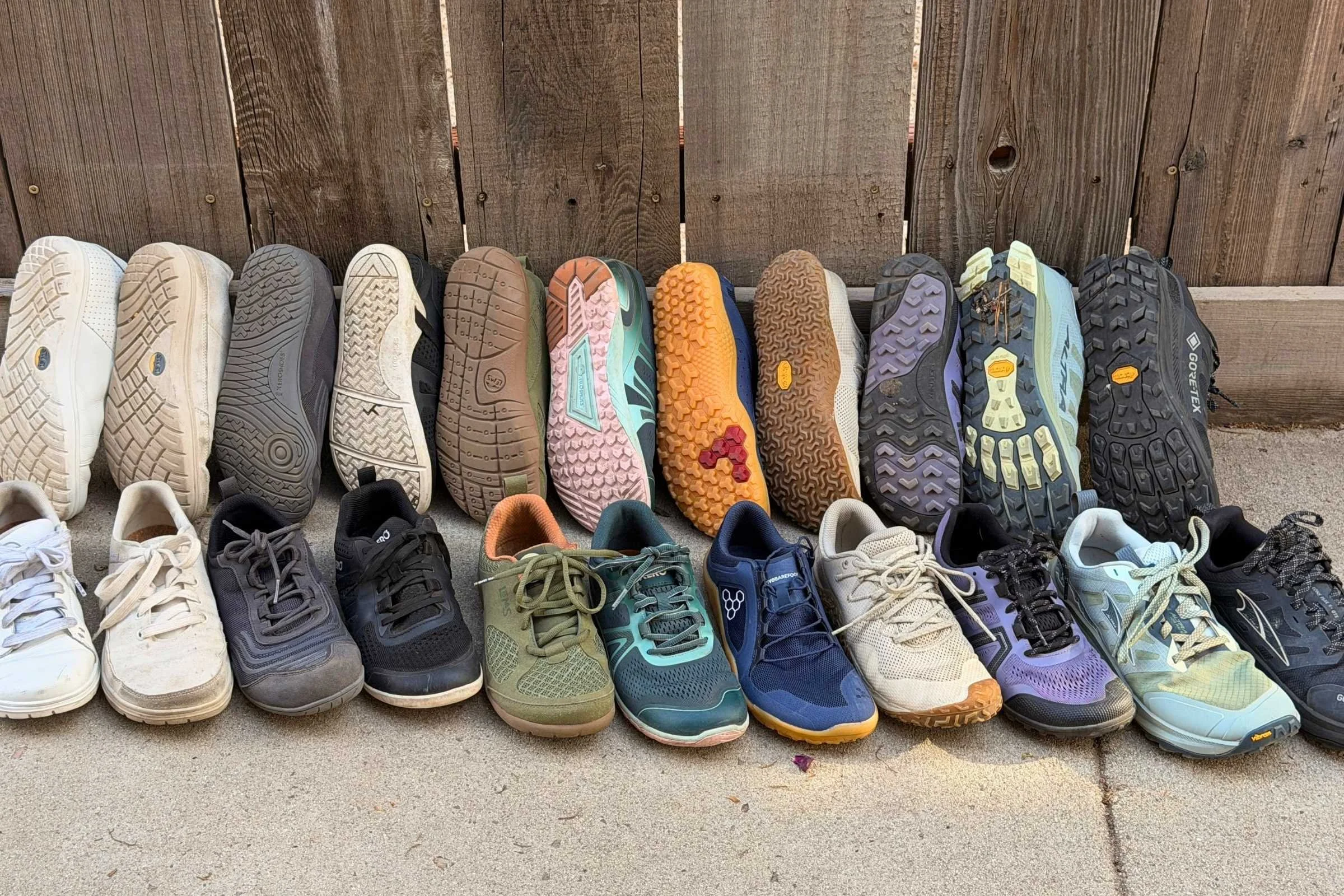
Rinse off mud and sand, and air-dry away from heat (not in direct sun). Set in a shaded, protected area outside, if the temperature is right for drying (~50-90 degrees F).
Hand-wash or gentle machine cycle (depending on manufacturer recommendations).
Check the outsole and upper stitching regularly for signs of wear that indicate a need for replacement.
Remove insoles and loosen or remove laces for faster drying.
FAQ
-
Absolutely! Just like with any shoes, not all pairs will work for all wearers or all situations. However, there are a ton of barefoot shoes with different amounts of support and cushioning, so just about everyone can find a pair that will work for their everyday activities.
-
Definitely, you can hike in barefoot shoes. There are plenty of options for minimalist or barefoot shoes with high traction that work well on loose trails, dirt, or over wet surfaces. Once properly transitioned to wearing barefoot shoes, many hikers appreciate the added groundfeel and grip they provide.
-
They definitely can, though not in every case. For most people with flat feet or minor foot pain, transitioning to barefoot shoes helps build the foot, ankle, and calf muscles that better support them. However, foot pain can be a sign of a more serious issue, and flat feet can be caused by an underlying condition. It’s best to speak with your doctor prior to trying barefoot shoes if you have either of these conditions.
-
That depends entirely on what sort of shoe you’re transitioning from and to, as well as your overall health conditions, but most people can adjust to barefoot shoes in a few weeks to a couple months. If you’re making a big leap from a thick-soled conventional shoe with high heel-toe drop to a thin-soled barefoot shoe with no cushioning, the transition could take months. On the other hand, if you’re moving from a low-drop shoe with low cushioning to a zero-drop barefoot shoe with thin underfoot cushioning, you might make the transition safely in a few weeks.
-
There is not currently enough scientific evidence to weigh in on this conclusively. What studies have shown is that transitioning too quickly from conventional shoes to barefoot shoes can have negative effects on your joints, particularly those between each foot’s 26 individual bones. Other studies support that being barefoot can change gait from heel striking, which is better for all the joints in your legs, particularly your knees.
-
Of course! Many barefoot shoes are designed for you to wear socks, just like conventional shoes. Some barefoot shoes are made to be worn without socks—this is usually specified by the manufacturer. Ultimately, you should wear what’s comfortable to you.
-
Just as with conventional shoes, some barefoot shoes can be waterproof. They are often made of the same materials as conventional shoes, including waterproof options like GORE-TEX.
-
Almost never. This is one of the few things that define a barefoot shoe (the other is zero heel-toe drop). However, as you develop foot strength, most people find they don’t need arch support. Rather, your foot’s arch is there to support you by acting as an anatomical spring, adding strength, balance, and flexibility to each step.
-
You can put insoles/orthotics into any shoe with a removable insole. If you’re currently using an orthotic insole, putting it in your new barefoot shoe can help with the transition to this type of footwear. The long-term goal of most barefoot shoes is to help build up your foot and lower leg muscles so that you don’t have to wear orthotics anymore — but if your doctor has recommended orthotics to you, it’s best to come up with a plan to make the transition to barefoot shoes with your doctor.
-
The difference between trail and road barefoot shoes is the traction. Trail shoes tend to have larger, more pronounced lugs that bite better over large uneven surfaces—think climbing a gravelly hill or crossing a rocky field. Road or everyday barefoot shoes tend to have smaller, closer-together traction patterns that better grip smoother, tighter surfaces.
-
Yes! While not all barefoot shoes have wide toe boxes, many prioritize more space for the forefoot. This allows your feet to spread out and move more naturally, even if you don’t have wide feet. However, if you have extra-wide feet, this may not be enough; you should still seek barefoot shoes in wide sizes.
How we researched and tested
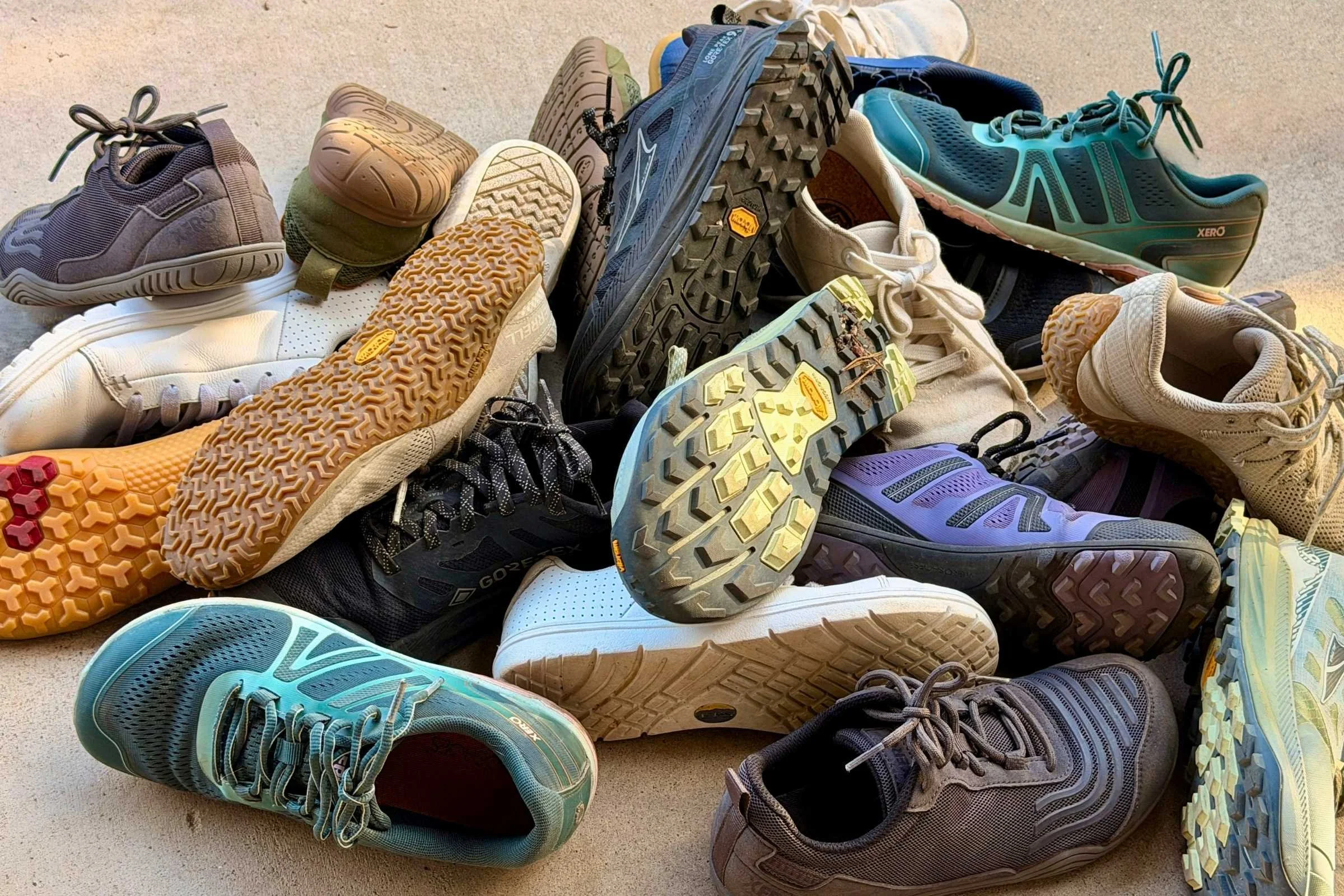
We tested these shoes over several months and hundreds of miles of wear. From snowy winter mornings to hot desert afternoons, we wore these shoes a lot. We walked the dog through the neighborhood and on gravelly and muddy trails, went to the gym to row and lift weights, and wore them to move heavy furniture around on pallet racking and sealed concrete floors.
Our main tester wore them every day for all her activities for months, undertaking 30K+ walking days around Manhattan and 14-hour days working events. She evaluated them on runs and through plantar fasciitis flare-ups, carefully considering their comfort, flexibility, durability, and protection while slogging backpacks through airports and toting boxes up and down stairs.
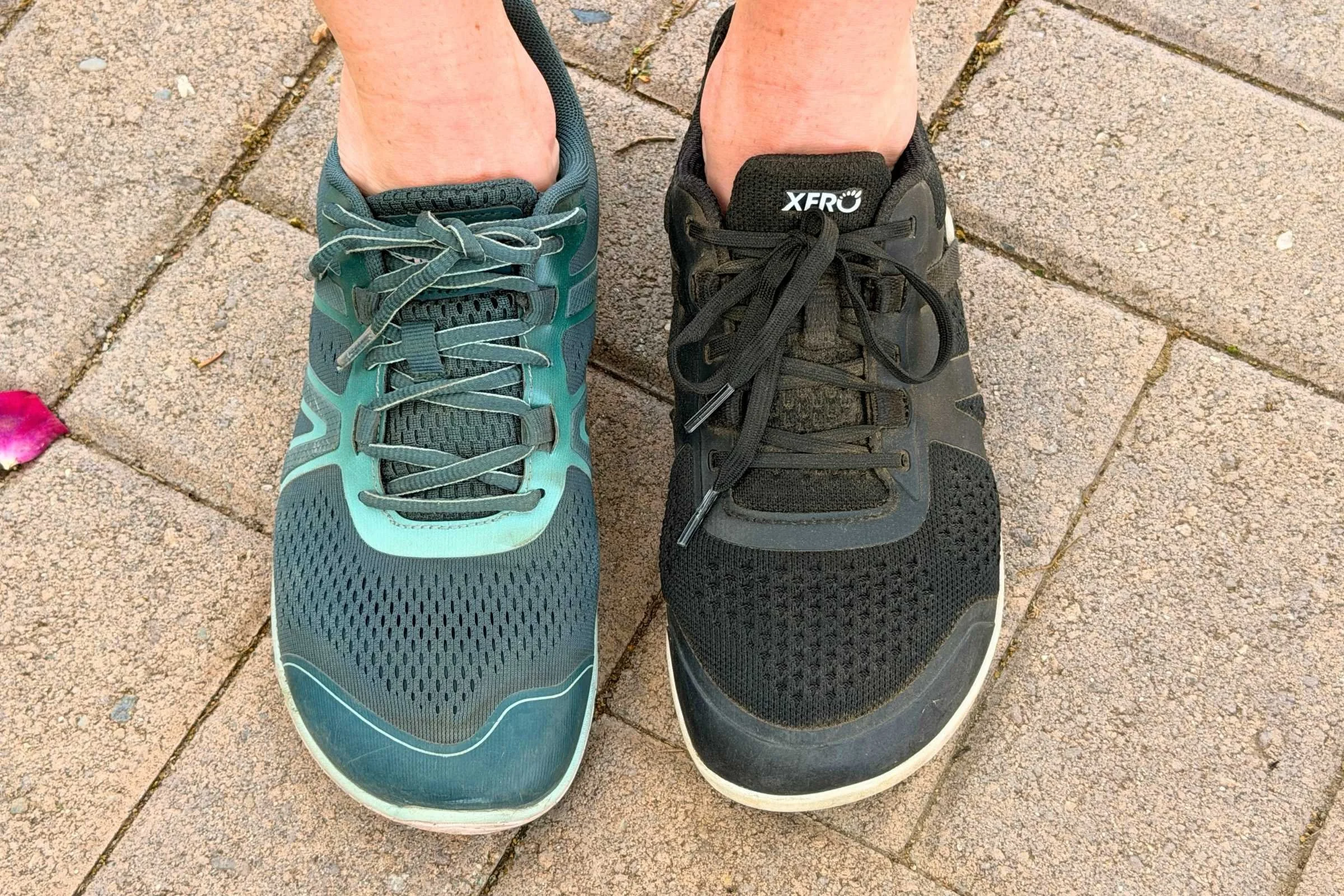
We pulled in friends and family to test these shoes in both women’s and men’s versions, getting opinions and experiences from people with different foot shapes, different gait patterns, and different preferences. While our main testers were committed barefoot enthusiasts, we also solicited feedback from wearers with little to no familiarity with wearing barefoot shoes.
- 30K+ step days walking Manhattan
- Runs & plantar fasciitis flare-up recovery
- Gym workouts: rowing, lifting & plyometrics
- Gravelly & muddy neighborhood trails
- Heavy furniture moving on sealed concrete floors
- Sole flexibility & groundfeel
- Traction on polished floors, wet ground & trail
- Toe box width & natural toe splay
- Breathability & sockless comfort
- Break-in period length & transition comfort
Why you should trust us / About the author
Maggie is an avid trail runner based in Reno, Nevada, hitting her neighborhood trails at least four days a week and taking hikes in her backyard Sierra Nevada Mountains and through the deserts of northern Nevada as often as possible. She likes to compete in both trail and road races and is no stranger to the podium. She worked as a professional backcountry guide for over 15 years, backpacking, hiking, and kayaking, from places like Texas and Utah to the U.S. Virgin Islands and the Galapagos Islands, mostly in a pair of Chaco sandals.
Maggie started her barefoot journey running in some of the early Vibram Fivefinger shoes back in 2009. Though she added some cushion to her runs after a few years pounding cement, she is still adamant about running in only zero-drop shoes. She has logged thousands of miles in nine pairs and iterations of the Altra Lone Peak trail shoe line over the past decade.
Not only is Maggie a passionate advocate for wearing barefoot shoes, she also studied hand and foot evolution and morphology at university and completed a Master’s thesis on chimpanzee hand and foot manipulation of tools. She spent 7 years teaching anatomy and osteology labs at the university level, giving her a high level of familiarity with the more than 100 bones that make up human hands and feet.
When not running, Maggie loves to be as barefoot as possible, feeling the ground and honing her foot stability and strength. She explores her natural backyard with her dog, Isla, and travels the world with a pair of barefoot shoes on her feet and Altra Lone Peaks in her bag.