Best Bike Cargo Racks of 2026
The best front and rear bike cargo racks for commuting, touring, mountain biking, and bikepacking
September 5th, 2026, with a new overall winner, two new racks tested, to remove discontinued products, and to verify our rankings with an additional year of testing
Home > Gear Reviews > Cycling
Sam has spent more time thinking about bike racks than most people. He has sorted through piles of donated racks at bike co-ops looking for the right one to modify for the front of his bike and has even fabricated racks from salvaged metal and old bike parts. That experience helped us assess not only how these racks perform, but also how easily they can be mounted, adjusted, and repaired.
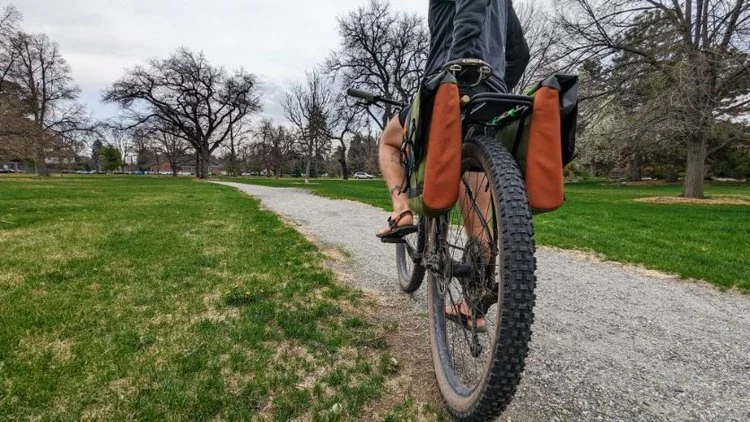
We tested racks while riding around Denver and the Colorado Front Range and on a bikepacking trip in Arizona. We mounted the same two pannier systems, custom mini panniers from One T Designs and Ortlieb Classic Panniers, to each rack so we could compare load stability, heel and wheel clearance, and pannier compatibility on equal footing.
We evaluated installation, bike compatibility, platform rigidity under heavy and awkward loads, pannier fit, mounting versatility, weight, and long-term durability. A good rack needs to fit your bike’s wheel size, brakes, axle, and mounting points while securely carrying the bags or cargo you actually plan to use.
Top Pick: The Portland Design Works OxRack Front Rack earns our Best Front Rack award. It stood out for its 11-by-8.6-inch platform, compatibility with both top loads and panniers, secure five-point mounting system, and relatively low weight for a full-size porteur rack. It held up through a bikepacking trip and months of commuting afterward.
The Tumbleweed Pannier Rack earns our Best Rear Rack award. It stood out for its ability to work as either a front or rear rack, threaded bosses for attaching bottle cages or dry bags, low weight, and durable chromoly steel construction.
Related: Best Bike Panniers
We create reader-supported, objective gear reviews independently selected by our editors. This story may contain affiliate links, which help fund our website. When you click on the links to purchase gear, we may get a commission — without costing you an extra cent. Thank you for supporting our work and mission of outdoor coverage for every body! Learn more.
Comparison table
| BIKE RACK | TREELINE AWARD | MOUNT POSITION | WEIGHT LIMIT | RACK WEIGHT | MATERIAL | PRICE |
|---|---|---|---|---|---|---|
| Portland Design Works OxRack Front Rack | Best front rack Read why |
Front | 22 lbs | 1.6 lbs | Aluminum alloy and stainless steel | $95 |
| Tumbleweed Pannier Rack | Best rear bike rack Read why |
Rear or front | 45 lbs | 1.18 lbs (without hardware) | Chromoly | $155 |
| Axiom Transit Rack | Best for commuting Read why |
Rear | 110 lbs | 1.21 lbs | Aluminum | $40 |
| Planet Bike Eco Rack | Best affordable Read why |
Rear | 55 lbs | 1.43 lbs | Aluminum | $50 |
| Axiom Journey Suspension & Disc Lowrider Front Rack | Best front rack for bike touring Read why |
Front | 40 lbs | 1.29 lbs | Aluminum | $54 |
The Winners
Best Front Bike Rack: Portland Design Works OxRack Front Rack
Material: Aluminum alloy and stainless steel
Mount position: Front
Weight limit: 22 lbs
Rack weight: 1.6 lbs
What we liked:
Easy-to-install front rack
Integrated struts to mount a basket
Large top platform
Lightweight
What we didn’t like:
Lower weight capacity than rear racks
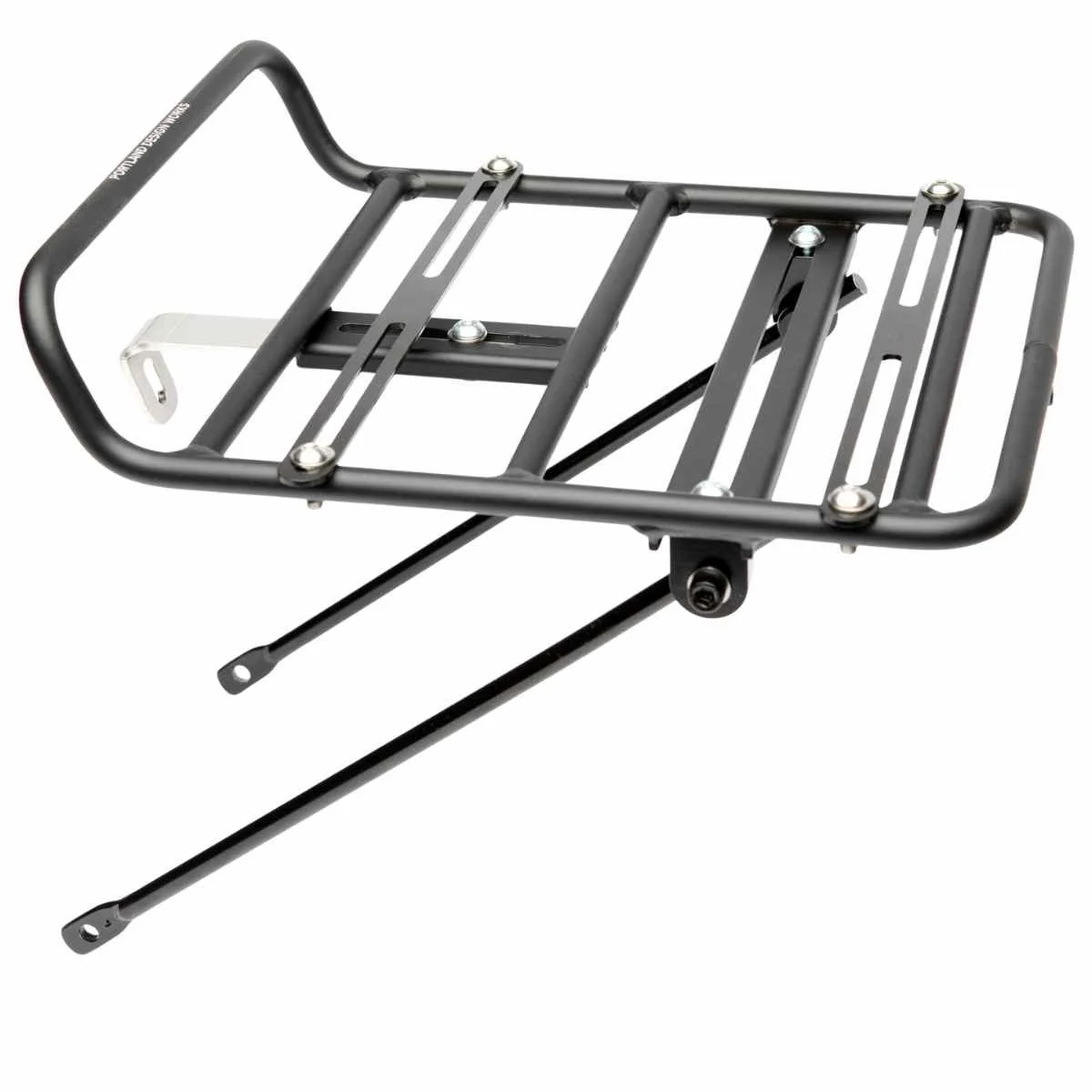
The PDW OxRack Front Rack is the best front bike rack we tested. It’s hard to find a good fork-mounted cargo rack, and this one shines with its wide platform that can fit bulky cargo items. It also has extra struts bolted to the platform to attach a basket on top.
We think this is the ideal rack for strapping anything on top for commuting, bikepacking, and general stuff-hauling. We started using it this summer for exploring on our gravel bike around Colorado. We used it on dirt forest roads for day trips, overnight bikepacking, and commuting around town. This rack feels very secure on rough dirt roads and potholed city roads, too. The hardware makes it easy to securely install it on any bike with mid-blade fork eyelets and a fork crown hole.
Portland Design Works OxRack Front Rack
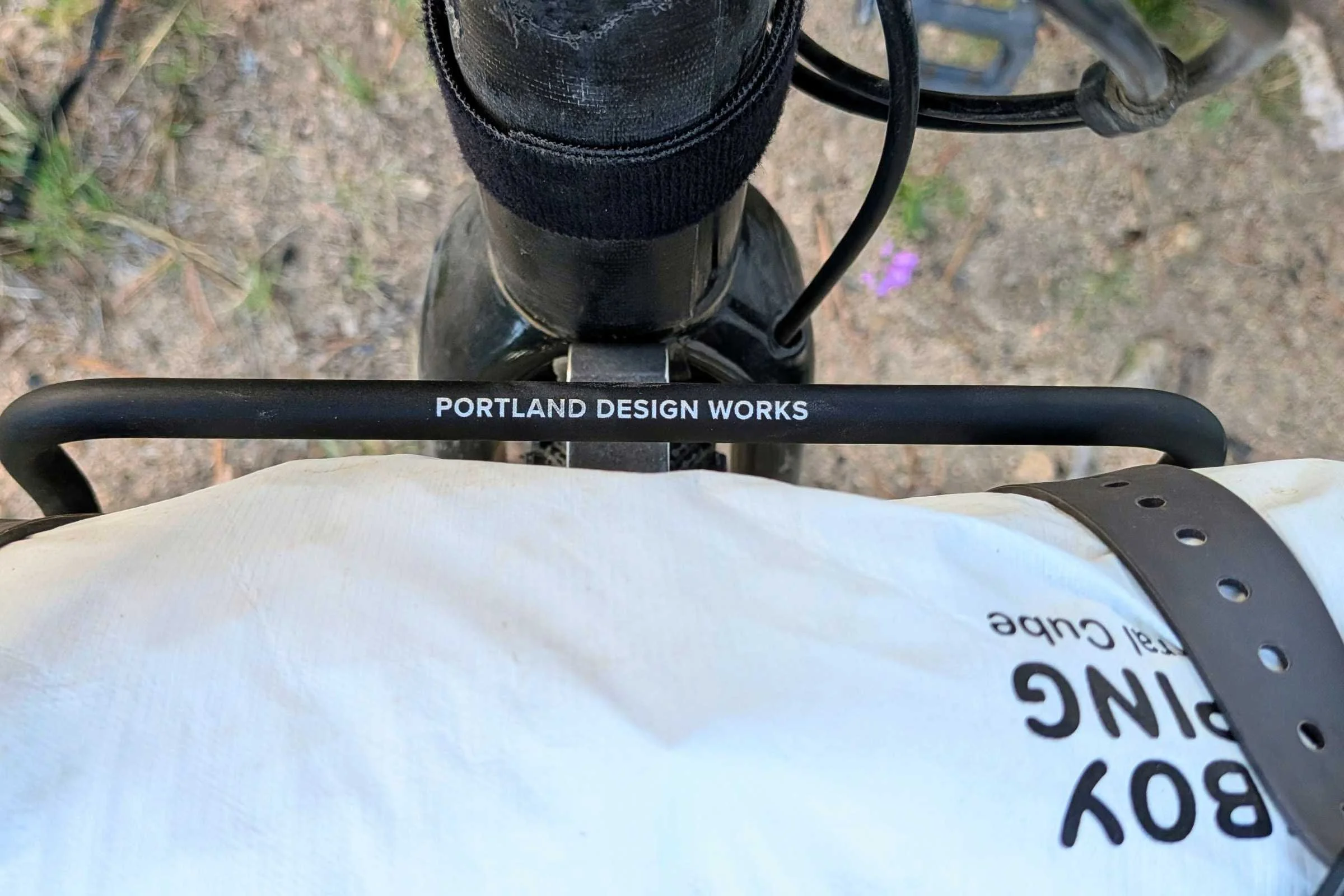
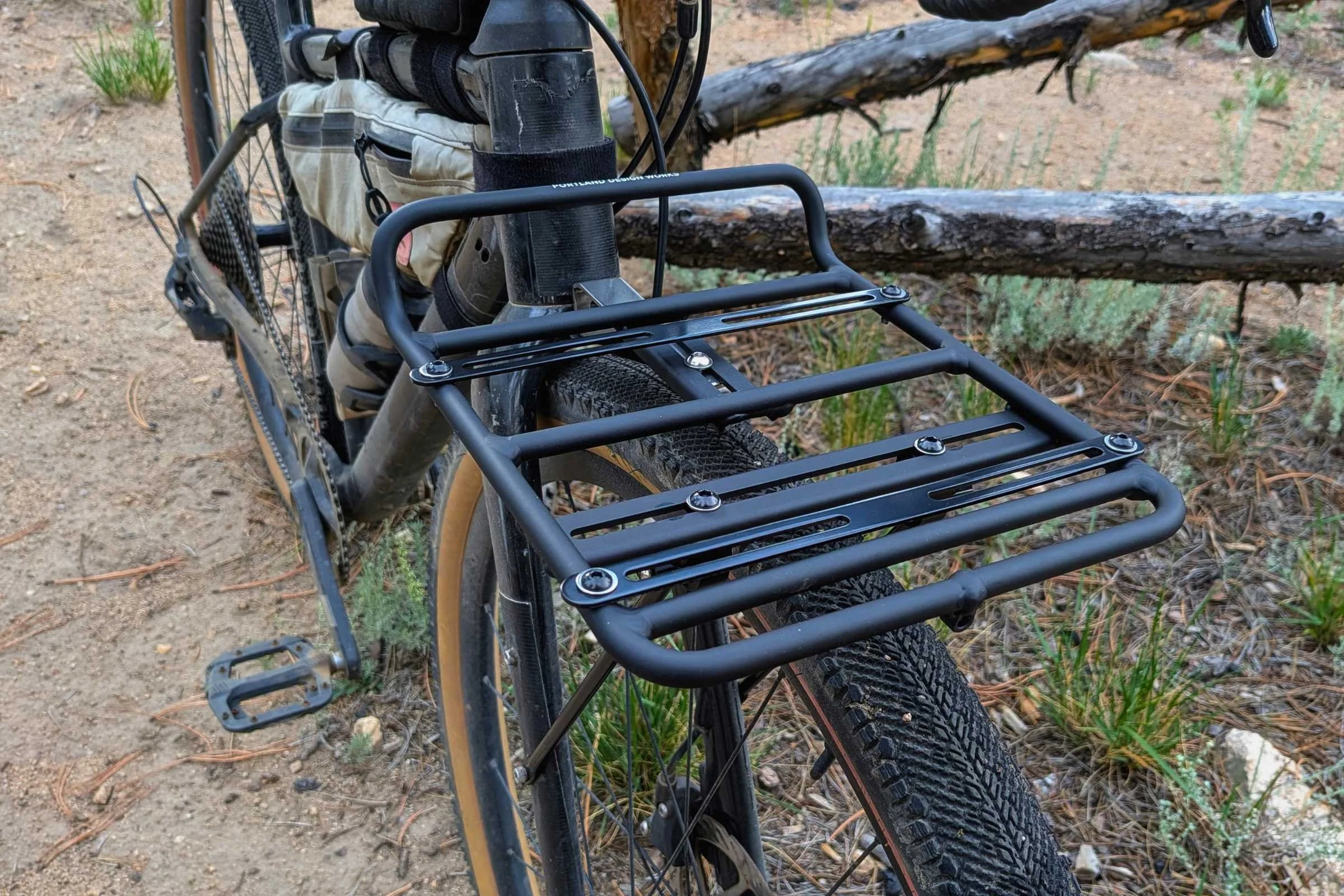

This rack is made of high-quality aluminum, so it’s lightweight. It mounts to your bike’s mid-blade fork eyelets, and the adjustable struts allow you to fit it to your bike without much head-scratching.
Its 11 x 8.6-inch platform is big enough for wider and odd-sized objects. This platform is the perfect size to mount a basket on top. It has four threaded bosses along the outsides of the rack platform with struts to mount a basket. This allows you to attach a basket or milk crate to your front rack without using a bunch of zip ties.
We like pretty much everything about this rack, but it’s pretty expensive. You could buy several rear racks for the price of this one front rack. However, there aren’t many top-loading front racks available, and they’re all similarly priced, too. So while nearly $100 is a lot of money, that’s the price you have to pay for a front cargo rack.
We think this is an excellent option for a wide-platform front rack to strap on a basket, bag, or pizza on your way home from work.
Best Rear Bike Rack: Tumbleweed Pannier Rack

Material: Chromoly
Mount position: Rear or front
Weight limit: 45 lbs
Rack weight: 1.18 lbs
What we liked:
Lightweight
Works as a front or rear rack
Strong
Easy to mount
Has threaded bosses for bottle cages
What we didn’t like:
Doesn’t work with large panniers
The Tumbleweed Bikes Pannier Rack is a lightweight and minimalist rack with the most functionality of any rack we tested, so we’ve deemed it the Best Rear Bike Rack. This rack works as a front or rear rack, has a set of threaded bosses on either side for mounting bottle cages or dry bags, and is super easy to mount. We love the versatility of this rack.
View The Tumbleweed Pannier Rack
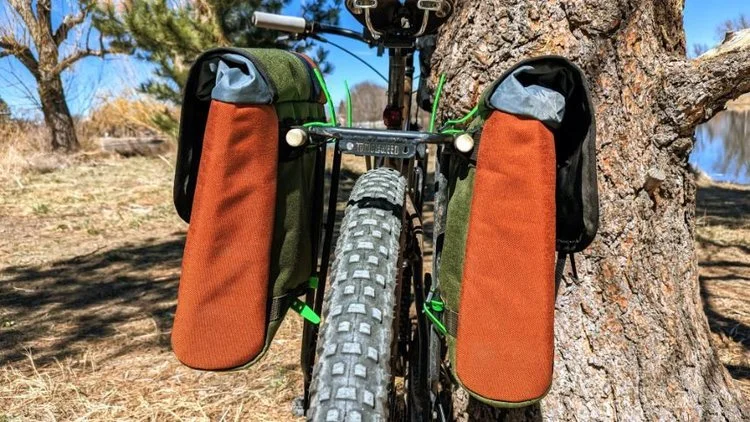

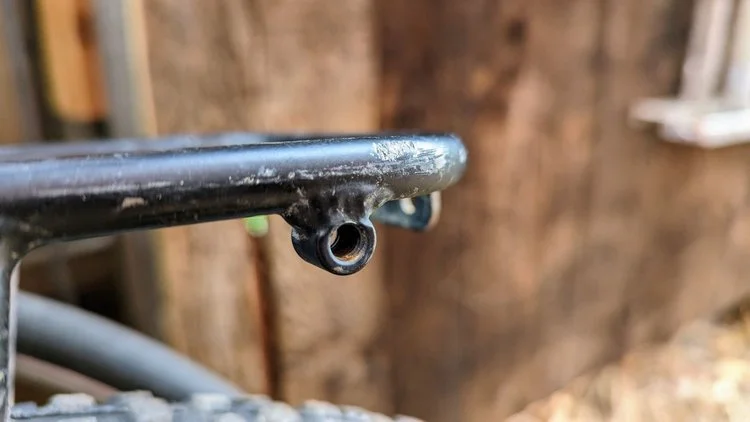
This year, Tumbleweed redesigned this rack and gave it a new name. It looks pretty similar to the Mini Pannier Rack, the rack we tested, but there are a few key differences. The newest version has an open loop platform design, so it’s now a U-shaped platform. It also has a redesigned mounting hardware to make it less likely it will loosen over time; two sets of 350 mm mounting struts, one straight and one offset (along with the shorter struts for mounting onto the front); and a Dynamo wire routing port next to the light mount. We’re looking forward to testing the updated version of the Chromoly Bike Rack and will report back here when we do.
During a bikepacking trip in Arizona this spring, we used it as a rear rack. With this rack, we stored a dry bag on top of the rack and two bottle cages holding 80 ounces of water on the sides of the rack. We also used this as a rear rack with a set of mini panniers for commuting around town. And we mounted it to our Surly Krampus fork for commuting with a front rack.
The Tumbleweed Pannier Rack is made of 10 mm steel tubing. When we hear steel, we don’t usually think lightweight. However, this rack is lighter than most of the aluminum racks we tested, even though it’s made of steel.
Chromoly steel is strong enough for the tubes to be much thinner than aluminum. This rack is light enough that we often forgot it was there, while most of the aluminum racks we tested were more noticeable when riding without cargo.
It mounts easily with interchangeable rack struts, so you can quickly mount it to the front or rear of your bike. If you want to mount it to the front of your bike, you’ll need to have fork crown eyelets or get one of these adaptors. And we love that you can mount water bottle cages to the sides of this rack. This is a unique feature for a rack, and it adds functionality that we’ve never seen in a bike rack.
While there are tons of great things to say about the Tumbleweed Pannier Rack, we should mention that it doesn’t work well with large panniers. You won’t be able to mount your massive rear panniers for touring to this rack. Many racks will work with your 45-liter panniers if that’s what you’re after, but the Tumbleweed Pannier Rack won’t.
However, we think this rack is the perfect size for modern bikepacking, bike touring, and commuting. Tons of cyclists have also gone to the internet to talk up Tumbleweed racks, and the newest version is once again creating a buzz.
Best Bike Rack for Commuting: Axiom Transit Rack

Material: Aluminum
Mount position: Rear
Weight limit: 110 lbs
Rack weight: 1.21 lbs
What we liked:
Simple
Effective
Strong
Durable
Inexpensive
What we didn’t like:
Could be lighter
The Axiom Transit Rack is a simple, effective aluminum rear rack perfect for commuters. This rack isn’t fancy, but it doesn’t try to be. This is a reliable rack you can count on to transport everything you’ll need to commute by bike. It’s super durable, mounts easily to most bikes, and doesn’t cost very much. This has everything you’d want in a rear rack for bike commuting with nothing you don’t.
Compare Prices Of The Axiom Transit Rack
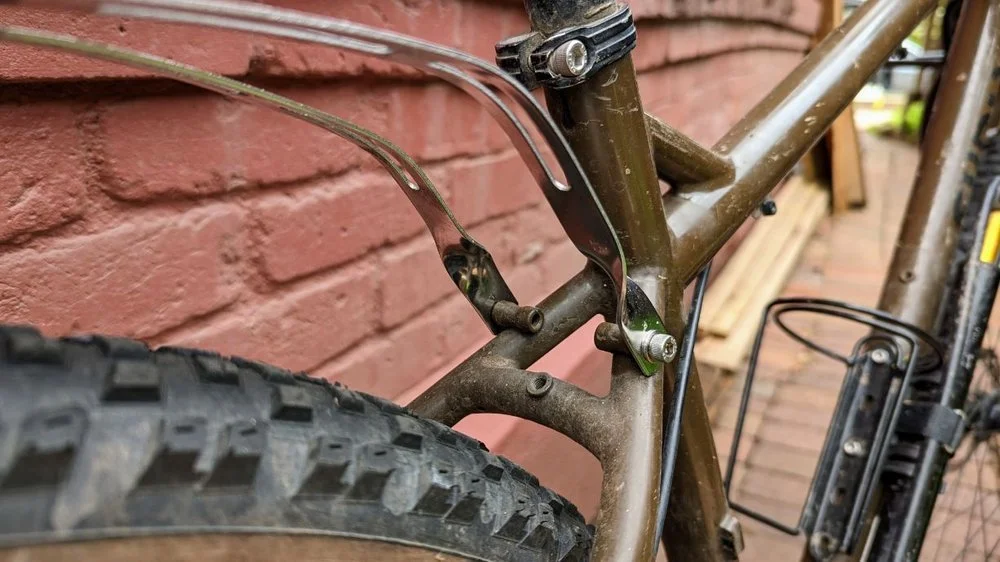
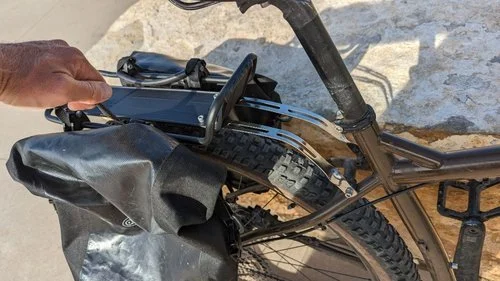
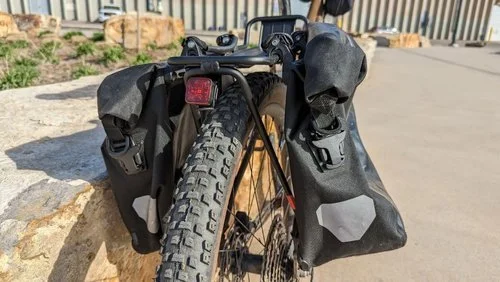
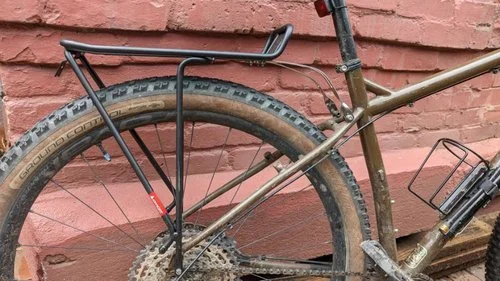
The Axiom Transit is made of strong tubular aluminum that is rigid enough to hold most loads securely. It has a wide top platform and mounts to the bike with durable steel struts that you can bend into place.
The top platform is a solid sheet of aluminum, so nothing on top of the rack will fall through onto your rear tire, and nothing from your tire will end up on the seat of your pants. It comes with high-quality stainless steel hardware and has a 110-pound weight capacity.
While this is an excellent rear bike rack, it isn’t fancy. Bike racks don’t have to be fancy to carry gear for commuting, recreation, or travel effectively. But there are sleeker-looking, lighter bike racks, too. If you’re looking for a lightweight rack that will look great on your brand-new bike, there’s probably a better option than the Transit.
However, we think the simplistic look of the Transit does look good in its own way, and this utilitarian rack is a reliable choice if you want that. Tons of cyclists use this rack, and there are countless positive reviews online from those customers. We think this is a great option for an inexpensive rack for your commuter bike.
Best Affordable Bike Rack: Planet Bike Eco Rack

Material: Aluminum
Mount position: Rear
Weight limit: 55 lbs
Rack weight: 1.43 lbs
What we liked:
Affordable
Simple design
Works great
Reliable
What we didn’t like:
Not the lightest
Nothing fancy
The Planet Bike Eco Rack is our favorite affordable bike rack. This rack doesn’t attempt to reinvent the wheel, or in this case, the rear cargo bike rack. The Eco Rack relies on the time-tested and straightforward design that cyclists have used for years to carry panniers and other cargo on bikes. We’ve used the Eco Rack many times over the years and will continue to turn to this rack when we need an economical and practical option for hauling cargo on the back of our bike.
Compare prices of the Planet Bike Eco Rack
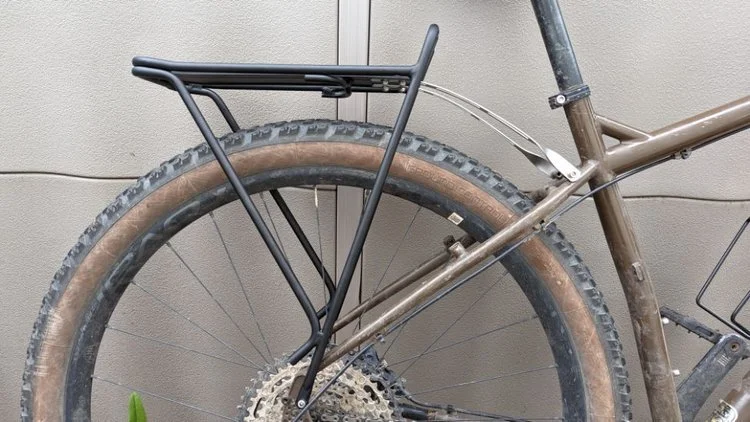
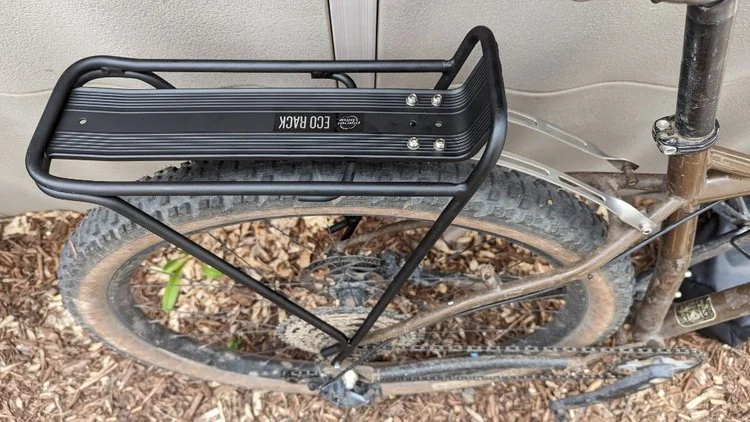
The Eco Rack is made of oversized 6061 tubular aluminum. This aluminum tubing is extremely strong and can support up to 55 pounds without issue. The rack attaches with two bendable steel rack struts and comes with high-quality stainless steel hardware to bolt onto your bike. It’s compatible with most pannier styles and has a place to attach a rear light.
It has a sheet of aluminum welded across the top, which is helpful compared to racks with only welded tubes because the sheet makes any cargo you strap on top less likely to fall into your rear wheel. And since nothing can get through this aluminum sheet, it doubles as a rear fender.
While the Eco Rack is a great overall rack, it isn’t anything fancy. You might want to look for other options if you need the lightest, sleekest rack for your shiny new cargo bike. However, if you’re simply looking for a rack that will work and doesn’t cost a lot, this is for you.
We’ve used this rack for years and will continue to use it whenever we need a no-frills rack that works.
Best Front Bike Rack for Bike Touring: Axiom Journey Suspension & Disc Lowrider Front Rack

Material: Aluminum
Mount position: Front
Weight limit: 40 lbs
Rack weight: 1.29 lbs
What we liked:
Holds panniers low for weight distribution
Easy to install
Durable
Lightweight
What we didn’t like:
Low-rider rack only has one use case
The Axiom Lowrider Front Rack is our favorite front rack for bike touring. This rack allows you to attach a set of front panniers low on your bike’s fork, which is the optimal position for a heavy load on the front of your bike. If you attempt to put two panniers’ worth of gear into a single handlebar bag, you’ll understand what we mean. This rack allows you to carry tons more than you could in a single handlebar bag.
View The Axiom Journey Suspension & Disc Lowrider Front Rack
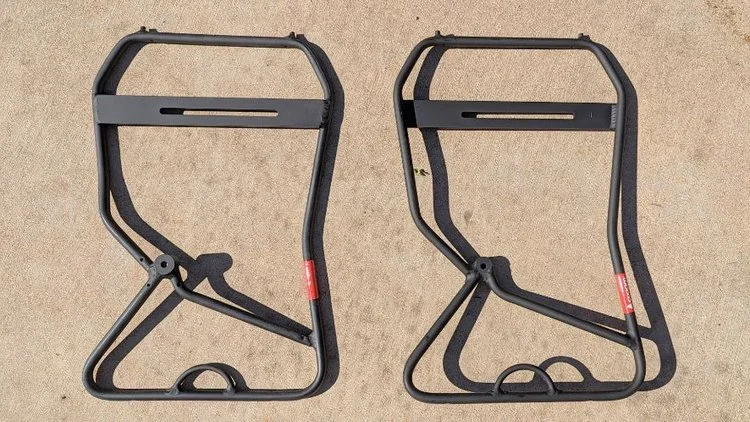
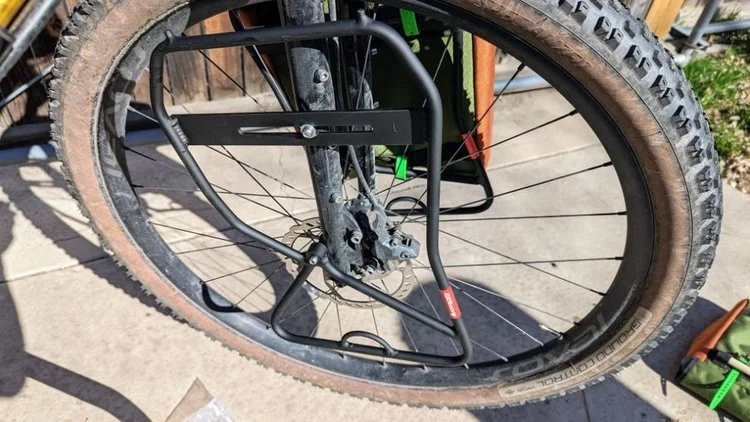
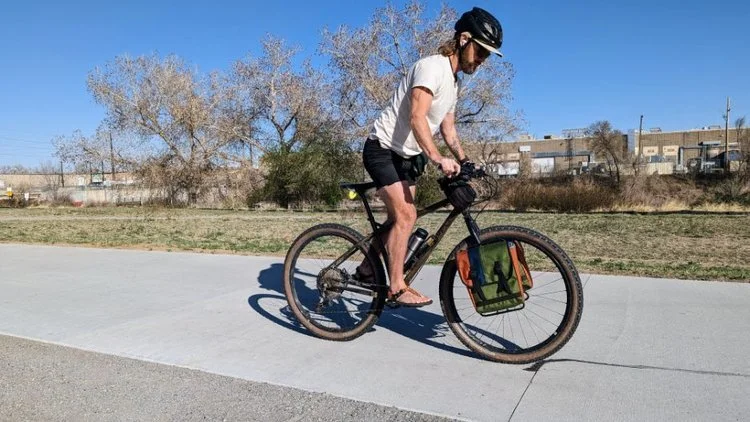
You barely notice the weight when riding when two evenly loaded panniers are on this rack. Of course, you feel it if you try to lift the bike's front end, but a bike loaded with gear on the Lowrider rack steers better than every other type of front rack.
The Lowrider is two separate racks that mount independently to the outside of each fork leg. Its design is simple: two aluminum rectangles with added material for strength. It mounts to the fork dropout eyelets and halfway up the fork to the mid-blade fork eyelets. If your fork doesn’t have mid-blade eyelets, this rack has hardware that can be used instead of bolting it directly to your fork. Each rack side has a loop at the bottom for attaching a pannier bungee and tabs at the top so the pannier doesn’t slide off the side.
While it’s an excellent rack for bicycle touring, the Lowrider rack is only good for bike touring on paved roads. If you’re using a low-rider style rack, having an evenly distributed load on both sides of your fork is very important. With only one pannier or an unevenly distributed load on this rack, your bike will pull strongly in one direction, making it challenging to ride.
Since you can’t use one pannier with this rack, it’s not great for commuting unless you want to commute with two panniers. Also, in our experience, lowrider racks make off-road riding difficult since those low-hanging panniers are susceptible to catching on rocks along a trail. So, the Lowrider isn’t a great choice for bikepacking either.
But if you’re looking for a front rack for paved bicycle touring, the Lowrider is the best choice. Touring cyclists have relied on this rack for years, and it has tons of positive customer reviews online. For a front rack for bicycle touring, we don’t think you can beat this.
Best heavy duty bike cargo rack: Axiom Journey

Material: Aluminum
Mount position: Rear
Weight limit: 154 lbs
Rack weight: 1.54 lbs
What we liked:
Durable
Mounts easily
Very strong
Extra aluminum tube keeps large panniers away from the wheel
What we didn’t like:
Pretty heavy
The Axiom Journey Rack is a solid, durable rear bike cargo rack ready for adventure. We love how strong this rack is and how easy it is to install. We first used the Journey Rack on a bike tour through the American Southwest nearly a decade ago, and we’ve considered it the best rear rack for extended bike tours ever since.
Compare prices of the Axiom Journey
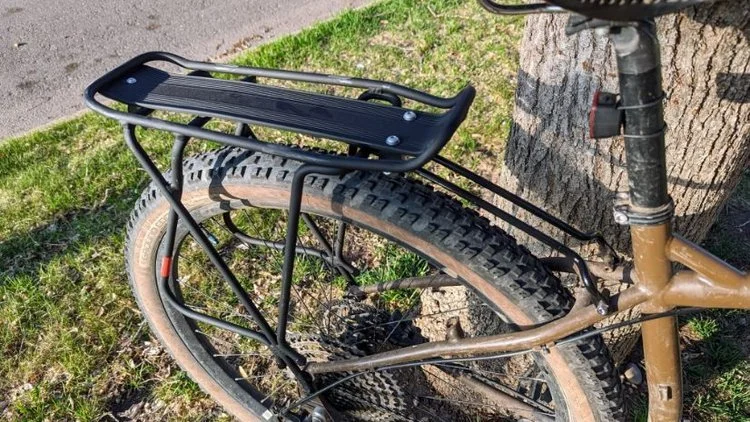
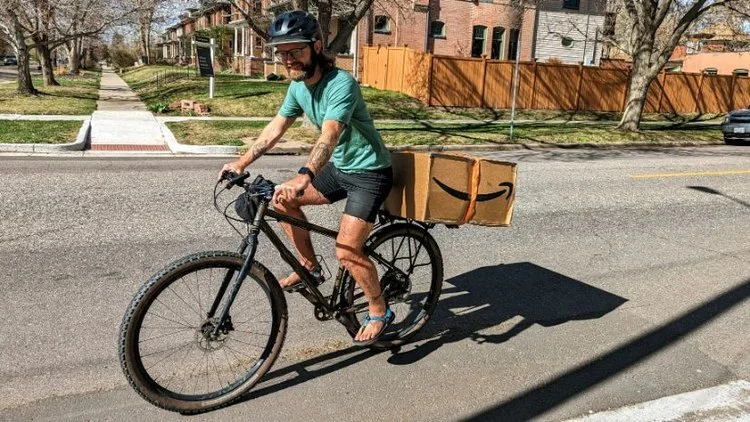
The Journey is made of tubular 6061 aluminum and has several varieties that will fit most bikes. It uses three aluminum tubes instead of the traditional two found on most rear racks, and the third tube sweeps back from the rack. This strengthens the rack and prevents large panniers from hitting your rear wheel while you ride.
It has adjustable Versalock stays that make mounting it on a bike easy. Unlike some adjustable aluminum stays like these, you can bend the Versalock stays up to 30 degrees without affecting the strength. We didn’t find we had to bend these stays since they’re so adjustable, but it’s nice to know you can.
The Journey comes in a few varieties. We tested the standard Journey, but there are a few other versions of this rack: one has a spring-loaded clip on top to hold a jacket or other flat items in place, another is height adjustable, and another is compatible with disc brake bikes.
While we love this rack, it’s pretty heavy. You want a heavy rack if you’ll be approaching the Journey’s 154-pound weight capacity. But for lightweight loads, this rack is downright overkill.
However, if you want a heavy-duty rack like this one, you can’t do better than the Journey. Tons of satisfied customers have left positive reviews of this rack online. And, BicycleTouringPro also has great things to say about this rack in their review. This cargo rack is second to none when hauling two fully-loaded panniers on an epic adventure.
Best Mountain Bike Cargo Rack: Axiom Streamliner 29’er DLX

Material: Aluminum
Mount position: Rear
Weight limit: 110 lbs
Rack weight: 1.67 lbs
What we liked:
Fits modern bikes
Clears disc brake calipers
Modern-looking
Works on bikes without rack mounts
What we didn’t like:
Expensive
Smaller top platform
The Axiom Streamliner 29’er DLX uses a modern approach to the rear bike cargo rack. For this reason, we think it’s an excellent choice for mountain bikes and bikepacking. This rack features tabs to ensure it clears the disc brake calipers on any bike. It also comes with multiple types of stays for mounting and will even mount to a bike’s quick-release skewer. You can mount this rack to your road bike with a seatpost collar with threads for a rear rack.
Axiom Streamliner 29'ER DLX
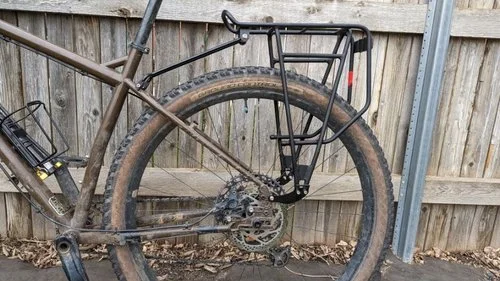
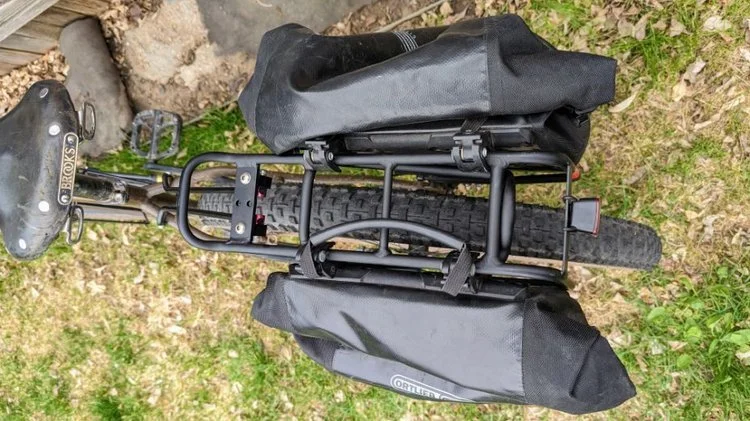
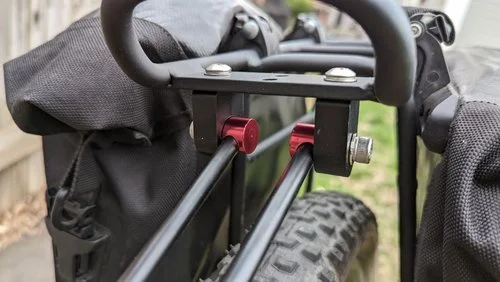
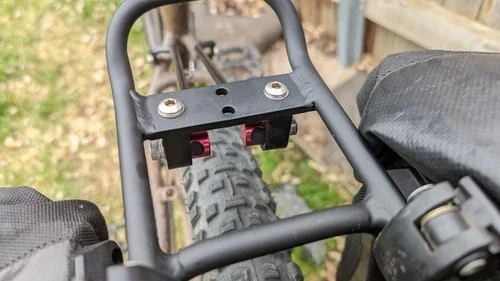
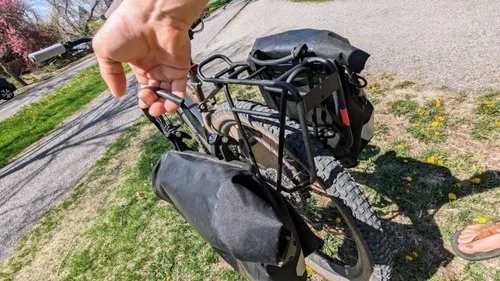
The Streamliner looks sleeker than some racks we tested. The top platform is narrow, and the sides of the rack slope outward to reach the width of your bike’s rear dropouts. This makes the rack not as good for putting things on top of it.
But this also means that a set of panniers won’t hang as far off the sides of your bike with this rack, making it slightly more aerodynamic and better for tight spaces.
We tested the Streamliner 29er DLX version of this rack, but it also comes in a road version that’s even narrower for road bikes, a standard version that isn’t quite as tall, and a wider version for fat bikes.
This is a great rack, but it’s pretty expensive compared to some racks we tested. But this is a great option if you need a disc-brake-compatible rack or you’re trying to fit a rack to a bike that isn’t quite rack-compatible. If you don’t have the specific needs that this rack addresses, there are less expensive options, though.
The Streamliner Rack has tons of positive customer reviews online, and TreadBikely has great things to say about it, too.
We think this rack looks great and works even better for 29-inch mountain bikes and other bikepacking needs, too.
Best Bike Rack for Mountless Bikes: Thule Tour

Material: Aluminum, Nylon, Steel
Mount position: Rear or front
Weight limit: 25 lbs
Rack weight: 2.4 lbs
What we liked:
Attaches to frames without mounts
Lightweight
What we didn’t like:
Expensive
Complex mounting system
Removing the rack requires a special key
The Thule Tour Rack is the only rack we’ve found that works on the front or rear of any bike without any eyelets or mounts. This rack straps onto the frame, so it will work for most size tubes, including the wide tubes of suspension forks and full-suspension mountain bike frames.
Compare prices of the Thule Tour
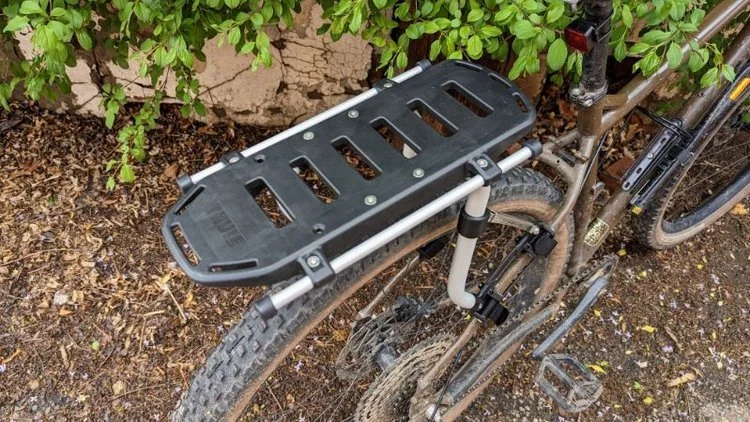
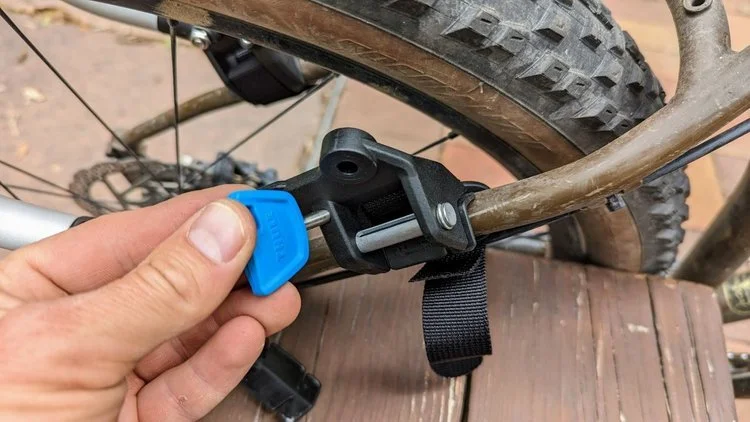
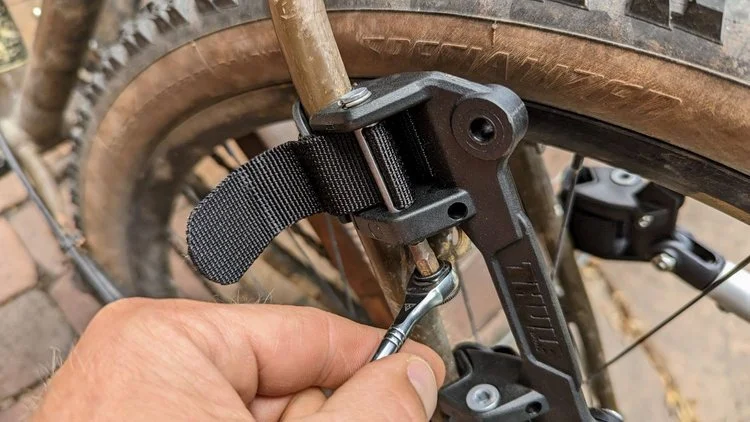
This mounts to bikes with nylon straps, rubber, and a ratcheting mechanism. Each rack support arm has two straps and ratchets, and they tighten a rubber shoe onto the bike frame to secure the rack in place. The rest of the rack is a simple platform to attach gear to the top. Additional side frames allow you to use this rack with panniers, but you’ll have to buy those separately.
While this rack is pretty cool and will mount to any bike, it’s pretty expensive compared to most bike cargo racks, and we don’t think the mounting system is as secure as a bolt-on rack. This is one of your only options if you need to put a rack on your full-suspension mountain bike. But for other bikes, mounting a rack to your bike is likely a less expensive and more secure option.
This bike rack has many positive customer reviews online but also has some negative reviews due to its complex mounting system. We didn’t think the mounting system was too difficult to figure out, but you can’t just bolt this rack on and go.
We agree that this is a unique rack that fulfills a specific need and is great for that.
Other bike racks we tested
Soma Porteur Rack

Material: Aluminum
Mount position: Front
Weight limit: 22 lbs
Rack weight: 2.65 lbs
What we liked:
Multiple mounting options
Big rack platform
Great for odd-sized loads
Lightweight
Has pannier mounts
What we didn’t like:
Mounting is more difficult than some racks
The Soma Porteur Rack was our former winner for front bike rack. This one shines for its wide platform that can fit large and heavy cargo. We liked this rack for strapping gear on top for commuting, bikepacking, and general stuff-hauling. We love the wide top platform on this rack and think it’s the perfect option for mounting a basket on the front of your bike.
It also has mounts to attach panniers, which is rare with a front rack with a wide top platform. We put this rack on our Surly Krampus and used it for a bikepacking trip, then continued using it while commuting around Denver after I finished the backpacking trip.
This rack is made of high-quality aluminum, so it’s lightweight despite having a lot of material. It mounts to your bike at the dropouts, either on the axle itself or on the dropout eyelets of your bike. It also mounts to mid-blade fork eyelets and the center of the fork crown. This five-point mounting system is super secure, and we never felt like we were overloading this massive14.2 by 12 inch platform rack.
View The Soma Porteur Rack

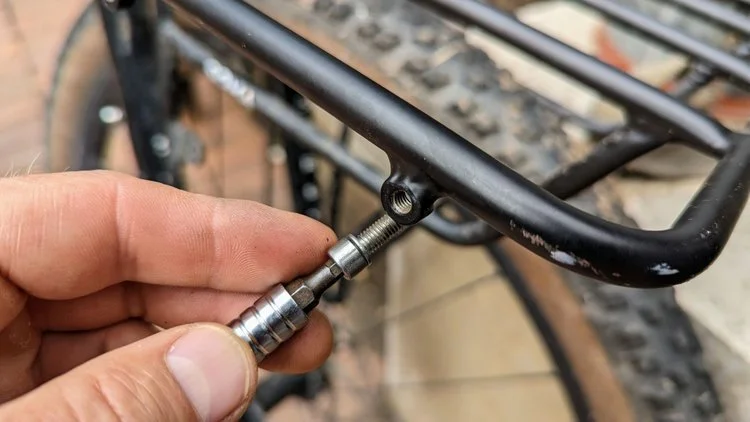
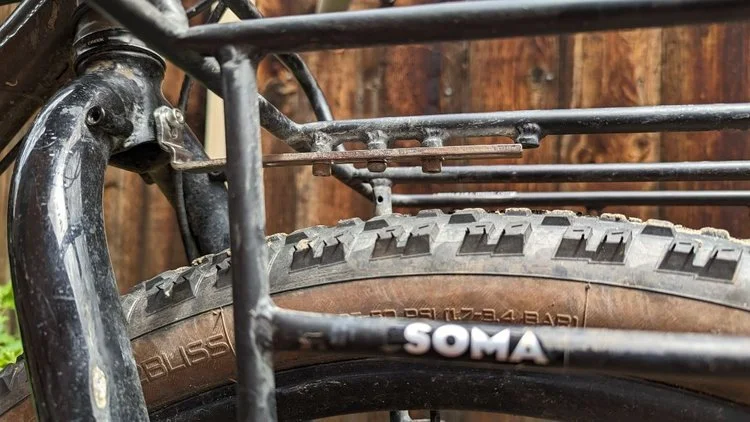
It’s not the easiest to figure out how to mount. We had a friend who’s less mechanically inclined attempt to install this on their bike, and the large bag of rack hardware was too much for them to figure out quickly.
This is not impossible to install yourself, but if this is the first rack you install, you’re probably in for a few head-scratching moments. It also doesn’t fit all fork sizes, but we could mount this on a Surly Krampus (which won an award in our best bikepacking bikes guide) even though the fork is longer than Soma says will work with this rack.
However, we think this is an excellent option for a wide-platform front rack with pannier mounts that’s been time-tested by cyclists for years. It has many positive customer reviews online, and we’ve known many cyclists who swear by this rack over the years. We think it’s pretty great, too.
It's out of stock at most retailers and on backorder, which is one reason it is no longer a winner.
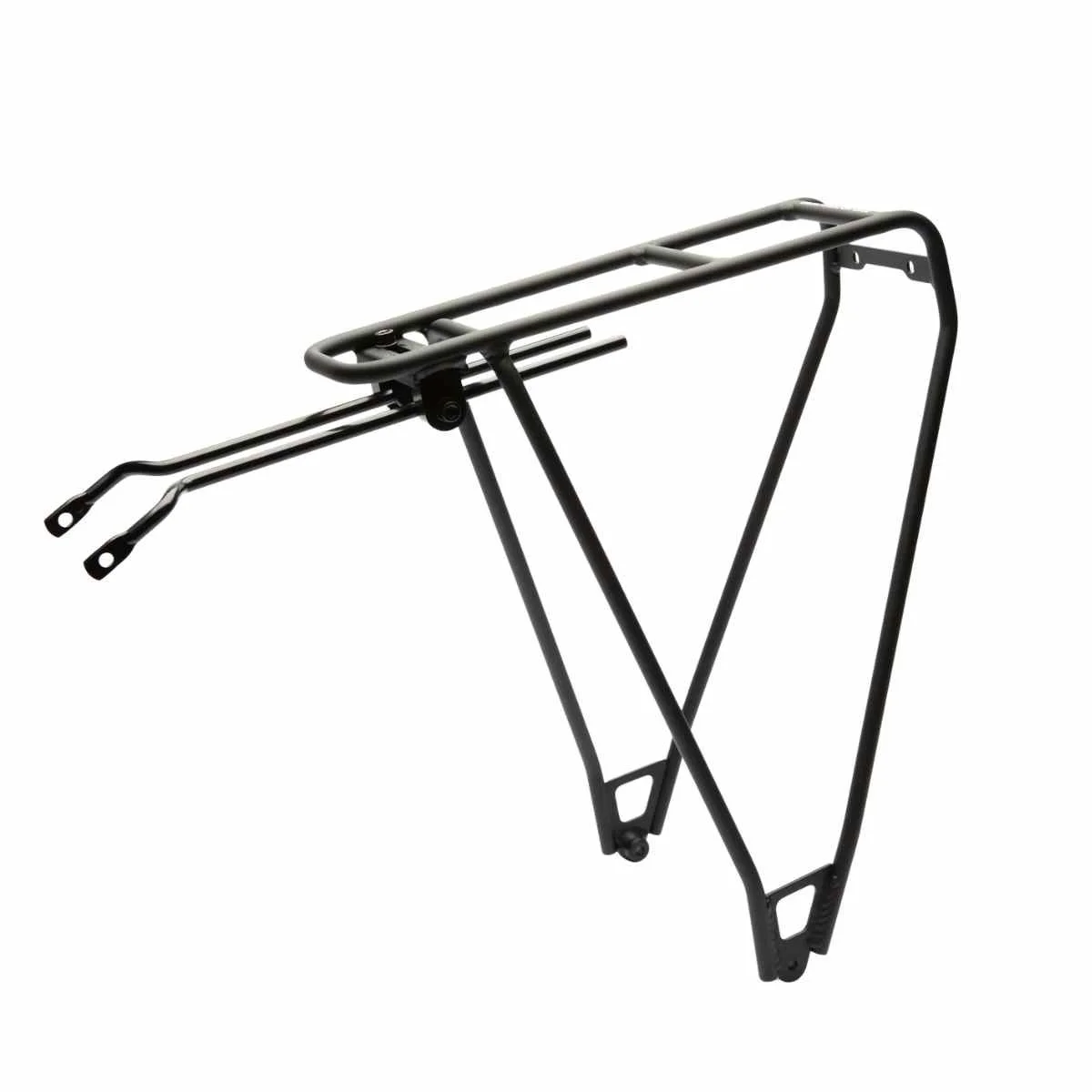
Material: Aluminum alloy and stainless steel
Mount position: Rear
Weight: 500 g
Capacity: 55 lbs
What we liked: Designed for bolting on a rear light, easy to install, adjustable, sturdy
What we didn’t like: Light sold separately, lower weight capacity
The PDW OxRack Rear Rack is a highly adjustable, streamlined, and easy-to-install rear rack with a dedicated set of mounting holes for a bike tail light. We tested this rack while riding dirt roads around Colorado and carrying a tent while bikepacking. We tested this rack with a Specialized Diverge gravel bike, but this rack will work with any bike with threaded bosses near the rear dropouts.
A rear rack can block a seatpost-mounted tail light, especially if you have stuff on top of the rack as we did. This OxRack Rear Rack has dedicated mounting holes to bolt on tPDW’s Rackstar Tail Light (sold separately). This setup lets you securely mount a light on the back of the rack, where nothing can block it.
Portland Design Works OxRack Rear Rack
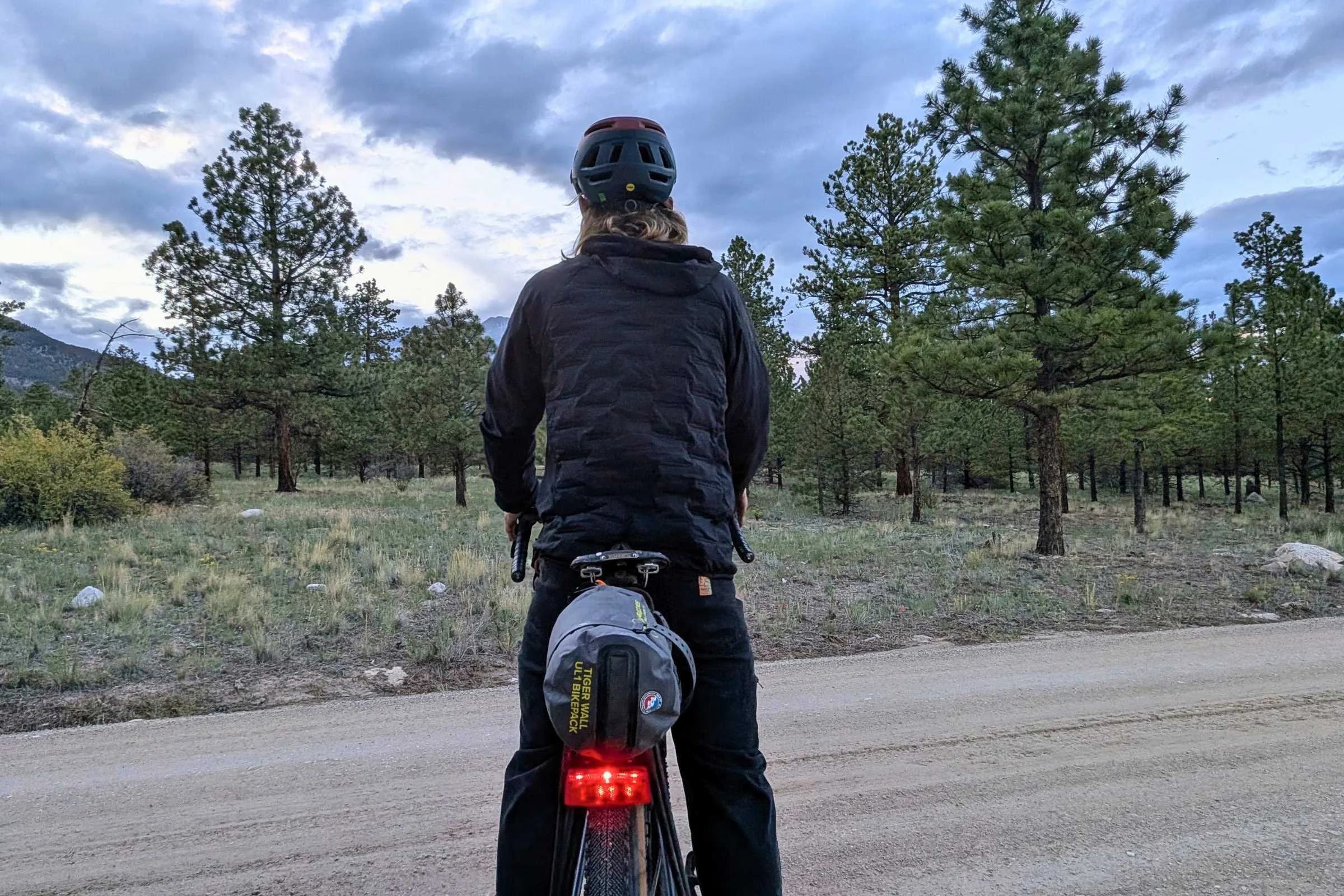
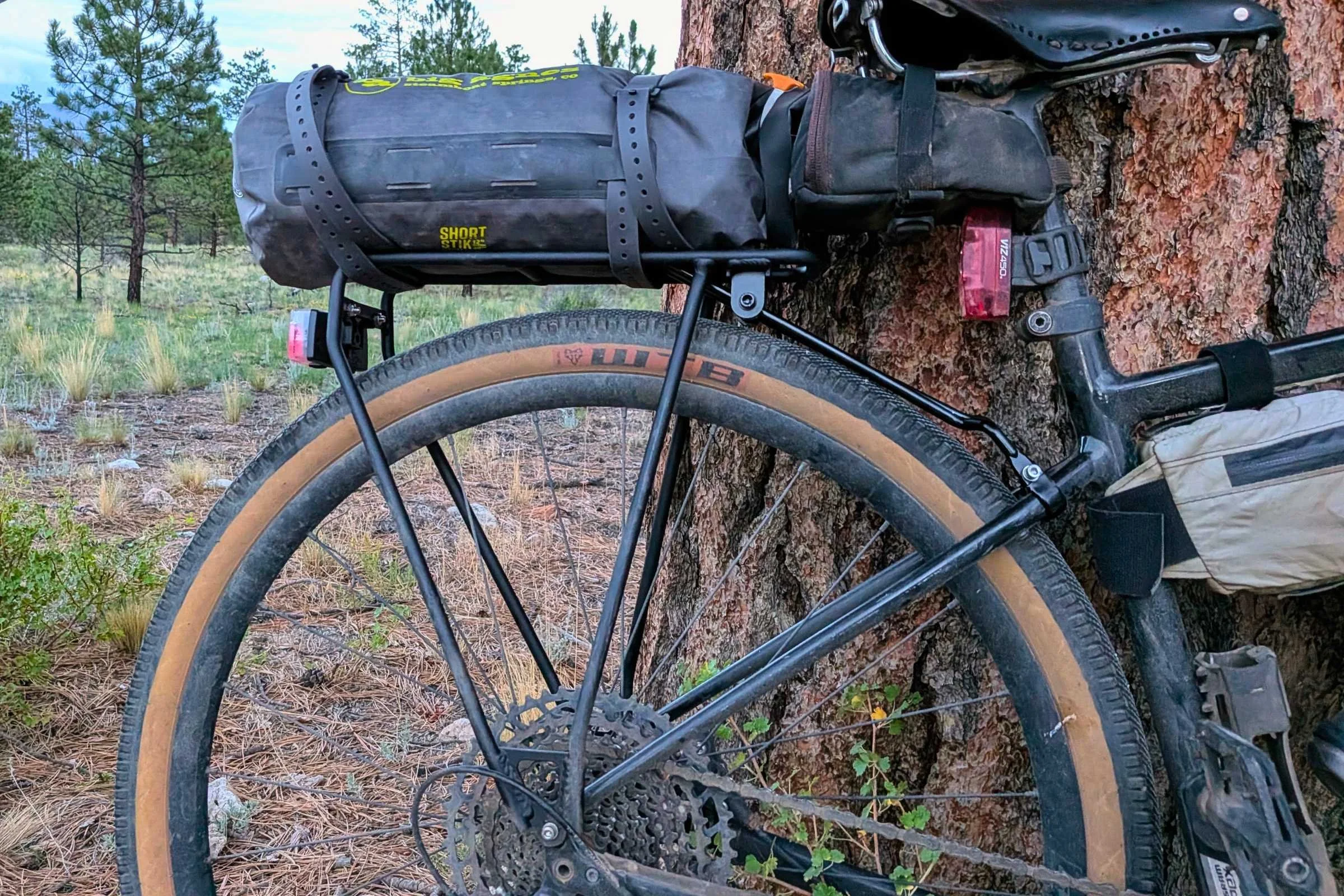
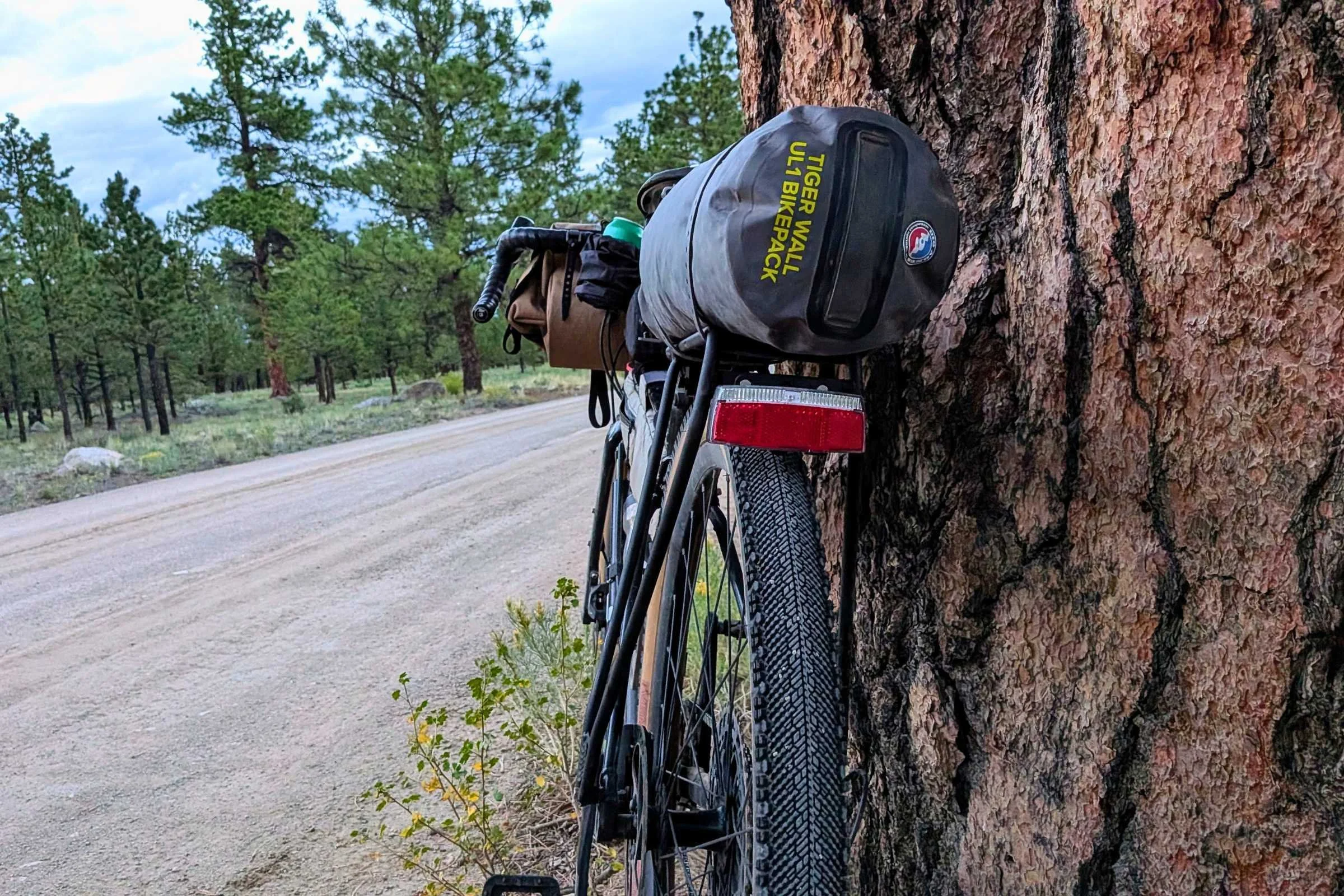
Diagram of Parts of a Bike
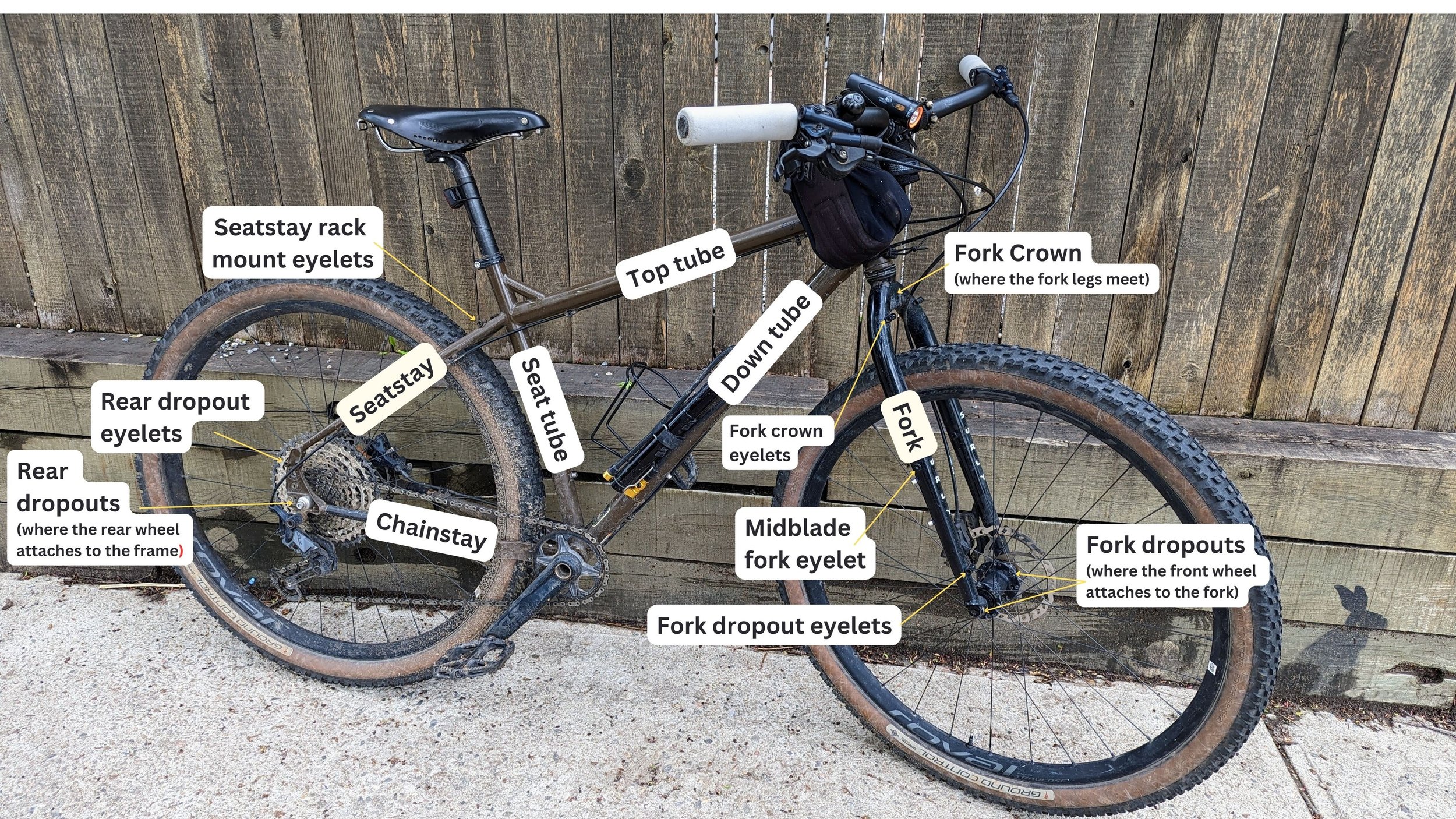
Diagram of parts of a bike as they relate to bike cargo racks.
Throughout this article, we reference several bike terms. Sometimes a photo can better describe the parts. Here is our diagram of bike parts and where they are located on a bike below to help you conceptualize what we’re talking about.

What to look for in a bike cargo rack
Throughout the buying advice section and article, we reference several bike terms. See our diagram of bike parts and where they are located on a bike above to help you conceptualize what we’re talking about.
Bike Compatibility
No matter the bike, you can probably put some kind of rack on it. However, there are some things to consider about bike compatibility when selecting a bike cargo rack.

The Tumbleweed Tumbleweed Pannier Rack (left) and Soma Porteur (right) both have extra threaded eyelets to attach lights or other accessories to the rack.
Bike Rack Mount
Most bikes designed to be used with a bike rack have threaded eyelets on the frame for bolting a rack in place. If your bike frame doesn’t have threaded eyelets or bike rack mounts, securing a rack to your frame will be more difficult.

Your bike needs threaded eyelets like these to install a cargo rack.

Close-up shot of threaded eyelets on a bike's seat stays.

Close-up of threaded eyelets near the dropouts on a bike's fork.
Wheel Size
Bike racks are made in different sizes to fit over different-sized wheels. Since a 26-inch wheel is smaller than a 29-inch wheel, a larger rack will be needed to fit over a 29-inch wheel.
Type of Brakes
Most bikes designed to be used with a rack use a brake mounting system that works with racks. However, some bike racks will get in the way of specific brakes. Here’s a quick explainer on each kind of brake system and things to consider when installing a rack on a bike with those brakes.

The Axiom Streamlined 29 is designed to work with disc brake bikes.
Disc Brakes
Disc brakes are the most common type that complicate rack mounting. Disc brakes often get in the way of a rear rack because the disc brake caliper is mounted to the bike frame near where a rear rack mounts. Some racks are designed to be compatible with disc brake bikes.
V-Brakes
V-brakes can sometimes get in the way of a rear rack’s mounting struts. V-brakes are commonly found on older mountain bikes but are less common now that most mountain bikes have disc brakes. If you have v-brakes on your bike, the vertical arms on the rear brake calendar might contact the rack struts when you squeeze the brake. In this case, you may be able to bend bendable steel rack stays in a way so the rack doesn’t interfere with the brake.
Side Pull Brakes
Side pull brakes can also get in the way of a rear rack’s mounting struts. Side-pull brakes are commonly found on road bikes. Like v-brakes, you may be able to bend a steel rack stay around a side-pull brake.
In the case of v-brakes and side pull brakes, double-check that your brakes still work properly after you install a rack on your bike before you go on a big bike ride.
Cantilever Brakes
Confusingly, cantilever brakes are shaped like a V (not the less-aptly-named v-brakes). Cantilever brakes are the most compatible with racks. We’ve never seen an issue with rack compatibility on a bike with cantilever brakes. However, cantilever brakes aren’t very common anymore because they don’t have as much stopping power as disc brakes, v-brakes, or side pull brakes.

Close-up of different types of rack stays on rear racks, from left to right Planet Bike Eco, Tumbleweed Tumbleweed Pannier, Axiom Journey.
Accessories Compatibility
You can place anything on top of a rack as long as it doesn’t exceed the rack's weight capacity, and you can secure the item in place. However, some racks are designed to be compatible with certain accessories better than others. We’ll list some things to consider with specific rack accessories below.
Here are some common accessories you can use with bike cargo racks.
Panniers
Most rear racks work with bike panniers. Panniers are also sometimes referred to as bike saddle bags, even though they attach to the rack and not the saddle.
Panniers are bike rack bags with a hooked system to grab onto the rack. There are many ways panniers can attach to a bike rack, but they all attach near the top of the rack, usually with hooks, and along the bottom so the bag doesn’t swing while you’re riding.
Mini panniers are also becoming a popular rack accessory in the bikepacking world. These are just what they sound like—smaller panniers, like the Tumbleweed Pannier Rack, are designed to work with ultralight bike racks. To test this rack and others designed for small panniers, we used a prototype set of mini pannier bike bags made by Colorado bike bag maker One T Designs. You can purchase other mini panniers, too. Swift makes a great set of mini panniers, and there are tons more made by small bike bag makers.

Light Mounts
Many bike racks have a place to mount lights. The traditional handlebar and seatpost mounting positions can be blocked with gear mounted on top of a cargo rack. The easiest solution for a rear rack is a light mounting tab on the back of the rack. You may need a light mount that bolts onto a front rack or fork to mount a light on the front of your bike with a fully-loaded front cargo rack.
Baskets
Many people use zip ties to attach a Wald Basket to their front-mounted bike cargo rack. A basket like this and a cargo net make carrying various items easy. Some forego the Wald basket and use a milk crate instead, but this works better on the back of the bike because a milk crate is too tall to fit on the front of most bikes.
Rack Top Bags
Many bags are made specifically for the top of a bike rack. A bike rack trunk bag mounts to the top of most rear bike cargo racks. There are also bags designed to mount to the top of a front rack, like the Swift Industries Sugarloaf Bag.
Material
Most bike cargo racks are made of aluminum or steel. Aluminum is lighter than steel, but steel is stronger than aluminum. Both of these metals work well as bike rack materials.
Though aluminum is a lighter metal than steel, a high-quality bike rack made of stainless steel can sometimes be lighter than an aluminum rack. Since steel is a stronger metal than aluminum, thinner steel tubes can be equivalent in strength to thicker aluminum tubes.
For instance, the Tumbleweed Pannier Rack is made of Chromoly steel and weighs 560 grams. The Axiom Transit Rack, a similarly-shaped aluminum rack, weighs 550 grams.
If a steel bike rack breaks, any welder anywhere can repair it. You can’t weld aluminum like you can with steel. Though you can technically repair aluminum through a specialized type of “welding” called brazing, it would be much more expensive to repair a damaged aluminum bike rack and more difficult to find someone to repair it.
Weight Limit
All bike cargo racks have a weight limit or load capacity. You shouldn’t regularly put more weight on a rack than it’s designed to hold, but we’ve found you can push the capacity of most racks for short periods.
For instance, if you add an item on top of your rack for a 30-minute ride home that exceeds the weight capacity of your rack by 10 pounds, your rack will likely be able to handle this. But if you ride your bike daily with a rack overloaded by 10+ pounds, you’re pushing your luck. If the rack looks like it’s buckling or bending, it can’t handle the weight. If your bike frame feels like it’s twisting while you ride, it probably can’t handle the weight.
If you regularly exceed your bike cargo rack's weight limit, you will break the rack, your bike, yourself, or all of the above. Plus, an overloaded rack isn’t as fun to ride for long distances. It’s better to disperse the weight of what you’re carrying between a front and rear rack if you can.
Durability
Like all the cargo racks we tested here, high-quality bike racks are incredibly durable. In nearly 20 years of riding bikes, working in bike shops, and running non-profit bike shops that reuse old bike equipment, we’ve only seen a few failed bike racks.
When considering which bike cargo rack to purchase, we recommend getting a rack made by a trusted manufacturer. Some of the best bike rack manufacturers, including Axiom and Planet Bike, offer lifetime guarantees on their cargo racks.
If you’re considering a bike rack that looks flimsy, with thin tubing and a too-good-to-be-true weight, make sure a trusted manufacturer makes it or has been thoroughly field tested. Just because we haven’t seen many bike racks fail, doesn’t mean there aren’t cheap bike racks out there made of soft, thin metal just waiting to break.

Left to right: Planet Bike Eco, Axiom Transit, Tumbleweed Tumbleweed Pannier, Axiom Journey, Axiom Streamlined 29.
Ease of Use
Most bike cargo racks are easy to use with the right accessories. With a set of panniers, a basket, or other bike cargo rack bags, most racks make life easy for cyclists.
Front racks with a basket or a single rear pannier are the easiest for commuters because front racks with a centered load don’t negatively affect the steering as a single pannier on the front of your bike does. It’s also extremely easy to use a rack and basket combination, whether it’s on the front or rear of your bike.
Panniers are also extremely easy to use with most bike racks. Quick-release panniers simply slide into place and come off just as quickly when you need to take your gear off the bike.
Ease of Installation
Bike cargo racks are relatively easy to install if you’re mechanically inclined. Our main rack tester, Sam, has been a bike mechanic for over a decade. In that time, he’s become quite proficient at installing racks, but some are easier to install than others.

Loosening the bolt that holds the adjustable rack stay in place on the Axiom Journey Rack.
Racks with adjustable stays, like the adjustable Versalock® arms found on the Axiom Journey Rack, Axiom Streamlined 29, Tumbleweed Pannier Rack, and Soma Porteur Rack, make installing a rack very easy. With these adjustable arms, you only have to loosen a pair of bolts to slide the arms to the length you need to mount the rack onto your bike.

The Axiom Streamlined 29 (top) has adjustable rack stays, while the Planet Bike Eco Rack (bottom) has bendable steel rack stays.
Racks with bendable steel stays, like the Axiom Transit and Planet Bike Eco Rack, require the extra steps of undoing four nuts and bolts to set the length of this piece of the rack mounting system. You’ll likely also have to bend the rack stays to align with your bike’s seat stay rack mounts.

The bendable steel stays on the Axiom Transit Rack are bent to be attached to a bike's seat stay rack mounts.
Always apply grease to the threads of every bolt when installing a bike cargo rack. It will make the bolt installation easier, and you’ll be less likely to damage the threads on your bike if you use grease. We also recently discovered this plant-based grease that’s safer to use than traditional petroleum-based grease.

Always apply grease to every bolt when installed a bike cargo rack.
Mount Position

All the racks that can be used as a front rack, from left to right: Thule Tour, Soma Porteur, Tumbleweed Tumbleweed Pannier, Axiom Lowrider (bottom).
Front Rack
Front racks mount to a bike’s fork and come in cargo/“porteur” and low rider/touring styles.
Most front racks are cargo-style racks mainly designed to hold gear on the top. They are a one-piece system with a platform attached to legs on the sides that extend down to attach to the sides of a bike’s fork. These front racks usually also connect to the bike near the top of the fork, called the “fork crown.” Most front cargo racks use one or two adjustable struts to attach the rack at the fork crown, so your bike will need threaded eyelets on the fork crown or this adapter.

The Soma Porteur Rack is a cargo or porteur front rack that uses a single strut to attach the front rack to the fork crown.

Close-up of threaded eyelets on a bike's fork crown.
Lowrider racks are front racks that mount in two separate pieces on the outsides of the fork. These front racks are called lowrider racks because they sit over the bottom of the fork, low to the ground. Lowrider front racks are best for bicycle touring or other applications where you’ll be using two panniers. The low mounting position of the panniers doesn’t affect the bike’s steering as much as a heavy load higher on a front rack. However, you need to evenly distribute the weight into both panniers because an uneven load will cause the bike’s handling to pull strongly to one side.

Axiom Lowrider Front Rack is an example of a lowrider rack.
Seatpost Rack
A seatpost rack attaches to the seatpost of a bike. These racks quickly clamp onto bikes without rack mounts. They work for lightweight loads but aren’t as sturdy as a rack that attaches to your bike frame in four places.
Rear Rack

All the racks that can be used as a rear rack, from left to right: Thule Tour, Tumbleweed Tumbleweed Pannier, Axiom Streamlined 29, Planet Bike Eco, Axiom Transit, and Axiom Journey.
A rear rack is the most common bicycle cargo rack. This rack mounts near the bike’s rear dropouts and to the seat stays. Rear bike racks are commonly used with a set of panniers, but they’ll work just as well with a single pannier or a basket on top. Of course, you can also strap gear directly on top of a rack.
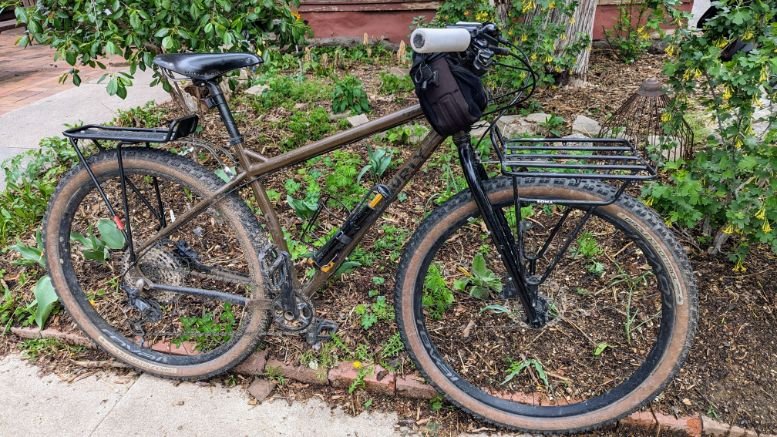
Soma Porteur and Axiom Transit Racks.
Type of Riding
Many kinds of riding use bike racks. We’ll explain the differences between the most common types of riding and their bike rack usage.
Commuting
Commuting by bicycle is an excellent application for bike racks. The best bikes for bike commuting have rack mounts, and the best commuter bike setups use racks. With a cargo rack, you don’t have to show up wherever you’re riding with a sweaty back from a backpack. Plus, you can often carry large, bulky loads with a rack, and this need often arises when bike commuting.
Road Biking and Bike Touring
Road biking and bike touring often also use racks. Many road cyclists use a rear rack with a rack-top bag to carry food, tools, and warm layers while riding.
A typical bike touring bike and setup uses a road bike with larger tires, a front low rider rack, and a rear rack. Touring cyclists typically carry four panniers on those racks, on both sides of the front and rear racks.
Mountain Biking
Racks are less standard on mountain bikes, but older 26” mountain bikes often have rack mounts. These older mountain bikes make great all-terrain bikes, and people often use racks on these bikes to carry their gear, whether they’re using these older mountain bikes for commuting, touring, bikepacking, or mountain biking.
Bikepacking
Bikepacking bikes often use a bikepacking seat bag, frame bag, and handlebar bag. However, there are no rules that say you can’t use a rack while bikepacking. We recently used the Tumbleweed Bicycle Co. Mini Pannier Rack and the Soma Porteur Rack for a bikepacking trip. Bicycle front and rear racks are a great way to carry gear on a bike, and you need to do that while bikepacking, so why not use a bike rack?

FAQ
-
Look for threaded eyelets at the rear dropouts and seat-stay bridge (rear racks) or at the fork crown and mid-blade bosses (front racks). No eyelets? Choose a rack that clamps to the quick-release/ thru-axle, seat-post, or uses strap-on hardware such as the Thule Tour or Old Man Mountain axle-mounted systems.
-
Yes. A disc-compatible rack has offset lower struts or spacers that clear the caliper. Mounting a standard rack on a disc frame usually leaves the rack twisted or rubbing the rotor.
-
Aim for at least 25 kg / 55 lb. That comfortably covers a laptop bag, change of clothes, U-lock, and groceries without overstressing the rack. Heavier touring racks (45–70 kg ratings) are overkill unless you routinely carry expedition loads.
-
Never bolt through thin carbon unless the frame maker explicitly allows it. Use a seat-post rack for light loads, or an axle-clamp rack that transfers weight to the hub rather than the stays.
-
Common culprits: skinny 8 mm aluminum tubing that twists under side-loads, or mounting bolts that have loosened after the first ride. Re-torque bolts with grease, and consider a rack that uses 10–12 mm steel or beefy aluminum rails for extra torsional stiffness.
-
Pick a rack with an integrated 50 mm or 80 mm light plate (Axiom and Tubus include these) or bolt on an adapter such as the Busch & Müller “Secu Rack.” Zip-tying a light to a bag works in a pinch but it bounces out of aim.
-
A rear rack is the simplest: weight sits near the bike’s center and steering feels normal. A front low-rider rack balances the load for touring but can feel twitchy if you run only one pannier. Heavy top-platform front racks (porteur style) are best kept under about 10 kg to avoid floppy steering.
-
Use racks with sliding/quick-adjust struts (e.g., Axiom Versalock or Tumbleweed) and dropout plates that stay on each bike. Mark the strut lengths with tape the first time. With hex keys handy, the change-over takes about three minutes.
-
If you’re mechanically inclined and can follow installation instructions from the manufacturer, you can install your own cargo rack. If you can’t figure it out, bring your bike and the cargo rack to a bike shop and they can install it for you.
-
Most panniers fit most racks. Some racks aren’t designed to fit panniers, though. These racks have thicker tubes that a pannier won’t hook onto. If a rack has legs on the side that will prevent a pannier from swinging into the wheel, it will likely fit all panniers with the standard hooks designed for bike racks.
-
A bike shop will help you install panniers on your bike if you already have the rack installed. But if you read the installation instructions for your panniers, you can likely install those panniers yourself. If you bring your bike to a shop when you’re buying panniers, they will also show you how to install them on your bike.

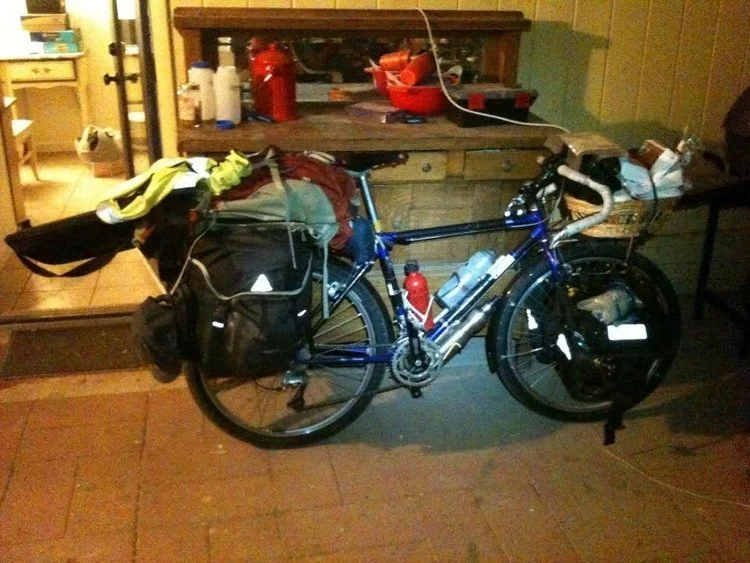
Touring across the United States in 2012, we’re 99% sure this was a Planet Bike Eco Rack.
How We Tested
We tested bike cargo racks across genuinely varied conditions: urban commuting in Denver, Colorado, day rides along the Colorado Front Range, and overnight bikepacking trips in Colorado, Utah, and Arizona. Our lead tester brings over 50,000 miles of cycling experience and a decade working as a bike mechanic, which shaped what we paid attention to during testing.
Each rack was mounted directly to test bikes, and we noted how straightforward or fiddly installation was, including trying one install with a less mechanically inclined friend to see how approachable the process was for someone without bike mechanic experience.
To evaluate load-carrying performance and pannier compatibility consistently, we used the same two sets of panniers on every rack: a custom pair of mini panniers and a set of full-size touring panniers. This let us compare how each rack handled both minimal bikepacking loads and heavier touring loads under identical conditions.
On the road and trail, we rode loaded racks for both daily commuting and recreational riding, watching for flex or twisting under weight. We also tested real-world compatibility issues that only surface once a rack is mounted, including clearance around disc brake calipers and interference from wide tires or full-suspension frames.
- Urban commuting and day rides
- Overnight bikepacking trips
- Mounted every rack directly to test bikes
- Used the same two pannier systems
- Compared light and heavy loads
- Installation and bike compatibility
- Load stability and platform rigidity
- Pannier fit and clearance
- Mounting versatility
- Weight and long-term durability

About the Author / Why You Should Trust Us
Sam Schild has biked over 50,000 miles in the last decade. He is an avid bike commuter and has extensively ridden road, mountain, and gravel bikes. Sam has bike toured and bikepacked over 10,000 miles across the United States—on the Kokopelli Trail, Colorado Trail, and all over the American Southwest.
He has also worked as a bike mechanic for over ten years. Between his experience as a bike mechanic and his own cycling experience, he’s used a lot of bike racks and installed even more on other people’s bikes. He has sorted through piles of donated bike racks at bike co-ops looking for the perfect rear rack that can be modified to fit the front of his bike. He has designed and fabricated his own bike racks using salvaged metal and old bike parts. Frankly, he’s thought a little too hard about bike racks over the years, but he brings that expertise here.
You can read more about Sam on his author page or website.