Best Bike Saddle Bags and Seat Packs of 2026
Small seat-mounted bags for road biking and full-size saddlebags for bikepacking, mountain biking, and gravel riding
September 9th, 2026, updated with a new best overall and new seat bags tested
Home > Gear Reviews > Cycling
A good saddle bag should carry what you need without bouncing, swaying, rubbing your tire, or getting in the way while you ride. For this guide, we focused on bike saddle bags and seat packs for everything from carrying a basic repair kit to commuting, long gravel rides, and multi-day bikepacking trips.
Our lead tester, Sam Schild, is a bike mechanic with more than 50,000 miles of riding experience and over 10,000 miles of bikepacking. For this guide, he tested bags on road, gravel, mountain bike, commuting, and bikepacking rides across Colorado, Utah, Arizona, and New Mexico. He loaded bags to their intended capacity, compared how securely they attached, and paid close attention to sway, tire clearance, dropper-post compatibility, packing ease, and how well the materials held up over repeated use.
We evaluated each bag for capacity, attachment security, stability while pedaling, weather resistance, durability, ease of packing and removal, and compatibility with different bikes and saddles. We also considered weight, usable shape, tire and seatpost clearance, and whether each model made sense for its intended use rather than simply rewarding the largest or lightest option.
Top Pick: The Swift Industries Olliepack Seat Bag earns our Best Overall award. It stood out for its secure harness system, stable ride with minimal sway, durable construction, and versatile capacity for longer rides and bikepacking.
Related: Best Bike Frame Bags
We create reader-supported, objective gear reviews independently selected by our editors. This story may contain affiliate links, which help fund our website. When you click on the links to purchase gear, we may get a commission — without costing you an extra cent. Thank you for supporting our work and mission of outdoor coverage for every body! Learn more.
Bike saddle bags comparison table
| BIKE SEAT BAG | TREELINE AWARD | VOLUMES | MATERIALS | WEIGHT | ATTACHMENT SYSTEM |
|---|---|---|---|---|---|
| Swift Olliepack Seat Bag | Best Overall Read review |
6L | SI600x recycled polyester, ballistic nylon, HDPE insert, coverlite, packcloth | 11.2 oz | Rubberized seatpost strap and dual saddle rail buckle straps |
| Restrap Saddle Bag | Best Bike Saddle Bag - Large Read review |
8 L, 14 L, 18 L | 1000D military-grade textured nylon, reinforced with TPU-coated nylon, Hypalon, and PU-coated nylon linings. | 15 oz (8 L), 18.9 oz (14 L), 22.8 oz (18 L) | Adjustable strap attachment system |
| POC Ultra Saddle Bag | Best Waterproof Saddle Bag Read review |
7L | Translucent TPU with Belpolen frame | 10.2 oz | Three-point fastening system |
| Ortlieb Seat-Pack QR | Best Saddle Bag for Bikepacking Read review |
7.5 L, 13 L | PU-coated IP64 dustproof, splashproof nylon fabric | 22 oz | Seat-Lock quick-release system with saddle-rail hooks and seatpost adapter clamp |
| REI Co-op Junction Seat Wedge | Best Saddle Bag for Road Bikes Read review |
0.75 L | 100% recycled oxford nylon (bluesign approved)/3 mm PE foam | 3.1 oz | Hook-and-loop fastener |
The winners
Best overall bike saddle bag: Swift Olliepack Seat Bag

Material: SI600x recycled polyester, ballistic nylon, HDPE insert, coverlite, packcloth
Weight: 11.2 oz
Capacity: 6L
Waterproof: Yes, waterproof materials
Attachment system: Rubberized seatpost strap and dual saddle rail buckle straps
What we liked: Affordable, durable, doesn’t sway, has an exterior pocket, looks great.
What we didn’t like: Smaller capacity for a large seat bag
The Swift Olliepack is our winner for best saddle bag and a great bag for almost every rider, from road to mountain bike to bikepacking and commuting. Not only is it a great saddle bag, it is surprisingly affordable. It’s also the only saddle bag we’ve seen with an exterior pocket, which we love. This bag costs less than many large-capacity seat bags, and it performs better than most, too.
Most large-capacity bikepacking and commuting seat bags cost well over $150. Some even cost over $200. So when we saw the price on the Olliepack, we did a double-take (then checked again to make sure we didn’t misread it).
One of our favorite features of the Olliepack is that it has a stretch mesh exterior pocket. This is the perfect place to stash a jacket or another layer you want quick access to. No other bike seat bag we’ve tested has an exterior pocket like this, so we love that it exists.
Beyond the exterior pocket, the Olliepack is made from extremely durable recycled polyester laminate materials. If you want a seat bag with little sway, a useful pocket, and durable water-resistant materials, the Olliepack is our favorite for almost all situations.
Swift Olliepack Seat Bag


-
The main body fabric is Swift’s SI600X recycled polyester fabric, which looks like X-Pac. This fabric is abrasion resistant and waterproof. The seams aren’t taped, so this doesn’t technically classify as a waterproof bag, but it is extremely water resistant. The main body fabric is reinforced with ballistic polyester where the bag contacts your seatpost and bike seat.
-
It has a 6-liter capacity, so you can’t fit as much gear inside as you can with larger bikepacking seat bags, such as the Restrap Saddle Bag, Deuter Cabezon, or Ortlieb Seat Pack QR. But we just used this for a bikepacking trip during summer in Colorado, and it’s large enough to fit a 30-degree down backpacking quilt, Therm-a-Rest NeoAir XLite inflatable sleeping pad, and La Sportiva Lumina 100 puffy jacket.
-
If you have a synthetic sleeping bag, a less packable sleeping pad, or need to carry many layers for cold-weather bikepacking, you should get a larger-capacity bag, like the Restrap. However, we find the slightly smaller size makes the bag sway less, which in turn makes the bike handle better.
-
It has extra-rigid webbing sewn into the saddle rail attachment straps. This rigid webbing sits on the saddle rails and extends down to where the side-release buckle attaches along the bottom of the bag, pulling the bag tight against your bike seat. It has a roll-top closure that attaches along the sides of the bag, compressing the load. It also has a strap that secures over the roll top closure to compress the load further. This top compression strap is anchored to a reflective fabric stripe. That reflective accent also has a loop to attach a light.
-
One downside to the Olliepack is that the external stretch mesh pocket isn’t made of as durable materials as the rest of the bag. If you overstuff the pocket and don’t have much room between your seat and rear tire, the pocket material could buzz your tire.
It’s not as big as some bikepacking seat bags. We like the smaller size because it doesn’t sway as much, but if you need more volume than this bag’s 6-liter capacity, you should look elsewhere.
-
For an all-around great bikepacking seat bag with an external pocket that costs less than most seat bags, the Olliepack is a great option.
Best bike saddle bag - large: Restrap Saddle Bag

Capacities: 8 L, 14 L, 18 L
Weight: 15 oz (8 L), 18.9 oz (14 L), 22.8 oz (18 L)
Material: 1000D military-grade textured nylon, reinforced with TPU-coated nylon, Hypalon, and PU-coated nylon linings
Waterproof: Yes, waterproof materials with taped-seam dry bag
Attachment system: Adjustable strap attachment system
What we liked: Simple design, effective, waterproof, easy to load and unload, minimal sway
What we didn't like: Harness lacing can hit tire
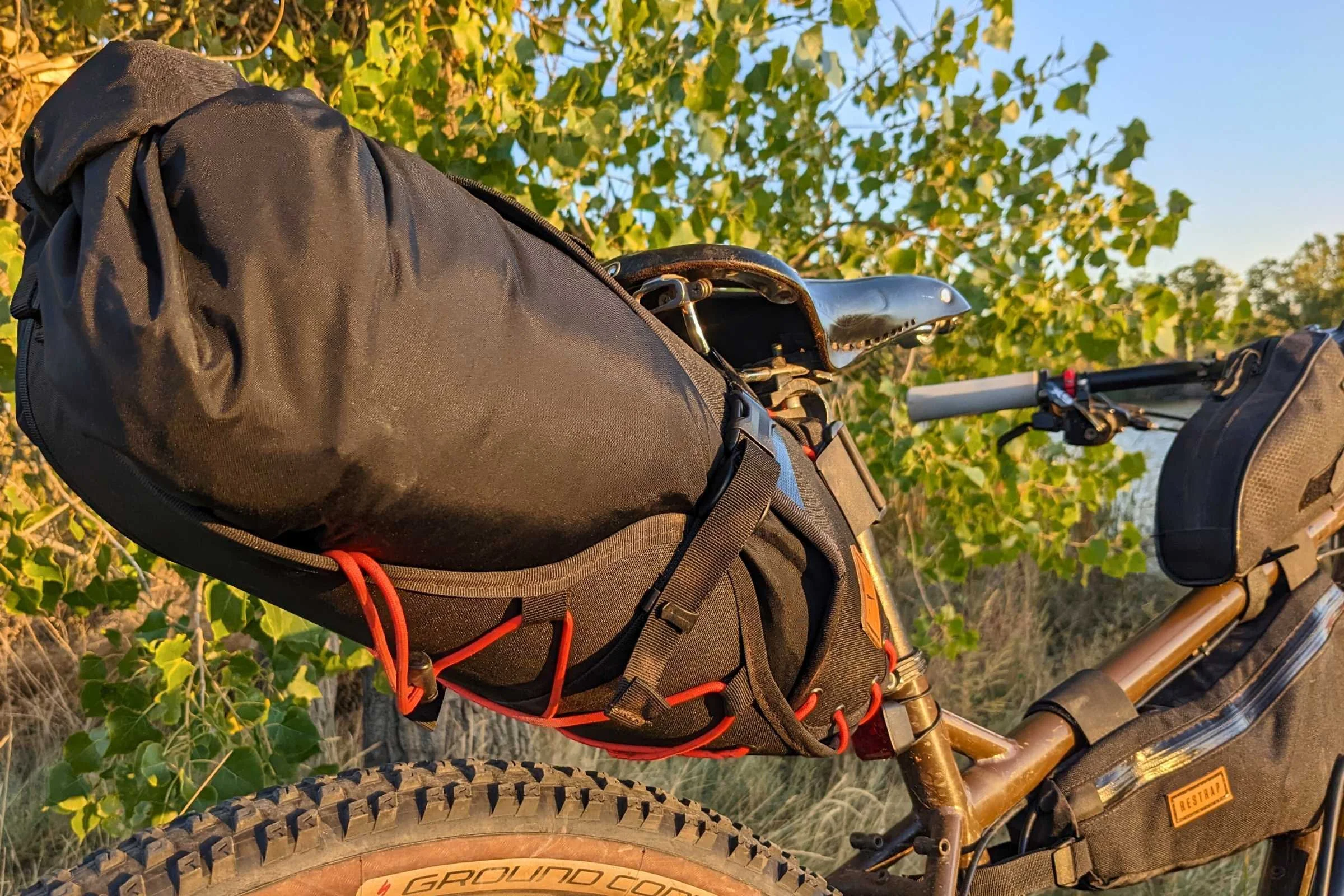
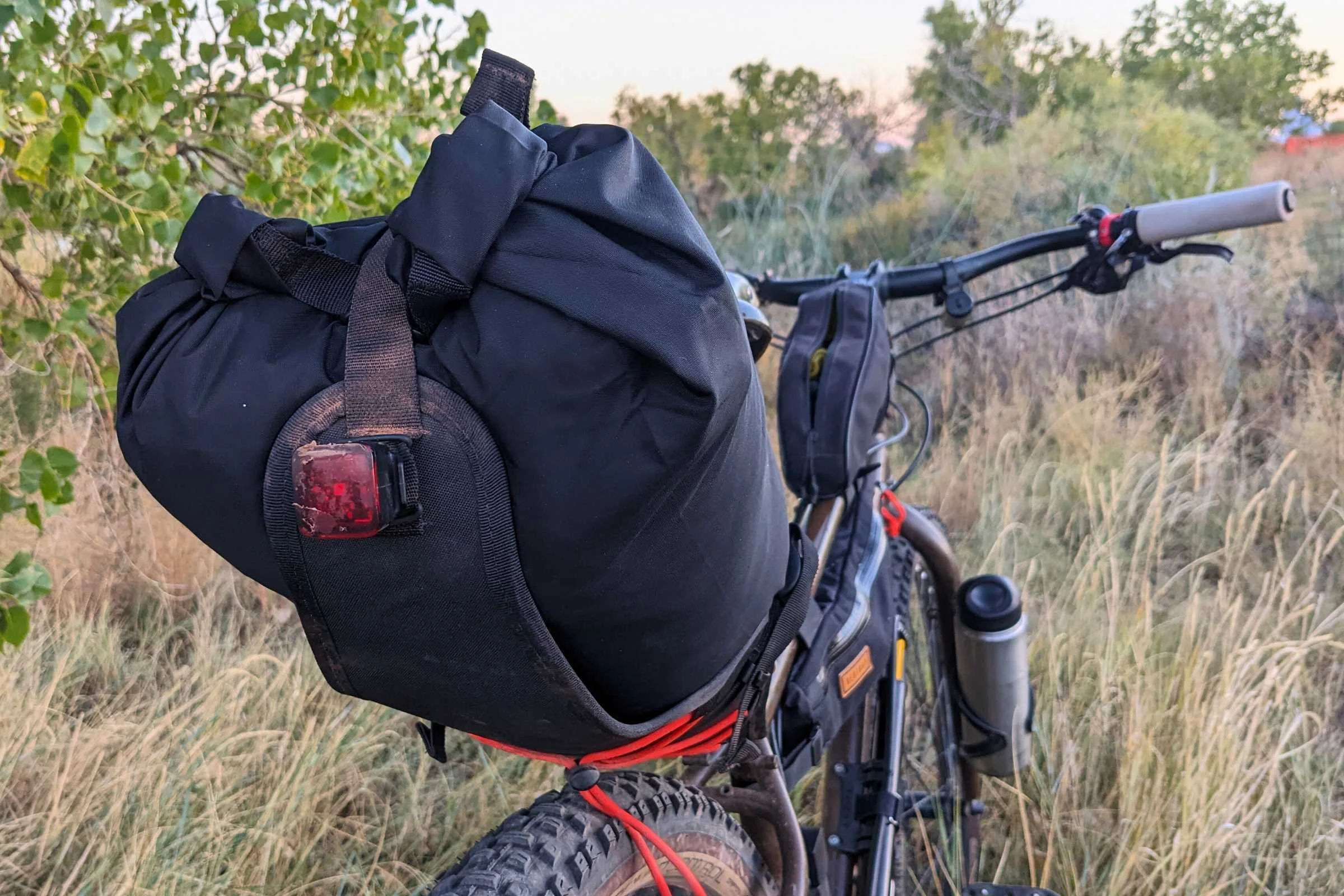
The Restrap Saddle Bag is the best large saddle bag we tested. It's the best-designed bag. It’s easy to install on any bike, and even easier to access your gear once you have it on the bike. We tested the 14L version on rough trails on the Colorado Front Range and were shocked at how little this higher-volume seat bag swayed, even when pedaling standing up.
Restrap Saddle Bag
-
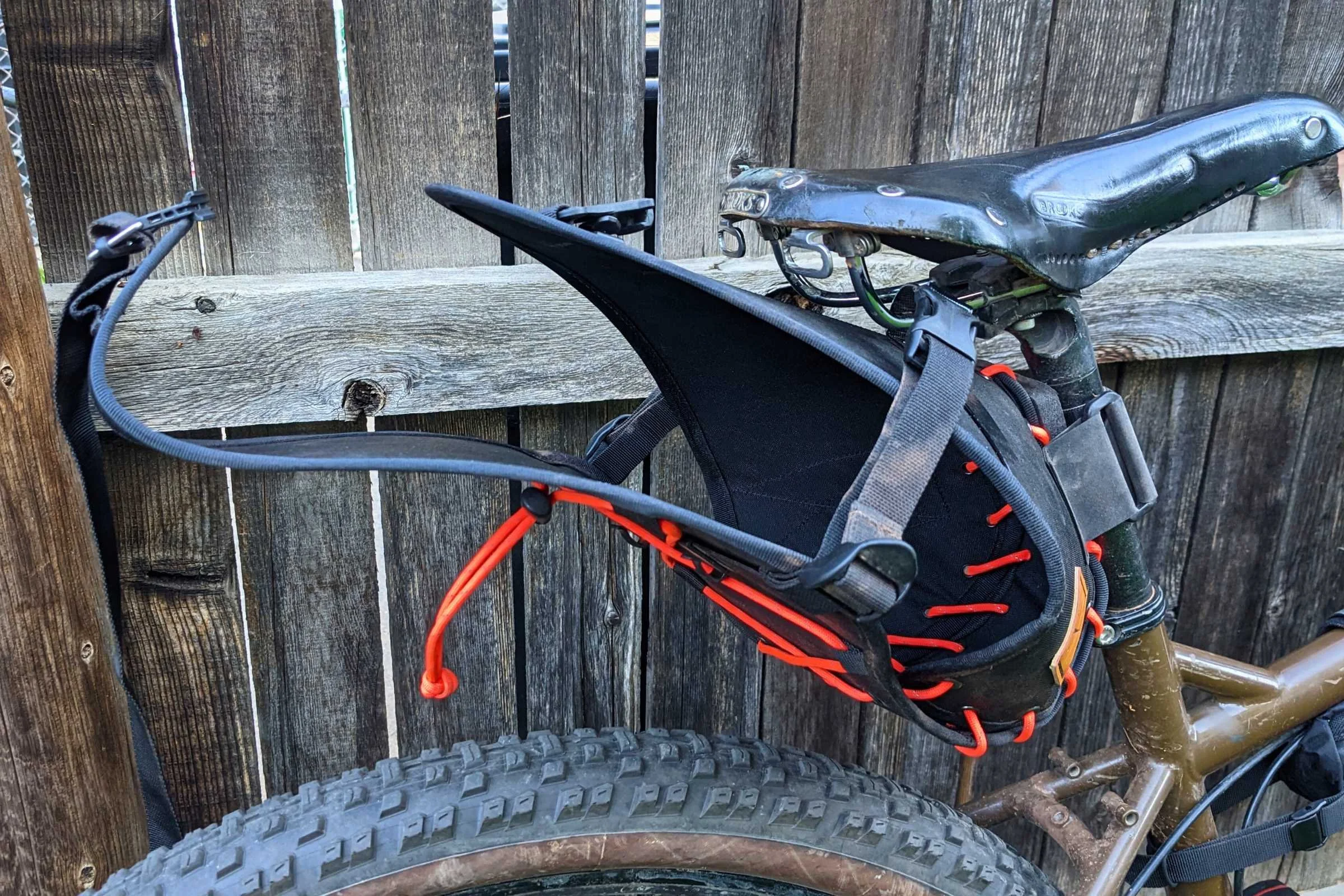
The Restrap Saddle bag is a two-part system: a harness and a dry bag. The harness is composed of two rigid plastic sheets sandwiched between durable Cordura. These pieces are laced together with paracord. This system works exceptionally well and allows you to customize the size of this outer harness bag.
The dry bag is a typical roll-top dry bag stuff sack shaped to fit inside the harness. The dry bag has taped seams, so it’s waterproof enough to use in a downpour — and you can expect your gear to stay dry.
-
To attach this bag to your bike, you first attach the exterior harness bag. The harness has two straps, one attached to your seat post and the other to the bike’s saddle rails.
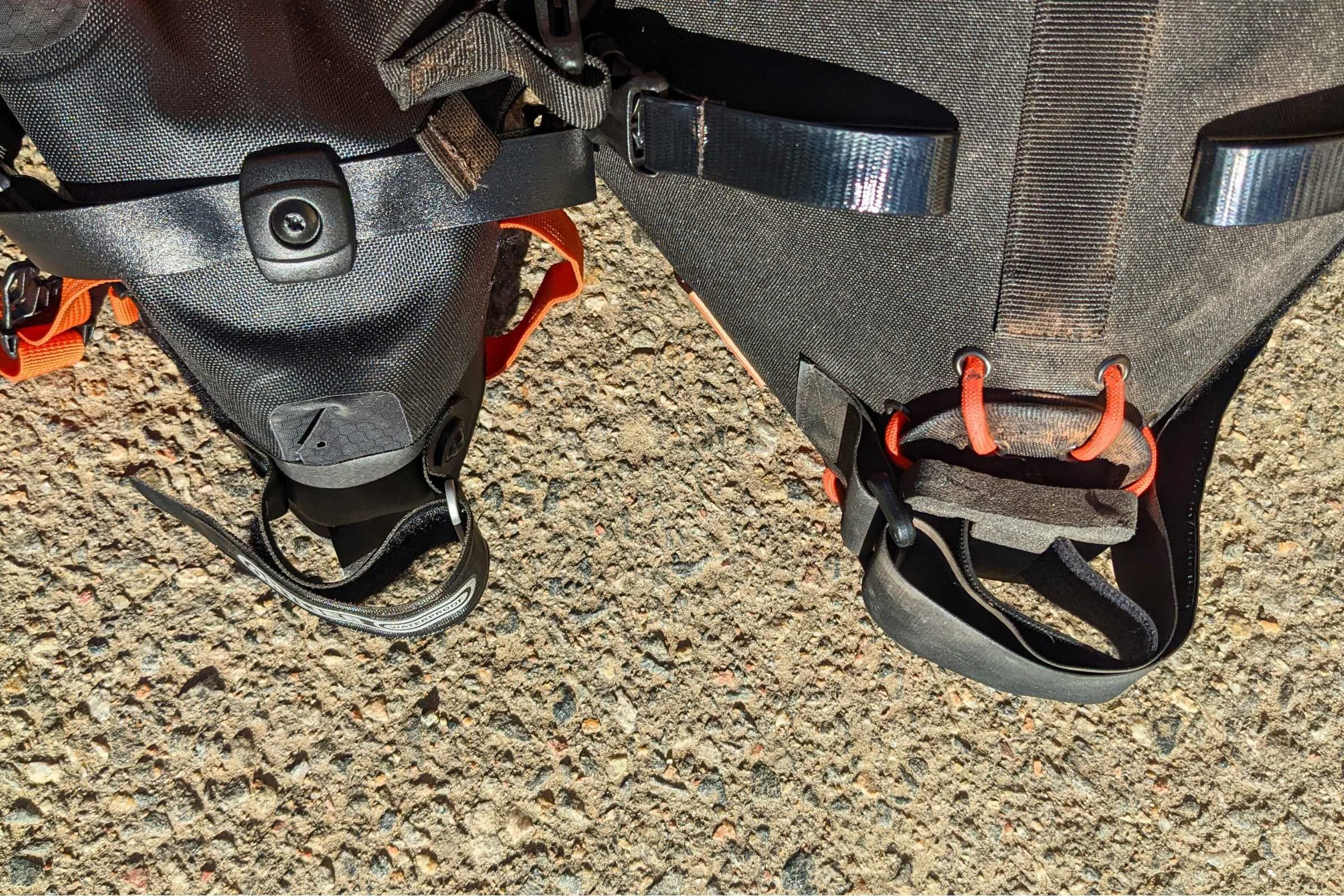
Most bike seat bags have some version of these straps, but the attachment mechanism for the Restrap Saddle Bag works better. The Restrap bag’s seatpost attachment strap is two rubberized and rigid velcro straps layered on each other. This double strap makes the bag feel solidly secured to the bike.
The inner strap has a ⅜-inch foam spacer to move the bag away from the seat post and protect the bag and post from rubbing against each other.
The straps that attach the harness bag to the saddle rails are simple webbing buckles with a separate ladder-locking buckle. The fact that the portion of the buckle you use to tighten the strap is separate makes it much easier to get these all-important straps tight. In general, the tighter you can make the straps that wrap around a seat bag and attach to a bike’s saddle rails, the less that bag is going to sway. Well, you can easily make the straps on this bag really tight.
-
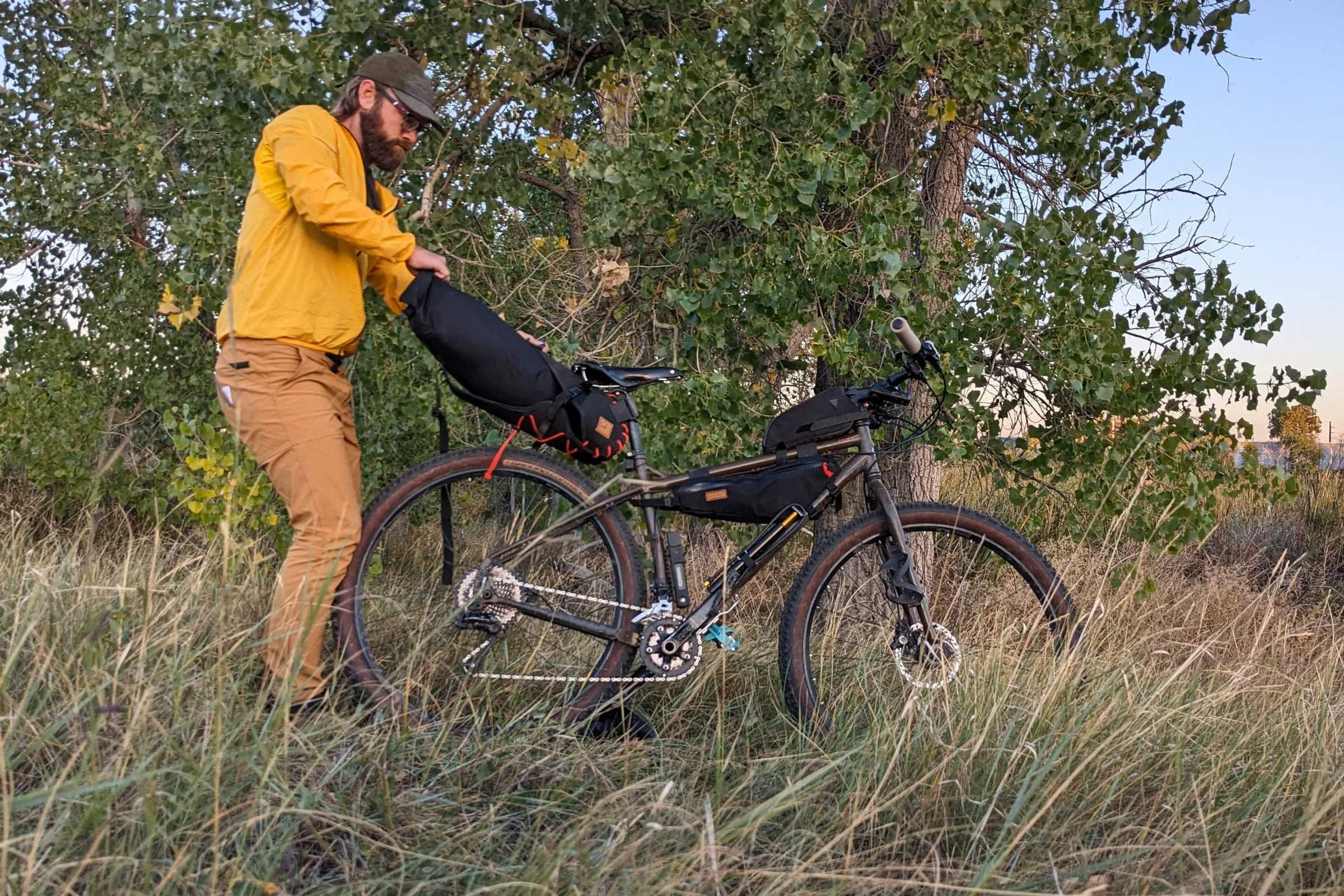
Since this bag uses a separate dry bag, we found it easy to unload gear when we got to camp. To remove the dry bag, unclip this slick magnetic buckle that holds it in the harness and pull it out.
One of the most challenging parts of packing your bike on a bikepacking trip is reattaching the bags to your bike every morning. But this bag cuts down on this process since the harness stays attached to the bike.
-
One minor flaw we found with this bag is that the lacing system used to attach the two harness pieces tightens with a simple toggle. This toggle won’t hold the laces tight if you want to reduce the size of the bag. And the extra length of the lace might rub on your rear tire. However, these issues are minor and can be fixed by tying a knot and cutting off the excess cord.
See our most popular bike guides in our Bicycle gear section:
Best Waterproof saddle bag for bikes: POC Ultra Saddle Bag 7L
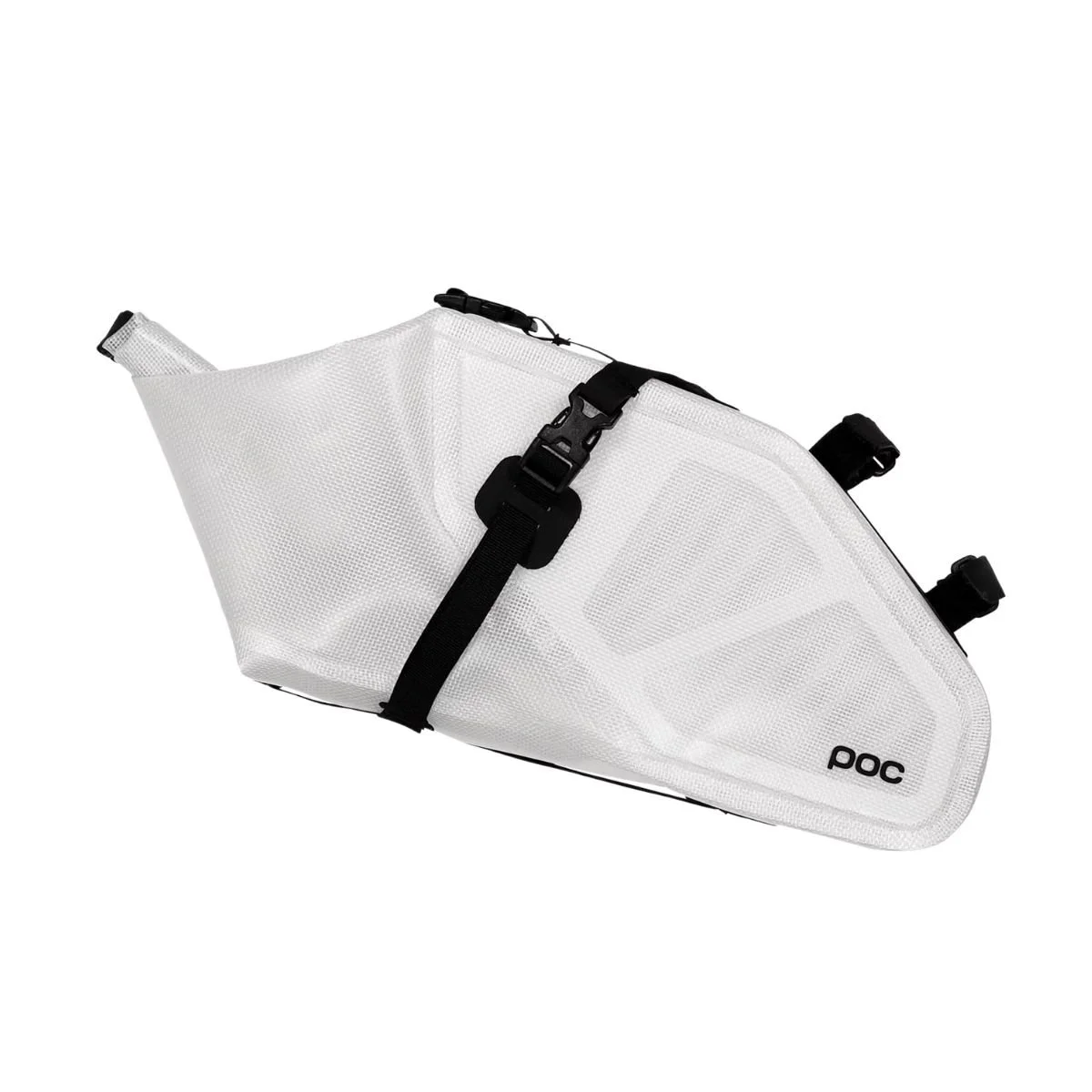
Material: Translucent TPU with Belpolen frame
Weight: 10.2 oz
Capacity: 7L
Waterproof: Yes, completely waterproof and seam-taped
Attachment system: Three-point fastening system
What we liked: Waterproof, ultralight, stable on the bike
What we didn’t like: Smaller capacity, translucent material might not be everybody’s vibe
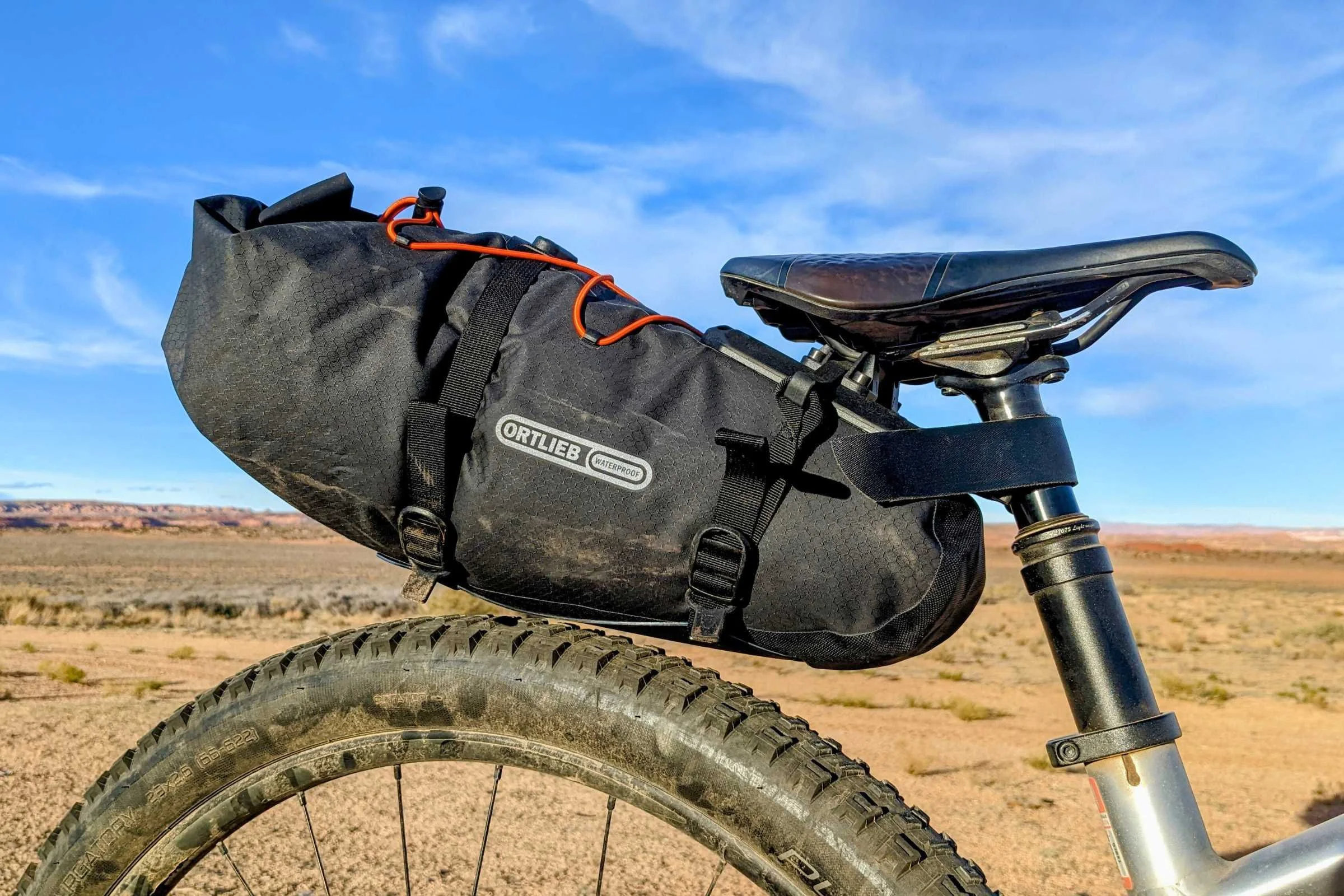
The POC Ultra Saddle Bag 7L is a fully waterproof, ultralight bike seat bag with a 7-liter capacity. It’s made of TPU with welded seams and a roll-top closure to keep water out. At 10.2 ounces, this is also the lightest large-capacity seat bag we tested. The fully waterproof design also lets you save even more weight on waterproof stuff sacks, too.
POC Ultra Saddle Bag 7L


-
We tested this bag while bikepacking in Colorado’s Arkansas Valley, in mostly hot, dry weather. We also hit a few afternoon storms, and it always kept the gear inside dry. We also took it on long gravel rides, where we used it to carry a jacket, lunch, tools, and more. This bag is light enough that we didn’t feel the need to take it off our bike when we weren’t bikepacking, unlike many seat bags that weigh twice as much.
-
The rubbery TPU material is rigid enough that the bag doesn’t flop as you ride. A rigid plastic frame reinforces the material and helps it hold its shape. This plastic sheet wraps along the top of the bag where it contacts your seat and seatpost. It then wraps onto the bottom, where the roll-top compression strap is anchored. It also has thinner strips of rigid material along the sides to keep the bag from bulging or swaying.
-
It attaches to your bike with two hook-and-loop straps that wrap around the seatpost. You can move the buckles up or down, depending on your bike's size and shape, using a ladder-lock TPU piece with three slots. This isn’t a ton of adjustability, but it’s more than most bike seat bags allow for. It attaches to the seatpost rails with a webbing strap, a locking ladder-lock adjuster, and a side-release buckle. It has a roll-top closure with a compression strap to secure it. It also has reflective accents on the underside of the roll top that are visible when the bag is strapped to your bike.
-
The biggest downside of the Ultra Saddle Bag is its translucent fabric. We don’t actually dislike the look, but some people might not love the idea of everyone else seeing what you have packed in your bag. If you want a bag made of fabric you can’t see through, look elsewhere.
-
For a waterproof seat pack that won’t weigh you down, the POC Ultra Saddle Bag is a great option.
Best bikepacking saddle bag: Ortlieb Seat-Pack QR

Material: PU-coated IP64 dustproof, splashproof nylon fabric
Weight: 22 oz
Capacity: 7.5 L, 13 L
Waterproof: Water-resistant rated to IP64 as dustproof/splashproof.
Attachment system: Seat-Lock quick-release system with saddle-rail hooks and seatpost adapter clamp
What we liked: Secure quick-release attachment system, waterproof, minimal sway, plastic bottom plate protects bag
What we didn't like: Quick-release doesn’t work with some saddles
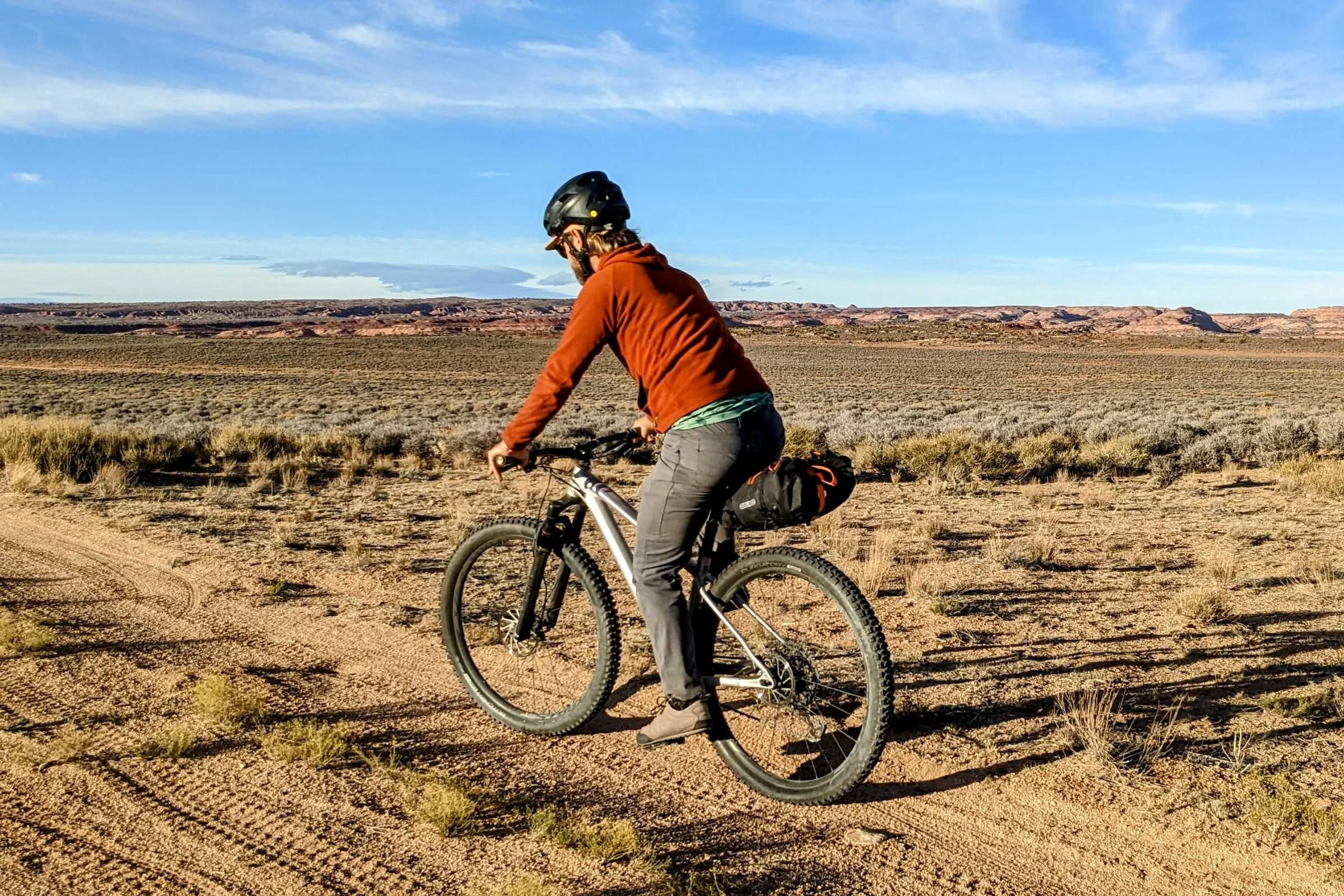
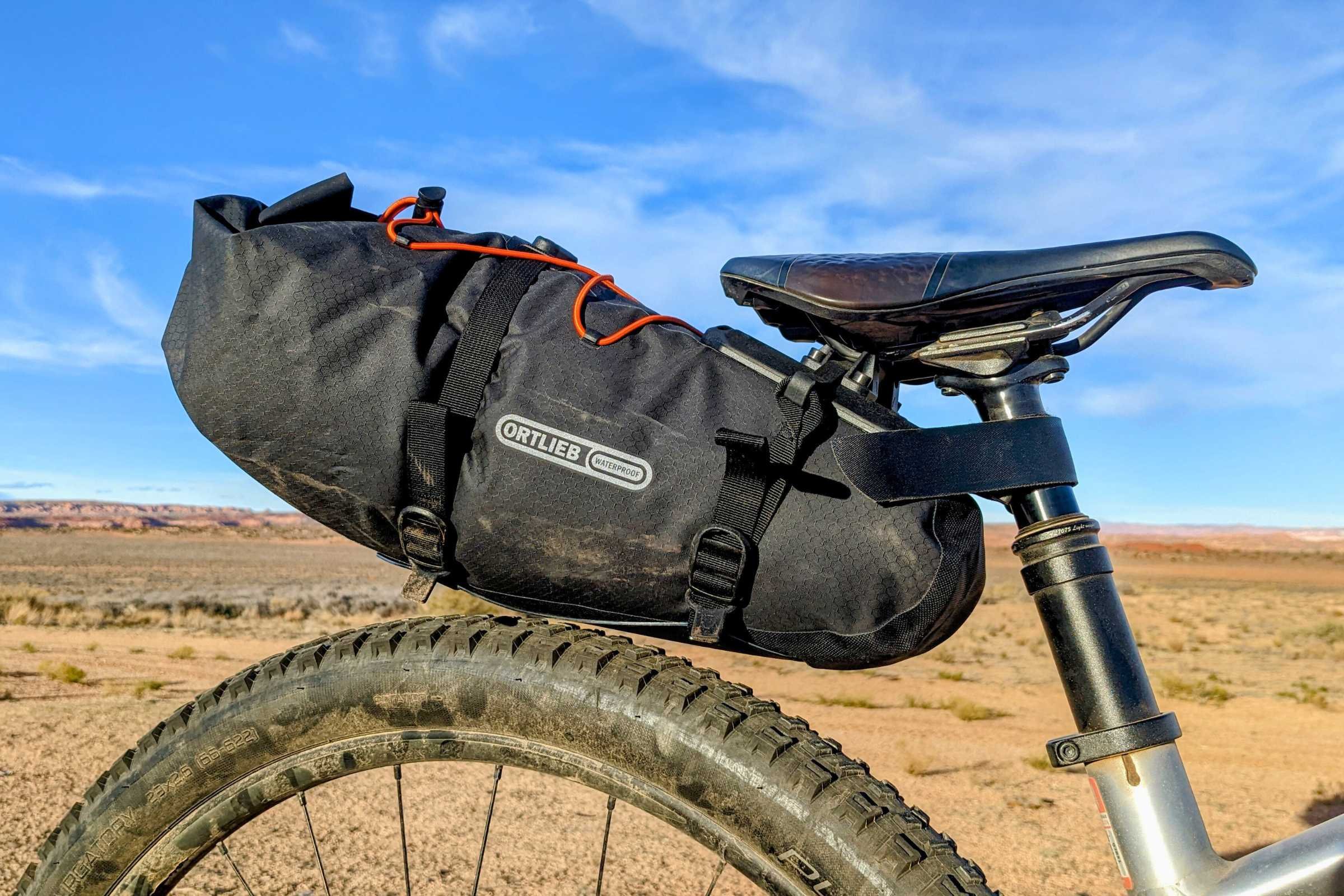
The Ortlieb Seat-Pack QR had the least side-to-side sway of any bikepacking-sized saddle bag we tested, making it our winner for best saddle bag for bikepacking. The only reason this bag didn’t get picked for the best bike saddle bag overall is that it has compatibility issues with some leather Brooks saddles, which are the most popular saddles for bicycle touring and bikepacking (more on that below).
However, this saddle compatibility issue is the only flaw we could find with this saddle bag. If you ride pretty much any saddle other than a Brooks B67, or B17 clamped farther back on the saddle rails, this is an awesome saddle bag for you.
Compare prices of the Ortlieb Seat-Pack QR
-
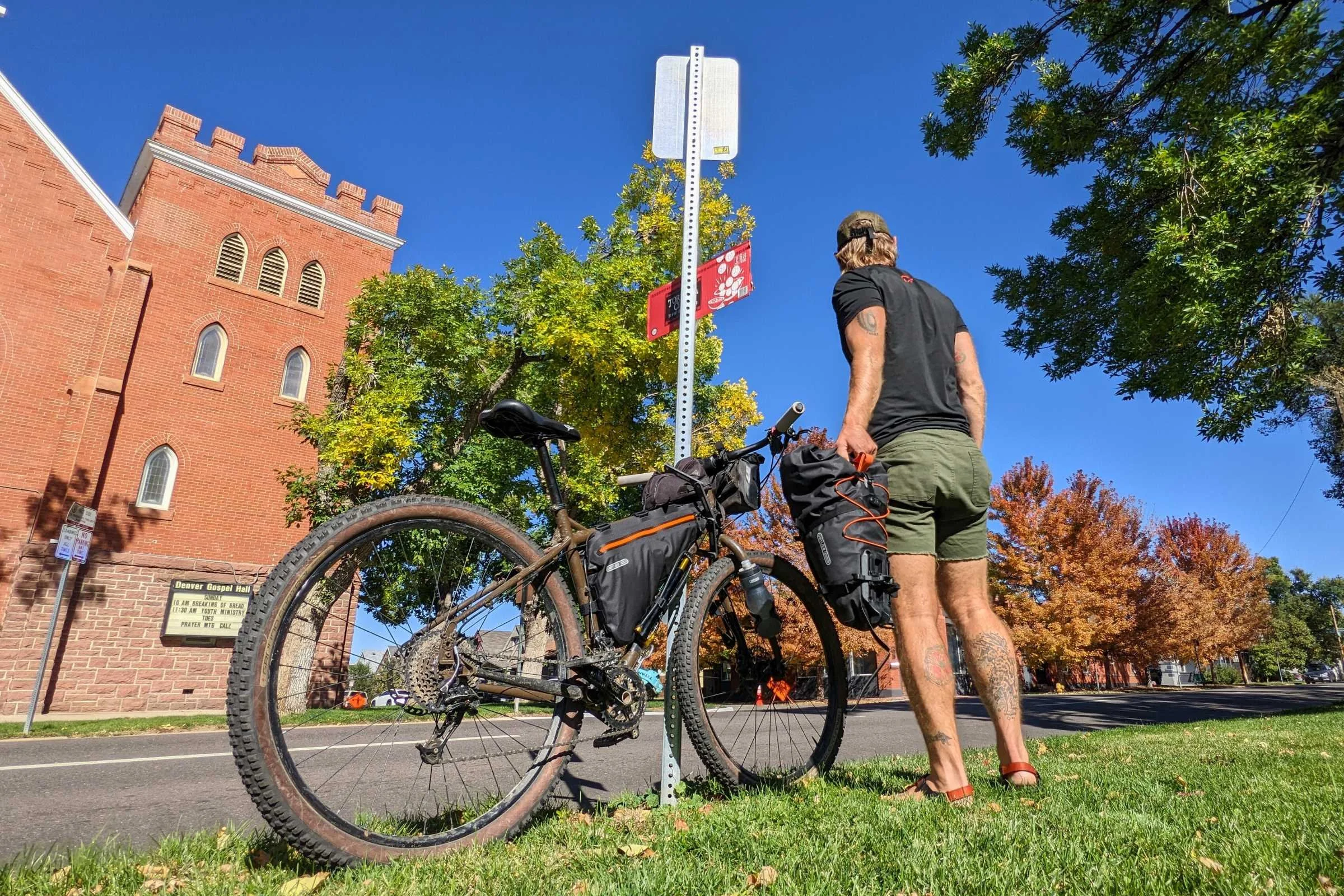
We tested this on our mountain bike with a dropper post and our off-road dirt touring bike, which doubles as a commuter. It worked well in both of those applications. It even allows you to use your dropper post, albeit not the full amount of travel, but more than most full-sized saddlebags.
-
This bag had the least side-to-side sway of any bag we tested. The quick-release attachment system is not just secure, though. This bag is also one of the easiest to remove from the bike. It’s not quite as easy to remove this bag as it is to remove the dry bag from the Restrap Saddle Bag’s harness.
But it’s almost that easy to detach this bag entirely, not just remove the dry bag. The quick release also makes this bag a great choice for commuters.
-
I used this bag for commuting well over 100 miles around Denver. I kept it on my bike for weeks, and used it for carrying a jacket, tools, and a lunch while running errands around town. I found it has enough extra space to pick up a few small items from the grocery store on your way home, too.
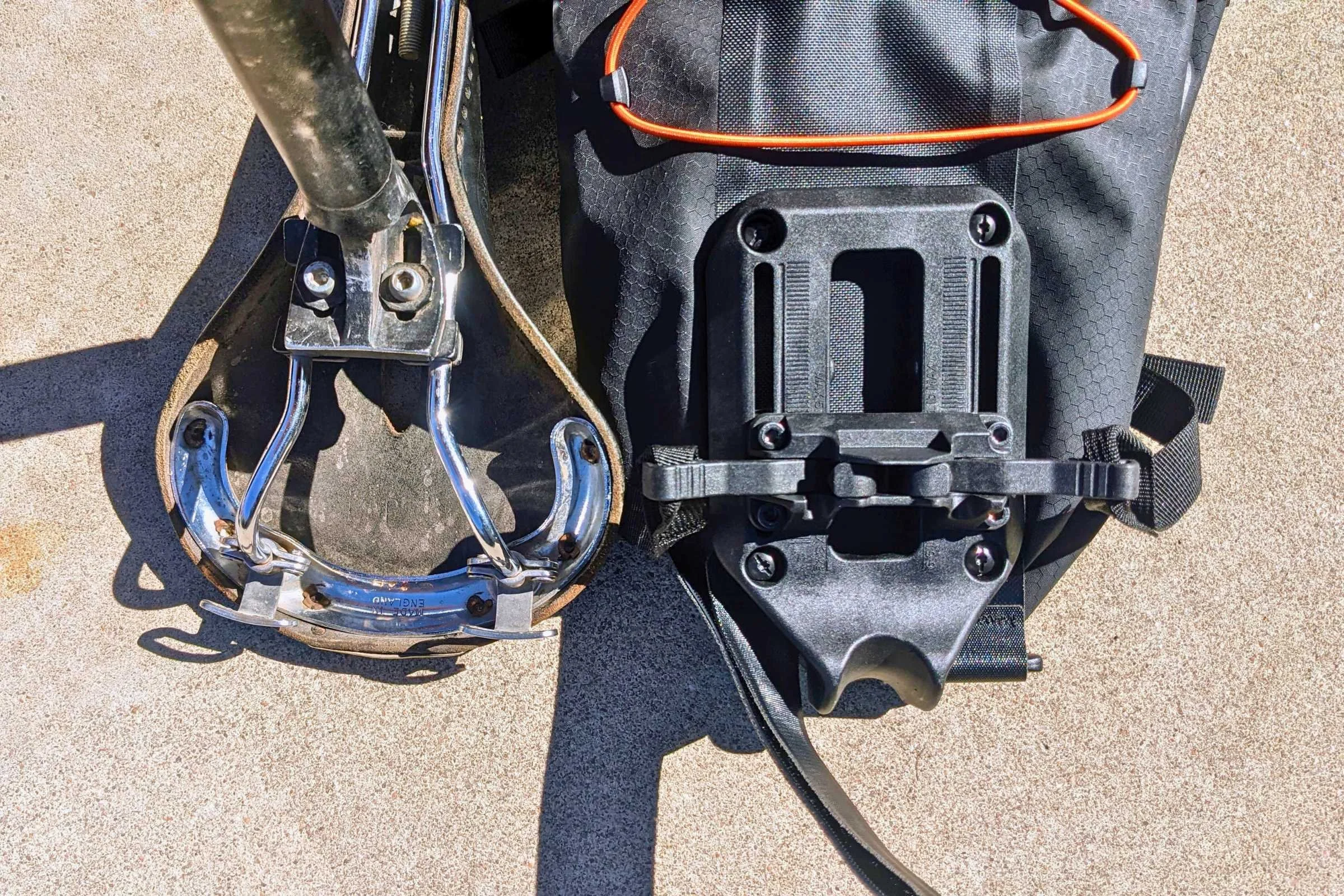
The bag is a large, conically shaped roll-top dry bag. The bag attaches to the already mentioned quick-release system. The attachment mechanism is plastic hooks that hinge to grab saddle rails from the inside. The quick-release bracket slides forward and back to fit onto different-length saddle rails, too.
At the base of the bag, a fitted U-shaped polymer piece extends from the quick-release bracket to the back of the seat post. A velcro loop on a rubberized strap wraps around the seat post and holds the bag in place, sandwiching the post between the strap and molded u-shaped piece.
-
Two sets of straps run from the top of the bag to the bottom and connect to a rigid plastic sheet, which protects the underside of the bag and gives it more rigidity. You can also use this plastic sheet to shrink the volume of the bag. If you tighten these straps before packing the bag, it will be laterally smaller, giving you more tire clearance if you want to use this with a dropper post. A strap with g-hook attaches over the roll-top section to secure it. Also, this bag has a shock cord for lashing a jacket on top.
-
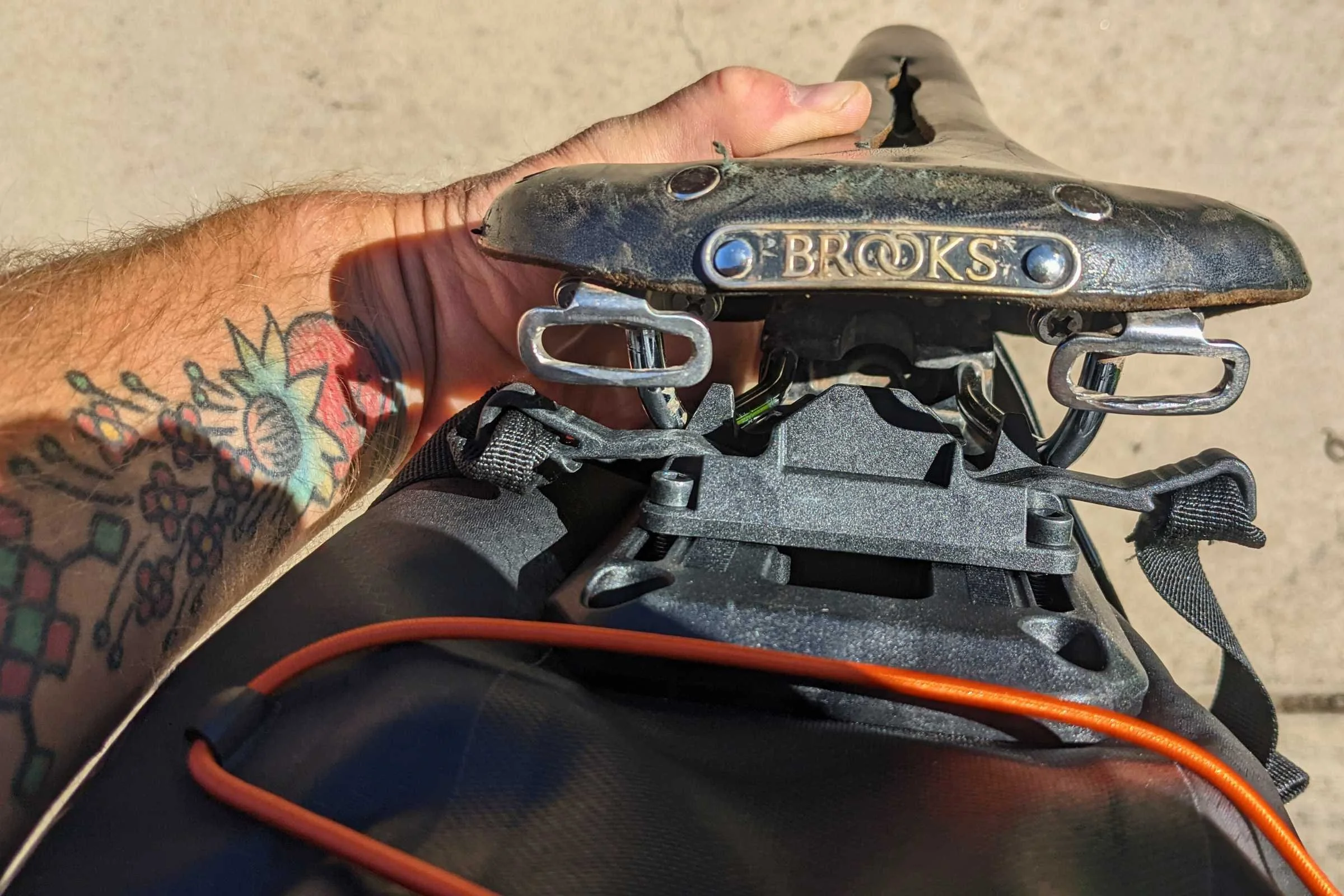
As we mentioned above, this bag doesn't work with all saddles. I have a Brooks Professional, and I couldn’t get this bag to work with that saddle. Ortlieb lists Brooks saddles with springs as incompatible, but if you have a Brooks where the saddle rails bend outward, you might be out of luck as I was.
I ended up testing the bag with a Specialized Power saddle and a basic seat I borrowed from a Fairdale Weekender. This bag works with the more popular Brooks B17 and Cambium models, the latter I confirmed using my roommate’s Brooks Cambium saddle.
-
As with every Ortlieb product, this bag is completely waterproof. There is an air valve that lets you compress your gear more as you pack it in. However, we think that if this air valve were located slightly closer to the base of the bag, it might be easier to stuff it. We found it pretty difficult to stuff our gear into the bottom-most (smallest) part of the cone, probably — at least partially — due to the air that's getting trapped down there.
Best saddle bag for road bike: REI Co-op Junction Seat Wedge
Material: 100% recycled oxford nylon (bluesign approved)/3 mm PE foam
Weight: 3.1 oz
Capacity: 0.75 L
Waterproof: Durable Water Repellent (DWR)
What we liked: Ideal size for a tube and tools, durable, recycled materials
What we didn't like: Not as large as some seat bags
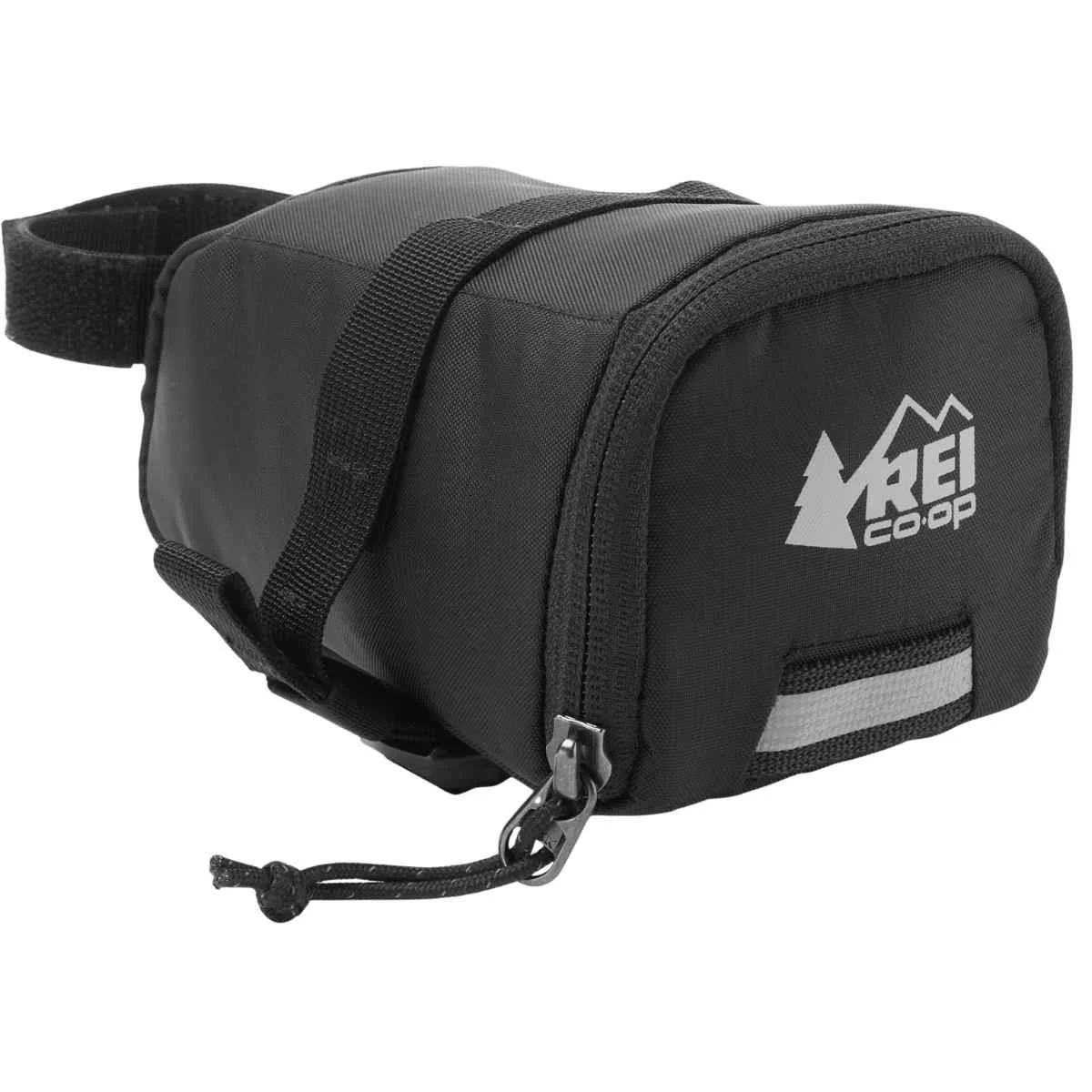
The REI Co-op Junction Seat Wedge is our favorite small-capacity saddle bag because it is compact, lightweight, durable, and made from recycled Oxford nylon.
While we mostly tested this saddle bag on gravel and mountain bikes, after a lot of use on the trail and in urban environments, we think this is the best saddle bag for road bikes.
We like this bag for road bikes because narrower tires require a narrower tube, which takes up less space in a flat-fixing kit. It's also quite affordable and inconspicuous, so road bikers, commuters, and people using their bikes around town can feel comfortable leaving it on their bikes and forgetting about it.
View The REI Co-op Junction Seat Wedge
-
As we mentioned, though we think this is the best saddle bag for road bikes, we tested this bag on our gravel bike while riding dirt, gravel, and paved roads in and around Patagonia, Arizona.
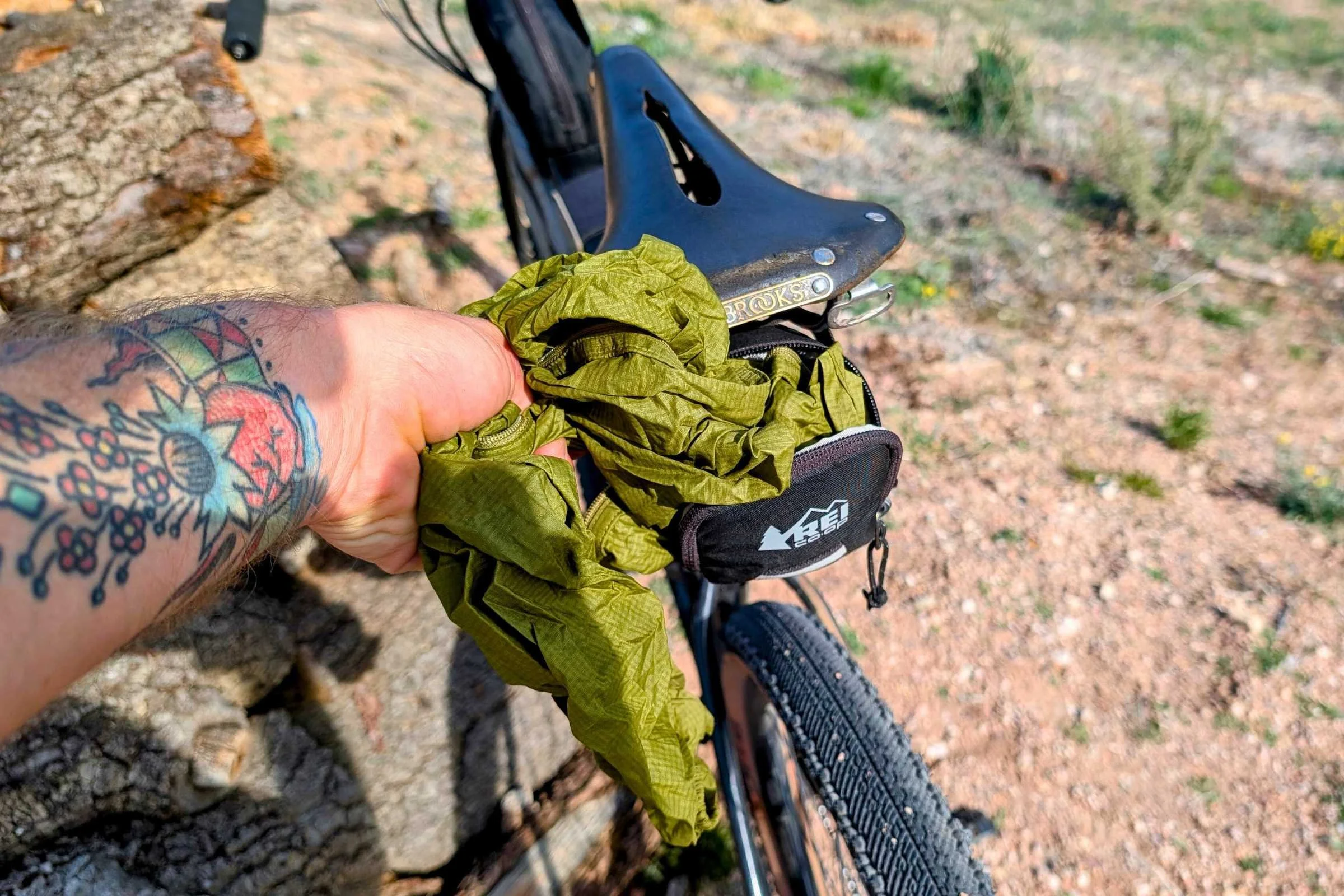
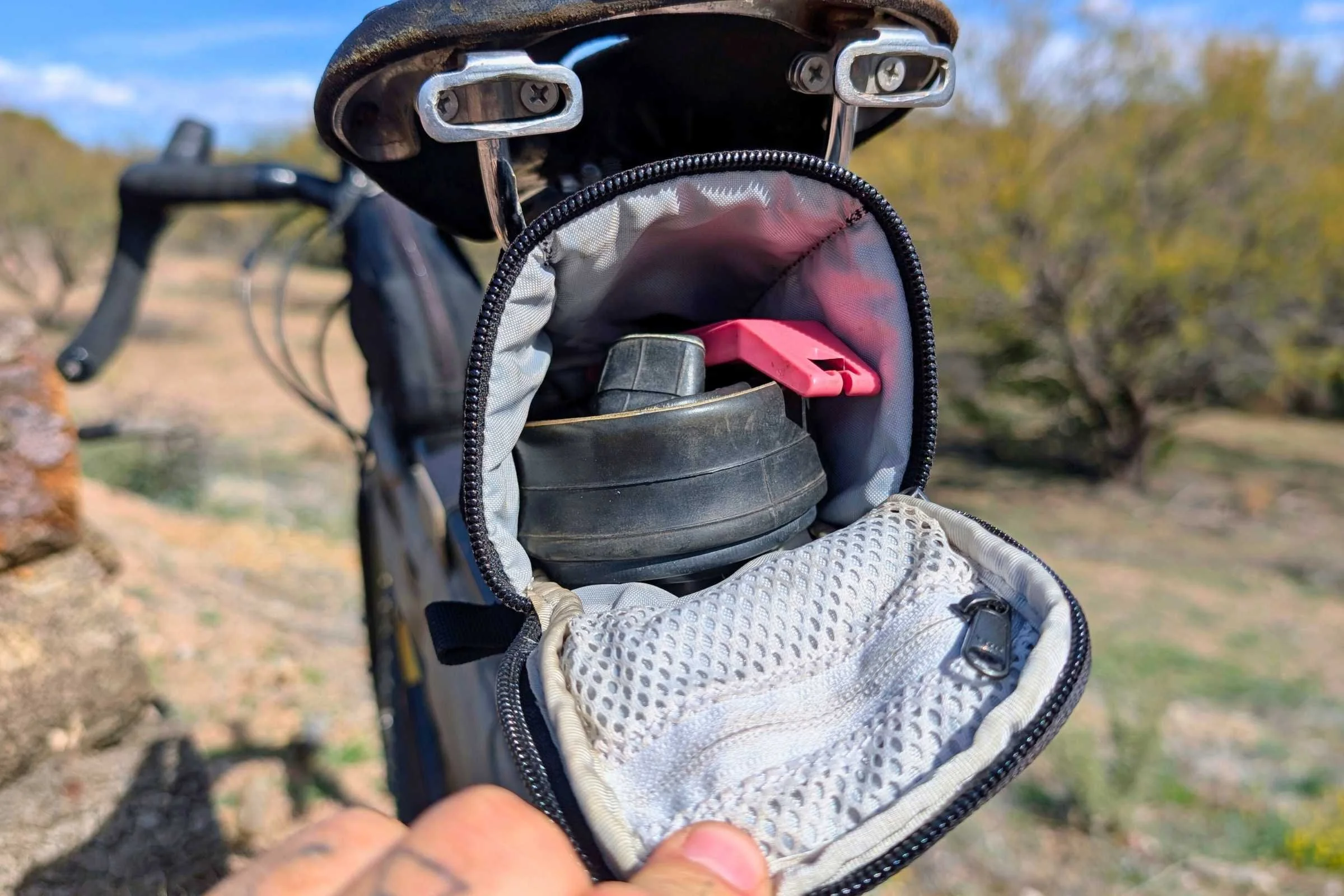
We’ve found that this 0.75L bag can fit a spare tube for a road or gravel bike perfectly, along with a tire lever, multitool, and tubeless repair kit. It can even fit a 29-inch tube and a small multitool.
-
We left it on our bike for months, and it kept our flat repair kit secure the entire time, even when our bike was on a hitch rack while driving at highway speeds on mountain roads. This bag doesn’t stand out, and we generally forgot it was there the entire time, which is precisely what you want out of a small bike saddle bag.
We think being inconspicuous is an important criteria for the best saddle bags for road bikes or commuting, as you will leave your bike parked while you are in the office, grocery stores, coffee shops, or restaurants. Not that anyone wants their bike bag stolen, but the affordable price makes us feel more comfortable leaving this bike bag on, too.
-
The bag has just enough space in the main compartment to carry everything you need for a flat fixing kit, plus an ultralight jacket. It uses a side-release buckle and webbing strap to secure it to the bike’s saddle rails, and a hook-and-loop strap that wraps around the seat post to prevent the bag from swaying.
-
It’s made of recycled Oxford nylon, which is durable and highly abrasion-resistant. It also has a durable zipper. We’ve found that the tiny zippers used on some other small bike seat bags have failed sooner than we’d hoped. The zipper on the Junction Seat Wedge is large enough that it won’t wear out from dust and debris, or, hopefully, ever.
-
If you’re looking for an affordable and durable small saddle bag to store a repair kit with extra space for a wind layer, the REI Co-op Junction Seat Wedge bag is a great option.
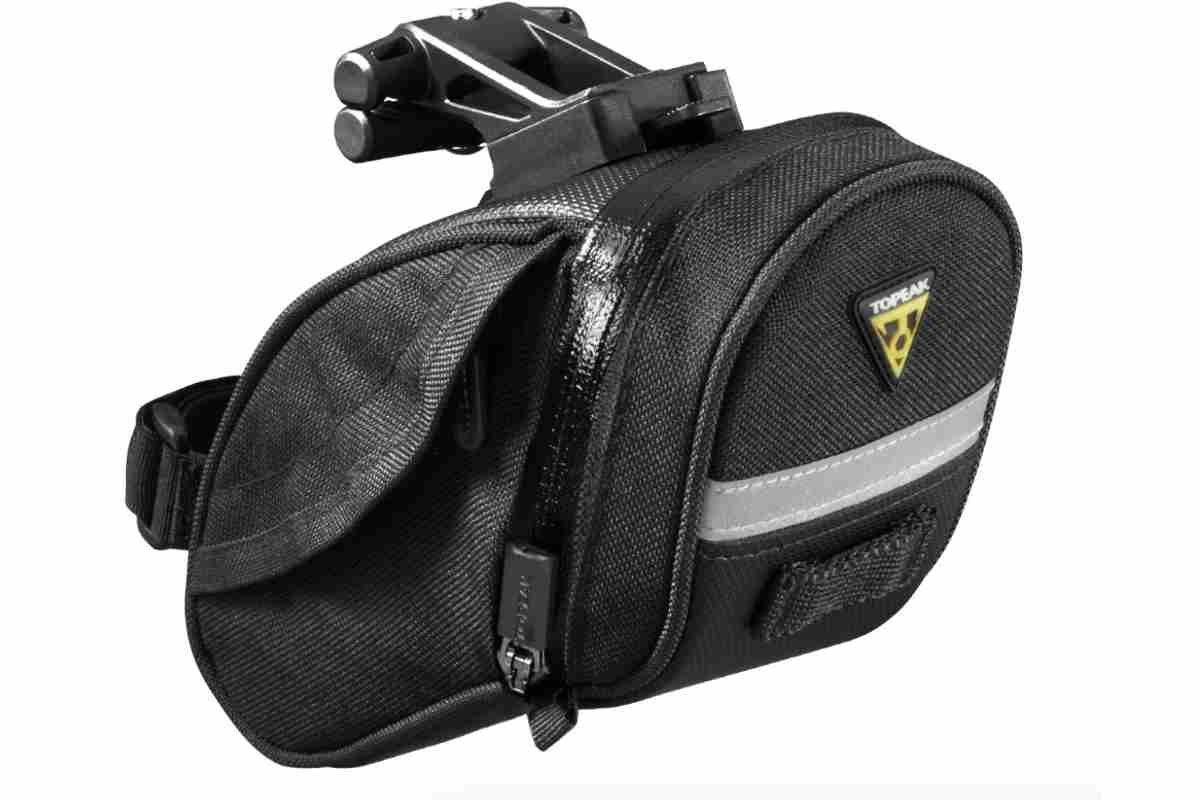
Best mountain bike saddle bag: Topeak Aero Wedge Pack DX
Material: 600-denier polyester
Weight: 4.2 oz, 5.3 oz
Capacity: 0.5 L, 0.9 L
Waterproof: No, but has water-resistant zippers
Attachment system: QuickClick® (F25) w/ seatpost strap
What we liked: Saddle rail clamp attachment, separate side pocket for keys and wallet, inexpensive, easy installation and removal
What we didn't like: attachment could be less reliable than Velcro found on other bags
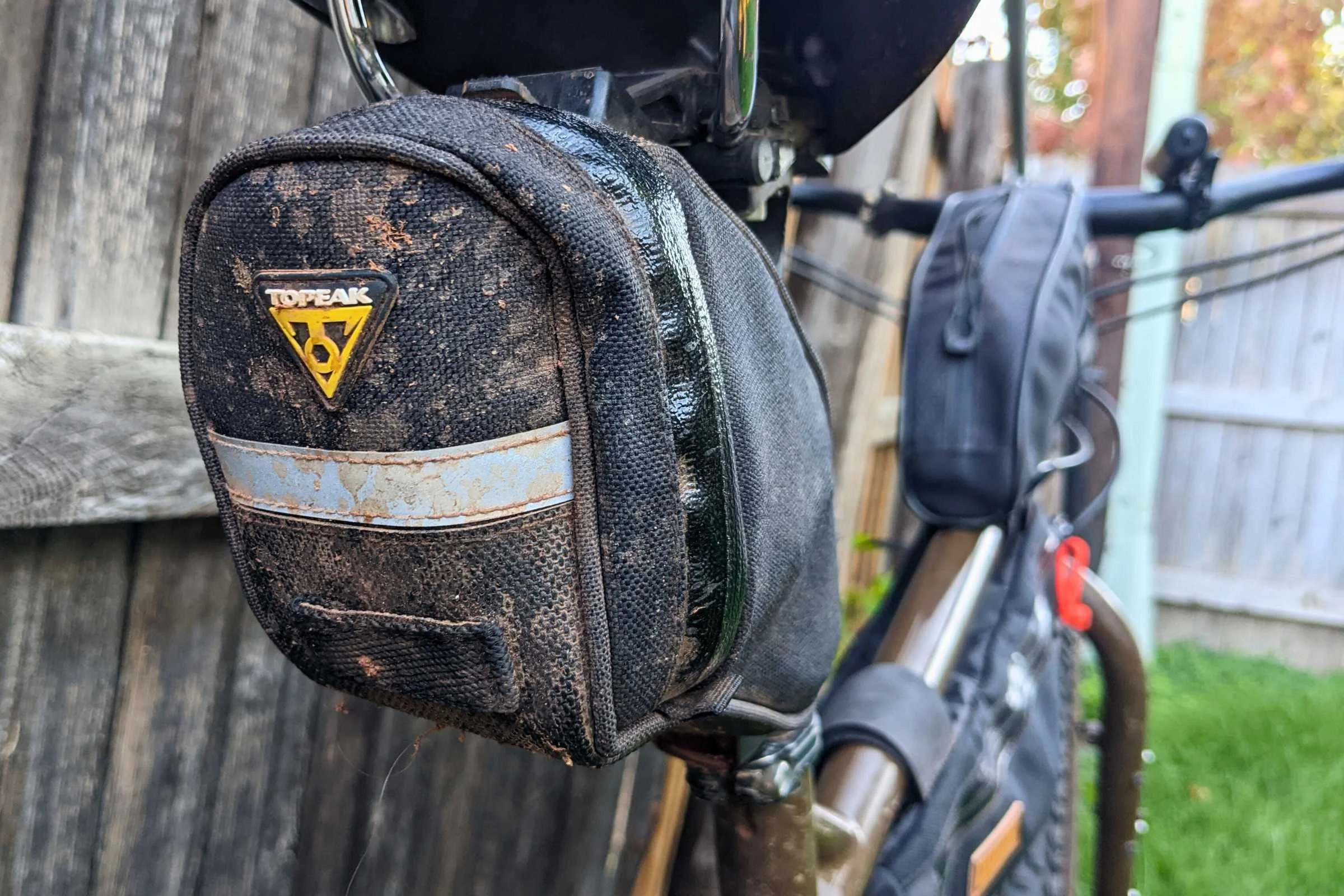
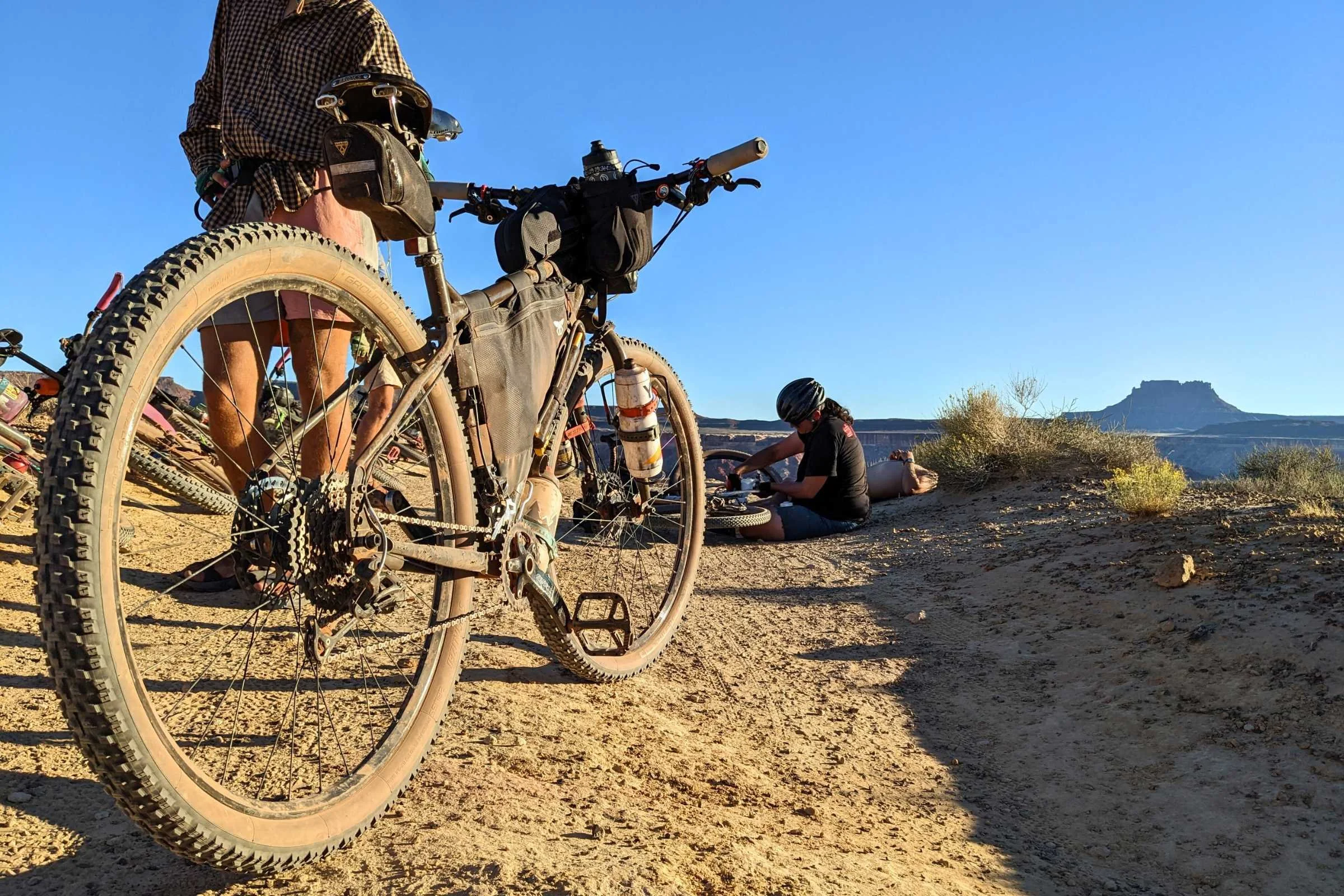
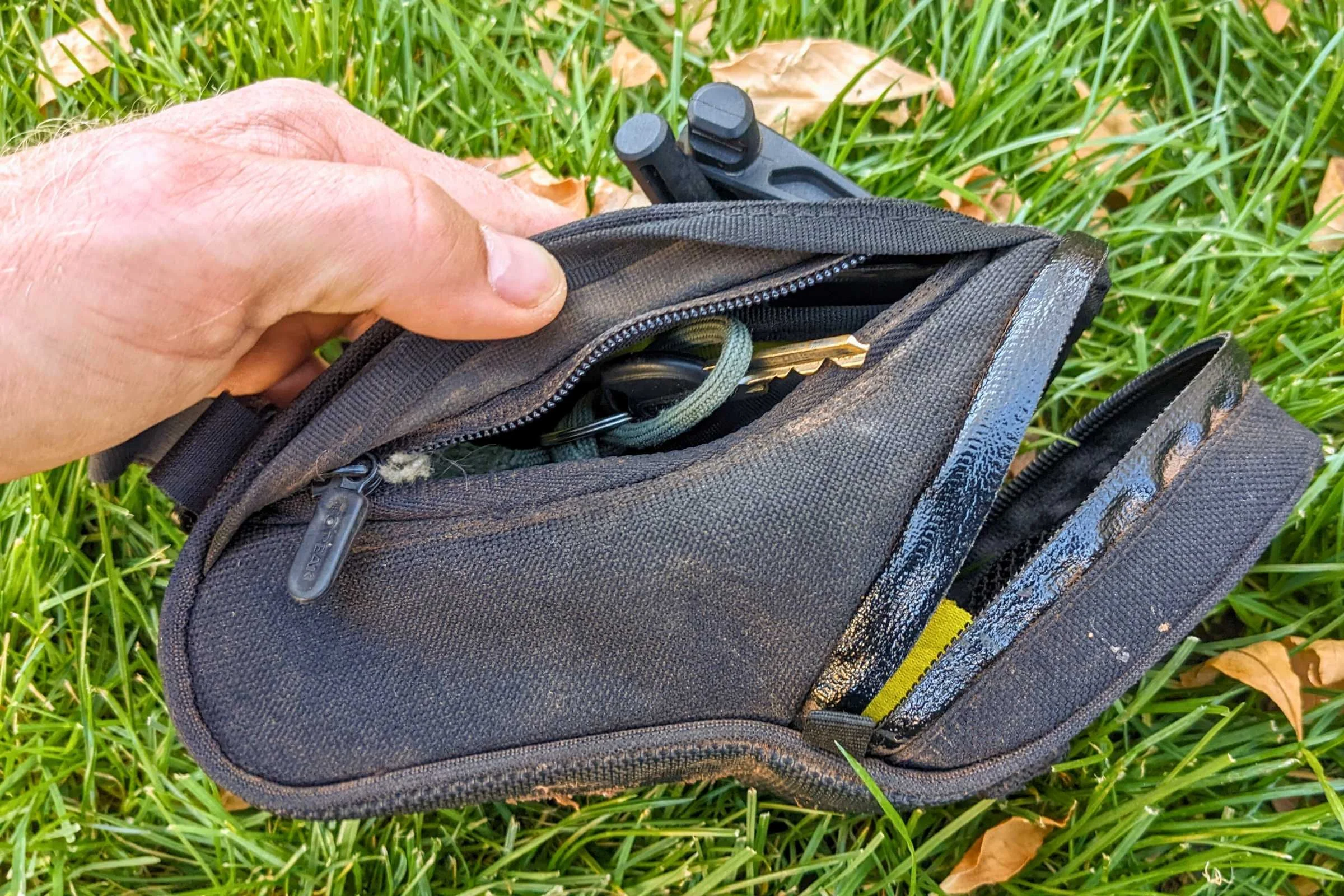
The Topeak Aero Wedge Pack DX is our favorite seatpost bag for mountain bikes. We like this bag because it features a unique saddle rail attachment system that secures the bag to your bike’s seat without attaching it to your seatpost. This feature makes this seat bag work better with a dropper post than most bags we’ve ever used. We tested this bag on long mountain bike rides near Moab, Utah, and on many Colorado Front Range singletrack trails.
Topeak Aero Wedge Pack Dx
-
The standout feature of this seat bag is the quick-release bracket. Part of this bracket attaches to saddle rails; you’ll need a 4-millimeter Allen wrench to install this part. The bag has a bracket that slides into the piece you bolt to your saddle rails. This attachment system is easy to use once you’ve installed the bracket to your saddle rails.
There is also a velcro loop to attach the bag to the seat post, and though it isn’t necessary to use this part, it’s good insurance in case the bag detaches from the main bracket.
With this seat bag, you can store tools under your bike seat and still have full use of your dropper post. We’ve used a lot of other saddlebags with a dropper post, and most of them work. But this bracket holds the bag more securely when not attached to the seat post, compared to a seat bag that uses a traditional webbing strap.
-
This bag features a u-shaped zipper opening that opens to the main compartment. It also has a small mesh pocket on the bag's lid. There is another zipper pocket accessible on the side of the bag, large enough to store small flat items separately. This pocket is big enough for a credit card, ID card, and a single energy bar.
-
While we really like the attachment system found on this bag, we think a simple bag, like the Axiom Seymour Oceanweave that attaches with a simple velcro strap, is more foolproof and usually adequate.
The quick release bracket on the Aero Wedge Pack is very secure, but it is possible to think you’ve clipped the bag in place without actually doing so. Since this bag is more open to user error, we’re not convinced it’s the best choice for everyone.
Another downside to the Aero Wedge Pack’s attachment system is if you’re using it on multiple bikes, you’ll have to get multiple brackets or move the bracket and the bag between bikes. You can buy an extra QuickClick bracket from Topeak, and this bracket does work well as long as you’re sure to push the bag into the bracket until it clicked.
With the added benefits of using this with a dropper post, we think this is a great seat bag.
Best saddle bag for gravel bike: Ortlieb Seat-Pack

Material: PU-coated IP64 dustproof, splashproof nylon fabric
Weight: 12.2 oz (11 L), 16.1 oz (16.5 L)
Capacity: 11L, 16.5L
Waterproof: Yes, IP64 rated for splashproof
Attachment system: Hook-and-loop fastener
What we liked: Lightweight, waterproof, reflective strip, time-tested design, external bungee
What we didn't like: Sways a little when fully stuffed, hard to pack fully into bottom corner
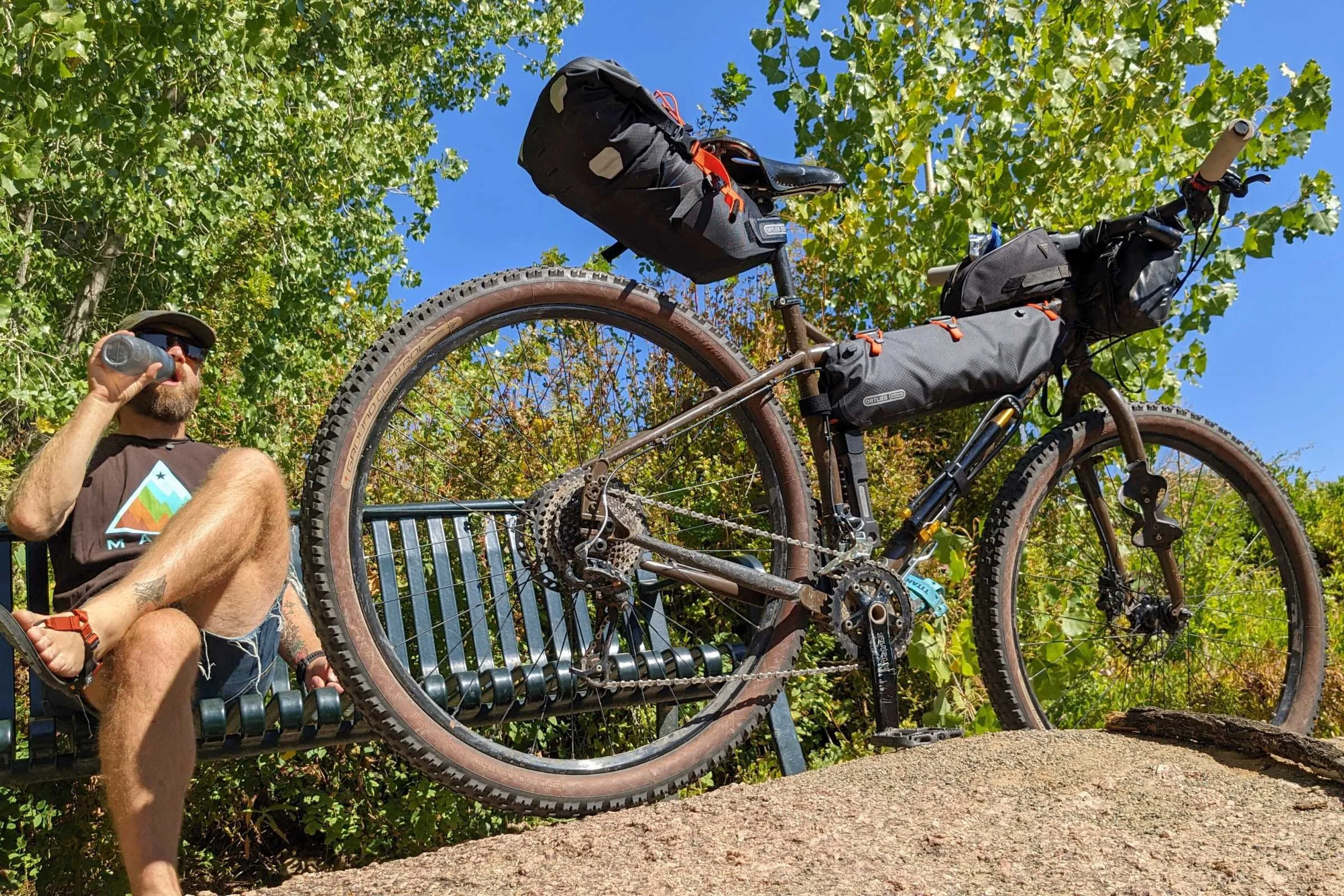
The Ortlieb Seat-Pack is the lightest full-sized seat bag we tested. This bag would be an excellent choice for sub-24-hour overnight bikepacking trips (known by the acronym S24O), especially on a lightweight gravel bike.
We tested this on Colorado Front Range dirt and gravel roads, and it performed wonderfully loaded with a quilt, sleeping pad, and sleep clothes. It’s fully waterproof, smaller than other seat bags we tested here, and has a simple design that works with every bike.
Some seat bags are so big that they can rub on your rear tire as they bounce, especially if you ride a smaller bike or have your seat adjusted lower. This bag is small, so it didn't rub on our tire, and probably won’t rub on your tire, either.
Compare Prices Of The Ortlieb Seat-Pack
11 L
16.5 L
-
At its core, this is an 11-liter waterproof compression stuff sack with a few straps. It’s made of a waterproof coated ballistic nylon ripstop material that is lighter and less rubbery than the heavy fabric Ortlieb uses for its original bike touring bags.
Most bikepacking seat bags weigh in the 18-24 ounce range. This bag weighs only 12 ounces (345 grams); that’s nearly half the weight of most of the other full-sized saddle bags we tested. The bag still has all the features you’d want in a seat bag, too.
-
The attachment system consists of snap buckles with integrated ladder-locking cam buckles. A stiff, rubbery strap with velcro wraps around the seat post to attach the bag at its base. A roll-top closure extends to a large cone, making packing the bag easy.
-
There are compression straps to hold the roll top closure down and compress your gear once it’s packed. There is also an option to attach another strap to the bottom of the bag, wrap it around the roll-top end, and connect it to your seat to further prevent sway.
-
While this bag is easy to install and uninstall, it’s much easier to pack full of gear when it is off the bike. When bikepacking, we sometimes don’t want to pull every bag off the bike every night, but with this bag, you have to pack and unpack it off the bike. The bottommost corner of the cone is very small, and the waterproof material is airtight, so you have to pack this bag with the help of gravity.
When first testing this bag, I had just jammed my finger, which made the extra force and finger dexterity needed to cram my quilt into that tiny corner of the bag even more difficult. But at half the weight and fully waterproof, we’re okay with the extra work it takes to pack this bag.
-
Since the Ortlieb Seat-Pack is so light, we worry about its durability. The heavier Ortlieb Seat-Pack QR (22 oz) uses the same material but has a plastic sheet on the bottom to protect the thin bag material if it rubs on your tire. On the other hand, the standard lighter-weight Ortlieb Seat-Pack has nothing to protect that material. The Restrap Saddle Bag uses 1000-denier Cordura for durability.
We don’t think this is a serious issue with the smaller 11-liter bag, which likely won’t rub on any rear tires. But we would be concerned about using the larger 16.5-liter size version of the Ortlieb Seat-Pack for this reason, and we'd steer you towards the Ortlieb Seat-Pack QR if you wanted a larger capacity bag.
Best affordable bike saddle bag: BV Bicycle Strap-On Bike Saddle Bag
Material: Nylon
Weight: 3.8 oz (0.7 L)
Capacity: 0.4 L, 0.7 L, 1 L
Waterproof: No
Attachment system: Velcro Fastening with a buckle
What we liked: Very inexpensive, expandable, low profile, has a key clip, easy to install
What we didn't like: Inner pockets could be better
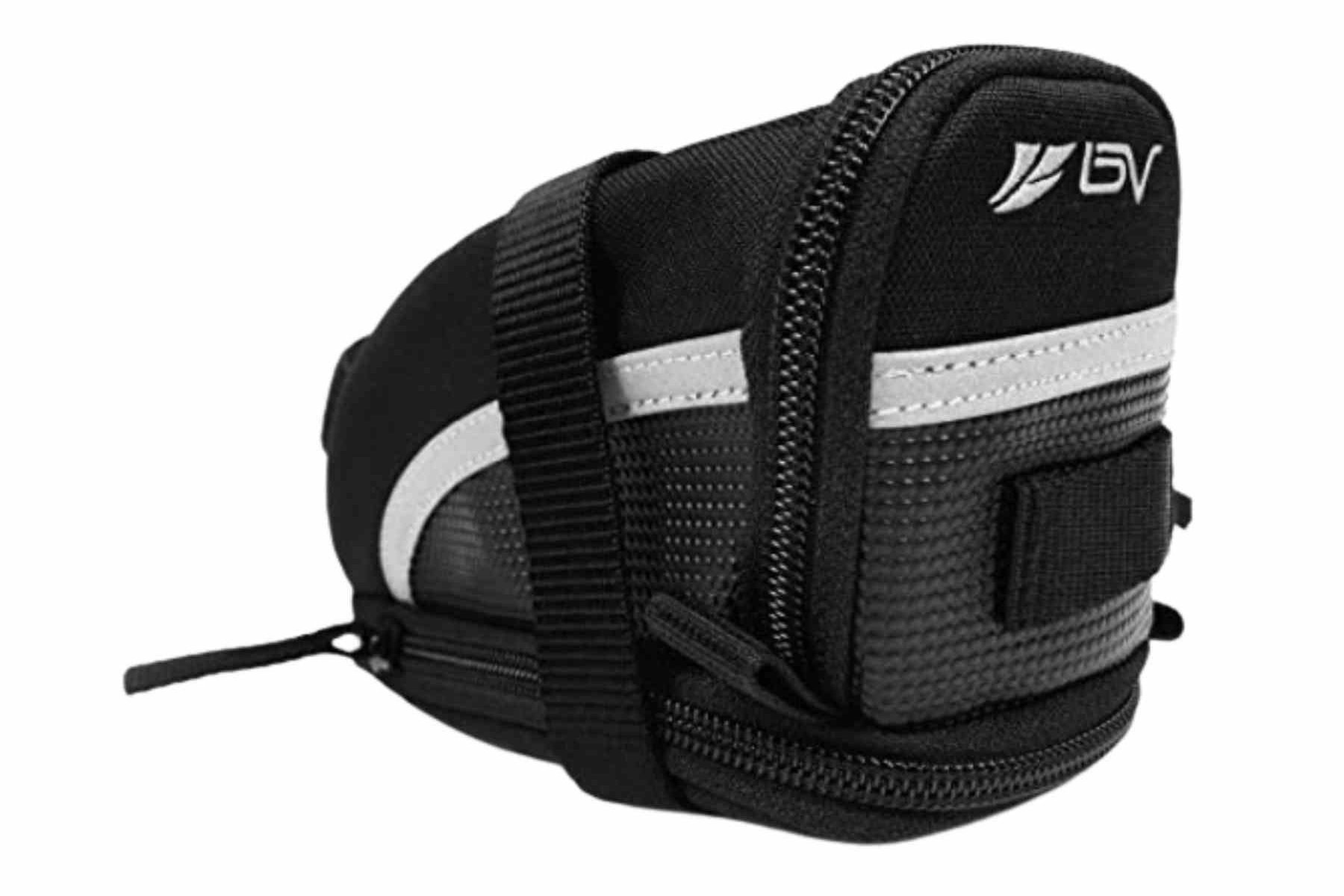
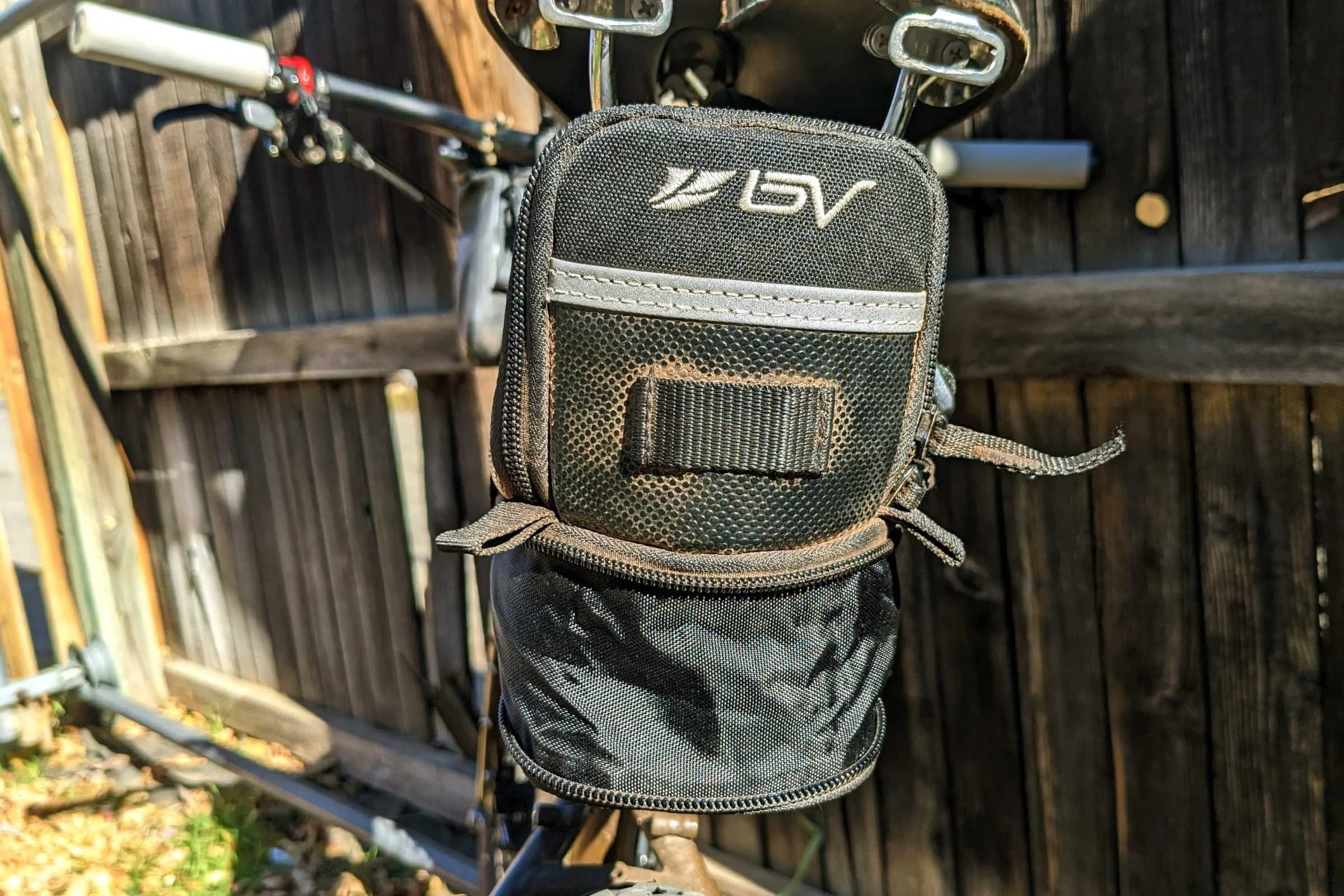
There is nothing all that remarkable about the BV Bicycle Strap-On Bike Saddle Bag other than the price. However, this bag is really affordable and performs just as well as saddle bags that cost over twice as much.
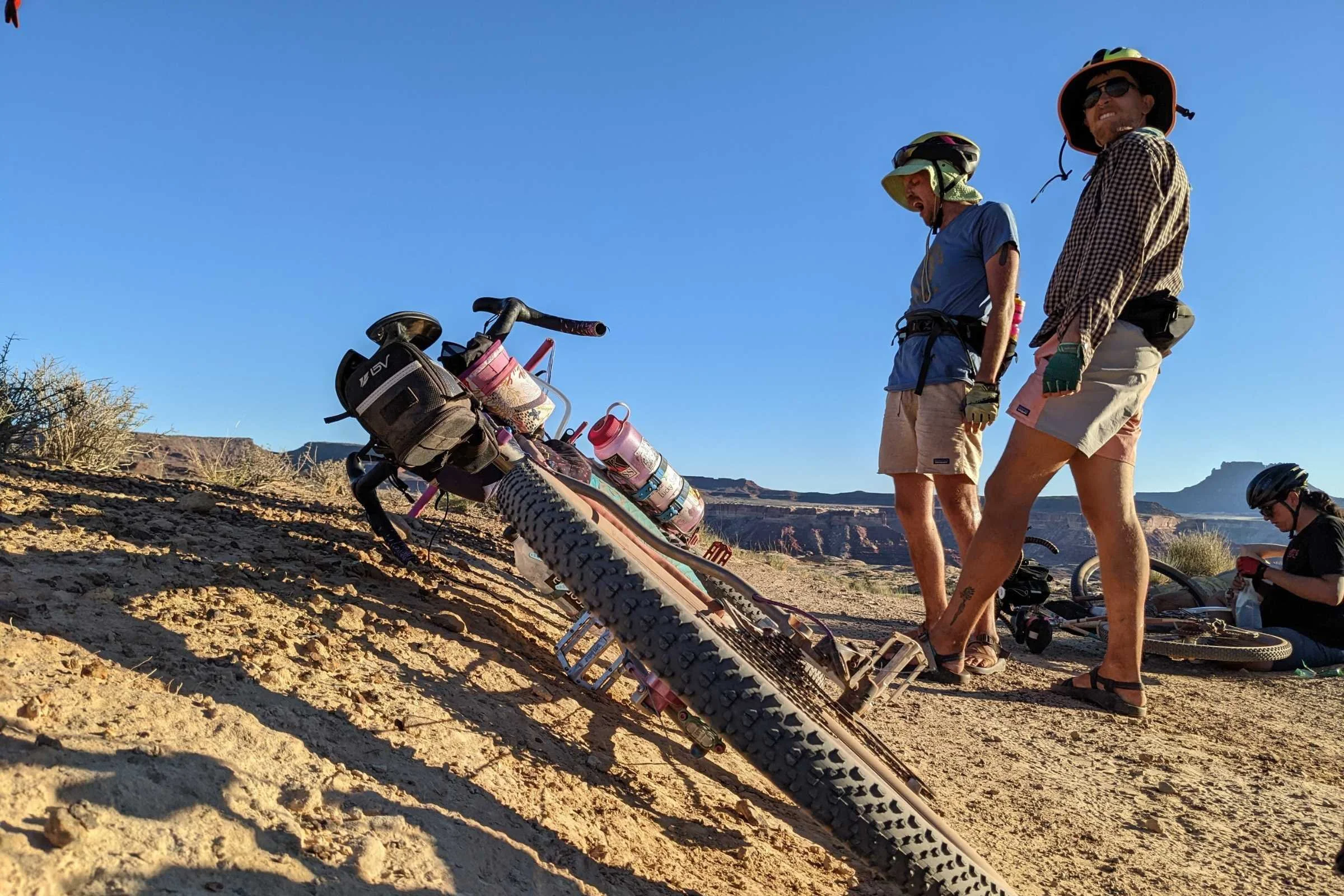
We used this bag while riding the White RimTrail, and found it met our basic criteria for a functional saddle bag, such as holding an essential bike puncture repair kit with some space left over without falling off the bike. With smaller-volume saddle bags, there isn’t that much that can go wrong, and this bag checks all the boxes. It performs similarly to other saddle bags of its size, but costs much less than all the others we tested.
View The Bv Bicycle Strap-On Bike Saddle Bag
-
It has a webbing strap with a clip and ladder lock adjuster to attach the bag to your bike saddle rails. There are also two loops to thread this webbing through to keep the strap from moving.
-
Most inexpensive saddle bags use entirely velcro for the attachment system. This saddle bag uses a plastic buckle, which creates a more reliable attachment system in the short term. This buckle won’t wear out like velcro, too, so it’s also more reliable in the long term. It does have a velcro strap to secure the bag to your seatpost, but this is common on all saddle bags.
-
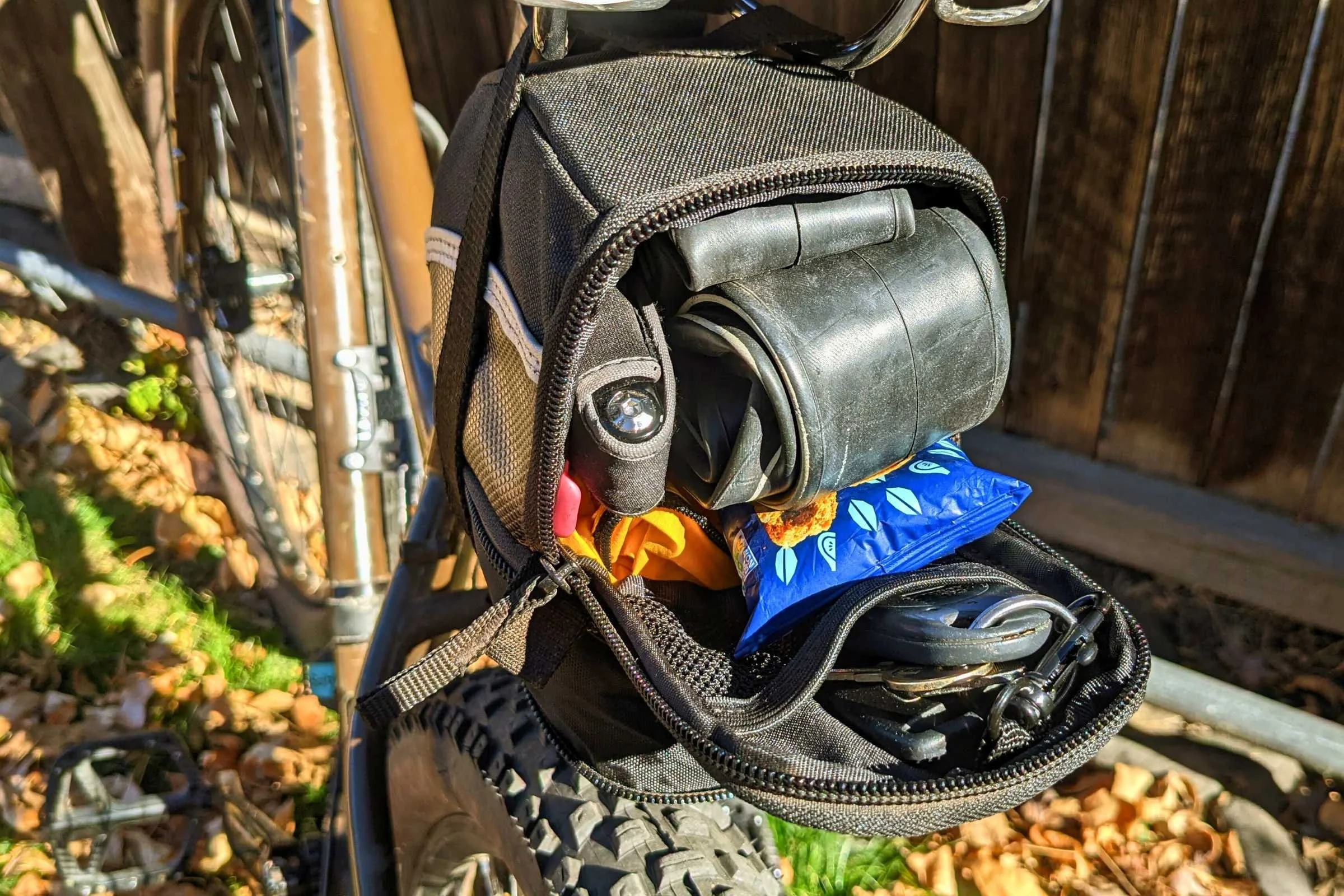
This under-seat bicycle bag is also expandable. It unzips near the bottom to increase the capacity by about 30%. On the White Rim Trail, we left for the 100-mile unsupported ride with all of our bags packed to the brim with food and water for an entire day. This extra 30% capacity allowed us to carry three extra energy bars in the same bag that we carried: a tube, tire lever, multitool, tubeless repair kit, and a light windbreaker.
A u-shaped zipper opens the bag into the main compartment. And inside this main pocket is a smaller mesh pocket with a key clip. Nothing about this bag is groundbreaking, but it is affordable, fits an impressive amount of gear, and has held up just as well as its more expensive counterparts.
Other bike saddle bags we tested
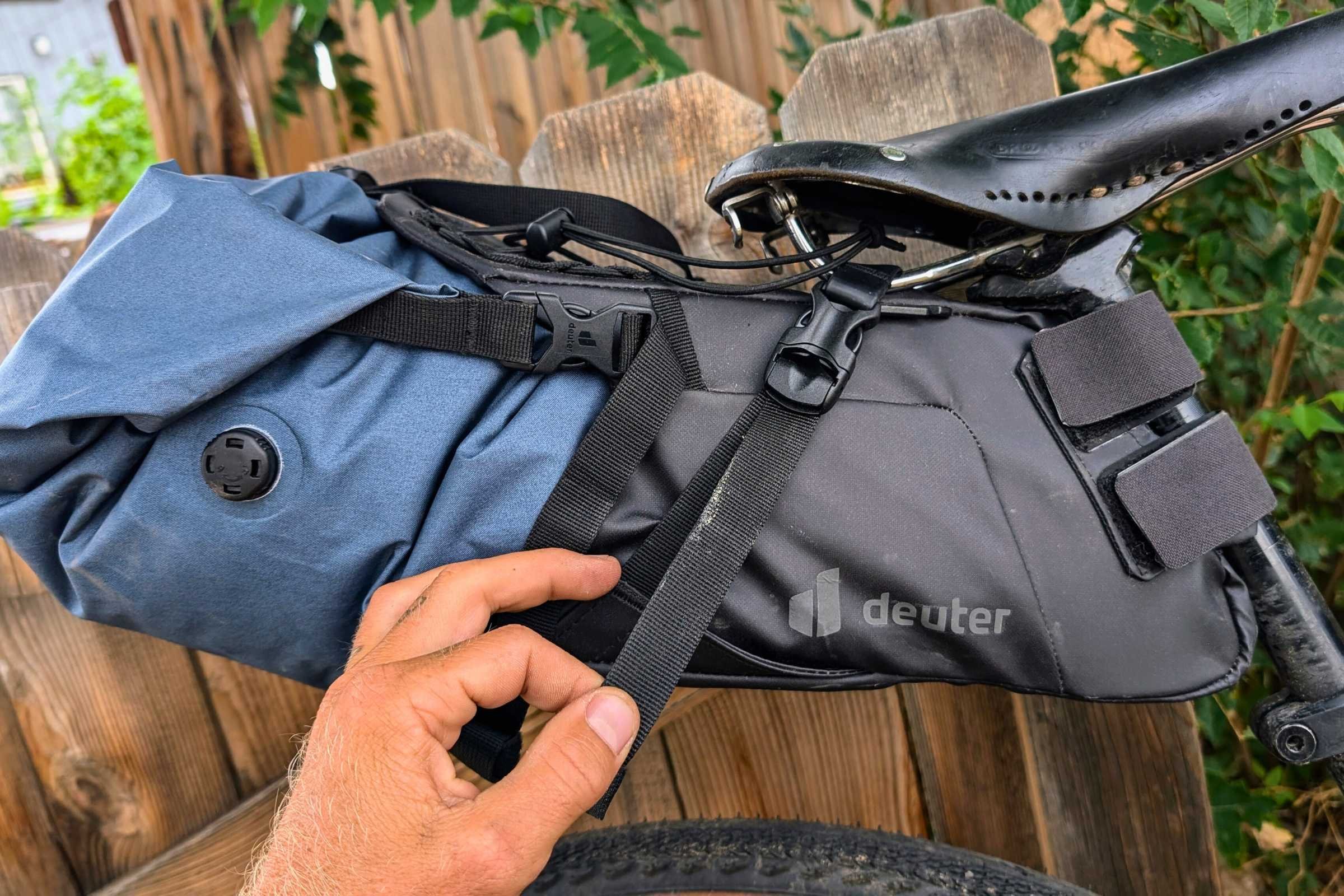
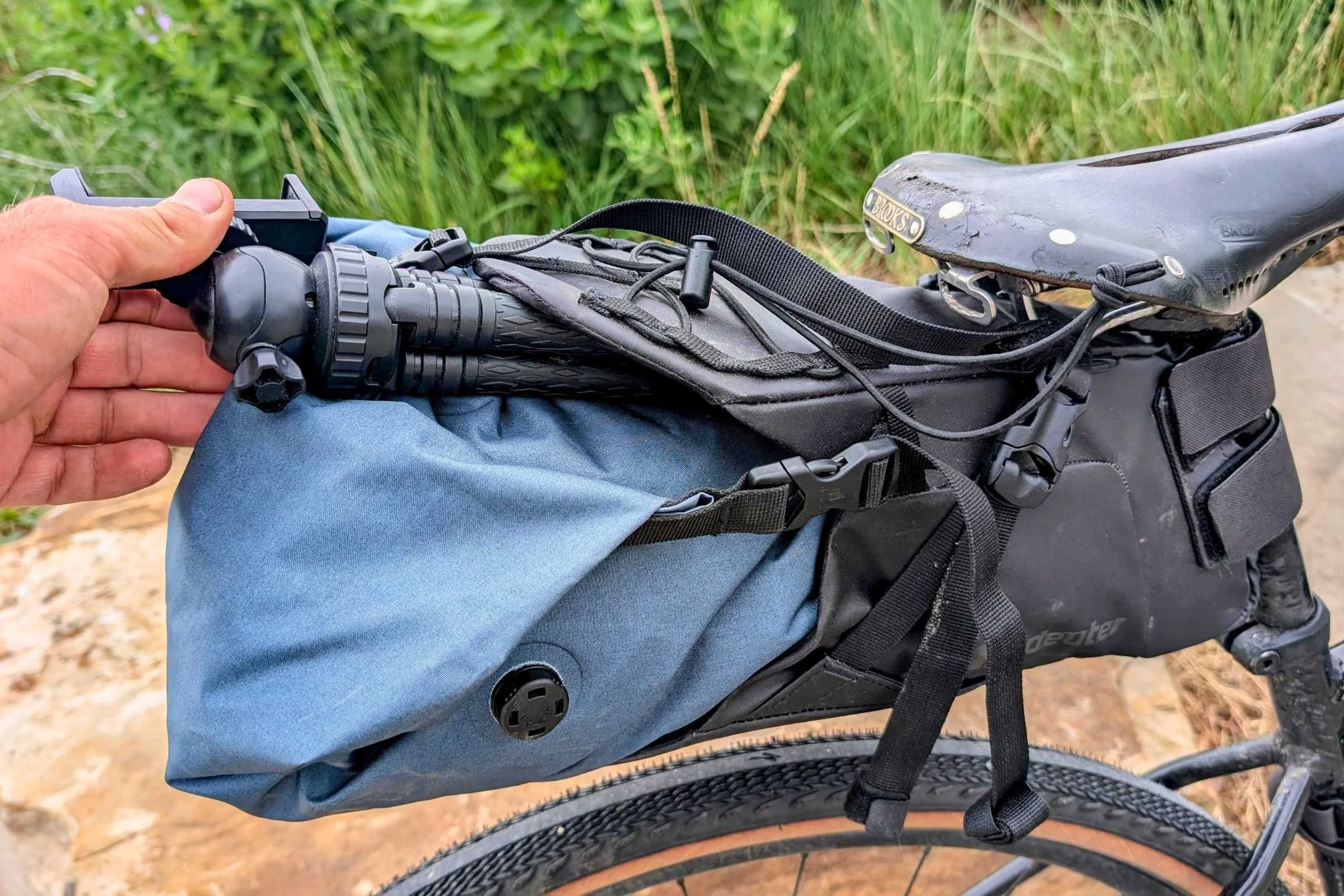
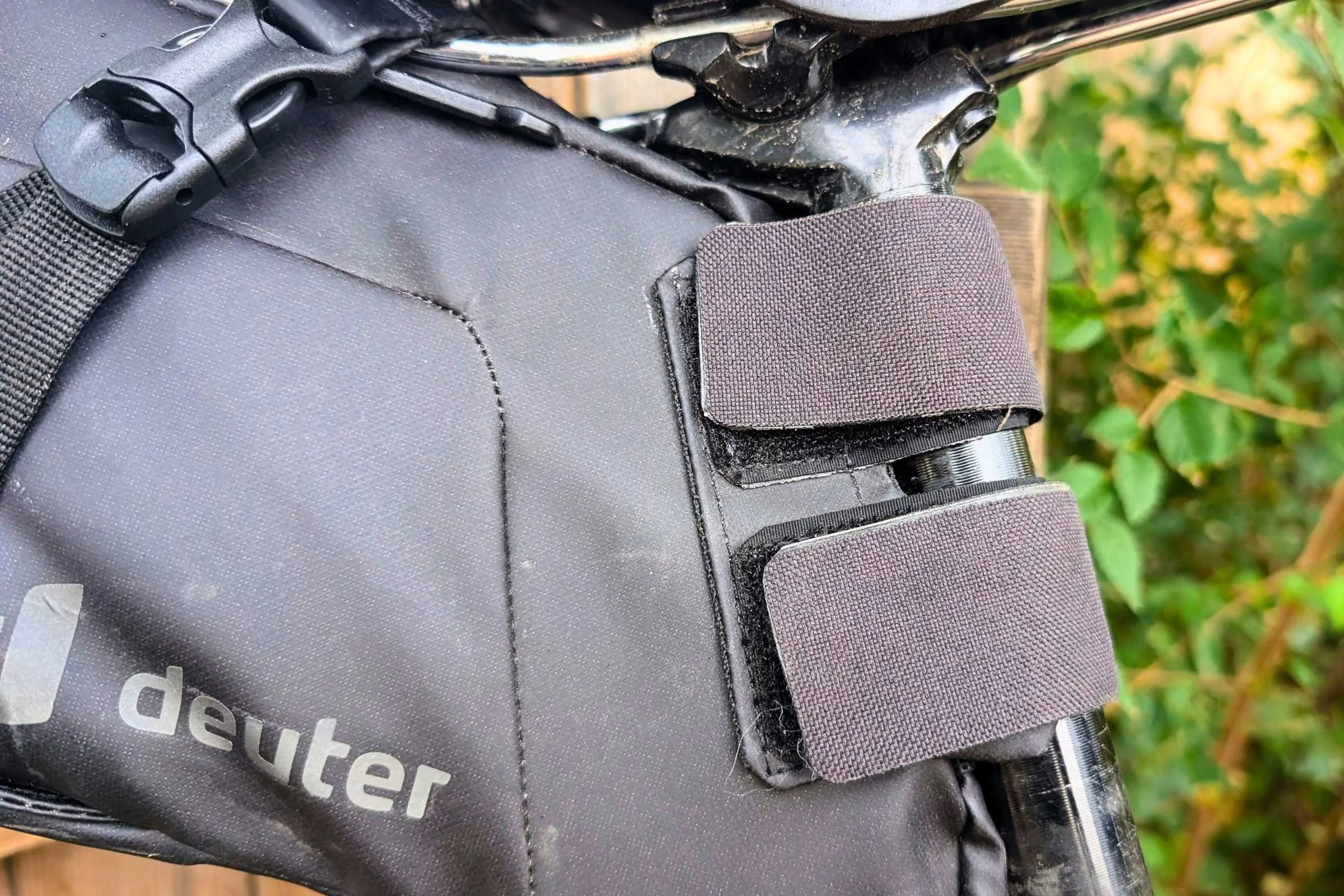
Deuter Cabezon SB 16

Material: PFAS-free 220D polyamide plain TPU and 600D polyester TPU
Weight: 1 lb 4.5 oz
Capacity: 16 liters
Waterproof: Yes, IPX4
Attachment system: Hook and loop fasteners for quick adjustments
What we liked: Separate harness and inner stuff sack, secure mounting system, doesn’t sway, waterproof
What we didn’t like: Buckles on the harness are difficult to figure out initially
The Deuter Cabezon SB 16 is our top choice for a bike saddle bag for commuters. Really, it’s a great all-around seat bag (we nearly chose it for best overall bag). But its bag harness and dry bag combo design makes it perfect for commuting due to its ease of packing.
This system, which the Restrap Saddle Bag also uses, allows you to quickly remove the inner dry bag while leaving a separate harness attached to the bike.
The dry bag is easy to carry off your bike. If you’ve ever attached a large bikepacking seat bag to your bike, you know how much work it can be. With a separate seat bag harness and stuff sack, you don’t have to do all this work every time.
The stuff sack makes packing this bag a breeze, and the harness securely holds the inner bag in place while also allowing you to shove other items in on the sides.
The harness mounts to your bike with a set of buckles that loop over your saddle rails and two large Velcro straps that wrap around your seatpost. The inner dry bag stuff sack then slides into the harness and clips into the harness with two straps attached to either side of the harness. There is also a strap that wraps over the top of the stuff sack and further compresses the inner stuff sack down into the harness.
Deuter Cabezon SB 16
Material: Oceanweave water-resistant recycled fishing nets
Weight: 2.5 oz (0.8 L)
Capacity: 0.5 L, 0.8 L, 1.3 L (with water bottle)
Waterproof: Yes, waterproof coating and water-resistant stitching
Attachment system: Hook-and-loop saddle mounting system
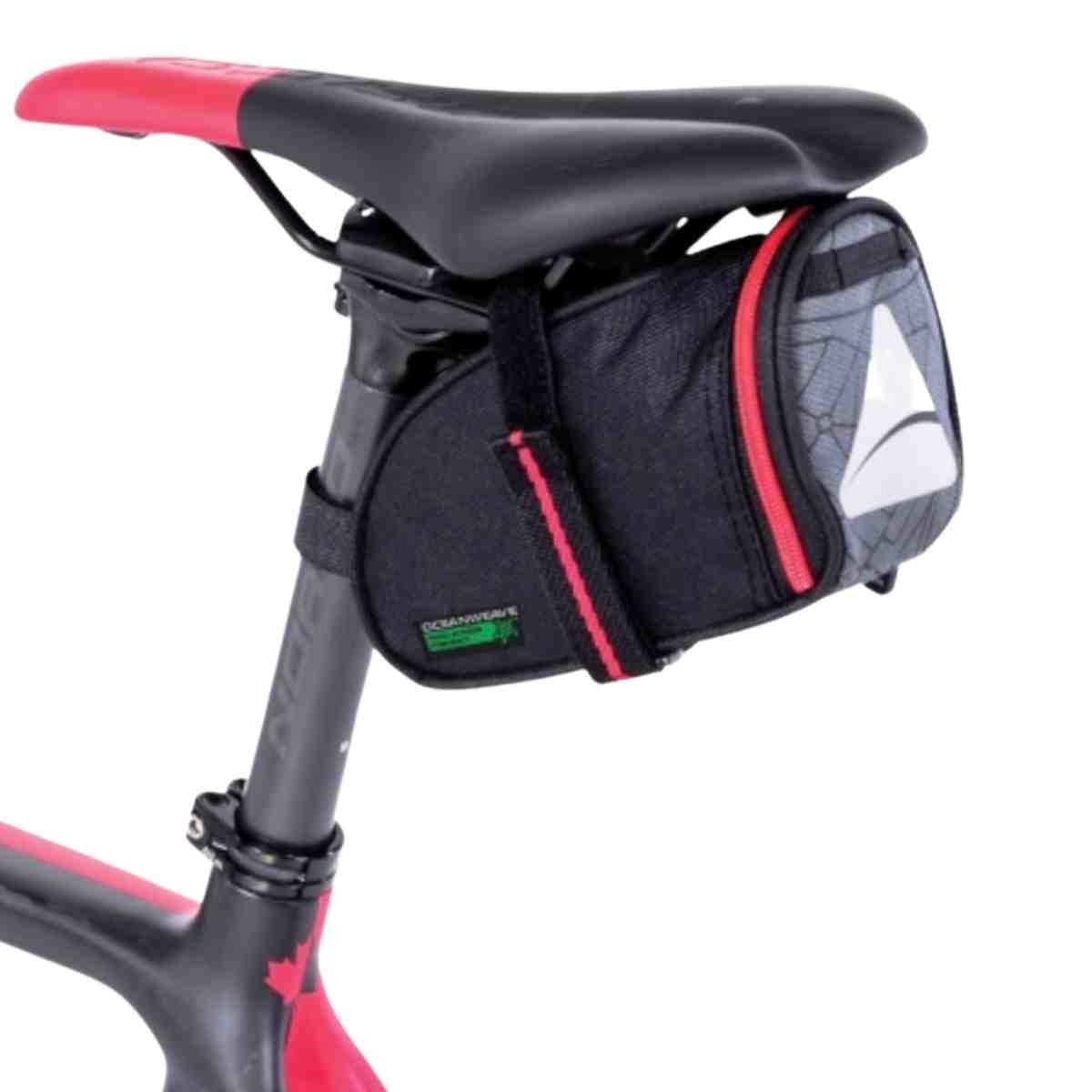
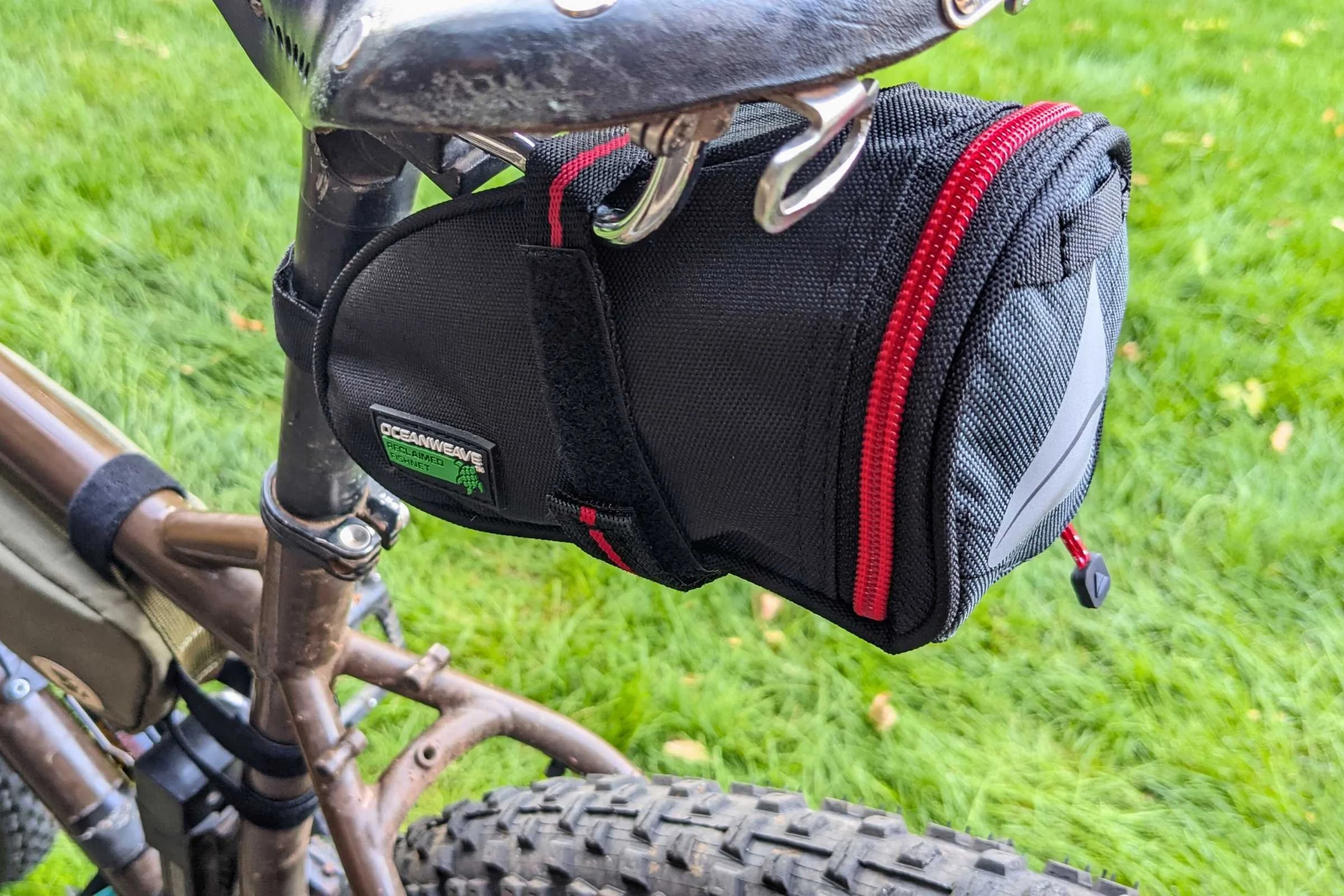
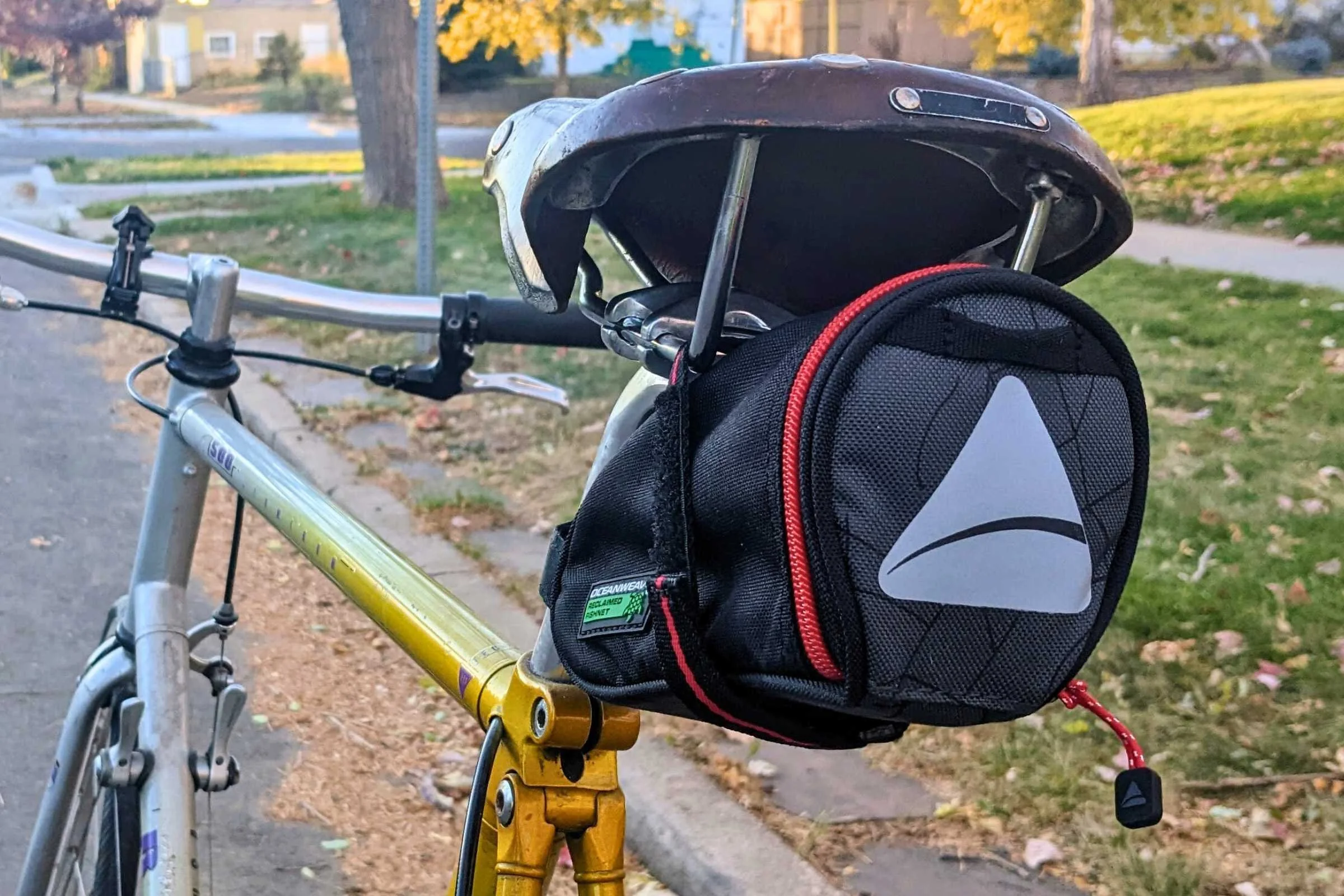
The Axiom Seymour Oceanweave Wedge was our former winner for best seat bag for road bikes. We liked that it is small, light, durable, and made of recycled fishing nets that were once littering the ocean. This bag is perfect for road bikes, which require a smaller tube and need less space for a flat-fixing kit. But we found the 0.5 L version of the Axiom Wedge big enough for most spare tubes as long as you don’t carry anything else in here.
We tested this bag on our bike while we commuted around Denver, Colorado, and while mountain biking across Utah. We took it on some of our favorite local bike paths and commuter trails, clipped a taillight to it at night, rode countless red dirt trails across Utah, and generally forgot it was there. And for a small saddle bag, forgetting it’s there is the best you can hope for.
We know most of these small bike seat bags are pretty similar. Well, since this one is made of recycled fishing nets, it stands out for its sustainability. We also think the Oceanweave material looks great.
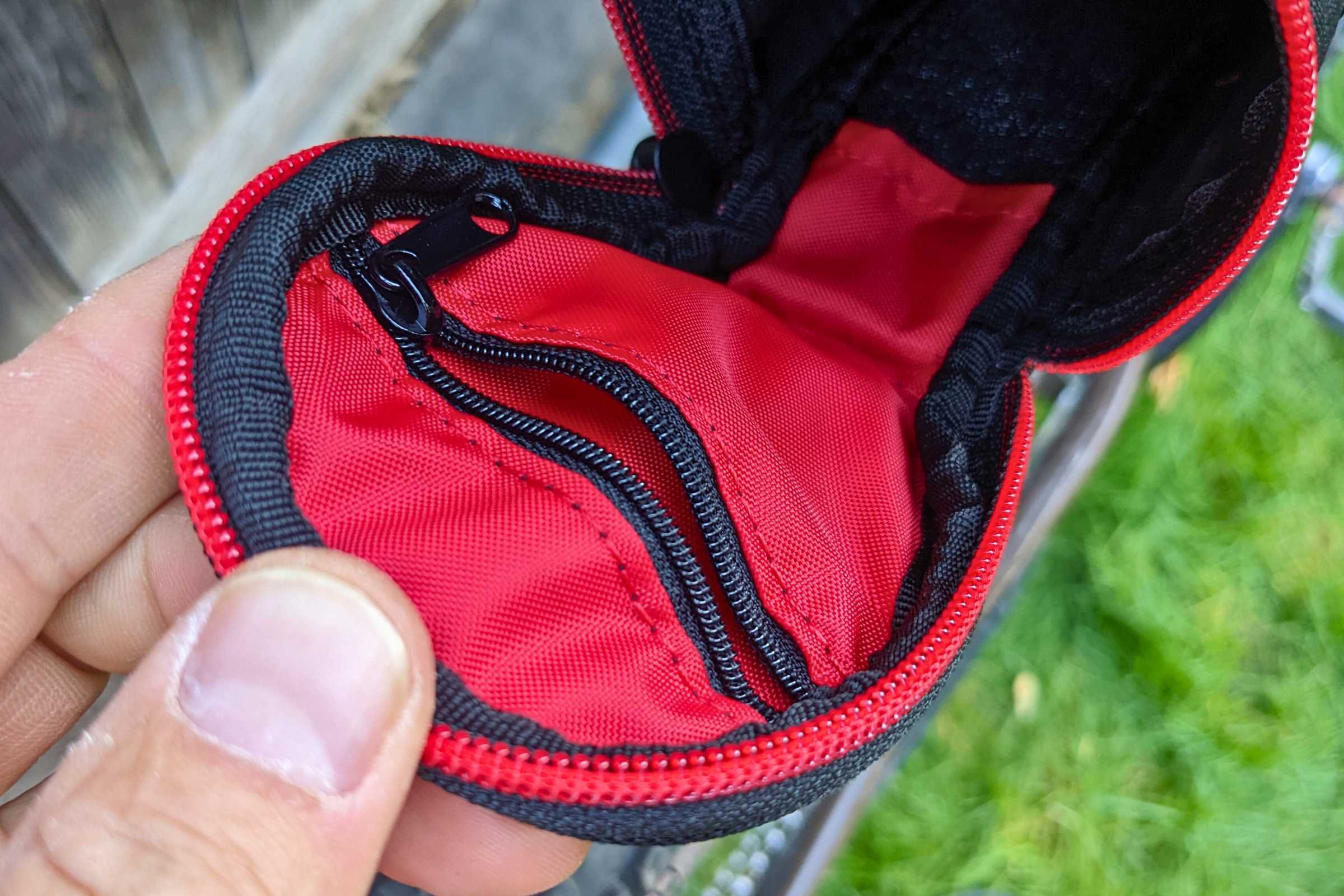
We’ve used many Axiom bags over the years, and they’ve rarely failed us. Given this bag's simplicity, we didn’t expect it to fail us anytime soon. But after riding outside of our car on a bike rack across multiple desert states and hanging off our saddle for 80 miles of the White Rim Trail, the bag’s tiny U-shaped zipper failed. Fortunately, we heard the distinct “thud” of our multi-tool falling onto slick rock and didn’t lose anything we were storing in the bag.
It’s worth noting that this zipper did fail after heavy use. We would expect many similarly-sized seat bags with small zippers to fail if you use them how we did, since these small seat bags are designed more for road bikes. Small zippers and desert dust simply don’t mix, whether that’s on a seat bag or backpacking tent. Zipper issues are common on outdoor gear, so we wrote a whole guide on zipper care.
Axiom Seymour Oceanweave Wedge
Material: Polyethylene / Anti-slip PU leather / Nylon / Engineering grade polymer
Weight: 21.34 oz (black), 19.4 oz (green) (15 L)
Capacity: 10 L, 15 L
Waterproof: Waterproof carry bag
Attachment system: Holster with hook and loop fastener and buckle fastener
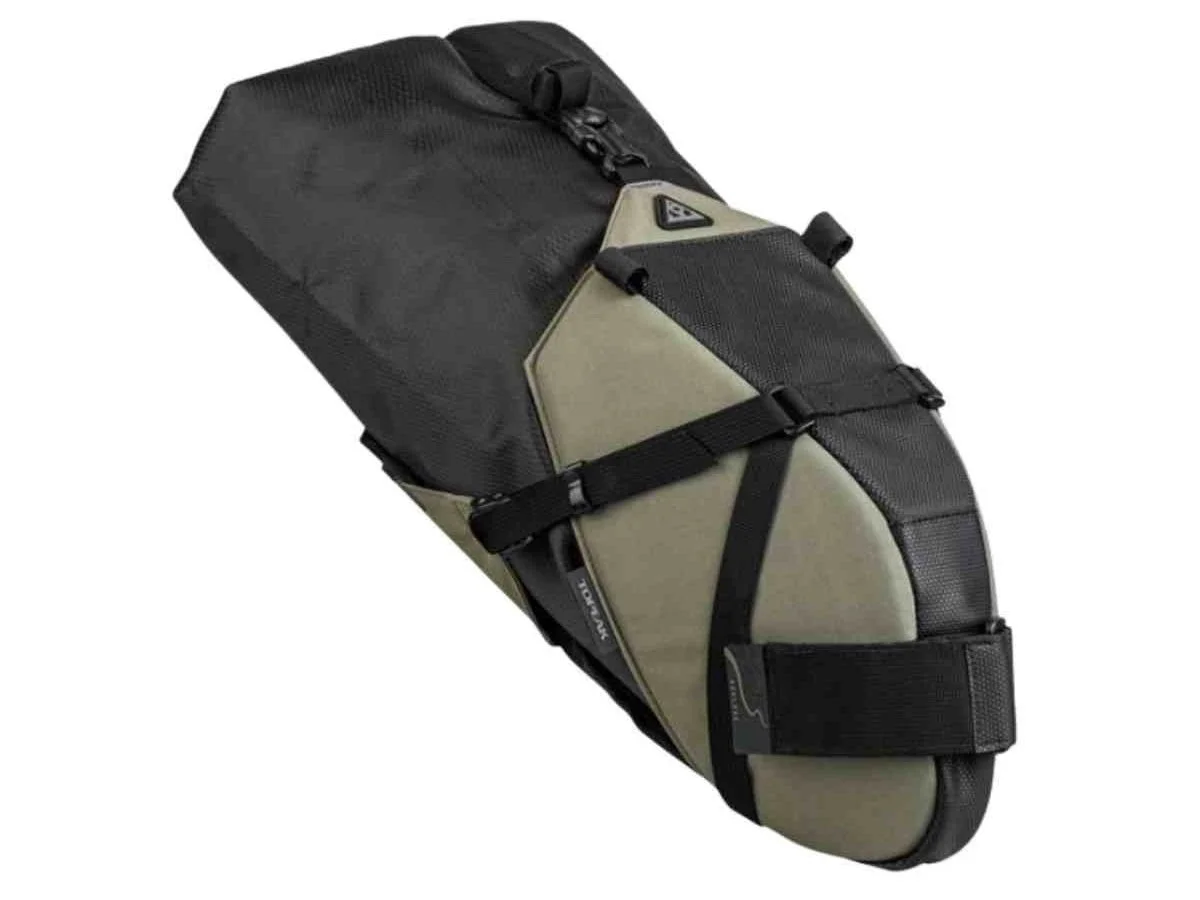
This Topeak BackLoader X bag is the most affordable large bike bag we tested, making it another great choice for commuters if the Deuter Cabezon is too pricey or out of your budget. We tested the BackLoader X with the BackLoader Wishbone, which stabilizes the bag and provides two extra places to mount bike water bottles.
Like the design of the Cabezon and Restrap Seat Bags, it uses a separate harness with a dry bag that fits inside. It doesn’t work quite as well as the Deuter Cabezon or Restrap Seat Bag, though it does cost less than either of these bags.
Compare Prices Of The Topeak BackLoader X

Material: 210 Denier Ripstop Nylon with dual coated TPU, urethane based Hypalon reinforcement fabric, UV-stabilized, impact resistant nylon resin
Weight: 1 lb. 8 oz.
Capacity: 16L
Waterproof: Yes
Attachment system: Indie-Rail attachment system
What we liked: Durable, easy to install and remove, easy to pack, stable, a classic bikepacking seat bag
What we didn't like: Attachment system doesn't work for some bikes
We tested an early model of the Spinelock, the Revelate Viscacha. This bag has been through a lot and is still going strong. The Spinelock is a good replacement for this legendary bikepacking bag and would be an excellent choice for any bikepacking expeditions you have planned.
Another feature I like is there is a rigid rubberized material along the seatpost and saddle rail interface; the rest of the bag is a lightweight, durable 210-denier ripstop nylon with dual coated TPU. This material is waterproof, but the seams aren’t taped. So, this makes the bag very water-resistant — we've never used a waterproof stuff sack with our sleeping bag and have never had a problem with it getting wet inside of this bag.
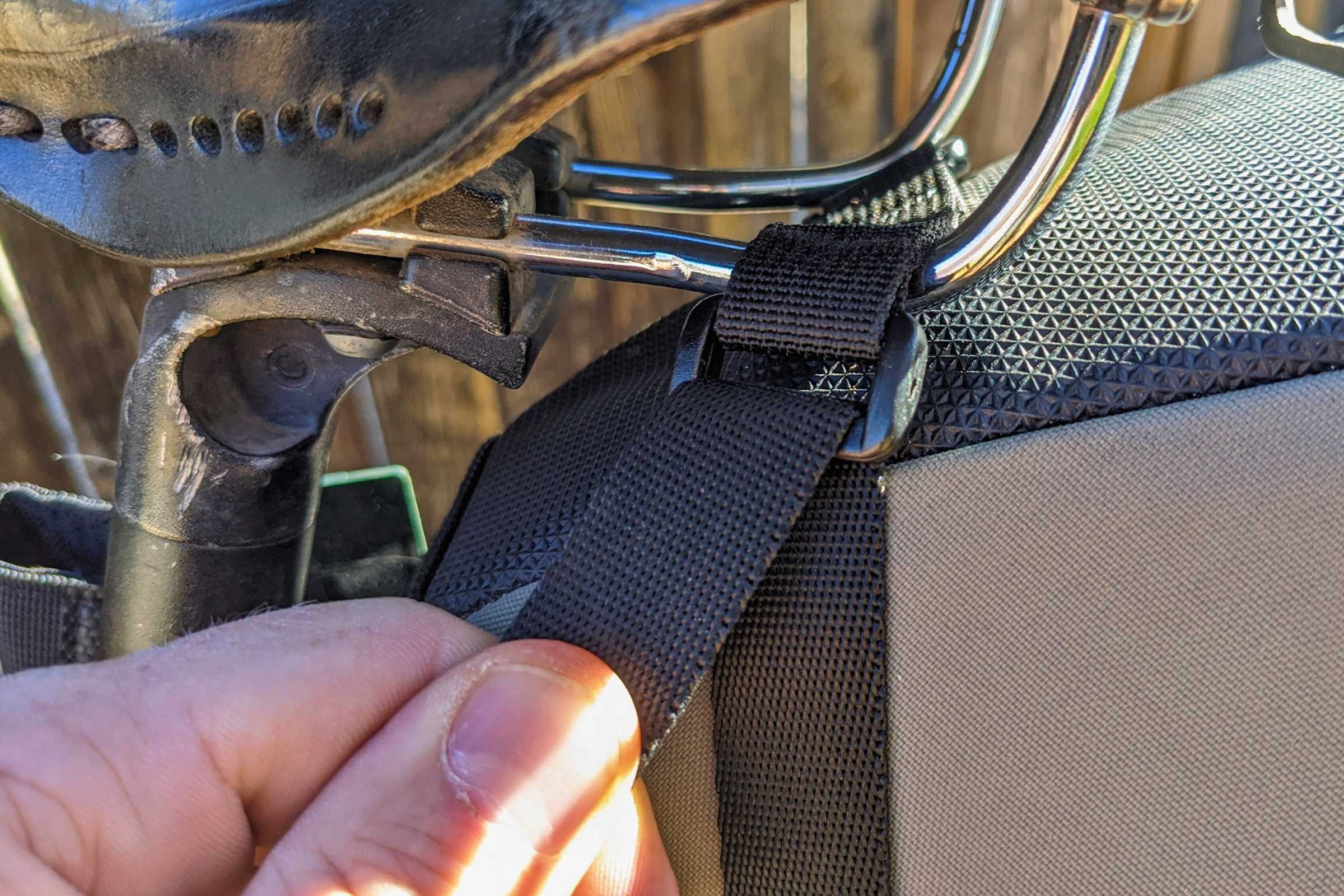
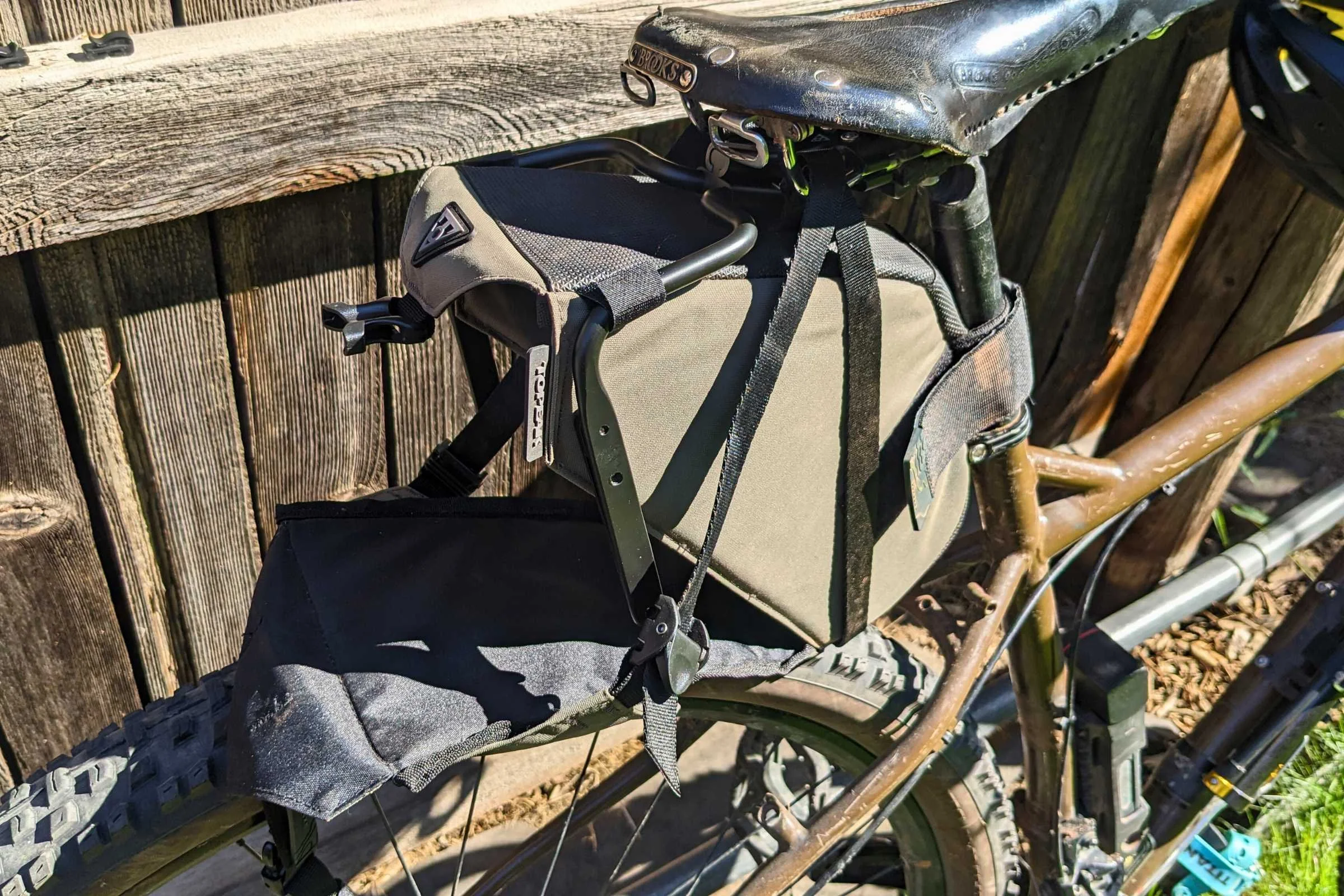
It has two straps with ladder-locking buckles (and cams) that pull the bag up toward the seat and hold it securely in place. These straps attach to another more rigid rubberized straps that thread above the saddle rails. This rigid strap can be moved closer or farther from the seatpost attachment depending on how far forward or back your saddle is on the clamp. There is also a stiff 2-inch strap with velcro for the seatpost.
Revelate Designs Spinelock
How to use a seat bag
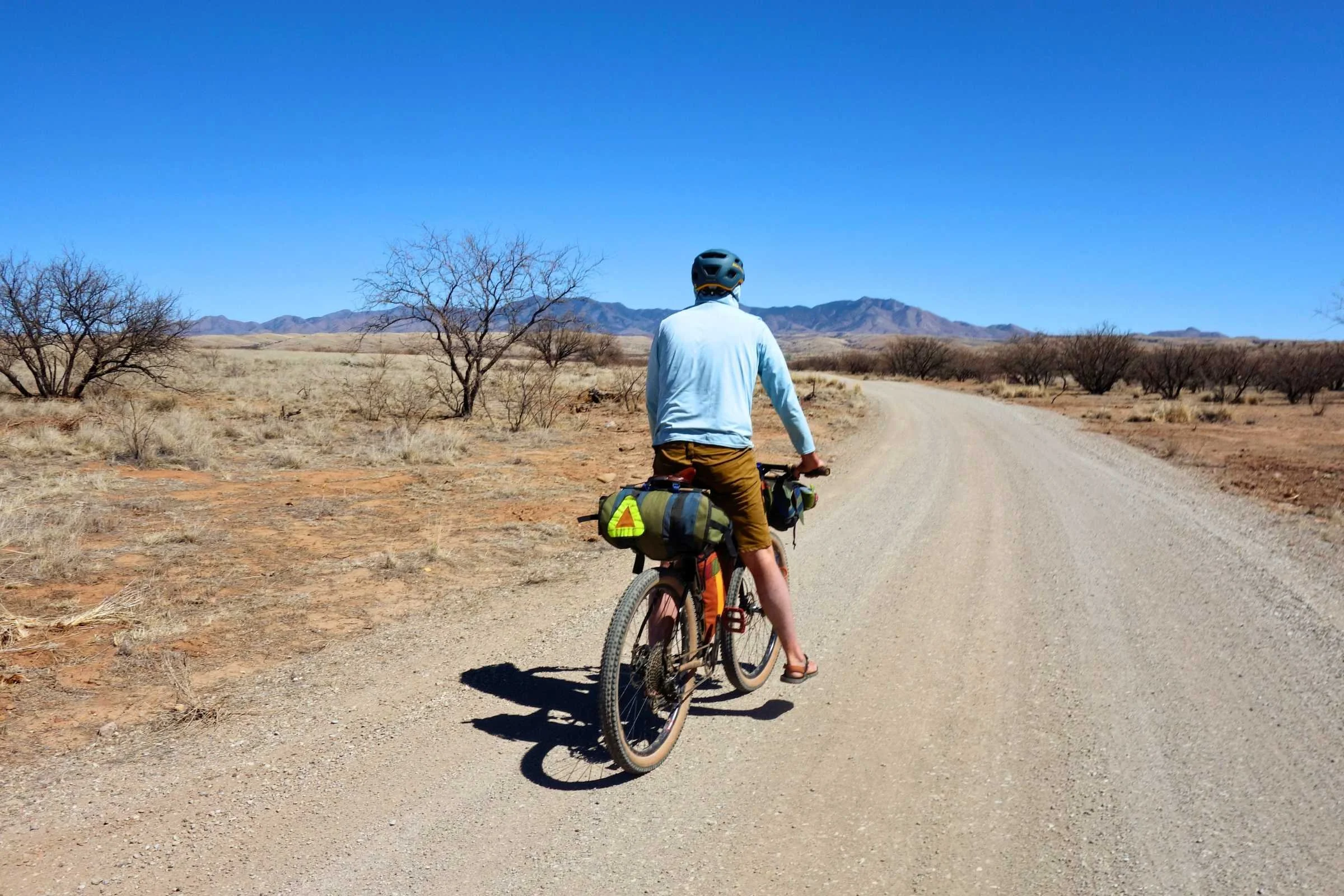
Aerodynamic design is important, but mostly to prevent the back of your legs from hitting the bag with every pedal stroke like this saddle bag.
What do you keep in a saddle bag?
I like to keep the essential repair items and tools in a saddle bag: a spare tube, multitool, tire lever, tubeless repair kit, a few zip ties, something to boot a tire, and a pump if it isn’t mounted to the bike frame. Check out our Essential Mountain Bike Accessories guide to learn more about what we like to carry on our bike adventures.
What’s the ideal saddle bag size?
The ideal saddle bag size varies from rider to rider, but it ultimately fits what you want to carry on your bike. If you need more space in your saddle bag, you can get a bigger bag or add a handlebar bag or frame bag to your bike bag setup.
If you’re going on recreational day rides, something in the 1-3 liter range will be sufficient. If you’re going on longer rides, like an all-day gravel epic, you’ll ideally have a larger saddle bag, something in the 3-8 liter range. If you’re going out bikepacking, the ideal saddle bag size is over 10 liters.
How do I set up a saddle bag?
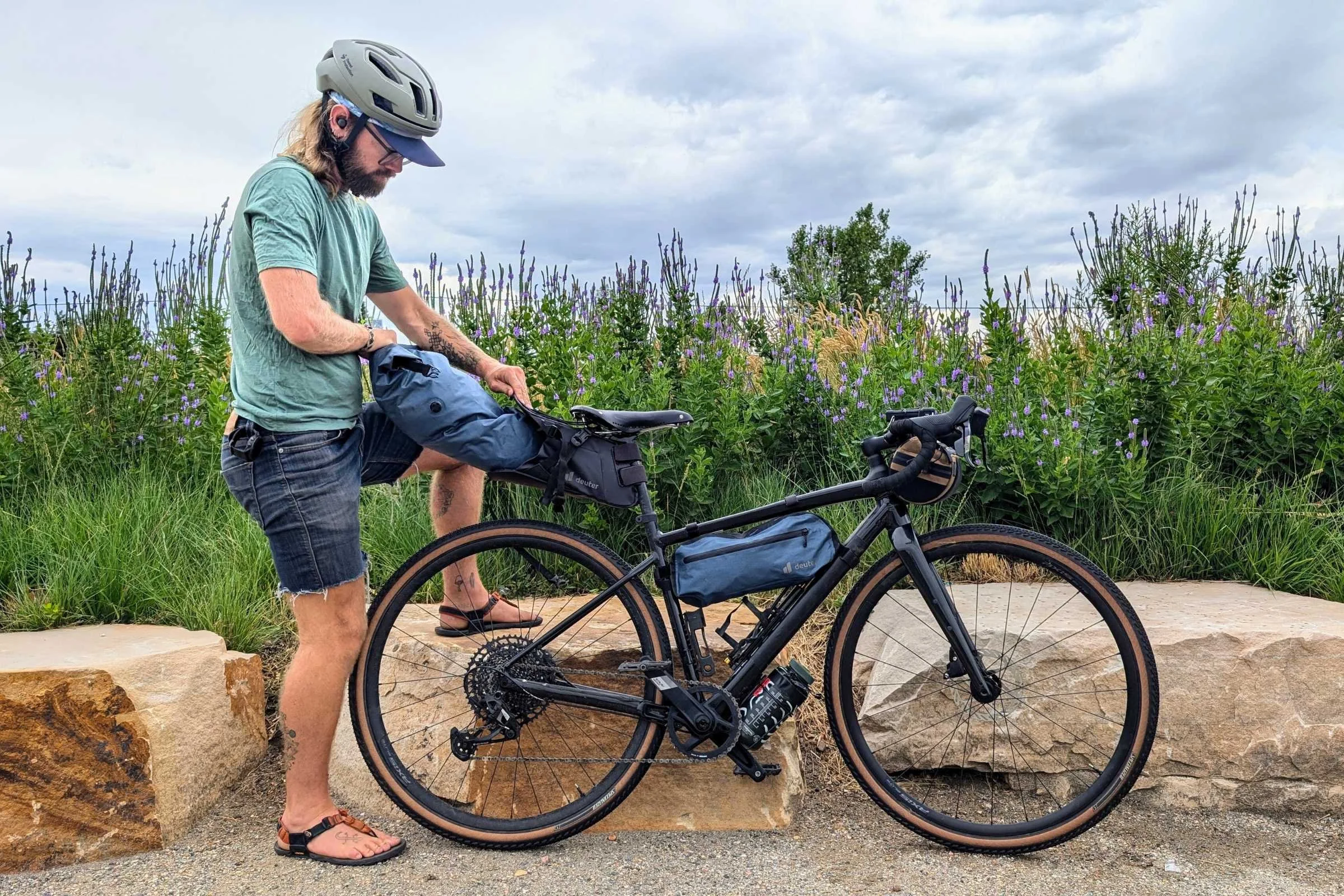
Most saddle bags attach via the saddle rails and seatpost. In the photos below, we walk you through the steps.
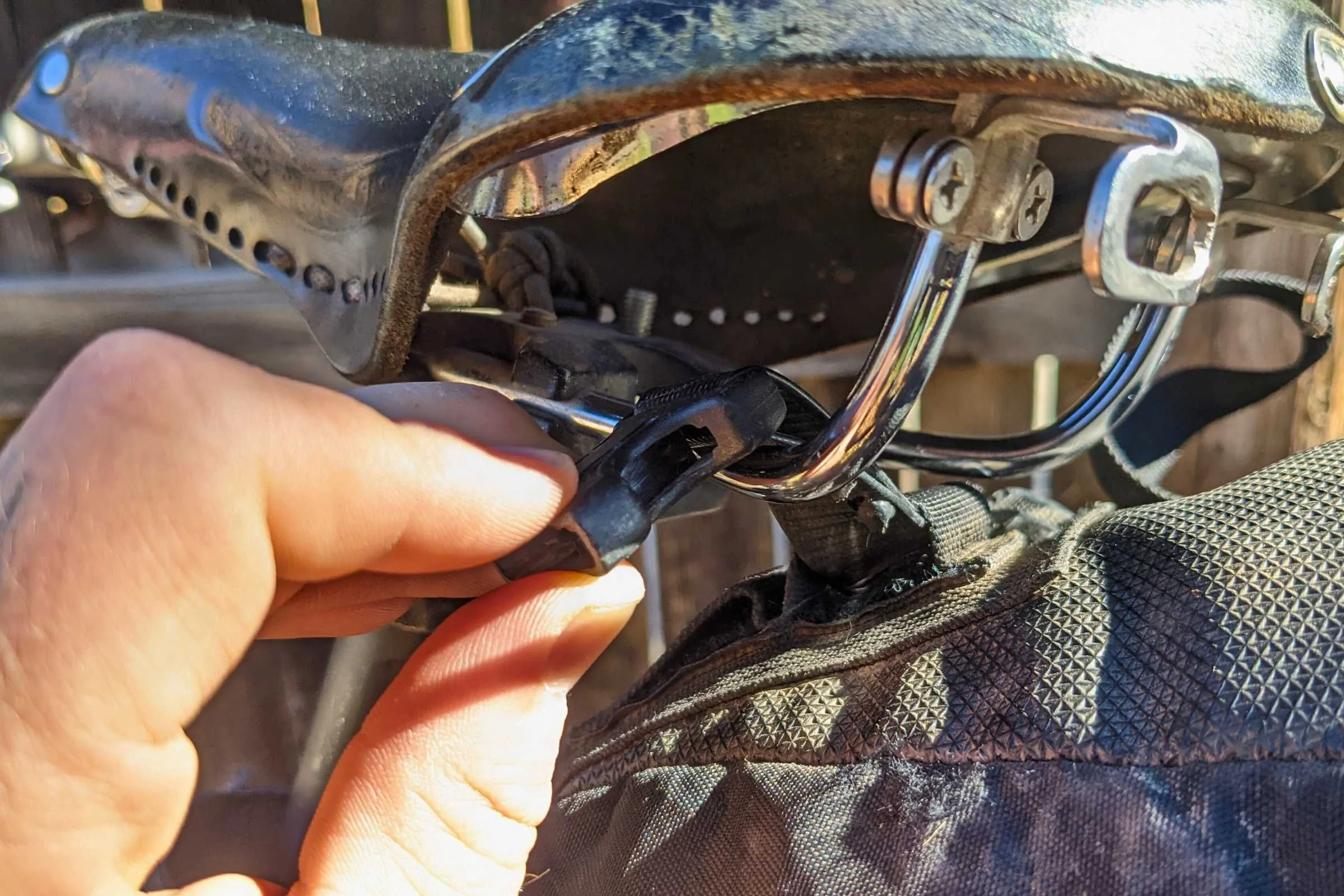
To set up a saddle bag, loop straps through rails and clip them onto the bag.
Step 1: Loop the straps on the bag’s sides through the rails of your saddle; clip them onto the bag so the bag is hanging from the rails.
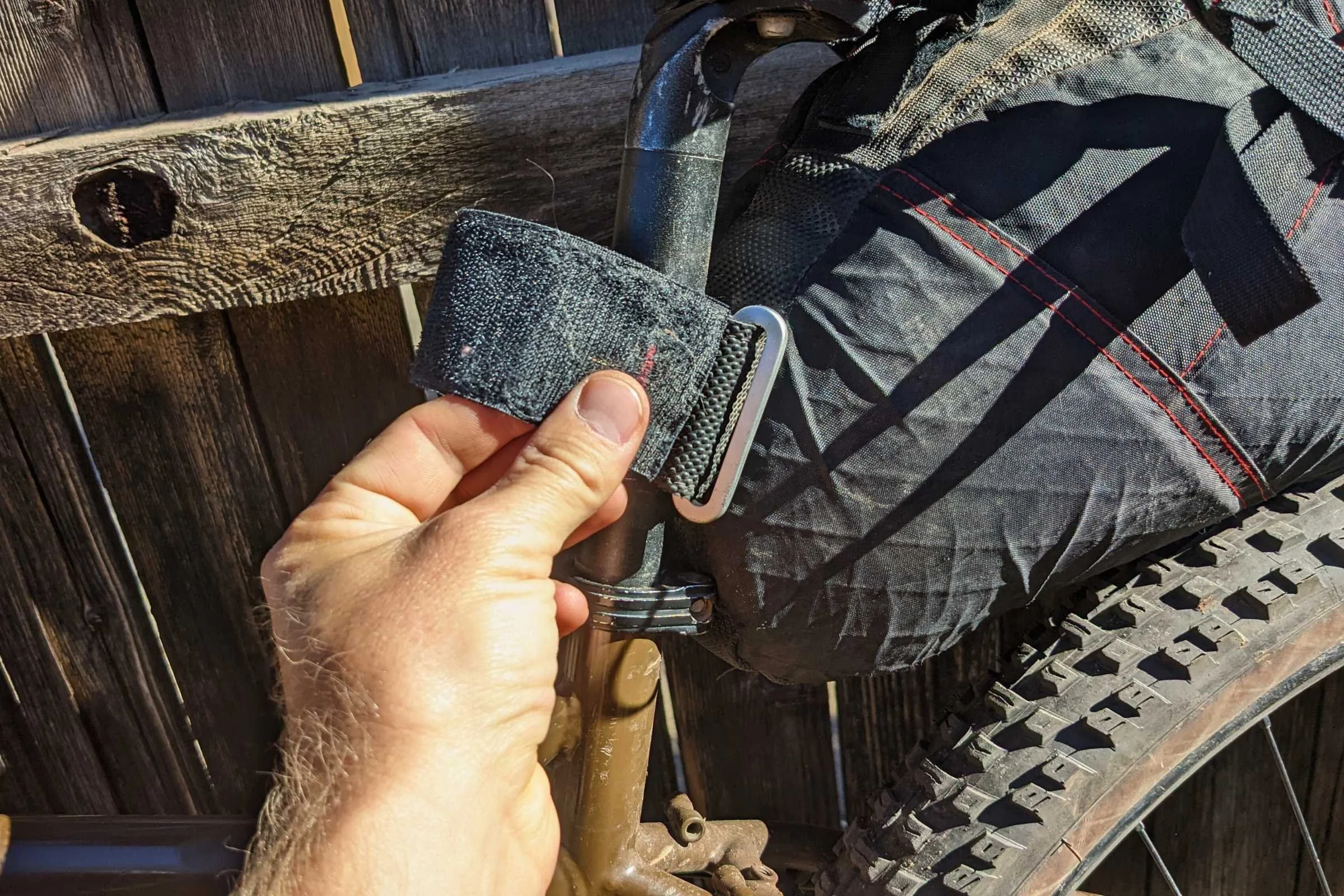
Using the strap to attach a bag to the seatpost.
Step 2: Now, attach the bag to the seatpost.
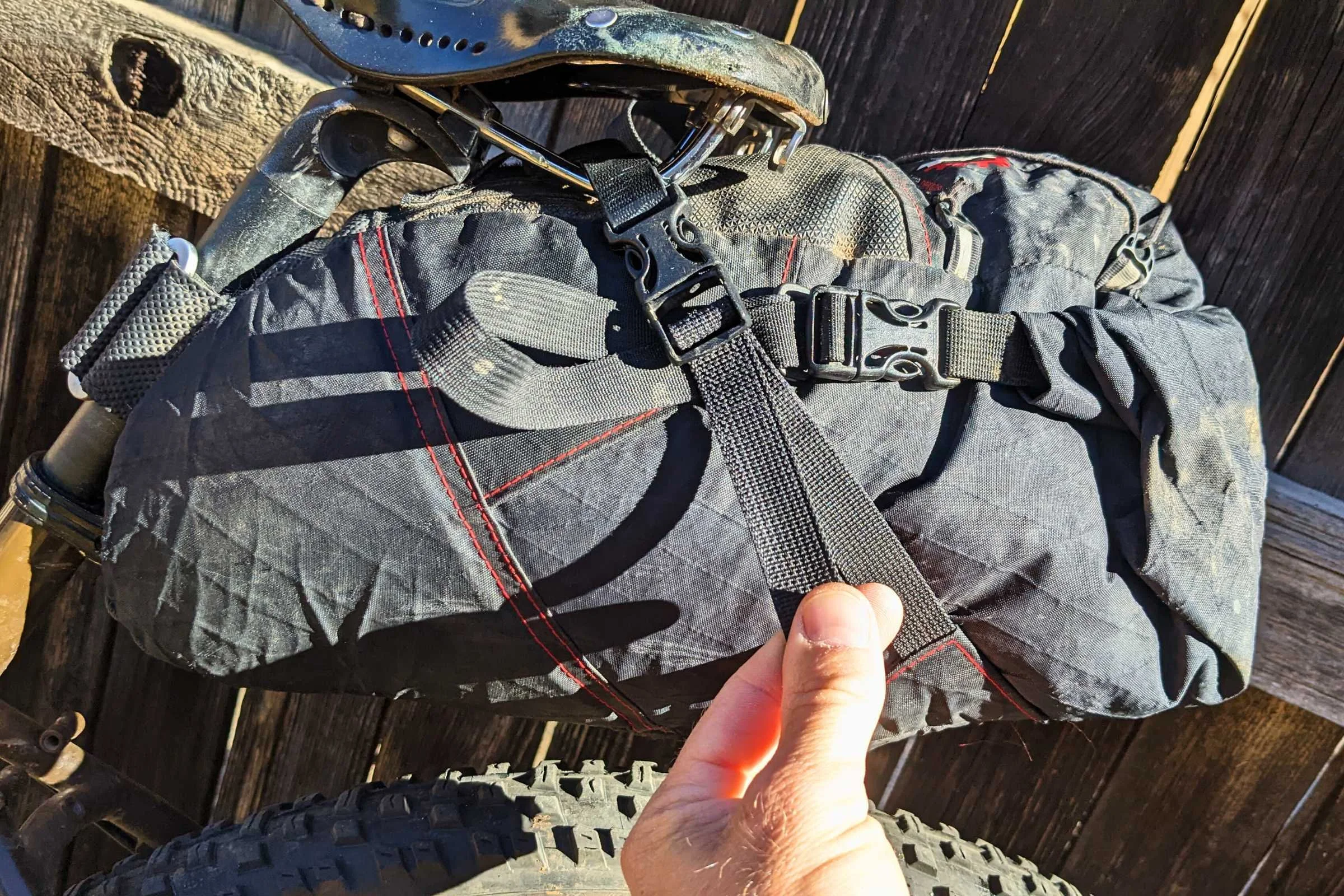
To attach a saddle bag, the last step is to secure as needed.
Step 3: Tighten the straps on the saddle rails as needed.
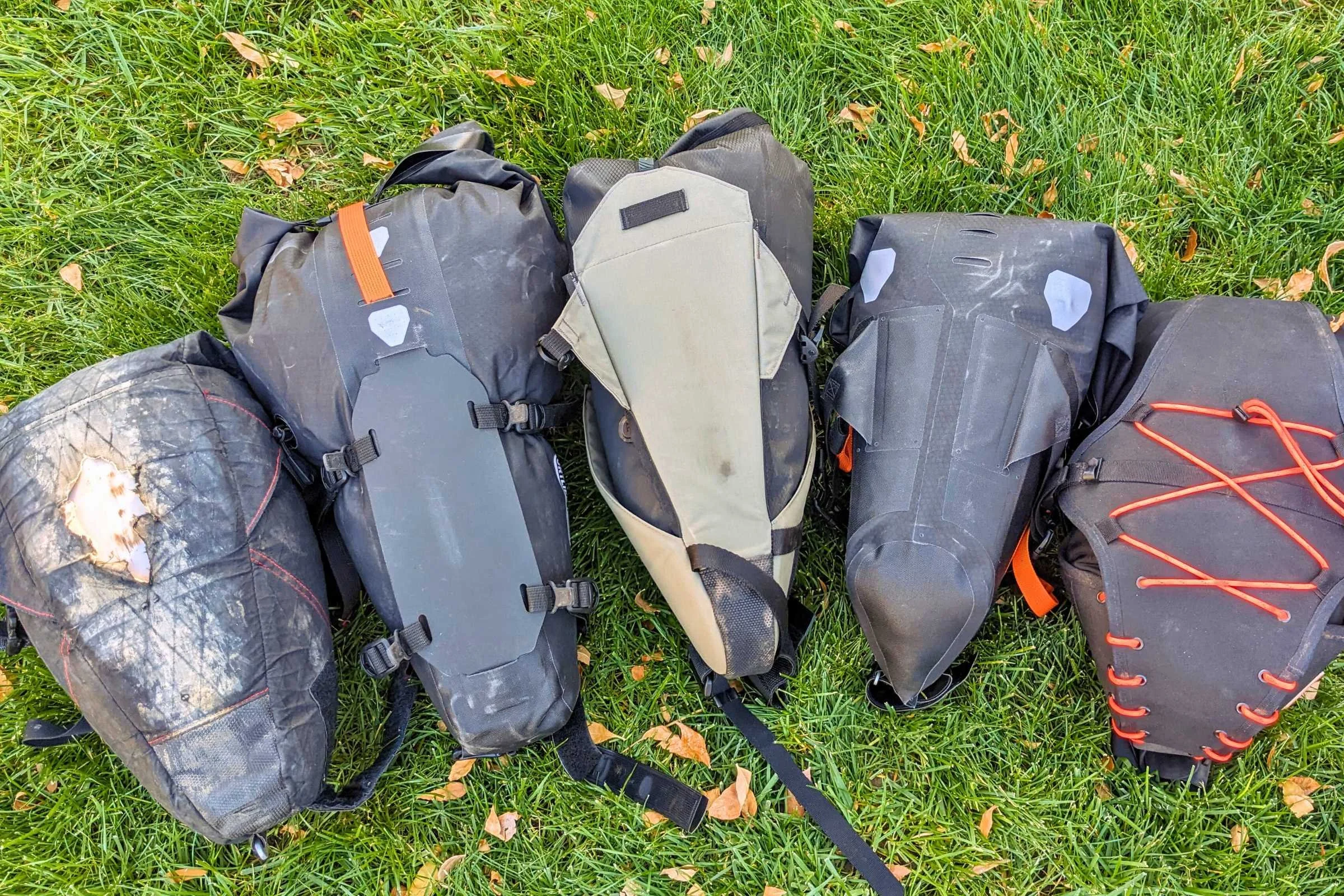
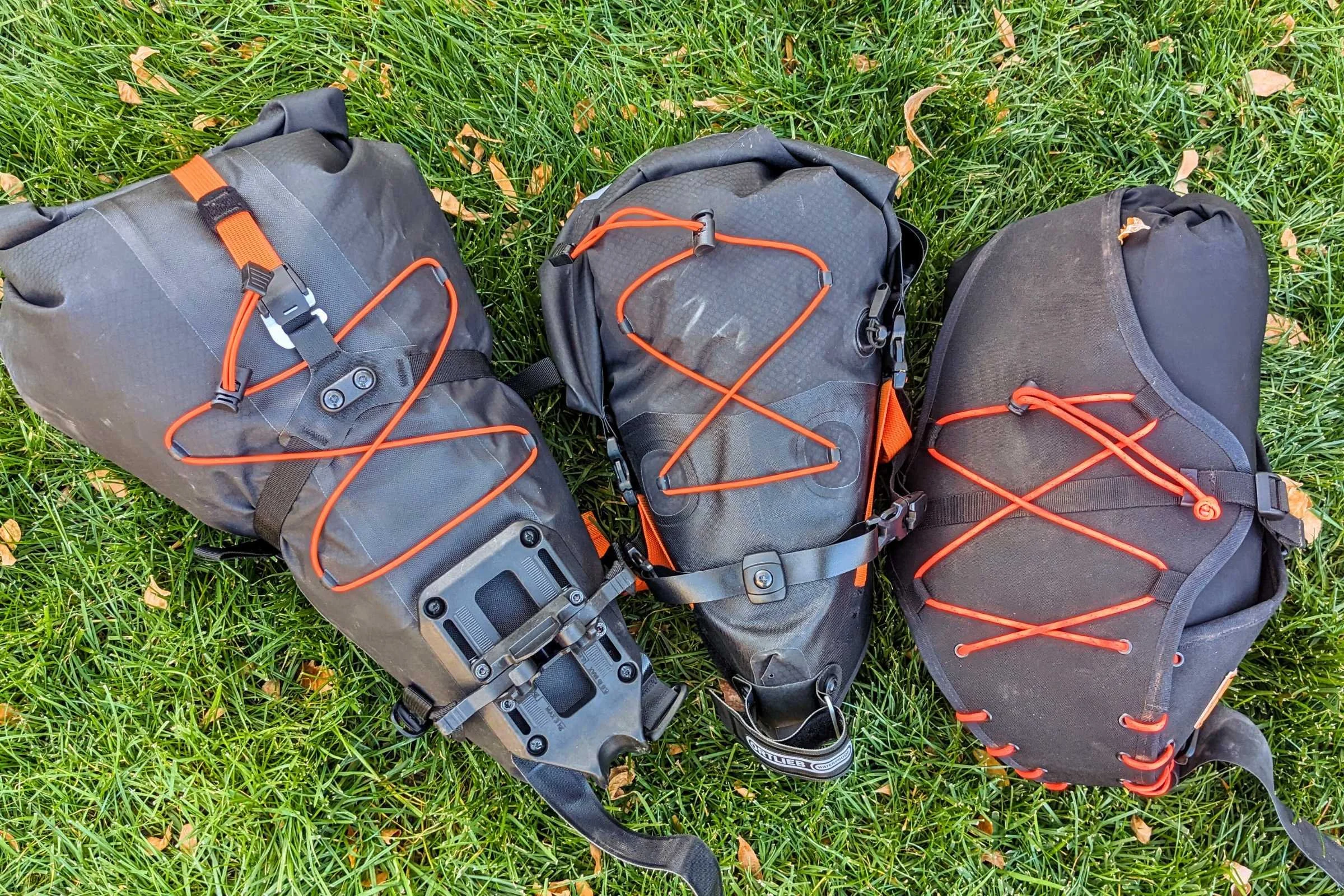
All the larger saddle bags we tested are made of durable materials since may rub on your tire at some point, as you can see from the 7-year-old Revelate Viscacha on the far left that's buzzed its fair share of rear tires.
What to look for in bike saddle bags
Here's what to look for in a bike saddle bag.
Material
A good saddle bag is made of durable material. This feature is crucial for the areas of the bag that will be rubbing against the seatpost and underside of the saddle. Some bags have reinforced materials here, which is the most important for larger saddle bags that will sway more. Our winning bags are made of materials like X-Pac or Cordura, or have other built-in features to protect lighter, less durable materials.
Weight
A heavy saddle bag will cause your bike to swing from side to side, especially when you stand up to pedal. For this reason, a lightweight bag is a good idea. However, most cyclists find that the stuff you put in the bag will be heavier than the bag itself. And, a super light bag will be less durable.
Aerodynamic design
Aerodynamic design matters with a saddle bag, but not necessarily for aerodynamic reasons, such as impacting your speed. Some saddle bags are boxier. These tend to sway more, and the backs of your legs might hit them with every pedal stroke if they aren’t spaced away from your seatpost adequately. For these reasons, a tube or cone-shaped saddle bag is best. And yes, it will be more aerodynamic, too.
Water-resistant or waterproof?
A waterproof or water-resistant saddle bag is an excellent feature to have. Saddle bags get dirty because they’re positioned right above your rear tire. Whatever your tire picks up — mud, water, road grime, or tire sealant — will end up on your saddle bag. For this reason, a saddle bag that’s at least water-resistant is important.
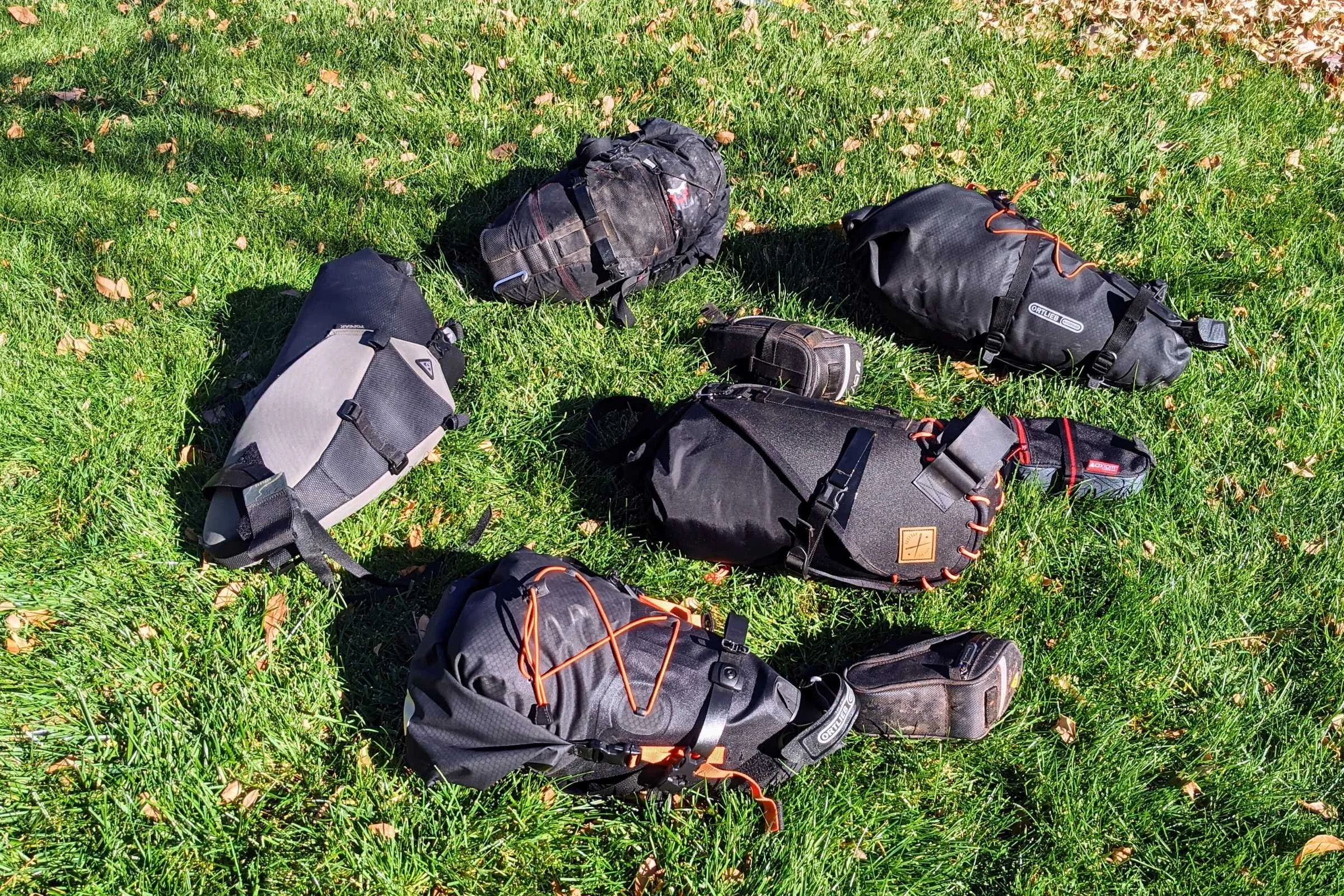
We tested bags ranging from half a liter to 16 liters in capacity.
Capacity and usable storage space
Again, depending on what you want to use a saddle bag for will depend on the capacity you should look for in a saddle bag. Remember that a mountain bike's spare tube is over twice as large as a spare road tube.
Types of attachment systems
Saddle bags use webbing straps that loop through your saddle rails. Those straps are usually secured using Velcro, cams, buckles, or a combination of these.
Velcro Strap
Velcro is the most common attachment system for a saddle bag. It works well for lighter loads and is easy to attach and remove. Most saddle bags will use Velcro for the seatpost attachment point. Velcro will wear out over time, though.
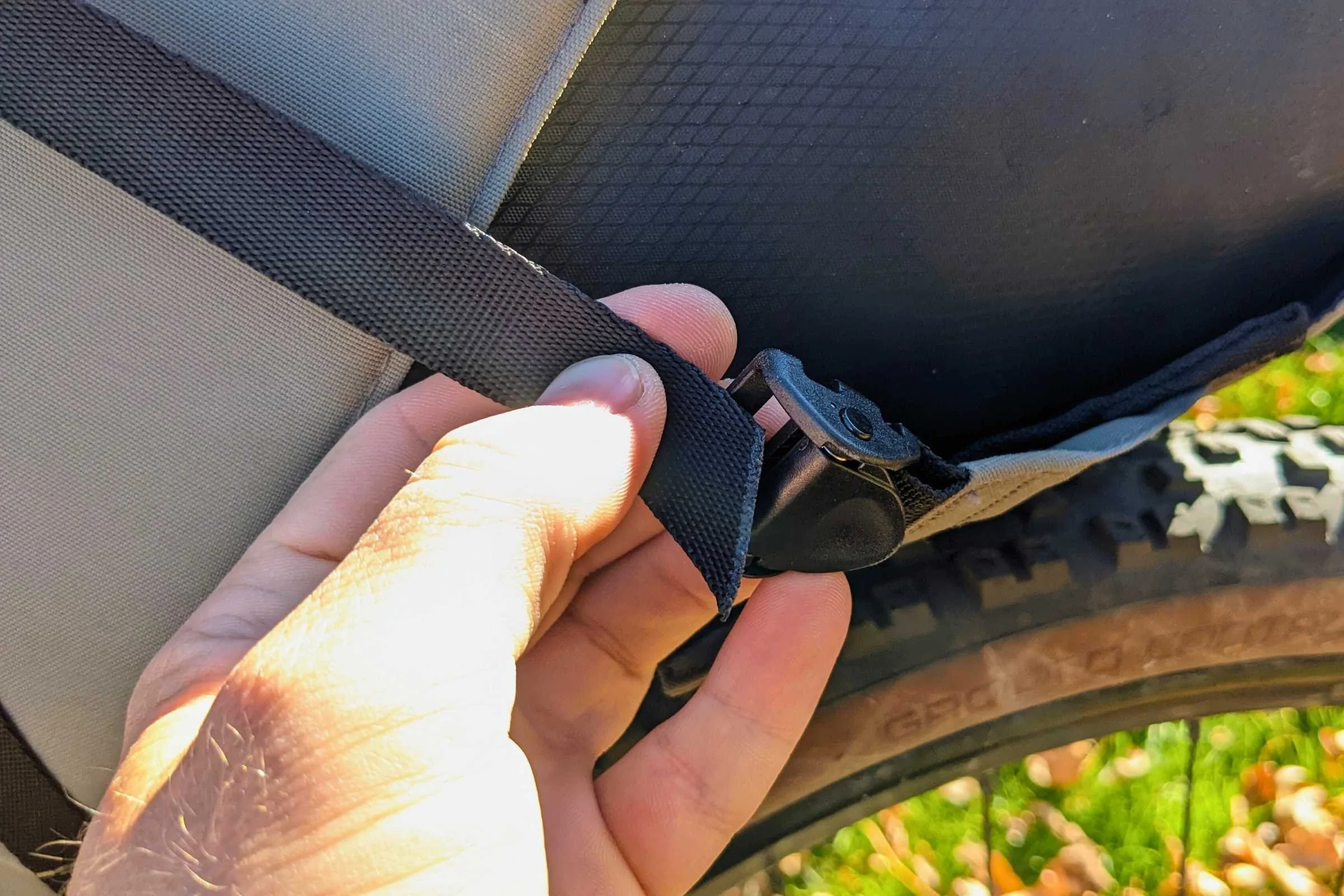
The Topeak Backloader X uses camming buckles to attach the saddle bag to your bike's seat.
Cams
Cams are another common attachment system for attaching the straps that loop through the saddle rails. Cams are very secure but a little harder to adjust.
Buckles
Buckles are often the best for attaching saddle bags to saddle rails. They attach quickly and easily. And they make it easy to tighten the straps to secure the bag onto the bike.
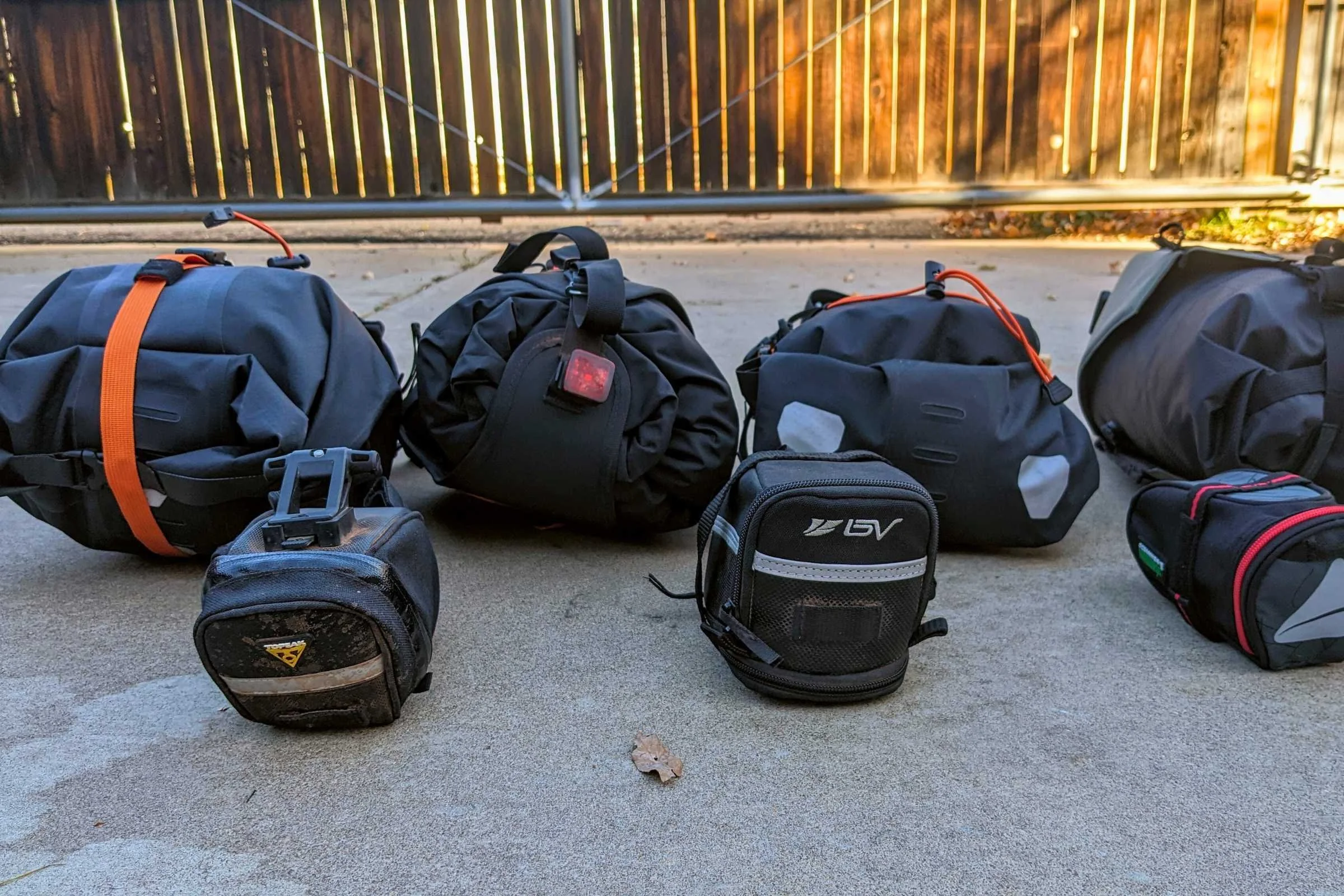
Most saddle bags have some amount of reflective material, but they more importantly all have a place to clip a light.
Reflective material
Reflective material is a nice touch but shouldn’t be relied on to be seen by cars. If riding at night, a bright blinking light is best for being seen.
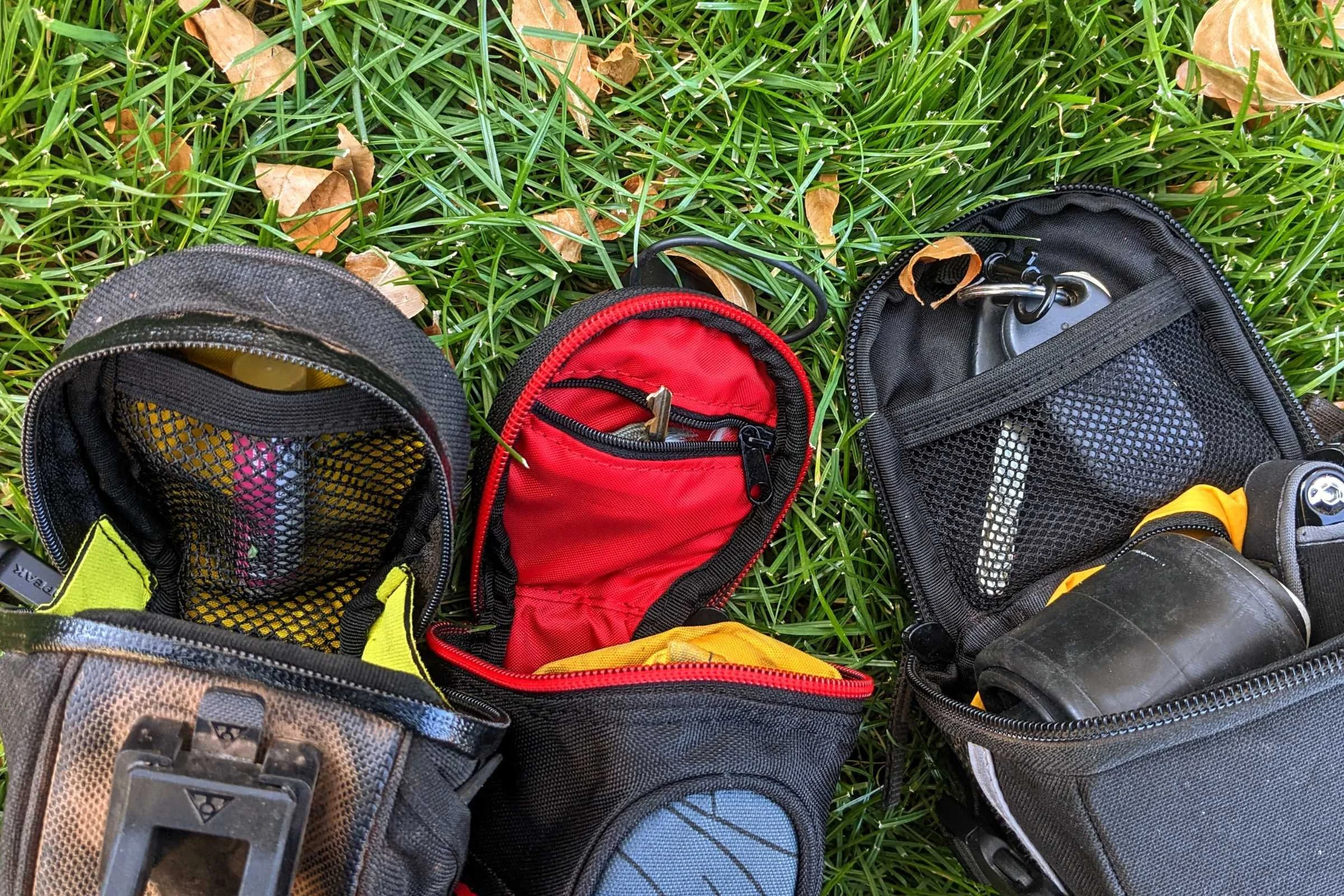
A line-up of the saddle bags with pockets
Number and size of pockets
External pockets on a saddle bag make it easier to keep your gear organized. Some saddle bags have multiple pockets inside the bag for this, too. These are excellent features, especially external pockets for things you want easy access to without opening the bag.
Rigidity
Larger saddle bags need to be rigid to keep from sagging. If a saddle bag extends far past the attachment system, this portion of the bag needs something stiff to keep it from bending down. If a big saddle bag isn’t rigid enough, it could contact your rear wheel when you go over bumps.
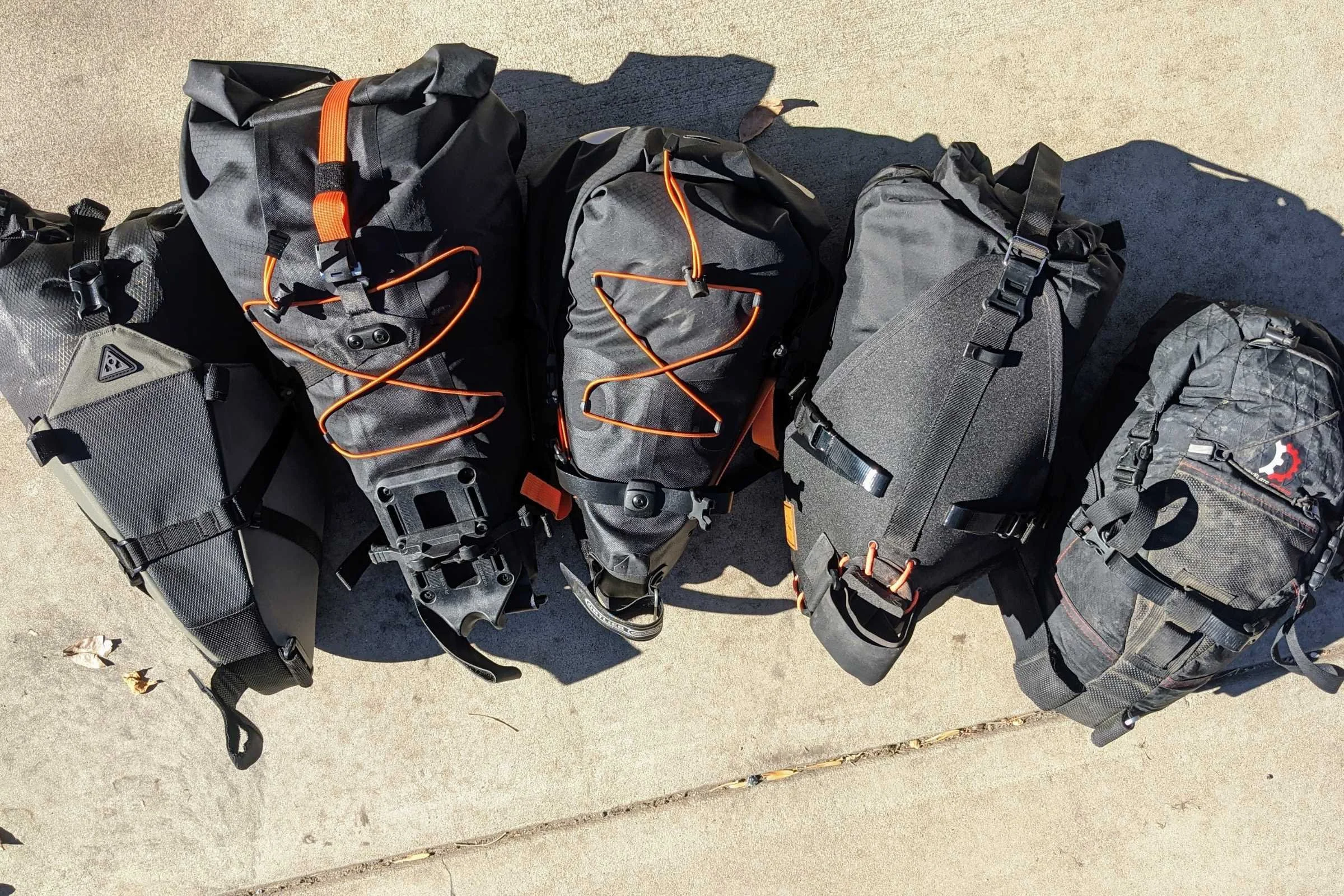
A line-up of some of the bikepacking saddle bags we tested side-by-side.
How to choose a saddle bag
You'll see different saddle bags listed in different categories. Here's what makes each category of seat bag we tested different from one another, and the situations in which you may need those features.
Generally, the larger the saddle bag, the more costly it will be. We recommend getting the smallest bag that will work for your needs to start since this will be the least expensive.
Bikepacking
Bikepacking saddle bags are the biggest saddle bags. Ideally, a bikepacking seat bag will have enough room for a sleeping bag or quilt, an inflatable sleeping pad, a lightweight puffy jacket, and sleep clothes. A saddle bag for bikepacking usually has compression straps on the interior and exterior of the bag to make fitting all this inside the bag possible, too.
Gravel Bike
Gravel bike seat bags are often the same size as road cycling seat packs. However, since most gravel riders go farther off the grid, you might want to get a slightly larger saddle bag for gravel riding than you would for a road bike.
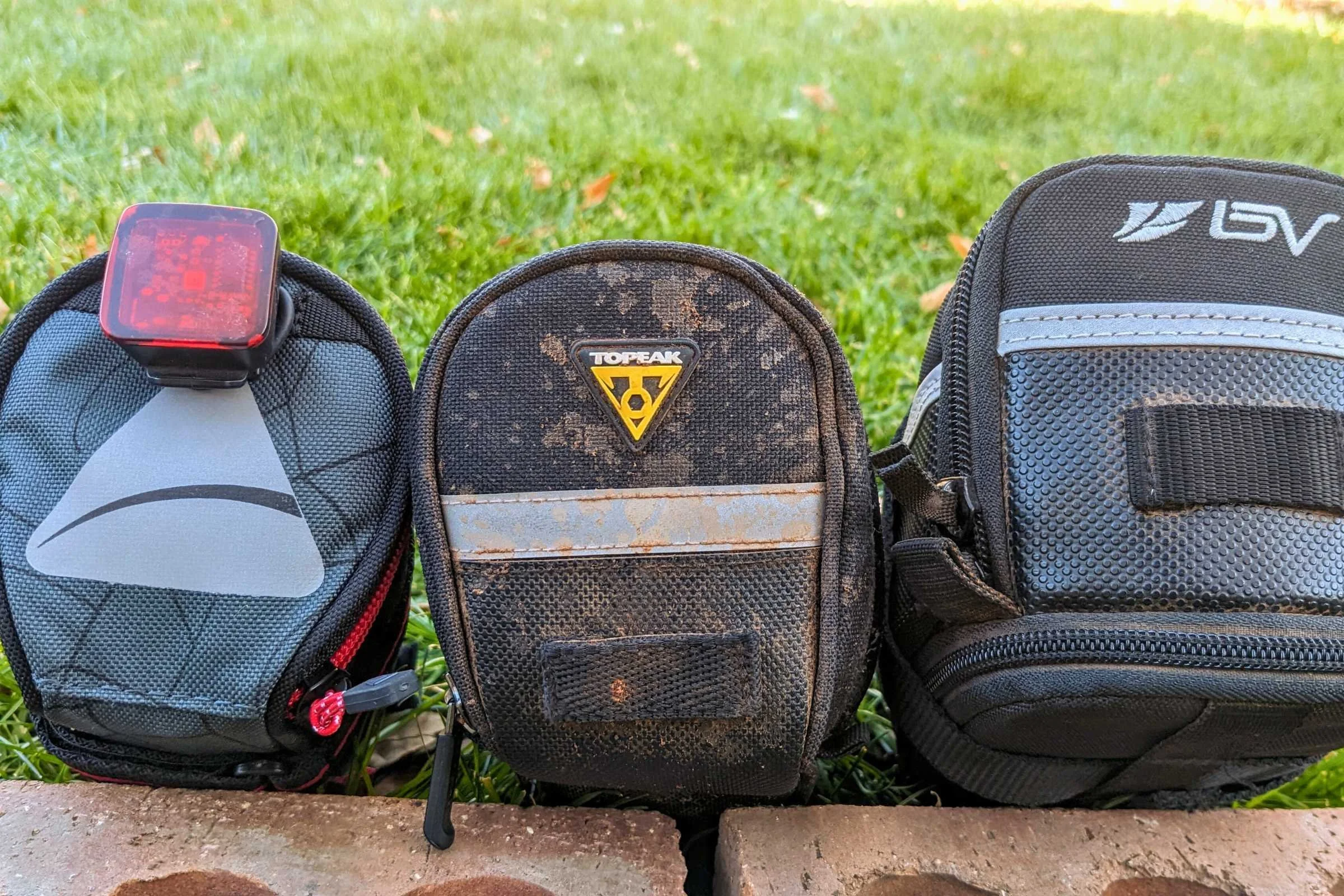
Road cycling bike seat bags are the smallest bike bags, but still need enough capacity to carry essentials like a spare tube and multitool.
Road Cycling
Road cycling saddle bags tend to be the smallest bags. A road cyclist probably only needs to carry a spare road tube, tire lever, multitool, and a CO2 inflator on a road ride. So, you don’t need a huge saddle bag for road bike riding.
Overnight
Overnight bike saddle bags are similar to bikepacking seat bags, but they can be slightly smaller since you won’t need to carry as much extra gear. If you already have a bikepacking saddle bag, you can use it for overnight trips. But, if you’re just getting into bike camping and only plan to go on shorter trips, you can get away with a slightly smaller seat bag.
Commuter
Commuter saddle bags, similar to gravel bike bags, have a little extra room. This way, you can carry tools, a jacket, and maybe even lunch inside the bag.
Leather
Leather saddle bags look good and are highly durable. Leather saddle bags are popular with cyclists who use a leather saddle because it matches the look of their bike. Also, most leather saddles mount onto saddle loops only found on vintage and leather saddles.
E-Bike
E-bike saddle bags are the same as any of the above categories of saddle bags. E-bikes come in all shapes and sizes, just like analog bikes. What you plan to use an e-bike for will depend on what kind of saddle bag to get for your e-bike.
FAQ
-
A saddle bag is a small bag that attaches underneath a bicycle saddle. It typically mounts to the saddle rails and sometimes the seatpost for added stability, and is designed to carry essentials like a spare tube, tire levers, and a multitool without affecting bike handling.
-
Yes, saddle bag and seat bag are interchangeable terms. Both refer to the bag mounted beneath the bicycle saddle and attached to the saddle rails.
-
A saddle bag is often the first bike bag most cyclists purchase. Small seat bags are an affordable and low-profile way to carry repair essentials, and they don’t significantly affect handling, making them ideal for everyday riding before investing in larger bikepacking or storage systems. Those who don't prefer bike mounted bags can look to our Best MTB hip packs and MTB backpacks guides
-
Saddle bags are lightweight, simple, and typically more affordable than handlebar bags or frame bags. They keep tools mounted on the bike instead of in bike jersey pockets, backpacks, or hip packs, which many riders find more comfortable. Unlike some frame bags, saddle bags also do not interfere with water bottle cages or take up space in the bike’s main triangle.
-
Saddle bags can limit rear light mounting options and may interfere with dropper post use if the bag is large. Larger seat packs can restrict saddle height movement, though dropper-compatible designs exist. Compared to frame bags, saddle bags also place weight higher on the bike, which can slightly affect stability when heavily loaded.
-
-
The size of saddle bag you need depends on what you plan to carry. Small models hold basic repair tools for everyday rides, while larger seat packs are designed for bikepacking and can carry clothing, food, and overnight gear. Choosing the right size balances storage capacity with weight and stability.
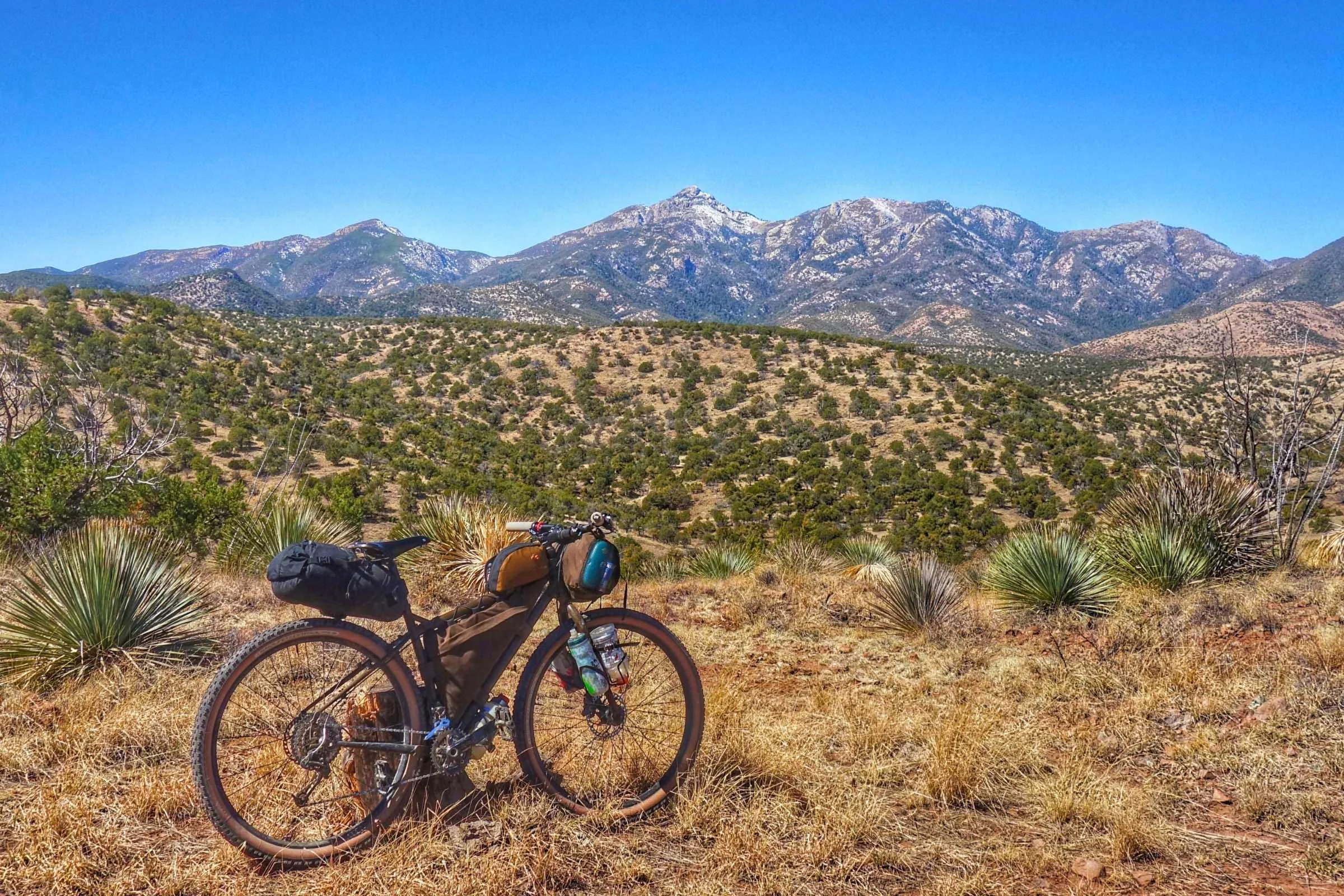
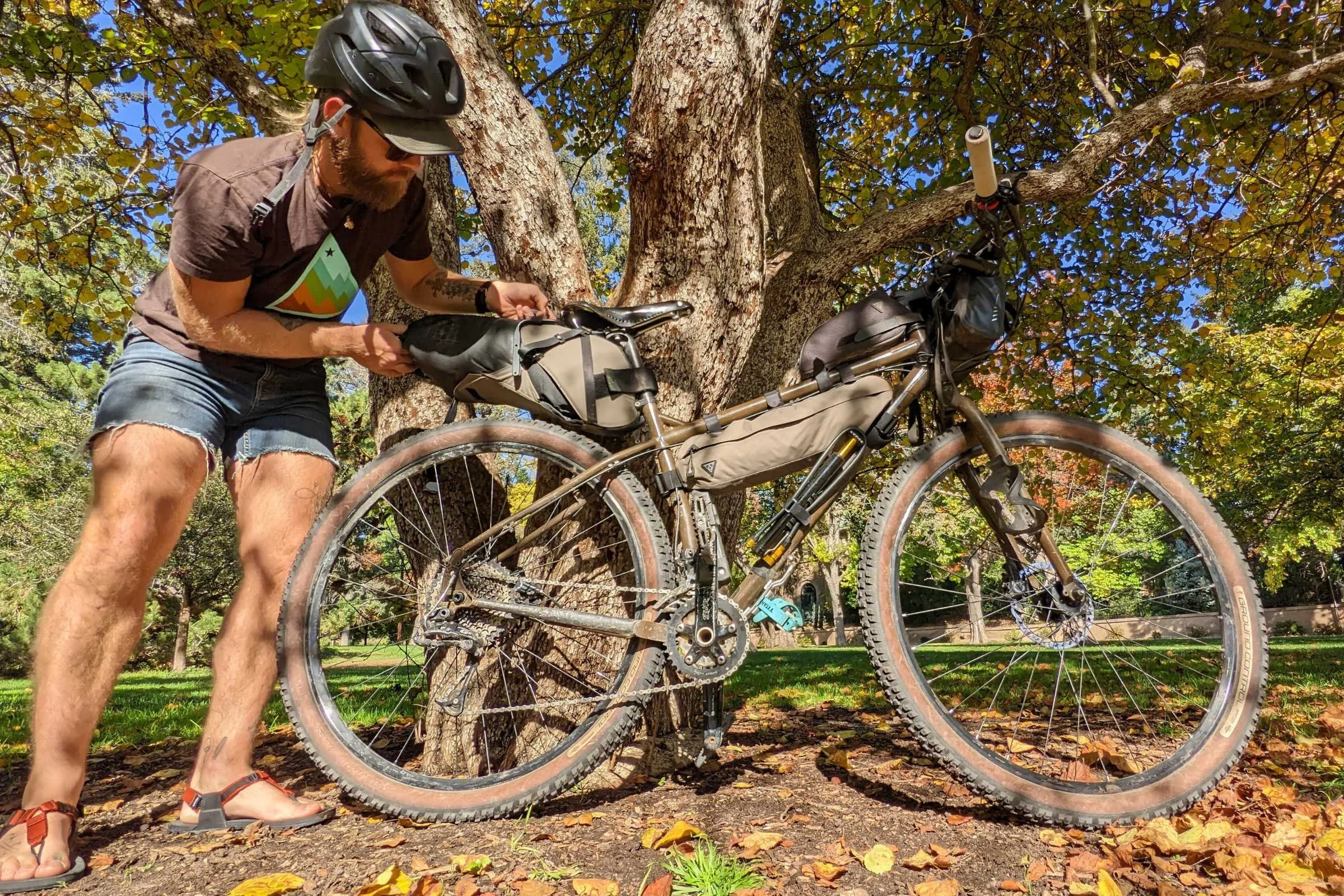
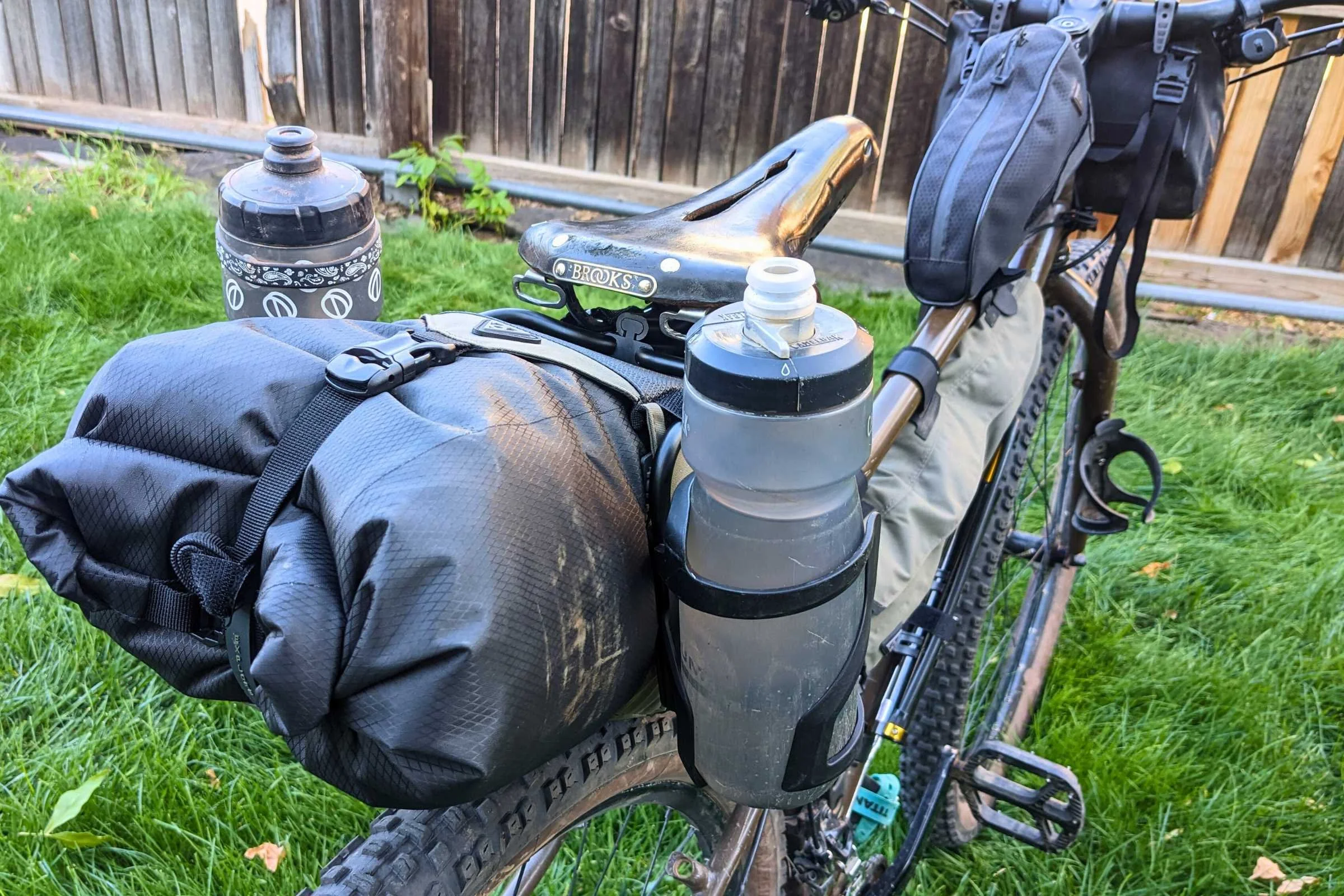
The Revelate Viscacha on the author’s bike.
Care and maintenance tips
Cleaning
Wipe down your saddle bag after dirty rides using a damp cloth and mild soap if needed. Avoid harsh cleaners that can damage fabrics or waterproof coatings.
Drying and storage
Air dry completely before storing in a cool, dry place away from prolonged sun exposure. Avoid compressing structured seat packs for long periods, as this can stress seams and zippers.
Inspection and mounting
Regularly check for tears, loose stitching, and worn mounting straps or buckles. Ensure the bag is securely attached before riding to prevent shifting or bounce that can damage the mounting system.
Waterproofing and zippers
Reapply DWR or waterproof treatments as needed to maintain weather resistance. Keep zippers clean and occasionally lubricate them to ensure smooth operation.
Avoid overloading
Do not exceed the bag’s recommended capacity, as overloading strains seams, zippers, and attachment points and shortens the bag’s lifespan.
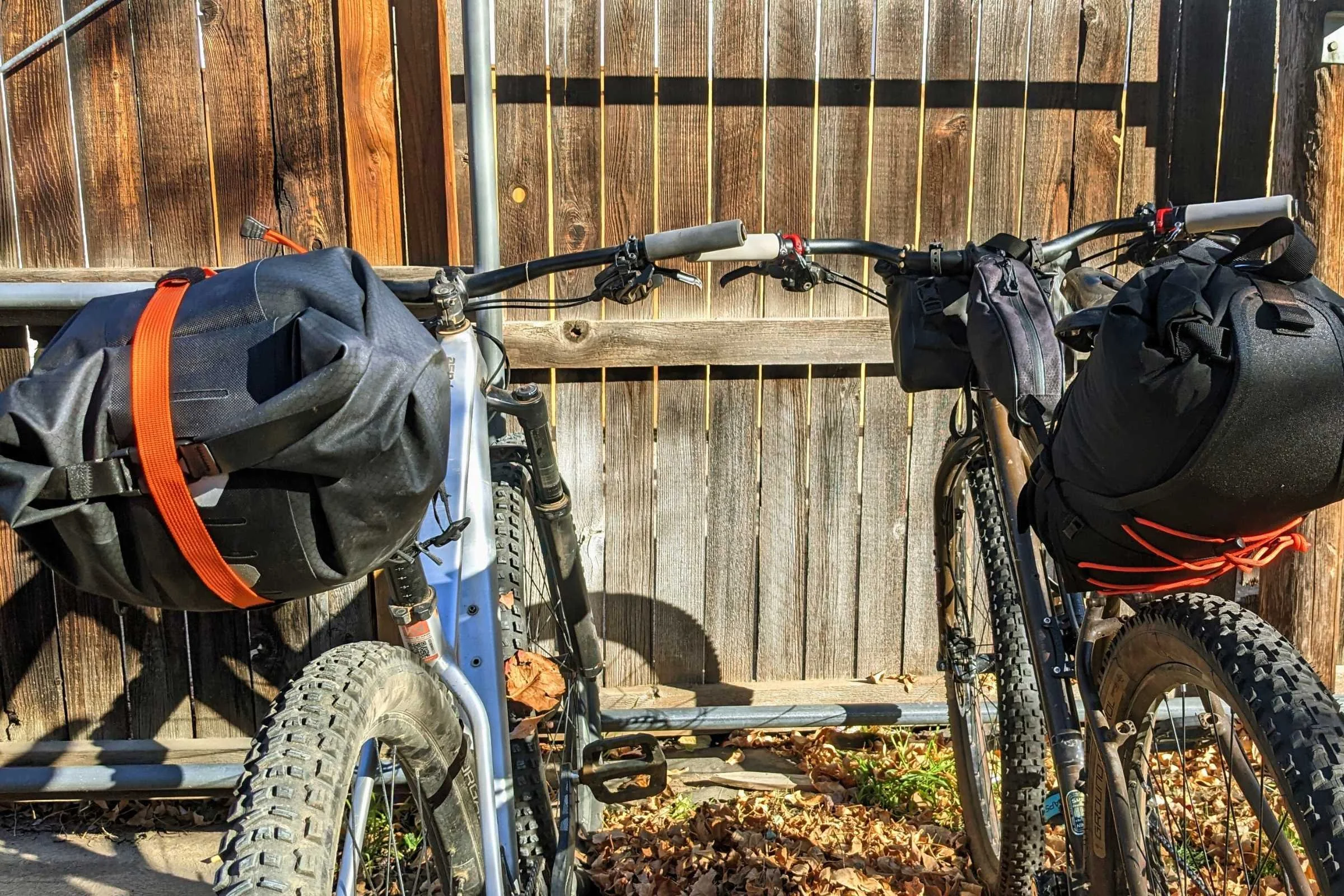
We tested bike saddle bags side-by-side on trips in the city on road bikes and on trail bikepacking and on gravel bikes.
How we tested
We tested bike saddle bags in Colorado, Utah, Arizona, and New Mexico over several years. To test, we loaded every bag until it was full and got riding. We also looked at each bag's features and how useful those were. We sway-tested every bag by standing up and pedaling with the bag attached to see how much the bag moved back and forth. Since a bag swaying on your seat will cause your bike to feel unstable, this was very important.
We also looked at the durability of every seat bag. We looked at the warranty information available for each bag. Lastly, we looked at what materials the bags are made with and how well they’re put together.
- Road, gravel, MTB, and commuting rides
- Multi-day bikepacking trips
- Loaded every bag to full capacity
- Standing-pedal sway tests
- Repeated use on varied bikes and terrain
- Capacity and usable storage
- Attachment security and stability
- Sway while pedaling
- Weather resistance and durability
- Bike, saddle, and tire clearance
About the author / Why you should trust us
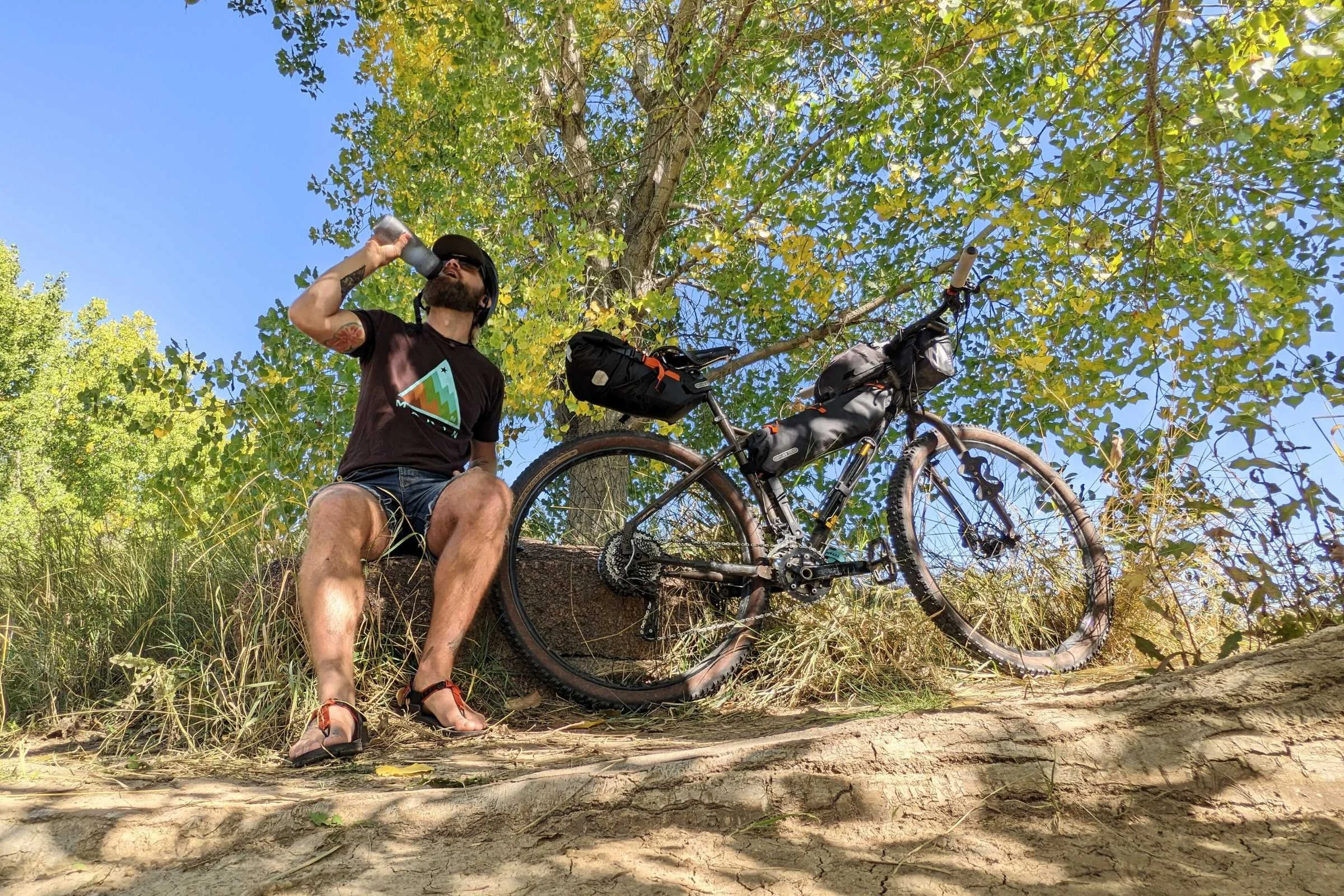
Sam Schild has biked over 50,000 miles in the last decade. He is an avid bike commuter and has extensively ridden road, mountain, and gravel bikes. He has bike toured and bikepacked over 10,000 miles — across the United States, on the Kokopelli Trail, Colorado Trail, and all over the American Southwest.
He has also worked as a bike mechanic for over ten years. Between his experience as a bike mechanic and his own cycling experience, he’s seen more saddle bags than he can count. He has sorted through piles of donated saddle bags at bike co-ops, designed and sewn his own bike bags, and looked at far too many saddle bags on the internet.
You can read more about Sam on his author page or on his website.