Best Packable Backpacks of 2026
Small-capacity, travel-friendly backpacks for vacations, day hikes, grocery trips, and other short, on-the-go excursions
August 27th, 2026
Home → Gear Reviews → Travel Gear
A regular backpack takes up a fixed amount of space in your suitcase or car, while a packable one folds down to a fraction of its expanded size or packs flat so it can fit inside a carry-on or hang off a belt loop until needed. The best packable backpack is one that you only need occasionally or as a backup to your regular pack. They are great for hikes, grocery runs, or a day of sightseeing.
We tested each pack the way people use them, either stuffed into a suitcase, for a week-long trip, used on a full day of city walking with a water bottle and jacket inside, and with travel knickknacks from a trip. We even used one for a sightseeing trip in a new city.
We compared packs to how small they pack down, how easily they compress, how comfortable the straps are, how much load they carry, and if they have a dedicated water pocket. We also looked at fabric and zipper durability, and value relative to price. It is important to note that the lighter and more compressible a pack is, the less structure and padding it has, so ultralight packability and comfortable carry don’t always go hand in hand.
The best overall pick is the Eagle Creek Packable backpack. It earned the top spot because it packed and unpacked faster than any other bag tested. The PU-coated nylon shrugged off water while over rapids during a fishing trip. The wide opening of the main pocket was convenient to use, and the structured shape kept it comfortable on a full day outdoors. Here's how it and the rest of the field stacked up.
This guide covers packable backpacks specifically, so if you are looking for daypacks or hardshell travel packs, check out our guides to the best adventure travel backpacks and best daypacks for hiking.
We create reader-supported, objective gear reviews independently selected by our editors. This story may contain affiliate links, which help fund our website. When you click on the links to purchase gear, we may get a commission, without costing you an extra cent. Thank you for supporting our work and mission of outdoor coverage for every body! Learn more.
Comparison table
| PACKABLE BACKPACK | CAPACITY | WEIGHT | BOTTLE POCKETS | WATER RESIST | CARRY ON | MSRP |
|---|---|---|---|---|---|---|
| Arc'teryx Heliad 15 | 15 L | 7.1 oz | ❌ | ✔ | ✔ | $80 |
| Eagle Creek Packable Backpack | 16 L | 5.7 oz | ✔ | ✔ | ✔ | $59 |
| EXPED Summit Hike 15 | 15 L | 12.3 oz | ✔ | ✔ | ✔ | $90 |
| Fjällräven Kånken Mini | 7 L | 7.8 oz | Very small | ✔ | ✔ | $85 |
| Osprey Daylite | 13 L | 19.8 oz | ✔ | ✔ | ✔ | $70 |
The winners
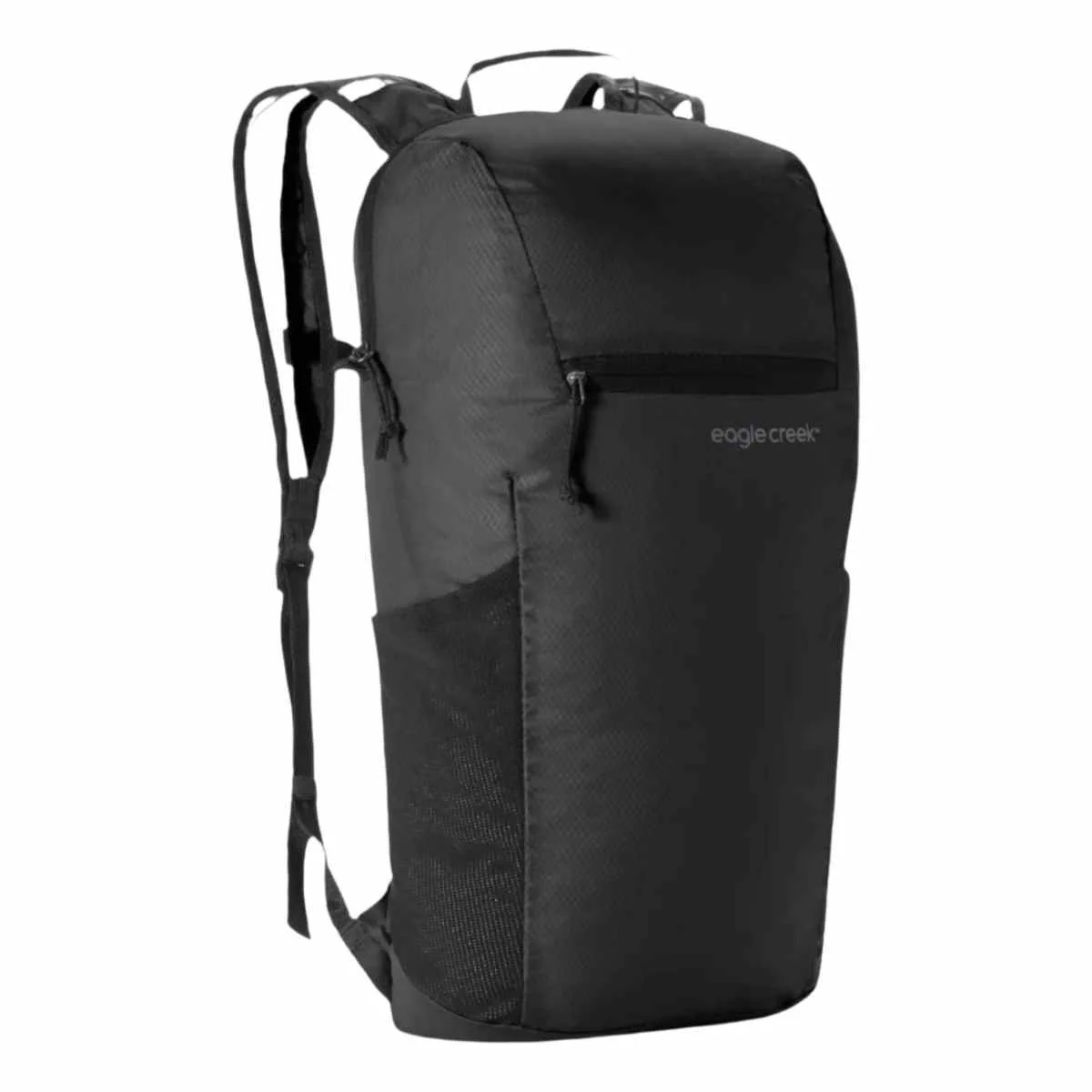
Best overall packable backpack: Eagle Creek Packable Backpack
Price: $59
Capacity: 16 L
Empty weight: 5.7 oz
Packs into own pocket: Yes
Fabric: 100% ocean-recycled 70D PU-coated nylon, made without PFAS
Water resistant: Yes
Waterproof: No
Laptop sleeve: No
Water bottle pockets: Yes
Sternum strap: Yes
Hip belt: No
Back panel: No
Shoulder straps: Breathable mesh
Carry-on compliant: Meets carry-on size standards for most/all major airlines
What we liked: Palm-sized packing, stretch side pockets, and breathable mesh shoulder straps for hot climates
What we didn't like: No structure for carrying rigid things and no back panel
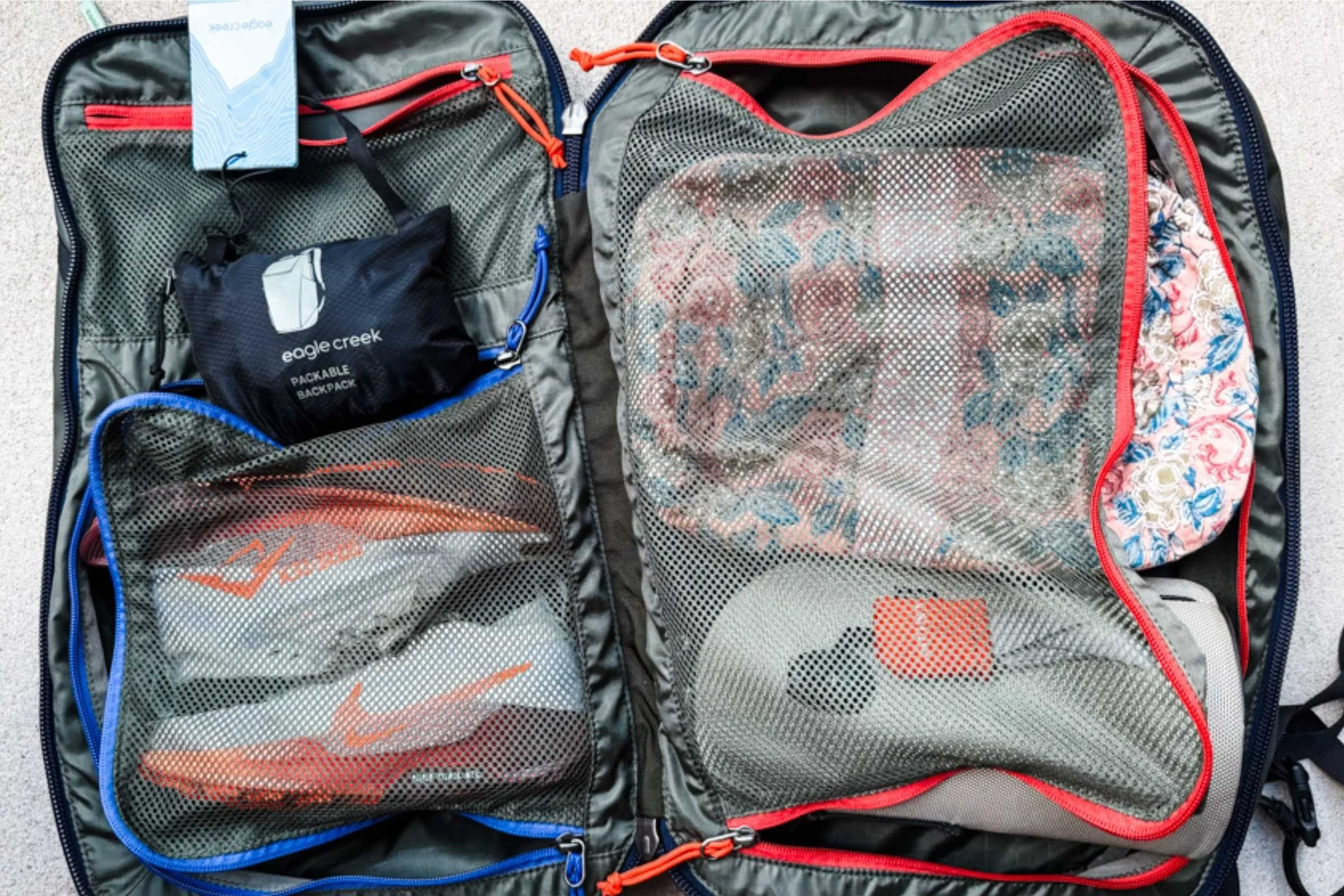
We tested the Eagle Creek Packable Backpack on a city trip that included a day of fishing, and it packed down small enough to live inside the suitcase until we needed it. It’s our best overall pick because it is compact yet functional for the size and carrying capacity.
Eagle Creek Packable Backpack
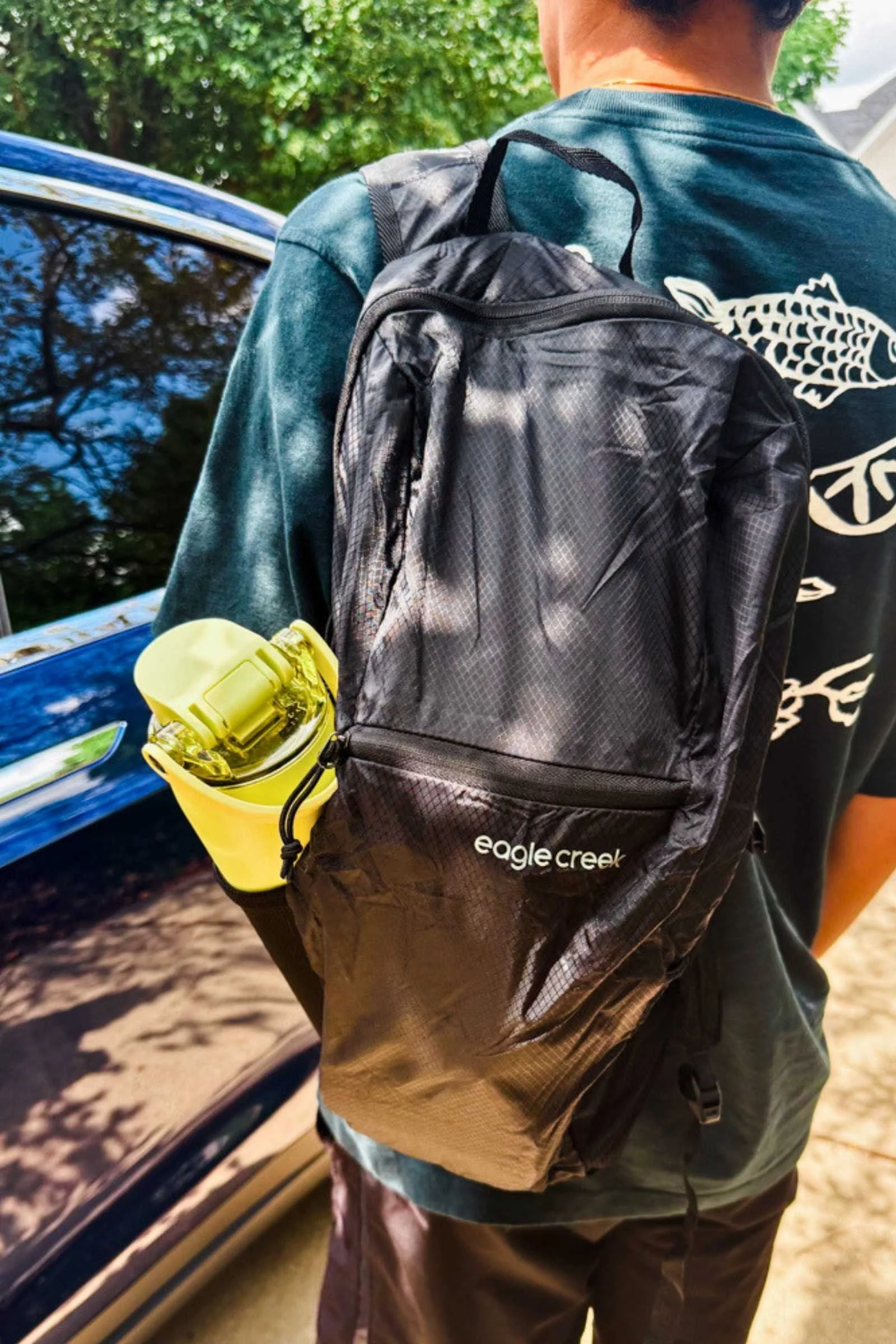
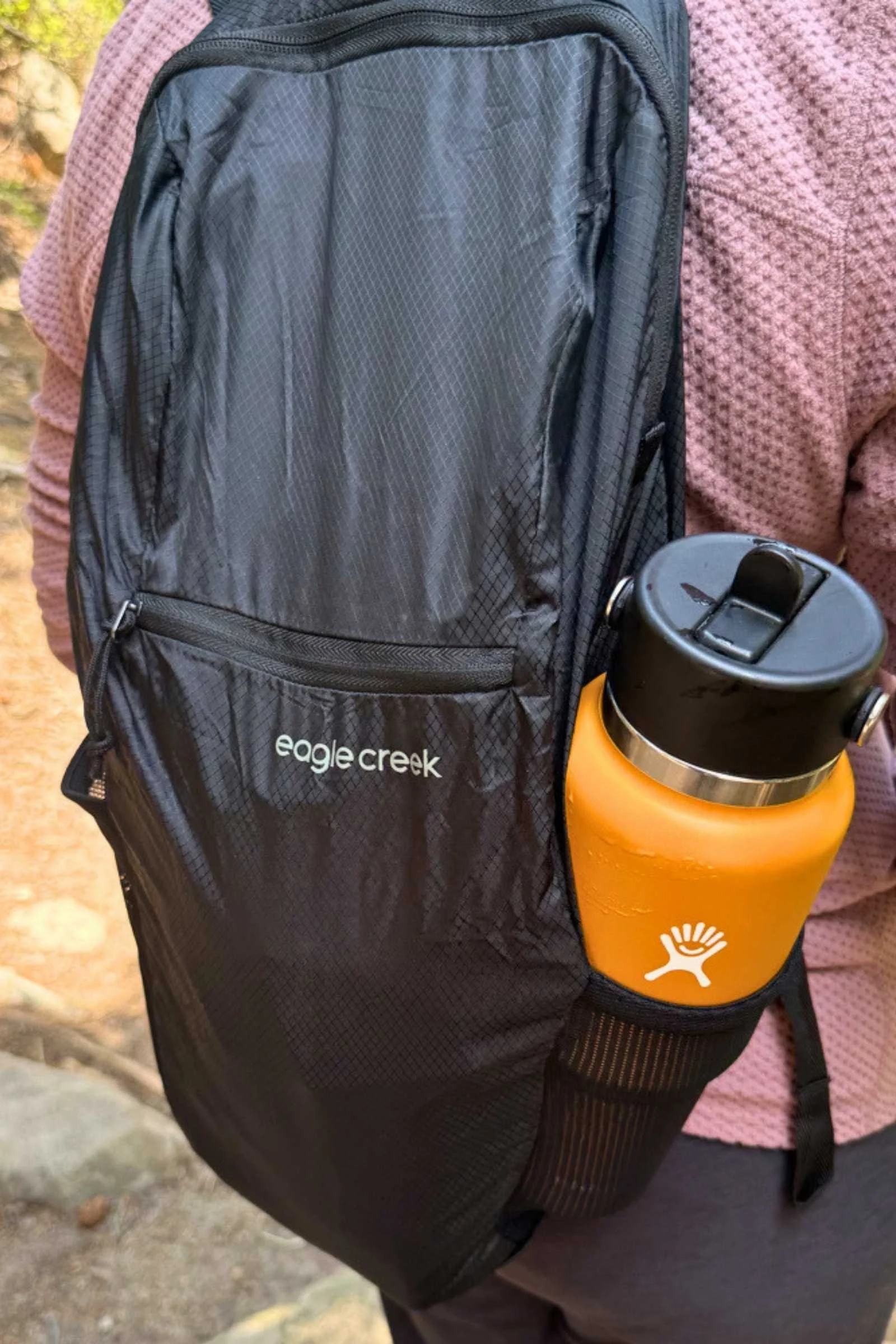
Unpacking and expanding took seconds, and it carried comfortably for a full day. The front pocket holds car keys, a hotel room card, and sunglasses. The inside sleeve fits a wallet and passport securely. The two stretch pockets can support a 16-oz bottle on one side and a 24-oz bottle on the other without spilling. The sternum strap is also adjustable so two people of different sizes can share a bag. Not all bags that we tested had all these features so the Eagle Creek Packable was our top pick.
However, it's not a structured pack, so a camera and a boxy snack container can press against your back and get uncomfortable quickly. But when loaded with softer items, like a sun hoody or light sweater, it holds its shape. The inside sleeve also fits a tablet, so this can double as a light work bag for a coffee shop or a train ride.
The Packable Backpack is best suited for someone who wants a small daypack for short excursions and can be packed away in its own pocket when not in use. It is not suitable for long travel days or an overnight trip.
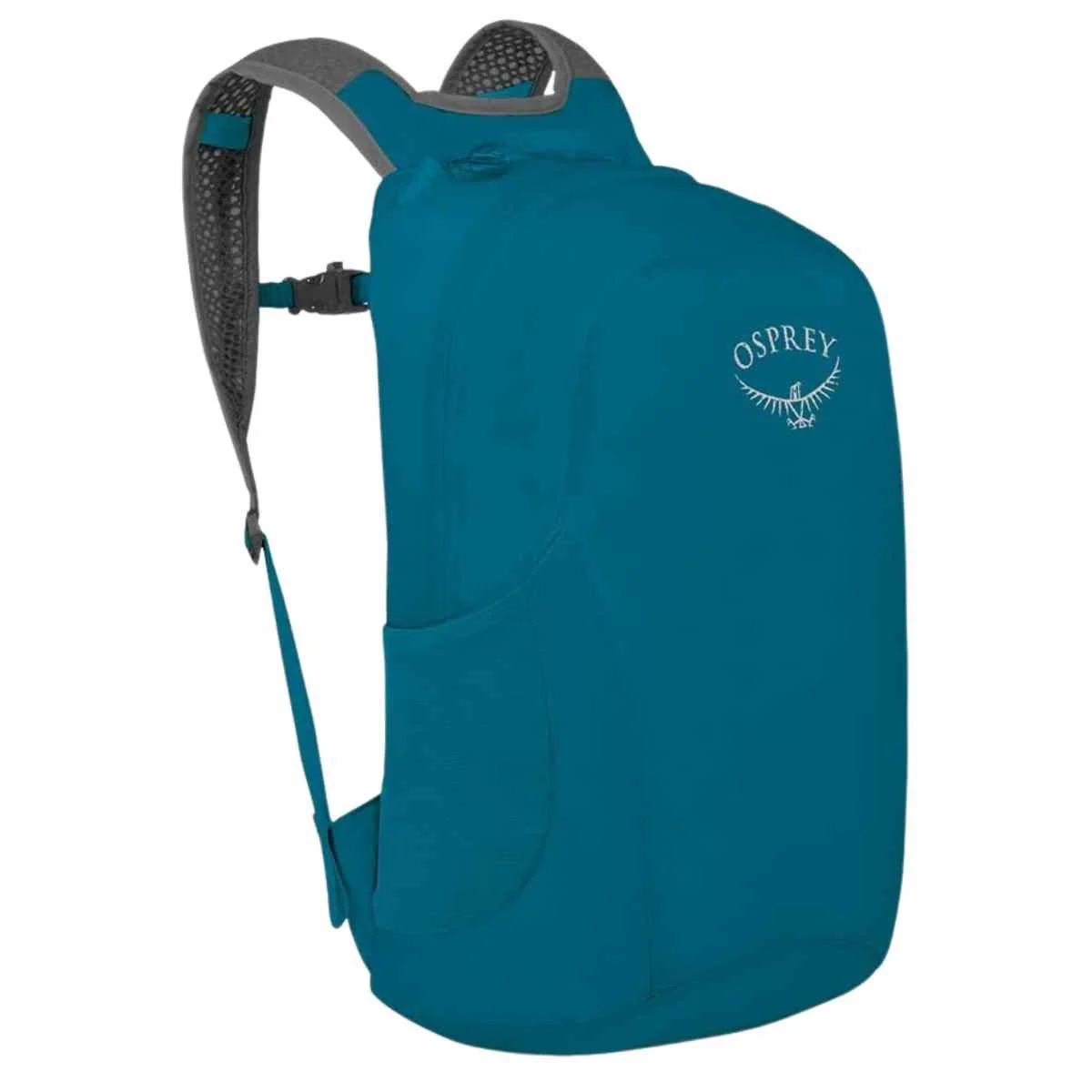
Best affordable packable backpack: Osprey Ultralight Stuff Pack
Price: $50
Capacity: 18 L
Empty weight: 5.3 oz
Packs into own pocket: Yes
Fabric: Bluesign-approved 100% recycled 40D high-tenacity nylon
Water resistant: Yes
Waterproof: No
Laptop sleeve: No
Water bottle pockets: Yes, dual stretch side pockets
Sternum strap: Yes, adjustable
Hip belt: No
Back panel: No
Shoulder straps: Padded mesh
Carry-on compliant: Meets carry-on size standards for most/all major airlines
What we liked: Packability, key clip and dual stretchable side pockets
What we didn’t like: No back panel
The Osprey Ultralight Stuff Pack is our pick for best affordable packable backpack because for $50 you get a super lightweight, functional, packable backpack. It only weighs 5.3 oz (an ounce or so lighter than the average bag we tested) and is highly packable.
Osprey Ultralight Stuff Pack
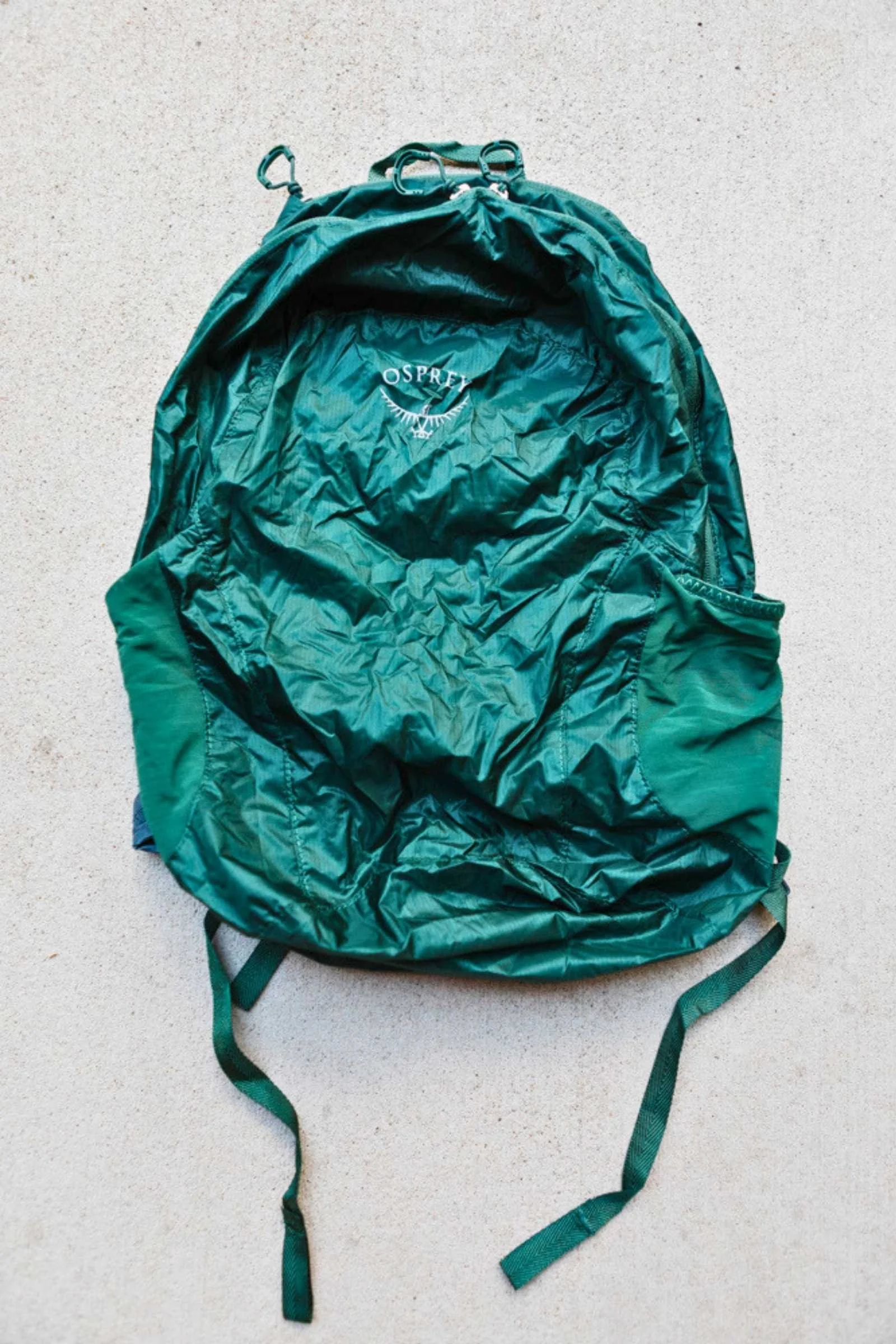
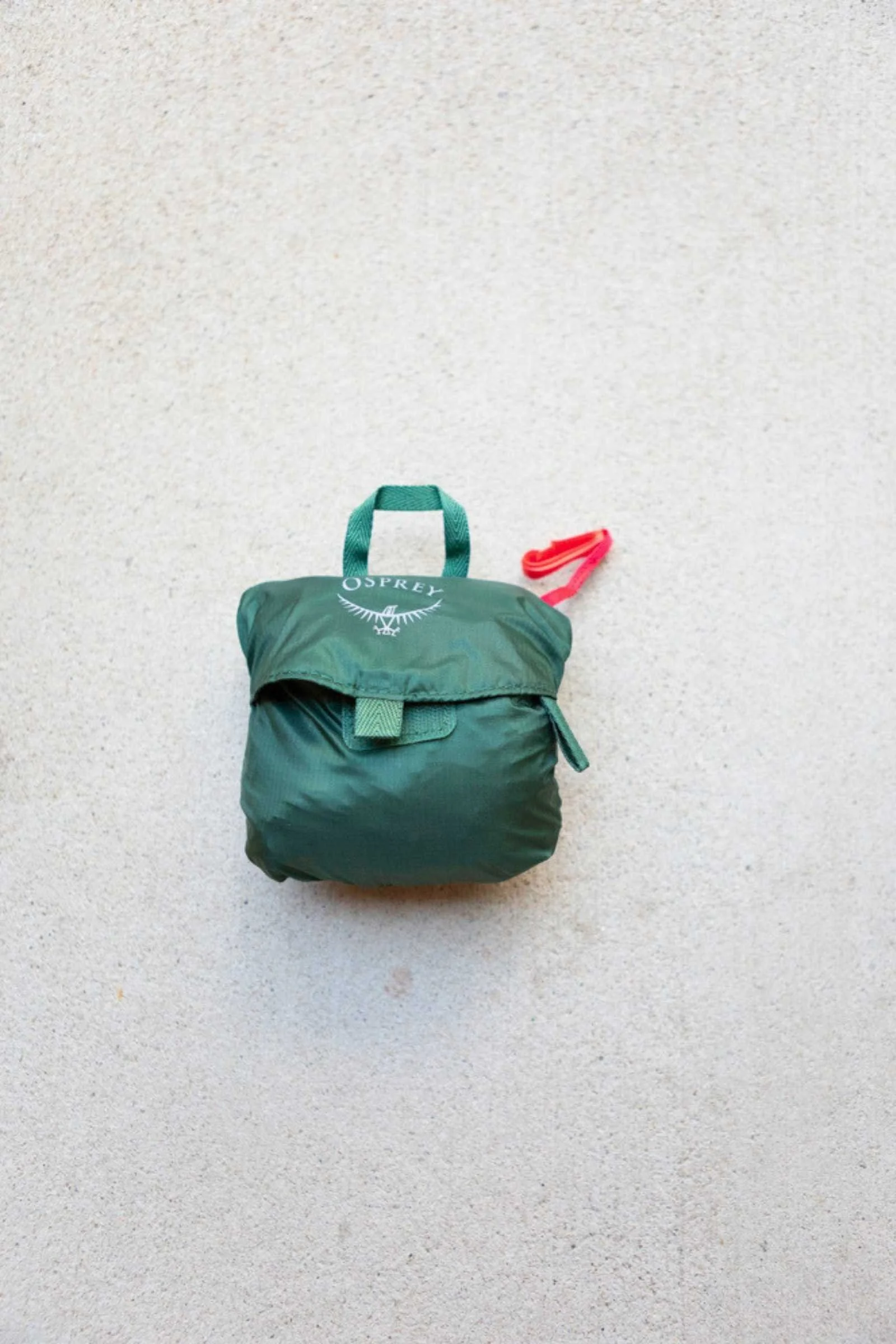
We took the Ultralight Stuff Pack on a day trip to a city and errands around town. When not in use, we folded it back up, packed it away in its own pocket, and clipped it to a sling bag using the key clip. We loaded the pack with a water bottle, rain jacket, camera, and some snacks, which weighed about 12 lbs.
While there is no back panel, the padded mesh straps and sternum strap are comfortable to carry at this weight and don’t bunch or dig in. At 5.3 oz, the bag is unnoticeable as an extra bag for just-in-case situations and despite its light weight, we found it to be durable enough to carry a DSLR camera.
This bag is best suited for compact travel due to its packable nature. It works best on short trips or for errands around town. It will not work well in situations where you need to carry a heavy load for an extended period of time.
Best packable backpack for travel: Osprey Daylite
Price: $70
Capacity: 13 L
Empty weight: 19.8 oz
Packs into own pocket: No
Fabric: Bluesign-approved 300D recycled polyester main body, PFC-free DWR coating, 600D recycled polyester lining
Water resistant: Yes
Waterproof: No
Laptop sleeve: Yes, fits most 13" laptops or a tablet
Water bottle pockets: Yes, dual side mesh pockets, plus dual side compression straps to cinch a load down
Sternum strap: Yes
Hip belt: Yes, removable
Back panel: Mesh-covered die-cut foam back panel, built for ventilation
Shoulder straps: Spacer mesh harness with an integrated grab handle
Carry-on compliant: Meets carry-on size standards for most/all major airlines.
What we liked: Sternum strap and a removable hip belt, dual water bottle pockets, mesh back panel
What we didn't like: Not packable into its own pocket
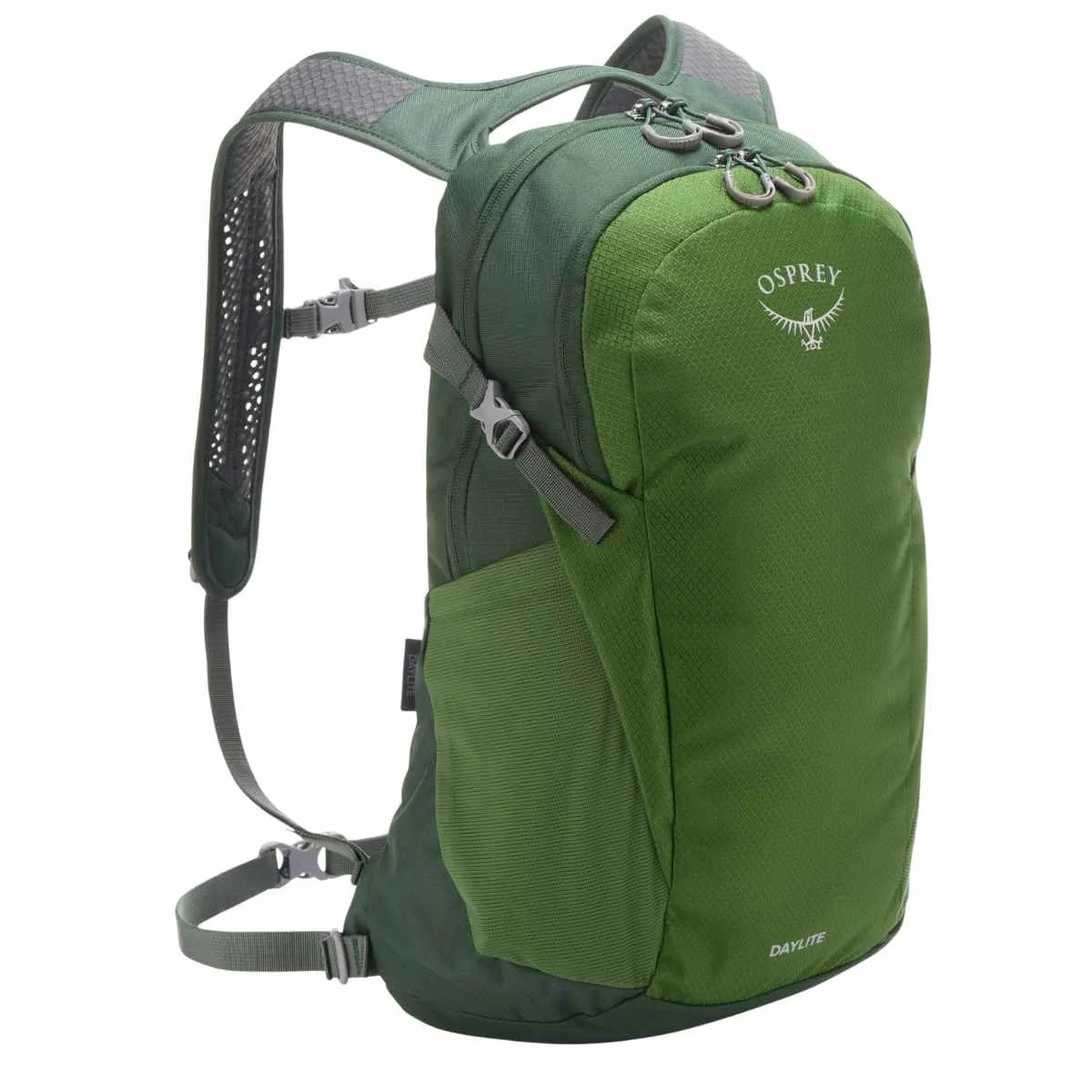
We tested the Osprey Daylite on multiple trips for the past few years as a travel backpack. While it is not packable into its own pocket, it lies flat in a suitcase when not needed.
Osprey Daylite
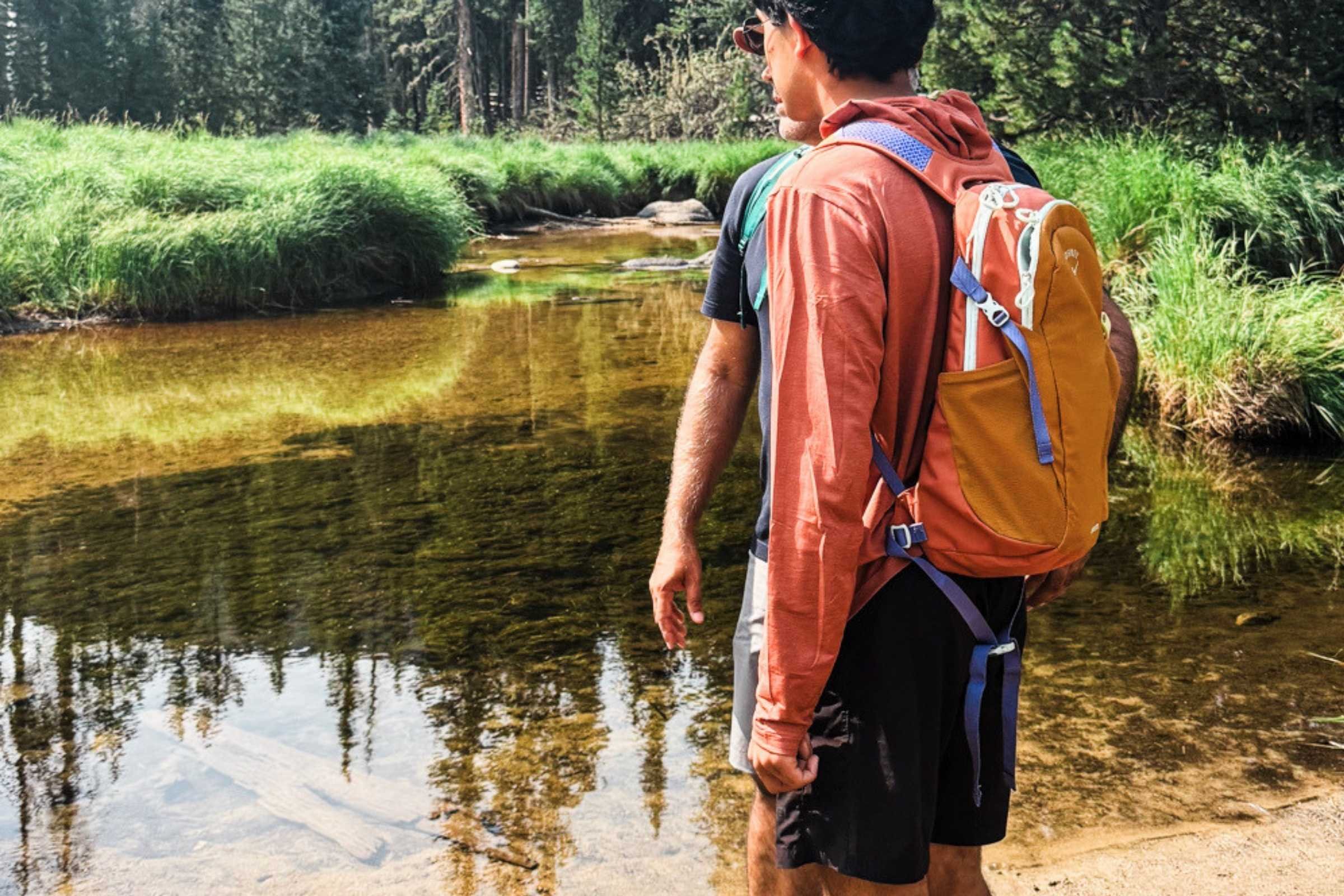
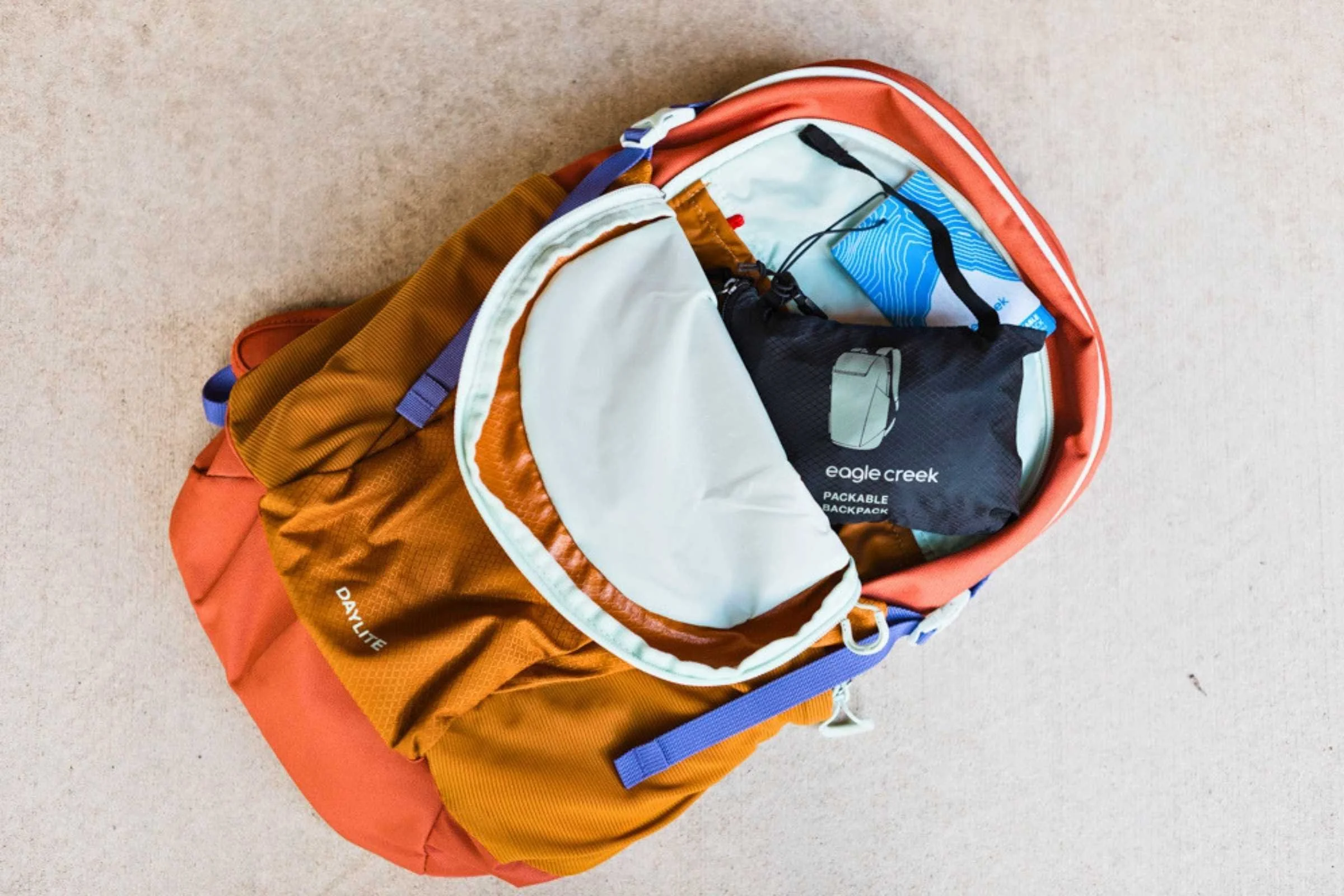
The front zippered pocket is deep for snacks, wallet, keys, and other essentials needed for travel. It even has two hidden pockets inside the front pocket to keep cash, cards, or phones. The internal pocket can store a 13” laptop or tablet for work or even a hydration bladder with a passthrough tab on the top of the bag. The padded mesh shoulder straps are comfortable to carry for full travel days as well as trail use. The grab handle is also designed to double as a luggage pass-through strap for attaching to rolling luggage, which is great for hands-free travel in crowded public transportation.
The downside to this pack is that it is not packable in its own pocket hence not suited for someone who is looking for a compact carrying bag. You will need to have a suitcase or a tote to store this away when not in use.
It is best suited for someone who needs a rigid back panel bag to carry a laptop or books and lots of pockets for organizing smaller items. It is not the best bag for compact, just-in-case, backup carry situations.
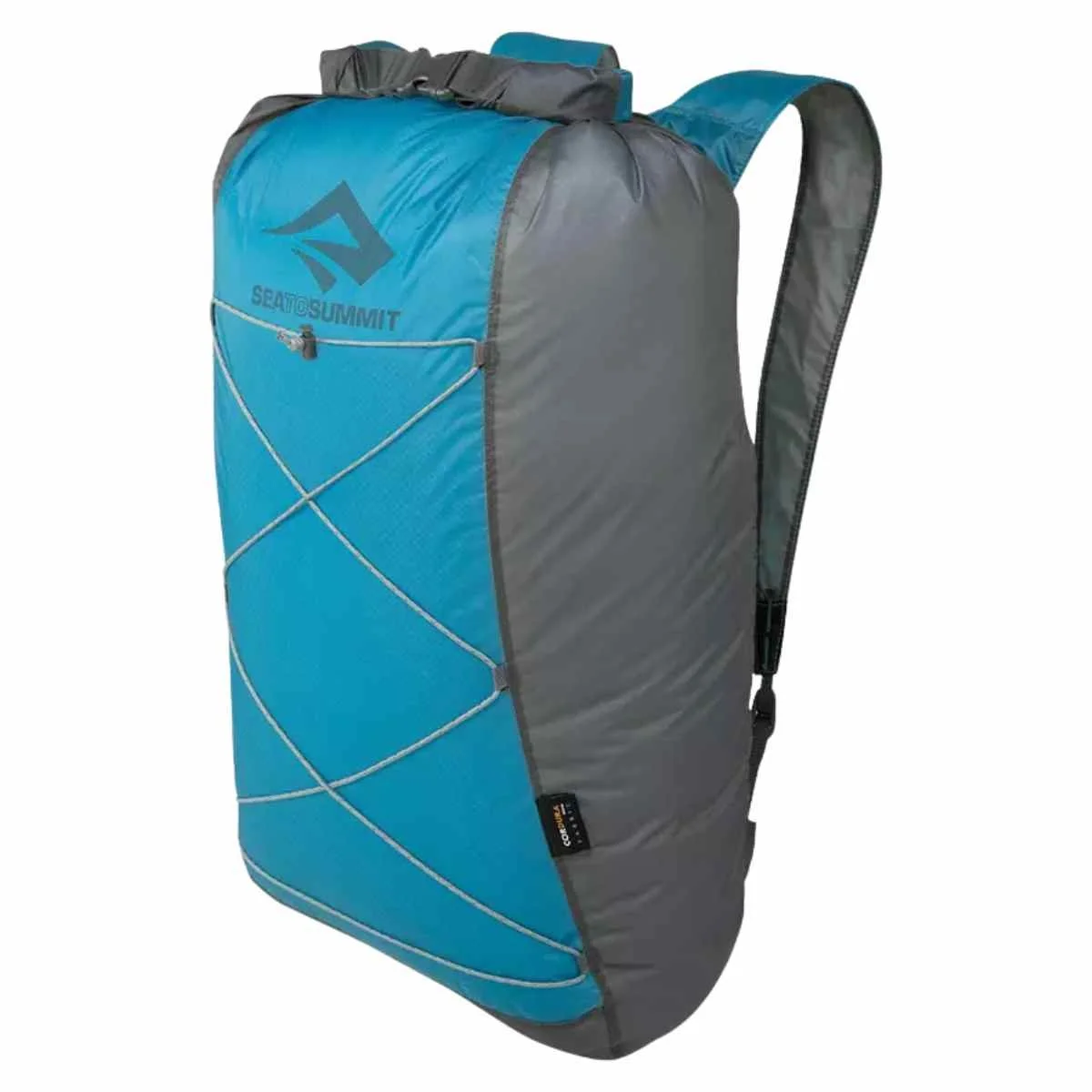
Best lightweight packable backpack: Sea to Summit Ultra-Sil Dry Daypack
Price: $70
Capacity: 22 L
Empty weight: 3.9 oz
Packs into own pocket: Yes, attached Ultra-Sil stuff sack with a small aluminum carabiner
Fabric: 30D Ultra-Sil siliconized high-tenacity Cordura nylon
Water resistant: Yes, but seams aren't sealed
Waterproof: Yes
Laptop sleeve: No
Water bottle pockets: No
Sternum strap: No
Hip belt: No
Back panel: No padding or structure
Shoulder straps: Reinforced, adjustable straps designed to resist bunching
Carry-on compliant: Yes
What we liked: Compact size, convenient carry with carabiner that is provided, surprisingly roomy for size
What we didn’t like: No structure, odd-fitting items like camera and bottle protrude, roll top design is not suitable for easy access, stuff sack is separate so can get lost easily (which we did during testing)
The Sea to Summit Ultra-Sil Dry Daypack is the lightest packable backpack we tested and has a roll-top closure like a dry bag. It’s waterproof and the Ultra-Sil 30D CORDURA Nylon fabric has a high strength-to-weight ratio, making it a durable option that can withstand the elements.
Sea to Summit Ultra-Sil Dry Day Backpack
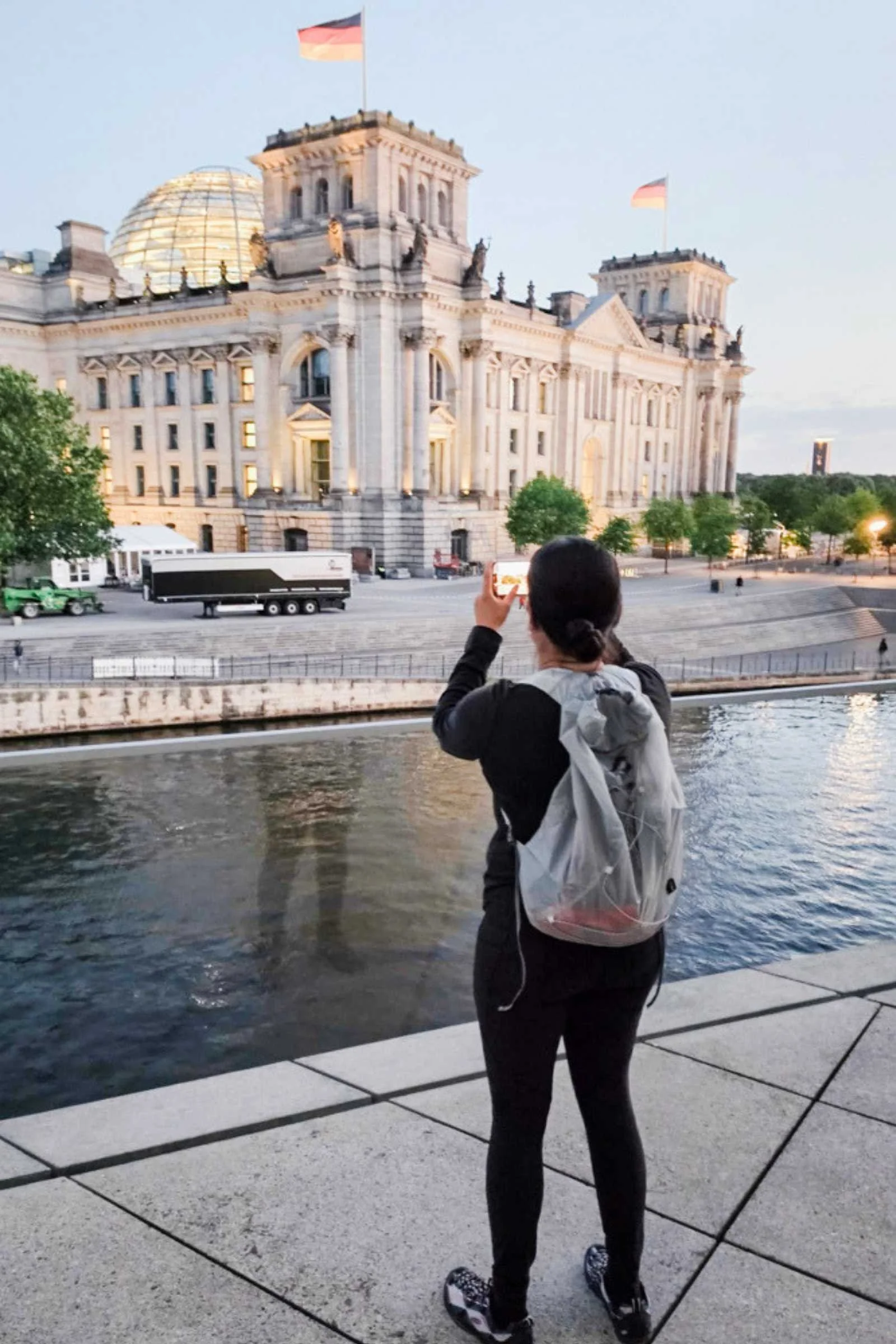
We tested the Sea to Summit Ultra-Sil Dry packable, ultralight daypack on a week-long trip to Germany that involved city tours, casual hiking, and a short run.
We loaded it with a light jacket, a water bottle, and a camera. The bag performed flawlessly in terms of durability and comfort carry as an affordable packable backpack for city walks and a longer 5-mile hike. It was easy to open up and pack away when not in use. The bungee cords on the front panel are convenient to store items like a rain jacket or a hat.
However, the bag doesn’t have a structured back panel, and the straps can dig in when loaded to its full capacity of 22 liters, especially with a heavy DSLR camera. The chords also started to bunch up a bit after a full day of a heavy load.
This option is best suited for situations where you want to travel light or don’t have much space to pack a regular daypack. It is also best for light loads like a jacket and a small bottle. It is not suitable for heavy gear or for extended carry.
Best packable hiking backpack: Exped Summit Hike 15 Pack
Price: $90
Capacity: 15 L
Empty weight: 12.3 oz
Packs into own pocket: No (but the similar Summit Lite does)
Fabric: Recycled 600D Oxford Cordura polyester, PU coated, recycled liner, 150D polyester, PU coated
Water resistant: Yes
Waterproof: No, but rain cover provided
Laptop sleeve: No
Water bottle pockets: Yes, two stretchy exterior pockets
Sternum strap: No
Hip belt: Yes, removable strap
Back panel: Lightly padded and an air mesh back for airflow
Shoulder straps: Padded, with stretch pockets built in
Carry-on compliant: Meets carry-on size standards for most/all major airlines
What we liked: Removable hip belt and air-mesh back panel, removable rain cover
What we didn’t like: No hydration pack compatibility or water hose port
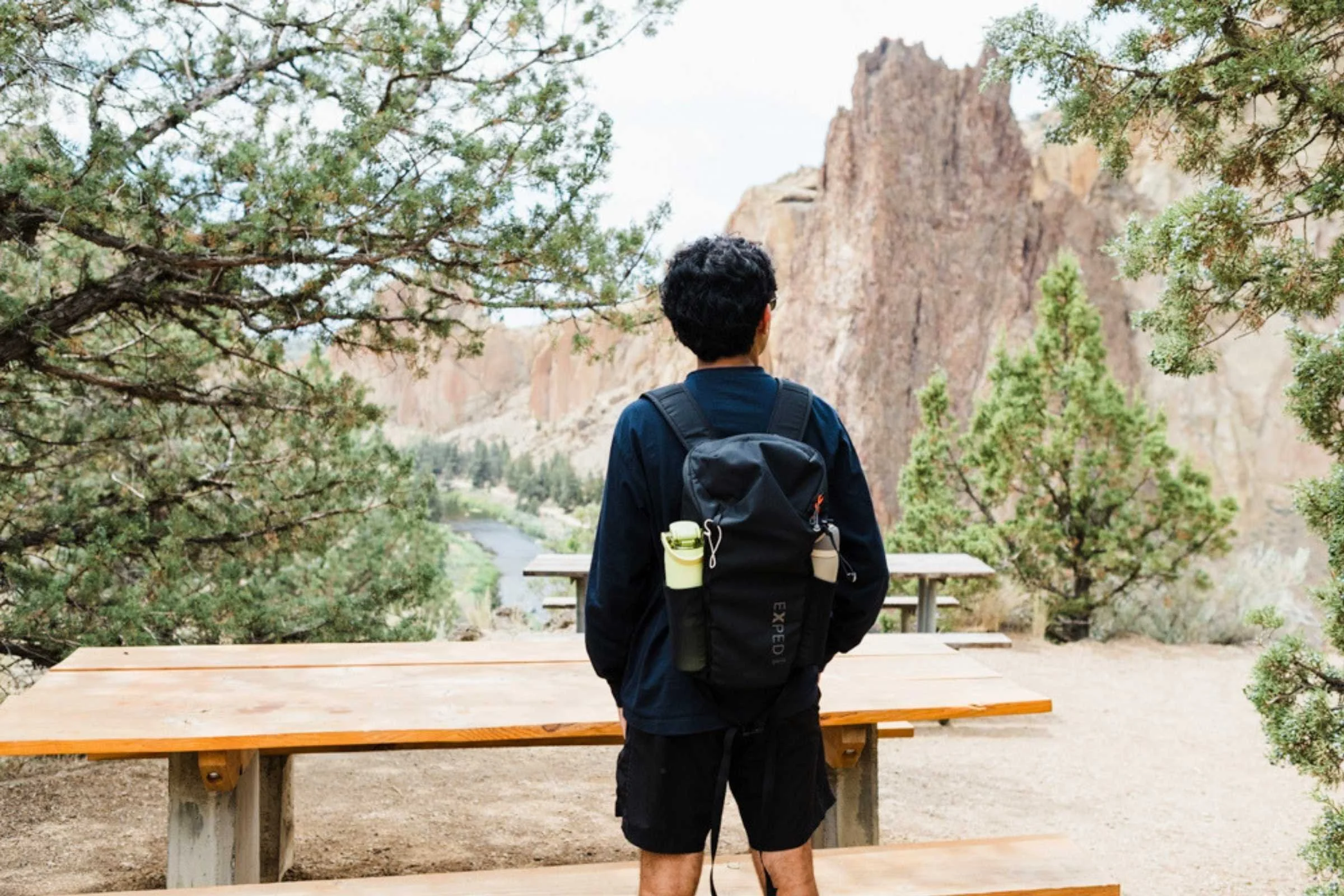
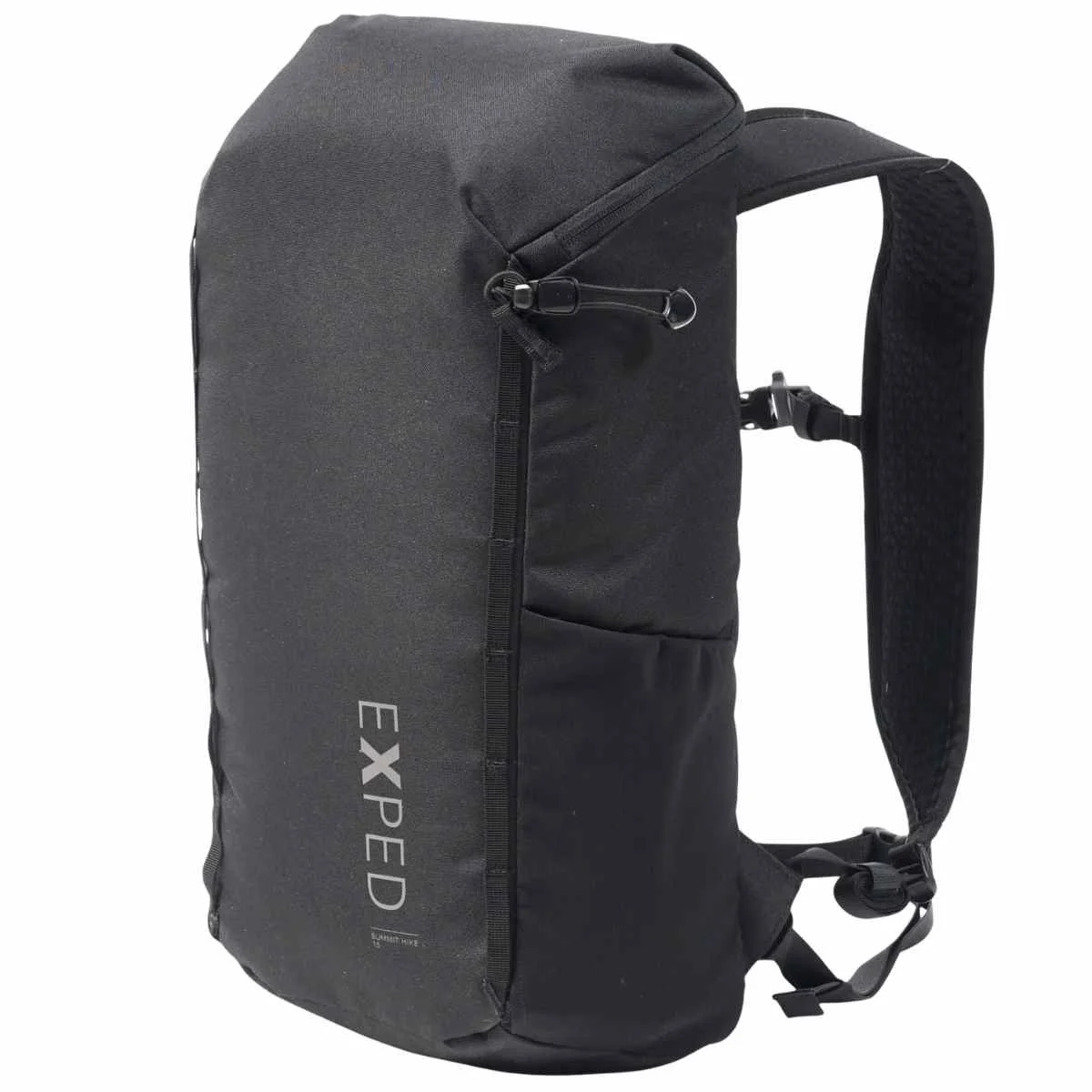
While this structured daypack does not qualify as a packable bag, the 19.3 inches tall and 15-liter capacity of the Exped Summit Hike Pack make it ideal for a travel daypack.
Exped Summit Hike 15 Pack
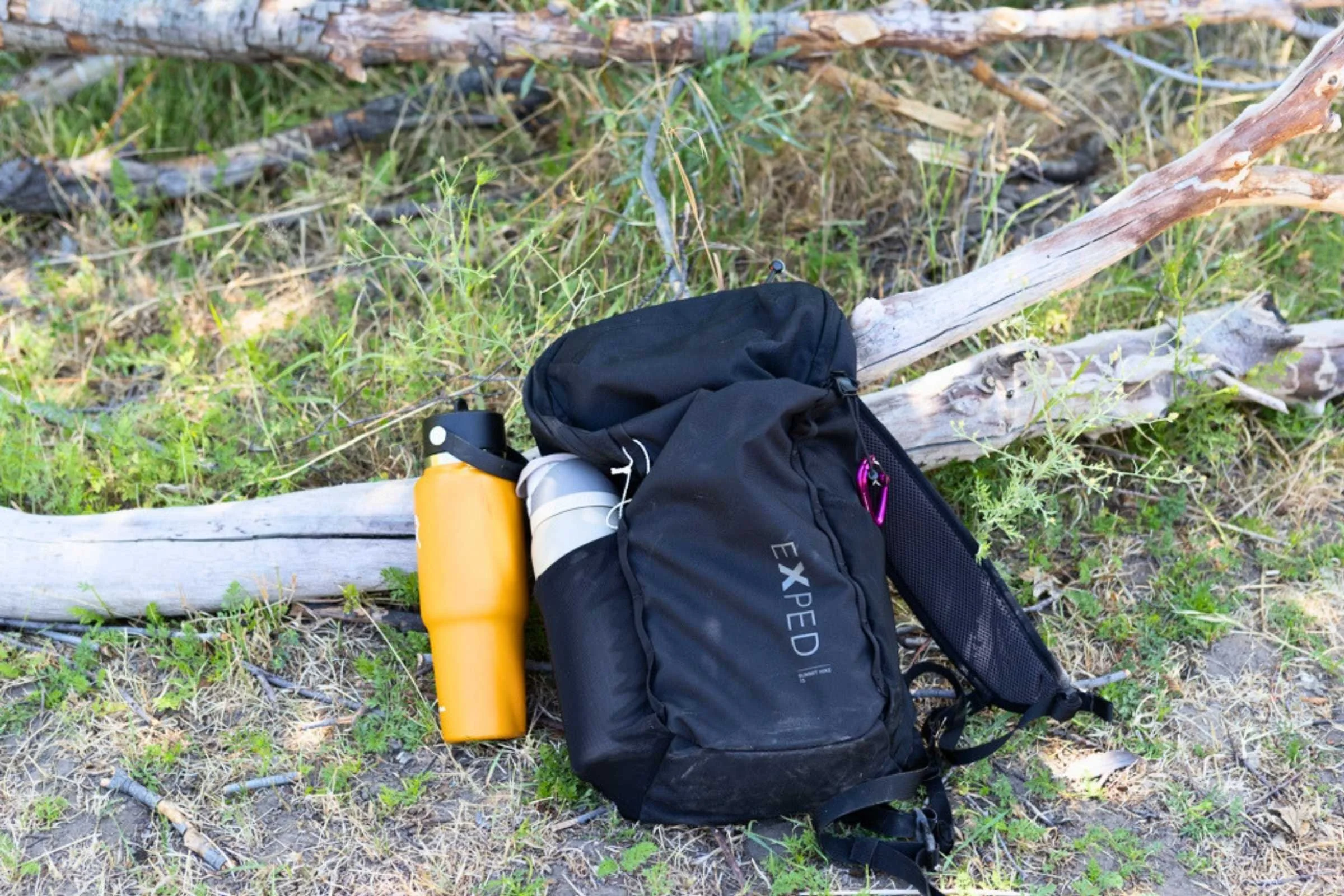
We tested it on urban trails during hot summer days where the air mesh back pad and lightly padded back panel helped wick away sweat and keep our back cool. The loop chain in front is great for carrying foldable hiking poles or clipping small items using carabiners. The top load style makes for easy access, and the loop carry in the back can connect to a carry-on bag using a clip for hands-free travel.
This pack is better suited for adventure travel involving shorter or less technical trails where you don’t need to carry multiple layers, spikes, helmets, and lots of snacks. If you are looking for reliable trail daypacks, check out our hiking daypacks guide.
Best packable backpack for day hikes from a base camp: Arc'teryx Heliad 15
Price: $80
Capacity: 15 L
Empty weight: 7.1 oz
Packs into own pocket: Yes
Fabric: 100-denier mini-ripstop Cordura nylon 6,6 with Dobby face, PFAS-free FC0 DWR water-repellent finish
Water resistant: Yes
Waterproof: No
Laptop sleeve: Internal pocket can fit 10” tablet
Water bottle pockets: No dedicated external bottle pocket, external stash pocket can be used for a water bladder instead
Sternum strap: No
Hip belt: No
Back panel: No
Shoulder straps: No
Carry-on compliant: Meets carry-on size standards for most/all major airlines
What we liked: Fits a hydration bladder in the dedicated stash pocket and a tablet up to 10" in the internal sleeve
What we didn’t like: No hip belt and no sternum strap
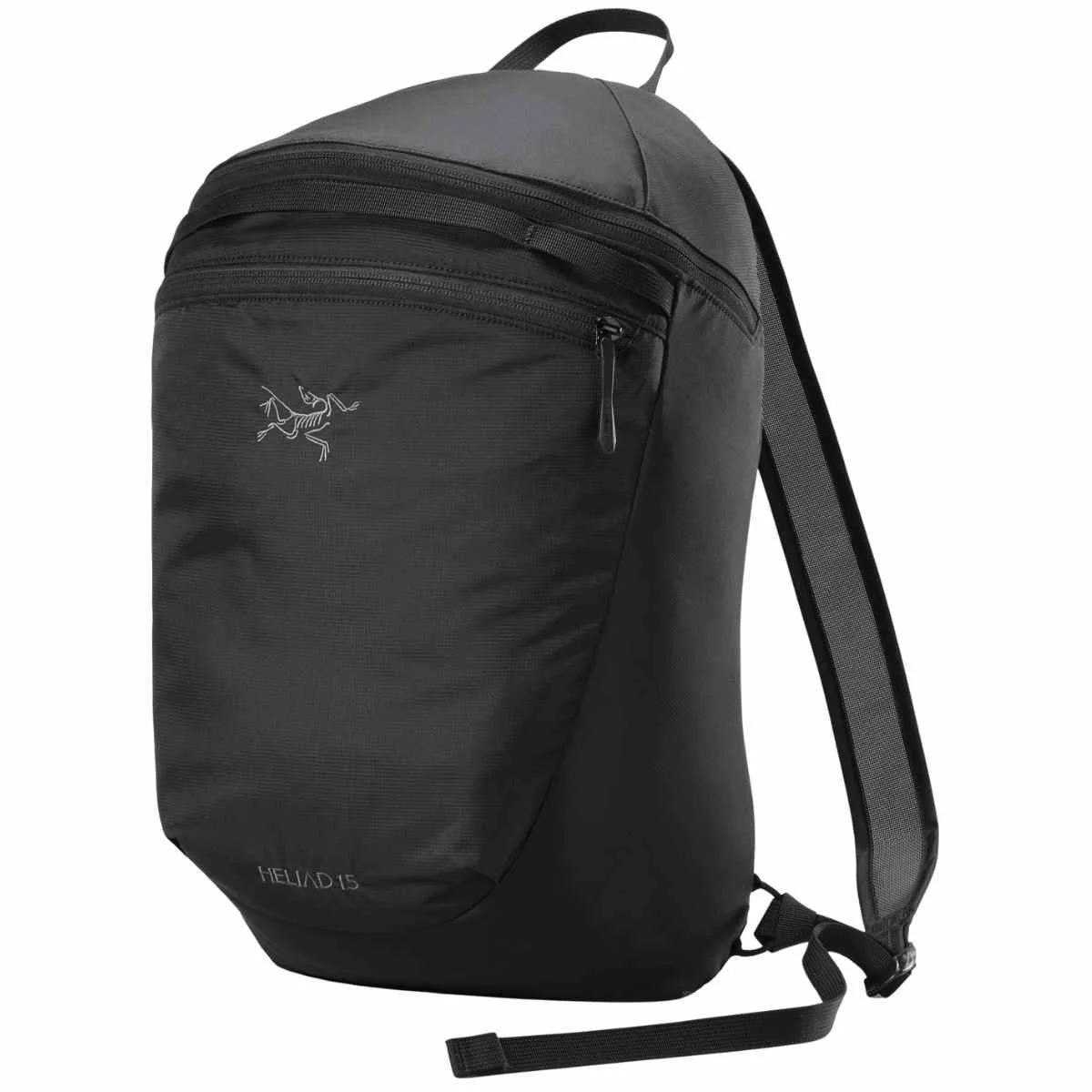
The Arc’teryx Heliad 15 is our pick for best packable backpack for day hikes from base camp because it offers a convenient carry for basic essentials like a light layer and a few snacks.
Arc'teryx Heliad 15
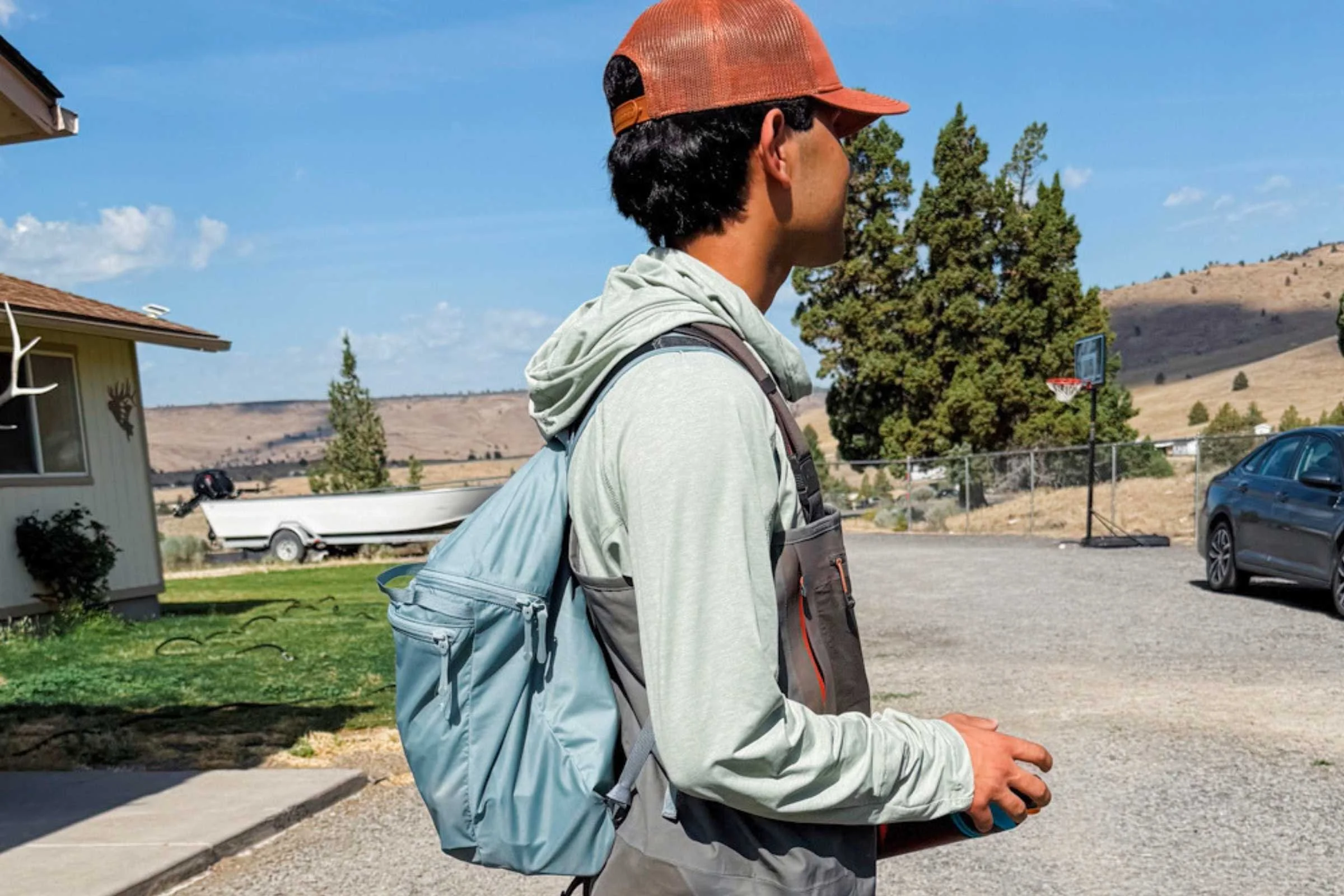
We took this as a backup option for our fishing trip, and it is a comfortable pack for simple day hikes when you really want to travel light and leave all the heavy gear back at base camp. It has less internal storage, no side pockets, no hip belt, and no padded back panel like Exped Summit Hike 15 Pack.
This is not a technical pack and has only two pockets, so you might have some organizational challenges if you are carrying lots of small items like a headlamp, gloves, scarf, hat, and sunscreen. It offers a comfortable carry even though it lacks back padding but your back can get sweaty if you are in very hot and humid climates. Ideally, it will fit a light layer, a cap or hat, and some snacks for your hike or jaunt around town.
This pack does pack into its own pocket so can be carried in a larger bag, so it is best suited for short excursions around town or quick day hikes from base camp.
Other packable backpacks we tested
Fjällräven Kanken Mini
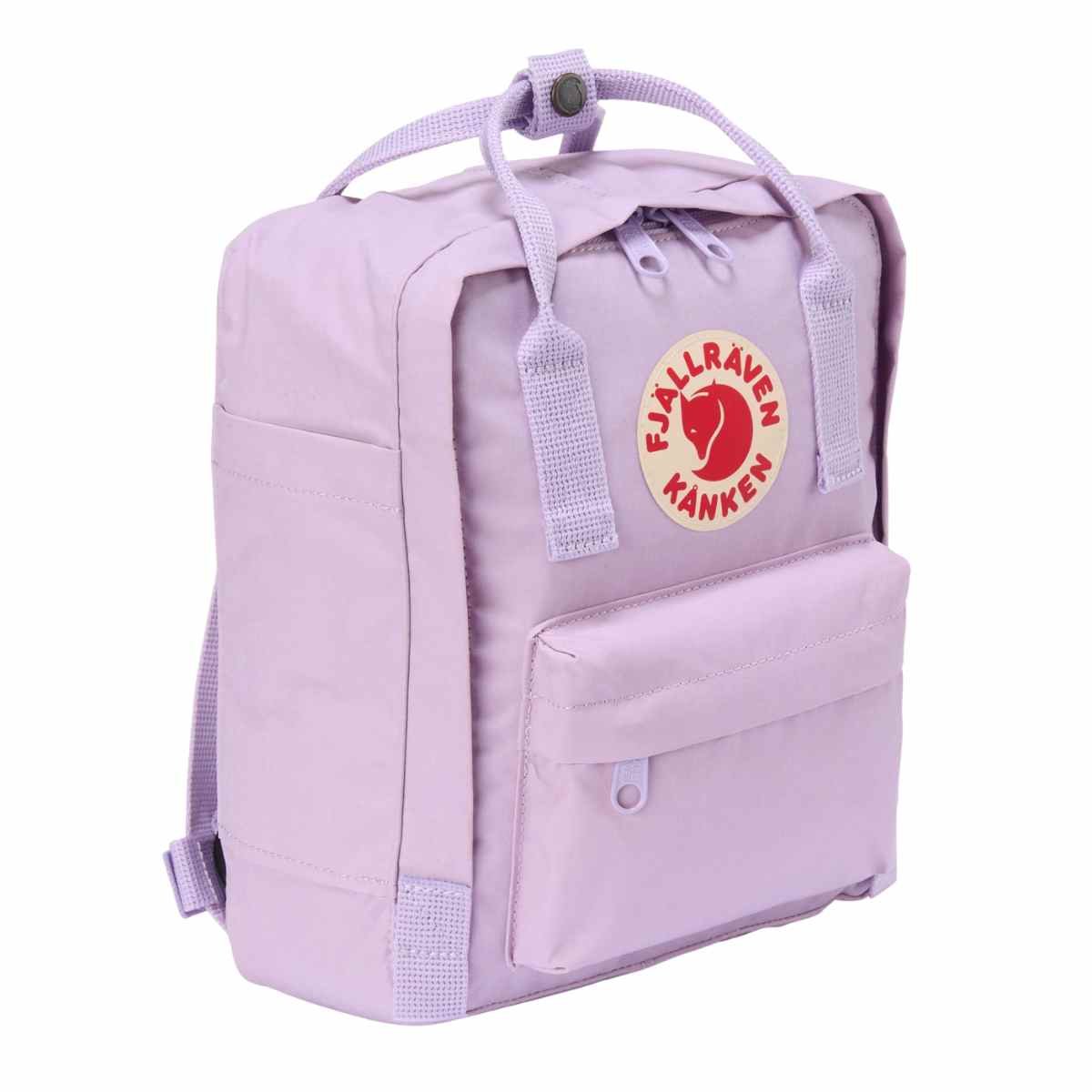
Price: $85
Capacity: 7L
Empty weight: 7.8 oz
Packs into own pocket: No
Fabric: Shell: Vinylon F; lining: recycled 70D polyamide
Water resistant: Yes
Waterproof: No
Laptop sleeve: No
Water bottle pockets: Yes, but too small for most bottles
Sternum strap: No
Hip belt: No
Back panel: Yes
Shoulder straps: Yes
Carry-on compliant: Meets carry-on size standards for most/all major airlines
We tested the Fjallraven Kanken Mini bag for its brand reputation and unique feature of a removable seat pad for back support when needed. During testing, we found that the specified 7-liter capacity was limiting as it didn't fit much, and the side pockets were too small to fit most reusable water bottles. They only worked for small plastic single-use bottles. However, this backpack works for kids or young adults with only a few things, like toys or snacks to pack for a short trip away.
Fjällräven Kanken Mini
What to look for in packable backpacks
Packed size and how it packs down
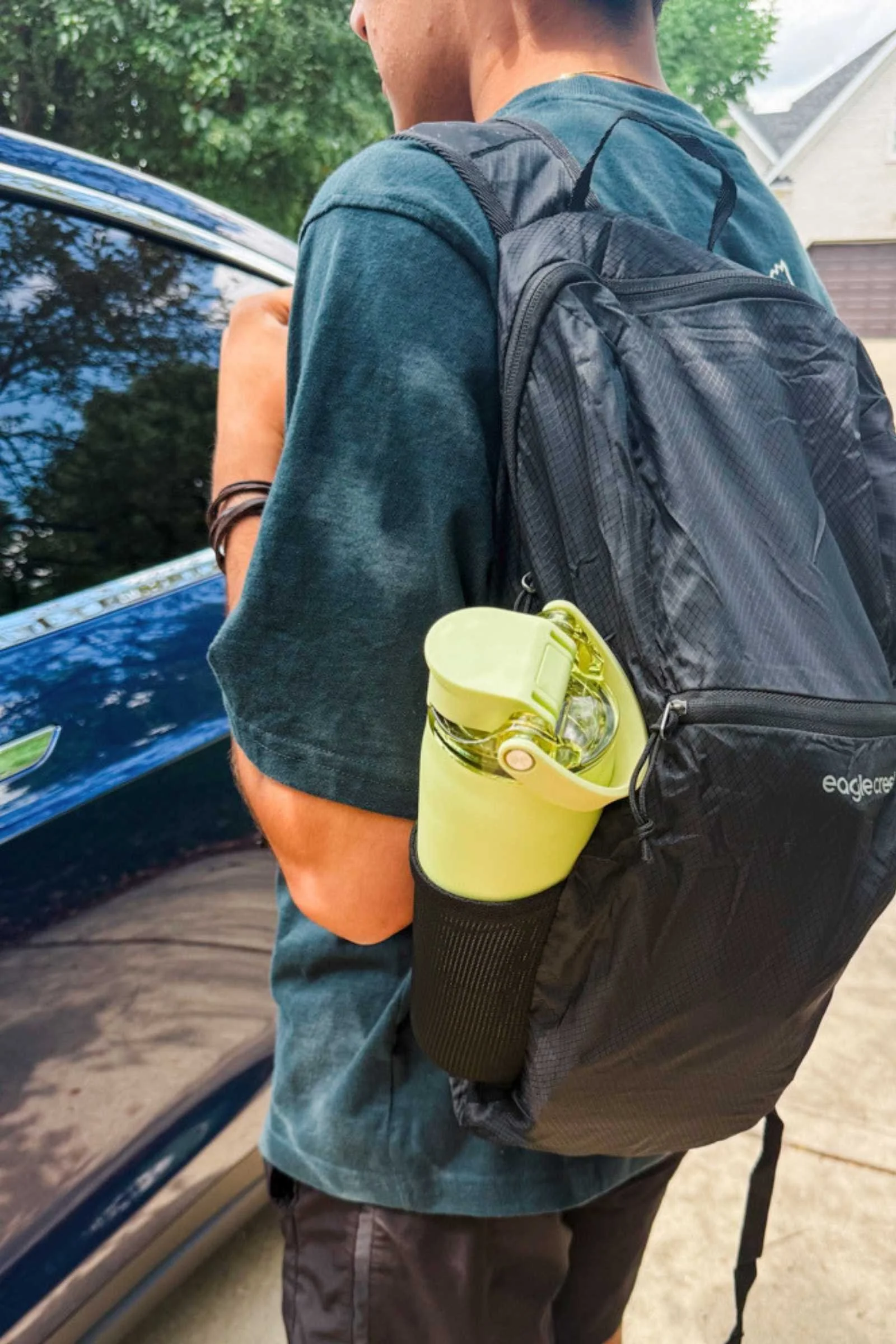
The goal of a packable backpack is that it can be put away when you don't need it, so pay attention to the size when packed and how easy that process is in practice. They typically range in 12-to 18-liter capacity. Based on our testing, we found 15 L packs to be the most versatile in terms of usability for day trips.
Some bags stuff into their own front pocket with a single zip, which is ideal. Others require you to fold them a specific way or use a separate stuff sack that can get lost easily.
Also check the packed dimensions against where you will store it, like the side pocket of a backpack, inside a jacket pocket, hooked to a sling bag, or inside a carry-on suitcase.
Weight relative to carry comfort
Lighter packable bags are better for quick errands around town or easy day hikes, but make sure the straps are comfortable and don’t bunch or snag when fully loaded. Lightweight bags are great for emergencies or days where you only want to bring along a travel water bottle and maybe an extra layer. Check for maximum weight versus intended load. If you know you'll regularly stuff it full, it's worth bringing a slightly heavier pack.
Back panel and shoulder strap quality
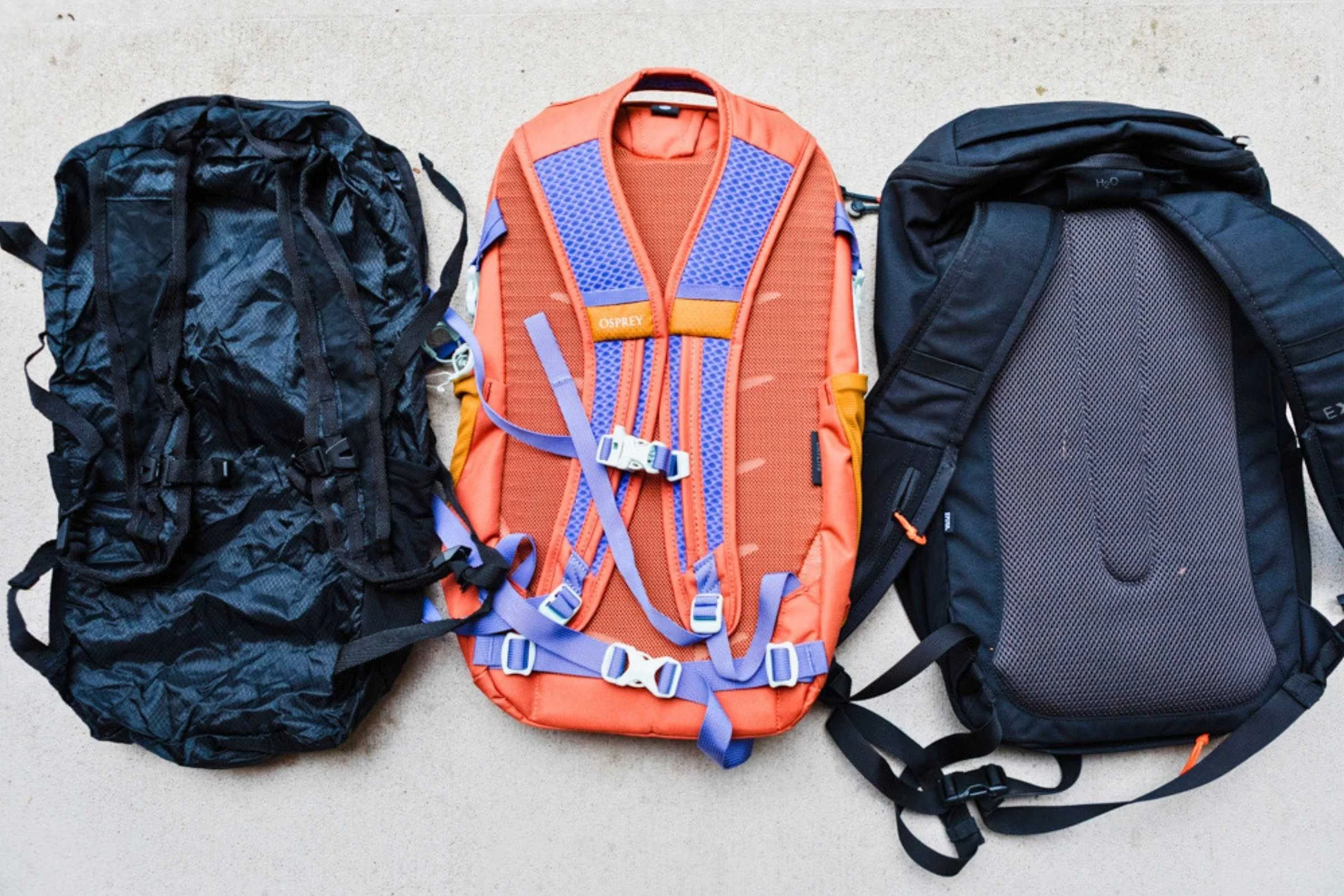
Back panel construction determines how much weight a packable backpack can carry comfortably
The back panel is typically the first thing that gets annoying on a long day, especially if the pack has thin, unpadded straps. Additionally, a flat back panel may work for a quick trip to a store or a market, but they are uncomfortable if there is any real weight added. Prioritize packs that have at least some mesh or foam padding in the back panel and straps if you want to use it daily rather than as an emergency fold-up.
Water resistance vs. waterproofness
Water-resistant fabric and coatings will handle light rain for a while, but will eventually let moisture through, especially at the seams. True waterproof construction involves taped seams and a water-blocking fabric, like polyurethane. But this adds weight and reduces packability, so if you need real protection from sustained rain, consider a separate rain cover or a dry bag insert to protect your belongings. Some brands like Osprey come with a rain cover while others require you to purchase it. Check out our Guide to Dry Bags for a complete list of options.
Pockets and organization
The number of pockets in a packable bag depends on its intended use. A single main compartment is fine for a spare layer or groceries. But if you're using it for a day of sightseeing or travel, a small pocket to separate your phone, wallet, or other essentials can be convenient for easy access. A water bottle pocket is also helpful, so you don’t have to open the bag every time you need hydration.
Capacity and what it realistically fits
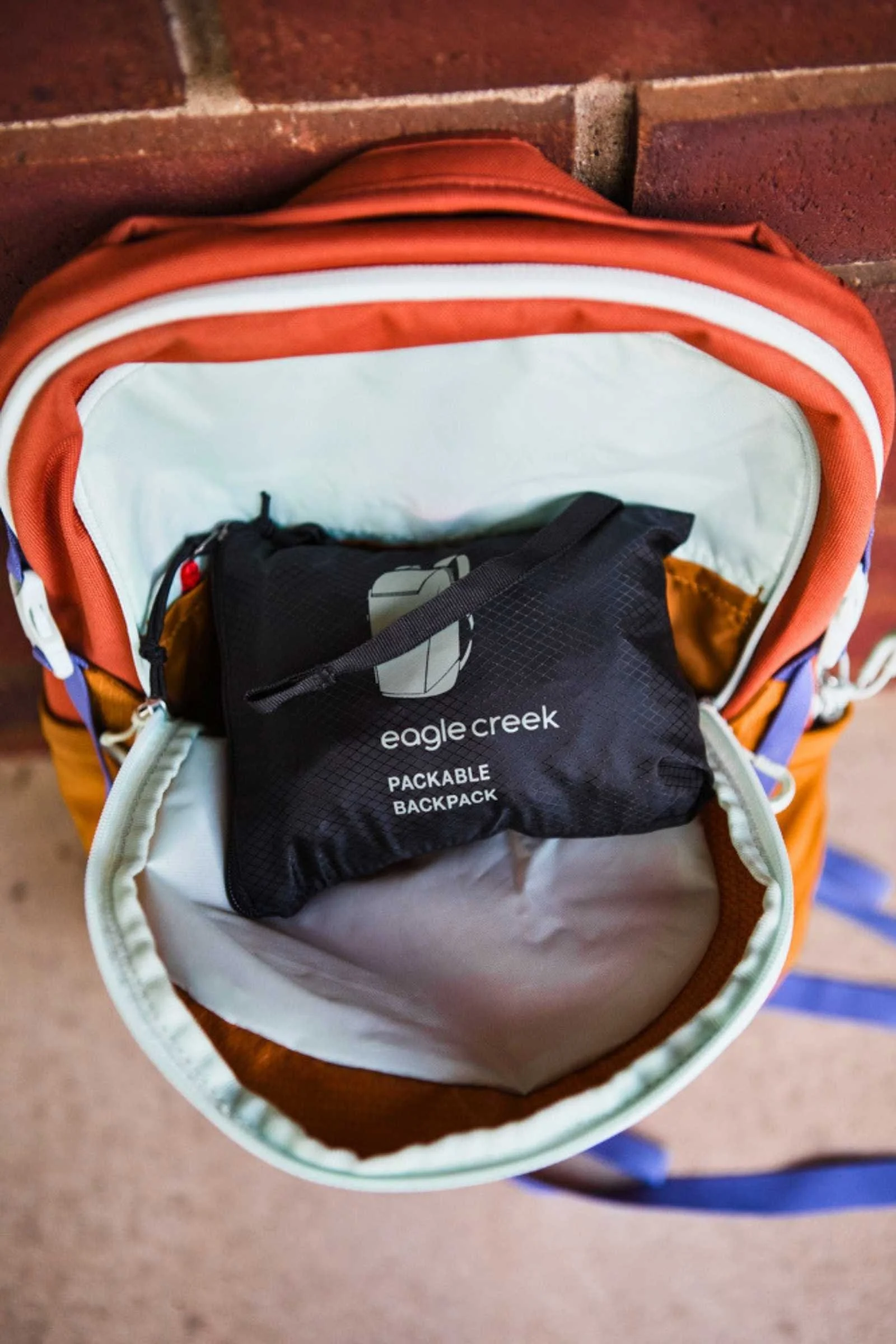
An 18–20-liter packable bag is a reasonable range for daily errands, a light layer, and some shopping, while anything smaller feels like an emergency-only bag. It's worth checking whether the bag holds its shape when full or sags and loses structure, affecting comfort and how items shift around inside. Also test how the bag feels when filled with odd-shaped items like a DSLR and other odd-shaped items.
Durability of fabric and zippers
Lightweight fabrics like ripstop nylon are the norm in packable bags because they fold small, but abrasion, snags, and small tears are possible over time. Zippers matter just as much as fabric, since cheap zippers can become a common failure point, especially after repeated folding and stuffing. Also, look for reinforced stitching at stress points like strap attachments.
Price and value
Packable backpacks range widely in price, and the cheapest options often compromise in strap comfort, zipper quality, or fabric durability. Mid-range bags from established outdoor brands offer the best balance of comfort and durability without unnecessary features.
Types of packable backpacks explained
Ultralight stuff-sack packables
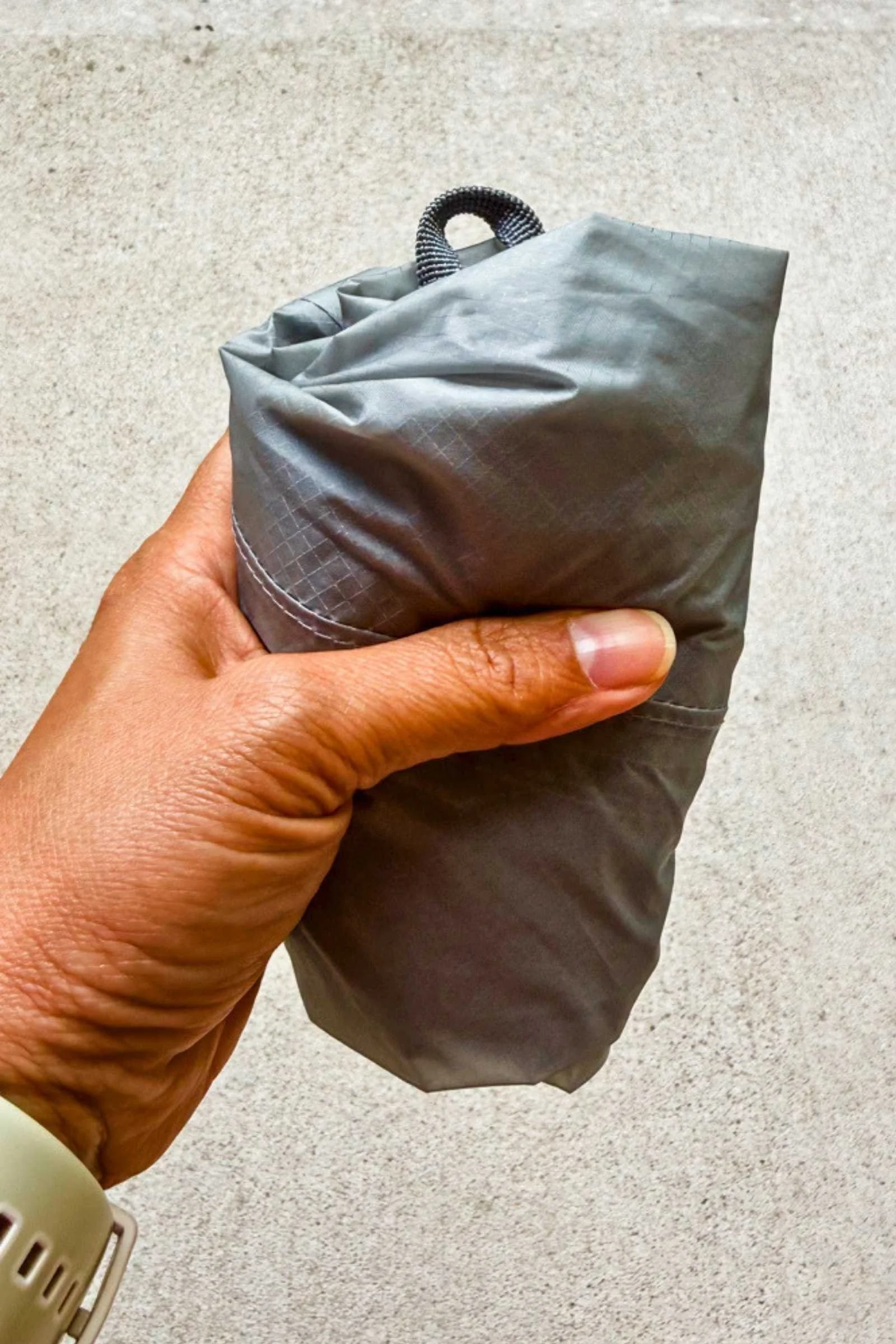
Ultralight packable backpacks are the smallest and lightest option, often folding into a pouch not much bigger than a small novel and weighing 5 to 7 oz. They're great as emergency bags, something you toss in a suitcase or purse and forget about until you need extra carrying capacity.
The trade-off here is that the fabric is usually thin, there is no padding and minimal structure, so they can be uncomfortable for heavy weights. They are best as a backup option rather than a day bag.
Travel packable daypacks
Travel packable bags usually have 15 to 20-liter capacity and are great for a day of sightseeing or errands around town. They have more structure, pockets, and better straps than the ultralight ones. They can still pack down to a small size or fit into a suitcase when laid flat. These packs work best for travelers who want one bag that folds away when not in use but works for a full day out and about comfortably.
Packable hiking daypacks
Packable hiking day packs are built specifically for trail use, so they have back panels, hip belts, or sternum straps. They are made with heavier, more abrasion-resistant fabric than travel versions. These make sense if you want a hiking-capable bag on a trip with outdoor adventures, but when it isn't your main travel bag, these features become a hassle.
Packable waterproof backpacks
Waterproof packable backpacks are generally dry bags with shoulder straps made for paddling or water-based activities. They use roll-top closures and welded seams, which add some weight and reduce how flat they fold. If real waterproofing matters for your use case, like kayaking or monsoon season travel, pair a basic packable bag with a separate dry bag or liner.
Packable running/fastpacking packs
Packable running packs or fastpacks are designed for stability and security during movement rather than packed size. They have some load-bearing structure, chest straps, and secure bottle holders, so they may not fold nearly as small or weigh as little as ultralight stuff-sack packables. They're a niche pick, worth the investment if you are running or fastpacking regularly rather than just an errand bag. None of the bags we tested were packable running packs. Check out our Running Packs Guide for a full list of choices.
Choosing a packable backpack by use case
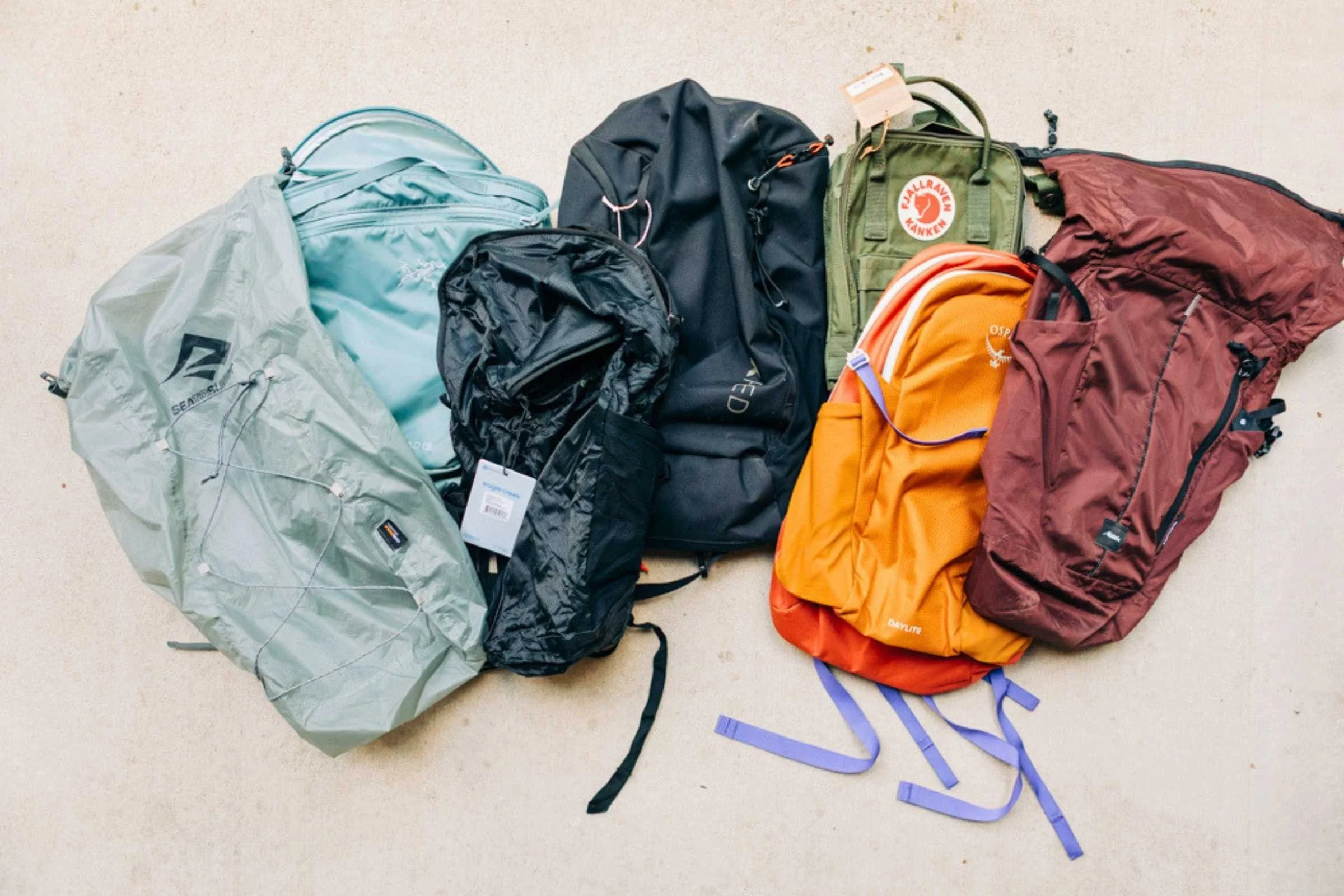
Our top picks for the best packable backpacks, tested across travel, hiking, and everyday use
Travel secondary pack
If you're looking for a bag to fold into your suitcase and use for day trips or as an extra carry-on when you overshop, a travel packable daypack in the 15 to 20-liter range is a good choice. Hiking-grade padding or waterproofing may be overkill for a few hours of walking around a city. This is the most common use case for packable backpacks with the widest range of options. This works great for bikepackers or hostel-to-hostel backpackers who have main bike bags or a big backpack but want something for getting around town.
Summit or base camp day packs
If you're hiking to a base camp and want a smaller bag for a summit hike the next day, choose a packable hiking daypack rather than an ultralight stuff sack. Structure, back panel padding, and sternum strap matter for comfortable carry. Don't be tempted by the smallest, lightest packable bag, as they are not worth the discomfort of thin padding during a multi-hour summit climb.
Everyday carry that also travels
If you want one bag for your regular commute or daily errands that can also fold down for travel, a travel packable daypack with better zippers and a laptop-friendly pocket is a good choice. But it might have less packability than one specifically meant for compact travel.
Wet environments and water sports/swim bag
For genuinely wet conditions, like a beach day, kayaking, or a swim bag that needs to separate dry clothes from wet gear, use a packable bag that’s labeled as waterproof rather than water-resistant. Day bags or ones with roll-top closure and welded or taped seams work best.
If you can't find a truly waterproof packable option, use a separate water-resistant liner or dry bag within your packable bag for peace of mind. This is also useful for rainy hikes or days around town.
Ultralight day hiking
For short, easy day hikes where you're carrying a water bottle, snacks, and maybe a light layer, an ultralight stuff-sack packable is a good fit. It has low bulk and a manageable packed-down size.
Running and fastpacking
If you're running or moving fast over technical terrain, choose a dedicated packable running or fastpacking pack over general packable options, since stability during movement matters more here. A bouncing, poorly fitted pack is worse than carrying a slightly heavier, purpose-built one.
Packable backpack capacity guide
10–15L
This range is an "essentials only" bag that fits a phone, wallet, light layer, small water bottle, and maybe light snacks. If you try to stuff a packed lunch, a camera, and a rain jacket into a bag this size, you'll likely find it straining at the zippers or simply won't fit everything.
15–20L
Most travel and everyday use bags fall in this range and feel like actual daypacks rather than pouches. You can fit a light jacket, a water bottle, a small camera, snacks, and some shopping or souvenirs. It's still not enough space for a full change of clothes or bulky gear.
20–30L
This is usually the right capacity for a full day out or overnight essentials. It can fit a change of clothes, a rain shell, a decent packed lunch, and a few extra layers with your usual essentials. It works well for hiking day trips, base camps, or travel days where you need to carry more than just the basics.
Care and maintenance for packable backpacks
Hand-wash or machine wash?
Hand-washing is the safer default for most packable backpacks, since the thin fabrics and lightweight zippers don't hold up well to the agitation of a washing machine. Use lukewarm water, a mild soap (not standard laundry detergent, which can strip water-resistant coatings), and a soft brush or cloth to spot clean or gently scrub the fabric.
No dryer?
Skip the dryer entirely for packable backpacks, since heat is one of the fastest ways to damage both the fabric and any water-resistant coating, and air-dry away from direct sunlight. High heat can cause thin synthetic fabrics to warp, shrink, or lose their shape. Even though it might take longer than a dryer, the bag will last longer with the extra TLC.
How to reactivate DWR coating
DWR coatings wear down with use and washing, and water stops beading on the fabric and starts soaking in instead. Many DWR coatings reactivate when exposed to gentle, indirect heat, like a tumble dry setting for a few minutes (only if the bag is dryer-safe) or ironing on a low setting with a cloth barrier between the iron and fabric. You can also use a spray-on or wash-in DWR treatment to renew the coating.
Store loosely rather than compressed?
Packable bags are designed to be compressed for travel and stored loose. Storing them permanently compressed can accelerate the wear on the fabric and cause creases that weaken over time.
Zipper care
Zippers are usually the first thing to fail on a packable backpack, so give them a little extra care. Keep them free of dirt and sand by wiping them down after use. You can also apply a small amount of zipper lubricant (wax-based options work well) periodically to keep the pull smooth and reduce strain on the slider.
Fabric repair
Small tears or snags are common in the thin fabrics of packable bags, but they're usually fixable if caught early rather than left to spread. A patch of repair tape or a small dab of seam sealant can stop a tear from growing and is often enough for minor damage.
FAQ
-
A packable backpack is a lightweight bag that folds, stuffs into its own pocket (or a small stuff sack), or flattens down when it's not in use. It can be packed inside your suitcase or daypack until you need extra carrying capacity.
-
The main difference is weight and construction. Packable backpacks use minimal padding and fewer structural components to save bulk, whereas regular daypacks use heavier materials, foam back panels, and reinforced stitching for durability and comfort.
-
Most pack down to the size of a novel or roughly 6 to 9 in. The exact size depends on the pack's capacity and fabric.
-
Most bags will hold up for short day hikes, but they are not built for rugged terrain or heavy loads. Check out our Best Daypacks for Hiking guide to learn more about our favorite hiking-specific daypacks.
-
Yes, many travelers use a packable backpack as a personal item or secondary carry-on.
-
For day trips, errands, or light travel, 15 to 20 liters is usually enough. If you plan to use it for day hikes, sightseeing with camera gear, or for an overnight trip, you may need 20 to 30 liters instead.
-
Most can comfortably carry about 10 to 15 pounds.
-
It can work in a pinch, but it's generally not built for heavy loads. The lack of support often can make it uncomfortable to carry for extended periods of time.
-
Fold or stuff it into its built-in pocket, then tuck it into a drawer, suitcase pocket, or the bottom of your everyday bag. If you are storing it at home in-between trips, expand the bag and store it flat.
-
Only if they include a padded laptop sleeve.
How we researched and tested
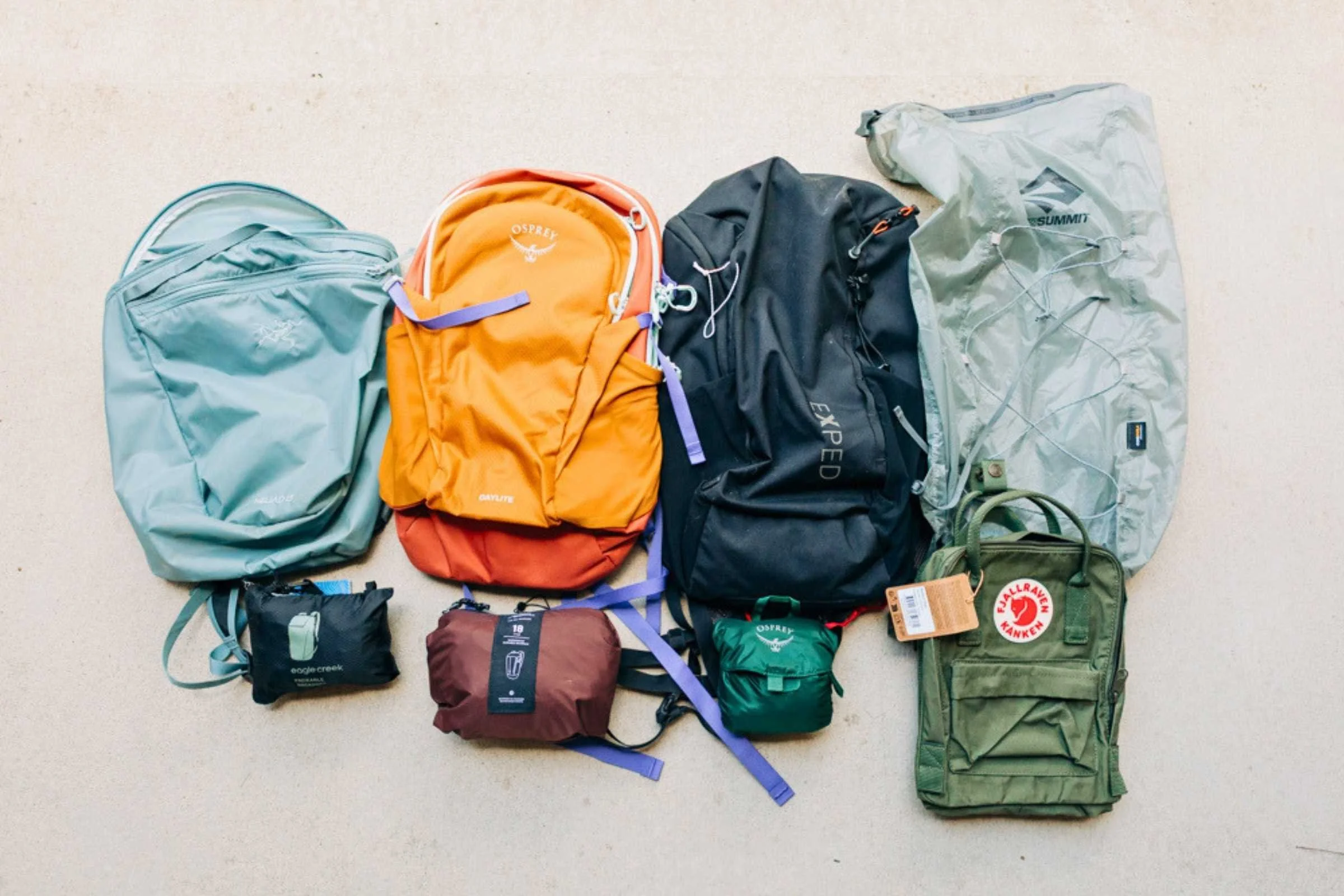
All the packable backpacks we tested for this roundup
We tested these packs for months over a variety of travel situations in Germany, Oregon, and Colorado, on flights, in airports, on trails, and errands around downtown Chicago. We also used these bags in both extreme heat and wet weather.
Bags were carried inside suitcases and clipped onto daypacks when appropriate. They were tested full to the weight capacity to check for bunching or snags. Zipper and fabric durability were also assessed, as well as ease of packing and unpacking. All bags were tested with heavy loads of a DSLR camera and extra lens to see how they held up to weight or if the straps snagged. We also filled side pockets with water bottles of different sizes for fit and ease of use. Some bags were tested while fishing for water resistance.
- Flights, airports, trails, and city errands
- Packed inside suitcases and daypacks
- Loaded to full carrying capacity
- Carried a DSLR and extra lens
- Used in heat, rain, and near water
- Packed size and ease of compression
- Comfort with heavier loads
- Strap and back-panel performance
- Fabric and zipper durability
- Pocket usability and water resistance
Why you should trust us / About the author
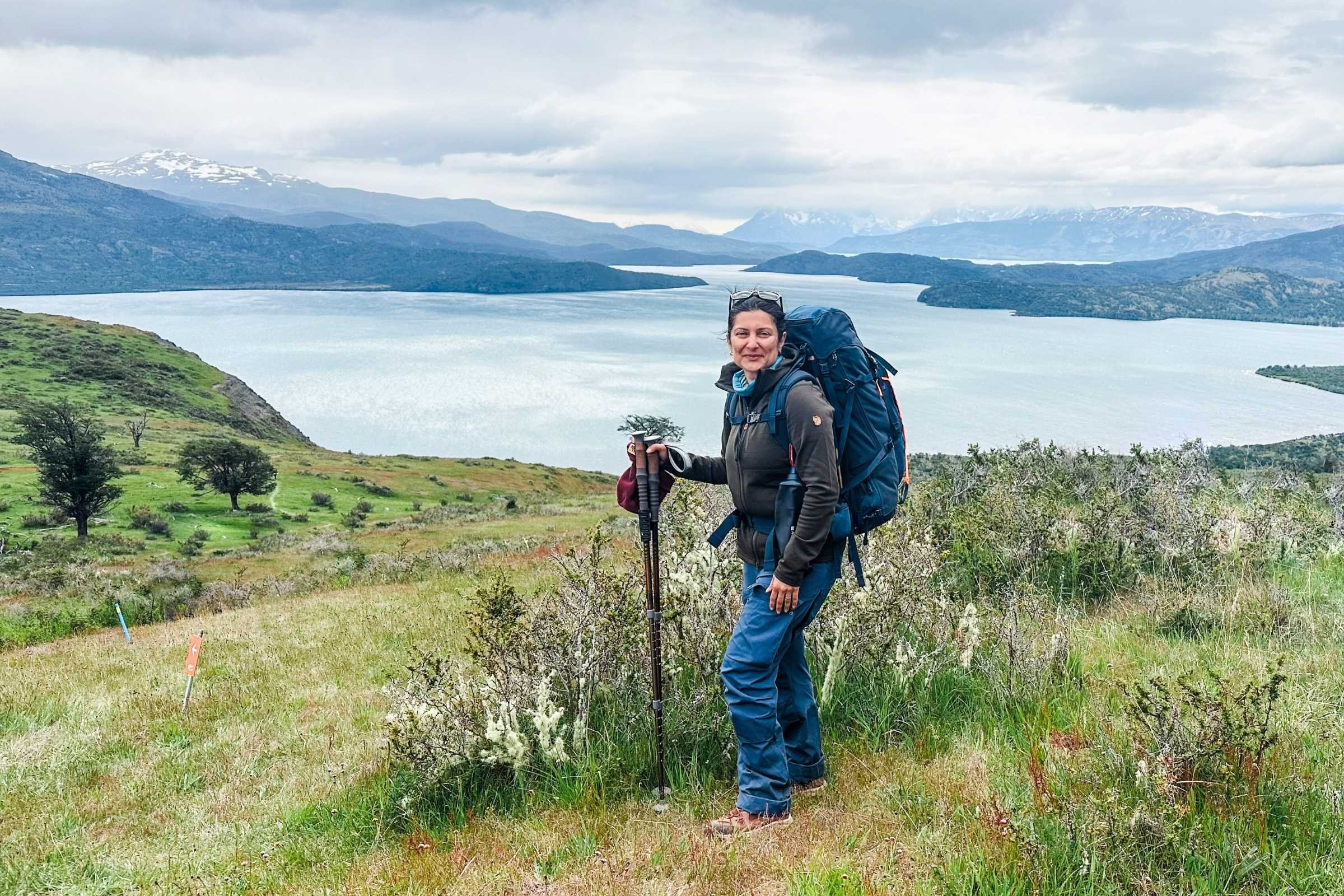
The author, Karthika Gupta, is an adventure travel writer with over 25 years of adventure travel experience. She has hiked on all seven continents and loved every minute of it. She has even completed Highlander UAE and Fjallraven Chile, along with hundreds of miles in the Indian Himalayas. She covers outdoor gear, small-group adventure travel, and hiking/camping trends for national and international publications, blending real experience with practical advice. Her work is grounded in miles hiked, boots tested, and a belief that everyone belongs in the outdoors regardless of gear and experience—you don’t need to overpack or overcomplicate to have a meaningful adventure.
Her previous piece focused on an Adventure travel checklist guide.
You can find more of her adventures on her Instagram @karthikagupta or her website.
You can see all of Karthika Gupta's stories here.