Best Waterproof Hiking Boots of 2026
Hiking boots with GORE-TEX and other waterproof membranes to keep feet dry in wet conditions
August 27th, 2026, updated with 6 more boots and a new winner for best waterproof hiking boots
Home → Gear Reviews → Footwear
The best waterproof hiking boots typically combine a durable water-repellent finish with an internal waterproof membrane. The exterior treatment helps water bead and delays the upper from becoming saturated, while the membrane prevents liquid water from reaching your foot and allows some moisture vapor to escape. This protection comes with trade-offs, since waterproof boots are often warmer, slower to dry, and less breathable than non-waterproof footwear.
Over the past decade, our testers have hiked thousands of miles across the Appalachian Mountains, Colorado Rockies, and Wasatch Range. For this guide, we tested nearly 20 pairs of boots in Washington, Tennessee, Colorado, Michigan, Utah, Canada, and Iceland, using them through creek crossings, on snow and ice-capped 13,000-foot peaks, in slot canyons, and during controlled bucket-submersion tests. We evaluated how each pair performed on wet trails and rough terrain, as well as how it held up through repeated use.
We compared interior leakage, exterior wet-out, drying time, breathability, traction, support, comfort, and durability. We also considered the main trade-off of waterproof footwear: the models that provide the strongest protection are often heavier, stiffer, and slower to dry.
Top Pick: The men's Salomon Quest 5 GTX and women's La Sportiva TX Hike Mid GTX earn our Best Overall award. Both stood out for keeping our testers’ feet dry through repeated submersion, providing dependable traction in mud and wet terrain, and offering strong support on long, rugged hikes. Both delivered the best overall combination of waterproof protection, stability, and durability.
You can also find more of our favorites in our Best Men’s Winter Hiking Boots and Best Women’s Hiking Boots
We write reader-supported, mission-driven objective gear reviews independently selected by editors. This story may contain affiliate links, which help fund our website. When you click on the links to purchase gear, we may get a commission. This allows us to create reader-supported, objective gear reviews, independently selected by our editors — without costing you an extra cent. Thank you for supporting our work and mission of outdoor coverage for every body! Learn more.
Comparison table
| Waterproof Hiking Boots | Treeline Award | MSRP* | Men's weight (pair) | Women's weight (pair) | Outsole | Midsole | Upper | Waterproofing |
|---|---|---|---|---|---|---|---|---|
| Salomon Quest 5 GORE-TEX | Best overall - men's Read why |
$240 | 2 lb 10.0 oz | N/A | All Terrain Contagrip rubber | EnergyCell EVA | Nubuck leather, ripstop | GORE-TEX |
| La Sportiva TX Hike Mid GTX Men's Women's |
Best overall - women's Read why |
$209 | 2 lb 2.6 oz | 1 lb 12.6 oz | Vibram Ecostep EVO | Compression EVA | Recycled air mesh | bluesign-certified ePE GORE-TEX Extended Comfort |
| Columbia Newton Wander Men's Women's |
Best affordable Read why |
$110 | 1 lb 15.0 oz | 1 lb 9.8 oz | Omni-Grip | TechLite foam | Suede | Omni-Tech |
| La Sportiva Ultra Raptor 3 Mid GTX Men's Women's |
Best lightweight Read why |
$219 | 1 lb 14.2 oz | 1 lb 9.0 oz | FriXion White with Impact Brake System | Dual-density CM-EVA | Ripstop mesh, recycled high-tenacity ripstop mesh | GORE-TEX ePE Extended Comfort |
| Scarpa Rush TRK GTX Men's Women's |
Best for backpacking Read why |
$239 | 2 lb 7.0 oz | 2 lb 1.0 oz | Presa TRK-01/SuperGum | Dual-density compression-molded EVA | Suede leather, synthetic fabric | GORE-TEX |
| Salomon X Ultra 5 GTX Mid Men's Women's |
Best breathable Read why |
$190 | 1 lb 15.0 oz | 1 lb 11.6 oz | All Terrain Contagrip rubber | EnergyCell EVA | Kevlar and technical yarn Matryx technology | GORE-TEX |
| KEEN Targhee IV Mid Waterproof Men's Women's |
Best for wide feet Read why |
$190 | 2 lb 8.6 oz | 2 lb 2.6 oz | KEEN.RUGGED TPU | Luftcell polyurethane | Nubuck leather | KEEN.DRY |
| Lowa Renegade EVO GTX Mid Men's Women's |
Best for narrow feet Read why |
$280 | 2 lb 9.6 oz | 2 lb 2.2 oz | Vibram Rene Trac outsole and lugs | Double-injection DuraPU/ DynaPU | Heinen Terracare nubuck leather | GORE-TEX |
| Oboz Bridger Mid Waterproof Men's Women's |
$220 | 2 lb 6.0 oz | 2 lb 0.4 oz | Granite Peak carbon rubber | Dual-density EVA | Nubuck leather | B-DRY membrane | |
| Oboz Sawtooth Ascent Mid Waterproof Men's Women's |
$175 | 2 lb 4.8 oz | 1 lb 14.8 oz | Vibram XS-Trek | EVA | Suede leather, abrasion-resistant mesh | B-DRY membrane | |
| Oboz Katabatic RT Mid GTX Waterproof Men's Women's |
$220 | 2 lb 0.4 oz | 1 lb 10.6 oz | Vibram Megagrip | EVA | Recycled polyester | GORE-TEX Invisible Fit | |
| Salewa Pedroc 2 Leather Mid Powerex Men's Women's |
$200 | 1 lb 15.0 oz | 1 lb 9.4 oz | Pomoca Speed Hiker 2 rubber | EVA Midsole, stability plate | Suede leather, nylon | POWERTEX | |
| Asolo Acadia Mid LTH GTX Men's Women's |
$200 | 2 lb 4.8 oz | 1 lb 15.0 oz | Rubber | Mono-density EVA foam | Suede | GORE-TEX | |
| Danner Mountain 600 EVO GTX Men's Women's |
$280 | 2 lb 8.0 oz | 2 lb 0.0 oz | Vibram Fuga+ traction | Vibram SPE | Leather | GORE-TEX | |
| Oboz Sawtooth X Mid Waterproof Men's Women's |
$200 | 2 lb 6.8 oz | 2 lb 0.6 oz | True Tread rubber | Heel puck/rubber-blended adaptive foam | Oiled nubuck leather, CORDURA fabric mesh | B-DRY membrane |
The winners
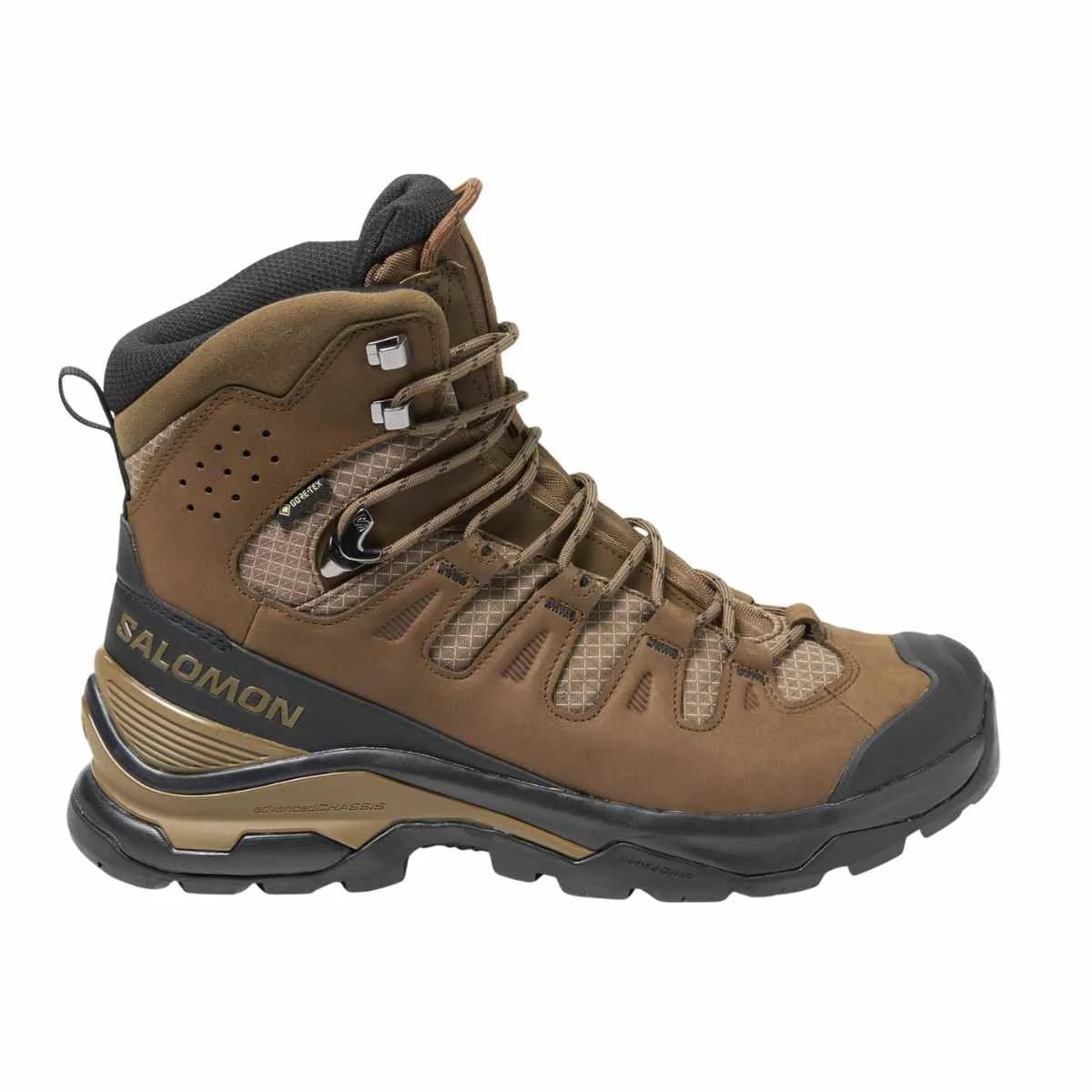
Best overall waterproof hiking boots for men: Salomon Quest 5 GORE-TEX
Price: $240
Waterproof membrane: GORE-TEX
Weight (men’s , women’s): 2lbs 10oz, 2lbs 4oz
Breathability: 3
Waterproofing: 5
Traction: 5
What we liked: Stability, reliability, support
What we didn't like: Drying time, rigidity, eyelets prone to premature deterioration
The Salomon Quest 5 GTX takes everything we loved about the Salomon Quest 4 and wraps it up in a boot with top-notch ankle support, a stable chassis, quality traction, and consistent weather-proofing. We hiked in creeks up to our ankles, and splashed in puddles to test the exterior waterproofing and we found that not only did our feet stay dry, but the nubuck leather and synthetic textiles didn’t become soggy and heavy in the same way that some boots with a membrane do.
When paired with the Congtragrip outsole, the Salomon Quest 5 GTX boots also maintained traction on dry gravel, dirt, and mud. The rigid ankle made us feel self-assured even while carrying a heavy pack.
Salomon Quest 5 GORE-TEX
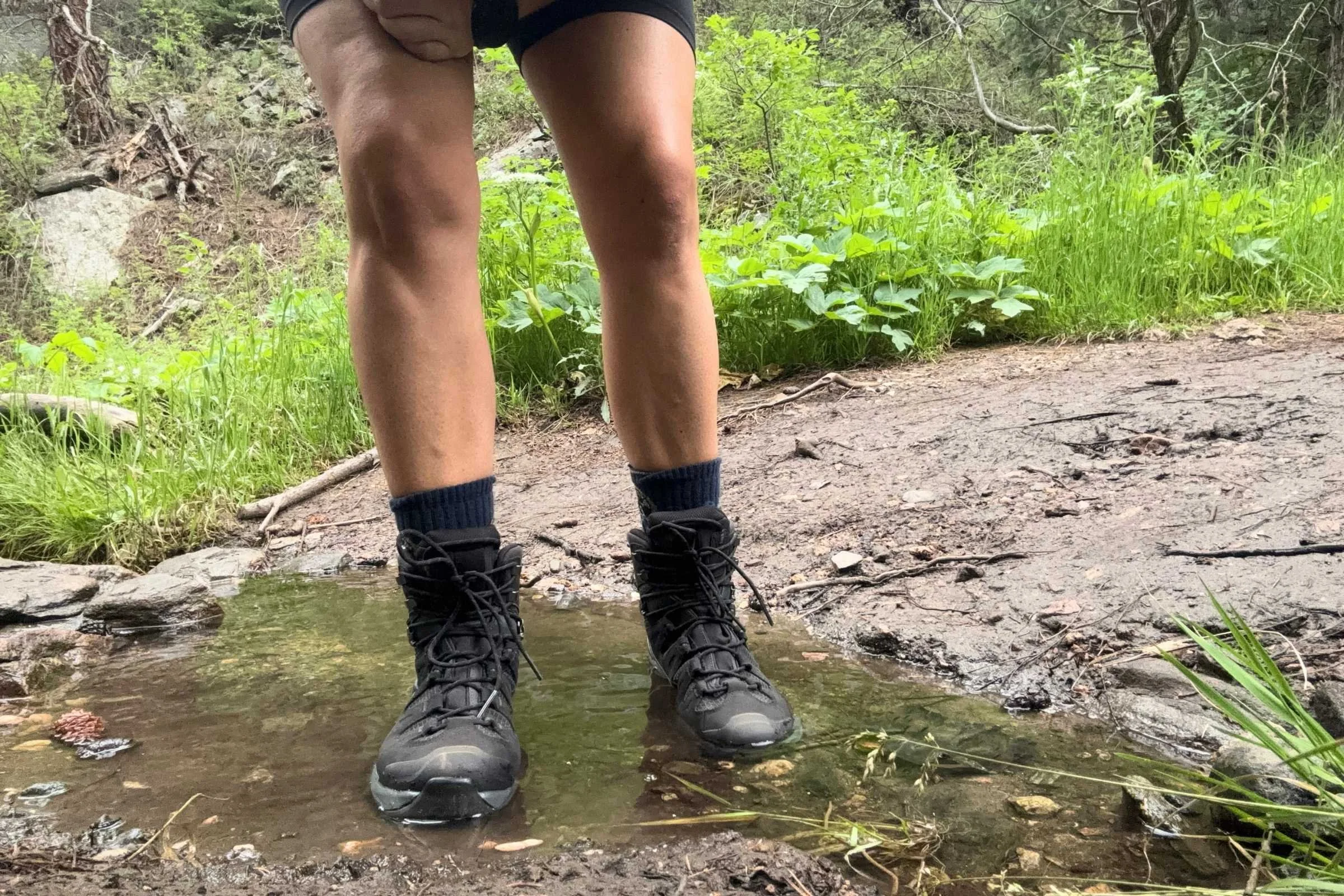
Compared to similar boots, the Quest 5 is a touch more expensive. And while they’re a few ounces lighter than their predecessor, they’re still a pretty hefty option that has a tendency to run warm in the summer. Still, the overall stability, comfort, and weather protection of these boots easily won us over.
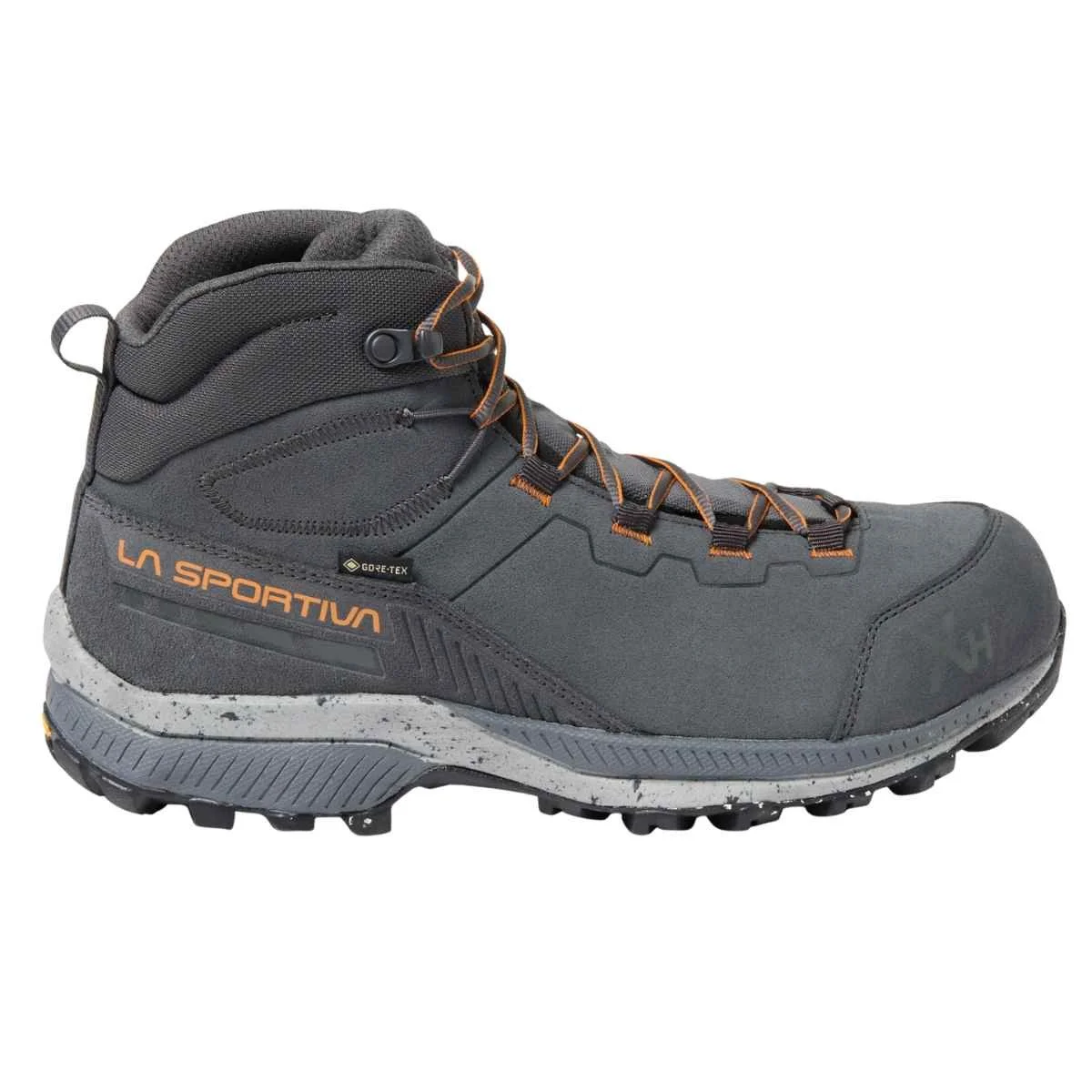
Best overall waterproof hiking boots for women: La Sportiva TX Hike Mid GTX
Price: $209
Waterproof membrane: GORE-TEX
Weight (men’s, women’s): 2 lbs 1.5 oz, 1 lb 12.8 oz
Breathability: 4
Waterproofing: 4
Traction: 5
What we liked: Technical precision, agility, supportive comfort, recycled components, stability
What we didn't like: Slightly narrow design
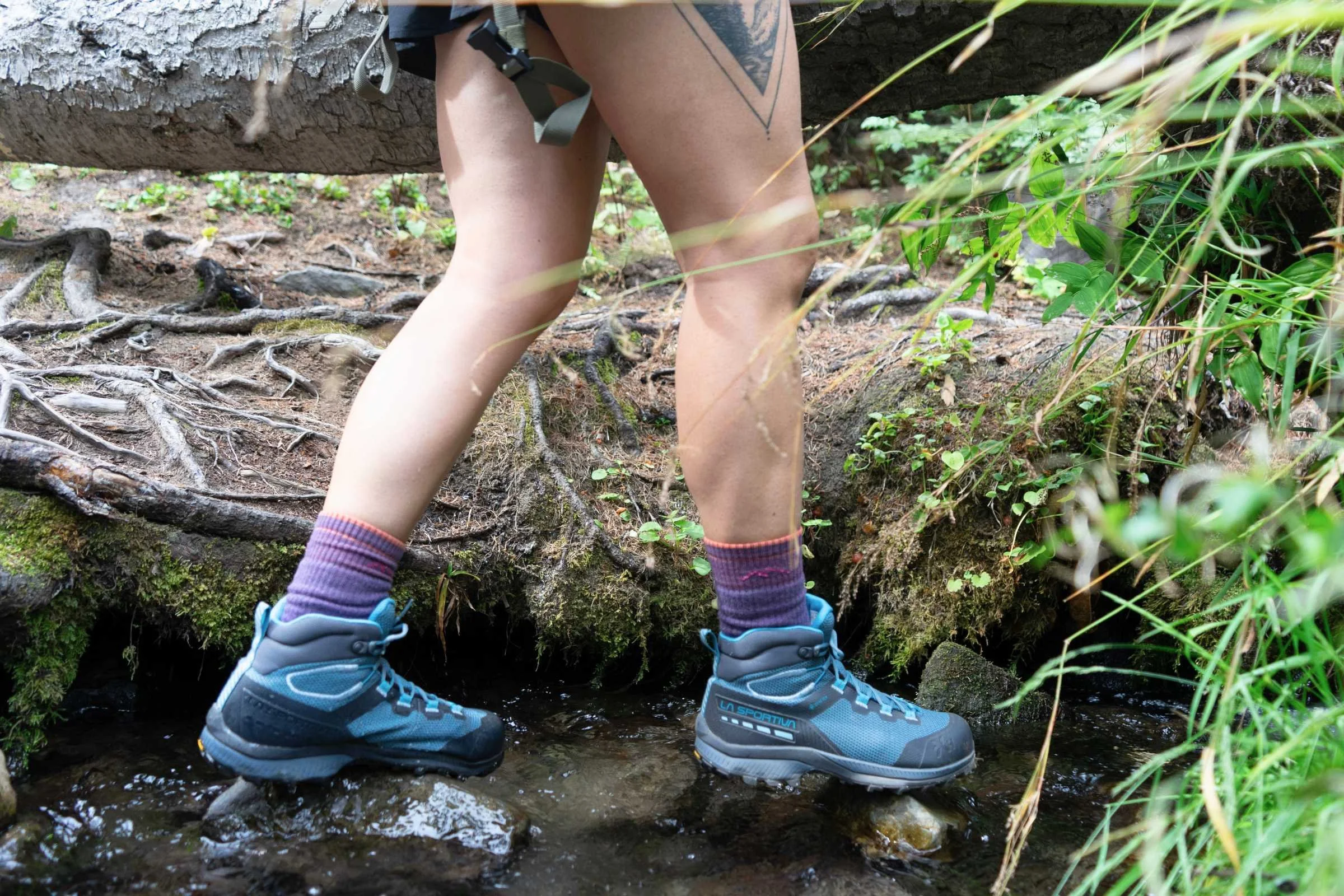
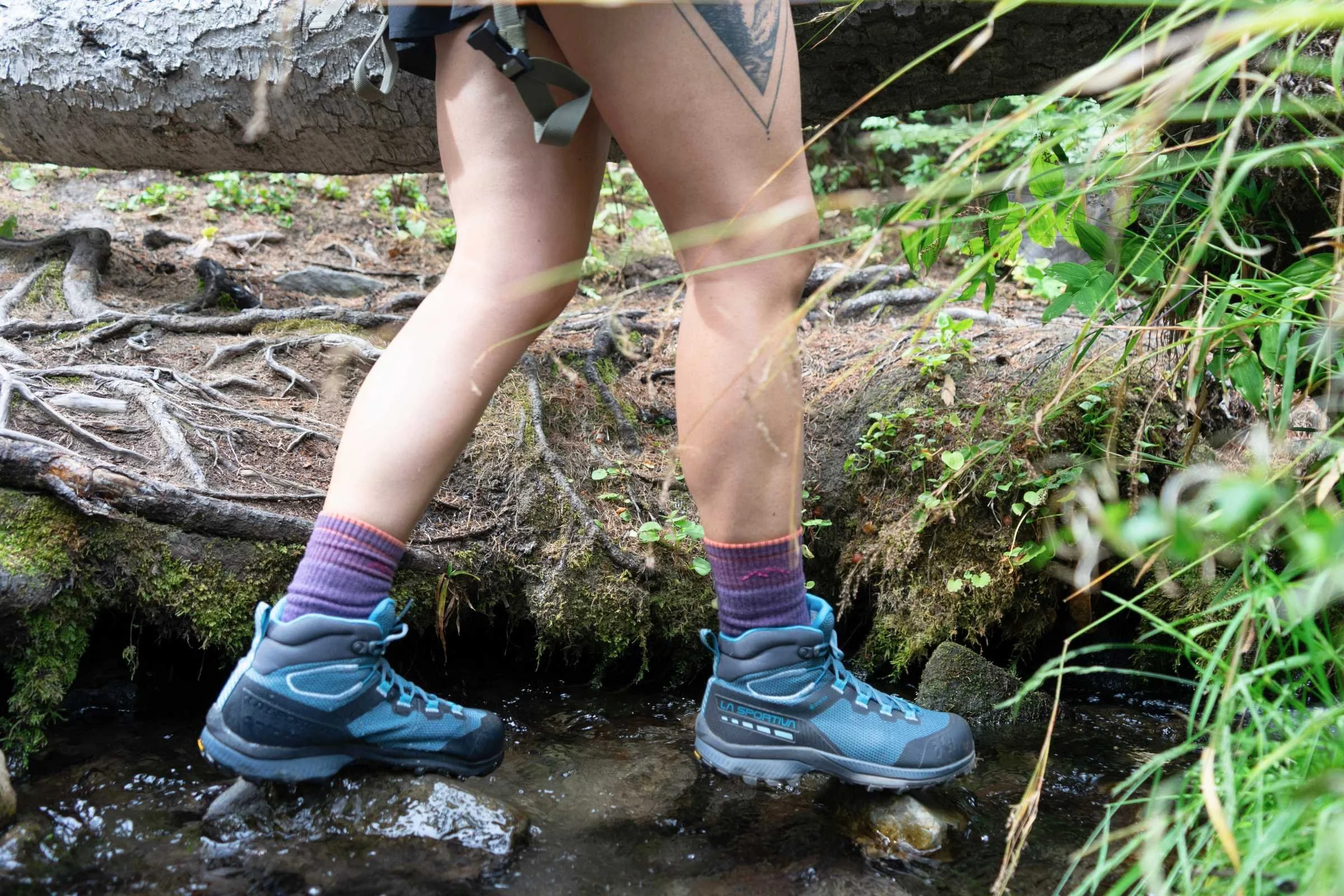
We’re obsessed with the La Sportiva TX Hike Mid GTX boots. These boots won in the category of best overall hiking boots in our Best Hiking Boots for Women guide because of their lightweight, technical design. This is the kind of boot we’d want with us while scrambling and tackling questionable terrain. They’re our go-to boots on fourteeners, long days in the woods, and on short overnight trips largely because of their agility and comfort.
La Sportiva TX Hike Mid GTX
Men's
Women's
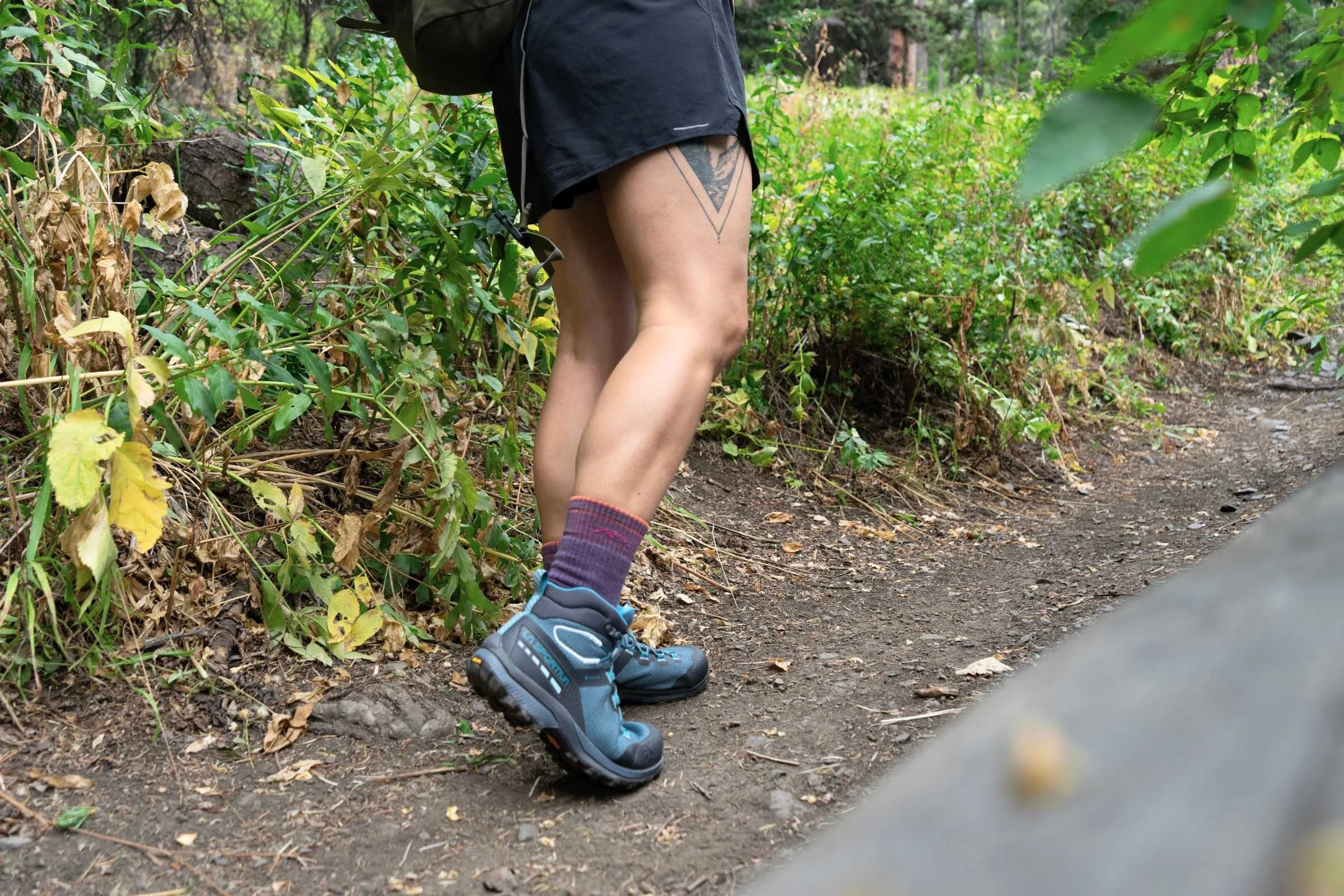
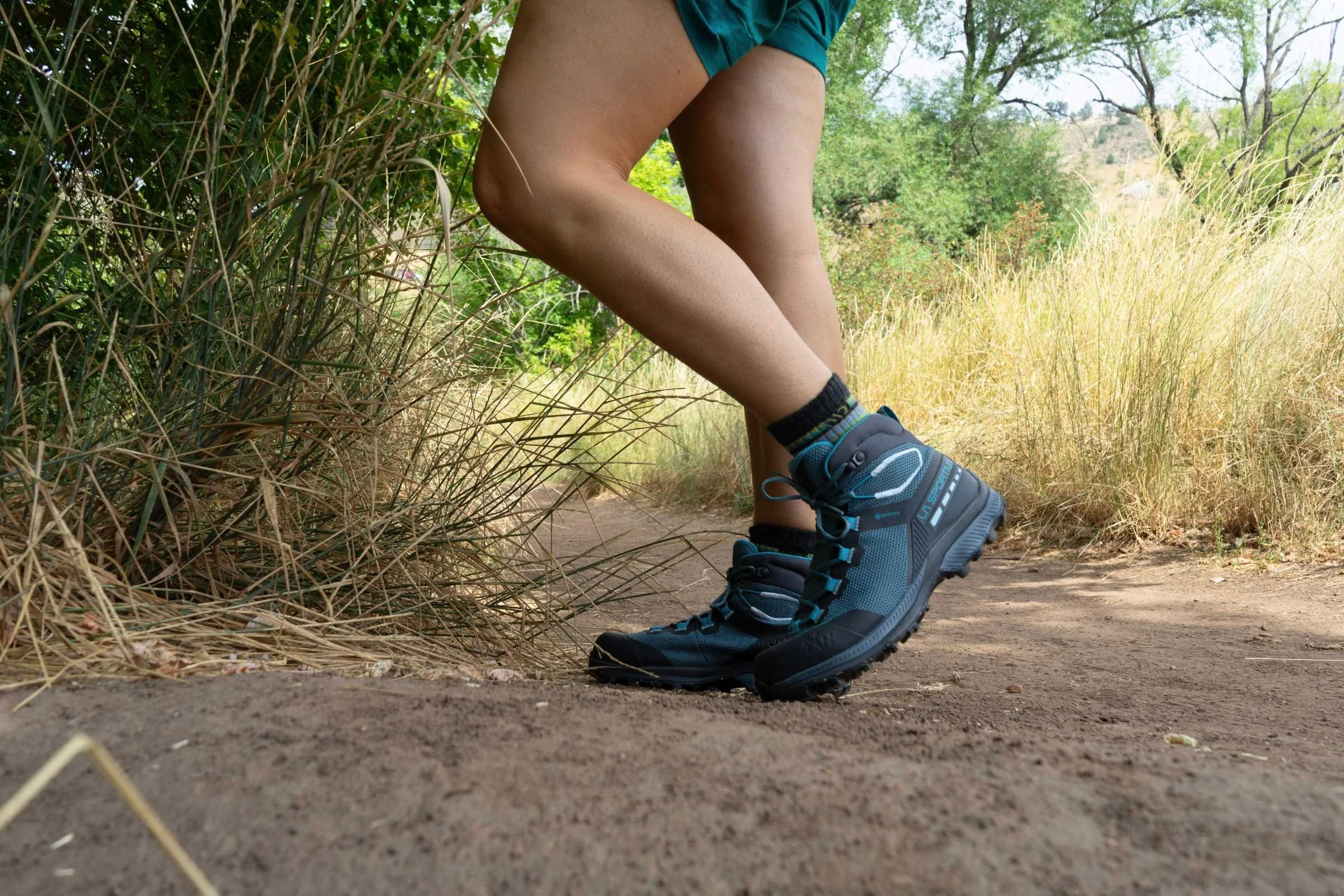
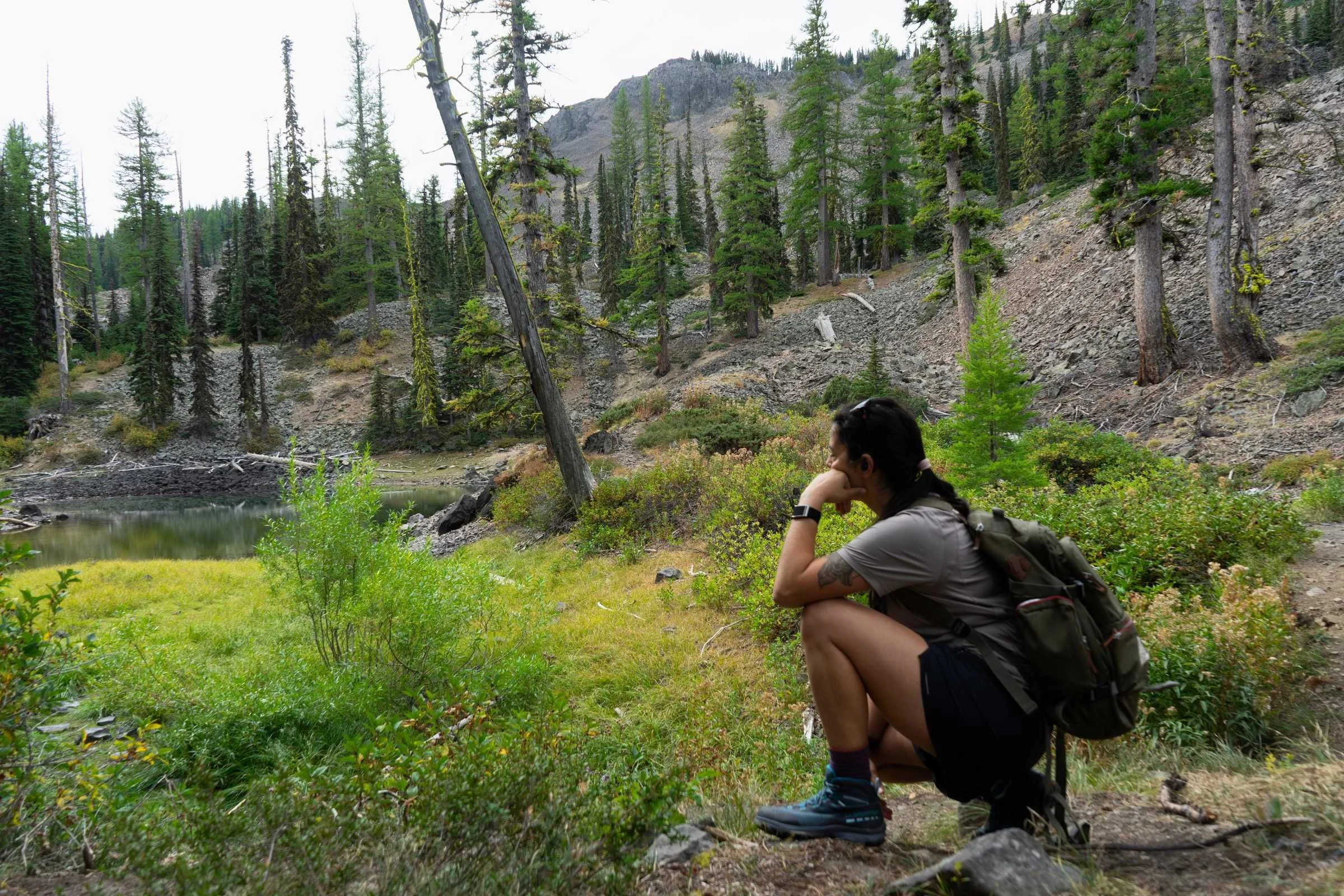
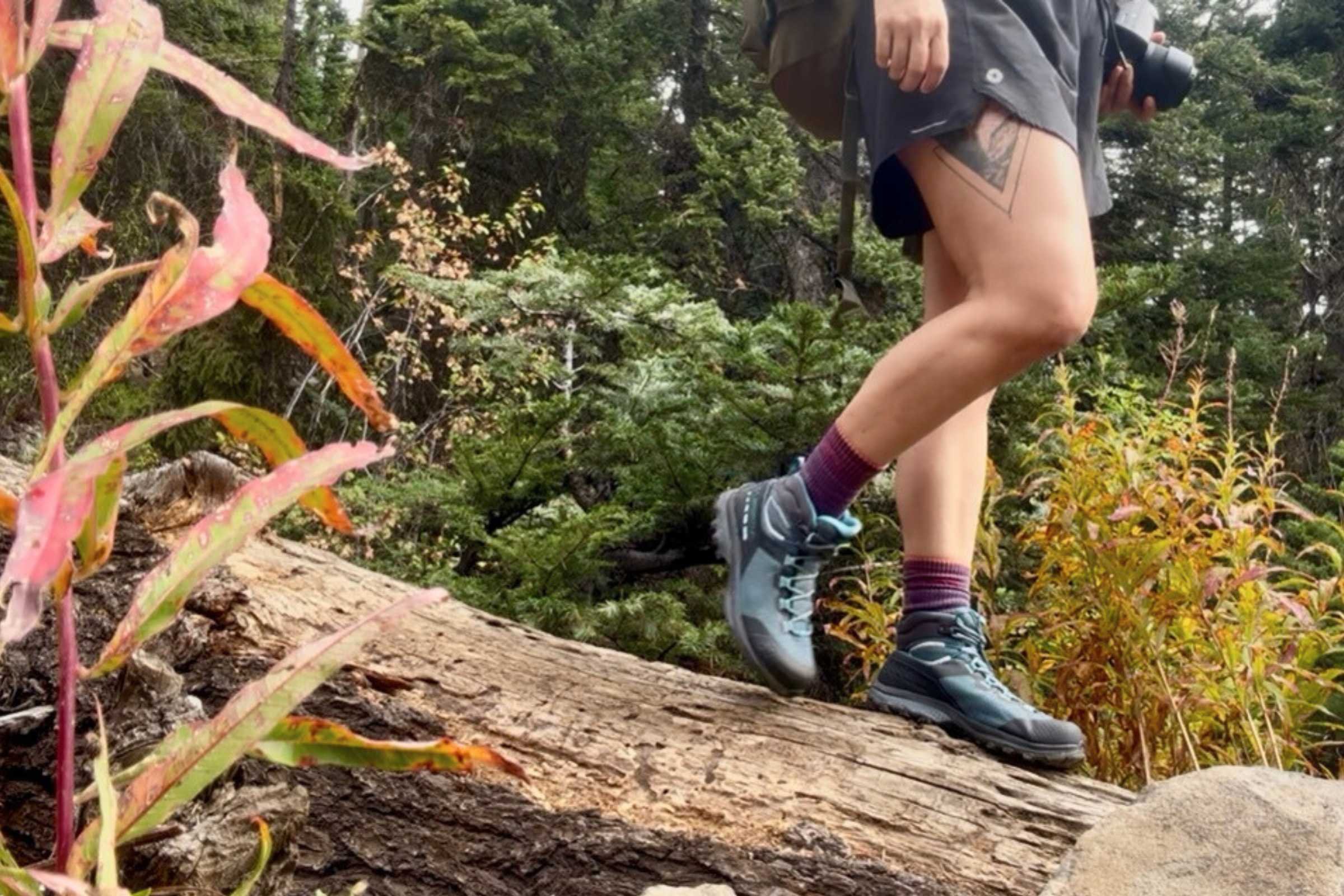
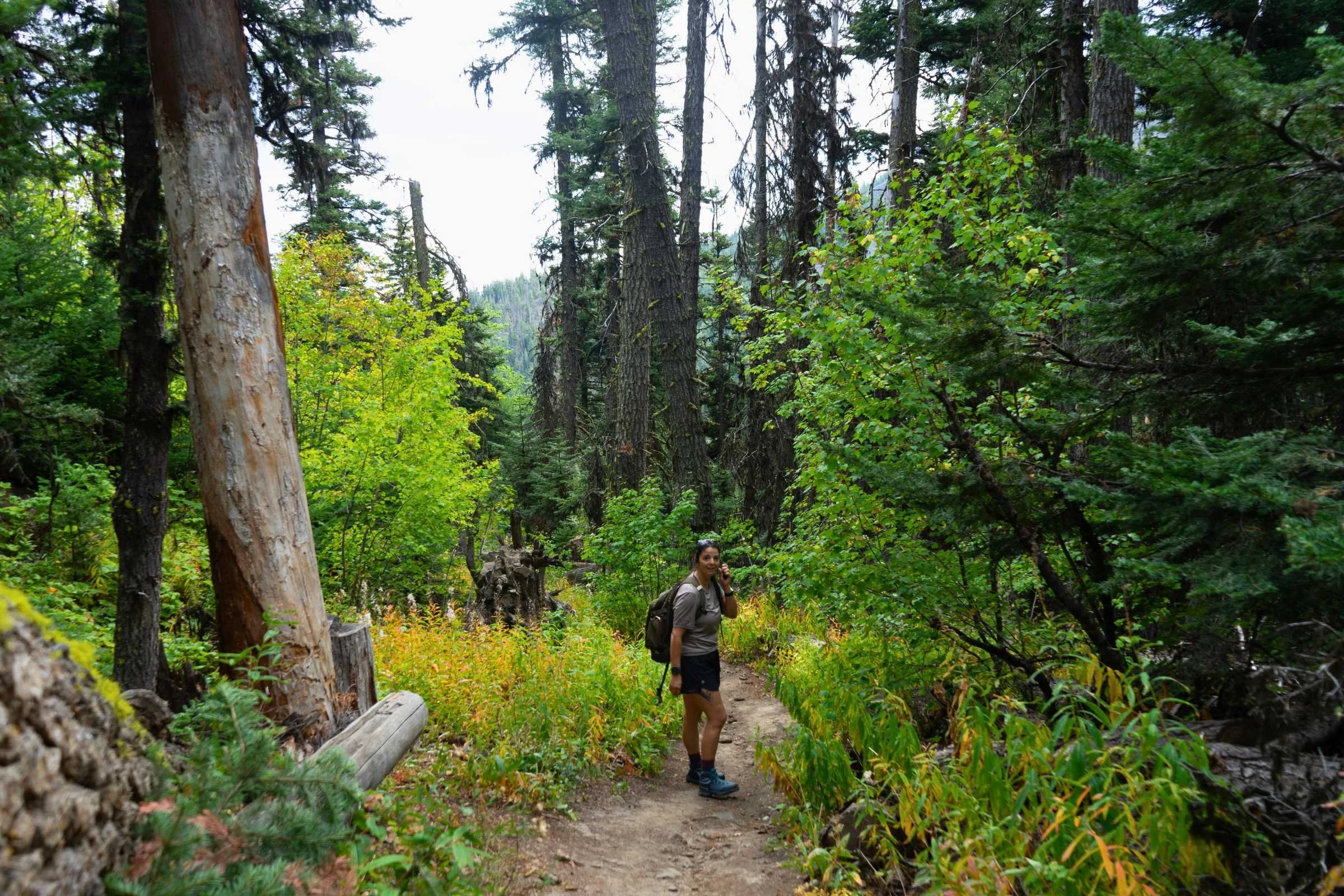
We also love them in wet situations, although the Salomon Quest 5 GTX boots had a slight edge on waterproof performance particularly when it comes to the external DWR coating. We wore the La Sportiva TX Hike Mid GTX during a handful of creek crossings in Washington and found that the interior stayed dry, but by the third crossing water was no longer beading up on the outside of the boots, which just meant that we ended up carrying a bit of water weight. But unlike heftier boots like the Salomon Quest 4 GTX boots, the TX Hike’s exterior dried by the end of our hike.
Best affordable waterproof hiking boots: Columbia Newton Wander

Price: $110
Waterproof membrane: Omni-Tech
Weight (men’s ,women’s): 1 lb 15 oz, 1 lb 9.8 oz
Breathability: 3
Waterproofing: 5
Traction: 4
What we liked: Boot cost, consistent performance, comfort, short break-in period
What we didn't like: Runs large, upper is prone to saturating
The Columbia Newton Wander surprised us throughout the entire testing journey because it’s easily the most affordable pair of boots on this list. Oftentimes a lower price tag means that a piece of gear will suffer in some element of performance. But as far as we can tell, they’re nearly perfect. These boots managed to tackle gravel-ridden slopes on Colorado thirteeners, patches of snow, and muddy and wet creek conditions in the foothills with ease.
Columbia Newton Wander
Men's
Women's
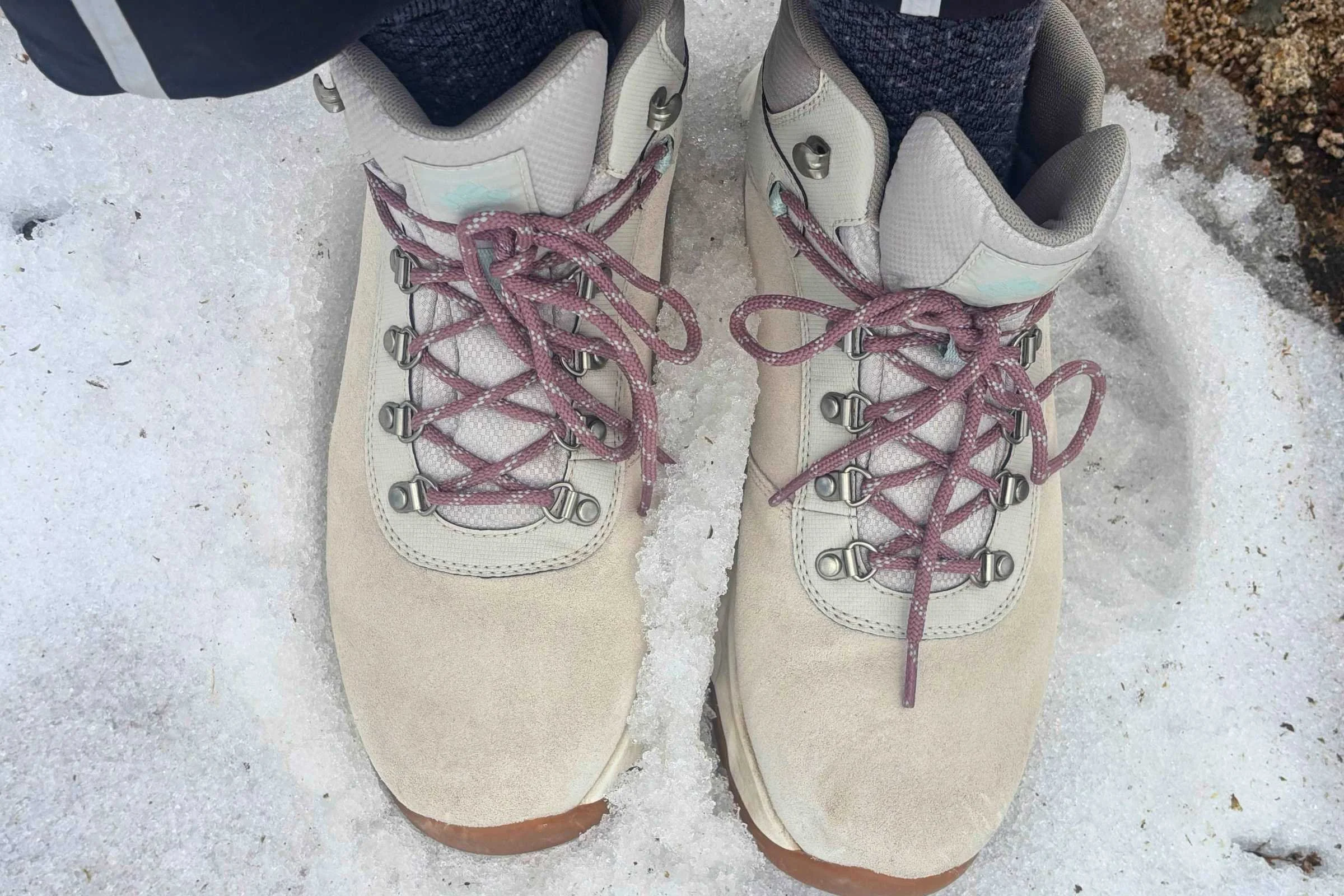
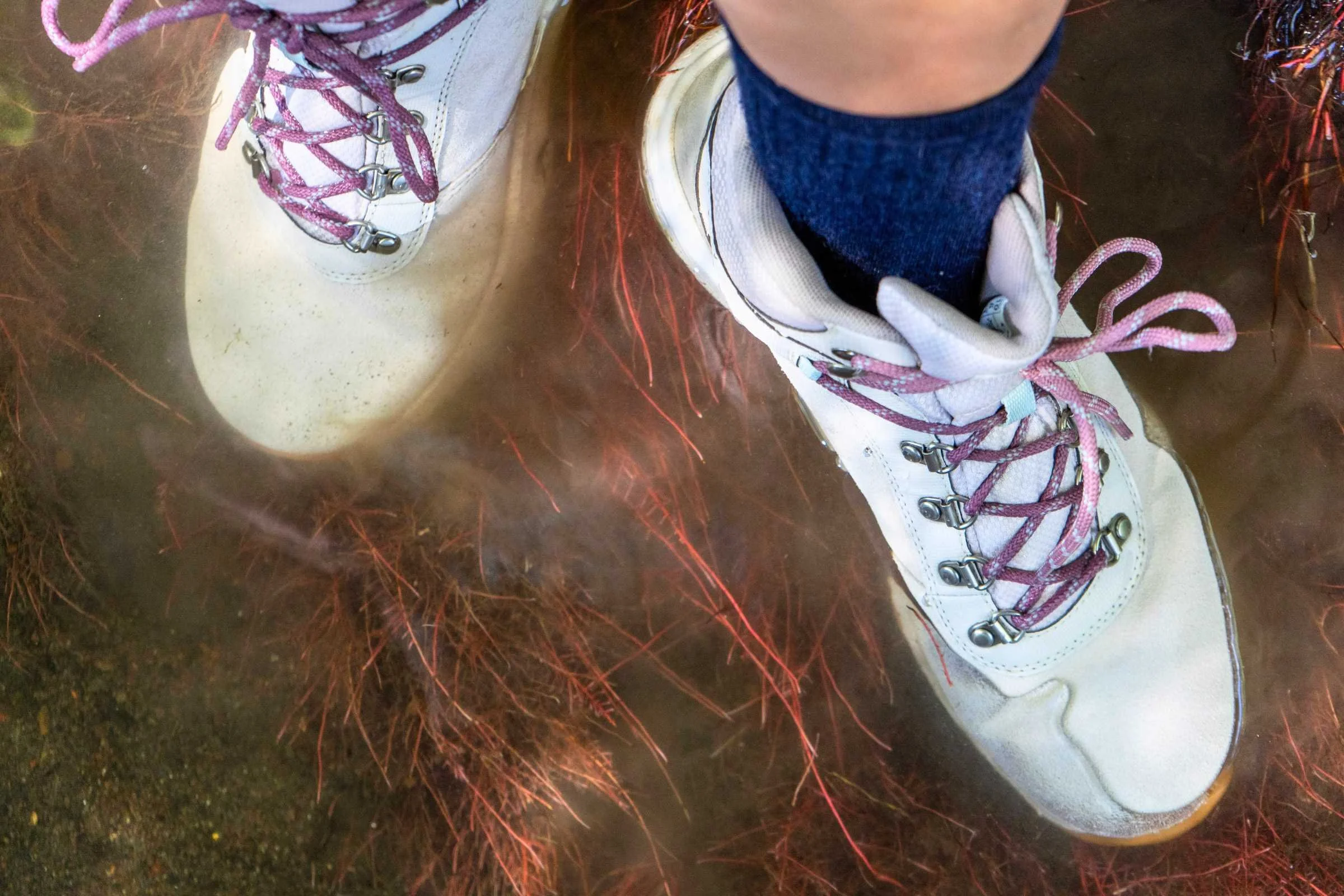
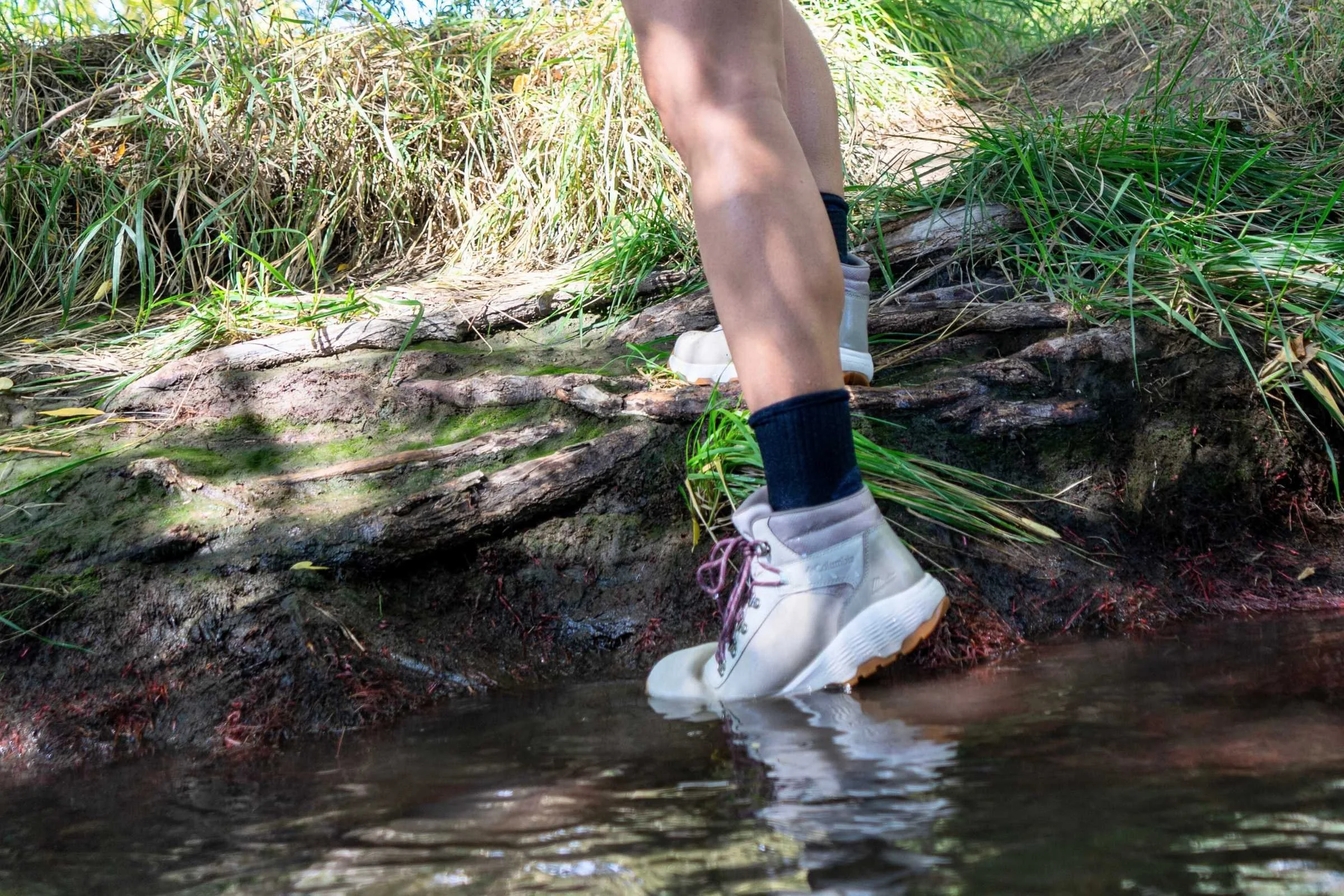
The main reason that these boots didn’t win the overall best waterproof boots is because the upper materials have a tendency to become saturated when submerged. While the interior remained dry, the saturated shell adds weight to the boot which can contribute to foot fatigue over the course of the day. When completely saturated, the exterior of the Columbia Newton Wander dries in a few hours while the interior can take about a full day.
While most hikers find that these boots are true to size, our men’s tester reflected that he’d probably size down by about a half size if he were to purchase another pair of these boots. The women’s version felt true to size. This boot is an ideal pick for budget-conscious adventurers, beginners to intermediate hikers, and backpackers.
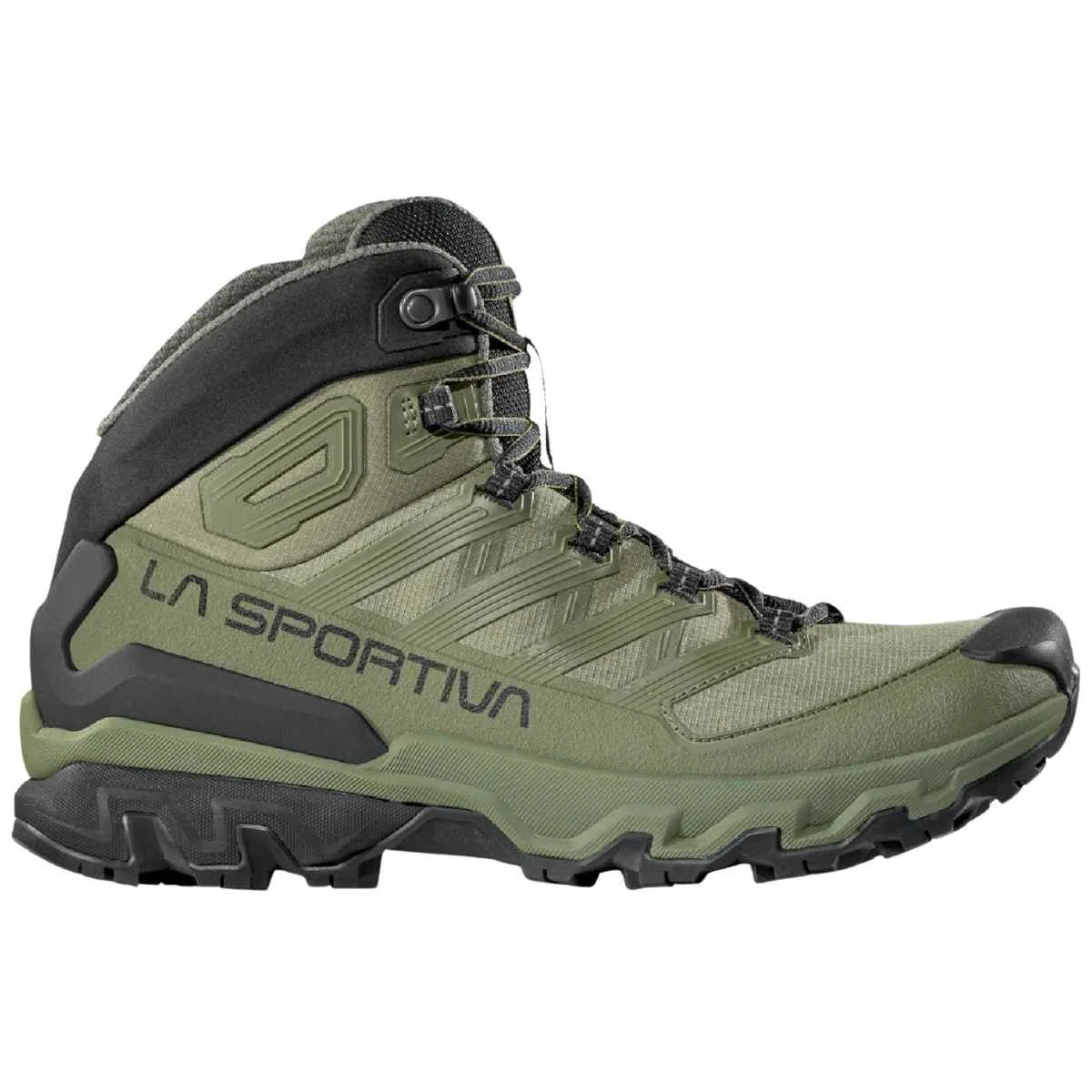
Best lightweight waterproof hiking boots: La Sportiva Ultra Raptor 3 Mid GTX
Price: $219
Waterproof membrane: GORE-TEX ePE Extended Comfort (PFAS-free, bluesign approved)
Weight (men’s,women’s): 1lb 14.2oz, 1lb 9oz
Breathability: 4
Waterproofing: 4.5
Traction: 5
What we liked: Grip, water resistance, lightweight design
What we didn't like: Moderate ankle support compared to some boots
The La Sportiva Ultra Raptor 3 GTX Mid Hiking Boots are one of the most agile, lightweight, grippy boots that we’ve tested, but in true La Sportiva style, they run narrow. Read more about them in our in-depth review.
After wearing them non-stop for a week of outdoor adventure in Iceland, we realized that they aptly handled mud, ice, snow, and river crossings every time we headed into the mountains. After two months of testing, we realized that they not only support trekking in ideal conditions, they’re also the kind of boots you want to be wearing when hikes don’t go according to plan.
La Sportiva Ultra Raptor 3 Mid GTX
Men's
Women's
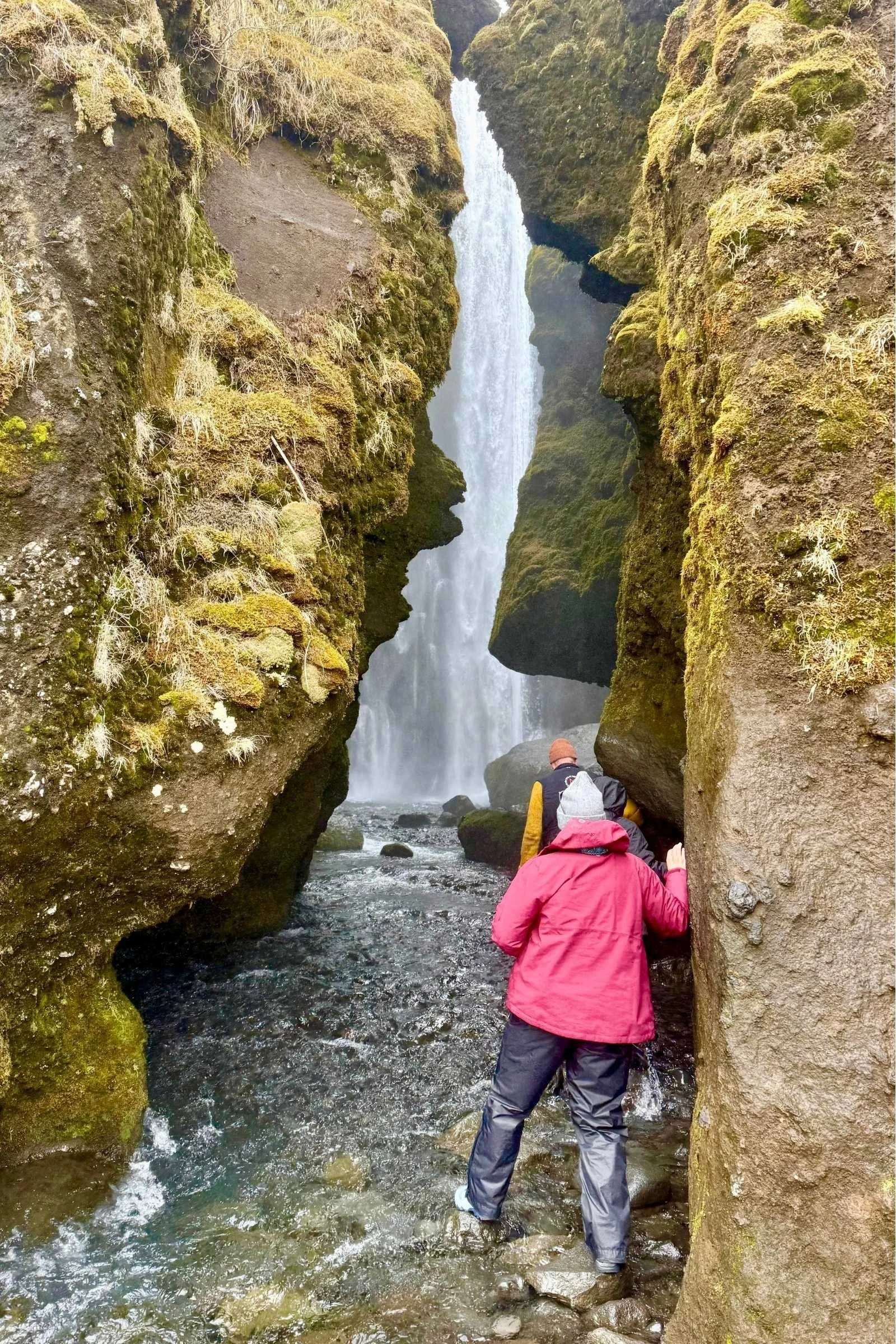
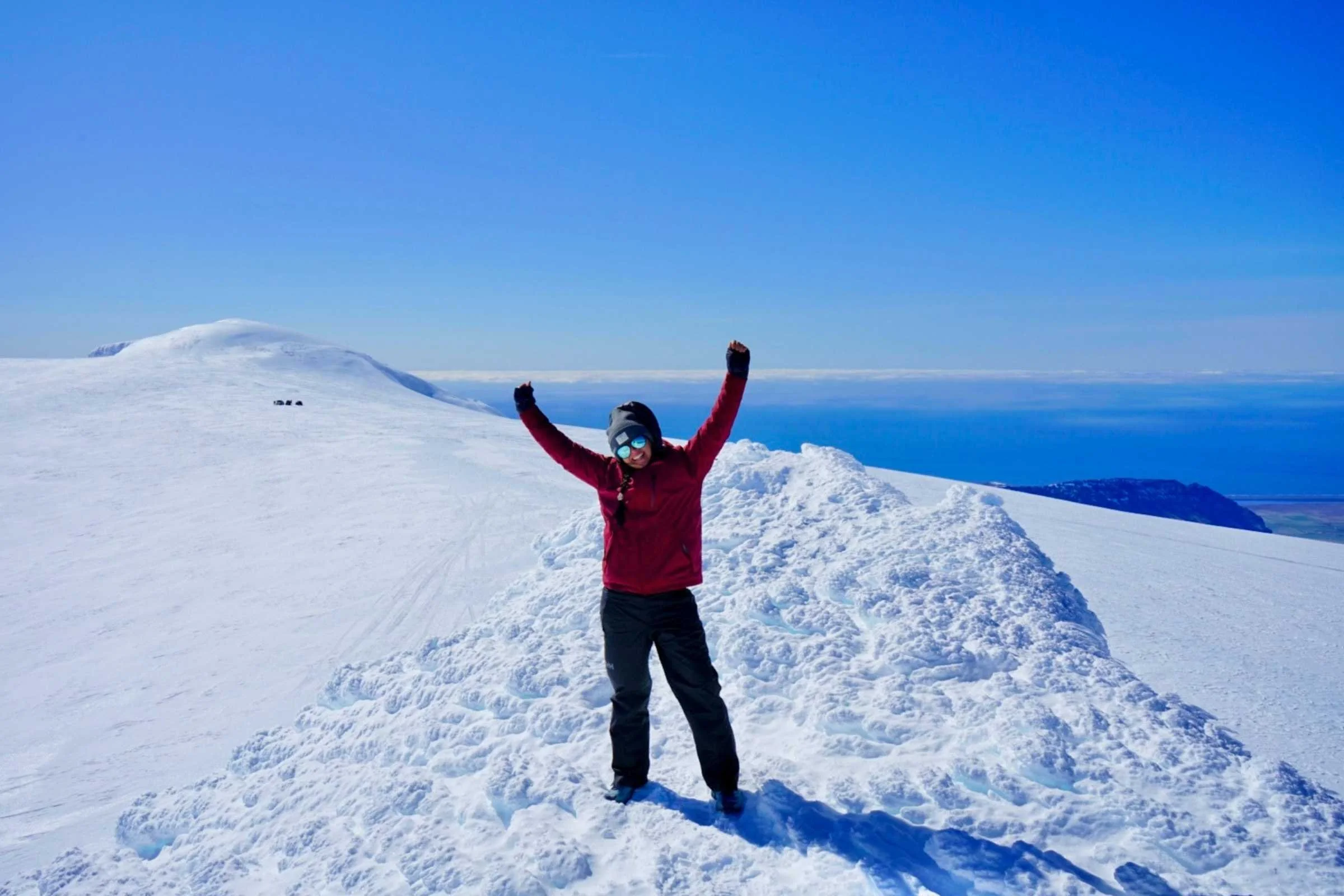
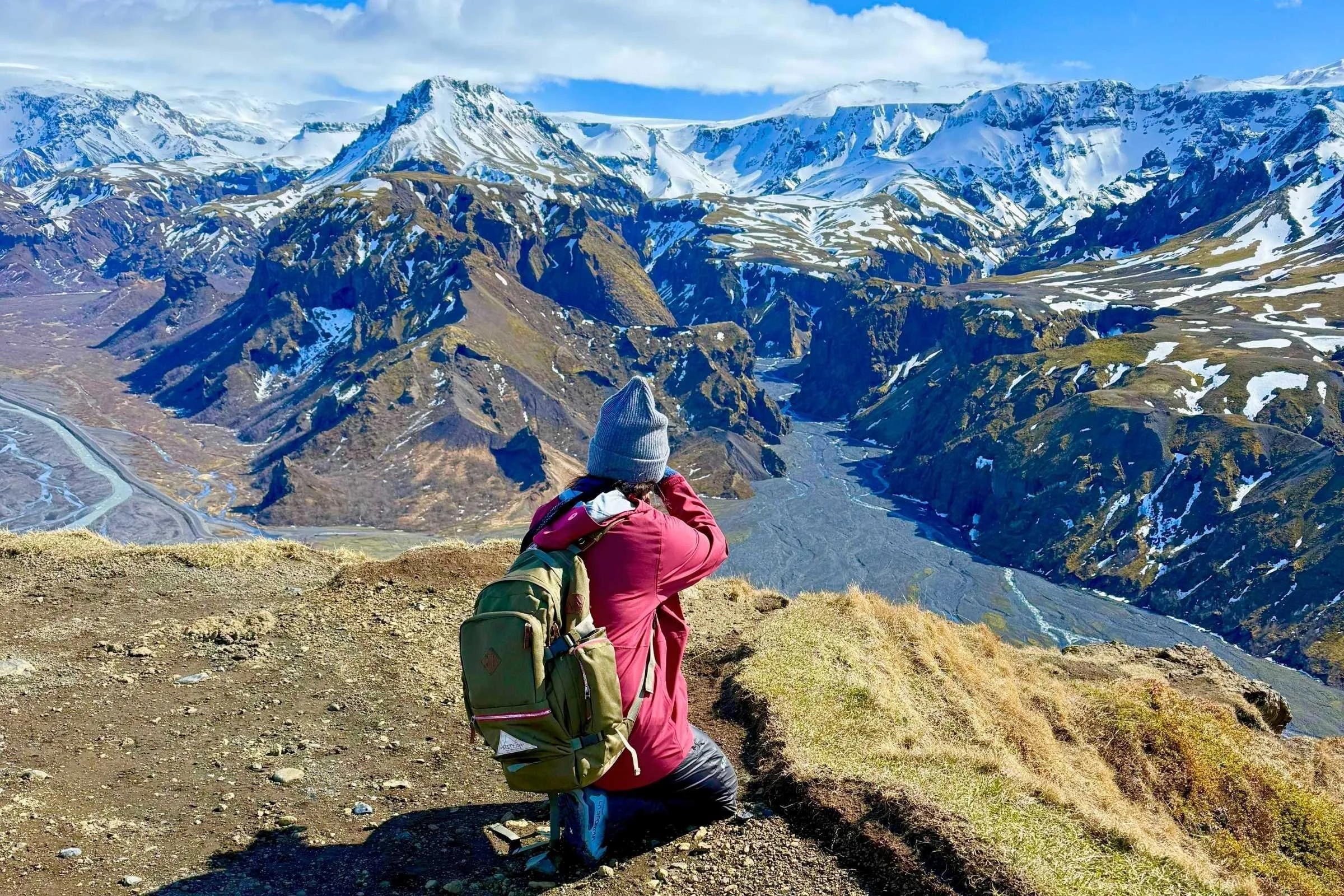
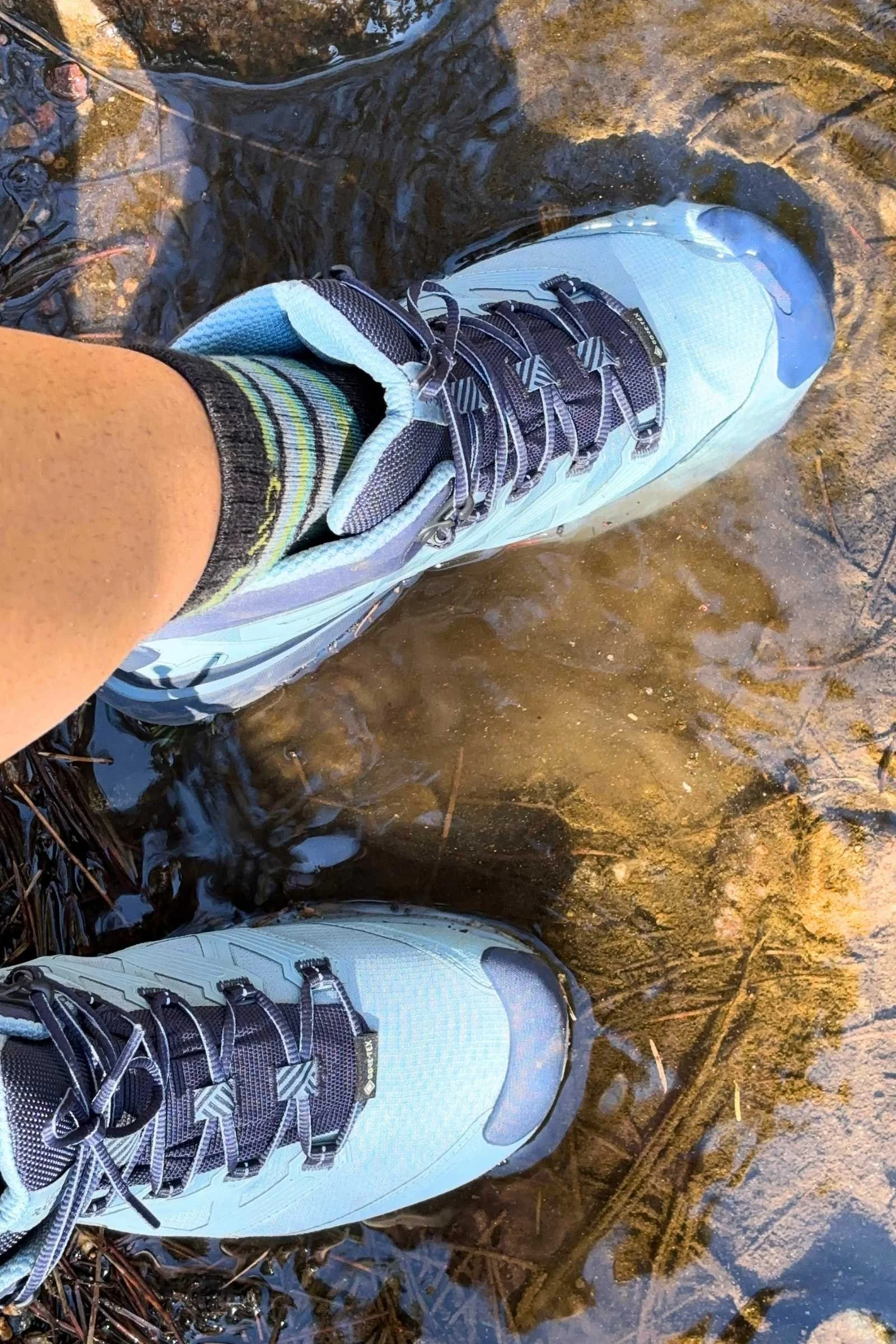
Just a few ounces heavier than our lightest boot, the La Sportiva Ultra Raptor 3 GTX is also one of our favorite picks for long days in the mountains with variable terrain. We wore these boots for about 35 miles while evaluating qualities like grip, durability, breathability, and weather resistance, and directly compared them to more than 10 other pairs of hiking boots.
The biggest drawback is that they require a short break-in period due to the upper materials. But their agility and reliability make them one of our favorite boot models we’ve tested, and we truly love these boots.
While the Lowa Renegade EVO GTX Mid was a close alternative to lightweight waterproof boots due to their minimalistic design and solid DWR coating, the Ultra Raptor claimed the title because they’re slightly more affordable, and significantly faster to dry once they become saturated, although the Renegade is a few ounces lighter.
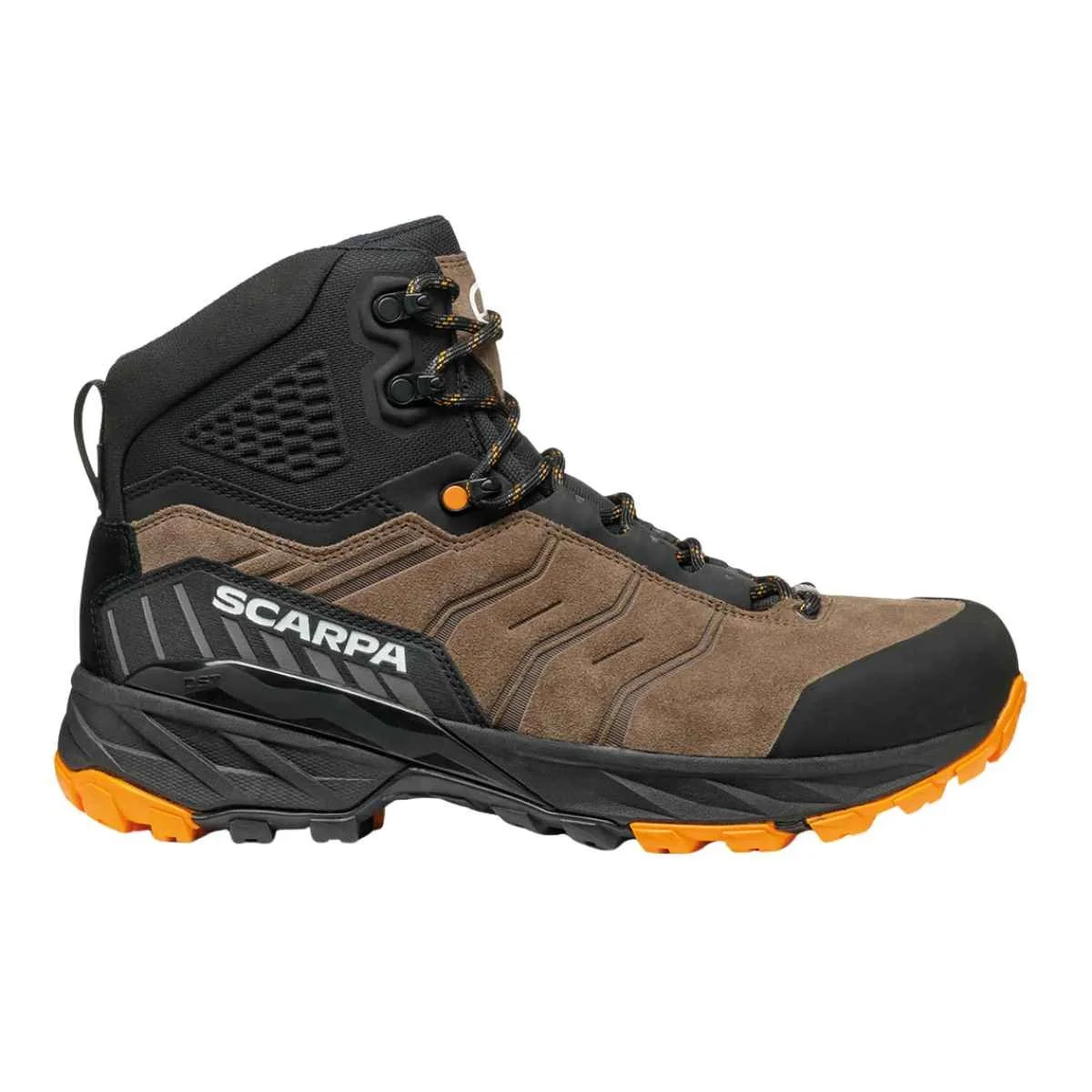
Best waterproof hiking boots for backpacking: SCArPA Rush Trk GTX
Price: $239
Waterproof membrane: GORE-TEX
Weight (men’s, women’s): 2 lbs 7.2 oz, 2 lb 0.8 oz
Breathability: 3
Waterproofing: 5
Traction: 5
What we liked: Durability, traction, ankle support
What we didn't like: Sizing can be tricky
The sturdy build of the SCARPA Rush Trk GTX boots is one of its standout features, and one of the reasons why it excels as a backpacking boot. When paired with outsole stability, deep lugs, and its cushioned technology, they’re one of our favorite options for long, multi-day trips where foot-care is essential.
SCARPA Rush Trk GTX
Men's
Women's
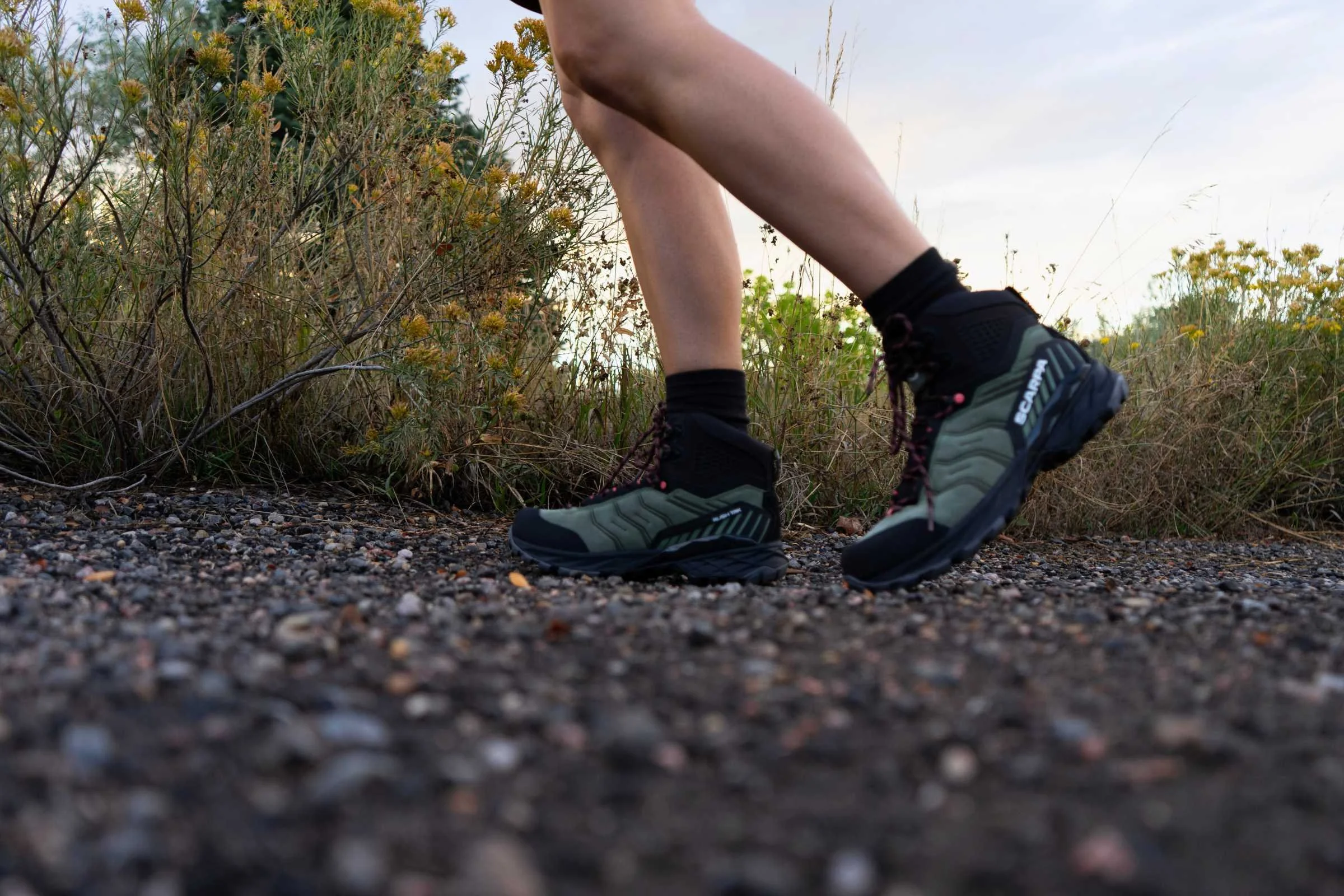
Hiking in Colorado with the SCARPA Rush Trk GTX boots.
We wore these boots on rooty, rocky terrain while carrying about ten pounds of gear and never once worried about twisting an ankle.
During our water testing, we also found that they were consistently watertight across a few different settings. But in typical form, they could be more breathable, as breathability is often a tradeoff with excellent waterproofing. Still, it took multiple submersions for the Rush Trk to become saturated. When they finally got wet, it took about a full day for these boots to dry. Overall, this is one of our favorite options available for hikers who tend to shoulder a pack, while preparing for moderate to technical terrain.
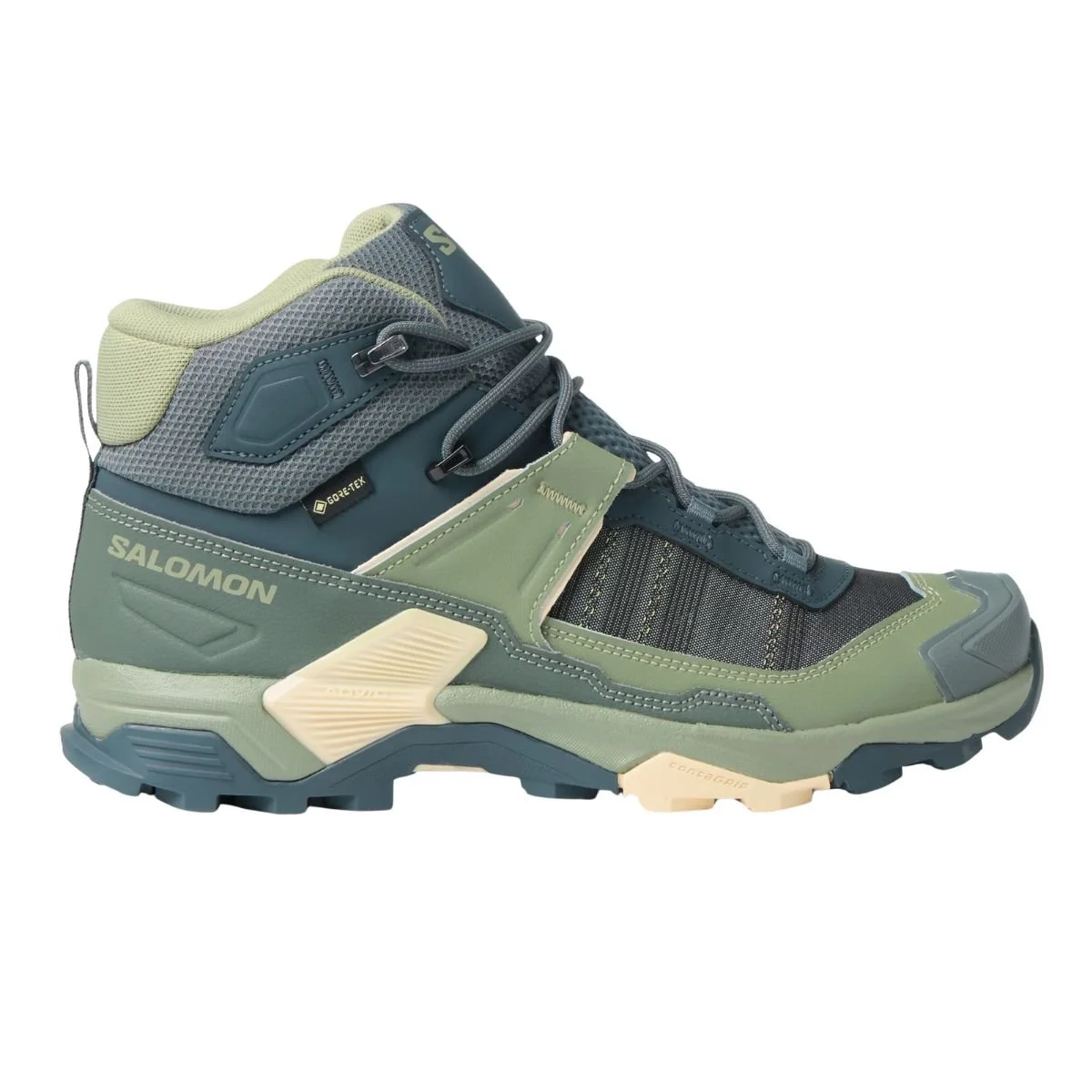
Best breathable waterproof hiking boots: Salomon X Ultra 5 GTX mid
Price: $190
Waterproof membrane: GORE-TEX
Weight (men’s,women’s): 1 lb 15 oz, 1 lb 11.6 oz
Breathability: 5
Waterproofing: 3.5
Traction: 4
What we liked: Quick drying, nimble design, lightweight
What we didn't like: They run long, reduced stability
The Salomon X Ultra 5 GTX Mid boots took both of our testers by surprise in that they feature the comfort of a trail runner shoe with many of the benefits of a more traditional boot. The lightweight materials are more forgiving than leather and nubuck alternatives, making for immediate comfort. Yet they provide a layer of support around the ankle to prevent backcountry mishaps. What’s more, is that they’re the most breathable pair of boots on this list by far, allowing internal moisture to evaporate throughout the day.
Learn more in our in-depth review of the Salomon X Ultra 5 GTX Mid Hiking Boots. You can read about the hiking shoe version in our in-depth review of the Salomon X Ultra 5 GTX hiking shoes.
Salomon X Ultra 5 GTX Mid
Men's
Women's
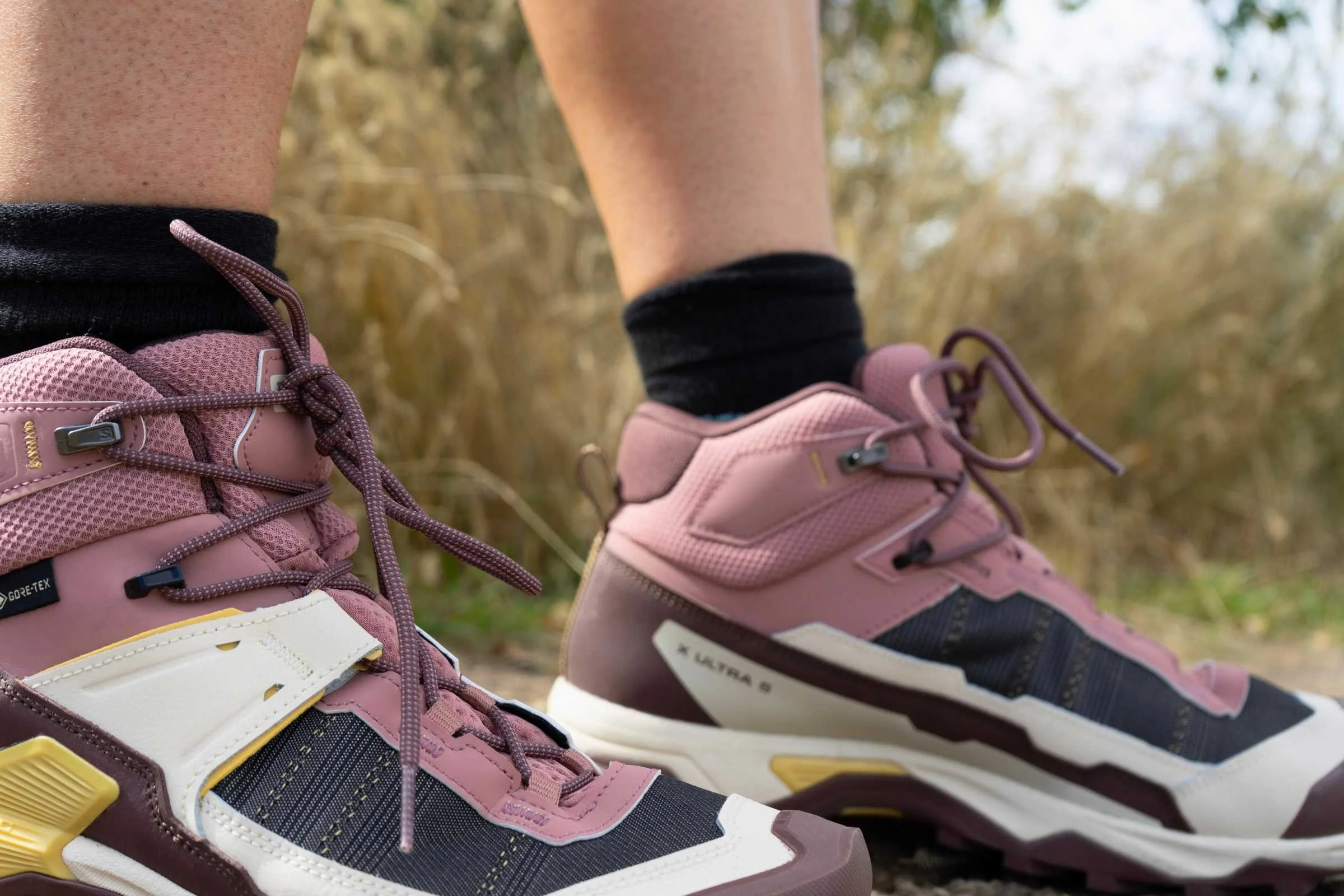
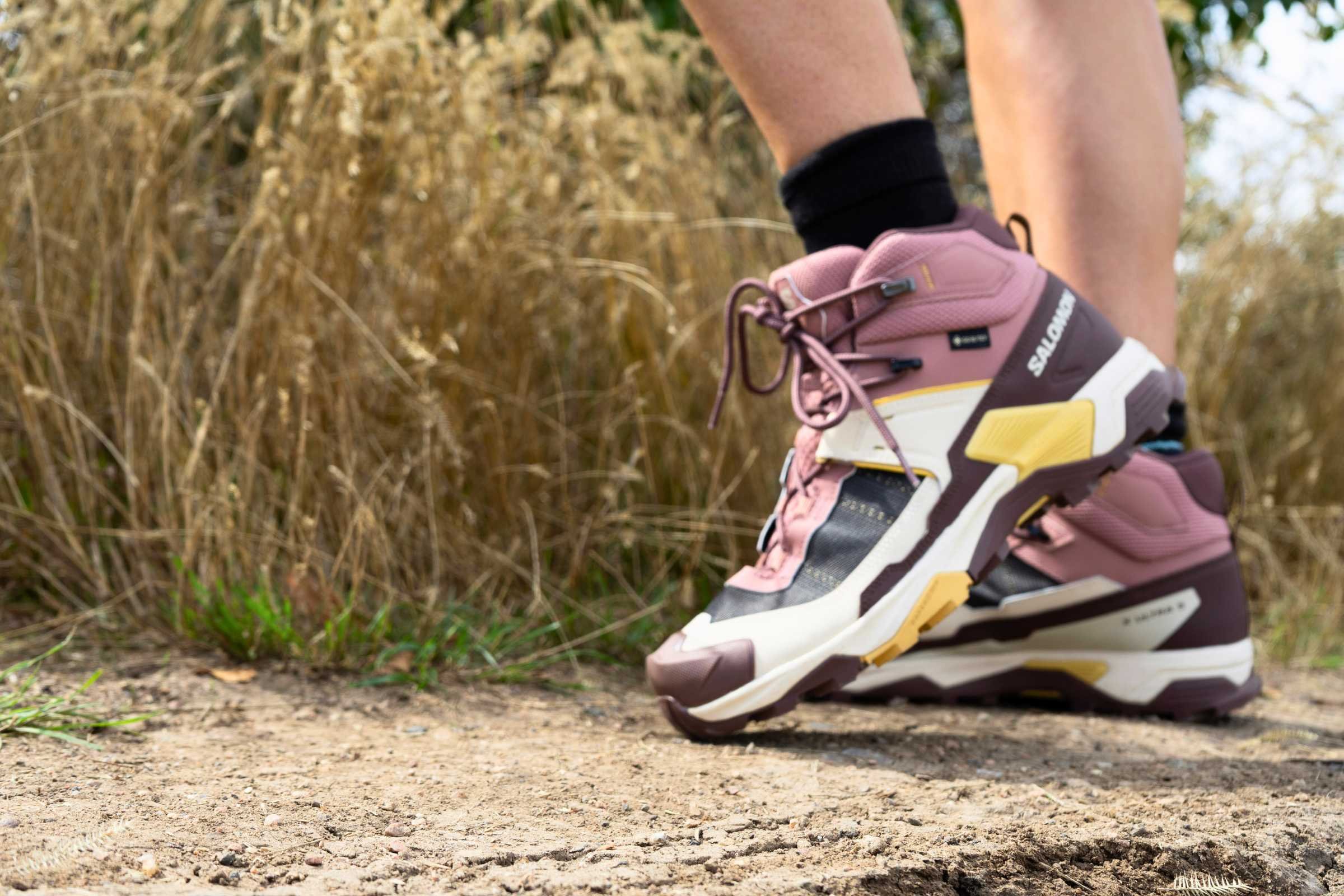
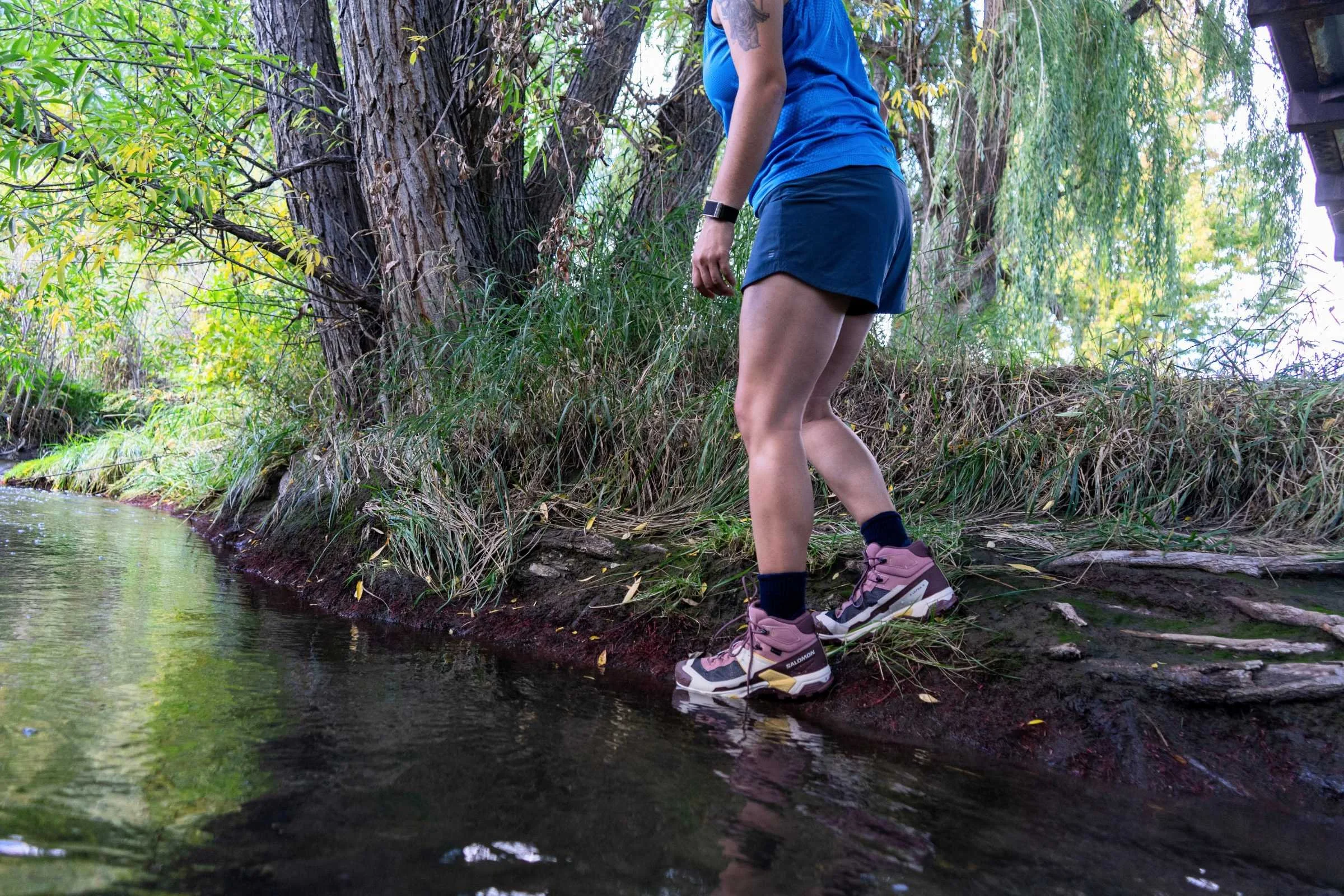
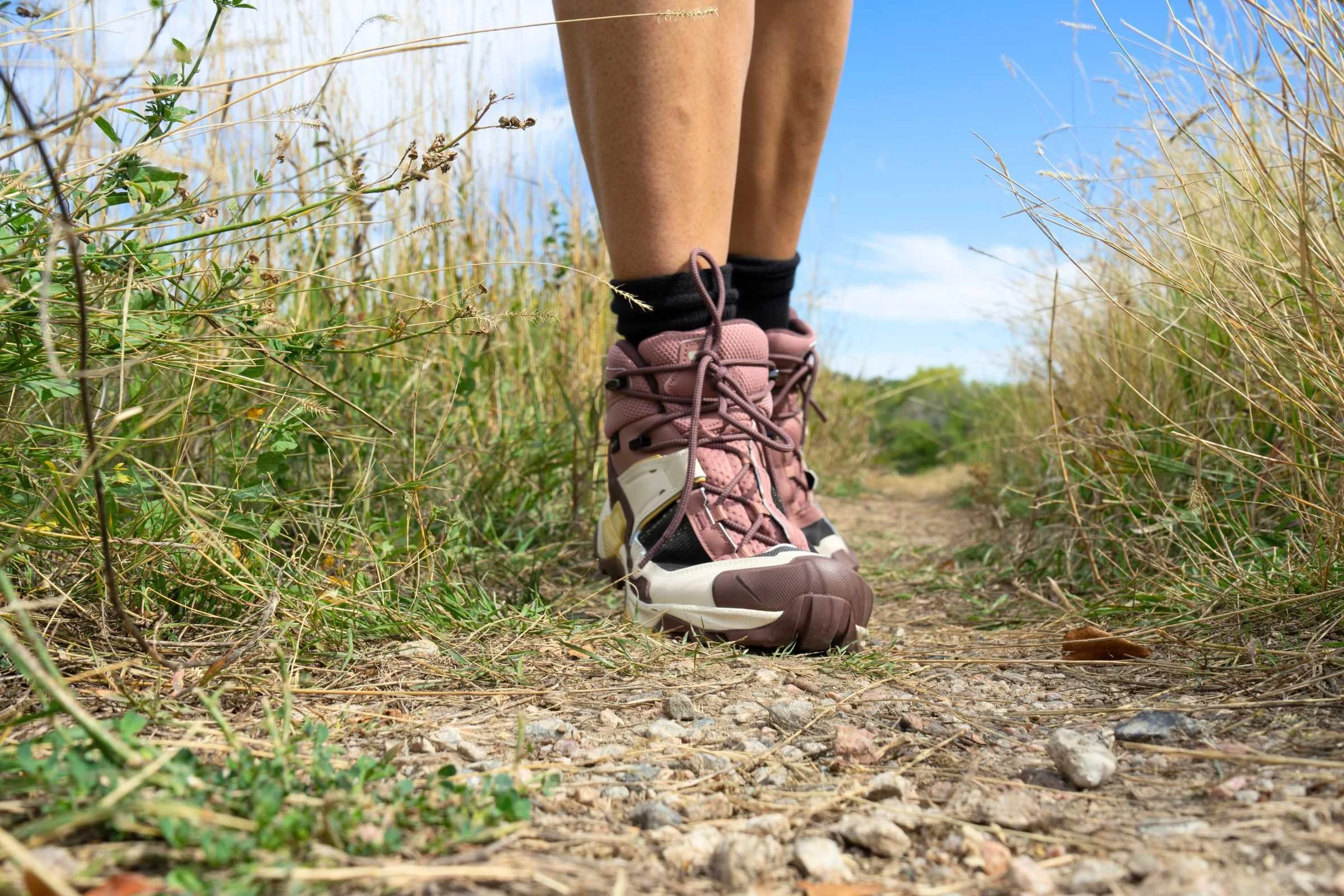
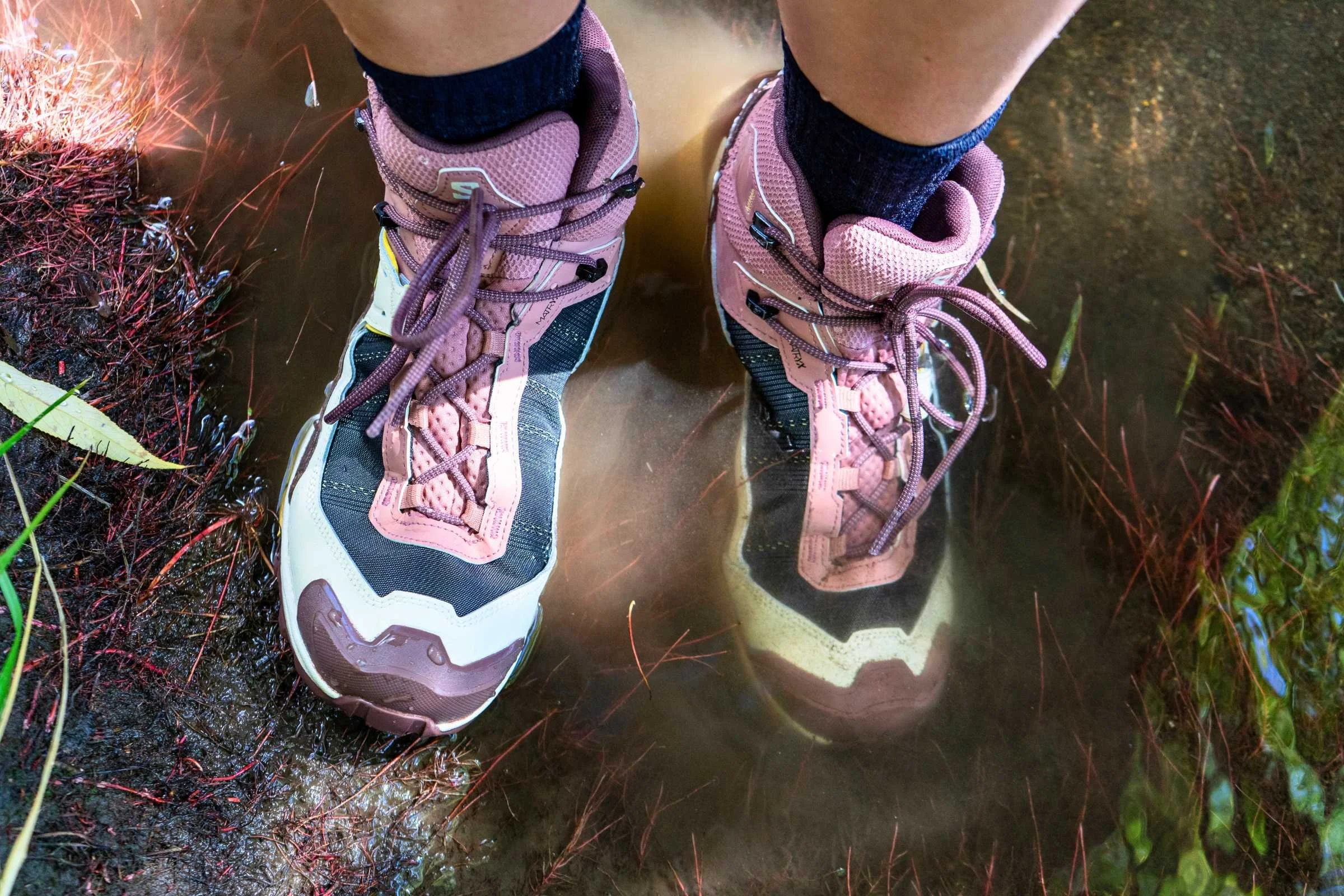
When it came to waterproof testing, these boots showed mild signs of moisture on the boot’s interior, but they also required the least amount of dry time because of their breathability. This is an ideal quality in a backpacking or hiking boot since it allows the hiker to keep their feet dry even after periods of submersion (while some boots require multiple days to entirely dry).
Compared to the Salomon Quest 4 GTX boots, the X Ultra 5 GTX Mid is more agile and comfortable but less protective and prone to experiencing saturation, but it’s an ideal footwear option for someone who wants more foot protection than a pair of humble trail running shoes or hiking shoes.
Since our original run of testing, we continued to wear the Salomon X Ultra 5 GTX Mid hiking boots in the Colorado foothills predominantly in spring conditions, where they maintained their breathability and lightweight structure.
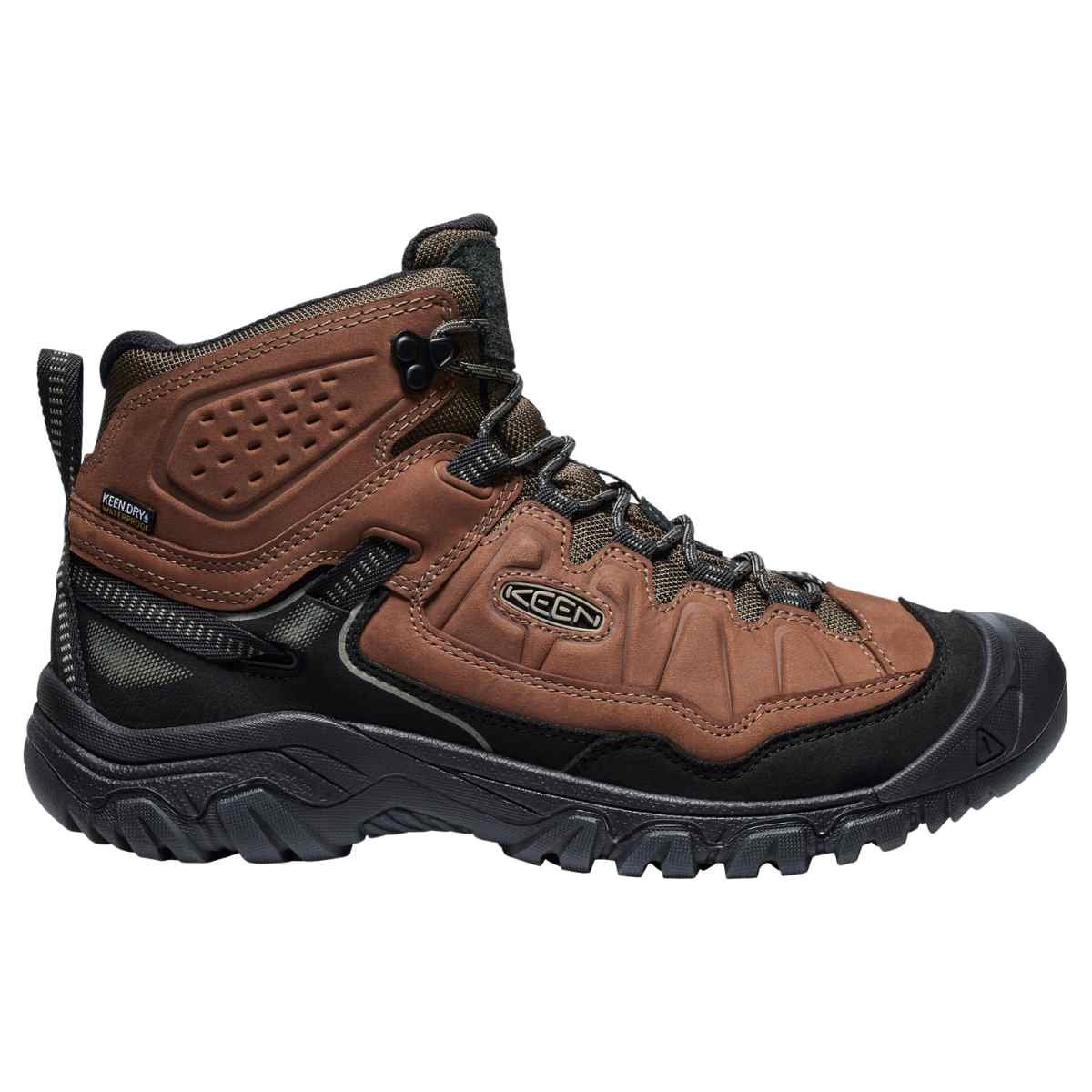
Best waterproof hiking boots for wide feet: KEEN Targhee IV Mid WP
Price: $190
Waterproof membrane: KEEN.DRY
Weight (men’s,women’s): 2 lbs 8.6 oz , 2 lbs 2.6 oz oz
Breathability: 3
Waterproofing: 5
Traction: 5
What we liked: Wide fit available, aggressive outsole, ankle protection
What we didn't like: Lace hooks are known to be delicate, less cushioned than earlier models
The KEEN Targhee boots have been a classic hiking boot option since they originally came out in 2005. Twenty years later, the KEEN Targhee IV Mid WP continues to uphold its reputation by providing hikers with a generous fit, aggressive ankle support, and a reliable and sticky outsole.
See our in-depth review of the KEEN Targhee IV Mid WP hiking boots for more information.
KEEN Targhee IV Mid WP
men's
Women's
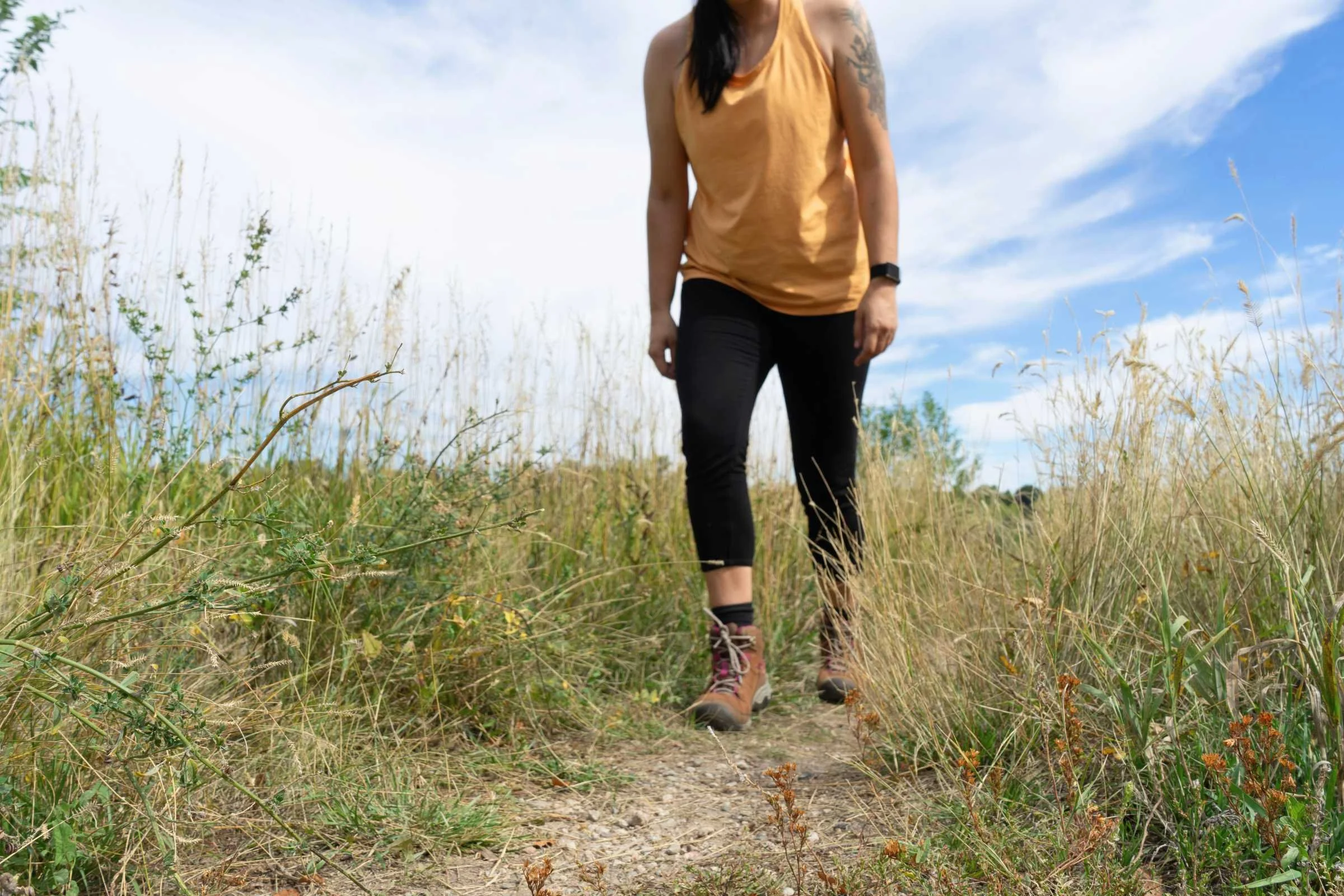
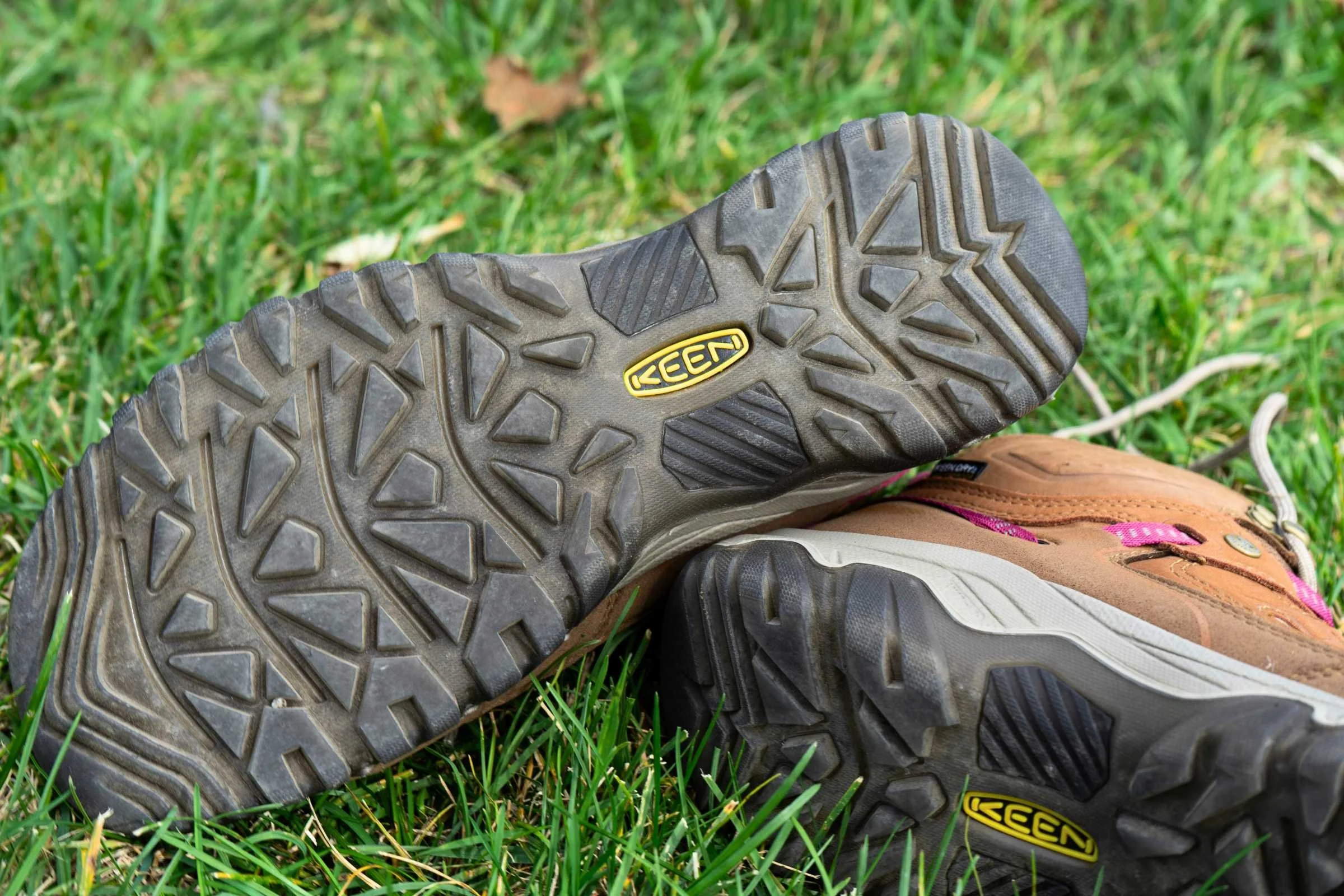
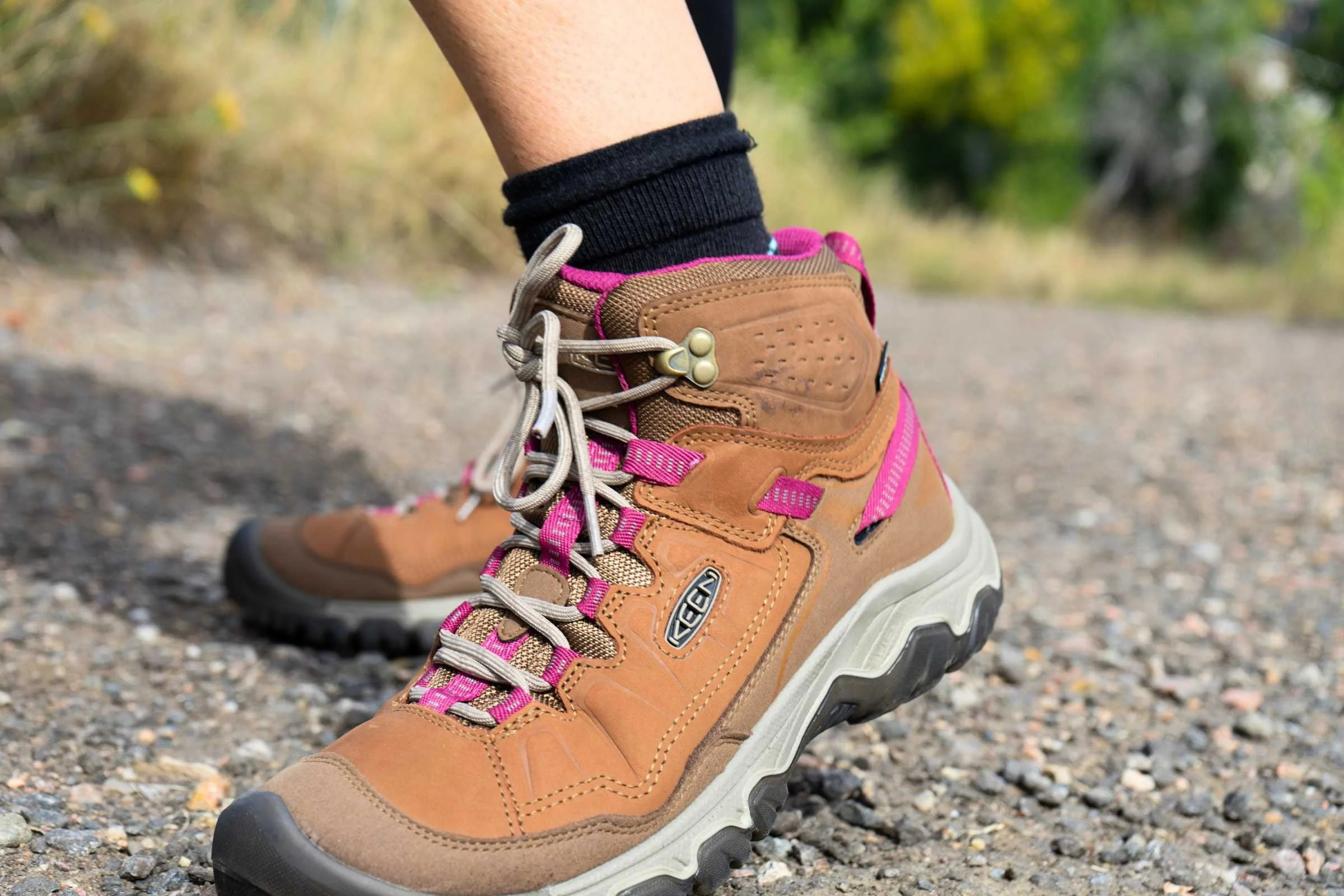
One of our testers has the tendency to travel a little too quickly, twisting their ankle about once per year. But the KEEN Targhee IV Mid completely eviscerated the possibility of an ankle sprain due to the aggressive lacing system, rigid upper materials, and high collar.
Admittedly, these boots run on the heavy side of the spectrum, topped only by the Salomon Quest 4 GTX boots. The KEEN.RUGGED outsole is durable and abrasion-resistant but it’s also substantial in size and weight, and the upper leather material has a similarly aggressive construction that adds to the overall weight. They’ve also been reported to be less cushioned than earlier models of the boot. And we found that there wasn’t very much rebound in these boots. But their long-term durability, wide fit, and quality design makes them a great option for hikers who prefer lasting boots.
During our submersion tests, we noticed no internal moisture in these boots after 15 minutes, and the exterior only became mildly wet. So, they stand up really nicely to extended water exposure, but their dry time is similar to the Salomon Quest 4 GTX Boots, taking somewhere between one and two days to dry.
A close competitor for the KEEN Targhee was the Oboz Bridger Mid, which comes with a generous width and a similar structure. But the Targhee is ultimately more affordable, and slightly wider than the Bridger, giving it the win.
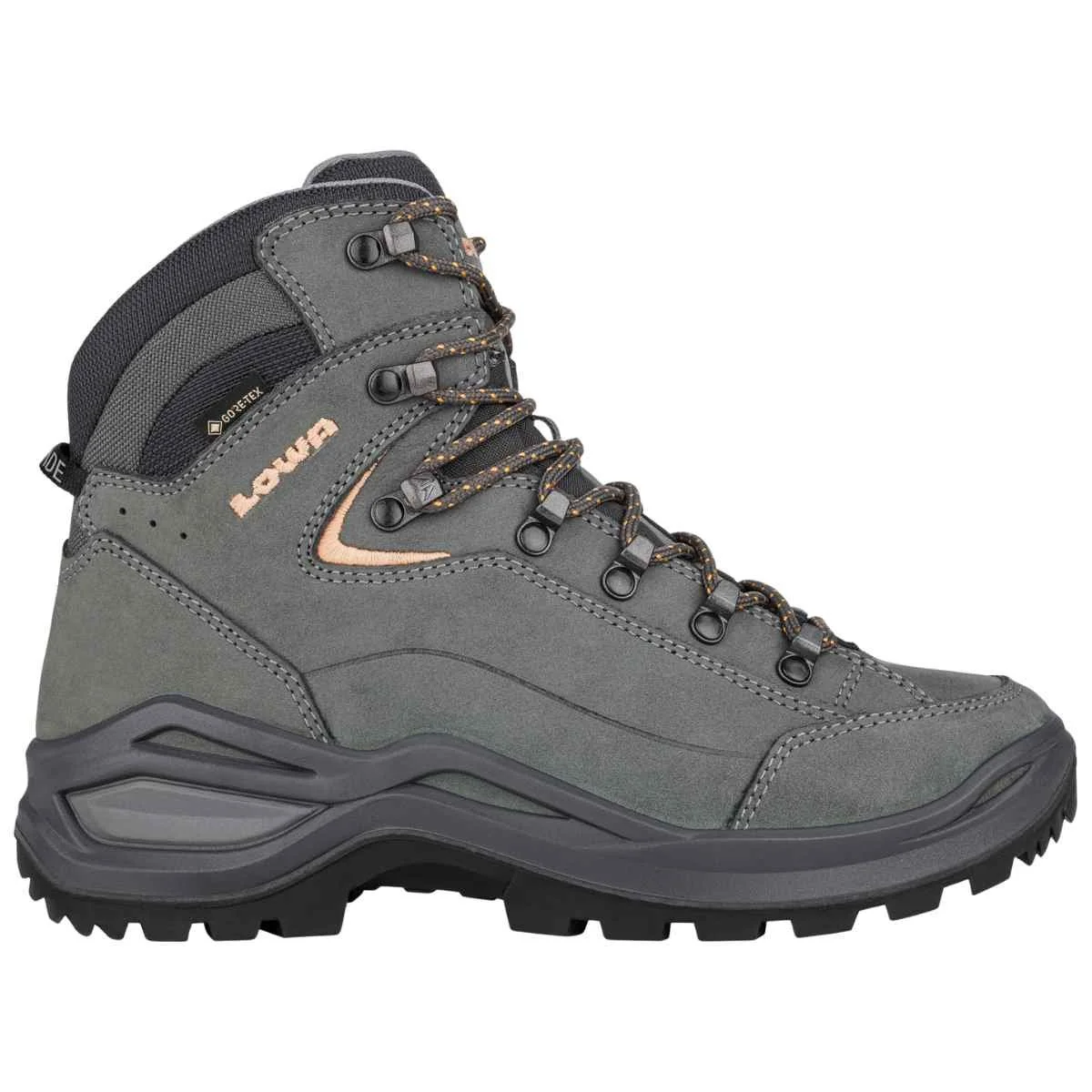
Best waterproof hiking boots for narrow feet: Lowa Renegade EVO GTX Mid
Price: $280
Waterproof membrane: GORE-TEX
Weight (men’s,women’s): 2 lb 9.6 oz, 2 lbs 2.2 oz
Breathability: 3
Waterproofing: 5
Traction: 4
What we liked: Stability, grip, durable upper and outsole
What we didn't like: Cost, breathability could be improved, long break-in period
The Lowa Renegade EVO GTX Mid and Asolo Acadia Mid LTH GTX were neck and neck throughout our testing process, but we ultimately decided the Renegade slightly edges the Acadia out when it comes to waterproofing simply because water stopped beading up on the exterior of the Acadia boots much faster than it did on the Renegade.
You can read more in our in-depth review of the Lowa Renegade EVO GTX Mid hiking boots.
Lowa Renegade EVO GTX Mid
men's
Women's
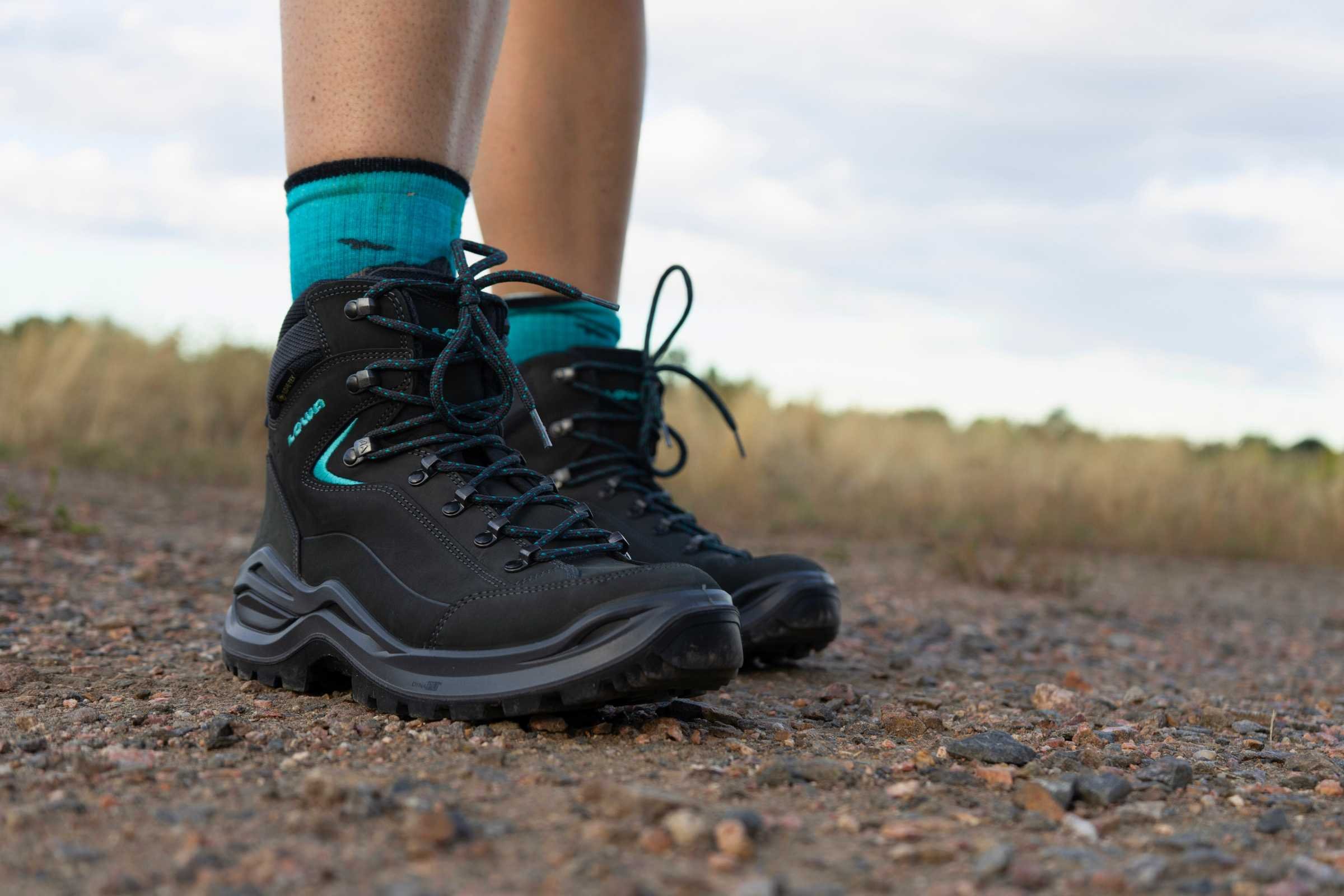
Hiking in Colorado with the Lowa Renegade EVO GTX Mid boots.
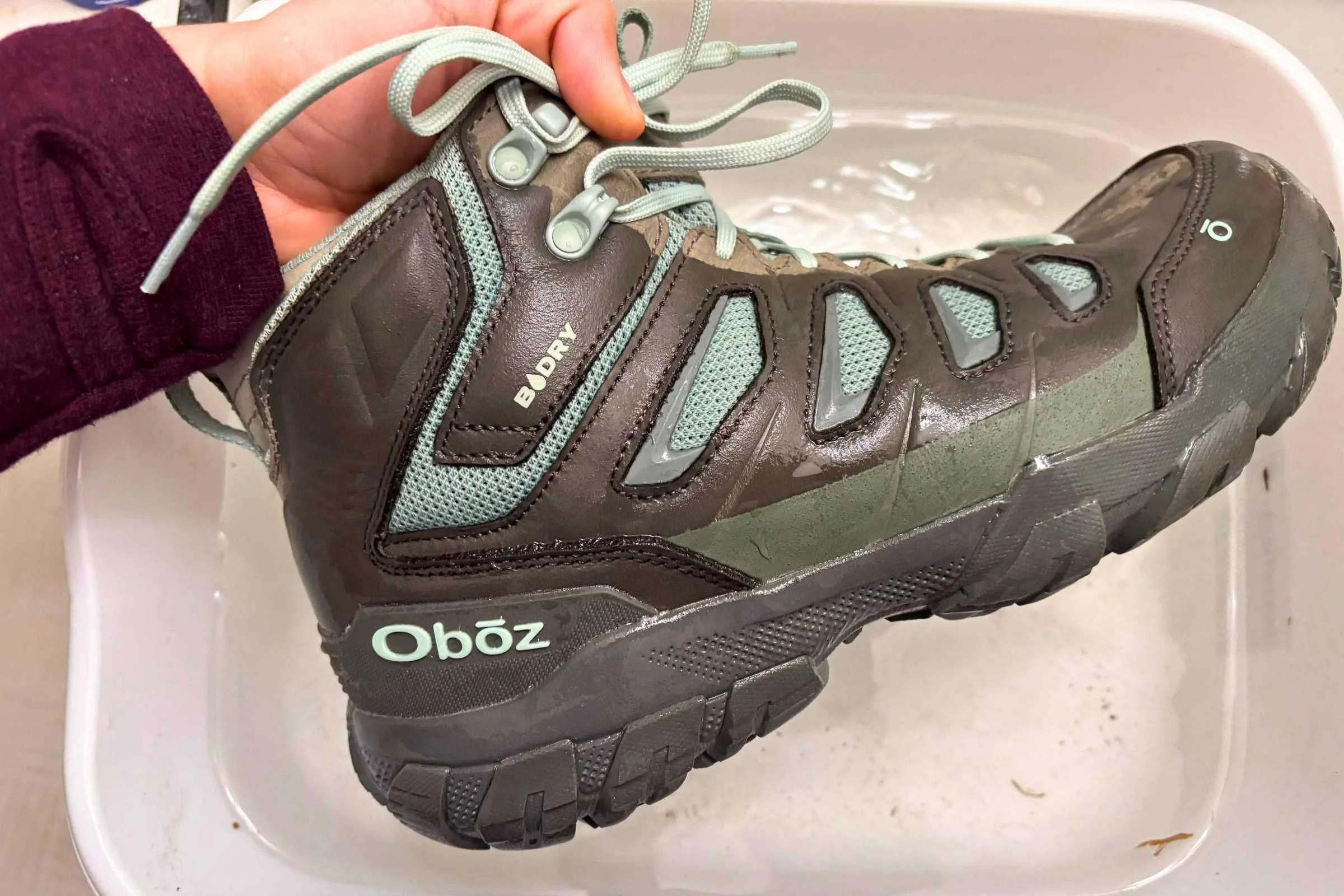
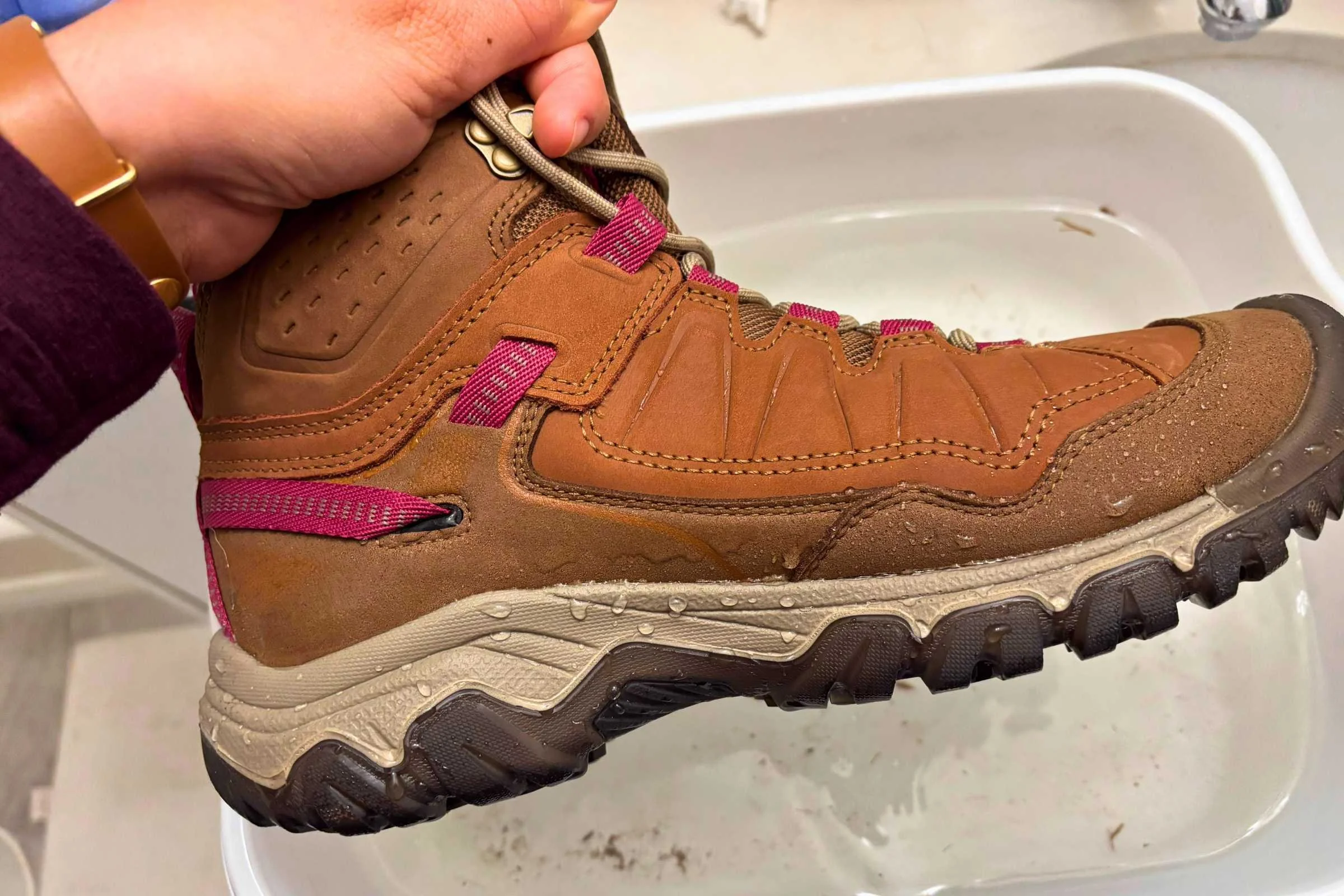
We ran the bathroom faucet on a low setting over both of these boots and found that the Asolo wetted out in about two minutes. After leaving the faucet running on the Renegade for fifteen minutes, the water continued beading up on the exterior of the boot, never permeating the DWR coating. Even though the Acadia picked up some extra water weight, water didn’t make it past either boots’ GORE-TEX membrane to saturate our feet, making the saturation more of an inconvenience than a safety or comfort concern.
Both boots run narrow with the Acadia providing a bunion-specific fit that we love. But the Renegade offers a more standard fit for narrow feet. We also suspect that the Renegade will take longer to show signs of deterioration than the Acadia due to its sturdy construction and material choices. Honestly, both boots are great options for narrow feet and the Acadia comes with a more competitive price tag. We just think that the Renegade’s waterproof design is slightly superior.
You can read more in our in-depth review of the Lowa Renegade EVO GTX Mid hiking boots.
Other waterproof hiking boots we tested
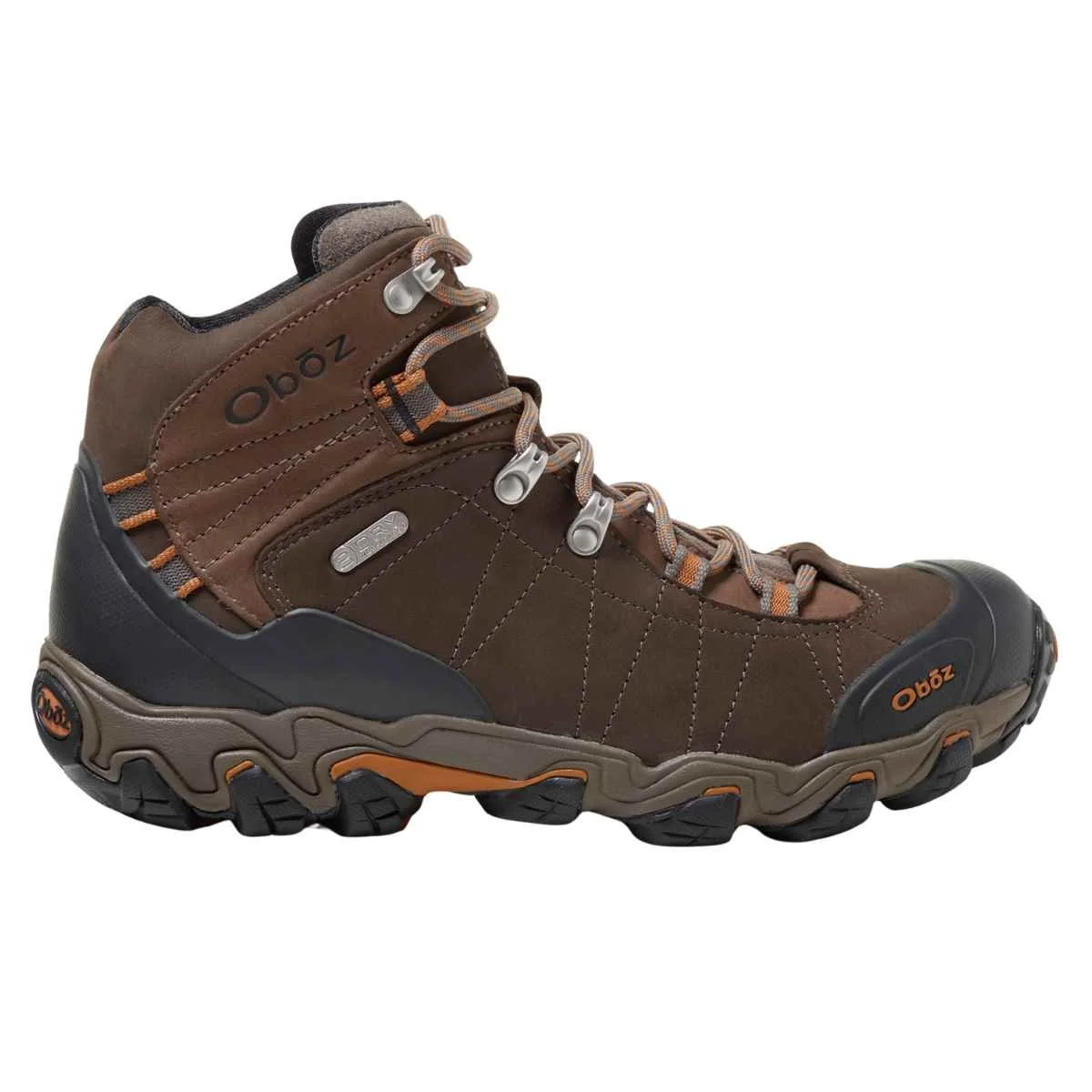
Oboz Bridger Mid
Price: $220
Weight (men’s, women’s): 2 lbs 6 oz, 2lbs 0.4oz
Waterproofing: Oboz B-DRY waterproof membrane
Material: Nubuck leather, dual-density EVA foam, Granite Peak rubber outsole
Available sizes(men’s, women’s): 7-14, 5-12
While many hiking boots these days adopt a minimalist design that favors a lighter, and a flexible construction, they often forfeit longevity. The Oboz Bridger Mid Waterproof hiking boots, however, offer the stability and confidence of a traditional hiking boot without feeling like a brick, supporting movement through uneven and slippery terrain.
We wore these boots for 30 miles across Colorado’s foothills, urban landscapes, and 13,000-foot mountains to evaluate qualities like comfort, grip, durability, breathability, and weather resistance. Then we directly compared them to more than 10 other pairs of hiking boots.
One of the biggest drawbacks of these boots is that they’re more prone to contributing to foot fatigue due to their weight—especially when wet—compared with other hiking boots. Yet their rigid upper materials and sturdy outsole, support, and heel cup make them one of our favorite boots for rugged trails where protection is vital for overall comfort.
But even with their hefty design, and noticeable price tag, we love these boots due to their extreme comfort, heel cup, and durability. Read more about them in our in-depth review.
Oboz Bridger Mid
Men's
Women's
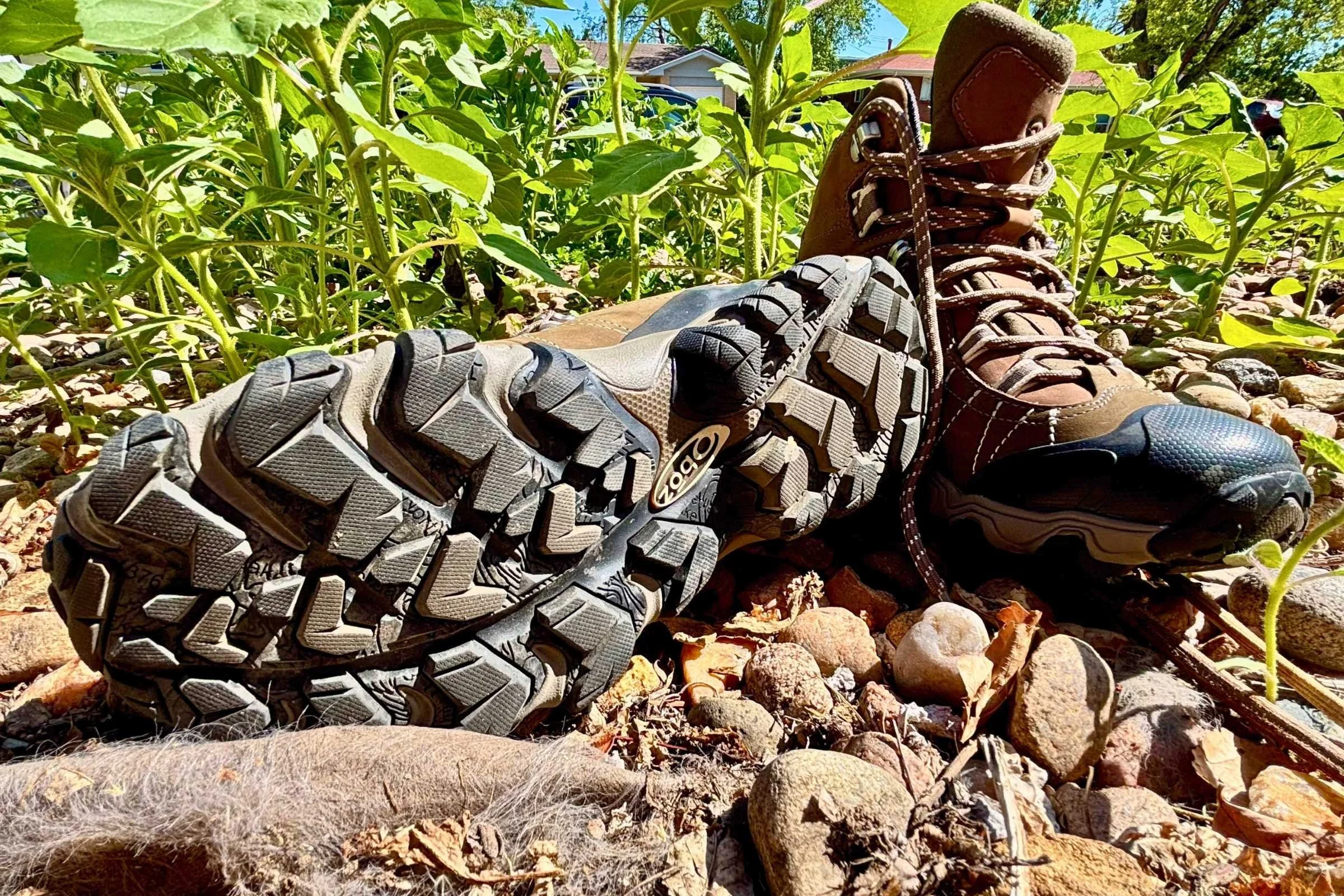
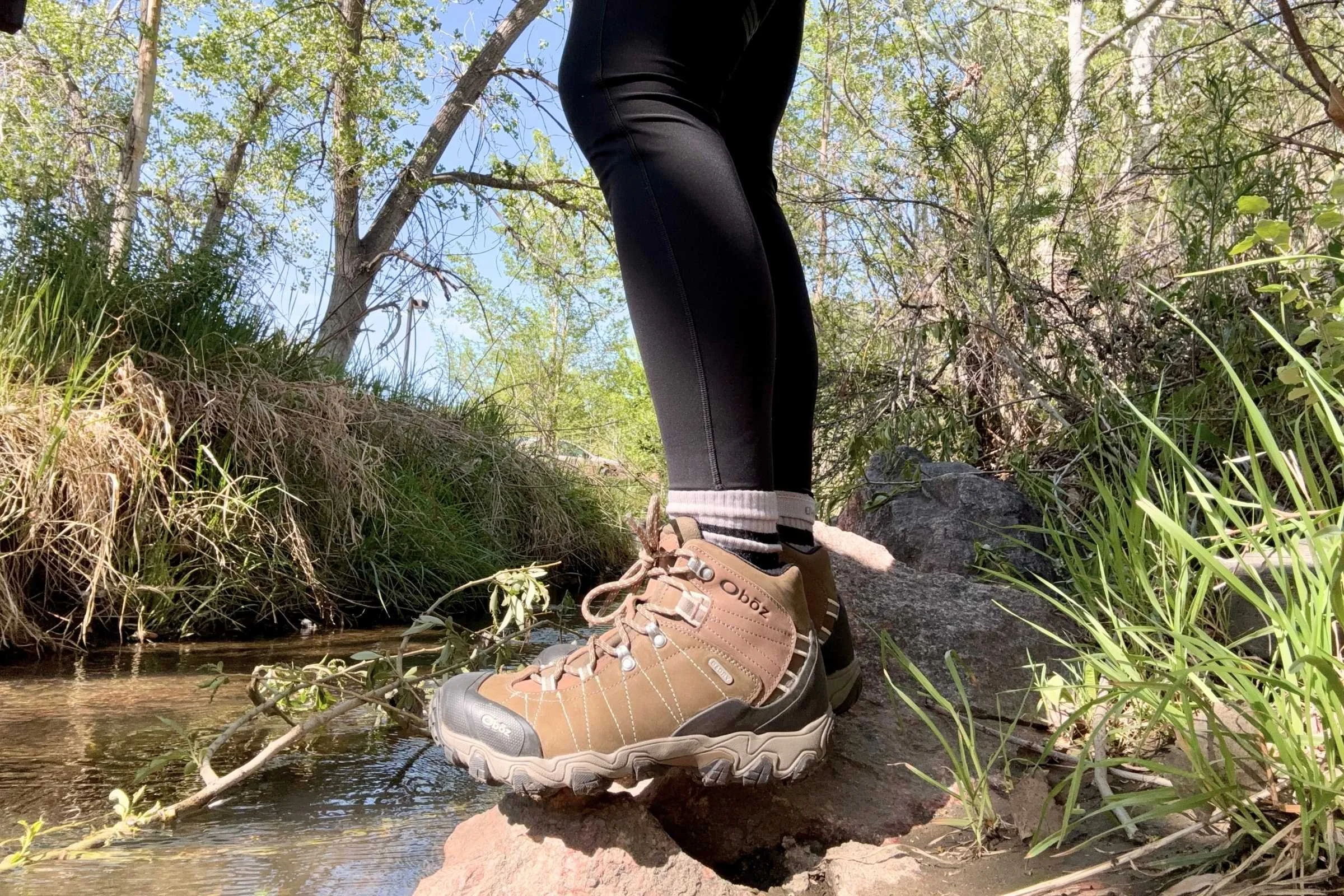
Oboz Sawtooth Ascent Mid Waterproof
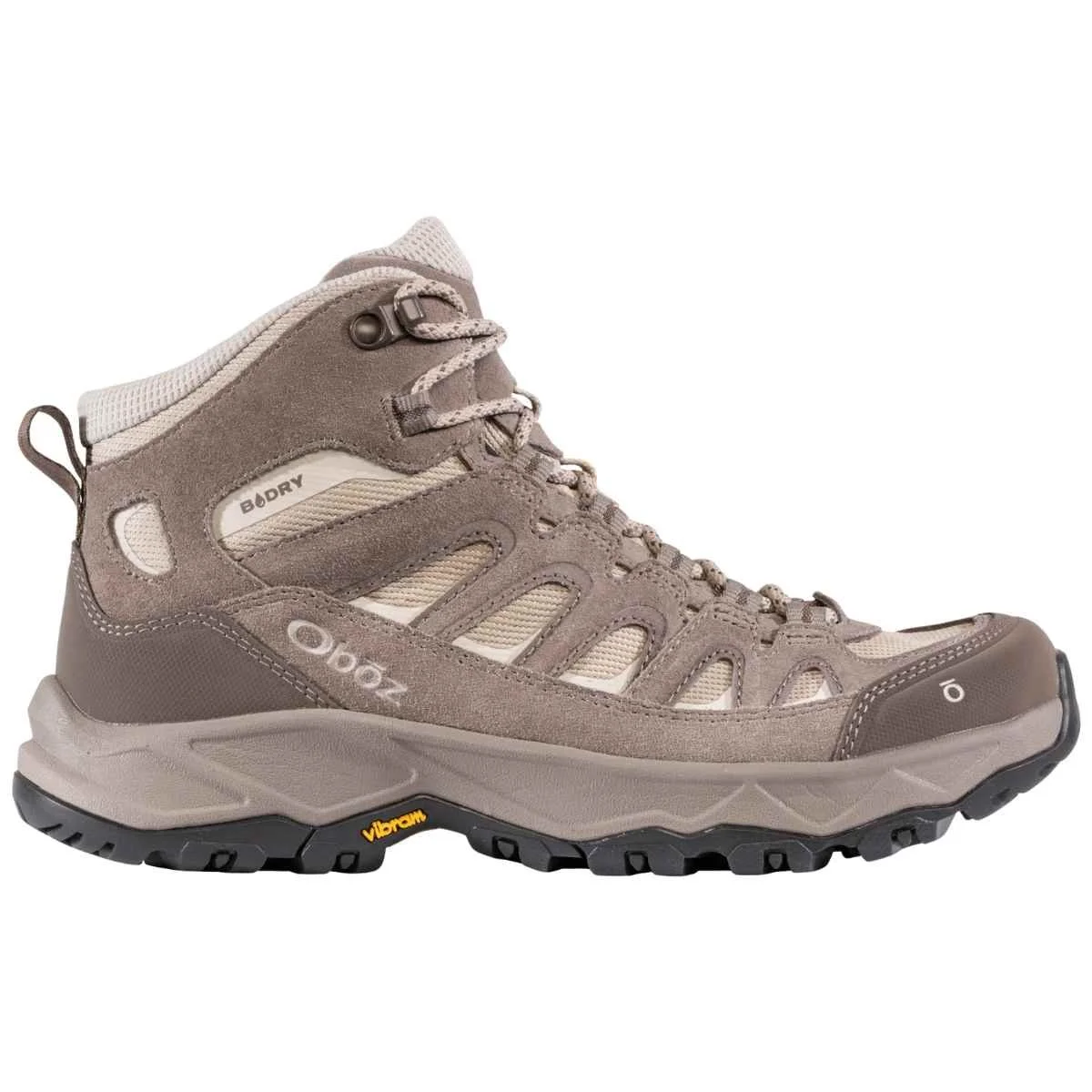
Price: $175
Weight (men’s, women’s): 2 lbs 4.8 oz, 1lb 14.8oz
Waterproofing: Oboz B-DRY waterproof membrane
Material: Waterproof nubuck leather, textile overlay, EVA foam, TPU chassis, Vibram XS-Trek outsole
Available sizes (men’s, women’s): 7-15, 5-13
Last year, Oboz released the Sawtooth Ascent Mid Waterproof Hiking Boots, which retains many of the original qualities of early Sawtooth boots, while updating the fit and features. The result is a boot with lighter protection, a more aggressive outsole, and a supportive-yet-lightweight chassis.
Throughout weeks of testing across three different states in conditions that ranged from hot and muggy to stormy and muddy, the Sawtooth Ascent impressed us with its ability to prioritize comfort while maintaining protection. These boots offer a strong option for hikers who are looking for a secure mid-height boot without the weight and stiffness that’s often associated with more traditional hiking boots.
Admittedly, the Sawtooth Ascent comes with a few flaws, like sub-par breathability and slightly less support for hikers who regularly carry heavy loads. But their lightweight structure, agile composition, and performance-oriented design make them a strong boot option for avid hikers. Read more about them in our in-depth review.
Oboz Sawtooth Ascent Mid Waterproof
Men's
Women's
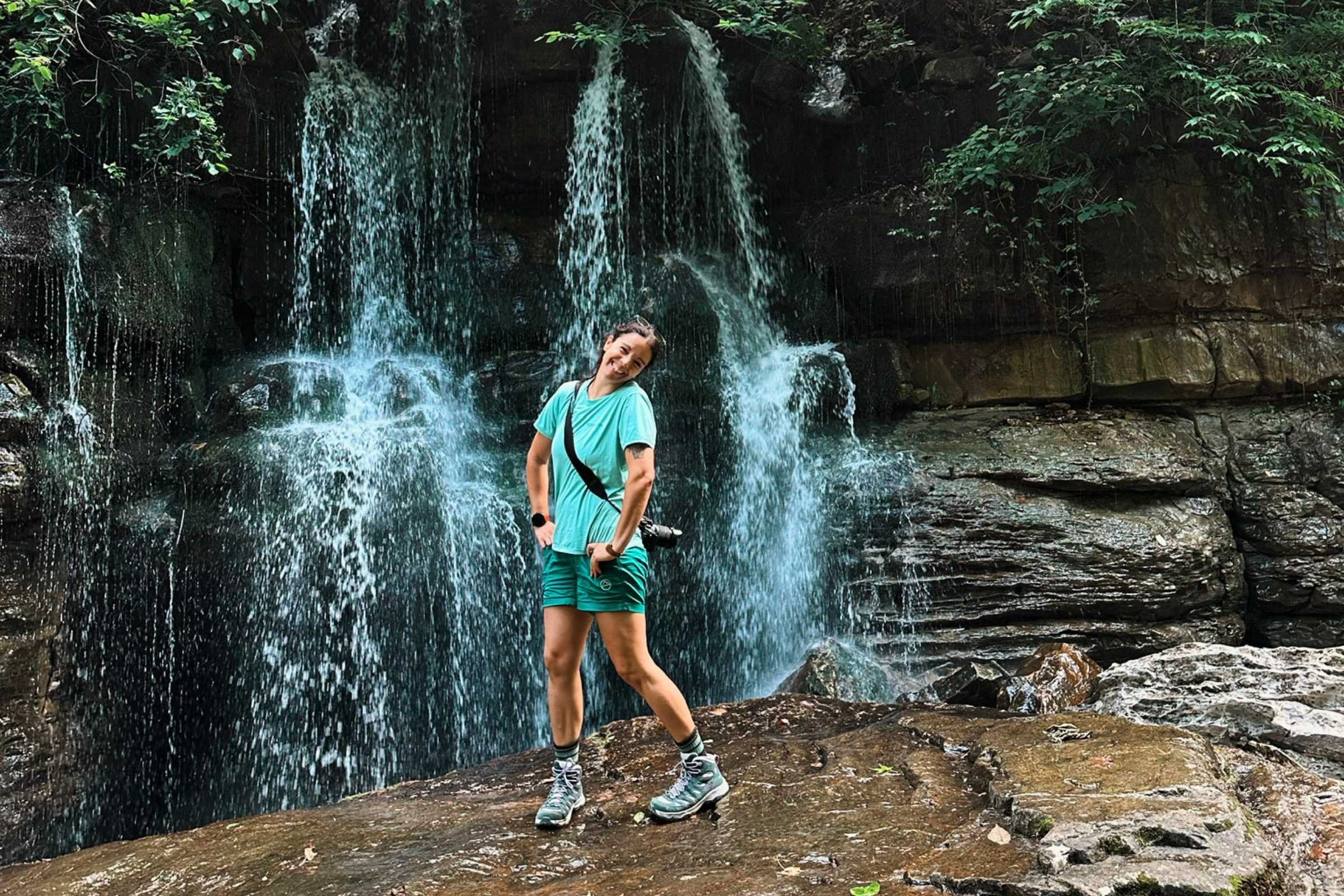
Oboz Katabatic RT Mid GTX Waterproof
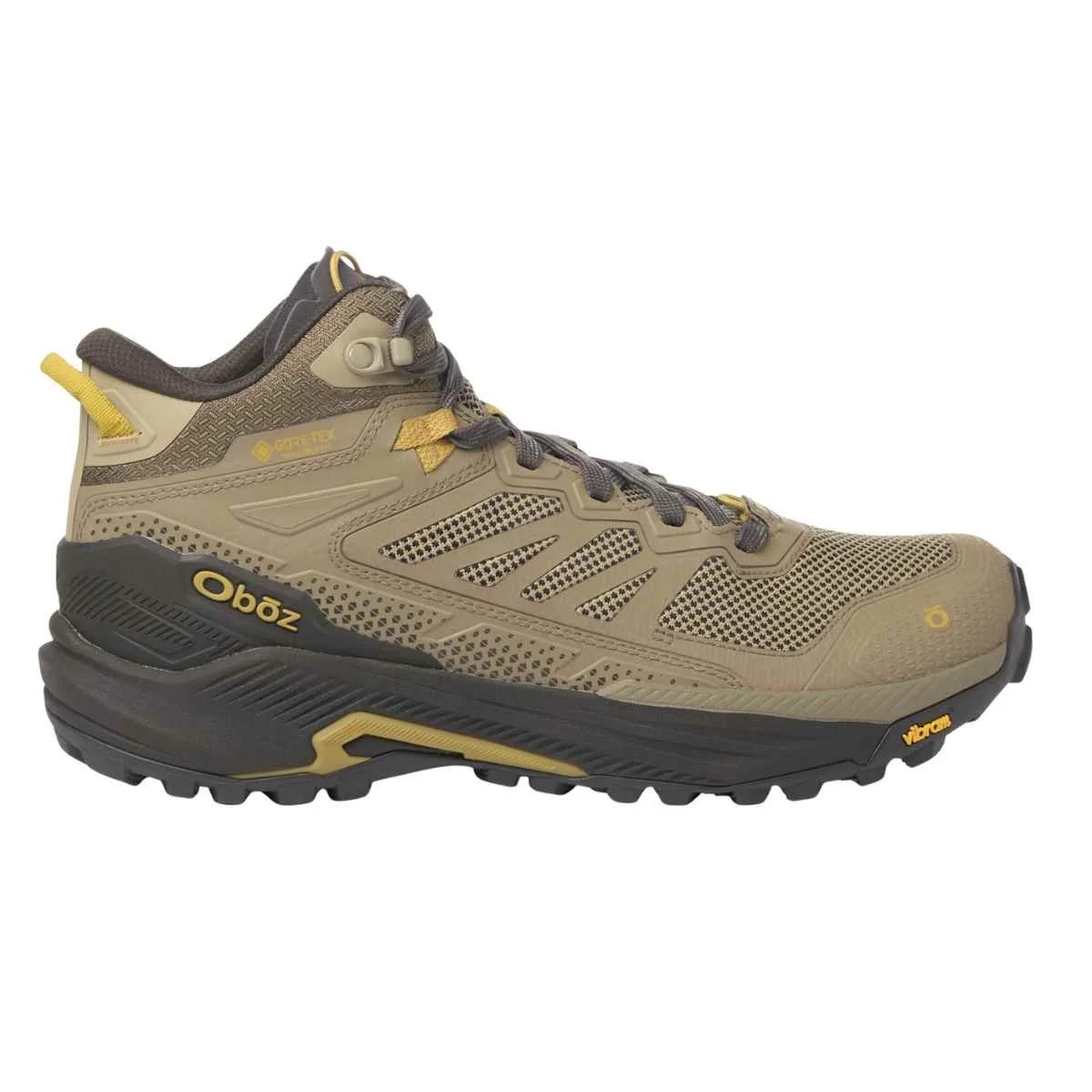
Price: $220
Weight (men’s, women’s): 2 lb. 0.4 oz, 1 lb. 10.6 oz
Waterproofing: GORE-TEX Invisible Fit membrane
Material: Ballistic recycled polyester mesh with TPU overlays and toe cap, EVA midsole with O Fit Insole, Vibram Megagrip outsole
Available sizes: 6-11
The Oboz Katabatic RT Mid GTX Waterproof hiking boots excel at balancing an agile, lightweight structure with rugged durability. While the Katabatic LT focuses on maximizing speed and minimizing weight, the RT comes with a more durable upper and a Vibram Megagrip outsole that noticeably enhances traction on wet rock, snow, and even ice.
Over six months of testing in Colorado, Montana, and Alaska, we encountered loose scree, snowfields, and steep alpine terrain, but the Katabatic RT consistently surprised us with its ability to support long mountain endeavors with minimal foot fatigue.
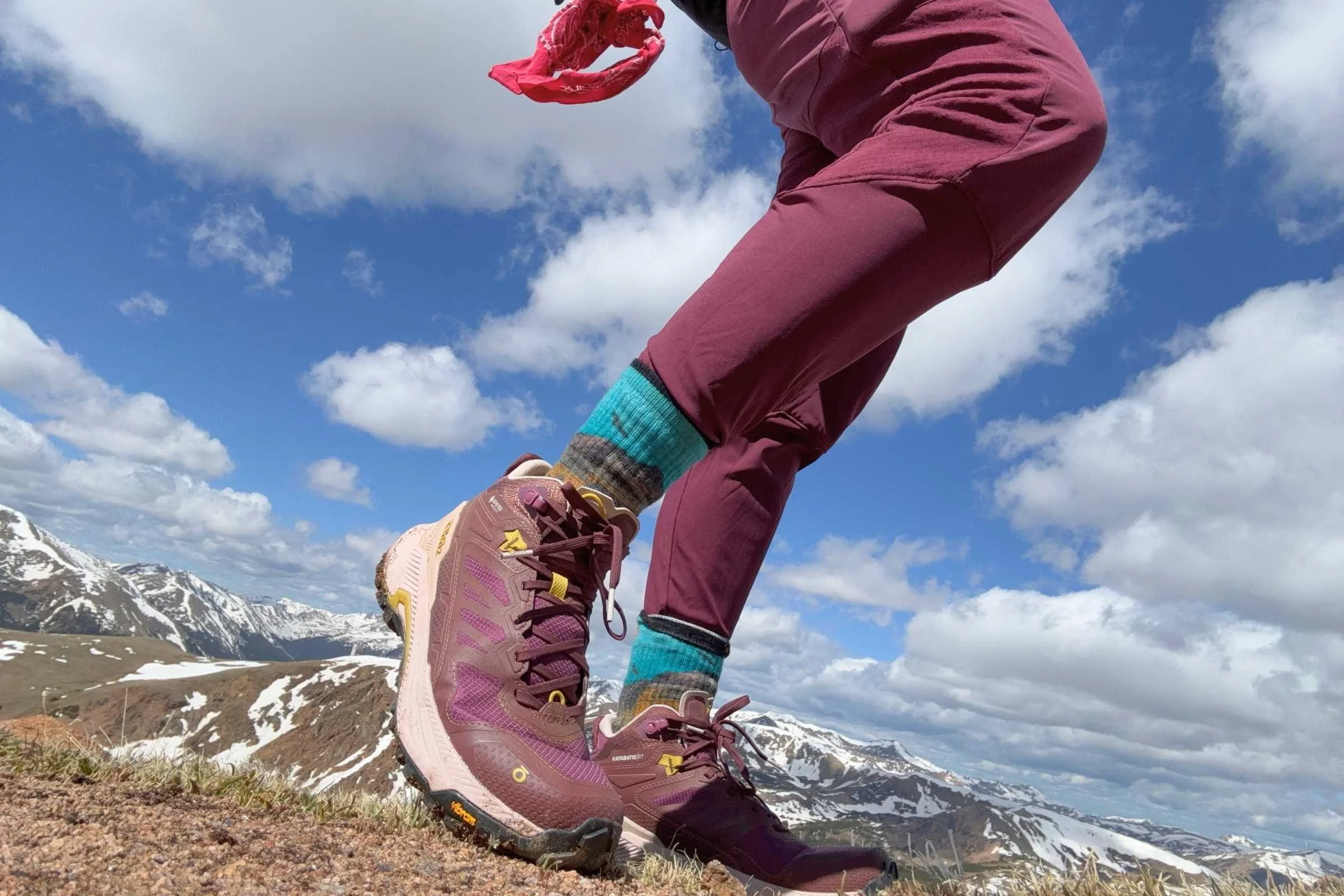
While the Oboz Katabatic RT Mid GTX are a solid boot option for rugged day hikes, peak bagging, and lightweight backpacking, they didn’t claim a winning spot in this guide because the toe box runs small, which can cause chafing on the pinky side. Check out our in-depth review of the Oboz Katabatic RT Mid hiking boots to learn more.
Oboz Katabatic RT Mid GTX Waterproof
Men's
Women's
Salewa Pedroc 2 Leather Mid Powertex
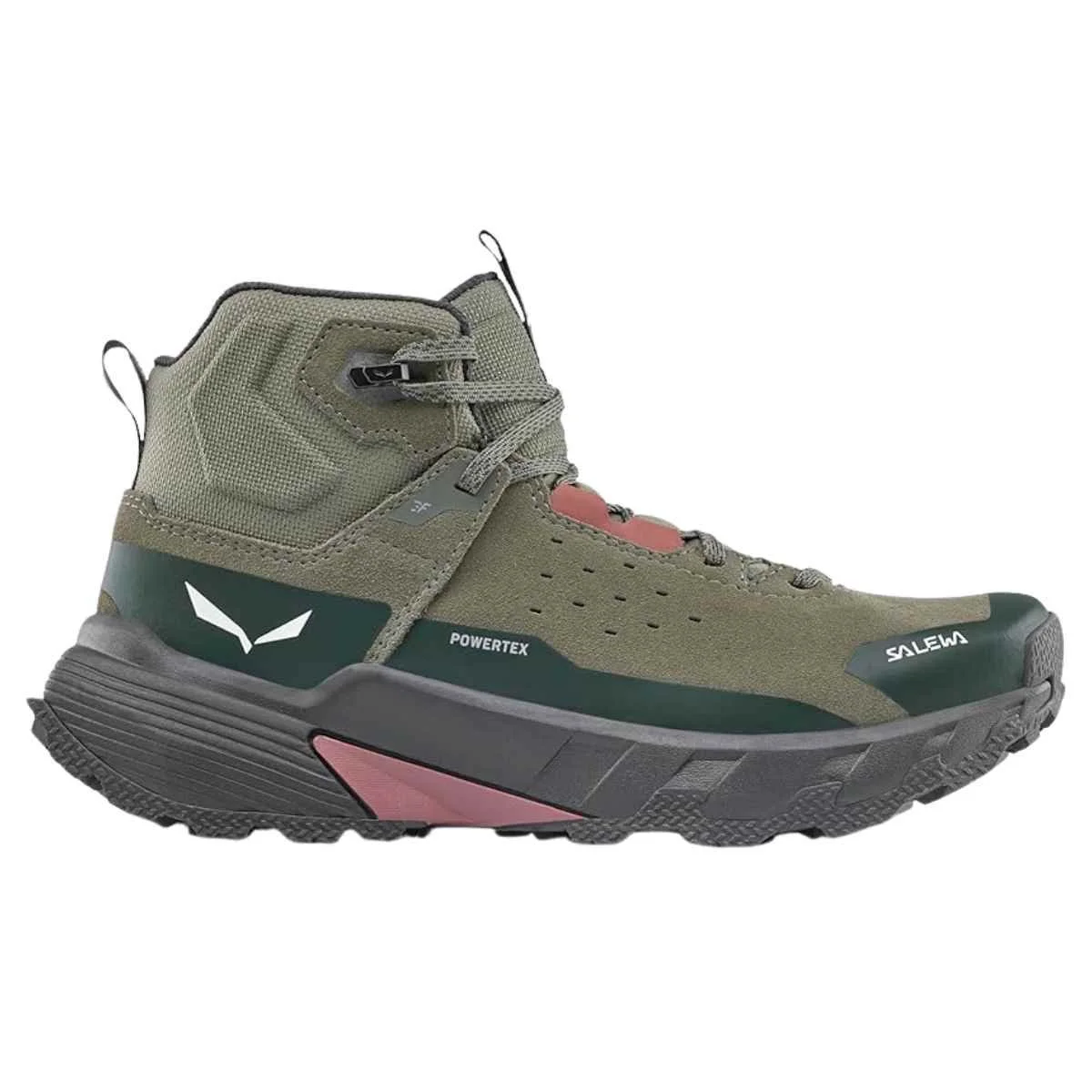
Price: $200
Weight (men’s, women’s): 1 lb 15.7 oz, 1 lb 9.4 oz
Waterproofing: Powertex
Materials: Suede and nylon upper, Pomoca Speed Hiker 2 outsole, dual-density recycled footbed, PFC-free Powertex membrane
Available Sizes (men’s,women’s): 7-14, 5-11
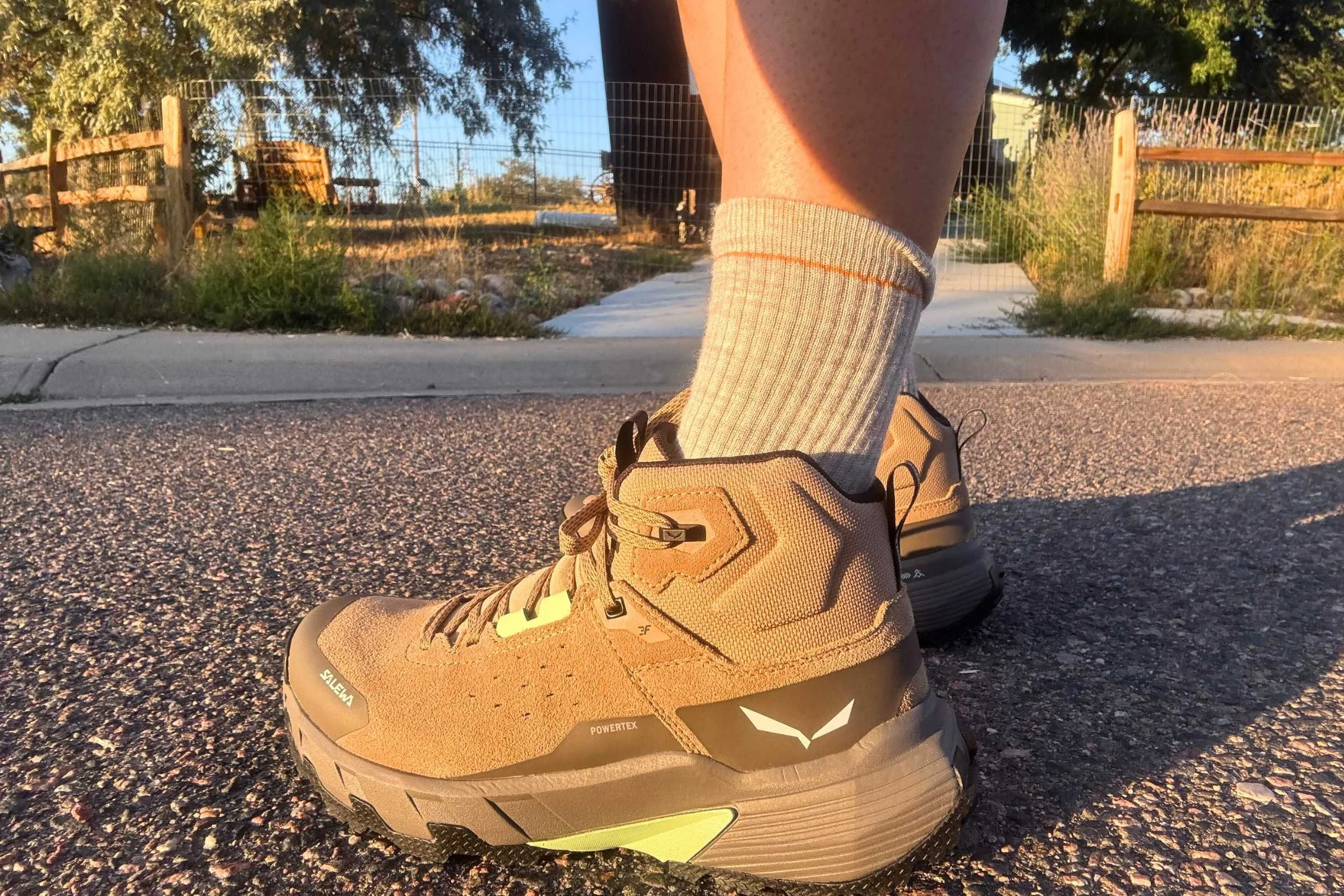
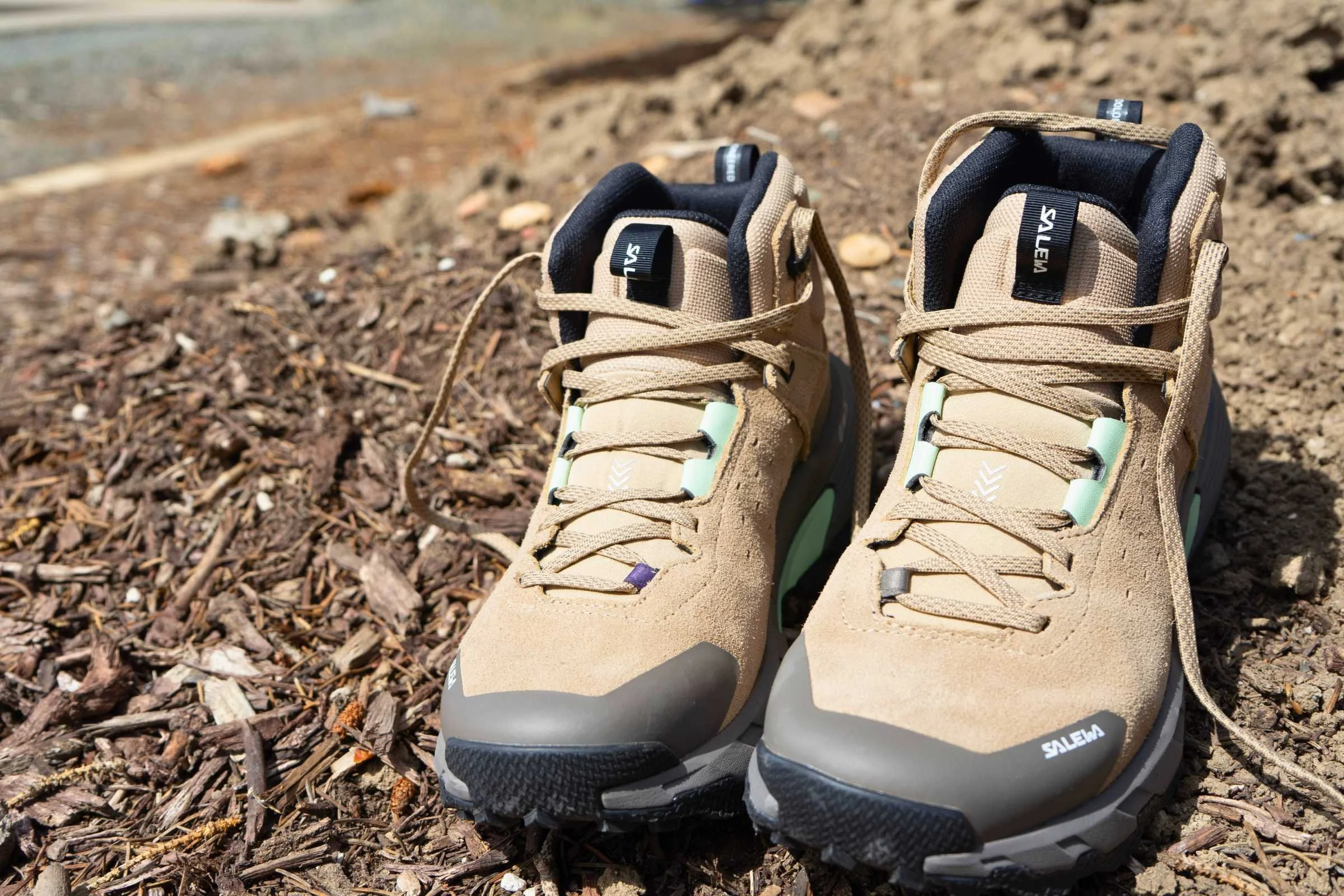
The Salewa Pedroc 2 Leather Mid Powertex boot is a great option for those who like to travel light and fast. But after these boots showed internal moisture during our submersion tests, we realized that we prefer more aggressive waterproof technology.
Salewa Pedroc 2 Leather Mid Powertex
men's
Women's
Asolo Acadia Mid LTH GTX
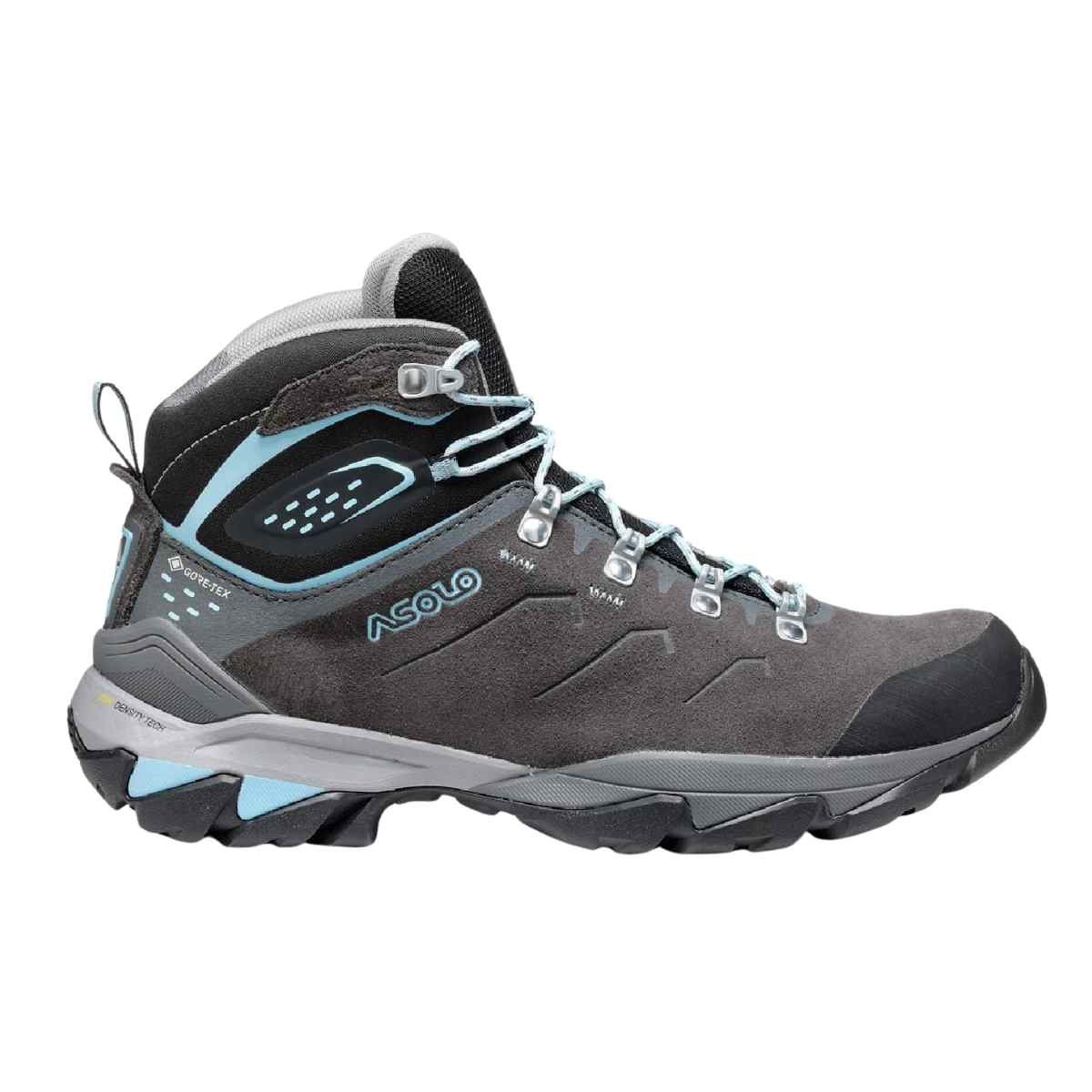
Price: $200
Weight (men’s,women’s): 2 lbs 4.8 oz, 1 lb 15 oz
Waterproofing: GORE-TEX
Materials: Suede upper, GORE-TEX Extended Comfort Wear lining, Asoloflex 00 SR lasting board, Acadia footbed, Sigma Grip outsole
Available Sizes (men’s,women’s): 8-14, 6-10.5, wide and standard fits
The Asolo Acadia Mid LTH GTX boots won in our best boots for narrow feet category in our best women’s hiking boot guide because of the snug forefoot fit and bunion design. And, frankly, it was a close contender for the same category in this guide. The main reason why the Lowa Renegade won over the Asolo Acadia is because the exterior of the Acadia has a tendency to wet out, which adds weight and general foot fatigue to the boot. Admittedly, it also dries faster than the Lowa Renegade and the internal membrane keeps your feet from getting wet. The Renegade is also substantially lighter.
Asolo Acadia Mid LTH GTX
men's
Women's
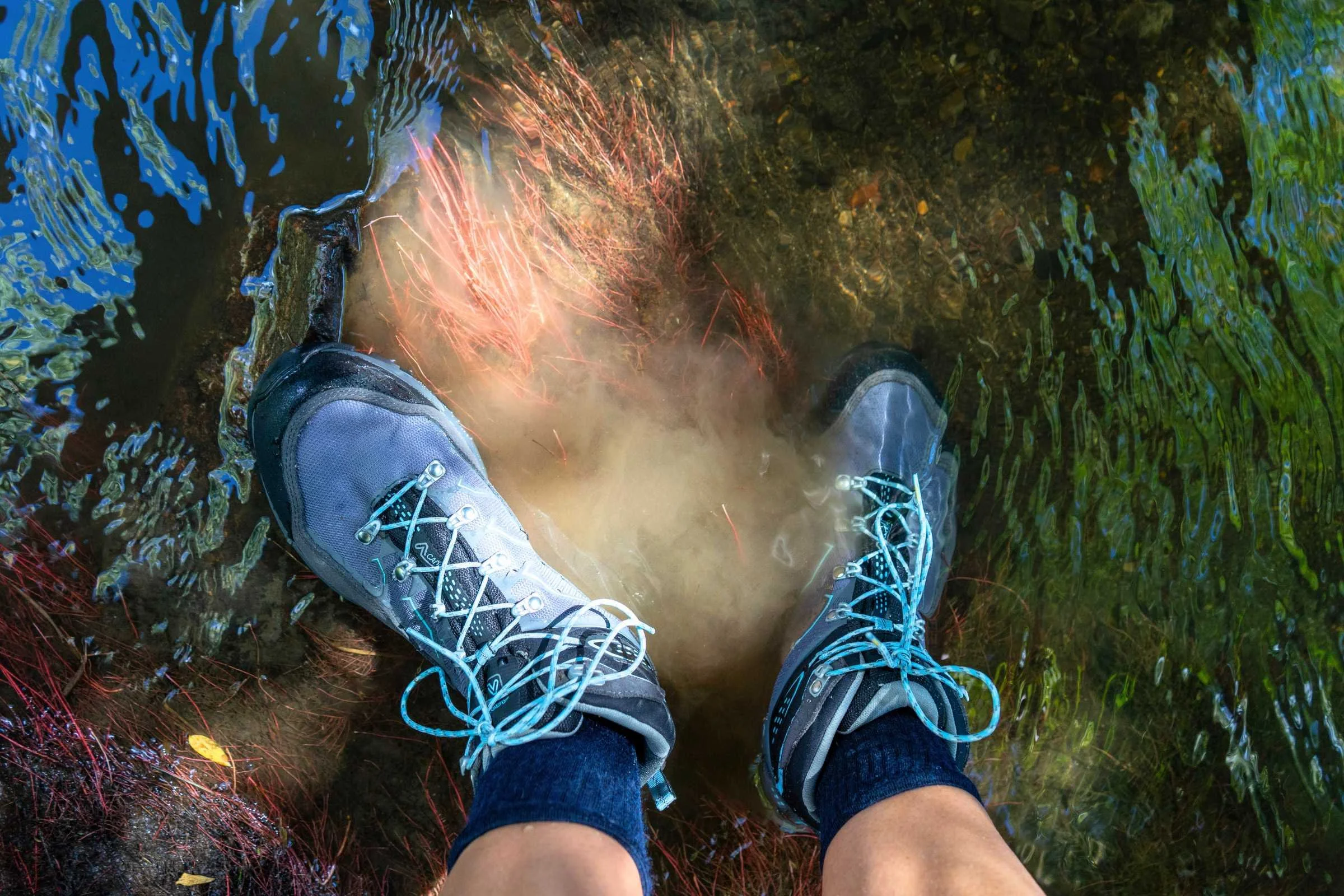
Hiker navigates a Colorado creek crossing in fall while wearing the Asolo Acadia hiking boots
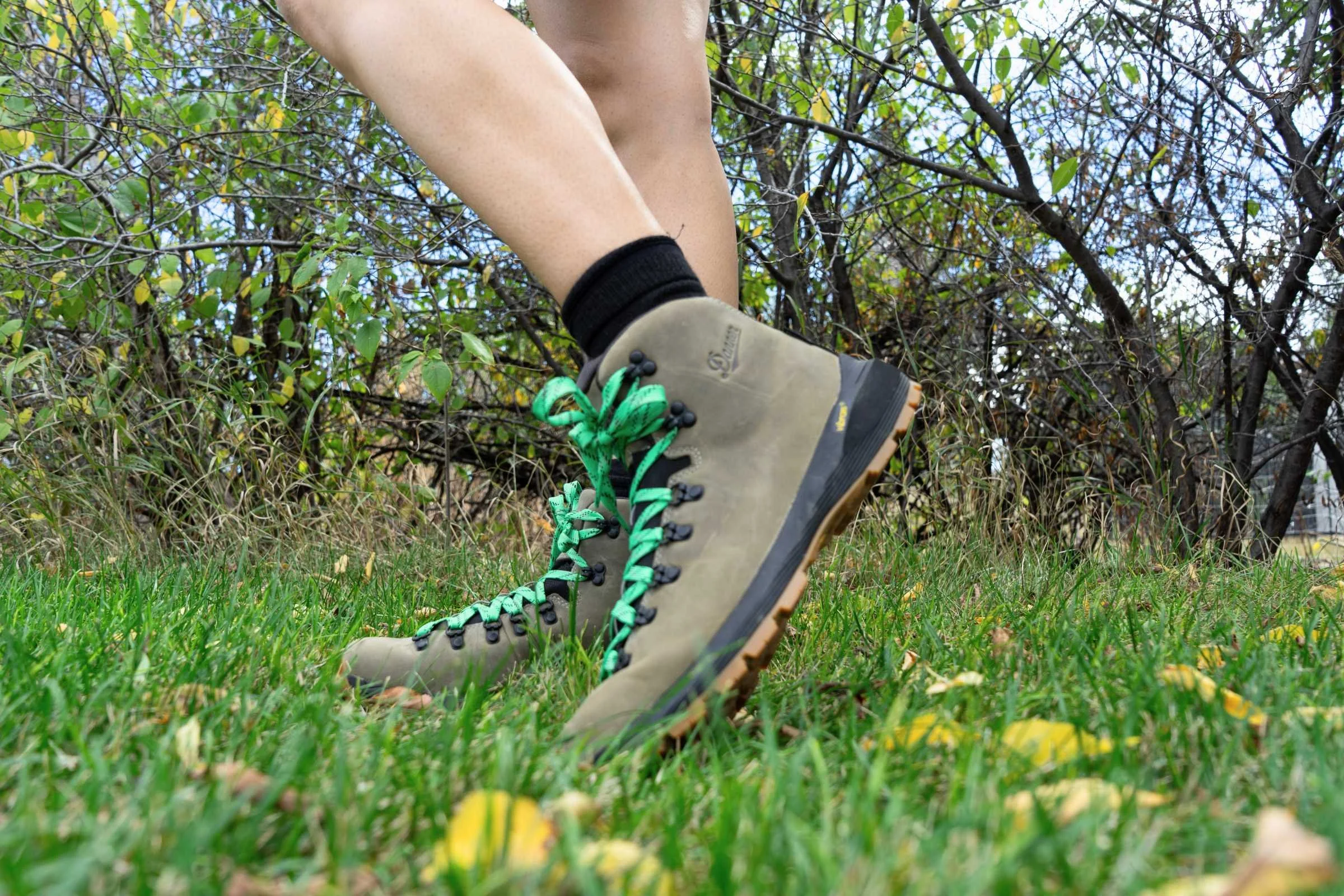
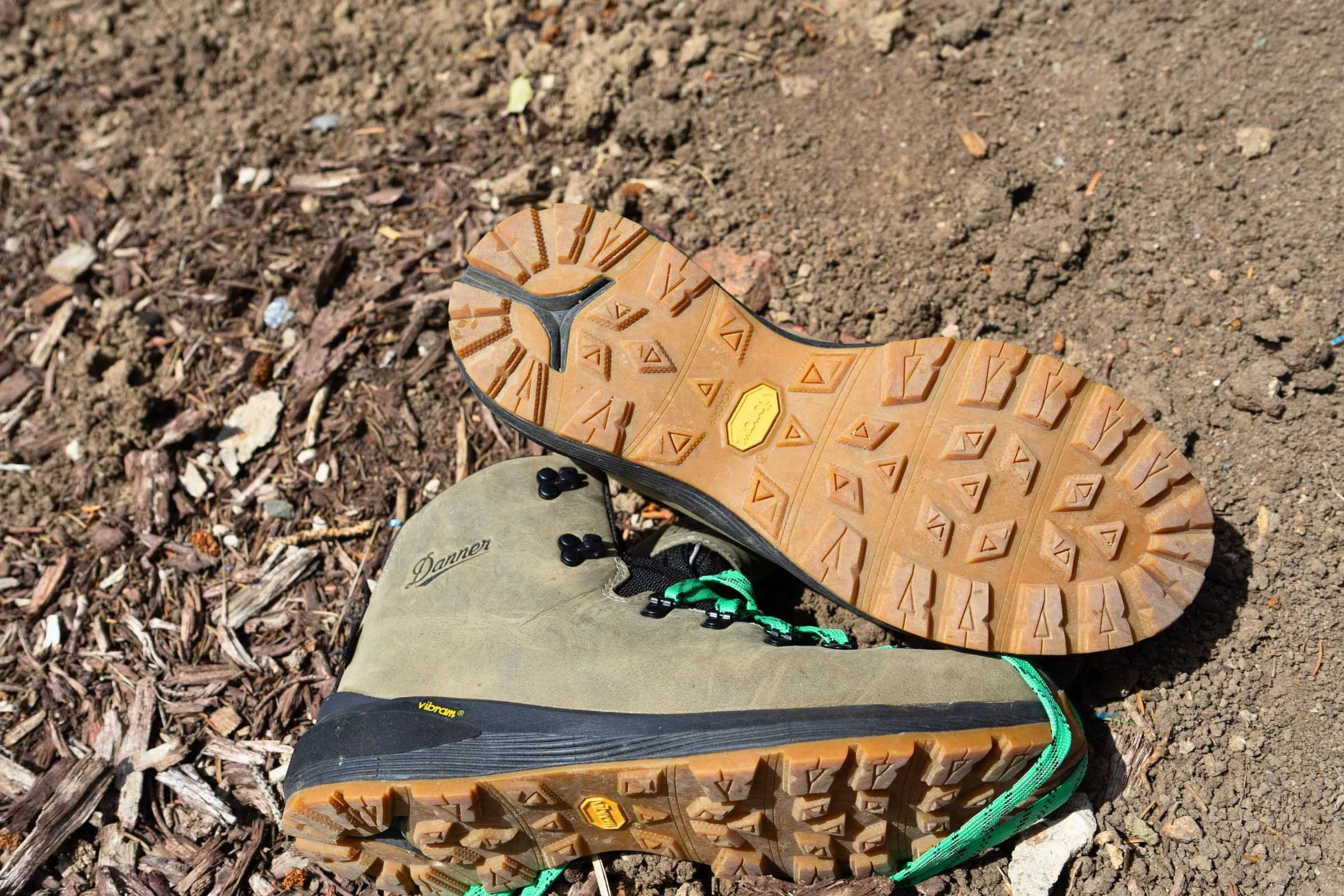
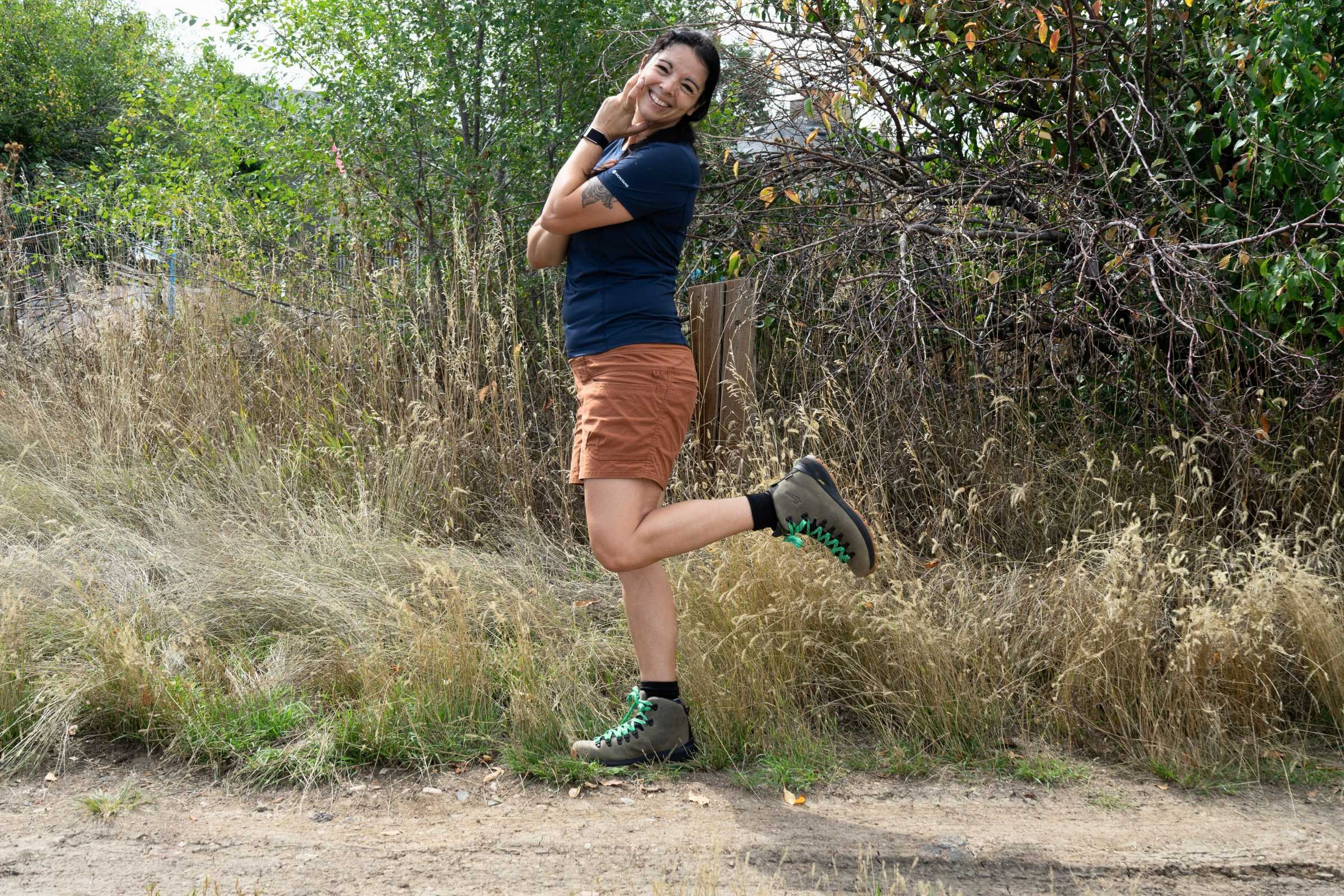
Danner Mountain 600 EVO
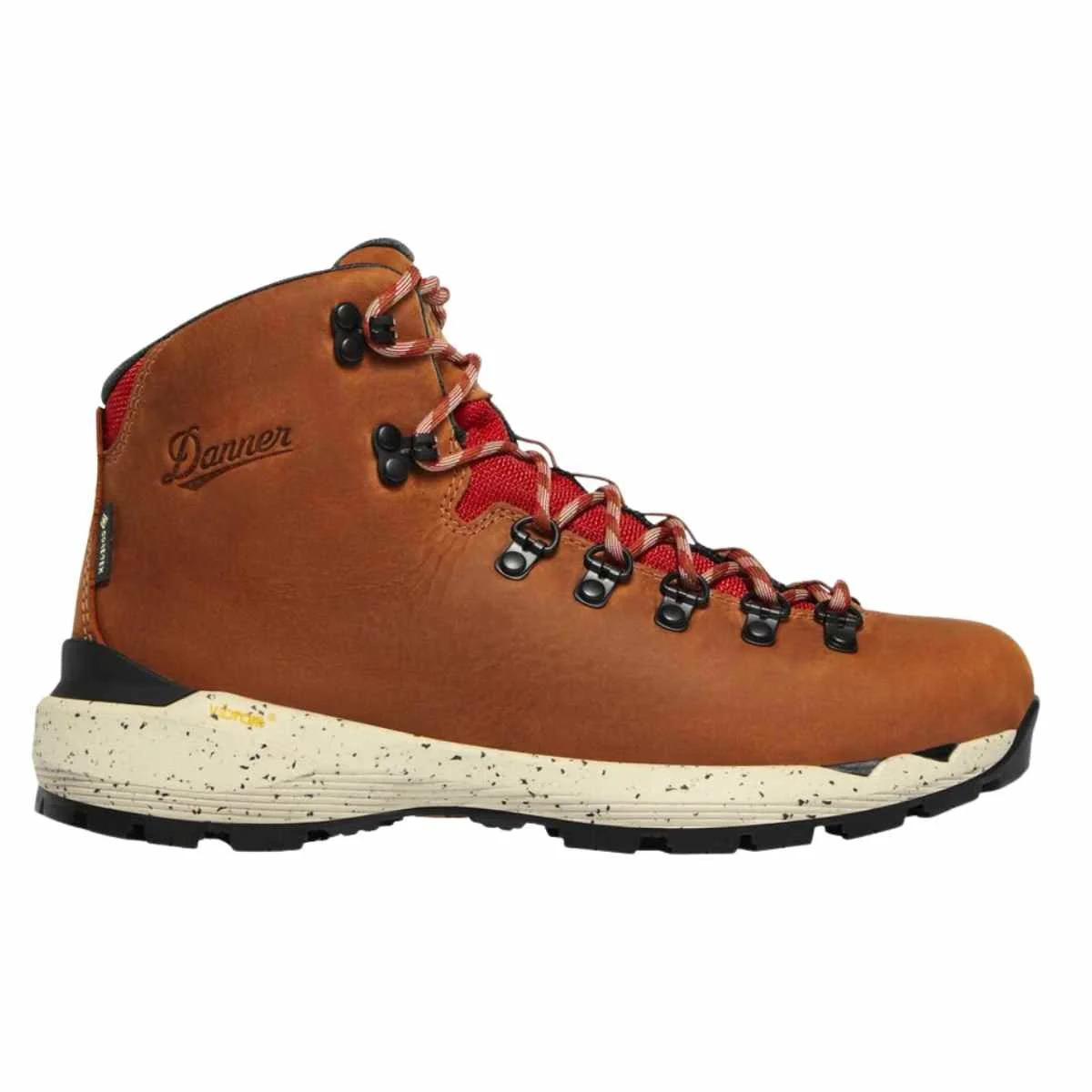
Price: $280
Weight (men’s, women’s): 2 lbs 8 oz, 2 lbs
Waterproofing: GORE-TEX
Materials: Full-grain leather upper, nylon shank, OrthoLite footbed, Vibram Fuga outsole
Available Sizes (men’s, women’s): 7-13, 5-11
We love the retro style of the Danner Mountain 600 EVO GTX boot, and we think it’s a classic option for a reason. These boots could’ve easily won in the backpacking and wide foot categories. But they come with a touch less breathability and stability than alternative boots. Like the Asolo Acadia Mid boots, the exterior quickly wetted out but the interior stayed dry during testing.
While external saturation doesn’t automatically become a significant problem for hikers and backpackers, it can impact the temperature of your boots, making it more difficult for your feet to stay warm. More commonly, it negatively impacts the weight of the boots, which contributes to foot fatigue.
Read more in our in-depth review of the very similar Danner Mountain 600 Leaf GTX.
Danner Mountain 600 EVO
men's
Women's
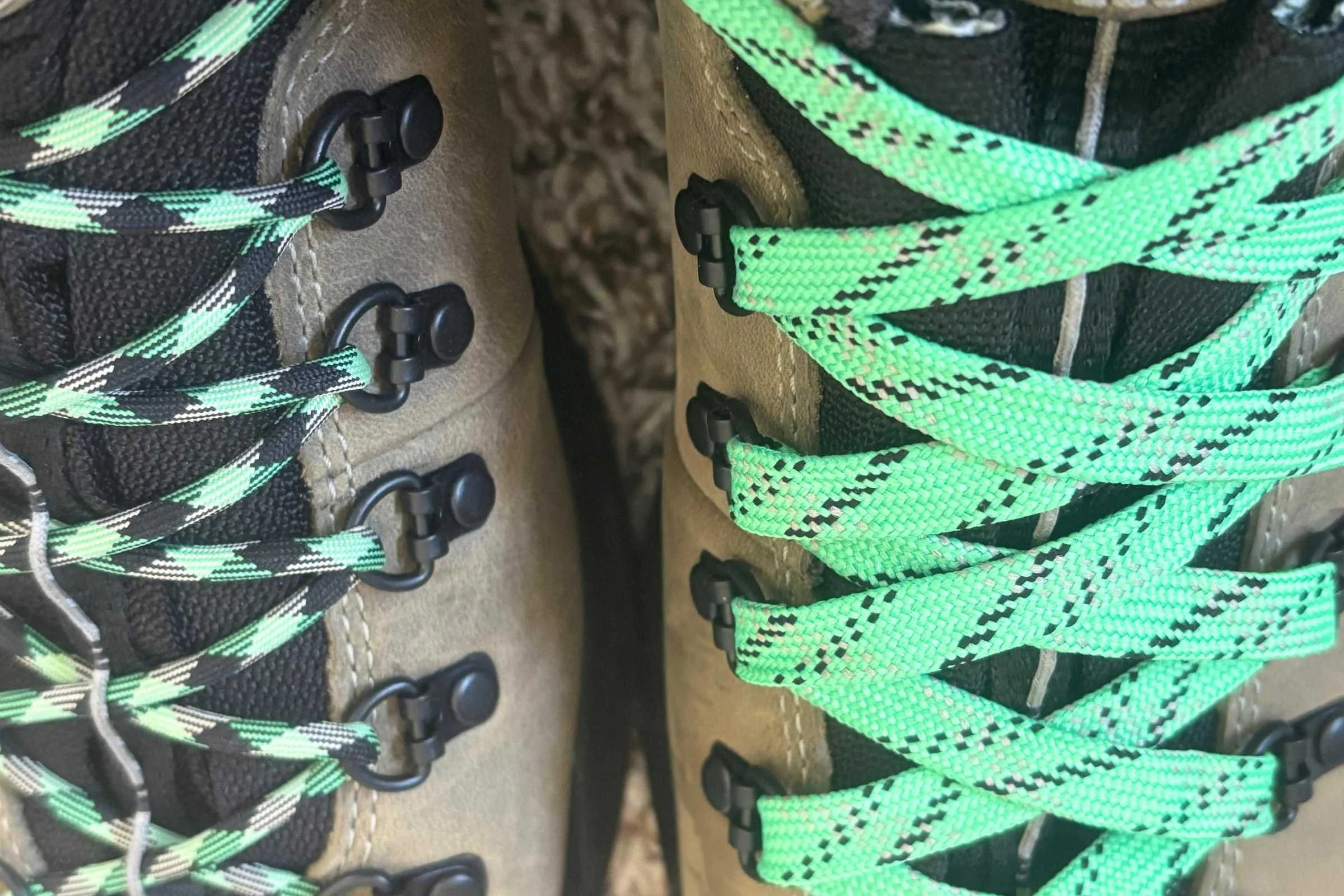
Oboz Sawtooth X Mid Waterproof
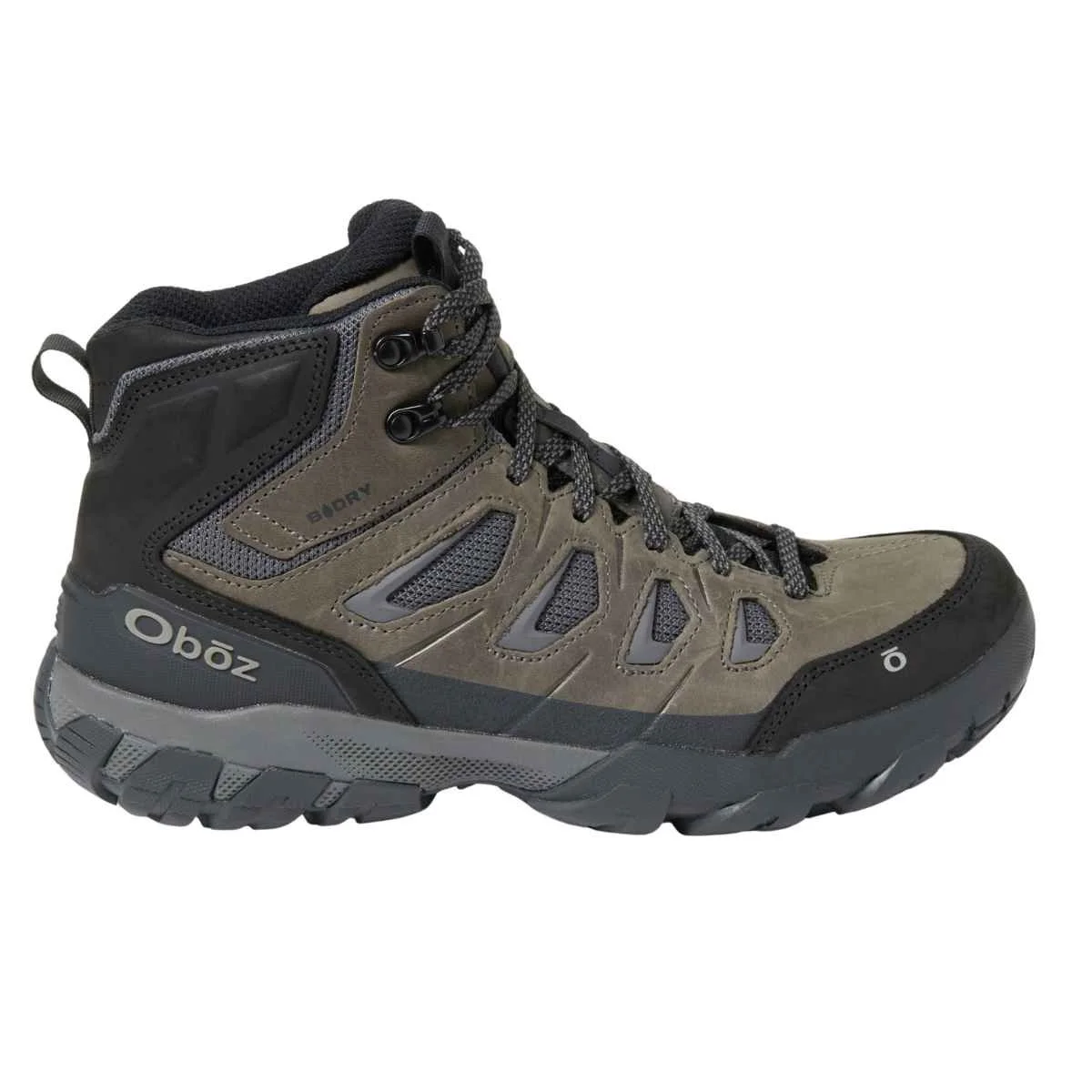
Price: $200
Weight (men’s, women’s): 2 lbs 6.8 oz, 2 lbs 0.6 oz
Waterproofing: Oboz B-Dry
Materials: Gold certified nubuck leather and 30% recycled mesh upper, TPU heel counter, B-Dry membrane, Trail Tread rubber outsole
Available Sizes (men’s, women’s): 7-15, wide and standard widths
We love these boots. They’re comfortable, durable, aggressive, and technical enough to handle most trails. But after our submersion tests, we noticed a touch of dampness around the tongue of these boots. And, honestly, we’d still wear them in wet conditions because they excel in just about every other category (i.e., grip, traction, comfort, support). We just found that there were a few pairs of boots that handled external moisture with a more aggressive approach.
Oboz Sawtooth X Mid Waterproof
men's
Women's
Hiking with the Oboz Sawtooth X in Colorado in fall.
What to look for in waterproof hiking boots
Waterproof hiking boots should come with minimal seams to prevent leakage, a reliable waterproof barrier, and some amount of breathability to allow internal evaporation to take place. These components should work together to create a boot that’s designed to enhance comfort and protection, while allowing hikers to adventure in the wilderness. Here’s what else hikers should know about essential waterproof hiking boot features.
Waterproof membrane types
GORE-TEX first materialized in 1969 when Bob Gore discovered that it was possible to create a waterproof membrane by using polytetrafluoroethylene (PTFE) rods. Less than a decade later, the resulting material began appearing in jackets, which created a water-repellent shell that was predominantly used for outdoor adventurers.
Today, GORE-TEX is still the reigning king of waterproofing, appearing in everything from jackets to bibs, boots, and gloves. One of its most popular applications is in a membrane in hiking boots. This membrane is designed to keep your feet dry even when you submerge your boots in creeks and sludge. In order to maintain such an unbeatable barrier, it does have a tendency to trap sweat inside of hiking boots. But GORE-TEX is not the only waterproof material that’s available today.
In fact, boots like the KEEN Targhee IV use the proprietary KEEN.DRY waterproofing, which is essentially a barrier that’s used in a bootie construction of the boot and paired with a water-repellent boot finish. KEEN isn’t exactly transparent about which materials it uses to create this waterproof barrier outside of stating that it’s PFC-free. But we know that the brand uses third-party testing to evaluate the waterproofing system.
One advantage that comes from brands using a proprietary waterproofing barrier is that they have more control over the manufacturing process. This could mean that they’re more likely to implement upgrades based on reported defects, supporting constant improvements and pivoting to stay competitive with pricing. At the same time, proprietary waterproof systems haven’t been around as long as GORE-TEX, which means that they haven’t seen as much field testing. KEEN.DRY, for example, was released in 2009, about 40 years after GORE-TEX was invented. So, it might feel like trusting proprietary waterproofing comes with a greater risk.
KEEN.DRY also isn’t the only proprietary waterproofing material available. Oboz offers its own. Danner, Merrell, and Columbia are also known for their own waterproofing systems.
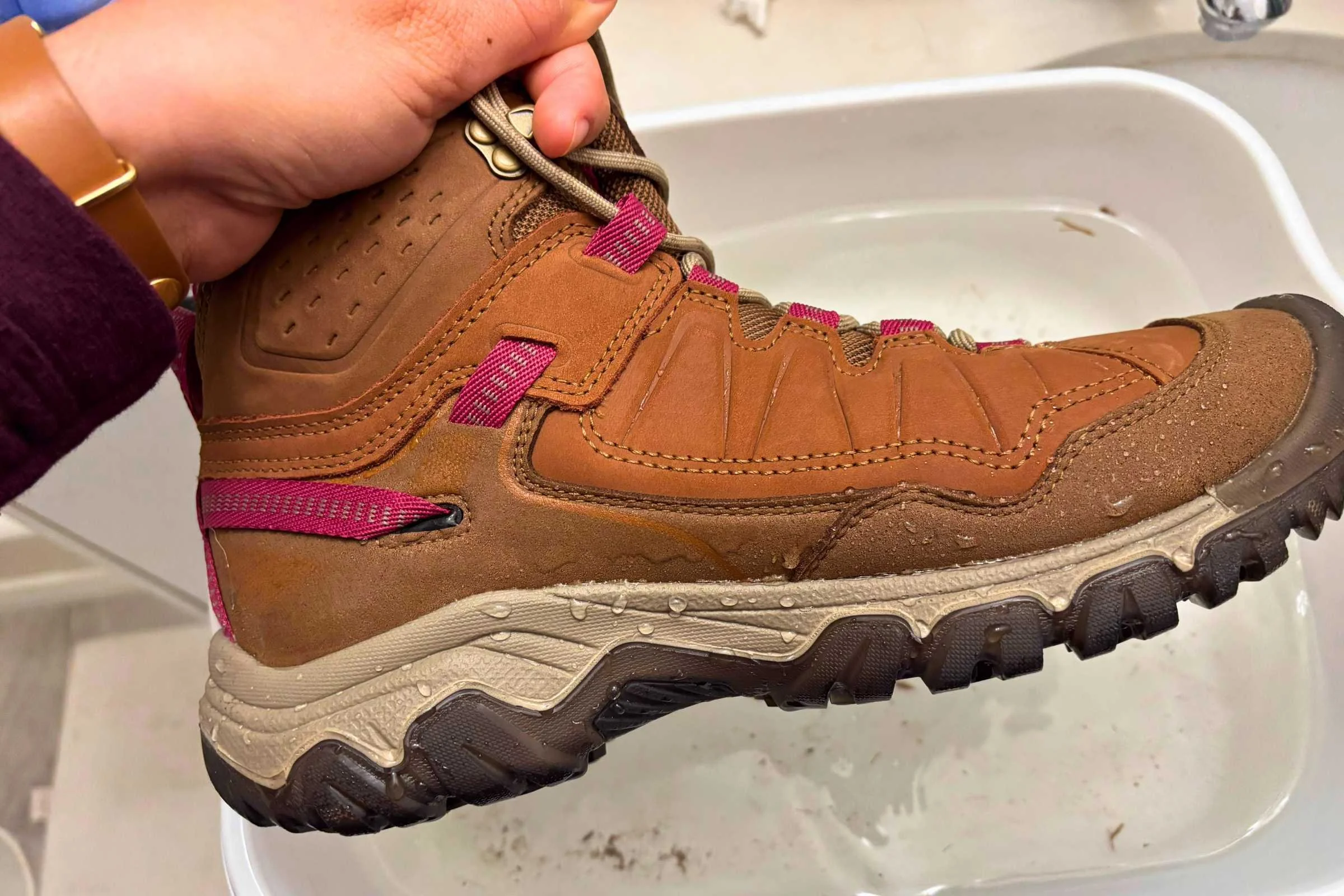
The KEEN Targhee IV uses KEEN’s proprietary KEEN.DRY waterproofing.
Breathability vs. waterproofing trade-offs
Typically, the more waterproof a boot, the less breathable it’ll be. That said, this reality is a bit nuanced. I’ve conducted side-by-side testing of both GORE-TEX boots and KEEN.DRY boots and determined that they both stand up to complete submersion, which was frankly surprising for me to witness since I felt biased towards GORE-TEX after adopting the material in a rain shell and in my boots for 800 miles on the Appalachian Trail. I thought that nothing could ever compete with the material.
What’s more is that KEEN.DRY tends to provide more breathability than GORE-TEX alternatives, lending itself to faster drying times. As a result, you might argue that GORE-TEX boots are a better option for cold-weather conditions where warmth and insulation are key. And KEEN.DRY boots might support warm-weather hikers who spend a lot of time around water.
Hikers who spend time in warmer environments may be more inclined to grab a pair of boots with a slightly more breathable (and possibly less waterproof) option, knowing that they won’t need to keep their boots saturated for long stretches of time.
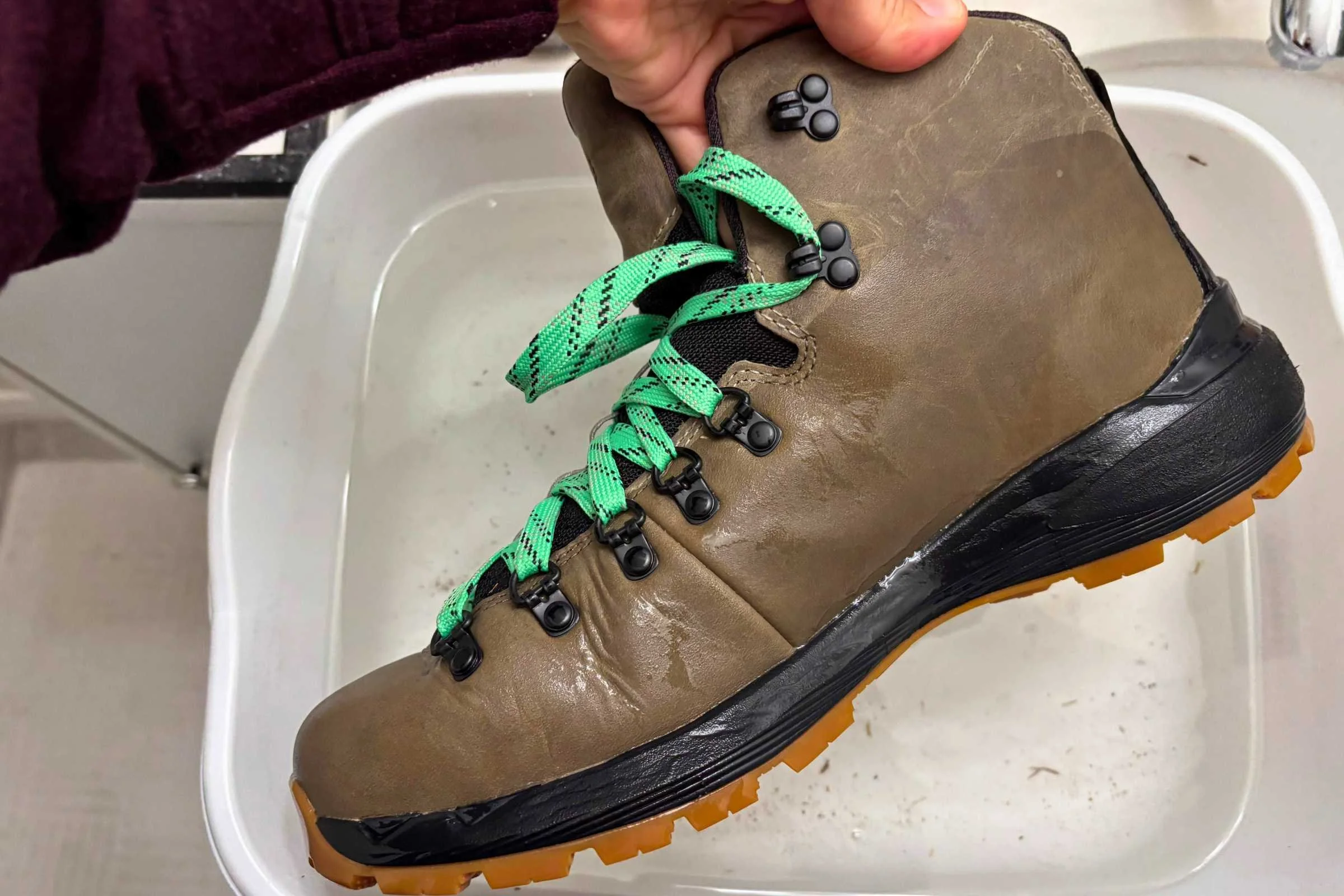
Construction methods (sealed seams, gusset tongues)
Waterproof hiking boots may come with a sealed or taped construction, which means that the upper pieces of the boots are stitched together and then sealed together from the inside to prevent water from seeping in through the needle holes. This is one of the most common manufacturing methods. It’s extremely effective, but can face challenges when it comes to longevity.
Some boots come with gusseted tongues, which means that the tongues are sewn to a higher height than non-waterproof boots. This is a must-have feature if you’re looking for truly waterproof boots, but it requires additional waterproofing to be truly effective.
The majority of waterproof hiking boots use some type of waterproof membrane, which is placed on the interior of the boot’s upper. As one of the most effective waterproofing methods, this approach can typically withstand complete submersion. But the membrane can be punctured with intense usage.
Upper material compatibility with membranes
While waterproof membranes are one of the most effective solutions to saturation, they aren’t compatible with every upper material. For example, they’re generally effective with the use of a leather upper since leather is less prone to stretching and stressing out the bond between the upper and the membrane. Membranes may also be compatible with suede materials, but suede is more absorbent than leather, which means that it reduces the breathability of a membrane, resulting in a need for an additional DWR coating on the exterior of the boot. And, oftentimes, suede boots will become completely saturated when the DWR coating fails. While the waterproof membrane prevents your feet from getting wet, the added weight of water can contribute to foot fatigue.
Generally, leather, synthetic materials like nylon and ripstop, and nubuck leather offer the best compatibility with waterproof membranes, while suede and synthetic leathers present additional waterproofing challenges.
Outsole design for wet traction
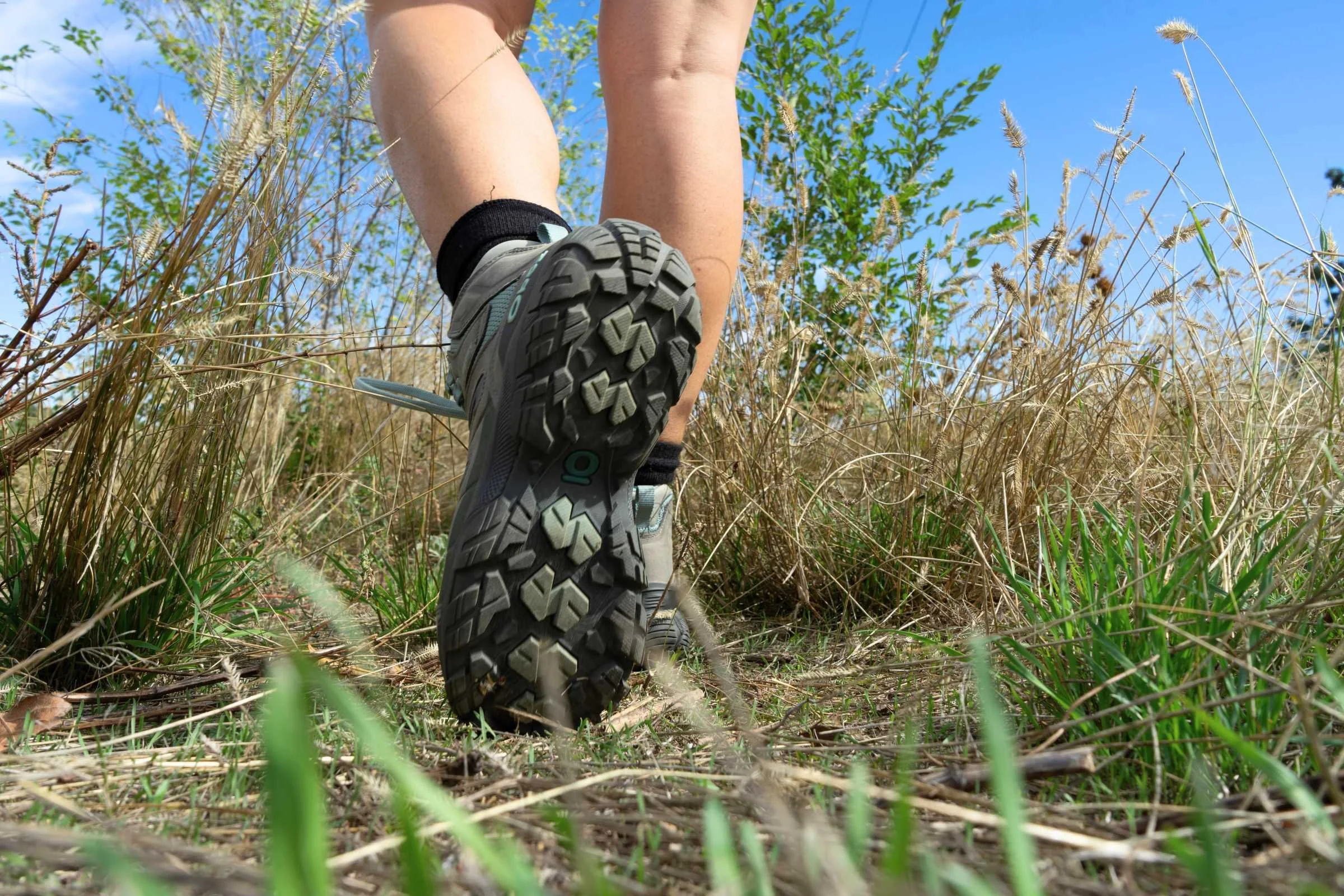
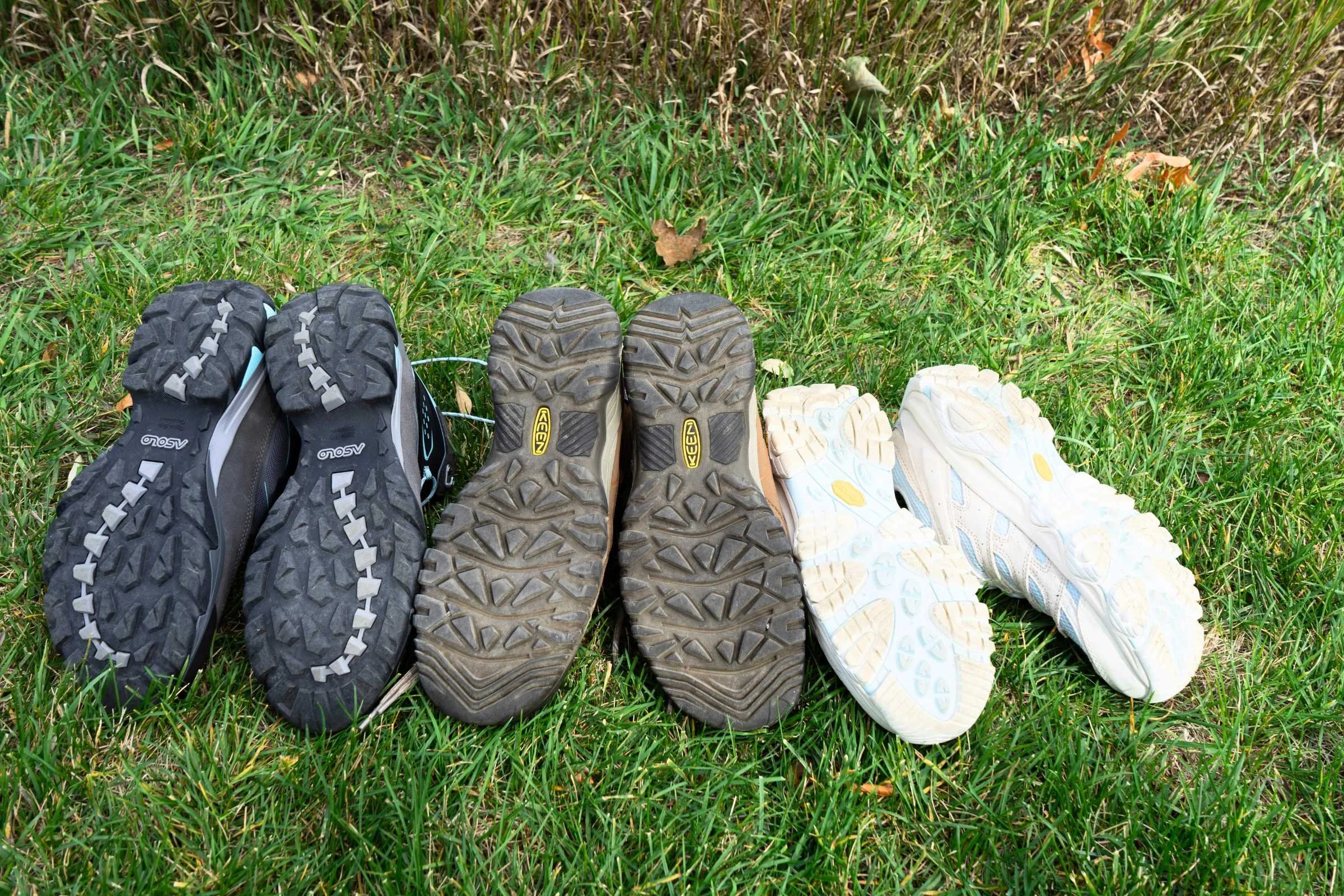
In addition to prioritizing a waterproof boot construction, hiking boots should come with an outsole that prioritizes grip in wet conditions to keep you feeling sure-footed and stable in any condition. Soft outsole rubber tends to stick to wet surfaces while increasing surface contact better than hardened alternatives. Some rubbers we love in these conditions include Vibram Megagrip rubber and Salomon Contagrip MA because of their strong, soft material.
Break-in requirements for waterproof boots
Break-in times vary greatly from boot to boot, no matter if they’re waterproof or not. But typically, leather boots take the longest to break-in, requiring 1 to 3 weeks or 20 to 40 hours of regular usage to soften the materials. Nubuck leather requires less time than full-grain leather, but most hikers should still expect to use them for 1 to 2 weeks or 10 to 20 hours before the materials feel soft and supple. And synthetic boots often require the least amount of break-in time, allowing hikers to feel comfortable and supported in just a few hours.
Sizing considerations with waterproof liners
Waterproof membranes can slightly reduce the interior volume of a boot. So, if you’re between sizes, it’s generally better to size up than to size down. Boots with membranes are also less likely to experience stretching as they break-in. This means that hikers should ensure they have enough instep space and space in the toe box to comfortably hike on both an ascent and descent.
Price vs. performance value
Like most outdoor gear, waterproof hiking boots exist on a large spectrum that ranges from affordable, entry-level footwear to highly technical options that are compatible with crampons and MICROspikes. In most cases, the capability of a boot increases as the price of it grows. But there are some exceptions to this reality, like the Columbia Newton Wander, which is extra affordable and relatively adept at tackling easy to moderate terrain.
Why you should buy waterproof hiking boots
Waterproof hiking boots add a layer of protection from rain, creek crossings, and other variable conditions, but not everyone needs this extra assurance or is interested in trading breathability for a moisture protectant. Here are a few considerations before purchasing a pair of waterproof hiking boots.
Wet weather protection
Rain, snow, and mud can quickly permeate hiking boots that don’t come with a waterproof barrier. But some places are more likely to feature these conditions than others. For example, Colorado has a tendency to stay dry between late spring and early fall while the Pacific Northwest often comes with variable weather conditions year-round. As a result, those who live or recreate in places that are known for having wet weather may prefer the use of waterproof boots over mesh hiking boots or trail runners.
Stream crossing confidence
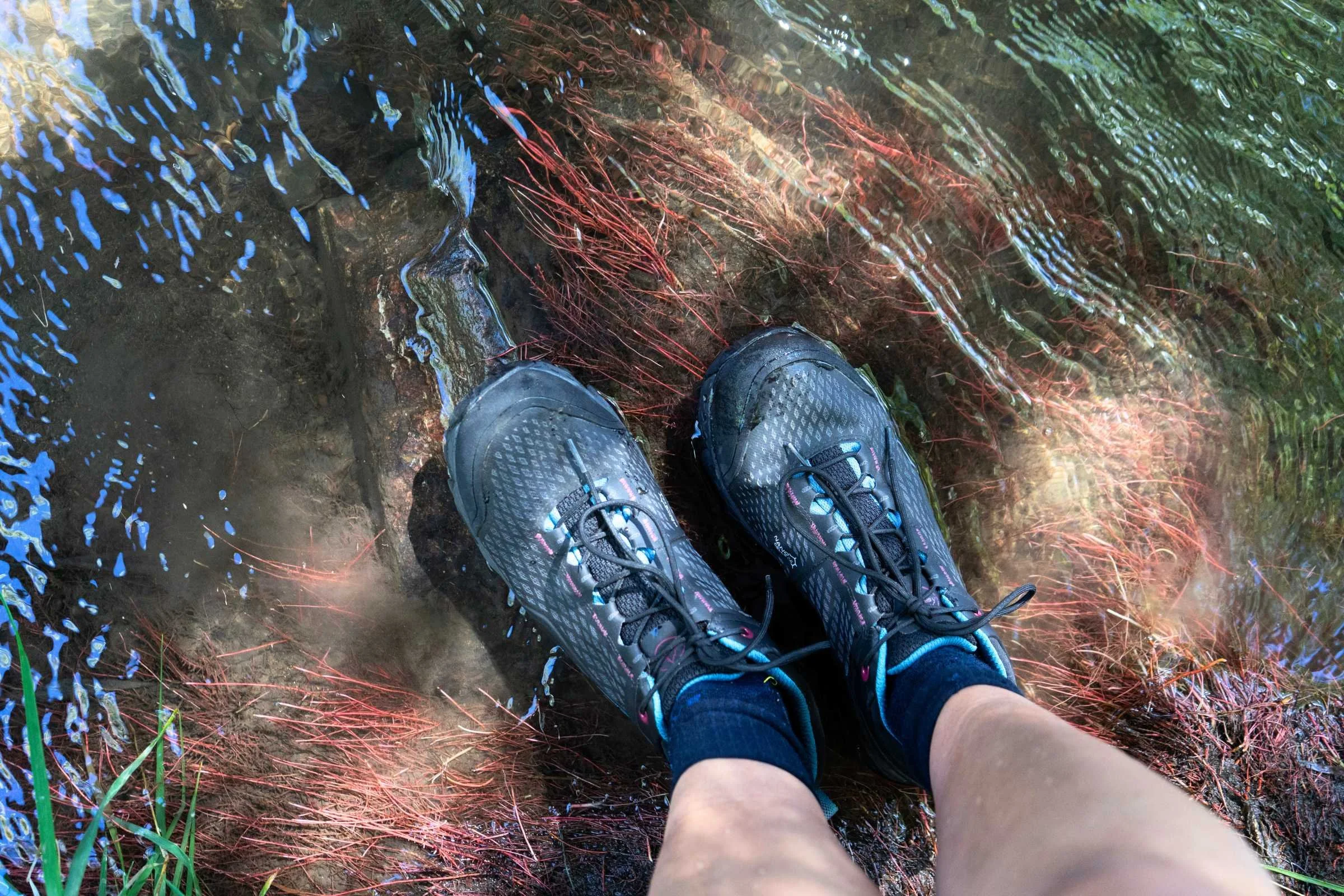
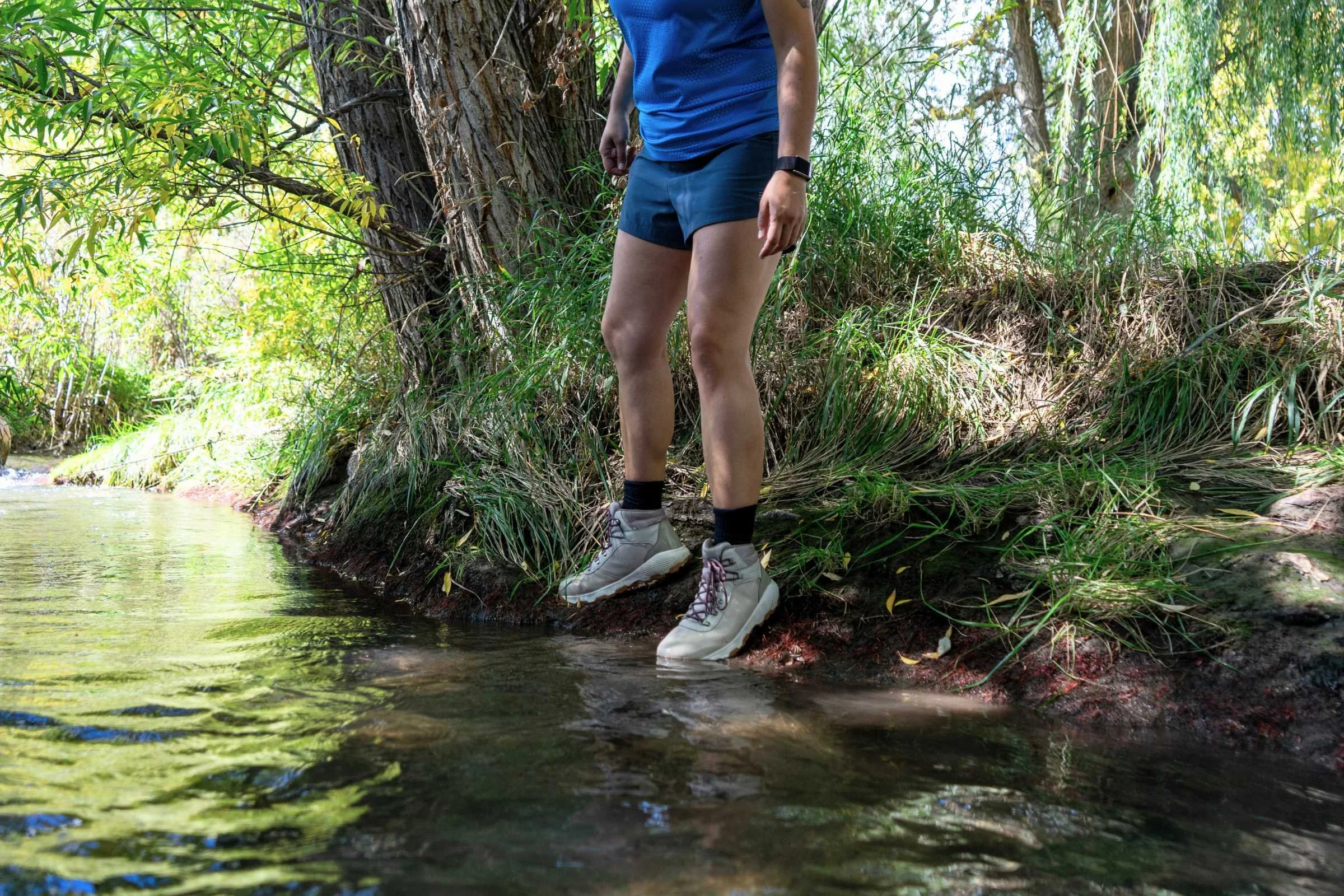
Stream crossings and wet terrain can feel like a nuisance on a long hike, creating stress around keeping your feet dry. Waterproof boots can help reduce stream-related stress since they’re designed to keep your feet dry even when submerged. But if stream crossing and wet terrain are uncommon in your places of recreation, waterproof boots might not be necessary.
Temperature regulation
Wet feet have a more challenging time maintaining their warmth than dry feet, which is another reason why waterproof boots can come into play. Those who regularly hike in cold conditions can usually benefit from adopting a waterproof hiking boot.
You may also want to check out our Shoulder Season Backpacking Gear List.
Blister prevention
We love hiking boots, but their rigid constructions and reduced breathability are much more likely to cause blisters than trail runners. Since waterproof hiking boots are typically even less breathable than a standard pair of hiking boots, they’re prone to causing foot irritations like hot spots and blisters, especially on overnight trips where it’s more challenging for your boots to completely dry out before slipping them on again. At the same time, waterproof hiking boots can allow your feet to stay dry for longer than standard hiking boots, which can eliminate the likelihood of forming blisters and trenchfoot, which makes them a great option for day hikes.
There’s no single type of footwear that performs perfectly in every situation. So, deciding whether or not you want to wear boots that offer more protection but may be more prone to causing blisters versus trail runners or a lightweight hybrid largely comes down to you. Just keep in mind that boots are more likely to contribute to the development of blisters than other footwear types because of their rigid, less-breathable design.
In addition to your footwear choice, a quality pair of hiking socks–including waterproof hiking socks–can help prevent blisters. Learn more in our guide on How to Take Care of Your Feet When Hiking and Backpacking.
Versatility
An advantage that waterproof hiking boots have over other types of footwear is versatility. While trail runners aren't as good in situations where you need an extra sticky outsole or a shelf for crampons, hiking boots can work better year-round..
Trade-off awareness
I love a good pair of hiking boots. But the reason why I switched from a hefty pair of Vasque boots to my first pair of Brooks Cascadia trail runners at mile 800 on the Appalachian Trail was because of my boots’ breathability–or rather, lack thereof. While the supple, full-grain leather of my boots was still in great condition, and my outsole had plenty of life left in it, I kept experiencing excruciating blisters because my boots never dried out.
It was only after my hiking partner dragged me to an outfitter off-trail that I finally decided that I wanted to find an alternative footwear option. I hiked in trail runners for the remainder of the Appalachian Trail, but I still think that boots have their place in the world–like in snowy conditions, on wet terrain, and on feet that struggle with arthritis (because they limit joint movement), like mine. A 6’3” hiker friend wore boots for the entirety of the trail and continues to wear them today, citing ankle support as the main reason for his choice.
Ultimately, a quality pair of waterproof hiking boots will keep your feet dry longer than nearly any other type of footwear. But they’re also more rigid, and they take way longer to dry than non-waterproof boots and trail runners, which can cause issues on long-term journeys like a thru-hike.
Waterproof vs. non-waterproof hiking boots
Deciding between a pair of standard or waterproof hiking boots comes down to a few traits. Waterproof hiking boots often have a slightly more expensive price tag, but they provide additional benefits. Non-waterproof hiking boots often cost less and provide more breathability than waterproof alternatives, but they’re less versatile, too.
Consider the conditions in which you expect to hike. Those who spend a lot of time in rain, snow, or near creeks may benefit from a pair of waterproof hiking boots, while those who hike in humid conditions may be more supported by non-waterproof hiking boots since they allow more internal moisture to evaporate.
How to maintain waterproof hiking boots
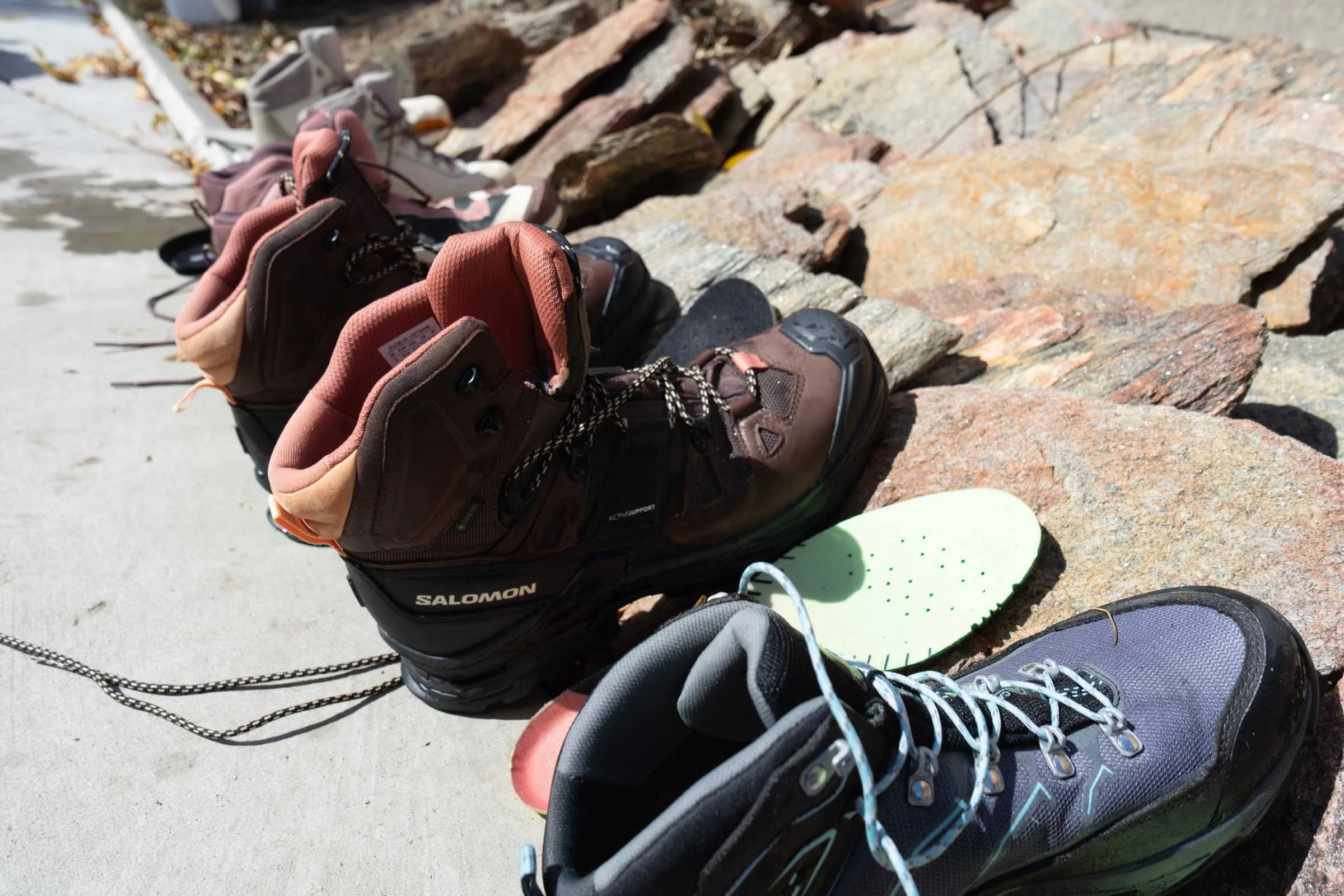
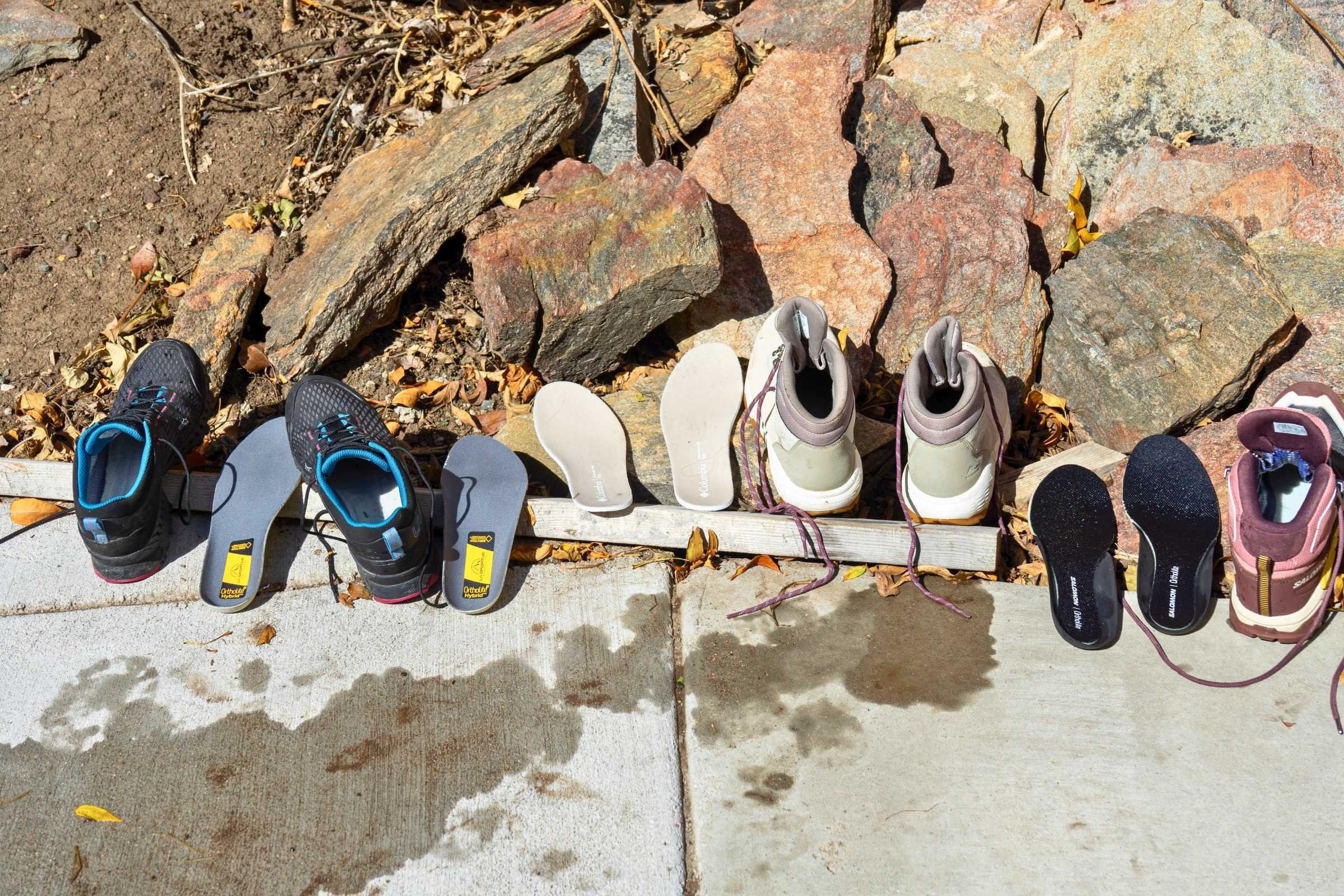
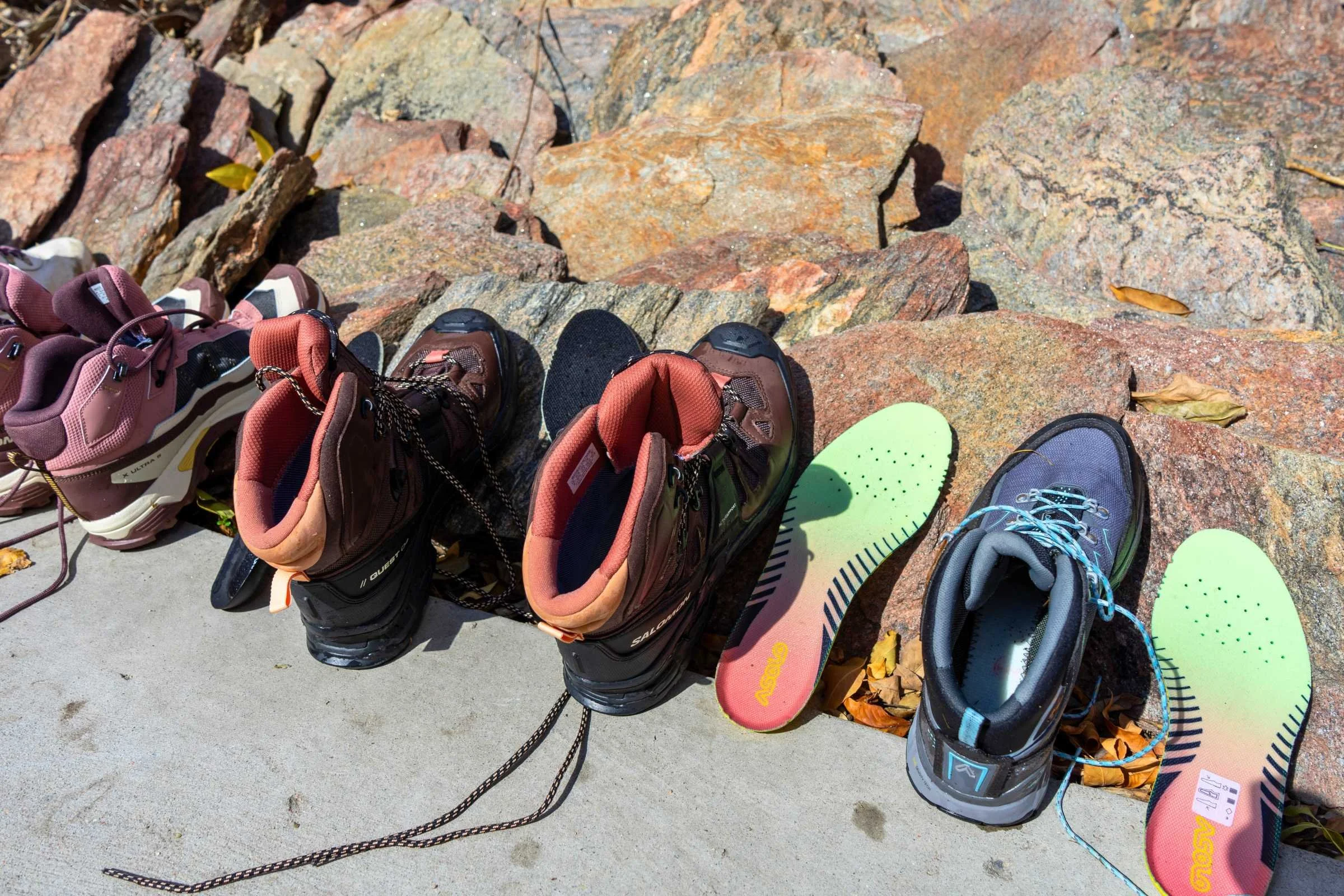
A quality pair of waterproof hiking boots can last you for hundreds of miles. With the right maintenance, they might even last over 1,000 miles. After each muddy and wet hike, remove the insoles (and ideally, laces, though that is more of a pain) prior to brushing debris away from the boot. Afterwards, use lukewarm water and a mild boot cleaner to remove additional dirt from the uppers and outsoles. Let them dry while keeping them out of direct sunlight since heat can cause boots to break down faster.
If the DWR coating on your boots loses its effectiveness (causing water to stop beading or permeating the external fabrics), it might be time for a refresh. Brands like Nikwax make DWR solutions that can be applied to your boots after they’ve been properly cleaned.
If you have a pair of leather boots, you should periodically condition the upper to prevent premature cracking and deterioration.
Store your boots in a cool, dry, ventilated place.
How to choose the right waterproof boot fit
Waterproof hiking boots should fit snugly around the foot without causing pinching or rubbing. While looking for the right size, make sure that your toes can move freely, and that you try your boots on with the socks you intend to wear hiking. If you have the opportunity to check your size while in a store, make sure to wear them on an incline and descent to ensure that your toes don’t jam into the front of the boot and that your heel stays locked in place (instead of lifting with each step).
FAQ
-
Yes, waterproof hiking boots breathe, but not as well as non-waterproof hiking boots or hiking shoes. Breathability also depends on factors like the boots’ upper materials and construction, with some fabrics and waterproof membranes providing more airflow than others.
-
Hiking boots typically stay waterproof between 1 and 5 years, depending on the frequency of use, terrain type and conditions, and the design of the boots. The external DWR coating is usually the first part of the waterproof construction that deteriorates, although punctures to the membrane can cause a boot to lose its weatherproof construction. We’ve also noticed saturation around high-use areas like the tongue and creases of our boots over time.
-
Adventurers can improve a boot’s water resistance by applying a DWR coating to the exterior of the boot. On some boots, hikers might also seal the seams with seam grip tape or silicone water guard to improve their water repellency. During one particularly wet stint along the Appalachian Trail, we also applied Shoe Goo to parts of the boot that were showing wear until we could make it into town. However, once a waterproof membrane has been punctured or worn out, it may be time for a new pair of boots.
-
Maybe. The waterproof membrane in hiking boots reduces the amount of volume that’s available on the inside of the boot, which means that some hikers will prefer sizing up to maintain comfort. However, most brands already take this reality into account, which means that hikers can usually fit their standard size in waterproof hiking boots.
-
Air dry your hiking boots slowly, at room temperature after you’ve removed the laces and insoles. Avoid direct sunlight since it can cause the premature breakdown of glues and other boot materials.
-
GORE-TEX is an ePTFE/ePE membrane that’s known for its reliable waterproof performance, but some brands offer proprietary membranes that rival GORE-TEX in terms of breathability and cost.
-
Some waterproof boots can be repaired if they leak, depending on the cause of the leakage. For example, some boots can be repaired at the seams. You can also increase a boot’s water repellency by applying a DWR coating, which we’ve found to be helpful but it never quite brings the waterproof system back to 100% function. As brands are becoming more eco-conscious, we’re also seeing more regular use of ePE, which is a PFAS-free system that’s overall more sustainable than other options. But once the membrane of a boot has been punctured, it’s time to retire your boots.
How we researched and tested
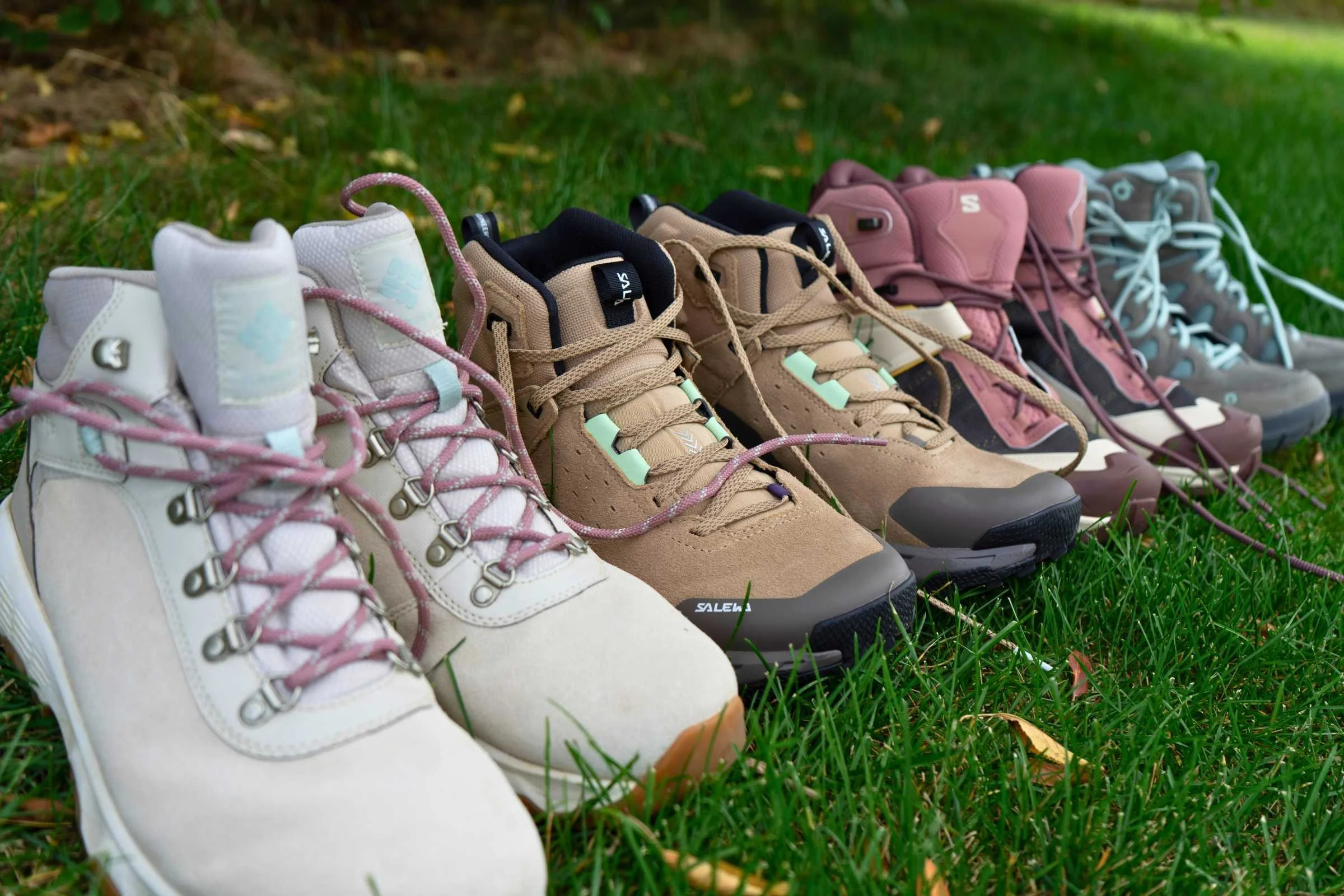
We tested more than a dozen pairs of both men’s and women’s waterproof hiking boots over the course of 6 months while tackling 200+ miles of trails in Colorado, Utah, Washington and Canada. Along the journey, we navigated stream crossings, sharp alpine peaks, slot canyons, and easy to challenging terrain to evaluate boot qualities like comfort, fit, durability, and waterproof capabilities. Between our testers, we have thousands of miles of long-distance backpacking and mountaineering experience.
On one sunny Colorado day, we took these boots to a local creek to evaluate traction on muddy banks as well as performance during crossings. And, while at home, we also submerged every one of these boots in a tub full of water up to the ankle for 15 minutes to determine how they’d perform to monitor both DWR coatings and the waterproof membrane’s ability to keep saturation out of the boot’s interior.
- Creek crossings and muddy banks
- Alpine peaks and slot canyons
- Snow, ice, and wet trails
- Repeated use across varied terrain
- 15-minute ankle-deep submersion tests
- Interior leakage and exterior wet-out
- Drying time and breathability
- Traction on wet terrain
- Comfort and support
- Durability through repeated use
Why you should trust us / About the author

A serial long-distance backpacker, Mary Beth Skylis has tackled thousands of miles of trails over the past decade while thru-hiking the Appalachian Trail, Colorado Trail, and the Annapurna Circuit. She wore a hefty pair of Vasque boots for the first 800 miles of the Appalachian Trail, where she learned what a truly durable pair of footwear could look like.
For the purposes of this article, Skylis also worked with Tommy Campbell, a Colorado-based rock climbing guide and mountaineer. Between our testers, we have about 55 years of hiking and mountaineering experience that’s taken us to places like Denali in Alaska, and across dozens of fourteeners in Colorado.
You can find more of Mary Beth Skylis’ reviews on her Treeline Review author page.