Best Hiking Socks of 2026
Comfortable, Durable, Blister-free Hiking socks

May 27th, 2026, updated with a new winner for most comfortable, best for hot weather, most sustainable, best waterproof, and best winter socks
Home > Gear Reviews > Footwear
With all the brands of hiking socks on the market, you'd think it would be hard to decide on the best. But it was actually the opposite — the consensus is pretty clear.
Among professional reviewers, hundreds of user reviews, and our own extensive testing over thousands of miles in diverse climates from snow to rainforest to desert, we researched and tested 25 of the best hiking and backpacking socks, taking them on everything from thousand-mile thru-hikes across the US and Canada to day hikes in the Columbia Gorge. We tested top models from Darn Tough, Smartwool, Farm to Feet, REI Co-op, Swiftwick, Injinji, Point6, Wrightsock, Sockwell, Icebreaker, and Balega to find the most comfortable, blister-free options across weight classes and conditions.
What separates a great hiking sock from one that fails you on a long day comes down to how well the cushioning holds up after hours of compression, whether the fit stays snug without bunching, how the fabric manages moisture in varied conditions, and how the sock holds its shape after repeated washing. Durability over hundreds of miles matters more for socks than most people expect before they've worn through a bad pair.
Top Pick: The Darn Tough Hiker Micro Crew Cushion (women's and men's) earns our Best Overall award. It stood out for hitting the Goldilocks cushioning sweet spot — thick enough to last, thin enough not to require upsizing your boots — a tight merino wool weave that retains its shape through a full day on trail, and a Lifetime Guarantee that is the most generous in the outdoor industry.
We create reader-supported, objective gear reviews independently selected by our editors. This story may contain affiliate links, which help fund our website. When you click on the links, we may get a commission, allowing us to continue running the site — without costing you an extra cent. Thank you for supporting our mission of outdoor coverage for every body! Learn more.
Hiking Socks Comparison Tables
Women’s
| HIKING SOCK | TREELINE AWARD | MATERIALS | CUSHION | HEIGHT OPTIONS | SHOE SIZES | PRICES |
|---|---|---|---|---|---|---|
| Darn Tough Hiker Cushion | Best Overall Read why |
59% merino wool, 39% nylon, 2% Lycra spandex | Medium | ¼ crew, ¾ crew, crew, boot | 4.5 - 11.5 | $26 |
| Paka Trail Crew Socks | Most Comfortable Read why |
33% alpaca, 57% recycled nylon, 7% tencel, 3% spandex | Targeted light | Crew | 4 - 13 | $25 |
| Smartwool Performance Run Zero Cushion Ankle Socks | Best for Hot Weather Read why |
47% merino wool, 39% recycled nylon, 11% nylon, 3% elastane | None | Low ankle, ankle, crew | 4 - 12.5 | $20 |
| Injinji Trail Midweight Crew Socks | Best for Preventing Blisters Read why |
58% nylon, 39% COOLMAX EcoMade polyester, 3% Lycra spandex | Heavy | ¼ crew, crew | 6 - 14 | $18 |
| Darn Tough Coolmax Hiker Micro Crew Cushion | Best Vegan Hiking Socks Read why |
60% COOLMAX polyester, 35% nylon, 5% Lycra spandex | Medium | ¾ crew | 4.5 - 11.5 | $25 |
| REI Co-op Merino Wool Lightweight Hiking Crew (Unisex) | Best Budget Read why |
79% merino wool, 20% nylon, 1% Lycra spandex | Light | ¼ crew, crew | 4 - 12.5 | $19 |
| Farm to Feet Damascus Light Targeted Cushion | Most Sustainable Read why |
52% US Nylon, 44 % US wool, 4% US LYCRA® Spandex | Targeted light | No show, ¼ crew, ¾ crew, crew | 4 - 12.5 | $24 |
| Sockwell Circulator | Best for Moderate Compression Read why |
32% merino wool, 31% rayon, 32% stretch nylon, 5% spandex | Ultralight | Knee | 5 - 11 | $33 |
| STOX Merino Hiking Socks | Best Medical Grade Compression Socks for Hiking Read why |
54% Polyamide, 37% Merino wool, 9% Elastane | Light | Knee | 4 - 13 | $35 |
| Wrightsock Double Layer Silver Escape Crew (unisex) | Best Double Layer Hiking Socks Read why |
Inner: 65% Dri-WRIGHT ll polyester, 26% nylon, 5% silver, 4% Lycra spandex; outer: 68% Dri-WRIGHT ll polyester, 24% nylon, 8% Lycra spandex | Light | ¼ crew, crew | 4 - 11 | $28 |
| Sealskinz Dunton All-Weather with HydroStop (unisex) | Best Waterproof Read why |
90% Nylon, 10% Elastane | Medium | Ankle | S - XL (unisex) | $60 |
| Smartwool Hike Classic Full Cushion | 56% merino wool, 11% nylon, 31% recycled nylon, 2% elastane | Full | Crew | 4-12.5 | $27 |
Men's
| HIKING SOCK | TREELINE AWARD | MATERIALS | CUSHION | HEIGHT OPTIONS | SHOE SIZES | PRICES |
|---|---|---|---|---|---|---|
| Darn Tough Hiker Cushion | Best Overall Read why |
61% merino, 36% nylon, 3% Lycra Spandex | Medium | ¼ crew, ¾ crew, crew, boot | 5.5 - 17 | $26 |
| Paka Trail Crew Socks | Most Comfortable Read why |
33% alpaca, 57% recycled nylon, 7% tencel, 3% spandex | Targeted light | Crew | 4 - 13 | $25 |
| Smartwool Performance Run Zero Cushion Ankle Socks | Best for Hot Weather Read why |
47% merino, 37% recycled nylon, 12% nylon, 4% elastane | None | Low ankle, ankle, crew | 3 - 14.5 | $20 |
| Injinji Trail Midweight Crew Socks | Best for Preventing Blisters Read why |
58% nylon, 39% COOLMAX EcoMade polyester, 3% Lycra spandex | Heavy | ¼ crew, crew | 5 - 13 | $18 |
| Darn Tough Coolmax Hiker Micro Crew Cushion | Best Vegan Hiking Socks Read why |
37% nylon, 34% COOLMAX polyester, 26% acrylic, 3% Lycra spandex | Medium | ¾ crew | 5.5 - 17 | $25 |
| REI Co-op Merino Wool Lightweight Hiking Socks | Best Budget Read why |
79% merino wool, 20% nylon, 1% Lycra spandex | Light | ¼ crew, crew | 5.5 - 14 | $19 |
| Farm to Feet Damascus Light Targeted Cushion | Most Sustainable Read why |
52% US Nylon, 44 % US wool, 4% US LYCRA® Spandex | Targeted light | No show, ¼ crew, ¾ crew, crew | 6 - 14.5 | $24 |
| Sockwell Circulator | Best for Moderate Compression Read why |
32% merino wool, 32% nylon, 31% rayon, 5% spandex | Ultralight | Knee | 7 - 16 | $33 |
| STOX Merino Hiking Socks | Best Medical Grade Compression Socks for Hiking Read why |
52% Polyamide, 38% Merino wool, 10% Elastane | Light | Knee | 6 - 15 | $55 |
| Wrightsock Double Layer Silver Escape Crew (unisex) | Best Double Layer Hiking Socks Read why |
Inner: 65% Dri-WRIGHT ll polyester, 26% nylon, 5% silver, 4%Lycra spandex; outer: 68% Dri-WRIGHT ll polyester, 24% nylon, 8% Lycra spandex | Light | ¼ crew, crew | 5 - 14 | $28 |
| Sealskinz Dunton All-Weather with HydroStop (unisex) | Best Waterproof Read why |
90% Nylon, 10% Elastane | Medium | Ankle | S - XL (unisex) | $60 |
| Smartwool Hike Classic Full Cushion | 56% merino wool/31% recycled nylon/11% nylon/2% elastane | medium | Crew | 6-14.5 | $27 |
The Best Hiking Socks
Best Hiking socks Overall: Darn Tough Hiker Micro Crew Midweight
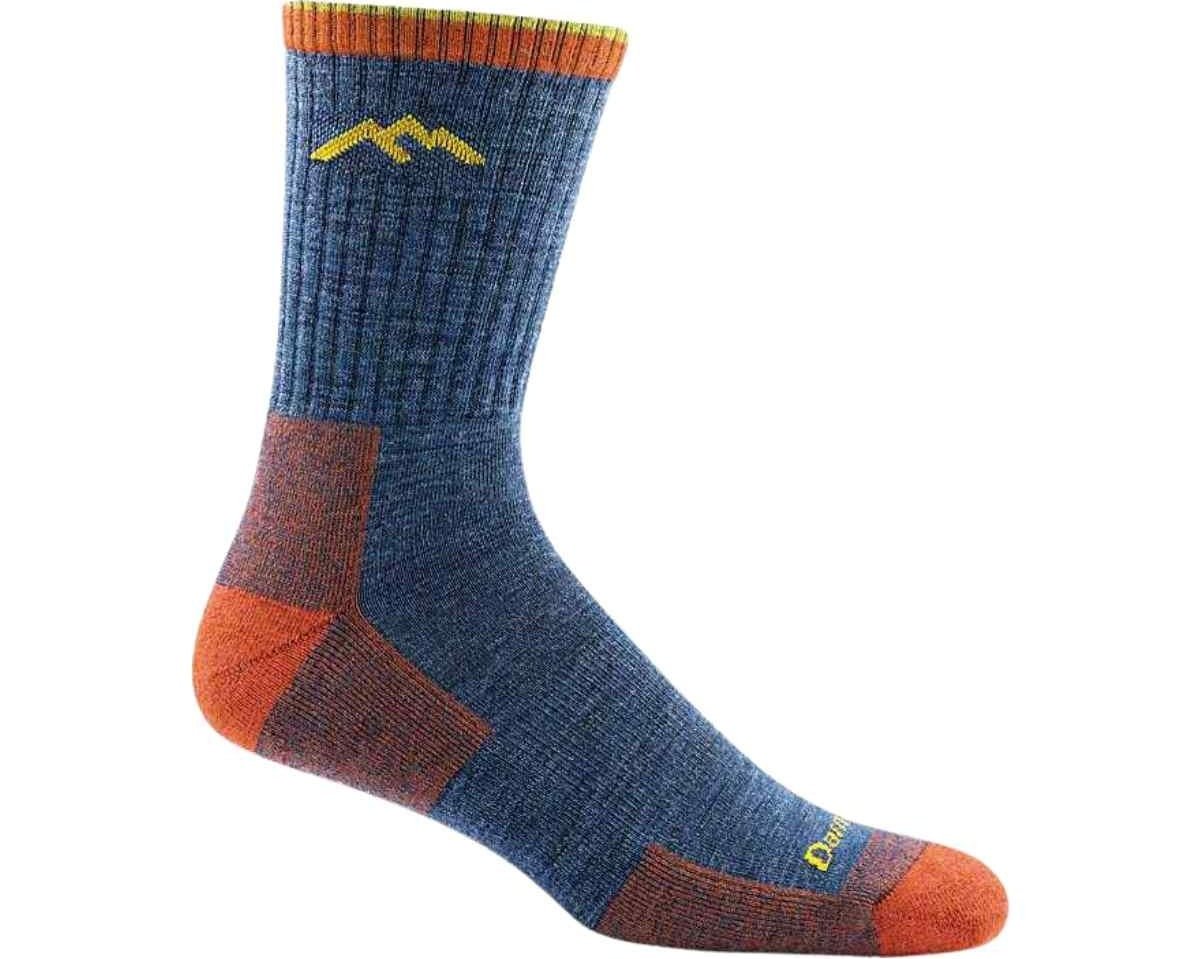
Material (women’s): 59% merino wool, 39% nylon, 2% Lycra spandex
Material (men’s): 61% merino wool, 36% nylon, 3% Lycra spandex
Cushion: Medium
Length Options: no show, ¼ crew, ¾ crew, crew
Sizing: Women’s S-L (US 4.5-11.5) and Men’s S-XXL (US 5.5-17)
Warranty: Lifetime
What we liked: tight weave perfect fit, comfort, durability, lifetime warranty, perfect amount of stretch, retain shape at end of day
What we didn’t like: not as soft (but it isn’t itchy)
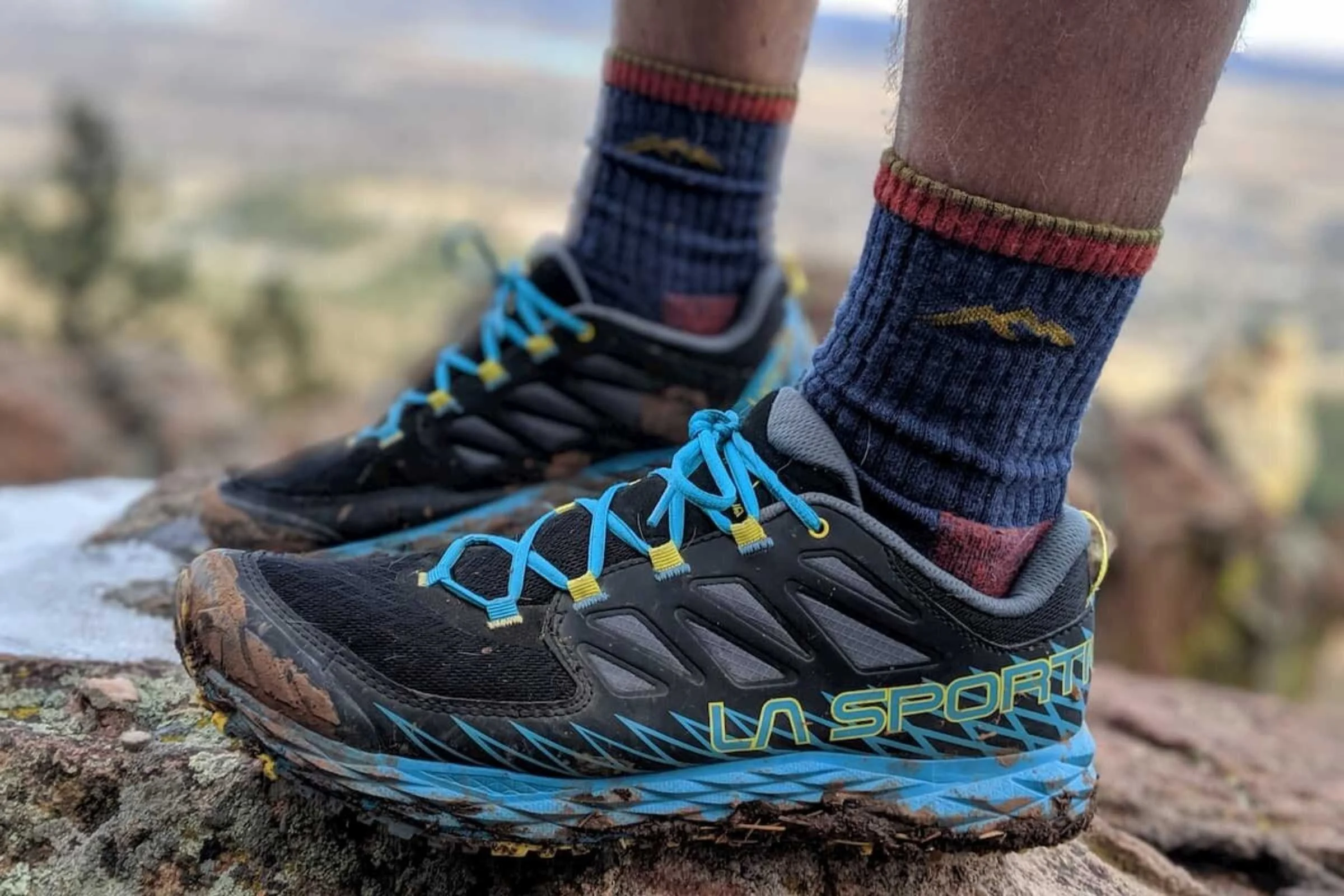
We found consensus among experts and everyday users: Darn Tough makes the best socks. For hiking, the best of the best is the merino wool sock Darn Tough Hiker Micro Crew Midweight.
It hits that Goldilocks sweet spot of cushioning: they aren’t so thin that you’ll put holes in them in a week, but they’re also not so thick that you’ll need to buy shoes or boots a half size larger.
This model is the most popular on Darn Tough’s website, and it’s a top seller on REI and Amazon. Best yet, it comes with a Lifetime Guarantee considered the most generous in the entire outdoor industry. Learn more in our in-depth review of the Darn Tough Hiker Socks.
Darn Tough Hiker Micro Crew Cushion
Women's
Men's
-
What we like about the Hiker Micro Crew Midweight merino sock is that they have the perfect amount of stretch. I purchased these socks and have hiked thousands of miles in this model. Whether in the hot desert, snow-covered mountains, or on long walks around the city, they’ve never slipped, sagged, or bunched up. At the end of a long day of hiking, they never feel loose or stretched out.
The 2% spandex—not too much or too little—makes the socks fit so well that they feel as if they were custom-made for my feet. And most impressively—they keep that perfect amount of stretch even after years of use.
-
The Darn Tough Hiker Midweight manages moisture incredibly well, which is important because moisture is a major contributor to blisters. I’ve never gotten a blister while wearing Darn Tough socks. This is in contrast to other merino wool socks I’ve purchased and hiked in, like the Icebreaker Hike+ Light Crew—where my feet felt hot and moist and ultimately formed blisters.
-
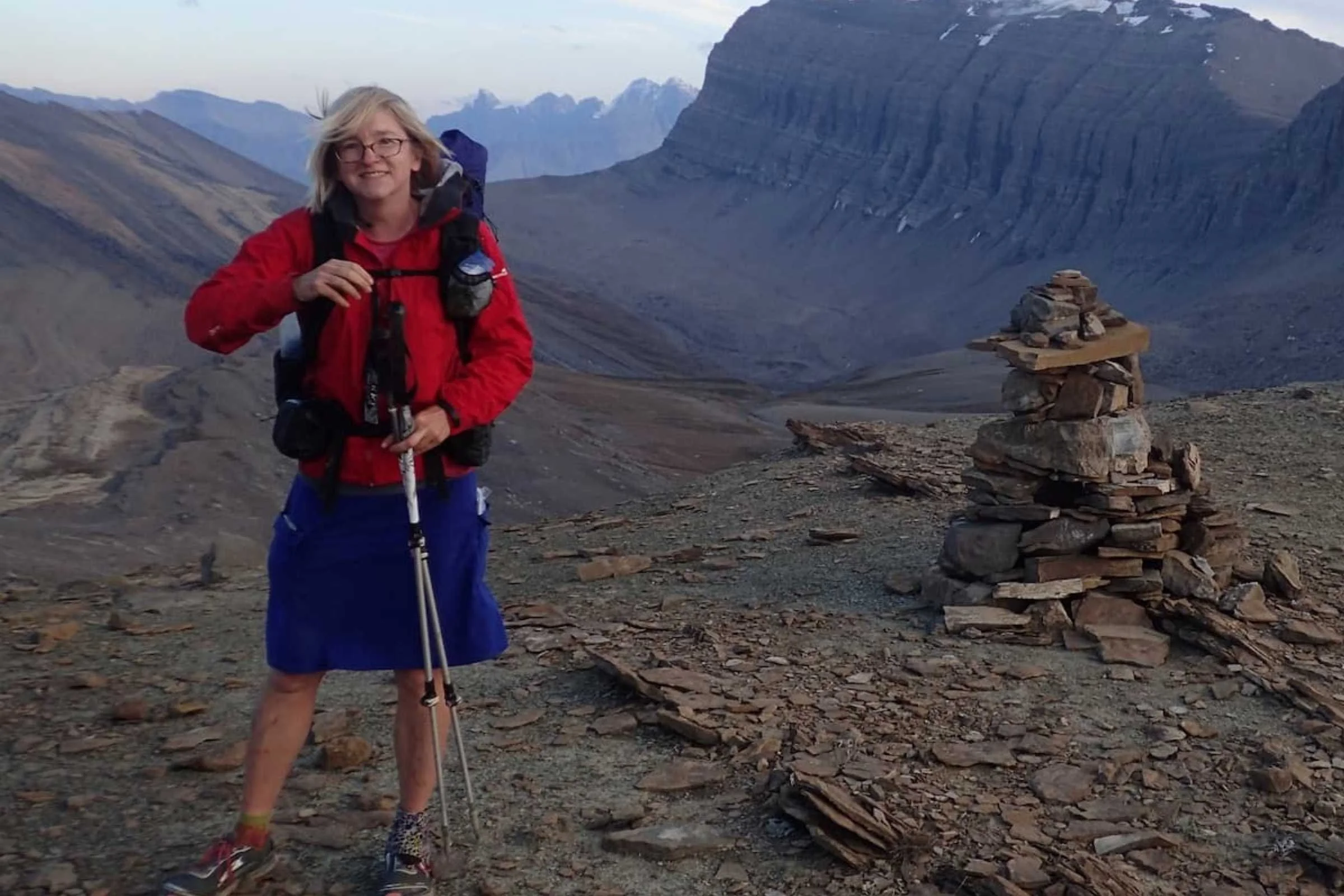
The Darn Tough Hiker Midweight socks also stand out for their thermo-regulating capabilities. I’ve taken these socks on 1,600 miles of challenging conditions through the Canadian Rockies with temps in the upper 30s, heavy rain, and river fords. My feet stayed warm even while wet. While putting those wet socks back on in the morning was not a pleasant task (and wouldn’t be for any sock), once the heat from my feet warmed the socks back up, they felt fine.
On the other hand, I’ve also hiked 1,600 miles through the Arizona desert on the Arizona Trail in the Hiker Midweights and never felt like my feet were too hot. These socks are almost like magic.
-
All these features are fantastic enough, but what has kept me coming back to the Darn Tough Hiker Midweight is the durability.
I can easily get 600 miles out of a pair of midweights before I start to see signs of wear. They easily outlast most pairs of shoes. I can send them back to Darn Tough under their incredible warranty program. Once they receive the socks I’ve returned, they send me a code to use on their website to buy a replacement pair—any size, color, or style that I want. It’s almost too simple.
Most comfortable hiking socks: Paka Trail Crew Socks

Material: 33% alpaca, 57% recycled nylon, 7% tencel, 3% spandex
Cushion: Targeted light
Length Options: Crew
Sizing: 4 - 13
Warranty: Lifetime warranty
What we liked: incredibly soft, durability, sustainability, breathability, odor resistance
What we didn’t like: Less cushion than other socks, no targeted cushioning, not as many colors, only available in solid color
These socks completely surprised me. I didn't think there was any way that alpaca socks could be durable enough to withstand harsh hiking conditions. I didn't even really want to waste my time testing them because I was so skeptical. And I'm here to report that I was completely wrong. The Paka Trail Crew socks are surprisingly durable and the most comfortable socks of that I've tested. These are a sock lover's socks.
If you're looking for a natural fiber hiking sock but find merino wool too itchy, alpaca socks may work for you. For those seeking the perfect balance of cushioning and breathability, the Paka Trail Crew Socks deliver exceptional performance in a versatile mid-weight package. Made from a specialized blend of alpaca fiber, these socks represent a unique alternative to both traditional wool and synthetic options on the market.
Alpaca fiber contains microscopic air pockets that provide insulation while remaining lightweight, offering excellent temperature regulation across varying conditions. If you're thinking, that sounds like they won't be durable, I thought the exact same thing. I was extremely skeptical, but my testing proved that the Paka Trail Crew socks are incredibly durable and incredibly comfortable.
Paka Trail Crew Socks

-
The Paca Trail Crew Socks excel in providing targeted cushioning precisely where hikers need it most. The strategically placed padding along the heel and forefoot creates a comfortable barrier against impact without feeling bulky or restrictive. The seamless toe construction eliminates potential friction points that could lead to blisters on thru hikes. The socks have a snug, supportive fit throughout the arch and ankle, preventing unwanted bunching or sliding during hiking or running.
One thing that really surprised me is how comfortable these socks are. They feel downright luxurious, but yet they can stand up to the rigors of hiking and biking. Of all the socks I've tested, the Paca Trail Crew are, by far, the most comfortable.
-
Where Paca Trail Crew socks truly stand out is their exceptional thermoregulation capabilities. The natural properties of alpaca fiber allow these socks to perform remarkably well across a large temperature range. They provide sufficient warmth during chilly mountain mornings while efficiently wicking moisture when temperatures climb. My feet remained comfortable whether hiking through damp Pacific Northwest conditions or on hot desert trails.
-
One significant advantage of the alpaca fiber blend is its natural odor-fighting properties. Unlike fully synthetic options, these socks can be worn for multiple days on the trail without developing the overwhelming stink factor that plagues polyester alternatives. The alpaca fiber contains minimal lanolin (compared to sheep's wool), making these socks an excellent choice for hikers with wool sensitivities who still want natural fiber benefits.
-
While the Paca Trail Crew Socks don't offer a lifetime warranty like some competitors, they've demonstrated impressive durability during our testing period. After 400+ miles of varied terrain, the socks show minimal signs of wear at common friction points. The reinforced heel and toe construction maintains structural integrity even after repeated washing cycles.
The Paca Trail Crew Socks represent an excellent middle-ground option for hikers seeking natural fiber performance without the potential irritation of traditional wool. Their versatility across conditions makes them a worthy addition to any hiker's sock drawer.
-
Alpaca wool, by its very nature, is less water intensive and requires fewer resources than merino wool. Paka uses traceable tracking and alpacas roam free and are cared for by a single family. Paka uses OEKO TEX and GOTS certified dyes with the weaving happening in Peru (not shipped to another country) sustaining Quechua women and reducing the footprint of these socks. After your purchase, 1% of sales support regenerative agriculture and they come with a lifetime warranty.
Best Hiking Socks for Hot Weather: Smartwool Performance Run Zero Cushion Ankle Socks

Material (women's): 47% merino wool, 39% recycled nylon, 11% nylon, 3% elastane
Material (men's): 47% merino wool, 37% recycled nylon, 12% nylon, 4% elastane
Cushion: Ultralight
Length Options: Crew
Sizing: Unisex S-XL (US women’s 4-12.5 and US men’s 3-14.5)
Warranty: 2 years
What we liked: thin, ultralight, fun designs, great for multi-sport (like cycling)
What we didn’t like: durability
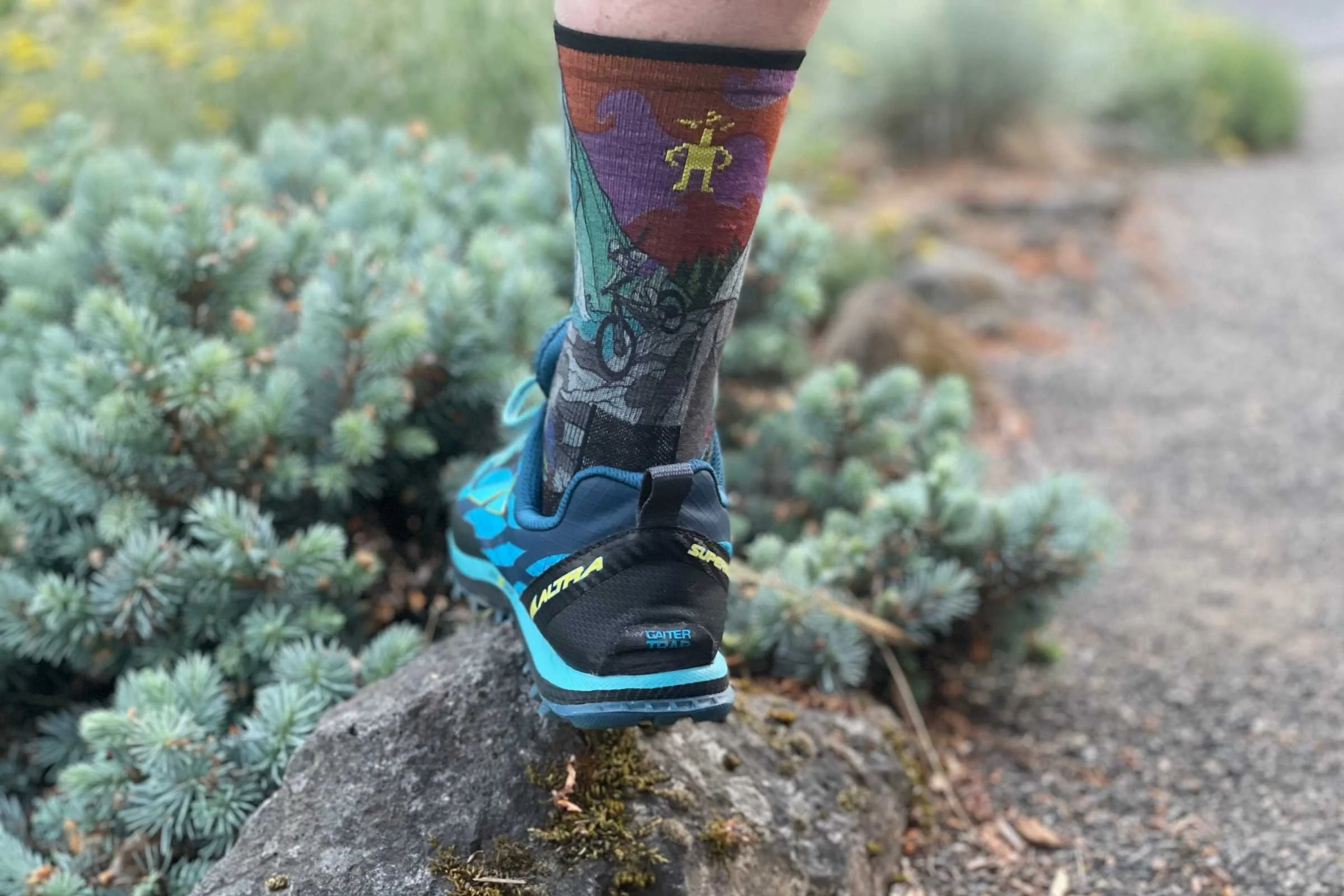
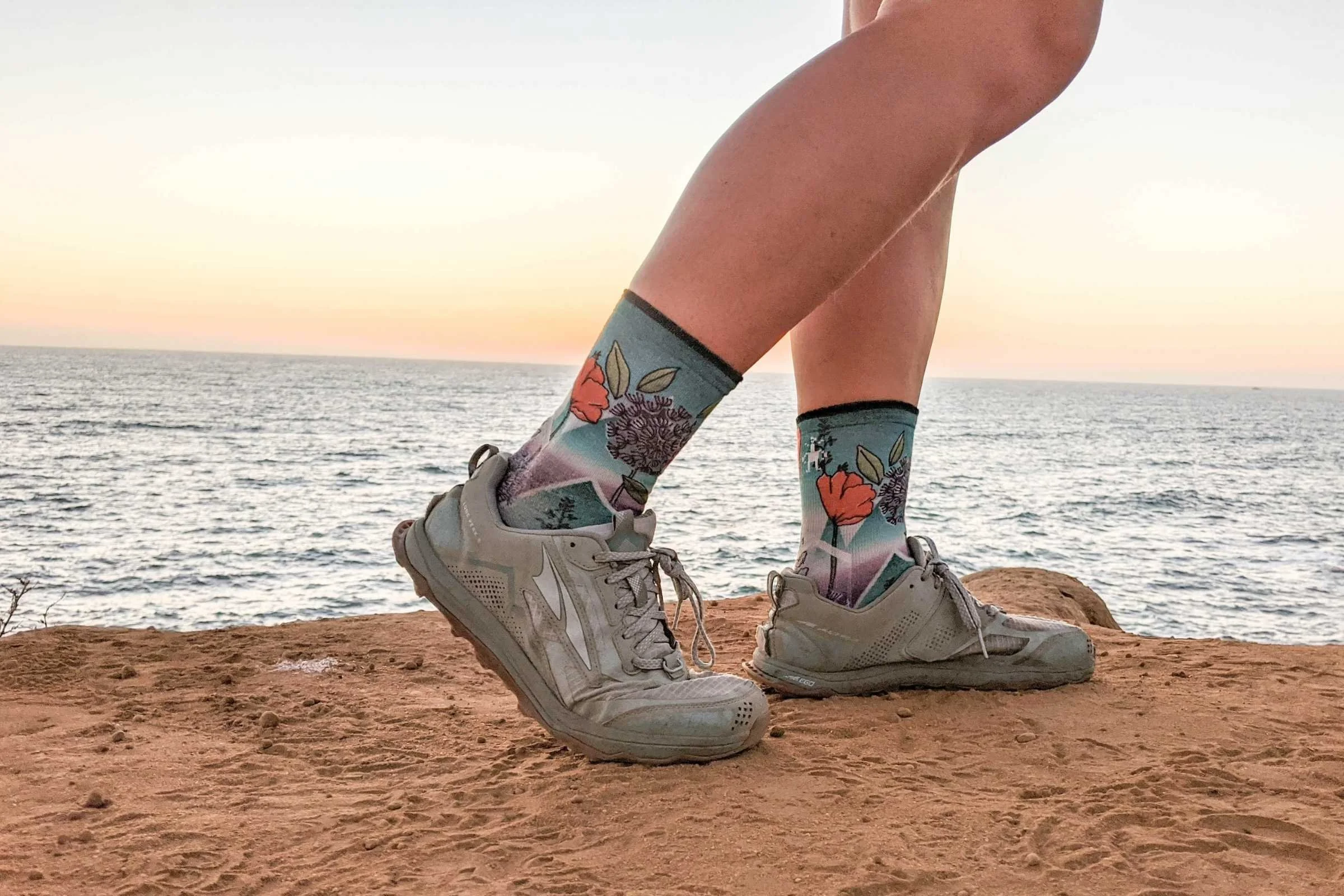
If you’re looking for a durable-yet-lightweight merino wool hiking sock that doesn’t come with a lot of bulkiness, the Smartwool Performance Run Zero Cushion sock line is for you. That is why it wins our award for best hiking sock for hot weather.
When it’s hot, you want a sock that is thin, breathes well, wicks away sweat, and dries quickly. The Smartwool Performance Run Zero Cushion checks all those boxes. For a sock that is this thin and ultralight, we have yet to see a sock that is as durable as the Smartwool Performance Run. After 450 miles of backpacking on the Pacific Crest Trail, these still kept going, which makes this thin sock our best sock for hot weather.
Smartwool Performance Run Zero Cushion
Women's
Men's
-
In our experience, ultralight socks are best for hot, desert conditions where your feet may swell. As feet expand, you’re left with less room in your shoes—and more places where your feet rub against the shoe or themselves, creating more opportunities for blisters to develop. Ultralight socks decrease this chance because they leave more room for your feet to expand and won’t create friction. They’re also a good option if your shoes or boots just don’t have a lot of extra room for full cushion (or even light cushion) socks.
-
We found that the Performance Run Zero Cushion has a snug-but-not-too-snug fit through the arch of the foot. They never slipped or bunched during our hike. Smartwool also makes this merino sock with a women’s specific fit, meaning it’s narrower through the back of the heel and Achilles. This is similar to the quality and tailored fit we’d expect given the brand’s experience in apparel.
-
The Smartwool Performance Run Zero Cushion uses the Indestructawool yarn in the heel and ball of the foot, which experience the highest amount of wear. The toe area uses Smartwool’s Shred Shield™ anti-wear technology, developed in conjunction with an ultrarunner who ran over 1,000 miles in the same pair of socks.
-
The top and sides feature lightweight mesh in ventilation zones that keep your feet cool and dry and keep the sock weight down. The result is an incredibly lightweight sock that feels breathable and stays durable.
-
We tested this hiking sock over 450 miles on the Pacific Crest Trail and can confirm—these are the most durable ultralight socks we’ve found. We didn’t use gaiters with these socks either and imagine we’d get even more miles in without any issue.
We’ve gotten holes in our old ultralight favorites, the Darn Tough ultralight socks, after 300 miles. Those socks are winners in our Best Running Socks guide. We thought that was pretty good, but were impressed that the Athlete Edition can get us through even more miles. Smartwool socks also come with a 2-year warranty. Long after the thru-hiking season was over, we finally did get a hole in the Smartwool Performance Run, on a day hike with over 10,000 feet of elevation gain over 30 miles.
-
As you’d expect, zero-cushion socks have less cushioning than other socks. We recommend them for day hikes, fast and light adventures, and hot desert hiking. For backpacking or day hikes on rocky ground, you might want something with a little more cushioning and durability.
Curious about outdoor footwear? See our most popular Footwear stories:
Best Socks for preventing blisters: Injinji Trail Midweight

Material: 58% nylon / 39% COOLMAX EcoMade polyester / 3% Lycra spandex
Cushion: Medium
Length options: ¼ crew, crew
Sizing: Unisex S-XL
Warranty: 60 days
What we liked: prevented blisters when no other sock could, variety of heights
What we didn’t like: durability, time to put on and take off
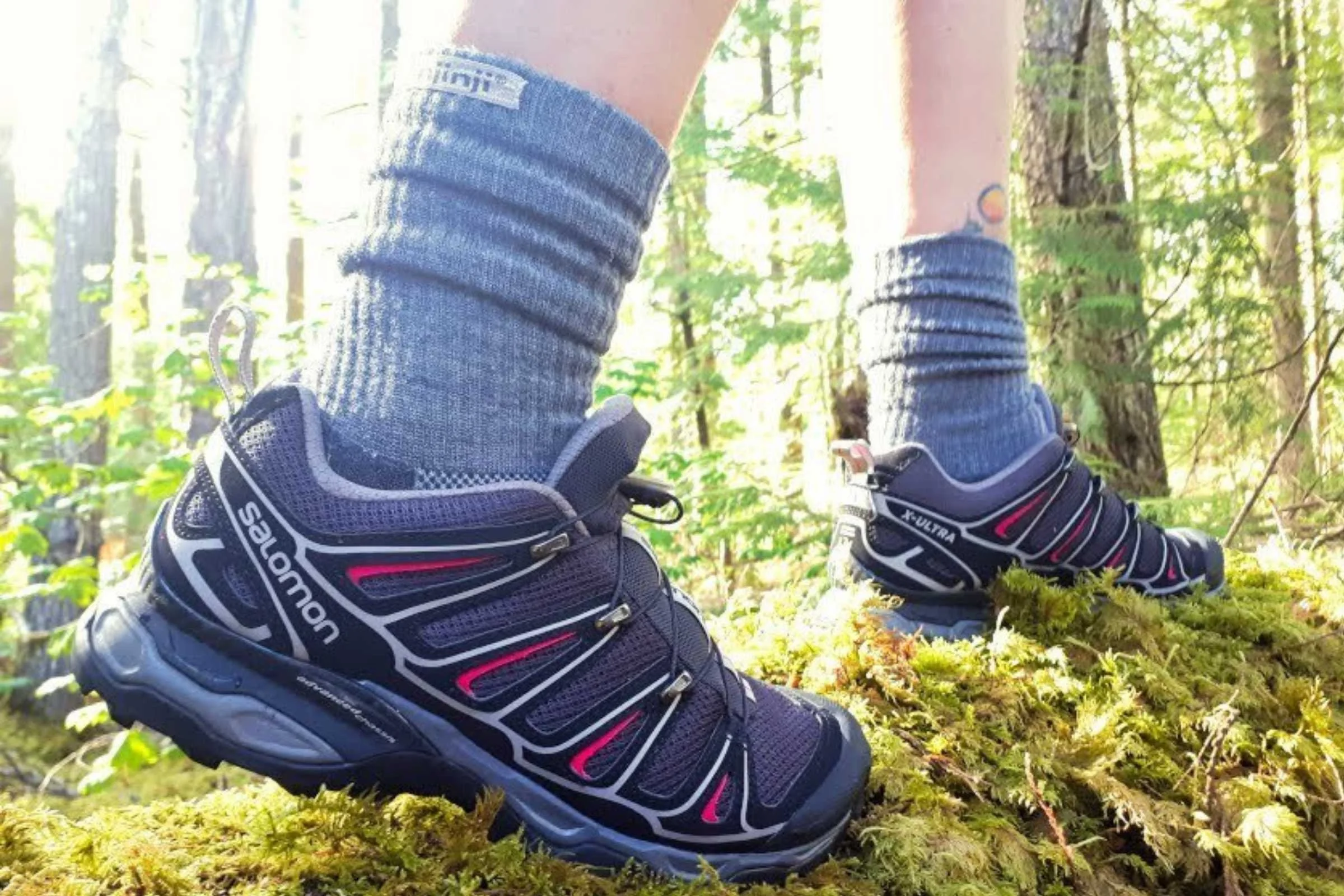
Injinji dominates the anatomical toe sock market. The most popular model we’ve found is the Injinji Trail Midweight —and we think it’s the best toe sock for hiking.
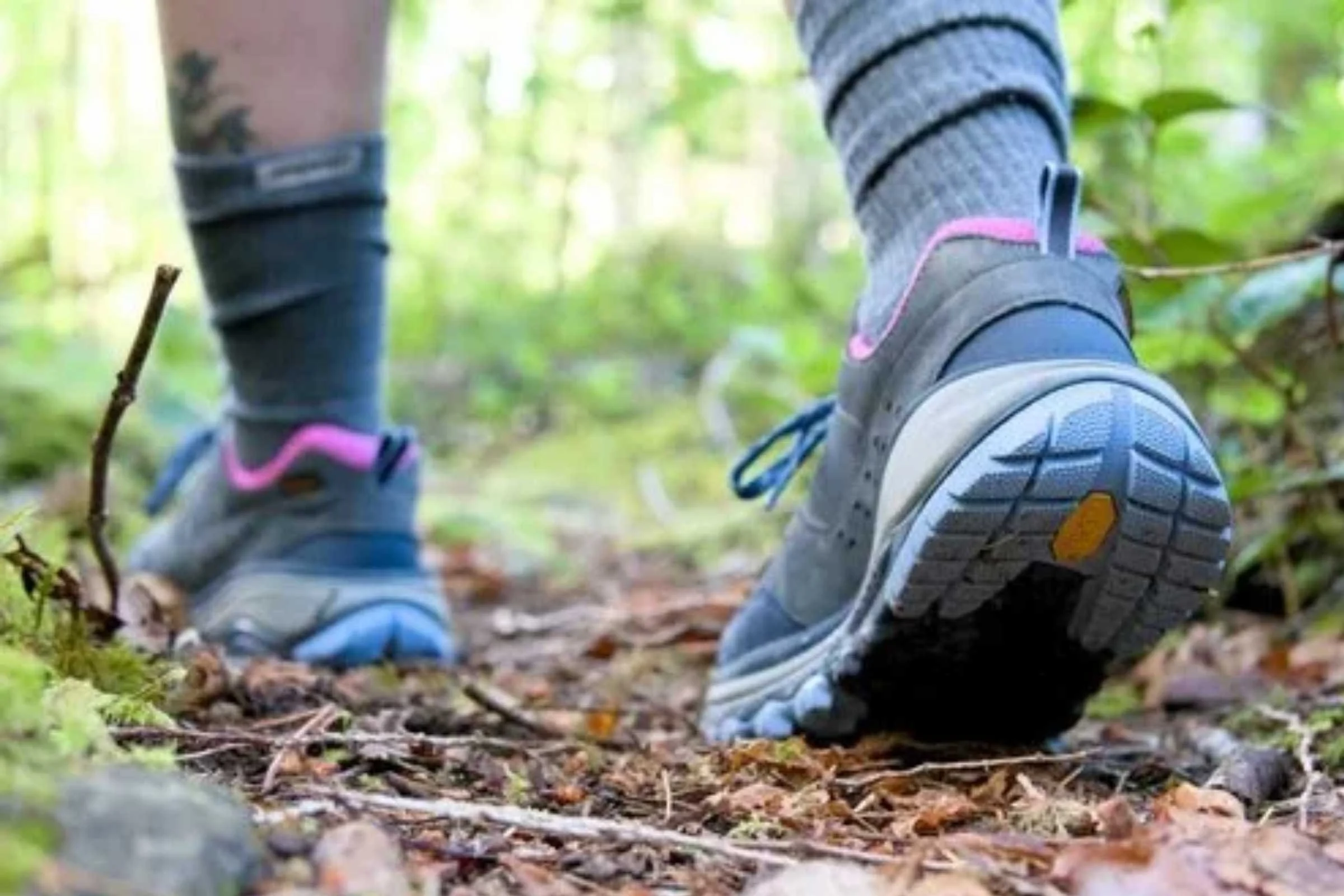
Toe socks are known for their blister prevention, as each toe is separated so there is no skin-to-skin friction. Toes can also splay naturally in toe socks, which helps provide stability while hiking. The Injinjis also have great arch support, which also helps keep the socks in place.
The Trail Midweight is made with Coolmax EcoSpun polyester, which is a recycled material spun for durability and temperature control. The Coolmax replaces the 43% NuWool that was in the previous version of this sock, increasing durability (but without quite as much odor-control). They also recently released a merino wool version that we tested.
Injinji Trail Midweight
Men's
Women's
-
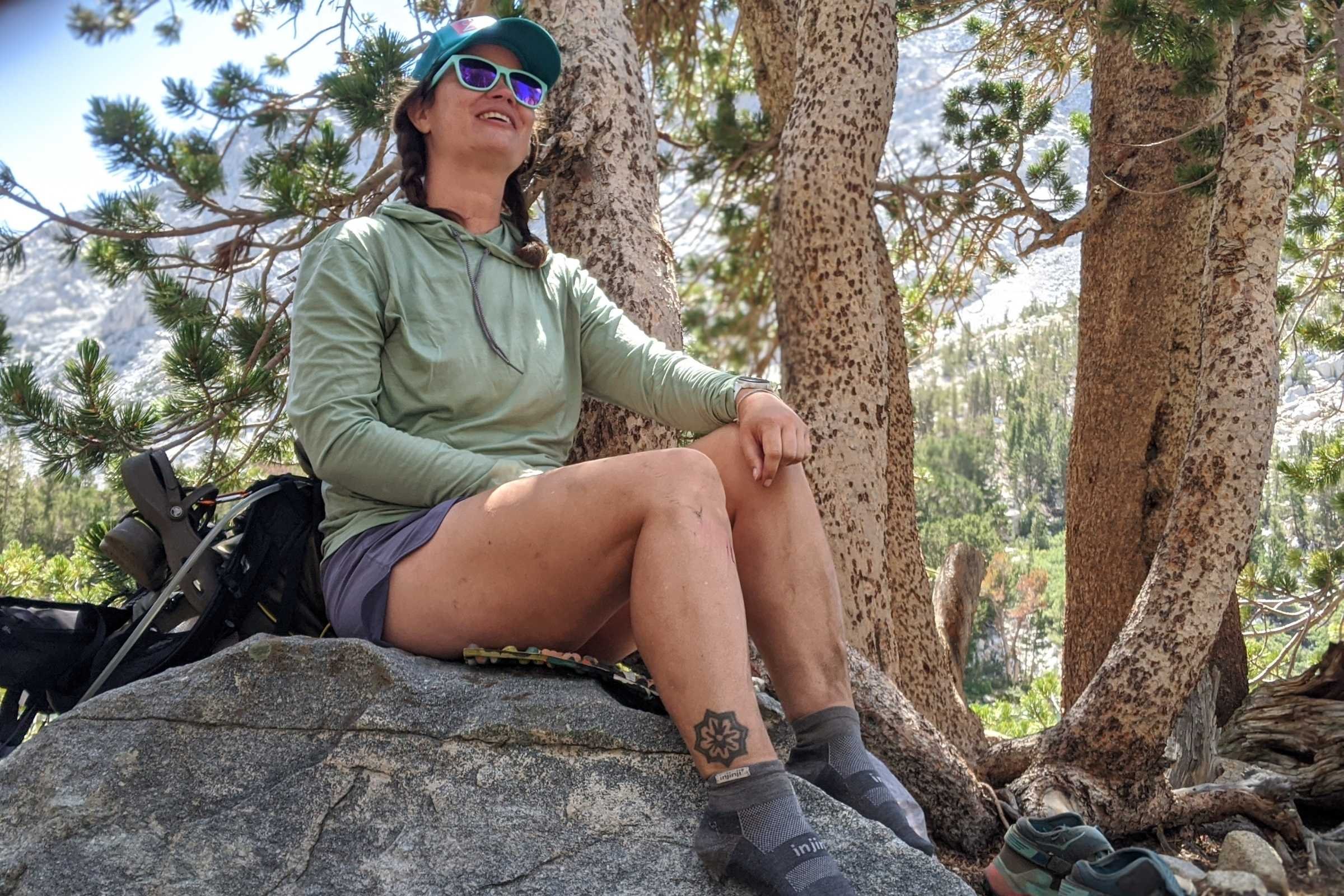
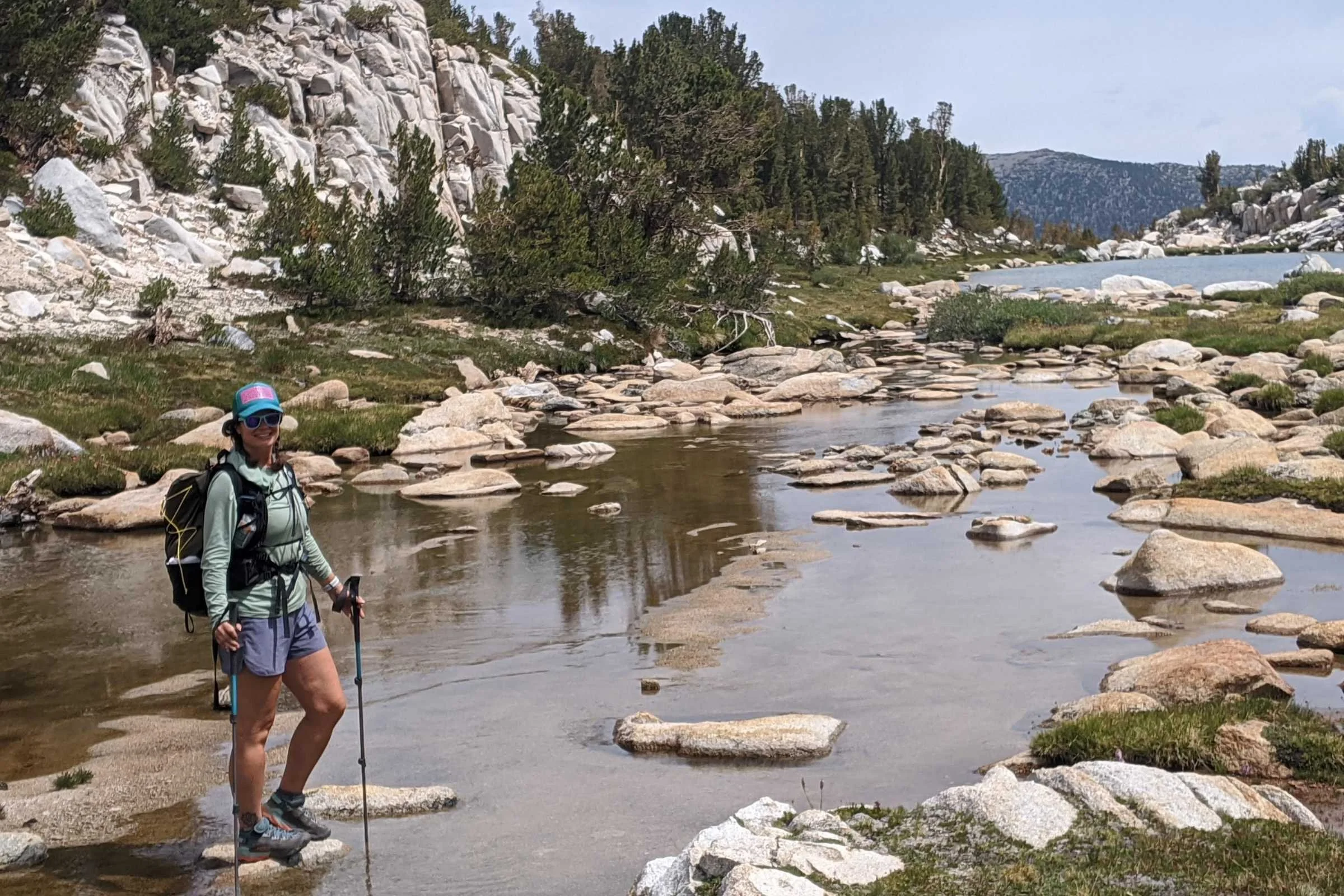
We purchased and tested 2 pairs of the Injinji for 1,500 miles on the Appalachian Trail. We found that Injinji socks really do help prevent blisters, especially between the toes. This can be especially beneficial in moist and wet climates, where blisters can form easily between two rubbing toes.
-
People with wide feet also often battle with blisters because the toe boxes on their shoes are too tight. If you have wide feet, you’ll likely appreciate the extra protection offered by toe socks.
Our writer Amanda Jameson, who hiked the entire Pacific Crest Trail in Injinji socks, reports: “I have paddletoe—toes on both of my feet overlap one another—which causes awful blisters with lots of walking. With my Injinjis, I've had a total of two blisters in 3500 miles, and both were from improperly tied or too-large shoes.”
Another one of our writers, Tiffany Searsdodd, also swears by Injinjis saying, “I started getting blisters in between my toes 100 miles into my PCT thru-hike. Once I started wearing Injinjis, the blisters between my toes disappeared. Ten years later they are still my go-to hiking socks, even if it's just a day hike of a few miles.”
-
Another aspect that Searsdodd likes about Injinjis is the variety of heights, thickness, and materials. “There's a sock here for just about everyone.” Lastly, she notes that Injinis are fun to wear: “I especially love creeping people out by pretending my feet are hands...”
The Injini Trail Midweight is also available in mini-crew height.
-
Injinjis do have some downsides, though. The first is durability. Jameson found she had to change out her Injinjis every 300-400 miles for holes—usually in the heel or ball of the foot. We’ve had better luck with the newest iteration, but still don’t expect to get nearly as many miles out of these socks as other socks.
-
Another drawback is that several testers found that toe socks take considerably more time to put on and take off. This fact alone eliminates toe socks for some people. Many hikers like to take off their shoes and socks during breaks to allow feet, shoes, and socks to air out and dry. The added time required for toe socks could act as a hindrance to this process.
-
Some hikers complain that our preferred model, the Injinji Midweight Crew, takes up too much space inside a hiking shoe or boot. This is something you definitely want to test out before you hit the trail. Injinji does offer a thinner liner sock, which could be a good option if volume is a concern for you—but know that a thinner sock is usually less durable. The liner crew sock is also top-rated at REI. They also recently released a merino wool liner that we tested, but it lacked durability.
-
Injinji offers a 60-day warranty for their socks, which is a lot shorter than other sock brands. Our testers have gotten their fair share of holes in Injinjis, especially when hiking in moist or gritty climates. But if you’re a fan of toe socks and know you get between-the-toe blisters, Injinji has the most comfortable and durable toe sock out there.
Best Vegan Hiking Socks: Darn Tough Coolmax Hiker Micro Crew Midweight
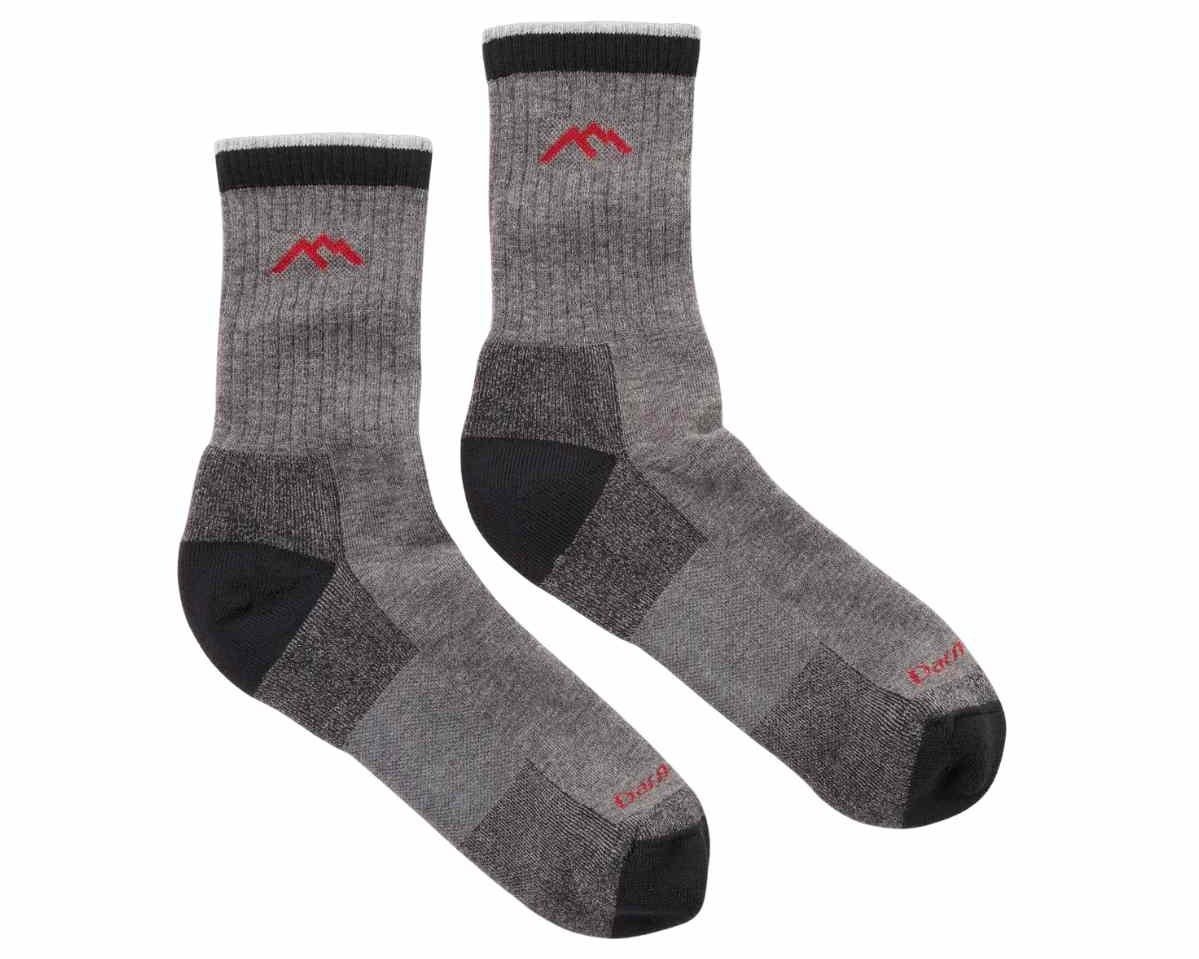
Materials (women's): 60% COOLMAX polyester, 35% nylon, 5% Lycra spandex
Materials (men's): 37% nylon, 34% COOLMAX polyester, 26% acrylic, 3% Lycra spandex
Cushion: Medium
Length Options: ¾ crew only (women’s); ¾ crew and boot (men’s)
Sizing: Women’s S-L (US 4.5-11.5) and Men’s S-XXL (US 5.5-17)
Warranty: Lifetime
What we like: snug and comfortable fit, softness, lifetime warranty, similar feel, fit, and comfort as the wool version of this sock
What we don’t like: not available in shorter heights, not available in many colors
If you’re looking for a vegan option, or you can’t tolerate merino wool, Darn Tough makes a fully synthetic version of their Hiker Midweight sock—the Coolmax Hiker Micro Crew Midweight Hiking Sock. The vegan (no wool) version of Darn Tough’s Hiker Midweight is made with COOLMAX polyester—a hydrophobic fiber that is both moisture-wicking and breathable when woven into a sock. Hydrophobic fibers absorb little water and dry relatively quickly, which are both ideal qualities in sock yarn. The COOLMAX fiber cross-section isn’t round, which increases surface area and produces the wicking effect through capillary action (much like a paintbrush draws up paint).
Darn Tough Coolmax Hiker Micro Crew Midweight
Women's
Men's
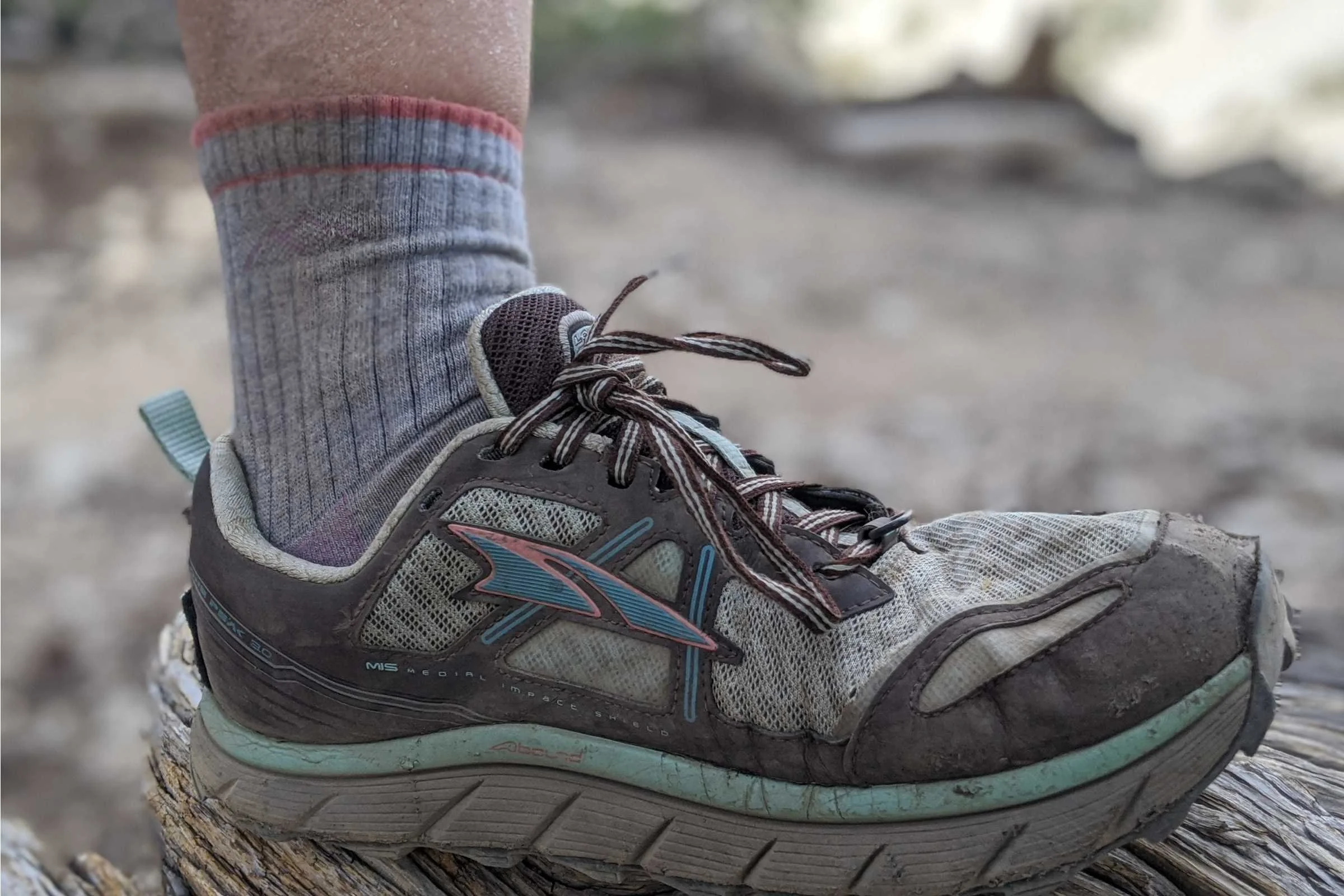
Treeline Review editor Liz Thomas wearing the Darn Tough Coolmax socks on a backpacking trip on San Gorgonio, the highest peak in Southern California. These socks are experts at thermoregulation, especially for a synthetic sock.
-
The Coolmax Hiker Midweight socks share many of the same great qualities as the merino Hiker Midweight socks. They have just the right amount of cushion in the right places. The medium-weight cushioning never feels bulky or awkward. This is actually impressive because many models of thicker synthetic socks can feel like they have too much volume. It's easier to find synthetic socks that are thin. A cushioned synthetic sock is much more of a feat.
The fit is perfectly snug around the foot which helps prevent blisters.
-
Like the merino wool version, the Coolmax socks are backed by Darn Tough’s Lifetime Warranty, meaning that Darn Tough will replace them free of charge.
-
The Coolmax Hikers also have exceptional thermoregulation capabilities. They’re equally great from the heat of the desert to cool days.
-
One potential downside with these or any fully synthetic socks is the stink factor. There’s no way around it: synthetic fibers retain more odors than merino wool. So if you plan on using these socks for multiple days between washings (backpacking or thru-hiking), be forewarned: you may not like what you smell when you take your socks off at the end of the day.
Best Budget Hiking Socks: REI Co-Op Merino Wool Lightweight Hiking Crew Socks

Material: 79% merino wool, 20% nylon, 1% Lycra spandex
Cushion: Light
Length options: ¼ crew, crew
Sizing: Unisex S-XL (US women’s 4-12.5 and US men’s 5.5-14)
Warranty: 1 year
What we like: odor control, cushioning, durability, value for the price
What we don’t like: tend to lose their fit over time, limited color options
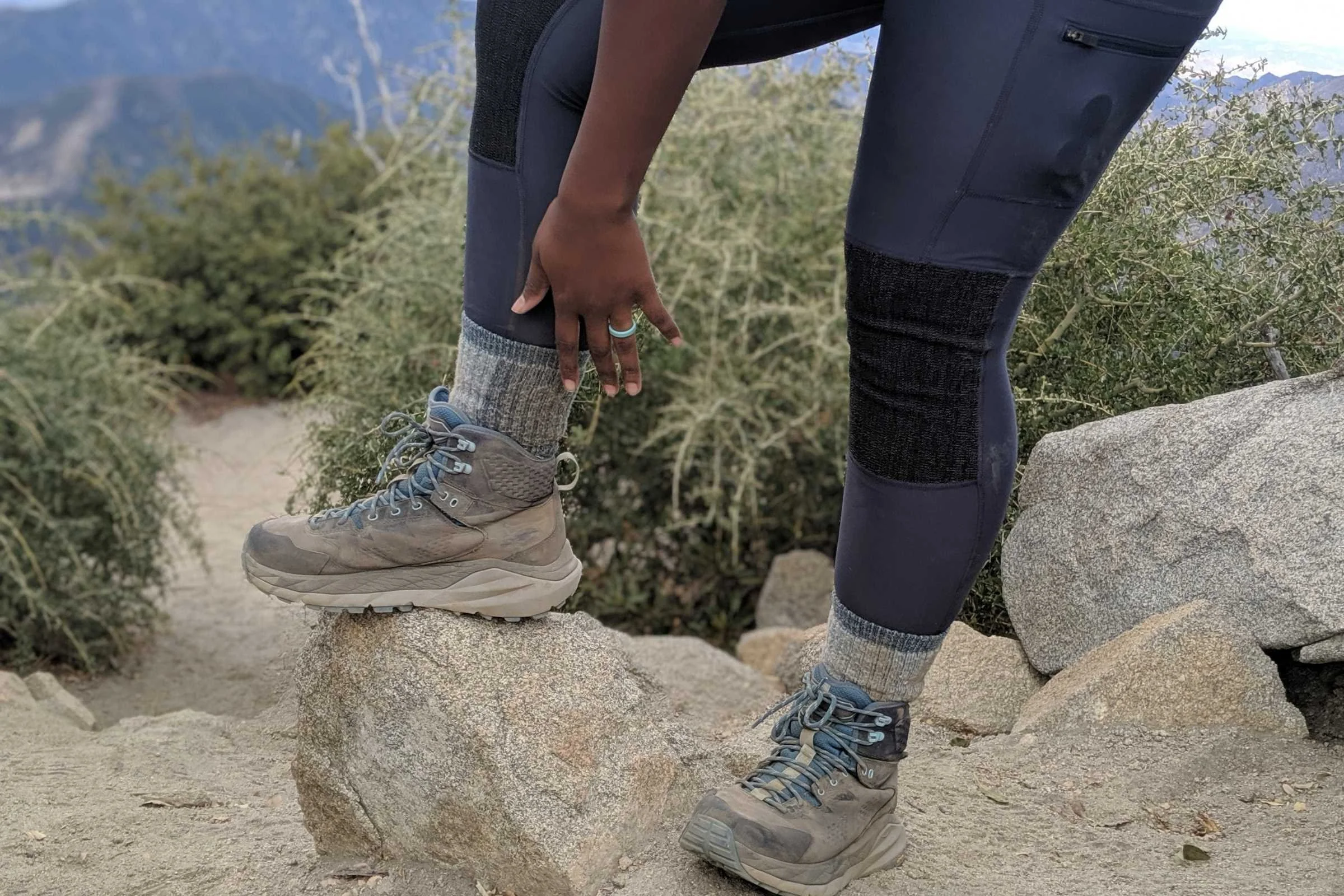
If the prices on some of these socks have given you sticker shock, we have a great budget option for you: the REI Co-op Merino Wool Lightweight Hiking Crew socks. They check all the major boxes: high merino wool content, light-to-medium cushioning, reinforced heel, and seamless toe and arch support. They also have good moisture-wicking capabilities with quick-drying yarn.
REI Co-Op Merino Wool Lightweight Hiking Crew
Crew
¼ Crew
-
New for this year, REI introduced several color options. REI has had some version of the merino wool lightweight hiking socks for at least a decade–always in gray. We're thrilled to see new color options.
-
The newest version of the REI Co-op Lightweight Hiking socks is a better fit. It's been reinforced at the heels, toes, and foot beds as well as the Achilles arch area–all places where we see socks are most likely to fail. Additionally, there's a stretch arch band to provide effective support, which helps with issues we've run into in the past related to sag in these socks.
-
Despite the great value for the price and the quality materials of the REI Co-op Merino Wool socks, there are some drawbacks to the REI Lightweight Merino Crew. The first is durability. User reviews and our own experience show that these socks just don’t last as long as our top picks.
We purchased a pair for a thru-hike of the PCT and found that we got holes in the heels and bottom much more quickly than with other socks we tested, like the Darn Tough Hiker Micro Crew Midweight. This was especially true when we’re using the REIs in wet conditions.
-
At 1% Lycra vs. other socks over 2%, we’ve found the REI Lightweights lose their stretchiness too quickly in our experience. This can lead to bunching, sagging, and blisters.
-
While REI has been famous for its impressive 1-year warranty, in the world of performance socks, that isn't much. Darn Tough and Farm to Feet have set the bar high, and REI’s 1-year warranty doesn’t even come close. Even Smartwool and Icebreaker have a 2-year warranty. We feel that the unconditional warranty from Darn Tough and Farm to Feet justifies paying the extra premium by itself—and that’s before you get into the extra features and quality.
While we consider our other picks an investment worth making, if you’re looking to get out on the trails and not spend as much money, the REI Lightweight Merino Crew is the sock for you.
Most sustainable hiking socks: Farm To Feet Damascus Light
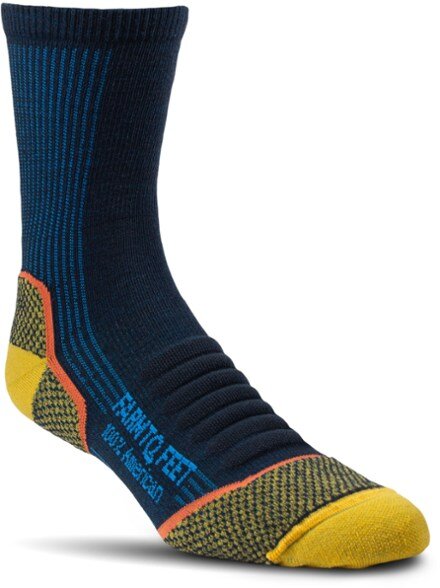
Material: 51% merino wool, 46% nylon, 3% spandex (varies by sock length)
Cushion: Targeted light
Length Options: no show, ¼ crew, ¾ crew, crew
Sizing: Unisex S-XL (US women’s 4-12.5 and US men’s 6-14.5)
Warranty: Lifetime
What we like: targeted cushioning, lightweight, variety of heights, lifetime warranty, uses wool from local farms
What we didn’t like: fit is not as refined
Our pick for the most sustainable hiking socks comes from the USA-made and USA-sourced sock company, Farm to Feet.
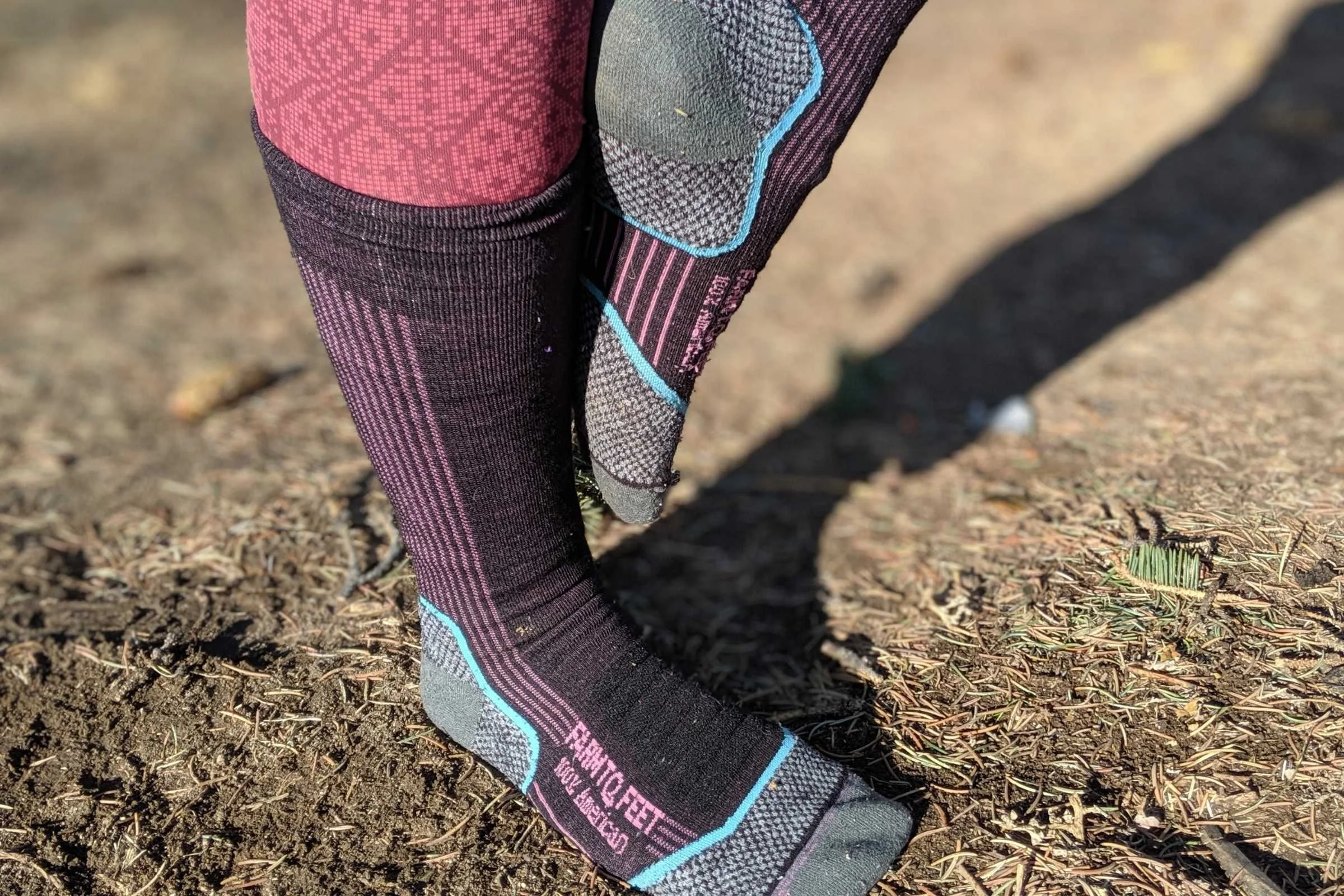
Not only are these socks sustainable, but we found the unisex Farm to Feet Damascus Light to be exceptional at moisture-wicking and breathability. Named after the famous Virginian trail town along the Appalachian Trail, this merino wool hiking sock is designed with the long haul in mind– for hikers who want to balance weight and durability. Plus, to add to its sustainability, it is backed with an impressive warranty (though they are so durable, you are unlikely to need to ever use it!).
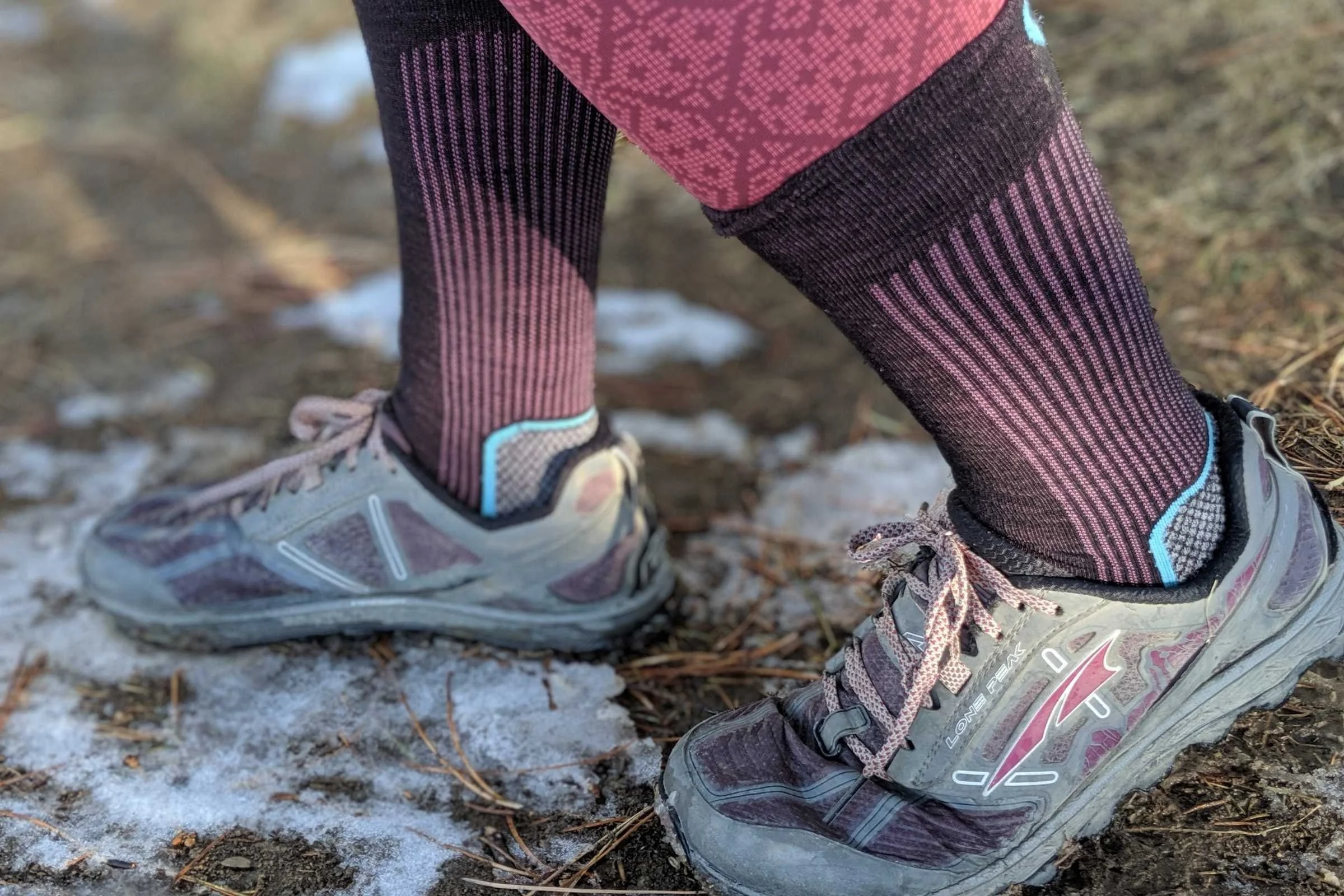
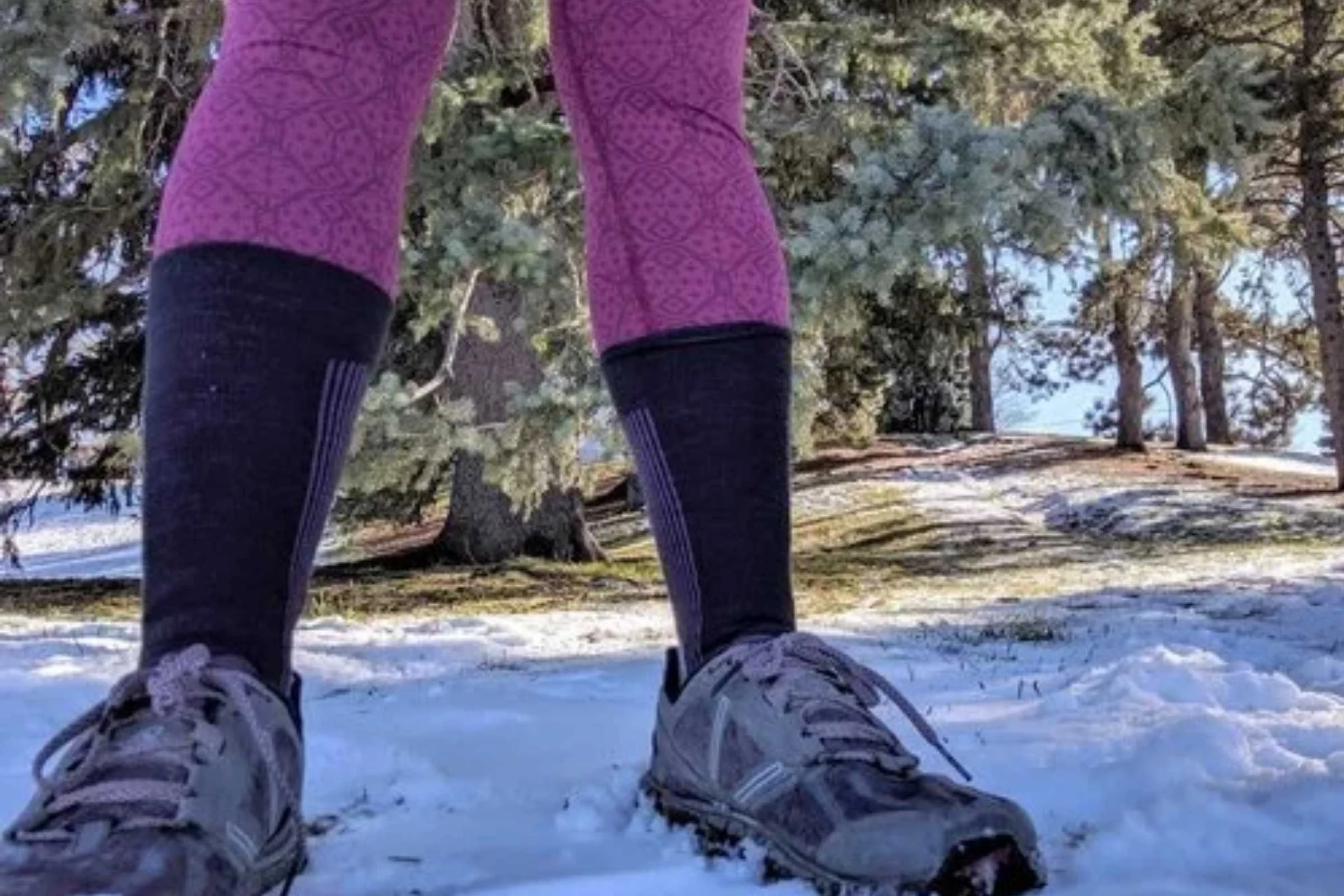
Farm To Feet Damascus Light
-
Farm to Feet keeps the weight down on the Damascus Light by using targeted cushioning: squish where you need it, and none where you don’t. We’ve found this provides a much better fit than is offered by many of the other socks we tested, especially when wearing low-volume (i.e., not a lot of extra room) shoes and boots. The targeted cushioning is full-density, meaning that your feet won’t overheat due to extra cushion you don’t need.
-
We like that these socks have compression through the arch, which provides a nice, snug fit. In our hundreds of miles of testing on a thru-hike of the Appalachian Trail, they never bunched or sagged. The yarn on the Damascus is tightly woven, which helps keep the grit that leads to blisters out of the socks and away from your feet.
-
Another advantage is the Damascus Lights are available in a variety of heights—including a low cut. This can further help save you weight.
-
Farm to Feet offers the Damascus Light in the Trailblazer Bundle 4-pack of socks. High quality hiking socks are rarely available in bundles that help save you money, which is a shame, since many backpackers and thru-hikers know they will need more than one pair of socks.
-
While we’re impressed with the durability of the Damascus Lights, the fit isn’t quite as refined as it is on the Darn Tough Hiker Micro Crew Midweight. However, because they weigh less per sock, we think they’re the best lightweight hiking sock.
-
Farm to Feet and Darn Tough have a lot of similarities as companies, but one difference is that Farm To Feet is not only made in the USA but also uses 100% U.S.-grown, U.S.-manufactured, and U.S.-processed materials. This hyper-local material sourcing means that the carbon footprint and emissions of shipping wool and materials from farmer to the mill is much less than almost any other sock company.
Merino wool is often grown in New Zealand and Australia. Sometimes, it is shipped to Asia for knitting and then sent to the US for consumers. By keeping the process in the U.S., Farm to Feet is reducing emissions.
Additionally, the U.S. has stricter environmental regulations than some countries when it comes to manufacturing, especially notable for chemical processing.
-
Farm To Feet has a lifetime guarantee on all of their socks—but it seems a little trickier to navigate than Darn Tough's. They’ll send you a replacement pair or a refund, but you need to keep your proof of purchase. That’s easy to do when you purchase online, but trickier when you’ve purchased from a store in the middle of a thru-hike.
-
Another reason Farm to Feet wins more sustainable socks is that the brand uses zero-waste manufacturing. They recycle all textile waste, yarn scraps, and defective or used socks through Revived Fiber in the Carolinas. These are turned into reclaimed fibers and industrial materials like carpet backing and stuffing. Nothing goes to the landfill. Revived Fiber says the end result of this processing is reduced carbon emissions, land and water use for growing cotton, and production of new synthetic fibers made of petroleum.
Best Hiking Socks With Moderate Compression: Sockwell Circulator Graduated

Materials: 32% merino wool, 32% nylon, 31% rayon, 5% spandex
Cushion: Ultralight
Length options: Knee
Sizing: Women’s S/M and M/L; men’s M/L, L/XL, XXL
What we liked: comfortable compression, versatility, all day comfort
What we didn’t like: rayon retains water so takes longer to dry out
We think the Sockwell Circulator Graduated is the best compression sock for everyday hiking. Moderately rated at 15-20 mmHg, most people will find this level of compression comfortable and effective for a wide range of activities, versatile enough to double for air travel and recovery from other sports. Because they’re not overly tight, they can be worn all day and they’re a great choice for hiking before and after pregnancy.
Sockwell Circulator Graduated
Women's
Men's
Together, the women’s and men’s versions of the Circulator have more than 5,000 customer reviews on Amazon with a 4.7-star rating, and this graduated compression Sockwell sock is consistently among the top sellers at popular online retailers like REI. American-made with American wool-based yarns, the Circulator is one-third merino wool, one-third rayon from bamboo, one-third nylon, and spandex, and comes in tons of fun, colorful patterns.
Sockwell has done a nice job of balancing comfort and performance features. The Circulator has everything we look for in a good pair of socks — arch support, a healthy dose of cushion, the right amount of elastic, and seams that don’t rub. All-in-all, the Circulator is a great moderate compression sock, and a suitable choice for someone who wants a sock they can feel good hiking in, but will use in other areas of life as well.
Best Medical Grade Compression Socks for Hiking: Stox merino hiking socks
Material (women's): 54% Polyamide, 37% Merino wool, 9% Elastane
Material (men's): 52% Polyamide, 38% Merino wool, 10% Elastane
Cushion: Light
Length options: Knee
Sizing: Women’s S-L, men’s S-L
Warranty: None
What we like: comfortable, moisture-wicking, thermo-regulating, medical grade, padded toe, reinforced heel, arch support
What we didn’t like: price
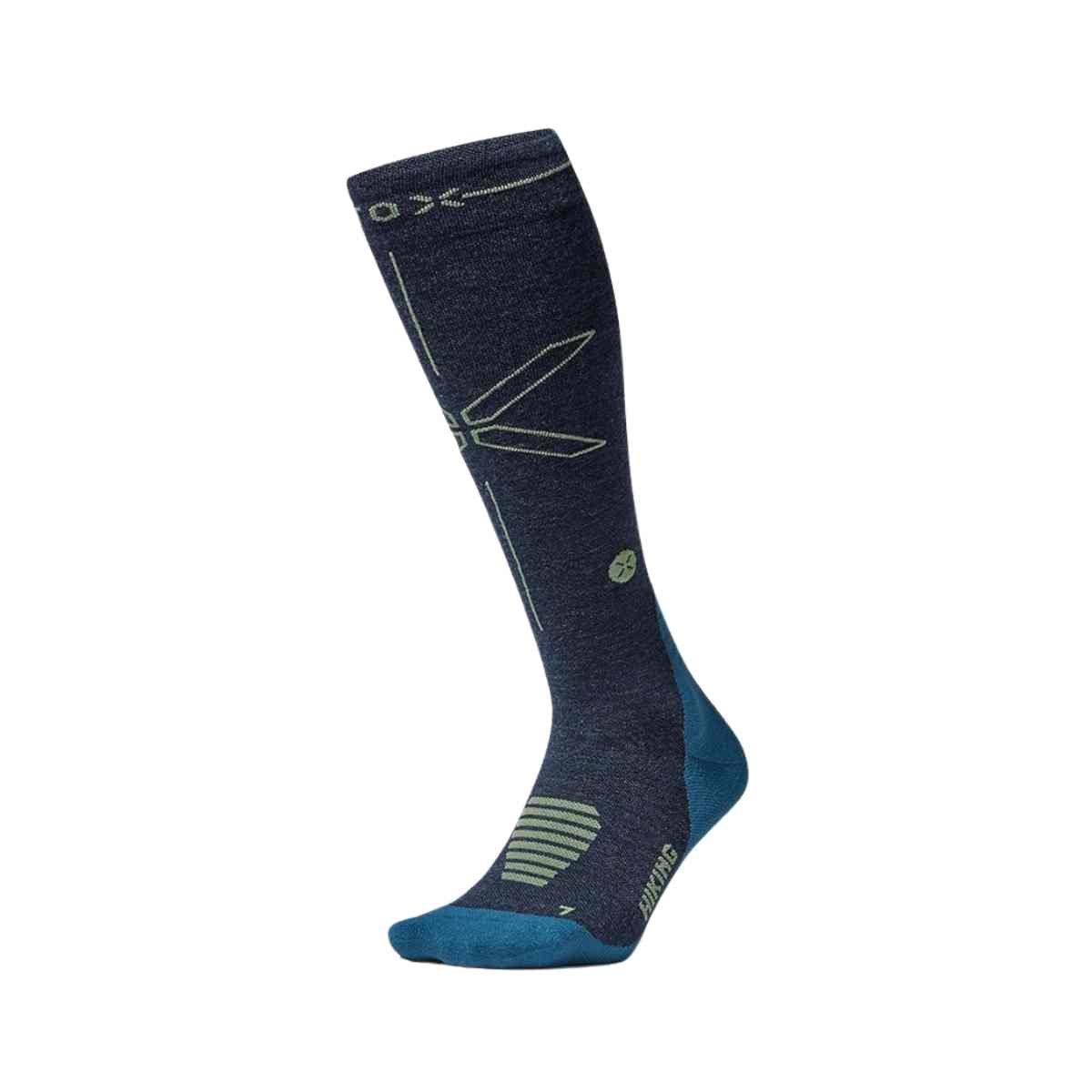
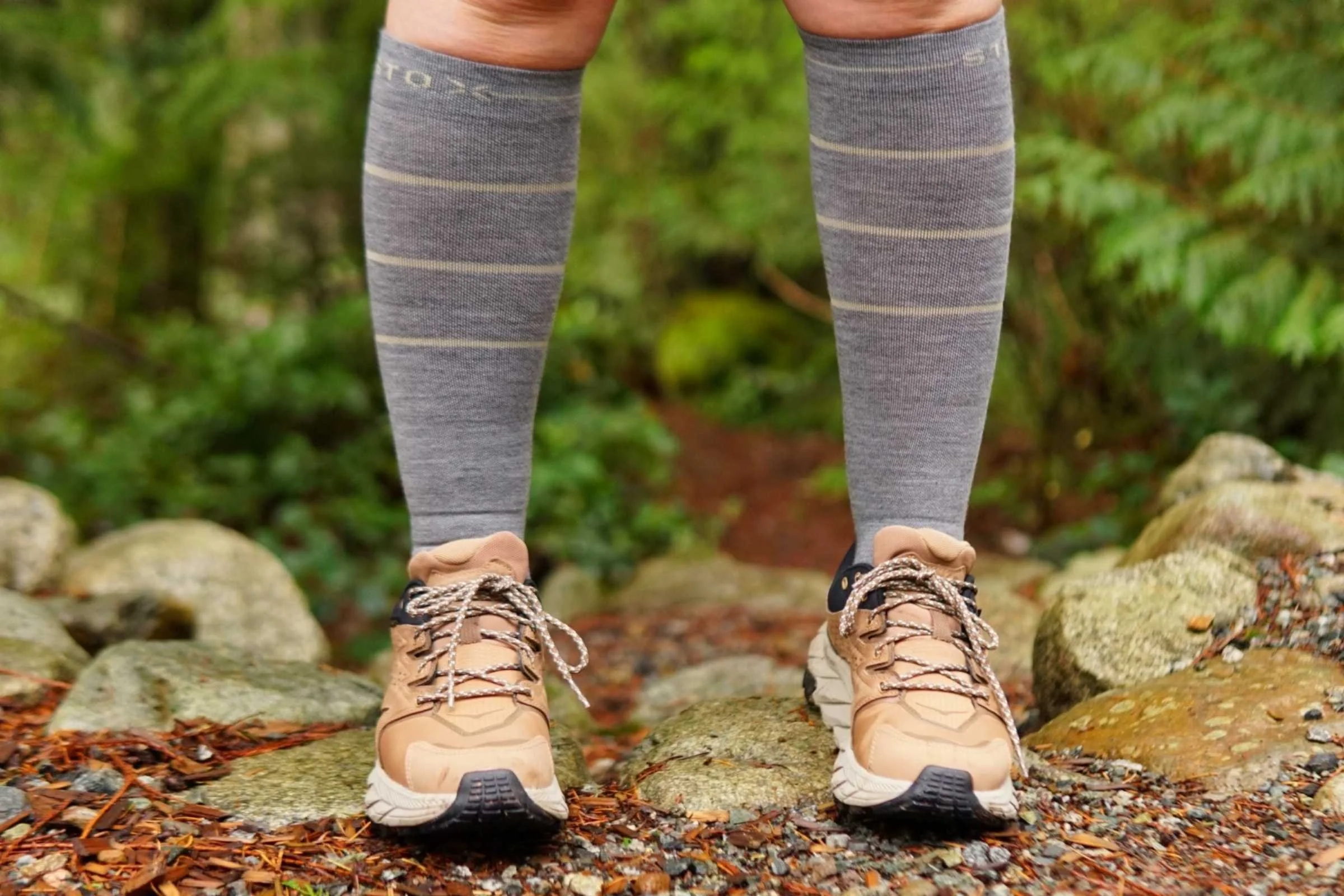
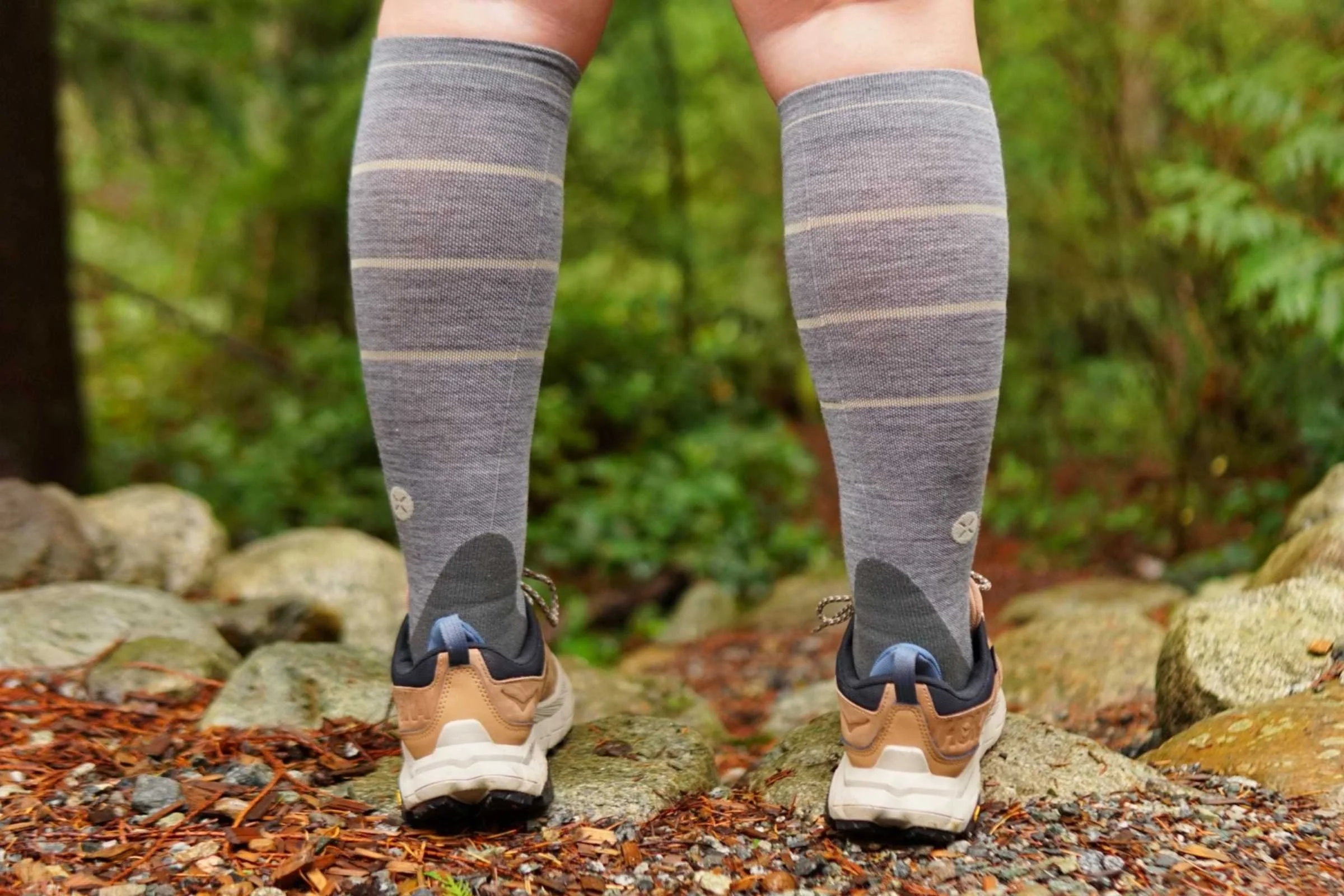
We chose the STOX Merino Hiking Compression socks as the best medical-grade compression socks for hiking because they’re comfortable, moisture-wicking, thermo-regulating, and developed with those working in the medical field to ensure optimal performance.
The compression rating on the STOX Merino Hiking sock is 23-32mmHg (Class 2), which we thought sounded like an awful lot, but we were pleasantly surprised when we first put them on. We expected serious compression, but our Treeline Review writer Ebony Roberts reported that this level of compression was incredibly comfortable and not at all “too much” for a first-time compression sock wearer.
stox merino hiking socks
Women's
Men's
-
STOX Merino Hiking socks are 51% polyamide (nylon), 39% merino wool and 10% elastane. They’re knit using a circular-knitting technique on advanced medical machines to achieve accurate graduated compression.
Their textile engineers work with a team of medical experts (STOX’s medical board is made up of a vascular surgeon and the head of medical affairs at a professional soccer club) to create socks with top-of-the-line performance.
-
They feature a padded toe and cushioned reinforced heel that extends higher up the Achilles which is great for hiking-boot wearers; flat seams don’t rub inside footwear; the material feels good next-to-skin; and the arch support is comfortable without being too tight.
-
STOX costs nearly twice as much as our everyday compression sock pick, the Sockwell Circulator, but if you’re looking for seriously impressive construction and tighter compression, we think the STOX Merino Hiking sock is your best bet.
Best Double-Layer Hiking Socks: Wrightsock Silver Escape Crew
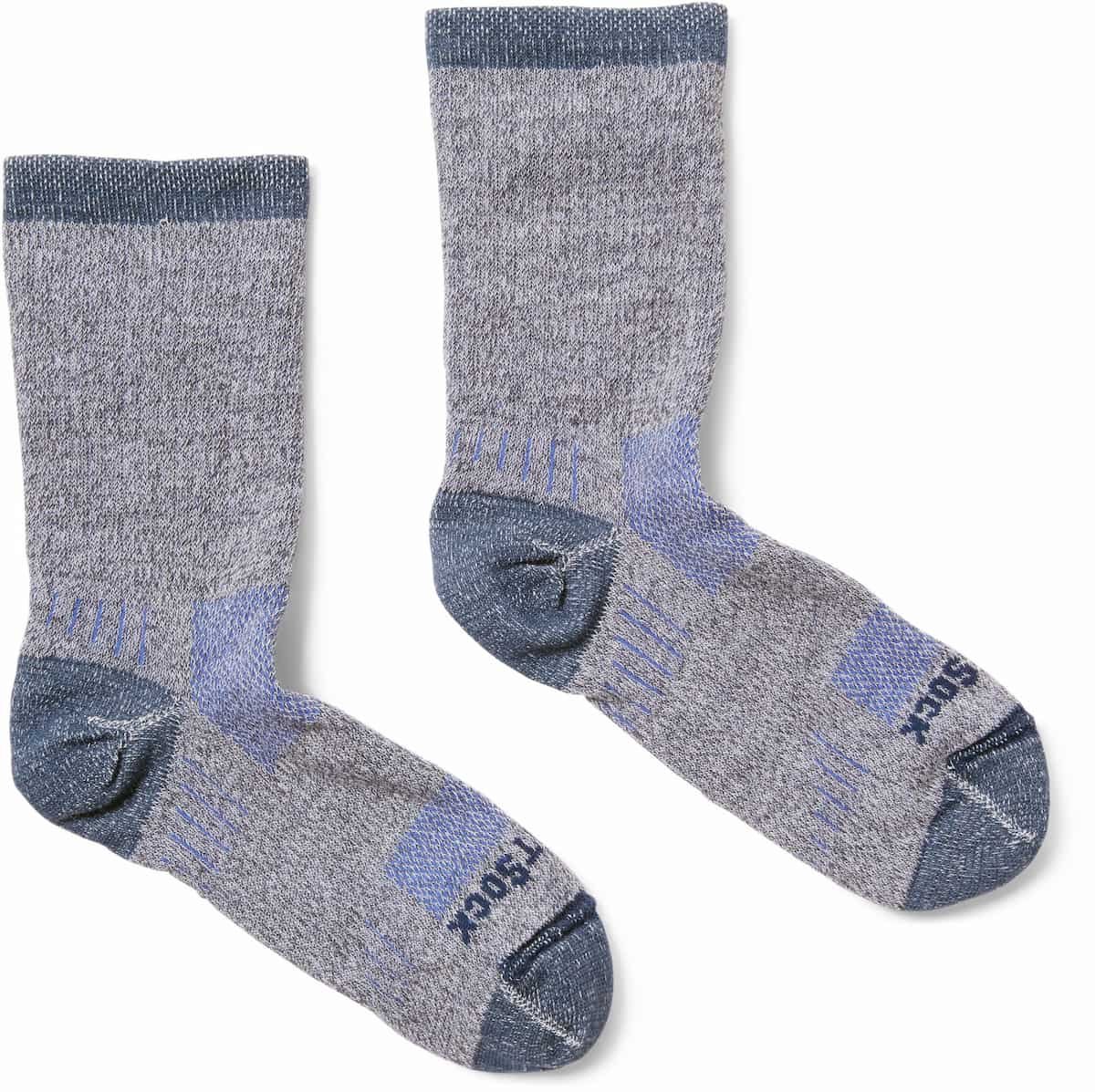
Inner Material: 65% Dri-WRIGHT ll polyester/26% nylon/5% silver/4%Lycra spandex; outer: 68% Dri-WRIGHT ll polyester/24% nylon/8% Lycra spandex
Outer Material: 68% Dri-WRIGHT ll polyester, 24% nylon, 8% Lycra spandex
Cushion: Light
Length options: ¼ crew, crew
Sizing: Unisex S-XL (US women’s 4-12 and US men’s 5-14)
Warranty: Lifetime
Wrightsock is known for its double-layer construction—it’s like a liner sock and outer sock in one—and its no-blister guarantee. The double-layer construction on the Double Layer Silver Escape Crew can be tricky to get on your foot correctly. Because there are two layers, you have to pay special attention to ensure there aren’t any folds or bumps in the inner layer. And once you’re hiking, the inner layer can and does move to where it shouldn’t be. I’ve also found that over time, the two layers become separated to the point where the socks are sloppy and unusable. They’ve added 5% silver to the yarn to inhibit bacteria growth and keep odors down. We’ve found this moderately effective.
Despite the no-blister guarantee, I’ve purchased and hiked thousands of miles in Wrightsocks and, unfortunately, I’ve got plenty of blisters in them. If you experience blisters, you can send them back with the original sales receipt and proof of purchase for your money back.
Still, we know hikers who will only hike in Wrightsocks. They claim that they never get blisters wearing Wrightsocks, and the Wrightsocks keep their feet noticeably cooler than any other sock they’ve tried. If you suffer from hot feet and can’t find a solution, the Wrightsocks may be the sock for you.
Wrightsock Double Layer Silver Escape Crew Hiking Socks
Best waterproof socks for hiking: Sealskinz Dunton All-Weather with HydroStop
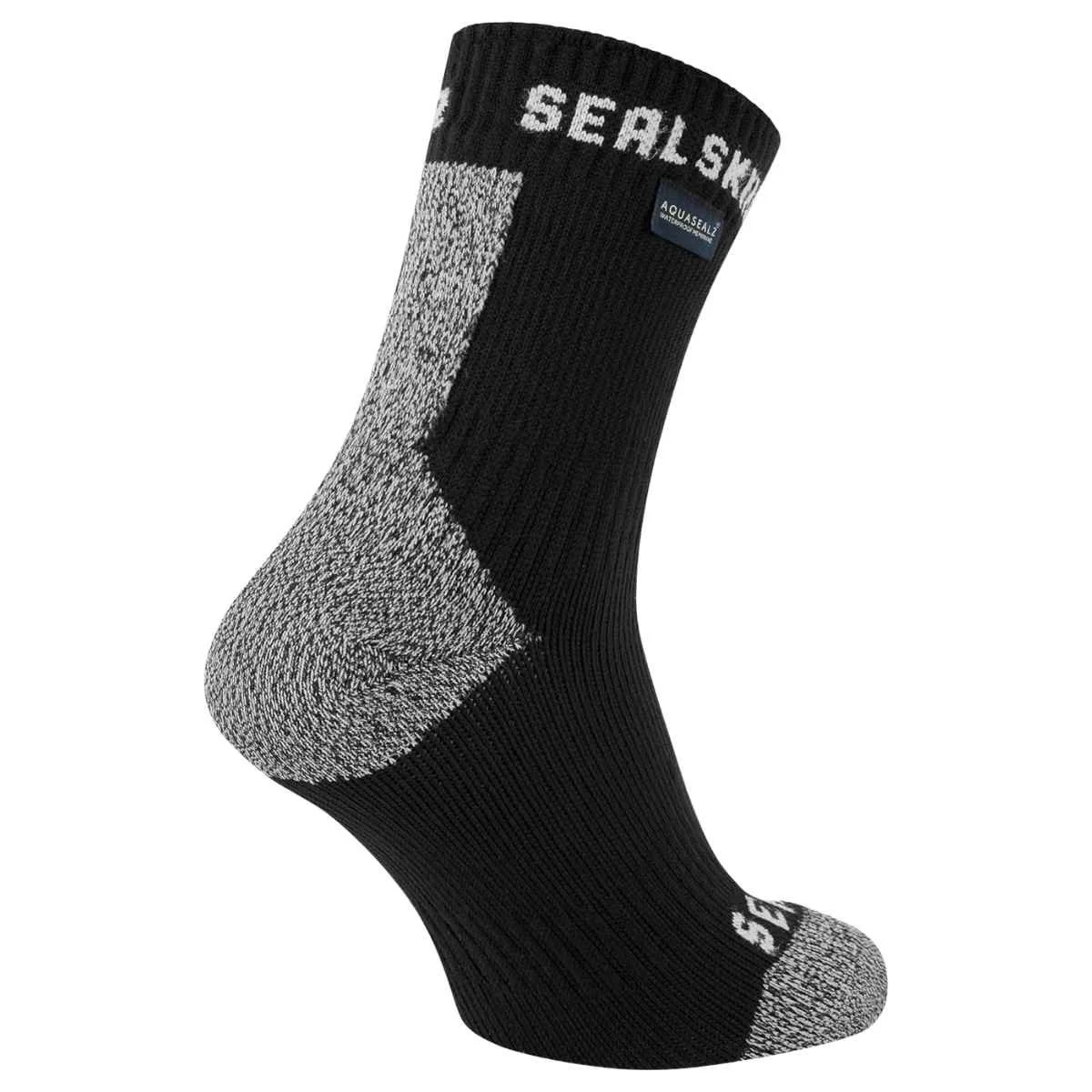
Material: 90% Nylon, 10% Elastane
Cushion: Medium
Length Options: Ankle
Sizing: S - XL
Warranty: Lifetime warranty, lifetime waterproof guarantee
What we liked: Kept feet warm in cold weather, unique ankle cuff keeps water from coming into sock from above (even when moving)
What we didn't like: As with all waterproof socks, less comfortable than non-waterproof socks, expensive
The Sealskinz Dunton All-Weather with HydroStop socks are the best waterproof socks for hiking and backpacking. Waterproof socks are a niche piece of gear, but in the right conditions they can make the difference between finishing your trip in comfort or slogging home with frozen, wrinkled feet. They work best in situations where your footwear alone can’t keep moisture out.
We found that when you’re moving on varied terrain, the cuff of most waterproof socks shifts and moves, allowing water to come in. That isn't the case with the Sealskinz Dunton socks. Their Hydrostop elastic technology helps prevent the risk of water getting inside of your sock by keeping it secure around your ankle.
The Sealskinz Dunton uses Sealskinz’s Hydrostop design that features elastic taping around the inside cuff of the sock. This acts as an extra barrier to reduce water dripping down the leg and into the cuff of the sock.
These socks performed best while hiking in rainy conditions, keeping moisture out of the inside of our tester's socks in a steady rain while hiking on trails in and around Chicago.
Sealskinz Dunton All-Weather with HydroStop
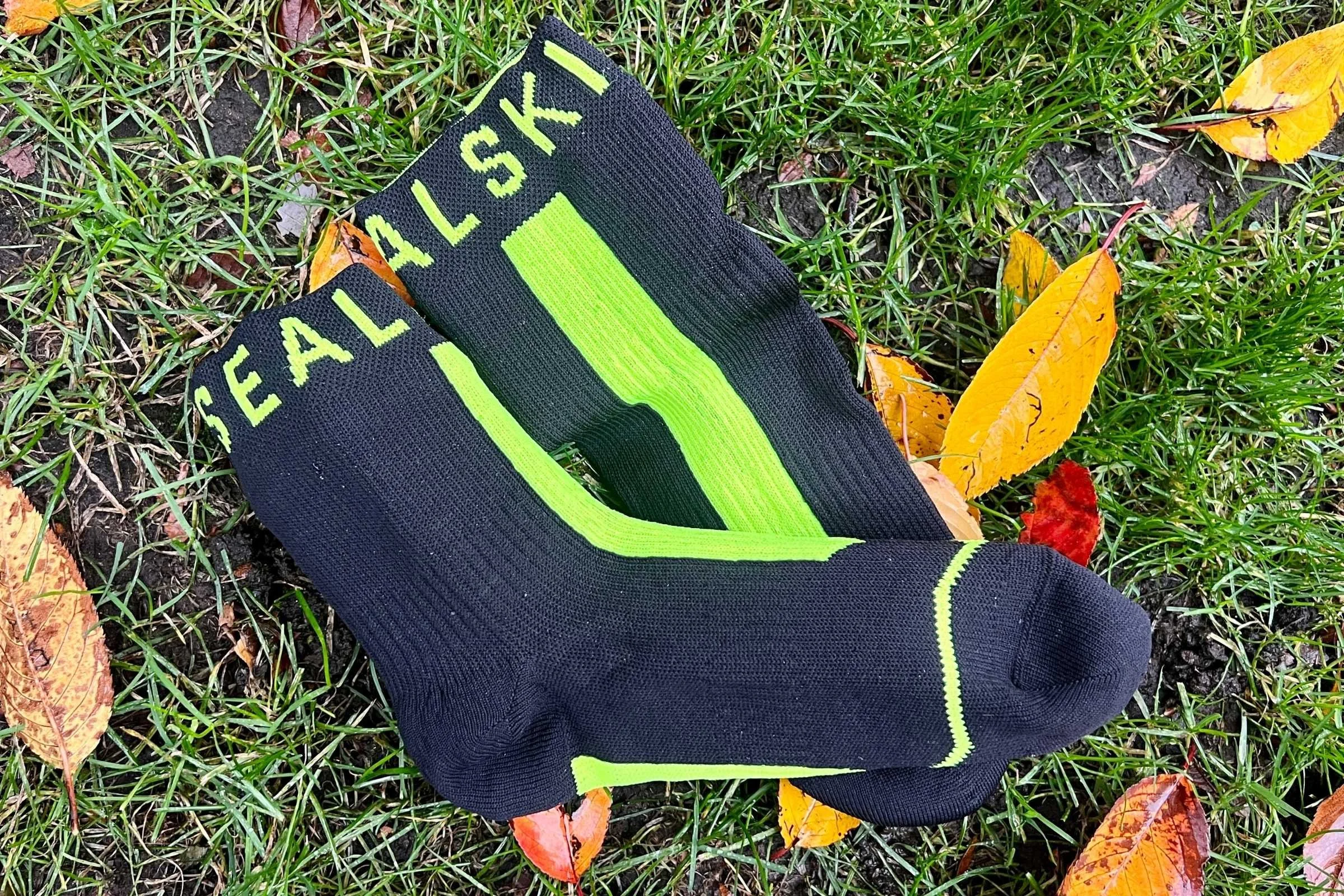
Sealskinz Dunton All Weather waterproof ankle sock with Sealskinz’s proprietary Hydrostop water guard fend off water seepage better than most.
-
Waterproof socks, by their very nature, are designed to keep your feet warm and generally don't breathe well. However, the Sealskinz Dunton socks were overall more breathable than other waterproof socks we tested.
-
The Sealskinz Dutton waterproof socks are much less padded and cushioned than other waterproof socks marketed for hiking. Instead, they have a lighter weight and streamlined design.
-
We found they dried quickly after taking them off and leaving them to air dry. Another feature I appreciated was their low-maintenance care and treatment. You can tumble dry these socks on low heat, and because they’re built with durable membrane, you don’t need to re-waterproof them throughout their lifetime.
Best socks for winter hiking: Smartwool Hike Classic Full Cushion
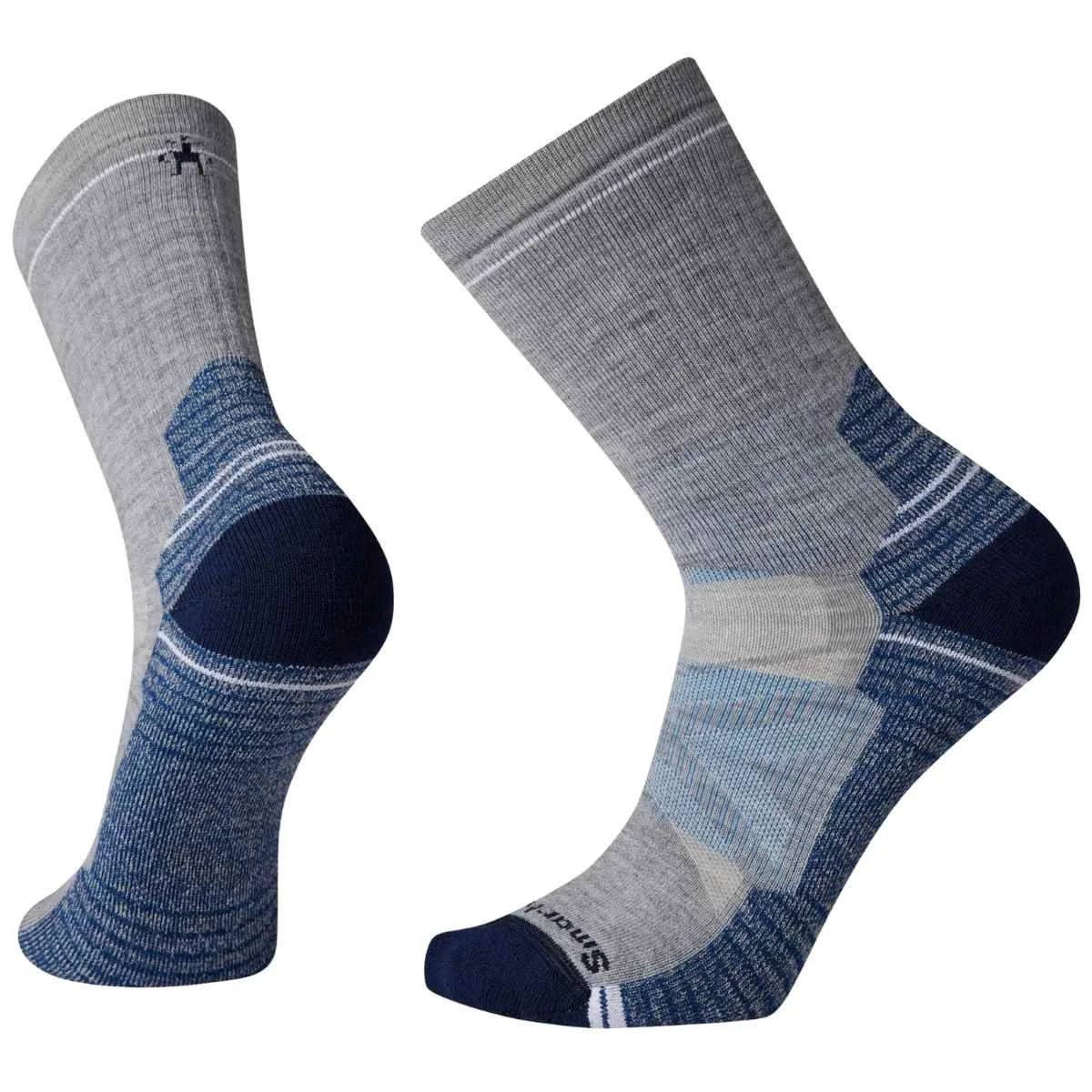
Material: 56% merino wool/31% recycled nylon/11% nylon/2% elastane
Cushion: Mid
Length Options: Crew
Sizing: 4-12.5
Warranty:
What we liked:
What we didn't like:
The Smartwool Hike Classic Full Cushion socks win our pick for Best Overall winter socks. The right winter socks work in tandem with your winter hiking boots and tall gaiters to prevent frostnip and frostbite when hiking in snow and the cold.
The Smartwool Hike Classic Full Cushion socks are our winner for best winter socks because they balance the many traits of a good all-around winter sock; they’re warm while remaining breathable, soft while remaining durable. They’re highly resistant to odor, and dry out with some time thanks to their mixed fibers. The Smartwool Hike Classic socks kept our tester’s feet warm while commuting, walking, hiking, and snowshoeing.
Smartwool Hike Classic Full Cushion
men's
Women's
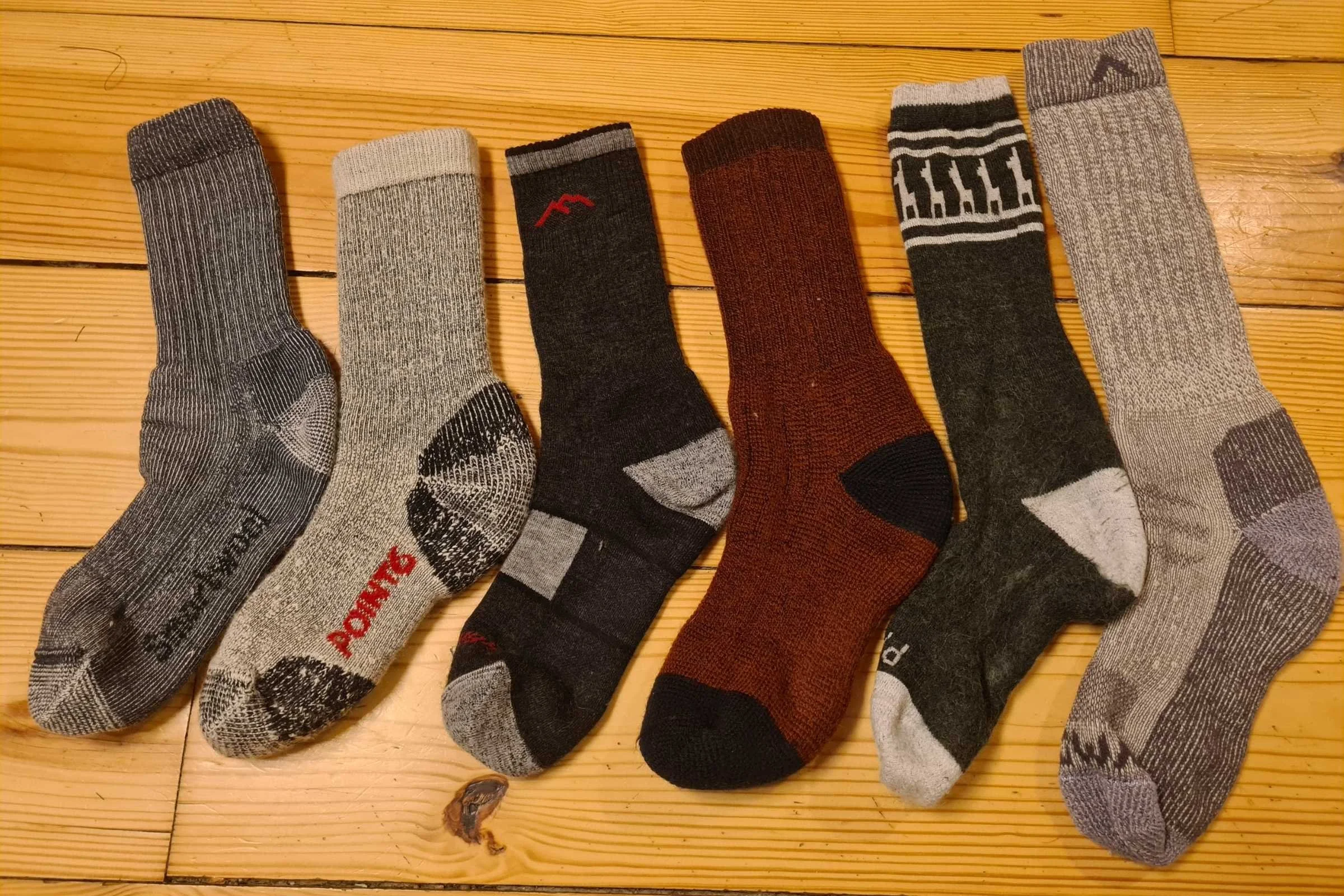
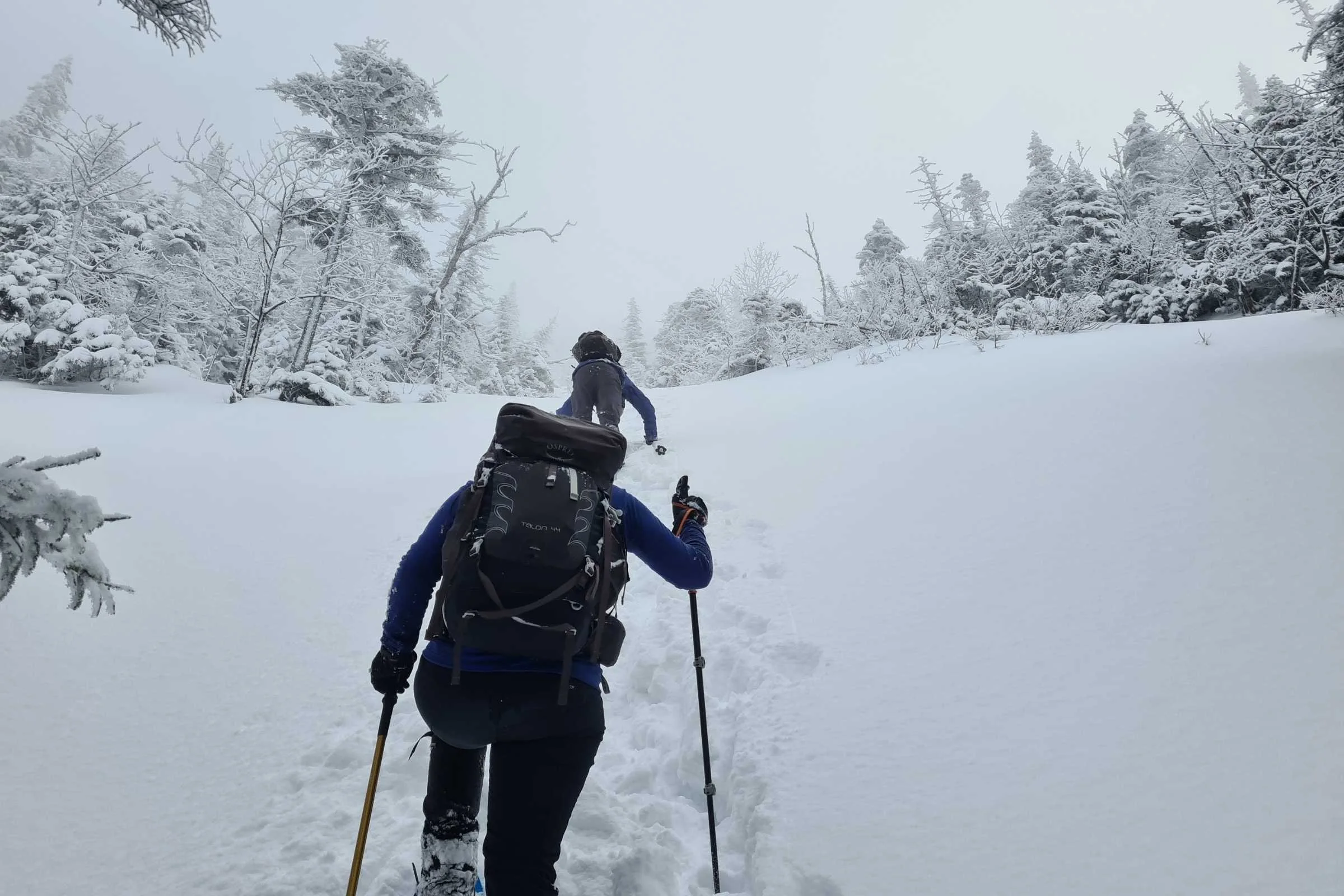
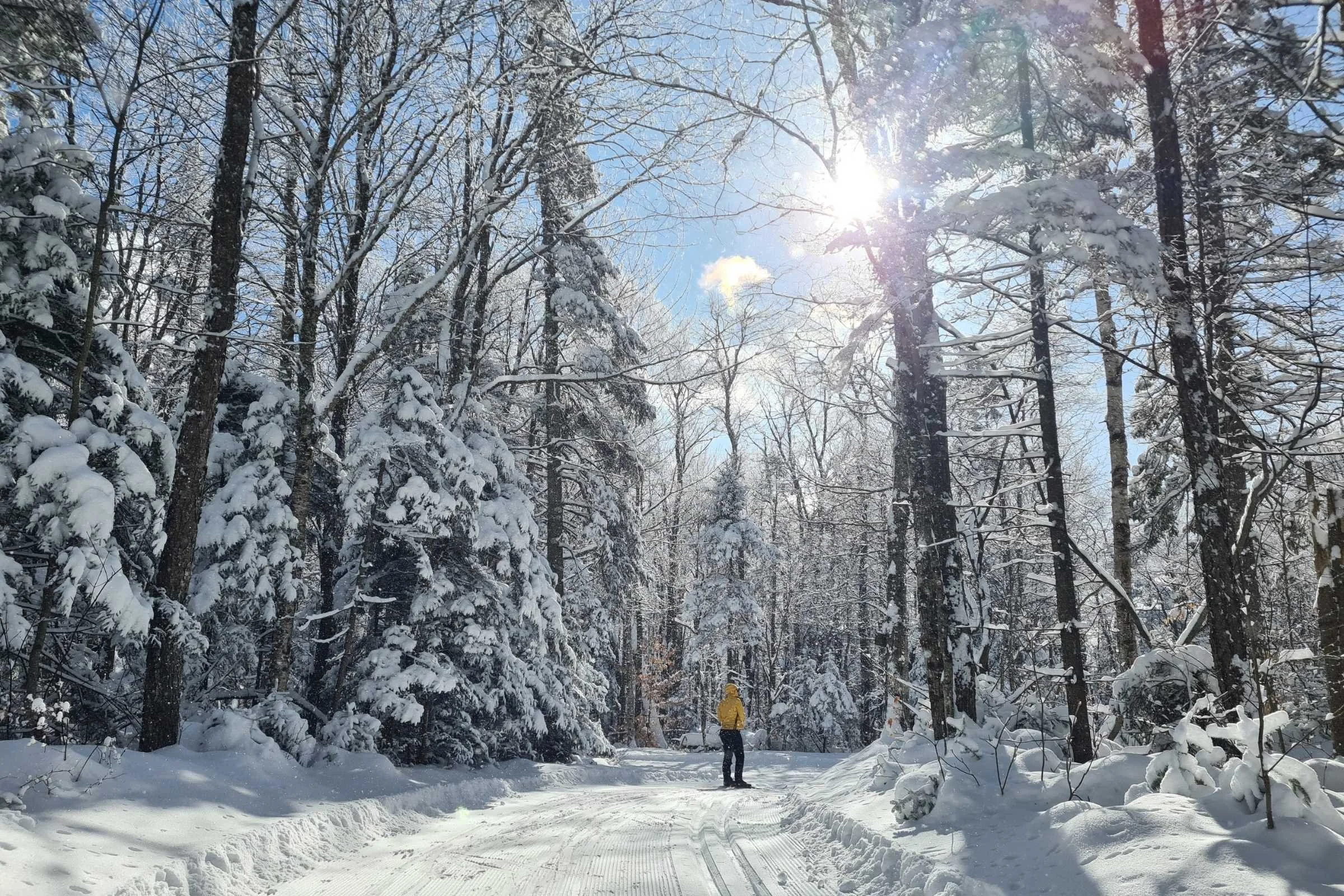
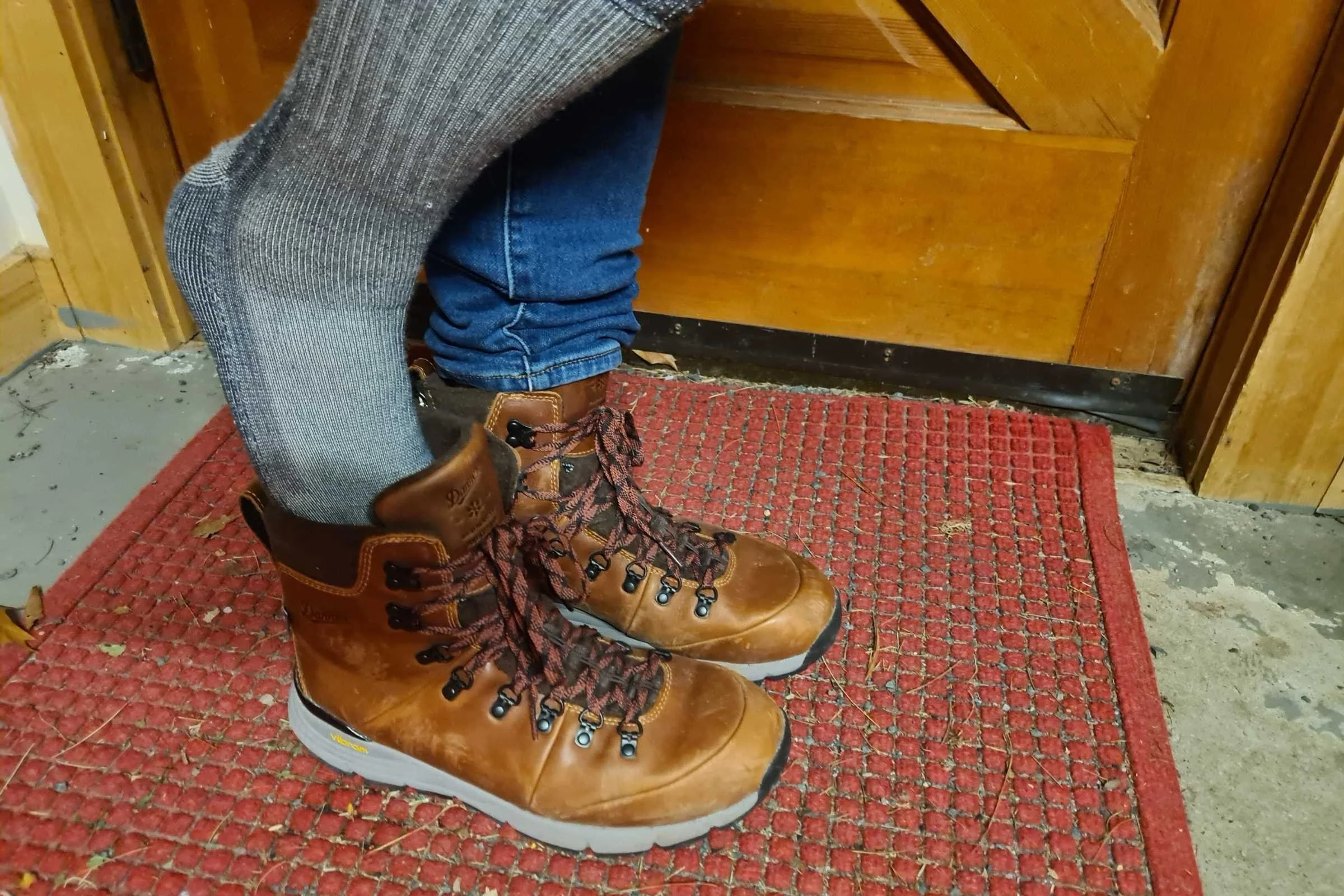
The Smartwool Hike Classic Full Cushion socks are a crew sock made in the USA from New Zealand merino wool and recycled nylon. The Smartwool Hike Classic has full cushioning, elasticized arch support, and flat toe seams.
Elastic in the upper portion of the crew sock keeps the socks from sliding down the leg and bunching at the ankle or underfoot, which is especially important for winter socks because no one wants to stop to fix their socks in cold weather,
The socks kept their shape through multiple wears and after washing and show impressive durability.
Other Hiking Socks We Tested
During our research, we developed basic criteria to measure the hundreds of socks out there. These were other socks we researched and tested that were promising, but ultimately didn’t make our winners list. Still, if you find these socks, we think they’re worth your consideration.
Darn Tough Light Hiker

Material: 54% nylon, 43% merino, 3% Lycra
Cushion: Light
Length options: No show, Micro crew, Quarter, Crew
Sizing: Women’s S-L (US 4.5-11.5) and Men’s S-XXL (US 5.5-17)
The light cushion version of our overall winner, the Darn Tough Light Hiker is a much-beloved sock. The Light Hiker has many features we liked in its medium-cushioned sibling but was less durable. We also think most hikers—regardless of how rocky their trail is or how heavy their pack is—benefit from the extra cushion in the midweight Darn Tough that we recommend. Still, the Light Hiker is a great sock, and hikers in warmer climates or with lighter pack weights may prefer it, especially the ¼ height version.
Darn Tough Light Hiker
Women's
Men's
Icebreaker Hike+ Light Crew

Material (women's): 51% nylon, 47% merino wool, 2% Lycra
Material (men's): 61% merino wool, 37% nylon, 2% Lycra
Cushion: Light
Length options: ¼ crew, crew
Sizing: Women’s S-L (US 5.5-11); Men’s S-XL (US 7-14.5)
Warranty: Lifetime
I’ve purchased and hiked thousands of miles in several different pairs of Icebreaker socks. My favorite was the Icebreaker Hike+ Light Crew, which is one of the highest-ranking Icebreaker socks on the market.
However, lack of durability came up in multiple reviews, which lines up with our experience as well. Wirecutter says the Hike+ “showed signs of wear more quickly than the other models we tested.” For us, that just won’t cut it. However, Icebreaker does offer a lifetime warranty, much like Darn Tough and Farm to Feet, our two winners. If you can find these on sale, they may be worth it.
Icebreaker Hike+ Light Crew
Women's
Men's
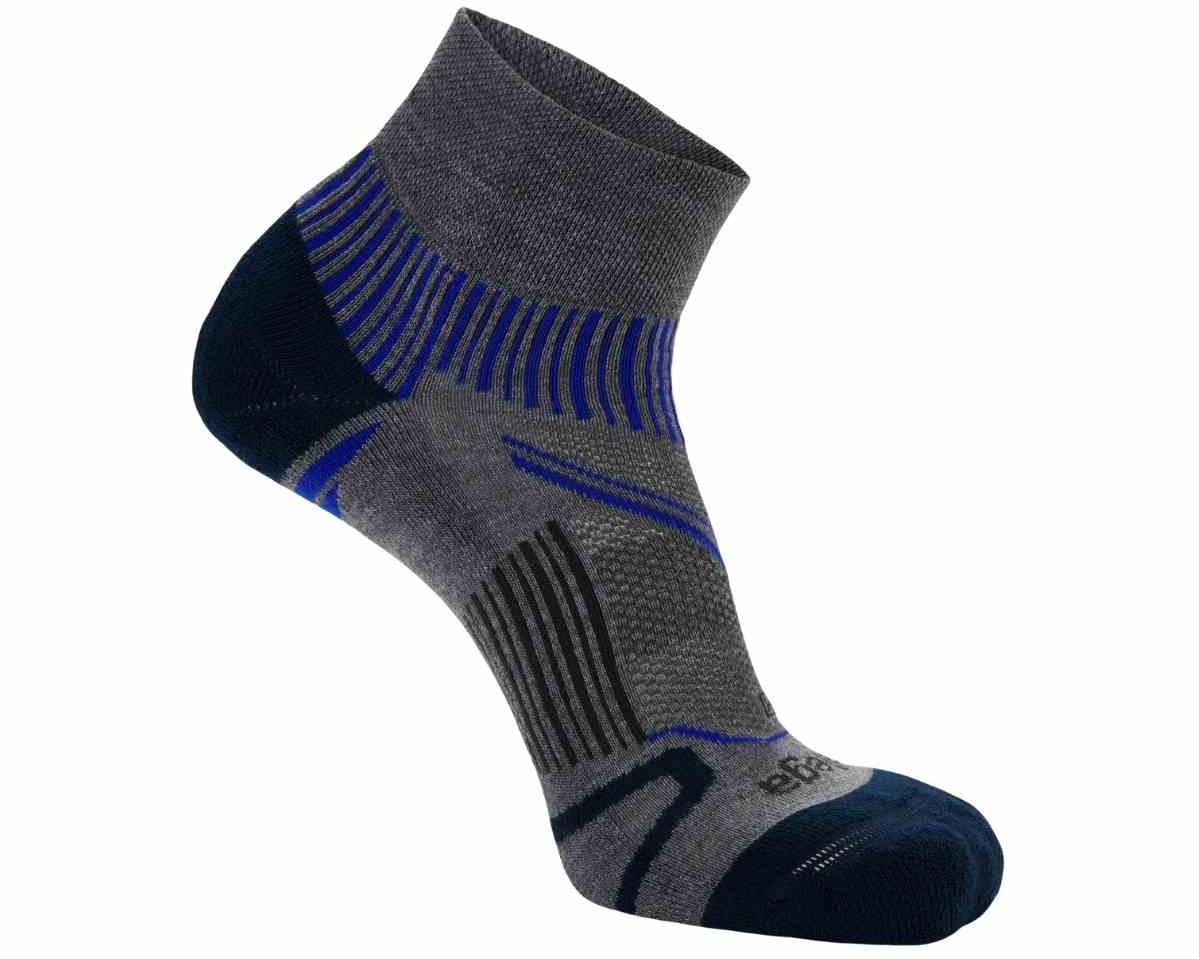
Material: 88% DRYNAMIX recycled polyester 8% nylon 4% elastane
Cushion: Medium
Length options: No show, quarter, crew
Sizing: Unisex S-XL (US women’s 6-15.5 and US men’s 4.5-14)
Warranty: One year for manufacturer defects
The Balega Enduro socks are incredibly comfortable socks with a lot of cushion. These socks just feel good against your feet. However, we noticed that the Enduros felt a little slick on the bottom in our trail runners. We prefer a little more grippiness in our socks. We think these are better as a running sock rather than a hiking sock. We hope Balega will come out with a similar version as a hiking or backpacking sock.
Balega Enduro Socks
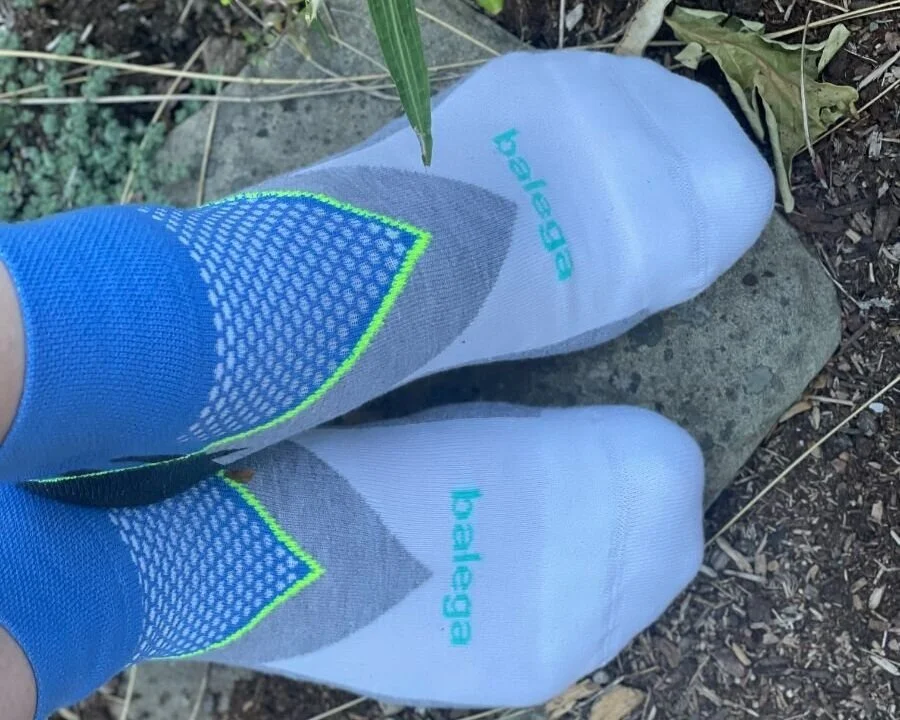
The Balega Endura are soft and have a lot of cushion. Photo by Naomi Hudetz

Material: 92% nylon, 8% Spandex
Cushion: Light
Length options: No show, quarter crew, mini crew
Sizing: Unisex S-XL (US women’s 4-13 and US men’s 6-13)
Warranty: Lifetime
Another fully synthetic option, the Feetures Elite Light Quarter Cushion socks tick a lot of the boxes: they’re anatomical (meaning designated left and right socks), they have targeted compression, and they don’t have a toe seam. However, while they’re marketed as moisture-wicking, I found they actually made my feet sweaty. Also, the fabric felt a little too slick in my trail runners. Overall, I found the Darn Tough Coolmax socks to be the better synthetic option.
Feetures Elite Light Cushion Socks

Material: 60% merino, 36% nylon, 4% Spandex (varies depending on sock length)
Cushion: Medium
Length options: Ankle, quarter crew, crew
Sizing: Unisex S-XL (US women’s 5-15 and US men’s 3-15)
Warranty: Unclear
With a yarn similar to the Darn Tough Hiker, the Swiftwick Pursuit Quarter Crew socks hit that sweet spot of medium cushioning and breathability. They have a little bit of compression around the heel and arch of the foot which makes for a nice, comfortable fit. However, the latest version replaced olefin fibers with nylon, and we’re not convinced that’s a good thing. We also prefer the gender-specific sizing of Darn Tough socks over the unisex sizing of the Swiftwick. Right now, the options are fairly limited in patterns and colors but we hope that more will become available.
Swiftwick Pursuit Quarter Crew Hiking Socks
Montbell Merino Wool Travel Sock

Material: 49% Wool, 21% Polyester, 18% Nylon, 12% Polyurethane
Cushion: None
Length options: Crew
Sizing: men's 4-12, women's 5-11
Warranty: Lifetime
We were intrigued by the affordable Montbell Merino Wool Travel sock. It uses core-spun technology for extra durability–the only Montbell sock that has this feature. The Core-spun technology uses a polyester core-in-sheath technology. It also uses Wickron, found in all Montbell socks, to increase quick dry and moisture wicking.
We chose to test these socks because they are the thinnest and lightest Montbell makes, even though they are marketed for travel. Ultimately, we found they didn't provide the support and structure we like in a hiking sock. Next time, we'll test one of their more supportive options that have more Lycra or elastic to maintain a held-in feel and prevent slippage while hiking.
Women's
Men's
STOX Sport Sock
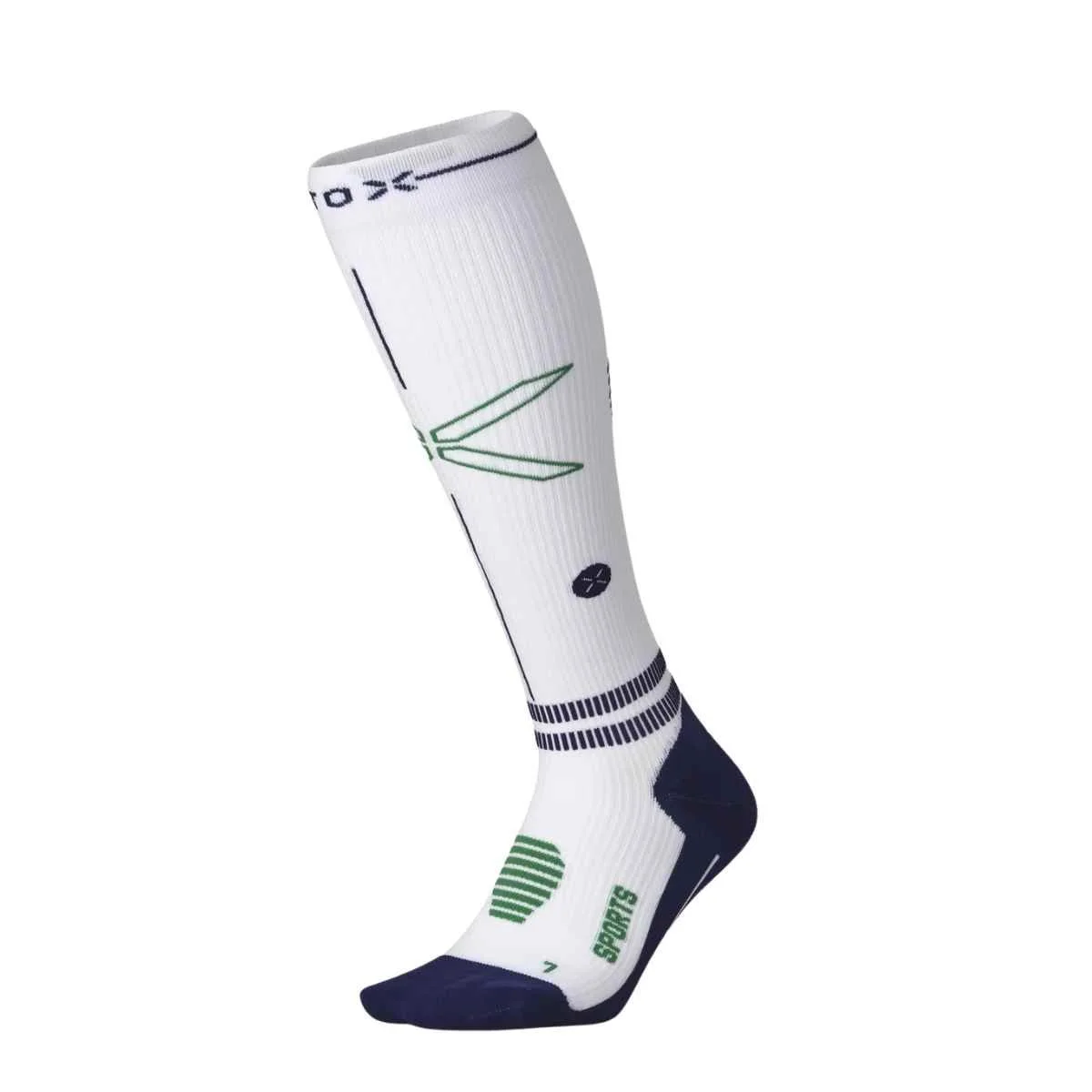
Material: 53 % Polyamide, 33 % Dryarn®, 14 % Elastane
Cushion: full padded
Length options: knee
Sizing: 6-11.5
For fast hikers and those trekking in hot summer temperatures, or who like to wear a low profile trail runner or lightweight hiking shoe, the STOX Sport sock is lightweight and technical but has the same grade of compression.
They’re a synthetic blend — 53% polyamide (nylon), 33% polypropylene (a type of performance fabric), and 14% elastane — and were noticeably thinner when worn next to the Outdoor sock. The toe and heel are padded, but the heel isn’t as reinforced as the Outdoor version. There’s banding around the ankle and mid-section of the foot that hugs the foot comfortably. If you plan to really work up a sweat on the trail, the Sport is a worthy consideration.
STOX Sport Sock
Women's
men's
How To Choose The Hiking Socks For You
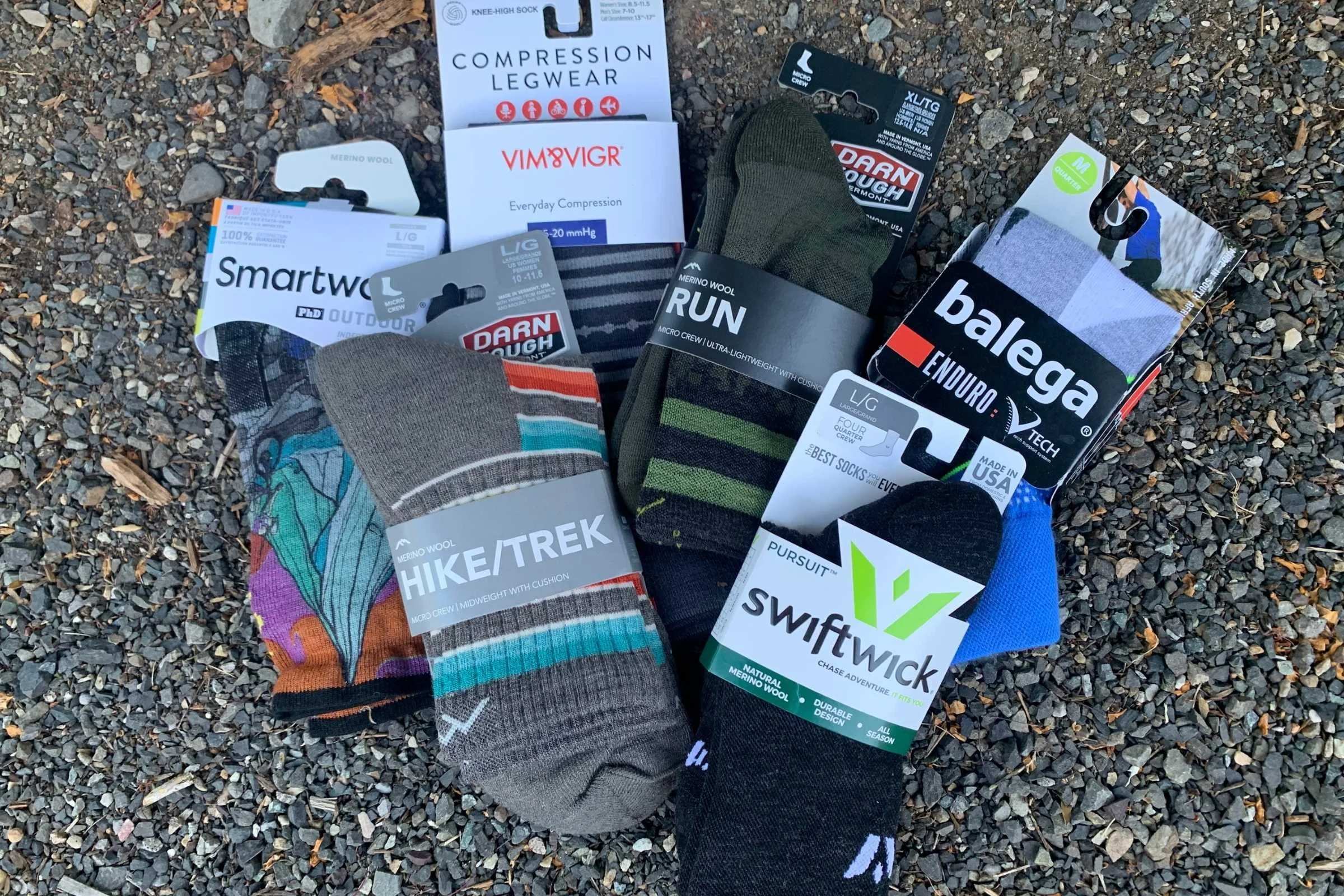
To find the best hiking socks, we tested dozens of pairs of socks from the desert to the forest to the beach to the mountains.
We can’t emphasize this enough—fit matters! A poor-fitting hiking sock can turn your perfectly fitting shoes or boots into a nightmare. Take the time to find the best socks for your needs. You won’t regret it.
Hiking Sock Sizing
Every manufacturer has its own hiking sock sizing; some are unisex and others are gender-distinct. All manufacturers we tested use the small / medium / large sizing bands, with some going up to XXL. The sizing bands are based on shoe sizes, but the sizes within each band vary considerably from manufacturer to manufacturer. The narrower the bands, the better the fit will be. For example, men’s Smartwool sizing bands cover 3 ½ shoe sizes in each sock size (e.g., men’s 9-11.5), while Darn Tough sizing covers 2 ½ to 3 shoe sizes (e.g., women’s 10-11.5) in each sock size. Look for no more than 3 ½ shoe sizes in each sock size.
If you’re on the cusp between sizes, like me, I’d highly recommend trying on both sizes. I’ve hiked in both medium and large Darn Tough socks, and I’ve found that the mediums are too tight around my toes. I like my toes to have as much room as possible, so I go with the larger size to accommodate them. That said, my experience may be different from yours. Our editor Liz Thomas has the same size feet as me but prefers the mediums over the larges as she feels the large takes up too much volume in her shoes and finds loose fabric to feel sloppy. As with all socks decisions, go with what feels right for your feet.
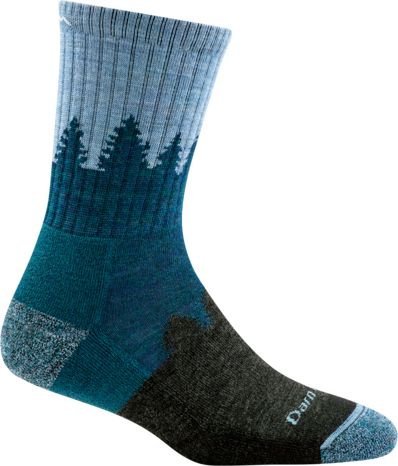
We’re partial to the Treeline design on the Darn Tough Light Hiker socks. They are our favorite!
Sock Patterns And Designs
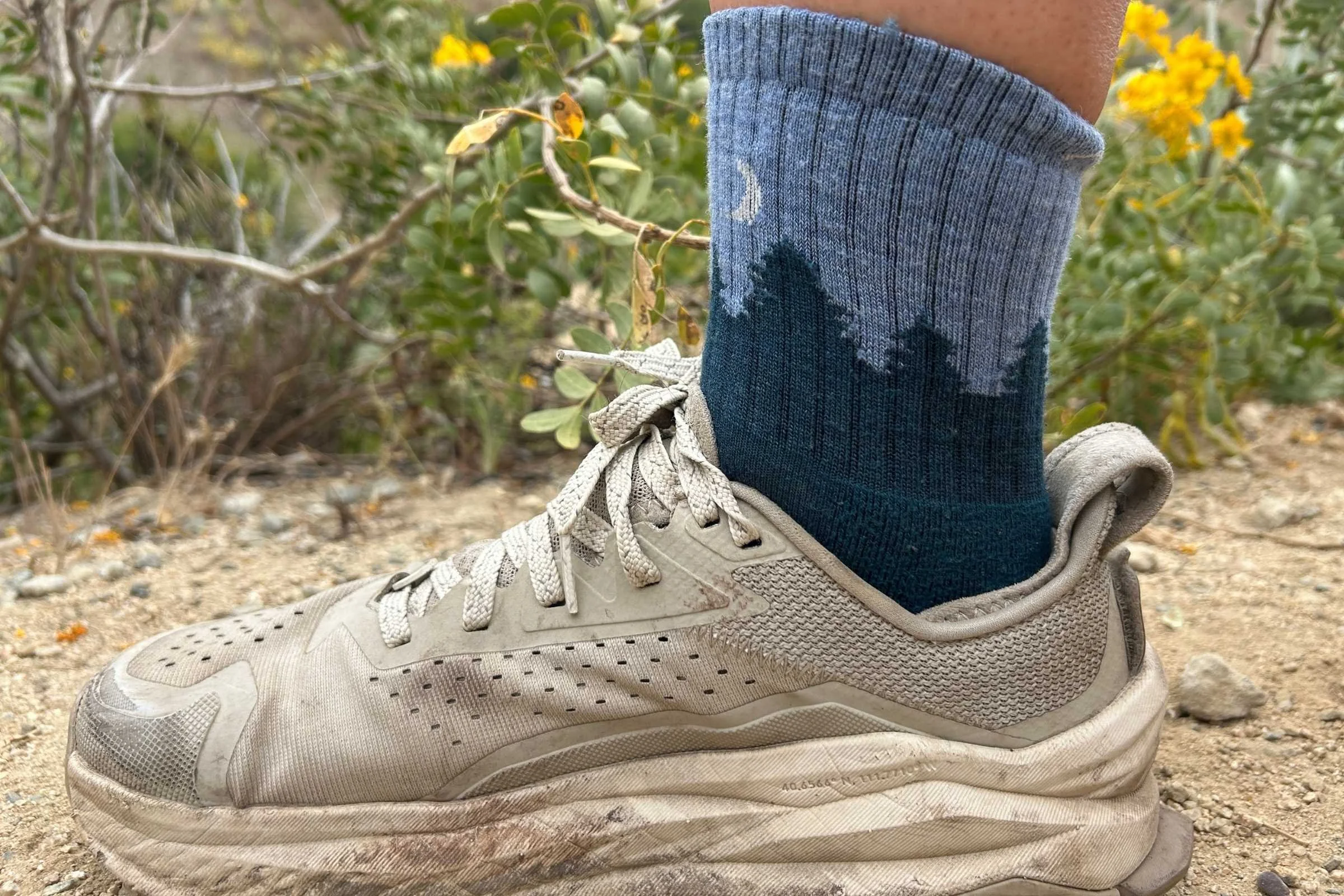
We’re not gonna lie. We like fun patterns and designs in our socks (and we’re kind of partial to Darn Tough’s design—the Treeline Micro Crew Cushion, which we gift to new writers during the holiday season). Manufacturers have gotten the message and most brands offer a wide range of colors and patterns.
Responsible Wool Standard
The Responsible Wool Standard (RWS) is a voluntary certification that means manufacturers are following strict guidelines to protect both the sheep and the land they graze on. The focus of the certification is on progressive and sustainable farming practices. If this is important to you, all Darn Tough socks are RWS certified, as are the REI Merino Wool Lightweight socks.
Men’s Vs Women’s Hiking Socks
All of our top picks, with the exception of the REI Lightweight Merino, come in men’s and women’s versions. But no matter how you identify, fitting to your body is the most important thing. We know plenty of women hikers who wear men’s socks and/or trail runners because they just fit better. Similarly, men with narrow or low-volume feet may find a better fit in a women’s sock. Finding the right fit for you is what’s important, not what’s on the label. Better fitting socks mean they will last longer, feel more comfortable, and better reduce the chance of moisture or blisters. To see more details about the differences between men’s and women’s socks, jump to the What Are the Differences Between Men’s and Women’s Socks? section.
Hiking Sock Length
Hiking sock length is an important thing to consider when buying a sock. We get into details of lengths below as well as present questions you can ask yourself that will help guide you to the correct length.
Hiking Sock Cushion
Hiking sock cushion is another important thing to consider. See the detailed discussion of cushion below as well as questions you can ask yourself to help you find the right hiking sock cushion for your needs.
Hiking Socks vs Running Socks
In general, running socks are thinner than hiking socks, with less cushion. Some people prefer the lightness of a running sock. For more, read our guide to our favorite running socks.
Hiking Socks vs Skiing Socks
At the other end of the spectrum are skiing socks. In general, skiing socks are much thicker, warmer, and taller than hiking socks. They’re also usually too thick to wear with your hiking boots. However, if you’d like your socks to take up more volume in your boots, you can read about our top skiing socks.
What You Need To Know About Hiking Sock Length
Most of our hiking sock picks come in different heights. The options, from shortest to longest, are listed below. To choose the right length of hiking sock, see our How to Choose the Right Length of Hiking Sock section.
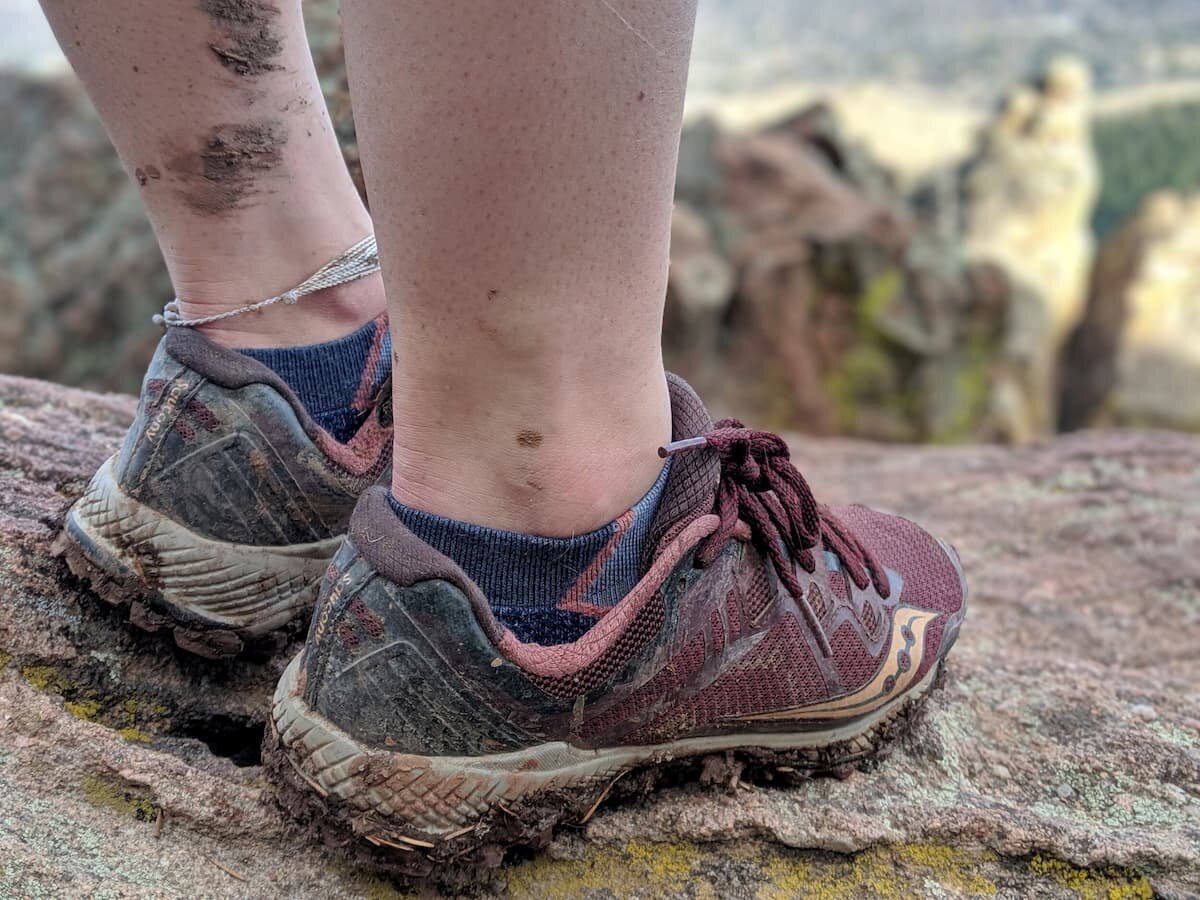
A muddy sock tester wearing the Darn Tough Hiker no-show socks and Saucony shoes.
Sock Lengths
No-show
No-show socks are below the ankle. We don’t recommend this length for hiking socks because we tend to get more rocks and debris in our shoes when we wear no-show socks. In addition, the back of your heel that is not covered by the sock is more likely to blister.
Quarter Crew
A quarter crew sock, or ankle sock, just covers the ankle.
Micro Crew
Micro crew socks, or ¾ crew socks, sit about 2” above the ankle.
Crew (Below Mid-Calf)
Crew socks sit about an inch below-mid-calf.
Boot (Slightly Below Mid-Calf)
Boot socks are just slightly below mid-calf. If you have large calves, these can sometimes be too constricting.
Mid-calf
Mid-calf socks hit right at mid-calf and are about an inch above boot socks.
Knee
Knee socks come all the way up to the knee.

The Darn Tough Light hiker sock on a hike at Torrey Pines in San Diego, California. This sock is great for day hiking and shorter hikes.
How To Choose The Right Length Of Hiking Sock
To choose the proper sock length for you, ask yourself the following questions:
What footwear are you wearing ?
In general, you want your socks to be at least as high as the footwear you’re wearing. For example, we wouldn’t recommend a no-show sock with a full hiking boot. That’s a recipe for blisters, bunching, and a bad hiking day. But socks that are higher than your footwear are completely fine—some people just prefer crew socks over ankle socks.
What are the trail conditions ?
If you’re usually hiking on well-maintained trails, then lower socks will work fine. But if you plan on doing any off-trail bushwhacking then we’d recommend crew sock height at a minimum to help protect your legs from pokes and scratches.
Are you wearing gaiters ?
We’ve found that no-show socks + trail runners - gaiters = lots of debris in our shoes. The no-show height almost seems to collect dirt and rocks. So, if you’re a die-hard no-show sock fan, we’d highly recommend investing in a set of lightweight gaiters (which cover your ankle and the top of your shoe to keep out dust, dirt, and rocks).
Do you like compression ?
Some hikers prefer to hike in a dedicated compression sock or use a compression sock for recovery. None of the socks we chose are labeled as dedicated compression socks. However, if you find benefits to some compression, a boot-length or even knee-length option may be preferable for you. Additionally, most compression socks are higher length and can sometimes provide warmth and protection from wind and snow during early Spring and Late Fall Shoulder Season hiking.
What To Know About Hiking Sock Cushion
Many of our picks also come in different weights. The spectrum runs from ultralight to heavy (although some manufacturers have even more refined categories). Keep in mind that in general, more cushion means more insulation. Heavy cushioning is often found in winter hiking socks. To choose which cushion hiking sock is best for you, see our How to Choose Your Sock Cushioning section.
Ultralight Cushioning
Ultralight socks usually have no cushion—they use thin fabric throughout the sock. These socks work best in hot desert conditions because they are extremely breathable. They also work well when you need a low-volume sock.
Light Cushioning
Light socks have minimal cushion, usually only in targeted critical zones like the heel and ball of the foot. They are meant for moisture management—breathability and wickability—so they work well for warm weather. The Smartwool Athlete Edition Run Print Crew and the Darn Tough Light Hiker is an example of a light cushioned sock we like.
Medium Cushioning
Medium-weight socks have thicker material and more substantial cushioning that you can see and feel. The cushion provides more comfort for long days on the trail. Medium cushioning socks work well for moderate to cold conditions.
Heavy Cushioning
Heavyweight socks have full, thick cushioning and thick fabric throughout the sock. These are best for extremely cold conditions and mountaineering.
None of our picks are heavy full cushion socks. Why? A thick sock, while it might last forever, is overkill for most 3-season hiking and backpacking. Your feet will likely be too warm, they’ll sweat—and that’s a recipe for discomfort and blisters.
How To Choose Sock Cushioning: Should I Get Lightweight Or Mid-Weight Socks?
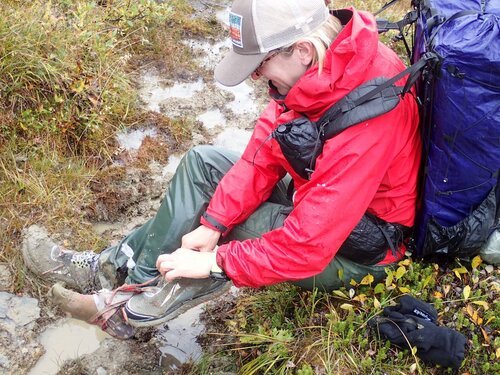
You may enjoy having thicker socks on wet trips or socks where mud may be rubbing against the fabric. We experienced both those conditions on the Great Divide Trail in the Canadian Rockies. Photo by Liz Thomas.
Deciding between lightweight cushioned or mid-weight cushioned socks? Ask yourself these questions:
What’s the climate?
If you’re going to be hiking in hot weather, we recommend a lightweight sock. Extra cushioning means extra insulation and lightweight socks will be more breathable to help keep your feet cooler. They also have less volume which helps prevent blisters because feet tend to swell while hiking in the heat. For warm to cold weather, we’d recommend either lightweight or midweight socks.
How do my shoes or boots fit?
If you don’t have a lot of extra space in your shoes or boots, you might need to go with lightweight socks. Overcrowding your footwear leads to hot spots, which in turn leads to blisters. A lack of air circulation will lead to sweaty feet, which also leads to blisters. However, if your shoes or boots have some extra space, the midweight sock will help fill out the extra space properly.
Do my shoes or boots have midsoles?
Footwear that is not midsole cushioned may demand highly cushioned socks or insoles for comfort (think board-lasted Italian leather boots or fancy dress shoes). If your trail runners or hiking boots have a good midsole, you’ll need less cushion.
What are the differences between men’s and women’s hiking socks?
Fit
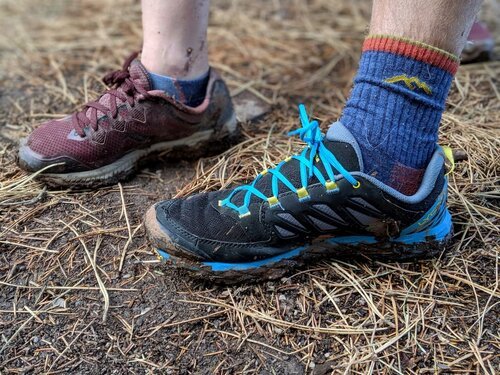
Men’s and women’s Darn Tough Hikers (women’s in the back is in quarter crew and men’s in the front is in crew length). Photo by Liz Thomas
Generally, there are anatomical differences between men’s and women’s feet, which is why we have men’s and women’s shoes. Women's socks have a slimmer heel profile and a narrower fit through the foot than men's socks. Also, the calf opening is larger in men's socks to accommodate men’s (generally) larger calves.
But no matter how you identify, fit to your body is the most important thing. Don’t worry about the gender labels and do what works best for you.
Sock Height
The height of the sock is lower for women’s socks than men’s, especially in the crew version. This is because men are (generally) taller than women.
Yarn or Material
You may have noticed that some women’s socks have slightly different fabric content than men’s. For example, in our top pick, the Darn Tough Hiker Midweight, the women’s has 59% merino wool, 39% nylon, and 2% Lycra Spandex. The men’s version of the same sock has 61% merino wool, 36% nylon, and 3% Lycra Spandex.
We asked Darn Tough about why the men’s and women’s versions are different. They said it primarily comes down to the “small difference in design for men's versus women's sizing.”
We also noticed that the Coolmax Hiker Cushion socks have even larger differences in yarn composition. For example, the women’s has 58% Coolmax while the men’s only has 34% Coolmax. Darn Tough responded, “The composition in all synthetic Coolmax socks can vary a bit more and is different depending on yarn colors, etc. We don’t actually use the same exact yarns for each. We mix in non-Coolmax polyesters/acrylics mostly for color matching, etc. but the function is the same.”
FAQ

The Swiftwick Pursuit Four Quarter Crew on a hike in the Columbia River Gorge, Washington. Photo by Naomi Hudetz.
-
Cotton is one of the worst fabrics for hiking socks and should be avoided. Cotton absorbs moisture quickly and dries extremely slowly, which leads to blisters, chafing, and cold feet on longer outings. It also wears out faster than wool or synthetic options. Stick with merino wool for its warmth and odor resistance, or a quality synthetic for faster drying and durability.
-
Sock liners used to be a common recommendation for reducing friction and keeping feet dry, but most high-quality hiking socks today have moisture-wicking properties that make a liner unnecessary. For most hikers, adding a liner just creates an extra layer that can bunch and contribute to hot spots. If you are already accustomed to wearing a liner with heavy boots and it works for you, there is no reason to change.
-
Waterproof socks are useful in specific conditions, such as extended snow travel in spring, wet canyon hikes, snowshoeing on saturated trails, or icy conditions when wearing ice traction, but are not necessary for most standard hiking. In typical conditions, waterproof socks can trap sweat inside the sock as your feet perspire throughout the day, which increases the risk of chafing and blisters. If you expect consistently wet or cold conditions, a dedicated winter hiking sock or waterproof sock is worth considering. You can learn about our favorites in our Best Waterproof Socks and Best Winter Hiking Socks guides. If you expect cooler conditions, one alternative may be to opt for a ski sock.
-
Foot care on trail starts with dry socks, properly fitted footwear, and catching hot spots early before they become blisters. Change into dry socks at camp when possible, address any friction points with tape or blister prevention products as soon as you feel them developing, and keep toenails trimmed short to prevent bruising on descents. We have a full guide to foot care while hiking that covers this in much more depth. We’re such believers in taking care of your feet that we have an entire article devoted to foot care for hikers!
-
Both materials perform well, and the right choice depends on your priorities. Wool, particularly merino, stays warm when wet, resists odor better over multiple days of wear, and tends to hold its shape longer. Synthetic socks dry faster, are often more durable under heavy use, and typically cost less. For multi-day backpacking where you cannot wash socks frequently, wool is usually the better choice. For day hiking or high-output activities where quick drying matters most, synthetic is a strong option.
-
Aftermarket insoles can meaningfully improve comfort, support, and fit for many hikers, particularly those with flat feet, high arches, or a history of foot pain on trail. Standard factory insoles in most hiking footwear are functional but fairly minimal. A well-fitted insole can reduce fatigue on long days and help prevent common issues like plantar fasciitis or knee pain. We have a full guide to hiking insoles that covers the benefits and top options in detail. See our article on the benefits for hikers of wearing insoles.
Smartwool vs Darn Tough: Which hiking sock is better?
I've hiked in both Darn Tough and Smartwool socks over thousands of miles, and I get asked this question constantly. Both brands make excellent merino wool socks, but they're optimized for different things — and once you understand what those things are, the choice becomes easy.
The short answer is that Darn Tough wins for most hikers in most conditions. But Smartwool earns its place if you're going ultralight in hot weather.
Durability and warranty
This is the biggest difference between the two brands. I can easily get 600 miles out of a pair of Darn Tough Hiker Midweights before I start to see any wear — and when I do get a hole, I send them back and Darn Tough sends me a new pair, any style I want. No receipts, no questions. Smartwool offers a 2-year warranty, which is solid, but it's not the same. Our tester hiked 450 miles on the PCT in the Smartwool Performance Run Zero Cushion before eventually wearing through on a grueling 30-mile day. Impressive for an ultralight sock — but not Darn Tough durable.
Cushion and weight
These two socks aren't really competing in the same category. The Darn Tough Hiker Cushion is a medium-weight sock — enough padding for rocky terrain and long days, light enough that you won't need to size up your shoes. The Smartwool Performance Run Zero Cushion has no cushion at all. That's not a flaw — it's the point. If you run hot, if your shoes are already snug, or if you're hiking fast in desert heat where feet tend to swell, the Smartwool's minimal profile is a genuine advantage. For everything else, I reach for the Darn Tough.
Softness
Smartwool has the edge here. Darn Tough's tight weave isn't itchy — I want to be clear about that — but it isn't as plush as Smartwool's softer yarn. Most hikers stop noticing the difference after a few miles. But if you're sensitive to texture directly on skin, you'll feel it on first wear.
Sizing and fit
Darn Tough's size bands are tighter — typically covering 2.5 to 3 shoe sizes per size — which gives you a more precise fit across a wider range of foot shapes. Both brands offer gender-specific sizing. I've found that Darn Tough's fit holds up better over the course of a long day too: at the end of a 20-mile day, they never feel loose or stretched out.
The bottom line
If you're buying one pair of socks that can do everything — multi-day trips, cold mornings, hot afternoons, years of hard use — buy Darn Tough. If you're going fast and light in the heat and want the thinnest possible sock that still holds up on a thru-hike, Smartwool is the better call.
What to Look for in Hiking Socks

If you’re feeling overwhelmed by all the hiking sock choices, you’re not alone. Not only are there a plethora of hiking sock manufacturers out there, but the choices within each manufacturer are staggering. All of the socks reviewed here meet a basic criteria to ensure a baseline level of quality. Aside from this, we considered other factors such as materials, durability, wickability, odor control, and warranty to choose our winners in each category as well as our honorable mentions.
Here’s how we approached it:
Hiking Sock Materials / Yarn
The most important criterion for quality hiking socks is the fabric or yarn that the sock is made of. We eliminated all socks with cotton in them (see Can I hike in cotton socks?) and only considered socks made with merino wool fibers or synthetic material.
Merino Wool
Experts agree: the best material for hiking socks is merino wool. Why, you ask?
Merino helps regulate your body temperature. When it’s cold outside, it traps the warm air from your feet and provides insulation. When it’s warm, merino transports sweat away from your skin.
Merino transports moisture away as a vapor, rather than a liquid. Synthetic wicking fabrics transport moisture as a liquid, so merino wool effectively skips the step of waiting for the sweat to turn from a vapor to a liquid. This helps keep your feet dryer and helps keep away the stench.
It’s natural and sustainable. One Merino sheep can produce 4 to 5 pounds of wool per year!
It’s more affordable and widely available than other wools like alpaca.
Merino socks need to be washed less and are more durable than cotton or synthetic socks, reducing environmental impact.
And while all this might seem too good to be true, there are plenty of scientific studies to back it all up.
However, it’s important to note that not all merino is created equal—and higher merino content doesn’t necessarily mean a better sock. For example, Darn Tough uses merino wool fibers that aren’t blended with nylon or polyester. Rather, they reinforce the sock with nylon and lycra for fit and durability. Another great example? Smartwool has spent two years developing its Indestructawool technology. They claim it makes their “toughest socks yet" and can be found in most of the new models of Smartwool hiking socks.

Farm to Feet socks use USA wool in their USA-made socks. Treeline Review editor Liz Thomas on a day hike in Colorado. Photo by Brian Davidson
Nylon
Nylon is a very strong synthetic fiber that adds durability to a fabric weave and reduces drying time. It’s usually blended with other fibers.
Polyester Or Coolmax
Polyester is also a synthetic fiber. It’s hydrophobic, meaning it doesn’t absorb much fluid and dries relatively quickly. Coolmax is the brand name of a specific polyester fabric that makes it easier for your feet to thermoregulate.
Spandex, Lycra, Or Elastane
Spandex is an elastic fiber that can stretch up to 5 times its length (think spandex bike shorts). Most hiking socks contain a small amount of spandex. This helps the sock keep its shape and helps stop it from bunching up or falling down.
Durability
Hiking socks need to be durable. They take a lot of abuse over the course of a single day (not to mention the months spent on a thru-hike). Rocks, dirt, grit, dust, sweat, rain, mud, snow—it’s astonishing that any sock can withstand these conditions. But all of our picks have the track record to prove it.
Durability also means that the socks come out of the washer still looking—and, importantly, fitting—like new. Socks that lose their ability to fit snugly are useless (they’ll start to rub and cause blisters) and will quickly end up at the bottom of your sock drawer.

The Point 6 socks developed holes in less than 200 miles on our Pacific Crest Trail hike. Here, our tester shows them off at a trailhead near Whitewater, CA. Photo by Liz Thomas
Wickability / Breathability
Good hiking socks should be breathable and help to regulate the temperature of your foot. Your feet should stay cool in the heat and warm in the cold. A quality hiking sock should be moisture wicking, meaning it pulls moisture away from the surface of the skin on your foot to prevent blisters. (Plus, no one wants to hike with sweaty feet.) All of the socks we tested were highly rated in both of these categories.
Odor Control
Wool has long been known to control odors incredibly well, and wool socks are no exception. On multi-day backpacking trips, this means your socks won’t likely smell until day four or so—though your mileage may vary. (Pun very much intended.) See our Best Sports Detergent guide for tough sports wash that may be able to help.
Warranty
A lifetime sock warranty is an amazing thing, and our own experience proves this isn’t a gimmick. While every product has a reasonable life expectancy, we like knowing that a product will be replaced if it doesn’t live up to expectations. While we didn’t make this a requirement for all of our picks, we certainly considered it as a very important part of the overall picture.
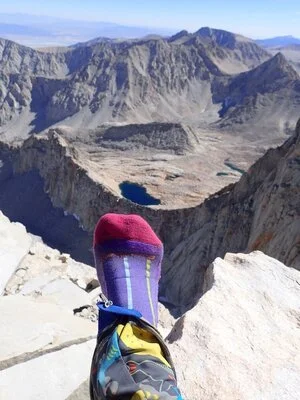
Let your feet air during breaks, like this snack break on top of Mt. Whitney. Photo by Liz Thomas.
How To Care For Your Hiking Socks
In general, it’s best to follow the manufacturer’s care instructions to give your socks their longest life. However, we’ve found that we get the most life out of our socks if we wash them in cold water inside out and line dry them.
You’ll extend the life of your socks if you air dry, so avoid using the dryer if at all possible. In addition, don’t use fabric softener on your socks, as it can affect their breathability and moisture wickability.
We also highly recommend pre-washing your socks before putting them in with the rest of your laundry, especially after an extended backpacking trip or during a thru-hike. Rinse them in the sink or bathtub until the water is relatively clear, then add them to the laundry. The rest of your clothes (and your socks!) will thank you.
Is persistent stink the issue with your hiking socks? We delve into solutions for lingering odor in our guide to The Best Sports Detergent.
How We Researched and Tested
Our goal with testing these hiking socks was to test them to failure (holes or rips). Therefore, we kept records of miles hiked in each pair and did not baby them. In other words, if the manufacturer said we could put them in the dryer, we put them in the dryer. We did not try to artificially extend the life of each pair of socks by hand washing or air drying.
We tested them over thousands of miles through diverse conditions — in all four seasons, with the exception of very deep winter. We also tested them in the desert (Arizona Trail), the rainy Pacific Northwest (Oregon Coast Trail), and high mountain terrain with plenty of rocks and grit (High Sierra Trail).
- AT & PCT thru-hikes
- Day hikes & multi-day backpacking
- Below-freezing to 100°F conditions
- Tested in trail runners, boots & shoes
- Worn for hundreds of miles per pair
- Blister prevention & heel lock
- Moisture wicking & dry time
- Cushioning across activity types
- Odor resistance over multi-day use
- Long-term durability & warranty
Author’s Expertise / Why You Should Trust Us

I’ve logged a few thousand miles during my thru-hiking career—all of them while wearing socks. Some of my favorite long-distance hikes (ok, they’re all my favorite) include the Triple Crown (Pacific Crest Trail, Continental Divide Trail, and Appalachian Trail), Pacific Northwest Trail, Great Divide Trail, Tahoe Rim Trail, Arizona Trail, Grand Enchantment Trail, Idaho Centennial Trail, Blue Mountains Trail, among others.
On my first thru-hike, I didn’t pay as much attention to socks as I should have—and I paid the price. I got blisters everywhere—between my toes, on my lower ankle, at the bottom base of my toes. I even had a blister under a callus!
As a result, I’ve become mildly obsessed, searching for the perfect pair of socks ever since. Our overall winner, the Darn Tough Hiker Micro Crew Midweight, is the closest thing I’ve found.
All of our opinions and recommendations are based on personal purchases of the models that made our shortlist and our own experience hiking thousands of miles with the models we describe. We don’t accept native advertising or sponsored content.
You can see all of Naomi’s Treeline Review stories on her author page.