Best Camping Tents of 2026
Durable, High-Quality, WeatherProof Car Camping Tents
May 25th, 2026, updated with a new family tent winner, new camping-backpacking hybrid winner, new lightweight winner, new long-term camping tent winner, new winner for best for two
Home > Gear Reviews > Camping
A camping tent is what determines whether bad weather ruins a trip or just adds to the story. The difference between a tent that sheds rain reliably, pitches quickly, and gives you enough room to actually live in for a few days and one that doesn't shows up on the first night it rains, the first time you try to set it up in the dark, and by day two when you're tripping over gear with nowhere to put it.
I've spent a decade testing camping tents while running an outdoor education program, putting gear through repeated use by groups of teenagers, which is about as reliable a durability test as you can run outside a lab. For this guide, I was joined by Treeline Review writers and editors including Liz Thomas, who tested tents on a fly fishing trip in Idaho and Montana in significant rain, and Naomi Hudetz, who tested the Wawona in the notoriously windy Columbia River Gorge.
What separates a genuinely good camping tent from one that disappoints comes down to whether the rainfly actually covers the full tent body rather than just most of it, how quickly and intuitively it sets up for a group that may include first-time campers, how the interior dimensions work for the actual number of people sleeping in it versus the stated capacity, and how well the tent manages condensation and ventilation over multiple nights.
Top Pick: The North Face Wawona 6 earns our Best Overall award. It stood out for the most functional floor space of any tent we tested at 86 square feet with 76-inch peak height that lets most adults stand fully upright, a vestibule nearly half the size of the tent itself for gear and bike storage, color-coded poles and grommets that make setup straightforward once you know the system, and sturdy construction that held up well against sustained wind gusts in the Columbia River Gorge.
We create reader-supported, objective gear reviews independently selected by our editors. This story may contain affiliate links, which help fund our website. When you click on the links to purchase gear, we may get a commission — without costing you an extra cent. Thank you for supporting our work and mission of outdoor coverage for every body! Learn more.
Comparison Table
| CAMPING TENT | TREELINE AWARD | MSRP | # OF PEOPLE | FLOOR SPACE | DOORS/ VESTIBULES | VESTIBULE SPACE | FREESTANDING? | PEAK HEIGHT |
|---|---|---|---|---|---|---|---|---|
| The North Face Wawona 6 | Best Overall Read why |
$585 | 4, 6 | 86.11 SF | 1/1 | 44.7 SF | ✅ | 76" |
| NEMO Aurora Highrise 4 | Best for Families Read why |
$500 | 4, 6 | 62.5 SF | 2 | 19.5 + 19.5 SF | ✅ | 75" |
| Big Agnes Copper Spur UL 2 | Best Backpacking - Camping Hybrid Tent Read why |
$599 | 2, 3, 4 | 29 SF | 2 | 9 + 9 SF | ✅ | 40" |
| REI Half Dome 2 Tent with Footprint | Best lightweight Read why |
$329 | 2, 2 Plus, 3 | 31.8 SF | 2 | 9.17 + 9.17 SF | ✅ | 42" |
| REI Base Camp 6 Tent | Best tents for long term camping Read why |
$569 | 4, 6 | 84 SF | 2/2 | 27 + 17 SF | ✅ | 74" |
| Mountain Hardwear Mineral King 3 | Best camping tents for two Read why |
$400 | 3 | 42.5 SF | 2/2 | 20.9 | ✅ | 48" |
| Snow Peak Alpha Breeze | Best waterproof tent for camping Read why |
$549 | 4 | 77.3 SF | 4/2 | 45 SF | ✅ | 76.8" |
| Marmot Tungsten 3P | Budget Read why |
$339 | 2, 3, 4 | 40.9 SF | 2/2 | 18.3 SF | ✅ | 46" |
| Coleman Sundome 6P | Best Backyard Read why |
$129 | 2, 3, 4, 6 | 63 SF | 1/0 | n/a | ✅ | 72" |
| Mountain Hardwear Trango 2 | Best Winter Camping Read why |
$1,050 | 2, 3, 4 | 40 SF | 2/2 | 12 SF | ✅ | 38" |
The Best Camping Tents
Best overall camping tent: The North Face Wawona

Number of people: 6 (also available in 4-person model)
Floor space: 86.11 square feet
Vestibule space: 44.7 square feet
Peak height: 76 inches
Doors: 1 on tent body, 2 in vestibule
What we liked: generous usable space, features, stability, durability, pockets
What we didn't like: instructions for set-up could be more helpful, rainfly doesn't extend over back of tent
If space and features are what you’re looking for in a camping tent, then The North Face Wawona is here to be your home away from home. No tent in our test matched the functional spaciousness of this tent, with its ample floor space and massive vestibule. If you pack heavy or travel with the whole family in tow, this tent is the ideal companion to offer all the space and features you could dream of while at camp, without sacrificing stability or durability in the tent construction.
The Wawona 6's floor space is a whopping 86 square feet. Steep walls peak at over 6 feet tall, leaving plenty of space to stand and move around the tent. The spacious vestibule is about half the size of the tent itself, leaving room for gear, bikes, or even space to sit when the weather rolls in.
For more, see our in-depth review of The North Face Wawona camping tent.
COMPARE PRICES OF THE THE NORTH FACE WAWONA

-
For 2025, the minimum trail weight has gone down to 18 lbs 1.2 oz from 19 lbs 4 oz. Packaged weight has gone down from 20 lbs. 15 oz. to 19 lbs. 6.4 oz.
The floor fabric has become 1,500 mm, better than the 1,200 mm in the previous version. This addressed an issue we never experienced but saw happened to some every day users.
-
On one camping trip, Treeline founder Naomi Hudetz was able to fit a camping table, four camp chairs, and a bikepacking bike in the vestibule with room to spare.
-
The tent has one door on the main body of the tent and the vestibule has doors on both sides. On the rear of the tent body there is a large zippered window plus many other venting points that work well on hot days at camp.
-
To top off the feature set, the Wawona is loaded with stash pockets in the interior of the tent. They’re on the walls and ceiling with plenty of space to maximize storage and organization. It also has hooks along the top to hang a camping lantern or other items.
-
The North Face's instructions on setting up are a bit less than helpful, but once you’ve figured it out, setting up is simple. The poles, sleeves, and grommets are all color-coded (which TNF did not mention in the instructions), so once you understand that, the setup is much less confusing. t has additional guy lines to further stake out the tent if needed.)
-
The tent stakes out well and has a sturdy structure, even for such a large and tall tent. On a camping trip in the notoriously windy Columbia River Gorge, the tent held up well against consistent big gusts. (The tent has additional guy lines to further stake out the tent if needed.)
-
One downside to the tent’s construction is the coverage of the rainfly (and this is a common complaint with many large car camping tents). The rainfly does not completely cover the body of the tent, leaving the potential for precipitation to get in. Specifically, the rainfly does not fully extend over the back of the tent. We've tested it in the rain and haven't had any issues. However, if you live somewhere very wet and know that you may not get a perfect set-up every time and would feel more comfortable with full coverage, this may not be the tent for you.
-
Overall, the Wawona is made with sturdy, durable materials and it’s clearly built to last many seasons of camping. If you frequent the campground and space and features are your top priorities in a tent, then this one should be at the top of your list.
Best family camping tent: NEMO Aurora HighRise
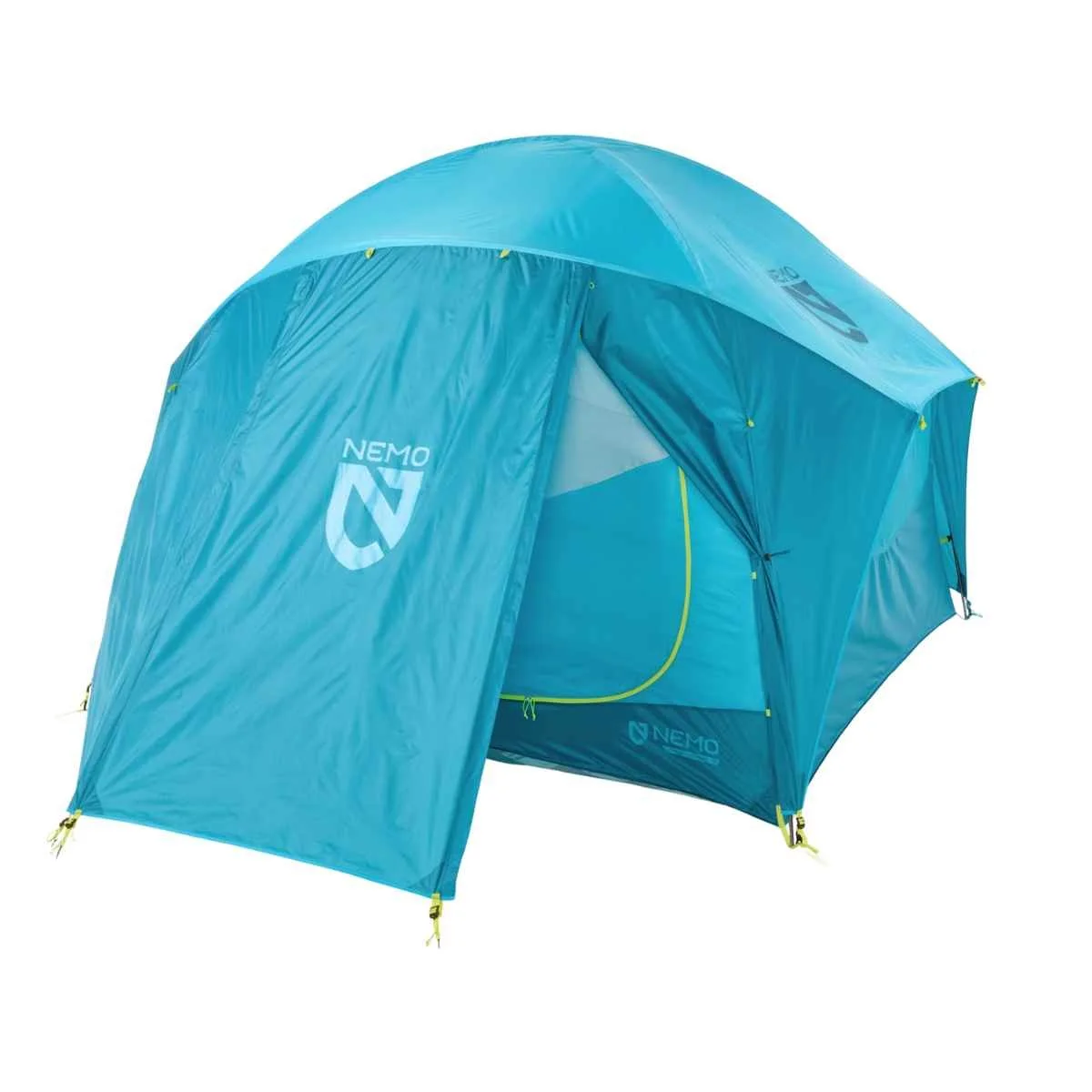
Number of people: 4, 6
Floor space: 62.5 SF
Vestibule space: 19.5 + 19.5 SF
Peak height: 75”
Doors: 2
What we liked: very easy to set up, standing room and lots of usable space, gear storage pockets, fun colors and designs, relatively lightweight, value of what you get for the price
What we didn't like: not as wind-resistant or durable as more expensive basecamping tents
When camping with the family, you just want something that is easy to set up, spacious, and reliable. It's as if NEMO took everything they learned from making technical tents and said, "What if we took some of this stuff to make a better family camping tent?"
The NEMO Aurora Highrise has all the features families know they want in a tent, plus a bunch more that just make life easier. The whole tent fits in an easy to store and pack duffel and it is relatively lightweight to bring from the car to the campsite. Most importantly, it was one of the easiest tents to set up.
It's almost unremarkable in how simple everything seems, but what makes this tent great is everything works without the usual frustration of car camping tents. And when you're camping with family, that is exactly what you want.
See our in-depth review of the NEMO Aurora Highrise Tent for more on why we love this camping tent.
NEMO Aurora HighRise
-
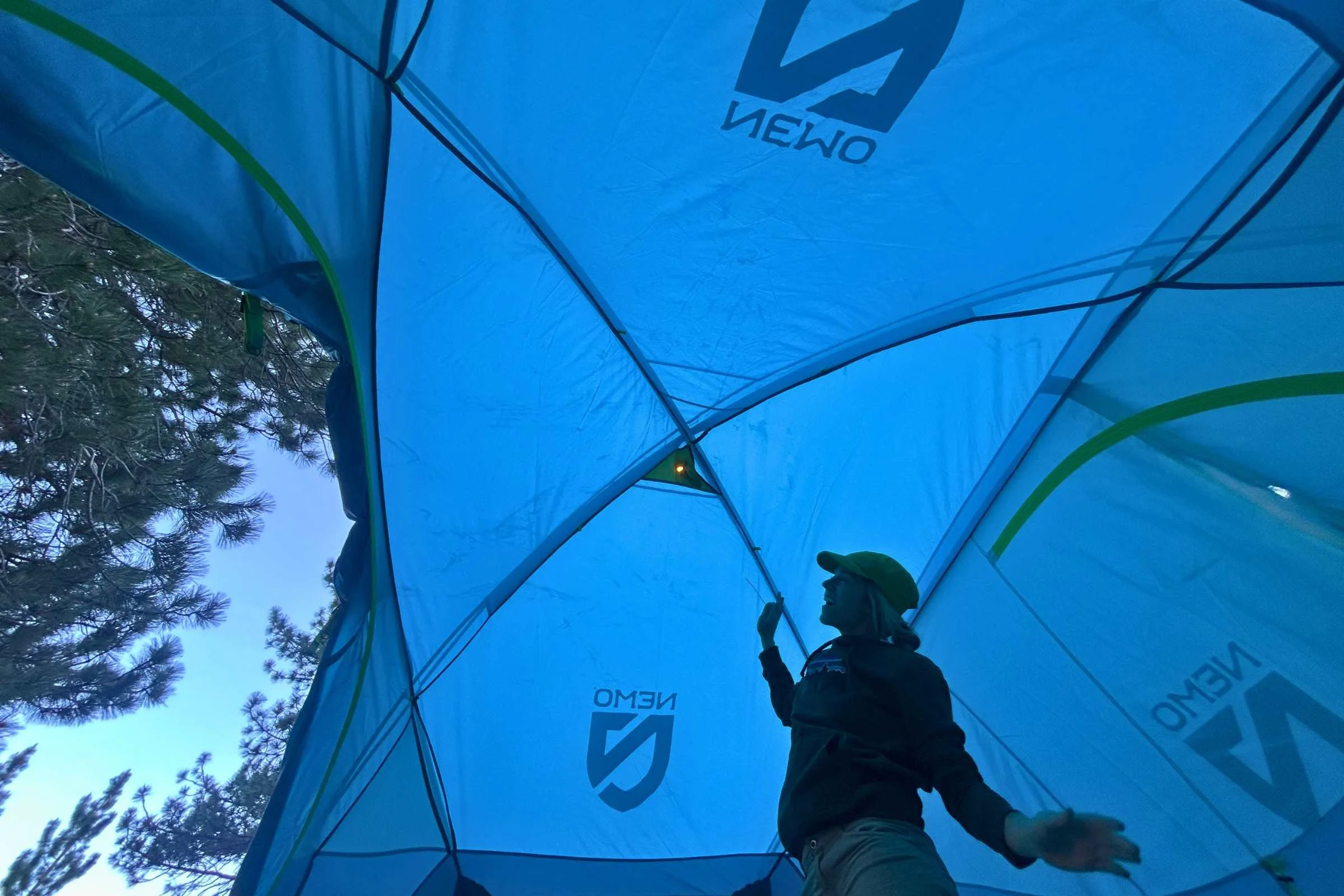
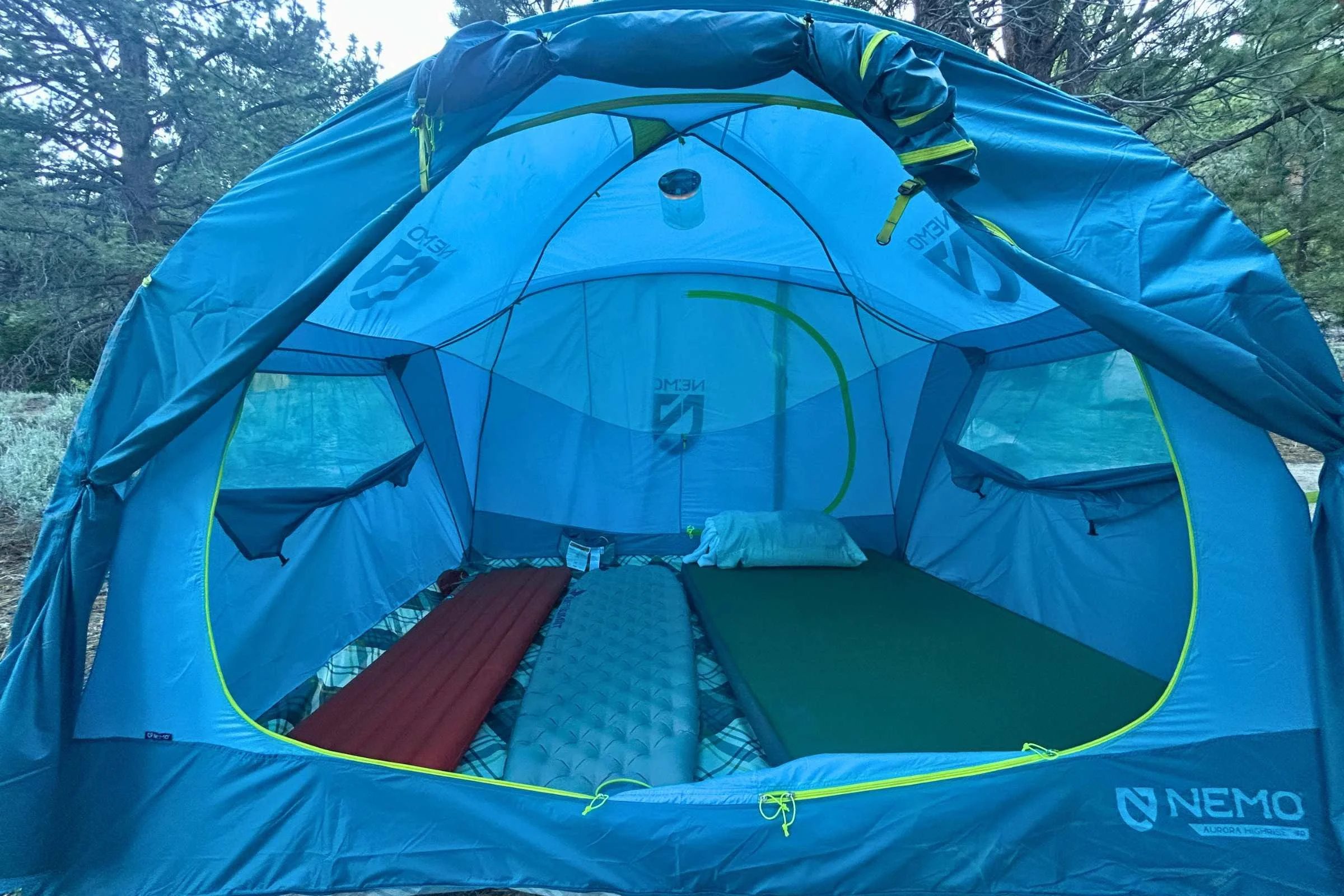
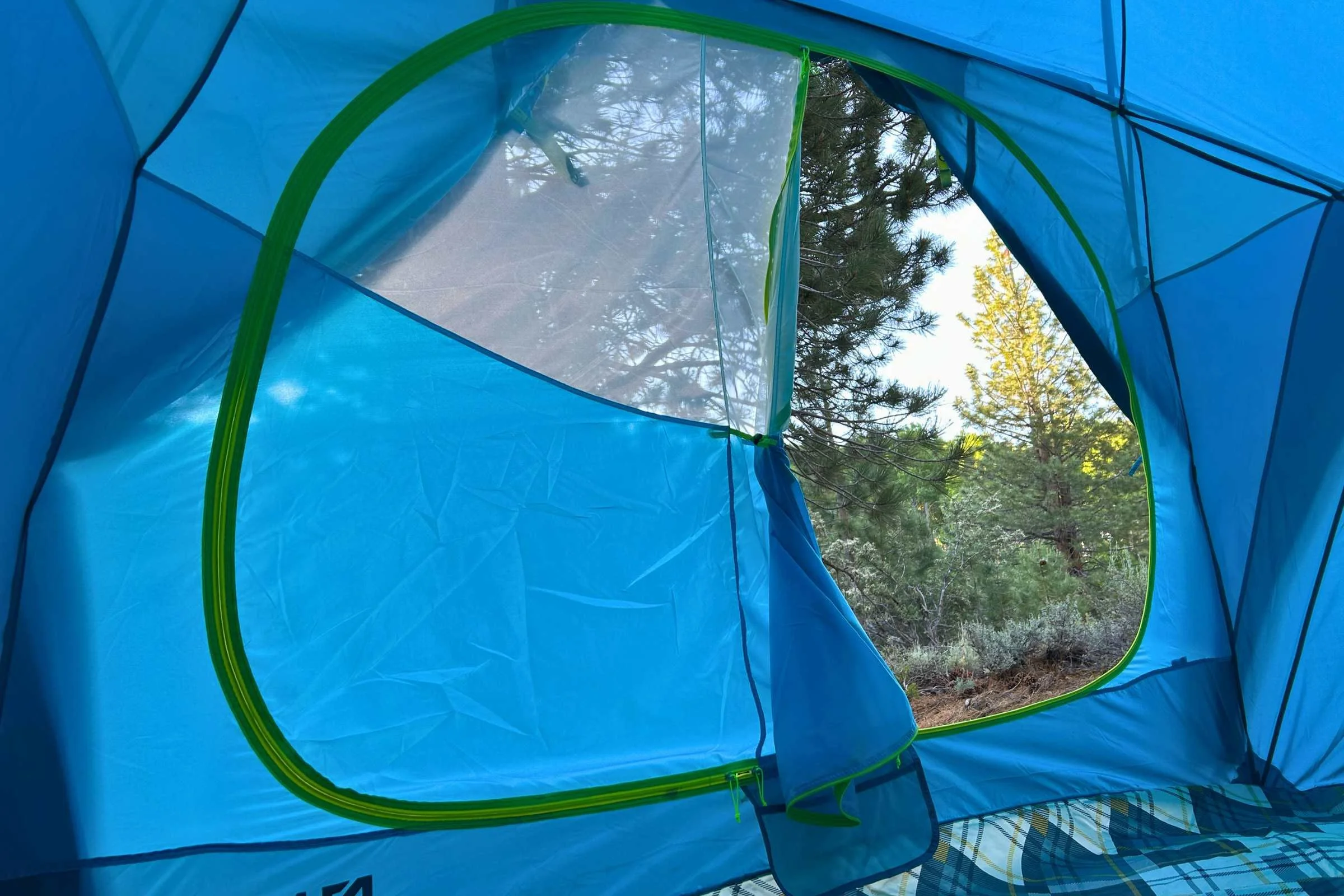
When sharing confined space like a tent with family, it becomes clear the difference between the reported square footage of the tent and actual usable space. The NEMO Aurora Highwise has steep sidewalls so nearly all the interior space is usable space. It has a standing height of 75" throughout. I actually thought I tested the 6-person because it was so roomy, but it turns out, I had the 4 person!
-
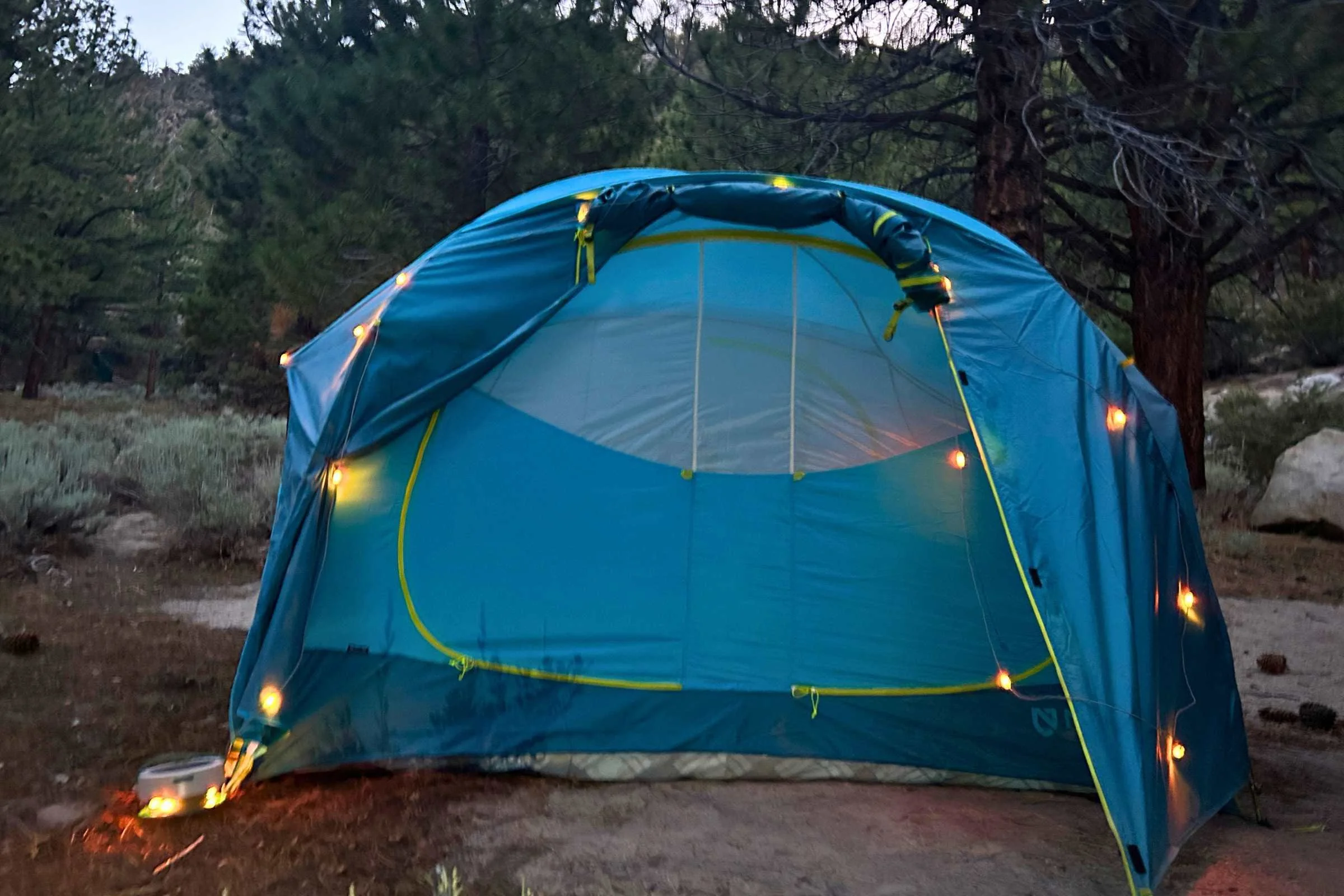
Plus, the NEMO Aurora Highrise has lots of features that make it fun to hang out inside at night or on a rainy day. It has lots of pockets to store gear and treasures. It has fun colors and a wild plaid floor. It has big windows for panoramic views with bug netting and full waterproof covers that roll up and down as needed. It's got pockets to turn headlamps into lanterns. And it has two big doors for easy exit and entry.
-
The Aurora Highrise is not a tent for mountaineers or 4-season use. It isn't a tent for base camping and setting up for a couple months by the RV or summer camp. There's nothing extreme about it. It's a no-fuss friends and family camping tent for weekend trips that's easy to set up, straightforward, and very live-able. And with that goal, it does what it is designed for very well and won't let you down.
Best Backpacking - Camping Hybrid Tent: Big Agnes Copper Spur UL 2

Number of people: 2, 3, 4
Floor space: 29 SF
Vestibule space: 9 + 9 SF
Peak height: 40"
Doors: 2
What we liked: packable, lightweight, easy to set up, waterproofness, stormproofness
What we didn't like: not as roomy or liveable as dedicated camping tents
The Big Agnes Copper Spur UL 2 is our winner for best backpacking tent, but that alone wouldn't have scored it our award for best backpacking-camping hybrid tent. What makes the Big Agnes Copper Spur UL 2 standout from a myriad of good backpacking tent options (that can also be used for camping) are the features and flexibility to turn this from lightweight tent to luxury tent in a few easy steps.
If you're in a car camping campground with a backpacking tent, you may feel jealous of the big car camping tents. With the Copper Spur, you get almost all the features of a big camping tent (except standing room).
The Copper Spur UL 2 has many of the same features we like in traditional camping tents like being fully freestanding and rich in features like reflective touches and gear storage pockets.
We also appreciate that the Copper Spur UL 2 looks substantial enough that no one will try to snag your spot in a campground (that has happened to us when we've left behind a more minimalist tent).
There are more ultralight backpacking tents out there, but if you want one tent that will serve your backpacking and camping life, the Big Agnes Copper Spur UL 2 is the best for people who mostly backpack, but want to use the same tent while camping, too.
See our in-depth review of the Big Agnes Copper Spur UL 2 backpacking tent for more details.
Big Agnes Copper Spur UL 2
-
The Big Agnes Copper Spur can be set up three ways to set up—from minimalist with the Fast Fly option, to lightweight luxury with the expanded awning coverage. That flexibility is what makes this such a good backpacking-camping hybrid.
While camping, you'll likely set up the expanded awning, but we like that in one tent, you have the option for a Fast Fly option for more ultralight trips, too.
-
Big Agnes upgraded the entire Copper Spur tent line (actually, all of their ultralight tents) with its new proprietary Hyperbead fabric, tested to be lighter, stronger, and better than ever. The Proprietary HyperBead fabric is “6% lighter, 25% more waterproof and 50% stronger” than traditional fabrics—and Big Agnes achieved this without added water repellent chemicals!
-
For backpackers who sometimes car camp and want that one tent to do it all, the Copper Spur is the best backpacking-camping hybrid tent.
We think the Copper Spur should be on the short list for any ultralight or minimalist backpackers who want a dialed, competent, quality, and sustainably-made freestanding tent without any extra weight.
Best Lightweight Camping Tent: REI Half Dome 2 Tent with Footprint

Number of people: 2, 2 Plus, 3
Floor space: 31.8 SF
Vestibule space: 9.17 + 9.17 SF
Peak height: 42"
Doors: 2
What we liked: quality for the price
What we didn't like: not the lightest option for backpacking
The REI Half Dome 2 tent has been one of REI's most popular camping tents for decades and the brand has been tweaking it over many iterations to make it the best they can for the price. With a packaged weight of 5 lbs. 15.1 oz, this lightweight camping tent has some of the most useful features you'll find on a tent including color coded poles, stargazing mesh, and an included footprint.
Dome tents are common designs for backpacking tents and the classic example is REI's Half Dome. You can set up just the tent body/inner tent (everything but the rainfly) in good weather for bug-free stargazing.
REI Half Dome 2 Tent with Footprint
-
The Half Dome 2 is a freestanding tent that comes with a footprint (usually a $40 upcharge) to protect your tent floor and stakes.
-
Where the Half Dome really shines is roominess. The vestibules are large enough to hold “a couple of 60L packs, boots, and a small stove.” The tent itself is long enough “for a 6’ adult using a long size sleeping pad and bag.”
This is notable because we previously recommended the MSR Hubba LT as best lightweight tent, but it is almost $200 more and has less floor space and 2" less headroom than the newest version of the Half Dome.
-
The design will feel familiar to most car campers: two D-shaped doors mean two large, porch-like vestibules for storage, with additional storage inside and overhead pockets.
Setup is clipping in a single, hubbed pole that’s color coded for ease of use. In the updated model, the new pole structure has a little more shoulder and head room. Each vestibule has two stakeout points, making them more stable in the wind. Two vents in the rain fly help decrease condensation.
-
In the updated version of this tent, there is full rainfly coverage, fixing a flaw we found in previous models. This tent has been an REI staple for a long time and they've had a while to perfect it. When it’s staked out properly, it’s great in both wind and rain. It's updated to be even more waterproof and use PFAS-free Durable Water Repellent (DWR).
Due to its smaller profile, we found the REI Half Dome to be more windproof than the REI Westward tent, which is more of a family tent similar to the NEMO Aurora Highrise.
-
The REI Half Dome 2 is a comfy option for a solid price. And if it turns out you don’t like it - or something goes awry - REI’s generous return policy will allow you to get a refund or swap it out within the first year for something that suits you better.
Best Tent for Long-Term Camping: REI Co-op Base Camp

Number of people: 6 (also available in 4-person version)
Floor space: 84.0 square feet
Vestibule space: 27 + 17 square feet
Peak Height: 74 inches
Doors: 2
Type: Freestanding
What we liked: incredibly durable, wind-resistant, and weather-resistant
What we didn't like: multiple people needed to set up, designed for cooler weather and could use more ventilation
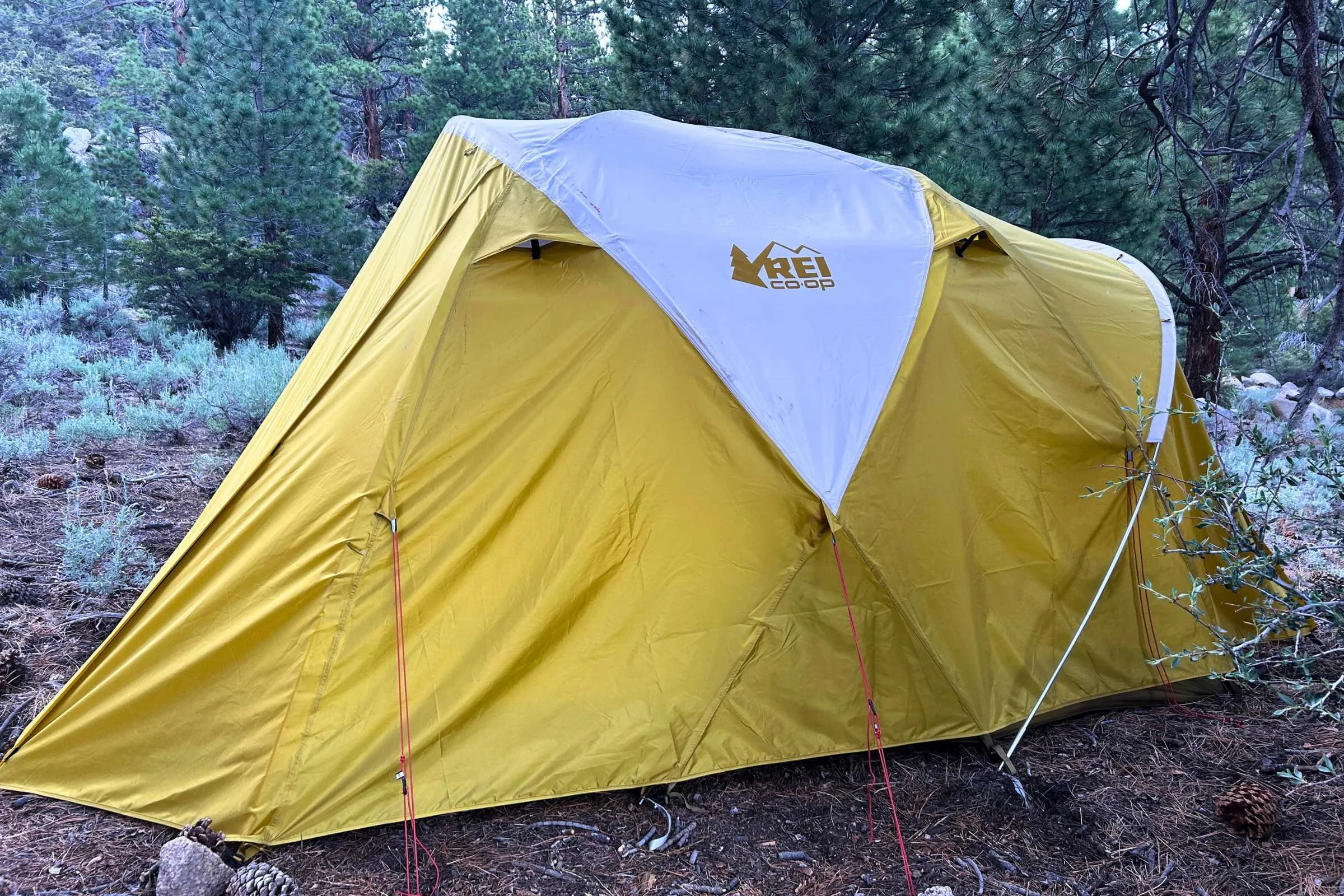
The REI Co-op Base Camp tent is a robust 3+-season tent designed to be weather-resistant, roomy, relatively easy to set up, and made of durable materials. This is a great car camping tent for anyone camping in fall, early spring, extended rainy conditions, base camping (or otherwise setting up in one spot for a while and expecting to see some weather). That is why we award it the best camping tent for long-term camping.
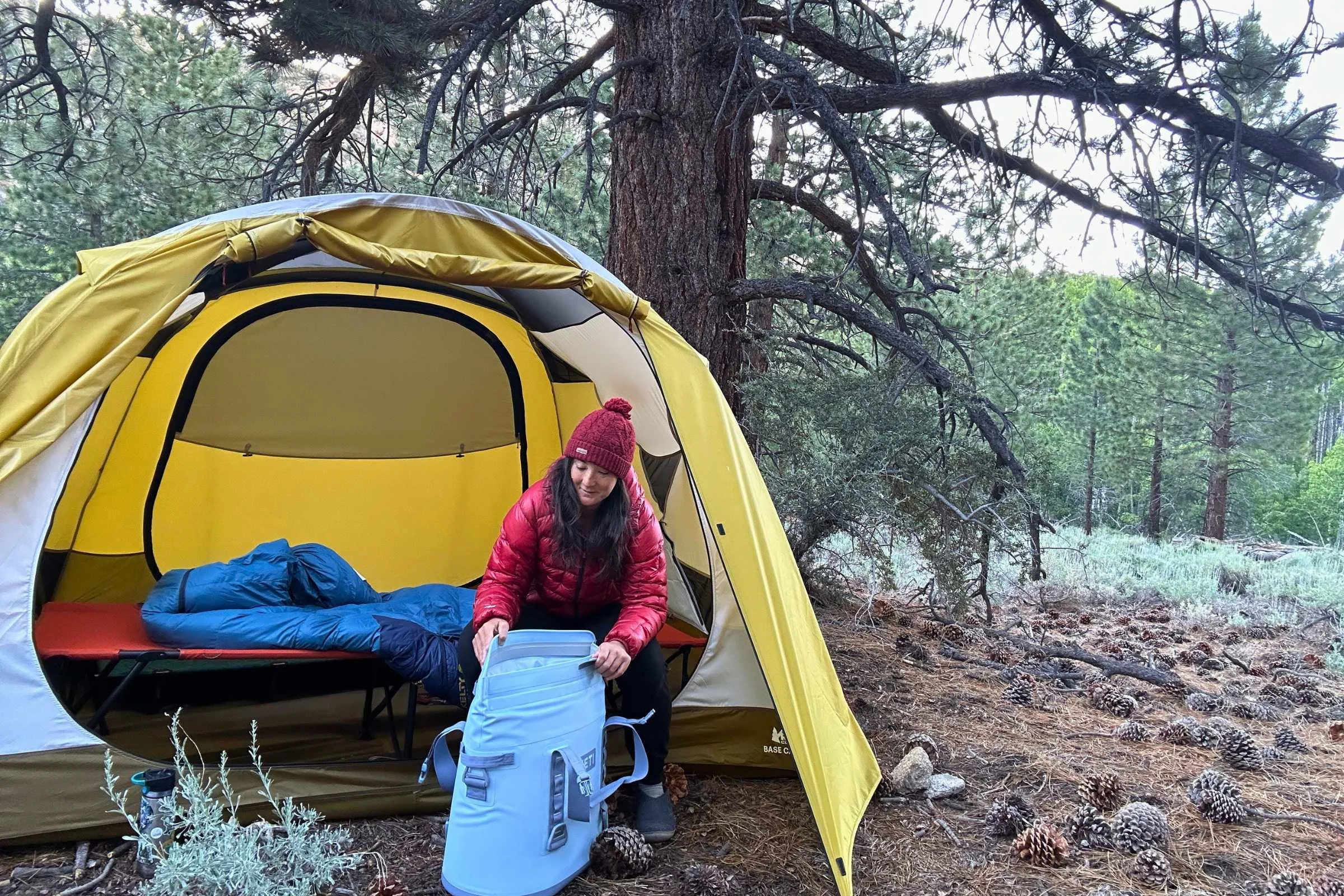
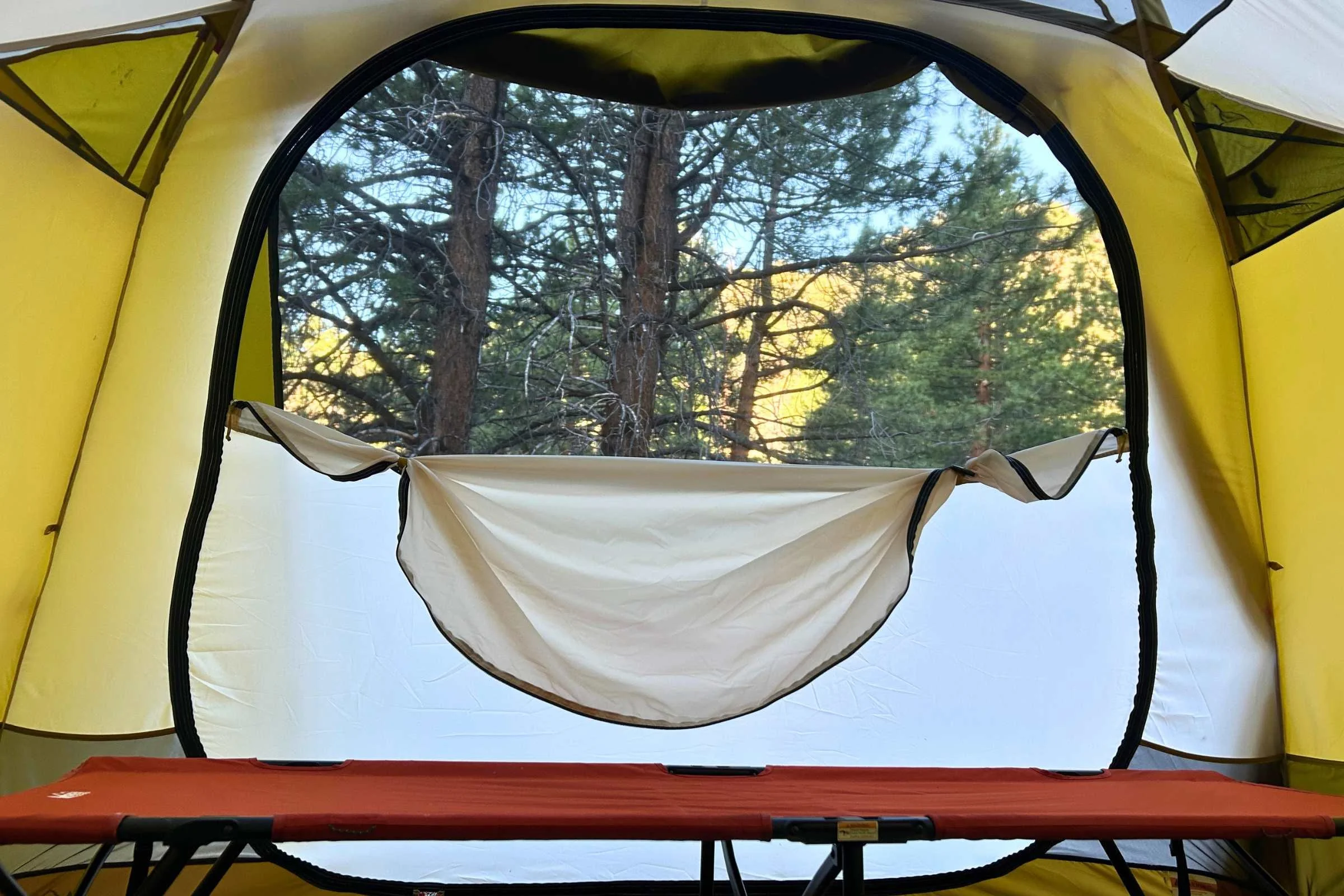
The REI Base Camp 6 tent ticks a lot of the boxes: spacious vestibules, interior gear storage, good headroom, and lots of interior space. It also has excellent weather resistance. We set up camping cots and queen-sized camping mattresses in this tent and found it more comfortable than some indoor bedrooms.
It also has an optional vehicle connector, which provides enough room for 4 people in camp chairs. We thought this was an intriguing concept, but did not test it.
It's been in REI's line-up for years and each time it comes out, it has become more refined.
Read the full review of REI Co-op Base Camp Tent for more details.
REI Co-op Base Camp
-
We spent a total of 30 days and nights camping in the REI Co-op Base Camp tent in the Eastern Sierra and San Gabriel Mountains in everything from sub- freezing temperatures in spring to hot summer days. We tested in rain and high winds as well as dry, but still windy conditions. We even tested during a record-breaking snowstorm at 7,000 feet with 10 people hunkering down inside.
-
We found the REI Base Camp tent very live-able. It has more than ample head room. For extended living in this tent, the abundance of pockets and organization throughout almost felt like having built in shelves. It also has a whopping 44 SF of extra storage space in the vestibules, large enough to store camping chairs and camping tables.
We also appreciated the ability to regulate temperature through fully openable mesh doors, which we kept open on warm nights. During snow storms, we liked that there are ways to close the mesh doors and even half close the mesh doors for cool-ish nights. One of the genius design features is it has a door storage pocket so you don't have to roll all that door fabric—genius!
-
The Base Camp is a very sturdy tent designed to be left up for a while. As you'd expect, the set up wasn't the easiest, but all things considered, it wasn't bad. The instructions are clearly printed on the storage duffel bag it comes with, a feature we really appreciate. During the set-up process, we appreciated the color-coded pole system. Still, we recommend that for the 6-person version, try to get at 3 people to help steady the long poles.
-
The Base Camp comes with some heavy duty tent stakes, but we think it needs to come with more stakes to truly be wind-worthy. We found ourselves substituting in tent stakes from other tents to really keep it in place over a month.
We also found in the peak of summer, even with all the generous mesh venting, it can get hot inside while hanging out during the day. This tent is designed for alpine use and light mountaineering situations. We found it great for windy beach campsites and nights camping in the desert. Just don't expect to be able to hang out inside during a hot day.
-
The REI Base Camp 6 is for dedicated campers who get out every year and want a tent that can last a lifetime (or at least a childhood's worth of camping trips!). It's spacious, easy to set up, weatherproof, and relatively affordable compared to similar sized, similarly featured tents.
Best camping tent for two: Mountain Hardwear Mineral King

Number of people: 3 (also available in 2-person version)
Floor space: 42.5 square feet
Vestibule space: 20.9 square feet
Peak height: 48 inches
Doors: 2, plus 2 vestibules
What we like: easy set-up, full coverage in rain, weather-proofness, stargazing mesh, ventilation, stability, packs smaller than other car camping tents, light enough that you could backpack with it
What we didn't like: can't stand up in it, too small to put camping chairs or tables inside
The Mountain Hardwear Mineral King is our favorite car camping tent if you don't need a tent where you can stand up.
It is an ideal tent for campers seeking versatility in their gear. While this tent doesn’t boast the livable space of others in our test, it’s a very comfortable, functional, stable, and weatherproof tent that can be used in a variety of places and situations. We loved this tent for its airy mesh tent body and stargazing potential, plus the fact that it packs much smaller than most other car camping tents.
We liked this tent so much we wrote a long-term review of the Mountain Hardwear Mineral King tent.
Mountain Hardwear Mineral King
-
The Mineral King tent is intuitive and easy to set up. We had both well-experienced backpackers and brand new campers use this tent, and didn’t have any issues with the setup. When testing, Liz found that the curved tent poles helped make this a cinch, with the poles easily slipping into the grommets.
-
The Mineral King tent is a double-walled tent with snaps instead of sleeves on the tent body. This design allows the rain fly to sit further away from the tent body, mitigating any condensation from getting inside the tent.
-
It has two large doors on either side of the tent that are easy to zip and easy to get in and out of, and each side has its own vestibule when the rain fly is on.
-
Treeline editor Liz Thomas was able to fit a whole camp towel spread out in the vestibule for relaxing at camp. There are 5 mesh pockets in the tent’s interior for stashing essentials, like sunglasses or sunscreen, and hanging a camping lantern.
-
The tent body of the Mineral King is almost entirely mesh, and is amazing for both venting and star gazing. The rain fly even has the option to roll up halfway to check out the Milky Way in the eastern Sierra without worrying about a storm suddenly rolling in.
-
When it comes to weather protection, this is one of the best of the 3 season tents that we tested. Unlike many large car camping tents (especially in this price range), this rain fly covers the entire tent body. Liz tested the tent for a week-long fly fishing trip in Idaho and Montana in some significant rain and the tent did a great job of keeping her dry. Each vestibule door has a peak at the center that does a great job of channeling rain and condensation right off the fly.
-
The dome design of this tent does mean that there’s not room to stand up fully, though there’s plenty of headspace when sitting up. But the advantage to this tent design is that it’s sturdier overall in inclement weather. Even in strong wind and rain, this tent was right at home and had no problems keeping the weather out. This tent is well made and we did not have any durability issues when testing. It’s a great piece of gear that should last seasons of use.
-
The Mineral King comes packed in a durable stuff sack and it packs smaller and weighs much less than many other tents in this test, which is part of what makes it so versatile. It’s light and small enough that you could backpack with it if you really wanted to. If you backpack often we’d recommend a lighter and smaller tent, but we think this could be a great option for someone who loves to car camp and might want to get a small taste of backpacking without having to have a separate tent.
Best Waterproof Camping Tent: Snow Peak Alpha Breeze
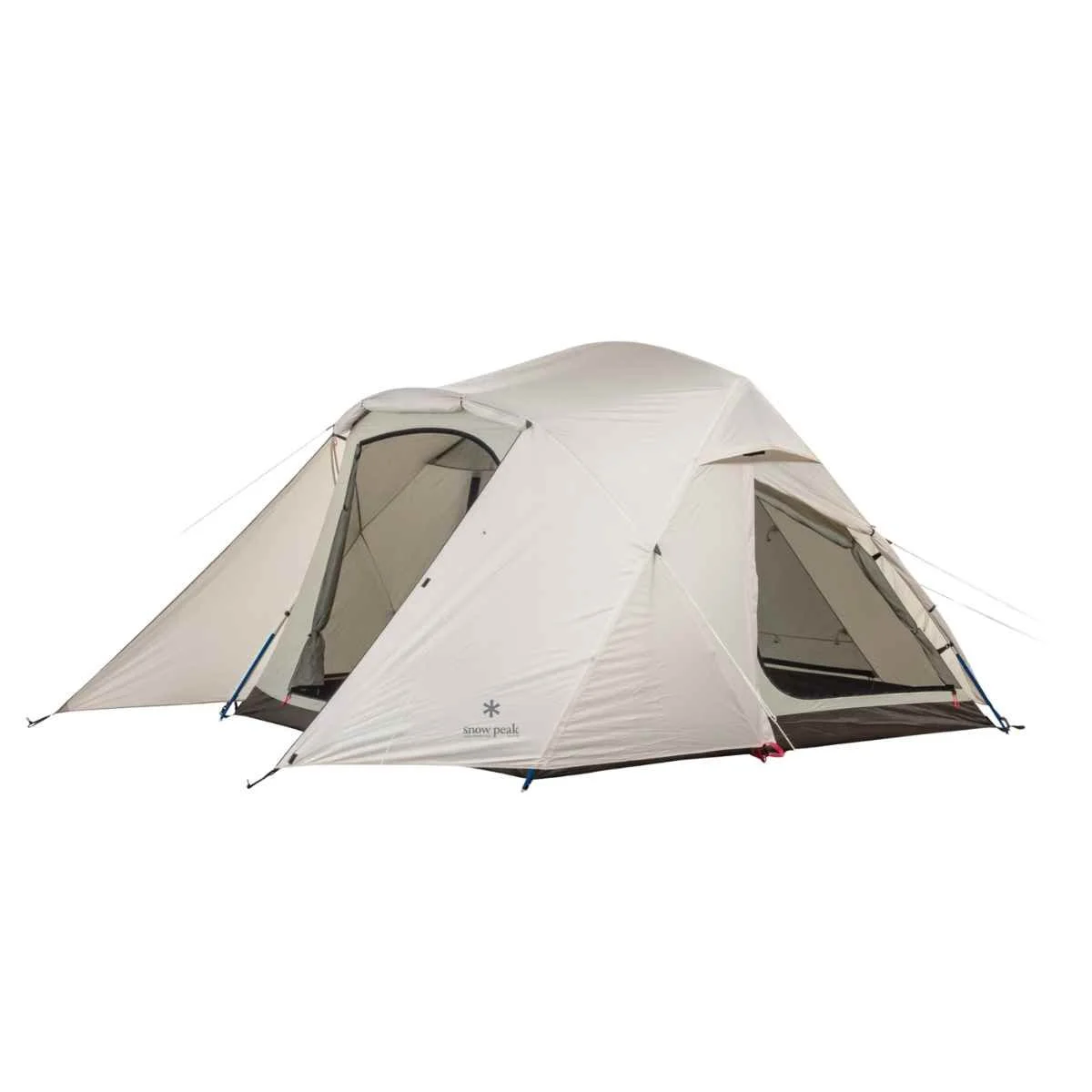
Number of people: 4
Floor space: 77.3 SF
Vestibule space: 45 SF
Peak height: 76.8"
Doors: 4/2
What we liked: 4-doors mean no crawling over other campers, Can be set up solo, fast and easy to set up, ventilated mesh windows and doors
What we didn't like: Instructions not printed on carry bag, difficult to get all parts to fit in the carry bag, white color attracts dirt
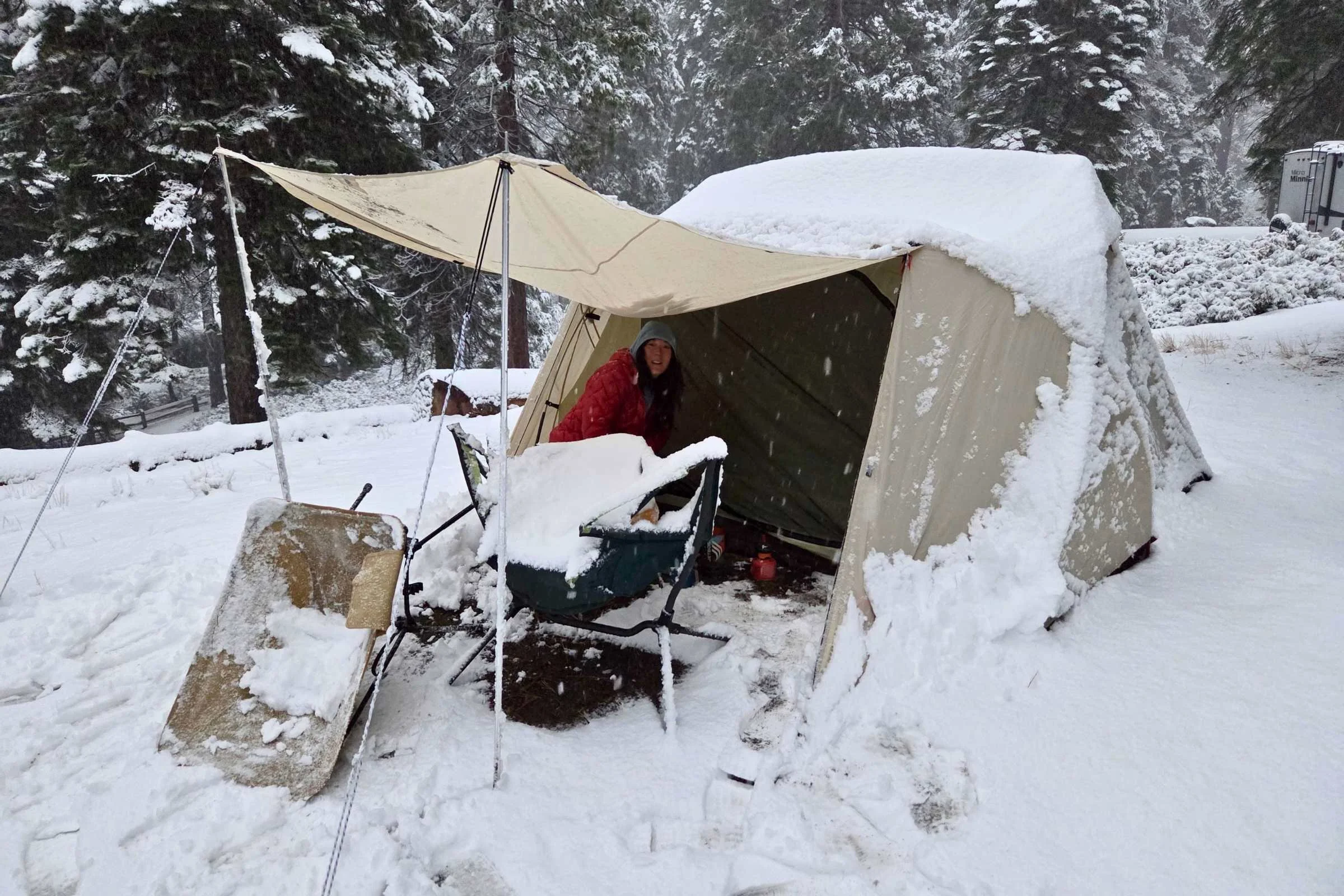
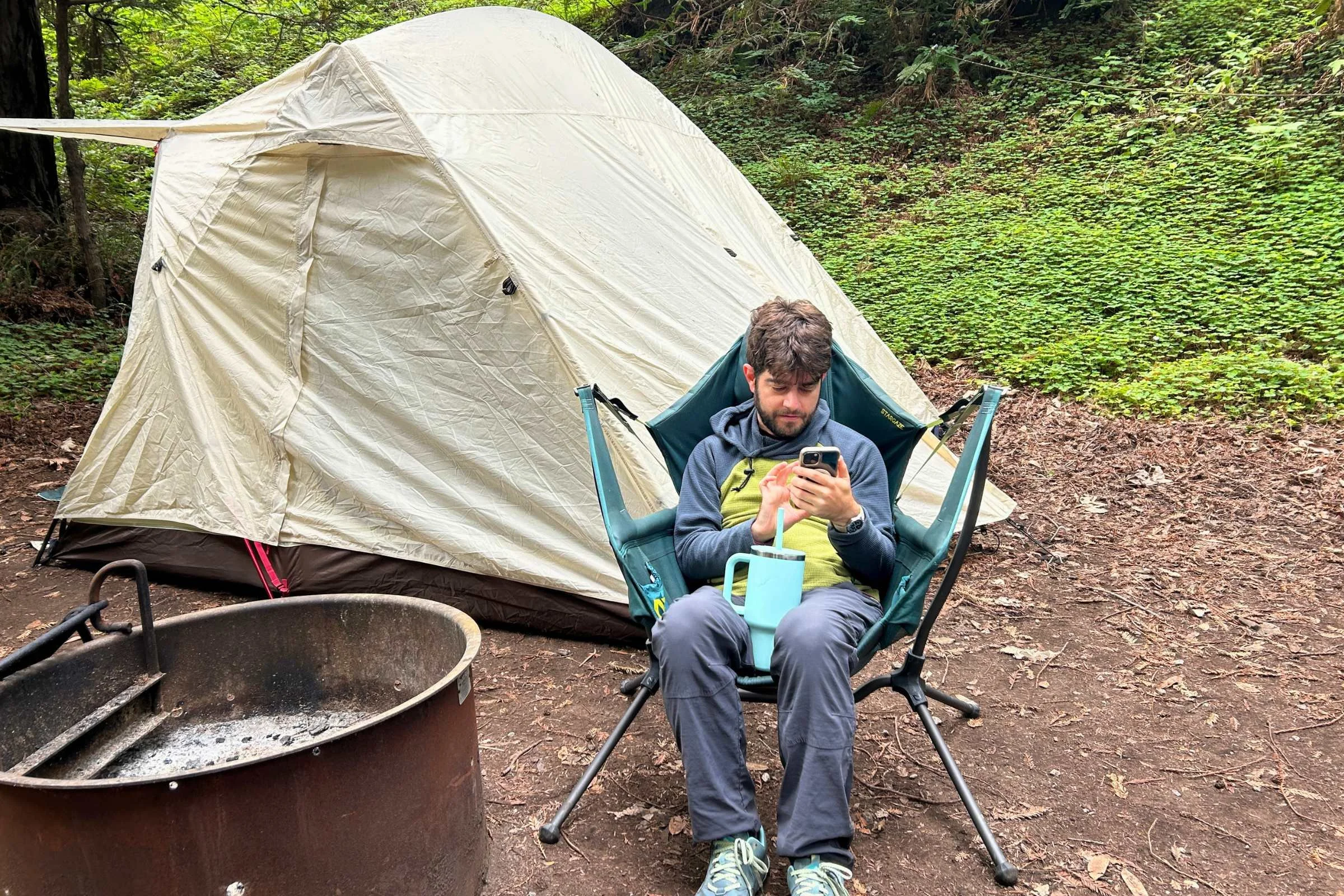
The Snow Peak Alpha Breeze camping tent is our winner for the most waterproof camping tent. The Snow Peak Alpha Breeze camping tent doesn't just look stylish, it is extremely waterproof and weatherproof in rain, wind, and snow. Designed by Japanese brand Snow Peak, it is designed to withstand typhoons and tropical storms common in Japan. We've used this tent camping in multiple record-breaking snow and rain storms.
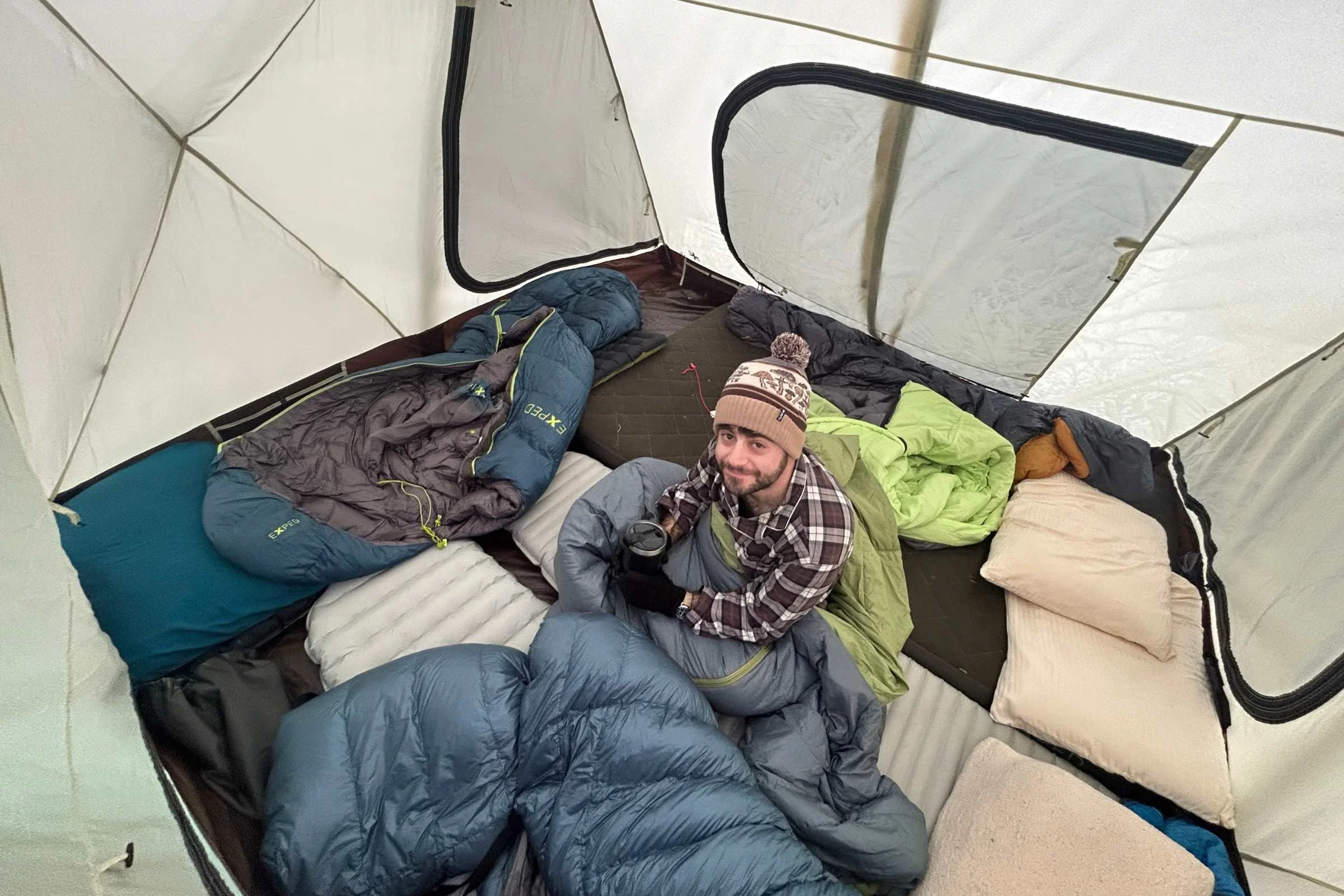
The real showstopper of the Snow Peak Alpha Breeze is that it is a 4-door tent. It has two main doors and two large windows that double as exits. During a camping trip at Pinnacles National Park, we had five people camping in this four person tent. Each person woke up at a different time and some woke up in the middle of the night to go to the bathroom. The multiple doors meant there was no awkward crawling over each other. The result is also much better air circulation than the REI Base Camp or similarly sturdy tents designed for weather.
Snow Peak Alpha Breeze
-
Though marketed as a 4-person tent, this tent could easily fit 6 people. On a recent trip, we fit five adults, two who were over 6 feet tall and one who is 6'7". This made the four doors on the tent even more appreciated.
-
The Alpha Breeze has a heavier duty aluminum alloy pole system. While this makes the tent a lot heavier than others we tested, we think that is fine for a car camping tent because you are likely not carrying it far from your vehicle. The result is we never felt like we had to baby the tent poles to prevent them from breaking. The sturdy poles also hold this tent in place even under the weight of snow.
-
We wouldn't have believed this at first, but once you get the hang of it, this is the easiest true camping tent to set up (backpacking tents are shorter and even easier). A 5'4" tester was able to set it up solo in under 7 minutes.
-
The directions for set-up aren't printed on the tent's duffel bag. Be sure to have the paper instructions, especially for the first time you are setting up.
We also had difficulty fitting all the parts of the tent back into the bag. This often happens with camping tents, but this tent was the hardest.
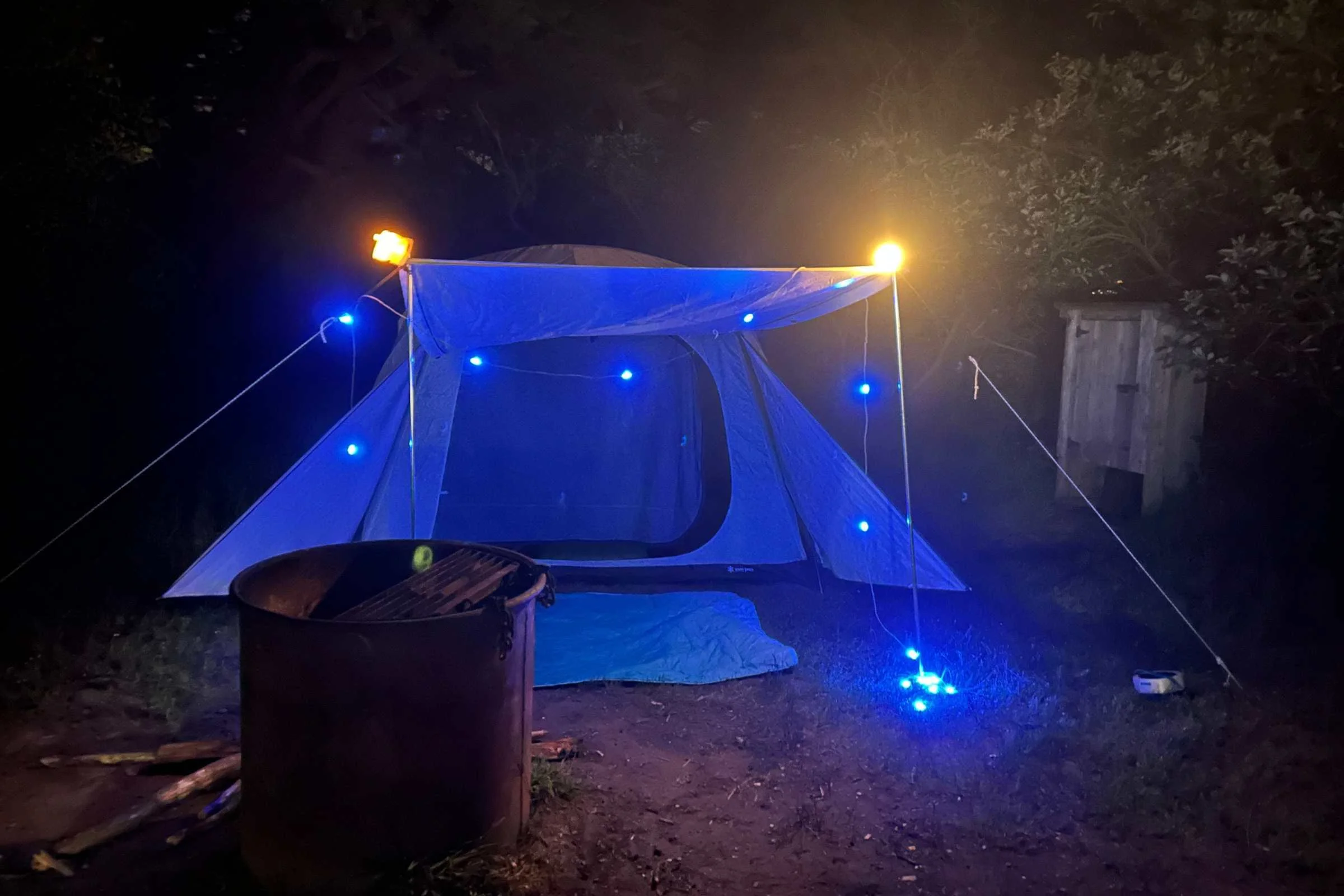
While a white tent looks really cool (especially with a lantern inside), it is impossible to keep clean.
-
The Snow Peak Alpha Breeze camping tent doesn't just look stylish, it is a functional, liveable, and spacious with some of the best sturdiness and waterproofing we've seen on any tent.
Best budget camping tent: Marmot Tungsten

Number of people: 3 (also available in 2- and 4-person versions)
Floor space: 40.9 square feet
Vestibule space: 18.3 square feet
Peak height: 46"
Doors: 2/2
What we liked: Near-vertical bathtub walls, color-coded setup, sheer reliability, affordability
What we didn't like: The stakes aren’t as nice as they could be
The Marmot Tungsten is a much-beloved car camping tent that we enjoyed using during testing while car camping in the desert and Sierra.
This year, it won our award for best budget camping tents. AIt isn't quite as luxurious as more expensive tents, but we're pleased with the features you get for the price.
For hundreds less than other tents we tested, you get a tent with a generous amount of living space, good peak height, some wiggle room to either side, and a footprint to help keep your tent floor intact. Plus, you can use this tent as a backpacking tent, as well.
The Tungsten 2p tent is freestanding and double-walled. But the folks using the Tungsten are satisfied: in addition to Treeline Review writers who swear by the Tungston, this tent has some of the highest reviews on REI and Backcountry out of all the tents we considered.
Marmot Tungsten
-
We loved that the setup for the Tungsten is simple–and that is something echoed by everyday reviewers, too. The tent is freestanding, including the rain fly that clips into the pole tabs (though it’s best to stake out the tent and fly if you’re expecting weather). Those tabs are color-coded, so there’s no confusion about which of the poles go where or how the fly clips in.
-
With 30.1 square feet of floor space, it’s roomier than comparable REI brand tents. You’ll have room for two people and all your gear, and with pre-bent poles that make the bathtub walls nearly vertical, it even feels roomy lying down.
-
Some folks had comments about the Tungsten’s stakes, saying they’re more prone to bending than aftermarket stakes. The Tungsten’s delightful price, however, leaves plenty of room in the budget to get nicer stakes if you want them.
-
All in all, if you’re looking for an affordable freestanding tent and you’re not looking to go alone, The Marmot Tungsten 2-Person tent is a great choice.
Best Backyard camping Tent: Coleman Sundome

Number of people: 6 (also available in 2, 3, or 4-person versions)
Floor space: 100.0 square feet
Vestibule space: None
What we liked: gets the job done at an affordable price
What we didn't like: lack of waterproofness and durability
Inevitably, tent purchasers will discover the Coleman Sundome. Coleman tents are staples of budget camping. While not the highest quality tents on the market, not everyone needs a four-season mountaineering tent. After decades of summer road trips and weekends in the woods, Coleman has proven its place on this list. Although there are several models of Coleman tents, the Sundome is the best Coleman tent we've found.
COMPARE PRICES OF THE COLEMAN SUNDOME
The Sundome’s greatest perk is its price. However, before you jump at the price, be very thoughtful about the kind of camping you’ll be doing and the Sundome’s limitations. The 3-person version is barely 5’ at the top, which makes it hard for most people to stand up. And with only one door, getting in and out will likely involve climbing over others. The Sundome has modestly sized gear storage pockets halfway up — and they don’t store much. It has enough vestibule space to store shoes, but not much else.
Perhaps the Sundome’s biggest flaw is its lack of weather protection. The rainfly barely covers the tent. And while it has a bathtub floor, we’ve had the experience of waking up to a wet sleeping bag in the Sundome.
We used the Sundome at an outdoor educational program that I ran. Most of the Sundomes broke after a few uses. After that, the Sundome became our standard “beach and backyard tent.” We never took them on the road for camping trips away from more robust facilities.
Still, the price is good and the Sundome does work. It just works best on sunny days, warm nights, and barely any wind or rain. For a cheap backyard outing to get your kids used to tents, it’s hard to beat. For an extended camping trip in anything but certain bluebird conditions, we’d recommend any of the other tents in this story over the Sundome.
Best winter camping tent: Mountain Hardwear Trango 2

Minimum Weight: 8 lb, 9.7 oz
Floor area: 40.0 square feet
Peak height: 38 inches
Number of people: 2 (also available in 3 and 4-person versions)
What we liked: sturdy basecamp for high altitude weather, time-tested durability
What we didn't like: weight, walls can slope under heavy snow
Some pieces of gear truly stand the test of time — and the Mountain Hardwear Trango 2 is one of them. If you want a large, comfy 4-season tent that will keep you sheltered through high winds or heavy snow, this is the one. Treeline senior editor Brandon Lampley, who spent the last several years working at Nepal’s Khumbu Climbing Center, says this is among the most popular tents he’d see Himalaya mountaineers use.
The four-tent-pole dome tent design is the strongest and most stable geometry for the weight. With a peak height of 38”, a 40-square-foot footprint, and tons of internal pockets, including a light diffuser pocket, the Trango 2 also checks all the right boxes for livability. The peak height isn’t great, but it's liveable, and our 5'11" tester had no complaints.
At 9.6 pounds, this tent is heavy. But that might be misleading. Even if you’re often a solo traveler during warm-season adventures, you’ll most likely be with a partner in winter. Ski touring, mountaineering, and winter backpacking trips are safer and more enjoyable in teams. Most of the time you will split the weight between two people. Four and a half pounds for a winter shelter is reasonable — actually, excellent.
Mountain Hardwear Trango 2
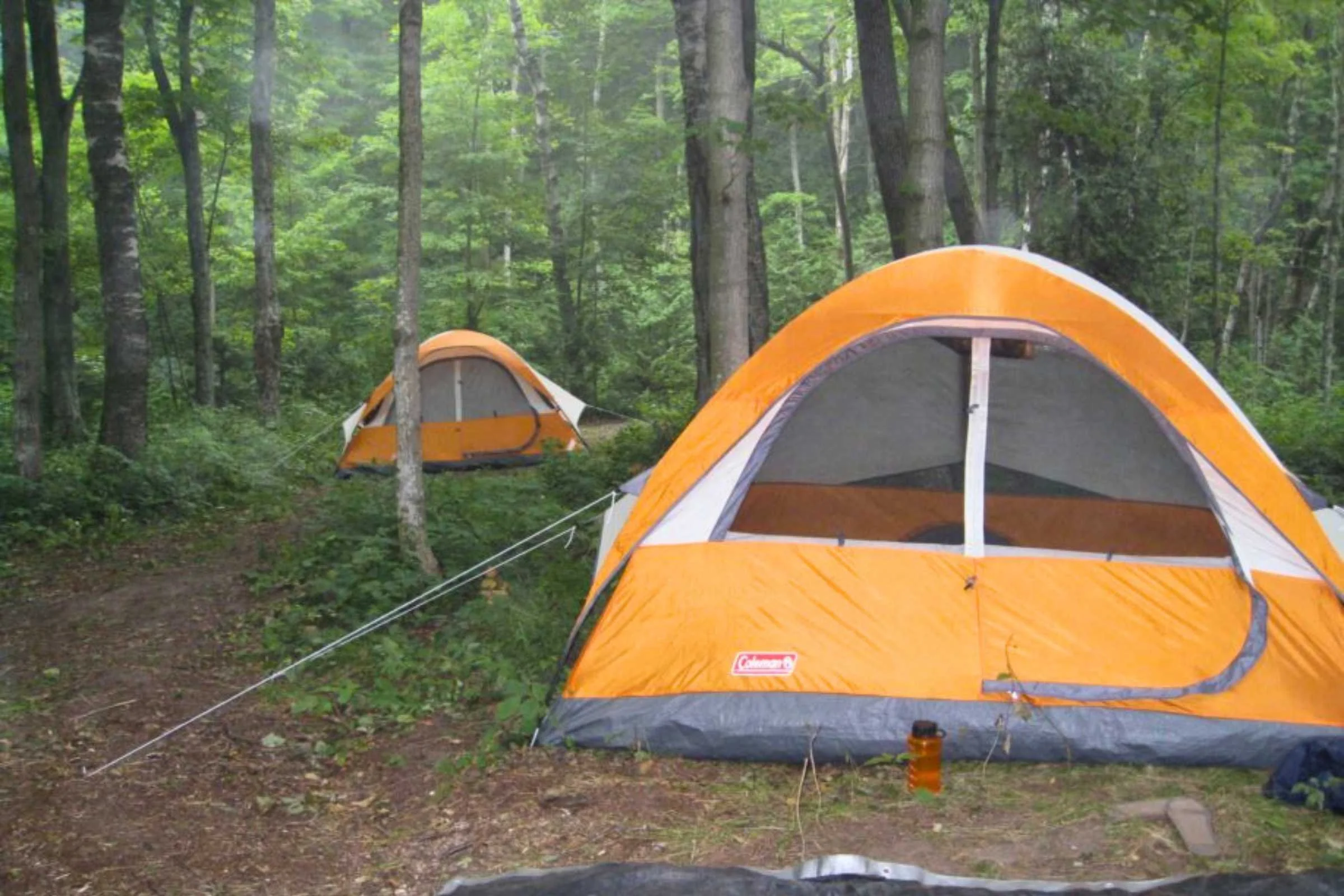
While the price is tempting, the build quality is lacking. If you choose to camp with the Sundome, use it in dry areas with low wind and no weather in the future. Here, the author uses the Sundome as part of an outdoor education camp he is teaching. Photo courtesy Micah Leinbach.
-
Treeline writer Stasia Stockwell has tested this tent for several years on mountaineering and skiing trips in southeast Alaska. After years of use, she’s had no issues with durability or functionality.
-
On a backpacking trip in late fall in Kulane National Park in Canada’s Yukon Territory, she encountered winds so strong and sustained that the noise kept her up all night, but the tent didn’t budge. Then there was a constant torrential downpour while camped at the foot of a glacier, which turned into freezing rain and snow. She stayed warm and dry in the Trango playing games as the storm passed. Despite the fog and humidity, condensation inside the tent was minimal and manageable.
-
If you need a shelter that can withstand just about any storm in any season, this is the one. And it should go without saying that this is certainly a tent for use in cool and cold conditions. Don’t take it out in regular summer conditions with warm temperatures; we tried it and it was indeed an oven in there.
Other camping tents we tested
These are the shortlist camping tents that we tested but ultimately weren’t chosen as a winner. We still think all these options are great tents and explain below why we ultimately didn’t choose them as winners.
Hubba Hubba LT

Weight: packed weight: 4 lbs 13 oz; minimum weight: 4 lbs 6 oz
Floor area: 47 sq. ft
Vestibule area: 16 sq. ft
Peak height: 42 in.
Packed size: 20 x 5.5 in.
The Hubba Hubba LT was our former winner for best lightweight camping tent. It is designed to be a super spacious and comfortable backpacking tent that maintains a reasonable weight and good features. While we think this is a light and spacious choice for a backpacking tent, it’s also a great option for folks who want a tent that does double duty. This tent is spacious and durable enough to serve as a lightweight car camping tent, too.
After testing this tent camping and backpacking in Utah and Colorado, we think MSR has nailed their intention with this. The tent has a sturdy structure and full coverage rain fly to withstand bad weather, plus plenty of mesh and ventilation for when the clouds part.
While it's more suited for backpacking than camping, we think this is the best lightweight camping tent and the best camping-backpacking hybrid tent out there.
See our full review of the MSR Hubba Hubba LT here.
Hubba Hubba LT

Number of people: 4 (also available in 1, 2, or 3-person versions)
Floor space: 64.0 square feet
Vestibule space: 25 square feet
Peak height: 52"
Doors: 2/2
What we liked: lightweight, durable, affordable
What we didn't like: snugger than other car camping tents
The ALPS Mountaineering Lynx 4-person tent was our former winner for best budget camping tent. While it isn't a large tent, the Lynx is lightweight, durable, and affordable. The value of its versatility and lower price cannot be overstated.
This 4-person tent is not only suited for both camping and backpacking tents, it is also one of the most affordable tents we looked at, period. It offers campers a generous amount of vestibule space. It's a time-tested tent that lasts for years.
Alps Mountaineering Lynx

Number of people: 1, 2, 3
Floor area: 28 SF
Vestibule area: 8 + 8 SF
Peak height: 39"
Doors: 2/2
The Big Agnes Tiger Wall nearly won our award for best backpacking-camping tent hybrid. It has a lot of similarities to the Big Agnes Copper Spur, but is better suited to backpacking than camping. Like the Copper Spur, it has good head height, staked out corners and structured walls, and even a lighter Fast Fly (rainfly with footprint) setup option. It also has tons of storage pockets within the tent.
However, the Tiger Wall is semi-freestanding, not totally freestanding. Compared to the Copper Spur, the Tiger Wall UL is designed to shave weight in the shape (evident in its tapered design). It has impressive packability and is even lighter than the Copper Spur.
These are all great features for backpacking, but we think if you are looking for a tent for backpacking and camping, you'll appreciate some of the extra spaciousness and luxuriousness of the Copper Spur.
Big Agnes Tiger Wall
What is a camping tent? how is it different than a backpacking tent?

There are thousands of tent designs in the world — but they don’t all serve the same purpose. Consider cars. A bus and a sports car are both wheeled vehicles, but there’s a reason we only use one to go camping with groups. Tents are a technology, and different technologies meet different needs.
Like so many outdoor goods, the tent market has exploded in recent years. In this article, we will focus on general camping tents. These are great for trips in cars (or rafts and boats) when weight and size are less of an issue, and setting up a comfy home for multiple people is the priority.
By “camping tent,” we mean the kind of tent you use for a family outing in the backyard or at a well-developed state park. A good family tent should offer a painless transition from sleeping inside or in an RV to camping outdoors. It allows you to visit more places and travel more without the costs associated with hotels.
Camping tents are not light tents you will want to carry on your back for miles. Instead, they are perfect for pre-established camping areas just off the road.
What to look for in a camping tent
We researched the most popular comparative reviews of camping tents over the past few years. We mostly focused on all-time classics. While some models are new, you will see some proven tents that have been on the market for years. Our recommendations came from our own experience with the brands and scanning dozens of professional and customer online reviews.
SIZE
Tent size can be measured in one of two ways:
A camping tent benefits from vertical walls, giving more headspace right away. But camper beware: these walls can catch the wind! Backpacking tents tend to be more streamlined. The ideal camping tent balances plenty of height with windproofness.
How big is the tent floor? This is best understood as to how many sleeping pads, cots, or sleeping bags (read: bodies) can fit into it. Note that when a manufacturer references a “footprint,” it also can mean the tarp or extra floor fabric you can buy for a tent to keep the tent’s floor safe. More on that later.

A 6-foot person can easily stand up in The North Face Wawona Tent.
NUMBER OF DOORS
The more people you add to a tent, the more comfortable it is to access both sides of the tent. We would recommend at least two doors for more than three people, especially for families with kiddos.
TOTAL FOOTPRINT (HOW MUCH GROUND SPACE DOES IT NEED?)
While more space is more comfortable, keep your total footprint in mind. Massive tents may not fit into some traditional campsites, especially in busy campground areas. Bigger tents may also be harder to place on level surface, which is way more comfortable for sleeping.
VESTIBULE AND STORAGE SPACE
This may not be a big deal if you’re car camping, but storage space can be a make or break. Look for overhead gear storage, headlamp pouches near your head, larger vestibules, and other storage nooks and crannies to keep your essentials handy. On longer camping trips, you may want a vestibule large enough for a portable composting toilet!
WEIGHT
If you’re backpacking, weight becomes a bigger concern. For car camping or your backyard, you may not even notice the difference in a few pounds. If weight is a concern, look for lightweight, ultra-light, or backpacking tents.
EASE OF SET UP

The poles and sleeves are color coordinated, making the setup of The North Face Wawona easier.
For years, tents had little sleeves you had to run a pole through to connect them. But many modern tents are using hooks that connect to poles, sparing you the trouble of having to guide a 20’ piece of aluminum through a narrow sleeve. Some of our reviewed tents do have sleeves, but they’re minimal and only cover part of the pole.
Poles are a necessary evil of tents. They are long, awkward, and (in some models) fragile and easy to break. Tents with stronger, simpler poles are easier to deal with. The tents with better pole systems use color-coding or reducing the number of poles needed altogether. Tent pole technology is also rapidly evolving. Fiberglass poles are light and inexpensive but crack more easily. We generally suggest aluminum poles, which are more affordable than carbon fiber but harder to break.
SEASONABILITY AND NUMBER OF SEASONS
When looking for a tent for summer camping, you will see a lot of tents labeled as "3 season tent." This is a reference to when you can expect them to keep you warm and dry. Winter is the “fourth season.” In technical terms, a four-season tent can hold a greater snow load or stand up to stronger winds (typically due to stronger fabric and more durable poles) — this makes it warmer, but also heavier than a three-season tent. In your own research, you may also find “single wall’ tents (where there is only one layer and no rainfly). All our recommended tents are “double wall” tents. These tents are easier to use in many conditions and include an outer layer (the rainfly) to keep moisture from seeping through and reduce the impact of condensation (moisture) naturally forming inside your tent.
FACTORY TAPED SEAMS
Seams are where two pieces of fabric on a tent are sewn together, making them prime candidates for leaks. Technical tape applied on the seams helps keep water from seeping through the holes created by needles during the sewing process. When tents don’t offer factory sealed seams, you need to seam seal it yourself using a silicone-based seam sealer. This takes time and is easy to forget to do before your trip. All the tents we suggest come with factory taped seams so you have one less thing to worry about before going on your trip.
"BATHTUB" FLOORING
Camping pros make sure to set up tents in places where water won’t get underneath. But for times you can’t get a puddle-free set up (like when that state park campsite is just big enough to fit your tent and a car), a thicker waterproof fabric along the bottom of the tent helps. We prefer tent floors that use a more durable fabric. This comes in handy in situations where a camper must set up over sharp rocks or sticks. Not all of our recommended tents have bathtub flooring, but we considered it a bonus.

Abundant mesh means the Mountain Hardwear Mineral 3 King has the best views of any camping tent we used.
VENTILATION AND CONDENSATION MANAGEMENT
Most of the moisture inside a tent actually comes from the bodies inside of it, like when a camper sweats and breathes. Ventilation helps clear that moist air and move it outside of the tent so it won’t re-form as condensation (dew) inside your tent. The best tents release that moisture without letting more in. Most do so using a combination of advanced fabric or simple mesh roof in the right places on the tent body.

The North Face Wawona windows are vented and the design is set up with thoughtful features to keep you comfortable and dry.
DURABILITY AND STRENGTH: DENIER AND THREAD COUNT
Denier is density based on the length and weight of a thread. “T” stands for thread count, or the threads you can find per square inch. These variables — combined with chemical treatments and materials — affect the strength and durability of a tent’s fabric. To be clear, 99% of tent purchasers never need to know about the Ds and Ts, but they can be one of several indicators that help us judge how durable and weatherproof a tent is. Higher numbers mean stronger tents — but they’re also heavier.
Ease of entry and exit (think number and size of doors)
Most of the tents we recommend have at least two ways in and out.
Height
Though we made exceptions in one case (see our recommendation for a backpacking-camping hybrid tent), we looked for tents with a 5’ peak at minimum.
Storage and vestibules
We wanted tents that were either large enough to accommodate gear, or that provided “vestibule” space (extra space under a rainfly) that could serve the same need. Some tents even have vestibules large enough and tall enough for a camping shower.
Portability AND Ease of transport
While you may not be backpacking for miles with this thing, you want to be able to move it some distance. Typically this is from a car to a tent pad, or in some parks up to a ¼ mile to group campsites.
Price
Camping tents vary in price dramatically — some are below $100, while others can be several thousand dollars. We looked for good deals in every instance, and nothing over $700. One fun way to look at this is as rent. Let’s say you camp for three weekends a year, with four people, in a tent that lasts a decade. At $700 that’s about $5.85 per person, per weekend, per year — not bad for housing.
Build Quality
Camping tents also vary significantly in build quality — and while you usually get what you pay for, that’s not always true. If we recommend a tent on the expensive end, we make sure the quality justifies the price.
Quality materials will ensure durability, reliability, and longevity. While budget options can sometimes be our first choice, make sure they’re still made from good materials. Look for water-resistant, seam sealed, and ripstop materials, along with aluminum poles. We focused on time-tested makers and models or reliable brands.
Type of tent: DOME, TUNNEL, CABIN, OR SPHERE
There are three common types of tents. Which of the three tents are best suited for you depends on your trip goals, budget, and where you are going.
A dome tent is the most durable style and shape, with angled walls and strong structures. They are generally more rugged and weather resistant than the other two designs. They can work well in more types of backcountry conditions. They tend to have simple, quick set-ups that sacrifice space for durability. Dome tents are common designs for backpacking tents (the classic example being REI's Half Dome). You can set up just the tent body/inner tent (everything but the rainfly) in good weather for bug-free stargazing.
Cabin tents are the most luxurious and tall styles. That's why the classic canvas tent or glamping tent often utilizes a cabin tent style design. They are perfect for long-term camping in gentle conditions — backyards, state parks, or festivals. Cabin style tents can even fit beds—another reason why canvas tents use this design. Some cabin tents are quick to set up. However, many of the massive ones (12+ people) can be complicated and time-consuming to set-up. That's one reason why we're often asked what we think is the best "instant cabin tent." While there's no truly instant cabin tent, the Eureka Copper Canyon takes 10 minutes for the 12-person version--significantly shorter than the 30 minutes common in other cabin style tents.
Tunnel tents have the same front and back and end up looking like a tunnel (hence the name). Typically a series of identical poles runs front to back with a back door and front door. They’re roomy, but more time consuming to set up.
Sphere tents are taller versions of a dome tent, which can be great for extended periods of time in your tent, but may not be the best for high winds or lightweight. Sphere tents are circular in design and generally sport multiple entrances, beefier guy lines, and can hold larger amounts of people.
The above are just guidelines. For example, a massive dome tent may be harder to set up than a small cabin tent. Ultimately, what impacts a tent’s ease of set up and usability is the design and features.

Treeline Review tester Stasia Stockwell camping in the Colorado Rockies in the spring in the Mountain Hardwear Trango. Her verdict: it’s too hot for this tent for this time of year!
How to choose a camping tent
Start with where you're going and what the weather is likely to do. A tent that works great for a dry summer weekend in a state park campground is not the tent you want if you're camping in the Pacific Northwest in October. The biggest mistake I see new campers make is buying a tent for the best case scenario rather than the realistic one.

The beaked dome supports the rain fly and directs water off the tent in rainy conditions. In dry conditions, it adds extra headroom and reduces droop.
Figure out how many people actually need to sleep in it, not the manufacturer's rating. Tent capacity numbers are optimistic. A "4-person" tent fits four people if they're small, friendly, and don't mind touching. If you're camping with family and need to store gear inside, go up a size.
Think honestly about how often you'll move it. If this tent is going from your car to a campsite a few times a summer, weight doesn't matter much. If you want something that occasionally gets carried further than the parking lot, keep an eye on the packed weight and size. The Mineral King and the Alps Lynx are the only tents in this guide that could reasonably double as backpacking tents without punishing you for it.

Camping in foul weather in Kluane National Park in the Canadian Southwest Yukon using the Mountain Hardwear Trango.
Consider your setup situation. Some people camp alone or with a partner who has set up a tent before. Others are setting up with kids who have never done it, or in the dark after a long drive. The simpler the setup, the better. Color-coded poles and clip systems rather than sleeves make a real difference when you're tired or it's raining.
Budget matters, but think about it per use rather than as a sticker price. A $400 tent that lasts ten years and gets used fifteen times a year costs less per use than a $130 tent that breaks after two seasons. I've gone through enough Coleman Sundomes to know this firsthand.

The ALPS Mountaineering Lynx is an affordable 4-person camping tent that can also be used for backpacking. Here, kids use the Alps as part of an outdoor program run by the author. Photo courtesy Micah Leinbach
How to make your tent last longer
Never store a tent wet
Never leave a tent pole on the ground
Set some “house rules” — like no shoes, not even camp shoes, in the tent.
Open poles from the middle rather than the end. It will keep the elastic stretchier for longer.
Pitch your tent out of direct sunlight (the UV will damage the fabric over time).
Pitch your tent taught — but not too tight. Minimize the folds in the fabric but don’t stretch them.
Shake out, sweep, and clean the tent after every use.

The Copper Canyon tent at a campground in the Mojave Desert National Preserve.
Care and maintenance
Dry your tent before you store it. This is the single most important thing. Packing away a wet tent is how you end up with mildew that won't come out, fabric that degrades faster than it should, and a tent that smells bad from the first night out next season. Even if you're packing up in rain, get it dry as soon as you're home.
Keep it clean. Dirt and debris ground into the floor fabric wear it down over time. Shake the tent out after every trip. If it's genuinely dirty, a soft brush, mild soap, and lukewarm water will do the job. Avoid machine washing and harsh cleaners as they strip the waterproof coatings that you really want to keep intact. For a full wash, see our How to Wash a Tent guide.
Store it loose, not compressed. Tightly stuffing the tent into its stuff sack between trips breaks down the fabric coatings over time. A loose storage bag or hanging in a closet is better. Same goes for down sleeping bags, same principle.
Seams and waterproofing degrade. Check the seams periodically, especially on an older tent. If you're seeing water seeping through at the seams rather than running off, it's time to reapply seam sealer. This is a cheap and easy fix that most people put off until they wake up wet.
Watch the zippers. They're the first thing to give out on most tents, and the most annoying to deal with in the field. Keep them clean and apply zipper lubricant a couple of times a season. Don't force a stuck zipper. If a zipper does go, see our How to Fix a Zipper on Outdoor Gear guide, it's more fixable than it looks.
Use a footprint or groundsheet under the tent floor, especially on rough or rocky ground. It adds a little weight but meaningfully extends the life of the floor fabric, which is the hardest part of the tent to repair once it's compromised.

The North Face Wawona tent fits a table, four camp chairs, and a bike in the vestibule with room to spare.
How to repair a tent
Repairing your tent yourself is actually not too hard to do.
I’ve found it’s most common to need to:
(1) “splint” a tent pole; or
(2) patch a hole in the fabric.
Splints are metal sleeves that go around your pole, giving it extra durability when it cracks.
The best solution for a tear is cutting a repair material into a circle that covers it. I find sticky nylon or athletic tape with seam grip glue works well, but some folks settle for duct tape.
You may also think your tent is leaking. It’s possible but first, consider the alternatives. Your body produces a lot of condensation. If it’s not vented out, water droplets from your breath may collect on the inside of the tent. This is particularly true when humidity is high already or you are camping near water. Try better ventilation before assuming it’s an issue with the tent and you may just make yourself a more skilled tent sleeper.
For zippers and anything beyond that, Annie Getchell’s “Essential Outdoor Gear Manual” (Amazon | Bookshop) is my go-to bible on equipment repair.
If you’ve got a gear repair issue, it’s also worth checking with the manufacturer. While most don’t cover wear and tear in their warranties, some have fairly generous repair programs. If you use your tent for a couple of years, the most likely part to stop working is the elastic that runs through the poles and holds it together. Most tent companies will replace this for a nominal charge, or even just the cost of shipping. Eureka is great about this, one of the reasons they made our cut.
To learn more about fixing your tent see our post on How to Repair a Tent | Rips, Leaks, Broken Poles and How to Fix a Zipper on Outdoor Gear.

The REI Wonderland 6 is a multi-roomed tent for a big group or family.
How to get camping skills
I’ve been camping professionally for almost a decade in a range of conditions, and I teach people how to do so through the Bus for Outdoor Access and Teaching (BOAT). I learn from the experiences of participants of all skill levels. I’m frequently amazed by how many times we learn a simple task that is actually a complex skill.
Anyone can sleep in a sleeping bag, but you can actually get better at it.
Anyone can turn on a camping stove, but you can actually learn to control temperatures and bake.
Camping is full of these “easy to get the basics, hard to master” skills. Tents are one of them: Anyone can set up a tent — but you can make it neater, more stable, and safer.
Once you have your tent, I encourage you to start learning how to better use it. Get acquainted with the best places to set it up (hint: watch for animal tracks, loose tree limbs, or flood paths, and don’t set it up there!).
Don’t be afraid to practice. In fact, do yourself a favor and take it to a local park to set it up in broad daylight. You'll learn how it works before you inevitably find yourself setting it up in the dark at a trailhead you’ve arrived at too late.
Above anything else — water, fire, or food — our survival classes focus on the importance of shelter. Tents help you not have to worry about shelter. Enjoy the comfort and confidence tents can bring you, whether in a backyard or the backcountry!
Read More: How to Get Started Camping
Read More: How to Get Started Winter Camping

The Copper Canyon tent has a great mesh roof for stargazing. A camping lantern can be attached to the hook at the top to use as a light.
FAQs
Demystifying the outdoors and gear is one of our goals here at Treeline Review. Here are some common questions that campers ask.
-
You'll notice Eureka makes up two of our recommendations. Eureka has been a decades-long, well-respected group camping tent company with a storied history. The first summit of Everest was with Eureka, and I know several outdoor programs for youth that have been using their classic A-frame for a decade. Best yet, Eureka tents are relatively affordable for their level of quality and are widely available.
-
Any of the tents we recommend above are waterproof in some capacity. The biggest difference is how hard of rain your tent can withstand. The biggest causes of leaking will be inadequately sealed seams, too small of a rain fly, lack of a footprint/inadequate footprint, etc.
-
Any of the tents we recommend above are waterproof in some capacity. The biggest difference is how hard of rain your tent can withstand. The biggest causes of leaking will be inadequately sealed seams, too small of a rain fly, lack of a footprint/inadequate footprint, etc.
-
That depends on what you want most and how many people you plan to host! If you’re looking for maximum comfort and room for a family of four, we would suggest a 6-person tent. If you want to save space, weight, and money, stick with a 4-person tent. If you’re a family with small kids, a 4-person tent might be all the space you need, but if you’re a 3-person group camping for a week, you may want the space that a 6-person tent offers. When in doubt, size up. Most of the time you’ll be happier with the extra space.
-
The ideal family camping tent would be large enough to sport a dividing wall, or two separate rooms — one for kids and one for adults. If that seems too large for you, look for tents with at least two doors so that the kiddos won’t be crawling over you in the middle of the night. Look for storage, large doors, and easy-to-use zippers. We think the REI Wonderland 6 is a good option if that dividing wall is a must.
-
Absolutely not! Putting your tent into a washing machine is a great way to ruin it. Read our article on cleaning, waterproofing, and caring for your tent. Hint: it’s all done by hand.
-
Freestanding tents use poles to stand up independently of other structures. Since they are not attached to anything other than the tent pieces themselves, these tents can be picked up and moved around without breaking down. Non-freestanding tents require rope attached to metal stakes pressed firmly into the ground. They cannot be moved easily.
-
Footprints are essentially extra floors, cut to the size of the tent. They generally help preserve the floor of the tent.
I tend not to spend extra on footprints. Unless it’s a waterproof floor (few are) I’m not worried about a few holes in the floor of the tent. (In contrast, I do care about holes on all the other sides).
When I do use a tarp on the bottom of my tent, I typically put it inside the tent rather than underneath. This is the opposite of what I run into most people doing. The rationale behind my method is that it keeps the holes away from me. It also reduces the likelihood that moisture gets between the footprint and the floor. If moisture gets between the footprint and the floor, I’ve found water is more likely to soak through to me.
A tarp underneath the floor often leaves exposed edges outside, where water can pool and run into the tent. But it doesn’t keep holes out of the floor of the tent. I’m fine with holes, and you can be too if you want!
-
Inevitably you will have to put the tent away. First, remember to make sure it is dry! Then you have a choice to make. A lot of people fold tents, gently wrapping them over the poles and putting them in the bag. I’m a stuffer.
Folding looks better for a tent, but if you fold in the same place and the same way over-and-over again, the creases make points of weakness. Stuffing guarantees something a little different every time.
Rolling is great — but make sure you vary the folds to avoid those creases!
A word of caution if you do stuff: stuff carefully around the poles. That’s the easiest way to rip a tent. It is still better than putting the poles into the tent bag last, however. Doing so means taking a long hard thing and pushing it into the fabric — another good way to get a tear.
-
This is less of a debate, and more something that is helpful to know.
Most tents need to be staked out for maximum effectiveness. Tents that don’t need to be staked out are called “free-standing.” But even they benefit from the extra tension of staking. I’ve seen staked out tents blow away in the wind (it’s rare, but it happens). Tents that aren’t staked out can fly off even faster. I have yet to meet the tent that didn’t benefit from at least some staking.
Inevitably, however, you will either camp on a durable surface that is unstake-able (which is good if you want to Leave No Trace!) or forget your stake bag at home. In both cases, you’ll need to learn how to tie out your tent without tent stakes. Once, I forgot my stake bag on a boulder in the Wind River wilderness (leaving stuff behind is not so good for Leave No Trace). You will learn, as I did, that thick logs and stones can work as well as stakes—if you have guylines to wrap around natural “found” materials.
Guylines are ropes—typically made out of parachute cord—that come off loops on both the body and the rainfly of your tent.
If you learn only one knot, learn the trucker’s hitch. It will let you easily loosen and tighten these lines to tent stakes. This is almost always better than attaching the tent directly through the stakes through the various loops it has.
Some tents have plastic “tensioners” that try to replicate this knot. I recommend learning the knot and abandoning the tensioner. I find the tensioner confuses people more than it helps. Backpacking expert Andrew Skurka shows his system, which is similar to mine, here.
Knowing how to stake out a tent with lines rather than fixed loops on tents isn’t something to stress about. Still, figuring it out will let you sleep far sounder through storms, wind, and rain. I always tell my students the best camp is the one where you don’t have to get up to stormproof if you hear thunder! This is the kind of skill that helps you go to sleep with confidence in any weather.
How we researched and tested

Testing multiple camping tents on a rafting trip. Photo by Josette Deschambeault.
After a decade of testing different camping tents while working at an outdoor education camp, our writer found the best camping tents that are easy-to-set-up and durable enough for repeated use by teenagers.
I tested tents for several years at camps in Wisconsin and North Carolina. To get further testing in different climates, other Treeline Review testers took the most promising tents to the Pacific Northwest, desert Southwest, and alpine areas in Colorado and California.
Our findings were based on an extensive set of criteria based on our own experience including waterproofness, ease of set-up, pockets and organization, and spaciousness.
To make our contender list, each tent had to have received multiple positive reviews from both our testers and every day users, including the teenagers at our camp. From there, we narrowed our list further to find our winners—the best options for most people’s needs.
We tested camping tents with camping cots to judge how many can fit inside. Camping cots tend to take up more room inside a tent so testing with them is a good way to judge how accurate the reported number of people who can fit inside actually is. We also tested with camping sleeping mattresses, which tend to allow for at least one more person to sleep inside.
To test warmth, we tested these camping tents using camping sleeping bags (which are often rectangular) as well as more slim-profiled backpacking sleeping bags.
- Repeated use by teenagers at outdoor camp
- Sustained wind in the Columbia River Gorge
- Heavy rain on a fly fishing trip in Idaho & Montana
- Desert Southwest & alpine Colorado
- Tested with cots & sleeping mattresses inside
- Rainfly coverage & waterproofness
- Ease of setup for first-time campers
- Actual vs. stated capacity
- Condensation & ventilation management
- Durability over repeated use
Why you should trust us / About the Author

The author with the Bus for Outdoor Access and Teaching, a mobile adventure education program aimed at reducing cost and increasing accessibility of outdoor education. Photo courtesy Micah Leinbach.
I run BOAT (the Bus for Outdoor Access & Teaching), a non-profit focused on helping make it easier for people to get out on camping trips.
As a guide and program administrator, for the last decade, my teams have set up, slept in, broken (and fixed!) a lot of tents. I’ve taught many outdoor first-timers to do the same. In this story, I rely on both my experience with campers and meta-review research to find the best camping tent for most people.
You can see all of Micah Leinbach's camping gear reviews here.