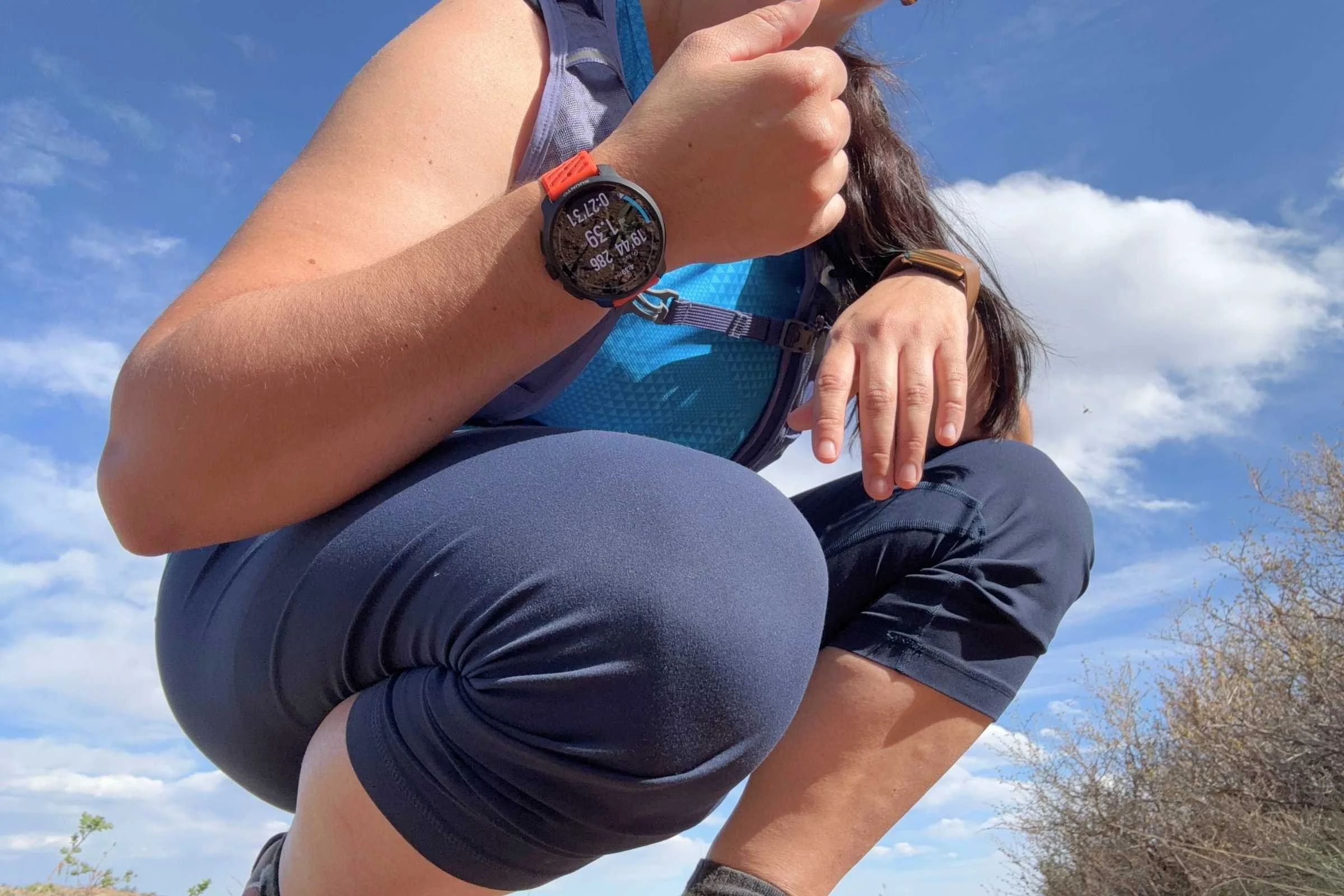
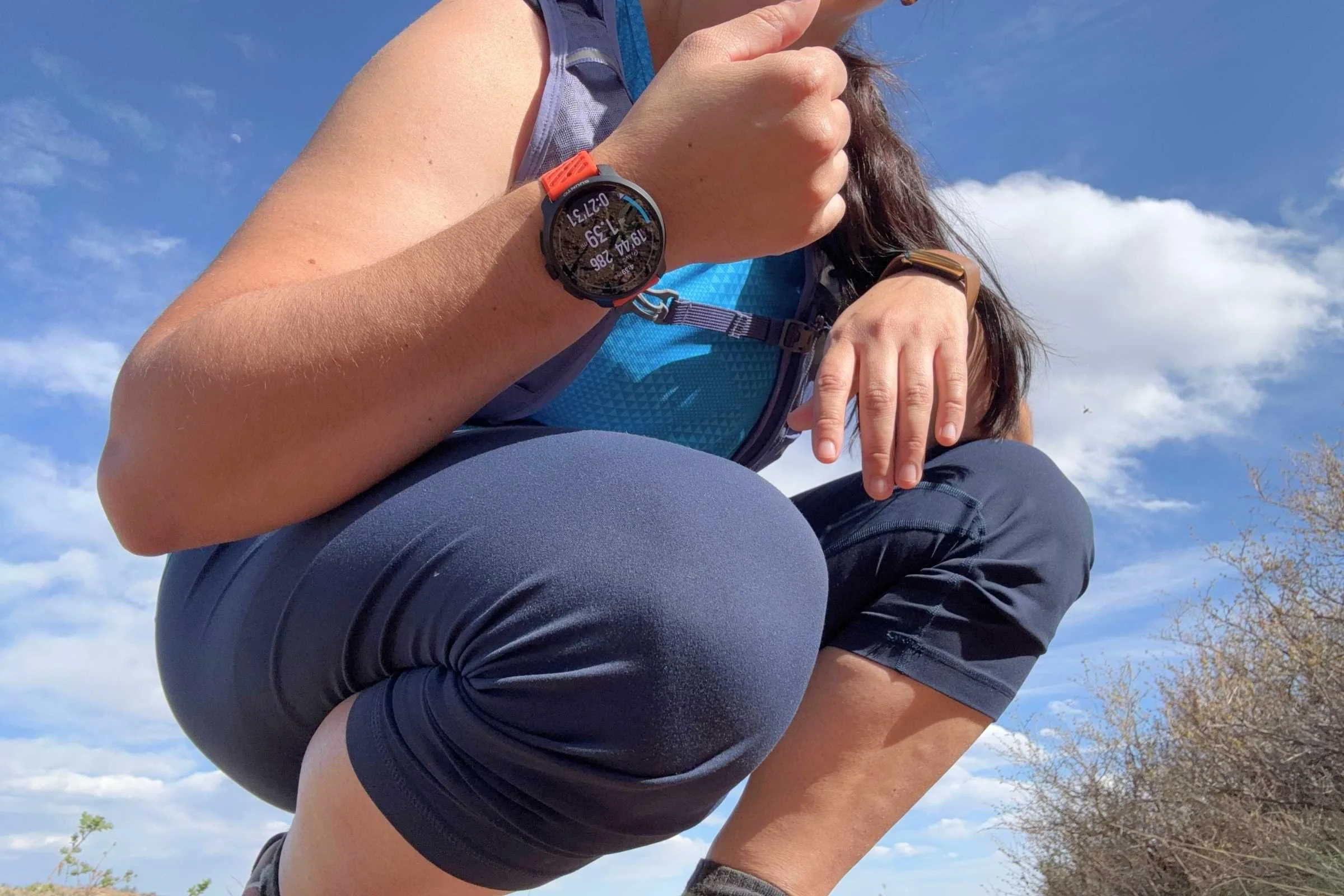
Suunto Race 2 Review: A More Affordable Outdoor Watch With Excellent GPS and Navigation
A watch with strong GPS accuracy, long battery life, and intuitive navigation features for long days on the trail
August 25th, 2026
Home > Gear Reviews > Electronics
Our verdict
The Suunto Race 2 is a solid GPS watch option for those who spend more time on dirt than on city sidewalks. Rather than trying to outsmart competitive watches, the Race 2 doubles down on features that made it competitive in the first place, including accurate GPS tracking, a long battery life, and intuitive navigation. The result is a watch that feels intentional and easy to use in remote places.
The stainless-steel version of the Race 2 has a $499 price point, which makes it significantly more affordable than watches like the Garmin fēnix 8. Yet it offers many of the same outdoor navigational tools, sapphire crystal protection, a dual-band GNSS, and offline maps. Its lengthy battery time in GPS mode also makes it a standout watch.
We’ll be the first to admit that the Race 2 isn’t the best smartwatch available. It isn’t even the most feature-rich sports watch that you can find. We found that this watch took time to get to know its owner, and that you have to regularly calibrate it for the distance to become accurate. But it still provides one of the best values for serious outdoor athletes due to its bright display, battery life, offline mapping and navigation tools, accurate GPS tracking, and comfort.
Suunto Race 2 GPS Watch
We create reader-supported, objective gear reviews independently selected by our editors. This story may contain affiliate links, which help fund our website. When you click on the links to purchase gear, we may get a commission, without costing you an extra cent. Thank you for supporting our work and mission of outdoor coverage for every body! Learn more.
Suunto Race 2 GPS Watch specifications
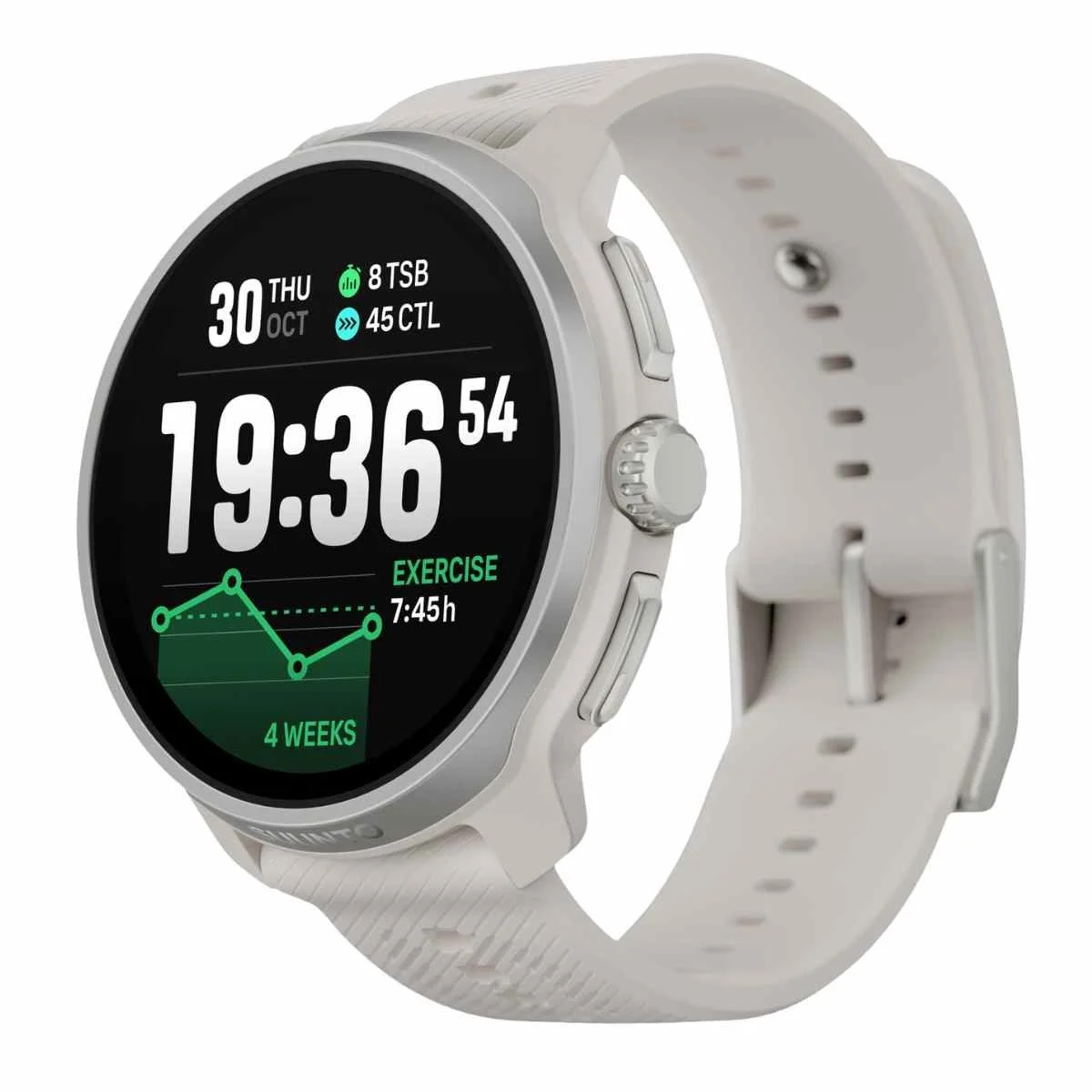
Display: 1.5-inch AMOLED
Weight: 76 grams
MSRP: $499
Touchscreen: Yes
Solar charging: No
Glass: Sapphire crystal
Battery life using GPS: Up to 55 hours in performance GPS mode
Battery life for daily use only: Up to 18 days
GPS: Yes
Altimeter: Yes
Compass: Yes
Barometer: Yes
Navigation: Yes
Mapping: Yes (offline)
Offline map storage: 32 GB
Heart rate sensor: Yes
Blood Oxygen: Yes
Water resistance: 100 meters
Watch band: Silicone
Charging cable: Suunto proprietary magnetic cable
Smartphone compatibility: iOS and Android
Warranty: Two years from purchase
Comparison table
| GPS WATCH | MSRP* | DISPLAY SIZE | DISPLAY TYPE | BATTERY LIFE | TOUCH SCREEN | MAPS | ALTI-METER | BARO-METER | COMPASS | SPO2 |
|---|---|---|---|---|---|---|---|---|---|---|
| Suunto Race 2 | $499 | 1.5 in | AMOLED | 30 days | ✓ | ✓ | ✓ | ✓ | ✓ | ✓ |
| Suunto Race | $399 | 1.4 in | AMOLED | 26 days | ✓ | ✓ | ✓ | ✓ | ✓ | ✓ |
| COROS APEX 4 | $429-479 | 1.3 in | MIP | 15/ 24 days | ✓ | ✓ | ✓ | ✓ | ✓ | ✓ |
| Garmin Instinct 3 AMOLED | $350-500 | 1.2, 1.3 in | AMOLED | 18-24 days | -- | -- | ✓ | ✓ | ✓ | ✓ |
| Garmin Instinct 3 Solar | $350-400 | 0.9, 1.1 in | MIP | 28-40+ days | -- | -- | ✓ | ✓ | ✓ | ✓ |
| Garmin fēnix 8 AMOLED | $1100-1200 | 1.3, 1.4 in | AMOLED | 29 days | ✓ | ✓ | ✓ | ✓ | ✓ | ✓ |
Best for
Long-distance hiking or backpacking trips
Remote traverses that require reliable navigation
People who will utilize multiple sport modes (e.g., hiking, running, mountain biking, etc.)
What we liked
Outstanding battery life in conjunction with bright AMOLED display
Screen is easy to read even in direct sunlight
Offline topographic maps require no subscription
Sapphire crystal glass
Competitive price
Over 100 sports modes
What could be better
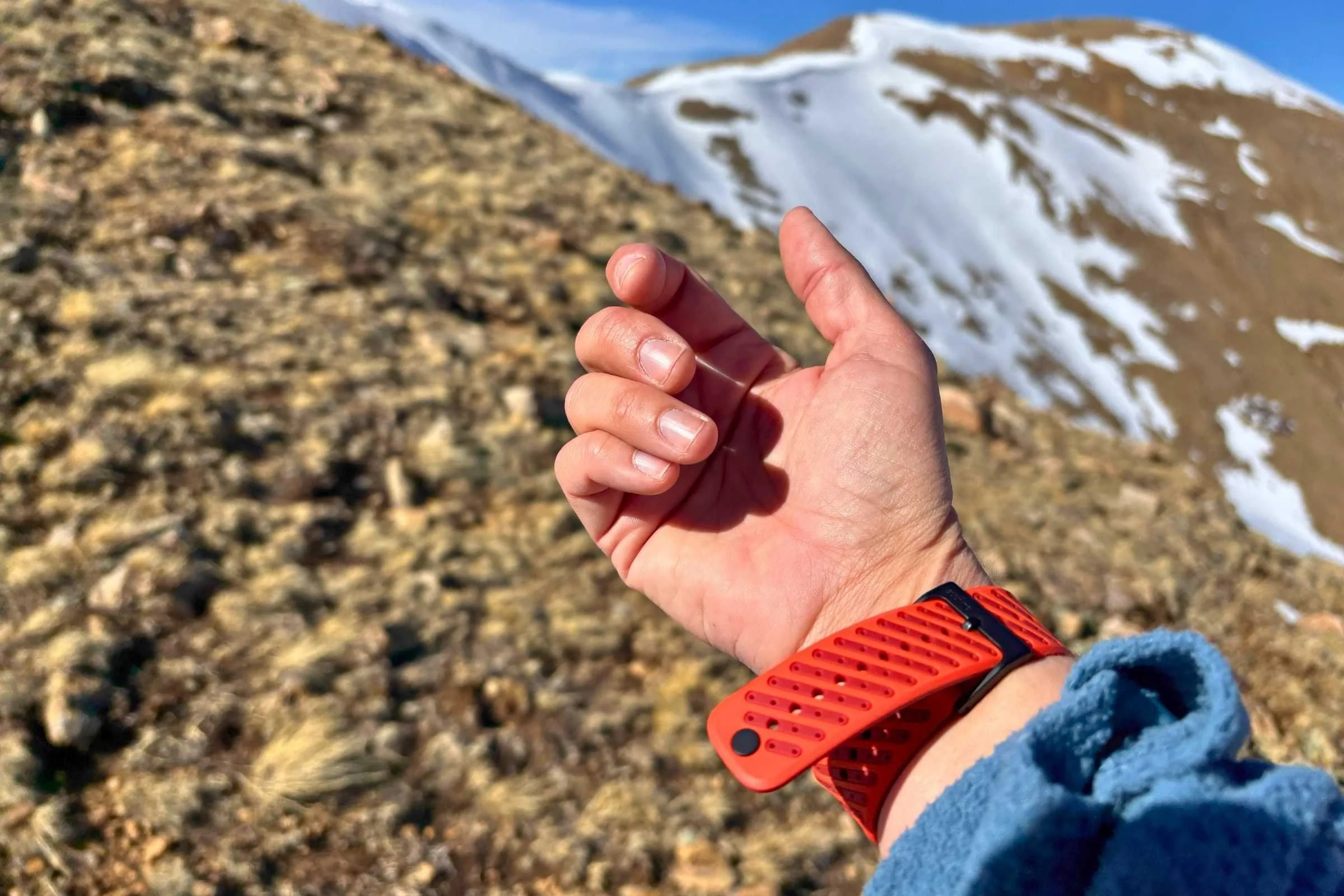
The clasp of the Suunto Race 2 watch came undone while on a hike in Colorado.
Clasp is prone to coming undone
Easily one of the biggest and heaviest watches we’ve tested
Sleep tracking can struggle to identify wake periods
The watch takes a while to get to know the user
Magnetic charging system is prone to slipping
Some gym readings are prone to inconsistent tracking
What's new with the Suunto Race 2 GPS watch

Taking the Suunto Race 2 GPS watch on a trail run in Colorado.
Compared to the original Race, the Race 2 addresses nearly every common criticism, including the optical heart rate sensor, the processor, and the display. Instead of focusing on flashy features, Suunto enhanced many of the Suunto Race’s existing components. The optical heart rate sensor was redesigned in the newest model, most runners found that the processor is noticeably faster, and the display is bigger and brighter for a smoother interface experience. The result is a more polished watch than its predecessor.
Offline maps
Like the original Suunto Race, the Race 2 comes with access to free offline topographic maps that can be downloaded through the Suunto app. The Race 2 also comes with a slightly bigger display screen, which is most noticeably advantageous while navigating maps on the run. The additional screen real estate makes it easier to see features like contour lines, junctions, and trail labels without constant zooming and panning. Route planning remains identical across both models.
Lighter and smaller profile
Despite the Suunto Race 2’s bigger display, the overall case design creates decent weight distribution in order to maintain all-day comfort. Weighing 76 grams, it’s not the lightest GPS watch on the market. And we found that its top-heavy structure still made it prone to slipping during intense workouts, which was one of the most noticeable drawbacks of the watch.
Larger display
The AMOLED display measures 1.5 inches, making it one of the biggest screens available on an outdoor GPS watch.
Updated UI/software improvements
The Suunto Race 2 comes with a new processor that’s generally more responsive. While earlier models occasionally felt sluggish while loading maps, the Race 2 feels more in alignment with premium Garmin watches in terms of speed. Like most GPS watches, Suunto also continues to offer firmware updates over time.
Battery life enhancements
One of the Suunto Race 2’s biggest strengths is its battery life, which impressed us throughout testing. While using this watch like a standard everyday smartwatch, the battery lasted more than two weeks on a single charge with frequent use. In Performance GPS mode, it boasts up to 55-hours per charge, 90 hours in Endurance mode, and 200 hours in Tour mode. While using this watch for our daily one-hour workouts, it consistently lasted about a week and a half on a single charge.
Suunto Race vs Race 2
Owners of the original Suunto Race watch complained about sluggish menus and an inconsistent optical heart rate tracker. But the Race 2 comes with meaningful improvements in these areas.
Display
The original Suunto Race came with a 1.43-inch display, while the Suunto Race 2 has a 1.5-inch display. The resolution is the same 466 x 466 pixels across both watches, although the pixel density is slightly lower in the Suunto Race 2 (311 ppi compared to 326 ppi). The official brightness of the original Race isn’t officially published, but the Race 2 features 2,000-nit peak brightness, and most athletes found a noticeable improvement compared with the original watch.
Visibility
The Suunto Race’s visibility left something to be desired in sunny trail conditions, while the Suunto Race 2 maintained visibility throughout a range of conditions including midday sun in Colorado, dusk and dawn, and indoors.
Always-on display options
Both models feature always-on display options with no significant change coming to the Suunto Race 2 watch.
Battery life

One of the Suunto Race 2’s strongest features is its generous battery life. On paper, this watch claims to last up to 18 days in smartwatch mode, 55 hours in performance mode (all-systems GNSS plus multiband), 200 hours in tour mode (power-saving GNSS mode), and 30 days in standby time mode. In reality, these estimates proved to be pretty accurate, which gives it more longevity than the popular Garmin fenix 8 AMOLED watch, which comes with 16 days of smartwatch use, 47 hours in GPS only mode, 81 hours in max battery GPS mode, and 23 days in battery saver mode.
While the Suunto Race 2 strikes a competitive balance, Garmin watches like the fēnix 8 AMOLED have more battery management options, which makes it easier to customize battery drain.
Notably, COROS still maintains an advantage when it comes to GPS-mapped and standard battery longevity—especially across the APEX series. The standard APEX 4 setting gives you 24 days of use, 65 hours in endurance mode, and 41 hours in dual-frequency mode. But Suunto stands out with a brighter display and a more polished mapping experience overall.
Real-world testing results
Unlike some AMOLED watches that lose battery as soon as you switch on navigational tools, the Race 2 offers a remarkably efficient sports watch option while backpacking, trail running, and endurance training in the mountains. We predominantly tested the Suunto Race 2 on long day-hikes and trail runs and found that even after multiple hours of GPS-enabled usage, the battery percentage barely budged.
Charging speed
A full charge takes just over an hour on the Suunto Race 2, compared to just under 2 hours for the COROS APEX 4, and 60 to 135 minutes for the Garmin fēnix 8.
GPS accuracy, tracking performance, and navigation
Suunto built a reputation surrounding quality GPS performance a long time ago, and the Race 2 continues to validate this reality. This watch consistently produced clean GPS tracks with minimal wandering, making it a solid option for remote adventures.
Multi-GNSS capabilities
The Race 2 supports all major satellite constellations including GPS, GLONASS, Galileo, BeiDou, and QZSS. Instead of solely relying on GPS, the Race 2 can communicate with a series of satellite networks to improve accuracy, which is especially valuable in mountain and canyon environments that block the sky. While testing in Colorado’s Front Range, we found that it often took a moment for the Race 2 to find a signal, but once the watch had a signal, it seemed to easily maintain it.
Dual-frequency GPS
The Race 2 also supports dual-frequency GNSS, which allows it to receive both L1 and L5 satellite signals. These frequencies help the watch reduce errors caused by reflected satellite signals, which is a common issue in dense forests, urban areas, and narrow canyons.
GPS accuracy
After about four months of testing, we found the GPS accuracy of the Suunto Race 2 to be one of its strongest attributes. Whether hiking above 13,000 feet in Colorado, cycling on paved roads in Tennessee, or paddling the river, the recorded tracks closely followed our route. Elevation profiles also seemed to mimic existing trail data.
In more challenging terrain like steep drainages and tree-covered routes, the watch maintained relatively smooth tracks with little zig-zagging. But urban jogging produced a few small deviations around tall buildings.
Offline maps
One of the biggest perks of wearing a watch like the Suunto Race 2 is its offline maps. Unlike the breadcrumb-only navigation that many GPS watches utilize, the Race 2 allows you to download detailed topographic maps through the app that show trail networks, roads, contours, rivers and lakes, and points of interest. These maps always loaded quickly and maintained their responsiveness even while zooming and panning. And, while most of the time, we prefer a watch with a smaller face, the large AMOLED display comes in handy while reading maps.
Route planning and importing
Athletes can create routes in the Suunto app or on third-party platforms like Strava and Komoot. Once you sync your watch with the app of your choice, routes automatically appear on the watch, making it one of the most straightforward downloading options available.
Breadcrumb navigation
The Race 2 supports traditional breadcrumb navigation, which can be useful in familiar territory where you don’t necessarily need a full topographic map.
Turn-by-turn directions
This watch also offers turn-by-turn notifications before you reach intersections. This can help to reduce the need to regularly check the map to ensure that you don’t make a wrong turn.
Real-world navigation testing
Navigation was one of the Race 2’s strongest features. We regularly relied on offline maps while hiking in Montana and Colorado. The routes were easy to follow, consistent, and helpful during reroutes.
Sport modes and training features

Using the Suunto Race 2 GPS watch while cycling in Tennessee in the summer.
The Race 2 includes 100+ sport profiles, with most conventional options readily available pre-installed. Adventurers can easily navigate everything from trail running and cycling to rock climbing, skiing, and strength training.
Activity profiles
We laughed out loud while we were scrolling through the Race 2’s massive collection of sport modes. Deep in the menu, we found one setting of particular interest: Mermaiding. Now, we can’t say for sure what kind of data the mermaiding setting tracks, but its sheer existence had us in stitches.
In addition to this iconic setting, the Suunto Race 2 also contained an array of conventional sport modes. And adventurers can create custom sport modes through the Suunto app, which can be helpful if you want to incorporate a secondary setting like intervals in your standard run setting.
Training load and recovery metrics
Like most Garmin and COROS watches, the Suunto Race 2 tracks both training and recovery. This watch monitors training loads, but it also evaluates recovery, training stress, heart rate variability, recovery variability, and weekly volume to better help athletes monitor overall health and burnout potential. While Garmin tends to provide more in-depth physiological data, Suunto’s metrics are straightforward and easy to understand.
Workout suggestions
The Race 2 gives athletes daily workout recommendations utilizing recent activity, recovery status, and overall training load to make suggestions. Suggestions aren’t quite as extensive as Garmin Coach, but they offer general guidelines to help athletes progress without teetering around burnout.
Race-day features
This watch also includes a number of features that are specifically designed for races, including structured workouts, pacing tools, real-time elevation, estimated finish times, nutrition and hydration reminders, and split tracking.
Heart rate zones and training insights
Like most smartwatches, the Race 2 automatically tracks your heart rate while you wear it—even if you’re not actively engaged in a workout. This is a particularly helpful tool for athletes who are attempting to use intuitive training.
Health and wellness tracking
The Suunto Race 2 incorporates a number of features to allow athletes to monitor general health and wellness.
Heart rate monitor
The original Suunto Race used an optical heart rate sensor that used a standard arrangement of green LEDs and photodiodes to detect changes in blood volume. But the Race 2 incorporates a redesigned sensor module with more LEDs and updated algorithms to offer better accuracy during intervals, strength workouts, and activities that involve a lot of wrist movement.
Sleep tracking
The Race 2 records sleep duration, stages, consistency, and overnight heart rate. The presentation of this information is easy to understand, and it can be helpful to utilize while training. But compared to devices like the WHOOP and the COROS APEX 4, we found the data to be inconsistent and not always accurate. It seemed to struggle to detect restless nights and wake times.
Stress and recovery monitoring
Stress and recovery monitoring rely heavily on heart rate variability and resting heart rate trends. The Race 2’s stress and recovery monitoring is displayed in a straightforward and easy-to-understand format, but we were a little skeptical about the overall metrics, which suggested we were consistently fatigued while our WHOOP and COROS APEX 4 showed different metrics.
Blood oxygen monitoring
The Race 2 incorporates an integrated pulse oximeter to evaluate blood oxygen saturation, which can be a helpful tool while you’re recreating at high elevations.
Smart features
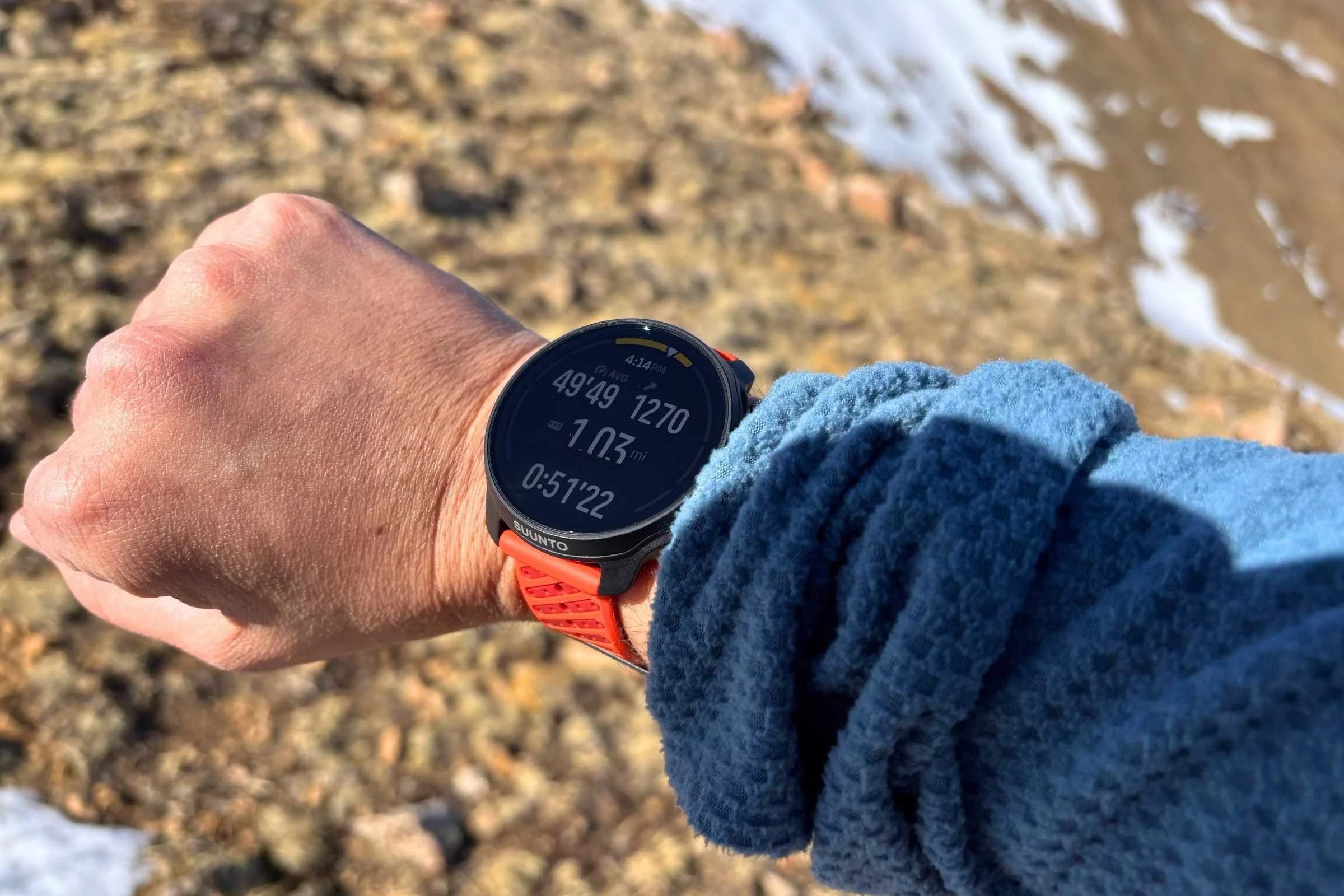
Peak bagging with the Suunto Race 2 GPS watch.
The Suunto Race 2 is predominantly a performance GPS watch. But it also includes a number of convenient, everyday features that make it feel like a standard smartwatch.
Notification handling
Athletes can pair the Race 2 with a compatible iPhone or Android phone to display calls, texts, calendar reminders, and email notifications. Admittedly, we bypassed this option since we prefer to keep notifications on our phones only. But the option to pair them is available, and athletes who like to see notifications on their watch can expect to easily see them on the bright display.
Music control (no onboard storage)
This watch also incorporates media controls, but it doesn’t offer on-watch music storage (which means that it has to be connected to your phone to use).
Suunto app integration
The Race 2 easily pairs with the Suunto app, which allows athletes to customize the watch experience by switching watch faces, adjusting sport profiles, downloading maps, reviewing workout history, creating routes, and updating firmware. The Bluetooth syncing is straightforward and easy, and workouts appear in the app almost immediately after finishing the activity.
The app interface is clean, uncluttered, and easy to understand. The home screen provides snapshots of essential data like recent workouts, training volume, recovery, sleep data, daily activity, and your routes. Throughout our four months of testing, we found data syncing to be almost immediate, with our activities uploading automatically within a minute or two of finishing a workout.
Offline maps and routes also quickly transferred to the watch, although larger downloads required more time. Finally, while Suunto’s app doesn’t have the same social ecosystem as apps like Strava, it does contain community-oriented tools like shareable workouts, and recommended adventures.
Compared to the Garmin and COROS apps, Suunto’s app is slightly less comprehensive than the Garmin app, and slightly more comprehensive than the COROS app.
Third-party app compatibility
While many athletes use the Suunto app as their main platform, the Suunto Race 2 is also compatible with Strava, TrainingPeaks, Komoot, Adidas Running, Relive, Final Surge and Ride with GPS, which allows you to sync with the platform of your choice and maintain existing training logs. Komoot and GPX are particularly helpful for planning hikes and trail runs.
Weather
When connected to your smartphone, the Race 2 can upload the latest weather conditions, daily weather forecasts, storm alerts, barometric pressure trends, sunrise and sunset times, and altitude-adjusted weather information.

A Classic waterfall hike in Chattanooga with the Suunto Race 2
How we tested
We wore the Suunto Race 2 for about four months while hiking, cycling, running, and weightlifting. The bulk of our testing took place in Colorado’s foothills with an occasional trip above 13,000 feet in alpine/mountain terrain. But we also tested the Race 2 while hiking in Montana, and cycling, spelunking, and hiking in Tennessee. Throughout the course of our testing, we directly compared the Suunto Race 2’s data with the WHOOP and the Coros APEX 4. We covered 150+ miles in conditions that ranged from the low 40s and dry to more than 90 degrees Fahrenheit and humid and wet.
We also tested the Suunto Race 2 alongside other GPS watches in our Best GPS Watches for Hiking guide.
Should you buy the Suunto Race 2 GPS watch?
Buy if you regularly spend hours in the mountains without a cell signal, you prioritize battery life over features, or you’re looking for a solid multisport tracking device.
Skip if you prefer a lightweight watch with enhanced smartwatch functions, or you spend the majority of your time in the gym.
Where to buy the Suunto Race 2 GPS watch
The Suunto Race 2 GPS watch is a popular item, so you have options when it comes to retailers. Here are some of the pros of the retailers.
REI
Pros: 100% satisfaction policy for 90 days on electronics; 10% dividend for members.
Amazon
Pros: Free 2-day shipping with Amazon Prime membership (can be same-day delivery in major metropolitan cities)
Backcountry
Pros: Frequent sales for Expedition Perks members (free to join), fast shipping, Gearhead chat customer service is excellent
Advice on where to buy
In general for gear, we recommend purchasing from a place with easy or free returns, like REI.
Other GPS watches to consider
The Suunto Race 2 is a solid GPS watch option for runners, hikers, and other mountain athletes. But it may not be for everyone. Here are some other options.
Suunto Race 2 vs. COROS APEX 4
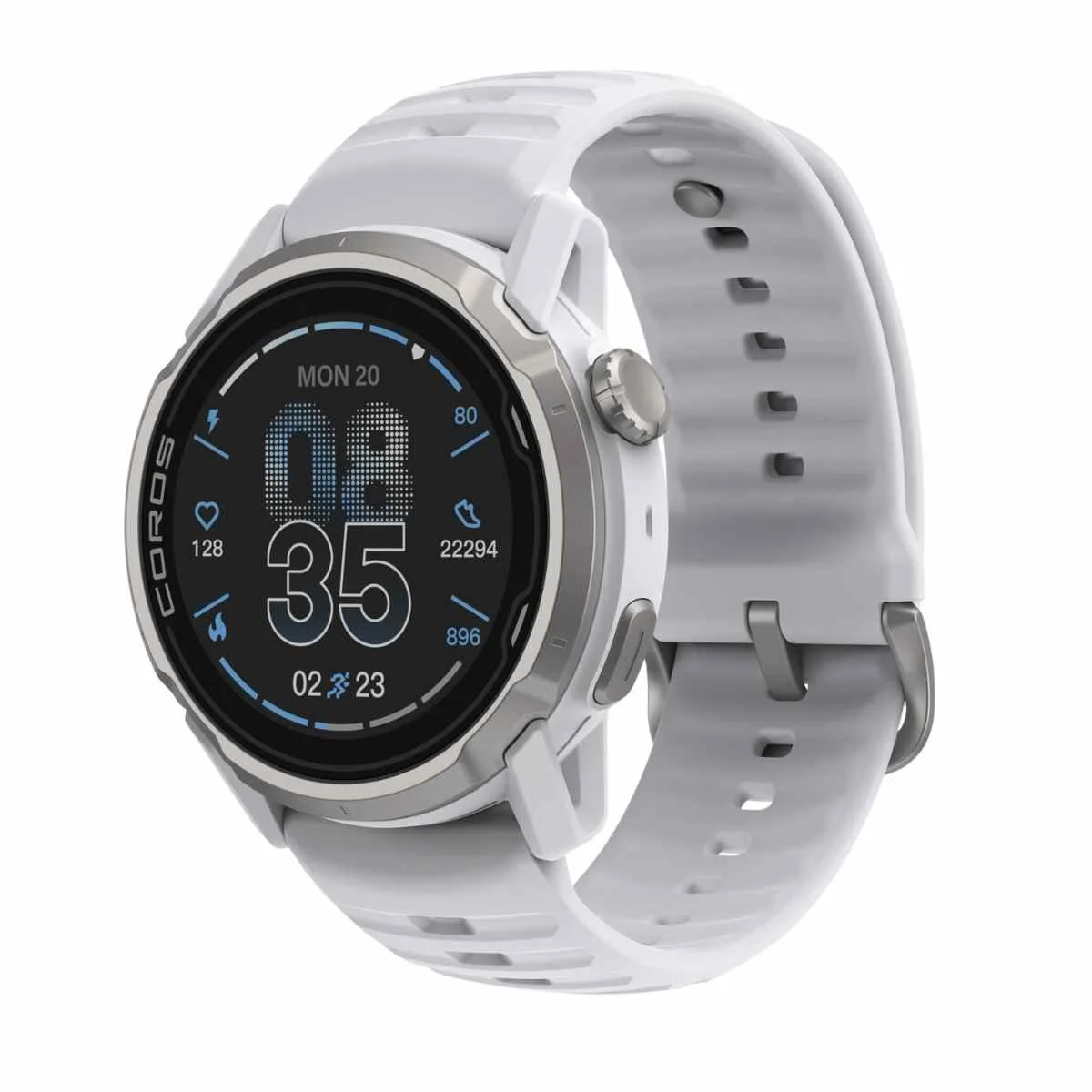
MSRP: Starts at $429
Weight: 44-64 grams (depending on size and band)
Display: 1.3-inch monochrome memory-in-pixel (MIP) touchscreen
Battery Life: Up to 24 days smartwatch mode; up to 65 hours in GPS mode
Water Resistance: 5 ATM
If battery life and training analytics are your main priorities, the COROS APEX 4 is a serious competitor. Like the Race 2, this watch has a dual-frequency GPS, offline maps, and solid recovery metrics. But the COROS edges the Suunto’s battery life out. It’s also lighter and more compact. For more, read our review of the COROS APEX 4.
COROS APEX 4
Suunto Race 2 vs. Garmin Instinct 3
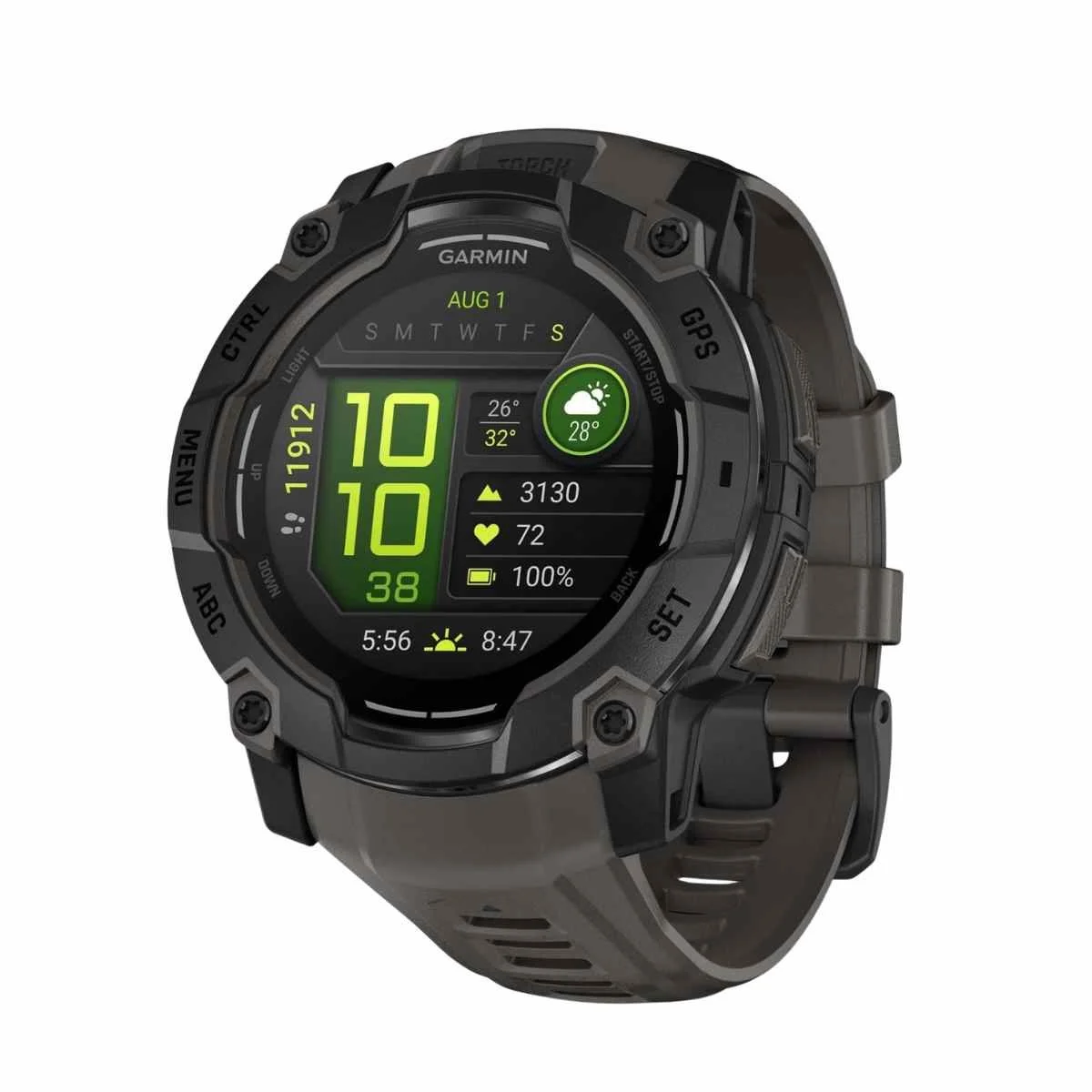
MSRP: Starts at $350 (AMOLED) and $400 (solar)
Weight: ~53 grams (52 grams for solar version)
Display: Monochrome memory-in-pixel (MIP) or AMOLED
Battery Life: Up to 24 days (AMOLED) and up to 40 hours with GPS. The solar model can be unlimited.
Water Resistance: 10 ATM
The Garmin Instinct 3 is an extremely durable watch, easily outperforming most competitors. It also offers a solid battery life and a more affordable price point than most Garmin watches. Compared with the Race 2, the Instinct 3 slightly sacrifices display quality and mapping. But its rugged construction and lasting battery life make it a contender. For more, read our long-term review of the Garmin Instinct 3.
Garmin Instinct 3 AMOLED
Garmin Instinct 3 Solar
Suunto Race 2 vs. Garmin fenix 8
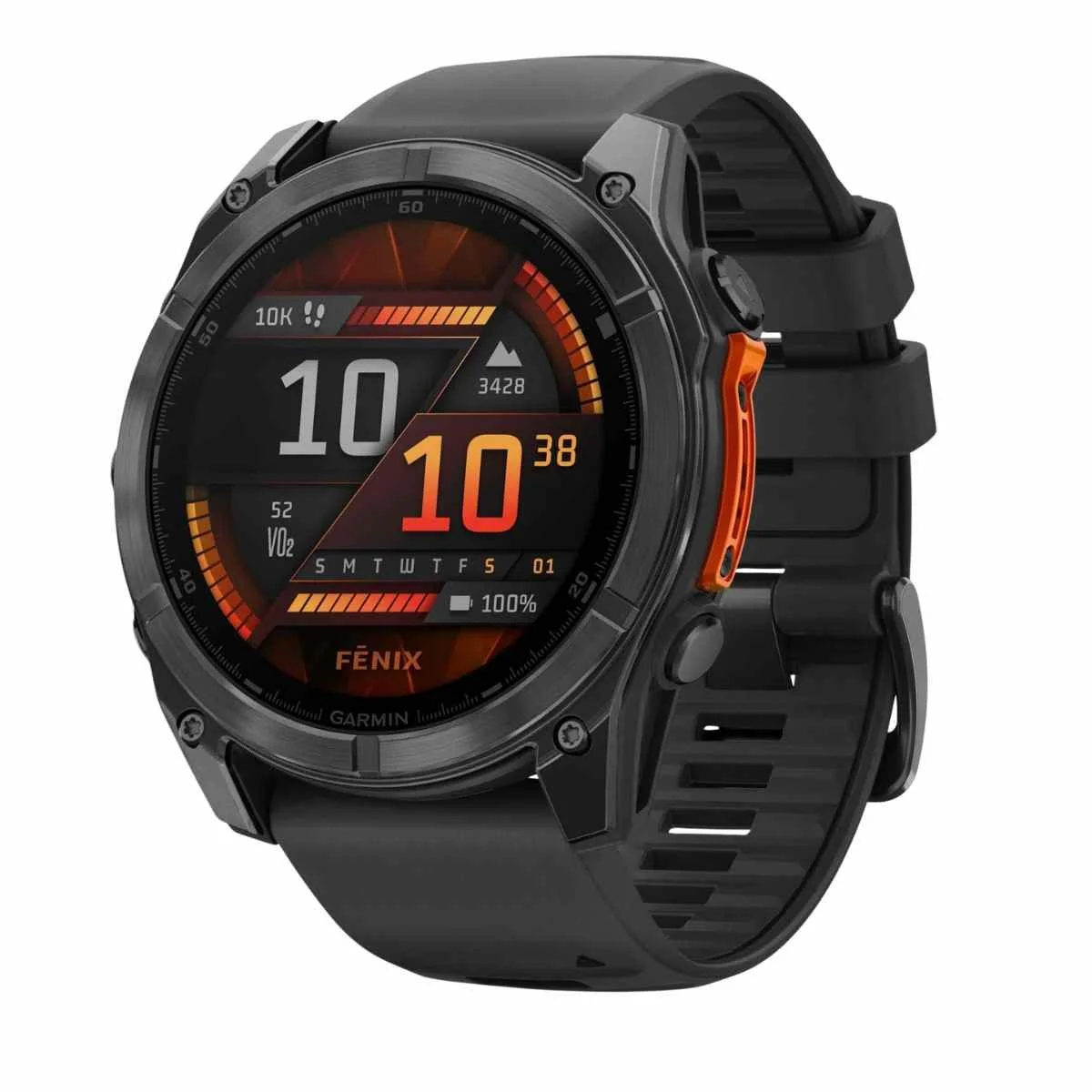
MSRP: Starts at $1,100
Weight: ~73-95 grams (depending on the model)
Display: AMOLED, solar monochrome memory-in-pixel (MIP), or MicroLED (Pro model)
Battery Life: Up to 10-29 days (AMOLED)
Water Resistance: 10 ATM
The Garmin fēnix series is a benchmark for premium outdoor GPS watches due to its wide range of features, and quality metrics. Compared with the fēnix 8, the Race 2 offers similar GPS accuracy and navigation at a much lower price. But the Garmin offers a bigger training ecosystem and a feature-rich watch. For more, read our in-depth review of the Garmin fenix 8.
Garmin fenix 8
Why you should trust us / About the author

Mary Beth Skylis began her love affair with the outdoors with a thru-hike of the Appalachian Trail in 2015. Two years later she found herself backpacking the Annapurna Circuit and the Colorado Trail, dabbling in rock climbing, and chasing more challenging peaks. Her latest adventures have taken her across the globe to some of the most remote corners of the world where she regularly tests gear in the spirit of science.
She currently works as a columnist for Backpacker Magazine. She also has bylines in Climbing, Triathlete, SELF, REI, Alaska Magazine, Women’s Health, Outside Magazine, Trail Runner, 5280, Travel+Leisure, and Business Insider.
Find more of her work on her Treeline Review author page.