Best Bike Tire Pumps of 2026
Hand pumps, mini pumps, floor pumps, and portable bike tire pumps for road, commuter, hybrid, mountain bikes, and bikepacking

August 17th, 2026, updated with a year's worth of testing notes, new prices and commentary on value
Home > Gear Reviews > Bike
Running out of air on a bike is one of those problems that has exactly one solution, and not having the right pump for your bike type makes that solution slower and more frustrating than it needs to be. The difference between a floor pump with a reliable gauge and a cheap mini pump shows up immediately when you're trying to hit 100 psi on a road tire at the curb.
Our lead tester Sam Schild has worked as a bike mechanic for over ten years and has seen a lot of bike pumps fail in that time. He tested floor pumps and portable pumps on daily commutes around Denver, mountain biking on the Colorado Front Range, and bikepacking along the Colorado Trail, covering the full range from home use to on-trail emergencies.
What separates a good bike pump from a frustrating one comes down to how accurate and consistent the gauge reads across the pressure range you actually use, how many strokes it takes to reach target pressure, whether the valve head seals reliably on both Presta and Schrader without fiddling, and for portable pumps, how easy it is to use one-handed while holding a bike upright on the side of a trail.
Top Pick: The Lezyne Sport Floor Drive earns our Best Overall award. It stood out for a steel barrel that holds up to daily use, a 51-inch hose that reaches both wheels without moving the pump, an accurate analog gauge that reads clearly up to 220 psi, fast inflation in the fewest strokes of any floor pump we tested, and a price that sits well below premium options without sacrificing build quality.
We create reader-supported, objective gear reviews independently selected by our editors. This story may contain affiliate links, which help fund our website. When you click on the links to purchase gear, we may get a commission — without costing you an extra cent. Thank you for supporting our work and mission of outdoor coverage for every body! Learn more.
Comparison table
| BIKE TIRE PUMP | TREELINE AWARD | VALVE TYPE | BEST FOR | MAX PRESSURE | PUMP TEST 1* | PUMP TEST 2** | PORTABILITY | SPEED RATING | BARREL MATERIAL | GAUGE | HOSE LENGTH | PRICE |
|---|---|---|---|---|---|---|---|---|---|---|---|---|
| Lezyne Sport Floor Drive | Best overall Read review |
Presta, Schrader | Road, gravel, mountain, commuting, recreational | 220 psi | 39 | 45 | n/a | **** | Steel | Yes | 51" | $65 |
| Vibrelli Performance Floor Pump | Best budget Read review |
Presta, Schrader | Road, gravel, mountain, commuting, recreational | 160 psi | 41 | 50 | n/a | *** | Steel | Yes | 36" | $35 |
| Silca SuperPista Floor Pump | Best premium Read review |
Presta, Schrader | Road, gravel, mountain, commuting, recreational | 220 psi | 35 | 45 | n/a | **** | Aluminum | Yes | 52" | $499 |
| Bontrager Charger Floor Pump | Best floor pump Read review |
Presta, Schrader | Road, gravel, mountain, commuting, recreational | 160 psi | 30 | 38 | n/a | ***** | Steel | Yes | 38" | $80 |
| Lezyne Micro Floor Drive HV | Best portable pump Read review |
Presta, Schrader | Mountain, gravel, bikepacking, touring | 90 psi | 120 | 150 | **** | ***** | Aluminum | No | 24" | $60 |
* Number of pumps to inflate a 650 x 1.5" tire
** Number of pumps to inflate a 700 x 38 tire to 60 psi

The Lezyne Sport Floor Drive Bike Pump, as with all of the bike pumps we tested, can accommodate Schrader and Presta tire valves.
How to choose the right pump for your bike
Valve type: Presta and Schrader valves
There are two main types of valves found on bikes:
Schrader Valve
This is the traditional inflation tire valve found on car tires.
Presta Valve
This is the skinny tire valve you never saw until you started riding a modern bicycle.
Dunlop Valve
You might come across another type of tire valve: the Dunlop valve. You’ll probably only see one of these outside the United States. They can be inflated with any pump designed for Presta valves.
Most bike-specific pumps work to inflate both of these valves. Schrader valves are often considered “regular” valves, and it is slightly easier to find a pump to inflate these. But Presta valves are more common on higher-end bikes because they tend to work better in higher-pressure tires.
Schrader valves will work with your old air compressor in the garage or gas station air-filling stations. Schrader valves work well for high-volume tires like those found on a car. But they don’t work as well with road bikes, and the wider valve doesn’t work on narrow bike rims.
To determine the kind of valves you have on your bike, look at what kind of valves it comes with. If you have new wheels without tubes and tires installed, look at how big the valve holes are in the rims. If the holes are big enough for Schrader valves (about 8 millimeters), then that is what you should use on your bike. If your rims are drilled for Presta valves (about 6 millimeters wide), you should use Presta valves.
What bike are you riding?
Depending on the bike you’re riding, you’ll want to inflate your tires to a different pressure. You can find the recommended psi (pounds per square inch) for your bike’s tires printed on their sidewall.
Generally, bikes fall into the following categories: road, mountain, gravel, hybrid, and fat bikes. Within these categories, you should use a range of pressures to inflate the bike’s tires. The needed pressure is determined by the total volume of the tire and its intended use.

Floor pumps allow you to inflate your tires accurately by pressing a handle down into a large air chamber.
Types of bike pumps
Floor Pump
Every cyclist should have a floor bike pump at home. Floor pumps allow you to inflate your tires to any PSI accurately. They are operated by pressing a handle down into a large air chamber, which pushes air into the tire. Floor pumps almost always have an air pressure gauge, too.

Portable and mini pumps come in many shapes and sizes but prioritize portability.
Portable Pump or Mini Pump
Portable bike pumps, including mini pumps, are essential for bringing on most rides — especially long ones — in case of a flat tire. Portable pumps come in many shapes and sizes, but they all prioritize portability. Some mini pumps are so small you’ll have to pump them over 400 times to inflate a tire to 80-90 psi. Others in the portable pump category have a bigger air chamber and more quickly inflate your tires. These won’t be as portable, however. Many portable pumps do not have a pressure gauge, either.
Do you want to take the pump with you?
Look at portable bike pumps if you want to take the pump with you. Mini pumps are small enough to fit in a saddle bag, jersey pocket, or backpack. They’re usually light enough to carry them while you ride. They’re made of lightweight materials, typically a combination of aluminum and plastics.
CO2 Pumps
These are technically portable air chucks, not pumps. But CO2 pumps are another kind of portable tire inflation device. They require a cartridge of compressed Carbon Dioxide gas to use. They work by puncturing the sealed cartridge and directing the CO2 gas into your bicycle tire.
The winners
Best overall bike tire pump: Lezyne Sport Floor Drive
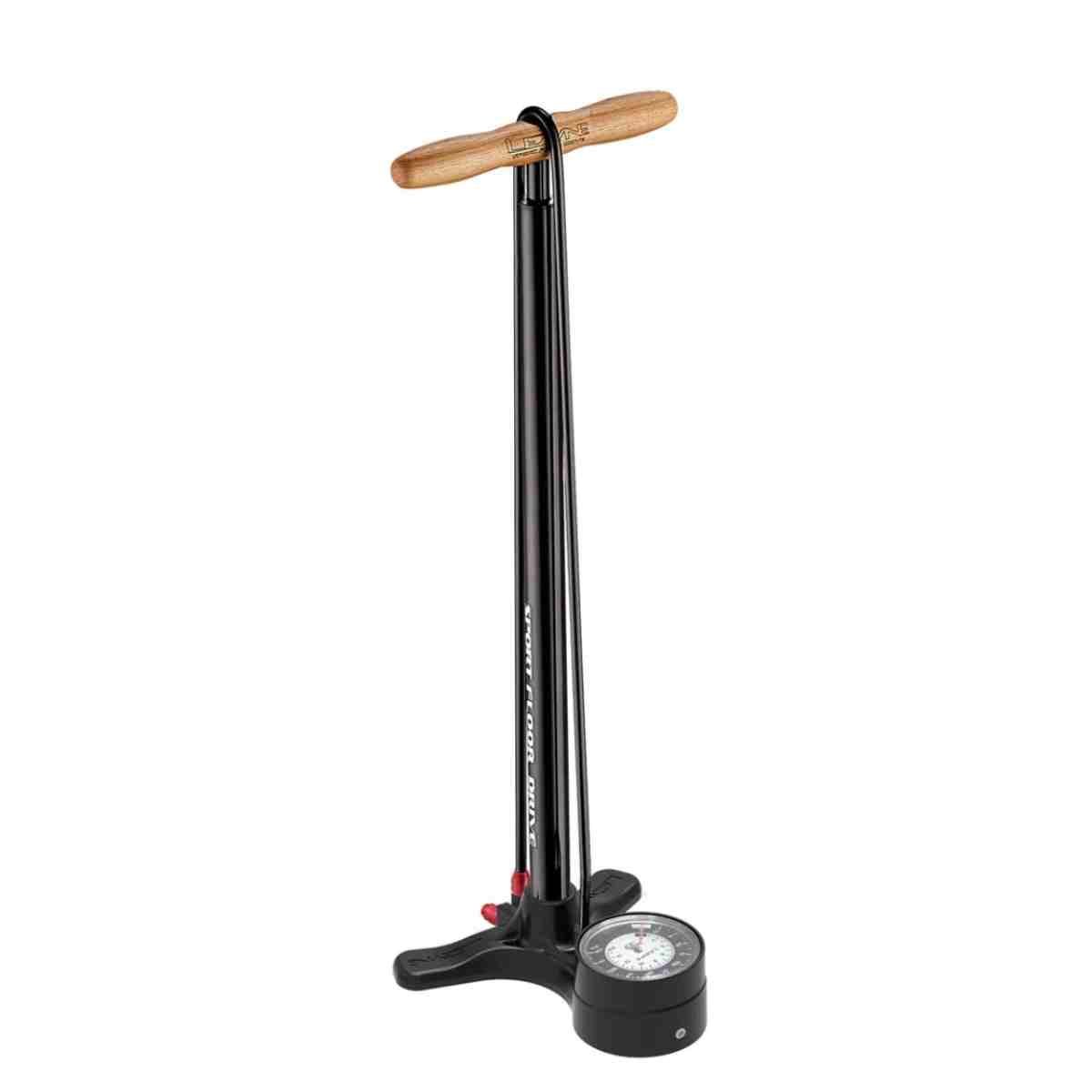
Valve type: Presta, Schrader
Best for (bike type): Road, gravel, mountain, recreational, and commuter bikes
Max pressure: 220 psi
Size: Standard (size tested): 25.5 x 8.6 x 30” / 62 x 22 x 76.5 cm, Tall: 25 x 8.6 x 34” / 63 x 22 x 85.5 cm
Weight: 3.75 lbs / 1.7 kg
Barrel material: Steel
Gauge: Analog
Speed: 4 stars
Other features: Replaceable thread-on air chuck with integrated Presta valve core tool
Speed rating: ****
What we liked: Extra long hose, lots of replacement parts available, accurate gauge is easy to read, secure pump head doesn’t leak air, comfortable wooden handle
What we didn't like: Thread-on air chuck is slower than slip-fit pump heads
The Lezyne Sport Floor Drive could be the only bicycle floor pump you’ll ever need to buy. While it’s optimized for higher-pressure tires, this pump works for all bike types. This pump is a standout in the durability category. Most floor pumps work great until they don’t. If they aren’t serviceable, it’s time to get a new pump.
Lezyne is rare among bike pumps because they are designed for a longer lifespan. With this and all pumps from Lezyne, you can source replacement parts to keep your trusty pump going strong when it stops working.
Compare prices of the Lezyne Sport Floor Drive


This bike pump has a comfortable wooden handle, an oversized pressure gauge that’s easy to read, and an extra long hose to inflate a bike in a repair stack or hitch rack. It also has a thread-on air chuck with an integrated Presta valve core removal tool.
Lead tester Sam Schild has worked as a bike mechanic for over ten years. In that time, he’s seen a lot of bike pumps fail. Usually, what stops working first is the rubber gasket or O-ring in the pump head. Other common points of failure on floor pumps are the plunger seal in the air chamber, the hose, and the pressure gauge.
Since the Lezyne Sport Floor Drive threads onto the valve, it puts less stress on the O-ring used to create a tight seal. This design allows the pump head to seal tightly on the valve for longer. Plus, if it does start to leak, you can probably find a fresh O-ring to fit in the air chuck at your local bike shop or hardware store.
If you’re not stoked about threading the air chuck on the valve every time, this bike pump also comes with a Speed Chuck slide-on adaptor, though it only works with Presta valves. This way, you can pump up your mountain bike or commuter bike quickly while still maintaining the capability of pumping up those tubular tires on your race bike to 200+ psi.
Most high-quality floor pump manufacturers sell replacement pump heads and hoses. Lezyne goes further than this by making all their pumps highly serviceable. The gauge, hose, and pump head are all replaceable on this pump. You can also replace the head with a slide-on pump head with a locking lever. And you can purchase an O-ring and seal kit from Lezyne if the plunger stops pushing air.
If you’re only inflating high-volume mountain bike tires, you’d be better off getting a pump with a larger air chamber than the Lezyne Sport Floor Drive, such as the Lezyne Sport Gravel Drive. However, the Lezyne Sport Floor Drive we tested here inflates higher-volume gravel tires quickly enough. It took 45 pumps to inflate a 700 x 38 tire to 60 psi with the Sport Floor Drive.
Also, with higher volume tires, you won’t necessarily need the thread-on air chuck that comes with the Lezyne Sport Floor Drive. Still, we think the Lezyne Sport Floor Drive is a good choice, even for higher-volume tires.
Threading it every time will be slower, but as mentioned above, it will be less prone to leaking and last longer. We’ve spent hours repositioning worn-out air chucks on tire valves, trying to prevent them from leaking. In the long run, the thread-on valve found on the Lezyne Sport Floor Drive might save you a little time.
Best affordable bike pump: Vibrelli Performance Floor Pump

Valve type: Presta, Schrader
Best for (bike type): Road, gravel, mountain, recreational, and commuter bikes
Max pressure: 160 psi
Size: 12 x 6 x 24”/ 30 x 15 x 61 cm
Weight: 2.4 lbs / 1.1 kg
Barrel material: Steel
Gauge: Analog
Speed: ***
Other features: Ball pump needle, plastic cone-shaped valve for inflatable devices, glueless puncture kit
What we liked: Very affordable, lighter than many floor pumps, simple and effective, 15 year manufactures warranty
What we didn't like: Small base is prone to tipping, short hose, not serviceable
The Vibrelli Bike Floor Pump is an inexpensive bike tire pump for budget-conscious cyclists looking for a durable and reliable floor pump. This bike pump isn’t fancy, but it gets the job done. Most importantly, it comes with a 15 year manufactures warranty.
This warranty is one of the longest periods we’ve seen come with an inexpensive pump like this. We’ve seen many cheap pumps fail, but if this one fails within five years, Vibrelli will replace it.
The pump head works well for attaching to any kind of valve. It also has a ball pump needle to inflate a soccer ball, basketball, kickball, or any other type of ball with that black rubber valve. It also comes with another valve for inflatable devices such as exercise balls, pool toys, rafts, and more.
View the Vibrelli Performance Floor Pump


This pump took 50 pumps to inflate a 700 x 38 tire to 60 psi. The pressure gauge is big enough to read easily. It’s not the largest gauge we tested, but it’s certainly big enough to read without leaning over.
While the 5-year warranty is reassuring, this pump doesn’t feel as high-quality as some other pumps we tested. The handle is a lightweight plastic, and though it has rubberized grips, it doesn't feel as secure in your hands as the wooden handles on the Lezyne and Silca floor pumps.
Also, the base of this pump is not as wide as most of the other pumps we tested. More than once, this pump tipped over when we walked away.
Though it hasn’t given us any problems yet, we’ve seen dual-sided pump heads like this one fail faster than pump heads that fit all valves. Maybe universal pump heads are made with higher-quality materials, or perhaps it’s something else. Again, we haven’t had any issues with this pump head, but we think it’s worth mentioning that this type of head seems more prone to leaking and eventually failure.
This pump has over 3,000 positive reviews on Vibrelli’s website and even more on Amazon. Considering these consumer reviews, the super-affordable price, and our testing, we think this is an excellent choice for a bike pump.
Best premium bike pump: Silca Superpista Floor Pump
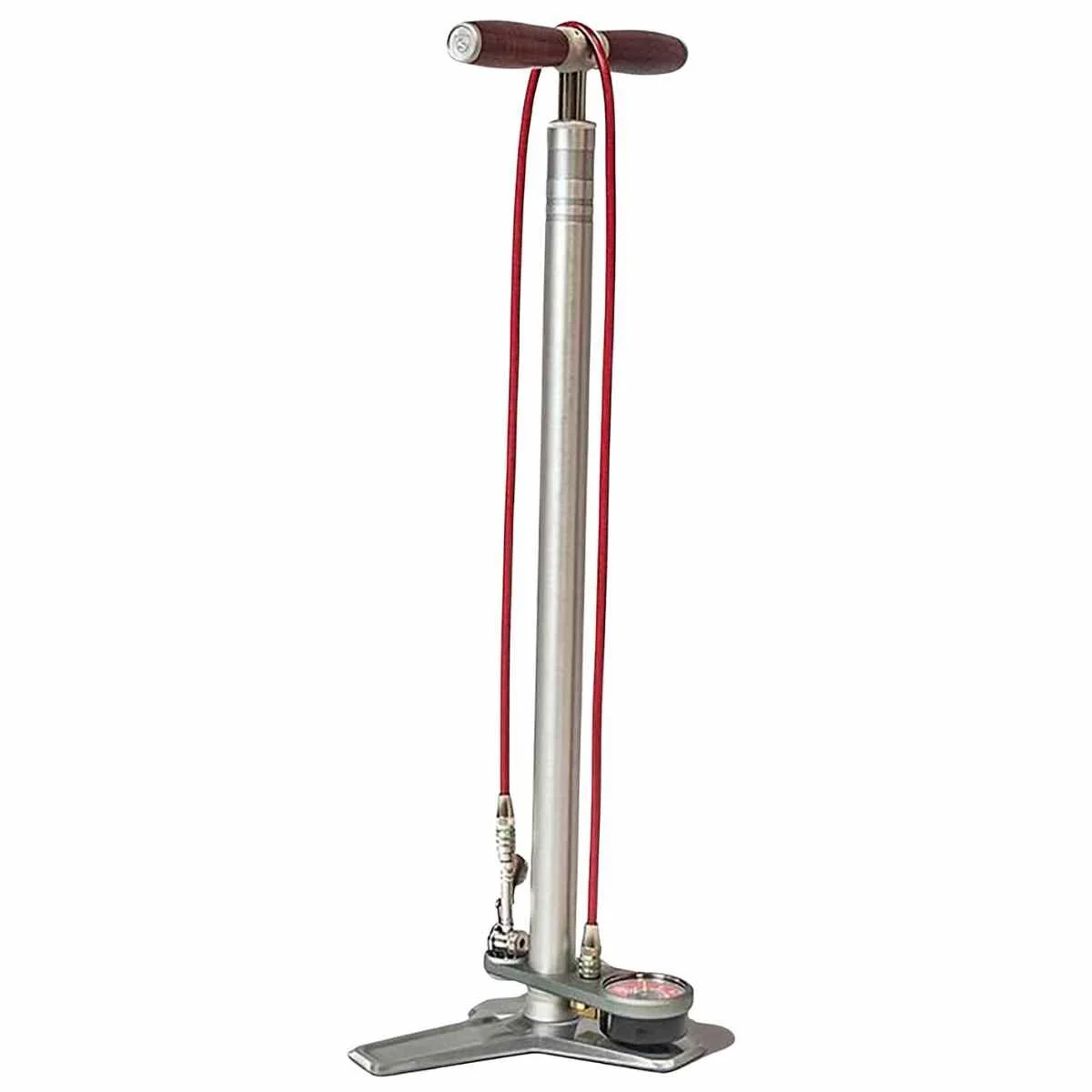
Valve type: Presta, Schrader
Best for: Road, gravel, mountain, recreational, and commuter bikes
Max pressure: 220 psi
Size: 11 x 7 x 30”/ 28 x 18 x 76 cm
Weight: 4.4 lbs / 2 kg
Barrel material: Aluminum
Gauge: Digital
Speed: ****
Other features: Magnetic pump head holder, Leather strap to hold the handle down
What we liked: Gauge is very accurate, Hiro locking-lever chuck works with one hand, ultra-stable base, long inflation hose, rebuildable
What we didn't like: Expensive
The Silca SuperPista Floor Pump is arguably the best bike pump we tested. Everything about this Silca pump screams premium — from the gauge to the stainless steel pump head that grabs onto the shortest valves to the leather gasket and roller bearings in the pump barrel. The only drawback of this pump is the price, which is astonishingly high and even higher than other premium Silca pumps we have tested.
Silca has been making pumps for over 100 years. They were the first company to put pressure gauges on bike pumps and continued to innovate. There are Silca pumps over 50 years old that are still functioning today. And, Silca continues to make repair parts for those pumps.
Compare prices of the Silca SuperPista Floor Pump


Compared to the other pumps in this review, the only one with a similar feel is the Lezyne Sport Floor Drive. However, the SuperPista pump has a wider base, and the pump action on the Silca feels even smoother.
The pump head is stainless steel with a slick locking lever that rotates in a way you can install and lock it with one hand. It will grab onto any Presta valve, including those barely sticking out of the rim. This air chuck has the heft of a real tool in your hand because it is a real tool. You can even adjust the preload on the gasket to account for wear. When the gasket does wear out, it’s easily replaceable as well.
We did find the pump head took some getting used to, though. The locking lever tends to hit the spokes on a wheel, but with some getting used to it, we found it worked very well.
The handle is black-stained wood and has a leather strap that holds it in place for transporting the pump. There is a magnetic pump head holder and a super stable wide base with another magnet. This magnet on the base prevents the pump from falling over on steel surfaces like the base of a bike repair stand. It also took 45 pumps to inflate a 700 x 38 tire to 60 psi with this pump.
While this probably shouldn’t be the first pump you buy, if you’re serious about bikes and can afford the hefty price, you can’t do better than the SuperPista. It’ll be the envy of every leather apron-clad bike mechanic in a 500-mile radius, you’ll see.
Best bike floor pump: Bontrager Charger

Valve type: Presta, Schrader
Best for: Road, gravel, mountain, recreational, and commuter bikes
Max pressure: 160 psi
Size: 9 x 6.5 x 27" / 22 x 16.5 x 69 cm
Weight: 3.1 lbs / 1.4 kg
Barrel material: Steel
Gauge: Analog
Other features: Auto-select head
Speed: *****
What we liked: Inflates tires quickly, pump head attaches easily to Presta and Schrader valves, grip tape on base for gripping with your feet, analog gauge is big and easy to read, pump head is replaceable
What we didn't like: Hose length could be longer
The Bontrager Charger strikes a perfect balance between affordability and reliability. You’ll see multiples of this pump in every Trek bike shop worldwide (Bontrager is Trek’s brand for bike accessories and clothing).
It’s not fancy, but a good pump doesn’t have to be. It inflated a 700x38c tire in the fewest pumps of any pump we tested — 38, to be exact. It’s also one of the least expensive floor pumps we tested. So, outfitting your home’s shop (or repair corner) with one of these is a no-brainer.
Compare prices of the Bontrager Charger


This bike air pump has precisely the features you would want in a floor pump — a large, easy-to-read pressure gauge; a reliable pump head that fits both Presta and Schrader valves; and a wide base with grip tape where your feet go. Its barrel is slightly wider than some of the higher-pressure pumps we tested. The wide barrel allows it to inflate tires quickly while reaching a high enough pressure for most road bike tires.
This pump is serviceable, too. Bontrager sells a replacement pump head and hose and a new grommet for the pump head. While Bontrager doesn’t sell any other service parts for this pump, the barrel is also serviceable.
While the hose length on this pump is just long enough to inflate a tire while in a repair stand or on a hitch rack, we think the pump would be better if the hose were a few inches longer. At 38 inches, this is one of the shorter hoses we saw on a floor pump. You’ll have to do more moving the pump around to inflate the front and rear tire with this, but it’s not a dealbreaker.
This pump does everything the more expensive pumps do, but for a lower cost than most pumps. With tons of 5-star reviews on REI’s website, you’re in good company if you buy this bicycle pump.
Best portable bike pump for adventures: Lezyne Micro Floor Drive HV

Valve type: Presta, Schrader
Best for: Bikepacking, mountain, gravel, touring, recreational, and commuter bikes
Max pressure: 90 psi
Size: 12" x 2.5" x 1.2" / 310 x 60 x 25 mm
Weight: 7 oz
Barrel material: Aluminum
Gauge: None
Other features: Thread-on pump head, 24” hose
Speed: *****
Portability rating: ****
What we liked: Portable floor pump, inflates tires much faster than hand pumps, secure pump head, completely rebuildable, looks good
What we didn't like: Bigger than many portable pumps (mini pumps), no pressure gauge
The Lezyne Micro Floor Drive HV is our winner for best portable bike pump for mountain bikes, bikepacking, and bicycle touring. This pump is by far the easiest portable pump to use in the field. It feels unfair to compare this to hand mini pumps because this is a floor pump at its core.
However, it’s a highly portable floor pump. We’ve even used one of these pumps to reinflate fat bike tires, something we’d never dream of attempting with an ordinary hand pump.
Editor's Note: The Lezyne Micro Floor Drive is also available in a Digital HPG version with a digital gauge.
Compare prices of the Lezyne Micro Floor Drive HV


This portable pump has a smaller version of everything a floor pump has except for a pressure gauge. It has a tiny flip-out foot lever, a hose with an air chuck that threads onto Presta and Schrader valves, and a handle to actuate the pump plunger inside the air chamber.
This portable bike pump’s barrel is about 40 percent larger than the Vibrelli floor pump. We wouldn’t recommend using this portable pump at home instead of a floor pump, but if you had to, it wouldn’t be that bad compared to a traditional mini pump.
We inflated a 700x38 tire to 60 psi with 150 pumps. This number is about four times as many as it takes with an average floor pump but under half as many as most of the other portable hand mini pumps we tested.
It has a 24-inch hose and a similar thread-on nozzle as the full-size Lezyne Sport Floor Drive. This hose is long enough to set up the pump on the ground and inflate a tire in a repair stand. This pump allows you to inflate your tire while the bike is flipped upside down, resting on its handlebars and seat in field repair mode.
Just like the full-size Lezyne Sport Floor Drive, the Micro Floor Drive is fully rebuildable. The hose is replaceable (you can also get a replacement hose with a gauge), as is the air chuck, and the main chamber easily disassembles to replace the O-ring in the plunger.
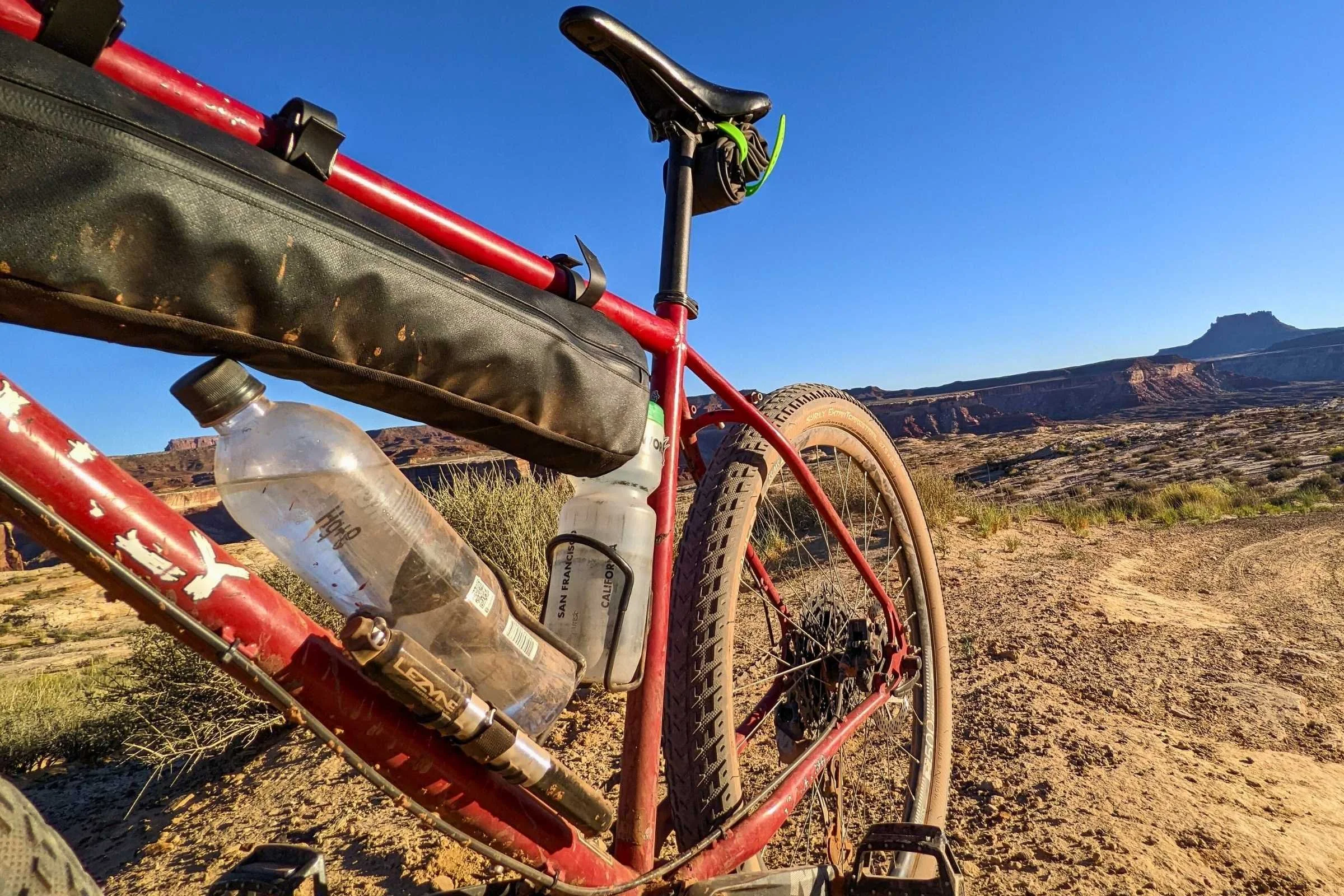
There are a few drawbacks to this pump, though. First, it is pretty big compared to many traditional mini pumps. It’s the largest and second heaviest portable "mini pump" we tested. However, it does come with a frame mount bracket. And it’s just small enough not to get in the way while you’re pedaling with it clamped to your bike’s downtube.
Also, this pump seems too nice not to have a gauge. Lezyne makes a version of this pump with a gauge if you want that. In most instances, we think a pump intended for field use doesn’t necessarily need a gauge.
This portable pump has received rave reviews all across the internet. It’s the most common "mini pump" in hardcore bike commuters, bikepackers, and touring cyclists’ repair kits. We’ve even seen this pump used to reseat a tubeless tire — something many floor pumps can’t do (it takes a lot of finagling, but it’ll work in a pinch).
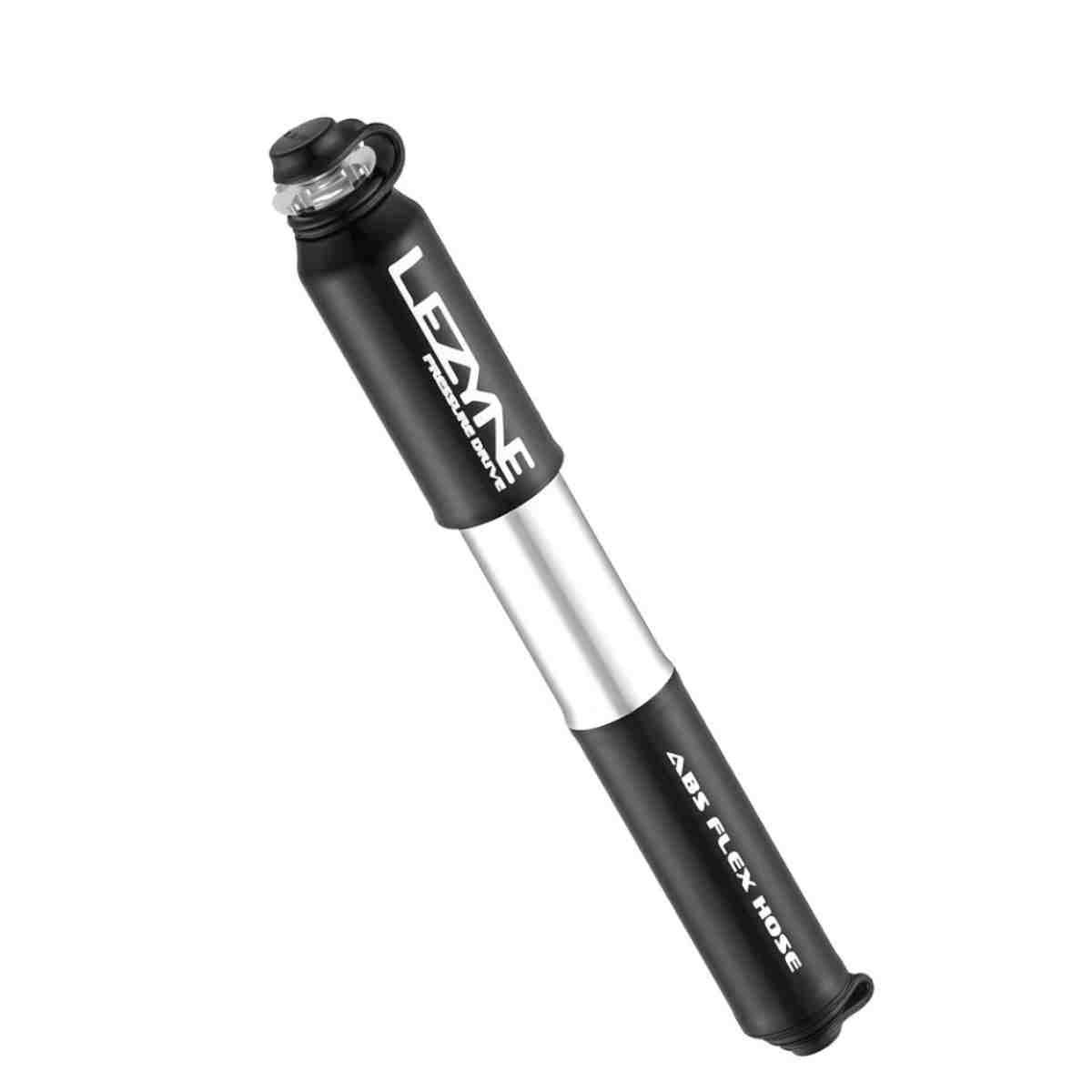
Best lightweight bike pump: Lezyne Pressure Drive
Valve type: Presta, Schrader
Best for: Gravel, road, commuting, and recreational bikes
Max pressure: 120 psi
Size: 9.25" x .9" (dia) / 235 x 24 (dia) mm
Weight: 3.8 oz / 108 g
Barrel material: Aluminum
Gauge: None
Other features: Retracting inflation hose
Speed: ***
Portability rating (when applicable): 5 stars
What we liked: Lightest mini pump we tested, compact design, fully rebuildable
What we didn't like: Takes a lot of pumps to fully inflate a tire
The Lezyne Pressure Drive is the best bike pump for riders who value weight and portability. At a mere 3.8 ounces, this mini pump is the smallest and lightest hand pump we tested for this review. Even though it took 350 pumps to inflate a 700x38 tire to 60 psi, it took less than the Vibrelli Mini Bike Pump With Gauge (see below). That’s a lot of pumping, but the Lezyne's smooth actuation makes it less of an arm workout than most mini bike pumps. So even while you’re cruising on the side of the road, there isn’t excess friction working against you — even if it seems like the rest of the world is.
Compare prices of the Lezyne Pressure Drive


The retractable hose unthreads from the handle’s end, where it threads into when not in use, and onto the air chamber side. This design allows the hose to stow inside the pump with fewer moving parts than other mini pumps. Most hand pumps we’ve seen have a hose that slides into the pump, but this is another place to get clogged with dirt. The Pressure Drive avoids this potential point of failure with its hose storage solution.
Like all Lezyne pumps, the air chuck creates an excellent seal by threading onto valves. A suitable hose is imperative for a mini bike pump; without one, you’ll likely bend or break a Presta valve trying to inflate a tube fully. The Pressure Drive hose is simple, works well, and is one of the best we’ve seen on a hand pump. As a bonus, the hose also has an integrated valve core tool.
One drawback to all mini pumps like this is how long it takes to inflate a tire fully. If this is an issue, you should carry a bigger pump. However, if you’re looking for the best, most portable mini hand pump for your emergency flat tire kit, check out this one. And, of course, it’s fully rebuildable.
We also liked that this is a mini pump where you can buy a seal kit and replacement hose from Lezyne, ensuring the long life and easy repairs of your pump.
Best hand pump for road bikes: Topeak Road Morph G

Valve type: Presta, Schrader
Best for: Road, gravel, bikepacking, touring
Max pressure: 160 psi
Size: 13.8” x 1" (dia) / 350 x 25 (dia) mm
Weight: 7.7 oz
Barrel material: Aluminum
Gauge: Analog
Other features: Retractable hose, Portable floor pump
Speed: *****
Portability rating: ***
What we liked: Works better than frame pumps, has a pressure gauge, portable floor pump, inflates to high pressure
What we didn't like: Retractable air hose gets stuck, no replacement parts available, bracket doesn’t fit under a water bottle cage
The Topeak Road Morph G is our winner for the best bike pump for road cyclists who want a hand pump. It looks like a short-frame pump at first glance, but it transforms into something that looks more like a floor pump. It has an air hose, foldable foot lever, and flip-out handle. These features make it function as a floor pump, which makes the prospect of inflating a road tire to 100 psi on the side of the road a little less daunting.
Editor's note: The Topeak Road Morph G is the only bike tire pump that actually has gone down in price in the past year, making it an excellent deal.
Compare prices of the Topeak Road Morph G


We inflated a 700x38 tire to 60 psi with 175 pumps with this pump — not quite as few as the Lezyne Micro Floor Drive HV, but close. Also, you can inflate tires to twice as much with Road Morph as with the Micro Floor Drive HV. We’d pick this pump for road bike rides, but it works for all bikes.
Compared to a hand pump, the Road Morph is much easier to inflate a tire in the field. The fact that you can use gravity and the ground to your advantage makes it easier to operate than other mini bicycle pumps. The pressure gauge is an excellent feature to take the guesswork out of inflating your tire, too.
We didn’t think this pump worked as well as the Lezyne portable floor pump. The Road Morph feels flimsy, and the pump actuation isn’t as smooth as the Lezyne. After a few weeks of using this, the retractable hose is getting stuck, too. This inconvenience isn’t a huge deal, but it makes fitting the hose back into the pump head a little more complicated than it was when it was new.
The bracket doesn’t fit under a water bottle cage but does come with some zip ties to attach elsewhere on your bike. Also, we don’t love having to flip around a rubber grommet inside the pump head to make it work with Schrader valves. But for a portable floor pump that works with high-pressure tires, none of these flaws are complete dealbreakers.
Best bike foot pump: Rockbros Portable Bicycle Foot Pump
Valve type: Presta, Schrader
Best for: Recreational bikes, general purpose inflating
Max pressure: 80 psi
Size: 6.7" x 2.5" (dia) / 170 x 60 (dia) mm
Weight: 9.8 oz / 277 g|
Barrel material: Aluminum
Gauge: None
Other features: Ball pump needle and two different plastic valves for inflatables
Speed: ***
Portability rating: ***
What we liked: Inexpensive, can pump with your foot, very small
What we didn't like: Feels cheap, poor seal with pump head
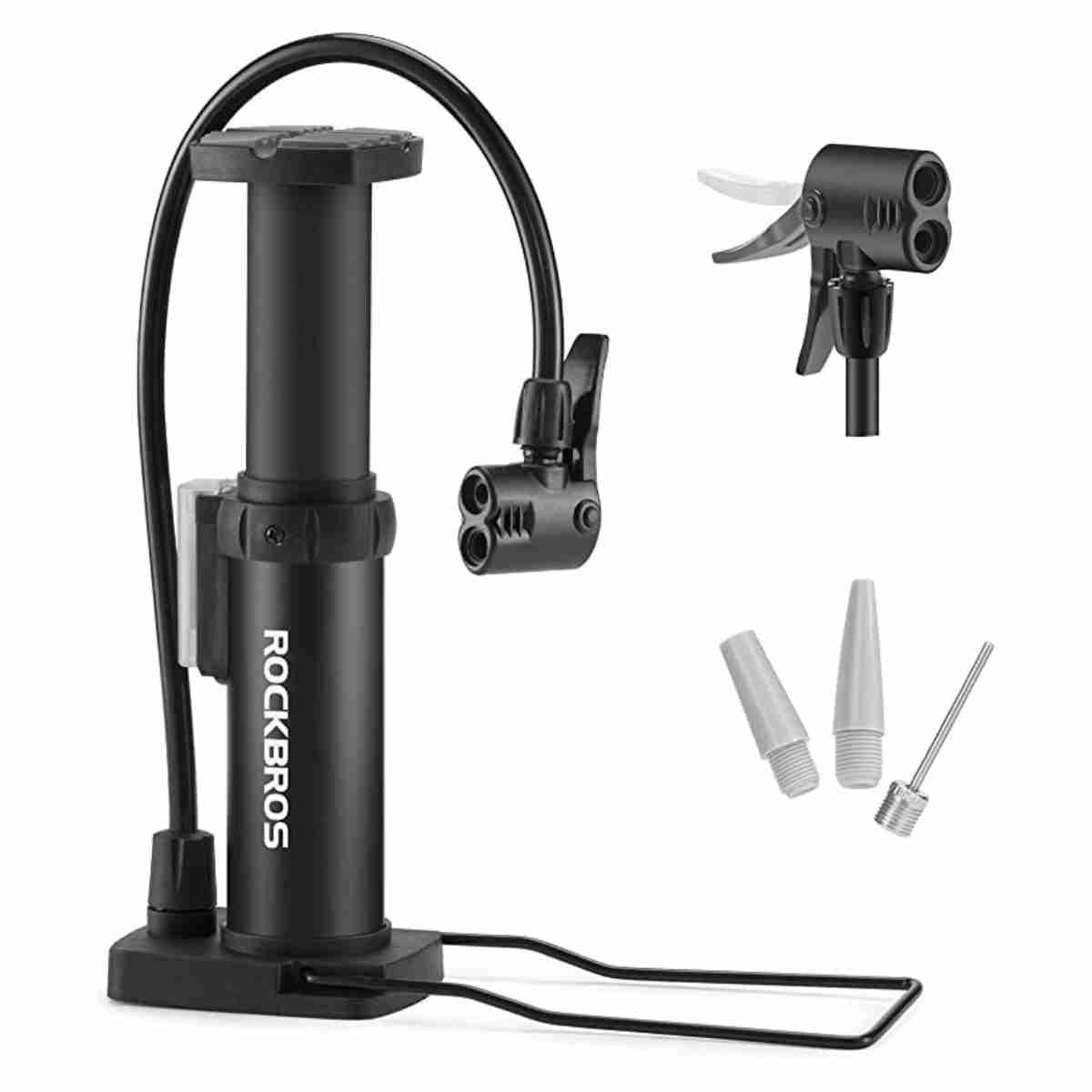
The ROCKBROS Portable Bicycle Foot Pump is the only foot-actuated pump we’ve seen. In pictures, we assumed it would be a little bigger. However, when it arrived, we found it was about the size of a 12-ounce can. This pump might be a good solution for someone looking for a very inexpensive and small pump just in case you need to inflate something.
This fits in a coat closet if you live in a small apartment. However, you’d be better off with an actual floor pump than with this thing.
ROCKBROS PORTABLE BICYCLE FOOT PUMP


It has a pump head that works with Presta and Schrader valves. It takes a while to inflate a 700x38 bike tire to 60 psi, but you’ll get there in about 209 stomps (and feel like you’re tapping out a rhythm to a song, meanwhile). It’s also small enough to throw in a backpack or even a handlebar bag but doesn’t come with a frame mount.
This pump occupies a weird space between a floor pump and a more portable pump. It’s not quite big enough to replace a floor pump, nor is it small enough to be the best choice for carrying with you on a bike ride. Also, the hose isn’t long enough to be practical to use all the time. We’re not convinced this pump will last that long, but ours hasn’t stopped working yet. Buy at your own risk.
Other bike tire pumps we tested:
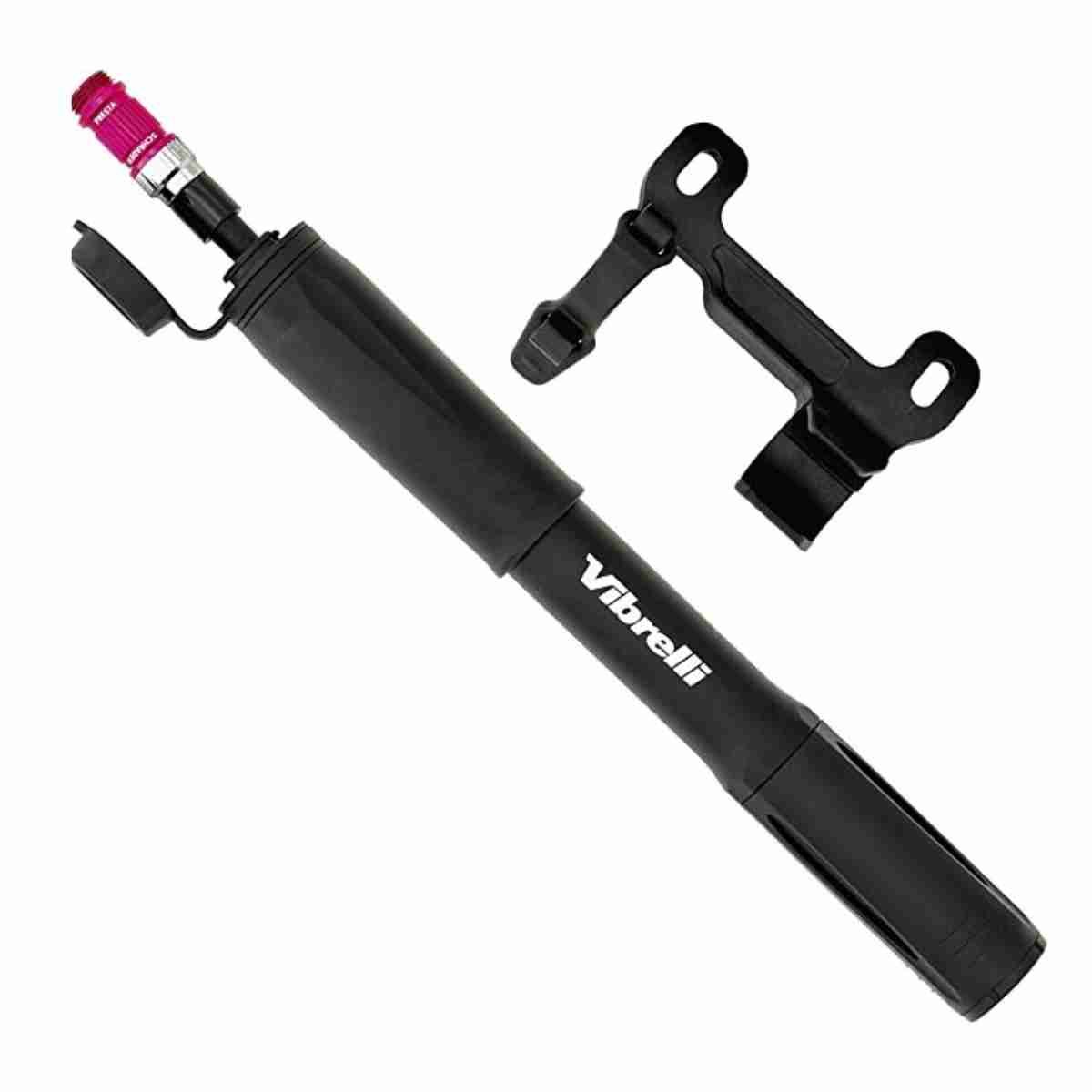
Vibrelli Mini Bike Pump With Gauge
Valve type: Presta, Schrader
Best for: Road, Gravel, Commuting, Recreational Bikes
Max pressure: 110 psi
Size: 8.3" x 1" (dia) / 212 x 21 (dia) mm
Weight: 4.5 oz / 126 g
Barrel material: Aluminum
Gauge: Analog
Other features: Retractable inflation hose
What we liked: Small and light, thread-on air chuck, very affordable
What we didn't like: Requires lots of pumping to inflate a tire, head leaked air at high pressures, no replacement parts available
The Vibrelli Mini Pump looked promising and is honestly pretty good. However, it took a long time to inflate a tire, which is common with portable hand pumps. This bike pump didn’t have any stand-out features compared to other hand mini pumps. It isn’t bad, and the price is reasonable, but there was nothing about it that made us stoked, either.
VIBRELLI MINI BIKE PUMP WITH GAUGE

Valve type: Presta, Schrader, Dunlop
Best for: Road, Gravel, Commuting, Recreational bikes
Max pressure: 80 psi
Size: 9.5" x 1" (dia) / 243 x 24 (dia) mm
Weight: 5.1 oz / 142 g
Barrel material: Aluminum
Gauge: None
Other features: Retractable inflation hose
What we liked: Solidly built, faster than small hand pumps, air chuck fits tightly
What we didn't like: Expensive
The Silca Gravelero Bike pump works well, has a quick attaching and tight sealing pump head, and inflated tires faster than all the other portable pumps that don’t convert to a mini floor pump. We honestly really like this pump, but it’s costly. We think you can buy better, more affordable hand pumps out there.
COMPARE PRICES OF THE SILCA GRAVELERO MINI PUMP

Our bike mechanic writer tested bike tire pumps side-by-side on commuter, mountain bikes, gravel bikes, and bikepacking bikes.
What to Look for in a bike tire pump
Valve compatibility
Check what valves your bike uses before buying anything. Presta valves are on most modern bikes, especially higher-end ones. Schrader valves are on older bikes, kids' bikes, and most casual recreational bikes. All the pumps we recommend work with both, but it's worth confirming before you buy a cheap pump that only does one.
Serviceability
This is the thing most people don't think about until their pump stops working. A pump that can't be repaired is a pump with an expiration date. The pumps I recommend in this guide are ones where you can source replacement O-rings, seals, hoses, and pump heads. Lezyne and Silca in particular are built around this principle. A pump you can keep rebuilding is worth paying more for upfront.
Pump head design
The pump head is where most pumps eventually fail. Thread-on heads like those on the Lezyne pumps create a better seal and last longer because they put less stress on the O-ring. Slip-fit heads with locking levers are faster to use but wear out faster. If you're inflating tires daily, that difference matters over years of use.
Gauge
Floor pumps should have one. Portable pumps don't necessarily need one, though it's a useful feature if you're particular about pressure. Analog gauges are reliable and don't need batteries. Digital gauges are more precise but add complexity. For most riders an analog gauge is fine.
Hose length
Longer is better for floor pumps. A short hose means repositioning the pump every time you switch between wheels, and it makes inflating a tire in a repair stand or on a hitch rack genuinely annoying. The Lezyne Sport Floor Drive has a 51-inch hose. The Bontrager Charger has 38 inches, which is workable but on the short side.
Speed
How many pumps it takes to inflate a tire matters more for portable pumps than floor pumps. A floor pump that takes 45 pumps versus 50 pumps is not a meaningful difference. A portable pump that takes 150 pumps versus 350 pumps is a very meaningful difference when you're on the side of a trail with a flat.
Portability
If you want a pump to carry on rides, think about where it will live on your bike. Most portable pumps mount under a water bottle cage. The Topeak Road Morph is an exception and requires zip ties or a different mounting solution. Weight matters too, but most portable pumps are light enough that the difference between them is not significant unless you're counting grams.
Price
You generally get what you pay for with bike pumps. A $25 pump will work, but it probably won't last as long or pump as smoothly as a $65 one. The exception is the Vibrelli floor pump, which overperforms its price point and backs it up with a five-year warranty. At the high end, the Silca SuperPista is extraordinary but most people don't need to spend $349 on a pump.

Tire pressure gauge on the Lezyne Sport Floor Drive Tire pump. All the bike pumps we tested have a pressure gauge so you can inflate your tire to the recommended pressure with accuracy.
Recommended tire pressure for different bikes
Road Bike Tire
Width/Volume: 23-30c
“C” is a traditional French designation for width. A 23c tire is 23 millimeters wide.
Wheel Diameter: 700
Recommended Pressure: 80-120 psi
Mountain Bike Tire
Width/Volume: 1.9-2.8”
Some mountain bike tires come in even wider sizes than this. Those bikes fall into the “Fat bike” category (see below).
Wheel Diameter: 26”, 27.5/650B, 29”
Recommended Pressure: 15-40 psi
Gravel Bike Tire
Width/Volume: 32-50c
Wheel Diameter: 700
Recommended Pressure: 40-90 psi
Note: 700c and 29-inch wheels are the same diameters. This fact means your gravel bike could fit a 29er tire if it’s not too wide to fit in your frame. A 29 x 2” tire is roughly the same width as a 700 x 50c. We know — it’s confusing.
Hybrid Bike Tire
Width/Volume: 32-55c
Wheel Diameter: 700, 27.5/650B
Recommended Pressure: 35-90 psi
A hybrid bike tire has aspects of a road bike tire and mountain bike tire and is designed for stability in a range of conditions.
Fat Bike Tire
Width/Volume: 3-5”+
Wheel Diameter: 26”, 27.5/650B, 29”
Recommended Pressure: 3-15 psi

Bike tire pumps come in different sizes, but share some common features including a barrel/air chamber, plunger, handle, hose, and air chuck.
Anatomy of a bike pump
Barrel or air chamber
The barrel is the pump’s air chamber, where the air is pushed out from.
Plunger
The plunger creates a seal across the circumference of the barrel so air can be pushed out of the air chamber.
Handle
The handle is connected to a rod that pushes the plunger up and down in the air chamber.
Hose
The hose is where the air from the barrel is pushed into. The plunger pushes air out of the air chamber into the hose. Some portable or mini bike pumps don’t have a hose, but the best portable bike pumps do.
Air chuck or pump head
The air chuck is the nozzle that attaches to the valve of a bicycle tube or tubeless tire, also commonly referred to as the pump head.
Pump base
This part of the pump allows it to stand on its own. Generally, you will stand on this part of the pump while you operate the pump. Most portable and mini pumps don’t have a base since you hold them in your hand.
FAQ
-
You can inflate a bike tire with a car pump if it has a Schrader valve. Using a Presta to Schrader valve adapter, you can inflate your bike tire with Presta valves using a car pump. You can also get a bike-specific air chuck for your air compressor that will work to inflate Presta valves.
-
You can overinflate a bike tire. Overinflation can cause the tire to blow off the rim, potentially damaging the tire, rim, or both.
-
You can check the pressure with a tire PSI gauge to tell if your bike tires are properly inflated. To check if your tires are correctly inflated, find the recommended pressure printed on the side of the tire. Then, use a tire pressure gauge to see if your tires are inflated within that recommended pressure range.
-
Bike pumps wear out over time. There is a plunger inside the main chamber that pushes air. This plunger can wear out. Sometimes you can replace some O-rings to make the pump work longer, but some pumps don’t make it easy to replace internal parts.
The air chuck, hose, and other pump parts can also wear out. Sometimes you can replace these parts, but many pumps aren’t repairable because small parts aren’t available.
-
You can use CO2 cartridges instead of a portable pump, but be sure to bring multiple CO2 cartridges with you. Each C02 cartridge is only good for reinflating one tire, and if you get multiple flat tires on one ride, you won’t be able to inflate your tire if you get a second flat. Also, CO2 molecules are smaller than the oxygen and nitrogen molecules in regular air, so they'll leak out of your tire faster. So if you patch a flat on the trail and use a cartridge to inflate your tube, treat it as temporary and replace it with regular air from a bike pump within a day or two.
-
You should check your bike tire pressure before every ride by squeezing the tire to ensure it’s firm. Once a week, you should inflate your tires with a bike pump that has a pressure gauge. Tires naturally lose air over time, so you should check your tire pressure often and be prepared to add more air weekly. Road and gravel bikes, which have a lower volume and require higher pressure, lose air pressure the fastest. Mountain bike tires can hold pressure longer because they don’t require as high of pressure. Whether you have a road bike, gravel bike, or mountain bike, it’s still important to check your tire pressure regularly.
-
A digital pressure gauge has an electronic screen and requires a battery to work. An analog pressure gauge doesn’t require any power and looks like a clock with only one hand. Both digital and analog pressure gauges work to read your bike’s tire pressure, but a digital gauge is slightly more precise. If you’re really trying to dial in your tire pressure on a high-volume tire, such as those found on fat bikes or large mountain bike tires, then you could benefit most from a digital pressure gauge.
-
You don’t need a different pump for a fat bike, but a pump with a larger air chamber will make inflating your fat bike tires much easier. We’ve inflated fat bike tires with a regular floor pump designed for road bikes, and it’s tiring to pump up a tire that big with a small floor pump. If you have a fat bike, it’s a good idea to invest in a floor pump with a large air chamber. You could also benefit from an air compressor, which will inflate those fat bike tires the fastest.
-
You can use a floor pump to inflate tubeless bike tires once they're seated on the rim. Some tubeless tire and rim combinations are solid enough that you might even be able to use a high-volume floor pump to seat those tubeless tires on those rims. Certain floor pumps work better than others for seating tubeless tires, but larger air chambers work better because they can push more air into the tire. But most of the time, seating tubeless bike tires requires an air compressor for the initial burst of air required to seat the tire on the rim.
Care and maintenance
After ten years as a bike mechanic, I've seen expensive pumps fail from neglect and cheap pumps last for years with basic care. None of it is complicated.
The most common failure point on any pump is the pump head seal. You'll know it's going when air starts leaking around the valve connection or the head won't seat properly. The fix is usually a new O-ring, which costs almost nothing if you can find a replacement. This is exactly why I only recommend pumps where replacement parts are available from the manufacturer.
Keep the pump head and hose clean. After pumping at a dusty trailhead, wipe down the pump head before putting it away. Grit works its way into the sealing surfaces and accelerates wear. A few seconds with a rag prevents a lot of problems.
Store floor pumps upright and use the pump head holder when it has one. Leaving the hose kinked or the pump head resting on the ground will shorten its life. For portable pumps, extend the retractable hose occasionally rather than leaving it compressed in the same position for months. Seals that sit in one position too long can take a permanent set and stop sealing properly.
Keep pumps out of freezing temperatures when possible. Cold makes seals stiff and brittle, and a pump left in a car overnight in winter is more likely to leak the next morning.
Lubricate the plunger seal once a year with a rubber-safe lubricant. Do not use petroleum-based products since they degrade rubber seals. Manufacturer-recommended lubricants are the safest option. A light coating on the seal keeps it moving smoothly and extends its life significantly.
Check your gauge accuracy periodically against a known-good reference. Gauges drift over time, especially cheaper analog ones. If your gauge consistently reads high or low, note the difference and adjust your target pressure accordingly. A good bike shop can help you verify this.
For the Lezyne and Silca pumps specifically, full rebuild kits are available directly from the manufacturers. If your pump starts leaking from the barrel rather than the pump head, that usually means the plunger seal needs replacing. It's a straightforward repair and much cheaper than buying a new pump.
How we tested

To find the best bike pumps, we tested each pump based on its intended use.
For the floor pumps, lead tester bike mechanic Sam Schild left them all out in the bike storage section of his house so he could try them every day he needed to inflate his tires. His roommates weren’t particularly excited about six pumps taking up all that space, but they were nice enough to live with it for a couple of weeks.
For the portable bike pumps, he carried them with him on his bike for commuting, mountain biking, and other bike adventures. All the portable pumps come with a bracket that fits under a water bottle cage, except the Topeak Road Morph, which we found surprising.
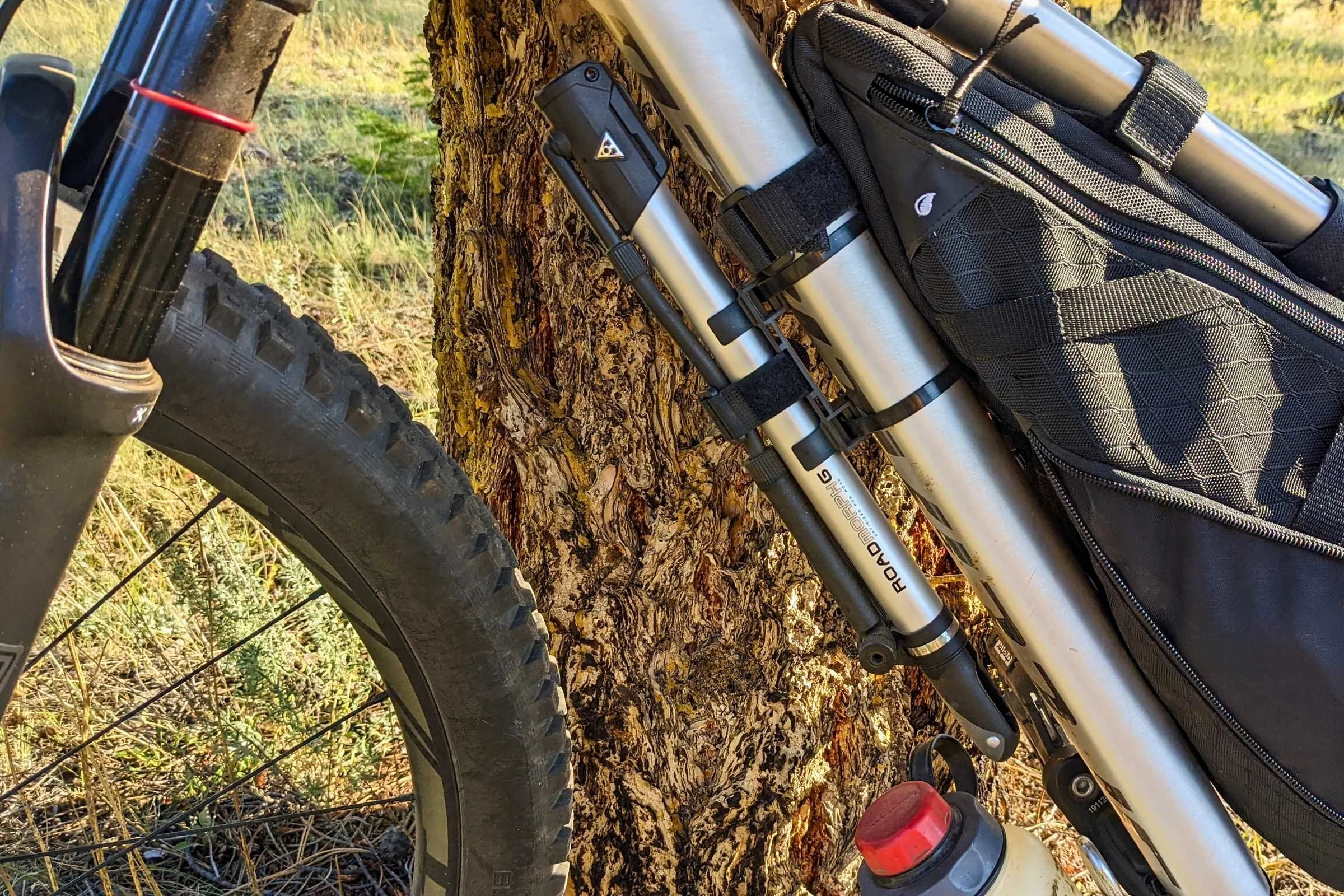
The Topeak Road Morph portable tire pump bolts onto the water bottle bosses of a bike without a water bottle on top, which is unusual for portable pumps. Here, we used zip ties to attach it.
The Road Morph does come with a bracket, but it can only be bolted onto the water bottle bosses of a bike without a bike water bottle on top. It also comes with some zip ties, which we used to attach this pump under the down tube of our bike for testing.
We also investigated which pumps were repairable. We researched what small parts were available from manufacturers to fix a broken pump. The more replacement parts available, the better.
After getting to know all the pumps, we set up a test lab to inflate the same tire with every pump. After completely deflating a 700 x 38c tire, we counted the pumps it took to get to 60 psi, noting the relative effort it took to reach that pressure.
- Daily floor-pump use at home
- Portable pumps carried on rides
- Commuting and mountain biking
- Bikepacking and other bike trips
- Side-by-side inflation tests to 60 psi
- Inflation speed and effort
- Gauge accuracy and consistency
- Valve seal and compatibility
- Portability and ease of use
- Durability and repairability

Sam Schild is an avid cyclist and bike mechanic for the past ten years.
About the author / Why you should trust us
Sam Schild has biked over 50,000 miles in the last decade. He is an avid bike commuter and has extensively ridden road, mountain, and gravel bikes. Sam has bike toured and bikepacked over 10,000 miles across the United States, on the Kokopelli Trail, Colorado Trail, and all over the American Southwest.
He has also worked as a bike mechanic for over ten years. In that time, he’s inflated an obscene amount of tires. He spent years working in bike co-ops, cobbling together donated bike pumps to make something that works. He has also worked in high-end bike shops, where a working pump was easier to come by but still appreciated.
You can read more about Sam on his author page or on his website.