
Best Synthetic Insulated Jackets of 2026–2027
Warm-When-Wet Synthetic Puffy Jackets for Men & Women
November 23rd, 2026, updated with 4 new winners
Home > Gear Reviews > Apparel
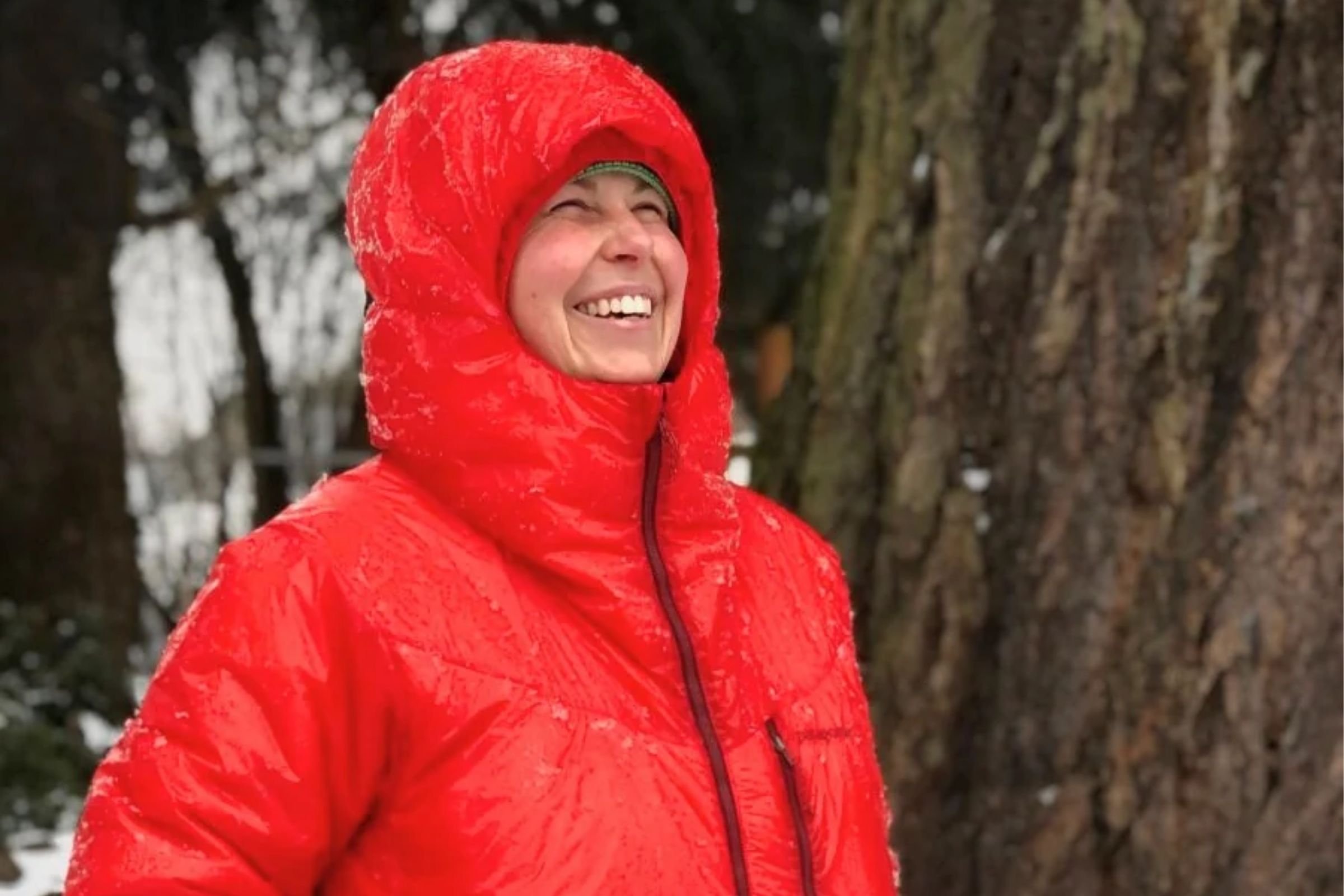
I spent four winters living in the snow in Central Oregon as a wilderness guide, and I’m the kind of person who’s always cold. I've tested dozens of puffy jackets, but my synthetic one gets the most use. It’s the one I grab when I’m not sure what the weather will do or how hard I’ll be working.
We’ve spent years testing synthetic insulated jackets on thru-hikes, backpacking and bikepacking trips, climbs, and everyday commutes. Naomi Hudetz wore the Enlightened Equipment Torrid under a rain shell through days of rain, snow, and wind in Iceland. I’ve used the Montbell U.L. Thermawrap for everything from backpacking the John Muir Trail to sea kayak guiding in Alaska.
We looked at how warm each jacket felt for its weight, how well it breathed when we worked up a sweat, and how much room it took up in a pack. We also paid attention to how the shell and its water repellency held up with use, how the jackets fit different testers, and whether the pockets and zippers were easy to use.
Top Pick: The men’s and women’s Patagonia Micro Puff Hoody is our favorite synthetic insulated jacket for most people. It packs down small, moves well, and is warmer for its weight than the Nano Puff (also a great jacket) in our experience. It’s light enough to bring backpacking, and the pockets make it practical enough to wear around town.
This story may contain affiliate links, which help fund our website. When you click on the links to purchase gear, we may get a commission. This allows us to create reader-supported objective gear reviews without costing you an extra cent. Thank you for supporting our work and mission of outdoor coverage for every body! Learn more.
Comparison Tables
Note: To keep comparisons as close as possible, unless otherwise noted, all jackets show specs for their hooded version. Hoodies typically weigh ~2 oz more than the unhooded version of a jacket. Not all jackets are available without a hood.
Men’s Synthetic Jacket Comparison Table
| SYNTHETIC INSULATED JACKET | TREELINE AWARD | SHELL MATERIAL | INSULATION | DWR? | WEIGHT | MSRP* |
|---|---|---|---|---|---|---|
| Patagonia Micro Puff Hoody | Best Overall Read why |
10D Pertex Quantum recycled nylon ripstop | 65g Recycled PlumaFill | Yes (PFC free) | 10.5 oz | $345 |
| Patagonia Nano Puff Hoody | Best Packable Read why |
Recycled polyester ripstop | 60g PrimaLoft Gold | Yes (PFC free) | 14.1 oz | $299 |
| REI Co-op Microtrek Insulated Hoodie | Best Affordable Read why |
Recycled polyester ripstop | 60g PrimaLoft | Yes (PFC free) | 16.1 oz | $179 |
| Arc'teryx Cerium Hoody | Best Hybrid Read why |
15D Arato nylon | 850-fill down, Coreloft 80 and 100t | Yes (PFC free) | 11.9 oz | $400 |
| Patagonia Nano-Air Ultralight Hoody | Best for Hiking Read why |
30D Recycled polyester stretch ripstop | 20g Recycled FullRange | Yes (PFC free) | 8.8 oz | $249 |
| Patagonia DAS Parka | Warmest Read why |
10D Pertex Quantum Pro recycled nylon ripstop | 133g PrimaLoft Gold | Yes (PFC free) | 19.6 oz | $469 |
| Montbell U.L. Thermawrap Parka | Best Ultralight Synthetic Jacket Read why |
12D Ballistic Airlight nylon ripstop | 40g Stretch EXCELOFT | Yes | 8.5 oz | $190 |
| Enlightened Equipment Torrid Jacket | Best for Thru-Hiking Read why |
7 or 10D nylon (depends on color) | 2oz CLIMASHIELD APEX | Yes (PFC free) | 8.9 oz | $200 |
| Carhartt Gilliam Active Jac | Best Big and Tall Read why |
CORDURA nylon | 120g polyester | Yes (PFC free) | 17.6 oz | $129 |
| L.L.Bean PrimaLoft Packaway Hooded Jacket | Recycled Pertex Quantum ripstop | 60g PrimaLoft Gold | Yes (PFC free) | 12.9 oz | $220 |
* Prices reflect MSRP and are subject to change. We note any discounts we see on our Deals page, which is updated daily.
Women’s Synthetic Jacket Comparison Table
| SYNTHETIC INSULATED JACKET | TREELINE AWARD | SHELL MATERIAL | INSULATION | DWR? | WEIGHT | MSRP* |
|---|---|---|---|---|---|---|
| Patagonia Micro Puff Hoody | Best Overall Read why |
10D Pertex Quantum recycled nylon ripstop | 65g Recycled PlumaFill | Yes (PFC free) | 9.0 oz | $345 |
| Patagonia Nano Puff Hoody | Best Packable Read why |
Recycled polyester ripstop | 60g PrimaLoft Gold | Yes (PFC free) | 12.3 oz | $299 |
| REI Co-op Microtrek Insulated Hoodie | Best Affordable Read why |
Recycled polyester ripstop | 60g PrimaLoft | Yes (PFC free) | 13.4 oz | $179 |
| Arc'teryx Cerium Hoody | Best Hybrid Read why |
15D Arato nylon | 850-fill down, Coreloft 80 and 100 | Yes (PFC free) | 10.2 oz | $400 |
| Patagonia Nano-Air Ultralight Hoody | Best for Hiking Read why |
30D Recycled polyester stretch ripstop | 20g Recycled FullRange | Yes (PFC free) | 7.6 oz | $259 |
| Patagonia DAS Parka | Warmest Read why |
10D Pertex Quantum Pro recycled nylon ripstop | 133g PrimaLoft Gold | Yes (PFC free) | 18.4 oz | $469 |
| Montbell U.L. Thermawrap Parka | Best Ultralight Read why |
12D Ballistic Airlight nylon ripstop | 40g Stretch EXCELOFT | Yes | 8.4 oz | $205 |
| Enlightened Equipment Torrid Jacket | Best for Thru-Hiking Read why |
10D Nylon | 2oz CLIMASHIELD APEX | Yes (PFC free) | 8.3 oz | $200 |
| L.L.Bean PrimaLoft Packaway Hooded Jacket | Recycled Pertex Quantum ripstop | 60g PrimaLoft Gold | Yes (PFC free) | 12.8 oz | $220 | |
| Black Diamond Solution 2.0 Hoody | 20D Recycled nylon ripstop | 60g PrimaLoft Gold | Yes | 11.7 oz | $299 |
* Prices reflect MSRP and are subject to change. We note any discounts we see on our Deals page, which is updated daily.
For more of our most popular gear recommendations, see our most popular Gear Guide stories:
The Best Synthetic Insulated Jackets
Best Overall Synthetic Insulated Jacket: Patagonia Micro Puff Hoody
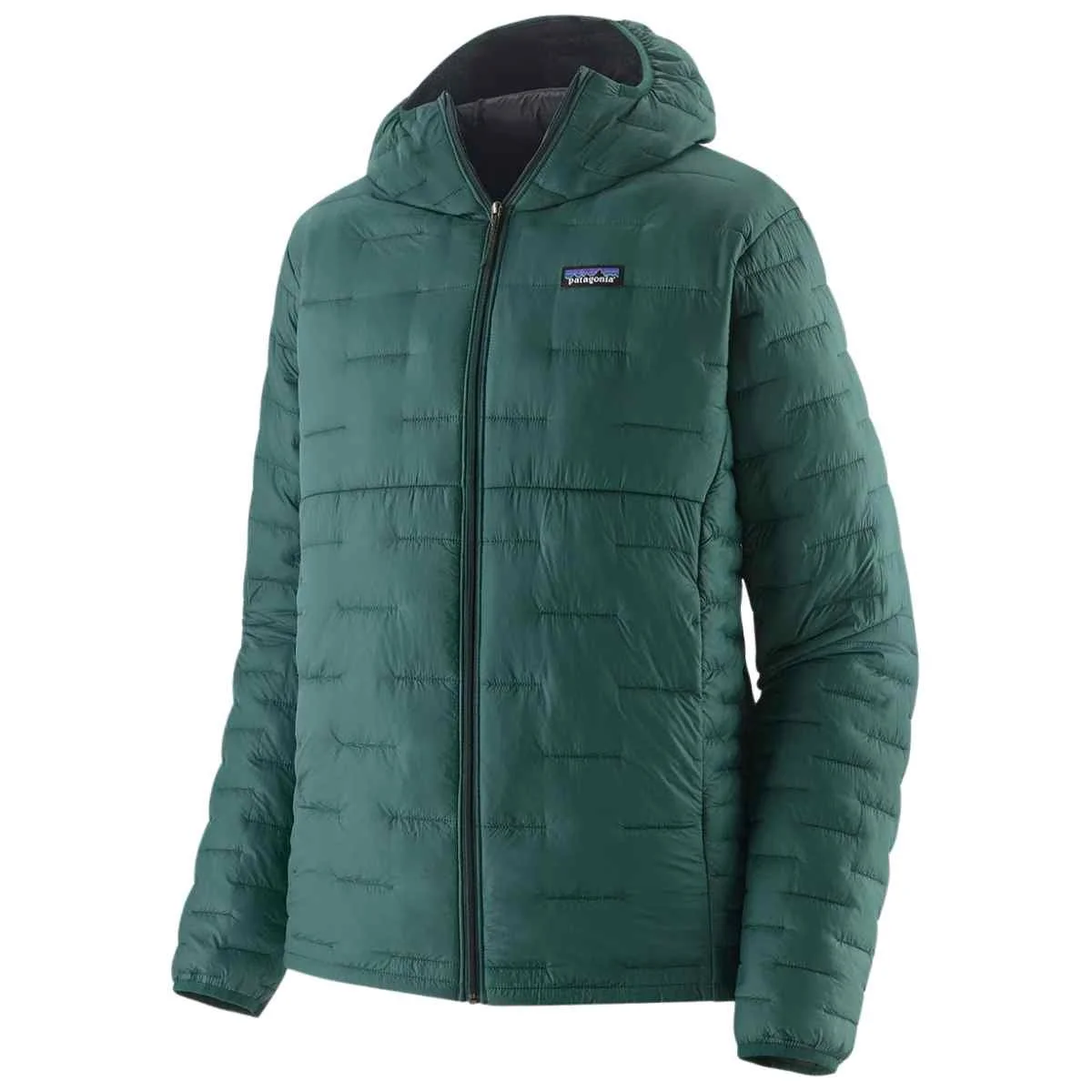
Shell material: 10D Pertex Quantum recycled nylon ripstop
Total weight: 9.0 oz (women), 10.5 oz (men)
Fill Type: PlumaFill 65g 100% recycled
Number of Pockets: 2 zippered hand, 1 internal
Hoodless jacket version: Yes (men’s and women’s)
Vest version: No (discontinued)
Sizes: XS-3XL (men’s), XXS-XXL (women’s)
Warranty: Ironclad Guarantee, they will repair, refund, or exchange any item
What we liked: Packable to a low volume, durable, great insulation to weight ratio, articulates well, functional pockets in women’s version, and exceptional warranty
What we didn't like: Not the most budget friendly, but a fair value
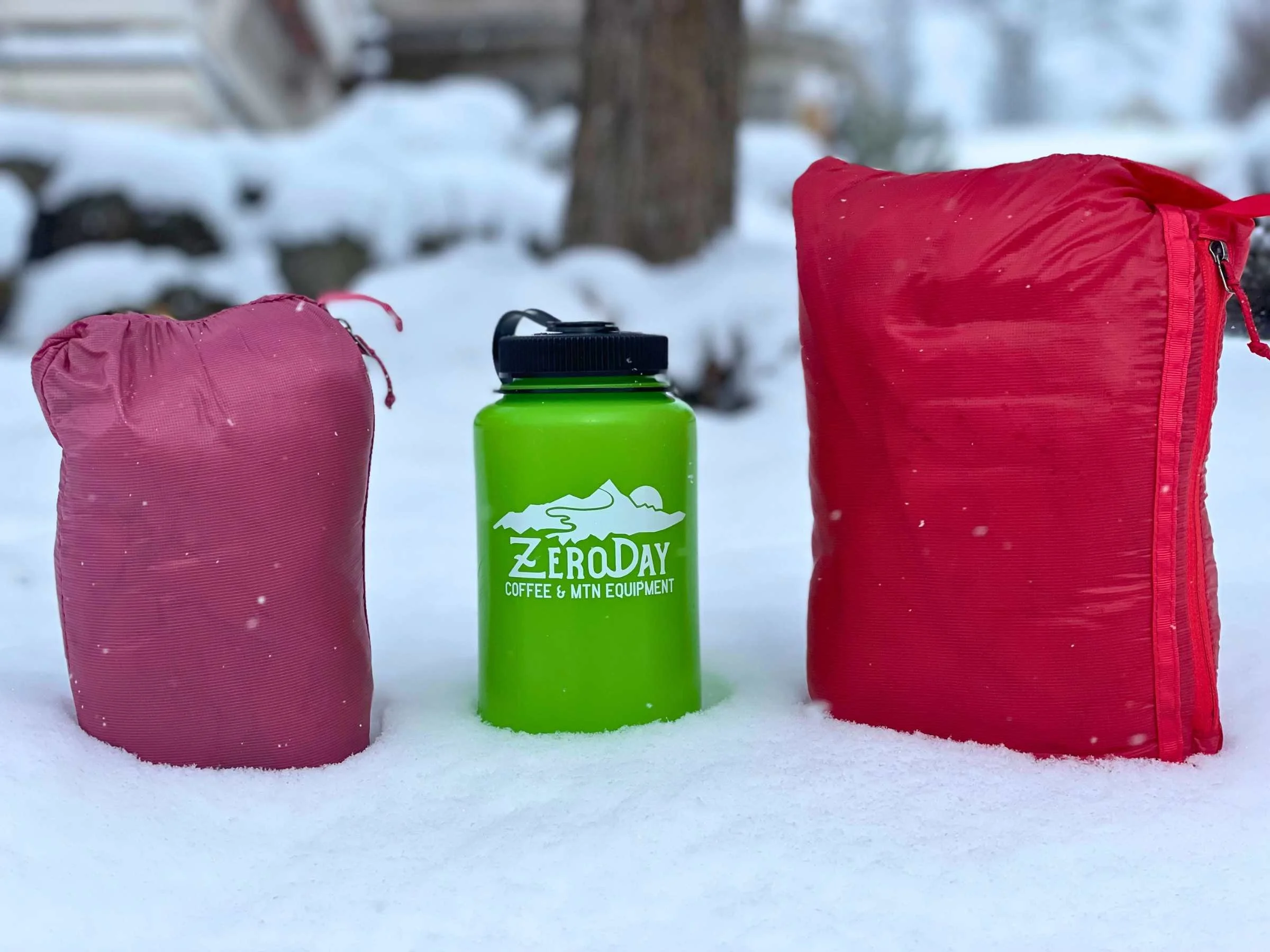
We think the Patagonia Micro Puff Hoody is the best synthetic insulated jacket for most people because it is light, packable, stylish, and warm for its weight. It has a warmth-to-weight ratio similar to down—appealing to those who want a technical jacket.
The warmth of the Micro Puff far exceeds that of its popular sibling, the Patagonia Nano Puff (more on that jacket later). We think the Micro Puff is the best overall synthetic insulated jacket because it has all the advantages of the Nano Puff but with more warmth: it’s stylish, packable, and has enough features to be convenient for everyday use as well as technical ultralight adventures.
We liked this jacket so much that we wrote an in-depth, long-term single-product review.
Compare prices of the Patagonia Micro Puff Hoody
Men's
Women's
-
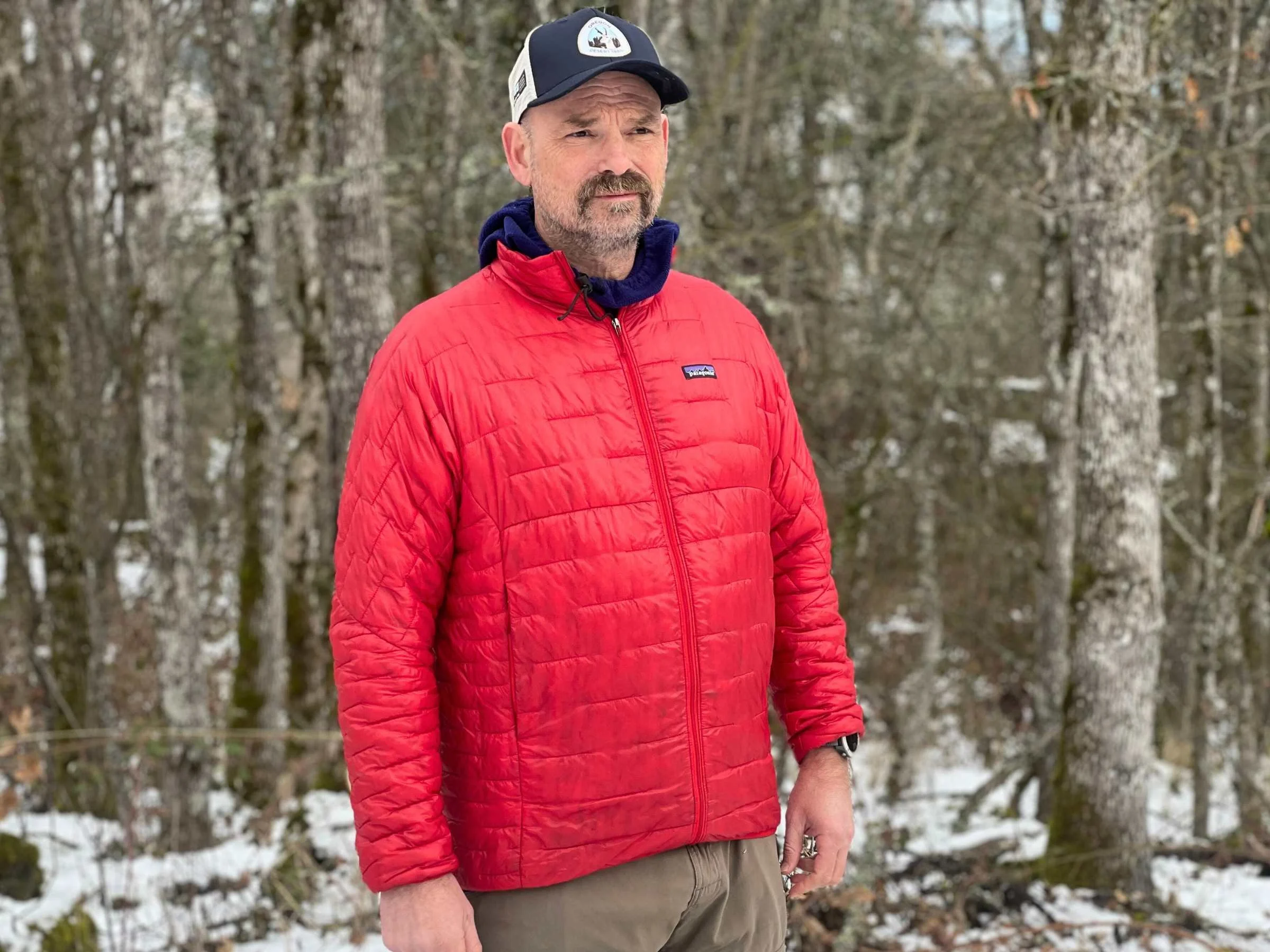
The Patagonia Nano Puff is by far the brand's most popular jacket–and we're being rebellious when we didn't choose it as our overall winner.
If you want a Patagonia jacket because you like the fit or color better or want to support their environmental mission, we think it’s well worth spending a little extra for the Micro Puff. It weighs less than the Nano Puff and is warmer.
-
In our article What to wear hiking in Fall story, we wrote about the incredible warmth-to-weight ratio of the Patagonia Micro Puff jacket. Patagonia uses its proprietary PlumaFill Insulation, which is designed to mimic the shape of down plumules. That’s why Patagonia says the Micro Puff is “the best warmth for weight of any jacket we’ve ever built.”
We like the elastic cuff, hood, and hem on the Micro Puff because they reduce weight, while still keeping warmth in.
-
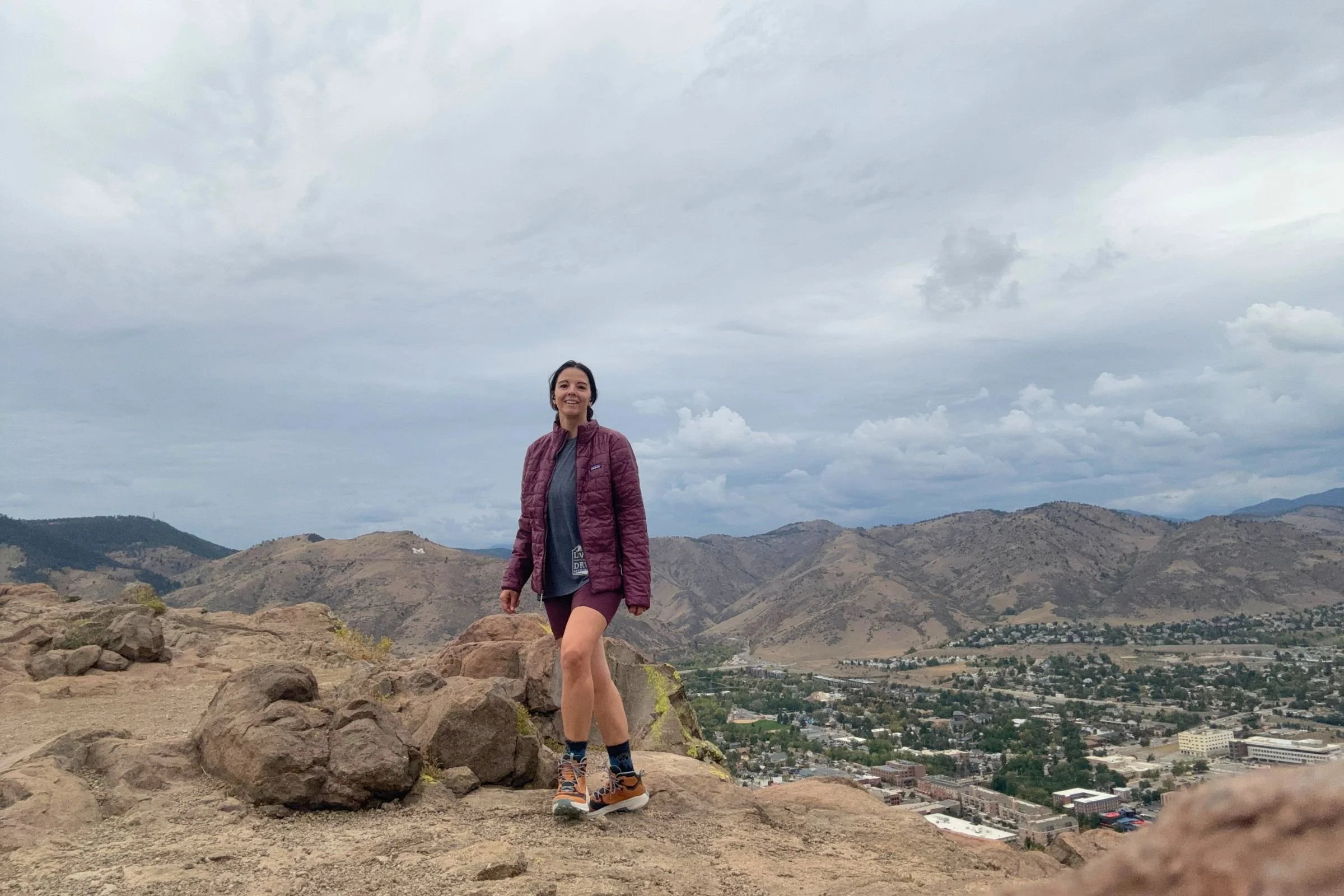
Treeline’s editor Naomi Hudetz used this jacket on an 800-mile long thru hike of the Arizona Trail and was impressed by the amount of warmth it provided compared with its weight. She appreciated the long torso length which meant it never bunched up under the hip belt of her backpack. She also really liked the curved shoulder yoke design which gives great freedom of movement in the arms and shoulders.
Patagonia’s sizing on this jacket runs a little narrower than their popular Down Sweater Jacket, but is still not aggressively athletic, making it a better fit for varying body types.
Their size range is better than average and has gotten even better in the last few years: women’s jackets are available in XXS-XXL and men’s are available in XS-3XL.
-
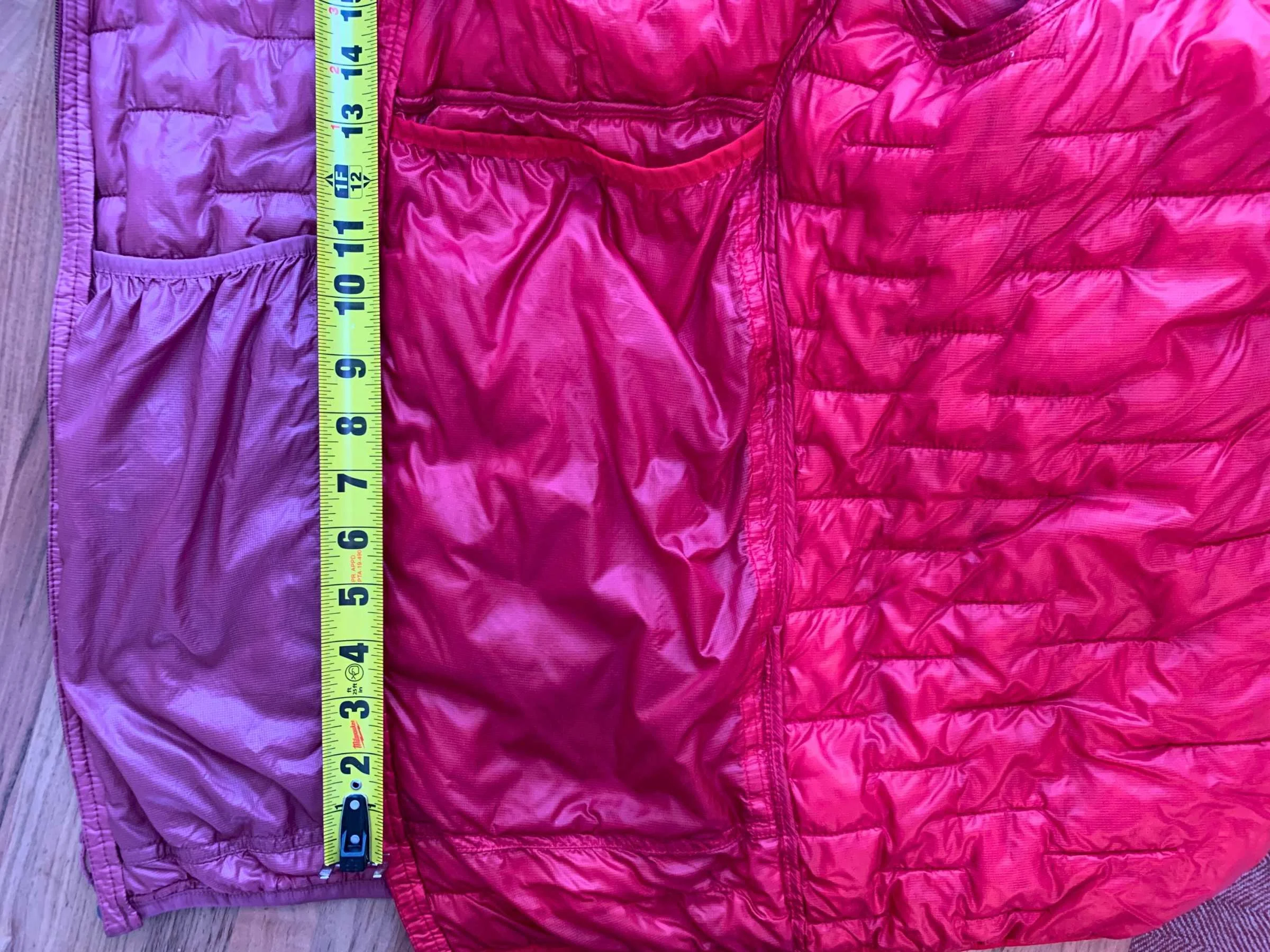
Finally...a lightweight women’s jacket with functional pockets, including an internal chest pocket!! While men's lightweight jackets often have pockets, it's a rarity with women's. We appreciated being able to have a top-of-the-line jacket available that offered us pockets.
We like internal pockets because they make it easier to keep electronics from freezing when the temperature drops.
-
Patagonia’s products are bluesign® certified, meaning they reduce the amount and toxicity of chemicals they use. The Micro Puff is also Fair Trade Certified Sewn. Another way Patagonia reduces their impact is through their incredible warranty. Patagonia has what they call their Ironclad Guarantee. They will repair, refund, or exchange any item, for any reason, no matter how long you’ve had it, or how much abuse you’ve put it through.
Another thing we like about this jacket is that Patagonia allows you to trade it in to their Worn Wear used gear portion of the website to receive store credit. So if your body changes over the years or you get into different outdoor activities, it will stay out of the landfill.
-
A few testers mentioned that the elastic waistband can ride up and that the shell fabric tears easily. This is not surprising and is generally true of any 10 denier fabric. Extra care must be taken when dealing with lightweight gear.
-
The Micro Puff is one of the most expensive lightweight insulated jackets on our list, but with such a great warranty you know you’ll get your money’s worth.
Best Packable Insulated Jacket: Patagonia Nano Puff Hoody
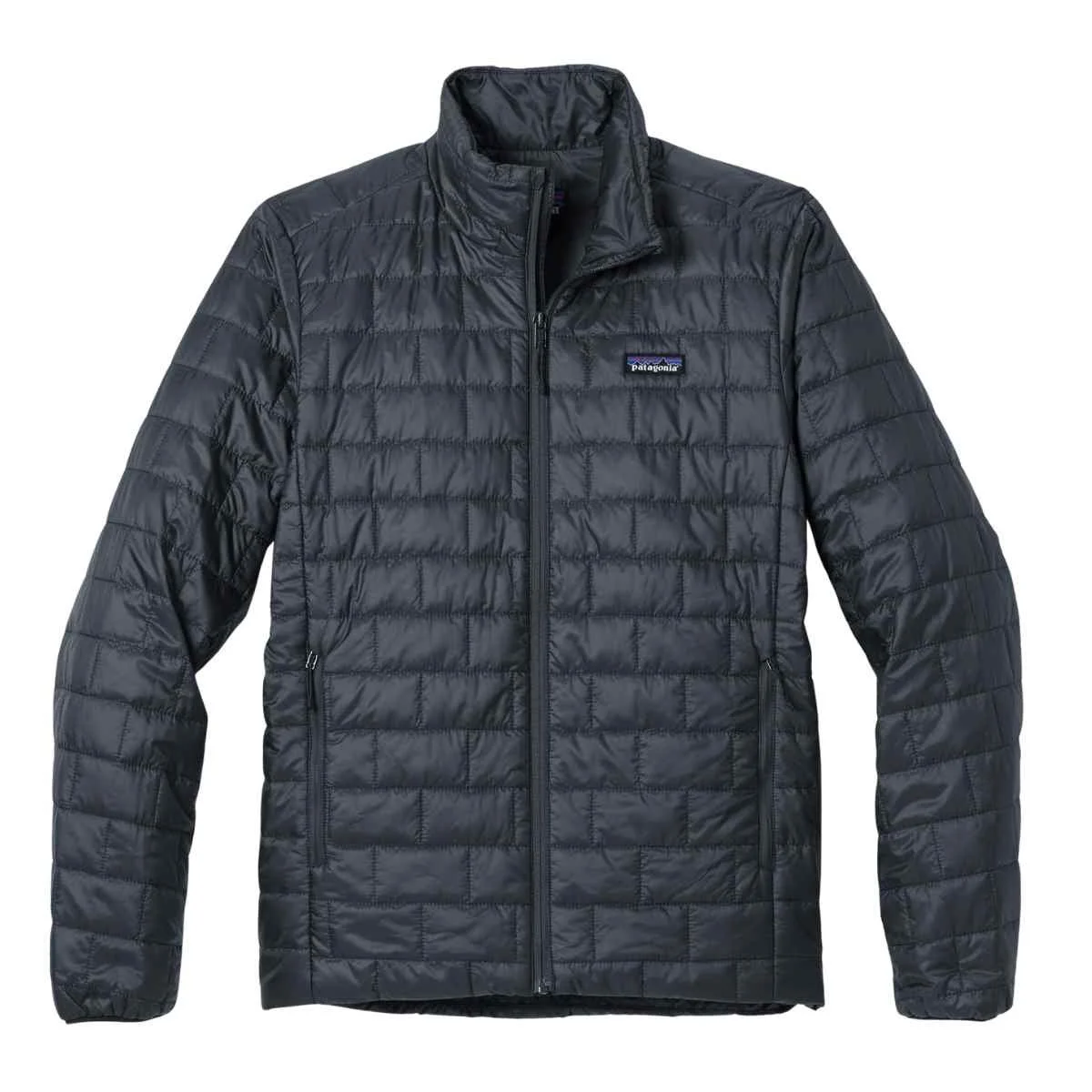
Shell material: Recycled-polyester shell
Total weight: 14.1 oz (men’s) and 12.3 oz (women’s)
Fill Type: 60-g PrimaLoft Gold Insulation Eco polyester (100% post-consumer recycled content)
Number of Pockets: 3
Hoodless jacket version: Yes (men’s and women’s)
Vest version: Yes (men’s and women’s)
Sizes available: XS-XXXL (men’s) and XXS-XXL (women’s)
Warranty: Ironclad Guarantee
What we liked: compact enough to go everywhere with you, warm, pockets, fit, durability
What we didn't like: isn’t as suited for cold weather as the Micro Puff, heavier than Mixro Puff
The Patagonia Nano Puff is the best packable synthetic jacket. Its zippered internal chest pocket doubles as a stuff sack, a feature we've seen in running jackets but is rare for synthetic insulated jackets. The pocket even comes with a reinforced carabiner loop, which means you can always remember to bring it along.
The Nano Puff is also one of the most durable pieces of gear we’ve tested over the past 10 years. The polyester ripstop shell prevents holes from spreading, which helps the jacket to keep insulation in place even when torn. We’ve worn this jacket on hundreds of rock climbing routes in addition to using it as our warmest layer while backpacking the Appalachian Trail, and we have yet to find a jacket that competes with the Nano Puff’s durability.
Men's
Women's
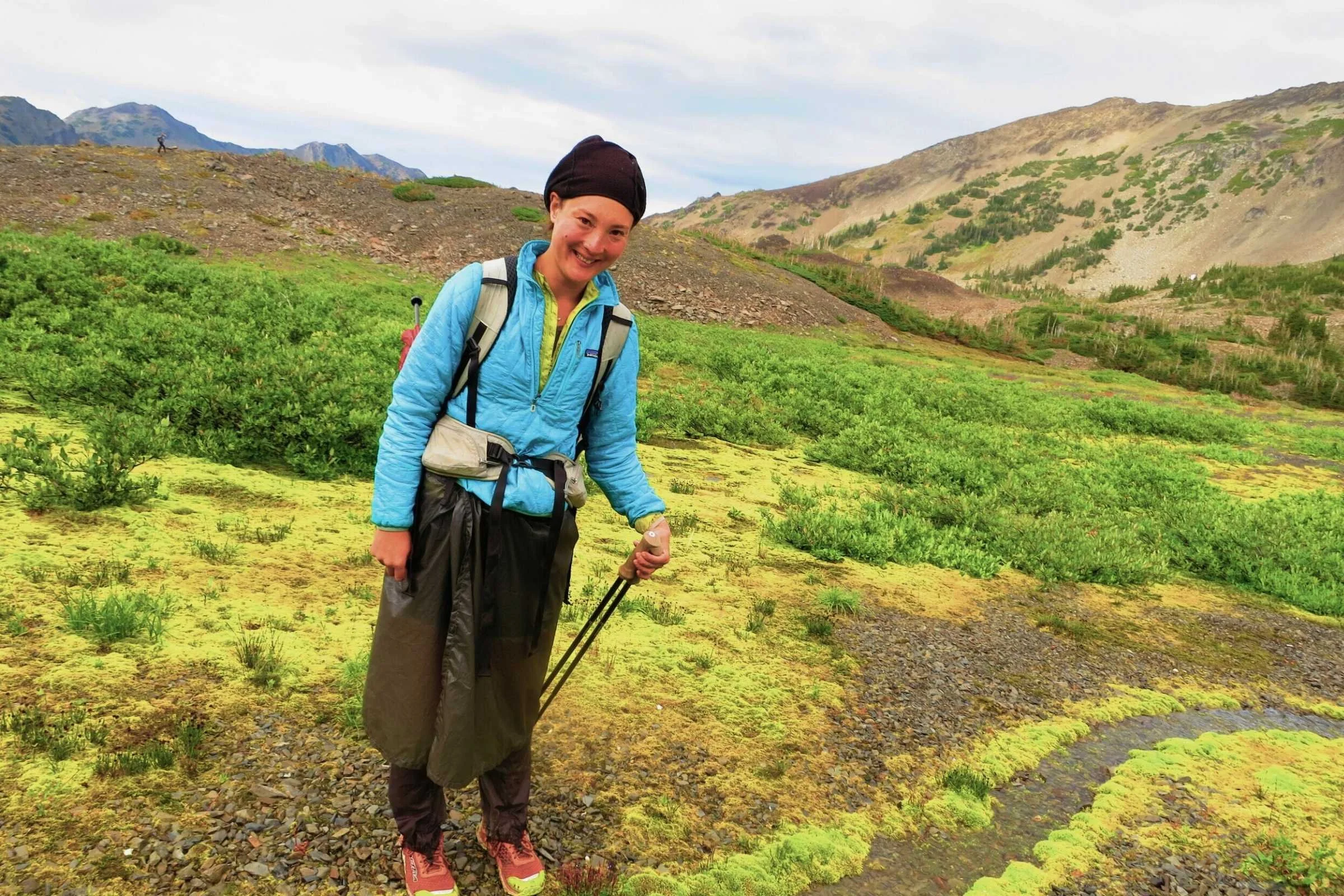



-
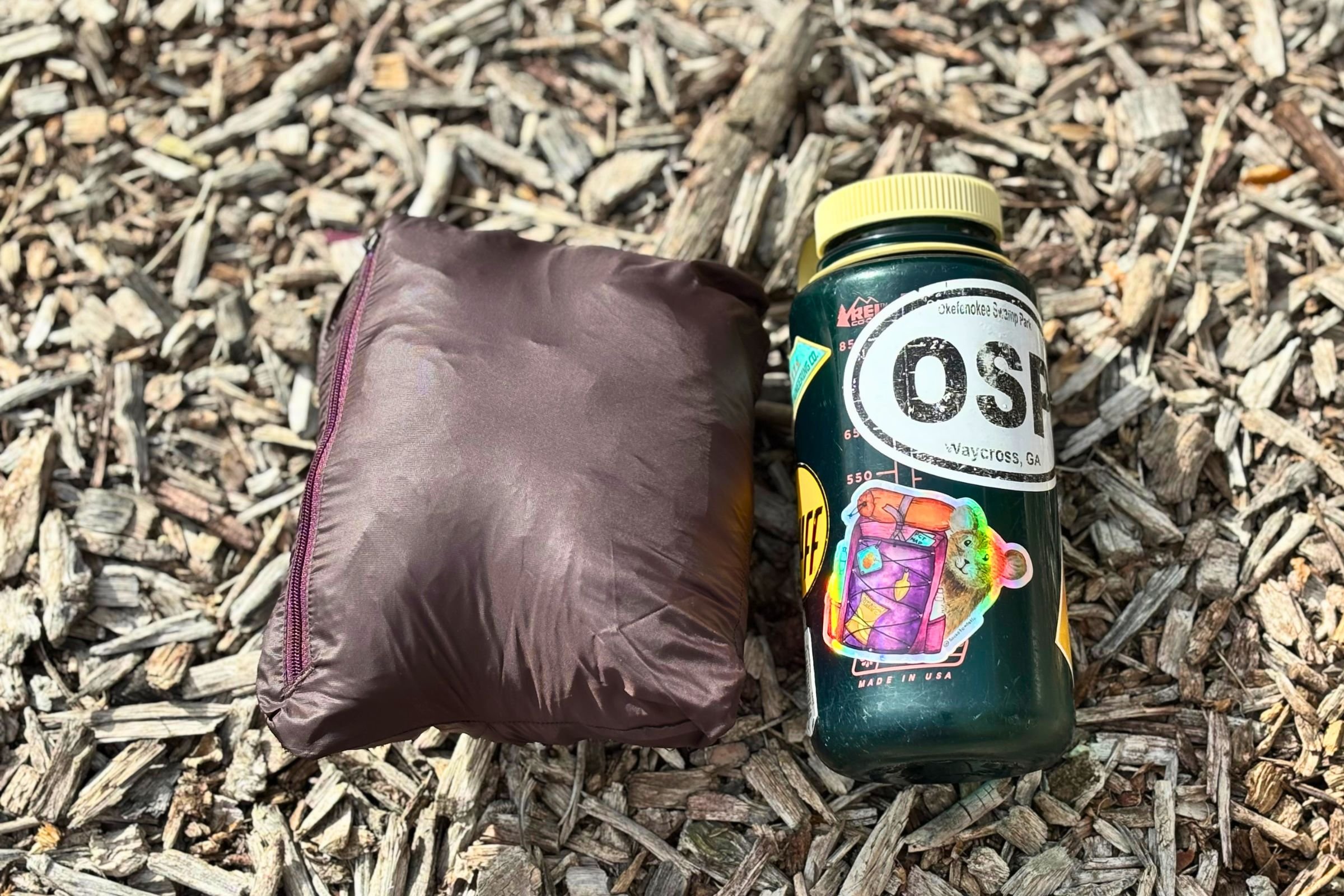
When stored in its own chest pocket, the Nano Puff packs down to a 6”-by-7.5”-by-3.5” shape. You can use the included carabiner loop to strap it to a pack or harness while climbing (which is when our testers found it to be most useful).
-
The Nano Puff’s biggest limitation revolves around breathability since it doesn’t shed heat with ease. But this can be a positive quality in environments where you expect to be stationary or to be producing a small amount of body heat. Additionally, we find the Nano Puff isn't as warm as the Micro Puff when stationary, so keeping in heat isn't necessarily a bad thing.
-
After more than a decade of use, the Nano Puff is still our go-to jacket simply because of its dependable construction. We’ve never had a single issue with the zippers or drawstrings. The materials handle abrasions easily, and the synthetic insulation keeps us warm even when it’s damp.
Best Affordable Insulated Jacket: REI MicroTrek Insulated Hoodie
Shell material: Recycled polyester ripstop
Total weight: 16.1 oz (men’s) and 13.4 oz (women’s)
Fill Type: 60 g recycled PrimaLoft synthetic insulation
Number of Pockets: 3
Hoodless jacket version: Yes (men’s and women’s)
Vest version: Yes (men’s and women’s)
Sizes available: S-3XL, plus M-XXL Tall (men’s) and XS-3X (women’s)
Warranty: 1-year
What we liked: value for price, comfort, easy layering, inclusive sizing, water-resistant, packs into pocket
What we didn't like: limited weather resistance, hood not very adjustable, fewer technical specs
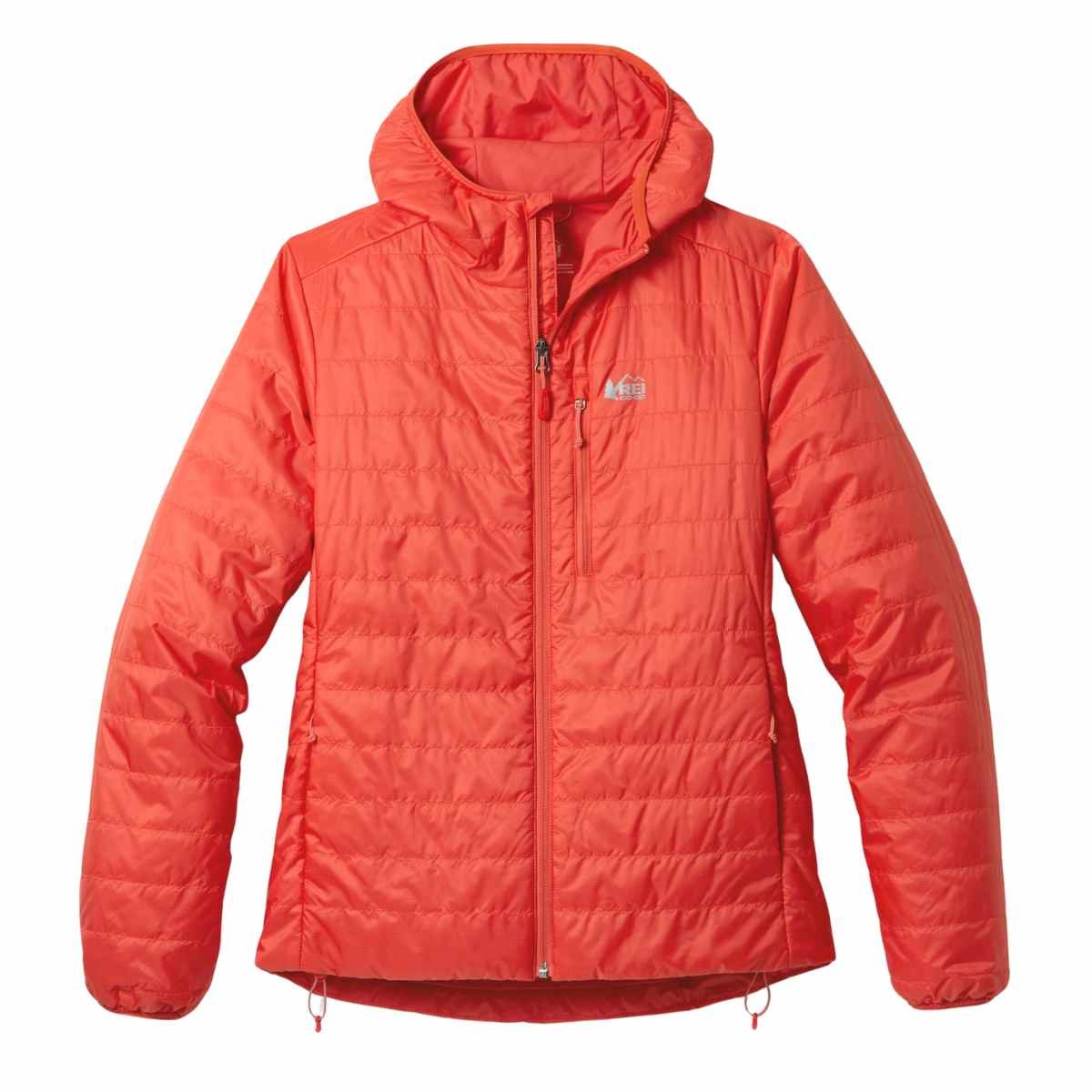
The REI Microtrek insulated jacket provides warmth without the bulk at a lower price than many of its competitors. It's a synthetic insulated hoodie for those looking to do it all, from day hikers to backpackers and everyday commuters.
While not as technical as other synthetic jackets, the Microtrek is an affordable jacket for easy layering on trail or in town with lots of color options, and better sustainability and inclusive sizing than many outdoor brands out there.
The REI Microtrek Hoodie is not designed for warmth in extreme temperatures nor for those seeking expedition-grade gear, but it is made for the majority of day hikers, shorter trip backpackers, and those looking for a dependable and affordable jacket for daily use.
See our full review of the REI Co-op Microtrek Insulated hoodie for more details.
REI MicroTrek Insulated Hoodie
Men's
Women's
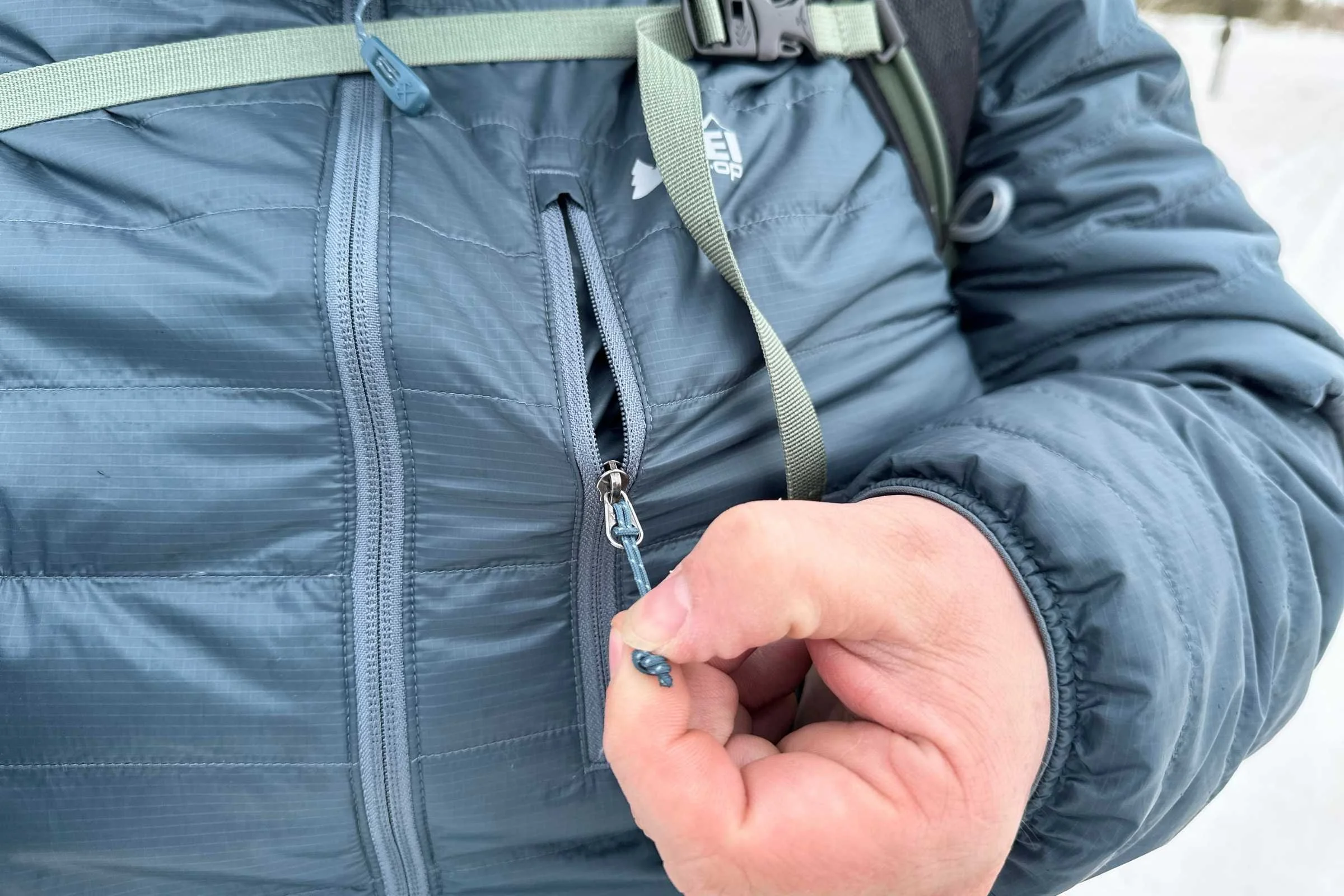
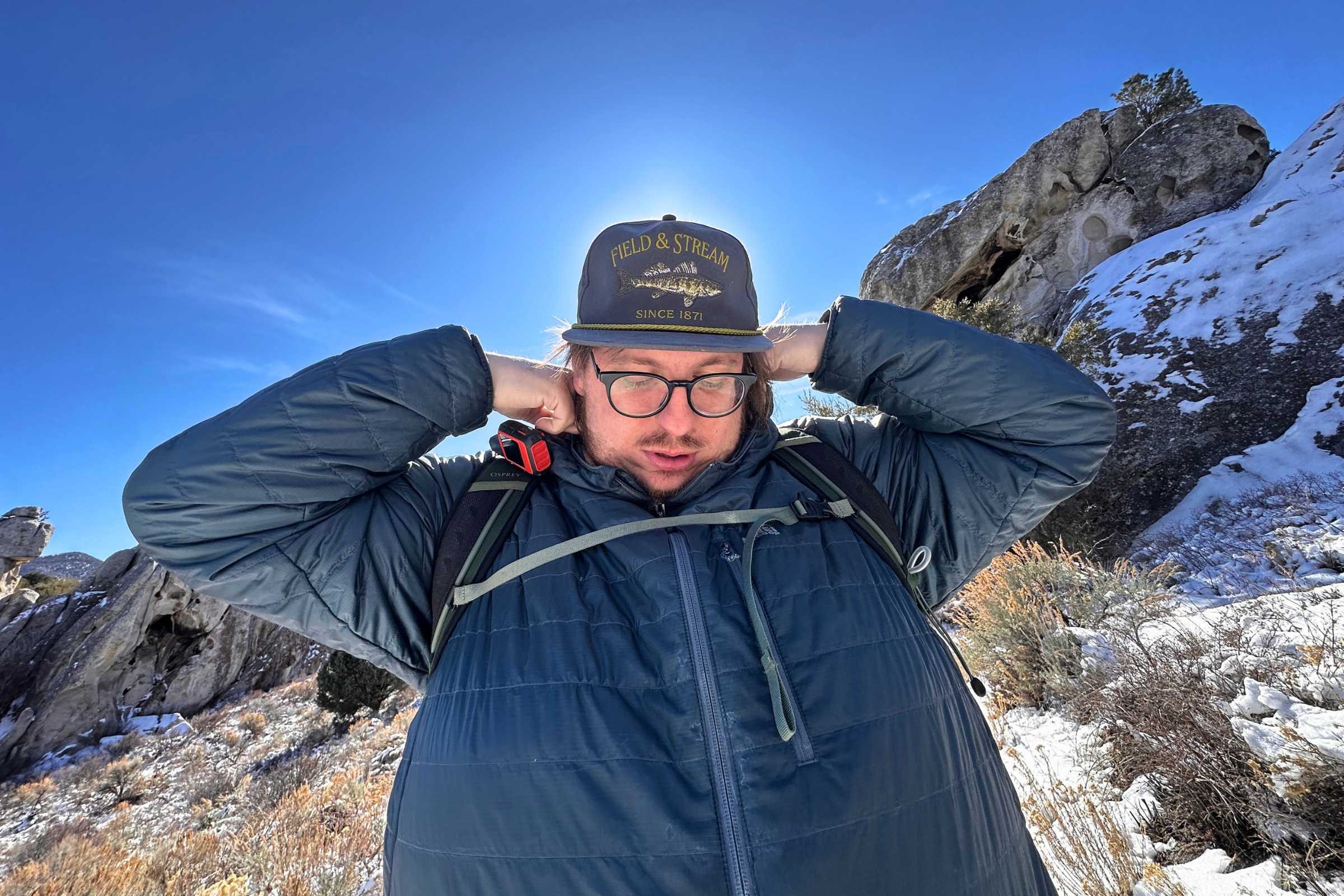
-
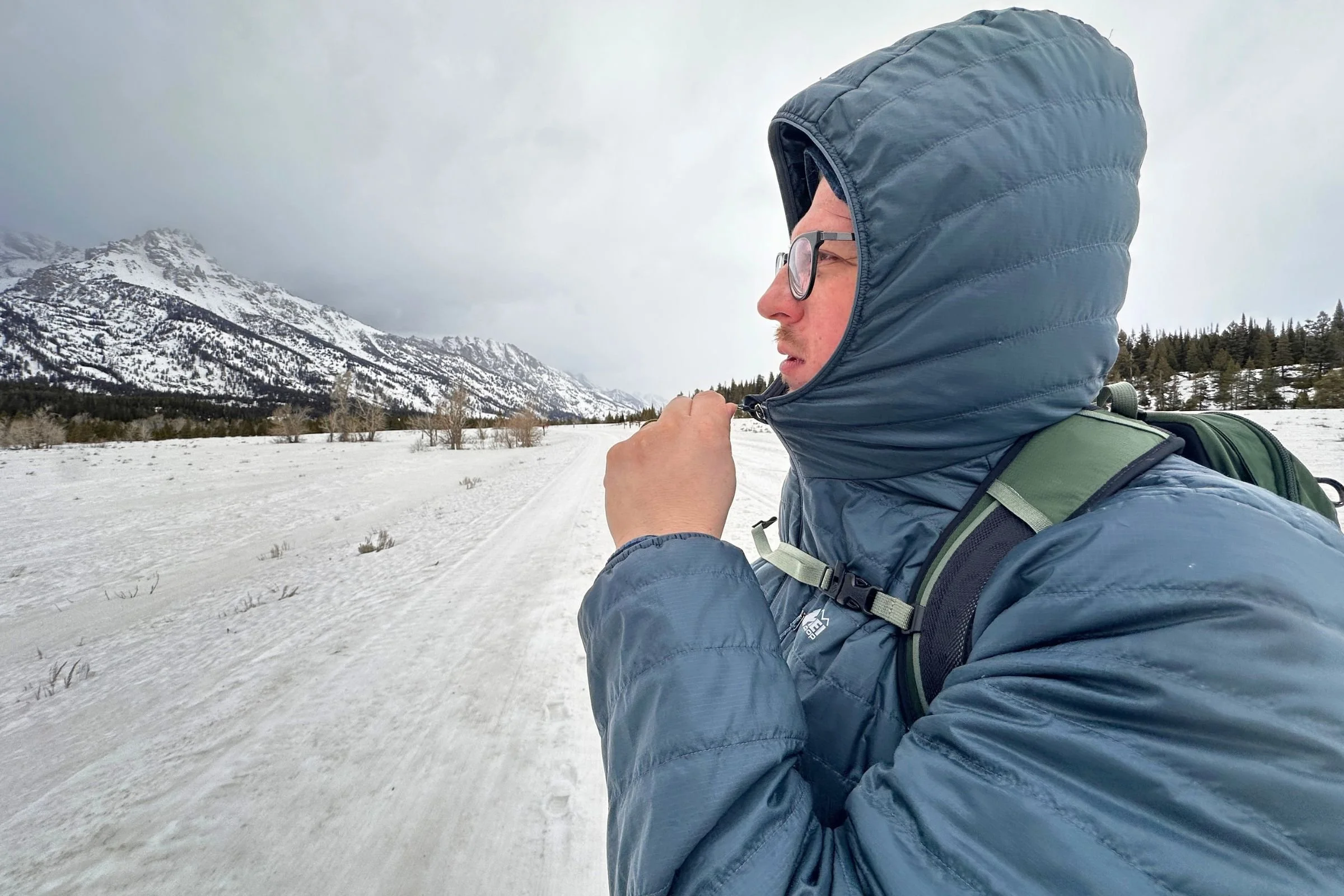
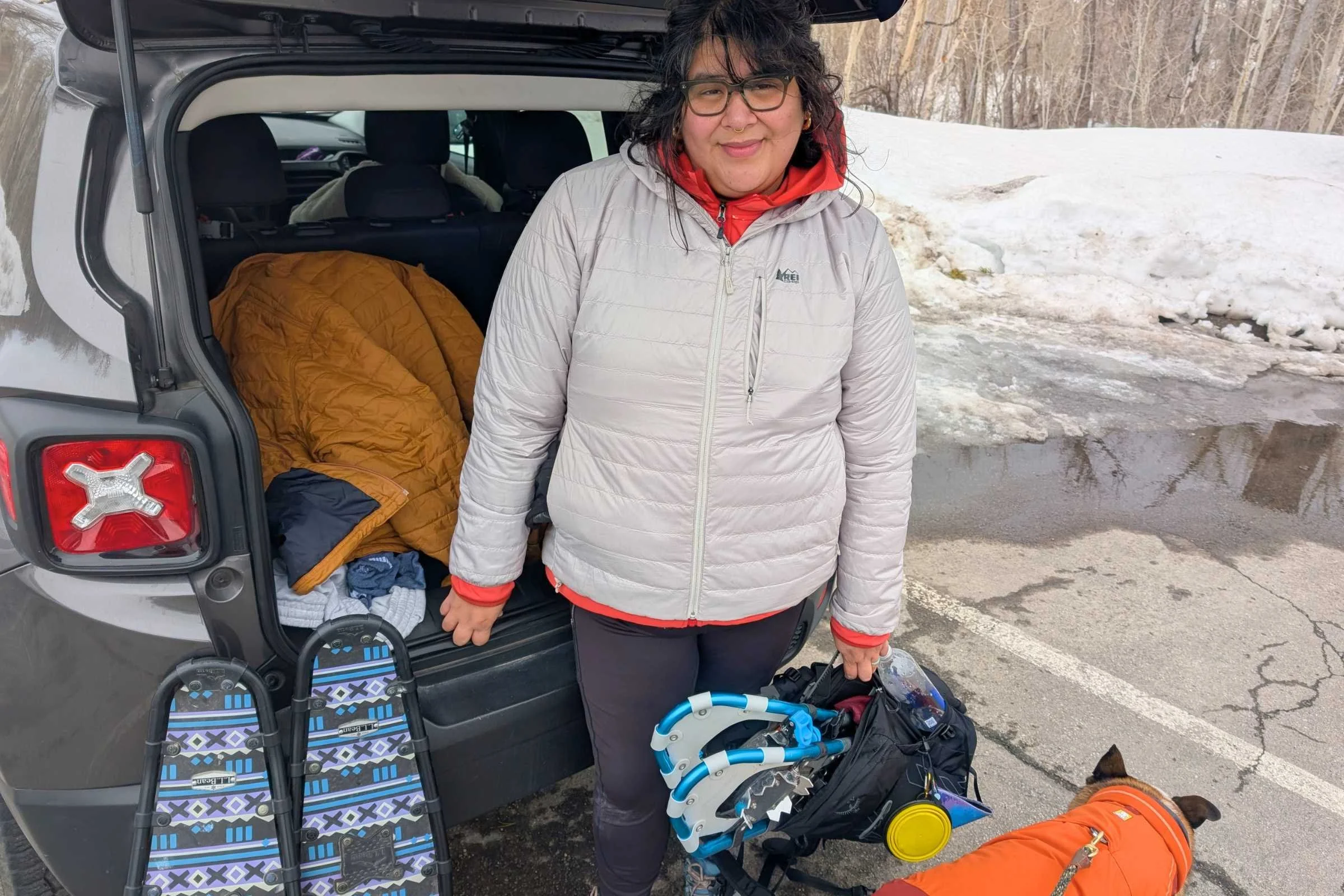
We tested the REI Microtrek Hoodie in women’s and men’s in near daily use for four winter months in Southern Idaho, Wyoming, and Montana with temperatures ranging from the 20s to the mid-50s°F, with our strong wind season of 10-25 mph daily winds picking up during our testing period (wind chills of 5°F to 20°F).
The REI Microtrek Insulated Hoodie offers decent warmth and weather resistance for a variety of outdoor activities and weather conditions, especially for its light weight. We found the Microtrek’s wind resistance to be adequate, with room for improvement.
-
This hoodie is light and comfortable, cut with good proportions that promote easy movement. Our testers found the Microtrek easy to wear and comfortable in every application. However, they wished it was slightly longer, particularly in the front. The hood could have fit much better if it had cinches, particularly over a hat.
-
The Microtrek Hoodie is also size inclusive up to a women’s 3X and a men’s XXXL, making it comfortable but slightly snug when layered with a thicker fleece layer underneath. We tend to find that REI’s sizing runs small in the XXL-XXXL for men’s and 1X-3X sizes, with a design that could still use more workshopping to achieve a perfect fit.
-
The REI Micro Trek Insulated hoody is a great choice for versatility. When layered properly, it can easily go from a hike up a mountain trail on a windy day to casual wear in town. While it doesn't have the high alpine technical features or expedition-level insulation of other jackets, this is a great choice for wearing throughout the winter for daily outdoor activities.
Best Synthetic / Down Hybrid Insulated Jacket: Arc’teryx Cerium Hoody

Shell material: Arato 15 Nylon
DWR treatment? Yes
Total weight: 10.2 oz (women), 11.9 oz (men)
Fill Type: 850 fill down + Coreloft 80 and 100
Number of Pockets: 3
Hoodless jacket version: Yes (men’s and women’s)
Vest version: Yes (men’s and women’s)
Packability options: Stuff pocket
Sizes: XS-XXL (men's), XS-XL (women's)
Warranty: Limited Lifetime: manufacturers defects for reasonable expected lifetime of the product.
While the Cerium feels like a fairly puffy jacket, it’s still 10.2 oz for women’s and 11.9 oz for men’s—lighter weight than almost every jacket we tested that wasn’t going for the Ultralight or Thru-hiker category.
Still, despite its light weight, the clever use of insulation makes the Arc'teryx Cerium one of the warmest synthetic insulated jackets we tested.
Compare prices of the Arc’teryx Cerium Hoody
Men's
Women's
-
Over the last few years, we've been a big fan of hybrid down and synthetic jackets. These jackets use a mixture or combination of down and synthetic fill. The concept is to get the best of down and synthetic insulation: down’s lightweight packability, combined with the water-resistance and breathability of synthetic.
Hybrid jackets may be great options for folks who want one that will work for various conditions and activities.
The best example of the hybrid-down jacket model is the Arc'teryx Cerium. From its attention to detail on the cut and design to its quality of materials and sewing, this is the best synthetic-down jacket we've seen.
-
You can keep your phone or valuables in a hand warmer pocket or an internal zippered pocket.
-
We also considered the lightweight Arc’teryx Atom (see Other insulated jackets we tested section). The Cerium is much warmer than the Atom. Customers call it a "camp jacket," whereas the Atom that we recommend is active insulation for activities like alpine climbing.
-
One thing for users to keep in mind is that Arc'teryx jackets generally have a very slim fit that may not work for all body types. The men’s size range is slightly wider than the industry standard, starting at XS and going up to XXL.
-
A nice bonus is that Arc'teryx jackets don’t adhere as tightly to stereotypical “men’s” and “women’s” colors as many brands do. They provide a wide option of gender-neutral colors in both categories.
Best synthetic insulated jacket for hiking: Patagonia Nano-Air Ultralight Full-Zip Hoody
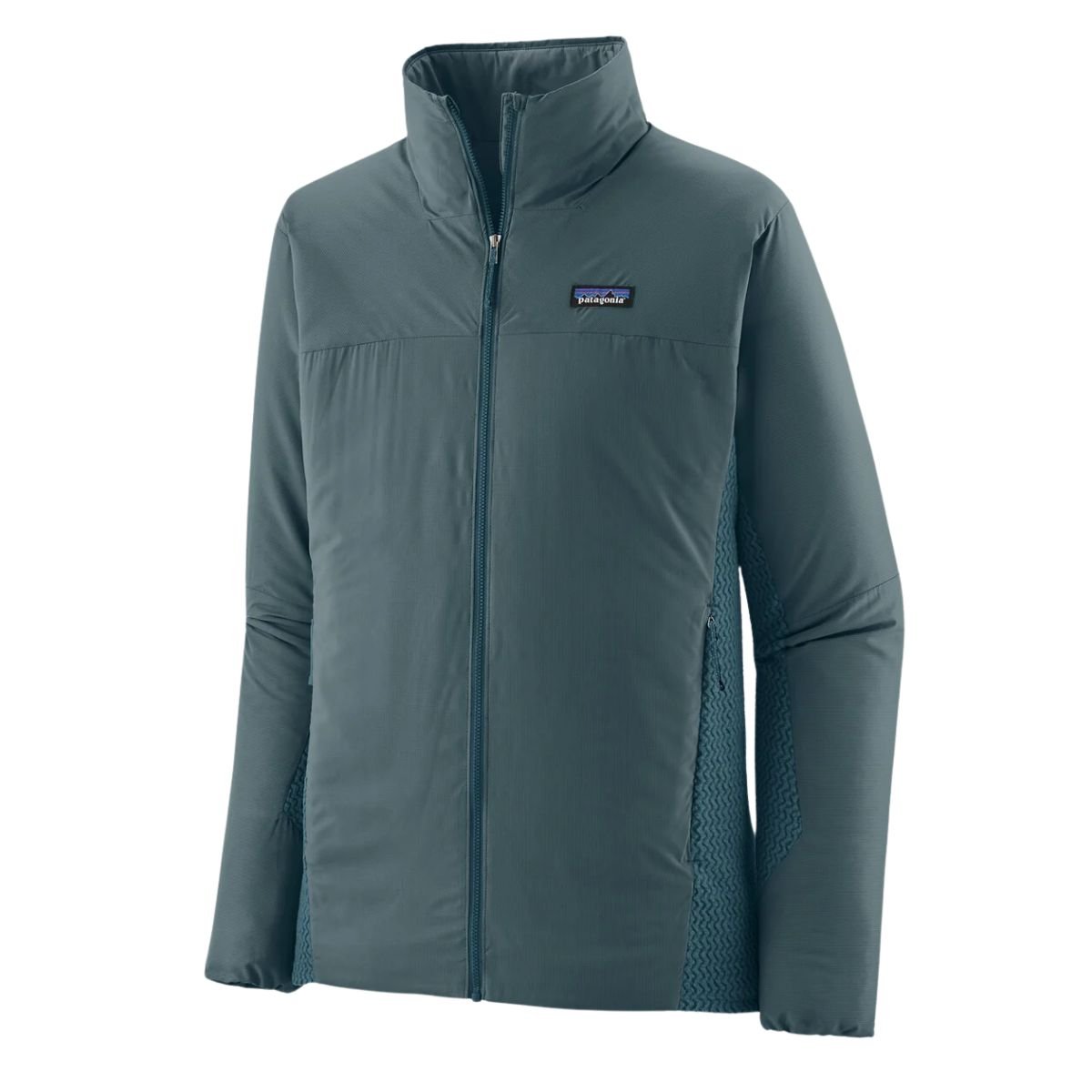
Shell material: 30D Recycled polyester stretch ripstop
DWR treatment? Yes, PFC-free
Total weight: 7.6 oz (women's), 8.8 oz (men's)
Fill Type: 20-g FullRange 100% polyester with four way stretch
Number of Pockets: 3
Hoodless jacket version: Yes (men’s pullover and women’s pullover)
Vest version: No, Nano-Air Light vest similar
Sizes Available: XS-XXL (men's), XXS-XXL (women's)
Warranty: Ironclad Guarantee, they will repair, refund, or exchange any item, for any reason
What we liked: Highest scoring breathability for active wear, fits well, durable
What we didn't like: Price, hood shape
For years, the Patagonia Nano-Air has been our go-to gold standard active insulation jacket for its remarkable breathability. The newest version, the Patagonia Nano-Air Ultralight Full Zip Hoody, is the best synthetic jacket for hiking for its wind-resistance, slight stretch, surprising warmth, and lack of bulkiness.
The Nano-Air Ultralight Full Zip Hoody is not quite a windbreaker and not quite a puffy jacket and not quite a shell. But whatever it is, the Nano-Air Ultralight is the best synthetic insulated jacket for hiking.
Patagonia Nano-Air Ultralight Full-Zip Hoody
Men's
Women's


-
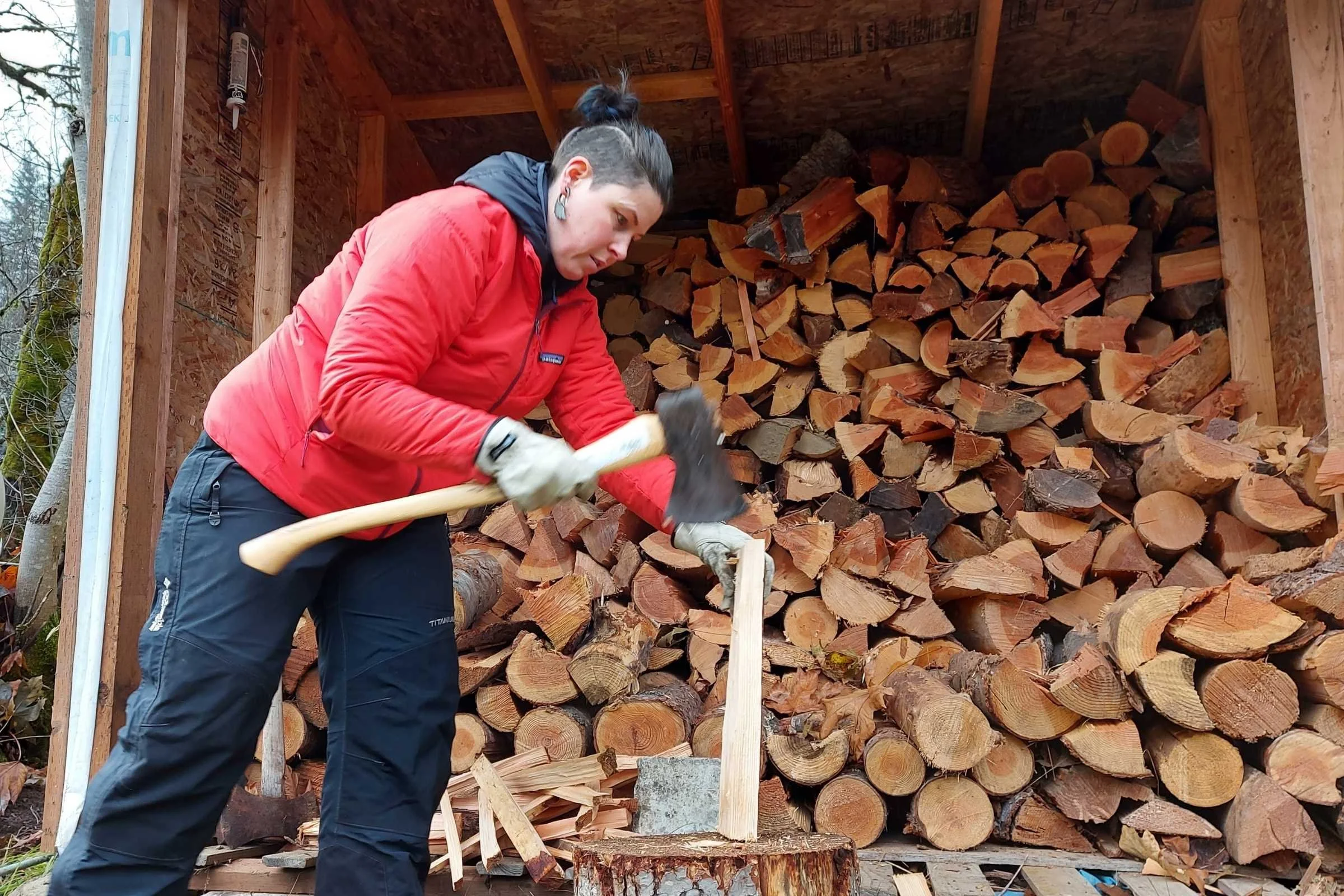
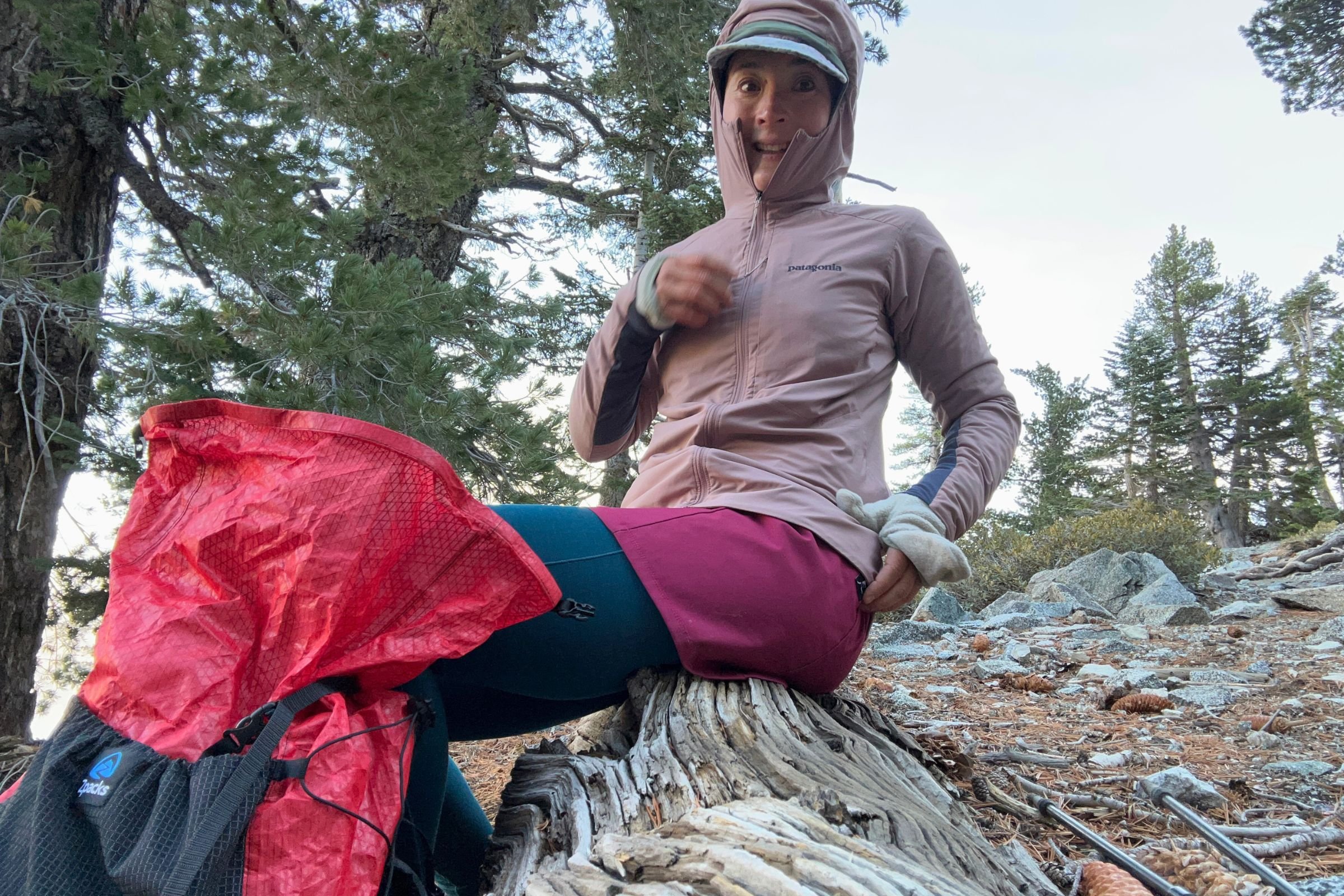
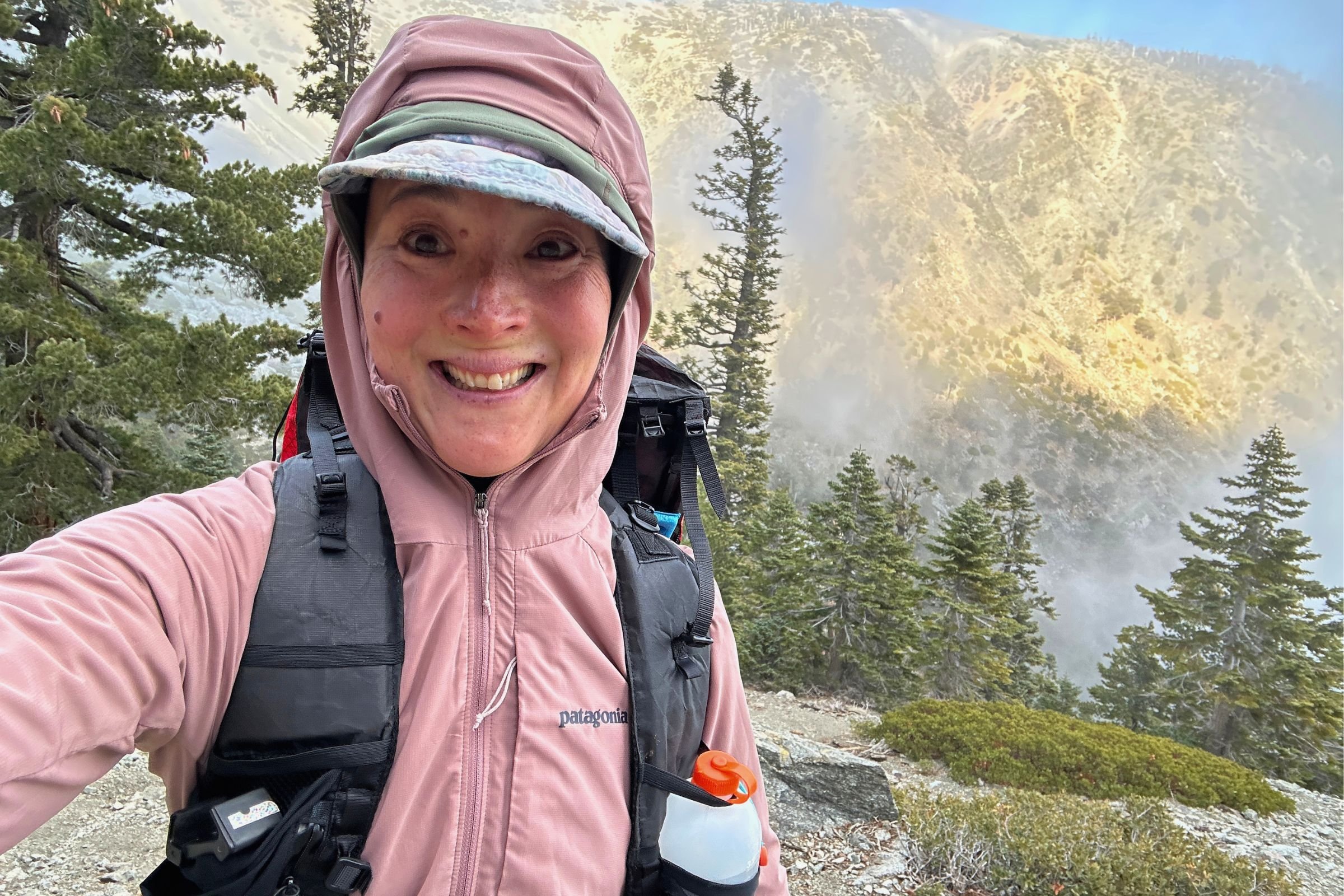
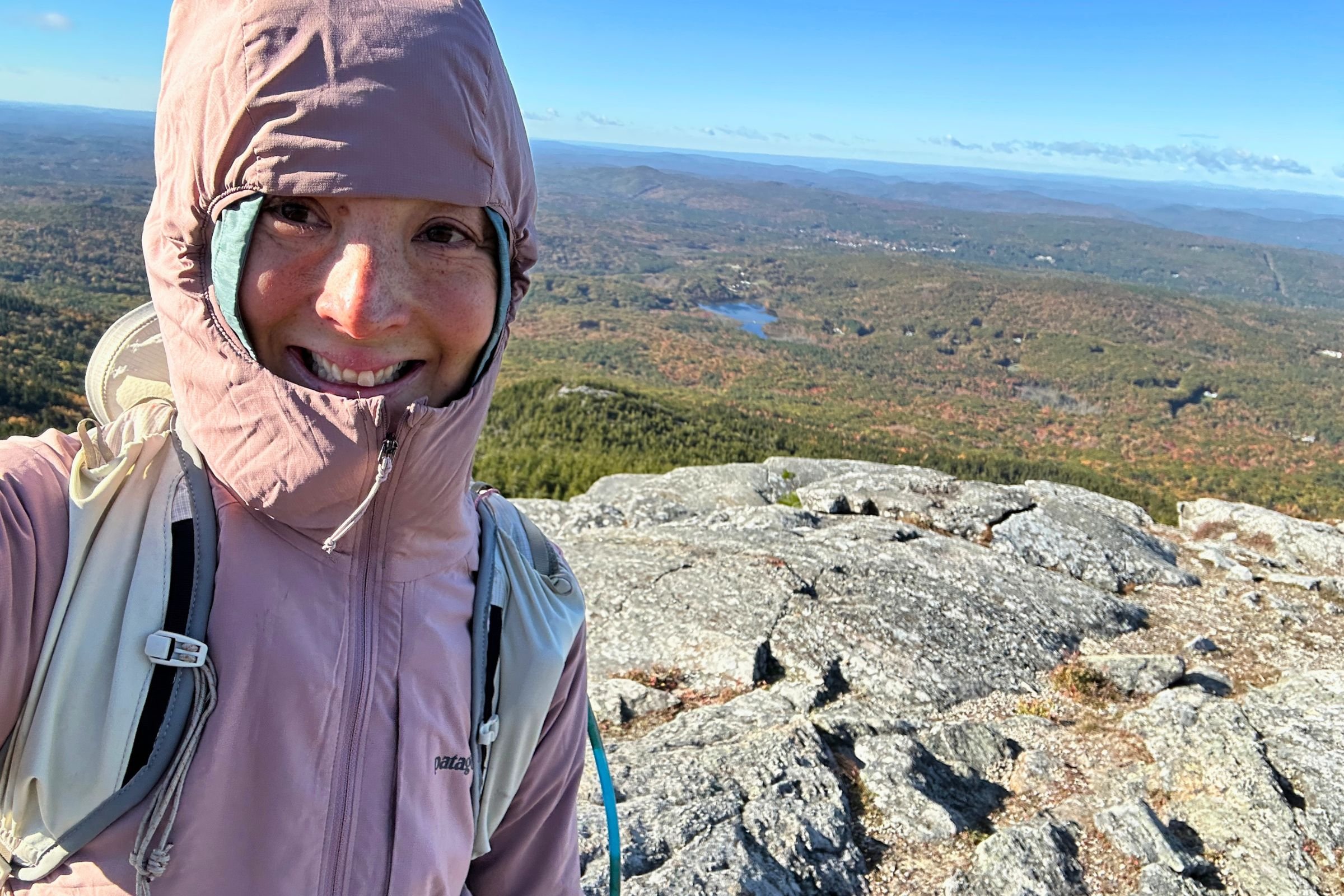
The Nano-Air Ultralight Full-Zip Hoody has 20g Full Range synthetic insulation. It has so little bulk, that when it arrived in the mail, we actually double-checked to make sure we ordered the correct model. It doesn't look like a puffer jacket but more like a windbreaker.
But when you put the Nano Air Ultralight jacket on, it is surprisingly warm. We summited peaks in New Hampshire and California in 30 mph winds in near-freezing temperatures wearing the Nano Air Ultralight jacket with just a base layer underneath. We were surprised how warm the low-profile Nano Air Ultralight kept us.
-
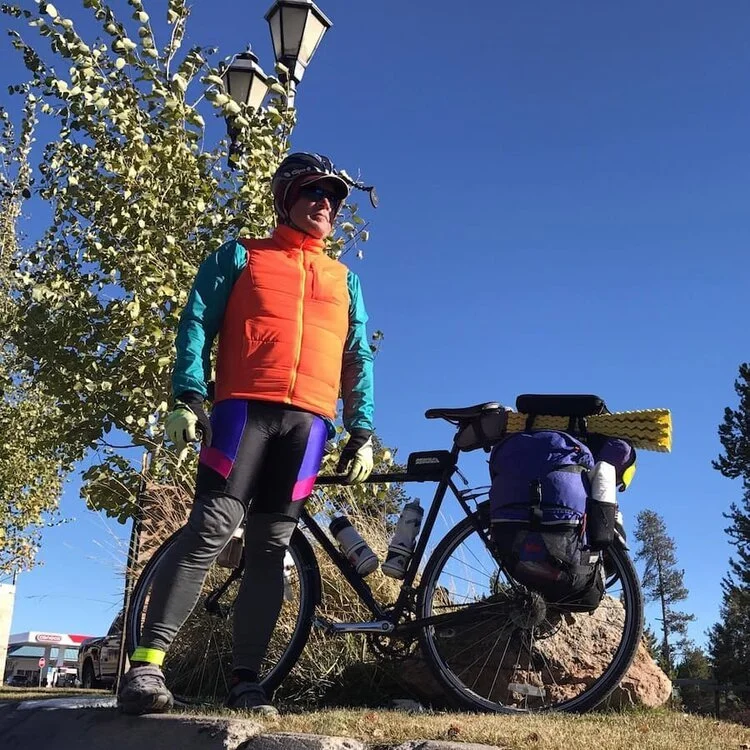
Earlier versions of this jacket were featured by our former Senior Editor Brandon Lampley in his Bike Touring Packing List, and he’s used it on multiple cross-country bike tours as well as climbing trips and mountaineering trips the world over.
As Treeline Review editor Brandon Lampley says, "The Patagonia Nano-Air is the only puffy jacket I’ve worn that moves sweat and moisture fast enough to wear during cold weather aerobic exercise, like bike touring. I’ve found it dries off my sweat and moves enough moisture to be fine ski touring in -5°F weather"
We've found the same to be true for hiking uphill as well. We tested while cycling, ski touring, and hiking and this jacket doesn't build up much sweat or heat but keeps you warm without overheating and needing to take off your jacket.
-
The Nano-Air has a slimmer fit than most synthetic jackets. It's designed for minimal layering underneath compared to other jackets we tested.
While we initially found this to be a negative, its main purpose is to wear it while hiking uphill or climbing where you'd likely want minimal layering anyway.
-
The Nano Air Ultralight jacket is a highly technical jacket and the hood is larger than most jackets to be truly helmet-compatible. It cinches down well, but the shape of the hood is different than most of the jackets we tested.
-
Like all Patagonia jackets, it’s backed by their Ironclad Guarantee. They will repair, refund, or exchange any item, no matter how long you’ve had it or how much abuse you’ve put it through.
-
Another thing we like about this jacket is that Patagonia allows you to trade it into their Worn Wear used gear portion of the website to receive store credit. So if your body changes over the years or you get into different outdoor activities, it will stay out of the landfill.
Warmest synthetic insulated jacket: Patagonia DAS Parka
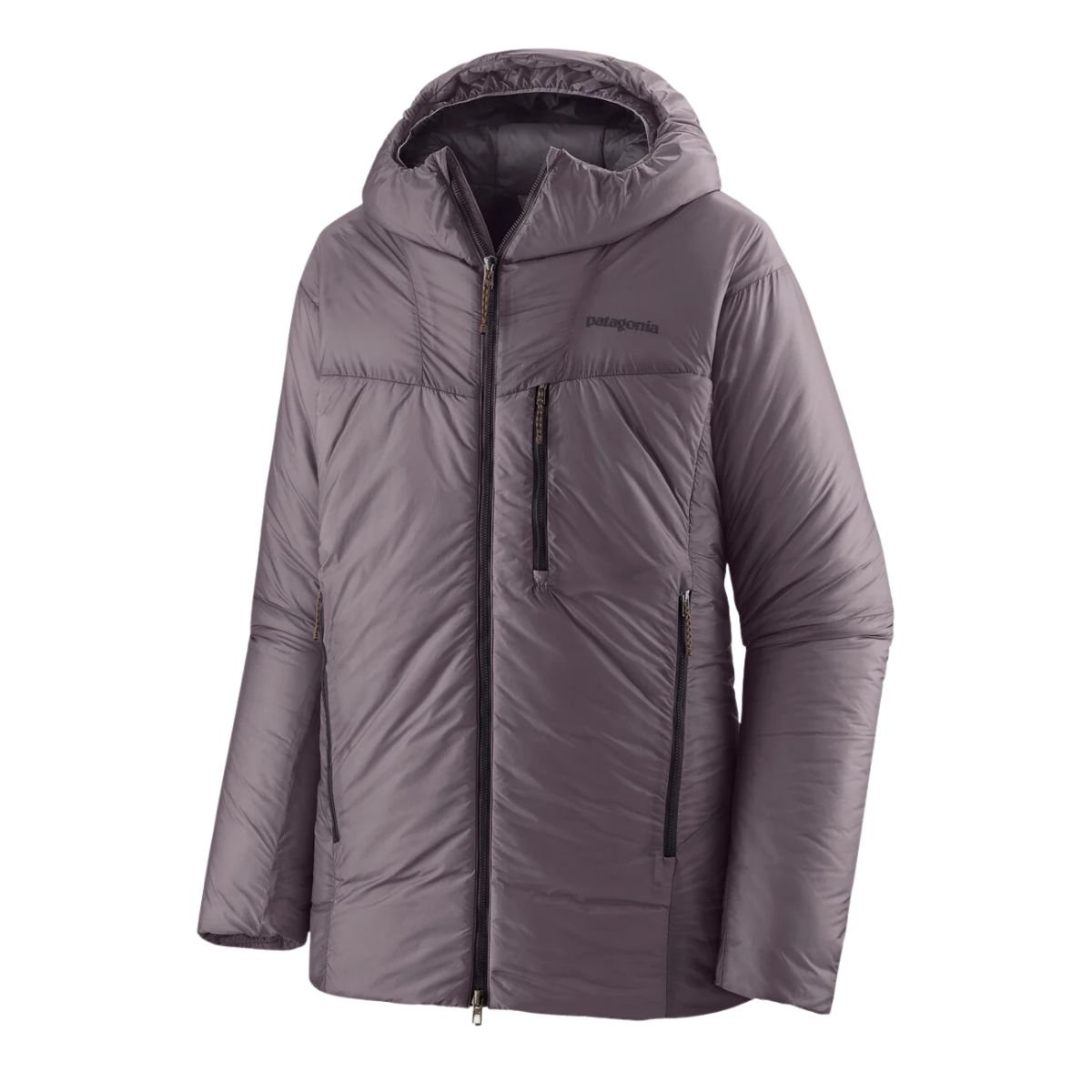
Shell material: 10D Pertex Quantum Pro recycled nylon ripstop
DWR treatment? Yes
Total weight: 19.6 oz (men's), 18.4 oz (women's)
Fill Type: 133-g PrimaLoft Gold Insulation Eco and 40-g 100% polyester with Cross Core technology
Number of Pockets: 5
Hoodless jacket version: No
Vest version: No
Packability options: Stuff Sack included
Sizes: XXS-XL (women's), XS-XXL (men's)
Warranty: Ironclad Guarantee, they will repair, refund, or exchange any item
What we liked: Premium fabrics, warmest jacket we tested, durable
What we didn't like: We would love to see extended sizes
Patagonia’s reputation for making consistently high-quality, reliable gear extends to our winner for best synthetic jacket for extreme cold, the Patagonia DAS Parka.
It's marketed as a belay jacket: a category designed for extreme warmth in alpine conditions. A belay parka is designed for minimal movement (after all, while belaying, you are sitting or standing while assisting your climbing partner). With that goal in mind, it is not surprising the DAS Parka is the warmest jacket we tested.
The DAS Parka is a weatherproof cold weather jacket for times when you won’t be moving much: everything from belaying to watching kids play. The author wears this jacket without a shell in the pouring rain in Portland and has never gotten wet (something she wouldn’t do with down–or pretty much any other synthetic jacket). If you’re looking for a foul weather puffy that can stand up to pretty much anything, the Patagonia DAS Parka is the way to go.
Compare prices of the Patagonia DAS Parka
Men's
Women's
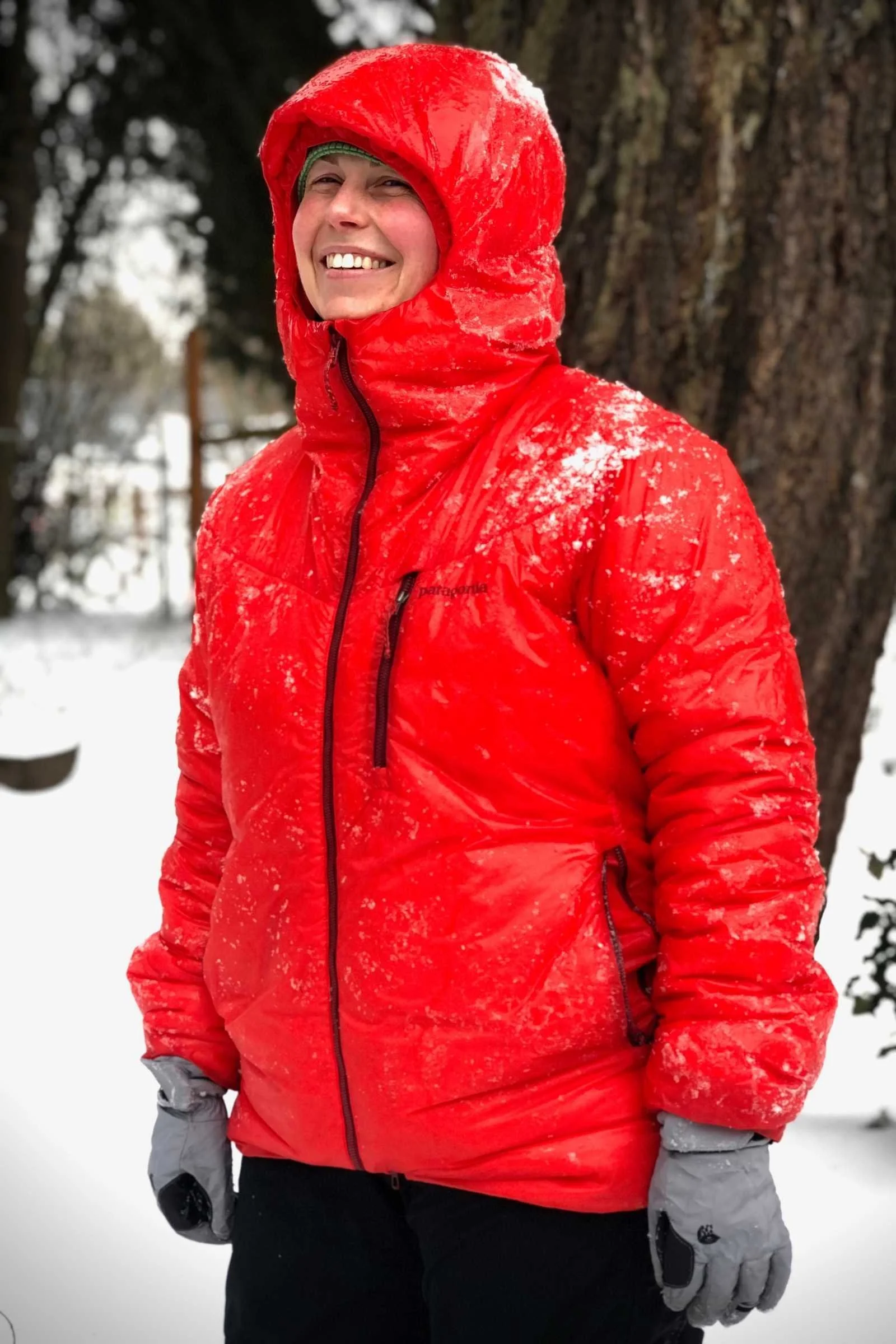
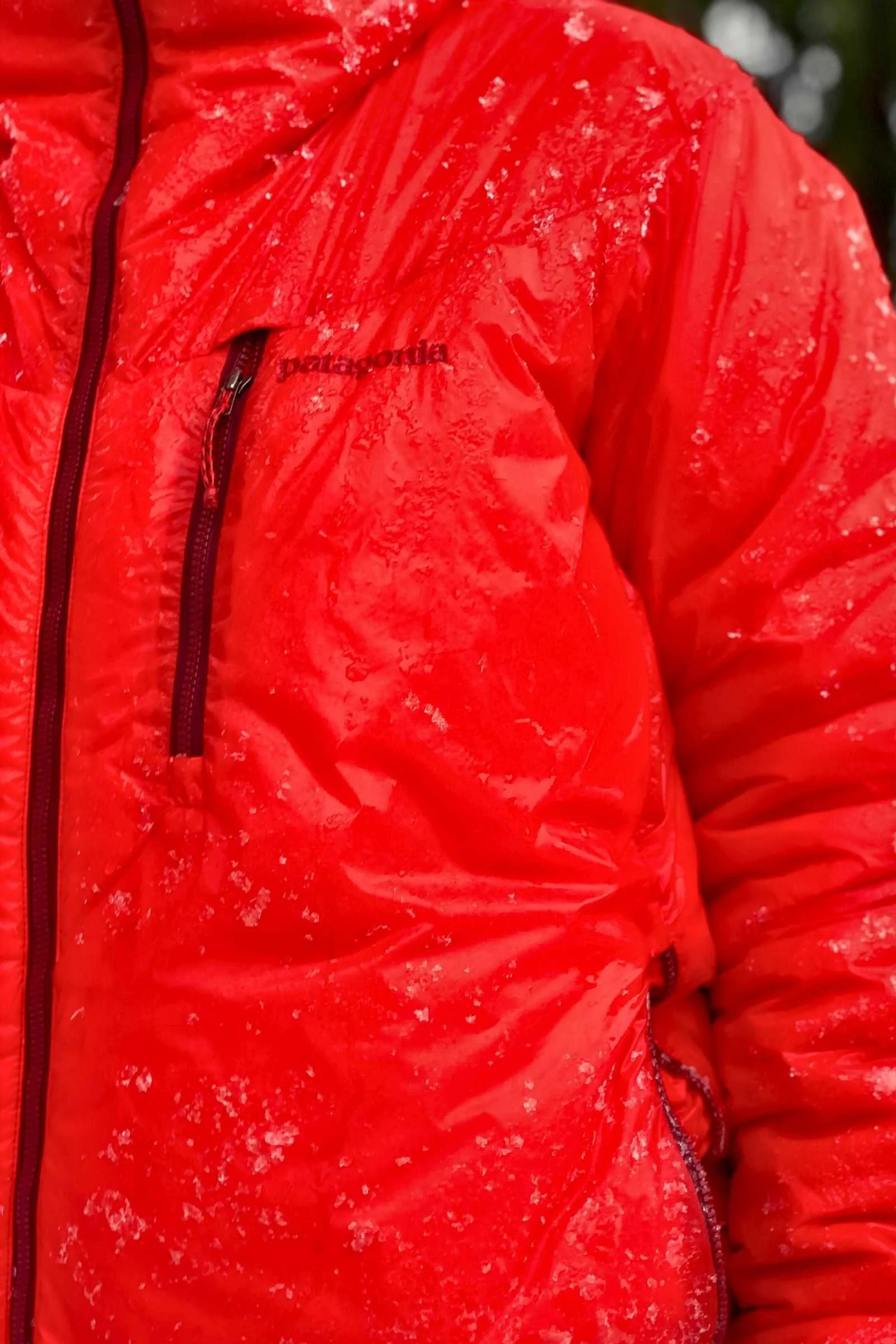
-
Since climbers usually don't want to carry much weight up the side of a rock or mountain, it's got a great warmth-to-weight ratio, too.
This hooded jacket has the most insulation of any we picked, at 133g/m2 of Primaloft Gold Insulation Eco. PLUS, they added 40g/m2 of Cross Core to key areas. The Cross Core is made with silica aerogel (used by NASA) and is ridiculously light and warm. This is one of the reasons that the warmest synthetic jacket we recommend only weighs 19.6 oz in a men's medium.
-
Patagonia also uses a very lightweight 10d Pertex Quantum Pro shell. This material is more durable than most face fabrics with such a low denier. Plus, they add a PU (polyurethane) dry coating to increase the abrasion resistance even more.
-
Practically speaking, the cut of DAS Parka is roomy enough for layering and extends over the hips, which is great for folks with bigger hips, or for use while wearing a climbing harness. The two-way zipper also makes it easy to take your harness off or on without losing a bunch of heat by fully unzipping the jacket.
We wish Patagonia offered extended sizing on the DAS Parka past Women’s XL and Men’s XXL.
-
The DAS Parka has 5 roomy pockets; two inside and two outside and one chest pocket. One of the inner pockets is so big you may even be able to keep a Nalgene in to keep it from freezing, though we wouldn't recommend doing it often as water is heavy and could rip out the inner pocket material.
-
There are thumb loops built into the elastic of the cuffs, which keeps the cuff from gapping when wearing gloves. The helmet-compatible hood is large enough to fit almost any hairstyle but easily cinches down to keep out drafts.
-
Another thing we like about this jacket is that Patagonia allows you to trade it into their Worn Wear used gear portion of the website to receive store credit. So if your body changes over the years or you get into different outdoor activities, it will stay out of the landfill.
-
With everything we like about this jacket, what's the catch?
It’s expensive. However, the price is comparable with other belay jackets. The price is also comparable with high-end high fill-power down jackets.
-
It's worth noting that Patagonia also makes a DAS Light Hoodie, which has a confusingly similar name and is less warm. It uses PlumaFill instead of PrimaLoft Gold Insulation Eco and doesn't have extra insulation at the core. It's also about half the weight at 9.7 oz for a women's medium. It's designed as a lightweight belay hoodie for less extreme cold conditions.
Best Ultralight Synthetic Jacket: Montbell U.L. Thermawrap Parka
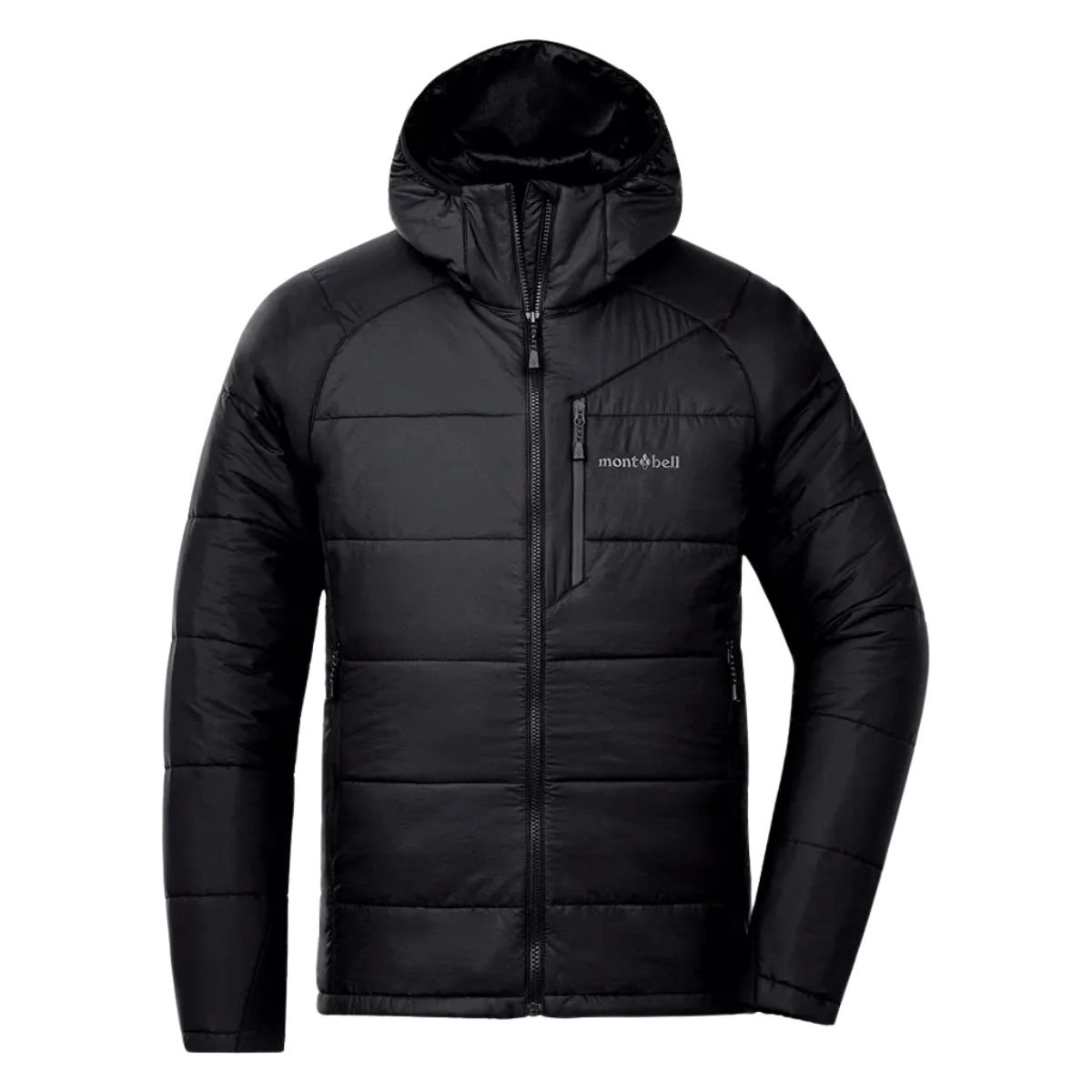
Shell material: 12D Ballistic Airlight nylon ripstop (body), 15D (sleeves)
DWR treatment? Yes (PFC free)
Total weight: 8.4 oz (women's), 8.5 oz (men's)
Fill Type: Stretch Exceloft 40 g/m2
Number of Pockets: 3 (men's), 2 (women's)
Hoodless jacket available: Yes (men’s and women’s)
Packability options: Stuff Sack
Warranty: Limited Lifetime
What we liked: Insulation value makes it optimal for lots of active hiking use, and the fabric helps keep the bulk down. Overall, lightweight
What we didn't like: Runs small, no chest pocket on the women’s version
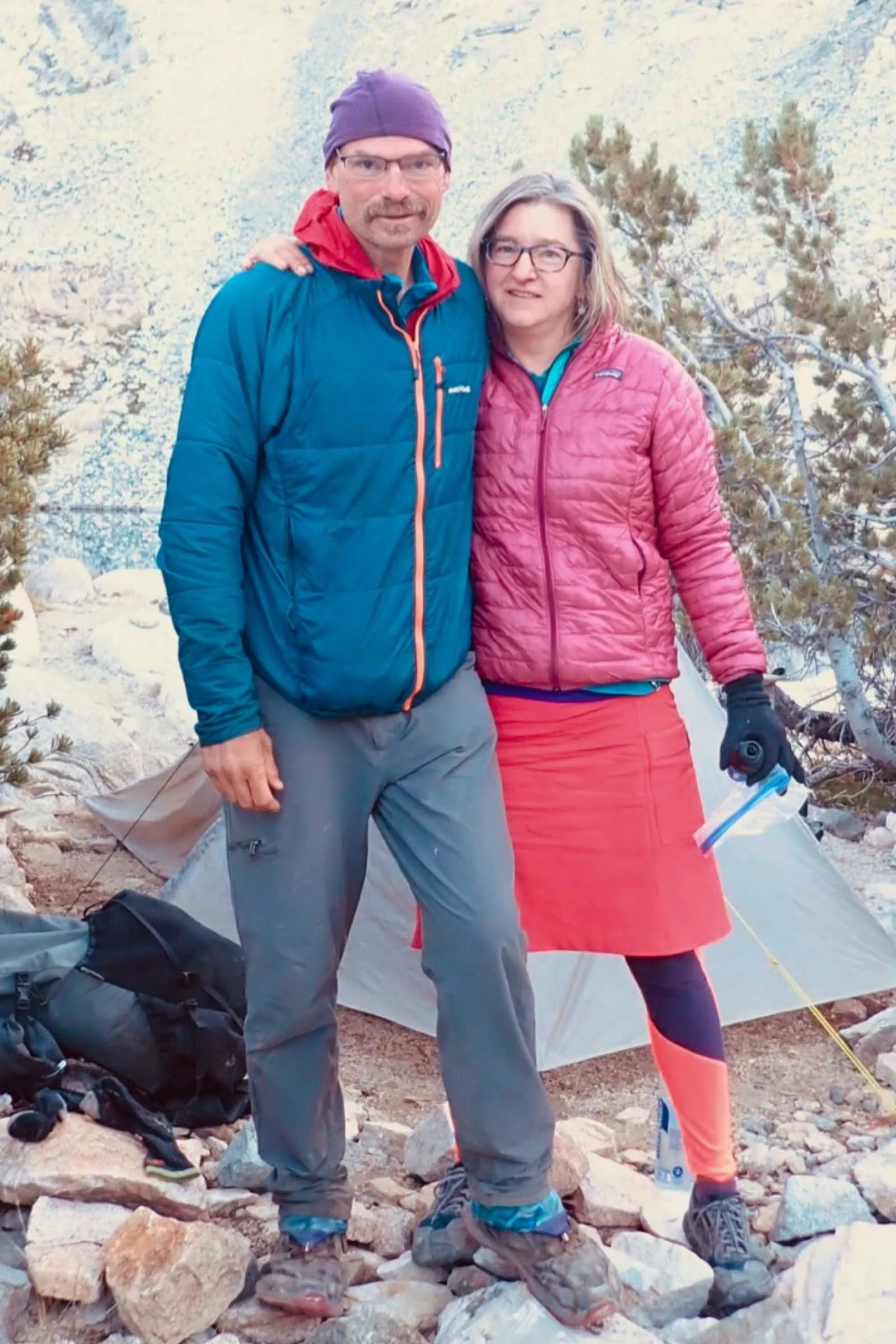
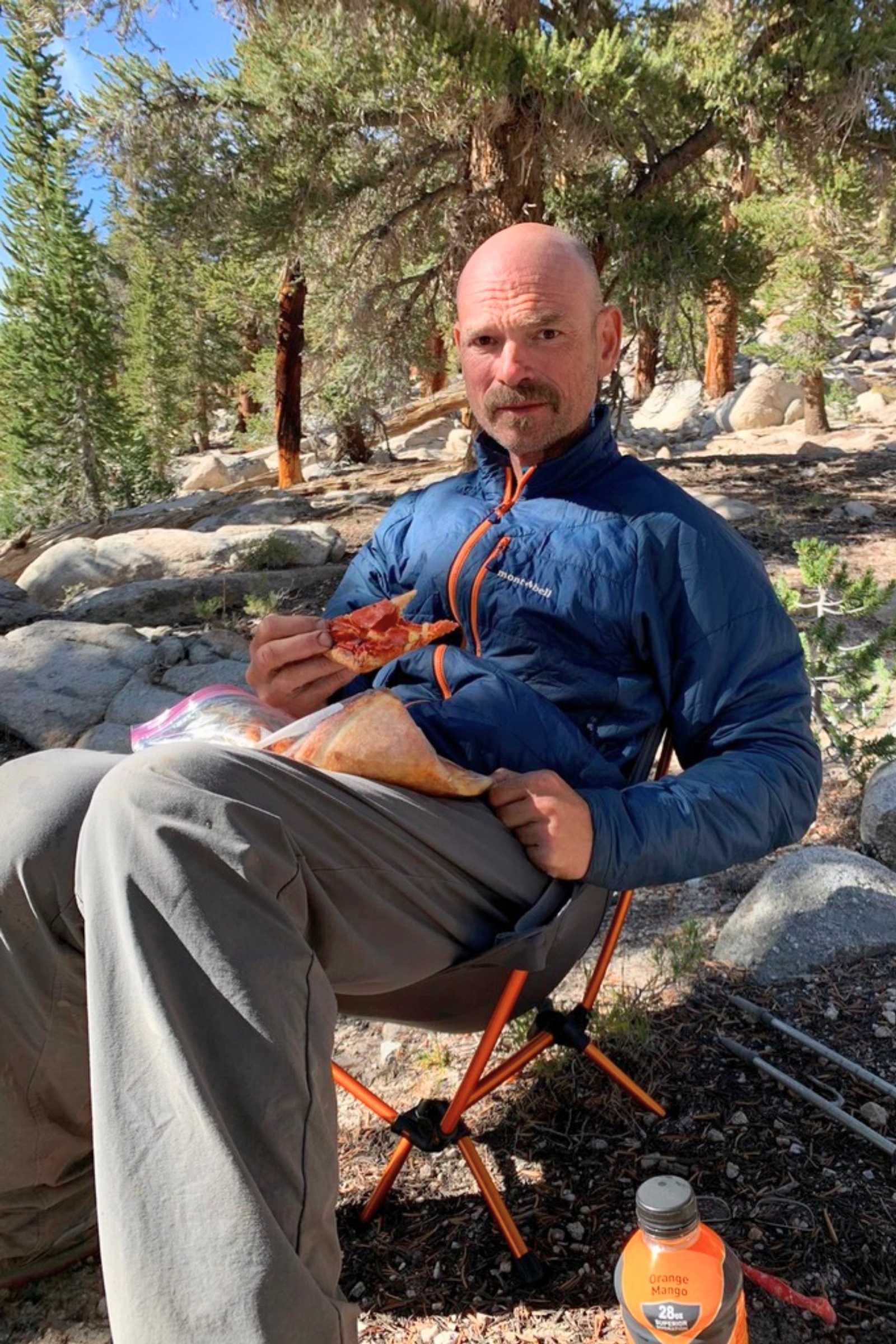
Small enough for “just in case” peace of mind, and warm enough to make a difference when it counts, testers and everyday users alike all use the same word when talking about the Montbell U.L. Thermawrap: surprising.
View the Montbell U.L. Thermawrap Parka
Men's
Women's

-
Many everyday users were surprised by how warm and packable it is. Our very own Liz Thomas raves, “the Thermawrap stays amazingly warm when wet, dries super quick, and is surprisingly lightweight.” A favorite of thru-hikers, you'll see it in our Pacific Crest Trail Gear List & Strategy, Appalachian Trail Gear List, and more.
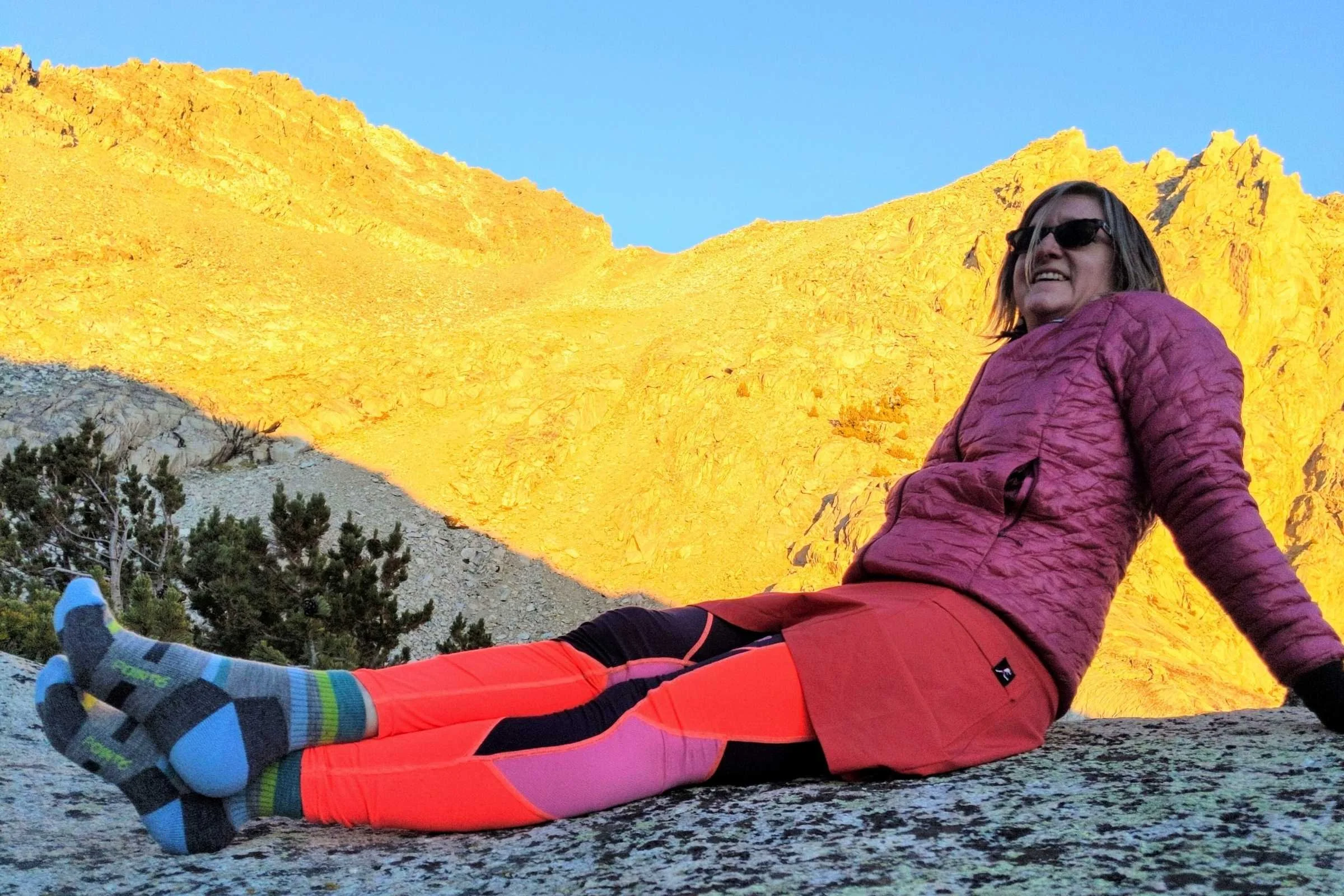
I personally have used this jacket for EVERYTHING: backpacking the John Muir Trail, cycling across the US, sea kayak guiding in Alaska, and cycle commuting in Pacific NW winters. As such, I was ecstatic to see that a lightweight jacket that is such an integral part of all my adventures is such a favorite among our testers.
-
The Montbell U.L. Thermawrap uses 40g/m2 of its proprietary Stretch Exceloft insulation. We like that it moves with you, causing less restriction and a more comfortable fit. The Ballistic Airlight shell fabric increases breathability.
While the sleeves are a 15D fabric, the body is a lighter 12D fabric, allowing more air to permeate the torso (and cutting weight).
But it’s more durable in the arms where there’s more friction with movement, and you’re more likely to need increased durability. That being said, 15D is still a very lightweight fabric. As with all ultralight fabrics, we advise taking extra care to ensure the fabric doesn’t snag and tear.
-
The one complaint we saw with the Montbell UL Thermawrap was that sizing could run slightly small. This seems to have since been fixed with shell fabric and insulation updates. Montbell also now offers a more roomy fit.
We’ve noticed that there can be limited colors, especially in the parka. The size range is limited in women’s and men’s from small to extra-large. There is a men’s XXL option in black only. We’re also bummed that, as with many brands, there is a chest pocket on the men’s version but none on the women’s version.
-
Some other features we thought were a great way to add value without much of a weight penalty were: a Velcro tab hood adjustment, a DWR-treated front zipper, and placement of the drawcord hem in the handwarmer pocket.
For the additional weight of less than an ounce, we feel the hooded version is worth adding for that extra boost of warmth, potentially eliminating the need to carry a warm hat.
Best Synthetic Jacket for Thru-hiking: Enlightened Equipment Torrid

Shell material: 10D Nylon
DWR treatment? Yes
Total weight: 8.9 oz (men’s M) and 8.3 oz (women's M)
Fill Type: Climashield APEX
Number of Pockets: 2
Hoodless jacket version: No
Vest version: NO
Packability options: Packs into hood
Sizes: XS-3XL
Warranty: Three years repair and replace at their discretion
What we liked: incredibly warm, bang for the buck
What we didn't like: not the most stylish
When Treeline Review co-founder Naomi Hudetz was planning her Iceland traverse, she knew that the weather was going to be the biggest challenge – rain, snow, wind, cold.
She needed an insulation layer that would stay warm when wet, had breathability, and would also pack down small because she had a lot to carry and not much space in her pack. The Enlightened Equipment Torrid was exactly what she needed.
View the Enlightened Equipment Torrid Jacket
Men's
Women's
The Torrid has synthetic insulation – Climashield APEX, to be exact – that was developed specifically for this use case. Climashield claims that it's the "most thermally efficient continuous filament insulation on the market" and her experience in Iceland is a testament to this claim.
There were multiple days in Iceland when a brutal headwind did not stop. She and her hiking partners formed a peloton – taking turns in front – in order to keep going. It was also raining and snowing in the mid-30s°F. She wore the Torrid all day, underneath her rain shell, and it kept her warm and dry, for multiple days in a row.
The cut isn't as refined and stylish for everyday town use as you'd see in other jackets. But for thru-hikers who value warmth-to-weight ratio and bang for the buck, the Enlightened Equipment Torrid Jacket can’t be beat.
Best Big and Tall: Carhartt Gilliam Active Jacket
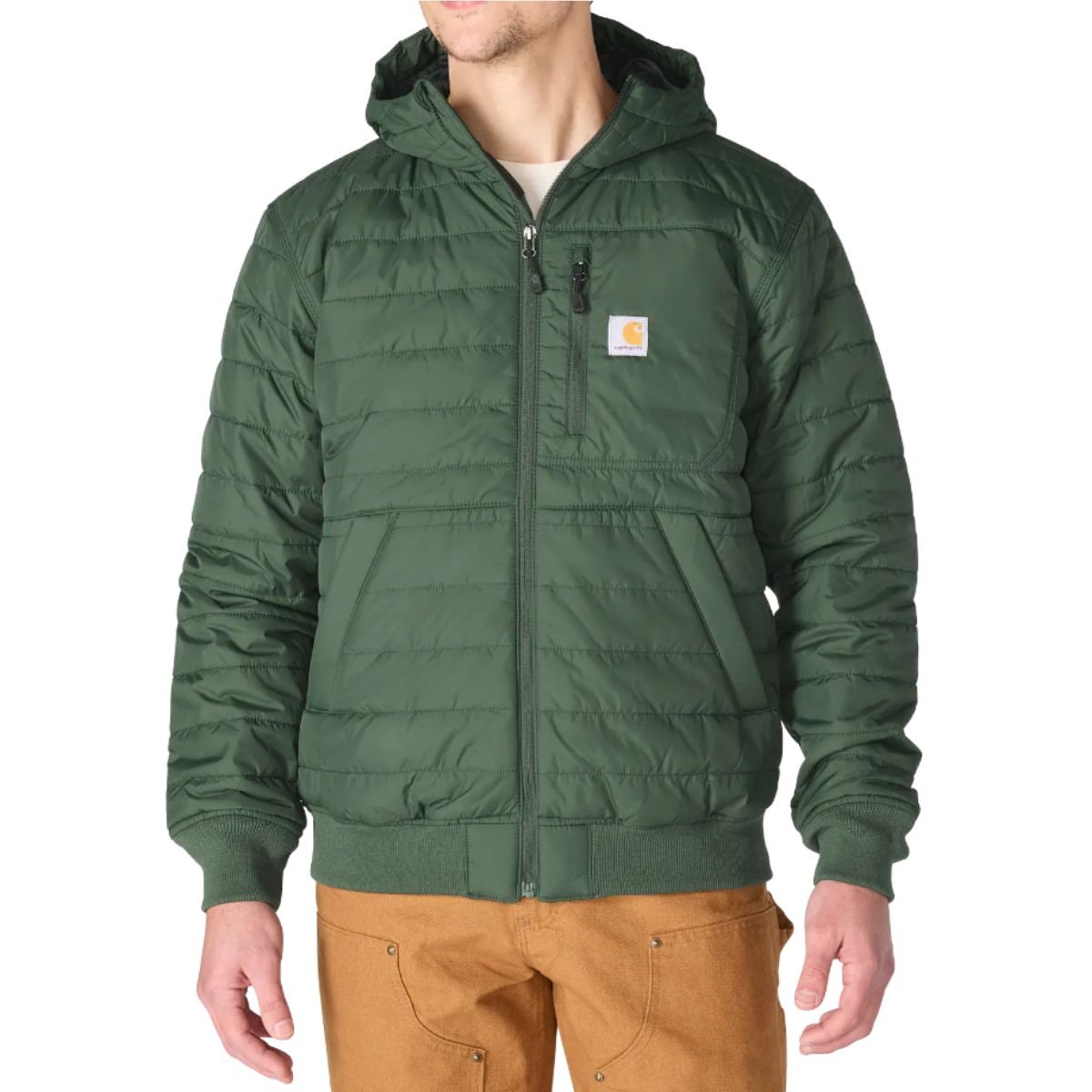
Shell material: CORDURA nylon
DWR treatment? Yes (PFC free)
Total weight: 17.6 oz
Fill Type: 120 g polyester
Number of Pockets: 5
Hoodless jacket version: Yes
Vest version: Yes
Sizes available: S-3XL, L-2X in Tall
What we liked: Fabric is tougher than other puffy jackets
What we didn't like: Torso is cut short, no hood
Treeline Review writer Clayne Zollinger says that the Carhartt Gilliam Insulated Jacket is his favorite jacket for staying warm in both fall and winter.
In his guide to Best Outdoor Clothing for Big and Tall Adventurers, he praises its ability to keep you warm without overheating during activities. "I’ve owned this jacket for several years now and it is my go-to jacket for rainy, windy, or otherwise chilly days and I wear layers underneath in the winter when I need to be just a little bit warmer."
Carhartt Gilliam Active Jacket
-
As with all synthetic jackets, getting the right balance of warmth and breathability is important. Clayne says, "It is not quite warm enough for the coldest of winter temperatures in the mountains, but it is just right for regulating one’s temperature while hiking in the cold. I find it also excels as a layer working with other jackets in more extreme temperatures. It also provides real resistance to wind chill when placed over a light fleece jacket."
-
My only complaint about this jacket is that it’s a little short in the torso. Some may find that to be an issue, but for me it seems to just cover enough while not getting in the way when bending down, crouching, or scaling boulders, and for those that do find this to be an issue, Carhartt provides several tall sizes in addition to the standard ones.
-
This jacket excels at water-resistance, breathability, and durability. Clayne writes, "Carhartt’s nylon CORDURA® fabric seems to be far more resistant to scuffs and rips than other similarly weighted insulated jackets, whose shells can sometimes feel thin and fragile in comparison.
In addition to being tough, I found the Rain Defender water repellent coating works great to slough off snow and rain. I’ve worn the Rain Defender in both snow and rainstorms and was able to stay warm and completely dry, and both slide off the jacket and appears dry quickly afterwards."
Other insulated jackets we tested
L.L.Bean PrimaLoft Packaway Jacket

Shell material: Pertex Quantum mini-ripstop, 100% recycled polyester
Total weight: 12.4 oz
Fill Type: 60-g PrimaLoft Gold Insulation with Cross Core (99% recycled polyester)
Number of Pockets: 4 (2 zippered hand, 1 zippered chest, 1 internal media/stow)
Hoodless jacket version: Yes (men’s and women’s)
Vest version: Yes (men’s and women’s)
Sizes available: Women's XXS to 3X (also available in petite); Men's S to XXL (also available in tall)
Warranty: 100% satisfaction guarantee for one year, then manufacturer defects only
What we liked: Under the radar performer, inclusive sizing
What we didn't like: Fit is boxy in the torso relative to the sleeve sizing
The L.L. Bean PrimaLoft Packaway Jacket was our former winner for best budget synthetic jacket for many years. It's a gold-standard jacket considered by many reviewers to be the best-insulated jacket for the price. We found it incredibly warm — especially for how thin it is. While L.L. Bean is known for casual gear, they’ve snuck in high-end insulation to create a reasonably-priced lightweight, packable, mid-layer jacket or shoulder season outer layer.
This year, the new REI Microtrek Insulated jacket is even more affordable, is also available in inclusive sizing, and has more sustainability features.
L.L.Bean Primaloft Packaway Jacket
Men's
Women's

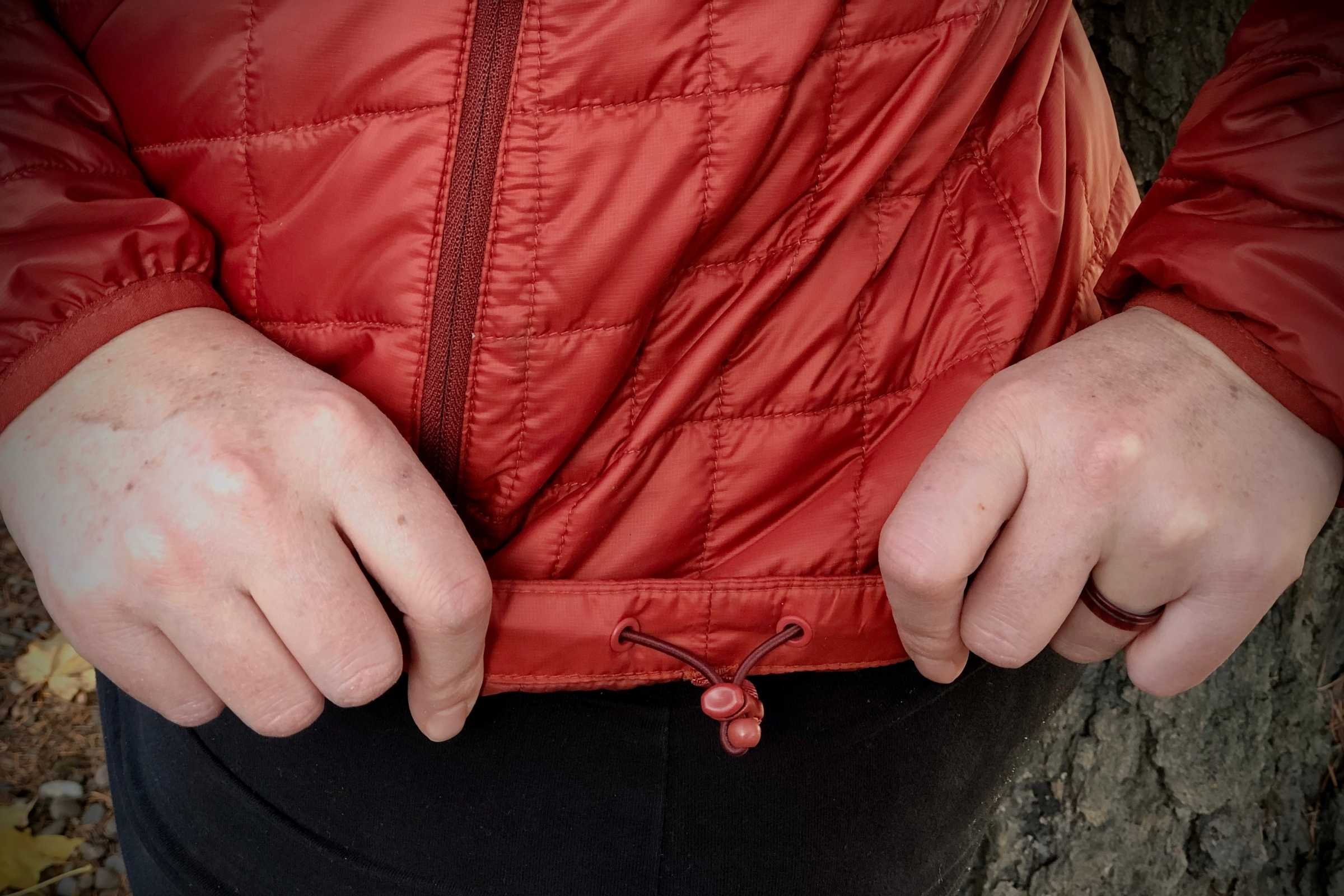
When we took it out of the package, it didn’t look like it would be very warm because of how thin it was. While testing, we were pleasantly surprised by its warmth. We were toasty warm in 40°F weather with just a thin base layer underneath.
L.L. Bean has a 100% satisfaction guarantee within one year of purchase. After one year, they cover manufacturer defects only. If you’re unhappy with your sizing or how it looks on you, it’s easy to exchange or return.
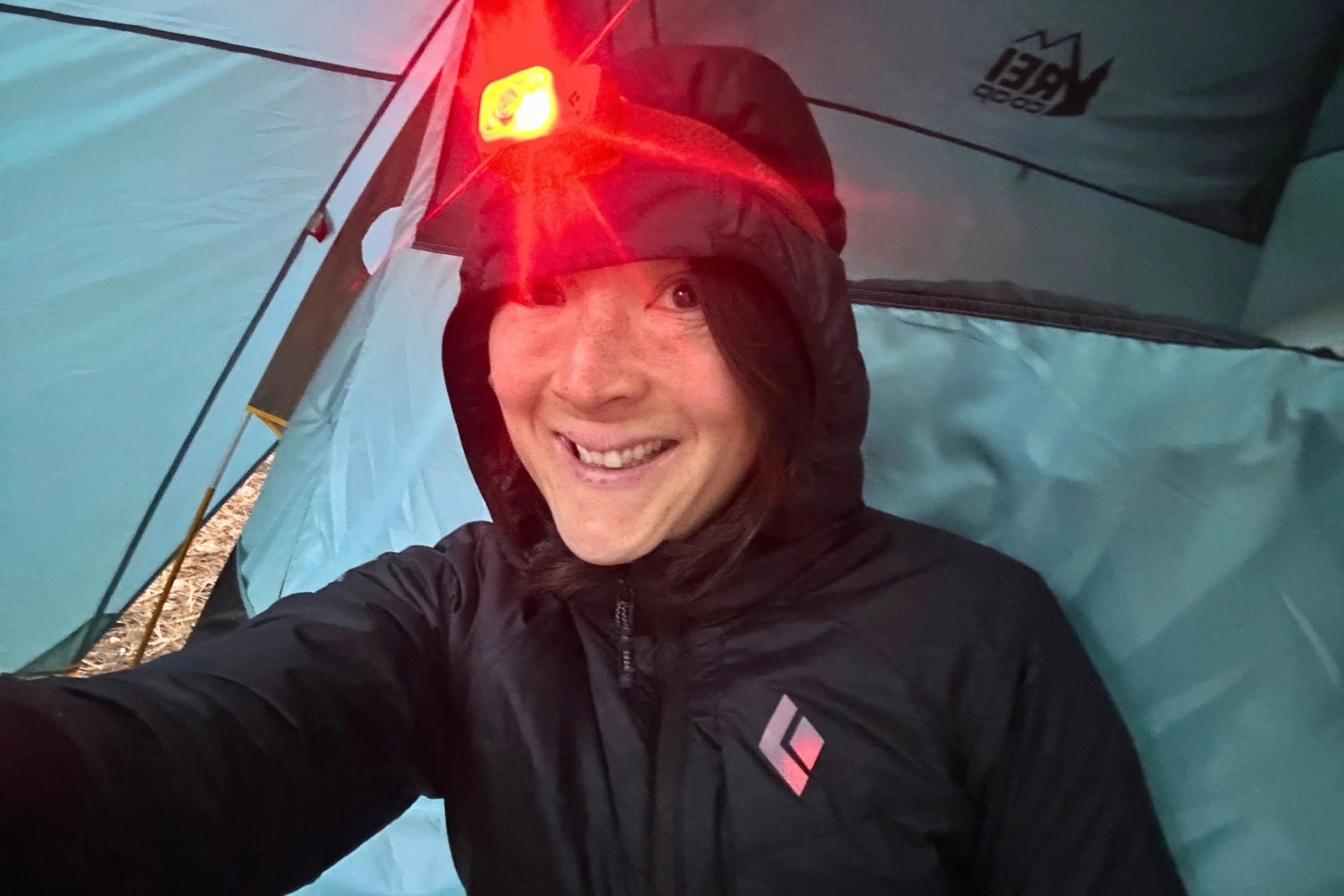
Black Diamond Solution 2.0 Hoody
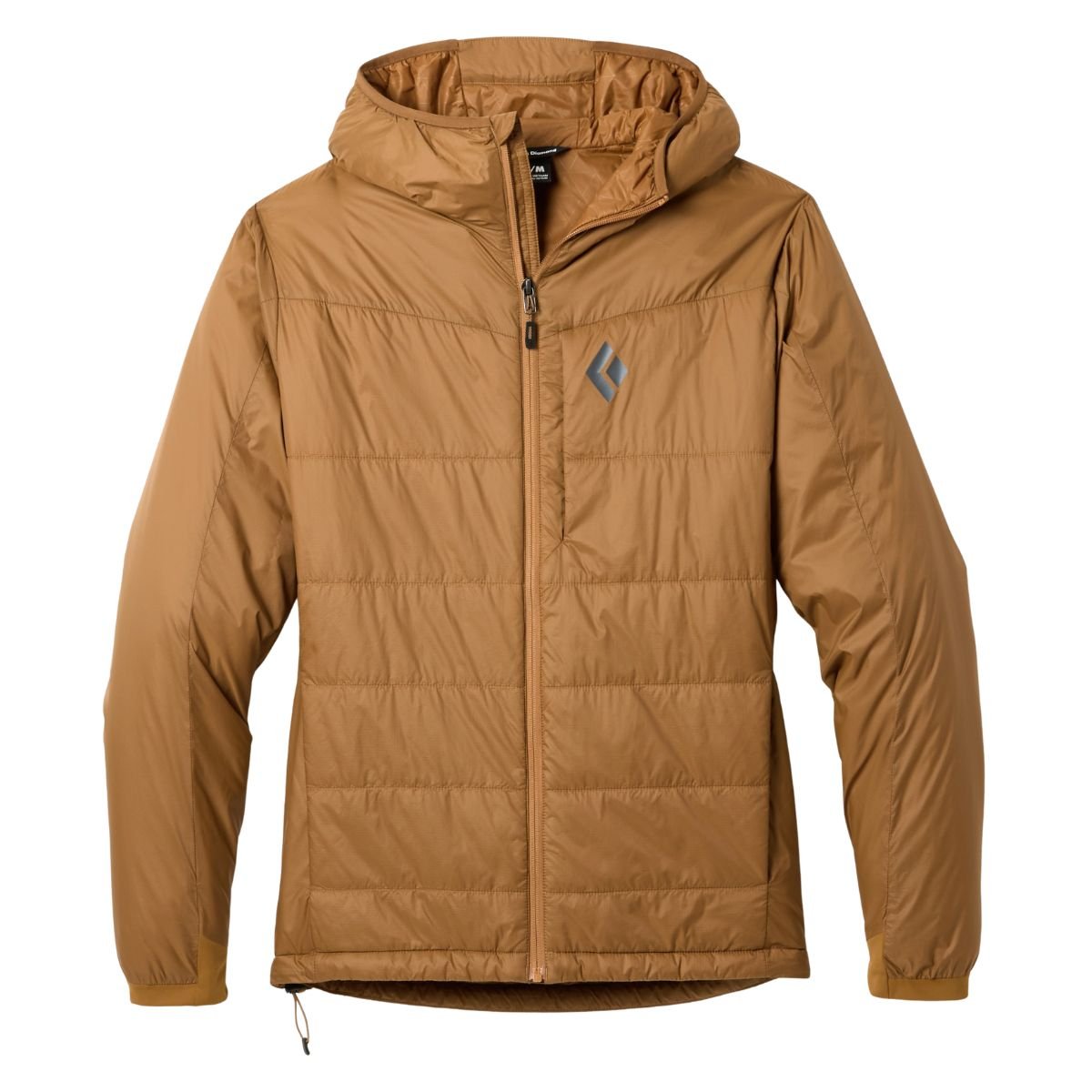
Shell material: 20-denier recycled nylon with ripstop
DWR treatment? Yes
Total weight: 11.7 oz (women), 13.6 oz (men)
Fill Type: PrimaLoft® Gold insulation with Cross Core
Number of Pockets: 3 zippered
Hoodless jacket version: No
Vest version: No
Packability options: Stuff pocket
Sizes: XS-XL (women), S-XL (men)
Warranty: Practical Product lifetime
The Black Diamond Solution 2.0 insulated hoody is a lightweight, synthetic insulated midlayer built for mixed weather. Too often, synthetic puffer jackets are designed more for style than function. In contrast, the Black Diamond Solution 2.0 is a synthetic layer that is technical and designed for multisport alpine missions. Made with PrimaLoft Gold with Cross Core aerogel, this is a high-end synthetic jacket designed for people who need to stay warm in wet conditions.
Although still flattering in design, it is designed for people who might otherwise opt for a technical lightweight down jacket, but need the benefits of a synthetic layer for wet weather or extra durability (or vegan athletes who prefer synthetic insulation). The Black Diamond Solution 2.0 is surprisingly warm for its weight in a way that is atypical for synthetic jackets.
Black Diamond Solution 2.0 Hoody
Men's
Women's
Arc’teryx Atom Hoody
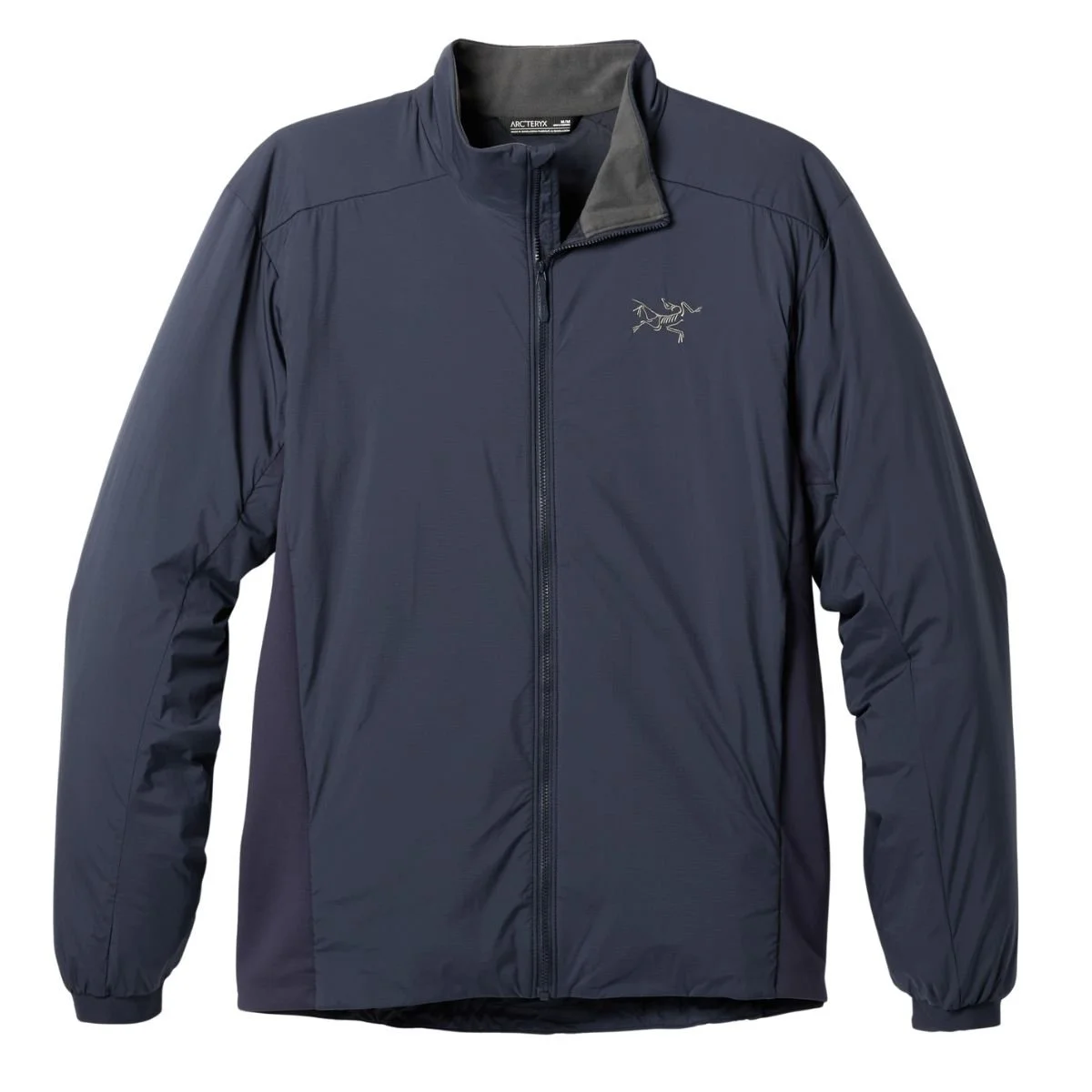
Shell material: Tyono 20 nylon
DWR treatment? Yes
Total weight: 11.3 oz (women), 12.5 oz (men)
Fill Type: Coreloft Compact 60 g/m2
Number of Pockets: 3
Hoodless jacket version: Yes (men’s and women’s)
Vest version: Yes (men’s and women’s)
Packability options: Stuff pocket
Sizes: S-XXL (men), XS-XL (women)
Warranty: Limited Lifetime
The Arc’teryx Atom Hoodie was just short of winning our top recommendation. It's a little heavier than our overall pick, the Patagonia Micro Puff Hoody. Still, there's a lot to love with this jacket.
The liner fabric of the Arc’teryx Atom Jacket is soft to the touch, making it comfortable even when worn over a short-sleeved shirt. The 20D shell fabric on the Arc’teryx is also more tear and abrasion-resistant than the Micro Puff at 10D.
Another thing we liked about the Arc’teryx Atom is the stretchy fleece fabric that replaces the synthetic insulation on the underarm and flank. This kind of active insulation increases breathability compared to most synthetic jackets.
While the breathability isn’t quite as good as the Patagonia Nano-Air (which uses specially-designed synthetic insulation made for breathability), it is noticeable compared to other synthetic jackets.
Arc’teryx Atom Hoody
Men's
Women's
The Atom also includes cuffs that are easy to get off and on, durability in key areas, and uses a dope-dyed liner. I reached out to Arc’teryx to find out what the heck dope-dyed meant. Dope-dyeing is a “less resource-intensive coloring process.”
Additionally, as with all Arc’teryx apparel, the fit is very athletic, especially when compared to the Patagonia Micro Puff, which fits a wider variety of body types.
The North Face Thermoball Hooded Jacket
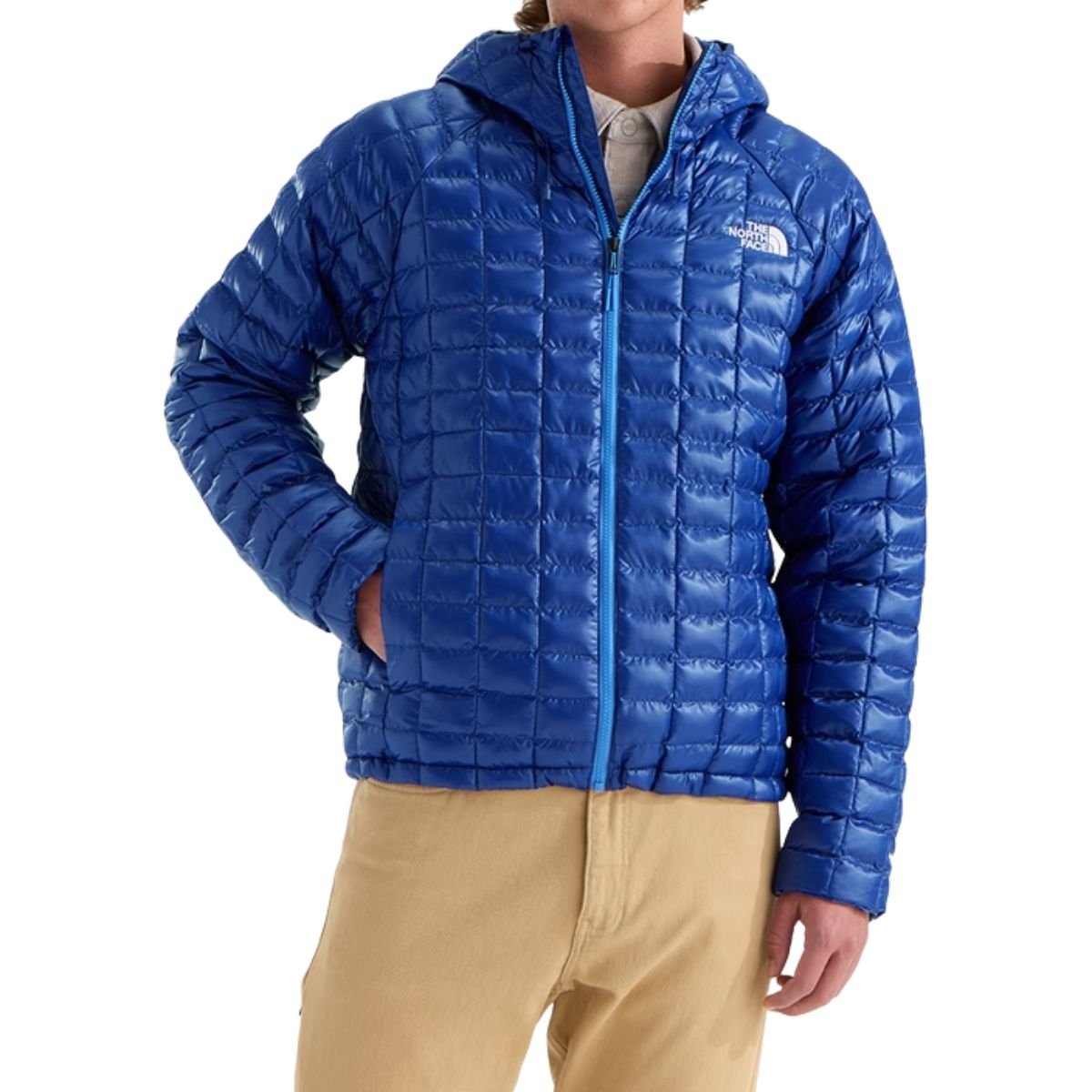
Shell material: WINDWALL recycled polyester
DWR treatment? Not provided
Total weight: Not provided
Fill Type: ThermoBall insulation
Number of Pockets: 2 hand, 1 stowable
Hoodless jacket version: Yes, men’s and women’s
Vest version: No
Packability options: None stated
Sizes: S-XXXL (men's) and XS-XXL (women's)
The North Face ThermoBall Hooded Jacket was promising due to its affordable price, recycled materials, and widespread availability. However, in testing, it wasn't as warm as many of the other synthetic insulated jackets we tested. It also didn't have as many color options.
We tested the kids' version for our best kids' snow gear guide. We also like that The North Face ThermoBall is available in kids' and toddlers' sizing, so a family can match.
The North Face ThermoBall Hooded Jacket
Men's
Women's

The author testing an insulated jacket with her child. Sustainability is about making choices that benefit the next generation. Photo by Emily Haas
The best gear is used gear
Looking for a budget puffy jacket? Buy used. Used gear and apparel can be purchased at a fraction of the cost of new gear. We like this because it’s good for the environment, and leaves us with more money to go DO things outside, which is kind of the point.
Many cities have a consignment or resale outdoor gear store. If you don’t live in a place with a used outdoor retailer, hit up the thrift shops. Some diligence and patience can lead to incredible finds. Just don’t start looking a week before you need the jacket.
Don’t have a local used gear store? Prefer shopping online? Patagonia’s Worn Wear also makes it easy to search for models that we recommend. Arc'teryx ReBIRD Resale program allows you to purchase pre-owned Arc'teryx items for a fraction of the cost. Amazon sells Certified Refurbished items with a 90-day minimum guarantee by selecting "Amazon Renewed" next to your search bar.
Just like other consignment stores, you may have to be patient for the thing you want to show up. But it’s easy to check, sometimes as easy as refreshing a bookmarked webpage.

Synthetic jackets can be used in conjunction with other layers like windshirts and baselayers to add more warmth. Photo by Liz Thomas
What is a synthetic insulated jacket?
A synthetic insulated jacket is a versatile part of any wet weather or high activity layering system. There’s a reason I have a synthetic puffy in addition to my 3 down jackets. Out of those 4 puffy jackets, my one synthetic gets the most use because of the high versatility of synthetic jackets. On a hike, ride, cross-country ski, or cold-weather run, a synthetic jacket keeps you warm at rest without overheating while you move.
What type of synthetic insulation is used in jackets?
There are more brand names for synthetic insulation than we can cover here. The ones in this guide use several different constructions. Continuous-filament fills use long fibers that form a layer of insulation. Short-staple fills use shorter fibers to create loft, and cluster fills use small groups of fibers to mimic down.
In practice, the fill name only tells you part of the story. We liked the Nano-Air for moving in cold weather because the whole jacket breathed well. The DAS Parka, on the other hand, was the warmest jacket we tested and the one we’d reach for when we’re standing around in the cold. The shell, lining, and amount of insulation all matter.
Difference between synthetic insulation fills
You can expect high-end insulation fills to have the following performance abilities:
Warmth to weight similar to down
Thickness/not bulky for freer movement
Retain a high percentage (90% or more) of insulation capability when wet
Breathable for moisture management when active
Packable
Water-resistant, so it absorbs less moisture to begin with
Have 4-way stretch to move with you
Fast drying
High loft and soft feel to mimic down
Durable
Synthetic Insulation Comparison Table
| Insulation | Jacket in this guide | What to know |
|---|---|---|
| PlumaFill | Patagonia Micro Puff Hoody | A continuous synthetic fill designed to mimic the loft of down. We liked how small the Micro Puff packed for the warmth it provided. |
| FullRange | Patagonia Nano-Air Hoody | A stretchy fill used in a jacket we found particularly breathable during cold-weather activity. |
| Climashield APEX | Enlightened Equipment Torrid Jacket | A continuous-filament fill. Naomi wore the Torrid under a rain shell on her Iceland traverse and appreciated its warmth for the weight. |
| Stretch Exceloft | Montbell U.L. Thermawrap | Montbell’s stretch insulation. We liked that the jacket moved with us while hiking and cycling. |
| Coreloft | Arc’teryx Atom Hoody and Cerium Hoody | The Atom uses synthetic insulation. The Cerium combines down with Coreloft in areas more likely to get damp. |
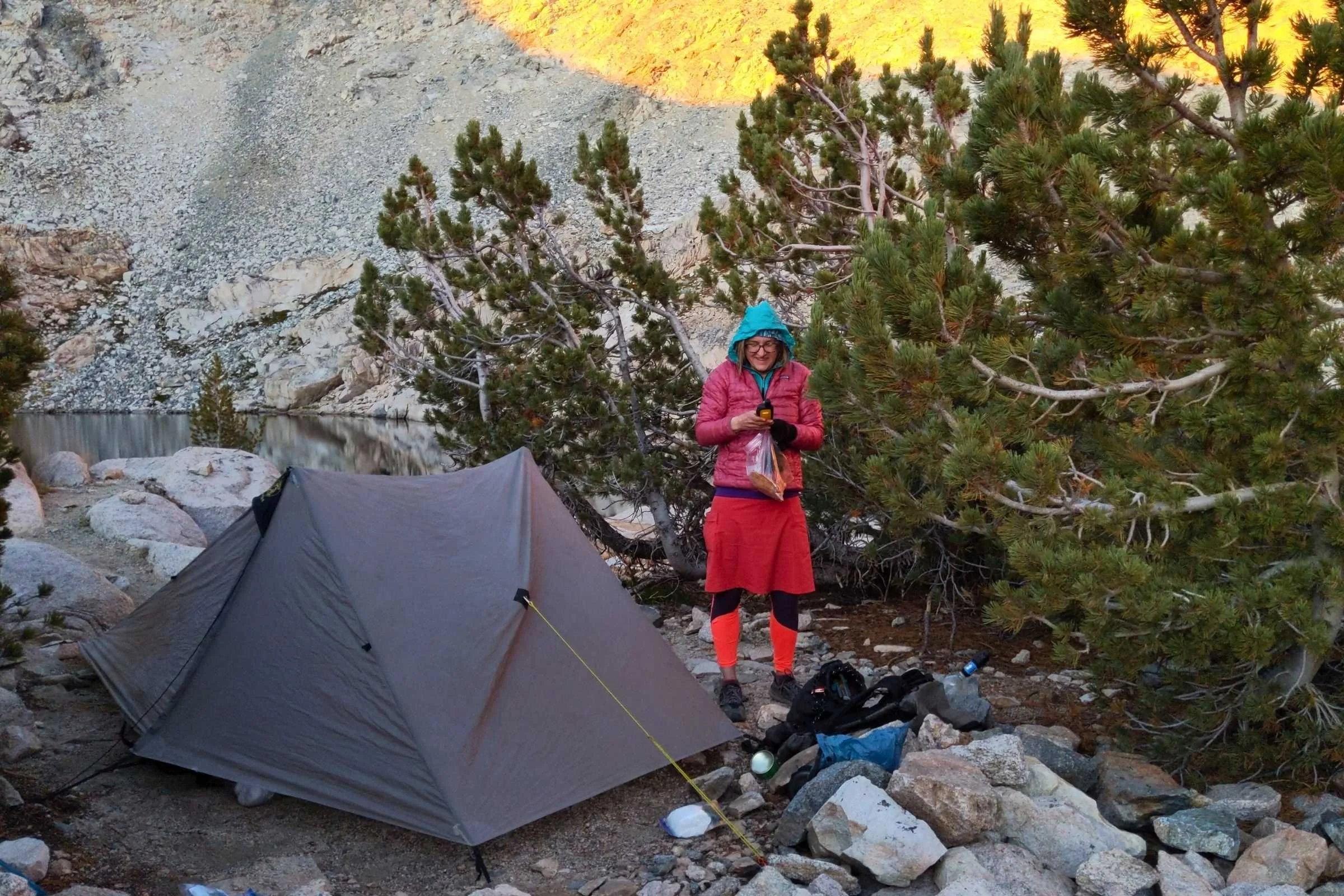
Treeline Review editor Naomi Hudetz in camp on a cold morning. Photo by Liz Thomas
What to Look for in an Insulated Jacket
Warmth
Synthetic insulation has traditionally not been as warm as down insulation. Innovations in technology, however, have narrowed the gap. This has resulted in surprisingly warm synthetic jackets. While synthetic jackets can be warm, they aren’t often equal to down in warmth-to-weight ratio.
Water Resistance
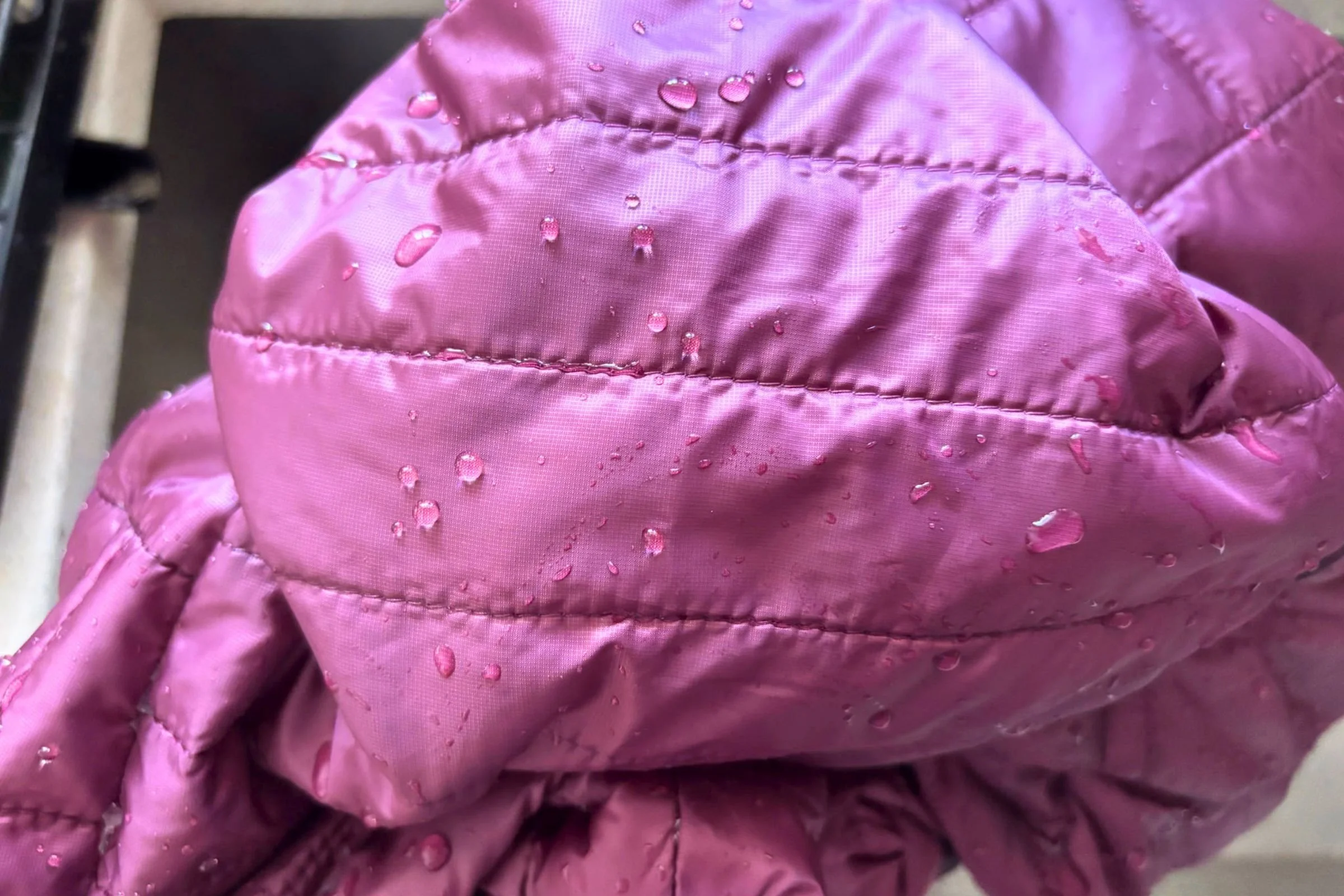
Although synthetic-filled jackets by their very nature are water-resistant, their water-resistance can be improved by the use of a DWR coating (Durable Water Repellent) on the face fabric or applications to the fibers themselves such as siliconization. Almost all the jackets that we considered have some sort of DWR finish or application to the fibers to improve water resistance.
Breathability
Breathability is one of the top reasons to choose a synthetic jacket over a down-filled jacket. The water vapor that is produced when you sweat has a difficult time moving through down insulation and away from your body, leaving you wet, hot, and uncomfortable. Plus, if the down is untreated, those same water vapors can reduce the lofting ability of the down.
Highly breathable synthetic jackets are referred to as “active insulation.” Breathability matters the most when you’re using your jacket for high exertion activities like cold weather cycling or alpine climbing.
Breathability is an area where synthetic insulation vastly outperforms down. Still, not all synthetic insulation is created equal. The proprietary FullRange® insulation found in the popular Patagonia Nano-Air has long been one of the most breathable insulations.
We were also impressed by the breathability of Polartec Alpha and Polartec Alpha Direct, found in our former pick (now discontinued) for the best breathable jacket, the Outdoor Research Ascendant Hoody.
With synthetic jacket insulation, breathability is measured by how much moisture in the form of vapor can exit from the inside of the jacket to the outside of the jacket in a given amount of time. If you get sweaty during aerobic exercise, for example, more breathable jackets will move moisture away from the inside of your jacket. When you stop moving, a breathable jacket will make it so you won’t feel soaking wet (and susceptible to evaporative cooling, which in certain conditions can lead to hypothermia).
Type of fill
Use the insulation type as a starting point. If you’ll hike, ride, or climb in the jacket, look at how well the shell and lining breathe along with the fill. If it’ll spend most of the day in your pack, pay more attention to how small the whole jacket packs. See the synthetic insulation comparison table above for the fills used in this guide.
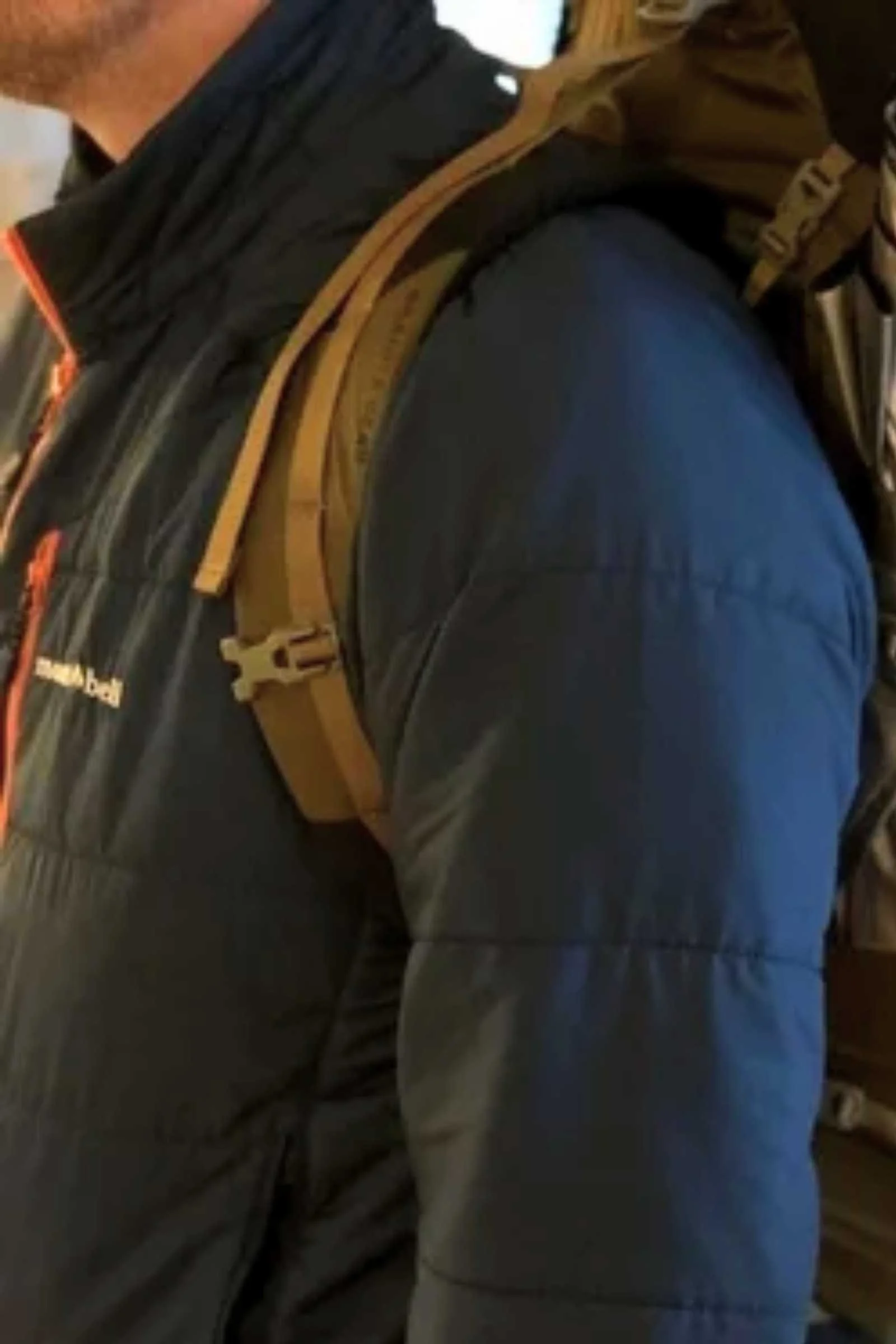
Close-up on some features we like including the DWR treated front zipper, front “Napoleon” pocket, and backpack-friendly shoulder stitching. Photo by Naomi Hudetz.
Warmth and warmth-to-weight ratio
Think about when you’ll wear the jacket. A light puffy that feels just right hiking uphill might not be warm enough when you stop for lunch. If you’ll carry it most of the day, weight matters. If you’ll spend hours belaying or sitting at camp, the extra warmth of a heavier jacket can be worth carrying.
Brands often list synthetic insulation in grams per square meter (g/m²). That’s the weight of the fill per area, not the total amount of insulation in the jacket. It’s most useful when comparing versions that use the same fill. The shell, fit, and where the insulation is placed all affect how warm the finished jacket feels.
Packability
Cheap synthetic fill can be incredibly bulky. The most iconic example of cheap synthetic fill is the classic rectangular sleeping bag that kids take to a sleepover at their friend’s house. Again, innovations in synthetic insulation technology have resulted in more packable insulation. This is one possible reason why it is harder to find a truly inexpensive synthetic jacket that is still ideal for outdoor pursuits.

The author testing the L.L. Bean PrimaLoft Packaway, our former pick for best budget jacket. Photo by Emily Haas
Price
Synthetic insulation is a patented material under different brand names. Only a few companies research, develop, and manufacture synthetic insulation. This means that costs can be more tightly controlled because there is less competition. Down, on the other hand, has multiple suppliers and a wide range of quality, including whether it is ethically sourced or not.
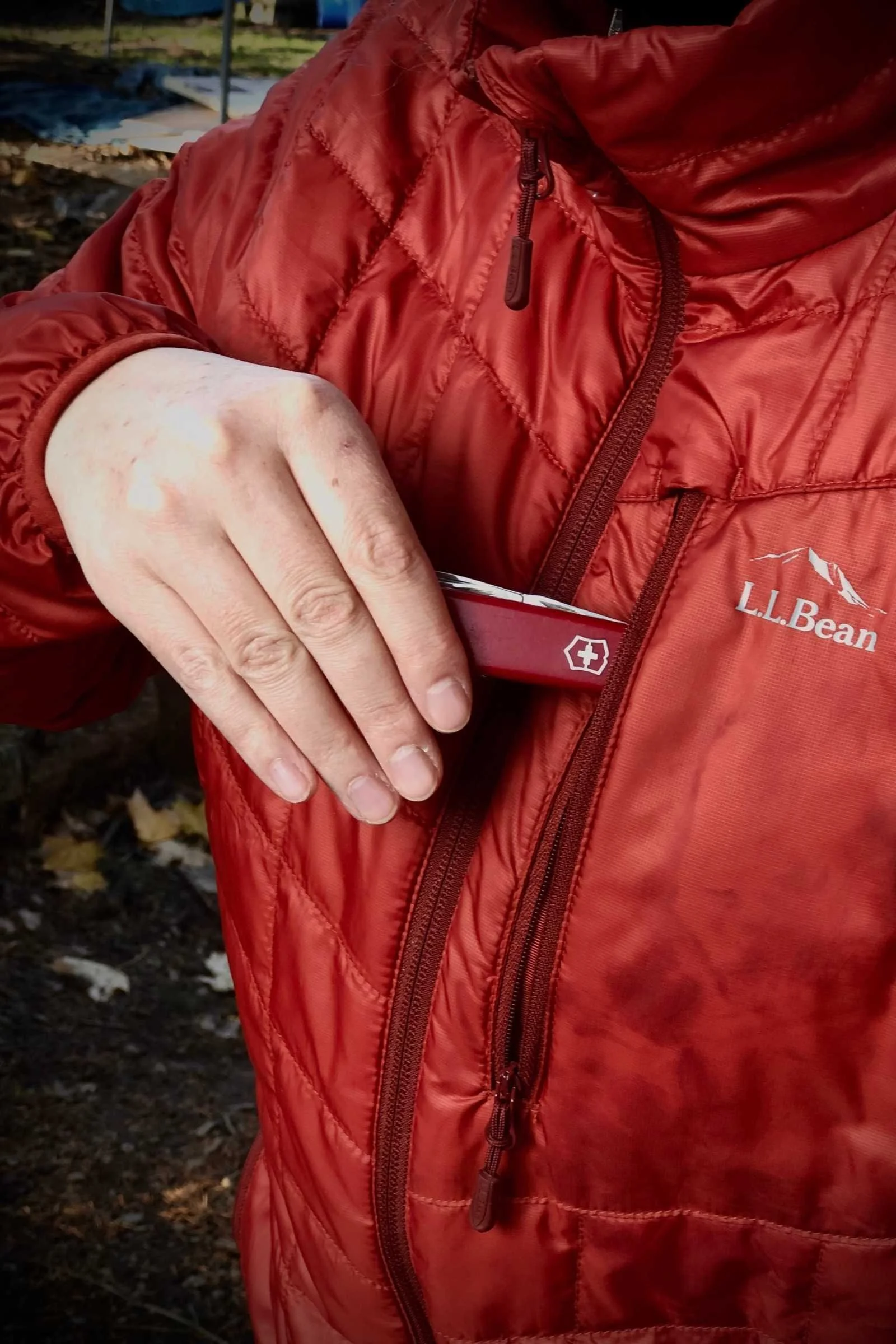
A front pocket on the recycled synthetic material L.L. Bean Packaway Jacket makes it easy to stash things you’ll need handy. Photo by Emily Haas
Sustainability
Several jackets in this guide use recycled materials. The Patagonia Micro Puff, for example, has a recycled nylon shell and recycled polyester insulation. If recycled content matters to you, check the shell, lining, and fill separately. A jacket with a recycled shell doesn’t necessarily have recycled insulation.
It’s also worth keeping the jacket you already have in use. The patch on my Montbell Thermawrap has held for ten years, and a small tear doesn’t have to mean a new jacket. If you do need another puffy, see what you can find used first.
Warranty
Almost all the jackets that won our awards have a minimum Limited Lifetime Warranty against manufacturer’s defects. Lifetime, in this case, means the expected lifetime of the product, which varies depending on the product in question.
Manufacturers’ defects are anything that went wrong in production or material that is not as durable as it should be. It does not cover normal wear and tear.
L.L. Bean goes one step further by offering 100% satisfaction guaranteed for the first year after purchase.
Patagonia had the best warranty with their Ironclad Guarantee. They will repair, refund, or exchange any item for any reason, no matter how long you’ve had it or how much abuse you’ve put it through.
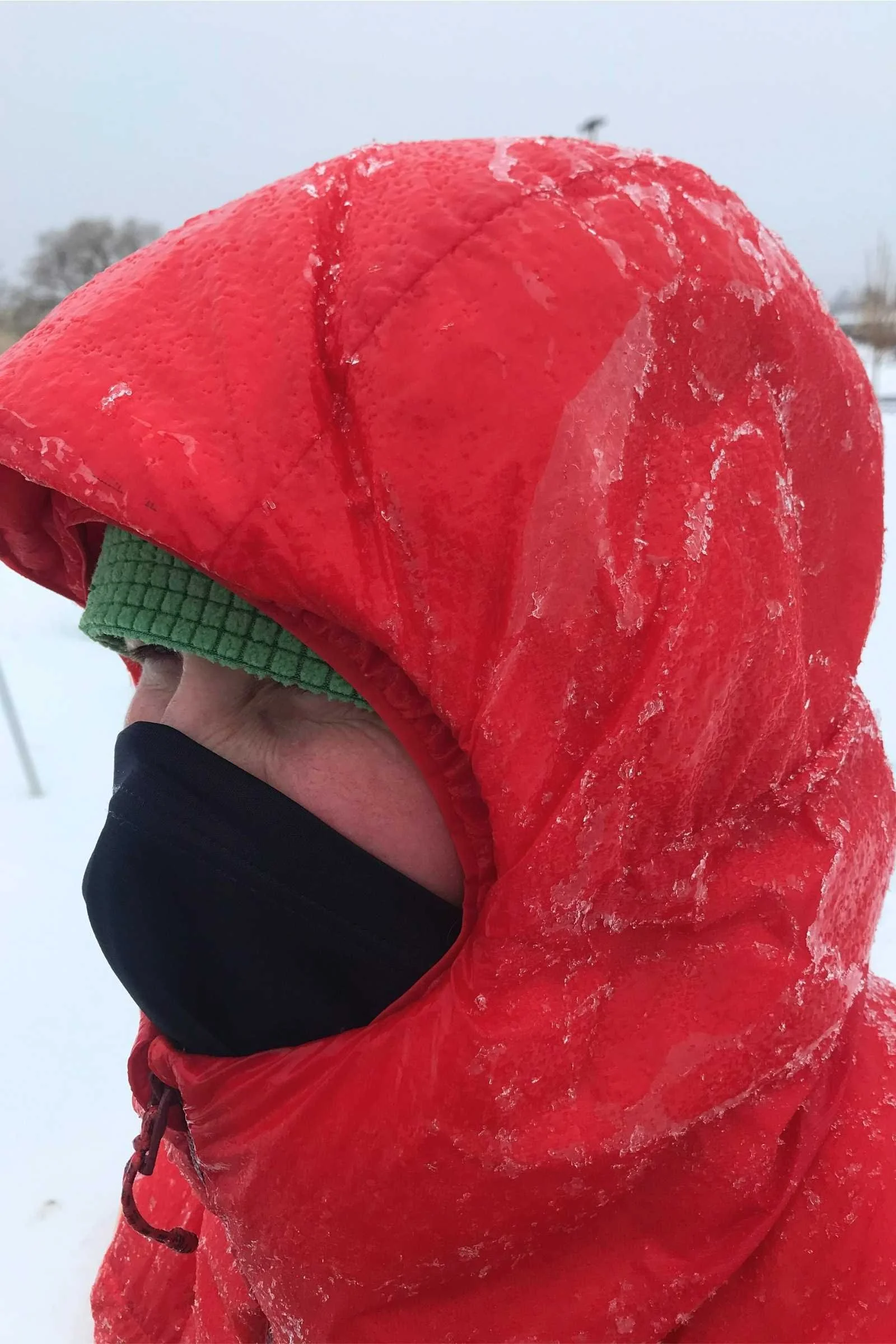
The Patagonia DAS Parka has one of the best coverage helmet-compatible hoods we saw on a synthetic jacket. Photo by Adam Leckie.
Hoods
Whether you want a hood on your coat is a personal preference. Since synthetic fill jackets tend not to be as warm as their down counterparts, we recommend going with a hooded jacket.
Most of our picks come in non-hooded versions. When using jackets in the front country or for general use, hoods can get in the way. Another reason to be hood-skeptical is that like hats, they may not always accommodate all types of hair. Pro-tip from Treeline Review writer Amanda Jameson: those with relatively large hairstyles look for hoods designated “helmet-friendly.”
Still, not all hoods are created equal. We like hoods that have some level of adjustability to them, like a drawstring or velcro tab. This keeps the hood snug so it doesn’t gap or blow off in the wind, but allows the user to wear a hat or even a helmet underneath.
Is synthetic insulation better than down?
We have an entire article dedicated to this question: Down vs. Synthetic: Which is better? Here, we'll give you a brief run-down on the differences and let you quiz yourself to find what is the best fit for your needs.
In short, synthetic-fill insulated jackets have a much higher level of versatility than down-fill insulated jackets. We find that if we are unsure what the conditions will be or what our activity level will be, we reach for a synthetic jacket. It’s the “I’d rather be safe than sorry” mindset. If you think you may prefer a down jacket, head over to our Best Down Jackets guide.
Choosing the right winter jacket for you is all about assessing your needs. By asking yourself some basic questions, you can figure out why you would want a down jacket versus a synthetic fill insulated jacket.
Are you vegan?
Many vegans prefer not to use down products because they are a by-product of the food industry. Other folks argue that synthetics are just as bad because they are made with fossil fuels. Wherever you land on this topic, we at Treeline believe that buying good quality gear that will last for years reduces the amount of old gear that ends up in a landfill. This reduces the amount of resources needed to keep replacing that cheap, low-quality gear.
Where will you take your jacket?
If you are in very wet environments, like Alaska, you might want synthetic. If most of your activity is taking place in drier environments, down jackets will keep you warmer for the weight. Traditionally down has been best for dry, cold conditions, while synthetic is best for wet, cool conditions. This is because when down gets wet, it clumps up and no longer traps warm air between the plumes.
The differences have become less stark with the advent of hydrophobic, or water-resistant down. Hydrophobic down can continue to perform even in moist environments. However, if you expect to use your jacket in extremely wet environments for long periods of time and want to use them as activewear, synthetic is still the better choice.
Will you get wet?
Synthetic jackets retain some of their insulation even when wet. In the case of some higher-end synthetic insulation, they can retain more than 90% of their insulative capacity even when soaked. If you expect to get wet or live in a wet climate, a synthetic jacket is the way to go.
How to choose an insulated jacket: down or synthetic?
When we’re not sure what the weather will do or how hard we’ll be working, we usually reach for synthetic insulation. In cold, dry conditions, down generally offers more warmth for the weight. Here’s how we decide.
Where will you take it?
For damp conditions, we prefer synthetic insulation because it still provides warmth if it gets damp. If we expect sustained rain, we bring a rain shell. In dry conditions, down generally packs smaller for the same warmth. If that sounds more like your trips, see our Best Down Jackets guide.
Will you wear it while moving or when you stop?
If you’ll hike uphill, ski tour, or ride in the jacket, look for a breathable layer you can keep on as you warm up. A puffy you put on at a belay, at camp, or during a long snack break has a different job. Think about how cold you get once you stop moving, especially if you tend to run cold like I do.
How often will it be in your pack?
If you’ll carry the jacket all day and wear it for only a few stops, weight and packed size matter. If you’ll wear it most of the day, a few extra ounces may be worth it for a tougher shell or pockets you can reach with your pack on. It’s a bummer to save weight on pockets and then have nowhere to put your hands when you forget your gloves.
For a closer look at the tradeoffs, see our down versus synthetic insulation guide.
Care and maintenance
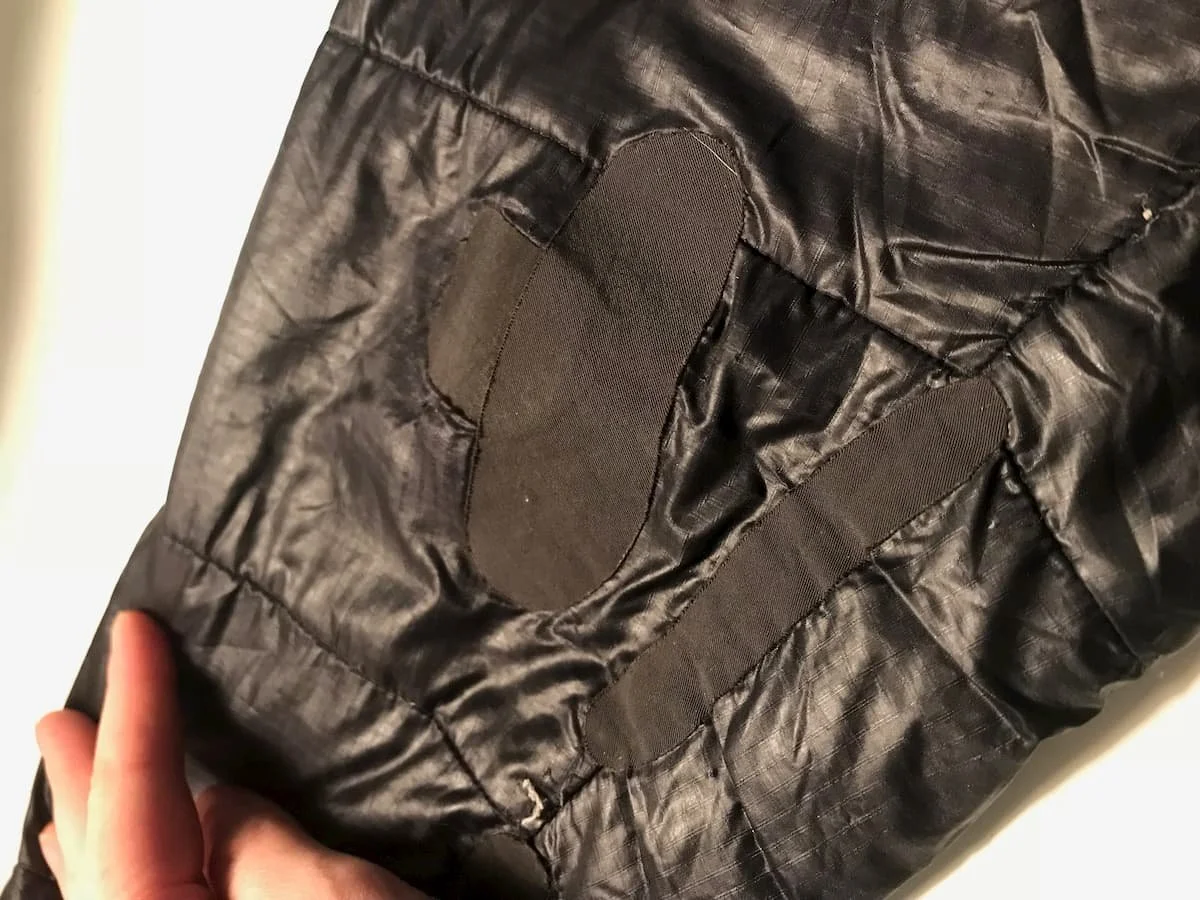
Tenacious Tape has held together this rip in the Montbell Thermawrap for ten years. Photo by Tiffany Searsdodd.
Follow the washing and drying instructions on your jacket’s care label. A down-synthetic hybrid may have different instructions from a jacket with entirely synthetic fill, so check the label even if you’ve washed another puffy before.
If water stops beading on the shell, start by washing and drying the jacket as the manufacturer recommends. If that doesn’t restore the water repellency, check whether the brand recommends reapplying a durable water repellent finish.
If the brand recommends reapplying DWR, a spray-on treatment such as Nikwax DWR Spray Reproofing.
For repairs, we recommend Tenacious Tape! This is a very sticky waterproof repair fabric that can be used in a pinch to repair almost any piece of gear (and not gear) that you own. Check out my Montbell Thermawrap that I first repaired 10 years ago. The patches are still holding up strong!
One of the nice things about synthetic insulation is if you get a hole, you don’t have the same level of urgency to repair it as with down. Synthetic insulation pretty much stays put unless actively pulled on, vs down plumules that immediately begin to escape if there is a hole. But we prefer not to take any risks and always have Tenacious Tape in our first aid/repair kit.
See our Eco-Friendly Gear Swaps to Reduce Your Environmental Impact guide to learn more about patching insulated jackets. For other gear repair issues, see our guide on How to Fix Zippers on Outdoor Gear.
FAQ
-
In our testing, lightweight synthetic jackets kept us comfortable in daily use from the 20s to mid-50s°F, and while moving in near-freezing wind over just a base layer. For standing around in colder weather, you’ll want a heavier belay-style parka. Wind, layers, and how much you’re moving all change how warm a jacket feels.
-
Only if you’ll layer a thick fleece underneath or the jacket runs small, which several jackets in our testing did. Try it on over the layers you’ll actually wear. Zip it up, reach overhead, and cross your arms. If it pulls across your shoulders or feels tight over your midlayer, try the next size or a roomier cut. If you plan to wear a shell over it, try that on at the same time.
-
Yes. On a cold hike, you might wear the fleece while you’re moving and pull the puffy over it when you stop. Make sure the puffy has room for the fleece, especially across the shoulders and through the sleeves.
-
Not for long-term storage. Use the stuff sack or stow pocket on the trail, then unpack the jacket when you get home. Let it dry completely and store it loosely between trips.
-
Check the cuffs, seams, and areas under the pack straps for wear. Run the zipper all the way up and down. A neat patch on the shell isn’t necessarily a dealbreaker. Pay more attention to areas where the insulation feels noticeably thinner than the surrounding fabric.
-
It can. Some jackets use synthetic insulation in certain areas and down elsewhere. The Arc’teryx Cerium in this guide is one example. If you’re avoiding down, check the complete insulation listing rather than relying on a mention of synthetic fill in the product description.
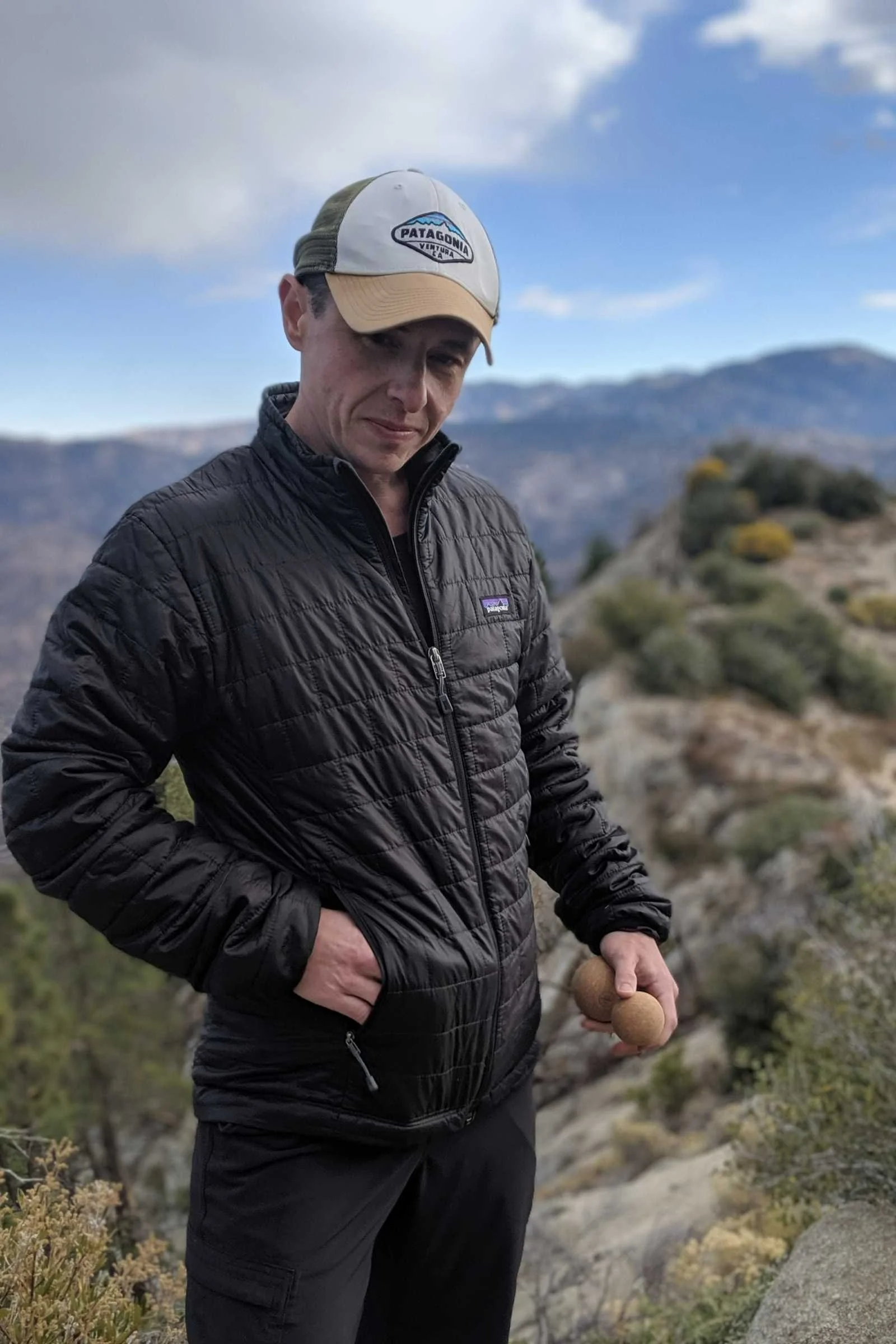
The Patagonia Nano Puff worn by Marek of Rawlogy. Photo by Liz Thomas
How we researched and tested
We've spent the past 5 years testing synthetic insulated jackets on thru-hikes, backpacking trips, bikepacking trips, day hikes, camping trips, climbing trips, alpine ascents, rafting, and everyday commuting.
Before we even began testing, we researched 24 synthetic jackets. Then we checked to see if customer reviews matched up with what we were reading to help us pick what to test.
While testing, we checked for criteria important to us. Warmth of an insulated jacket can change over time because synthetic insulation often loses its loft over a year or more of use.
Another criterion we assessed was whether the water-resistance of the jacket held up. Durable Water Repellent (DWR) wears out over time and though we recommend re-treating it with some regularity, some jackets start off with a better baseline than others.
Durability in general is another criterion that we assess each year as we re-visit which jackets stay winners and what models have been bettered by a newer model or a new brand.
We used multiple testers of different sizes, shapes, and genders to assess fit and comfort. Some jackets are sized better than others.
Aside from sizing, every tester works up heat differently. We used multiple people to test whether a jacket breathes well, how warm it is, and whether it overheats easily or keeps just the right temperatures.
For each jacket, we test for packability, pockets, and quality of zippers.
Author’s Expertise / Why You Should Trust Us

The author on a rainy hike in the Pacific Northwest with her child. Sustainable options are the best for the next generation. Photo by Adam Leckie.
I’m a gear nerd who’s been gearing up myself and others my whole adult life. As a Wilderness Guide for a wilderness therapy organization serving teenagers, I spent four winter seasons living in the snow in Central Oregon. As a result, I became intimately acquainted with cold-weather gear, tips and tricks, and how to teach teens how to be comfortable in the wilderness. I’ve also worked as a Sea Kayak Guide for Pangaea Adventures in Alaska, leading glacier tours by kayak.
I also bring almost 20 years of experience working in outdoor retail. I do gear shakedowns for fun. I love talking about gear, but more than that, I love making sure people have the equipment that is right for them. I've spent 20 years outfitting outdoors people of all skill and experience levels on their quest to stay active in cooler weather. Over the years, I've learned what features, materials, sizing, and colors customers want and what aspects of outdoor apparel they find unnecessary.
I have another reason for being an expert regarding insulated jackets: I’m always cold. Seriously. I own four puffy jackets, three sleeping bags, one backpacking quilt, and one pair of down booties. So I know all about keeping warm while adventuring outside.
I am not sponsored, an ambassador, or an employee of any of the companies mentioned in my reviews - and neither is anyone in my family.
You can read all of my guides on my author page.

