
Best Synthetic Insulated Jackets of 2026
Warm-When-Wet Synthetic Puffy Jackets for Men & Women
November 20th, 2025
Home > Gear Reviews > Apparel
When you need insulation that works even when conditions get damp, synthetic-insulated jackets are the go-to. They combine the warmth of down with better wet-weather performance—so you're still cozy when other jackets give up the ghost.
We evaluated seven top contenders in the synthetic jacket space, with side-by-side field testing and lab comparisons. The standout was the Patagonia Micro Puff Hoody, which won our Best Overall pick for blending ultralight weight, serious warmth, and everyday functionality without compromise.
Our assessment focused on how well each jacket balances insulation and practicality: warmth-to-weight ratio, shell fabric performance, packability, insulation retention under stress, and feature usability like pocket access and fit. We also looked at how cleanly the designs move from street to trail—jackets need to perform in both settings to earn their place.
Top Pick: The men's and women's Patagonia Micro Puff Hoody earns our Best Overall designation because it delivers an ideal mix of warmth, low volume, and thoughtful design. Its PlumaFill synthetic fill replicates down’s loft without losing heat when wet. With a slim fit, smart pocket layout, and excellent pack-down ability, it’s the one synthetic jacket we keep reaching for, whether on summits, commutes, or everyday wear.
Looking for a down puffy jacket? See our guide to The Best Down Jackets
Not sure? Read Should I choose a down or synthetic jacket?
This story may contain affiliate links, which help fund our website. When you click on the links to purchase gear, we may get a commission. This allows us to create reader-supported objective gear reviews without costing you an extra cent. Thank you for supporting our work and mission of outdoor coverage for every body! Learn more.
Comparison Tables
Men’s Synthetic Jacket Comparison Table
| MEN'S JACKET | TREELINE AWARD | MSRP | SHELL MATERIAL | DWR? (Y/N) | WEIGHT (HOODIE) |
|---|---|---|---|---|---|
| Patagonia Micro Puff | Best Overall Read why |
$329 | Netplus (10D 100% recycled nylon ripstop from fishing nets), PFC-free DWR finish | Y | 10.5 oz |
| Patagonia DAS Parka | Best Warmth Read why |
$449 | [face fabric] Pertex Endurance (100% nylon), PU dry coating, DWR finish, [lining] Pertex Quantum (100% nylon), DWR finish | Y | 19.6 oz |
| Patagonia Nano-Air | Best Breathable Read why |
$329 | 100% recycled polyester air permeable shadow ripstop, DWR finish | Y (PFC free) | 14.1 oz |
| Arc'teryx Cerium | Best Hybrid Read why |
$400 | Arato 15 Nylon | Y | 11.8 oz |
| Montbell UL Thermawrap Parka | Best Ultralight Synthetic Jacket Read why |
$219 | 12-denier Ballistic Airlight nylon ripstop (water repellent finish) | Y | 9.3 oz |
| Enlightened Equipment Torrid | Best for Thru-hiking Read why |
$200 | 10D Nylon | Y | 8.9 oz |
| Carhartt Rain Defender Insulated Jaclet | Best Big and Tall Read why |
$100 | 100% nylon CORDURA® | Y | 17.6 oz |
| L.L.Bean PrimaLoft Packaway | Best Affordable Read why |
$199 | 100% recycled polyester | N | 14 oz |
| Arc'teryx Atom LT | Read why |
$260 | Tyono™ 20 denier | Y | 13.2 oz |
* Prices reflect MSRP and are subject to change. We note any discounts we see on our Deals page, which is updated daily.
Women’s Synthetic Jacket Comparison Table
| WOMEN'S JACKET | TREELINE AWARD | MSRP* | SHELL MATERIAL | DWR? (Y/N) | WEIGHT (HOODIE) | INSULATION | # OF POCKETS | HOOD OPTION? | SIZES |
|---|---|---|---|---|---|---|---|---|---|
| Patagonia Micro Puff | Best Overall Read why |
$329 | 10D ripstop nylon | Y | 9.0 oz | PlumaFill 100% recycled | 4 | Y | XXS-XL |
| Patagonia Nano-Air | Best Breathable Read why |
$329 | 100% polyester | Y (PFC free) | 12.4 oz | FullRange (93% recycled polyester, 7% polyester) | 3 | Y | XXS-XL |
| Arc'teryx Cerium | Best Hybrid Read why |
$400 | Arato 15 nylon | Y | 10.2 oz | 850 fill down + Coreloft | 3 | Y | XXS-XXL |
| Montbell UL Thermawrap Parka | Best Ultralight Read why |
$219 | 12-denier Ballistic Airlight nylon ripstop | Y | 8.4 oz | Stretch Exceloft | 2 | Y | S-XL |
| Enlightened Equipment Torrid | Best for Thru-hiking Read why |
$200 | 10D Nylon | Y | 8.3 oz | Climashield APEX | 2 | N | XS - 2X |
| L.L.Bean PrimaLoft Packaway | Best Affordable / Best Plus Size Read why |
$199 | 100% recycled polyester | N | 14 oz | PrimaLoft Cross Core, Gold | 4 | Y | XXS-XL (also available in petite) |
| Arc'teryx Atom Hoody | Read why |
$300 | Tyono™ 20 denier | Y | 10.9 oz | Coreloft Compact | 3 | Y | XXS-XXL |
| Patagonia Nano Puff | $289 | 100% recycled polyester ripstop | Y | 10.8 oz | PrimaLoft Gold Eco polyester 100% recycled | 3 | Y | XXS-XXL | |
| The North Face ThermoBall | $230 | 100% recycled nylon | Y | Not provided | Thermoball Eco | 3 | Y | XS-XXXL |
* Prices reflect MSRP and are subject to change. We note any discounts we see on our Deals page, which is updated daily.
For more of our most popular gear recommendations, see our most popular Gear Guide stories:
The Best Synthetic Insulated Jackets
Best Overall Synthetic Insulated Jacket:
Patagonia Micro Puff Hoody
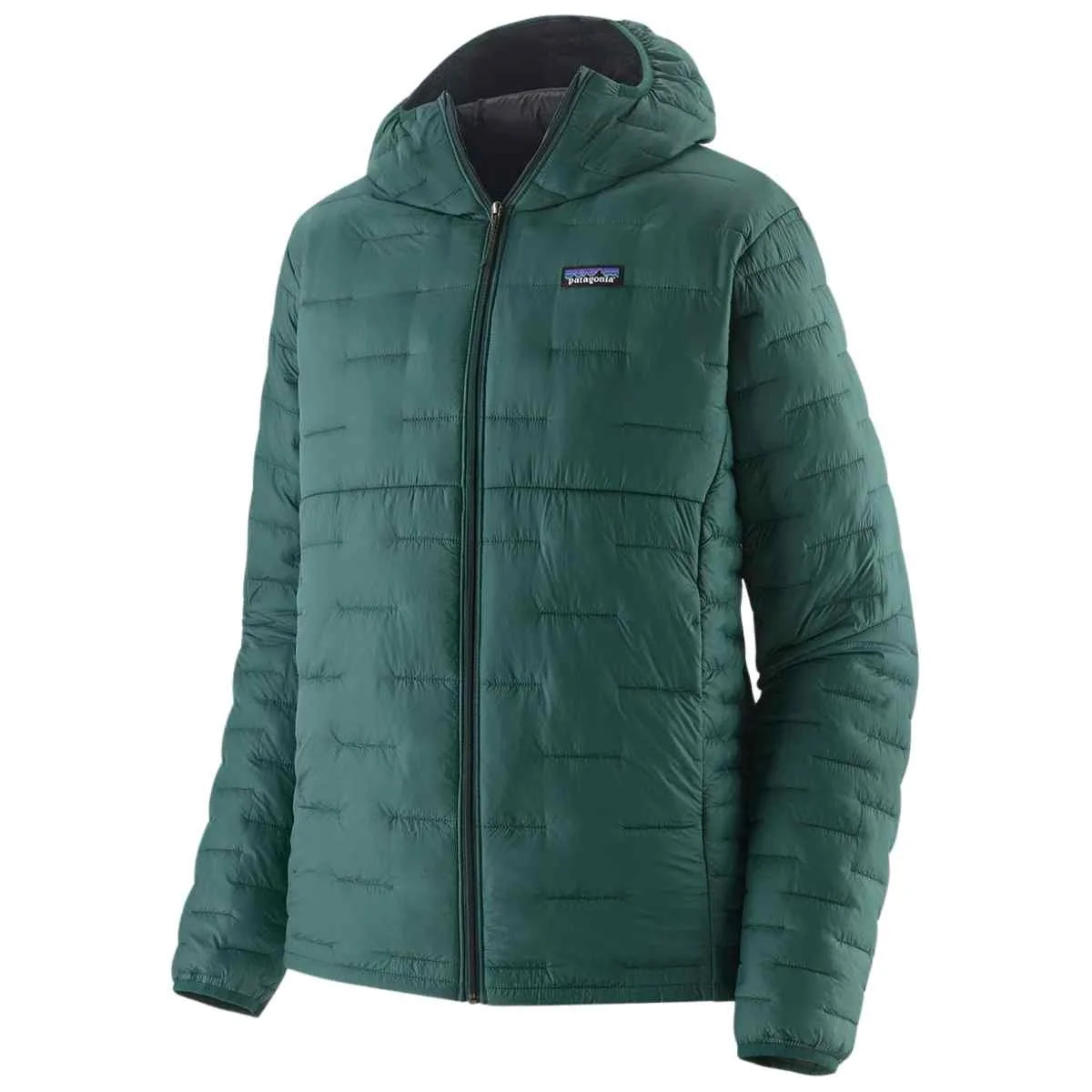
Shell material: 10D ripstop nylon Netplus
Total weight: 9.0 oz (women), 10.5 oz (men)
Fill Type: PlumaFill 65g 100% recycled
Number of Pockets: 2 zippered hand, 2 internal
Hoodless jacket version: Yes (men’s and women’s)
Vest version: No (discontinued)
Sizes: XS-XXL (men’s), XXS-XL (women’s)
Warranty: Ironclad Guarantee, they will repair, refund, or exchange any item, for any reason.
What we liked: Packable to a low volume, durable, great insulation to weight ratio, articulates well, functional pockets in women’s version, and exceptional warranty
What we didn't like: Not the most budget friendly, but a fair value
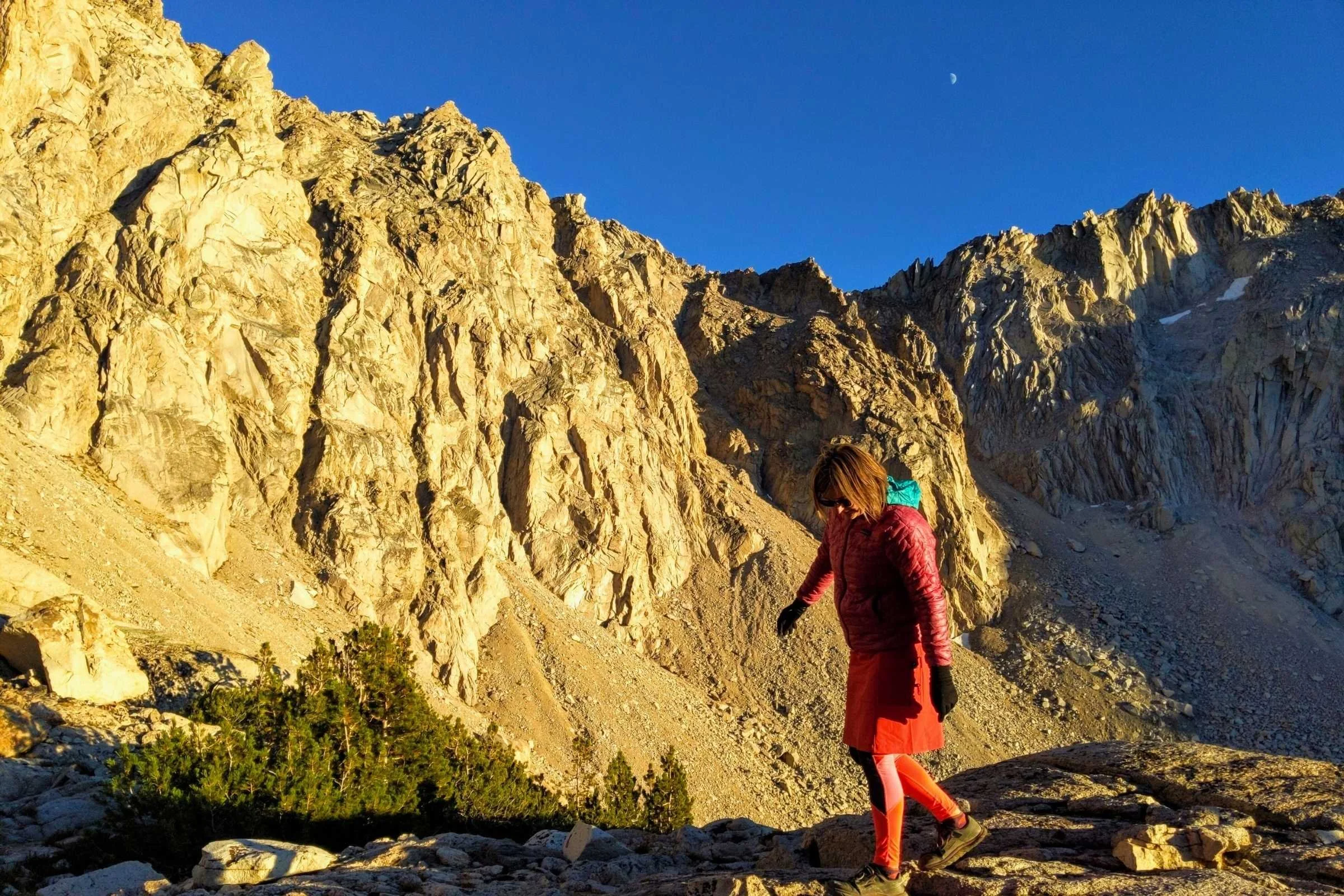
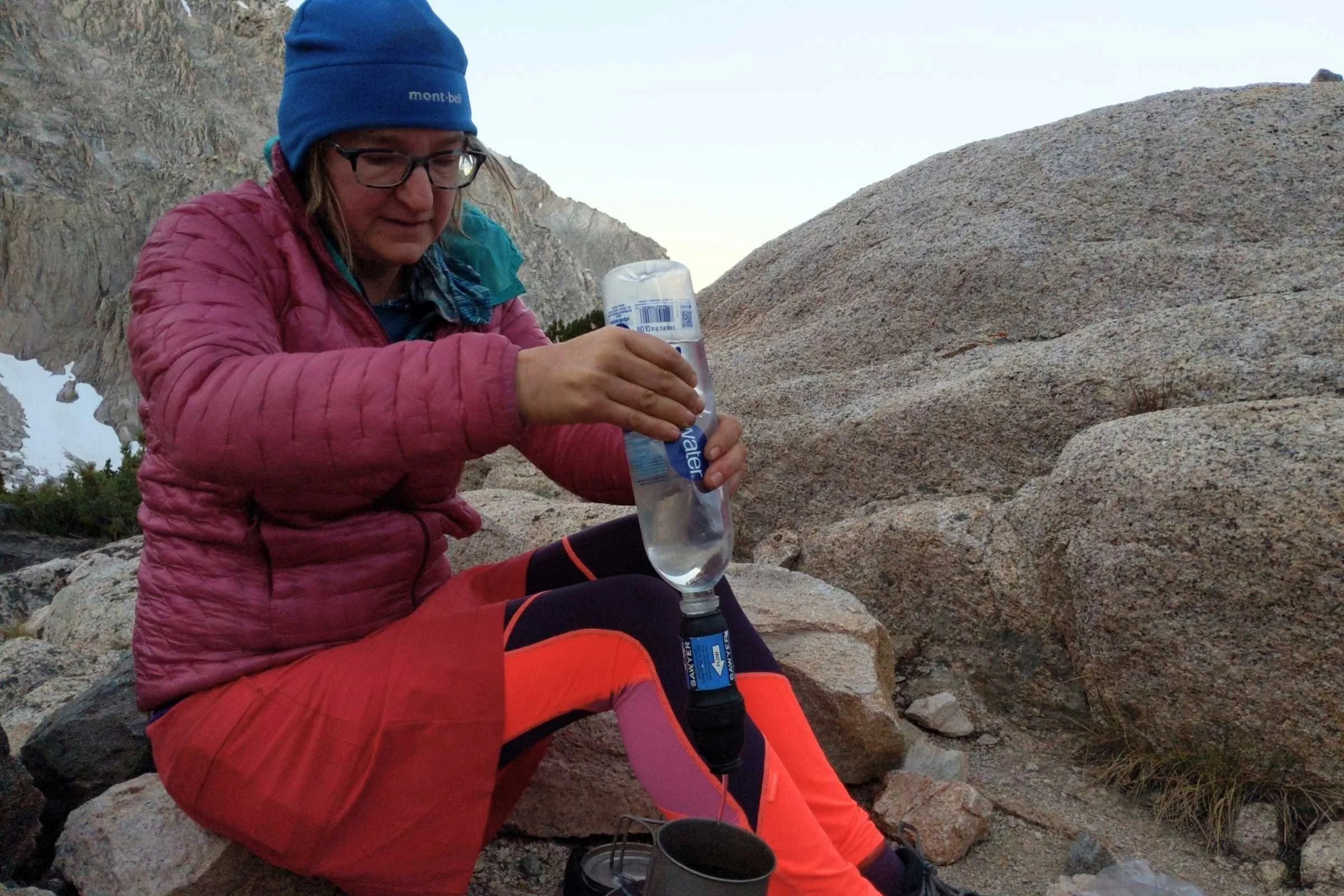
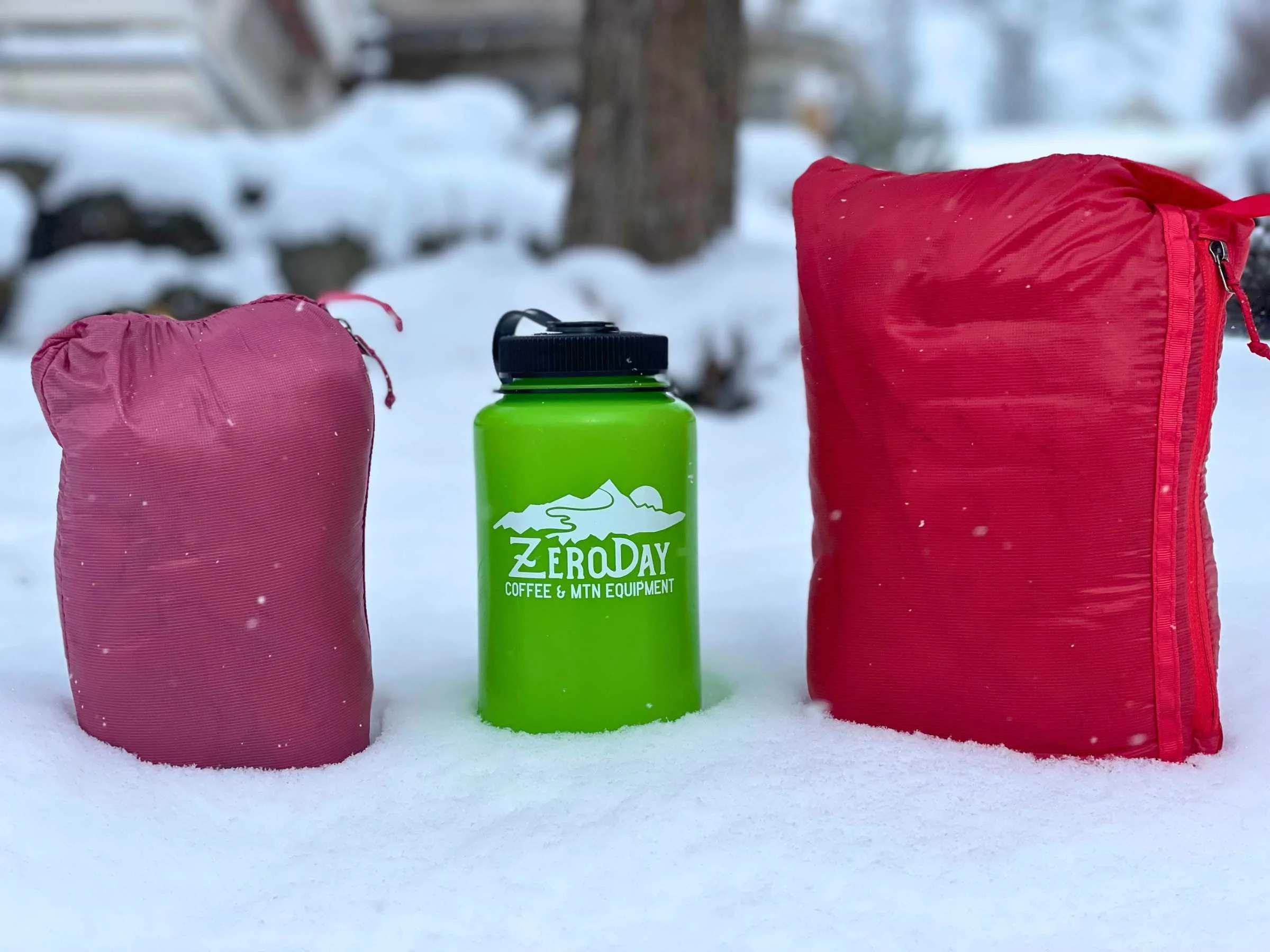
We think the Patagonia Micro Puff Hoody is the best synthetic insulated jacket for most people because it is light, packable, stylish, and warm for its weight. It has a warmth-to-weight ratio similar to down—appealing to those who want a technical jacket.
The warmth of the Micro Puff far exceeds that of its popular sibling, the popular Patagonia Nano Puff (more on that jacket later). We think the Micro Puff is the best overall synthetic insulated jacket because it has all the advantages of the Nano Puff but with more warmth: it’s stylish, packable, and has enough features to be convenient for everyday use as well as technical ultralight adventures.
We liked this jacket so much that we wrote an in-depth, long-term single-product review.
Compare prices of the Patagonia Micro Puff Hoody
Men's
Women's
-
The Patagonia Nano Puff (men's and women's) is by far the brand's most popular jacket–and we're being rebellious when we didn't choose it as our overall winner.
If you want a Patagonia jacket because you like the fit or color better or want to support their environmental mission, we think it’s well worth spending a little extra for the Micro Puff. It weighs less than the Nano Puff and is warmer.
If you think the extra warmth is overkill for a peak summer hike in warmer conditions, we’d still recommend pairing the Micro Puff vest with a base layer and wind shirt vs. choosing the Nano Puff.
We liked this jacket so much that we wrote an in-depth, long-term single-product review.
-
In our article What to wear hiking in Fall story, we wrote about the incredible warmth-to-weight ratio of the Patagonia Micro Puff jacket. Patagonia uses its proprietary PlumaFill Insulation, which is designed to mimic the shape of down plumules. That’s why Patagonia says the Micro Puff is “the best warmth for weight of any jacket we’ve ever built.”
For an extra ounce of weight, you can get the hooded version and bump up the warmth factor. We like the elastic cuff, hood, and hem on the Micro Puff because they reduce weight, while still keeping warmth in.
-
Treeline’s editor Naomi Hudetz used this jacket on an 800-mile long thru hike of the Arizona Trail and was impressed by the amount of warmth it provided compared with its weight. She appreciated the long torso length which meant it never bunched up under the hip belt of her backpack. She also really liked the curved shoulder yoke design which gives great freedom of movement in the arms and shoulders.
Patagonia’s sizing on this jacket runs a little narrower than their popular Down Sweater, but is still not aggressively athletic, making it a better fit for varying body types. Their size range is better than average, with women’s running from XXS-XL and men’s running from XS-XXL.
-
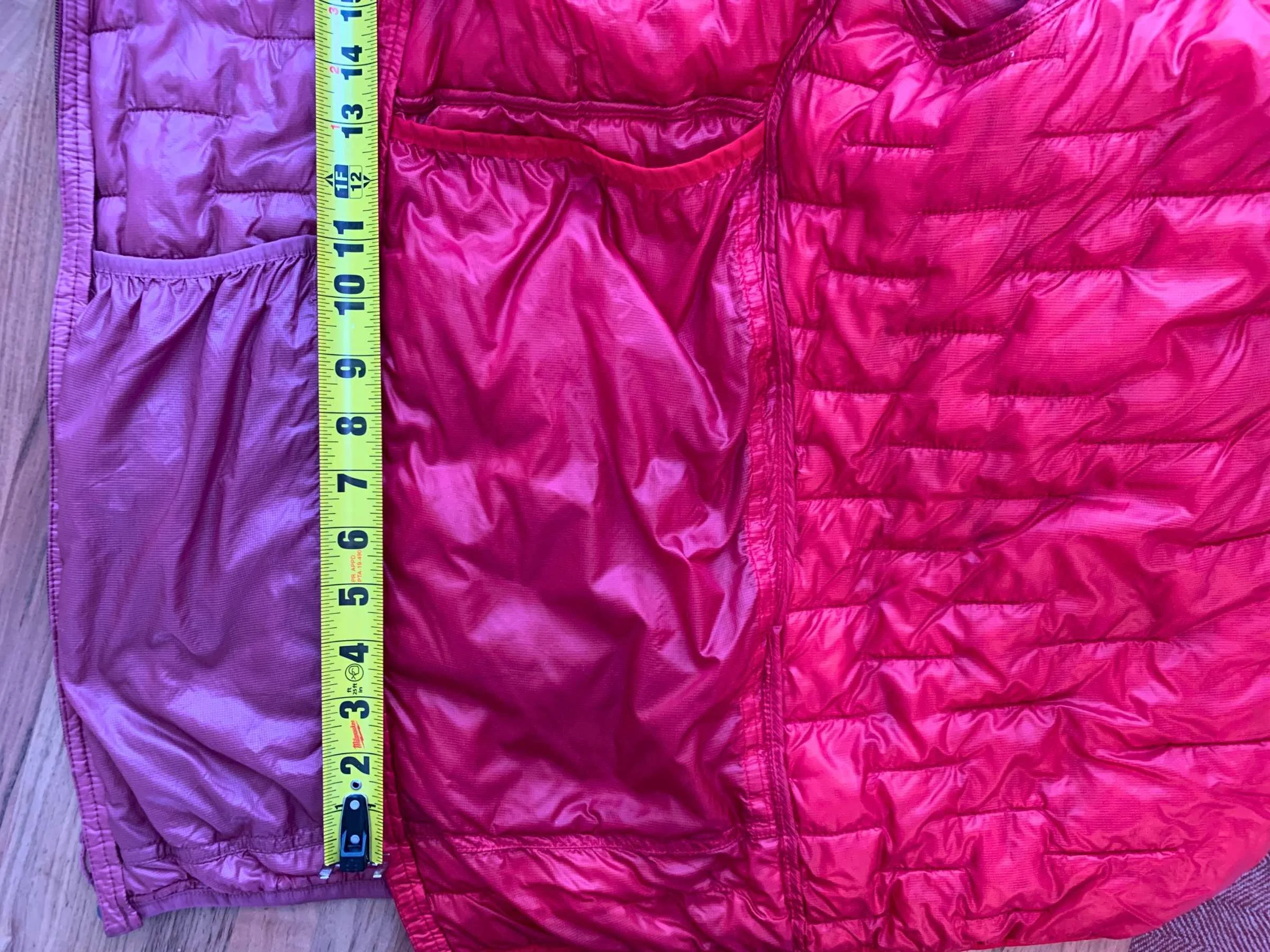
Finally...a lightweight women’s jacket with functional pockets, including an internal chest pocket!! While men's lightweight jackets often have pockets, it's a rarity with women's. We appreciated being able to have a top-of-the-line jacket available that offered us pockets
This is one of two jackets on our list that has four pockets, two of which are internal stash pockets. We like internal pockets because they make it easier to keep electronics from freezing when the temperature drops.
-
Patagonia’s products are bluesign® certified, meaning they reduce the amount and toxicity of chemicals they use. The Micro Puff is also Fair Trade Certified Sewn. Another way Patagonia reduces their impact is through their incredible warranty. Patagonia has what they call their Ironclad Guarantee. They will repair, refund, or exchange any item, for any reason, no matter how long you’ve had it, or how much abuse you’ve put it through.
Another thing we like about this jacket is that Patagonia allows you to trade it in to their Worn Wear used gear portion of the website to receive store credit. So if your body changes over the years or you get into different outdoor activities, it will stay out of the landfill.
-
A few users mentioned that the elastic waistband can ride up and that the shell fabric tears easily. This is not surprising and is generally true of any 10 denier fabric. Extra care must be taken when dealing with lightweight gear.
-
The Micro Puff is one of the most expensive lightweight insulated jackets on our list, but with such a great warranty you know you’ll get your money’s worth.
Best Synthetic Jacket For Extreme Weather:
Patagonia DAS Parka
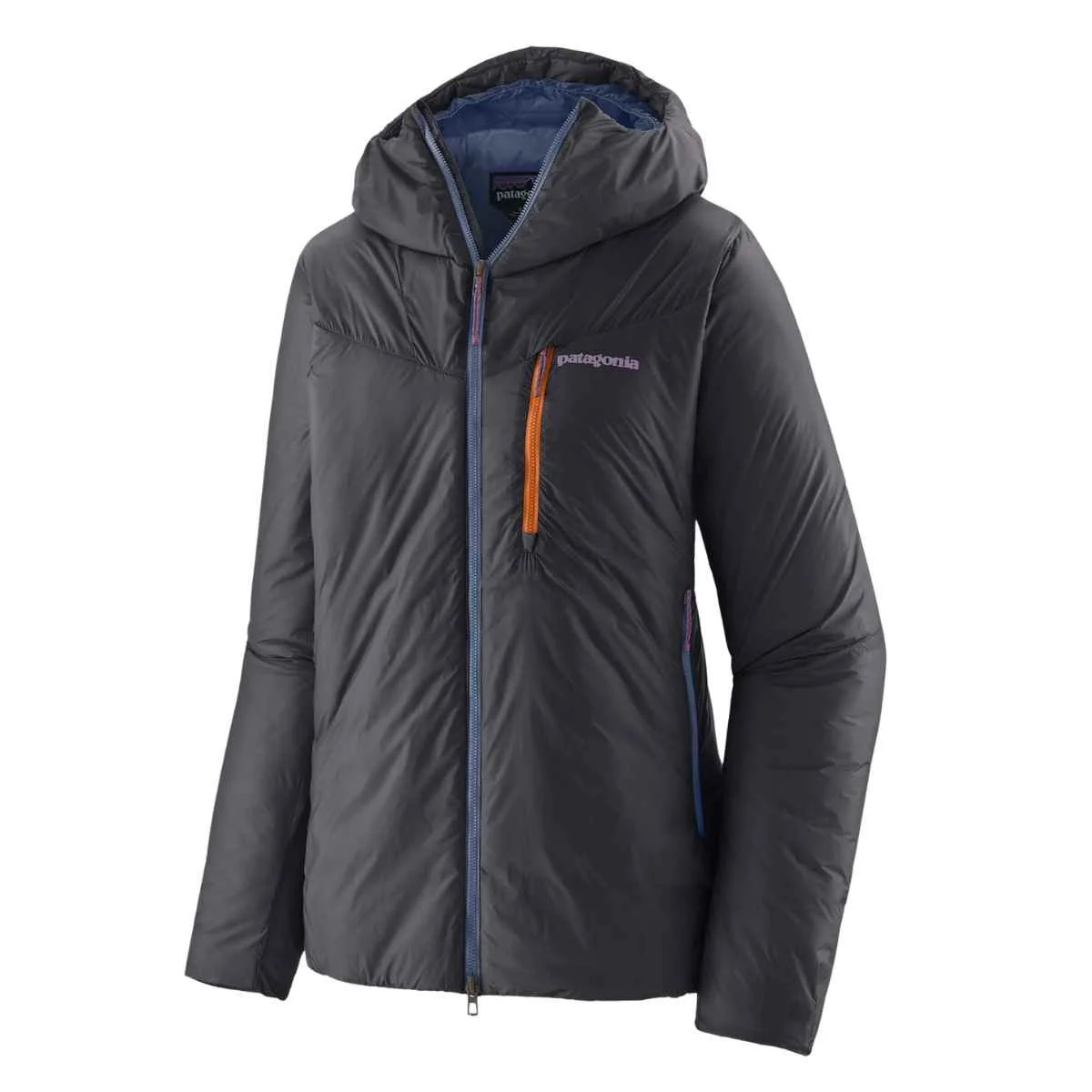
Shell material: 10D Pertex Quantum Pro
DWR treatment? Yes
Total weight: 19.6 oz (men's)
Fill Type: 133g PrimaLoft Gold Insulation Eco
Number of Pockets: 5
Hoodless jacket version: No
Vest version: No
Packability options: Stuff Pocket
Sizes: XXS-XL (women's), XS-XXL (men's)
Warranty: Ironclad Guarantee
What we liked: Premium fabrics, warmest jacket we tested, durable
What we didn't like: We would love to see extended sizes
Patagonia’s reputation for making consistently high-quality, reliable gear extends to our winner for best synthetic jacket for extreme cold, the Patagonia DAS Parka.
It's marketed as a belay jacket — a category designed for extreme warmth in alpine conditions. A belay parka is designed for minimal movement (after all, while belaying, you are sitting or standing while assisting your climbing partner). With that goal in mind, it is not surprising the DAS Parka is the warmest jacket we tested.
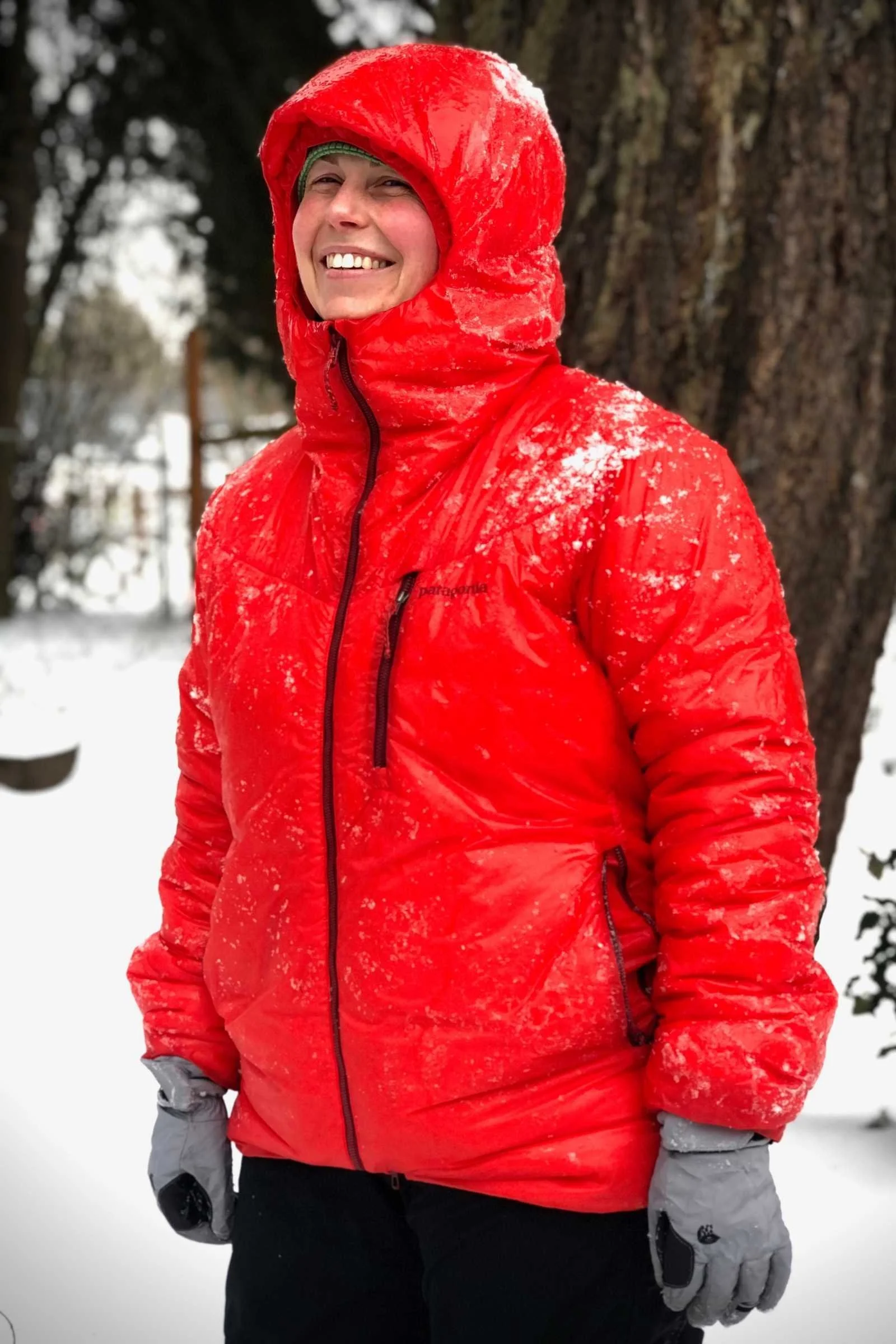
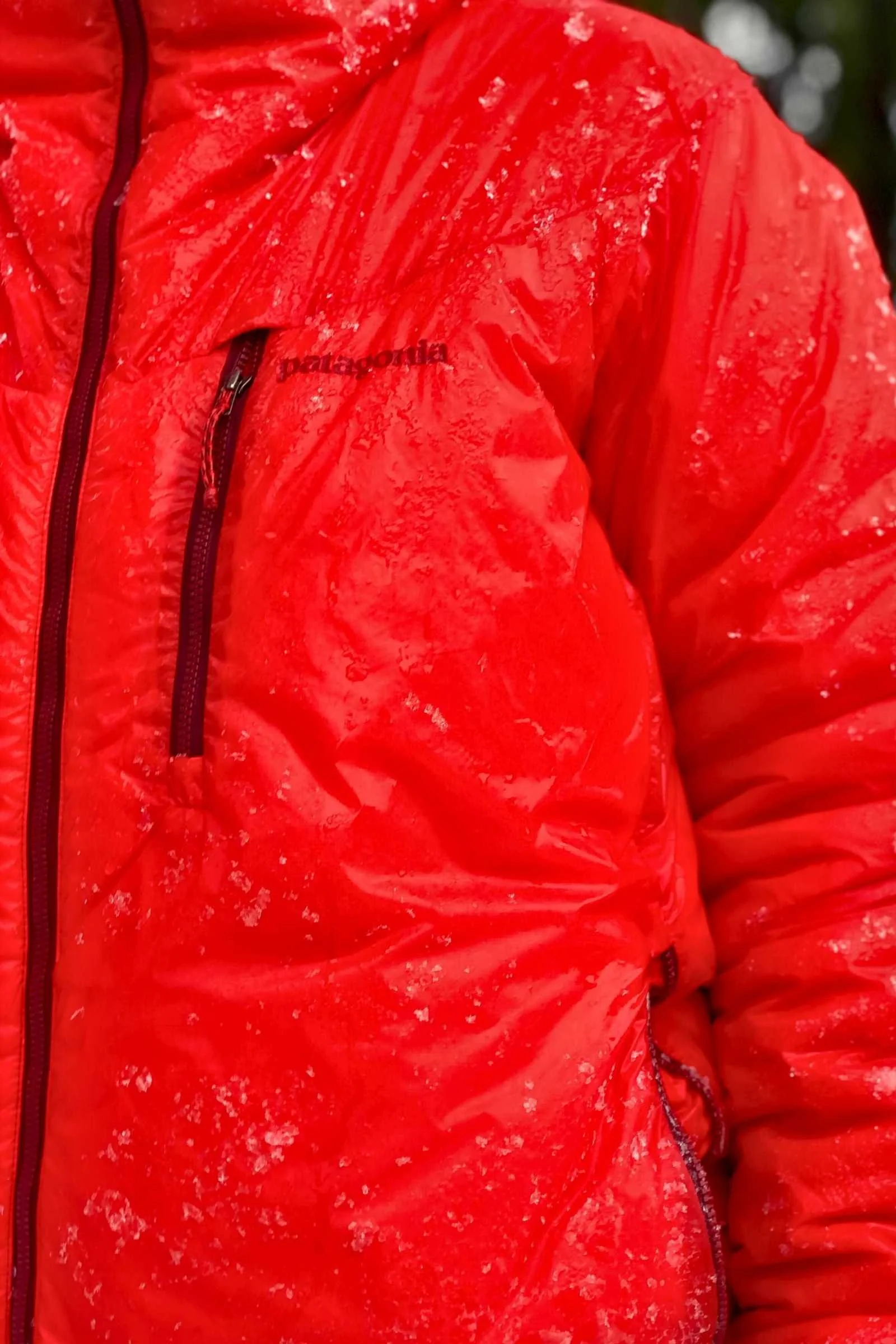
The DAS Parka is a weatherproof cold weather jacket for times when you won’t be moving much — everything from belaying to watching kids play. The author wears this jacket without a shell in the pouring rain in Portland and has never gotten wet — something she wouldn’t do with down–or pretty much any other synthetic jacket. If you’re looking for a foul weather puffy that can stand up to pretty much anything, the Patagonia DAS Parka is the way to go.
Unfortunately, for 2024, the DAS Parka is only available as a men's jacket as the women's version has been discontinued. We are currently testing some promising replacements.
Compare prices of the Patagonia Das Parka
men's
Women's
-
Since climbers usually don't want to carry much weight up the side of a rock or mountain, it's got a great warmth-to-weight ratio, too.
This hooded jacket has the most insulation of any we picked, at 133g/m2 of Primaloft Gold Insulation Eco. PLUS, they added 40g/m2 of Cross Core to key areas. The Cross Core is made with silica aerogel (used by NASA) and is ridiculously light and warm. This is one of the reasons that the warmest synthetic jacket we recommend only weighs 18.4 oz in a women's medium.
-
Patagonia also uses a very lightweight 10d Pertex Quantum Pro shell. This material is more durable than most face fabrics with such a low denier. Plus, they add a PU (polyurethane) dry coating to increase the abrasion resistance even more.
-
Practically speaking, the cut of DAS Parka is roomy enough for layering and extends over the hips, which is great for folks with bigger hips, or for use while wearing a climbing harness. The two-way zipper also makes it easy to take your harness off or on without losing a bunch of heat by fully unzipping the jacket.
We wish Patagonia offered extended sizing on the DAS Parka past Women’s XL and Men’s XXL.
-
The DAS Parka has 5 roomy pockets; two inside and two outside. One customer review stated that the inner pockets are so big they put their Nalgene in the pocket to keep the Nalgene from freezing.
-
There are thumb loops built into the elastic of the cuffs, which keeps the cuff from gapping when wearing gloves. The helmet-compatible hood is large enough to fit almost any hairstyle but easily cinches down to keep out drafts.
-
Another thing we like about this jacket is that Patagonia allows you to trade it into their Worn Wear used gear portion of the website to receive store credit. So if your body changes over the years or you get into different outdoor activities, it will stay out of the landfill.
-
With everything we like about this jacket, what's the catch?
It’s expensive. However, the price is comparable with other belay jackets. The price is also comparable with high-end high fill-power down jackets.
-
It's worth noting that Patagonia also makes a DAS Light Hoodie, which has a confusingly similar name and is less warm. It uses Plumafill instead of PrimaLoft Gold Insulation Eco and doesn't have extra insulation at the core. It's also about half the weight at 9.7 oz for a women's medium. It's designed as as lightweight belay hoodie for less extreme cold conditions.
-
It's worth noting that Patagonia also makes a DAS Light Hoodie, which has a confusingly similar name and is less warm. It uses Plumafill instead of PrimaLoft Gold Insulation Eco and doesn't have extra insulation at the core. It's also about half the weight at 9.7 oz for a women's medium. It's designed as as lightweight belay hoodie for less extreme cold conditions.
Best Breathable Jacket: Patagonia Nano-Air Hoody

Shell material: 1.7 oz 100% polyester with 4-way mechanical stretch
DWR treatment? Yes, PFC-free
Total weight: 10.2 oz (women's), 12.2 oz (men's)
Fill Type: 60g FullRange 100% polyester with four way stretch
Number of Pockets: 3
Hoodless jacket version: Yes (men’s and women’s)
Vest version: Yes (men’s and women’s)
Sizes Available: XS-XXL (men's), XXS-XL (women's)
Warranty: Ironclad Guarantee.
What we liked: Highest scoring breathability for active wear
What we didn't like: Slim fit excludes some body types
For several years, the Patagonia Nano-Air has been our go-to gold standard active insulation jacket for its remarkable breathability.
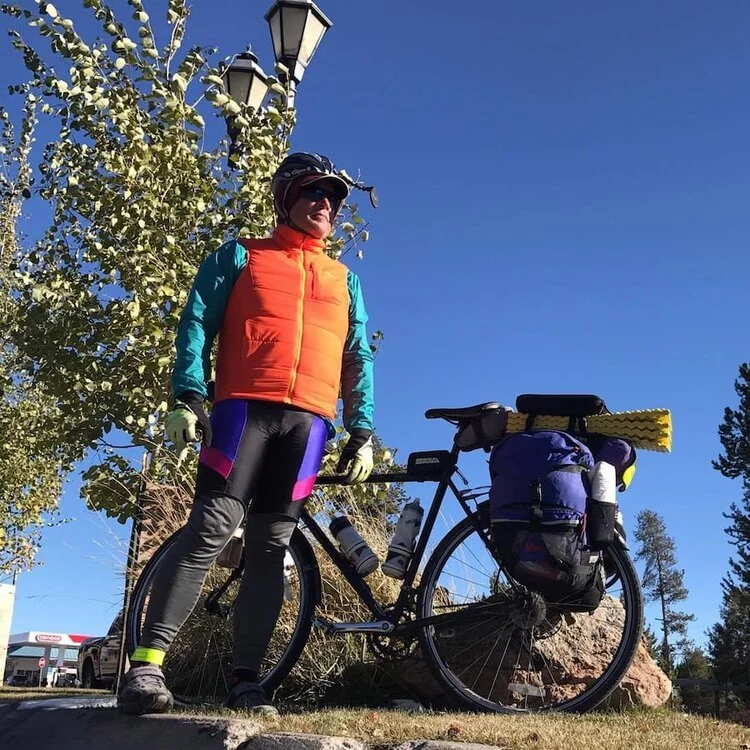
There’s a lot to love about the Nano-Air, and it’s been our favorite for many years. The slight stretch combined with breathability makes it a great choice for active insulation. It’s a favorite of Senior Editor Brandon Lampley in his Bike Touring Packing List, and he’s used it on multiple cross-country bike tours as well as climbing trips and mountaineering trips the world over.
Patagonia has updated the Nano-Air to be more durable, addressing an issue in a previous model with pilling. The quilted panels have been replaced with smooth fabric overall, giving a more streamlined look. They’ve eliminated the hem cinch, instead opting for a stretchy fabric at the hem.
Compare prices of the Patagonia Nano-Air Hoody
Men's
Women's

-
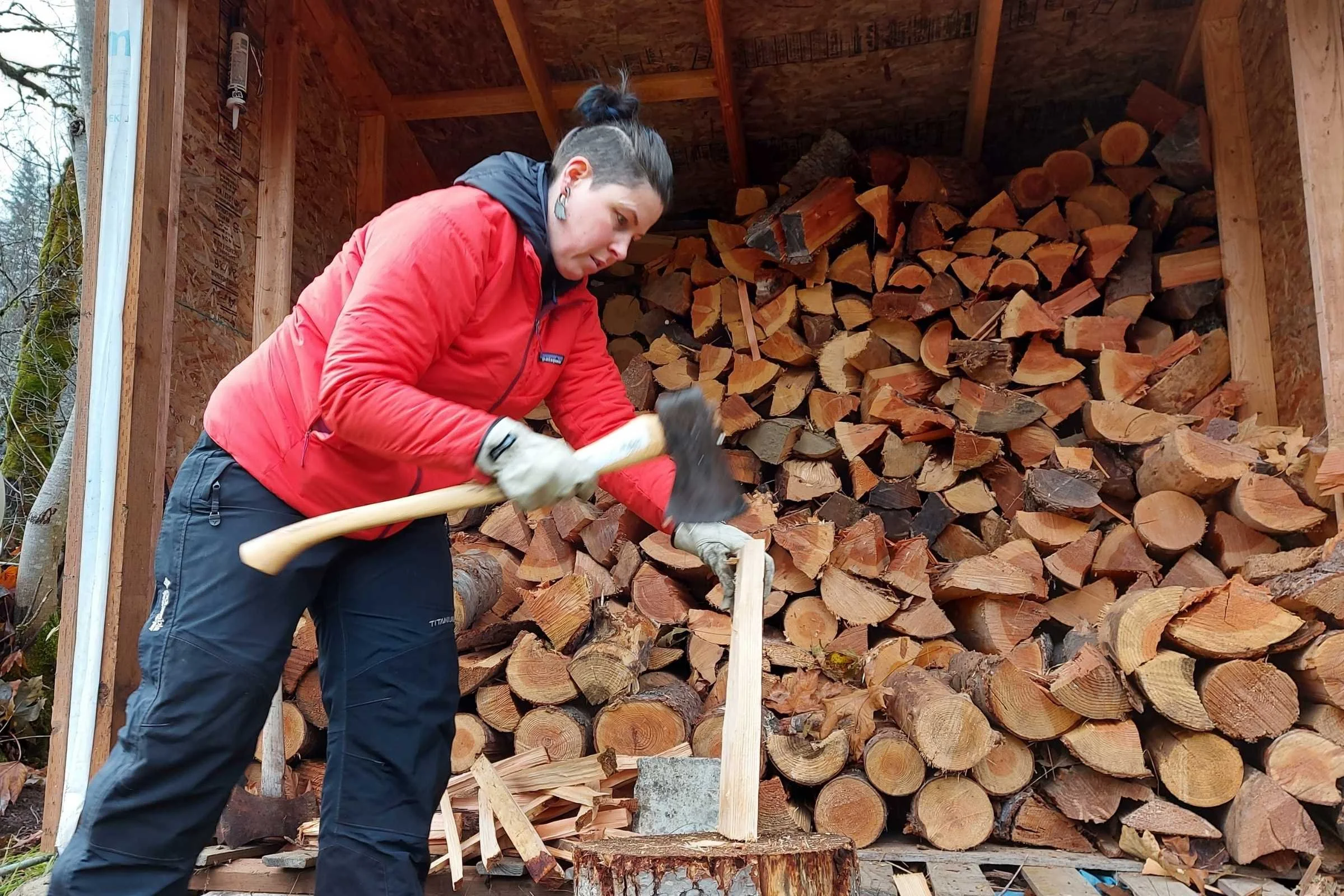
As Treeline Review editor Brandon Lampley says, "The Patagonia Nano-Air is the only puffy jacket I’ve worn that moves sweat and moisture fast enough to wear during cold weather aerobic exercise, like bike touring. ’ve found it dries off my sweat and moves enough moisture to be fine ski touring in -5 F degree weather." He also says cold weather cycling "would be right in its wheelhouse. "
The Patagonia Nano-Air is made of 100% recycled polyester ripstop shell and 60g FullRange insulation with air permeability of 35 CMF. The FullRange is made of polyester, 93% which is recycled.
-
As you'd expect with the name FullRange in the name of the insulation, the Nano-Air is made for mobility and stretchiness. It also sues strategically-placed quilting and smart diagonal stitching so you can move more easily.
Unlike a lot of synthetic jackets, it's designed to be as low-bulk as possible.
-
The Nano-Air has a slimmer fit than most synthetic jackets. That's a negative, in our opinion, because it makes layering under it difficult and excludes certain body types from using this jacket.
However, cyclists or alpine climbers that match that body type may appreciate the closer-to-skin fit that keeps in warmth and reduces weight. We suspect they made the change because the slim fit allows the Nano-Air to be used as a mid layer under a ski jacket.
-
The men's and women's Nano-Air Light Hybrid is a lighter weight version of the Nano-Air Hoodie that uses R1 Air Knit Fleece and a lighter weight insulation. The Nano-Air Hoodie uses 60g FullRange insulation whereas the Nano-Air Light uses 40g FullRange. The Nano-Air Light also cuts some weight by using R1 Air Knit fleece on the backs of the arms, sides, and lower back—all places where you may appreciate more mobility and won't miss the insulation. The Nano-Air Hoodie is 14.15 oz in men's medium. The Nano-Air Light Hybrid is 10.5 oz in men's medium.
-
The Nano-Air Light Hybrid is easier to find than the Nano-Air Hoody and also less expensive. It's especially easier to find in the women's version. This year, we've only been able to find the Nano-Air Hoody in women's version on Patagonia's website and it hasn't always been available in store.
-
Like all Patagonia jackets, it’s backed by their Ironclad Guarantee. They will repair, refund, or exchange any item for any reason, no matter how long you’ve had it or how much abuse you’ve put it through.
-
Another thing we like about this jacket is that Patagonia allows you to trade it into their Worn Wear used gear portion of the website to receive store credit. So if your body changes over the years or you get into different outdoor activities, it will stay out of the landfill.
Best Synthetic / Down Hybrid Insulated Jacket: Arc’teryx Cerium Hoody
Shell material: Arato 15 Nylon
DWR treatment? Yes
Total weight: 10.2 oz (women), 11 oz (men)
Fill Type: 850 fill down + Coreloft 80 and 100
Number of Pockets: 3
Hoodless jacket version: Yes (men’s and women’s)
Vest version: Yes (men’s and women’s)
Packability options: Stuff pocket
Sizes: XS-XXL (men's), XS-XL (women's)
Warranty: Limited Lifetime: manufacturers defects for reasonable expected lifetime of the product.
What we liked: Smart use of synthetic insulation
What we didn't like: Fits too slim for some body types
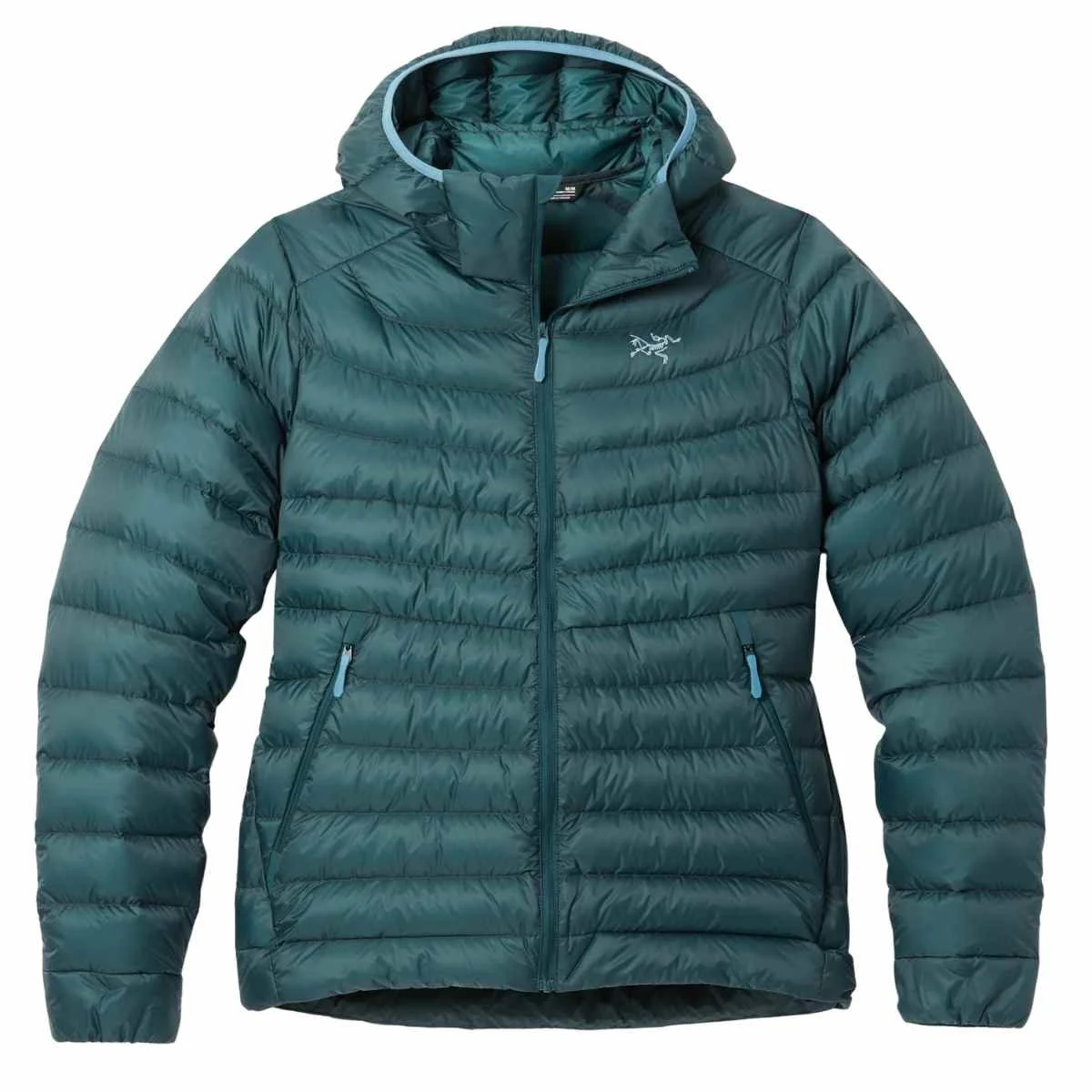
To capitalize on the positive aspects of synthetic insulation while still capturing the warmth-to-weight ratio of down, the Arc’teryx Cerium Hoody uses what the company calls “down composite mapping” to create the best hybrid insulated jacket.
Arc’teryx puts synthetic insulation in the areas most likely to get wet like the shoulders, armpit cuffs, and collar. The rest of the jacket is filled with down to maximize insulation.
Since it is both down and synthetic, the Arc'teryx Cerium Hoody also won our award for Best Hybrid Insulated Jacket in our Best Down Jackets guide.
The Arc’teryx Cerium was previously called the Arc’teryx Cerium LT. Arc’teryx dropped the LT from its name (LT is an abbreviation for “lightweight”). While the Cerium feels like a fairly puffy jacket, it’s still a respectable 9 oz for women’s and 10.6 oz for men’s—lighter weight than almost every jacket we tested that wasn’t going for the Ultralight or Thru-hiker category. The 2025/26 version is even lighter weight than the previous version.
Compare prices of the Arc’teryx Cerium Hoody
Men's
Women's
-
Over the last few years, we've been a big fan of hybrid down and synthetic jackets. These jackets use a mixture or combination of down and synthetic fill. The concept is to get the best of down and synthetic insulation: down’s lightweight packability, combined with the water-resistance and breathability of synthetic.
Hybrid jackets may be great options for folks who want one that will work for various conditions and activities.
The best example of the hybrid-down jacket model is the Arc'teryx Cerium. From its attention to detail on the cut and design to its quality of materials and sewing, this is the best synthetic-down jacket we've seen.
-
You can keep your phone or valuables in a hand warmer pocket or an internal zippered pocket.
-
We also considered the lightweight Arc’teryx Atom (see The Contenders section). The Cerium is much warmer than the Atom. Customers call it a "camp jacket," whereas the Atom that we recommend is active insulation for activities like alpine climbing.
-
One thing for users to keep in mind is that Arc'teryx jackets generally have a very slim fit that may not work for all body types. The men’s size range is slightly wider than the industry standard, starting at XS and going up to XXL.
-
A nice bonus is that Arc'teryx jackets don’t adhere as tightly to stereotypical “men’s“ and “women’s“ colors as many brands do. They provide a wide option of gender-neutral colors in both categories.
Best Ultralight Synthetic Jacket: Montbell UL Thermawrap Jacket

Shell material: sleeve 15D Ballistic Airlight rip-stop nylon body 12D
DWR treatment? Yes
Total weight: 8.4 (women's), 9.3oz (men's)
Fill Type: Stretch Exceloft 40g/m2
Number of Pockets: 2 (women's), 3 (men's)
Hood available: Yes (men’s and women’s)
Vest version: Yes, men’s only
Sizes: S-XXL (men's), S-XL (women's)
Packability options: Stuff Sack
Warranty: Limited Lifetime
What we liked: Insulation value makes it optimal for lots of active hiking use, and the fabric helps keep the bulk down. Overall, lightweight
What we didn't like: Runs small, no chest pocket on the women’s version
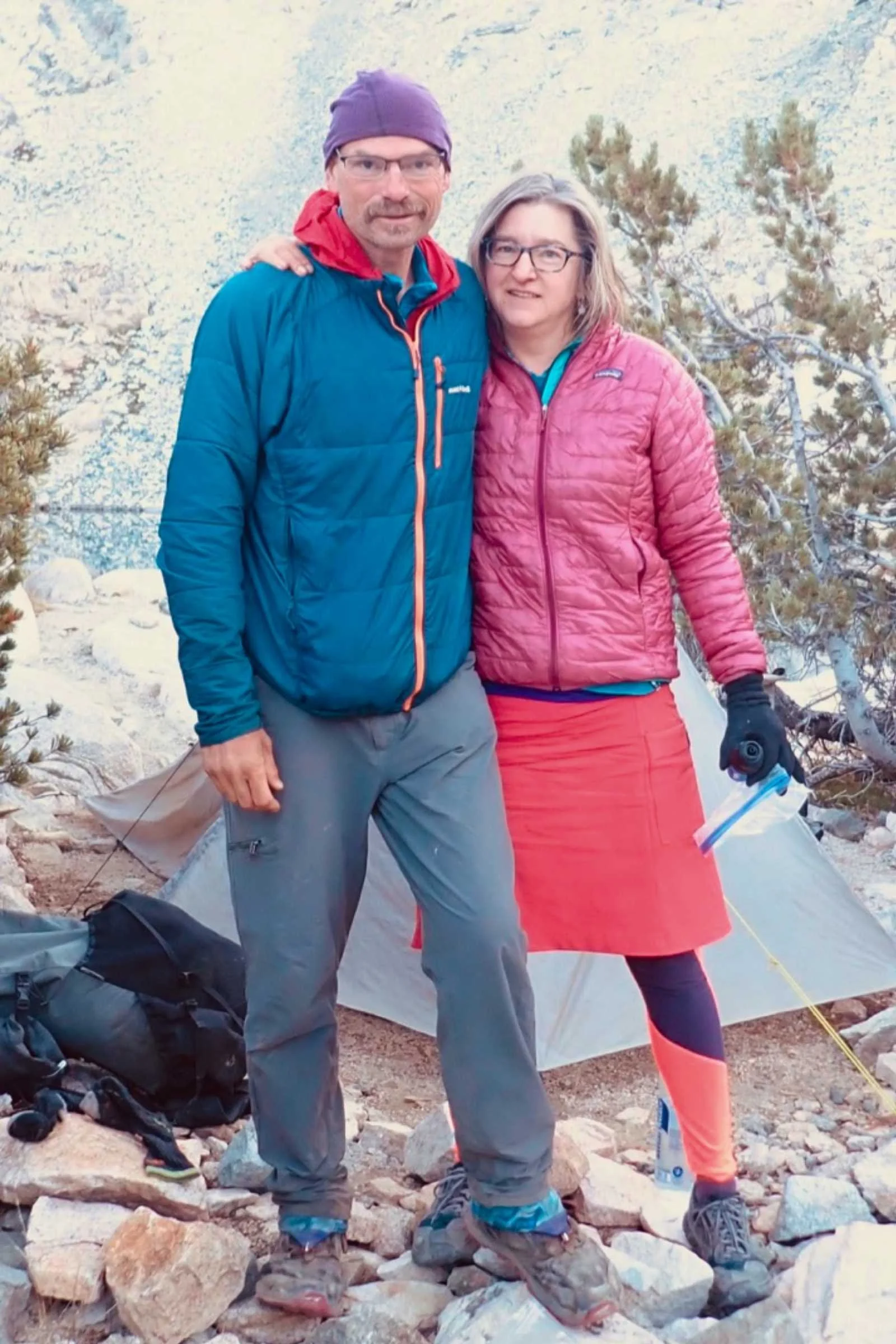
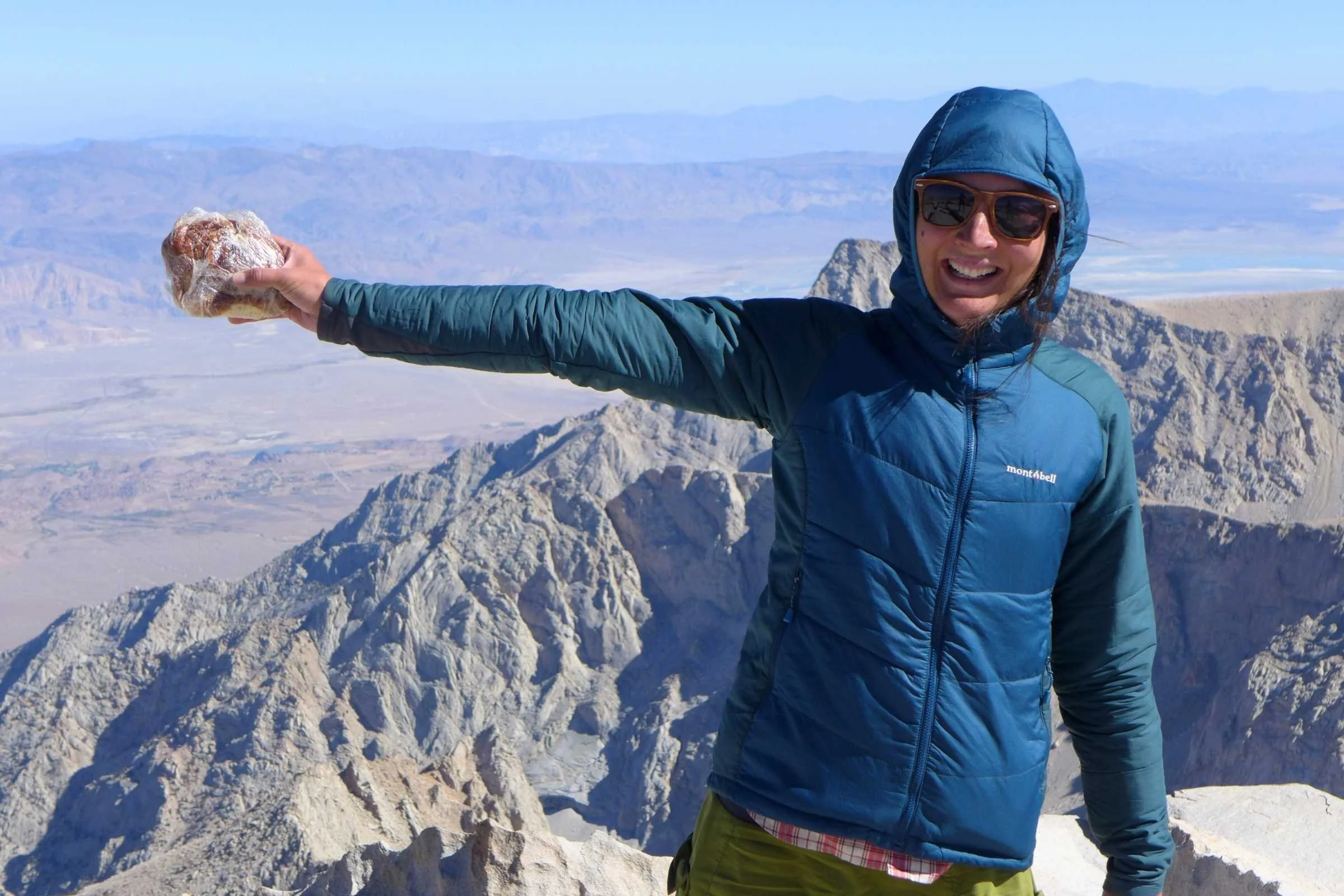
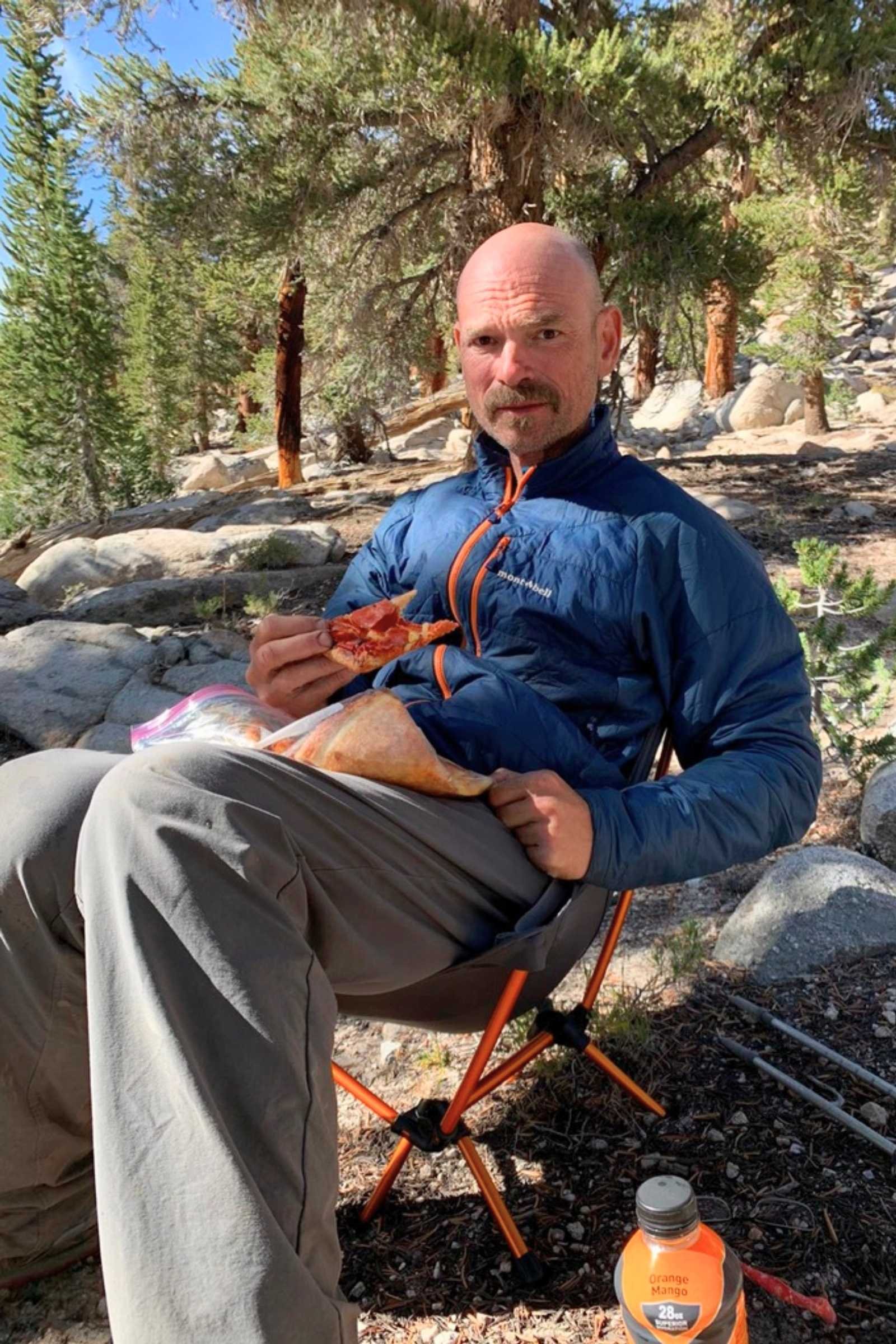
Small enough for “just in case” peace of mind, and warm enough to make a difference when it counts, professional reviewers and everyday users alike all use the same word when talking about the Montbell U.L. Thermawrap: surprising.
View the Montbell U.L. Thermawrap Jacket
Men's
Women's
-
Looking for the best synthetic insulated jacket for thru-hiking? Or travel? Despite what some Best Of lists may say, it’s NOT the Patagonia Nano Puff. We feel the need to mention this explicitly.
Although many thru hikers wear the Nano Puff, our testing suggests that the Montbell Thermawrap is a better choice. We’ve owned both these jackets, and our staff has hiked literally thousands of miles in both jackets in cold, wet conditions. The Nano Puff just isn’t worth it.
The Nano Puff has one of the lower warmth-to-weight ratios of synthetic insulated layers we considered. The warmth-to-weight ratio is much better on Montbell’s Thermawrap. Plus, the Thermawrap is lighter weight than the Nano Puff — the Patagonia jacket weighs 11.9 oz for a men’s medium vs. 9.3 oz for the Thermawrap.
-
Many everyday users were surprised by how warm and packable it is. Our very own Liz Thomas raves, “the Thermawrap stays amazingly warm when wet, dries super quick, and is surprisingly lightweight.” A favorite of thru-hikers, you'll see it in our Pacific Crest Trail Gear List & Strategy, Appalachian Trail Gear List, and more.
I personally have used this jacket for EVERYTHING: backpacking the John Muir Trail, cycling across the US, sea kayak guiding in Alaska, and cycle commuting in Pacific NW winters. As such, I was ecstatic to see that a lightweight jacket that is such an integral part of all my adventures was loved enough by other professional reviewers to make this list.
-
The Montbell U.L. Thermawrap uses 40g/m2 of its proprietary Stretch Exceloft insulation. We like that it moves with you, causing less restriction and a more comfortable fit. The Ballistic Airlight shell fabric increases breathability.
While the sleeves are a 15D fabric, the body is a lighter 12D fabric, allowing more air to permeate the torso (and cutting weight).
But it’s more durable in the arms where there’s more friction with movement, and you’re more likely to need increased durability. That being said, 15D is still a very lightweight fabric. As with all ultralight fabrics, we advise taking extra care to ensure the fabric doesn’t snag and tear.
-
The one complaint we saw with the Montbell UL Thermawrap was that sizing could run slightly small. This seems to have since been fixed with shell fabric and insulation updates. Montbell also now offers a more roomy fit.
We’ve noticed that there can be limited colors, especially in the parka. The size range is limited in women’s and men’s from small to extra-large. There is a men’s XXL option in black only. We’re also bummed that, as with many brands, there is a chest pocket on the men’s version but none on the women’s version.
-
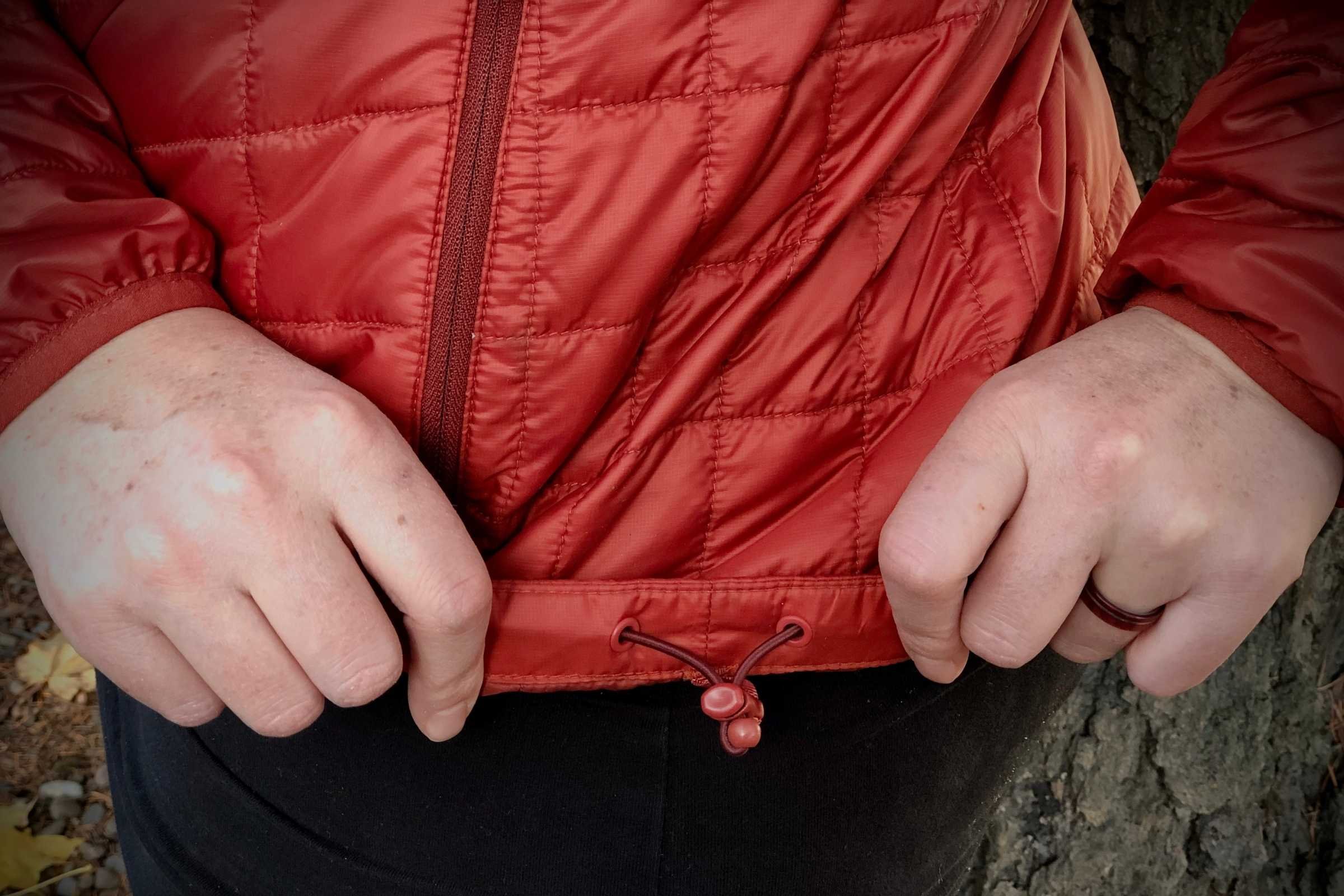
Some other features we thought were a great way to add value without much of a weight penalty were: a Velcro tab hood adjustment, a DWR-treated front zipper, and placement of the drawcord hem in the handwarmer pocket.
For the additional weight of less than an ounce, we feel the hooded version is worth adding for that extra boost of warmth, potentially eliminating the need to carry a warm hat.
Best Synthetic Jacket for Thru-hiking: Enlightened Equipment Torrid

Shell material: 10D Nylon
DWR treatment? Yes
Total weight: 8.9 oz (men’s M) and 8.3 oz (women's M)
Fill Type: Climashield APEX
Number of Pockets: 2
Hoodless jacket version: Y
Vest version: N
Packability options: Packs into hood
Sizes: XS - 2X
Warranty: Three years repair and replace at their discretion
What we liked: incredibly warm, bang for the buck
What we didn't like: not the most stylish
When Treeline Review co-founder Naomi Hudetz was planning her Iceland traverse, she knew that the weather was going to be the biggest challenge – rain, snow, wind, cold.
She needed an insulation layer that would stay warm when wet, had breathability, and would also pack down small because she had a lot to carry and not much space in her pack. The Enlightened Equipment Torrid was exactly what she needed.
View the Enlightened Equipment Torrid Jacket
men's
Women's
The Torrid has synthetic insulation – Climashield APEX, to be exact – that was developed specifically for this use case. Climashield claims that it's the "most thermally efficient continuous filament insulation on the market" and her experience in Iceland is a testament to this claim.
There were multiple days in Iceland when a brutal headwind did not stop. She and her hiking partners formed a peloton – taking turns in front – in order to keep going. It was also raining and snowing in the mid 30s. She wore the Torrid all day, underneath her rain shell, and it kept her warm and dry, for multiple days in a row.
The cut isn't as refined and stylish for everyday town use as you'd see in other jackets. But we think most thru-hikers who value the warmth-to-weight ratio and bang-for-the-buck just as much, the Enlightened Equipment Torrid jacket can't be beat.
Best Best Big and Tall: Carhartt Rain Defender Insulated Jacket

Shell material: 100% nylon CORDURA®
DWR treatment? Yes
Total weight: 17.6 oz
Fill Type: Quilted nylon with 100g polyester insulation
Number of Pockets: 5
Hoodless jacket version: Yes and hooded version
Vest version: Yes
Sizes available: S-3XL, L-2X in Tall
Material: What we liked: Fabric is tougher than other puffy jackets
What we didn't like: Torso is cut short, no hood
Treeline Review writer Clayne Zollinger says that "the Carhartt Rain Defender Insulated Jacket is my favorite jacket for staying warm in both fall and winter." In his guide to Best Outdoor Clothing for Big and Tall Adventurers, he praises its ability to keep you warm without overheating during activities. "I’ve owned this jacket for several years now and it is my go-to jacket for rainy, windy, or otherwise chilly days and I wear layers underneath in the winter when I need to be just a little bit warmer."
This jacket excels and water-resistance, breathability, and durability. Clayne writes, "Carhartt’s nylon CORDURA® fabric seems to be far more resistant to scuffs and rips than other similarly weighted insulated jackets, whose shells can sometimes feel thin and fragile in comparison. In addition to being tough, I found the Rain Defender water repellent coating works great to slough off snow and rain. I’ve worn the Rain Defender in both snow and rainstorms and was able to stay warm and completely dry, and both slide off the jacket and appears dry quickly afterwards."
View the Carhartt Rain Defender Insulated Jacket
Jacket
Hood
-
As with all synthetic jackets, getting the right balance of warmth and breathability is important. Clayne says, "It is not quite warm enough for the coldest of winter temperatures in the mountains, but it is just right for regulating one’s temperature while hiking in the cold. I find it also excels as a layer working with other jackets in more extreme temperatures. It also provides real resistance to wind chill when placed over a light fleece jacket."
-
My only complaint about this jacket is that it’s a little short in the torso. Some may find that to be an issue, but for me it seems to just cover enough while not getting in the way when bending down, crouching, or scaling boulders, and for those that do find this to be an issue, Carhartt provides several tall sizes in addition to the standard ones.
Best Affordable Insulated Jacket:
L.L.Bean Primaloft Packaway Jacket
Shell material: 100% recycled polyester
Total weight: 14 oz
Fill Type: PrimaLoft Cross Core; PrimaLoft Gold+NASA Aerogel 60g
Number of Pockets: 4; 2 hand, one chest, one internal media w audio port
Hoodless jacket version: Yes (men’s and women’s)
Vest version: Yes (men’s and women’s)
Sizes available: Women’s XXS to 3X (also available in petite); Men’s S to XXL (also available in tall)
Warranty: 100% satisfaction within 1 year and manufacturers defects after 1 year
What we liked: Under the radar performer, inclusive sizing
What we didn't like: Fit is boxy in the torso relative to the sleeve sizing
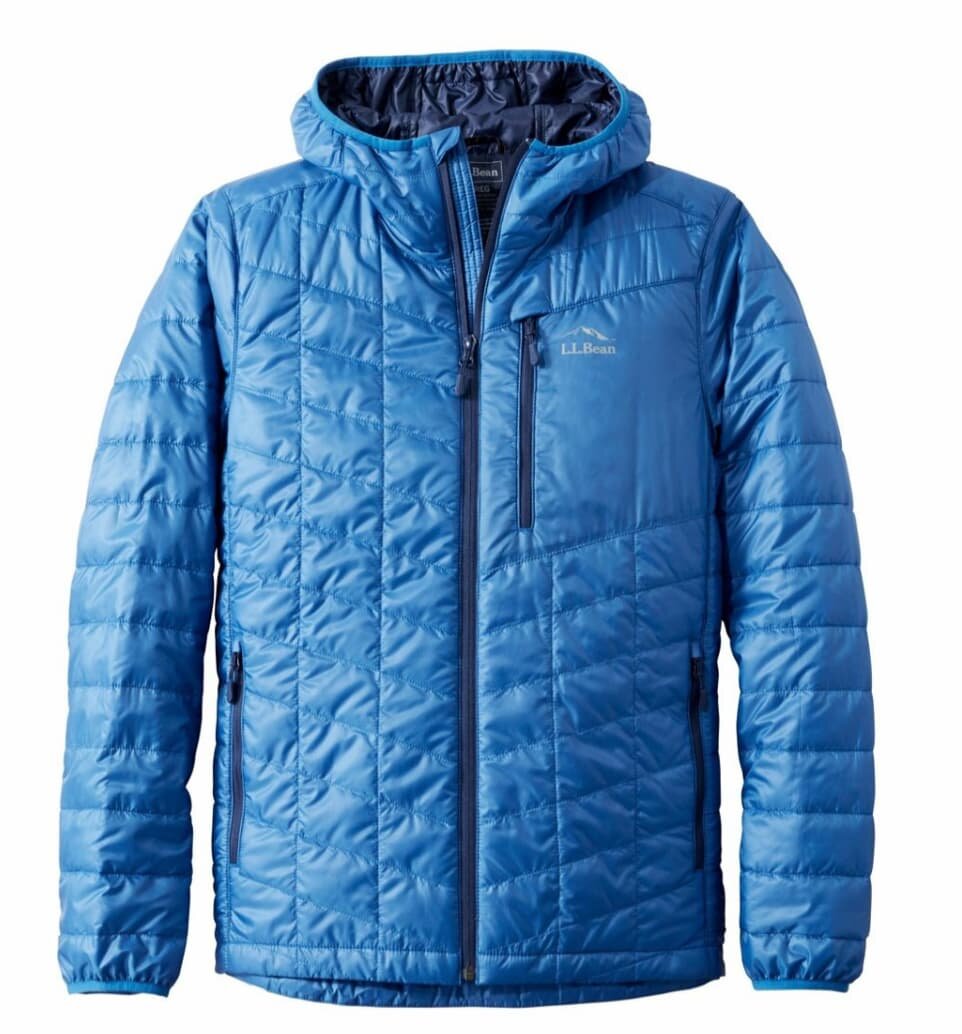
The L.L. Bean PrimaLoft Packaway Jacket has been the the best budget synthetic jacket for many years running. It's a gold-standard jacket considered by many reviewers to be the best-insulated jacket for the price. We found it incredibly warm — especially for how thin it is. While L.L. Bean is known for casual gear, they’ve snuck in high-end insulation to create a reasonably-priced lightweight, packable, mid-layer jacket or shoulder season outer layer. The L.L. Bean Packaway is a favorite at Switchback Travel. Gear Patrol and considered it an “unassuming winner.”
Compare prices of the L.L.Bean Primaloft Packaway Hooded Jacket
Men's
Women's

-
L.L. Bean has accomplished its incredible warmth by using new insulation from PrimaLoft called PrimaLoft Gold with Cross Core technology.
PrimaLoft Gold is a well-known insulation. The newer CrossCore version of this synthetic insulation uses silica aerogel (the same as that used by NASA) in the fibers. Cross Core is purported to increase warmth by 52% without increasing weight.
According to Snow Industry News, “silica aerogel is composed of more than 95% air and is the lightest solid material known to humankind.”
It’s the same insulation in the Patagonia DAS Parka, which won our award for Best Jacket for Extreme Weather and is twice the price of the L.L. Bean Packaway.
We tested the L.L. Bean Packaway and confirmed what many of the customer reviews said. When we took it out of the package, it didn’t look like it would be very warm because of how thin it was. While testing, we were pleasantly surprised by its warmth. We were toasty warm in 40° weather with just a thin base layer underneath.
-
Not only does the L.L. Bean Packaway jacket have the most pockets out of any of our picks (other than the Patagonia Micro Puff, our Best Overall winner), but all 4 pockets are sizeable, including the chest pocket. That means there’s plenty of storage for anything from phones to gloves to snacks. The internal pocket even has an audio port. Even the handwarmer pockets have zippers!
-
We also liked that the jacket comes in women’s regular (XXS-XL), petite (XXS-XL), and plus (1X-3X) sizing, and men’s regular (S-XXL) and tall (M-XXL) sizing. For those of you counting, that’s 15 women’s sizes and 9 men’s sizes! Both women’s and men’s come in 8 different colors.
Sizing this jacket right can be a challenge. Our tester generally wears a women’s large. With the Packaway jacket, the size large was barely long enough in the arms and incredibly bulky in the body. We suspect it is designed this way to use as a layering piece, as there is plenty of room for extra layers underneath. Everyday users in the reviews also raised this issue.
The L.L. Bean Packaway is a favorite at Switchback Travel and Gear Patrol calls it an “unassuming winner.”
L.L. Bean has a 100% satisfaction guarantee within one year of purchase. After one year, they cover manufacturer defects only. If you’re unhappy with your sizing or how it looks on you, it’s easy to exchange or return.
-
The L.L. Bean Packaway is a favorite at Switchback Travel and Gear Patrol calls it an “unassuming winner.” ear, they cover manufacturer defects only. If you’re unhappy with your sizing or how it looks on you, it’s easy to exchange or return.
-
L.L. Bean has a 100% satisfaction guarantee within one year of purchase. After one y
-
As we mentioned above, the L.L. Bean Primaloft Packaway Jacket has the most inclusive sizing of the synthetic jackets we tested. For that reason, we chose the L.L. Bean Primaloft Packaway Jacket as the winner for best synthetic jackets in our Best Plus Size Outdoor Clothing story.
Treeline Review writer Gabi Reyes-Acosta writes, "It’s extremely light but keeps you warm on cold days and nights. It’s also compressible, making it an excellent backpacking companion. It goes up to a 3X and is worth every penny— but I’ve often seen it on sale for $20 to $40 less."
Other insulated jackets we tested
Arc’teryx Atom Hoody

Shell material: Tyono 20D nylon
DWR treatment? Yes
Total weight: 10.9 oz (women), 13.2 oz (men)
Fill Type: Coreloft 60 (60g/m2)
Number of Pockets: 3 zippered
Hoodless jacket version: Yes (men’s and women’s)
Vest version: Yes (men’s and women’s)
Packability options: Stuff pocket
Sizes: S-XXL (men), XS-XL (women)
Warranty: Limited Lifetime: Manufacturers defects for reasonable expected lifetime of the product.
The Arc’teryx Atom Hoodie was just short of winning our top recommendation. It's a little heavier and more expensive than our overall pick, the Patagonia Micro Puff Hoody. Still, there's a lot to love with this jacket. For 2023, the Arc'teryx Atom LT was renamed the Arc'teryx Atom.
Arc’teryx Atom LT Hoody
Men's
Women's
-
The liner fabric of the Arc’teryx Atom Jacket is soft to the touch, making it comfortable even when worn over a short-sleeved shirt. The 20D shell fabric on the Arc’teryx is also more tear and abrasion-resistant than the Micro Puff at 10D. TAnother thing we liked about the Arc’teryx Atom is the stretchy fleece fabric that replaces the synthetic insulation on the underarm and flank. This kind of active insulation increases breathability compared to most synthetic jackets. While the breathability isn’t quite as good as the Patagonia Nano-Air — which uses specially-designed synthetic insulation made for breathability — it is noticeable compared to other synthetic jackets.
The Atom also includes cuffs that are easy to get off and on, durability in key areas, and uses a dope-dyed liner. I reached out to Arc’teryx to find out what the heck dope-dyed meant. Dope-dying is a “less resource-intensive coloring process.”
Additionally, as with all Arc’teryx apparel, the fit is very athletic, especially when compared to the Patagonia Micro Puff, which fits a wider variety of body types.
Related: If you are looking for more lighter-weight synthetic options, check out our full guide to Best Fleece Jackets! It’s another great resource on layering as well.
-
The Atom is one of Arc'teryx's core models and they've made lots of options to help people find exactly what they need.
For 2023, the Atom LT (which stood for "lightweight") became the Atom Insulated.
The Atom SL (which stands for "superlight") is available.
The Atom Lightweight appears to be the women's version of the Atom SL, is the same price as the men's Atom SL, and is also made of Coreloft insulation.
Patagonia Nano Puff
Shell material: 10D ripstop nylon Netplus
Total weight: 10.0 oz (women), 10.5 oz (men)
Fill Type: PlumaFill 60g 100% recycled
Number of Pockets: 2 zippered hand, 1 internal
Hoodless jacket version: Yes (men’s and women’s)
Vest version: Yes (men's and women's)
Sizes: XS-XXL (men’s), XS-XL (women’s)
Warranty: Ironclad Guarantee, they will repair, refund, or exchange any item, for any reason.
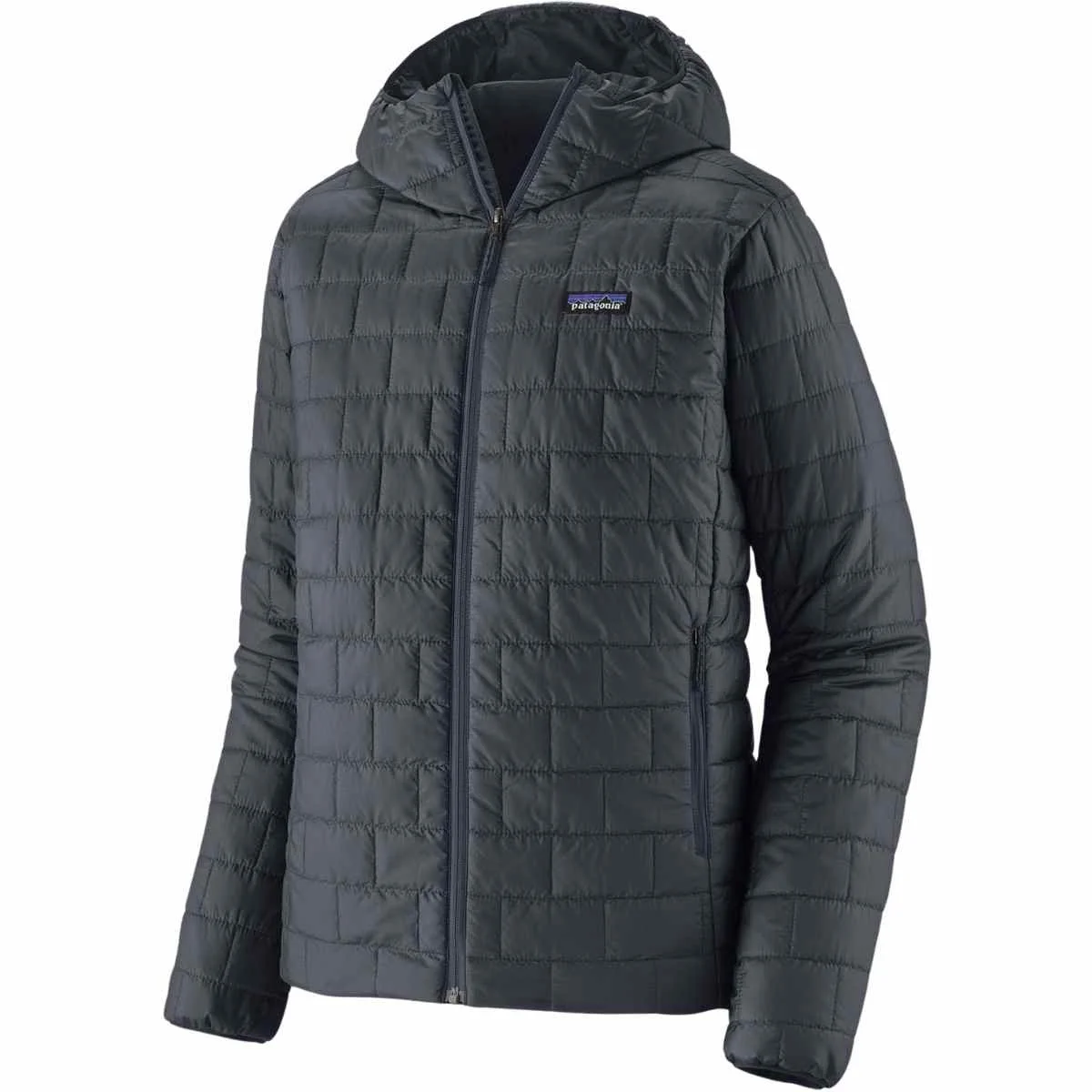
The Nano Puff is a lighter weight version of the Patagonia Micro Puff. It has 60g PlumaFill compared to the Micro Puff's 65g Pluma Fill, ultimately meaning it doesn't have as good of a warmth-to-weight ratio. The vest version of the Nano Puff won Best Vest for Aerobic Activities in our Best Men's Vests guide precisely because it isn't that warm. The vest Nano Puff was also a contender in our Best Women’s Down Vests as well.
View the Patagonia Nano Puff
Men's
Women's
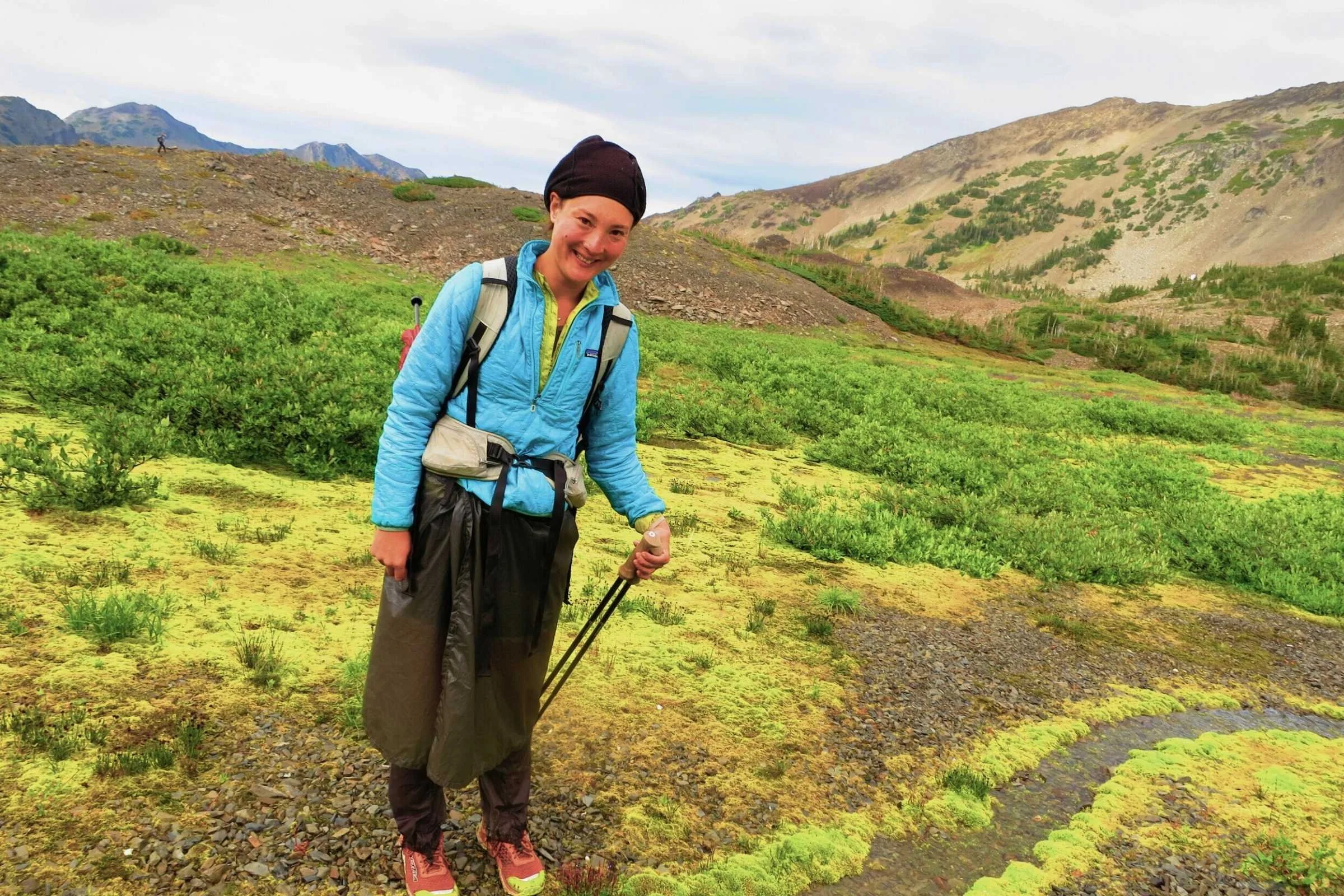
Treeline Review editor Liz Thomas in the Patagonia Nano Puff jacket. Notice how she has multiple layers underneath because the Nano Puff isn’t warm enough? Photo by Grant Sible.
North Face Thermoball Eco Insulated

Shell material: 100% recycled nylon
DWR treatment? Not provided
Total weight: Not provided
Fill Type: Number of Pockets: 2 hand, 1 stowable
Hoodless jacket version: Yes, men’s and women’s
Vest version: No
Packability options: None stated
Sizes: S-XXL
The North Face ThermoBall Eco showed up in our research for its affordable price, recycled materials, and widespread availability.
One thing we appreciated about The North Face Thermoball Eco is that it is available in kids' and toddlers' sizing, so a family can match.
However, it didn't have quite the positive expert and customer reviews of the other jackets, so did not make it to our testing rounds.
Compare prices of the North Face Thermoball Eco Insulated
Men's
Women's

Shell material: Repurposed polyester taffeta with DWR finish and 600 mm PU backer
DWR treatment? None mentioned
Total weight: 13.2oz (men’s M)
Fill Type: 60gsm 100% Polyester
Number of Pockets: 2 on primary and reverse side
Hoodless jacket version: Y
Vest version: Y
Packability options: Packs into chest pocket
Sizes: XS - XXL
Warranty: Lifetime + repairs
Popular for its unique aesthetic and its reversible wear construction, the Cotopaxi Teca Calido Hooded jacket has become popular among consumers in the synthetic jackets space. It’s a little more casual of a jacket than we were after, and find that it may not have the technical characteristics that we’re after for testing synthetic jackets. That said, it’s well loved by many, and it’s available in jacket and vest form in addition to the hooded version so we wanted to highlight it here. It can often be found on sale for less than $100 (check our Deals Page), making it an especially good value.
The Teca Calido appears to be discontinued for 2025 and replaced with the new Capa Insulated Hooded jacket made with Primaloft Gold P.U.R.E 100% recycled synthetic insulation. As one of Cotopaxi' bestsellers, it will be available in Extended Sizing, similar to their popular down jacket equivalent, the Cotopaxi Fuego. We're looking forward to testing this jacket and will report back.
View the Cotopaxi Teca Calido Hooded Jackets

The author testing an insulated jacket with her child. Sustainability is about making choices that benefit the next generation. Photo by Emily Haas
The best gear is used gear
Looking for a budget puffy jacket? Buy used. Used gear and apparel can be purchased at a fraction of the cost of new gear. We like this because it’s good for the environment, and leaves us with more money to go DO things outside, which is kind of the point.
Many cities have a consignment or resale outdoor gear store. If you don’t live in a place with a used outdoor retailer, hit up the thrift shops. Some diligence and patience can lead to incredible finds. Just don’t start looking a week before you need the jacket.
Don’t have a local used gear store? Prefer shopping online? Patagonia’s Worn Wear also makes it easy to search for models that we recommend. Arc'teryx ReBIRD Resale program allows you to purchased pre-owned Arc'teryx items for a fraction of the cost. Amazon sells Certified Refurbished items with a 90-day minimum guarantee by selecting "Amazon Renewed" next to your search bar.
Just like other consignment stores, you may have to be patient for the thing you want to show up. But it’s easy to check-sometimes as easy as refreshing a bookmarked webpage.
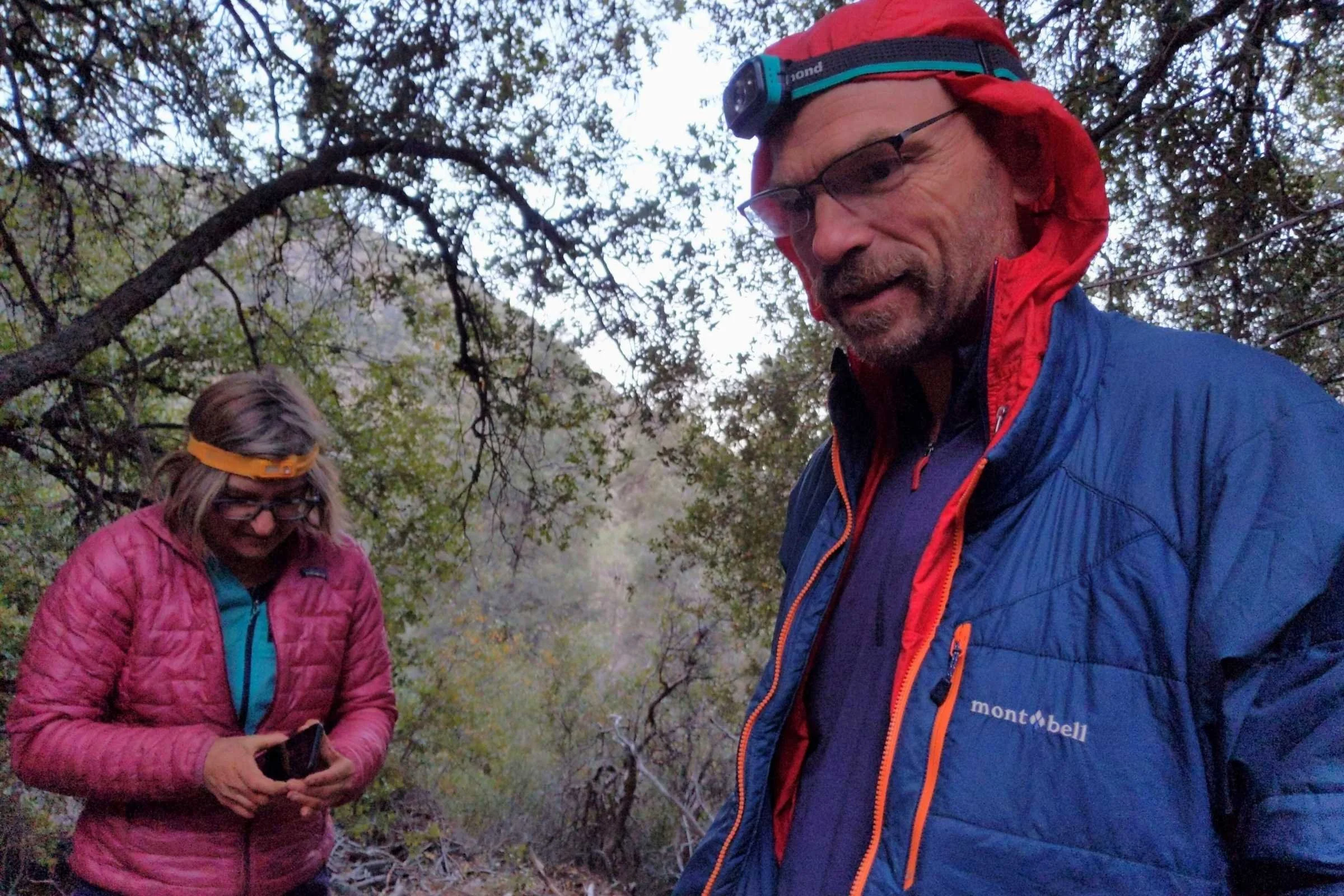
Synthetic jackets can be used in conjunction with other layers like windshirts and baselayers to add more warmth. Photo by Liz Thomas
What is a synthetic insulated jacket?
A synthetic insulated jacket is a versatile part of any wet weather or high activity layering system. There’s a reason I have a synthetic puffy in addition to my 3 down jackets. Out of those 4 puffy jackets, my one synthetic gets the most use because of the high versatility of synthetic jackets. Whether you’re hiking, biking, cross country skiing, or going for a cold-weather run, a synthetic jacket can keep you warm when at rest, but keep you from overheating while active.
What type of synthetic insulation is used in jackets?
There are many other proprietary, or name-brand synthetic insulations out there — too many for us to cover all. However, despite the proprietary names that insulation companies or outdoor brands may use, their synthetic insulation ultimately falls into those three types: continuous filament, short staple, and cluster fiber.
Synthetic Insulation is constantly getting more packable and has a better warmth-to-weight ratio.
Compare Types of Synthetic Insulation in a Table→
There are three types of construction when it comes to synthetic insulation: Short Staple, Continuous Filament, and Cluster Fiber.
Continuous filament insulation
Continuous filament is one long fiber that weaves back on itself. Traditionally, it was the bulkiest synthetic fill, although that has changed in recent years. This is the most durable synthetic fill. It tends to be thicker, stronger, and longer lasting. You’ll find this kind of insulation in the Patagonia, Montbell, and Outdoor Research jackets we review.
Short staple insulation
Short staple fibers are, well, short, thin, and packed together. This type of construction easily creates a high loft without adding a ton of extra bulk. Short staple fibers are not as durable long term as continuous filament. You’ll find this kind of insulation in Arc’teryx jackets.
Cluster fiber insulation
Cluster Fiber is a clustered structure that closely mimics down. It’s unclear what, if any, downsides it has at this point (pun intended). You’ll find this kind of insulation in the men’s and women’s North Face ThermoBall Eco, an insulated jacket that came up in our research but didn’t have enough positive expert and customer reviews to make it to our testing rounds.
Almost all of the jackets on our list use continuous filament insulation. The exception is the short staple Coreloft used by Arc’teryx. When we contacted L.L. Bean, they did not know what type of insulation their jacket used.
Difference between synthetic insulation fills
You can expect high-end insulation fills to have the following performance abilities:
Warmth to weight similar to down
Thickness/not bulky for freer movement
Retain a high percentage (90% or more) of insulation capability when wet
Breathable for moisture management when active
Packable
Water-resistant, so it absorbs less moisture to begin with
Have 4-way stretch to move with you
Fast drying
High loft and soft feel to mimic down
Durable
Synthetic Insulation Comparison Table
| Name | Used By | Type | Description |
|---|---|---|---|
| Coreloft (60, 80 100) | Arc'teryx | Short staple | Crimped multi-denier siliconized polyester |
| PrimaLoft Cross Core; PrimaLoft Gold+NASA Aerogel 60g | L.L.Bean | Unknown | According to Snow Industry News, "silica aerogel is composed of more than 95% air and is the lightest solid material known to" humankind. Aerogel has been worked into the Primaloft Gold fibers and is purported to increase the warmth by 52% while keeping weight low. |
| Full Range 60 | Patagonia | Continuous with 4 way stretch | Stretch, breathability, 40% recycled |
| Polartec Alpha Direct 95 g/m2 | Outdoor Research | Continuous | Lofted-knit fibers connected to solid mesh core. Doesn't need a liner, so is more breathable |
| Stretch Exceloft 40 g/m2 | Montbell | Continuous | Three sizes of siliconised fibers woven together to maximize breathability, stretch, loft |
| Stratus recycled 60 g/m2 | Rab | Continuous | 20% less water retention than PrimaLoft |
| PlumaFill 65 g/m2 | Patagonia | Continuous | "Replicates the structure of down," super packable, good warmth to weight |
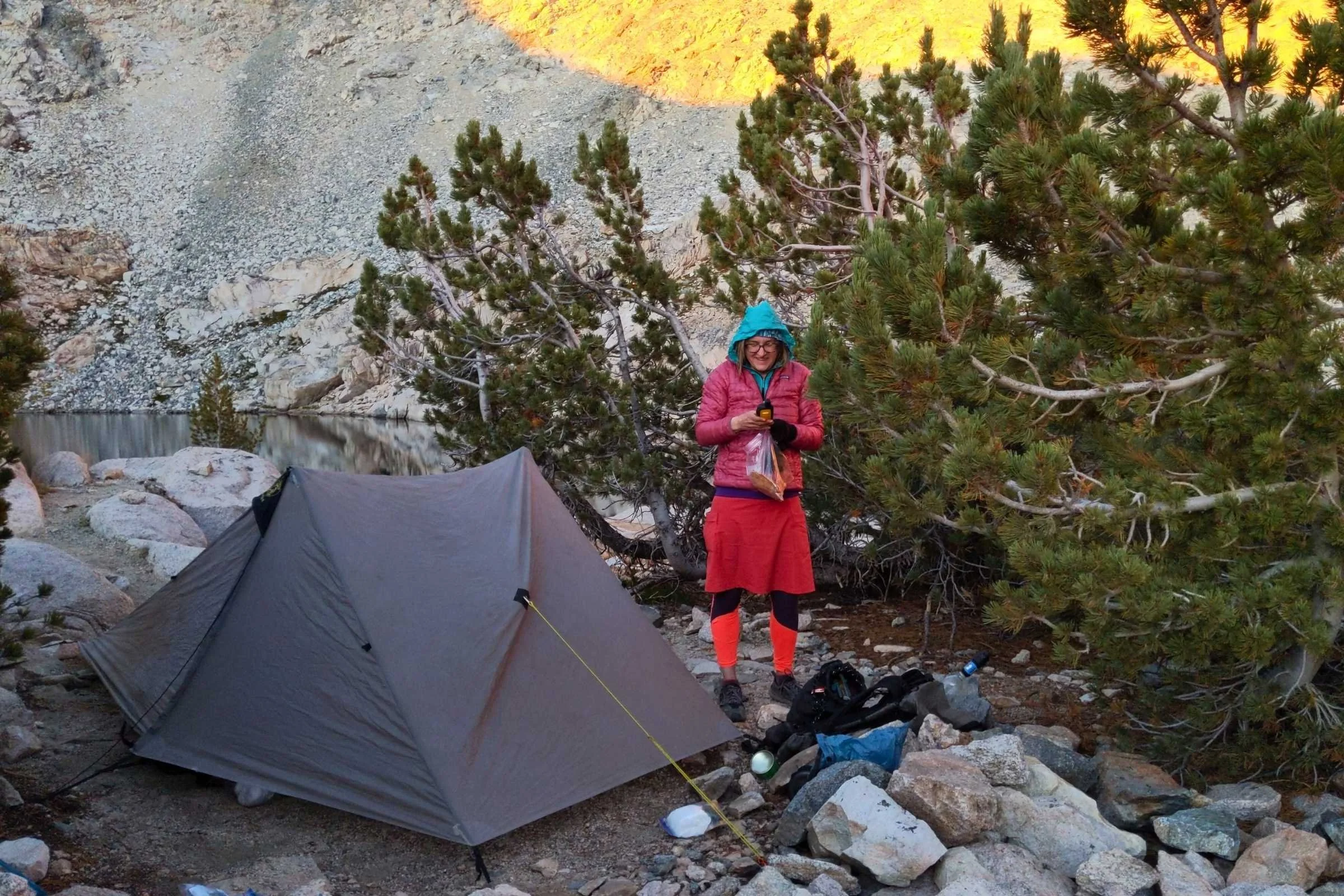
Treeline Review editor Naomi Hudetz in camp on a cold morning. Photo by Liz Thomas
What to Look for in an Insulated Jacket
Warmth
Synthetic insulation has traditionally not been as warm as down insulation. Innovations in technology, however, have narrowed the gap. This has resulted in surprisingly warm synthetic jackets. While synthetic jackets can be warm, they aren’t often equal to down in warmth-to-weight ratio.
Water Resistance
Although synthetic-filled jackets by their very nature are water-resistant, their water-resistance can be improved by the use of a DWR coating (Durable Water Repellent) on the face fabric or applications to the fibers themselves such as siliconization. Almost all the jackets that we considered have some sort of DWR finish or application to the fibers to improve water resistance.
Breathability
Breathability is one of the top reasons to choose a synthetic jacket over a down-filled jacket. The water vapor that is produced when you sweat has a difficult time moving through down insulation and away from your body, leaving you wet, hot, and uncomfortable. Plus, if the down is untreated, those same water vapors can reduce the lofting ability of the down.
Highly breathable synthetic jackets are referred to as “active insulation.” Breathability matters the most when you’re using your jacket for high exertion activities like cold weather cycling or alpine climbing.
Breathability is an area where synthetic insulation vastly outperforms down. Still, not all synthetic insulation is created equal. The proprietary FullRange® insulation found in the popular Patagonia Nano-Air has long been one of the most breathable insulations.
We were also impressed by the breathability of Polartec Alpha and Polartec Alpha Direct, found in our former pick (now discontinued) for the best breathable jacket, the Outdoor Research Ascendant Hoody.
With synthetic jacket insulation, breathability is measured by how much moisture in the form of vapor can exit from the inside of the jacket to the outside of the jacket in a given amount of time. If you get sweaty during aerobic exercise, for example, more breathable jackets will move moisture away from the inside of your jacket. When you stop moving, a breathable jacket will make it so you won’t feel soaking wet (and susceptible to evaporative cooling, which in certain conditions can lead to hypothermia).
Type of fill
Lower-end synthetic fill tends to be bulky, have a low warmth-to-weight ratio, and lose lofting abilities quickly — sometimes even in a matter of months.
One thing became clear while we were researching: most brands are either using well-known, high-end insulation like PrimaLoft Gold or have done tons of R&D to develop their own proprietary insulation technologies, like the insulation used by Patagonia and Outdoor Research. These technologies have advanced so much that in name brands, most insulations will perform equally to name brands like Primaloft. Compare insulation types in our Synthetic Insulation Comparison Table.
Close-up on some features we like including the DWR treated front zipper, front “Napoleon” pocket, and backpack-friendly shoulder stitching. Photo by Naomi Hudetz.
Warmth-To-Weight Ratio
It is more difficult to calculate the warmth-to-weight ratio of a synthetic fill jacket than that of a down-filled one. However, many different insulation manufacturers and brands with proprietary synthetic fills will claim that their filling is “warm as down.”
While down jackets generally give you an idea of how much insulation is inside the jacket by listing a fill weight, synthetic jackets work differently. The insulation is classified by grams per meter squared (g/m2). In theory, the higher the number of g/m2, the warmer the insulation.
However, this number doesn’t say how much of that insulation the manufacturer has put in any given jacket. And while the down between brands is more or less an apples-to-apples comparison, the same can’t be said for synthetic insulation.
The synthetic jackets that made it onto our list range from using 40g/m2 insulation to 100g/m2. Traditionally, jackets with less than 100g/m2 insulation would be considered three-season jackets. Jackets with insulation in the 100g/m2 to 200g/m2 range would be four-season jackets.
But these numbers have gotten fuzzy as continuous filament insulation has gotten lighter and less bulky with the advent of down-mimicking cluster fiber insulation. In the last few years, it is possible to find a four-season puffy jacket with less than 100 g/ m2, like the Patagonia Micro Puff Storm at 65 g/m2.
Packability
Cheap synthetic fill can be incredibly bulky. The most iconic example of cheap synthetic fill is the classic rectangular sleeping bag that kids take to a sleepover at their friend’s house. Again, innovations in synthetic insulation technology have resulted in more packable insulation. This is one possible reason why it is harder to find a truly inexpensive synthetic jacket that is still ideal for outdoor pursuits.

The author testing the LL Bean Primaloft Packaway, which won our award for Best Budget Jacket. Photo by Emily Haas
Price
Synthetic insulation is a patented material under different brand names. Only a few companies research, develop, and manufacture synthetic insulation. This means that costs can be more tightly controlled because there is less competition. Down, on the other hand, has multiple suppliers and a wide range of quality, including whether it is ethically sourced or not.
Our synthetic picks ranged from $190-$430, excluding the down/synthetic hybrid from Arc’teryx, while the down products we reviewed ranged from $100-430.
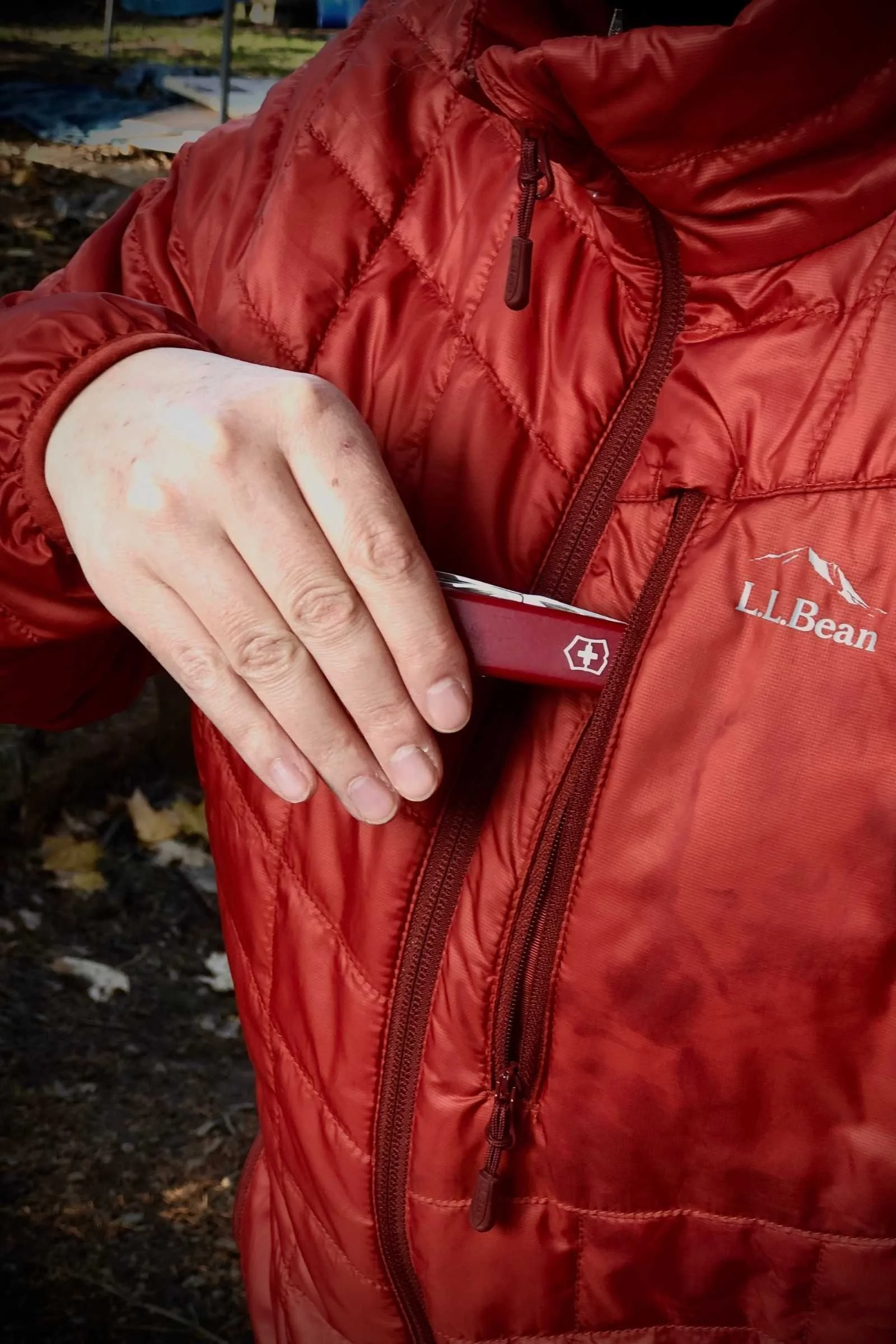
A front pocket on the recycled synthetic material LL Bean Packaway Jacket makes it easy to stash things you’ll need handy. Photo by Emily Haas
Sustainability
Unlike our down jacket review, sustainability was not a huge factor in our synthetic jackets. While the industry is starting to trend towards using recycled polyester insulation or shell materials, this is still the exception rather than the rule with synthetic insulation.
Only one jacket, the L.L.Bean Packaway Jacket, used recycled synthetic material for the face fabric. And only one jacket we considered used recycled insulation, the men’s and women’s Rab Xenon Jacket. We aren’t sure exactly why this is. One theory is that there is just more market pressure and awareness when it comes to down, so that is where companies focus their sustainability.
Warranty
All the jackets that won our awards have a minimum Limited Lifetime Warranty against manufacturer’s defects. Lifetime, in this case, means the expected lifetime of the product, which varies depending on the product in question.
Manufacturers’ defects are anything that went wrong in production or material that is not as durable as it should be. It does not cover normal wear and tear.
L.L. Bean goes one step further by offering 100% satisfaction guaranteed for the first year after purchase.
Patagonia had the best warranty with their Ironclad Guarantee. They will repair, refund, or exchange any item for any reason, no matter how long you’ve had it or how much abuse you’ve put it through.
Not all manufacturers made their warranty crystal clear, though. Outdoor Research calls it their “Infinite Guarantee” and says their products are guaranteed to “perform” for the lifetime of the product. They do not, however, define what “perform” means.
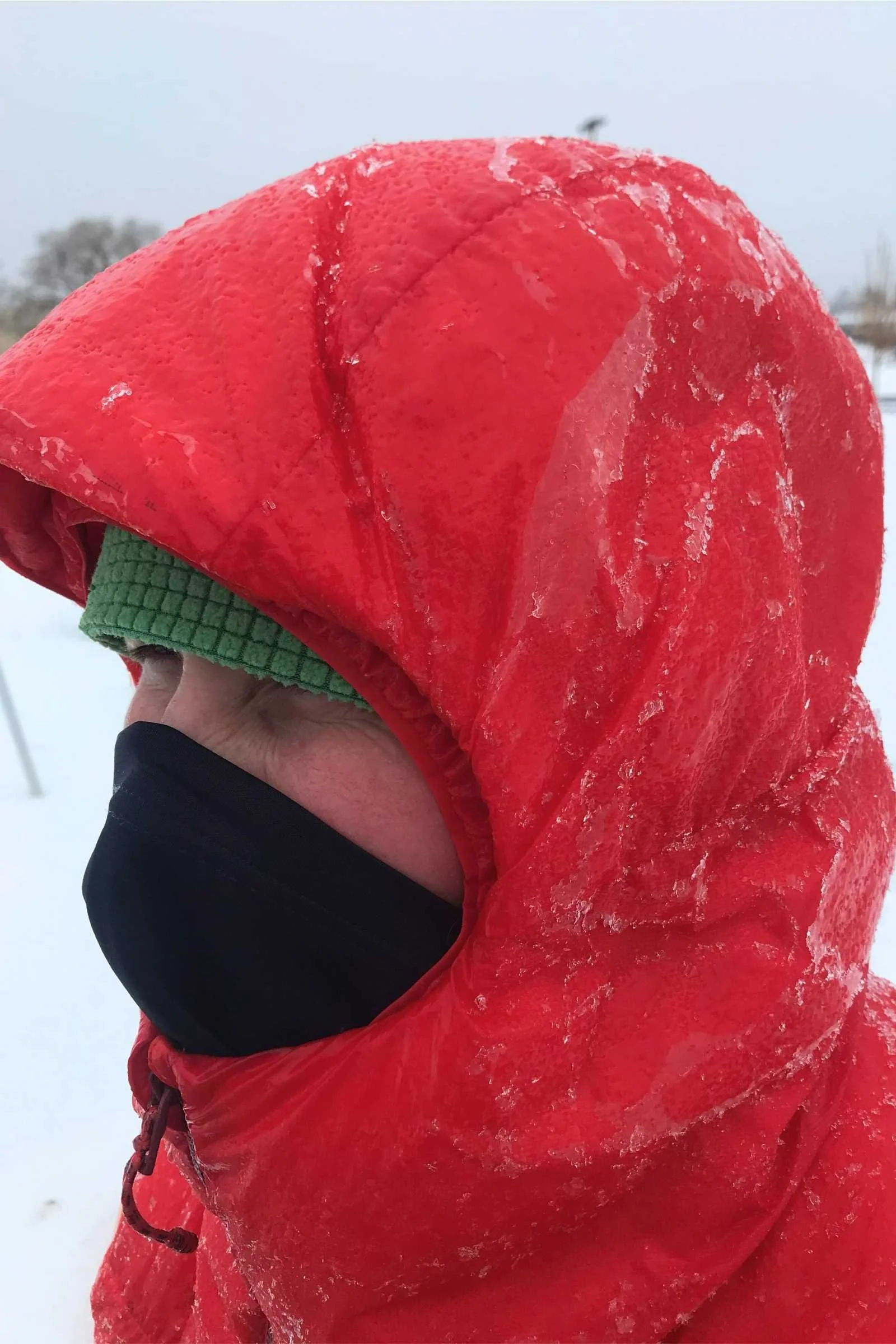
The Patagonia DAS Parka has one of the best coverage helmet-compatible hoods we saw on a synthetic jacket. Photo by Adam Leckie.
Hoods
Whether you want a hood on your coat is a personal preference. Since synthetic fill jackets tend not to be as warm as their down counterparts, we recommend going with a hooded jacket.
Most of our picks come in non-hooded versions. When using jackets in the front country or for general use, hoods can get in the way. Another reason to be hood-skeptical is that like hats, they may not always accommodate all types of hair. Pro-tip from Treeline Review writer Amanda Jameson: those with relatively large hairstyles look for hoods designated “helmet-friendly.”
Still, not all hoods are created equal. We like hoods that have some level of adjustability to them, like a drawstring or velcro tab. This keeps the hood snug so it doesn’t gap or blow off in the wind, but allows the user to wear a hat or even a helmet underneath.
Is synthetic insulation better than down?
We have an entire article dedicated to this question: Down vs. Synthetic: Which is better? Here, we'll give you a brief run-down on the differences and let you quiz yourself to find what is the best fit for your needs.
In short, synthetic-fill insulated jackets have a much higher level of versatility than down-fill insulated jackets. We find that if we are unsure what the conditions will be or what our activity level will be, we reach for a synthetic jacket. It’s the “I’d rather be safe than sorry” mindset. If you think you may prefer a down jacket, head over to our Best Down Jackets guide.
Choosing the right winter jacket for you is all about assessing your needs. By asking yourself some basic questions, you can figure out why you would want a down jacket versus a synthetic fill insulated jacket.
Are you vegan?
Many vegans prefer not to use down products because they are a by-product of the food industry. Other folks argue that synthetics are just as bad because they are made with fossil fuels. Wherever you land on this topic, we at Treeline believe that buying good quality gear that will last for years reduces the amount of old gear that ends up in a landfill. This reduces the amount of resources needed to keep replacing that cheap, low-quality gear.
Where will you take your jacket?
If you are in very wet environments, like Alaska, you might want synthetic. If most of your activity is taking place in drier environments, down jackets will keep you warmer for the weight. Traditionally down has been best for dry, cold conditions, while synthetic is best for wet, cool conditions. This is because when down gets wet, it clumps up and no longer traps warm air between the plumes.
The differences have become less stark with the advent of hydrophobic, or water-resistant down. Hydrophobic down can continue to perform even in moist environments. However, if you expect to use your jacket in extremely wet environments for long periods of time and want to use them as activewear, synthetic is still the better choice.
Will you get wet?
Synthetic jackets retain some of their insulation even when wet. In the case of some higher-end synthetic insulation, they can retain more than 90% of their insulative capacity even when soaked. If you expect to get wet or live in a wet climate, a synthetic jacket is the way to go.
How to choose an insulated jacket for you
Although our guide has six winners that are excellent, the best jacket for you depends on how you intend to use your jacket. Here are some questions and criteria to think about when choosing your jacket.
Weight and Packability
Synthetic fill has become lighter weight and more packable. Down still provides the best warmth-to-weight ratio and packability, hands down.
Cost
Premium down jackets can easily run upwards of $400.
However, if you’re on a budget, we found that you can get a quality budget down jacket for less than a quality budget synthetic. Mid-range and higher-range synthetics are much less expensive than mid-range and high-range down jackets, though.
Durability
With proper care, down will retain its insulating properties much longer than synthetic. We’re talking decades compared to as little as a few years. The amount of use you put on your jacket will affect this.
Do you live in your puffy (like we do)? Or does it get used for a few months or on a few trips every year? Additionally, jacket shells made with lighter-weight fabrics with a lower denier will not be as abrasion-resistant as heavier, higher denier fabrics. Will you be bushwhacking through dense underbrush with this as your outer layer? You may want to choose synthetic. When shell fabric rips on down, it means feathers everywhere and no warmth for you. If the shell rips on a synthetic jacket, your insulation will stay mostly in place and continue to keep you warm.
Weather
Will your jacket be protected under a rain jacket as an insulating layer? If that’s the case, down may work well for you. However, if you expect to be in sustained wet and rainy conditions, even with a waterproof rain shell, you should go with synthetic insulation. Our experience has been that rain jackets eventually wet out, which means the insulating layer gets wet as well. So if you were to wear a down jacket under a rain jacket, after a few hours of rain, your down jacket would be soaked, too. We prefer to wear synthetic jackets under our rain jackets because they will retain warmth even when soaked.
Features
Another way to reduce weight on a jacket is to cut down on extra material, like zippers, pockets, hoods, or drawstrings. If you’re looking at a lightweight synthetic jacket, make sure it still has all the features you want. It can be a bummer when you forget your gloves, it’s 38F degrees and raining out, and you don’t have pockets to stick your hands in.
What is your Personal Microclimate?
If you’re not sure, answer this: at home, are you always piling on more blankets in bed or kicking them off during the night? The first example is a person who runs cold, and the second is a person who runs hot. You may also be somewhere in the middle. If you tend to run cold, down will pack more punch when it comes to warmth, and you’ll want a hood. A synthetic will help wick away sweat for folks who run hot.
What will your Activity Level be?
If the jacket will be used to keep you warm between aerobic activities (like while in camp or at snack time), down is better. During aerobic activities? A synthetic jacket will provide more breathability when you work up a sweat.
If you decide down is the right choice for you, see our Best Down Jackets story.
Care and maintenance
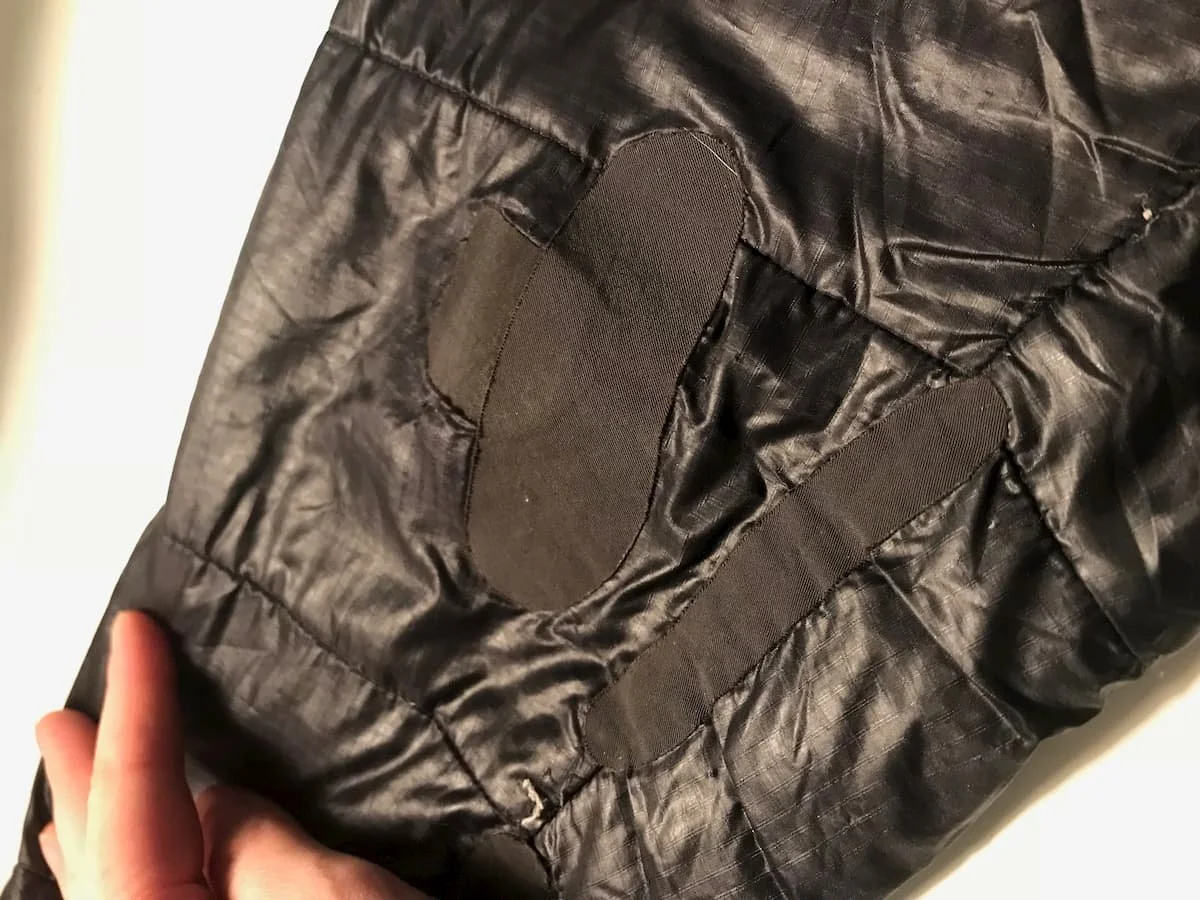
Tenacious Tape has held together this rip in the Montbell Thermawrap for ten years. Photo by Tiffany Searsdodd.
Synthetic jackets still need to be washed periodically, although the process is much simpler than with down. It is still important to follow the manufacturer’s instructions for washing your jacket. Some are washing machine safe; however, if you get a coat with a very light denier, the manufacturer may recommend washing it by hand. If your jacket has been treated with a DWR finish (Durable Water Repellent), then you will need to use a re-proofing spray such as Nikwax DWR Spray Reproofing.
How to Repair a Synthetic Insulated Jacket
Let me hear you say Tenacious Tape! This is a very sticky waterproof repair fabric that can be used in a pinch to repair almost any piece of gear (and not gear) that you own. I’ve used it to repair: insulated jackets, raingear, sleeping bags, hydration bladders, backpacks, and sleeping pads. I've even used it on a cotton skirt I wear when I’m in town. Treeline editor Liz Thomas has even used it on a mesh bag bird feeder.
While Tenacious Tape may not be a long-term fix for a hydration bladder, check out my Montbell Thermawrap that I first repaired 10 years ago. The patches are still holding up strong!
One of the nice things about synthetic insulation is if you get a hole, you don’t have the same level of urgency to repair it as with down. Synthetic insulation pretty much stays put unless actively pulled on, vs down plumules that immediately begin to escape if there is a hole. But we prefer not to take any risks and always have Tenacious Tape in our first aid/repair kit.
See our Eco-Friendly Gear Swaps to Reduce Your Environmental Impact guide to learn more about patching insulated jackets. For other gear repair issues, see our guide on How to Fix Zippers on Outdoor Gear.
FAQ
-
Synthetic insulation is made from polyester fibers engineered to mimic down’s warmth while staying warm when wet. Unlike down, it doesn’t clump or lose loft in damp conditions, making it more reliable for mixed or wet weather.
-
Choose synthetic insulation when you expect rain, snow, or high humidity—or when you’re doing high-output activities where you’ll sweat. Synthetic jackets dry quickly, hold warmth when damp, and are easier to wash and care for than down.
-
Synthetic jackets are slightly heavier and bulkier than down for the same warmth, but modern fills perform impressively close. A good synthetic jacket keeps you warm in cool to cold conditions, especially when layered with a shell or midlayer.
-
Most jackets use either sheet insulation, which provides consistent warmth and durability, or loose-fill insulation, which mimics the feel and drape of down. Common insulation names you’ll see include PrimaLoft, Polartec Alpha, and proprietary blends like Coreloft or FullRange.
-
They don’t compress quite as much as down, but high-end synthetics still pack small enough for backpacking or travel. Many models include a built-in stuff pocket or a lightweight storage bag for easy packing.
-
Synthetic insulation is slightly heavier, less compressible, and can lose loft over time with frequent packing. In extremely cold but dry conditions, down still provides better warmth-to-weight performance.
-
Yes. Unlike down, which is made from animal feathers, synthetic insulation is fully vegan and made from polyester fibers. Many brands also use recycled materials, which makes them a more sustainable option for some buyers.
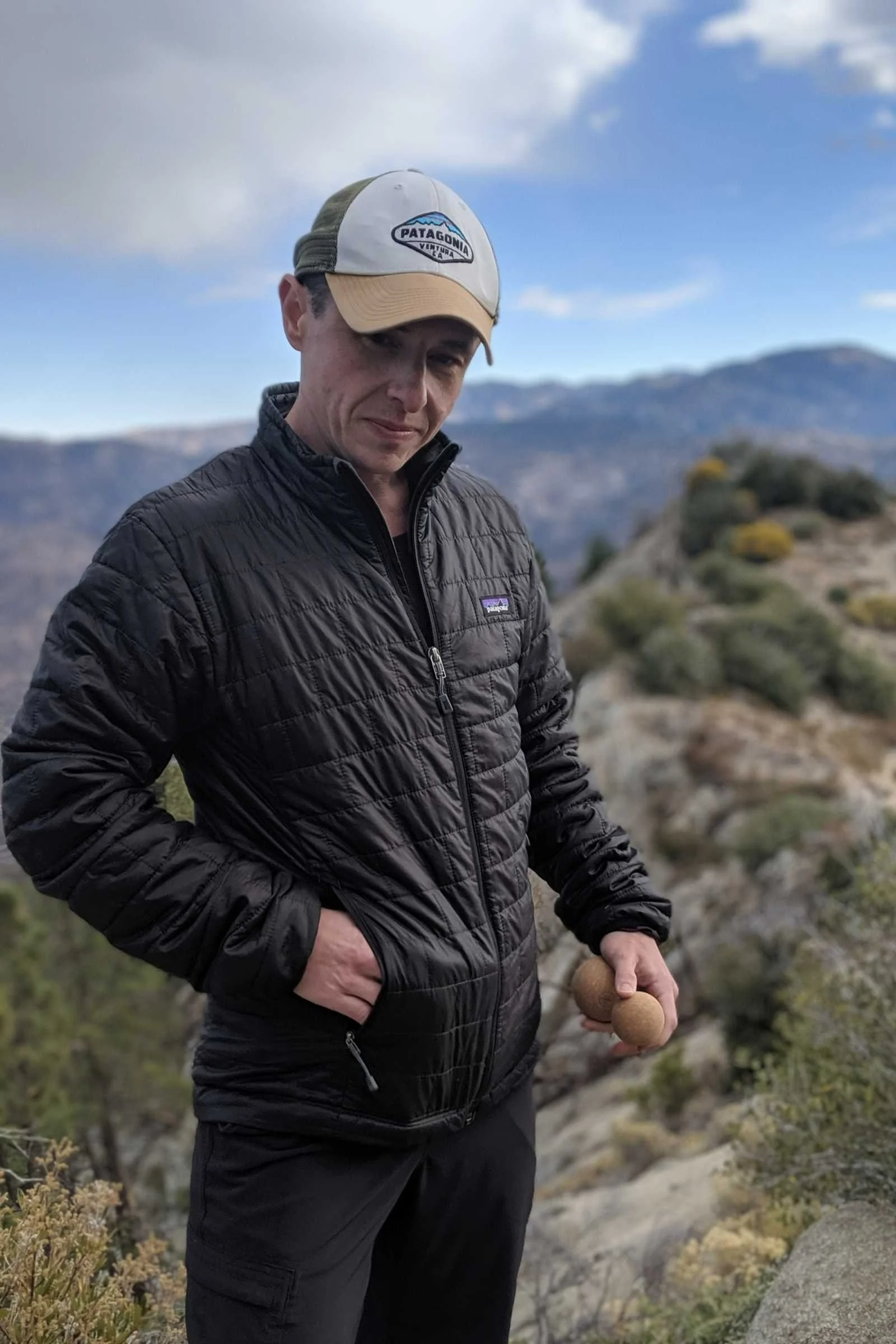
The Patagonia Nano puff worn by Marek of Rawlogy. Photo by Liz Thomas
How we researched and tested
We've spent the past 5 years testing synthetic insulated jackets on thru-hikes, backpacking trips, bikepacking trips, day hikes, camping trips, climbing trips, alpine ascents, rafting, and every day commuting.
Before we even began testing, we researched 24 synthetic jackets. Then we checked to see if customer reviews matched up with what we were reading to help us pick what to test.
While testing, we checked for criteria important to us. Warmth of an insulated jacket can change over time because synthetic insulation often loses its loft over a year or more of use.
Another criteria we assessed was whether the water-resistance of the jacket held up. Durable Water Repellent (DWR) wears out over time and though we recommend re-treating it with some regularity, some jackets start off with a better baseline than others.
Durability in general is another criteria that we assess each year as we re-visit which jackets stay winners and what models have been bettered by a newer model or a new brand.
We used multiple testers of different sizes, shapes, and genders to assess fit and comfort. Some jackets are sized better than others.
Aside from sizing, every tester works up heat differently. We used multiple people to test whether a jacket breathes well, how warm it is, and whether it overheats easily or keeps just the right temperatures.
For each jacket, we test for packability, pockets, and quality of zippers.
Our testing process
Thru-hikes, storms, and everyday cold-weather use
Where we tested
- Thru-hikes & backpacking trips
- Cold, wet shoulder seasons
- Stormy Pacific Northwest trails
- Snowy alpine & belay days
- Bikepacking & long rides
- Daily commutes & town wear
What we test
- Warmth in wet & dry conditions
- Breathability during high output
- Weight, bulk & packability
- Shell durability & DWR performance
- Fit across sizes & body types
- Pockets, hoods & zipper usability
Author’s Expertise / Why You Should Trust Us

The author on a rainy hike in the Pacific Northwest with her child. Sustainable options are the best for the next generation. Photo by Adam Leckie.
I’m a gear nerd who’s been gearing up myself and others my whole adult life. As a Wilderness Guide for a wilderness therapy organization serving teenagers, I spent four winter seasons living in the snow in Central Oregon. As a result, I became intimately acquainted with cold-weather gear, tips and tricks, and how to teach teens how to be comfortable in the wilderness. I’ve also worked as a Sea Kayak Guide for Pangaea Adventures in Alaska, leading glacier tours by kayak.
I also bring almost 20 years of experience working in outdoor retail. I do gear shakedowns for fun. I love talking about gear, but more than that, I love making sure people have the equipment that is right for them. I've spent 20 years outfitting outdoors people of all skill and experience levels on their quest to stay active in cooler weather. Over the years, I've learned what features, materials, sizing, and colors customers want and what aspects of outdoor apparel they find unnecessary. I’m also the author of Treeline Review’s Best Synthetic Insulated Jacket guide.
I have another reason for being an expert regarding down jackets: I’m always cold. Seriously. I own four puffy jackets, three sleeping bags, one backpacking quilt, and one pair of down booties. So I know all about keeping warm while adventuring outside.
I am not sponsored, an ambassador, or an employee of any of the companies mentioned in my reviews - and neither is anyone in my family.
You can read all of my guides on my author page.

