Big Agnes Copper Spur UL2 Bikepack Tent Review
We took the bikepack version of Big Agnes’ freestanding favorite on the trail and river to see whether the HyperBead rebuild lives up to the hype
September 29th, 2026
Home → Gear Reviews → Bikepacking
Our verdict
Over the past few months we’ve tested the Big Agnes Copper Spur UL2 Bikepack tent on the bike trail, across gravel roads, and while bike packrafting. Big Agnes’ Copper Spur tent already is a perennial favorite of Treeline Review’s writers and editors, and our pick for Best Overall Two-Person Tent.
The latest, greatest update is to the HyperBead waterproof fabric of the rainfly, which was updated after the regular Copper Spur started using the new material. This time around we tested the 2-person version of this popular tent, but our findings should hold true across the line for bikepacking and other situations where you really want a tent with shorter pole segments, like packrafting or when pack space is limited.
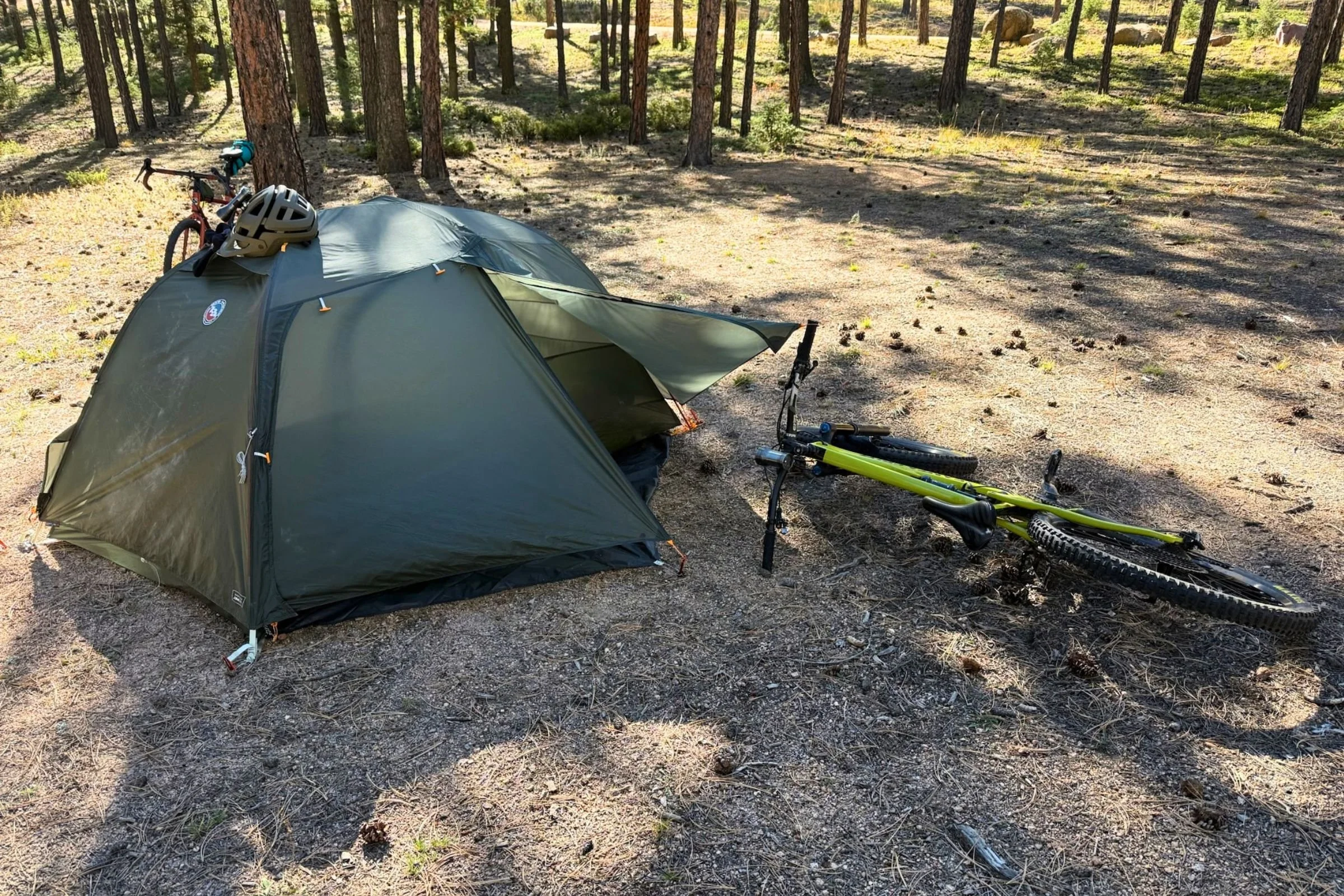
Among other trips we took with Copper Spur were multiple overnight trips in the Buffalo Creek Recreation Area, whilst testing mountain bike lights, and packrafting on the Colorado River between State Bridge and Pumphouse. We also used it on an overnighter at White Ranch with the Surly Straggler gravel bike. We tested it in some light, rainy conditions and had no problems with it but did not test it in monsoon conditions, because Colorado was experiencing its worst drought since the ‘70s.
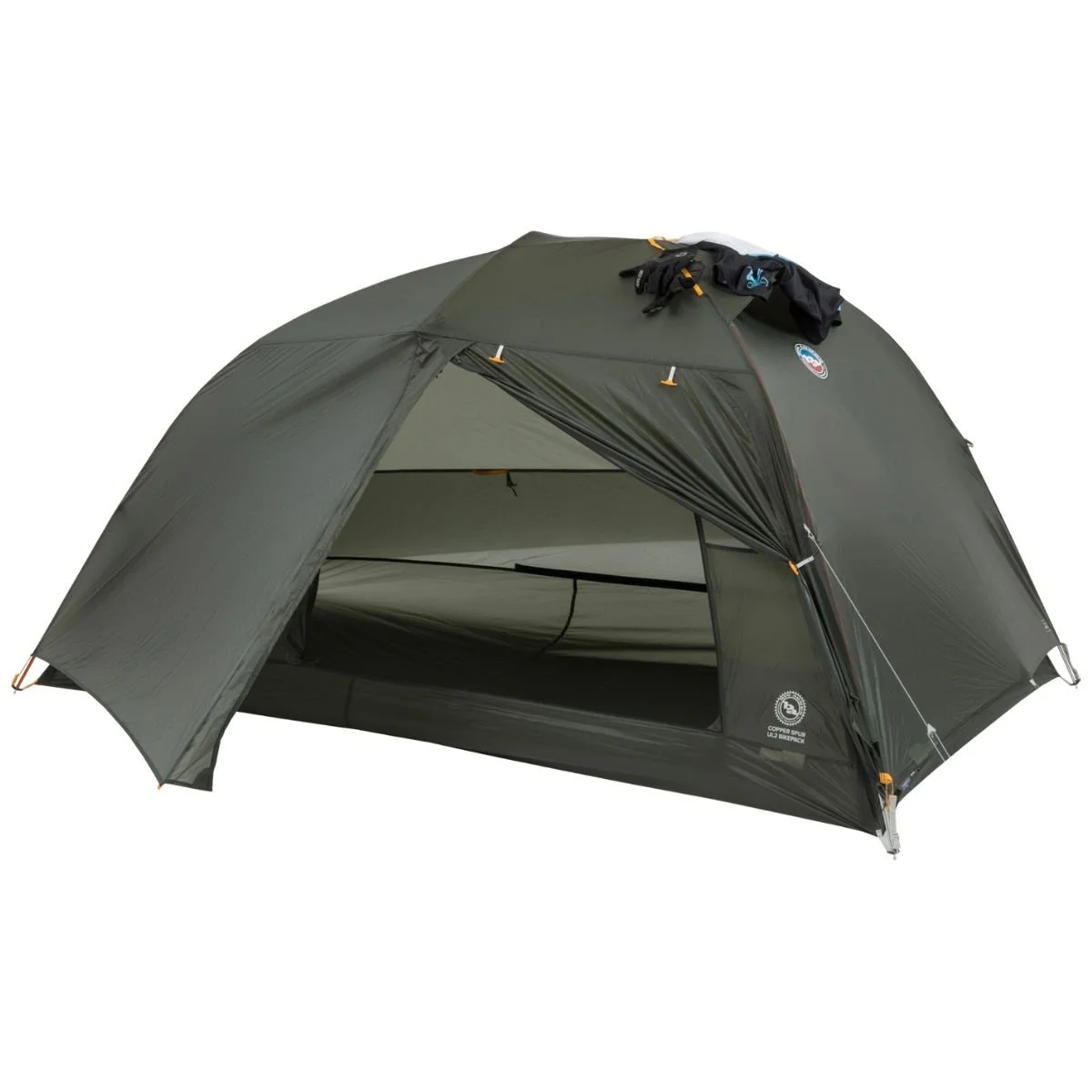
Big Agnes is one of the leaders in making bikepack-specific tents that can fit into smaller spaces, like the space between grips on bike handlebars or inside the tube of a packraft, or for a multiday climbing trip. The Copper Spur’s additional bikepacking features include shorter pole segments, daisy chain loops and larger pockets for drying and storing biking gear, and a purpose-built staff sack. For all these reasons the Copper Spur family of bikepacking tents remain our “Best Upgrade” option for a bikepacking tent.
Big Agnes Copper Spur UL2
The main drawback to the bikepack version of the Copper Spur is a weight penalty. For instance, the regular Copper Spur UL2 with HyperBead has a trail weight of 2 pounds, 10 ounces. The bikepack version of the Copper Spur UL2 HyperBead has a trail weight of 2 pounds, 15 ounces. The majority of the additional weight is in the extra material in the shorter pole segments and for the pockets and storage loops.
If you’re primarily planning on bikepacking, packrafting or need a shorter width tent, the bikepack version is worth the extra $60 you’ll pay for it. If you plan on backpacking and camping mostly, the regular Copper Spur is probably the tent you’ll want.
We create reader-supported, objective, mission-driven gear reviews independently selected by our editors. This story may contain affiliate links, which help fund our website. When you click on the links to purchase gear, we may get a commission – without costing you an extra cent. Thank you for supporting our work and mission of outdoor coverage for every body! Learn more.
Big Agnes Copper Spur UL Bikepack Tent Specifications
Setup: Freestanding
Pole Shortened Size: 12" Shortstik Poleset
Pole Material: DAC Featherlite NSL
Stakes Included: Yes
Rainfly and Floor Fabric: Proprietary HyperBead fabric technology; 15D nylon ripstop with 20D solution-dyed ripstop grid
Waterproof Rating: 1500 mm
Tent Body Fabric: 15D nylon with 20D solution-dyed ripstop grid and 15D polyester mesh
Taped Seams: Yes
Helmet Pocket: Yes
Stuff sack: Dry bag with 2 integrated Big Hitch straps
Gear Loft Compatible: Yes
mtnGLO Tent Lights Compatible: Yes
Warranty: Lifetime limited
Comparison Table
| BACKPACKING TENT | MSRP | FREE-STANDING | WALLS | SLEEPS | DOORS | VESTIBULES | WEIGHT | LENGTH | WIDTH | PEAK HEIGHT | FLOOR AREA |
|---|---|---|---|---|---|---|---|---|---|---|---|
| Big Agnes Copper Spur UL2 Bikepack | $650 | Yes | Double | 2 | 2 | 2 | 59.0 oz | 88 in | 42-52 in | 40 in | 29.0 ft² |
| Big Agnes Tiger Wall UL2 Bikepack | $550 | Semi | Double | 2 | 2 | 1 | 48.0 oz | 86 in | 42-52 in | 42 in | 28.0 ft² |
| NEMO Dragonfly Bikepack OSMO 2P | $600 | Yes | Double | 2 | 2 | 2 | 60.0 oz | 88 in | 45-50 in | 40 in | 29.0 ft² |
| MSR Hubba Hubba Bikepack 2P | $580 | Yes | Double | 2 | 2 | 2 | 60.0 oz | 84 in | 50 in | 42 in | 29.0 ft² |
Big Agnes Copper Spur UL1, UL2, and UL3 Comparison Table
| Copper Spur UL1 Bikepack Tent | Copper Spur UL2 Bikepack Tent | Copper Spur UL3 Bikepack Tent | |
|---|---|---|---|
| MSRP | $550 | $650 | $700 |
| Trail Weight | 2 lb 5 oz | 2 lb 15 oz | 3 lb 10 oz |
| Total Weight | 3 lb | 3 lb 11 oz | 4 lb 5 oz |
| Packed Size | 15 x 5 in | 16 x 5.5 in | 16.5 x 6 in |
| Floor Area | 20 ft² | 29 ft² | 41 ft² |
Best for
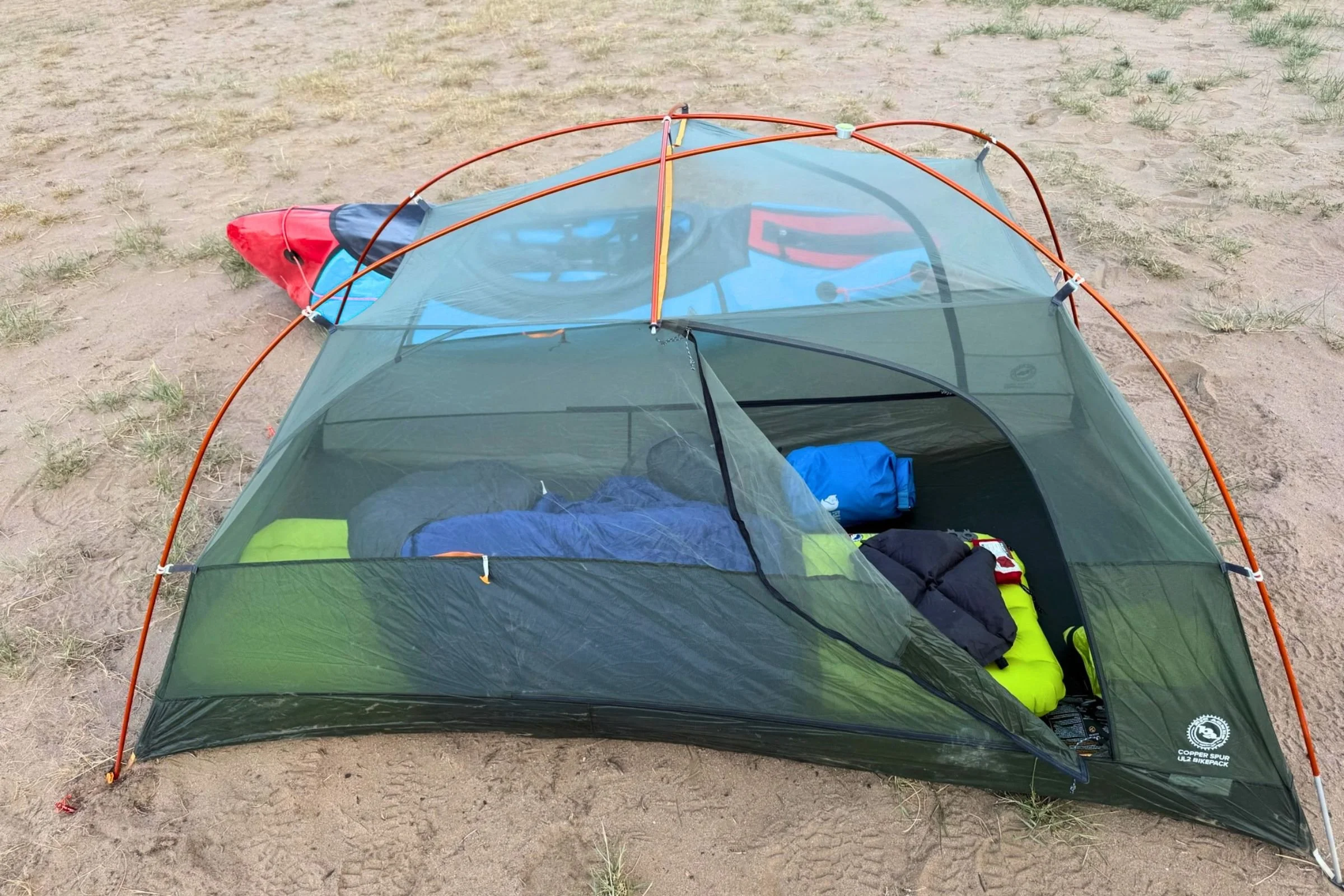
With its largely mesh tent body, the Copper Spur Bikepack is ideal for stargazing for those who want to cowboy camp yet not be nattered by bugs.
Bikepacking and packrafting
Adventurers who need a tent that can fit in smaller spaces
People who want a tent that maximizes pocket and storage space
What we liked
Best-in-class storage in a tent for bikepacking
Shortstik poles make packing tent in tight spaces easy
Redesigned roll-top tent bag is easier to attach to handlebars
Great interior space and vestibules
New HyperBead fabric pulls more taut, promised more longevity, waterproofing
What could be better
Rolltop tent bag would be better with a horizontal opening rather than a vertical opening, like on MSR’s Bikepack tents and Big Agnes’ regular tents
Tent footprint sold separately
How we tested
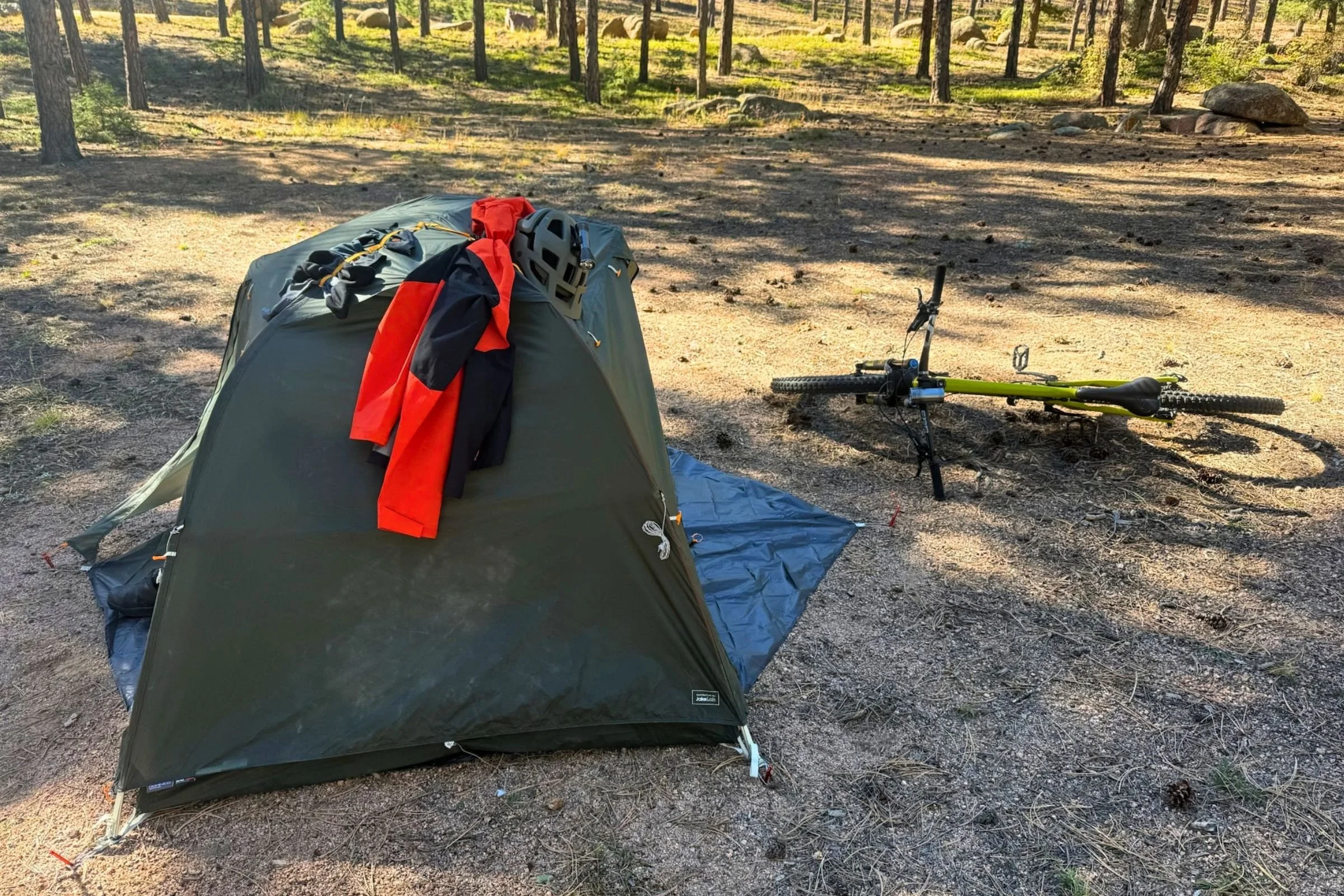
Secured with the daisy chains on the rainfly, bike gear dried quickly on a warm fall day after a rainy night.
We tested the Big Agnes Copper Spur UL2 Bikepack Tent in real world conditions in three seasons: fall, spring, and summer. We used it on overnight bikepacking trips on a gravel bike and on a mountain bike, securing it between the handlebars. We also used it on an overnight packrafting trip where we secured it inside the packraft’s tubes where a tent with a longer set of poles wouldn’t fit as well.
We pitched it and slept in it with and without the rainfly and with and without the additional footprint. Though we saw some precipitation during our outings with the tent, we didn’t get out in a torrential rain storm due to a drought in Colorado where our primary tester is located.
When pitched we used the large pockets and daisy chains to secure bike helmets, shoes, insulation layers and more.
We also tested this tent alongside other bikepacking tents in our Best Bikepack Tents guide.
What's New: HyperBead Fabric
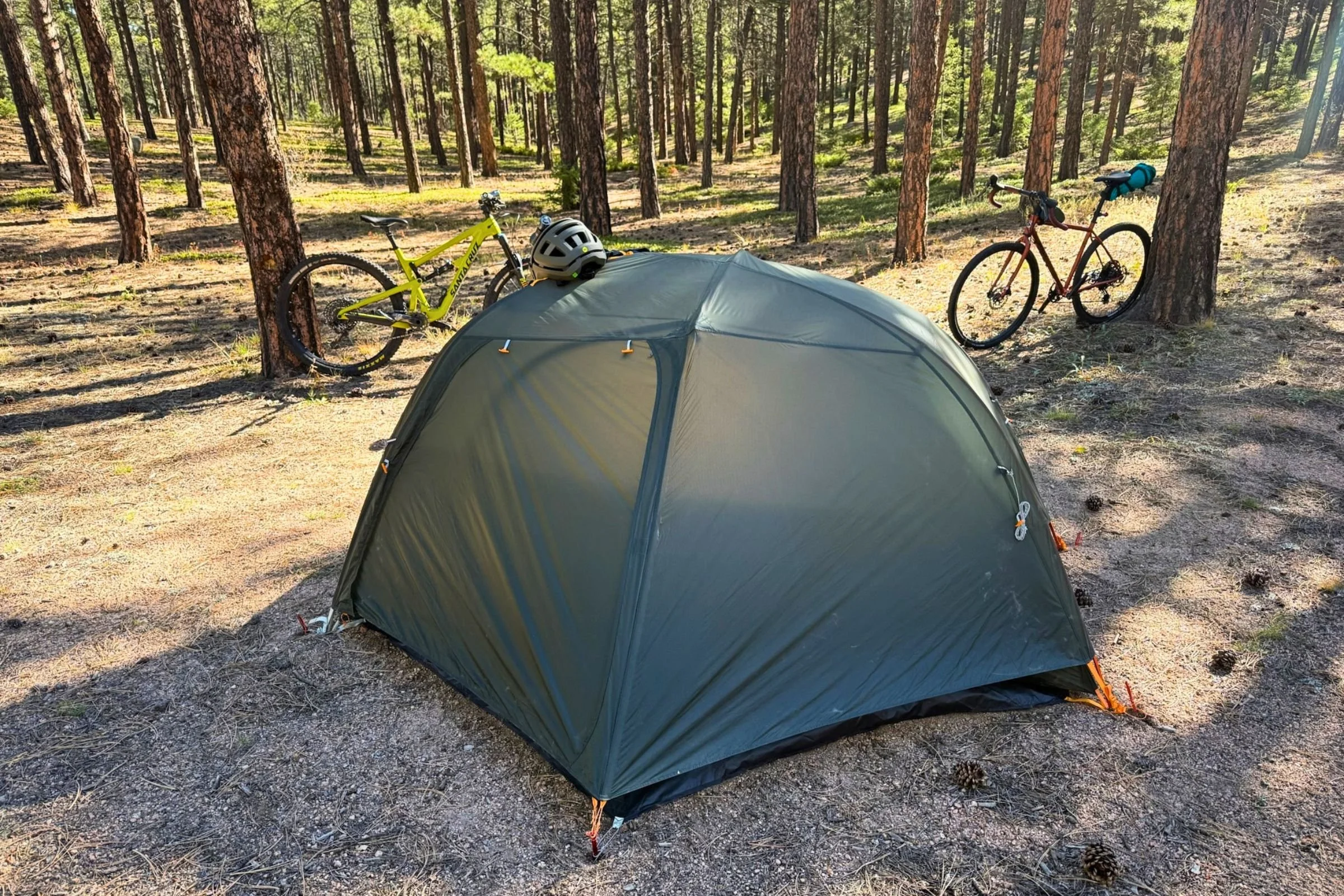
The HyperBead fabric stays more taut than previous Big Agnes rainflys.
Big Agnes touts its new HyperBead fabric as 6% lighter, 50-100% stronger, and 25% more waterproof, all while being as PFC free as possible and more stretch resistant than previous materials. Thus far our tests of the fabric and other reviews we’ve read and have seen, back that up but the material has only been in the wild for a little over a year. And, in our tests we didn’t notice any more condensation inside the rainfly after camping in it than we’d seen in previous models of the Copper Spur. You can read more about HyperBead in our in-depth review of the Copper Spur backpacking tent
Copper Spur Bikepack Performance
Weather protection
The new HyperBead fabric on the rainfly of the Copper Spur Bikepack lived up to its name as far as we can tell. Despite the worst drought in over 40 years in Colorado, we managed to get out in a couple of light rainstorms. Rain beaded up on the seam-taped rainfly and dripped away. No water seeped in through the HyperBead floor. We noticed the dusty outlines of water drops after they evaporated from the fly, which suggests the almost total hydrophobic nature of the rainfly. The fly easily covered the tent and the space under the large vestibules on either side of the tent. In "lab-like" testing with a hose, our tester found the HyperBead fabric on the Copper Spur backpacking tent to be very waterproof.
Ventilation
Thanks to an integrated metal stay to prop the rainfly vent open, the Copper Spur did a great job of moving air to reduce condensation on the inside of the tent in the arid Colorado climate where we tested it. The low vents on the vestibule offer even more air circulation to vent the tent on the hottest nights. However, we opted to sleep under the mesh net of the tent body on a couple occasions, like camping by the Colorado River to help keep any bugs at bay.
Stability
On the Colorado River we got the tent body set up before a mighty dust storm swirled through camp. Staked out, we had no problems with the tent body moving or wanting to make like a kite and fly off. We were also happy to find that after the wind storm there was less dust inside the tent than our teeth and gums.
When set up with the rainfly before the storm at the Buffalo Creek Recreation area, we didn’t notice the rainfly fluttering in the wind and the more tensionally strong fabric felt like it would resist flutter better than previous versions of the Copper Spur.
Setup notes
With color-coded tent pole ends matching Big Agnes’ TipLok buckles, the Copper Spur is extremely easy to pitch, and as a freestanding tent, you can pitch it before staking out all the corners. Though the cross pole isn’t attached to the main tent pole system, it’s still easy to pop into the tent body and to attach to the rainfly. The HyperBead rainfly’s material is supposed to be more durable than its previous waterproof materials. It definitely seemed more taut and less prone to stretching than other rainflys. This helped with stability and resistance to wind.
Copper Spur Bikepack Durability
In testing the Copper Spur Bikepack we can’t fully attest to the long-term durability of the fabric—the new fabric has only been out for about a year (we were among the first to test it) and thus far we’ve seen no complaints about its durability. However, our initial testing shows the fabric should be more durable than previous models of the Copper Spur, which also is more durable than the lighter Tiger Wall series of tents. The 15D nylon is reinforced with a 20D ripstop nylon grid, whereas the Tiger Wall doesn’t have the same reinforcement in its 15D ripstop fabric. It should hold up to a lot of regular use, especially if campers choose their sites wisely.
Despite that, we’d definitely recommend using the separately sold footprint to reduce the likelihood of putting a hole in the tent bottom.
Copper Spur Bikepack Tent Space and Livability
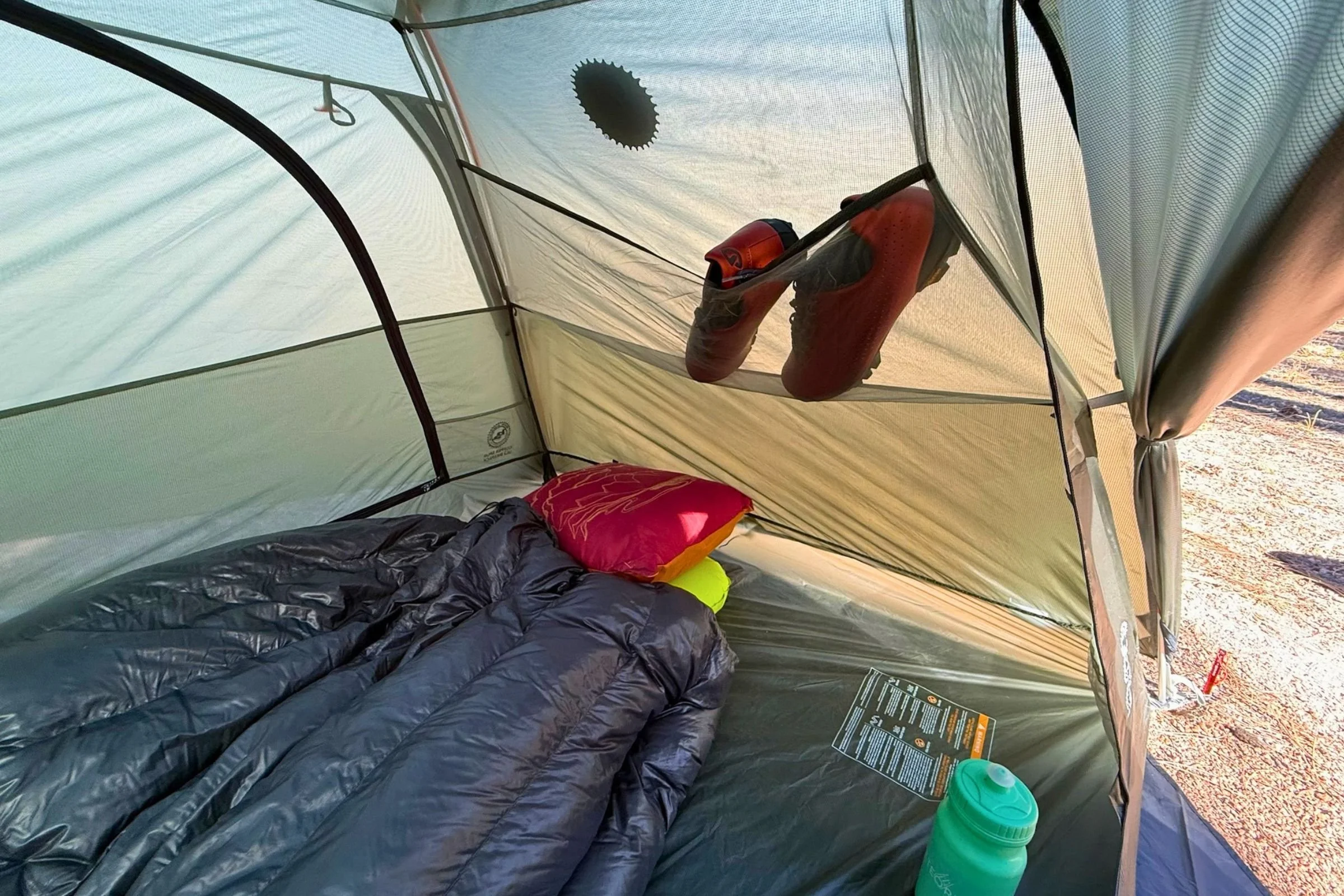
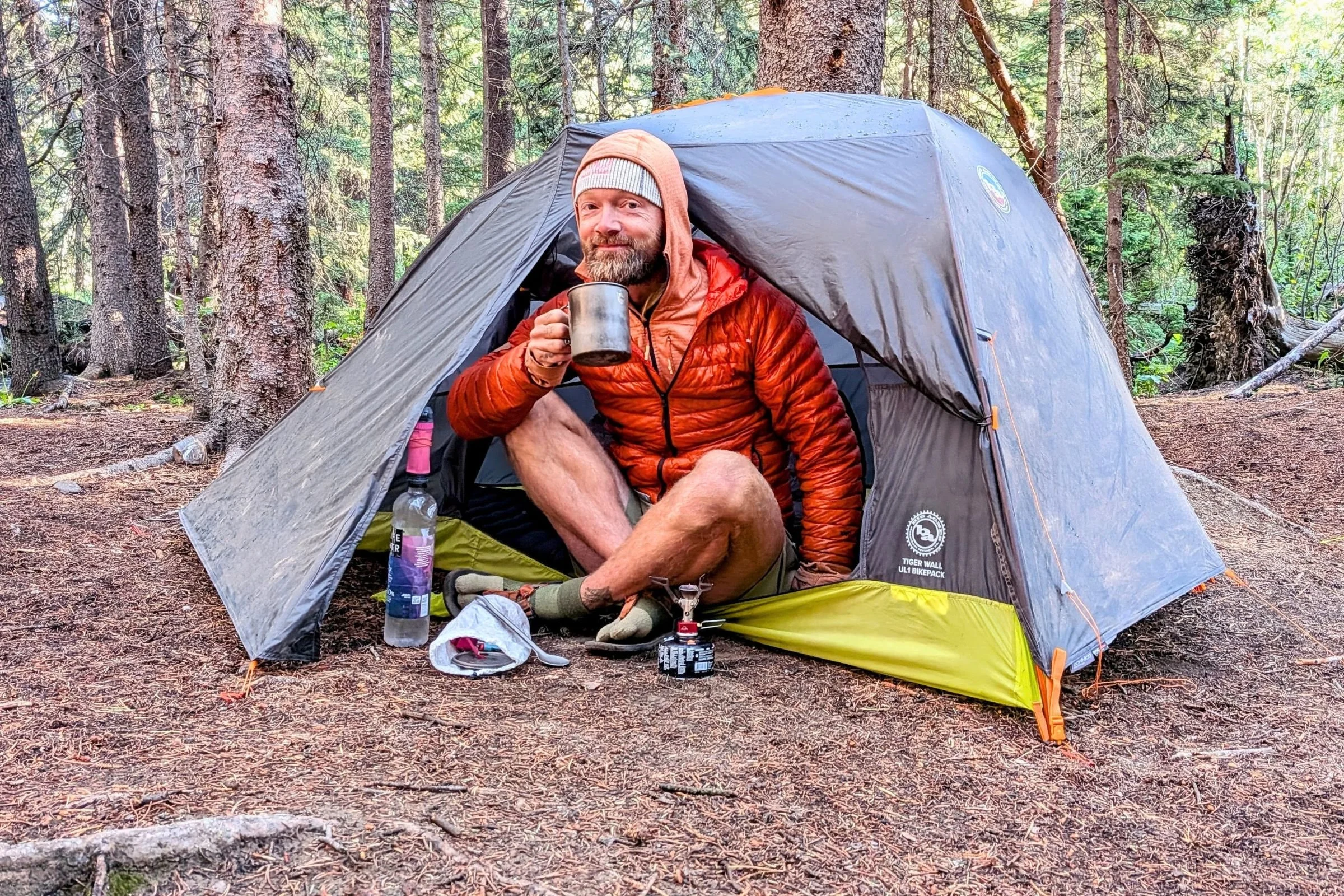
While set up for one person here, there’s plenty of space for a second sleeper in the Copper Spur UL2 Bikepack.
With the latest iteration of the Copper Spur line (and Big Agnes’ other popular tent lines like Tiger Wall and Fly Creek) Big Agnes dropped HV (high volume) from the name. This makes sense because now all of the tents are now using a similar architecture with high wall angles, maximizing interior space and making it easy to sit up and get out of the tent without hitting the tent walls. The large vestibules also make it easier to put an extra layer on, like an insulation or rain layer, before getting out of the tent at night to take a bathroom break. Add square footage, peak height, and vestibule square footage and how it compares to other bikepacking tents
Storage
Between the daisy chains on the mesh and the rainfly and the giant pockets above the head and knees—as well as the two pockets near the shoulders on either side of the tent, the Copper Spur easily has the most storage inside a bikepacking tent that we’ve seen. The 2-person version of the tent we tested could easily hold all the helmets and gear for two people during most seasons.
Honest livability call on the UL2
With 52 inches of width at the head and 42 inches at the feet, 88 inches of length, 40 inches of sit-up height, and its high-angle walls, our main tester who is 5’10” with roughly 18 inch wide shoulders would have no problem sharing the tent with someone the same size or even slightly bigger. Those over 6’5” might have more issues sleeping with two inside.
Interior Access
Everything in the interior of the Copper Spur is easy to access for one or both occupants. Both sides have access to the cargo and helmet pockets as well as to a pocket for stashing smaller items like a headlamp and phone near their head. Both doors are the same size and have two zippers making it easy to get in and out.
Vestibules
With two identical vestibules that can double as awnings, the tent also offers a total of 18 square feet of rainfly coverage for storing extra gear, backpacks, shoes, etc. or perhaps for a pup to sleep under.
Trail Weight vs. Total Weight vs. Fast Fly / Shelter Mode Weight
Trail weight 2lb 15oz vs. Total Weight: 3lb 11oz vs. Fast Fly / Shelter Mode Weight: 2lb 8oz
Most people will probably want to include everything that comes with the Copper Spur on the trail, making its weight 3 pounds, 11 ounces. If you strip it down to the tent body, rainfly and poles it weighs 2 pounds, 15 ounces—but you’ll have to figure out how to stake it down and guy it out. If you want the minimal trail weight, you can go with the rainfly and poles setup, which will drop the weight to 2 pounds, 8 ounces—but you won’t have the weather and bug protection of the tent’s mesh and nylon enclosure..
Bike-Specific Features of the Copper Spur
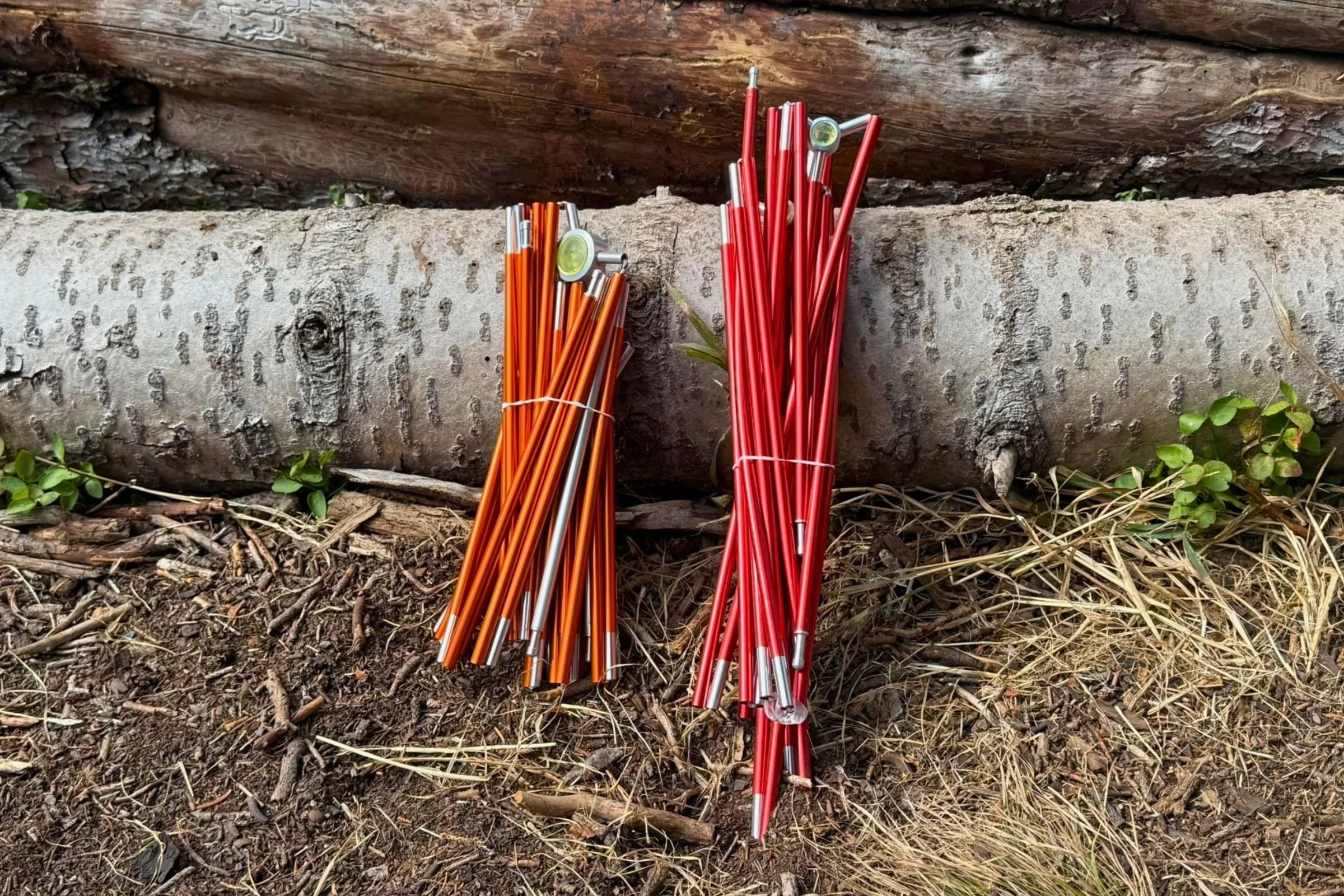
When folded down the Copper Spur UL2 Bikepack Tent’s ShortStik poles (L) are significantly shorter than those of other tents like those of the MSR Hubba Hubba 1 person tent (R).
12" Shortstik Poleset
Arguably the most prominent difference in a bikepack-specific tent are the shorter segments of tentpoles. These allow bikepackers (and packrafters and fastpackers, among others) to minimize the width of the tent when packing it down, making it easier to attach it to a bike’s handlebars or triangle without impeding access to shifters and brakes. The 12” long DAC Shortstik poles make it easy to do just that and we had no problem attaching to our mountain or gravel bikes.
Dry bag stuff sack
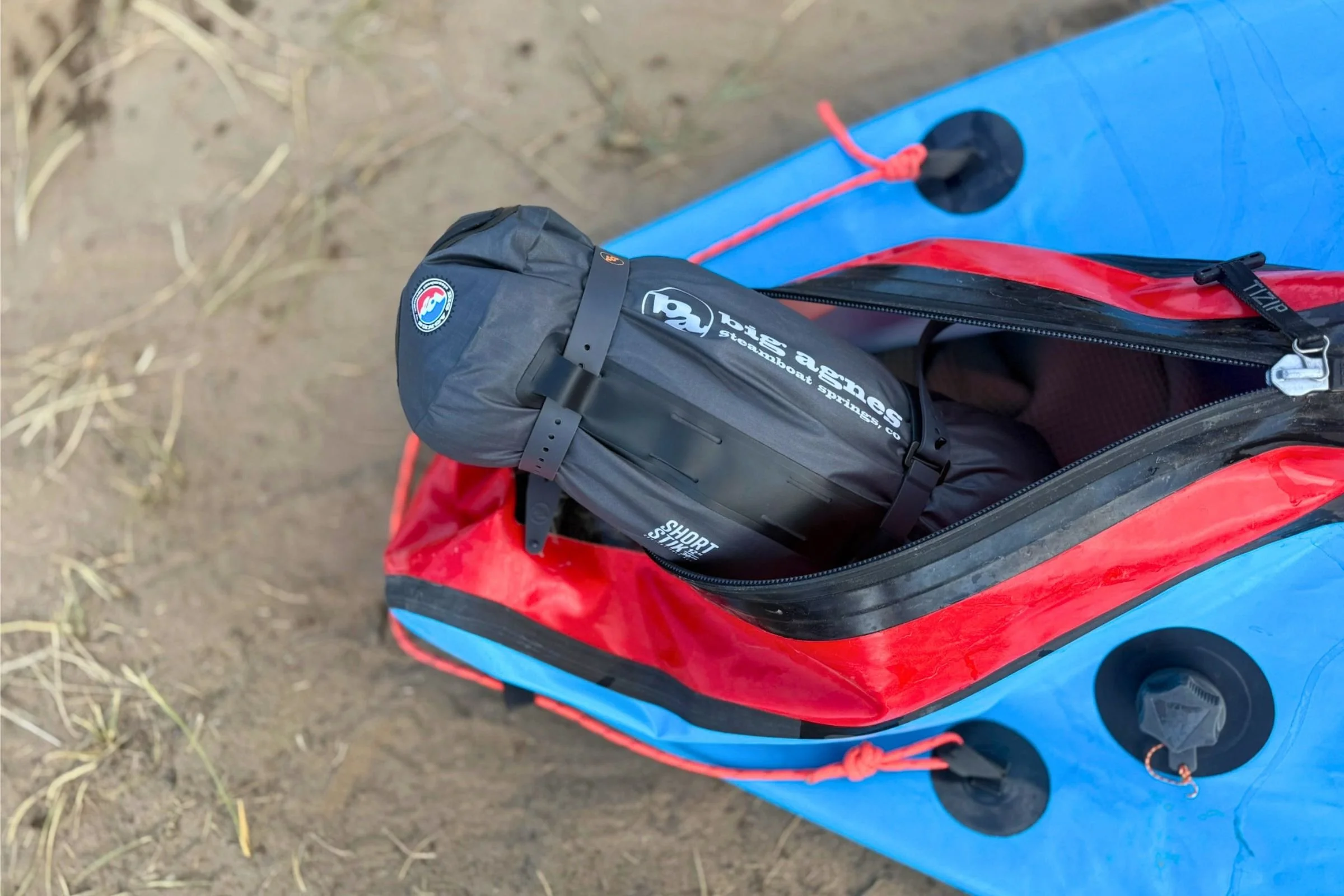
The dry bag stuff sack for the tent makes it easy to fit tight, narrow spaces, like the inside of this Alpacka Gnarwhal packraft.
We don’t normally get excited about tent bags, and oft-times would do without them in backpacking. But with the rigors of bikepacking—bouncing around on handlebars, careening through thin trails with tree branches poking into them, dealing with muddy splashes from puddles and streams—the tent bag itself is a critical component.
The new dry bag-style bikepack tent bag from Big Agnes is a big improvement over the previous version, which required securing a cap with a hook over one end and mounting the tent pole sack on the outside of the tent bag and securing the whole thing to your handlebars with nylon straps. It looked like an old-school strap-covered Mountainsmith backpack.
The new tent bag is more elegant. Everything fits inside the heavier denier, rubberized bag, which is spacious enough to also accommodate the footprint, if you plan on bringing that. The dry bag rolltop access makes it easier to compact everything into as narrow a package as you can make it, and it uses two ski-strap style compression straps to secure the tent to the bike.
Still, we wish the opening for the tent bag was across the width of the bag, rather than the top, as it is for Big Agnes’ backpacking Copper Spur line and MSR’s Bikepack and other tents.
Giant pockets
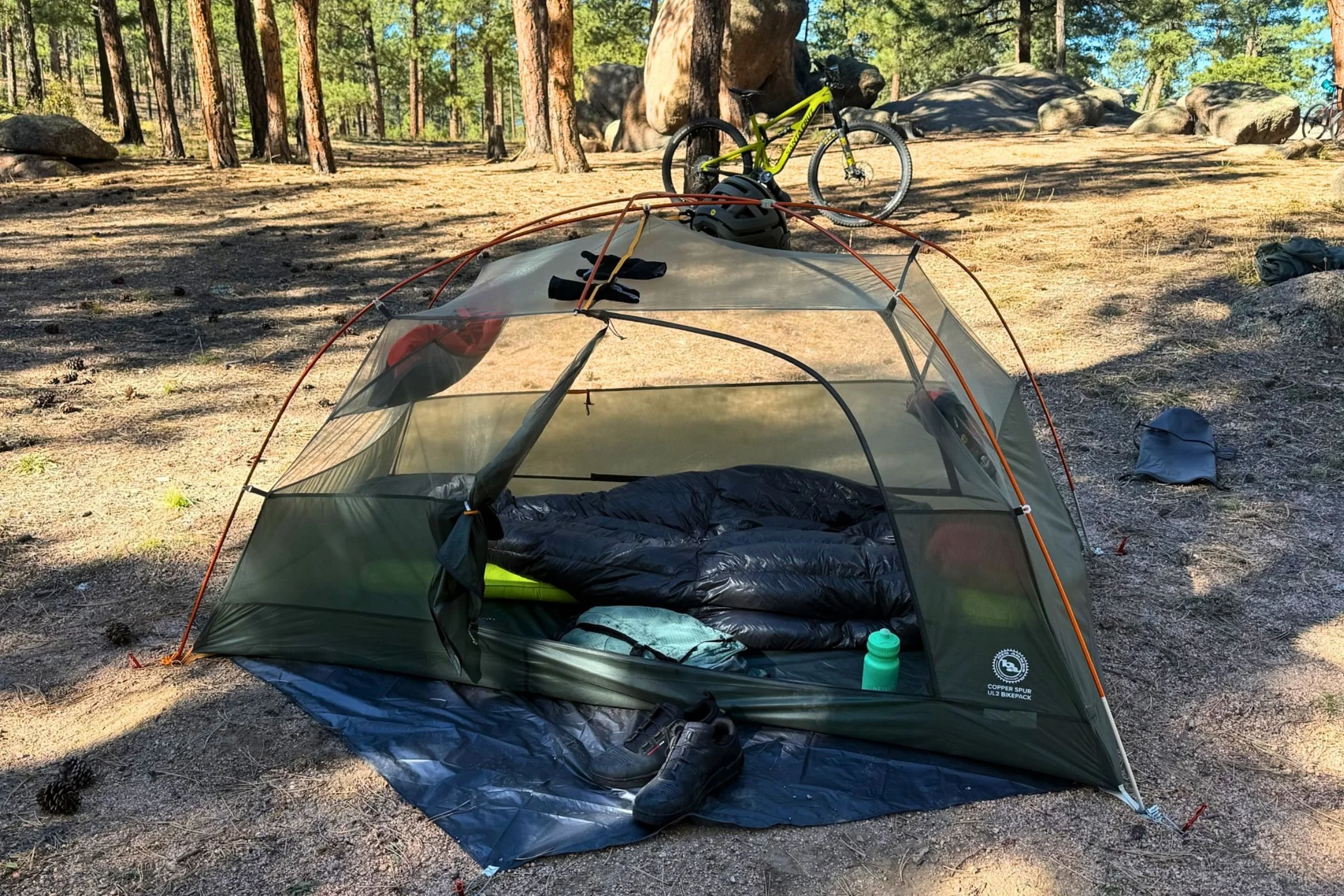
The Copper Spur features giant pockets for stashing all your gear as well as daisy chain loops on the tent body as well as the rainfly for drying out gear after a long day of riding.
The normal Copper Spur has generous pockets for a backpacking tent, our tester and editor, Mary Murphy, noted in her review of that tent. The bikepack version says: ‘here, hold my quads’ and pedals it up to the next level. The helmet pocket above sleepers’ heads is easy to access and is big enough for two helmets and smaller items like gloves or socks, and you don’t bump into it when you’re sitting up.
The massive bin pocket above campers’ feet can also stow helmets or insulation, shoes to keep them out of a deluge, and probably even the large stuffed animal you bikepack with as a mascot. Or you could put a tablet in there to watch a movie during a storm.
Daisy chain webbing
If the pockets aren’t enough to stow and dry all your sweaty, wet, gear, there are also a bunch of daisy chain loops attached to the see-through mesh of the tent and to the exterior of the rain fly. This gives campers a great way to spread gear out to dry after a hard day on the trail. And it justifies the extra 5 or so ounces.
Handlebar mounting
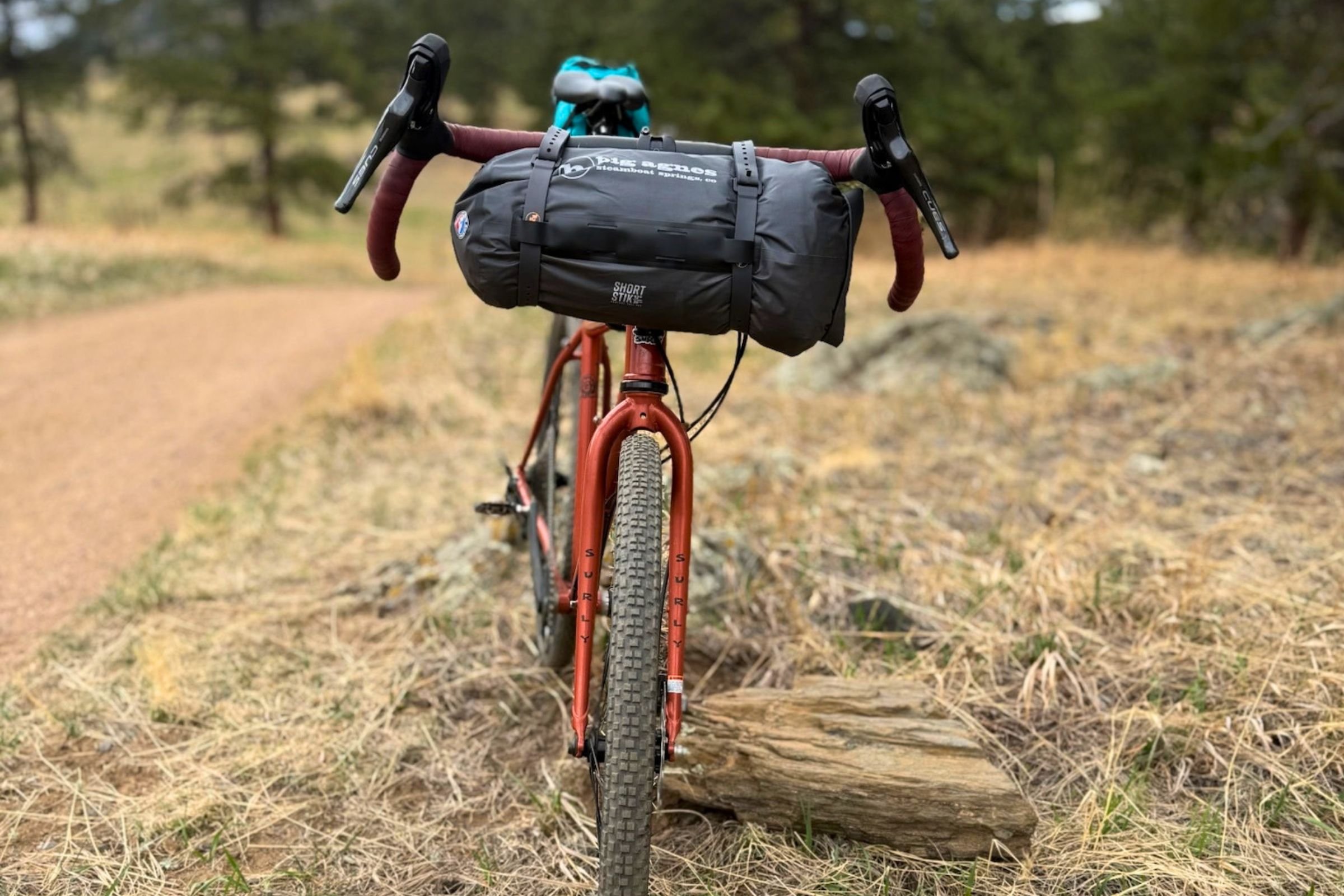
The new bikepack tent bag from Big Agnes is among the easiest to mount on handlebars.
The rubber Voile-style ski straps that secure the tent bag to the handlebars is a big step up from the nylon straps on Big Agnes’ previous bikepack models. The little stretch in the rubber as you attach them to your bars makes them more secure and the hooking them into a hole rather than relying on friction on a buckle means they can’t loosen no matter how much you jostle around on the bike. Another great thing about the straps is that they use standard-width straps. So if you somehow break or need to use one for some other purpose, you can easily replace them.
Secure ride
The two mounting straps on the tent dry bag make it easy to strap the packed tent to bike handlebars, forks, or the bike frame itself. In our testing the Copper Spur was among the most secure on our handlebars, thanks in part to the elasticity of the straps.
Ease of access
Getting into the roll-top dry bag for the Big Agnes Copper Spur is easy enough, but the it’s not as good as the tent bag for MSR’s bikepack tent or Big Agnes’ regular Copper Spur backpacking tent, both of which open width-wise vs. accessing it via the top of the tent bag. However, after getting the tent out of the bag, it’s among one of the easiest bikepack tents to set up thanks to color coding on the tent body and rainfly that matches the ends of tent poles, and the quick clips on the tent body.
Sustainability
Big Agnes has long championed sustainability in its manufacturing processes; the company began using recycled materials in 2007, for instance. Since at least 2021 the company has been using solution dyeing in making its fabrics for tents and other products—solution dyeing uses far less energy and water than other processes, and while other companies have used solution dyeing, some have quit using it after a season or two.
The new HyperBead fabric is another sustainable step for the company. The company says the material is 25% more waterproof—and permanently waterproof—than its previous fabrics and that’s without relying on chemicals and DWRs without using PFAs. Learn more about their practices online.
FAQ
-
In our real world testing HyperBead seemed pretty hydrophobic, but we haven’t tested it for years. Big Agnes says it’s waterproof at a molecular level and 25% more waterproof than its previous waterproofing. We haven’t seen lab results but Big Agnes says HyperBead is permanent waterproofing from the start.
-
While they utilize the same HyperBead fabric, the Copper Spur UL Bikepack is different from the Copper Spur UL in a few ways. It has shorter pole segments and much more storage capacity with bigger pockets and daisy chains, as well as a storage bag that’s built for durability. These make the trail weight of the bike pack version about 5 ounces heavier than the standard Copper Spur.
-
With two Voile-like ski straps, allowing it to attach to forks, top tubes or the handlebars of most bikes.
-
For most, yes. It’s not as tight a fit as many other ultralight 2-person tents, but if the occupants are over 6’5” it may get tight.
-
It’s recommended since it will protect the tent floor and increase the longevity of the fabric.
Who Should Buy the Big Agnes Copper Spur UL2 Bikepack Tent?
Buy if
You plan on bikepacking with a partner or want kingly space for yourself in a bikepacking tent
Your other adventures require a tent that packs into smaller spaces, like packrafts
You want a lightweight, easy to set up tent with a number of configuration options
Sustainability is important to you when purchasing a tent
Skip if
You primarily want a backpacking tent
The price is too high—check out some of our other favorite bikepacking tents
You only need a one-person bikepacking tent or need a tent for three or more people. Check out the Copper Spur UL1 or Copper Spur UL3
Where to buy the Big Agnes Copper Spur UL2 bikepack tent
The Big Agnes Copper Spur UL2 bikepack tent is popular, so you have options when it comes to retailers. Here are some of the pros of the retailers.
REI
Pros: 100% satisfaction policy for 1 year; 10% dividend for members.
Amazon
Pros: Free 2-day shipping with Amazon Prime membership (can be same-day delivery in major metropolitan cities)
Backcountry
Pros: Frequent sales for Expedition Perks members (free to join), fast shipping, Gearhead chat customer service is excellent
Advice on where to buy
In general for gear, we recommend purchasing from a place with easy or free returns, like REI.
Similar bikepack tents
Big Agnes Copper Spur UL2 Bikepack vs Tiger Wall UL2 Bikepack
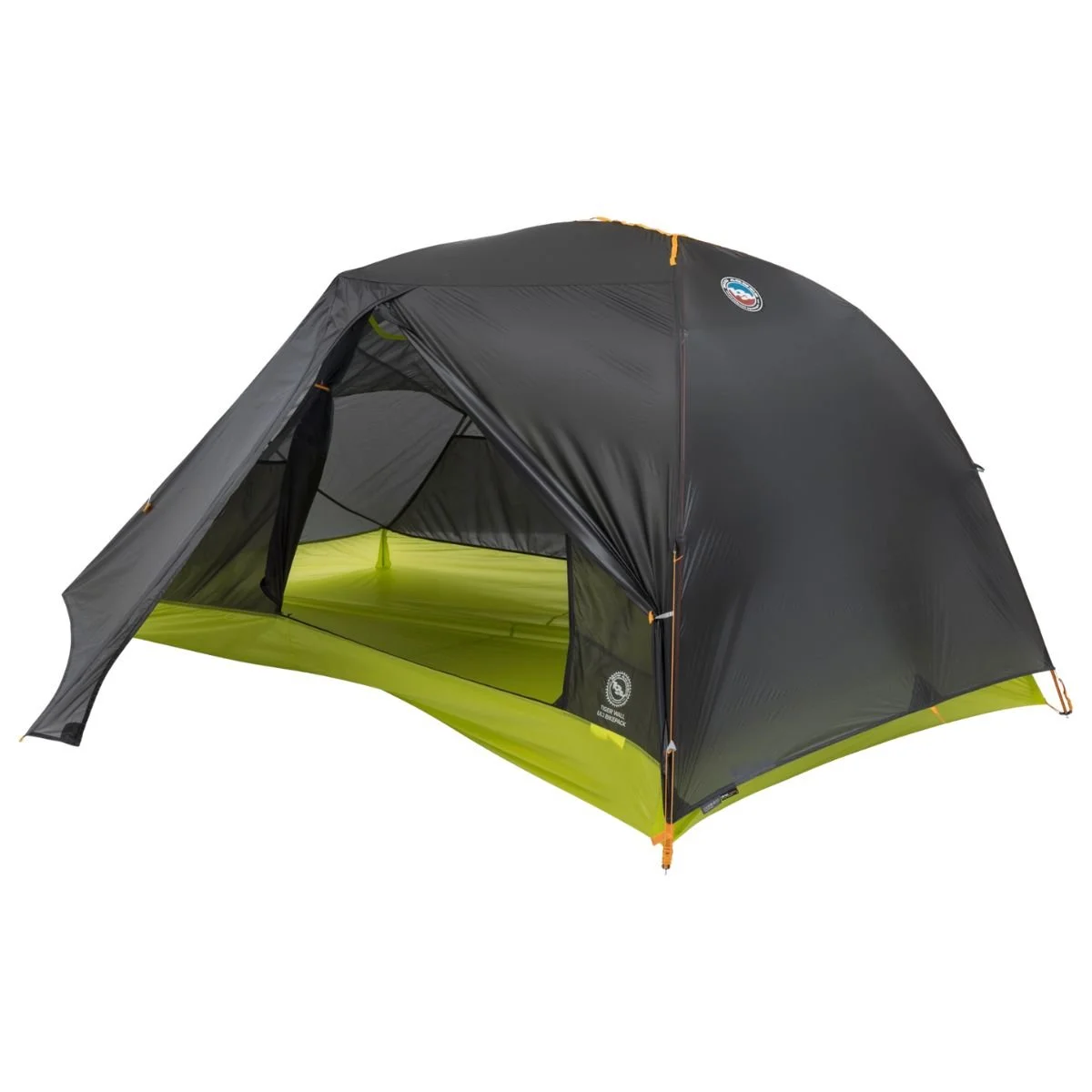
MSRP: $550
Setup: Semi-freestanding
Total Weight: 3 lbs.
Floor Area: 28 sq. ft.
Vestibule Area: 16 sq. ft. (total—each vestibule is 8 sq. ft.)
Head Height: 39 in.
If you’re looking to go a little lighter and don’t mind a slightly smaller, ultralight two-person tent, the Tiger Wall UL2 Bikepack is a great option, which is why it’s been our Best Overall bikepacking tent pick for the past few years. The Copper Spur is like upgrading to a Toyota 4 Runner from a Toyota Tacoma.
The Tiger Wall’s trail weight is 9 ounces lighter and total weight is 11 ounces lighter. Its floor space is one square foot smaller with slightly less headroom, and each vestibule loses one square foot of space. It still has big storage pockets and daisy chains for gear and uses the HyperBead waterproofing and short stick poles. Given the lighter fabric, it’s even more important to have a footprint with the Tiger Wall, however.
Tiger Wall UL2 Bikepack
Big Agnes Copper Spur UL2 Bikepack vs MSR Hubba Hubba Bikepack
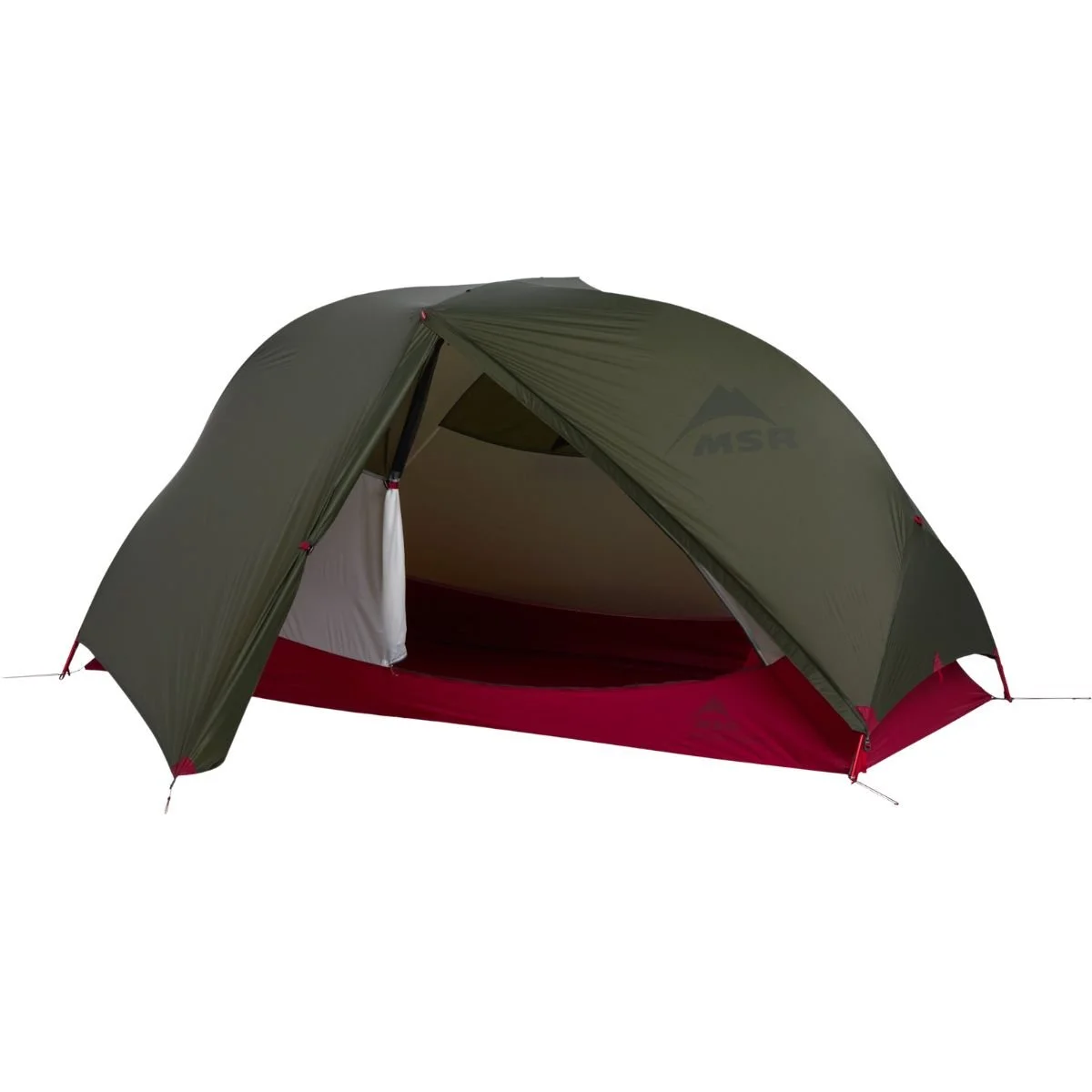
MSRP: $580
Setup: Freestanding
Total Weight: 3 lbs, 12 oz
Floor Area: 29 sq ft
Vestibule Area: 17.5 sq ft (8.75 sq ft each)
Head Height: 42 in
The MSR Hubba Hubba Bikepack is a great bikepacking tent and has roughly identical square footage as the Copper Spur UL2 Bikepack (its vestibules are each a quarter square-foot smaller. However, the size is apportioned differently. The freestanding Hubba Hubba has a fully rectangular floor, whereas the Copper Spur tapers to 10” narrower at the feet. This allows the Copper Spur to offer 52” of shoulder space while the Hubba Hubba only offers 50”—not the biggest difference, but it matters. The Copper Spur also is longer, at 88” compared to 84” of length in the Hubba Hubba. With more upright floor walls, however, and a slightly higher headspace of 42” the Hubba Hubba also accommodates taller sleepers.
The Copper Spur also has more daisy chains and more mesh for those who want to sleep under the stars but don’t want to deal with bugs. In terms of pocket storage both have a lot more than regular tents, but we don’t have a firm square footage number for both.
The tent bags both have their own merits. Accessing and packing the Hubba Hubba tent is easier thanks to the length-wise opening of the drybag. However, it still has a separate bag for the poles. The Copper Spur isn’t quite as easy to pack and access, but we love that everything now fits inside one bag and that it uses ski straps to secure—they’re multiuse and easier to replace if one breaks than the straps on the MSR bag.
In the end the Copper Spur edges out the MSR Hubba Hubba bikepack, but both are great options.
MSR Hubba Hubba Bikepack
Big Agnes Copper Spur UL2 Bikepack vs NEMO Dragonfly Bikepack Osmo 2-Person
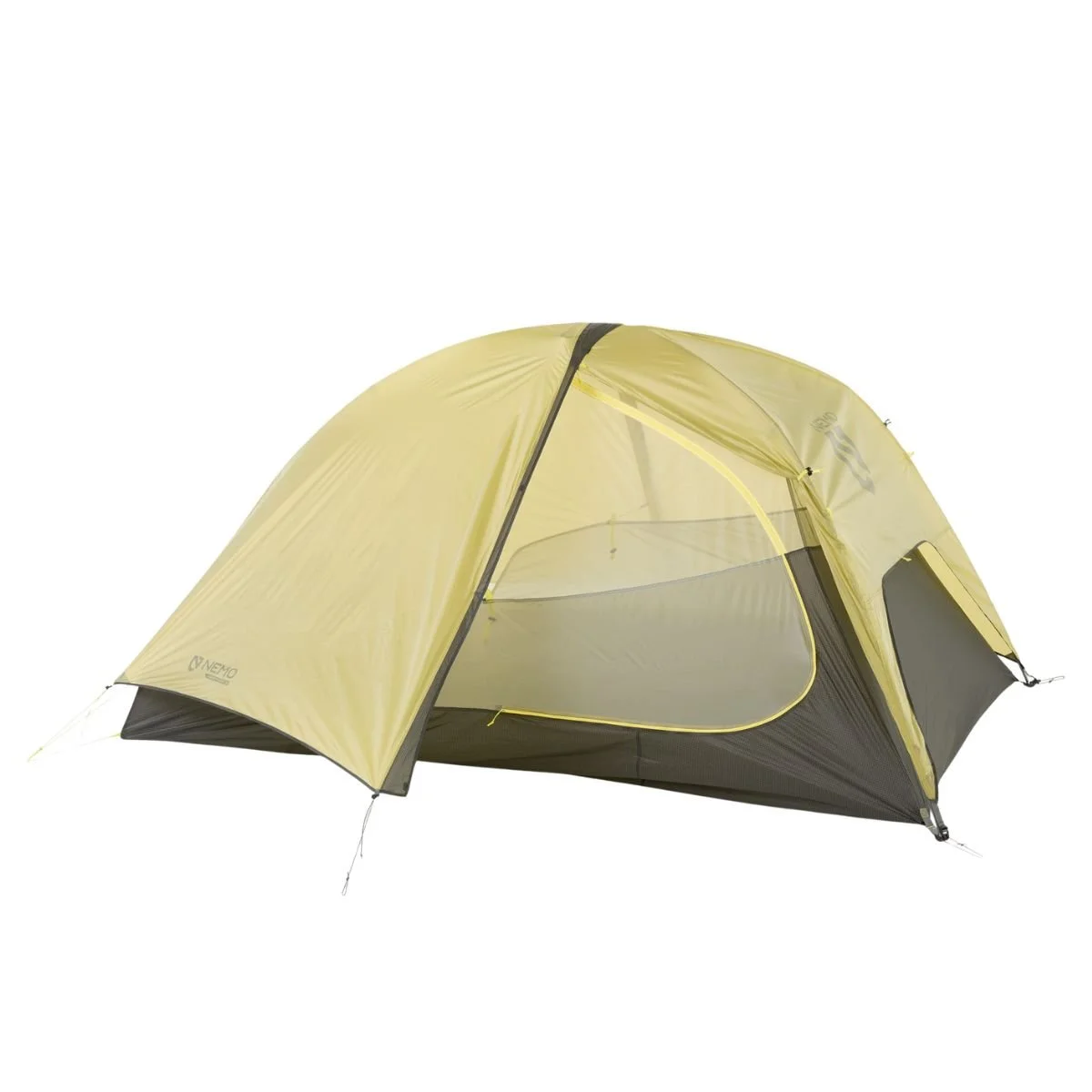
MSRP: $600
Setup: Freestanding
Total Weight: 3 lb 12 oz
Floor Area: 29.0 sq ft
Vestibule Area: 17.2 sq ft total (8.6 sq ft each)
Head Height: 40 in
We tested a slightly older version of the NEMO Dragonfly Bikepack Osmo 2-Person tent but from what we can tell most specs remain the same. The stuff sack, with two roll top ends, is different. This bikepack is the winner of best for wet weather in our Best Bikepack Tents guide.
The tent has a similar trapezoidal design to the Copper Spur with identical square footage (29 sq ft) and head height (40 in).
The newer specs on the Dragonfly indicate a smaller vestibule with 8.6 square feet per side rather than the 10 feet per side in the unit we tested. It also has the same killer feature that made it our favorite for rainy weather—the waterproof Landing Zone, a tub for a pup or for storing gear under the rainfly that keeps everything protected from rain and wet ground without having to use actual tent space—we wish there were one for each vestibule!
Still, the Copper Spur Bikepack’s additional shoulder room 52 inches to 50 inches, slightly lighter trail weight 3 lb 11 oz vs. 3 lb 12 oz, larger vestibule area and gear storage areas give it an edge over the Dragonfly Bikepack.
NEMO Dragonfly Bikepack Osmo 2-Person
Why You Should Trust Us / About the Author
I started mountain biking in the ‘90s and more recently picked up gravel riding. I’ve gone on multiple overnight bikepacking trips and packrafting trips throughout Colorado where I’ve used and tested multiple bikepack tents. I wrote Treeline Review’s initial roundup on bikepacking tents in 2021 and have kept up with advances in the category since then.
As one of the first reviewers for Treeline Review, starting in 2019, I’ve covered a lot of outdoor adventure gear across multiple activities, among them hiking, camping, climbing and mountain biking. I wrote Treeline Review’s initial packraft buying guide in 2022.
Beyond my work with Treeline Review, I have authored multiple outdoor guidebooks. My most recent Falcon Guide, "Colorado’s Best Front Range Adventures: The Greatest Hiking, Climbing, Paddling and More From Denver to Colorado Springs and Fort Collins," arrived in Spring 2021. In it, I cover the region's best hiking, biking, climbing, and rafting. I’m also the author of Falcon Guide’s “Climbing Colorado's Fourteeners: From the Easiest Hikes to the Most Challenging Climbs” and edited Justin Lichter’s excellent guide to thru-hiking titled “Trail Tested: A Thru-Hiker's Guide To Ultralight Hiking And Backpacking.” This experience has helped me become a first-rate gearhead and product tester.
I have 20-plus years of exploring, hiking, backpacking, mountain biking, climbing, guiding, and playing in the wild. I worked with National Geographic and their mapping division in developing their Colorado 14ers Map Pack Bundle. I’ve written about hiking and climbing for Elevation Outdoors, including stories about Colorado 14ers and outdoor apps to boost adventures.
In addition, I’ve written columns about ultralight hiking and gear for Backpacker, gear reviews for Treeline Review, Popular Mechanics, Bicycling, Popular Science, and other publications, including Elevation Outdoors, 5280, and more.
At Treeline Review, we strive to offer unbiased reviews to help you find the best product for the price. Treeline Review doesn’t accept sponsored content, native advertising, or paid reviews. I am not sponsored by any companies, nor are any of my family members sponsored by, employees of, or ambassadors of any of the companies in this review.
Find more of Chris’ work on his Treeline Review author page.