After 40 Nights in Snow, Rain, and Desert Camps, Here’s My Take on the Exped DeepSleep Sleeping Bag
Sustainable, synthetic insulation meets innovative features and versatile temperature options
March 9th, 2026
Home → Gear Reviews → Backpacking
Our verdict
The Exped DeepSleep sleeping bag is a premium-feeling sleeping bag at a budget price. With the Exped DeepSleep, you get all the features you'd expect in a higher-end camping sleeping bag at a price that seems so affordable, you wonder if someone messed up when listing the price. It comes with a compression sack—which usually costs $40 extra—and is compact enough for backpacking and camping. Based on our review of the Exped DeepSleep, we think you'd be hard-pressed to find a sleeping bag that offers a better value.
While synthetic bags aren't always the lightest option, the DeepSleep is relatively lightweight and compact at 7L volume in its stuff sack. We spent more than 40 nights camping and backpacking with this bag. We found it took up minimal room in our car's trunk while camping and our backpacking pack on overnight trips.
The DeepSleep sleeping bag gets huge marks for eco-consciousness. It is a synthetic sleeping bag made of 100% recycled materials and it is 100% recyclable at the end of its life. It is vegan, comes with carbon offsets, and is built with bluesign-approved materials. Plus, it’s machine washable for easy maintenance, the surest bet to get the most life out of anything you purchase.
The DeepSleep sleeping bag is great because it has lots of temperature and size options so you can get exactly the bag you need without paying for more. Paired with the affordable price, this customizability makes the Exped DeepSleep our top choice for sleeping bags to get for groups and families.
Exped DeepSleep Sleeping Bag
20°F
30°F
45°F
We tested the 30°F version, but it’s also available as a 3-season bag with a 20°F rating or as a summer sleeping bag with a 45°F temperature rating. It's also available as a kids’ size, and in a wide variety of lengths and widths, meaning you can choose just what you need to stay warm.
For more of our top picks in sleeping bags, check out our Best Backpacking Sleeping Bags and Best Camping Sleeping Bags guides.
We write mission-driven gear reviews. To find the best gear, we combine expert reviews, everyday user opinions, and rigorous independent trail testing—never native ads or sponsored posts. We are 100% reader-supported and may make a small commission from some qualifying affiliate links. Learn more.
Exped DeepSleep Specifications
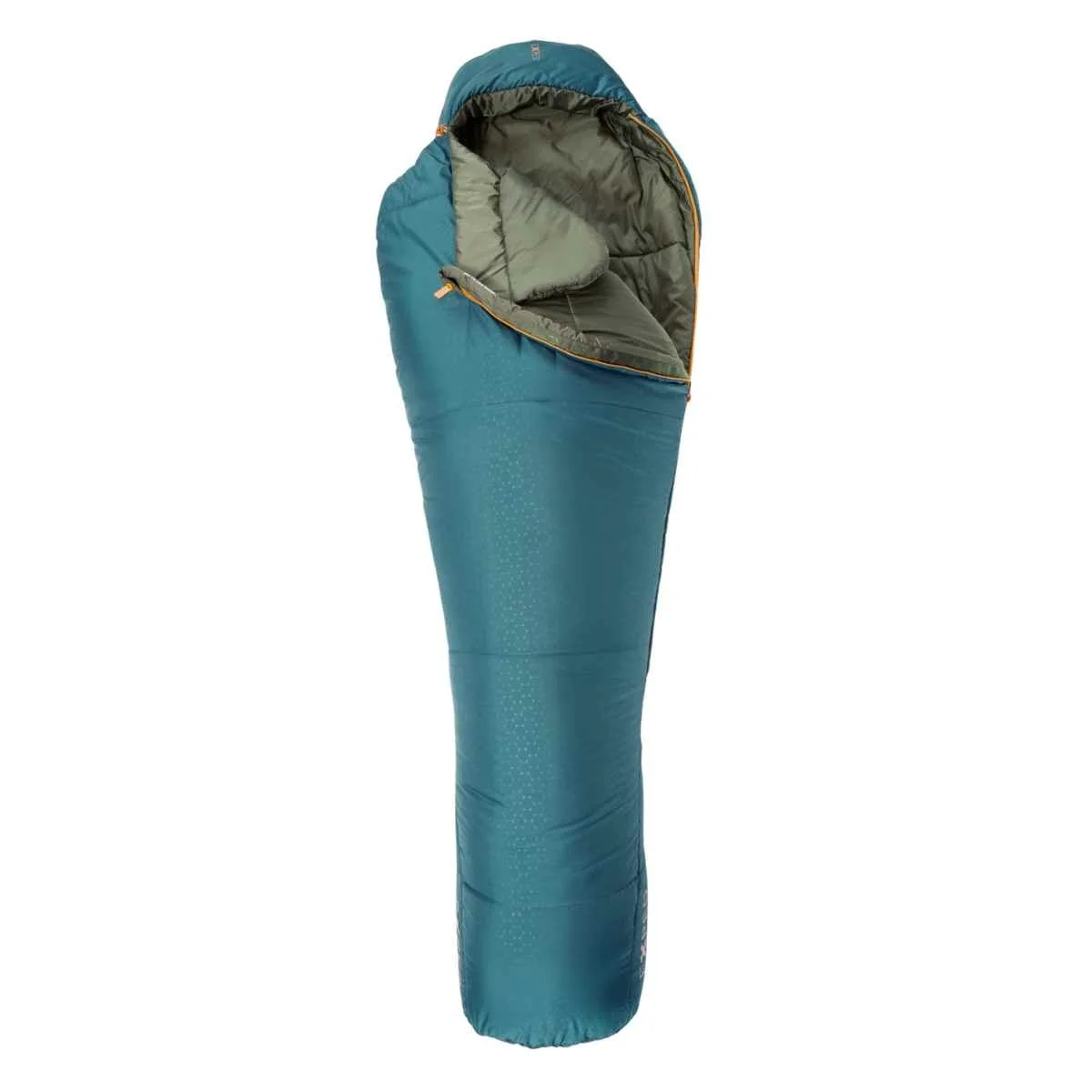
Temperature Options: DeepSleep 45°F (5°C), DeepSleep 30°F (0°C), DeepSleep 20°F (-5°C)
Weight: Varies by size, width, and temperature rating (approx. 2 lbs 10 oz to 3 lbs 3 oz)
Insulation: High-performance recycled synthetic filling
Shell & Lining: 100% recycled polyester (monomaterial construction)
Shape: Mummy with 3D footbox
Best for: Backpacking, car camping, damp conditions
Features: 3D footbox with warming compartment, adjustable hood, internal chest pocket
Sustainability: 100% recycled materials, 100% recyclable at end of life, myclimate carbon offset, bluesign approved
Size Options: Small, Medium, Medium Wide, Long, Long Wide (varies by model)
Comparison table
| SLEEPING BAG | MSRP* | WEIGHT | TEMPERATURE RATING (F) | INSULATION | STYLE/SHAPE | PACKED SIZE |
|---|---|---|---|---|---|---|
| Exped DeepSleep 30 | $130 | 2 lbs 12.4 oz | 30 | Synthetic | Mummy | 7.9 x 10.2 inches |
| Exped DeepSleep 20 | $150 | 4 lbs 0.4 oz | 20 | Synthetic | Mummy | 9.8 x 11 inches |
| Exped DeepSleep 45 | $110 | 2 lbs 1.5 oz | 45 | Synthetic | Mummy | 6.7 x 10.2 inches |
| Kelty Cosmic 20 | $190 | 2 lbs 7 oz | 20 | 550-fill-power down | Mummy | 8 x 13 inches |
| REI Trailmade 20 | $119 | 3 lbs 4 oz | 21 | Synthetic | Mummy | Not stated |
Best for
Budget-minded campers and backpackers wanting premium features
Camping in damp or humid conditions
Almost anyone who wants a synthetic sleeping bag instead of down
Eco-conscious backpackers prioritizing sustainable materials and recyclable construction
Backpackers seeking versatile temperature options within the same product family
Families who want a matching kids' sleeping bag
Campers who get cold feet and like the innovative 3D footbox warming compartment
Those wanting easy care with machine washable synthetic insulation
What we liked
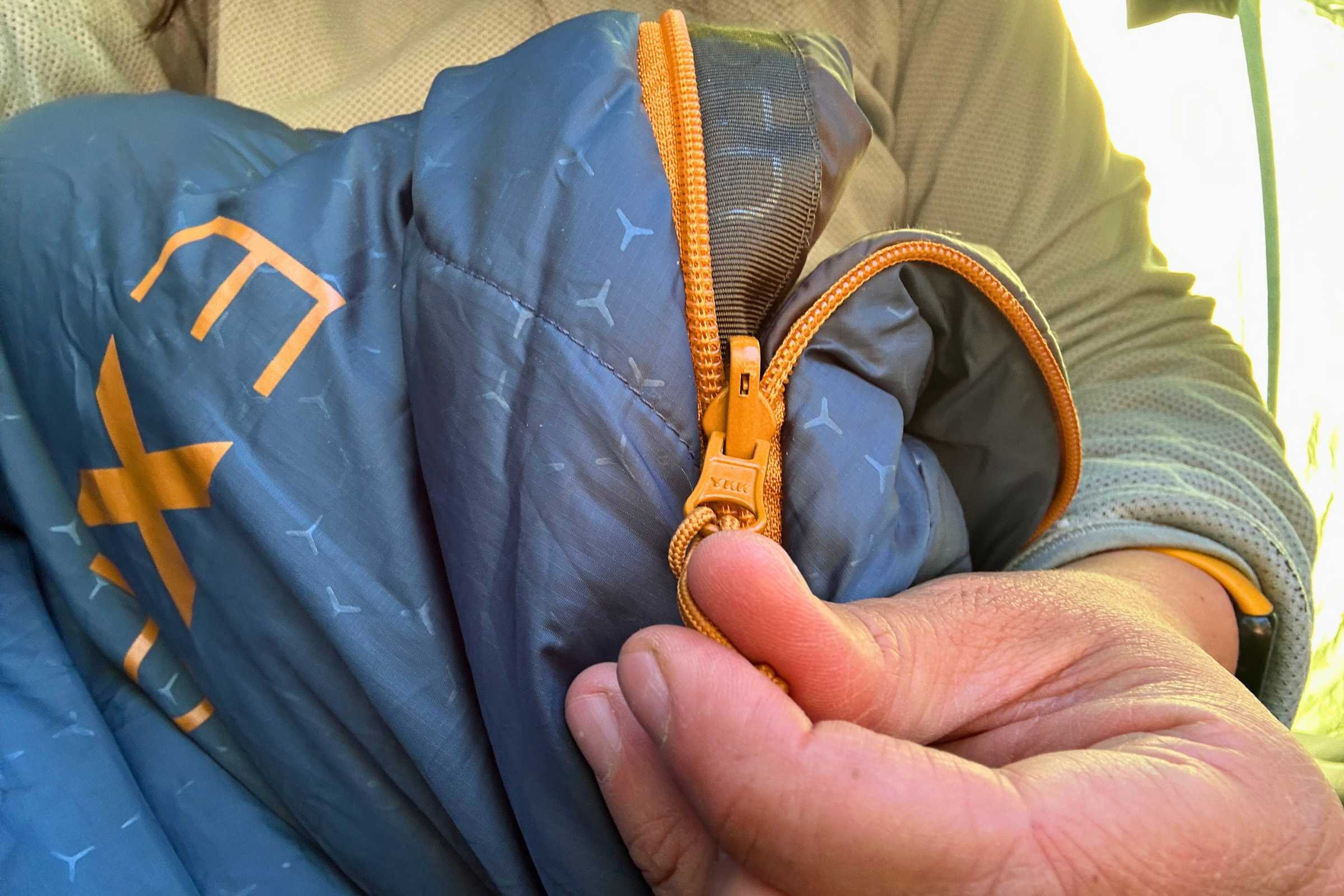
The Exped DeepSleep uses high quality YKK zippers that don’t get stuck on the surrounding fabric.
Unbeatable price for the features and quality of materials
3D foot box means feet don't get cold
Available in lots of lengths and widths, including kids, so you could get the same bag for everyone in your group
Comes with a compression stuff sack, which usually costs extra
Made of 100% recycled materials with bluesign-certified materials
Entire bag can be totally recycled at the end of its life
Internal pocket is handy to keep your phone from freezing overnight or keep your lip balm close by
High-quality YKK zippers don't stick
What could be better
Mummy shape can feel constrictive compared to rectangular bags—the shape isn't for everyone, especially folks with bigger bodies
Limited color options (one color per temperature rating, but no color choices)
As a synthetic bag, it's heavier than down backpacking bags
Only available in left zip (zipper on the left side) of the bag
The 30°F bag is independently tested to have a “Comfort rating” of 43°F and “Lower Limit” of 34°F degrees, so we think the model name should read 35°F instead of 30°F
How we tested
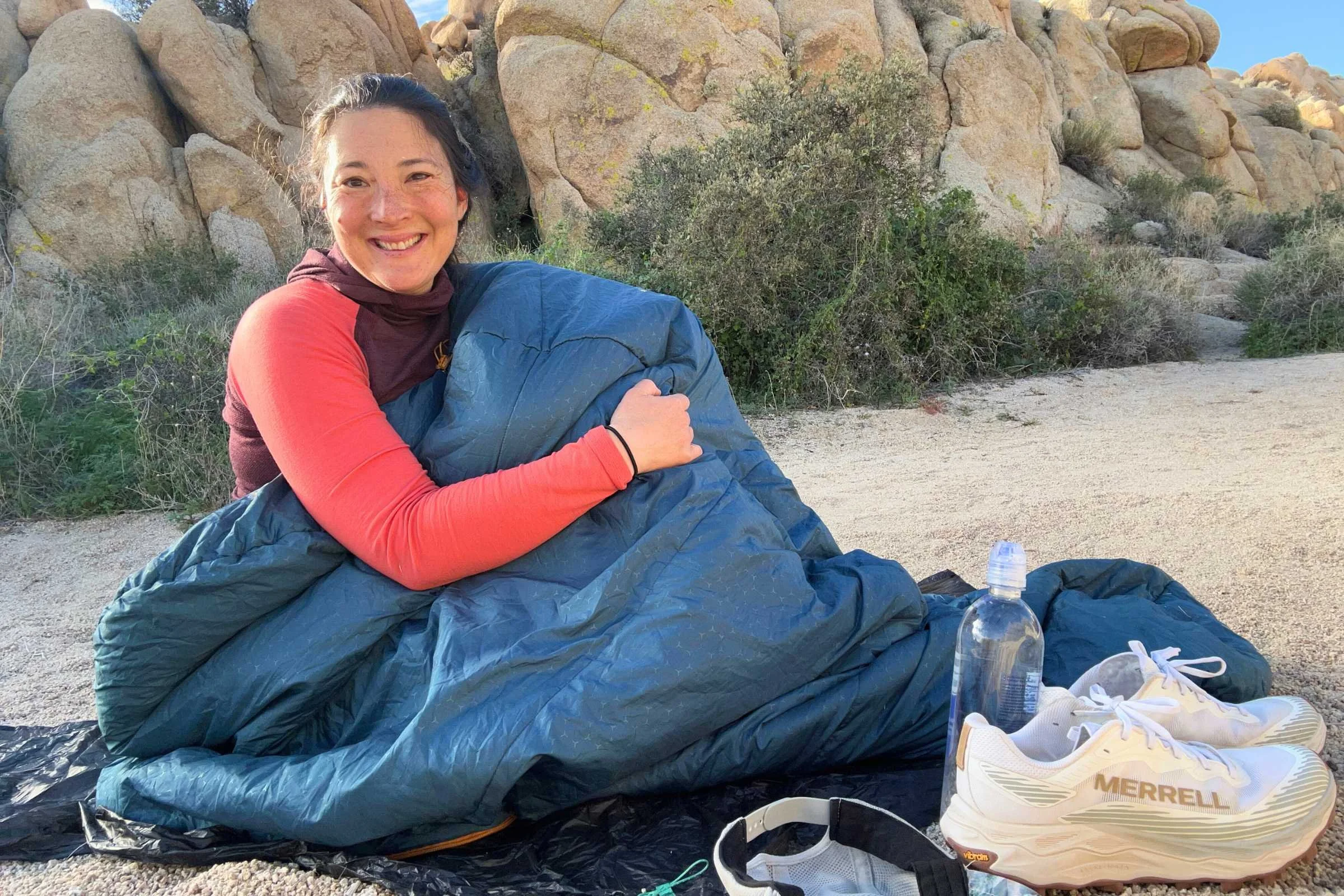
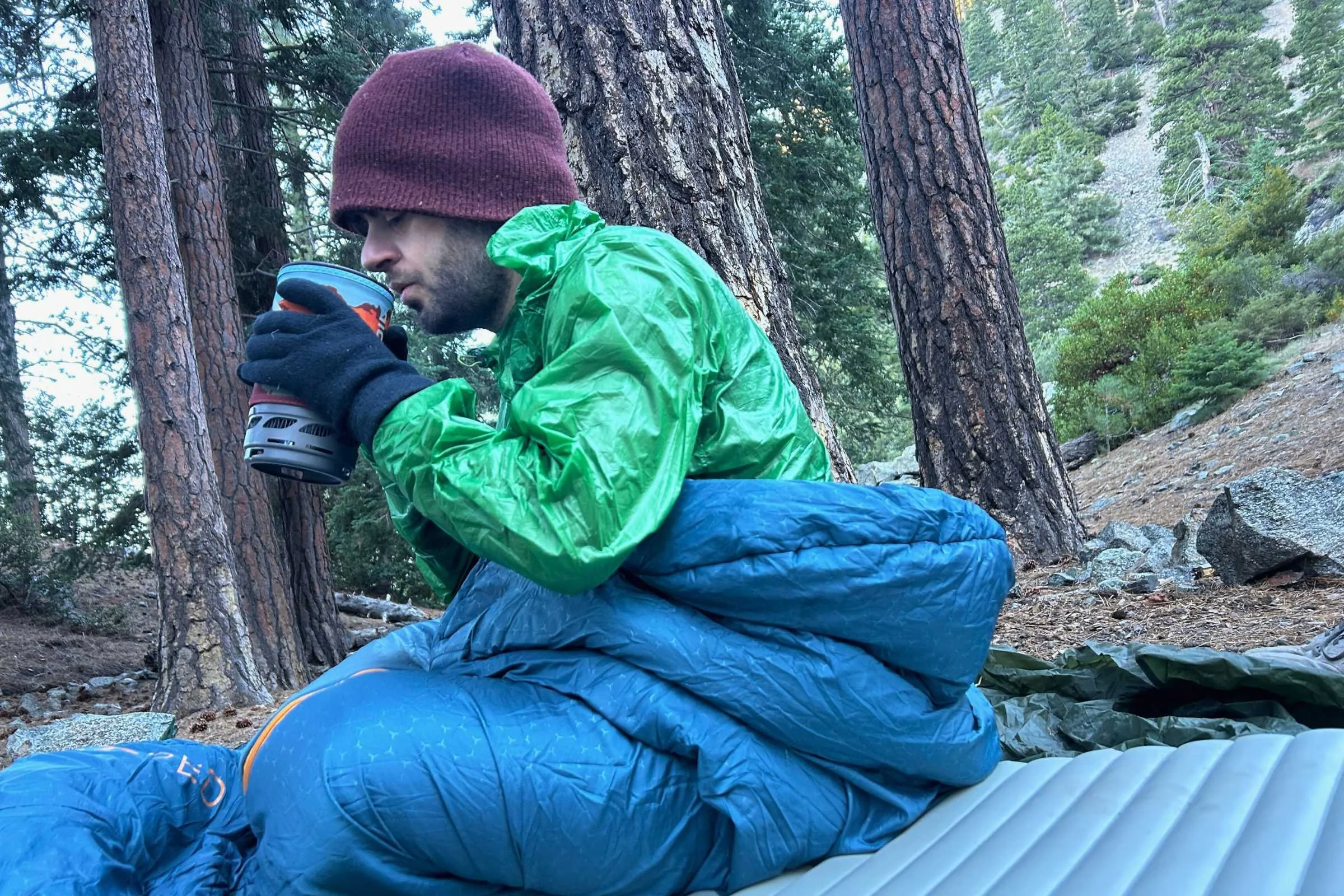
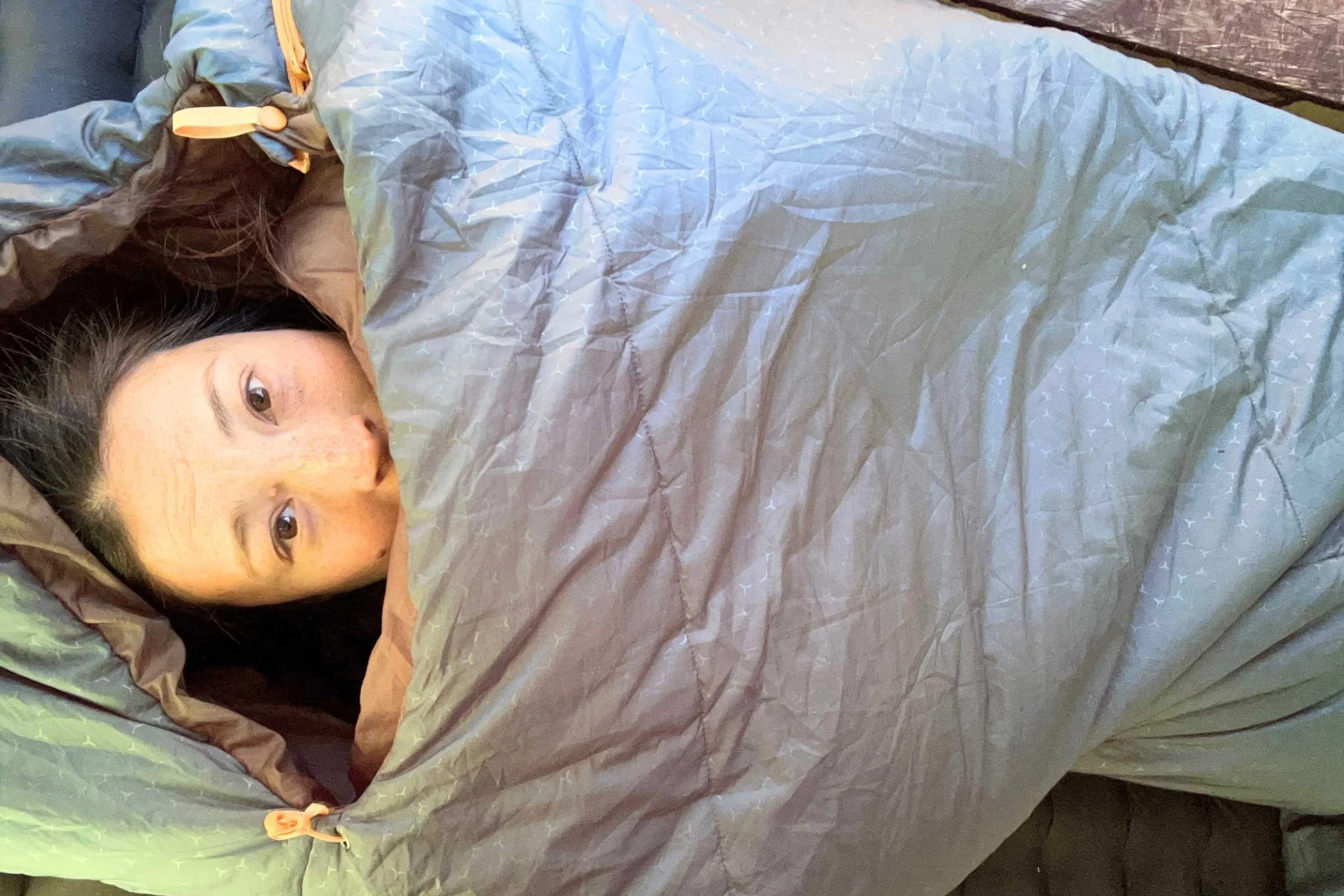
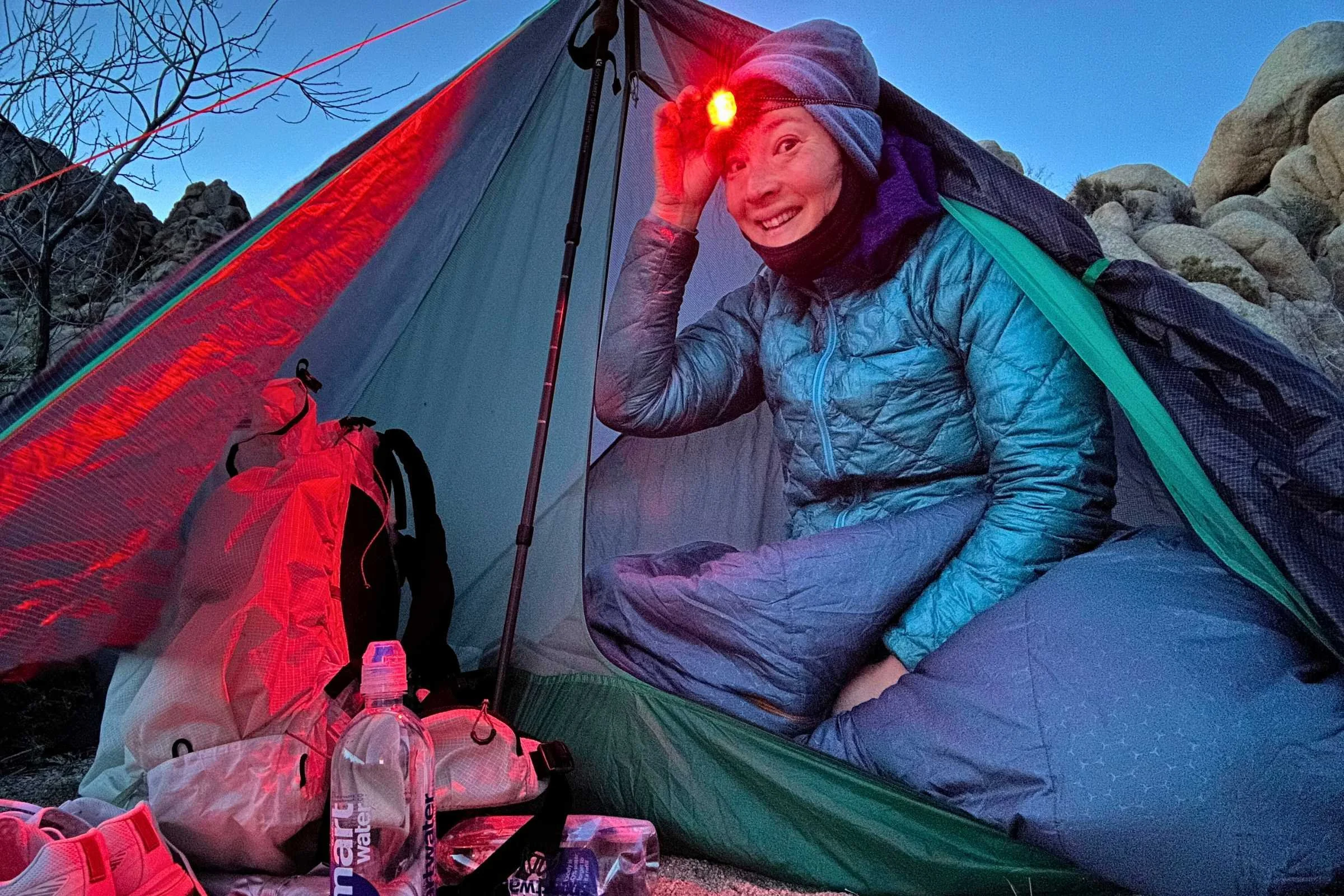
We have been testing the Exped DeepSleep sleeping bag for the past nine months in everything from sub-freezing temperatures in snow storms to balmy summer days. In all, we've spent about 40 nights camping in this bag for this review.
Treeline Review testers spent a month straight camping in the DeepSleep in the Eastern Sierra. We also tested in while camping in late fall in rain and snow storms in Sequoia National Park and San Gabriel National Monument. We've also tested the DeepSleep bag on overnight backpacking trips in Joshua Tree National Park and the San Gabriel Mountains National Monument in Southern California.
We've tested the Exped DeepSleep sleeping bag using camping cots, camping mattresses, and on backpacking sleeping pads.
Treeline testers have slept in the Exped DeepSleep sleeping bag in camping tents, backpacking tents, and indoors inside rustic cabins. We've used it for sleepovers on the living room floor and on couches at friends' houses.
We've tested the Exped DeepSleep sleeping bag camping in deserts, pine forests, alpine environments, and while camping in snowstorms, on warm rainy days, on cold rainy days, on misty days, and on sunny days.
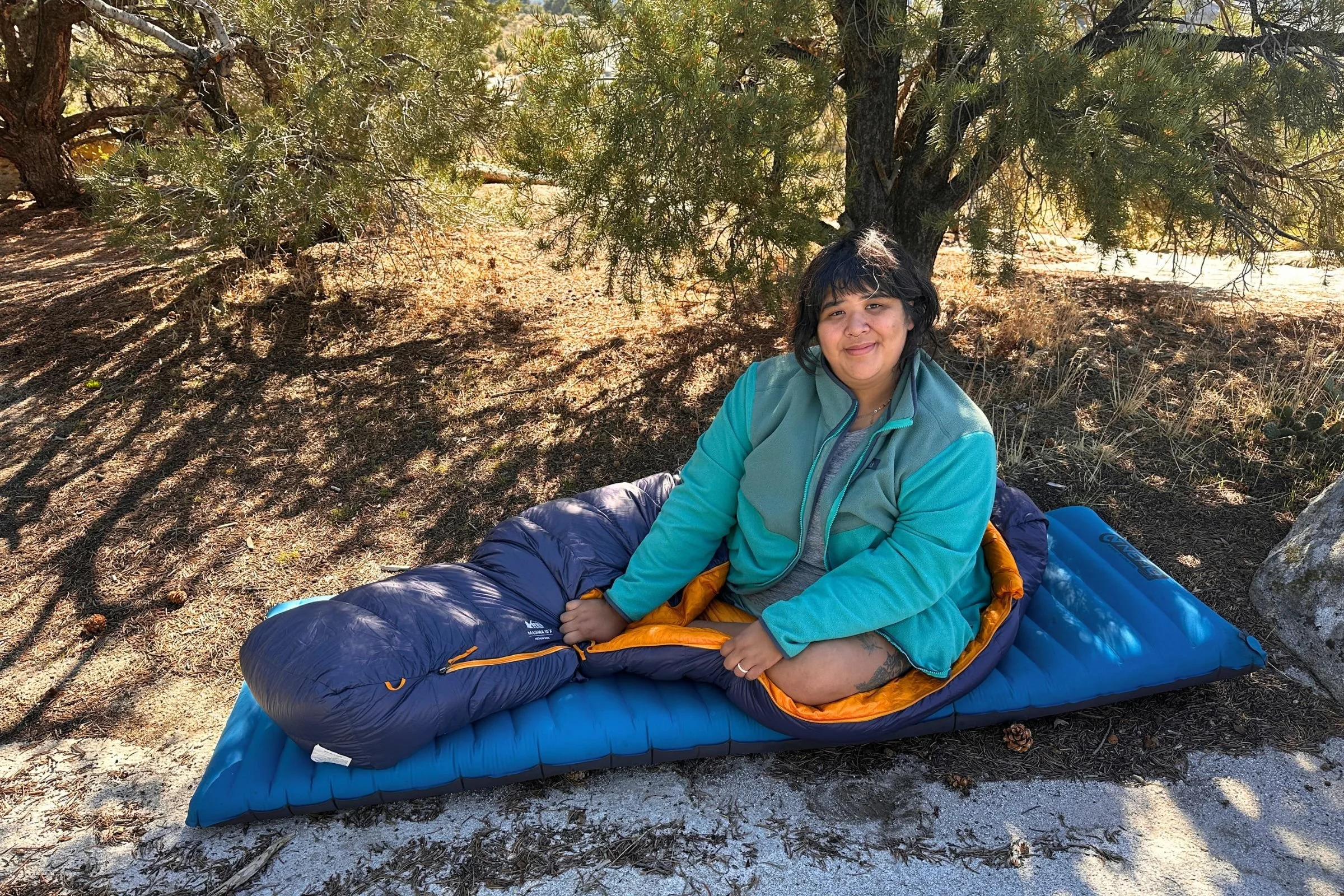
In all, four testers have slept in this bag. We've had back-sleeping testers and side-sleeping testers and belly-sleeping testers. We had testers of different body shapes and sizes, ages and metabolism rates, from self-described "hot sleepers" to "cold sleepers."
Most importantly, we tested the Exped DeepSleep sleeping bag side by side against similarly priced bags from the REI Co-op HunkerDown 20 sleeping bag, the Kelty Cosmic, and even a budget sleeping bag we got for free from a car insurance company.
We tested the Exped DeepSleep based on different needs, taking into account the trade-offs between price, weight, packability, long-term durability, features, and comfort. Warmth wasn't really negotiable.
If you’re planning a camping trip of your own, check out our Camping Gear Checklist.
Performance in the field
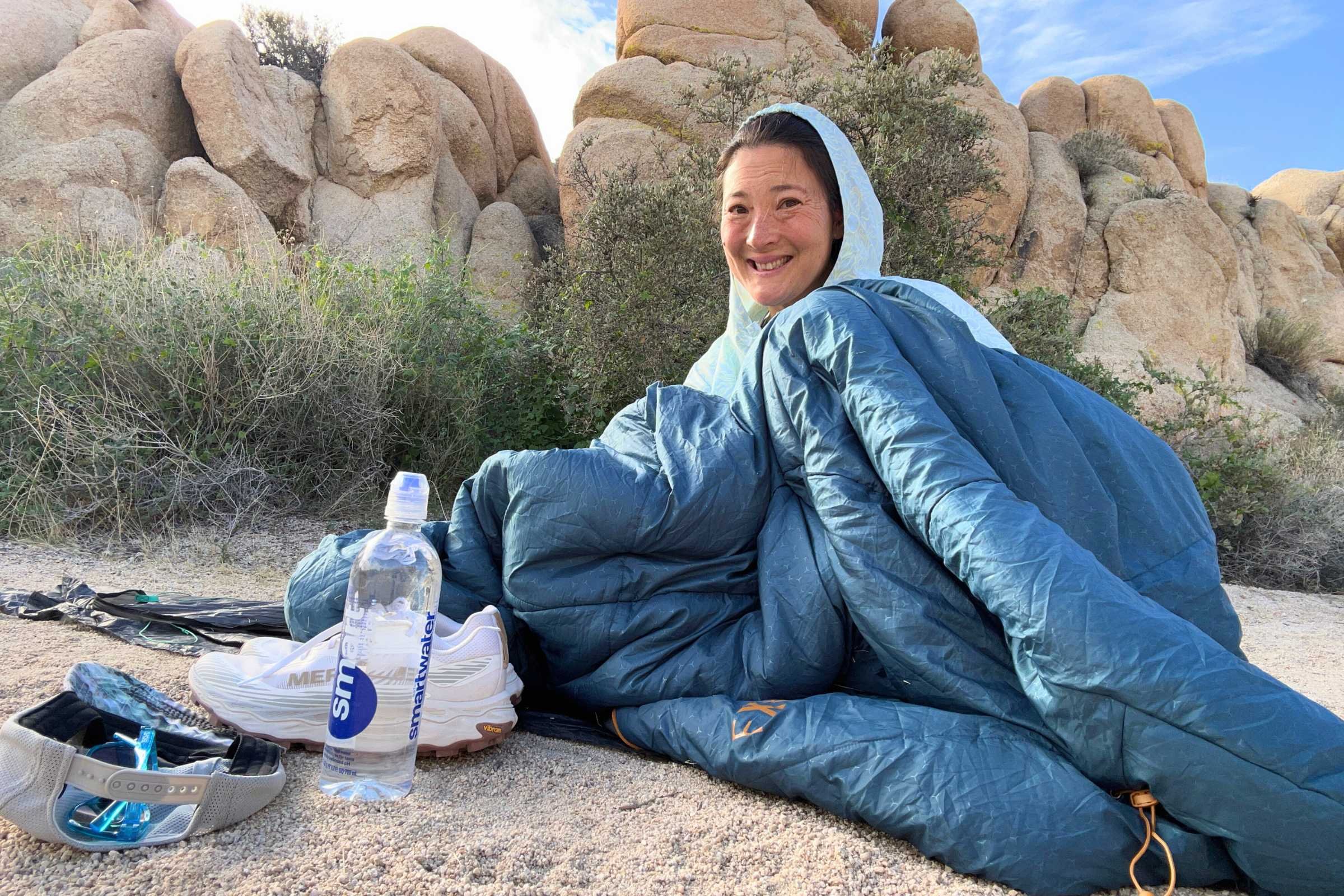
Warmth
We found the sleeping bag temperature rating to be pretty accurate. We had four testers with different body shapes, metabolism rates, and sleeping styles (back vs. side) camp and backpack with the Exped DeepSleep bag. We tested in snow storms in Sequoia National Park and on sub-freezing nights near Yosemite National Park.
Despite being called a 30F bag, it is worth noting that the ISO temperature rating for this bag is a Comfort Level of 43 degrees (F) and Lower Limit of 34F degrees. Our testers think this is accurate.
Exped sleeping bags are all third-party tested for temperature ratings using the International Organization for Standardization (ISO) 23537, the same standard used by most sleeping bag manufacturers. The test assumes that the camper is wearing one base layer and a pair of socks, sleeping on an insulated sleeping pad with a minimum R-value of 5.38 (about the same as a Therm-a-Rest NeoAir XLite pad).
So, as expected, when a tester slept in this bag in 35°F weather wearing a t-shirt and without socks, they felt cold. We would recommend if you expect to be in 30-degree temperatures often, you opt for the 20°F version of this bag instead. You can read more tips for how to sleep warmer while camping and backpacking.
Moisture resistance
Synthetic sleeping bags insulate well even when wet, and are the best choice for campers and backpackers in wet and humid climates or anyone who is concerned about being able to keep their sleeping bag dry.
We tested this sleeping bag while camping in snow and rain when we were going in and out of the tent a lot and thus, dragging rain inside the tent. For my birthday in November, I threw a big camping party during the biggest rain and snow storm the region had seen in years. A group of eight of us huddled around the REI Basecamp tent, but were all soaked from setting up other tents in the pouring rain. We were so stoked to have the DeepSleep synthetic bag to warm up.
We found that the Durable Water Repellent (DWR) coating on the DeepSleep worked well to resist the water we kept bringing into the tent every time someone left the tent to get something from the car or pee.
The insulation also stayed warm even when wet. We pretty much didn't notice there was a change in warmth in damp conditions, where a down sleeping bag would have wet out and been useless. Another reason the DeepSleep kept us warm even when wet was because the synthetic insulation dried quickly from our body heat, which was an added bonus.
We noticed similar warm-when-wet features during a 5-day backpacking trip in the snow/rain in Sequoia National Park. In all, we were pretty happy to have this bag on both wet trips.
Durability
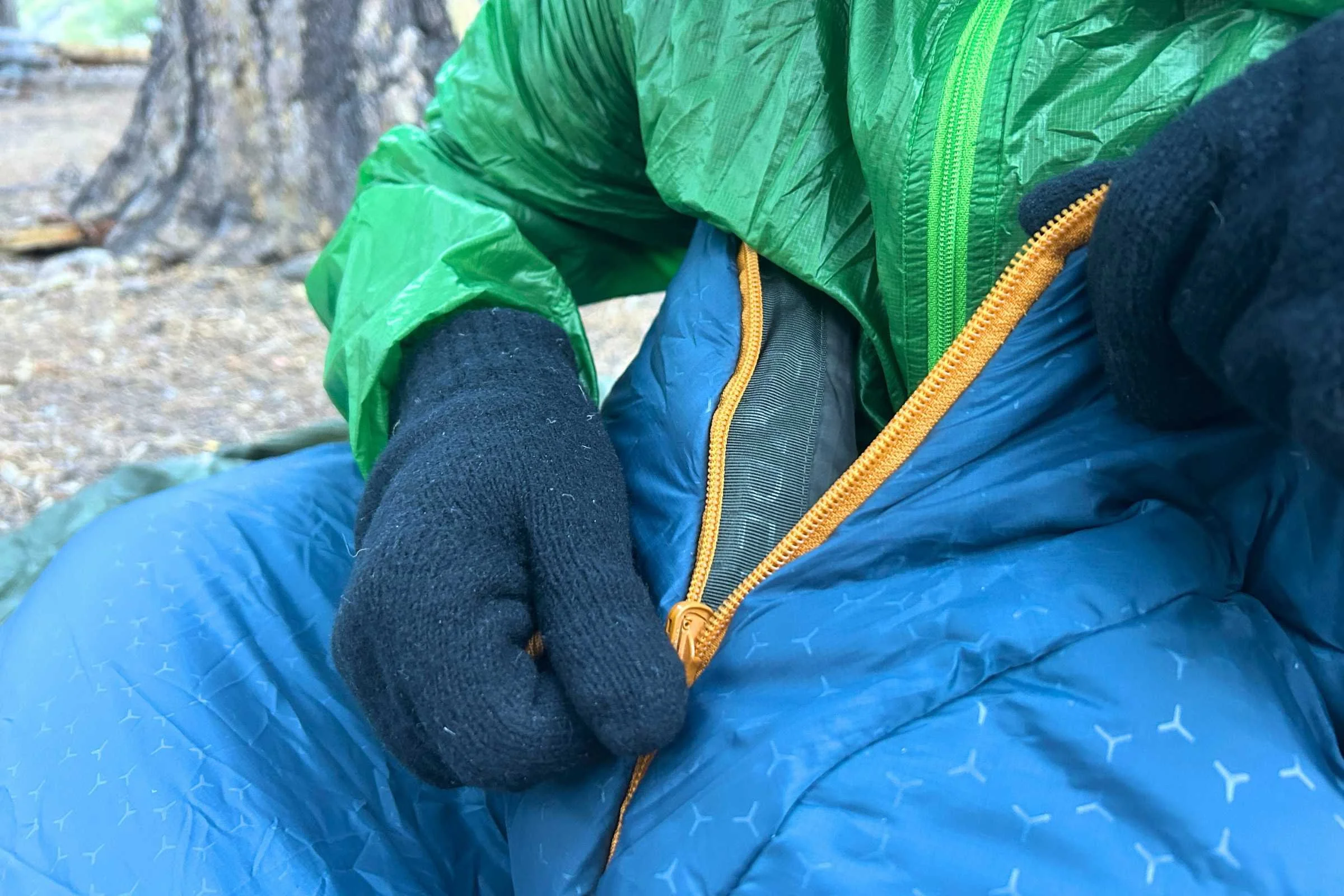
The Exped DeepSleep uses a robust 40-denier recycled polyester construction that handles regular use well. We used it for a month-straight of camping in the Eastern Sierra and it doesn't show any signs of wear. We also tossed it the spiky desert ground while backpacking in Joshua Tree National Park in a way we never would do with a thinner-denier bag.
We feel pretty confident stuffing, throwing, and crushing this bag. It doesn't require babying, which makes it a good choice for first-time backpackers or campers or someone who wants one bag to last a long time.
Comfort
The DeepSleep bag is pretty comfortable. The shell fabric is soft and silky. While it isn't as comfy as backpacking sleeping bags we tested that are two to three times the price, it is one of the nicest-feeling shell and inner lining fabrics of the similarly-priced camping sleeping bags. Bags that cost less than $200 often use a stiffer fabric and that wasn't the case here.
Like any mummy bag, it can feel constrictive, especially compared to a bed at home or a rectangular sleeping bag.
We found the NEMO Forte and NEMO Disco to have a much roomier shape (they call it "SpoonShape", which is better for tossing and turning.
Temperature Rating Details
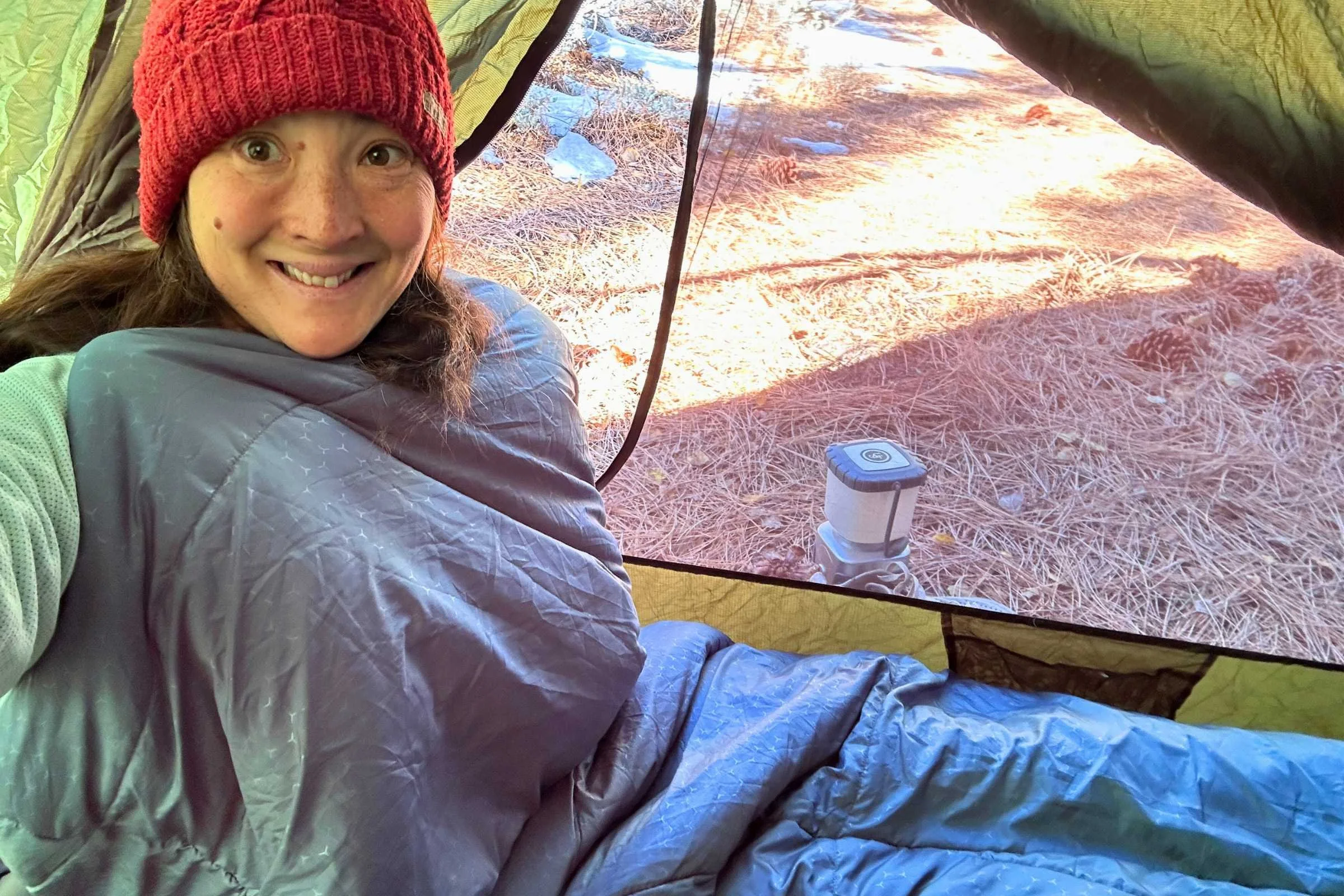
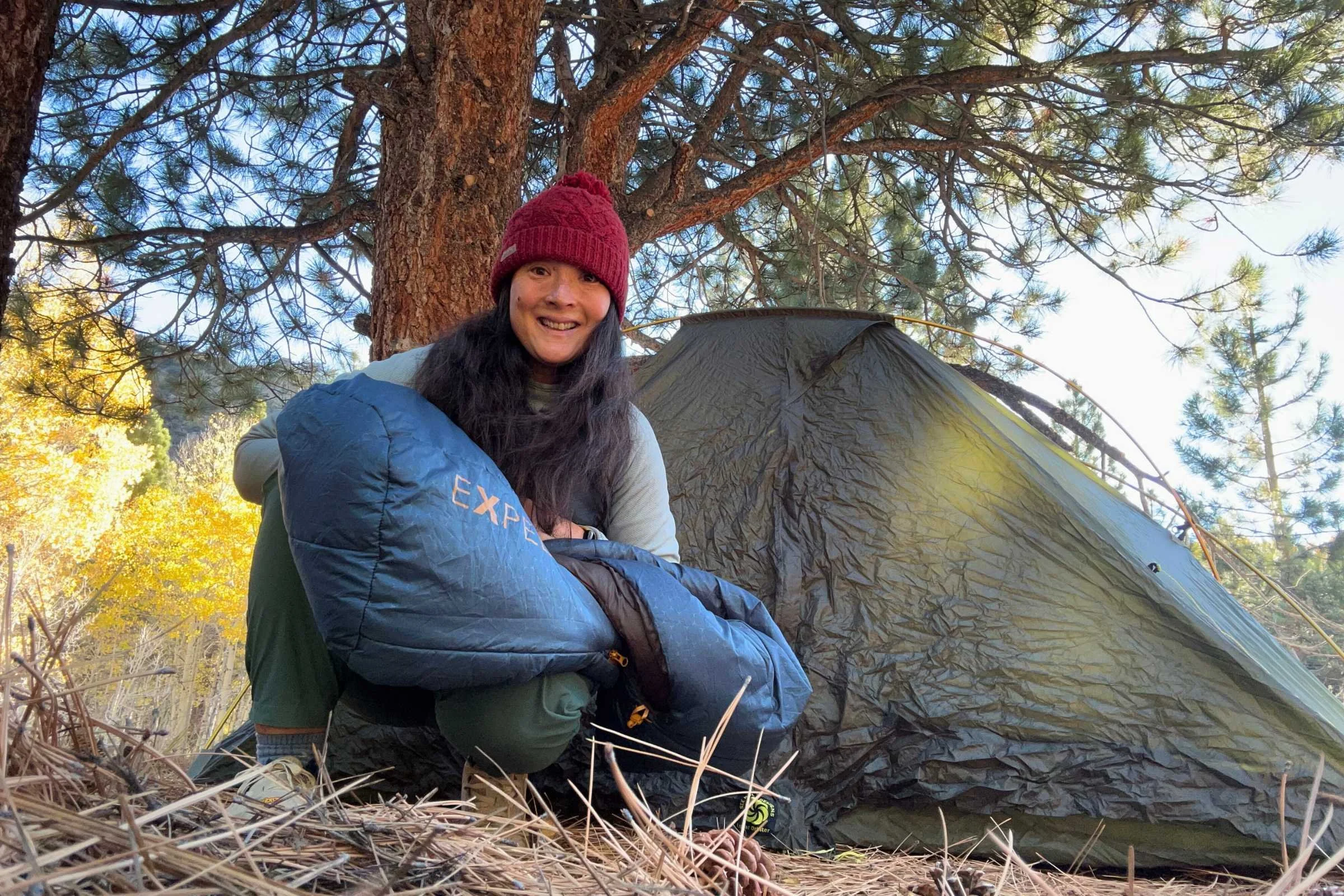
Camping in October in the Eastern Sierra with the Exped DeepSleep 30F bag. Outside the tent, it is cold enough there are some snow patches.
As mentioned above, despite being called a 30°F bag, the DeepSleep has an ISO temperature rating for this bag with a Comfort Level of 43°F and Lower Limit of 34°F degrees. Our testers found this is accurate while testing in snow storms, in November at 7,000 feet, and in late spring and late fall in the Eastern Sierra.
The 3D footbox (with its handy warming pocket) and mummy design meant that the bag felt like it had an accurate warmth rating. The draft collar also helped trap heat inside.
In colder temperatures, we extended the warmth by wearing extra layers and using sleeping pads with higher insulation ratings.
Packability
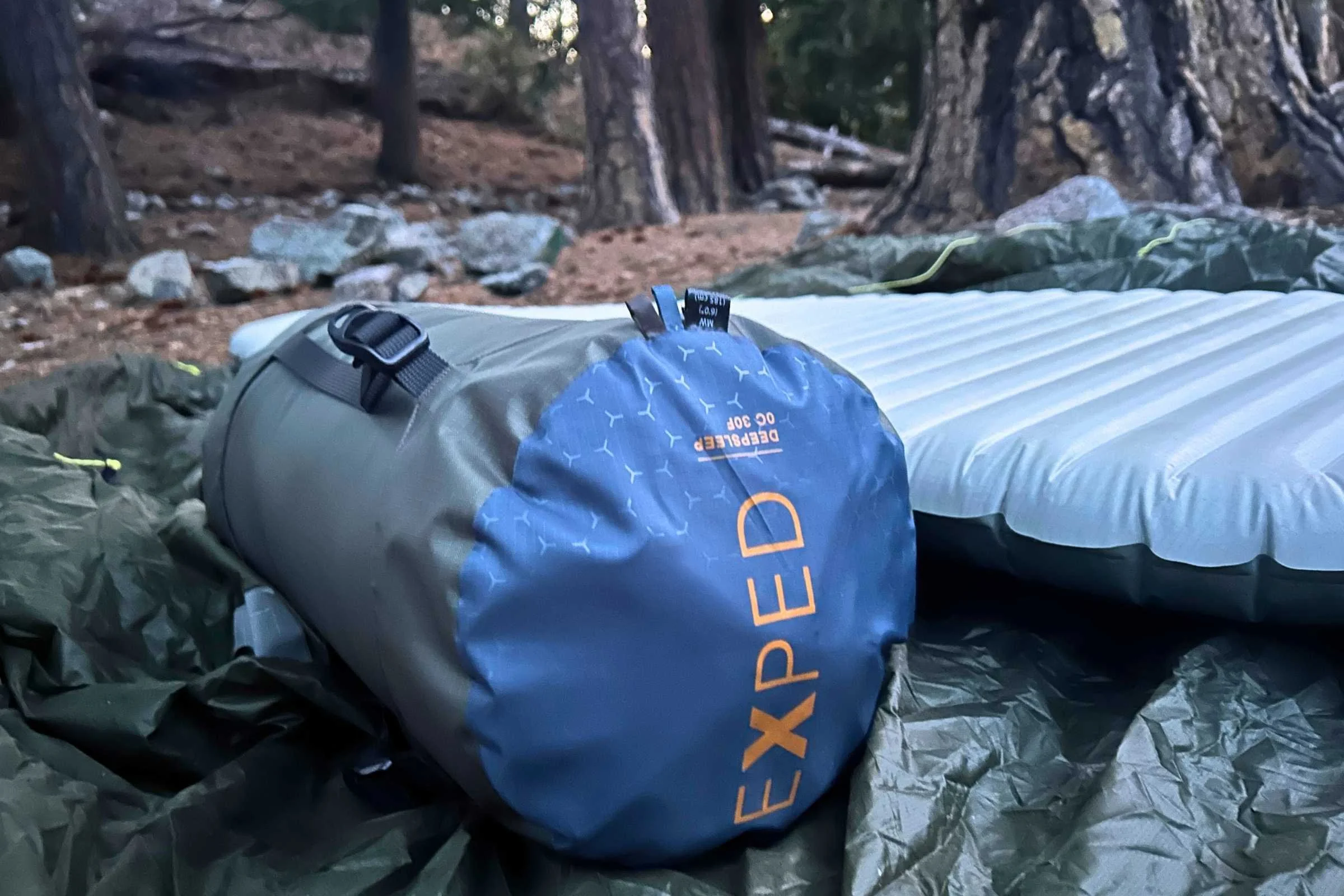
The Exped DeepSleep compression stuff sack compressed this sleeping bag down to 7L, which made it manageable to use while backpacking in the San Gabriel mountains.
As mentioned above, we were stoked that this bag came with such a quality compression sack, as these usually cost $40 extra. Our 30°F medium wide bag compressed down to 7L. This didn't take up much room in our 60L backpacking pack and meant it was also easy to stuff into our car while car camping. A synthetic bag isn't going to be as compressive as a down bag, but this one wasn't bad.
Features
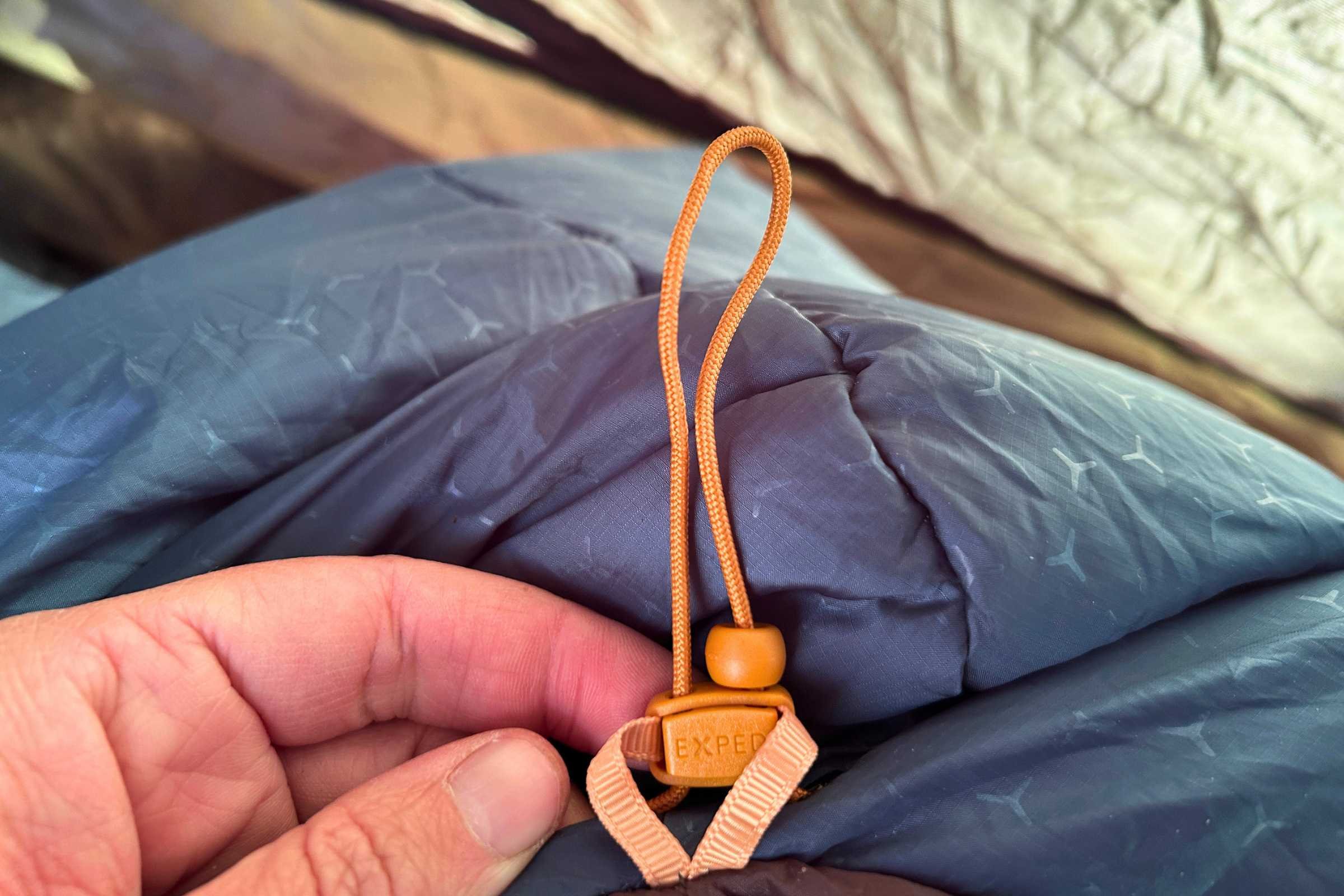
Monomaterial sustainablE design
The Exped DeepSleep sleeping bag has among the most cutting edge sustainability features we've seen in a bag by any outdoor brand. Its entire life cycle takes into account sustainability, from the materials it is made of to the ease of washing to the end of its life. This full-cycle sustainability is really the future of sustainable gear. We've seen it in higher-end bags, like the NEMO Endless Promise Disco sleeping bag and NEMO Endless Promise Forte sleeping bag, but it is incredible to see that level of sustainability in such an affordable bag.
The DeepSleep is made entirely from 100% recycled polyester for complete recyclability at end of life. Because it uses a single material construction, it eliminates the mixed-material challenges that most sleeping bags face.
Additionally, the DeepSleep is made of bluesign-approved textiles, a third-party rating for environmental and consumer protection standards. It also uses OEKO-TEX Standard 100 certification, which guarantees safety from harmful substances. Like most (but not all) outdoor gear these days, it uses a PFAS-free Durable Water Repellent (DWR) to avoid "forever chemical" persistent environmental pollutants.
3D footbox with warming pocket
A stand-out feature on the Exped DeepSleep sleeping bag is the 3D footbox. Footboxes that are foot shaped (to prevent insulation from getting compressed and being unable to trap air) are fairly common. But the DeepSleep adds another unique feature we haven't seen in other sleeping bags: a warming pocket.
There's an integrated pocket built into the footbox where you can stuff foot warmers or heated water bottles. Feet are usually the first place where people feel cold and this pocket solves the problem of footwarmers rolling around.
The pocket helps prevent cold spots on your feet. Inevitably, hot water bottles end up rolling around at the bottom of your sleeping bag. It's pretty great having the pocket to keep things in place.
We often get cold feet but are too lazy to make a hot water bottle, but have found you can stuff extra clothing into the 3D footbox pocket and that essentially gives it extra insulation.
High-performance synthetic insulation
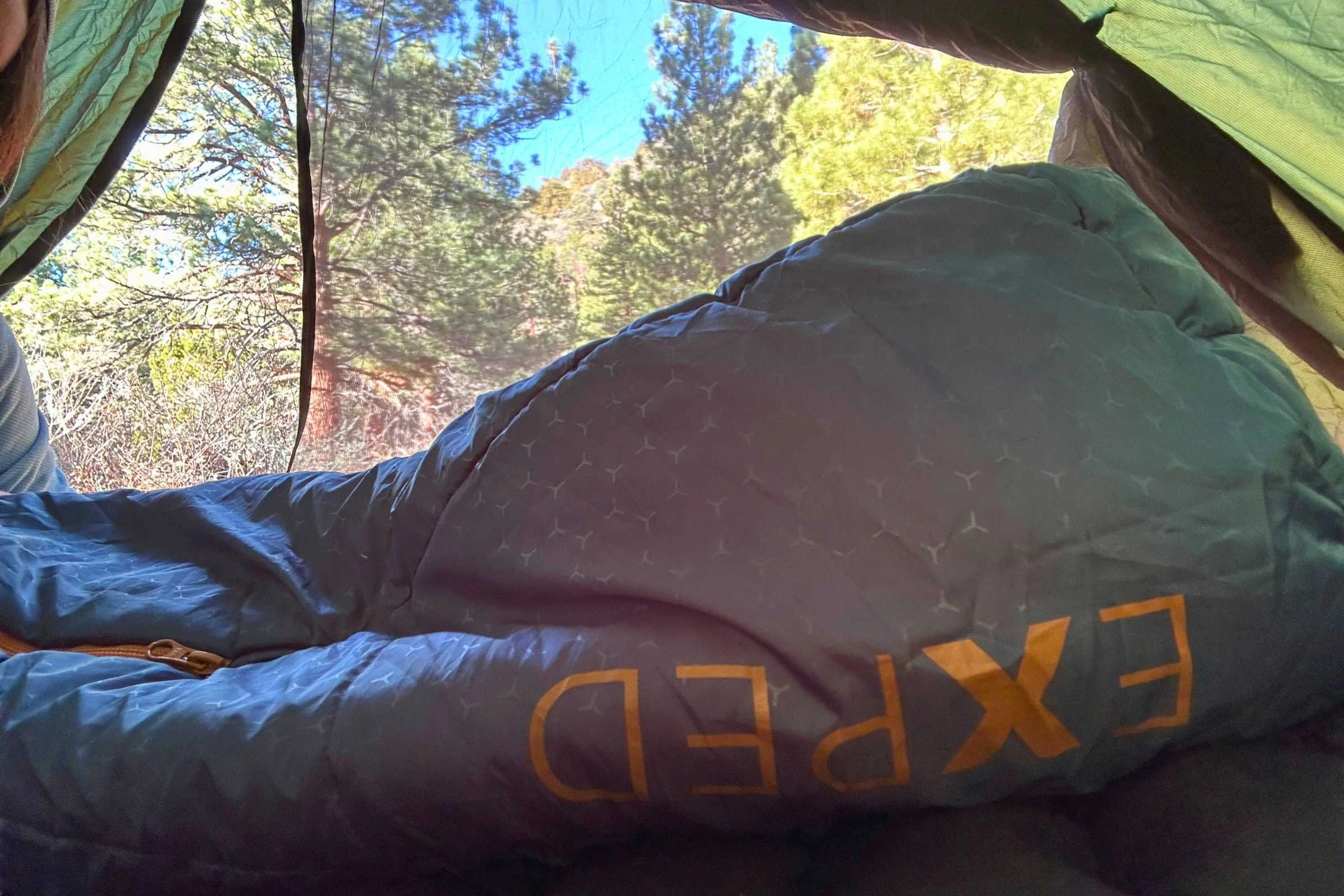
Like all synthetic sleeping bags, the DeepSleep synthetic insulation maintains warmth even when damp or wet. Like other synthetic insulation, it is faster drying than down insulation, which makes it a good choice for humid or rainy conditions or for any camper or backpacker concerned about their sleeping bag getting wet.
We generally find that synthetic sleeping bags are easier to care for than down sleeping bags too. The Exped DeepSleep is machine washable and dryable, so you can easily get out oils and dirt that end up compressing the insulation (which makes the bag feel colder). Pop it in the wash and you'll be amazed how much warmer it may feel, even after multiple washes. We recommend using a technical cleaner like NikWax Tech Wash instead of normal laundry detergent.
Comfort and thermal efficiency features
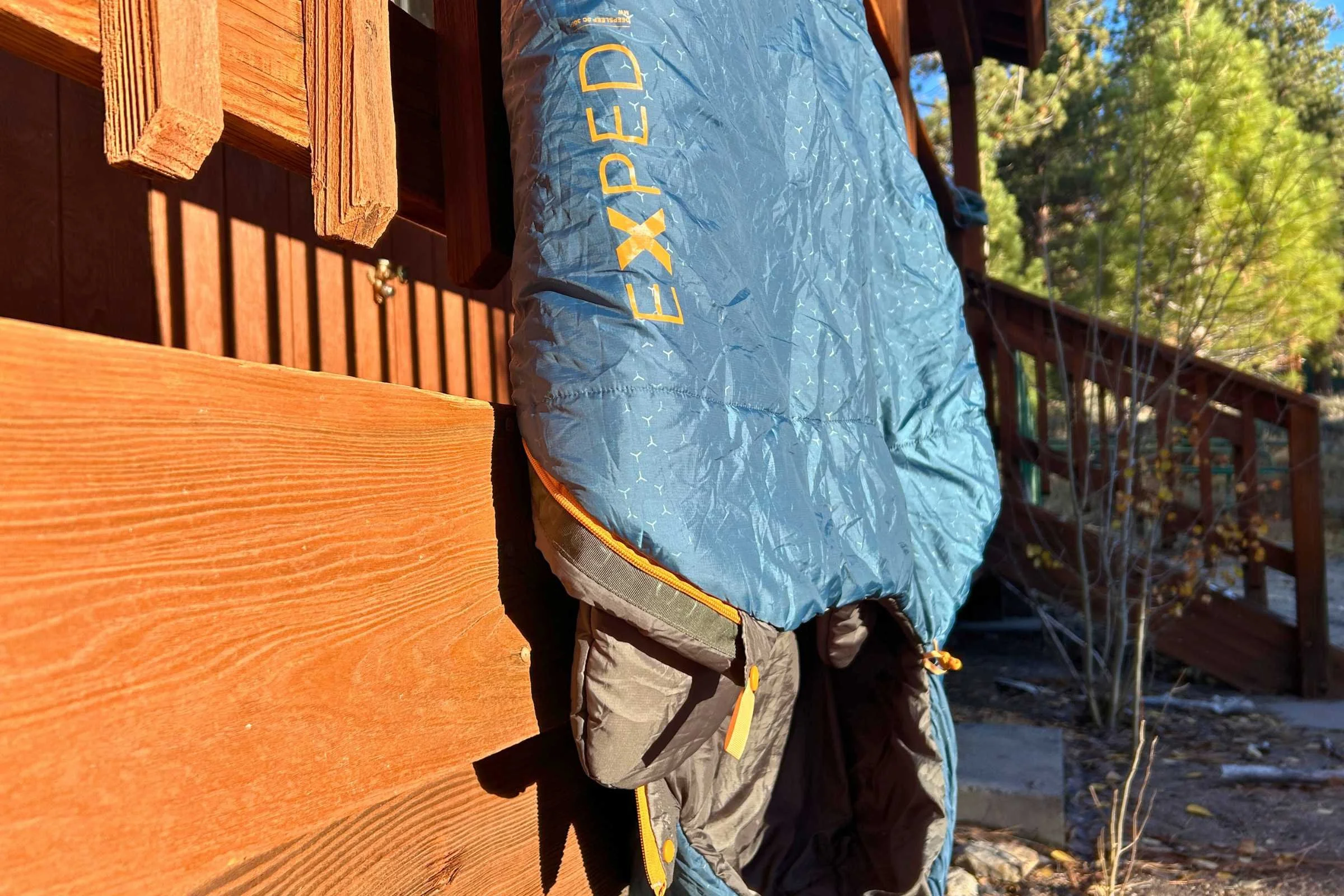
Like many backpacking sleeping bags, the DeepSleep has a hood with an adjustable drawstring. The goal of this design is to minimize heat loss around your head and neck, areas where campers and backpackers often feel cold.
The DeepSleep also has a draft collar, which is another feature found on higher-end sleeping bags. It creates an additional thermal barrier against the draftier areas of the bag (hence the name).
We loved the internal chest pocket on this sleeping bag. Sub-freezing temperatures are bad for phone batteries and the snap pocket inside the bag makes it easy to store your phone without having it roll around at night.
The Exped DeepSleep has a mummy shape, which is the most efficient shape to optimize your warmth-to-weight ratio for backpacking. It's not for everyone, though. Car campers may be more comfortable with a rectangular shape. While this bag is available in wide, the mummy shape in general isn't always enjoyed by folks in bigger bodies, either. We found the NEMO Forte Endless Promise sleeping bag and NEMO Disco Endless Promise Sleeping Bag to have a much roomier shape, which made it better for tossing and turning. The DeepSleep feels more narrow, though there is a wide option.
Lots of temperature options
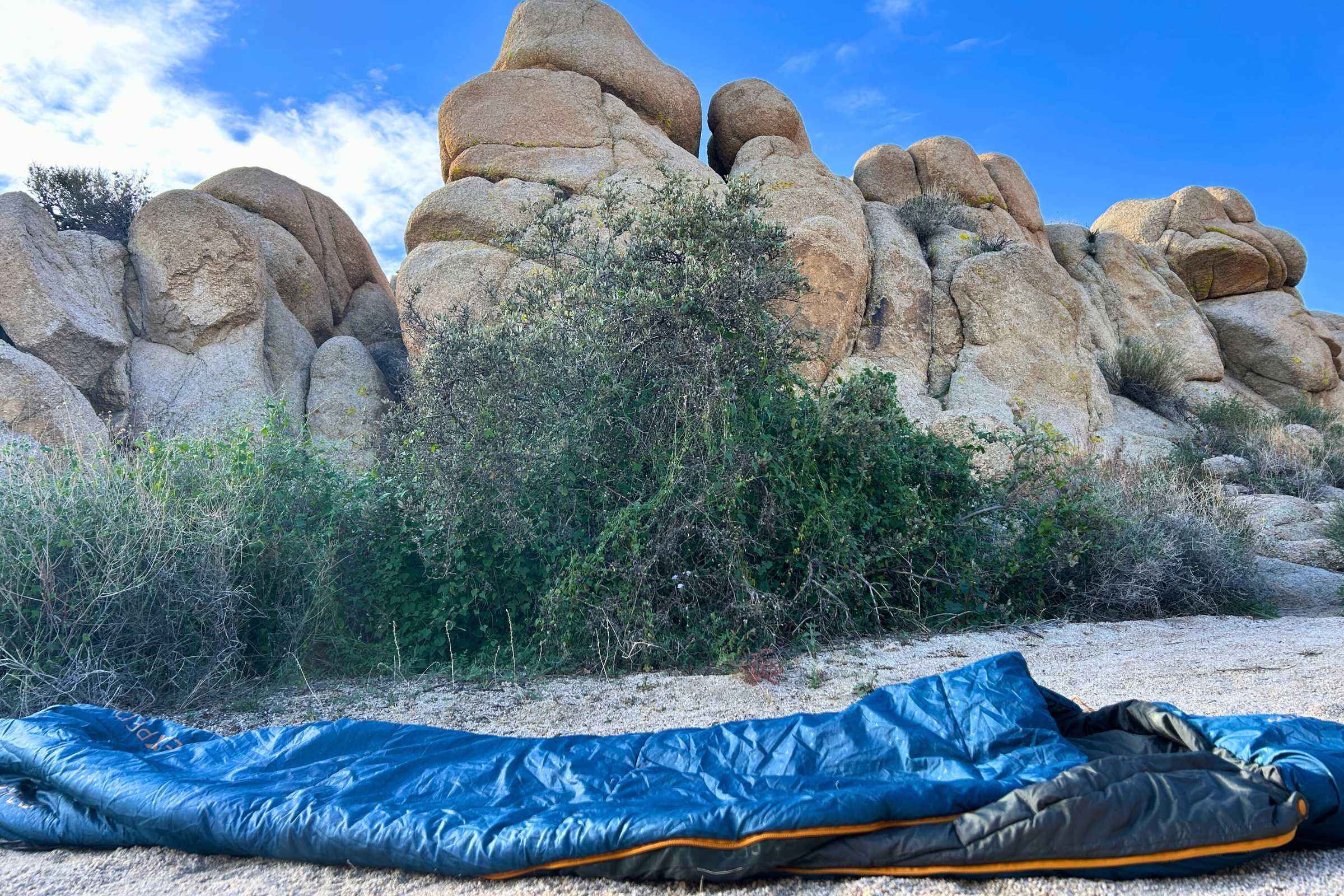
We like that the DeepSleep line of sleeping bags is available in lots of temperature ratings and that each temperature is a different color. Should you be lucky enough to own multiples of these bags, the color-coding makes it easy to tell the difference between the temperature ratings.
Here are the bags in the Exped DeepSleep line-up:
DeepSleep 45°F is best for summer backpacking and warm weather camping.
DeepSleep 30°F is a versatile, 3-season option that works for most conditions.
DeepSleep 20°F is a better choice for colder shoulder season and winter camping or anyone who feels cold.
DeepSleep Kids' bag is rated around 42°F comfort. It has a cool feature of a cinch cord near the bottom of the sleeping bag that allows you to make adjustments to the length of the sleeping bag so that you can make it longer as your kid grows. Sleeping bags work as your body heat warms up the area inside the sleeping bag, so having the length that your kid needs (and no more) means less area inside the bag that their body needs to heat up.
The features and construction are the same across all temperature options. The warmer bags just have more insulation (and as a result, are heavier and bulkier).
With some bag manufacturers, you get less of a choice and end up having to buy (and carry) more bag than you need for the conditions you usually camp and backpack in. This range of temperatures allows users to choose an appropriate warmth level for the conditions of your trip.
Climate-conscious manufacturing
As mentioned above, the DeepSleep sleeping bag is super sustainable.
Exped is a Swiss company and is part of the Myclimate carbon offset program, to offset the carbon emissions from production and shipping. You can read more about Exped's sustainability here.
Exped DeepSleep vs. similar sleeping bags
Compared to other camping sleeping bags or backpacking sleeping bags, the Exped DeepSleep bag is heckuva a deal. It's priced similarly to the REI Trailmade 20 sleeping bag, but just feels like a higher-end bag. It's got some of the same eco-friendly life cycle analysis going on as you’d find in the NEMO Forte sleeping bag, but at about half the price. This puts it in a sweet spot in terms of features and pricing.
The similar Marmot Eco Trestles also is recyclable at the end of its life, but the DeepSleep is still more affordable. You get a lot of features like the draft collar, 3D footbox pocket, and internal pocket on the DeepSleep bag. The trade-off seems to be that you only have a left zip option (yay for lefties!!) and that you don't get color options.
Should you buy the Exped DeepSleep?
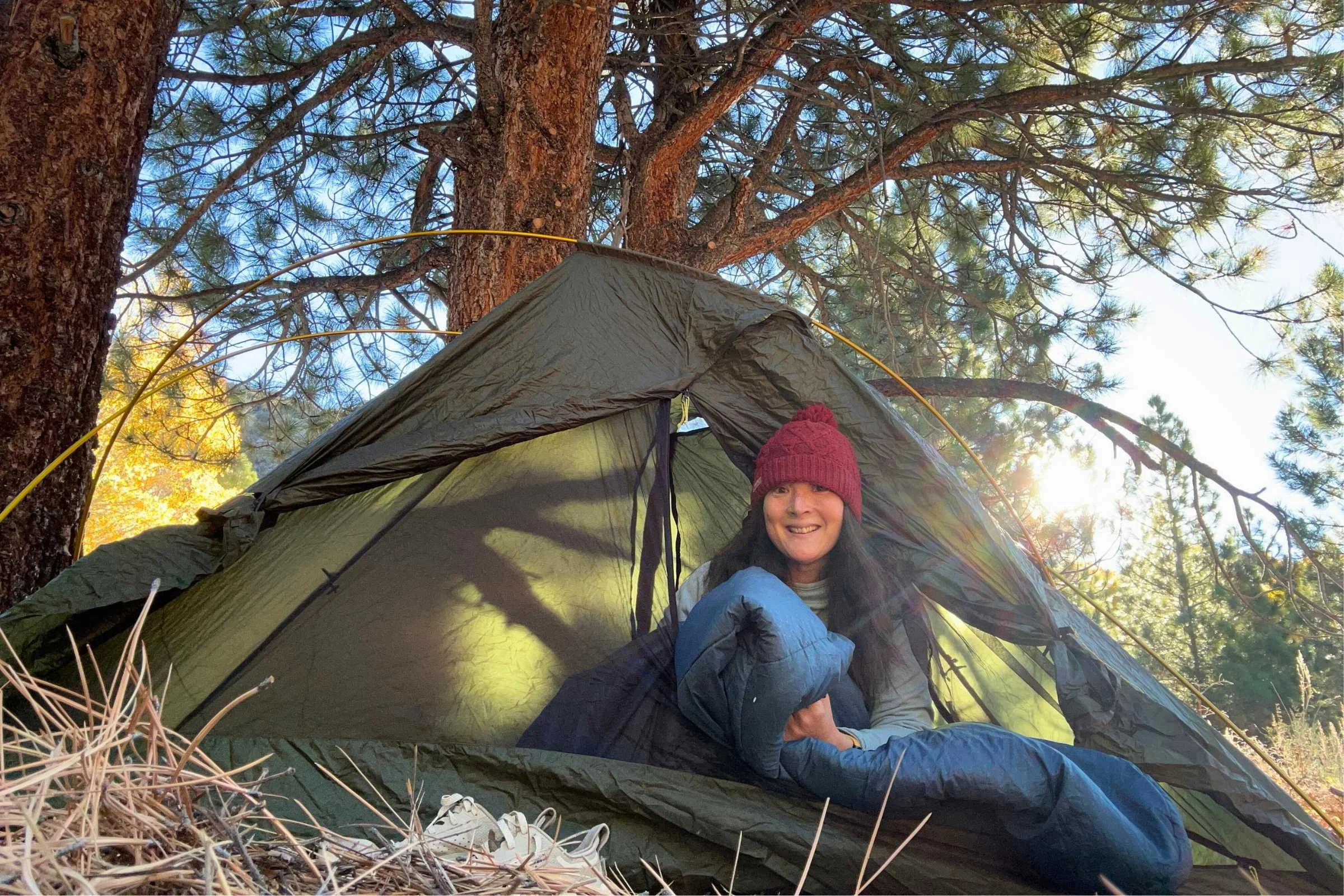
Buy if you want a synthetic sleeping bag and a great deal on a bag with a lot of features, or if you camp in damp conditions.
Skip if you need maximum warmth-to-weight ratio, prefer down insulation, want ultralight weight for long-distance hiking, or prefer a more rectangular shape for rolling around or to accommodate bigger bodies.
Where to buy the Exped DeepSleep?
The Exped DeepSleep Sleeping Bag is a popular gear item, so you have options when it comes to retailers. Here are some of the pros of the retailers.
REI
Pros: 100% satisfaction policy for 1 year; 10% dividend for members.
Backcountry
Pros: Frequent sales for Expedition Perks members (free to join), fast shipping, Gearhead chat customer service is excellent
Advice on where to buy
In general for gear, we recommend purchasing from a place with easy or free returns, like REI.
Similar sleeping bags
Kelty Cosmic 20

MSRP: $190
Temperature rating: 20F
Insulation: Down
Style and shape: Mummy
Packed size: 8” x 13”
Weight: 2 lbs 7 oz
The Kelty Cosmic 20 down sleeping bag has long been our top choice for the best bang-for-your-buck down camping sleeping bag. It is an excellent choice for your first sleeping bag. The Kelty Cosmic Down 20 has many features and design elements found in sleeping bags that cost three times as much. Plus, it is compact and light enough to use for backpacking trips, too. If you know you want to invest in a down sleeping bag and want to spend less than $175, the Cosmic 20 is a good choice. Learn more in our in-depth review of the Kelty Cosmic Down 20 Sleeping Bag.
The synthetic DeepSleep is a little more affordable. It feels more technical and is arguably better suited for backpacking than camping. It also doesn't have quite as many size options as the Kelty Cosmic 20 down. But for most campers and backpackers who will be in wet or humid conditions, they might prefer the synthetic Exped DeepSleep.
Kelty Cosmic 20

MSRP: $119
Temperature rating: 21
Insulation: Synthetic
Style and shape: Mummy
Packed size: Not stated
Weight: 3 lbs 4 oz
The REI Trailmade 20 is a winner in our Best Camping Sleeping bags guide and our Best Plus Size Outdoor Gear guide for its excellent value for the price.
Like the DeepSleep, it is a synthetic sleeping bag. This mummy bag comes in many lengths and has a full hood for a snug and warm night of sleep. It doesn't have quite the same features as the Exped DeepSleep, like the 3D Footbox. It doesn't quite have the same sustainability features either as it isn't 100% fully recyclable either.
You can sometimes find the REI Trailmade sleeping bag on sale for under $100, so if you know you want a synthetic bag, this is a good choice.
REI Trailmade 20

MSRP: $189
Temperature rating: 20
Insulation: Synthetic
Style and shape: Mummy
Packed size: 9.4 x 18.9 inches
Weight: 3 lbs 8.4 oz
Like the Exped DeepSleep, the Marmot Trestles Eco is 100% recyclable, meaning that when the life of the bag is over, the synthetic insulation and the shell can all be recycled. However, like the Exped, as a synthetic sleeping bag, it will likely not last as long or stay as warm over extended periods of time. It's also more expensive than the Exped DeepSleep.
Marmot Trestles Elite Eco
All-gender
women’s
Why you should trust us / About the author
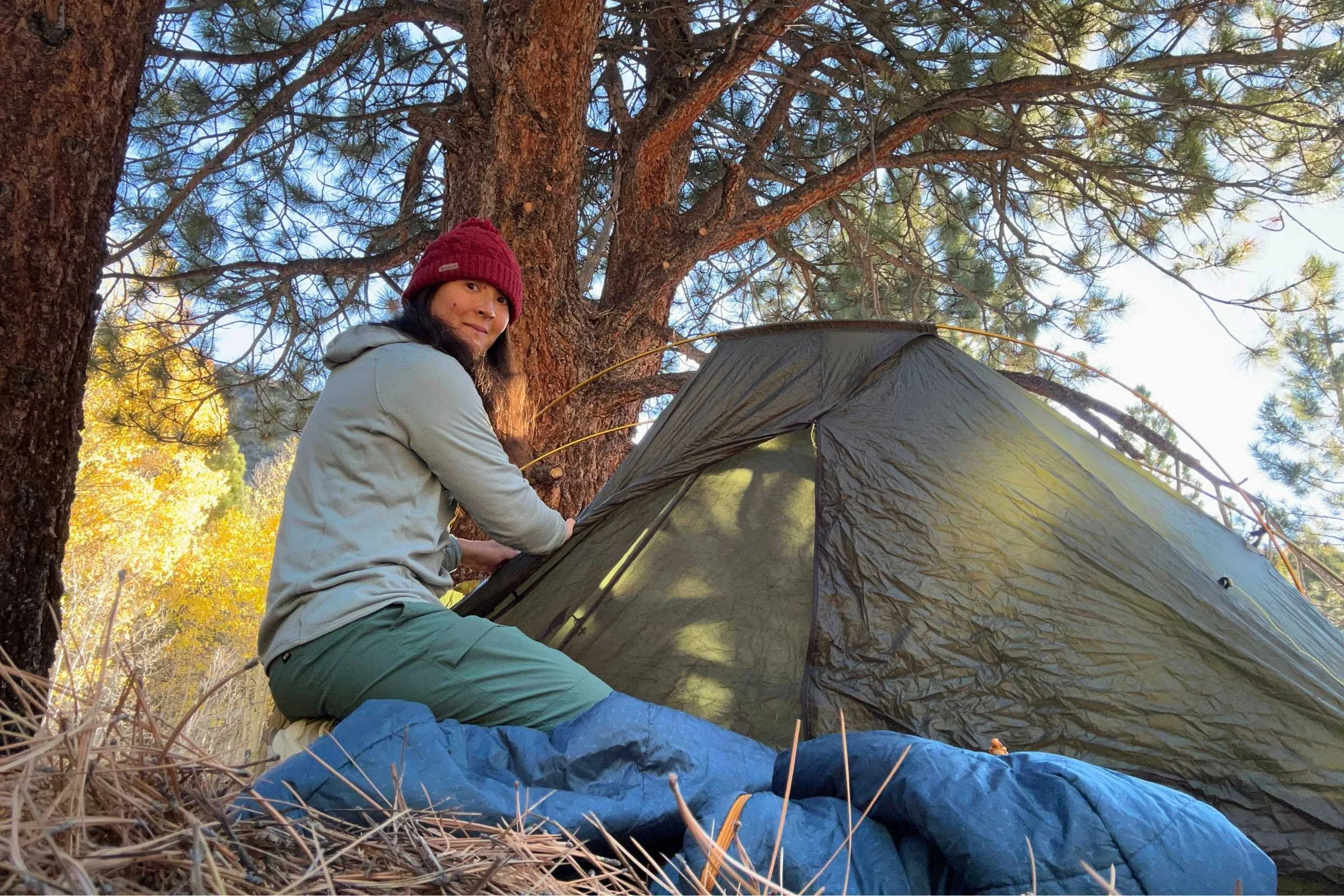
Liz Thomas is an award-winning Los Angeles-based writer and Editor-in-Chief of Treeline Review. A former Fastest Known Time (FKT) record holder on the Appalachian Trail, Liz came to Treeline Review from New York Times/Wirecutter, the New York Times’ product review site, where she was a staff writer on the outdoor team.
She was a guest editor at Backpacker Magazine, where she is currently the columnist of “Ask a Thru-hiker” and instructor of their online class, Thru-hiking 101.
Her first book is Long Trails: Mastering the Art of the Thru-hike. The book was the recipient of the National Outdoor Book Award for Best Instructional Book, and was deemed by judges as destined to become the “Bible of the Sport.”
Liz has talked gear on Good Morning America (TV), in The Wall Street Journal, The Guardian, Buzzfeed, The Washington Post, Men’s Journal, Women’s Health, Gizmodo, and Outside Magazine.
She represented the sport of hiking at President Obama’s Great American Outdoors Initiative.
Liz’s keynote speaking engagements have included colleges and universities including Yale and MIT and on Capitol Hill, the Trust for Public Land, American Hiking Society, and BikeTexas.
You can read more about Liz at her Wikipedia page and at her Treeline author page!