Best Ultralight Tents of 2026
Solo and two-person ultralight backpacking tents for thru-hikers, bikepackers, and lightweight backpackers

Updated July 25th, 2025 with a new winner, 3 new tents tested, and additional testing notes
Home > Gear Reviews > Backpacking
An ultralight tent is your home away from home that you can carry just about anywhere. On your next adventure, these lightweight shelters will protect you from wind, rain, snow, and sleet. Whether you’re planning an epic thru-hike on a long trail, a weeklong bikepacking trip, or a weekend backpacking getaway, a lightweight shelter is key if you want to move quickly and comfortably.
We’ve been using and testing ultralight tents for over 10 years, on countless thru-hikes of the PCT, AT, and CDT, as well as the Great Divide Trail, Superior Hiking Trail, Colorado Trail, Arizona Trail, and other long-distance trails. The best ultralight tents work as well as heavier backpacking tents for weather protection, but they excel in weight and packability, so you can more easily carry them as you move.
We tested a ton of awesome tents for this review, and anything we cover here is a great tent. We couldn’t give them all awards, but all of these tents could have won an award. Based on your needs and budget, any of these ultralight tents could be the perfect tent for you. Here are the ones that meet the most common needs of thru-hikers, ultralight backpackers, and bikepackers.
This story may contain affiliate links, which help fund our website. When you click on the links to purchase gear, we may get a commission. This allows us to create reader-supported, objective gear reviews, independently selected by our editors — without costing you an extra cent. Thank you for supporting our work and mission of outdoor coverage for every body! Learn more.
Ultralight tents comparison tablES
Design and materials
| ULTRALIGHT TENT | TREELINE AWARD | MSRP | WEIGHT | MATERIAL | TYPE | PEOPLE | DOORS | STAKES REQUIRED | TREKKING POLES REQUIRED? |
|---|---|---|---|---|---|---|---|---|---|
| Zpacks Duplex Classic | Best overall - two person Read why |
$749 | 17.9 oz | DCF | Single-wall trekking pole shelter | 2 | 2 | 8 | 2 |
| Tarptent Aeon Li | Best overall - solo Read why |
$649 | 19.15 oz | DCF | Single-wall trekking pole shelter | 1 | 1 | 6 | 1 |
| Six Moon Designs Lunar Solo | Best affordable Read why |
$260 | 26.0 oz | Sil-poly | Single-wall trekking pole shelter | 1 | 1 | 6 | 1 |
| Yama Mountain Gear Cirriform Tarp | Best affordable floorless Read why |
$185 | 13.6 oz | Sil-poly (recycled) | Single-wall trekking pole shelter | 1 | 2 | 6-8 | 2 |
| Nemo Hornet Elite Osmo 2 | Best semi-freestanding tent Read why |
$700 | 27.0 oz | 100% recycled OSMO (polyester, nylon) | Double-wall, semi-free standing | 1, 2 | 2 | 4 | 0 |
| Mountain Laurel Designs Solomid XL | Best floorless tarp Read why |
$295 | 16.0 oz | Sil-poly, also available as DCF | Floorless tarp | 1, 2 | 1 | 8 | 1 |
| Durston Gear X-Mid 1 | Best for thru-hiking Read why |
$269 | 28.0 oz | Sil-poly, also available as DCF | Double-wall trekking pole shelter | 1, 2 | 1 | 4 | 2 |
| Zpacks Pivot Solo | Best for tall people Read why |
$649 | 13.5 oz | DCF | Single-wall trekking pole shelter | 1 | 1 | 6 | 2 |
| Tarptent Scarp 1 Ultra | Best ultralight tent for winter Read why |
$364 | 44.1 oz | Ultra | Double-wall | 1, 2 | 2 | 6 | 0 |
Roominess
| ULTRALIGHT TENT | TREELINE AWARD | FLOOR AREA | LENGTH | MAX WIDTH | PEAK HEIGHT | VESTIBULES |
|---|---|---|---|---|---|---|
| Zpacks Duplex | Best overall - two person Read why |
28.1 ft² | 90" | 45" | 48" | 2 |
| Tarptent Aeon Li | Best overall - solo Read why |
18.3 ft² | 88" | 30" | 47" | 1 |
| Six Moon Designs Lunar Solo | Best affordable Read why |
26.0 ft² | 90" | 48" | 49" | 1 |
| Yama Mountain Gear Cirriform Tarp | Best affordable floorless Read why |
No floor | 104" | 63" | 44" | N/A |
| Nemo Hornet Elite Osmo 2 | Best semi-freestanding tent Read why |
27.3 ft² | 85" | 50" | 37" | 2 |
| Mountain Laurel Designs Solomid XL | Best floorless tarp Read why |
44.0 ft² | 110" | 54" | 55" | N/A |
| Durston Gear X-Mid 1 | Best for thru-hiking Read why |
20.0 ft² | 90" | 32" | 46" | 2 |
| Zpacks Pivot Solo | Best for tall people Read why |
21.0 ft² | 84" | 42" | 52" | 1 |
| Tarptent Scarp 1 Ultra | Best ultralight tent for winter Read why |
21.0 ft² | 86" | 52" | 39" | 2 |
Packability, Ease of Pitch, Ventilation, Windproofness
| ULTRALIGHT TENT | TREELINE AWARD | EASE OF PACKING | EASE OF PITCH | VENTILATION | WINDPROOFNESS |
|---|---|---|---|---|---|
| Zpacks Duplex | Best overall - two person Read why |
6 | 9 | 8 | 8 |
| Tarptent Aeon Li | Best overall - solo Read why |
5 | 7 | 9 | 8 |
| Six Moon Designs Lunar Solo | Best affordable Read why |
8 | 8 | 7 | 7 |
| Yama Mountain Gear Cirriform Tarp | Best affordable floorless Read why |
10 | 8 | 9 | 7 |
| Nemo Hornet Osmo Elite 2 | Best semi-freestanding tent Read why |
7 | 9 | 8 | 8 |
| Mountain Laurel Designs Solomid XL | Best floorless tarp Read why |
10 | 8 | 8 | 10 |
| Durston Gear X-Mid 1 | Best for thru-hiking Read why |
9 | 10 | 8 | 9 |
| Zpacks Pivot Solo | Best for tall people Read why |
7 | 8 | 6 | 7 |
| Tarptent Scarp 1 Ultra | Best ultralight tent for winter Read why |
6 | 6 | 9 | 10 |
The winners
Best overall ultralight tent - two person: Zpacks Duplex

Type: Single-wall trekking pole shelter
Weight: 17.9 oz
Sleeps: 2
Material: DCF
Vestibules: 2
Stakes required: 8
Trekking poles required: 2
What we liked: Lightweight, roomy interior, very waterproof, easy to set up, zipper-free overlapping storm doors, made in the USA
What we didn’t like: Expensive, not as packable
The Zpacks Duplex is our overall favorite ultralight tent. This Dyneema Composite Fabric (DCF) tent is legendary in the thru-hiking world because it’s big enough for two people but light enough to use as a solo shelter with plenty of room to spread out.
We’ve used this tent on tons of thru-hikes. We’ve taken it on multiple Great Divide Trail and Pacific Northwest Trail thru-hikes. We’ve used it on thru-hikes of the Arizona Trail, Continental Divide Trail, Appalachian Trail, and Pacific Crest Trail. We tested it while backpacking in Arizona’s Aravaipa Canyon during a rainy January weekend, where it kept us cozy and dry during a whole night of freezing rain.
On the Great Divide Trail, we experienced the hardest sustained rain we’ve ever experienced on a trail—relentless, non-stop rain all night—and it kept us dry. We’ve taken this tent everywhere. It’s seen wind, snow, hail, and sleet. And when we pack it away, we barely feel it’s there on our backs. For more, read our in-depth review of the Zpacks Duplex.
Compare prices of the Zpacks Duplex


-
We’ve spent countless evenings on the Pacific Crest Trail looking for a place to camp in high-traffic areas, but every potential campsite already had a tent pitched. Do you know what most of those tents were? The Duplex. Though we grew to resent Duplexes as we hiked further into the night in search of an unoccupied tent site, we can’t blame all the backpackers for having the foresight to claim a site earlier or use the Duplex, which balances weight, livable space, and storm-worthiness better than every other tent.
-
The Duplex weighs 17.9 oz and easily fits two people. Its footprint is 28.1 square feet and measures 45 by 90 inches, which is big enough for two sleeping pads plus backpacking gear. This tent has tons of head and foot room if you're under six feet tall. If you’re over six feet, it’s still long enough for you, but it won’t feel quite as roomy, and the foot of your sleeping bag may touch the tent.
Most tents that are this light have about half the interior space as the Duplex, so you have to give up comfort to save weight. But that’s not the case with this tent. For hikers who are 6 feet and taller, we recommend the Zpacks Pivot Solo, which has an extra four inches of floor length and a dedicated carbon pole to guy out the head area of the tent. If you want a smaller, more lightweight version for one-person, consider the Zpacks Plex Solo.
-
The Duplex pitches with two trekking poles and eight stakes. It uses a classic A-frame shape, but its longer side runs perpendicular to the tent's ridgeline. We’ve pitched this tent more times than we can count, and we’ve also pitched many similarly designed tents. The Duplex is easy and intuitive to set up. After years of use, we can have it pitched in under two minutes, but we never found it particularly confusing to set up.
-
The storm doors on its rainfly don’t have zippers (although Zpacks sells a version with magnetic closure, the Duplex Pro). The small zippers commonly used on ultralight tent rain flies are a common point of failure, especially in dusty desert conditions. Dirt and debris can cause the small zipper sliders to come off the zipper, rendering them useless. The Duplex solves this dilemma with overlapping storm doors that keep precipitation out of the vestibule without a zipper.
It has two vestibules with two sets of storm doors and two U-shaped zipper entryways, which gives a pair of hikers plenty of room to enter, exit, and store their backpacking gear. Inside the rainfly is a fully enclosed mesh tent with vertical walls, a floating bathtub floor, and zippered entryways.
-
The biggest drawback of the Duplex is the price. For the price of one Duplex, you could practically buy a real duplex (okay, we’re exaggerating) or at least two or three other ultralight tents. Also, while DCF is strong laterally and relatively puncture-proof, it is prone to developing tiny pin-sized holes where it regularly creases.
And while the Duplex has no struts or hardware that require you to roll it up the same way to pack, it’s hard enough to pack into the small stuff sack that we often end up rolling it the same way every time. This will eventually lead to small holes, and you can easily repair them with DCF tape, but it is a drawback of all DCF tents. You also need to keep it away from anything remotely sharp in your pack to avoid punctures (ask us how we know).
The Duplex has sheltered thousands of backpackers on trips across the globe. For a two-person tent that’s lighter than most one-person tents and provides serious storm protection, you can’t do better than the Duplex if you can afford the hefty price tag.
Best solo ultralight tent - solo: Tarptent Aeon Li

Type: Single-wall trekking pole shelter
Weight: 19.15 oz
Sleeps: 1
Material: DCF
Vestibules: 1
Stakes required: 6
Trekking poles required: 1
What we liked: Single pole set up, roomy for one person, stable in high winds, fewer stakes required to pitch
What we didn’t like: Packed size isn’t very small
The Tarptent Aeon Li is our favorite one-person ultralight tent. This tent is awesome because it’s super light, has plenty of interior space, is highly storm-worthy, and is more breathable than most single-walled tents.
We tested this on the Continental Divide Trail, Colorado Trail, Kokopelli Trail, and tons of other backpacking and bikepacking trips. We’ve endured 12-hour snowstorms that dropped nearly a foot of wet snow, windy ridges, and even windier desert washes in this ultralight DCF tent.
Compare prices of the Tarptent Aeon Li


-
At first glance, the Aeon Li is similar to the Zpacks Plex Solo. They’re both half-pyramid Dyneema tents with a fully enclosed bug net and bathtub floor that use one trekking pole to pitch. However, the Aeon Li only requires six stakes, unlike the Plexamid, which you could pitch with six stakes but is better with ten to further pull out the fly for more headroom.
-
The Aeon Li also has more interior space than the Plexamid and carbon fiber struts along the side opposite the door, creating near-vertical walls. These struts significantly increase the headroom of the Aeon Li, so your face isn’t right next to the tent wall, and your sleeping bag foot box doesn’t brush against the opposite wall all night, either. Our main tester is 5’9”, so he’s not the tallest, but if you’re about the same height or shorter, this tent will feel like an ultralight palace compared to similar half-pyramid tents like the Plexamid.
-
The Aeon Li also gets excellent airflow for a single-walled tent. Those carbon fiber struts that create more headroom also have mesh windows sewn in between them. We always leave these little mesh windows open unless it’s really storming. They help with ventilation a lot more than only the mesh along the bottom of the rainfly, which is what most other similarly-shaped tents have for ventilation.
Like all single-walled tents, the Aeon is still prone to condensation if you camp in low spots near water or other high-humidity areas, but it’s not as likely to create a wet mess of condensation. We’ve never had a night with unbearable amounts of condensation with this tent.
-
The Aeon Li also stands up to windy conditions better than most tents. We’ve pitched this tent with the doors open, only to have the wind pick up and blow directly inside all night. No matter how windy the conditions, this tent never collapsed on us, which is more than we can say about many DCF tents we’ve seen.
-
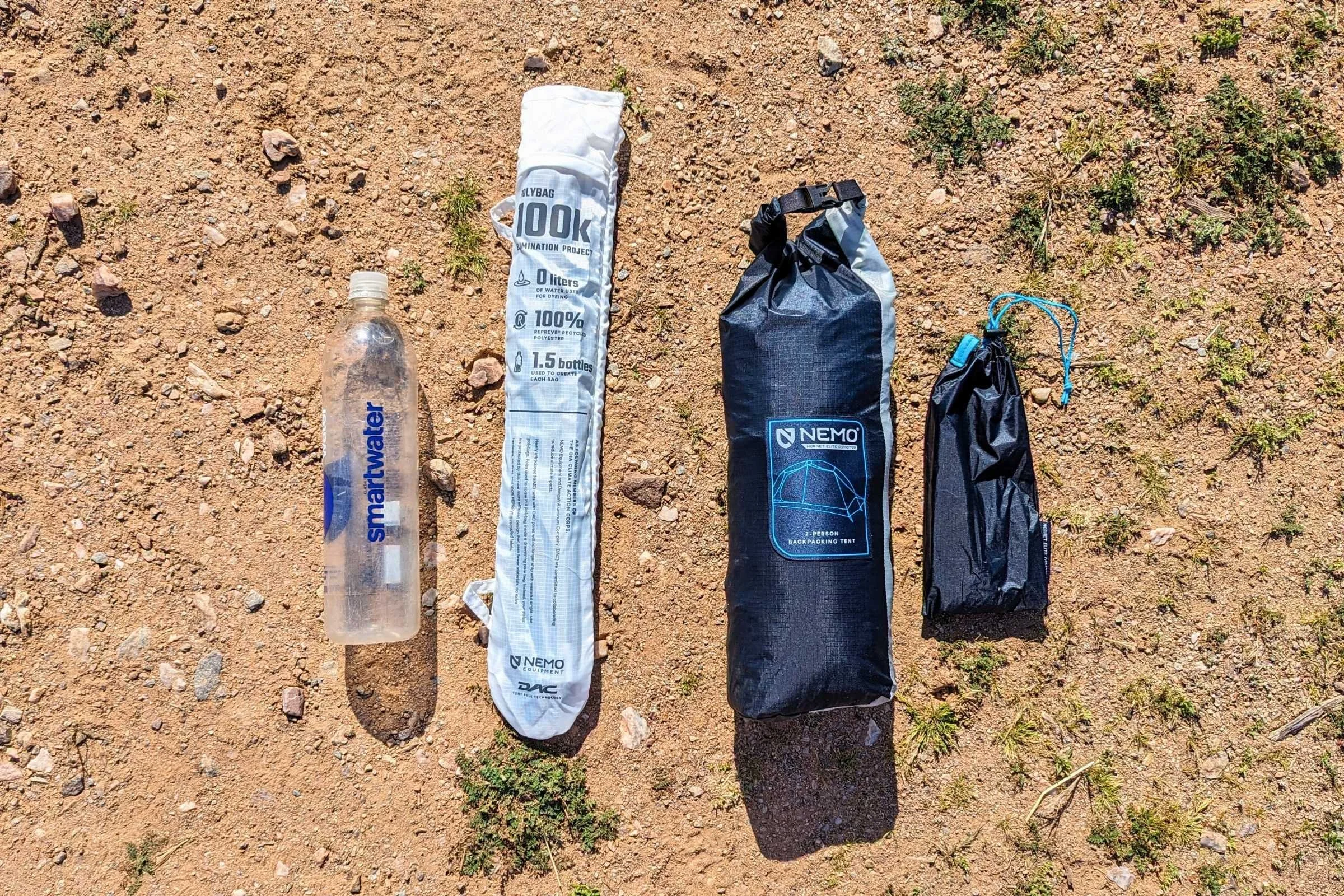
Our only qualm with the Aeon Li is packability. It packs into a 14 by 4-inch wide cylinder, which is too long to pack horizontally in our 30-liter MYOG frameless pack or our 45-liter Thrupack ultralight backpacking pack. Those carbon fiber struts that create more interior space, which are 14 inches and don’t fold, are the main culprit here.
But no matter the tentmaker or the design, DCF isn’t very packable in general, either, as we mentioned above in our discussion of the Zpacks Duplex. Also, the carbon struts make it difficult to roll this tent up in different ways. After two seasons of heavy use, this tent has a few pinholes just above the struts, where the material always creases when rolled up. Again, this is common with DCF shelters, but we wish it weren’t.
For a fully enclosed tent that’s pretty affordable for DCF and very protective in storms, this tent is our top pick for solo adventurers.
Best affordable ultralight tent: Six Moon Designs Lunar Solo

Type: Single-wall trekking pole shelter
Weight: 26 oz
Sleeps: 1
Material: Sil-poly
Vestibules: 1
Stakes required: 6
Trekking poles required: 1
What we liked: Inexpensive, easy to pitch, simple design
What we didn’t like: Not as light as DCF
The Six Moon Designs Lunar Solo is our favorite affordable ultralight tent. This tent costs less than half of our top picks and only weighs 8 oz more. It easily pitches with one trekking pole, is sturdy enough to withstand strong winds, and can be pitched higher or lower to suit your needs. And since it’s made of silpoly rather than DCF, it packs down smaller than the Zpacks Duplex and Tarptent Aeon Li as well. Silpoly is an affordable alternative to DCF that also doesn’t stretch when wet, like DCF. Silpoly isn’t quite as light as DCF, but it’s much more financially accessible. For more, read our in-depth review of the Lunar Solo.
Compare prices of the Six Moon Designs Lunar Solo


-
We tested this tent while backpacking in Arizona in the Superstition Mountains and Colorado on a section hike of the Colorado Trail in the South Platte Valley. We also used the Six Moon Designs Deschutes Tarp, which is the same shape as the Lunar Solo without a bug net or bathtub floor, on the New Mexico section of the CDT and the Grand Enchantment Trail. Treeline Review testers have thru-hiked the PCT southbound and several routes with this tent as well.
-
The Lunar Solo is a half-pyramid shape and pitches with a minimum of six stakes. In high winds, we find it’s best to use eight stakes so you can tension the head and foot sections of the rainfly via the extra guy out points. This creates more head and foot room when you lie down and minimizes how much the tent walls flap in the wind.
It has a large opening at the peak for breathability, and mesh along the bottom of the fly. The mesh also attaches to the bathtub floor. It has an L-shaped zipper door, and the rainfly zips closed over the roomy vestibule. You tension the front of the tent with a guyline that runs from tent's peak, allowing you to roll back both vestibule doors while keeping the tent tensioned.
This is a great tent overall, but at 26 oz it’s not the lightest. We like that the silpoly material used in this tent doesn’t stretch like silnylon does when wet, but it’s not as light as DCF. However, this tent isn’t that much heavier than a comparable DCF shelter, and it costs about half as much.
For an ultra-affordable ultralight tent, you can’t do better than this.
Best affordable floorless tent: Yama Mountain Gear Cirriform Tarp

Type: Single-wall trekking pole tarp
Weight: 13.6 oz with all guylines/rigging
Sleeps: 1
Material: Sil-poly (made of recycled polyester)
Vestibules: n/a
Stakes required: 6-8
Trekking poles required: 2
What we liked: Lightweight, affordable, easy to pitch, front or side entry doors
What we didn’t like: Head end is low
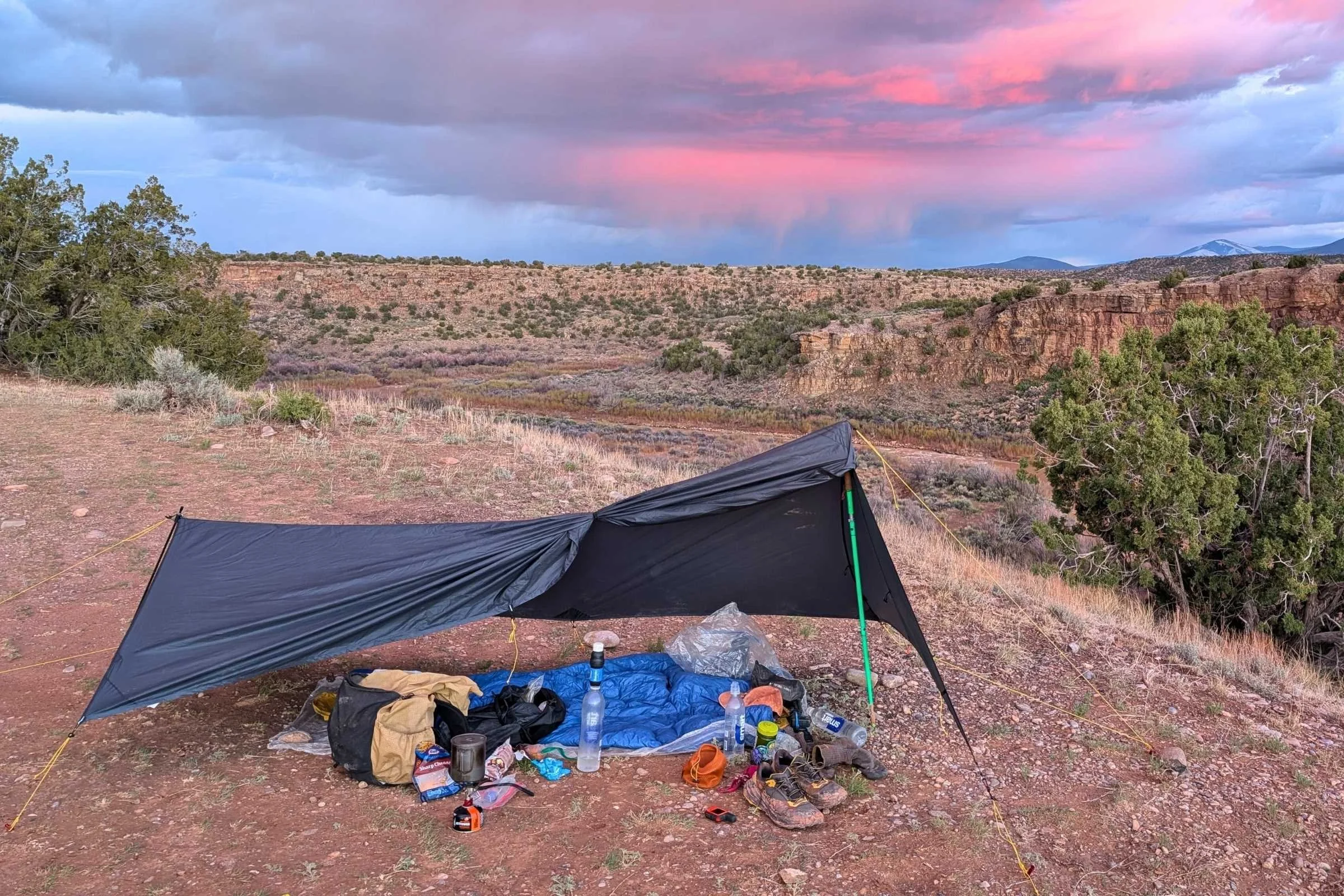
The Yama Mountain Gear Cirriform Tarp is as affordable as a flat tarp but offers more protection than any flat tarp. This sil-poly floorless tent with doors weighs a scant 13.6 oz, but has doors to seal yourself inside during storms. As a sil-poly tarp, it saves weight and space in your pack compared to other tents. We tested the Cirriform while backpacking the New Mexico section of the Continental Divide Trail in the spring, where we saw every type of weather: snow, rain, hail, and high winds.
It features an A-frame design, similar to the most common way a flat tarp is pitched. However, unlike a flat tarp, the Cirriform has closed ends, providing more weather protection. It’s also easier to set up than a flat tarp. This floorless tent features a large footprint, providing ample space to store your gear at both the head and foot ends.
View the Yama Mountain Gear Cirriform Tarp




-
It features a door at the head end, and one of the most unique and useful aspects of this tent is that you can open the door on either the side or end of the tent. If you open the door on the side, the longer portion, you create a massive opening perfect for creating tons of airflow and taking in the views.
In adverse conditions, you can open the door on the short side as well, which means a tighter squeeze around your trekking pole, but doesn’t open as much of the inside to the weather. The door closes with a large waterproof zipper that won’t fail in dusty, dirty conditions as quickly as the tiny zippers on many ultralight tents.
-
It pitches with two trekking poles, and the head end pitches higher than the foot end. To set it up, you stake out the four corners, then insert a trekking pole set to 115cm/45” into the grommet in the apex corner at the head end. Then, you stake out the apex guy line and tension it so the trekking pole stays in place.
The foot end, which is lower, pitches similarly, except you put the trekking pole on the outside and use a much shorter length pole. The foot end guy line has a grommet to fit over your trekking pole tip, so it holds the foot end of the tent up after you stake and tension the guy line.
Since our trekking poles only telescope in one place (and we often only carry one pole), we used an 82cm/32” folding carbon fiber tent pole to set up the tent’s foot end. The carbon pole didn’t fit into the grommet, so we simply wrapped the guy line around the top of the pole. We also attached this guy line to a tree whenever we could.
-
We tested this tent without the inner net tent, but you can pair the outer rainfly portion with an inner bug net and a bathtub floor. Adding the inner net tent will enhance storm and bug protection, but it will also increase the price and weight. The Bug Shelter for the Cirriform weighs 12.5 oz and costs $159.
-
It’s made of silpoly, which is less prone to stretching when wet than silnylon. During a heavy rainstorm, this prevents the walls from sagging as they stretch.
-
The biggest drawback of this tent is that it’s very long. This isn’t a drawback for taller people, but it affects the performance in high winds.
You see, you have to pitch it tightly, otherwise the walls will sag. Once you’ve done this, it won’t sag very much in the rain because the sil-poly fabric doesn’t absorb water and stretch like silnylon when wet. However, the long side of this tent measures 104”/264cm, which is long enough that this wall will flap in high winds no matter how tightly you’ve pitched it.
Also, when you pitch the Cirriform low to the ground, as you would in severe storms, the head end is only about 37”/94cm high. For context, this is about the same height as the Nemo Hornet Osmo Elite 2. This is barely high enough to sit upright, and your head will be almost touching the walls. You can certainly ride out a storm in this tent, and since it pitches with trekking poles, you can pitch it as high as you want. But if you pitch the walls close to the ground to prevent sideways rain from getting underneath, it might not be as comfortable as a taller tent, such as the MLD Solomid XL, Zpacks Duplex, Zpacks Offset, or Durston X-Mid.
-
The Cirriform is ideal for those who want a single-person shelter that weighs less and costs less than most fully enclosed shelters. If you’re tarp curious, but still want a shelter with doors for 360-degree storm protection, this is an excellent choice.
Best ultralight semi-freestanding tent: Nemo Hornet Elite Osmo

Type: Double-wall, semi-free standing
Weight: 27 oz
Sleeps: 2
Material: 100% recycled OSMO (polyester, nylon)
Vestibules: 2
Stakes required: 4
Trekking poles required: 0
What we liked: No trekking poles required, very light, 100% recycled PFAS free fabric
What we didn’t like: Can feel cramped to taller people
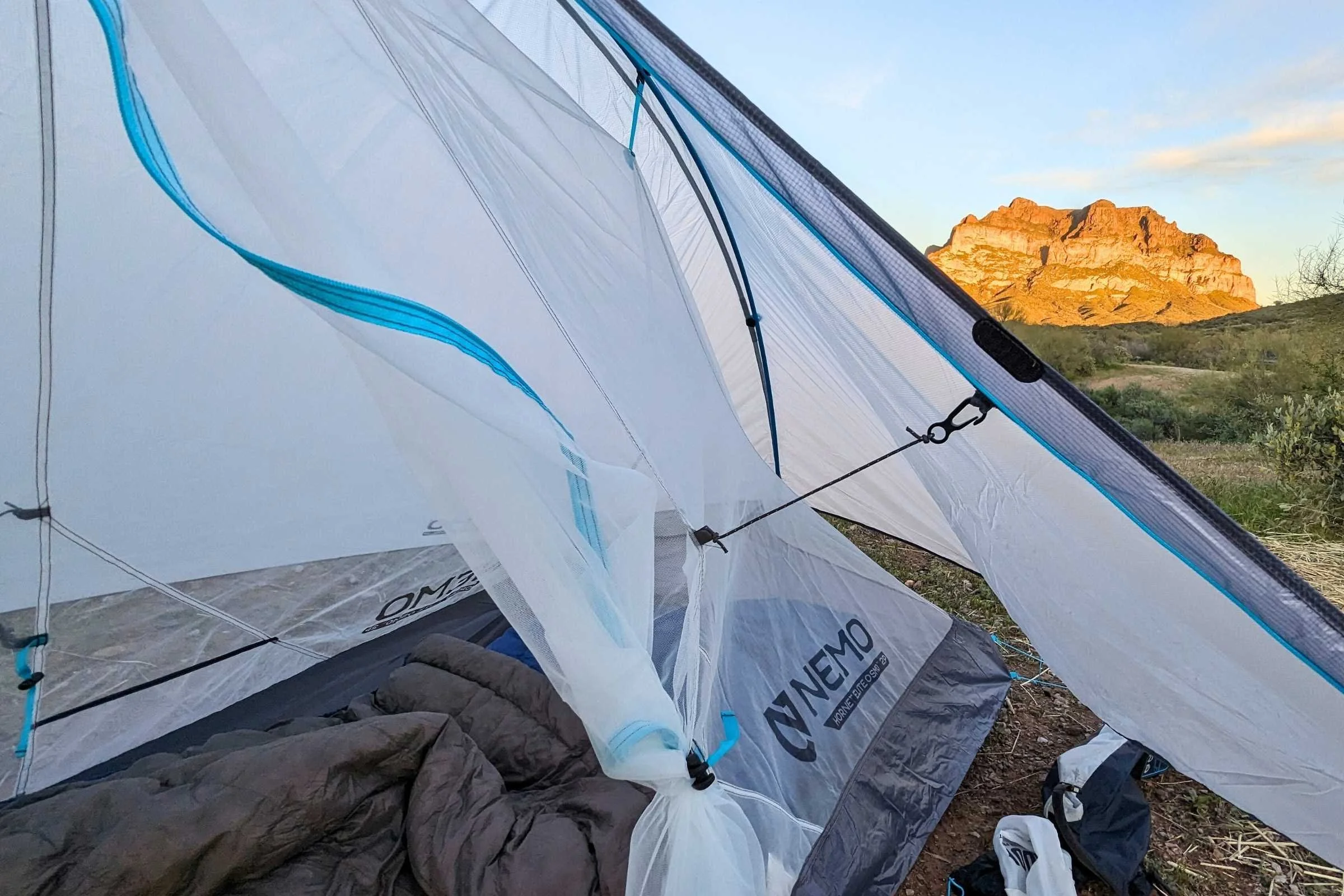
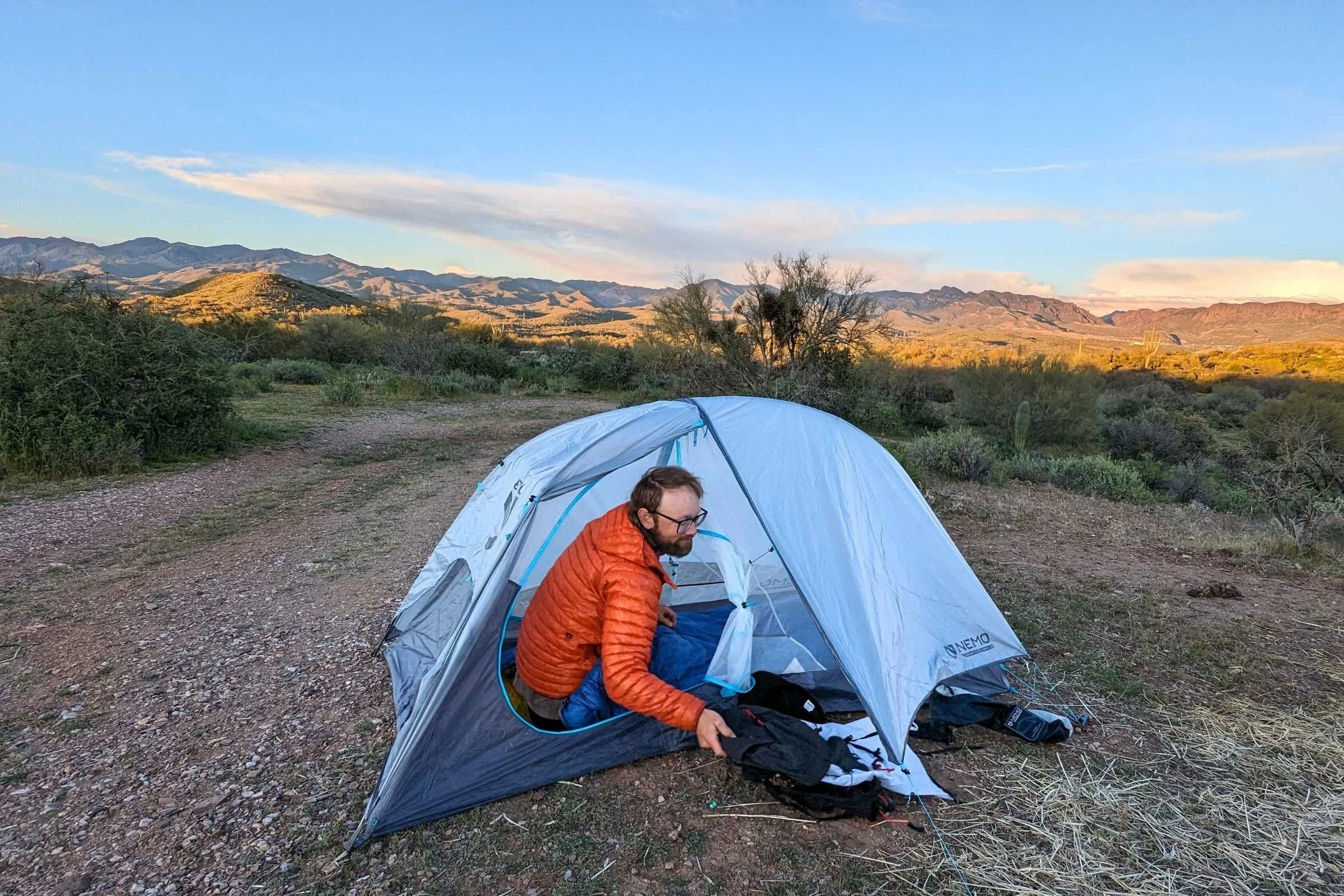
The Nemo Hornet Elite Osmo is our favorite ultralight freestanding tent. We love this tent for foul weather, where the double-wall design gives extra storm protection.
The semi-freestanding design allows you the flexibility to pitch more places. If you regularly camp on slick rock, hard rocky soil, or snow, or simply don’t use trekking poles, then a semi-freestanding tent like this will let you camp where you couldn’t with a trekking pole shelter.
And since it uses a double-walled design, with a separate inner mesh tent and rainfly, it is much less prone to condensation than single-wall tents. For more, read our in-depth review of the Nemo Hornet Elite Osmo.
Compare prices of the Nemo Hornet Elite Osmo

-
We tested the Hornet Elite Osmo on a thru-hike of the Colorado Trail, while backpacking in Arizona’s Superstition mountains during early spring, on California’s High Sierra Trail during monsoon season, and on a double yo-yo hike of the California Riding & Hiking Trail. We also used the standard Nemo Hornet, which uses a heavier fabric but is otherwise identical, while thru-hiking the PCT through Washington during a very rainy July where we saw rain on all but 4 days.
-
The Hornet Elite Osmo weighs 27 oz. For a freestanding tent that uses tent poles, this is extremely lightweight. There are many tents that weigh about the same amount as the Hornet Elite Osmo that don’t have any tent poles. The Hornet uses a single Y-shaped tent pole that secures to both corners on the head side of the tent and in the center of the foot end. The single tent pole also makes it easier and faster to pitch this tent compared with freestanding tents with a two-pole design.
-
While this tent is great for shorter people, it isn’t very large, so taller people will likely feel cramped in the single-person version. The floor measures 87 by 32 inches, which is a few inches shorter than many tents.
-
It also isn’t a fully freestanding tent. To pitch the Hornet, you have to use two stakes to hold out the foot end and two more to hold the rainfly off the sides. We’ve successfully pitched it without any stakes by using rocks to hold these parts out, but if you want a super tight pitch, you’ll need to use four stakes. If you’re looking for a fully freestanding tent, you’ll have to get a heavier tent, like the Slingfin Portal 1.
Our editor, Liz Thomas, has great things to say about this tent, and the rest of us here at Treeline agree that it’s a great tent, too.
However, we recognize that not everyone wants to pay $700 for a semi-freestanding tent. For a lighter-wallet option that pitches without trekking poles, see our review of the Mountain Hardwear Nimbus UL, a sub-two-pound semi-freestanding tent at $420.
Best ultralight floorless tarp: Mountain Laurel Designs Solomid XL

Type: Florless tarp
Weight: 16 oz
Sleeps: 1, also Duo available
Material: Sil-poly, also available as DCF
Vestibules: 1
Stakes required: 8
Trekking poles required: 1
What we liked: Sheds wind and snow well, very light, lots of interior space, made in the USA
What we didn’t like: Not as light as some tarps
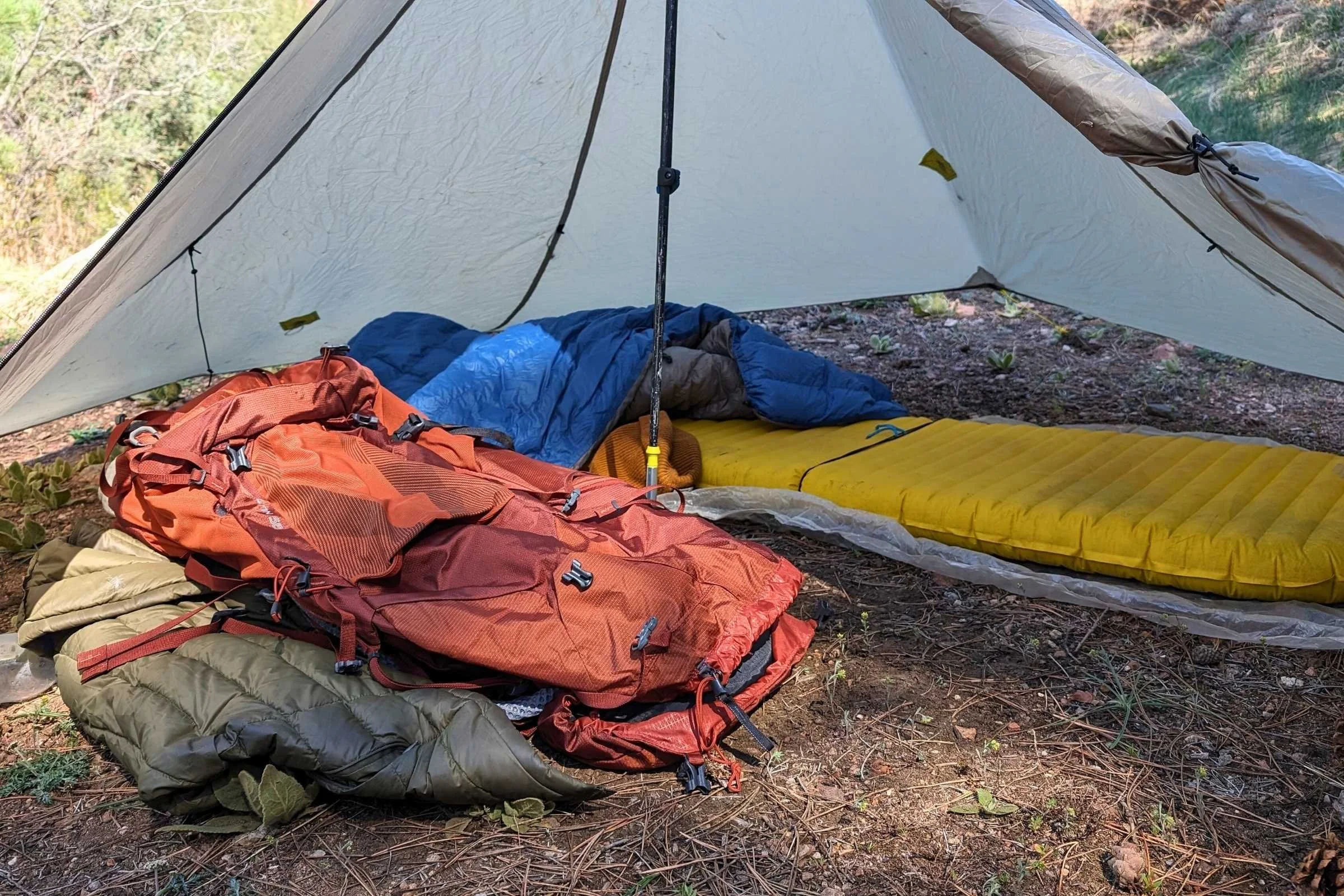
The Mountain Laurel Designs (MLD) Solomid XL is our favorite floorless tarp. This tarp is shaped like a pyramid tent, but it doesn’t have a bug net or floor. It weighs less than tents with a bathtub floor and bug net and is more stormworthy than most trekking pole shelters, too. Like the SMD Lunar Solo, it’s made of silpoly, an affordable tent material option that doesn’t stretch like silnylon when wet. Silpoly gives you most of the benefits of Dyneema without the massive price tag, though this model is also available in DCF (for a higher price you can save 2 ounces).
View the Mountain Laurel Designs Solomid XL


-
We tested this tent on backpacking trips in Arizona’s Superstition and Catalina Mountains. We also used it while backpacking on the Colorado Trail in late spring and on thru-hikes of the Great Divide Trail and the Iceland Traverse. We've also used the DCF version on the Sierra Hike Route and on the Continental Divide Trail in the San Juan Mountains. It remains durable year after year.
-
It packs small enough to fit in a 28-liter backpack with the rest of our backpacking kit. Since this has no floor, all the material you need to pack away is on top of the tent. You’ll need a groundsheet since there’s no floor, but we already carry a groundsheet to use with any tent. And while this isn’t the smallest or lightest tarp when packed, it is one of the roomiest tarps we’ve used when it’s set up. The peak height is 55 inches, which is tons of room to sit up, and much taller than most ultralight tents.
-
It also performs exceptionally well in windy conditions. Most tents flap and waver in high winds, especially single trekking pole shelters, but the Solomid XL’s sloped walls that reach almost to the ground are solid in huge gusts. When pitched low to the ground, barely any wind blows under the walls, so you remain protected from gusts, and the tent is less likely to rip stakes out of the ground. Those sloped walls also shed snow better than most tents.
And as a bonus, since the walls are so low to the ground, mosquitos seem to have difficulty finding their way inside. So, even though there is no bug netting, closing the doors gives you pretty good bug protection.
-
This tent is almost as affordable as the Six Moon Designs Lunar Solo, our favorite affordable ultralight tent. However, all MLD tents are made in the USA. This makes the affordability of the Solomid XL even more impressive.
-
This tarp is also super durable. It has one of the burliest zippers we’ve seen on an ultralight tent. We’ve had many tiny zippers fail after heavy use due to dirt and dust wearing out the slider, but we’ve never had an issue with the zipper on the Solomid XL. Overall, the tent is well-constructed, so we’ve never had any durability issues over years of use.
-
However, while this tent is very light, it doesn’t have any true bug protection or an enclosed floor. MLD makes an inner mesh tent to add to your setup for the most bug protection. With the mesh inner, which weighs 11 oz for the silpoly version, the total weight of this tent becomes 27 oz. That’s still not heavy, but it isn’t as light.
A DCF version of the SoloMid XL is available for a $270 upcharge, which saves 2 oz.
Also, ordering from MLD requires advanced planning. Most items are made to order, so you’ll have to wait at least a few weeks to get your tent after purchasing. We’ve seen lead times as high as 12 weeks, but as of late May 2024, lead times are only 3-6 weeks.
MLD tents and shelters are very popular with thru-hikers, bikepackers, backpackers, and other adventurers. We love this US-made floorless tent for times when you need to save weight but don’t want to give up storm protection, and we will continue to rely on it for countless more adventures.
Best ultralight tent for thru-hiking: Durston Gear X-Mid 1

Type: Double-wall trekking pole shelter with removable inner
Weight: 28 oz
Sleeps: 1, also 2-person available
Material: Sil-poly, also available as DCF
Vestibules: 2
Stakes required: 4
Trekking poles required: 2
What we liked: Affordable, versatile, easy to pitch, good in high winds
What we didn’t like: Often out of stock, large footprint for a single person tent
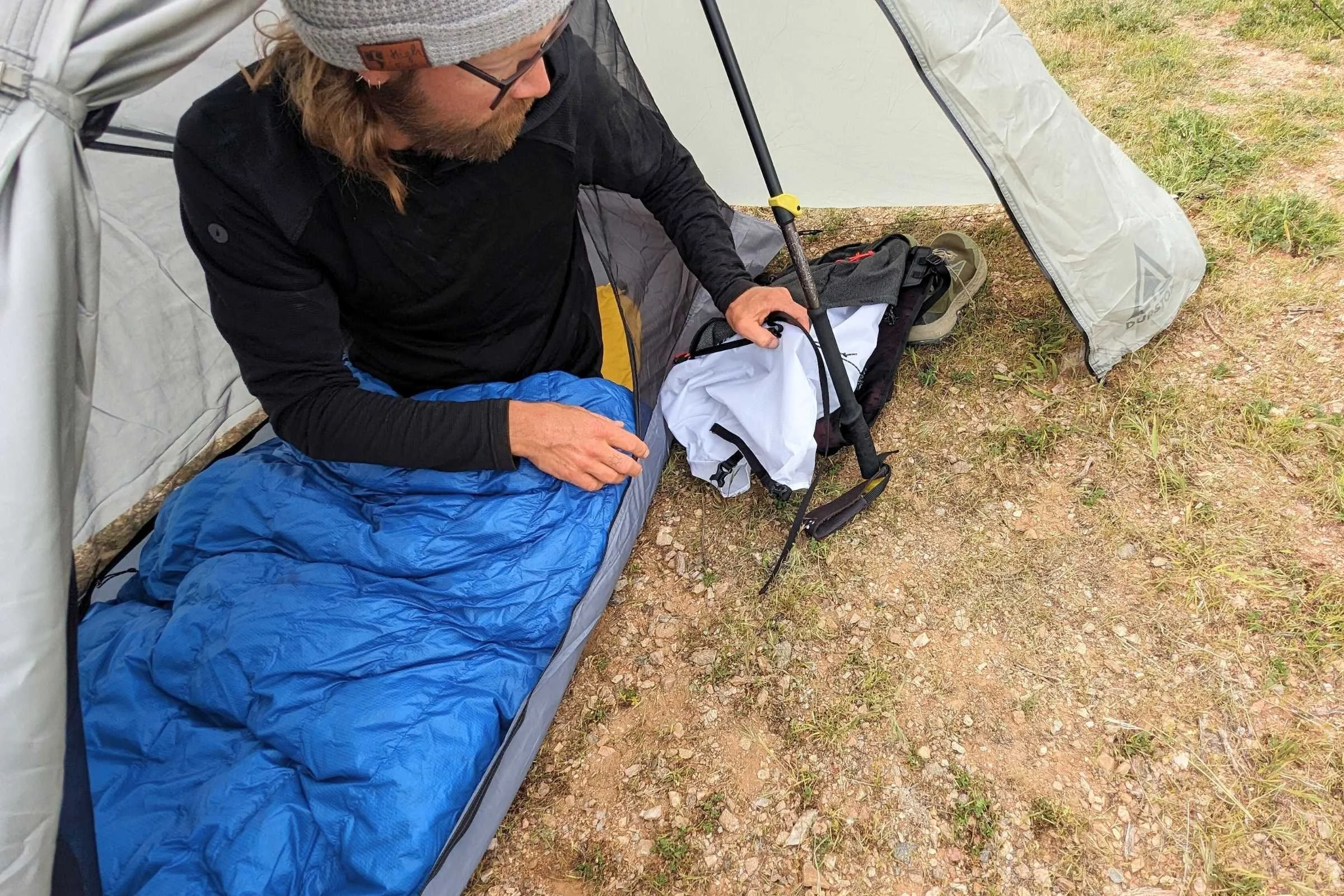
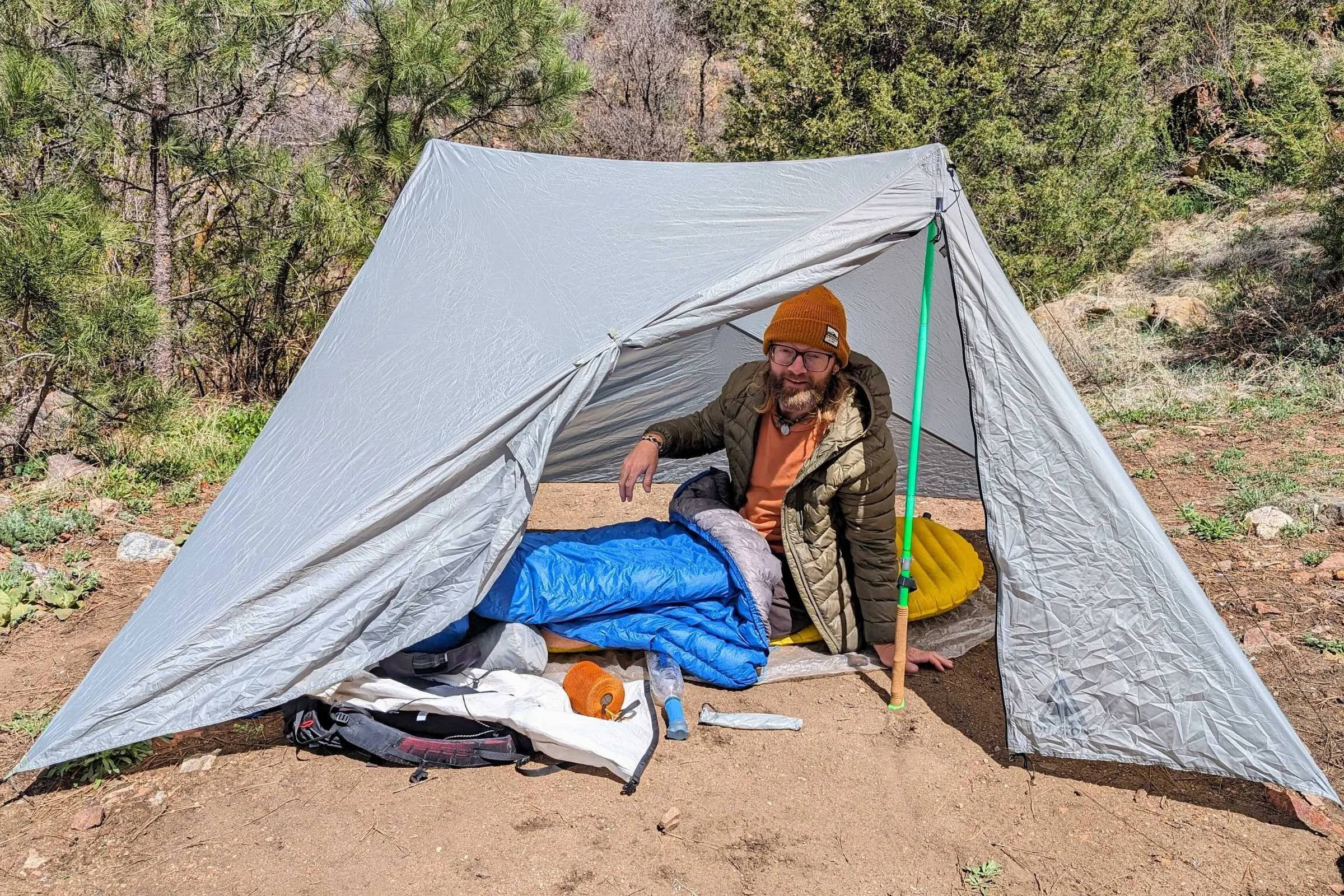
The Durston Gear X-Mid 1 is our favorite tent for thru-hiking because it’s great in high winds, versatile, easy to pitch, and surprisingly affordable. This tent is very well designed. It uses two poles and only four stakes to pitch. We tested the X-Mid 1 while backpacking in Arizona’s Superstition Mountains, and we also used it on the John Muir Trail section of the PCT and the Montana portion of the Continental Divide Trail.
View the Durston Gear X-Mid 1


-
The X-Mid 1 has separate inner and outer tent pieces. This means you can add bug protection when you need it during a thru-hike and not carry it when you don’t. Like the Solomid XL, the X-Mid 1 is made with silpoly, so it doesn’t stretch when wet. Its walls extend low to the ground and shed wind, rain, and snow very well. The doors open to the side of the roomy vestibules, so you can get in and out of the tent without climbing over your gear.
-
Pitching this tent is fast and simple. It’s rectangular in shape, and to pitch it, you stake out the four rainfly corners and then place your trekking poles underneath. It feels like pitching the rainfly should take more than 2 steps and 4 stakes, but that’s all you need to do. After you have the rainfly in place, you clip in the optional inner mesh tent.
This is one of the fastest tents to pitch, and setting it up the first time was intuitive. The trekking poles, which support the tent at the ridge, sit on a diagonal access of the rectangular tent footprint. This makes it so the sleeping area is also on a diagonal, making it longer.
-
While this tent's internal space is quite large and the sleeping area is long, the sleeping area is not very wide. When you set this tent up with the inner mesh portion, the inner tent seems comically tiny compared to the amount of space allotted to the vestibules. Also, its footprint is enormous, so you need to find a big, flat place to pitch it. We’ve often struggled to find a large enough place to pitch this tent in wooded areas.
This tent is wildly popular, and Durston Gear has a cult-like following online. On the Durston Gear website, this tent has only gotten 5/5 star reviews from customers.
Best ultralight tent for tall people: Zpacks Pivot Solo

Type: Single-wall trekking pole shelter
Weight: 13.5 oz
Sleeps: 1
Material: DCF
Vestibules: 1
Stakes required: 6
Trekking poles required: 2
What we liked: Lots of interior space, longer than most tents, ultralight, pitches easily, USA made
What we didn’t like: Zippered rainfly, can only open one storm door
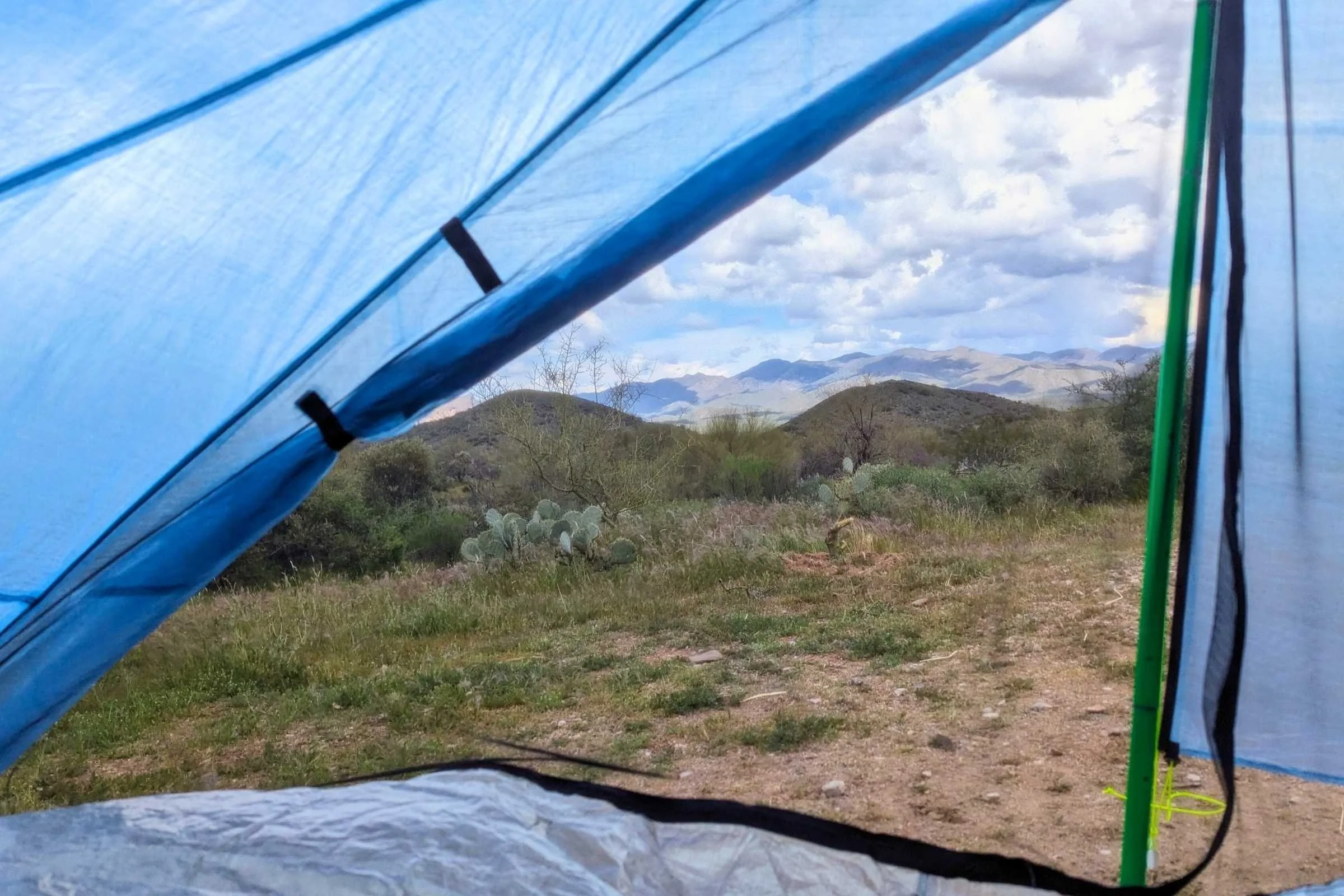
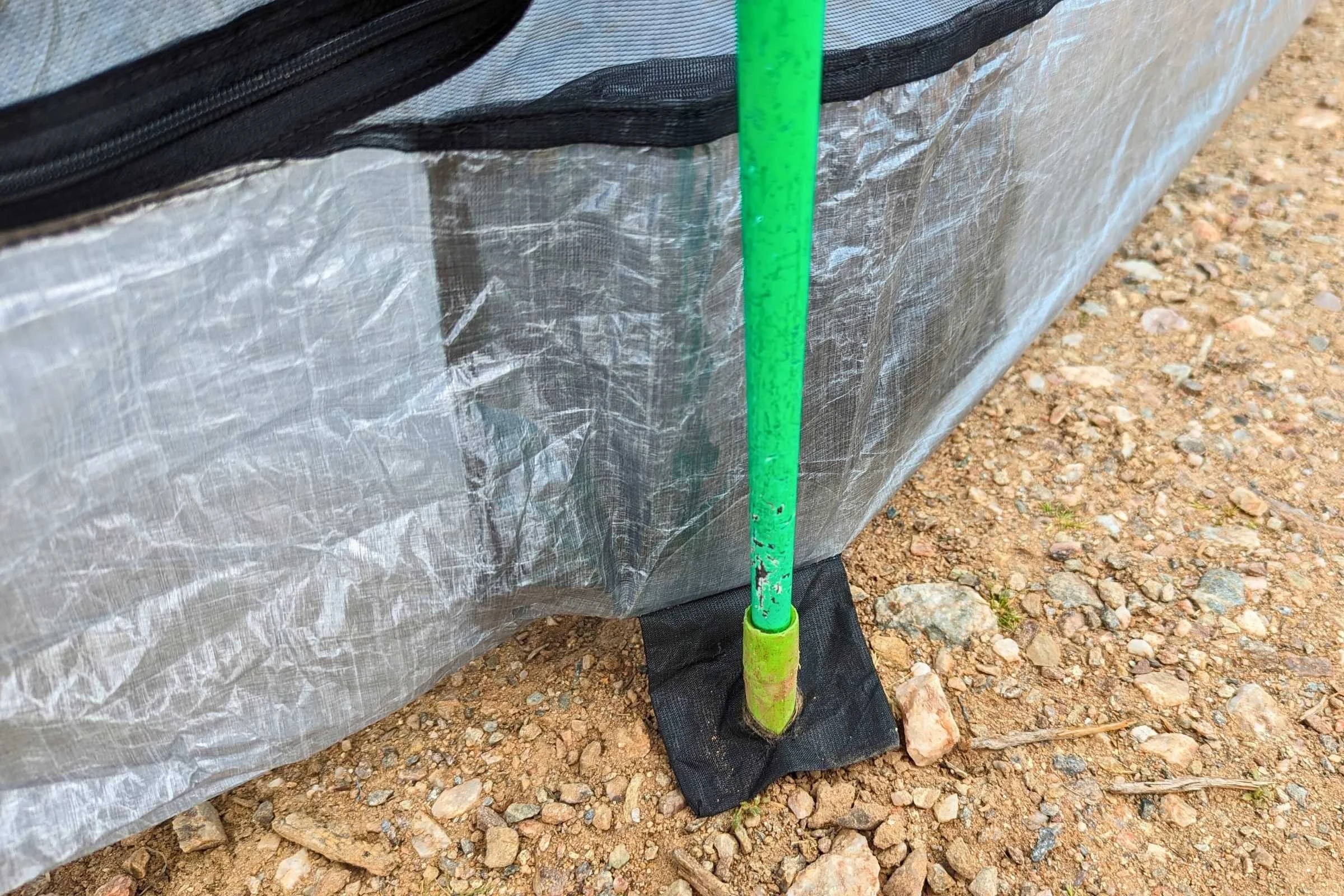
The Zpacks Pivot Solo is our favorite ultralight tent for tall people because it is very long, yet still very light. It measures 94 inches at the base, and it has a carbon fiber pole that pulls the tent wall out, so you can actually use more of the 94 inches of floor length without the angled tent wall getting in the way.
View the Zpacks Pivot Solo

-
We tested the solo version of this tent, which has a 36-inch wide bathtub floor, in Arizona’s Superstition mountains and on an Arizona Trail section hike north from the Mexico border to Patagonia.
We also tested the Pivot Trio, which is the same length but 66 inches wide, in California on the Hat Creek Rim and Burney Falls sections of the PCT. With the Pivot Trio, we shared the tent with our hiking partner, who is 6’2” and has a hard time finding tents that are comfortable to share with another person. Along with the two people in this tent, here were also two dogs—that’s four mammals, one who is quite tall, all in one tent!
-
Besides being the longest tent we tested, the Pivot Solo is extremely lightweight. It weighs a mere 17.5 oz and packs down to the size of two Nalgene water bottles. It pitches with a minimum of seven stakes, but using an eighth stake to secure the center of the tent’s foot end makes for a more secure and even roomier pitch.
-
The Pivot uses a design similar to the Duplex but has a bigger floor, as we already mentioned. Unlike the rainbow zippers on the Duplex, the Pivot has L-shaped zippers in the bug netting. We think the Pivot’s zipper design is better than the Duplex’s because with the rainbow-shaped zippers on the Duplex, the mesh portion below the zipper flops on the ground when you unzip it. The L-shaped zippered openings on the Pivot allow you to get in and out of the tent without the doors flopping onto your tent floor.
-
However, the Pivot models also have a zippered rainfly. This is slightly more stormproof, but it also contributes to less overall breathability. And, this small zipper is more prone to durability issues. You can also only open one storm door with the Pivot, which also makes it less breathable.
-
With the Offset Trio, which we tested with two people, we experienced a fair amount of condensation (and occasionally two dogs). It’s worth noting here that the more people (and animals) who are sleeping (and breathing) in a tent, the more likely it is that you’ll get condensation. We didn’t experience more condensation than is typical with a single-wall tent while using the Pivot Solo, either. We don’t think the slightly lower amount of breathability is a dealbreaker, but it is worth noting. Also, Zpacks doesn’t have a zipperless version of the Pivot that is currently available.
We love this tent for tall people and anyone who wants extra interior space without a weight penalty.
Best ultralight tent for winter: Tarptent Scarp 1 Ultra

Type: Double-wall
Weight: 44 oz
Sleeps: 1, also 2-person
Material: Ultra
Vestibules: 2
Stakes required: 6
Trekking poles required: 0
What we liked: Double-walled design, good ventilation, sturdy design
What we didn’t like: Heavy for 3-season backpacking
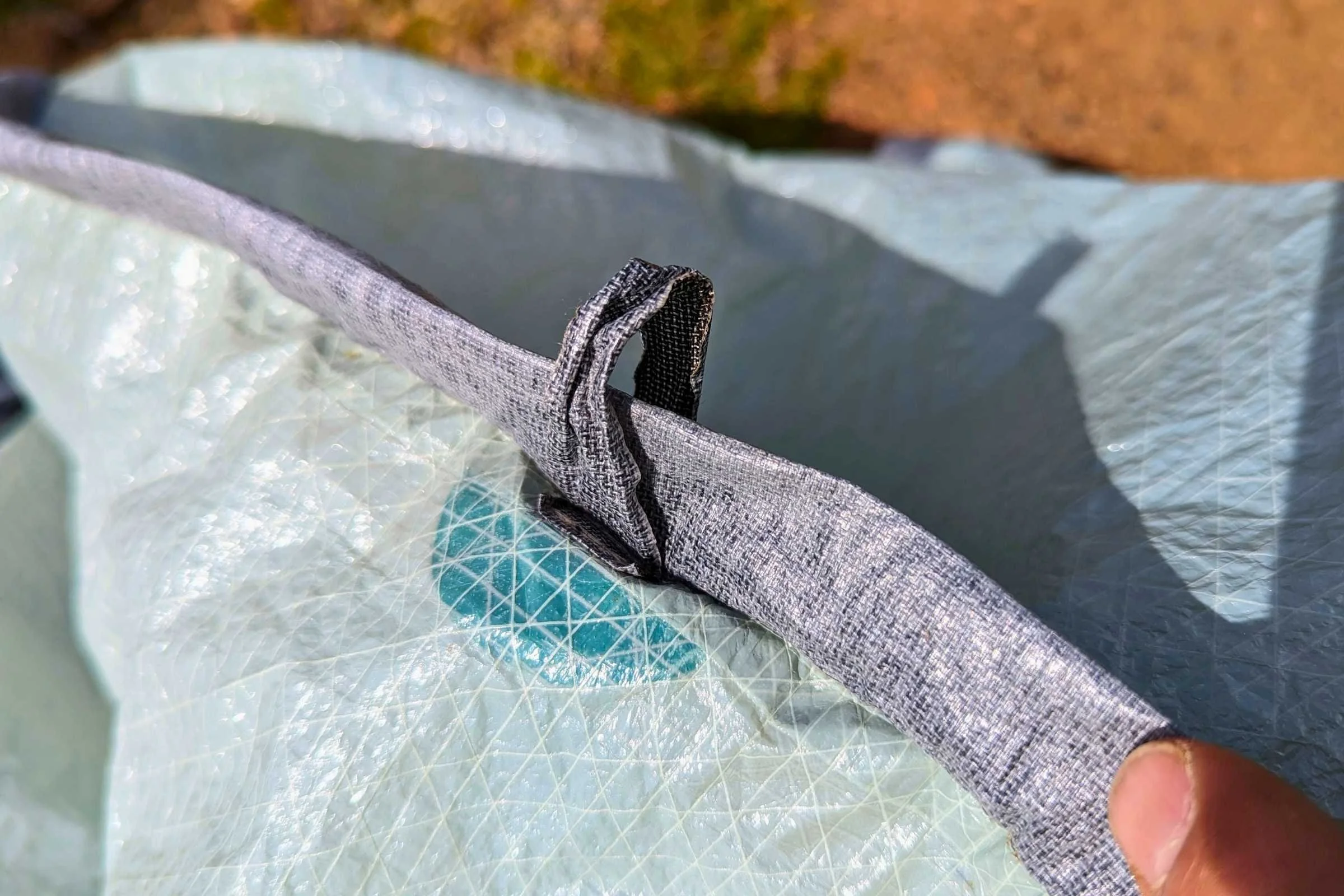
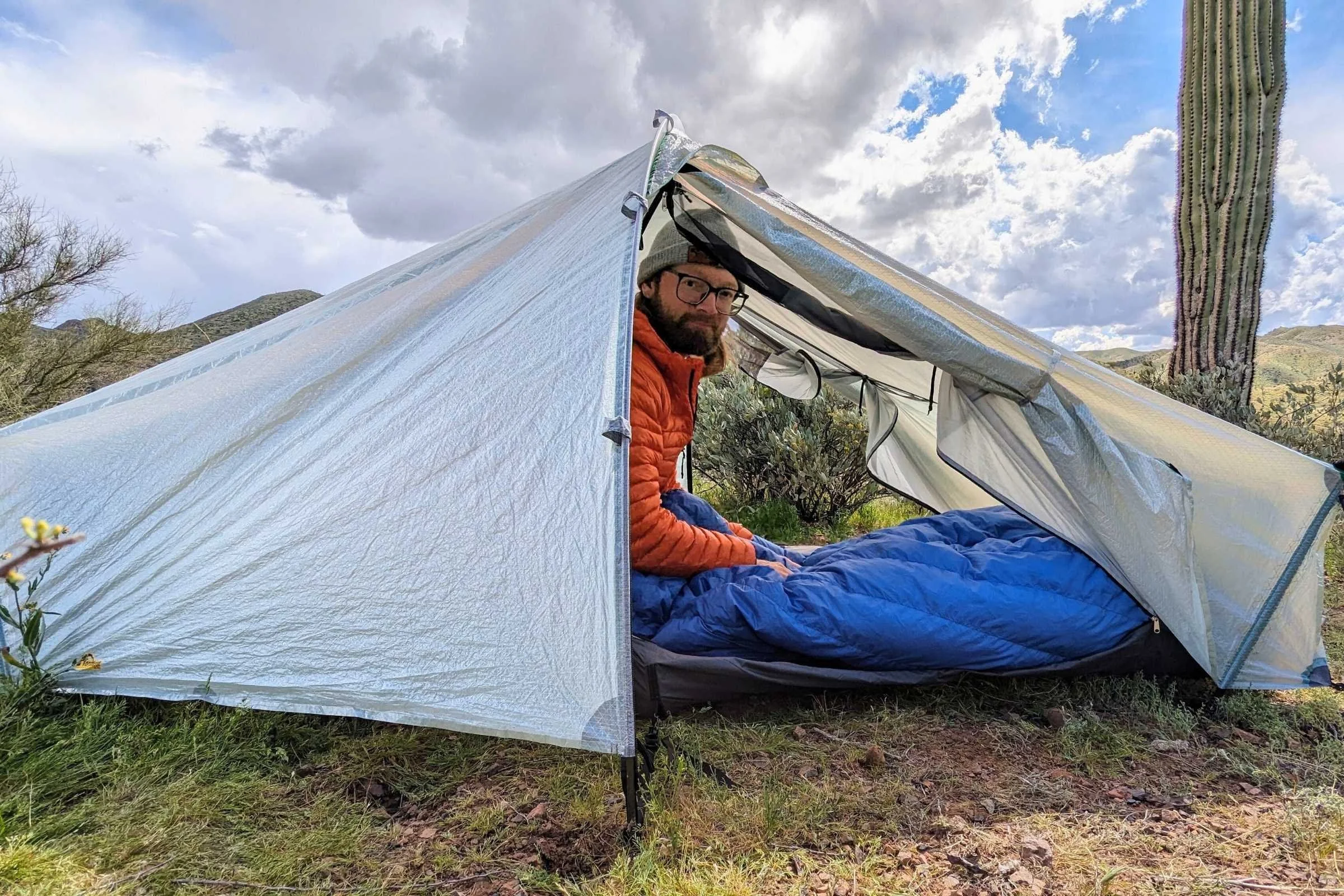
The Tarptent Scarp 1 Ultra is our favorite ultralight tent for winter. It’s easy to pitch and is very storm, wind, and snow-resistant. With a design similar to our overall winner in our Best 4-Seasons Tents guide, it is almost half the weight of most 4-season tents out there. It also stands out as one of the first tents we’ve tested made with UltraTNT material.
Note: like many ultralight cottage brands, Tarp Tent's stock of fabric has been limited due to tariffs. The Scarp 1 is currently out of stock as of Summer 2025, but we are keeping it in this story with the hope that it will become available in time for winter.
View the Tarptent Scarp 1 Ultra

-
We tested this tent as a non-freestanding version, but it allows you the option to use two extra tent poles that cross the tent and secure to the corners, making it a fully freestanding tent. We tested this tent backpacking trip along the Arizona Trail in winter, through Alamo Canyon in the Tonto National Forest.
-
The Scarp 1 Ultra is made with Challenge Sailcloth’s UltraTNT fabric, a laminate material similar to DCF. However, Ultra fabric is more abrasion-resistant than DCF. So far, we’ve loved the Ultra 200 and 400 materials used in backpacks, so we’re optimistic that the thinner UltraTNT material used on this tent will also be more durable than DCF tent material. We’ve yet to test this for an extended thru-hike, but we look forward to the day we do.
-
The Scarp 1 Ultra uses a unique design with a single arched tent pole that runs perpendicular to the length of the tent. This curved pole creates a very secure ridgeline and makes the tent feel solid overall. It stakes out at both ends and on the rainfly with six stakes. This is a double-walled tent with separate inner and outer sections. You can pitch either part alone or pitch them together for the most weather protection and condensation resistance.
The head and foot ends have a pair of carbon fiber struts in each corner. These struts create near vertical walls, so they increase usable interior space. They also add even more rigidity to the tent. At the center of either end, there is also a zippered vent in the rainfly. With both vents open and a door rolled back on each side, it gets excellent ventilation.
-
While this ultra-sturdy tent can withstand stiff winds and snow, it’s probably overkill for most three-season backpacking. And at 44 oz, it’s not very light compared to most 3-season tents, either. Furthermore, this tent doesn’t pack down very small—UltraTNT has the same packability issues as DCF.
If you’re going to trek across Iceland or a place without tree cover, have a multi-day approach for an alpine climb, summit attempt, or a mountaineering trip, this tent is up to the task. It's also a good option for winter backpacking or ski touring. But if you’re going out for summer or even shoulder-season trips below treeline, most backpackers don’t need this much tent.
We think this is a great choice for a true four-season tent that weighs significantly less than other 4-season tents we recommend.
Other ultralight tents we tested
We tested a ton of tents for this review and they were all great, even if they didn’t all win an award. Here’s a rundown of the rest of the tents we tested.
Six Moon Designs Skyscape Trekker
Type: Hybrid double-wall trekking pole shelter
Weight: 28 oz
Sleeps: 1
Material: 20D and 40D Sil-poly
Vestibules: 2
Stakes required: 6
Trekking poles required: 2
What we liked: Lightweight, affordable
What we didn’t like: Can’t adjust pitch height
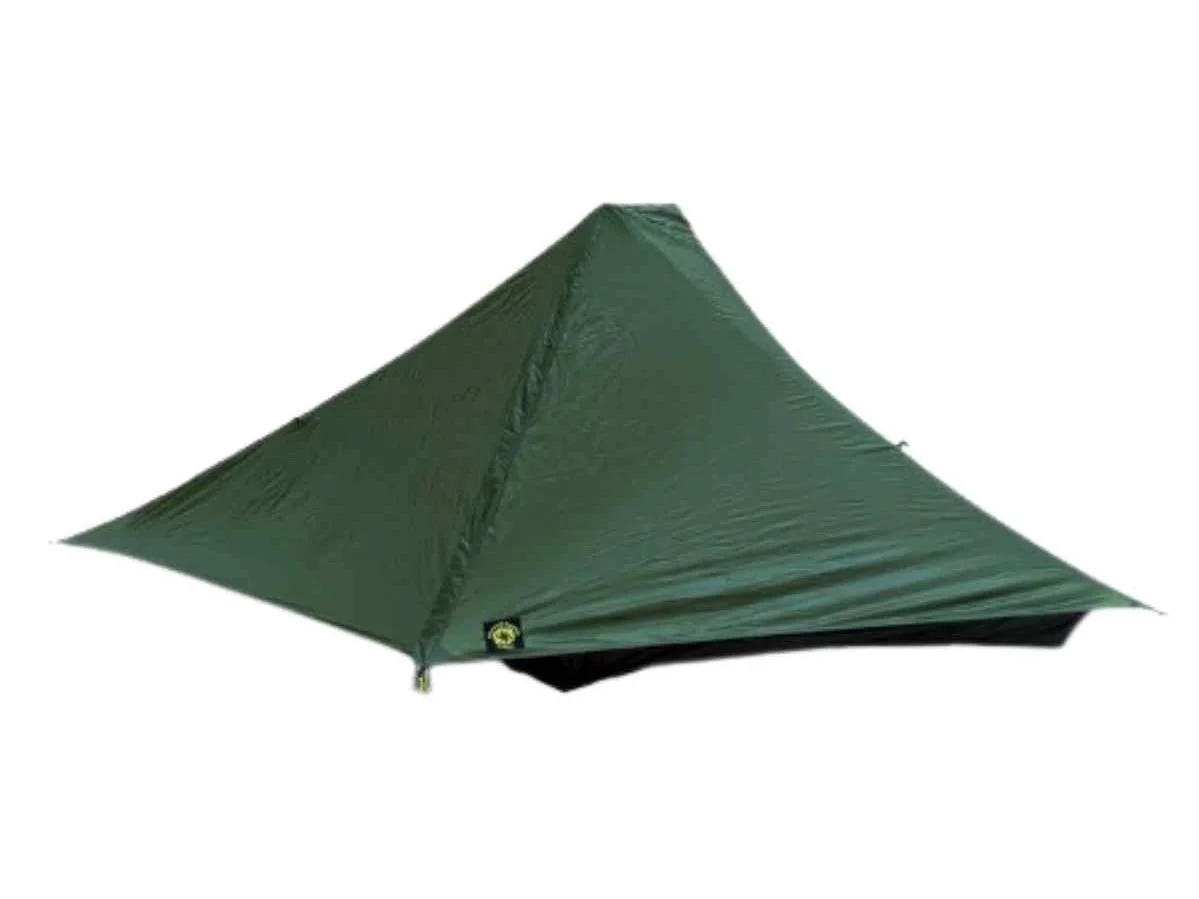
The Six Moon Designs Skyscape Trekker is an affordable trekking pole tent that we like almost as much as the Six Moon Designs Lunar Solo, our winner for best affordable ultralight tent (review above). Ultimately, we chose the Lunar Solo as it's friendlier for bikepackers or folks who don't carry trekking poles.
However, if you hike with two trekking poles and want more headroom and length than you get with the Lunar Solo's single-trekking-pole-half-pyramid design, we recommend the Skyscape Trekker or Six Moon Designs Haven (see review below). See our full review of the Skyscape Trekker for more information.
Our taller testers loved the interior space of the Skyscape — both length and width. They also thought dual doors was overkill, until they used it and realized the utility of having 2 doors. The dual vestibules mean you don’t have to clutter up your interior sleeping space with your gear.
Compare prices of the Six Moon Designs Skyscape Trekker


Type: Double-wall trekking pole shelter with removable inner
Weight: 34 oz
Sleeps: 2
Material: 20D and 30D SilNylon
Vestibules: 2
Stakes required: 6
Trekking poles required: 2
What we liked: Versatile, separate inner and outer tent pieces, easy to pitch, roomy
What we didn’t like: Heavier than some tents
The Six Moon Designs Haven is similarly shaped to the Skyscape Trekker, but you pitch the trekking poles more vertically with the Haven. If you like the shape of our overall winner, the Zpacks Duplex, but don’t want to spend that much money or want something more packable than DCF, the Haven is the way to go.
Additionally, the separate inner net tent that comes with the Haven gives you versatility in coverage during a thru-hike or for different backpacking trips, the same advantage as in the Durston Gear X-Mid-1. And since this is a two-person tent, you and your hiking partner can each carry half of the tent to share the weight.
Our testers found that the large amount of space between the inner tent and rainfly meant that the toebox of their sleeping quilt didn’t get wet, which was in sharp contrast to the Zpacks Duplex. So if you’re taller and find the toebox of your sleeping bag or quilt gets wet, the Haven might be a better option for you.
View the Six Moon Designs Haven


Type: Double-wall
Weight: 26 oz (1P), 37 oz (2P)
Sleeps: 1, 2 and 3 available
Material: 15D ripstop nylon 1200mm Durashield polyurethane & DWR
Vestibules: 2
Stakes required: 7
Trekking poles required: 0
What we liked: Lightweight, semi-freestanding design, easy to pitch
What we didn’t like: Rainfly door zippers are awkward
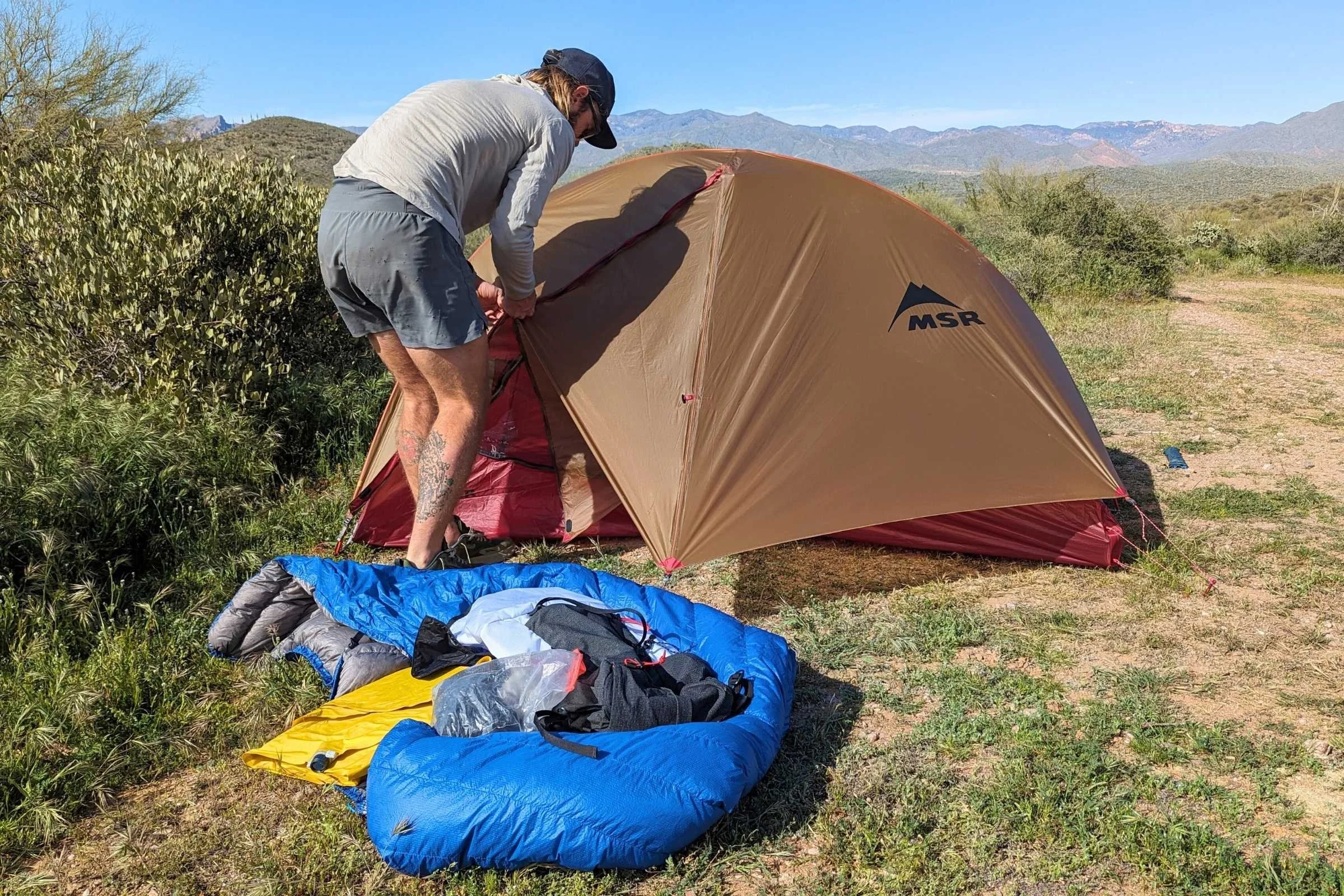
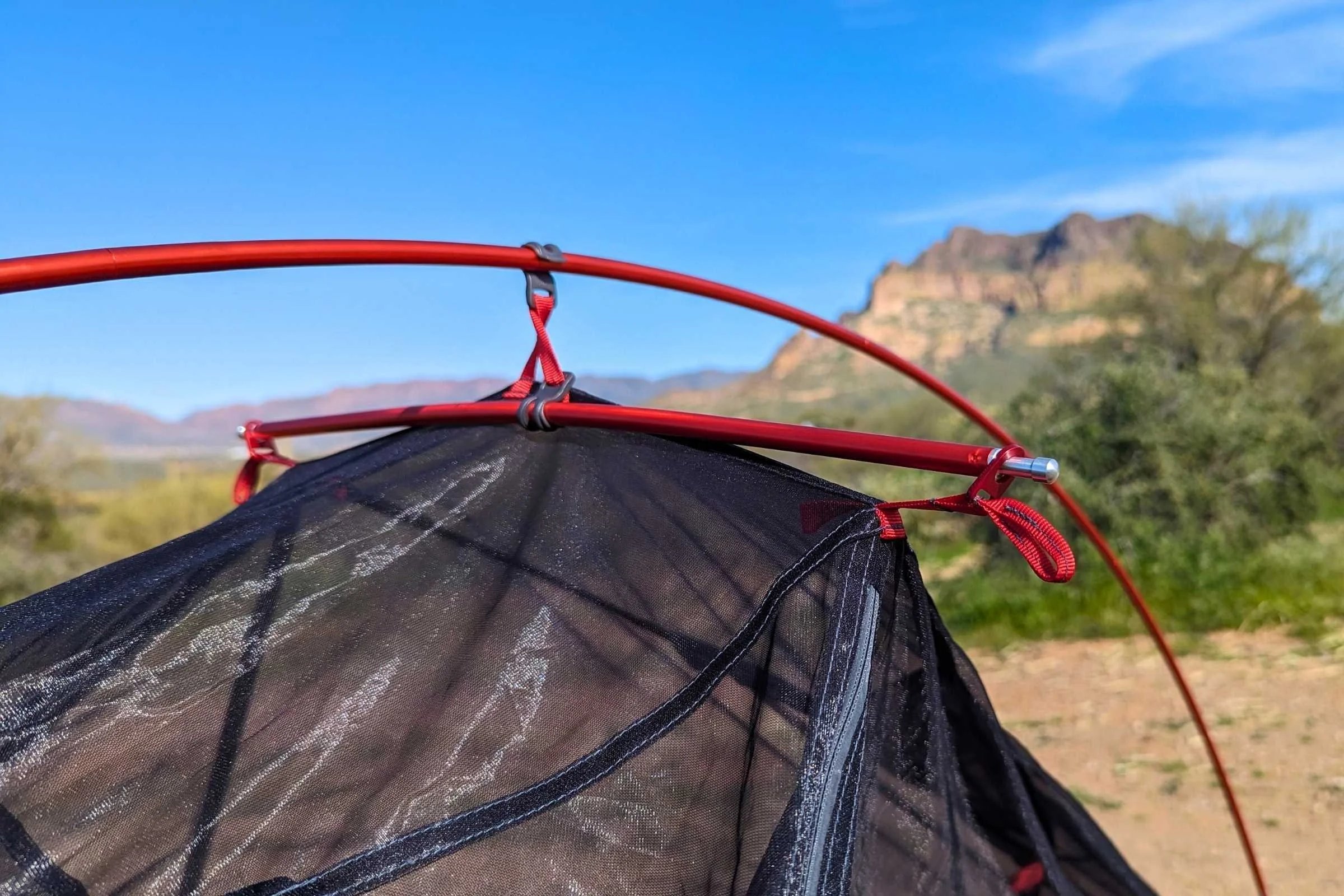
We almost picked the MSR FreeLite 2 as the best ultralight freestanding tent, but there were a few reasons we chose the Hornet Elite instead. First, the no-curve zippers on the rainfly doors were harder to operate than the Hornet. The extra tent pole that runs perpendicular to the main pole was harder to use than the Hornet’s super-easy Flybar volumizing pole clip.
Also, the MSR FreeLite 2 weighs five ounces more than the Nemo Hornet Elite Osmo. If it sounds like we’re nitpicking here, that’s because we are. The FreeLite is a great tent, and it costs a lot less than the Hornet Elite Osmo, so you won’t be disappointed if you choose this over the Hornet.
Viewthe MSR FreeLite 2

Type: Single-wall trekking pole shelter
Weight: 17.7 oz
Sleeps: 1, the Two available
Material: 10D Nylon Ripstop SIL/PU fabric waterproof
Vestibules: 1
Stakes required: 6
Trekking poles required: 2
What we liked: Ultralight, easy to pitch, affordable
What we didn’t like: Less ventilation than some tents
The Gossamer Gear The One is extremely lightweight, packable, and very affordable. And unlike many tents from smaller brands that are custom-made to order, The One is available to ship out immediately. It pitches with two trekking poles and is very easy to set up quickly. We think this is a great tent, and it also almost won an award. We ultimately didn’t pick this because it’s more prone to condensation than some tents. However, if you’re looking for an ultralight tent that’s super easy to pitch, relatively affordable, and you need it fast, The One is a great option.
The One can be set up with almost any pair of trekking poles. The Gossamer Gear FT3 Poles are designed specifically to work with The One and have markers printed on the poles that show the length for set-up.
Compare prices of the Gossamer Gear The One


Type: Double-wall, trekking pole
Weight: 39.7 oz
Sleeps: 2
Material: Ultra
Vestibules: 2
Stakes required: 6
Trekking poles required: 2
What we liked: Roomy interior, sheds wind and snow well, very waterproof
What we didn’t like: Complicated to pitch
The Tarptent Stratospire Ultra is an innovative tent design made with the newest UltraTNT material. We loved the interior space and stormworthiness of this tent. It’s a full pyramid tent that uses trekking poles to pitch.
It’s shaped similarly to the Zpacks Duplex with an angled head and foot, but has some design differences that increase interior space and wind resistance. However, it is heavier and less packable than other tents we tested. We also found there's a learning curve to pitch it.
Our testers used it on the Great Divide Mountain Bike Route and found that packability was an issue. Keeping the inner and outer together meant that setting it up at night was much easier. On the other hand, packing the inner and outer together was challenging from a packability standpoint, especially on a bike.
Note: like many ultralight cottage brands, Tarp Tent's stock of fabric has been limited due to tariffs. The Scarp 1 is currently out of stock as of Summer 2025, but we are keeping it in this story with the hope that it will become available in time for winter.
View the Tarptent Stratospire Ultra


Type: Double-wall, freestanding possible
Weight: 39.5 oz
Sleeps: 2
Material: Ultra
Vestibules: 2
Stakes required: 6
Trekking poles required: 2
What we liked: Wind, rain, and snow-resistant, durable, can be pitched freestanding with trekking poles
What we didn’t like: Doesn’t pack down small
Similar to the other Tarptent models we tested for this review, the Double Rainbow DW Ultra is a unique take on a semi-freestanding tent. It's the Ultra version Tarp Tent classic Double Rainbow two-person tent. It uses a single, long arched tent pole that runs the length of the tent from head to foot. You stake out the four corners, but the arched pole and a secondary cross pole create nearly vertical walls and a stable design. You can also use a pair of trekking poles to hold the four corners out to create a fully freestanding pitch.
Note: like many ultralight cottage brands, Tarp Tent's stock of fabric has been limited due to tariffs. The Scarp 1 is currently out of stock as of Summer 2025, but we are keeping it in this story with the hope that it will become available in time for winter.
View the Tarptent Double Rainbow DW Ultra

However, compared to the classic version, which is made of silnylon, we found it difficult to fit the arched tent pole in the fabric sleeve with the Ultra material. While it gets easier to pitch this tent with practice, it’s still difficult with the Ultra fabric since it doesn’t stretch. There is also a silpoly version of this tent, Double Rainbow DW, and a DCF version, the Double Rainbow Li. If you love the Double Rainbow design, as our testers do, and want a durable, more waterproof version, we recommend checking it out in one of the new fabric iterations.
Before the Ultra version came out, our testers used and loved the classic Double Rainbow. They tested it on thru hike of both the PCT and CDT and can attest to its durability and stormworthiness.

Type: Freestanding
Weight: 40 oz
Sleeps: 1, 2 available
Material: 15D Nylon no-see-um mesh, 20D Nylon Ripstop PE 1800mm
Vestibules: 1
Stakes required: 10
Trekking poles required: 0
What we liked: Fully freestanding design, great in high winds and snow
What we didn’t like: Heavier than some tents
The Slingfin Portal 1 is the only fully freestanding tent we tested. This tent uses two tent poles that cross along the top to form an X across the tent. It also has a super long cross pole that makes the tent walls angle out. Slingfin even makes a set of thicker tent poles for this tent, which are great for extreme winds or heavy snow.
This tent is lighter than the Tarptent Scarp 1 and almost won the best ultralight tent for winter. But we ultimately went with the Scarp 1 because the UltraTNT fabric performs better in snowy conditions than the Silnylon used on the Portal 1. However, if you’re looking for a super strong option for winter camping and want a less expensive, lighter freestanding tent than the Scarp 1 Ultra, this is the one we recommend.
View the Slingfin Portal 1


Type: Single-wall
Weight: 27 oz
Sleeps: 2
Material: 30d polyester
Vestibules: 2
Stakes required: 6
Trekking poles required: 2
What we liked: Sleeps two people, floorless tarp with a bug net, durable
What we didn’t like: Heavy for a tarp
The Black Diamond Beta Light 2P Tent is a floorless shelter with an integrated bug net. You pitch this tarp with two trekking poles, and you’ll find it easy to set up if you’re used to pitching other tarps and trekking pole tents. The mesh net, which hangs off the bottom of the tarp, keeps insects out. For a two-person shelter, this is relatively lightweight. But when you consider the fact that this tent doesn’t have a floor, 27 ounces isn’t as impressive.
View the Black Diamond Beta Light 2P Tent


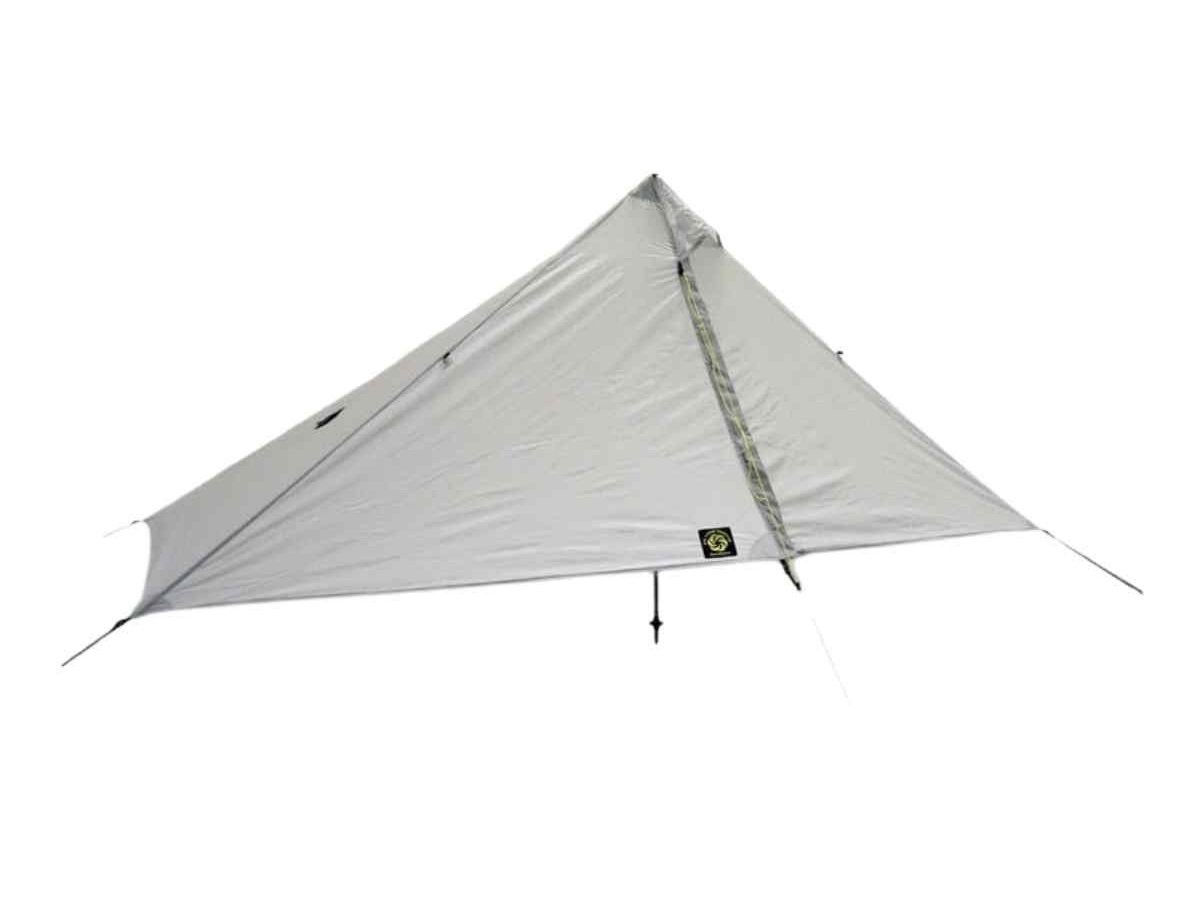
Type: Single pole pyramid tarp with optional inner
Weight: 13 oz + 11 oz (inner)
Sleeps: 1
Material: silnylon
Vestibules: 1
Stakes required: 6
Trekking poles required: Yes, 1
What we liked: Lightweight, inexpensive, made in USA, easy to pitch
What we didn’t like: Silnylon material sags when wet
The Six Moon Designs Deschutes Tarp is the ultralight, floorless tarp without a bug net that we referenced when discussing the SMD Lunar Solo, our top choice for an affordable ultralight tent. This tarp with zippered doors provides 360 degrees of weather protection and packs away to the size of a softball. If you’re looking for affordability, maximum weight savings, and don’t need a bathtub floor, the Deschutes is awesome.
View the Six Moon Designs Deschutes Tarp


Type: Double-wall
Weight: 40.2 oz
Sleeps: 1, 2
Material: 20D ripstop nylon
Vestibules: 2
Stakes required: 10
Trekking poles required: 0 (comes with poles)
What we liked: Roomy interior, pitches easily, readily available from REI
What we didn’t like: Heavy, expensive
The Flash Air 2 Tent is a palace. It’s the largest two-person backpacking tent we tested. It has enough space for two large humans and all their gear, or two humans, their gear, and a dog (or two dogs, really). It utilizes the same A-frame single-wall hybrid tent design as the Zpacks Duplex, but incorporates small additional poles at the head and foot ends to create more vertical space in the corners. It comes with straight tent poles, but you can use two trekking poles as an alternative to these two main structure poles.
However, if you’re considering the Flash Air 2 as an affordable alternative to the Duplex, it is a lot heavier than that tent. This Flash Air 2 weighs 2 lbs 6.5 oz without the tent poles, and 2 lbs 13.65 oz with the included tent poles. It’s also more expensive and heavier than many of the other two-person backpacking tents we tested, such as the Gossamer Gear The Two and Six Moon Designs Haven.
REI Co-op Flash Air 2 Tent


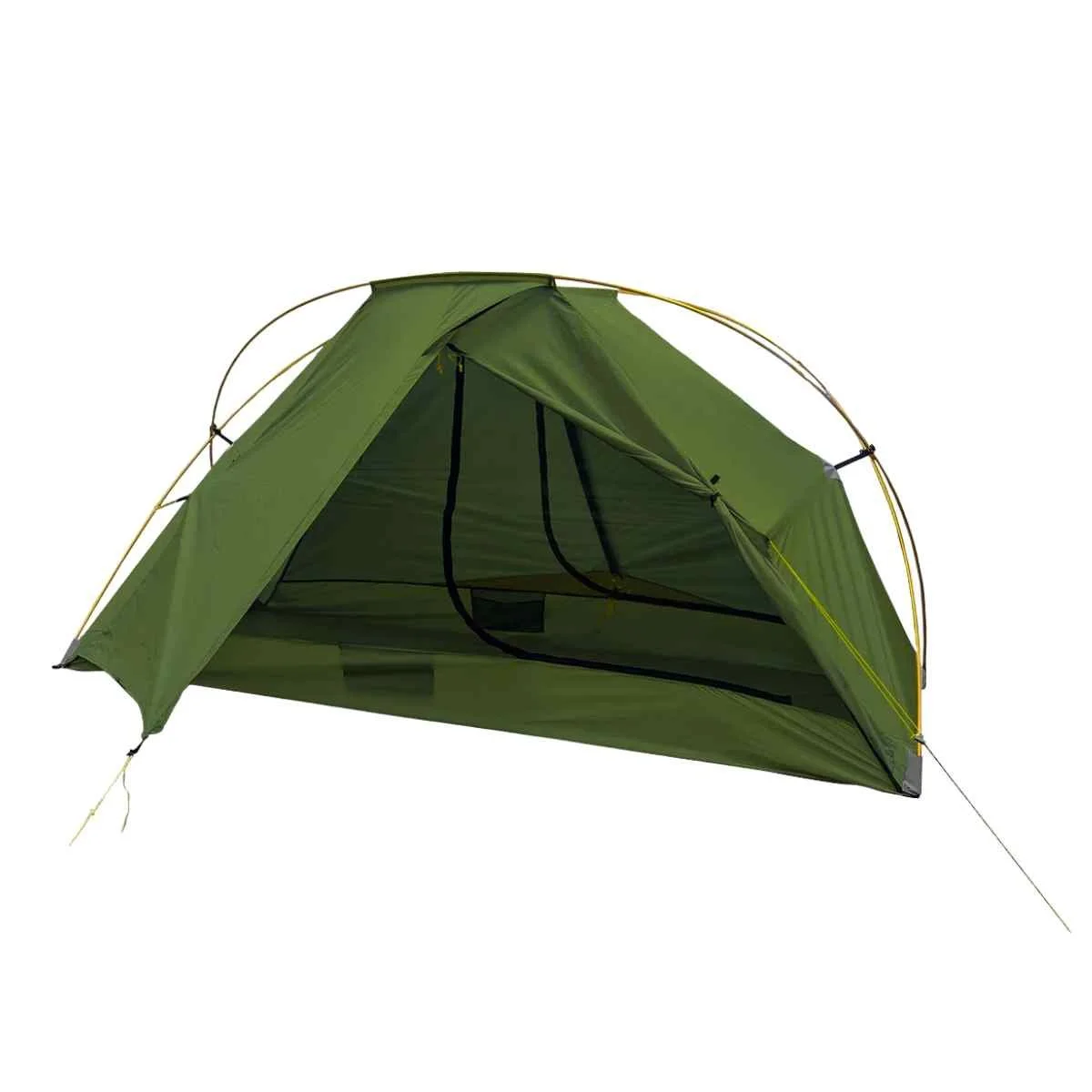
Type: Free-standing, double-wall hybrid tent
Weight: 27.7 oz
Sleeps: 1
Material: 20D and 40D Sil-poly
Vestibules: 2
Stakes required: 0, better with 2
Trekking poles required: 0
What we liked: Wind-resistance, head room, roomy vestibules
What we didn’t like: tent sleeve, weird stuff sack
The Six Moon Designs Lunar Orbiter is a free-standing ultralight tent. It uses a hybrid double-wall system with architecture similar to the Skyscape Trekker tent. However, it comes with its own poles that you slide into the tent sleeves and clip in two places so it maintains its own rigid shape for use without trekking poles. It's roomy with two doors and two vestibules and an excellent height that allows you to comfortably sit up.
We were impressed by the wind resistance of this tent, taking gusts in Anza Borrego Desert up to 40 miles per hour. The stakes didn't stay but the poles and architecture didn't buckle under that pressure. It handled similar winds in the Sierra Nevada at altitude and the Pacific Northwest.
Ultimately, while less expensive than the Nemo Hornet Elite Osmo, it's heavier and doesn't benefit from the true double-wall construction. Most notably, it isn't as easy to set up due to the use of tent sleeves vs. clips to secure the poles. We also were less fond of the non-traditional long stuff sack that holds poles and stakes, as it was less intuitive to secure. The dimensions are much better for taller people than the NEMO, though, so if you don't think that tent will fit you, go with the Orbiter.
Learn more in our in-depth review of the Six Moon Designs Lunar Orbiter tent.
Six Moon Designs Lunar Orbiter


Types of ultralight tents
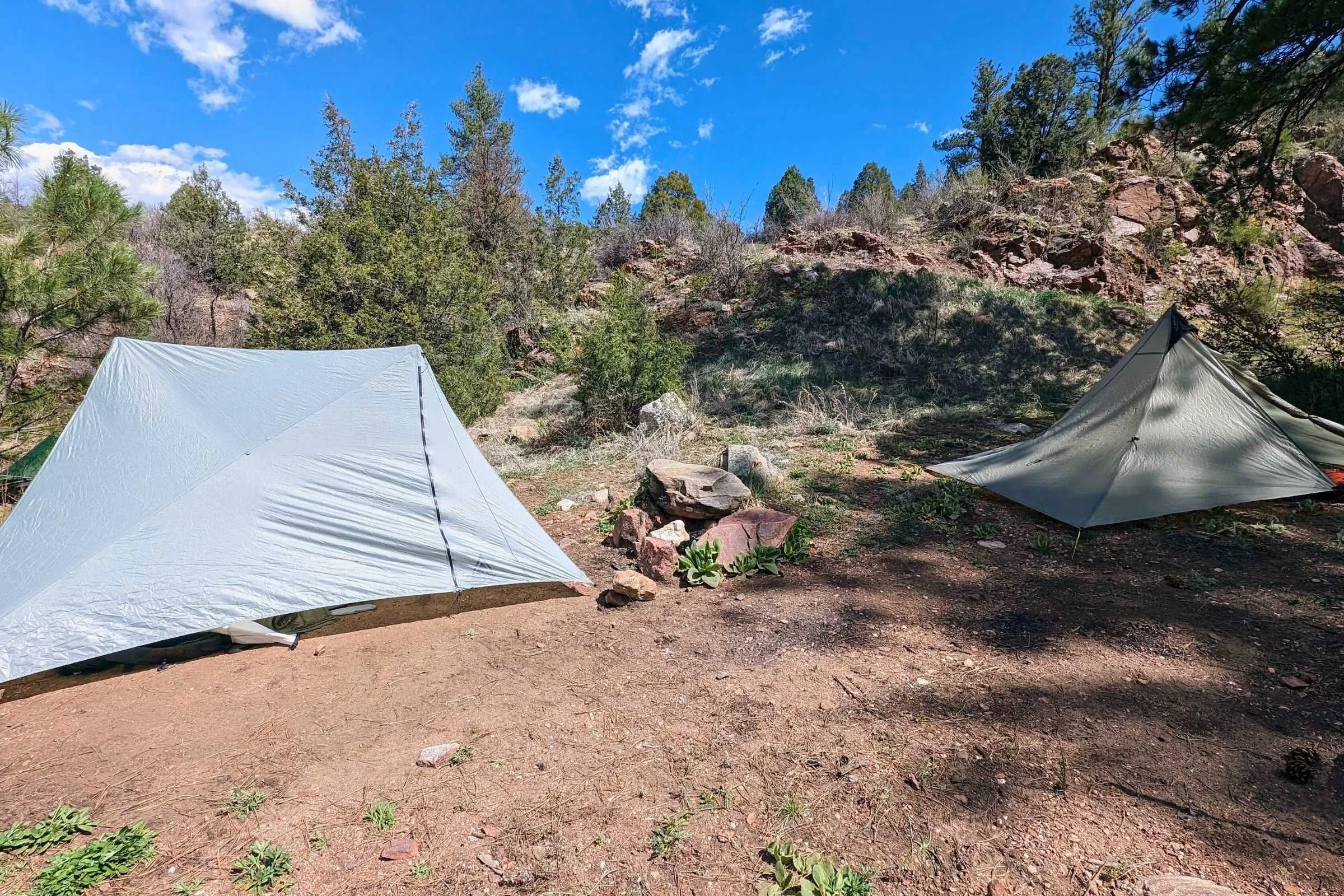
Here, we’ll discuss the basics of each type of ultralight tent and describe their best uses.
Trekking pole shelters
Trekking pole shelters use the same poles you use to hike with to set up your tent. This saves weight and bulk because you don’t have to carry separate tent poles with you as you hike. Trekking pole shelters are usually single-walled and not freestanding (more on single vs. double-wall and freestanding tents below). The trekking poles, which hold the tent up, are held in place with tension created by staking out the corners of the tent. Until recently, only smaller, cottage brand made trekking poles tents. However, Big Agnes has recently released their first trekking pole tent, which has the same Hyperbead material as their Copper Spur, but doesn’t come with poles. Instead, you use your trekking poles to set up the tent. See more in our review of the Big Agnes String VST 1.5 tent.
Freestanding tents
A freestanding tent will stand on its own with no stakes. Freestanding tents are usually dome-shaped with curved sides. Freestanding tents almost always use traditional tent poles to set up, which arch across the tent and attach to every corner at the base to hold the tent fabric taut. Though they don’t require stakes, it’s a good idea to secure them in place with stakes so they don’t blow away.
Freestanding tents tend to be heavier, though more and more ultralight brands are coming out with freestanding tents, most notably the Gossamer Gear The Free tent we recently reviewed.
Semi-freestanding tents
Semi-freestanding tents also stand on their own but require a few stakes to hold certain sections in place, maximizing interior space and saving weight. They use traditional tent poles, but often fewer than a freestanding tent.
Single-wall tent
Single-walled tents don’t have a separate bug net and rainfly. They usually consist of only a rainfly, with mesh sewn underneath that extends to the bathtub floor to prevent insects from getting inside. Single-wall tents are almost always non-freestanding trekking pole shelters, but there are exceptions.
Double-wall tent
Double-wall tents have separate rainfly and mesh bug net portions of the tent. They offer the best storm protection and are less prone to condensation than single-wall tents. They usually allow you to set up only the inner mesh section to protect from bugs when it isn’t raining. You can often set up just the rainfly of a double-wall tent as well.
Floorless tarps
Floorless tarps look like the top rainfly portion of a tent but without any bug net or bathtub floor. Some are a simple rectangle shape that you pitch in an A-frame design, while others have a zippered door and look more like a tent. Floorless tarps save weight since they have less material, but you’ll need a separate groundsheet if you use an inflatable sleeping pad.
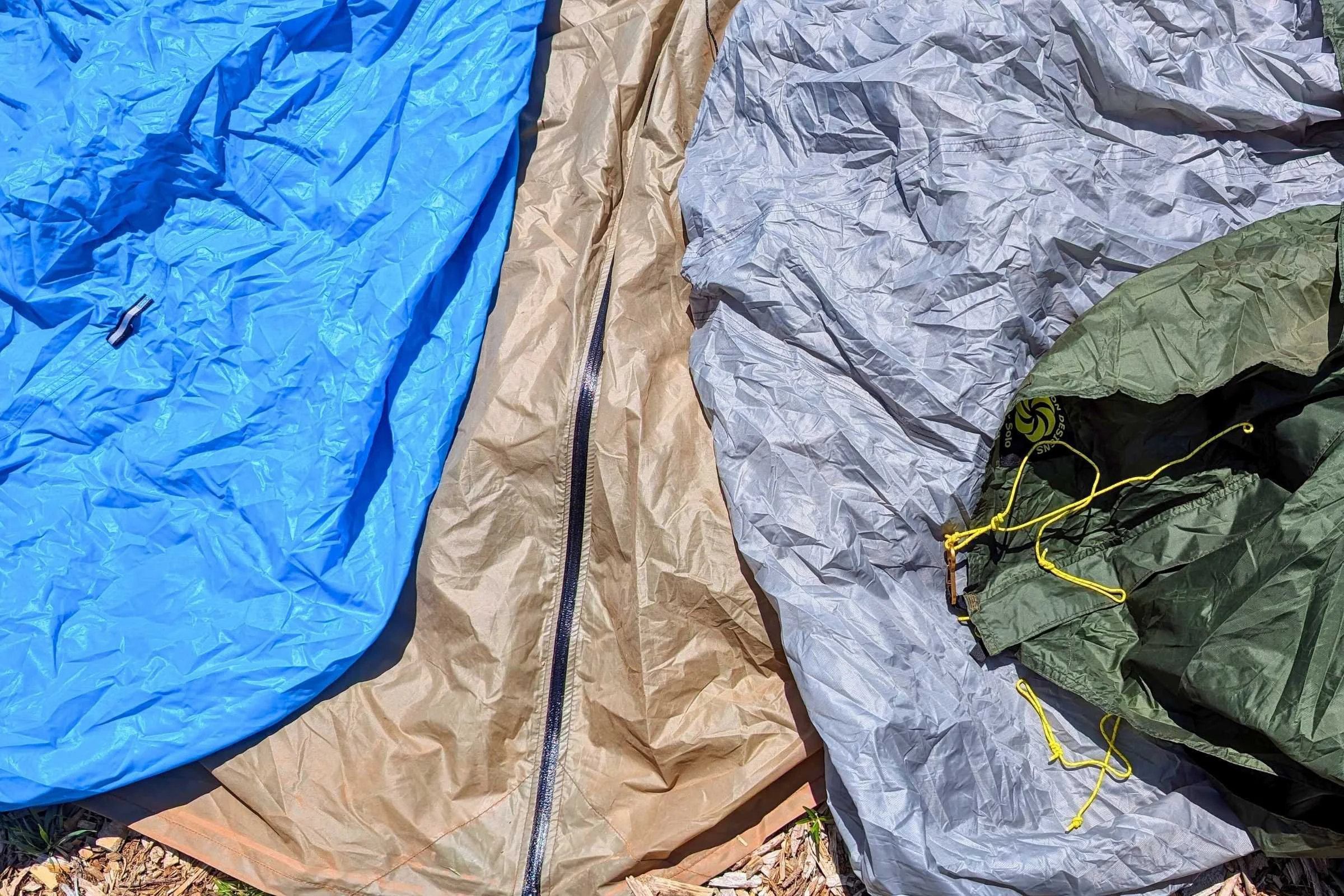
Materials used in ultralight tents
Dyneema Composite Fabric
Dyneema Composite Fabric, or DCF for short, was formerly known as “cuben fiber” before Dyneema trademarked the material. DCF was designed as a sailcloth material for boats. It is made of composite materials laminated together into a sheet. This material is extremely strong for its weight, so many ultralight tent makers use very thin denier DCF fabrics when constructing their tents.
Pros: Strong, stretch resistant, lightweight, very waterproof, doesn't absorb water, dries quickly, PFAS-free
Cons: Creases develop holes, expensive, doesn’t pack down very small, some colors are see- through for those who want privacy in their tent
Silnylon
Silnylon is a nylon ripstop material impregnated with silicone to waterproof it. It is lightweight, durable, and inexpensive. It’s the most common fabric used in tent construction, especially for freestanding and semi-freestanding tents.
Pros: Durable, inexpensive, pliable, lightweight
Cons: Stretches when wet, stretches in the wind, heavier than DCF, absorbs water, takes longer to dry
Silpoly
Silpoly is a silicone-impregnated nylon fabric that some ultralight tentmakers use in their tents. It is similar to silnylon, but it doesn’t stretch as much as silnylon. Since it doesn’t stretch, it’s a better non-freestanding tent material because the fabric can hold tension from stake to stake without needing to be re-tensioned periodically.
Pros: Doesn’t stretch when wet, lightweight, inexpensive
Cons: Can’t be used in all tent designs because it doesn’t stretch, not as light as DCF
UltraTNT
UltraTNT fabric is a new fabric that tentmakers are starting to use. It is a lightweight version of the same Ultra 200 and 400 fabrics used for making the newest ultralight backpacks. This fabric is very strong, tear-resistant, and waterproof. The fibers run in 3 directions (compared with DCF's 2 directions), making it extremely rigid when the tent is well pitched.
Pros: High dimensional stability, very waterproof, does not absorb water
Cons: Expensive, doesn’t pack down small, not many tent options in this material

What to look for in an ultralight tent
Fabric and denier
Fabric denier is a unit of measurement that describes the thickness and weight of fibers used in textiles. Denier refers to the density of the fibers specifically. The higher the denier, the thicker the fabric.
Since they’re stronger, DCF and UltraTNT require a thinner denier fabric to be as tear and puncture-resistant as the slightly less robust silnylon and silpoly fabrics used to make tents. In practice, this means many DCF tents are made with 5 to 10-denier or thinner material, whereas most silnylon tents are made with 10 to 20-denier fabrics.

Weight
Your tent is one of the heaviest items in your backpacking kit. So, if you want to save weight, a lighter tent is a great way to do this. However, the lightest weight tent possible isn’t always the best option. Lighter tents often sacrifice interior space and weather resistance to save weight. If you’re willing to sacrifice weight for more comfort and roominess, read our Best Backpacking Tents story for more.
Durability
Most ultralight tents are durable enough to last for hundreds of nights on the trail if you properly care for them. However, some tents are more durable than others. Tents made with thicker denier fabrics are less prone to tears and punctures than thinner ones.
Interior Space and Livability
Tents with more interior space will be more comfortable for spending long, rainy days inside. Be sure there is at least enough interior space to fit your sleeping pad. Having enough space to sit up comfortably is also nice, especially for days when you have to do more than simply sleep inside your tent, so pay attention to the height of your sleeping pad as well. Extra interior space is nice for storing your pack and other gear inside the tent, instead of on the ground inside your tent’s vestibule. Consider how much the walls slope as well as that can impact livability.
Vestibules and Storage
You can put the gear you don’t want to store inside the tent with you in the tent’s vestibule. The rainfly still covers this area but doesn’t have a floor. The vestibule is where you’d store muddy shoes or a wet pack. It’s best to have enough vestibule space for everyone sleeping in a tent. If two people are in the same tent, it’s best to have two vestibules or at least one large enough for two people’s gear.
Ease of Setup
Most tents are easy enough to set up once you’ve figured out the best way to pitch them, but some are more finicky. A tent that’s easy to set up is important for when you need to pitch your tent quickly to get out of a storm. Generally, single-wall tents are easier and faster to set up because you simply pitch the entire tent at once.
On the contrary, double-walled tents usually require you to pitch the inner bug net first, then fit the rainfly over the top. Most double-walled tents can be pitched rainfly first for actively storming conditions, but you must still pitch each piece separately. If there isn’t a separate rainfly and inner mesh tent, the tent will be twice as fast and easy to pitch.
Wind and Weatherproofness

Tents are designed to keep you protected from the weather outside, but some do a better job of this than others. Tents with angled walls pitched low to the ground will shed wind better and prevent sideways rain from blowing in under the fly. Tents with rainflies that don’t reach as far down can allow wind and rain to get under the fly, getting the gear in your vestibule wet or worse.
Ventilation and Condensation
Single-walled tents are prone to condensation, especially when multiple people are sharing the same tent. Single-walled tents are more prone to condensation than double-walled tents in general. Still, some single-walled tents are particularly prone to condensation because they don’t allow for adequate ventilation. Features like mesh around the bottom edge of the fly, breathability ports near the tent peak, and the ability to fully open the storm doors all allow for better ventilation, which helps prevent condensation.

Packed Size
Packed size is important to consider, especially if you have a smaller-volume backpack. Some tents are very light but don’t pack down nearly as small as tents that weigh much more. Dyneema and UltraTNT tents are usually bigger when packed than silnylon or silpoly tents. So, if packed size is your top concern, opt for a tent made of the slightly heavier silnylon or silpoly materials. If you’ll be using your tent for bikepacking, special considerations apply for packed size. For more, read our Best Bikepacking Tents story.
Doors
Generally, one-person tents have a single door, which is adequate since only one person will use the doors.
On the contrary, many 2-person tents have a door for each person to use, but some have only one door. If you plan to share a 2-person tent with a hiking partner, it’s best to use a tent with two doors so one of you doesn’t have to crawl over the other in the middle of the night. If you want a 2-person tent for extra space for your gear as a solo hiker, then a single-door will save some weight.

Zippered Doors
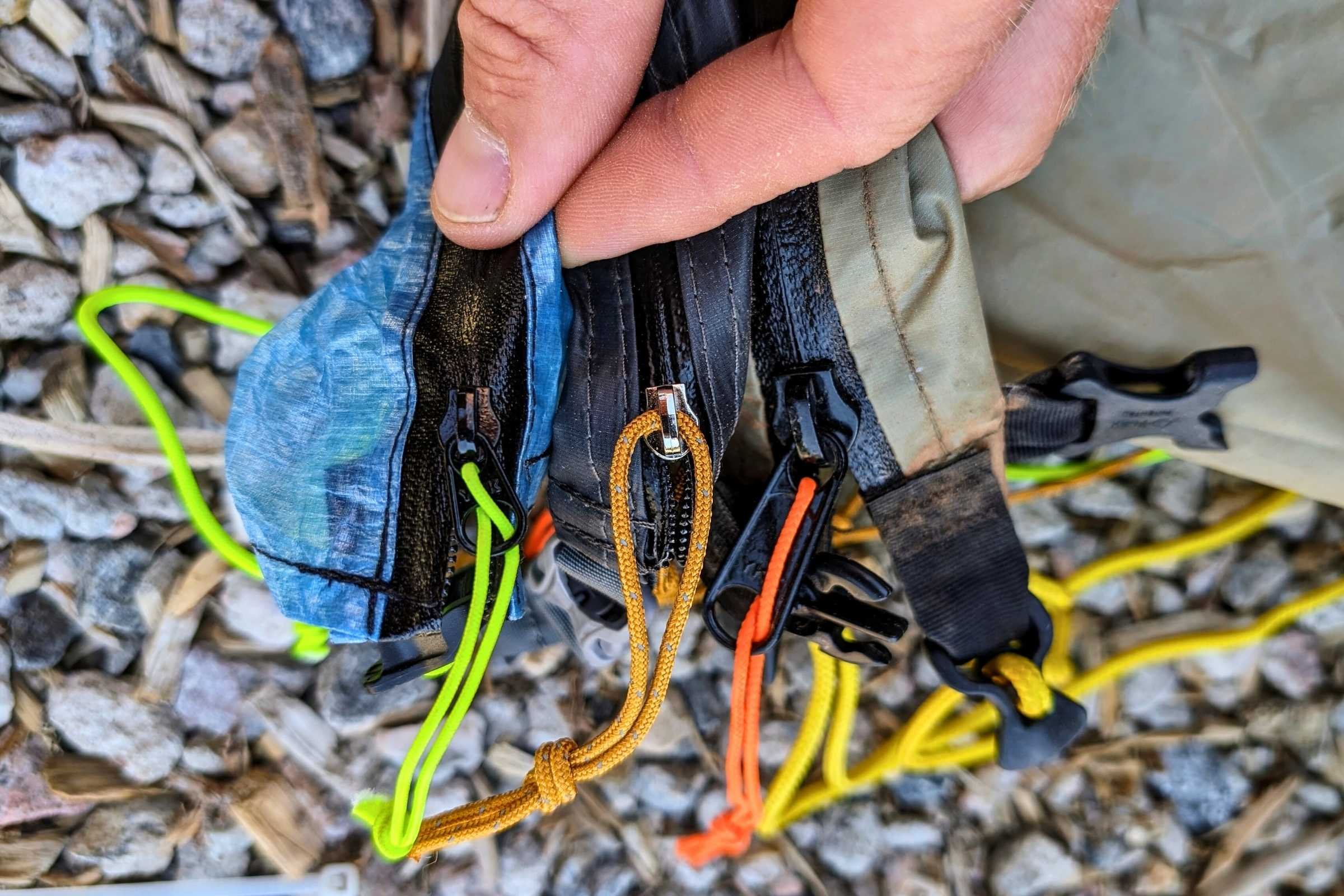
Most tent doors use zippers to close, and many ultralight tents use very small zippers to save weight. While these smaller zippers are lighter, they’re also more prone to durability issues. The small zipper sliders wear out faster than larger zippers, especially in the dry, dusty climates of many popular spring thru-hiking routes. If you want the most durable tent doors that won’t fail, then look for a tent with doors that zip shut with larger zippers.
It’s best to keep the zippers on your tent clean so that they don’t wear out. Gear Aid makes a zipper cleaner and lubricant to help keep your zippers functioning. If you apply this before a thru-hike, then once a month during longer thru-hikes, then after your trip, you’ll prolong your zipper’s lifespan.
Some tents, such as the Zpacks Duplex, use an overlapping fabric design instead of zippers altogether. This zipperless design saves weight, but it also improves the durability of the tent since there is no rainfly zipper that can fail due to heavy use in dusty conditions.

Comparison of several of the tents we tested side-by-side.
Buying Advice
Do you want single or dual entries?
If you’re the only person using the tent, you likely only need one entry. However, if you’re sharing the tent with another person, two entries will be easier to use.
How much storage do you need?
If you need to store a lot of gear outside the tent, get a tent with larger vestibules. A tent with more interior space is also a good option for adding extra storage. Many solo hikers opt for a two-person tent to get more storage.

Testing ultralight tents on a bikepacking trip.
Do you usually use trekking poles?
If you usually hike with trekking poles, then a trekking pole shelter makes the most sense. If you don’t use trekking poles, you can get straight tent poles from most tent manufacturers who make trekking pole tents. However, you can also simply use a freestanding or semi-freestanding tent if you don’t use trekking poles because those types of tents come with tent poles.
Where will you be hiking?
If you’ll be hiking somewhere that you can’t drive stakes into the ground, such as slick rock, a trekking pole shelter will be difficult to pitch, so you should consider a freestanding or semi-freestanding tent. If you’ll be hiking on snow or sand, it will also be more difficult to get your stakes to stay in the ground, so you again may want to opt for a freestanding or semi-freestanding tent.
How much do you want to spend?
You can spend upwards of $1,000 on a tent. This tent will be extremely lightweight and made of thin and strong Dyneema Composite Fabric (DCF). However, some tents cost much less which will work nearly as well. There is a diminishing return on weight savings and performance as you increase in price, but you will get a lighter and arguably better-performing tent.
How thick is your sleeping pad?
There are some 4-inch thick sleeping pads that will affect the headroom of certain tents. If a tent is shorter from head to foot, with low-angled walls, a thicker 4-inch sleeping pad might elevate your face and feet up so that they touch the tent wall.
The thickness of the material used in your sleeping pad doesn’t affect much in terms of what tent you choose, however. If your sleeping pad is particularly prone to punctures, you should use a ground sheet underneath your tent’s bathtub floor. Using a ground sheet underneath the tent floor will also increase the lifespan of your tent, so it’s a win-win.

We tested ultralight tents on backpacking trips all over the country, from multi-month thru-hikes to overnight weekend trips.
How we tested
We tested ultralight tents on backpacking and bikepacking trips all over the country, on everything from multi-month thru-hikes to overnight trips on the weekend. We tested these tents on the CDT, PCT, AT, Colorado Trail, Grand Enchantment Trail, Arizona Trail, Great Divide Trail, High Sierra Trail, and other long-distance hiking trails. We also tested them while backpacking in Arizona’s Superstition and Catalina mountains during spring, Aravaipa Canyon in the winter, and in Utah during late spring in the La Sal Mountains, near Canyonlands National Park, as well as in the Grand Staircase Escalante area.
We tested many of these tents on bikepacking trips as well, including the Great Divide Mountain Bike Route and Oregon Outback.

Side-by-side testing of ultralight backpacking tents in Arizona.
FAQ

Side-by-side testing of ultralight backpacking tents in Arizona.
-
Ultralight tents are waterproof. They’re just as waterproof as other tents and are made of the same types of materials as their larger, heavier tent counterparts.
-
A small tent will fill with your body’s heat faster, so it can feel warmer than a large tent.
-
You should store an ultralight tent in its included stuff sack. After a trip, it’s best to remove your ultralight tent to clean it before long-term storage. Once your tent is clean, simply roll it and pack it in the stuff sack until next time.
-
Ultralight tents are durable enough to last for many nights of use. We’ve used the same ultralight tent for multiple thru-hikes, and with the proper care, it’s still working to this day.
-
You don’t need a tent footprint with an ultralight tent, but it will keep the bottom of your tent from wearing out as quickly. It’s easier to replace a worn-out tent footprint than it is to replace the bottom of a tent, after all.
-
We have guides on how to repair a tent and how to clean a tent, as well as how to fix zippers on outdoor gear. Always check with the manufacturer first though, especially since the materials use in ultralight tents are specialized.
-
A tent will not protect you from lightning. If you’re above treeline, inside your tent during a lightning storm, you should get to lower elevation quickly. If your tent is pitched in a safer place, below treeline, where you’re less likely to be struck by lightning, then a tent might make you feel safer during a storm. While feeling safer isn’t the same as being protected from lightning, it is nice.
Advantages of Ultralight Tents
As with most things in life, there are pros and cons with going ultralight. It’s important to be aware of both so you can make the best decision for you.
Weight
This is obvious, but ultralight tents are a huge weight saver. A tent is one of the “big three” in backpacking: backpack, tent, sleeping bag. So if you can save weight in one of these categories, it’s a win. With a lighter pack weight:
The miles are easier
There’s less fatigue on your feet, knees, and legs
It’s easier to do longer days
There’s less pain on your neck, shoulders, and hips
They use trekking poles
One of the tenets of ultralight backpacking is using multi-purpose gear. Why carry tent poles when you’re carrying two perfectly good poles in your hands all day? Using trekking poles as tent poles is a big weight savings.
They may pack smaller
Ultralight tents may take up less pack space than a heavier tent. This means you can use a smaller pack, which further lightens your load.
However, be aware that DCF is not as packable as SilNylon. Much of the packability of UL tents comes from the fact that they are single-walled. If you have a Duplex made of SilNylon and a Duplex made of DCF, the SilNylon version will pack smaller.
The Ripple Effect
You may feel inspired to keep lightening your pack weight by carrying less stuff. Your pack weight may become light enough that you can switch from hiking boots to lightweight hiking boots to hiking shoes to trail runners, further reducing fatigue and stress on your body.
It’s an evolutionary process over time, a journey that many of us have been on.
Disadvantages of Ultralight Tents
Ultralight tents are not for everyone. You should understand their limitations before making a decision.
They’re often single-walled
Most ultralight tents are single-wall tents, which generally don’t do as well in the rain. Single-walled tents are also more prone to condensation.
They’re often not freestanding
There are some situations where a freestanding tent has huge advantages. If you’re frequently camping in such areas, a freestanding (but heavier) tent may make more sense for you.
They use trekking poles
Yep, this is both a pro and a con. If you don’t use trekking poles, a trekking-pole tent is not for you. Many manufacturers sell poles for such situations, but then the weight savings is not as great.
They have limited interior space
Much of the weight savings in ultralight tents comes from a reduced footprint. If you like to hang out in your tent at your campsite (or perhaps mosquitoes force you into your tent), then you may question your decision to go with an ultralight tent.
They’re delicate
Ultralight tents also achieve their weight savings by using lighter fabrics and zippers. You’ll need to be a little more diligent about tent site selection and maintenance of your ultralight tent.
They may take up more pack space
Again, both an advantage and a disadvantage here. Both DCF and Ultra fabrics are not as packable as SilNylon. However, if you’re moving from a double-walled tent to a single-walled tent, it will probably be a net gain for you.
About the author / Why you should trust us

Sam Schild is a thru-hiker, trail runner, bikepacking cyclist, and mountain athlete based in Colorado. He has thru-hiked the Pacific Crest Trail, Continental Divide Trail, Grand Enchantment Trail, Arizona Trail, and the Colorado Trail twice. He has bikepacked across the country and all over the American Southwest, including on the Colorado Trail and Kokopelli Trail. On every trip, he’s used an ultralight tent.
You can read more about Sam on his author page or his website.