Best Freeze Dried Backpacking Meals
OUR favorite dehydrated and freeze-dried camp foods by taste, portion, and Prep

April 22nd, 2026, updated with three new winning meals and to remove a discontinued flavor
Home > Staff Picks
Freeze-dried backpacking meals have gotten genuinely good, and the gap between the best and the worst has gotten wide enough that it's worth being picky. After thousands of nights of car camping, bikepacking, and thru-hiking, the Treeline Review team has eaten through a lot of options, including blind taste tests with non-backpackers, miles of field testing, and more than a few meals that went directly in the trash and more than a few we wished we'd brought more of.
We tested and reviewed more than a hundred backpacking and camping meals, evaluating each on flavor and texture first, then fillingness, serving size, rehydration time, packaging design, and digestibility. We also noted suitability for common dietary needs including gluten-free, vegetarian, vegan, and FODMAP-sensitive eating, since those restrictions don't disappear on trail.
This is a staff picks article, which means each meal below is chosen and written up by a different Treeline Review writer. The picks reflect real opinions from real trips, not a unified ranking. Every writer chose the meal they'd actually bring again.
Staff Favorite: The Pinnacle Foods Jalapeño Cheddar Biscuits & Herbed Sausage Gravy is the one meal every writer agreed belongs on this list. It was the only pick that earned "better than a restaurant" as a recurring comment, and even testers who don't normally like commercial freeze-dried food were won over. If you eat gluten and pork, start here.
If you’re planning a thru-hike or backpacking trip, check out our Thru-hiking Resupply and Nutrition Tips guide.
This story may contain affiliate links, which help fund our website. When you click on the links to purchase gear, we may get a commission. This allows us to create reader-supported, objective gear reviews, independently selected by our editors — without costing you an extra cent. Thank you for supporting our work and mission of outdoor coverage for every body! Learn more.
CompariSon table
| BACKPACKING MEAL | TREELINE WRITER | CALORIES/ PACKAGE | PROTEIN/ PACKAGE | GLUTEN FREE | VEGETARIAN | VEGAN | MSRP |
|---|---|---|---|---|---|---|---|
| Pinnacle Foods Jalapeño Cheddar Biscuits & Gravy | Everyone Read why |
800 | 30g | $16 | |||
| Peak Refuel Butternut Dal Bhat | Naomi Hudetz Read why |
870 | 23g | ✓ | ✓ | ✓ | $14 |
| Mountain House Breakfast Skillet | Aubri Drake Read why |
520 | 28g | ✓ | $13 | ||
| Bowl and Kettle Mexican Street Corn Grits | Becca Downs Read why |
723 | 31g | ✓ | ✓ | $14 | |
| Farm to Summit Green Chile Mac & Cheese | Katie Hawkes Read why |
700 | 28g | ✓ | $14 | ||
| Mountain House Cheesy Pepperoni Pizza Bowl | Everyone Read why |
740 | 28g | $13 | |||
| Good To-Go Thai Curry | Liz Thomas Read why |
380 | 10g | ✓ | $11 |
The Best Freeze-Dried Backpacking Meals
Pinnacle Foods Jalapeño Cheddar Biscuits & Herbed Sausage Gravy

Taste (out of 10): 10/10
Serving size: 4.7 oz dry (800 calories), 30 g protein
Fillingness: 10/10 (for the two-person)
Rehydration Time: 20 min
Packaging: Cook in bag
Digestion: No problems!
Food sensitivities: Contains pork and gluten
If there’s one meal that Treeline Review writers agreed should be on this list, it was the Jalapeño Cheddar Biscuits & Herbed Sausage Gravy. This filling meal is enormously satisfying after a long day on trail. “Better than a restaurant” was a phrase that came up a lot. Many people said this is the best backpacking meal they’ve ever eaten.
With caramelized onions and a not-too-spicy biscuit, it also is one of the most calorie-dense meals we tested, appealing to ultralight backpackers looking to save weight. Even people who normally don’t like commercial freeze-dried or dehydrated backpacking meals were blown away. It’s got gluten, milk, and pork, so isn’t a meal for everyone. But if you’re good with that, prepare yourself for one of the best dehydrated meals you’ve ever had.
- Treeline Review Team

Taste: 10/10
Serving size: 5.85 oz for 870 calories
Fillingness: 8/10
Rehydration Time: 10 minutes
Packaging: Rehydrates in its own package
Digestion: No problems
Food sensitivities: Vegan
When I hike, my taste buds and food cravings change. And what I really crave when I hike is strong flavors, lots of protein, lots of fat, and vegetables. Peak Refuel delivers all of this in their Butternut Dal Bhat.
The coconut milk adds lots of richness, the chickpeas and lentils add protein, butternut squash provides a good helping of vegetables, and it’s extremely flavorful. It’s perfectly spiced, but if you like spicy, you may want to add a little extra. Even the texture was perfect – I don’t like overcooked, soggy veggies and the butternut squash is tender but not mushy. The rice rounds it out nicely.
If I’m really hungry, I’ll top this off with some chopped peanuts for extra calories and protein. For the most part, I love hiking food, and this one is a standout.

Taste: 10/10
Serving size: 3.4 oz dry (510 calories, 28g protein)
Fillingness: 8/10 (for the two-person)
Rehydration Time: 10 min
Packaging: Easy to rehydrate in the package provided, and the bottom expands to easily stay upright while you add water
Digestion: No problems to report
Food sensitivities: Gluten-free, high protein
Scrambled eggs, shredded potatoes, sausage, onion, bell pepper, garlic powder, and white pepper comprise this quick and tasty meal. It is well spiced and salted, requiring nothing extra.
I used this on a number of long section hikes, including the John Muir Trail, and I looked forward to it each time. I would carefully save it on 6-day food carries, to be sure I had it as encouragement and comfort on my hardest days.
Unlike every other egg meal I’ve seen, it only requires hot water and 10 minutes to rehydrate inside its own bag, no frying pan required. It has one of the highest protein-to-weight ratios out there to fuel and replenish your body, and it’s a delicious skillet meal worthy of a tortilla to wrap it in and a cup of the best diner coffee to wash it down!
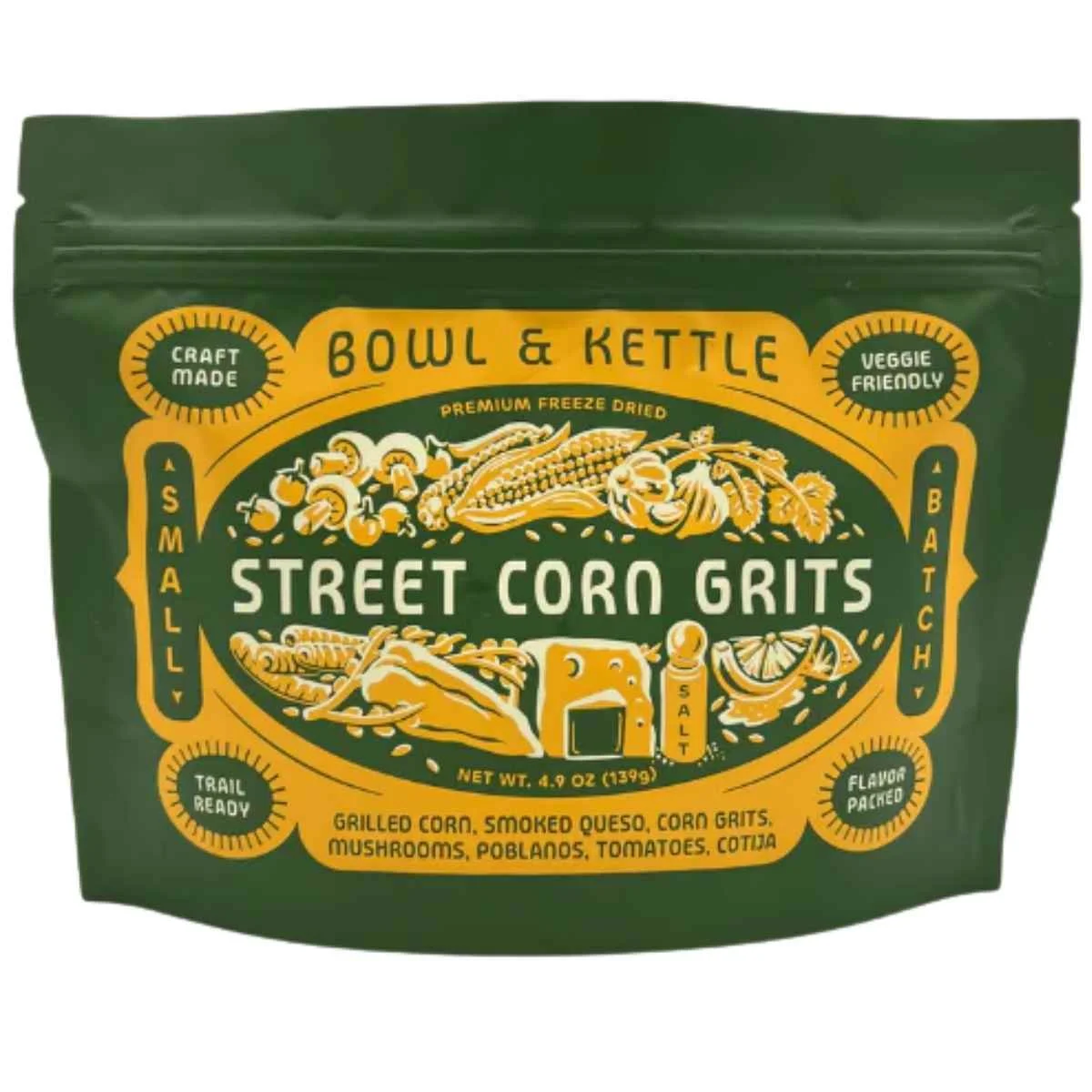
Taste (out of 10): 9.5/10
Serving size: 4.9 oz dry (723 calories, 31 g protein)
Fillingness: 9/10 (for two servings)
Rehydration Time: 12-14 min
Packaging: Easy to rehydrate in the package provided, and the bottom expands to easily stay upright while you add water
Digestion: No problems
Food sensitivities: Gluten-free, contains milk
I’m not kidding, the Bowl & Kettle Mexican Street Corn Grits dehydrated meal is so delicious and digestible I would eat this every day, even off trail, if I could. Plus, Bowl & Kettle is a small business run out of Denver by a couple, Sarah and Brett Bowlin. They started Bowl & Kettle after thru-hiking the Pacific Crest Trail, so they know hiker hunger well and care about flavor and quality, sourcing ingredients from local farmers as much as possible.
While I am not a vegetarian, I appreciate vegetarian meals on trail because freeze-dried meat weirds me out if I think about it too much. The Mexican Street Corn Grits is vegetarian (not vegan, as it has whole milk, cotija cheese, and Monterey Jack cheese) and still packs an impressive 31 g of protein.
This meal isn’t just vegetarian—it’s rich with actual vegetables, which is such a luxury during a backpacking trip. A generous portion of tomatoes, corn, poblano peppers, and mushrooms are mixed in with the cheesy grits, and Bowl & Kettle includes a small packet of seasoning to add for flavor. The ingredient list is simple, and I love that it’s soy free, which can be hard to find in a backpacking meal.
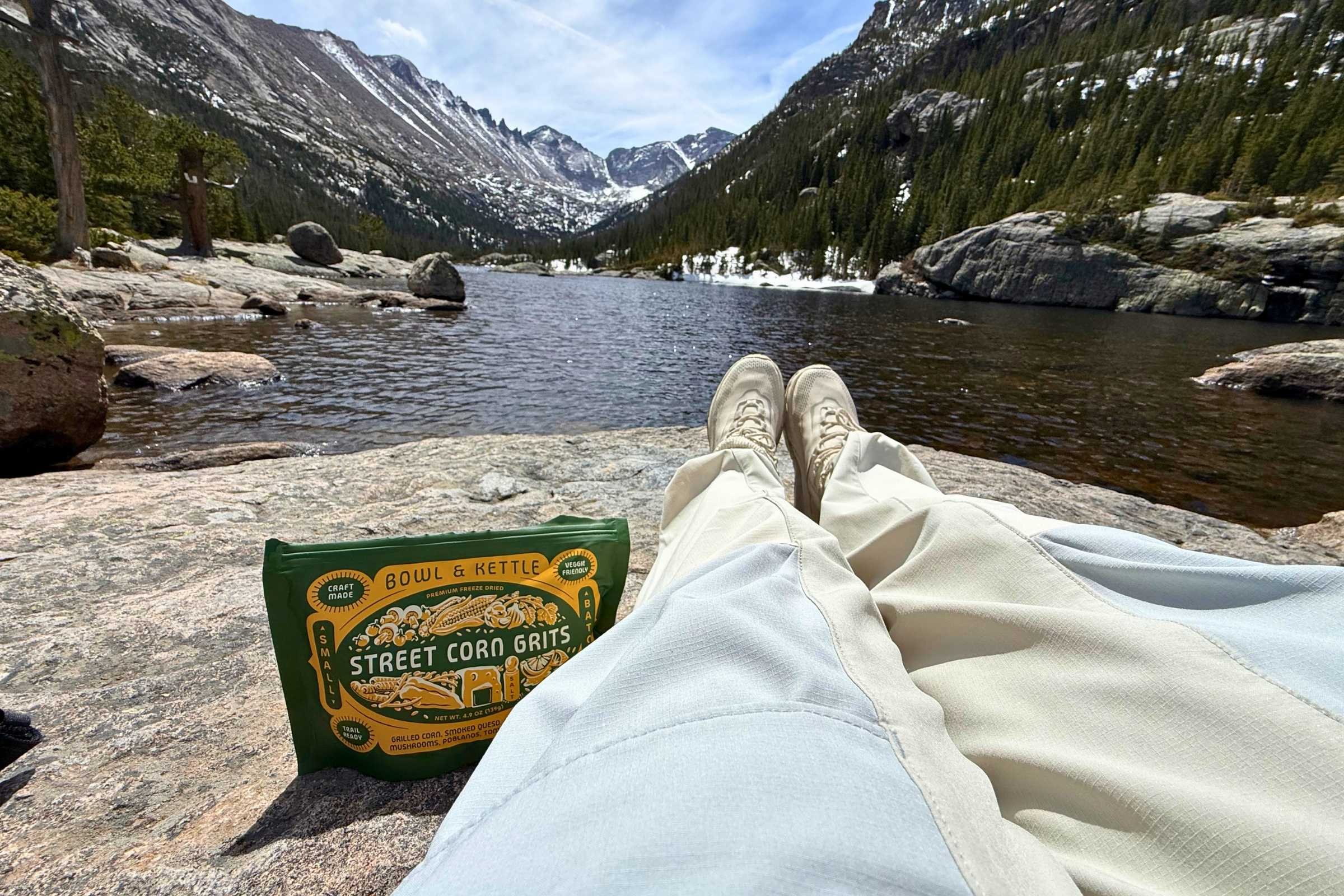
As it cooked, the meal smelled smokey and the taste exceeded my expectations for a freeze-dried meal. If you have the space, you could also pack some hot sauce (Louisiana Hot Sauce would be my vote), which would up the flavor even more.
As much as I love this meal, it’s not for everyone. If you don’t love chunks of mushroom or tomato, this wouldn’t be for you. But if you love veggies and want a protein-rich, meat-free meal, you should absolutely check out this Bowl & Kettle meal.

Taste: 10/10
Serving size: 700 calories, 28g protein
Fillingness: 10/10
Rehydration Time: 10 minutes
Packaging: Compostable and biodegradable
Digestion: No problems
Food sensitivities: Suitable for some FODMAP sensitivities, no onion or garlic, contains dairy and wheat
As someone with an unusual set of food sensitivities, backpacking meals are usually a minefield where I just try and find the ones that will hurt me the least.
My issue is FODMAPs, which are a group of sugar-related compounds in a huge variety of foods. Everyone with FODMAP issues may have slightly different trigger foods, so it’s important to note that this meal isn’t completely FODMAP-free because it does contain wheat and dairy. However, *my* biggest issues are onions and garlic, and to a lesser extent mushrooms, kale, and everything related to kale (broccoli, cauliflower, mustard, etc). When I eat them I feel ill, which is a huge bummer at all times but especially when backpacking.
And let me tell you, finding a backpacking meal (or any meal I don't make myself) without onions or garlic is quite nearly impossible. So when I found this meal on Garage Grown Gear and had absolutely no ill feelings (physical or emotional!) after eating it, I nearly wept from joy. I will be ordering this repeatedly for as long as they make it. Also it is objectively delicious even if you don’t have specific dietary needs, just spicy enough to be fun and interesting, and vegetarian if that’s your jam. Bonus: it’s a woman-owned company with a sustainable ethos and compostable packaging. What’s not to love??
Taste (out of 10): 8
Serving size: 1
Fillingness: Very filling
Rehydration Time: None
Packaging: Sturdy plastic tear-open pouch
Digestion: No issues if you’re okay with dairy
Food sensitivities: Dairy, pork, beef, wheat, garlic, onion
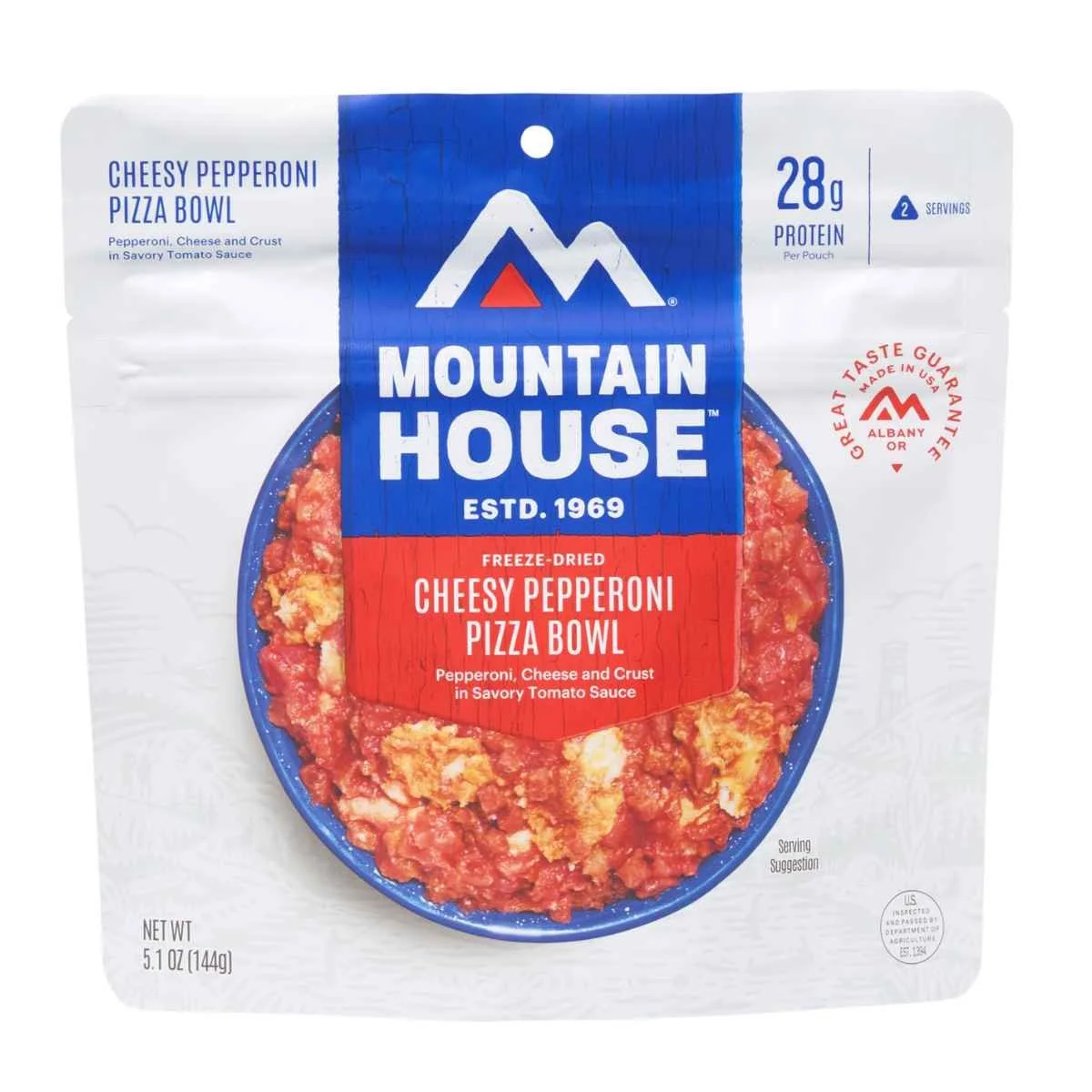
Editors’ Note: We waxed poetic here by writing an exquisite corpse-style review. This means someone writes a line, passes it to the next person who adds their line and hides the previous line, and so on. We asked some of our testers who have tried the Mountain House Cheesy Pepperoni Pizza Bowl to contribute to this exquisite corpse–here’s the resulting review.
This backpacking meal is like if a pizza were actually more like lasagna or ravioli, but you’ve been backpacking all day and don’t care because it’s the closest to hot pizza you’ve ever had in the backcountry. The Mountain House pizza won our Editor's Choice Award of 2025.
I have often packed out cold pizza in a ziplock bag, warmed it on top of my pack all afternoon, and eaten it for dinner; Mountain House dehydrated pizza is similar, but it takes the asking for a ziplock at the pizza place out of the equation.
As a highly food-motivated person, when the next section of trail features a monster climb, an icy traverse, a dangerous river ford, or horrendous bushwhacking, there is nothing like the Mountain House Pizza to motivate and comfort after a near-death experience.
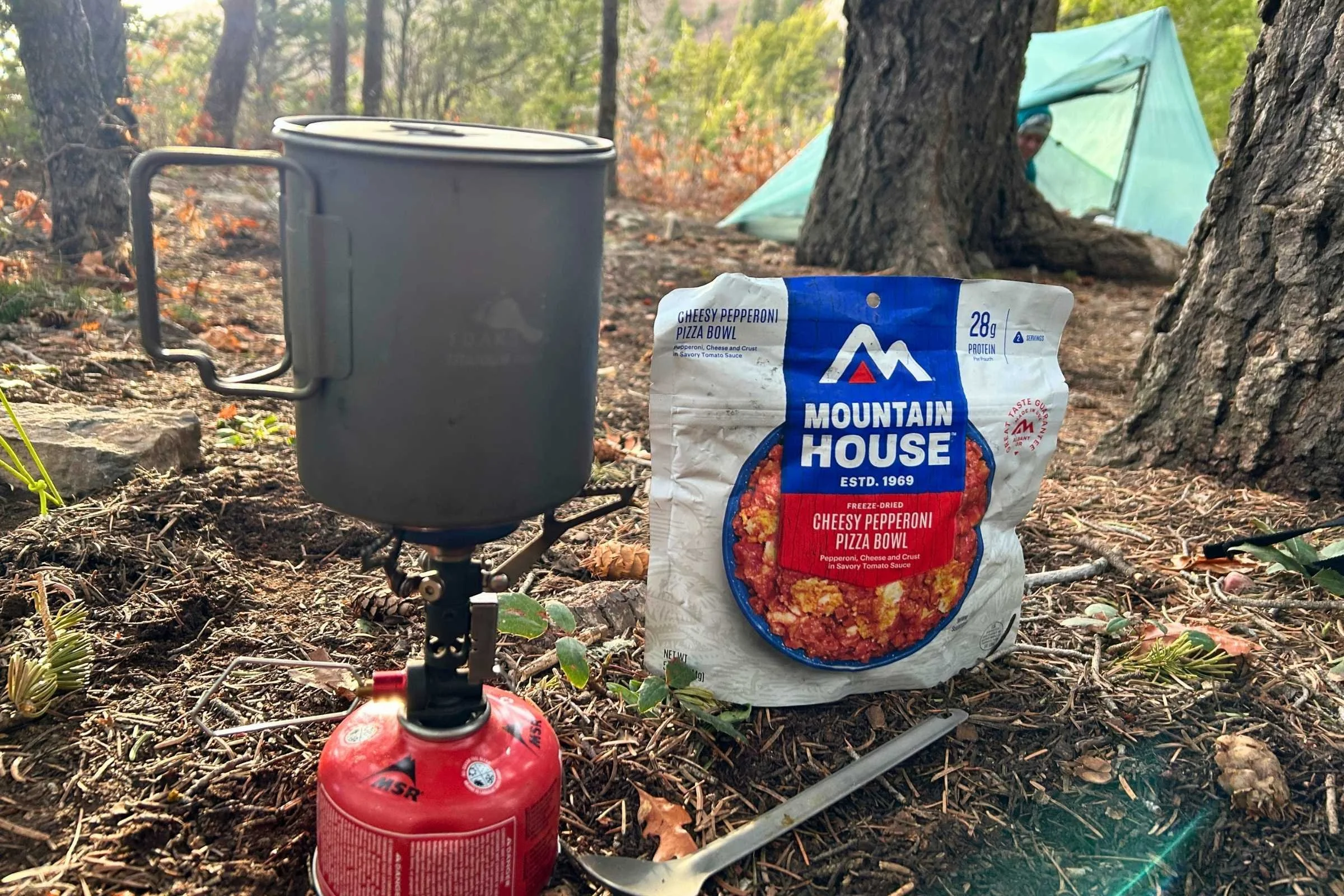
The only thing more comforting than sitting back with a bag full of delish pizza is customizing it with toppings—sure, we’ve got parmesan and red pepper packets—but Mountain House: where’s the dehydrated black olives, pepperoncini, and pepperonis?
Not everyone would classify gas station pizza as a meal worthy of craving, but those people probably aren’t thru-hikers. Those sorry souls out there eating nothing but trail miles and cold-soaked oats would love nothing more than a piping hot, overly salted slice of ‘za that’s probably been sitting under a heat lamp for too long. Thankfully, Mountain House Pizza tastes exactly like that and delivers all the carbs, calories, and flavors that hiker trash dreams are made of.
- Treeline Review Team

Taste (out of 10): 10/10
Serving size: 3.4 oz dry (380 calories, 10 g protein)
Fillingness: 8/10 (for the two-person), 4/10 (for the one-person)
Rehydration Time: 20 min
Packaging: I like that it has the water pour line printed on it
Digestion: No problems!
Food sensitivities: Gluten-free, peanut-free, tree-nut free, soy-free, pescatarian
I tested dozens of backpacking meals side-by-side for another publication, including doing blind taste tests with half a dozen non-backpackers. Backpackers and city folk agreed: the Good To-Go Thai Yellow Curry was the best of them all.
Made by a former 4-star chef at a fancy New York restaurant, it tastes better than take-out. Unlike many backpacking meals, it isn't all rice. While not a huge meal, it has a lot of visible real vegetables in a flavorful sauce that I dream of on trail. When I cleaned up after the big taste test, I tossed the leftovers of every backpacking meal, except this one. I put it in a Ziplock and carried it home on the train to eat for dinner on real plates at home. The only downside is the re-hydration time, but it's well worth it for one of the best meals I've ever eaten outdoors.

Taste (out of 10): 9/10
Serving size: 4.2 oz dry (510 calories, 24 g
protein)
Fillingness: 8.5/10
Rehydration Time: 15 minutes
Packaging: Rehydrates in its own package, sits upright on its own.
Digestion: Mac and Cheese is comfort food and I reserve this meal for days when I need something to go down easy
Food sensitivities: Contains Gluten and Dairy, is Vegetarian
When I am on trail I usually eat like a fancy toddler. I love mac and cheese and try to have it for one meal every trip. You can enjoy Backpacker’s Pantry Three Cheese Mac & Cheese as is, but my favorite thing to do with it is dress it up depending on my cravings and what I have in my food sack. I have carried beet powder and made pink mac and cheese with this on trail — adding a tablespoon or two will do the trick. I have also added dehydrated veggies like spinach, bell pepper, jalapenos, and sundried tomato. The mac and cheese base lends itself to becoming anything you need it to be.
If I had to pick one meal for the rest of my days it would be this mac and cheese because I can make it into anything else I need it to be and it is wonderful on its own.

Taste (out of 10): 10/10
Serving size: 3.5 oz, single serving, 490 cal, 17g protein
Fillingness: 7.5/10, a great breakfast serving; for brunch or dinner, I would add additional protein or a side dish
Rehydration Time: 5 minutes, stir well before sealing
Packaging: Easy and smooth to open, seal worked great and package could stand upright firmly
Digestion: No issues for me, but I could see how for some folks the amount of tomatillo could feel a bit acidic and the chile irritating
Food sensitivities: Spicy, vegetarian, eggs, dairy, avocado oil
Full disclosure, I am culturally biased, or maybe simply culturally informed. Chilaquiles have been my favorite food since I can remember. Growing up in Mexico, I’ve not only been exposed to different versions of this simple yet genius combination of flavors and textures (tortilla chips, salsa, protein, cream, queso), but baked chilaquiles were my late grandmother’s best dish.
Since moving to the US though, I’ve had to let go of my chilaquiles expectations because the quality just hasn’t been there. However, when I opened the Charge-Up Chilaquiles pouch, I blinked at my grandmother’s kitchen. A zesty hint of chile verde and tomatillo mixed with the warm masa of corn tortillas, and I was 7 again. Could it be that good? A cup of boiling water and 5 minutes later, that first bite tasted real enough to make me feel like I was eating straight from the oven plate. For me, the texture resembled more the oven version, with the tortilla a bit softer than the stovetop version, where the chilaquiles tortillas are crispier. It was a treat. I only wish I could’ve had seconds.
If you already like tortillas or tortilla chips, tomatillo salsa, huevos, and beans and can handle chile kicks, you might be ready for this authentically imported flavor from México.
- Gabaccia Moreno, Contributing Writer

Taste (out of 10): 10/10
Serving size: 3.7 oz (560 calories; 37g protein)
Fillingness: 10/10 (if you wrap it in a tortilla and use condiments)
Rehydration Time: 15 minutes
Packaging: Easy to rehydrate in the package provided; not as bulky as other brands
Digestion: No issues, and I am sensitive to most freeze-dried meals
Food sensitivities: Gluten-free, high protein/keto friendly
Let’s face it, we all crave burgers after a few days out in the backcountry. This is the only meal that actually calms that craving for me! Super high protein, excellent flavor and texture. Any friends and relatives who insist on getting me gifts know getting me some of these will always make me happy.
The Dab’s Smash Burger with Secret Sauce is seasoned ground beef with minced onions and cheese. It comes with packets of ketchup, mustard, mayo, and relish. I wrap it in a large tortilla and add the condiments, and it tricks me into thinking I am eating real food. The overall flavor resembles a fast food cheeseburger.
- Melissa Spencer, Web Production Team and Contributing Writer

Taste (out of 10): 10/10
Serving size: 3.8 oz (dry) for a 2 serving, 440 calorie pouch
Fillingness: 9/10, if you eat the whole pouch
Rehydration Time: 10 minutes
Packaging: Compostable and omnidegradable (meaning it will eventually decompose in an anaerobic landfill)
Digestion: No issues (all those chia seeds are great for backcountry digestion)
Food sensitivities: Vegan and gluten free
I usually pack my own homemade oatmeal for backpacking trips — oatmeal is just oatmeal, right? Why splurge on a fancy prepacked version? Farm to Summit quickly changed my mind on that.
Oats are often a “boring but light and gets the job done” kind of camp breakfast, but the Golden Oats are decidedly scrumptious. There are some expected ingredients, like slivered almonds, but this breakfast takes both flavor and texture to the next level. Quinoa adds a nice chew to each bite, and shredded carrot and turmeric bring complexity and a touch of savory to balance the maple sugar and coconut. Loaded with chia seeds and hemp hearts, this is a hearty and delicious meal worthy of dreamy mornings in the alpine.

Taste (out of 10): 10/10, however I do add salt
Serving size: 3.4 oz dry per 1-person serving, (410 calories, 13g protein)
Fillingness: 6/10 (I used to divide the now-discontinued 2-serving pouch into two single servings)
Rehydration Time: 20 minutes
Packaging: Clear instructions and sturdy pouch for reheating.
Digestion: No issues that I’ve noticed
Food sensitivities: Gluten-free, vegan, contains walnuts, plant based
This is by far my favorite backpacking meal. Not only that, I will eat this when car camping too because it is just that good. I like to add salt and freeze dried veggies so that I can get more greens into my diet, but you can also eat it without the extras.
While backpacking to Whitney, I looked forward to this meal every night of the 5 days we were on the trail. I never once got tired of it and couldn’t wait to reconstitute the meal and dig in. I typically split the portion into two freezer bags so I have more control over the portion size, and I use a koozie for rehydrating so it takes less time. The consistency of the meal is thick and hearty with an amazing flavor. It’s hard to believe this is a dehydrated meal! I hope they never stop making this because I really don’t want to eat anything else on the trail!
Taste (out of 10): 11
Serving size: 1
Fillingness: Very filling
Rehydration Time: 11-13 minutes
Packaging: Sturdy and stout Mylar tear-open pouch
Digestion: No, except wanting more
Food sensitivities: Shellfish, dairy, wheat
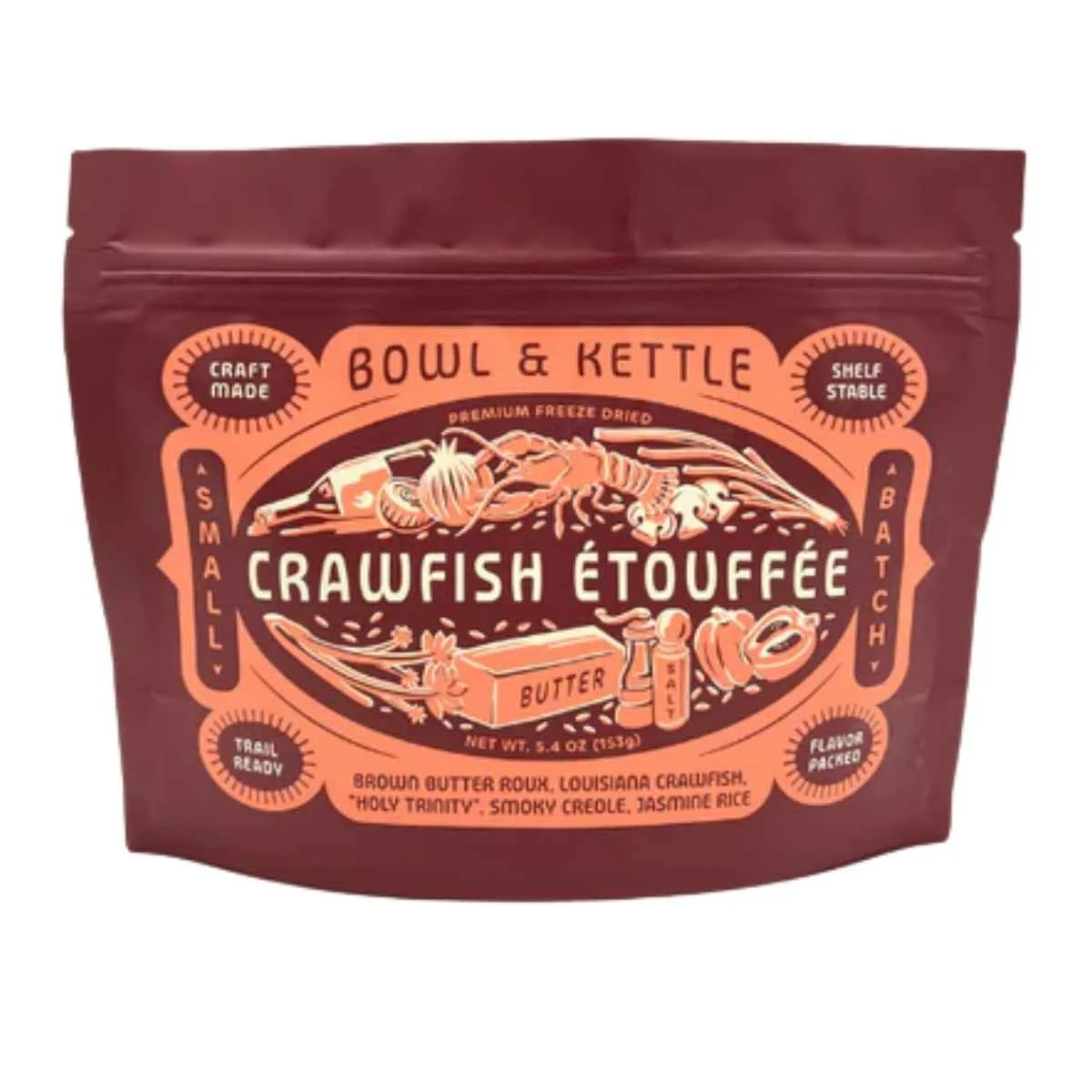
I didn't know what Crawfish Étouffée was before I took a chance on this meal. I'm also not a huge seafood eater and am mildly allergic to shellfish. But I ate it anyway… and it was one of the best backpacking meals I've ever had! This creamy, filling, buttery, complex-flavored meal is unlike anything I've had in the backcountry. It doesn't even feel like backpacking food.
Bowl & Kettle's Crawfish Étouffée was so good that after I ate it, I was inspired to order Étouffée at an expensive Cajon restaurant. It wasn't as good as Bowl and Kettle's version. This meal is so good, I'd eat it at home…if I wanted 630 calories and 25 grams of fat at once (100% what I want on trail!)
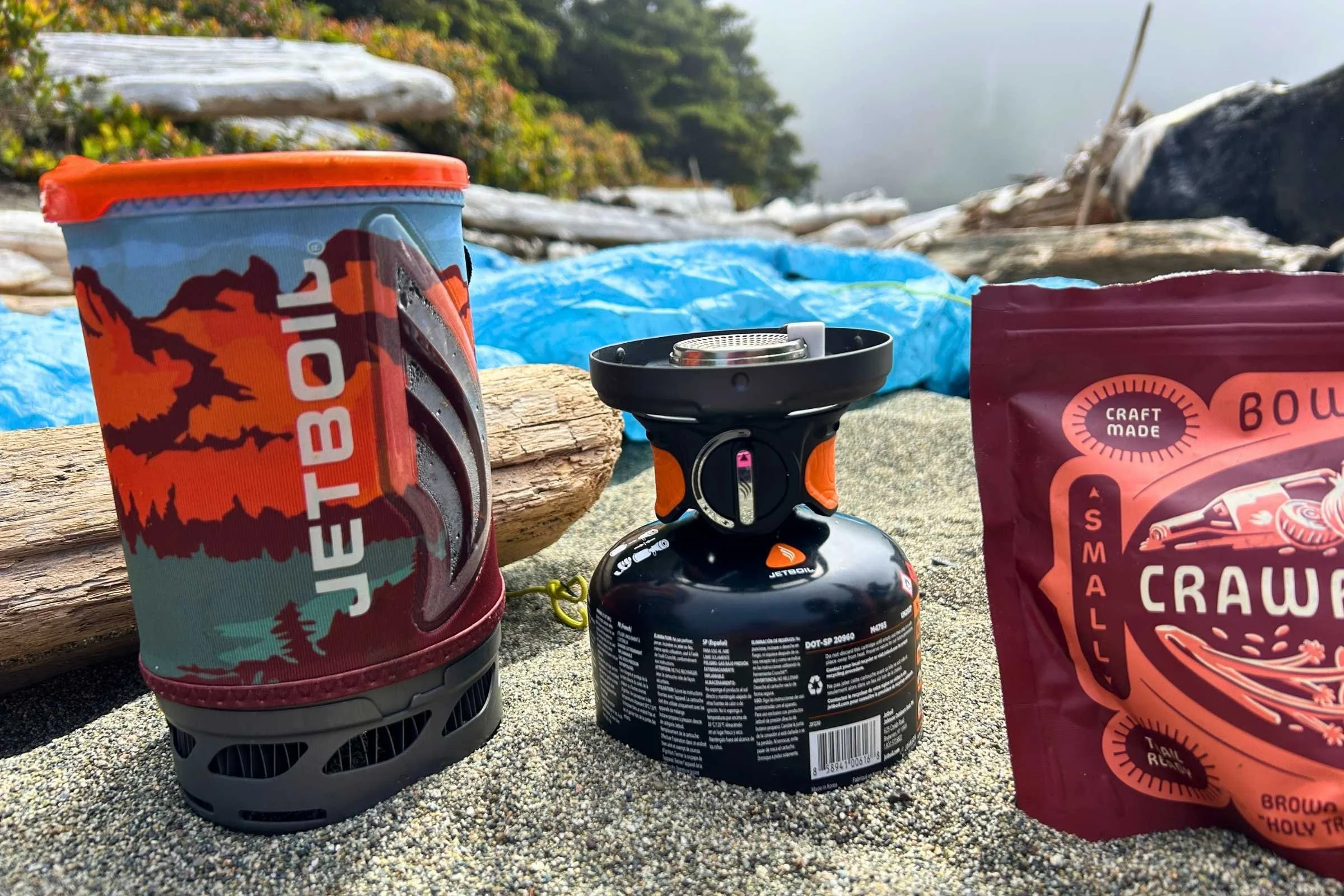
Eating Crawfish Étouffée on the beach on a thru-hike of the West Coast Trail
All the ingredients are whole food items and it comes with a Louisiana Hot Sauce packet, if you want more spice. There are large mushrooms and real pieces of crawfish and it feels like real food. The texture is incredible and the quality of the ingredients is clear.
As with other Bowl and Kettle meals, the pouch stays upright and closes well after being filled with boiling water. At sea level on my West Coast Trail thru-hike, it took a lot less time to rehydrate than a lot of backpacking meals.
Étouffée is a unique flavor I haven't seen from any other backpacking meal brand, and boy, did they pull it off! Bowl and Kettle only makes three flavors and they knock it out of the park on this one. Although Étouffée isn't the most allergen-friendly flavor, if you can eat these ingredients, then absolutely try this meal!
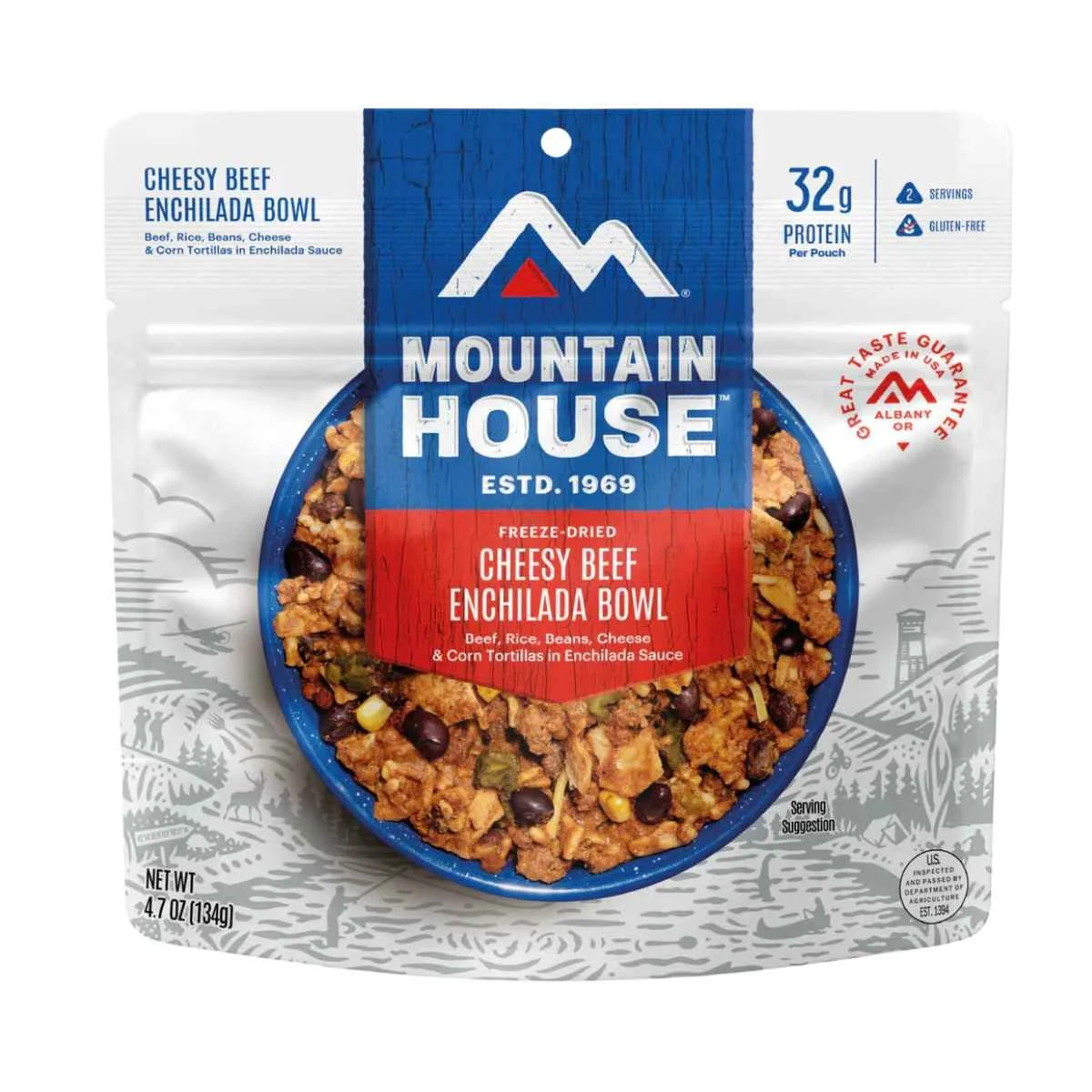
Taste (out of 10): 9/10
Serving size: 4.7 oz dry (660 calories, 32 g protein)
Fillingness: 9/10 (for two servings)
Rehydration Time: 15 min
Packaging: Easy to rehydrate in the package provided, and the bottom expands to easily stay upright while you add water
Digestion: No problems
Food sensitivities: Gluten free, contains milk
The Mountain House Cheesy Beef Enchilada Bowl features seasoned beef, corn tortillas, a cheesy blend, rice, black beans, and veggies. It’s hearty, satisfying, well seasoned, and so delicious. If you have the space, you can upgrade this meal with salsa and tortilla chips.
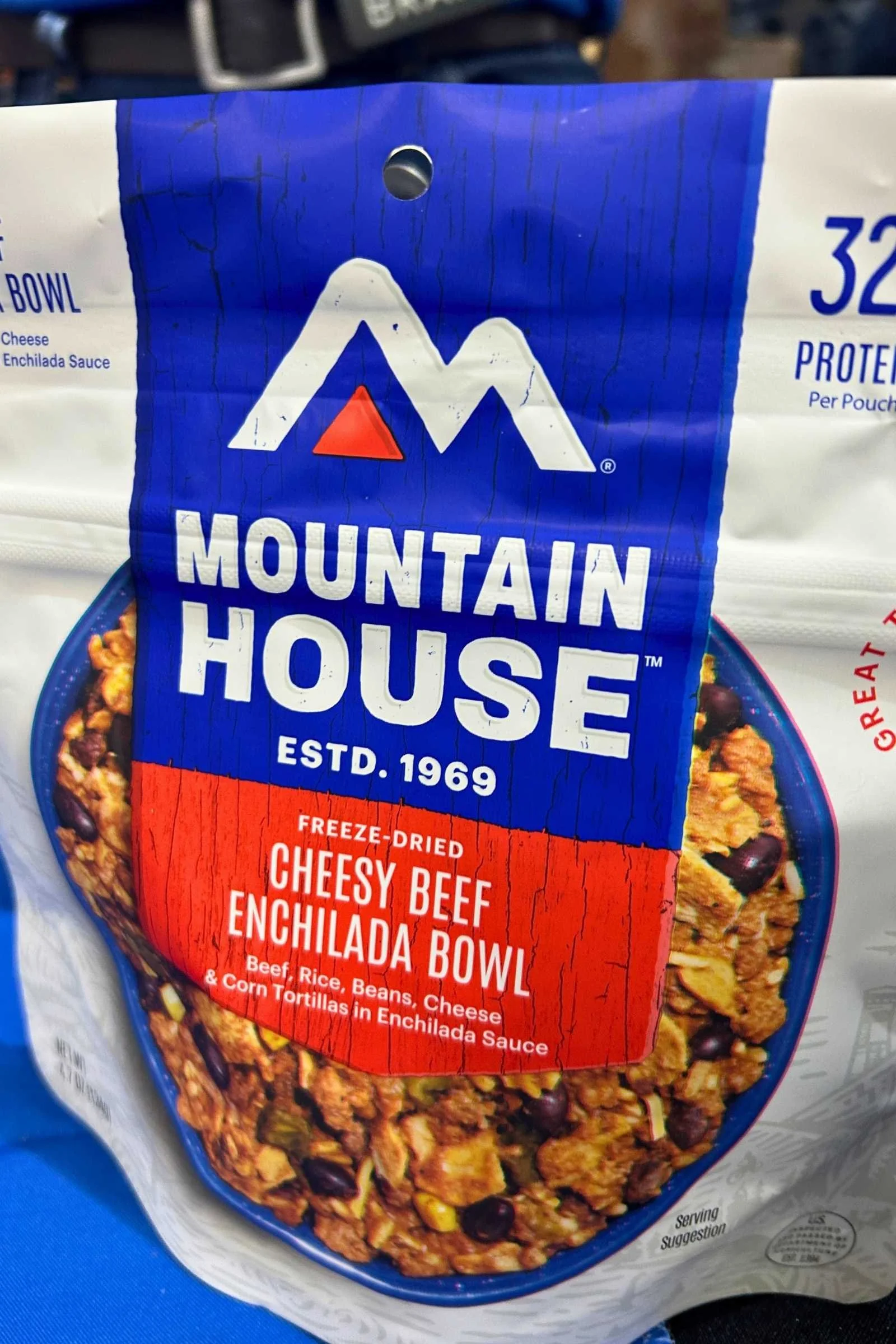
Mountain House’s packaging makes it easy to rehydrate the meal–just boil 1.5 cups of water, pour into the open pouch (after removing the oxygen absorber!), close and wait 8 minutes, stir, and let sit for another 7 minutes. The packaging is sturdy enough you can set it upright and eat out of it, so no extra dishes are required.
Beyond the taste and fillingness, I also love the Cheesy Beef Enchilada Bowl because it is soy free, which I need and is hard to come by in the packaged-food realm.

Taste: (out of 10) 10/10
Serving size: 3.0 oz (dry) for a 1-serving, 370 calorie pouch
Fillingness: 8/10 - I’m satisfied eating the whole pouch without feeling stuffed
Rehydration Time: 10 minutes
Packaging: A slim, square, zip-top, cook-in pouch
Digestion: This is a “gluten-conscious” meal, which means that while its contents are gluten-free, it is made in a facility that does process gluten-containing foods. As someone who has a hard time processing gluten, I haven’t had an issue with cross-contamination and feel safe eating these; someone with Celiac disease may not.
Food sensitivities: Contains meat and dairy; gluten-free, but made in a facility that processes gluten
While I love dehydrating my own backpacking food, sometimes I really just want somebody else to do the work. That is, somebody who knows how to whip up something that tastes heavenly enough on trail to feel like a worthy splurge. Enter the good folks at family-run PackitGourmet.
Back in the day, they used to offer a breakfast delight that was a riff on that icon of Tex-Mex breakfast dishes, migas. The meal was memorable enough that I can still recall every place I ate one on the PCT. I was heartbroken, then, when it was discontinued, but delighted to discover their fantastic polenta with pork sausage in its stead. This is saying a lot, because I almost never eat meat. Here, it’s worth it for me: the well-seasoned pork crumbles provide not just a touch of protein, which I generally lack for on long trails, but also some salty, savory hits in a satisfyingly creamy, cheesy, herby cornmeal base.
I eat it as a special breakfast, usually on a day when I both have the time to savor a meal and when I know I’ll want a little pick-me-up to start the day right. I’m not too proud to swipe my grubby little fingers around the inside of the bag once I’ve finished — dirt don’t hurt, as they say, but leaving a morsel uneaten sure would.
Taste (out of 10): 9
Serving size: 1
Fillingness: Dessert filling
Rehydration Time: None
Packaging: Sturdy plastic tear-open pouch
Digestion: No issues if you’re okay with dairy
Food sensitivities: Dairy
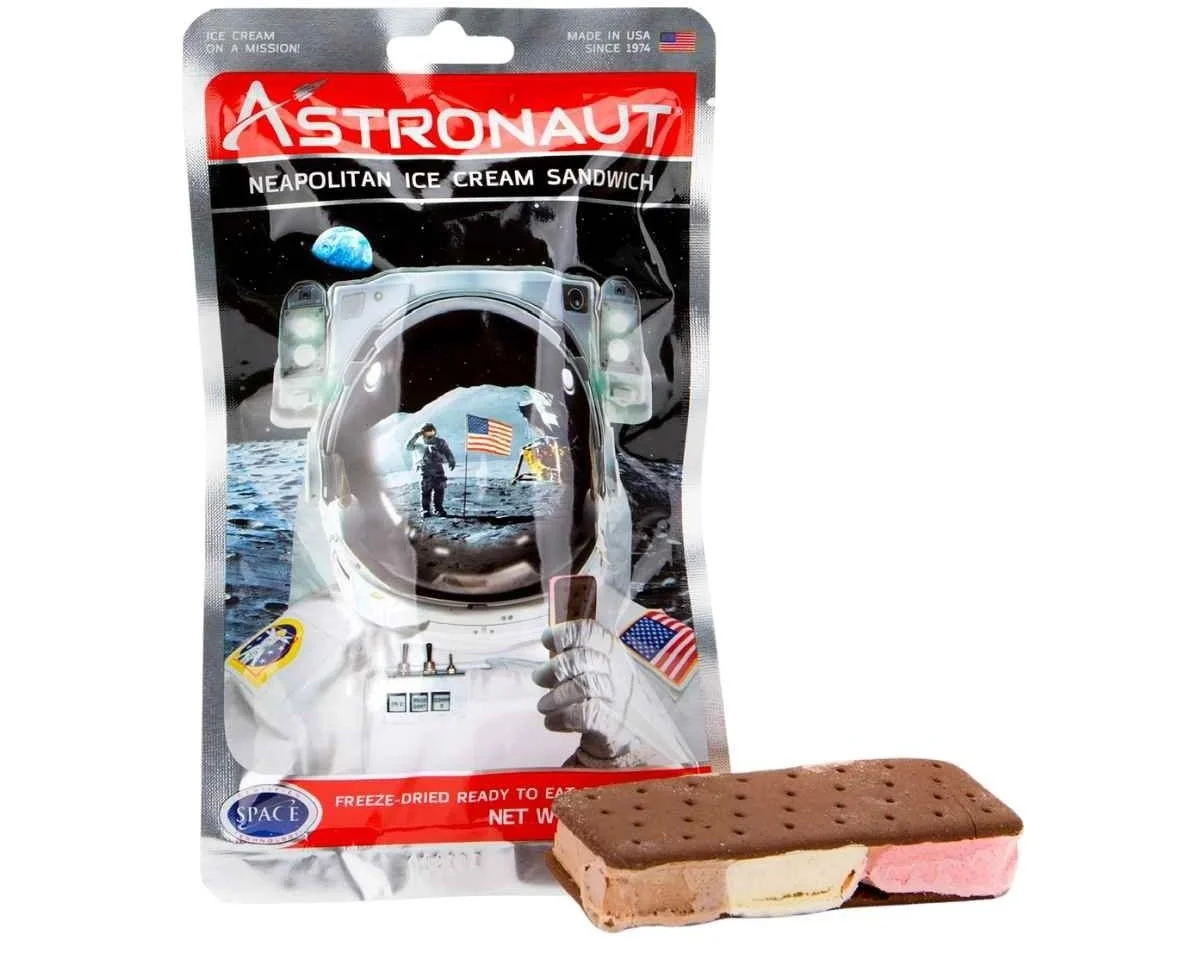
Okay, so ice cream is definitely not a meal. However, no meal is complete without dessert, and what dessert is better than ice cream? Plus, this is a sandwich, which technically makes it more meal-like than a bowl (or pouch, in this case) of ice cream.
Astronaut Ice Cream tastes just like the classic ice cream sandwich you can buy by the dozen from the grocery store. It isn’t cold, so it’s not the same on a hot evening. But when you’re miles away from the nearest freezer, this ice cream sandwich is the best you’re going to get. The texture is admittedly a little strange, too, since it’s the same temperature as the air and crunchy when you’re expecting soft, cold, and creamy. But the flavor is spot on, and the texture is fun once you get over the fact that it’s not a bowl of ice cream.
Whenever I eat one of these for dessert, it feels special, and meals in the backcountry should feel special, including what you have for dessert.
What to look for in a backpacking meal
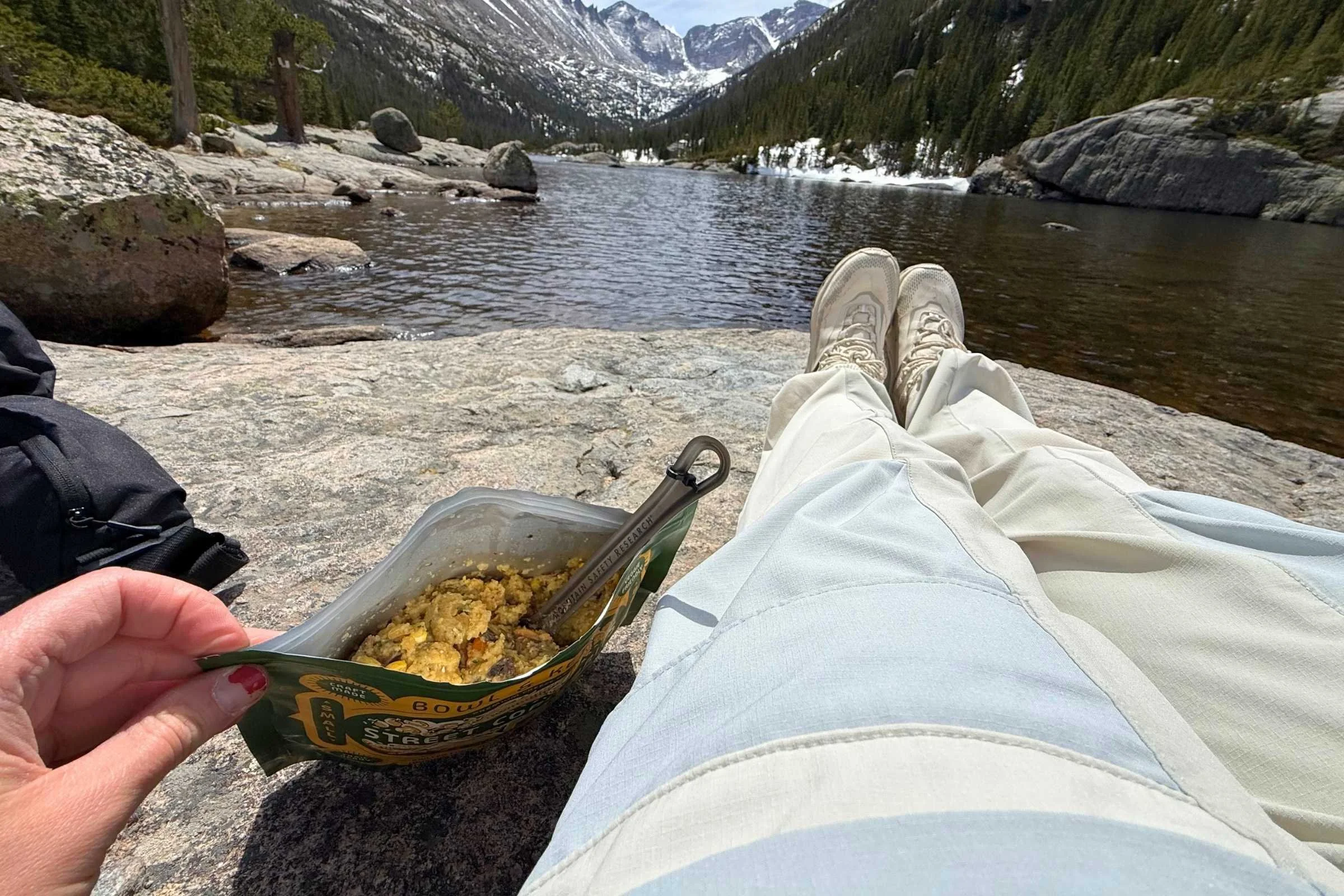
Calories and calorie density
After a long day on trail, you're going to be hungry in a way that's hard to anticipate sitting at home packing your food bag. Most backpackers need somewhere between 2,500 and 4,500 calories a day depending on mileage, elevation, and body size. For freeze dried and dehydrated meals, we look for at least 400-500 calories per serving for a dinner, and we pay attention to calories per ounce since every gram in your pack adds up. The Pinnacle Foods Jalapeño Biscuits and Gravy, for example, clocks in at 800 calories for a two-person serving — one of the most calorie-dense meals we tested.
Protein
Protein matters more on trail than most people expect. Your muscles are working hard and recovering overnight, and a meal that's all carbs will leave you feeling hollow by morning. We generally look for at least 20 grams of protein per dinner serving. Several meals on this list punch well above that — the Packit Gourmet Smashburger hits 37 grams, which is exceptional for a backpacking meal.
Rehydration time and method
This matters a lot more when you're tired, cold, and hungry at camp. Most of the meals we recommend rehydrate in 10-20 minutes directly in the bag, which means no extra pot to clean. A few, like the Good To-Go Thai Curry and Mushroom Risotto, need a full 20 minutes — worth it for the flavor, but good to know before you're sitting in the dark waiting for dinner.
Taste and texture
This sounds obvious, but it's worth saying: a lot of backpacking meals taste like cardboard reconstituted with hot water, and that gets old fast on a long trip. We only included meals that we actually look forward to eating on trail, not just meals that are tolerable when you're hungry enough to eat anything. Several of us have eaten our picks on multiple trips and still get excited about them.
Dietary needs
Gluten, dairy, nuts, FODMAPs, meat — backpacking meals can be a minefield if you have food sensitivities. We've noted dietary flags for every meal on this list. If you have specific restrictions, Katie Hawkes' pick for the Farm to Summit Green Chile Mac and Cheese is worth reading — she has FODMAP sensitivities and finding a meal without onion or garlic nearly brought her to tears.
Packaging
Cook-in-bag meals are worth their weight in convenience — no pot to wash, less water used, less mess. We also appreciate bags that stand upright on their own, have a clear water fill line, and reseal well. The Farm to Summit meals use compostable packaging, which is a meaningful bonus if you care about what you're leaving behind.
FAQ
-
Most backpackers need between 2,500 and 4,500 calories a day, depending on how hard you're working, how much elevation you're gaining, your body size, and the temperature. Cold weather and big miles push you toward the higher end fast. A good rule of thumb is to aim for at least 100 calories per ounce of food when building your food bag.
-
Freeze drying removes moisture by freezing food and then reducing pressure so the ice turns directly to vapor, which preserves flavor and texture much better than traditional dehydration. Freeze dried meals typically rehydrate faster and taste closer to fresh food. Dehydrated meals are made by applying heat to remove moisture — they're often cheaper and lighter, but can have a chewier texture and longer rehydration times. Several meals on this list, including the Good To-Go and Farm to Summit options, use a combination of both processes. You can make your own dehydrated meals in a home food dehydrator for an affordable price. A home freeze dryer is unlikely to be economical for most backpackers.
-
Most freeze dried meals just need boiling water, which means you need some kind of backpacking stove or camping stove or a campfire. You'll also need a cook pot. However, many meals — including several on this list — can also be cold soaked, meaning you add cold water and wait longer for them to rehydrate (we recommend re-using a Talenti gelato jar for a leakproof cold soak jar). If you're going stoveless, check the meal's instructions first, since texture and rehydration time vary significantly with cold water.
-
Most commercially freeze dried backpacking meals have a shelf life of 5 to 30 years when stored properly, meaning in a cool, dry place away from direct sunlight. This makes them great for stocking up during sales or building an emergency food supply for an emergency preparedness kit or for a backcountry road travel emergency kit. Dehydrated meals generally have a shorter shelf life, typically 1 to 5 years.
-
At $10-$16 per meal, they're not cheap. But when you factor in the weight savings, the convenience of cook-in-bag prep, and the fact that eating something genuinely good at the end of a hard day has a real effect on morale, most frequent backpackers find them worth it. If you're on a budget, making your own dehydrated meals at home is a good option — check out our Best Food Dehydrators for Backpacking guide for more on that.
-
Most meals need between 1.5 and 2.5 cups of water, and the bag usually has a fill line printed on it — one of the small details we actually look for when reviewing packaging. Boiling water speeds up rehydration significantly, and insulating the bag with a koozie or wrapping it in your puffy while it rehydrates makes a noticeable difference, especially in cold weather. Nicole Snell swears by this method for the Good To-Go Mushroom Risotto.
-
If you are looking for nourishment for the trail, we recommend eating Energy Bars and Protein Bars throughout the day while supplementing with nuts, dried fruit, cheese, jerky, and crackers. To prevent bonking or when blood sugar is very low, we like energy Chews and Gels. These trail foods are lightweight, convenient, and contain nutrition that many backpackers need while out for the long haul.
How we researched and tested
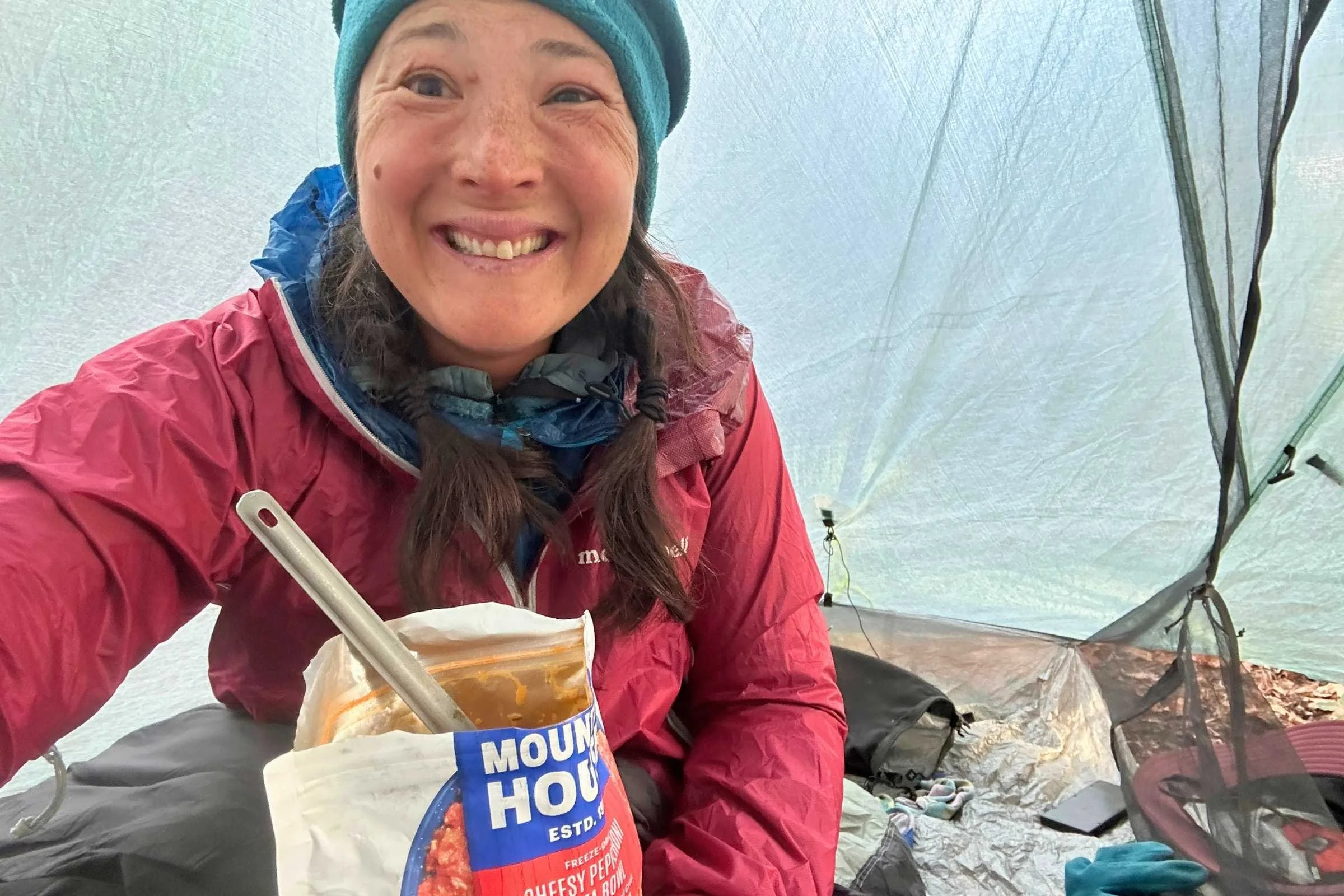
Between us, Treeline Review writers have eaten well over 500 commercially-sold freeze dried and dehydrated backpacking meals across thousands of nights on trail — car camping trips, multi-day bikepacking routes, section hikes, and thru-hikes including the John Muir Trail, the PCT, and the Continental Divide Trail. Several of our writers lead workshops on thru-hiking nutrition and resupply, which means we think about trail food more than most people probably should.
For this guide, we judged every meal primarily on flavor and texture, because a meal that's nutritionally solid but tastes like wet cardboard isn't something we'd recommend to anyone. From there we looked at fillingness and actual serving size relative to what's claimed on the package, rehydration time and method, how the packaging performs in the field, digestion, and suitability for common dietary restrictions including gluten, dairy, nuts, meat, and FODMAPs.
Some meals were tested in more controlled settings — Liz Thomas ran blind taste tests with non-backpackers alongside dedicated backpacking meal comparisons — while others earned their place through years of repeat use on real trips. The Mountain House Breakfast Skillet got its recommendation from Aubri Drake after multiple John Muir Trail section hikes. The Good To-Go Mushroom Risotto was Nicole Snell's dinner for five consecutive nights on the way to Whitney and she'd do it again. Shawnté Salabert has been eating PackIt Gourmet since her PCT days. We also prioritized meals that multiple Treeline Review writers recommend (they often fought over who got to write it up). We only included meals that writers have eaten more than once and still want to eat again.
- Thru-hikes & long-distance trails
- Bikepacking trips
- Car camping & base camping
- Cold-soaking & stove-cooked methods
- Tested with various dietary needs
- Taste & texture after rehydration
- Calories, protein & fillingness
- Rehydration time & ease of prep
- Digestion on trail
- Dietary sensitivity options
Why you should trust us
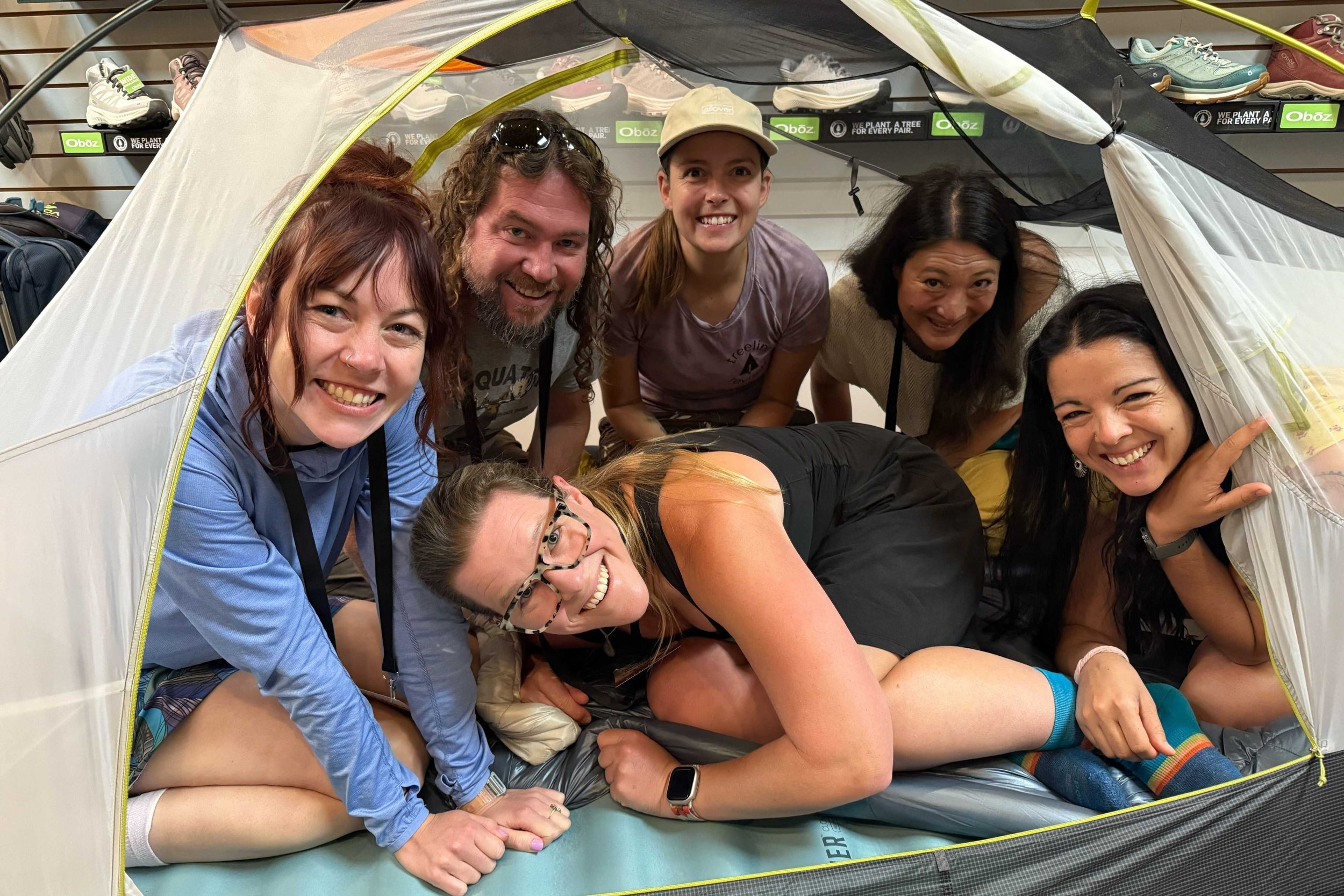
Treeline Review writers have eaten at least a hundred different dehydrated and freeze-dried backpacking meals. In addition, Treeline Review writers have led workshops on What I eat during a thru-hike and Backpacking Nutrition and Resupply Tips. Treeline writer and web production team member Melissa Spencer makes her own backpacking food and wrote our best food dehydrator for backpacking meals.
Many of us have covered backpacking food for other publications. However, this guide includes all of our favorites, with meals verified by other Treeline Review writers. At Treeline Review, we want you to buy backpacking food right the first time–so you don't ever had a bad meal outdoors.