
Best Men's Trail Running Shorts of 2026
Men’s shorts for running on trails with and without liner, for racing, and compression
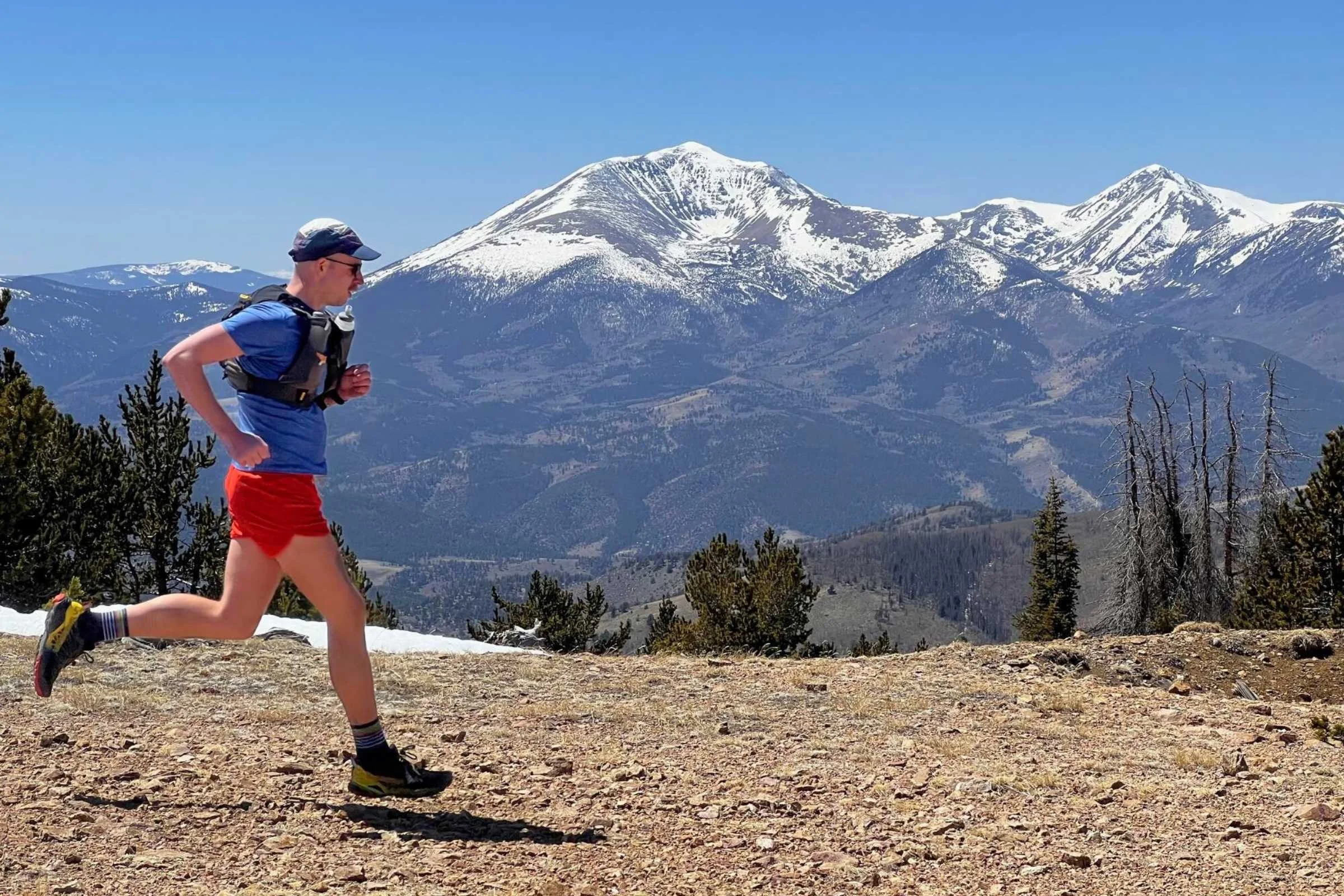
April 14th, 2026, with a new winner for best affordable, two new shorts tested, and to remove discontinued products
Home > Gear Reviews > Running
Shorts are probably the second most important piece of running gear after shoes, and on the trail they earn that ranking fast. The wrong pair can chafe after an hour, bounce a phone out of a pocket on a descent, or leave you fumbling with a waistband on a steep climb. Get it right and you stop thinking about them entirely, which is the whole point.
I've tested these shorts across the foothills of San Isabel National Forest, the Sangre de Cristos, and the lower Sawatch Range in Colorado, logging runs from 90 minutes to five-plus hours in temperatures ranging from 45 to 85 degrees. Around 9,000 combined miles of running and hiking inform how I think about this gear, and I run almost every day out of Salida, CO, so I have strong opinions about what actually works when the trail gets steep or the conditions get weird.
What separates a good trail running short from a mediocre one usually comes down to a handful of things: how the liner fits your body, whether the waistband stays put when pockets are loaded, how the inseam length interacts with your stride, and whether the whole thing can handle five hours without creating a hot spot somewhere. We also looked at pocket functionality, fabric breathability, and versatility for runners who want one pair that works for daily training and the occasional race.
Top Pick: The Patagonia Strider Pro 5" earns our Best Overall award. It stood out for its uniquely functional envelope-style pocket design, a brushed no-chafe waistband, a recycled fabric that stays fresh longer than most, and a fit that held up across two-plus years of testing from short trail runs to all-day alpine objectives with zero chafing.
Related: Best Women's Trail Running Shorts
We create reader-supported, objective gear reviews independently selected by our editors. This story may contain affiliate links, which help fund our website. When you click on the links to purchase gear, we may get a commission — without costing you an extra cent. Thank you for supporting our work and mission of outdoor coverage for every body! Learn more.
Comparison Table for Men’s Trail Running Shorts
| RUNNING SHORTS | TREELINE AWARD | MSRP* | SIZES | LINER? | # of POCKETS | PHONE POCKET? | ZIP POCKET? | INSEAMS (IN) | FABRIC | LINER FABRIC |
|---|---|---|---|---|---|---|---|---|---|---|
| Patagonia Strider Pro | Best Running Shorts Read why |
$89 | S-XL | ✅ | 5 | ❌ | ✅ | 5 | Recycled stretch ripstop polyester | 58% polyester, 42% recycled polyester crepe |
| Tracksmith Van Cortlandt | Best Shorts for Racing Read why |
$75 | XS-XXL | ✅ | 2 | ❌ | ❌ | 4 | 82% Polyester, 18% Spandex | Mesh |
| REI Active Pursuits Shorts | Best Affordable Running Shorts Read why |
$45 | S-XXL | ✅ | 3 | ❌ | ✅ | 7 | 86% polyester, 14% spandex (bluesign® approved) | Recycled polyester |
| BALEAF Laureate 5" | Best Shorts without a Liner Read why |
$30 | S-XXXL | ❌ | 3 | ❌ | ✅ | 5 and 9 | 95% Polyester, 5% Spandex | n/a |
| CW-X Stabilyx Ventilator Joint Support Compression | Best Compression Shorts Read why |
$90 | S-XL | ❌ | 1 | ❌ | ❌ | 10.5 | 80% Coolmax® Polyester, 20% Lycra® Spandex and mesh | n/a |
Best Trail Running Shorts for Men
Best overall trail running shorts: Patagonia Strider Pro 5”

Phone pocket? Yes, for some phones
Sizes: XS-XL
Inseams: 5” and 7”
Waistband: Flat / Drawstring
What we liked: Pocket design, waistband, and fabric feel and (non)smell, eco-friendly fabric
What we didn’t like: We had no issues, but want to recognize some customers have had complaints about the short’s durability for its price
The Patagonia Strider Pro 5” shorts have a unique pocket design for running-specific use, a brushed, no chafe waistband, and a generally lightweight feel. The Strider Pros are our overall men's running shorts winner also our best shorts upgrade winner in our Best Shorts for Thru-hiking guide.
We've spent more than two years running in the Strider Pros–from a series of many 1-2 hour trail runs to 5-hour runs with hiking and scrambling to all-day outdoor events. On these runs, we experienced no chafing and no sign of sweat saturating the shorts (during a really dry season in Colorado).
We especially appreciated the pockets on the longer trail run for easy stashing of a wind shell on a day full of movement on an alpine ridgeline. There are 4 unique envelope-style pockets on the sides of the shorts and one more secure pocket on the rear of them. Some reviewers noted that the pockets were adequate to fit modern phones, but we found that claim to be a bit of a stretch — literally.
Patagonia updated the new model to be made of a more sustainability-minded fabric that is also a little lighter and more air-y feeling than before—and that’s saying a lot considering the comfort of these shorts.
Compare Prices Of The Patagonia Strider Pro 5”


-
The Patagonia Strider Pro shorts is made of 90% recycled polyester/10% spandex. The polyester has been sourced from coastal communities at risk of plastic pollution and certified by OceanCycle. It's also treated with a DWR (durable water repellent) finish that's made without PFCs (perfluorinated chemicals). PFCs in waterproofing in outdoor apparel is an environmental issue many brands are taking on and REI will no longer sell apparel with PFCs in 2025.
Additionally, many states are banning or regulating PFCs in outdoor apparel. It's also now made with Fair Trade certified sewing. As with the old model, it meets bluesign criteria to ensure the supply chain is safe for the environment and workers.
In our measurement, the new model weighs 0.1 oz more than the previous model.
-
Our reviewer uses the iPhone SE (smaller than most) in a LifeProof case; they found that the long-term carrying of heavy, bulky items like a phone would probably damage the pockets, elastic closures, or the zipper in the short’s rear pocket. The pockets are best for wind shells, nutrition, keys, an ID, and other lightweight items.
-
We tested the 5" length and it's also available in a 7" length for taller people or those who want more modesty.
-
These shorts have excellent mobility and range in motion thanks to their small split on the thigh, light fabric, and dialed fit for our reviewer. We didn’t have any issues with these shorts during testing, but we want to highlight some customer complaints.
Some reviewers note that the most recent iteration has a liner that feels "firm." We found the liner on the Patagonia Strider short to be appropriately supportive, but runners on the cusp of sizing might consider sizing up. Some customers also mention durability issues for shorts at this price, and while we could see the fabric ripping on a tree branch or from a fall, it didn’t happen during testing. One thing we considered with this critical feedback in mind is Patagonia’s history of responsive, helpful customer service.
-
Overall, given the ease of use, support, pockets, and lack of chafe, we think the Patagonia Strider Pro are the best men's running shorts for trail and road running.
Looking for running gear? Check out our dedicated Running page for more articles:
Best trail running shorts for racing:
Tracksmith Van Cortland
Phone pocket? No
Sizes: XS-XXL
Inseams: 4”
Waistband: Flat / drawstring
What we liked: Modern take on the race short to be more versatile
What we didn’t like: Liner can ride up at the start of the run. The minimalist design may deter some.
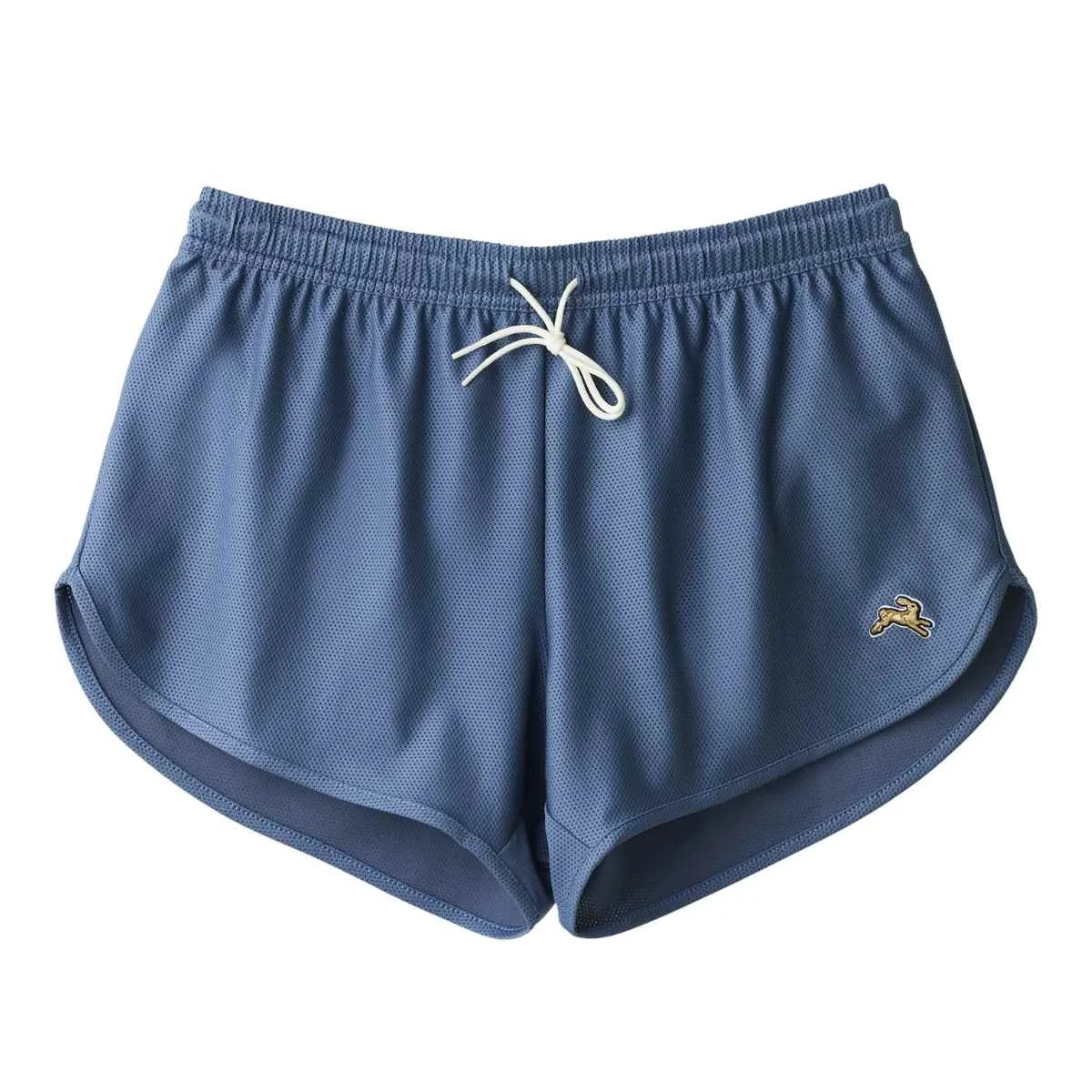
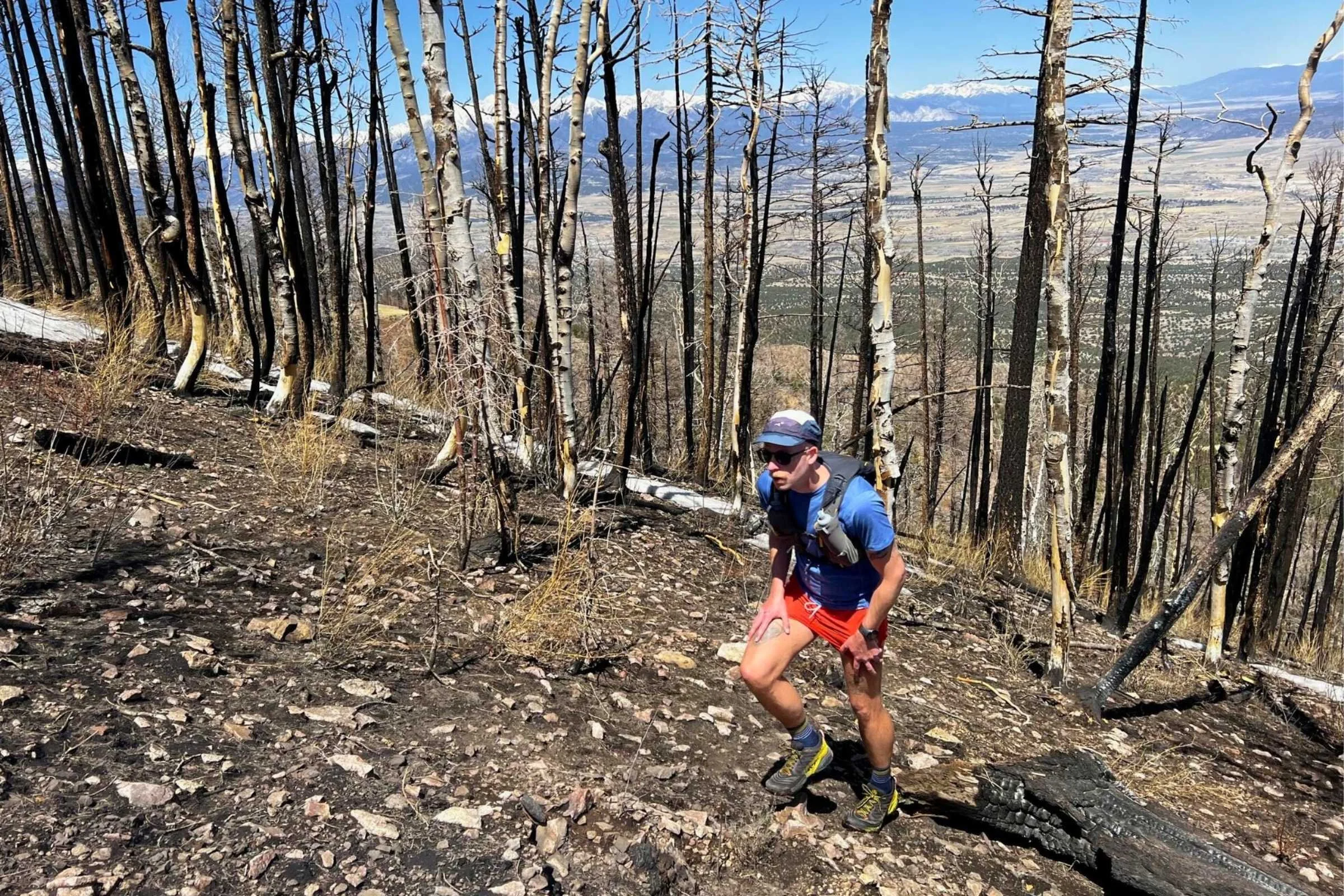
The Tracksmith Van Cortlandt is the best running short for racing. The Van Cortlandt has a 4” inseam with a small split and a beautifully tapered rise leading from the inner thigh to the outer. The 4” inseam is an inch or two longer than a lot of shorts designed around racing. We found this length to be the sweet spot for trail running that retains the freedom of movement from shorter shorts (likely due to the very stretchy “2:09 mesh” and cut of the shorts) and strikes a modesty level that specialty race shorts do not.
View The Tracksmith Van Cortland

-
The Van Cortlandt is a great candidate as a daily runner for those out there who prefer a shorter short in general. If not a daily runner, these shorts could serve well as those race day shorts when you want a special kit to match the feeling of joining other runners to achieve a personal best and experience community.
-
The Van Cortlandt is also a good option if you prefer a minimal short. It has only two open pockets on the inside of the rear. We didn’t bother trying to use these, as they didn’t inspire confidence regarding security and came off as more of an afterthought relative to the rest of the short’s design.
For a trail running race, you'd want to pair these shorts with a running hydration vest or be very confident in your crew and aid stations.
-
We found the liner of these shorts to ride up at the beginning of a trail run. It always settled in with a bit of sweat but is something to keep in mind.
-
Some reviewers did find the shorts to run a little on the small side. With a 32” waist, our reviewer fell on the lower end of their medium, which he wore. He didn’t find them exceptionally roomy or loose, so sizing up may resolve the liner issue.
Best affordable men's trail running shorts:
REI Active Pursuit 7”

Phone pocket? Two pockets
Sizes: S-XXL
Inseams: 7”
Waistband: Flat / drawstring
What we liked: Modest price, comfortable liner
What we didn’t like: More casual than some of our shorts
While not the cheapest shorts on our list, we found the REI Active Pursuit 7” shorts to be the best value, priced at $44.95 – a price that hasn't gone up in a year despite inflated prices on most of the outdoor gear we've seen. That’s before applying the 20% discount codes that REI offers to members during several sales throughout the year!
View The Rei Active Pursuit 7”

The REI Active Pursuits 7” strike a balance of features, versatility, and price. Photo by Justin Walker
-
The shorts sport a small, zippered pocket on the right side of the shorts for smaller items like your ID and keys. One reviewer remarked that they ran a marathon and kept gels securely in the larger side pockets. As a bonus, that marathon runner experienced no chafing, and neither did we during our testing.
-
While our reviewer preferred some of the more nuanced design choices found on the Patagonia Strider Pros regarding pockets, waistband style, and length, it doesn’t lessen the value of these Active Pursuit shorts from REI. They’re versatile; you can comfortably use them for trail running, but also for the gym and swimming.
They boast an advertised SPF 50 fabric for sun protection. These shorts aren't magic, though; you will still want body sunscreen for your lower legs.
-
We found they have a comfortable waistband with a drawcord for adjustments, flat seams to avoid chafing, and supportive but non-restrictive liner. Customer reviewers agree.
We also appreciated a wide leg opening for a full range of motion.
-
The REI Active Pursuits can’t be beaten at their price, especially if you’re curious about running and want a great running short that’s not too technical. While we've seen a lot of store brands or budget brands pump out low-priced products that aren't quite up to snuff, the REI Active Pursuits is a value-driven product that is worth your attention.
Best Men's Liner Shorts:
Under Armour HeatGear Compression
Phone pocket? Yes!
Sizes: XL-4XLT
Inseams: 6”
Waistband: Flat
What we liked: The underwear fit, compression pocket, and price
What we didn’t like: Not the best standalone short
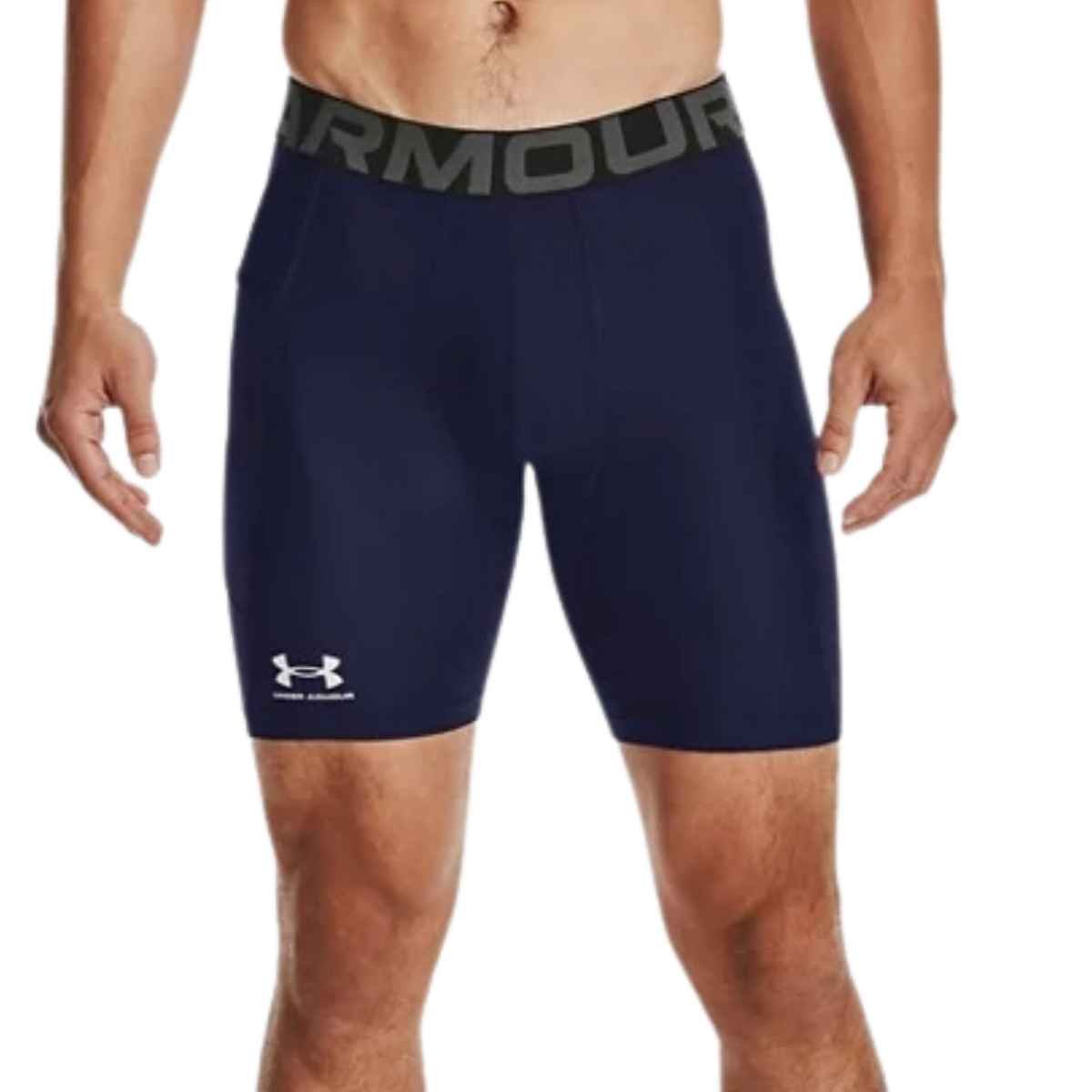
The Under Armour HeatGear Compression short is the best men's liner running short. It's the #1 best seller at Amazon and one of the most popular liner shorts out there.
UA markets these as a “base layer,” leaving it open to interpretation of how exactly these can be used.
We ran in the UA HeatGear Compression Short and found it functioned well as a pair of underwear, regarding feel and aesthetic.
With a flat waistband, no drawstring, no pockets, and sporting a thinner fabric and lighter compression relative to a proper compression short (e.g., the Stabilyx Ventilator), the HeatGear compression shorts fit seamlessly under our linerless shorts.
View The The Under Armour Heatgear Compression

The UA HeatGear Compression Shorts layered under the Baleaf 5” Laureate. Phone Compression pocket pictured. Photo by Justin Walker
-
The best part about the HeatGear shorts is that of all the shorts we tested, they feature the most comfortable pocket for carrying a phone.
Like running tights we’ve reviewed, such as the Patagonia Peak Mission Tights and the Janji Trail tights, these UA liner shorts have a compression pocket on the outer leg in the thigh area. We love these pockets for their bounce-free, secure feel when running.
-
The UA HeatGear shorts have a longer inseam of 6” and we appreciate that they are available in sizes up to 4XLT. Paired with the Baleaf Laureate sizing of S-XXXL (which has casual shorts pockets on the sides and a single zipper pocket in the rear), you get a system that accommodates thicker thighs to prevent chafing or riding up.
-
For modesty, we wore it under the Baleaf Laureate (see review below), and found it to be a good combination of modesty, function, and compression.
As mentioned, most runners will choose to wear these compression shorts like underwear. However, if you want a dedicated pair of active wear underwear, check out or Best Men's Hiking Underwear guide. We ran all these pairs as part of their testing and they work for runs, too.
-
We expect most liner-free shorts to pair well with the UA HeatGear shorts, though the thin, breathable fabric on the Baleaf’s helps prevent overheating when layering shorts and the price is right.
Best men's compression trail running shorts:
CW-X Stabilyx Ventilator Shorts

Phone pocket? No
Sizes: Small - XL
Inseams: Shorts, ¾ length "half tight", and full length tight
Waistband: Flat / drawstring
What we liked: A true compression short
What we didn’t like: Fit may be too tight for some thighs. Function-only style
Out of the other compression tights we tested, the CW-X Stabilyx were the best running shorts we tested that genuinely conveyed the feeling of compression relative. Other running shorts felt skin-tight. But the CW-X Stabilyx feels like a compression short. When first putting them on, the CW-X Stabilyx can even come off as being too tight, especially at the lower and mid-thigh around the quads. But we found that they better settle to the shape of the leg after a few minutes of wear and movement.
View The Cw-X Stabilyx Ventilator Shorts


-
The CW-X Stabilyx Ventilators are compression shorts and don’t benefit from the airflow of more traditional shorts, so they aren’t as cool feeling as others on our list.
However, they aren’t especially hot either–especially for a compression short. This is potentially due to the large, perforated panel on the front of the legs.
It would have been nice to have a similar panel on the rear, but we feel that this lack has to do with the aim of Stabilyx in this short to be primarily compression-focused, something that a more stretchy, forgiving panel might not achieve.
-
Our favorite way to use these shorts was to bike to trailheads, swap to trail running shoes, and then hit the trail in the shorts. If you don’t find the need for a chamois (essentially an integrated sit bone pad in shorts), we have gone as far as a 3-hour ride on one of the bike > run > bike endeavors without issue.
-
When it comes to the downsides, our reviewer felt that if his thigh was much bigger, the shorts might be too tight to be comfortable. This is true of many compression shorts and bike shorts that we've tested.
Runners with thighs on the larger side may not find these match the waist size correlation found on the sizing chart.
-
According to Stabilyx’s design approach, there are no pockets on these shorts to avoid any conflict with the compression tech. So if you need to store items, you'll need a running hydration vest or running belt.
-
There's a debate on the merit of compression, and we don’t have conclusive results on whether it aids performance or recovery. The customer and media reviews on the Ventilators largely support claims of performance and recovery.
For those curious about the tech, the CW-X Stabilyx are a viable choice for those hoping to give compression a chance.
Best Men's trail running shorts without a liner:
Baleaf Laureate 5”

Phone pocket? No
Sizes: S-3XL
Inseams: 5”, 3", 7"
Waistband: Flat / drawstring
What we liked: Price low enough to spend on a quality liner
What we didn’t like: No frills
The Baleaf Laureates are a minimalist running short that is the best running short for folks who want affordable shorts without a liner.
They have three pockets, two of them casual side pockets and one a zippered pocket in the rear (around the size to accommodate your ID and keys). As a standalone short, some may find the Baleaf Laureates insufficient for modesty. But when we paired these affordable liner-free shorts with compression shorts, we found it was the best solution for runners with thick thighs.
View The Baleaf Laureate 5 ”

The Baleaf Laureate 5” layered over a pair of UA HeatGear Compression shorts. Photo by Justin Walker
-
Although these are our winner for best running shorts without a liner, paired with your favorite merino or synthetic underwear or liner shorts, they become a lightweight, layering option for modesty and comfort, priced low enough to spend on that quality base layer, too!
We found the Baleaf Laureates paired with the Under Armour HeatGear Compression shorts underneath to be a winning combo for running.
-
The Baleaf Laureate shorts are among the best value of any shorts we considered. Many runners don’t like liners and there is no reason to pay for them if you would just cut them out anyway.
Best men's trail running shorts for thick thighs:
Patagonia Multi Trails

Phone pocket: No
Sizes: S-XXL
Inseams: 8”
Waistband: Flat / drawstring
What we liked: The compression liner, stretchy fabric, and roomy fit
What we didn’t like: Pockets are not the most functional, could be more size inclusive
We think that the Patagonia Multi Trails short is the best standalone running short for people with thick thighs who have had a hard time finding shorts that work for their body type.
Patagonia re-named their popular Nine Trails shorts to better get across that these are designed as multi-sport trails.
The longer 8” inseam on the Patagonia Multi Trails relative to the Brooks shorts is also appealing to help avoid that riding-up that some runners with thicker thighs experience with shorter shorts. This also helps when you're doing multi-sport activities like biking, climbing, or at the gym.
Compare Prices Of The Patagonia Multi Trails


-
The Patagonia Multi Trail was previously called the Patagonia Nine Trail. The newest model is now available up to XXXL and is made of 90% recycled polyester, 10% plastic. The recycled polyester was sourced from coastal communities at risk of plastic pollution and certified by OceanCycle. It's also treated with a DWR (durable water repellent) finish that's made without PFCs (perfluorinated chemicals). PFCs in waterproofing in outdoor apparel is an environmental issue many brands are taking on and REI stopped selling apparel with PFCs in 2025. It's sewn in a Fair Trade certified factory. As with the old model, it meets bluesign criteria to ensure the supply chain is safe for the environment and workers.
The new fabric is a little lighter at 5.4 oz vs. the previous weight of 6.4 oz.
-
Though some reviewers found the liner to fit a little small, we found the integrated liner to fit more relaxed relative to the Brook’s Sherpa’s and to have a wider leg opening on the short’s outer layer.
-
We agree with some reviewers that the pockets on the Nine Trails are pretty casual. Though there’s some security with zippers on the pockets, they still allow heavier items to bounce around. If you plan on carrying a lot with you, you might consider wearing a running vest as an alternative storage option.
-
In the previous edition, we dinged these shorts for not having more inclusive sizing. Instead, we recommended the runners with thicker thighs to choose a combo of the Baleaf Laureate liner-free shorts and the UA HeatGear liner shorts.
Now, the Multi Trail has more inclusive sizing, making it the best shorts for runners with thicker thighs. We still wish sizing went beyond XXXL and you can find 4X options with both the Baleaf and UA combos.
-
With Patagonia’s reputation for excellent customer service, we’re still comfortable recommending these despite these concerns about the fit and casual pocket design. In our personal experience, Patagonia has been responsive, agreeable, and understanding when it comes to exchanging or returning items when we discover that they might not be the best fit for us.

Hanging out in the Vuori Kore’s. Photo by Justin Walker
Other running shorts we tested
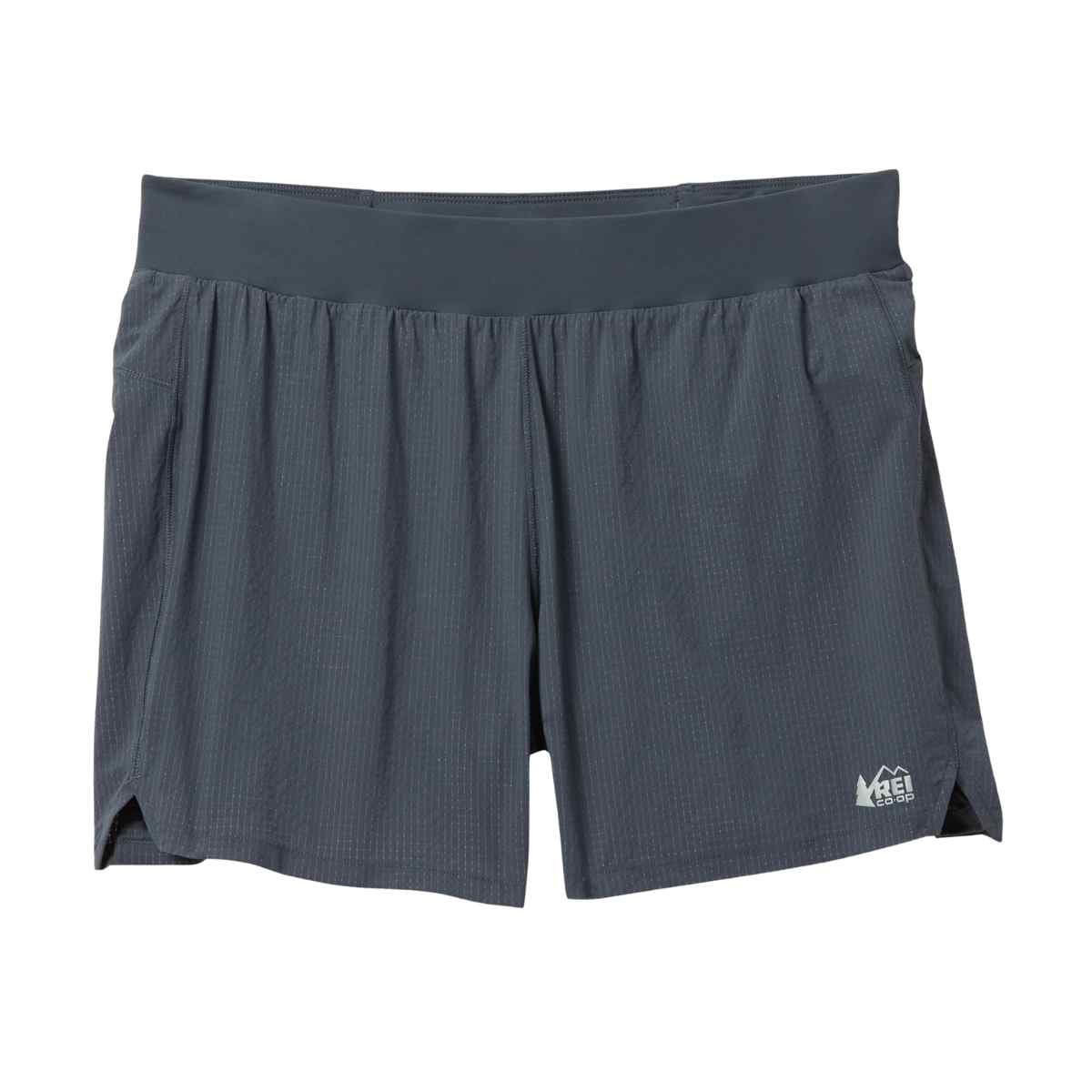
REI Co-op Swiftland 5” Running Shorts
Phone pocket? Yes
Sizes: S-XXXL
Inseams: 5” and 7”
Waistband: Flat / Drawstring
What we liked: Great exterior pockets, comfortable waistband, breathable fabric, surprisingly durable, affordable
What we didn’t like: Mesh is almost see-through
The REI Swiftland shorts have the thinnest and most breathable fabric of any running shorts we’ve tested. Overall, we find these shorts very comfortable and great for long runs in hot weather. We also wore these shorts for a thru-hike on the Pacific Northwest Trail. If you’re unfamiliar with the PNT, it requires a lot of bushwhacking along the route. We didn’t expect these thin, lightweight shorts to hold up for the entire trail, but they surprisingly did.
REI Co-op Swiftland 5” Running Shorts
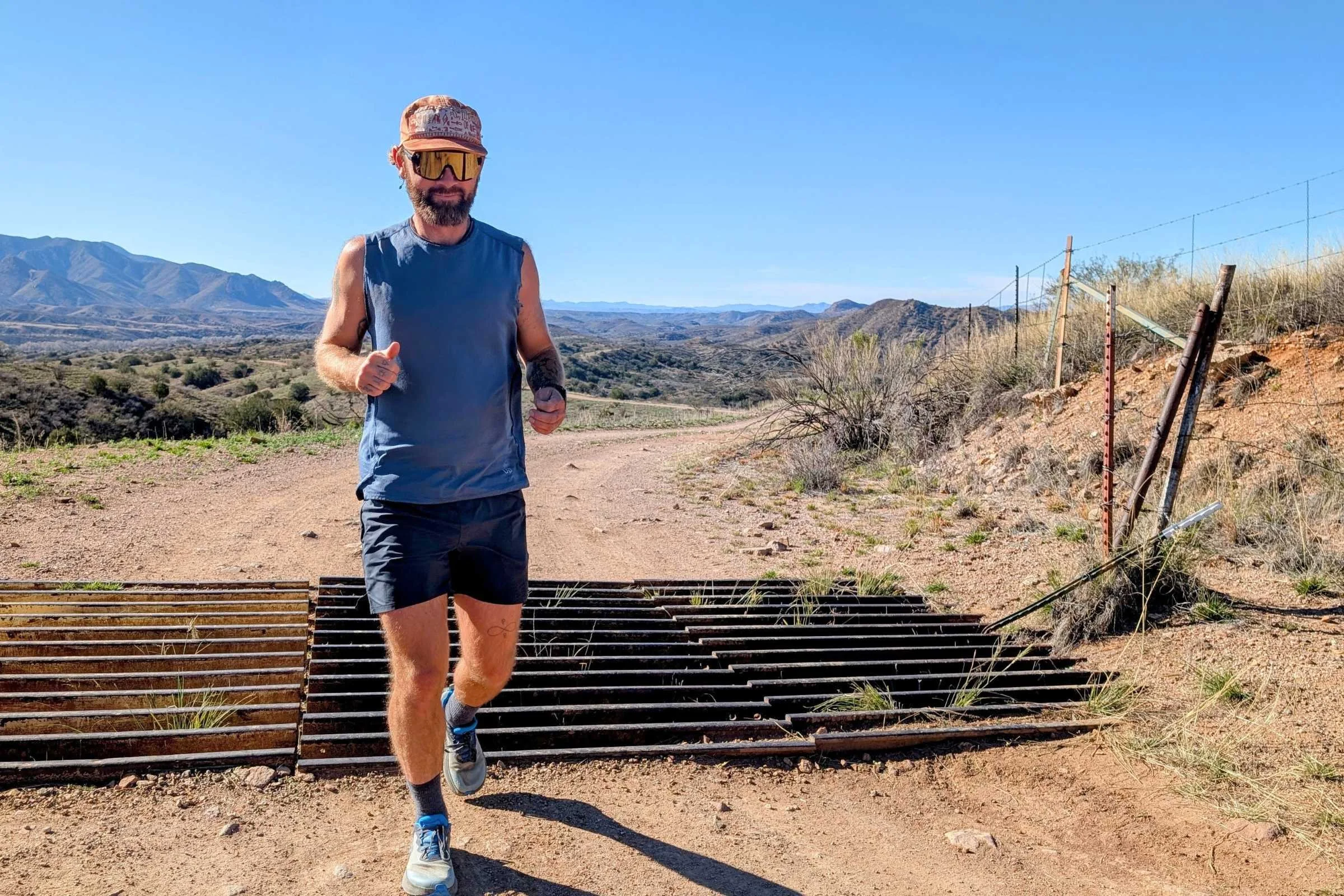
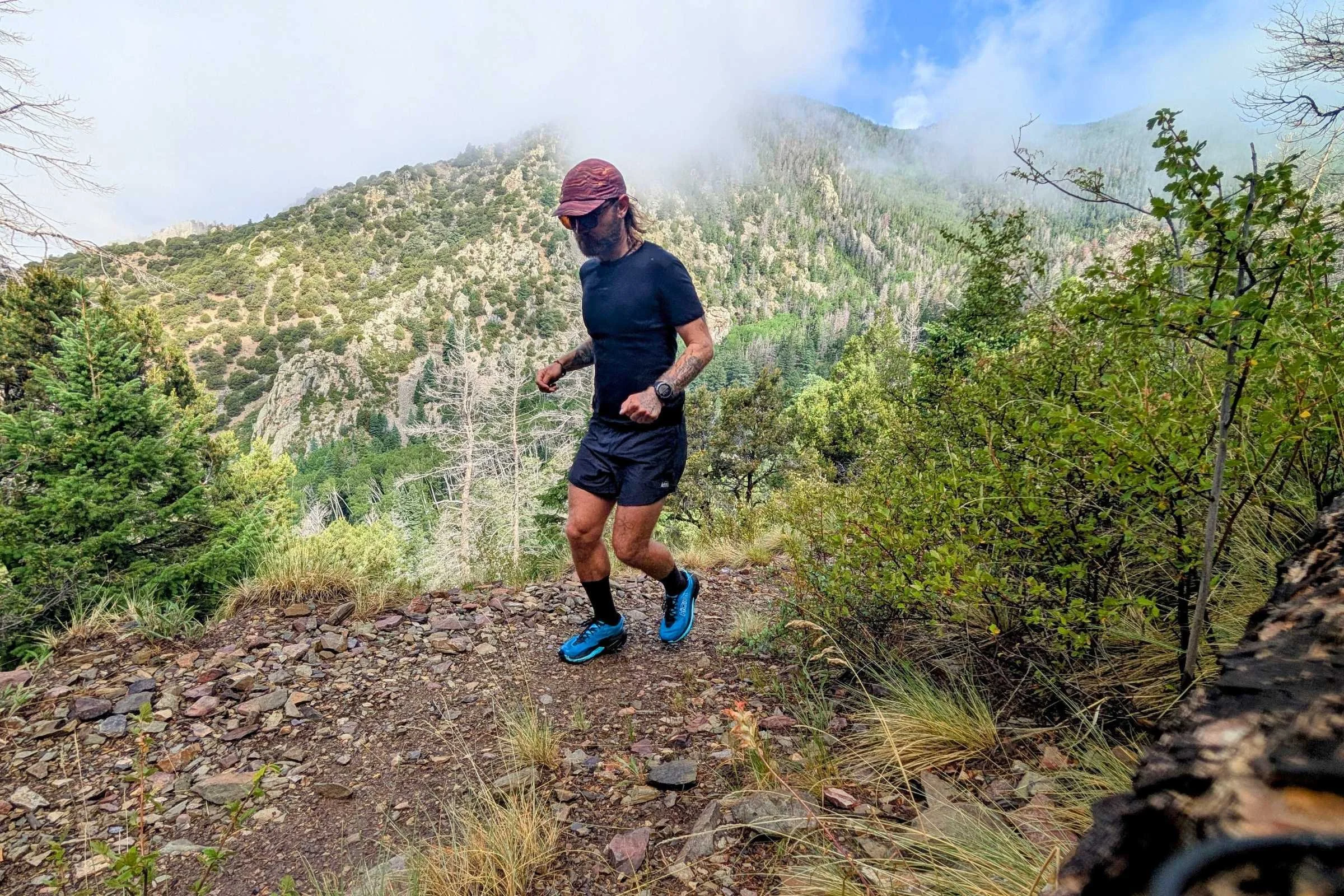
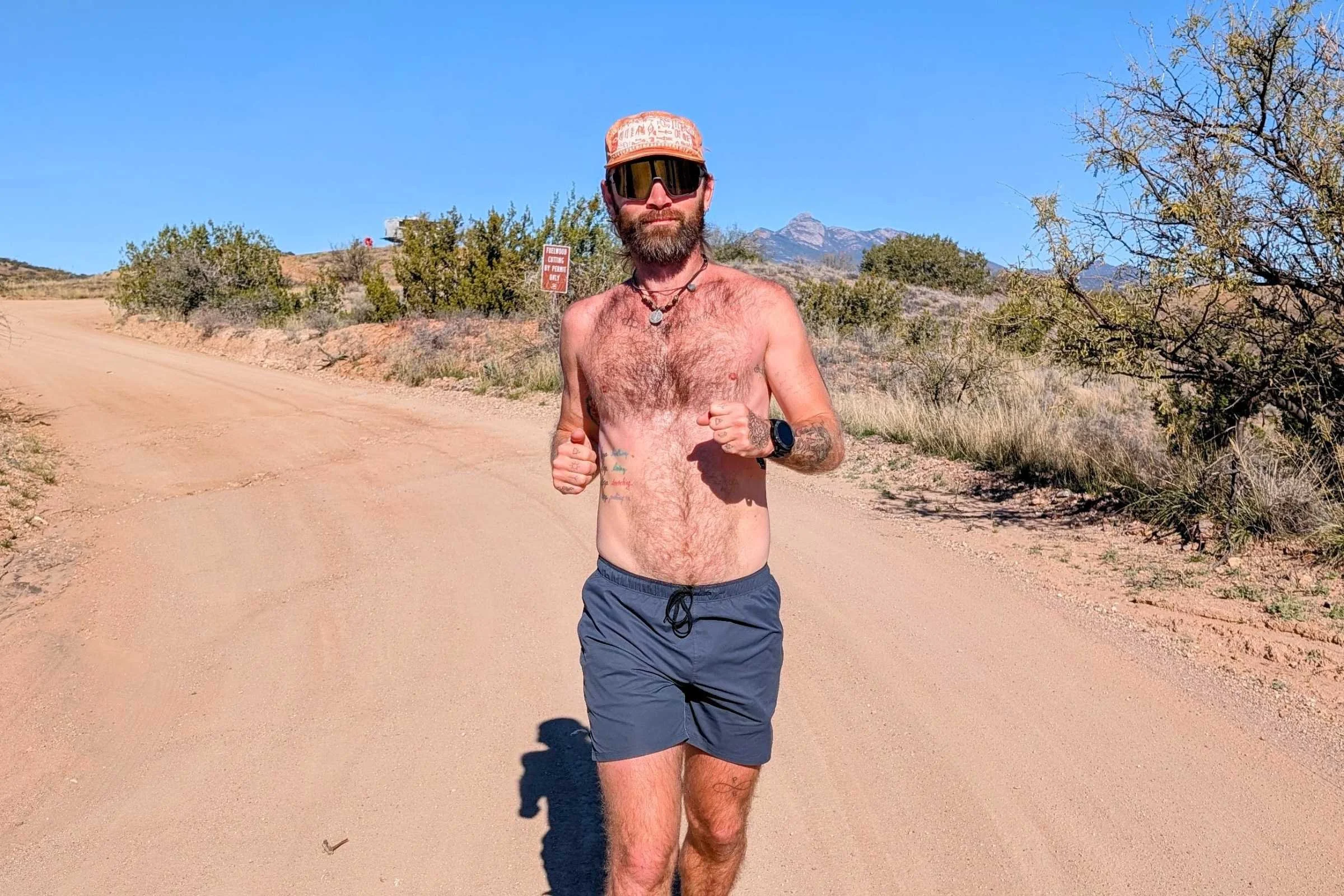
We consider the Swiftland shorts a less expensive version of our favorite running shorts, the Patagonia Strider Pro. The Swiftland and Strider Pro share a similar pocket design, with small mesh pockets on the hips and a larger rear zipper pocket.
The Swiftland’s rear zipper pocket is just large enough for a 6.3” smartphone. It also has a small carabiner on a piece of webbing in the right pocket to prevent you from losing your key while still using all that pocket space to carry gels.
While very comfortable on the first wear, we didn’t love the boxer-brief style liner of the previous 7” inseam version of the Swiftlands. Our tester for those shorts found that the boxer-brief liner rode up his thighs while running.
However, when we tested the newest version of the Swiftland, with a 5” inseam, we had no issue with the brief-style liner that comes in those shorts. Eventually, we cut out those liners, as we always do with running shorts, because we prefer running in our favorite mesh underwear. But if you prefer wearing your shorts with a liner, we recommend the 5” version over the 7”.
If you’re looking for a slightly less expensive running short with a pocket design similar to the Patagonia Strider Pro and Brooks Sherpa, we think the Swiftland is worth checking out.
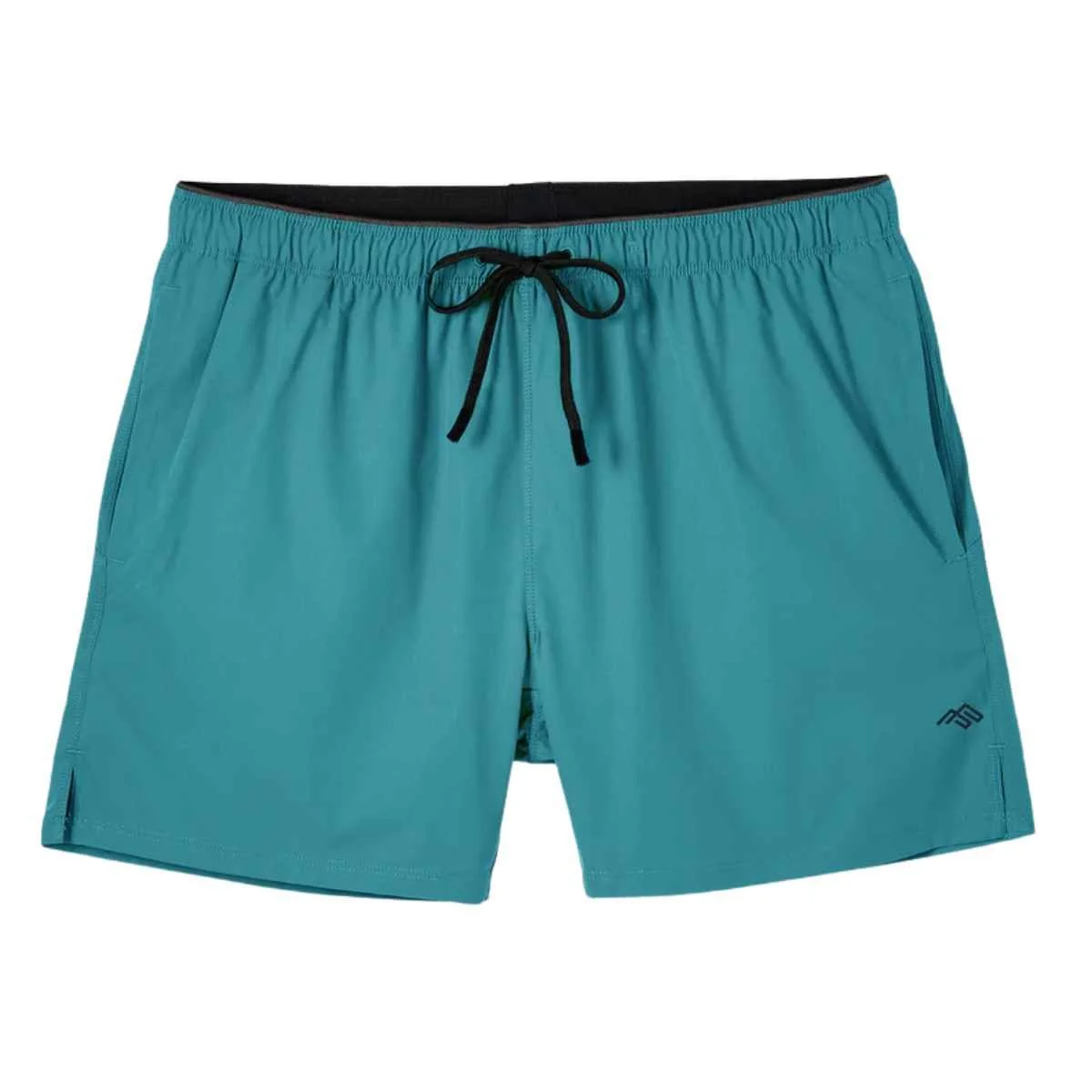
Phone pocket? Yes
Sizes: XS-XL
Inseams: 5” and 7”
Waistband: Flat / Drawstring
What we liked: Secure zippered phone pocket and side pockets, durable fabric, very flexible
What we didn’t like: thicker fabric feels heavier than traditional running shorts
The Path Projects Graves PX Running Shorts are our favorite running shorts for mountain running or other instances where you need more durability. They’re made of a thick yet highly breathable fabric that’s abrasion resistant and stretchy without using any elastic. They also have awesome pockets: a rear zipper pocket that holds a cell phone without bouncing, plus two zippered side pockets.
We love the Graves PX shorts for running trails to mountain summits. This summer, we butt-scooted down more steep, sketchy mountain descents than we care to admit in these shorts. But unlike most other running shorts, the durable fabric can withstand being dragged across granite without shredding.
Path Projects Graves PX Running Shorts
The key to everything great about these shorts is the Toray Primeflex stretch polyester fabric. Primeflex is a spiralized dual-polymer fabric that provides 360-degree stretch. Since the fabric is woven with spiralized threads, the stretch comes from that coiled shape. This creates a highly durable, more breathable material than polyester with elastic woven into it.
The Graves PX shorts don’t come with a liner, but Path Projects makes a separate liner you can pair with these shorts. Or, you can wear them with any other underwear you like. We like the versatility this allows for.
If you’re looking for super durable running shorts that are highly breathable and have excellent pockets, the Graves PX are worth checking out.
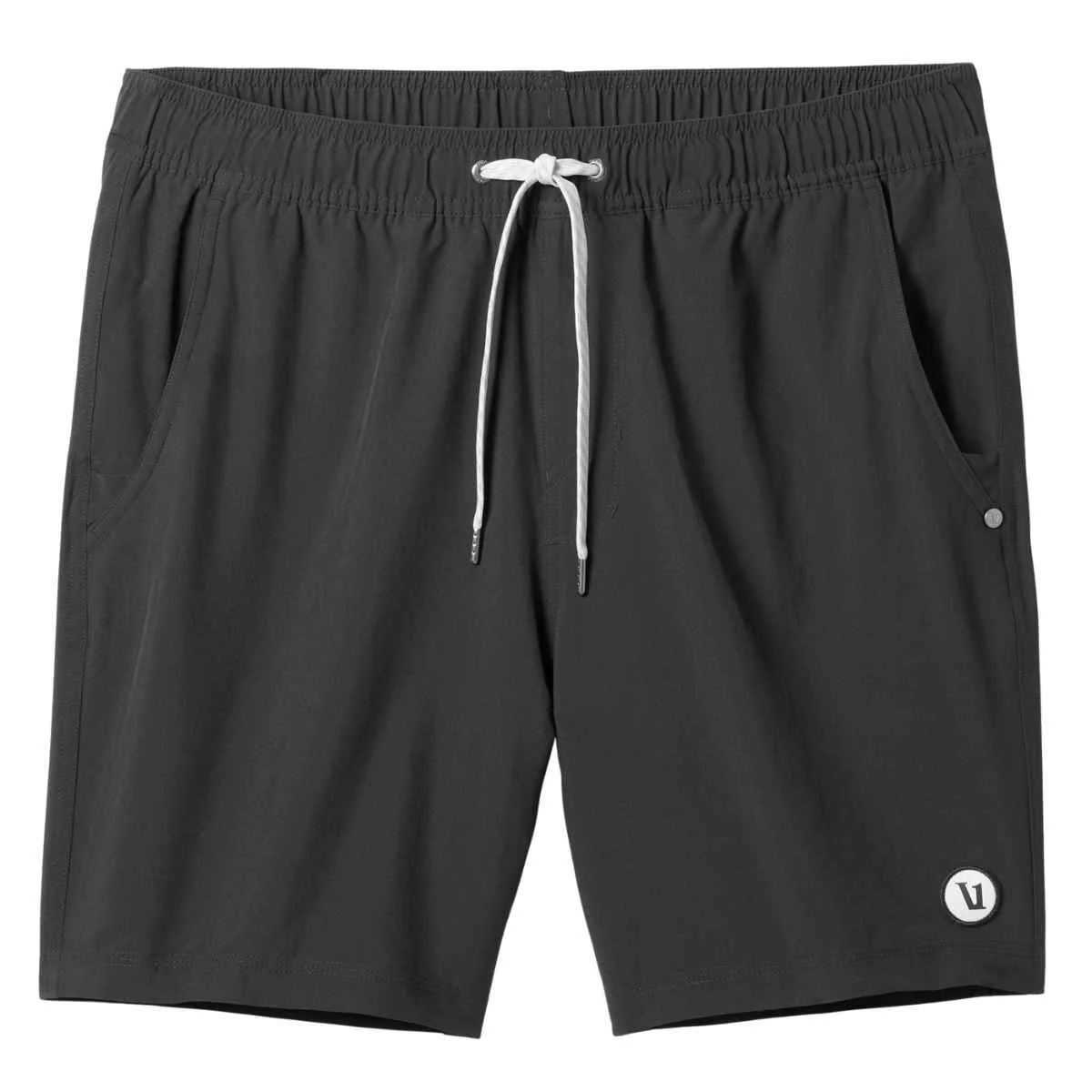
Pockets: 3
Sizes: XS-XXL
Inseams: 7.5”, 5.5”
Waistband: Flat / drawstring
With deep side pockets, a velcro closure rear pocket, and an overbuilt waistband relative to the other shorts in our lineup, we found the Vuori Kore shorts to be a more generalist and versatile short than the trail running shorts we tested. The Vuori Kore have a big following, ranking among the best-selling shorts at REI.
Though we didn’t find them necessarily a poor choice for running, nothing stood out. They have similar traits to the REI Active Pursuit regarding looks and features.
View The Vuori Kore
They have a similar liner to the Brooks Sherpa 5” without the pocket design. However, they come at a higher price than either of those models. Most of the reviews we found focused on taking them to the gym.
While we do agree with reviewers that they are super freaking comfortable for lounging around, ultimately, they were not our top winner for running.
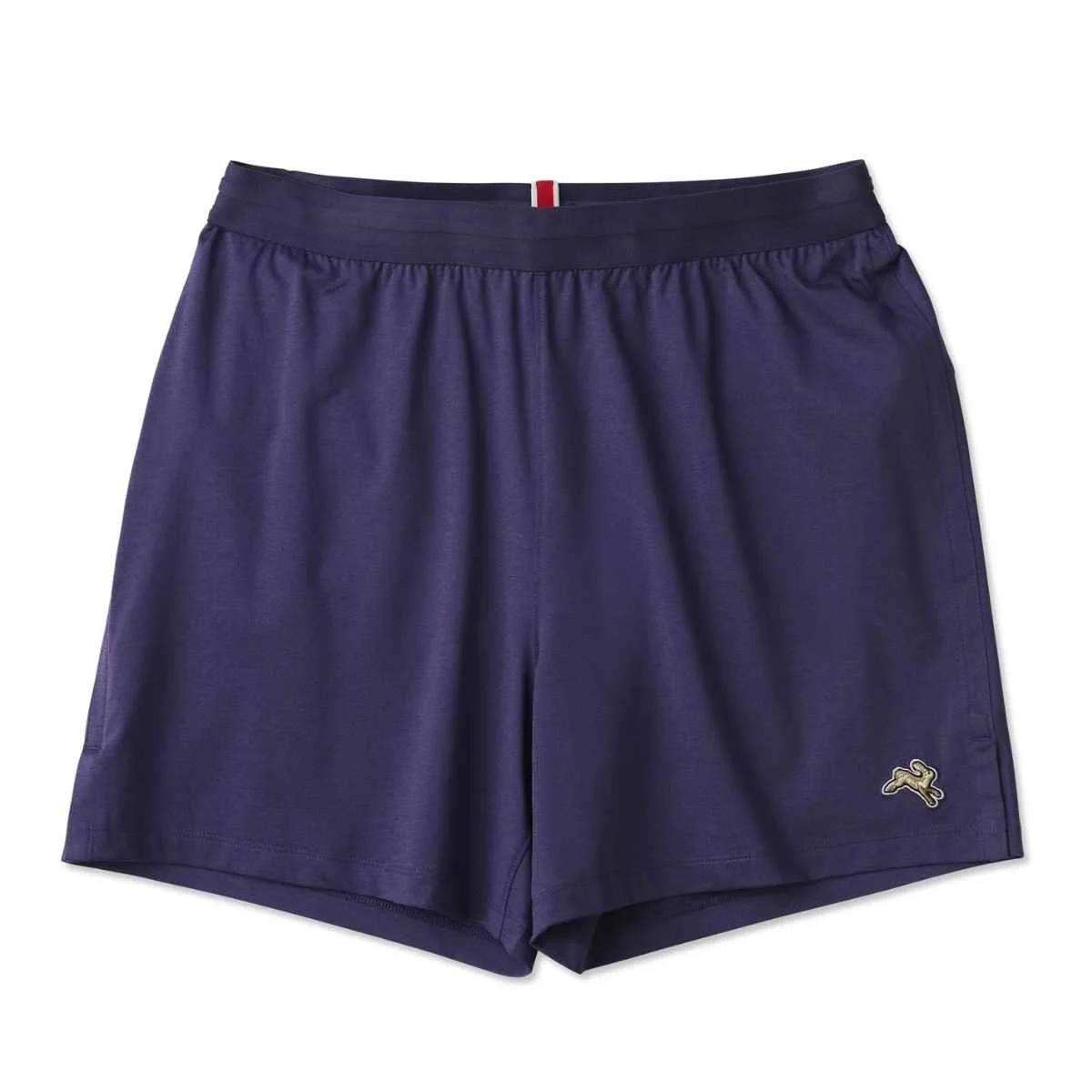
Pockets: zippered back phone pocket
Sizes: XS-XXL
Inseams: 5”, 7”
Waistband: Flat / drawstring
The Tracksmith Session has a lot in common with the Tracksmith Van Cortlandt that we chose as our best racing shorts winner. The two pairs of shorts are made of different fabrics. The Van Cortlandt's 2:09 fabric makes it a more lightweight short than the Session's Veloce fabric, which many runners prefer for racing.
The Van Cortlandt has a drawstring on the outside of the short, whereas the Session Short has the drawstring on the inside. The Van Cortlandt has a less modest split, so the Tracksmith Session Short may be a better option if you otherwise like the Van Cortlandt but want more coverage.
View The Tracksmith Session Short
However, the Session doesn't have the back pockets of the Van Cortlandt (though we didn't use those pockets). We're looking forward to testing the Session shorts and will update this guide accordingly.
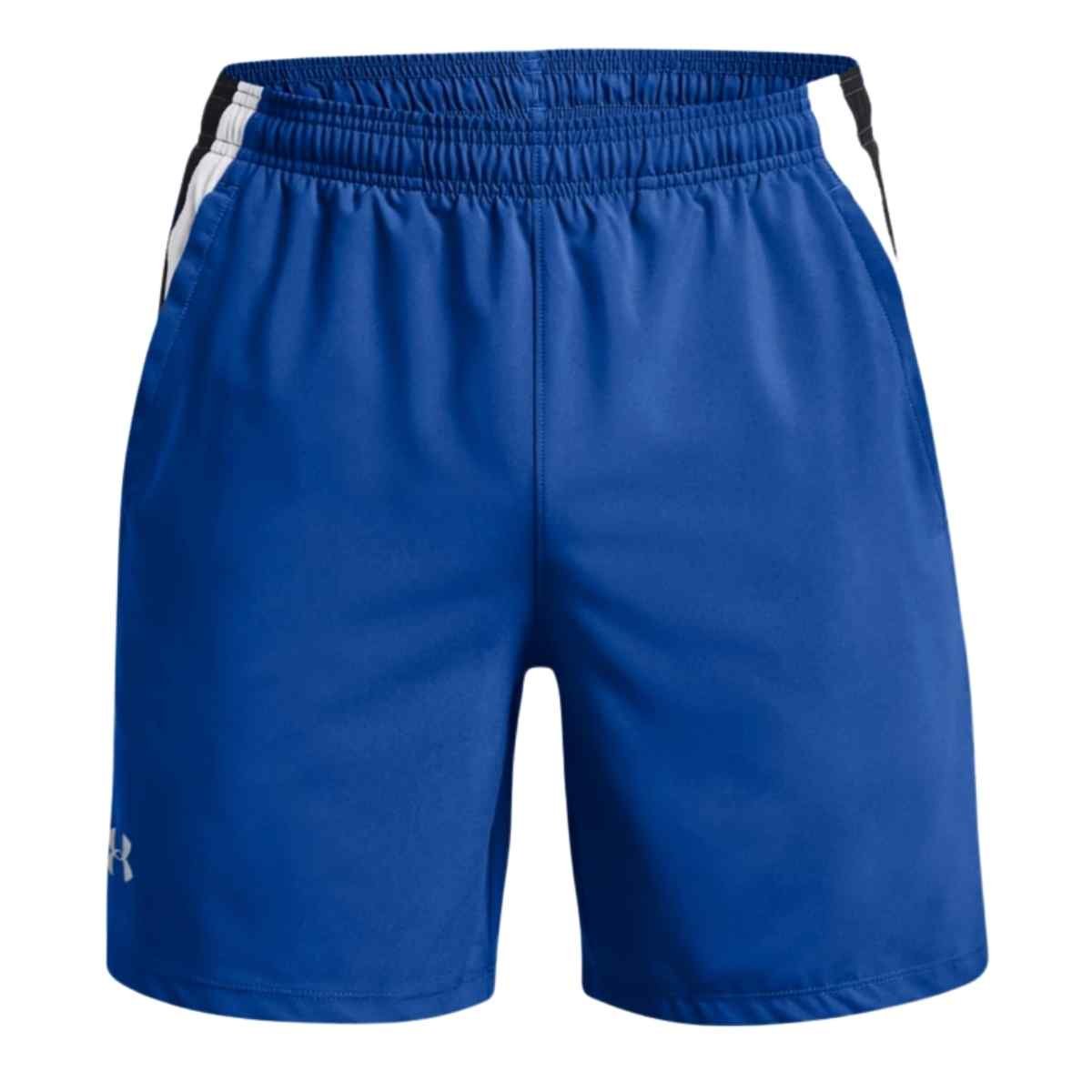
Pockets: 3
Sizes: XS-XXXL
Inseams: 7”, 9”
Waistband: Flat / drawstring
The Under Armour Launch SW shorts are modestly priced shorts that incorporate a brief liner like most of the shorts we tested, and have three pockets total. One of the pockets is a smaller open pocket inside the right leg pocket, similar to a key pocket on a pair of jeans.
We found the UA Launch shorts to be a fair deal for runners who can get the fit to work. In particular, we had issues with fitting the liner. The liner is comfortable when putting them on but rode up in the back throughout actual testing.
Most comparable in price and features to the REI Active Pursuit, we opted for the Active Pursuit for best budget running shorts because they fit more comfortably.
Compare Prices Of The Under Armour Launch Sw

Our shorts consisted of inseams from 4”-7”, with our best overall short, the Patagonia Strider Pro’s, coming in at 5”. Strider Pro’s pictured in the top left above. Photo by Trey French
What to look for in running shorts
Liners
Liners are a given in most running shorts. The best running shorts have a liner that offers support, keeps bouncing to a minimum, uses synthetic materials to wick sweat, and enhances comfort.
Having a liner can also eliminate the need to wear underwear. Sometimes, wearing underwear with shorts with a liner can even conflict with the liner to create a feeling of crowding or bunching; this can potentially cause overheating and chafing, similar to how you might feel when wearing a pair of shorts under jeans.
Comfortability can depend on how loose or firm a shorts’ liner fits you. Having a liner is especially important with shorter inseam lightweight fabric shorts, as the liner will help provide adequate coverage.
But, if you find a pair of lightweight shorts that you like and still want to use a pair of merino wool briefs or something you know that works for you, such as Saxx underwear, you can always try cutting out the existing liner in the shorts. Note, however, that this could create hot spots, or new areas of rubbing and discomfort, especially if revealing raw seams in the short’s construction where the liner was. You can even try a pair of running shorts without a liner like the Baleaf Laureate 5” shorts on our list.
Inseam
An industry average for men’s trail running shorts runs around 5”, with some racing, or track shorts, running at 1-3”, especially split style shorts, something you might see at a cross country meet. Having longer inseams can prevent chafing between the thighs, and sometimes having shorter inseams can do the same thing. Bodies, and the contact points among them, vary.
A short with a longer inseam will be more modest but can create more resistance when following through the gait cycle – especially when it comes to hip extension at faster paces with a stride on the longer side. However, this fact hasn’t stopped highly successful runners like Courtney Dauwalter and Francois D’haene from wearing shorts that share a style similar to modern basketball shorts.
Waistband comfort
Some trail running shorts have a minimal band, and others are more padded. Unless wearing compression shorts, imperfect waistbands can be forgiving on running shorts since they don’t fit too tightly.
To ensure that your shorts stay up and allow for your weight fluctuations throughout the season, you’ll want to choose a short with an elastic waistband and preferably with a drawcord (or something that will allow for cinching down). If the shorts have pockets, the waistband staying up can be even more of an issue, especially when weighed down with a phone or snacks.
Pocket functionality
Pockets can set one pair of trail running shorts apart from another. Unlike something like a running tight or even a half tight, there’s less room for stuffing things into a pair of running shorts. Fortunately, the shorts-running season typically requires fewer layers of clothing and may call for only a gel or two, a key, or a phone.
Most people who don’t run with auxiliary storage like a waist belt or hydration running vest will want at least a pocket for a key and phone, if not more, depending on your location or the duration of your planned trail run. When you're on a long run, you'll want to add a vest or waist belt to carry everything you need.

A casual rear pocket on some casual running shorts, the Vuori Kore’s. The Kore’s use a velcro closure for security, less effective, but more easily accessed than a zipper pocket. Photo by Justin Walker
Moisture-wicking
Unless wearing compression shorts, most running shorts will be made of loose material and feel airy to keep the moisture down. However, liners and other parts of the shorts that make contact with your leg are typically made of thin, synthetic materials. These materials help with wicking and quick drying when things do get wet. Like other running gear, look for a lightweight short made of polyester and nylon blend. You’ll want to avoid natural materials like cotton.
In more arid places, like the Mountain West where we tested, shorts sticking to your legs due to moisture can increase your chances of chafing. Moisture-wicking is even more critical for those running in humid environments when heavy sweating may be a given. The best trail running shorts will wick away sweat and dry away that sweat quickly.
Fabric composition
Performance running shorts will be a composite of nylon and polyester fabrics and rarely use natural materials like cotton. One exception might be merino wool, but this is also uncommon for shorts. Unlike many garments, there’s inherent breathability built into the construction of shorts, so using less breathable but more durable fabrics like nylon can work well for durability and ease of cleaning.
Polyester blends may not always smell the best, but are easily cleaned, especially when used for day runs rather than multi-day races. Lastly, if you’re primarily a trail runner that uses overgrown trails, finding lightweight shorts with a ripstop nylon weave might help increase the durability of the shorts. In general, we prefer lightweight shorts that are less likely to chafe and will not obstruct movement when you're running.
Fit
When talking about the fit of running shorts, the priority is the waistband. Check the size chart for each brand, as some brands measure differently. The sizes will often match up with your pants size. Other places to consider fit are the inseam and how the opening of the shorts fits around your thighs. The way shorts fit will vary according to your thigh size as well.
Reflective details and visibility
Most shorts will have a small watermark or minor reflective detailing, but in the end, shorts are typically not flush with hi-vis neon. If you’re running in the dark often and running on the road, it’s always worth looking for shirts, hats, handheld water bottles, vests, or trail running shoes with reflective detailing to heighten your visibility for cars. If your favorite pair of shorts are perfect but lack reflective details, it’s enough to wear a clip-on light on your hat or go heavy on the detail with your other clothes.
Flat seams (prevent chafing)
Flat seams are pretty standard on high-quality shorts. Cut-offs may be stylish for casual wear or even cycling, but running involves high friction and repetitive motion; it can create a lot of heat and abrasion. Minimal, finished flat seams can go a long way toward staying comfortable and free from chafing.
Versatility
Some folks own a pair of shorts for every use case-short runs, long runs, track workouts, walks, hanging with friends–but if you’re looking to keep your kit minimal, you might consider a pair of shorts on the longer side, with more pocket capacity, and with less “technical looking” fabric. And with a liner, you can use a lot of these shorts for other activities like hiking, cycling, and climbing.
Sun protection
Regardless of the inseam length, shorts inherently show a lot of skin and are not made to protect us from the sun below the short line. With that said, you can always consider leg sleeves, a long liner, and of course, sunblock. If you're a trail runner living or playing at high altitudes, you should especially prioritize sun protection during runs. Some really thin, minimal shorts designed for racing might even let some sun through the fabric, so that’s something to consider if those are more your style.
Freedom of movement
The heavier the fabric and longer the inseam, the less articulation you’re likely to have. Thoughtful paneling of the shorts can help mitigate this. Still, it won’t surpass the freedom of movement experienced in a 3” split short. For most of us, a thoughtful design with around a 5” inseam articulates plenty while also achieving a modest look.

While many shorts are made for a wide array of running terrain, the REI built the REI Swiftland 7” with trail running in mind. Photo by Justin Walker
How to choose
What kind of running will you be doing?
Depending on what other accessories you’re wearing, you might want more pockets for longer runs, no pockets for shorter, high-intensity workouts, or more durable shorts made with ripstop nylon for unkempt mountain trails.
Will your phone, keys, and wallet fit in the pockets?
If you plan to carry these items with you, it’s worth checking how big the pockets are on the shorts and looking at reviewer experiences to see how functional they are. Some shorts have no pockets and require you to bring a waist belt or hydration vest to carry your necessities.
Do you want compression?
Some runners find that the only way to prevent chafing between their thighs and other places is to use a full compression short, which creates a fixed-in-place fabric on the leg. As a middle ground, non-compression shorts sometimes use a compression liner, a more modest alternative, usually with a compression liner shorter than the rest of the outer inseam of the shorts.
Using compression shorts or shorts with a compression liner can also eliminate the need for anti-chafe balm for others with minor chafing problems. And lastly, we cannot say with certainty whether compression enhances running performance or helps prevent injuries, but some runners report positive results when using compression technology.
If you’re interested in calf compression, check out our Best Calf Compression Sleeves guide.
Do you want a liner?
Most running shorts come with a liner, though longer, general-use shorts may forgo one with the expectation that you’ll supplement the short with a separate liner like a compression short underneath or a synthetic or merino wool underwear garment. Liners offer support during running, a naturally bouncy activity.
What inseam do you prefer?
Many folks choose an inseam according to the short’s aesthetic, mainly with modesty and comfort with showing some leg. Most men’s specific running shorts will have a 5-7” inseam, though other shorts made for more specific track workouts or races may fall on the 1.5-4 '' inseam range, with a split short cut on the sides of the shorts.

The Tracksmith VanCortlandt 4” shorts had the shortest inseam in our line up, and also used a comfortable, stretchy “2:09” mesh that articulated well. The result was a running short that had among the best freedom of movement of any of the models we tested. Photo by Justin Walker
How to Fit Running Shorts
How should running shorts fit?
The waistband should feel secure around your waist, not slide down when you bend over or run. It’s also good to have some extra room for weight fluctuation across seasons and to be able to tighten down the drawstring further if needed (depending on the weight of your phone and other items in any of the pockets).
How tight should running shorts be?
Generally, they are not tight unless they’re compression shorts. A loose fit encourages airflow, quick-drying abilities, and comfort while helping prevent chafing.
How long should running shorts be?
As short or as long as you feel they should be. Our reviewer defaults to a 3” split short most of the time, while a track athlete might go down to 1.5”, and others gravitate to the longer end at 7”. Most will want shorts above the knee to prevent resistance and keep the shorts from catching on the knees when running.
What are split shorts?
Split shorts are a less versatile, more specific style of running shorts focusing on thin, light materials. They are used by those looking to run with the least amount of fabric resistance and maximize speed. The name comes from the “split” in the side seam on each outer leg. The split maximizes the range of movement and is more common in 3” inseam shorts and below. Many split shorts have no more than a simple security pocket in the liner for a key or i.d.

The boxer brief liner on the Nine Trails shorts were the most relaxed in fit of the shorts we tested, with great stretch. Photo by Justin Walker
Liners and Chafing
Why do men's running shorts have liners?
Many men find that they need some support down there during the run, and liners can also prevent chafing depending on how firm or loose the liner is. Of course, unintended exposure is a risk on short shorts without a liner.
Can running shorts prevent chafing?
Absolutely. Sometimes it has to do with wearing longer shorts so that the shorts inseam doesn’t end at a vulnerable spot and cover up any exposed skin that would otherwise be touching. Some liners may also work better with specific runners, with some being more firm and others looser. Wearing compression shorts may be the solution for others who struggle with inner thigh chafing. On really long runs at 2+hours, most people will opt for at the least some anti-chafe balm to supplement the shorts they’re wearing to prevent chafing.
Trail running shorts care and maintenance tips

An alternate take on the phone pocket on the UA Speedpocket shorts. Photo by Justin Walker
The following care and maintenance tips will help ensure the longevity of your running shorts.
Washing
To clean your running shorts, or any outdoor apparel for that matter, first check the manufacturer’s care instructions. If you are able to machine wash the shorts, use a mild detergent. Our Best Sports Detergent guide details our favorite sport detergent options. Use cold water, as it helps maintain the integrity of the materials.
Detergents and Fabric softeners
For hand washing, any mild soap should be fine. If the care instructions permit washing in a machine, we recommend our top sports detergents here.
Avoid using fabric softeners when washing your running shorts. If you’re using a washing machine, only wash it with other clothing that requires the same care (a mild sport detergent, cold water, and no fabric softeners).
Air Dry vs. Dryer
Air drying your running shorts is preferable, as direct heat can break down the integrity of the materials more quickly. Avoid using a drying machine or direct sunlight if possible.
Tips for using a dryer
If you do use a dryer, keep the heat low and remove promptly after the drying cycle has completed.
Storing to prevent mildew
Store your running shorts when they are completely dry. Avoid scrunching them, and keep them somewhere cool and out of direct sunlight or heat if possible. This will help maintain the integrity of the materials and prevent mildew.
FAQ
-
Trail running shorts are designed with more storage, durable fabrics, and secure fits for uneven terrain. Compared to road running shorts, they often include additional pockets for gels or small essentials, more abrasion-resistant materials, and waistbands that stay secure during climbs and descents.
-
The best inseam length depends on comfort and coverage preferences. Shorter inseams around 3–5 inches offer more mobility and breathability, while 7-inch or longer inseams provide additional coverage and may reduce thigh chafing for some runners.
-
Lined shorts provide built-in support and reduce the need for separate underwear. Linerless shorts offer flexibility, allowing runners to pair them with compression shorts or preferred base layers for customized comfort.
-
Well-designed trail running shorts can help reduce chafing. Proper fit, smooth seams, moisture-wicking fabrics, and supportive liners all contribute to minimizing friction during long runs, especially in hot or humid conditions.
-
Storage needs depend on run length and whether you carry a pack. For shorter runs, small waistband or zippered pockets may be enough for a key or gel, while longer trail efforts often benefit from multiple secure pockets that can hold nutrition, a phone, or soft flasks.
-
Yes, trail running shorts can be used for road running. However, the extra pockets and slightly heavier materials designed for trails may feel unnecessary for short road workouts.
-
Lightweight, moisture-wicking synthetic fabrics such as polyester or nylon blends are best for trail running. These materials dry quickly, resist abrasion, and maintain comfort during long efforts.
-
Trail running shorts should fit securely without restricting movement. Some runners prefer loose outer shells with built-in liners, while others prefer compression-style shorts for muscle support and reduced friction.
-
Yes, trail running shorts can work well for hiking. Their lightweight construction, quick-drying materials, and secure pockets make them versatile for fast-paced outdoor activities beyond running.
-
Trail running shorts should sit securely without sliding or requiring constant adjustment. Adjustable drawcords and wide waistbands help maintain comfort during climbs and technical descents.

One of many test runs in trail running shorts over the past months. Photo by Justin Walker.
How we tested
We tested our men’s running shorts across a series of mountain ranges, including the foothills of the San Isabel National Forest and Bureau of Land Management land, Sangre de Cristos, the Buffalo Peaks Wilderness, and the lower sections of the Sawatch Range of Colorado-Ute land.
We encountered temperatures between 45°-85° degrees through a windy mountain spring.
We wore some of our winners, the Patagonia Strider Pros and the Tracksmith Van Cortlandt’s, in the broadest range of conditions that included on and off trail pursuits with a mix of hiking, scrambling, and running from 1 ½ to 5 hours or more.
We took the longer brief liner shorts beyond the trail —into physical therapy sessions, the grocery store, and on casual walks and bike rides where we wanted more modesty and versatility.
- Runs of 1.5 to 5+ hours on trail
- Hiking, scrambling & multi-sport
- Gym, PT sessions & casual use
- Tested in 45°–85°F conditions
- Multiple Colorado mountain ranges
- Liner fit & chafe prevention
- Pocket design & functionality
- Waistband comfort & security
- Mobility & freedom of movement
- Fit for thick thighs

The author Trey French in his running grounds in Salida, Colorado. Photo by Justin Walker.
About the author / Why you should trust us
From trail outings starting and ending on NYC trains; Colorado multi-sport front door-to-door outings containing cycling and trail running; to long-distance, multi-sock, thru-hikes on trails like the CDT, PCT, and Long Trail-working with variable conditions is a constant in Trey’s outdoor life. Trey gravitates towards accessible outdoor activities like hiking, running, and cycling. He is interested in human-powered, carless travel with the occasional assistance of public transportation or a friendly hitch.
Based out of Salida, CO, at 7,000 ft, Trey runs in all seasons-for mental health, fitness, and preparing a base for big mountain adventures once the snow melts in spring. Trey has run the Salida Run Through Time trail marathon, the Grand Canyon double crossing (the “Rim to Rim to Rim”), and many self-made alpine routes in Colorado.
He keeps his legs under him by shuffling from the Arkansas River up into the local foothills most days of the week, and he is kept honest by the local Wednesday group run up the town’s namesake mountain. Around 9,000 miles of combined running and hiking miles inform his approach to gear testing.
You can read more of Trey's work at his blog or on his author page.


