I Used The Katabatic Gear Flex 30 Down Quilt While Backpacking and Bikepacking All Summer. Here’s My Take.
A fast-drying, ultra-packable down quilt with an ultralight and easy-to-use pad attachment system for 3-season adventures
November 19th, 2026
Home → Gear Reviews → Backpacking
Our verdict
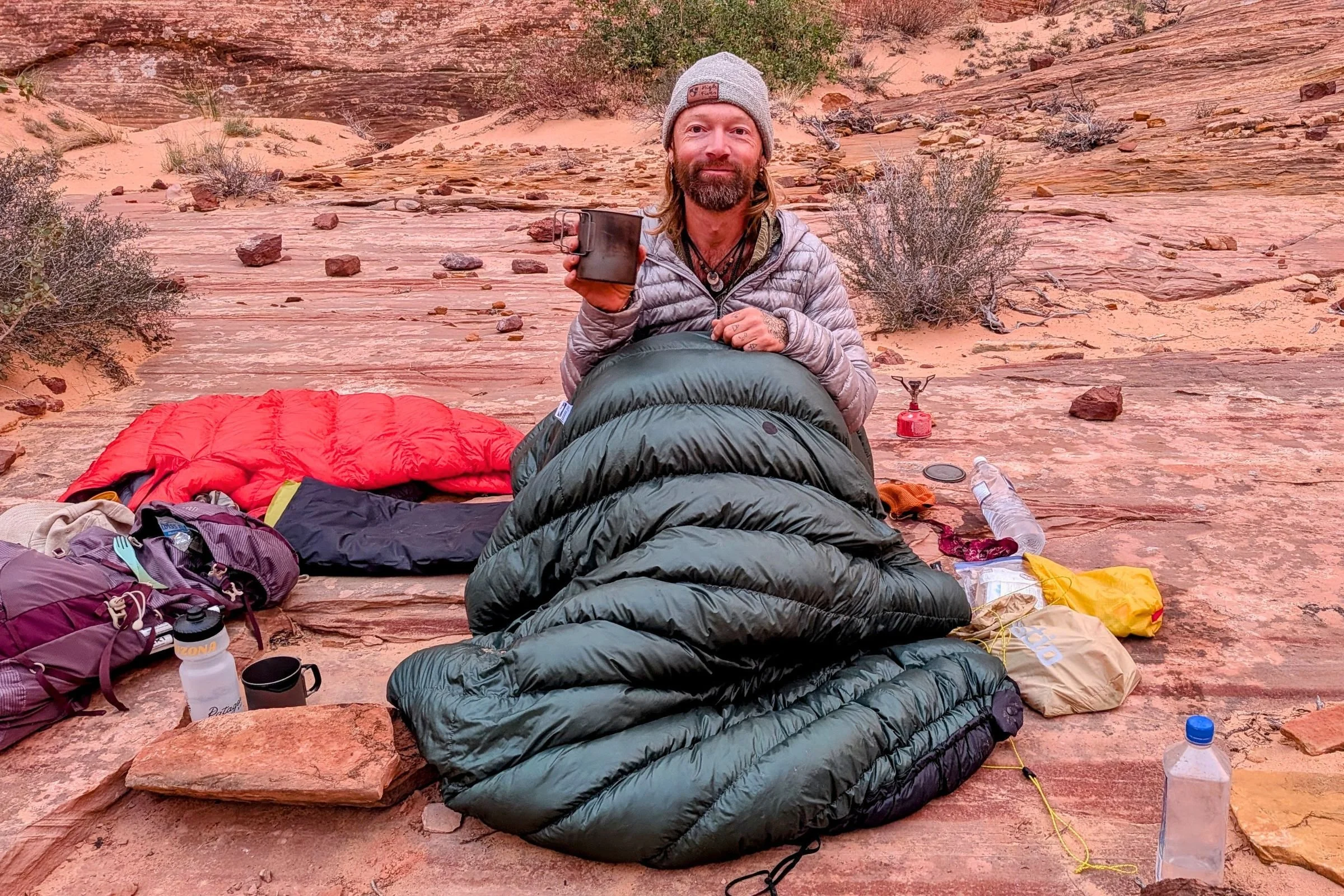
The Katabatic Gear Flex 30 down quilt is a lightweight backpacking quilt that offers an ultralight alternative to traditional sleeping bags while still providing warmth in cooler conditions. This quilt offers a high warmth-to-weight ratio, dries quickly, stays dry longer, and is easy to use, no matter your backpacking quilt experience.
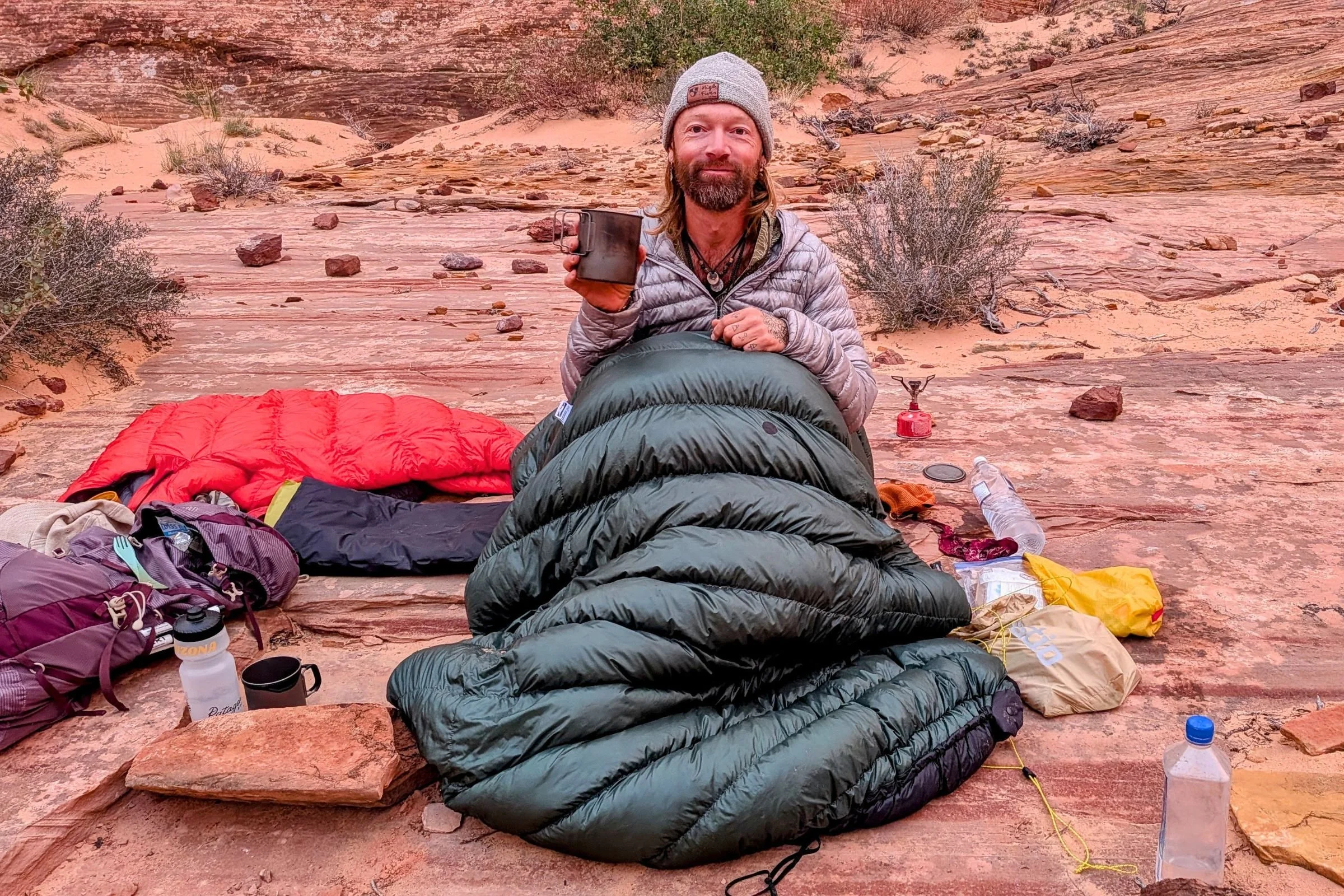
We tested the Flex 30 down quilt using insulated inflatable sleeping pads. It’s available in 40-, 22-, 15-, and 5-degree versions, in 850-fill ExpeDRY duck down and 900-fill ExpeDRY goose down. We tested the Flex 30 featuring 900-fill down during summer backpacking trips in Colorado's Elk Mountains and Sawatch Range, fall backpacking trips in Coyote Gulch in southern Utah, and other overnight trips in Grand Staircase-Escalante National Monument. We also used it while bikepacking in Idaho's Payette National Forest. During testing, we experienced temperatures from 30°F to 80°F.
This quilt's core strength is its warmth-to-weight ratio, ultralight pad-attachment system, and internal stash pocket for a water filter or phone. It’s insulated with ExpeDRY down treated with gold flakes that help keep the quilt lofty and warm longer in wet, humid conditions.
The pad attachment system is lighter than the systems on many competing quilts and has little hardware that could break in the field. With this pad attachment system, we stayed comfortably warm, even when the outside temperature was at or just below the 30-degree rating and we woke up to frost on our tent. The footbox also fully unzips, making it easier to manage heat when you don’t need all that warmth, as is often the case during summer thru-hikes. The internal stash pocket, rare in ultralight quilts, lets you keep your phone and water filter warm when the temperature drops.
Katabatic Gear Flex 30 Down Quilt
Flex 30 (850FP)
Flex 30 (900FP)
If you’ve never slept with a backpacking quilt before, there's a learning curve. To get the Flex 30's full warmth potential, you’ll need to learn to use Katabatic’s patented pad attachment system, which uses ultralight cord and hooks along the quilt's edges to wrap it around you and block drafts. This pad attachment system is easy to figure out, but don’t push the temperature limit on your first trip or two.
If you want a down quilt that offers maximum flexibility for longer trips and retains loft well in wet conditions, we think the Flex 30 Quilt is a great option.
We create reader-supported, objective gear reviews independently selected by our editors. This story may contain affiliate links, which help fund our website. When you click on the links to purchase gear, we may get a commission, without costing you an extra cent. Thank you for supporting our work and mission of outdoor coverage for every body! Learn more.
Katabatic Gear Flex 30 down quilt specifications

Price: $379-489 (850-fill $379-409, 900-fill $449-489)
Weight (900-fill 6’ regular width): 20.3 oz
Temperature rating: 30°F (-1°C)
Fill power options: 850, 900
RDS certified?: Yes
Insulation type options: 850 duck down, 900 goose down
Fill weight (900-fill 6’ regular width): 11.7 oz
Shell material: Pertex Quantum Eco Ripstop (0.85 oz/yd²)
Lining material: Pertex Quantum Taffeta (1.0 oz/yd²)
Packed size: 6.5 x 11.5 in
Length options: 5’6”, 6’, 6’6”
Width options: Regular, wide
Pad attachment system: 2 mm cord with patented cord-locking hooks
Footbox design: Zippered footbox with down-filled draft blocker and snap system
Best for
Backpacking
Ultralight camping
Thru-hiking
Warm-weather trips
Backpackers who prefer quilts over sleeping bags
Comparison table
| Quilt | MSRP* | Total Weight (Reg) | Fill Weight (Reg) | Fill:Weight Ratio | Fill Options | Hydrophobic Down? | RDS Down? |
|---|---|---|---|---|---|---|---|
| Katabatic Gear Flex 30°F Quilt (850FP) | $379-409 | 21.2 oz | 12.6 oz | 59% | 850FP duck down | ExpeDRY | Yes |
| Katabatic Gear Flex 30°F Quilt (900FP) | $449-489 | 20.3 oz | 11.7 oz | 58% | 900FP goose down | ExpeDRY | Yes |
| Katabatic Gear Palisade 30°F Quilt | $379-409 | 19.8 oz | 12.0 oz | 61% | 850FP duck down (also available as 900FP) | ExpeDRY | Yes |
| Outdoor Vitals StormLoft Down TopQuilt 30°F | $340-355 | 19.6 oz | 12.3 oz | 63% | 800+FP | ExpeDRY | Yes |
| Zpacks Solo Quilt 20 | $449-529 | 18.3 oz | 13.7 oz | 75% | 950FP Muscovy duck down | No | Yes |
What we liked
Pad attachment system works well
Zippered footbox allows for warm and colder weather use
Packs down small
Interior stash pocket keeps your phone or water filter warm
Good loft and insulation in wet or humid conditions
Fast-drying down insulation
Continuous horizontal baffles allow you to move down where you need it
What could be better
900-fill version is expensive compared to some lower-fill-power quilts
Pad attachment system requires practice, as with any quilt
Requires a well-insulated sleeping pad, as with any quilt
How we tested
We tested the Katabatic Gear Flex 30 down quilt in the 900-fill ExpeDRY down version, in the 6-foot, regular-width size. We primarily used it with the Therm-a-Rest NeoAir XLite sleeping pad (R-value 4.5). We also used it with the NEMO Tensor Extreme Conditions sleeping pad (R-value 8.5) and the Big Agnes Rapide SL Insulated sleeping pad (R-value 4.8). We’ve slept over 30 nights with this quilt so far, and we expect to use it for many more.
We tested the Flex 30 while backpacking in the summer and fall in Colorado, Idaho, Utah, and Arizona. We used it on backpacking trips in Colorado's Elk Mountains and Sawatch Range, along the Colorado Trail, and on multi-day trips to summit remote peaks, carrying a summit bag with a helmet and all our backpacking gear in a 40-liter backpack. We also used it in late summer while bikepacking in Payette National Forest, Idaho, where we stuffed the quilt, a NeoAir XLite, and sleep clothes into a 6L Swift Industries Olliepack seat bag.
We also used it while backpacking in Glen Canyon National Recreation Area and Grand Staircase-Escalante National Monument, in Coyote Gulch, as well as other desert canyons in southern Utah and northern Arizona using a 40-liter Osprey backpack and a 50-liter Outdoor Vitals Carbon Evo backpack.
The lowest temperature we experienced with the Flex 30 was approximately 30°F. We suspect a few nights were actually colder than 30 degrees because we woke up to frozen dew around our tent more than once.
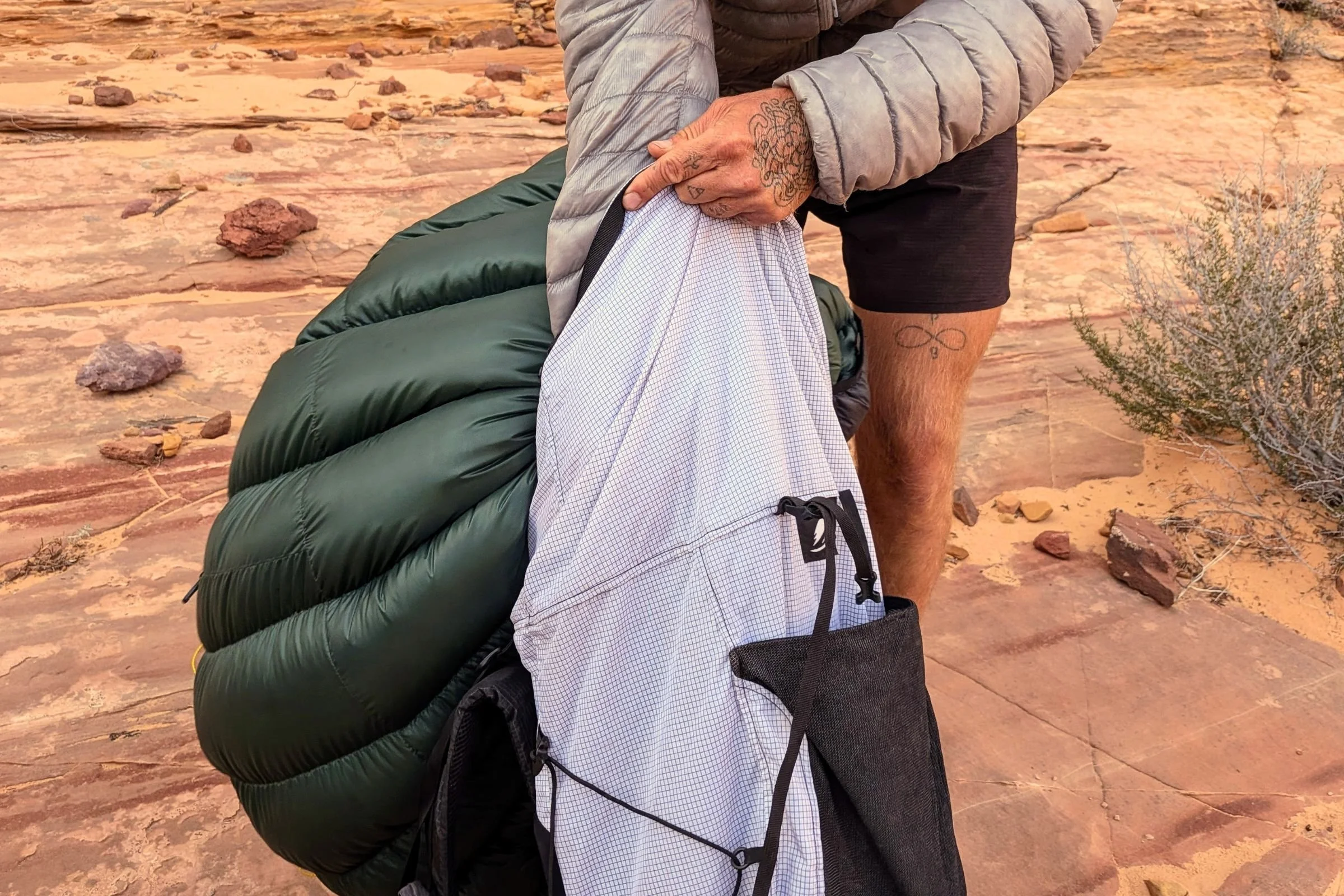
We typically stuffed the Flex 30 loose in the bottom of our pack, inside a waterproof pack liner. This quilt compresses to a small size and leaves plenty of room for other gear in the 40- to 50-liter backpacks we used for testing.
Additionally, we tested the Katabatic Flex 30 alongside others in our Best Backpacking Quilts guide to compare warmth, comfort, packability, durability, and other performance features.
Performance in the field
Warmth
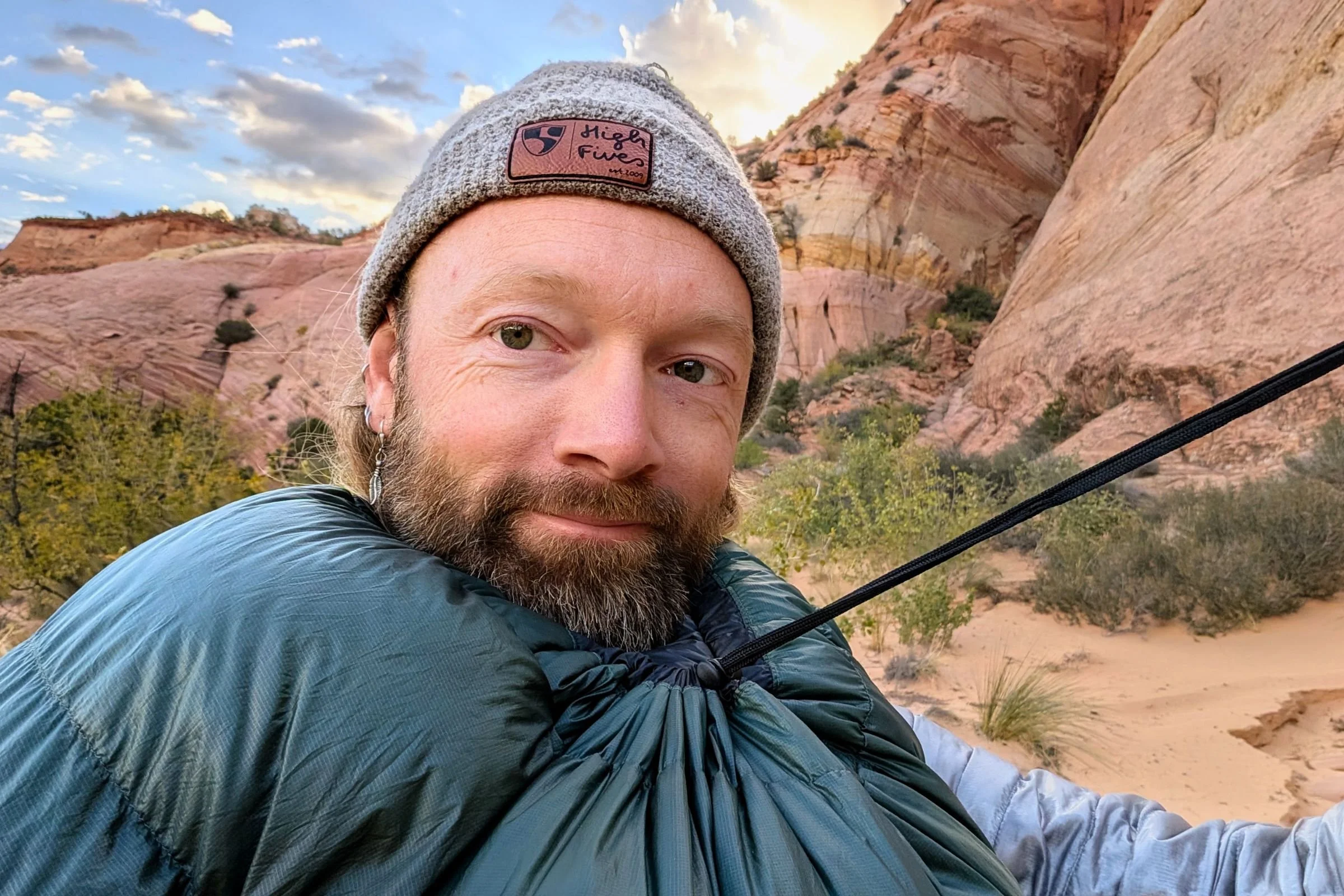
The Katabatic Gear Flex 30 Quilt is very warm overall. The 900-fill version we tested has a higher warmth-to-weight ratio than quilts made with lower-fill-power down. We’ve used it in temperatures down to 30 degrees, and it's kept us comfortably warm. Many 30-degree quilts we’ve tested aren’t as warm as the Flex, too. You can also add overfill to any Katabatic Gear quilt. Katabatic says each extra ounce adds about 1.5 to 2.5 degrees of warmth.
It has continuous horizontal baffles. This lets you move more down on top of you if it’s cold, or push it down to the sides if you don’t need as much warmth. It also has an overstuffed draft collar at the top and bottom, plus an overstuffed footbox. This helps lock in your body’s warmth and keeps your feet warm while you sleep. We get cold feet and have used insulated booties with many quilts in the past. We’ve never felt the need to use those booties with the Flex 30.
It also features a differential cut, meaning the interior material is slightly smaller than the exterior. The differential cut lets the down loft as much as possible, and if your knee or hip presses against the quilt, the extra exterior material helps reduce cold spots.
The bottom opening, where the quilt interfaces with your sleeping pad, is sewn with elastic binding. The elastic helps prevent gaps between the quilt and your sleeping pad by pulling it under your body.
We find the pad attachment system works well with these other features to keep you warm down to 30 degrees. We’re often hesitant to use a down quilt in temperatures that could drop below the bag’s rating. Still, after several nights at or just below freezing, we’re confident we can use this quilt for shoulder-season trips, as long as the temperature doesn’t drop too far below freezing.
Comfort
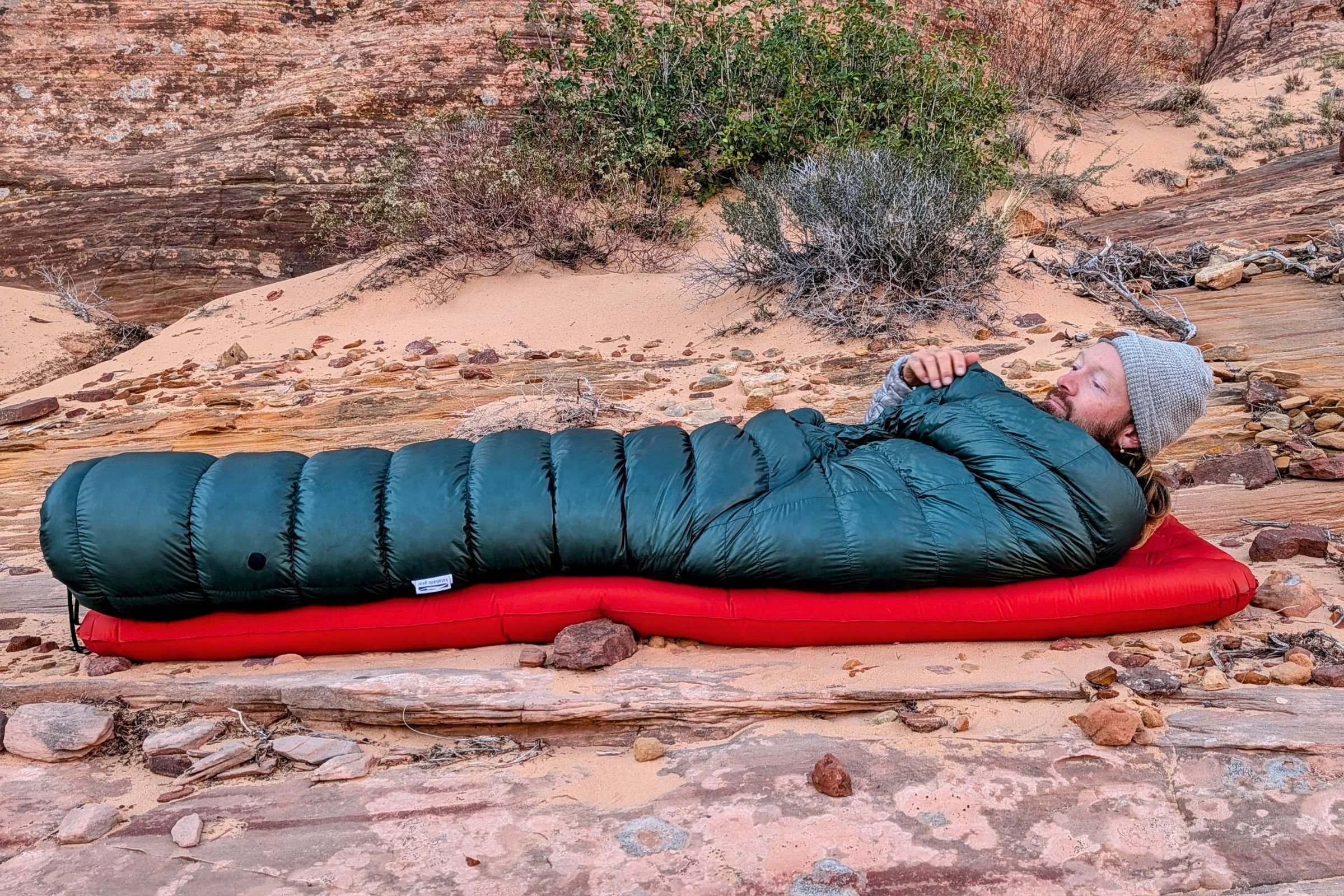
It’s lined with Pertex Quantum plain-weave taffeta fabric. We love how soft this material feels against our skin. It’s not quite as comfortable as the cotton sheets we use at home, but it's much more comfortable than many ultralight sleeping bag materials we’ve used in the past. It’s less crinkly than many sleeping bag fabrics, and it doesn’t stick to your skin when you sweat.
Overall, we love the freedom of movement a quilt offers compared to a sleeping bag. It’s hard to change sleeping positions in a sleeping bag, but with a quilt, you can toss and turn without getting twisted up. If you’re a side sleeper, you’ll especially love using a quilt.
Packability
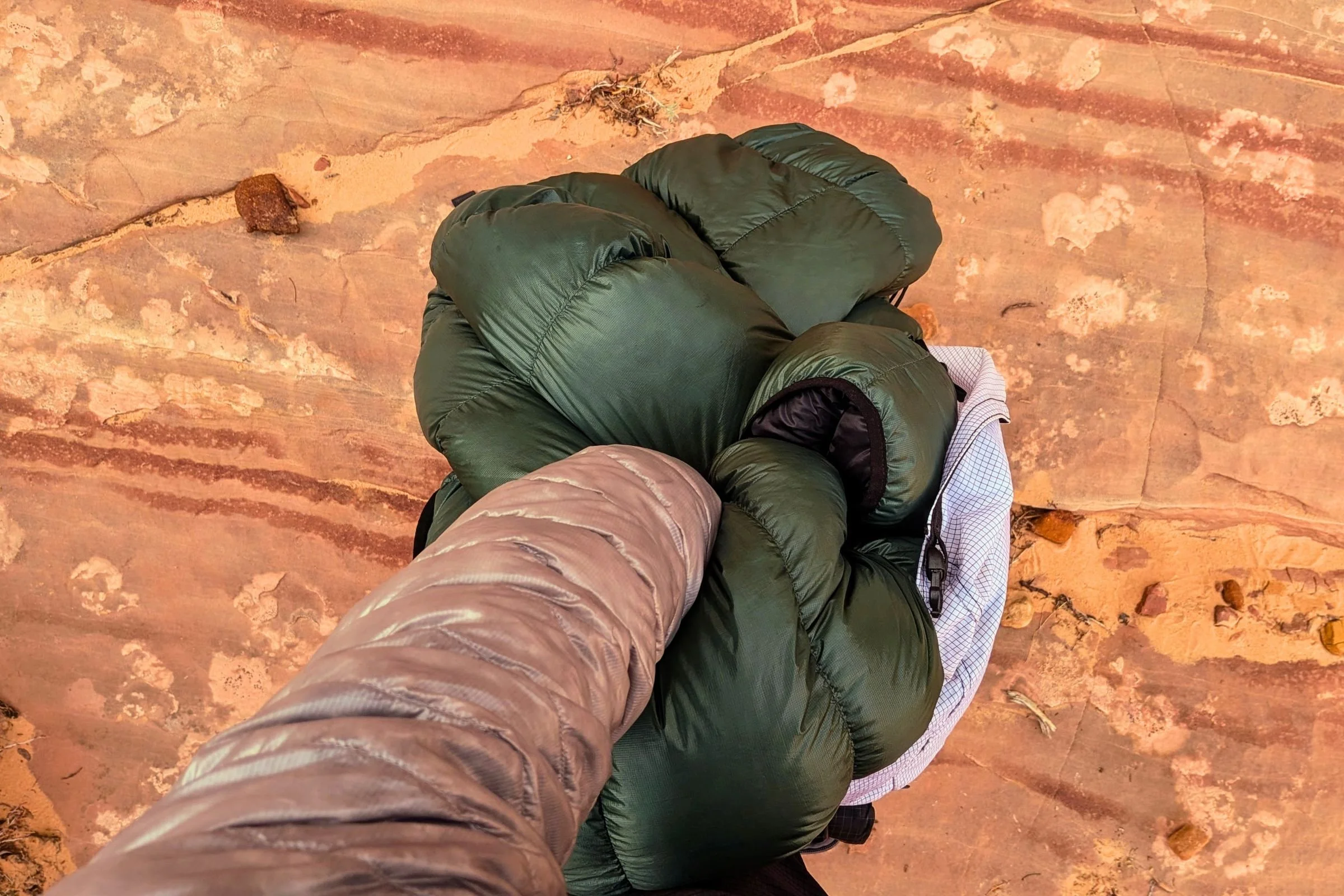
The Flex 30 packs down small. Packed in the included stuff sack, it compresses to about the size of a football.
The 900-fill-power down and thin shell materials compress easily. We normally pack this loose in our pack, without the stuff sack, and it practically disappears in the bottom of the bag.
Ease of use
The Flex 30 is extremely easy to use. Even if you’ve never used a backpacking quilt before, it's easier to learn than most other quilt.
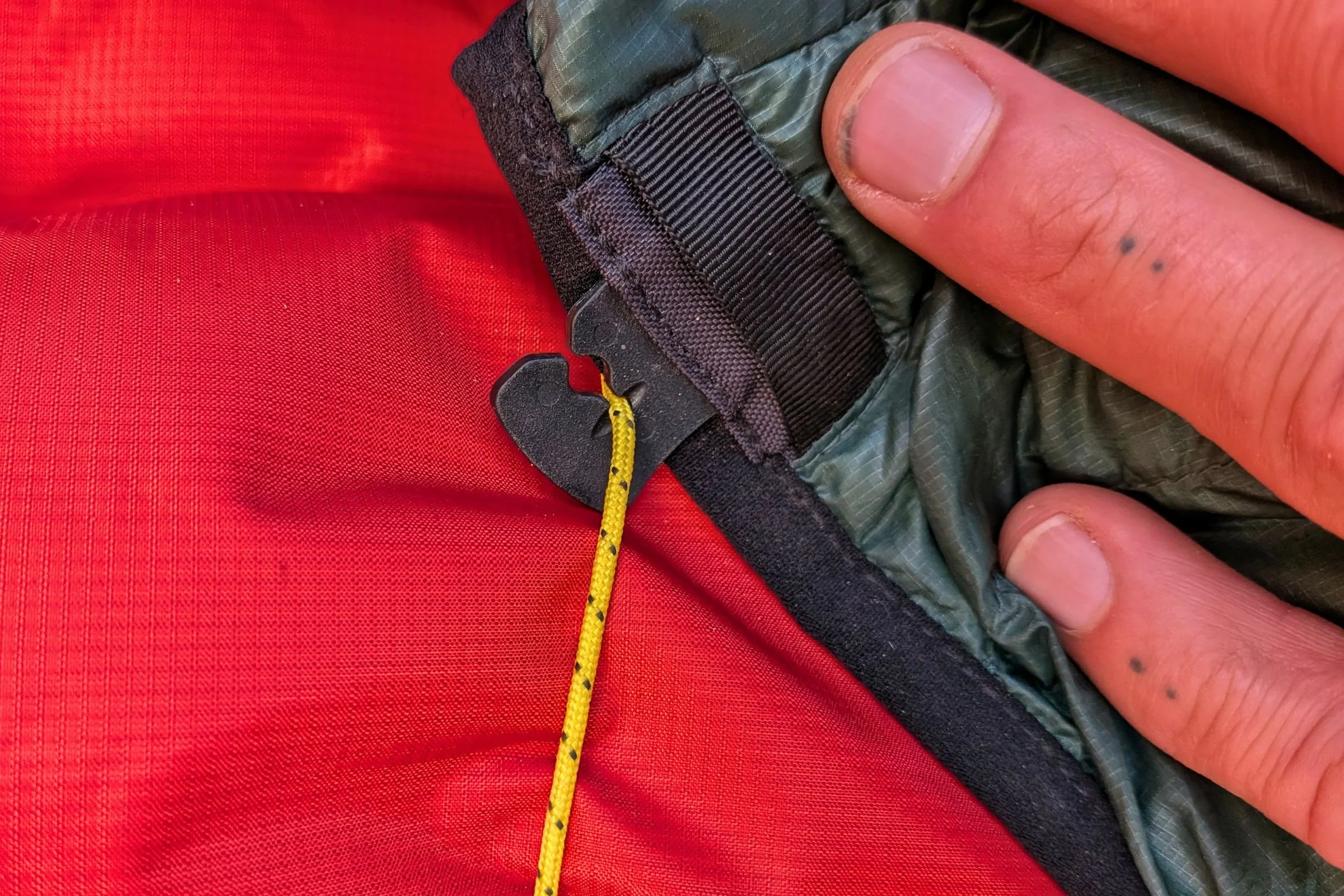
The pad attachment system uses two thin cords with a toggle to fit around your sleeping pad. To use the attachment system, fit the cords around your pad, tighten them, and hook the cord-grabbing hooks sewn into the quilt edges onto the cord. These hooks have two notches: one lets the cord slide so you can wrap the quilt edges beneath you, and the other fits tighter around the cord so the quilt doesn’t move. We use the tighter-fitting notches only when it’s extremely cold.
If it’s really cold, the Flex has a second set of clips that pull more of the quilt down around the edges to further prevent drafts. We’ve only used these secondary clips to test how they work. They’re very easy to use, but even when camping in temperatures at or just below freezing, we never felt the need to cinch the quilt around us any further.
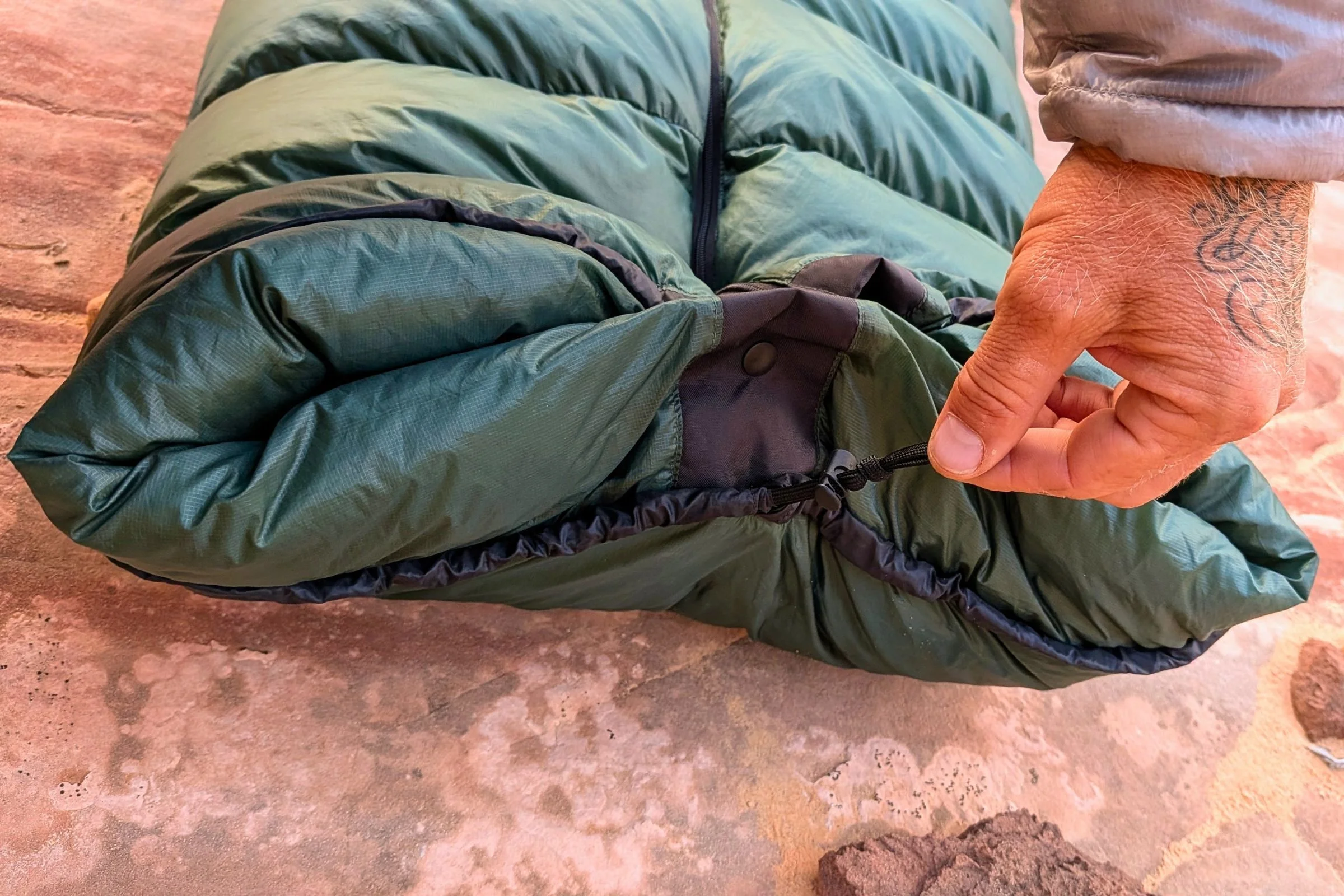
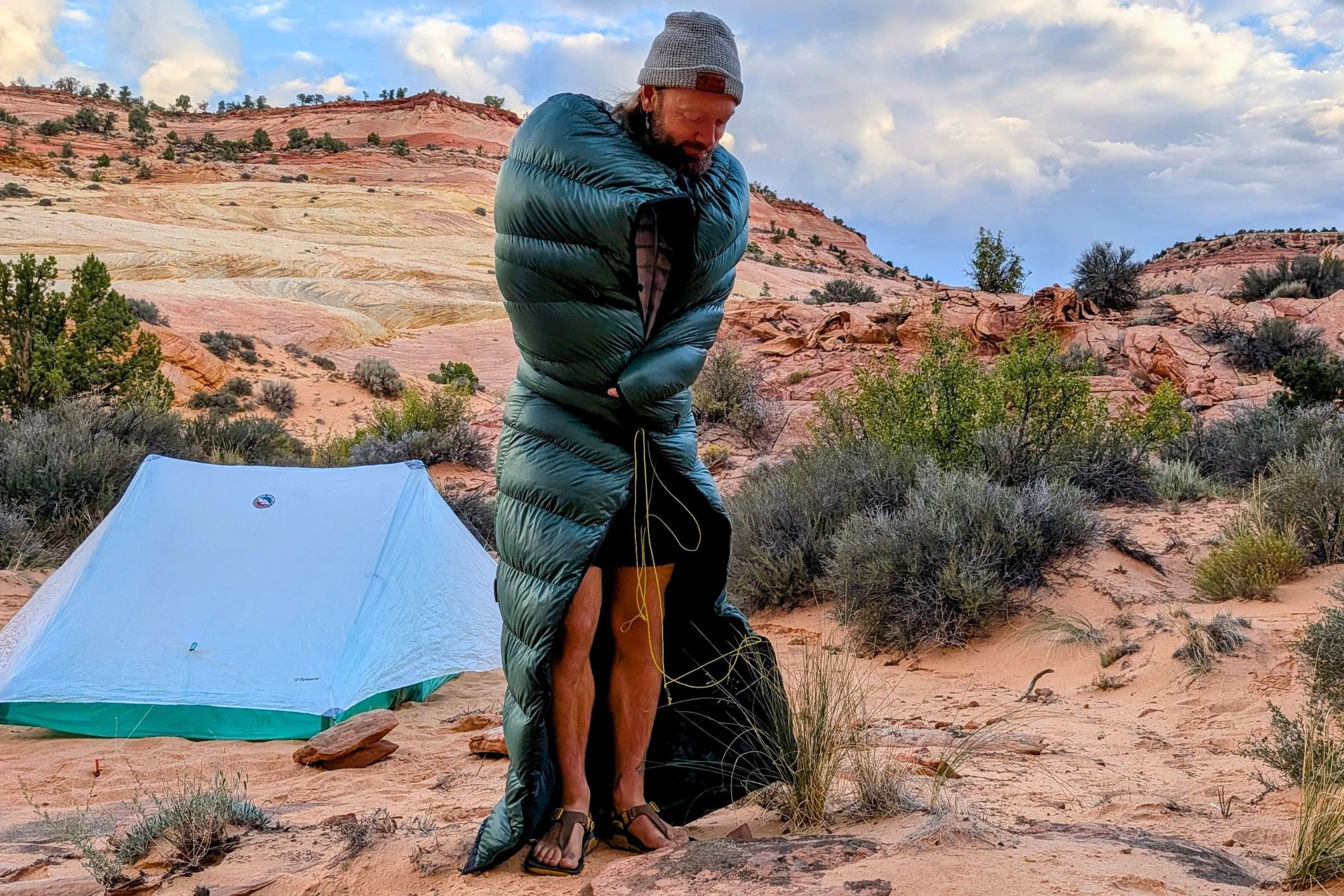
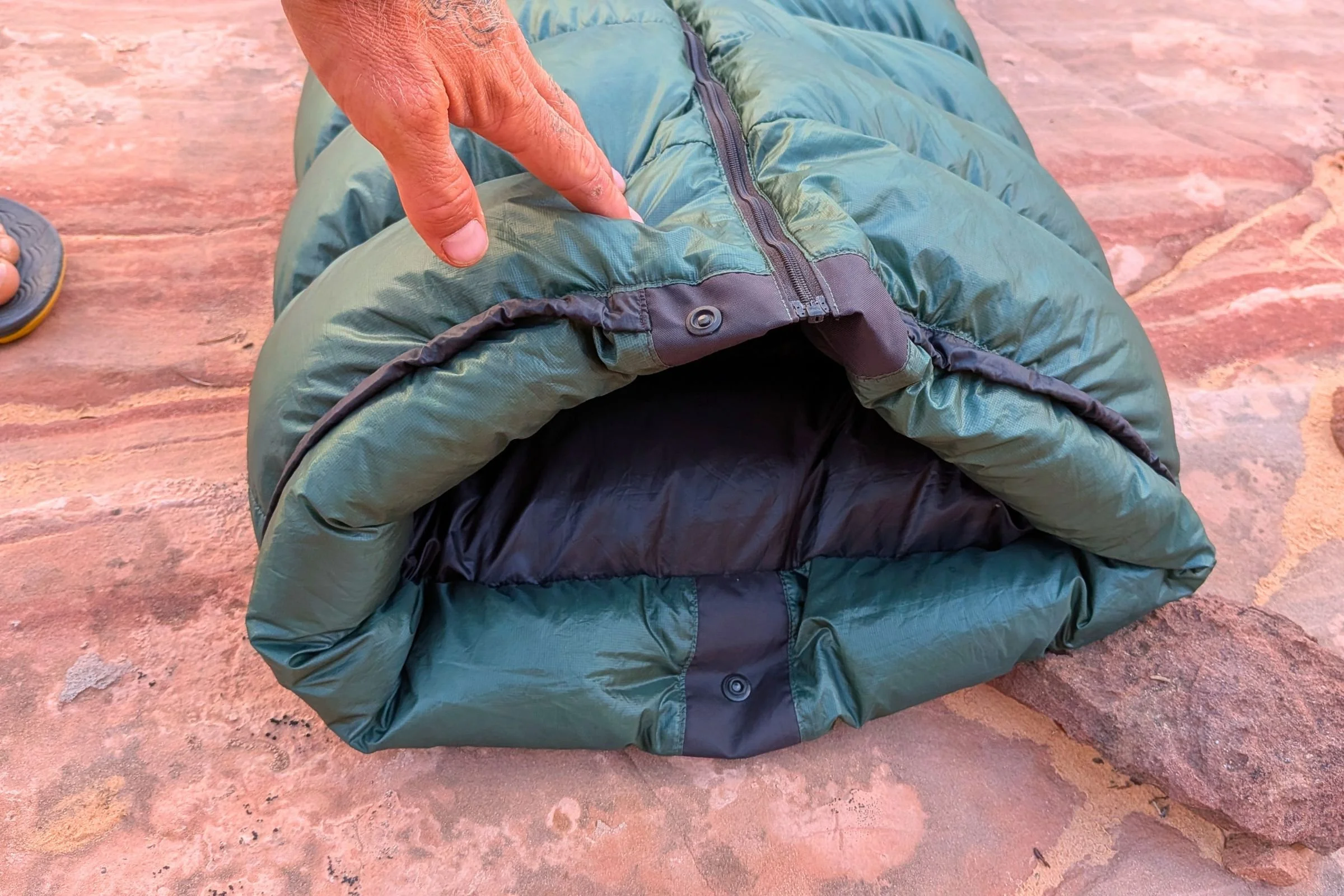
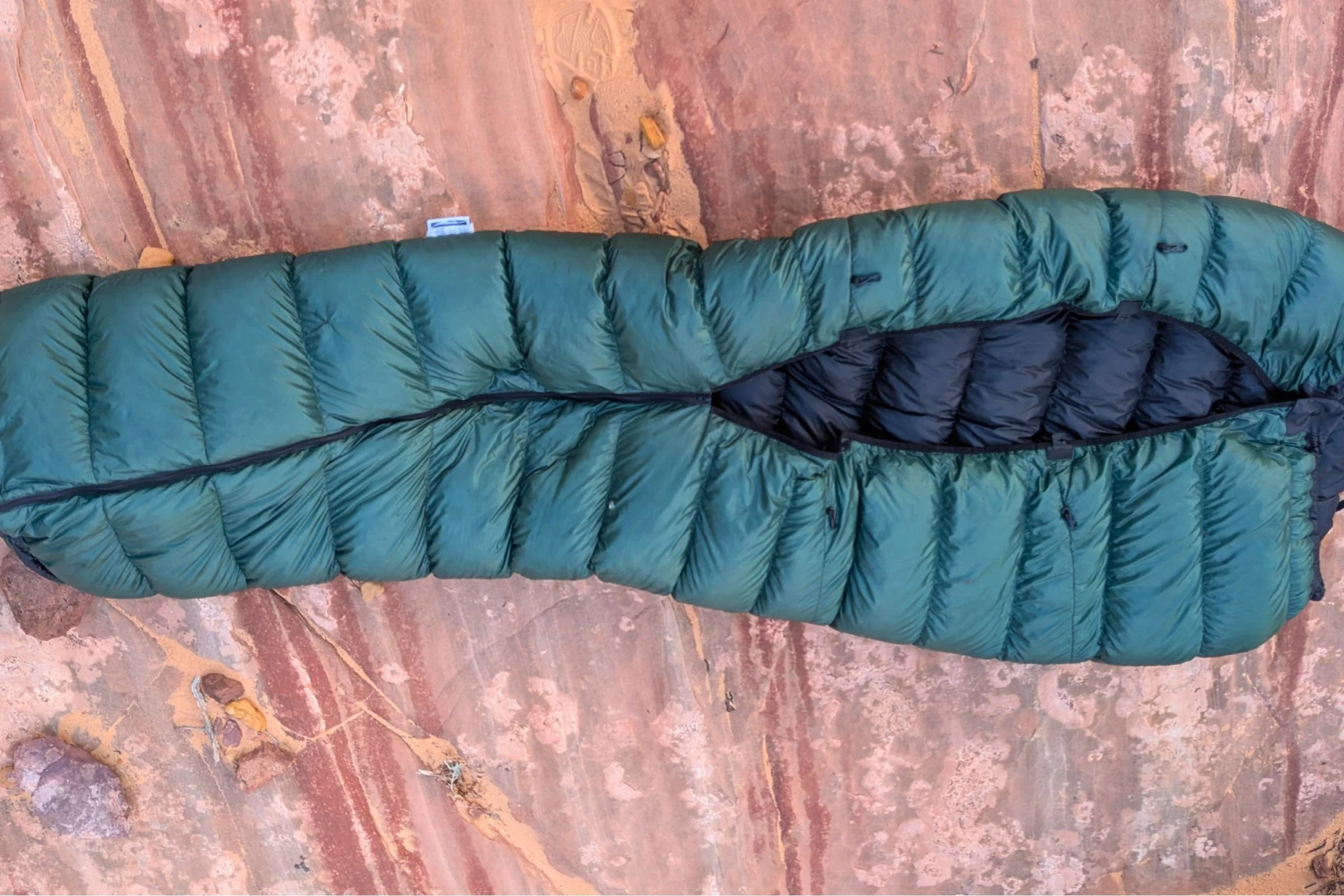
It has a zippered footbox that’s also very easy to use. When it’s cold, you can zip the footbox closed. But when it’s warm, or when you want to use the quilt around camp, wrap it around your legs, or wear it like a cape, you can unzip the footbox to turn it into a flat blanket.
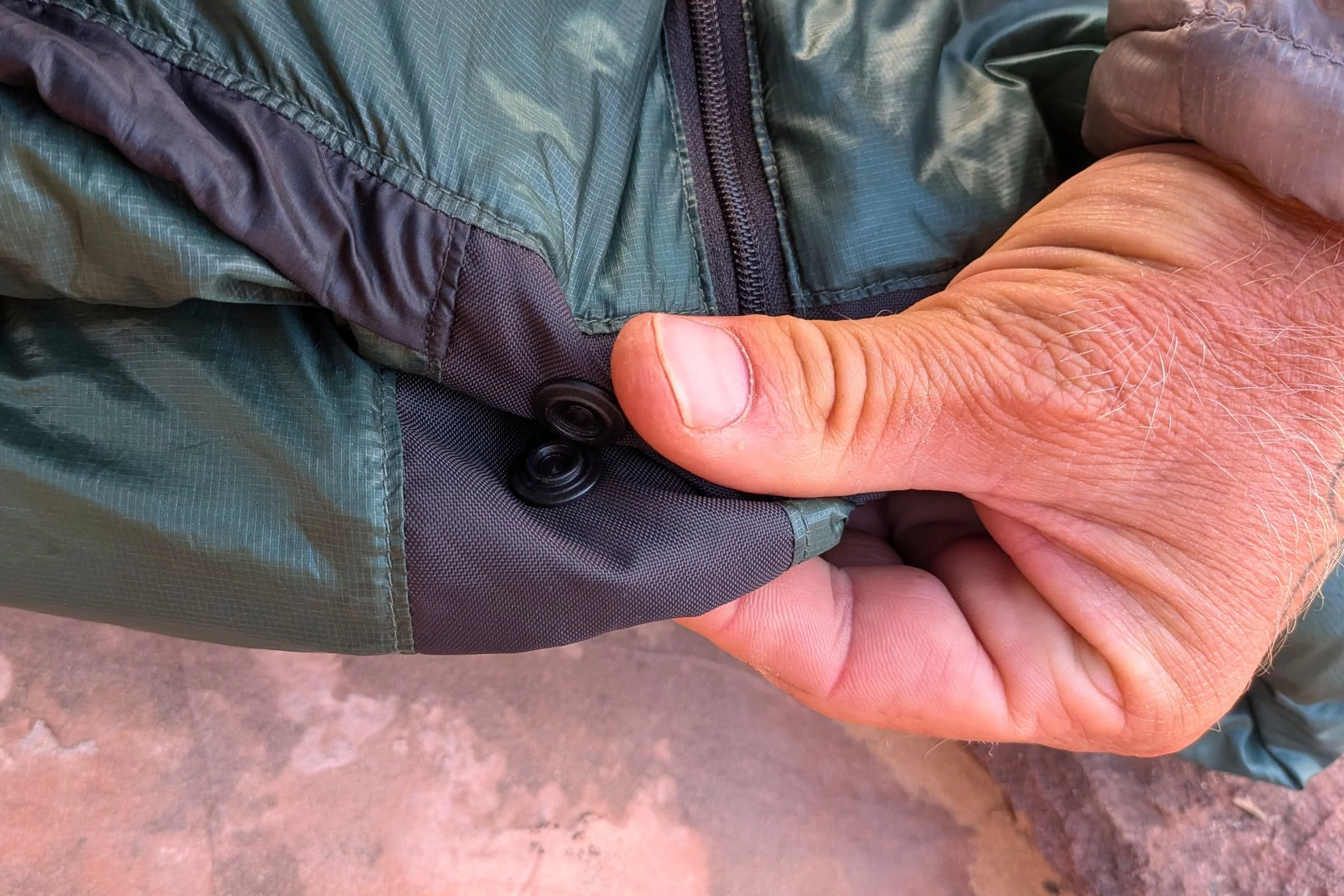
It also has a single plastic snap at the top to secure the draft collar around your neck, plus a cord and toggle to cinch it tighter. The snap and toggle are easy to use, even with gloves on.
One of the Flex 30's best features is the internal stash pocket. This is ideal for storing your phone overnight so you know where it is and the battery doesn’t drain in the cold. We honestly wish every sleeping bag had this feature, and this is especially rare in ultralight quilts.
Durability
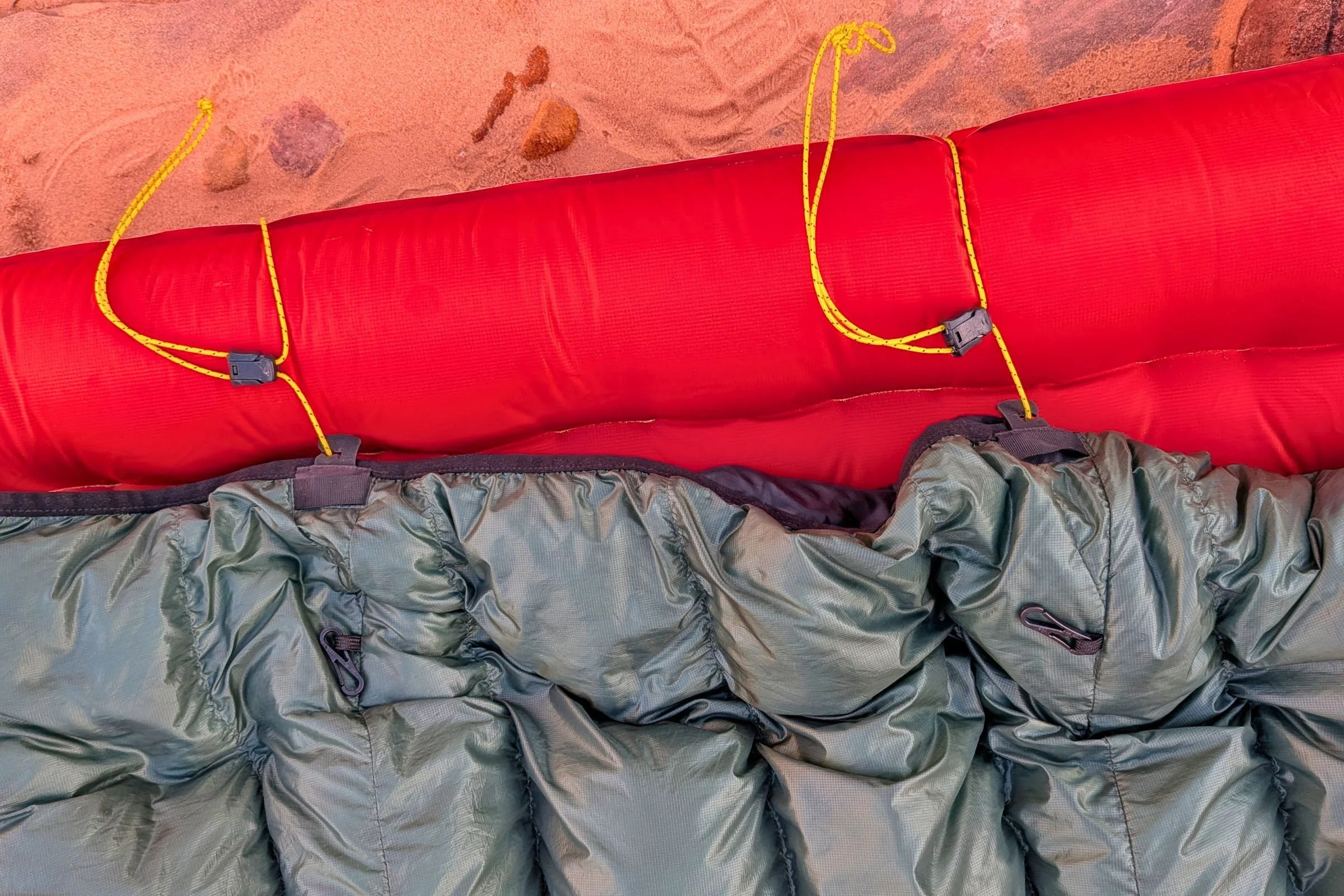
The Flex 30 is quite durable for an ultralight quilt. Most notably, the pad attachment system is durable and doesn’t break easily. We’ve had the plastic clips that other ultralight quilts use in their pad attachment system break many times. The pliable plastic hooks on all Katabatic quilts won’t break nearly as easily as the brittle plastic on those other quilts.
Overall, the Flex 30 is well made. The stitches are solid, and we’ve had no issues with the quilt in the 3+ months we’ve been testing it so far. Katabatic offers a lifetime guarantee that covers defects in workmanship or materials. Should a product fail due to a manufacturer’s defect, they will repair or replace it if you’re the original owner. We’ve also tested other Katabatic quilts and used them for multiple thru-hikes without issue.
The exterior is made of Pertex Quantum Eco ripstop nylon. This material is thin and can tear easily if it brushes against sharp branches or thorny bushes. But if you treat this quilt like any other ultralight down sleeping bag or down jacket, it will last for years.
Also, we’ve found that ExpeDRY down stays lofty over multiple thru-hikes. We regularly sleep with sleep socks to keep the footbox area free of excess dirt and oils from our feet, but otherwise sleep in the same clothes we hike in during the day. We’ve used various quilts with ExpeDRY down for over 100 nights, and it has stayed lofty and warm despite our trail grime.
Features
Down insulation
Down insulation is the most common insulating material used in ultralight sleeping bags and quilts. The ExpeDRY down in this quilt has gold particles infused into the down clusters to repel moisture. This type of down isn't unique to the Flex 30, but it's still uncommon.
The down comes from Allied Feather + Down, and Katabatic says all of its down is RDS (Responsible Down Standard) certified.
Ultralight quilt construction
The Flex 30 uses ultralight materials, notably the thin shell and lining materials and 900-fill-power down. Ultralight quilts also weigh less than sleeping bags because they use less material.
40°, 30°, 22°, 15°, and 5°F temperature ratings
The Flex 30 comes in 40°, 30°, 22°, 15°, and 5°F temperature ratings. We only tested the 30°F version, but found its temperature rating quite accurate.
5’6”, 6’, and 6’6” length options
The Flex 30 is available in multiple lengths, so anyone up to 6’6” can get a quilt that’s long enough. We tested the 6’ version, and it is long enough for Sam, who is 5’9”. He can also pull the quilt over his head for extra warmth if it’s cold, as long as he’s lying on his side with his legs slightly bent.
Multiple widths available
The Flex 30 is available in standard and wide widths. The standard width is 54” at the shoulders, 46” at the hips, and 40” wide at the foot end. The wide width is 58” at the shoulders, 50” at the hips, and 44” wide at the foot end.
Zippered footbox design
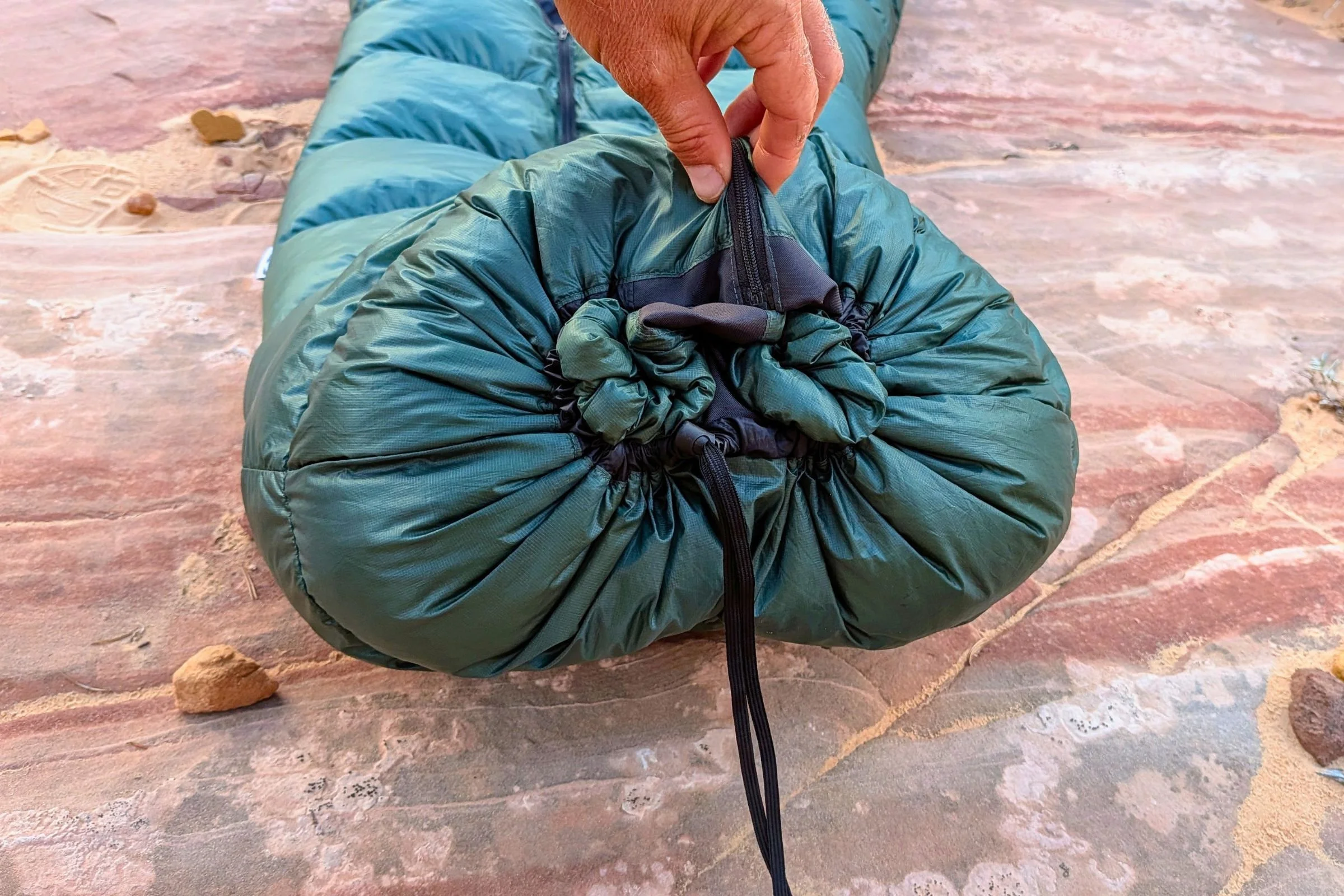
The Flex 30 has a zippered footbox, so you can unzip it in warm weather when you don’t need a closed footbox. When it’s cold and you need to lock in warmth at your feet, you can zip the footbox closed. A snap, cinch cord, and toggle also help ensure warm air doesn’t escape the end of the tube you create for your feet.
Patented pad attachment system
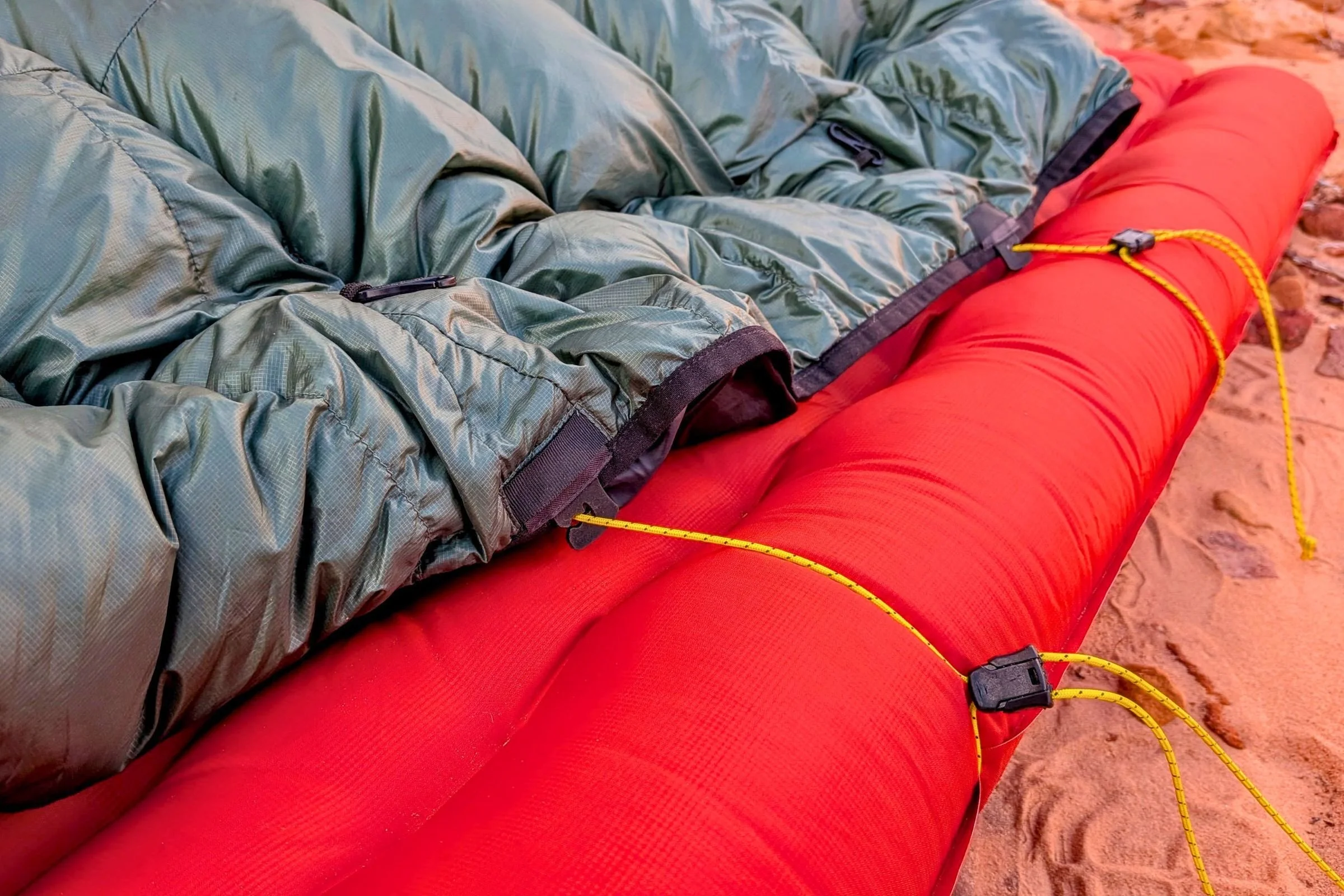
The Flex 30’s pad attachment system uses a patented system unique to Katabatic quilts. It uses 2 mm cord and cord clips that hook onto the cord to hold the quilt in place on your sleeping pad and around your body.
Elastic binding around bottom opening
It has elastic binding around the bottom opening that prevents gaps and drafts from getting underneath the quilt. Most quilts don’t have elastic here, and we think it really helps seal in your body’s warmth.
Differential cut
It has a differential cut, meaning the exterior material is slightly larger than the lining. This design allows for maximum down loft and fewer cold spots when you push against the bag from the inside.
Continuous baffles
It has continuous baffles that run horizontally across the bag from one side to the other. With continuous baffles, you can manually move the down on top of you if you’re cold there, or push it off to the side if you don’t need as much warmth.
Down-filled collar
It has an overstuffed draft collar that wraps around your neck to seal out cold air. You can also adjust the draft collar with a cinch cord and toggle to tighten or loosen it.
Draft blocking footbox closure
Like the draft collar at the top, another overstuffed collar sits at the foot end. This prevents cold air from getting into your footbox when you zip the footbox closed. The footbox closure also has a cord and toggle to cinch it closed after you zip it shut.
Internal stash pocket
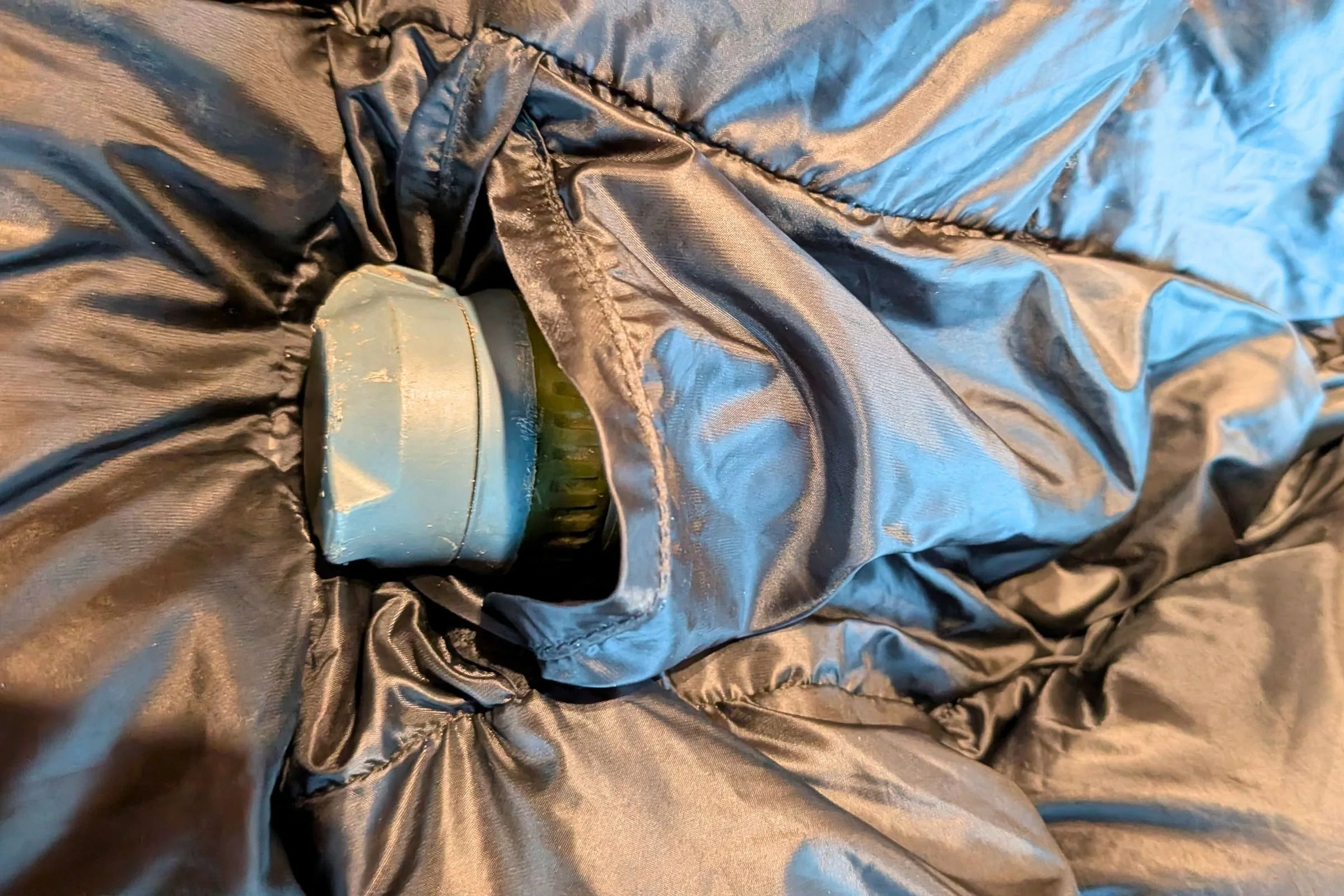
It has an internal stash pocket, perfect for storing your phone while you sleep. This keeps your phone warm so the cold air doesn’t drain the battery. You can also store a water filter in this pocket. And yes, both a phone and water filter fit in the pocket together.
Overstuffed baffles over the foot section
It has more down in the foot-end baffles. This helps keep your feet warmer. We often get cold feet in a down sleeping bag or quilt, but we've never had cold feet with this 30°F quilt down to that temperature.
Lightweight pertex quantum eco shell fabric
The Pertex shell fabric is thin, yet durable enough for the rigors of backpacking and thru-hiking. It’s also made from recycled yarns.
Pertex quantum taffeta lining material
The Pertex Quantum Taffeta lining material is softer and less crinkly than many ultralight sleeping bags and quilts.
FAQ
-
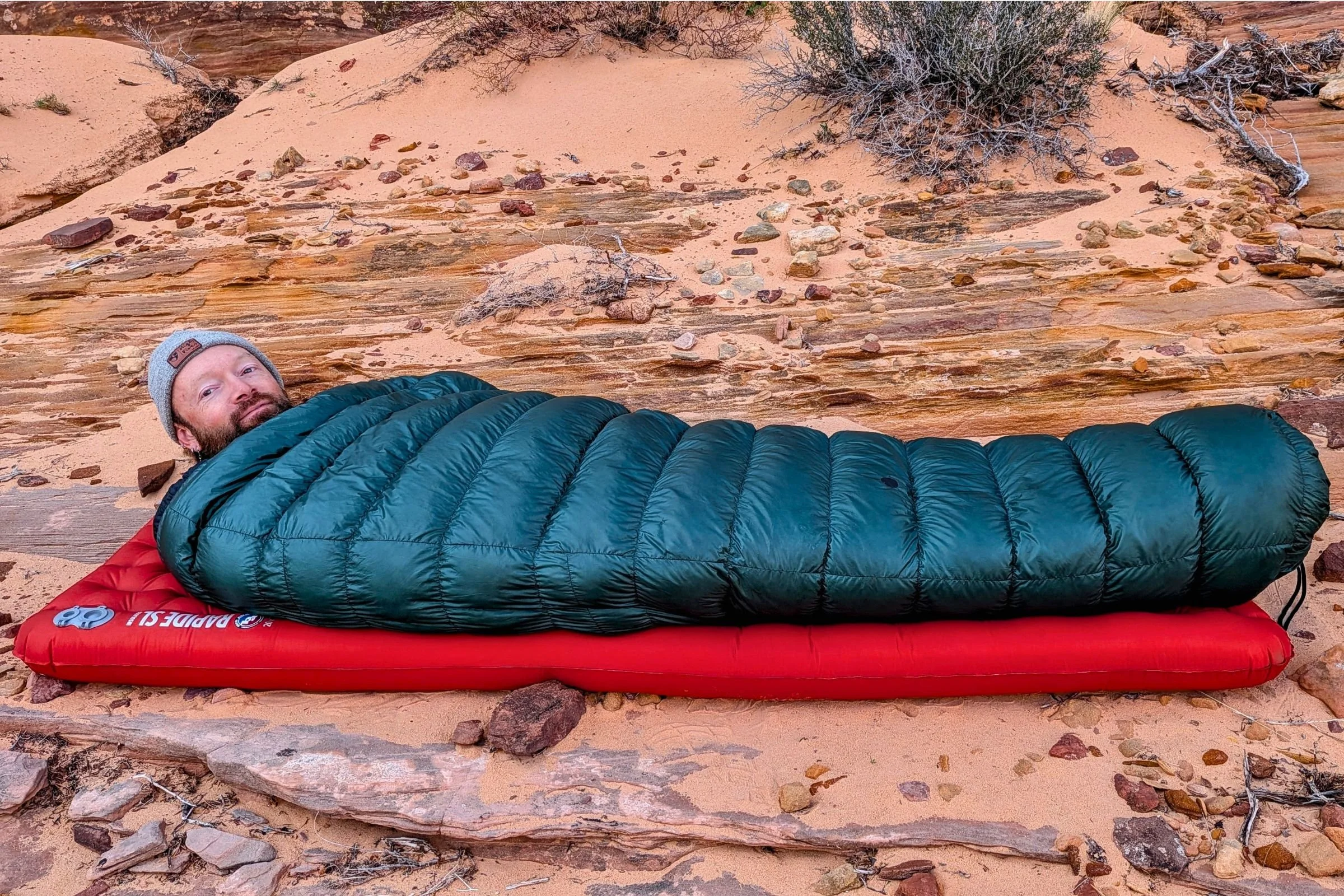
The Katabatic Flex 30 is warm enough for temperatures just below freezing, but you’ll be less comfortable if it's below 30°. We’d recommend getting the Flex rated for 22°, 15°, or 5°F if you’re going to be camping in temperatures significantly below freezing.
-
The Katabatic Flex 30 has a footbox that you can zip shut or leave unzipped in warmer weather. The Palisade has a sewn-closed footbox, so you can’t fully open it like a blanket in warm weather.
-
The 900-fill version will be slightly lighter than the 850-fill version of the Flex 30. Both provide the same warmth, but the 900-fill version costs more. If you value maximum weight savings and you can afford it, go with the 900-fill version. If you want to save some money and don’t need the absolute lightest option, get the 850-fill version.
-
Yes, you can use the Flex 30 as a blanket because the footbox unzips.
-
A quilt is generally lighter than a sleeping bag, and lightweight quilts tend to be less expensive than lightweight sleeping bags, too. This doesn’t necessarily mean a quilt is better than a sleeping bag, though, because both quilts and sleeping bags have their upsides and downsides. Ultimately, it comes down to personal preference whether you think a quilt or sleeping bag is better for backpacking.
Similar ultralight quilts
Katabatic Gear Flex 30 vs Katabatic Gear Palisade 30

MSRP: $379-409
Total weight: 19.8 oz
Fill weight: 12.0 oz
Fill options: 850FP duck down (also available as 900FP)
Hydrophobic down: ExpeDRY
RDS down: Yes
The Katabatic Gear Palisade 30 is our overall favorite backpacking quilt. It is very similar in materials and specs to the Flex 30. The Palisade has a sewn-closed footbox, whereas the Flex 30 has a zippered footbox. With 900-fill down, the Palisade weighs 18.9 oz, and the Flex 30 weighs 20.3 oz. Both quilts cost the same.
If you want the flexibility to use this quilt in warmer conditions, then you should get the Flex 30. If you want the lightest option, go with the Palisade, but you’ll lose the ability to unzip the footbox in warmer weather. Learn more in our in-depth review of the Katabatic Gear Palisade 30 backpacking quilt.
Katabatic Gear Palisade 30
Katabatic Gear Flex 30 vs Outdoor Vitals StormLoft Down TopQuilt 30

MSRP: $340-355
Total weight: 19.6 oz
Fill weight: 12.3 oz
Fill options: 800+FP
Hydrophobic down: Power ExpeDRY
RDS down: Yes
The Outdoor Vitals StormLoft Down TopQuilt is another quilt similar to the Katabatic Gear Flex 30. The StormLoft uses 800-fill Allied Feather ExpeDRY down, which uses the same gold-flake technology as the Flex 30.
The StormLoft has a sewn footbox, unlike the Flex. The StormLoft is available in regular and long sizes. The regular length weighs 19.6 oz, compared to the Flex 30, which weighs 20.3 oz in the 6’ length. The Flex 30 is available in more lengths and widths than the StormLoft. The StormLoft costs $339.97, whereas the Flex 30 costs $459 with 900-fill down or $389 with 850-fill down.
If you want a closed footbox, go with the StormLoft. The StormLoft also costs less than the Flex 30, and if you’re an Outdoor Vitals member, you can get an even deeper discount. If you want the flexibility to unzip the footbox when the weather is warmer, go with the Flex 30.
We also tested the Outdoor Vitals StormLoft Down TopQuilt 15, which you can learn more about in our in-depth review.
Outdoor Vitals StormLoft Down TopQuilt 30
Katabatic Gear Flex 30 vs Zpacks Solo Quilt 20

MSRP: $449-529
Total weight: 18.3 oz
Fill weight: 13.7 oz
Fill options: 950FP Muscovy duck down
Hydrophobic down: No
RDS down: Yes
The Zpacks Solo Quilt 20 is labeled at 20°F, but in practice it’s about as warm as the Flex 30. Zpacks sleeping bags and quilts will be colder than most other quilts of the same temperature rating unless you pay extra for overstuff.
At 18.3 oz for a medium length and standard width, the Zpacks quilt is slightly lighter than the Flex 30. The Solo Quilt uses 0.51 oz/yd² Ventum ripstop, compared to the slightly heavier Pertex Quantum Eco ripstop on the Flex 30. The Solo Quilt uses 950-fill Muscovy duck down, while the Flex 30 is available in 900-fill or 850-fill. The Solo Quilt’s 950-fill down isn’t treated with any waterproofing materials, but Muscovy duck down is naturally water repellent. he Solo Quilt costs about $30 more than the Flex 30's 900-fill version in a comparable size. The Solo Quilt is also handmade in Florida, USA. The Flex 30 is designed, finished, and inspected in Salida, Colorado.
If you want the lightest possible option, get the Solo Quilt. If you want a warmer bag with more water-resistant down, go with the Flex 30.
Zpacks Solo Quilt 20
Katabatic Gear Flex 30 vs Feathered Friends Flicker UL Quilt Sleeping Bag 30

MSRP: $529-549
Total weight: 22.4 oz
Fill weight: 11.6 oz
Fill options: 950+FP goose down
Hydrophobic down: No
RDS down: Yes
The Feathered Friends Flicker UL Quilt Sleeping Bag has a full-length zipper, unlike the Flex 30, which has a zipper only at the footbox. The full-length zipper makes the Flicker a great option for someone who is quilt-curious but isn’t fully ready to commit to a zipper-free quilt. The Flicker we tested is rated to 30°F, but it’s also available in 20° and 40°F versions. It’s also available in regular and long sizes. The regular 30° version weighs 22.4 oz and contains 11.6 oz of 950+ fill down. The 30° Flex 30 weighs 20.3 oz. The Flicker's extra weight comes from thicker, more durable shell materials and an added zipper. The Flicker is made in Seattle, Washington. The 30° version costs about $529, more than the Flex 30's $459 price tag.
If you want a quilt with a full-length zipper, get the Flicker. If you want a slightly less expensive quilt and are OK with using the pad attachment system instead of a zipper, get the Flex 30.
Feathered Friends Flicker UL Quilt Sleeping Bag 30
Should I buy the Katabatic Gear Flex 30 down sleeping quilt?
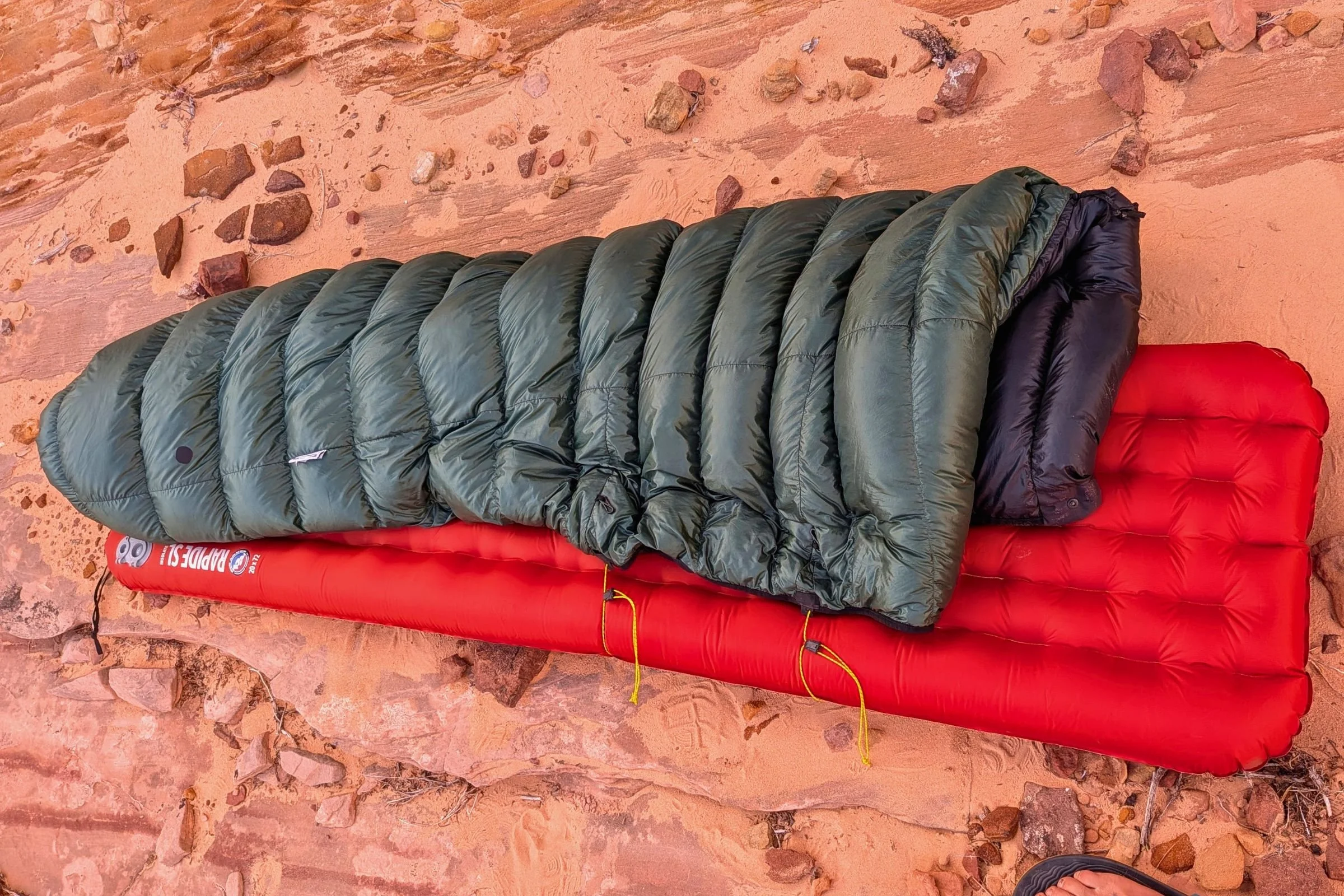
Buy if:
You want a lightweight backpacking sleep system
You prefer quilts over traditional sleeping bags, but still want a footbox that zips and unzips
You want a quilt with ExpeDRY water-resistant down for backpacking in wet conditions and humid areas
You want strong warmth-to-weight performance
You backpack in shoulder-season conditions
Skip if:
You prefer mummy sleeping bags
You frequently camp in extreme winter temperatures
You toss and turn a lot and don’t want to manage drafts
You want the simplest sleep setup possible
You need more customization in your quilt
Where to buy the Katabatic Gear Flex 30 down quilt
The Katabatic Gear Flex 30 down quilt is available at Garage Grown Gear or on Katabatic Gear’s website. Here are the pros for each.
Garage Grown Gear
Pros: Small, ultralight cottage-focused retailer
Katabatic Gear
You can sometimes find more options (such as sizes or colors) when purchasing directly from the manufacturer. It may also be easier to file a warranty claim if you purchased directly from the manufacturer.
850 fill power and 900 fill power
Advice on where to buy
In general for gear, we recommend purchasing from a place with easy or free returns.
Why you should trust us / About the author
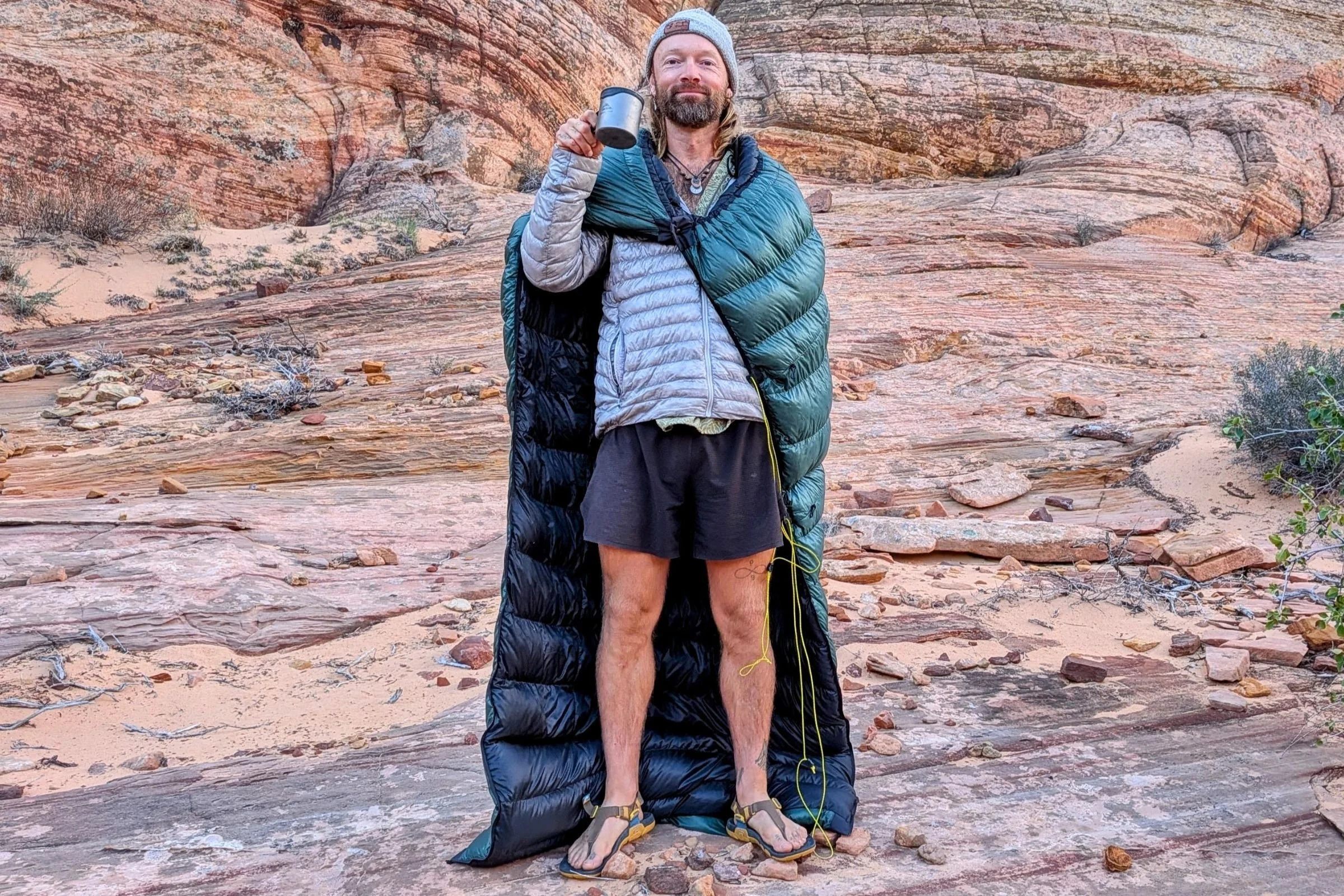
Sam Schild is a thru-hiker, trail runner, bikepacking cyclist, and mountain athlete based in Colorado. He has thru-hiked the Pacific Crest Trail, Continental Divide Trail, Appalachian Trail, Grand Enchantment Trail, Arizona Trail, Hayduke Trail, Pacific Northwest Trail, and the Colorado Trail twice. He has bikepacked across the country and throughout the American Southwest, including the Colorado Trail and the Kokopelli Trail. On every trip, he’s used an ultralight quilt.
You can read more about Sam on his author page, website, or on Instagram.