Best Mountain Bike Backpacks of 2026
MTB backpacks and hydration packs for long days on the trail

September 24th, 2025, updated to include more research and testing notes, remove discontinued products
Home > Gear Reviews > Bike
A mountain bike backpack does more than lug gear—it’s your mobile hub for hydration, trail-side repairs, layers, and even protection when the terrain gets gnarly. The best MTB packs combine smart organization, secure ventilation, and stability so you stay agile and focused, whether you're sprinting switchbacks or setting up descent lines.
We dug into the specs, scoured customer feedback, and narrowed the gear list before spending months trail testing in Colorado and Utah. That meant strapping on packs and riding in sun, rain, heat, cold, enduro trails, and downhill terrain—not just counting features, but feeling how each pack carried on tough rides in places like Floyd Hill, Deer Valley, and Winter Park’s Trestle Bike Park.
Our evaluation zeroed in on ventilation and sweat control, hydration performance, accessible and thoughtful organization, load stability over technical terrain, capacity versus riding style needs, and comfort of the fit system. We also compared each pack’s durability and feature balance to ensure it met the needs for long days, downhill blasts, minimalist setups, or adjustable-fit preferences.
Top Pick: From that deep trail testing, the CamelBak M.U.L.E. Pro emerged as our best overall mountain bike backpack. It delivers standout ventilation, smart storage, lightweight design, and a stable fit—making it the most versatile and confidence-inspiring pack we tested.
Think you may prefer riding with a hip pack? See our guide to the Best Mountain Bike Hip Packs.
We create reader-supported, objective gear reviews independently selected by our editors. This story may contain affiliate links, which help fund our website. When you click on the links to purchase gear, we may get a commission — without costing you an extra cent. Thank you for supporting our work and mission of outdoor coverage for every body! Learn more.
MTB Backpacks Comparison Tables
Men’s Comparison Table
| MEN'S MTB PACK | TREELINE AWARD | HYDRATION PACK INCLUDED? | VOLUME/ CAPACITY | WEIGHT | HIP BELT | PRICE |
|---|---|---|---|---|---|---|
| CamelBak M.U.L.E. Pro | Best overall Read why |
3 L | 11 L | 30 oz | 30”-50” | $176 |
| Osprey Raptor 14 | Best for long days Read why |
2.5 L | 14 L | 28 oz | 25-50" (new extended size fits up to 70") | $180 |
| POC Column VPD Backpack 8L | Best for downhill Read why |
Not included, fits up to 3L | 8 L | 24 oz | No hipbelt | $200 |
| Osprey Siskin 8 | Best small Read why |
2.5 L | 8 L | 26.5 oz | No hipbelt | $130 |
| CamelBak Chase | Best vest Read why |
1.5 L | 2.5 L | 10 oz | No hipbelt | $126 |
Women’s comparison table
| WOMEN'S MTB PACK | TREELINE AWARD | HYDRATION PACK INCLUDED? | VOLUME/ CAPACITY | WEIGHT | HIP BELT |
|---|---|---|---|---|---|
| CamelBak M.U.L.E. Pro | Best overall Read why |
3 L | 11 L | 29 oz | 26”-46” |
| Osprey Raven 14 | Best for long days Read why |
2.5 L | 14 L | 32 oz | 25-50" (new extended size fits up to 70") |
| POC Column VPD Backpack 8L (unisex) | Best for downhill Read why |
Not included, fits up to 3L | 8 L | 24 oz | No hipbelt |
| Osprey Salida 8 | Best small Read why |
2.5 L | 8 L | 25.4 oz | Hipbelt is removable |
| CamelBak Chase | Best vest Read why |
1.5 L | 2.5 L | 10 oz | No hipbelt |
See our most popular mountain bike guides in our Bike gear section:

A good MTB backpack can help you stow extra gear, including a hydration bladder, a repair kit, extra clothes, pads, snacks, and a first-aid kit.
The Best Mountain Bike Backpacks
Best Overall: CamelBak M.U.L.E. Pro
Capacity: 11 Liters
Hydration: 3-Liter CRUX Reservoir
Weight: Women’s: 1 lb 13 oz, Men’s: 1 lb 14 oz
Fits Waist/hips: Women’s: 26”-46”, Men’s: 30”-50”
Pros: Great organization, Best ventilation, achieves CamelBak’s Repurpose Green Badge for sustainability
Cons: Back protector is extra, Back protector stiffens pack
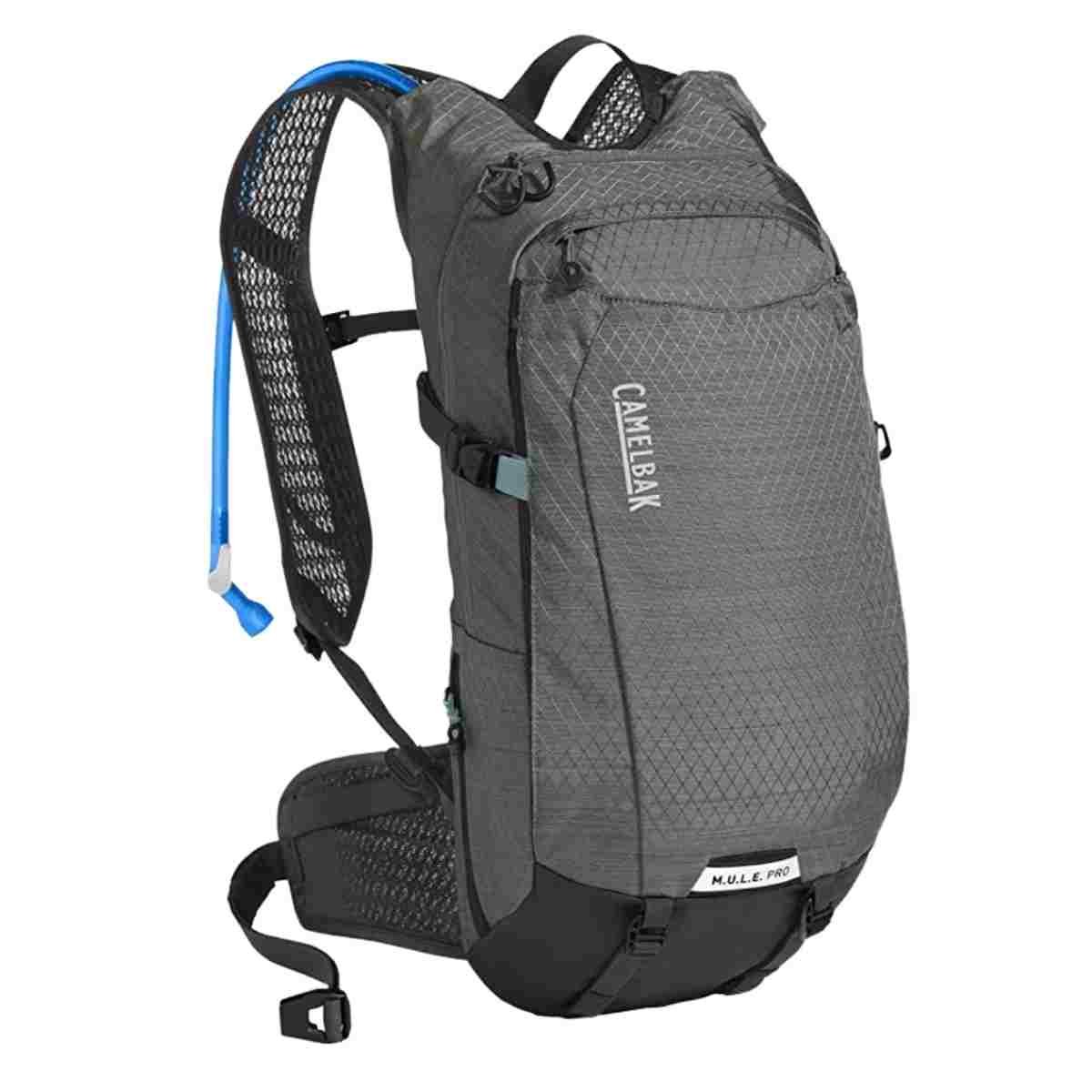
The CamelBak M.U.L.E. Pro is our overall winner for best mountain bike backpack. It's also the winner for the most versatile bike pack since it's light but good at carrying everything short of overnight gear. CamelBak brought the first hydration packs to the market in 1989, showing that it continues to lead the pack in hydration packs. M.U.L.E. (By the way, M.U.L.E. stands for Medium to Ultra Long Endeavors).
We thrashed this hydration pack on trails across Colorado and took it to the lifts and slopes at Deer Valley, Utah, and Winter Park’s Trestle Bike Park in Colorado. Even on the hottest summer days, we never felt like we were sweating out and hardly ever noticed the weight of the pack on our back.
Compare Prices Of The Camelbak M.U.L.E. Pro
Men's
Women's


-
It should be no surprise that we didn’t feel too sweaty in this pack. The M.U.L.E. Pro has some of the best ventilation we’ve ever seen on a backpack (in decades of testing!). Both its shoulder pads and hip belt are made of the company’s 3D Vent Mesh, and its Air Support Pro Back Panel is also incredibly breathable.
It uses a trampoline-style, tensioned mesh with some highly breathable padding around contact points to keep the pack off the back and the bladder away from heat spots. Still, the pack is not too far off the back, and the weight is kept over the hips. At the same time, it sits low enough off the shoulders to keep it from interfering with a helmet or impeding movement while on the trail.
-
The M.U.L.E. Pro also features all the organizational features you could want without being overkill. The main compartment has two pouches for tools and can house the removable tool wrap. It also has a lower pouch to stow extra clothes or an e-bike battery for those who ride those bikes. It has a fleece-lined compartment near the top for glasses, goggles, smartphones, or cameras.
Beyond that, there’s a zippered pocket on one side for carrying a tube and tools. On the other side are the hydration sleeve and a sleeve for the CamelBak Impact Protector, which are sold separately. The back protector (sold separately) offers CE1621-2 Level 2 protection, the best back protector we tested.
The external shove-it pocket is generous enough to stash knee pads, elbow pads, and any other gear that gets wet or dirty. The compression straps on the side have integrated helmet carry features, and there are also two compression straps at the bottom.
The large inner compartment has dual-tool pouches. It also has an E-bike battery pouch, tool roll, hip-belt pockets, external shove-it pocket, glasses pocket, helmet carry system, and stash pocket for tubes.
-
The 3L CRUX Reservoir’s drinking tube also secures the magnetic chest strap with magnets. In our testing, this magnetic system stayed the most secure on bumpy rides.
We also found in our testing that the CamelBak reservoirs delivered water with no taste. We noticed some plastic tastes in the water stored in other reservoirs.
These features made the M.U.L.E. Pro our top pick for an overall mountain biking backpack. CamelBak also offers a Pro version of the M.U.L.E.'s larger sibling, the H.A.W.G. Pro (17L vs. 11L). We didn’t test it, but it has all the same features as M.U.L.E. Pro.
Best MTB pack for long days: Osprey Raptor (men's) and Osprey Raven (women's)
Capacity: 14 L (10 L also available)
Hydration: 2.5 L Hydraulics LT by Hydrapack
Weight: Men’s: 1 lb 12 oz, Women’s: 2 lbs
Fits Waist/hips: 25-50" (also available in new extended fit up to 70” in men’s and women’s)
Pros: Great organization, good color options, Osprey has a lifetime warranty program
Cons: No space for a back protector, more expensive than M.U.L.E. Pro, Noticed plastic taste when drinking water from the hydration bladder
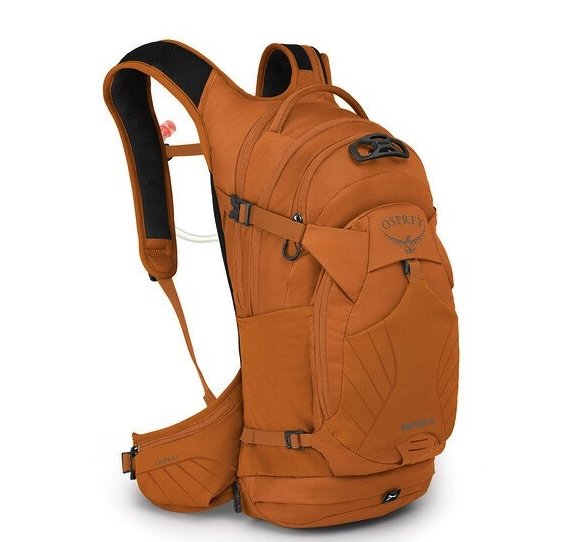
The Osprey Raptor for men and the Raven for women are great, full-featured mountain bike backpacks that win our award for best for long days. With a plethora of well-designed storage pockets and compartments, the packs are easy to navigate and are well-ventilated for all-day adventures and long days on the trail.
We wore this backpack on day trips throughout Colorado’s Front Range and were impressed by its organization and comfortability. The pack stayed secure on our back even on gnarly trails at Floyd Hill and fun rippers like Hall Ranch and Lair O’The Bear.
COMPARE PRICES OF THE OSPREY RAPTOR/RAVEN 14
MEN'S
WOMEN'S
-
We appreciated that the pack has not one but two stash pockets on the front, meaning you can stow wet gear in the frontmost pocket while keeping it separate from knee and elbow pads in the other; no one wants to put wet pads on!
The main compartment is large enough to easily stow extra clothes, like a mid-layer and wind jacket. Plus, its pouches can easily accommodate a pump and a spare tube. The rest of the tools will easily stow in the removable tool roll at the bottom of the backpack. The roll is the largest and best in class, with an extra workspace to keep parts and tools off the ground while working on the bike.
The floating front pocket includes additional pouches to hold snacks, a wallet, and a first-aid kit. It also has an easy-to-use key clip. We also appreciated the easy-to-use, adjustable LidLock helmet system, which secures bike helmets with a toggle on an elastic cord.
The large inner compartment has 1 stretch mesh pouch and two nylon pouches, glasses pocket, removable tool roll. It also has hip-belt pockets and a large and small external shove-it pocket. It’s equipped with a helmet carry system. The floating front pocket has small organizer pouches for snacks and first-aid kit as well as a tool-kit pocket.
-
The 2.5L Hydrapack hydration bladder is enough for almost every day, but you could also slip a water bottle into the main compartment or stash pocket for longer days. The drinking tube for the reservoir secures with a magnet, as does the sternum strap. While the hydration bladder works great, we did notice a plastic taste when drinking the water.
-
The Raptor/Raven uses Osprey’s Airspace ventilation system with mesh over the strategically finned foam and air chambers to reduce contact on the back. It also has a ventilated hip belt and shoulder straps. It does a great job at keeping your back from wetting out but wasn’t as good as that of the M.U.LE. Pro.
These packs are on almost every reviewer or bike media site as a top pick for a mountain bike pack.
Best for Downhill: POC Column VPD Backpack 8L
Capacity: 8L
Hydration: Not included, up to 3L
Weight: 1 lb 8 oz.
Fits Waist/hips: N/A
Versions: Also available in a 13L version
Pros: Comes with a back protector
Cons: Doesn’t come with a bladder, price, limited space/gear organization
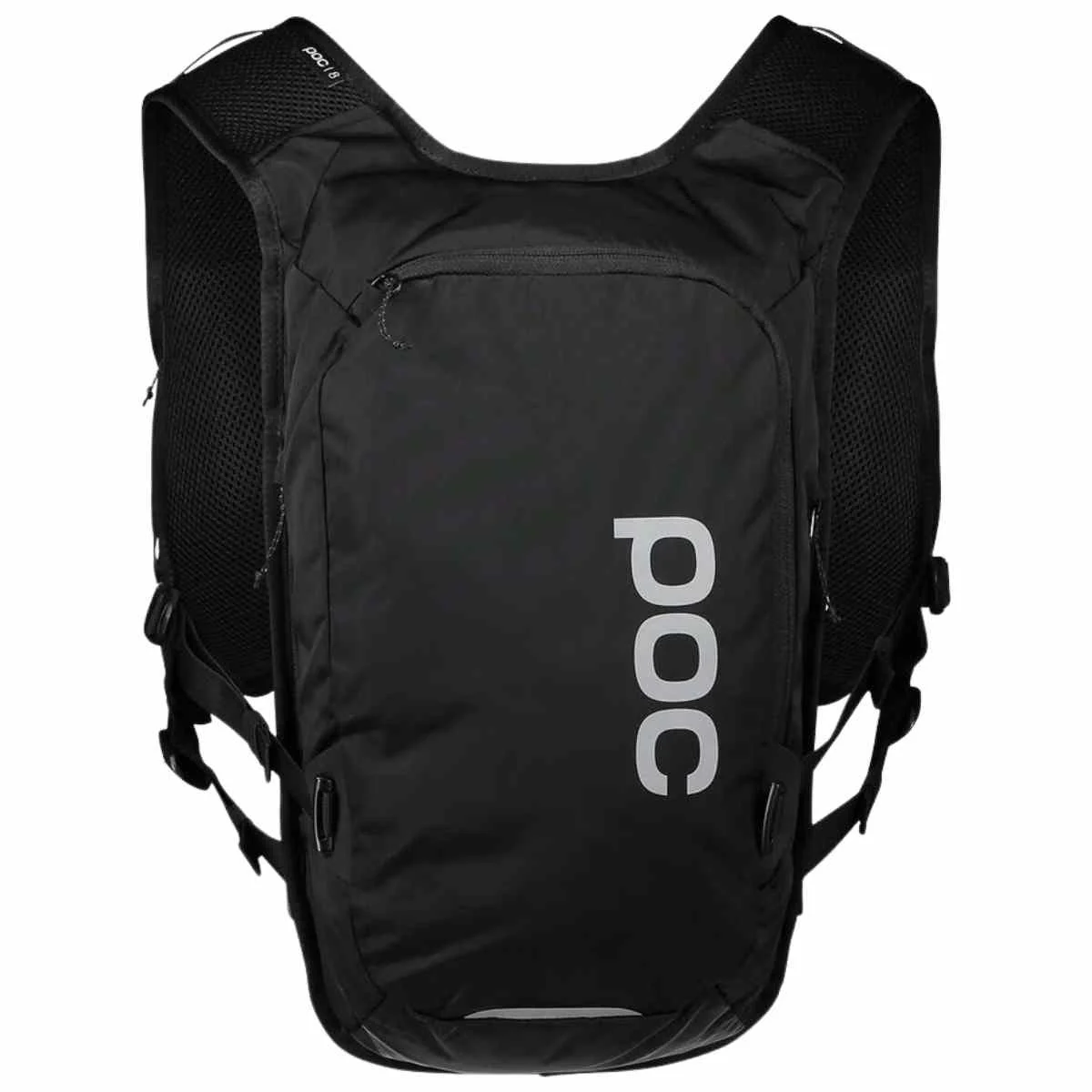
Riders who want a pack for downhill courses on the ski slope should check out the POC Column VPD Backpack 8L. It comes with the POC CE EN 1621-2, Level 1, removable back protector. It’s the only pack we tested that comes with a back protector, making it our winner for Best Bike Pack for Downhill.
The POC Column VPD Backpack is a small, lightweight pack made of mainly recycled materials. Since it is designed without a waist belt, it verges on being a vest. It’s not an all-day backpack, but for someone who’s planning on riding with lift service and stopping at a restaurant for lunch, it’s ideal.
Compare prices of the POC Column VPD Backpack 8L
-
We tested this on local downhill trails on the Front Range in Colorado. Despite a lack of a waist belt, the shoulder straps and sternum straps kept the pack securely in place. That’s thanks to all of the straps being adjustable at two places. The sternum straps offer about a half inch of stretch, which meant that even while tightened down, we didn’t have any problems breathing. When biking at altitude, that makes a difference!
-
The organizing pocket in the main compartment is divided into six separate pockets, ideal for snacks, a wallet or cash and card, and carrying tools to repair the bike on the slopes.
The two zippered chest pockets offer easy access and can hold snacks, gels, or MTB sunglasses.
This pack has a few options for your smaller items. The main compartment has organizer pockets. It also has zippered pockets in shoulder straps and tunnel pocket for tubes.
-
The Column VPD features 3D mesh ventilation on the shoulder straps and back panel. It offers enough ventilation for downhill rides but doesn’t keep the pack off the back for greater airflow during longer rides where you’re more prone to sweat.
-
While it is designed for one, the pack doesn’t come with a hydration bladder. Buyers might consider that a plus or minus, based on their bladder preferences. However, it is designed to fit a bladder up to 3L in size.
Best small mountain bike pack: Osprey Siskin (men's) and Osprey Salida (women's)

Capacity: 8 Liters
Hydration: 2.5 Liter Hydraulics LT by Hydrapack
Weight: Women’s: 25.4 oz, Men’s: 26.5 oz
Fits Waist/hips: N/A
Versions: Both are available in 12-liter volumes as well.
Pros: Great organization for small pack
Cons: Could taste plastic in water stored in bladder
For those who want to ride with a smaller pack yet still carry a full day's water supply, the men’s Osprey Siskin 8 and women’s Osprey Salida 8 are the winner of our award for best small mountain bike pack. As always, Osprey impresses with its organization.
Compare Prices Of The Osprey Salida/Siskin 8
Men's
Women's
-
The horseshoe zipper on these packs opens like a hungry Venus flytrap to reveal several well-designed pockets. The main pocket on the back panel inside will keep a sandwich or bars safe from jostling around too much. Some longer pockets along the side are ideal for holding pumps. On the inside of the front panel, there’s a scratch-free pocket for glasses and a smartphone, and below that, a zippered mesh pocket so you can easily see tools for trail repairs. It also has a hook for your keys.
The front panel of this backpack also features a big shove-it pocket and compression straps. These types of pockets were great when we rode with the Siskin at Golden Gate Canyon State Park in Colorado on a hot summer day. We could easily carry our knee and elbow pads. On cooler trail days, the pockets have enough room for a windbreaker.
Aside from the main compartment, this pack has a large-item E-bike battery pouch, tool roll, hip-belt pockets, and glasses pocket. On the outside, we already mentioned the large external shove-it pocket. It also has a helmet carry system and stash pocket for pads.
-
The Salida and Siskin packs use Osprey’s Airscape ventilation system, which kept our backs from getting too sweaty even riding in 90-degree weather. As a lighter, smaller pack, the Siskin/Salida uses a strap for a waistband with no hip belts, which we hardly noticed.
-
The Siskin/Salida packs use the same LidLock management system (toggle on an elastic cord) for helmets, the chest harness, and the hydration system as is found on the Osprey Raptor and Raven packs, which won our award for Best Pack for Long Days. The magnets on the chest harness straps also fasten the bite valve of the drinking tube. However, we had a harder time adjusting the bite valve magnets on the Salida and Siskin than with the Raptor.
Best Mountain Biking Vest: CamelBak Chase

Capacity: 2.5L
Hydration: 1.5L
Weight: Women’s and Men’s: 10 oz
Fits Waist/hips: N/A, no waist strap
Versions: Women’s and men’s
Pro: Impressive organization in small package, lightweight
Cons: Not big enough for winter rides and gear, small hydration bladder
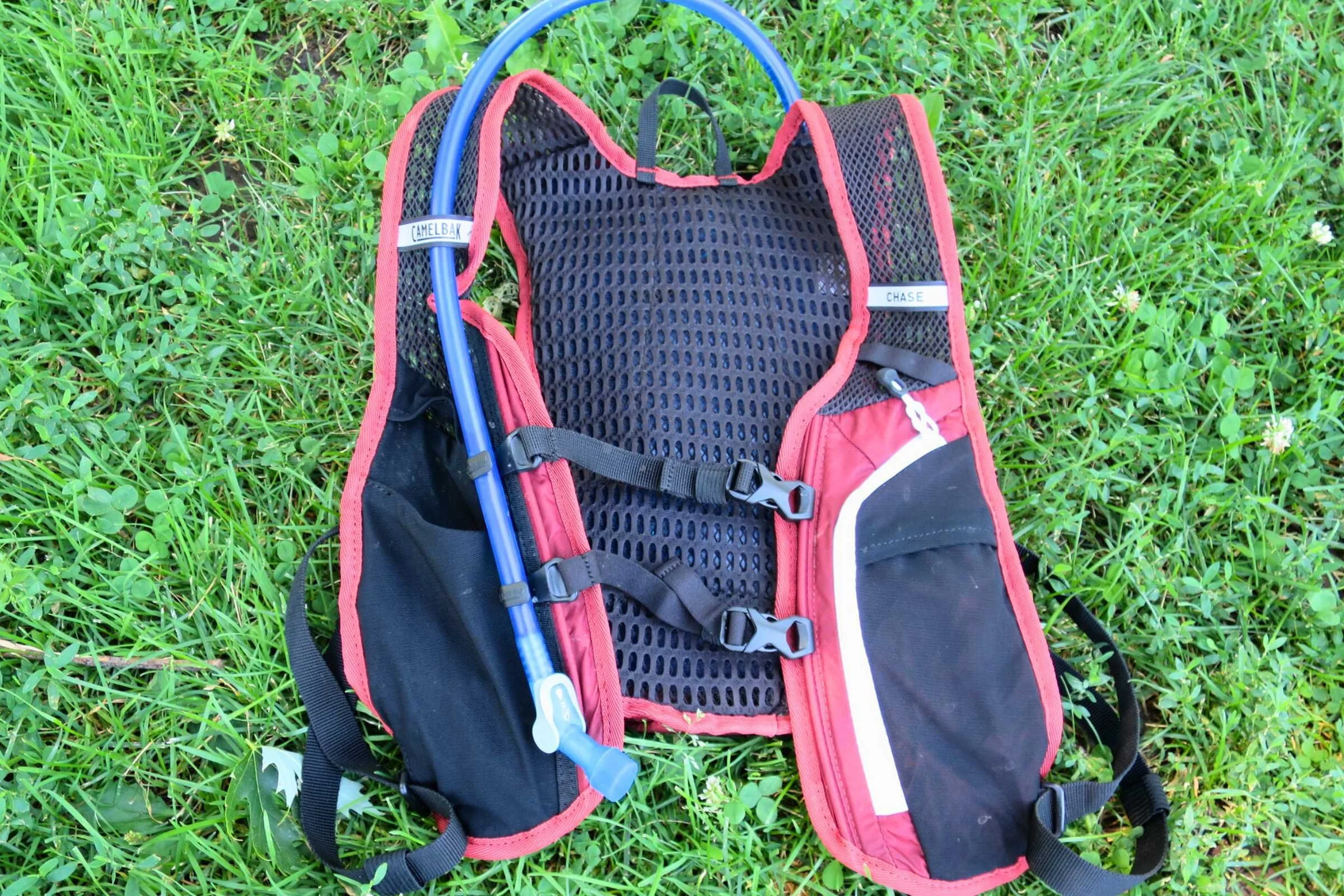
Our winner for Best Vest Bike Pack is the CamelBak Chase because it fits comfortably and can hold a surprising amount of gear for a vest. Somehow, CamelBak fits 2.5L of gear storage capacity and 1.5L of water in this 10-oz vest. This minimalist pack has enough capacity for short rides or cross country racers counting the grams.
Compare Prices Of The Camelbak Chase
Men's
Women's

-
We were surprised that we could carry everything we needed for a day at Staunton State Park. The 3D Vent Mesh Harness system throughout the vest’s back and shoulder straps kept the sweat off our backs on hot summer days, and the dual sternum straps kept the vest secure.
The main compartment of this hydration pack has enough space to carry a windbreaker, spare tube, compact camera, and food, and we stashed tools in the mesh zippered pocket. We could also stash our pads in the shove-it pocket and still have enough room to put some extra snacks in the front pocket.
Although this is a minimalist vest, there’s lots of pockets. It has a large zippered compartment has a mesh zippered pocket. There’s also a smaller zippered compartment on front. There’s also a zippered pocket on the left shoulder with external mesh pocket and two mesh pockets on the right shoulder strap. Plus, the external pockets.
We didn’t use any pockets on the shoulder straps yet, but we’ll cram them with gels and chews on longer rides on weight-obsessed days. This ultralight vest punches well above its weight, and we’d be happy to take it on any adventure, except maybe winter trips when we need more capacity for insulation.
We’re not the only ones who love this vest, either. “This lean, mean, lightweight vest is the ultimate pack for riders who are always looking to trim ounces wherever they can,” says Men’s Journal. “In addition, the minimalist mesh design ventilates and wicks sweat to keep you dry and comfy.”
Other mountain bike backpacks we tested
There were plenty of other good packs out there from companies including Vaude, Deuter, USWE, Mystery Ranch, and others, but we focussed on those that repeatedly appeared in best of lists and thought of the use case scenarios where riders would want a specific type of hydration backpack.
Dakine Syncline

Capacity: 12L
Hydration: 3L
Weight: 25.6 oz
Fits Waist/hips: N/A, no waist strap
Versions: Women’s and men’s
We liked the look and feel of the men’s Dakine Syncline, which is also available in a women’s model, which is a bit of a throwback to mountain biking's early days.
It has all the features we were looking for in a mountain bike backpack, including the ability to insert a back protector. For organization, it has a large zippered compartment with mesh zippered pocket, smaller zippered compartment on front, shove-it pocket, zippered pocket on the left shoulder with external mesh pocket, and two mesh pockets on right shoulder strap
However, in testing, the ventilation wasn’t great on the back. Though having the bladder located at the base of the hydration pack keeps weight low, inserting the back protector is awkward since you have to undo a velcro compartment separator to insert the protector.
Compare Prices Of The Dakine Syncline
Men's
Women's

Capacity: 9L
Hydration: 3L
Weight: 1 lb 12 oz
Fits Waist/hips: N/A, no waist strap
The M.U.L.E. Evo is an interesting hydration backpack. It uses the same harness as the CamelBak Chase Vest, but we found that in this instance, the pack sits higher on our shoulders than we liked. Our helmets could hit the top of it when we looked up, for instance. We felt like the shoulder straps were too tight for our frame.
Compare prices of the CamelBak M.U.L.E. Evo

Capacity: 20L
Hydration: 3L
Weight: 40.6 oz
Fits Waist/hips: removable waist strap
Today’s CamelBak H.A.W.G. Pro looks different from our 90’s version. We like them both but didn’t see the need for a larger hydration pack for mountain biking. That said, if we did, we’d gladly turn to this set of packs from CamelBak.
View the CamelBak H.A.W.G. Pro

Capacity: 1.5L
Hydration: 6L
Weight: 12.9 oz
Fits Waist/hips: N/A, no waist strap
We tested the Nathan Quickstart, which is designed for trail running and is in our Best Running Hydration Vest guide. But we wanted to test it for biking as a minimalist vest for mountain biking. Of the packs we tested, it's most akin to the CamelBak Chase Vest.
We think it’s a great kit with good ventilation and storage. However, it doesn’t have any inner pockets for keeping tools organized, which is important for biking (and isn't for running). We wouldn’t feel comfortable keeping much in the right shoulder strap pockets, which don’t secure well.
We also think the six adjustable straps are too much for mountain biking and can be hard to reach. Ultimately, while this is a hydration pack we like, the best option is to get an MTB-specific pack.
Compare Prices Of The Nathan Quickstart 2.0
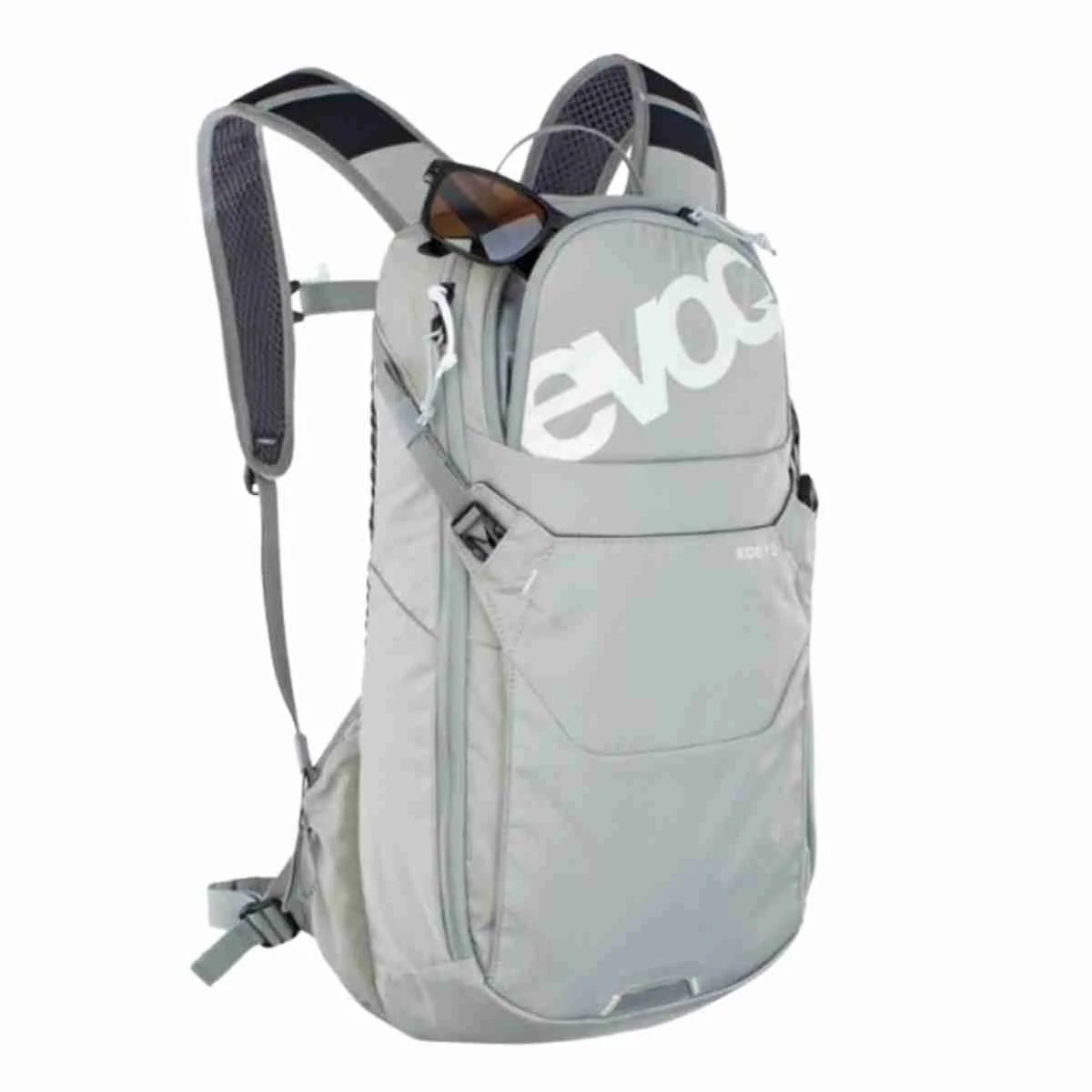
Capacity: 12L
Hydration: 2L
Weight: 20.8 oz
EVOC’s packs appear on many reviewers’ top lists regarding mountain bike backpacks. But there was little consensus as to which one was best. We couldn’t get these on our backs for testing, but we hope to in the future.
View the EVOC Ride
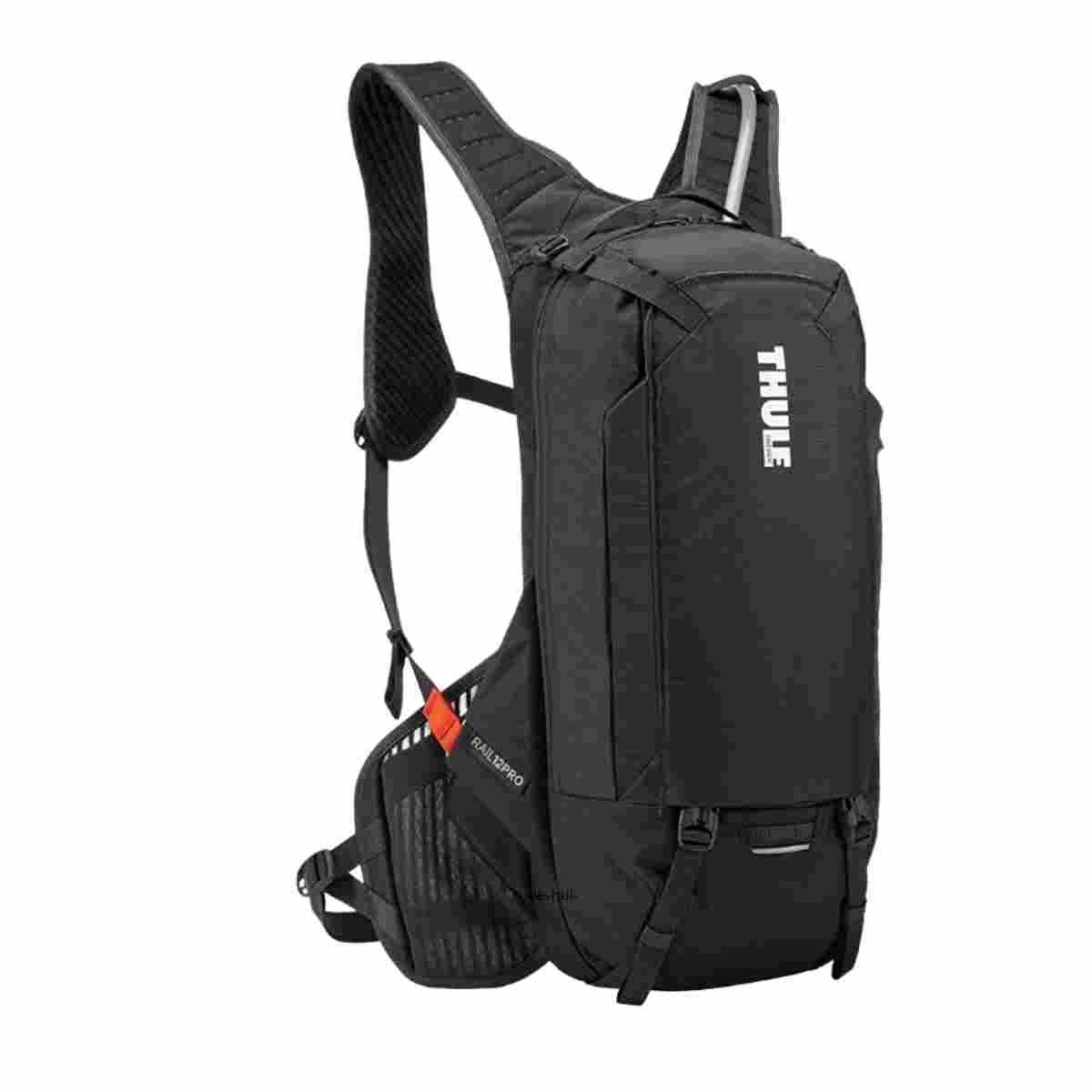
Capacity: 12L
Hydration: 2.6L
Weight: 36 oz
The Thule Rail was another hydration pack with positive reviews from reviewers that we couldn’t test in this round. We were interested in its back panel and hip belt ventilation as they’re a little different than some of the other models we evaluated.
Compare prices of the Thule Rail

The Author evaluating the Osprey Siskin 8 pack at Floyd Hill
In defense of bike backpacks
Not to contradict the fannies of the furious, aka hip belt, hip pack, or lumbar pack supporters, but we think there are still a host of reasons to consider an MTB backpack over a fanny pack-style system.
First of all, there’s the bobbing around. Even the best-designed hip-belt packs can still jostle when loaded up. Backpacks have more contact points and are therefore more secure on the back. Also, during certain parts of the year, they offer even more benefits.
Backpacks can carry more water than lumbar packs; they can carry more gear, including insulation layers when it's cold. Mountain biking backpacks also offer better organization options and storage than a hip pack. With an MTB backpack, you've got spots to stash gear like pads and helmets.
Plus, the best MTB backpack options also offer back protection while still offering full-back ventilation.
What to look for in a MTB backpack
While there are many features in a bike backpack to consider, the most important thing is how you’ll use it the most. Do you need a small hydration pack for minimal gear or a larger pack for long day rides or overnighters? Are you using it for downhill riding or riding in the cooler months?
Capacity
The mountain biking backpacks we considered fall into roughly three different capacity sizes: daypack, small, and vest.
Daypack
The daypack-sized packs, like Osprey’s Raptor 14 — a 14L pack — are on the small side compared to a daypack for hiking but still have enough space for a windbreaker, snacks, extra layer, and more. Still, they offer a lot more volume than hip packs. If you're looking for a versatile pack, this size can also be used for cycling in town or as a commuter backpack.
Small Pack
Smaller packs, like POCs Column VPD Backpack 8L or Osprey’s Sisken 8, only have 8L of capacity; these are designed for shorter days on the trail. But, these packs can still have enough external capacity to carry pads and even a helmet when well-designed.
Vests
The last category we tested was vests, which have even less capacity, like the CamelBak Chase Vest, which has 2.5L of capacity. The vests are best for shorter days and cross-country rides where a mountain biker wants to keep their pack weight down and doesn’t necessarily need to carry extra protection.
Larger Packs
There are larger packs made for mountain biking. However, most of those are designed for other purposes, like Dakine’s 40L Builder pack for trail builders. But those packs are generally more specialty items. As packs get larger, they’re a little more unwieldy on trails.
One should also note that when giving storage capacities, CamelBak subtracts the reservoir's capacity from the overall capacity of the hydration pack. So the 14L M.U.L.E. Pro has 3L of water carrying capacity and 11L of gear carrying capacity. Other manufacturers don’t break that down in the same way.
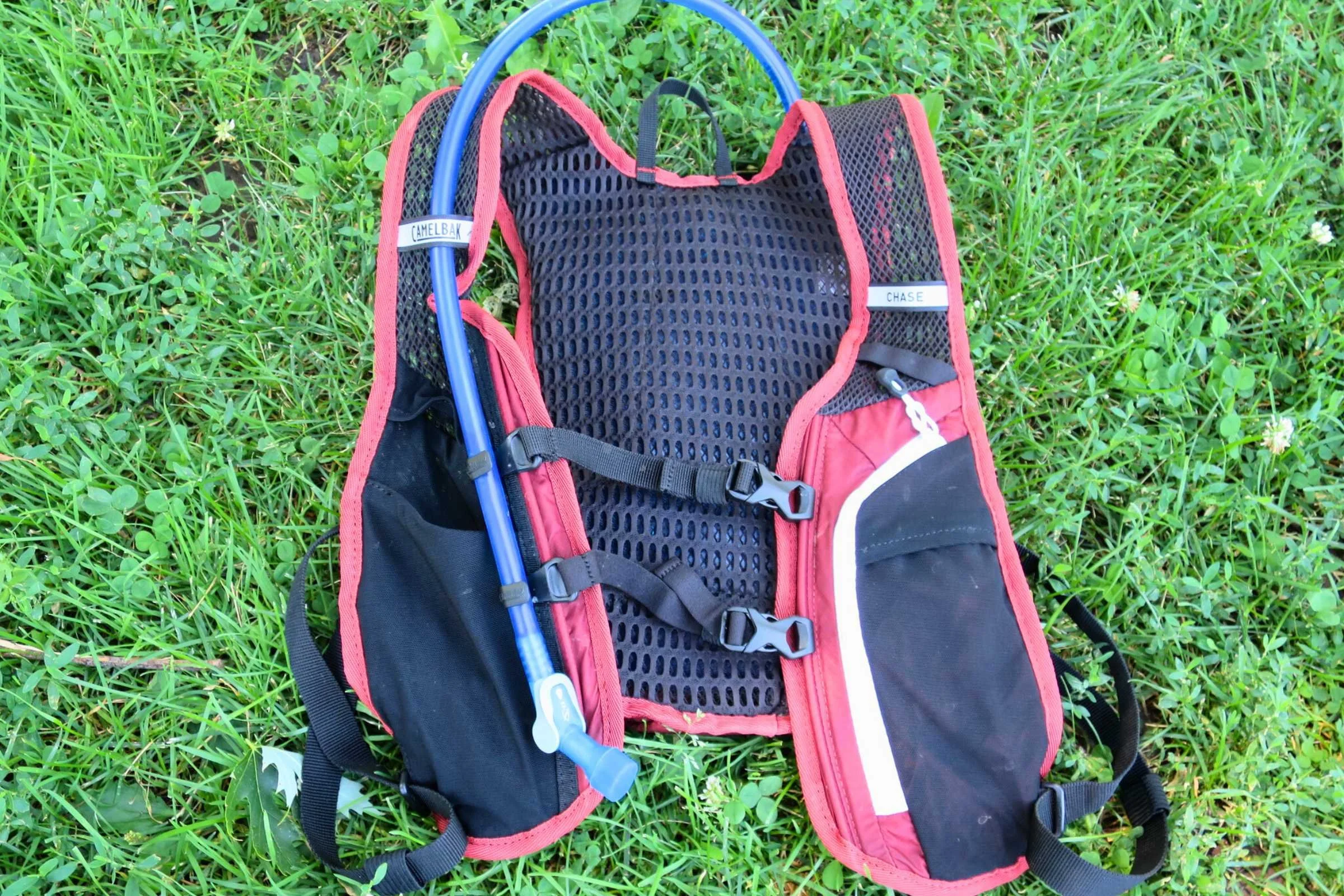
The CamelBak Chase vest is highly breathable and well-organized.
Hydration
All of the packs we considered are hydration packs or are hydration-compatible, which is to say they all come with a hydration bladder. The range of water volumes on the included hydration reservoirs was as low as 1.5L in the vests to 3L in the CamelBak M.U.L.E. Pro.
Different packs have different bladders. Gregory and CamelBak, which led the hydration pack trend, have their own bladders. Other companies, like Dakine and Osprey, use private labeled versions of Hydrapak reservoirs. We noticed more plastic taste when drinking water from the Hydrapak reservoirs.
Most hydration systems use magnets or clips to help keep the drink tube out of your way when riding. Sometimes they also use magnets to secure the sternum straps. Magnets work better for sternum straps than as part of the hydration system. We’ve never had the magnets for the drink tubes that work perfectly without much fiddling.
Bonus tip: Although CamelBak and Osprey use magnets to secure the tube to the hydration pack, the magnets used are reversed. So, if you want to use a CamelBak bladder with an Osprey pack, you’ll need to take a magnet clip for an Osprey bladder and put it on the CamelBak bladder.

On the CamelBak M.U.L.E Pro, the Sternum strap (bottom), is secured with a magnetic clip on the shoulder strap (middle), and the drink tube (top) clips into that.
Sizes/Gender-Specific Packs
While most of these packs are only offered in one size, more companies are offering women’s and men’s versions of the packs. Some companies use different names for each with different names. For example, Gregory has the Avos series for women and the Endo series for men. Others, like CamelBak, just offer men’s and women’s versions with the same name. There are subtle but important differences in each, like differences in the shoulder and waist straps to accommodate different body shapes.
Uses
We considered three primary uses for mountain bike backpacks. We think vest and smaller packs are ideal for road, gravel, and cross-country riding. Then there’s all-mountain or enduro riding, where riders will likely want more storage capacity for all-day rides and storage for elbow and knee pads and sometimes a helmet.
Then there are packs designed for downhill riders. Since these riders are the most likely to face severe consequences on a ride, these packs can include rated back protectors, which add stiffness but are also often removable. They also range in size based on whether someone’s doing a long backcountry ride with some epic downhill features or if they’re doing a resort day where they need minimal gear and supplies.
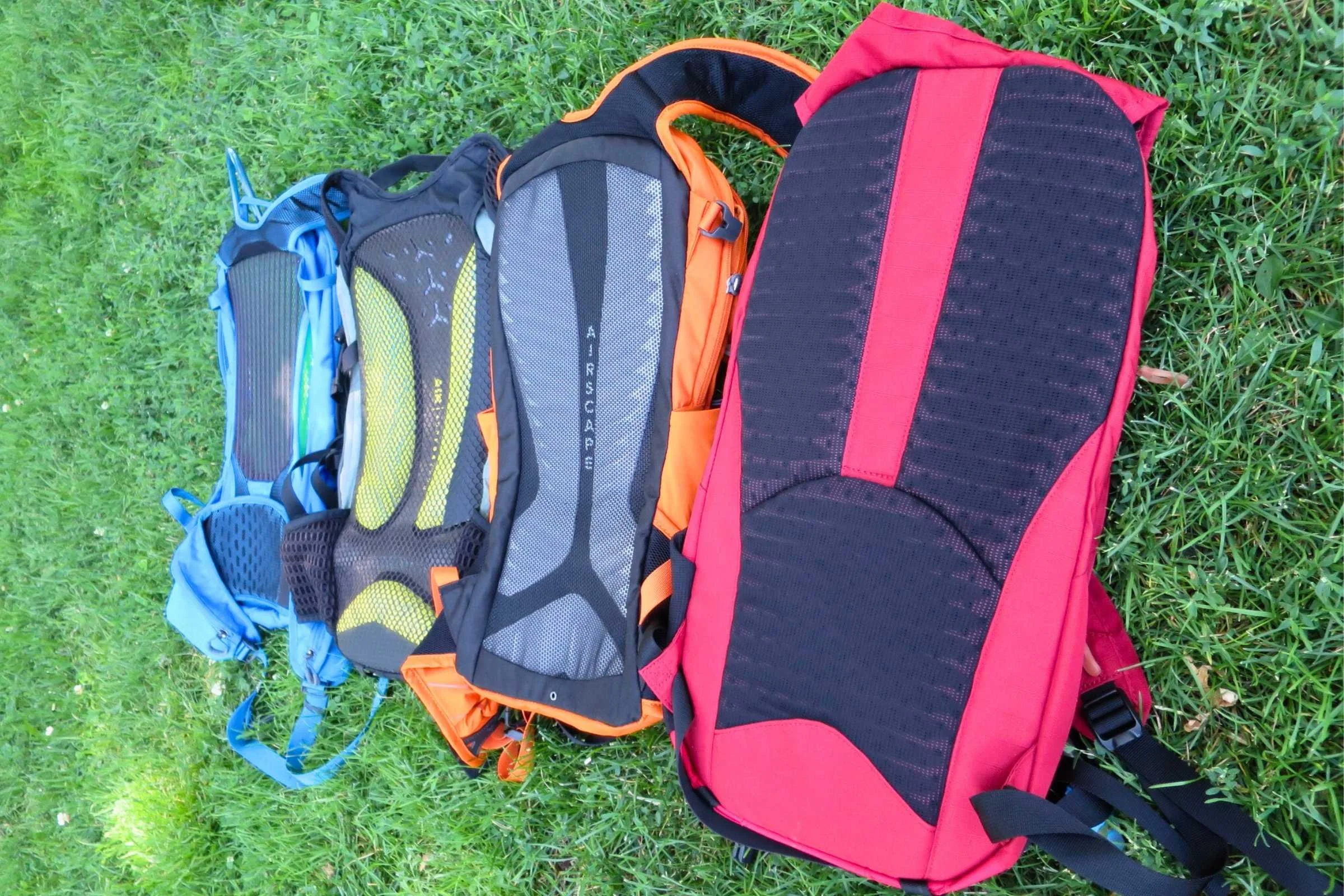
Level of ventilation on packs varied. All the packs on the left (Gregory Endo, CamelBak M.U.L.E. Pro and Osprey Raptor) suspend the pack off the back more than the Dakine Syncline on the right, offering greater ventilation for long days.
Ventilation
The more your MTB backpack is off your body, the more your body can breathe and not sweat out. All packs and vests we tested had at least some form of back ventilation. However, many packs have more advanced ventilation, like Osprey and CamelBak. They have small versions of the trampoline-style packs that have become popular in recent years. The open mesh reduces how much the back of the pack touches the rider’s back and increases the amount of air that can flow between the shoulders and the lower back, reducing sweating.
Straps
Most packs tested also had lightly padded yet ventilated shoulder straps that are easy to adjust. Most also had elasticized sternum straps to keep them from moving while riding. Most also had waist straps to help secure the larger packs around the waist. For larger packs, waist straps are welcome. For smaller packs and vests, waist straps are not as important (some do away with them altogether).

Organization in some of the larger packs, like the Gregory Endo (pictured here) is excellent.
Organization
With smaller packs, you’re usually going to have less organization. Yet, when well designed, like the 2.5L CamelBak Chase Vest, you still have some good storage opportunities. The vest has one main pouch with a small mesh pocket inside, an external shove-it pocket that allows you to carry your pads, and another pocket on the front that’s ideal for snacks.
Larger packs, like the Osprey Raptor/Raven, have more pockets and organization opportunities. You may find you won’t need to use every pocket on every ride, but it’s nice to have when you need the extra space inside on the front of the pack.

From left to right: Tool rolls on the Gregory Endo, CamelBak M.U.L.E. Pro and Osprey Raptor.
Extra features
One of the coolest extra features we saw were tool rolls. These organized, removable pouches make it easy to store your multi-tools, tire levers, CO2 cartridges, a dollar bill for flat tires, and other items.

From left to right helmet carry systems on the Osprey Siskin and CamelBak M.U.L.E. Pro.
Another nice feature found on some packs is a helmet carry system. While you should always be wearing your helmet on the trail, there are times when you might want to carry it and keep your hands free. These are nice but not necessary features.
Not all mountain bike packs have shove-it pockets or external straps, but they’re useful on bike packs. They’re great for holding knee and elbow pads, helmets, or wet gear.
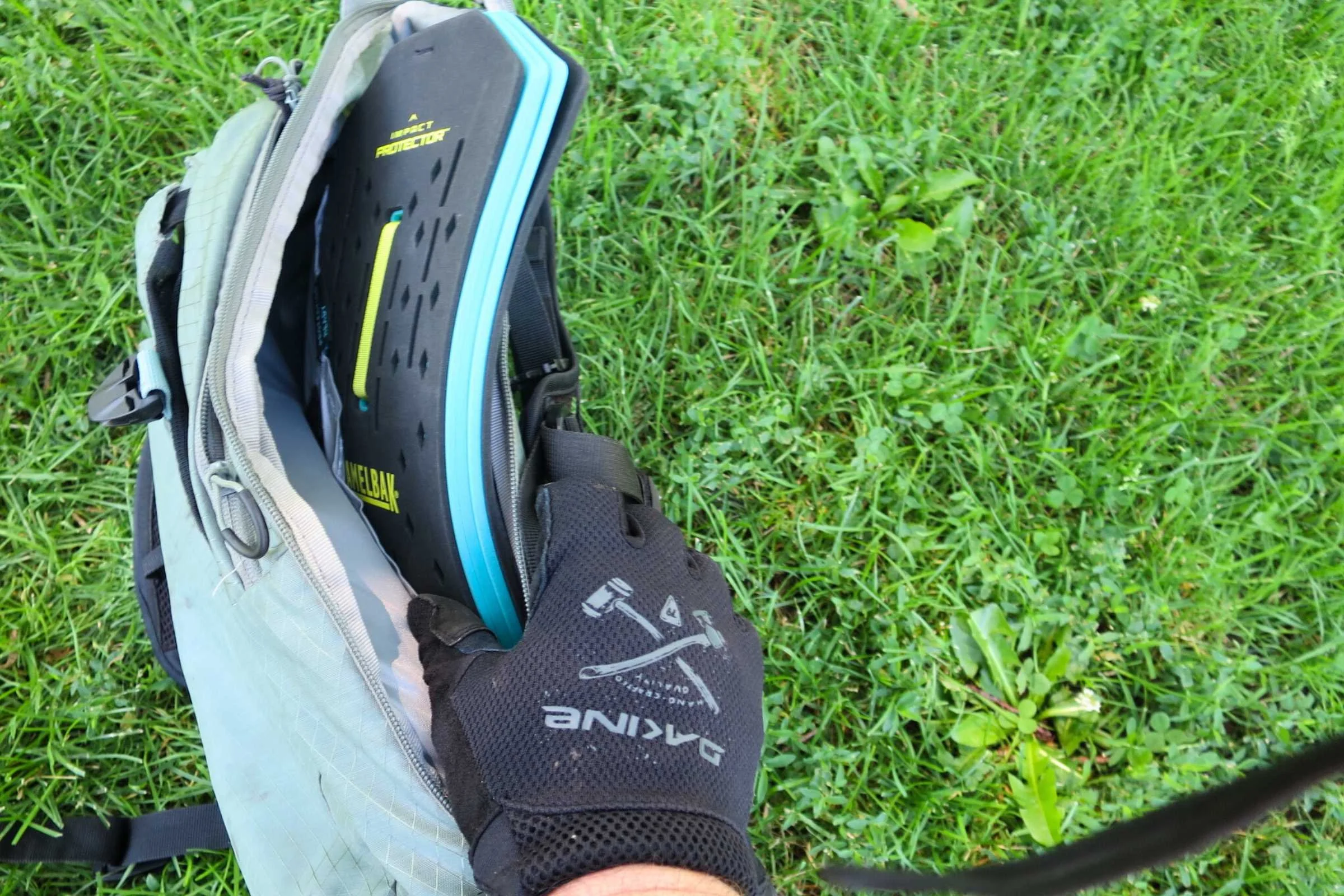
Inserting the CamelBak protector into the M.U.L.E. Pro sleeve is easy.
Back protection
Most of these packs don’t have this option, but if you plan on doing a lot of downhill riding, racing, or riding on a lot of difficult trails with significant drops and features, consider an MTB backpack that’s compatible with a back protector. Back protectors can help reduce or prevent spinal cord injuries in falls.
These foam pads can offer Level 1 or Level 2 CE1621-2 protection. But in most cases, they’re not included with the packs and are a $40-$50 add-on.
What gear to bring in a mountain biking backpack
You might carry some of these items on/in the bike frame or a bike bag. In the summer heat, you may not need some of these items, like a jacket. Find these suggestions and more in our Essential Mountain Bike Accessories guide.
1.Hydration
A hydration pack increases your ability to carry water and sports drinks. You should have at least 16 ounces of water for a short ride, a liter of water for two-hour rides (more in the summer), and 2.5 to 3 liters of water for the hottest and longest days. Don’t forget electrolytes!
2. Repair kit
You should always carry a repair kit with at least a multitool, a spare tube (even if you ride tubeless), and a dollar bill to help seal a tear in a tire.
A better repair kit includes a minipump and Co2 inflator, at least 1 Co2 cartridge, and a tire plug kit for tubeless tires. It also includes a tire lever, extra cleat bolts, a chain breaker (which may be on the multi-tool), extra cleat bolts, and a couple of zip ties.
3. First-aid kit
It’s a repair kit for you. It can be pretty minimal for most rides unless you’re anticipating some intense trails or multi-day rides.
4. Snacks
Your preference. But we recommend bringing energy chews and at least one bar. Bring some extra, too. You can always be a hero to someone hangry on the trail.
5. Pads
If you’re doing downhill riding, elbow pads and knee pads are always a good idea. You don’t have to wear them the whole trip; just remember to put them on before hitting any technical downhill sections!
6. Clothes
In the summer, you’re not likely to bring too much extra clothing, but a small wind shell packs down to the size of a tennis ball and is nice to have in adverse weather. In the cooler and colder months, you’re likely to start the day with a base layer or fleece. You’ll still get hot and need to take those off in most circumstances, so it’s important to have a big hydration backpack to stash those easily.
Others: If you plan on riding before dawn or after dark, you’ll need to carry a recently charged mountain bike headlamp and a spare battery if you can.
Maintenance
Maintenance for a mountain bike backpack is the same as for any other backpack. Usually, you can hose it down. But if it needs washing, remove everything from it that you can, including any pack stays and your bladder, before you run it through a front loading washing machine in a pillow or sleeping bag sack.
You should also clean the hydration bladder out regularly, especially if you put sports drink instead of water into it. At least once a month and definitely before you hang the pack up for the season. You should empty it after every ride, but let’s face it, sometimes that just doesn’t happen.

Sustainability
The most sustainable thing you can do when buying a hydration pack is to get a quality one that will last a long time. If it becomes useless for you and is still in good shape, rather than throwing it out, give it to a friend, family member, or biking nonprofit that can give it to someone who couldn’t afford a nice pack. Don’t just toss it out. Heck, if it’s new enough, you might be able to sell it.
We’re also finding that more and more companies are using recycled materials in their packs. These include recycled polyester (rPET). One materials brand making waves is REPREVE, which recycles plastic bottles into recycled fibers.
If you want a pack made with recycled materials — and why not? We’ve found they’re just as durable as those made from virgin materials. The best-recycled fabrics will be made from post-consumer waste, like REPREVE.
The overwhelming majority of backpacks are still made overseas, so reducing the CO2 impact on the supply change is harder. Some brands, like Mystery Ranch and Topo Designs, are making some models in the US, but these packs generally have fewer technical features. They’re still excellent options for city-style and commuting packs.
FAQ
-
Carry at least 16 ounces for short rides, 1 liter for two-hour rides, and 2.5-3 liters for all-day adventures. Water needs increase significantly in hot weather and at altitude. Most quality MTB backpacks like the CamelBak M.U.L.E. Pro include 3-liter reservoirs, while smaller packs like the Osprey Siskin 8 come with 2.5-liter bladders. Always bring more water than you think you need, especially during summer riding when dehydration happens quickly.
-
Mountain bike backpacks feature specialized designs including ventilated back panels to reduce sweating, magnetic tube management systems for hands-free hydration, lower center of gravity for stability, and external attachment points for helmets and pads. They typically offer 8-15 liter capacity with hydration reservoir compatibility, compression straps to prevent gear bounce, and reinforced areas for durability. Regular backpacks lack these cycling-specific features and can shift uncomfortably during aggressive riding.
-
Yes, pack size should match your riding style and duration. Cross-country and short trail rides work well with 8-liter packs like the Osprey Siskin 8 or ultra-lightweight vests like the CamelBak Chase (2.5L). All-mountain and enduro riders benefit from 11-14 liter packs like the CamelBak M.U.L.E. Pro or Osprey Raptor 14 for extra gear storage. Downhill riders should consider packs with back protector compatibility like the POC Column VPD Backpack 8L.
-
Proper fit and pack design are crucial for stability. Choose packs with ventilated hip belts and adjustable sternum straps that distribute weight evenly. Packs like the Gregory Endo feature vertically adjustable hip belts for custom fit. Keep heavy items close to your back, use compression straps to eliminate dead space, and ensure shoulder straps are snug but not restrictive. Well-designed packs maintain low center of gravity and minimize movement during aggressive riding.
-
Hiking backpacks aren't ideal for mountain biking due to poor weight distribution, limited ventilation, and lack of hydration system integration. Hiking packs sit higher on the back, affecting balance and control on technical terrain. They also lack external attachment points for bike-specific gear like helmets and pads. Mountain bike backpacks like the CamelBak M.U.L.E. Pro feature trampoline-style back panels and strategic weight placement that hiking packs don't offer.
-
Yes, women's MTB backpacks feature adjusted dimensions for different torso lengths, shoulder widths, and hip shapes. Models like the Osprey Raven 14 (women's version of Raptor 14) have narrower shoulder straps, different sternum strap positioning, and hip belts designed for women's anatomy. The Gregory Avos series for women differs significantly from the men's Endo series in strap placement and back panel curvature for optimal comfort and weight distribution.
-
Choose back protector compatibility if you do aggressive downhill, jump, or technical riding. The POC Column VPD Backpack 8L includes a CE Level 1 back protector, while packs like the CamelBak M.U.L.E. Pro offer optional CE Level 2 protector sleeves. Back protectors add weight and stiffness but provide crucial spinal protection during crashes. Cross-country and light trail riders typically don't need this feature, while downhill and enduro riders should seriously consider it.
-
Backpacks offer more capacity, better weight distribution, and superior organization for longer rides and gear-heavy adventures. Hip packs work well for shorter rides with minimal gear but can bounce and have limited water capacity. Backpacks like the Osprey Raptor 14 carry 2.5 liters of water plus tools, food, and extra clothes, while hip packs typically max out at 1.5 liters total capacity. Choose backpacks for all-day rides, technical terrain, or when carrying protective gear.
-
Most riders find 11-14 liters ideal for all-day adventures with room for 3 liters of water, tools, food, and extra layers. The CamelBak M.U.L.E. Pro (11L gear + 3L water) and Osprey Raptor 14 represent the sweet spot for capacity without excess weight. Smaller 8-liter packs work for shorter rides, while larger 15+ liter packs like the Gregory Endo 15 suit riders who need maximum gear capacity or ride in changing weather conditions.
How we Researched & Tested
We filled up the reservoirs and strapped the packs to our backs, and hit the trail on sunny, hot, cold, rainy, and dry days on the trails in Colorado and Utah.
We tested the packs on old and new favorite trail networks like Floyd Hill and Winter Park’s Trestle Bike Park, Deer Valley Resort in Utah, Maryland Mountain, and more. To test, we primarily did a combo of enduro and downhill riding.
We had mountain bikers of different sizes, skill levels, and experience levels testing the MTB packs. We also tested on hot days and cold days to better measure ventilation and whether these packs have sufficient water capacity.
We also tested storage capacity by comparing pockets, organization, and space inside.
Our Testing Process
Months of trail testing across Colorado and Utah's premier destinations
Testing Locations
- Floyd Hill & Deer Valley Resort
- Winter Park Trestle Bike Park
- Staunton State Park
- Golden Gate Canyon State Park
- Hall Ranch & Lair O'The Bear
- Maryland Mountain trails
What We Test
- Ventilation & sweat management
- Hydration system performance
- Organization & pocket accessibility
- Load stability on technical terrain
- Capacity vs. riding style needs
- Strap adjustment & comfort fit
About the Author / Why You Should Trust Us

Author Chris Meehan riding his bike in Colorado.
As an outdoors writer covering adventure and gear, I write regularly about bike and mountain bike equipment. I have a long history with the sport — I still have the tattered CamelBak H.A.W.G. (Holds A-Lotta Water and Gear) pack I bought for mountain biking in the early ’90s! I’ve authored numerous gear guides for Treeline Review and written for Popular Mechanics, Bicycling Magazine, Popular Science, Backpacker, and other outdoor publications and organizations.
My experience with mountain biking stretches back to the Appalachians in the late 1980s when Specialized, Trek, Gary Fisher, and Cannondale were among the first companies to mass-produce mountain bikes. My first ‘mountain bike’ was a 10-speed Huffy Scout, which I got around ’87; my first real mountain bike was a beautiful, chartreuse Gary Fisher SuperCaliber from 1991.
These days, I spend most of my time mountain biking, backpacking, hiking, climbing, and crisscrossing Colorado and the Rocky Mountain region. I enjoy using all my knowledge of gear and skills to learn about new equipment and how it will benefit me (yes, I’m selfish) as well as Treeline’s readers.
I have authored multiple outdoor guidebooks. My most recent Falcon Guide, "Colorado’s Best Front Range Adventures: The Greatest Hiking, Climbing, Paddling and More From Denver to Colorado Springs and Fort Collins," published Spring 2021. In it, I cover the region's best hiking, biking, climbing, and rafting.
I’m also the author of Falcon Guide’s “Climbing Colorado's Fourteeners: From the Easiest Hikes to the Most Challenging Climbs” and edited Justin Lichter’s excellent guide to thru-hiking “Trail Tested: A Thru-Hiker's Guide To Ultralight Hiking And Backpacking.” This experience has helped me become a first-rate gearhead and product tester.
I have 20-plus years of exploring, mountain biking, hiking, backpacking, climbing, guiding, and playing in the wild. I worked with National Geographic and their mapping division in developing their Colorado 14ers Map Pack Bundle. I’ve written about hiking and climbing for Elevation Outdoors, including stories about Colorado 14ers and outdoor apps to boost adventures.
At Treeline Review, we strive to offer unbiased reviews to help you find the best product for the price. Treeline Review doesn’t accept sponsored content, native advertising, or paid reviews. I am not sponsored by any companies, nor are any of my family members sponsored by, employees of, or ambassadors of any of the companies in this review.
You can see all stories by Chris Meehan on his author page.