Best Hiking Shoes for Men of 2026
Our Top Picks for Comfort, Traction, Fit, and Every Kind of Trail

August 2, 2026, updated with 6 months of testing notes, new prices and commentary on value, a new best cushioned winner, and to remove discontinued models
Home > Gear Reviews > Footwear
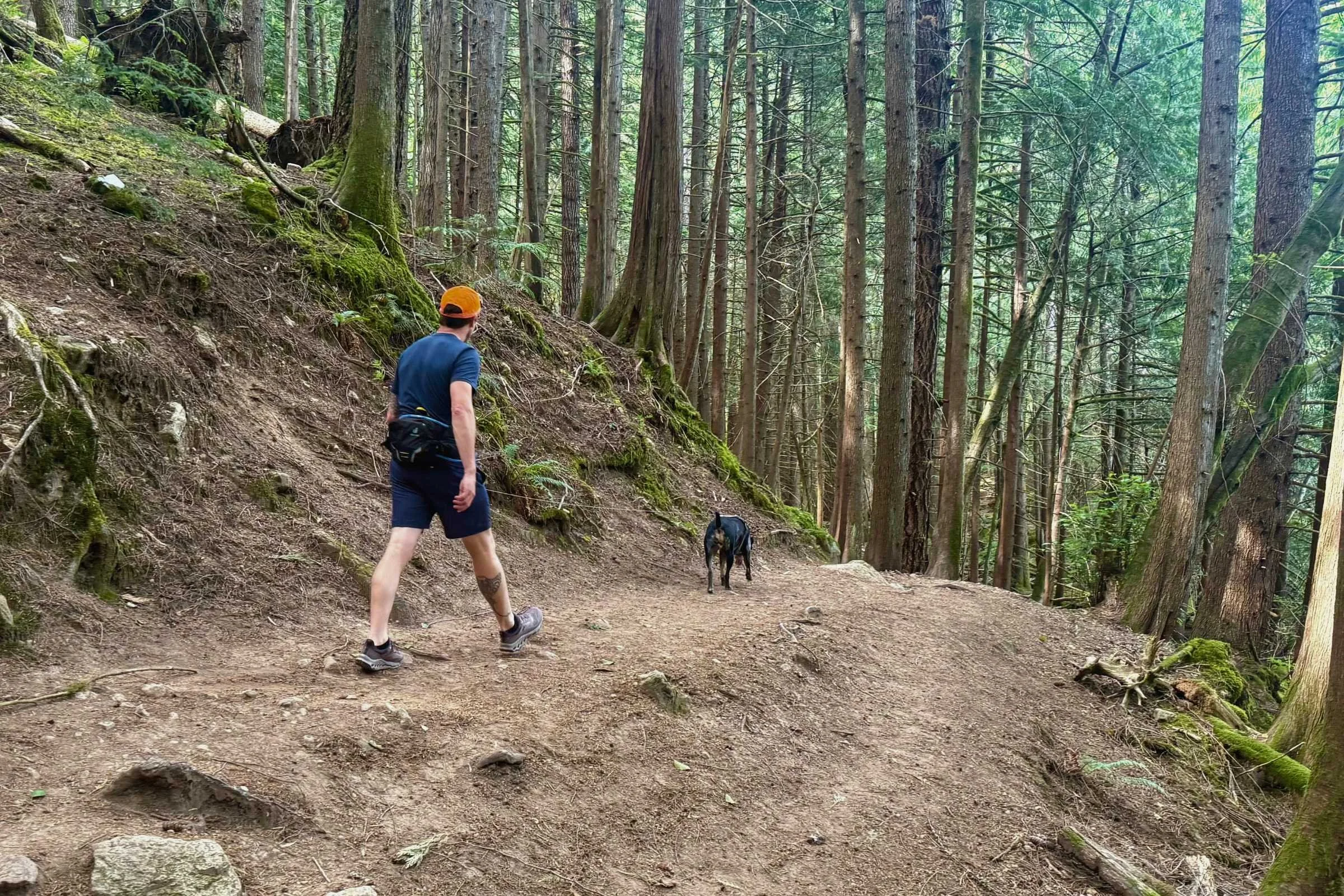
We’ve been testing men’s hiking shoes since 2018, when this guide became the first article Treeline Review published. Since then, we’ve tested more than 50 models through rainstorms, hot summer days, early snow, spring slush, and plenty of muddy trail conditions in between.
We evaluate fit, comfort, support, stability, traction, durability, breathability, and water resistance. Testing includes creek crossings and miles on loose dirt, wet rock, roots, pavement, and technical terrain. Many shoes are worn by more than one tester, and we update the guide regularly as models change or new options outperform our previous picks.
We pay close attention to how each shoe feels with and without a loaded pack, how securely the outsole grips wet and uneven terrain, and whether the waterproofing holds up beyond a quick splash. We also consider how much support and protection the shoe provides for its weight.
Top Pick: The Salomon X Ultra 5 GTX earns our Best Overall award. It stood out for its support, protection, stability, and versatility. The Merrell Moab 3 Low GTX remains our Best Budget pick, while the Oboz Katabatic LT Low GTX offers excellent waterproofing in a lighter, more athletic shoe.
For our favorite women’s picks, see our Best Women’s Hiking Shoes guide.
We create reader-supported, mission-driven objective gear reviews that are independently selected by our editors. This story may contain affiliate links, which help fund our website. When you click on the links to purchase gear, we may get a commission — without costing you an extra cent. Thank you for supporting our work and mission of outdoor coverage for every body! Learn more.
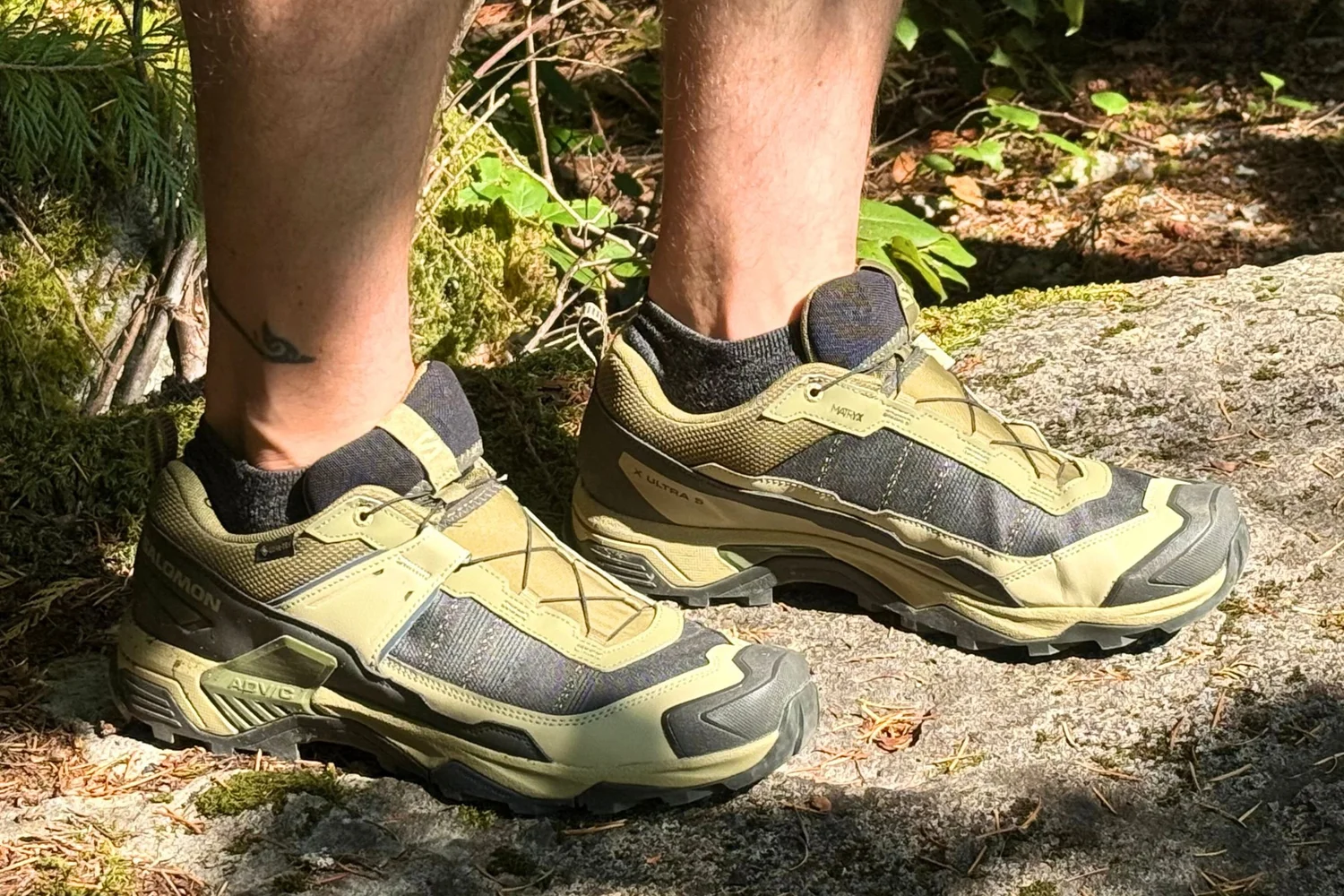
Salomon X Ultra 5 GTX
Best for: Hikers who want a supportive, protective all-around shoe for everything from casual hikes to technical terrain.
- Supportive and stable while staying lighter and more agile than a traditional hiking shoe
- Reliable grip and stability on wet, rocky, and uneven trails
- Versatile enough for casual hikes, long trail days, and trips with a loaded pack
Comparison table
| Hiking Shoes | Treeline Award | MSRP | Weight | Upper | Waterproofing | Midsole | Outsole |
|---|---|---|---|---|---|---|---|
| Salomon X Ultra 5 GTX Low | Best overall Read why |
$175 | 1 lb 10.8 oz | Synthetic/ textile | GORE-TEX | EnergyCell | All Terrain Contagrip rubber |
| On Cloudhorizon 2 Waterproof | Best cushioning Read why |
$200 | 1 lb 9.2 oz | Polyester/ TPU | Proprietary membrane | Helion | Missiongrip rubber |
| Oboz Katabatic LT Low GTX | Best waterproof Read why |
$190 | 1 lb 7.6 oz | Recycled polyester | GORE-TEX Invisible Fit | ACT Energy EVA | Trail Tread Eco rubber |
| HOKA Anacapa 2 Low GTX | Most comfortable Read why |
$180 | 1 lb 14.7 oz | Nubuck leather/ recycled mesh | GORE-TEX Invisible Fit | Compression-molded EVA (30% sugarcane) | Vibram Megagrip rubber |
| Merrell Moab Speed 2 GORE-TEX | Best for beginners Read why |
$175 | 1 lb 8.6 oz | Nylon ripstop/ TPU | GORE-TEX | FloatPro foam | Vibram TC5+ rubber |
| Danner Trail 2650 GTX | Best lightweight Read why |
$210 | 1 lb 11 oz | Suede/ textile | GORE-TEX | PlyoGo EVA | Vibram 460 MegaGrip |
| KEEN Targhee IV Waterproof | Best for wide feet Read why |
$180 | 2 lbs 6.4 oz | Nubuck leather | KEEN.DRY membrane | Air-injected Luftcell | KEEN.RUGGED rubber |
| Merrell Moab 3 GORE-TEX | Best budget Read why |
$185 | 2 lbs 1 oz | Suede/ mesh | GORE-TEX | EVA | Vibram TC5+ rubber |
| La Sportiva Spire Low GTX | Best for technical terrain Read why |
$219 | 2 lbs 2.5 oz | Mesh/ TPU | GORE-TEX SURROUND | EVA | Vibram XS Trek |
| HOKA Kaha 3 Low GTX | Best for plantar fasciitis Read why |
$220 | 2 lbs 2.3 oz | Leather | GORE-TEX Invisible Fit | EVA (30% sugarcane) | Vibram Megagrip rubber |
| Oboz Hyalite Low Waterproof | Best for hiking and walking Read why |
$165 | 1 lb 15.8 oz | Suede and nubuck leather | B-DRY | ACT EVA | Contagrip rubber |
| Salomon XA Pro 3D V9 GORE-TEX | Best for hiking and trail running Read why |
$170 | 1 lb 9.4 oz | Synthetic/ textile | GORE-TEX | EnergyCell+ | All Terrain Contagrip rubber |
| On Cloudrock | Best looking hiking shoe Read why |
$200 | 1 lb 14.3 oz | Recycled polyester | On’s proprietary membrane | Helion superfoam, Speedboard plate | Missiongrip rubber |
| Oboz Katabatic Low B-DRY | $170 | 1 lb 14 oz | Mesh/ TPU | B-DRY | Single-density EVA | Carbon Rubber | |
| Scarpa Rush 2 Pro GTX | $189 | 1 lb. 10.8 oz | Nubuc leather | GORE-TEX ePE | EVA | PRESA HIK-01 | |
| Oboz Cottonwood Low B-DRY | $155 | 1 lb 13.8 oz | LWG Gold ISA LITE nubuck | Oboz B-DRY | ACT EVA | Trail Tread rubber | |
| Oboz Katabatic Wind Low | $200 | 1 lb 8.6 oz | Mesh | N/A | IOM with ACTNitro dual-density, nitrogen-infused foam | Trail tread rubber |
The Winners
Best Overall Hiking Shoe: Salomon X Ultra 5 GTX
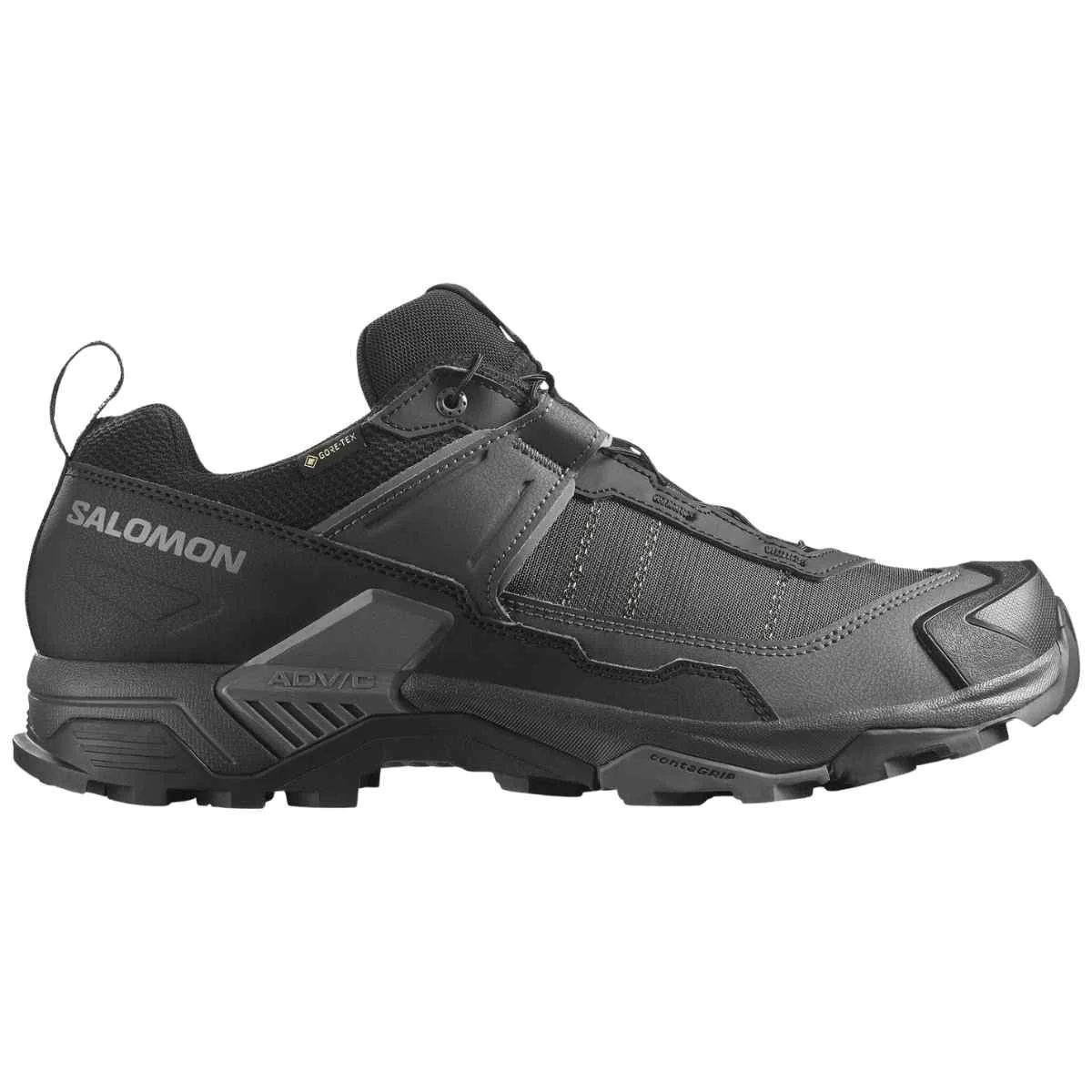
Price: $175
Weight (per pair): 1 lb 10.8 oz
Upper Material: Matryx textile reinforced with Kevlar yarn and a breathable lining
Waterproofing: GORE-TEX PFC-free membrane (waterproof and breathable)
Midsole Material: EnergyCell EVA (high-performance foam)
Outsole: Aggressive and grippy All Terrain Contagrip rubber
What we liked: Feels great right out of the box, with a supportive, stable ride that can handle almost any conditions, and looks solid both on the trail and around town
What we didn’t like: Cushioning leans firm and stable rather than soft and springy, making it less ideal for hikers who prefer a lot of bounce in their step
The Salomon X Ultra was the overall winner in our first-ever published story back in 2018—this very Best Hiking Shoes guide. While the X Ultra lost its crown for a short stint, the newest version has reclaimed its title as our favorite all-around hiking shoe. It once again proved to be the most balanced shoe for nearly every kind of hiking scenario, and our testers agreed this is the pair they’d reach for most often, whether that means a casual afternoon loop or a weekend overnighter.
For more on why it’s the best men’s hiking shoe, read our in-depth review of the Salomon X Ultra 5 GTX.
Salomon X Ultra 5 GTX Low
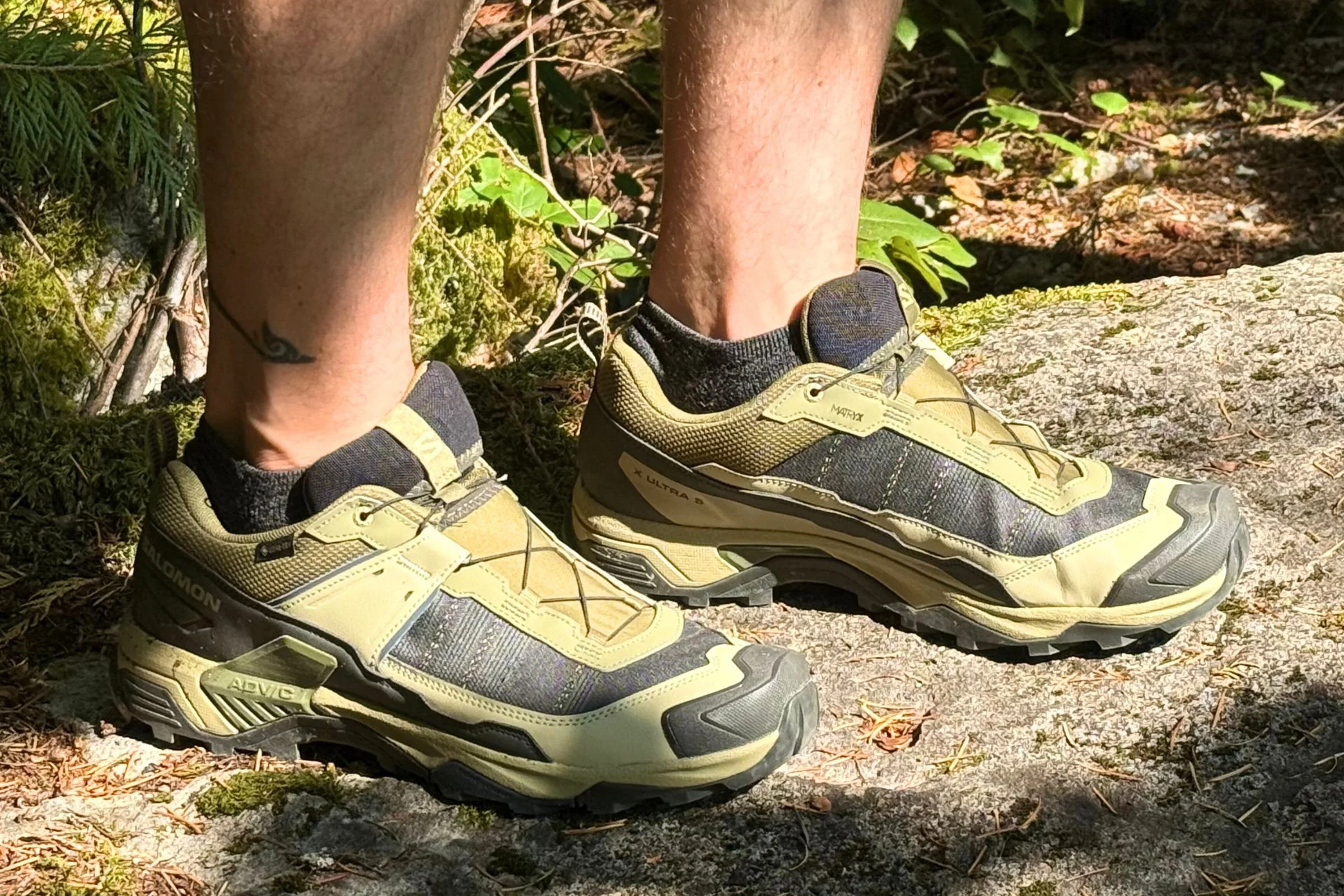
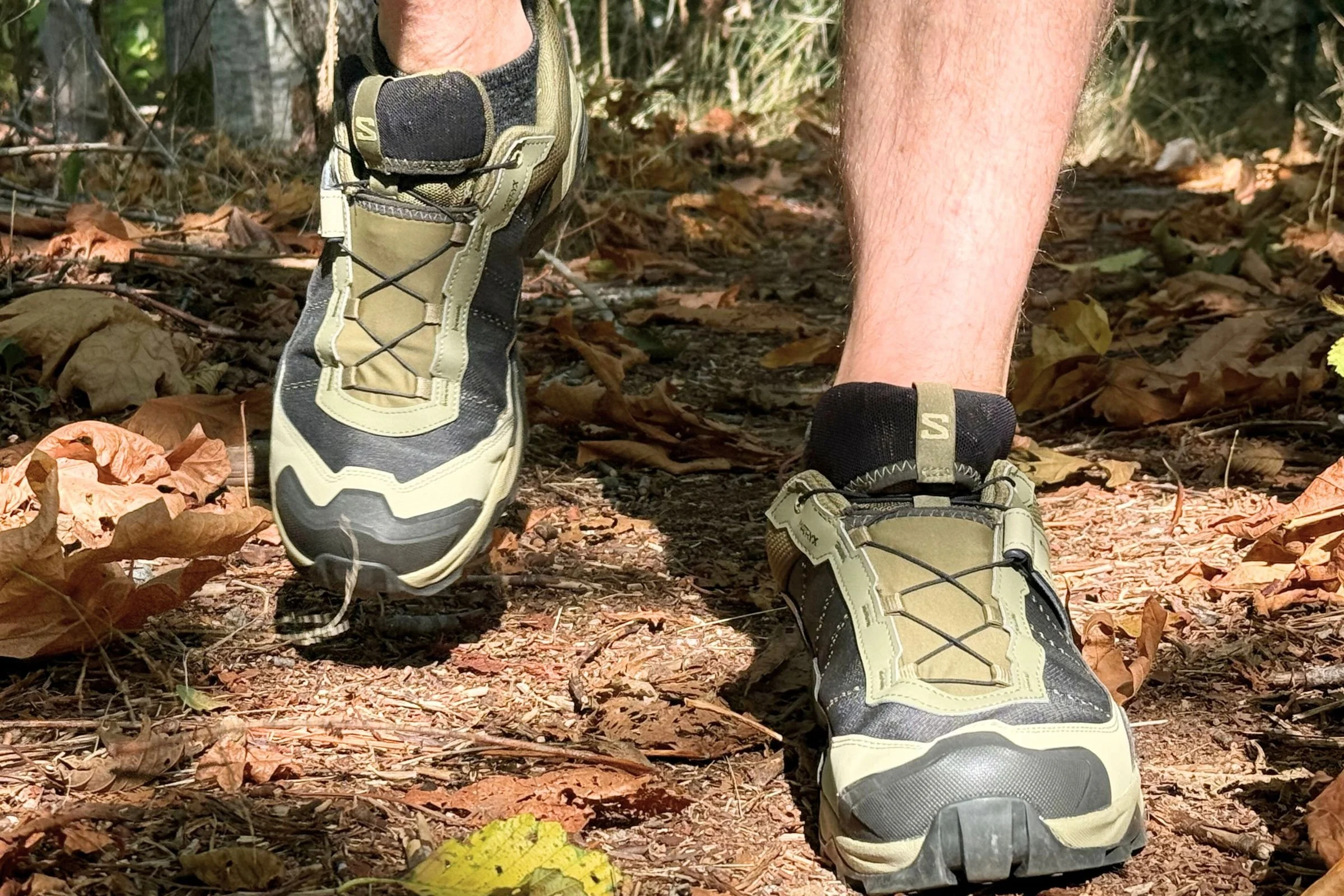
The Salomon X Ultra 5 GTX strikes the best middle ground; it’s lighter and more agile than a traditional burly hiking shoe, yet far more supportive and protective than a trail runner. Its EnergyCell midsole cushions just enough for long-distance comfort while still allowing you to feel the trail under your feet. And Salomon’s Advanced Chassis adds exceptional stability on uneven, rocky trails or when carrying a heavy pack or child carrier.
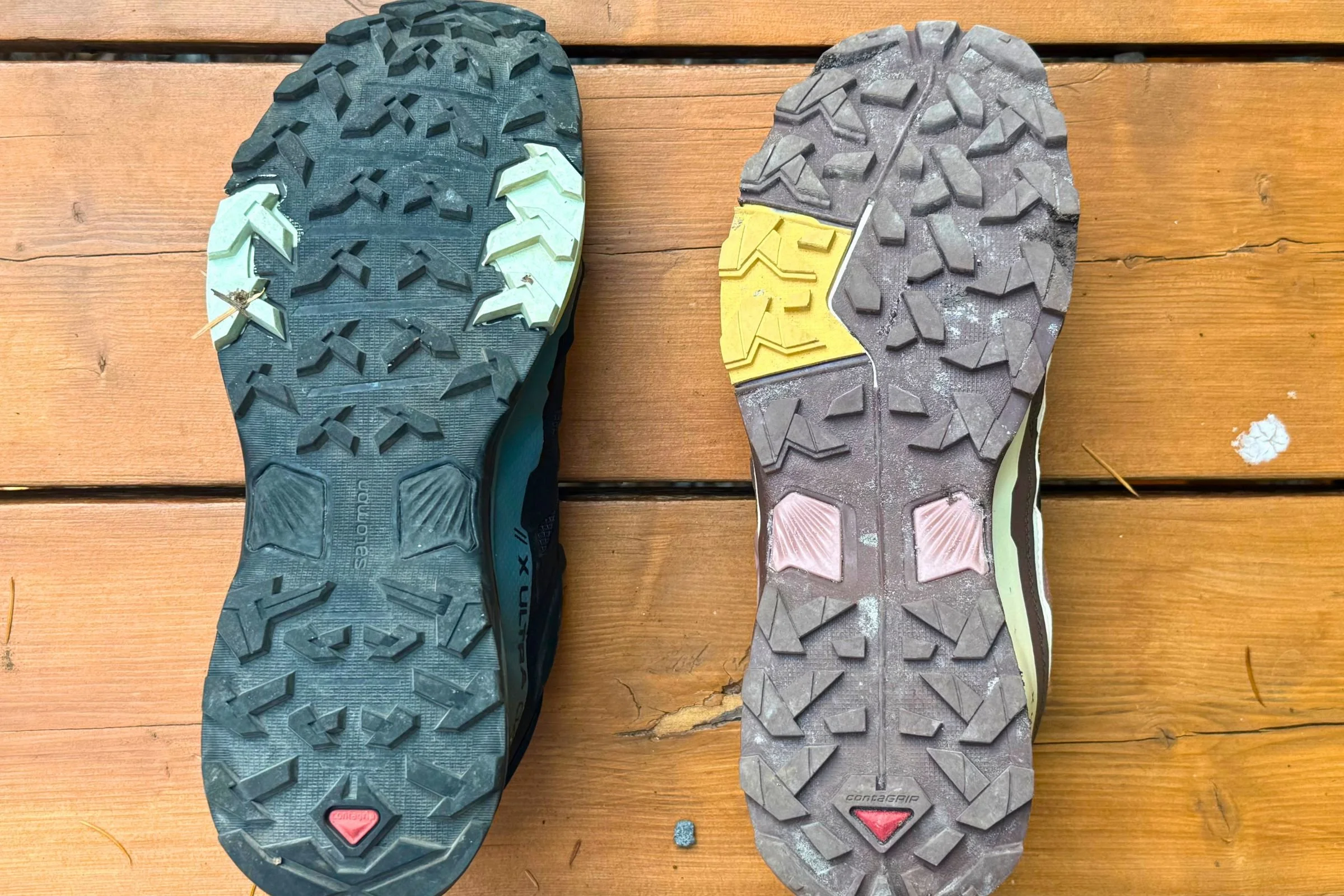
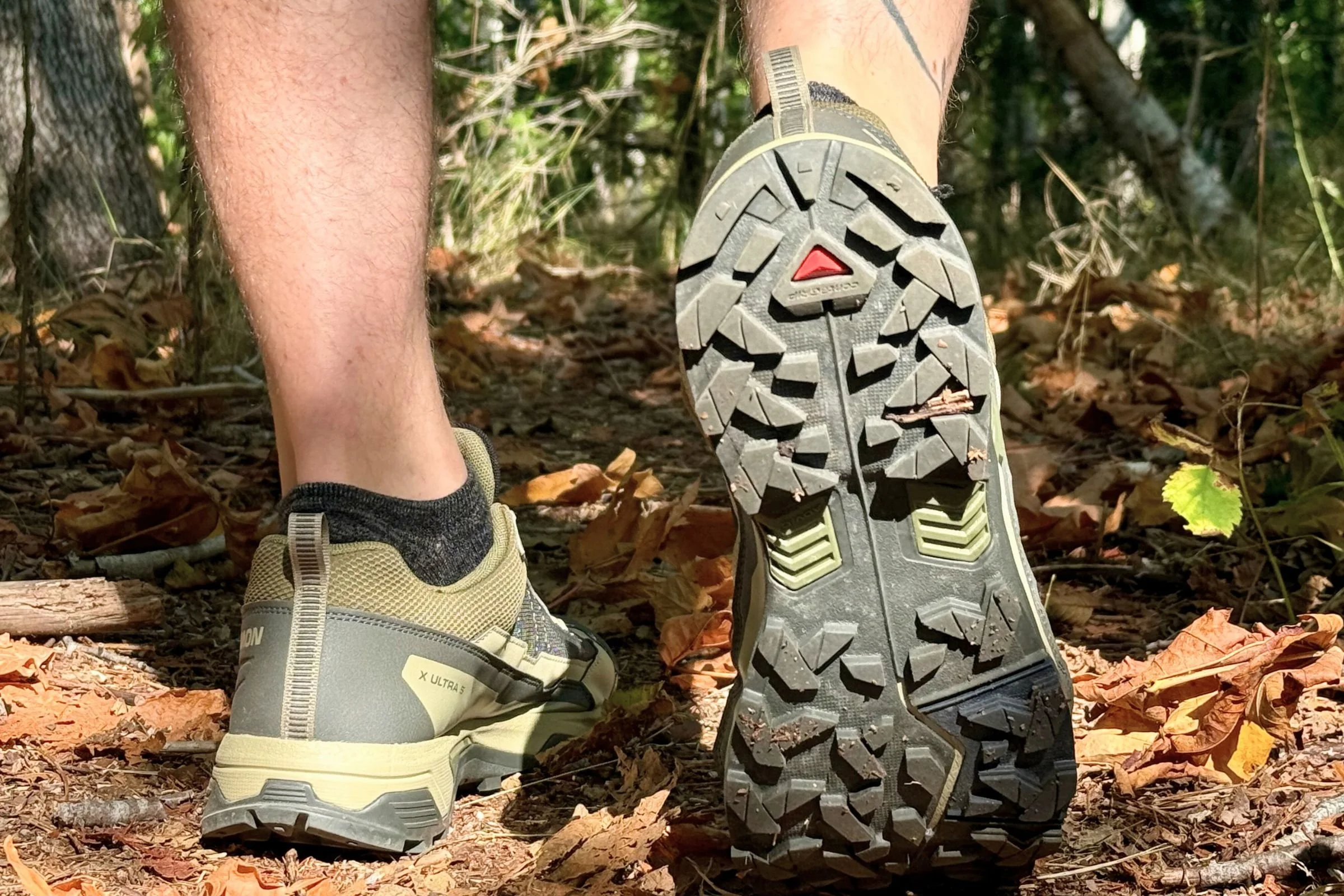
Salomon has a handful of Contagrip outsole types, each designed for a specific purpose, and the “All Terrain” is their most versatile. It mixes durability with reliable grip, and the lug shapes allow for control on most trail conditions. The GORE-TEX membrane keeps feet dry through puddles and rain without feeling too hot in the summer, and after dozens of miles, both the Kevlar-reinforced upper and outsole showed minimal wear. The fit is predictable: secure heel, roomy toe box, and true-to-size sizing, with a wide option for men.
While some shoes excel in certain environments, the Salomon X Ultra 5 Low GTX excels at almost everything. This longtime favorite earns its title as the best all-around hiking shoe for men (and women), and is a trustworthy choice for hikers who value comfort, support, and year-round versatility.
Hiking Shoes with Best Cushioning: On Cloudhorizon 2 Waterproof
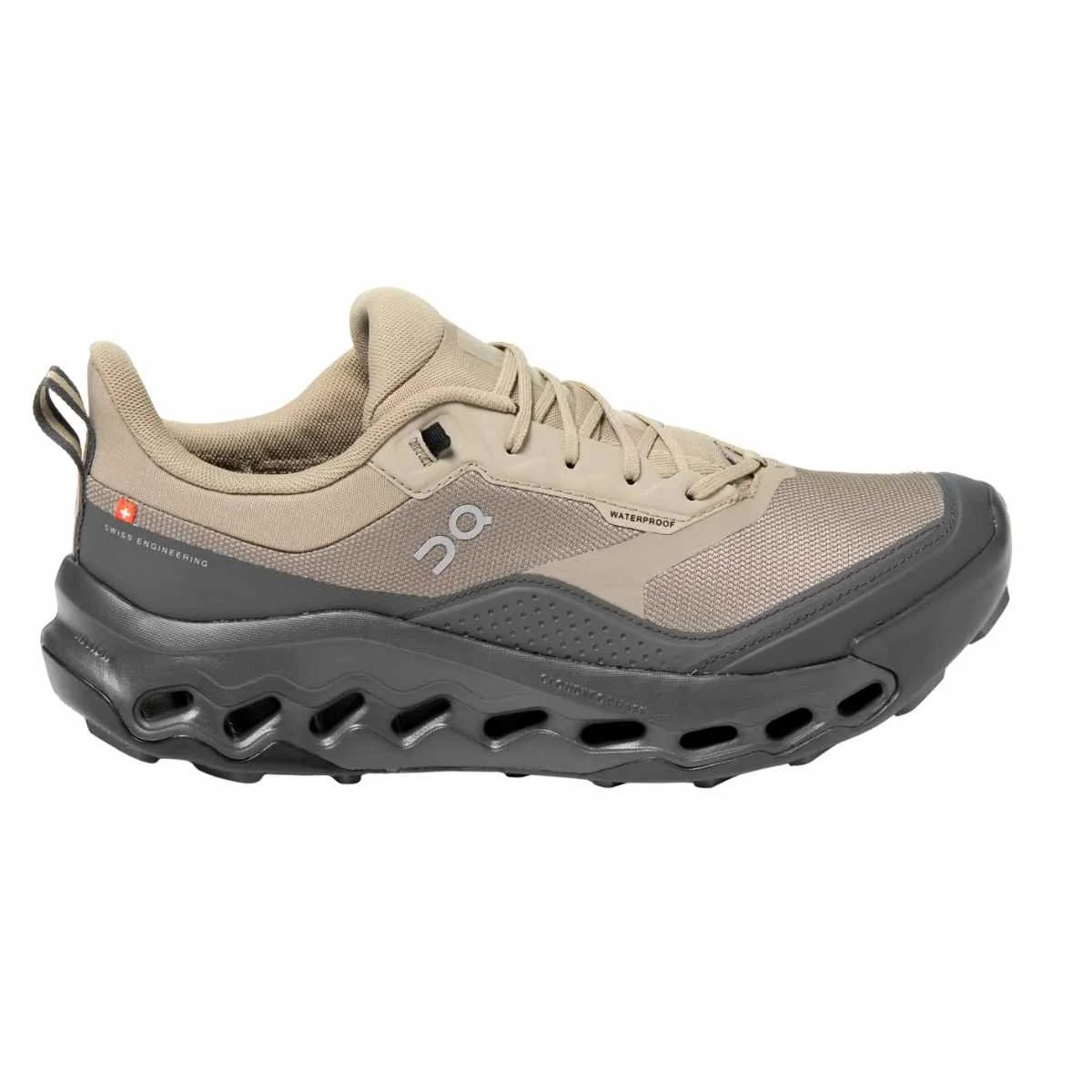
Price: $200
Weight (per pair): 1 lb. 9.2 oz
Upper Material: Recycled polyester
Waterproofing: Waterproof/breathable membrane
Midsole Material: EVA/Helion superfoam
Outsole: Missiongrip rubber
What we liked: All-day comfort, sleek design, and versatility for trail running and outdoor adventures
What we didn’t like: “Clouds” in the sole wear down faster than other designs
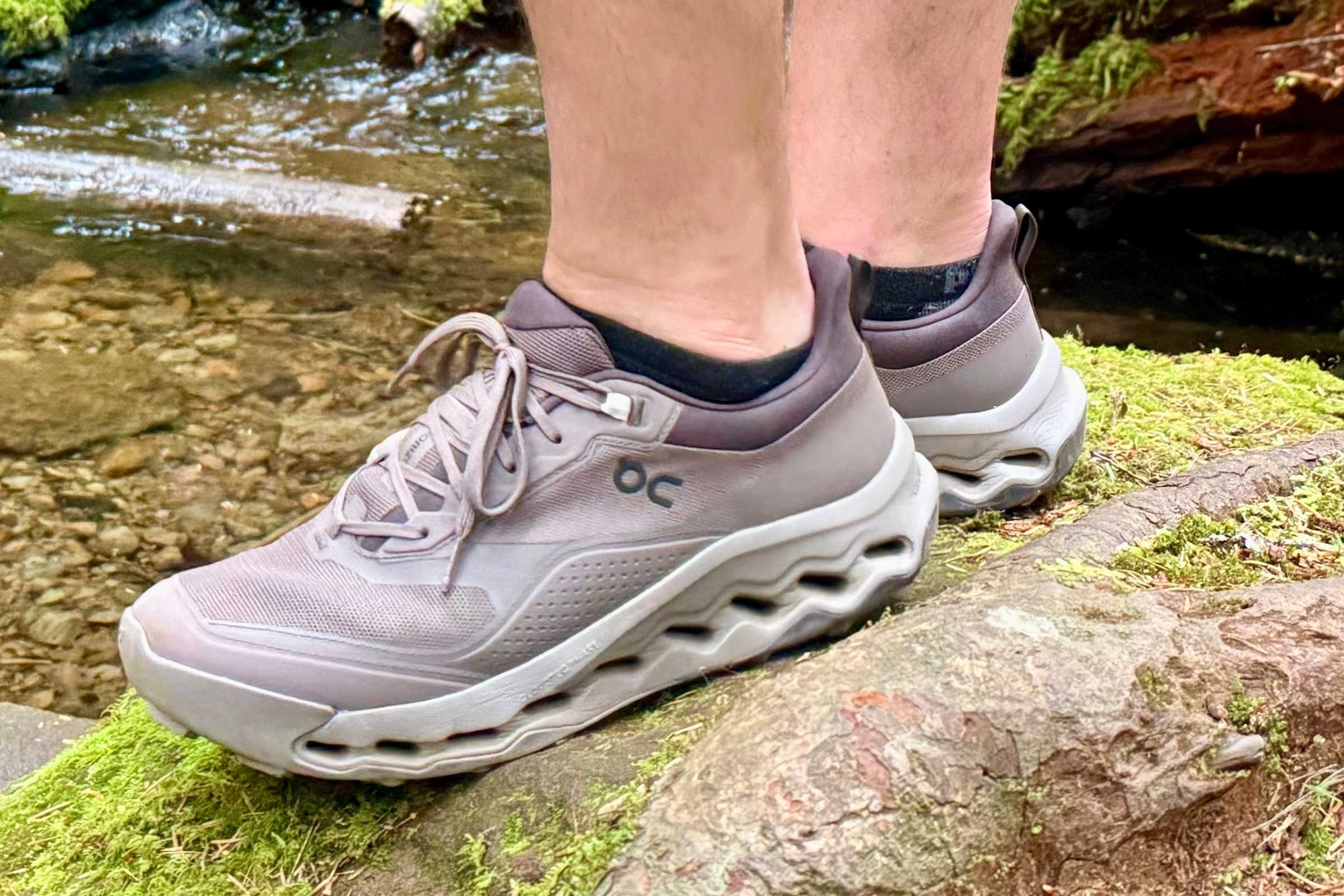
The On Cloudhorizon hiking shoes deliver top-tier cushioning, creating a soft yet responsive feel that reduces foot fatigue on longer hikes.
They’re the lightest shoes we tested, excelling in comfort and adapting well to moderate terrain, from urban trails to light mountain paths. Given the stylish, modern design, versatility, and all-day comfort, they’re our top pick for cushioned hiking footwear. We’ve also found them to be quite capable trail runners.
The standout feature is the midsole, which uses On’s proprietary Helion superfoam with CloudTec Phase technology. In plain language, Helion is the foam that gives the shoe its cushioned, slightly springy feel, while CloudTec refers to On’s signature cloud-like pods. Those open-air pods are designed to compress when you step down to help soften the landing, and the Phase technology helps the shoe roll more smoothly from heel to toe. The result is a shoe that feels cushioned and comfortable on long walks, easy-to-moderate trails, and around town.
See our in-depth review of the On Cloudhorizon 2 hiking shoes for more.
On Cloudhorizon 2 Waterproof
-
They’re built using the same principles and many of the same materials as other On footwear we've liked, including the On Cloudrock Low Waterproof hiking shoes and On Cloudmonster trail running shoes.
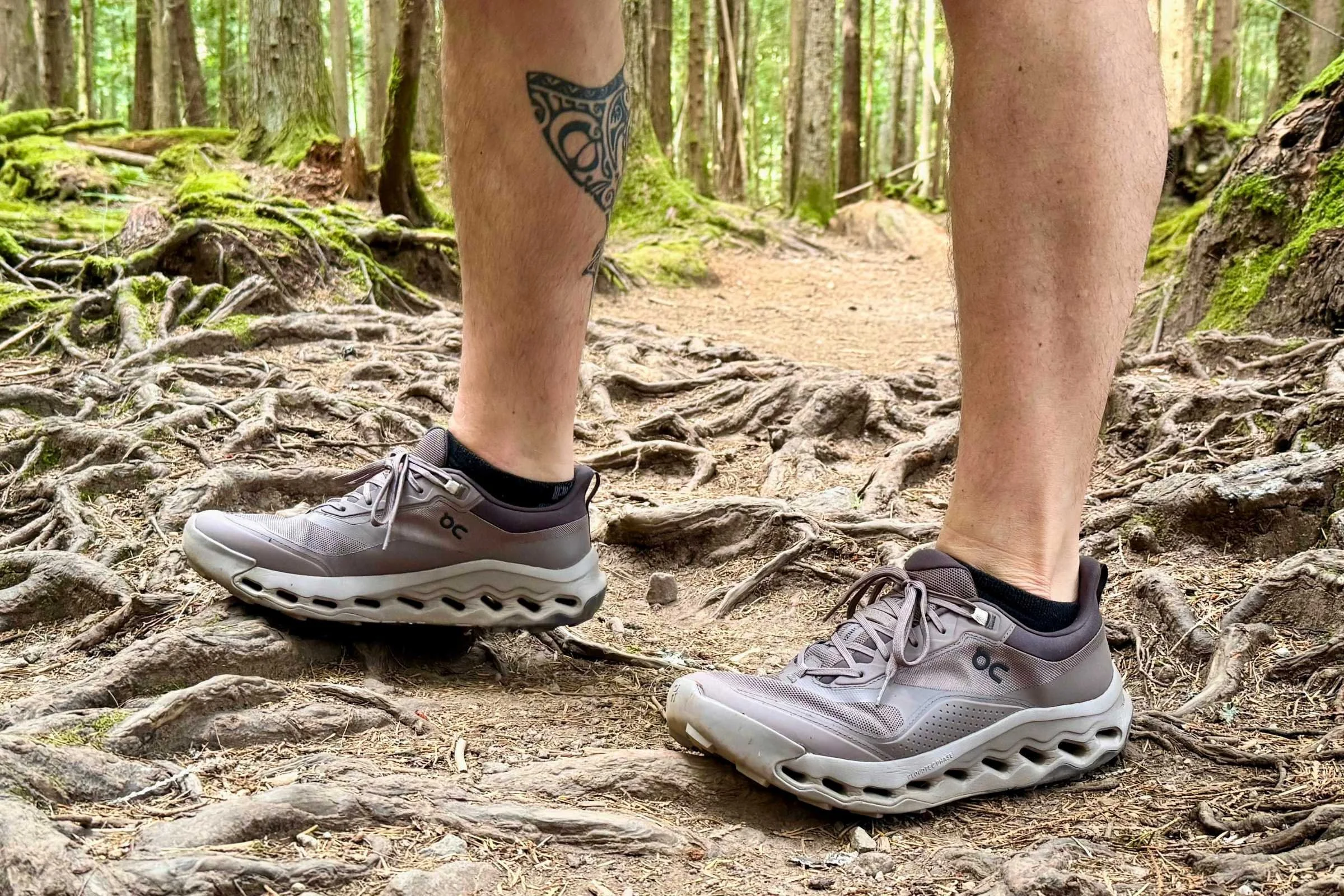
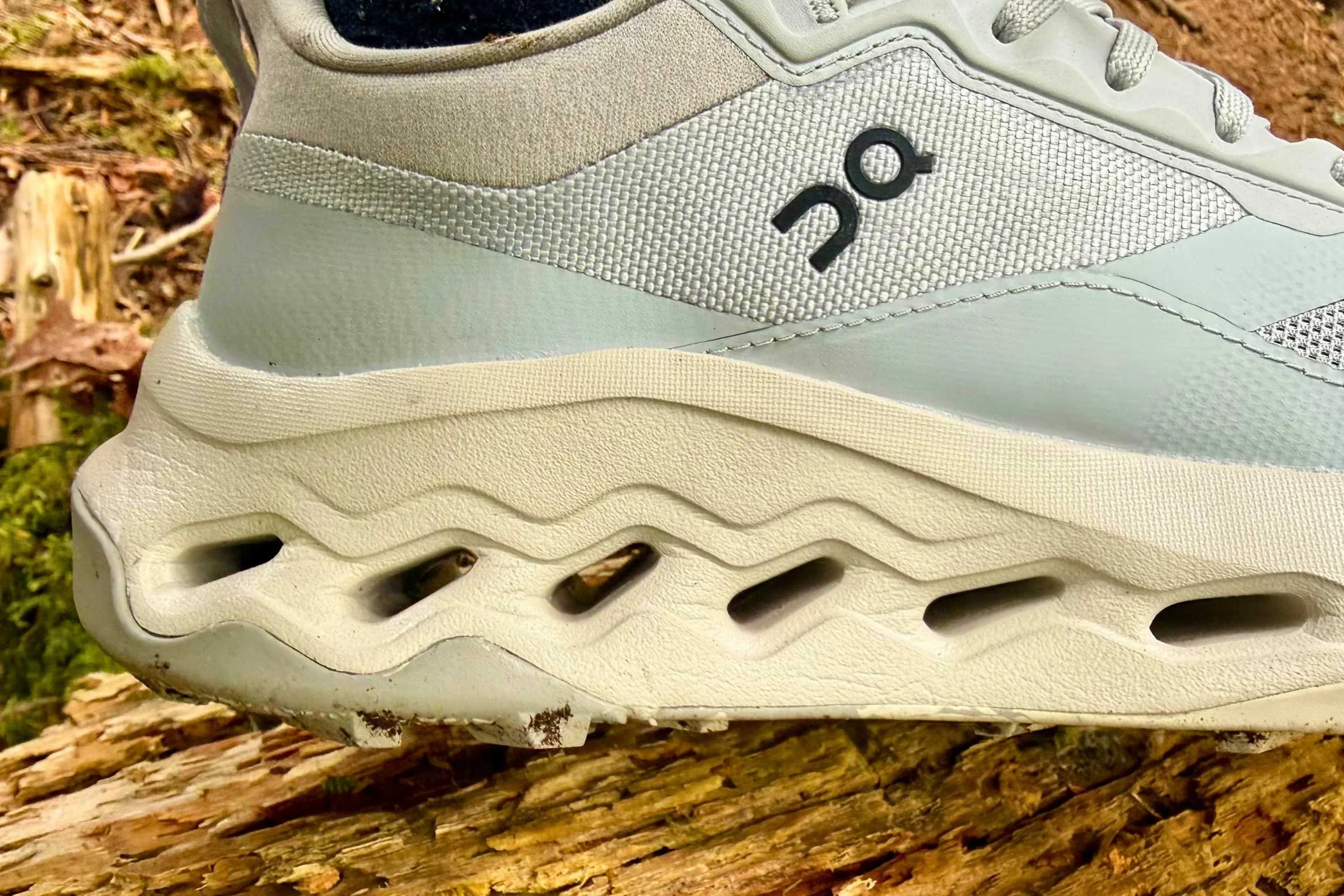
The On Cloudhorizon 2 offers a fit designed for maximum comfort, thanks to the brand’s CloudTec Phase technology and Helion superfoam. What is that exactly? Those distinctive “holes” or pods on the bottom of On shoes are a part of this CloudTec system; each pod, or “cloud,” compresses individually when you step, providing shock absorption and a cushioned landing. This unique design not only cushions impact but also promotes a smooth, rolling transition from heel to toe.
Helion is a super-responsive foam that is cushioned, yet stable. We found it to be highly adaptable to varying conditions. In colder weather, the Helion foam remained soft and pliable rather than stiffening up, which can often happen with other foams. In warmer conditions, it retains its bounce and doesn’t lose its shape or support. These cloud elements give On shoes their signature look, but more than that, they help balance cushioning with responsiveness.
One small standout design feature we liked is that the laces extend further down over the top of the foot, allowing for a more secure feel. This shoe is built with a stable base and has a streamlined fit, offering decent support for moderate hiking and urban trails. However, for those with wider feet or who need a very secure hold on steeper terrain, the fit may feel slightly narrow, as it’s optimized more for smooth landings and comfort than for rugged climbs.
-
We have also tested the previous version of the On Cloudhorizon Waterproof, which gave us helpful context for comparing the updated shoe’s fit, comfort, traction, and overall performance.
We also noted the new model is made of 100% recycled polyester, up from 90%.
-
With a lightweight construction made from 100% recycled polyester, the Cloudhorizon 2 takes environmental consciousness into account, without compromising durability. We haven’t found any signs of material breakdown or separation yet. The rubber outsole and synthetic upper provide moderate protection against rocks and trail debris, but this shoe is best suited for city-to-trail hiking rather than intense mountain paths.
Though its design is durable for daily hikes, frequent use on rougher trails may show signs of wear over time. However, the “clouds” in the sole have held up impressively, showing minimal signs of compression or flattening even after extensive use.
-
The Cloudhorizon 2 strikes that balance between breathability and waterproofing. The waterproofing system is the brand’s own three-layer technology, and despite its solid protection against moisture, the shoe still allows for excellent airflow, which was noticeable on warmer hikes.
The tongue gusset isn't that high so you don't want to be wading through streams too much in these, but they will hold off the rain perfectly well. This balance between forces makes the Cloudhorizon a versatile choice for both wet trails and dry, sunny paths, especially if your priority is comfort. If you don’t need the waterproofing, the Cloudhorizon comes in a non-waterproof version that will feel even more breathable and costs a few bucks less.
-
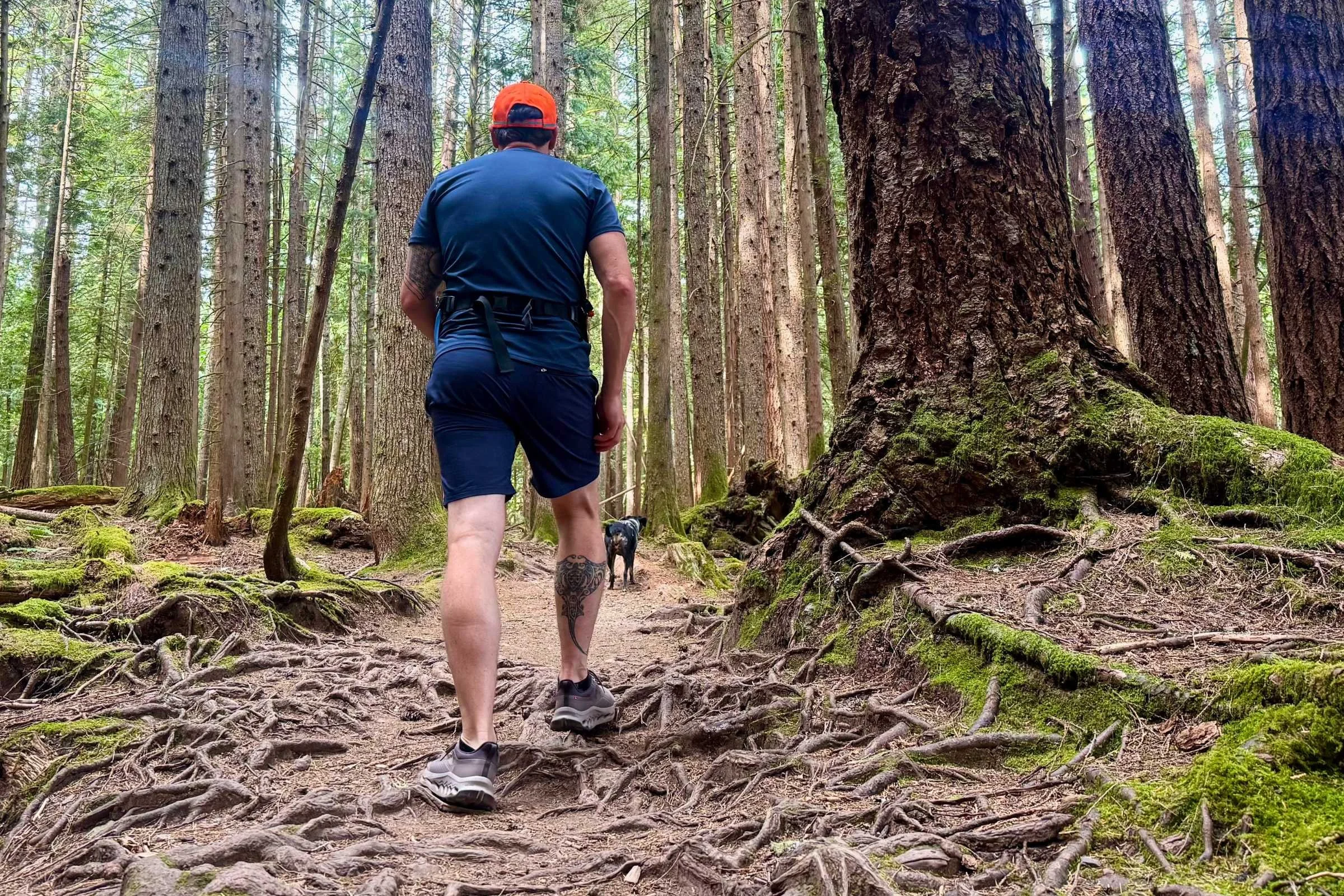
The rubber outsole provides reliable grip in most of the conditions we faced, but the relatively shallow lugs mean this shoe is better suited for moderate terrain and city trails than for technical or very steep paths. Stability is solid for uneven ground, but the traction may fall short on highly rugged terrain. Overall, the Cloudhorizon 2 excels in environments where cushioning and style are prioritized over extreme traction.
Best Waterproof Hiking Shoe: Oboz Katabatic LT Low GTX
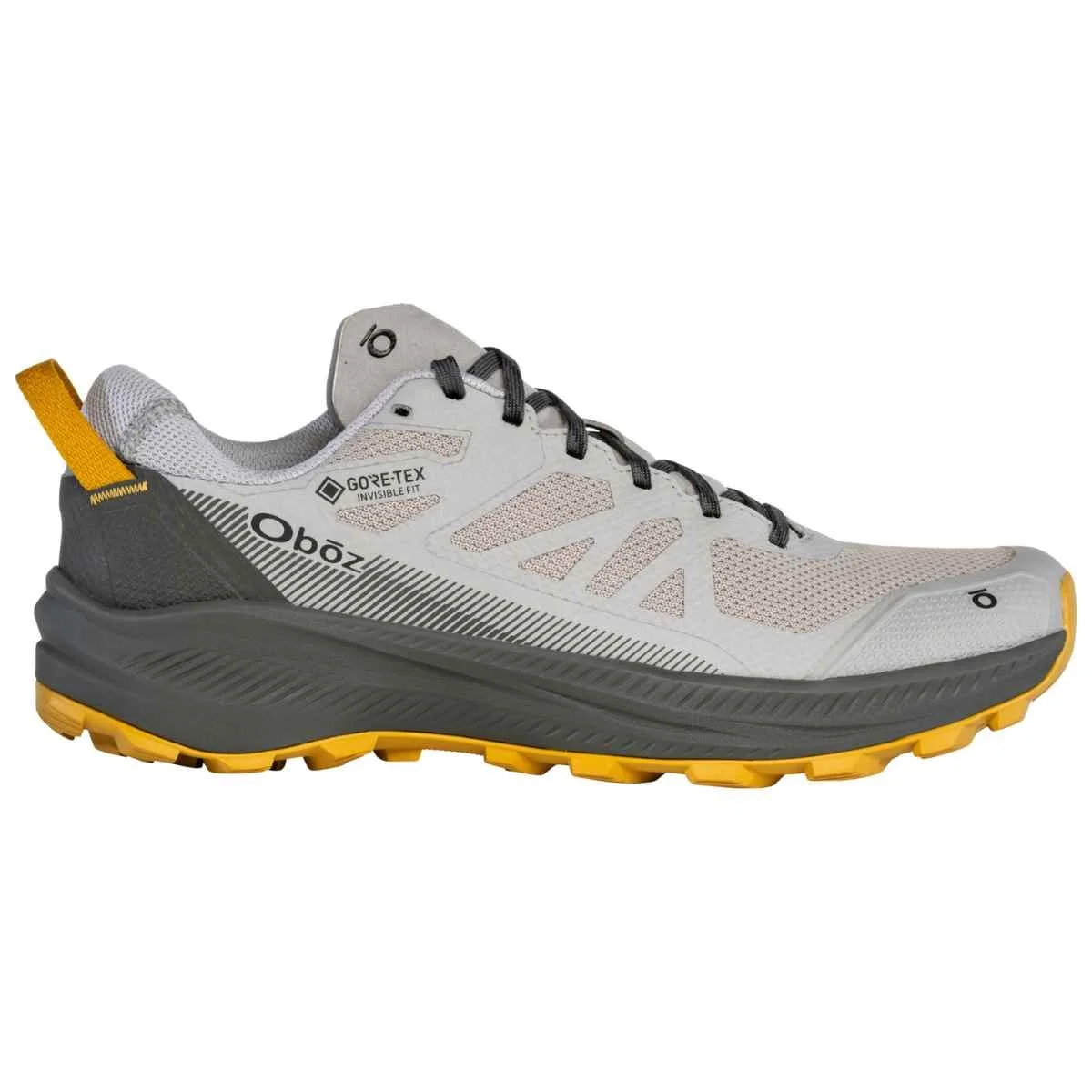
Price: $190
Weight (per pair): 1 lb 7.6 oz
Upper Material: 100% recycled polyester mesh with TPU Hotmelt Overlays, TPU-reinforced toe cap
Waterproofing: GORE-TEX Invisible Fit (waterproof and breathable)
Midsole Material: ACTEnergy cushioning system (compression-molded EVA)
Outsole: Trail Tread outsole rubber
What we liked: A sturdy, waterproof shoe that feels stable, grips confidently on slick surfaces, and sheds water, making it a solid choice for mixed conditions any time of year
What we didn’t like: It’s pretty form-fitting, but it does come in a wide version if you want more space
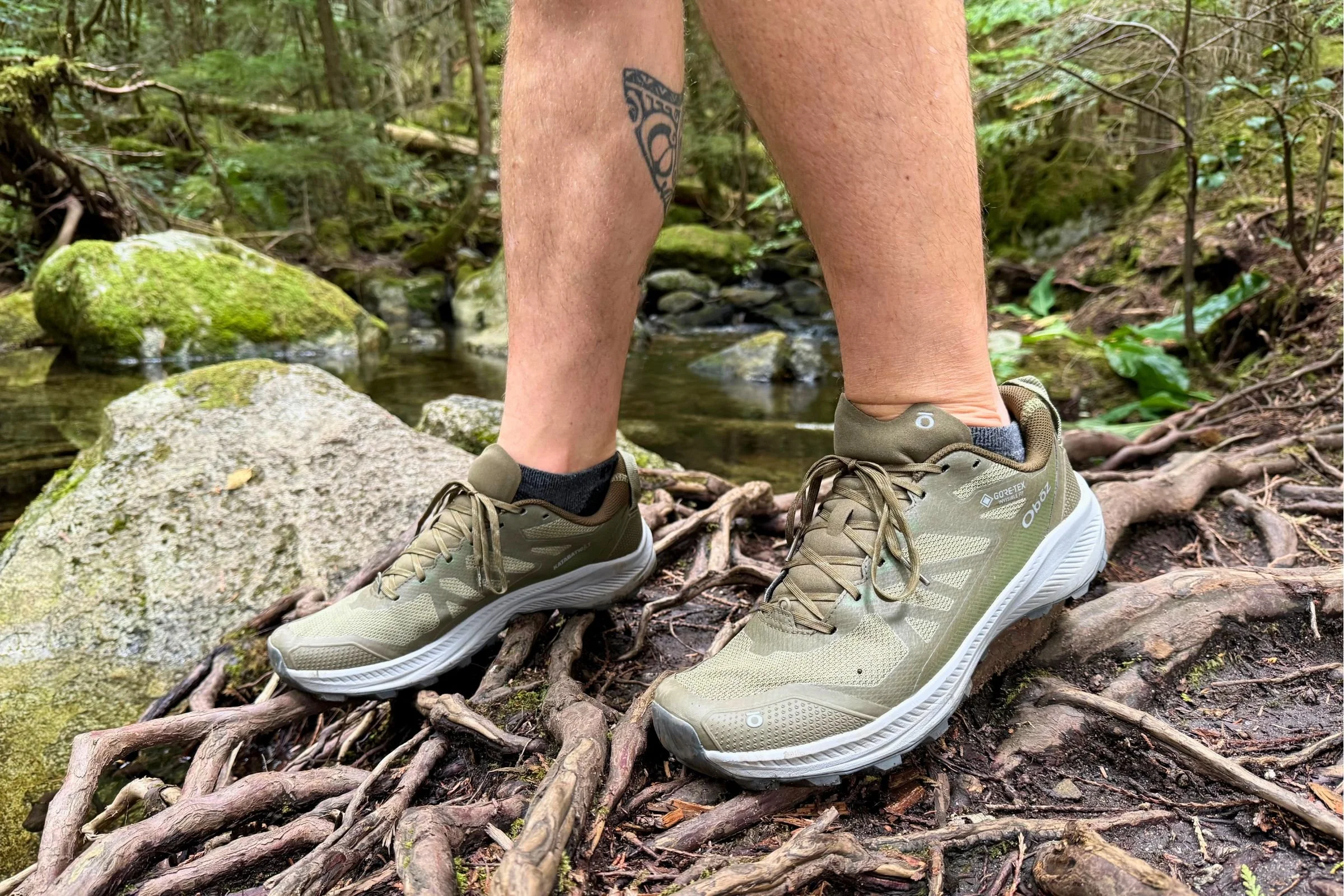
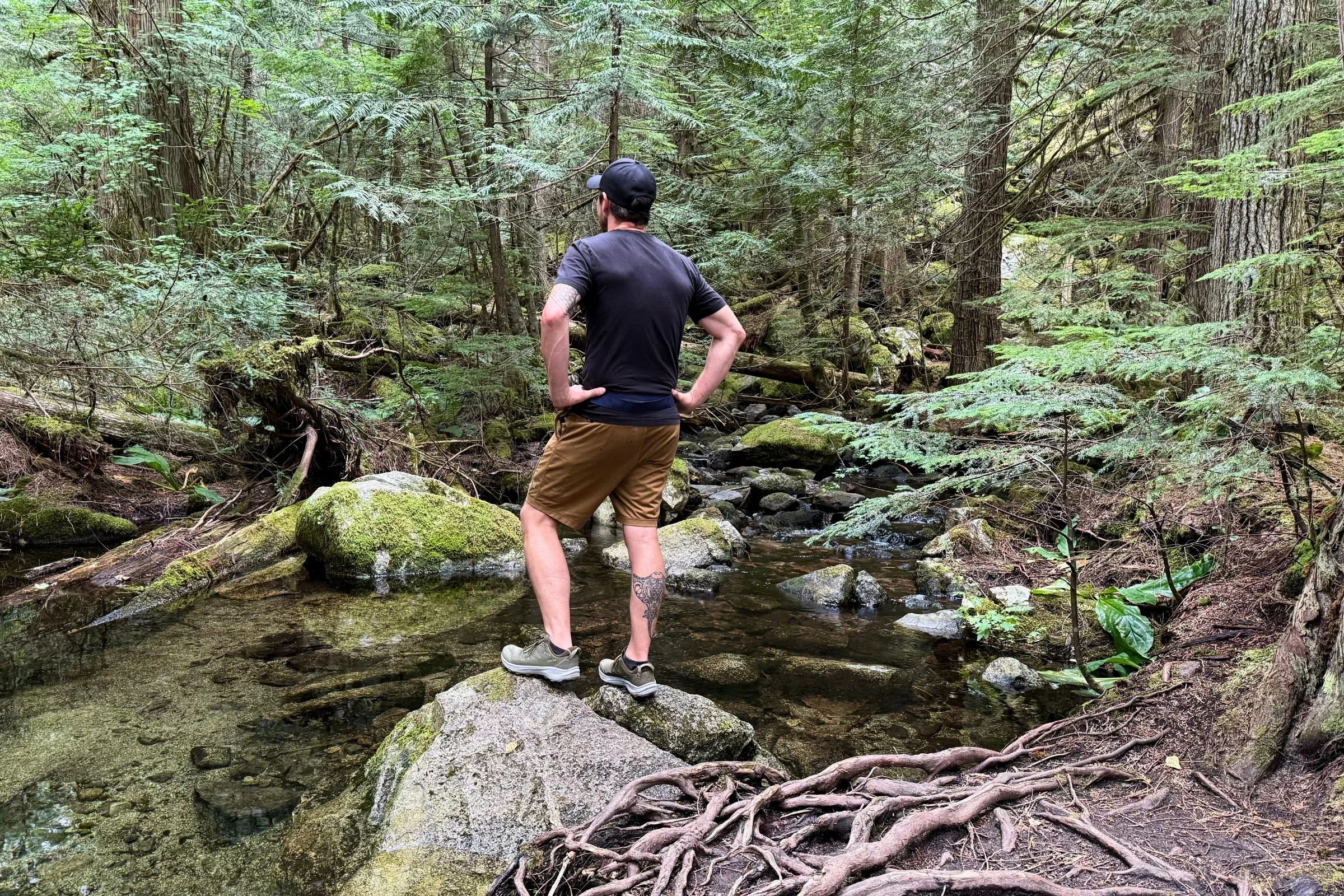
The updated men’s Katabatic LT Low GTX switches from Oboz’s in-house B-DRY membrane to GORE-TEX Invisible Fit, and the difference shows up immediately on wet trails. We were already fans of the previous model, but we think the new version does an even better job at sealing out moisture while remaining consistently breathable.
We’ve taken this shoe into true PNW conditions: hiking in steady rain, through mud, puddles and creek crossings, and through long stretches of saturated wet grass. These shoes have always kept our feet dry, and in mid-summer temperatures, the Katabatic LT Low GTX has never felt warm and clammy.
For more on our favorite waterproof hiking shoe, read our in-depth review of the Oboz Katabatic LT Low GTX.
Oboz Katabatic LT Low GTX
-
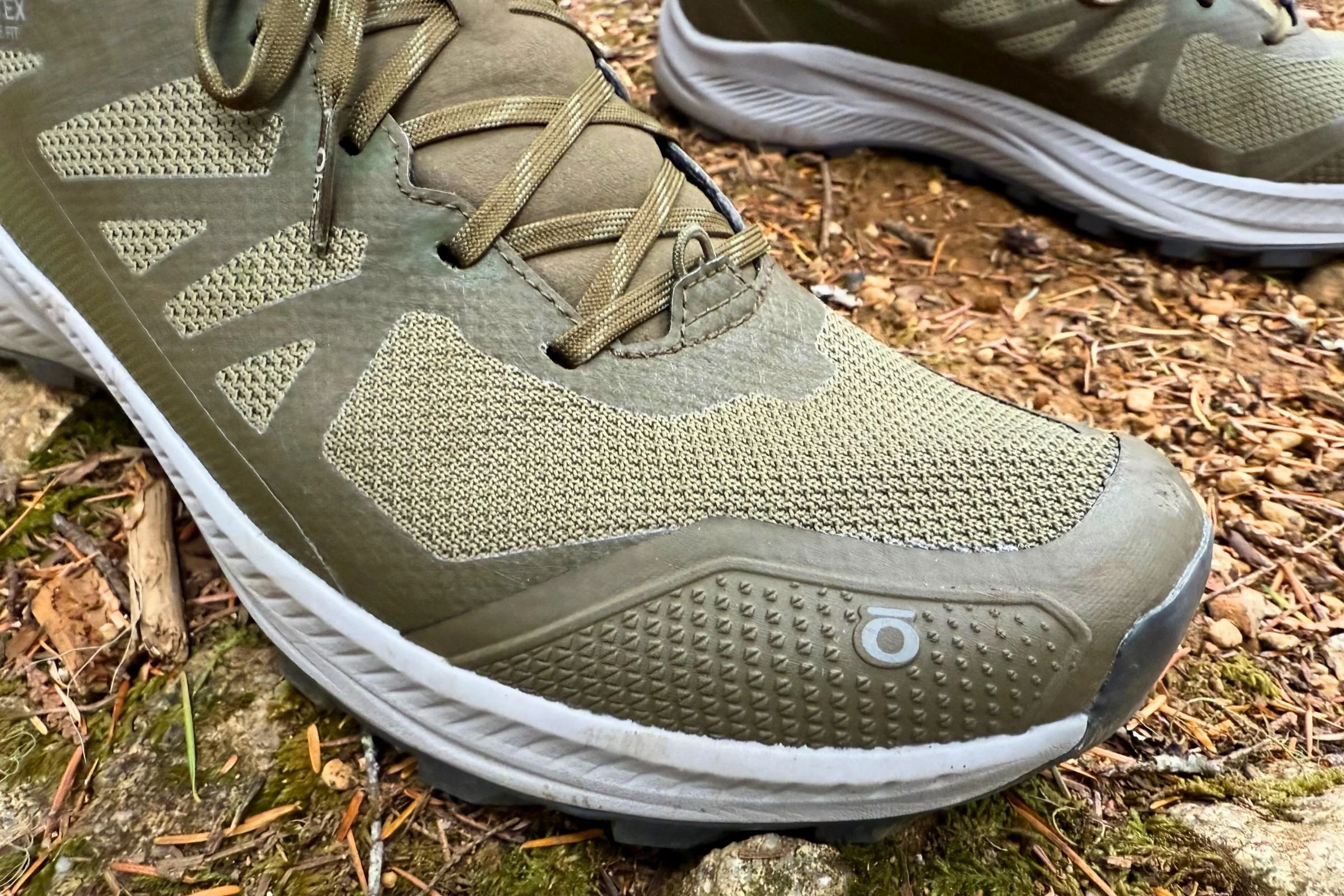
While GORE-TEX itself is standardized, the performance you get varies depending on each brand’s construction choices. And Oboz integrates the Invisible Fit membrane into the Katabatic LT Low GTX very effectively, keeping seams to a minimum to create a tighter, more efficient barrier against wet conditions.
The collar is also slightly more raised than many other shoes we’ve worn, and the extra protection around the eyelets helps keep water from finding a way in.
Combined with the new sleek recycled mesh upper, which beads water far better than most synthetics we’ve tested, the shoe stays impressively weatherproof even when the trail is a mess. Even after returning soaked from long dog walks in the pouring rain, they dry quickly overnight and are ready for the next day.
-
The Katabatic LT Low GTX leans more supportive and planted rather than soft or bouncy. It’s structured without feeling overbuilt, and secure without that squeezed-in feeling.
The slightly sleeker forefoot gives the shoe a more agile, modern feel, and pays off on technical ascents where being sure-footed matters.
-
The Trail Tread outsole grips well in wet dirt and loose gravel, and the wide lug spacing helps keep mud from caking. Oboz offers regular and wide sizes, and as usual, their fit guidance is straightforward and reliable.
-
For hikers who want a waterproof shoe that stays steady on technical terrain, moves quickly on day hikes, and has the structure to support carrying a heavy pack, the Katabatic LT Low GTX hits the mark. It’s a strong alternative to the Salomon X Ultra 5 GTX—similar confidence, different personality, and excellent wet-weather performance.
Most Comfortable Hiking Shoes: HOKA Anacapa 2 Low GTX

Price: $180
Weight (per pair): 1 lb 14.7 oz
Upper Material: Waterproof Nubuck leather/recycled mesh
Waterproofing: GORE-TEX Invisible Fit waterproof/breathable laminate
Midsole Material: Compression-molded EVA (30% sugarcane)
Outsole: Vibram Megagrip rubber
What we liked: Comfort, cushioning, propulsion, support, lightweight, combats foot fatigue, heel geometry helps with heel-to-toe transition, feels like you can hike farther, sustainability (PFC-free), also available in kids’ sizing
What we didn’t like: Price, extra bulk takes getting used to
HOKA is synonymous with all-day comfort, and the Anacapa 2 GTX Low is a lightweight yet supportive hiking shoe that excels in providing cushioned protection on the trail. It improves on the previous Anacapa with upgraded materials, including recycled polyester, a sugarcane EVA midsole, and an improved outsole for better traction and stability. It’s well-suited for both short hikes and rugged terrain, making it ideal for anyone who wants a versatile, cushioned shoe without the bulk of a high-top boot.
Like many HOKA models, the Anacapa 2 Low GTX carries the American Podiatric Medical Association (APMA) Seal of Acceptance, indicating it meets the organization’s standards for foot health.
For more info, see our in-depth review on the HOKA Anacapa 2 Mid GTX.
HOKA Anacapa 2 Low GTX


-
The Anacapa 2 GTX Low has a true-to-size fit but runs slightly narrow, so sizing up is recommended for wider feet. The roomy toe box and cushioned EVA midsole provide ample comfort for long hikes, while the structured heel and lacing system keep the foot secure without creating pressure points. Right out of the box, the Anacapa 2 delivers a comfortable, broken-in feel, with no break-in period needed.
-
This shoe is constructed with a combination of GORE-TEX waterproof Nubuck leather (now Gold-Rated by the Leather Working Group) and recycled materials, offering both sustainable appeal and long-lasting durability. The protective rubber toe cap guards against rocks and roots, while the heel design adds stability. The Anacapa 2 strikes a middle ground in weight—not as heavy as models like the KEEN Targhee IV, but not as lightweight as the ultra-cushioned On Cloudhorizon or the waterproof Katabatic Low, so it’s robust enough for trail use but light enough for everyday wear, balancing durability with flexibility.
-
Equipped with a GORE-TEX membrane, the Anacapa 2 is fully waterproof and has kept our feet dry even in wet conditions, all while allowing enough airflow to keep things cool. The breathability of the upper is especially impressive—it’s one of those features you really notice on warmer days. If you want a little extra protection for wading in water or deeper puddles, go for the mid version.
-
The Vibram Megagrip outsole on these shoes really sticks—whether you’re on dirt, gravel, or rocky trails, the deep 5mm lugs give you solid traction. The lugs are chevron-shaped, enhanced with tiny micro-textured protrusions that dig into uneven terrain, providing the steady grip needed for challenging sections. The low profile and snug fit help you feel stable and sure-footed, even on uneven ground. If you’re after a durable, waterproof, and super comfy low-top, the Anacapa 2 GTX Low brings Hoka’s signature cushioning together with serious trail-ready grip.
Best Hiking Shoes for Beginners: Merrell Moab Speed 2 GORE-TEX
Price: $185
Weight (per pair): 1 lb 8.6 oz
Upper Material: Nylon ripstop and TPU synthetic upper with 100% recycled laces/webbing, recycled mesh lining, and recycled mesh footbed cover
Waterproofing: GORE-TEX waterproof/breathable membrane
Midsole Material: FloatPro Foam midsole with full-length rock plate and FlexPlate torsional support plate
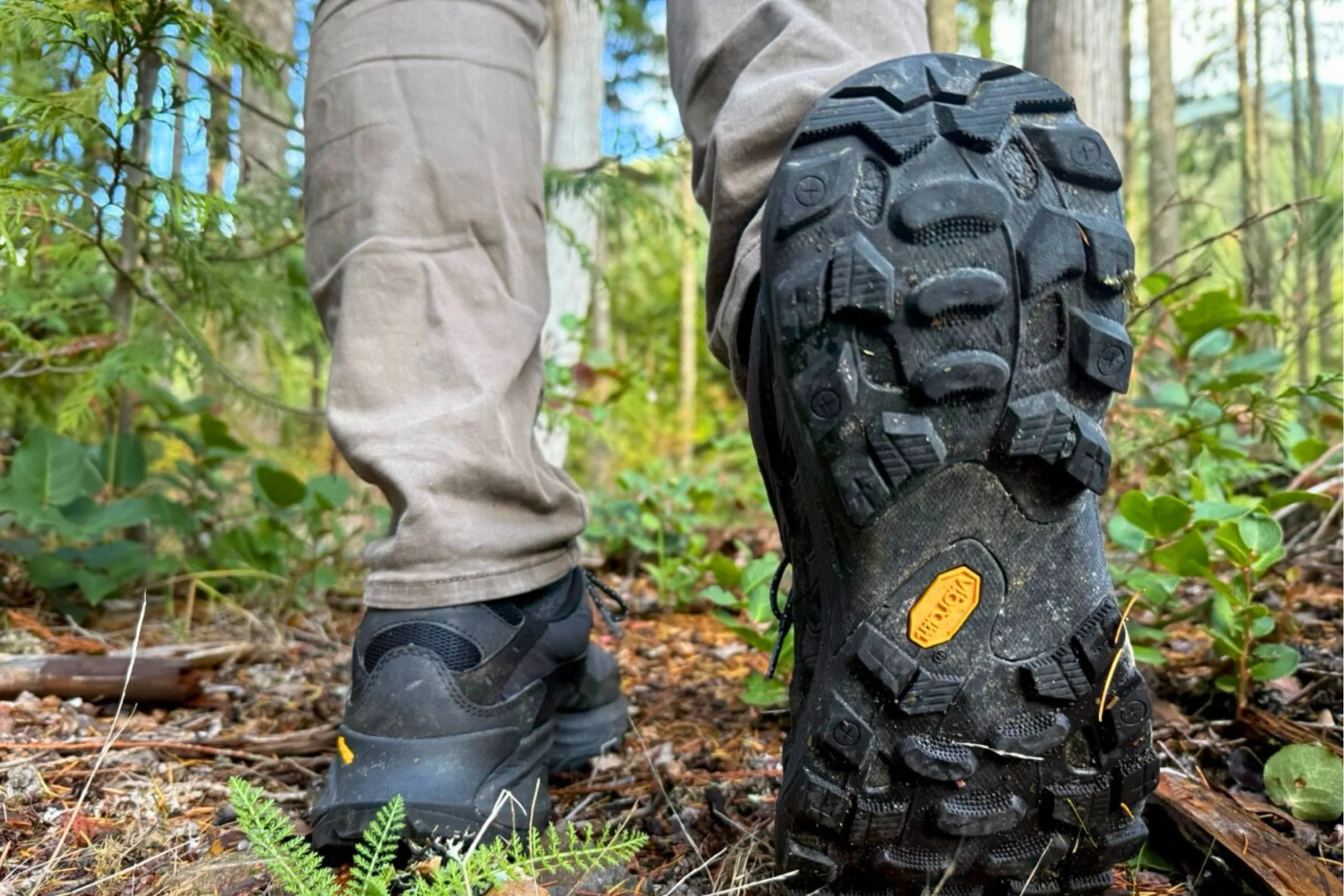
Outsole: Vibram TC5+ rubber outsole (exclusive to Merrell) with 4mm lugs
What we liked: A light, comfortable hiker that keeps things simple yet dependable, making it a great match for easy to mid-level trails, daily use, and rainy-day outings
What we didn’t like: Less toe and side protection than you would get with a burlier shoe; the lower-profile lugs don’t grip as well on loose gravel or muddy sections
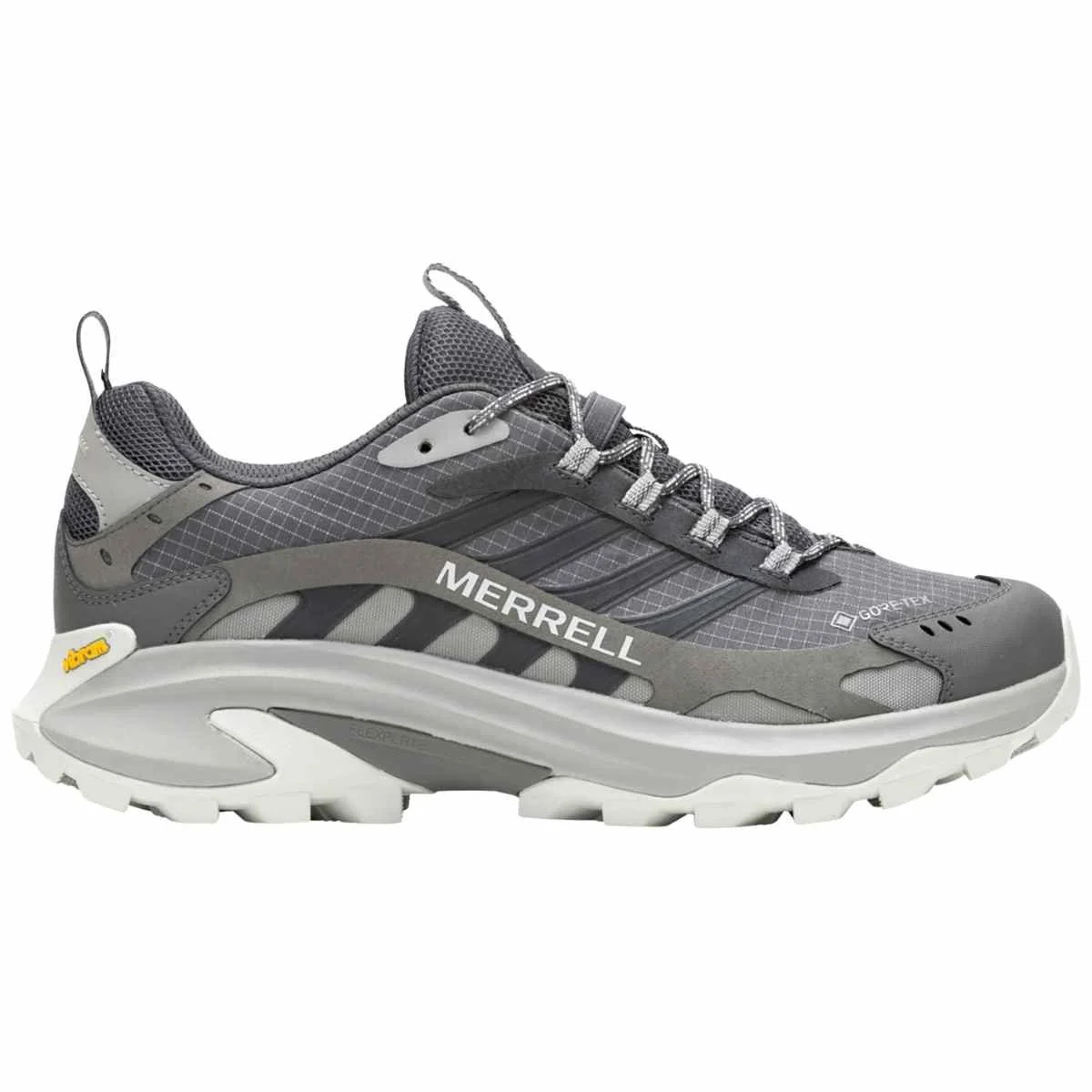
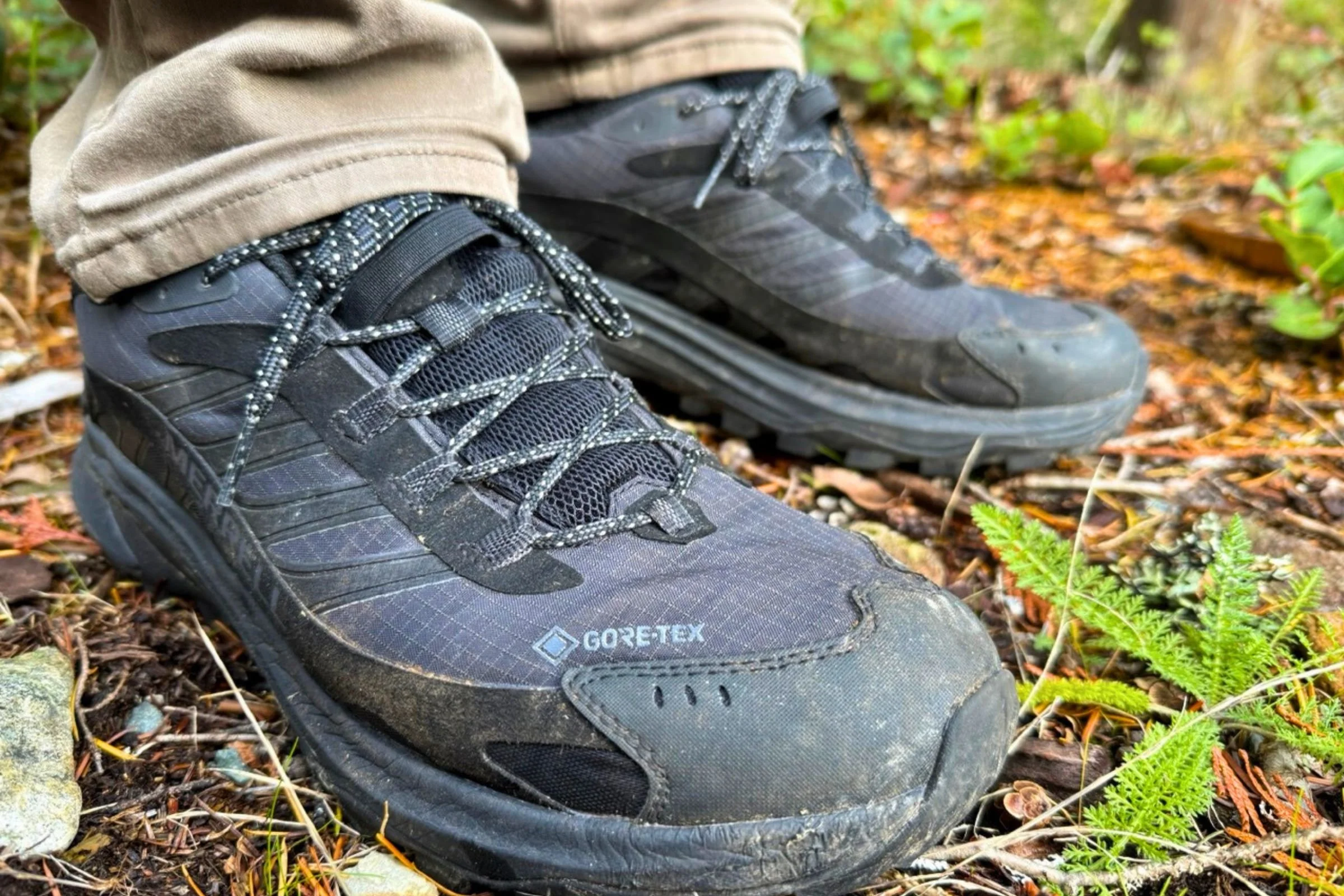
The Merrell Moab Speed 2 GORE-TEX is our go-to recommendation for beginner hikers because it takes the trusted, all-around feel of the classic Merrell Moab boot and translates it into a lighter, updated design that works just as well for day hikes as it does for travel, weekend plans, and daily life. It’s comfortable the second you put it on, keeps water out reliably on rainy forest walks, stays breathable in summer heat, and is light enough to wear all day without feeling fatigued.
For more about our beginner-friendly favorite, read our in-depth review of the Merrell Moab Speed 2 GORE-TEX hiking shoes.
Merrell Moab Speed 2 GORE-TEX

-
What makes this shoe so great is that once on, you never have to think about it. The cushioning feels soft and forgiving, the roomy toe box lets your foot move naturally, and the overall fit leans more toward a comfortable sneaker than a traditional hiking boot.
-
It’s not built for technical terrain or big alpine missions, but it excels on the kinds of trails beginners tackle: forest loops, rolling mountain paths, coastal and urban hiking routes, and wet-weather outings.
-
The Vibram TC5+ outsole has small “teeth” on the edges that grip well on wet roots and rock, while the heel brake helps with control on downhills and reduces foot slippage inside the shoe (a big bonus for those new to hiking).
-
After more than a year of wearing it everywhere—trails, errands, road trips, city sidewalks, and playgrounds—we’ve found that the durability has held up and the cushioning still feels lively.
-
With waterproof and non-waterproof, mid and low heights, leather and vegan options, and both regular and wide sizes, there’s a version for almost everybody.
-
If you’re new to hiking and want something comfortable, reliable, and versatile, the Merrell Moab Speed 2 GORE-TEX is an easy yes.
Best Lightweight Hiking Shoe: Danner Trail 2650 GTX

Price: $210
Weight (per pair): 1 lb. 11 oz.
Upper Material: Leather/textile
Waterproofing: GORE-TEX
Midsole Material: PlyoGo EVA
Outsole: Vibram 460 with MegaGrip
What we liked: Durability of uppers and sole on rugged, rough, off-trail terrain, toe protection, breathability and water drainage, grip, stability, good for wide feet
What we didn't like: Footbed and midsole lost cushion over time
We’ve had multiple Treeline testers wear this shoe, and have done an in-depth review of the Danner Trail 2650 after wearing it on a rugged 600-mile route through Arizona and New Mexico, covering rocky terrain, river fords, and varied conditions. Overall, we think it stands out for its comfort and versatility, and it’s the go-to choice when trail runners aren’t capable enough, and burly shoes are too much.
While the footbed’s cushioning compressed after around 500 miles, the upper remained intact, and the shoe continued to deliver a low-to-the-ground, stable feel, making it a dependable choice for both the trail and casual wear.
Danner Trail 2650 GTX


-
The Trail 2650 offers a roomy, slipper-like fit straight away, with a spacious toe box that accommodates swelling and a secure midfoot hold. The 8mm heel-to-toe drop provides a responsive feel on rocky terrain, while the shoe’s low profile makes it feel stable underfoot. The Trail 2650 requires no break-in period, making it easy to transition from trail to daily wear. We’ve worn these shoes just as much for everyday errand-running as we have for hiking.
-
The Trail 2650 held up impressively well after a spring and summer of hard use. Its robust toe cap offers substantial protection against stubs and scrapes, and the uppers stay intact longer than standard trail runners. Despite challenging terrain and a tester notoriously hard on gear, the suede uppers on the Danner Trail 2650 never tore. However, our in-depth Danner 2650 testing revealed that the lightweight EVA midsole lost cushioning after about 400-500 miles, so those needing long-term cushion may find it necessary to add a supportive insole for extra comfort on extended hikes.
-
Breathability is a highlight of the Danner Trail 2650, with ventilated uppers and built-in drainage holes that keep feet cool in hot weather and allow quick drying after river fords. Though not fully waterproof, the shoe’s quick-drying design makes it a practical choice for wet or humid climates without compromising airflow.
If you require waterproof hiking shoes, we also tested (and loved) the Danner Trail 2650 Mesh GTX for our Best Women’s Hiking Shoes guide.
-
The Trail 2650 delivers impressive traction on mixed terrain, offering secure footing even in slick or loose conditions. The outsole provides excellent grip on rocky surfaces and on wet city streets, though the lugs may wear down with heavy use. Its close-to-ground feel also felt more stable, giving us confidence on uneven ground.
Best Hiking Shoes for Wide Feet: KEEN Targhee IV Waterproof
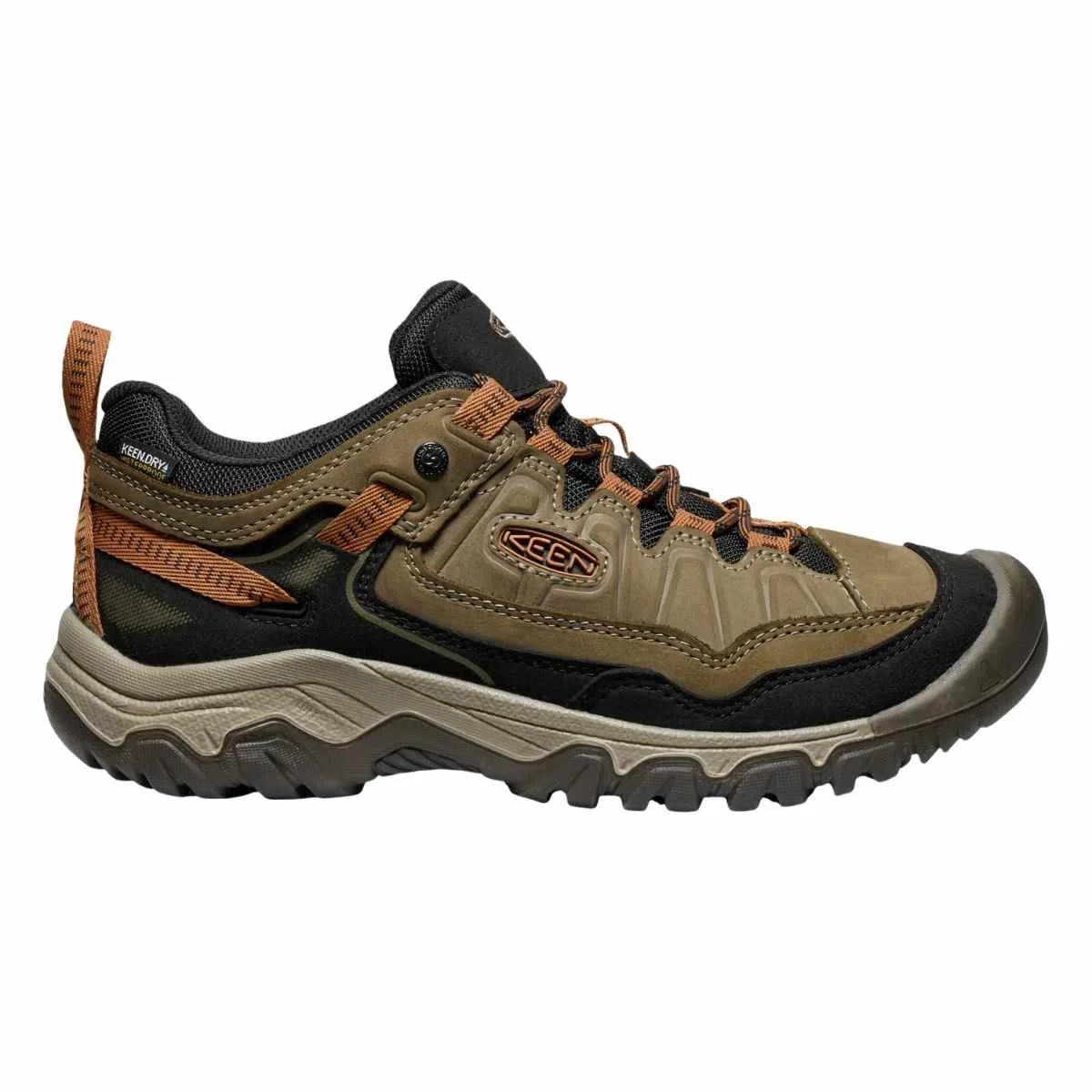
Price: $180
Weight (per pair): 2 lbs 6.4 oz
Upper Material: Nubuck leather
Waterproofing: KEEN.DRY membrane
Midsole Material: Air-injected Luftcell
Outsole: KEEN.RUGGED rubber
What we liked: Fits wide feet when no other shoe will, comfort, affordable
What we didn’t like: Fit can feel sloppy for narrow feet
There have been a few iterations of the classic KEEN Targhee hikers, and the latest Targhee IV version is a return to everything we loved about the Targhee II (our previous best hiking shoes for wide feet pick). The Targhee IV builds on the brand’s signature comfort, with a roomy fit perfect for hikers needing a wider toe box, but updated with KEEN’s latest technologies. The Targhee IV is an ideal option for tackling various terrains in reliable comfort, especially if you’re looking for durable construction that will last through many years.
Learn more in our in-depth review of the KEEN Targhee IV Waterproof Hiking Boots.
KEEN Targhee IV Waterproof


-
With the Targhee IV, KEEN continues its tradition of designing shoes with a wide, comfortable toe box, making this model ideal for those with wider feet or anyone who likes extra room to move their toes. The lacing system, cushioned collar, and tongue provide a comfortable, secure fit, though it’s less “locked-in” than sleeker models like the Oboz Katabatic or Danner Trail 2650.
An EVA midsole provides cushioning, while a stability shank offers reliable support, making this shoe suitable for mixed terrain and all-day wear. These aren’t the shoes we’d grab for running errands or walking around town though—they definitely have a made-for-the-trail look and feel.
-
Burlier than most of the hiking shoes we’ve tested, the Targhee IV seems nearly indestructible. If you’re someone who’s hard on your shoes, these might be the pick for you. They’re built to handle rough trails, with reinforced Nubuck leather uppers and a construction that fuses the sole to the upper, preventing delamination (in fact, KEEN guarantees it). The sturdy toe cap and abrasion-resistant rubber offers extra protection against rocks and roots.
They’re a dependable choice for consistent trail wear. We’ll report back, but we suspect the Targhee IV will have the best longevity out of the entire bunch.
-
KEEN uses its own waterproof membrane and it offers effective moisture protection. With the waterproofing system and the Nubuck leather combo, aside from stepping in too deep of water, there is no way water will make its way into this shoe. They don’t excel in breathability, but we didn’t find ourselves overheating either.
-
The outsole is designed with 4mm multi-directional lugs that provide solid grip on wet and dry terrain, ensuring stable footing even on challenging trails. While the Targhee IV provides solid traction and support on varied terrain, the slightly loose fit around the ankle can reduce stability on steeper or uneven trails, making it feel less secure than more fitted options.
Best Budget Hiking Shoes: Merrell Moab 3 Low GTX

Price: $185
Weight (per pair): 2 lbs. 1 oz
Upper Material: Suede leather/mesh
Waterproofing: GORE-TEX
Midsole Material: EVA
Outsole: Vibram TC5+
What we liked: Affordability, reliable, comfort out of the box
What we didn’t like: Technical look means it’s less versatile in the city, not as nimble or breathable as other hiking shoes
For years, the Merrell Moab series has been a trail mainstay because it’s a reliable and comfortable out-of-the-box hiker. It’s earned its place as our top budget pick, and the latest iteration, the Moab 3, continues the Moab tradition of being an accommodating shoe that’s ready for adventure from the moment you put it on.
While they don’t stray far from their intended use of day hiking and light backpacking the way some of the more nimble, lightweight shoes on our list do, Merrell has packed in all the essentials at an affordable price, making these a top value choice.
For more on the Moab 3 and updates compared to the Moab 2, see our in-depth review of the Merrell Moab 3.
Merrell Moab 3 Low GTX


-
The Moab 3 has all the features that have made the Moab a hiking gear staple. Compared to the Moab 2, it has a more contoured footbed for arch support and upper material to increase comfort and performance. These shoes don’t need a break-in period—they’re ready to go right away, and the midsole provides just enough cushioning for a soft, supportive feel.
They fit the same as the previous version; for those that have worn the Moab line of hiking footwear, if one version of the Merrell shoes works for your feet, it's likely to work across the entire series.
-
Constructed with durable materials and a protective toe cap, the Moab 3 holds up well to most trail use. Merrell managed to drop the weight per pair by 2 oz in this model, yet it remains robust enough for rocky paths and dirt trails. The reinforced upper provides added resistance to scrapes and abrasions, giving it extra longevity on rough terrain. Plus, the stitching and construction feel solid, so you can count on these shoes to endure regular hikes without wearing out too quickly.
-
We tested the fully waterproof version, which offers a great balance of protection and breathability, but there are options available in both waterproof and non-waterproof versions to suit all hiking preferences. The waterproof model isn't overly breathable, but it did keep us dry in the PNW. If you don’t need the full waterproofing and plan on warmer hikes, opt for a more breathable version and save yourself a few dollars.
-
Equipped with grippy outsoles, and fairly aggressive 5mm multi-directional lugs, the Moabs have always provided steady traction across various surfaces, from loose dirt to rocky trails. The lugs give you dependable footing on uneven terrain, while the shoe’s low profile and secure fit enhance stability.
While the MSRP technically is $140, there are enough models and colors (and we count more than 50-each in at least 3 colorways) that we consistently find Moabs for less than $100 at big, reliable online retailers. We think you’d be hard-pressed to find a better pair of hiking shoes for that price.
Best for Technical Hiking Trails: La Sportiva Spire Low GTX

Price: $219
Weight (per pair): 2 lbs 2.5 oz
Upper Material: Mesh/polyurethane Techlite toe and heel
Waterproofing: GORE-TEX SURROUND waterproof breathable membrane/textile
Midsole Material: Vibram XS Trek rubber
Outsole: Vibram XS Trek
What we liked: Delivers excellent stability and control on technical terrain, with a stiff chassis, solid heel counter, and an outsole design that adds braking power on descents
What we didn’t like: They run narrower than average, so high-volume or wide-footed hikers may find them too snug
The La Sportiva Spire Low GTX is the hiking shoe we reach for when the trail turns technical. It handles rocky ledges, loose gravel, and steep switchbacks with control and support. It feels nimble like a lightweight hiking shoe but has the security and protection of a hiking boot—exactly what you need when the trail gets sketchy.
La Sportiva Spire Low GTX


-
One of our favorite features on the Spire Low GTX is its Impact Brake System, a design that adds traction on downhills and actually makes a difference. On steep descents where soft, flexible shoes can skid out (we’re looking at you,On Cloudhorizon Waterproof), the Spire keeps things controlled and predictable. We’ve worn them on wet granite slabs on the Stawamus Chief and felt secure, even in the rain. A big part of that confidence comes from the Vibram outsole, which grips incredibly well, and the deeper lugs bite into soft and hard surfaces alike.
-
Stability is another area where the Spire stands out. The shoe has a more structured build and a slightly taller collar that helps support the ankle without feeling restrictive. We’ve carried a fully loaded child carrier in these and never felt wobbly, even stepping off-balance on uneven rock or roots.
The upper construction is ironclad: tough and built to resist abrasion. The GORE-TEX reliably did its job throughout our testing, and the Spire is breathable enough to wear through the summer. It’s a shoe that you can trust when heading out on unpredictable trails.
-
If the Salomon X Ultra 5 GTX is the versatile, everyday choice, the La Sportiva Spire Low GTX is the shoe you grab when the trail gets more challenging than expected. It’s the most capable low-cut option we’ve tested for hikers who want precision and protection without committing to a full hiking boot.
Best Hiking Shoes for Plantar Fasciitis: HOKA Kaha 3 Low GTX
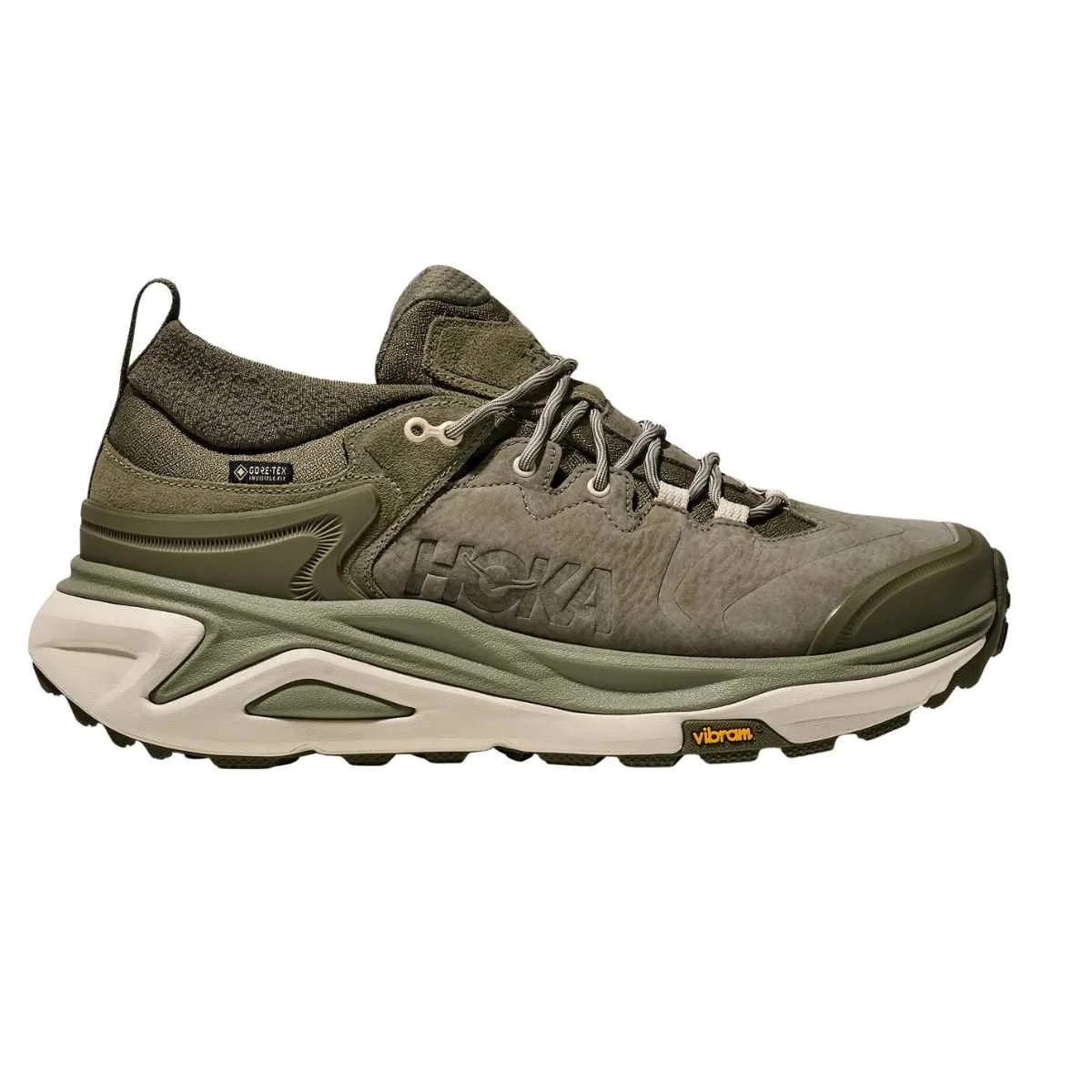
Price: $220
Weight (per pair): 2 lb 2.2 oz
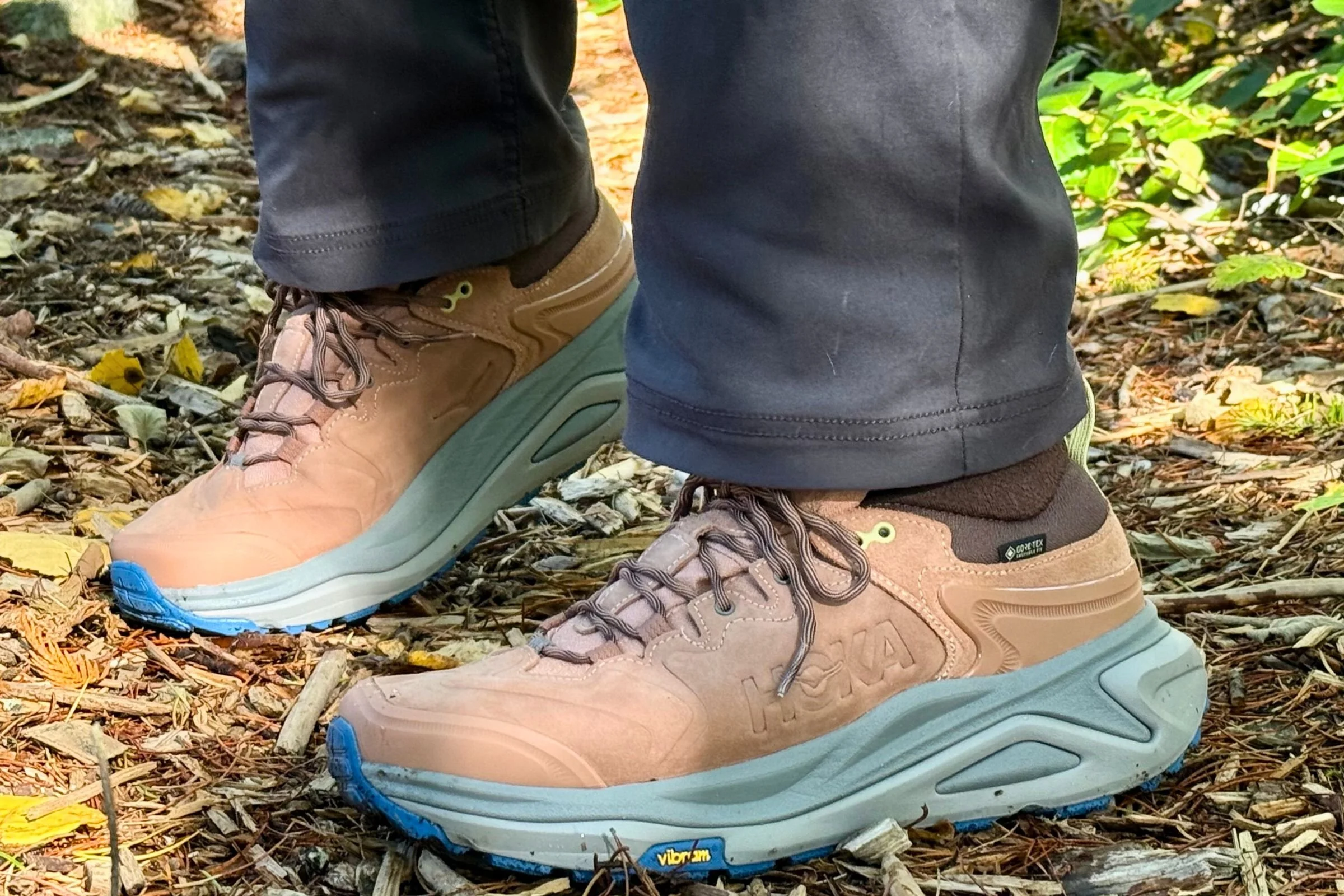
Upper Material: Leather Working Group Gold-rated waterproof nubuck leather and 100% recycled polyester mesh in tongue and lining
Waterproofing: GORE-TEX Invisible Fit membrane with waterproof nubuck leather upper
Midsole Material: Dual-density midsole with 30% sugarcane EVA
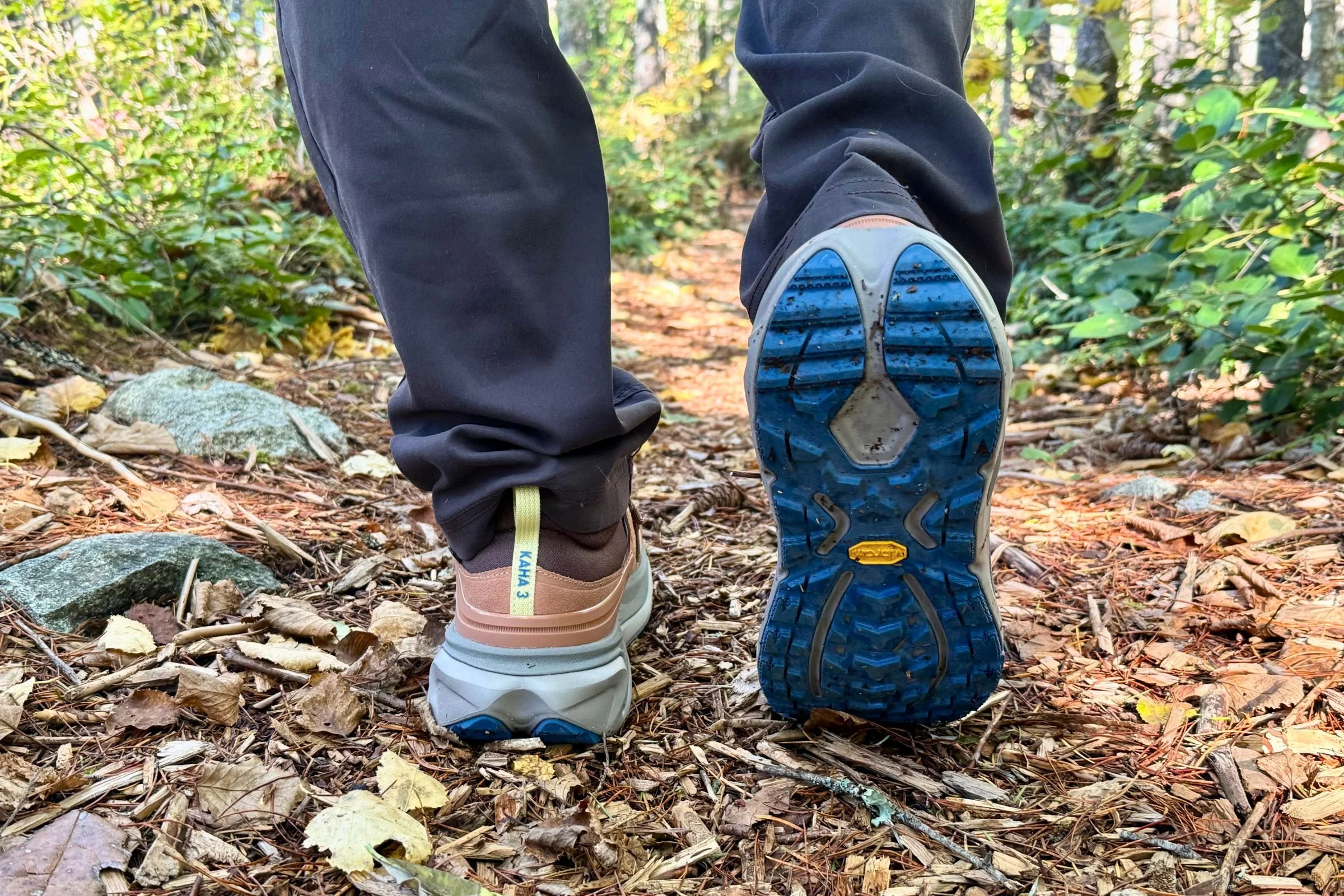
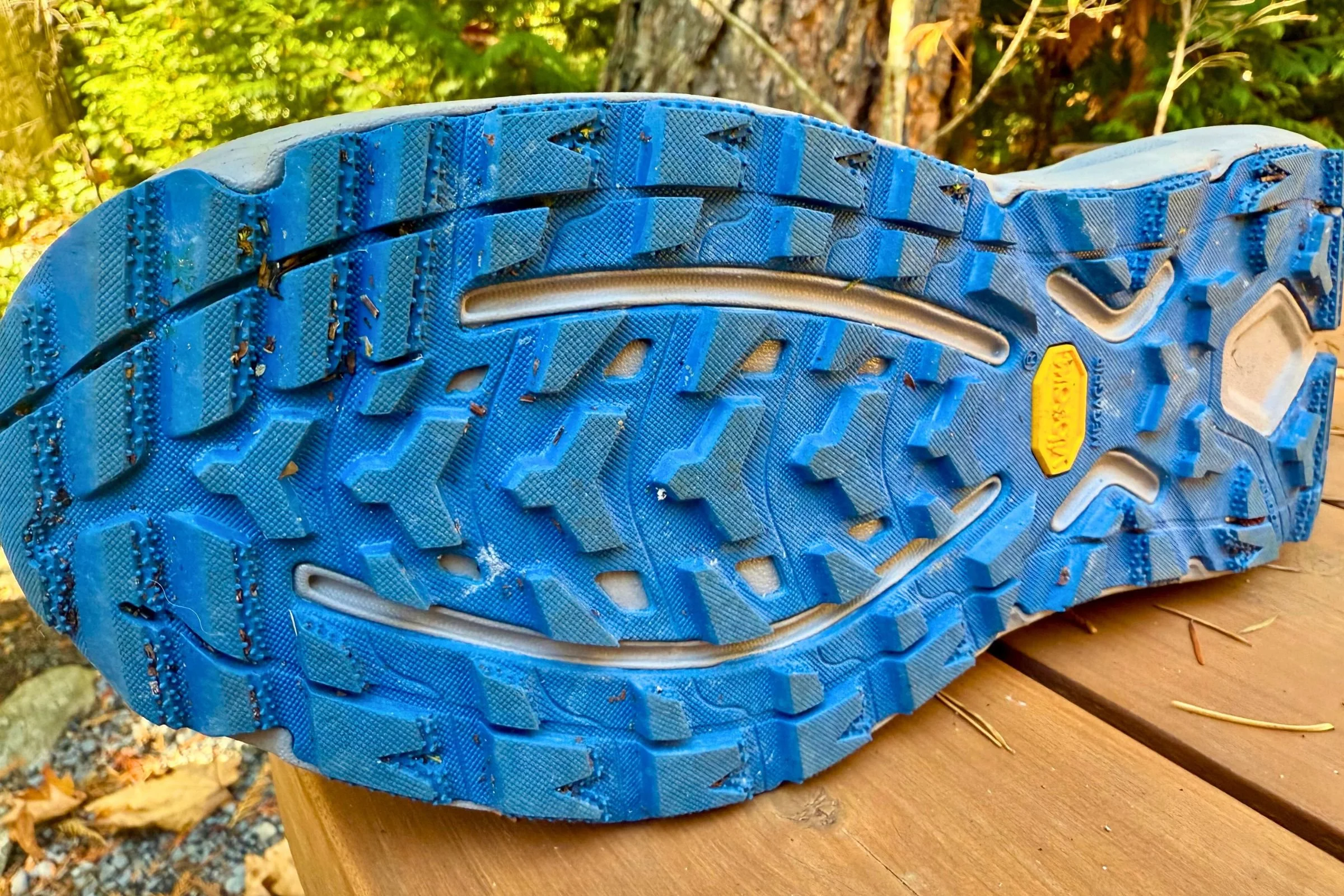
Outsole: One-piece Vibram Megagrip with Traction Lug and 4mm lugs
What we liked: Exceptionally cushioned and supportive, with a stable heel that feels great for anyone dealing with heel or arch discomfort
What we didn’t like: A bit heavy, and the leather and waterproof combo runs warm in hot weather
If you’re dealing with plantar fasciitis, the right shoe can make a huge difference. You want cushioning that softens impact, support that keeps the foot from working overtime, and a stable platform that reduces strain on the heel and arch. The HOKA Kaha 3 Low GTX delivers all of that. While you should always talk to a medical professional for diagnosis or treatment, it’s worth noting that HOKA is one of the few footwear brands with multiple models earning the APMA Seal of Acceptance for promoting good foot health by the American Podiatric Medical Association (APMA).
For more about why we love these cushioned and supportive hiking shoes, read our in-depth review of the HOKA Kaha 3 Low GTX.
HOKA Kaha 3 Low GTX
-
The Kaha 3 Low GTX offers moderate arch support, a deep heel cup that prevents side-to-side wobble, and a noticeably pronounced heel counter that holds the back of the foot securely.
The toe box has enough space for toes to splay, and the removable insole leaves room for custom orthotics if you use them.
-
The smooth MetaRocker rocker profile HOKA is known for also helps shift you forward through each step rather than forcing a hard push-off, which is something people with plantar fascia pain will find more comfortable.
The shoe also uses a wide base and a J-shaped stability frame to keep the foot aligned and reduce inward collapse, which is helpful for hikers who overpronate.
-
As with most of HOKA’s lineup, cushioning is where the Kaha really stands out. It’s classified as “plush” by their standards, with a soft top layer for absorption and a firmer lower layer for stability.
The high stack height gives you extra impact protection, which can help alleviate plantar fascia issues.
The 8mm drop also shifts some load away from the heel and Achilles, unlike flatter, low-drop shoes or “barefoot” shoes that keep the foot level (which can increase tension).
-
It’s not the lightest or coolest-running shoe, but if your priority is minimizing heel pain and staying comfortable on longer hikes, the HOKA Kaha 3 Low GTX is one of the most supportive options we’ve tested for plantar fasciitis.
Best Shoes for Hiking and Walking: Oboz Hyalite Low Waterproof
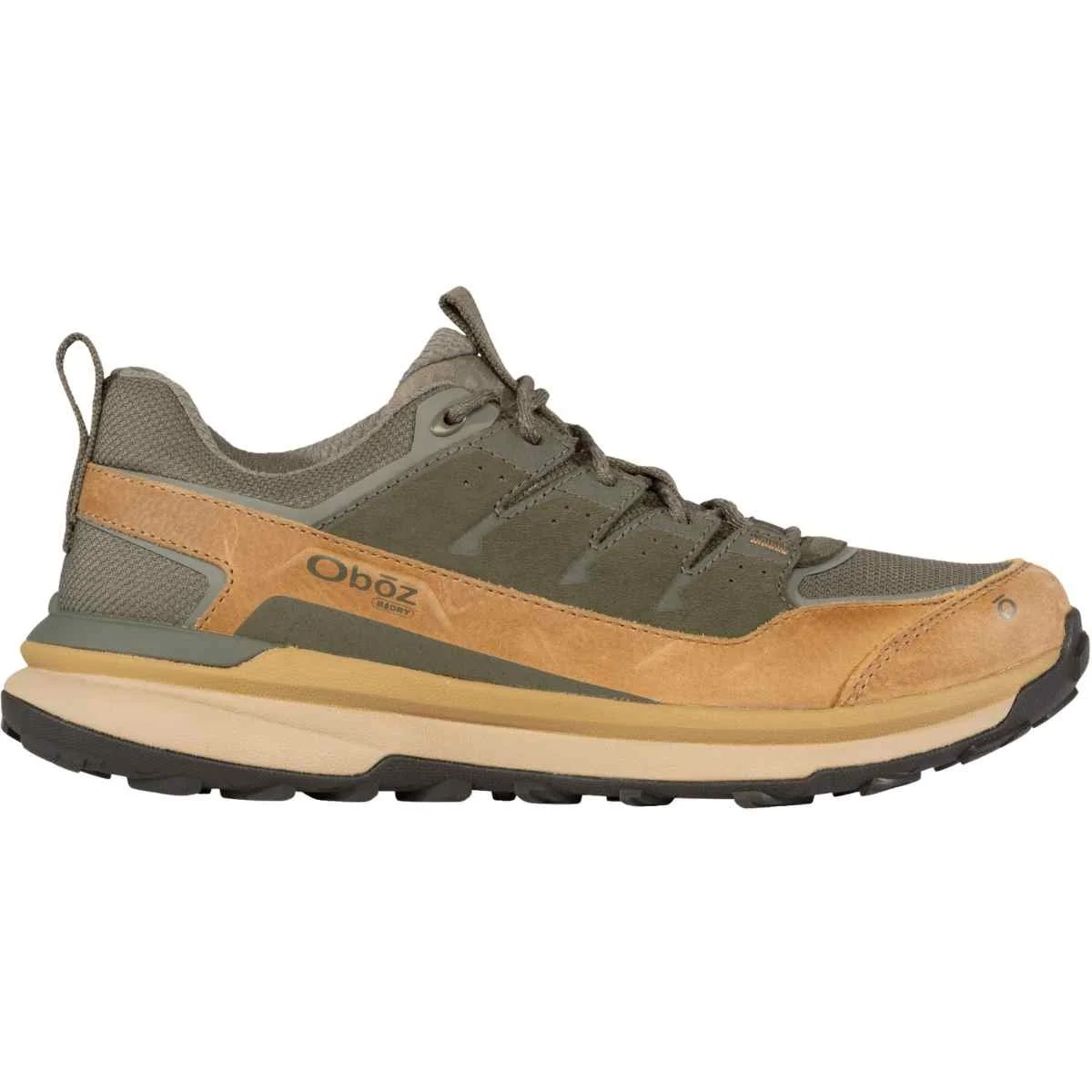
Price: $165
Weight (per pair): 1 lb 5.8 oz
Upper Material: Suede and nubuck leather from an LWG Gold Standard-certified tannery, abrasion-resistant mesh (40% recycled polyester), PFC-free DWR finish, recycled laces
Waterproofing: Oboz B-DRY membrane
Midsole Material: ACT EVA cushioning
Outsole: Trail Tread rubber
What we liked: Comfortable right out of the box with a cushy, sneaker-like feel
What we didn’t like: Traction is solid overall, but it’s not a shoe to reach for when tackling steep and slick rocky trails
The Oboz Hyalite Low Waterproof is one of the easiest shoes to recommend if you want something that can pull triple duty: comfortable enough for daily wear, sturdy enough for light to moderate hikes, and durable enough to handle a little of everything in between. It feels like a sneaker in terms of comfort but has the support and build quality of a true hiking shoe, making it a great all-in-one waterproof shoe for people (especially dads) who spend their time bouncing between errands, dog walks, travel days, hiking, and most outdoor activities.
For more on these comfortable everyday shoes, read our in-depth Oboz Hyalite Low Waterproof Hiking Shoes Review.
If you’re interested in more walking shoes, check out our Best Walking Shoes guide.
Oboz Hyalite Low Waterproof
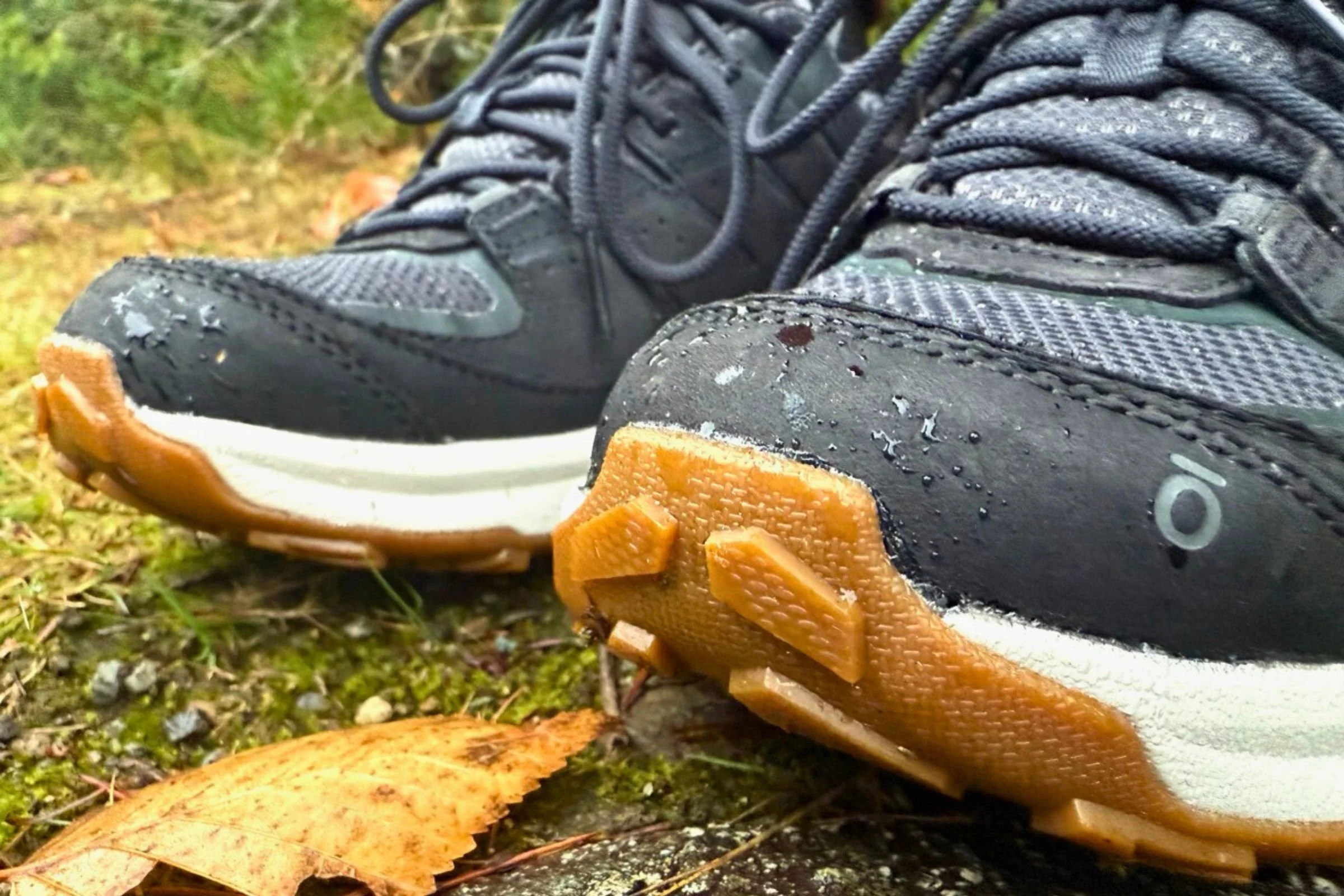

-
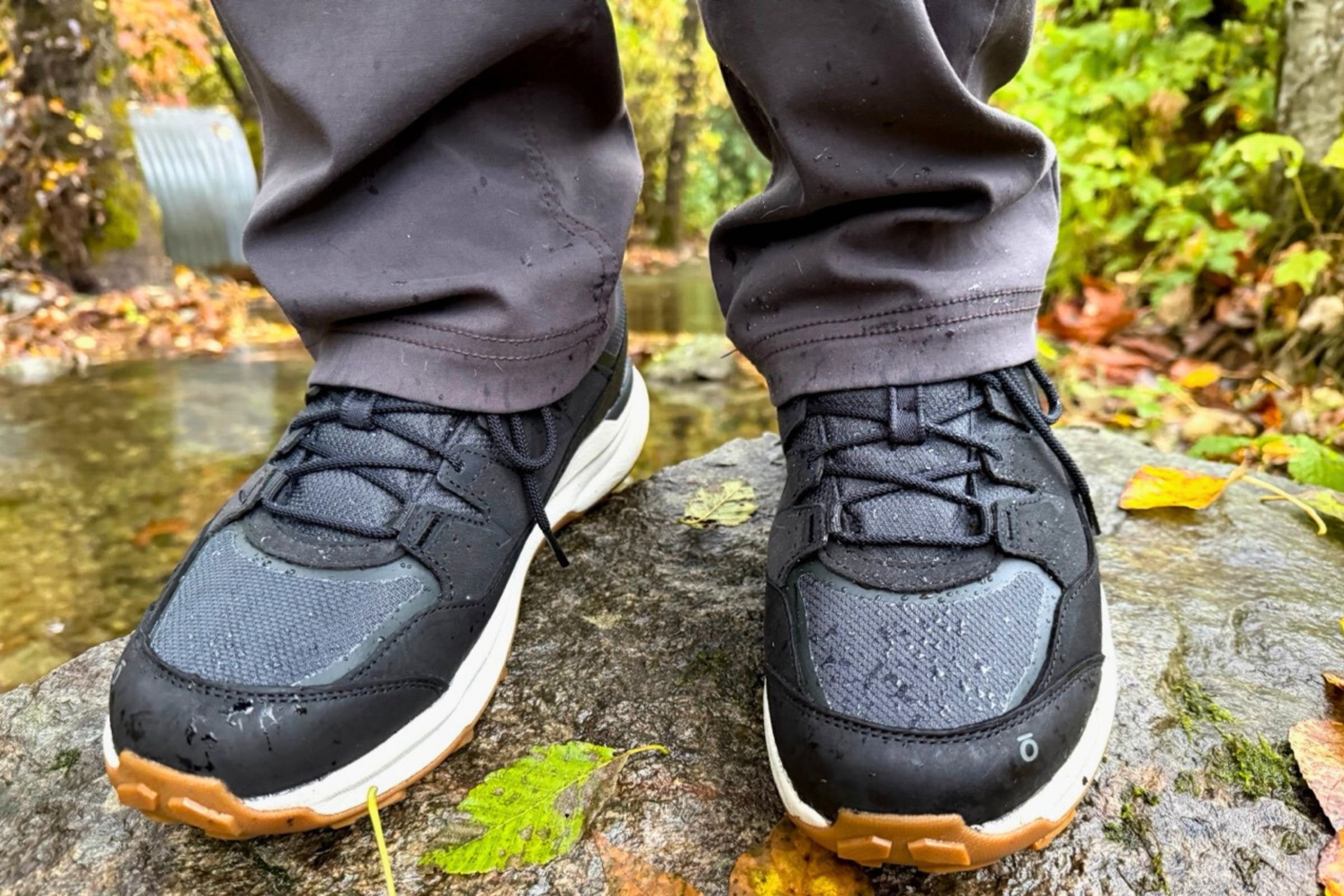
The Hyalite Low Waterproof is structured enough to feel steady on your average day hike, but it never feels stiff.
The midsole has a firm but cushioned feel that’s as comfortable on dirt paths as on pavement. The mix of suede and nubuck leather (LWG Gold Standard certified) and abrasion-resistant mesh creates an upper that’s both durable and perfectly suited for everyday casual wear. After significant daily use, the Hyalite has held up impressively well.
-
Waterproofing comes from Oboz’s proprietary B-DRY membrane, and while it’s not GORE-TEX, we’ve consistently found B-DRY to be reliable for day-to-day wet conditions.
In testing, it kept feet dry through wet grass, shallow puddles, and dozens of rainy dog walks, yet still felt breathable enough for warm-weather outings. The traction isn’t designed for steep or technical climbs, but the outsole grips well on packed dirt, wet sidewalks, and light forest trails.
-
The fit is more relaxed than Oboz’s technical models, like the Katabatic LT Low GTX, with generous space that’s great for average to slightly wider feet. There’s no break-in required, just comfort straight from the first wear.
-
If you want one shoe that handles daily use, travel, and easy-to-moderate hiking, the Oboz Hyalite Low Waterproof is a dependable and easy-wearing option.
Best for Hiking and Trail Running: Salomon XA Pro 3D V9 GORE-TEX
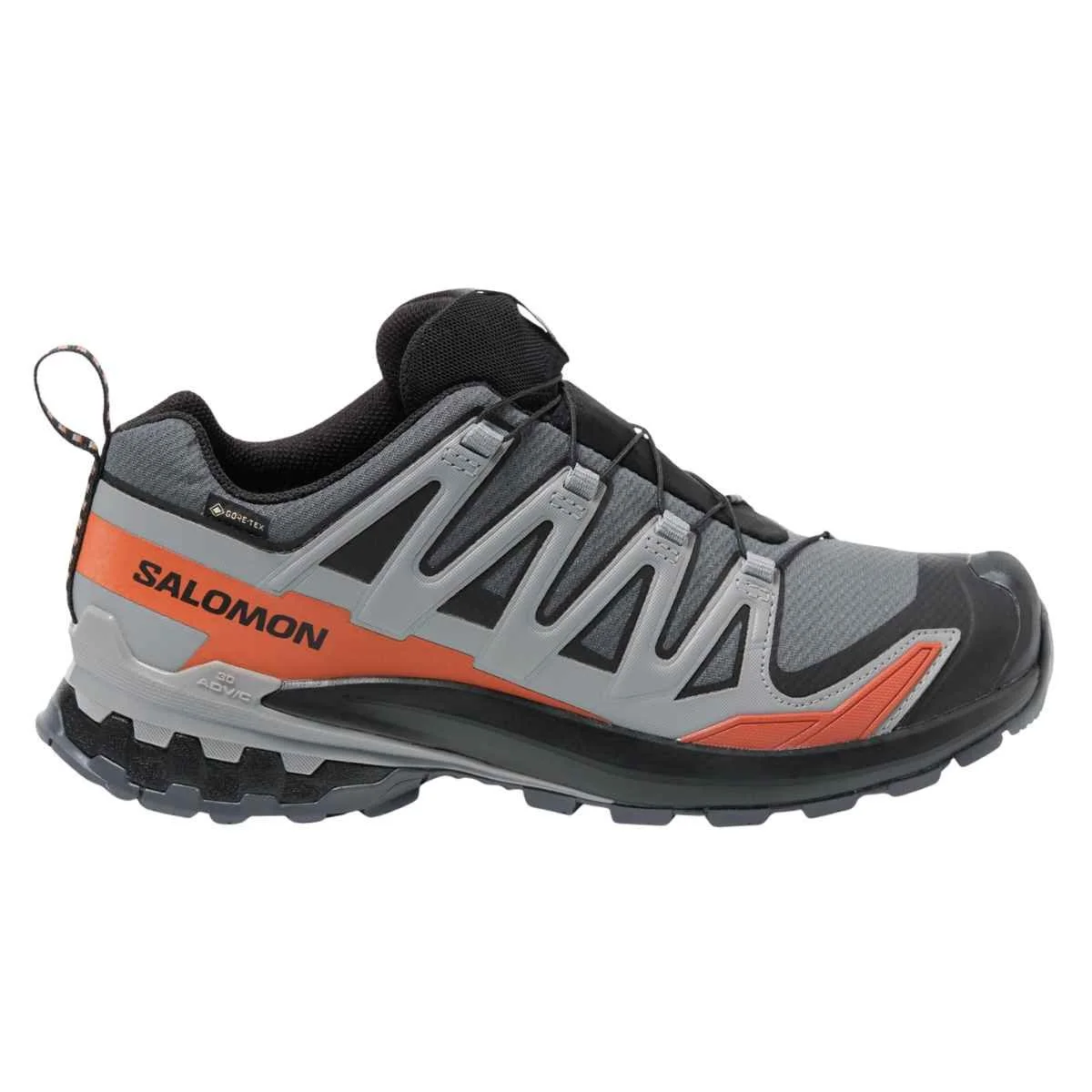
Price: $170
Weight (per pair): 1 lb 9.4 oz
Upper Material: Synthetic mesh with rubber toe cap
Waterproofing: GORE-TEX (non-waterproof version available)
Midsole Material: EVA-type foam with Salomon’s 3D Advanced Chassis
Outsole: All Terrain contaGRIP; 3-5mm lugs
What we liked: A breathable, lightweight, and supportive hiking shoe that can double as a trail runner
What we didn’t like: On some people, the design of the Quicklace system can create a pressure point on the outer toes
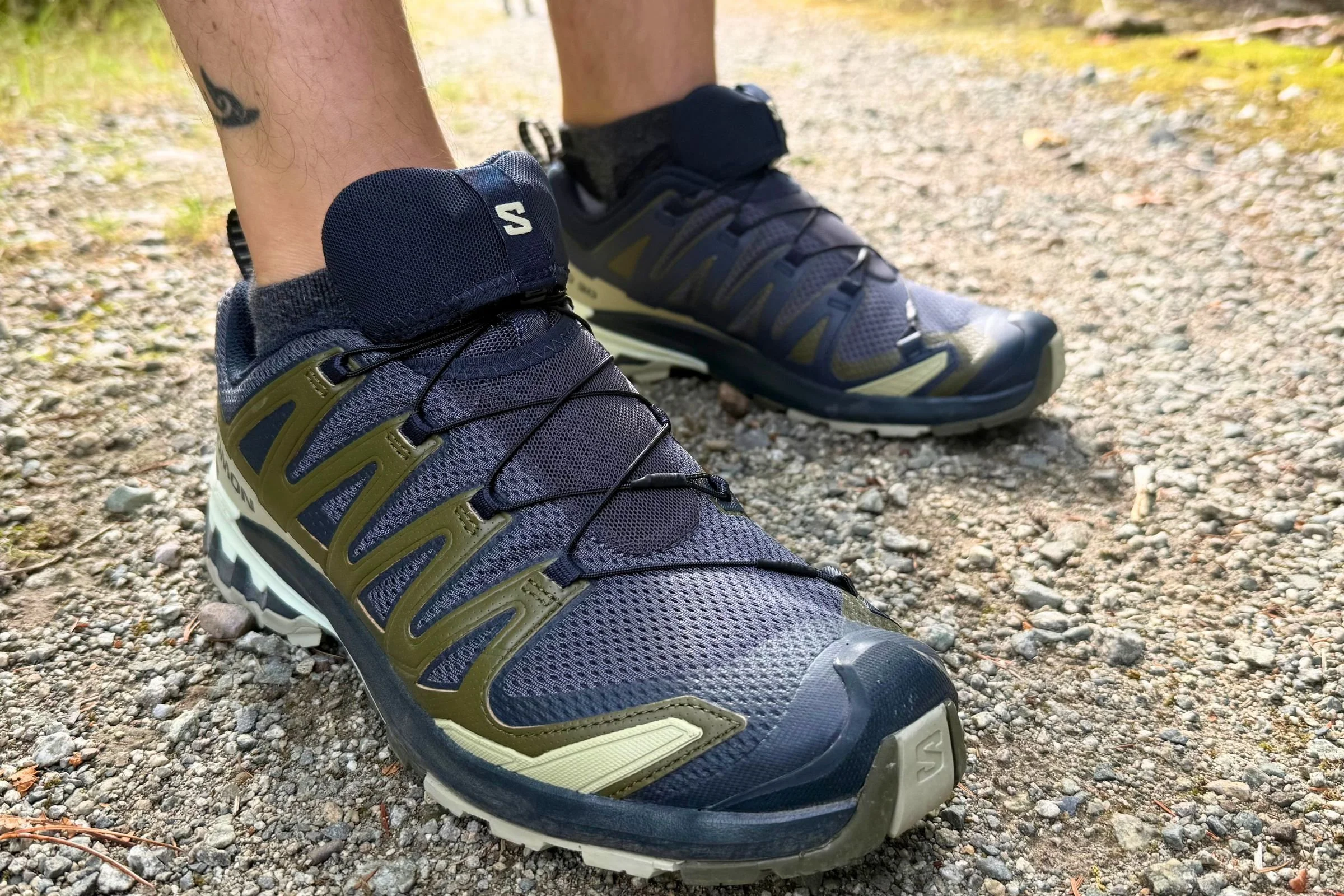
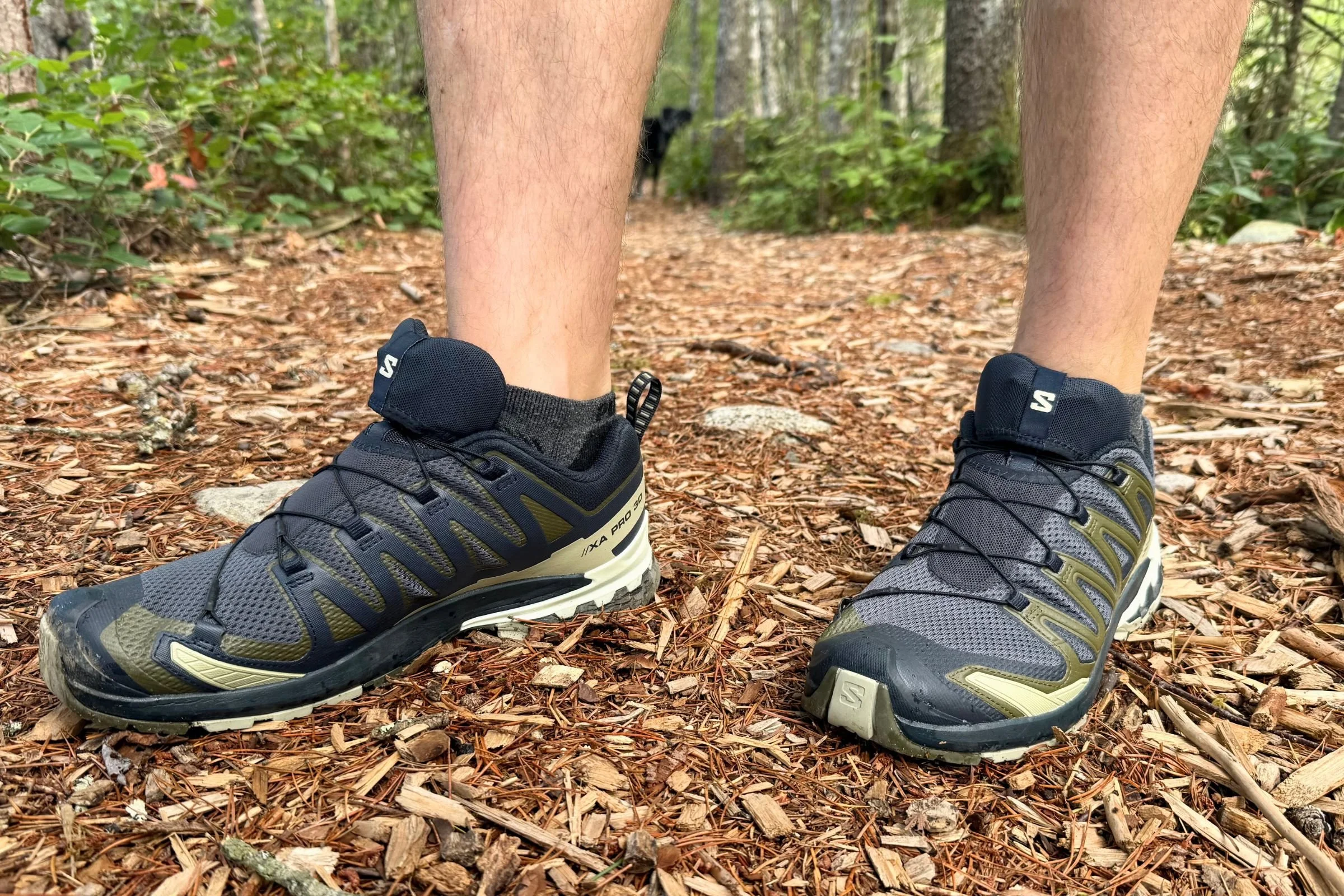
The Salomon XA Pro 3D V9 GORE-TEX is part trail runner and part hiking shoe, which is why it’s our pick for people who need one shoe that can flex between both. On the trail, it feels like a runner that’s been reinforced where it counts; it moves fast without feeling flimsy, stays stable without feeling bulky, and has just enough protection to keep rocks and roots from poking through. It also has a slightly retro Salomon trail aesthetic that we actually love.
Read our in-depth review of the Salomon XA Pro 3D V9 GORE-TEX hiking shoes to learn more.
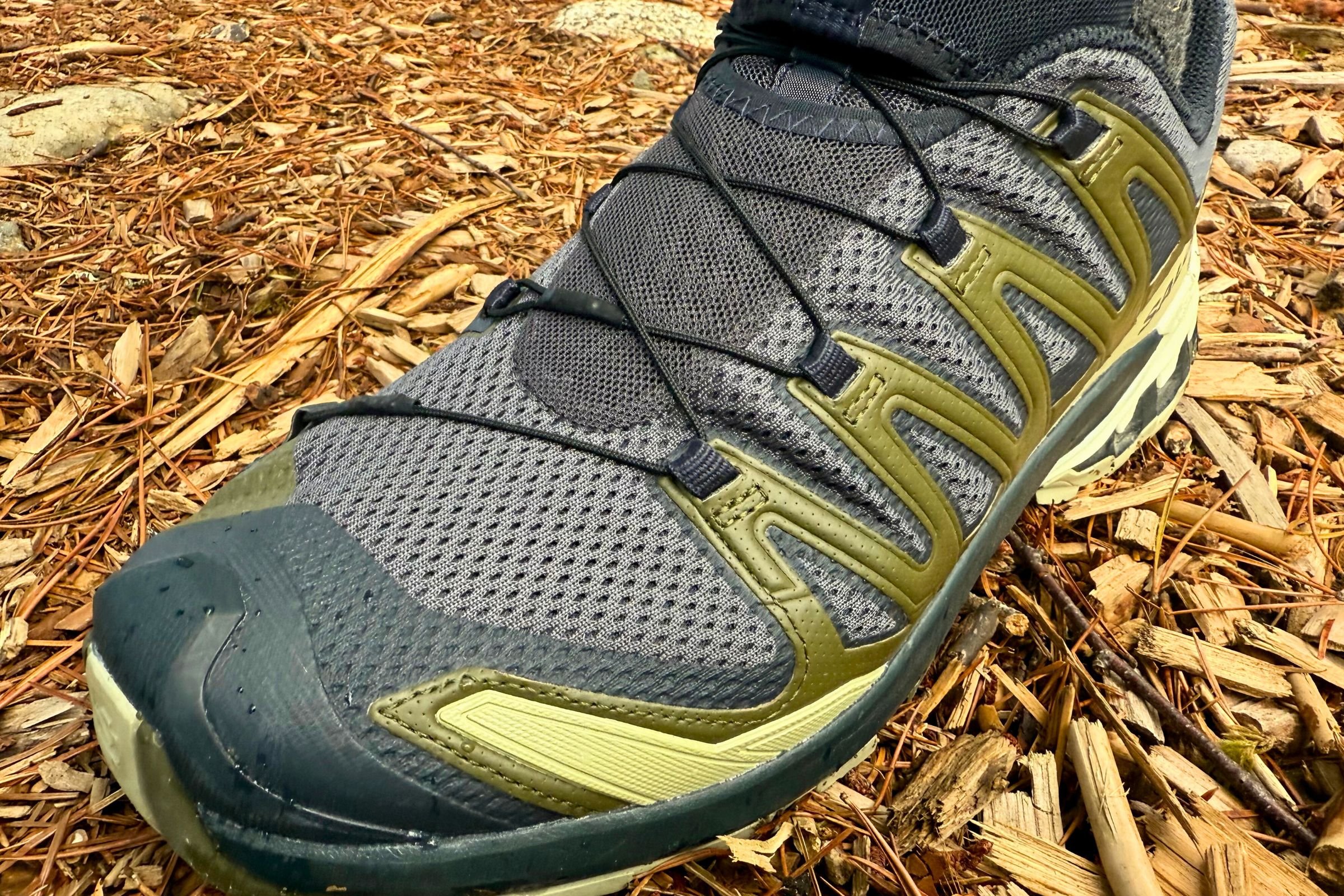
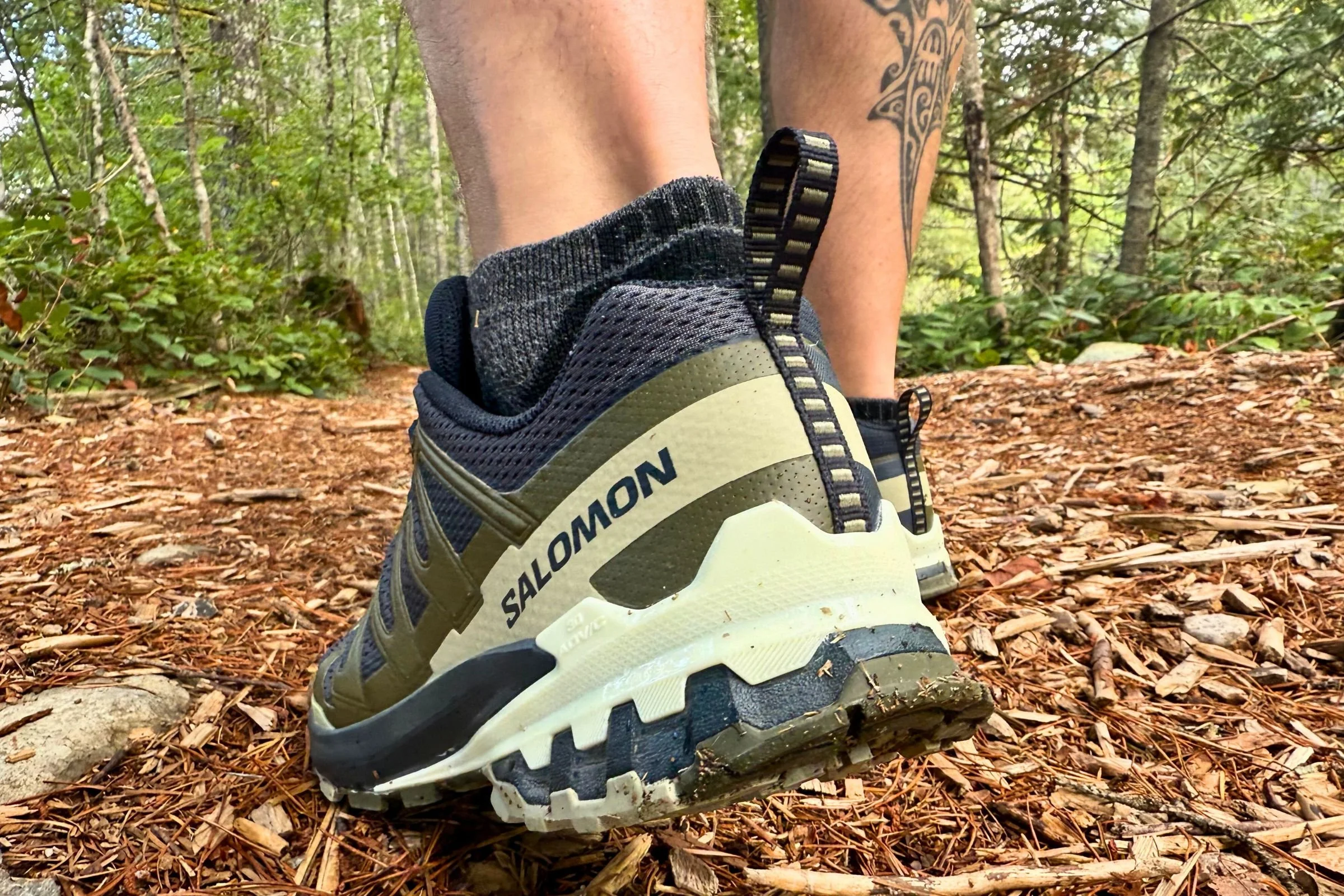
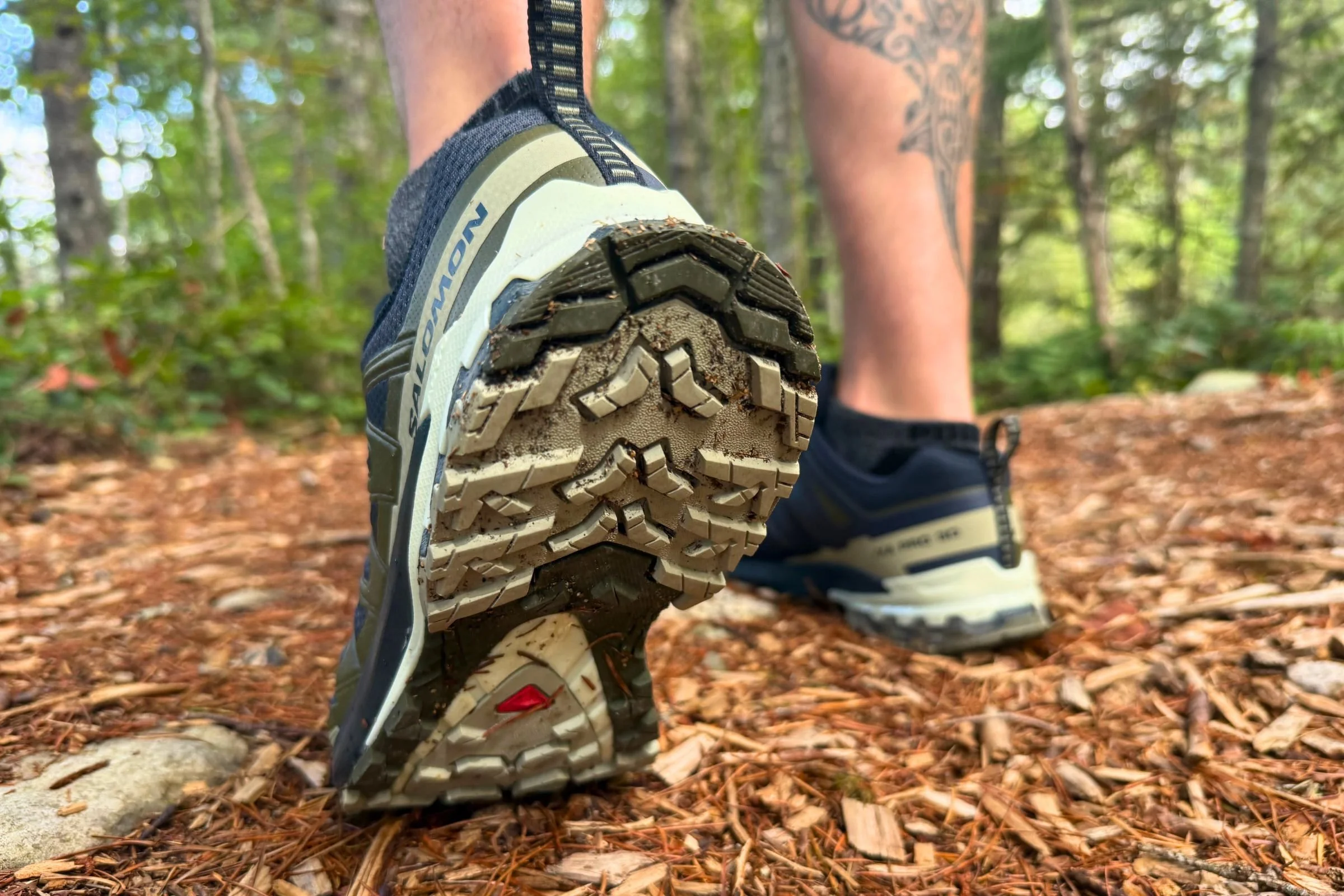
Salomon XA Pro 3D V9 GORE-TEX
-
The Salomon XA Pro 3D V9 GORE-TEX is lighter and more flexible than most of the shoes on this list, but the structured 3D chassis underneath gives it a planted, controlled feel that helps keep the foot from twisting on uneven ground, and it stays supportive when you’re moving quickly downhill.
-
The All Terrain Contagrip outsole grips reliably almost everywhere aside from the slickest rock, while still feeling smooth enough on pavement for everyday wear.
-
Compared to the Salomon X Ultra 5 GTX, which is more of a classic all-around hiking shoe for varied terrain and heavier packs, the XA Pro 3D V9 is quicker, leaner, and more responsive.
That is why it is a winner in our favorite trail running shoes for hiking guide.
-
The mesh upper also helps keep things breathable, which is not always found in a waterproof shoe and especially helpful for people whose feet tend to run hot. The mesh isn’t as water-beading as sleeker synthetic materials, but the GORE-TEX waterproofing kept our feet dry through rain-soaked hikes and shallow creek crossings. The fit is secure in the heel and midfoot with a slightly roomier forefoot, and in our testing it ran true to size.
-
If you want a fast, stable, do-it-all shoe that can hike, run, travel, and handle everyday life (and you appreciate a bit of nostalgic Salomon styling), the XA Pro 3D V9 GORE-TEX is one of the most versatile picks in the lineup.
Best Looking Hiking Shoe: On Cloudrock Low Waterproof
Price: $200
Weight (per pair): 1 lb 14.3 oz
Upper Material: 100% recycled polyester, with TPU mudguard and toe cap
Waterproofing: On’s proprietary membrane
Midsole Material: Helion superfoam and Speedboard plate
Outsole: Missiongrip rubber; short/square lugs with moderate spacing
What we liked: A modern, great-looking hiker with boot-like stability and dependable wet-trail grip
What we didn’t like: The textured upper shows dirt and isn’t easy to wipe clean
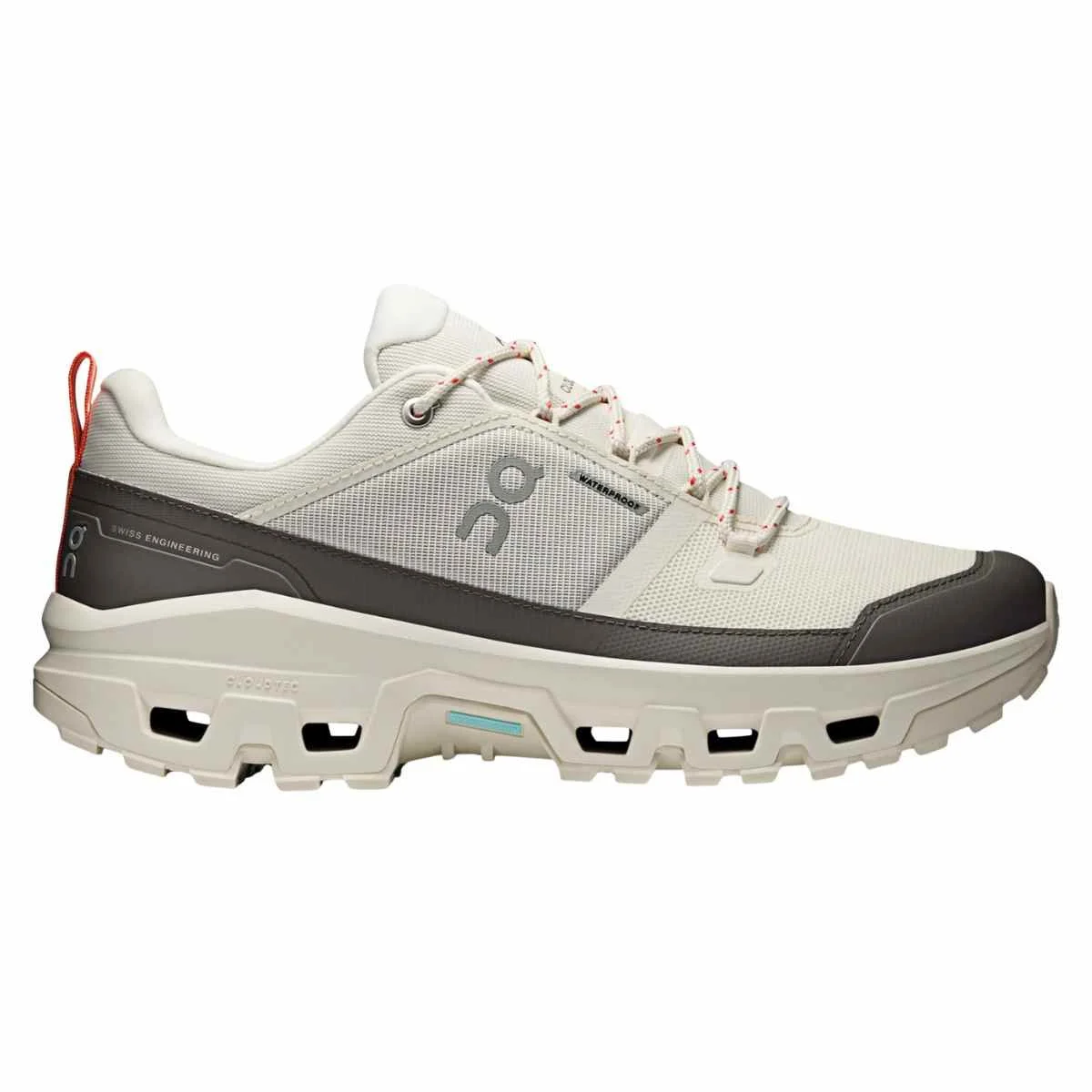
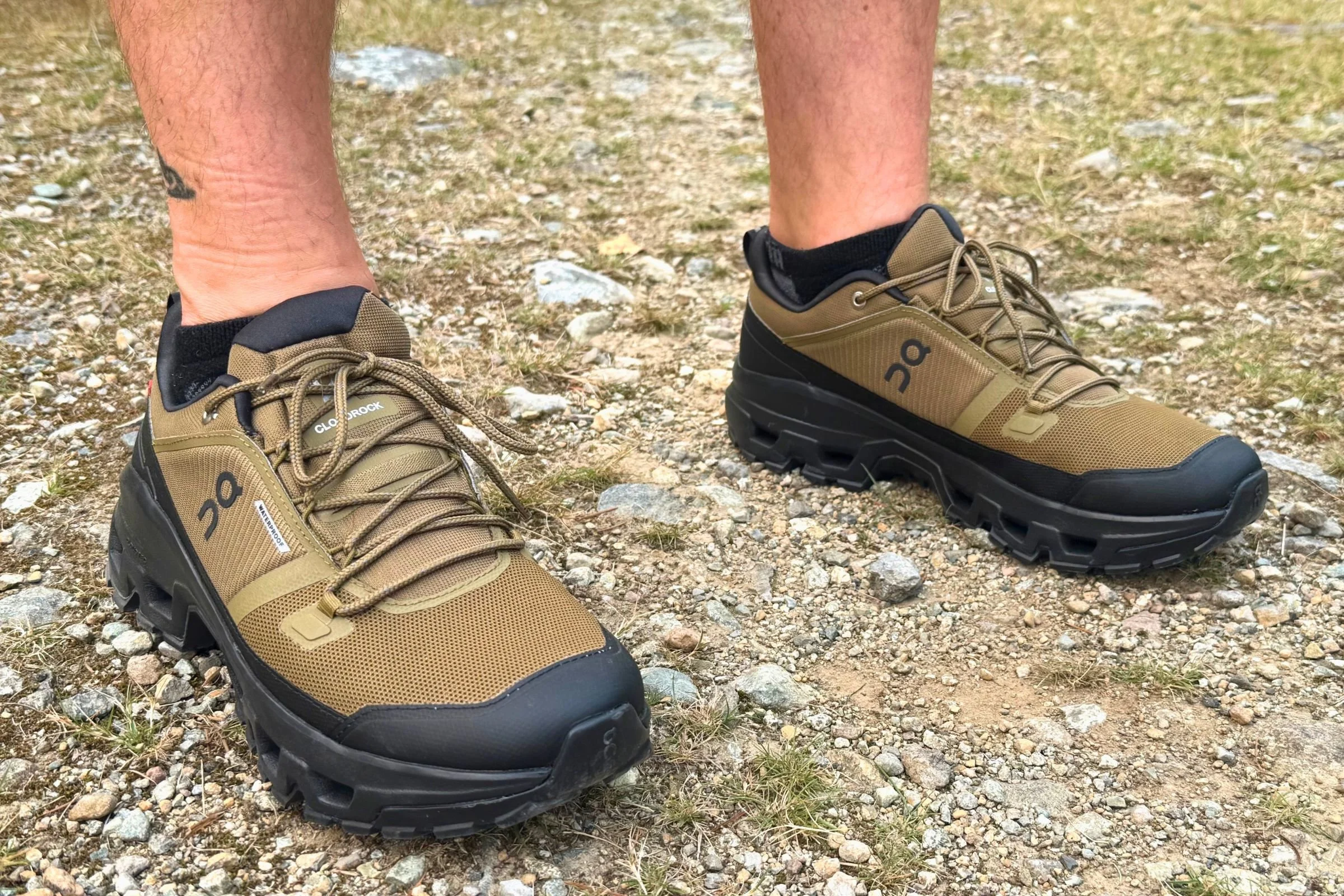
The On Cloudrock Low Waterproof is one of those hiking shoes you notice instantly. It has clean lines and a sharp silhouette that give it a sleek, modern style that works just as well with everyday clothes as it does on trail. We’re especially fans of the two-toned “dipped” look, where the rand and outsole wrap together in one continuous color. But the appeal of this shoe is far beyond appearances; it’s also one of the most supportive, structured low-cut hiking shoes we’ve tested, rivaling even our best hiking boots.
Read our in-depth review of the On Cloudrock Low Waterproof to learn more.
On Cloudrock Low Waterproof
-
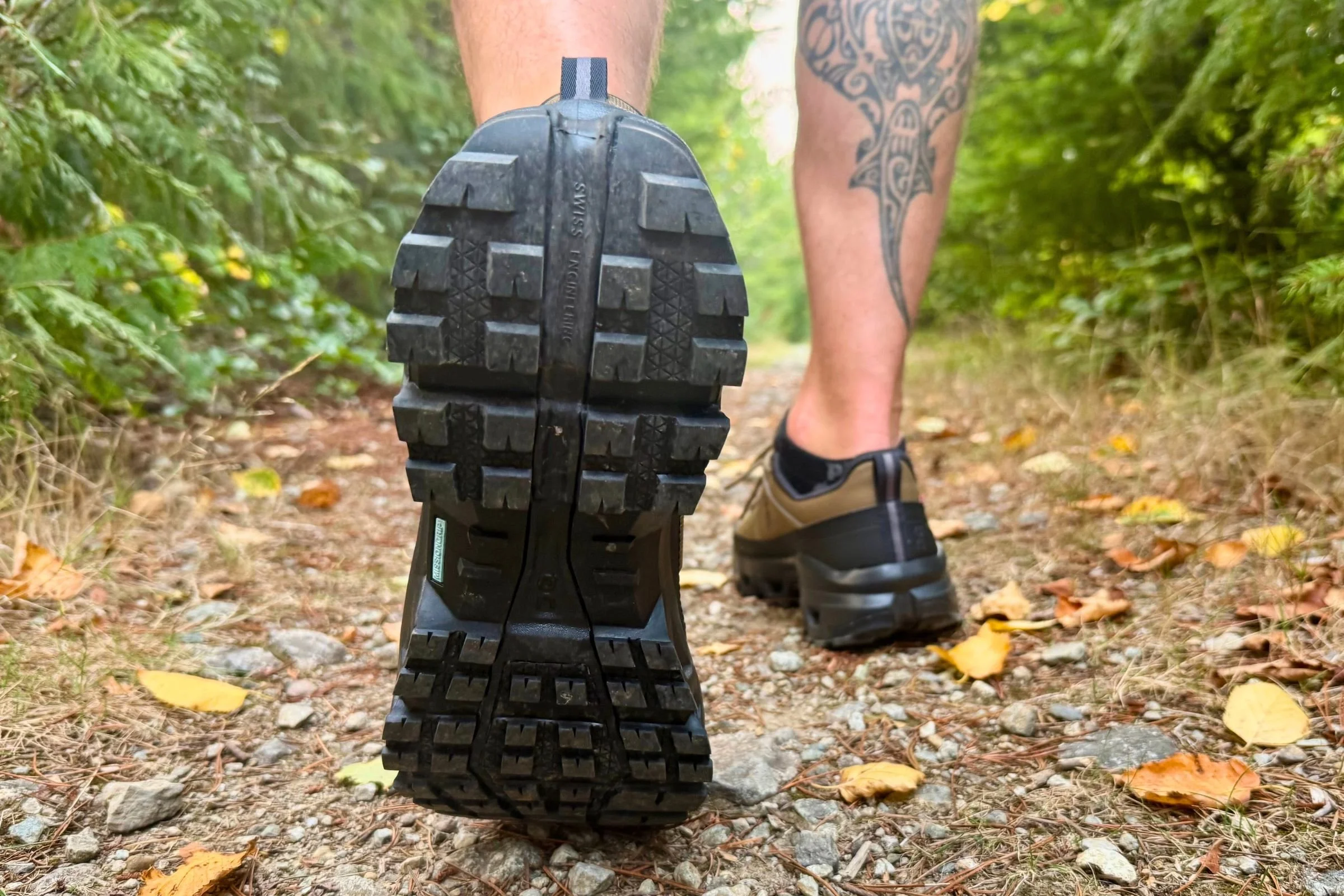
On is known for its ultra-cushioned hole-filled soles, but unlike softer On models, the Cloudrock Low is intentionally firmer and more supportive. You still get that signature CloudTec cushioning, but it’s been tuned for hiking, with less bounce and more control.
-
What really makes it stand out is how secure it feels on your foot. The firm heel counter, slightly denser midsole, and full TPU rand (the reinforced layer that wraps the lower part of the shoe) all work together to create a solid, twist-resistant platform that stays steady on rocky ground.
-
The MissionGrip outsole has square lugs that give you plenty of surface contact, and the rubber sticks well on wet rock and packed dirt, so you’re not constantly second guessing your footing.
-
The waterproofing is On’s proprietary 3-layer membrane, and it’s been reliable in PNW shoulder-season conditions, seeing plenty of rain, wet brush, and shallow crossings. The recycled polyester upper sheds water well, though it can run warm on hot days and isn’t quite as easy to wipe clean as smoother synthetics.
-
Durability is excellent thanks to the full wraparound TPU rand and reinforced upper materials.
-
If you want a hiking shoe that looks incredibly polished but still performs like a supportive, boot-adjacent hiker, the On Cloudrock Low Waterproof is our pick. It’s stable, protective, reliable on uneven terrain, and what we think is the best-looking hiking shoe in this category—while still being genuinely capable on technical day hikes.
Other Hiking Shoes We Tested
These hiking shoes may not currently be in a top spot, but many of them have been. And since everyone is different with different footwear needs, your perfect fit might be among this list. Here’s all the other hiking shoes we’ve tested and still recommend:
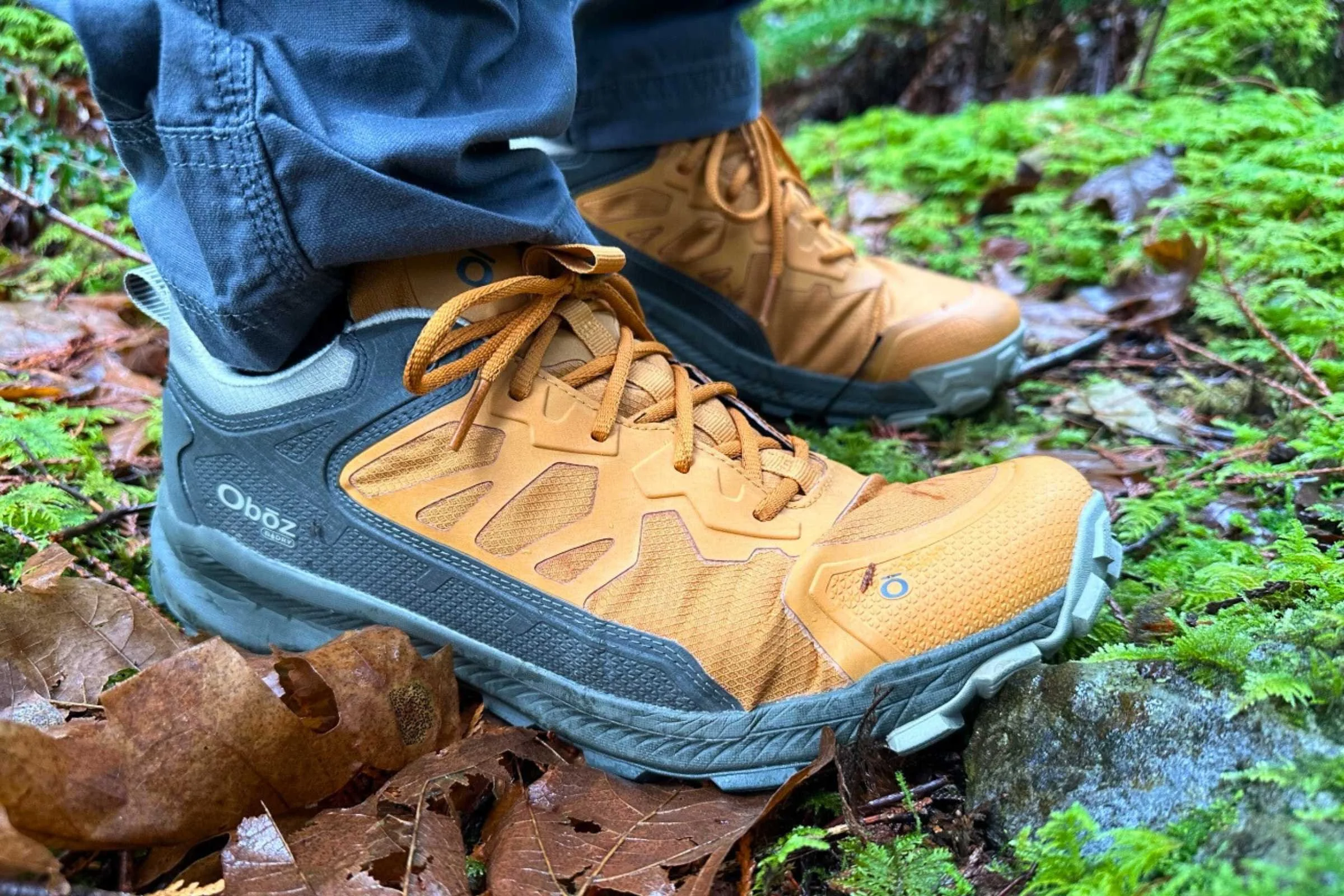
Oboz Katabatic Low B-Dry

Price: $170
Weight (per pair): 1 lb. 14 oz.
Upper Material: Mesh with reinforced TPU
Waterproofing: B-DRY membrane
Midsole Material: Single-density EVA
Outsole: Carbon Rubber
What we liked: Comfortable out of the box, suitable for most trails and climates, slick look, lightweight and agile
What we didn’t like: Not as durable as others
The Oboz Katabatic Low B-DRY was once our overall pick, and even though we've shifted our focus to a newer GORE-TEX update, the original B-DRY model remains a fantastic lightweight hiking shoe, especially with the big markdowns it’s often found at now.
What made this shoe so good in the first place is still true: it’s surprisingly capable across a wide range of terrain. The aggressive lug pattern offers excellent grip, with sharp edges and wide spacing that dig into loose gravel, dirt, and slick roots. It stays stable and sure-footed without the weight or bulk of a traditional hiker, offering a breathable, supportive build that’s sturdy enough for steeper, rockier sections yet light and agile for fast-paced loops.
Fit-wise, we think the B-DRY version runs slightly roomier in the forefoot than the GORE-TEX update. If you come across this model on sale, it’s a great value pick—well worth grabbing before it’s phased out completely.
Oboz Katabatic Low B-DRY


Price: $189
Weight (per pair): 1 lb. 10.8 oz
Upper Material: Mesh and microfiber
Waterproofing: GORE-TEX bluesign laminate
Midsole Material: 2D EVA
Outsole: PRESA HIK-03 (dual density EVA) and SuperGum rubber
What we liked: Reliable traction and stability for technical and uneven terrain, excellent comfort and support right out of the box
What we didn’t like: Lightweight construction may wear faster on very rugged trails
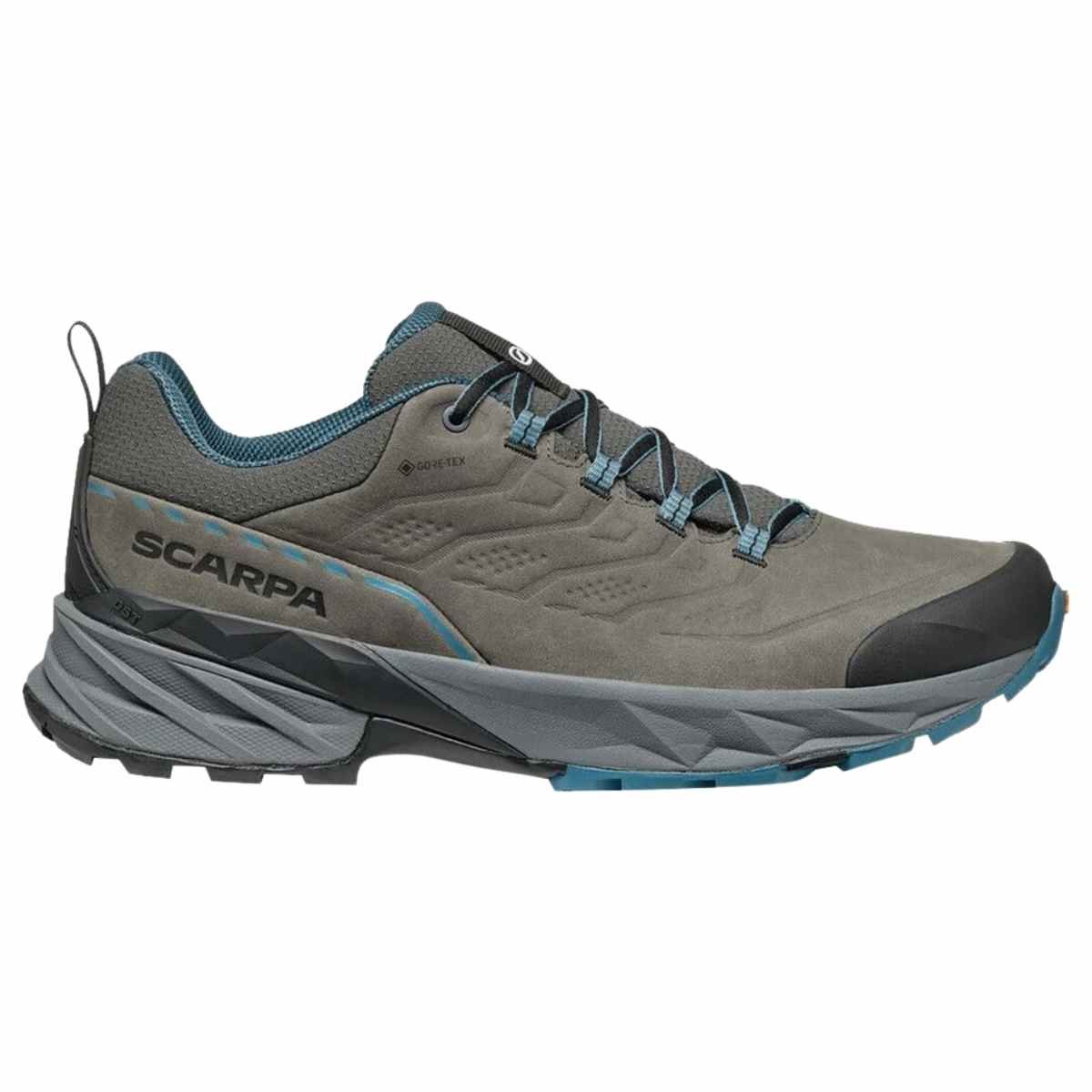
The Scarpa Rush 2 GTX is a fast, capable hiking shoe that blends trail-runner comfort with the durability and stability that can handle everything from day hikes to light backpacking. Its balance of waterproofing, grip, durability, and responsive cushioning make it an excellent choice if you’re looking for a versatile hiking shoe for a wide range of trails.
The outsole on the Rush 2 GTX is worth hyping up. Multiple layers work together to soften impact and keep you moving efficiently: a dual-density midsole that cushions without feeling mushy, and a TPU frame that adds stability on uneven terrain. The 4mm lugs and tire-like rubber compound give dependable traction on rocks, roots, and most technical trails that suit fast day hikes with light loads equally well. We also appreciated the support when carrying a child in a hiking carrier.
The Scarpa Rush 2 GTX leans narrow, so it’s best for those with average-width feet. There’s also a mid-height version if you want more ankle structure.
Scarpa Rush 2 Pro GTX Hiking Shoes

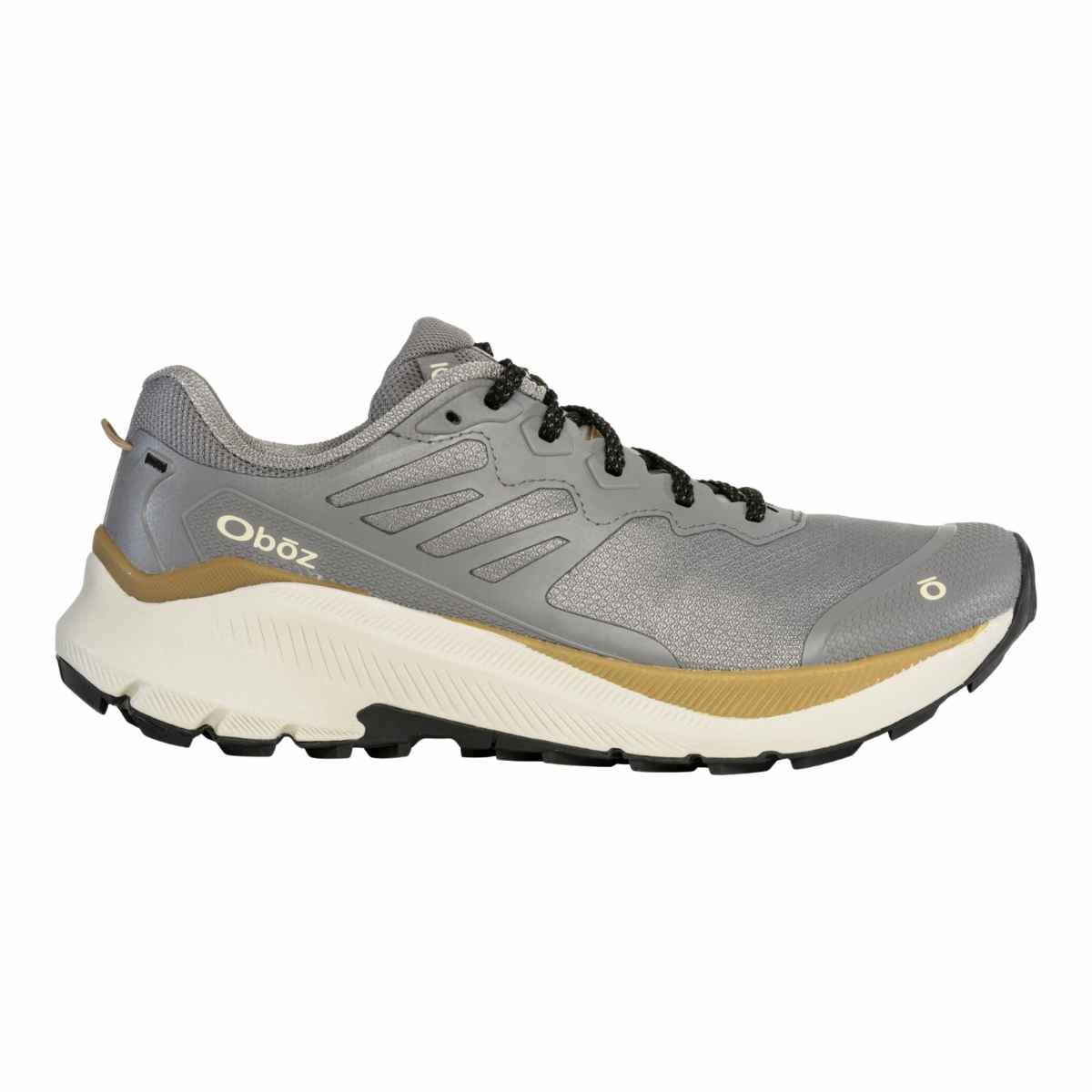
Price: $200
Weight (per pair): 1 lb. 8.6 oz.
Upper Material: mesh
Waterproofing: none
Midsole Material: Inertia of Motion (IOM) System with ACTNitro dual-density, nitrogen-infused foam
Outsole: Trail tread rubber compound
Best for: Lightweight, breathable, and supportive
The Oboz Katabatic Wind Low is designed as a lightweight, trail-ready hiking shoe that excels in agility and speed on the trail. We loved the airy feel and exceptional breathability— especially during the hottest parts of the summer while hiking in the Canadian Rockies—but overall we chose the waterproof Katabatic Low over this shoe because we found it more versatile and durable.
After a few months of heavy wear, the Wind looks noticeably weathered, while the waterproof Katabatic looks nearly new. We like the small details like the laces pouch and elastic over the forefoot, and the chevron pattern on the rubber outsole enhances grip and enables efficient braking on uneven terrain.
For hikers who prioritize speed and minimalism, the Katabatic Wind has that propel-you-forward feeling and excellent stability (there’s a carbon stabilizer plate sandwiched between the midsole layers). But if you’re carrying a heavier pack or navigating extremely rugged terrain, you might want a sturdier option.
Oboz Katabatic Wind Low

What to look for in hiking shoes
Here are criteria that every good pair of hiking shoes must have (aside from an affordable price-more on that below):
Comfort
Without comfortable shoes, the other features won’t matter. A little break-in time is usually needed (especially with the stiffer leather models), but hiking shoes should be forming to your feet well and not causing any issues after a few miles. We made sure to include models praised for their cushioning and fit. We also narrowed the scope to lightweight hikers. Inversely, we stayed on the lookout for any complaints that noted heel rubbing, blisters, hot spots, or pressure points.
Durability
Quality matters, especially when a good pair of hiking shoes will cost a minimum of $100. As Garritty put it, “It’s a good feeling to have something on your feet that will last.” We thoroughly searched reviews looking for signs of poor construction. If several reviewers experienced broken grommets, torn laces, sole separation, or anything else that pointed to poor quality, the model was eliminated from our list.
Lacing System

While this isn’t a make-or-break-it criterion for most people, if you don’t like a particular lacing system, you are less likely to wear a hiking shoe (or use it correctly). Poorly laced shoes can be downright dangerous. Rolling an ankle, for instance, is completely preventable with snug, tightly tied laces. If there are any pressure points on the top of your foot, you can skip a set of eyelets to offer some relief.
Support
It’s a common misconception that a hiking shoe doesn’t provide the same arch support as a hiking boot. Support comes from the EVA midsole (the layer sandwiched between the outer sole and the upper), and any good hiking shoe will have the right balance of cushioning, support, and stability. If you want the most support, consider wearing hiking boots.
Protection
There are a lot of obstacles on a rocky trail that can be painful when bumped up against, like tree roots and sharp rocks. Toe protection is a must on a good pair of hikers. Side, ankle support, and underfoot protection are a big bonus, too, if you’re hiking in any terrain other than a groomed trail. If you like the idea of a hiking shoe but want more ankle protection, consider a lightweight hiking boot.

Good Traction
At some point on the trail, you’ll likely come across loose or wet rock. For times like these, you’ll want a shoe that’s going to keep you standing upright in uneven terrain. Garritty cautioned against expecting the shoe to do all the grip work, though, saying, “You shouldn’t be taking steps expecting a shoe to do anything for you. Proper foot position will get you the traction you need.” That said, we kept an eye out for shoes lauded for their stick-to-the-trail abilities and ones that were criticized for poor traction.
Breathability
No one wants hot feet on the trail, and a good shoe will have some type of breathable technology working to keep feet cool. Breathability and waterproofness are often at odds. The most breathable shoes often are not waterproof, and vice versa.
But if a pair of shoes isn’t breathable (no matter how waterproof they are), they aren’t going to be suitable for hiking in the summer months, and that just won’t cut it. If you want the most breathability and are willing to sacrifice some stability, consider wearing trail running shoes.

Water Resistance
Whether you need a waterproof shoe depends on the climate you’ll be hiking in. If you’ll be sticking to warm, dry climates, a GORE-TEX shoe is overkill and likely will overheat your feet.
But, if you’re in a damp climate or going to be crossing creeks, waterproofing your feet is smart so that you won’t slog away in wet-socked feet.
In almost all cases, some level of waterproofness is needed, and it allows you to wear your shoes almost year-round. We made sure not to include models where the waterproof system didn’t pass a real-world test.
We recognize that most folks buying hiking shoes (vs. a trail running shoe) are looking for something waterproof. If you want a lightweight hiking shoe that isn't waterproof, like the Altra Lone Peak, you may find a trail runner is a better option for what you're doing. See our Best Women's Trail Running Shoes and Best Men's Trail Running Shoes guides for a review of the Lone Peak and other popular trail running shoes.

How much you should expect to pay for a hiking shoe depends on what you want the shoe to do for you. Photo by Steve Redmond.
What’s a Good Price To Pay For Hiking Shoes?
All the shoes on our list range from about $100 to $200; in this price range, you can get a sturdy, dependable pair that should last a handful of years (depending on how much they’re worn). An all-leather shoe will typically outlast a leather-synthetic hybrid, but it’ll cost a little more. If you’re planning on hiking only a few times a season, $100-ish will do it for a good pair, especially if you find the best prices on models.
If you’re going to be putting in the miles year after year, it’s worth spending the extra money for a more durable pair to ensure your shoes won’t need replacing after one season.
For discounts on hiking shoes, we recommend looking for last year’s models (often the same, but with different colors). Check out our Deals Page, which is updated daily, where we post sales we find on gear items we recommend.

Close-up of the toe cap part of the shoe on our top 4 winners. This is a part of the hiking shoe that provides protection for your feet. The best toe cap for you depends on how you hike, where you hike, and how the shoe fits on your foot. Photo by Steve Redmond.
How To Choose The Best Hiking Shoe For You
There is No “Best Choice For Everybody” When it Comes To Footwear
First things first: There is no “best choice for everybody” hiking shoe. Given the variety of foot shapes, personal preferences, climates, and end-uses, there isn’t one pair of hiking shoes that will work for all people (although a couple of pairs come close). When you’re choosing the best footwear for your feet, here are a couple of things to keep in mind:
Fit is the Most Important Factor in Selecting the Right Footwear
Choose footwear that matches your particular foot shape. Do you have wide feet? A high instep? Low volume feet? Many shoe stores will measure your feet and let you know the type you’ve got.
Once you’ve found a style that complements your foot shape, sizing is just as key. The salespeople I spoke with offered me a few pointers on fit. Find the pair that offers your toes about a half-inch of wiggle room. It helps to take the insole out of the shoe and stand on it. Heels should be snug to the back of the shoe wall, with just a little room for up-and-down movement. Walk around before hitting the trail and make sure your toes aren’t hitting the end on a downslope and that there aren’t any pressure points that will outlast a bit of break-in time. REI has some tips to help you get the best hiking shoe fit.
For day hiking and light backpacking, a hiking shoe can be just as sturdy as a hiking boot yet allow for more controlled movement on the trail.
"Match Your Footwear to the Activity You’re Doing"
This is the advice that ACMG-certified mountain guide Colin Garritty gave us. Choose shoes designed for the thing you plan to use them for, whether that’s hiking, running, or climbing.
There’s been a recent shift in the outdoor industry towards the minimalist shoe. Brands have made hiking footwear lighter, more nimble, and closer to street shoes; almost everything skews towards looking like a trail runner.
But, there are a lot of cases where a waterproof hiking shoe is the better option. From what Garritty told me, most people will benefit from the added sturdiness, stability, and protection from a pair of hiking shoes. And, if you’ve got a few pounds on your back, you’re going to find your body doing less work in a pair of hiking shoes than it would while wearing trail runners.
The shoes on our list are suitable for day hikes, groomed trails, and lightweight day hiking backpack. It is also suitable for lightweight backpacking or carrying a thru-hiking lightweight backpack.
For backcountry hiking or backpacking, most people will feel more comfortable with the added protection of a backpacking boot. Travelers will find some good options here, too, with hiking shoes being more versatile and easier to pack than boots. And, for long days spent walking on city streets, lightweight hiking shoes offer more support and cushioning on hard concrete than many sneakers do.
Why Do You Need a Special Shoe Just for Hiking?
Won’t any old shoe do? Garritty says that good shoes will lessen the burden on your body. Whether it’s your pack weight or loose rock, good shoes will help you better navigate the rough terrain and make your body work less hard. They’re also going to reduce the risk of injury by providing stability and support. And our experience confirms this.

We like hiking shoes because they provide much of the support and stability of a hiking shoe but are more nimble, lightweight, and affordable. Depending on where you are hiking, how much weight you are carrying, and your own body’s needs, you may find boots may work better. Photo by Steve Redmond.
Should I get a hiking shoe or hiking boot?
Hiking Shoe vs. Lightweight Hiking Boot vs. Trail Runner vs. Mountaineering Boot
Hiking shoes are your go-to footwear for day hiking, camping, and other outdoor activities.
They combine many of the benefits of a trail runner with those of a hiking boot. They are more nimble than a lightweight hiking boot but also lack some protection and warmth.
Hiking boots provide weight-supporting, rock-scrambling traction. The lugs on a hiking boot's rubber outsole keep you trekking through the muck and climbing uphill. Lugs also help you brake while going downhill. Good lugs will help you brake over scree, sand, roots, or rocky and rugged terrain. Hiking boots keep your feet protected, warm, and hopefully dry. They also offer benefits that other footwear can't, like greater ankle support. Simply put, they're the 4WD for your feet.
However, while the best hiking boots offer some ventilation, as a category of gear, they are warmer than other hiking footwear such as a trail running shoe, approach shoe, hiking shoe, or hiking sandal. They won’t be as warm as dedicated winter boots or winter hiking boots. Still, that warmth is comforting on long days hiking in the backcountry, trudging through snow, muck, and mud in colder parts of the year.
But in the summertime, poorly ventilated hiking boots can lead to sweaty, stinky feet, which may increase the risk of blisters. Poor ventilation is one reason many people think that hiking boots mean blisters. To minimize the chances of blisters, we chose boots with excellent ventilation that can work year-round in most hiking areas. The best hiking boots can provide support and excellent traction in all seasons.
For this guide, we want to clarify that hiking boots are not mountaineering boots. Mountaineering boots are generally designed with more insulation, stiffer soles that can handle crampons, and a more robust overall build with a higher sticker price.
Care and Maintenance
Hiking shoes do not need a complicated care routine, but cleaning and drying them properly will help them last longer. Let mud dry, then brush it off the uppers and outsoles. For a deeper clean, remove the laces and insoles and rinse the shoes with lukewarm water and a small amount of mild soap. Avoid bleach, strong detergents, and washing machines, which can damage adhesives and waterproof membranes.
Let the shoes dry at room temperature with the insoles removed and the laces loosened. Do not place them next to a heater or use a hair dryer. If they are soaked, loosely stuff them with absorbent paper and replace it as it gets wet.
Waterproof shoes may need their water-repellent treatment renewed when water stops beading on the outer material. Use a product made for the shoe’s specific fabric or leather. Waterproofing spray can improve the water resistance of some non-waterproof shoes, but it will not make a mesh shoe fully waterproof.
After wet hikes, let both the shoes and insoles dry completely before storing them in a cool, ventilated place. You do not need to clean them after every walk. Focus on removing heavy dirt, drying them thoroughly, and checking occasionally for worn tread, separating soles, or damaged uppers.

Moisture and rough terrain may lead to blisters. But with some easy self-care, you can avoid them. Photo by Ebony Roberts.
How To Avoid Blisters When Wearing New Hiking Shoes
Avoiding blisters and soreness on your feet is tricky but can be done. See our article on How to take care of your feet while hiking and backpacking and 5 Common Hiking and Backing Injuries and How to Fix Them for more suggestions.
Break in your New Shoes
As ACMG-certified guide Garritty put it, “If you don’t break in certain shoes, they’ll break you in.” It’s a good idea to put a few miles on your shoes before hiking to prevent blisters and rub spots. Running errands, walking the dog, or even just wearing them around the house should be enough to prevent a painful mistake. Make sure your shoes fit first, though. We’ve found that many retailers have a difficult or no return policy for lightly worn shoes, except for places like REI and Zappos. See our section below on How to Break in Your Hiking Shoes for step-by-step instructions.
Lace Your Hiking Shoes Properly
Poorly laced shoes can be downright dangerous. Rolling an ankle, for instance, is entirely preventable with snug, tightly tied laces. In addition to keeping the shoe secure on your feet, laces provide ankle support. If there are pressure points on the top of your foot, you can skip a set of eyelets to offer some relief. If a set of laces won’t stay tied no matter how tight you tie them, or you’re having fit issues with your shoes, REI has a video tutorial with helpful tips.
Wear hiking socks

The Salomon X Ultra 3 is a former top winner in our Best Hiking Shoes guide for its stability and durability. Photo by Steve Redmond.
The socks you wear make a big difference. Wear the wrong socks, and you’ll regret it. Wear the right ones, and your feet will remain dry and comfortable all day.
We recommend hiking socks made of merino wool or synthetic blends explicitly designed for hiking. Some hikers find that a sock liner in addition to a hiking sock also helps prevent blisters.
Wearing a regular gym sock or cotton sock might work, but we’ve heard so many stories of blistered heels, hot spots, and sweaty feet that we think it’s worth investing $25 for a pair that can last for years. Some brands have exceptional guarantees (Darn Tough and Icebreaker guarantee their socks for life), while others have a decent enough warranty that you’ll be happy buying one pair every few years.
See our Best Hiking Socks story for more on hiking socks that last and help prevent blisters.
Take care of your hiking shoes
If you want your shoes to last, you need to look after them. Wearing them through the muck, water, and dirt and then throwing them in a closet until the next time you head out will destroy them.
Consider using special insoles
After-market insoles can make the difference between a good fit and a great fit. They can also reduce foot fatigue and blisters. Read more about the benefits of using insoles with hiking shoes here.
Tips for breaking in new hiking shoes
Many lightweight hiking shoes feel comfortable right away, but it is still a good idea to test a new pair before wearing them on a long hike. Start by wearing them around the house, on errands, or during short walks with the same socks you plan to use on the trail.
Make sure the fit is right from the beginning. Breaking in can soften stiff materials, but it will not fix shoes that are too short, too narrow, or the wrong shape for your feet. Your heel should stay secure, and your toes should have enough room to spread and move forward slightly on descents.
Once the shoes feel comfortable on short walks, try an easy local hike with some uphill and downhill sections. Increase the distance gradually rather than making a full-day hike or backpacking trip their first real test.
If you notice rubbing or a hot spot, stop and adjust the laces or socks before it becomes a blister. Looser lacing over the forefoot can reduce pressure, while a firmer hold around the heel can help limit movement. Aftermarket insoles may improve support, but they also change the fit, so test them on shorter walks first.
New hiking shoes may become more flexible with use, but they should not require weeks of discomfort. If the same pressure point, numbness, heel lift, or toe pain keeps returning, try another size or model instead of forcing the shoes to work.
FAQ
-
Yes. Quality hiking shoes handle most low-impact activities—camping, day hikes, travel, dog walks. For sports that need precise footwork (climbing, mountain biking, technical trail running), use discipline-specific footwear.
-
Expect 300–1,000 trail miles. Longevity depends on outsole rubber, midsole foam, terrain (rocky ground chews shoes faster), pack weight, and drying/cleaning habits.
-
Blisters/black toenails: size up ½–1, leave thumb-width at the toe, use liner socks, and lock-lace.
Heel slip: try a narrower or women-specific model; cinch with runner’s knot.
Mid-hike pain (plantar fasciitis, arch collapse): add aftermarket insoles or choose a stiffer shoe with good arch support.
-
Yes—if they fit well and support your pack weight. Many thru-hikers use low-cut trail shoes; just pair them with trekking poles and load-light packs.
-
In a pinch, sure—but the stiffer midsoles and extra weight slow turnover. True trail-running shoes grip better and flex naturally, reducing fatigue on fast, dynamic efforts.
How we researched and tested

We’ve been putting men’s hiking shoes through real miles since 2018 (in fact, Best Hiking Shoes was the first story ever published at Treeline Review). At this point, we’ve tested more than 50 models in every season—rainstorms, sweltering trail days, first snowfalls, slushy spring melt, mud, and all the in-between conditions that make up most hikes. Our testing covers everything from casual, family-friendly loops to steep scrambles, long days with full backpacks, travel days, and plenty of mixed city-to-trail wear.
For every shoe, we look at what actually matters on the trail: fit, comfort, support, stability, traction, durability, breathability, and how well they handle water. We repeat creek crossings, test shoes in heat and cold, and run them across all types of surfaces from loose dirt to wet rock, roots, pavement, and technical terrain. And because shoes fit everybody differently, each pair gets passed between multiple Treeline testers before we decide where it lands.
We update this guide every year, dropping shoes that no longer perform well and adding new picks that earn their spot. What you see here is the result of continuous, real-world testing.
- Casual loops and steep scrambles
- Long hikes with loaded backpacks
- Repeated creek crossings
- Heat, cold, rain, mud, and slush
- Trail, pavement, and city-to-trail use
- Fit and all-day comfort
- Support and stability
- Traction on wet and loose terrain
- Waterproofing and breathability
- Durability and protection
Why You Should Trust Us

I’ve spent the past decade testing outdoor gear and writing about it for places like The New York Times’ Wirecutter, Outside Magazine, REI Co-op Journal, Forbes’ Vetted, and The Wall Street Journal Buy Side—along with years of in-depth hiking shoe coverage here at Treeline. I’ve also written about the best child hiking carriers and foldable kayaks for Treeline Review.
Over that time, I’ve talked with many outdoor experts and footwear specialists about what actually matters when choosing the right pair of hiking shoes. I’ve tested more than 50 models myself across every season in the coastal mountains of British Columbia, from wet forest loops to steep scrambles and long, mixed city-to-trail days. These reviews come from real miles, honest notes, and shared feedback among our Treeline testers. My goal is always the same: to provide honest, real-world insights so you can find the right shoe for the way you hike.
You can see all of Ebony’s Treeline Review stories on her Treeline author page.