Best Hiking Sandals of 2026
The Top Overall, Closed-Toe, Waterproof, and Everyday Hiking Sandals

September 1st, 2026, updated with a new winner for best hiking sandals for plantar fasciitis, best barefoot hiking sandals, best closed toe hiking sandals, best hiking sandals for wide feet, and best water sandals
Home > Gear Reviews > Footwear
A good hiking sandal handles more terrain than most people expect: scrambling on wet granite, crossing streams, belaying at a crag, and walking from the trailhead to the restaurant without looking wrong in any of those contexts. The difference between a sandal that can actually do all of that and one that only works at the campsite shows up fast on technical terrain or in the water.
To find the best hiking sandals, we researched 43 of the most popular men's and women's models and field-tested the top contenders while hiking, backpacking, climbing, granite scrambling, and river paddling across Wyoming's Wind River Range, Colorado's San Juan Mountains, and Utah's La Sal mountains range. The standout test was hiking more than 16 miles over 2,700 vertical feet with a 70-pound pack, which turned out to be as useful a sandal durability test as anything we could have designed deliberately.
What separates a genuinely good hiking sandal from a beach sandal wearing trail clothes comes down to how the sole grips on wet and dry rock, how securely the strap system holds the foot without creating hot spots over miles, how quickly the sandal dries after a stream crossing, and how easy it is to get on and off one-handed at the end of a long day.
Top Pick: The Bedrock Cairn Evo 3D earns our Best Overall award and was our unexpected winner. It stood out for Vibram XS Trek EVO outsole traction that didn't slip once across wet and dry rock, a single slide buckle that makes it easy to get on and off, quick-dry construction that works equally well as a camp shoe and a water shoe, and a lifetime repair-or-replacement warranty that could make these the last hiking sandals many people need to buy.
We create reader-supported, objective gear reviews independently selected by our editors. This story may contain affiliate links, which help fund our website. When you click on the links to purchase gear, we may get a commission, without costing you an extra cent. Thank you for supporting our work and mission of outdoor coverage for every body! Learn more.
Comparison tables
Women’s Summary Table
| HIKING SANDAL | TREELINE AWARD | WEIGHT (PAIR) | TOE | ADJUSTMENT MECHANISM | EASE OF ADJUSTMENT | SOLE MATERIAL | TRACTION | MSRP |
|---|---|---|---|---|---|---|---|---|
| Bedrock Sandals Cairn Evo 3D | Best overall Read why |
17.4 oz (11) | Open | Adjustable Y Strap | Easy | Vibram® XS Trek EVO | 5/5 | $125 |
| Bedrock Sandals Cairn Evo C | Best hiking sandals for plantar fasciitis Read why |
19.4 oz (11) | Open | Adjustable Y Strap | Easy | Vibram® XS Trek EVO | 5/5 | $135 |
| Salomon TECHAMPHIBIAN 5 | Best water sandals Read why |
17.6 oz (9) | Closed | Quick lace | Easy | Contagrip FD rubber | 5/5 | $110 |
| KEEN Newport H2 Sandal | Best closed-toe sandal Read why |
22.7 oz (7) | Closed | Bungee lace w/ cinch | N/A | Carbon rubber | 3/5 | $130 |
| Xero Shoes Z-Trail EV Sandals | Best barefoot hiking sandals Read why |
8.6 oz (7) | Open | Velcro | Moderate | FeelLite rubber | 2/5 | $80 |
Men’s Summary Table
| HIKING SANDAL | TREELINE AWARD | WEIGHT (PAIR) | TOE | ADJUSTMENT MECHANISM | EASE OF ADJUSTMENT | SOLE MATERIAL | TRACTION | MSRP |
|---|---|---|---|---|---|---|---|---|
| Bedrock Sandals Cairn Evo 3D | Best overall Read why |
17.4 oz (9) | Open | Adjustable Y Strap | Easy | Vibram® XS Trek EVO | 5/5 | $125 |
| Bedrock Sandals Cairn Evo C | Best hiking sandals for plantar fasciitis Read why |
19.4 oz (10) | Open | Adjustable Y Strap | Easy | Vibram® XS Trek EVO | 5/5 | $135 |
| Salomon TECHAMPHIBIAN 5 | Best water sandal Read why |
21.2 oz (9) | Closed | Quick lace | Easy | Contagrip FD rubber | 5/5 | $110 |
| KEEN Newport H2 Sandal | Best closed-toe sandal Read why |
28.2 oz (9) | Closed | Bungee lace w/ cinch | N/A | Carbon rubber | 3/5 | $130 |
| Xero Shoes Z-Trail EV Sandals | Best barefoot hiking sandals Read why |
10.8 oz (9) | Open | Velcro | Moderate | FeelLite rubber | 2/5 | $80 |
Curious about outdoor footwear? See our most popular articles on footwear:
The Best Hiking Sandals
Best Hiking Sandal: The Bedrock Cairn Evo 3D Adventure

Weight: 17.4 oz (men's) and 17.4 oz (women's)
Open or closed toe? Open
Warranty: yes! Will replace or repair any sandal with damage free of charge.
Traction/ Sole material: Vibram® XS Trek EVO
Adjustment Mechanism: Adjustable Strap
Ease of adjustment: Easy
Traction/grippiness: best all-around
What we liked: rugged, cushioned, supportive, quick drying, comfortable, traction, easy adjustments
What we didn’t like: Y-strap style may not be for everyone, no arch support (though we surprisingly found this fine)
Ready to rule the day, no matter what your foot looks like? The Bedrock Cairn Evo 3D was my unexpected winner, if only because I’d become accustomed to heavier sandals with form-fitting adjustable straps. After hiking more than 16 miles over 2,700 vertical feet with a 70-pound pack, I knew these sandals were in it for the long haul. They are rugged, quick-drying, comfortable, and have traction galore. With a single slide buckle adjustment, they are easy to slip on and off, and work equally well as a camp shoe or water shoe.
View The Bedrock Cairn Evo 3D Sandals


-
Even though the Y-strap style—which attaches the webbing to the sole through fabric that goes between your big toe and long toe—does take some getting used to, I quickly forgot about my initial annoyance when I noticed the subtle underfoot traction of the anatomically contoured rubberized footbed. The Vibram® XS Trek EVO outsole was my next point of interest: I didn’t stumble or slide—not even once—with this ultra-grippy traction beneath my feet.
-
As someone with flat feet, I was wary of the Cairn Evo 3D’s relative lack of arch support. Would I feel supported enough, or would my knees hurt at the end of a long hike? Knee pain can be one symptom of pronation. It doesn't happen to everyone with flat feet, but it is certainly a commonly cited reason behind the need for arch support.
Shockingly, even after many miles of hiking, my knees did just fine in the Cairn Evo 3D.
Reviewers on BedrockSandals.com found the same: “These Bedrocks are made to withstand anything, are so well engineered and are very comfortable. The thong between the toes takes a bit of getting used to, but once they are broken in—they are the best sandals you will ever slip onto your feet, staying put and feeling like they are a part of your body.”
And back at camp? I didn’t have to miss wearing socks with my sandals: Bedrock makes socks for Y-strap sandals, too.
-
Perhaps one of my favorite aspects of the Bedrock Cairn Evo 3D: the attention to sustainability. Customers can extend the lifetime of their sandals with a resole, or as Bedrock calls it, a “Resoul.”
Vegans, too, will rejoice: the Cairn Evo 3D is made with 100% vegan materials. To top things off, Bedrock is a 1% for the Planet member, reallocating one percent of its profits to build a better future.
Best Hiking Sandals for Plantar Fasciitis: Bedrock Sandals Cairn Evo C
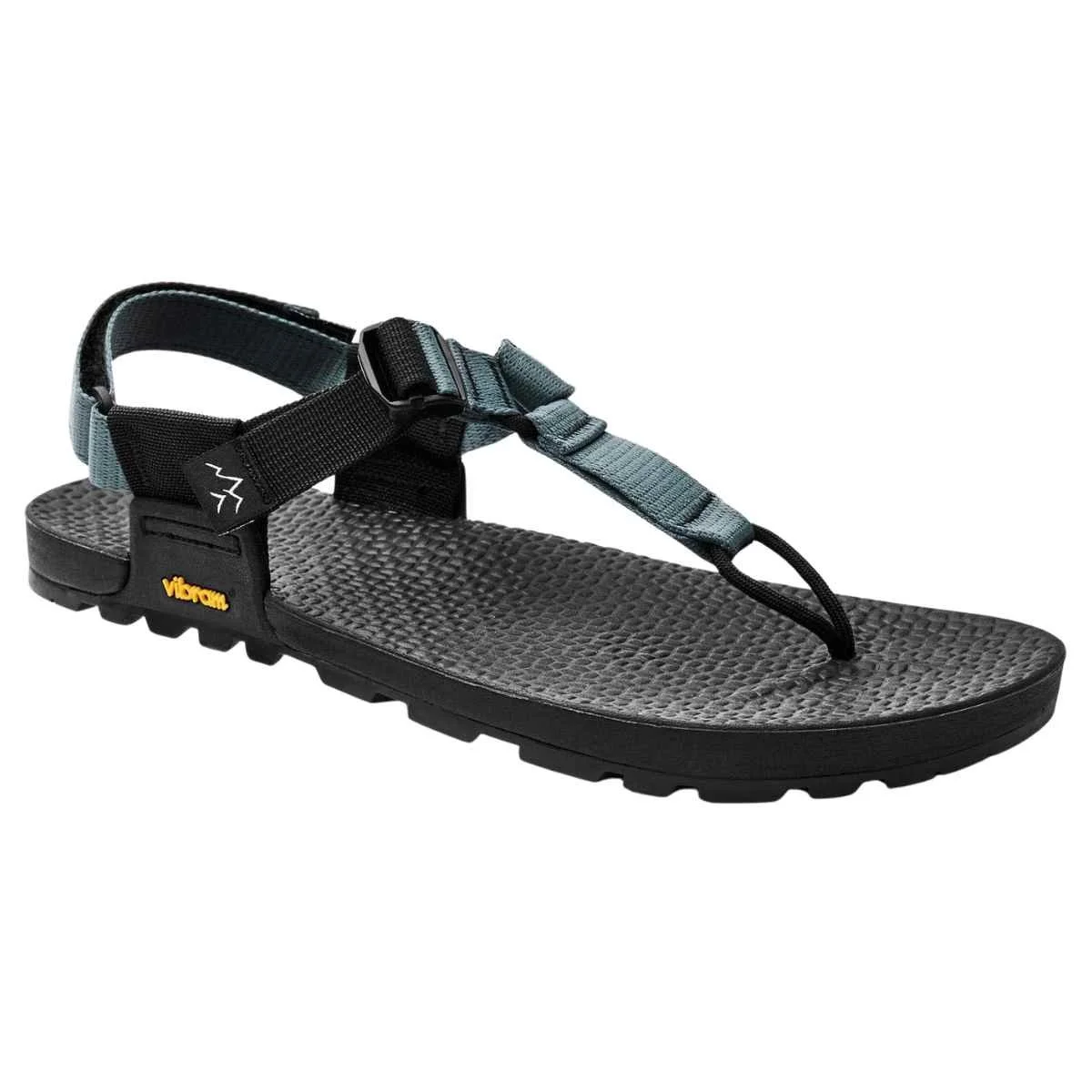
Weight: 19.4 oz (men's) and 19.4 oz (women's)
Open or closed toe? Open
Warranty: yes! Will replace or repair any sandal with damage free of charge.
Traction/ Sole material: Vibram® XS Trek EVO
Adjustment Mechanism: Adjustable Strap
Ease of adjustment: Easy
Traction/grippiness: best all-around
What we liked: rugged, cushioned, supportive, quick drying, comfortable, traction, easy adjustments
What we didn’t like: Y-strap style may not be for everyone, no arch support (though we surprisingly found this fine), price
The Bedrock Sandals Cairn Evo C are the best hiking sandals for plantar fasciitis. If you have or suspect you may have plantar fasciitis or any other injury, check with a medical professional before switching shoes. But for multiple men's and women's Treeline Review testers, the Bedrock Cairn Evo C hiking sandals's cushier, thicker, softer footbed have helped us better than dedicated recovery shoes.
We suspect the Bedrock Sandals Cairn Evo C works well for recovery because it offers more cushioning, structure, and underfoot support than many hiking sandals and is still lightweight. Unlike many recovery sandals and slides, it has a strap in the back that prevents the foot from sliding around and supports foot health. Meanwhile, it has plenty of room for your toes to splay out so you can walk naturally. Like the other Bedrock sandals we tested, it has excellent Vibram grip.
After winning Treeline Review Gear of the Year in 2025, we decided to give the Cairn Evo C a try and we were pleased with the results.
Bedrock Sandals Cairn Evo C


-
What stood out most about the Bedrock Sandals Cairn Evo C in testing was how much more cushioned and protective it felt than even our overall winner, the Bedrock Cairn Evo 3D. In fact, the Evo C are so comfortable, for non-technical terrain, some of our testers have made the Evo C their primary trail to town shoe.
The Evo C has a thicker and cushier platform that still feels lightweight. That extra cushioning helped protect against bone bruising on rocky terrain and during longer hikes, all-day wear at festivals, and as our primary shoe for most of the summer.
-
Like the Bedrock Cairn Evo 3D, it has an easy to adjust Y-strap and the strap extends all around the back of the heel.
If you like our overall winner, the Bedrock Cairn Evo 3D, but want a more forgiving shoe, the Bedrock Cairn Evo C is it. It's got that same Vibram grip and the same lifetime resoleable sustainability.
-
While not quite a HOKA or On super-cushy shoe, this has some of the give without being too much. It uses Bedrock's earth tone palette unlike many recovery shoes.
The Bedrock Cairn Evo C is still not a substitute for a medical or orthopedic shoe, but it was the most supportive-feeling option we tested in this guide.
Best Water Sandal: Salomon TECHAMPHIBIAN 5

Weight: 21.2 oz (men's) and 17.6 oz (women's)
Open or closed toe? Closed
Warranty: 2 years
Traction/ Sole material: Contagrip FD rubber
Adjustment Mechanism: Quick laces
Ease of adjustment: Easy
Traction/grippiness: Excellent
The Salomon TECHAMPHIBIAN 5 is an amphibious athletic shoe that turns everything I ever wanted out of a sandal into a water-friendly hiking shoe. This model could be this summer’s go-to for warm days when water might be in the forecast—or on the menu.
This sandal is built to take on anything that the trail (or the city) might throw at it, and it’s fast-drying to boot. Read our in-depth review of the Salomon TECHAMPHIBIAN 5 here.
View the Salomon TECHAMPHIBIAN 5
MEN'S
WOMEN'S


-
Featuring a synthetic mesh upper, the Amphib 5's quick-drying upper and anti-debris mesh give the TECHAMPHIBIAN 5 a glove-like fit best suited for slender feet. The mesh also allows water out of the footbed—a feature that reviewers love for kayaking and stand-up paddlingboarding.
Whether submersed for seconds or minutes or repeatedly doused over an afternoon, the TECHAMPHIBIAN 5 performs like no other closed-toe sandal does. We tested wet wading while fly fishing on everything from thigh-high rivers to just at our ankles at the riverbank. Our feet felt dry in minutes for a comfortable walk back to the car.
-
Aside from the streamlined upper, the Salomon TECHAMPHIBIAN 5 also features an integrated rubber toe bumper similar to its top competitor, the KEEN H2 Newport (see below for our full review). I noticed, though, that I caught my toes less often on roots in the Amphib 5 than in the bulkier Keens.
While Salomon lists these shoes as built for “easy paths,” we found that they perform well while bushwhacking, rock scrambling, and the not-so-sure-what-to-expect social paths we sometimes take to access a river.
-
This all-around adventure shoe, in some REI testers’ opinions, rated even better than the Bedrock Cairn Evo 3D (see our full review above), being “equally suited for the seas and the summits.”
I appreciated the Salomon TECHAMPHIBIAN 5's burly Contagrip FD rubber outsole with deep lugs when scrambling through cactus-filled desert washes.
A bonus point is when we got caught in mud while walking in the water, the shoes stayed on thanks to their Quicklace™ technology (a drawstring type of shoelace) that provides a secure fit.
Best closed-toe hiking sandal: KEEN NewPort H2
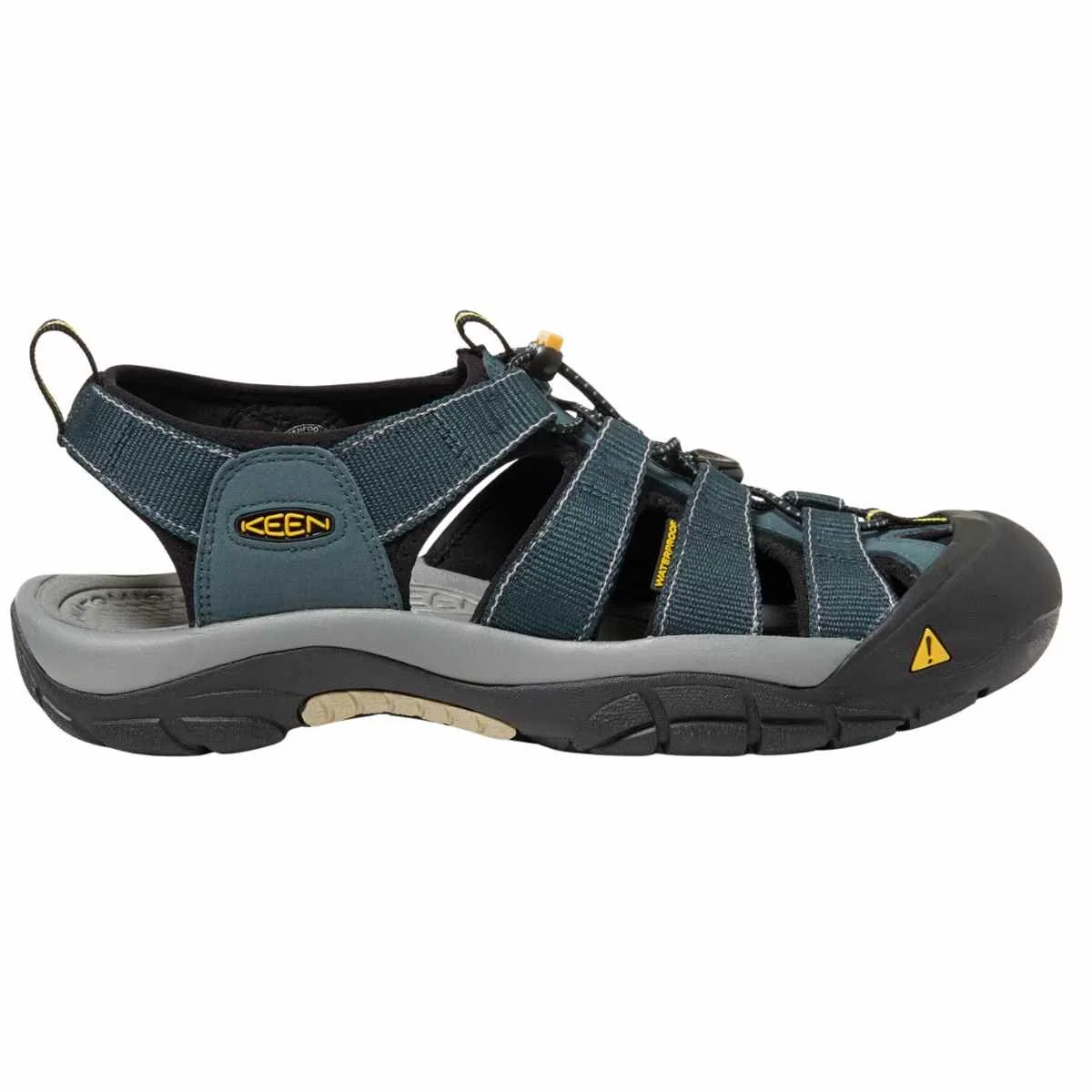
Weight: 22.7 oz (men's) and 28.2 oz (women's)
Open or closed toe? Closed
Warranty: 1 year
Traction/ Sole material: carbon rubber
Adjustment Mechanism: Bungee lace with cinch
Ease of adjustment: n/a
Traction/grippiness: n/a
What we liked: water-friendly, closed-toe, wide, comfortable fit
What we didn’t like: durability
For years, the KEEN Newport H2 has set the bar for a water-friendly closed-toe sandal. As a hiking sandal, its signature patented toe guard protects tootsies while its foam-lined webbing upper wraps feet in a cradle of comfort.
With a hydrophobic neoprene upper lining, we found it performed especially well when wet. As is true for many KEEN shoes, our wide-footed tester appreciated the wide, comfortable fit.
Compare prices of the KEEN Newport H2 Sandals
Men's
Women's


-
Similar to the KEEN SOLR (see our full review below), the KEEN H2 Newport offers great traction on a razor-siped sole optimized for time around water. (According to Wikipedia, "Siping is a process of cutting thin slits across a rubber surface to improve traction in wet or icy conditions.")
-
It, too, offers the KEEN patented toe bumper and eco-friendly anti-odor treatment. Unlike the SOLR, however, the H2 Newport features PFC-free water repellency and a “metatomical” footbed built to support the arch.
According to KEEN, the “metatomical footbed features an insole and last that are anatomically designed to provide better support. They are built around the overall shape of the foot with special emphasis on the first metatarsal joint (big toe).” This is great news for hikers, travelers, and water enthusiasts with a wider forefoot and/or flat feet.
-
The H2 Newport is a versatile shoe whose boxy shape lends itself to breathability, and as such, is faster-drying than its snug cousin, the KEEN SOLR. Loose rocks got stuck in the shoe while on the trail, which is why the snugger fit on the SOLR could be better choices for adventurers mixing trails into their day.
-
While the H2 Newport has long been a hero of the closed-toe sandal category, it’s worth noting that several REI customers had issues with the shoe’s durability, citing popped stitching and frayed webbing. I didn’t notice any of these quality control issues, but perhaps time will tell.
Best Barefoot Hiking Sandal: The Xero Z-Trail EV

Weight: 10.8 oz (men's) and 8.6 oz (women's)
Open or closed toe? Open
Warranty: 5000 miles
Traction/ Sole material: FeelLite rubber
Adjustment Mechanism: Velcro
Ease of adjustment: Moderate
Traction/grippiness: Minimal traction on durable surfaces, Moderate traction on non-durable surfaces, Not a great water shoe
What we liked: lightweight, packable, easy to slip on
What we didn’t like: learning curve
A good barefoot camp sandal should be lightweight, packable, waterproof, easy to slip on, and protect your feet from the elements. The Xero Z-Trail EV brings all that, and more. Geared towards hikers, runners, and campers looking for a minimalist approach to the outdoors, Xero offers us a way to get just a little bit closer to nature with a zero-drop, barefoot feel. At just 4.3 ounces (for a women’s size 7), this shoe is ultra-packable and feather-light. Plus, it comes with a 5,000-mile sole warranty.
View The Xero Z-Trail EV Sandals
Men's
Women's


-
While I did have to get used to feeling the ground beneath my feet, Xero’s 11 mm FeelLite outsole protected my tootsies from rocks, sticks, and roots on the trail, but still let me feel a little more connected to the ground beneath my feet.
On short day hikes, the Z-Trail performed well, but it was easier to stub my toes and tumble over rocks than with other hiking shoes. This could be a user error: I might need to just get used to the barefoot, light-as-air feeling of the shoe.
But after a long day on the trail in regular trail running shoes, I loved being able to pull my Z-Trails out of my pack for a little kick-back time. Easily worn with socks, and with tons of breathability (its tubular webbing straps are narrower than those found on other traditional hiking sandals), the Z-Trail was a great, lightweight addition to my pack as a camp shoe.
-
I prefer the Z-Trail as a camp shoe because I agree with reviewers on REI: it offers zero arch support or foot stability, so while hikers with high arches might like this sandal, those with flat feet (or even plantar fasciitis) might have some knee pain after a long, active day in these kicks.
Additionally, while the Z-Trail performed well as a hiking shoe and running sandal, I found myself slipping on rocks and stumbling a bit as I got used to the barefoot feeling. Taking this hiking sandal on a trail with lots of exposed rock, for example, meant that I slipped out a few times. (Although, on the plus side, loose rocks were easily removed.)
-
I disliked the Z-Trail’s latch closure for two reasons: the closure often slid open, and my foot felt more unstable as the adjustable webbing loosened around my foot.
On a superficial note, the orientation of the ankle strap (pointing towards the center of the foot, rather than the traditional outward-pointing strap) also made it awkward to tighten.
-
And when the sandal gets wet, we found that instability got worse. The footbed itself can feel slippery when wet so it makes feet slide around, even if they are securely tensioned inside of the sandal.
-
I’m also not a convert to the zero-drop, barefoot-style yet, which may be informing my opinion of this shoe. However, there's mounting evidence that zero-drop may be good for your feet.
This note from the National Institute of Health has me interested in experimenting more with zero-drop, though: "Taking the leap to minimalist sandals may seem like a questionable move for some, but consider this: there’s mounting evidence that barefoot or minimalist footwear can increase overall foot strength. Those who have embraced the minimalist sandal movement have also been known to reduce injuries, possibly due to a forced change in running pattern."
-
Until I’m sold on the idea of a minimalist hiking sandal, I’ll stick with the Z-Trail as a camp shoe—especially because I’d hate for my sandals to break many miles deep into the backcountry. And, anecdotally, my hiking partner Johnny did trip and rip his Z-Trails: doing yard work in the grass, it just took one false step on a wayward hose to rip the strap from the sole.
-
For now, the Z-Trail EV’s wins as Best Barefoot Shoe because, for most people, it might be challenging to get used to barefoot-style hiking—especially with a heavy pack. Nevertheless, I love the lack of a break-in period, the tubular adjustable straps, and lightweight, vegan materials. At just 4.3 ounces (for a women’s size 7), this shoe is ultra-packable and feather-light. It belongs in your camp kit!
For other camp shoe recommendations, see our Best Camp Shoes guide.
Best Budget hiking sandal: The Teva Original Universal

Weight: 13 oz (men's) and 11 oz (women's)
Open or closed toe? Open
Warranty: 1 year
Traction/ Sole material: Rubber
Adjustment Mechanism: Velcro
Ease of adjustment: Moderate
Traction/grippiness: Moderate traction, Grippy...enough
What we liked: versatility, style, eco-friendliness, price
What we didn’t like: not as technical as other hiking sandals
Teva’s no-nonsense approach to hiking sandals means this shoe is a great do-anything on a budget. With at least twelve different color variations to choose from, you’ll find a Teva Universal sure to match your favorite trail, home, or office look.
Reviewers love the Teva Universal for its versatility, style, and environmental friendliness. At Evo.com, it has over 3,000 five-star reviews for the men’s and over 3,000 five-star reviews for the women’s version.
This vegan hiking sandal uses both synthetic and plant-based materials. As a bonus, the Universal’s webbing is made from recycled plastic using traceable, verifiable REPREVE® polyester yarn.
The Teva Universal has always been a great budget option for hiking sandals—and I think it’s important to note that this no-frills approach to comfort in the outdoors is just as valid for the experienced traveler as it is for the new hiker. “Like cheap flip-flops with straps!” said one reviewer. Said another: “Practical, comfy and cute! Everything I look for in a shoe!!!”
Compare Prices Of The Teva Original Universal Sandals
Men's
Women's


-
I’ve always loved the Teva Universal as not just a hiking sandal, but really as a super versatile, do-anything sandal. Its Life Natural anti-odor treatment means the shoe should remain stink-free regardless of the number of stream crossings or sidewalks the durable rubber outsoles encounter.
-
With a molded EVA midsole and moderate arch support, there is a next-to-zero break-in period, and never (in all the years I’ve known friends and colleagues that wear the Universal) have I heard of anyone getting blisters with these shoes. With Velcro hook-and-loop closure and a lightweight (11 oz) feel, the Universal loves being a camp shoe just as much as it fits in on a through-hike.
-
Keep in mind that the Universal doesn’t offer the same technical features that more expensive buys like the Chaco Z/2 (see our full review below) or the Bedrock Cairn Evo 3D (see our full review above) might offer—like a Vibram sole, dual-density EVA, or sculpted arch support. But at the price, who’s complaining? The Teva Universal is a versatile, time-tested hiking sandal everyone can love.
Best hiking sandals for wide feet: Lems Switchback Sandal Knit

Weight: 17.6 oz (men's) and 17.6 oz (women's)
Open or closed toe? Open
Warranty: 6 months
Traction/ Sole material: Rubber
Adjustment Mechanism: Slydr
Ease of adjustment: Easy
Traction/grippiness: Moderate traction, better for town
Unlike other hiking sandals, the Lems Switchback Sandal Knit is a wide toe box sandal that has soft knit straps that don't dig, chafe, or blister. The knit material is secure and dries quickly.
The Lems Switchback Sandal Knit hits the sweet spot for adventure sandals: more cushioning and more secure than a minimalist barefoot adventure sandal yet lighter weight and less blocky and chunky than many hiking sandals.
We tested the original Switchback sandal when it debuted, and it was one of our favorite pieces of gear last summer. The new Lems Switchback Sandal Knit is even better.
See our in-depth review of the Lems Switchback Knit Hiking Sandals for more information.
Lems Switchback Sandal Knit
Men's
Women's


-
We tested the men's and women's Lems Switchback Sandal Knit models hiking on everything from trails in dry Southern California to lush, riparian waterways in the Pacific Northwest to hiking in the Front Range of Colorado.
-
For wider-footed hikers, the wide footbed and EVA midsole cushioning made a huge difference in comfort. Lems is a zero-drop footwear company that is featured in our Best Minimalist shoes guide, yet the cushioning on the Switchback Knit is superb. Instead, the minimalism here is geared towards allowing your toes to splay naturally and mimicking a natural foot stride.
-
With other sandals, our wider-footed testers typically get some rubbing or pinching, even after adjusting the fit. Rubbing is not an issue with the Switchback Knit because the knit fabric flexes and moves with you while retaining its shape over the day. The soft knit also dries quickly, which comes in handy when getting in and out of the water, while hiking wet, brushy trails or walking in the rain or through wet grass.
-
One downside is that Lems has a shorter warranty period than any other hiking sandal brand we tested at just 6 months. This could be a concern if you have any durability issues.
-
The Lems Switchback Sandal Knit isn't the most minimal barefoot adventure sandal and aren't the most workhorse of hiking sandals either. There are more robust options for trail running or dragging off the edge of a raft for a month-long whitewater trip. But for wide-footed hikers needing a trail-to-town sandal the Switchback Knit is the most comfortable choice.
Other hiking sandals we tested
These sandals made our short-list for the best hiking sandals. They were top of the list for outdoor media reviews and passed our customer review test, too. We think these hiking sandals are still an excellent option—especially if you can find them on sale.

Approaching a rock climbing crag with roots, loose rocks, and a steep grade wasn't an issue for the Chaco Z/2s. Photo by Lena Palmer.
Chaco Z/2 Classic
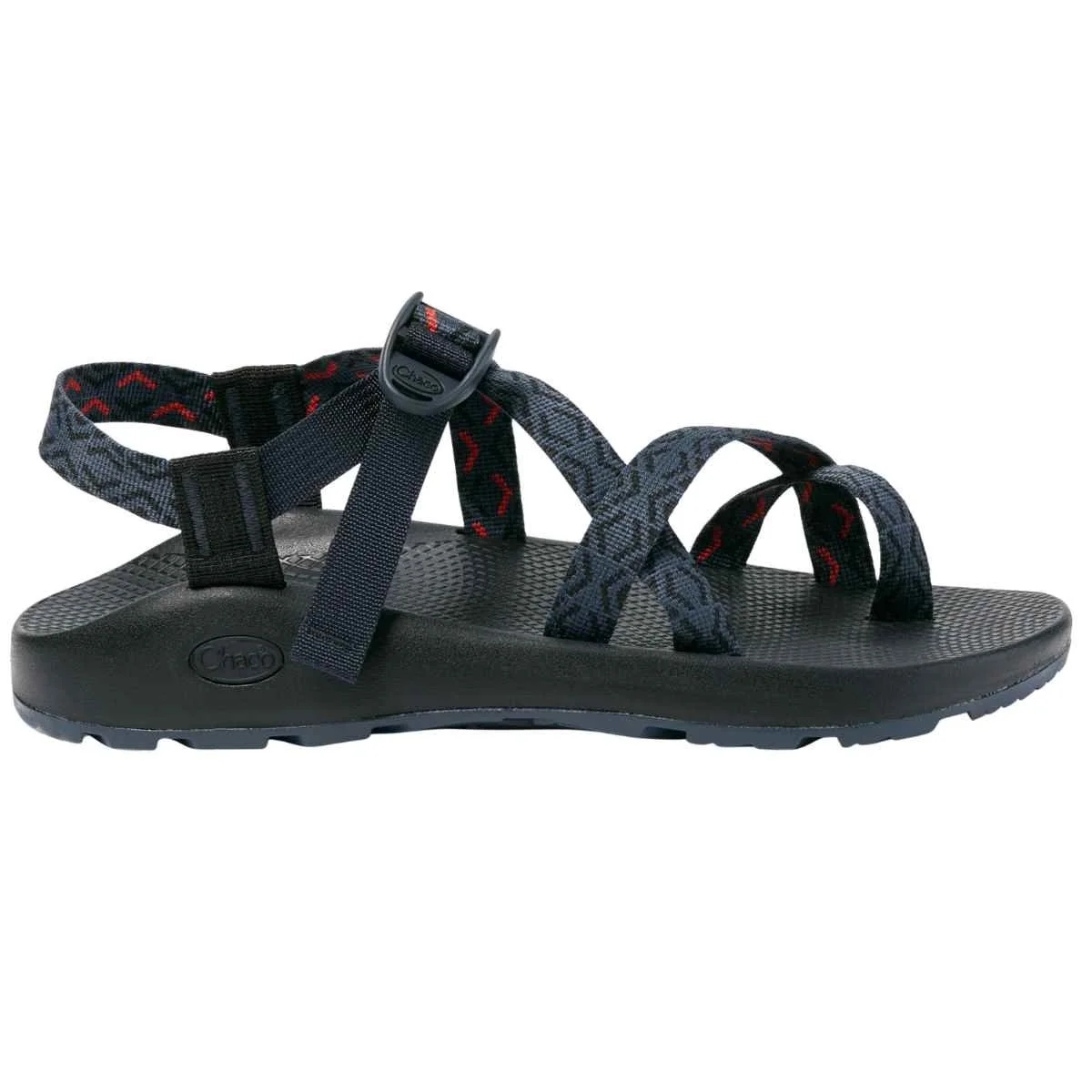
Weight: 28 oz (men's) and 22 oz (women's)
Open or closed toe? Open
Warranty: yes, will replace or repair free of charge
Traction/ Sole material: ChacoGrip Rubber
Adjustment Mechanism: Slide clasp with foot-wide tightening option
Ease of adjustment: n/a
Traction/grippiness: Moderate, but still slips on loose gravel, Performs on all other terrain well
Long known as the go-to hiking sandal, the Chaco Z/2 Classic (and its toe-loopless sibling, the Z/1 Classic) has set the industry standard for footwear alternatives to traditional hiking boots.
The Z/2's sturdiness, comfort, and durability opened many hikers' minds to the possibility that sandals could be better than hiking shoes. But its adjustable webbing straps, support from a contoured arch, and burly-yet-comfortable ride (thanks to a dual-density LUVSEAT™ PU midsole) come with tradeoffs.
This comfort comes at a price: clocking in at nearly two pounds (1 lb, 15 oz for a men’s 9), the Z/2 is heavy. On day hikes, I didn’t find this to be an issue. But on longer hikes—like backpacking for three days in Colorado's Weminuche Wilderness—every ounce counts. Carrying the Z/2 on that trip noticeably added weight, and considering that I was also hauling climbing gear, the weight of the sandal felt excessive.
I did love the added toe protection and stability that the Z/2's adjustable strap provides. Once the shoe is settled on your foot, it's not moving. My hiking partner Johnny noted: “The adjustable strap system is, hands down, best in class.”
View The Chaco Z/2 Classic Sandals
Men's
Women's

One of the best parts about the Chaco Z/2s isn't the secure toe loop—it's that the footbed is quick-drying and doesn't stick to your foot or get clammy. Photo by Dani Reyes-Acosta
That is….unless you skip on a pebble-covered trail, as I did. The shallow-ish, 3-millimeter lugs on the proprietary ChacoGrip outsole—revamped in 2016—meant that slips and slides were more likely than when wearing the Bedrock Cairn Evo 3D (see our review above), which boasts a more aggressive lug pattern. Ultimately, this instability, as well as the slight amount of additional work to slip on and off means that for now, the Bedrock Cairn Evo 3D wins out as the best overall adventure sandal.
Still, I love the Chaco Z/2 Classic for its versatility, classic “Chaco look,” 100% vegan materials, plush ride, and extra stability (especially toe security) it gives me when wading through river rocks.
The KEEN SOLR
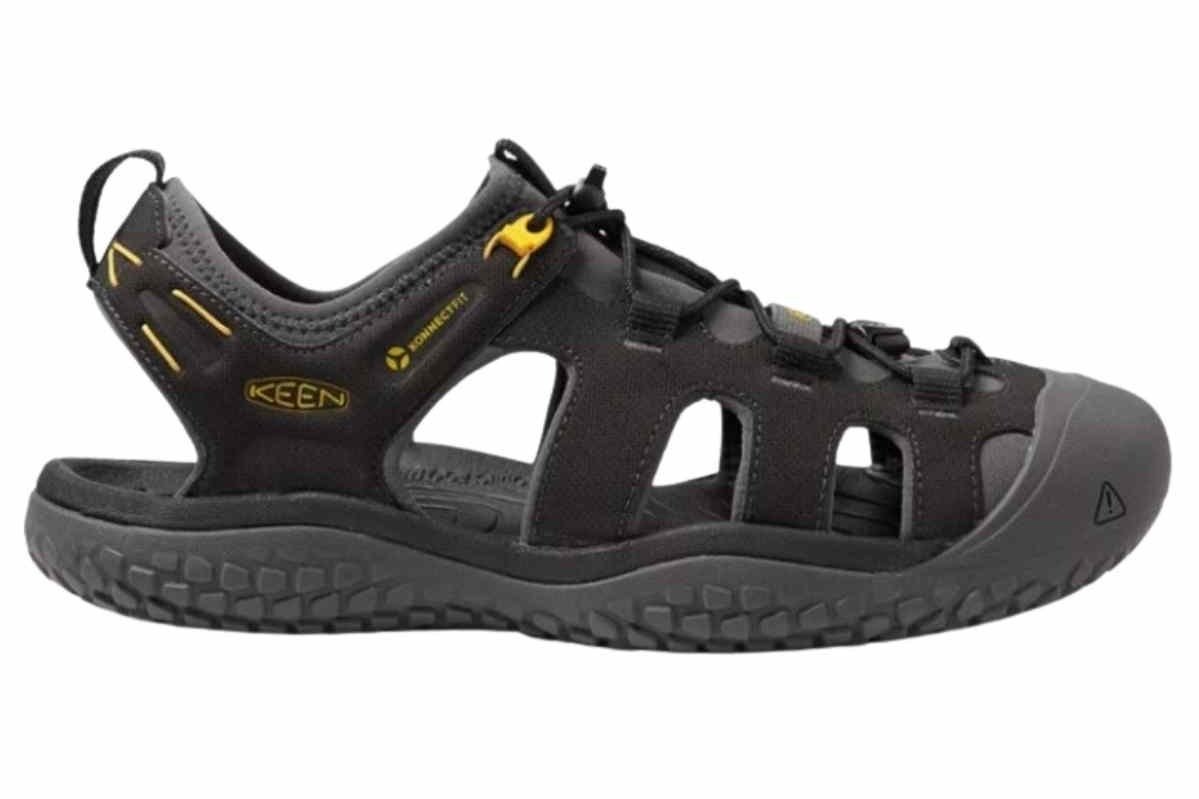
Weight: 20 oz (men's) and 20 oz (women's)
Open or closed toe? Closed
Warranty: one year warranty
Traction/ Sole material: Aquagrip Rubber with Aqua Stop zonal siping
Adjustment Mechanism: Bungee lace with cinch
Ease of adjustment: Easy
Traction/grippiness: Moderate traction, Grippy...enough
There are adventures, and then there are ADVENTURES. Romps focused on being in and around water require a special mix of traction, foot protection, and drainage. Without all these traits, a water shoe just wouldn’t be a good water shoe.
The KEEN SOLR, one of KEEN’s most high-tech water shoes, is a premium offering focused on sea, ocean, land, and rivers (hence the name “SOLR”). With a softer EVA midsole than KEEN’s H2 Newport, it’s easier to feel a paddleboard, kayak, or river rocks under your feet. This added foot sensation could mean better control, but for some, it could mean more sensitivity.
In water and on land, people of all ages love the KEEN SOLR’s support and stability. Reviewers on KEENFootwear.com noted the snug fit while in and around water, as well as the SOLR’s simple on-off. While I, too, appreciated the easy slip-on nature of the shoe, it was the lace-tightened webbing that hooked me: when cinching the elastic bungee laces with the built-in tab, the nylon webbing—spanning the entire upper and wrapping around the heel—cinches the foot in for a snug, glove-like fit. Maybe this is why several senior adventurers praised the SOLR’s cradle-like feel and stability on the KEEN website.
View Prices Of The KEEN SOLR Sandals
Men's
Women's


With a non-marking sole and upper made completely from recycled water bottles(!), the KEEN SOLR puts a good foot forward with its low environmental impact. Its abrasion-resistant TPU upper and environmentally-friendly anti-microbial treatment are two more signs that KEEN is doing what it can with this shoe to be environmentally sound, a feature I love.
While the KEEN SOLR is the ultimate water shoe, it came in as our runner-up because it thrives more while it’s in the water constantly.
KEEN says the Aquagrip rubber sole with “Aqua Stop zonal siping provides maximum traction on wet surfaces”, but the SOLR simply didn’t dry as fast as the Salomon TECHAMPHIBIAN.
This could be because the TECHAMPHIBIAN features a more minimalistic midsole, with less EVA (and less arch support material) to soak up water. Maybe, too, the SOLR’s layered abrasion-resistant upper, which is layered with neoprene, makes for a dense spongy surface that needs prolonged air contact to dry.
As a water sandal, the KEEN SOLR excels compared to others in the category at Trailspace. But as a water/adventure sandal, it simply takes second place to the TECHAMPHIBIAN (see our full review above). Nevertheless, for people with wider feet or those looking for more stability and support, the KEEN SOLR is a win.
ECCO Yucatan
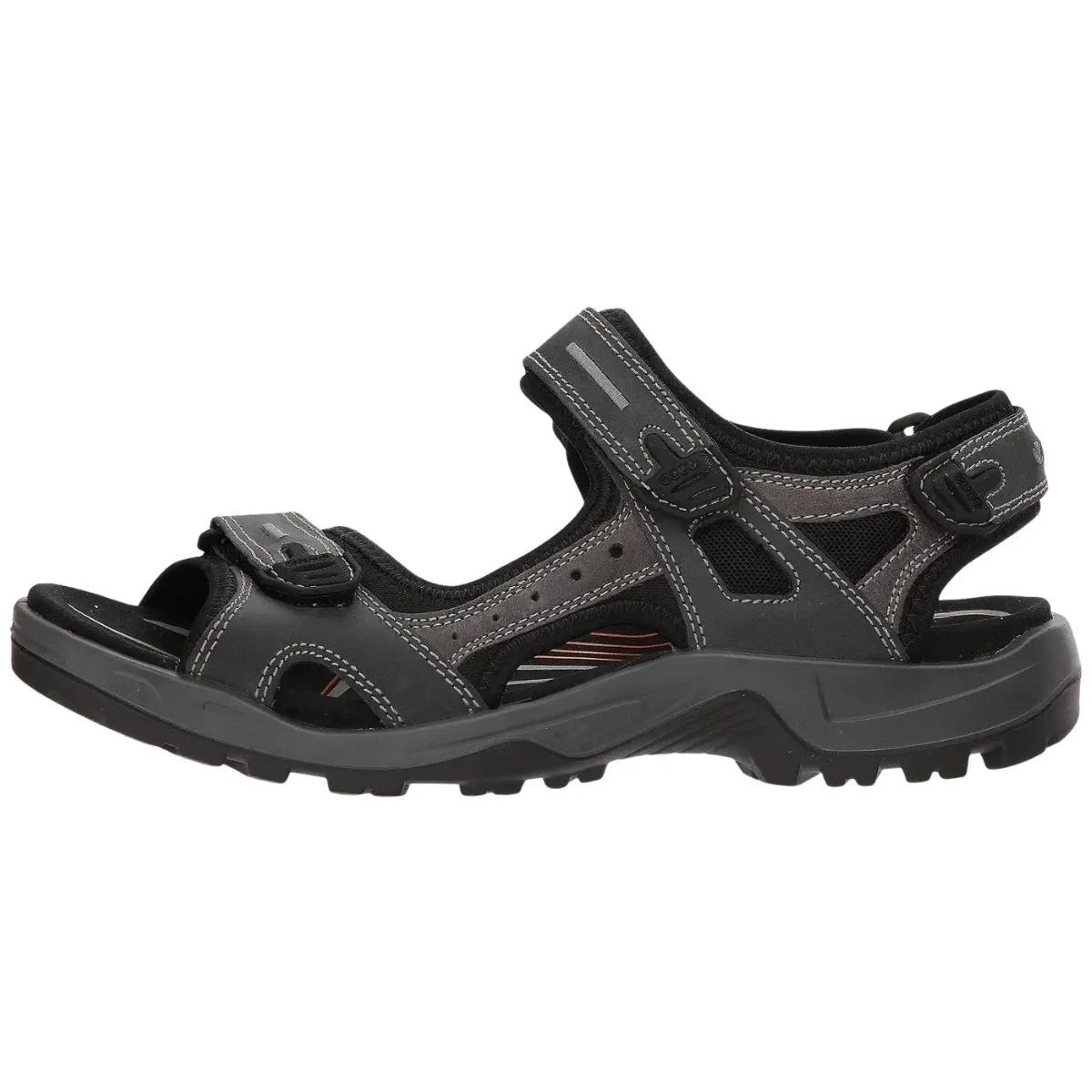
Weight: 25 oz (men's) and 20 oz (women's)
Open or closed toe? Open
Warranty: one year
Traction/ Sole material: rubber
Adjustment Mechanism: Velcro straps
Ease of adjustment: n/a
Traction/grippiness: best for dry surfaces
The ECCO Yucatan is the only sandal we considered made of nubuck leather, and it has a distinctive “dad shoe” look.
The design is suited for travel—the deck of a cruise ship or walking around the country club. If that’s what you’re going for—great.
They aren’t waterproof and can get an odor when exposed to water. While the ECCO Yucatan has been a long-time standard for beach-walking for folks who don’t want to wear sandals with a more sophisticated look than webbing, recent questionable customer reviews show some quality issues.
Compare prices of the ECCO Yucatan
Men's
Women's

Weight: 11.8 oz (men's size 9)
Open or closed toe? Open
Warranty: no, 30 day satisfaction guarunteed
Traction/ Sole material: Waterproof non-marking Morflex vibram sole
Adjustment Mechanism: "Wing" technology provide stay in place grip
Ease of adjustment: Moderate
Traction/grippiness: Extremely grippy
A favorite of minimalists and thru-hikers, the LUNA Monos are designed after huaraches and have a more barefoot footwear-feel than other sandals we considered.
They come with a high traction skidproof, waterproof Vibram Morflex sole. They’re designed for trail running ultramarathons. The Monos are unisex and available in a variety of colors and sole thicknesses, depending on your personal preference. They mold to your footprint, becoming more comfortable with use.
One thing we like about LUNAs compared to almost all the other sandals we considered is that they are available in a USA-made version. Still, they are priced competitively with other sandals we considered.
Compare Prices Of The LUNA Mono Winged Edition
KEEN Clearwater CNX
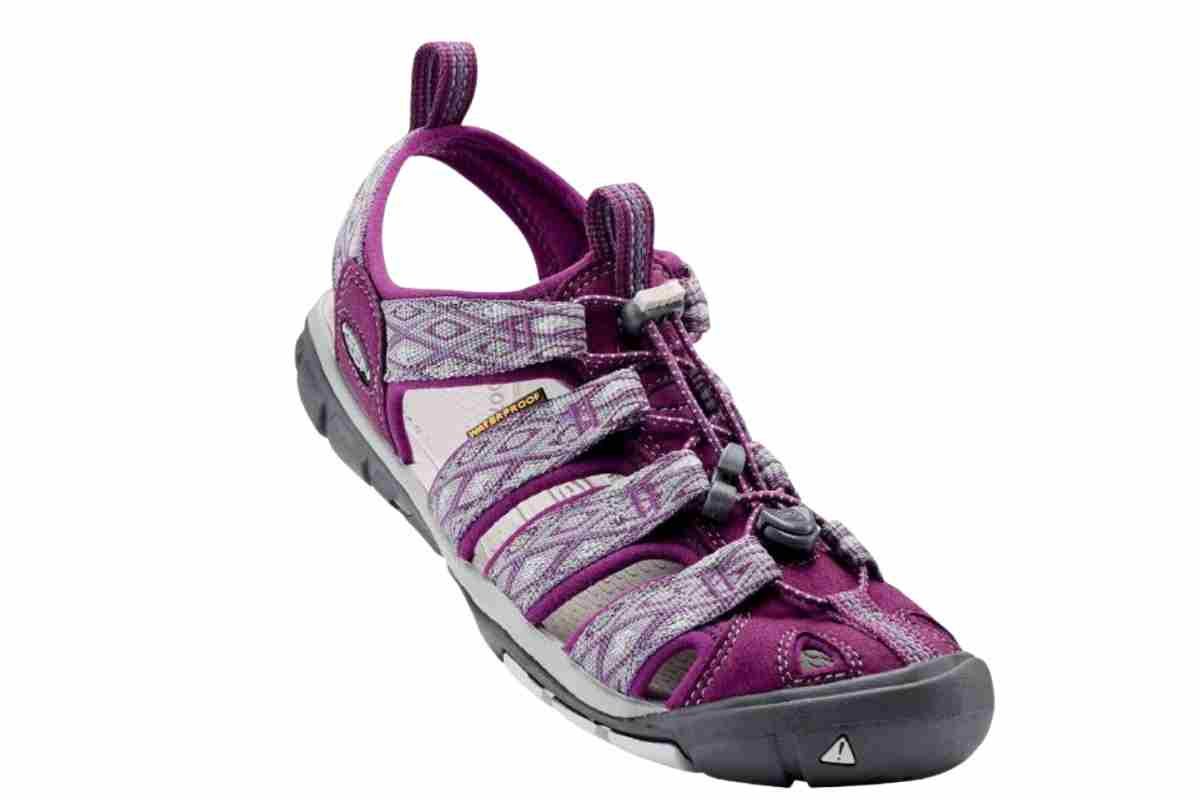
Weight: 23.2 oz (men’s), 17 oz women’s
Open or closed toe? Closed
Warranty: 1 year
Traction/ Sole material: Rubber
Adjustment Mechanism: Bungee lace with cinch
Ease of adjustment: n/a
Traction/grippiness: n/a
The KEEN Clearwater CNX was a favorite at REI, Outdoor Gear Lab’s women’s article, RunRepeat, The Strategist, and others.
But it had nowhere near the same popularity as the KEEN Newport H2 (see above for our full review) or the more advanced version of that model, the KEEN SOLR (see above for our full review).
All three models have a lot of similarities, but the Newport H2 and SOLR both have much more robust soles and better cushioning and traction. The Newport H2 will support you better while hiking and on dry land whereas the SOLR will work better on slippery rocks. The Clearwater CNX is still available from KEEN, though it is less widely available through major retailers.
View The KEEN Clearwater Cnx Sandals
Men's
Women's

Weight: 18.4 oz (men's) and 18.4 oz (women's)
Open or closed toe? Open
Warranty: no, 30 day satisfaction guaranteed
Traction/ Sole material: MGT (Monkey Grip Technology) footbed + Vibram® MegaGrip
Adjustment Mechanism: Adjustable straps
Ease of adjustment: Difficult
Traction/grippiness: Extremely grippy
The LUNA Oso Winged Edition is a favorite of backpackers and thru-hikers. During research, I found comparisons between the Oso Winged and my top winner, the Bedrock Cairn Evo 3D on more than a few sites.
I tested the Oso Winged on five-mile hikes on groomed gravel roads in Arizona, across seven-mile two-track trails in the canyons of southeastern Utah, and even on double-digit runs through the single-track of the San Juan mountains.
I was shocked to learn that barefoot running and hiking actually feel pretty great. For context, Chacos have primarily informed my hiking sandal experience. Moving to zori-style (aka huarache-style) footwear has definitely been a bit scary for me at times. When testing the Bedrock Cairns last year, I’d started to suspect barefoot running and hiking could feel good, but my experiences with the LUNA Oso Winged Edition confirmed this.
View The LUNA Oso Winged Edition
Unfortunately, the rubber wings, known as the GEN3WINGS on this sandal, gave me blisters on the arch of my foot no matter how I tried to prevent them. I was hoping that the blisters I initially got from this sandal were just due to friction on a new part of my foot. But after weeks of wearing them, the painful rub never went away. Putting tape from my first aid kit on my arch didn’t help: the tape quickly fell off with the friction from the rubber wing.
I did have high hopes that the GEN3WINGS would help keep the tubular laces on the Oso Winged in place; these laces felt lovely on my skin, and since adjusting them was a bit of a pain, I was excited to potentially avoid repeated adjustments. Unfortunately, on several occasions when I would have liked to have easily slipped on and cinched these sandals, the laces wiggled their way loose. While certainly an inconvenience, this was also potentially dangerous: a lot of my running happens on technical terrain where the margin for error is small.
Similar to the Bedrock Cairn, my foot felt more supported than I expected in the LUNA Oso Winged Edition. If the laces had stayed put, I might have felt cradled. However, the Monkey Grip Technology (MGT) footbed on the LUNA Mono didn’t cling to my foot the way I hoped it would and I got a slippery wet foot. By contrast, the Bedrock Cairn Evo 3D’s molded Sole Hugger footbed design kept my foot in place better.
All in all, the LUNA Oso Winged Edition is a shoe that works great for lifestyle and hiking, provided you’ve built up your calluses.
Why Sandals Need to Be a Part of Your Hiking and Climbing Gear Collection
"Free your feet! Finally!!"
We'd spent nearly ten hours with our feet jammed into tight leather climbing shoes, and our tired, aching toes sorely longed for even a whisper of the summit's breeze. It was time: off with the shoes.
But what alternative foot protection did my tired pups have?
The only other shoes I had brought with me hurt my feet even more, squeezing them painfully. I went barefoot until snow and rocks forced me to put my approach shoes back on.
If I had known about approach sandals in 2018, I probably wouldn't have had sore big toes for three days after that alpine climb. I would have been able to scamper down the three-mile-long trail with free, airy feet—instead of banging my already-bruised toes into the toe box of snug approach shoes.

The author, at the summit of Liberty Bell on Washington Pass, wishes she knew about approach sandals in 2018
It took me far too long to learn about the joy of hiking sandals—which might seem strange given all the adventuring I enjoy. For years, they seemed like a luxury, an extra that I could overlook for financial or pack weight reasons. Of course, I also didn't prioritize hiking sandals, but that could have been because my peer group didn't either: when I first started recreating in the mountains, my friend group had even less experience than I did, so I couldn't look to them for gear inspiration.
Now that I know and love hiking sandals, I realize that when my goal is to relax, even just a little more sun on my body brings much greater happiness.
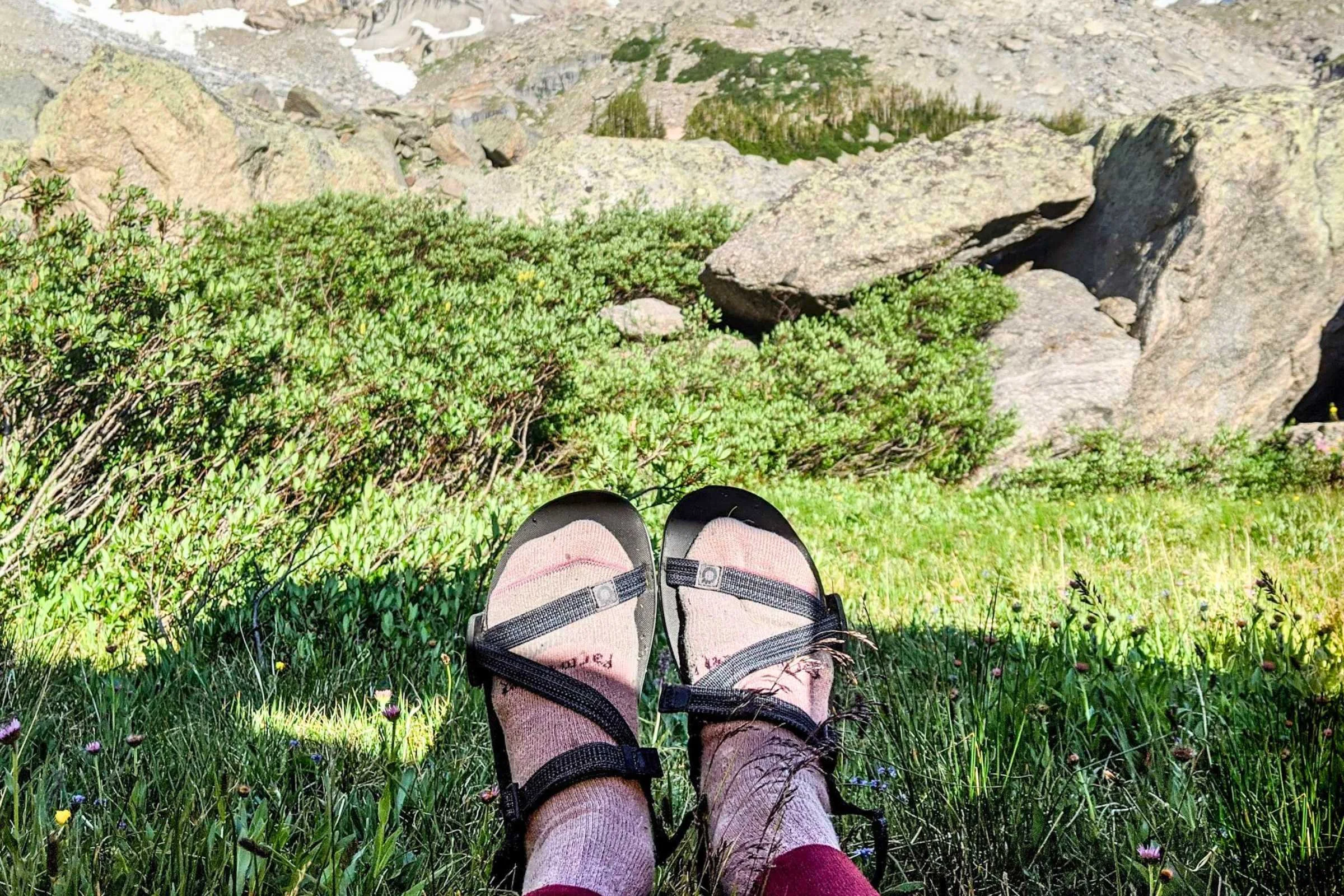
Relaxing at camp with in hiking sandals. Photo by Dani Reyes-Acosta
How We Researched and Tested
Research
The research process was straight-forward.
Professional and user reviews from OutdoorGearLab, REI, New York Magazine, Travel + Leisure, and The Adventure Junkies gave me two important takeaways. First, I was testing a shortlist of the best hiking sandals on the market—since the same seven kept showing up. Second, I'd have to do some serious adventuring to push these samples to the limit.
I took a pulse check on what other hikers, boaters, guides, camping fans, and industry experts had to say about the hiking sandals I'd be trying out.
Field Testing: Adventure Sandals
The best product research happens in the field, on outdoor adventures. Throughout the summer, I tested the seven best hiking sandals on all sorts of trips. From the granite talus slopes of Wyoming's Cirque of the Towers in the Wind River Range to alpine runs in the San Juan and La Sal mountains: these sandals saw it all. Day hikes, rock climbing approaches, afternoons lounging at the river, and multi-day backpacking trips helped me better understand the best conditions for each type of sandal, the break-in period I could expect, and ultimately, how different outdoor enthusiasts would pick the best hiking sandal for their needs.
- Day hikes and multi-day backpacking
- Granite scrambling and alpine terrain
- Rock-climbing approaches
- River paddling and wet conditions
- Long hikes under heavy pack loads
- Traction on wet and dry rock
- Fit and strap security
- Comfort over long distances
- Drying speed after water exposure
- Durability and ease of adjustment

The quality toe bumper on the KEEN Newport H2. Photo by Dani Reyes-Acosta
What to look for in hiking sandals
Through all these days outside, I realized that whether hiking, backpacking, approaching a rock climb, or paddling a river, adventure sandals need to be as comfortable as they are technical. After all: one minute I could be huffing up a trail at altitude, and the next I might be kicking it back at camp.
While all the hiking sandals we tested are comfortable, not all sandals are created equal: I've separated winners in specific areas below to denote how their sole, durability, grip (traction), breathability, and environmental footprint helps them excel in different ways.
Price, sandal weight, volume, drying time, and general performance also factor into the insights shared below.
Have experience with one of these sandals to share? Leave a comment on our Instagram or Facebook or send a message to us!
Comfort and fit
Look for hiking sandals that provide a comfortable fit. Adjustable straps allow you to customize the fit according to your foot shape. Many hikers find that a cushioned footbed provides support and absorbs shock, like what you’ll find on the Lems Switchback Sandal Knit hiking sandals. Look for arch support if you have high arches or need extra stability.
Durability and materials
Hiking sandals should be made of durable materials that can withstand the terrain where you will be hiking. In general, look for sandals with sturdy outsoles that provide good traction and grip on rocks, roots, scree, and mud. We prefer hiking sandals made of water-resistant or quick-drying materials, as you are likely to encounter water during your hikes. Hiking sandals, as compared to everyday sandals, typically have a reinforced toe and heel for extra protection of your foot and overall durability of the shoe.
Breathability and moisture management
The process of hiking or trail running can make feet sweaty. Hiking sandals should have good breathability to keep your feet cool and prevent slippery moisture buildup. Look for sandals with ventilation features such as mesh panels or cutouts. Sweat-wicking materials can help manage moisture and prevent discomfort during long hikes.
Weight and packability
Consider the weight of the sandals, especially if you're planning long hikes or backpacking trips. An old adage of the mountain is that every pound on your foot is like seven pounds on your back. Lightweight sandals can reduce fatigue and make it easier to move quickly and manage precise footwork on technical terrain. Additionally, look for sandals that are easy to pack and won't take up too much space in your backpack (if you're planning on switching between hiking boots and hiking sandals).
Stability and support
Just like hiking shoes or hiking boots, stability and support are important in hiking sandals. A secure and adjustable fit is just as important in sandals as it is for shoes. The difference is that you'll rely on straps to keep your feet in place during uneven or challenging terrains. Consider features like ankle straps or heel cups for additional stability.
Terrain and activity-specific needs
Where will you be hiking? If you'll be crossing rivers or rafting with occasional hiking, consider hiking sandals with drainage features. If you're hiking somewhere rocky, muddy, or rooty, look for sandals with an aggressive outsole and reinforced construction. In hot climates, prioritize sandals with breathability and moisture-wicking properties.
How to Choose the Hiking Sandal for You
Hiking sandals really can be three-season footwear, depending on where you live or play. When choosing a hiking sandal ask yourself these three questions:
Do I want my sandals to be specific to an activity, or do I want them to do everything?
Are you mostly hiking? Scrambling? Will you be spending prolonged periods of time on the water? Are you kayaking or stand-up paddlingboarding? Backpackers may value lightweight sandals the most. Climbers may value traction more than other features. Quick drying shoes will be more important if they will get wet. Choose your footwear to match your activity.
Do I feel comfortable with wearing open-toe sandals even when it’s brisk outside?
It may not always make a fashion statement, but if you think you’ll wear hiking socks with your sandals, choose something open toed.
How much do I want to spend?
Generally, you’ll get what you pay for when it comes to hiking sandals. Still, there are many quality options available in the budget range. We only recommend items we think will last you many seasons to reduce the impact of our purchases on the environment.
Frame your choice with these three questions, and choosing the right hiking sandal should be a breeze.
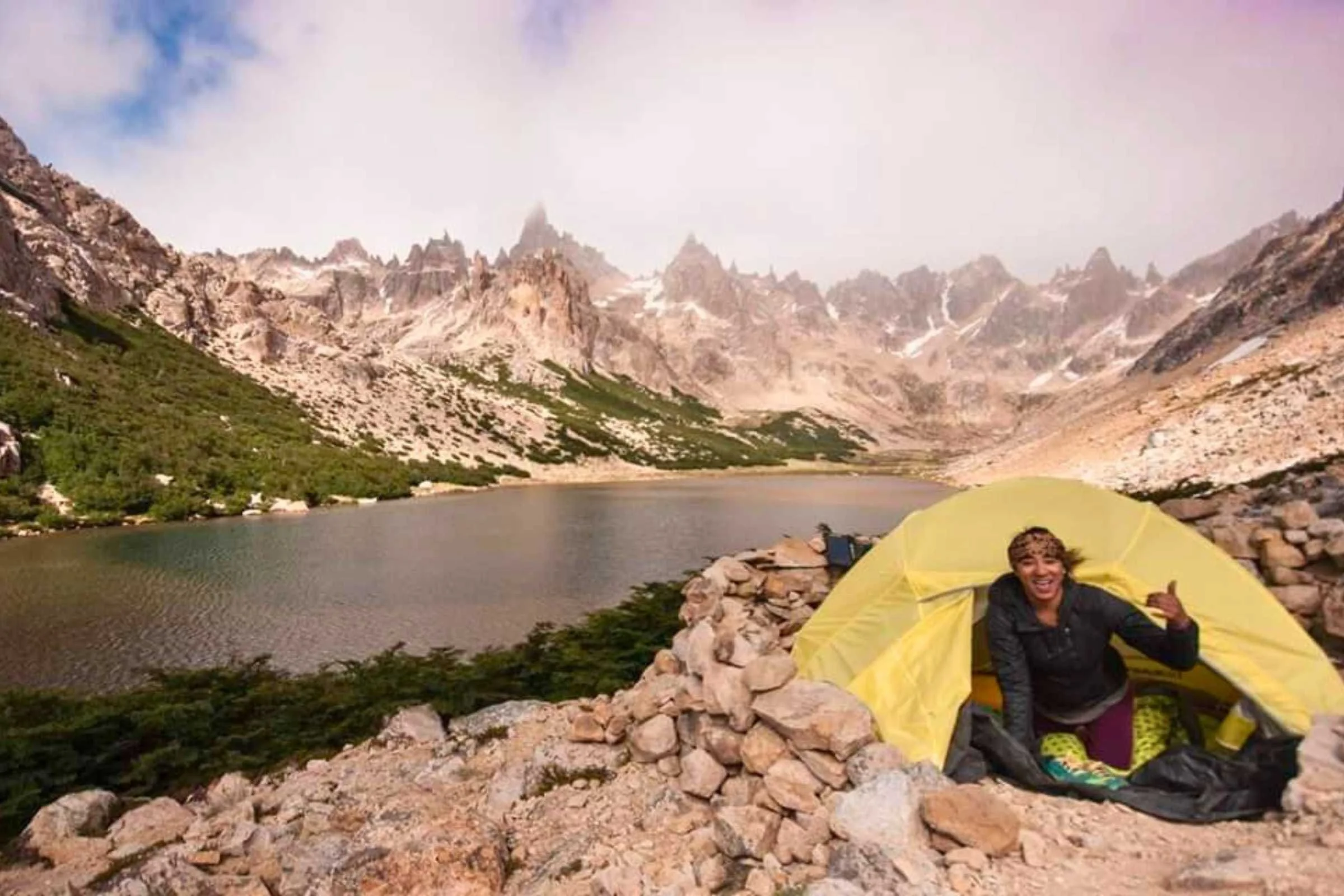
The author on a rest day at camp after climbing on a rest day in Argentinian Patagonia in 2015. She did not have hiking sandals, but doesn't regret the faint scars (literally, ripped open a foot) she has from walking barefoot along an alpine lake. Photo credit: Loreah Winlow
Care and Maintenance
There are just a few things to keep in mind with all hiking sandals:
Rinse off the Mud
If your sandals (or any hiking shoes) are muddy, rinse them off before letting them air out!
Let them Air Dry
After returning from an adventure, let your sandals air out. Try lifting the insoles (if there are insoles) to let any moisture escape, untie any laces, and loosen any straps or buckles that might have dirt or mud lurking underneath. Letting your shoe air out is important to prevent material breakdown and moisture (i.e. bacteria) buildup. This can also reduce odor in the shoe.
Clean the Lug Soles
After (and during) long adventures, inspect the tread of your hiking sandals: see any pebbles stuck in-between the lugs? Pry them loose to maximize the grip your sole has on the ground.
Wash when Necessary
Feeling like you need to clean your hiking sandals or water shoes? Give them a quick dunk in warm water, a little scrub with a soft bristle brush (like an old toothbrush), and let them dry somewhere cool. Do not leave hiking shoes in the sun to dry or put them in the dryer, as this can permanently damage them. (Note: of all the sandals we reviewed, only KEEN mentions that their sandals are machine washable—but they should still be air-dried).
Store in a Cool Dry Place
When you’re not using them, store your hiking sandals in a cool dry place, like the back of your closet, the shoebox they came in, or somewhere else where they won’t be exposed to the heat and dampness that can make their materials brittle, breaking them down faster.
Inspect and repair
Regularly inspect your hiking sandals for any signs of wear and tear. Check the straps, buckles, and stitching to ensure they are in good condition. If you notice any damage, repair it as soon as you can. We've seen stitching blow and it just gets worse the longer you wait. Many of the brands we considered come with a warranty that covers professional repair.
Check and maintain the sole
At the beginning and end of the season, check your outsole and tread. Throughout the season, check to see If the traction is wearing down or becoming smooth. If that's the case, it may be time to replace the sandals or get your sandal resoled. Some brands, like Chaco, make it very easy to send your shoes in for a resoling. Your hiking footwear is only as good as its traction and its important to your safety.
Reassess the fit
Over time, lifestyle changes, and miles on your feet, it's possible that your foot size and shape can change. Hiking sandals can last a long time and it's possible that your feet may change before your hiking sandals give out. Periodically reassess the fit of your hiking sandals. Make sure the straps still provide a secure and comfortable fit. If necessary, adjust the straps or consider replacing your sandals with a new pair that accommodates your current foot profile.
FAQ
-
Some hiking sandals are designed for longer hikes whereas some are meant for moderate hikes. The sturdier sandals can last a thousand miles and people definitely do longer backpacking trips or thru-hikes in them. What is most important is that the hiking sandal stays comfortable on your foot and that straps are adjustable over the course of the day to accommodate swelling feet.
-
Whether hiking sandals can protect your feet on rough or rocky terrain depends on your hiking experience, skill level, and footwork. Some hikers and even runners are able to manage precise footwork in hiking sandals. Most people find that it requires going more slowly and paying more attention to their feet. However, learning to hike in sandals on rocky terrain is a skillset that is possible to learn.
-
As long as your hiking sandal has a secure strap to keep it attached to your feet and a sturdy outsole that can handle the wet and possibly slimy socks, it is possible to wear hiking sandals in water crossings.
-
It depends on the sandal. Some hiking sandals are designed with sturdy soles and molded arches that will feel more like a hiking shoe or boot. Others are made to be minimalist and lightweight. Choose your hiking sandals depending on what support you need.
-
Yes! Many people use hiking sandals as their camp shoes or approach shoes for rock climbs. Others use hiking sandals as everyday sandals and lifestyle footwear. Hiking sandals are very popular with rafters, kayakers, and for use during water sports.
-
Most of the time, there is no need to wear socks with hiking sandals. If anything, it will just get your socks dirty and attract thorns and seeds. However, when it is particularly cold, some people may wear socks with sandals. It's not always the most stylish, but if can keep feet warm.
Author’s Expertise / Why you should Trust us

Dani Reyes-Acosta is a writer, athlete, and advocate. A splitboarder, rock climber, trail runner, volunteer adaptive ski instructor, and waterwoman, she has been featured in the Washington Post, Women on the Road, the Los Angeles Times, and regional publications throughout the American West. Brands like Osprey, Vail Resorts, and Sport Obermeyer have featured her work as a writer and storyteller.
Dani is the first Latina chosen as a Protect Our Winters Athlete. Reyes-Acosta imagines a better world, one in which we all play outside and honor the land upon which we walk.
See more at her website danireyesacosta.com or see all her Treeline Review guides on her author page.
Note that Dani and no one in her family is sponsoredy, an ambassador for, or an employee of any of the companies mentioned here. This is unbiased and we do this to help you find the best product for the price. Treeline Review doesn’t accept sponsored content, native advertising, or paid reviews.
Sources