
Best Lightweight Backpacking & Thru Hiking Backpacks of 2026
The Top Lightweight and Ultralight Backpacks for Backpackers and Thru-Hikers
September 11th, 2026, updated with more models tested, an additional year and thousands of miles more testing
Home > Gear Reviews > Backpacking
Your backpack should feel like a natural part of your pack system, not a burden, especially at the end of a long day on trail. A backpacking backpack is the piece of gear everything else depends on. If it doesn't fit well, the weight you're carrying multiplies mile by mile. If it's too heavy before you load it, you're already behind on your base weight goals. The good news is that the last decade of lightweight pack design has made it possible to carry a fully featured, comfortable framed pack for two pounds or less, which wasn't true when most of the classic packs were designed.
We've backpacked thousands of miles in dozens of packs, testing everything from ultralight frameless options to full suspension systems on routes including the Oregon Desert Trail, Blue Mountains Trail, and long food and water carries in the Arizona desert. We also interviewed backpackers ranging from weekend hikers to world-class long-distance thru-hikers to understand what actually matters across different trip lengths and styles.
What separates a genuinely good lightweight backpack from one that disappoints comes down to how well the suspension system transfers load to your hips rather than your shoulders, whether the fit is adjustable enough to dial in for your specific torso and hip measurements, how the pocket layout works while moving rather than just at camp, and how the materials balance weight against durability for the terrain you're actually hiking.
Top Pick: The Gossamer Gear Mariposa earns our Best Overall award. After 1,000 miles and years of testing, it stood out for a new suspension system that comfortably carries heavy loads at half the weight of traditional packs, a full set of functional and accessible pockets on the pack and hip belt, and versatility that works equally well for someone transitioning from a five-pound pack and a seasoned ultralight hiker on a long desert route.
Want something lighter and faster? See our Best Fastpacks
We create reader-supported, objective gear reviews independently selected by our editors. This story may contain affiliate links, which help fund our website. When you click on the links to purchase gear, we may get a commission — without costing you an extra cent. Thank you for supporting our work and mission of outdoor coverage for every body! Learn more.
Backpack Comparison Table
| BACKPACKING PACK | TREELINE AWARD | MSRP | VOLUME | MATERIALS | WEIGHT | MAX LOAD |
|---|---|---|---|---|---|---|
| Gossamer Gear Mariposa 60 | Best Overall Read why |
$315 | 60 L | 100 & 200 denier Robic high-tensil strength nylon | 2.09–2.26 lb fully configured, depending on size and belt | 35 lb |
| Hyperlite Mountain Gear Junction | Best Dyneema Read why |
$395 | 40, 55 L | DCH50 and DCH 150, or DCH150 | 1.8 - 1.9 lb | 40 lb |
| Pa'lante V2 with Joey Straps | Best Ultralight Backpack Read why |
$240 | 37L | 210D UHMWPE Gridstop | 21 oz | 25 lb |
| Zpacks Arc Haul 60L | Best Backpack Under 2 lbs Read why |
$400 | 60 L | Ultra 100 and Ultra 200 | 1.3 lb | 40 lb |
| LiteAF Curve Full Suspension | Best Backpacking Pack for Tall People Read why |
$418 | 40 or 46L | Ultra 200, Ultra X, ECOPAK, or Dyneema | 1.5 - 2.0 lb | 35 lb |
Looking for a day hiking backpack? Check out our Best Day Packs for Hiking Guide
Curious about pack volume? See How Accurate are Stated Volumes of Backpacking Backpacks?
Interested in backpacking gear? See our Backpacking section for our most popular stories.
The winners
Best Lightweight Backpacking Backpack: Gossamer Gear Mariposa 60

Capacity: 60L
Weight: 2.09–2.26 lb fully configured, depending on size and belt
Materials: 100 & 200 denier Robic high-tensile strength nylon
Cost: $315
Max load: 35 lbs
What we liked: lightweight, durable, comfortable
What we didn't like: suspension capabilities not as strong as Swift X
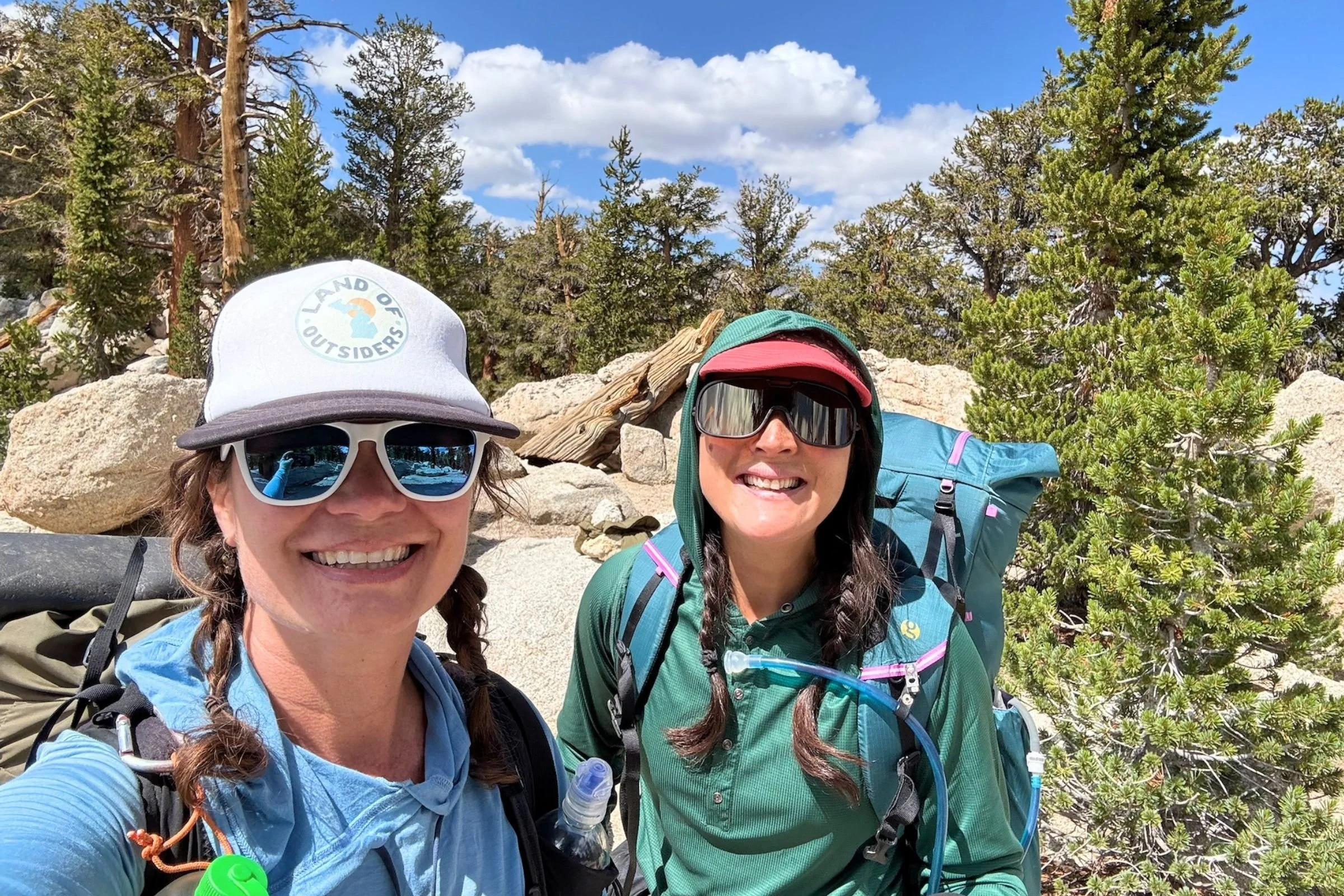
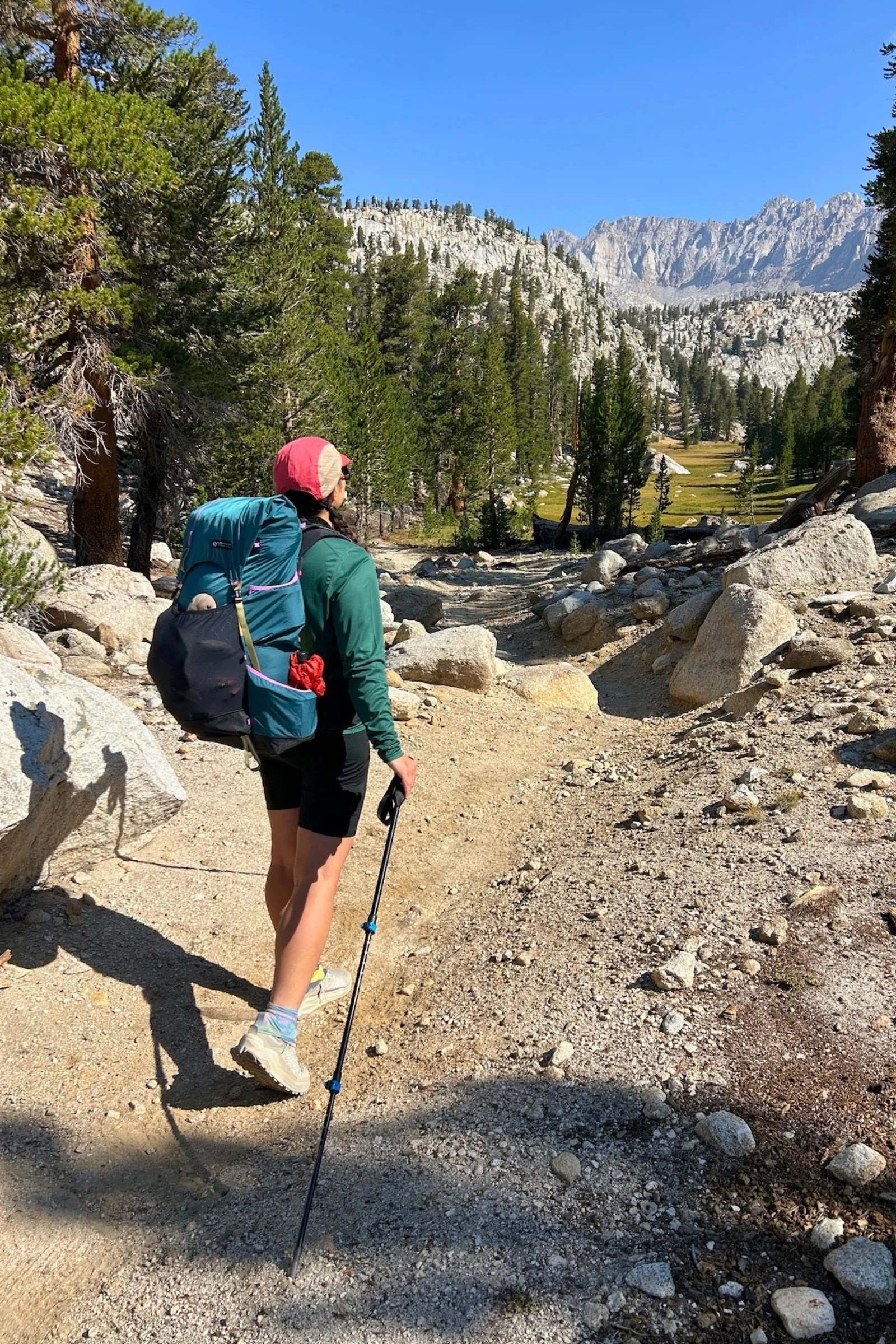
The Mariposa is our winner for the best lightweight backpacking backpack. If I had to count the backpack I saw on PCT thru-hikers the most this year, it'd be the Gossamer Gear Mariposa.
Although the bestselling Mariposa qualifies as an ultralight pack, it offers backpackers all the utility, comfort, volume, and durability of a heavier, traditional pack at a fraction of the weight.
That's why we think it's the best lightweight backpack for everyone from first-time backpackers to thru-hikers making the transition from traditional backpacking to ultralight backpacking.
Its intuitive, easy-to-use design and extra padding tipped it ahead of other backpacks in its weight class. This is especially useful for thru-hikers who don't have time to fiddle with getting their pack right.
The Mariposa is a multi-year bestseller for a reason, with years of data and thousands of happy ultralight backpackers and thru-hikers.
Read our full review of the Mariposa here.
Compare Prices Of The Gossamer Gear Mariposa
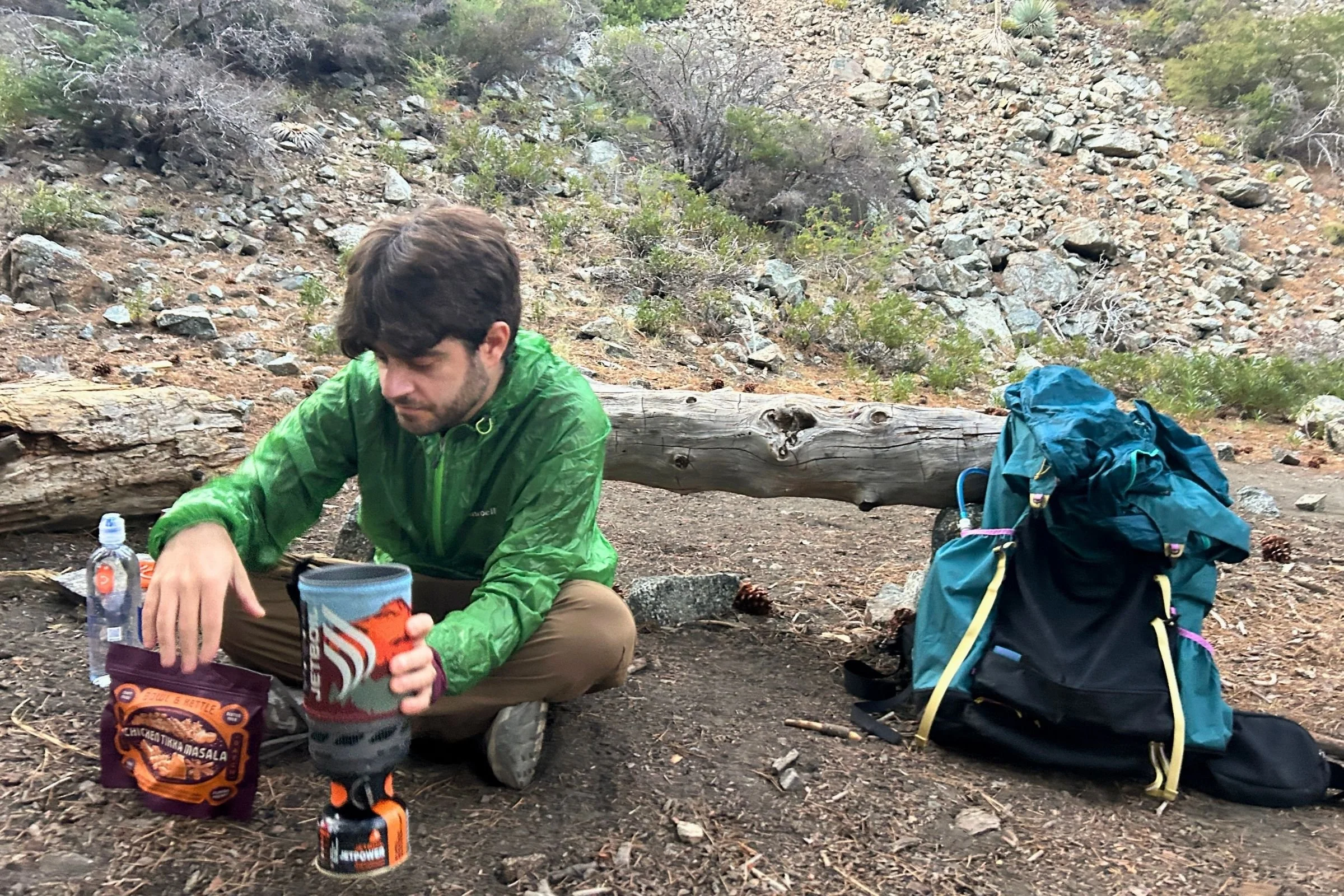
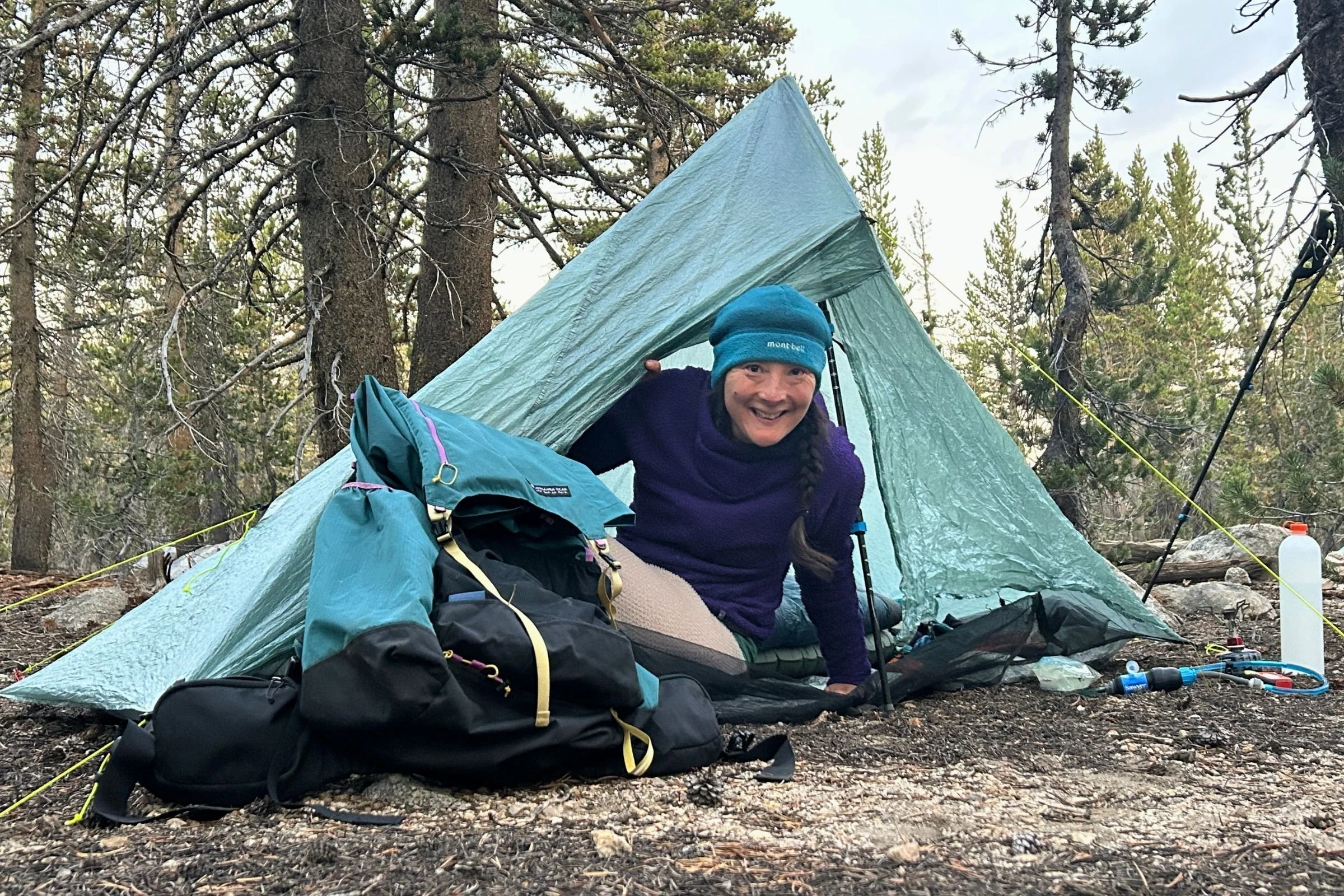
-
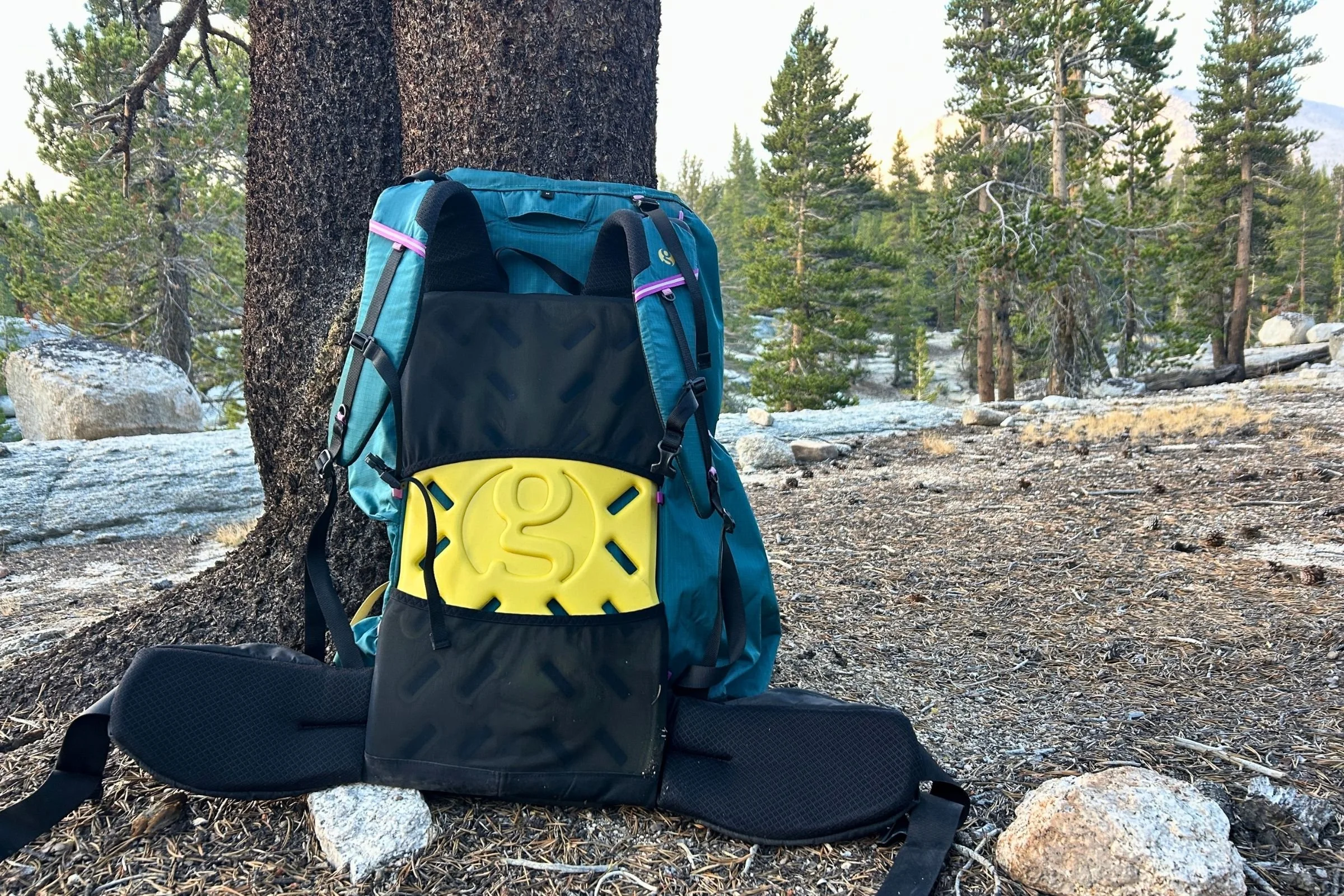
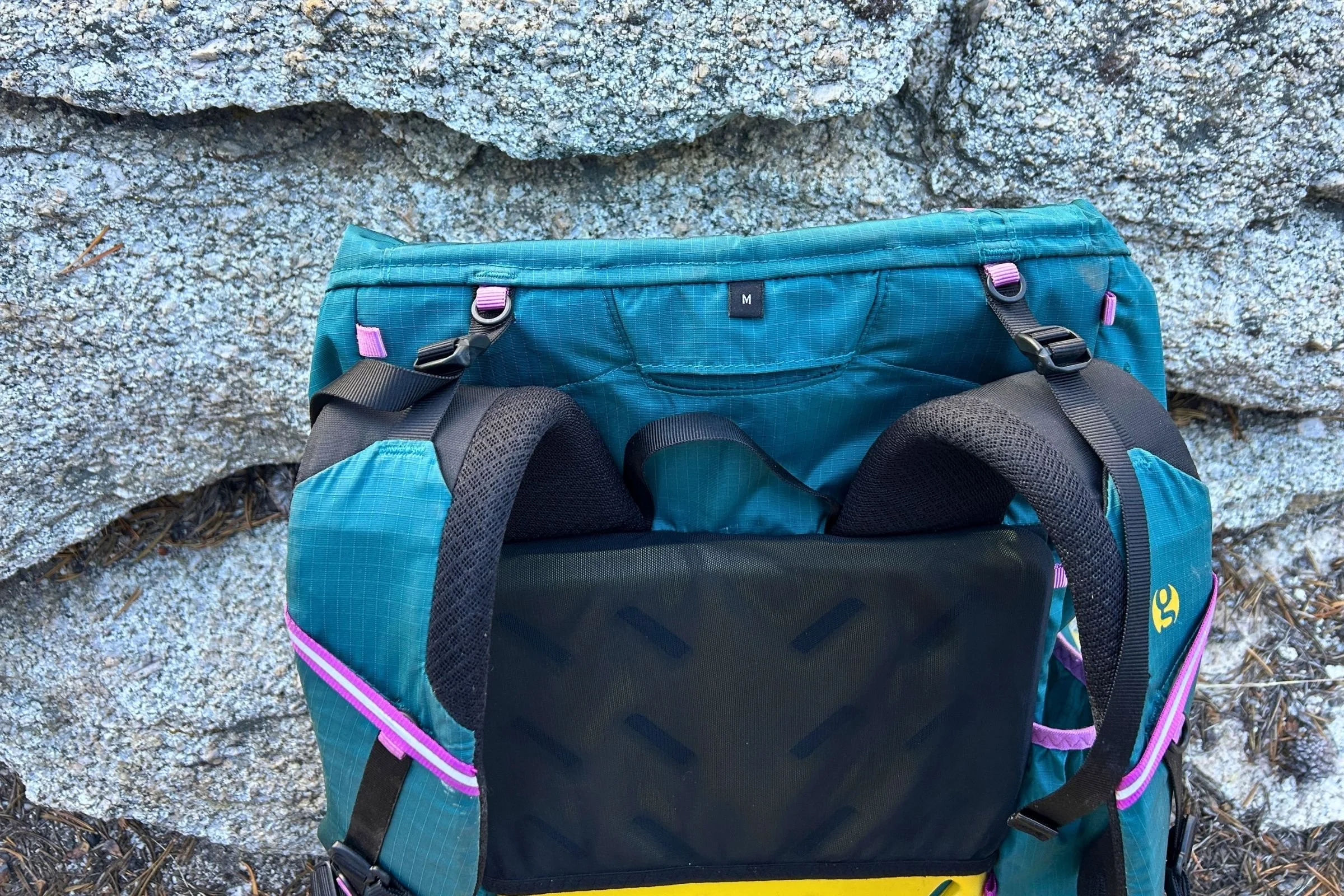
The newest version of the Mariposa has a PVT system that transfers weight to your body better than the previous version. When we compare the older Mariposa with the new model, the old version has a U-shaped frame while the new model has a closed-shape aluminum frame attached to the pivoting hip belt. The result is a noticeably more comfortable pack that moves with you.
The new Mariposa has an S-curve shoulder harness as the standard, which fits both men and women better. You also have the option of straight or curved hipbelts (approximately men's and women's models), though the process to swap out for the women's hipbelt is annoying.
Notably, the placement of the load lifters has also changed on the new version. The new load lifters are higher up and attached to the frame to transfer weight like load lifters are supposed to.
The new version uses a more durable recycled 100D and 210D Robic. From an aesthetic standpoint, the new Robic looks sleeker and more refined.
The internal hydration pocket has been removed.
-
Larger than on other lightweight packs we considered, the pockets are integrated right into the hip belt. Integrated sewn-in pockets are beneficial because they won't slide or fall off should a plastic attachment come loose, as can happen with optional pocket attachments.
Large pockets are also a huge bonus when backpacking, as you can access your phone, GPS, camera, snacks, or maps without having to stop and remove your pack or use a fanny pack.
Unlike any other pack we considered, the Mariposa has three side pockets. On the right side is a water bottle pocket, big enough for two 1-liter bottles.
Above the water bottle pocket is an 8” wide x 10” tall pocket, where some people keep their cookware or other items that are voluminous but lightweight. On the left side is an 8” wide x 16” tall pocket that would be great for a small tent (we were able to fit a Zpacks Duplex tent without its stuff sack into this pocket).
-
The hip belt, frame, and sit pad (back support) can be easily removed, converting the pack into a frameless pack weighing close to one pound.
-
One minor issue is that there is not a great place to hold a full-size umbrella (popular with many hikers for sun and rain protection). The umbrella will fit in the large side pocket, but there is no side compression strap or cord to secure items that stick out above the pocket.
-
For its comfort, features, easy organization, and spaciousness, the Gossamer Gear Mariposa is a great choice for backpackers headed on their first thru-hike.
Best Dyneema Backpacking Backpack: Hyperlite Mountain Gear Junction
Capacity: 40L, 55L
Weight: 1.88 lbs
Materials: White: DCH50 (Main Body) & DCH150 (Bottom)
Black: DCH150 (Main Body & Bottom)
Max load: 40 lbs
Cost: $349
What we liked: overall durability, water resistance
What we didn't like: issues with durability of the mesh
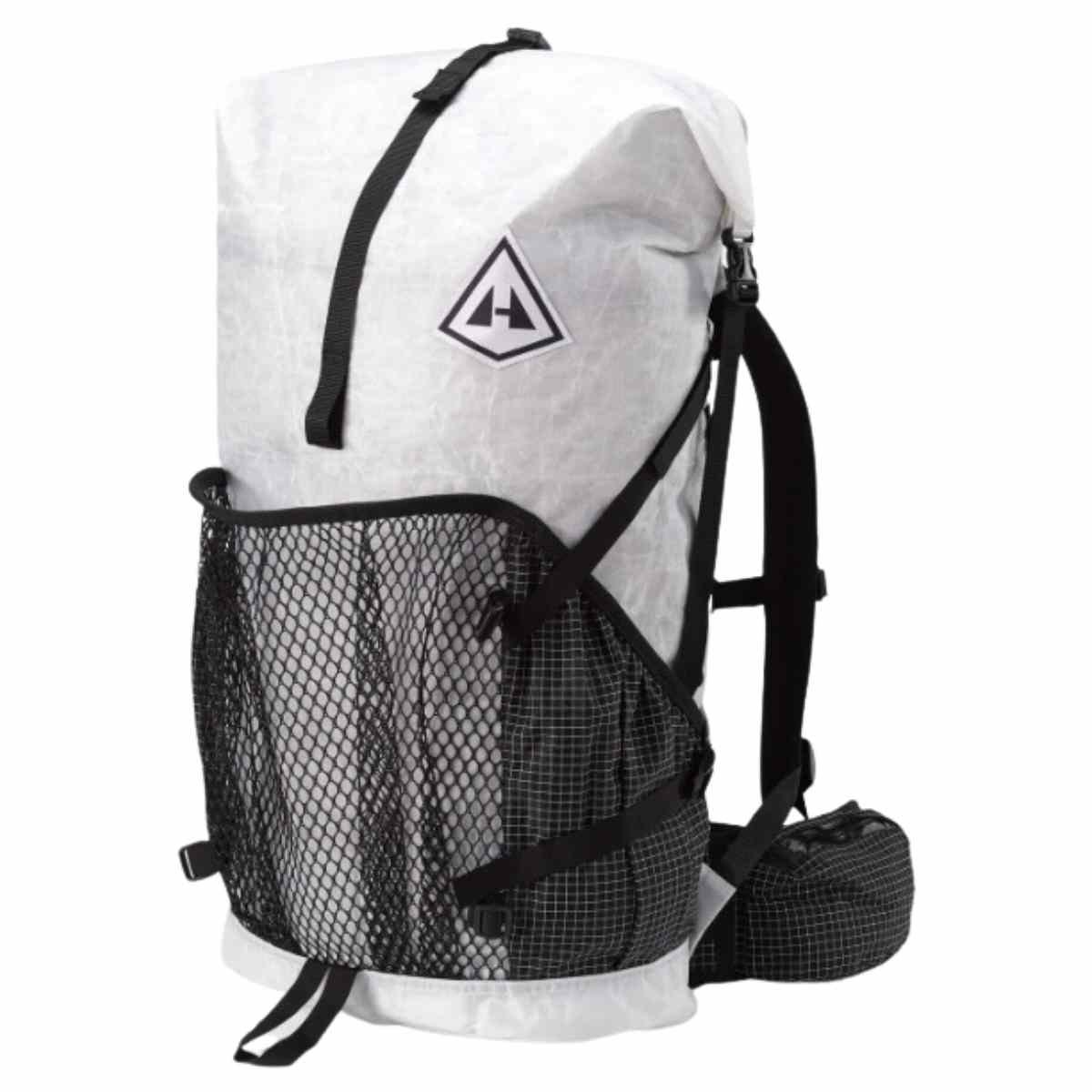
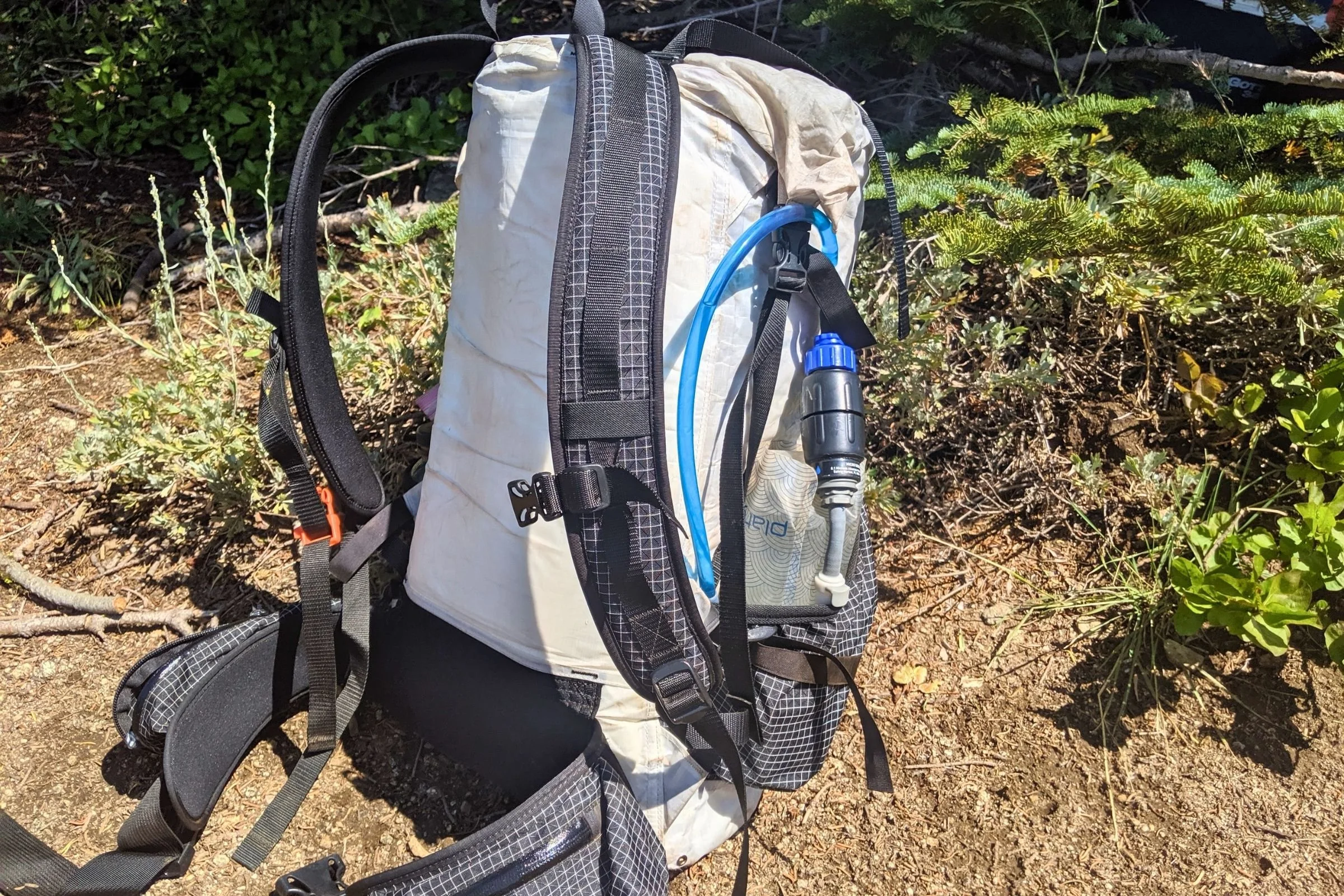
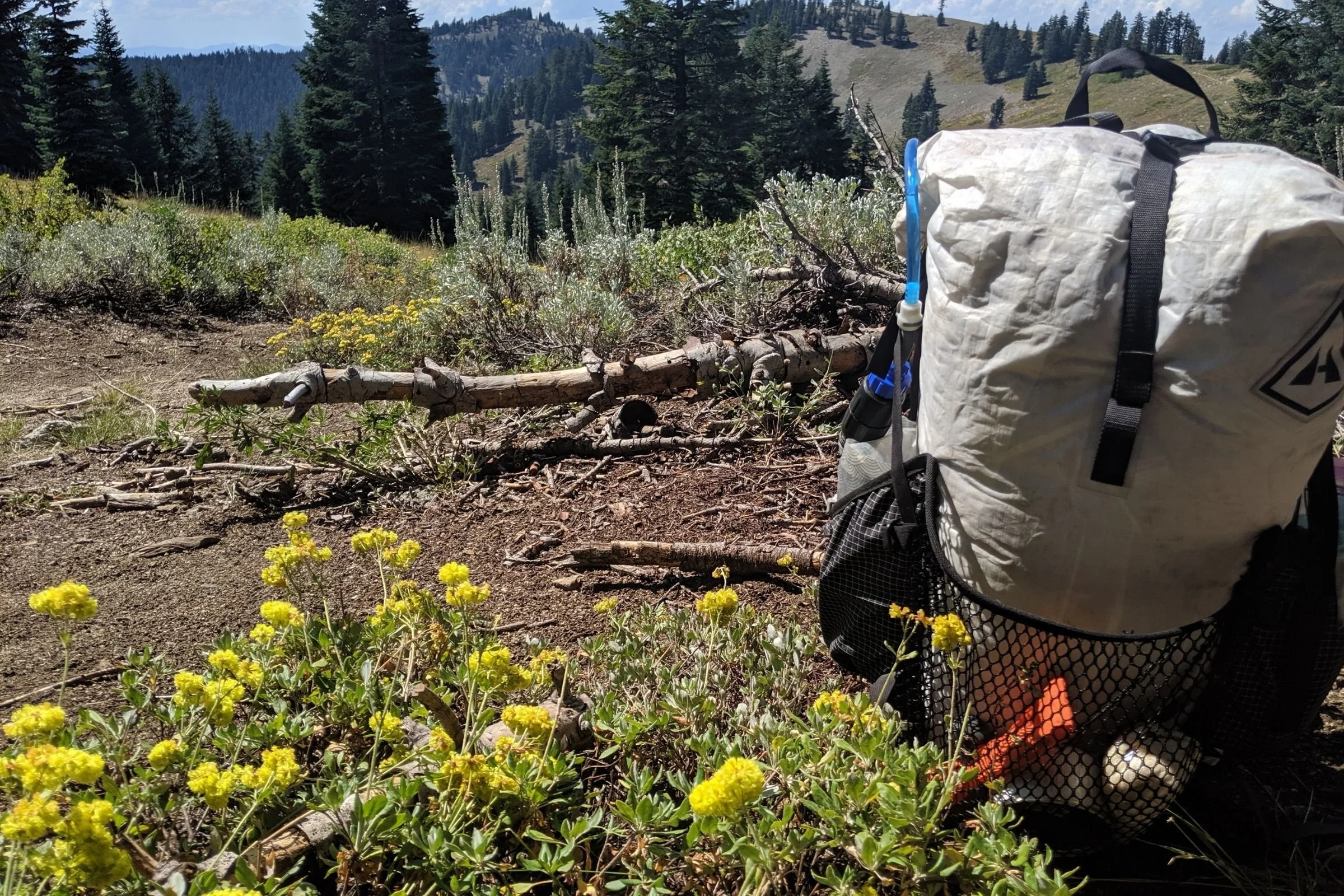
The Hyperlite Mountain Gear Junction is the best Dyneema backpacking pack available because of its balance of quality, durability, and water resistance. Hyperlite Mountain Gear is a small, outdoor gear manufacturer in Maine. We found that HMG backpacks are made with an attention to detail that makes it worth paying a premium for their gear. The ultralight Junction backpacks — available in 40L and 55L sizes — became our Dyneema winner because of their ease of use and well-designed pockets.
Read our full review of the HMG Junction.
View The Hyperlite Mountain Gear Junction Backpack
Junction 40
Junction 55
-
While not everyone will want a backpack made of Dyneema Composite Hybrid (DCH, formerly known as Cuben Fiber Fabric), many backpackers find it to be a top priority. DCH is a rugged sailcloth that is abrasion-resistant and waterproof enough to be the fly on a three-season tent. Despite being waterproof, we strongly recommend you use additional methods to protect your gear. See our section on how to keep your gear dry.
While HMG is not the first backpack manufacturer to use the DCH fabric, they do more volume in DCF and DCH backpacks than any other company. That volume has allowed HMG to refine the process to an art.
-
The similar HMG Windrider and Southwest have been ultralight thru-hiker standards for several years. After testing different models on a thru-hike of the Ouachita Trail, we compared and think the Junction is the best. Here's why: The Junction’s design is a combo of the best of the Southwest and Windrider — and before it existed as its own model, a design similar to the Junction was one of the most popular custom design requests.
-
HMG packs are designed to carry comfortably without load lifters, which is a point of contention among hikers. Some hikers — even lightweight or ultralight hikers — find a benefit to load lifters, saying they prevent shoulder knots and bruising. Others think they’re a relic of traditional backpacking backpacks. If you know you like load lifters, try the HMG pack fully loaded in your house before committing to it (don't worry — they have a great return policy).
-
We think the HMG Junction is the best Dyneema pack for most backpackers. While not everyone wants or needs a Dyneema pack, HMG has perfected the art of working in this fabric to create a pack that will serve you well on the long haul.
Best Ultralight Backpacking Backpacks: Pa'lante V2 with Joey Straps

Capacity: 37 L
Weight: 21 oz
Cost: $240
Materials: 210D UHMWPE Gridstop
Max load: 25 lbs
What we liked: Comfortable shoulder straps, durable pack body materials, has running vest-style pockets as well as backpacking pack pockets, has a bottom pocket
What we didn't like: Fastpacks aren't for everyone
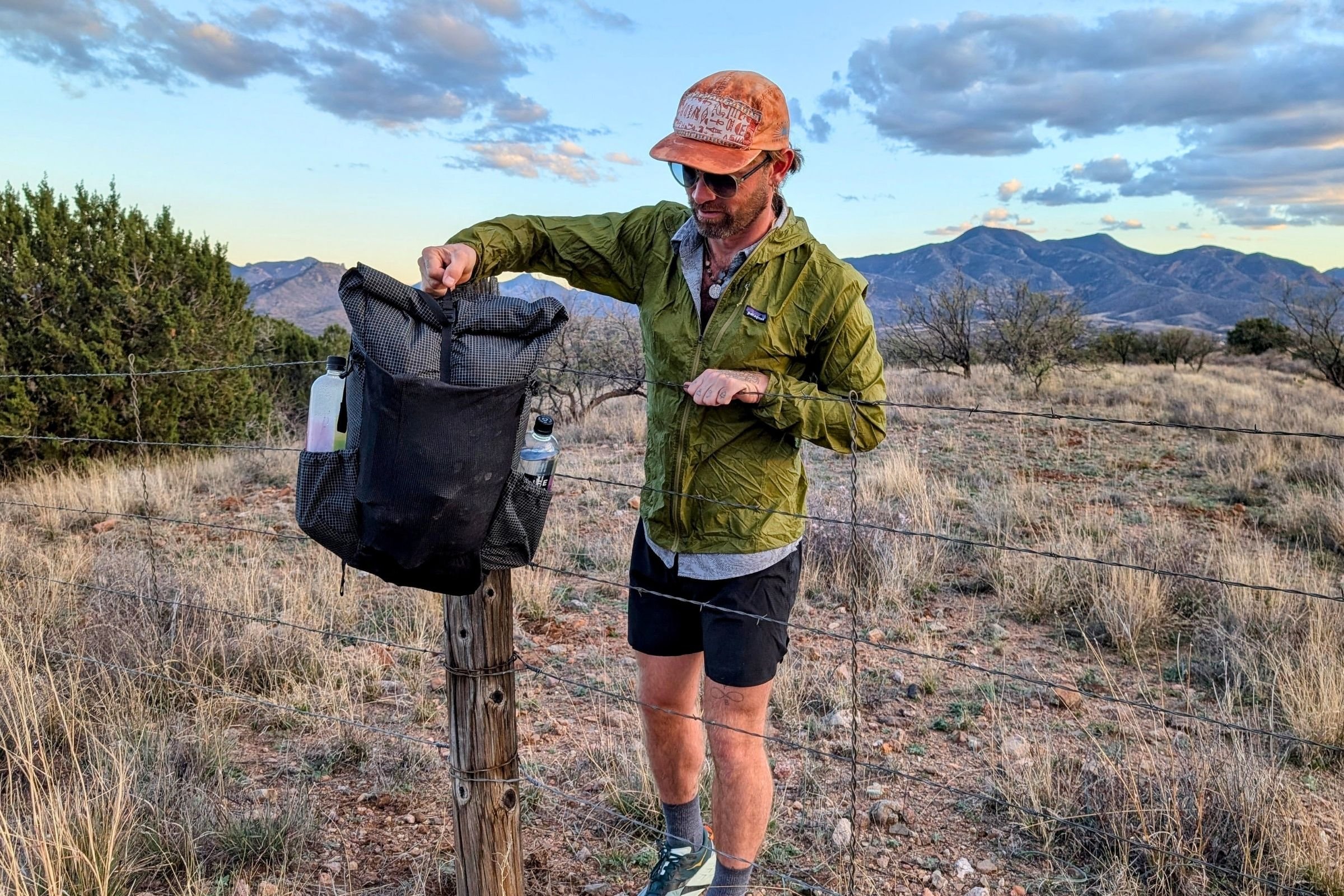
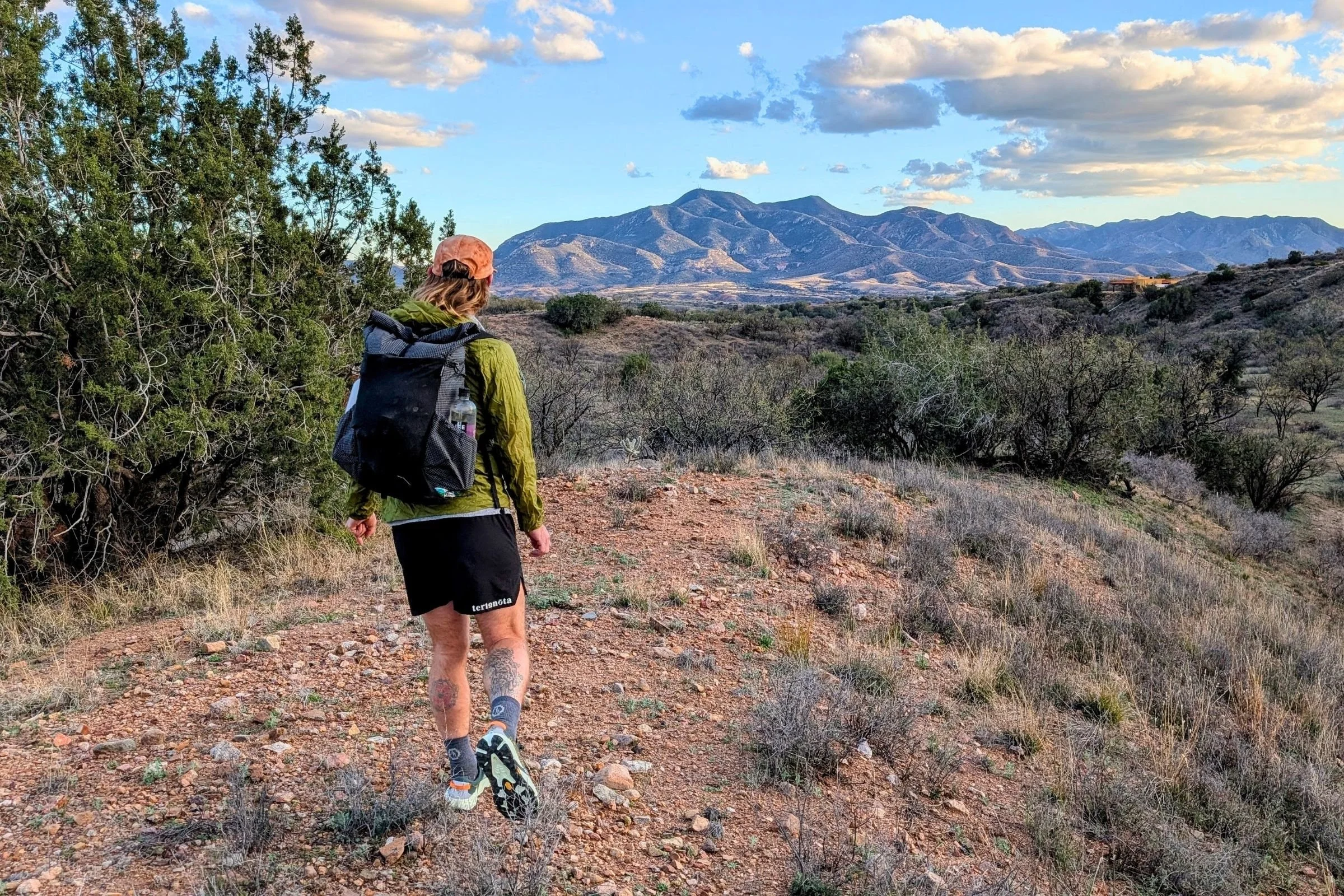
For ultralight backpackers who have thru-hiked before, we think the Pa'lante Packs V2 with Joey Straps (aka: running vest straps) is the best ultralight backpacking backpack we've tested in years of testing fastpacks.
We have an entire story dedicated to fastpacks (backpacking backpacks that are designed for people moving light and fast). This style of backpack is not for everyone and we don't recommend it for most backpackers. But if you are considering this style of pack, the Pa'lante V2 is the very best.
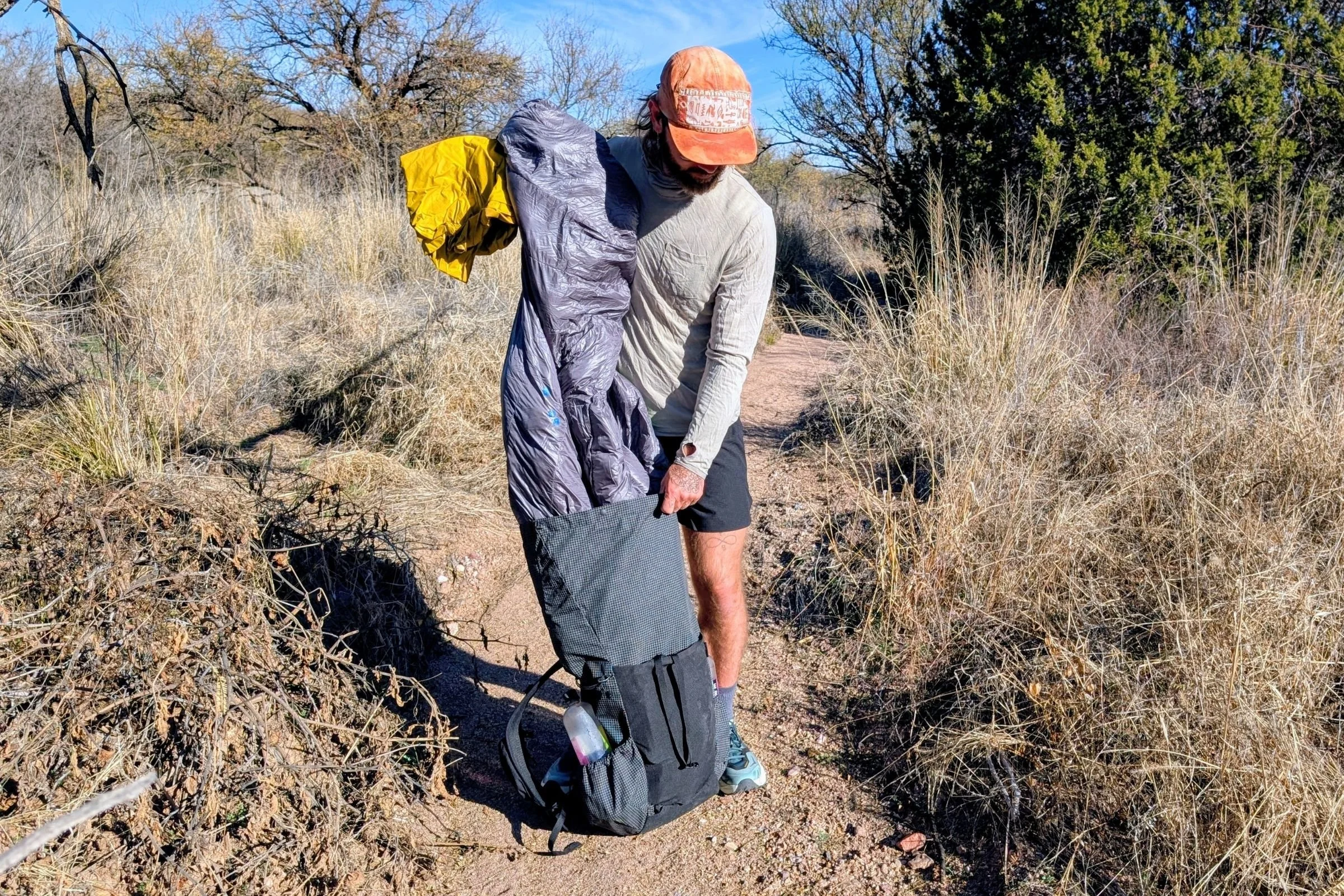
The V2 with Joey straps has lots of functional pocket space and comfortably carries a fastpacking set-up. It even fits a BV500 bear canister, which makes it an excellent option for backpackers who want a fastpack that is functional for most trips.
In almost a year of use, we've found you can roll down to the point where the higher capacity doesn't get in the way of running on the downhills on every backpacking trip.
If you want a stellar ultralight backpacking pack that’s versatile enough to use on shorter trips and longer outings, check this one out. Learn more in our in-depth review of the Pa’lante Packs V2 Backpack with Joey Straps.
Pa'lante V2 with Joey Straps
-
The V2 with Joey Straps uses 70D UHMWPE stretch mesh for the shoulder strap, bottom, and rear external pocket. The pack body and side water bottle pockets are 210D UHMWPE gridstop material. Both of these materials are extremely durable. These are the same materials used on the standard V2, which we’ve put over 2,000 miles on. There are no tears or obvious signs of wear anywhere on that pack, or the V2 with Joey Straps.
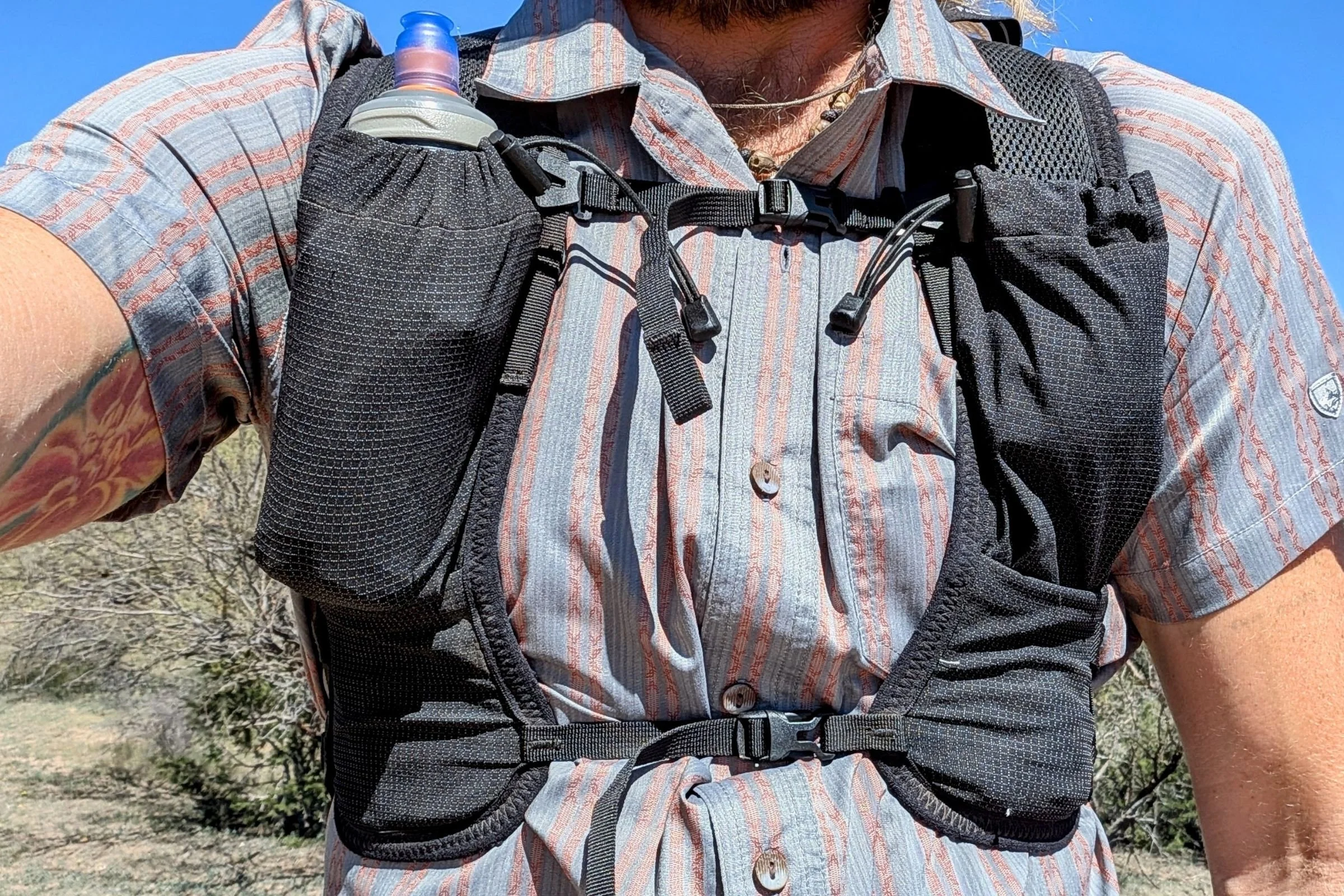
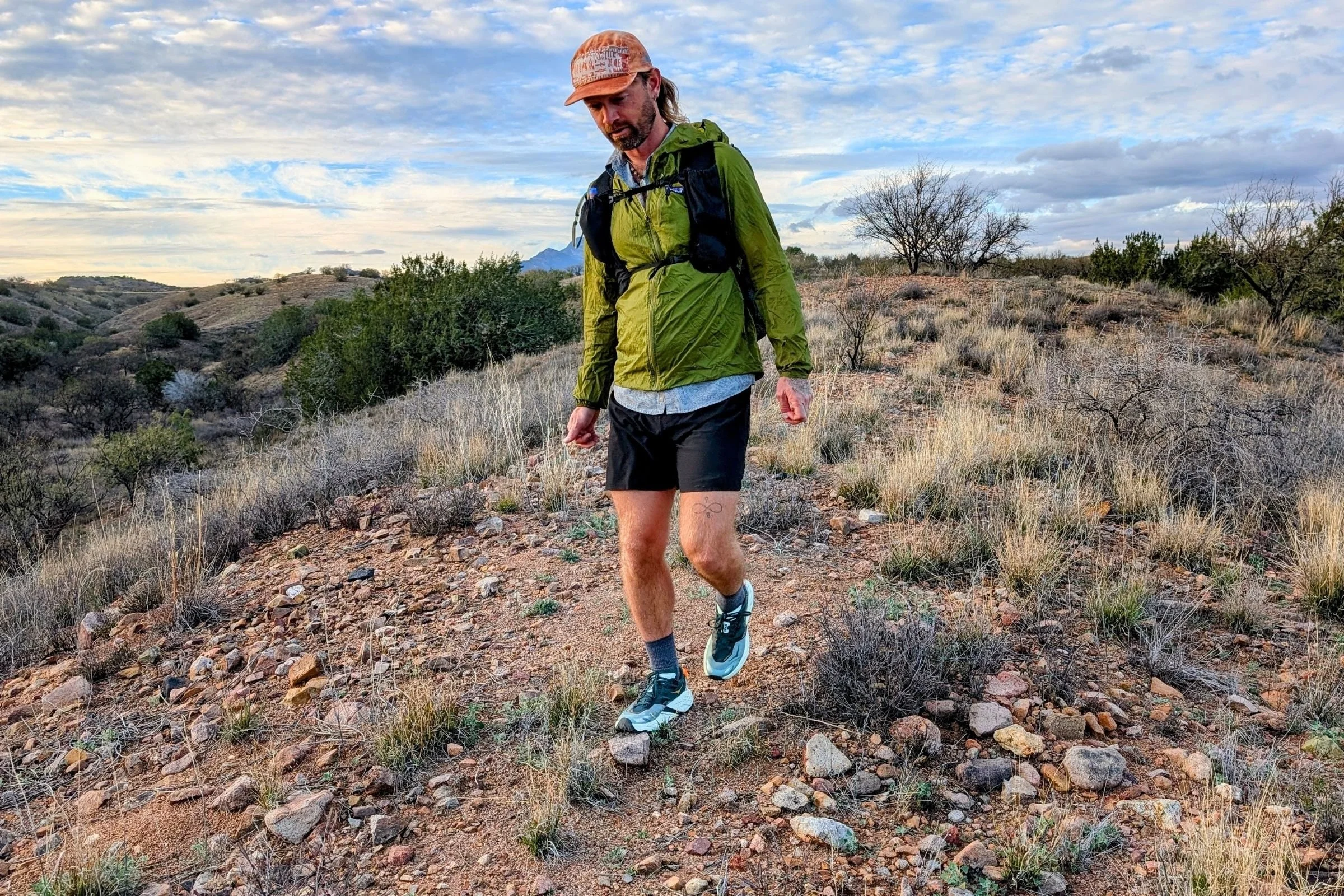
The vest straps are made of two layers of 3D mesh with subtly stretchy, edge-binding tape. These straps aren’t nearly as stretchy as some running vests, but they stretch more than standard backpack straps.
-
The V2 with Joey Straps is great because it has a higher volume capacity than many of the other fastpacks we tested, so you can carry more food and water. We love the original V2 for the same reason and think the padded backpack-style straps are slightly better for carrying heavier loads. But we also love the V2 with Joey Straps because it has extra pockets on the shoulder straps.
-
The V2 with Joey Straps is a great pack for everything from fast-and-light thru-hiking to weekend backpacking trips that cover a lot of miles, and shorter adventures where you need to carry a lot of layers, a climbing helmet, or more.
Best Backpack Under 2 Lbs: ZPACKS Arc Haul UltrA 60L
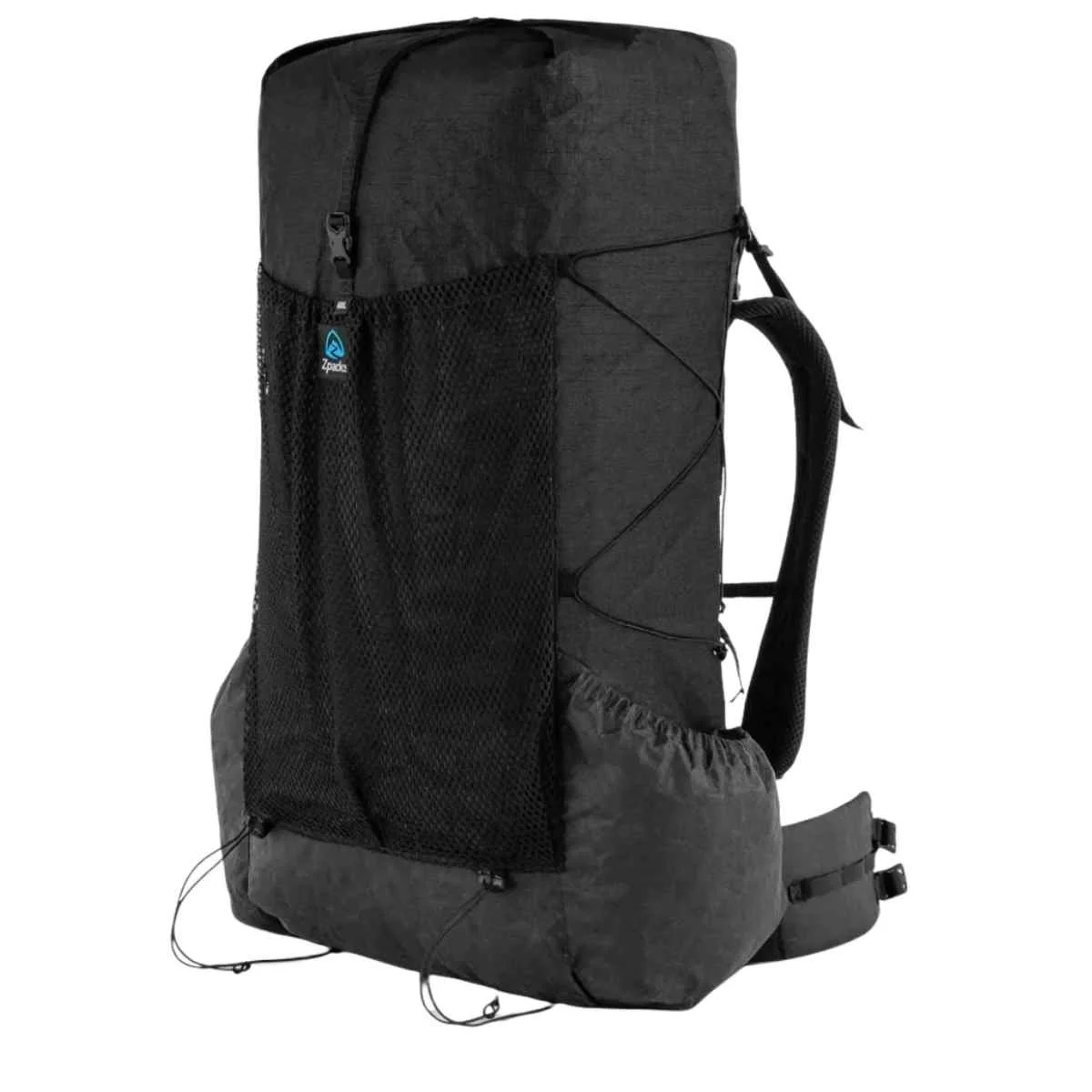
Capacity: 60 L
Weight: 1.31 to 1.39 lbs (depending on size)
Materials: Ultra 100, Ultra 200, mesh, 3D spacer mesh
Cost: $400
Max load: 40 lbs
What we liked: light weight, frame carries weight well, waterproof material
What we didn't like: price, limited colors, pockets are extra
The Zpacks Arc Haul Ultra 60L backpack is made from Ultra 100 and 200, and at 1.34 lbs is perhaps the lightest mid-size volume pack on the market with a frame. It's our top choice for best water-resistant backpack with an extremely water-resistant material and full-seam taping. We've used some version of this pack on thru-hikes in the wettest conditions without a packliner (but we don't advise this). It's an excellent pack on its own merit, and its waterproofing abilities make it the best lightweight pack choice for wet conditions.
We love the Arc Haul for its light weight and Curved Carbon Fiber frame system which allows airflow to the back. The roll top closure adds additional security from wet conditions, and the pack has efficient pocket and strap features that let you customize exactly what you need. For more, read our review of the Zpacks Arc Haul.
View the Zpacks Arc Haul Ultra 60L

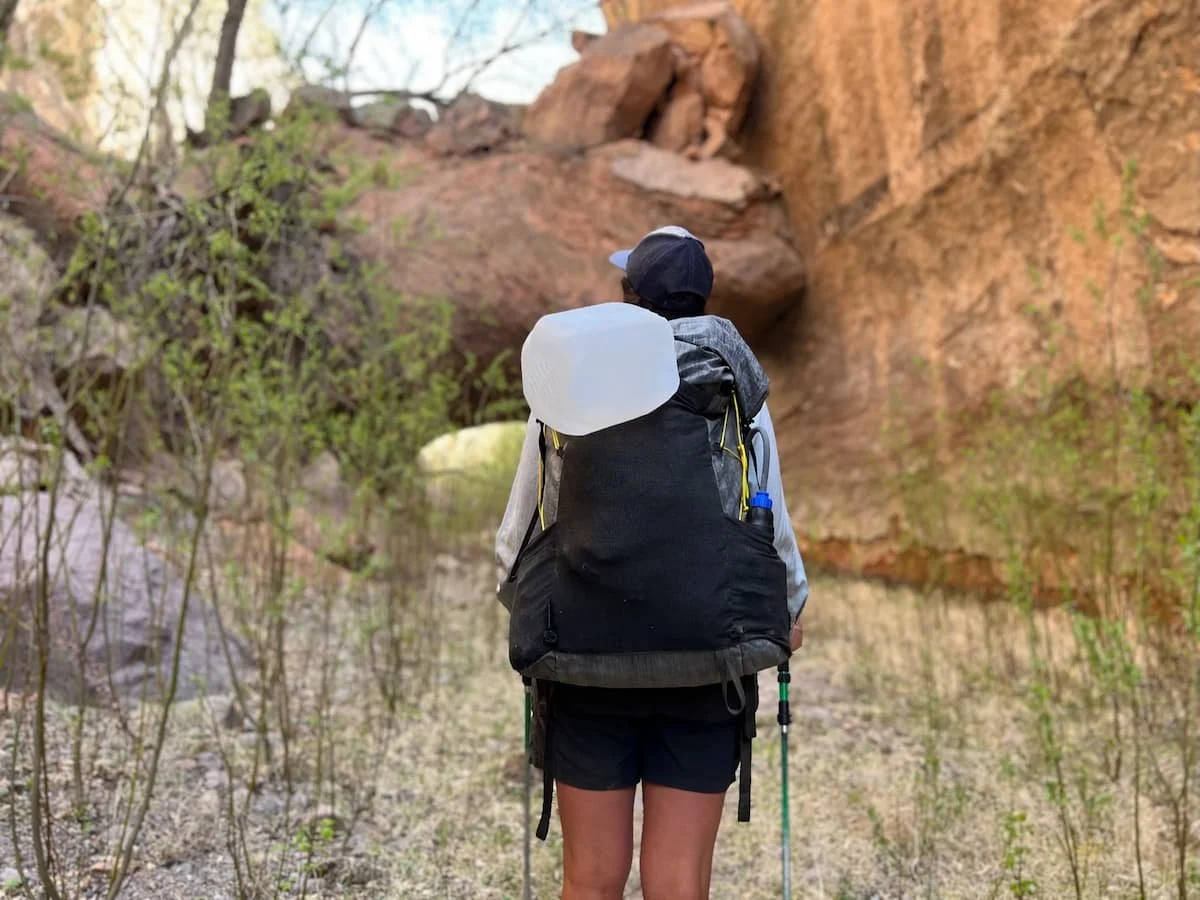
Treeline editor Liz Thomas thru-hiked the Arizona Trail southbound in October carrying the Zpacks Arc Haul.

The Arc Haul is a sturdy pack that could handle the heavy and long water carries of the Arizona Trail with its comfortable frame.
-
The Zpacks Arc Haul Ultra is an update from the previous version, the Zpacks Arc Blast. Our testers used the Arc Blast for thru-hikes of the Pacific Crest Trail and two thru-hikes of the Great Divide Trail in the Canadian Rockies. On our first thru-hike of the Great Divide Trail, it rained or snowed for 37 of 40 days on trail with the carwash effect (wet bushes) leaving us sopping wet for almost the entire trip. The Arc Haul kept everything dry, even without a liner.
We did further "lab" testing of dunking this fully loaded pack into a Sierra alpine lake with our sleeping bag (unprotected) inside. We also sprayed the Arc Blast with a hose for a minute straight. In both cases, the Arc Haul delivered.
Note: We always recommend using a packliner, even on waterproof backpacks. But with the Arc Haul, you can go for the most minimalist packliner possible, the Nylofume.
-
We tested the newer Arc Haul Ultra on a fall thru-hike of the Arizona Trail. It's comfortable and well balanced, holding the weight of the long water carries through the desert. Admittedly, the Arizona Trail wasn't the wettest hike for testing waterproofing, but when it rains and snows in Arizona, it really does let loose.
-
If you're willing to spend extra for the security and extreme light weight, the Zpacks Arc Haul is a time-tested pack and thru-hiker favorite.
Best Backpacking Pack for Tall People: LiteAF Curve Full Suspension

Capacity: 40L or 46L
Weight: 25 to 36+ ounces, depending on fabric, size, and add-ons
Materials: Ultra 200, Ultra X, ECOPAK, or Dyneema
Cost: $418
Max load: 35 lbs
What we liked: comfort, durable, secure fit, bottom pocket, side pockets, upper pockets,
What we didn't like: expensive, no hydration system
The LiteAF Curve is a great lightweight backpacking pack for tall people. Our main tester, who is 6-feet tall, found it to fit incredibly well. It is lightweight and durable, and its volume and suspension system can handle the heavy food and water carries sometimes required on thru-hikes. The Curve Full Suspension backpack is available in 40L or 46L sizes.
The Curve is one of the most customizable backpacks available. You can add a hip belt, shoulder, upper side or bottom pockets, choose from over 40 colors or designs, and select between different top closure options.
The LiteAF comes in four torso sizes and four hip belt sizes, so you can get a near-custom fit. This is especially appreciated for tall people and backpackers with long torsos and smaller waists, who often struggle to find a good fit.
You can read more in our full review of the LiteAF Curve backpack.
View the LiteAF Curve Full Suspension

The LiteAF Curve wide Y-strap securely held a 3-liter CNOC bottle on a long waterless carry. Photo courtesy Naomi Hudetz.
-
We tested the LiteAF over 600 miles of rugged hiking in Arizona and New Mexico on the Mogollon Rim Trail. We were extremely impressed with its durability – especially considering we did some bushwhacking through sharp desert vegetation. The pack still looks as good as new.
-
The large, rugged mesh front pocket is large enough for a wet tent, rain gear, and other items needed throughout the day. The water bottle pockets can fit two bottles and are easily accessed while on the move.
-
The LiteAF Curve is available in UltraWeave, ECOPAK, or Dyneema. All are lightweight, waterproof, and extremely durable. The packs are seam-taped and very water resistant; however, we always recommend a waterproof bag liner.
-
You can customize the LiteAF Curve to meet your specific needs and hiking style. However, customization comes at a cost. Few folks will stick with the base model. If you include every option, the price rises over $600, the most expensive of any pack we tested.
Best Large Capacity Backpack: ULA Catalyst

Capacity: 75L
Weight: 2.8 lbs
Materials: ULA 400 Robic nylon
Cost: $320
Max load: 40 lbs
What we liked: high weight and volume capacity, great for backpackers with kids
What we didn't like: heavier than other packs tested
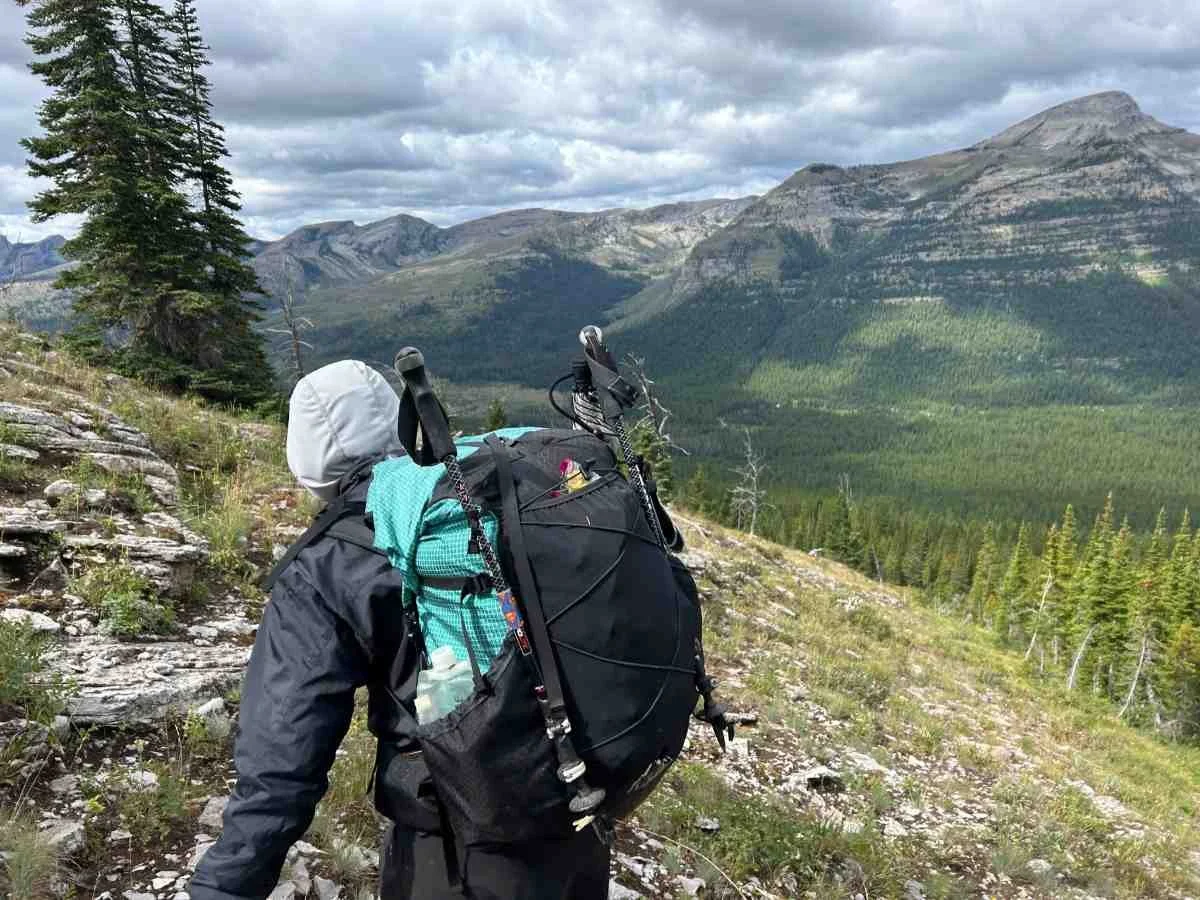
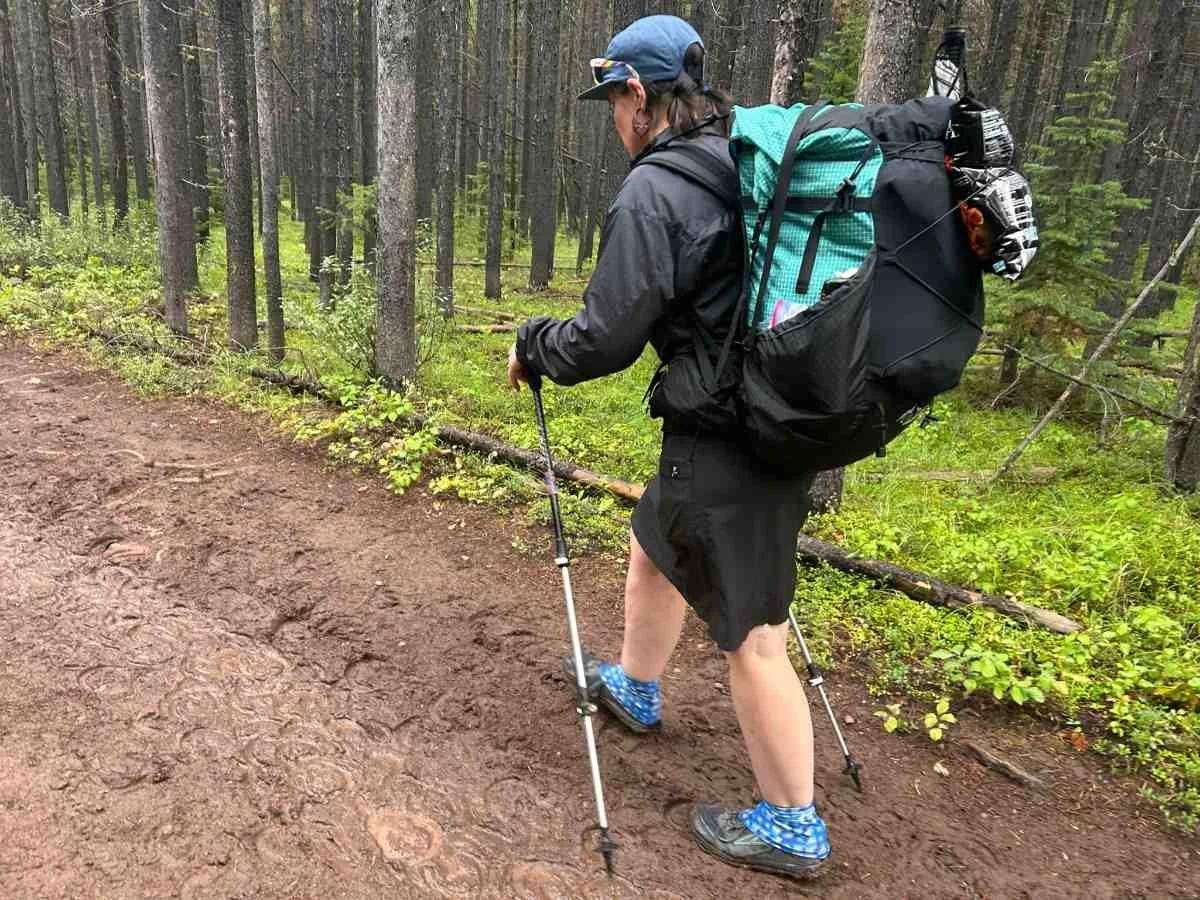
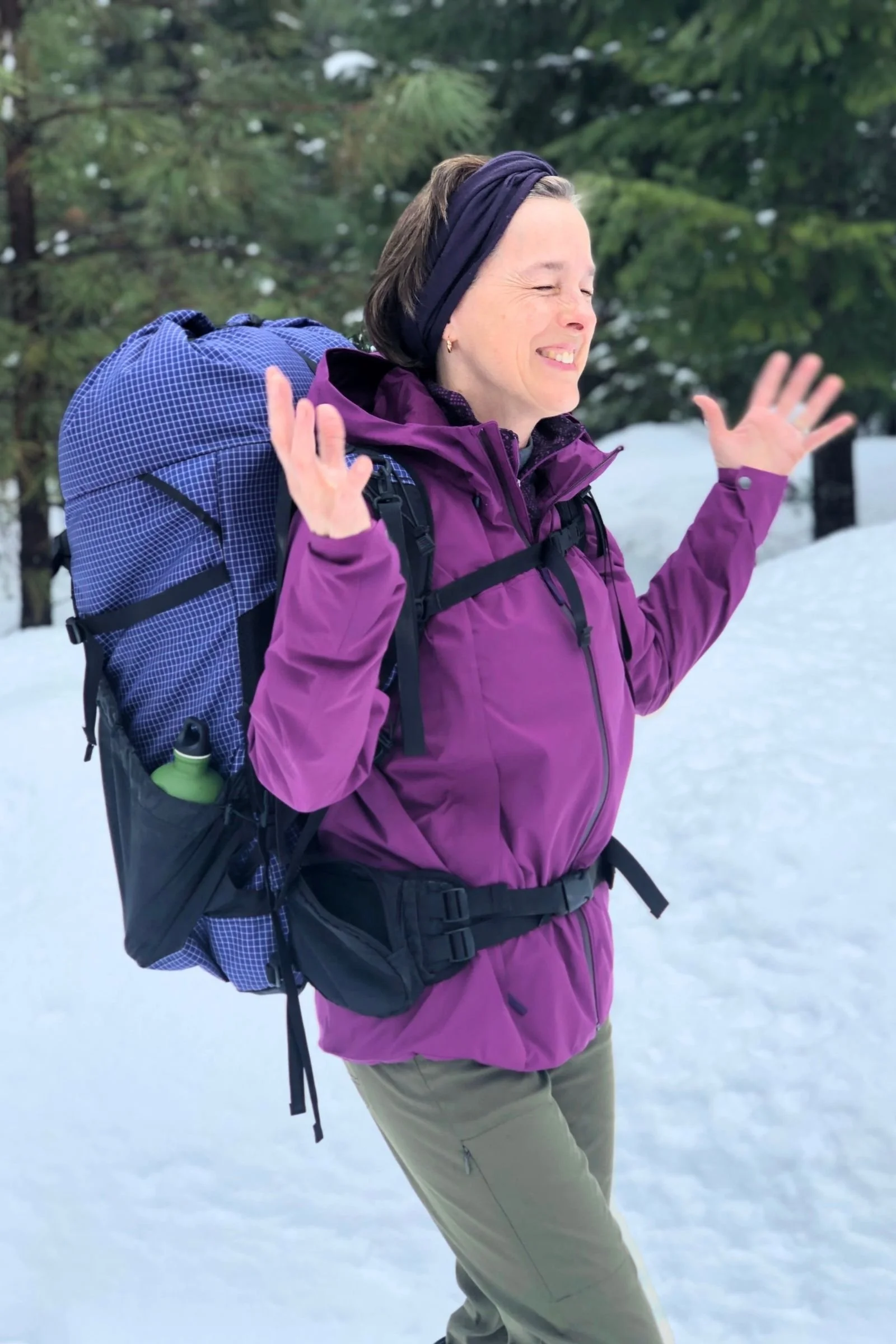
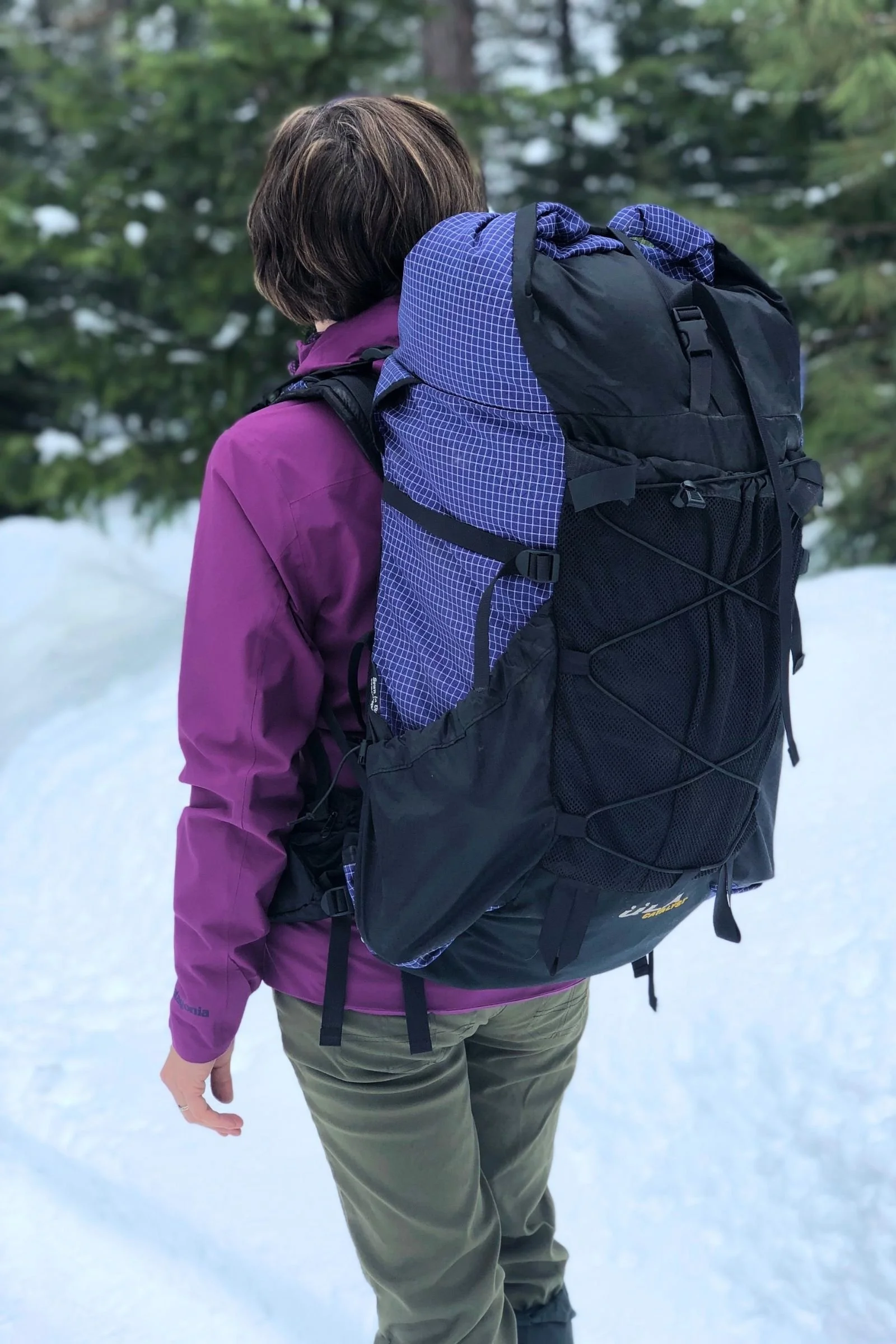
Sometimes you need to carry a large volume—even if it isn’t that heavy. Guides, troop leaders, or folks with children may have to carry extra food, first aid kits, or other people’s gear. The ULA Catalyst has a 75-liters capacity and a 40-pound load rating — but only weighs 3 pounds.
The Catalyst was the most popular and highest rated pack among Pacific Crest Trail (PCT) hiking class according to the annual survey of PCT hikers.
You can read more in our in-depth, long-term review of the ULA Catalyst backpacking pack.
View The ULA Catalyst
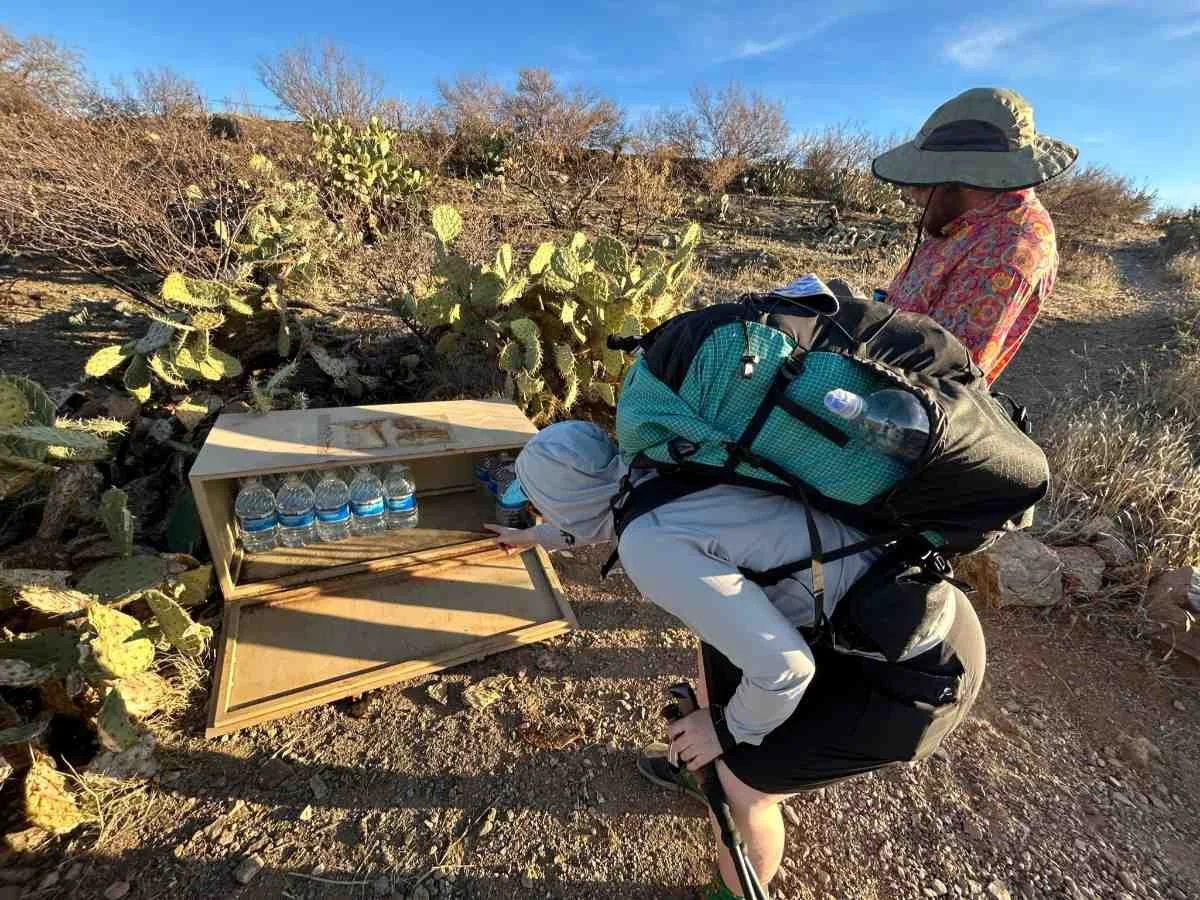
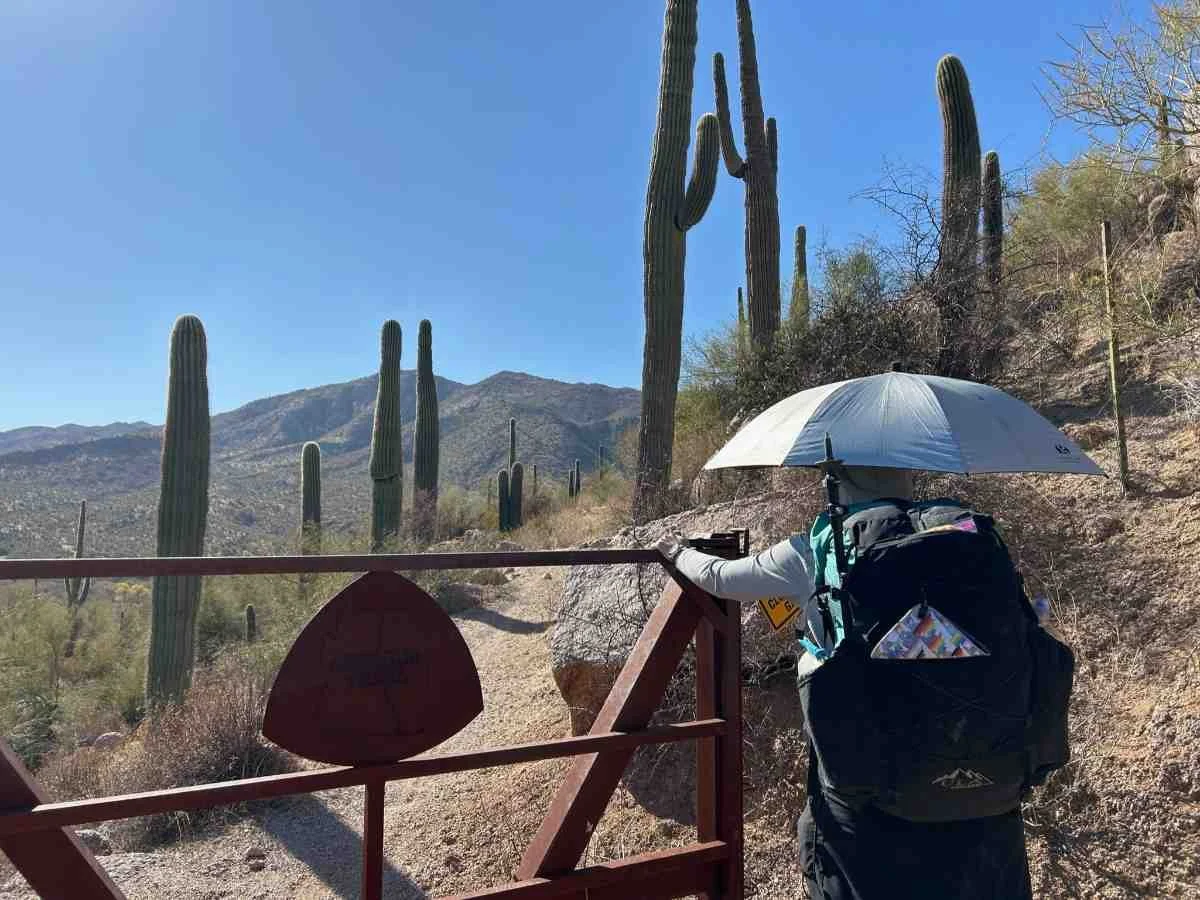
-
We liked the Catalyst because it’s a lightweight backpacking pack that is specifically designed to take bigger volumes and somewhat heavier loads. The ULA Catalyst is a full-featured pack designed for folks who want to haul bulkier items such as fishing gear, extra camera equipment, or large food carries.
-
We also have found the Catalyst to be a good choice for lightweight backpackers with kids who may want to carry some of their children’s gear. Several of our writers use the Catalyst while backpacking with kids.
We've even had readers write in to tell us they use it when they've had to backpack with extra medical equipment. The capacity and carry of this pack are great, especially for an ultralight backpack.
-
The Catalyst can fit a full-size bear canister both vertically and horizontally (another reason it’s popular with PCT thru-hikers). In contrast, our top backpack pick, the Six Moon Designs Swift X, can only fit a bear can vertically (although it can be strapped to the top horizontally). The ability to carry a bear can is essential for traveling through national parks, like Yosemite, and through the Sierra and Adirondacks.
-
Despite the Catalyst’s ability to take larger volumes, it’s only rated to 40 pounds. This means it is well-suited for you if you’re carrying your own gear plus large volume items that tend to not weigh much.
-
We like the Catalyst for winter hiking or shoulder season hiking, where we find ourselves bringing a lot of lightweight but bulky down items. A 10-degree sleeping bag takes up a lot more volume than a 30-degree bag, even if it only weighs a few ounces more. Similarly, warmer down jackets or synthetic jackets can be bulky. These are the situations where the Catalyst excels.
Best Backpack for Transitioning to Ultralight: Six Moon Designs Swift X
Capacity: 50L
Weight: 1.69 - 2.5 lbs (depending on configuration)
Cost: $375
Materials: LiteSkin LS21 or EPX 200
Max load: 35 lbs
What we liked: carries heavy loads, lightweight for its capabilities
What we didn't like: heavier than most other packs we tested
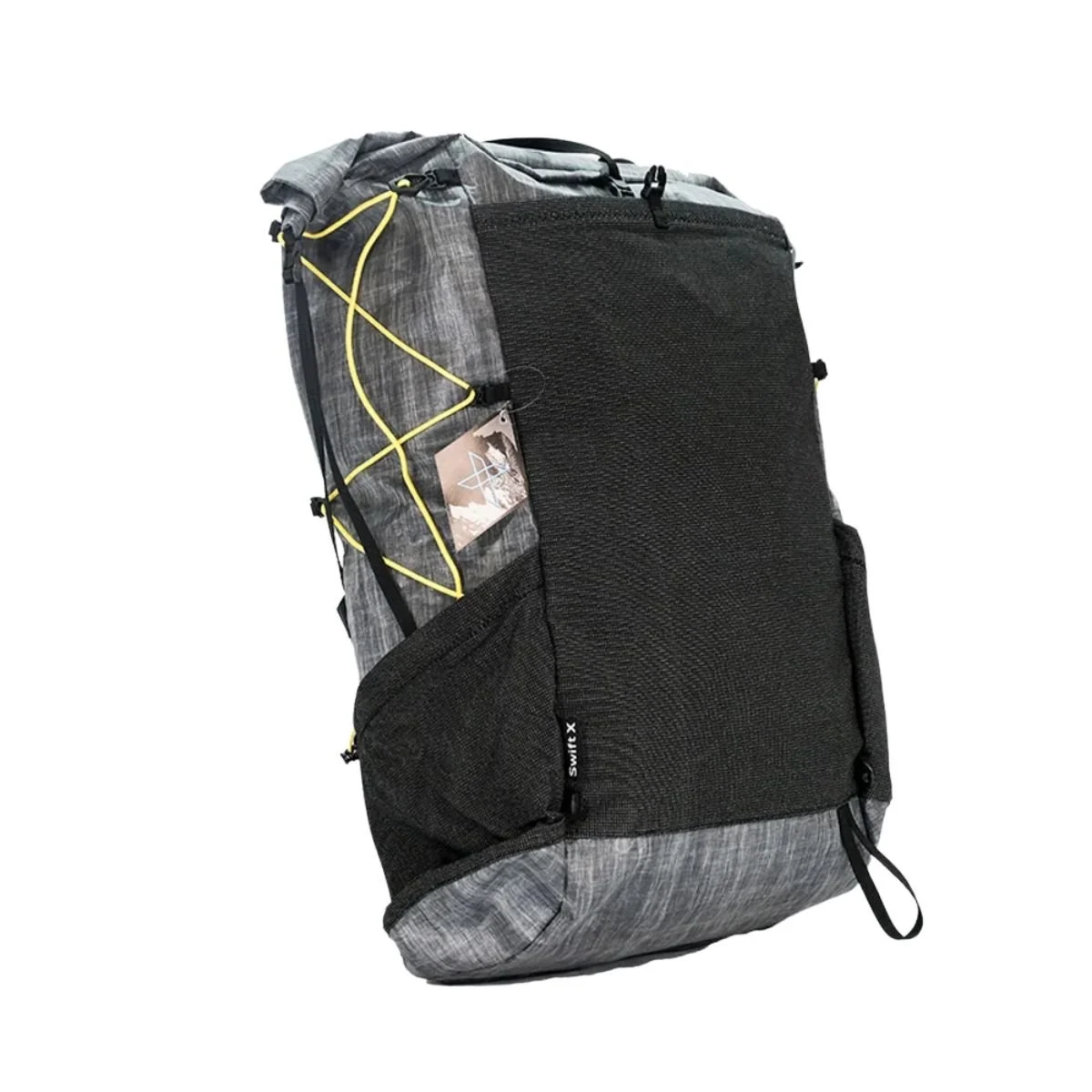
After thousands of miles and years of testing, the Six Moon Designs Swift X is the best backpack for people transitioning to ultralight backpacking. The Swift X is great for those familiar with hiking with a traditional 5+ pound pack who want a lighter, fully featured pack.
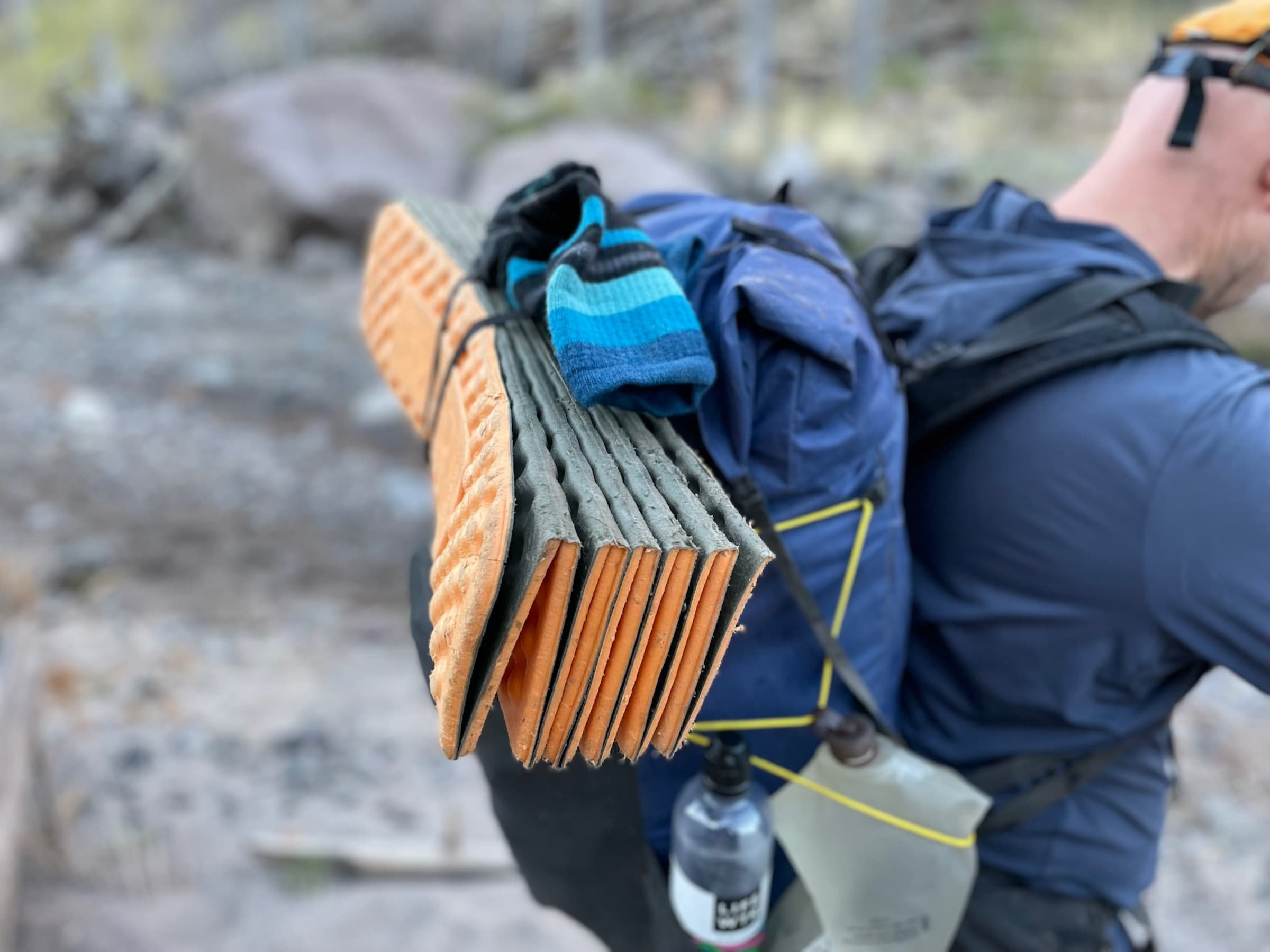
We tested this pack on remote routes with long food and water carries like the Oregon Desert Trail or Blue Mountains Trail. In particular, we were impressed by the Swift X’s excellent suspension system that can comfortably carry heavy loads. The Swift X offers all the utility, comfort, volume, and durability of a heavier, traditional pack — but at half the weight.
For a more in-depth look, check out our Six Moon Designs Swift X Backpack Review.
View The Six Moon Designs Swift X
-
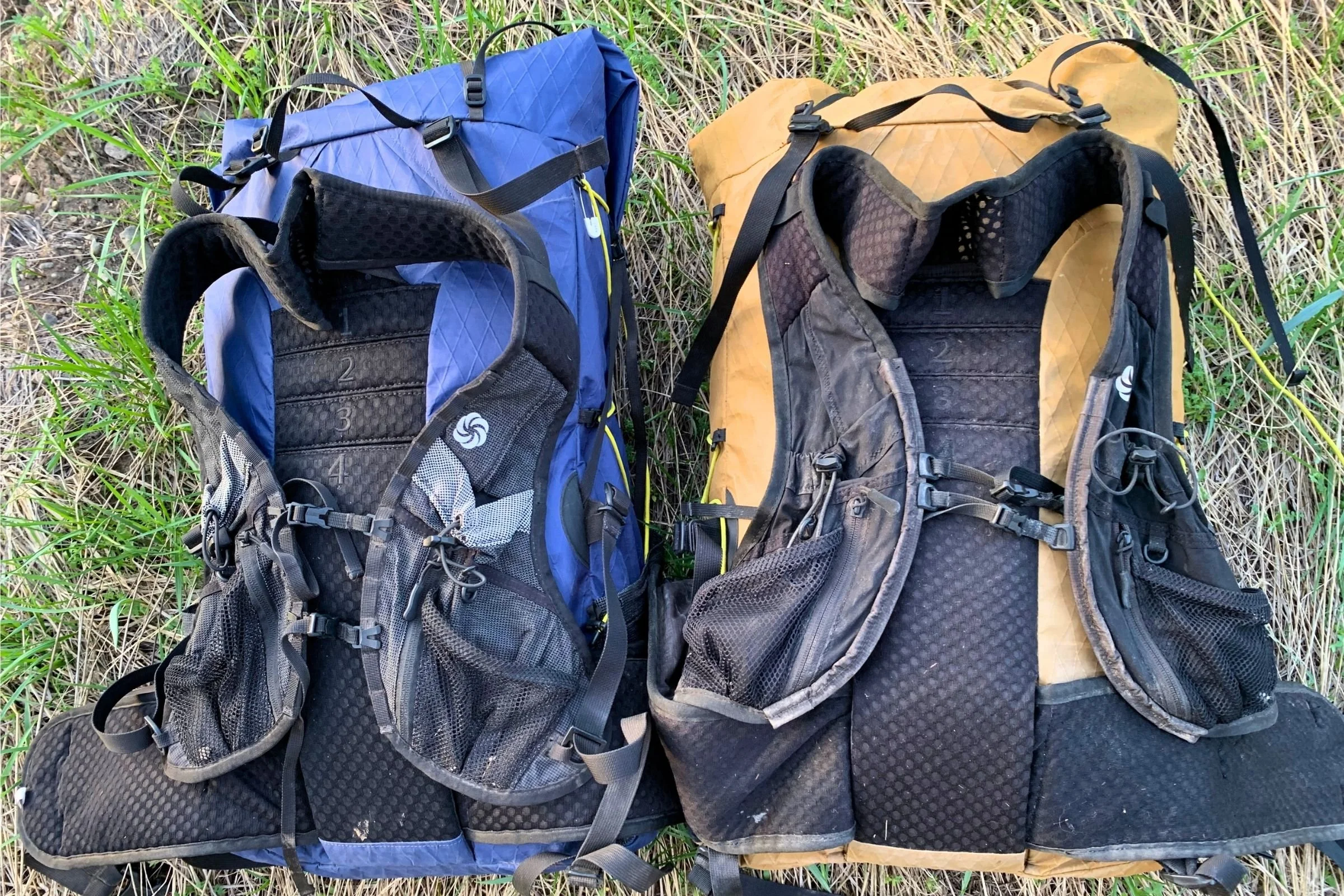
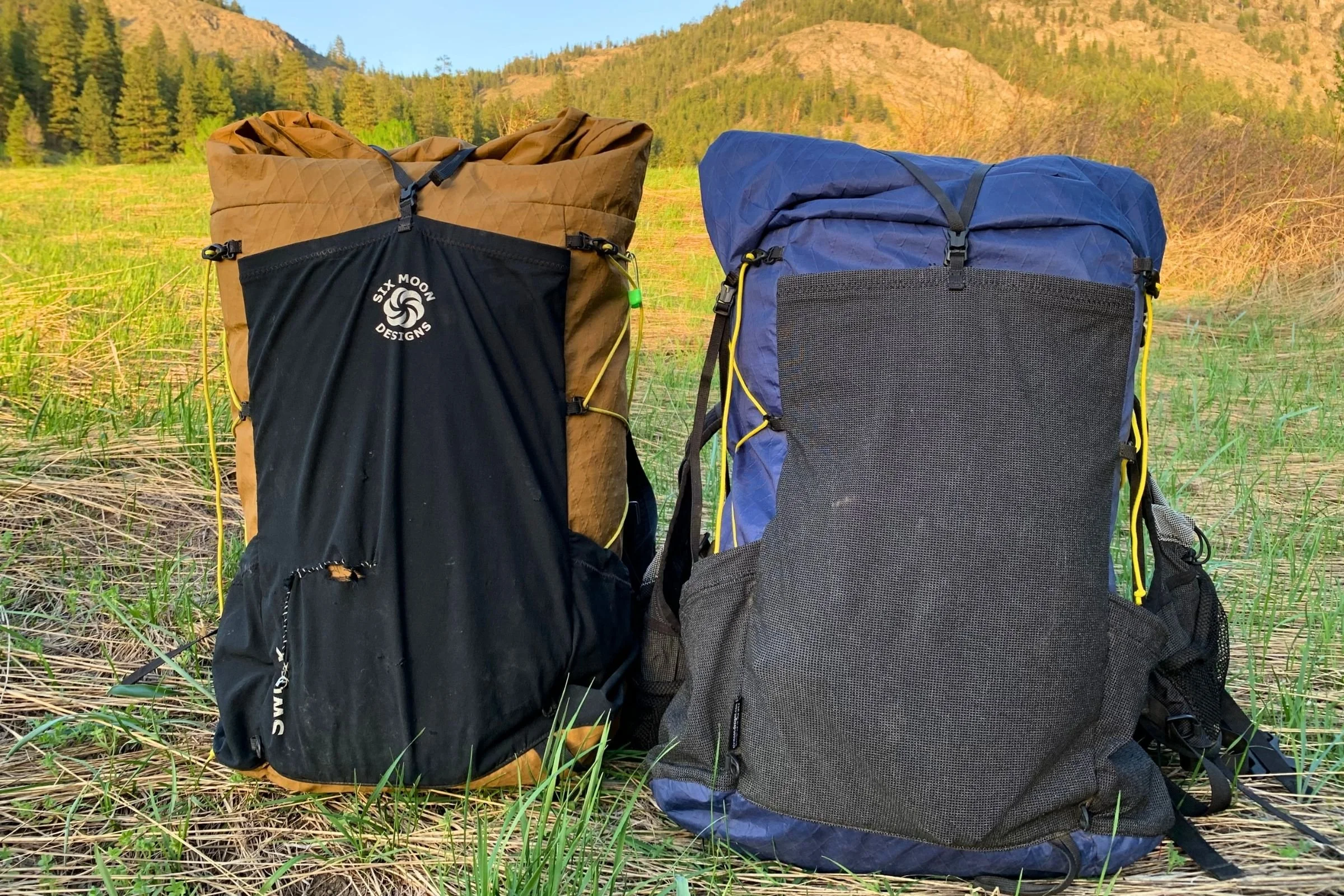
The Swift X’s fit and suspension system are among its stand-out features, and put it above other packs we considered. Ron Moak, the owner of Six Moon Designs, told us his packs are designed to comfortably carry any load you can fit in the backpack.
The pack also has an optional innovative vest system that securely holds the backpack to your core. Another feature we like is its full set of functional and easy-to-access pockets on the pack, hip belt, and shoulder harness.
An internal Delrin hoop stay frame connects directly to the hip belt to better transfer the pack weight to your hips. We further discuss how to fine-tune your fit in our story on How to Choose Backpacks.
-
One potential downside is the Swift X is not the lightest framed backpack. The Gossamer Gear Mariposa, Hyperlite Junction, Hyperlite Windrider, and Zpacks Arc Haul are lighter. However, for a weight difference of a candy bar or two, we think the Swift X has a better suspension system and better features than these other backpacks.
-
Whether you’re new to backpacking, looking to lighten up from a traditional backpacking backpack, or a seasoned athlete with heavy water and food carries, the Swift X is a comfortable pack with the features you need to do what you want to do outdoors.
Best Budget Lightweight Backpack: Granite Gear Crown3 60

Capacity: 60L
Weight: 2.36 lbs
Materials: Robic High-tenacity nylon (100D and 210D) with Barrier DWR
Cost: $280
Max load: 35 lbs
What we liked: options to adjust weight, lots of features, great value for the price, undyed fabric available as an eco-friendly option
What we didn't like: doesn't use PFC-free DWR
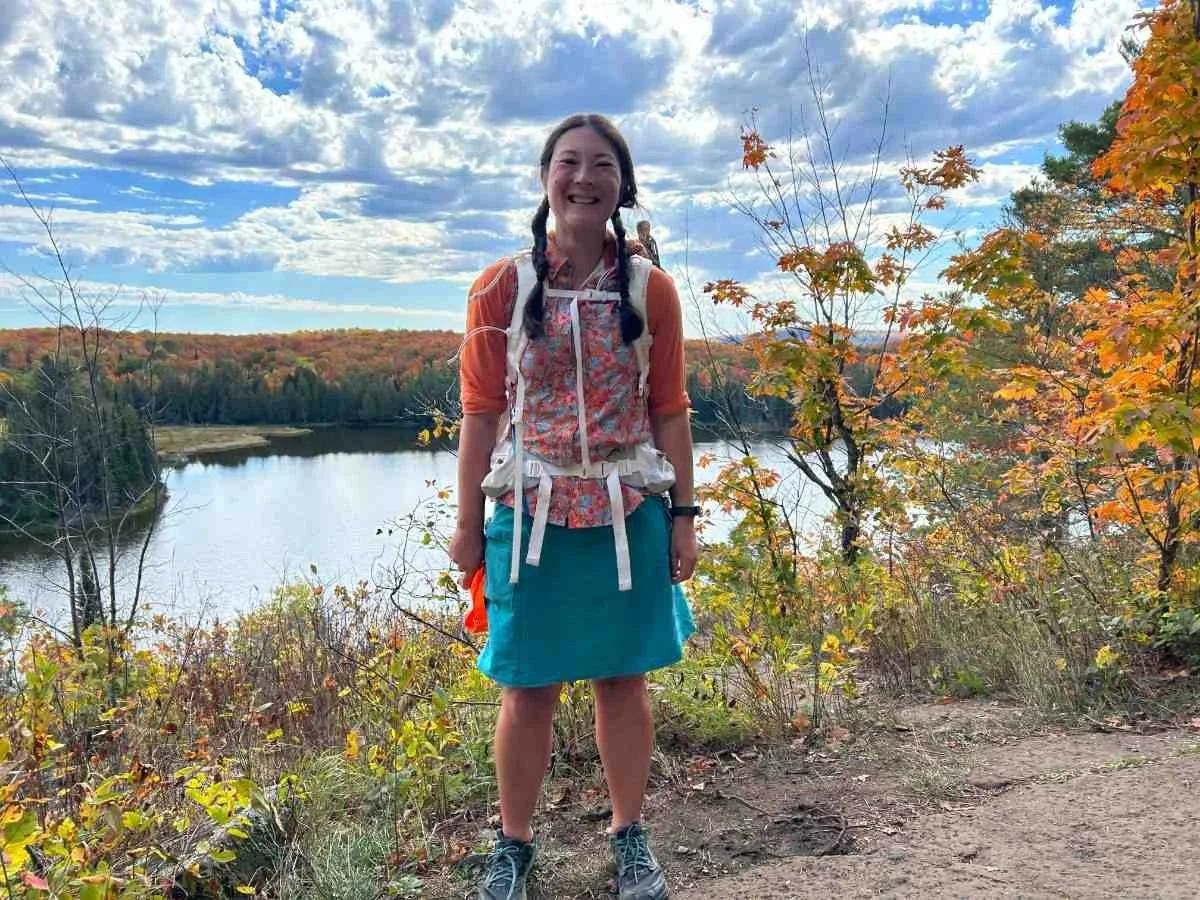
Granite Gear Crown3 60 is an excellent lightweight backpack — and at about $240 (and often found on sale for less), is a great value. The Crown3 has 60 liters of capacity, a 35-pound load rating, and weighs less than two and a half pounds. Despite its light weight, it has many of the features found in a traditional five-pound backpacking pack, including a plastic internal frame and well-padded shoulder straps. Best yet, with so many removable features, it is easily adaptable.
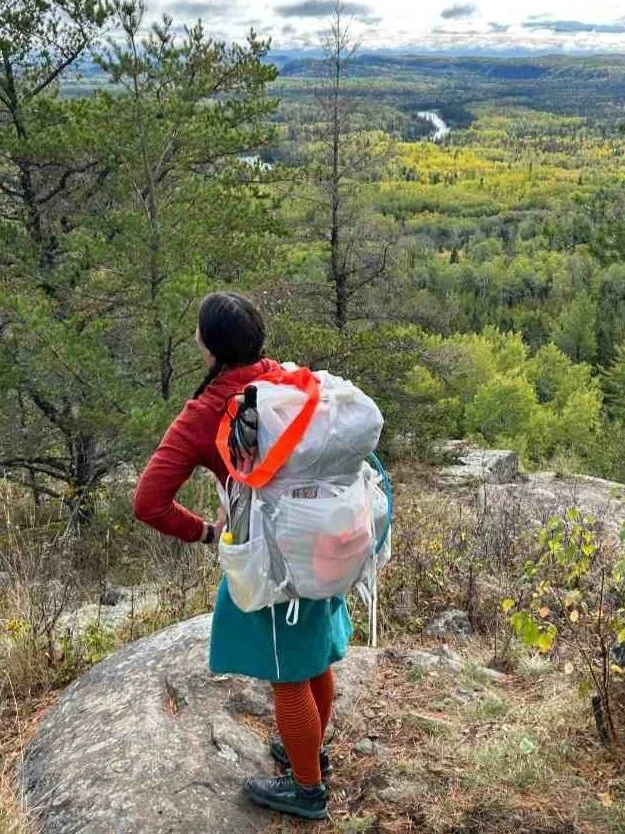
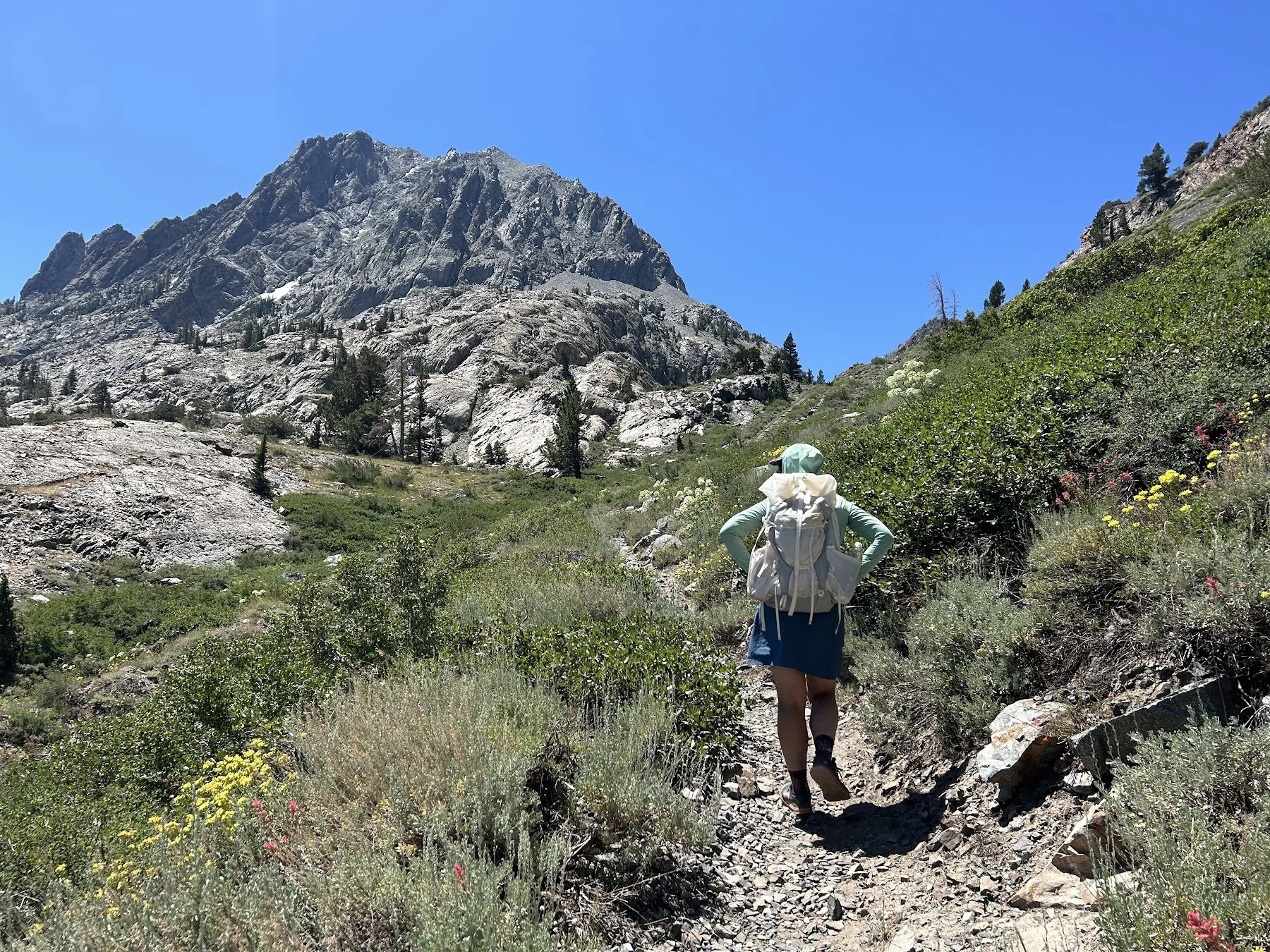
Treeline Review editor Liz Thomas used this pack in the undyed fabric for a thru-hike of the ~330-mile long Superior Hiking Trail and found it had all the comfort and features she wanted in a backpack at a fraction of the price of other lightweight pack brands.
Compare Prices Of The Granite Gear Crown3 60
-
Our favorite feature of this pack is that as you learn to backpack with less weight, you can adapt this pack to be lighter. If you are interested in ditching the old five-pound pack and trying a more lightweight approach to multi-day backpacking, this could be the perfect pack.
-
The Granite Gear Crown3 60 is one of the only packs we reviewed that come in men's and women's designs to better conform to different body shapes and sizes.
The Crown3’s shoulder straps — slightly different on the men’s and women’s versions — are wide and thickly padded. The Crown3 uses a molded plastic frame sheet that is integrated with the hip belt to transfer weight to your hips. There is also a foam back panel that is molded to allow airflow to reach your back. We were happy to see the Crown3 60 has load lifters for a more comfortable carry.
-
The Crown3 has a lid with a large zippered pocket. For those looking to reduce weight on their pack, the lid can be removed to reduce the pack’s weight by approximately two and a half ounces.
With the lid removed, the main compartment features a roll-top opening with a buckle closure that is able to accommodate different volumes. For example, we've used Crown3 60 on a backpacking trip with a 135-mile section without resupply. We've also used it on shorter day hikes. The many options for straps means it folds up and scrunches down to whatever size you need.
-
The Granite Gear Crown3 60 is a much-beloved pack that is easy on the wallet, and can take a lot of love on the trail.
Backpack with Best Ventilation: Osprey Exos Pro & Osprey Eja Pro 55

Capacity: 55 L
Weight: 1.9 lbs (Eja) / 2.1 lbs (Exos)
Materials: recycled 100-denier high-tenacity nylon ripstop (bluesign approved)
Cost: $325 - $330
Max load: 30 lbs
What we liked: comfort of the carry on the suspension system, well-ventilated to reduce sweaty backs, bluesign approved fabric with PFAS-free DWR, Osprey lifetime warranty
What we didn’t like: side pocket height, lack of stretch front pocket, durability, frame height prevents neck movement and wearing wide-brimmed hats
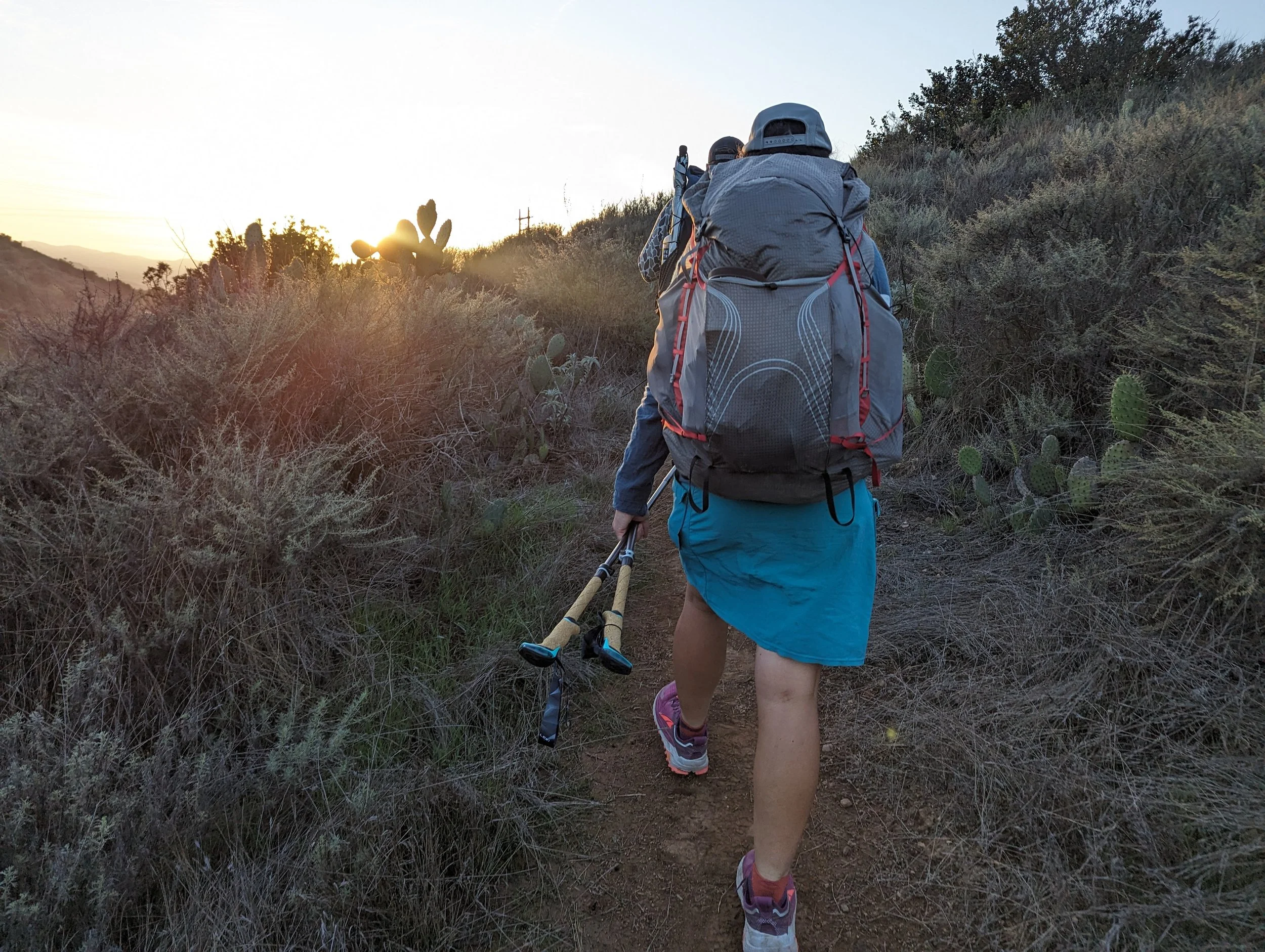
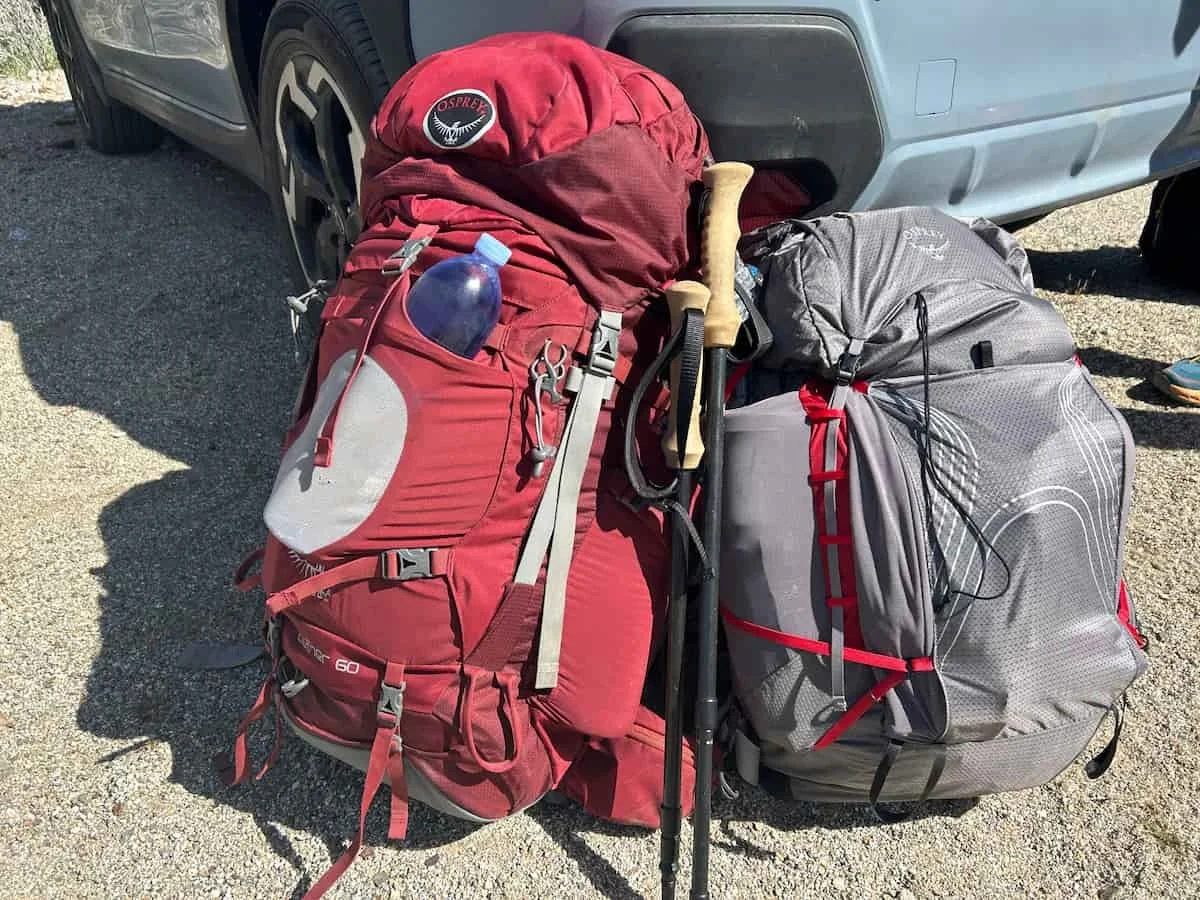
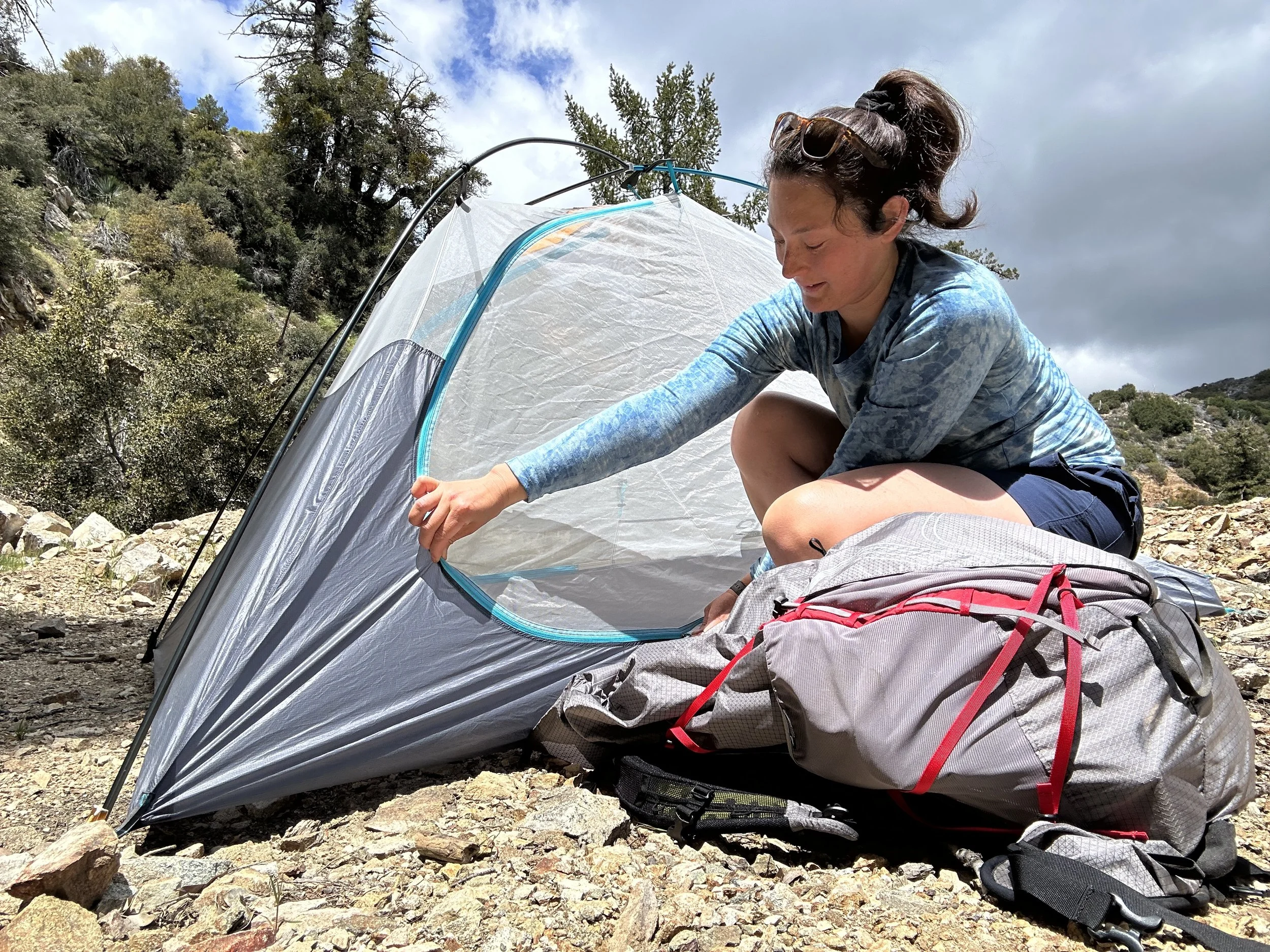
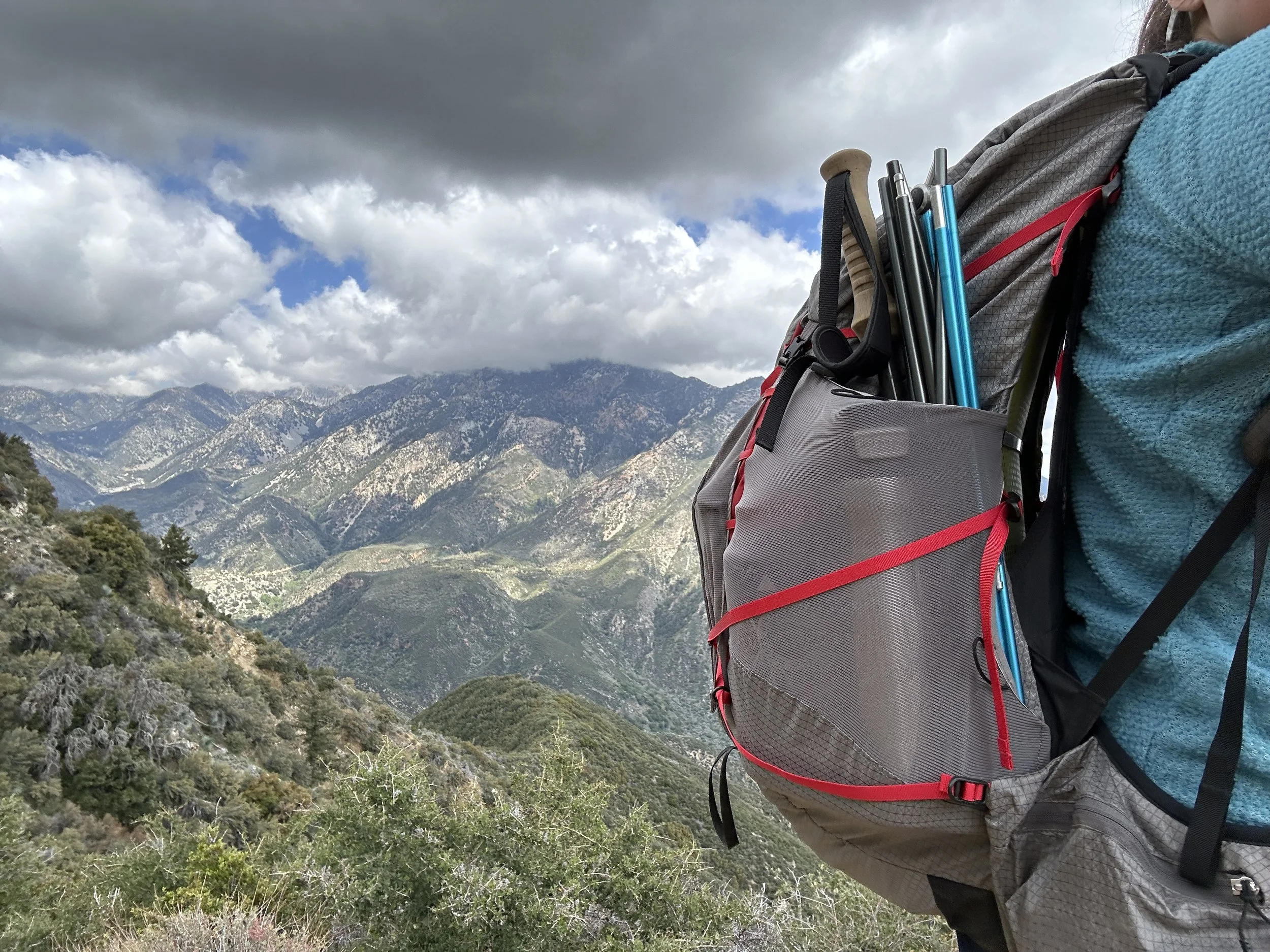
The Osprey Exos Pro 55 is the men’s version and the Osprey Eja Pro 55 is the women’s version of the same pack (note: the Eja size medium weighs 2.82 lbs). Our favorite thing about these packs is the ventilation offered by the AirSpeed suspension system that keeps the pack off your back. This is the only lightweight pack we tested that has a drastically curved back. This allows for more airflow and less sweating. That's why we think the Osprey Exos and Eja is the best ultralight pack for people who want more ventilation in their backpacking backpack.
Backed by Osprey's impressive lifetime warranty, this is a lightweight pack with comfort, ventilation, and many features. And the latest version is an improvement on a long-time backpackers' favorite.
For an in-depth look at this pack, check out our detailed review of the Osprey Exos Pro and Osprey Eja Pro, where we cover its features, performance, and overall comfort on the trail.
Compare Prices Of The Osprey Exos Pro & Osprey Eja Pro 55
Men's (EXOS PRO)
Women's (EJA PRO)
-
One of our testers has backpacked and thru-hiked extensively with ultralight packs and has always found his back covered in sweat. He tested the Exos in the Mojave Desert and had an "ah ha" moment. He found it to be comfortable and could feel a breeze against his back. He fully admits that it doesn't mean his back wasn't sweaty (it still was) but that this was the coolest he's felt with a backpack. This pack is a comfortable option for folks who sweat a lot and want the best ventilation possible.
-
With the Exos and Eja Pro, Osprey shaved nearly a pound off the previous versions, but still maintains an impressive list of features, including a mesh back panel and yoke, a removable brain, a hydration sleeve, and deep pockets.
-
Our one issue with this pack is the front pocket is reinforced with ripstop fabric, which means it isn't as stretchy as front pockets that only use mesh. The fabric used on this pack is also thinner than others and while we haven't had any issues, we do worry about the long-term durability. Backpackers have hiked the PCT and other long trails with this pack, but we do not recommend this model for folks tough on gear.
Other lightweight backpacks we tested
In preparing this article, we considered many other excellent backpacks. Below is a list of some of the other backpacks we considered that we would recommend, but ultimately did not choose as our top picks.
Mountain Hardwear Alakazam 60
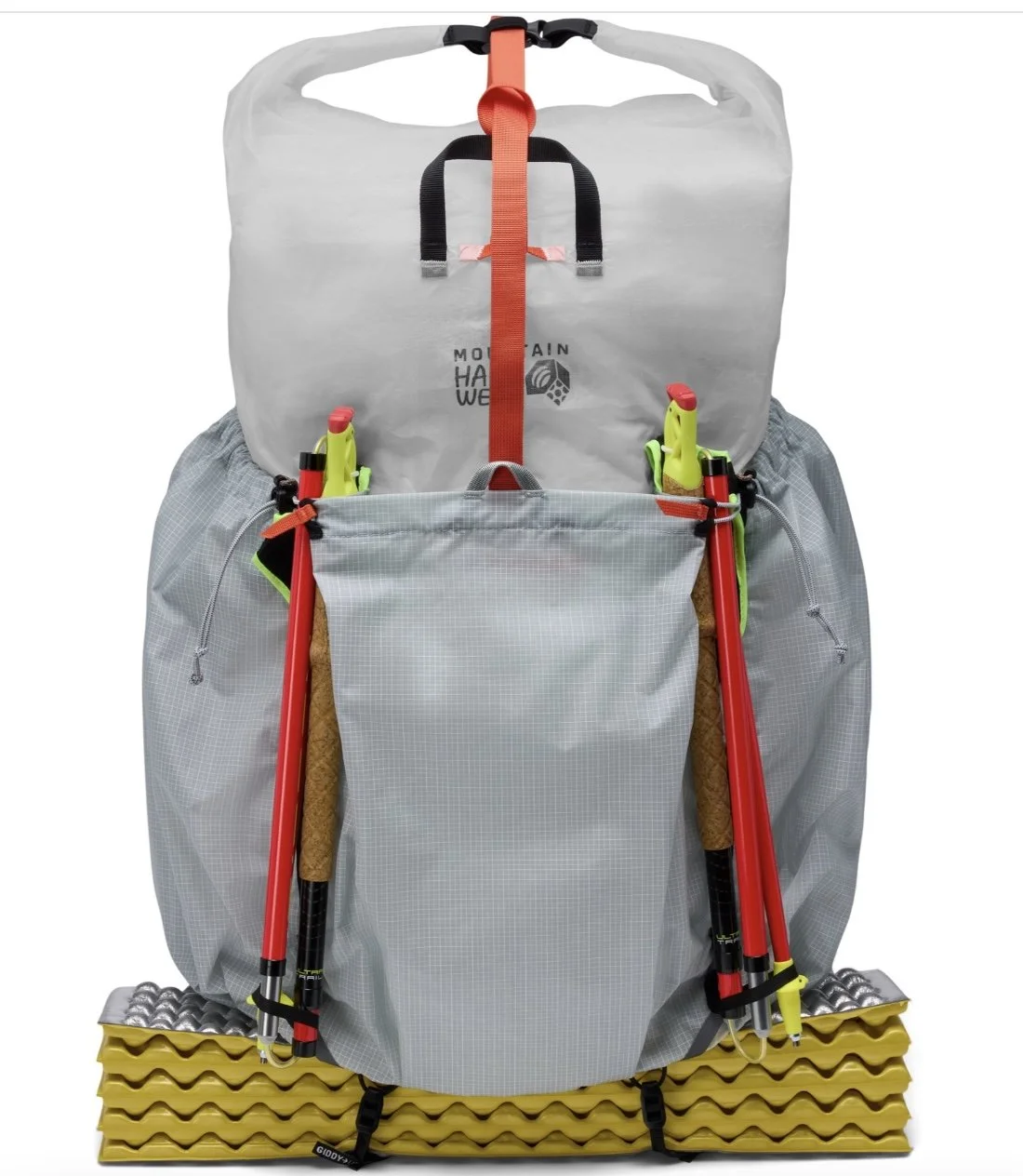
Capacity: 60 L
Weight: 2.0 lb
Materials: ALUULA Graflyte ultra-high molecular weight polyethylene
Cost: $595
The Mountain Hardwear Alakazam backpack in ALUULA fabric is a lightweight, framed pack for thru-hiking and long-haul backpackers. It's one of the first backpacks on the market made of the new ALUULA material, a fully-bonded, waterproof, durable fabric rivaling Dyneema Cuben Fiber (DCF). So far, ALUULA has mostly been used in frameless packs.
To test the Mountain Hardwear Alakazam backpack, I thru-hiked the 223-mile long Ouachita Trail with this pack. I tested it in hot, humid conditions, high wind, dry desert air, mountain forests, and alpine wind. I also tested in the rain and a constant mist that soaked everything.
In each case, the ALUULA fabric's waterproofness and durability impressed me. THe Alakazam backpack handled heavier loads surprisingly well with excellent load distribution. The abundance of pockets made it easy to organize, though the compression system of the pockets could have been better.
The ALUULA version of the Alakazam comes with a premium price, and most backpackers looking for a framed pack will be drawn to Mountain Hardwear's Kazam pack. It has the same features, just with a Nylon/Polyethylene ripstop shell fabric.
If you're the type of backpacker who wants to be the first to have cutting-edge gear, and you want the comfort and carry of a framed pack that actually works, the Alakazam should be on your list.
See our in-depth review of the Mountain Hardwear Alakazam backpack for more information.
View the Mountain Hardwear Alakazam 60

Capacity: 68L
Weight: 2.4 lbs
Materials: ULA 400 Robic nylon
Cost: $300
The ULA Circuit has been a favorite of long-distance hikers for years. In fact, we like it so much we wrote a long-term, in-depth review of the Circuit.
We chose its larger sibling, the Catalyst, as our winner for best large capacity pack. The Catalyst has a more substantial frame system and is a better choice for heavier loads.
The ULA Circuit is a great pack and an excellent value with many of the same benefits as the Catalyst: it’s made in the USA and incredibly customizable.
Ultimately, we preferred the Swift X’s vest harness system and pockets. We tested the Swift X in X-pac and preferred that to the Robic material of the Circuit. However, ULA recently released a new model of the Circuit in Ultra. We haven't tested the model in that material yet, but it looks promising.
Even in Robic, we think the Circuit is an excellent choice for a backpacking pack for folks who want something in the 68L capacity size.
View The Ula Circuit
REI Flash 55
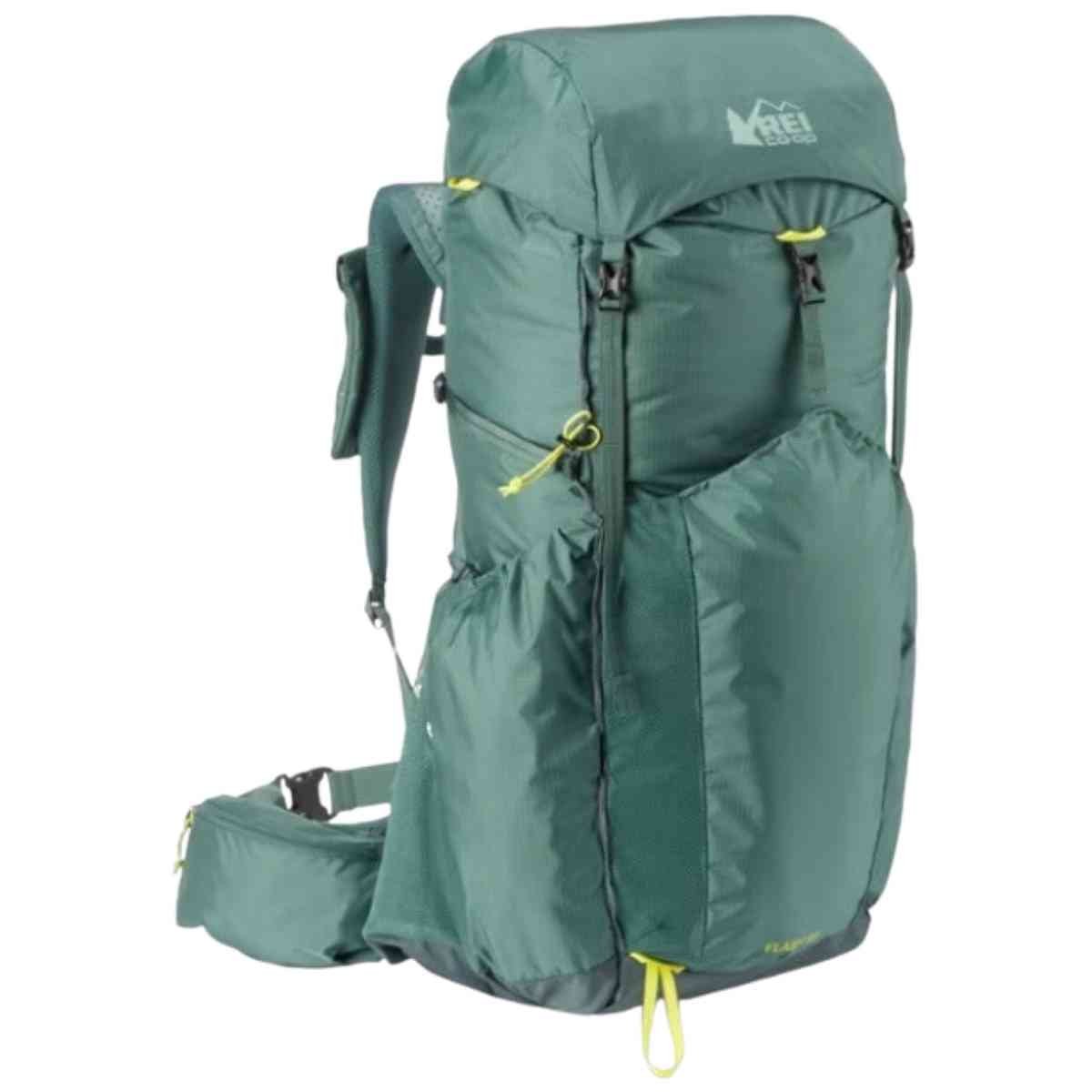
Capacity: 55L
Weight: 2.8 - 2.9 lbs
Materials: 100-denier and 210-denier recycled nylon Robic ripstop
Cost: $229
The men’s and women’s REI Flash 55 is a good value. It was even a contender for our budget pick. However, we chose the Granite Gear Crown3 60 over the Flash 55 because it has a larger volume, and it’s several ounces lighter. We’ve also seen the Flash have fabric durability issues, where the Granite Gear can sustain multiple thru-hikes of use and abuse. Customer reviews in particular took issue with the sewing quality on the Flash, especially around the shoulder straps. We think if you want a light backpack that is affordable, the Granite Gear Crown3 60 is a better option.
View The Rei Flash 55
MEN'S
WOMEN'S
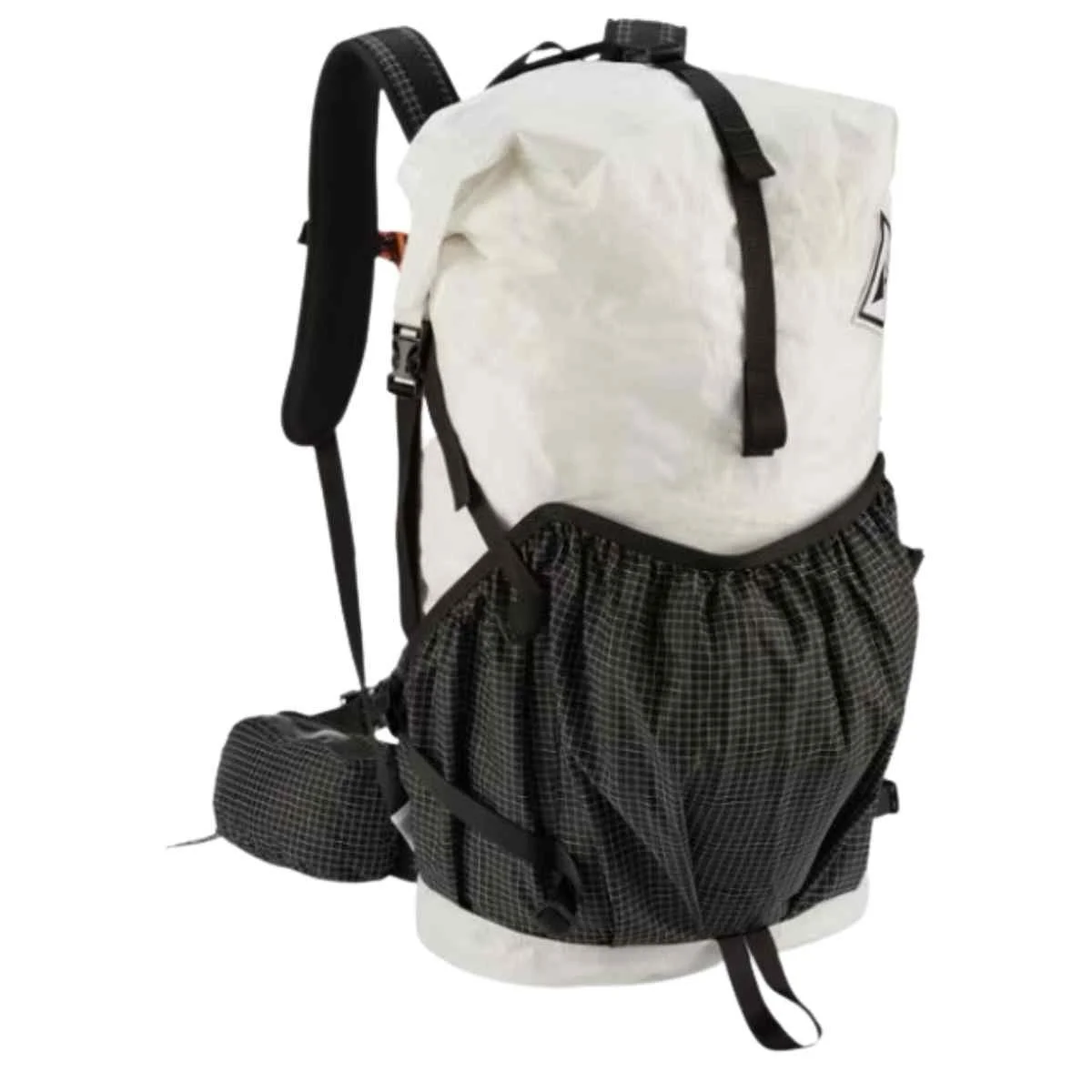
Capacity: 40, 55, 70 L
Weight: White: 1.9, Black: 2
Materials: White: DWC50 (Main Body) & DWC150 (Bottom), Black: DWC150 (Main Body & Bottom)
Cost: $395
The Hyperlite Mountain Gear Southwest 40 is designed for overgrown backcountry excursions, places with thick vegetation, anywhere your pack might take a beating. It’s lightweight and durable. We used this pack on a thru-hike of the Ouachita Trail. It’s not the most comfortable and could use a little tweaking with pocket size and placement, but overall this is a reliable lightweight backpack. Still, we think pocket placement on the Junction is better.
The major advantage of the Southwest over the Junction is the distribution. The Southwest has become widely available. You can get it at Backcountry or REI and you can take advantage of REI's great return policy if things don't fit right.
Compare Prices Of The Hyperlite Mountain Gear Southwest 40

Capacity: 40, 55, 70 L
Weight: 1.9 lbs
Materials: DWC50 (main body) and DWC 150 (bottom), or DWC150
Cost: $395
We tested the Hyperlite Mountain Gear (HMG) Windrider on the thru-hike of the Ouachita Trail (see our Trip Guide to the Ouachita Trail). Like the Junction, it’s also available in 40 and 55L volumes, as well as a 70L volume.
The main difference is that the Windrider uses mesh for the front and side pockets whereas the Junction uses mesh in the front pocket only. We prefer the stronger DCH fabric for side pockets. It’s a minor quibble, but the sides are an area of the pack that is susceptible to rubbing against brush on narrow trails. The fabric found on the Junction adds some durability and more secure storage space.
The major drawback of the Junction compared to these other HMG packs is distribution. The Windrider is available at Backcountry, whereas you can only get the Junction at HMG’s website or Garage Grown Gear.
View the Hyperlite Mountain Gear Windrider 40

Capacity: 56 L
Weight: 2.3 lbs
Materials: Robic Nylon
Cost: $275
The Six Moon Designs Swift V Hiking Backpack is a budget-friendlier version of the Swift X. By using Robic nylon fabric, this backpack cuts costs while maintaining the design and features of our selection for Best for Transitioning to Ultralight, the Swift X. This model has been updated with deeper and stretchier pockets, as well as two additional side straps for securing the roll top closure.
Compare Prices Of The Six Moon Designs Swift V
Why you need a lightweight backpack
For a long time, a heavy pack was just accepted as part of backpacking. Five to seven pounds empty was standard, and most people didn't question it. After thousands of miles with both heavy and lightweight packs, the difference is hard to overstate.
Saving three pounds on your pack before you add any gear is three pounds your knees don't feel on every downhill step, three pounds your shoulders aren't fighting for eight hours, three pounds that aren't compressing your spine at the end of a long day. On a thru-hike, that difference compounds in ways that are genuinely hard to describe until you've experienced both. Heavy packs force you to lean forward and alter your gait. Lighter packs let you walk normally, which turns out to be much better for you over hundreds of miles.
The durability concern is legitimate but largely outdated. Modern fabrics like Dyneema and high-tenacity nylon handle serious use well. Several of the packs we've tested have accumulated thousands of miles across desert routes, alpine terrain, and everything in between, and they're still in regular use.
This isn't about extreme minimalism or gear compromises. A lightweight 60-liter pack carries the same volume as a traditional 60-liter pack. It just weighs less. For weekend trips and month-long thru-hikes alike, a lighter pack is simply a better pack.

A lineup of some of the packs we tested for this story. Photo by Mike Unger.
What to look for in lightweight backpacks
To decide on our winning backpacks, we set the following criteria. All the packs we considered met these criteria, including our runner-ups.
You can read more about each of the criteria, how to choose a backpack for your hike, how to fit a backpack, and keeping your gear dry visible in our article How To Choose Backpacks.
Pack Weight
All of our recommended backpacks weigh less than three pounds. In the past, packs of such low weights may have seemed extreme. Now, we believe technology has advanced such that there are exceptional backpacks with plenty of capacity for most backpackers that weigh under three pounds. Most of the packs we recommend are not for mountaineers, alpinists, climbers, ski tourers, or people who need to carry extremely heavy loads of gear. They are for folks who want to enjoy the outdoors on an overnight or multi-day hiking trip.
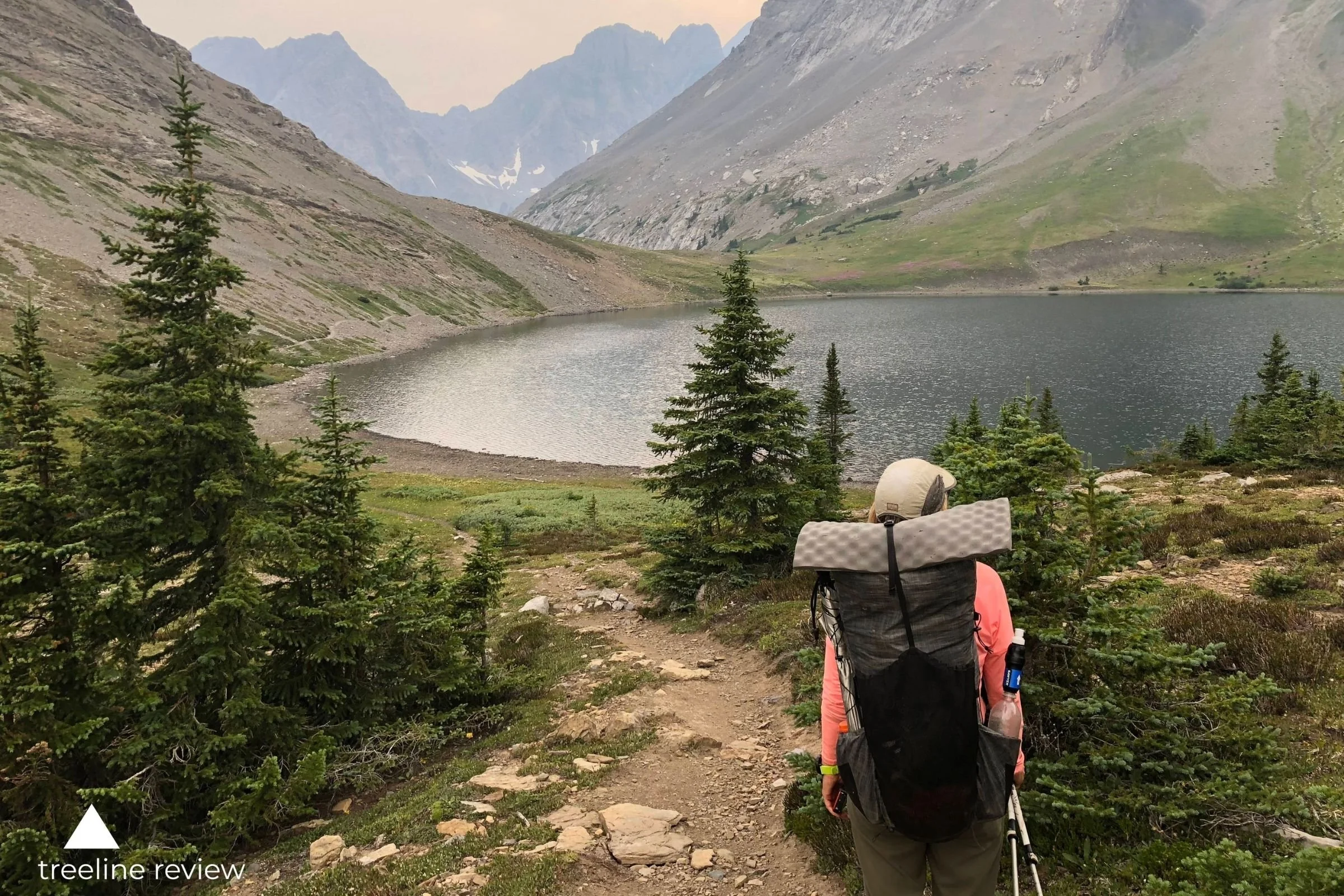
Carried Weight/Load Limit
For our Overall, Dyneema Winner, and Budget picks, we considered packs that can comfortably carry 35 pounds. For our Large Capacity winner, we considered packs that can comfortably carry 40 or more pounds. For our frameless pack picks, we considered packs that can comfortably carry 20 pounds. We think this weight reflects what most people can carry while backpacking.
Pack Volume
With the exception of the Best Large Capacity pack, the packs we considered can carry 50-68 Liters.
Essential Pockets
While the quality, size, and secureness of pockets differ, all the packs we considered have the following pockets: hip belt pockets, a mesh front pocket, and water bottle pockets. We find these pockets essential to finding and accessing everyday items much easier for backpackers.
Can Fit A Bear Can
Many National Parks require backpackers to carry a bear can. That’s why we think that if you’re only going to buy one backpack, the pack that you carry should be able to fit a bear can. This doesn’t mean that your backpack needs to be huge. It just means that the opening hole to get inside your pack is wide enough to fit a wide diameter.
Attachment Points
All the packs we considered must, at minimum, have an ice axe loop. Having this feature makes it much easier for you to carry an ice axe and thus, make safe decisions when traveling in snowy conditions.
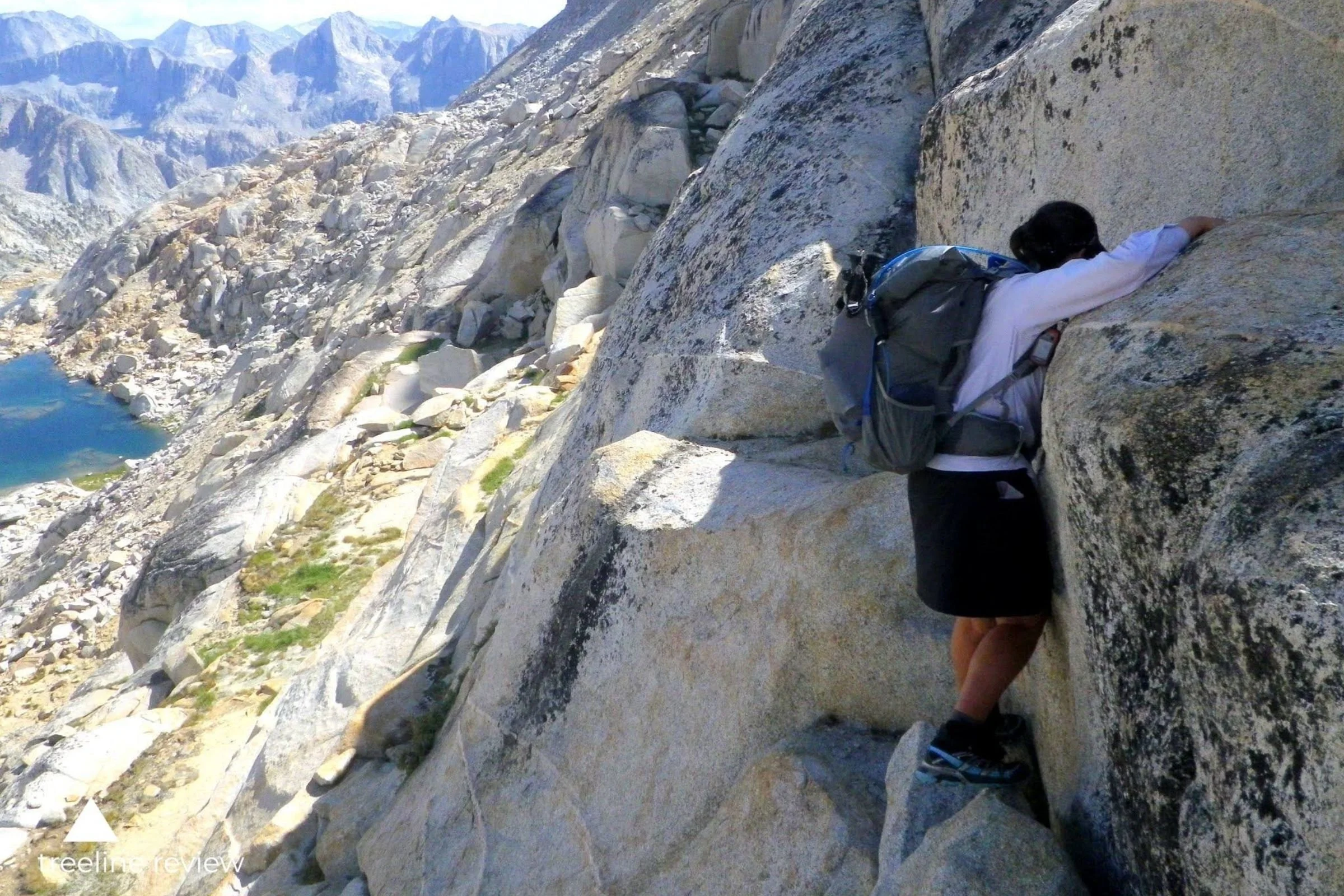
The Gossamer Gear Mariposa 60 on the Sierra High Route. Photo by Liz Thomas
Durability
The packs we tested are made from lightweight, durable materials, like nylon, LiteSkin, Ultra, and Dyneema. These are some of the strongest, longest-lasting materials you can find in a backpack, without packing on a ton of weight. Outside of the primary material for the bulk of the pack, mesh pockets and spacers for breathability can also affect the durability of the pack (some mesh is more durable than others), so it’s helpful to read reviews to look out for issues with the mesh before purchasing.
Comfort
You’re likely going to be investing a lot of time, miles, and energy in this pack, so you want to be as comfortable as you can be. This is particularly important at the shoulders, hips, and lower back, which means straps, torso size, and hip width may all play a factor in your buying choice.

Waterproofing or Water Resistance
Depending on where you’ll be backpacking and what the weather conditions are likely to be like, water protection may be an important factor for you. Packs made from materials like Dyneema, X-Pac, ECOPAK, and LiteSkin are going to repel water best, though that won’t protect exterior mesh pockets of course. Roll top closures and taped seams are also better waterproof methods than extension collars and stitched seams.
CLOSURE SYSTEM
There are a variety of closure systems for backpacking packs, including roll tops, zippers, drawstrings. Roll tops and YKK zippers are better waterproof options, but if waterproofing isn’t a priority for you, any of the closure systems should work just fine.

We tested the Zpacks Arc Blast on the Great Divide Trail through 40 days of rain, snow, and sleet. Photo by Liz Thomas.
Ventilation
If you sweat a lot, ventilation may be a priority for you. Suspension systems with mesh barriers between your back and the pack improve air flow. While it doesn’t guarantee a dry back at the end of the day, it does reduce the amount of sweat that collects between your body and the pack.
Back panel padding
Back panel padding foam is added to the back of packs and shoulder straps for comfort, breathability, and weight distribution.
Materials
The materials used to construct backpacks impact its durability, weight, water resistance, and quality. We tested packs that primarily used nylon, Dyneema (DCF), Ultra, and LiteSkin. Packs also commonly use mesh for exterior pockets and ventilation.
Tips for packing a lightweight backpack
Packing a lightweight hiking and backpacking backpack requires some planning and careful selection of what gear you bring. With a lightweight pack, your goal is to balance weight and comfort. We have an entire article dedicated to How to Pack a Backpacking Backpack.
Here are some highlights:
Carry only what you need
The first rule is to prioritize essential items and eliminate non-essential ones. Begin by creating a detailed checklist that includes only the must-have items, such as shelter, sleeping gear, clothing, food, water, cooking equipment, navigation tools, and first aid supplies. Check out our Where to Go for checklists tailored to your trail.
Use multi-purpose gear
Aim to use multi-purpose items whenever possible to reduce redundancy. For instance, a cook pot can double as a bowl, and a rain jacket can keep you warm even when it isn't raining.
Choose lightweight versions of all your gear
Next, focus on choosing lightweight versions of essential gear. Opt for an ultralight tent, a compact backpacking quilt, and an inflatable sleeping pad. These items not only reduce your pack weight but also compress down to save space.
Be smart about what clothes you bring
Besides food, the most commonly over-packed item is clothes. Clothing should follow the layering principle, consisting of moisture-wicking base layers, insulating mid-layers, and a waterproof outer layer. Pack only the necessary quantities, typically one set of hiking clothes and one set of camp clothes, to keep the load minimal.
Don't carry too much food or water
There's a saying that backpackers pack their fears. Food and water management are crucial for maintaining a lightweight pack. Select high-calorie, lightweight foods such as dehydrated meals, nuts, and energy bars.
For water, use a lightweight filtration system or purification tablets instead of carrying large amounts of water. A collapsible water bladder can be more space-efficient than rigid bottles.
Repackage items
Repackage food and toiletries into resealable bags to minimize bulk and waste.
Use compression sacks for your sleeping bag and clothing to reduce volume. Organize items in stuff sacks to keep your pack organized and balanced.
Where to put gear in your backpack
Place heavier items close to your back towards your center of gravity to maintain stability and improve comfort. Those with broader shoulders may prefer more weight higher up. Backpackers with wider hips may prefer some weight lower down when using their pack with a hip belt. Experiment at home by packing the heaviest items in your pack in different places. See what feels the most comfortable for your body.
Keep frequently used items, like snacks, maps, and rain gear, in easily accessible pockets.
Reassess and repeat
After each trip, evaluate what items were used and what remained untouched. Adjust your list accordingly to further refine your packing strategy. This ongoing evaluation helps ensure that you carry only what you need.
Care and maintenance
Wash your backpack
Regularly cleaning your backpack to remove dirt, sweat, and oils that can accumulate during your trips. After each adventure, empty the backpack completely and shake out any loose debris. Use a soft brush or a damp cloth to wipe down the interior and exterior surfaces, focusing on areas that come into frequent contact with your body or gear.
For a more thorough cleaning, hand wash the backpack using a mild soap and lukewarm water. Avoid using harsh detergents or machine washing, as these can damage the lightweight materials and compromise the pack’s integrity.
Fully dry your backpack
Drying your backpack properly is crucial to prevent mold and mildew growth. Whether after a wet trip or after washing your pack, make sure you give your pack plenty of time to dry out.
Hang the backpack upside down in a well-ventilated, shaded area to air dry. Ensure all pockets and compartments are fully open to allow maximum airflow. Avoid direct sunlight, as prolonged exposure to UV rays can weaken the fabric and cause fading.
Inspect your backpack for damage
Regularly inspect your backpack for signs of wear and tear. Check the zippers, buckles, straps, and seams for any damage or loosening. Address minor issues promptly by using repair kits specifically designed for backpack maintenance, which often include patches, seam sealers, and replacement buckles. Reinforcing high-stress areas with a bit of seam sealer can also extend the backpack's lifespan.
How to store a backpacking backpack
Storage is another critical aspect of maintaining your lightweight backpack. When not in use, store the backpack in a cool, dry place away from direct sunlight and extreme temperatures. Ensure the backpack is completely dry before storing it to prevent mold and mildew. If space allows, store the backpack loosely rather than compressed to help maintain the shape and structure of the padding and frame.
Be smart with packing your pack
Lightweight backpacks require more care than traditional backpacks. You want to be careful how you pack and handle your lightweight backpack. Avoid overloading it beyond its recommended capacity, as this can strain the materials and stitching. Distribute the weight evenly to maintain balance and reduce stress on specific areas.
For more stories by Mike, see his author page.
FAQ
-
A lightweight backpacking backpack typically weighs under 3 pounds and focuses on minimizing pack weight while maintaining essential features for multi-day trips. Our recommended backpacks like the Six Moon Designs Swift X (2.175 lbs) and Gossamer Gear Mariposa (1.9 lbs) represent the modern standard for lightweight packs. These packs contrast with traditional backpacking packs that often weigh 5-7 pounds. Ultralight packs go even further, with options like the Zpacks Arc Haul Ultra weighing just 1.34 pounds, though they sacrifice some comfort features for weight savings.
-
Your fully loaded backpack should not exceed 20% of your body weight for comfortable backpacking, though many ultralight backpackers aim for 10-15% for optimal performance. For a 150-pound person, this means a maximum pack weight of 30 pounds, including food and water. The pack itself should contribute only 2-3 pounds to this total weight, leaving 27-28 pounds for gear, food, and water. Lightweight packs like our top pick, the Gossamer Gear Mariposa 60, can comfortably carry loads up to 35 pounds despite weighing only 2.175 pounds themselves.
-
Lightweight backpacks weigh under 3 pounds while ultralight backpacks typically weigh under 2 pounds, with some going as low as 1 pound for frameless models. Lightweight packs like the Gossamer Gear Mariposa retain traditional features such as padded hip belts, multiple pockets, and frame systems for comfort with heavier loads. Ultralight packs like the Mountain Laurel Designs Prophet sacrifice some comfort features for maximum weight savings, often using minimal padding and simpler designs. The choice depends on your gear weight - if your base weight is under 10 pounds, ultralight works well, but if you carry 15-20 pounds of gear, lightweight packs offer better comfort.
-
Modern lightweight backpacks use advanced materials that are both light and durable, though they require more careful handling than traditional packs. Materials like Dyneema Composite Hybrid (used in Hyperlite Mountain Gear Junction), LiteSkin LS21 (Six Moon Designs Swift X), and high-tenacity nylon (Gossamer Gear Mariposa) offer excellent strength-to-weight ratios. However, these materials can be more susceptible to punctures and abrasion than thick traditional fabrics. With proper care and packing techniques, quality lightweight packs can last thousands of miles, as evidenced by successful thru-hikes on major trails like the PCT and CDT.
-
Quality lightweight backpacks can carry 30-40 pound loads comfortably when properly fitted and designed with adequate suspension systems. The Six Moon Designs Swift X excels at carrying heavy loads with its innovative vest system and Delrin hoop stay frame that transfers weight directly to your hips. The Gossamer Gear Mariposa uses a removable aluminum frame and well-padded hip belt to handle loads up to 35 pounds. However, frameless ultralight packs like the Mountain Laurel Designs Prophet are limited to about 25 pounds for comfortable carrying, making them suitable only for experienced ultralight backpackers with minimal gear.
-
For weekend trips, 40-50L capacity is sufficient, while week-long adventures typically require 55-65L depending on your gear efficiency and season. Our testing shows the Hyperlite Mountain Gear Junction 40L works well for 2-3 day trips, while the 60L Gossamer Gear Mariposa handles week-long adventures comfortably. Winter trips or those requiring bear canisters may need larger capacities like the 75L ULA Catalyst. The key is matching capacity to your gear volume rather than trip length - efficient packers can handle longer trips with smaller packs, while those carrying comfort items need more space.
-
Choose framed packs if your base weight exceeds 15 pounds or you prioritize comfort, and frameless packs if your base weight is under 10 pounds and you value minimal weight above all. Framed packs like the Six Moon Designs Swift X and Gossamer Gear Mariposa offer better weight distribution and comfort with heavier loads, making them ideal for beginners transitioning from traditional packs. Frameless packs like the Mountain Laurel Designs Prophet require ultralight gear and packing skills but offer unmatched weight savings for experienced backpackers. Consider your current gear weight, physical conditioning, and comfort preferences when deciding.
-
Proper fit is even more critical for lightweight packs since they typically have less padding and more minimal suspension systems than traditional packs. Measure your torso length and hip circumference accurately, as lightweight packs rely on precise fit for comfort with minimal materials. Some manufacturers like LiteAF provide custom sizing options. Many lightweight packs have fewer adjustment options than traditional packs, making initial sizing crucial. Consider trying packs with weight at specialty retailers or taking advantage of generous return policies from companies like Hyperlite Mountain Gear.
Why You Should Trust Us

The author with the Katabatic Onni V40 65L backpack.
Mike Unger is a Double Triple Crowner — he has hiked the Appalachian Trail, Pacific Crest Trail, and Continental Divide Trail not once, but twice.
In addition, he has backpacked numerous other on-trail and off-trail routes, including the Blue Mountains Trail, Great Divide Trail, Arizona Trail, Ouachita Trail, Oregon Desert Trail, and Grand Enchantment Trail. Over the course of his backpacking, he’s purchased and owned an embarrassingly large number of backpacks. He has tracked and researched pack technology for the past 20 years.
Mike Unger is not, and has never been, a sponsored athlete, ambassador, or influencer for a backpack company.
Read more on Mike Unger's author page.


