After Thru-Hiking 223 Miles, My Take on the Mountain Hardwear ALUULA Alakazam Backpack
The most exciting backpack fabric in years, finally in a framed pack. Is it worth the price?
March 11th, 2026
Home > Gear Reviews > Backpacking
Our verdict
The Mountain Hardwear Alakazam backpack in ALUULA fabric is a lightweight, framed pack for thru-hiking and long-haul backpackers. It's one of the first backpacks on the market made of the new ALUULA material, a fully-bonded, waterproof, durable fabric rivaling Dyneema Cuben Fiber (DCF). So far, ALUULA has mostly been used in frameless packs.
With the Mountain Hardwear Alakazam, the ALUULA fabric is the same you see in the highest-end cutting edge ultralight gear. But with the Alakazam, you get a frame that works well without the traditional pack weight.
To test the Mountain Hardwear Alakazam backpack, I thru-hiked the 223-mile long Ouachita Trail with this pack. I tested it in hot, humid conditions, high wind, dry desert air, mountain forests, and alpine wind. I also tested in the rain and a constant mist that soaked everything.
In each case, the ALUULA fabric's waterproofness and durability impressed me. THe Alakazam backpack handled heavier loads surprisingly well with excellent load distribution. The abundance of pockets made it easy to organize, though the compression system of the pockets could have been better.
Mountain Hardwear Alakazam Pack
45 L
60 L
Available in both 45L and 60L versions, the 45L Alakazam pack is best suited for weekends and ultralight backpackers with compact gear. The 60L is for backpackers who are out for longer periods, carrying more food or water, or are out in shoulder season or colder conditions. Many thru-hikers find the 60L is the best volume of backpacking pack to adapt to changing conditions, from long desert water carries to bear cans and ice axes in snowy mountains. The 60L rating on the Alakazam seems lower than the actual volume of this pack, so seasoned ultralight packers may find the 45L is a better choice.
The ALUULA version of the Alakazam comes with a premium price, and most backpackers looking for a framed pack will be drawn to Mountain Hardwear's Kazam pack. It has the same features, just with a Nylon/Polyethylene ripstop shell fabric.
For backpackers transitioning to ultralight packs from more traditional packs, the minimalist padding may be a surprise. The ALUULA version definitely has a more niche ultralight appeal, which is one reason I like it.
This backpack exceeded my expectations and is worth considering, especially if you're looking for a larger capacity but lightweight pack. If you're the type of backpacker who wants to be the first to have cutting-edge gear, and you want the comfort and carry of a framed pack that actually works, the Alakazam should be on your list.
Check out more of our favorite backpacking packs in our Best Lightweight Backpacking Packs guide.
We create reader-supported, objective gear reviews independently selected by our editors. This story may contain affiliate links, which help fund our website. When you click on the links to purchase gear, we may get a commission, without costing you an extra cent. Thank you for supporting our work and mission of outdoor coverage for every body! Learn more.
Mountain Hardwear Alakazam specifications
MSRP:
45L: $575
60L: $595
Fabric: ALUULA Graflyte Ultra-High Molecular Weight Polyethylene (UHMWPE)
Capacity:
45L: 2,747 cu in / 45L
60L: 3,661 cu in / 60L (Internal capacity only. We found it is closer to 80L including side pockets)
Approximate weight:
45L:
XS/S: 1 lb. 12.2 oz. (800 g)
S/M: 1 lb. 12.9 oz. (820 g)
M/L: 1 lb. 14.3 oz. (860 g)
60L:
XS/S: 1 lb. 13.6 oz. (800 g)
S/M: 1 lb. 14.3 oz. (860 g)
M/L: 1 lb. 15.7 oz. (900 g)
Waterproof construction: Fully bonded, adhesive-free fabric
Closure: Roll-top
Frame: V-shaped aluminum frame
Hipbelt: Gait Keeper swivel hipbelt system
Compression: Patented GiddyUp™ compression system
Sizes: XS/S (for 15-18" torsos), S/M (for 16-19" torsos), M/L (for 18-21" torsos)
Maximum load: 40 lbs
Best for
Backpackers who want the cool, new cutting-edge ALUULA fabric in a pack with a comfortable frame
You want ALUULA on a not frameless pack
You want a lightweight frameless pack that is actually comfortable
Thru-hikers or backpackers hiking wet trails or in rainy conditions
Long-distance backpackers who are getting older and find they prefer a pack with a frame
Shoulder season backpacking trips where weather is unpredictable
Backpackers who prioritize waterproofness and durability over budget
Comparison table
| BACKPACKING BACKPACK | MSRP | VOLUME (L) | MATERIALS | WEIGHT (LBS) | MAX LOAD (LBS) |
|---|---|---|---|---|---|
| Mountain Hardwear Alakazam 60L | $595 | 60L (+ ~20 L pockets) | ALUULA Graflyte™ ultra-high molecular weight polyethylene (UHMWPE) | 1.98 (M/L) | 40 |
| Mountain Hardwear Alakazam 45 L | $575 | 45 L (+~15L pockets) | ALUULA Graflyte™ ultra-high molecular weight polyethylene (UHMWPE) | 1.89 (M/L) | 40 |
| Mountain Hardwear Kazam 60 L | $315 | 60L (+ ~20 L pockets) | 105-denier nylon ripstop/200-denier polyethylene/150-denier polyester blend 10000 mm TPU (88% nylon/ 8% polyethylene/4% polyester) | 2.64 (M/L) | 40 |
| Mountain Hardwear Kazam 45 L | $295 | 45 L (+~15L pockets) | 105-denier nylon ripstop/200-denier polyethylene/150-denier polyester blend 10000 mm TPU (88% nylon/ 8% polyethylene/4% polyester) | 2.55 (M/L) | Not stated |
| Gossamer Gear Mariposa | $315 | 60 | 100 & 200 denier Robic high-tensil strength nylon | 2.13 (M) | 35 |
What we liked
One of the first (if not the first) with ALUULA fabric on a framed pack
All the benefits of ALUULA—fully waterproof with incredible durability
Extremely lightweight for a framed pack
Comfortable swivel hipbelt works with your natural movement, keeps gear stable, and carries well
Vest-style straps (a rarity on larger packs!) with straightforward and functional pocket design
Giant pockets, especially the side water bottle pockets
Double layer of ALUULA on the bottom of the pack
What could be better
Premium price
Minimal padding, especially compared to more traditional packs
Some ultralighters want a sleek, narrow design. This is not that pack.
Waistbelt buckle could be more robust
Metal clip for the rolltop enclosure has a learning curve
Comically small zip hipbelt pockets
No water bladder tube exit port (although this would compromise the waterproofness)
How we tested
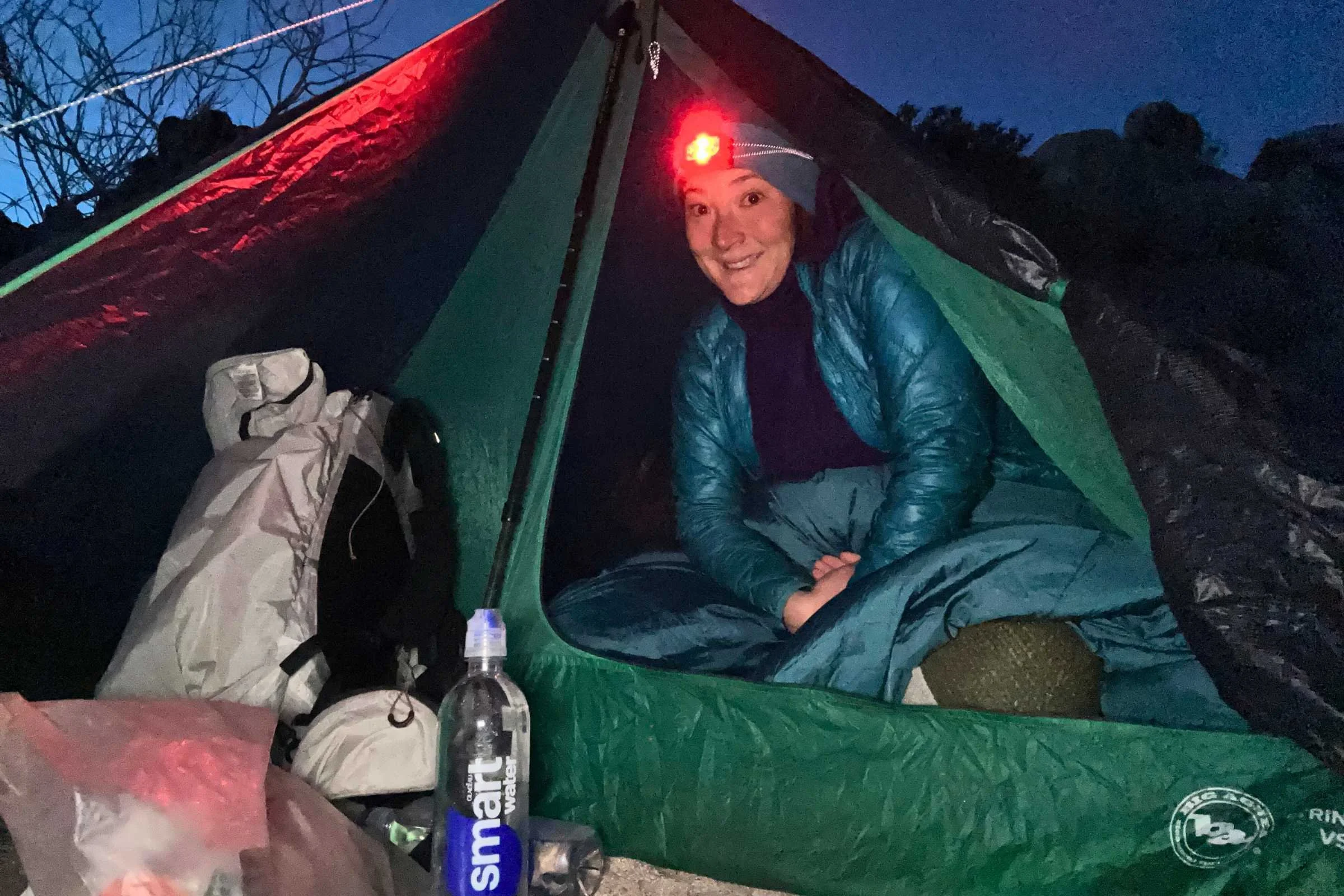
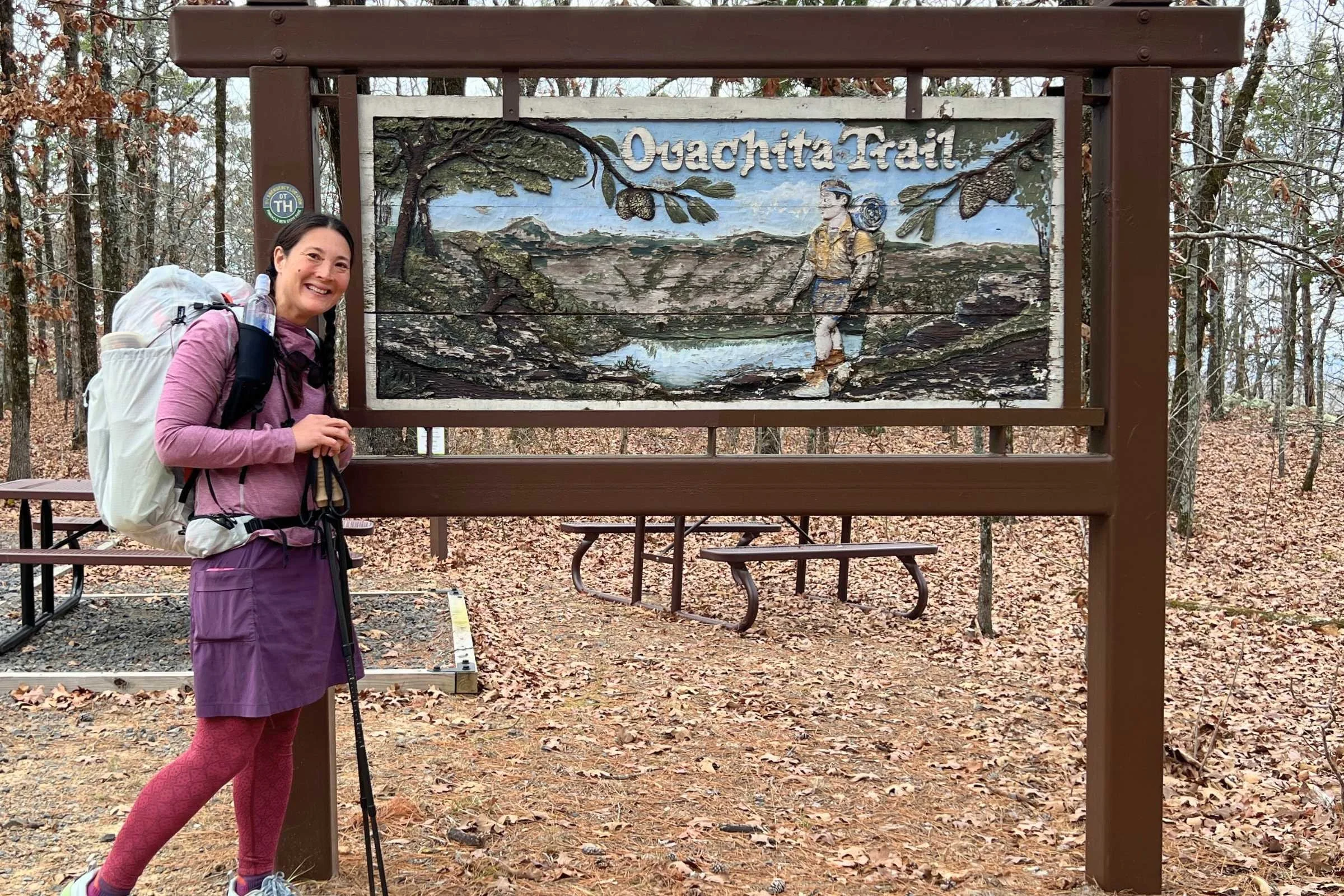
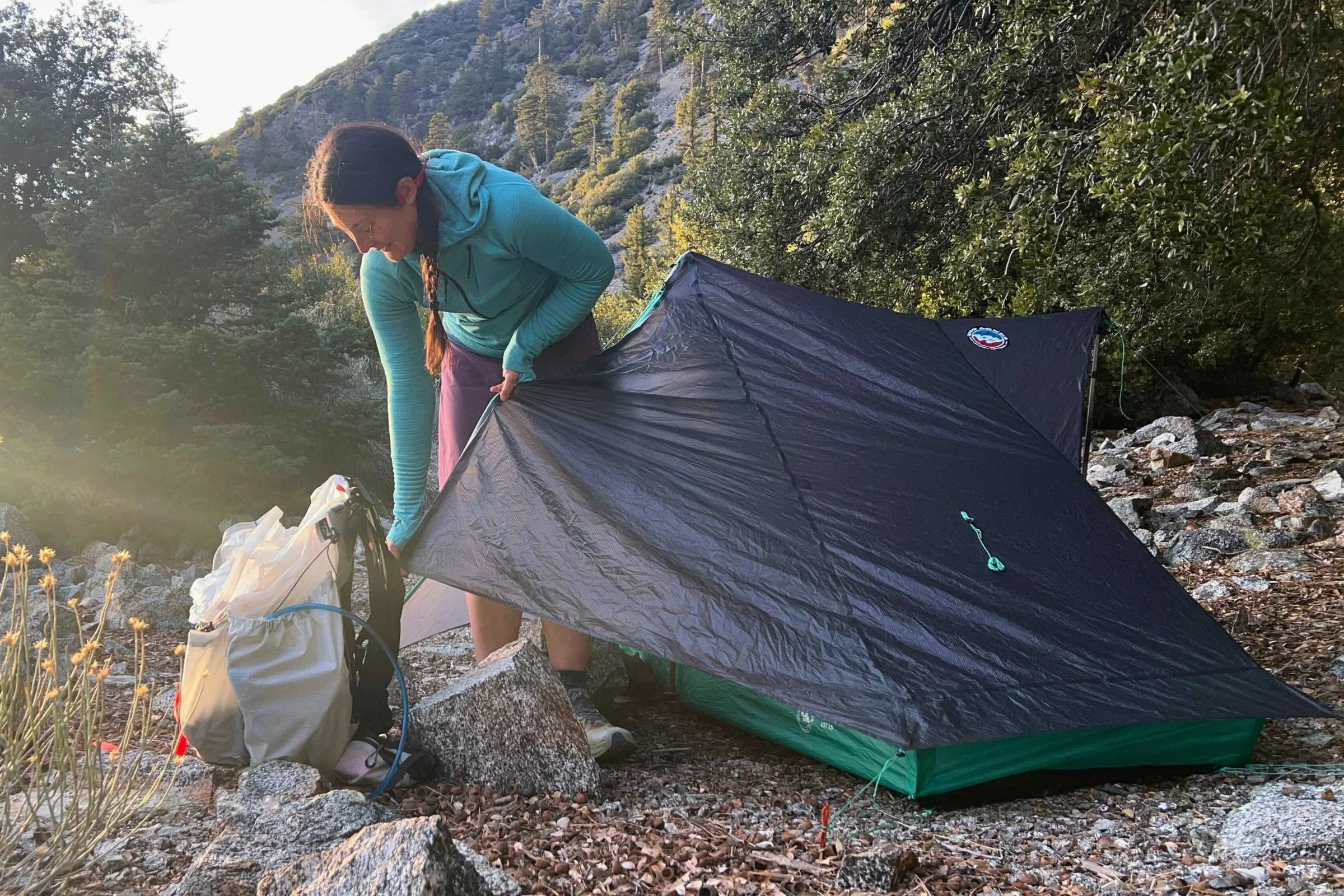
I tested the Alakazam pack on a 223-mile thru-hike of the Ouachita Trail from Arkansas to Oklahoma. I also took it on backpacking trips in the Big Cone Douglas Fir Forest of the San Gabriel Mountains National Monument and backpacking on the Boy Scout Trail in Joshua Tree National Park, as well as shorter overnights in Anza Borrego Desert near the Pacific Crest Trail.
My goal for testing was to expose the pack to as many conditions as possible: hot humidity, high wind, dry desert air, and alpine wind. I also tested in the rain and a constant mist that soaks everything.
When I tested the Alakazam pack on a 223-mile thru-hike of the Ouachita Trail from Arkansas to Oklahoma, the trek was far from flat—I covered 5000 feet of gain a day on some of the rockiest trails I've seen anywhere, including Pennsylvania. Even with my pack loaded down with an embarrassingly large amount of winter gear and almost twice as much food as I needed (it's a long story but I ended up with a double resupply for a few days), the pack was comfortable and never felt like it'd break under the weight. It also handled carrying water for a 29-mile water carry (who knew Arkansas could be so dry?).
Additionally, I backpacked with the Alakazam in the Big Cone Douglas Fir Forest of the San Gabriel Mountains National Monument. To get some desert testing in, I backpacked on the Boy Scout Trail in Joshua Tree National Park and did an overnight in Anza Borrego Desert near the Pacific Crest Trail. To simulate heavier loads on these trips, I brought tons of "luxury items" like a hardcover book, a real pillow (not a backpacking pillow!), the Jetboil Flash stove, and a tripod.
I've been testing ultralight packs for almost two decades and have tracked their evolution. I directly compared the Mountain Hardwear Alakazam backpack to the Gossamer Gear Mariposa, Hyperlite Mountain Gear Southwest, Six Moon Designs Swift X, and Zpacks Arc Haul 50L.
Performance in the field
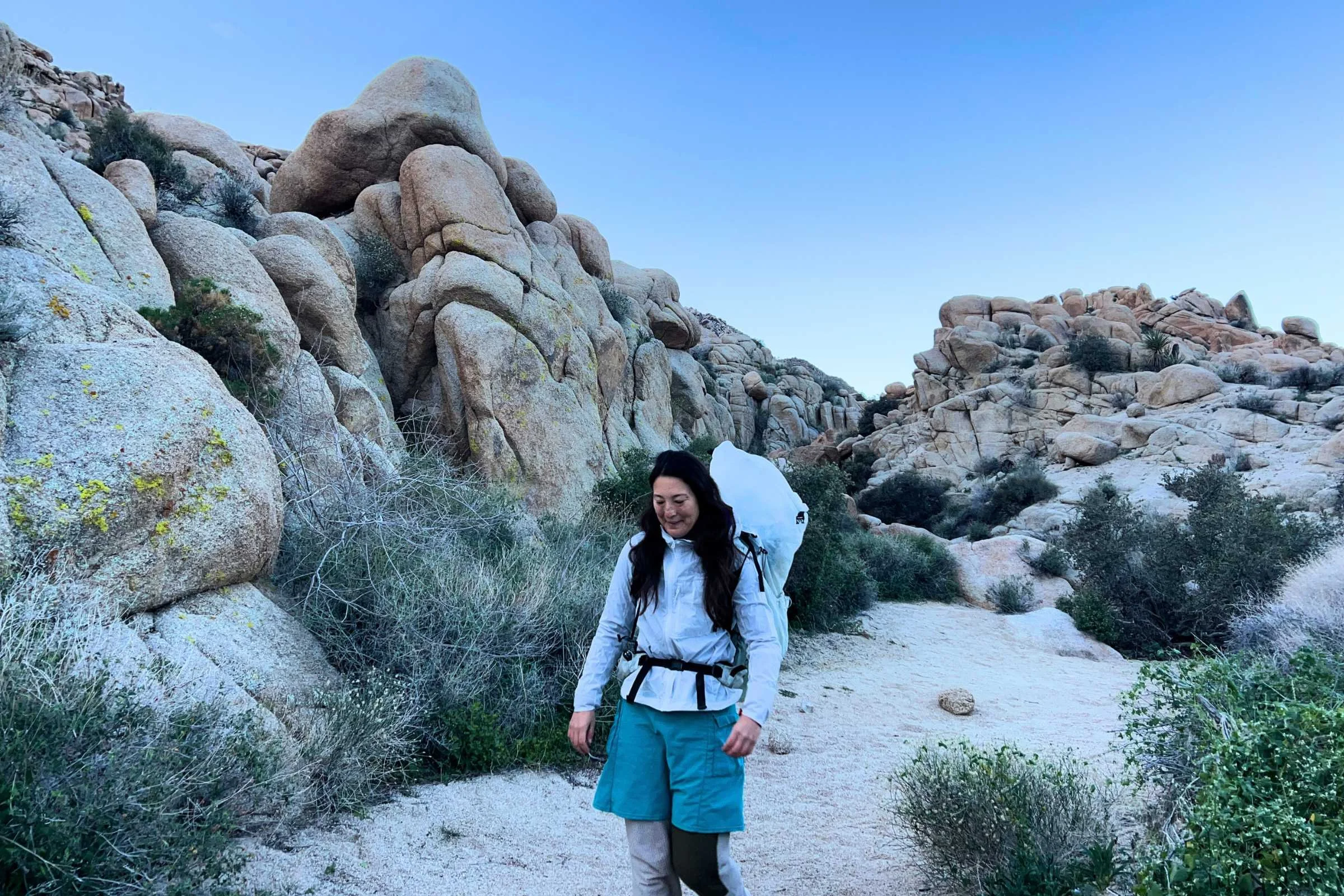
Load carrying and stability
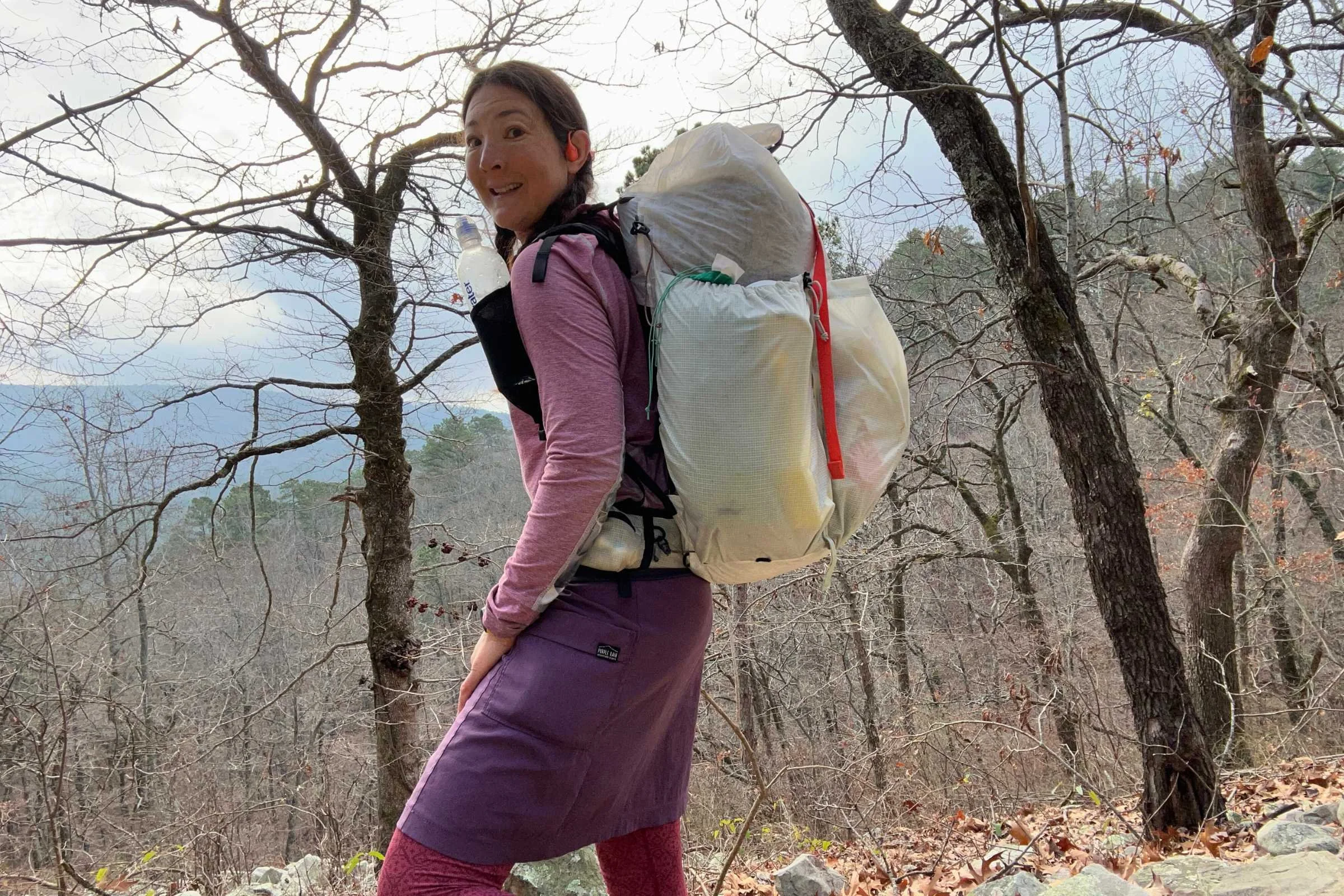
The standout feature on the Mountain Hardwear Alakazam (aside from the ALUULA fabric) is the comfortable V-shaped aluminum frame that attaches to the hipbelt at the center back to help transfer the weight from your shoulders to your lower body. It carries loads quite comfortably for a pack of its size. I found it incredibly stable while on a narrow trail that was crumbling away on the side of a cliff. It also carried well as I dodged rocks on some of the rockiest trails I've seen anywhere on the Ouachita Trail.
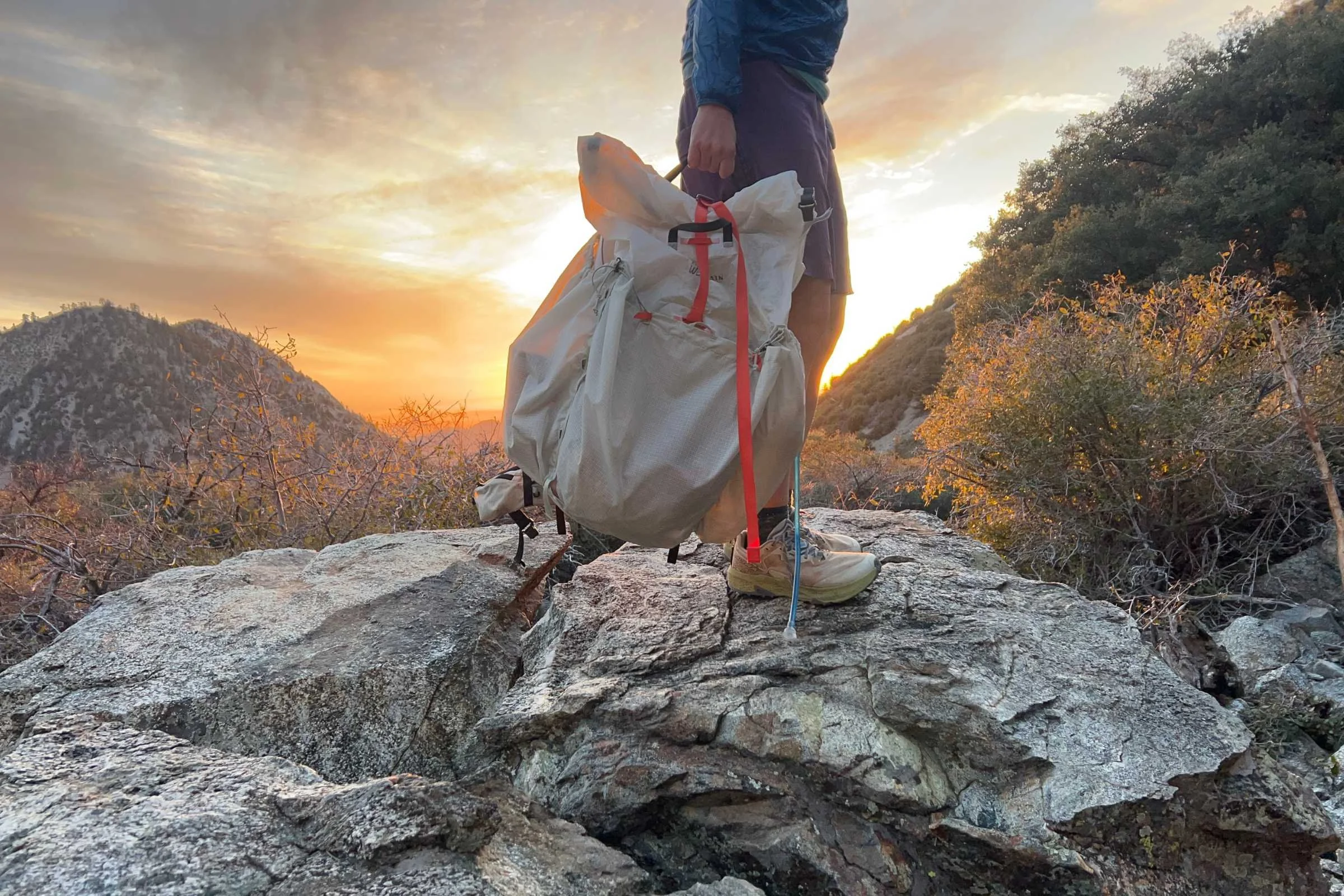
The frame feels and looks similar to the PVT system you'll find in the Gossamer Gear Mariposa. Those familiar with the feel of the PVT Mariposa's frame will find the frame and hipbelt articulation on the Alakazam to feel very similar. One difference is the hipbelt on the Mariposa is better padded.
Like many packs of this size, it features load lifters for load carry adjustment.
Waterproof performance of ALUULA
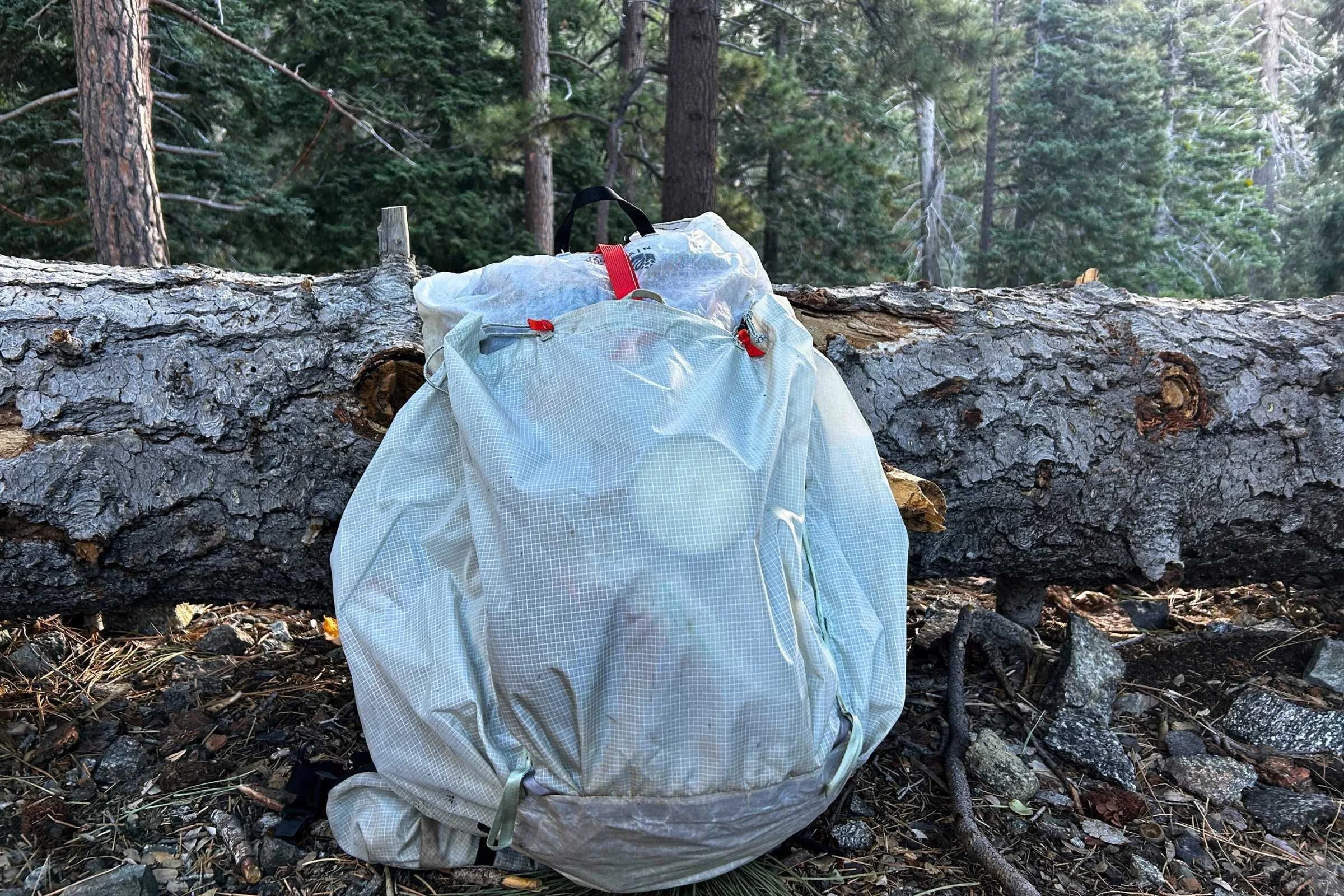
In a torrential downpour on the Ouachita Trail, I was impressed by the pack's waterproofing and that it absorbed no moisture from rain nor dew nor mist.
It was also so warm and humid on the OT that even in storms, I didn't want to take out any rain gear, including an umbrella. I always use a pack liner but it ripped halfway through the trip. Despite these conditions, I had no issues with moisture on the Alakazam. The ALUULA on the Alakazam is sewn, not taped, so theoretically, water could come in at the seams.
Like many ultralight packs, the Alakazam features a roll-top closure. Like the design found in many dry bags, this is an effective seal against water getting in your pack.
Durability
The ALUULA fabric's abrasion resistance is applauded within the ultralight community. ALUULA uses a proprietary heat-bonded process that is different from what you find in many ultra-high molecular weight polyethylene (UHMWPE) fabrics used in ultralight packs these days, like Dyneema Composite Fabric (DCF) and Challenge Outdoor’s Ultra. Unlike other fabrics, it doesn't use adhesives. DCF has a laminated film/fiber. ALUULA has no glue, so it can't delaminate.
As far as the feel goes, it feels a lot more like DCF than Ultra or X-Pac. Before I tested it, based on what I had read, I expected it to feel more rigid. I found ALUULA feels less stiff and crinkly than X-Pac VX21.
In about 400 miles of testing, I didn't see any wear points on the material. I suspect the very lightly padded shoulder straps will be the thing that fails for hikers. Not that they will fall off, but that the minimal padding will get compressed and stop doing its job.
For extra durability, the bottom of the Alakazam is made with a double-layer of ALUULA fabric. This is important for folks who do not baby their ultralight gear.
Ventilation
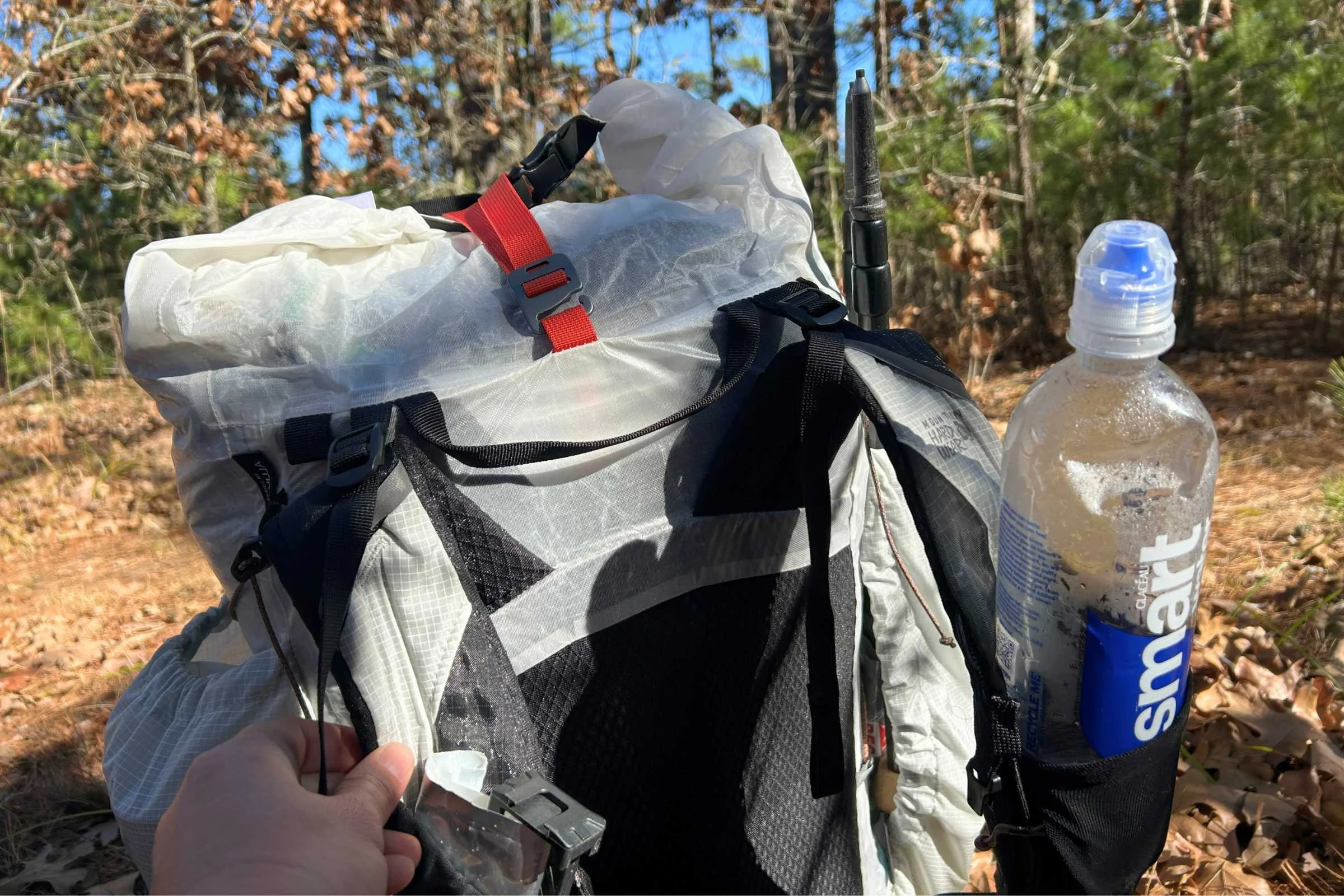
Like many packs, the Alakazam has dual-density foam back panel and shoulder straps to improve ventilation and dry out sweat quickly. I tested this pack in warm, humid conditions thru-hiking in the South. My entire body and all my clothes were wet from the moisture in the air and my sweat from hiking in the heat. The back panel airflow worked pretty well for a waterproof pack. I noticed some moisture buildup that looked like it was happening between the layers. This was especially noticeable because my pack was white and kind of see-through.
Compression
The reported 60L volume of my Alakazam felt a heck of a lot bigger than other 60L packs I've tested. We get into why we think pack manufacturers do this in our How accurate are backpack volume ratings? video.
Including the giant front pocket and unprecedentedly large side pockets, I'd guess this was more like a 70-80L pack.
The roll-top compression worked well to keep the pack in line with the volume of gear I was carrying. I didn't love the metal buckle used to latch the roll-top. There was a learning curve to clip it quickly. I would have preferred a lighter plastic buckle like the one used by Mountain Laurel Designs in their roll-top packs.
Pockets
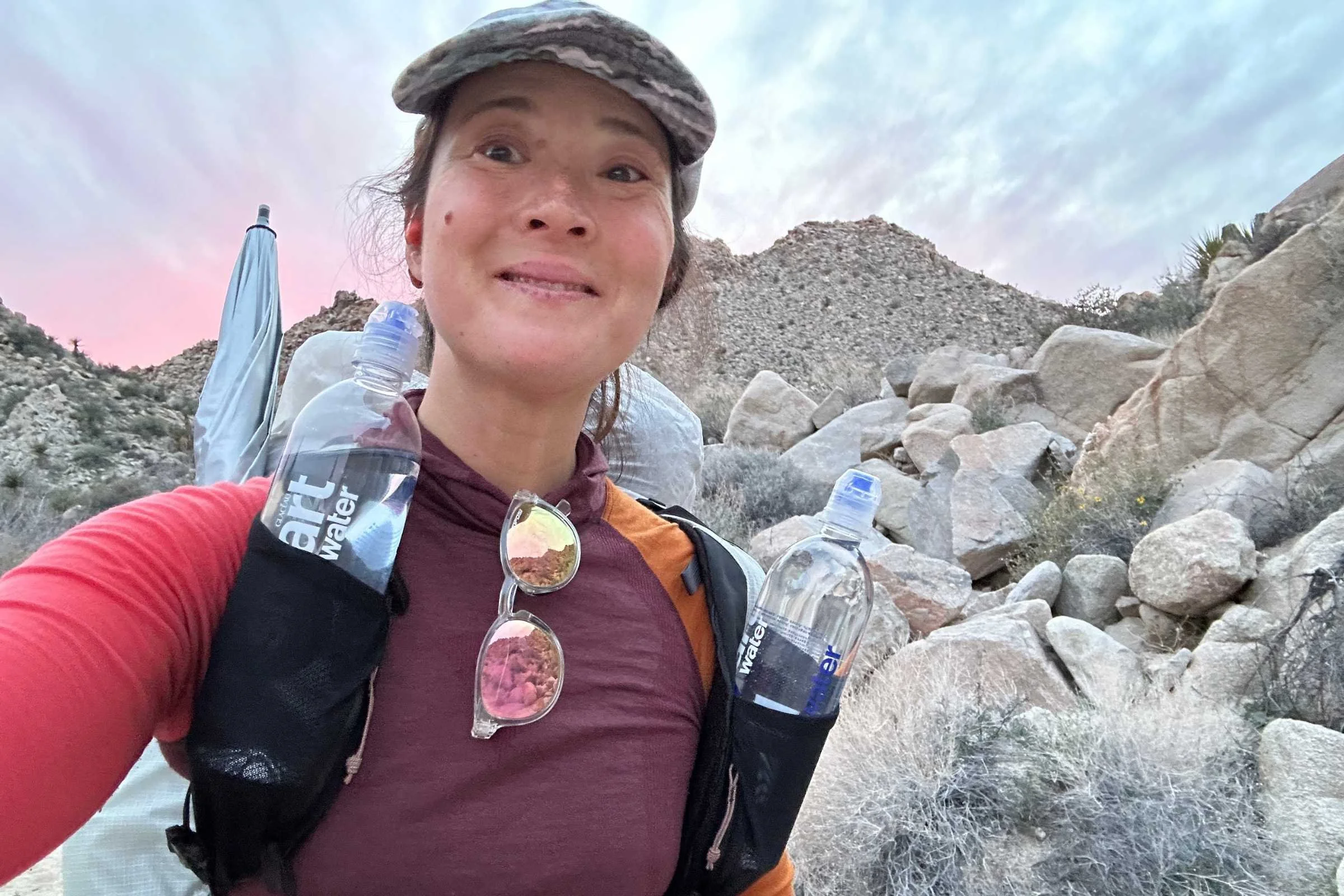
Aside from the ALUULA fabric, the pockets on the Alakazam are really where it shines.
It has innovative deep and wide water bottle pockets similar to the Gossamer Gear Mariposa, but found on both sides. Like the Osprey Exos / Eja Pro packs, the side water bottle pockets are dual access, which means you can pull out your water while walking through the front access. However, the pockets are even bigger than Osprey's and aren't stretchy, and I ended up losing something small through that hole.
Still, these side pockets are big enough to fit an entire tent. It actually became a storage spot for the Big Agnes String VST tent I carried on the OT. I often struggle to know where to store my Jetboil Flash stove, and it fits with tons of room to spare in the side pockets.
During a 29-mile water carry, I fit 3 L of water in each side pocket and probably could have carried more if needed. These pockets are giant! You could use these pockets for a water bladder and hose system (as I did) or just water bottles (also something I did).
The front pocket isn't mesh but is made of waterproof fabric, so you can’t dry out socks inside. There's a compression cord towards the top of this pocket, but I could never secure it tight enough to keep water from coming into the pocket from the top (I learned that the hard way with my guidebook). I could easily fit my wet tent in the big front pocket, though.
The Alakazam has dual zippered hipbelt pockets. They're comically small. There is no way you could fit a modern phone in there. I stored some lip balm and 1 oz of sunscreen.
The single internal storage pocket holds a 3+ L water bladder (that was the biggest size bladder I had to test), although there is no exit port for a drinking tube. If you're a ride-or-die water bladder hiker, you'll need to store the bladder in an external pocket or opt for the Mountain Hardwear Kazam instead.
For guidance and tips on how to efficiently pack a backpacking backpack, see our How to Pack a Backpacking Backpack guide.
Volume
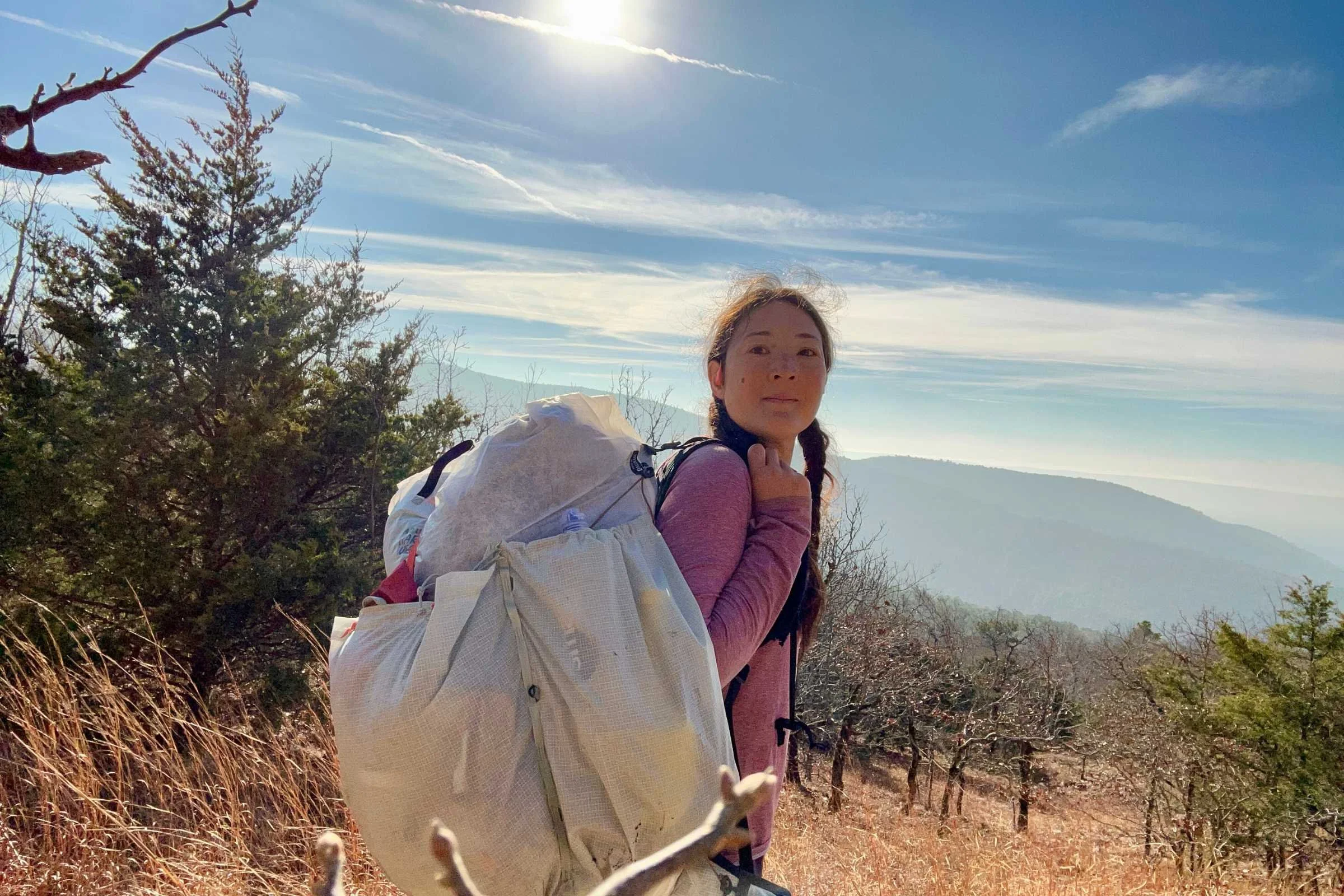
The Mountain Hardwear website says that the 60 L of the pack I tested is for the internal volume only. The external pockets add 20L and top lid adds 6.5L. This is 86.5 L in total!
To learn more about the accuracy of backpacking backpack volumes, check out our How Accurate are Stated Volumes of Backpacking Backpacks article.
Vest-style shoulder straps
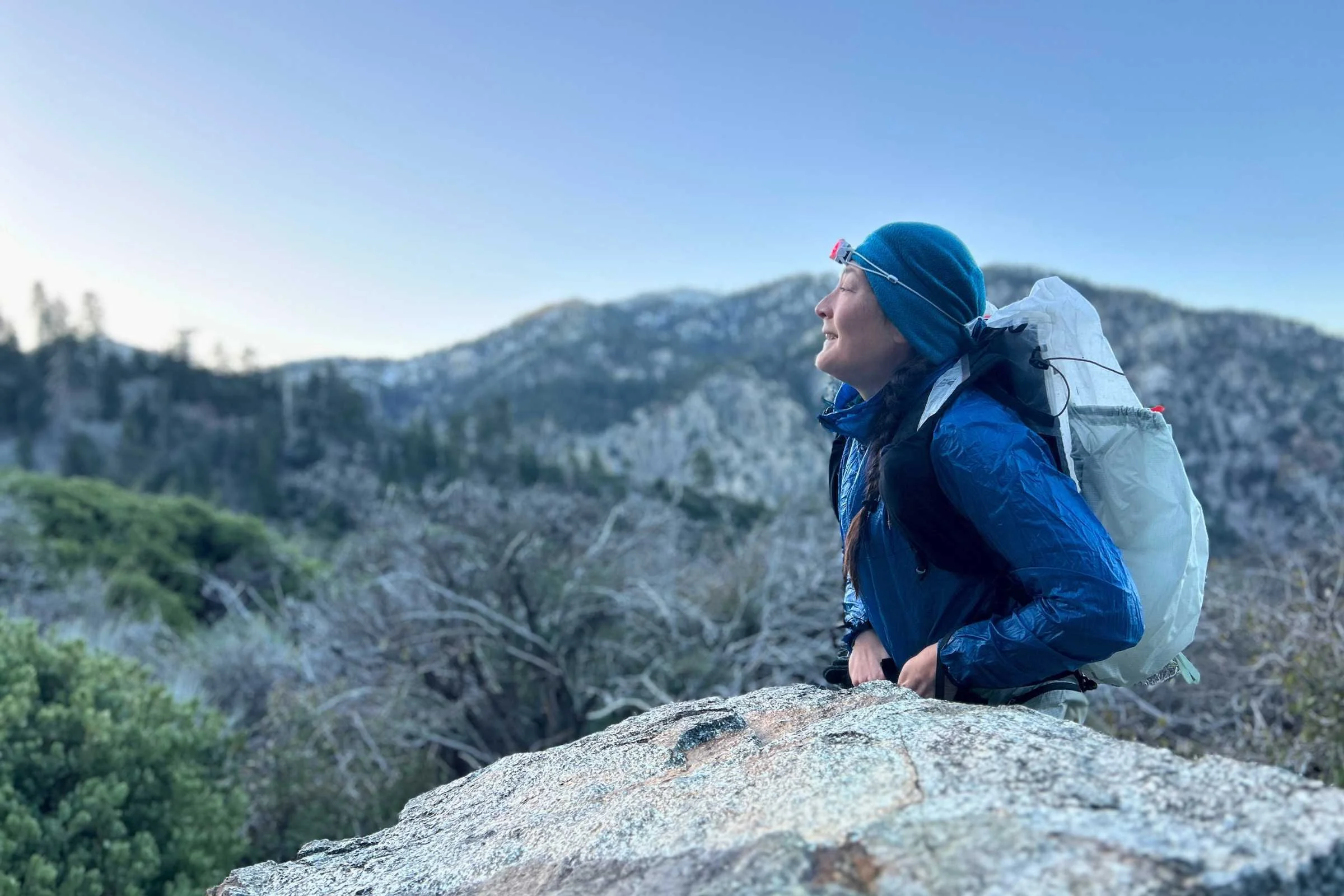
Testing the Mountain Hardwear Alakazam pack while backpacking in the snowy San Gabriel mountains.
Like many modern packs, the Alakazam has vest-style shoulder straps, that feature dual drop-in pockets, and zip pockets. Vest-style shoulder straps are not equal on all packs, and some brands do a far better job than others in making pockets that are functional.
I liked the pockets on the Alakazam's shoulder straps. They can fit two 750 mL Smartwater bottles. I stored my inReach Mini in the zip pocket. The stuff pockets fit my snacks. Some vest style systems like that on the Six Moon Designs Swift transfer the load from the shoulders to the hips. The Alakazam’s shoulder straps are more like you'd find on running packs and instead rely on the frame to transfer the load.
Sternum straps
There are also two adjustable sternum straps you can move up or down.
Compression System
This pack has Mountain Hardwear's patented GiddyUp compression system. Notably, it can be used to compress the pack even while it is on your back. While that sounds cool, in practice, I have never felt a need to compress my pack while still standing.
Bear Canister Storage
The 60L Alakazam I carried will fit a bear canister inside. You could probably fit it in horizontally, though I don't think the 45L would be quite wide enough.
Carrying comfort and stability
I found this pack incredibly comfortable. It was stable on technical terrain. While I didn't do any scrambling, the Ouachita Trail has very steep sections, some of which are loose, and this pack performed fine. Compared to other packs, it did not feel nimble or clumsy. The pockets, especially the water bottle pockets, were easy to access while on the move.
Features
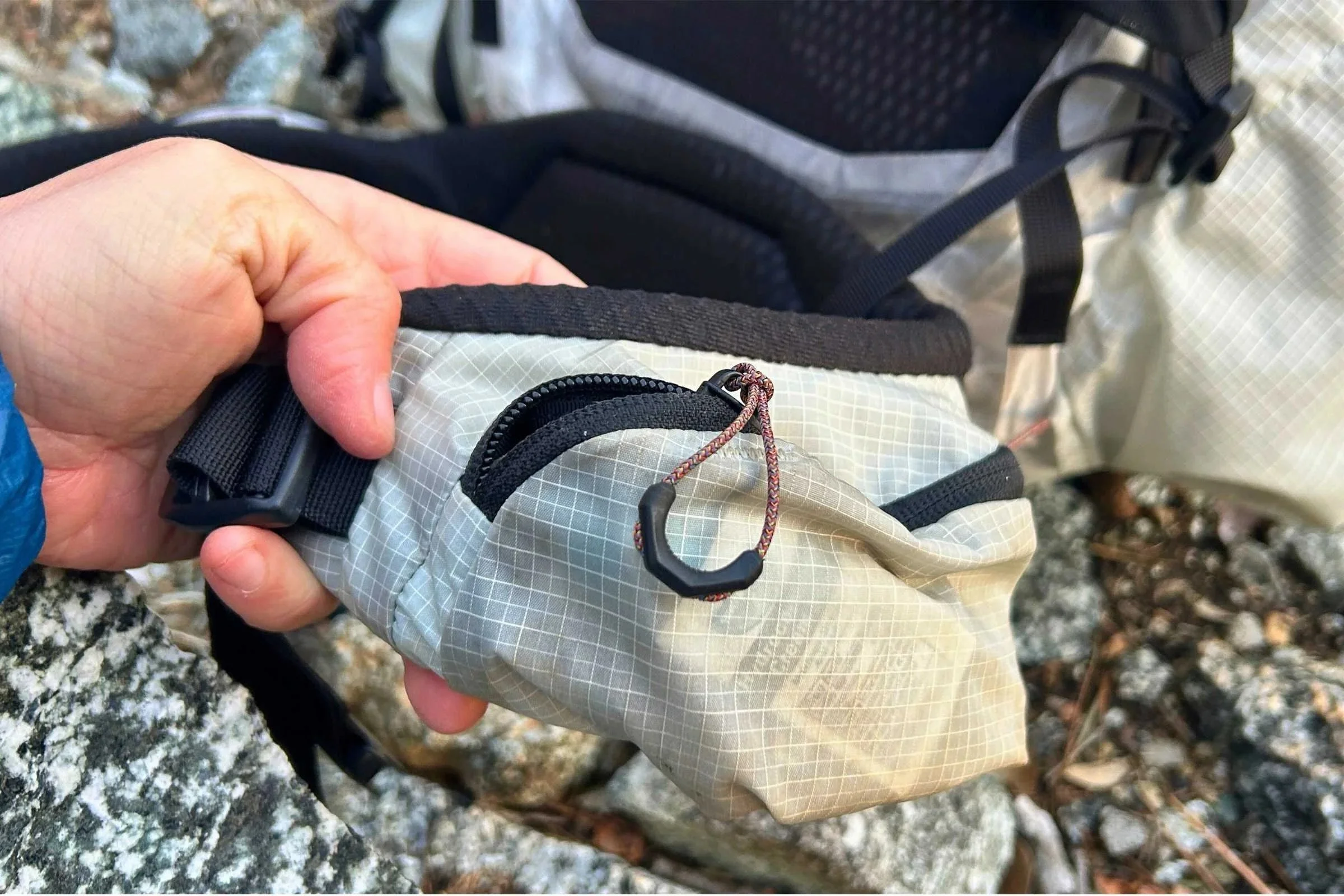
Close-up on the small hipbelt pocket on the Mountain Hardwear Alakazam pack.
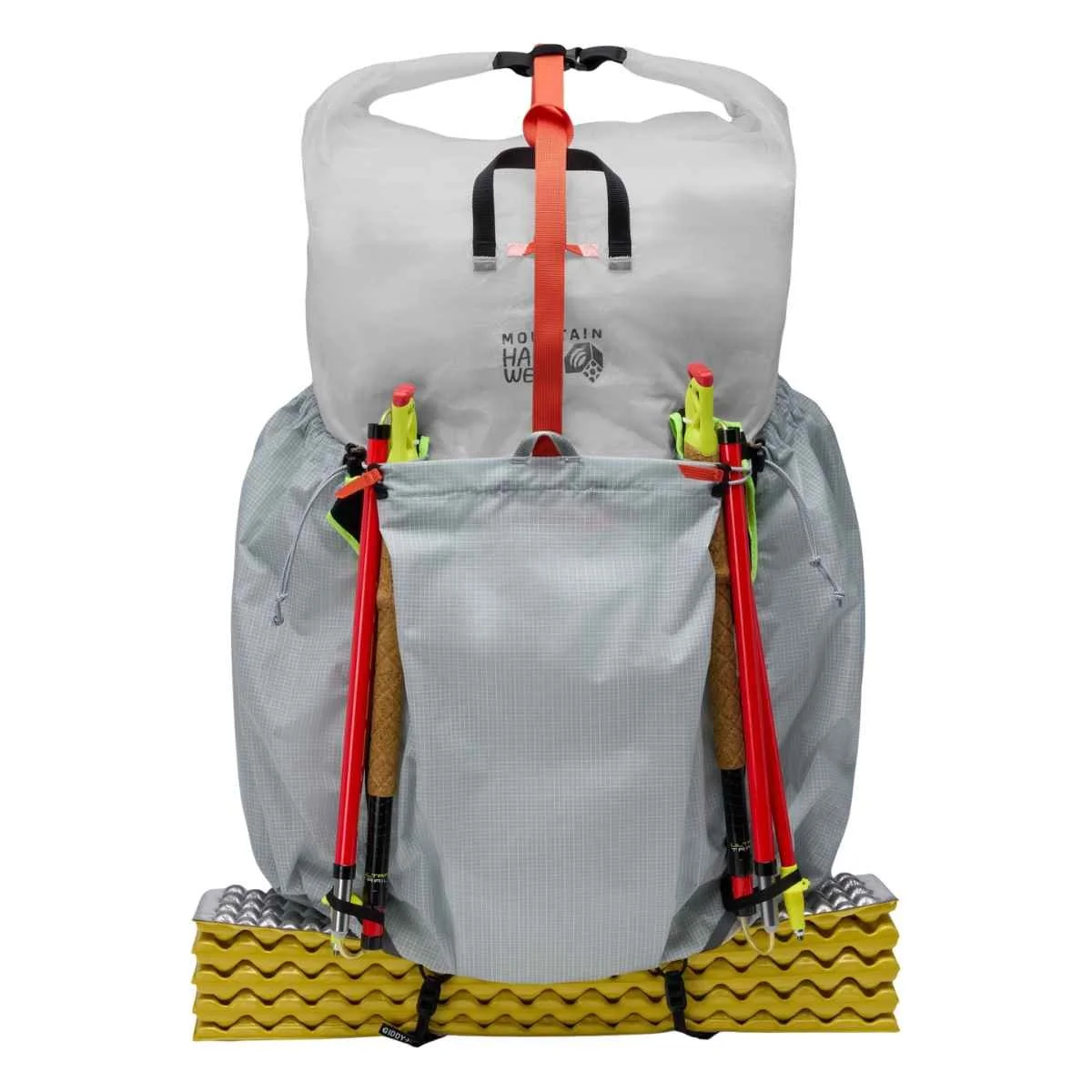
ALUULA Graflyte UHMWPE fabric: top-of-the-line fabric known for its waterproofness and durability
Adhesive-free bonded construction means it won't delaminate like other high-end pack fabrics
Fully waterproof roll-top design functions like a dry bag's roll top
V-shaped aluminum frame provides a surprisingly comfortable fit
Swivel hipbelt works with you to provide stability and comfort, even on rugged trail
Dual-density foam back panel improves ventilation and dry time from back sweat
Daisy chain webbing means you can strap on even more gear like a foam sleeping pad or bear can
Dual entry side pockets are giant, easy to access, and are a standout design feature
Zip hipbelt pockets fit sunscreen, lip balm, or an inReach Mini, but not a phone
Sternum strap works in conjunction with vest style straps and is adjustable
Trekking pole loops hold two trekking poles, or you can stash them folded in the giant pockets (as I did)
Mountain Hardwear Alakazam 45L vs 60L
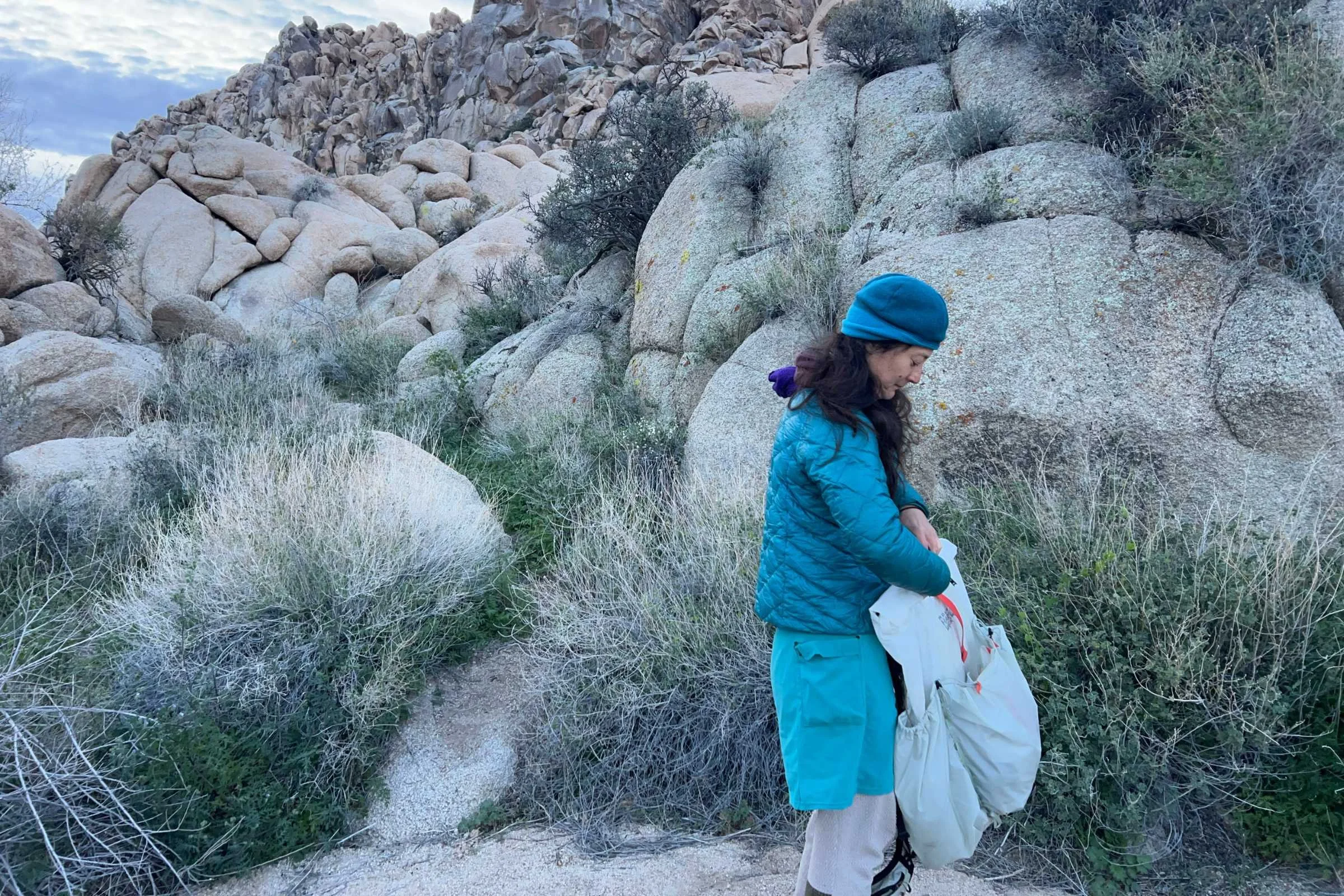
The Alakazam is available in 45 L and 60L volumes. I tested the 60L volume as I planned to be hiking in winter and was carrying a bulkier 15-degree backpacking quilt and warmer down jacket, 29-mile water carries, and 4.5 days worth of food.
Surprisingly, the 60L Alakazam pack is only 40 g more (1.4 oz) than the 45 L. You also save only $20 going with the 45 L vs. the 60L.
If you're an ultralight backpacker with compact items, you could get away with the 45L. I found the 60L to feel more like 80+L taking into the account all the side pockets.
Mountain Hardwear Alakazam vs Kazam
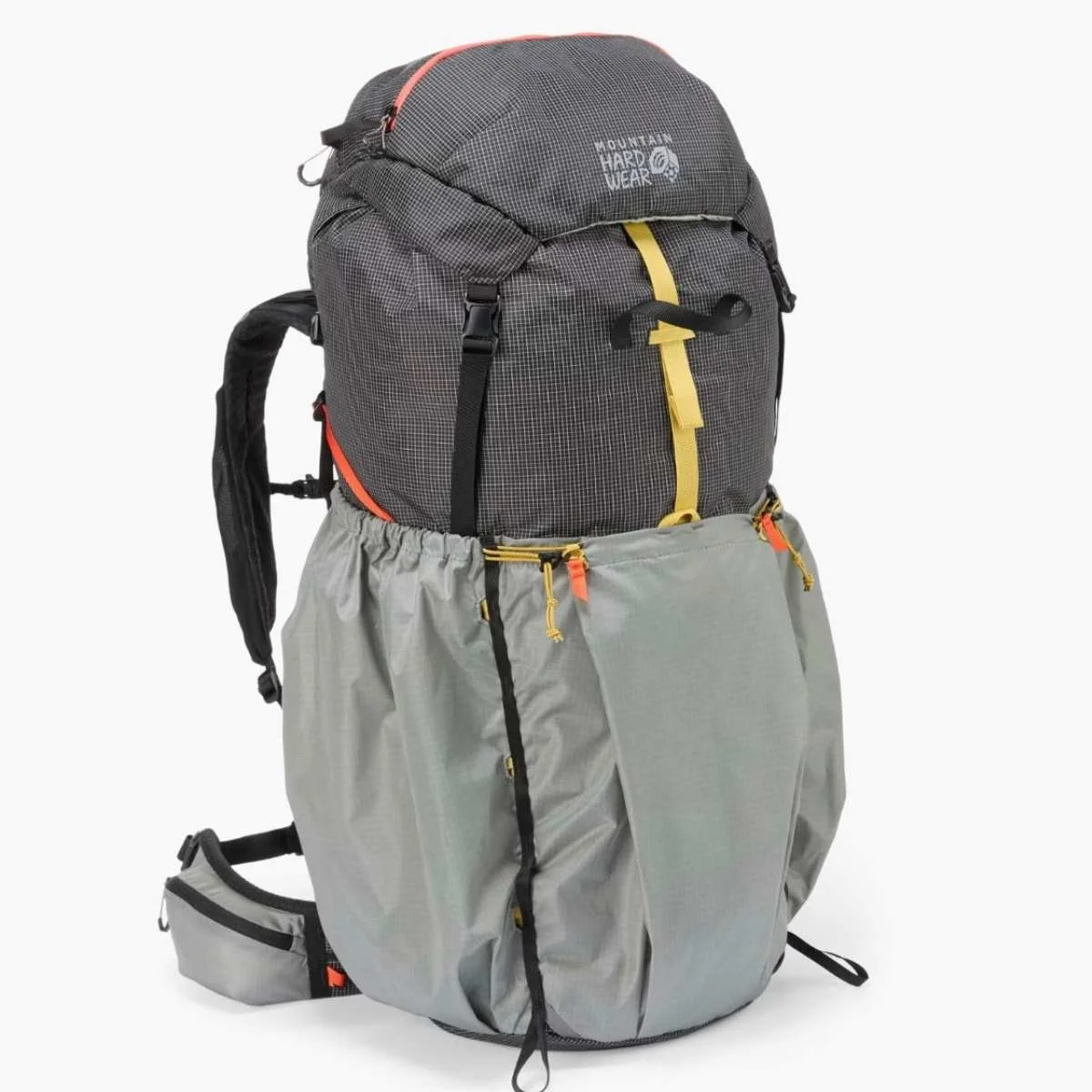
The Mountain Hardwear Kazam uses the same design as the Alakazam packs but with a different fabric, a Nylon/polyethylene ripstop shell fabric instead of the ALUULA. It also has a hydration port in addition to the internal hydration reservoir sleeve that is also found on the Alakazam.
It's got the same aluminum V-shaped frame, same hip belt design, same load lifters, same vest style shoulder straps, and same awesome giant side water bottle pockets.
But because the nylon/poly ripstop is heavier than ALUULA, the Kazam weighs more. The 60L Alakazam pack that I carried weighs about 1 lb. 15.7 oz /900 g, but that is higher in the Kazam at 2 lb 10.3 oz / 1200 g.
The Kazam 60 also has a brain, a removable and adjustable top lid. It has two zip pockets for easy access. For hikers who need less capacity, you can simply remove the lid and use the pack like a roll-top pack, like the Alakazam.
The biggest difference is the price, though. The Kazam 60 is nearly half the price of the Alakazam and is one of the more affordable lightweight 60L packs you can buy.
Should you buy the Mountain Hardwear Alakazam backpack?
Buy if:
You value innovative materials and are comfortable paying premium pricing
You want an ALUULA pack with a generous aluminum frame
You want fully waterproof construction
You’re thru-hiking or long-hauling
Skip if:
You’re budget-conscious
You prefer traditional cushioned backpacking packs
You regularly carry heavy expedition loads
You’re new to ultralight systems
For more guidance, check out our How to Choose a Backpacking Backpack guide.
Where to buy the Mountain Hardwear Alakazam
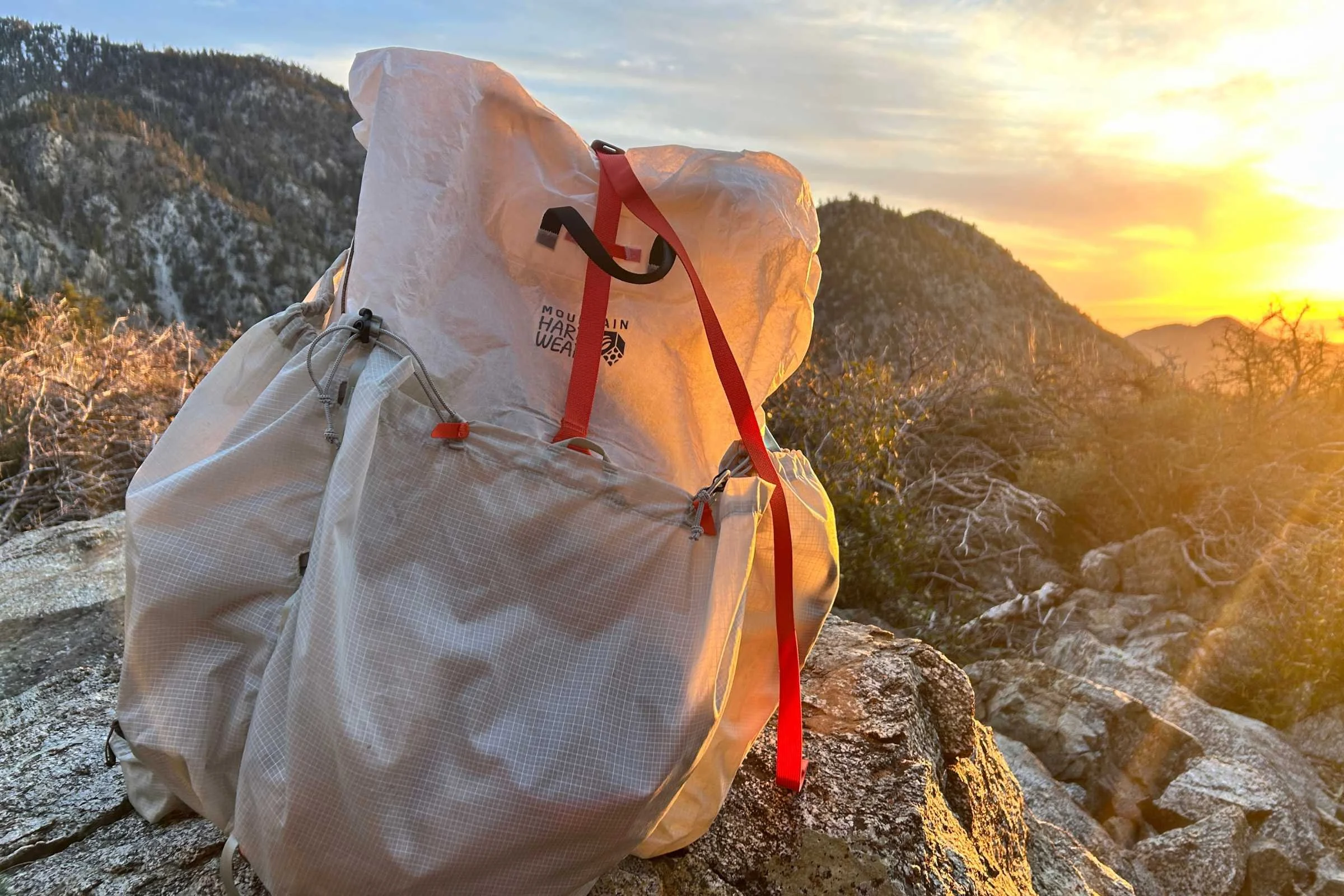
The Mountain Hardwear Alakazam backpacking backpack is a popular gear item, so you have options when it comes to retailers. Here are some of the pros of the retailers.
REI
Pros: 100% satisfaction policy for 1 year; 10% dividend for members.
Note: This product is currently not available in REI stores, only online.
Backcountry
Pros: Frequent sales for Expedition Perks members (free to join), fast shipping, Gearhead chat customer service is excellent
Mountain Hardwear
You can sometimes find more options when purchasing directly from the retailer. Sometimes, purchasing directly from the retailer can make it easier if you need to make a warranty return, such as if there is a defect.
Similar backpacking backpacks
Gossamer Gear Mariposa

Capacity: 60L
Weight: 1.9 lbs
Materials: 100 & 200 denier Robic high-tensil strength nylon
Cost: $285
Max load: 35 lbs
The Alakazam pack feels like a cross between the Hyperlite Mountain Gear Southwest and the Gossamer Gear Mariposa. Like the latter, it has a built-in metal frame that carries the weight incredibly well.
The Mariposa and Alakazam carry perhaps the best I've seen of packs of this weight. The Alakazam has deep and wide water bottle pockets similar to the Gossamer Gear Mariposa, but found on both sides. The Mariposa has bigger and more functional hipbelt pockets. It also has a buckle flaptop lid closure (with a zippered pocket) instead of a roll-top clip closure.
The main difference is that the Mariposa is only available in Robic, which is a much more affordable material than ALUULA. The Mariposa is 5.3 oz heavier as a result, but also about half the price of the Alakazam. For the $280 difference, you could probably make up the 5.3 oz weight difference somewhere else. However, the Mariposa is not waterproof, and Robic fabric absorbs water.
The Mariposa won best backpack for transitioning to ultralight in our Best Lightweight Backpacking Backpacks guide. Learn more in our in-depth review of the Gossamer Gear Mariposa Backpacking Backpack.
Gossamer Gear Mariposa
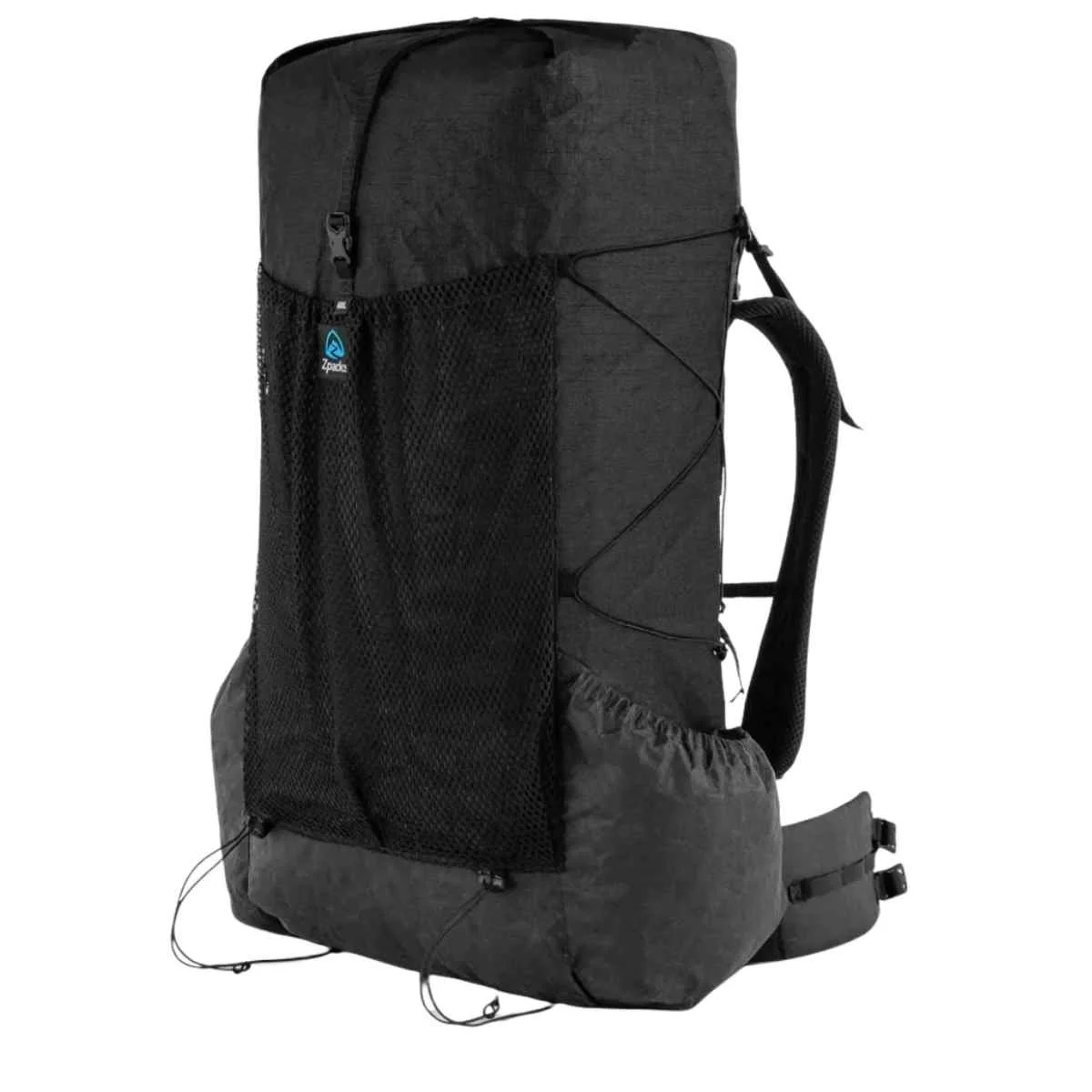
Capacity: 60 L
Weight: 1.31 to 1.39 lbs (depending on size)
Materials: Ultra 100, Ultra 200, mesh, 3D spacer mesh
Cost: $400
Max load: 40 lbs
The Zpacks Arc Haul Ultra is made of Ultra 100X fabric instead of ALUULA. It also has a curved carbon fiber Arc Frame system instead of the aluminum frame system found on the Alakazam. The Zpacks Arc Haul frame creates an air gap between your pack and your back.
The water bottle pockets on the side are much smaller and more minimalist. The much smaller front pocket is made of mesh, which allows for ventilation. It's sleeker and narrower in design and uses that shape to move with you. It also doesn’t have vest-style straps or pockets. If you want to store stuff on your shoulder straps, you have to buy a water bottle sleeves and shoulder pouches separately. You also have to buy hipbelt pockets separately.
It's a much more minimalist pack designed for backpackers squarely in the ultralight category, whereas the Alakazam is best suited for backpackers with a higher baseweight. Although the ArcHaul is made with waterproof fabric, Zpacks does not call the Arc Haul "waterproof." However, it is the winner of best water-resistant pack in our Best Lightweight Backpacking Backpacks guide.
For more information, see our review of the Zpacks Arc Haul Ultra pack.
Zpacks Arc Haul Ultra

Capacity: 55 L
Weight: White: 1.9, Black: 2
Materials: White: DCH50 (Main Body) & DCH150 (Bottom), Black: DCH150 (Main Body & Bottom)
Cost: $420
Max load: 40 lbs
As mentioned above, the Alakazam pack feels like a cross between the Hyperlite Mountain Gear Southwest 55 and the Gossamer Gear Mariposa. The Southwest is made with DCF instead of ALUULA fabric. The Southwest is also frameless whereas the Alakazam has an aluminum frame that works quite well as well as load lifters. The Southwest does not have load lifters.
The HMG Southwest has smaller pockets in the front and on the sides, so you can't store as much. However, it has bigger zipped hipbelt pockets than the Alakazam.
Unlike the Alakazam, the HMG Southwest doesn't have vest-style straps (and the handy pockets that come with them). The Southwest has a roll-top closure with a buckle instead of a metal clip. The Southwest 55 is $175 less expensive than the Alakazam and is about 2 oz heavier. The Southwest 55 feels like a true 55 L as far as volume. The Alakazam is a lot more volume than you'd expect for a pack that is supposedly only 5L bigger.
And while the HMG Southwest is made with waterproof fabric, the pack itself isn't waterproof.
See our long-term review of the similar Hyperlite Mountain Gear Junction (40 or 55L) pack. The only difference between the Junction and the Southwest is the use of mesh in the front pocket instead of DCF.
Hyperlite Mountain Gear Southwest 55

Capacity: 68 L
Weight: 2.3 lbs
Materials: ULTRA 400X, ULTRA 200X, UltraStretch Mesh
Cost: $380
Max load: 35 lbs
The ULA Circuit Ultra is a popular ultralight backpacking pack that has a lot of differentiators from the Alakazam. It still has a frame, but uses a carbon fiber suspension. It is made of Ultra fabric instead of ALUULA. As a result, it's $215 less and weighs about 7 oz more.
The Circuit has got a front pocket that is stretchy and is made of abrasion-resistant ULTRA StretchMesh. The same mesh is used on the side pockets, which are smaller than the Alakazam's but still feature dual access.
The Circuit is made in the USA, and you can do some customization, including shoulder strap shape (S or J straps) and top strap style on the roll top (standard straps or y straps).
For more information, see our in-depth review of the ULA Circuit Ultra backpacking pack.
ULA Circuit Ultra
Why you should trust us / About the author
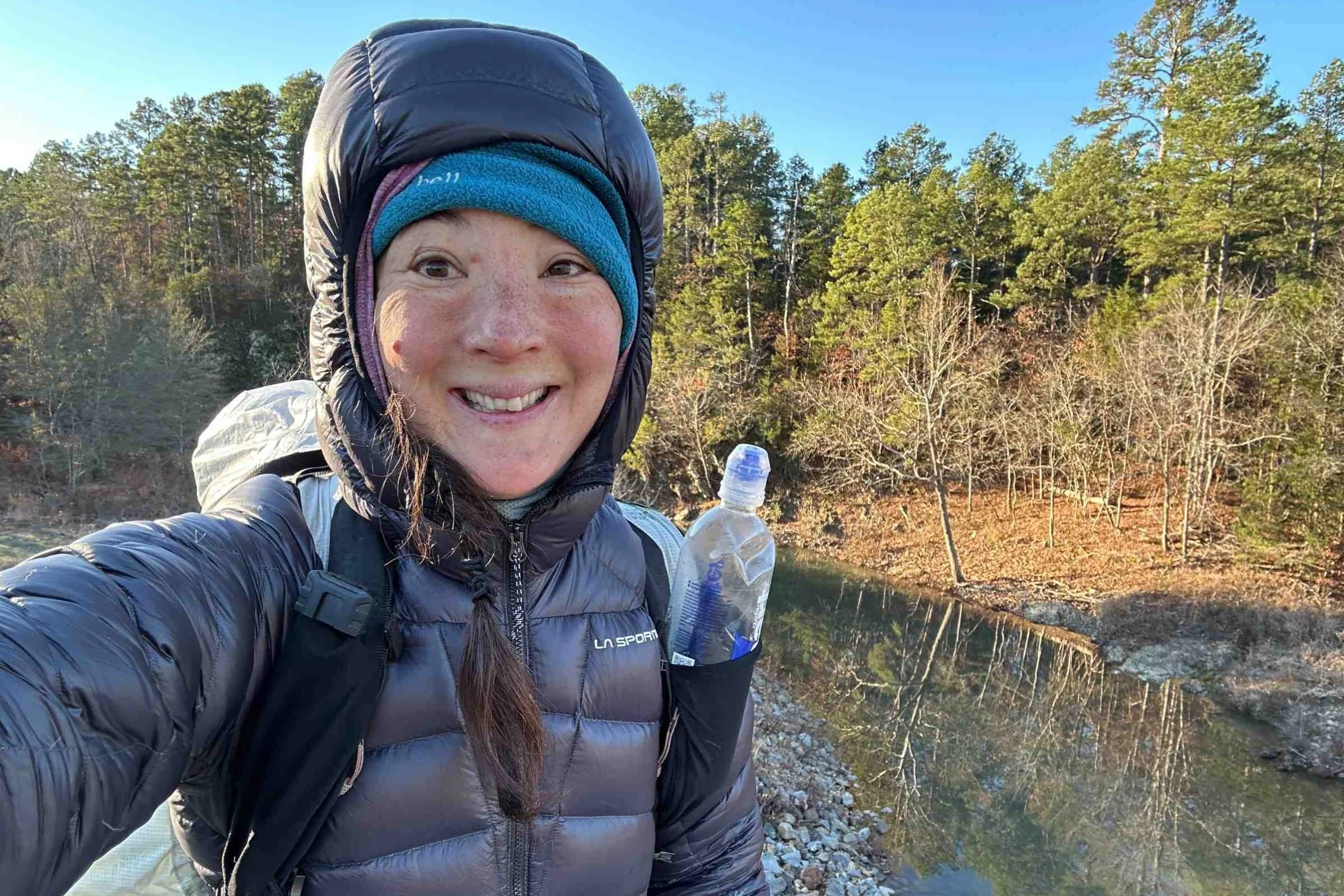
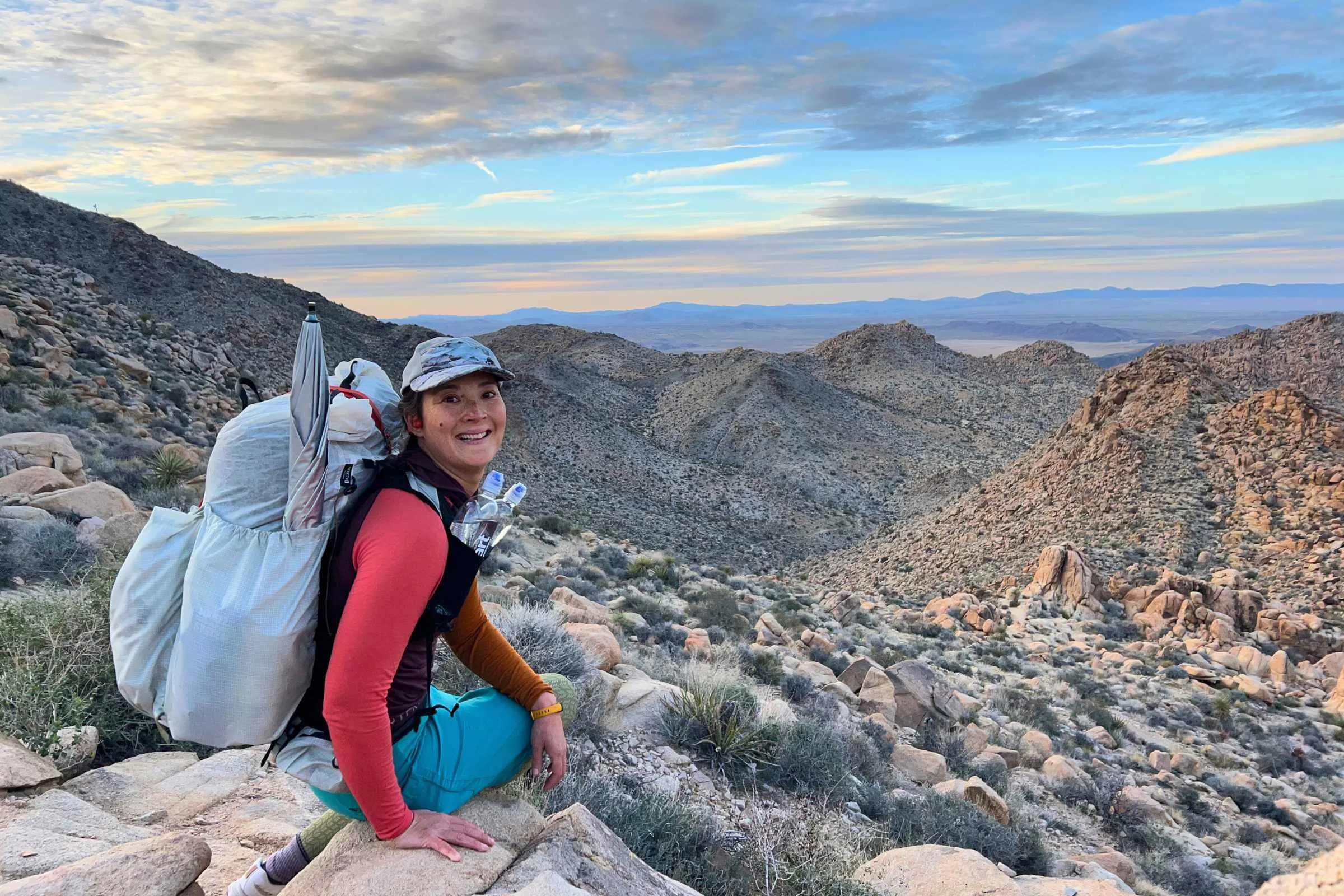
The author thru-hiking with the Mountain Hardwear Alakazam backpack in freezing temperatures on the Ouachita Trail.
Liz Thomas is an award-winning Los Angeles-based writer and Editor-in-Chief of Treeline Review. A former Fastest Known Time (FKT) record holder on the Appalachian Trail, Liz came to Treeline Review from New York Times/Wirecutter, the New York Times’ product review site, where she was a staff writer on the outdoor team.
Liz has talked gear on Good Morning America (TV), in The Wall Street Journal, The Guardian, Buzzfeed, Men’s Journal, Women’s Health, Gizmodo, and Outside.
To test the Mountain Hardwear Alakazam backpack, she thru-hiked the Ouachita Trail, a 223-mile trail from Arkansas to Oklahoma. Additionally, she's backpacked with this pack on the Boy Scout Trail in Joshua Tree National Park and in the Big Cone Douglas Fir forest of the San Gabriel mountains and Anza Borrego Desert. She's also taken three flights with this pack, always as carry-on.
You can read more about Liz at her wikipedia page here or on her website. See all her Treeline Review articles on her author page.